E3 Ubiquitin Ligase Mutations in Human Cancers: Mechanisms, Therapeutic Targeting, and Clinical Implications
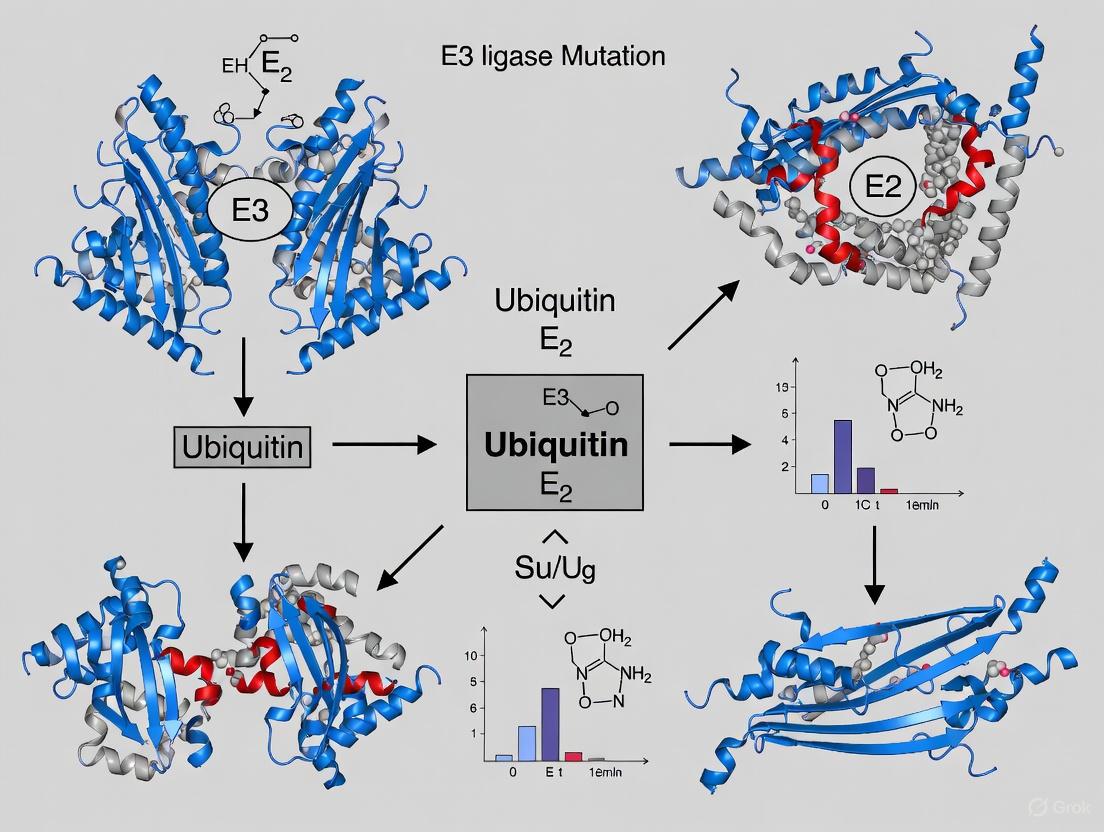
This review synthesizes current knowledge on the critical role of E3 ubiquitin ligase mutations in human carcinogenesis.
E3 Ubiquitin Ligase Mutations in Human Cancers: Mechanisms, Therapeutic Targeting, and Clinical Implications
Abstract
This review synthesizes current knowledge on the critical role of E3 ubiquitin ligase mutations in human carcinogenesis. It explores how genetic alterations in these ligases, including members of the RING, HECT, and RBR families, disrupt vital cellular processes by misregulating oncoproteins and tumor suppressors. The article details advanced methodologies for studying these mutations, analyzes the challenges of drug resistance and optimizing targeted therapies like PROTACs, and evaluates emerging clinical strategies, including small-molecule inhibitors and degraders in development. Aimed at researchers and drug development professionals, this work provides a comprehensive roadmap for translating the understanding of E3 ligase biology into novel cancer therapeutics.
The Ubiquitin System and E3 Ligase Families: A Primer on Structure, Function, and Oncogenic Dysregulation
The Ubiquitin-Proteasome System (UPS) is a highly selective, ATP-dependent mechanism that serves as the primary pathway for targeted protein degradation in eukaryotic cells, playing an indispensable role in maintaining cellular homeostasis [1]. This sophisticated system regulates the precise turnover of short-lived, misfolded, and damaged proteins, thereby influencing virtually every cellular process, including cell cycle progression, signal transduction, apoptosis, and DNA repair [2] [1]. The process begins with ubiquitination, a canonical post-translational modification where ubiquitin—a small, 76-amino acid protein that is highly conserved across eukaryotes—is covalently attached to a target protein substrate [2] [3]. This ubiquitin "tag" serves as a recognition signal for the 26S proteasome, which degrades the marked protein into small peptides, allowing for the recycling of amino acids [1].
The clinical and therapeutic relevance of the UPS is profoundly evident in cancer biology. Cancer cells frequently exhibit a heightened dependence on the UPS to rapidly degrade tumor suppressor proteins and cell-cycle regulators, facilitating their uncontrolled proliferation and survival [4] [1] [5]. Consequently, the UPS, and particularly the E3 ubiquitin ligases which confer substrate specificity, has emerged as a compelling target for anticancer drug development. The clinical success of proteasome inhibitors like bortezomib in treating hematological malignancies such as multiple myeloma has validated the UPS as a therapeutic target and spurred extensive research into more precise interventions, including small molecule inhibitors of specific E3 ligases and novel modalities like PROTACs (Proteolysis-Targeting Chimeras) [1] [5]. This review will delineate the core enzymatic cascade of the UPS, with a particular focus on the structure and function of E1, E2, and E3 enzymes, framing this molecular machinery within the context of E3 ligase mutations in human cancers.
The Ubiquitination Enzymatic Cascade
The conjugation of ubiquitin to a substrate protein is a three-step enzymatic cascade involving E1 (ubiquitin-activating), E2 (ubiquitin-conjugating), and E3 (ubiquitin-ligase) enzymes. The following diagram illustrates this sequence and the subsequent degradation of the tagged protein by the proteasome.
E1: Ubiquitin-Activating Enzyme
The initial and committed step in the ubiquitination cascade is mediated by a single major E1 ubiquitin-activating enzyme [6]. This step involves ATP-dependent activation of ubiquitin. The E1 enzyme hydrolyzes ATP to AMP and inorganic pyrophosphate, generating a high-energy thioester bond between its own active-site cysteine residue and the C-terminal glycine (Gly76) of ubiquitin [2] [7]. This E1~Ub intermediate represents an activated ubiquitin ready for transfer. The E1 enzyme then recruits an E2 conjugating enzyme and catalyzes the trans-thiolation of ubiquitin from its own active site to the active-site cysteine of the E2 [7]. Given its role as the apex of the entire UPS, inhibition of E1 activity leads to an almost immediate shutdown of global protein ubiquitination, highlighting its critical function in cellular homeostasis [7].
E2: Ubiquitin-Conjugating Enzyme
The E2 ubiquitin-conjugating enzyme (also known as UBC) accepts the activated ubiquitin from E1 via a transthiolation reaction, forming a similar E2~Ub thioester intermediate [2] [3]. The human genome encodes approximately 40-50 E2 enzymes, which exhibit greater diversity than E1s but less than E3s [3]. E2s are characterized by a conserved catalytic core domain of about 150 amino acids that contains the active-site cysteine. While the E2~Ub complex is relatively stable, the transfer of ubiquitin to the final substrate is facilitated by an E3 ligase. The specific E2 involved in a reaction can influence the type of ubiquitin chain linkage formed on the substrate, thereby determining the fate of the modified protein [7]. E2s work in concert with specific E3 partners, and their interaction is crucial for efficient ubiquitination [8].
E3: Ubiquitin Ligase - The Specificity Factor
E3 ubiquitin ligases are the most diverse and pivotal components of the UPS, responsible for recognizing specific protein substrates and mediating the transfer of ubiquitin from the E2 to a lysine residue on the substrate [2] [4]. The human genome encodes over 600 E3 ligases, which allows for exquisite substrate specificity and precise regulation of a vast array of cellular processes [2] [4] [6]. E3s function as scaffolds that simultaneously bind to the E2~Ub complex and the target protein, bringing them into close proximity. Based on their structure and mechanism of ubiquitin transfer, E3 ligases are classified into three main families, as detailed in the table below.
Table 1: Classification and Features of Major E3 Ubiquitin Ligase Families
| E3 Family | Mechanism of Ubiquitin Transfer | Key Structural Domains | Representative Examples | Role in Cancer |
|---|---|---|---|---|
| RING (Really Interesting New Gene) [4] [3] | Direct transfer from E2 to substrate; acts as a scaffold/catalyst. | RING finger domain (binds E2). | MDM2, BRCA1/BARD1, SCF complexes (e.g., SKP2), CRL complexes, APC/C [4] [3] [6]. | Largest family; frequent mutations (e.g., MDM2 amplification, FBXW7 loss) linked to tumorigenesis [4] [9]. |
| HECT (Homologous to E6AP C-terminus) [4] [3] | Two-step transfer: Ub is first transferred to a catalytic cysteine on HECT domain, then to substrate. | HECT domain at C-terminus. | NEDD4, E6AP, HERC family, SMURFs [4] [3]. | Regulates growth factor signaling & cell proliferation; implicated in various cancers [4] [10]. |
| RBR (RING-Between-RING) [3] [8] | Hybrid mechanism: RING1 binds E2~Ub, Ub transferred to cysteine in RING2, then to substrate (like HECT). | Two RING domains with a catalytic cysteine in the second. | Parkin, HOIP, HOIL-1 [3]. | Involved in neurodegen. and immune signaling; Parkin is a tumor suppressor [3]. |
The specificity of E3 ligases is achieved through the recognition of short, specific amino acid sequences or chemical motifs on the substrate known as degrons [6]. These include:
- Phosphodegrons: A degron that becomes active upon phosphorylation, a common mechanism for regulating cell cycle proteins [6].
- N-degrons: The N-terminal amino acid of a protein, according to the "N-end rule," can determine its stability [6].
- Oxygen-dependent degrons: As seen with VHL recognition of hydroxylated HIF-α under normoxic conditions [6].
- Misfolded and sugar degrons: Recognized by E3s involved in quality control, such as those in the ERAD pathway [6].
E3 Ligase Mutations in Human Cancers: Pathophysiology and Clinical Significance
The critical role of E3 ligases in maintaining cellular homeostasis is underscored by the fact that their dysregulation is a hallmark of many human cancers. Mutations in E3 ligases can lead to the aberrant stabilization of oncoproteins or the premature degradation of tumor suppressor proteins, thereby driving tumor initiation, progression, and metastasis [2] [4]. The following table summarizes prominent examples of E3 ligases implicated in cancer pathogenesis.
Table 2: E3 Ubiquitin Ligases Mutated in Human Cancers and Their Mechanisms
| E3 Ligase | Genetic Alteration | Affected Substrate(s) | Consequence & Associated Cancers |
|---|---|---|---|
| VHL (Von Hippel-Lindau) [2] | Loss-of-function mutation (Tumor Suppressor) | HIF-1α (Hypoxia-inducible factor) | HIF-1α stabilization → Uncontrolled expression of VEGF, EPO → Renal cell carcinoma, Hemangioblastoma [2]. |
| MDM2 [2] [6] | Amplification/Overexpression (Oncogenic) | p53 Tumor Suppressor | p53 degradation → Evasion of apoptosis & uncontrolled proliferation → Sarcoma, Glioblastoma [2] [6]. |
| FBXW7 (F-box/WD repeat) [4] [10] | Loss-of-function mutation (Tumor Suppressor) | c-Myc, Cyclin E, Notch, c-Jun | Oncoprotein stabilization → Sustained proliferation & genomic instability → Colorectal, breast, and gynecological cancers [4] [10]. |
| SKP2 [4] | Overexpression (Oncogenic) | p27Kip1 (CDK inhibitor) | p27 degradation → Unchecked cell cycle progression from G1 to S phase → Lymphoma, Prostate Cancer [4]. |
| BRCA1 [9] [6] | Loss-of-function mutation (Tumor Suppressor) | Multiple DNA repair proteins | Defective Homologous Recombination (HR) DNA repair → Genomic instability → Hereditary Breast and Ovarian Cancer [9] [6]. |
The pathophysiology of these mutations is exemplified by VHL disease. The VHL protein is part of a CRL E3 complex that targets HIF-1α for degradation under normal oxygen conditions. When VHL is mutated, HIF-1α accumulates, leading to the transcriptional activation of genes promoting angiogenesis (e.g., VEGF) and cell growth, even in the presence of oxygen, thereby fostering a tumorigenic environment [2]. Similarly, in colorectal cancer, mutations in the APC (Adenomatous Polyposis Coli) tumor suppressor, a component of the β-catenin destruction complex, prevent the ubiquitination and degradation of β-catenin. This results in constitutive activation of the Wnt/β-catenin signaling pathway, driving uncontrolled cell proliferation [2] [10].
Beyond somatic mutations, the dysregulation of E3 ligases can also occur through altered expression, mislocalization, or changes in the activity of their regulatory partners. For instance, the E3 ligase TRIM6 promotes CRC proliferation by degrading the anti-proliferative protein TIS21, while ITCH suppresses proliferation by targeting CDK4 for degradation [10]. This dual role—where some E3s act as oncogenes and others as tumor suppressors—highlights their complex, context-dependent nature and underscores their potential as therapeutic targets.
Experimental Methodologies for Studying the UPS
Research into the UPS and E3 ligase function relies on a suite of sophisticated biochemical, genetic, and proteomic techniques. Below is a diagram and explanation of a key experimental workflow for identifying E3 substrates.
Key Experimental Protocols
In Vitro Ubiquitination Assay
This biochemical assay reconstitutes the ubiquitination cascade using purified components to directly demonstrate that an E3 ligase can ubiquitinate a specific substrate [2]. The standard reaction mixture includes:
- Purified E1 activating enzyme.
- Purified E2 conjugating enzyme.
- Purified E3 ligase (the enzyme being studied).
- Purified substrate protein.
- Ubiquitin.
- ATP in an appropriate reaction buffer.
The reaction is incubated at 30°C, terminated by adding SDS-PAGE loading buffer, and then analyzed by western blotting. A shift in the molecular weight of the substrate protein or the appearance of higher molecular weight smears indicates polyubiquitination. Using different ubiquitin mutants (e.g., lysine-less ubiquitin) can help determine the type of polyubiquitin chain formed [2].
Global Protein Stability (GPS) Profiling
This is a genome-wide screening strategy designed to identify novel substrates of E3 ligases [2]. The GPS system uses reporter proteins (e.g., fluorescent proteins) fused to hundreds of potential substrate proteins independently. When the E3 ligase of interest is inhibited (genetically or chemically), its true substrates accumulate, leading to increased reporter signal (e.g., fluorescence). By monitoring changes in reporter activity upon E3 perturbation, researchers can identify which proteins are potential substrates of that E3 ligase on a global scale [2].
shRNA or CRISPR-Cas9 Screening
Genetic screens using shRNA (short hairpin RNA) or CRISPR-Cas9 technology are powerful tools for identifying E3 ligase substrates and understanding their functional roles in a physiological context [2]. By knocking down or knocking out a specific E3 ligase in cells, researchers can monitor the resulting changes in the proteome (e.g., via mass spectrometry) or in specific phenotypic readouts (e.g., cell viability, DNA damage response). The stabilization of a protein upon E3 depletion strongly suggests it is a direct substrate. This approach has been instrumental in linking E3 ligases to specific cancer pathways [2] [9].
The Scientist's Toolkit: Key Research Reagents
Table 3: Essential Reagents for Ubiquitination and UPS Research
| Reagent / Tool | Function & Application |
|---|---|
| Proteasome Inhibitors (e.g., Bortezomib, MG132) [1] [5] | Block degradation of ubiquitinated proteins by the proteasome, causing accumulation of polyubiquitinated proteins. Used to demonstrate UPS-dependent degradation. |
| E1 Inhibitor (e.g., PYR-41, TAK-243) [7] | Inhibits the ubiquitin-activating enzyme E1, globally shutting down the UPS cascade. A tool for validating UPS-dependence. |
| Specific E3 Ligase Inhibitors (e.g., Nutlin-3 for MDM2) [4] | Small molecules that block the activity of specific E3 ligases, used to stabilize their substrates and as potential therapeutic agents. |
| Ubiquitin Mutants (K48R, K63R, K0) [3] | Used in in vitro assays to determine the type of ubiquitin linkage (e.g., K48 vs. K63) being formed on a substrate. |
| Tandem Ubiquitin-Binding Entities (TUBEs) [6] | Affinity reagents that bind polyubiquitin chains with high affinity, used to enrich and purify ubiquitinated proteins from cell lysates for proteomic analysis. |
| Deubiquitinating Enzyme (DUB) Inhibitors | Inhibit enzymes that remove ubiquitin, helping to stabilize ubiquitination events for easier detection. |
The Ubiquitin-Proteasome System, with its sequential E1-E2-E3 enzymatic cascade, represents a master regulatory mechanism for controlling protein fate within the cell. The specificity afforded by the vast family of E3 ligases allows for precise temporal and spatial regulation of a myriad of substrates governing cell proliferation, DNA repair, and apoptosis. It is this very precision that, when corrupted by mutation or dysregulation, becomes a powerful driver of oncogenesis. The delineation of E3 ligase functions and substrates in cancers has not only deepened our understanding of tumor biology but has also opened up a rich landscape for therapeutic intervention. Moving beyond broad proteasome inhibitors, the future of UPS-targeting therapy lies in the development of highly specific small molecule inhibitors, activators, and molecular degraders (e.g., PROTACs) that target individual pathogenic E3 ligases or their substrates. As our experimental methodologies and molecular understanding continue to advance, so too will our ability to harness the UPS for innovative cancer treatments.
The ubiquitin-proteasome system (UPS) is a crucial regulatory mechanism for intracellular protein levels, degrading misfolded, damaged, or short-lived proteins [11]. Ubiquitination involves a sequential enzymatic cascade: an E1 ubiquitin-activating enzyme, an E2 ubiquitin-conjugating enzyme, and an E3 ubiquitin ligase [11] [12]. E3 ligases confer substrate specificity and are pivotal in determining the fate of modified proteins, with misregulation linked to numerous human cancers [13] [12]. This review provides a mechanistic classification of the three primary E3 ligase families—RING, HECT, and RBR—framed within their relevance to oncogenesis. Understanding their distinct mechanisms and mutations provides a foundation for developing targeted cancer therapies, such as proteolysis-targeting chimeras (PROTACs) [13].
The RING Family: Largest Class of E3 Ligases
Canonical Mechanism and Structural Features
The Really Interesting New Gene (RING) family is the largest class of E3 ligases, characterized by a cross-brace structure coordinating two zinc ions [11]. Unlike other families, canonical RING E3s function as scaffolds that facilitate the direct transfer of ubiquitin from an E2~Ub thioester intermediate to a substrate lysine residue. They do not form a covalent intermediate with ubiquitin [14] [15]. A key feature of their mechanism is the promotion of a "closed" conformation of the E2~Ub complex, which primes the thioester bond for nucleophilic attack [16]. This is often stabilized by a conserved cationic "linchpin" (LP) residue (typically an arginine) in the RING domain that forms hydrogen bonds with both the E2 and ubiquitin [16]. RING E3s can function as monomers, homodimers, or heterodimers, and their activity is often regulated by multimerization [16].
RING Subfamilies and Pseudoligases in Cancer
The TRIpartite Motif (TRIM) subfamily of RING E3s exemplifies the structural and functional diversity within this class. TRIM proteins typically contain a RING domain, one or two B-box domains, and a coiled-coil region [17]. Recent research has identified the existence of "pseudoligases" within the TRIM family. These are proteins that contain a RING domain but have structurally diverged at either the homodimerisation interface or the E2~Ub binding interface, rendering them catalytically inactive in standard assays [17]. For instance, TRIMs 3, 24, 28, and 33 lack the N- and C-terminal helices required for RING dimerization, a key aspect of the catalytic mechanism for many RING E3s [17]. The discovery of pseudoligases raises intriguing questions about their non-canonical functions in physiology and disease, including potential dominant-negative regulation of active homologs [17].
Another notable subfamily is the RING-UIM E3 ligases, including RNF114, RNF125, RNF138, and RNF166. These proteins are characterized by an N-terminal RING domain, zinc finger domains, and a C-terminal Ubiquitin-Interacting Motif (UIM) [12]. The UIM domain binds ubiquitin, facilitating its transfer to the substrate. These ligases are implicated in various cancers by regulating the stability of oncogenes and tumor suppressors [12].
Table 1: Key RING E3 Subfamilies and Their Cancer Links
| Subfamily | Representative Members | Key Structural Features | Documented Roles in Cancer |
|---|---|---|---|
| TRIM | TRIM2, TRIM21, TRIM24, TRIM32 | RING, B-box(es), Coiled-coil | Oncogenesis, axonogenesis, viral restriction, autophagy [17] |
| RING-UIM | RNF114, RNF125, RNF138, RNF166 | RING, Zinc Fingers, UIM domain | Regulates proliferation, apoptosis, migration in colorectal, gastric, and other cancers [12] |
| CBL Family | Cbl-b (mentioned) | Internal RING domain | T-cell activation, autoimmune response [11] |
Diagram 1: RING E3 catalytic mechanism. The RING E3 simultaneously binds the E2~Ub complex and the substrate, facilitating direct ubiquitin transfer without a covalent E3-Ub intermediate.
The HECT Family: A Two-Step Catalytic Mechanism
Unique Catalytic Mechanism and Domain Organization
Homologous to the E6-AP C-Terminus (HECT) E3 ligases are distinguished by their two-step catalytic mechanism. They form a transient thioester intermediate with ubiquitin before transferring it to the substrate [11] [14]. The C-terminal HECT domain (~350 amino acids) is conserved and consists of two lobes: a larger N-lobe that binds the E2~Ub complex and a smaller C-lobe that contains the active-site cysteine [11] [18]. The two lobes are connected by a flexible hinge region essential for catalysis [11]. The N-terminal regions of HECT ligases are variable in length and are responsible for specific substrate recognition [11].
Major HECT Subfamilies and Branching Ubiquitination
The human HECT family comprises 28 members, divided into three groups based on their N-terminal domains [11]:
- NEDD4 Superfamily: Characterized by an N-terminal C2 domain and 2-4 WW domains (e.g., NEDD4, NEDD4-2, ITCH, Smurf1, Smurf2). The WW domains typically bind to proline-rich motifs (PPxY) in substrates [11].
- HERC Superfamily: Features one or more RCC1-like domains (RLDs) in addition to the HECT domain [11].
- Other HECT E3s: Lack the WW or RLD domains and have diverse N-terminal domains [11].
A key functional insight is the role of HECT E3s in assembling complex ubiquitin chains. For example, the HECT ligase Ufd4 preferentially catalyzes K29-linked ubiquitination onto pre-existing K48-linked ubiquitin chains, forming K29/K48-branched polyubiquitin chains [18]. These branched chains act as enhanced degradation signals, accelerating the proteasomal removal of substrate proteins, a process relevant to cancer cell proliferation and survival pathways [18].
Table 2: Major HECT E3 Subfamilies and Functional Roles
| Subfamily | Representative Members | N-terminal Domain(s) | Functional Roles & Cancer Links |
|---|---|---|---|
| NEDD4 | NEDD4, ITCH, Smurf1, Smurf2, WWP1 | C2 domain, WW domains | Regulation of BMP/TGF-β signaling, cell growth, morphogenesis, transcription; linked to cancer and immune diseases [11] |
| HERC | HERC1-HERC6 | RCC1-like domains (RLDs) | Less characterized; implicated in cell cycle and signaling [11] |
| Other | Ufd4, TRIP12 | Various | Assembly of K29/K48-branched ubiquitin chains for enhanced degradation [18] |
Diagram 2: HECT E3 catalytic mechanism. This two-step process involves the transfer of ubiquitin from the E2 to the active-site cysteine in the HECT C-lobe, forming a transient E3~Ub thioester, before final transfer to the substrate.
The RBR Family: A RING-HECT Hybrid Mechanism
Hybrid Mechanism and Auto-inhibition
RING-Between-RING (RBR) E3 ligases constitute a third class that employs a hybrid mechanism, combining features of both RING and HECT E3s [14] [15]. The RBR catalytic unit consists of three tandem zinc-binding domains: RING1, IBR (In-Between-RING), and RING2 [14]. Similar to RING E3s, the RING1 domain initially recruits the E2~Ub complex. However, instead of direct transfer to the substrate, ubiquitin is first transferred via transthiolation to a conserved catalytic cysteine residue located in the RING2 domain, forming a transient thioester intermediate—a hallmark of HECT-like activity. The ubiquitin is then finally conjugated to the substrate lysine [14] [15]. Most RBR E3s are tightly regulated by auto-inhibition, where the enzyme maintains an inactive conformation until activated by specific protein interactions or post-translational modifications [14].
Key RBR Members in Disease and Signaling
There are 14 human RBR proteins, with several playing critical roles in disease [14]:
- Parkin (PARK2): Mutations in Parkin cause familial forms of Parkinson's disease. It is recruited to damaged mitochondria to promote their degradation (mitophagy) and has putative tumor suppressor functions [14].
- HOIP: The catalytic core of the Linear Ubiquitin Assembly Complex (LUBAC), which uniquely generates Met1-linked linear ubiquitin chains essential for NF-κB signaling in inflammation and immunity [19] [14].
- HOIL-1: Another LUBAC component, HOIL-1 exhibits unique substrate specificity. It can ubiquitinate hydroxyl groups on serine and threonine residues (O-linked ubiquitination) and even non-proteinaceous molecules like saccharides (e.g., glycogen and maltose) [19]. A critical histidine residue (His510) in its active site enables this O-linked ubiquitination while prohibiting transfer to lysine residues [19].
- HHARI (ARIH1): An Ariadne subfamily member that is specifically activated by neddylated Cullin-RING ligases (CRLs). Structural studies show it recruits its cognate E2, UbcH7~Ub, in an "open" conformation that prevents spurious ubiquitin discharge and ensures transfer to its RING2 cysteine [15].
Table 3: Prominent RBR E3 Ligases and Their Pathological Associations
| RBR Member | Subfamily | Key Functions | Associated Diseases |
|---|---|---|---|
| Parkin (PARK2) | Parkin | Mitophagy, mitochondrial integrity | Parkinson's Disease, Cancer [14] |
| HHARI (ARIH1) | Ariadne | Cellular proliferation, translation regulation | Head-and-neck squamous cell carcinoma [14] [15] |
| HOIP | Paul | LUBAC component, Linear ubiquitination | Inflammation, Immunity, Cancer [19] [14] |
| HOIL-1 | XAP3 | LUBAC component, Ser/Thr/Saccharide ubiquitination | Inflammation, Infection [19] [14] |
| TRIAD1 (ARIH2) | Ariadne | Myeloid cell proliferation, NF-κB regulation | Embryonic Lethality (in mice) [14] |
Diagram 3: RBR E3 hybrid catalytic mechanism. This hybrid mechanism begins with RING-like E2~Ub recruitment by RING1, followed by HECT-like transthiolation to form an E3~Ub intermediate on the RING2 domain, before final substrate modification.
Experimental Approaches for Studying E3 Ligases
Assessing E3 Ligase Activity: Key Protocols
Understanding E3 mechanism and function relies on robust biochemical and cellular assays. Below are detailed protocols for key experiments cited in this review.
Protocol 1: In cellulo Auto-ubiquitination Assay This assay assesses E3 ligase activity in a cellular context, preserving potential regulatory factors and native subcellular localization [17].
- Transfection: Co-transfect mammalian cells (e.g., HEK293T) with plasmids encoding a tagged TRIM/E3 ligase (e.g., GFP-TRIM) and HA-tagged ubiquitin.
- Inhibition: Treat cells with proteasome inhibitor (e.g., MG132) and pan-deubiquitinase inhibitor (e.g., PR619) for several hours before harvesting to block degradation and deubiquitination, thereby accumulating ubiquitinated species.
- Immunoprecipitation (IP): Lyse cells and perform IP using an antibody against the E3 tag (e.g., anti-GFP nanobody beads).
- Analysis: Resolve immunoprecipitates by SDS-PAGE and analyze HA-auto-ubiquitination status by western blotting with anti-HA antibodies [17].
Protocol 2: In vitro Ubiquitination Assay This reconstituted system provides defined components to study E3 activity directly, excluding confounding cellular factors [17].
- E3 Purification: Immunopurify the tagged E3 ligase (e.g., GFP-TRIM) from transfected HEK293T cells.
- Reaction Setup: Incubate the purified E3 with a reaction mix containing:
- ATP (energy source)
- Recombinant ubiquitin
- Recombinant E1 activating enzyme
- A cocktail of recombinant E2 conjugating enzymes (e.g., UBE2D1, E1, G2, K, N/V2, W) to cover common E2 partners.
- Incubation: Allow the reaction to proceed at 30°C for a defined time.
- Detection: Terminate the reaction and analyze conjugated ubiquitin by:
- ELISA: Using the FK2 antibody specific for conjugated ubiquitin for quantification [17].
- SDS-PAGE/Western Blot: For visual confirmation of ubiquitin ladder formation.
Protocol 3: Analyzing Branched Ubiquitination (e.g., for HECT E3 Ufd4) This specialized protocol identifies the formation of branched ubiquitin chains [18].
- Reconstitution: Set up ubiquitination reactions with purified E1, E2 (Ubc4), HECT E3 (Ufd4), WT Ub, and a defined ubiquitin chain substrate (e.g., K48-linked diUb).
- Mutation Analysis: Repeat assays using ubiquitin mutants (e.g., Ub-K29R) or chain substrate mutants (e.g., K48-linked diUb with proximal K29R) to test linkage specificity.
- Product Analysis:
- Biochemical Assays: Compare ubiquitination efficiency via gel electrophoresis.
- Middle-down Mass Spectrometry (Ub-clipping): Digest the polyubiquitination product with a specific protease (e.g., Usp2cc) to generate ubiquitin remnants with di-glycine signatures. Analyze by LC-MS/MS to identify branched linkages (e.g., detection of di-glycine remnants on both K29 and K48 of a single ubiquitin molecule) [18].
The Scientist's Toolkit: Essential Reagents
Table 4: Key Research Reagents for E3 Ligase Studies
| Reagent / Tool | Function / Application | Example Use Case |
|---|---|---|
| HA-Ubiquitin Plasmid | Enables detection of ubiquitinated proteins in cells. | Co-transfection for in cellulo auto-ubiquitination assays [17]. |
| MG132 & PR619 | Proteasome and deubiquitinase inhibitors, respectively. | Stabilize polyubiquitinated conjugates in cellular assays [17]. |
| Recombinant E1, E2, Ubiquitin | Defined components for in vitro reconstitution. | Essential for in vitro ubiquitination assays to study direct E3 activity [17]. |
| Linkage-Specific Ub Mutants (e.g., K29R, K48O) | To determine the specificity of ubiquitin chain linkage formation. | Identifying Ufd4's preference for K29-linked branching on K48 chains [18]. |
| E2~Ub Thioester Mimetics (e.g., UbcH7-Ub) | Stable isopeptide-linked E2-Ub complex for structural studies. | Solving crystal structures of E2~Ub in complex with RBR E3s like HHARI [15]. |
| FK2 Antibody | Antibody recognizing conjugated ubiquitin (not free ubiquitin). | Detection of ubiquitination in ELISA-based in vitro activity assays [17]. |
| Branched Ubiquitin Probes (triUb~probe~) | Chemically synthesized probes mimicking branched ubiquitin transition state. | Trapping enzymatic intermediates for Cryo-EM studies of HECT E3s like Ufd4 [18]. |
The precise mechanistic classification of E3 ubiquitin ligases—RING, HECT, and RBR—is fundamental to understanding their roles in cellular homeostasis and disease. Mutations or dysregulation in these enzymes are implicated in numerous cancers, affecting processes like cell cycle progression, DNA repair, and signal transduction [13] [12]. The discovery of pseudoligases and the expanding knowledge of non-canonical ubiquitination (e.g., on serine/saccharides by HOIL-1) reveal an additional layer of complexity in ubiquitin signaling [17] [19]. This mechanistic insight is directly driving innovative therapeutic strategies. The advent of targeted protein degradation technologies, such as PROTACs and molecular glues, which harness the cell's native E3 machinery to eliminate disease-causing proteins, underscores the translational potential of basic research in E3 ligase biology [13]. Future efforts to map cancer-specific E3 mutations and substrate networks will be crucial for developing the next generation of targeted cancer therapies.
E3 ubiquitin ligases represent a critical nexus in cellular homeostasis, governing the precise regulation of protein stability, localization, and function across fundamental biological processes. This technical review examines the sophisticated mechanisms by which E3 ligases control cell cycle progression, apoptotic signaling, and DNA damage repair pathways, with particular emphasis on how their dysregulation contributes to oncogenesis. We integrate current structural and functional classifications with emerging data on somatic mutations in cancer genomes, providing a framework for understanding these enzymes as both guardians of genomic integrity and potential therapeutic targets. The development of targeted protein degradation strategies, including PROTACs, further highlights the growing clinical relevance of harnessing E3 ligase biology for cancer intervention, offering novel approaches to drug previously undruggable oncogenic drivers.
The ubiquitin-proteasome system serves as the primary mechanism for regulated protein degradation in eukaryotic cells, with E3 ubiquitin ligases standing as its most specialized components. The ubiquitination process involves a sequential enzymatic cascade: a ubiquitin-activating enzyme (E1) activates ubiquitin in an ATP-dependent manner, a ubiquitin-conjugating enzyme (E2) accepts the activated ubiquitin, and an E3 ubiquitin ligase finally facilitates the transfer of ubiquitin to specific target substrates [20] [21]. This three-enzyme system enables precise spatiotemporal control over protein fate, with E3 ligases conferring substrate specificity through their diverse substrate recognition domains.
With over 600 E3 ligases encoded in the human genome, these enzymes are classified into three major structural families based on their mechanism of ubiquitin transfer: Really Interesting New Gene (RING), Homologous to E6AP C-Terminus (HECT), and RING-In-Between-RING (RBR) ligases [20] [22]. RING E3 ligases function primarily as scaffolds that facilitate direct ubiquitin transfer from E2 enzymes to substrates, while HECT ligases form an obligate thioester intermediate with ubiquitin before substrate modification. RBR ligases employ a hybrid mechanism, utilizing RING1 domains for E2 binding and RING2 domains for catalytic activity with an intermediate cysteine residue [22]. The complexity of E3 ligase function is further enhanced by their ability to generate diverse ubiquitin chain topologies through different lysine linkages (K6, K11, K27, K29, K33, K48, K63), with K48-linked chains typically targeting substrates for proteasomal degradation and K63-linked chains mediating non-proteolytic signaling functions [20] [23].
E3 Ligase Classification and Molecular Mechanisms
Structural Families and Functional Characteristics
Table 1: Classification of E3 Ubiquitin Ligase Families
| Family | Representative Members | Catalytic Mechanism | Structural Features | Cellular Functions |
|---|---|---|---|---|
| RING | BRCA1/BARD1, RNF168, MDM2 | Scaffold-mediated direct transfer from E2 to substrate | RING domain for E2 binding, varied substrate recognition domains | DNA repair, cell cycle control, apoptosis |
| HECT | NEDD4, HERC2, HUWE1 | Covalent intermediate via catalytic cysteine | C-terminal HECT domain, N-terminal substrate recognition domains | Endocytosis, signal transduction, transcription |
| RBR | PARKIN, HOIP, ARIH1 | RING1 for E2 binding, RING2 for catalysis with cysteine | RING1-IBR-RING2 architecture | Mitophagy, inflammation, oxidative stress response |
| Multimeric RING (CRL) | SCF complexes, CRL3, CRL4A/B | Modular scaffold with substrate-specific adaptors | Cullin scaffold, RING protein, adaptor, substrate receptor | Cell cycle progression, DNA replication, transcription |
The Cullin-RING ligase (CRL) family represents a particularly important subclass of multimeric RING E3s, comprising approximately 20% of all ubiquitination events in cells [22]. CRLs utilize cullin proteins (CUL1-7, CUL9) as central scaffolds that simultaneously bind RING proteins (RBX1/2) at their C-termini and substrate recognition receptors at their N-termini via specific adaptor proteins. For instance, CRL1 (SCF complexes) employs Skp1 as an adaptor that bridges CUL1 to F-box proteins, which serve as substrate receptors determining target specificity [22]. The combinatorial assembly possibilities within CRL complexes enables remarkable substrate diversity and regulatory precision across cellular processes.
Regulatory Mechanisms and Adaptor Proteins
E3 ligase activity and specificity are tightly controlled through multiple regulatory mechanisms, including autoinhibition, post-translational modifications, subcellular localization, and interactions with adaptor proteins. Adaptor proteins play particularly crucial roles in modulating E3 ligase function by influencing substrate recognition, catalytic activity, and cellular localization [22]. For example, the COP9 signalosome (CSN) regulates CRL activity through deneddylation, while DCAF (DDB1- and CUL4-associated factor) proteins serve as substrate receptors for CRL4 complexes [24] [22]. The dynamic interplay between E3 ligases and their regulatory partners ensures precise contextual control over substrate ubiquitination, allowing appropriate cellular responses to changing environmental conditions and stress signals.
E3 Ligases in Cell Cycle Regulation
E3 ubiquitin ligases serve as master regulators of cell cycle progression, controlling the timed degradation of key cell cycle regulators to ensure orderly phase transitions and faithful genome duplication. The anaphase-promoting complex/cyclosome (APC/C) and SCF (Skp1-Cul1-F-box protein) complexes represent the two primary families of E3 ligases governing cell cycle progression, with distinct but complementary functions.
The APC/C functions primarily during mitosis and G1 phase, targeting key substrates including cyclins and securin to initiate anaphase and exit mitosis. In contrast, SCF complexes regulate G1/S transition and S phase progression through the action of specific F-box proteins that recognize phosphorylated substrates. For example, SCFᴺᴿᴼᴾ² mediates the degradation of the CDK inhibitor p27ᴷᴵᴾ¹, thereby promoting G1/S transition, while SCFᶠᴮᵂ⁷ controls the abundance of multiple oncoproteins including cyclin E, c-Myc, and c-Jun [21]. The precise regulation of these ligases ensures unidirectional cell cycle progression and prevents re-replication of DNA.
During DNA replication, the CRL4ᶜᴰᵀ² E3 ligase plays a critical role in maintaining genome stability by targeting the replication licensing factor CDT1 for degradation during S phase, ensuring that replication origins fire only once per cell cycle [25]. Additionally, the E3 ligase RAD18 monoubiquitinates PCNA in response to replication stress, facilitating the switch from replicative to translesion synthesis polymerases to bypass DNA lesions [25]. The coordinated actions of these E3 ligases establish robust control mechanisms that preserve genomic integrity during cell division.
Diagram Title: E3 Ligase Regulation of Cell Cycle Progression
E3 Ligases in Apoptosis Regulation
E3 ubiquitin ligases function as critical decision-makers in the regulation of programmed cell death, controlling the balance between pro-survival and pro-apoptotic signals. They exert precise control over apoptosis through the ubiquitination of key components in both the intrinsic (mitochondrial) and extrinsic (death receptor) pathways.
The inhibitor of apoptosis (IAP) family of E3 ligases, including XIAP, cIAP1, and cIAP2, directly regulates caspase activity through ubiquitin-mediated degradation and inhibition [23]. IAP proteins can ubiquitinate active caspases, targeting them for proteasomal degradation and thereby suppressing apoptosis. Conversely, the ARF-BP1/MULE E3 ligase promotes apoptosis by targeting the anti-apoptotic protein MCL-1 for degradation, while SCFᶠᴮᵂ⁷ controls the stability of both pro-apoptotic (MCL-1) and anti-apoptotic (c-MYC) factors [23].
The p53 tumor suppressor pathway represents a particularly important node in apoptosis regulation, with the MDM2 E3 ligase serving as its primary negative regulator. MDM2 targets p53 for ubiquitination and proteasomal degradation, maintaining low p53 levels under normal conditions. During cellular stress, MDM2 activity is suppressed, allowing p53 accumulation and induction of pro-apoptotic target genes [21]. This regulatory circuit ensures that apoptosis occurs only when appropriate, preventing excessive or insufficient cell death. Dysregulation of these E3 ligases contributes significantly to cancer development and treatment resistance.
Diagram Title: E3 Ligase Control of Apoptotic Pathways
E3 Ligases in DNA Damage Response and Repair
The DNA damage response (DDR) represents a complex signaling network that detects DNA lesions, coordinates repair, and determines cell fate. E3 ubiquitin ligases play indispensable roles in virtually every aspect of the DDR, from initial damage recognition to repair pathway choice and termination of the response.
Double-Strand Break Repair and Histone Ubiquitination
Following DNA double-strand breaks (DSBs), the RNF8-RNF168 ubiquitination cascade establishes a critical chromatin platform that coordinates the recruitment of downstream repair factors [25] [9]. RNF8 initiates the cascade by ubiquitinating histone H1 and other substrates, followed by RNF168 which catalyzes K63-linked ubiquitination of histones H2A and H2AX at lysine 13-15 [9]. These ubiquitin marks serve as binding sites for the repair proteins 53BP1 and BRCA1, which promote non-homologous end joining (NHEJ) and homologous recombination (HR), respectively.
The BRCA1-BARD1 complex represents another crucial E3 ligase in DSB repair, functioning in multiple steps of the HR pathway. BRCA1-BARD1 facilitates DNA end resection, promotes RAD51 loading onto single-stranded DNA, and regulates cell cycle checkpoint activation [25]. Additionally, BRCA1-BARD1 catalyzes ubiquitination of histone H2A at lysine 127-129, which promotes DNA end resection and HR repair [9]. The precise coordination between these E3 ligases ensures appropriate repair pathway selection based on cellular context and cell cycle phase.
Replication Stress and Interstrand Crosslink Repair
Beyond DSB repair, specialized E3 ligases address various forms of replication stress and complex DNA lesions. The FAAP20-FANCL complex, part of the Fanconi anemia pathway, monoubiquitinates the FANCD2-FANCI heterodimer in response to DNA interstrand crosslinks, activating the repair of these toxic lesions [25]. Similarly, TRAIP E3 ligase promotes replication fork restart and repairs DNA-protein crosslinks through mechanisms involving ubiquitination of replisome components [25].
The RING-UIM subfamily of E3 ligases, including RNF138, plays particularly important roles in regulating DSB repair pathway choice. RNF138 promotes HR by facilitating the recruitment of MRE11 nuclease to DSB sites and ubiquitinating Ku80 to dislodge it from DNA ends, thereby limiting NHEJ and favoring HR [12] [9]. This functional specialization highlights how distinct E3 ligases coordinate to balance competing repair pathways and maintain genome stability.
Table 2: E3 Ligases in DNA Damage Response and Their Cancer Associations
| E3 Ligase | DNA Repair Pathway | Key Substrates | Cancer-Associated Alterations | Functional Consequences in Cancer |
|---|---|---|---|---|
| RNF168 | DSB signaling, NHEJ/HR choice | H2A/H2AX, 53BP1 | Mutated in immunodeficiency disorders | Genomic instability, radiation sensitivity |
| BRCA1 | Homologous recombination | H2A, CtIP, RAD51 | Germline mutations in hereditary breast/ovarian cancer | HR deficiency, PARP inhibitor sensitivity |
| RNF8 | DSB signaling, NHEJ | H1, γH2AX | Overexpression in various cancers | Altered DNA repair, therapeutic resistance |
| FBXW7 | Multiple pathways | Cyclin E, c-MYC, MCL1 | Mutated in cholangiocarcinoma, T-ALL | Genomic instability, chemoresistance |
| RNF138 | HR, DSB resection | Ku80, MRE11 | Amplification in breast cancer | Enhanced HR, radiation resistance |
| HERC2 | DSB signaling, NHEJ | RNF8, XPA | Mutated in melanoma, glioblastoma | Defective DDR, genomic instability |
| TRAIP | Replication fork restart, DPC repair | CMG helicase, PCNA | Mutated in primordial dwarfism | Replication stress, chromosomal breaks |
E3 Ligase Mutations in Human Cancers
The critical gatekeeping functions of E3 ubiquitin ligases in maintaining genomic integrity render them frequent targets of mutational inactivation or amplification in human cancers. Comprehensive genomic analyses have revealed that E3 ligase genes exhibit distinctive mutation patterns across cancer types, with important implications for tumor behavior and therapeutic response.
Spectrum of Somatic Mutations and Amplifications
DNA damage response-related E3 ligases demonstrate cancer-type-specific mutation patterns. For instance, RNF168 displays a high mutation frequency in certain cancers and is associated with increased mutation burden, consistent with its role in maintaining genome stability [9]. Similarly, FBXW7 is among the most frequently mutated E3 ligases in human cancers, with loss-of-function mutations observed in cholangiocarcinoma, T-cell acute lymphoblastic leukemia (T-ALL), and other malignancies [9]. These mutations typically disrupt the substrate-binding domain of FBXW7, leading to stabilization of oncoproteins like cyclin E, c-MYC, and NOTCH, thereby driving tumor progression.
In contrast to tumor-suppressive E3 ligases that are frequently inactivated, certain oncogenic E3 ligases undergo amplification or overexpression in cancers. SKP2, which targets the cell cycle inhibitor p27 for degradation, is amplified in various tumors including breast cancer [21]. Similarly, MDM2 is frequently amplified in sarcomas, glioblastomas, and other cancers, leading to excessive inactivation of the p53 tumor suppressor [21]. The DCAF2 E3 ligase component is overexpressed in various cancer types, making it an attractive target for tumor-selective protein degradation approaches [26].
Implications for Cancer Therapy and Synthetic Lethality
The altered expression and mutation of specific E3 ligases in cancers creates unique therapeutic vulnerabilities. Tumors with deficiencies in HR repair due to BRCA1 mutations exhibit synthetic lethality with PARP inhibitors, a therapeutic approach now approved for BRCA-mutant ovarian, breast, and prostate cancers [25]. Similarly, tumors with FBXW7 mutations demonstrate enhanced sensitivity to mTOR inhibitors and mitotic inhibitors, reflecting their dependence on compensatory signaling pathways.
The development of PROTACs (Proteolysis Targeting Chimeras) represents a particularly promising approach to target oncoproteins through recruitment of specific E3 ligases. These bifunctional molecules simultaneously bind to an E3 ligase and a target protein of interest, facilitating ubiquitination and degradation of the target [20] [26]. Current PROTACs primarily utilize E3 ligases such as VHL and cereblon, but ongoing research aims to expand the repertoire of ligatable E3s, including DCAF2 and others with cancer-selective expression patterns [26]. This expanding therapeutic modality highlights the clinical potential of harnessing E3 ligase biology for cancer treatment.
Experimental Approaches for E3 Ligase Research
Methodologies for Studying E3 Ligase Function
Ubiquitination assays represent fundamental tools for characterizing E3 ligase activity and substrate specificity. In vitro ubiquitination assays typically involve incubating purified E1, E2, E3, ubiquitin, and ATP with potential substrate proteins, followed by immunoblotting to detect ubiquitin conjugation [21]. For cellular validation, researchers often employ co-immunoprecipitation experiments to assess E3-substrate interactions under physiological conditions, coupled with cycloheximide chase assays to measure substrate half-life changes upon E3 manipulation.
CRISPR-Cas9 screening has emerged as a powerful approach for identifying novel E3 ligase substrates and synthetic lethal interactions. Genome-wide knockout screens in isogenic cell lines can reveal context-specific dependencies, while focused screens with custom E3 ligase libraries enable systematic functional characterization [24]. For example, such approaches have identified RNF138 as a critical factor for HR repair in BRCA1-deficient cells, revealing potential therapeutic targets [9].
Advanced structural biology techniques including cryo-electron microscopy (cryo-EM) and X-ray crystallography provide atomic-level insights into E3 ligase mechanisms. Recent cryo-EM structures of the DCAF2 E3 complex in both apo and ligand-bound states have revealed novel binding sites for targeted protein degradation, enabling structure-based drug design [26]. Similarly, structural studies of RING-UIM E3 ligases have elucidated how their distinctive domain architecture facilitates simultaneous engagement with E2~Ub conjugates and ubiquitinated substrates [12].
Research Reagent Solutions
Table 3: Essential Research Tools for E3 Ligase Investigations
| Reagent/Category | Specific Examples | Research Application | Technical Considerations |
|---|---|---|---|
| Recombinant Proteins | Purified E1, E2s, E3 complexes, ubiquitin | In vitro ubiquitination assays | Requires proper folding and post-translational modifications for full activity |
| Activity Assays | Ubiquitination kits, ATP consumption assays | Functional characterization of E3 ligase activity | Should include appropriate controls (catalytic mutants, substrate-only) |
| Cell Line Models | Isogenic E3 knockout lines, cancer cell panels | Functional studies in cellular context | Important to validate genetic modifications with multiple methods |
| Proteomics Approaches | Ubiquitin remnant profiling, interactome studies | Global substrate identification | Requires specialized enrichment strategies for ubiquitinated peptides |
| Chemical Probes | PROTAC molecules, molecular glues, E3 inhibitors | Pharmacological manipulation of E3 function | Specificity and off-target effects must be carefully evaluated |
| Animal Models | Genetically engineered mouse models, xenografts | In vivo validation of E3 function | Tissue-specific knockout often necessary for lethal mutations |
E3 ubiquitin ligases stand as master regulators of cellular homeostasis, integrating signals from diverse pathways to coordinate cell cycle progression, apoptotic commitment, and DNA repair. Their exquisite substrate specificity, coupled with the reversibility of ubiquitination, makes them ideal nodes for therapeutic intervention in cancer and other diseases. The growing appreciation of E3 ligase mutations in human cancers, from the loss of tumor-suppressive ligases like FBXW7 to the amplification of oncogenic ligases like MDM2, highlights their fundamental roles in tumorigenesis.
Future research directions will likely focus on expanding the therapeutic targeting of E3 ligases through several complementary approaches. First, the continued development of PROTAC technology will benefit from expanding the repertoire of E3 ligases that can be harnessed for targeted protein degradation, particularly those with tissue-restricted or cancer-selective expression patterns like DCAF2 [26]. Second, combination therapies that exploit synthetic lethal interactions with specific E3 ligase mutations offer promising avenues for precision medicine approaches. Finally, advancing our understanding of the structural biology of E3 ligase complexes will enable rational design of small molecule inhibitors and activators with improved specificity and efficacy.
As our knowledge of E3 ligase biology continues to expand, these sophisticated molecular machines will undoubtedly yield new therapeutic opportunities for cancer treatment, particularly for malignancies driven by currently undruggable oncoproteins. The integration of basic mechanistic studies with advanced proteomic and genomic approaches will further elucidate the complex regulatory networks governed by E3 ligases, solidifying their status as critical gatekeepers of genomic integrity and attractive targets for therapeutic intervention.
E3 ubiquitin ligases, comprising over 600 members in humans, constitute a critical regulatory layer in cellular homeostasis by determining the specificity of protein ubiquitination. In physiological conditions, these enzymes function as guardians of genomic integrity, cell cycle progression, and programmed cell death. However, somatic mutations and epigenetic alterations can subvert their functions, transforming them into saboteurs that drive oncogenesis. This technical review examines the molecular mechanisms through which mutations—including point mutations, amplifications, and deletions—reprogram E3 ligase function across multiple cancer types. We synthesize current understanding of how these alterations affect key substrates in critical pathways such as p53 signaling, Wnt/β-catenin activation, and DNA damage response, with quantitative analysis of mutation frequencies from TCGA and COSMIC databases. The review further explores emerging therapeutic strategies that leverage our growing understanding of mutant E3 ligase networks, including PROTACs and molecular glues, providing a research framework for targeting these enzymes in precision oncology.
E3 ubiquitin ligases represent the pivotal specificity determinants in the ubiquitin-proteasome system, catalyzing the transfer of ubiquitin from E2 conjugating enzymes to target protein substrates [4]. With approximately 600 E3 ligases encoded in the human genome, these enzymes regulate virtually all cellular processes through both proteolytic (K48-linked ubiquitination) and non-proteolytic (K63-linked and other ubiquitination) mechanisms [27]. The RING-type E3 ligases, the largest class, facilitate direct transfer of ubiquitin from E2 to substrate, while HECT-type and RBR-type E3s form catalytic intermediates during ubiquitin transfer [4].
In their physiological "guardian" roles, E3 ligases maintain cellular homeostasis by controlling the stability of oncoproteins and tumor suppressors. For instance, MDM2 regulates p53 tumor suppressor levels, while β-TrCP controls NF-κB signaling through IκB degradation [27]. FBXW7 targets multiple oncoproteins including c-MYC, NOTCH, and cyclin E for proteasomal degradation [27]. Tissue-specific E3 ligases like VHL regulate hypoxia-inducible factors in renal cells, while PARK2 modulates mitochondrial integrity and Wnt signaling in neuronal tissues [24] [27].
The transformation of E3 ligases from guardians to saboteurs occurs through diverse genetic and epigenetic mechanisms. Somatic mutations can alter substrate recognition, protein-protein interactions, or catalytic activity, while copy number alterations and promoter methylation changes can drive aberrant expression [28] [29]. This comprehensive review examines the molecular consequences of these alterations, their roles in cancer pathogenesis, and emerging strategies for therapeutic targeting.
Molecular Mechanisms of E3 Ligase Dysregulation in Cancer
Structural Consequences of Somatic Mutations
Somatic mutations can disrupt E3 ligase function through multiple mechanisms, with distinct consequences for substrate recognition and catalytic activity. The structural domains of E3 ligases—including RING domains for E2 binding, substrate recognition modules, and protein-protein interaction domains—represent mutational hotspots across cancer types.
RING Domain Mutations: The RING domain coordinates zinc ions and facilitates E2-ubiquitin binding. Mutations in critical cysteine and histidine residues (e.g., Cys-X2-Cys-X(9-39)-Cys-X(1-3)-His-X(2-3)-Cys-X2-Cys pattern) disrupt zinc binding and E2 recruitment, abrogating catalytic activity [4]. For example, RNF168 mutations in its RING domain impair histone H2A ubiquitination, compromising DNA damage repair and promoting genomic instability [28].
Substrate Recognition Domain Mutations: In multi-subunit E3 ligases like SCF complexes, mutations in substrate recognition components (e.g., F-box proteins in SCF complexes) alter substrate specificity without affecting catalytic machinery. FBXW7 mutations in its WD40 domain prevent recognition of phosphorylated degrons in oncoproteins like c-MYC and cyclin E, leading to their stabilization [27]. Similarly, SPOP mutations in its MATH domain disrupt substrate binding in prostate and endometrial cancers [27].
Regulatory Element Mutations: Mutations outside core functional domains can affect protein stability, subcellular localization, or post-translational modifications. For instance, NEDD4 family E3 ligases show mutations in their C2 domains that alter membrane localization, affecting substrate access [30].
Table 1: Mutation Frequencies of Selected E3 Ligases Across Cancers
| E3 Ligase | Cancer Type | Mutation Frequency | Common Mutation Type | Functional Consequence |
|---|---|---|---|---|
| RNF168 | Various | ~10% | Missense (RING domain) | Impaired DNA damage repair |
| FBXW7 | Endometrial, cervical, blood | 4-10% | Frameshift, missense | Stabilization of c-MYC, cyclin E |
| HECW1 | Various | Up to 32.1% | Missense, truncating | Altered substrate recognition |
| HECW2 | Various | Up to 32.1% | Missense, truncating | Altered substrate recognition |
| RNF8 | Ovarian, uterine | ~4% | Amplification, missense | Dysregulated HR repair |
| SPOP | Prostate, endometrial | 5-15% | Missense (MATH domain) | Altered substrate binding |
Aberrant Expression and Copy Number Alterations
Beyond somatic mutations, E3 ligases undergo dysregulation through copy number variations (CNVs) and epigenetic modifications that alter their expression patterns. Genome-wide analyses reveal distinctive CNV profiles across cancer types, with significant implications for pathway regulation.
Amplification-Driven Oncogenesis: Several E3 ligases function as oncogenes when amplified. SKP2 amplification increases degradation of cell cycle inhibitors p21 and p27, promoting G1-S transition [4]. RNF8 amplification occurs in approximately 4.97% of ovarian cancers, potentially dysregulating homologous recombination repair [28]. Breast cancers harbor significant copy number amplifications in NEDD4 family genes, driving proliferation through enhanced growth factor signaling [30].
Deletion-Mediated Tumor Suppressor Loss: Tumor suppressor E3 ligases are frequently deleted in cancers. PARK2 (Parkin) deletions occur in breast, pancreatic, colorectal, and ovarian cancers, leading to accumulation of its substrates including cyclin D, cyclin E, and Cdc20/Cdh1 [27]. FBXW7 deletions stabilize multiple oncoproteins, contributing to tumor progression across diverse lineages [27].
Expression Pattern Alterations: Comprehensive pan-cancer analyses reveal tissue-specific expression changes. NEDD4 family members show elevated expression in pancreatic, esophageal, gastric, and colon cancers, but reduced expression in kidney, thyroid, and testis cancers [30]. RNF114 demonstrates tissue-specific expression patterns, with highest levels in testis, heart, liver, and kidney, but altered distribution in cancer cells [12]. ABLIM1 shows dichotomous expression—functioning as a tumor suppressor in melanoma, nasopharyngeal carcinoma, and glioblastoma, but as an oncogene in colorectal cancer [31].
Table 2: Copy Number and Expression Alterations of E3 Ligases in Cancer
| E3 Ligase | Alteration Type | Cancer Type | Frequency | Functional Outcome |
|---|---|---|---|---|
| SKP2 | Amplification | Various | Variable | Enhanced cell cycle progression |
| NEDD4 Family | Amplification | Breast cancer | High frequency | Increased proliferation |
| PARK2 | Deletion | Breast, pancreatic, colorectal, ovarian | Variable | Accumulation of cell cycle regulators |
| FBXW7 | Deletion | Various | Variable | Stabilization of oncoproteins |
| RNF4 | Overexpression | Colon adenocarcinoma | ~30% | Enhanced Wnt/β-catenin signaling |
| ABLIM1 | Overexpression | Colorectal cancer | Correlates with poor prognosis | NF-κB-CCL20 axis activation |
Critical Signaling Pathways Disrupted by Mutant E3 Ligases
p53 Pathway Dysregulation
The p53 tumor suppressor pathway represents one of the most frequently disrupted networks in cancer, with E3 ligases playing central roles in its regulation. MDM2, the primary negative regulator of p53, is amplified in multiple cancer types, particularly liposarcomas [27]. MDM2 overexpression drives excessive p53 ubiquitination and degradation, disabling the apoptosis and cell cycle arrest programs essential for tumor suppression. The E6AP/E6 complex in HPV-associated cancers represents an alternative mechanism of p53 destruction, where the viral E6 protein recruits E6AP to p53, targeting it for degradation independent of cellular regulation [27]. Additionally, the E6/E6AP complex activates hTERT promoter activity through interactions with c-Myc and NFX1-91, contributing to telomerase activation and cellular immortalization [27].
Wnt/β-Catenin Signaling Activation
Aberrant Wnt/β-catenin signaling occurs in over 90% of colorectal cancers, with E3 ligases playing crucial roles in both physiological regulation and pathological activation. RNF4 stabilizes β-catenin and c-Myc through ubiquitination that does not lead to degradation but rather enhances their transcriptional activities [29]. RNF14 facilitates the interaction between β-catenin and LEF/TCF transcription factors, stabilizing the complex and ensuring high transcriptional activity even at low nuclear β-catenin concentrations [29]. In contrast, RNF43 and its homolog ZNRF3 function as tumor suppressors by promoting Wnt receptor degradation; their loss through mutation or promoter methylation leads to pathway hyperactivation [29].
DNA Damage Response Dysfunction
E3 ligases coordinate the DNA damage response (DDR) through complex regulatory networks that become disrupted in cancer. The RING-UIM subfamily (RNF114, RNF125, RNF138, RNF166) plays critical roles in homologous recombination through substrate-specific ubiquitination [12]. RNF138 facilitates HR by recruiting MRE11 to single-stranded DNA overhangs and promoting RPA loading, CtIP recruitment, and EXO1 activity [28]. RNF168-mediated histone ubiquitination at DNA double-strand breaks creates recruitment platforms for repair factors including 53BP1 and BRCA1 [28] [9]. Mutations in these E3 ligases (e.g., RNF168 with >10% mutation frequency in several cancers) cause genomic instability, a hallmark of cancer [28]. The HERC2/MDC1/RNF8 complex formation promotes RNF8 oligomerization and RNF168 recruitment, creating an amplification loop for ubiquitin signaling at damage sites [9].
Figure 1: E3 Ligase Coordination of DNA Damage Response. Mutations in RNF8, RNF168, and related E3 ligases disrupt the carefully orchestrated recruitment cascade at DNA double-strand breaks, leading to improper repair pathway choice and genomic instability.
RTK/PI3K/Akt Signaling Hyperactivation
In glioblastoma and other cancers, E3 ligases regulating receptor tyrosine kinase (RTK) signaling undergo frequent alteration. Casitas B-lineage lymphoma (Cbl) mutations impair EGFR ubiquitination and degradation, leading to sustained proliferative signaling [24]. The EGFRvIII mutant receptor in glioblastoma shows hypophosphorylation at Y1045, the major Cbl docking site, resulting in reduced internalization and degradation [24]. PARK2 loss through chromosomal deletion at 6q prevents its normal suppression of EGFR expression at both protein and mRNA levels, while TRIM11 overexpression stabilizes EGFR in glioma models [24]. In the PI3K/Akt pathway downstream of RTKs, β-TrCP targets PHLPP1 for degradation, removing an important negative regulator of Akt and enhancing survival signaling [24].
NF-κB Pathway Activation
The NF-κB pathway represents another critical signaling axis frequently dysregulated by E3 ligase mutations. ABLIM1, recently identified as a novel LIM-type E3 ligase, promotes IκBα ubiquitination and degradation in colorectal cancer, leading to NF-κB nuclear translocation and transcriptional activation of oncogenes including CCL20 [31]. This contrasts with other LIM E3 ligases like PDLIM2 and PDLIM7 that promote p65 degradation and suppress NF-κB signaling, highlighting the context-dependent functions of different E3 ligase families [31]. The CARD11-BCL10-MALT1 (CBM) complex in lymphocytes recruits E3 ligases that activate NF-κB through IκB degradation, with mutations in this system driving lymphoid malignancies.
Experimental Approaches for E3 Ligase Research
Genomic Alteration Analysis
Comprehensive genomic analysis provides the foundation for understanding E3 ligase dysregulation in cancer. Data from The Cancer Genome Atlas (TCGA) and Catalog of Somatic Mutations in Cancer (COSMIC) databases reveal mutation frequencies, copy number alterations, and expression changes across cancer types [28] [30]. The cBioPortal for Cancer Genomics offers visualization tools for analyzing E3 ligase alterations in patient cohorts [28]. For example, analysis of 584 ovarian cancers in cBioPortal revealed RNF8 alteration frequencies of 4.97%, primarily through gene amplification [28]. Similarly, analysis of NEDD4 family genes across 33 cancer types identified mutation frequencies ranging from 0-32.1%, with HECW1 and HECW2 showing particularly high mutation rates [30].
Protocol: Pan-Cancer Mutation Frequency Analysis
- Access TCGA genomic data through UCSC Xena browser (https://xenabrowser.net/)
- Identify E3 ligase genes of interest from HUGO Gene Nomenclature Committee database
- Query cBioPortal (https://www.cbioportal.org/) for mutational landscapes
- Analyze copy number variations using GISTIC 2.0
- Correlate genetic alterations with clinical outcomes using survival analysis
Functional Validation of E3 Ligase Mutations
Determining the functional consequences of E3 ligase mutations requires rigorous experimental validation. Key approaches include ubiquitination assays, protein interaction studies, and functional rescue experiments.
Protocol: In Vitro Ubiquitination Assay
- Express and purify wild-type and mutant E3 ligases from E. coli or insect cells
- Incubate with E1 enzyme, E2 enzyme, ubiquitin, and ATP in reaction buffer (50 mM Tris-HCl pH 7.5, 5 mM MgCl2, 2 mM ATP, 0.5 mM DTT)
- Add potential substrate proteins and incubate at 30°C for 60-90 minutes
- Terminate reaction with SDS-PAGE loading buffer
- Analyze by Western blotting with ubiquitin-specific and substrate-specific antibodies
- Compare ubiquitination efficiency between wild-type and mutant E3 ligases
Protocol: Substrate Interaction Validation
- Co-immunoprecipitation of E3 ligase with candidate substrates from cell lysates
- Proximity ligation assays (PLA) to visualize intracellular interactions
- Surface plasmon resonance (SPR) to determine binding kinetics of wild-type vs. mutant E3 ligases
- Isothermal titration calorimetry (ITC) to quantify binding affinities
- X-ray crystallography or cryo-EM to determine structural consequences of mutations
Figure 2: Experimental Workflow for E3 Ligase Mutation Characterization. A multi-modal approach combining biochemical, biophysical, and cell-based assays provides comprehensive functional validation of E3 ligase mutations.
The Scientist's Toolkit: Essential Research Reagents
Table 3: Key Research Reagents for E3 Ligase Investigation
| Reagent Category | Specific Examples | Research Application | Technical Considerations |
|---|---|---|---|
| Expression Plasmids | pCMV-E3 ligase constructs, pGEX-E3 ligase | Recombinant protein production | Include N-terminal tags for purification, confirm catalytic activity |
| Antibodies | Anti-ubiquitin (P4D1), anti-E3 ligase specific | Western blot, immunoprecipitation | Validate specificity using knockout controls |
| Cell Lines | HEK293T, H1299, A549, cancer cell panels | Functional studies, substrate validation | Select lines with relevant genetic backgrounds |
| Proteasome Inhibitors | MG132, bortezomib, carfilzomib | Stabilize ubiquitinated substrates | Use appropriate controls for off-target effects |
| CRISPR/Cas9 Tools | sgRNAs targeting E3 ligases | Knockout generation, functional validation | Verify complete knockout with multiple methods |
| Ubiquitin Mutants | K48-only, K63-only, K0 ubiquitin | Chain linkage specificity determination | Express in ubiquitin-deficient cells |
| Activity Probes | Ubiquitin vinyl sulfones, HA-Ub-VS | Active site labeling, mechanism studies | Confirm specificity with inactive mutants |
Therapeutic Implications and Future Directions
Targeting Mutant E3 Ligases in Precision Oncology
The mechanistic understanding of how mutations transform E3 ligase function enables novel therapeutic approaches. Small molecule inhibitors targeting oncogenic E3 ligases like MDM2 (idasanutlin, RG7388) disrupt the p53-MDM2 interaction, activating p53 in tumors with wild-type TP53 [27]. PROTACs (Proteolysis Targeting Chimeras) harness E3 ligases to target oncoproteins for degradation; for example, ARV-110 recruits CRBN to degrade androgen receptor in prostate cancer [26]. Molecular glues like lenalidomide and thalidomide modulate CRL4CRBN E3 ligase activity, leading to degradation of specific transcription factors [27].
Emerging strategies focus on exploiting synthetic lethal interactions with E3 ligase mutations. Tumors with specific DNA repair E3 ligase deficiencies (e.g., RNF168 mutations) show heightened sensitivity to PARP inhibitors [28]. Similarly, identifying context-specific vulnerabilities created by E3 ligase mutations represents a promising frontier. The discovery of DCAF2 as a novel E3 ligase for targeted protein degradation expands the toolkit available for PROTAC development, particularly given its frequent overexpression in various cancers [26].
Diagnostic and Prognostic Applications
E3 ligase mutation patterns offer diagnostic and prognostic value across cancer types. ABLIM1 overexpression in colorectal cancer correlates with shorter disease-free survival, suggesting utility as a prognostic biomarker [31]. Mutation signatures in DNA damage response E3 ligases (RNF8, RNF168, RNF138) may predict response to genotoxic therapies and PARP inhibitors [28]. FBXW7 mutation status informs therapeutic strategies, as mutants stabilize oncoproteins that may create specific vulnerabilities [27]. NEDD4 family gene expression patterns correlate with patient survival across multiple cancer types, suggesting broad utility as prognostic indicators [30].
The transformation of E3 ubiquitin ligases from guardians of cellular homeostasis to saboteurs driving oncogenesis represents a fundamental paradigm in cancer biology. Somatic mutations, copy number alterations, and epigenetic changes collectively reprogram E3 ligase function, altering substrate specificity, catalytic activity, and pathway regulation. The quantitative analysis of E3 ligase mutations across cancer types reveals both shared and tissue-specific patterns of dysregulation, with significant implications for DNA damage response, cell cycle control, and signaling pathway fidelity.
Future research directions should focus on comprehensive functional characterization of lesser-studied E3 ligase families, including the NEDD4 family and LIM-domain containing E3 ligases like ABLIM1. The development of more sophisticated animal models expressing cancer-associated E3 ligase mutants will enable in vivo validation of their pathological roles. From a therapeutic perspective, expanding the repertoire of E3 ligases available for PROTAC technology represents a promising approach for targeting previously "undruggable" oncoproteins. As our understanding of E3 ligase biology deepens, these critical cellular regulators offer unprecedented opportunities for diagnostic development and therapeutic innovation in precision oncology.
The ubiquitin-proteasome system (UPS) is a critical regulatory mechanism for cellular homeostasis, governing the degradation of proteins to control processes such as the cell cycle, DNA repair, and apoptosis [32]. Central to this system are E3 ubiquitin ligases, which provide substrate specificity by recognizing target proteins and facilitating their ubiquitination [20]. Dysregulation of E3 ligases is frequently associated with oncogenesis, as mutations, amplifications, or altered expression can lead to the destabilization of tumor suppressors or stabilization of oncoproteins [33] [9]. Among the diverse families of E3 ligases, the RING-UIM family and SCF (SKP1-CUL1-F-box) complexes have emerged as significant players in specific cancer pathways, presenting compelling targets for therapeutic intervention [34] [35]. This review delineates the molecular architecture, cancer-specific mechanisms, and therapeutic targeting of these two key E3 ligase families within the broader context of E3 ligase mutations in human cancers.
The RING-UIM E3 Ligase Family: Structure and Members
The RING-UIM family represents a specialized subfamily of RING-type E3 ligases, comprising only four members: RNF114, RNF125, RNF138, and RNF166 [34] [12] [33]. These proteins are characterized by five highly conserved structural domains: an amino-terminal C3HC4-RING domain, a central C2HC and two C2H2-type zinc fingers, and a carboxyl-terminal UIM (Ubiquitin-Interacting Motif) [34] [12]. The table below summarizes the fundamental characteristics of each RING-UIM family member.
Table 1: The RING-UIM E3 Ligase Family Members
| Member | Alternative Names | Molecular Weight | Cellular Localization | Key Structural Features |
|---|---|---|---|---|
| RNF114 | ZNF313, ZNF228 | 25.7 kDa | Nucleus & Cytoplasm (Cytoplasmic in cancer) | RING, three zinc fingers, UIM [34] |
| RNF125 | TRAC-1 | ~25 kDa | Intracellular membrane (via myristoylation) | RING, zinc fingers, UIM, N-terminal myristoylation site [34] [12] |
| RNF138 | HSD-4, NARF | ~28 kDa (245 aa) | Nucleus & Cytoplasm | RING, three zinc fingers, UIM [34] |
| RNF166 | - | ~26 kDa (237 aa) | Nucleus & Cytoplasm | RING, three zinc fingers, UIM, two putative tankyrase-binding motifs (TBMs) [34] |
The distinct domains enable the specialized function of RING-UIM ligases in the ubiquitination process. The C3HC4-RING domain recognizes and binds the E2~Ub conjugate, while the C-terminal UIM domain binds ubiquitin, facilitating its transfer to the substrate protein. The C2HC-ZnF domain stabilizes the RING domain and contributes to substrate recognition [34] [12]. Despite shared domains, variations in amino acid sequences and spatial configurations among the four members underpin their distinct physiological functions and substrate specificities [34].
Diagram 1: Functional domains of RING-UIM E3 ligases and their role in ubiquitination. The RING domain binds E2~Ub, the UIM binds ubiquitin, and zinc fingers aid substrate recognition.
SCF Complexes: Modular Assemblies for Targeted Ubiquitination
The SCF (SKP1-CUL1-F-box) complex is a multi-subunit E3 ubiquitin ligase belonging to the Cullin-RING ligase (CRL) family [35]. Its modular architecture consists of four core components:
- CUL1: A scaffold protein that binds other components.
- SKP1: An adaptor protein that links CUL1 to the F-box protein.
- F-box Protein: A variable substrate recognition subunit.
- RING Protein (RBX1/ROC1): Recruits the E2 ubiquitin-conjugating enzyme [35].
The human genome encodes numerous F-box proteins, which are classified into three subfamilies based on their substrate-binding domains: Fbxl (leucine-rich repeats), Fbxw (WD-40 repeats), and Fbxo (other domains) [35]. This diversity enables SCF complexes to target a vast array of substrates for ubiquitination. The assembly and activity of SCF complexes are regulated by factors such as the COP9 signalosome and CAND1, which influence the exchange of F-box proteins and complex stability [35].
Table 2: Core Components of the SCF Complex
| Component | Role in Complex | Key Features |
|---|---|---|
| CUL1 | Scaffold Protein | Binds SKP1 at N-terminus, RBX1 at C-terminus [35] |
| SKP1 | Adaptor Protein | Links CUL1 to the F-box protein [35] |
| F-box Protein | Substrate Recruiter | Determines substrate specificity; ~69 members in humans (Fbxl, Fbxw, Fbxo) [35] |
| RBX1/ROC1 | RING Protein | Recruits E2 ubiquitin-conjugating enzyme [35] |
Molecular Mechanisms and Roles in Specific Cancers
RING-UIM E3 Ligases in Carcinogenesis
Members of the RING-UIM family exhibit context-dependent roles as either oncogenes or tumor suppressors across different cancer types, primarily through ubiquitinating key regulatory proteins.
RNF114 is markedly overexpressed in colorectal cancer (CRC) and gastric cancer (GC), where its expression correlates with cancer invasion, TNM stage, and overall survival [34]. In GC, RNF114 facilitates the degradation of the tumor suppressor EGR1 via ubiquitination, thereby promoting cancer cell proliferation, metastasis, and tumor growth in vivo [34]. Similarly, in CRC, silencing RNF114 decreases proliferation and invasion while enhancing apoptosis of cancer cells [34].
RNF125 has been implicated as a tumor suppressor in certain contexts. It is highly expressed in lymphoid tissues and can target oncogenic proteins for degradation, though its specific roles in cancer are less defined compared to other family members [34] [12].
RNF138, a protein involved in maintaining chromosomal integrity and genome stability, plays a crucial role in DNA damage response, particularly in Homologous Recombination (HR) repair [34] [9]. It promotes HR by facilitating the recruitment of MRE11 to DNA double-strand breaks (DSBs) and mediating Ku80 ubiquitylation, which influences the choice of DNA repair pathway [9]. This function positions RNF138 as a potential target in cancers with DNA repair deficiencies.
RNF166 exhibits dual functionality, mediating both ubiquitination and SUMOylation of cellular targets, suggesting context-dependent roles in protein stability and degradation [34].
SCF Complexes in Cell Cycle and Tumorigenesis
SCF complexes are master regulators of the cell cycle, controlling the degradation of key cyclins, cyclin-dependent kinase inhibitors, and transcription factors. Their dysregulation is a hallmark of numerous cancers.
- G1/S Phase Transition: SCF complexes involving Fbxo4 and Fbxw7 regulate the degradation of cyclin D1 and other G1/S transition proteins [35]. The SCF(Fbxw7) complex, in particular, is a critical tumor suppressor that targets oncoproteins like c-Myc, cyclin E, and Notch for degradation [35].
- S Phase Progression: SCF(Skp2) drives the transition into S phase by targeting cell cycle inhibitors p21 and p27 for degradation [35]. Overexpression of Skp2 is observed in many cancers and correlates with poor prognosis.
- G2/M Phase Transition: Multiple SCF complexes, including SCF(β-TrCP), regulate the degradation of proteins like Cdc25A and Wee1, ensuring proper mitotic entry [35]. Dysregulation of these complexes can lead to genomic instability.
The table below summarizes key cancer-related mechanisms for both E3 ligase families.
Table 3: Cancer Mechanisms of RING-UIM and SCF E3 Ligases
| E3 Family | Member/Complex | Cancer Type | Substrate | Mechanism & Functional Outcome |
|---|---|---|---|---|
| RING-UIM | RNF114 | Colorectal, Gastric | EGR1, JUP, PARP10 | Ubiquitination & degradation of EGR1 promotes proliferation & metastasis [34] |
| RING-UIM | RNF138 | Various (with DSBs) | Ku80 | Promotes HR-mediated DNA repair; influences DSB repair pathway choice [9] |
| SCF | SCF(Skp2) | Various | p21, p27 | Degradation of CDK inhibitors promotes S phase entry & proliferation [35] |
| SCF | SCF(Fbxw7) | Various | c-Myc, Cyclin E, Notch | Degradation of oncoproteins; acts as a tumor suppressor [35] |
| SCF | SCF(β-TrCP) | Various | Cdc25A, Wee1, Emi1 | Regulates mitotic entry & cell cycle progression [35] |
Diagram 2: Oncogenic mechanisms of RING-UIM and SCF E3 ligases. RNF114 promotes cancer progression via EGR1 degradation, while SCF(Skp2) drives cell cycle progression.
Experimental Analysis of E3 Ligase Function
Studying E3 ligase function requires a multifaceted experimental approach. Key methodologies include:
Functional Assays
- In Vitro Ubiquitination Assay: Reconstitutes the ubiquitination cascade using purified E1, E2, E3, ubiquitin, and ATP to confirm direct substrate ubiquitination [20].
- Co-immunoprecipitation (Co-IP) and Pull-Down Assays: Validate physical interactions between the E3 ligase and its putative substrate [32].
- Cycloheximide Chase Assay: Measures protein half-life to determine if E3 ligase expression affects substrate stability [32].
Genetic Manipulation
- RNA Interference (siRNA/shRNA): Knocks down E3 ligase expression to observe effects on substrate accumulation, cell proliferation, apoptosis, and migration [34].
- CRISPR-Cas9 Knockout: Generates stable E3 ligase-deficient cell lines for phenotypic analysis [9].
- Overexpression Studies: Introduces wild-type or mutant (e.g., RING domain mutant) E3 ligase to assess gain-of-function effects [34].
Table 4: The Scientist's Toolkit: Essential Reagents for E3 Ligase Research
| Reagent / Method | Function / Application | Key Utility in E3 Ligase Research |
|---|---|---|
| siRNA/shRNA | Gene Knockdown | To deplete specific E3 ligase mRNA and study loss-of-function phenotypes [34] |
| CRISPR-Cas9 | Gene Knockout | To create stable E3 ligase-deficient cell lines [9] |
| Expression Plasmids | Protein Overexpression | To express wild-type or mutant E3 ligases and substrates [34] |
| Proteasome Inhibitors (e.g., MG132) | Inhibits Proteasome | To stabilize ubiquitinated proteins and confirm proteasome-dependent degradation [32] |
| Cycloheximide | Protein Synthesis Inhibitor | Used in chase assays to measure protein half-life and turnover [32] |
| Ubiquitin Mutants (K48-only, K63-only) | Define Ubiquitin Chain Linkage | To determine the type of polyubiquitin chain formed by an E3 ligase [34] [9] |
Therapeutic Targeting and Clinical Implications
The strategic targeting of E3 ligases has emerged as a promising avenue in cancer therapy, exemplified by two primary approaches:
PROTACs (Proteolysis-Targeting Chimeras)
PROTACs are bifunctional molecules that hijack E3 ligases to induce the degradation of specific target proteins [36] [20]. A PROTAC consists of:
- A ligand that binds the Protein of Interest (POI)
- A linker region
- A ligand that recruits an E3 ubiquitin ligase [36]
Notable examples include ARV-110 and ARV-471, which recruit the CRBN E3 ligase to degrade the Androgen Receptor and Estrogen Receptor, respectively, and are in advanced clinical trials for prostate and breast cancer [36]. A key advantage of PROTACs is their catalytic mode of action, where a single molecule can facilitate multiple rounds of target degradation, potentially yielding enhanced efficacy compared to traditional inhibitors [36].
Pro-PROTACs and Opto-PROTACs
Recent innovations aim to improve the precision and reduce off-target effects of PROTAC technology. Pro-PROTACs are prodrug versions of PROTACs designed for controlled activation in specific physiological contexts [36]. Opto-PROTACs incorporate photolabile "caging" groups (e.g., DMNB) that prevent E3 ligase engagement until uncaged by light of a specific wavelength, enabling spatiotemporal control of protein degradation [36].
Diagram 3: Mechanism of PROTAC-induced protein degradation. The heterobifunctional PROTAC molecule brings the E3 ligase and target protein together, leading to ubiquitination and proteasomal degradation.
The RING-UIM and SCF E3 ligase families represent critical nodal points in cellular regulation, with their dysregulation contributing significantly to oncogenesis. The context-dependent functions of RING-UIM ligases and the modular, substrate-specific nature of SCF complexes underscore the complexity of targeting the ubiquitin system for therapy. While challenges remain—including tissue-specific targeting, potential off-target effects, and the emergence of resistance—advancements in structural biology, PROTAC technology, and prodrug approaches (e.g., pro-PROTACs) are rapidly expanding the therapeutic landscape [36] [20]. Future research focusing on the detailed characterization of E3 ligase-substrate interactions, the development of novel E3 ligands, and the integration of machine learning for predictive degrader design will be pivotal in fully harnessing the therapeutic potential of these key protein families in oncology [36] [20].
Advanced Techniques for Profiling E3 Mutations and Developing Targeted Therapies
E3 ubiquitin ligases are crucial regulators of cellular proteostasis, controlling the degradation of approximately 80% of cellular proteins through the ubiquitin-proteasome system [32]. With over 600 E3 ligases encoded in the human genome, these enzymes confer substrate specificity for ubiquitination, thereby influencing virtually every cellular process, including cell cycle progression, DNA damage repair, and apoptosis [37] [28] [38]. The dysregulation of E3 ligase function through somatic mutations, copy number alterations, and differential expression represents a fundamental mechanism in oncogenesis. Such alterations can lead to the aberrant stabilization of oncoproteins or accelerated degradation of tumor suppressors, ultimately driving tumor development, progression, and therapeutic resistance [28] [32]. Consequently, the systematic identification and functional characterization of oncogenic E3 mutations has emerged as a critical frontier in cancer research, offering novel insights into disease mechanisms and opportunities for targeted therapeutic development.
Landscape of Genomic Alterations in E3 Ligases Across Cancers
Recurrent Mutations in DNA Damage Response E3 Ligases
Comprehensive genomic analyses of tumor samples have revealed that E3 ligases involved in the DNA damage response (DDR) frequently harbor somatic mutations across multiple cancer types. These alterations directly contribute to genomic instability, a hallmark of cancer, by compromising the fidelity of DNA repair mechanisms. The table below summarizes key DDR-related E3 ligases with documented mutation frequencies in human cancers:
Table 1: Mutation Frequencies of DNA Damage Response E3 Ligases in Human Cancers
| E3 Ligase | Primary Function in DDR | Notable Cancer Types with Alterations | Reported Mutation Frequency |
|---|---|---|---|
| RNF168 | Facilitates recruitment of 53BP1 and BRCA1 to DSB sites [28] | Ovarian cancer, Uterine corpus endometrial carcinoma | 4.97% in ovarian cancer (584 samples) [28] |
| RNF8 | Promotes K63-linked polyubiquitination of γH2AX [28] | Uterine corpus endometrial carcinoma | 3.97% point mutations (529 samples) [28] |
| FBXW7 | K63-linked polyubiquitination of XRCC4 for NHEJ repair [28] | Not specified | >10% mutation in several cancers [28] |
| HERC2 | Promotes RNF8 oligomerization and RNF168 recruitment [28] | Not specified | >10% mutation in several cancers [28] |
E3 Ligase Alterations in Hematological Malignancies
In multiple myeloma (MM), genomic studies have identified specific E3 ligase alterations that contribute to disease pathogenesis. For instance, HUWE1 exhibits recurrent mutations and significantly elevated expression in MM cells compared to normal counterparts [32]. Functional studies demonstrate that HUWE1 is essential for sustaining MM proliferation and survival through a unique mechanism involving a switch in ubiquitination patterns – reduction in K63-linked polyubiquitination with concomitant enhancement of K48-linked polyubiquitination – that specifically stabilizes the c-Myc oncoprotein [32]. The CRL4CRBN complex, another critical E3 ligase in MM, serves as the molecular target for immunomodulatory drugs (IMiDs) like lenalidomide and pomalidomide. IMiDs binding induces conformational changes in CRBN, altering its substrate specificity to mediate ubiquitination and degradation of transcription factors IKZF1 and IKZF3, resulting in subsequent depletion of their targets IRF4 and c-Myc [32].
Experimental Approaches for Identifying Oncogenic E3 Mutations
High-Throughput Genomic Screening Technologies
Modern genomic screening technologies enable comprehensive identification of E3 ligase alterations across cancer genomes. Whole-exome and whole-genome sequencing of matched tumor-normal samples can detect somatic mutations, while RNA sequencing provides information on expression alterations and fusion events involving E3 ligase genes. The analysis of large-scale genomic databases, such as The Cancer Genome Atlas (TCGA) and the cBioPortal for Cancer Genomics, has been instrumental in identifying E3 ligases with significant alteration frequencies across cancer types [28]. For example, analysis of 584 ovarian cancers in cBioPortal revealed RNF8 exhibited high gene alteration frequencies (4.97%), with particularly high rates of gene amplification [28]. Similarly, point mutation rates in RNF8 reached 3.97% (21 cases) in 529 uterine corpus endometrial carcinomas [28]. These datasets provide valuable resources for prioritizing E3 ligases for functional validation studies.
Functional Screening Platforms for E3-Substrate Mapping
The functional annotation of E3 ligase mutations requires sophisticated screening platforms to establish causal relationships between genetic alterations and phenotypic outcomes. The Global Protein Stability (GPS) profiling represents a powerful genetic approach that enables simultaneous stability profiling of thousands of protein substrates [39]. This lentiviral platform utilizes libraries of short peptides or full-length open reading frames (ORFs) fused to green fluorescent protein (GFP). When expressed in human cells, the relative expression of the GFP-fusion protein relative to a DsRed internal control provides a quantitative measure of protein stability, enabling high-throughput identification of UPS substrates [39].
Table 2: Key Research Reagents for E3 Ligase Functional Screening
| Research Tool | Composition/Function | Experimental Application |
|---|---|---|
| GPS Lentiviral Vector | Expresses GFP-substrate fusions with DsRed internal control [39] | High-throughput stability profiling of protein substrates |
| CRISPR sgRNA Library | Targets all known E3 ubiquitin ligases (e.g., 96 Cul2/5 adaptors, 61 Cul4A/4B adaptors) [39] | Loss-of-function screening to identify E3-substrate relationships |
| Multiplex CRISPR Screening Platform | Combines GPS expression with CRISPR sgRNAs on single vector [39] | Parallel mapping of E3 ligases to hundreds of substrates simultaneously |
| Cas9-Expressing Cells | Provides CRISPR-Cas9 genome editing machinery [39] | Enables targeted knockout of E3 ligase genes in functional screens |
To address the throughput limitations of conventional CRISPR screens, multiplex CRISPR screening platforms have been developed that enable simultaneous mapping of E3 ligases to hundreds of substrates in parallel [39]. This innovative approach encodes both GFP-tagged substrates and CRISPR sgRNAs on the same vector, enabling pooled screening formats where each cell expresses one GFP-tagged substrate and one sgRNA targeting an E3 ubiquitin ligase. When the sgRNA disrupts the cognate E3 ligase for a specific substrate, stabilization of the GFP-fusion protein occurs, resulting in increased GFP fluorescence. Fluorescence-activated cell sorting (FACS) isolates these stabilized populations, followed by PCR amplification and paired-end sequencing to identify both the substrate (forward read) and the targeting sgRNA (reverse read) [39]. This platform has been successfully applied to perform approximately 100 CRISPR screens in a single experiment, dramatically accelerating the functional annotation of E3 ligase-substrate relationships [39].
Analytical Frameworks for Prioritizing Oncogenic E3 Mutations
Multi-Dimensional Assessment of E3 Ligase Alterations
The systematic prioritization of oncogenic E3 mutations requires integration of multiple genomic and functional parameters. A comprehensive framework should assess: (1) mutation significance based on recurrence and functional impact predictions; (2) expression alterations in tumors versus normal tissues; (3) functional essentiality from CRISPR screens; (4) ligandability for therapeutic targeting; and (5) biological coherence with known cancer pathways [38]. Recent analyses have systematically characterized E3 ligases across seven different dimensions – chemical ligandability, expression patterns, protein-protein interactions, structure availability, functional essentiality, cellular location, and PPI interface – by analyzing 30 large-scale datasets [38]. This multi-dimensional assessment identified 76 E3 ligases as promising PROTAC-interacting candidates, expanding the potential therapeutic landscape beyond the less than 2% of E3 ligases currently utilized in targeted protein degradation approaches [38].
Pathway-Centric Analysis of E3 Mutations
Understanding the functional consequences of E3 ligase mutations requires placement within broader signaling networks. Different E3 ligases frequently converge on common oncogenic pathways through the regulation of shared substrate proteins. For instance, in multiple myeloma, E3 ligases including HUWE1, CRL4CRBN, and others exert their effects through seven major mechanisms: degrading oncoproteins like c-Myc and c-Maf; modulating tumorigenic signaling pathways such as PI3K/AKT and NF-κB; controlling cell cycle regulators including p27; regulating apoptosis-related proteins like p53; regulating DNA repair factors; governing autophagy-related proteins; and influencing proteasome function [32]. This pathway-centric analysis reveals that E3 ligase mutations frequently disrupt coordinated protein homeostasis in oncogenic signaling networks, rather than acting in isolation.
Therapeutic Implications and Translation
Targeting Altered E3 Ligases with PROTAC Technology
The identification of oncogenic E3 mutations creates opportunities for targeted therapeutic intervention, particularly through proteolysis-targeting chimera (PROTAC) technology. PROTACs are heterobifunctional molecules consisting of a target protein-binding ligand connected to an E3 ligase-recruiting ligand via a flexible linker [36]. By promoting the formation of a ternary complex between the target protein and E3 ligase, PROTACs induce ubiquitination and subsequent degradation of the target protein [36]. This approach offers several advantages over traditional inhibition, including the ability to target proteins previously considered "undruggable" and the catalytic nature of the degradation mechanism that permits lower drug concentrations [36]. Currently, there are over 30 PROTAC candidates in clinical trials, targeting proteins including the androgen receptor (AR), estrogen receptor (ER), STAT3, BTK, and IRAK4 [36].
Expanding the Therapeutic E3 Ligase Landscape
A significant challenge in PROTAC development has been the limited repertoire of E3 ligases utilized therapeutically. Currently, less than 2% of the over 600 E3 ligases in the human genome have been engaged in targeted protein degradation studies, with clinical candidates predominantly recruiting either VHL or CRBN [38]. This limitation creates vulnerabilities, including potential resistance mechanisms through E3 ligase mutations and on-target toxicities. Expanding the therapeutic E3 ligase landscape represents a critical frontier in cancer therapeutics. Systematic analyses have identified multiple underutilized E3 ligases with strong potential for PROTAC development, including RNF4, HUWE1, and FBXO7, which have scored similarly to currently co-opted E3 ligases in multi-parameter assessments [38]. Diversifying the E3 ligases available for PROTAC design will enable more precise targeting of tissue-specific vulnerabilities and circumvent resistance mechanisms.
The integration of genomic and functional screening approaches has dramatically accelerated the identification and validation of oncogenic E3 mutations in tumor samples. These efforts have revealed the extensive involvement of E3 ligase alterations across diverse cancer types, highlighted by recurrent mutations in DNA damage response E3s like RNF168 and RNF8, and pathway-specific alterations in malignancies such as multiple myeloma. The continuing development of high-throughput screening technologies, particularly multiplex CRISPR platforms that enable parallel assessment of hundreds of E3-substrate relationships, promises to further accelerate the functional annotation of the E3 ligase mutational landscape. Looking forward, the systematic integration of multi-dimensional E3 ligase characterization – encompassing ligandability, expression patterns, functional essentiality, and structural features – with clinical genomic data will enable more effective prioritization of therapeutic targets. This integrated approach will expand the repertoire of E3 ligases available for targeted protein degradation platforms, ultimately enabling more precise targeting of the ubiquitin-proteasome system in cancer therapy. As these technologies mature, the translation of E3 ligase genomic findings into clinical therapeutic strategies represents a promising frontier in precision oncology.
Targeted protein degradation (TPD) represents a revolutionary pharmacological paradigm, employing small-molecule "degraders" to recruit target proteins to E3 ubiquitin ligases, leading to their poly-ubiquitination and proteasomal destruction [40]. The efficacy of these degraders—including heterobifunctional PROTACs and monovalent molecular glues—depends critically on the formation of a productive ternary complex between the E3 ligase, the degrader, and the target protein [40]. Within this complex, specific E3 interfaces termed "functional hotspots" play indispensable roles in orchestrating successful degradation [40] [41].
Understanding these hotspots is paramount, as disruptive mutations within them represent a fundamental resistance mechanism that can undermine therapeutic efficacy [40]. This technical guide details the integration of haploid genetics and deep mutational scanning (DMS) to systematically identify these functional hotspots within hijacked E3 ligases, with particular emphasis on their implications in cancer research and therapy resistance. The methodologies described herein provide a scalable, functional framework for dissecting the architectural principles of drug-induced neo-substrate recognition, enabling both the characterization of resistance mechanisms and the informed design of next-generation degraders.
Core Concepts and Technical Foundations
Targeted Protein Degradation and E3 Ligase Hijacking
Cullin RING E3 ubiquitin ligases (CRLs) are modular complexes organized around a central cullin backbone, with substrate specificity conferred by variable substrate receptors (SRs) [40]. The two SRs most commonly co-opted by clinical-stage degraders are cereblon (CRBN) and the von Hippel-Lindau tumor suppressor (VHL) [40] [41]. Degraders induce novel protein-protein interactions between the SR and a target protein, forming a ternary complex that enables ubiquitin transfer. The functional hotspots on the SR surface are essential for this drug-induced proximity, and their integrity is critical for degrader efficacy.
Functional Hotspots and Resistance Consequence
Functional hotspots are defined as the repertoire of amino acid residues that significantly affect drug potency upon substitution [40]. Mutations in these residues can disrupt the ternary complex through various mechanisms, including:
- Direct interference with degrader binding
- Alteration of protein-protein interfaces between the SR and the target protein
- Induction of conformational changes that affect complex geometry or stability
Genetic Tools for Functional Genomics
Haploid genetics utilizes cell lines with a single set of chromosomes (e.g., KBM7 human leukemia cells) to facilitate the discovery of loss-of-function mutations that confer drug resistance, as recessive mutations are immediately observable in the phenotype [40].
Deep Mutational Scanning (DMS) is a high-throughput technique that systematically investigates how genetic variation translates into phenotypic variation [42]. It enables the creation of fitness maps that detail the effects of thousands of nucleotide or amino acid substitutions within a gene or protein of interest [42]. The methodology involves creating a large library of sequence variants, expressing them in a relevant biological system, applying a functional selection, and using next-generation sequencing to quantify the enrichment or depletion of each variant [42].
Integrated Methodology: From Library Construction to Hotspot Validation
Experimental Workflow for Hotspot Identification
The following diagram illustrates the comprehensive workflow for identifying E3 ligase functional hotspots, integrating both haploid genetics and DMS approaches:
Haploid Genetic Screens for Resistance Mechanism Discovery
Step 1: Resistance Frequency Assessment
- Utilize near-haploid human KBM7 cells to profile resistance acquisition for degraders hijacking different SRs [40].
- Perform competitive growth assays with selective pressure from PROTACs (e.g., dBET6 for CRBN-based; ARV-771 for VHL-based) [40].
- Quantify resistance frequency by calculating the number of resistant clones formed per initial number of plated cells after single-dose treatment [40].
Step 2: Mutation Identification and Characterization
- Isolate pools of drug-resistant clones and perform hybrid capture-based targeted sequencing covering all members of the relevant CRL complexes and recruited target proteins [40].
- Analyze mutation patterns with emphasis on:
- Distribution across CRL complex components
- Mutation types (missense, frameshift, stop-gain)
- Spatial clustering within the SR structure [40]
Deep Mutational Scanning for Systematic Hotspot Mapping
Step 1: Library Design and Construction
- Define target sequence (e.g., SR residues within 10Å of the degrader binding pocket) [40].
- Generate comprehensive variant libraries covering all possible amino acid substitutions at selected positions using:
- For ASPA variant analysis, a similar approach achieved 98% coverage (6152 of 6260 possible variants) [43].
Step 2: Cellular Reconstitution and Selection
- Express DMS libraries in SR-deficient cell lines (e.g., VHL-deficient RKO cells) [40].
- Implement selectable reporter systems where applicable (e.g., GFP-fusion proteins for FACS-based sorting) [43].
- Apply degrader selection pressure to enrich for functional vs. non-functional variants [40].
Step 3: Sequencing and Data Analysis
- Extract genomic DNA or RNA from selected populations [42].
- Perform next-generation sequencing of barcodes or direct variant sequencing [40] [43].
- Calculate fitness/enrichment scores for each variant by comparing frequency before and after selection [42].
- Categorize variants as deleterious, neutral, or beneficial based on enrichment patterns [42].
Key Research Reagents and Experimental Solutions
Table 1: Essential Research Reagents for DMS and Haploid Genetic Studies
| Reagent/Solution | Specification/Function | Application Example |
|---|---|---|
| Haploid Cell Line | KBM7 human leukemia cells [40] | Recessive mutation screening in resistance studies |
| DMS Library | Plasmid library encoding 1442-1738 SR variants [40] | Saturation coverage of functional regions |
| PROTAC Compounds | dBET6 (CRBN-based), ARV-771 (VHL-based) [40] | Selective pressure application in screens |
| Reporter System | GFP-ASPA fusion, IRES-mCherry control [43] | Quantitative abundance measurement |
| Sorting Platform | Fluorescence-Activated Cell Sorter (FACS) [43] | Variant population binning based on abundance |
| Sequencing Platform | Illumina for barcode sequencing; PacBio for long-read [43] | Variant frequency quantification |
Key Findings and Data Integration: E3 Ligase Hotspots in Cancer Context
Differential Resistance Patterns Between CRBN and VHL
The essentiality of the hijacked E3 ligase substrate receptor profoundly influences the mechanisms of acquired resistance to degraders:
Table 2: Comparative Resistance Mechanisms for CRBN vs. VHL-based Degraders
| Parameter | CRBN (Non-essential) | VHL (Essential) |
|---|---|---|
| Resistance Frequency | 10-fold higher [40] | Lower [40] |
| Primary Mutation Location | Predominantly in CRBN itself (majority) [40] | Distributed across CRL2VHL complex [40] |
| Mutation Types | 55% frameshifts and stop-codons [40] | 60% missense point mutations [40] |
| Example Compensatory Mutations | Not prevalent | CUL2, ELOB mutations [40] |
| Theoretical Rationale | Complete loss-of-function tolerable | Fitness cost of VHL mutation favors alternative resistance |
Classification of Identified Functional Hotspots
DMS enables categorization of functional hotspots based on their specificity and potential for clinical relevance:
Table 3: Classification of E3 Ligase Functional Hotspots
| Hotspot Category | Definition | Experimental Identification | Clinical Relevance |
|---|---|---|---|
| Conserved Hotspots | Critical for multiple degraders regardless of target protein [40] | Enriched across selections with different degraders | High - potential for cross-resistance |
| Neo-substrate Specific | Specific to the ternary complex with a particular target protein [40] | Enriched only with specific target-degrader pairs | Target-specific resistance |
| Chemotype Selective | Dependent on the chemical structure of the degrader [40] | Varying enrichment patterns with chemically distinct degraders | Opportunity for degrader optimization |
| Clinical Relapse-Associated | Mutated in patients relapsing from degrader treatment [40] [41] | Intersection with clinical sequencing data | Direct clinical significance |
Ternary Complex Formation and Disruption Mechanisms
The molecular consequences of hotspot mutations frequently converge on altered ternary complex assembly. The following diagram illustrates the critical interactions in productive ternary complex formation and potential disruption mechanisms:
Technical Validation and Clinical Translation
Biophysical and Structural Validation
Functional hotspot data requires validation through orthogonal methods to establish mechanistic causality:
- Surface Plasmon Resonance (SPR) and Isothermal Titration Calorimetry (ITC) to quantify binding affinities in binary and ternary complexes [40]
- Hydrogen-Deuterium Exchange Mass Spectrometry (HDX-MS) to probe dynamic changes in protein conformation and interfaces [40]
- X-ray crystallography and Cryo-EM to resolve atomic-level structural alterations caused by hotspot mutations [40]
Clinical Correlation in Cancer Therapy
The translational relevance of identified hotspots is demonstrated by their observation in clinical settings:
- Specific CRBN hotspots identified through DMS are mutated in multiple myeloma patients relapsing from treatment with CRBN-based molecular glue degraders (lenalidomide, pomalidomide) [40] [41]
- Integration with cancer genomics databases (e.g., DepMap) enables correlation of hotspot residues with cancer dependencies and mutational patterns [40]
The integration of haploid genetics and deep mutational scanning provides a powerful, scalable framework for mapping functional determinants of targeted protein degradation. This approach reveals not only resistance-prone vulnerabilities in current degrader therapies but also fundamental insights into the structural plasticity of E3 ligases and the principles governing drug-induced proximity.
For cancer researchers and drug development professionals, these methodologies enable:
- Predictive Resistance Modeling - Anticipating clinical resistance mechanisms during preclinical degrader development
- Informed Degrader Design - Optimizing compound properties to engage more resilient interfaces or avoid mutation-prone hotspots
- Combinatorial Strategy Development - Designing combination therapies that preempt resistance emergence
- Patient Stratification Biomarkers - Identifying genetic markers in E3 ligase pathways that predict treatment response
The functional hotspot maps generated through these techniques thus serve as both fundamental biological resources and practical roadmaps for advancing targeted protein degradation toward its full therapeutic potential in oncology and beyond.
Targeted protein degradation via Proteolysis-Targeting Chimeras (PROTACs) represents a paradigm shift in cancer therapeutics. These heterobifunctional molecules co-opt the ubiquitin-proteasome system by hijacking E3 ubiquitin ligases to degrade oncogenic proteins. This technical guide examines the molecular basis of PROTAC technology, analyzes the expanding landscape of E3 ligases beyond the conventional CRBN and VHL, and details experimental methodologies for PROTAC development. Within the broader context of E3 ligase mutations in human cancers, we explore how tumor-specific alterations in E3 ligases influence PROTAC design and efficacy, providing a framework for developing precision oncology treatments.
Proteolysis-Targeting Chimeras (PROTACs) are engineered molecules that degrade target proteins through the ubiquitin-proteasome system (UPS) [44]. These heterobifunctional compounds consist of three elements: a ligand that binds a protein of interest (POI), a ligand that recruits an E3 ubiquitin ligase, and a linker connecting both moieties [45]. The PROTAC molecule facilitates the formation of a ternary complex between the E3 ligase and the POI, leading to polyubiquitination of the POI and its subsequent degradation by the 26S proteasome [44]. This event-driven mechanism allows for catalytic, sub-stoichiometric activity, enabling prolonged pharmacological effects even after PROTAC dissociation [44].
The human genome encodes over 600 E3 ubiquitin ligases, which confer substrate specificity to the ubiquitination process [38]. However, current PROTAC development has predominantly utilized only a handful of these, with CRBN and VHL representing the most commonly hijacked E3 ligases in clinical-stage PROTACs [46] [38]. This limited repertoire poses challenges, including potential resistance mechanisms and restricted tissue targeting capabilities. Consequently, expanding the available E3 ligase toolbox represents a critical frontier in targeted protein degradation research [38] [47].
Molecular Mechanisms of PROTAC Action
The Ubiquitin-Proteasome System
The ubiquitin-proteasome system is the primary pathway for controlled intracellular protein degradation in eukaryotic cells [44]. Ubiquitination occurs through a sequential enzymatic cascade:
- E1 ubiquitin-activating enzyme: Activates ubiquitin in an ATP-dependent manner
- E2 ubiquitin-conjugating enzyme: Receives ubiquitin from E1
- E3 ubiquitin ligase: Facilitates transfer of ubiquitin from E2 to specific substrate proteins [12]
E3 ligases recognize specific substrates and catalyze the formation of polyubiquitin chains, typically linked through lysine 48 (K48) of ubiquitin, which targets the substrate for degradation by the 26S proteasome [12] [44].
PROTAC Mode of Action
PROTACs function by inducing proximity between an E3 ligase and a POI, forming a productive ternary complex that enables ubiquitin transfer [45]. The degradation process involves:
- Simultaneous binding of PROTAC to both E3 ligase and POI
- Formation of a stable E3-PROTAC-POI ternary complex
- Transfer of ubiquitin from E2 to lysine residues on the POI
- Polyubiquitination of the POI with K48-linked chains
- Recognition and degradation by the 26S proteasome
- Recycling of the PROTAC molecule for multiple catalytic cycles [44]
A critical consideration in PROTAC application is the "hook effect," where high concentrations of PROTAC lead to the formation of non-productive binary complexes (E3-PROTAC and PROTAC-POI), thereby reducing degradation efficiency [44]. This phenomenon necessitates careful dose optimization in both cellular and animal studies.
Figure 1: PROTAC Mechanism of Action. PROTAC molecules facilitate ternary complex formation between E3 ligase and target protein, leading to ubiquitination and proteasomal degradation.
E3 Ligase Landscape in Cancer and PROTAC Development
Currently Utilized E3 Ligases in PROTACs
Table 1: Key E3 Ligases in Current PROTAC Development
| E3 Ligase | Ligand | Key Features | Cancer Applications | Clinical Status |
|---|---|---|---|---|
| CRBN | Thalidomide, Lenalidomide, Pomalidomide | IMiDs alter substrate specificity; high expression in hematopoietic cells | Multiple myeloma, hematological malignancies [32] | Clinical trials (ARV-110) [46] |
| VHL | VH032, VH298 | Hydroxyproline-binding pocket; widespread tissue expression | Solid tumors, BET proteins degradation [46] | Clinical trials [38] |
| MDM2 | Nutlin-3, RG7112 | Regulates p53; synthetic ligands available | Pancreatic cancer, BRD4 degradation [48] | Preclinical development |
| IAP | Methyl bestatin | Anti-apoptotic proteins; caspase regulation | Various cancers [44] | Preclinical development |
Emerging E3 Ligases for Targeted Protein Degradation
The limited repertoire of currently utilized E3 ligases has prompted systematic efforts to identify and characterize additional candidates. A comprehensive analysis of E3 ligases across multiple dimensions—including chemical ligandability, expression patterns, protein-protein interactions, structural availability, functional essentiality, cellular localization, and PPI interfaces—has identified 76 promising E3 ligases for PROTAC development [38].
Notable emerging E3 ligases include:
DCAF2: Recently identified as a promising E3 ligase for TPD, with frequent overexpression in various cancers, making it suitable for tumor-targeted degraders [26]. Structural studies using cryo-EM have revealed both apo and liganded states, enabling rational design of DCAF2-recruiting PROTACs [26].
RNF4: A RING-UIM E3 ligase with well-documented roles in the UPS and 12 known E3-substrate interactions, scoring highly in systematic E3 ligase assessments [38].
HUWE1: A HECT-domain E3 ligase that regulates critical oncoproteins including c-Myc, p53, and MCL-1. HUWE1 exhibits significantly elevated expression in multiple myeloma cells and is essential for sustaining proliferation and survival [32].
CBL: Functions as a tumor suppressor in non-small cell lung cancer (NSCLC) by promoting ubiquitination and degradation of kinase insert domain receptor (KDR), a key mediator of angiogenesis [49]. CBL expression is markedly reduced in NSCLC tissues, and its restoration suppresses cancer cell proliferation, migration, and invasion [49].
E3 Ligase Mutations in Human Cancers
E3 ligases play dual roles in cancer pathogenesis, functioning as either tumor suppressors or oncogenes depending on cellular context [12]. Understanding these alterations is crucial for PROTAC therapy design:
Table 2: E3 Ligase Alterations in Human Cancers and Therapeutic Implications
| E3 Ligase | Cancer Type | Genetic Alterations | Functional Consequence | PROTAC Implications |
|---|---|---|---|---|
| CBL | NSCLC, Gastric cancer | Downregulation, mutations | Reduced KDR degradation; enhanced angiogenesis and proliferation [49] | CBL-based PROTACs may require functional E3 restoration |
| RNF114 | Colorectal, Gastric, Cervical cancers | Overexpression | Enhanced proliferation, migration, invasion [12] | Potential resistance mechanism to PROTACs |
| CRBN | Multiple Myeloma | Mutations, downregulation | Resistance to IMiDs [32] | Limits efficacy of CRBN-recruiting PROTACs |
| HUWE1 | Multiple Myeloma | Recurrent mutations | Altered c-Myc stability; enhanced proliferation [32] | May affect HUWE1-recruiting PROTAC efficacy |
| MDM2 | Various cancers | Amplification, overexpression | p53 degradation; enhanced survival [48] | MDM2-recruiting PROTACs may require p53-functional cells |
Experimental Protocols for PROTAC Development
PROTAC Design and Synthesis
Ligand Selection and Linker Optimization
- POI Ligand Identification: Select high-affinity ligands with known binding modes to target protein. Both inhibitors and weak binders can be effective, as PROTAC activity doesn't always correlate with binding affinity [46].
- E3 Ligand Selection: Choose appropriate E3 ligase ligands based on target tissue expression and catalytic efficiency. Consider mutations in E3 ligases in specific cancer types [38].
- Linker Design: Synthesize linkers of varying composition (PEG, alkyl, triazole) and length (typically 5-20 atoms). Linker optimization critically influences ternary complex formation and degradation efficiency [46] [44].
Ternary Complex Assessment
- Biophysical Characterization: Employ techniques including:
- Isothermal Titration Calorimetry (ITC) to measure binding affinities [46]
- Surface Plasmon Resonance (SPR) to assess binding kinetics
- Analytical Ultracentrifugation (AUC) to study complex formation
- Structural Biology: Utilize X-ray crystallography or cryo-EM to determine ternary complex structures and identify stabilizing "neocontacts" between E3 and POI [26].
Cellular Degradation Assays
Protocol for Evaluating PROTAC Efficacy
- Cell Line Selection: Choose relevant cancer cell lines expressing both target protein and E3 ligase of interest. Verify E3 ligase expression levels by Western blot or qRT-PCR [49].
- PROTAC Treatment: Seed cells in appropriate plates and treat with PROTAC across a concentration range (typically 1 nM - 10 µM) for 4-48 hours.
- Hook Effect Assessment: Include high PROTAC concentrations (≥10 µM) to identify potential hook effects [44].
- Protein Extraction and Analysis:
- Lyse cells in RIPA buffer with protease inhibitors
- Separate proteins by SDS-PAGE
- Transfer to PVDF membranes and probe with target-specific antibodies
- Quantify degradation using densitometry, normalized to loading controls
- Specificity Validation:
- Include control groups with E3 ligase ligands alone
- Treat with proteasome inhibitor (MG132) to confirm UPS-dependent degradation
- Use CRISPR/Cas9 or siRNA to knock down E3 ligase as negative control
Mechanistic Studies
- Ubiquitination Assays: Perform co-immunoprecipitation under denaturing conditions to detect polyubiquitinated target proteins [49].
- Pulse-Chase Experiments: Assess target protein half-life using cycloheximide to inhibit new protein synthesis [49].
- Cellular Phenotyping: Evaluate functional consequences of degradation through:
In Vivo Evaluation
Animal Model Considerations
- Pharmacokinetic Profiling: Assess PROTAC stability, bioavailability, and half-life in preclinical models.
- Xenograft Studies: Implement patient-derived xenografts or cell line-derived xenografts in immunocompromised mice.
- Dosing Optimization: Determine optimal route (oral, IV, IP) and schedule based on degradation kinetics and hook effect considerations.
- Biomarker Analysis: Monitor target degradation and pathway modulation in tumor tissues via:
- Western blotting of tumor lysates
- Immunohistochemistry for target protein and proliferation markers (Ki-67) [49]
- RNA sequencing to assess transcriptional consequences
Figure 2: PROTAC Development Workflow. Key stages in the design, optimization, and validation of PROTAC molecules.
Research Reagent Solutions
Table 3: Essential Research Reagents for PROTAC Development
| Reagent Category | Specific Examples | Application | Technical Considerations |
|---|---|---|---|
| E3 Ligase Ligands | VH032 (VHL), Lenalidomide (CRBN), Nutlin-3 (MDM2) | PROTAC construction | Commercially available; synthetic accessibility varies [46] [48] |
| PROTAC Validation Reagents | MG132, Bortezomib, MLN4924 | Proteasome inhibition; confirm UPS-dependent degradation | Use appropriate controls to distinguish degradation from inhibition |
| Antibodies | Anti-ubiquitin, target-specific, E3 ligase-specific | Western blot, IP, IHC | Validate specificity; species compatibility crucial |
| Cell Lines | Cancer lines with endogenous E3/target expression; engineered knockout lines | Cellular assays | Authenticate regularly; monitor E3 expression levels [49] |
| Animal Models | Immunocompromised mice, PDX models, genetically engineered models | In vivo efficacy | Consider E3 ligase expression in tumor vs. normal tissues [49] |
PROTAC technology represents a transformative approach in cancer therapy, leveraging the body's natural protein degradation machinery to target oncoproteins previously considered "undruggable." The strategic co-opting of E3 ubiquitin ligases is fundamental to this process, with the expanding E3 ligase toolbox enabling more precise and effective degradation strategies.
The intersection of PROTAC development with cancer genomics—particularly the recognition of E3 ligase mutations across human cancers—provides both challenges and opportunities for personalized medicine approaches. Understanding tumor-specific alterations in E3 ligases will guide selection of appropriate E3 ligases for PROTAC design, potentially enabling tissue-specific targeting and overcoming resistance mechanisms.
Future directions in the field include:
- Expanding the E3 Ligase Toolbox: Systematic characterization of underutilized E3 ligases to address current limitations [38]
- Tissue-Specific Targeting: Leveraging differential E3 ligase expression patterns for enhanced therapeutic windows
- Resistance Management: Developing strategies to circumvent resistance arising from E3 ligase mutations or downregulation
- Novel Degradation Modalities: Exploring molecular glues, LYTACs, and AUTACs to complement PROTAC approaches
As PROTAC molecules continue to advance through clinical development, the integration of cancer genomics with targeted protein degradation promises to unlock new therapeutic possibilities for cancer patients with limited treatment options.
The ubiquitin-proteasome system (UPS) represents a crucial regulatory mechanism for intracellular protein degradation, with E3 ubiquitin ligases serving as the pivotal determinants of substrate specificity [32]. Among the approximately 600 E3 ligases in humans, oncogenic family members such as CBL-B and SKP2 are frequently dysregulated in cancer, driving tumorigenesis through unchecked proliferation, evasion of apoptosis, and resistance to therapy [50] [51]. This technical guide examines contemporary strategies for developing small-molecule inhibitors against these high-value targets, providing a framework for researchers engaged in oncology drug discovery. The selective inhibition of specific E3 ligases presents a unique therapeutic opportunity to modulate key signaling pathways that are frequently mutated in human cancers, offering an alternative to traditional protein kinase inhibitors.
Therapeutic Significance of CBL-B and SKP2 in Human Cancers
CBL-B: A Master Regulator of Immune Cell Activation
CBL-B functions as a critical intracellular checkpoint in immune cells, particularly in T-lymphocytes, where it maintains immune tolerance by attenuating T-cell receptor (TCR) signaling [51]. In the tumor microenvironment, this function becomes pathological, as CBL-B-mediated inhibition of T-cell activation allows tumors to evade immune surveillance. CBL-B deficiency results in spontaneous tumor rejection in murine models and enhanced CD8+ T-cell responses to cancer [51]. Therapeutically, CBL-B inhibition represents a promising strategy to overcome the limitations of current immune checkpoint inhibitors.
Table 1: CBL-B Inhibitors in Development
| Compound | Development Stage | Molecular Target | Key Mechanisms | Cancer Models |
|---|---|---|---|---|
| NX-1607 | Phase I Clinical Trial (NCT05107674) | TKB Domain, locks CBL-B in inactive conformation | Enhances PLCγ1 phosphorylation, activates MAPK/ERK signaling, boosts T-cell activation | Advanced solid tumors, NHL, HNSCC |
| Computational Leads (Study) | Preclinical (Virtual Screening) | TKB Domain | Induces closed conformational state, preventing substrate recognition | Computational validation only |
SKP2: A Cell Cycle Progression Driver
SKP2 functions as the substrate-recognition component of the SCF^SKP2^ ubiquitin ligase complex, primarily regulating G1/S cell cycle transition through targeted degradation of cyclin-dependent kinase inhibitors, most notably p27^Kip1^ [50] [52]. Its overexpression correlates strongly with aggressive disease and poor prognosis across urological malignancies, including prostate, bladder, and kidney cancers [50]. SKP2 dependency is accentuated in RB-pathway-defective cancers, making it a particularly attractive therapeutic target for these malignancies.
Table 2: SKP2 Targeted Agents and Their Characteristics
| Compound Class | Target Site | Cellular Potency | Key Effects | In Vivo Efficacy |
|---|---|---|---|---|
| Triazolo[1,5-a]pyrimidines (Lead E35) | Skp2-Cks1 interface | Low-micromolar | Elevates p27/p21, G1 arrest | Gastric xenografts |
| Skp2E3LI series | Skp2-Cks1 interface | Micromolar | p27-dependent cell cycle arrest | Estrogen-driven endometrial hyperplasia |
| 1,3-diphenyl-pyrazines | Skp2-Cks1 interface | Low-micromolar | Curbs proliferation | Prostate and gastric xenografts |
Molecular Mechanisms and Signaling Pathways
CBL-B Signaling and Inhibition Mechanisms
CBL-B structure contains several critical domains: an N-terminal tyrosine-kinase-binding (TKB) domain responsible for substrate recognition, a linker helix region (LHR), and a RING finger domain that confers E3 ligase activity [53] [51]. The conformational state of CBL-B regulates its activity—phosphorylation at tyrosine 363 (Y363) within the LHR induces an "open" active conformation, while small-molecule inhibitors like NX-1607 stabilize the "closed" autoinhibited state, preventing substrate ubiquitination [51].
Figure 1: CBL-B Signaling and Inhibition Mechanism. The diagram illustrates how NX-1607 stabilizes CBL-B in a closed conformation, preventing its phosphorylation and activation, thereby enhancing T-cell receptor signaling through the PLCγ1-MAPK/ERK pathway.
In T-cells, activated CBL-B ubiquitinates key signaling proteins including PLCγ1, ZAP-70, and PKCθ, leading to their degradation and subsequent dampening of TCR signaling [51]. Inhibition of CBL-B results in accumulation of these signaling molecules, lowering the activation threshold for T-cells and enhancing anti-tumor immunity. Recent research demonstrates that CBL-B inhibition specifically enhances phosphorylation of PLCγ1 and activates the downstream MAPK/ERK pathway, providing a mechanistic basis for its immune-potentiating effects [51].
SKP2 Cell Cycle Regulation and Disruption Strategies
SKP2 functions within a multi-protein SCF complex, requiring the accessory protein Cks1 for recognition of phosphorylated substrates like p27^Kip1^ [52]. The Skp2-Cks1 interface creates a composite pocket comprising the Skp2 leucine-rich-repeat groove and the phosphate-recognition site of Cks1, which jointly engage the phospho-degron of substrates [52].
Figure 2: SKP2-p27 Axis and Inhibition Strategy. The diagram illustrates how small-molecule inhibitors disrupt the Skp2-Cks1 interaction, preventing p27 degradation and leading to cell cycle arrest.
Small-molecule inhibitors targeting the Skp2-Cks1 interface exploit this structural arrangement, occupying either the Cks1 phosphate-binding pocket that cradles pThr187 or the adjacent hydrophobic trench formed by Skp2 residues Phe393/His392 [52]. Successful disruption stabilizes p27 and other CDK inhibitors, inducing cell cycle arrest in genetically susceptible cancers.
Experimental Approaches and Methodologies
Screening Assays for Inhibitor Discovery
The identification of CBL-B and SKP2 inhibitors has relied on complementary assay platforms that provide distinct information about compound binding and functional activity.
Table 3: Key Assay Platforms for E3 Ligase Inhibitor Discovery
| Assay Class | Specific Methods | Information Provided | Application Examples |
|---|---|---|---|
| Biochemical Binding Assays | HTRF/TR-FRET, AlphaScreen | Direct measurement of target engagement and complex disruption | Skp2-Cks1 PPI inhibition [52] |
| Functional Ubiquitylation Assays | Cell-free in vitro reconstitution | Direct assessment of E3 ligase activity and inhibitory effects | p27 ubiquitylation assays [52] |
| Cell-Based Target Engagement | Reporter gene assays, pathway activation markers | Cellular permeability and target modulation | CD69 expression for T-cell activation [51] |
| Fragment-Based Screening | Protein-observed NMR, X-ray crystallography | Identification of weak binders for optimization | Ligand discovery for E3 ligases with restricted expression [54] |
In Vitro and In Vivo Validation
For CBL-B inhibitors, key validation methodologies include:
- T-cell activation assays: Measurement of CD69 surface expression and cytokine production (IL-2, IFN-γ) in primary human T-cells or Jurkat cells following TCR stimulation [51].
- Signaling pathway analysis: Western blotting to detect phosphorylation changes in PLCγ1 and ERK1/2 in response to inhibitor treatment [51].
- Genetic validation: CRISPR/Cas9 knockout of signaling components (PLCG1, MAPK3/1) to confirm mechanism of action [51].
- In vivo efficacy: Evaluation in syngeneic mouse models (e.g., A20 B-cell lymphoma) with flow cytometric analysis of tumor-infiltrating lymphocytes [51].
For SKP2 inhibitors, critical validation approaches include:
- Cell proliferation assays: MTS and colony formation assays to assess anti-proliferative effects [55].
- Cell cycle analysis: Flow cytometric measurement of DNA content to confirm G1 arrest [52].
- Target engagement: Co-immunoprecipitation to demonstrate disrupted Skp2-Cks1 interaction and stabilization of p27 [52] [55].
- Ubiquitination assays: In vitro and in vivo assessment of p27 ubiquitination status [55].
- Xenograft studies: Evaluation in prostate, gastric, and other cancer models [52].
The Scientist's Toolkit: Essential Research Reagents
Table 4: Key Research Reagents for E3 Ligase Studies
| Reagent/Category | Specific Examples | Function/Application |
|---|---|---|
| Cell Lines | Jurkat T-cells (CBL-B studies), CAL27 OSCC cells (SKP2 studies) | Cellular context for inhibitor evaluation |
| Antibodies | Phospho-PLCγ1, Phospho-ERK1/2, p27^Kip1^, SKP2 | Detection of target proteins and pathway modulation |
| Assay Kits | Caspase-3 Activity Assay Kit, MTS/Proliferation Assays | Functional assessment of cellular responses |
| Genetic Tools | CRISPR/Cas9 (sgRNA for SKP2, PLCG1), Lentiviral shRNA/sgRNA delivery | Genetic validation of targets and mechanisms |
| Chemical Tools | MG132 (proteasome inhibitor), Cycloheximide (protein synthesis inhibitor) | Mechanistic studies of protein stability |
| Animal Models | A20 B-cell lymphoma (BALB/c), Various xenograft models | In vivo efficacy and immune profiling |
Emerging Strategies and Future Directions
PROTAC and Targeted Protein Degradation
Proteolysis-Targeting Chimeras (PROTACs) represent an innovative approach that hijacks E3 ligases to induce degradation of target proteins rather than inhibiting them [36]. These heterobifunctional molecules consist of a target protein ligand connected to an E3 ligase-recruiting ligand via a flexible linker. Recent advances include:
- Pro-PROTACs: Prodrug versions that offer controlled activation and improved specificity [36].
- Opto-PROTACs: Photocaged molecules enabling spatiotemporal control of protein degradation [36].
- Tumor-selective degraders: Leveraging E3 ligases with restricted expression patterns in cancer cells to enhance therapeutic windows [54].
Computational and AI-Driven Approaches
Structure-based virtual screening combined with machine-learning scoring functions has emerged as a powerful strategy for identifying novel E3 ligase inhibitors [53]. Recent studies have successfully identified CBL-B inhibitors through molecular docking, ADMET analysis, molecular dynamics simulation, and MM/GBSA calculations [53]. AI tools like AIMLinker and ShapeLinker are now being employed to design optimal PROTAC linkers, accelerating the development of targeted protein degraders [36].
The targeted inhibition of oncogenic E3 ligases CBL-B and SKP2 represents a promising therapeutic strategy with distinct mechanistic advantages. CBL-B inhibitors function primarily as immune potentiators by lowering the activation threshold for T-cells, while SKP2 inhibitors directly target cell cycle progression in cancer cells. The continued development of small-molecule inhibitors, coupled with emerging PROTAC technologies and computational approaches, provides a robust toolkit for targeting these critical regulators in human cancers. As our understanding of E3 ligase biology and their mutation spectra in cancer expands, so too will opportunities for developing increasingly selective and effective therapeutic agents.
The ubiquitin-proteasome system (UPS) is a critical regulatory mechanism for intracellular protein homeostasis, governing the degradation of most proteins in eukaryotic cells. Within this system, E3 ubiquitin ligases perform the essential function of conferring substrate specificity, recognizing target proteins for ubiquitination and subsequent proteasomal degradation [4]. With over 600 E3 ligases identified in the human genome, these enzymes regulate virtually all cellular processes, and their dysregulation is implicated in various pathological conditions, particularly cancer [22] [38]. The pivotal role of E3 ligases in determining the fate of oncoproteins and tumor suppressors has positioned them as attractive therapeutic targets for cancer treatment.
The clinical-translational pipeline for E3-targeting agents represents a rapidly evolving frontier in oncology drug development. This whitepaper examines the journey of E3-targeting agents from fundamental biological understanding to clinical application, framed within the context of E3 ligase mutations in human cancers. We explore the molecular mechanisms of E3 ligase function in carcinogenesis, detail the primary therapeutic strategies being pursued, provide experimental methodologies for investigating E3 ligases, and discuss both the achievements and challenges in translating these agents to bedside care.
Molecular Foundations: E3 Ligase Classification and Cancer-Related Mutations
E3 Ubiquitin Ligase Classification and Mechanism
E3 ubiquitin ligases are categorized into three major families based on their structural domains and mechanisms of ubiquitin transfer: Really Interesting New Gene (RING), Homologous to E6AP C-Terminus (HECT), and RING-Between-RING (RBR) [4] [22]. The RING family constitutes the largest group and functions as a scaffold that directly transfers ubiquitin from E2 conjugating enzymes to substrate proteins. HECT family ligases form an obligate thioester intermediate with ubiquitin before transferring it to substrates. RBR ligases employ a hybrid mechanism, combining aspects of both RING and HECT families [56].
The RING finger E3 ligases can function as monomers, homodimers, or as part of multi-subunit complexes. The most prominent multi-subunit RING E3s are the Cullin-RING Ligases (CRLs), which comprise a cullin scaffold protein, a RING protein (Rbx1/2), and various substrate recognition modules [4]. The Skp1-Cullin1-F-box (SCF) complex represents one of the best-characterized CRL families, utilizing F-box proteins (e.g., SKP2, β-TrCP, FBXW7) as substrate receptors [57]. These structural variations enable the recognition of a diverse array of substrates, positioning E3 ligases as precise regulators of cellular signaling pathways.
E3 Ligase Mutations and Dysregulation in Human Cancers
Genomic alterations in E3 ligase genes, including somatic mutations and copy number variations, contribute significantly to oncogenesis by disrupting the precise regulation of protein turnover. These alterations can result in either increased degradation of tumor suppressors or stabilized expression of oncoproteins, creating permissive conditions for tumor development and progression [9].
Table 1: Select E3 Ligases with Genomic Alterations in Cancer
| E3 Ligase | Genomic Alteration | Cancer Types | Functional Consequence |
|---|---|---|---|
| FBXW7 | Recurrent mutations | T-cell acute lymphoblastic leukemia, cholangiocarcinoma, colorectal cancer | Stabilization of oncoproteins (c-MYC, NOTCH, JUN) |
| RNF168 | Mutations, overexpression | Lymphoma, breast cancer | Defective DNA damage repair, genomic instability |
| HERC2 | Mutations (>10% in several cancers) | Various | Impaired DNA damage response |
| SKP2 | Amplification, overexpression | Prostate cancer, lymphoma, melanoma | Enhanced degradation of p27 and other cell cycle inhibitors |
| BRCA1 (RNF53) | Hereditary and somatic mutations | Breast, ovarian, prostate cancer | Defective homologous recombination repair |
The mutation patterns of DNA damage response (DDR)-related E3 ligases are particularly significant, as they can create synthetic lethal relationships that can be therapeutically exploited. For instance, tumors with mutations in specific E3 ligases may exhibit heightened sensitivity to PARP inhibitors or other DNA-damaging agents [9]. Understanding these mutation patterns provides the foundation for developing targeted therapeutic strategies that exploit the specific vulnerabilities of cancer cells.
Therapeutic Strategies for Targeting E3 Ubiquitin Ligases
Conventional Small Molecule Inhibitors
Traditional small molecule inhibitors targeting E3 ligases function by blocking the ligase-substrate interaction or inhibiting catalytic activity. The most prominent success in this category includes MDM2 inhibitors, which disrupt the interaction between MDM2 and the tumor suppressor p53 [58].
Nutlin-3a represents a pioneering MDM2 inhibitor that binds to the p53-binding pocket of MDM2, preventing p53 ubiquitination and degradation. This stabilization leads to p53 activation, cell cycle arrest, and apoptosis in cancer cells with wild-type p53 [58]. Subsequent derivatives with improved potency and bioavailability, such as RG7112 and RG7388, have advanced to clinical trials, demonstrating the feasibility of targeting E3 ligase-protein interactions [58].
Table 2: Selected Small Molecule E3 Ligase Inhibitors in Development
| Compound | Target E3 | Mechanism of Action | Development Status |
|---|---|---|---|
| Nutlin-3a | MDM2 | Disrupts MDM2-p53 interaction | Preclinical research tool |
| RG7112/RG7388 | MDM2 | Second-generation MDM2 inhibitors | Clinical trials |
| SCF complex inhibitors | SKP2, β-TrCP | Block F-box protein function | Preclinical/patent stage |
| Various compounds | FBXW7 | Stabilize tumor suppressors | Patent stage |
The development of small molecule inhibitors for SCF complexes has proven challenging due to the extensive protein-protein interaction interfaces and dynamic conformational changes involved. However, ongoing research continues to identify novel compounds, with numerous patents filed for inhibitors targeting F-box proteins like SKP2, β-TrCP, and FBXW7 [57].
Targeted Protein Degradation (TPD) Platforms
Targeted protein degradation represents a paradigm shift in therapeutic approaches, leveraging the cell's natural protein degradation machinery to eliminate disease-causing proteins. Proteolysis-Targeting Chimeras (PROTACs) are heterobifunctional molecules consisting of three elements: a warhead that binds the protein of interest (POI), a ligand for an E3 ubiquitin ligase, and a linker connecting these two moieties [38] [59].
PROTACs function by recruiting the E3 ligase to the target protein, facilitating ubiquitination and subsequent proteasomal degradation. This approach offers several advantages over traditional inhibition, including the ability to target proteins previously considered "undruggable," catalytic activity (a single PROTAC molecule can degrade multiple target proteins), and the potential to achieve more complete pathway disruption [38].
The following diagram illustrates the PROTAC mechanism of action:
Figure 1: Mechanism of PROTAC-mediated protein degradation. The heterobifunctional PROTAC molecule simultaneously binds to an E3 ubiquitin ligase and the protein of interest (POI), forming a ternary complex that facilitates ubiquitination of the POI and its subsequent degradation by the 26S proteasome.
While the PROTAC field has predominantly utilized a limited set of E3 ligases (CRBN and VHL), recent efforts have focused on expanding the repertoire of ligatable E3s to enhance therapeutic potential. Systematic analyses have identified approximately 76 E3 ligases as promising candidates for PROTAC development [38]. For instance, DCAF2 has recently been characterized as a potential E3 ligase for TPD, particularly relevant given its frequent overexpression in various cancers [26]. Diversifying the E3 ligases used in PROTACs may help address challenges such as resistance mechanisms and on-target toxicities [38] [59].
E3 Ligases in Cancer Immunotherapy
E3 ligases play crucial roles in regulating immune checkpoint proteins, offering alternative strategies for cancer immunotherapy. Several E3 ligases directly modulate the protein stability of key immune checkpoints:
- FBXO38 mediates Lys48-linked polyubiquitination of PD-1, promoting its proteasomal degradation and enhancing antitumor immunity [56].
- c-Cbl binds to the cytoplasmic tail of PD-1, facilitating its ubiquitination and downregulation, which enhances tumor cell phagocytosis [56].
- Cullin3SPOP binds to the C-terminal tail of PD-L1, promoting its degradation and potentially overcoming immune resistance [56].
- β-TrCP recognizes glycosylated PD-L1 after phosphorylation by GSK3β, leading to its polyubiquitination and degradation [56].
Targeting these E3 ligases offers an alternative approach to modulate the PD-1/PD-L1 axis without directly blocking the interaction with monoclonal antibodies. For instance, enhancing the activity of FBXO38 or c-Cbil could potentially reduce PD-1 levels on T cells and reinvigorate antitumor immunity.
Experimental Approaches for E3 Ligase Research
Methodologies for Investigating E3 Ligase Function
Ubiquitination Assays: In vitro and in vivo ubiquitination assays are fundamental for establishing E3 ligase activity toward specific substrates. The typical protocol involves incubating the purified E3 ligase with E1 activating enzyme, E2 conjugating enzyme, ubiquitin, ATP, and the candidate substrate protein. Reactions are analyzed by Western blotting to detect higher molecular weight ubiquitinated species. For in vivo validation, co-immunoprecipitation experiments can demonstrate physical interaction between the E3 and its substrate, while cycloheximide chase assays can assess the impact on substrate half-life [4] [9].
CRISPR-Cas9 Screening: Genome-wide CRISPR screens enable the systematic identification of E3 ligases essential for specific cancer types or treatment responses. These screens introduce guide RNA libraries targeting thousands of genes into Cas9-expressing cancer cells, then apply selective pressures (e.g., chemotherapeutic agents) to identify E3 ligases whose loss confers sensitivity or resistance. This approach has revealed synthetic lethal interactions between specific E3 ligases and oncogenic mutations, highlighting potential therapeutic opportunities [38].
PROTAC Development Workflow: The development of effective PROTACs follows a multi-step process: (1) Identification of suitable ligands for the target protein and E3 ligase; (2) Design and synthesis of bifunctional molecules with appropriate linkers; (3) In vitro screening for target degradation and ubiquitination; (4) Mechanistic validation of ternary complex formation; (5) Assessment of cellular efficacy and selectivity; (6) In vivo evaluation of pharmacokinetics and antitumor activity [38] [59].
The Scientist's Toolkit: Essential Research Reagents
Table 3: Key Research Reagents for E3 Ligase Investigations
| Reagent/Category | Specific Examples | Research Application |
|---|---|---|
| E3 Ligase Inhibitors | Nutlin-3a, MLN4924 | Functional inhibition of specific E3 ligases or cullin neddylation |
| PROTAC Molecules | ARV-471 (targeting ER), ARV-110 (targeting AR) | Targeted protein degradation studies and proof-of-concept experiments |
| Ubiquitination Assay Components | Recombinant E1/E2/E3 enzymes, Ubiquitin, ATP | In vitro reconstitution of ubiquitination cascades |
| CRISPR Libraries | E3 ligase-focused sgRNA libraries | Systematic functional screening of E3 ligase family |
| Activity-Based Probes | SLCABPP-based covalent probes | Profiling E3 ligase activity and engagement in live cells |
| Protein Structure Resources | Cryo-EM structures (e.g., DCAF2 complex) | Structure-based drug design of E3-targeting compounds |
The expansion of chemical probes for E3 ligases has been accelerated by approaches such as activity-based protein profiling, with current data indicating that approximately 64% of E3 ligases have documented interactions with small molecules or drugs, providing a rich starting point for therapeutic development [38].
Clinical Translation and Future Perspectives
The clinical translation of E3-targeting agents presents both remarkable opportunities and significant challenges. While PROTACs and molecular glues represent promising modalities, their development requires careful consideration of factors such as E3 ligase expression patterns across tissues, subcellular localization, and potential resistance mechanisms [38] [59]. The limited repertoire of currently utilized E3 ligases in TPD (less than 2% of all E3s) highlights a substantial opportunity for expanding the therapeutic toolkit [38].
Future directions in the field include the development of tissue-specific or tumor-selective degraders that leverage the differential expression of E3 ligases between normal and malignant tissues. Additionally, combination strategies that pair E3-targeting agents with conventional chemotherapy, targeted therapy, or immunotherapy may yield synergistic antitumor effects. The ongoing characterization of the E3 ligase mutational landscape in human cancers will further enable biomarker-driven clinical trials, potentially identifying patient populations most likely to benefit from specific E3-targeted approaches.
As our understanding of E3 ligase biology continues to evolve, coupled with advances in structural biology and chemical design, the clinical-translational pipeline for E3-targeting agents is poised to deliver increasingly sophisticated and effective cancer therapeutics. The journey from bench to bedside with these agents represents a compelling example of how fundamental biological insights can be systematically translated into novel therapeutic paradigms with the potential to significantly impact cancer care.
Overcoming Hurdles: Drug Resistance, Ligase Selectivity, and Optimizing Therapeutic Efficacy
The ubiquitin-proteasome system (UPS) represents the primary pathway for selective protein degradation in human cells, with E3 ubiquitin ligases conferring specificity by recognizing target substrates [60]. In recent years, targeted protein degradation (TPD) has emerged as a revolutionary therapeutic paradigm, employing proteolysis-targeting chimeras (PROTACs) and molecular glues to co-opt E3 ligases for degrading disease-causing proteins [40]. However, the therapeutic potential of these approaches is increasingly challenged by the emergence of acquired resistance, frequently driven by mutations in the very E3 ligases being hijacked for treatment. This whitepaper examines the molecular architecture of mutation hotspots in the CRBN and VHL E3 ligases, which are currently the most frequently utilized in TPD, and explores the mechanistic basis of resistance within the broader context of E3 ligase mutations in human cancers.
Analysis of over 9,000 human tumors across 33 cancer types reveals that approximately 19% of all cancer driver genes impact UPS function [60], underscoring the critical role of this system in oncogenesis and the selective pressures that shape its mutational landscape. For targeted protein degraders, resistance frequently arises through mutations that disrupt the functional hotspots essential for degrader-induced ternary complex formation [40].
Experimental Methodologies for Identifying E3 Ligase Hotspots
Haploid Genetic Screens for Resistance Mechanisms
Forward genetic screens in haploid KBM7 cells provide a powerful tool for identifying resistance mechanisms. The experimental workflow involves:
- Cell Model Preparation: Utilize near-haploid human KBM7 cell lines, which facilitate genetic screening due to the presence of only one copy of most genes.
- PROTAC Treatment: Expose cells to selective pressure with CRBN-based (e.g., dBET6) or VHL-based (e.g., ARV-771) PROTACs at optimized concentrations.
- Outgrowth and Clone Isolation: Allow resistant clones to emerge over 10-14 days, then isolate and expand individual colonies.
- Targeted Sequencing: Employ hybrid-capture based sequencing targeting all components of the relevant Cullin-RING ligase (CRL) complexes (e.g., CRL4CRBN or CRL2VHL), regulatory proteins, and the recruited protein of interest.
- Variant Analysis: Identify disruptive mutations (missense, frameshift, stop-gains) and map their frequency and distribution across complex components [40].
This approach revealed a ten-fold increased resistance frequency for the CRBN-based degrader dBET6 compared to the VHL-based degrader ARV-771, despite matched cellular potency, highlighting fundamental differences in resistance acquisition between these two ligase systems [40].
Deep Mutational Scanning (DMS) for Functional Hotspot Mapping
Deep mutational scanning enables systematic, amino acid-resolution functional characterization of E3 ligases:
- Library Design: Create variant libraries covering all residues within 10Å of the degrader binding pocket, encompassing 1,442 (VHL) to 1,738 (CRBN) different variants.
- Library Quality Control: Sequence libraries to verify expected missense variant representation and even substitution distribution.
- Cellular Reconstitution: Express DMS libraries in E3-deficient cell lines (e.g., VHL-deficient RKO colon carcinoma cells).
- Selection Pressure: Apply degrader treatment to select for resistance-conferring variants.
- Variant Enrichment Analysis: Use next-generation sequencing to identify enriched variants under selective pressure, distinguishing conserved versus degrader-specific hotspots [40].
Table 1: Key Research Reagents and Experimental Tools
| Research Tool | Type/Model | Key Application | Rationale |
|---|---|---|---|
| KBM7 Cells | Near-haploid human cell line | Resistance frequency and mutation spectrum analysis | Single gene copy facilitates identification of loss-of-function mutations [40] |
| DMS Libraries | Saturation mutagenesis (<10Å from binding site) | Functional hotspot identification | Systematically tests functional impact of amino acid substitutions [40] |
| PROTAC Compounds | dBET6 (CRBN), ARV-771 (VHL) | Selective pressure in resistance studies | Matched potency enables comparative resistance mechanism analysis [40] |
| Ternary Complex Assays | Biophysical (SPR, ITC) and structural (cryo-EM, XRD) | Mechanistic validation of hotspot mutations | Confirms altered complex assembly from hotspot mutations [40] |
Mutation Hotspots in CRBN and VHL: Patterns and Mechanisms
Differential Resistance Patterns Between CRBN and VHL
The essentiality of an E3 ligase significantly influences the pattern and type of resistance mutations that emerge under therapeutic pressure:
- CRBN (Non-essential Gene): Resistance to CRBN-based degraders occurs primarily through direct mutations in CRBN itself (≈70% of alterations), with the majority (55%) being frameshifts and stop-codons that completely disrupt protein function [40].
- VHL (Essential Gene): Resistance to VHL-based degraders shows a lower proportion of direct VHL mutations and a higher incidence of alterations in other CRL2VHL complex components (CUL2, ELOB). Most VHL alterations (60%) are missense mutations that likely preserve essential functions while disrupting degrader activity [40].
Table 2: Comparative Analysis of Resistance Mechanisms for CRBN vs. VHL
| Characteristic | CRBN (Non-essential) | VHL (Essential) |
|---|---|---|
| Resistance Frequency | High (10× higher than VHL-based PROTACs) | Low |
| Primary Mutation Location | Predominantly in CRBN itself | Distributed across CRL2VHL complex |
| Mutation Type | Mostly frameshifts and stop-codons (55%) | Mostly missense mutations (60%) |
| Exemplary Mutations | Proximal to degrader binding pocket and neo-substrate interface | Y98N, R167Q (impair E3 ligase activity) |
| Biological Rationale | Complete loss-of-function is tolerable | Fitness cost favors hypomorphic mutations |
Functional Hotspots and Their Structural Basis
Functional hotspots are defined as amino acid residues where substitution affects drug potency, typically located at critical protein-protein interfaces involved in ternary complex formation. These can be categorized as:
- Conserved Hotspots: Affect multiple degraders regardless of chemical structure or recruited target.
- Chemotype-Selective Hotspots: Specific to particular degrader chemotypes.
- Neo-Substrate Specific Hotspots: Dependent on the specific protein target being recruited [40].
For VHL, cancer-associated mutations such as Y98N and R167Q disrupt the E3 ubiquitin ligase activity even when these mutants retain the ability to form complexes with elongin B, elongin C, and CUL2 [61]. These mutations prevent association with critical substrate proteins (p100 and p220) and abolish E3 ligase activity, providing a mechanistic basis for resistance.
For CRBN, clinical resistance to molecular glue degraders (lenalidomide, pomalidomide) in multiple myeloma occurs through mutations in functional hotspots that disrupt degrader-induced neosubstrate recruitment [40].
Figure 1: Mechanism of PROTAC-Induced Degradation and Hotspot Mutation-Mediated Resistance. PROTACs bring the E3 ligase and protein of interest (POI) together, inducing ubiquitination and degradation. Mutations in functional hotspots disrupt this ternary complex, leading to resistance.
Beyond CRBN and VHL: E3 Ligase Mutations in Human Cancers
Landscape of UPS Dysregulation in Cancer
Comprehensive genomic analyses reveal that UPS dysregulation represents a major oncogenic mechanism across human cancers. Systematic assessment of somatic mutations has identified 63 unique UPS genes as putative drivers across 28 of 33 cancer types [60]. The majority of these function as tumor suppressors, with their disruption leading to stabilized oncoproteins.
Notable examples beyond CRBN and VHL include:
- KBTBD4: Recurrently mutated in medulloblastoma, where mutations create neomorphic interactions that aberrantly degrade the transcriptional corepressor CoREST by engaging HDAC1/2 as direct targets [62].
- SPOP: Frequently mutated in prostate and endometrial cancers, where mutations disrupt its function as a substrate adaptor for CUL3-based E3 ligase complexes, leading to stabilized oncoproteins like androgen receptor [63].
- FBXW7: A well-characterized tumor suppressor whose mutation stabilizes multiple oncoproteins, including cyclin E, c-Myc, and c-Jun [60].
Neomorphic Mutations in E3 Ligases
Beyond simple loss-of-function, certain E3 ligase mutations can confer neomorphic (gain-of-function) activities that drive oncogenesis:
- KBTBD4 mutations in medulloblastoma create a novel interaction interface that engages HDAC1 with two KELCH-repeat β-propeller domains in a homodimeric arrangement [62].
- These mutations insert bulky side chains into the HDAC1 active site pocket, stabilizing the E3-neosubstrate interface and resulting in aberrant degradation of CoREST complex components [62].
- This mechanism remarkably converges with that of the molecular glue degrader UM171, demonstrating how cancer mutations can co-opt natural structural principles for oncogenic purposes [62].
Figure 2: Neomorphic E3 Ligase Mutations in Cancer. Unlike simple loss-of-function, neomorphic mutations create novel substrate interactions, leading to aberrant degradation of non-native substrates that drives oncogenesis.
Research Implications and Therapeutic Strategies
Expanding the PROTACtable E3 Ligase Universe
The current heavy reliance on CRBN and VHL (used in >98% of PROTACs) creates vulnerability to resistance through mutation. Expanding the repertoire of E3 ligases available for TPD represents a crucial strategy for overcoming resistance [38]. Systematic characterization of E3 ligases from multiple dimensions—including ligandability, expression patterns, protein-protein interactions, and structural features—has identified 76 promising candidates for future PROTAC development [38].
Key considerations for expanding the E3 ligase repertoire include:
- Tissue-Specific Expression: Leveraging E3 ligases with restricted expression patterns to minimize on-target, off-tissue toxicity.
- Structural Diversity: Engaging E3 ligases with distinct structural features and ternary complex geometries to target challenging proteins.
- Resistance Preparedness: Developing parallel degraders engaging different E3 ligases to preemptively counter resistance [38].
Targeting E3 Ligase Mutations in Cancer Therapy
The prevalence of E3 ligase mutations in cancers presents both challenges and opportunities:
- Predicting Resistance: Monitoring for hotspot mutations in CRBN and VHL can help anticipate resistance to TPD therapies and guide treatment sequencing.
- Synthetic Lethal Approaches: E3 ligase mutations can create specific therapeutic vulnerabilities, such as SPOP-mutant tumors showing enhanced sensitivity to farnesyltransferase inhibitors due to compromised nuclear envelope integrity [63].
- Combination Therapies: Concurrent targeting of backup degradation pathways or complementary survival signals may help overcome resistance driven by E3 ligase mutations.
Mutation hotspots in E3 ligases represent a critical mechanism of acquired resistance to targeted protein degraders, with distinct patterns emerging between essential (VHL) and non-essential (CRBN) ligases. These mutations cluster in functional hotspots that disrupt degrader-induced ternary complex formation, often converging on altered protein-protein interfaces despite diverse genetic alterations. Beyond therapeutic resistance, E3 ligase mutations play fundamental roles in oncogenesis, with approximately 19% of cancer driver genes impacting UPS function. Understanding the structural and mechanistic basis of these mutations not only informs resistance management strategies but also guides the development of next-generation degraders that engage alternative E3 ligases to overcome and preempt resistance. As the TPD field advances, systematic characterization of the expanding E3 ligase universe will be crucial for designing durable therapeutic strategies that address the challenge of mutation-driven resistance.
Ligase Essentiality and Its Impact on Resistance Frequency and Mutation Type
E3 ubiquitin ligases, the pivotal specificity determinants within the ubiquitin-proteasome system, are fundamental to maintaining cellular homeostasis. Their roles extend to critical processes such as the DNA damage response (DDR), cell cycle regulation, and signaling pathway modulation. In cancer, the essentiality of these ligases is underscored by their frequent somatic mutations and amplifications, which can confer genomic instability, drive tumorigenesis, and shape therapeutic resistance. This whitepaper delves into the molecular mechanisms linking E3 ligase dysfunction to cancer pathogenesis, explores how their mutation profiles influence resistance frequency and type, and evaluates emerging therapeutic strategies, including proteolysis-targeting chimeras (PROTACs), that aim to exploit or overcome these vulnerabilities. The content is framed within a broader thesis on E3 ligase mutations in human cancers, providing a structured analysis for researchers and drug development professionals.
The ubiquitin-proteasome system (UPS) is a crucial regulatory mechanism for protein turnover, involving a sequential enzymatic cascade: a ubiquitin-activating enzyme (E1), a ubiquitin-conjugating enzyme (E2), and a ubiquitin ligase (E3). The E3 ligase confers substrate specificity, determining which proteins are targeted for ubiquitination and subsequent degradation or functional modulation [12] [9]. The human genome encodes over 600 E3 ligases, which are classified based on their structural domains, such as RING, HECT, and RBR [64] [38]. These enzymes can attach ubiquitin chains with different topologies (e.g., K48-linked for proteasomal degradation, K63-linked for signaling) to dictate the fate of their substrate proteins [12].
The essentiality of E3 ligases is evident in their governance of key cellular processes, including the DNA damage response (DDR), epigenetics, immunity, and cell cycle progression. Consequently, their dysregulation is a hallmark of cancer, where they can function as oncogenes or tumor suppressors [12] [9]. Somatic mutations and copy number alterations in E3 ligase genes contribute to genomic instability and tumor evolution. The type and frequency of these mutations directly impact a tumor's reliance on specific pathways, its capacity to repair DNA damage, and its susceptibility to targeted therapies, thereby influencing the frequency and mechanisms of acquired resistance.
E3 Ligase Mutational Landscape in Human Cancers
Comprehensive genomic analyses reveal that E3 ligase genes are frequently altered in cancer. These alterations can inactivate tumor-suppressive ligases or hyperactivate oncogenic ones, creating a dependency on residual DNA repair pathways or driving proliferative signaling.
Table 1: Somatic Mutation Frequencies of Selected DNA Damage Response (DDR) E3 Ligases in Cancer
| E3 Ligase | Reported Mutation Frequency in Cancers | Primary Function in DDR | Impact of Inactivation |
|---|---|---|---|
| RNF168 | >10% in several cancers [9] | Facilitates K63-linked ubiquitination of H2A histones; recruits 53BP1/BRCA1 to DSBs [9] | Genomic instability; impaired DSB repair [9] |
| FBXW7 | >10% in several cancers [9] | Promotes K63-linked ubiquitination of XRCC4 for NHEJ repair [9] | Dysregulated NHEJ; accumulation of oncoproteins [9] |
| HERC2 | >10% in several cancers [9] | Promotes RNF8 oligomerization and RNF168 recruitment [9] | Defective DSB signaling pathway [9] |
| BRCA1 (RNF53) | High frequency in breast/ovarian cancer [9] | Promotes end resection and Homologous Recombination (HR) [9] | HR deficiency; PARP inhibitor sensitivity [9] |
| RNF138 | Not specified | Promotes HR by facilitating MRE11 recruitment and Ku80 ubiquitylation [9] | Altered DSB repair pathway utilization [9] |
Mutations in DNA repair-related E3 ligase genes are often associated with a higher overall tumor mutation burden (TMB), as the failure to accurately repair DNA double-strand breaks (DSBs) leads to the accumulation of genetic alterations [9]. This genomic instability is a double-edged sword for cancer cells: while it drives evolution and aggressiveness, it also creates specific vulnerabilities, such as a dependence on backup DNA repair pathways that can be therapeutically targeted.
Molecular Mechanisms: Linking Ligase Dysfunction to Resistance
Impact on DNA Repair Pathway Choice and Fidelity
E3 ligases are critical in the decision-making process for DSB repair, primarily between the error-prone non-homologous end joining (NHEJ) and the high-fidelity homologous recombination (HR) pathways. The competition between repair factors at DSB sites, governed by ubiquitin signaling, determines the pathway choice.
- RNF8 and RNF168: These ligases mediate the K63-linked polyubiquitination of histones at DSB sites, creating a platform that recruits both 53BP1 (promoting NHEJ) and BRCA1 (promoting HR) [9]. Mutations in RNF168 can disrupt this recruitment, skewing repair towards error-prone mechanisms and increasing genomic instability.
- RNF138: This ligase promotes HR by facilitating the recruitment of the MRE11 nuclease and the ubiquitylation of Ku80, which helps dislodge the Ku70/Ku80 complex from DNA ends, thereby inhibiting NHEJ and facilitating end resection for HR [9].
- HERC2 and FBXW7: HERC2 stabilizes the RNF8/MDC1 complex, while FBXW7, upon phosphorylation by ATM, promotes the K63-linked ubiquitination of XRCC4, a critical step in NHEJ [9]. Mutations in these ligases can therefore lead to defective DSB repair signaling and aberrant repair pathway choice.
The diagram below illustrates the central role of E3 ligases in the DNA Damage Response (DDR) network and how their dysfunction leads to specific mutational and resistance outcomes.
E3 Ligase Alterations as a Direct Cause of Therapy Resistance
The essential functions of E3 ligases make them central players in the development of resistance to cancer therapies.
- Resistance to Targeted Protein Degraders (PROTACs): PROTACs are bifunctional molecules that recruit an E3 ligase to a protein of interest (POI) to induce its degradation. Their efficacy is entirely dependent on the presence and functionality of the recruited E3 ligase. Resistance can arise from low expression or somatic mutations in the E3 ligase gene (e.g., CRBN or VHL), which prevent the formation of a productive ternary complex, rendering the PROTAC ineffective [38] [36]. This is a direct example of how the essentiality and genetic status of a specific E3 ligase dictates the frequency and type (i.e., target-based resistance) of resistance to a novel class of drugs.
- Altered DNA Repair and Resistance to Genotoxic Therapies: Tumors with mutations in HR-associated E3 ligases (e.g., BRCA1) are initially sensitive to DNA-damaging agents like platinum chemotherapy or PARP inhibitors, due to their inherent HR deficiency. However, secondary mutations that restore HR function can confer resistance [9]. Conversely, loss of ligases like RNF168 that recruit 53BP1 can lead to resistance to PARP inhibitors in BRCA1-deficient models by partially restoring DNA end resection and HR.
Experimental Approaches for Studying Ligase Essentiality and Resistance
Protocol for Assessing E3 Ligase Essentiality in Cancer Cell Survival
Method: CRISPR-Cas9 Functional Genomic Screens
- Library Design: Utilize a genome-wide or a custom E3 ligase-focused sgRNA library (e.g., Brunello or a custom library targeting ~600 E3 genes).
- Viral Transduction: Transduce a pool of cancer cells (representing the disease model of interest) with the sgRNA library at a low MOI to ensure single integration.
- Selection and Passaging: Select transduced cells with puromycin. Passage the cells for 2-3 weeks, harvesting genomic DNA at the initial (T0) and final (Tend) time points.
- Next-Generation Sequencing (NGS) and Analysis: Amplify the integrated sgRNA sequences by PCR and subject them to NGS. Quantify sgRNA abundance in T0 vs. Tend samples. E3 ligases whose targeting sgRNAs are significantly depleted in the Tend population are deemed essential for cell survival/proliferation in that specific context.
- Integration with Genomic Data: Correlate the essentiality scores from the screen with genomic features from databases like TCGA and COSMIC (e.g., mutation frequency, copy number alterations) to identify context-specific vulnerabilities.
Protocol for Evaluating E3-Mediated Resistance to PROTACs
Method: Generating and Characterizing PROTAC-Resistant Clones
- Selection of Resistance: Treat a sensitive cancer cell line with a constant, sub-lethal concentration of the PROTAC over several months, gradually increasing the dose to select for resistant populations.
- Clonal Isolation: Use limiting dilution to isolate single-cell clones from the resistant pool.
- Mechanism Elucidation:
- Genomic DNA Sequencing: Perform whole-exome or targeted sequencing of the genes encoding the recruited E3 ligase (e.g., CRBN) and the POI to identify acquired mutations.
- RNA Sequencing: Analyze the transcriptome to identify changes in the expression levels of the E3 ligase, the POI, or components of the ubiquitin-proteasome pathway.
- Western Blot and Immunoprecipitation: Confirm protein expression levels and assess the integrity of the E3 ligase complex and its ability to form a ternary complex with the PROTAC and the POI.
- Functional Rescue: Re-introduce the wild-type E3 ligase cDNA into resistant cells to confirm that the loss of the E3 is the primary resistance mechanism.
Table 2: Key Research Reagent Solutions for E3 Ligase and Resistance Studies
| Reagent / Tool | Function & Application | Example Use Case |
|---|---|---|
| Focused E3 Ligase sgRNA Library | Targeted CRISPR knockout screening to identify essential E3 ligases. | Identifying E3 ligases synthetically lethal with a specific oncogenic mutation [38]. |
| PROTAC Molecules | Bifunctional degraders to chemically induce targeted protein degradation. | Studying the consequences of POI loss and mechanisms of acquired resistance [36] [65]. |
| Bayesian Analysis Pipelines | Computational integration of multi-omics data to rank E3 ligase-substrate interactions. | Prioritizing E3 ligases most likely to ubiquitinate a protein of interest (e.g., AQP2) [64]. |
| Cryo-Electron Microscopy (Cryo-EM) | High-resolution structural biology to visualize E3 ligase complexes. | Determining the structure of novel E3 ligases (e.g., DCAF2) for PROTAC development [26]. |
| Pro-PROTACs (Prodrugs) | Caged, inactive PROTACs activated by specific stimuli (e.g., light). | Spatiotemporal control of protein degradation to minimize on-target, off-tumor toxicity [36]. |
Therapeutic Implications and Future Directions
The mutational landscape of E3 ligases presents both challenges and opportunities for cancer therapy. Understanding ligase essentiality and resistance mechanisms is directly informing the next generation of treatments.
Expanding the Universe of PROTAC-Recruitable E3 Ligases The heavy reliance of the current PROTAC pipeline on only four E3 ligases (Cereblon, VHL, MDM2, IAP) creates an inherent risk of resistance through mutation or downregulation [38] [65]. Systematic efforts are underway to characterize and recruit novel E3 ligases. For instance, DCAF2 has been identified as a promising new E3 for TPD due to its frequent overexpression in cancers, and its structure has been solved to enable rational degrader design [26]. Expanding the E3 toolbox helps circumvent resistance and allows for tissue-specific targeting based on E3 expression patterns, thereby improving the therapeutic index.
Targeting Altered DNA Repair Pathways Tumors with mutations in specific DDR E3 ligases (e.g., RNF168) develop a dependency on alternative, error-prone repair pathways. This creates a synthetic lethal opportunity. The classic example is the use of PARP inhibitors in tumors with BRCA1/2 mutations. A deep understanding of the E3-controlled DDR network can reveal new synthetic lethal interactions for drug development.
Overcoming Resistance with Pro-PROTACs and Alternative Modalities To address issues of on-target toxicity and resistance, pro-PROTAC strategies are being developed. These are latent prodrugs that are activated only in the target tissue, for example, by tumor-specific enzymes or light (opto-PROTACs) [36]. This spatial control can enhance efficacy and reduce the selective pressure for resistance in healthy tissues. Furthermore, other degradation technologies that do not rely on hijacking endogenous E3 ligases, such as LYTACs (targeting lysosomal degradation) or AUTACs (targeting autophagy), provide alternative avenues when E3-mediated resistance arises.
The essentiality of E3 ubiquitin ligases is inextricably linked to the frequency and types of mutations and resistance mechanisms observed in human cancers. As master regulators of protein stability and signaling pathways, their somatic alteration drives genomic instability and shapes the therapeutic landscape. The emergence of resistance to targeted therapies, including the groundbreaking PROTAC technology, is frequently driven by the loss or mutation of the very E3 ligases these drugs depend on. Future progress in cancer research and therapy will hinge on a deeper, systematic understanding of the E3 ligase mutational landscape, the functional consequences of these alterations, and the strategic expansion of our therapeutic arsenal to include a diverse set of E3 ligases and innovative prodrug approaches. This will enable a more precise and durable control of cancer.
Targeted protein degradation (TPD), exemplified by Proteolysis-Targeting Chimeras (PROTACs), represents a revolutionary therapeutic paradigm in oncology. This approach harnesses the body's natural ubiquitin-proteasome system (UPS) to selectively degrade disease-causing proteins [66] [67]. Unlike traditional inhibitors that merely block protein function, degraders catalytically eliminate entire oncogenic proteins, offering potential advantages for targeting previously "undruggable" targets and overcoming resistance to conventional therapies [67] [68]. However, the clinical application of TPD faces a significant hurdle: the emergence of therapy resistance [40] [67].
Resistance to degraders can arise through multiple mechanisms. A primary route involves mutations in the E3 ubiquitin ligases that are hijacked by these heterobifunctional molecules. These mutations can disrupt the formation of the productive ternary complex (POI-PROTAC-E3 ligase), thereby preventing ubiquitination and subsequent degradation of the target protein [40]. This whitepaper delves into the molecular underpinnings of resistance driven by E3 ligase dysfunction and outlines strategic approaches for designing next-generation degraders and rational combination therapies to overcome these challenges.
Molecular Mechanisms of E3 Ligase-Mediated Resistance
Functional Hotspots and Mutation Landscapes
The efficacy of a degrader is contingent upon its ability to form a stable ternary complex. Functional hotspots within the E3 ligase are defined as amino acid residues critical for this process, where substitutions can profoundly impair drug potency [40]. Research comparing two commonly hijacked E3 ligases, Cereblon (CRBN) and von Hippel-Lindau (VHL), reveals that the frequency and nature of resistance mutations are influenced by the essentiality of the ligase itself.
- CRBN (Non-essential Gene): Resistance to CRBN-based degraders (e.g., dBET6) frequently involves frameshift mutations and stop-gains within the CRBN gene itself, effectively resulting in a complete loss-of-function that is tolerable to the cell [40].
- VHL (Essential Gene): Due to the fitness cost of losing VHL function, resistance to VHL-based degraders (e.g., ARV-771) more often manifests as missense point mutations in VHL or mutations in other components of the CRL2VHL complex, such as CUL2 or ELOB [40].
Deep Mutational Scanning (DMS) technologies have enabled the scalable identification of these functional hotspots. By introducing comprehensive variant libraries and applying degrader selection pressure, researchers can map the entire landscape of resistance-conferring mutations, revealing residues that are critical for specific degrader chemotypes or are broadly conserved across different degraders [40].
Neomorphic Mutations in E3 Ligases
Beyond resistance to pharmacological degraders, gain-of-function mutations in E3 ligases can act as oncogenic drivers by causing aberrant degradation of tumor suppressor proteins. A seminal example is recurrent mutations in KBTBD4, a substrate receptor for the CULLIN3-RING E3 ligase (CRL3), found in medulloblastoma [62].
These mutations, which occur in a specific hotspot within the KELCH-repeat β-propeller domain, create a neomorphic protein-protein interface. This new interface allows mutant KBTBD4 to engage and degrade the transcriptional corepressor CoREST and its associated protein LSD1, which are not normal substrates of the wild-type ligase. This "neodegradation" drives tumor cell proliferation, and disrupting this interface with HDAC1/2 inhibitors can block the growth of KBTBD4-mutant medulloblastoma cells [62]. This paradigm highlights that E3 ligase mutations can be both a cause of disease and a mechanism of therapy resistance.
Strategic Framework for Overcoming Resistance
Next-Generation Degrader Design
Leveraging Alternative E3 Ligases
The current clinical landscape of TPD is heavily reliant on a small subset of E3 ligases, primarily CRBN and VHL. A powerful strategy to preempt and overcome resistance is to expand the repertoire of "druggable" E3 ligases. The human genome encodes over 600 E3 ligases, offering a vast, untapped resource [67] [69]. Developing ligands for novel E3 ligases that are highly expressed in specific tumor types could mitigate the risk of resistance and potentially reduce on-target, off-tissue toxicity.
Advanced PROTAC Modalities
Innovative PROTAC designs are emerging to enhance specificity and circumvent resistance mechanisms.
- Small-Molecule PROTAC Prodrugs: These are inactive precursors designed to be activated specifically within the tumor microenvironment (e.g., by enzymes, low pH, or reactive oxygen species), thereby minimizing off-target degradation and improving the therapeutic window [67].
- Biomacromolecule-PROTAC Conjugates: Conjugating PROTACs to antibodies (Ab-PROTACs), aptamers, or other targeting moieties can facilitate cell-type-specific delivery, potentially overcoming issues of poor biodistribution and on-target toxicity in healthy tissues [67].
- Nano-PROTACs: Encapsulating PROTACs within nanoparticles can improve their pharmacokinetic properties, enhance tumor accumulation, and protect them from premature clearance, addressing challenges like poor aqueous solubility [67].
Molecular Glues
Molecular glues are monovalent degraders that induce or stabilize the interaction between an E3 ligase and a neosubstrate. The small molecule UM171, which promotes degradation of CoREST, operates through a mechanism that strikingly converges with that of oncogenic KBTBD4 mutations, despite their different origins [62]. Understanding the structural basis of these induced proximities can inform the rational design of glues that are less susceptible to resistance mutations.
Rational Combination Therapies
Combining targeted degraders with other anticancer agents can target multiple pathways simultaneously, potentially overcoming or preventing resistance.
- Combining Degraders with Targeted Therapies: The evERA Breast Cancer study demonstrated the efficacy of combining giredestrant, a selective estrogen receptor degrader (SERD), with everolimus, an mTOR inhibitor. This all-oral regimen significantly improved progression-free survival in patients with ER+/HER2- advanced breast cancer, including those with ESR1 mutations conferring resistance to endocrine therapy [70].
- Combining Degraders with Chemotherapy: A Phase I trial of izalontamab brengitecan (iza-bren), a bispecific antibody-drug conjugate targeting EGFR and HER3, shows promise in non-small cell lung cancer. This approach delivers a cytotoxic payload directly to cancer cells, leveraging the specificity of antibody targeting [71].
Table 1: Selected Combination Therapies Involving Targeted Degradation
| Combination Regimen | Components | Cancer Indication | Reported Outcome | Source |
|---|---|---|---|---|
| Giredestrant + Everolimus | Oral SERD + mTOR inhibitor | ER+/HER2- advanced breast cancer | Significant improvement in PFS, esp. in ESR1-mutant patients | [70] |
| DTP Regimen | Dabrafenib + Trametinib + Pembrolizumab | BRAF V600E Anaplastic Thyroid Cancer | High rate of surgical resection; improved 2-year survival | [72] |
| Encorafenib + Cetuximab ± Chemo | BRAF inhibitor + EGFR antibody ± chemo | BRAF V600E Metastatic Colorectal Cancer | Improved overall response and survival vs. standard care | [72] |
Experimental Toolkit for Profiling Resistance
Key Methodologies and Reagents
To systematically identify and characterize resistance mechanisms, researchers employ a suite of functional genomic and biophysical tools.
Table 2: Research Reagent Solutions for Resistance Profiling
| Research Tool / Reagent | Function/Description | Application in Resistance Research |
|---|---|---|
| Haploid Genetic Screens | Uses genetically haploid cell lines (e.g., KBM7) to easily identify loss-of-function mutations. | Determining resistance frequency and identifying disrupted genes upon degrader treatment [40]. |
| Deep Mutational Scanning (DMS) | A library of E3 ligase variants is subjected to selection pressure. | Mapping functional hotspots and defining the full spectrum of resistance-conferring mutations at amino-acid resolution [40]. |
| Cooperativity Factor (α) Assays | Quantifies the stability of the ternary complex vs. binary complexes. | Evaluating how E3 ligase mutations affect the cooperative assembly of the POI-PROTAC-E3 complex [66]. |
| Neddylation Inhibitors (e.g., MLN4924) | Inhibits cullin-RING ligase activity by blocking cullin neddylation. | Confirming that protein degradation is dependent on the ubiquitin-proteasome pathway [62]. |
| Cryo-Electron Microscopy (Cryo-EM) | High-resolution structural biology technique for visualizing large complexes. | Revealing the atomic architecture of degrader-induced ternary complexes and mutant E3-neosubstrate interfaces [62]. |
Experimental Workflow for Identifying Resistance Mutations
The following diagram outlines a integrated workflow for profiling degrader resistance mechanisms, from initial selection to mechanistic validation.
The challenge of resistance in targeted protein degradation is formidable but not insurmountable. A proactive, multifaceted strategy is essential for the continued success of this therapeutic modality. Key pillars of this strategy include:
- Expanding the E3 Ligase Toolbox: Diversifying beyond CRBN and VHL will reduce the systemic pressure that selects for resistance mutations and enable tissue-specific targeting.
- Rational Degrader Optimization: Utilizing structural insights from techniques like Cryo-EM and functional data from DMS will allow for the design of degraders that are more resilient to hotspot mutations, for instance, by engaging more extensive protein interfaces.
- Embracing Combination Therapies: Intelligently combining degraders with other agents, such as kinase inhibitors, immunotherapy, or standard chemotherapy, can target multiple oncogenic pathways and suppress the outgrowth of resistant clones.
- Leveraging Advanced Modalities: Prodrugs, biomacromolecule conjugates, and nanotechnologies will be crucial for improving the pharmacokinetics and target specificity of degraders, thereby enhancing their efficacy and safety profile.
As the field matures, the integration of artificial intelligence in predicting ternary complex structures and optimizing PROTAC design will accelerate the development of next-generation degraders [66]. By deepening our understanding of E3 ligase biology and resistance mechanisms, researchers can design more durable and effective therapeutic strategies, ultimately fulfilling the promise of targeted protein degradation for cancer patients.
The ubiquitin-proteasome system (UPS) represents a crucial pathway for targeted protein degradation in eukaryotic cells, with E3 ubiquitin ligases serving as the central arbiters of specificity. These enzymes facilitate the final step in the ubiquitination cascade, determining which substrate proteins are marked for proteasomal degradation or alternative fates [3]. With over 600 E3 ligases encoded in the human genome, this family exhibits remarkable structural and functional diversity [20] [9]. This very diversity, while enabling precise cellular regulation, presents formidable challenges for therapeutic targeting. The development of selective ligands must contend with structural conservation among related E3s, tissue-specific expression patterns, and the complex dynamics of substrate recognition [20].
In cancer biology, the selectivity challenge becomes particularly acute. E3 ligases frequently undergo somatic mutations and amplification events that contribute to tumorigenesis by destabilizing tumor suppressors or stabilizing oncoproteins [9]. The genomic instability inherent in cancer cells can alter E3 ligase function and expression, further complicating targeted therapeutic interventions. This technical review examines the core challenges in achieving selectivity against E3 ligases, with a specific focus on implications for cancer research and drug development.
Structural and Functional Diversity of E3 Ligases
Major Classes and Catalytic Mechanisms
E3 ubiquitin ligases are primarily classified into three major structural families based on their domain architecture and catalytic mechanisms: Really Interesting New Gene (RING), Homologous to the E6AP C Terminus (HECT), and RING-In-Between-RING (RBR) ligases [3] [73] [20]. Each class employs distinct mechanisms for ubiquitin transfer, contributing to functional specialization within the ubiquitin-proteasome system.
RING E3 Ligases: The largest E3 class, characterized by a RING domain that binds an E2~Ub thioester and directly facilitates ubiquitin transfer to the substrate without forming an E3-ubiquitin intermediate. RING E3s function as scaffolds that position the E2 enzyme adjacent to the target protein for efficient ubiquitin transfer [3] [20]. This class includes monomeric forms (e.g., MDM2) and multi-subunit complexes such as Cullin-RING ligases (CRLs) [3].
HECT E3 Ligases: Defined by a conserved HECT domain that contains an active cysteine residue. Unlike RING E3s, HECT ligases form a thioester intermediate with ubiquitin before transferring it to the substrate. The N-terminal regions of HECT ligases provide substrate specificity through various protein-protein interaction domains [3]. Major subfamilies include the Nedd4 family (with WW and C2 domains), HERC family (characterized by RCC1-like domains), and other HECTs such as E6AP and HUWE1 [3].
RBR E3 Ligases: Hybrid enzymes that incorporate features of both RING and HECT mechanisms. RBR ligases contain two RING domains with a "RING-in-between-RING" configuration. The first RING domain binds the E2~Ub conjugate, while the second contains a catalytic cysteine residue that accepts ubiquitin before final transfer to the substrate, similar to HECT ligases [20]. Notable examples include Parkin and HOIP (part of the LUBAC complex) [3].
The table below summarizes the key characteristics of these major E3 ligase classes:
Table 1: Classification and Characteristics of Major E3 Ubiquitin Ligase Families
| E3 Class | Catalytic Mechanism | Key Structural Features | Representative Members | Notable Features |
|---|---|---|---|---|
| RING | Direct transfer from E2 to substrate | RING domain for E2 binding | MDM2, Cullin-RING Ligases (CRLs) | Largest family (>600 members); functions as scaffolding proteins [3] [20] |
| HECT | E3-ubiquitin thioester intermediate | C-terminal HECT domain with catalytic cysteine | Nedd4 family, HERC family, E6AP | 28 members in humans; specialized N-terminal domains for substrate recognition [3] |
| RBR | Hybrid mechanism with E3-ubiquitin intermediate | Two RING domains with catalytic cysteine | Parkin, HOIP, HOIL-1 | Combines RING and HECT-like mechanisms; includes LUBAC complex for linear ubiquitination [3] [20] |
Specialized Subfamilies and Pseudoligases
Beyond the broad classifications, the E3 ligase family contains numerous specialized subfamilies with unique regulatory properties. The RING-UIM subfamily, comprising RNF114, RNF125, RNF138, and RNF166, exemplifies this specialization with a conserved domain architecture featuring an N-terminal RING domain, central zinc finger motifs, and a C-terminal ubiquitin-interacting motif (UIM) that facilitates ubiquitin transfer [12] [34]. These ligases play significant roles in immunity, inflammation, and cancer progression, with RNF114 showing overexpression in colorectal and gastric cancers where it promotes proliferation and metastasis [34].
Recent research has identified the existence of E3 pseudoligases—proteins containing RING domains that have structurally diverged and lost canonical ubiquitination activity. A comprehensive study of the TRIM family revealed that several members, including TRIM3, TRIM24, TRIM28, and TRIM33, contain RING domains incapable of catalyzing ubiquitin transfer due to impaired homodimerization or defective E2~ubiquitin binding interfaces [74]. These pseudoligases may have evolved alternative functions, potentially including negative regulation of active homologous TRIMs, as observed with TRIM51's inhibition of TRIM49-mediated autophagic flux [74].
Quantitative Landscape of E3 Ligase Alterations in Cancer
The critical regulatory functions of E3 ligases in cell cycle control, DNA damage response, and apoptosis make them frequent targets of genetic alterations in cancer. Systematic analyses of cancer genomes reveal distinctive mutation and amplification patterns across E3 ligase families, with significant implications for tumor progression and therapeutic targeting.
Table 2: Mutation Frequencies of Selected DNA Damage Response E3 Ligases in Cancer
| E3 Ligase | Primary Function in DDR | Mutation Frequency in Cancers | Associated Cancer Types | Functional Consequence |
|---|---|---|---|---|
| RNF168 | Facilitates BRCA1/53BP1 recruitment to DSBs | ~10% in several cancers [9] | Various | Impaired DSB repair; genomic instability |
| FBXW7 | Promotes XRCC4 ubiquitination for NHEJ | ~10% in several cancers [9] | Various | Defective NHEJ repair |
| HERC2 | Promotes RNF8 oligomerization at DSBs | ~10% in several cancers [9] | Various | Compromised RNF8/RNF168 signaling |
| RNF138 | Promotes HR through Ku80 ubiquitylation | Not specified | Not specified | Facilitates HR repair; impacts DSB pathway choice [9] |
The prevalence of E3 ligase mutations varies substantially across cancer types, with certain tumors exhibiting particularly high alteration burdens in specific ligase pathways. For instance, DNA damage response-related E3 ligases including RNF168, FBXW7, and HERC2 demonstrate mutation frequencies exceeding 10% in multiple cancer types [9]. These alterations frequently correlate with higher overall mutation burden and contribute to the genomic instability that drives cancer progression. The context-dependent nature of these mutations—where the same E3 ligase may function as either a tumor suppressor or oncoprotein depending on cellular context—further complicates therapeutic targeting strategies.
Experimental Approaches for E3 Ligase Research
Standardized Assays for Functional Characterization
Comprehensive functional characterization of E3 ligases requires orthogonal experimental approaches that assess activity in both cellular and cell-free systems. Standardized methodologies have been established to evaluate ubiquitination capacity, with auto-ubiquitination serving as a common proxy for catalytic function when substrates remain unidentified.
Table 3: Key Methodologies for Assessing E3 Ligase Activity
| Method | Experimental Setup | Readout | Advantages | Limitations |
|---|---|---|---|---|
| In Cellulo Auto-ubiquitination | IP of GFP-tagged TRIMs co-expressed with HA-Ub in HEK293T cells + proteasome/DUB inhibitors [74] | HA-auto-ubiquitination status by western blot | Presence of potential accessory factors; physiological conditions | Possible ubiquitination by other cellular E3s [74] |
| In Vitro Ubiquitination | IPed GFP-TRIMs incubated with ATP, recombinant Ub, E1, E2 cocktail [74] | Conjugated ubiquitin by direct ELISA (FK2 antibody) | Defined component system; controlled conditions | Lack of regulatory factors; potential incomplete E2 complement [74] |
| Family-Wide Localization Screening | Library of 68 RING-containing TRIMs tagged with eGFP expressed in U2OS cells [74] | Subcellular localisation by widefield microscopy | Identifies distinct localization patterns | Possible tag-induced artifacts [74] |
The combination of in cellulo and in vitro approaches provides complementary insights, with in cellulo assays capturing potential regulatory mechanisms present in the cellular environment, while in vitro systems offer precise control over reaction components. For example, a family-wide analysis of TRIM E3 ligases revealed that 27 of 68 RING-containing TRIMs showed no detectable auto-ubiquitination in cellular assays, while 15 lacked activity in vitro [74]. These discrepancies highlight the importance of methodological selection and interpretation in E3 ligase functional characterization.
The Scientist's Toolkit: Essential Research Reagents
Table 4: Key Research Reagent Solutions for E3 Ligase Investigation
| Research Tool | Composition/Type | Primary Application | Key Function |
|---|---|---|---|
| TRIM Library | 68 RING-containing TRIMs tagged with eGFP [74] | Localization and functional screening | Enables systematic analysis of TRIM family localisation and activity |
| E2 Enzyme Cocktail | Recombinant UBE2D1, E1, G2, K, N/V2, W [74] | In vitro ubiquitination assays | Provides spectrum of common E2s used by TRIM ligases |
| PROTAC Molecule | Heterobifunctional: POI ligand + E3 ligase ligand + linker [36] | Targeted protein degradation | Hijacks endogenous E3 activity for specific protein degradation |
| Photo-caged PROTAC | PROTAC with photolabile group (e.g., DMNB) [36] | Spatiotemporal control of degradation | Enables light-activated protein degradation with precise timing |
Therapeutic Targeting and the PROTAC Paradigm
Expanding the E3 Ligase Toolbox for Targeted Protein Degradation
Proteolysis-Targeting Chimeras (PROTACs) represent a revolutionary therapeutic modality that hijacks endogenous E3 ligases to induce targeted protein degradation. These heterobifunctional molecules consist of a target protein-binding ligand connected to an E3 ligase-recruiting ligand via a chemical linker [36] [75]. By inducing proximity between an E3 ligase and a target protein, PROTACs facilitate ubiquitination and subsequent proteasomal degradation of the target [36].
Despite the existence of approximately 600 human E3 ligases, PROTAC development has historically relied on a very limited repertoire, predominantly CRBN (Cereblon), VHL (von Hippel-Lindau), MDM2, and IAPs [75]. This constraint presents significant limitations, including potential resistance mechanisms through E3 ligase mutation or downregulation, and restricted tissue specificity due to the ubiquitous expression of canonical E3s [75]. Consequently, substantial research efforts are now focused on recruiting novel E3 ligases to expand the PROTAC toolbox, with promising candidates including RNF4, RNF114, and DCAF2 [26] [75].
The timeline below visualizes the expansion of E3 ligases recruited for PROTAC technology:
Advanced PROTAC Technologies and Selectivity Enhancement
Recent innovations in PROTAC technology focus on enhancing selectivity and controllability. Photo-caged PROTACs (opto-PROTACs) represent a particularly promising approach for achieving spatiotemporal control of protein degradation. These molecules incorporate photolabile groups (e.g., 4,5-dimethoxy-2-nitrobenzyl/DMNB) that render the PROTAC biologically inert until exposure to specific light wavelengths cleaves the caging group and releases the active degrader [36]. Caging strategies typically target critical functional groups on either the E3 ligase ligand (e.g., the glutarimide -NH of CRBN ligands) or the target protein ligand, effectively blocking ternary complex formation until photoactivation [36].
The mechanism of photocaged PROTACs and their activation is illustrated below:
The expansion of recruitable E3 ligases, combined with advanced control mechanisms like photoactivation, addresses fundamental selectivity challenges in E3 ligase targeting. By matching target proteins with E3 ligases that exhibit tissue-restricted expression or unique substrate compatibility profiles, researchers can develop degradation strategies with enhanced specificity and reduced off-target effects.
The vast functional and structural diversity of the E3 ligase family presents both challenges and opportunities for therapeutic targeting. Optimization of selectivity requires sophisticated approaches that account for structural conservation, tissue-specific expression, mutation profiles in cancer, and the dynamic nature of substrate recognition. The continued expansion of the E3 ligase toolbox for modalities like PROTACs, coupled with advanced control mechanisms and a deeper understanding of E3 ligase biology in cancer contexts, promises to overcome current limitations and unlock new therapeutic possibilities for targeting previously undruggable proteins. Future research directions should prioritize comprehensive characterization of lesser-studied E3 ligases, development of additional ligand classes, and refinement of technologies for spatial and temporal control of E3 ligase activity.
The dysregulation of E3 ubiquitin ligases is a hallmark of numerous cancers, making them attractive yet challenging therapeutic targets. This whitepaper examines the core pharmacological hurdles in developing E3-targeting drugs, focusing on pharmacokinetic/pharmacodynamic (PK/PD) optimization and tumor-specific delivery. We explore innovative strategies including proteolysis-targeting chimeras (PROTACs), molecular glues, and novel degrader platforms that leverage the ubiquitin-proteasome system. Within the context of E3 ligase mutations in human cancers, we detail experimental frameworks for evaluating drug efficacy, specificity, and tissue distribution. The integration of advanced computational tools, selective E3 ligase recruitment, and biomarker-driven approaches presents a multifaceted path forward for translating E3-targeting agents into effective cancer therapies.
E3 ubiquitin ligases constitute a large family of enzymes that confer specificity to the ubiquitination process by recognizing substrate proteins and facilitating their ubiquitination, ultimately determining their degradation, localization, or activity [20]. The human genome encodes approximately 600-800 E3 ligases, which are categorized into three major classes based on their structural domains and mechanisms of action: Really Interesting New Gene (RING), Homologous to the E6-AP Carboxyl Terminus (HECT), and RING-Between-RING (RBR) ligases [12] [20]. This specificity makes E3 ligases particularly attractive for targeted cancer therapies, as their dysregulation can lead to the accumulation of oncoproteins or loss of tumor suppressors.
In cancer biology, E3 ligases function as critical regulators of tumorigenesis through their control of key cellular processes. For instance, the RING-UIM subfamily of E3 ligases (including RNF114, RNF125, RNF138, and RNF166) plays multifaceted roles in various cancers by ubiquitinating critical oncogenes and tumor suppressors, thereby modulating cancer cell proliferation, apoptosis, migration, and invasion [12]. The clinical relevance of E3 ligases is further highlighted by their tissue-enriched expression patterns, which influence their physiological roles and contribute to tissue homeostasis, with specific E3s being predominantly expressed in particular tissue types where they regulate specialized cellular processes [20].
The therapeutic targeting of E3 ligases represents a paradigm shift in cancer treatment, moving beyond traditional occupancy-based inhibition toward event-driven pharmacology that hijacks the cell's natural protein degradation machinery [76]. However, this approach presents unique pharmacological challenges, particularly in PK/PD optimization and achieving efficient tumor delivery, which this whitepaper aims to address in the context of a broader research framework on E3 ligase mutations in human cancers.
Core Challenges in E3-Targeting Drug Development
Pharmacokinetic and Pharmacodynamic Hurdles
The development of E3-targeting drugs, particularly bifunctional degraders like PROTACs, faces several intrinsic PK/PD challenges that complicate their clinical translation:
Molecular Size and Properties: PROTACs typically have high molecular weights (often >800 Da) and increased polarity, which can limit oral bioavailability, membrane permeability, and tissue distribution [76]. These properties challenge traditional drug-like criteria and necessitate innovative formulation strategies.
The Hook Effect: A characteristic challenge of bifunctional degraders where high drug concentrations paradoxically reduce degradation efficiency. This occurs due to the formation of unproductive binary complexes (PROTAC-E3 or PROTAC-target) instead of productive ternary complexes, complicating dose optimization strategies [76] [77]. Advanced simulations now help guide linker design and dosing strategies to minimize this effect while maintaining potency [77].
Subcellular Distribution: The effectiveness of E3-targeting drugs depends on their ability to reach relevant subcellular compartments where their target E3 ligases and proteins of interest reside. Techniques like imaging mass spectrometry are now being employed to track where degraders localize within cells (cytosol, nucleus, lysosome) and how long they engage their targets [77].
Ternary Complex Dynamics: Successful degradation depends not merely on ternary complex formation but on its stability, residence time, cooperativity, and productivity. The catalytic efficiency of PROTACs is influenced by the geometry and dynamics of this complex [76] [77].
Tumor Delivery and Selectivity Considerations
Achieving sufficient drug concentrations at tumor sites while minimizing off-target effects presents additional challenges:
Tissue-Specific E3 Expression: While tissue-enriched E3 expression offers opportunities for selective targeting, it also necessitates careful matching of E3 ligases to appropriate tumor types [20]. For example, Ligase X is highly upregulated in many cancers, raising the possibility of enhanced cancer-selective degradation [78].
Heterogeneity of E3 Expression: Tumor heterogeneity in E3 ligase expression can lead to variable treatment responses and emergent resistance, requiring robust biomarker strategies to identify susceptible patient populations [26] [78].
Overcoming Physiological Barriers: Traditional challenges in oncology drug development, such as tumor penetration, blood-brain barrier crossing, and overcoming efflux transporter activity, are compounded with the large molecular size of many E3-targeting modalities [76].
Table 1: Key Challenges in E3-Targeting Drug Development
| Challenge Category | Specific Challenges | Impact on Development |
|---|---|---|
| PK/PD Properties | High molecular weight, polarity | Limited oral bioavailability, tissue distribution |
| Hook effect | Non-linear dose response, complicated dosing | |
| Subcellular distribution | Variable efficacy based on intracellular localization | |
| Tumor Delivery | Tissue-specific E3 expression | Requires matching E3 to appropriate tumor types |
| Heterogeneous tumor expression | Variable treatment responses, resistance | |
| Physiological barriers | Limited tumor penetration, subtherapeutic concentrations | |
| Specificity & Safety | Off-target degradation | Potential toxicities from unintended protein degradation |
| Limited E3 ligase toolbox | Over-reliance on CRBN/VHL with known resistance mechanisms |
Emerging Strategies and Technological Solutions
Expanding the E3 Ligase Toolbox
The limited repertoire of utilized E3 ligases has been a significant constraint in targeted protein degradation. Recent efforts have successfully expanded this toolbox:
Novel E3 Ligase Recruitment: Research has demonstrated that DCAF2 can be harnessed as a novel E3 ligase for TPD, presenting opportunities for tumor-targeted degraders given its frequent overexpression in various cancers [26]. Similarly, DCAF16 has been successfully utilized for in vivo degradation of BRD9, a key cancer target, through a novel mechanism [79].
Ligase-Switchable Designs: Emerging approaches focus on designing degraders whose E3 engagement can be controlled in specific biological contexts, potentially reducing off-target effects in healthy tissues [77].
Tissue-Specific E3 Selection: Researchers are increasingly selecting E3s based on tissue expression or disease specificity, such as DCAF16 for central nervous system targets and RNF114 for epithelial cancers [77]. This approach leverages natural E3 expression patterns to enhance therapeutic index.
Sequentially Bifunctional Targeted Glues: A novel approach exemplified by Amphista's platform involves molecules that are "sequentially bifunctional" - they only engage the E3 ligase after first binding to the target protein, establishing a new mechanism for targeted protein degradation with improved drug-like properties [79].
Advanced PK/PD Optimization Approaches
Innovative methods are addressing the unique PK/PD challenges of E3-targeting drugs:
AI-Guided Molecular Design: Machine learning models like DeepTernary, ET-PROTAC, and DegradeMaster simulate ternary complex formation, optimize linkers, and rank degrader candidates, significantly accelerating development timelines [77]. These tools help predict PROTAC structures and activities, enabling more efficient optimization of degradation efficiency and PK properties.
Subcellular PK Profiling: Advanced techniques now enable measurement of subcellular pharmacokinetics, tracking where degraders localize within cells and how long they engage their targets. This information guides structural modifications to improve intracellular exposure in relevant compartments [77].
Conditionally Activated Degraders: Next-generation designs including RIPTACs (degrade proteins only in cells expressing a second "docking" receptor) and TriTACs (add a third arm to improve selectivity) bring conditional degradation closer to clinical application, offering disease-specific targeting and improved safety profiles [77].
Hybrid Degrader Modalities: The field is seeing increased exploration of hybrid approaches that combine aspects of different degrader technologies to optimize properties. For instance, LYTACs guide surface proteins into lysosomes, while AUTACs/ATTECs apply "eat me" tags recognized by selective autophagy, expanding TPD's reach beyond the intracellular proteasome [77].
Table 2: Emerging Technologies for E3-Targeting Drug Optimization
| Technology | Mechanism | Advantages | Development Status |
|---|---|---|---|
| Targeted Glues (Amphista) | Sequentially bifunctional molecules that engage E3 after target binding | Smaller, more drug-like properties; expanded E3 repertoire | Preclinical validation for BRD9 degradation [79] |
| AI-Guided Design | Machine learning prediction of ternary complex formation | Accelerated optimization; improved degradation efficiency | Multiple models in use (DeepTernary, ET-PROTAC) [77] |
| Novel E3 Recruitment (DCAF2, DCAF16) | Recruitment of underutilized E3 ligases | Overcome CRBN/VHL limitations; potential tumor selectivity | Structural characterization completed [26] [79] |
| Conditionally Activated Degraders (RIPTACs, TriTACs) | Require secondary biological context for activation | Enhanced specificity; reduced off-target effects | Early development stage [77] |
Experimental Framework and Research Reagents
Key Methodologies for Evaluating E3-Targeting Drugs
Robust experimental protocols are essential for characterizing the efficacy and mechanism of E3-targeting compounds:
Ternary Complex Formation and Stability Assessment
- Technique: Surface Plasmon Resonance with Mass Spectrometry (SPR-MS) and Time-Resolved Fluorescence Resonance Energy Transfer (TR-FRET)
- Protocol:
- Immobilize E3 ligase on SPR chip or tag with donor fluorophore
- Introduce degrader molecule followed by target protein (acceptor fluorophore for TR-FRET)
- Measure binding kinetics (kon, koff) and cooperative binding effects
- For SPR-MS, elute complex for mass analysis to confirm identity
- Application: Quantifies ternary complex affinity, residence time, and cooperativity - critical factors influencing degradation efficiency [77]
Proteome-Wide Engagement and Specificity Profiling
- Technique: Clickable PROTACs with Tandem Mass Tag (TMT) Mass Spectrometry
- Protocol:
- Design PROTACs with bioorthogonal handles (e.g., azide groups)
- Treat cells with clickable PROTACs followed by click chemistry with biotin conjugate
- Affinity purify engaged proteins and digest with trypsin
- Label peptides with TMT and analyze by LC-MS/MS
- Compare to control samples to identify specifically degraded proteins
- Application: Distinguishes between transient binding and actual degradation; identifies off-target effects [77]
In Vivo Degradation and Tumor Penetration Assessment
- Technique: Xenograft models with tumor pharmacodynamic analysis
- Protocol:
- Establish tumor xenografts in immunocompromised mice
- Administer degrader compound via relevant route (oral, subcutaneous)
- Harvest tumors at predetermined timepoints (e.g., 2, 6, 24 hours post-dose)
- Analyze tumor homogenates for target protein levels (Western blot, ELISA)
- Correlate with drug concentrations in plasma and tumors (LC-MS/MS)
- Application: Demonstrates functional degradation in physiological environment; assesses tumor penetration [78]
The Scientist's Toolkit: Essential Research Reagents
Table 3: Key Research Reagents for E3-Targeting Drug Development
| Reagent/Category | Specific Examples | Function/Application |
|---|---|---|
| E3 Ligase Binders | KLHDC2 binders (PMC-042, PMC-908) [78] | Warheads for heterobifunctional degraders targeting inflammation and oncology targets |
| Novel E3 binders from SITESEEKER platform [78] | Enable recruitment of non-traditional E3 ligases for differentiated mechanisms | |
| Assay Systems | TR-FRET-based self-ubiquitylation assay [80] | High-throughput screening for E3 ligase inhibitors |
| N-degron assay for Ligase Y validation [78] | Orthogonal assay to validate binding to N-degron pathway ligases | |
| Ternary complex HTRF assays [78] | Detect and quantify formation of productive degradation complexes | |
| Chemical Tools | Clickable PROTACs [77] | Proteome-wide engagement mapping and target identification |
| Covalent E3 engagers (e.g., DCAF16 binders) [79] | Reversible covalent engagement for enhanced degradation efficiency | |
| Computational Resources | DeepTernary, ET-PROTAC models [77] | AI-guided prediction of ternary complex formation and degrader optimization |
Diagram 1: E3-Targeting Drug Development Workflow
Diagram 2: PK/PD Optimization Strategies for E3-Targeting Drugs
The field of E3-targeting therapeutics is rapidly evolving beyond the limitations of first-generation degraders. The integration of novel E3 ligase recruitment, advanced PK/PD optimization strategies, and conditionally activated degrader platforms represents a promising trajectory for overcoming current pharmacological challenges. As our understanding of E3 ligase biology in cancer contexts deepens, particularly regarding tissue-specific expression and mutation profiles, the potential for highly selective therapeutic interventions grows accordingly. The ongoing clinical evaluation of pioneering compounds such as NX-1607, a CBL-B inhibitor, provides crucial validation of E3-targeting approaches while highlighting the importance of biomarker-driven patient selection [81]. Future success in this field will depend on continued innovation in drug delivery technologies, expansion of the usable E3 ligase repertoire, and sophisticated patient stratification strategies that match the right E3-targeting modality to the appropriate cancer context.
Clinical Validation and Comparative Analysis of E3-Targeting Agents in Oncology
The ubiquitin-proteasome system (UPS) represents a crucial regulatory mechanism for protein homeostasis in cells, with E3 ubiquitin ligases serving as the pivotal determinants of substrate specificity. Within human cancers, E3 ligases are frequently dysregulated through mutation, overexpression, or deletion, driving carcinogenesis by altering the stability of oncoproteins and tumor suppressors [12] [82]. This molecular context provides the foundation for targeted protein degradation (TPD) strategies, particularly proteolysis-targeting chimeras (PROTACs), which represent a paradigm shift from traditional occupancy-based inhibition to event-driven pharmacology [75] [83]. PROTACs are heterobifunctional molecules that recruit E3 ligases to target proteins of interest (POIs), inducing POI ubiquitination and subsequent proteasomal degradation [36] [83]. This approach effectively expands the druggable proteome to include proteins previously considered "undruggable," such as transcription factors and scaffold proteins [75]. The clinical landscape of E3-targeting therapies has evolved rapidly, with multiple PROTAC candidates now advancing through clinical trials, offering new therapeutic avenues for overcoming resistance mechanisms in cancer therapy.
Current Clinical Trial Landscape of PROTAC Degraders
PROTACs in Advanced Clinical Development
The PROTAC clinical pipeline has matured significantly, with several candidates now in Phase III trials. These advanced candidates predominantly target nuclear hormone receptors and kinases in cancer therapeutics, leveraging the well-characterized E3 ligases CRBN and VHL [84] [75].
Table 1: PROTAC Degraders in Phase III Clinical Trials
| Drug Candidate | Company | Target | E3 Ligase | Indication | Key Trial Details |
|---|---|---|---|---|---|
| Vepdegestran (ARV-471) | Arvinas/Pfizer | ER | CRBN | ER+/HER2- advanced or metastatic breast cancer | VERITAC-2 trial met primary endpoint in ESR1 mutation patients; PFS improvement vs. fulvestrant |
| BMS-986365 (CC-94676) | Bristol Myers Squibb | AR | CRBN | Metastatic castration-resistant prostate cancer (mCRPC) | First AR-targeting PROTAC in Phase III; 55% PSA30 response at 900 mg BID dose |
| BGB-16673 | BeiGene | BTK | CRBN | Relapsed/refractory B-cell malignancies | Potent degradation of wild-type and mutant BTK |
The most clinically advanced PROTAC, vepdegestrant (ARV-471), demonstrated a statistically significant and clinically meaningful improvement in progression-free survival (PFS) compared to fulvestrant in patients with ESR1 mutations in the Phase III VERITAC-2 trial, though it did not reach statistical significance in the overall intent-to-treat population [84]. This differential response highlights the importance of patient stratification based on resistance mechanisms. BMS-986365 represents the first androgen receptor (AR)-targeting PROTAC to reach Phase III development, showing potent degradation of both wild-type and mutant AR with approximately 100-fold greater potency in suppressing AR-driven gene transcription compared to the AR antagonist enzalutamide [84].
Expanding Pipeline: Phase II and I Candidates
The broader PROTAC clinical pipeline encompasses over 40 candidates across various development stages, targeting diverse proteins implicated in cancer and other diseases [84] [36].
Table 2: Selected PROTACs in Phase II and I Clinical Trials
| Drug Candidate | Company | Target | E3 Ligase | Indication | Development Phase |
|---|---|---|---|---|---|
| ARV-110 | Arvinas | AR | CRBN | mCRPC | Phase II |
| KT-474 (SAR444656) | Kymera | IRAK4 | CRBN | Hidradenitis suppurativa and atopic dermatitis | Phase II |
| DT-2216 | Dialectic Therapeutics | BCL-XL | VHL | Liquid and solid tumors | Phase I |
| NX-2127 | Nurix | BTK, IKZF1/3 | CRBN | R/R B-cell malignancies | Phase I |
| ASP-3082 | Astellas | KRAS G12D | Undisclosed | Solid tumors | Phase I |
The diversity of targets in clinical development underscores the versatility of the PROTAC platform. Notably, several candidates address historically challenging targets, including KRAS G12D (ASP-3082) and BCL-XL (DT-2216), demonstrating the capability of TPD to expand the druggable proteome [84]. The progression of KT-474 for inflammatory conditions further highlights the potential application of PROTAC technology beyond oncology.
Novel E3 Ligases in Targeted Protein Degradation
Limitations of the Current E3 Ligase Repertoire
Despite the existence of approximately 600-700 E3 ligases in the human genome, current PROTAC development relies overwhelmingly on just four canonical E3 ligases: CRBN, VHL, MDM2, and IAPs [75] [38]. This limited repertoire creates several challenges: (1) potential for acquired resistance through E3 ligase mutations; (2) restricted degradable proteome due to incompatible ternary complex formation with certain POIs; and (3) limited tissue specificity resulting from ubiquitous expression of canonical E3s [75] [83] [38]. Consequently, expanding the repertoire of E3 ligases available for PROTAC design represents a critical frontier in TPD research.
Emerging E3 Ligases for PROTAC Development
Recent research has identified several novel E3 ligases with potential for PROTAC recruitment, expanding the toolbox available for degrader design.
Table 3: Emerging E3 Ligases for PROTAC Development
| E3 Ligase | Discovery Approach | Ligand | Proof-of-Concept Application | Advantages/Potential |
|---|---|---|---|---|
| RNF114 | Activity-based protein profiling (ABPP) | Nimbolide and derived acrylamides | BRD4 degradation via XH2 PROTAC | Covalent engagement; potential for tissue-specific degradation |
| RNF4 | Covalent ligand screening | TRH 1-23 optimized to CCW 16 | BRD4 degradation via CCW 28-3 PROTAC | First chemical tool for RNF4; covalent binding mode |
| DCAF2 | Structural biology (cryo-EM) and platform screening | Covalent binders | Tumor-targeted degraders | Overexpressed in various cancers; tumor-selective potential |
| RNF125, RNF138, RNF166 | Structural characterization | Under development | Not yet reported | Members of RING-UIM family with cancer relevance |
The recruitment of RNF114 was facilitated through the natural product nimbolide, which covalently engages cysteine-8 in the N-terminal region of RNF114 [75]. Optimization of nimbolide-derived scaffolds has yielded simpler acrylamides that maintain RNF114 engagement, providing more tractable chemical starting points for PROTAC design [75]. Similarly, RNF4 recruitment was achieved through covalent ligands identified via activity-based protein profiling, demonstrating the power of chemoproteomic approaches for expanding the E3 ligase toolbox [75].
DCAF2 represents another promising E3 ligase, particularly for cancer applications, as it is frequently overexpressed in various tumors [26]. The first reported structures of DCAF2 in both apo and liganded states provide a foundation for rational design of DCAF2-recruiting PROTACs [26]. Systematic analyses have identified approximately 76 E3 ligases as promising candidates for PROTAC engagement based on confidence scores, ligandability, expression patterns, and protein-protein interactions [38].
Experimental Approaches for E3 Ligase Research
Methodologies for E3 Ligase Ligand Discovery
The identification of ligands for novel E3 ligases employs multiple sophisticated screening approaches:
Activity-based protein profiling (ABPP): This chemoproteomic platform uses cysteine-reactive covalent libraries to identify ligands that engage E3 ligases, as demonstrated for RNF4 and RNF114 [75]. ABPP enables screening against E3 ligases in native cellular environments, preserving physiological post-translational modifications and protein complexes.
Structural biology approaches: Advanced techniques such as cryo-electron microscopy (cryo-EM) facilitate structure determination of E3 ligase complexes, as applied to DCAF2 [26]. These structural insights guide rational ligand design and optimization.
Machine learning and computational screening: In silico approaches leverage artificial intelligence to predict E3 ligase ligands and ternary complex formation. For instance, DeepPROTACs use graph convolutional networks (GCNs) for feature extraction to inform rational PROTAC design [36].
High-throughput biochemical screening: Unbiased large-scale screening campaigns identify allosteric inhibitors, as demonstrated for HECT E3 ligases like SMURF1 and E6AP [85].
Assessing PROTAC Efficacy and Specificity
Robust evaluation of PROTAC candidates requires multifaceted experimental approaches:
Global proteomic profiling: Mass spectrometry-based techniques map degradation profiles across cell types to identify unintended protein targets and assess selectivity [83].
Ternary complex analysis: Biophysical techniques including surface plasmon resonance (SPR) and analytical ultracentrifugation evaluate cooperativity and binding kinetics in POI-PROTAC-E3 complexes [75] [83].
Genetic dependency screens: CRISPR-based screens assess gene essentiality in disease-relevant and normal tissues to identify potential on-target toxicities [83].
Resistance mechanism studies: Evaluation of potential resistance through E3 ligase mutation or downregulation informs on the durability of PROTAC approaches [38].
Figure 1: PROTAC Mechanism and Development Workflow. The diagram illustrates the molecular mechanism of PROTAC-induced protein degradation and the key stages in the experimental workflow for PROTAC development.
The Scientist's Toolkit: Essential Research Reagents and Methodologies
Table 4: Key Research Reagents and Platforms for E3 Ligase and PROTAC Research
| Tool/Reagent | Function/Application | Key Features | Representative Examples |
|---|---|---|---|
| ABPP Platforms | Identify covalent E3 ligase binders | Screening in native cellular environments; cysteine-focused libraries | SLCABPP platform for RNF4/RNF114 [75] |
| Cryo-EM | E3 ligase structure determination | Visualize apo and liganded states; inform rational design | DCAF2 structure analysis [26] |
| PROTAC Design AI | Computational PROTAC design | Predict ternary complex formation; optimize linkers | AIMLinker, ShapeLinker, DeepPROTAC [36] |
| Global Proteomics | Assess degradation specificity | Unbiased identification of on/off-target effects | Mass spectrometry-based profiling [83] |
| Ternary Complex Assays | Evaluate cooperative binding | Measure binding kinetics and affinity | SPR, ITC, analytical ultracentrifugation [75] [83] |
| Genetic Screens | Identify resistance mechanisms | CRISPR-based E3 ligase knockout | Assess essentiality and resistance [83] [38] |
The clinical landscape of E3-targeting PROTACs has evolved rapidly from concept to clinical validation in just over two decades. The anticipated regulatory decision on vepdegestrant in 2025 potentially marks the transition of PROTACs from an innovative research tool to an established therapeutic modality [84]. Beyond the current clinical pipeline, several emerging trends are shaping the future of E3-targeted therapies: (1) expansion of the E3 ligase repertoire beyond CRBN and VHL to address resistance and enable tissue-specific degradation; (2) development of conditional PROTACs (e.g., opto-PROTACs) for spatiotemporal control of protein degradation; (3) integration of machine learning and AI to accelerate PROTAC design and optimization; and (4) combination therapies leveraging PROTACs with traditional targeted therapies or immunotherapies [75] [36] [83].
The ongoing research into E3 ligase biology in cancer, including the dysregulation of RING-UIM family members (RNF114, RNF125, RNF138, RNF166) and TRIM63 in melanoma, continues to reveal new therapeutic opportunities [12] [82]. As our understanding of E3 ligase-substrate networks in specific cancer contexts deepens, so too will our ability to design precision degraders that selectively target oncogenic drivers while sparing normal cellular functions. The expanding clinical trial landscape for E3-targeting PROTACs and inhibitors represents just the beginning of a transformative era in cancer therapeutics, with the potential to address currently untreatable malignancies and overcome therapy resistance.
This case study on NX-1607, a first-in-class oral CBL-B inhibitor, is framed within the broader research context of E3 ubiquitin ligases as critical regulatory nodes in human cancers. E3 ligases, comprising approximately 600-800 members in the human proteome, confer substrate specificity to the ubiquitination system, thereby regulating protein stability, localization, and function [12] [86]. Dysregulation of E3 ligase activity is a recognized mechanism in carcinogenesis, making them attractive therapeutic targets [12] [87]. The Casitas B-lineage lymphoma proto-oncogene B (CBL-B) represents a particularly promising intracellular immune checkpoint that negatively regulates T-cell activation and promotes an immunosuppressive tumor microenvironment [51] [87]. Unlike cell surface checkpoint inhibitors such as PD-1/PD-L1 antibodies, CBL-B inhibition targets a previously unaddressed pathway in immune regulation, affecting multiple immune cell types including T cells, natural killer (NK) cells, and dendritic cells [81]. This case study examines the clinical development of NX-1607 as a monotherapy in advanced solid tumors, focusing on its novel mechanism of action, emerging efficacy data, and translational insights that position it as a potential next-generation immuno-oncology agent.
Mechanism of Action: Structural and Functional Insights
CBL-B Biology and Inhibition Strategy
CBL-B is a RING-type E3 ubiquitin ligase expressed in various immune cell lineages where it functions as a negative regulator of immune activation [87]. Structurally, CBL-B contains several critical domains: an N-terminal tyrosine kinase-binding domain (TKBD), a linker helix region (LHR) containing a conserved tyrosine residue (Y363), and a RING finger domain that facilitates E2 ubiquitin-conjugating enzyme binding [87]. In its basal state, CBL-B maintains an autoinhibited conformation where the TKBD interacts with the LHR, restricting the RING domain's accessibility [87]. Upon phosphorylation at Y363, CBL-B undergoes conformational changes that activate its E3 ligase function, leading to ubiquitination of key signaling proteins in the T-cell receptor (TCR) pathway and subsequent immune suppression [51] [87].
NX-1607 employs a novel mechanism as an intramolecular glue that locks CBL-B in its inactive conformation [87]. Biophysical studies using differential scanning fluorimetry and surface plasmon resonance have demonstrated that NX-1607 and its analogues bind potently to the full-length CBL-B and its TKBD-LHR-RING fragment with low nanomolar affinity (KD = 8-12 nM) but show no significant binding to the RING domain alone [87]. The co-crystal structure of a CBL-B analogue (C7683) complexed with the N-terminal fragment of CBL-B reveals that the compound interacts with both the TKBD and LHR domains, preventing the phosphorylation-dependent conformational change required for E3 ligase activation [87].
Downstream Signaling Pathways
The inhibition of CBL-B by NX-1607 enhances T-cell activation through multiple signaling pathways. Research has demonstrated that NX-1607 treatment facilitates the accumulation of phosphorylated PLCγ1, which in turn activates the MAPK/ERK signaling cascade [51]. This pathway activation was shown to be essential for NX-1607's immunostimulatory effects, as inhibition of either PLCγ1 or ERK1/2 significantly diminished T-cell activation in experimental models [51]. The molecular mechanism involves CBL-B inhibition reversing T-cell exhaustion and alleviating tumor-induced immunosuppression, ultimately leading to enhanced anti-tumor immunity [81] [88].
The diagram below illustrates the core mechanism of action of NX-1607 and its downstream effects on T-cell activation:
Figure 1: Mechanism of CBL-B Inhibition by NX-1607. NX-1607 binds to and stabilizes CBL-B in its inactive conformation, preventing phosphorylation at Y363 and subsequent ubiquitination of key signaling proteins. This leads to accumulation of p-PLCγ1, activation of MAPK/ERK signaling, and enhanced T-cell activation.
Clinical Trial Design and Patient Demographics
Phase 1a Study Structure
The first-in-human Phase 1a clinical trial of NX-1607 (NCT05107674) is an ongoing study designed to evaluate the safety, tolerability, pharmacokinetics, and preliminary anti-tumor activity of NX-1607 in patients with relapsed/refractory solid tumors [81]. The trial employs a dose-escalation design with six once-daily (QD) and five twice-daily (BID) dosing regimens ranging from 5 mg to 80 mg total daily dose [81]. The study includes a thorough investigation of both dose and schedule in the Phase 1a portion, with expansion cohorts planned at the two highest doses tested as monotherapy or in combination for the treatment of advanced solid tumors [81].
Patient Characteristics
As presented at the European Society for Medical Oncology (ESMO) Congress in October 2025, the trial included 82 patients across eleven different tumor types [81]. These patients were heavily pretreated with a median of 3 prior regimens, including a median of 1 prior chemo/immunotherapy regimen [81]. The broad range of tumor types and advanced disease stage in the study population represents a challenging clinical scenario for any monotherapy agent, providing a rigorous test of NX-1607's potential efficacy.
Monotherapy Clinical Efficacy Data
Tumor Response Metrics
NX-1607 has demonstrated promising monotherapy activity across multiple tumor types despite the advanced nature of the patient population. As of the July 26, 2025 data cutoff, 71 patients were evaluable for response assessment [81]. The observed clinical activity includes:
Table 1: Clinical Activity of NX-1607 Monotherapy in Heavily Pretreated Solid Tumors
| Efficacy Parameter | Results | Clinical Context |
|---|---|---|
| Disease Control Rate (DCR) | 49.3% (35/71 patients) | Includes partial responses and stable disease |
| Response Duration | 7 patients with SD or PR ≥5 months | 1 MSS CRC patient with PR treated for 27 months |
| Tumor Biomarker Reduction | PSA reductions ≥50% in 6/13 prostate cancer patients | Greatest reductions in BID dosing groups |
| Confirmed Partial Response | MSS Colorectal Cancer patient | Tumor type typically unresponsive to immunotherapy |
| Stable Disease | Multiple patients across various tumor types | Associated with peripheral immune activation |
The disease control rate of 49.3% is particularly notable given the heavily pretreated population and the inclusion of tumor types typically resistant to immune checkpoint inhibitors, such as microsatellite stable (MSS) colorectal cancer [81]. The confirmed partial response in a patient with MSS colorectal cancer who remained on treatment for 27 months represents a significant finding, as this tumor subtype has historically been unresponsive to conventional immuno-oncology approaches [81].
Dose-Response Relationship
The efficacy data demonstrate a clear dose-response relationship, with the greatest reductions in prostate-specific antigen (PSA) among prostate cancer patients observed in the BID dosing groups [81]. This dose-dependent activity is further supported by pharmacodynamic data showing dose-dependent pharmacokinetics and modulation of proximal biomarkers [88]. The optimal dosing schedule appears to favor BID administration, which has also been associated with improved tolerability profile for gastrointestinal adverse events [81].
Translational Biomarker and Mechanism Verification
Peripheral and Tumor Microenvironment Immune Modulation
Translational research presented at the Society for Immunotherapy of Cancer (SITC) 2025 Annual Meeting provides compelling evidence of NX-1607's immunomodulatory effects in humans [88]. Key findings demonstrate:
- Dose-dependent pharmacology: NX-1607 treatment resulted in pharmacodynamic modulation of the proximal biomarker pHS1, confirming target engagement and inhibition of CBL-B-mediated signaling [88]
- Peripheral immune activation: Patients with stable disease exhibited significantly greater enrichment of circulating PD-1⁺ CD8⁺ T cells expressing Ki67⁺ (proliferation) and ICOS⁺ (activation) markers compared to those with progressive disease [88]
- Tumor microenvironment remodeling: A case study of a metastatic castration-resistant prostate cancer (mCRPC) patient showed that NX-1607 treatment increased CD8⁺ tumor infiltrating lymphocyte (TIL) density and enhanced immune activation gene signatures in paired metastatic lymph node tumor biopsies [88]
- Transcriptomic evidence: RNA sequencing analyses demonstrated dose-dependent enrichment of immune signaling pathways, including interferon response, antigen presentation, and effector T-cell activation [88]
These translational findings provide a mechanistic link between systemic CBL-B inhibition and local anti-tumor effects, supporting the biological rationale for CBL-B as a novel immune-oncology target.
Research Reagent Solutions
The following table details key research tools and methodologies used in the preclinical and clinical evaluation of NX-1607:
Table 2: Essential Research Reagents and Methods for CBL-B Investigation
| Reagent/Method | Application | Experimental Context |
|---|---|---|
| TR-FRET Assay | Evaluate CBL-B inhibitory efficacy | High-throughput screening platform [51] |
| Phospho-PLCγ1 (Tyr783) Ab | Detect downstream signaling activation | Western blot analysis of T-cell signaling [89] |
| Flow Cytometry Panels | Immune cell phenotyping (CD69, CD3, CD4, CD8) | Assessment of T-cell activation and proliferation [51] [88] |
| RNA Sequencing | Transcriptomic profiling of immune pathways | Analysis of tumor microenvironment changes [88] |
| DSF & SPR Assays | Compound binding characterization | Biophysical evaluation of inhibitor binding [87] |
| CRISPR/Cas9 | Gene knockout (PLCG1, MAPK3/1) | Validation of signaling mechanism [51] |
Safety and Tolerability Profile
NX-1607 has demonstrated a manageable safety profile at pharmacologically active doses, characterized as comparable to approved immuno-oncology agents [81]. Most adverse events were Grade 2 or less in severity, with the most common treatment-emergent adverse events including nausea and vomiting [81]. These gastrointestinal effects were mitigated by both BID dosing and the introduction of a step-up dosing regimen where patients were initially treated at lower doses and increased to the target dose during the first cycle of treatment [81].
Immune-related adverse events were observed in 6 patients, indicating on-target immune activation similar to what is observed with PD-1/PD-L1 therapies [81]. The manageable safety profile is particularly important given the oral administration route and the potential for combination therapy approaches with other anticancer agents.
Research Applications and Experimental Design
Key Experimental Protocols
Investigators studying CBL-B inhibition or related immuno-oncology mechanisms can utilize the following validated experimental approaches:
Protocol 1: In Vitro T-Cell Activation Assay
- Isolate primary human T-cells or utilize Jurkat T-cell lines
- Stimulate with suboptimal CD3/CD28 activation conditions
- Treat with NX-1607 (dose range: 1-100 nM) or vehicle control
- Measure activation markers (CD69, CD25) by flow cytometry at 24-48 hours
- Quantify cytokine production (IL-2, IFN-γ) by ELISA or intracellular staining
- For mechanistic studies, include inhibitors of PLCγ1 (U73122) or ERK (SCH772984) to validate pathway dependency [51] [89]
Protocol 2: Tumor Infiltrating Lymphocyte Analysis
- Process tumor biopsies pre- and post-treatment (day 1-28)
- Generate single-cell suspensions using tumor dissociation protocols
- Stain with antibody panels for T-cell subsets (CD3, CD4, CD8, CD45)
- Include activation markers (ICOS, Ki67, PD-1) and functional markers (Granzyme B, TNF-α)
- Analyze by flow cytometry with appropriate isotype controls
- Correlate TIL changes with clinical response metrics [88]
Protocol 3: Signaling Pathway Analysis
- Lyse T-cells or tumor tissue in RIPA buffer with protease/phosphatase inhibitors
- Perform Western blotting for p-PLCγ1 (Tyr783), total PLCγ1, p-ERK1/2 (Thr202/Tyr204)
- Validate CBL-B engagement through pHS1 phosphorylation status
- Use CRISPR/Cas9-generated PLCG1 or MAPK3/1 knockout cells for pathway validation [51]
Technical Considerations and Optimization
Based on the reported studies, researchers should consider the following technical aspects when designing experiments with CBL-B inhibitors:
- Dosing schedule: BID dosing demonstrated superior pharmacodynamic effects compared to QD dosing in clinical studies, suggesting more sustained target coverage may be important for optimal efficacy [81]
- Biomarker selection: Peripheral PD-1+ CD8+ T-cells expressing Ki67 and ICOS correlated with clinical benefit and may serve as useful pharmacodynamic biomarkers [88]
- Model selection: The MC38 and CT26 murine tumor models have demonstrated responsiveness to CBL-B inhibition and may be appropriate for in vivo studies [51] [89]
- Combination rationale: Based on synergistic effects observed in preclinical models, combination strategies with CDK4/6 inhibitors may enhance anti-tumor immunity through complementary mechanisms [89]
The following diagram illustrates an integrated experimental workflow for evaluating CBL-B inhibitors in preclinical and clinical studies:
Figure 2: Integrated Experimental Workflow for CBL-B Inhibitor Development. This workflow outlines key methodological approaches from initial screening through clinical translation, highlighting essential techniques for comprehensive evaluation of CBL-B inhibitors in cancer immunotherapy research.
The emergence of NX-1607 as a first-in-class CBL-B inhibitor represents a significant advancement in the targeting of intracellular immune checkpoints. The clinical data demonstrate consistent monotherapy activity across multiple solid tumor types, including traditionally immunotherapy-resistant malignancies such as MSS colorectal cancer and metastatic prostate cancer. The translational evidence confirms the proposed mechanism of action, showing both peripheral immune activation and tumor microenvironment remodeling.
From a broader research perspective, the development of NX-1607 contributes valuable insights to the field of E3 ligase targeting in human cancers. It validates CBL-B as a therapeutically relevant E3 ligase and demonstrates the feasibility of targeting intracellular immune regulators with small molecule inhibitors. The manageable safety profile and oral bioavailability further enhance its potential as a backbone for combination immunotherapy approaches.
Future research directions should focus on identifying predictive biomarkers for patient selection, exploring rational combination therapies, and further elucidating the full spectrum of CBL-B's role in cancer immunity. As the clinical development of NX-1607 progresses to expansion cohorts and combination studies, it holds promise to establish CBL-B inhibition as a novel therapeutic modality in immuno-oncology, potentially expanding the benefits of cancer immunotherapy to patients resistant to current checkpoint inhibitors.
Targeted protein degradation (TPD) represents a paradigm shift in modern drug discovery, moving beyond the constraints of traditional occupancy-driven inhibition toward an event-driven model that actively removes disease-causing proteins [76]. Within the context of E3 ligase mutations in human cancers, this comparison gains critical importance, as alterations in the ubiquitin-proteasome system (UPS) can significantly influence therapeutic efficacy and resistance mechanisms [12] [9]. Proteolysis-Targeting Chimeras (PROTACs) have emerged as the leading TPD platform, with the first molecule entering clinical trials in 2019 and remarkable progress to Phase III completion by 2024 [76]. This revolutionary technology leverages the cell's endogenous protein quality control machinery to eliminate specific proteins, offering unique therapeutic possibilities for previously "undruggable" targets that constitute approximately 85-90% of the human proteome [76] [90]. The efficacy and toxicity profiles of PROTACs differ fundamentally from traditional small-molecule inhibitors due to their distinct mechanisms of action, catalytic nature, and dependence on cellular E3 ligase machinery [91] [90]. Understanding these differences is particularly crucial in cancer therapeutics, where E3 ligase mutations can alter substrate recognition, ubiquitination efficiency, and ultimately, drug response [12] [92].
Fundamental Mechanisms of Action
Traditional Small-Molecule Inhibitors: Occupancy-Driven Pharmacology
Traditional small-molecule inhibitors operate through occupancy-based binding to active sites or allosteric pockets to block protein function [76]. This approach requires sustained high systemic drug concentrations to maintain target inhibition, as the effect is directly proportional to the number of occupied binding sites [91]. The primary mechanism involves:
- Competitive inhibition at active sites (e.g., ATP-binding pockets in kinases)
- Allosteric modulation to induce conformational changes
- Reversible or irreversible covalent binding to functional residues
This occupancy-driven model presents inherent limitations for targets lacking well-defined binding pockets, including many transcription factors, scaffolding proteins, and mutant oncoproteins [76]. Furthermore, the continuous pressure of target inhibition often selects for resistance mutations that reduce drug binding affinity while preserving oncogenic function [93].
PROTACs: Event-Driven Catalytic Degradation
PROTACs employ a fundamentally different event-driven mechanism that harnesses the ubiquitin-proteasome system to eliminate target proteins [76] [91]. These heterobifunctional molecules consist of three covalently linked components:
- A target protein-binding ligand (often derived from known inhibitors)
- An E3 ubiquitin ligase-recruiting ligand
- A chemical linker that optimizes spatial orientation [91] [90]
The PROTAC mechanism facilitates the formation of a ternary complex (POI-PROTAC-E3 ligase), bringing the target protein into proximity with an E3 ubiquitin ligase [91]. This induced proximity results in polyubiquitination of the target protein, primarily through K48-linked ubiquitin chains, marking it for recognition and degradation by the 26S proteasome [12] [9]. A key advantage is the catalytic nature of PROTACs—after facilitating ubiquitination, the PROTAC molecule dissociates and can recycle to degrade additional target proteins, enabling potent effects at sub-stoichiometric concentrations [91] [90].
Figure 1: PROTAC Mechanism of Action. PROTACs facilitate ternary complex formation leading to target protein ubiquitination and proteasomal degradation.
Comparative Pharmacological Profiles
Efficacy Advantages of PROTACs
PROTACs demonstrate several superior efficacy characteristics compared to traditional inhibitors, particularly for challenging targets and resistance scenarios:
Broader Target Scope: PROTACs can address traditionally "undruggable" proteins, including transcription factors (MYC, STAT3), scaffolding proteins, and mutant oncoproteins (KRAS G12C) that lack conventional binding pockets [76]. For example, recent KRAS degraders can simultaneously target 13 of the 17 most common KRAS mutants, a feat difficult to achieve with conventional inhibitors [93].
Overcoming Resistance: PROTACs effectively counter common resistance mechanisms such as target overexpression, mutations that reduce inhibitor binding, and compensatory pathway activation [91] [93]. In oncology, PROTACs have demonstrated efficacy against androgen receptor (AR) variants that drive resistance to standard antagonists [76].
Prolonged Pharmacodynamics: Due to their catalytic mechanism and the need for protein resynthesis to restore function, PROTACs exhibit sustained target suppression even after drug clearance. Studies comparing KRAS degraders with inhibitors showed prolonged MAPK pathway suppression following treatment cessation with degraders [93].
Sub-stoichiometric Activity: The catalytic nature allows a single PROTAC molecule to facilitate the degradation of multiple target proteins, enabling potent effects at lower concentrations compared to inhibitors requiring sustained high target occupancy [91] [90].
Toxicity and Selectivity Considerations
The toxicity profiles of PROTACs differ significantly from traditional inhibitors due to their distinct mechanisms:
On-Target vs. Off-Target Toxicity: While both modalities share on-target toxicity risks, PROTACs introduce unique off-target concerns related to unintended ternary complex formation with non-target proteins sharing structural similarities to the intended target [94]. However, the requirement for productive ternary complex formation can enhance selectivity, as degradation requires simultaneous binding to both target protein and E3 ligase [76].
Hook Effect: A unique phenomenon with PROTACs where high concentrations paradoxically reduce degradation efficiency by saturating binding sites independently, preventing productive ternary complex formation [76] [90]. This complicates dose optimization and requires careful pharmacokinetic profiling.
E3 Ligase-Dependent Toxicity: PROTAC activity depends on functional E3 ligase expression in target tissues. Heterogeneous E3 expression across tissues can lead to variable efficacy and tissue-specific toxicity [94]. Additionally, E3 ligase mutations in cancers can confer resistance to PROTACs utilizing those specific E3 ligases [92].
Tissue Penetration Limitations: The relatively high molecular weight (700-1200 Da) and polarity of PROTACs often limit blood-brain barrier penetration and oral bioavailability compared to smaller traditional inhibitors [90] [94].
Table 1: Comparative Efficacy Profiles of PROTACs vs. Traditional Small-Molecule Inhibitors
| Efficacy Parameter | Traditional Small-Molecule Inhibitors | PROTAC Degraders |
|---|---|---|
| Mechanism of Action | Occupancy-driven inhibition | Event-driven degradation |
| Target Scope | Limited to proteins with druggable pockets (~10-15% of proteome) | Broad, including "undruggable" transcription factors, scaffolds |
| Resistance Overcoming | Limited by mutations, overexpression, compensatory pathways | Effective against overexpression, certain mutations, scaffolding functions |
| Duration of Effect | Dependent on sustained drug exposure | Prolonged due to need for protein resynthesis |
| Catalytic Activity | No (stoichiometric) | Yes (sub-stoichiometric) |
| Dosing Requirements | High, continuous exposure often needed | Lower potential due to catalytic mechanism |
| Hook Effect | Not applicable | Significant concern at high concentrations |
Table 2: Comparative Toxicity and Pharmacokinetic Profiles
| Parameter | Traditional Small-Molecule Inhibitors | PROTAC Degraders |
|---|---|---|
| Primary Toxicity Concerns | On-target toxicity, off-target binding, metabolite-related toxicity | On-target toxicity, off-target degradation, hook effect, E3 ligase-dependent toxicity |
| Molecular Weight | Typically <500 Da | Typically 700-1200 Da |
| Oral Bioavailability | Generally favorable | Often challenging |
| Blood-Brain Barrier Penetration | Structure-dependent, generally feasible | Generally limited |
| Dependence on Cellular Machinery | Minimal | Requires functional ubiquitin-proteasome system |
| Resistance Mechanisms | Target mutations, overexpression, bypass signaling | E3 ligase mutations/downregulation, proteasome impairment, target mutations affecting binding |
| Species Translation | Generally predictable | Complicated by E3 ligase expression differences between species |
E3 Ligase Mutations in Cancer: Implications for PROTAC Therapy
The efficacy of PROTACs is intimately connected to the integrity and expression of E3 ubiquitin ligases in cancer cells. Somatic mutations and amplification of E3 ligase genes are common in human cancers and can significantly impact PROTAC performance [12] [9].
E3 Ligase Alterations in Cancer Pathogenesis
E3 ligases function as critical regulators of oncogenic and tumor-suppressive pathways, with mutations leading to both loss-of-function and gain-of-function phenotypes:
RING-UIM Family Alterations: The RING-UIM E3 ligase subfamily (RNF114, RNF125, RNF138, RNF166) demonstrates context-dependent roles in carcinogenesis [12]. RNF125 shows altered expression in lymphoid malignancies, while RNF138 impacts DNA damage repair and genome stability—critical pathways for cancer cell survival [12].
MDM2 Dual Functionality: MDM2 represents a particularly compelling E3 ligase in cancer biology, serving both as an oncogenic driver (through p53 suppression and p53-independent pathways) and as a recruitable E3 ligase for PROTAC design [92]. MDM2 amplification occurs in various cancers, potentially creating opportunities for MDM2-harnessing PROTACs while complicating MDM2-targeted approaches [92].
DNA Damage Response E3 Ligases: E3 ligases involved in DNA repair (RNF8, RNF168, RNF138, BRCA1/BARD1) frequently show mutations in cancer, contributing to genomic instability while creating therapeutic vulnerabilities [9]. For example, RNF168 mutations occur in ~10% of several cancer types, potentially affecting PROTACs utilizing this E3 ligase [9].
Impact on PROTAC Efficacy and Resistance
E3 ligase alterations in cancers directly influence PROTAC performance through multiple mechanisms:
Loss of E3 Ligase Function: Mutations that impair E3 ligase activity or expression diminish PROTAC efficacy, as demonstrated by resistance to CRBN-based degraders in multiple myeloma with CRBN mutations [92]. Similarly, VHL dysfunction in clear cell renal carcinoma compromises VHL-based PROTACs [92].
Altered Substrate Specificity: E3 ligase mutations can change substrate recognition patterns, potentially affecting the efficiency of target protein ubiquitination even when ternary complex formation occurs [12].
Compensatory E3 Upregulation: Cancers may upregulate alternative E3 ligases to maintain protein homeostasis, creating opportunities for deploying PROTACs utilizing less commonly used E3 ligases like DCAF2, which is frequently overexpressed in various cancers [26].
Figure 2: Impact of E3 Ligase Mutations on PROTAC Therapy. Somatic E3 ligase alterations in cancers can compromise PROTAC efficacy through multiple mechanisms.
Experimental Approaches for Comparative Analysis
In Vitro Degradation and Selectivity Assays
Robust experimental protocols are essential for accurately comparing PROTACs with traditional inhibitors:
Degradation Kinetics Assessment:
- Treat cells with PROTAC or inhibitor at various concentrations (typically 1 nM - 10 μM) and timepoints (1-48 hours)
- Harvest cells and lyse using RIPA buffer with protease/phosphatase inhibitors
- Perform Western blotting with target-specific antibodies to quantify protein levels
- Normalize to loading controls (GAPDH, actin) and quantify degradation EC₅₀ values
- Compare with inhibitor IC₅₀ values from functional assays [91] [94]
Global Proteomics for Selectivity Profiling:
- Treat cells with PROTAC, traditional inhibitor, or vehicle control
- Perform cell lysis and protein digestion using trypsin
- Analyze peptides using liquid chromatography-mass spectrometry (LC-MS/MS)
- Use data-independent acquisition (DIA) for comprehensive protein quantification
- Identify significantly changed proteins (>2-fold change, p<0.05) to assess degradation selectivity [90] [94]
Ternary Complex Stability assays:
- Use surface plasmon resonance (SPR) or bio-layer interferometry (BLI)
- Immobilize target protein or E3 ligase
- Measure binding kinetics with PROTAC alone and in combination with binding partners
- Calculate cooperativity factors to assess ternary complex quality [76]
In Vivo Efficacy and Toxicity Studies
Pharmacokinetics/Pharmacodynamics (PK/PD) Modeling:
- Administer PROTAC or inhibitor via appropriate route (IV, SC, PO) considering PROTAC bioavailability challenges
- Collect serial blood samples for LC-MS/MS bioanalysis to determine plasma concentrations
- Measure target engagement (inhibitors) or degradation (PROTACs) in tumor and normal tissues
- Establish exposure-response relationships to guide dosing regimens [93] [94]
Species Selection Considerations:
- Assess E3 ligase expression patterns across species (human, mouse, rat) using RNA-seq or proteomics
- Utilize humanized mouse models or E3 ligase-expressing xenografts when species mismatch exists
- Confirm target degradation in selected model before efficacy studies [94]
Toxicity Profiling:
- Perform histopathological examination of tissues with high E3 ligase expression
- Monitor hematological and clinical chemistry parameters, focusing on organ systems dependent on target protein
- Assess potential immunogenicity through cytokine profiling [94]
Table 3: Essential Research Reagents and Solutions for PROTAC/Inhibitor Comparative Studies
| Research Tool | Application | Key Considerations |
|---|---|---|
| LC-MS/MS Systems | PROTAC bioanalysis, chiral separation, metabolite identification | Address carryover issues; optimize solvents/temperature to prevent non-specific binding; UPLC-MS/MS for GLP studies; SFC-MS/MS for rapid chiral resolution [94] |
| Cellular Thermal Shift Assay (CETSA) | Target engagement assessment for both inhibitors and PROTACs | Distinguishes binding from degradation; compatible with complex cellular environments |
| Cryo-Electron Microscopy | Ternary complex structure determination | Enables rational design by visualizing PROTAC-induced protein-protein interfaces [26] |
| Humanized Mouse Models | In vivo efficacy and toxicity testing | Critical for E3 ligase-dependent PROTAC activity when human E3 expression patterns differ from rodents [94] |
| Global Proteomics Platforms | Off-target degradation profiling | DIA technology enables comprehensive, reproducible protein quantification; essential for selectivity assessment [90] [94] |
| Surface Plasmon Resonance (SPR) | Binding kinetics and ternary complex cooperativity | Measures weak affinities critical for PROTAC efficiency; informs linker optimization [76] |
Clinical Translation and Future Perspectives
The clinical advancement of PROTACs has been remarkably rapid, with the first candidates entering trials in 2019 and progression to Phase III by 2024 [76]. Several key observations have emerged from clinical studies:
Oncology Leadership: PROTAC development has been most advanced in oncology, with promising clinical results for ARV-110 (bavdegalutamide) targeting androgen receptor in prostate cancer and ARV-471 (vepdegestrant) targeting estrogen receptor in breast cancer [76] [90]. These degraders demonstrate efficacy in treatment-resistant settings where traditional inhibitors have failed.
E3 Ligase Expansion Strategies: To address potential resistance from E3 ligase mutations and expand therapeutic opportunities, research is increasingly focusing on alternative E3 ligases beyond the commonly used CRBN and VHL. Emerging E3 ligases for PROTAC design include MDM2, DCAF2, and members of the RING-UIM family [92] [26].
Delivery Innovations: Overcoming pharmacokinetic limitations represents a major focus, with approaches including nanoparticle formulations, antibody-PROTAC conjugates, and prodrug strategies to enhance tissue penetration and oral bioavailability [93] [94].
Combination Strategies: Rational combinations with traditional inhibitors, immunotherapy, and standard chemotherapy may maximize therapeutic benefits while managing toxicity profiles [93].
The comparative analysis of PROTACs versus traditional small-molecule inhibitors reveals a complementary rather than replacement relationship in the therapeutic landscape. PROTACs offer distinct advantages for specific target classes and resistance scenarios, particularly for traditionally undruggable proteins, while traditional inhibitors maintain benefits for acute pathway modulation and targets where complete degradation may produce undesirable toxicity. Understanding the implications of E3 ligase mutations in cancer is essential for the intelligent application of both modalities, enabling precision selection of therapeutic approaches based on individual tumor characteristics.
The ubiquitin-proteasome system represents a critical regulatory node in cellular homeostasis, with E3 ubiquitin ligases conferring substrate specificity for protein degradation. Somatic mutations and amplifications of E3 ligase genes are frequently observed in human cancers, contributing to tumorigenesis, drug resistance, and altered treatment responses [9]. This technical review provides an in-depth analysis of framework and methodologies for developing E3 ligase mutation status as predictive biomarkers in oncology. We examine specific E3 ligases with documented clinical correlations, present experimental protocols for mutation analysis and functional validation, and discuss integration of these biomarkers into targeted therapeutic strategies, including emerging PROTAC (Proteolysis Targeting Chimera) platforms [65] [36]. The structured approach outlined herein aims to facilitate precision medicine applications in cancer therapy through standardized biomarker development pipelines.
E3 ubiquitin ligases constitute a large family of enzymes that mediate the transfer of ubiquitin to specific target proteins, determining their stability, localization, and activity. With over 600 members identified in the human genome, E3 ligases are classified into three major structural groups: RING (Really Interesting New Gene), HECT (Homologous to E6-AP C-terminus), and RBR (RING-Between-RING) domains [20]. These enzymes recognize specific substrates and facilitate their ubiquitination, marking them for proteasomal degradation or functional modification. The critical positioning of E3 ligases at the terminus of the ubiquitination cascade makes them ideal regulatory targets, as they confer substrate specificity to the entire system [95] [20].
In cancer biology, E3 ligases function as both tumor suppressors and oncogenes, with their dysregulation contributing to malignant transformation and progression. Somatic mutations, copy number alterations, and aberrant expression of E3 ligases are frequently observed across diverse cancer types [9]. For instance, the E3 ligase MDM2 is often amplified in cancers with wild-type p53, leading to excessive degradation of this critical tumor suppressor and enhanced cancer cell survival [95]. Similarly, CRL4CRBN, a representative E3 ligase complex, mediates the therapeutic effects of immunomodulatory drugs (IMiDs) in multiple myeloma by altering substrate specificity to target key transcription factors for degradation [96] [32].
The growing understanding of E3 ligase functions in oncogenic pathways, combined with advances in targeted protein degradation technologies, has positioned these enzymes as compelling targets for biomarker development and therapeutic intervention. This whitepaper examines the scientific foundation and methodological framework for establishing E3 ligase mutation status as predictive biomarkers for treatment response in cancer therapy.
E3 Ligase Mutations in Human Cancers: Prevalence and Clinical Associations
Comprehensive genomic analyses have revealed that E3 ubiquitin ligases frequently harbor genetic alterations across diverse cancer types. These modifications include point mutations, amplifications, deletions, and epigenetic changes that collectively contribute to cancer pathogenesis and therapeutic resistance. The table below summarizes key E3 ligases with documented mutation patterns and clinical significance in human cancers.
Table 1: E3 Ubiquitin Ligases with Documented Mutation Patterns in Human Cancers
| E3 Ligase | Cancer Type | Mutation Frequency | Functional Consequence | Clinical Association |
|---|---|---|---|---|
| RNF168 | Various Cancers | ~10% mutation rate in several cancers [9] | Impaired DNA damage repair | Genomic instability, radiation sensitivity |
| FBXW7 | Colorectal, Hematological | High frequency mutations [9] | Stabilization of oncoproteins (c-Myc, Notch) | Poor prognosis, chemoresistance [10] |
| HERC2 | Multiple Cancers | >10% mutation in several cancer cells [9] | Defective DNA repair complex formation | Genomic instability patterns |
| MDM2 | Various Cancers | Amplification common [95] | Enhanced p53 degradation | Reduced apoptosis, therapeutic resistance |
| HUWE1 | Multiple Myeloma | Elevated expression [96] | Altered c-Myc stability | Sustained proliferation, survival |
| CRBN | Multiple Myeloma | Mutation in relapse cases [32] | Altered IMiD sensitivity | Resistance to lenalidomide/pomalidomide |
The functional impact of these genetic alterations varies by specific E3 ligase and cellular context. For instance, mutations in DNA damage response-related E3 ligases like RNF168, RNF8, and HERC2 are associated with genomic instability and may predict sensitivity to DNA-damaging agents or PARP inhibitors [9]. In contrast, mutations in substrate recognition components like FBXW7 can lead to stabilization of oncoproteins such as c-Myc, Cyclin E, and Notch, driving tumor progression and conferring resistance to conventional therapies [10].
In multiple myeloma, the E3 ligase CRL4CRBN serves as the primary target for immunomodulatory drugs (IMiDs), where these agents alter its substrate specificity to promote degradation of IKZF1 and IKZF3 transcription factors [32]. CRBN mutations or downregulation are frequently observed in relapsed/refractory patients, correlating with treatment resistance and highlighting the critical importance of E3 ligase status in therapeutic outcomes [96] [32].
Methodological Framework for E3 Ligase Biomarker Development
Mutation Detection and Profiling Platforms
Comprehensive genomic characterization forms the foundation of E3 ligase biomarker development. The following experimental approaches enable systematic identification and validation of E3 ligase alterations:
Next-Generation Sequencing (NGS) Panels: Targeted NGS panels focused on E3 ligase genes allow high-depth sequencing of all coding exons and splice sites of clinically relevant E3 ligases. Recommended coverage: >500x for clinical samples, >100x for discovery cohorts. Target enrichment should include all major E3 ligase families (RING, HECT, RBR) with known cancer associations [9].
Whole Exome/Genome Sequencing (WES/WGS): Unbiased approaches for novel E3 ligase mutation discovery. Functional annotation pipelines should prioritize loss-of-function (truncating) mutations, hotspot missense mutations in catalytic domains, and copy number alterations affecting E3 ligase loci [10].
RNA Sequencing: Transcriptome profiling quantifies E3 ligase expression levels and identifies aberrant splicing events or fusion transcripts involving E3 ligase genes. Normalize expression to housekeeping genes and compare against validated normal tissue controls [96].
Functional Validation Assays
Following mutation identification, functional characterization establishes the biological and potential clinical significance of E3 ligase alterations:
Ubiquitination Assays: In vitro ubiquitination reactions reconstitute with purified wild-type or mutant E3 ligases, E1/E2 enzymes, ubiquitin, and candidate substrates. Assess ubiquitin transfer efficiency via Western blot using anti-ubiquitin antibodies. Quantify reduction in catalytic activity for mutant variants [95].
Protein Stability and Turnover Measurements: Co-transfect cells with expression vectors for substrates and wild-type/mutant E3 ligases. Treat with cycloheximide to inhibit new protein synthesis, then collect samples at timepoints (0, 2, 4, 8, 12h). Measure substrate half-life by Western blot densitometry [96].
Ternary Complex Formation Assays: For PROTAC-relevant E3 ligases (CRBN, VHL, MDM2), employ co-immunoprecipitation or proximity ligation assays to assess binding efficiency between E3 ligase, PROTAC molecule, and target protein. Quantify complex formation efficiency for mutant versus wild-type E3 ligases [36].
The following diagram illustrates the core workflow for E3 ligase biomarker development from detection to functional validation:
Clinical Correlation and Validation Studies
Robust clinical validation requires well-annotated patient cohorts with comprehensive treatment response data:
Retrospective Cohort Analysis: Utilize existing biorepositories with clinical outcome data. Stratify patients by E3 ligase mutation status and compare objective response rates, progression-free survival, and overall survival using multivariate Cox regression models adjusting for relevant clinical covariates [32].
Prospective Biomarker-Guided Trials: Enrich study populations with specific E3 ligase alterations to validate predictive value. Pre-specify biomarker-positive and biomarker-negative cohorts with statistical power calculations for primary endpoint analysis [65].
Pharmacogenomic Studies: Correlate E3 ligase mutation status with drug sensitivity profiles in patient-derived organoids or xenograft models. Measure IC50 shifts and apoptosis induction in matched wild-type versus mutant models [10].
E3 Ligase Mutation Status and Targeted Therapeutic Applications
Predicting Response to Conventional Therapies
E3 ligase mutations can significantly influence response to standard cancer treatments through their effects on key cellular pathways:
DNA Damage Response (DDR) E3 Ligases: Mutations in RNF168, RNF8, BRCA1 (RNF53), and other DDR-associated E3 ligases create synthetic lethal relationships with PARP inhibitors and platinum-based chemotherapeutics. Tumors harboring these mutations display characteristic mutational signatures and may exhibit hypersensitivity to these agents [9].
Cell Cycle Regulator E3 Ligases: Alterations in FBXW7, SKP2, and other cell cycle-associated E3 ligases affect stabilization of cyclins, CDK inhibitors, and other cell cycle regulators. These changes can modulate sensitivity to CDK4/6 inhibitors and antimetabolite therapies [10].
Apoptosis-Related E3 Ligases: Mutations in MDM2, IAPs, and other apoptosis regulators influence tumor cell susceptibility to targeted agents and conventional chemotherapies that primarily function through apoptotic pathways [95].
Biomarker-Guided Patient Selection for PROTAC Therapies
PROTACs represent a revolutionary therapeutic class that hijacks E3 ubiquitin ligases to induce targeted protein degradation. The mutation status of E3 ligases directly impacts PROTAC efficacy:
E3 Ligase Recruitment Element Mutations: Genetic alterations in the E3 ligase binding domain (e.g., CRBN mutations in the IMiD-binding pocket) can abrogate PROTAC binding and function, leading to primary resistance [36] [32].
Expression Level Variations: Amplification or deletion of E3 ligase genes alters the cellular pool available for PROTAC engagement, influencing the magnitude of target degradation and therapeutic effect [65].
Ternary Complex Disruption Mutations: Mutations outside the direct ligand-binding pocket that affect protein-protein interactions or complex conformation can impair productive ternary complex formation, even with intact ligand binding [90].
The diagram below illustrates how E3 ligase mutations can affect PROTAC-mediated protein degradation at a molecular level:
Emerging Biomarker Applications in Next-Generation Therapeutics
Beyond conventional agents and PROTACs, E3 ligase mutation status informs response to several emerging therapeutic modalities:
Molecular Glue Degraders: These monovalent small molecules (e.g., IMiDs) induce novel interactions between E3 ligases and target proteins. Mutations in the E3 ligase can disrupt glue-induced neomorph interactions, conferring resistance [90].
Dual-Purpose E3 Ligase Modulators: Compounds that both inhibit oncogenic E3 ligase activity and engage them for degradation require intact functional domains, with mutations potentially affecting both mechanisms differently [20].
Tissue-Specific E3 Ligase Targeting: The development of tissue-enriched E3 ligase inhibitors (e.g., neural-specific E3s for brain tumors) creates context-dependent biomarker applications where mutation significance varies by tissue context [20].
Research Reagent Solutions for E3 Ligase Biomarker Studies
Table 2: Essential Research Reagents for E3 Ligase Biomarker Development
| Reagent Category | Specific Examples | Research Application | Technical Considerations |
|---|---|---|---|
| E3 Ligase Plasmid Libraries | Wild-type and mutant ORF clones for RING, HECT, RBR E3s [12] | Functional complementation assays; recombinant protein production | Include catalytic dead mutants (Cys mutants for HECT, disrupted RING domains) as negative controls |
| PROTAC Molecules | CRBN-based (e.g., dBET1), VHL-based, MDM2-based PROTACs [36] | Ternary complex formation assays; degradation efficiency screening | Optimize linker length and composition for specific E3 ligase-target pairs |
| Ubiquitination Assay Components | E1 enzyme, E2 enzymes (UbcH5a, UbcH7), Ubiquitin, ATP regeneration system [95] | In vitro ubiquitination activity measurement | Include K48-only and K63-only ubiquitin mutants to determine chain linkage specificity |
| E3 Ligase-Specific Antibodies | Phospho-specific antibodies for DNA damage-induced E3s (e.g., p-RNF8) [9] | Immunohistochemistry; Western blot; co-immunoprecipitation | Validate specificity using CRISPR knockout cell lines |
| DNA Damage Inducers | Neocarzinostatin (NCS), Ionizing Radiation, PARP inhibitors [9] | Functional assessment of DNA repair E3 ligases | Titrate dose to achieve defined numbers of DNA double-strand breaks |
| Proteasome Inhibitors | Bortezomib, MG132, Carfilzomib [96] | Substrate stabilization experiments; validation of ubiquitin-dependent degradation | Use pulsed treatment to prevent compensatory cellular stress responses |
The systematic correlation of E3 ligase mutation status with treatment response represents a promising frontier in precision oncology. As detailed in this technical review, the development of robust E3 ligase biomarkers requires integrated methodological approaches spanning genomic characterization, functional validation, and clinical correlation. The expanding therapeutic landscape of targeted protein degradation, particularly through PROTACs and molecular glues, further accentuates the clinical imperative to understand E3 ligase genetic alterations [65] [90].
Future directions in this field will likely include the development of multiplexed biomarker panels that simultaneously assess mutations in multiple E3 ligases and their downstream substrates, creating comprehensive ubiquitin pathway profiles. Additionally, the integration of artificial intelligence and machine learning approaches for predicting the functional impact of E3 ligase variants and their effect on drug response will enhance biomarker discovery and validation [20]. As the catalog of therapeutic E3 ligase engagements expands beyond CRBN and VHL to include more specialized ligases, the biomarker framework outlined herein will provide a standardized approach for correlating genetic variation with therapeutic efficacy across diverse cancer types and treatment modalities.
The successful translation of E3 ligase mutation status into clinically actionable biomarkers will ultimately require coordinated efforts between basic researchers, clinical investigators, and diagnostic developers. Through standardized methodological approaches and validation frameworks, as presented in this review, the field can accelerate the implementation of E3 ligase biomarkers to enable more precise matching of cancer patients with optimal therapies.
The ubiquitin-proteasome system (UPS) represents a crucial regulatory mechanism for cellular protein homeostasis, with E3 ubiquitin ligases serving as the central determinants of substrate specificity. While E3 ligases have emerged as promising therapeutic targets in oncology, their implications in metabolic and neurodegenerative diseases present equally compelling opportunities for therapeutic intervention. The foundational role of E3 ligases in orchestrating the ubiquitination and subsequent degradation of diverse cellular proteins positions them as critical regulators of pathological processes across multiple disease states [22] [21]. This review explores the expanding landscape of E3 ligase targeting beyond its established oncological applications, focusing specifically on the translational potential for metabolic and neurodegenerative disorders. By examining shared mechanistic principles, established preclinical evidence, and emerging therapeutic platforms, we aim to illuminate a path for leveraging E3 ligase biology to address the pressing unmet needs in these complex disease domains.
E3 Ubiquitin Ligase Biology and Classification
E3 ubiquitin ligases constitute a large family of enzymes that mediate the final step in the ubiquitination cascade, conferring substrate specificity through selective recognition of target proteins. The human genome encodes over 600 E3 ligases, which can be systematically classified into three major families based on their characteristic domains and mechanisms of ubiquitin transfer [22] [97].
The HECT (Homologous to E6AP C-terminus) family contains a catalytic HECT domain with an N-terminal lobe for E2 binding and a C-terminal lobe carrying the catalytic cysteine. This family includes the well-characterized NEDD4 subfamily, which features C2 domains, WW domains for substrate recognition, and a C-terminal HECT domain [22]. The RING (Really Interesting New Gene) finger family represents the largest E3 ligase group and is characterized by a RING or U-box catalytic domain that directly transfers ubiquitin from E2 to substrate proteins. A prominent subgroup, the cullin-RING ligases (CRLs), utilizes cullin proteins as central scaffolds and accounts for approximately 20% of all cellular ubiquitination [22]. The RBR (RING-between-RING) family represents the smallest E3 ligase group, featuring a hybrid mechanism that combines aspects of both RING and HECT-type ligases [22].
Table 1: Major E3 Ubiquitin Ligase Families and Their Characteristics
| E3 Family | Mechanism of Action | Key Structural Domains | Representative Members |
|---|---|---|---|
| HECT | Forms thioester intermediate with ubiquitin before transfer | HECT domain, C2 domain, WW domains | NEDD4, HERC1, HERC2, SMURF1 |
| RING Finger | Direct transfer of ubiquitin from E2 to substrate | RING domain, U-box domain | CBL-B, MDM2, Parkin, BRCA1 |
| RBR | Hybrid mechanism with RING1 and catalytic RING2 domain | RING1, IBR, RING2 domains | HOIP, PARK2, HOIP |
The modular architecture of E3 ligases, particularly evident in multi-subunit complexes like the SCF (Skp1-Cul1-F-box) complex, enables remarkable substrate diversity through combinatorial assembly of specificity subunits. This inherent adaptability presents both challenges and opportunities for therapeutic targeting across disparate disease pathologies [22] [21].
Figure 1: E3 Ubiquitin Ligase Mechanisms. The three major E3 ligase families facilitate ubiquitin (Ub) transfer from E2 enzymes to target substrates through distinct biochemical mechanisms.
E3 Ligases in Metabolic Diseases: Mechanisms and Therapeutic Opportunities
Metabolic diseases, including diabetes, non-alcoholic fatty liver disease (NAFLD), and obesity-related disorders, involve complex pathophysiological processes characterized by dysregulated nutrient sensing, energy homeostasis, and substrate utilization. E3 ubiquitin ligases participate in these processes by controlling the stability, activity, and localization of key metabolic regulators [22] [98].
The CRL family, particularly the SCF complexes, plays a pivotal role in metabolic regulation. These multi-subunit E3 ligases employ various F-box proteins as substrate receptors to target metabolic enzymes and signaling molecules for degradation. For instance, FBXO9 mediates the ubiquitination of AMPK, a central energy sensor, thereby influencing cellular energy status and metabolic flux [22]. The Cullin 3 (CUL3) complex, utilizing BTB-domain proteins as adaptors, regulates the degradation of rate-limiting enzymes in de novo lipogenesis, contributing to hepatic steatosis in NAFLD [22].
HECT-family E3 ligases, including the NEDD4 subfamily, participate in metabolic regulation through multiple mechanisms. NEDD4L controls the stability of insulin receptor substrate proteins (IRS1/2) and glucose transporters, thereby modulating insulin signaling and glucose uptake in metabolic tissues [22] [98]. The aberrant expression or activity of specific E3 ligases has been directly linked to metabolic dysfunction in both preclinical models and human studies, highlighting their potential as therapeutic targets [22].
Table 2: Key E3 Ligases Implicated in Metabolic Diseases
| E3 Ligase | Family | Metabolic Substrates | Physiological Role | Therapeutic Implication |
|---|---|---|---|---|
| NEDD4L | HECT | IRS1/2, ENaC, GLUT4 | Insulin signaling, glucose uptake, sodium homeostasis | Potential target for insulin resistance |
| FBXO9 | RING (CRL1) | AMPK, ACC | Energy sensing, lipid metabolism | Modulation of energy balance |
| CUL7 | RING (CRL) | IRS1, p53 | Insulin signaling, growth regulation | Metabolic syndrome component |
| PARK2 | RBR | Mitofusins, PARIS | Mitochondrial quality control, mitophagy | Mitochondrial dysfunction in metabolism |
The therapeutic targeting of E3 ligases in metabolic diseases presents unique challenges, including tissue-specific delivery and the need for precise temporal control. However, emerging strategies such as molecular glues and PROTACs offer promising approaches to modulate E3 ligase activity with enhanced specificity [22] [98].
E3 Ligases in Neurodegenerative Diseases: Pathological Mechanisms and Therapeutic Targeting
Neurodegenerative diseases, including Alzheimer's disease (AD), Parkinson's disease (PD), and Huntington's disease (HD), share common pathological features characterized by the accumulation of misfolded proteins, mitochondrial dysfunction, and progressive neuronal loss. E3 ubiquitin ligases play critical roles in maintaining proteostasis, mediating stress responses, and eliminating damaged organelles through pathways such as mitophagy [97] [99].
In Parkinson's disease, the RBR-family E3 ligase Parkin (PARK2) collaborates with PINK1 to mediate the clearance of damaged mitochondria via mitophagy. Mutations in both PINK1 and Parkin cause autosomal recessive forms of PD, establishing this pathway as crucial for neuronal survival [97]. Parkin ubiquitinates numerous mitochondrial substrates, including mitofusins and PARIS, facilitating their recognition by the autophagy machinery. Dysfunctional mitophagy leads to the accumulation of damaged mitochondria, increased oxidative stress, and ultimately, neuronal death [97].
The U-box E3 ligase CHIP (Carboxy-terminus of Hsc70-Interacting Protein) demonstrates remarkable versatility in neurodegenerative contexts. CHIP collaborates with molecular chaperones to triage misfolded proteins for degradation, targeting diverse aggregation-prone proteins including α-synuclein (PD), tau (AD), and mutant huntingtin (HD) [97]. Through its TPR domain, CHIP interacts with Hsp70/Hsp90 chaperones, while its U-box domain confers E3 ligase activity, enabling it to differentially influence protein fate through both proteasomal and autophagic degradation pathways [97].
Emerging evidence also implicates E3 ligases in the regulation of ferroptosis, an iron-dependent form of cell death characterized by lipid peroxidation. This pathway has been increasingly linked to neurodegenerative processes. Several E3 ligases, including HACE1, RNF217, and NEDD4L, modulate the stability of key ferroptosis regulators, thereby influencing neuronal vulnerability to this cell death pathway [99].
Table 3: E3 Ligases in Neurodegenerative Disease Pathogenesis
| E3 Ligase | Neurodegenerative Disease | Key Substrates/Interactors | Functional Consequences |
|---|---|---|---|
| Parkin (PARK2) | Parkinson's Disease | Mitofusins, PARIS, NEMO | Impaired mitophagy, mitochondrial dysfunction |
| CHIP | AD, PD, HD | α-synuclein, tau, mHTT, BACE1 | Protein aggregation, proteostasis failure |
| HUWE1 | Alzheimer's Disease | MCL1, Amyloid Precursor Protein | Regulation of apoptosis, amyloid processing |
| UBE3A | Huntington's Disease | mHTT, p53 | Mutant huntingtin clearance, transcriptional dysregulation |
Figure 2: E3 Ligase Pathways in Neurodegeneration. Parkin and CHIP mediate neuroprotective pathways through mitochondrial quality control and protein homeostasis, respectively.
Experimental Approaches and Research Methodologies
The investigation of E3 ligase functions and the development of targeted therapeutics require sophisticated experimental methodologies that address the complexity of ubiquitination pathways. This section outlines key approaches for studying E3 ligases in metabolic and neurodegenerative disease contexts.
E3 Ligase Ligand Discovery Platforms
Fragment-based drug discovery (FBDD) has emerged as a powerful strategy for identifying ligands for challenging targets like E3 ligases. Protein-observed NMR screening enables the detection of weak-binding fragments (affinity > 100 μM) that can be subsequently optimized into high-affinity ligands. As demonstrated in recent studies, this approach has successfully identified binders for underutilized E3 ligases such as CBL-c and TRAF4, which exhibit restricted expression patterns in cancer but also show relevance in metabolic and inflammatory contexts [54].
The experimental workflow typically involves:
- Protein Expression and Purification: High-yield recombinant production of E3 ligase domains in E. coli or insect cell systems
- Fragment Library Screening: Using protein-observed (^{19})F- or (^{1})H-(^{15})N-HSQC NMR to monitor chemical shift perturbations
- Hit Validation: Orthogonal biophysical techniques including surface plasmon resonance (SPR) and thermal shift assays
- Structural Characterization: X-ray crystallography of E3 ligase-fragment complexes to guide medicinal chemistry optimization
- Functional Assays: In vitro ubiquitination assays to confirm ligase activity modulation [54]
Targeted Protein Degradation Technologies
Proteolysis-Targeting Chimeras (PROTACs) represent a transformative approach for inducing targeted protein degradation by recruiting E3 ligases to proteins of interest. The development of PROTACs for neurodegenerative and metabolic applications involves distinct considerations compared to oncology applications, including blood-brain barrier penetration for neurological targets and tissue-specific expression for metabolic applications [78] [38].
Key methodological aspects include:
- Ternary Complex Assays: Time-resolved FRET (TR-FRET) and surface plasmon resonance to assess cooperative interactions between PROTAC, E3 ligase, and target protein
- Cellular Degradation Screening: High-content imaging and Western blotting in disease-relevant cell models (e.g., neuronal cultures, hepatocytes, adipocytes)
- Proteome-Wide Specificity Assessment: Tandem mass tag (TMT) proteomics to evaluate off-target degradation
- In Vivo Efficacy Models: Transgenic animal models of neurodegeneration and metabolic disease for pharmacokinetic-pharmacodynamic relationships [78] [38]
Table 4: Essential Research Reagents for E3 Ligase Studies
| Reagent Category | Specific Examples | Research Applications | Technical Considerations |
|---|---|---|---|
| Recombinant E3 Proteins | HECT, RING, and RBR domain proteins | In vitro ubiquitination assays, structural studies, screening | Requires proper folding and post-translational modifications |
| Ubiquitination Assay Components | E1 enzyme, E2 enzymes, ubiquitin, ATP | Biochemical activity assessment | Optimization of time, concentration, and detection method |
| Fragment Libraries | Diverse chemical scaffolds (500-300 Da) | Ligand discovery for E3 ligases | Library design emphasizes chemical diversity and lead-like properties |
| PROTAC Components | E3 ligase ligands, target protein ligands, linkers | Targeted protein degradation studies | Linker length and chemistry critically influence ternary complex formation |
| Disease-Relevant Cell Models | iPSC-derived neurons, hepatic spheroids, adipocytes | Pathophysiological studies and compound screening | Ensure relevant expression of E3 ligases and disease phenotypes |
Comparative Analysis: Oncology vs. Non-Oncology Therapeutic Development
The therapeutic targeting of E3 ligases in metabolic and neurodegenerative diseases presents distinct challenges and opportunities compared to oncology applications. Understanding these differences is crucial for successful translation of E3-based therapies beyond cancer.
Target Validation Approaches: In oncology, E3 ligase target validation often relies on CRISPR screens in cancer cell lines and patient-derived xenografts, with essentiality scores guiding target prioritization. In contrast, target validation for metabolic and neurodegenerative diseases requires more complex physiological assessment, including evaluation in animal models that recapitulate chronic disease progression and multiple tissue interactions [58] [38].
Therapeutic Index Considerations: Oncology therapeutics typically accept narrower therapeutic windows due to the life-threatening nature of malignancies. For chronic conditions like metabolic and neurodegenerative diseases, however, a much wider therapeutic window is required, necessitating exquisite selectivity in E3 ligase modulation to avoid mechanism-based toxicities [54]. This has driven interest in tissue-restricted E3 ligases such as those with expression patterns favoring metabolic tissues or the central nervous system.
Chemical Matter Development: The E3 ligase ligand landscape remains heavily skewed toward oncology targets. Expanding this repertoire requires dedicated investment in ligand discovery for non-oncology E3 ligases, with particular attention to blood-brain barrier penetration for neurodegenerative applications and metabolic stability for systemic metabolic conditions [54].
Resistance Mechanisms: Oncology experience has demonstrated that resistance to E3-targeting therapies can emerge through multiple mechanisms, including E3 ligase mutations, substrate mutations, and alterations in ubiquitination machinery. While these concerns may be less immediate in non-oncology contexts, the chronic nature of metabolic and neurodegenerative diseases suggests that long-term treatment could similarly encounter resistance mechanisms [38].
The expanding investigation of E3 ubiquitin ligases in metabolic and neurodegenerative diseases reveals a rich landscape of therapeutic opportunities beyond the established oncology applications. The remarkable progress in E3 ligase targeting technologies, particularly PROTACs and molecular glues, provides a robust foundation for translating these insights into novel therapeutic modalities. However, realizing this potential will require addressing several critical challenges.
Future efforts should focus on expanding the repertoire of ligandable E3 ligases with relevance to metabolic and neurological pathophysiology. The systematic characterization of E3 ligase expression patterns, substrate networks, and functional roles in disease-relevant tissues will enable more informed target selection. Additionally, the development of tissue-selective delivery platforms for E3-targeting therapeutics will be essential for maximizing therapeutic index in chronic disease settings.
The convergence of targeted protein degradation with other therapeutic modalities, including gene therapy and cell-specific delivery systems, holds particular promise for addressing the complex multifactorial pathology of diseases like Alzheimer's and diabetes. As our understanding of E3 ligase biology continues to mature, these sophisticated therapeutic approaches may ultimately deliver on the long-standing promise of disease-modifying interventions for these recalcitrant conditions.
The lessons learned from oncology drug development—including the importance of understanding resistance mechanisms, optimizing therapeutic windows, and developing predictive biomarkers—provide an invaluable roadmap for navigating the translation of E3-targeted therapies into metabolic and neurodegenerative diseases. With continued investment in fundamental E3 ligase biology and innovative therapeutic platforms, the next decade promises significant advances in targeting this important class of enzymes for non-oncology indications.
Conclusion
The study of E3 ubiquitin ligase mutations has unequivocally established their pivotal role as drivers of tumorigenesis, drug resistance, and cancer progression. The integration of foundational biology with advanced methodologies like deep mutational scanning is systematically uncovering the functional hotspots that dictate therapeutic efficacy and resistance. While challenges in selectivity and drug delivery persist, the clinical progress of PROTACs and specific E3 inhibitors validates the immense therapeutic potential of this target class. Future research must focus on expanding the repertoire of druggable E3 ligases, developing predictive biomarkers for patient stratification, and designing innovative strategies to preempt and overcome resistance. The continued translation of E3 ligase research promises to deliver a new generation of targeted, effective, and personalized cancer therapies.
References
- 1. Targeting the Ubiquitin–Proteasome System for Cancer - PMC [https://pmc.ncbi.nlm.nih.gov/articles/PMC12495026/]
- 2. Biochemistry, Ubiquitination - StatPearls - NCBI Bookshelf - NIH [https://www.ncbi.nlm.nih.gov/books/NBK556052/]
- 3. E3 ubiquitin ligases: styles, structures and functions - PMC [https://pmc.ncbi.nlm.nih.gov/articles/PMC8607428/]
- 4. The roles of E3 ubiquitin ligases in cancer progression and ... [https://pmc.ncbi.nlm.nih.gov/articles/PMC9991012/]
- 5. The Evolution and Diversification of Proteasome Inhibitors ... [https://chemrxiv.org/engage/chemrxiv/article-details/6853081ac1cb1ecda0b1e33f]
- 6. Ubiquitin ligase [https://en.wikipedia.org/wiki/Ubiquitin_ligase]
- 7. Perilous journey: a tour of the ubiquitin–proteasome system [https://www.sciencedirect.com/science/article/abs/pii/S0962892413002274]
- 8. The essential role of E3 ubiquitin ligases in ... [https://www.sciencedirect.com/science/article/abs/pii/S0006291X25005121]
- 9. Ubiquitin E3 ligases in cancer: somatic mutation and ... [https://www.bmbreports.org/view.html?uid=1819&vmd=Full]
- 10. The involvement of E3 ubiquitin ligases in the development ... [https://www.nature.com/articles/s41420-023-01760-z]
- 11. Structure and Function of HECT E3 Ubiquitin Ligases and ... [https://pmc.ncbi.nlm.nih.gov/articles/PMC7500122/]
- 12. The enigma of the RING-UIM E3 ligases - PubMed Central - NIH [https://pmc.ncbi.nlm.nih.gov/articles/PMC12522283/]
- 13. E3 ubiquitin ligases in signaling, disease, and therapeutics [https://www.sciencedirect.com/science/article/pii/S0968000425001860]
- 14. mechanism and functions“ Review series: RBR E3-ligases ... [https://pmc.ncbi.nlm.nih.gov/articles/PMC3989860/]
- 15. Structural insights into the mechanism and E2 specificity of ... [https://www.nature.com/articles/s41467-017-00272-6]
- 16. Tuning ubiquitin transfer by RING E3 ubiquitin ligases through ... [https://pmc.ncbi.nlm.nih.gov/articles/PMC12326332/]
- 17. Identification of RING E3 pseudoligases in the TRIM ... [https://www.nature.com/articles/s41467-025-58807-1]
- 18. Structural visualization of HECT-type E3 ligase Ufd4 ... [https://www.nature.com/articles/s41467-025-59569-6]
- 19. The RBR E3 ubiquitin ligase HOIL-1 can ... - PubMed Central [https://pmc.ncbi.nlm.nih.gov/articles/PMC11962058/]
- 20. E3 ubiquitin ligases and their therapeutic potential in ... [https://www.sciencedirect.com/science/article/abs/pii/S0006295225001376]
- 21. Ubiquitination, E3 Ligases and Drug Discovery – Novel ... [https://www.ddw-online.com/ubiquitination-e3-ligases-and-drug-discovery-novel-technologies-for-a-challenging-pathway-757-201208/]
- 22. Targeting E3 ubiquitin ligases and their adaptors as a ... [https://www.nature.com/articles/s12276-023-01087-w]
- 23. The Ubiquitin-Proteasome System in Apoptosis and ... [https://www.frontiersin.org/journals/cell-and-developmental-biology/articles/10.3389/fcell.2022.914288/full]
- 24. The role of E3 ubiquitin ligases in the development and ... [https://www.nature.com/articles/s41418-020-00696-6]
- 25. E3 ligases: a ubiquitous link between DNA repair, DNA ... [https://pmc.ncbi.nlm.nih.gov/articles/PMC11346458/]
- 26. Study identifies new E3 ligase for targeted protein ... [https://www.ddw-online.com/study-identifies-new-e3-ligase-for-targeted-protein-degradation-37439-202510/]
- 27. Ubiquitin E and Their... | IntechOpen 3 Ligases in Cancer [https://www.intechopen.com/chapters/65025]
- 28. Ubiquitin E : somatic 3 and amplification... ligases in cancer mutation [https://pmc.ncbi.nlm.nih.gov/articles/PMC10230019/]
- 29. significance and therapeutic implication of ring-type... Functional [https://www.nature.com/articles/onc2017313?error=cookies_not_supported&code=4f7ec9b1-e5a7-4f59-963f-ede8f8c31dca]
- 30. Expression and regulatory network of E ubiquitin 3 NEDD4 family... ligase [https://bmccancer.biomedcentral.com/articles/10.1186/s12885-023-11007-w]
- 31. ABLIM1: A novel oncogenic E3 ligase in colorectal cancer [https://www.frontiersin.org/journals/oncology/articles/10.3389/fonc.2025.1718420/full]
- 32. Regulatory role of E3 ubiquitin ligases in multiple myeloma [https://www.frontiersin.org/journals/cell-and-developmental-biology/articles/10.3389/fcell.2025.1620097/full]
- 33. The RING finger protein family in health and disease [https://www.nature.com/articles/s41392-022-01152-2]
- 34. The enigma of the RING-UIM E3 ligases: its transformative ... [https://translational-medicine.biomedcentral.com/articles/10.1186/s12967-025-07194-8]
- 35. SKP1‐CUL1‐F‐box: Key molecular targets affecting disease ... [https://pmc.ncbi.nlm.nih.gov/articles/PMC11734646/]
- 36. Recent Advances in the Development of Pro-PROTAC for ... [https://pmc.ncbi.nlm.nih.gov/articles/PMC12473374/]
- 37. Emerging roles for E3 ubiquitin ligases in neural development ... [https://pmc.ncbi.nlm.nih.gov/articles/PMC12149146/]
- 38. Expanding PROTACtable genome universe of E3 ligases [https://www.nature.com/articles/s41467-023-42233-2]
- 39. Defining E3 ligase–substrate relationships through multiplex ... [https://pmc.ncbi.nlm.nih.gov/articles/PMC10567573/]
- 40. Functional E3 ligase hotspots and resistance mechanisms to ... [https://pmc.ncbi.nlm.nih.gov/articles/PMC7614256/]
- 41. Identifying degrader hotspots [https://www.nature.com/articles/d41573-022-00202-2]
- 42. Deep mutational scanning and CRISPR-engineered viruses [https://pmc.ncbi.nlm.nih.gov/articles/PMC12108059/]
- 43. Deep mutational scanning reveals a correlation between ... [https://www.nature.com/articles/s41467-024-48481-0]
- 44. Proteolysis-targeting chimeras (PROTACs) in cancer therapy [https://molecular-cancer.biomedcentral.com/articles/10.1186/s12943-021-01434-3]
- 45. Navigating PROTACs in Cancer Therapy - PubMed Central [https://pmc.ncbi.nlm.nih.gov/articles/PMC11786021/]
- 46. E3 Ligase Ligands for PROTACs: How They Were Found ... [https://pmc.ncbi.nlm.nih.gov/articles/PMC8013866/]
- 47. Expanding the landscape of E3 ligases for targeted protein ... [https://www.sciencedirect.com/science/article/pii/S2666246922000027]
- 48. Hijacking the MDM2 E3 Ligase with Novel BRD4-Targeting ... [https://pubmed.ncbi.nlm.nih.gov/40317844/]
- 49. E3 ubiquitin-protein ligase CBL inhibits non-small cell lung ... [https://pmc.ncbi.nlm.nih.gov/articles/PMC12205492/]
- 50. SKP2 E3 ligase in urological malignancies: a critical ... [https://pubmed.ncbi.nlm.nih.gov/40607679/]
- 51. Cbl-b inhibitor NX-1607 activates MAPK/ERK signaling ... [https://pmc.ncbi.nlm.nih.gov/articles/PMC12128433/]
- 52. Targeting the Skp2–Cks1 protein–protein interaction [https://www.sciencedirect.com/science/article/abs/pii/S0014299925008830]
- 53. A computational study to identify potential inhibitors ... [https://link.springer.com/article/10.1007/s44371-025-00153-8]
- 54. Identification of ligands for E3 ligases with restricted ... [https://pubs.rsc.org/en/content/articlehtml/2025/cb/d5cb00198f]
- 55. E3 ligase Skp2-mediated stabilization of survivin ... [https://www.nature.com/articles/s41420-025-02463-3]
- 56. Potential of E3 Ubiquitin Ligases in Cancer Immunity [https://pmc.ncbi.nlm.nih.gov/articles/PMC8699390/]
- 57. A patent review of SCF E3 ligases inhibitors for cancer [https://www.sciencedirect.com/science/article/abs/pii/S0223523424007025]
- 58. E3 Ubiquitin Ligases and Their Therapeutic Applications in ... [https://pmc.ncbi.nlm.nih.gov/articles/PMC11426868/]
- 59. The impact of E3 ligase choice on PROTAC effectiveness ... [https://www.sciencedirect.com/science/article/pii/S1359644624001570]
- 60. Systematic Characterization of Mutations Altering Protein ... [https://pmc.ncbi.nlm.nih.gov/articles/PMC9245451/]
- 61. Identification of the von Hippel–Lindau tumor-suppressor ... [https://pmc.ncbi.nlm.nih.gov/articles/PMC22941/]
- 62. Converging mechanism of UM171 and KBTBD4 ... [https://www.nature.com/articles/s41586-024-08533-3]
- 63. Cancer-associated SPOP mutations enlarge nuclear size and ... [https://pmc.ncbi.nlm.nih.gov/articles/PMC12259254/]
- 64. Comprehensive database of human E3 ubiquitin ligases [https://pmc.ncbi.nlm.nih.gov/articles/PMC4967219/]
- 65. The latest trends in drug discovery [https://www.cas.org/resources/cas-insights/2025-drug-discovery-trends]
- 66. Advancing Design Strategy of PROTACs for Cancer Therapy [https://pmc.ncbi.nlm.nih.gov/articles/PMC12188103/]
- 67. New-generation advanced PROTACs as potential therapeutic ... [https://molecular-cancer.biomedcentral.com/articles/10.1186/s12943-024-02024-9]
- 68. Design and development of PROTACs: A new paradigm in ... [https://www.sciencedirect.com/science/article/pii/S2590098625000181]
- 69. E3 Ubiquitin Ligase in Anticancer Drugdsla Resistance [https://www.frontiersin.org/journals/pharmacology/articles/10.3389/fphar.2021.645864/full]
- 70. Novel Treatment Combination Improves Progression-Free ... [https://www.dana-farber.org/newsroom/news-releases/2025/novel-treatment-combination-improves-progression-free-survival-in-metastatic-estrogen-receptor-positive-her-2-negative-breast-cancer]
- 71. ESMO 2025: MSK Presents New Research, Including ... [https://www.mskcc.org/news/esmo-2025-msk-presents-new-research-including-latest-on-lung-and-pancreatic-cancer-treatments]
- 72. 5 emerging therapies presented at ASCO 2025 [https://www.mdanderson.org/cancerwise/5-emerging-therapies-presented-at-asco-2025.h00-159776445.html]
- 73. Frontiers | Editorial: Structure , Function , and Evolution of E ... 3 Ligases [https://www.frontiersin.org/journals/plant-science/articles/10.3389/fpls.2021.767281/full]
- 74. Identification of RING E pseudoligases in the TRIM protein 3 family [https://www.nature.com/articles/s41467-025-58807-1?error=cookies_not_supported&code=e7d4b002-5e75-4b9f-992d-e46bd8fe1bd8]
- 75. The Expanding E3 Ligase-Ligand Landscape for PROTAC ... [https://www.mdpi.com/2813-3137/3/4/30]
- 76. Proteolysis‐Targeting Chimera (PROTAC) - PubMed Central [https://pmc.ncbi.nlm.nih.gov/articles/PMC12495453/]
- 77. 10-evolved-terms-every-scientist-should-know-about ... [https://resources.nanotempertech.com/blog/10-evolved-terms-every-scientist-should-know-about-targeted-protein-degradation-in-2025]
- 78. Unlocking new degradation mechanisms [https://www.news-medical.net/health/Unlocking-new-degradation-mechanisms-with-alternative-E3-ligases.aspx]
- 79. Amphista Therapeutics' successful degradation of a key ... [https://amphista.com/amphista-therapeutics-successful-degradation-of-a-key-cancer-target-brd9-via-a-novel-mechanism-with-dcaf16-e3-ligase-published-in-nature-communications/]
- 80. Therapeutic potential of allosteric HECT E3 ligase inhibition [https://pmc.ncbi.nlm.nih.gov/articles/PMC12087876/]
- 81. Press releases [https://ir.nurixtx.com/news-releases/news-release-details/nurix-therapeutics-reports-new-clinical-data-first-class-oral]
- 82. TRIM63/IRF-8 axis promotes tumor progression and ... [https://www.nature.com/articles/s41419-025-08216-5]
- 83. Early-Stage PROTAC Development and the Road to IND [https://www.aapsnewsmagazine.org/cover-story-oct25]
- 84. PROTAC Degraders in Clinical Trails: 2025 Update [https://www.biochempeg.com/article/434.html]
- 85. Therapeutic potential of allosteric HECT E3 ligase inhibition [https://pubmed.ncbi.nlm.nih.gov/40179885/]
- 86. Tuning ubiquitin transfer by RING E3 ubiquitin ligases ... [https://www.life-science-alliance.org/content/8/10/e202503394]
- 87. The co-crystal structure of Cbl-b and a small-molecule ... [https://www.nature.com/articles/s42003-023-05655-8]
- 88. Press releases [https://ir.nurixtx.com/news-releases/news-release-details/nurix-therapeutics-presents-new-translational-data-first-human]
- 89. Combination of Cbl-b inhibitor NX-1607 and CDK4/6 ... [https://www.sciencedirect.com/science/article/abs/pii/S0898656825004668]
- 90. Targeted Protein Degradation with PROTACs and ... [https://blog.crownbio.com/targeted-protein-degradation-with-protacs-and-molecular-glues]
- 91. PROTAC: a revolutionary technology propelling small ... [https://pmc.ncbi.nlm.nih.gov/articles/PMC12597787/]
- 92. Dual functionality of MDM2 in PROTACs expands the horizons ... [https://biomarkerres.biomedcentral.com/articles/10.1186/s40364-025-00826-7]
- 93. Breaking down KRAS: small-molecule degraders for ... [https://www.nature.com/articles/s41392-025-02172-4]
- 94. Preclinical testing of PROTACs [https://labtesting.wuxiapptec.com/2025/03/14/overcoming-the-challenges-of-preclinical-evaluations-for-protacs/]
- 95. E3 Ubiquitin Ligases as Cancer Targets and Biomarkers - PMC [https://pmc.ncbi.nlm.nih.gov/articles/PMC1601942/]
- 96. Regulatory role of E3 ubiquitin ligases in multiple myeloma [https://pmc.ncbi.nlm.nih.gov/articles/PMC12343653/]
- 97. The Emerging Roles of E3 Ligases and DUBs in ... [https://pmc.ncbi.nlm.nih.gov/articles/PMC9758110/]
- 98. Targeting E3 ubiquitin ligases and their adaptors as a ... [https://pubmed.ncbi.nlm.nih.gov/37779139/]
- 99. E3 ligases and DUBs target ferroptosis: A potential ... [https://www.sciencedirect.com/science/article/pii/S0753332224006371]