Endogenous Ubiquitination Detection: Overcoming Key Challenges in Basic Research and Drug Development
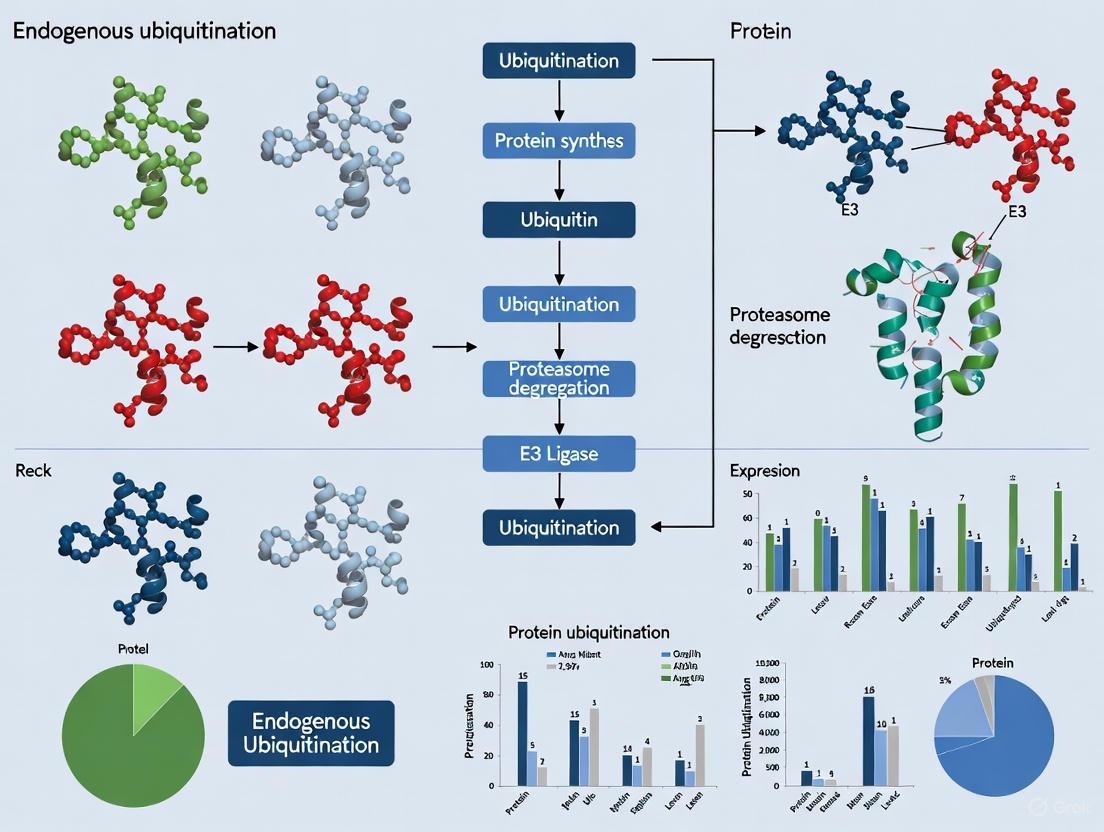
Accurately detecting endogenous protein ubiquitination is a cornerstone for understanding cellular regulation and developing targeted therapies like PROTACs.
Endogenous Ubiquitination Detection: Overcoming Key Challenges in Basic Research and Drug Development
Abstract
Accurately detecting endogenous protein ubiquitination is a cornerstone for understanding cellular regulation and developing targeted therapies like PROTACs. However, researchers face significant challenges including low endogenous stoichiometry, the complex architecture of ubiquitin chains, and the limitations of traditional, low-throughput methods. This article explores the foundational complexities of the ubiquitin system, evaluates current and emerging methodological solutions—from advanced mass spectrometry to chain-specific TUBEs and live-cell assays—and provides a framework for troubleshooting and validation. By comparing the applications and limitations of these technologies, we provide a comprehensive guide for scientists to navigate the technical hurdles and reliably characterize ubiquitination in physiological and drug discovery contexts.
The Ubiquitin Code: Unraveling the Fundamental Challenges in Native System Analysis
The detection of endogenous protein ubiquitination—the process of identifying a protein's ubiquitin modification without artificial overexpression of system components—remains a formidable challenge in molecular and cellular biology. Despite its critical importance for understanding disease mechanisms and developing targeted therapies, researchers face significant technical hurdles including low endogenous stoichiometry, the dynamic nature of the ubiquitin-proteasome system, and interference from abundant polyubiquitin chains. This technical guide examines the fundamental obstacles in endogenous ubiquitination detection, evaluates current methodologies and their limitations, and provides detailed experimental protocols for overcoming these challenges. By framing these issues within the broader context of ubiquitination research, we aim to equip scientists with the strategic approaches necessary to generate reliable, physiologically relevant data on endogenous protein ubiquitination.
Ubiquitination represents one of the most versatile and complex post-translational modifications in eukaryotic cells, regulating diverse cellular functions including protein degradation, signal transduction, DNA repair, and immune responses [1] [2]. The term "endogenous ubiquitination" refers to the naturally occurring modification of substrate proteins by ubiquitin under physiological conditions without experimental manipulation such as overexpression of ubiquitin or target proteins. Investigating endogenous ubiquitination is crucial because it reflects the authentic regulatory state of proteins without the artifacts introduced by overexpression systems, which can overwhelm natural enzymatic pathways and produce non-physiological ubiquitination patterns.
The fundamental challenge in detecting endogenous ubiquitination stems from the biological nature of the process itself. Unlike phosphorylation or acetylation, ubiquitination involves the covalent attachment of an entire 8.6 kDa protein to substrate proteins, creating structural complexities that complicate analysis [2]. Additionally, the ubiquitin system generates an extraordinary diversity of modification types—including monoubiquitination, multiple monoubiquitination, and various polyubiquitin chain linkages—each with distinct functional consequences that require precise characterization to draw meaningful biological conclusions [1] [3].
Table: Key Characteristics of Endogenous Ubiquitination That Complicate Detection
| Characteristic | Biological Significance | Detection Challenge |
|---|---|---|
| Low Stoichiometry | Prevents unnecessary protein turnover | Below detection limits of most conventional methods |
| Multiple Linkages | K48 (degradation), K63 (signaling), etc. [3] | Requires linkage-specific detection methods |
| Dynamic Regulation | Rapid conjugation and deconjugation by DUBs [4] | Transient signal difficult to capture |
| Structural Diversity | Monoubiquitination vs. polyubiquitin chains | Single antibodies rarely detect all forms |
| Endogenous Interference | High abundance of free ubiquitin and polyubiquitin | Masks substrate-specific ubiquitination signals |
Fundamental Technical Obstacles
Low Stoichiometry of Endogenous Modification
The most significant barrier in endogenous ubiquitination detection is the exceptionally low proportion of any given protein that is ubiquitinated at steady state. Unlike overexpression systems where a substantial fraction of a target protein may be artificially modified, endogenous ubiquitination typically affects only a minute fraction—often less than 1%—of a specific substrate pool at any given time [4]. This low stoichiometry places enormous demands on detection sensitivity, as the signal from the ubiquitinated species must be distinguished from the overwhelming background of the unmodified protein. This challenge is further compounded when studying dynamically regulated processes where ubiquitination states may change rapidly in response to cellular signals.
The problem of low stoichiometry is biologically intentional—if a larger proportion of essential proteins were ubiquitinated at any given moment, uncontrolled degradation would disrupt cellular homeostasis. However, this protective feature creates a substantial detection dilemma for researchers. As one study noted, "only a small percentage of a given protein is ubiquitinated in the steady state" [4], making enrichment steps absolutely necessary before detection can be attempted. Without such enrichment, the ubiquitinated forms remain undetectable against the high background of unmodified protein.
Ubiquitin System Dynamics and Lability
The ubiquitination process is inherently dynamic, with continuous conjugation by E1-E2-E3 enzyme cascades and rapid deconjugation by deubiquitinase enzymes (DUBs). This dynamic equilibrium presents a second major challenge for detection, as ubiquitination events on endogenous proteins are often transient in nature [2]. The lability of ubiquitin modifications is particularly problematic during cell lysis and sample preparation, when the disruption of cellular compartments releases DUBs that can rapidly remove ubiquitin from substrates before analysis.
Researchers have documented that "DUBs have sizable enzymatic activity and further decrease levels of ubiquitinated proteins upon cell lysis" [4], making preservation of the endogenous ubiquitination state a technical race against time. This problem necessitates the inclusion of DUB inhibitors in lysis buffers and rapid processing of samples to minimize artificial deubiquitination. However, even with these precautions, the inherently transient nature of many endogenous ubiquitination events means that capture represents a snapshot of a dynamically changing process that may not fully reflect the physiological state.
Polyubiquitin Chain Interference
In endogenous settings, free ubiquitin and polyubiquitin chains represent some of the most abundant proteins in the cell, creating substantial interference in detection assays. As noted in proteomic studies, "ubiquitin is the most abundant ubiquitinated protein in the cell due to the prevalence of poly-Ub chains, masking the identification of other substrates" [4]. This high background noise effectively obscures the detection of specific ubiquitinated substrates, particularly when studying low-abundance proteins that may be critical regulatory targets.
The interference from polyubiquitin chains affects multiple detection methodologies. In western blotting, the smear of polyubiquitin chains can obscure specific signals, while in mass spectrometry-based approaches, peptides derived from ubiquitin itself can dominate the analysis, reducing the capacity to detect peptides from ubiquitinated substrates. This problem necessitates specialized enrichment strategies that can distinguish between free ubiquitin, polyubiquitin chains, and specifically ubiquitinated substrates—a challenging proposition given the structural similarities between these different states.
Diversity of Ubiquitin Linkages and Architectures
The structural complexity of ubiquitin modifications presents a fourth major obstacle to comprehensive endogenous detection. Ubiquitin contains eight potential linkage sites—M1, K6, K11, K27, K29, K33, K48, and K63—each capable of forming functionally distinct polyubiquitin chains [3] [2]. Additionally, mixed or branched chains containing multiple linkage types further complicate the analytical landscape. This diversity means that detecting "ubiquitination" as a monolithic modification provides insufficient biological information; instead, researchers must determine the specific linkage types involved to understand functional consequences.
The linkage diversity problem is particularly relevant for endogenous studies because different linkages frequently occur in distinct physiological contexts. For example, "K48-linked polyubiquitin was found to be involved in DNA repair while K48-linked polyubiquitin was crucial for protein degradation and cell cycle progression" [3]. This linkage-function relationship means that simply detecting ubiquitination provides limited insight; the specific linkage pattern must be deciphered to understand biological significance. Most conventional detection methods lack the specificity to distinguish between these different linkage types, requiring specialized reagents and approaches for comprehensive analysis.
Methodological Limitations and Solutions
Conventional Immunodetection Approaches
The most straightforward approach for detecting endogenous ubiquitination involves immunoprecipitation of the target protein followed by western blot analysis with anti-ubiquitin antibodies. This method requires "a good antibody against the target working in IP; alternatively, one could express a tagged version of the protein, possibly at the endogenous level" [5]. While conceptually simple, this approach faces significant sensitivity challenges due to the low stoichiometry of endogenous ubiquitination and the limited specificity of many ubiquitin antibodies.
A reverse approach involves "IP ubiquitinated proteins from total cell lysate followed by detection with the antibody against the protein of interest" [5], but this method relies on "the availability of specific and very efficient antibodies against Ub" [5]. Both variations of the immunodetection approach struggle with the fundamental signal-to-noise ratio problem presented by endogenous ubiquitination levels. Additionally, western blotting provides primarily semi-quantitative data, making it difficult to precisely measure dynamic changes in ubiquitination levels across different experimental conditions.
Advanced Enrichment Methodologies
To address the sensitivity limitations of conventional approaches, researchers have developed specialized enrichment techniques that improve the capture of ubiquitinated proteins from complex mixtures. These methodologies typically exploit ubiquitin-binding domains (UBDs) or specialized antibodies to selectively isolate ubiquitinated species before detection.
Table: Comparison of Endogenous Ubiquitin Enrichment Methodologies
| Methodology | Principle | Sensitivity | Linkage Specificity | Key Limitations |
|---|---|---|---|---|
| Immunoaffinity with Pan-Ub Antibodies [2] | Antibodies recognizing all ubiquitin linkages | Moderate | None | High background from abundant Ub proteins |
| Linkage-Specific Antibodies [2] | Antibodies specific to particular chain linkages | Variable | High | Limited availability; uncertain coverage |
| Single UBD Domains [4] | Single ubiquitin-binding domains | Low | Variable | Low affinity limits utility |
| Tandem Ubiquitin-Binding Entities (TUBEs) [3] [2] | Multiple UBDs in tandem for avidity | High | Can be engineered for specificity | Potential loss of architectural information |
| Ubiquitin Remnant Antibodies | Antibodies recognizing diglycine remnant on lysine | High for site identification | None | Requires mass spectrometry analysis |
Tandem Ubiquitin-Binding Entities (TUBEs) represent a particularly promising approach for endogenous ubiquitination studies. TUBEs consist of "multiple UBA domains displayed avidity in poly-Ub binding" [4], significantly improving affinity compared to single domains. These reagents can be engineered for linkage specificity, enabling researchers to discriminate between different functional ubiquitin signals. For example, "chain-specific TUBEs with nanomolar affinities for polyubiquitin chains" [3] have been successfully employed to differentiate between K48-linked ubiquitination associated with proteasomal degradation and K63-linked ubiquitination involved in signal transduction.
Mass Spectrometry-Based Strategies
Mass spectrometry offers a powerful alternative for detecting endogenous ubiquitination, particularly through the identification of the characteristic diglycine remnant left on tryptic peptides from ubiquitinated proteins. This "signature" mass shift of 114.043 Da on modified lysine residues enables precise mapping of ubiquitination sites [4] [2]. However, this approach requires substantial enrichment of ubiquitinated peptides to overcome sensitivity limitations, as unmodified peptides dominate typical proteomic digests.
The most successful mass spectrometry workflows combine multiple enrichment strategies—such as TUBE-based protein-level enrichment followed by diglycine-remnant peptide-level enrichment—to achieve the sensitivity needed for endogenous ubiquitination site mapping. These sophisticated workflows have enabled studies such as the identification of "294 endogenous ubiquitination sites on 223 proteins from human 293T cells without proteasome inhibitors or overexpression of ubiquitin" [4]. Despite these advances, mass spectrometry approaches remain technically demanding, requiring specialized instrumentation and expertise that may not be accessible to all researchers.
Detailed Experimental Protocols
TUBE-Based Endogenous Ubiquitination Detection
The following protocol details the use of Tandem Ubiquitin Binding Entities (TUBEs) for detecting endogenous ubiquitination of a target protein, based on methodologies described in recent literature [3] [2]. This approach offers significantly improved sensitivity compared to conventional immunoprecipitation methods.
Reagents and Solutions:
- GST-qUBA beads: Recombinant GST fusion of four tandem ubiquilin-1 UBA domains immobilized on glutathione-sepharose beads
- Lysis Buffer: NETN buffer (50 mM Tris pH 7.5, 150 mM NaCl, 1 mM EDTA, 0.5% Nonidet P-40) supplemented with protease inhibitor mixture and DUB inhibitors (1 mM iodoacetamide and 8 mM 1,10-o-phenanthroline)
- Wash Buffer: NETN buffer with DUB inhibitors
- Elution Buffer: 50% acetonitrile in 0.1% formic acid or 2× SDS-PAGE loading buffer
- Primary antibodies: Target-specific antibody and ubiquitin detection antibody
Procedure:
- Cell Culture and Treatment: Grow twenty 150-mm dishes of cells to confluence under appropriate conditions. Apply experimental treatments to modulate ubiquitination states.
- Cell Lysis: Harvest cells and lyse using brief sonication in ice-cold Lysis Buffer. Maintain samples on ice throughout to minimize deubiquitination.
- Clarification: Centrifuge lysates twice at 100,000 × g for 15 minutes at 4°C to remove insoluble material.
- Affinity Enrichment: Incubate clarified lysates with 200 μL of immobilized GST-qUBA beads at 4°C for 40 minutes with gentle agitation.
- Washing: Wash beads four times with 1 mL of ice-cold Wash Buffer to remove non-specifically bound proteins.
- Elution: Elute bound proteins using either 50% acetonitrile in 0.1% formic acid for mass spectrometry analysis or by boiling in SDS-PAGE loading buffer for western blot analysis.
- Detection: Separate eluted proteins by SDS-PAGE, transfer to membranes, and probe with target-specific antibodies to detect ubiquitinated species.
Critical Considerations:
- Include DUB inhibitors throughout the process to prevent loss of ubiquitin signals
- Process controls in parallel without TUBE enrichment to assess specificity
- Optimize lysis conditions for your specific target protein to maintain solubility while preserving ubiquitination
- For linkage-specific detection, use engineered TUBEs selective for particular ubiquitin chain types
Immunoprecipitation-Based Detection of Endogenous Ubiquitination
This protocol describes the conventional approach for detecting endogenous ubiquitination of a specific target protein through immunoprecipitation and western blotting [5].
Reagents and Solutions:
- IP Lysis Buffer: RIPA buffer or NP-40-based buffer supplemented with protease inhibitors and DUB inhibitors (10 mM N-ethylmaleimide or 1 μM PR-619)
- IP Wash Buffer: Similar composition to lysis buffer but with reduced detergent concentration
- Antibodies: High-quality antibody against target protein for immunoprecipitation, anti-ubiquitin antibody for detection (P4D1, FK1, or FK2)
- Protein A/G Beads: Agarose or magnetic beads coupled to Protein A or G
Procedure:
- Cell Lysis: Lyse cells in IP Lysis Buffer (500 μL to 1 mL per 10⁷ cells) by gentle vortexing or pipetting. Incubate on ice for 10-30 minutes.
- Clarification: Centrifuge lysates at 10,000-20,000 × g for 10 minutes at 4°C. Transfer supernatant to a new tube.
- Pre-clearing: Incubate lysate with control IgG and Protein A/G beads for 30 minutes at 4°C. Pellet beads and transfer supernatant to a new tube.
- Immunoprecipitation: Add target-specific antibody (1-5 μg) to lysate and incubate for 2-4 hours at 4°C with gentle agitation.
- Bead Capture: Add Protein A/G beads and incubate for an additional 1-2 hours to capture antibody-target complexes.
- Washing: Wash beads 3-4 times with IP Wash Buffer to remove non-specifically bound proteins.
- Elution: Elute proteins by boiling in 2× SDS-PAGE loading buffer for 5-10 minutes.
- Western Blot: Separate proteins by SDS-PAGE, transfer to membrane, and probe with anti-ubiquitin antibody to detect ubiquitinated target protein.
Troubleshooting Tips:
- Include positive and negative controls to validate antibody specificity and ubiquitination detection
- Optimize antibody concentrations to maximize signal while minimizing background
- Use high-sensitivity chemiluminescent substrates to detect low-abundance ubiquitinated species
- Consider using target protein knockdown/knockout cells as a negative control for antibody specificity
Visualization of Experimental Approaches
Endogenous Ubiquitination Detection Workflow
The following diagram illustrates the core workflow for detecting endogenous protein ubiquitination, highlighting critical decision points and methodological options:
Ubiquitin Chain Linkage Diversity
This diagram illustrates the complexity of ubiquitin chain linkages that complicate endogenous detection efforts:
The Scientist's Toolkit: Essential Research Reagents
Successful detection of endogenous ubiquitination requires specialized reagents designed to address the unique challenges of low abundance and lability. The following table details key solutions used in the field:
Table: Essential Research Reagents for Endogenous Ubiquitination Detection
| Reagent Category | Specific Examples | Function and Utility | Key Considerations |
|---|---|---|---|
| DUB Inhibitors | N-ethylmaleimide, PR-619, Iodoacetamide | Prevent deubiquitination during sample processing | Critical for preserving endogenous ubiquitination signals during lysis |
| TUBE Reagents | GST-qUBA, K48-TUBE, K63-TUBE [3] | High-affinity capture of polyubiquitinated proteins | Engineered tandem UBDs with avidity effect; linkage-specific versions available |
| Ubiquitin Antibodies | P4D1, FK1, FK2, Linkage-specific antibodies [2] | Detection of ubiquitinated proteins in western blot | Varying specificity; some recognize all linkages, others are linkage-specific |
| Linkage-Specific Reagents | K48-specific TUBEs, K63-specific TUBEs [3] | Discrimination between functional ubiquitin signals | Essential for understanding biological consequences of ubiquitination |
| Affinity Matrices | Ni-NTA agarose, Strep-Tactin resin | Purification of tagged ubiquitin conjugates | Used in tagged-ubiquitin approaches; potential for non-specific binding |
| Mass Spec Standards | Heavy-labeled ubiquitin, DiGly remnant peptides | Quantification of ubiquitination sites | Enable absolute quantification in mass spectrometry approaches |
The detection of endogenous protein ubiquitination remains non-trivial due to fundamental biological and technical constraints, including low stoichiometry, dynamic regulation, and structural diversity of ubiquitin modifications. While significant methodological advances—particularly in enrichment technologies like TUBEs and sensitive mass spectrometry approaches—have improved our capacity to study endogenous ubiquitination, these techniques remain demanding and require careful optimization. The field continues to evolve with emerging technologies such as activity-based probes for DUBs, improved linkage-specific reagents, and single-cell ubiquitination analysis methods that promise to further enhance our capabilities.
As research progresses, the integration of multiple complementary approaches will likely provide the most comprehensive insights into endogenous ubiquitination dynamics. Cross-validation between immunodetection methods, TUBE-based enrichment, and mass spectrometry analysis offers the most robust strategy for confirming endogenous ubiquitination events [5]. Furthermore, the development of standardized protocols and reference materials would significantly improve reproducibility across laboratories. Despite the challenges, mastering these complex detection methods is essential for advancing our understanding of ubiquitin biology and developing novel therapeutic strategies that target the ubiquitin-proteasome system in human disease.
Ubiquitination, the covalent attachment of the 76-amino acid protein ubiquitin to target substrates, represents one of the most versatile post-translational modifications in eukaryotic cells [1]. Originally characterized as a signal for proteasomal degradation via K48-linked polyubiquitin chains, our understanding of ubiquitin signaling has expanded dramatically to encompass at least eight distinct linkage types (M1, K6, K11, K27, K29, K33, K48, and K63) that regulate diverse non-proteolytic processes [6] [3] [7]. The specific cellular outcomes of ubiquitination are determined by the ubiquitin code—a complex language comprising chain linkage type, length, and architecture that enables precise control over protein fate, activity, and localization [8] [1] [9].
This functional diversity originates from ubiquitin's structure, which contains seven lysine residues and an N-terminal methionine, each capable of forming distinct polyubiquitin chains with unique three-dimensional structures recognized by specific effector proteins [1] [7]. While K48-linked chains remain the canonical degradation signal and K63-linked chains are well-established regulators of signal transduction, recent research has revealed sophisticated signaling roles for the less-studied "atypical" ubiquitin linkages (K6, K11, K27, K29, K33) and complex chain architectures including branched ubiquitin chains [10] [7] [11]. This whitepaper examines the expanding functional repertoire of ubiquitin chain linkages, with particular emphasis on the technical challenges inherent in deciphering this complex post-translational modification system.
The Ubiquitin Code: Linkage Types and Functional Significance
Canonical Linkages: K48 and K63
The K48 and K63 ubiquitin linkages represent the best-characterized components of the ubiquitin code, with clearly defined functional specializations established through decades of research.
Table 1: Canonical Ubiquitin Chain Linkages and Their Functions
| Linkage Type | Primary Functions | Key Enzymes | Cellular Processes |
|---|---|---|---|
| K48 | Proteasomal degradation [6] [3] | UBR5, APC/C [10] [11] | Protein turnover, cell cycle regulation [3] [7] |
| K63 | Signal transduction, protein trafficking, DNA repair [8] [6] | Ubc13/Mms2 complex [8], TRAF6 [11] | NF-κB signaling, endocytosis, inflammation [6] [3] |
K48-linked ubiquitin chains serve as the principal signal for proteasome-mediated degradation, with their discovery representing a foundational moment in ubiquitin biology [8] [3]. In contrast, K63-linked chains function predominantly in non-proteolytic signaling, including roles in inflammatory response pathways where they serve as scaffolding elements for the assembly of signaling complexes such as the IKK complex in NF-κB activation [6] [3]. The structural basis for K63-chain assembly was elucidated through crystallographic studies of the Ubc13/Mms2 heterodimer, which revealed how Mms2 positions K63 of the acceptor ubiquitin toward Ubc13's active site to ensure linkage specificity [8].
Atypical Ubiquitin Linkages
Beyond the canonical K48 and K63 linkages, five additional linkage types (M1, K6, K11, K27, K29, K33) contribute to the complexity of ubiquitin signaling, though their functions remain less comprehensively characterized.
Table 2: Atypical Ubiquitin Chain Linkages and Their Functions
| Linkage Type | Primary Functions | Key Enzymes | Cellular Processes |
|---|---|---|---|
| K6 | Mitophagy, DNA damage response [7] | Parkin, HUWE1 [7] | Mitochondrial quality control, genome maintenance |
| K11 | Cell cycle regulation, proteasomal degradation [7] [11] | APC/C, UBE2S [7] [11] | Mitotic progression, ER-associated degradation |
| K27 | Immune signaling [2] | LUBAC complex [8] | Innate immunity, inflammatory response |
| K29 | Proteasomal degradation (in branched chains) [10] | TRIP12, Ufd2/Ufd4 [10] [11] | ER-associated degradation, UFD pathway |
| K33 | Protein trafficking, kinase regulation [7] | Unknown | Endosomal sorting, metabolic regulation |
| M1 (Linear) | NF-κB signaling [8] [7] | LUBAC complex [8] | Innate immunity, inflammation |
The K6-linked chains have emerged as important regulators of mitochondrial quality control through the PINK1-Parkin pathway, where they promote mitophagy in response to mitochondrial damage [7]. Additionally, K6 linkages participate in the DNA damage response, with BRCA1-BARD1 complexes capable of K6-linked auto-ubiquitination [7]. K11-linked chains, often found in conjunction with K48 linkages, play specialized roles in cell cycle regulation through the anaphase-promoting complex/cyclosome (APC/C) and function in endoplasmic reticulum-associated degradation (ERAD) [7] [11]. The K29 and K27 linkages have been implicated in specialized degradation pathways and immune signaling, respectively, while K33 linkages appear to regulate intracellular trafficking and kinase activity [7]. M1-linked linear chains, generated by the LUBAC complex, create recruitment platforms for NF-κB signaling components [8].
Branched Ubiquitin Chains: Complexity in Signaling
Architectures and Synthesis Mechanisms
Branched ubiquitin chains represent a sophisticated layer of regulation in the ubiquitin code, wherein individual ubiquitin monomers are modified at multiple sites to create complex topological structures [11]. These branched architectures can significantly alter signaling outcomes compared to their homotypic counterparts.
Table 3: Branched Ubiquitin Chain Types and Their Functions
| Branched Chain Type | Synthesis Mechanism | Biological Functions | Participating Enzymes |
|---|---|---|---|
| K29/K48 | Sequential action of TRIP12 (K29) and UBR5 (K48) [10] | Targets DUB-protected substrates for degradation [10] | TRIP12, UBR5 [10] |
| K11/K48 | APC/C with UBE2C and UBE2S E2 enzymes [11] | Cell cycle regulation, enhanced degradation [11] | APC/C, UBE2C, UBE2S [11] |
| K48/K63 | Sequential ubiquitination by ITCH (K63) then UBR5 (K48) [11] | Converts non-proteolytic to degradative signal [11] | TRAF6/HUWE1 or ITCH/UBR5 pairs [11] |
| K6/K48 | Single E3 ligases (e.g., Parkin, bacterial NleL) [11] | Proteasomal degradation during mitophagy [11] | Parkin, NleL [11] |
The synthesis of branched ubiquitin chains frequently involves collaboration between E3 ligases with distinct linkage specificities. For example, in the formation of K29/K48-branched chains on OTUD5, TRIP12 first installs K29-linked chains that are subsequently branched with K48-linked chains by UBR5 [10]. This cooperative mechanism enables the conversion of non-proteolytic ubiquitin signals into degradation signals, as demonstrated during the regulation of TNF-α-induced NF-κB signaling [10]. Alternatively, single E3 ligases can generate branched chains through recruitment of multiple E2 enzymes with different linkage specificities, as observed with the APC/C complex during cell cycle regulation [11].
Figure 1: Synthesis of K29/K48-Branched Ubiquitin Chains via Collaborative E3 Activity
Functional Consequences of Chain Branching
Branched ubiquitin chains serve as priority signals for proteasomal degradation, particularly effective against substrates protected by deubiquitinases (DUBs) [10]. The combination of DUB-resistant linkages (e.g., K29) with proteasome-targeting linkages (e.g., K48) creates a robust degradation signal that can overcome cellular deubiquitination activities [10]. This mechanism is exemplified by OTUD5 degradation, where K29 linkages resist OTUD5's DUB activity (which preferentially cleaves K48 linkages), thereby facilitating UBR5-dependent K48 branching and subsequent proteasomal targeting [10].
Branched chains also enhance proteasome recruitment through increased ubiquitin density and provide binding platforms for specialized ubiquitin receptors. For instance, K11/K48-branched chains demonstrate preferential association with both the proteasome and p97 segregase, accelerating substrate degradation [11]. The strategic incorporation of branched chains enables cells to convert non-degradative signals into degradative ones, as observed during the regulation of apoptosis where K63-linked chains on TXNIP are subsequently branched with K48 linkages to initiate destruction of the pro-apoptotic regulator [11].
Methodological Challenges in Ubiquitination Research
Technical Limitations in Detection and Characterization
The study of ubiquitin chain diversity faces significant technical hurdles, primarily stemming from the low stoichiometry of ubiquitination events, the transient nature of many ubiquitination signals, and the remarkable structural complexity of ubiquitin chains [2]. Traditional methodologies like immunoblotting provide limited information about linkage specificity and are inadequate for capturing dynamic ubiquitination events [6] [2]. Mass spectrometry-based approaches, while powerful, require sophisticated instrumentation and struggle with linkage-specific analysis of endogenous proteins without prior enrichment [6] [2].
A fundamental challenge lies in distinguishing between different chain architectures (homotypic, mixed, branched) and accurately quantifying their relative abundances under physiological conditions [2] [11]. The use of ubiquitin mutants (e.g., lysine-to-arginine substitutions) to study specific linkages may introduce artifacts, as these mutants cannot replicate the full complexity of wild-type ubiquitin interactions [6] [3]. Additionally, the limited availability of high-quality linkage-specific antibodies further constrains comprehensive ubiquitin profiling [2].
Advanced Methodologies for Ubiquitin Analysis
Recent technological advances have begun to address these challenges through the development of specialized tools for ubiquitin research.
Table 4: Methodologies for Ubiquitin Chain Characterization
| Methodology | Principle | Applications | Limitations |
|---|---|---|---|
| TUBEs (Tandem Ubiquitin-Binding Entities) | Engineered high-affinity ubiquitin-binding domains [6] [2] | Enrichment of endogenous ubiquitinated proteins; linkage-specific analysis [6] [3] | Potential bias in chain recognition; requires validation |
| Linkage-Specific Antibodies | Antibodies recognizing specific ubiquitin linkages [2] | Immunoblotting, immunofluorescence, immunoprecipitation of specific chain types [2] | Limited availability for atypical linkages; potential cross-reactivity |
| Ubiquitin AQUA/PRM | Absolute quantification using heavy isotope-labeled ubiquitin peptides [10] | Precise quantification of linkage abundance in samples [10] | Requires mass spectrometry expertise; expensive |
| DiGly Antibody Enrichment | Antibodies recognizing diglycine remnant on lysine after trypsin digestion [2] | Proteome-wide ubiquitination site mapping [2] | Does not provide linkage information; bias toward abundant sites |
Tandem Ubiquitin Binding Entities (TUBEs) represent a particularly promising technology, offering nanomolar affinities for polyubiquitin chains and compatibility with high-throughput applications [6] [3]. Chain-specific TUBEs enable researchers to discriminate between different ubiquitin linkages in cellular contexts, as demonstrated by the differential capture of K63-linked RIPK2 ubiquitination induced by inflammatory stimuli versus K48-linked ubiquitination induced by PROTAC treatment [6] [3]. This technology provides a significant advantage over traditional methods by preserving labile ubiquitination signals during cell lysis and allowing more accurate assessment of endogenous ubiquitination dynamics.
Figure 2: TUBE-Based Workflow for Linkage-Specific Ubiquitination Analysis
The Scientist's Toolkit: Essential Research Reagents
Table 5: Essential Research Reagents for Ubiquitination Studies
| Reagent Category | Specific Examples | Primary Applications | Key Features |
|---|---|---|---|
| Linkage-Specific TUBEs | K63-TUBE, K48-TUBE, Pan-TUBE [6] [3] | Selective enrichment of specific ubiquitin linkages | High affinity (nM range), linkage specificity, preserves ubiquitination during lysis |
| Tagged Ubiquitin Constructs | His-tagged Ub, Strep-tagged Ub, HA-Ub [2] | Affinity purification of ubiquitinated proteins | Enables substrate identification; may alter ubiquitin structure |
| Linkage-Specific Antibodies | K48-linkage specific, K63-linkage specific [2] | Detection and enrichment of specific chain types | Limited to characterized linkages; quality varies between lots |
| DUB Inhibitors | PR-619, N-ethylmaleimide [2] | Preservation of ubiquitination during sample preparation | Broad-specificity or linkage-selective options available |
| Activity-Based Probes | Ub-VS, Ub-PA [2] | Profiling DUB activity and specificity | Identifies active DUBs; can be linkage-specific |
| E3 Ligase Modulators | PROTACs, Molecular Glues [6] [12] | Targeted protein degradation; E3 functional studies | Enables precise manipulation of ubiquitination pathways |
Therapeutic Implications and Future Perspectives
The expanding understanding of ubiquitin linkage diversity has profound implications for therapeutic development, particularly in the field of targeted protein degradation [6] [12]. PROTACs (Proteolysis Targeting Chimeras) and molecular glues represent groundbreaking therapeutic modalities that hijack the ubiquitin-proteasome system to eliminate disease-causing proteins [6] [12]. These approaches predominantly utilize K48-linked ubiquitination to target proteins for degradation, but emerging research suggests that incorporating alternative linkages or branched chains could enhance degradation efficiency, particularly for challenging substrates [10] [12].
The ability to specifically modulate inflammatory signaling through interference with K63 ubiquitination presents another promising therapeutic avenue [6] [3]. Small molecule inhibitors targeting enzymes involved in K63 chain assembly (e.g., TRAF6, Ubc13) have shown efficacy in preclinical models of inflammatory diseases, highlighting the potential of linkage-specific ubiquitin modulation as a treatment strategy [6] [3]. Additionally, DUBs that specifically cleave K63-linked chains offer alternative targets for modulating inflammatory pathways [6] [3].
Future progress in ubiquitin research will depend on overcoming persistent methodological challenges, particularly the development of more comprehensive tools for analyzing the full complexity of the ubiquitin code under physiological conditions. Advances in mass spectrometry sensitivity, the generation of additional high-affinity linkage-specific reagents, and the integration of computational approaches will be essential for deciphering the nuanced language of ubiquitin signaling in health and disease [2] [9]. As these technical barriers are addressed, our understanding of ubiquitin chain linkages will continue to evolve, revealing new biological insights and therapeutic opportunities far beyond the original degradation-centric paradigm.
Within the broader challenge of endogenous ubiquitination detection, a central and persistent hurdle is the specific discrimination between productive and non-productive ubiquitination events. Ubiquitination, the covalent attachment of the small protein modifier ubiquitin to substrate proteins, regulates a vast array of cellular processes, ranging from targeted proteasomal degradation to non-proteolytic signaling in DNA repair, endocytosis, and immune response [1] [13]. The term "productive" herein refers to ubiquitination events that trigger a specific, functional biological outcome, such as degradation via the 26S proteasome or the activation of a signaling pathway. In contrast, "non-productive" interactions are those that are functionally silent, transient, or lead to abortive outcomes, and they represent a significant source of background noise in detection assays.
This specificity problem arises from the immense complexity of the ubiquitin code. A typical protein contains numerous surface-accessible lysine residues, all of which are theoretically competent for ubiquitination [13]. The combinatorial space is further expanded by the ability of ubiquitin itself to form polymer chains through any of its seven internal lysine residues or its N-terminal methionine, with each linkage type—be it K48-linked, K63-linked, or the less common K6-, K11-, K27-, K29-, and K33-linked chains—potentially conferring a distinct fate to the modified substrate [1] [2]. Furthermore, the system is dynamically regulated by deubiquitinases (DUBs) which act as 'erasers' of the ubiquitin code [14]. Consequently, simply detecting a ubiquitinated species is insufficient; researchers must decipher the functional meaning of that modification within a specific physiological context. This guide details the modern methodologies and strategic considerations required to overcome this specificity hurdle in endogenous ubiquitination research.
Methodological Approaches for Specific Ubiquitination Analysis
A multifaceted approach is required to confidently assign function to a ubiquitination event. The table below summarizes the core methodologies, their applications, and their specific utility in distinguishing productive from non-productive interactions.
Table 1: Core Methodologies for Specific Ubiquitination Analysis
| Methodology | Primary Application | Utility in Specificity | Key Limitations |
|---|---|---|---|
| Immunoblotting with Linkage-Specific Antibodies [2] | Detection of specific ubiquitin chain topologies (e.g., K48, K63). | Distinguishes degradation-signaling (K48) from signaling-specific (K63) chains. | Limited to known, well-characterized linkages; antibody cross-reactivity is a concern. |
| MS-Based Ubiquitylomics with Proteasome Inhibition [15] | Global profiling of ubiquitination sites. | Reveals ubiquitination events that directly lead to substrate degradation when compared to non-inhibited conditions. | Proteasome inhibition can artificially alter the ubiquitin landscape and deplete Ub pools. |
| Tandem-Repeated Ub-Binding Entities (TUBEs) [2] | Affinity enrichment of endogenous ubiquitinated proteins. | Protects ubiquitinated proteins from DUBs during extraction, preserving the native "productive" state. | May not differentiate between functional and non-functional polyubiquitin chains. |
| Site-Specific Mutagenesis (Lysine to Arginine) [2] | Functional validation of specific ubiquitination sites. | Establishes a causal link between modification at a specific lysine and a functional outcome (e.g., protein stabilization). | Mutagenesis may disrupt protein folding or other lysine-dependent functions, leading to indirect effects. |
| Biochemical Reconstitution with Homogeneous Ubiquitination [13] | In vitro study of the biophysical consequences of ubiquitination. | Directly tests how ubiquitination at a single, defined site alters substrate stability, conformation, or interactome. | Technically challenging to produce homogenously modified proteins; may not fully recapitulate the cellular environment. |
Strategic Application of Proteasome Inhibition
A critical strategy for identifying productive degradative ubiquitination involves the deliberate use of proteasome inhibitors, such as MG132. In a landmark quantitative proteomic study, researchers demonstrated that profiling ubiquitination both in the presence and absence of MG132 was essential for a complete picture [15]. For substrates like CDC25A and EXO1, whose ubiquitination leads to rapid degradation, the ubiquitination signal decreased upon DNA damage in the absence of MG132, not because of deubiquitination, but because the modified protein was swiftly destroyed. Only upon proteasome inhibition was the induced ubiquitination event clearly detectable [15]. Conversely, for non-proteolytic ubiquitination events, such as on PCNA, inhibition could sometimes diminish the signal, likely due to depletion of free ubiquitin pools [15]. This differential response to proteasome inhibition provides a powerful filter for classifying the functional outcome of ubiquitination.
Quantitative Insights from Proteomic Studies
Large-scale ubiquitylomic studies have begun to map the landscape of ubiquitination, providing quantitative data on regulated sites. The following table compiles key quantitative findings from targeted studies, illustrating the scale and context-dependence of ubiquitination.
Table 2: Quantitative Ubiquitination Profiles from Selected Studies
| Study Context | Total Ubiquitination Sites Identified | Regulated Sites (>2-fold change) | Key Functional Pathways Implicated | Reference |
|---|---|---|---|---|
| DNA Damage Response (UV & IR) [15] | 33,503 sites | 2,197 sites (UV), 741 sites (IR) | Nucleotide Excision Repair (NER), Fanconi Anemia (FA) pathway, mitotic spindle/centromere function. | [15] |
| Human Pituitary Adenomas [16] | 158 sites on 108 proteins | Not specified (Comparative analysis performed) | PI3K-AKT signaling, Hippo signaling, ribosome biogenesis, nucleotide excision repair. | [16] |
| Global Profiling (HeLa cells) [2] | 277 - 753 sites (varying methods) | Varies by cellular perturbation | Diverse, dependent on the specific E3 ligase or stressor studied. | [2] |
These datasets underscore that ubiquitination is a widespread modification and that a significant fraction of sites are dynamically regulated. The identification of regulated sites on proteins like CENPs (centromere proteins) in the DNA damage response also highlights that the functional consequences of ubiquitination extend far beyond the proteasome, implicating it in processes like chromosome segregation [15].
Experimental Workflow for Endogenous Ubiquitination Detection
The following diagram illustrates a integrated workflow for the specific detection and validation of endogenous protein ubiquitination, incorporating key steps to minimize artifacts and maximize functional insight.
Workflow Description
- Cell/Tissue Lysis with Stabilization: The process begins with the rapid lysis of cells or tissue under denaturing conditions to preserve the native ubiquitination state. The addition of proteasome inhibitors (e.g., MG132) at this stage is critical to prevent the degradation of proteins marked by productive degradative ubiquitination, thereby allowing their detection [15].
- Enrichment of Ubiquitinated Proteins: To overcome the low stoichiometry of endogenous ubiquitination, specific enrichment is required. This can be achieved using:
- TUBEs (Tandem-repeated Ubiquitin-Binding Entities): These high-affinity tools protect polyubiquitin chains from deubiquitinases (DUBs) during extraction, preserving the endogenous ubiquitin signature [2].
- Anti-Ubiquitin Antibodies: Antibodies specific to the ubiquitin remnant (K-ε-GG) after trypsin digestion are widely used for proteomic studies, while linkage-specific antibodies can pull down chains of a defined topology [2] [16].
- Method Selection for Analysis: The enriched material is then analyzed via a hypothesis-driven or discovery-based path.
- Immunoblotting with linkage-specific antibodies (e.g., for K48 or K63 chains) provides a direct readout of chain type and abundance, useful for confirming a suspected functional outcome [2].
- Mass Spectrometry (Ubiquitylomics) enables the global, unbiased identification of ubiquitination sites and, with advanced techniques, can reveal the architecture of the ubiquitin chain itself [15] [2] [16].
- Functional Validation: Any candidate ubiquitination event requires functional validation. The most common method is site-directed mutagenesis, where the target lysine is replaced with an arginine (K to R). If this mutation stabilizes a protein or abrogates a signaling event, it provides strong evidence that ubiquitination at that specific site was productive [2].
- Data Integration: The final step involves synthesizing data from all sources to assign a functional role to the ubiquitination event, distinguishing productive from non-productive interactions.
The Scientist's Toolkit: Essential Research Reagents
Success in ubiquitination research relies on a suite of specialized reagents. The table below details key tools and their functions.
Table 3: Essential Reagents for Ubiquitination Research
| Research Reagent | Function & Specific Role | Key Consideration for Specificity |
|---|---|---|
| Linkage-Specific Ub Antibodies [2] | Immunoblot/IP: Detects or enriches for specific polyubiquitin chain linkages (K48, K63, etc.). | Directly links a ubiquitination event to a potential function (e.g., K48 for degradation). |
| K-ε-GG Motif Antibody [15] [16] | MS Sample Prep: Immunoaffinity enrichment of tryptic peptides derived from ubiquitinated proteins for mass spectrometry. | Enables system-wide discovery of ubiquitination sites from endogenous samples. |
| TUBEs (Tandem UBIQUITIN Binding Entities) [2] | Affinity Purification: High-affinity enrichment of polyubiquitinated proteins from cell lysates while protecting from DUBs. | Preserves the labile "productive" ubiquitin signature that might otherwise be lost during preparation. |
| Proteasome Inhibitors (e.g., MG132) [15] | Cell Treatment: Blocks the 26S proteasome, preventing degradation of proteins marked with degradative ubiquitin chains. | Essential for amplifying the signal of transient, productive degradation signals. |
| Ubiquitin-Activating Enzyme (E1) Inhibitor (e.g., TAK-243) | Cell Treatment: Blocks the entire ubiquitination cascade, serving as a critical negative control. | Confirms that a detected signal is truly dependent on ubiquitination. |
| Deubiquitinase (DUB) Inhibitors | Cell Treatment / Lysate Additive: Inhibits DUB activity to prevent loss of ubiquitin signals post-lysis. | Helps maintain the endogenous ubiquitination landscape, reducing false negatives. |
Distinguishing productive from non-productive ubiquitination is a multifaceted challenge that lies at the heart of understanding this critical post-translational modification. There is no single solution; rather, researchers must employ an integrated strategy. This involves stabilizing transient interactions with pharmacological agents, deciphering the ubiquitin code using linkage-specific tools, mapping modifications globally with advanced proteomics, and establishing causal relationships through functional genetics and biochemical reconstitution. As the methodologies detailed herein continue to mature, the scientific community will be better equipped to crack the specificity hurdle, paving the way for a deeper understanding of cellular regulation and the development of more precise therapeutics targeting the ubiquitin system.
The Interplay of E1, E2, and E3 Enzymes in Creating Complexity
The Ubiquitin-Proteasome System (UPS) represents a fundamental regulatory mechanism in eukaryotic cells, governing the controlled degradation of proteins and thereby influencing nearly all aspects of cellular life. The specificity of this system originates from a sophisticated enzymatic cascade comprising E1 (activating), E2 (conjugating), and E3 (ligating) enzymes, which collectively mediate the covalent attachment of ubiquitin to target proteins. This modification, known as ubiquitination, can signal for proteasomal degradation or alter a protein's function, localization, and interactions. The complexity of this system is staggering; the human genome encodes approximately 2 E1 enzymes, ~40 E2 enzymes, and over 600 E3 ligases, which collectively manage the specificity for thousands of distinct protein substrates [17] [18] [2]. This intricate interplay presents a profound challenge for research, particularly in the accurate detection and characterization of endogenous ubiquitination events. This technical guide will delineate the core mechanisms of the E1-E2-E3 cascade, detail the experimental methodologies essential for its study, and frame these discussions within the pressing challenges of endogenous ubiquitination detection that confront researchers today.
The Core Enzymatic Cascade: Mechanism and Specificity
The ubiquitination pathway is a sequential enzymatic process that results in the attachment of ubiquitin to specific substrate proteins. The process is initiated by the ATP-dependent activation of ubiquitin by an E1 enzyme. The E1 enzyme's catalytic cysteine residue attacks the ATP-activated C-terminal glycine of ubiquitin, forming a high-energy thioester bond [17] [19]. Structural studies have revealed that the C-terminal sequence of ubiquitin (LRLRGG) is critical for E1 recognition, with Arg72 being absolutely indispensable for this interaction [20]. Following activation, ubiquitin is transferred to the catalytic cysteine of an E2 conjugating enzyme via a transthiolation reaction, forming an E2~Ub thioester intermediate [17].
The E3 ubiquitin ligase, the final and most pivotal enzyme in this cascade, is responsible for substrate recognition and the transfer of ubiquitin. E3s achieve this through two primary mechanistic styles:
- RING-type E3s: These function as scaffolds that simultaneously bind the E2~Ub complex and the substrate protein, facilitating the direct transfer of ubiquitin from the E2 to the substrate without a covalent E3-ubiquitin intermediate [17] [18].
- HECT-type E3s: These employ a two-step mechanism. First, ubiquitin is transferred from the E2 to a catalytic cysteine within the HECT domain, forming a reactive E3~Ub thioester. Subsequently, the E3 catalyzes the transfer of ubiquitin to the target substrate [17] [18].
A third class, known as RBR (RING-Between-RING) E3 ligases, utilizes a hybrid mechanism that combines aspects of both RING and HECT types [18]. The hierarchical nature of this system—with few E1s, a moderate number of E2s, and a vast repertoire of E3s—ensures that substrate specificity is predominantly conferred by the E3 ligases [17]. This specificity is further refined by the ability of E3s to recognize specific degradation signals, or degrons, on their substrates. These degrons can be constitutive or can be activated by post-translational modifications such as phosphorylation (phosphodegrons), or revealed through protein maturation, misfolding, or exposure to specific environmental conditions like oxygen levels [17].
Table 1: Key Enzyme Classes in the Human Ubiquitination Cascade
| Enzyme Class | Number of Human Genes | Primary Role | Key Features |
|---|---|---|---|
| E1 (Activating) | 2 [2] | Ubiquitin activation | ATP-dependent; forms E1~Ub thioester; one E1 (Ube1) is major [19] |
| E2 (Conjugating) | ~40 [2] | Ubiquitin conjugation | Accepts Ub from E1; forms E2~Ub thioester; ~30 active E2s [21] |
| E3 (Ligating) | >600 [17] | Substrate recognition & Ub transfer | Imparts substrate specificity; determines polyUb chain topology [17] |
The following diagram illustrates the core ubiquitination cascade, highlighting the distinct mechanisms of RING and HECT-type E3 ligases:
The Complexity of the Ubiquitin Code
The biological outcome of ubiquitination is not determined solely by the modification itself but by the intricate "ubiquitin code" written upon the substrate. This code encompasses several layers of complexity, including monoubiquitination, multi-monoubiquitination, and the formation of polyubiquitin chains. Polyubiquitin chains are formed when the C-terminus of one ubiquitin molecule is covalently linked to one of the seven lysine residues (K6, K11, K27, K29, K33, K48, K63) or the N-terminal methionine (M1) of a preceding ubiquitin molecule [17] [21]. The topology of these chains is a primary determinant of the signal they convey.
Table 2: Diversity and Functions of Ubiquitin Chain Linkages
| Linkage Type | Primary Known Functions | Key E3 Ligases / Complexes |
|---|---|---|
| K48-linked | Major signal for proteasomal degradation [22] [18] | Many RING E3s (e.g., APC/C, SCF) [17] |
| K63-linked | Non-proteolytic signaling (DNA repair, NF-κB, inflammation) [18] [6] | TRAF6, cIAPs [6] |
| M1-linked (Linear) | NF-κB activation, immunity [18] | LUBAC complex (HOIP, HOIL-1) [18] |
| K11-linked | Cell cycle regulation, ER-associated degradation (ERAD) [18] | APC/C [18] |
| K27-linked | Innate immune response, mitochondrial regulation [18] | Parkin [18] |
| K29-linked | Proteasomal degradation, innate immunity [18] | UBR5, HUWE1 [18] |
| K33-linked | Intracellular trafficking, T-cell receptor signaling [18] | - |
| K6-linked | DNA damage response, mitophagy [18] | Parkin [18] |
Different chain linkages are read by specific effector proteins containing ubiquitin-binding domains (UBDs), which interpret the signal and initiate the appropriate cellular response, such as recruitment to the proteasome or activation of a kinase cascade [21]. Furthermore, the ubiquitin code is complicated by the formation of heterotypic and branched chains, which contain multiple linkage types within a single polymer, and by the fact that ubiquitin itself can be subject to post-translational modifications like phosphorylation and acetylation, adding another layer of regulatory potential [21].
Research Challenges in Endogenous Ubiquitination Detection
The complexity of the E1-E2-E3 interplay and the resulting ubiquitin code presents formidable challenges for experimental research, particularly when the goal is to accurately capture endogenous, unperturbed ubiquitination events.
- Low Stoichiometry and Transient Nature: Ubiquitination is a dynamic and often low-abundance modification. The ubiquitinated form of a protein typically represents only a tiny fraction of its total cellular pool at any given moment, making it difficult to detect without enrichment [2]. Furthermore, the thioester bonds between E1/E2 enzymes and ubiquitin are transient and labile, requiring specialized lysis buffers for preservation.
- Complex Chain Architecture: The diversity of ubiquitin chain linkages means that detecting "ubiquitination" as a monolithic event is insufficient. Understanding the biological consequence requires knowledge of the specific chain type involved. For example, a PROTAC designed to degrade a protein by inducing K48-linked chains may be ineffective if it instead primarily triggers non-degradative K63-linked ubiquitination [6]. Standard proteomic approaches often fail to distinguish between these functionally distinct modifications.
- Limitations of Genetic Manipulation: A common strategy to study ubiquitination involves the overexpression of epitope-tagged ubiquitin (e.g., His-, HA-, or Strep-tagged). While powerful for enrichment, this approach can create artifacts. Tagged ubiquitin may not perfectly mimic endogenous ubiquitin, and its overexpression can saturate the native system, altering the physiology of the pathway and leading to non-specific labeling [2]. There is, therefore, a critical need for methods that can probe the endogenous ubiquitin landscape without genetic manipulation, especially for the analysis of clinical tissue samples.
Experimental Methodologies for Deconvoluting Complexity
To overcome these challenges, researchers have developed a suite of sophisticated biochemical and proteomic tools. The selection of an appropriate method depends on the specific research question, whether it is identifying novel substrates, mapping modification sites, or defining chain topology.
Enrichment Strategies for Ubiquitinated Proteins
The first step in most ubiquitination analyses is the specific isolation of ubiquitinated proteins from complex cell lysates.
- Ubiquitin Tagging-Based Approaches: This involves engineering cells to express ubiquitin with an affinity tag (e.g., 6xHis, Strep, or HA). Following lysis, ubiquitinated proteins are purified using the corresponding affinity resin (Ni-NTA for His, Strep-Tactin for Strep) [2]. While this is a relatively easy and low-cost method, its major drawbacks are the potential for artifacts from tag expression and the infeasibility of use in clinical tissues [2].
- Antibody-Based Enrichment: This method uses antibodies, such as P4D1 or FK2, that recognize ubiquitin itself. This allows for the purification of endogenously ubiquitinated proteins without the need for genetic tags, making it suitable for tissue samples [2]. Furthermore, the development of linkage-specific antibodies (e.g., for K48 or K63 chains) enables the selective enrichment of proteins modified with a particular chain type [6] [2].
- Ubiquitin-Binding Domain (UBD)-Based Enrichment: Proteins containing UBDs, such as tandem ubiquitin-binding entities (TUBEs), can be used as affinity reagents. TUBEs exhibit high affinity for polyubiquitin chains and have the added benefit of protecting ubiquitin chains from deubiquitinating enzyme (DUB) activity during purification [6] [2]. Chain-specific TUBEs (e.g., K48-TUBE or K63-TUBE) have been developed to selectively capture proteins modified with specific linkages, providing a powerful tool for dissecting the ubiquitin code [6].
Cutting-Edge Techniques: ProtacID and TUBE-Based Assays
Recent advancements have led to more nuanced techniques that provide deeper insights into ubiquitination in living cells.
ProtacID is a proximity-dependent labeling approach based on the BioID technique. In this method, a biotin ligase (e.g., miniTurbo) is fused to an E3 ligase (such as VHL or CRBN). When a PROteolysis TArgeting Chimera (PROTAC) recruits a target protein to this engineered E3, the biotin ligase labels nearby proteins with biotin. Subsequent streptavidin-based purification and mass spectrometry analysis can then identify both productive and non-productive interactors of the PROTAC, validating targets and identifying potential off-target effects directly in living cells [23]. The workflow for ProtacID is illustrated below:
Chain-Specific TUBE Assays have been adapted for high-throughput screening to quantify linkage-specific ubiquitination of endogenous proteins. For instance, a 96-well plate can be coated with K48-TUBE to specifically capture proteins modified with K48-linked chains. The ubiquitination of a specific target protein, such as RIPK2, can then be quantified by immunoblotting directly from the plate. This allows researchers to distinguish if a stimulus (like an inflammatory agent) or a PROTAC induces K63-linked (signaling) or K48-linked (degradative) ubiquitination of the same protein, providing critical functional insight [6].
The Scientist's Toolkit: Key Reagent Solutions
Table 3: Essential Research Reagents for Ubiquitination Studies
| Reagent / Tool | Primary Function | Key Application in Research |
|---|---|---|
| Tandem Ubiquitin Binding Entities (TUBEs) | High-affinity enrichment of polyUb chains; protects from DUBs [6] [2] | Purification of endogenous ubiquitinated proteins; chain-linkage analysis [6] |
| Linkage-Specific Antibodies | Immuno-enrichment/detection of specific Ub chain types (K48, K63, etc.) [6] [2] | Immunoblotting, immunofluorescence, and IP of defined Ub linkages [2] |
| Epitope-Tagged Ubiquitin (His, HA, Strep) | Affinity-based purification of ubiquitinated proteome [2] | Global ubiquitylome analysis via MS; identification of novel substrates/sites [2] |
| PROTACs/Molecular Glues | Induce targeted ubiquitination and degradation of specific proteins [23] | Chemical biology tool to probe E3 ligase function and for therapeutic development [23] |
| Activity-Based DUB Probes | Label and inhibit active deubiquitinating enzymes [21] | Profiling DUB activity; validating DUB inhibitors; studying Ub chain dynamics [21] |
| Neddylation Inhibitor (MLN4924) | Inhibits cullin-RING ligase (CRL) activity by blocking cullin neddylation [23] | Rescues endogenous CRL substrates; confirms E3 ligase involvement in degradation [23] |
The interplay of E1, E2, and E3 enzymes generates a sophisticated system of regulatory control that is fundamental to cellular homeostasis. The complexity arises not only from the hierarchical cascade itself but from the vast combinatorial potential of E2-E3 partnerships and the dense information content of the ubiquitin code they write. For researchers and drug developers, cracking this code requires moving beyond simply detecting ubiquitination to precisely defining its architecture and functional consequences. While challenges in studying endogenous ubiquitination remain significant, the integration of innovative methodologies—such as ProtacID for mapping interactions in living cells and TUBE-based platforms for linkage-specific analysis—is rapidly advancing the field. As these tools continue to evolve, they will undoubtedly accelerate both our fundamental understanding of ubiquitin signaling and the development of novel therapeutics, such as PROTACs, that harness the power of the ubiquitin system to treat human disease.
Advanced Tools and Techniques: A Methodological Toolkit for Ubiquitination Profiling
Protein ubiquitination is a quintessential post-translational modification (PTM), involved in virtually all cellular processes in eukaryotic cells, from protein degradation and DNA repair to cell signaling and immune response [24] [25]. Unlike smaller PTMs, ubiquitination involves the covalent attachment of an 8.6 kDa ubiquitin protein to target substrates, creating extraordinary structural diversity through monoubiquitination, multiubiquitination, or polyubiquitin chains of various linkages [24] [26]. Despite its biological prevalence, the low stoichiometry of ubiquitination at any specific site and its dynamic, transient nature make the confident detection of endogenous ubiquitination a central challenge in the field [26] [2]. Mass spectrometry (MS) has emerged as a powerful, unbiased tool for identifying ubiquitination sites and characterizing ubiquitin chain architecture. However, the direct analysis of ubiquitinated peptides is hampered by their low abundance and signal suppression from unmodified peptides in complex mixtures. Consequently, sophisticated biochemical enrichment strategies are a non-negotiable prerequisite for in-depth ubiquitinome analysis [24] [27]. This guide details these critical enrichment methodologies and subsequent MS workflows, framing them within the overarching challenge of studying endogenous ubiquitination without genetic manipulation.
Biochemical Enrichment Strategies for Ubiquitinated Substrates
A critical first step in ubiquitinomics is enriching ubiquitinated proteins or peptides from complex lysates. The choice of strategy profoundly impacts specificity, compatibility with physiological systems, and the type of biological information obtained.
Table 1: Core Enrichment Strategies for Ubiquitinated Proteins and Peptides
| Strategy | Principle | Key Reagents | Advantages | Disadvantages |
|---|---|---|---|---|
| Ubiquitin Tagging | Ectopic expression of affinity-tagged ubiquitin (e.g., His, Strep, FLAG) in cells. | His-tag, Strep-tag, Ni-NTA resin, Strep-Tactin resin [2] | Relatively easy, low-cost; enables study of ubiquitination dynamics in live cells [2]. | Cannot be used on clinical/animal tissues; tagged Ub may not fully mimic endogenous Ub; co-purification of endogenous His-rich proteins can cause background [2]. |
| Ubiquitin Antibody-Based | Immunoaffinity purification of ubiquitinated proteins using anti-ubiquitin antibodies. | P4D1, FK1/FK2 antibodies (pan-specific); linkage-specific antibodies (e.g., K48, K63) [2] | Applicable to endogenous proteins in any sample, including tissues and clinical specimens [2]. | High cost of antibodies; potential for non-specific binding; limited availability of high-quality linkage-specific antibodies [24]. |
| UBD-Based (TUBEs) | Enrichment using Tandem Ubiquitin-Binding Entities with high affinity for ubiquitin chains. | Tandem-repeated Ub-binding entities (TUBEs) [2] | Protects ubiquitin chains from deubiquitinases (DUBs) and proteasomal degradation during lysis; preserves endogenous chain architecture [2]. | Does not directly provide information on the specific ubiquitination sites on the substrate protein [28]. |
| diGly Remnant Immunocapture | Post-digestion enrichment of peptides containing the K-ε-GG remnant left after trypsin cleavage. | Anti-K-ε-GG antibody [27] [26] | Directly enables site mapping; highly specific; compatible with quantitative MS; does not require genetic tags [27]. | Cannot distinguish ubiquitination from other Ub-like modifications (e.g., NEDDylation); bias towards certain peptide sequences [28]. |
The following workflow outlines the typical steps from sample preparation to data analysis, integrating the enrichment strategies described above:
Diagram 1: A generalized workflow for ubiquitinomics, showing the two primary enrichment points and the common strategies employed at each stage.
Mass Spectrometry Detection and Ubiquitination Site Identification
Following enrichment, samples are analyzed by liquid chromatography coupled to tandem mass spectrometry (LC-MS/MS). The core principle of site identification lies in the unique mass signature imparted to peptides during sample preparation.
The diGly Remnant and Bottom-Up Proteomics
In the dominant bottom-up proteomics approach, proteins are digested with a protease like trypsin before MS analysis. Trypsin cleaves after arginine and lysine residues. The C-terminal sequence of ubiquitin is -RLRGG. Cleavage after the final arginine (R) leaves a diGlycine (diGly or K-ε-GG) remnant—a glycine-glycine moiety—attached via an isopeptide bond to the modified lysine on the substrate peptide [26] [29]. This remnant has a monoisotopic mass shift of +114.0429 Da, which is a diagnostic mass tag detectable by MS [29]. During MS/MS fragmentation, the peptide's backbone breaks, and the resulting spectrum reveals the sequence and the precise location of the modified lysine.
Advanced MS Acquisition Methods: DDA vs. DIA
The choice of MS acquisition method significantly impacts the depth and quantitative quality of ubiquitinome coverage.
- Data-Dependent Acquisition (DDA): This traditional method selects the most abundant precursor ions from an MS1 scan for subsequent fragmentation. While powerful, it can be stochastic and miss lower-abundance diGly peptides in complex mixtures [27].
- Data-Independent Acquisition (DIA): This newer method fragments all ions within predefined, consecutive m/z windows, capturing all detectable peptides. A 2021 study demonstrated that a DIA-based diGly workflow dramatically outperforms DDA, identifying approximately 35,000 distinct diGly peptides in a single measurement—nearly double the number from DDA—with superior quantitative accuracy and reproducibility [27]. DIA requires spectral libraries for data analysis but provides a more comprehensive and robust solution for profiling ubiquitination.
Determining Ubiquitin Chain Architecture
Identifying the site of substrate ubiquitination is only half the story; understanding the topology of the attached polyubiquitin chain is equally critical, as it determines the functional outcome. Bottom-up MS with diGly enrichment collapses chain information. Several advanced methods have been developed to address this:
- Middle-Down/Top-Down MS: These approaches use limited proteolysis or no digestion, allowing for the analysis of larger proteoforms and the direct reading of ubiquitin chain linkages [24] [30].
- Linkage-Specific Antibodies/UBDs: Antibodies or engineered Ub-binding domains (UBDs) that recognize specific linkages (e.g., K48, K63, M1) can be used to enrich for chains of a particular topology before MS analysis [2].
- Ubiquitin Chain Restriction (UbiCRest): This technique uses a panel of linkage-specific deubiquitinases (DUBs) in vitro to digest polyubiquitin chains, followed by gel analysis to infer chain type based on the DUB's specificity [2] [30].
The Scientist's Toolkit: Key Reagents and Methodologies
Table 2: Essential Research Reagents and Tools for Ubiquitinomics
| Reagent/Tool | Function | Example Use Case |
|---|---|---|
| His-/Strep-Tagged Ubiquitin | Affinity purification of ubiquitinated conjugates from genetically tractable systems (e.g., cell lines, yeast). | Global profiling of ubiquitinated substrates in a controlled model system [2]. |
| Anti-diGly (K-ε-GG) Antibody | Immunoaffinity enrichment of ubiquitinated peptides from tryptic digests for site-specific mapping. | Ubiquitin remnant profiling for system-wide identification and quantification of ubiquitination sites [27] [26]. |
| Linkage-Specific Ub Antibodies | Selective enrichment of ubiquitinated proteins or chains with a specific linkage (e.g., K48, K63). | Isolating proteins targeted for proteasomal degradation (K48-linkage) or involved in NF-κB signaling (K63-linkage) [2]. |
| TUBEs (Tandem Ubiquitin Binding Entities) | High-affinity capture of ubiquitinated proteins, protecting them from DUBs and proteasomal degradation. | Stabilizing and studying endogenous ubiquitin conjugates that are otherwise too transient to detect [2]. |
| Proteasome Inhibitors (e.g., MG132) | Blocks degradation of ubiquitinated proteins, leading to their accumulation for enhanced detection. | Increasing the yield of ubiquitinated proteins, particularly those modified with K48-linked chains, for deeper proteome coverage [27]. |
The field of ubiquitinomics has progressed dramatically, moving from identifying a handful of substrates to the system-wide quantification of tens of thousands of ubiquitination sites. This has been driven by robust biochemical enrichment techniques, particularly the anti-diGly antibody approach, coupled with advances in mass spectrometry sensitivity and acquisition methods like DIA. However, significant challenges persist within the broader thesis of endogenous ubiquitination research. These include the need for methods that can seamlessly integrate the identification of the substrate, its modification site, and the architecture of the attached ubiquitin chain from endogenous, patient-derived material. Furthermore, accurately quantifying the often very low stoichiometry of these modifications in a dynamic cellular environment remains a hurdle. Future advancements will likely focus on integrating multiple 'omics layers, improving the sensitivity of label-free quantification, and developing novel chemical biology tools to capture the full complexity of the ubiquitin code in health and disease, thereby accelerating drug development targeting the ubiquitin system.
The ubiquitin-proteasome system (UPS) represents a crucial regulatory mechanism in eukaryotic cells, controlling virtually all cellular processes through targeted protein degradation and signaling. However, researching this system presents significant methodological challenges. The transient nature of ubiquitination, rapid deubiquitination by deubiquitinating enzymes (DUBs), and immediate proteasomal degradation of substrates have historically obstructed clear analysis of endogenous ubiquitination events [31] [32]. Traditional methods relying on ubiquitin antibodies often yield artifacts due to poor specificity and cannot preserve fragile ubiquitination states during lysis and processing [33]. Within this challenging research context, Tandem Ubiquitin Binding Entities (TUBEs) have emerged as transformative tools that address these fundamental limitations through high-affinity, linkage-specific capture of polyubiquitinated proteins, enabling previously impossible analyses of endogenous ubiquitination.
TUBE Technology: Mechanism and Advantages
Fundamental Principles of TUBEs
TUBEs are engineered recombinant proteins comprising multiple ubiquitin-associated domains (UBDs) arranged in tandem. This architecture enables them to bind polyubiquitin chains with nanomolar affinity (Kds typically 1-10 nM), dramatically outperforming conventional ubiquitin antibodies [33] [34]. The technology circumvents the need for immunoprecipitation of overexpressed epitope-tagged ubiquitin or the use of notoriously non-selective ubiquitin antibodies [33]. By harnessing the strength of multiple UBDs, TUBEs achieve both high affinity and avidity effects, allowing them to compete effectively with endogenous ubiquitin receptors and DUBs.
A critical breakthrough offered by TUBE technology is its capacity to protect the ubiquitinated proteome from the cellular machinery that normally dismantles it. TUBEs shield polyubiquitin chains from both deubiquitylation and proteasome-mediated degradation, even in the absence of inhibitors normally required to block such activities [33]. This protective function enables stabilization of ubiquitination events that would otherwise be too transient to detect, particularly for endogenous proteins at physiological expression levels.
Classification of TUBE Reagents
TUBE reagents are categorized based on their specificity for different ubiquitin chain linkages, providing researchers with tools tailored for distinct biological questions:
Table 1: Classification of TUBE Reagents by Specificity
| TUBE Type | Specificity | Key Applications | Affinity Characteristics |
|---|---|---|---|
| Pan-Selective (TUBE1, TUBE2) | Binds all polyubiquitin chain types | Comprehensive ubiquitome analysis, total ubiquitination assessment | Kds of 1-10 nM for all linkage types [33] [35] |
| K48-Selective HF TUBE | Enhanced selectivity for K48-linked chains | Studying proteasomal degradation, protein turnover | High specificity for degradation-signaling chains [33] [35] |
| K63-Selective TUBE | 1,000-10,000-fold preference for K63-linked chains | Autophagy-lysosome pathways, DNA repair, signal transduction | Nanomolar affinity for signaling chains [33] [35] |
| M1-Selective TUBE | Specific for linear (M1) polyubiquitin chains | NF-κB inflammatory signaling research | Selective binding to linear ubiquitination [33] |
| Phospho-TUBE (in development) | Specific for Ser65-phosphorylated ubiquitin chains | Mitophagy, Parkinson's disease research, mitochondrial quality control | Designed for phospho-ubiquitin recognition [35] |
Comparative Advantages Over Traditional Methods
When evaluated against conventional ubiquitination detection techniques, TUBEs demonstrate multiple superior characteristics:
Table 2: TUBEs vs. Traditional Ubiquitin Detection Methods
| Method | Sensitivity | Linkage Specificity | Ability to Preserve Ubiquitination | Suitable for Endogenous Proteins |
|---|---|---|---|---|
| TUBEs | High (nanomolar Kd) | Excellent (with selective TUBEs) | Excellent (protects from DUBs/proteasome) | Yes [33] [34] |
| Ubiquitin Antibodies | Variable, often low | Limited (most are pan-specific) | Poor (requires DUB/proteasome inhibitors) | Challenging due to sensitivity [33] [36] |
| Epitope-Tagged Ubiquitin | High with overexpression | Possible with ubiquitin mutants | Poor (requires inhibitors) | No (requires genetic manipulation) [31] |
| diGly Antibody (MS) | High for proteomics | Limited to MS inference | Requires proteasome inhibition | Yes, but limited to peptide detection [31] [32] |
Experimental Applications and Methodologies
Affinity Enrichment of Ubiquitinated Proteins
The foundational application of TUBE technology involves affinity purification (pull-down) of polyubiquitinated proteins from complex biological samples. The standard protocol employs TUBE-coated beads (such as LifeSensors' UM401M) for efficient capture of the ubiquitinated proteome [33] [3].
Detailed Protocol:
- Cell Lysis: Prepare cell lysates using modified RIPA or HEPES-triton buffer supplemented with 1 mM N-ethylmaleimide (NEM) to inhibit deubiquitinating enzymes. Maintain physiological pH and salt concentrations to preserve native interactions [31] [3].
- Incubation with TUBE Beads: Add 50-100 μL of TUBE-conjugated magnetic beads per 500-1000 μg of total protein. Rotate for 2-4 hours at 4°C to maintain complex stability [33].
- Washing: Pellet beads magnetically and wash 3-4 times with ice-cold lysis buffer containing 150 mM NaCl to reduce non-specific binding. Optional: Include 0.01% Triton X-100 in wash buffers to minimize ionic interactions [37].
- Elution: Two elution methods can be employed:
- Denaturing Elution: Boil beads in SDS-PAGE sample buffer for 5-10 minutes for western blot analysis.
- Native Elution: Incubate with 3xFLAG peptide (1 mg/mL) for 15 minutes at room temperature when using FLAG-tagged TUBEs for functional studies [38].
This methodology enables subsequent analysis through western blotting with target-specific antibodies or mass spectrometry for proteomic profiling [33] [34].
TR-TUBE: Intracellular Stabilization for Substrate Identification
A significant advancement in TUBE technology is the development of trypsin-resistant TUBEs (TR-TUBEs) for expression in mammalian cells [31] [32]. This approach addresses the challenge of identifying specific ubiquitin ligase-substrate pairs, which has remained problematic despite various methodological developments.
Mechanism of Action: TR-TUBEs protect polyubiquitin chains on substrates from both DUBs and proteasomal degradation by physically masking the chains within living cells [31]. When co-expressed with a specific E3 ubiquitin ligase, TR-TUBEs stabilize the ubiquitinated substrates of that ligase, enabling their detection and identification.
Experimental Workflow for E3 Substrate Identification:
- Transfection: Co-express FLAG-tagged TR-TUBE with the E3 ubiquitin ligase of interest in 293T or other appropriate cell lines [31].
- Stabilization: Harvest cells 24-48 hours post-transfection. The expressed TR-TUBE will have stabilized ubiquitinated substrates during this period.
- Affinity Capture: Immunoprecipitate the TR-TUBE and associated ubiquitinated proteins using anti-FLAG magnetic beads [31] [32].
- Proteomic Analysis: Process captured proteins for mass spectrometry analysis using anti-diGly remnant antibodies to identify ubiquitination sites on enriched substrates [31] [32].
This combined methodology of TR-TUBE stabilization followed by diGly proteomics successfully identified target substrates of previously uncharacterized F-box proteins, demonstrating its power for de novo substrate discovery [31].
High-Throughput Applications in Drug Discovery
TUBE technology has been adapted for high-throughput screening formats that accelerate drug discovery, particularly for PROTACs (Proteolysis Targeting Chimeras) and molecular glues [33] [3]. These applications leverage the ability of TUBEs to discriminate between different ubiquitin chain linkages in a plate-based format.
PROTAC Efficiency Assessment:
- Plate Coating: Immobilize chain-selective TUBEs (K48 or K63) or pan-TUBEs on high-binding 96-well plates [3].
- Sample Preparation: Treat cells with PROTAC molecules or other modulators of ubiquitination. Lyse cells using appropriate buffers.
- Capture and Detection: Incubate cell lysates in TUBE-coated wells, wash to remove non-specifically bound proteins, and detect captured ubiquitinated proteins using target-specific antibodies coupled with HRP or other detection systems [3].
This approach was successfully applied to study RIPK2 ubiquitination, demonstrating that L18-MDP stimulation induces K63 ubiquitination captured by K63-TUBEs, while a RIPK2 PROTAC induces K48 ubiquitination captured specifically by K48-TUBEs [3]. The technology enables quantitative, linkage-specific assessment of PROTAC efficiency in a high-throughput format incompatible with traditional western blotting.
Research Reagent Solutions
The successful implementation of TUBE-based methodologies requires specific reagents optimized for particular applications:
Table 3: Essential Research Reagents for TUBE Experiments
| Reagent | Function | Application Examples | Key Features |
|---|---|---|---|
| Pan-Selective TUBE Beads (e.g., UM401M) | Enrichment of all polyubiquitinated proteins | Global ubiquitome analysis, proteomic studies | Binds all linkage types, magnetic bead format [33] [3] |
| Chain-Selective TUBEs (K48, K63, M1) | Linkage-specific ubiquitination analysis | Studying specific pathways (degradation vs. signaling) | 1,000-10,000-fold selectivity for target linkage [33] [35] |
| TAMRA-TUBE2 (UM202) | Fluorescent detection of ubiquitination | Imaging techniques, cellular localization studies | Single TAMRA fluorophore on fusion tag [33] |
| TR-TUBE Plasmids | Intracellular stabilization of ubiquitination | E3 substrate identification, ligase activity studies | Trypsin-resistant, FLAG-tagged for IP [31] [32] |
| TUBE-Coated Plates (PROTAC Assay Plates) | High-throughput ubiquitination screening | PROTAC development, drug discovery | 96-well format for screening applications [3] |
| Phospho-TUBE (in development) | Recognition of phosphorylated ubiquitin | Mitophagy research, neurodegenerative disease studies | Specific for Ser65-phosphorylated ubiquitin [35] |
Technical Considerations and Emerging Innovations
Experimental Design Considerations
When implementing TUBE-based methodologies, researchers should address several technical aspects to ensure robust results:
Buffer Optimization: The composition of lysis and wash buffers significantly impacts TUBE performance. Physiological pH (7.2-7.4) and moderate salt concentrations (150 mM NaCl) typically maintain binding interactions while reducing non-specific binding [37]. Inclusion of N-ethylmaleimide (NEM) at 1 mM concentration helps inhibit deubiquitinating enzymes during sample preparation, preserving ubiquitination states [31] [3].
Validation Strategies: TUBE-based enrichments should be validated through multiple approaches:
- Target-specific western blotting for known ubiquitinated proteins
- Comparison with ubiquitin binding-deficient TUBE mutants as negative controls
- Proteasomal inhibition (MG132) to confirm stabilization effects [31]
- Mass spectrometry validation using diGly remnant profiling [31] [32]
Emerging Technologies and Future Directions
Recent technological advancements continue to expand the capabilities of ubiquitin capture methodologies:
ThUBD-Coated Plates: A newly developed Tandem Hybrid Ubiquitin Binding Domain (ThUBD) fusion protein claims to outperform traditional TUBEs with 16-fold wider linear range for capturing polyubiquitinated proteins and reduced linkage bias [39]. This technology demonstrates enhanced sensitivity, detecting ubiquitination signals from as little as 0.625 μg of protein input, making it particularly valuable for limited samples.
Advanced Detection Platforms: The integration of TUBEs with highly sensitive detection platforms like TUBE-AlphaLISA and TUBE-DELFIA enables quantification of total or individual ubiquitylated proteins in high-throughput formats [35]. These approaches facilitate rapid screening of ubiquitination modulators and PROTAC efficiency assessment.
Tandem Ubiquitin Binding Entities represent a transformative technological advancement that has overcome fundamental challenges in ubiquitination research. Through their high-affinity binding, linkage specificity, and unique ability to protect ubiquitinated proteins from degradation and deubiquitination, TUBEs enable researchers to capture and analyze endogenous ubiquitination events that were previously inaccessible. The continuous evolution of TUBE technology, including intracellular TR-TUBEs, high-throughput screening formats, and emerging innovations like ThUBD platforms, ensures these reagents will remain essential tools for elucidating the complexities of the ubiquitin-proteasome system and accelerating the development of novel therapeutics that target ubiquitination pathways.
The ubiquitin-proteasome system (UPS) represents a fundamental regulatory network controlling protein stability, signaling, and degradation in eukaryotic cells. Understanding specific ubiquitination events is crucial for deciphering numerous cellular processes and developing targeted therapies. However, research in this field faces substantial methodological challenges, particularly in capturing transient, endogenous ubiquitination events within their native cellular environments.
Traditional methods for studying ubiquitination, including co-immunoprecipitation and affinity purification, often fail to capture the rapid, dynamic nature of E3 ligase-substrate interactions [40] [41]. These approaches typically require cell lysis, which disrupts delicate molecular interactions and membrane integrity, potentially losing critical contextual information. The transient association between E3 ubiquitin ligases and their substrates presents a particular challenge, as these brief encounters are essential for ubiquitin transfer but difficult to preserve experimentally [40] [42]. Furthermore, distinguishing between different ubiquitin chain linkage types—each conferring distinct functional consequences—adds another layer of complexity to ubiquitination research [6] [43].
Proximity-dependent labeling (PL) technologies have emerged as powerful tools to overcome these limitations by enabling the covalent tagging of interacting proteins within living cells under physiological conditions [44] [41]. This review focuses on the application of PL techniques, particularly innovative methods like Ub-POD and related approaches, for validating protein interactions within the ubiquitin system directly in live cells, providing researchers with robust tools to advance our understanding of this crucial regulatory pathway.
Proximity-Dependent Labeling Technologies: Principles and Evolution
Fundamental Principles of Proximity Labeling
Proximity-dependent labeling comprises a suite of techniques that enable the covalent tagging of biomolecules within a defined nanometer-scale radius of a genetically encoded enzyme in living cells [41]. The core principle involves fusing a labeling enzyme to a protein of interest (the "bait"), which then generates reactive intermediates that covalently modify nearby proteins (the "prey") upon addition of a substrate. These tagged proteins can subsequently be isolated and identified, typically through streptavidin-based enrichment followed by mass spectrometry analysis [44] [45].
This approach offers several distinct advantages over traditional interaction capture methods. By operating in living cells, PL preserves physiological conditions, maintaining membrane integrity, subcellular compartmentalization, and native protein complexes. The covalent nature of the labeling allows for stringent purification conditions, reducing nonspecific associations. Perhaps most importantly, PL can capture weak or transient interactions that would be lost during the washing steps of conventional pulldown experiments [41] [45].
Evolution of Labeling Enzymes
The PL toolbox has expanded significantly since its inception, with enzymes generally falling into two main categories: peroxidases and biotin ligases. The following table summarizes key proximity labeling systems and their characteristics:
Table 1: Key Proximity-Dependent Labeling Enzymes and Their Properties
| Enzyme | Class | Catalytic Requirement | Labeling Radius | Primary Residue Targeted | Key Advantages | Key Limitations |
|---|---|---|---|---|---|---|
| BioID | Biotin Ligase | ATP, Biotin (18-24 h) | ~10 nm | Lysine | Low background, high specificity | Slow labeling (hours) |
| APEX2 | Peroxidase | H₂O₂ (1 min) | ~20 nm | Tyrosine | Ultra-fast labeling (minutes) | H₂O₂ cytotoxicity |
| TurboID | Biotin Ligase | ATP, Biotin (10 min) | ~10 nm | Lysine | Rapid labeling, high activity | Endogenous biotin background |
| LaccID | Multicopper Oxidase | O₂ (1-2 h) | Not specified | Tyrosine (preferred) | Uses O₂ instead of H₂O₂ | Lower activity than HRP/APEX2 |
Recent engineering efforts have focused on addressing limitations of earlier systems. For instance, LaccID, a recently developed multicopper oxidase, utilizes oxygen instead of toxic hydrogen peroxide, reducing cellular stress during labeling [46]. Directed evolution of this fungal laccase through 11 rounds of selection resulted in an enzyme capable of efficient proximity labeling in mammalian cells using biotin-phenol or biotin-methoxyphenol substrates, with optimal labeling achieved in 1-2 hours [46].
Specialized PL Techniques for Ubiquitination Research
Ub-POD: Ubiquitin-Specific Proximity-Dependent Labeling
The Ub-POD (Ubiquitin-specific Proximity-Dependent Labeling) technique represents a specialized advancement designed specifically to address the challenge of identifying E3 ubiquitin ligase substrates [40]. This method ingeniously adapts the BioID principle with two critical modifications that enhance its specificity for ubiquitination events.
The Ub-POD system employs two key components: (1) the candidate E3 ligase fused to wild-type E. coli biotin ligase (BirA), and (2) ubiquitin fused to a modified biotin acceptor peptide [(-2)AP-Ub]. When these constructs are co-expressed in cells and biotin is added, the BirA-E3 ligase catalyzes biotinylation of the (-2)AP-Ub only when in close proximity—specifically when the E3 ligase interacts with the E2~Ub complex. The biotinylated ubiquitin is then transferred to substrate proteins, enabling their enrichment under denaturing conditions via streptavidin pulldown and subsequent identification by mass spectrometry [40].
This approach offers significant advantages over conventional proximity labeling or immunoprecipitation methods. By restricting biotinylation to the ubiquitin moiety itself, Ub-POD specifically labels proteins that are undergoing ubiquitination by the E3 ligase of interest, rather than all proximal proteins. This ubiquitin-specific labeling significantly reduces background and increases confidence in identifying genuine substrates [40].
Pupylation-Based Interaction Tagging (Pup-IT) in Plants
While not exclusively focused on ubiquitination, the pupylation-based interaction tagging (Pup-IT) system demonstrates the adaptability of PL principles across different biological contexts and modification systems. Recently optimized for use in plants, Pup-IT employs the bacterial pupylation system, where a small protein called Pup (prokaryotic ubiquitin-like protein) is attached to target proteins in a manner analogous to ubiquitination in eukaryotes [47].
This technology has been successfully applied to map the interactome of the anaphase-promoting complex/cyclosome (APC/C) in soybean, identifying the peroxisomal membrane protein GmPEX11C as a substrate. The study demonstrated that GmAPC/C ubiquitinates GmPEX11C at lysine 116, targeting it for proteasomal degradation and revealing a previously unknown mechanism for abiotic stress tolerance in plants [47]. This application highlights how proximity labeling techniques can illuminate ubiquitination pathways in diverse biological systems.
Experimental Design and Protocol Implementation
Ub-POD Step-by-Step Protocol
The following detailed protocol for implementing Ub-POD is adapted from the peer-reviewed methodology published by Bio-Protoc [40]:
Molecular Construct Preparation:
- Select appropriate BirA fusion vectors (available from Addgene) for N-terminal or C-terminal tagging of your E3 ligase with GSGS linkers.
- Clone your candidate E3 ligase into the selected BirA vector.
- Select the appropriate (-2)AP-Ub construct (modified Avi-tagged Ub).
Cell Culture and Transfection:
- Culture HEK-293 or your preferred cell line in complete DMEM medium.
- Co-transfect cells with BirA-E3 ligase and (-2)AP-Ub constructs using transfection reagents such as polyethyleneimine (PEI) or Lipofectamine variants optimized for your cell line.
- Include control transfections with empty BirA vector to assess background biotinylation.
Biotin Labeling and Proteasome Inhibition:
- 24-48 hours post-transfection, add biotin to culture medium to a final concentration of 50 μM.
- To enhance detection of ubiquitinated substrates, include the proteasome inhibitor MG132 (10-20 μM) for 4-6 hours before cell lysis to prevent degradation of ubiquitinated proteins.
Cell Lysis Under Denaturing Conditions:
- Lyse cells in RIPA buffer supplemented with protease inhibitors (e.g., cOmplete Mini protease inhibitor cocktail), 1 mM DTT, 10 mM N-ethylmaleimide (NEM) to preserve ubiquitination, and benzonase nuclease to digest nucleic acids.
- Use stringent denaturing conditions (e.g., 1% SDS) to disrupt non-covalent interactions before pulldown.
Streptavidin Affinity Purification:
- Incubate clarified lysates with streptavidin-agarose beads for 2-4 hours at room temperature or overnight at 4°C.
- Wash beads sequentially with buffers containing decreasing detergent concentrations, ending with 50 mM ammonium bicarbonate.
- Include high-salt washes (1 M NaCl) to reduce nonspecific binding.
Protein Identification and Validation:
- For mass spectrometry analysis: digest proteins on-beads with trypsin, then analyze peptides by LC-MS/MS.
- For immunoblot validation: elute biotinylated proteins with Laemmli buffer containing 2-mercaptoethanol at 95°C for 10 minutes, then analyze by western blot with streptavidin-HRP or target-specific antibodies.
Critical Experimental Considerations
Several technical considerations are crucial for successful Ub-POD experiments:
- Biotin Concentration and Incubation Time: Optimize biotin concentration (typically 10-500 μM) and incubation time (1-24 hours) to balance labeling efficiency with cell viability, particularly when using proteasome inhibitors [40].
- Negative Controls: Always include empty BirA vector controls to distinguish specific labeling from background. Localization-matched constructs that should not interact with your E3 ligase provide additional controls.
- Validation: Candidate substrates identified through Ub-POD should be validated through orthogonal methods such as conventional ubiquitination assays, cycloheximide chase experiments to measure protein half-life, or functional assays relevant to the E3 ligase's biological context.
Complementary Technologies for Ubiquitination Validation
TUBE-Based Assays for Linkage-Specific Ubiquitination
While PL techniques identify potential ubiquitination substrates, tandem ubiquitin-binding entities (TUBEs) provide a complementary approach for characterizing linkage-specific ubiquitination of endogenous proteins. TUBEs are engineered affinity reagents composed of multiple ubiquitin-associated (UBA) domains with high affinity for specific polyubiquitin chain types [6] [43].
This technology has been adapted to high-throughput screening formats, enabling researchers to investigate context-dependent ubiquitination dynamics. For example, in studies of RIPK2, a key regulator of inflammatory signaling, K63-specific TUBEs captured L18-MDP-induced ubiquitination associated with NF-κB signaling, while K48-specific TUBEs identified RIPK2 PROTAC-induced ubiquitination targeting the protein for degradation [6] [43]. This linkage-specific discrimination provides critical functional information about ubiquitination events.
Integration with Multi-Omics Approaches
The true power of PL emerges when integrated with complementary omics technologies. Combining Ub-POD with diGly remnant profiling (which detects lysine residues modified by ubiquitin or ubiquitin-like proteins) can provide orthogonal validation of ubiquitination sites. Similarly, integrating PL data with transcriptomic or proteomic datasets can help place E3 ligase-substrate relationships within broader cellular networks.
Recent advances also include combining PL with single-cell RNA sequencing to analyze the transcriptomes of labeled cells, providing multidimensional insights into cellular states and functions [44]. These integrated approaches represent the future of comprehensive ubiquitination pathway analysis.
Research Reagent Solutions
Table 2: Essential Research Reagents for Proximity-Dependent Labeling Studies
| Reagent/Category | Specific Examples | Function/Application | Key Considerations |
|---|---|---|---|
| Biotin Ligase Systems | BirA (wild-type), BioID, TurboID, miniTurbo | Covalent biotin labeling of proximal proteins | TurboID offers faster labeling; BirA provides tighter specificity |
| Peroxidase Systems | APEX2, HRP, LaccID | Rapid oxidative labeling using phenolic substrates | APEX2 requires H₂O₂; LaccID uses O₂ (less toxic) |
| Ubiquitin-Specific Tools | Ub-POD constructs, Linkage-specific TUBEs | Specialized identification of ubiquitination events | TUBEs available for K48, K63, and other linkages |
| Affinity Purification | Streptavidin agarose/beads | Enrichment of biotinylated proteins | Magnetic beads facilitate high-throughput processing |
| Mass Spectrometry | LC-MS/MS systems with TMT/TMTpro | Identification and quantification of labeled proteins | Peptide-level enrichment increases specificity |
| Proteasome Inhibitors | MG132, Bortezomib | Stabilize ubiquitinated substrates | Cytotoxicity requires dose and time optimization |
| Cell Lines | HEK-293, THP-1, HAP1 | Cellular context for experiments | Select based on E3 ligase expression and transfection efficiency |
Signaling Pathways and Experimental Workflows
The following diagrams illustrate key conceptual and methodological frameworks in proximity-dependent labeling for ubiquitination research.
Ub-POD Mechanism
Ubiquitin Chain Linkage Detection
Proximity-dependent labeling technologies, particularly specialized methods like Ub-POD, represent a transformative approach for validating protein interactions within the ubiquitin system in live cells. By enabling the capture of transient E3 ligase-substrate relationships under physiological conditions, these techniques address fundamental limitations of traditional ubiquitination research methods. When integrated with complementary approaches such as TUBE-based assays and multi-omics technologies, PL provides a powerful framework for elucidating the complex dynamics of the ubiquitin-proteasome system.
As these technologies continue to evolve—with improvements in specificity, reduced background, and expanded compatibility across biological systems—they promise to accelerate both basic research and drug discovery efforts targeting the ubiquitin pathway. For researchers investigating ubiquitination, adopting these methods can provide critical insights that were previously inaccessible through conventional approaches, ultimately advancing our understanding of cellular regulation and creating new opportunities for therapeutic intervention.
The study of protein ubiquitination is fundamental to understanding cellular homeostasis, proteostasis, and the mechanism of action for novel therapeutic modalities like targeted protein degradation. However, researching endogenous ubiquitination dynamics presents significant methodological challenges. Traditional techniques often require cell lysis, which disrupts native cellular environments and precludes real-time kinetic analysis. The development of live-cell kinetic profiling technologies, particularly NanoBRET and Lumit platforms, represents a paradigm shift by enabling researchers to quantify ubiquitination events and target engagement within physiologically relevant living systems. This technical guide details the methodologies and applications of these platforms, providing a framework for overcoming historical limitations in endogenous ubiquitination detection research.
Core Principles of NanoBRET Technology
NanoBRET (Bioluminescence Resonance Energy Transfer) is a proximity-based assay system capable of detecting molecular interactions in live cells by measuring energy transfer from a bioluminescent donor to a fluorescent acceptor. The platform employs an optimized blue-shifted NanoLuc luciferase as the energy donor and a red-shifted HaloTag protein labeled with a cell-permeable fluorescent ligand (NanoBRET 618) as the energy acceptor. This specific pairing minimizes spectral overlap, resulting in an improved signal-to-background ratio compared to conventional BRET or FRET systems [48] [49].
A key advantage of NanoBRET is its operational independence from external excitation light sources. Because the donor light is produced via an enzymatic reaction, the technology avoids problems of photobleaching and autofluorescence that plague fluorescence-based methods, making it exceptionally suitable for prolonged kinetic monitoring in live cells [49]. The system can be configured for various applications, including protein-protein interaction studies, target engagement profiling for kinases, and monitoring ubiquitination events.
Core Principles of Lumit Technology
In contrast to the live-cell focus of NanoBRET, the Lumit Immunoassay is a biochemical, homogenous immunoassay method designed for in vitro quantification of target protein ubiquitination and other protein interactions. This technology operates on a principle of antibody-based luminescence detection that does not require washing steps. In a typical ubiquitination assay, the target protein (e.g., an E3 ligase like Cbl-b) is captured and detected using specific antibodies or tags. The incorporation of biotinylated ubiquitin allows for detection via a luminescent reaction, enabling quantitative assessment of ubiquitination levels in a cell-free system [50].
The Lumit platform is highly flexible and can be adapted to monitor autoubiquitination of E3 ligases or heterologous substrate ubiquitination by providing necessary components such as E1 and E2 enzymes and ATP. The ATP-dependence of the signal confirms the enzymatic nature of the reaction, as omission of ATP results in minimal background signal [50].
Comparative Platform Characteristics
Table 1: Comparison of NanoBRET and Lumit Assay Platforms
| Feature | NanoBRET Assay | Lumit Immunoassay |
|---|---|---|
| Assay Environment | Live-cell, physiologically relevant context [50] [51] | Cell-free, biochemical system [50] |
| Core Principle | Bioluminescence Resonance Energy Transfer (BRET) [48] | Homogeneous, wash-free immunoassay [50] |
| Key Readout | BRET Ratio (Acceptor Emission / Donor Emission) [49] | Luminescence Intensity [50] |
| Temporal Resolution | Real-time, kinetic monitoring (minutes to hours) [50] [52] | Endpoint or limited kinetic measurements |
| Throughput Capability | Adaptable to high-throughput screening [53] | Suitable for moderate to high-throughput |
| Primary Application | Target engagement, ubiquitination, PPIs in live cells [53] [50] [51] | Biochemical ubiquitination, protein interactions [50] |
Experimental Methodologies and Protocols
NanoBRET Live-Cell Ubiquitination Assay
The NanoBRET Ubiquitination Assay is configured with the target protein as the luminescent donor and ubiquitin as the fluorescent acceptor. This configuration allows simultaneous monitoring of potential protein loss and ubiquitination status through the luminescent to fluorescent ratio [51].
Detailed Protocol:
Cell Preparation and Transfection:
- The target protein is expressed as a fusion with the NanoLuc luciferase donor. This can be achieved via transient transfection of a NanoLuc-target gene fusion plasmid or by using engineered cell lines with an endogenously tagged HiBiT-target gene fusion (e.g., using CRISPR/Cas9) in an LgBiT-expressing background [50] [52].
- Cells are co-transfected with a plasmid encoding the HaloTag-Ubiquitin acceptor protein. A typical donor:acceptor plasmid transfection ratio is 1:100 to ensure sufficient acceptor expression [50].
- Cells are plated in appropriate multi-well plates for assay.
Labeling with Fluorescent Ligand:
- The HaloTag NanoBRET 618 Ligand is added to the culture medium. This cell-permeable molecule covalently binds to the HaloTag-Ubiquitin acceptor, providing the fluorescent component for the BRET pair. Incubation is typically performed for 6-24 hours to ensure complete labeling [50].
Compound Treatment and Kinetic Measurement:
- After ligand labeling, cells are treated with compounds (e.g., PROTACs like dBET1 or MZ1). For dose-response studies, a serial dilution of the compound is added [50].
- The NanoBRET Nano-Glo Substrate is added to the culture medium to initiate the bioluminescent reaction from the NanoLuc donor.
- The plate is immediately transferred to a dual-filter luminometer (e.g., SpectraMax i3x) for kinetic reading. Donor emission is measured at ~450 nm, and acceptor (BRET) emission is measured at ~610 nm [49].
- Measurements are taken at regular intervals over 1-4 hours to monitor the kinetics of ubiquitination [50].
Data Analysis:
- The NanoBRET Ratio is calculated for each well and time point using the formula:
BRET Ratio = Acceptor Emission (610 nm) / Donor Emission (450 nm)[49]. - Results are often expressed as the fold increase in the NanoBRET ratio over the baseline (t=0) or as a direct dose-dependent increase in the ratio for PROTAC treatments [50].
- The NanoBRET Ratio is calculated for each well and time point using the formula:
The following workflow diagram illustrates the key steps in this protocol:
Lumit Biochemical Ubiquitination Assay
This protocol is used to monitor ubiquitination of a target protein, such as the E3 ligase Cbl-b, in a purified biochemical system [50].
Detailed Protocol:
Reaction Setup:
- In a reaction plate, combine the following core components:
- GST-tagged Target Protein (e.g., GST-Cbl-b)
- Biotinylated Ubiquitin
- Essential ubiquitination enzymes: E1 activating enzyme and E2 conjugating enzyme
- ATP in an appropriate reaction buffer to provide energy.
- Include a negative control reaction that omits ATP to confirm the signal is enzymatic [50].
- In a reaction plate, combine the following core components:
Incubation and Detection:
- Allow the ubiquitination reaction to proceed for a defined period (e.g., 60 minutes) at a controlled temperature (e.g., 30°C).
- Following incubation, add the Lumit Detection Reagents. These typically include a anti-GST–NanoLuc Luciferase fusion and Streptavidin–HaloTag protein. The reagents bind to the GST-tagged target and biotinylated ubiquitin, respectively.
- Incubate the detection mixture for an additional 10-60 minutes to allow for complex formation.
Luminescence Measurement:
- Measure the luminescence signal using a standard luminometer. A concentration-dependent increase in luminescence indicates target protein ubiquitination. The signal is ATP-dependent, with minimal background in the absence of ATP [50].
Competition Assay (Optional):
- To confirm specificity, a competition assay can be performed by adding a dilution series of unlabeled ubiquitin. This competes with the biotinylated ubiquitin and should result in a concentration-dependent decrease in the luminescence signal [50].
NanoBRET Kinase Selectivity Profiling Protocol
This protocol, adapted for high-throughput screening, profiles small-molecule inhibitor engagement across 192 full-length kinases in live cells [53] [54].
Detailed Protocol:
DNA Working Solution Preparation:
- Obtain a library of plasmids encoding NanoLuc-kinase fusions. Prepare concentrated DNA stock solutions (0.2 mg/mL) in a diluent DNA (e.g., Transfection Carrier DNA or cyclin DNA) for long-term storage at -20°C [54].
- Create 2× working DNA solutions (20 μg/mL) by diluting the stock in nuclease-free TE buffer. These working solutions can be stored at -80°C for up to 4 weeks with limited freeze-thaw cycles [54].
Cell Transfection and Plating:
- Transfect HEK-293 cells with the individual NanoLuc-kinase fusion plasmids. The original protocol uses a single tracer, NanoBRET Tracer K10, which operates quantitatively at four different concentrations (e.g., 25 nM and 250 nM), a significant simplification over earlier multi-tracer protocols [54].
- Plate transfected cells into assay plates.
Inhibitor Treatment and Tracer Addition:
- Treat cells with the kinase inhibitor(s) of interest. For selectivity profiling, a single concentration (e.g., 1 µM) is often used to gauge promiscuity, or a dilution series for more detailed characterization.
- Add the NanoBRET Tracer K10 at its predetermined optimal concentration for each specific kinase [54].
BRET Measurement and Data Analysis:
- Add the Nano-Glo Substrate and measure donor and acceptor emissions as described in the ubiquitination protocol.
- Calculate the % Target Occupancy for each kinase using the formula:
% Occupancy = (1 - (BRET Ratio_inhibitor / BRET Ratio_vehicle)) × 100 - The output is a selectivity profile across the kinome, revealing off-target interactions that may not be apparent in cell-free assays [54].
Table 2: Key Performance Data for Select Kinases in the NanoBRET Profiling Assay [54]
| Kinase | NanoLuc Orientation | [Tracer K10], nM | BRET Signal:Background | Control Compound % Occupancy |
|---|---|---|---|---|
| LRRK2 | C-terminal | 25 | 3.7 | 98% |
| MAPK6 | N-terminal | 25 | 7.4 | 99% |
| AURKA | C-terminal | 25 | 6.8 | 93% |
| AXL | C-terminal | 250 | 2.9 | 63% |
| FLT3 | C-terminal | 250 | 3.4 | 79% |
| NEK9 | N-terminal | 250 | 7.9 | 65% |
The Scientist's Toolkit: Key Research Reagent Solutions
Successful implementation of these kinetic profiling assays requires a suite of specialized reagents and instruments. The following table catalogues the essential components.
Table 3: Essential Research Reagents and Tools for NanoBRET and Lumit Assays
| Item Name | Function / Description | Key Feature |
|---|---|---|
| NanoLuc Luciferase | A small, structurally robust, and highly bright luciferase enzyme used as the BRET donor. | Optimized blue-shifted emission, superior stability, and high quantum yield [48]. |
| HaloTag Protein | A engineered dehalogenase that forms a covalent conjugate with its synthetic ligands. Used as the BRET acceptor. | Can be specifically labeled with cell-permeable fluorescent ligands (e.g., NanoBRET 618) [48]. |
| NanoBRET 618 Ligand | A cell-permeable, fluorescent molecule that covalently binds to the HaloTag protein. | Red-shifted fluorescence (emission ~618 nm) minimizes spectral overlap with NanoLuc donor [50] [49]. |
| Nano-Glo Substrate | A furimazine-based substrate for NanoLuc Luciferase. | Provides a sustained, high-intensity glow-type luminescence signal for endpoint and kinetic readings [50] [49]. |
| HiBiT Tagging System | An 11-amino-acid peptide tag (HiBiT) that complements with LgBiT to form a active NanoLuc luciferase. | Enables precise, endogenous tagging of target proteins via CRISPR/Cas9 for more physiological studies [50] [52]. |
| NanoBRET Tracer K10 | A cell-permeable, fluorescently labeled kinase tracer. | Enables broad-spectrum kinome profiling using a single tracer at multiple concentrations [54]. |
| Lumit Immunoassay Reagents | Includes antibody-NanoLuc and antibody-HaloTag conjugates for specific target detection. | Enables homogeneous, "mix-and-read" biochemical assays without wash steps [50]. |
| Dual-Filter Luminometer | A microplate reader capable of simultaneous or rapid sequential measurement of two emission wavelengths. | Essential for accurate BRET ratio calculation. Can be standard or equipped with a high-sensitivity NanoBRET detection module [49]. |
Quantitative Data and Instrument Performance
The reliability of kinetic profiling data is heavily dependent on the sensitivity of the detection instrument. Performance validation is critical for assay design.
Limit of Quantitation (LOQ) for NanoBRET: The LOQ represents the minimum fractional occupancy of BRET pairs that can be statistically distinguished from donor alone. Using a control protein panel, the LOQ for the SpectraMax i3x reader was determined to be 0.58% fractional occupancy when equipped with the high-sensitivity NanoBRET detection cartridge, and 2.6% using the instrument's onboard luminescence detection optics [49]. This 4-fold improvement in sensitivity with the dedicated module is crucial for detecting weak interactions or working with low-abundance targets.
Kinetic Monitoring of Ubiquitination: In live-cell NanoBRET ubiquitination assays, treatment with 1μM of the PROTACs MZ1 or dBET1 induces measurable changes in the BRET ratio, typically observable within 1–4 hours after compound addition [50]. This demonstrates the technology's capability for real-time kinetic analysis of the ubiquitination process.
The integration of NanoBRET and Lumit platforms provides a comprehensive and powerful toolkit for addressing the core challenges in endogenous ubiquitination detection and kinetic profiling. NanoBRET technology offers an unparalleled window into dynamic cellular processes within a live-cell context, enabling researchers to quantify target engagement, protein-protein interactions, and ubiquitination kinetics in real time. Its adaptability to high-throughput screening formats makes it invaluable for drug discovery, particularly for kinase inhibitor profiling and the development of targeted protein degraders like PROTACs [53] [50].
Complementing this, the Lumit platform provides a robust, flexible biochemical method for in vitro ubiquitination studies, allowing for precise control of reaction components and high-throughput applicability [50]. The recent methodological refinements, such as the use of single tracers for kinome screening and the combination with HiBiT for masking terminal degrons, continue to push the boundaries of what is possible in quantitative cell biology [52] [54].
In conclusion, these technologies collectively empower researchers to move beyond static, endpoint measurements and toward a more dynamic and physiologically relevant understanding of protein modification and degradation. By carefully selecting the appropriate platform—NanoBRET for live-cell kinetic studies or Lumit for defined biochemical assays—scientists can deconstruct complex ubiquitination pathways and accelerate the development of novel therapeutics with greater precision and confidence.
Navigating Pitfalls and Optimizing Workflows for Robust and Reproducible Data
Mitigating Artifacts from Tagged Ubiquitin Expression Systems
Tagged ubiquitin expression systems are indispensable tools for high-throughput profiling of ubiquitinated substrates, yet their application is frequently compromised by method-dependent artifacts that skew binding affinity measurements and specificity determinations. A predominant issue is "bridging," a form of avidity artifact occurring in surface-based biophysical techniques like Surface Plasmon Resonance (SPR) and Biolayer Interferometry (BLI), which can lead to dramatic overestimations of binding affinity. This technical guide details the mechanisms behind these artifacts, provides methodologies for their detection and quantification, and outlines optimized protocols to mitigate their impact, thereby enabling more accurate endogenous ubiquitination detection within the challenging landscape of ubiquitin research [55].
The biological versatility of ubiquitination stems from its complexity—a single ubiquitin (Ub) monomer or polymers of different lengths and linkages (homotypic K6, K11, K27, K29, K33, K48, K63, and M1-linear chains, or heterotypic/branched chains) control diverse cellular fates [2]. Accurately mapping these modifications is critical for understanding fundamental processes and dysfunctions in cancer, neurodegenerative diseases, and immune disorders [36].
A significant technical hurdle in the field is the low stoichiometry of ubiquitination under physiological conditions and the overwhelming background of non-modified proteins, necessitating robust enrichment strategies [2]. Tagged ubiquitin systems (e.g., His-, HA-, Strep-, or Avi-tagged Ub) enable high-affinity purification of ubiquitinated proteins and have been widely adopted for proteomic-scale studies [2]. However, these systems introduce inherent artifacts:
- Structural Interference: The tag itself may alter Ub structure, preventing it from perfectly mimicking endogenous Ub behavior [2].
- Non-specific Co-purification: Affinity resins can pull down non-ubiquitinated proteins (e.g., histidine-rich or endogenously biotinylated proteins), reducing identification specificity and sensitivity [2].
- Experimental Avidity Artifacts (Bridging): The multivalent nature of polyubiquitin chains combined with surface-based detection methods creates a significant risk of overestimating binding affinity, a central focus of this guide [55].
The Bridging Artifact: Mechanism and Impact
Bridging is a method-dependent avidity artifact distinct from biologically relevant avid interactions. It occurs when a single polyubiquitin chain in solution (analyte) simultaneously binds to two or more immobilized ubiquitin-binding proteins or domains (ligands) on a sensor surface, not due to specific biological design but merely because the spatial arrangement on the surface permits it [55].
Mechanism of Bridging
In a typical BLI or SPR experiment, biotinylated ubiquitin-binding proteins are captured on a streptavidin-coated surface. When these proteins are loaded at high density (high surface saturation), the probability that two neighboring proteins are spaced appropriately for a single polyubiquitin chain to "bridge" between them increases significantly. This artificial tethering drastically reduces the complex's dissociation rate, leading to an overestimation of apparent affinity [55]. The enhanced local concentration of binding elements fosters these non-physiological interactions, which should not be confused with the intentional, biologically programmed avidity within a multi-domain protein complex [55].
Experimental Workflow for Bridging Artifact Investigation [55]
Case Study: Demonstrating the Artifact's Impact
Research on the NEMO ubiquitin-binding domain (NEMO-UBAN) binding to linear tetraubiquitin provides a clear example. BLI experiments showed high apparent affinity, but subsequent solution-based validation via Isothermal Titration Calorimetry (ITC) confirmed a significantly weaker interaction. This discrepancy was attributed to bridging artifacts dominating the surface-based BLI measurements, highlighting how bridging can lead to incorrect conclusions about specificity and affinity [55].
Quantitative Detection and Diagnosis of Bridging
Diagnosing bridging requires a systematic, quantitative approach to differentiate true monovalent interaction from artifact-driven signals.
Key Diagnostic Method: Varying Ligand Density
The most straightforward diagnostic method is to measure the binding response across a range of ligand (ubiquitin-binding protein) loading densities on the sensor surface [55].
- High Bridging Indication: A strong dependence of the observed binding affinity on ligand density, where apparent affinity increases with higher loading levels.
- Low Bridging Indication: Consistent binding affinity measurements across different ligand loading densities.
Data Fitting Model for Diagnosis [55]
A simple fitting model can diagnose severity. The observed response (( R )) can be modeled as a sum of specific monovalent binding (( R{mono} )) and a bridging component (( R{bridge} )).
R = R_mono + R_bridge
The bridging component is highly dependent on surface density (( \rho )), and its contribution can be quantified by analyzing how the dissociation constant (( K_d )) shifts with changes in ( \rho ).
Table 1: Diagnostic Signatures of Bridging in Binding Experiments
| Experimental Observation | Indicator of Bridging? | Recommended Action |
|---|---|---|
| Apparent affinity (Kd) strengthens with increased ligand density | Yes, strong indicator | Reduce ligand density; use solution-based validation |
| Consistent Kd across varying ligand densities | No, likely minimal | Proceed with cautious interpretation |
| Steep, super-stoichiometric binding curves | Yes, strong indicator | Employ monovalent controls and density titration |
| Significant discrepancy between SPR/BLI and ITC data | Yes, confirmed artifact | Trust solution-based (ITC) measurements |
Experimental Protocols for Artifact Mitigation
Protocol 1: Optimizing Surface-Based Assays (BLI/SPR)
This protocol outlines steps to minimize bridging in BLI experiments [55].
- Protein Biotinylation: Generate a singly biotinylated ubiquitin-binding protein construct using an Avi-tag and co-expression with BirA ligase [55].
- Ligand Density Titration:
- Do not use a single, saturating loading level.
- Perform a series of ligand loadings across a wide range (e.g., from 0.1 nM to 5.0 nm response).
- Target low-density loading where binding elements are sparsely spaced, physically impeding bridge formation [55].
- Data Collection:
- For each loading level, collect association and dissociation data against a concentration series of the polyubiquitin analyte.
- Use a buffer such as 25 mM Tris (pH 8.0), 300 mM NaCl, 0.5 mM TCEP, 0.1 mg/mL BSA, 0.02% Tween-20 [55].
- Data Analysis:
- Plot observed Kd versus ligand density.
- Extrapolate to zero density to estimate the true monovalent affinity, free from avidity effects.
Protocol 2: Solution-Based Validation using ITC
ITC measures binding thermodynamics in solution, eliminating surface-related artifacts, and serves as a gold standard for validation [55].
- Sample Preparation: Dialyze both the ubiquitin-binding protein (e.g., NEMO-UBAN dimer at 20–40 μM) and the polyubiquitin analyte (e.g., linear tetraubiquitin at 400 μM) into an identical buffer [55].
- Instrument Setup: Load the protein into the sample cell and the polyubiquitin into the syringe. Set the reference power and stirring speed.
- Titration: Perform a series of injections while measuring heat change.
- Data Analysis: Fit the integrated heat data to a binding model to obtain the stoichiometry (N), enthalpy (ΔH), and most importantly, the solution-based dissociation constant (Kd).
Decision Pathway for Validating Ubiquitin-Binding Data [55]
The Scientist's Toolkit: Essential Research Reagents
Table 2: Key Reagents for Tagged Ubiquitin and Binding Studies
| Reagent / Tool | Function / Application | Considerations for Artifact Mitigation |
|---|---|---|
| Avi-tagged Ubiquitin | Enables specific, single-site biotinylation for surface capture [55]. | Prevents random multi-site biotinylation that exacerbates bridging. |
| BirA Biotin Ligase | Enzymatically biotinylates the Avi-tag in vivo or in vitro [55]. | Ensures high-efficiency, site-specific biotinylation. |
| Streptavidin (SA) Biosensors (for BLI) | Surface for capturing biotinylated ligands [55]. | Standard sensor type; ligand density control is critical. |
| Linkage-Specific Ub Antibodies (e.g., K48, K63) | Enrich ubiquitinated proteins with defined chain types from endogenous sources [2]. | Bypasses tag-based artifacts; useful for validation. |
| Tandem Ubiquitin-Binding Entities (TUBEs) | High-affinity tools to enrich endogenous polyubiquitinated proteins without tags [2]. | Reduces background and protects chains from deubiquitinases. |
| Anti-diGly Remnant Antibodies | Enrich tryptic peptides with lysine-ε-glycylglycine remnant for MS-based ubiquitinome mapping [27]. | Allows system-wide identification of ubiquitination sites from endogenous samples. |
The reliance on tagged ubiquitin systems necessitates rigorous controls to ensure data accuracy. Mitigating bridging artifacts is paramount for correct affinity and specificity determinations.
Summary of Best Practices:
- Validate with Ligand Density Titration: Never rely on a single loading level in BLI or SPR. Use low-density loading where possible [55].
- Employ Solution-Based Techniques: Use ITC to corroborate key findings from surface-based methods [55].
- Utilize Multiple Enrichment Strategies: Supplement tagged-ubiquitin studies with antibody-based or UBD-based enrichments of endogenous material [2].
- Report Experimental Conditions Transparently: Clearly state ligand densities and analysis methods to provide context for reported affinities [55].
Adhering to these guidelines allows researchers to leverage the power of tagged ubiquitin systems while minimizing artifacts, thereby producing more reliable and biologically relevant data on the complex ubiquitin code.
Ubiquitination is a pivotal post-translational modification that regulates virtually all aspects of eukaryotic cell biology, governing processes from proteasomal degradation to DNA repair, immune signaling, and protein trafficking [56] [1]. The remarkable functional diversity of ubiquitin signaling stems from the structural complexity of ubiquitin itself. Ubiquitin can be attached to substrates as a single monomer (monoubiquitination) or can form polyubiquitin chains through one of its seven internal lysine residues (K6, K11, K27, K29, K33, K48, K63) or its N-terminal methionine (M1) [56]. Recently, the ubiquitin code has expanded further with the identification of non-canonical, oxyester-linked ubiquitin chains formed via serine and threonine residues, bringing the total number of known ubiquitin linkages in cells to 12 [56].
Each ubiquitin linkage type adopts a distinct three-dimensional structure, enabling specific functions and outcomes within the cell [56]. For instance, K48-linked chains primarily target substrates for proteasomal degradation, while K63-linked chains mainly facilitate non-proteolytic signaling in DNA damage response, immune signaling, and protein trafficking [3]. The less characterized "atypical" chains (M1, K6, K11, K27, K29, K33) play important roles in cell cycle regulation, proteotoxic stress, and immune signaling [56]. This linkage-specific functionality, often referred to as the "ubiquitin code," presents both a challenge and opportunity for researchers seeking to understand ubiquitin signaling in physiological and disease contexts [56] [1].
A central challenge in ubiquitin research lies in the detection and analysis of endogenous ubiquitination events. The dynamics, heterogeneity, and frequently low abundance of ubiquitin modifications make analysis of linkage type-specific ubiquitin signaling a complex task [56]. This technical guide examines the critical choice between pan-selective and linkage-specific affinity reagents, framing this decision within the broader challenges of endogenous ubiquitination detection research.
The Scientific Challenge: Detecting Endogenous Ubiquitination
Characterizing endogenous protein ubiquitination presents multiple technical hurdles that complicate biochemical analysis. First, the stoichiometry of protein ubiquitination is typically very low under normal physiological conditions, increasing the difficulty of identifying ubiquitinated substrates without enrichment strategies [2]. Second, ubiquitin can modify substrates at one or several lysine residues simultaneously, significantly complicating the localization of modification sites using traditional methods [2]. Third, ubiquitin itself can serve as a substrate for further ubiquitination, creating chains that vary in length, linkage type, and overall architecture (homotypic, mixed, or branched) [56] [2].
The median half-life of ubiquitination is approximately 12 minutes, making it both one of the most pervasive and dynamic post-translational modifications [56]. This rapid turnover, combined with the actions of deubiquitinating enzymes (DUBs) that remove ubiquitin modifications, creates a highly dynamic system that can be challenging to capture [56]. Traditional approaches to studying ubiquitination, such as immunoblotting with anti-ubiquitin antibodies, are time-consuming and low-throughput, limiting their application in comprehensive protein ubiquitination profiling [2].
Mass spectrometry-based proteomics has emerged as a powerful tool for profiling ubiquitination, but it requires effective enrichment strategies to overcome sensitivity limitations [2]. Both pan-selective and linkage-specific reagents have been developed to address this need, yet each approach carries distinct advantages and limitations for the study of endogenous ubiquitination.
The Molecular Toolbox: Affinity Reagents for Ubiquitin Enrichment
The molecular "toolbox" for ubiquitin enrichment consists of a range of affinity reagents with different binding characteristics and mechanisms of action [56]. These tools can be broadly categorized into pan-selective reagents (capable of binding all ubiquitin linkage types) and linkage-specific reagents (designed to recognize particular ubiquitin chain architectures).
Table 1: Categories of Ubiquitin-Binding Reagents
| Reagent Type | Binding Mechanism | Key Features | Common Applications |
|---|---|---|---|
| Antibodies (e.g., P4D1, FK1/FK2) | Immunorecognition of ubiquitin epitopes | Commercially available; some linkage-specific versions exist | Immunoblotting, immunofluorescence, enrichment for MS [2] |
| Tandem Ubiquitin Binding Entities (TUBEs) | Engineered tandem ubiquitin-associated (UBA) domains | High-affinity binding; protection from DUBs; linkage-specific variants available | Enrichment of endogenous ubiquitinated proteins, proteomics [3] [57] [2] |
| Ubiquitin-Binding Domains (UBDs) | Natural ubiquitin recognition modules from ubiquitin receptors | Can be engineered for enhanced specificity | Pull-down assays, in vitro ubiquitination studies [56] |
| Catalytically Inactive Deubiquitinases | Substrate-mimetic recognition of specific linkage types | Exceptional linkage specificity | Selective enrichment of specific chain types [56] |
| Affimers/Macrocyclic Peptides | Engineered protein scaffolds or synthetic peptides | Tunable specificity, high stability | Detection, inhibition, and imaging applications [56] |
Pan-Selective Reagents
Pan-selective ubiquitin-binding reagents recognize common structural features shared across different ubiquitin linkage types. These tools are particularly valuable when researchers need to capture the global ubiquitination landscape or when studying ubiquitination events where the linkage type is unknown.
Tandem Ubiquitin Binding Entities (TUBEs) are among the most powerful pan-selective tools. These engineered reagents consist of multiple ubiquitin-associated (UBA) domains connected in tandem, conferring nanomolar affinity for polyubiquitin chains [3] [57]. A key advantage of TUBEs is their ability to protect polyubiquitin chains from cleavage by deubiquitinating enzymes (DUBs) during cell lysis and processing, thereby preserving the native ubiquitination status of proteins [3]. Pan-selective TUBEs have been successfully applied in high-throughput screening assays to investigate PROTAC-mediated ubiquitination of endogenous target proteins [3].
Anti-ubiquitin antibodies such as P4D1 and FK1/FK2 represent another class of pan-selective reagents that recognize all ubiquitin linkages [2]. These antibodies can be used for immunoblotting, immunofluorescence, and immunoprecipitation of ubiquitinated proteins. For proteomic applications, antibodies have been used to enrich ubiquitinated proteins from complex cell lysates, enabling the identification of thousands of ubiquitination sites [2].
Linkage-Specific Reagents
Linkage-specific reagents are designed to recognize unique structural features associated with particular ubiquitin chain linkages. These tools are essential for deciphering the functional consequences of specific ubiquitin signals.
Linkage-specific TUBEs have been engineered to preferentially bind particular chain types. For example, K48-TUBEs and K63-TUBEs can differentiate between proteolytic and non-proteolytic ubiquitin signals [3]. In a recent study, chain-specific TUBEs were applied in a 96-well plate format to investigate the ubiquitination dynamics of RIPK2, a key regulator of inflammatory signaling [3]. The assay demonstrated that L18-MDP stimulation induced K63-linked ubiquitination of RIPK2, which was captured by K63-TUBEs and pan-selective TUBEs but not by K48-TUBEs. Conversely, a PROTAC-induced K48-linked ubiquitination of RIPK2 was captured by K48-TUBEs and pan-selective TUBEs but not by K63-TUBEs [3]. This highlights the specificity achievable with these reagents.
Linkage-specific antibodies have been developed for several chain types, including M1-, K11-, K27-, K48-, and K63-linkages [56] [2]. These have been instrumental in revealing disease-associated ubiquitination patterns. For instance, a K48-linkage specific antibody demonstrated abnormal accumulation of K48-linked polyubiquitination on tau proteins in Alzheimer's disease [2].
Other linkage-specific tools include engineered ubiquitin-binding domains, catalytically inactive deubiquitinases (DUBs), and macrocyclic peptides [56]. These reagents often exploit natural ubiquitin recognition mechanisms and can be engineered for enhanced specificity toward particular chain types.
Decision Framework: Selecting the Right Reagent
The choice between pan-selective and linkage-specific reagents depends on multiple factors, including research goals, sample type, and required specificity. The following decision framework provides guidance for selecting the appropriate tool.
Diagram 1: Decision Framework for Reagent Selection
Quantitative Comparison of Reagent Performance
When selecting reagents for ubiquitination studies, understanding their performance characteristics is essential for experimental design. The following table summarizes key attributes of different reagent classes.
Table 2: Performance Characteristics of Ubiquitin-Binding Reagents
| Reagent Type | Affinity Range | Linkage Specificity | Compatibility with Endogenous Detection | Throughput Potential | DUB Protection |
|---|---|---|---|---|---|
| Pan-Selective TUBEs | Nanomolar [3] | Broad recognition | Excellent [3] | High (96-well format) [3] | Yes [3] |
| K48-TUBEs | Nanomolar [3] | High for K48 chains | Excellent [3] | High (96-well format) [3] | Yes [3] |
| K63-TUBEs | Nanomolar [3] | High for K63 chains | Excellent [3] | High (96-well format) [3] | Yes [3] |
| Pan-Selective Antibodies | Variable | Broad recognition | Good [2] | Medium | No |
| Linkage-Specific Antibodies | Variable | Specific to designated linkage | Good [2] | Medium | No |
| Engineered UBDs | Micronanomolar [56] | Variable, can be engineered | Moderate | Low to Medium | Variable |
Application-Based Selection Guidelines
Discovery Phase Research: When mapping the ubiquitination landscape of a system or when linkage types are unknown, pan-selective reagents provide the broadest capture capability. Pan-selective TUBEs are particularly valuable for preserving labile ubiquitination signals during sample preparation [3].
Functional Studies: For investigations linking specific ubiquitin signals to functional outcomes, linkage-specific reagents are essential. For example, distinguishing between K48-linked (proteasomal targeting) and K63-linked (signaling) ubiquitination requires specific reagents [3].
Therapeutic Development: In drug discovery, particularly for PROTACs and molecular glues, chain-specific TUBEs enable high-throughput assessment of target protein ubiquitination in a linkage-specific manner [3]. This is crucial for understanding mechanism of action and optimizing compound efficacy.
Diagnostic Applications: For clinical samples where genetic manipulation is infeasible, antibody-based approaches (either pan-selective or linkage-specific) allow characterization of endogenous ubiquitination without the need for tagged ubiquitin expression [2].
Experimental Protocols: Implementing TUBE-Based Assays
TUBE-Based Enrichment for Endogenous Ubiquitination Analysis
This protocol describes the use of TUBEs for capturing endogenous ubiquitinated proteins from cell lysates, adapted from Ali et al. [3].
Materials:
- Chain-specific or pan-selective TUBE-coated magnetic beads (e.g., LifeSensors) [3] [57]
- Cell lysis buffer (e.g., 50 mM Tris-HCl pH 7.5, 150 mM NaCl, 1% NP-40, plus protease and DUB inhibitors) [3]
- Wash buffer (e.g., 50 mM Tris-HCl pH 7.5, 150 mM NaCl, 0.1% NP-40)
- Elution buffer (2× SDS-PAGE sample buffer)
- Magnetic rack for tube separation
Procedure:
- Cell Treatment and Lysis: Treat cells with experimental compounds (e.g., 200-500 ng/mL L18-MDP for RIPK2 ubiquitination induction [3]). Wash cells with cold PBS and lyse in appropriate volume of lysis buffer (optimized to preserve polyubiquitination). Incubate on ice for 15-30 minutes with occasional vortexing.
- Clarification: Centrifuge lysates at 16,000 × g for 15 minutes at 4°C. Transfer supernatant to a new tube and determine protein concentration.
- Enrichment: Incubate 500 μg - 1 mg of cell lysate with TUBE-conjugated magnetic beads (following manufacturer's recommended amount) for 2-4 hours at 4°C with end-over-end mixing.
- Washing: Collect beads on magnetic rack and discard supernatant. Wash beads 3-4 times with wash buffer (1 mL per wash) with brief vortexing during each wash.
- Elution: Elute bound proteins by adding 2× SDS-PAGE sample buffer and heating at 95°C for 10 minutes.
- Analysis: Analyze eluates by immunoblotting with target-specific antibodies or process for mass spectrometry analysis.
Key Considerations:
- Include DUB inhibitors in lysis buffer to preserve ubiquitination states
- Use protein amounts within the dynamic range of TUBE beads to avoid saturation
- For mass spectrometry, consider crosslinking to preserve interactions during processing
High-Throughput TUBE Assay in 96-Well Format
For screening applications, TUBE-based assays can be adapted to 96-well plates as demonstrated in recent studies [3] [57].
Materials:
- Chain-specific TUBE-coated 96-well plates
- Cell culture and treatment reagents
- Detection antibodies (target-specific and conjugated)
- Plate reader capable of absorbance/fluorescence detection
Procedure:
- Cell Treatment: Seed and treat cells in culture plates with experimental compounds.
- Lysis: Lyse cells directly in culture plates or transfer pre-treated lysates to TUBE-coated plates.
- Capture: Incubate lysates in TUBE-coated plates for 2-3 hours at 4°C with gentle shaking.
- Washing: Wash plates 3-4 times with wash buffer using plate washer or manual washing.
- Detection: Incubate with primary antibody against target protein, followed by HRP-conjugated secondary antibody or directly conjugated detection antibody.
- Signal Development: Add appropriate chemiluminescent or colorimetric substrate and measure signal using plate reader.
- Data Analysis: Normalize signals to controls and calculate specific ubiquitination levels.
Advantages:
- Enables rapid, quantitative analysis of linkage-specific ubiquitination
- Higher throughput compared to traditional western blotting
- Suitable for compound screening and dose-response studies [3]
Research Reagent Solutions: Essential Materials for Ubiquitination Studies
Table 3: Essential Research Reagents for Ubiquitination Studies
| Reagent Category | Specific Examples | Function/Application | Commercial Sources |
|---|---|---|---|
| Pan-Selective TUBEs | TUBE1, TUBE2 | Broad ubiquitin chain enrichment; DUB protection | LifeSensors [3] [57] |
| Linkage-Specific TUBEs | K48-TUBE, K63-TUBE | Selective enrichment of specific ubiquitin linkage types | LifeSensors [3] [57] |
| Ubiquitin Antibodies | P4D1, FK1, FK2 | Detection and enrichment of ubiquitinated proteins | Multiple suppliers [2] |
| Linkage-Specific Antibodies | K48-linkage specific, K63-linkage specific | Detection and enrichment of specific chain types | Multiple suppliers [2] |
| TR-FRET Assay Reagents | LanthaScreen Ubiquitination Assay | High-throughput screening of ubiquitination enzymes | Thermo Fisher [58] |
| NanoBRET Ubiquitination Assays | NanoBRET Ubiquitination Starter Kit | Live-cell monitoring of target protein ubiquitination | Promega [59] |
| DUB Inhibitors | PR-619, N-Ethylmaleimide | Preserve ubiquitination signals during processing | Multiple suppliers [3] |
Signaling Pathways and Technological Applications
Ubiquitin Linkages in Cellular Signaling Pathways
The functional diversity of ubiquitin linkages is exemplified by their roles in specific cellular signaling pathways. Understanding these pathway contexts is essential for selecting appropriate detection reagents.
Diagram 2: Ubiquitin Linkage Types in Cellular Signaling Pathways
The diagram illustrates how different ubiquitin linkage types mediate distinct cellular outcomes. K63-linked chains (green) primarily facilitate non-proteolytic signaling in pathways such as NF-κB activation and inflammatory signaling [3]. In the NF-κB pathway, K63 ubiquitination of NEMO promotes IKK complex assembly and activation of inflammatory gene expression [3]. Similarly, RIPK2 ubiquitination in response to MDP stimulation involves K63-linked chains that serve as signaling scaffolds for kinase complex assembly [3].
In contrast, K48-linked chains (blue) predominantly target proteins for proteasomal degradation [3]. This linkage type is particularly relevant in the context of PROTAC-induced ubiquitination, where heterobifunctional molecules recruit E3 ligases to target proteins, leading to their K48-linked ubiquitination and subsequent degradation [3].
The atypical ubiquitin linkages (red) - including K6, K11, K27, K29, K33, and M1 - mediate more specialized functions that are less well characterized but play important roles in cell cycle regulation, proteotoxic stress, and immune signaling [56].
Technological Applications in Drug Discovery
The ability to distinguish between ubiquitin linkage types has become particularly important in modern drug discovery, especially with the emergence of targeted protein degradation technologies.
PROTAC Development: Proteolysis Targeting Chimeras (PROTACs) are heterobifunctional molecules that recruit E3 ubiquitin ligases to target proteins, leading to their ubiquitination and degradation [3]. Assessing PROTAC-mediated target protein ubiquitination in a linkage-specific manner remains challenging but is essential for understanding mechanism of action [3]. Chain-specific TUBEs have been applied to demonstrate that PROTACs specifically induce K48-linked ubiquitination of target proteins, distinguishing this from non-degradative ubiquitination signals [3].
DUB Inhibitor Development: Deubiquitinating enzymes (DUBs) that specifically cleave particular ubiquitin chain types represent attractive therapeutic targets [3]. Linkage-specific reagents enable the assessment of DUB inhibitor specificity and potency against particular chain types.
High-Throughput Screening: The adaptation of TUBE-based assays to 96-well plate formats enables higher throughput screening of compounds that modulate ubiquitination pathways [3]. This technological advancement represents a significant improvement over traditional Western blotting methods, which are lower throughput and provide semi-quantitative data [3].
The choice between pan-selective and linkage-specific reagents for ubiquitination research depends fundamentally on the biological questions being addressed. Pan-selective reagents provide a comprehensive view of the ubiquitination landscape and are particularly valuable in discovery-phase research where linkage types are unknown. Their high affinity and DUB-protective properties make them ideal for capturing labile ubiquitination events from endogenous proteins [3]. In contrast, linkage-specific reagents enable researchers to decipher the functional consequences of particular ubiquitin signals and are essential for understanding pathway-specific regulation and for validating mechanisms in therapeutic development [3].
Future directions in ubiquitin detection technology will likely focus on improving sensitivity for low-abundance ubiquitination events, expanding the repertoire of well-validated linkage-specific reagents for atypical ubiquitin chains, and developing more sophisticated multiplexed approaches that can capture multiple linkage types simultaneously. As the ubiquitin field continues to evolve, the strategic selection between pan-selective and linkage-specific reagents will remain a critical consideration for researchers tackling the complexities of endogenous ubiquitination detection.
Optimizing Lysis Buffers and Conditions to Preserve Labile Polyubiquitination
The detection of endogenous protein ubiquitination, particularly the labile and transient polyubiquitin chains that govern critical cellular decisions, represents a significant technical challenge in molecular biology. The core problem resides in the very nature of the ubiquitin-proteasome system (UPS)—a dynamic enzymatic cascade where ubiquitinated substrates are rapidly recognized and processed by the proteasome or regulated through other pathways. This dynamic nature means that polyubiquitination events can be exceptionally brief, especially for proteins targeted for degradation via K48-linked chains. When researchers fail to preserve these modifications during cell lysis, they risk obtaining biologically irrelevant results that do not reflect the true cellular state.
The lysis buffer constitutes the first and most critical point where ubiquitination preservation succeeds or fails. Traditional lysis buffers often overlook several key vulnerabilities: (1) the activity of endogenous deubiquitinases (DUBs) that remain active during extraction, rapidly stripping ubiquitin chains from substrates; (2) the instability of certain ubiquitin chain linkages under suboptimal pH or ionic conditions; and (3) inefficient solubilization of protein complexes that leaves ubiquitinated substrates inaccessible to detection. Within the context of modern drug discovery, particularly with the rise of targeted protein degradation strategies like PROTACs (Proteolysis Targeting Chimeras) and molecular glues, this challenge has moved from a technical concern to a central methodological imperative. Without reliable preservation of ubiquitination states, validating PROTAC mechanism of action, identifying novel substrates, and understanding context-dependent linkage specificity becomes fundamentally compromised [6] [43].
This technical guide addresses these challenges by providing evidence-based optimization strategies for lysis buffer composition and experimental conditions specifically designed to preserve labile polyubiquitination states for accurate detection and interpretation.
The Biochemistry of Polyubiquitin Chain Lability
Linkage-Specific Signaling and Stability
Polyubiquitin chains are formed through covalent attachment of ubiquitin molecules via one of the eight lysine residues (K6, K11, K27, K29, K33, K48, K63) or the N-terminal methionine (M1) of ubiquitin. Each linkage type encodes distinct functional outcomes for the modified protein. K48-linked polyubiquitination primarily targets substrates for proteasomal degradation, while K63-linked chains predominantly regulate non-proteolytic functions including signal transduction, protein trafficking, and autophagy [6] [43]. This functional specialization directly impacts their lability during experimental detection—K48-linked ubiquitination is inherently transient due to its destination (the proteasome), making its capture particularly challenging.
The structural context of ubiquitinated proteins further complicates preservation. Many ubiquitinated targets exist within large macromolecular complexes or membrane-associated structures that require effective solubilization without disrupting weak protein-protein interactions that may be essential for maintaining the ubiquitination state. Furthermore, certain chain linkages, particularly K63 and linear chains, may be more susceptible to specific DUB families that remain active during cell extraction if not properly inhibited [6].
Vulnerabilities During Cell Lysis
The moment of cell lysis creates a unique biochemical environment where normally compartmentalized enzymes (DUBs, proteases) mix with their substrates under unnatural conditions. Without appropriate safeguards, this environment becomes a "perfect storm" for eroding ubiquitination signatures:
- DUB Activity: Over 100 deubiquitinating enzymes in human cells can remove ubiquitin modifications, many of which retain activity in crude lysates without proper inhibition.
- Proteasomal Degradation: Although slowed at lower temperatures, the 26S proteasome can continue to degrade ubiquitinated proteins during sample preparation if not blocked.
- Chemical Instability: Certain ubiquitin linkages are sensitive to pH extremes or high detergent concentrations that may be employed in standard lysis protocols.
- Mechanical Shear: Sonication and vigorous pipetting can disrupt weak protein interactions, potentially dissociating ubiquitin chains from their substrates.
Understanding these vulnerabilities informs the strategic design of lysis conditions that specifically counter each degradation pathway while maintaining the integrity of the ubiquitin-modified proteome.
Critical Lysis Buffer Components and Optimization Strategies
Essential Buffer Components and Their Functions
An optimized lysis buffer for ubiquitination studies must achieve three competing objectives: effective cell disruption and solubilization, complete enzyme inhibition, and preservation of non-covalent protein-ubiquitin interactions. The table below summarizes the critical components and their optimized concentrations based on current literature.
Table 1: Essential Components of an Optimized Lysis Buffer for Polyubiquitination Preservation
| Component | Recommended Concentration | Primary Function | Optimization Notes |
|---|---|---|---|
| Detergent System | 0.5-1% total surfactant concentration | Membrane solubilization and protein complex extraction | Combination of non-ionic (e.g., Brij C10) and zwitterionic (e.g., TPS) surfactants preserves enzyme activity better than Triton X-100 alone [60] |
| DUB Inhibitors | 1-5 mM N-ethylmaleimide (NEM) and/or 1-5 µM Ubiquitin Aldehyde (Ub-al) | Irreversible inhibition of deubiquitinating enzymes | NEM alkylates cysteine residues in active sites; Ub-al acts as competitive inhibitor; combination recommended for broad coverage [61] |
| Proteasome Inhibitor | 10-20 µM MG132 or 1-10 µM Bortezomib | Blocks proteasomal degradation of ubiquitinated proteins | Essential for capturing K48-linked ubiquitination but may affect ubiquitin pool availability with prolonged incubation [15] |
| Protease Inhibitors | Commercial cocktail tablets + 1 mM EDTA | Broad-spectrum inhibition of serine, cysteine, metalloproteases | EDTA chelates divalent cations required for metalloprotease activity |
| pH Buffer | 10-50 mM Tris-HCl, pH 7.5-8.0 | Maintains optimal physiological pH | Avoid acidic pH conditions that can promote ubiquitin chain dissociation |
| Chaotropic Agent | 0.5-1% SDS (in initial lysis, followed by dilution) | Aids in complete solubilization and denatures enzymes | Must be diluted to 0.1% before immunoprecipitation to maintain antibody binding [61] |
Specialized Additives for Challenging Applications
For specific research applications involving particularly labile ubiquitination events or specialized detection methods, additional buffer components may be required:
- For DNA damage-induced ubiquitination studies: Include 50 mM sodium fluoride and 2 mM sodium orthovanadate to inhibit phosphatases that may indirectly regulate ubiquitination pathways [15].
- For chromatin-associated ubiquitination: Incorporate 150-200 mM NaCl to reduce non-specific ionic interactions while maintaining solubility of nucleoprotein complexes [62].
- For mitochondrial protein ubiquitination: Add 1-2 mM ATP to support potential ubiquitin transfer reactions that might otherwise reverse during extraction.
- For TUBE-based affinity capture: Avoid strong ionic detergents in the final binding buffer, but consider including 0.5% SDS in the initial lysis followed by 10-fold dilution to achieve both complete solubilization and compatibility with affinity matrices [6].
The sequence of addition for these components proves critical—DUB and proteasome inhibitors should be added fresh to cold buffer immediately before use, as many have limited stability in aqueous solution.
Quantitative Comparison of Lysis Buffer Formulations
Different research applications demand tailored lysis conditions. The table below provides a systematic comparison of optimized buffer formulations for specific experimental goals in ubiquitination research, synthesizing recommendations from multiple methodological sources.
Table 2: Comparative Analysis of Lysis Buffer Formulations for Specific Ubiquitination Applications
| Application | Detergent System | Inhibitor Profile | Key Additives | Documented Efficacy |
|---|---|---|---|---|
| General Ubiquitination Immunoprecipitation [61] | 1% Triton X-100 (after SDS denaturation/ dilution) | 2 mM NEM, protease inhibitors | 2% SDS (initial lysis), 150 mM NaCl | Preserved ubiquitination smears on Western blot; effective for overexpressed systems |
| Endogenous K48/K63 Linkage-Specific Detection [6] | Nonionic/zwitterionic surfactant combination (0.5% total) | 5 mM NEM, 10 µM MG132, protease inhibitors | 150 mM NaCl, 10 mM Tris-HCl pH 7.5 | Enabled distinction between inflammatory (K63) and degradative (K48) RIPK2 ubiquitination |
| Proteomic Ubiquitin Remnant Profiling [15] | 1% NP-40 or Triton X-100 | 5 mM NEM, 10 µM MG132 (condition-dependent), protease inhibitors | 150 mM NaCl, 50 mM Tris-HCl pH 8.0 | Identified >33,500 ubiquitination sites; MG132 essential for degraded substrates |
| Chromatin-Associated Ubiquitination [62] | 1% Triton X-100 or NP-40 | 2 mM NEM, protease inhibitors | 150-200 mM NaCl, 1 mM EDTA, 50 mM Tris-HCl pH 8.0 | Effective for histone ubiquitination studies; balanced solubilization and specificity |
| TUBE-Based Affinity Capture [6] [43] | 0.5% Brij C10 + 0.5% TPS | 5 mM NEM, 10 µM MG132, protease inhibitors | 150 mM NaCl, 10 mM Tris-HCl pH 7.5, 2 mM EDTA | High-throughput compatible; preserved linkage-specific recognition with nanomolar affinity |
This comparative analysis reveals several important patterns. First, the combination of nonionic and zwitterionic surfactants (Brij C10 + TPS) demonstrates superior performance for preserving enzymatic activity and ubiquitin chain integrity compared to traditional Triton X-100 alone [60]. Second, the requirement for proteasome inhibition (MG132) is application-dependent—essential for capturing substrates destined for degradation but potentially interfering with non-proteolytic ubiquitin pools when used indiscriminately [15]. Finally, the initial use of SDS for complete denaturation followed by dilution for compatibility with downstream assays represents a strategic compromise between solubilization efficiency and maintaining protein interactions.
Step-by-Step Experimental Protocol for Ubiquitination Preservation
Optimized Cell Lysis Procedure
The following protocol has been adapted and optimized from multiple sources focusing on preserving endogenous ubiquitination, particularly linkage-specific polyubiquitin chains [6] [61] [15]:
Preparation of Lysis Buffer: Prepare fresh lysis buffer containing 50 mM Tris-HCl (pH 7.5), 150 mM NaCl, 0.5% Brij C10, 0.5% TPS, 5 mM NEM, 10 µM MG132, and complete protease inhibitors. Keep on ice.
Cell Harvesting: Aspirate culture medium and wash cells once with ice-cold phosphate-buffered saline (PBS) containing 5 mM NEM. For suspension cells, pellet at 500 × g for 5 min at 4°C and wash with PBS-NEM.
Cell Lysis: Add appropriate volume of lysis buffer (typically 100-200 µL per 10⁶ cells) directly to cell pellet or monolayer. Incubate on ice for 15-30 minutes with occasional gentle vortexing.
Initial Clarification: Transfer lysate to a pre-chilled microcentrifuge tube and centrifuge at 16,000 × g for 15 minutes at 4°C to remove insoluble debris.
Sonication (Optional): For chromatin-rich or difficult samples, subject lysates to brief sonication (3 × 5-second pulses at 20% amplitude) to shear DNA and improve solubilization.
Final Clarification: Centrifuge sonicated samples again at 16,000 × g for 15 minutes at 4°C. Transfer supernatant to a fresh tube.
Protein Quantification: Determine protein concentration using a compatible assay (e.g., BCA assay). Process samples immediately for downstream applications.
Critical Control Experiments
To validate the effectiveness of ubiquitination preservation, include the following controls in your experimental design:
- DUB Inhibition Control: Omit NEM from the lysis buffer to demonstrate the requirement for DUB inhibition.
- Proteasome Inhibition Control: Treat cells with MG132 (10 µM, 4-6 hours) before lysis versus DMSO control to identify substrates targeted for degradation.
- Time-Course Analysis: For stimulation experiments (e.g., L18-MDP), include multiple time points (e.g., 0, 15, 30, 60 min) to capture transient ubiquitination dynamics [6].
- Linkage Specificity Controls: When using linkage-specific tools (TUBEs, antibodies), include known standards (e.g., L18-MDP for K63, PROTAC treatment for K48 chains) [6].
Advanced Detection Workflows and Their Lysis Requirements
TUBE-Based Linkage-Specific Detection
Tandem Ubiquitin Binding Entities (TUBEs) have emerged as powerful tools for studying endogenous ubiquitination due to their high affinity for polyubiquitin chains and protection against DUB activity. The experimental workflow below illustrates how optimized lysis conditions integrate with TUBE-based detection:
Diagram 1: TUBE-Based Ubiquitin Detection Workflow
This workflow demonstrates how optimized lysis conditions enable the discrimination between different functional ubiquitination states. For example, research has shown that L18-MDP stimulation induces K63 ubiquitination of RIPK2 detectable with K63-TUBEs, while RIPK2 PROTAC treatment induces K48 ubiquitination captured by K48-TUBEs but not K63-TUBEs [6]. This linkage specificity is entirely dependent on the preservation of these chains during the initial lysis step.
Mass Spectrometry-Based Ubiquitinome Analysis
For proteome-wide ubiquitination site mapping, lysis conditions require additional optimization to balance preservation with compatibility with downstream digestion and enrichment steps:
Diagram 2: Mass Spectrometry Ubiquitinome Analysis
The strategic use of proteasome inhibition reveals different aspects of the ubiquitinome. Research shows that MG132 pre-treatment enables detection of ubiquitination on proteins like CDC25A and SETD8 that would otherwise be degraded and missed, while omitting MG132 better captures non-proteolytic ubiquitination events on proteins like PCNA and XPC [15]. This underscores how lysis conditions must be tailored to specific biological questions.
The Scientist's Toolkit: Essential Research Reagents
Table 3: Key Research Reagents for Advanced Ubiquitination Studies
| Reagent/Technology | Vendor Examples | Primary Application | Technical Notes |
|---|---|---|---|
| Linkage-Selective TUBEs | LifeSensors | High-affinity capture of specific polyubiquitin linkages (K48, K63) | Enables discrimination between degradative and signaling ubiquitination; compatible with HTS formats [6] [43] |
| DUB Inhibitors (NEM, Ub-al) | Sigma-Aldrich, Millipore | Prevention of deubiquitination during extraction | NEM must be fresh; Ub-al is expensive but highly specific; combination recommended |
| Proteasome Inhibitors (MG132, Bortezomib) | Selleck Chem, MedChemExpress | Stabilization of K48-linked ubiquitination | Cytotoxic with prolonged treatment; titrate for optimal effect (typically 10-20 µM) |
| diGly Remnant Antibodies | Cell Signaling Technology | Mass spectrometry-based ubiquitinome profiling | Enrichment for tryptic peptides with Gly-Gly remnant on modified lysines |
| ProtacID System | N/A (genetically encoded) | Identification of PROTAC-proximal proteins in living cells | BioID-based approach; identifies both productive and non-productive PROTAC interactions [23] |
| Optimized Surfactant Mix (Brij C10 + TPS) | Various chemical suppliers | Gentle yet effective membrane solubilization | Superior to Triton X-100 for maintaining protein activity; 0.5% w/v total concentration [60] |
Troubleshooting Common Issues in Ubiquitination Preservation
Even with optimized protocols, researchers may encounter specific challenges in preserving and detecting polyubiquitination:
Problem: Absence of Expected Ubiquitination Signal
- Potential Causes: Ineffective DUB inhibition, insufficient proteasome inhibition for degradative targets, improper detergent selection for target protein solubility.
- Solutions: Verify inhibitor freshness and concentration; include positive control (e.g., PROTAC-treated samples); try alternative surfactant combinations; confirm target expression level.
Problem: Excessive Non-Specific Background
- Potential Causes: Inadequate washing stringency, antibody cross-reactivity, insufficient NaCl in wash buffers.
- Solutions: Increase salt concentration in wash buffers (up to 1 M NaCl); optimize antibody concentration; include isotype control for immunoprecipitation.
Problem: Inconsistent Results Between Experiments
- Potential Causes: Variability in cell lysis completeness, inconsistent incubation times, temperature fluctuations during processing.
- Solutions: Standardize lysis time and technique; pre-chill all equipment; use consistent cell numbers per sample.
Problem: Failure to Detect Endogenous Ubiquitination
- Potential Causes: Low abundance of endogenous targets, epitope masking, insufficient assay sensitivity.
- Solutions: Enrich using TUBE technology instead of immunoprecipitation; try multiple detection antibodies; consider proximity ligation assays for low-abundance targets.
The optimization of lysis buffers and conditions represents a foundational element in the accurate detection and interpretation of endogenous protein ubiquitination. As research continues to reveal the complexity of the ubiquitin code—including the recent discovery of specialized ubiquitin forms like C-terminally extended ubiquitin (CxUb) with unique functions in stress response and proteostasis [63]—the methods for preserving these modifications must correspondingly advance.
The integration of these optimized lysis approaches with emerging technologies like ProtacID [23] and high-throughput TUBE-based screening platforms [6] [43] promises to accelerate both basic understanding of ubiquitin signaling and the development of targeted protein degradation therapeutics. Particularly in the context of PROTAC development, where understanding linkage specificity and kinetics of target ubiquitination is paramount, the meticulous preservation of these transient modifications through optimized lysis conditions will continue to be an essential component of rigorous experimental design.
As the field progresses toward more physiological models and smaller sample sizes (including primary cells and clinical specimens), further refinement of these methods will be necessary to capture the full complexity of ubiquitin-dependent signaling in health and disease.
Strategies for Overcoming Low Stoichiometry and Abundance Issues
The study of endogenous protein ubiquitination is fundamentally constrained by the issue of low stoichiometry, where only a minute fraction of a target protein is ubiquitinated at any given moment under physiological conditions [64]. This low abundance, combined with the transient nature of the modification and the complexity of ubiquitin chain architectures, presents significant methodological hurdles for detection and analysis [64] [1]. The dynamic equilibrium between ubiquitination by E1-E2-E3 enzymatic cascades and deubiquitination by deubiquitinases (DUBs) further ensures that ubiquitination states are often transient and sub-stoichiometric [64]. Consequently, conventional biochemical approaches like immunoblotting frequently lack the sensitivity and specificity required to detect endogenous ubiquitination events without genetic manipulation or proteasomal inhibition [64]. Overcoming these limitations requires sophisticated enrichment strategies, sensitive detection methodologies, and specialized reagents tailored to capture low-abundance ubiquitination events from complex biological samples.
Key Experimental Strategies and Workflows
Researchers have developed multiple advanced methodologies to enrich and detect ubiquitinated proteins and specific ubiquitination sites. The table below summarizes the primary approaches, their principles, advantages, and limitations.
Table 1: Comparison of Major Methodologies for Studying Protein Ubiquitination
| Methodology | Principle | Key Advantages | Major Limitations |
|---|---|---|---|
| Ubiquitin Tagging [64] | Expression of affinity-tagged ubiquitin (e.g., His, Strep) in cells; purification of conjugated proteins. | Relatively easy and low-cost; enables screening in living cells. | Cannot mimic endogenous Ub perfectly; potential artifacts; infeasible for patient tissues. |
| Ubiquitin Antibody-Based Enrichment [64] [65] | Use of anti-ubiquitin antibodies (e.g., P4D1, FK1/FK2) to immunopurify endogenously ubiquitinated proteins. | Applicable to clinical samples and tissues; no genetic manipulation required; linkage-specific antibodies available. | High cost; potential for non-specific binding; sensitivity may be limited for very low-stoichiometry sites. |
| Tandem Ubiquitin-Binding Entity (TUBE) Enrichment [43] | Use of engineered high-affinity reagents with multiple UBA domains to bind polyubiquitin chains. | High affinity for polyUb chains; protects chains from DUBs; can be linkage-specific. | May not efficiently capture monoubiquitination; requires careful optimization. |
| K-ε-GG Peptide Immunoaffinity [65] | Trypsin digestion generates K-ε-GG remnants; enrichment with specific antibodies followed by MS. | High specificity; enables precise site mapping; compatible with quantitative proteomics. | Limited to tryptic sites; may miss non-lysine ubiquitination; requires high-quality antibodies. |
Detailed Protocol: K-ε-GG Peptide Immunoaffinity Enrichment and MS Analysis
This workflow is considered the gold standard for the system-wide mapping of ubiquitination sites [65].
- Sample Preparation: Lyse cells or tissue under denaturing conditions (e.g., using SDS-containing buffer) to preserve ubiquitination and inactivate DUBs.
- Protein Digestion: Dilute the lysate and digest proteins to peptides using trypsin. Trypsin cleaves after arginine residues, and after Arg74 in ubiquitin, generating a peptide fragment with a C-terminal diglycine (GG) signature. This GG remnant remains attached via an isopeptide bond to the modified lysine (K) of the substrate peptide, creating a "K-ε-GG" peptide [65].
- Peptide Immunoaffinity Enrichment: Incubate the peptide mixture with anti-K-ε-GG antibodies conjugated to agarose beads. These antibodies are highly specific for the K-ε-GG motif.
- Washing: Wash the beads extensively with buffer to remove non-specifically bound peptides.
- Elution: Elute the enriched K-ε-GG peptides using a low-pH solution.
- LC-MS/MS Analysis: Desalt and analyze the eluted peptides by liquid chromatography coupled to tandem mass spectrometry (LC-MS/MS). The resulting spectra are searched against protein databases, with the K-ε-GG modification (a mass shift of +114.04 Da on lysine) specified as a variable modification [64] [65].
Detailed Protocol: TUBE-Based Enrichment for Linkage-Specific Analysis
This method is ideal for studying the biology of specific ubiquitin chain linkages [43].
- Cell Lysis: Lyse cells in the presence of TUBE reagents to protect ubiquitin chains from deubiquitinating enzymes during extraction.
- Incubation with TUBEs: Incubate the cell lysate with linkage-specific TUBEs (e.g., K48-selective or K63-selective TUBEs) immobilized on beads.
- Washing: Wash the beads to remove unbound proteins.
- Elution and Analysis: Elute the bound ubiquitinated proteins. The eluate can then be analyzed by:
- Immunoblotting: To probe for the ubiquitination status of a specific protein of interest.
- Mass Spectrometry: For proteomic analysis. The enriched proteins are digested with trypsin and can be further enriched at the peptide level using anti-K-ε-GG antibodies to map specific sites [43].
Diagram 1: Ubiquitin Enrichment Workflows
The Scientist's Toolkit: Essential Research Reagents
Successful investigation of low-stoichiometry ubiquitination requires a suite of specialized reagents. The following table details key tools and their applications.
Table 2: Essential Reagents for Ubiquitination Research
| Reagent / Tool | Function and Application | Key Characteristics |
|---|---|---|
| Linkage-Specific TUBEs [43] | Enrich polyubiquitin chains of defined linkage (e.g., K48, K63) from lysates. | High affinity; protects chains from DUBs; enables study of chain-type specific biology. |
| Anti-K-ε-GG Antibodies [65] | Immunoaffinity enrichment of tryptic peptides containing the ubiquitin remnant for MS. | High specificity for K-ε-GG motif; crucial for global ubiquitin site mapping (ubiquitylomics). |
| Linkage-Specific Ub Antibodies [64] [43] | Detect or enrich for ubiquitin chains with specific linkages via immunoblotting or IP. | Essential for validating chain topology; available for K48, K63, M1, etc. |
| Epitope-Tagged Ubiquitin (e.g., His-, HA-, FLAG-Ub) [64] | Recombinant expression enables affinity-based purification of ubiquitinated proteins. | Simplifies purification; allows pulse-chase studies; useful for substrate identification. |
| DUB Inhibitors | Suppress deubiquitination activity during sample processing to preserve ubiquitin signals. | Critical for maintaining endogenous ubiquitination levels during lysis and purification. |
| Activity-Based Probes | Chemically tag active DUBs or E1/E2 enzymes to monitor enzymatic activity in samples. | Helps characterize the functional state of the ubiquitination machinery. |
Advanced Techniques and Emerging Frontiers
As the field evolves, new challenges and complexities continue to be uncovered. Beyond the well-established lysine ubiquitination, non-canonical ubiquitination on serine, threonine, and non-proteinaceous substrates (e.g., sugars, lipids) has been reported [66]. Studying these labile modifications requires further methodological adaptations. Furthermore, the development of targeted proteomic methods, such as parallel reaction monitoring (PRM), allows for highly sensitive and quantitative monitoring of specific K-ε-GG peptides across multiple samples, enabling robust stoichiometry measurements in clinical contexts [67].
The integration of these advanced strategies—selective enrichment, highly specific detection, and quantitative mass spectrometry—provides a powerful framework for deciphering the ubiquitin code. By systematically addressing the challenges of low stoichiometry and abundance, researchers can continue to unlock the functional roles of ubiquitination in health and disease, paving the way for novel therapeutic interventions targeting the ubiquitin-proteasome system [43] [68].
Diagram 2: Strategy for Ubiquitin Detection
Benchmarking Technologies: A Critical Comparison of Validation Strategies and Assay Performance
Protein ubiquitination is a versatile post-translational modification that regulates diverse fundamental features of protein substrates, including stability, activity, and localization [64]. The ubiquitination landscape is remarkably complex, comprising mono-ubiquitination, multiple mono-ubiquitination, and polyubiquitin chains of different lengths and linkage types (M1, K6, K11, K27, K29, K33, K48, K63) that determine functional outcomes [64]. Unsurprisingly, dysregulation of the delicate balance between ubiquitination and deubiquitination leads to many pathologies, including cancer and neurodegenerative diseases [64].
Characterizing protein ubiquitination presents critical challenges that complicate cross-platform validation. First, the stoichiometry of protein ubiquitination is typically very low under normal physiological conditions. Second, ubiquitin can modify substrates at one or several lysine residues simultaneously. Third, ubiquitin itself can serve as a substrate, creating complex chains with varying architecture [64]. The transient nature of ubiquitination further complicates analysis, as polyubiquitin chains are rapidly removed by deubiquitinating enzymes (DUBs) and many ubiquitinated proteins are quickly degraded by the proteasome [32]. This technical whitepaper addresses these challenges by providing a structured framework for correlating data across mass spectrometry (MS), Tandem Ubiquitin Binding Entity (TUBE), and cellular assay platforms to achieve robust, validated insights into ubiquitination signaling.
Platform-Specific Methodologies and Data Outputs
Mass Spectrometry-Based Ubiquitinome Analysis
Mass spectrometry approaches for ubiquitination analysis typically rely on enrichment of ubiquitinated peptides followed by liquid chromatography-mass spectrometry (LC-MS) analysis. The most common method utilizes antibodies targeting the ubiquitin-derived diGly remnant (Lys-ɛ-Gly-Gly) exposed after tryptic digestion [27].
Advanced DIA-MS Ubiquitinome Protocol:
- Cell Treatment and Lysis: Treat cells (e.g., HEK293, U2OS) with proteasome inhibitor (10 µM MG132 for 4 hours) to stabilize ubiquitinated proteins. Lyse cells using appropriate lysis buffer supplemented with 1 mM N-ethylmaleimide (NEM) to inhibit deubiquitinases [32] [27].
- Protein Digestion: Digest proteins using trypsin under conditions that expose the diGly remnant motif.
- diGly Peptide Enrichment: Enrich diGly-modified peptides using anti-diGly antibody resin. Optimal results are achieved with 1 mg peptide material and 31.25 µg anti-diGly antibody [27].
- LC-MS Analysis with DIA: Analyze enriched peptides using data-independent acquisition (DIA) mass spectrometry with optimized settings: 46 precursor isolation windows with MS2 resolution of 30,000 [27].
- Spectral Library Matching: Match acquired data against comprehensive spectral libraries containing >90,000 diGly peptides for maximal identification [27].
Table 1: Quantitative Performance Comparison of MS Acquisition Methods for Ubiquitinome Analysis
| Parameter | Data-Dependent Acquisition (DDA) | Data-Independent Acquisition (DIA) |
|---|---|---|
| Distinct diGly Peptides Identified (single run) | ~20,000 | ~35,000 |
| Coefficient of Variation (<20%) | 15% | 45% |
| Coefficient of Variation (<50%) | ~60% | 77% |
| Quantitative Accuracy | Moderate | High |
| Required Sample Amount | Higher | Lower (25% of enriched material) |
| Data Completeness | Lower across samples | Higher across samples |
TUBE-Based Affinity Capture Methods
Tandem Ubiquitin Binding Entities (TUBEs) are engineered, high-affinity reagents composed of multiple ubiquitin-associated (UBA) domains that bind polyubiquitin chains with specificity [32] [43].
TR-TUBE Experimental Workflow:
- TR-TUBE Expression: Express trypsin-resistant TUBE (TR-TUBE) with affinity tag (e.g., FLAG) in mammalian cells to stabilize endogenous ubiquitination by protecting polyubiquitin chains from DUBs and proteasomal degradation [32].
- Cell Lysis: Lyse cells in HEPES-triton buffer containing 1 mM NEM and 10 µM MG132 to preserve ubiquitination states.
- Affinity Purification: Capture TR-TUBE and associated ubiquitinated proteins using anti-FLAG affinity resin.
- Proteomic Analysis or Immunoblotting: Either identify interacting proteins by mass spectrometry or detect specific ubiquitinated proteins by western blot [32].
Linkage-Specific TUBE Applications: Chain-selective TUBEs can discriminate between different ubiquitin linkage types. For example, K48-specific TUBEs identify substrates targeted for proteasomal degradation, while K63-specific TUBEs detect proteins involved in signaling and autophagy [43]. These can be adapted to microplate formats for high-throughput screening of compounds affecting specific ubiquitination types [43].
Cellular Functional Assays
Cellular assays provide critical functional validation for ubiquitination events identified by MS or TUBE methods.
CRISPR-Based Dependency Screening:
- Library Transduction: Transduce cells with genome-wide CRISPR-Cas9 sgRNA library.
- Compound Selection: Treat cells with compound of interest (e.g., BRD1732 at IC50 concentration).
- Resistance Gene Identification: Sequence surviving cells to identify sgRNAs that become enriched, indicating genes whose knockout confers resistance [69].
- Validation: Generate knockout clones of candidate genes (e.g., RNF19A, RNF19B, UBE2L3) and test for reduced compound sensitivity [69].
Functional Validation of Ubiquitination:
- In vitro Reconstitution: Incubate purified E1, E2, E3 enzymes, ubiquitin, ATP, and candidate substrate to test direct ubiquitination [32].
- Cellular Ubiquitination Detection: Co-express ubiquitin, E3 ligase, and substrate in presence of proteasome inhibitor (MG132), immunoprecipitate substrate, and detect ubiquitination by anti-ubiquitin western blot [32].
Diagram 1: Cellular assay workflow for ubiquitination mechanism discovery.
Cross-Platform Correlation Strategies
Experimental Design for Correlation Studies
Effective cross-platform validation requires strategic experimental design that accounts for the unique advantages and limitations of each method.
Table 2: Platform Strengths and Applications in Ubiquitination Research
| Platform | Primary Strengths | Optimal Applications | Key Limitations |
|---|---|---|---|
| diGly MS (DIA) | - High sensitivity - Site-specific resolution - Systems-level coverage - Quantitative accuracy | - Global ubiquitinome mapping - Post-treatment changes - PTM crosstalk analysis - Discovery studies | - Requires large spectral libraries - Complex data analysis - Low abundance site detection challenges |
| TUBE Methods | - Stabilizes labile ubiquitination - Linkage-specific options - Captures endogenous proteins - Compatible with multiple readouts | - Validation of specific targets - Linkage-type determination - High-throughput screening - Protein complex ubiquitination | - Limited to available affinity reagents - Potential binding competition - May alter native ubiquitin dynamics |
| Cellular Assays | - Functional context - Pathway relationships - Phenotypic correlation - Genetic validation | - Mechanistic studies - Functional consequence assessment - Drug discovery - Genetic dependency mapping | - Indirect effects possible - Complex data interpretation - Throughput limitations |
Data Integration and Interpretation Framework
Successful correlation requires understanding the expected concordance and complementary differences between platforms:
- Temporal Considerations: MS typically provides a snapshot, while TUBE stabilizes cumulative ubiquitination, and cellular assays measure functional consequences over time.
- Sensitivity Boundaries: Each platform has different detection thresholds for low-abundance ubiquitination events.
- Specificity Profiles: Antibody-based methods (MS diGly, TUBE) may have varying cross-reactivity with ubiquitin-like modifiers.
Diagram 2: Multi-platform validation paradigm for ubiquitination events.
Case Study: Integrated Analysis of a Novel Small Molecule
A recent study on the small molecule BRD1732 demonstrates effective cross-platform validation [69]. BRD1732 was initially identified through phenotypic screening showing stereospecific cytotoxicity. The integrated mechanistic analysis included:
- Cellular Genetic Screens: Genome-wide CRISPR-Cas9 resistance screening revealed dependency on RNF19A, RNF19B, and UBE2L3, implicating specific E3 ligases and E2 conjugating enzyme [69].
- Biochemical Validation: Immunoblot analysis showed BRD1732 treatment caused accumulation of monoubiquitin and diubiquitin species, with a slight gel shift suggesting modification [69].
- MS Confirmation: LC-MS analysis of purified ubiquitin from treated cells revealed a mass increase of exactly 387 Da, matching the predicted mass of a ubiquitin-BRD1732 adduct after loss of water [69].
- Mechanistic Mapping: Synthesis of analogs with methylated potential ubiquitination sites confirmed the azetidine secondary amine as the specific site of ubiquitination [69].
- Genetic Requirement Testing: KO of RNF19A, RNF19B, or UBE2L3 significantly reduced ubiquitin-BRD1732 conjugate formation, establishing enzyme requirements [69].
This multi-platform approach confirmed the unprecedented finding of direct small molecule ubiquitination and its functional consequences on the ubiquitin-proteasome system.
The Scientist's Toolkit: Essential Research Reagents
Table 3: Key Reagents for Cross-Platform Ubiquitination Research
| Reagent/Kit | Primary Function | Application Context | Considerations |
|---|---|---|---|
| Anti-diGly Antibody (CST) | Immunoaffinity enrichment of ubiquitinated peptides | MS sample preparation | Specific for tryptic diGly remnant; commercial kits available |
| TR-TUBE (Trypsin-Resistant) | Stabilization and purification of polyubiquitinated proteins | TUBE assays, target validation | Resists trypsin digestion in MS workflows; multiple linkage types |
| Linkage-Specific TUBEs (K48, K63) | Selective isolation of specific ubiquitin chain types | Functional mechanism studies | K48 for proteasomal degradation; K63 for signaling/autophagy |
| Proteasome Inhibitors (MG132) | Stabilization of ubiquitinated proteins | All platforms | Increases detection but alters cellular homeostasis |
| Deubiquitinase Inhibitors (NEM) | Prevention of ubiquitin chain removal | Sample preparation | Preserves ubiquitination state during processing |
| Ubiquitin Activation Kit (E1/E2/Ub) | In vitro ubiquitination reconstitution | Biochemical validation | Requires purified candidate substrates |
Cross-platform validation of ubiquitination data remains challenging but essential for robust biological conclusions. The complementary nature of MS, TUBE, and cellular approaches provides orthogonal verification that strengthens mechanistic models. As ubiquitination research continues to expand beyond proteins to include non-proteinaceous substrates such as phospholipids, carbohydrates, and small molecules [70] [69], integrated validation strategies will become increasingly important.
Emerging technologies including improved linkage-specific antibodies, more sensitive DIA-MS methods, and CRISPR-based functional screening platforms will enhance our ability to correlate data across experimental systems. Furthermore, the development of standardized ubiquitination reference materials could improve reproducibility and cross-platform comparability. By implementing the structured validation framework outlined in this technical guide, researchers can more effectively navigate the complexities of ubiquitination signaling and generate findings with greater confidence and translational potential.
This case study examines the application of ProtacID, a proximity-dependent biotinylation approach, in addressing a central challenge in endogenous ubiquitination research: the specific identification of closely related, multi-subunit protein complexes targeted for degradation. We detail the methodology's successful use in distinguishing the three variant mammalian SWI/SNF chromatin remodeling complexes—canonical BAF (cBAF), polybromo-associated BAF (PBAF), and non-canonical BAF (ncBAF/GBAF). The data presented demonstrate that ProtacID provides a robust, cell-based strategy to validate PROTAC neo-substrates, identify non-productive interactors, and characterize endogenous protein interactomes without requiring epitope tags or antibodies against the native complexes, thereby offering a significant technical advancement for targeted protein degradation research and development.
A primary obstacle in the field of targeted protein degradation (TPD) is the unequivocal validation of degradation targets and the characterization of their endogenous interactomes. The ubiquitin-proteasome system (UPS) is the key intracellular machinery for targeted protein degradation, involving a cascade of E1, E2, and E3 enzymes that conjugate ubiquitin chains to substrate proteins, marking them for destruction by the 26S proteasome [1] [71]. However, studying endogenous ubiquitination events, particularly for large, dynamic complexes, is fraught with challenges:
- Antibody Limitations: Antibodies against ubiquitin itself can have low affinity and exhibit bias towards specific ubiquitin chain linkages, potentially skewing experimental results [39].
- Complexity of Interactomes: A degradation signal aimed at one subunit of a multi-protein complex can lead to the collateral loss of associated proteins, making it difficult to distinguish direct targets from secondary effects in global proteomic analyses [23].
- Non-Productive Interactions: PROteolysis TArgeting Chimeras (PROTACs) can form ternary complexes with an E3 ligase and a target protein without resulting in degradation; these biologically significant events are invisible to standard mass spectrometry methods that track protein abundance [23].
The BAF chromatin remodeling complexes exemplify this challenge. These large (~2 MDa) complexes are crucial for controlling genomic architecture and gene expression, and are frequently mutated in human diseases, including cancer and neurodevelopmental disorders [72] [73]. There are three distinct, yet closely related, BAF complex variants in mammals, each with unique subunits and functions [72] [73]. Discriminating between these variants in a native cellular context is essential for understanding their specific biological roles and for developing targeted therapeutics. This case study explores how ProtacID was leveraged to overcome this specific challenge.
Background: The BAF Complex Family
The mammalian BAF complex family consists of three major variants defined by their specific subunit composition. All variants contain a central ATPase subunit (SMARCA4/BRG1 or SMARCA2/BRM) but are differentiated by dedicated, variant-specific subunits [72] [73].
Table 1: Core Subunits of Mammalian BAF Complex Variants
| Complex Variant | Defining Subunits | Shared Core Subunits | Primary Functions |
|---|---|---|---|
| Canonical BAF (cBAF) | ARID1A (BAF250A), ARID1B (BAF250B), DPF1/2/3 (BAF45B/C/D) [72] [74] | SMARCA4/SMARCA2 (ATPase), SMARCC1/2 (BAF155/170), SMARCB1 (BAF47), ACTL6A/B (BAF53A/B) [72] [73] | Regulates cell-type-specific enhancers and promoters; essential for development and differentiation [74] [75]. |
| PBAF | PBRM1 (BAF180), ARID2 (BAF200), BRD7, PHF10 (BAF45A) [72] | SMARCA4/SMARCA2, SMARCC1/2, SMARCB1, ACTL6A/B [72] [73] | Engages repressed chromatin; role in response to environmental signals and DNA damage [72]. |
| ncBAF (GBAF) | BRD9, GLTSCR1, GLTSCR1L [72] | SMARCA4/SMARCA2, SMARCC1/2, BCL7A/B/C [72] | Localizes to genomic regions distinct from cBAF and PBAF, such as telomeres [72]. |
The following diagram illustrates the core and variant-specific subunits that define each BAF complex.
The ProtacID Methodology
ProtacID is a fusion of PROTAC technology and proximity-dependent biotinylation (BioID). It is designed to identify all proteins in close proximity to a PROTAC-induced ternary complex within living cells [23].
Core Principle and Workflow
The method involves engineering a stable fusion protein where a promiscuous biotin ligase (miniTurbo) is fused to an E3 ubiquitin ligase, such as VHL or CRBN. When a PROTAC molecule is introduced, it simultaneously engages this engineered E3 ligase and its endogenous target protein, bringing the biotin ligase into proximity with the entire endogenous protein complex surrounding the target. The biotin ligase then labels nearby proteins with biotin, which can be affinity-purified and identified by mass spectrometry [23].
Table 2: Key Research Reagent Solutions for ProtacID
| Reagent / Tool | Function in ProtacID | Key Feature / Rationale |
|---|---|---|
| FmT-ΔVHL | Primary ProtacID tool; fusion of miniTurbo ligase to a truncated VHL E3 ligase. | ΔVHL (lacks residues 1-53) shows improved stability and yielded the highest number of high-confidence interactors in validation studies [23]. |
| CRBNmidi | Alternative ProtacID tool; fusion of miniTurbo to a stable CRBN E3 ligase variant. | Used for PROTACs that recruit the CRL4CRBN E3 ligase complex; overcomes instability of wild-type CRBN [23]. |
| ACBI1 / ACBI2 / AU-15330 | VHL-recruiting PROTACs targeting the bromodomains of SMARCA2, SMARCA4, and PBRM1. | Used to recruit BAF complexes to the FmT-ΔVHL ligase [23]. |
| VZ185 | VHL-recruiting PROTAC targeting the bromodomains of BRD7 and BRD9. | Used to specifically recruit ncBAF (via BRD9) and PBAF (via BRD7) complexes to the FmT-ΔVHL ligase [23]. |
| Streptavidin-Sepharose Beads | Affinity purification matrix for biotinylated proteins. | Captures proteins biotinylated by the miniTurbo ligase during the PROTAC-induced proximity event. |
The experimental workflow for ProtacID, from cell line preparation to data analysis, is outlined below.
Detailed Experimental Protocol
The following protocol is adapted from the foundational ProtacID study [23].
Step 1: Generation of Stable Cell Lines
- Generate a human cell line (e.g., HEK293 Flp-In) stably expressing the N-terminally or C-terminally FLAG-tagged miniTurbo (FmT) fused to ΔVHL (VHL lacking residues 1–53) or CRBNmidi. Include a nuclear localization signal (NLS) in the construct for nuclear targets.
- Validate stable expression of the fusion protein via western blotting.
Step 2: PROTAC Treatment and Proximity Labeling
- Seed cells expressing the FmT-E3 ligase fusion.
- Pre-treat cells with the neddylation inhibitor MLN4924 (e.g., 1 µM for 2 hours) to stabilize CRL2VHL substrates (optional, for background reduction).
- Treat cells with the PROTAC of interest (e.g., ACBI1 at a range of 0.1-1 µM) or a DMSO vehicle control for a predetermined time (e.g., 4-6 hours).
- Add biotin (e.g., 50 µM) to the culture medium for the duration of the PROTAC treatment to enable proximity-dependent biotinylation.
Step 3: Affinity Purification of Biotinylated Proteins
- Lyse cells in RIPA buffer.
- Incubate clarified lysates with streptavidin-sepharose beads for 1-2 hours at 4°C.
- Wash beads stringently with RIPA buffer and other appropriate buffers (e.g., high-salt buffer, urea-based buffer) to reduce non-specific binding.
- Split the sample: use ~10% for validation by SDS-PAGE/western blotting, and the remainder for mass spectrometric analysis.
Step 4: Mass Spectrometry and Data Analysis
- On-bead digest the purified proteins with trypsin.
- Analyze the resulting peptides by liquid chromatography-tandem mass spectrometry (LC-MS/MS).
- Process raw data using standard proteomic pipelines. Use the SAINTexpress algorithm or similar to define high-confidence proximity interactors (e.g., Bayesian False Discovery Rate (BFDR) ≤ 0.01) by comparing PROTAC-treated samples to DMSO controls.
- Define PROTAC-specific interactors as proteins with a ≥2-fold (log2) increase in peptide counts in PROTAC-treated samples versus controls.
Case Study Results: Discriminating BAF Complex Variants
The power of ProtacID was demonstrated in a series of experiments using different PROTACs to target specific subunits of the BAF complexes [23].
Broad-Spectrum BAF Engagement
When ProtacID was performed using FmT-ΔVHL and the SMARCA2/4/PBRM1-targeting PROTACs ACBI1, ACBI2, and AU-15330, the resulting interactomes encompassed subunits from all three BAF complex variants. The ACBI1 ProtacID experiment alone identified 21 out of 22 known BAF subunits detected in standard BioID controls, confirming the method's ability to comprehensively capture the endogenous BAF interactome [23].
Specific Variant Discrimination
The critical test was the use of VZ185, a PROTAC that targets the bromodomains of BRD9 (ncBAF-specific) and BRD7 (PBAF-specific). The ProtacID results with VZ185 were strikingly specific [23]:
- Identified: BRD9, BRD7, and other core components of the ncBAF and PBAF complexes.
- Not Detected: ARID1A/B and DPF1/2, which are exclusive signature subunits of the cBAF complex.
This result cleanly differentiated the ncBAF/PBAF interactomes from the cBAF complex in a single, cell-based assay.
Table 3: Quantitative Results of BAF Complex Discrimination with ProtacID
| Experimental Condition | Key Identified Subunits (Complex Affiliation) | Key Absent Subunits (Complex Affiliation) | Interpretation |
|---|---|---|---|
| FmT-ΔVHL + ACBI1 | SMARCA4 (All), SMARCA2 (All), PBRM1 (PBAF), ARID1A (cBAF), BRD9 (ncBAF) [23] | None (Identified 21/22 core BAF subunits) [23] | Broad, pan-BAF complex engagement. |
| FmT-ΔVHL + VZ185 | BRD9 (ncBAF), BRD7 (PBAF), GLTSCR1 (ncBAF), PBRM1 (PBAF) [23] | ARID1A/B (cBAF), DPF1/2 (cBAF) [23] | Selective engagement of ncBAF and PBAF complexes; specific exclusion of cBAF. |
The following diagram summarizes the strategic use of different PROTACs to isolate distinct BAF complex variants.
Validation Across Cellular Contexts
The specificity of the ProtacID method was further confirmed by performing the assay in multiple cell lines, including 697 (pre-B leukemia) and HAP1 (near-haploid leukemia) cells. The BAF complex interactomes identified were highly consistent with those from HEK293 cells, demonstrating reproducibility. Furthermore, when performed in HAP1 SMARCA2 knockout and HAP1 ARID1A knockout lines, the ProtacID datasets specifically lacked the proteins encoded by the knocked-out genes, validating the method's precision and its ability to detect genetic perturbations in the endogenous interactome [23].
Discussion and Implications
The ProtacID methodology successfully addresses several core challenges in endogenous ubiquitination and TPD research.
- Overcoming the Specificity Challenge: By leveraging the intrinsic specificity of PROTAC molecules for their protein targets, ProtacID can differentiate between highly homologous multi-subunit complexes in their native cellular environment, a task that is difficult with conventional immunoaffinity approaches.
- Capturing Non-Productive Interactions: As a proximity-labeling technique, ProtacID identifies proteins that are physically engaged by the PROTAC, regardless of whether they are subsequently degraded. This provides a more complete picture of PROTAC activity and potential off-target effects that would be missed by degradation-centric proteomics.
- Enabling Endogenous Interactomics: The method does not require genetic manipulation (e.g., tagging) of the target protein or complex, allowing for the study of endogenous proteins at physiological expression levels and within their native macromolecular assemblies.
For drug development, particularly in the TPD space, ProtacID offers a powerful tool for the validation and characterization of PROTAC candidates. It can confirm on-target engagement, reveal off-target interactions, and map the endogenous protein network of a target, all of which are critical for understanding a drug's mechanism of action and potential therapeutic index.
This case study establishes ProtacID as a robust and precise method for differentiating BAF complex variants. Its application demonstrates a successful strategy to overcome the longstanding research challenge of specifically detecting and characterizing the ubiquitination and interactomes of endogenous, multi-protein complexes. By providing a detailed, cell-based protocol that yields high-resolution, variant-specific interaction data, ProtacID represents a significant advancement in the toolkit available to researchers and drug developers working in the field of targeted protein degradation and epigenetic regulation.
The ubiquitin-proteasome system represents one of the most complex post-translational modification networks in eukaryotic cells, with specific ubiquitin linkage types encoding distinct functional outcomes. Among these, K48-linked polyubiquitin chains primarily target substrates for proteasomal degradation, while K63-linked chains regulate non-proteolytic functions including inflammatory signaling pathway activation. This case study examines the application of Tandem Ubiquitin Binding Entities (TUBEs) to selectively capture and differentiate K48 versus K63 ubiquitination events on endogenous RIPK2, a critical kinase in nucleotide-binding oligomerization domain (NOD) inflammatory signaling. The methodology presented addresses fundamental challenges in endogenous ubiquitination research, including low stoichiometry modification, rapid deubiquitination, and linkage-specific detection limitations. By implementing chain-selective TUBEs in high-throughput formats, researchers can now quantitatively monitor context-dependent ubiquitination dynamics with unprecedented specificity, enabling more accurate characterization of targeted protein degradation compounds and inflammatory pathway modulators.
The Complexity of Ubiquitin Signaling
Ubiquitination is a versatile post-translational modification involving the covalent attachment of ubiquitin (Ub), a 76-amino acid protein, to target substrates via a sequential enzymatic cascade comprising E1 activating, E2 conjugating, and E3 ligase enzymes [64]. The remarkable functional diversity of ubiquitination stems from the ability of ubiquitin itself to become modified, forming polyubiquitin chains through eight distinct linkage types (M1, K6, K11, K27, K29, K33, K48, and K63) [3]. The specific chain topology formed on a substrate protein determines its functional fate, creating a sophisticated "ubiquitin code" that regulates virtually every cellular process [11].
The two most extensively studied linkage types are K48- and K63-linked polyubiquitin chains, which mediate fundamentally different biological outcomes. K48-linked chains represent the canonical signal for proteasomal degradation [3], while K63-linked chains primarily function in non-proteolytic processes including signal transduction, protein trafficking, DNA repair, and inflammatory pathway activation [3]. This linkage-specific functional specialization necessitates precise analytical tools capable of discriminating between ubiquitin chain types in complex biological samples.
Historical Limitations in Endogenous Ubiquitination Research
Traditional approaches for studying protein ubiquitination have faced significant methodological challenges that limit their application in deciphering the ubiquitin code:
- Low Abundance and Stoichiometry: Ubiquitination is a transient modification with typically low stoichiometry, making detection of endogenous ubiquitination events difficult against the background of unmodified proteins [64].
- Rapid Deubiquitination: The process is counterbalanced by deubiquitinating enzymes (DUBs) that rapidly remove ubiquitin modifications during cell lysis and processing, potentially obscuring genuine ubiquitination events [36].
- Linkage Discrimination Limitations: Conventional antibodies often lack the specificity to distinguish between different ubiquitin linkage types and may not recognize complex ubiquitin architectures [64].
- Throughput Constraints: Western blotting, the traditional mainstay for ubiquitination detection, provides only semi-quantitative data with limited throughput and sensitivity [3].
These technical barriers have been particularly problematic for studying dynamic ubiquitination events in inflammatory signaling pathways, where rapid, stimulus-dependent ubiquitination regulates critical immune responses.
Technical Framework: TUBE Technology Fundamentals
Principle of Tandem Ubiquitin Binding Entities
Tandem Ubiquitin Binding Entities (TUBEs) represent a engineered affinity reagent technology designed to overcome fundamental limitations in ubiquitin research. TUBEs consist of multiple ubiquitin-associated (UBA) domains arranged in tandem, creating high-affinity ubiquitin-binding modules with several advantageous properties [35]:
- Enhanced Affinity: The multivalent UBA domain arrangement confers nanomolar binding affinities for polyubiquitin chains, significantly surpassing the affinity of most ubiquitin-binding domains found naturally in single proteins [3].
- Deubiquitination Protection: By occupying ubiquitin chains, TUBEs sterically hinder the access of deubiquitinating enzymes (DUBs), thereby preserving labile ubiquitination signatures during cell lysis and processing [35].
- Linkage Selectivity: Engineered TUBE variants exhibit remarkable specificity for particular ubiquitin linkage types, enabling discrimination between functionally distinct ubiquitin signals [76].
Table 1: Commercially Available TUBE Reagents and Their Specificities
| TUBE Type | Specificity | Affinity (Kd) | Primary Applications |
|---|---|---|---|
| Pan-selective TUBE | All linkages | Nanomolar range | Comprehensive ubiquitome analysis; total ubiquitination assessment |
| K48-Selective HF TUBE | K48-linked chains | ~20 nM | Proteasomal degradation studies; PROTAC validation |
| K63-Selective TUBE | K63-linked chains | 1,000-10,000-fold preference over other linkages | Inflammatory signaling; DNA repair; autophagy studies |
| M1 (Linear) TUBE | M1-linked chains | Specific for linear ubiquitination | NF-κB signaling; immune response regulation |
Comparative Advantages Over Traditional Methods
TUBE technology provides significant advantages over conventional ubiquitination detection methodologies. Unlike ubiquitin antibodies, which may exhibit linkage cross-reactivity and variable affinity, TUBEs offer precisely characterized binding specificities with consistent performance [76]. The technology also enables higher throughput applications compared to mass spectrometry-based approaches, which remain labor-intensive and require sophisticated instrumentation [3]. Furthermore, TUBEs can be deployed in various experimental formats including Western blotting, immunofluorescence, surface plasmon resonance, and high-throughput screening assays, providing exceptional methodological flexibility [35].
Experimental Design: RIPK2 Ubiquitination Analysis
Biological Context: RIPK2 in Inflammatory Signaling
Receptor-interacting serine/threonine-protein kinase 2 (RIPK2) serves as a critical signaling node in the NOD2 pathway, which recognizes bacterial peptidoglycans and initiates innate immune responses [3]. Upon activation by muramyldipeptide (MDP), NOD2 receptor oligomerization recruits RIPK2 and several E3 ubiquitin ligases including XIAP, cIAP1, cIAP2, and TRAF2 [3]. These ligases collaboratively build K63-linked ubiquitin chains on multiple lysine residues of RIPK2, creating a scaffold for recruitment and activation of the TAK1/TAB1/TAB2/IKK kinase complex, ultimately leading to NF-κB activation and proinflammatory cytokine production [3].
The RIPK2 system presents an ideal model for studying linkage-specific ubiquitination because it undergoes clearly differentiated ubiquitination events in response to distinct stimuli: inflammatory activation (K63-linked) versus targeted degradation (K48-linked).
Diagram 1: K63 Ubiquitination in RIPK2-mediated Inflammatory Signaling. Bacterial MDP activates NOD2, leading to RIPK2 recruitment and K63-linked ubiquitination by XIAP, which serves as a scaffold for downstream NF-κB activation.
Detailed Methodological Protocols
Cell Culture and Stimulation
- Cell Line: Human monocytic THP-1 cells were maintained in appropriate culture medium under standard conditions [3].
- Stimulation Conditions:
- K63 Ubiquitination: Cells were treated with L18-MDP (Lysine 18-muramyldipeptide) at 200 ng/ml or 500 ng/ml for 30 and 60 minutes to induce inflammatory signaling [3].
- K48 Ubiquitination: Cells were treated with RIPK2 degrader-2, a RIPK2-directed PROTAC molecule, to induce degradative ubiquitination [3].
- Inhibition Studies: For inhibitor experiments, cells were pre-treated with 100 nM Ponatinib (RIPK2 inhibitor) for 30 minutes prior to L18-MDP stimulation [3].
Cell Lysis and Protein Extraction
- Lysis Buffer: Cells were lysed in a specialized buffer optimized to preserve polyubiquitination signatures, typically containing:
- Clarification: Lysates were centrifuged at 14,000 × g for 15 minutes at 4°C to remove insoluble material [3].
- Protein Quantification: Clarified lysates were quantified using standard protein assay methods, with equal protein amounts (typically 50-100 μg) used for subsequent ubiquitination analyses [3].
TUBE-Based Ubiquitin Enrichment
- TUBE Coating: Chain-specific TUBEs (K48-TUBE, K63-TUBE, or pan-selective TUBE) were immobilized on magnetic beads or assay plates according to manufacturer specifications [3] [76].
- Incubation: Clarified cell lysates were incubated with TUBE-coated matrices for 2-4 hours at 4°C with gentle agitation [3].
- Washing: Unbound proteins were removed through multiple washes with lysis buffer or specialized wash buffers to minimize non-specific binding [3].
- Elution: Bound ubiquitinated proteins were eluted using Laemmli sample buffer containing DTT for Western blot analysis or specific elution buffers for mass spectrometry applications [3].
Detection and Analysis
- Western Blotting: Eluted proteins were separated by SDS-PAGE, transferred to membranes, and probed with anti-RIPK2 antibody to detect ubiquitinated RIPK2 species [3].
- High-Throughput Applications: For quantitative analysis in high-throughput formats, TUBE-based assays were adapted to AlphaLISA or DELFIA platforms enabling rapid screening of ubiquitination modulators [3] [35].
Diagram 2: Experimental Workflow for TUBE-based Ubiquitination Analysis. Cells are stimulated, lysed with DUB inhibitors, incubated with linkage-specific TUBEs, washed, and analyzed by Western blot or high-throughput methods.
Results and Interpretation
Stimulus-Dependent Ubiquitination of Endogenous RIPK2
Application of chain-specific TUBEs to the RIPK2 model system yielded clear discrimination between context-dependent ubiquitination events:
- L18-MDP Stimulation: Treatment with the inflammatory agonist L18-MDP induced robust K63-linked ubiquitination of endogenous RIPK2, detectable within 30 minutes of stimulation [3]. This ubiquitination signal was efficiently captured by K63-TUBEs and pan-selective TUBEs, but not by K48-TUBEs, confirming linkage specificity [3].
- PROTAC Treatment: Administration of RIPK2-directed PROTAC molecules induced K48-linked ubiquitination, which was selectively captured by K48-TUBEs and pan-selective TUBEs, with minimal detection by K63-TUBEs [3].
- Temporal Dynamics: RIPK2 ubiquitination displayed distinct kinetics, with maximal K63 ubiquitination observed at 30 minutes post-stimulation, declining by 60 minutes, illustrating the dynamic nature of inflammatory signaling ubiquitination [3].
Table 2: Quantitative Assessment of RIPK2 Ubiquitination Using Chain-Specific TUBEs
| Experimental Condition | K48-TUBE Enrichment | K63-TUBE Enrichment | Pan-TUBE Enrichment | Biological Interpretation |
|---|---|---|---|---|
| Unstimulated cells | Minimal | Minimal | Minimal | Basal ubiquitination below detection |
| L18-MDP (30 min) | Minimal | Strong | Strong | Inflammatory pathway activation |
| L18-MDP (60 min) | Minimal | Moderate | Moderate | Signal attenuation |
| RIPK2 PROTAC | Strong | Minimal | Strong | Targeted degradation induction |
| Ponatinib + L18-MDP | Minimal | Minimal | Minimal | Kinase inhibition blocks ubiquitination |
Pharmacological Modulation of RIPK2 Ubiquitination
The TUBE-based platform enabled quantitative assessment of pharmacological effects on linkage-specific ubiquitination:
- Ponatinib Inhibition: Pre-treatment with the RIPK2 inhibitor Ponatinib completely abrogated L18-MDP-induced K63 ubiquitination, demonstrating that RIPK2 kinase activity is essential for its stimulus-dependent ubiquitination [3].
- PROTAC Mechanism Validation: The methodology confirmed that RIPK2-directed PROTAC molecules successfully engage the ubiquitin-proteasome system to induce K48-linked ubiquitination, validating their proposed mechanism of action [3].
Technical Considerations and Optimization Strategies
Critical Experimental Parameters
Successful implementation of TUBE-based ubiquitination analysis requires careful attention to several technical considerations:
- Deubiquitinase Inhibition: The choice of DUB inhibitors significantly impacts ubiquitination preservation. N-ethylmaleimide (NEM) provides more complete DUB inhibition but may cause off-target effects on ubiquitin-binding surfaces, while chloroacetamide (CAA) offers cysteine-specific inhibition with potentially fewer artifacts [77].
- Affinity Considerations: TUBE reagents exhibit nanomolar affinities (approximately 20 nM for K48-TUBE HF), necessitating appropriate dilution and incubation conditions to maintain linkage specificity while ensuring sufficient signal detection [76].
- Cell Lysis Conditions: Detergent selection and concentration must balance efficient extraction of ubiquitinated proteins with preservation of non-covalent ubiquitin-binding interactions that may be important for maintaining ubiquitination patterns [3].
The Scientist's Toolkit: Essential Research Reagents
Table 3: Key Research Reagents for TUBE-based Ubiquitination Studies
| Reagent | Function | Application Notes |
|---|---|---|
| Chain-specific TUBEs (K48, K63, Pan) | Linkage-selective ubiquitin enrichment | K48-TUBE HF shows ~20 nM affinity with >100-fold selectivity over other linkages [76] |
| DUB inhibitors (NEM, CAA) | Prevent ubiquitin chain disassembly during processing | NEM more potent but may have off-target effects; CAA more specific [77] |
| Lysis buffer with protease inhibitors | Maintain ubiquitination integrity while extracting proteins | Should be optimized for specific protein complexes and ubiquitination types |
| Magnetic beads/assay plates | Solid support for TUBE immobilization | Enable efficient washing and complex manipulation |
| Linkage-specific antibodies | Validation of ubiquitin chain types | Complementary approach to verify TUBE specificity |
Discussion: Advancing Endogenous Ubiquitination Research
Methodological Impact on Ubiquitin Research
The implementation of TUBE technology represents a significant advancement in overcoming historical barriers in endogenous ubiquitination research. By providing high-affinity, linkage-selective ubiquitin capture with built-in deubiquitination protection, TUBEs enable researchers to:
- Monitor stimulus-dependent ubiquitination dynamics on endogenous proteins without requiring genetic manipulation or overexpression systems [3].
- Differentiate between functionally distinct ubiquitination events in the same protein under different cellular contexts [3].
- Transition from low-throughput, semi-quantitative Western blot analyses to higher-throughput quantitative platforms suitable for drug discovery applications [3] [35].
Application to Targeted Protein Degradation Therapeutics
The ability to specifically monitor K48-linked ubiquitination has particular relevance for the burgeoning field of targeted protein degradation, notably PROTACs (Proteolysis Targeting Chimeras) and molecular glues [3]. TUBE-based assays provide a direct means to:
- Validate target engagement and ubiquitination for novel degraders.
- Differentiate productive degradative ubiquitination from non-proteolytic ubiquitination.
- Screen for compounds that elicit desired ubiquitination patterns using high-throughput compatible formats.
- Characterize the activity of novel E3 ligases recruited in PROTAC designs [3].
Future Directions and Emerging Applications
As ubiquitin research continues to evolve, TUBE technology is expanding to address increasingly complex questions:
- Branched Ubiquitin Chains: Recent research has identified branched ubiquitin chains containing both K48 and K63 linkages, which may represent specialized signals with functions distinct from homotypic chains [77] [11]. Next-generation TUBEs with specificity for these complex architectures will further enhance decoding capabilities.
- Phospho-Ubiquitin Detection: Emerging TUBE variants targeting phosphorylated ubiquitin (e.g., Ser65-phosphorylated ubiquitin in the PINK1-Parkin mitophagy pathway) will enable investigation of integrated post-translational modification networks [35].
- Single-Cell Applications: Adaptation of TUBE methodology to single-cell analysis platforms may reveal cell-to-cell heterogeneity in ubiquitination responses within complex tissue environments.
This case study demonstrates that TUBE technology provides a robust methodological framework for deciphering linkage-specific ubiquitination events on endogenous proteins in complex signaling pathways. The application to RIPK2 ubiquitination in inflammatory signaling illustrates how chain-selective TUBEs can differentiate between biologically distinct K48 and K63 ubiquitination events with high specificity and quantitative precision. By addressing fundamental challenges in endogenous ubiquitination research, including low modification stoichiometry, rapid deubiquitination, and linkage discrimination, TUBE-based approaches represent a significant advancement in the ubiquitin field. As the complexity of the ubiquitin code continues to unfold, with emerging recognition of branched chains, phospho-ubiquitin modifications, and context-dependent signaling functions, TUBE technology and its future iterations will remain essential tools for elucidating the physiological and pathological roles of ubiquitination in human health and disease.
The ubiquitin-proteasome system (UPS) is a fundamental regulatory mechanism in eukaryotic cells, controlling protein stability, activity, and localization. Understanding protein ubiquitination is crucial for unraveling diverse cellular processes and developing therapies for cancer, neurodegenerative diseases, and other pathologies. However, the detection and characterization of endogenous ubiquitination present significant challenges due to the dynamic nature of ubiquitination, the diversity of ubiquitin chain linkages, and the typically low stoichiometry of modified proteins. This technical guide provides a comprehensive comparative analysis of major methodologies for studying endogenous ubiquitination, evaluating their throughput, sensitivity, and physiological relevance to inform research and drug discovery efforts.
Methodologies for Endogenous Ubiquitination Detection
Mass Spectrometry-Based Approaches
Mass spectrometry (MS) has revolutionized the identification of protein ubiquitination sites and ubiquitin chain architecture. MS-based methods typically involve enriching ubiquitinated peptides or proteins followed by liquid chromatography-mass spectrometry analysis.
Key Methodological Variations:
- Ubiquitin Tagging-Based Approaches: These methods involve expressing tagged ubiquitin (e.g., His, Strep, or HA tags) in cells to facilitate purification of ubiquitinated substrates. The tagged ubiquitin is incorporated into cellular ubiquitination pathways, allowing affinity-based enrichment of ubiquitinated proteins. After purification and tryptic digestion, ubiquitination sites are identified by detecting the characteristic 114.04 Da mass shift on modified lysine residues [64].
- Antibody-Based Enrichment: This approach uses anti-ubiquitin antibodies (e.g., P4D1, FK1/FK2) or linkage-specific antibodies to enrich endogenously ubiquitinated proteins from complex biological samples without genetic manipulation. These antibodies can recognize all ubiquitin linkages or specific chain types (M1, K11, K27, K48, K63) [64].
- Middle-Down Mass Spectrometry: Advanced techniques like Ubiquitin Chain Enrichment Middle-Down Mass Spectrometry (UbiChEM-MS) use minimal trypsinolysis to generate ubiquitin fragments (Ub1-74) with various di-glycine modifications, enabling direct detection of branched ubiquitin linkages that are challenging to characterize with conventional methods [78].
Table 1: Comparison of Mass Spectrometry-Based Approaches for Ubiquitination Detection
| Method | Throughput | Sensitivity | Physiological Relevance | Key Applications |
|---|---|---|---|---|
| Ubiquitin Tagging + MS | Medium | High (enrichment-dependent) | Moderate (requires genetic manipulation) | Global ubiquitinome mapping, site identification |
| Antibody-Based Enrichment + MS | Medium | High (enrichment-dependent) | High (works with endogenous proteins) | Tissue sample analysis, linkage-specific profiling |
| UbiChEM-MS | Low | Medium (specialized expertise needed) | High | Branched chain characterization, complex topology analysis |
| Global Proteomic Analysis | High | Medium (depends on protein abundance) | High | PROTAC specificity validation, degradation kinetics |
Tandem Ubiquitin Binding Entities (TUBEs)
TUBEs are engineered affinity reagents composed of multiple ubiquitin-associated (UBA) domains that bind polyubiquitin chains with nanomolar affinity. These tools have been adapted for high-throughput applications to study endogenous protein ubiquitination.
Experimental Protocol for TUBE-Based Ubiquitination Detection:
- Cell Treatment and Lysis: Treat cells with experimental conditions (e.g., PROTACs, inflammatory stimuli). Lyse cells in optimized buffer (e.g., 50 mM Tris-HCl, pH 7.5, 0.15 M NaCl, 1 mM EDTA, 1% NP-40, 10% glycerol) containing deubiquitinating enzyme inhibitors (e.g., PR619) and protease inhibitors to preserve ubiquitination [3].
- TUBE Enrichment: Incubate cell lysates (typically 1 mg total protein) with chain-selective or pan-selective TUBE-conjugated beads (e.g., 60 μL agarose TUBE-2 beads) for 18 hours at 4°C with gentle agitation [79].
- Wash and Elution: Wash beads thoroughly with wash buffer (e.g., 20 mM Tris-HCl, pH 8.0, 0.15 M NaCl, 0.1% Tween-20). Elute bound ubiquitinated proteins using low pH elution buffer (e.g., 0.2 M glycine, pH 2.5) followed by neutralization, or directly by boiling in SDS sample buffer [79].
- Detection and Analysis: Analyze eluted proteins by Western blotting with target-specific antibodies or by MS for proteomic analysis. For high-throughput screening, TUBEs can be coated on microtiter plates to capture ubiquitinated proteins from cell lysates, followed by target detection with specific antibodies [3] [43].
Table 2: Performance Characteristics of TUBE-Based Methodologies
| Parameter | Pan-Selective TUBEs | K48-Selective TUBEs | K63-Selective TUBEs |
|---|---|---|---|
| Throughput | High (adaptable to 96/384-well format) | High (adaptable to 96/384-well format) | High (adaptable to 96/384-well format) |
| Sensitivity | Sub-nanomolar affinity | Sub-nanomolar affinity for K48 chains | Sub-nanomolar affinity for K63 chains |
| Linkage Specificity | Binds all chain types | Specific for K48-linked chains | Specific for K63-linked chains |
| Physiological Relevance | High (captures endogenous proteins) | High (captures endogenous proteins) | High (captures endogenous proteins) |
| Key Application | Global ubiquitination assessment | Degradation-related ubiquitination | Signaling-related ubiquitination |
Inducible Degron Technologies for Functional Studies
Inducible degron technologies enable precise control of protein stability in living cells, facilitating functional studies of essential genes and dynamic biological processes.
Comparative Analysis of Major Degron Systems: A systematic comparison of five inducible protein degradation systems (dTAG, HaloPROTAC, IKZF3, OsTIR1-based AID 2.0, and AtAFB2) in human induced pluripotent stem cells revealed critical differences in performance characteristics [80].
Experimental Protocol for Degron System Evaluation:
- Cell Line Engineering: Use CRISPR-Cas9 to homozygously tag endogenous genes at the C-terminus with respective degron sequences in a standardized cell line (e.g., KOLF2.2J hiPSCs) [80].
- Degradation Kinetics Assessment: Treat tagged cells with appropriate ligands at various concentrations. Harvest cells at multiple time points (e.g., 1, 6, 24 hours) post-induction and analyze protein levels by Western blotting [80].
- Basal Degradation Measurement: Analyze target protein levels in uninduced conditions to assess leakiness of each system [80].
- Reversibility Testing: Induce degradation for a set period (e.g., 6 hours), wash out ligand, and monitor protein recovery at multiple time points (e.g., 24, 48 hours) after washout [80].
- Ligand Toxicity Evaluation: Assess cell viability and proliferation in response to ligand treatment alone using continuous live cell imaging over 48 hours [80].
Table 3: Performance Comparison of Inducible Degron Systems
| Degron System | Ligand | Depletion Efficiency | Basal Degradation | Recovery Rate | Ligand Toxicity |
|---|---|---|---|---|---|
| OsTIR1 (AID 2.0) | Auxin (5-Ph-IAA) | High (fast kinetics) | Target-specific, generally higher | Slower | Minimal effect on proliferation |
| dTAG | dTAG13 | Moderate | Variable | Moderate | Reduced proliferation at 1 μM |
| HaloPROTAC | HaloPROTAC3 | Lower (slower kinetics) | Variable | Moderate | Reduced proliferation at 1 μM |
| IKZF3 | Pomalidomide | Moderate | Variable | Moderate | Reduced proliferation at 1 μM |
| AtAFB2 | Auxin | Moderate | Lower | Faster | Minimal effect on proliferation |
Advanced Proximity-Dependent Labeling Techniques
Proximity-dependent biotinylation techniques, such as BioID, have been adapted to study PROTAC-mediated interactions and endogenous protein complexes.
ProtacID Methodology: ProtacID is a BioID-based approach that fuses a biotin ligase (e.g., miniTurbo) to E3 ligase components (e.g., VHL or CRBNmidi) to identify PROTAC-proximal proteins in living cells [23].
Experimental Protocol for ProtacID:
- Stable Cell Line Generation: Create cell lines stably expressing FmT-tagged E3 ligases (e.g., FmT-ΔVHL) with nuclear localization signals [23].
- PROTAC Treatment and Biotinylation: Treat cells with PROTACs (e.g., ACBI1, VZ185) or DMSO control in the presence of biotin for proximal protein labeling [23].
- Affinity Purification: Lyse cells and purify biotinylated proteins using streptavidin-sepharose beads [23].
- Protein Identification and Validation: Analyze purified proteins by Western blotting or MS. Define high-confidence interactions using algorithms like SAINTexpress (BFDR ≤ 0.01) and PROTAC-mediated interactions as ≥2-fold (log2) increase in peptide counts over DMSO controls [23].
Signaling Pathways and Experimental Workflows
Ubiquitin Signaling in Inflammatory Pathways
The application of chain-specific TUBEs has elucidated the ubiquitination dynamics of RIPK2, a key regulator of inflammatory signaling. The diagram below illustrates the pathway and experimental approach for studying linkage-specific ubiquitination.
PROTAC-Mediated Targeted Protein Degradation
PROTACs induce K48-linked ubiquitination of target proteins, leading to proteasomal degradation. The following diagram illustrates the PROTAC mechanism and experimental approaches for studying PROTAC function.
Comparative Experimental Workflow for Ubiquitination Detection
The following diagram provides a comparative workflow for selecting appropriate methodologies based on research goals and sample types.
The Scientist's Toolkit: Key Research Reagents
Table 4: Essential Research Reagents for Endogenous Ubiquitination Studies
| Reagent/Technology | Function | Application Examples |
|---|---|---|
| Chain-Selective TUBEs | High-affinity capture of specific polyubiquitin linkages | Differentiating K63 (signaling) vs K48 (degradation) ubiquitination of RIPK2 [3] [43] |
| Linkage-Specific Antibodies | Immunoenrichment of ubiquitinated proteins with specific chain types | Detecting K48-linked polyubiquitination of tau in Alzheimer's disease research [64] |
| Base Editors (CBE/ABE) | Directed protein evolution through targeted mutagenesis | Generating OsTIR1 variants with improved degron properties (AID 2.1 system) [80] |
| PROTAC Molecules | Inducing targeted protein degradation via ubiquitin-proteasome system | ACBI1 (SMARCA2/4 degradation), VZ185 (BRD7/9 degradation) [23] |
| Deubiquitinase (DUB) Libraries | Linkage-specific cleavage of ubiquitin chains for topology analysis | UbiCRest platform for ubiquitin chain architecture determination [78] |
| Tagged Ubiquitin Variants | Affinity purification of ubiquitinated proteins | His- or Strep-tagged ubiquitin for global ubiquitinome mapping [64] |
The field of endogenous ubiquitination research has evolved significantly, with methodologies now offering varying balances of throughput, sensitivity, and physiological relevance. TUBE-based technologies provide exceptional throughput and linkage specificity for screening applications, while advanced mass spectrometry methods offer comprehensive ubiquitinome mapping capabilities. Inducible degron systems enable functional studies with temporal precision, and proximity-dependent labeling techniques like ProtacID facilitate characterization of endogenous protein complexes without genetic manipulation of targets. The choice of methodology depends heavily on specific research goals, with the optimal approach often involving complementary techniques to fully elucidate the complex landscape of protein ubiquitination in physiological and pathological contexts. As the field advances, continued refinement of these methodologies will further enhance our ability to study endogenous ubiquitination, accelerating both basic research and drug discovery efforts targeting the ubiquitin-proteasome system.
Conclusion
The field of endogenous ubiquitination detection is rapidly evolving, moving beyond simple detection to a nuanced, chain-linkage-specific understanding of this critical post-translational modification. While challenges related to complexity, sensitivity, and throughput persist, integrated approaches that combine emerging technologies—such as ProtacID for validating PROTAC interactions in live cells and TUBE-based assays for high-throughput, linkage-specific analysis—are providing unprecedented insights. The continued development and refinement of these tools are not only cracking the molecular mechanisms of diseases like cancer and neurodegeneration but are also directly accelerating the development of novel therapeutic modalities, most notably targeted protein degradation. Future progress will hinge on improving the accessibility of these advanced methods, developing even more specific affinity tools for understudied chain types, and seamlessly integrating ubiquitination profiling into functional drug discovery pipelines.
References
- 1. The Ubiquitin Tale: Current Strategies and Future Challenges [https://pmc.ncbi.nlm.nih.gov/articles/PMC11406696/]
- 2. Current methodologies in protein ubiquitination characterization [https://cellandbioscience.biomedcentral.com/articles/10.1186/s13578-022-00870-y]
- 3. Unraveling chain specific ubiquitination in cells using ... [https://www.nature.com/articles/s41598-025-07242-9]
- 4. A Data Set of Human Endogenous Protein Ubiquitination ... [https://pmc.ncbi.nlm.nih.gov/articles/PMC3098580/]
- 5. Strategies to Detect Endogenous Ubiquitination of a Target ... [https://pubmed.ncbi.nlm.nih.gov/27613032/]
- 6. Unraveling chain specific ubiquitination in cells using tandem ... [https://pmc.ncbi.nlm.nih.gov/articles/PMC12217038/]
- 7. Beyond K48 and K63: non-canonical protein ubiquitination [https://cmbl.biomedcentral.com/articles/10.1186/s11658-020-00245-6]
- 8. Breaking the K48-Chain: Linking Ubiquitin Beyond Protein ... [https://pmc.ncbi.nlm.nih.gov/articles/PMC11730971/]
- 9. Site-specific ubiquitination: Deconstructing the degradation ... [https://www.sciencedirect.com/science/article/abs/pii/S0959440X22000185]
- 10. Combinatorial ubiquitin code degrades deubiquitylation- ... [https://www.nature.com/articles/s41467-025-57873-9]
- 11. Emerging functions of branched ubiquitin chains [https://www.nature.com/articles/s41421-020-00237-y]
- 12. E3 ubiquitin ligases in signaling, disease, and therapeutics [https://www.sciencedirect.com/science/article/pii/S0968000425001860]
- 13. Site-specific ubiquitination: Deconstructing the degradation ... [https://pmc.ncbi.nlm.nih.gov/articles/PMC9208700/]
- 14. Targeting ubiquitin specific proteases (USPs) in cancer ... [https://jeccr.biomedcentral.com/articles/10.1186/s13046-023-02805-y]
- 15. Quantitative Proteomic Atlas of Ubiquitination and Acetylation ... [https://pmc.ncbi.nlm.nih.gov/articles/PMC4560960/]
- 16. Quantitative Analysis of Ubiquitinated Proteins in Human ... [https://www.frontiersin.org/journals/endocrinology/articles/10.3389/fendo.2019.00328/full]
- 17. Ubiquitin ligase [https://en.wikipedia.org/wiki/Ubiquitin_ligase]
- 18. E3 ubiquitin ligases: styles, structures and functions - PMC [https://pmc.ncbi.nlm.nih.gov/articles/PMC8607428/]
- 19. E1, E2, E3 Enzyme and Their Regulators [https://www.bocsci.com/resources/e1-e2-e3-enzyme-and-their-regulators.html?srsltid=AfmBOop0X6vV3uCkHWCNwCrhMpexMMBzT3bLNip7kKGN5HX6FRf6BuYp]
- 20. Specificity of the E1-E2-E3 Enzymatic Cascade for ... [https://pmc.ncbi.nlm.nih.gov/articles/PMC4652587/]
- 21. Resolving the Complexity of Ubiquitin Networks [https://www.frontiersin.org/journals/molecular-biosciences/articles/10.3389/fmolb.2020.00021/full]
- 22. The ubiquitin-proteasome pathway: The complexity and ... [https://pmc.ncbi.nlm.nih.gov/articles/PMC34259/]
- 23. Characterization of PROTAC specificity and endogenous ... [https://www.nature.com/articles/s41467-025-63357-7]
- 24. Proteomic approaches to study ubiquitinomics - PMC [https://pmc.ncbi.nlm.nih.gov/articles/PMC10612121/]
- 25. Weighing in on Ubiquitin: The Expanding Role of Mass ... [https://pmc.ncbi.nlm.nih.gov/articles/PMC1224607/]
- 26. Proteomic Identification of Protein Ubiquitination Events - PMC [https://pmc.ncbi.nlm.nih.gov/articles/PMC3937853/]
- 27. Data-independent acquisition method for ubiquitinome ... [https://www.nature.com/articles/s41467-020-20509-1]
- 28. Comprehensive mapping of ubiquitination | Nature Methods [https://www.nature.com/articles/s41592-018-0122-z]
- 29. Dissecting the ubiquitin pathway by mass spectrometry - PMC [https://pmc.ncbi.nlm.nih.gov/articles/PMC1828906/]
- 30. Proteomic approaches to study ubiquitinomics [https://www.sciencedirect.com/science/article/abs/pii/S1874939923000354]
- 31. A comprehensive method for detecting ubiquitinated ... [https://pmc.ncbi.nlm.nih.gov/articles/PMC4403176/]
- 32. Detection of ubiquitination activity and identification ... [https://www.sciencedirect.com/science/article/abs/pii/S0076687918305287]
- 33. Tandem Ubiquitin Binding Entities (TUBEs) [https://lifesensors.com/our-technologies/tandem-ubiquitin-binding-entities-tubes/]
- 34. Tandem Ubiquitin Binding Entities (TUBEs) as Tools to ... [https://pubmed.ncbi.nlm.nih.gov/34432245/]
- 35. Unveiling the Power of TUBEs: Revolutionizing Ubiquitin ... [https://lifesensors.com/unveiling-the-power-of-tubes-revolutionizing-ubiquitin-research/]
- 36. Ubiquitination detection techniques - PMC - PubMed Central [https://pmc.ncbi.nlm.nih.gov/articles/PMC10625345/]
- 37. Overview of Affinity Purification [https://www.thermofisher.com/us/en/home/life-science/protein-biology/protein-biology-learning-center/protein-biology-resource-library/pierce-protein-methods/overview-affinity-purification.html]
- 38. Affinity proteomics to study endogenous protein complexes [https://pmc.ncbi.nlm.nih.gov/articles/PMC4465938/]
- 39. A High-Throughput Method for Specific, Rapid, Precise and ... [https://www.sciencedirect.com/science/article/abs/pii/S0039914025015681]
- 40. Ub-POD: A Ubiquitin-Specific Proximity-Dependent ... [https://en.bio-protocol.org/en/bpdetail?id=5351&type=0]
- 41. The development of proximity labeling technology and its ... [https://biosignaling.biomedcentral.com/articles/10.1186/s12964-023-01310-1]
- 42. Identification of E3 Ubiquitin Ligase Substrates Using ... [https://pubmed.ncbi.nlm.nih.gov/40299435/]
- 43. HTS Screening of Poly-Ubiquitin Linkage-Specific ... [https://lifesensors.com/hts-screening-of-poly-ubiquitin-linkage-specific-molecular-glues-and-protein-degraders/]
- 44. Bridging molecular and cellular neuroscience with proximity ... [https://pmc.ncbi.nlm.nih.gov/articles/PMC12322126/]
- 45. techniques for proximity-dependent labeling of proteins in ... [https://pmc.ncbi.nlm.nih.gov/articles/PMC11113768/]
- 46. Directed evolution of LaccID for cell surface proximity ... [https://www.nature.com/articles/s41589-025-01973-6]
- 47. Pupylation-based proximity labeling reveals APC/C ... [https://www.sciencedirect.com/science/article/pii/S2211124725011027]
- 48. NanoBRET™ Protein:Protein Interaction System Protocol [https://www.promega.com/resources/protocols/technical-manuals/101/nanobret-protein-protein-interaction-system-technical-manual/]
- 49. Technology on the SpectraMax i3x Multi-Mode Microplate... NanoBRET [https://www.moleculardevices.com/en/assets/app-note/br/nanobret-technology-on-spectramax-i3x-multi-mode-microplate-readers]
- 50. Target Ubiquitination [https://be.promega.com/applications/small-molecule-drug-discovery/protein-degradation-drug-discovery/ubiquitination/]
- 51. NanoBRET™ Ubiquitination Assay Technical Manual [https://www.promega.com/resources/protocols/technical-manuals/500/nanobret-ubiquitination-assay-protocol/]
- 52. Quantitative insights into protein turnover and ubiquitination with... [https://pubmed.ncbi.nlm.nih.gov/40992850/]
- 53. NanoBRET™ Live-Cell Kinase Selectivity Profiling ... [https://pubmed.ncbi.nlm.nih.gov/37558944/]
- 54. Single tracer-based protocol for broad-spectrum kinase ... [https://pmc.ncbi.nlm.nih.gov/articles/PMC8449129/]
- 55. Diagnosing and mitigating method-based avidity artifacts ... [https://pmc.ncbi.nlm.nih.gov/articles/PMC9680732/]
- 56. The Molecular Toolbox for Linkage Type‐Specific Analysis ... [https://pmc.ncbi.nlm.nih.gov/articles/PMC12118340/]
- 57. Unraveling Chain specific Ubiquitination in Cells Using ... [https://lifesensors.com/unraveling-chain-specific-ubiquitination-in-cells-using-tandem-ubiquitin-binding-entities-in-a-high-throughput-assay/]
- 58. LanthaScreen Ubiquitination Conjugating Assay Reagents [https://www.thermofisher.com/us/en/home/industrial/pharma-biopharma/drug-discovery-development/target-and-lead-identification-and-validation/proteasome-biology/proteasome-biochemical/lanthascreen-ubiquitination-and-deubiquitination-products.html]
- 59. Target Ubiquitination [https://www.promega.com/applications/small-molecule-drug-discovery/protein-degradation-drug-discovery/ubiquitination/]
- 60. Optimized lysis buffer reagents for solubilization and preservation of proteins from cells and tissues - PubMed [https://pubmed.ncbi.nlm.nih.gov/25788351/]
- 61. Detection of Protein Ubiquitination - PMC [https://pmc.ncbi.nlm.nih.gov/articles/PMC3149903/]
- 62. ChIP Lysis Buffer | SCBT - Santa Cruz Biotechnology [https://www.scbt.com/p/chip-lysis-buffer]
- 63. Ubiquitin precursor with C-terminal extension promotes ... [https://www.sciencedirect.com/science/article/pii/S1097276525007373]
- 64. Current methodologies in protein ubiquitination ... [https://pmc.ncbi.nlm.nih.gov/articles/PMC9373315/]
- 65. Characterizing Ubiquitination Sites by Peptide-based ... [https://pmc.ncbi.nlm.nih.gov/articles/PMC3518114/]
- 66. The RBR E3 ubiquitin ligase HOIL-1 can ... [https://www.life-science-alliance.org/content/8/6/e202503243]
- 67. Expanding the landscape of lysine acetylation ... [https://www.sciencedirect.com/science/article/pii/S1874391925001496]
- 68. Single-cell and multi-omics analysis identifies TRIM9 as a ... [https://www.frontiersin.org/journals/immunology/articles/10.3389/fimmu.2025.1631708/full]
- 69. Highly specific intracellular ubiquitination of a small molecule [https://www.nature.com/articles/s41589-025-02011-1]
- 70. Insights into non-proteinaceous ubiquitination - PMC [https://pmc.ncbi.nlm.nih.gov/articles/PMC12203941/]
- 71. Opportunities and challenges of protein-based targeted ... [https://pubs.rsc.org/en/content/articlehtml/2023/sc/d3sc02361c]
- 72. Unwinding chromatin at the right places: how BAF is ... [https://pmc.ncbi.nlm.nih.gov/articles/PMC6803370/]
- 73. The BAF complex in development and disease [https://epigeneticsandchromatin.biomedcentral.com/articles/10.1186/s13072-019-0264-y]
- 74. Arid1a-dependent canonical BAF complex suppresses ... [https://pmc.ncbi.nlm.nih.gov/articles/PMC12039306/]
- 75. Canonical BAF complex activity shapes the enhancer ... [https://www.sciencedirect.com/science/article/pii/S1074761323002224]
- 76. K48-TUBEs [https://lifesensors.com/a-new-generation-of-tubes/]
- 77. K48- and K63-linked ubiquitin chain interactome reveals ... [https://pmc.ncbi.nlm.nih.gov/articles/PMC11109483/]
- 78. Branched Ubiquitination: Detection Methods, Biological ... [https://www.mdpi.com/1420-3049/25/21/5200]
- 79. A Novel Method for the Identification of Physiological E3 ... [https://pmc.ncbi.nlm.nih.gov/articles/PMC3758785/]
- 80. Systematic comparison and base-editing-mediated ... [https://www.nature.com/articles/s41467-025-61848-1]