From APF-1 to Ubiquitin: The Discovery of the Molecular Kiss of Death and Its Impact on Modern Therapeutics
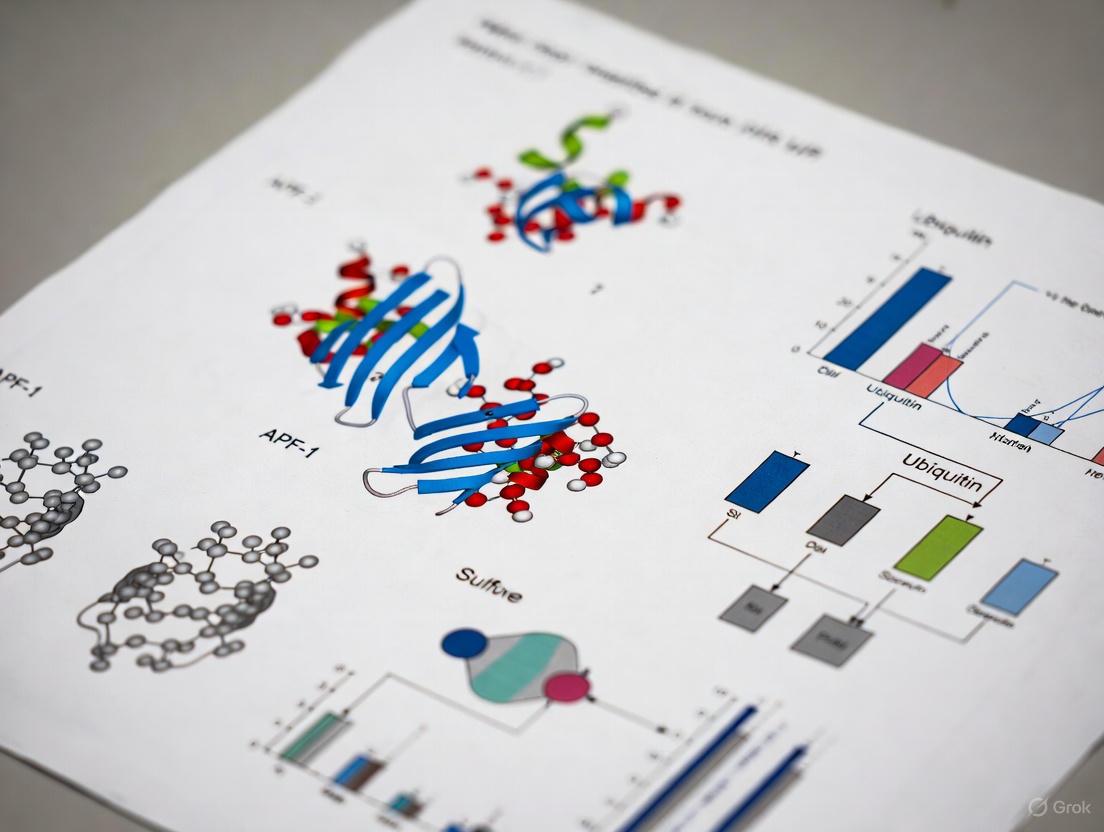
This article chronicles the seminal discovery of ATP-dependent proteolysis factor 1 (APF-1) and its subsequent identification as the universal protein ubiquitin, a breakthrough that unveiled the ubiquitin-proteasome system (UPS).
From APF-1 to Ubiquitin: The Discovery of the Molecular Kiss of Death and Its Impact on Modern Therapeutics
Abstract
This article chronicles the seminal discovery of ATP-dependent proteolysis factor 1 (APF-1) and its subsequent identification as the universal protein ubiquitin, a breakthrough that unveiled the ubiquitin-proteasome system (UPS). We detail the foundational biochemical research in the late 1970s and 1980s that revealed a novel, energy-dependent pathway for targeted protein degradation, moving beyond the then-prevailing lysosomal model. The content explores the methodological evolution from fractionated reticulocyte lysates to the characterization of the E1-E2-E3 enzymatic cascade. For a contemporary research and drug development audience, the article further examines how troubleshooting early experimental challenges and validating the system's biological roles paved the way for targeting the UPS in modern therapeutics, including the development of proteasome inhibitors and novel modalities in the current drug pipeline.
The Energetic Puzzle of Protein Turnover: Uncovering APF-1
For approximately two decades between the mid-1950s and mid-1970s, the lysosomal system was believed to be the primary mechanism for intracellular protein degradation in eukaryotic cells [1]. The lysosome, discovered by Christian de Duve, was recognized as a membrane-bound organelle containing various hydrolytic enzymes that function optimally at acidic pH [1]. This organelle was thought to be responsible for the digestion of cellular proteins through autophagy (for intracellular proteins) and heterophagy (for extracellular proteins) [1]. The prevailing hypothesis suggested that cytosolic proteins were sequestered within autophagosomes through a process of membrane invagination, which then fused with lysosomes, leading to non-selective protein degradation [1] [2]. This model provided an elegant subcellular compartmentalization that separated destructive hydrolytic enzymes from the rest of the cytoplasm, thus preventing uncontrolled proteolysis.
However, several lines of experimental evidence began to challenge this lysosome-centric view. The discovery that intracellular proteolysis requires metabolic energy was particularly puzzling [3] [1]. Melvin Simpson first demonstrated this ATP dependence in 1953 through isotopic labeling studies, showing that protein degradation in mammalian cells consumed energy [3]. This presented a thermodynamic paradox because the hydrolysis of peptide bonds is an exergonic (energy-releasing) process, and there was no apparent biochemical rationale for energy requirement in proteolysis itself [3] [1]. This fundamental contradiction suggested that there were missing components in the understanding of intracellular protein degradation. Additionally, studies using specific lysosomal inhibitors often failed to suppress the degradation of most intracellular proteins, further indicating the existence of nonlysosomal proteolytic pathways [1]. The scientific community increasingly recognized that the lysosomal hypothesis could not adequately explain the high specificity of protein degradation, where different cellular proteins have distinct half-lives that can vary under different physiological conditions [1].
The ATP Dependence Paradox and Emerging Challenges to the Lysosomal Hypothesis
Key Experimental Evidence Challenging the Lysosomal Paradigm
The ATP dependence of intracellular proteolysis represented one of the most significant challenges to the lysosomal hypothesis. If proteins were degraded within lysosomes through autophagy, the process should not require substantial ATP, as the actual peptide bond cleavage is chemically exergonic [3]. The energy requirement suggested additional, unknown biochemical steps were involved in proteolysis. Throughout the 1970s, several critical observations accumulated that fundamentally questioned the lysosomal paradigm:
- Studies demonstrated that damaged or abnormal proteins were rapidly cleared from cells through an ATP-dependent mechanism [3]
- Researchers observed that enzymes catalyzing rate-limiting steps in metabolic pathways were generally short-lived and their degradation was responsive to metabolic conditions [3]
- The use of lysosomal inhibitors failed to suppress the degradation of most intracellular proteins, indicating a nonlysosomal pathway [1]
- Experiments showing different proteins have distinct half-lives could not be reconciled with the presumed non-selective nature of autophagic capture [1]
Table 1: Experimental Evidence Challenging the Lysosomal Proteolysis Hypothesis
| Evidence Type | Experimental Observation | Implied Conclusion |
|---|---|---|
| Energetics | ATP requirement for proteolysis | Additional energy-requiring steps beyond simple hydrolysis |
| Kinetics | Different proteins exhibit distinct half-lives | Selective recognition mechanism rather than non-selective autophagy |
| Pharmacology | Lysosomal inhibitors do not block most protein degradation | Existence of nonlysosomal proteolytic pathways |
| Specificity | Rate-limiting enzymes rapidly degraded in response to metabolic changes | Regulatory function for proteolysis beyond waste disposal |
The Reticulocyte Breakthrough: A Model System for Nonlysosomal Proteolysis
A critical advancement came with the establishment of the reticulocyte cell-free extract as a model system for studying ATP-dependent proteolysis [1]. Reticulocytes (immature red blood cells) are essentially devoid of lysosomes, yet they efficiently degrade abnormal proteins [3]. The seminal work of Etlinger and Goldberg demonstrated that reticulocyte lysates exhibited ATP-dependent proteolysis of denatured proteins, providing a tractable biochemical system that could be fractionated and reconstituted [3]. This system became the foundation for the groundbreaking discoveries that would follow.
Avram Hershko and Aaron Ciechanover capitalized on this experimental system, demonstrating that the ATP-dependent proteolytic activity could be separated into two essential fractions [3] [1]:
- Fraction I: Contained a small, heat-stable polypeptide component
- Fraction II: Contained higher molecular weight components that were stabilized by ATP
Only when these fractions were recombined would ATP-dependent proteolysis occur. This simple yet powerful experimental approach revealed that intracellular proteolysis was far more complex than previously imagined—it was not mediated by a single protease but required multiple complementing factors [1]. This fundamental insight marked the beginning of the end for the lysosomal paradigm and opened the door to the discovery of a completely novel proteolytic system.
Methodology: Key Experimental Approaches and Technical Breakthroughs
Biochemical Fractionation and Reconstitution Strategies
The initial experimental approach that led to the discovery of the ubiquitin system relied on conventional biochemical fractionation techniques applied to the reticulocyte lysate system [1]. The methodology followed a logical progression of separating cellular components and testing their individual and combined functions:
Preparation of Reticulocyte Lysate: Reticulocytes were obtained from anemic rabbits, lysed, and centrifuged to remove membranes and insoluble material [3] [1]
ATP-Depletion and Chromatographic Separation: The lysate was subjected to ion-exchange chromatography to separate components based on charge properties [3] [1]
Functional Reconstitution Assays: Individual fractions were tested for their ability to support ATP-dependent proteolysis alone and in combination [3] [1]
Identification of Essential Factors: Fractions that were absolutely required for proteolysis were further purified and characterized [3]
This reductionist approach led to the identification of ATP-dependent Proteolysis Factor 1 (APF-1), which was subsequently identified as ubiquitin [3] [1]. The requirement for both Fraction I (containing APF-1) and Fraction II for proteolysis demonstrated the multi-component nature of the system.
Covalent Conjugation Assays and the Discovery of Protein Tagging
A pivotal methodological breakthrough came from experiments designed to track the fate of APF-1 in the proteolytic system. The researchers employed radiolabeling techniques to follow APF-1 during the degradation process [3]:
Iodination of APF-1: 125I-labeled APF-1 was prepared using standard iodination methods
Incubation with Fraction II and ATP: Labeled APF-1 was incubated with Fraction II in the presence of ATP and Mg2+
Analysis of Molecular Complexes: Reaction mixtures were analyzed by SDS-PAGE and autoradiography to identify high molecular weight complexes
Stability Tests: The nature of the association was tested under various conditions (pH, denaturants)
To everyone's surprise, these experiments revealed that APF-1 formed covalent associations with multiple proteins in Fraction II [3]. This conjugation required ATP and was reversible upon ATP removal. The covalent nature of the association was demonstrated by its stability to high pH (NaOH treatment) and denaturing conditions [3]. This discovery of a protein-tagging mechanism represented a paradigm shift in understanding how proteolysis could be specifically targeted to particular substrates.
Diagram 1: Experimental Workflow Leading to Ubiquitin Discovery
The Researcher's Toolkit: Essential Reagents and Methods
Table 2: Key Research Reagents and Methods in Early Ubiquitin Research
| Reagent/Method | Function/Role | Key Experimental Insight |
|---|---|---|
| Reticulocyte Lysate | ATP-dependent proteolysis model system lacking lysosomes | Confirmed existence of nonlysosomal proteolytic pathway [3] [1] |
| ATP Regeneration Systems | Maintained ATP levels during extended incubations | Demonstrated continuous energy requirement for conjugation and degradation [3] |
| 125I-labeled APF-1 | Radiolabeled tracer for tracking APF-1 fate | Revealed covalent attachment to multiple protein substrates [3] |
| Ion-Exchange Chromatography | Separation of crude lysate into functional fractions | Identified multiple essential components (E1, E2, E3 enzymes) [3] [1] |
| Heat Treatment | Fraction I stability to heat denaturation | Distinguished APF-1/ubiquitin from most cellular proteins [1] |
| SDS-PAGE + Autoradiography | Analysis of protein conjugates | Visualized high molecular weight complexes containing APF-1 [3] |
The Conceptual Revolution: From Lysosomal Digestion to Targeted Degradation
The Discovery of ATP-Dependent Protein Tagging
The critical conceptual breakthrough came from the realization that APF-1 (ubiquitin) was covalently attached to protein substrates prior to their degradation [3]. This discovery fundamentally changed the understanding of how intracellular proteolysis could be both energy-dependent and highly specific. The key findings included:
Covalent Linkage: APF-1 formed isopeptide bonds with substrate proteins, primarily through the C-terminal glycine of ubiquitin and ε-amino groups of lysine residues on substrates [3]
ATP Requirement: The conjugation process specifically required ATP, explaining the energy dependence of proteolysis [3]
Multiplicity: Multiple molecules of APF-1 could be attached to a single substrate molecule [3]
Polyubiquitin Chains: The modification often involved chains of ubiquitin molecules rather than single ubiquitin tags [3]
This tagging mechanism provided an elegant solution to the specificity problem—the proteolytic machinery itself could be relatively non-specific, while specificity was achieved at the level of target recognition and tagging.
Resolution of the ATP Paradox
The discovery of the ubiquitin tagging system resolved the long-standing paradox of energy requirement in proteolysis. The ATP was not required for the proteolytic step itself, but rather for the enzymatic cascade that marks substrates for degradation [3] [2]:
Ubiquitin Activation: ATP is required for the activation of ubiquitin by E1 enzymes, forming a thioester bond [4] [2]
Conjugation to E2 Enzymes: Activated ubiquitin is transferred to ubiquitin-conjugating enzymes (E2s) [4] [2]
Ligation to Substrates: E3 ubiquitin ligases facilitate the transfer of ubiquitin to specific protein substrates [4] [2]
Each of these steps consumes ATP, explaining the energy dependence that had puzzled researchers for decades. The identification of this enzymatic cascade revealed that targeted protein degradation is an active, regulated process rather than a simple digestive function.
Diagram 2: The Ubiquitin-Proteasome Pathway Resolving the ATP Paradox
Quantitative Characterization of the Ubiquitin System
Table 3: Quantitative Features of the Early Ubiquitin Proteolytic System
| Parameter | Experimental Measurement | Biological Significance |
|---|---|---|
| ATP Concentration | Low concentrations required (μM range) | High affinity ATP-binding sites in E1 enzymes [3] |
| Ubiquitin Conjugation | Multiple ubiquitins per substrate (polyubiquitination) | More efficient targeting to proteasome [3] |
| Temperature Stability | APF-1/ubiquitin heat-stable | Unusual property distinguishing it from most proteins [1] |
| Molecular Weight of APF-1 | ~8.6 kDa | Identified as small regulatory protein [4] |
| Ubiquitin Genes in Humans | 4 genes (UBB, UBC, UBA52, RPS27A) | Essential function requiring multiple gene copies [4] |
| Enzyme Classes | 1 E1, ~35 E2, hundreds of E3 enzymes | Hierarchical system providing specificity [4] [2] |
Implications and Legacy: From Obscure Mechanism to Central Regulatory Pathway
The discovery of ubiquitin-dependent proteolysis fundamentally transformed our understanding of cellular regulation. What began as an investigation into an apparent biochemical paradox—ATP-dependent proteolysis—evolved into the discovery of one of the most pervasive regulatory mechanisms in eukaryotic biology. The ubiquitin system has since been implicated in virtually all cellular processes, including:
- Cell Cycle Regulation: Controlled degradation of cyclins and other regulators [2]
- Transcriptional Control: Regulation of transcription factor stability and activity [3]
- DNA Repair: Coordination of repair protein availability [4]
- Immune Responses: Processing and presentation of antigens [5]
- Neuronal Function: Maintenance of synaptic plasticity and protein quality control [5]
The trajectory from the pre-ubiquitin paradigm of lysosomal proteolysis to our current understanding exemplifies how investigating anomalous findings—like the unexplained ATP dependence—can lead to fundamental shifts in biological understanding. The ubiquitin system's discovery required challenging established dogma, developing innovative experimental approaches, and recognizing the significance of unexpected results. This journey from a curious observation to a central biological paradigm underscores the dynamic nature of scientific progress and the importance of maintaining intellectual flexibility when confronted with experimental evidence that contradicts prevailing models.
The scientific community has recognized the profound significance of this discovery, awarding the 2004 Nobel Prize in Chemistry to Aaron Ciechanover, Avram Hershko, and Irwin Rose for their pioneering work [3] [4]. Their research not only solved the specific problem of ATP-dependent proteolysis but also unveiled a fundamentally new mechanism of cellular regulation that continues to generate insights into both basic biology and disease mechanisms.
The discovery of ATP-dependent protein degradation represents a cornerstone of modern cell biology, fundamentally reshaping our understanding of regulated proteolysis. This breakthrough emerged from pioneering research utilizing rabbit reticulocyte lysates—a unique, lysosome-free experimental system that enabled the identification and characterization of APF-1, later recognized as ubiquitin. This technical guide examines the foundational methodologies that revealed the ubiquitin-proteasome system, detailing the experimental approaches that allowed researchers to dissect this essential pathway without the complicating presence of lysosomal activity. We provide comprehensive protocols, data analysis frameworks, and visualization tools to support contemporary researchers in leveraging these historical approaches for modern drug discovery applications, particularly in targeting protein homeostasis pathways in cancer and neurodegenerative diseases.
In the 1970s, the scientific understanding of cellular protein degradation remained limited, with lysosomes considered the primary site for protein turnover. The discovery of an ATP-dependent proteolytic system independent of lysosomes represented a paradigm shift in cellular biology [6]. This breakthrough was made possible through the strategic use of rabbit reticulocyte lysates as a model system—an environment naturally devoid of lysosomes, thus providing a "clean" background for identifying the core components of what would later be termed the ubiquitin-proteasome system (UPS) [7].
The initial discovery centered on ATP-dependent proteolytic factor 1 (APF-1), a protein that was found to conjugate to other proteins marked for degradation [7]. Through a series of elegant biochemical experiments, researchers demonstrated that APF-1 was identical to the previously characterized protein ubiquitin, thereby connecting two seemingly disparate lines of research: chromatin biology and protein degradation [7]. This convergence revealed ubiquitin as a central player in both gene regulation and proteolysis, establishing the foundation for our current understanding of the ubiquitin-proteasome system.
The reticulocyte model proved uniquely suited for these discoveries due to its distinctive biological characteristics. Reticulocytes are immature red blood cells in a discrete, penultimate phase of maturation, having expelled their nucleus but retaining residual RNA and protein synthesis machinery [8]. Most importantly for these studies, as terminal cells in the differentiation pathway, they are naturally devoid of lysosomes, eliminating the dominant proteolytic system that would otherwise obscure the characterization of ATP-dependent degradation mechanisms [6] [9].
The Reticulocyte Advantage: Biological and Methodological Rationale
Unique Biological Properties of Reticulocytes
Reticulocytes represent a distinctive cohort of cells that have recently entered peripheral blood from the bone marrow. These cells are characterized by several key features that made them ideal for studying ATP-dependent degradation:
- Lysosome-free environment: As terminally differentiated cells transitioning to erythrocytes, reticulocytes naturally lack lysosomes, providing an experimental system free from the dominant lysosomal degradation pathways [6] [9]
- Residual protein synthesis capacity: Despite nuclear expulsion, reticulocytes retain ribosomal RNA and limited protein synthesis machinery, maintaining active metabolic processes [8] [10]
- Simplified proteome: With primarily hemoglobin and minimal organellar complexity, reticulocytes offer a reduced background for biochemical fractionation [10]
- Natural degradation signaling: As cells completing their maturation, reticulocytes possess active systems for removing unnecessary proteins and organelles [10]
Reticulocyte Maturation and Physiological Context
Reticulocytes undergo a complex maturation process over approximately 24 hours in circulation, during which they eliminate remaining organelles and refine their cytoskeleton [10]. This process involves extensive membrane remodeling, with loss of up to 20% of membrane surface area, and represents a natural physiological context for studying targeted protein degradation. The intrinsic maturation machinery within reticulocytes provided the ideal biochemical environment for discovering the ubiquitin-proteasome system, as these cells rely heavily on controlled proteolysis to complete their differentiation into mature erythrocytes.
Table 1: Key Reticulocyte Parameters During Maturation
| Parameter | Early Reticulocyte | Late Reticulocyte | Mature Erythrocyte |
|---|---|---|---|
| Diameter | ~8% larger than mature RBC | Slightly larger than mature RBC | 6-8 μm |
| RNA Content | High (group I) | Low (group IV) | None |
| Lysosomes | Absent | Absent | Absent |
| Nucleus | Absent | Absent | Absent |
| Lifespan | Early maturation stage | ~1 day in circulation | 120 days |
| Proteolytic Activity | High ATP-dependent degradation | Declining activity | Minimal |
Core Experimental System: Reticulocyte Lysate Preparation
Reticulocyte Production and Collection
The standard protocol for generating reticulocyte-rich blood from rabbits:
- Animal treatment: New Zealand White rabbits (2-3 kg) receive daily subcutaneous injections of 1% phenylhydrazine (0.2 ml/kg) for 5-8 days to induce hemolytic anemia and subsequent reticulocytosis [8]
- Blood collection: On day 6-9, collect blood via cardiac puncture into heparinized containers
- Reticulocyte quantification: Assess reticulocyte count using new methylene blue stain; experiments require >80% reticulocyte enrichment [8] [11]
- Cell isolation: Purify reticulocytes by density centrifugation through Ficoll-Paque or similar media
Lysate Preparation and Fractionation
- Cell washing: Wash reticulocytes 3x in ice-cold phosphate-buffered saline (PBS) to remove plasma proteins and contaminants
- Lysis preparation: Resuspend packed reticulocytes in 2 volumes of hypotonic buffer (10 mM Tris-HCl, pH 7.5, 1 mM DTT)
- Cell disruption: Perform lysis by freeze-thaw cycling (3 cycles) or nitrogen cavitation
- Fractionation: Centrifuge lysate at 100,000 × g for 60 minutes to separate soluble (S100) and particulate fractions
- Storage: Aliquot and flash-freeze in liquid nitrogen; store at -80°C
Table 2: Critical Reagents for Reticulocyte Lysate Studies
| Reagent/Chemical | Function/Application | Critical Notes |
|---|---|---|
| Phenylhydrazine | Induces hemolytic anemia and reticulocytosis | Dose optimization required to balance yield and animal welfare |
| Heparin | Anticoagulant for blood collection | Avoid EDTA as calcium is required for certain proteolytic activities |
| New Methylene Blue | Reticulocyte staining and quantification | Identifies residual RNA via supravital staining [8] |
| ATP Regenerating System | Maintains ATP levels during incubations | Typically includes creatine phosphate and creatine phosphokinase |
| Hemoglobin Sepharose | Affinity matrix for binding ubiquitin-conjugating enzymes | Critical for fractionation and identification of APF-1/ubiquitin |
| Ubiquitin Aldehyde | Deubiquitinating enzyme inhibitor | Stabilizes ubiquitin-protein conjugates for detection |
Key Experimental Protocols: From APF-1 to Ubiquitin Identification
ATP-Dependent Proteolysis Assay
The foundational assay that demonstrated energy requirement for protein degradation:
Reaction mixture (50 μL total volume):
- Reticulocyte lysate (S100 fraction): 25 μL
- Tris-HCl (pH 7.5): 25 mM
- MgCl₂: 5 mM
- DTT: 1 mM
- ATP: 2 mM
- ATP-regenerating system: 10 mM creatine phosphate, 10 U creatine kinase
- ¹²⁵I-labeled bovine serum albumin (substrate): 5 μg
- Add H₂O to final volume
Incubation: 37°C for 60 minutes with gentle agitation
- Termination: Add 250 μL of 10% (w/v) trichloroacetic acid (TCA)
- Quantification: Centrifuge at 10,000 × g for 5 minutes, measure radioactivity in supernatant (TCA-soluble peptides)
- Controls: Include reactions without ATP and with non-hydrolyzable ATP analogs
APF-1/Ubiquitin Conjugation Assay
The critical experiment demonstrating covalent modification of target proteins:
Reaction components:
- Reticulocyte lysate: 20 μL
- Tris-HCl (pH 7.5): 25 mM
- MgCl₂: 5 mM
- DTT: 1 mM
- ATP: 2 mM
- ¹²⁵I-APF-1/ubiquitin: 2 μg
- Add H₂O to 40 μL final volume
Incubation: 37°C for 30 minutes
- Termination: Add SDS-PAGE sample buffer with 100 mM DTT
- Analysis: Separate by SDS-PAGE (12% gel), visualize by autoradiography
- Key observation: Multiple high molecular weight bands representing ubiquitin-protein conjugates
Three-Enzyme Cascade Reconstitution
The definitive experiment establishing the sequential action of E1, E2, and E3 enzymes:
Fraction preparation:
- Fraction I: DEAE-cellulose flow-through containing E1
- Fraction II: 0.2M KCl eluate containing E2 enzymes
- Fraction III: 0.5M KCl eluate containing E3 enzymes
Reconstitution assay:
- Ubiquitin: 10 μg
- E1 fraction: 5 μg
- E2 fraction: 5 μg
- E3 fraction: 5 μg
- ATP: 2 mM
- Target protein (e.g., lysozyme): 5 μg
- Incubate at 37°C for 60 minutes
- Analyze conjugates by SDS-PAGE and immunoblotting
Diagram 1: Ubiquitin-Proteasome Pathway Enzyme Cascade
Data Analysis and Interpretation Framework
Quantitative Assessment of Proteolytic Activity
The reticulocyte lysate system generates quantitative data that must be properly analyzed and interpreted:
- TCA-soluble radioactivity: Calculate specific proteolytic activity as pmol of amino acids released per mg lysate protein per hour
- ATP-dependence ratio: Compare degradation rates with and without ATP (typically >10:1 ratio in active lysates)
- Time course analysis: Establish linear range of reaction (typically 0-90 minutes)
- Lysate activity normalization: Standardize activities to lysate protein concentration (Bradford assay)
Table 3: Typical Experimental Results from Reticulocyte Lysate Studies
| Experimental Condition | Proteolytic Activity (pmol/mg/h) | Ubiquitin Conjugation (arbitrary units) | Interpretation |
|---|---|---|---|
| Complete system | 150-300 | 100 | Optimal ATP-dependent degradation |
| Minus ATP | 10-25 | 5-10 | ATP-dependent process confirmed |
| Plus hemin (inhibitor) | 30-60 | 20-40 | Confirms regulatory mechanisms |
| Fraction I only | <10 | <5 | Requires multiple fractions |
| Fractions I + II | 25-50 | 15-30 | Partial reconstruction |
| Fractions I + II + III | 120-250 | 80-95 | Full pathway reconstruction |
Ubiquitin-Proteasome System Components
The research using reticulocyte lysates systematically identified and characterized the core components of the ubiquitin-proteasome pathway:
- APF-1/Ubiquitin: The central tagging protein, initially identified as APF-1 before being recognized as ubiquitin [7]
- E1 (Ubiquitin-activating enzyme): The initial enzyme that activates ubiquitin in an ATP-dependent reaction [12]
- E2 (Ubiquitin-conjugating enzymes): Intermediate carriers that receive activated ubiquitin from E1 [7]
- E3 (Ubiquitin ligases): Substrate-specific enzymes that facilitate ubiquitin transfer to target proteins [12]
- 26S Proteasome: The multi-subunit proteolytic complex that recognizes and degrades ubiquitinated substrates [13]
Contemporary Research Applications and Drug Discovery Implications
Modern Methodological Adaptations
While the fundamental principles established using reticulocyte lysates remain valid, contemporary research has enhanced these approaches:
- Automated reticulocyte analysis: Modern hematology analyzers use laser excitation and fluorescent dyes (thiazole orange, polymethine) for precise reticulocyte quantification [11]
- Advanced proteomic techniques: Mass spectrometry-based methods now identify ubiquitination sites and quantify dynamics
- Computational prediction tools: Machine learning approaches (e.g., 2DCNN-UPP) predict ubiquitin-proteasome pathway components from sequence data [12]
- High-throughput screening: Adapted reticulocyte lysate systems enable drug screening for proteasome inhibitors and ubiquitination modulators
Therapeutic Targeting of the Ubiquitin-Proteasome System
The foundational knowledge gained from reticulocyte lysate studies has directly enabled multiple therapeutic advances:
- Proteasome inhibitors: Bortezomib, carfilzomib, and ixazomib for multiple myeloma treatment
- Ubiquitination pathway targets: Development of E1, E2, and E3 inhibitors for cancer and inflammatory diseases
- PROTAC technology: Proteolysis-targeting chimeras that harness the ubiquitin-proteasome system for targeted protein degradation
- Neurodegenerative disease approaches: Strategies to enhance clearance of aggregated proteins in Alzheimer's and Parkinson's diseases
Diagram 2: Historical Research Progression from Reticulocyte Models
Technical Challenges and Troubleshooting
Common Experimental Issues and Solutions
- Low proteolytic activity: Check ATP regeneration system functionality; verify lysate preparation speed and temperature control
- High non-ATP-dependent background: Ensure complete reticulocyte purification; confirm lysosome absence by marker enzyme assays
- Incomplete fraction complementation: Titrate individual fractions to establish optimal ratios; check for inhibitory components
- Ubiquitin conjugate instability: Include deubiquitinase inhibitors (ubiquitin aldehyde, N-ethylmaleimide) in lysis and reaction buffers
Quality Control Metrics
- Reticulocyte purity: >80% reticulocytes by new methylene blue staining [8]
- Lysate activity: >100 pmol/mg/h TCA-soluble radioactivity with complete system
- ATP dependence: >10:1 ratio of complete to minus ATP activity
- Conjugate formation: Clear high molecular weight bands in ubiquitination assays
The pioneering work utilizing reticulocyte lysates as a lysosome-free system for studying ATP-dependent degradation fundamentally advanced our understanding of cellular proteostasis. This experimental model enabled the discovery of APF-1/ubiquitin and the elaborate enzymatic cascade that targets proteins for degradation, establishing the foundation for the entire field of ubiquitin biology. The methodological approaches developed through this research continue to influence contemporary drug discovery, particularly in the development of targeted protein degradation therapies. As we continue to build upon these foundational discoveries, the reticulocyte lysate system remains a testament to the power of carefully selected experimental models in revealing fundamental biological mechanisms.
The legacy of this research extends far beyond the initial discoveries, having established:
- The biochemical framework for understanding regulated protein degradation
- The molecular basis for numerous disease mechanisms
- Multiple new categories of therapeutic agents
- Technological platforms for targeted protein degradation
Future research will continue to build upon these foundations, potentially enabling new classes of therapeutics that manipulate protein stability for therapeutic benefit across a wide spectrum of human diseases.
The discovery of ATP-dependent proteolysis factor 1 (APF-1) represents a landmark achievement in biochemical research that fundamentally transformed our understanding of intracellular protein degradation. Prior to this breakthrough, protein degradation was largely considered an unregulated process occurring within lysosomes. The critical insight emerged from investigating a puzzling biochemical paradox: why would intracellular proteolysis, an inherently energy-releasing process, require adenosine triphosphate (ATP) hydrolysis? This question drove researchers to identify a novel ATP-dependent proteolytic system in reticulocyte extracts, leading to the isolation and characterization of a remarkable heat-stable factor that would later be recognized as ubiquitin—the central component of a sophisticated protein tagging and degradation system [3] [14].
This technical guide examines the pioneering biochemical fractionation strategies that enabled the isolation of APF-1, detailing the experimental methodologies that revealed its function as a heat-stable polypeptide component essential for ATP-dependent proteolysis. The identification of APF-1/ubiquitin not only elucidated a fundamental cellular mechanism but also unveiled an entirely new paradigm for post-translational regulation, earning the Nobel Prize in Chemistry in 2004 for its discoverers [4] [14]. The following sections provide an in-depth analysis of the core experimental approaches, offering researchers a comprehensive resource for understanding this pivotal discovery within the broader context of ubiquitin identity research.
Experimental Foundation: Key Biochemical Principles
The Energy Paradox in Protein Degradation
The investigation that led to APF-1's discovery began with resolving a fundamental biochemical contradiction. While proteolysis is thermodynamically exergonic (energy-releasing), researchers observed that intracellular protein degradation in mammalian cells required ATP hydrolysis [3] [14]. This paradox suggested the existence of a previously unrecognized regulatory mechanism preceding the actual breakdown of peptide bonds. Early work by Goldberg's group had demonstrated that reticulocyte lysates (which lack lysosomes) could degrade abnormal proteins in an ATP-dependent manner, providing a critical experimental system for further investigation [3].
Heat Stability as a Fractionation Strategy
Heat stability represents a key biochemical property that facilitated APF-1's isolation. Many cellular proteins denature and precipitate when heated, but a specific subset of polypeptides remains soluble and functional after heat treatment [15]. This property enables researchers to separate these stable proteins from the majority of the cellular proteome through a simple heating step followed by centrifugation to remove precipitated material. APF-1 belonged to this unusual class of heat-stable proteins, a characteristic that proved instrumental in its purification and identification [14] [1].
Table: Advantages of Heat-Based Fractionation for Protein Isolation
| Advantage | Technical Benefit | Application in APF-1 Discovery |
|---|---|---|
| Rapid simplification of complex mixtures | Precipitates majority of proteins while preserving heat-stable fraction | Enabled enrichment of APF-1 from reticulocyte lysates |
| Maintenance of biological activity | Preserves function of stable proteins through mild heating | Confirmed APF-1 remained functional after heat treatment |
| Compatibility with subsequent purification steps | Serves as ideal first step in multi-stage purification | Allowed further fractionation by ammonium sulfate precipitation and chromatography |
Materials and Methods: The Researcher's Toolkit
Essential Research Reagents and Instruments
Table: Key Experimental Components for APF-1 Isolation and Analysis
| Reagent/Instrument | Specific Function | Experimental Role in APF-1 Research |
|---|---|---|
| Reticulocyte Lysate | ATP-dependent proteolysis system | Provided cellular extract containing APF-1/ubiquitin and degradation machinery [3] [14] |
| Radioactively-labeled Proteins (¹²⁵I-APF-1) | Tracing molecular interactions | Enabled detection of APF-1 conjugation to target proteins [3] [14] |
| ATP and Mg²⁺ | Cofactors for enzymatic activity | Required for APF-1 activation and conjugation to substrate proteins [3] [1] |
| Heat Block/Water Bath (90-95°C) | Temperature-controlled incubation | Implemented heat stability step to separate APF-1 from thermolabile proteins [14] [15] |
| Centrifugation Equipment | Separation of soluble and insoluble fractions | Removed denatured proteins after heating, pelleting insoluble material [14] [15] |
| Chromatography Systems (DEAE-Cellulose) | Ion-exchange separation | Further purified APF-1 after initial heat fractionation [15] |
| SDS-PAGE Apparatus | Protein separation by molecular weight | Analyzed APF-1-protein conjugates and assessed purification success [15] |
Preparation of Heat-Stable Protein Fractions
The fundamental protocol for isolating heat-stable proteins like APF-1 involves specific biochemical handling procedures adapted from conventional protein purification methodologies:
- Crude Extract Preparation: Tissue or cell samples are homogenized in appropriate buffer systems (e.g., 10mM Tris-acetate pH=7.5, 10mM NaCl, 1mM EDTA) and clarified by centrifugation at 700×g for 30 minutes to remove insoluble debris [15].
- Heat Treatment: The crude supernatant is incubated at 90-95°C for 7-10 minutes with constant agitation to ensure even heating, then immediately cooled on ice to prevent protein aggregation [15].
- Separation of Fractions: Heat-denatured proteins are pelleted by centrifugation at 13,000×g for 10 minutes, leaving the heat-stable proteins, including APF-1/ubiquitin, in the soluble fraction [14] [15].
- Concentration and Storage: The heat-stable supernatant can be freeze-dried for long-term storage at -20°C, maintaining protein stability and activity for subsequent experiments [16].
Experimental Workflow: Isolating and Characterizing APF-1
Key Experimental Steps and Findings
The seminal experiments that identified APF-1's role followed a logical progression of biochemical fractionation and functional analysis, illustrated in the following workflow:
Critical Experimental Observations and Interpretation
The systematic approach to APF-1 isolation yielded several key findings that fundamentally advanced understanding of regulated protein degradation:
- Fraction Complementation: Researchers discovered that ATP-dependent proteolysis required two complementing fractions (I and II) from reticulocyte lysates, with Fraction I containing a heat-stable component essential for the reaction [1].
- Unusual Conjugation Pattern: When radioiodinated APF-1 was incubated with Fraction II and ATP, the label appeared in numerous higher molecular weight proteins, suggesting covalent attachment rather than non-specific association [3] [14].
- Energy-Dependent Linkage: The formation of APF-1-protein conjugates required ATP, and the bonds proved stable under conditions that disrupt non-covalent interactions, indicating isopeptide linkage [14].
- Multi-point Attachment: Multiple APF-1 molecules conjugated to individual substrate proteins, forming chains that served as enhanced recognition signals for proteolysis [3] [14].
The APF-1 to Ubiquitin Transition: Connecting Biochemical and Molecular Identity
Recognition of Ubiquitin Identity
The critical connection between APF-1 and the previously characterized protein ubiquitin emerged through collaborative scientific investigation:
- Historical Context: Ubiquitin had been discovered in 1975 as a widespread 8.6 kDa protein of unknown function [4].
- Parallel Research: Independent studies had identified a ubiquitin-histone H2A conjugate (uH2A) in chromatin, demonstrating the same isopeptide linkage found in APF-1 conjugates [1].
- Identity Confirmation: Researchers including Keith Wilkinson, Michael Urban, and Arthur Haas recognized the biochemical similarities and demonstrated that APF-1 was identical to ubiquitin [14].
Table: Comparative Properties of APF-1/Ubiquitin
| Property | APF-1 Characterization | Ubiquitin Identity |
|---|---|---|
| Molecular Weight | ~8-9 kDa (heat-stable polypeptide) | 8.6 kDa, 76 amino acids [4] |
| Thermal Stability | Remained active after boiling | Heat-stable confirmed [15] |
| Conjugation Mechanism | Covalent isopeptide bond formation | C-terminal Gly76 linkage to lysine ε-amino groups [4] |
| Functional Role | Targeting for ATP-dependent proteolysis | Signal for proteasomal degradation [4] |
| Tissue Distribution | Isolated initially from reticulocytes | Ubiquitous expression across tissues and species [4] |
Elucidation of the Ubiquitin Conjugation Pathway
The recognition that APF-1 was ubiquitin enabled researchers to place this factor within a sophisticated enzymatic cascade:
Technical Applications and Methodological Considerations
Quantitative Analysis of APF-1/Ubiquitin Conjugation
Table: Key Experimental Findings in APF-1/Ubiquitin Research
| Experimental Parameter | Observation | Technical Method Used | Biological Significance |
|---|---|---|---|
| Energy Requirement | Absolute ATP dependence for conjugation and proteolysis | ATP depletion/addition experiments | Explained energy paradox of intracellular proteolysis [3] [1] |
| Thermal Stability | Withstood 95°C treatment with maintained function | Boiling extract followed by centrifugation | Enabled simple purification strategy [14] [15] |
| Conjugation Specificity | Multiple ubiquitin molecules per substrate protein | ¹²⁵I-APF-1 labeling + SDS-PAGE analysis | Revealed polyubiquitin chain signaling mechanism [3] |
| Bond Stability | Resistance to NaOH treatment and denaturing conditions | Chemical and physical challenge experiments | Confirmed covalent isopeptide linkage [14] |
| Evolutionary Conservation | 96% sequence identity between human and yeast | Sequence comparison after identification | Indicated fundamental biological importance [4] |
Optimization Strategies for Heat-Stable Protein Isolation
Based on the original APF-1 research and subsequent methodological refinements, several technical considerations enhance success in isolating heat-stable proteins:
- Temperature Control: Maintain precise temperature during heat treatment (90-95°C) with constant agitation to ensure even heating without localized overheating [15].
- Protective Buffering: Include stabilizing agents like EDTA in homogenization buffers to protect against metalloproteases and prevent protein aggregation [15].
- Rapid Processing: Immediately cool samples on ice after heat treatment to minimize non-specific protein aggregation and maintain protein solubility [15].
- Protease Inhibition: Incorporate protease inhibitors (e.g., PMSF) during initial extraction to prevent degradation before heat treatment, particularly important for labile regulatory components [15].
- Comprehensive Analysis: Combine heat fractionation with subsequent purification techniques (ammonium sulfate precipitation, ion-exchange chromatography) for highest purity preparations [15].
The biochemical fractionation strategies that identified APF-1 as a heat-stable factor exemplify how meticulous methodological approaches can unravel complex biological mechanisms. The recognition that APF-1 was identical to ubiquitin unified previously disparate research pathways and established the foundation for understanding the ubiquitin-proteasome system—now recognized as a central regulatory mechanism governing virtually all cellular processes in eukaryotes.
This technical guide has detailed the experimental workflow and methodological considerations that enabled this groundbreaking discovery, providing researchers with both historical context and practical frameworks for similar biochemical investigations. The isolation of APF-1/ubiquitin stands as a testament to the power of classical biochemical approaches in elucidating fundamental biological mechanisms, demonstrating that heat stability as a fractionation criterion can reveal proteins of exceptional functional importance. The continuing expansion of ubiquitin research—from protein degradation to signaling, trafficking, and DNA repair—underscores the profound impact of these original fractionation methodologies on contemporary biomedical science.
The discovery that ATP-dependent proteolysis factor 1 (APF-1) forms covalent conjugates with target proteins represented a fundamental paradigm shift in our understanding of cellular regulation. Prior to this breakthrough, intracellular protein degradation was largely considered a nonspecific process confined to lysosomal compartments. The finding that a small, heat-stable protein could be covalently attached to diverse substrate proteins via an energy-dependent mechanism unveiled an entirely new principle of post-translational modification [3] [1]. This conjugation system, which would later be identified as the ubiquitin system, proved to be every bit as important as phosphorylation or acetylation for eukaryotic cell regulation [3]. The research journey that revealed APF-1's unusual conjugation mechanism exemplifies how intellectual curiosity, preparation, and collaborative science can unravel biological complexities that defy established models.
Historical Context: The Energy Dilemma in Protein Degradation
The scientific path to understanding APF-1's function began with a puzzling observation: intracellular proteolysis required metabolic energy. Melvin Simpson first demonstrated this ATP dependence in 1953 through isotopic labeling studies, creating a thermodynamic paradox since peptide bond hydrolysis is inherently exergonic [3] [17]. For the next 25 years, this apparent contradiction received little mechanistic explanation, though researchers recognized that abnormal proteins were rapidly cleared from cells and that rate-limiting enzymes often had short half-lives [3].
By the late 1970s, the collaboration between Avram Hershko, Aaron Ciechanover, and Irwin Rose was uniquely positioned to address this mystery. Their work utilized reticulocyte lysates (which lack lysosomes) that exhibited ATP-dependent proteolysis, confirming the existence of a non-lysosomal proteolytic system [3] [1]. Fractionation experiments revealed that this system required two complementing fractions: Fraction I contained a single essential heat-stable component designated APF-1, while Fraction II contained a high molecular weight fraction (APF-2) that was stabilized by ATP [3]. In retrospect, APF-1 was ubiquitin and APF-2 contained the 26S proteasome, though at the time researchers speculated about kinase or binding protein activities [3].
Table: Key Historical Milestones in APF-1/Ubiquitin Discovery
| Year | Discovery | Key Researchers | Significance |
|---|---|---|---|
| 1953 | ATP-dependent proteolysis | Simpson | Revealed energy requirement for protein degradation |
| 1975 | Ubiquitin identification | Goldstein | Isolated protein of unknown function |
| 1978 | APF-1 characterization | Ciechanover, Hershko | Identified heat-stable factor in ATP-dependent proteolysis |
| 1980 | Covalent conjugation | Ciechanover, Hershko, Rose | Demonstrated APF-1 forms covalent bonds with substrates |
| 1980 | Ubiquitin identity | Wilkinson, Urban, Haas | Recognized APF-1 as previously known ubiquitin protein |
| 2004 | Nobel Prize in Chemistry | Ciechanover, Hershko, Rose | Honored for ubiquitin-mediated protein degradation discovery |
The Experimental Breakthrough: Evidence for Covalent Linkage
Initial Experimental Approach and Unexpected Results
The seminal experiments that demonstrated APF-1's covalent conjugation were reported in two PNAS papers in 1980 [3]. The research team set out to investigate whether APF-1 associated with other components in an ATP-dependent manner. Using ¹²⁵I-labeled APF-1, they incubated it with Fraction II and ATP, then analyzed the mixtures using SDS/PAGE [3]. The results were astounding: APF-1 was promoted to high molecular weight forms upon incubation, suggesting association with Fraction II components.
The critical insight came when postdoctoral fellow Art Haas discovered that these complexes survived high pH treatment, hinting at something more stable than typical protein interactions [3]. Further experimentation revealed that the association was not merely strong but truly covalent in nature—the bond between APF-1 and Fraction II proteins remained stable even after NaOH treatment [3]. This covalent attachment explained why some researchers had difficulty demonstrating APF-1's requirement in ATP-dependent proteolysis; when Fraction II was prepared without prior ATP depletion, most APF-1 was already present in high molecular weight conjugates [3].
Key Methodologies and Experimental Protocols
The experimental workflow that revealed APF-1's covalent conjugation can be summarized as follows:
Table: Critical Research Reagents and Their Functions
| Research Reagent | Function in APF-1 Studies | Experimental Significance |
|---|---|---|
| Reticulocyte Lysates | ATP-dependent proteolysis source | Provided native system lacking lysosomes |
| ¹²⁵I-labeled APF-1 | Radioactive tracer | Enabled tracking of APF-1 fate in experiments |
| ATP (and analogs) | Energy source | Demonstrated energy requirement for conjugation |
| Fraction I (APF-1) | Heat-stable factor | Identified as the conjugating protein |
| Fraction II (APF-2) | High molecular weight fraction | Contained conjugating enzymes and proteasome |
| SDS/PAGE | Separation technique | Revealed high molecular weight conjugates |
Characterizing the Conjugation Mechanism
Multiplicity and Specificity of Conjugation
Further investigation revealed that authentic protein substrates of the system were heavily modified, with multiple molecules of APF-1 attached to each substrate molecule [3] [17]. This multi-point attachment suggested a processive mechanism where the conjugation machinery preferred to add additional APF-1 molecules to existing conjugates rather than initiating new modification sites on free substrates [3]. The researchers demonstrated that the conjugation was enzyme-catalyzed, providing the first evidence for what would later be recognized as ubiquitin ligase activity [3].
The nucleotide and metal ion requirements for conjugation mirrored those for proteolysis, as did the amounts of ATP and Fraction II needed for maximal activity [3]. This correlation strongly suggested that conjugation was required for proteolysis, though the initial experiments did not definitively prove this causal relationship. The discovery that substrates were poly-modified rather than singly conjugated was particularly significant, as it foreshadowed the later understanding that polyubiquitin chains serve as the proteasomal targeting signal [3].
Chemical Nature of the Covalent Bond
The unusual stability of the APF-1-protein linkage to both high pH and NaOH treatment provided crucial clues about its chemical nature. Subsequent research would identify this as an isopeptide bond between the C-terminal glycine of ubiquitin (Gly76) and the ε-amino group of lysine residues on substrate proteins [4]. This linkage explained both the stability of the conjugate and its resistance to typical peptide bond-cleaving conditions.
The discovery of this bifurcated protein structure was not entirely without precedent—Goldknopf and Busch had previously shown that histone H2A was covalently modified by attachment of a small protein called ubiquitin [3]. However, the functional implications differed dramatically: while histone modification involved a single ubiquitin molecule and did not destablize the protein, the APF-1 modification for proteolysis involved multiple ubiquitin molecules and marked proteins for destruction [3] [4].
APF-1's Identity as Ubiquitin and Implications
The pivotal connection between APF-1 and the previously characterized protein ubiquitin came through collaborative discussions and comparative analysis. Following the critical covalent linkage discovery, researchers noted the similarity between APF-1 conjugates and the known ubiquitin-histone H2A conjugate (protein A24) [3]. This insight led to the direct demonstration that APF-1 was identical to ubiquitin, a protein first identified by Gideon Goldstein in 1975 and further characterized throughout the late 1970s [3] [4].
This identification had profound implications. While ubiquitin was known to be widely distributed in eukaryotic cells, its physiological function had remained mysterious until the 1980 PNAS papers suggested its role in ATP-dependent proteolysis [3]. The convergence of these research trajectories explained why four genes in the human genome (UBB, UBC, UBA52, and RPS27A) code for ubiquitin, highlighting its fundamental importance to cellular function [4].
The following diagram illustrates the complete ubiquitin conjugation and degradation pathway as understood today:
The discovery that APF-1 (ubiquitin) forms covalent conjugates with target proteins established entirely new paradigms in cell biology. It explained the long-standing mystery of energy requirement in intracellular proteolysis by revealing the multi-enzyme cascade (E1-E2-E3) needed for protein tagging [4] [17]. The covalent linkage mechanism provided the specificity and regulation necessary for controlled protein degradation, solving the problem of how proteases and their substrates could coexist peacefully in the same cellular compartment [1].
This breakthrough opened research avenues that continue to expand today, revealing ubiquitin's roles in far more than just proteolysis—including DNA repair, endocytic trafficking, inflammation, translation, and chromatin regulation [4]. The unusual covalent connection between ubiquitin and target proteins serves as a remarkable example of how fundamental biochemical curiosity, when pursued with rigorous methodology, can unravel cellular mechanisms of profound importance. The 2004 Nobel Prize in Chemistry awarded to Ciechanover, Hershko, and Rose recognized not just the identification of a protein degradation system, but the discovery of a universal regulatory principle that governs countless cellular processes [3] [4] [17].
Decoding the Enzymatic Cascade: From APF-1 Conjugation to the Ubiquitin-Proteasome System
The discovery that ATP-dependent proteolysis factor 1 (APF-1) is the previously identified protein ubiquitin represents a pivotal convergence in biochemical research, unifying disparate lines of investigation into a fundamental regulatory mechanism. This identity revelation, established in 1980, connected a factor essential for energy-dependent protein degradation with a universally conserved protein of unknown function. The elucidation of APF-1 as ubiquitin laid the foundation for understanding the ubiquitin-proteasome system, a sophisticated pathway governing intracellular protein degradation with profound implications for cellular regulation and disease pathogenesis. This whitepaper examines the experimental journey and technical evidence that led to this critical identification, framing it within the broader thesis of mechanistic discovery in biochemical research.
For decades, the biochemical community had encountered ubiquitin in various contexts without understanding its fundamental physiological role. Simultaneously, researchers investigating ATP-dependent proteolysis had identified an essential component they termed APF-1, without recognizing it was a previously known molecule.
The Historical Context of Ubiquitin
Ubiquitin was first identified in 1975 by Goldstein et al. as a universally present polypeptide with lymphocyte-differentiating properties [7] [4]. Reflecting its widespread distribution, it was named "ubiquitous immunopoietic polypeptide" (UBIP) [7]. In a seemingly separate line of investigation, Goldknopf and Busch discovered in 1977 that the chromosomal protein A24 contained ubiquitin covalently linked to histone H2A [7] [18]. Despite these observations, the physiological function of ubiquitin remained mysterious throughout the 1970s.
The Energy Paradox of Intracellular Proteolysis
Meanwhile, researchers studying protein turnover had observed a curious biochemical paradox: intracellular proteolysis required ATP hydrolysis [3] [19] [14], despite the fact that peptide bond cleavage is an exergonic process [3]. This apparent contradiction suggested the existence of a previously unrecognized regulatory mechanism. Simpson first demonstrated ATP-dependent proteolysis in 1953 [3] [19], but for the next 25 years, the underlying mechanism remained elusive.
By the late 1970s, researchers understood that protein degradation was not merely a housekeeping function but played regulatory roles in cellular processes [3]. The collaboration between Avram Hershko, Aaron Ciechanover, and Irwin Rose proved instrumental in resolving this paradox through their work with rabbit reticulocyte lysates, which lack lysosomes and thus provided a clean system for studying non-lysosomal proteolysis [3] [18].
The Discovery and Characterization of APF-1
Initial Identification of APF-1
Hershko and Ciechanover's breakthrough began with their investigation of ATP-dependent proteolysis in reticulocyte lysates. They separated the lysate into two fractions:
- Fraction I: Contained a small, heat-stable protein essential for proteolysis
- Fraction II: Contained higher molecular weight components [3]
When they boiled Fraction I, they made a crucial observation: while most proteins denatured and precipitated, the essential component remained soluble and active [14]. This unusual heat stability characterized the factor they named APF-1 (ATP-dependent Proteolysis Factor 1) [14].
The Covalent Conjugation Hypothesis
A series of elegant experiments revealed APF-1's unusual behavior:
Radiolabeling Studies: When researchers incubated ¹²⁵I-labeled APF-1 with Fraction II and ATP, they observed a shift from free APF-1 to high-molecular-weight complexes [3]
ATP Dependence: This shift required ATP and was reversed upon ATP removal [3]
Covalent Linkage: Surprisingly, the association between APF-1 and proteins in Fraction II persisted under denaturing conditions (SDS, urea, extreme pH), indicating a covalent bond rather than non-covalent interaction [3]
Art Haas, a postdoctoral fellow in Rose's laboratory, made the critical observation that the complex survived high pH treatment, further supporting the covalent attachment hypothesis [3].
Table 1: Key Experimental Evidence for APF-1 Covalent Conjugation
| Experimental Approach | Observation | Interpretation |
|---|---|---|
| Gel filtration chromatography with ¹²⁵I-APF-1 | Shift to higher molecular weight forms in presence of ATP | APF-1 associates with cellular proteins |
| SDS-PAGE analysis | Multiple radioactive bands of different sizes | APF-1 conjugates to multiple proteins |
| Alkaline conditions (NaOH) | Complex stability maintained | Covalent isopeptide bond formation |
| ATP depletion | Reversal of conjugation | Energy-dependent process |
The Experimental Revelation: APF-1 is Ubiquitin
The Critical Connection
The identity revelation occurred through collaborative science and cross-disciplinary awareness. The key insights came from:
Urban's Observation: Michael Urban, a postdoctoral fellow, noted the similarity between APF-1 conjugation and the previously reported covalent attachment of ubiquitin to histone H2A [3]
Goldknopf and Busch's Precedent: They had shown that the A24 chromosome protein contained ubiquitin linked to histone H2A, establishing the precedent for protein-ubiquitin conjugates [7]
Comparative Analysis: Wilkinson, Urban, and Haas obtained authentic ubiquitin and demonstrated it was identical to APF-1 [3]
This connection was formally established in a 1980 paper by Wilkinson et al. titled "Ubiquitin is the ATP-dependent proteolysis factor I of rabbit reticulocytes" [18].
Experimental Verification
The identity was confirmed through multiple approaches:
- Biochemical Comparison: APF-1 and ubiquitin showed identical migration patterns on gels [14]
- Functional Equivalence: Authentic ubiquitin could replace APF-1 in supporting ATP-dependent proteolysis [18]
- Structural Identity: Both proteins shared the same amino acid sequence and physical properties [4]
Table 2: Properties Establishing APF-1/Ubiquitin Identity
| Property | APF-1 | Ubiquitin |
|---|---|---|
| Molecular weight | ~8.6 kDa | ~8.6 kDa |
| Heat stability | Retained activity after boiling | Retained structure after boiling |
| Amino acid sequence | 76 amino acids | 76 amino acids |
| Covalent attachment | To substrate proteins via C-terminal glycine | To histone H2A via C-terminal glycine |
| Conservation | Universal distribution | Universal distribution |
Methodologies: Key Experimental Protocols
Reticulocyte Lysate Preparation
The foundational methodology enabling these discoveries was the preparation of active reticulocyte lysates:
- Reticulocyte Isolation: Rabbits were made anemic by phenylhydrazine injection, enriching for immature red blood cells [19]
- Lysate Preparation: Cells were lysed in hypotonic buffer and centrifuged to remove membranes [14]
- Fractionation: Lysates were separated into Fractions I and II by ion-exchange chromatography or gel filtration [3]
ATP-Dependent Proteolysis Assay
The standard assay for monitoring APF-1-dependent degradation included:
- Radiolabeled Substrate: ¹²⁵I-labeled lysozyme or other model substrates
- Reaction Mixture: Reticulocyte fractions, ATP regeneration system, Mg²⁺
- Incubation: 37°C for specified time periods
- Detection: Trichloroacetic acid precipitation to measure release of acid-soluble radioactivity [3]
Conjugation Assay
The critical experiments demonstrating covalent attachment:
- Labeling: ¹²⁵I-APF-1 was prepared using chloramine-T method
- Incubation: Labeled APF-1 was incubated with Fraction II and ATP
- Analysis: SDS-PAGE followed by autoradiography to detect APF-1-protein conjugates [3]
Diagram 1: APF-1 Experimental Workflow
The Ubiquitin Conjugation Cascade
The identification of APF-1 as ubiquitin opened the path to elucidating the enzymatic cascade responsible for its conjugation:
The E1-E2-E3 Enzymatic Machinery
Subsequent work by Hershko, Ciechanover, Rose, and their colleagues revealed three essential enzyme components:
E1 (Ubiquitin-Activating Enzyme): Activates ubiquitin in an ATP-dependent reaction, forming a thioester bond with ubiquitin's C-terminus [18] [20]
E2 (Ubiquitin-Conjugating Enzyme): Accepts activated ubiquitin from E1 via transesterification [20]
E3 (Ubiquitin Ligase): Facilitates the transfer of ubiquitin from E2 to substrate proteins, conferring specificity [18] [20]
Diagram 2: Ubiquitin Conjugation Cascade
Polyubiquitination Signal
Further research revealed that:
- Multiple ubiquitin molecules attach to substrate proteins [3]
- Polyubiquitin chains linked through specific lysine residues (especially K48) serve as the proteasomal recognition signal [3] [7]
- The proteasome recognizes and degrades polyubiquitinated proteins, releasing ubiquitin for reuse [18]
The Scientist's Toolkit: Key Research Reagents
Table 3: Essential Research Reagents in Ubiquitin System Discovery
| Reagent/Resource | Function in Research | Experimental Role |
|---|---|---|
| Reticulocyte Lysate | ATP-dependent proteolysis system | Provided cell-free experimental platform lacking lysosomes |
| ¹²⁵I-labeled APF-1/Ubiquitin | Radioactive tagging | Enabled tracking of conjugation via autoradiography |
| ATP-regeneration System | Maintained ATP levels | Sustained energy-dependent conjugation reactions |
| Heat Treatment | Protein denaturation | Isolated heat-stable APF-1 from other cellular proteins |
| Ion-exchange Chromatography | Protein fractionation | Separated lysate into functional fractions I and II |
| Authentic Ubiquitin | Comparative standard | Enabled identity confirmation through functional replacement |
Implications and Research Applications
The identification of APF-1 as ubiquitin transformed cell biology by:
Resolving the Energy Paradox: Explaining why ATP is required for proteolysis - to fuel the conjugation cascade [3]
Unifying Disparate Observations: Connecting protein degradation with chromatin structure through the shared involvement of ubiquitin [7]
Establishing a New Regulatory Paradigm: Revealing covalent protein modification by ubiquitin as a fundamental regulatory mechanism analogous to phosphorylation [3]
Providing Therapeutic Targets: Unveiling the ubiquitin system as a target for treating cancer, neurodegenerative diseases, and other conditions [19]
This revelation exemplifies how converging lines of investigation can unify seemingly unrelated biological phenomena, advancing our understanding of cellular regulation and creating new therapeutic possibilities. The trajectory from APF-1 to ubiquitin illustrates the importance of fundamental biochemical research in revealing central biological mechanisms that span evolutionary boundaries and govern cellular homeostasis.
The discovery of the ubiquitin-proteasome system represents a paradigm shift in our understanding of cellular protein regulation. The journey began with the investigation of a simple biochemical curiosity: the ATP-dependent nature of intracellular proteolysis in mammalian cells [3]. In the late 1970s and early 1980s, seminal work by Avram Hershko, Aaron Ciechanover, and Irwin Rose led to the identification of a heat-stable polypeptide they termed APF-1 (ATP-dependent Proteolysis Factor 1) [3]. Their research, conducted using biochemical fractionation of reticulocyte lysates, revealed that APF-1 was covalently conjugated to target proteins in an ATP-dependent manner and that this modification was essential for protein degradation [3] [17]. The critical breakthrough came when APF-1 was identified as the previously known protein ubiquitin [3], a discovery that connected this ATP-dependent proteolytic pathway to a specific modifier. This foundational work, recognized by the 2004 Nobel Prize in Chemistry, unveiled the ubiquitin system as a central regulatory mechanism in eukaryotic cell biology, governing virtually all cellular processes through targeted protein modification and degradation [21].
The Enzymatic Cascade: E1, E2, and E3
The ubiquitination pathway operates through a sequential enzymatic cascade comprising E1 (ubiquitin-activating), E2 (ubiquitin-conjugating), and E3 (ubiquitin-ligase) enzymes [22] [23]. This cascade results in the covalent attachment of ubiquitin to substrate proteins, typically forming an isopeptide bond between ubiquitin's C-terminal glycine and a lysine ε-amino group on the substrate [24].
E1: Ubiquitin-Activating Enzyme
The E1 enzyme initiates the ubiquitination cascade in an ATP-dependent reaction [23]. It first activates ubiquitin by forming a high-energy thioester bond between its catalytic cysteine residue and the C-terminal glycine of ubiquitin [25] [26]. This activation reaction relies on ATP hydrolysis to adenylate ubiquitin's carboxyl group, creating an acyl-AMP intermediate [23]. The E1 enzyme then catalyzes the transfer of activated ubiquitin to the catalytic cysteine of an E2 conjugating enzyme via a trans-thiolation reaction [23]. The human genome encodes only two E1 enzymes, making this the least diverse component of the ubiquitination machinery [22].
E2: Ubiquitin-Conjugating Enzyme
E2 enzymes, also known as ubiquitin-conjugating enzymes (UBCs), function as central mediators in the cascade [23]. They accept the activated ubiquitin from E1 via a trans-thiolation reaction, forming a thioester-linked E2~Ub intermediate [26] [23]. E2 enzymes contain a conserved catalytic core domain of approximately 150 amino acids that includes an invariant cysteine residue essential for this thioester bond formation [23]. The human genome encodes approximately 40 E2 enzymes [27], which often determine the type of ubiquitin chain assembled on substrates [22]. E2 enzymes partner with specific E3 ligases to achieve substrate specificity, particularly in monoubiquitination events [23].
E3: Ubiquitin Ligase Enzyme
E3 ubiquitin ligases are the most diverse components of the pathway, with over 600 members in the human genome [24] [27]. They are responsible for substrate recognition and catalyze the final transfer of ubiquitin to the target protein [24]. E3 ligases are classified into three major families based on their structural features and catalytic mechanisms [27]:
- RING (Really Interesting New Gene) E3 Ligases: These function as scaffolds that simultaneously bind the E2~Ub complex and the substrate, facilitating the direct transfer of ubiquitin from the E2 to the substrate without forming a covalent E3-ubiquitin intermediate [24] [27].
- HECT (Homologous to E6-AP C-terminus) E3 Ligases: These employ a two-step mechanism where ubiquitin is first transferred from the E2 to a catalytic cysteine within the HECT domain, forming a thioester-linked E3~Ub intermediate, before being transferred to the substrate [25] [27].
- RBR (RING-Between-RING) E3 Ligases: These hybrid ligases combine features of both RING and HECT families, utilizing a RING domain to bind the E2 and a second domain to accept ubiquitin before transferring it to the substrate [22] [27].
Table 1: Major E3 Ubiquitin Ligase Families and Their Characteristics
| E3 Family | Catalytic Mechanism | Ubiquitin Intermediate | Representative Members | Human Genomic Prevalence |
|---|---|---|---|---|
| RING | Scaffolds E2~Ub near substrate | No covalent E3~Ub intermediate | SCF complex, APC/C, MDM2 | Most abundant family (>600 members) [24] |
| HECT | Two-step transfer via catalytic cysteine | Covalent thioester E3~Ub intermediate | E6-AP, HUWE1, NEDD4 | ~28 members [28] |
| RBR | Hybrid mechanism | Covalent thioester E3~Ub intermediate | Parkin, HOIP, HHARI | ~14 members [22] |
Diagram 1: The ubiquitin enzymatic cascade. E1 activates ubiquitin using ATP. Ubiquitin is transferred to E2, then E3 facilitates its final attachment to the substrate.
Quantitative Analysis of Ubiquitination Components
The ubiquitin system exhibits a pyramid-like structure with tremendous diversification at the level of E3 ligases, reflecting their crucial role in determining substrate specificity.
Table 2: Quantitative Distribution of Ubiquitin System Components in Humans
| Component Type | Number of Genes in Humans | Functional Role | Key Characteristics |
|---|---|---|---|
| E1 Ubiquitin-Activating Enzymes | 2 [22] | Ubiquitin activation | ATP-dependent; initiates entire cascade |
| E2 Ubiquitin-Conjugating Enzymes | ~40 [27] | Ubiquitin conjugation | Determines ubiquitin chain type [22] |
| E3 Ubiquitin Ligases | 500-1000 [24] [27] | Substrate recognition & ubiquitin ligation | Imparts substrate specificity; multiple families |
| Deubiquitinating Enzymes (DUBs) | ~100 [22] | Ubiquitin removal | Reverses modification; provides dynamic control |
Experimental Protocols in Ubiquitin Research
Foundational Protocol: Biochemical Fractionation and Identification of APF-1/Ubiquitin
The original experiments that identified the ubiquitin system provide a classic example of biochemical discovery [3].
Methodology:
- System Preparation: ATP-dependent proteolytic activity was isolated from rabbit reticulocyte lysates (which lack lysosomes) [3].
- Biochemical Fractionation: The lysate was separated into two essential fractions (I and II) by chromatography [3].
- Factor Identification: Fraction I was found to contain a single, heat-stable component essential for proteolysis, designated APF-1 [3].
- Conjugation Analysis: Incubation of ¹²⁵I-labeled APF-1 with Fraction II and ATP resulted in the covalent attachment of APF-1 to multiple proteins in the fraction, forming high molecular weight conjugates [3].
- Identity Revelation: APF-1 was subsequently identified as the previously known protein ubiquitin through immunological and biochemical comparisons [3].
Key Findings:
- The covalent attachment of ubiquitin to target proteins requires ATP [3].
- The conjugation is reversible, and the linkage is stable to high pH treatment [3].
- Authentic proteolytic substrates are heavily modified by multiple molecules of ubiquitin [3].
Modern Protocol: Analysis of E3 Ligase Mechanism and Small-Molecule Ubiquitination
Contemporary research has revealed that ubiquitination can extend beyond proteins to include drug-like small molecules, as demonstrated in recent studies of the HECT E3 ligase HUWE1 [28].
Methodology:
- In Vitro Ubiquitination Reconstitution: Multi-turnover reactions containing E1 (UBA1), E2 (UBE2L3 or UBE2D3), HUWE1HECT (the HECT domain of HUWE1), ubiquitin, and ATP were established [28].
- Inhibition Analysis: Putative HUWE1 inhibitors (BI8622 and BI8626) were tested in dose-dependent manner, showing broad inhibition of HUWE1HECT catalysis [28].
- Single-Turnover Assays: These demonstrated that inhibitors did not obstruct Ub transfer from E2 to HUWE1HECT, indicating interference with the second step of HECT E3 catalysis [28].
- Ubiquitination Detection: Reaction products were separated by SDS-PAGE, and Ub-containing bands were excised for MS/MS analyses to detect compound modification [28].
- Specificity Assessment: Size-exclusion chromatography (SEC) was used to separate reaction components and confirm HUWE1HECT-dependent compound ubiquitination [28].
Key Findings:
- The primary amino group of the inhibitors was essential for both inhibition and their ubiquitination [28].
- HUWE1 selectively catalyzes ubiquitination of these small molecules in vitro, transferring ubiquitin to the compound's primary amino group [28].
- This demonstrates the capacity of E3 ligases to modify exogenous, drug-like molecules, expanding the substrate realm of the ubiquitin system [28].
Diagram 2: Foundational APF-1 experimental workflow. Reticulocyte lysate was fractionated, and both fractions were required for ATP-dependent ubiquitin conjugation.
The Scientist's Toolkit: Key Research Reagents
Table 3: Essential Research Reagents for Ubiquitination Studies
| Reagent / Tool | Function / Application | Example Usage |
|---|---|---|
| Reticulocyte Lysate | Cell-free system for studying ATP-dependent proteolysis | Original identification of APF-1/ubiquitin and fractionation studies [3] |
| Reconstituted E1-E2-E3 Systems | In vitro analysis of specific ubiquitination cascades | Mechanism studies of HUWE1 and small-molecule ubiquitination [28] |
| Vinylthioether-linked E3~Ub Proxies | Stable mimics of E3-ubiquitin thioester intermediates | Structural and biophysical studies of HECT E3 catalytic mechanisms [28] |
| BioID (Proximity-Dependent Biotin Identification) | Identification of E3 ligase interactors and potential substrates | Mapping E3 ligase-protein interactions in live cells [26] |
| TUBEs (Tandem Ubiquitin-Binding Entities) | Affinity purification of ubiquitylated proteins | Proteomic identification of ubiquitylated substrates and linkage types [24] |
| Fluorescent Ubiquitin Tracers | Visualization and monitoring of ubiquitination in real-time | SDS-PAGE analysis of ubiquitination reaction products and kinetics [28] |
Diversity of Ubiquitin Signals and Biological Outcomes
The ubiquitin code extends far beyond a simple degradation signal, with different ubiquitin chain linkages producing distinct functional outcomes [27].
Table 4: Ubiquitin Linkage Types and Their Functional Consequences
| Ubiquitin Linkage | Primary Cellular Functions | Structural Features |
|---|---|---|
| K48-linked Chains | Proteasomal degradation [24] [27] | Canonical degradation signal; requires at least 4 ubiquitins [23] |
| K63-linked Chains | DNA repair, kinase activation, endocytosis, lysosomal targeting [27] | Distinct conformation; roles in signaling and trafficking |
| K11-linked Chains | Proteasomal degradation, cell cycle regulation [27] | Associated with ER-associated degradation (ERAD) |
| M1-linked (Linear) Chains | NF-κB signaling and immune regulation [22] | Generated by LUBAC complex; unique signaling properties |
| Mono-/Multi-Mono Ubiquitination | Endocytosis, protein trafficking, histone regulation [27] | Alters protein interactions and localization |
Diagram 3: Functional outcomes of ubiquitination. Different ubiquitin linkage types direct substrates to distinct cellular fates.
The journey from the discovery of APF-1 as a heat-stable polypeptide required for ATP-dependent proteolysis to our current understanding of the sophisticated ubiquitin system highlights the transformative power of basic biochemical research. The E1-E2-E3 enzymatic cascade represents a sophisticated regulatory network that extends far beyond its initial characterization in protein degradation, encompassing control of virtually all cellular processes through diverse ubiquitin signals. Contemporary research continues to expand this paradigm, revealing novel substrates including non-protein molecules and developing innovative techniques to map the intricate web of E3-substrate relationships. As we deepen our understanding of ubiquitin pathway mechanisms, we open new avenues for therapeutic intervention in cancer, neurodegenerative diseases, and numerous other pathological conditions linked to ubiquitin system dysfunction.
The discovery of the 26S proteasome as the terminal effector of the ubiquitin-proteasome system (UPS) represents a cornerstone of modern cell biology, fundamentally reshaping our understanding of regulated intracellular proteolysis. Prior to the 1980s, protein degradation was largely viewed as a nonspecific, lysosomal process. However, pivotal observations of ATP-dependent protein degradation in reticulocytes, which lack lysosomes, suggested the existence of a second, more selective intracellular degradation pathway [19]. This enigma was resolved through the groundbreaking work of Ciechanover, Hershko, and Rose, who identified a heat-stable polypeptide they termed APF-1 (ATP-dependent Proteolysis Factor 1). They discovered that this factor was covalently conjugated to target proteins in an ATP-dependent manner, marking them for degradation [3]. The subsequent identification of APF-1 as the previously known but functionally mysterious protein ubiquitin unified these findings and established the concept of a targeted degradation system [3] [21]. The final piece of the puzzle emerged with the identification of the 26S proteasome complex as the protease responsible for degrading these ubiquitin-tagged proteins, completing the outline of the UPS [13] [29]. This system, for which the Nobel Prize in Chemistry was awarded in 2004, is now recognized as the major pathway for regulated degradation of cytosolic, nuclear, and membrane proteins in eukaryotes, controlling vital processes from cell cycle progression to stress response [30] [31].
The Molecular Architecture of the 26S Proteasome
The 26S proteasome is an intricate, ~2.5 MDa molecular machine composed of two primary subcomplexes: the 20S core particle (CP), which houses the proteolytic active sites, and the 19S regulatory particle (RP), which recognizes ubiquitinated substrates and prepares them for degradation [30] [31]. The 26S proteasome is a dynamic complex, and its cellular functions range from general protein homeostasis and stress response to the control of vital processes such as cell division and signal transduction [30].
The 20S Core Particle: The Proteolytic Chamber
The 20S CP is a barrel-shaped structure formed by four stacked heptameric rings. The two outer rings are composed of seven distinct α-subunits (α1-α7), which function as a tightly regulated "gate" controlling access to the interior catalytic chamber. This gate, formed by the N-terminal tails of the α-subunits, blocks the unregulated entry of substrates. The two inner rings are each composed of seven distinct β-subunits (β1-β7), with three of them—β1, β2, and β5—harboring the proteolytic active sites. These sites exhibit different cleavage specificities, often described as caspase-like, trypsin-like, and chymotrypsin-like activities, respectively. This diversity ensures the efficient processing of a wide variety of protein sequences into short peptides [21] [31].
The 19S Regulatory Particle: The Substrate Processing Unit
The 19S RP can be further divided into two subcomplexes, the base and the lid.
- The Base: The base contains a heterohexameric ring of AAA+ ATPase subunits (Rpt1-Rpt6). This ring is the mechanical motor of the proteasome, using ATP hydrolysis to unfold substrates and translocate them into the 20S CP. The base also contains several ubiquitin receptors, including Rpn1, Rpn10, and Rpn13, which are responsible for recognizing and binding polyubiquitinated substrates [30] [31].
- The Lid: The lid subcomplex acts as a scaffold and contains the deubiquitinase (DUB) Rpn11. Rpn11 is a Zn²⁺-dependent metalloprotease that removes entire ubiquitin chains from substrates immediately prior to their translocation into the degradation chamber, allowing for ubiquitin recycling [30] [32]. The proteasome also associates with two additional DUBs, Ubp6 (USP14 in mammals) and Uch37, which edit ubiquitin chains and regulate degradation efficiency [30].
Table 1: Core Subunits of the 26S Proteasome and Their Functions
| Subcomplex | S. cerevisiae Subunit | H. sapiens Subunit | Primary Function |
|---|---|---|---|
| Base | Rpn1 | PSMD2/S2 | Ubiquitin/UBL binding |
| Rpn2 | PSMD1/S1 | Structural scaffolding | |
| Rpn13 | ADRM1 | Ubiquitin binding | |
| Rpt1-Rpt6 | PSMC2/1/4/6/3/5 | ATPase; unfolding/translocation | |
| Lid | Rpn11 | PSMD14/Poh1 | Deubiquitinase (DUB) |
| Rpn3, Rpn5-9, Rpn12 | PSMD3, 12, 11, 6, 7, 13, 8 | Structural scaffold | |
| Additional | Rpn10 | PSMD4/S5a | Ubiquitin receptor |
| Ubp6 | Usp14 | Associated DUB | |
| (None) | Uch37 | Associated DUB |
Mechanism of Substrate Recognition and Degradation
The process of degrading a ubiquitinated protein is a complex, multi-step choreography involving precise coordination between recognition, deubiquitination, unfolding, and translocation.
Ubiquitin Recognition at the Proteasome
Most proteasome substrates are tagged with a polyubiquitin chain, typically linked through lysine 48 (K48) of ubiquitin. The 19S RP is equipped with multiple ubiquitin receptors to ensure efficient capture of these marked proteins. Rpn1, Rpn10, and Rpn13 serve as the primary receptors, and they can recognize the ubiquitin signal either directly or via ubiquitin-binding proteins that shuttle substrates to the proteasome [30] [31]. Recent structural studies have revealed that the proteasome can also recognize more complex ubiquitin signals. For instance, K11/K48-branched ubiquitin chains, which act as a priority degradation signal during cell cycle progression, are recognized through a multivalent mechanism involving Rpn2 and Rpn10 in addition to the canonical receptors [33].
Conformational Activation and Substrate Processing
The proteasome is a highly dynamic machine that exists in multiple conformational states. In the absence of a substrate, it predominantly resides in a resting state (s1 or SA). Upon substrate binding, it undergoes a major conformational change to a series of processing states (s3/s4 or SC/SD), which are optimized for substrate degradation [30] [32].
The following diagram illustrates the key steps a ubiquitinated substrate undergoes during degradation by the 26S proteasome.
- Recognition & Binding: The polyubiquitin chain on the substrate is recognized by ubiquitin receptors (Rpn1, Rpn10, Rpn13) on the 19S RP [30] [31].
- Engagement & Activation: An unstructured region of the substrate is engaged by the AAA+ ATPase motor (Rpt1-Rpt6 ring). This triggers a major conformational shift in the proteasome from the resting state to the processing state. In this state, the Rpt ring forms a spiral staircase, the gate of the 20S CP opens, and the deubiquitinase Rpn11 moves into a position ideal for cleavage [30] [32].
- Deubiquitination: Rpn11 cleaves the ubiquitin chain en bloc from the substrate, allowing the ubiquitin to be recycled. This step is coupled to translocation, ensuring the substrate is committed to degradation before the degradation signal is removed [30] [32].
- Unfolding & Translocation: The ATPase motor uses the energy from ATP hydrolysis to mechanically unfold the substrate and thread the unfolded polypeptide through its central pore and into the 20S CP [30] [32].
- Degradation: The unfolded polypeptide is hydrolyzed into short peptides (typically 7-8 amino acids long) by the proteolytic active sites in the β-subunits of the 20S core. These peptides are released and further degraded in the cytosol or used for antigen presentation [21].
Advanced Research Techniques and Experimental Protocols
Understanding the proteasome's intricate structure and function has been driven by technological advances, particularly in structural biology and biochemical reconstitution.
Key Research Reagent Solutions
Table 2: Essential Reagents and Tools for Proteasome Research
| Research Tool | Composition / Function | Experimental Application |
|---|---|---|
| Reticulocyte Lysate | Lysate from rabbit reticulocytes (lacking lysosomes). | Original system for discovering ATP-/ubiquitin-dependent degradation [3] [19]. |
| Cryo-Electron Microscopy (Cryo-EM) | Technique for determining high-resolution structures of biomolecules in near-native states. | Revealing conformational states (s1, s3, etc.) and substrate-engaged structures of the 26S proteasome [30] [32]. |
| ATPγS (Adenosine 5'-O-[gamma-thio]triphosphate) | A slowly-hydrolyzable ATP analog. | "Trapping" the proteasome in substrate-engaged conformational states for structural studies [32]. |
| K11/K48-Branched Ubiquitin Chains | Defined, synthetically or enzymatically produced branched ubiquitin chains. | Probing the recognition mechanism of priority degradation signals by the proteasome [33]. |
| SpyTag/SpyCatcher System | Protein ligation system that spontaneously forms an isopeptide bond. | Generating homogenously ubiquitinated model substrates (e.g., eGFP-Ub~n~) for degradation assays [34]. |
| Sic1PY-based Substrate | Engineered substrate with a single lysine for uniform ubiquitination. | Biochemical and structural studies of defined ubiquitin chain recognition and processing [33]. |
Protocol: Structural Analysis of the Degrading Proteasome by Cryo-EM
This protocol outlines the key steps for determining the structure of the human 26S proteasome in action, as employed in recent groundbreaking studies [32] [33].
Complex Reconstitution:
- Purify endogenous human 26S proteasome from suitable cell lines.
- Incubate the proteasome with a model ubiquitinated substrate (e.g., FAT10-Eos3.2 with NUB1 cofactor, or enzymatically generated Sic1PY-Ub~n~).
- To stabilize specific interactions, include auxiliary factors like the RPN13:UCHL5(C88A) complex, where the catalytic cysteine is mutated to prevent deubiquitination [33].
Sample Vitrification:
- After a defined incubation period (e.g., 2 minutes), apply the reaction mixture to a cryo-EM grid.
- Rapidly plunge-freeze the grid in liquid ethane to embed the proteasome complexes in a thin layer of vitreous ice, preserving their native conformational states.
Data Collection and Image Processing:
- Collect millions of high-resolution micrographs using a transmission electron microscope.
- Use specialized software for particle picking to identify and extract individual proteasome particle images.
- Perform extensive 2D and 3D classification to separate particles based on their conformational states (e.g., resting state vs. various processing states with different ATPase staircase registers) [32].
High-Resolution Reconstruction and Model Building:
- Refine the 3D structures of the homogeneous particle classes to high resolution (e.g., 3.0–3.5 Å).
- Build and refine atomic models of the proteasome, including the bound substrate and ubiquitin chains, into the cryo-EM density map.
The following diagram visualizes the experimental workflow for preparing a reconstituted proteasome complex for structural analysis.
The identification of the 26S proteasome as the final degradation machine in the ubiquitin pathway capped a paradigm shift in cell biology. The journey from the initial characterization of APF-1 to the current high-resolution understanding of the 26S proteasome's dynamics highlights the power of convergent biochemical and structural approaches. Today, we understand the proteasome not as a static enzyme, but as a sophisticated, conformationally flexible machine that coordinates a series of highly regulated steps—substrate recognition, ubiquitin chain editing, mechanical unfolding, and proteolysis—to ensure the precise and selective turnover of cellular proteins. This detailed mechanistic knowledge continues to drive the development of therapeutics, particularly in oncology, where proteasome inhibitors are a mainstay of treatment, underscoring the profound impact of basic research on human health.
The discovery of ATP-dependent proteolysis factor 1 (APF-1) marked a pivotal moment in biochemistry, ultimately revealing the ubiquitin system as a central regulator of eukaryotic biology. Initially investigated for its role in protein degradation in rabbit reticulocytes, APF-1 was subsequently identified as ubiquitin (Ub), a highly conserved 76-amino acid protein [7] [17]. This finding connected two seemingly disparate functions: chromatin compaction through histone H2A modification and protein turnover via the proteasome [7]. The subsequent elucidation of the enzymatic cascade—comprising E1 activating, E2 conjugating, and E3 ligase enzymes—provided a biochemical framework for ubiquitin conjugation [7] [17]. Further groundbreaking work revealed that K48-linked polyubiquitin chains serve as the primary signal for proteasomal degradation [7], establishing the foundational understanding that has since expanded into the complex "ubiquitin code" we recognize today.
The ubiquitin system's versatility extends far beyond degradation. The discovery of K63-linked polyubiquitin chains with non-proteolytic roles in DNA repair represented a paradigm shift, forever changing the narrow view of ubiquitin as solely a degradation signal [7]. We now appreciate that ubiquitination regulates virtually all aspects of cellular physiology, from immune signaling and cell cycle control to transcription and autophagy [35] [36]. The expanding repertoire of ubiquitin signals includes not only different chain linkages but also non-canonical modifications such as linear (M1-linked) chains and even non-protein substrates [7] [28]. This complexity necessitates sophisticated detection methodologies to decipher the ubiquitin code's biological functions and exploit its therapeutic potential.
The Ubiquitin Conjugation Machinery
Core Enzymatic Cascade
Ubiquitination occurs through a sequential enzymatic cascade [35] [36]:
- Activation: Ubiquitin is activated in an ATP-dependent manner by the E1 ubiquitin-activating enzyme, forming a thioester bond between its C-terminal glycine and an active-site cysteine residue in E1.
- Conjugation: Activated ubiquitin is transferred to an active-site cysteine of an E2 ubiquitin-conjugating enzyme via a thiol exchange reaction.
- Ligation: An E3 ubiquitin ligase facilitates the transfer of ubiquitin from the E2 to a substrate protein, typically forming an isopeptide bond between the C-terminus of ubiquitin and the ε-amino group of a lysine residue on the substrate.
The human genome encodes approximately 2 E1 enzymes, over 35 E2 enzymes, and more than 600 E3 ligases, enabling exquisite substrate specificity and diverse biological outcomes [35] [36].
Diversity of Ubiquitin Signals
Ubiquitin itself contains seven lysine residues (K6, K11, K27, K29, K33, K48, K63) and an N-terminal methionine (M1), each capable of forming polyubiquitin chains with distinct structures and functions [35] [36]. The major types of ubiquitin linkages and their primary functions are summarized in Table 1.
Table 1: Major Ubiquitin Linkage Types and Their Functions
| Linkage Type | Primary Functions |
|---|---|
| K48-linked | Targets substrates for proteasomal degradation [35] |
| K63-linked | Regulates protein-protein interactions, DNA repair, NF-κB signaling [7] [35] |
| K11-linked | Cell cycle regulation, proteasomal degradation [35] |
| K6-linked | DNA damage repair [35] |
| K27-linked | Controls mitochondrial autophagy [35] |
| K29-linked | Cell cycle regulation, stress response [35] |
| K33-linked | T-cell receptor-mediated signaling [35] |
| M1-linked (Linear) | Regulates NF-κB inflammatory signaling [7] [35] |
The following diagram illustrates the core ubiquitination enzymatic cascade and the diversity of ubiquitin signals it produces:
Modern Ubiquitination Detection Methodologies
Antibody-Based Detection Methods
Immunoblotting remains the most widely used approach for detecting and validating ubiquitination of single proteins. This conventional method involves using anti-ubiquitin antibodies (e.g., P4D1, FK1/FK2) to detect ubiquitinated proteins, followed by mutational analysis of putative ubiquitinated lysine residues to confirm modification sites [36]. While time-consuming and low-throughput, this method provides a reliable foundation for ubiquitination analysis.
Linkage-specific antibodies have been developed for enriching and detecting ubiquitinated proteins with specific chain linkages (M1-, K11-, K27-, K48-, K63-linkage specific antibodies) [36]. For example, K48-linkage specific antibodies have been used to demonstrate abnormal accumulation of K48-linked polyubiquitinated tau proteins in Alzheimer's disease [36]. This approach allows for the analysis of endogenous ubiquitination under physiological conditions without genetic manipulation, though it is limited by antibody cost and potential non-specific binding.
Enrichment Strategies for Proteomic Analysis enable large-scale profiling of ubiquitination events:
- Ubiquitin Tagging-Based Approaches: Expression of affinity-tagged ubiquitin (e.g., 6×His, Strep-tag) in cells allows purification of ubiquitinated proteins using compatible resins (Ni-NTA for His-tag, Strep-Tactin for Strep-tag) [36]. Following tryptic digestion, ubiquitination sites are identified by mass spectrometry through detection of a 114.04 Da mass shift on modified lysine residues. This approach identified 110 ubiquitination sites on 72 proteins in yeast and 753 sites on 471 proteins in human cells [36].
- Ubiquitin-Binding Domain (UBD)-Based Approaches: Proteins containing ubiquitin-binding domains (such as tandem-repeated Ub-binding entities, TUBEs) can be utilized to bind and enrich endogenously ubiquitinated proteins with higher affinity than single UBDs [36].
Table 2: Comparison of Major Ubiquitination Detection Techniques
| Method Category | Specific Techniques | Key Applications | Advantages | Limitations |
|---|---|---|---|---|
| Antibody-Based | Immunoblotting, linkage-specific immunoaffinity enrichment [36] | Target validation, linkage-specific analysis | Works with endogenous proteins, widely accessible | Low-throughput, antibody cost and specificity issues |
| Affinity Enrichment | His/Strep-tagged Ub purification, UBD-based enrichment [36] | Proteome-wide ubiquitination profiling | Comprehensive site identification, genetic control | Artificial tagging may affect Ub function, requires genetic manipulation |
| Mass Spectrometry | LC-MS/MS with precursor mass shift analysis (114.04 Da) [36] | Identification of ubiquitination sites, chain architecture | High specificity for modification sites, comprehensive data | Requires enrichment steps, complex data analysis |
| Real-Time Monitoring | Fluorescence polarization (UbiReal) [37] | Enzyme kinetics, inhibitor screening | Real-time kinetic data, high-throughput capability | Requires specialized instrumentation, may not reflect cellular complexity |
Real-Time Monitoring with Fluorescence Polarization
The UbiReal assay represents a significant advancement for monitoring ubiquitination in real-time using fluorescence polarization (FP) [37]. This method exploits the principle that larger molecules rotate more slowly in solution, resulting in higher FP values. By fluorescently labeling ubiquitin (e.g., with TAMRA dye), researchers can track its progression through the ubiquitination cascade as it conjugates to increasingly larger enzyme complexes.
Experimental Protocol for UbiReal E1 Inhibition Assay [37]:
- Sample Preparation: Prepare a master solution with final buffer conditions of 25 mM sodium phosphate (pH 7.4), 150 mM NaCl, 10 mM MgCl₂, and 100 nM TAMRA-labeled ubiquitin.
- Inhibitor Addition: Add 0.5 μL of inhibitor (e.g., PYR-41 at various concentrations in DMSO) or DMSO control to the master solution containing 125 nM E1 enzyme.
- Baseline Measurement: Monitor FP for 10 cycles using a microplate reader (e.g., CLARIOstar) with settings: excitation 540 nm, emission 590 nm, 20 flashes per well, 0.1 s settling time.
- Reaction Initiation: Pause measurement and add 1 μL ATP (final concentration 5 mM) to initiate the reaction.
- Kinetic Monitoring: Continue FP monitoring for 70+ minutes with 40-second cycle intervals.
This assay can distinguish all stages of the ubiquitination cycle: E1~Ub conjugation causes a large FP shift; E2~Ub formation slightly decreases FP; E3~Ub transition increases FP; addition of unlabeled Ub shows time-dependent FP increase; and DUB-mediated Ub removal decreases FP [37]. With Z' factor values >0.5, this assay is suitable for high-throughput screening of ubiquitination enzymes and inhibitors [37].
The workflow and detectable stages of the UbiReal assay are summarized in the following diagram:
Advanced Applications and Research Tools
Targeting Deubiquitinating Enzymes for Therapeutic Development
Deubiquitinating enzymes (DUBs) counterbalance ubiquitination by removing ubiquitin from modified proteins, with approximately 100 DUBs encoded in the human genome [35] [38]. They process inactive ubiquitin precursors, edit inappropriate ubiquitination events, and recycle ubiquitin at the proteasome [35]. The largest DUB family is the ubiquitin-specific proteases (USPs), with USP7 emerging as a prominent therapeutic target in oncology [39] [38].
USP7 stabilizes key oncogenic proteins like MDM2 (the negative regulator of p53), and its overexpression is implicated in various cancers [39]. Structure-guided discovery approaches have identified promising USP7 inhibitors through integrative quantitative structure-activity relationship (QSAR) modeling, docking, and molecular dynamics simulations [39]. Key computational steps include:
- QSAR Model Development: Using curated USP7 inhibitors with defined IC₅₀ values, molecular fingerprints, and random forest algorithms to achieve high predictive accuracy (R² = 0.96 ± 0.01) [39].
- Virtual Screening: Identifying high-potential compounds from chemical databases (NPASS, TCM, ZINC) [39].
- Molecular Docking: Validating docking protocols by redocking co-crystallized ligands (RMSD = 0.330 Å for GNE6640) and evaluating top hits for interactions with key USP7 residues (Asp163, His217, Arg115, Gln111) [39].
- Molecular Dynamics Simulations: Assessing binding stability through 200 ns simulations, hydrogen bond analysis, and MM-GBSA free energy calculations [39].
This approach identified potent USP7 inhibitors (NPC472846 and ZINC65536649) with predicted binding affinities surpassing reference ligands, demonstrating the power of computational methods in ubiquitination-targeted drug discovery [39].
The Research Reagent Toolkit
Table 3: Essential Research Reagents for Ubiquitination Studies
| Reagent Category | Specific Examples | Function and Application |
|---|---|---|
| Enzymes | E1 (UBA1), E2 (UBE2L3, UBE2D3), E3 (HUWE1, LUBAC), DUBs (USP7, USP30) [35] [36] [28] | Reconstitute ubiquitination cascade in vitro; study enzyme mechanisms and specificity |
| Tagged Ubiquitin | 6×His-Ub, Strep-Ub, HA-Ub, TAMRA-Ub [36] [37] | Affinity purification of ubiquitinated proteins; real-time fluorescence monitoring |
| Antibodies | Pan-ubiquitin (P4D1, FK1/FK2), linkage-specific (K48, K63, M1) [36] | Detect and enrich ubiquitinated proteins; analyze specific chain linkages |
| Chemical Inhibitors | PYR-41 (E1 inhibitor), BI8622/BI8626 (HUWE1 inhibitors), MLN4924 (NAE1 inhibitor) [28] [37] | Probe enzymatic function; potential therapeutic candidates |
| Cell Lines | StUbEx system (endogenous Ub replacement with tagged Ub) [36] | Profile endogenous ubiquitination under physiological conditions |
The journey from the discovery of APF-1 to contemporary ubiquitination assays exemplifies how fundamental biochemical discoveries can transform into sophisticated research tools. Modern methodologies now enable researchers to dissect the ubiquitin code with unprecedented precision, from profiling ubiquitination sites proteome-wide to monitoring enzymatic activity in real-time. These advances are increasingly translating into therapeutic opportunities, with DUB inhibitors and PROTACs representing promising avenues for drug development.
Future directions in ubiquitination research will likely focus on elucidating the functions of atypical ubiquitin linkages, developing more specific chemical probes, and harnessing ubiquitination for novel therapeutic modalities. The recent discovery that ubiquitin ligases can modify drug-like small molecules themselves [28] further expands the potential applications of this versatile system. As our toolkit continues to grow, so too will our ability to decipher the complex language of ubiquitination and harness its power for basic research and therapeutic intervention.
Overcoming Experimental Hurdles: Instability, Specificity, and Reconstitution Challenges
The discovery of the ubiquitin-proteasome system fundamentally reshaped our understanding of intracellular protein degradation, moving from the concept of an unregulated "protein incinerator" to the recognition of a highly complex, temporally controlled, and tightly regulated process [14]. Within this paradigm shift, the identification of ATP-dependent proteolysis factor 1 (APF-1) as ubiquitin represented a pivotal moment in cell biology. The original investigations that revealed the identity of APF-1/ubiquitin faced a significant methodological challenge: distinguishing between the formation of ubiquitin-protein conjugates and their subsequent degradation. This technical guide examines the critical role of ATP depletion in isolating and studying pre-formed conjugates, thereby avoiding experimental artifacts that could obscure the interpretation of this complex proteolytic pathway.
The early ubiquitin research occurred amidst a scientific landscape that paid little attention to protein degradation, despite the fundamental work of Simpson in 1953 demonstrating that intracellular proteolysis requires energy [3] [19] [17]. This requirement for ATP presented a biochemical paradox because proteolysis itself is an exergonic process [14]. The collaboration between Ciechanover, Hershko, and Rose ultimately resolved this paradox by revealing that ATP is consumed not for proteolysis itself, but for the covalent attachment of ubiquitin to protein substrates [3]. The accurate characterization of this conjugation process necessitated experimental strategies that could separate it from subsequent degradation events, leading to the development of ATP depletion as a crucial methodological approach.
Historical and Theoretical Background
The Discovery of APF-1 and Its Identification as Ubiquitin
The initial investigations into ATP-dependent proteolysis utilized a biochemical fractionation approach with reticulocyte lysates, which were known to degrade abnormal proteins via a non-lysosomal pathway [14] [17]. Hershko and Ciechanover separated the lysate into two fractions (I and II), finding that both were required for ATP-dependent proteolysis [3] [14]. The critical breakthrough came with the identification of a heat-stable polypeptide in Fraction I that was essential for the proteolytic activity. This component, termed APF-1 (ATP-dependent Proteolysis Factor 1), was found to covalently attach to protein substrates in an ATP-dependent manner [40] [14].
The convergence of research pathways led to the identification of APF-1 as the previously known protein ubiquitin. Wilkinson, Urban, and Haas recognized the similarity between the conjugation behavior of APF-1 and known characteristics of ubiquitin, ultimately demonstrating they were identical molecules [3] [14]. Ubiquitin had been discovered in 1975 by Gideon Goldstein and was known to be widely distributed in eukaryotic cells, but its physiological function remained obscure until the pioneering work of the Rose, Hershko, and Ciechanover teams [3] [4].
The ubiquitin-proteasome system comprises a cascade of enzymes that mediate the covalent attachment of ubiquitin to target proteins, followed by their degradation by the proteasome. The process involves three key enzymatic components [4] [41]:
- E1 (ubiquitin-activating enzyme): Activates ubiquitin in an ATP-dependent manner
- E2 (ubiquitin-conjugating enzyme): Transfers activated ubiquitin from E1 to E3
- E3 (ubiquitin ligase): Facilitates the transfer of ubiquitin to specific protein substrates
Polyubiquitinated proteins are recognized and degraded by the 26S proteasome, a massive multi-subunit protease complex [4]. The specificity of this system arises from the combination of E2 and E3 enzymes, with humans possessing approximately 35 E2 enzymes and hundreds of E3 ligases that target specific substrates for degradation [4] [42].
Table 1: Key Components of the Ubiquitin-Proteasome System
| Component | Function | Key Characteristics |
|---|---|---|
| Ubiquitin | Protein tag for degradation | 76-amino acid protein; highly conserved [4] |
| E1 Enzyme | Ubiquitin activation | ATP-dependent; forms thioester bond with ubiquitin [4] |
| E2 Enzyme | Ubiquitin conjugation | Transfers ubiquitin from E1 to E3; ~35 types in humans [4] |
| E3 Ligase | Substrate recognition | Hundreds of types; confers specificity [4] |
| 26S Proteasome | Target degradation | Multi-subunit protease complex [4] |
The Critical Role of ATP in Conjugate Dynamics
ATP in Conjugate Formation Versus Degradation
The dual requirement for ATP in both the formation and breakdown of ubiquitin-protein conjugates presented a significant experimental challenge in the early characterization of the ubiquitin system. Research demonstrated that ATP is essential for the activation of ubiquitin by E1 enzymes, initiating the entire conjugation cascade [40] [4]. However, ATP also plays a crucial role in the degradation of ubiquitin-tagged proteins by the 26S proteasome [40].
The seminal 1984 study by Hershko and colleagues provided critical insights into these dual ATP requirements [40]. Using pre-formed ubiquitin-lysozyme conjugates and a reticulocyte fraction lacking conjugation enzymes, they demonstrated that ATP markedly stimulated degradation of the lysozyme moiety to acid-soluble products. This degradation was specific to ATP (with only CTP able to partially substitute) and required Mg²⁺. Non-hydrolyzable ATP analogs were ineffective, indicating a requirement for energy expenditure [40].
The Artifact Problem: Conjugate Disassembly in ATP-Depleted Conditions
In the absence of ATP, a different fate awaits ubiquitin-protein conjugates. Hershko and colleagues observed that ATP depletion led to the gradual disassembly of pre-formed conjugates through the action of isopeptidases present in the reticulocyte extracts [40]. This disassembly resulted in the release of intact protein substrates rather than their degradation to acid-soluble fragments.
This finding revealed a critical experimental artifact: in ATP-depleted conditions, the disappearance of conjugates could be misinterpreted as degradation when it actually represented conjugate disassembly by endogenous isopeptidases. This artifact potentially obscured the interpretation of experiments aimed at understanding the proteolytic pathway, as the disappearance of radiolabeled conjugates might be attributed to degradation rather than deconjugation.
Table 2: ATP-Dependent Processes in Ubiquitin-Mediated Protein Degradation
| Process | ATP Requirement | Key Characteristics | Experimental Implications |
|---|---|---|---|
| Ubiquitin Activation | Absolute | E1-mediated adenylation of ubiquitin C-terminus [4] | Prevents conjugation in depleted systems |
| Conjugate Formation | Absolute | E1-E2-E3 cascade; isopeptide bond formation [4] | Halts labeling of new substrates |
| Conjugate Degradation | Absolute | 26S proteasome function [40] | Precludes degradation of tagged proteins |
| Conjugate Disassembly | None | Isopeptidase activity [40] | Causes artifact in depleted conditions |
Methodological Approaches and Experimental Protocols
ATP Depletion Strategies for Conjugate Isolation
To study pre-formed ubiquitin-protein conjugates without the confounding effects of ongoing conjugation or degradation, researchers developed specific ATP depletion protocols:
Preparation of ATP-Depleted Reticulocyte Extracts:
- Reticulocyte lysates were pre-incubated with hexokinase (20 U/mL) and glucose (20 mM) for 30 minutes at 37°C to deplete endogenous ATP [40]
- Alternatively, apyrase (10 U/mL) was used to hydrolyze ATP and other nucleoside triphosphates
- ATP depletion was verified using luciferase-based assays or by demonstrating failure of protein degradation
Isolation of Pre-formed Conjugates:
- Ubiquitin-protein conjugates were formed by incubating ¹²⁵I-labeled lysozyme (0.2 mg/mL) with ubiquitin (0.5 mg/mL), E1, E2, and E3 enzymes in complete reticulocyte extract with ATP (2 mM) for 30 minutes at 37°C [40]
- Conjugates were separated from free ubiquitin and enzymes by gel filtration chromatography on Sephadex G-75
- Alternatively, conjugates were isolated by immunoprecipitation with anti-ubiquitin antibodies
Critical Control Experiments
The definitive experiments demonstrating the artifact potential in ATP-depleted systems included several crucial controls:
Degradation Versus Release Assays:
- Isolated conjugates were incubated in ATP-depleted or ATP-supplemented extracts
- Degradation was measured as appearance of acid-soluble radioactivity
- Release of intact protein was measured by SDS-PAGE followed by quantification of free substrate
- In ATP-depleted conditions, isopeptidase activity released intact lysozyme, while ATP supplementation promoted degradation to acid-soluble fragments [40]
Nucleotide Specificity Tests:
- Various nucleotides (CTP, GTP, UTP, ATP-γ-S) were tested for ability to support degradation
- Only ATP and, to a lesser extent, CTP supported conjugate degradation [40]
- Non-hydrolyzable analogs failed to support degradation, confirming energy requirement
Magnesium Dependence:
- Mg²⁺ was absolutely required for both conjugation and degradation phases [40]
- Chelation with EDTA (5 mM) completely abolished ATP-dependent degradation
The following diagram illustrates the experimental workflow for isolating pre-formed conjugates and determining their fate under different ATP conditions:
The Scientist's Toolkit: Essential Research Reagents
Table 3: Key Research Reagents for Ubiquitin-Conjugate Studies
| Reagent | Function/Application | Experimental Notes |
|---|---|---|
| Reticulocyte Lysate | Source of ubiquitination enzymes and proteasomes | Can be fractionated to isolate specific components [40] |
| Hexokinase/Glucose | ATP depletion system | More specific than apyrase; doesn't affect other NTPs [40] |
| Ubiquitin (APF-1) | Central component of conjugation system | Heat-stable; can be radiolabeled for tracking [40] [14] |
| ²⁵I-labeled Lysozyme | Model substrate for conjugation | Commonly used in early studies; easily quantified [40] |
| ATP Regeneration System | Maintains ATP levels during incubation | Phosphocreatine/creatine kinase commonly used [40] |
| MG-132/Lactacystin | Proteasome inhibitors | Validate proteasome-dependent degradation [42] |
| Ubiquitin Aldehydes | Isopeptidase inhibitors | Prevent conjugate disassembly in ATP-free conditions [40] |
| Anti-Ubiquitin Antibodies | Conjugate detection and isolation | Immunoprecipitation and Western blot analysis [4] |
Contemporary Applications and Implications
Relevance to Modern Drug Discovery
The principles established in these early ubiquitin studies have profound implications for contemporary drug development, particularly in the targeting of ubiquitin system components for therapeutic purposes. The successful proteasome inhibitor bortezomib, used in multiple myeloma treatment, validates the ubiquitin-proteasome pathway as a drug target [42]. Current drug discovery efforts focus on developing inhibitors for specific E3 ligases, deubiquitinating enzymes, and other components of the ubiquitin system [42].
Understanding the artifact potential in ATP-depleted systems remains crucial for high-throughput screening approaches targeting ubiquitin system components. False positives can arise from compounds that indirectly affect ATP levels rather than specifically modulating targeted enzymes. Proper control experiments, including those developed in the early ubiquitin studies, help distinguish genuine hits from artifacts.
Technical Considerations for Current Research
Modern research on ubiquitin and protein degradation continues to build upon the foundational work establishing ATP depletion as a critical methodological approach. Several technical considerations remain relevant:
Energy Depletion Controls:
- Always include ATP-depleted controls when studying ubiquitin conjugation or degradation
- Verify ATP depletion using sensitive detection methods
- Consider that some ATP-dependent processes may have different nucleotide specificities
Distinguishing Degradation from Deconjugation:
- Monitor both acid-soluble radioactivity and intact protein release
- Use proteasome inhibitors to confirm proteasomal involvement
- Employ isopeptidase inhibitors to prevent conjugate disassembly
System Compartmentalization:
- Recognize that ATP concentrations may vary within cellular compartments
- Consider using permeabilized cell systems for better control over nucleotide conditions
- Account for potential ATP-independent degradation pathways
The conceptual framework illustrating the dual pathways for conjugate processing helps contextualize these methodological considerations:
The methodological approach of ATP depletion for studying pre-formed ubiquitin-protein conjugates represents a critical technical innovation in the history of ubiquitin research. By enabling researchers to distinguish between conjugate formation, degradation, and disassembly, this approach prevented misinterpretation of experimental results and facilitated the correct elucidation of the ubiquitin-proteasome pathway. The careful control experiments established in the early ubiquitin studies continue to provide valuable guidance for contemporary research on protein degradation and its therapeutic manipulation.
The broader implications of this work extend beyond methodological considerations to fundamental biological principles. The recognition that ATP-dependent protein degradation involves a sophisticated tagging system rather than direct energy input to proteases resolved the long-standing paradox of energy-dependent proteolysis. Furthermore, the discovery that proteins are marked for destruction by covalent modification established a new paradigm in cell biology, with ubiquitin serving as the founding member of a large family of protein modifiers that regulate diverse cellular functions through post-translational protein modification.
The discovery of ATP-dependent proteolysis factor 1 (APF-1) in the late 1970s marked the beginning of our understanding of one of the most sophisticated post-translational regulatory systems in eukaryotic cells. The seminal finding that this heat-stable polypeptide was covalently conjugated to protein substrates in an ATP-dependent manner revealed a previously unrecognized mechanism for targeting proteins for degradation [3] [1]. This factor, later identified as the highly conserved 76-amino acid protein ubiquitin, became the founding member of a complex signaling system now known to regulate virtually all aspects of eukaryotic biology [3] [43].
The initial observation that APF-1/ubiquitin was attached to multiple different proteins in reticulocyte fractions represented the first evidence of ubiquitin's role as a protein modifier [3]. Subsequent research demonstrated that ubiquitin could be conjugated to substrates as a single moiety (monoubiquitination) or as polymerized chains (polyubiquitination), with the latter exhibiting remarkable diversity based on which of ubiquitin's seven lysine residues or N-terminal methionine is used for linkage [44] [43]. This structural diversity forms the basis of the "ubiquitin code"—a complex language that enables the precise control of protein fate, function, and localization within the cell [45] [44].
This technical guide examines the molecular determinants that distinguish monoubiquitination from polyubiquitin chain signaling, with particular emphasis on the structural and enzymatic mechanisms that define signal specificity and functional outcomes. Framed within the historical context of APF-1 discovery, we explore how these distinct modification patterns are generated, interpreted, and manipulated in cellular environments, providing researchers with both theoretical foundations and practical methodologies for investigating ubiquitin signaling.
Historical Foundation: The APF-1 Discovery and Its Identification as Ubiquitin
The pioneering work of Ciechanover, Hershko, and Rose in the late 1970s and early 1980s established the fundamental principles of the ubiquitin-proteasome system. Their research began with the biochemical characterization of an ATP-dependent proteolytic system from reticulocytes that could be separated into two essential fractions [1]. Fraction I contained a small, heat-stable protein they termed APF-1, while Fraction II contained higher molecular weight components [3].
The critical breakthrough came when the researchers demonstrated that ^125I-labeled APF-1 formed covalent complexes with multiple proteins in Fraction II in an ATP-dependent manner [3]. This conjugation system exhibited surprising complexity, with substrate proteins becoming modified with multiple molecules of APF-1 in a striking "bristling" pattern [3]. The discovery of this covalent modification mechanism explained the previously puzzling ATP requirement for intracellular proteolysis and provided a new paradigm for understanding how cells selectively target proteins for degradation.
The identity of APF-1 was revealed through collaborative investigations noting the biochemical similarities between this ATP-dependent proteolysis factor and a previously characterized protein. Through comparison with authentic samples provided by Gideon Goldstein, APF-1 was confirmed to be ubiquitin, a protein initially discovered in thymopoietin research and already known to form conjugates with histone H2A [3]. This connection unified previously disparate lines of investigation and established ubiquitin as a central player in cellular regulation.
Table 1: Key Historical Discoveries in the Early Ubiquitin Field
| Year | Discovery | Significance | Key Researchers |
|---|---|---|---|
| 1978 | Identification of APF-1 as a heat-stable, essential component of ATP-dependent proteolysis | Established the existence of a multi-component proteolytic system beyond lysosomes | Ciechanover, Hershko |
| 1980 | Demonstration of covalent APF-1 conjugation to proteins | Revealed the tagging mechanism underlying targeted protein degradation | Ciechanover, Hershko, Rose |
| 1980 | Identification of APF-1 as ubiquitin | Unified proteolysis research with previous ubiquitin studies | Wilkinson, Urban, Haas |
| 1980-1981 | Characterization of multi-ubiquitin chain formation on substrates | Established the concept of polyubiquitination as a degradation signal | Hershko, Ciechanover, Rose |
The historical trajectory from APF-1 to ubiquitin illustrates how biochemical fractionation approaches, combined with insightful interpretation of unexpected results, can reveal fundamentally new biological mechanisms. This foundation continues to inform contemporary research into the structural and functional complexity of ubiquitin signaling.
Molecular Definitions and Functional Consequences
Monoubiquitination: A Versatile Single-Moiety Signal
Monoubiquitination describes the covalent attachment of a single ubiquitin molecule to a substrate protein, typically through an isopeptide bond between ubiquitin's C-terminal glycine (Gly76) and the ε-amino group of a lysine residue on the substrate [46] [47]. This modification can occur at a single site (monoubiquitination) or at multiple distinct sites on the same substrate (multi-monoubiquitination) [47].
Unlike polyubiquitin chains linked through specific lysine residues, monoubiquitination primarily serves non-proteolytic functions and regulates diverse cellular processes including:
- Membrane trafficking and endocytosis: Monoubiquitination of endocytic regulators like Eps15 functions as a signal for protein sorting and vesicular transport [47]
- Transcriptional regulation: Histone monoubiquitination, particularly of H2A and H2B, modulates chromatin structure and gene expression [46] [47]
- DNA repair: Multiple DNA repair factors undergo monoubiquitination that regulates their recruitment and activity at damage sites [46]
- Intracellular signaling: Receptor tyrosine kinase pathways often involve monoubiquitination events that control signal amplitude and duration [46]
The functional versatility of monoubiquitination stems from its ability to create new protein-protein interaction interfaces without targeting substrates for degradation. Monoubiquitinated proteins can be recognized by specific ubiquitin-binding domains (UBDs) that translate the modification into functional consequences such as altered subcellular localization, modified enzymatic activity, or changes in protein-complex assembly [47].
Polyubiquitination: Diverse Signals Through Chain Linkage
Polyubiquitination involves the formation of ubiquitin polymers through consecutive rounds of ubiquitin attachment, where the C-terminus of one ubiquitin molecule forms an isopeptide bond with a specific internal lysine residue or the N-terminal methionine of the previous ubiquitin [44] [43]. The eight possible linkage types (Lys6, Lys11, Lys27, Lys29, Lys33, Lys48, Lys63, and Met1) create structurally and functionally distinct signals that are interpreted differently by the cellular machinery [45] [44].
Table 2: Polyubiquitin Chain Linkages and Their Biological Functions
| Linkage Type | Structural Features | Primary Functions | Recognizing Domains/Effectors |
|---|---|---|---|
| Lys48-linked | Compact structure with hydrophobic interface | Canonical signal for proteasomal degradation [45] | Proteasome ubiquitin receptors (Rpn10, Rpn13) |
| Lys63-linked | Extended, open conformation | Endosomal trafficking, DNA repair, kinase activation [45] | UBDs in endocytic machinery, repair factors |
| Lys11-linked | Mixed open/closed states | Cell cycle regulation, ER-associated degradation [45] | Proteasome, Cdc48/p97 |
| Met1-linked (Linear) | Extended, straight chain | NF-κB activation, inflammatory signaling [43] | NEMO/IKK complex |
| Lys29-linked | Not well characterized | Proteasomal degradation, non-canonical signaling | Ubiquitin-binding proteins |
| Lys33-linked | Not well characterized | Kinase regulation, trafficking [45] | Specific UBD-containing proteins |
| Lys6-linked | Not well characterized | Mitochondrial quality control, DNA damage response [45] | Parkin, proteasome |
| Lys27-linked | Not well characterized | Immune signaling, DNA repair [45] | DNA repair proteins |
The structural properties of different ubiquitin chains directly influence their functional specificity. For instance, Lys48-linked chains adopt a compact conformation that facilitates recognition by proteasomal subunits, while Lys63-linked chains form more open, extended structures better suited for signaling functions [44]. Additionally, cells can generate heterotypic chains (containing multiple linkage types) and branched chains (with multiple ubiquitins attached to a single ubiquitin moiety), further expanding the complexity of the ubiquitin code [44].
Mechanisms of Signal Generation and Specificity
Enzymatic Machinery and Monoubiquitination Strategies
The ubiquitination cascade involves three key enzyme classes: ubiquitin-activating enzymes (E1), ubiquitin-conjugating enzymes (E2), and ubiquitin ligases (E3). The human genome encodes approximately 40 E2s and 600-1000 E3s, providing substantial specificity potential [47]. Monoubiquitination requires precise regulation to prevent inappropriate chain elongation, and cells have evolved several strategies to achieve this:
Coupled monoubiquitination: Some E3 ligases, such as Nedd4 and Parkin, utilize a mechanism where substrate recognition is coupled to monoubiquitination. For Eps15, interaction with Nedd4 occurs through ubiquitin-binding domains (UIMs) that recognize either auto-ubiquitinated Nedd4 or the ubiquitin-like domain (UBL) of Parkin [47]. The low-affinity, fast-dissociation kinetics of these interactions (K_D ~100-400 μM) promote substrate release after single ubiquitin transfer [47].
Self-inhibition after modification: Following monoubiquitination, some substrates undergo intramolecular interactions where their own UBDs bind the attached ubiquitin, preventing further interactions with E3 ligases. This "closed conformation" effectively blocks chain elongation [47].
E2 enzyme specificity: Certain E2 conjugating enzymes, such as the RAD6 family members, specialize in monoubiquitination events. These E2s may lack the structural features necessary for processive chain elongation or may recruit specific E3s that favor monoubiquitination [47].
Restriction of chain elongation: Some E3-E2 complexes are intrinsically processive and add multiple ubiquitins during a single binding event, while others are distributive and favor monoubiquitination by releasing substrates after each ubiquitin transfer [47].
Figure 1: Mechanisms Generating Monoubiquitination Signals. The enzymatic cascade (E1-E2-E3) conjugates a single ubiquitin to substrates. Fast dissociation kinetics or intramolecular blocking prevents chain elongation.
Determinants of Polyubiquitin Chain Linkage Specificity
The specificity of polyubiquitin chain formation is governed by coordinated interactions between E2 and E3 enzymes, with additional regulation provided by ubiquitin-binding proteins and deubiquitinases (DUBs). Key mechanisms include:
E2 enzyme active site geometry: The architecture of E2 catalytic sites preferentially accommodates specific ubiquitin lysine residues for chain formation. For example, UBE2S specifically promotes Lys11-linked chains, while UBE2N/UEV1A (Ubc13) heterodimers exclusively form Lys63-linked chains [44].
E3 ligase positioning effects: RING E3 ligases act as molecular scaffolds that position the E2~ubiquitin thioester esterified complex relative to the acceptor ubiquitin, determining which lysine residue is targeted. HECT E3s exhibit even greater linkage specificity as they form an obligate thioester intermediate with ubiquitin before transfer [44].
Processivity versus distributivity: Some E3-E2 complexes are highly processive and synthesize entire ubiquitin chains during a single binding event, while others are distributive and require repeated associations for each ubiquitin addition [44].
Regulation by DUBs: Deubiquitinases exhibit remarkable linkage specificity, with many DUBs selectively cleaving particular ubiquitin chain types. Quantitative proteomics studies in yeast have revealed that deletion of specific DUBs leads to accumulation of distinct chain linkages, providing insights into their physiological functions [45].
Experimental Approaches for Ubiquitin Signal Analysis
Mass Spectrometry-Based Proteomics
Mass spectrometry has become an indispensable tool for comprehensive analysis of ubiquitin signaling, enabling identification of ubiquitinated substrates, precise mapping of modification sites, and determination of polyubiquitin chain linkages [48]. Key methodological approaches include:
Shotgun sequencing and substrate identification: Proteins are enzymatically digested into peptides, separated by multidimensional liquid chromatography, and analyzed by tandem mass spectrometry. This approach can identify thousands of ubiquitinated substrates in a single experiment when combined with enrichment strategies using epitope-tagged ubiquitin or ubiquitin-binding domains [48].
Ubiquitin remnant profiling: Following trypsin digestion, ubiquitinated sites are identified by characteristic di-glycine remnants left on modified lysine residues after tryptic cleavage. Antibodies specific for this di-glycine modification enable enrichment of ubiquitinated peptides for comprehensive site mapping [48].
Linkage-specific analysis: Selective reaction monitoring (SRM) mass spectrometry allows targeted quantification of specific ubiquitin chain linkages. This approach has been used to profile the accumulation of all seven lysine-linked ubiquitin chains in DUB deletion strains, revealing the in vivo linkage specificity of deubiquitinases [45].
Stable isotope labeling: Quantitative comparisons using metabolic labeling (SILAC) or chemical tagging (TMT, iTRAQ) enable precise measurement of changes in ubiquitination in response to cellular perturbations, drug treatments, or between wild-type and mutant cells [48].
The DILUS Method for Linkage-Specific Substrate Identification
The DUB-mediated Identification of Linkage-Specific Ubiquitinated Substrates (DILUS) method represents an innovative approach for deciphering the ubiquitin code by leveraging the linkage specificity of deubiquitinases [45]. This method combines yeast genetics with quantitative proteomics to identify substrates modified with specific ubiquitin chains and regulated by particular DUBs.
Table 3: Key Research Reagents for Ubiquitin Signaling Studies
| Reagent/Category | Specific Examples | Function/Application |
|---|---|---|
| Epitope-tagged Ubiquitin | (His)₆-ubiquitin, HA-ubiquitin, FLAG-ubiquitin | Affinity purification of ubiquitinated conjugates from cell lysates |
| Linkage-specific DUBs | OTULIN (Met1-specific), Cezanne (Lys11-specific) | Selective cleavage of specific ubiquitin chain types for validation |
| Ubiquitin-Binding Domains | Tandem ubiquitin-interacting motifs (TUIM), ZnF UBP | Enrichment of ubiquitinated proteins without epitope tags |
| Mass Spectrometry Standards | Heavy isotope-labeled ubiquitin peptides, AQUA peptides | Absolute quantification of ubiquitination sites and chain linkages |
| DUB Inhibitors | PR-619 (pan-DUB inhibitor), VLX1570 (proteasomal DUB inhibitor) | Chemical perturbation of deubiquitination to stabilize ubiquitin signals |
| Linkage-specific Antibodies | K48-linkage specific, K63-linkage specific, Linear chain-specific | Immunoblotting and immunofluorescence for specific chain types |
The experimental workflow for DILUS involves:
Genetic perturbation: Generation of DUB deletion strains (e.g., ubp2Δ, ubp3Δ) to disrupt the normal homeostasis of specific ubiquitin chain types.
Ubiquitin conjugate purification: Affinity purification of ubiquitinated proteins from wild-type and DUB deletion strains under denaturing conditions to preserve ubiquitin modifications.
Quantitative proteomic analysis: Comparison of ubiquitinated protein profiles between wild-type and mutant strains using SILAC-based mass spectrometry to identify substrates that accumulate specific chain linkages in the absence of particular DUBs.
Site-specific mapping: Identification of exact ubiquitination sites on substrates that are regulated by specific DUBs and modified with particular chain types.
Functional validation: Follow-up experiments to confirm the biological significance of identified ubiquitination events, such as assessing protein stability, localization, or interaction partners.
This approach successfully identified 166 potential substrates of Ubp2 with 244 ubiquitination sites potentially modified with K63-linked chains, including cyclophilin A (Cpr1) modified at K151 with K63-linked chains that mediate nuclear translocation of Zpr1 [45].
Figure 2: DILUS Method Workflow. Quantitative proteomics compares ubiquitinated proteins between wild-type and DUB deletion strains to identify linkage-specific substrates regulated by particular DUBs.
The precise discrimination between monoubiquitination and polyubiquitin chain signaling represents a fundamental aspect of cellular regulation with profound implications for therapeutic development. The historical discovery of APF-1/ubiquitin as a central component of the proteolytic system has evolved into a sophisticated understanding of how diverse ubiquitin signals control virtually every aspect of cell physiology.
The expanding knowledge of ubiquitin linkage specificity and the enzymatic machinery that creates, recognizes, and removes these signals has opened new avenues for therapeutic intervention. Several key areas represent particularly promising frontiers:
Targeted protein degradation: The development of PROTACs (Proteolysis-Targeting Chimeras) and molecular glues that redirect E3 ubiquitin ligases to neo-substrates represents a revolutionary approach to drug discovery, leveraging the native ubiquitin-proteasome system to degrade disease-causing proteins [43].
DUB inhibitors: Selective inhibition of disease-relevant DUBs offers potential for modulating ubiquitin signaling in pathological conditions, with several DUB inhibitors currently in preclinical development for cancer, neurodegenerative diseases, and immune disorders [43].
E3 ligase modulators: Small molecules that either activate or inhibit specific E3 ligases provide opportunities to manipulate the ubiquitination of particular substrate classes without globally disrupting ubiquitin signaling [43].
Future research will continue to decipher the more complex aspects of the ubiquitin code, including the functional significance of heterotypic and branched ubiquitin chains, the crosstalk between ubiquitination and other post-translational modifications, and the role of non-canonical ubiquitination occurring on non-lysine residues. As our structural and mechanistic understanding of ubiquitin signaling deepens, so too will our ability to precisely manipulate this system for therapeutic benefit.
The journey that began with the curious discovery of a heat-stable polypeptide component of ATP-dependent proteolysis has ultimately revealed one of the most sophisticated signaling systems in biology, exemplifying how fundamental biochemical research continues to provide unexpected insights with far-reaching implications for medicine and biotechnology.
The discovery that ATP-dependent proteolysis factor 1 (APF-1) was identical to the previously known protein ubiquitin stands as a landmark achievement in biochemical research, culminating in the 2004 Nobel Prize in Chemistry for Aaron Ciechanover, Avram Hershko, and Irwin Rose. This breakthrough emerged not from a single experiment but from a systematic series of fractionation and reconstitution studies that methodically dissected the rabbit reticulocyte proteolytic system into its functional components before reassembling them into a fully active complex. The intellectual framework for this approach addressed a fundamental biochemical curiosity: why would intracellular proteolysis require energy when peptide bond hydrolysis is inherently exergonic? For nearly 25 years after Simpson's initial 1953 observation of ATP-dependent proteolysis, this question remained unresolved because researchers lacked the methodological framework to separate the system into its constituent parts [3].
The pioneering work emerged from a collaboration that uniquely blended Hershko's interest in protein degradation, Ciechanover's biochemical skills, and Rose's mechanistic enzymology perspective. Their experimental strategy employed classical biochemistry at its finest: separating complex cellular lysates into functionally distinct fractions, purifying the active components, and then systematically recombining them to identify both necessary and sufficient elements for ATP-dependent proteolysis. This reductionist approach revealed that the system required multiple protein components that could be separated into two main fractions: Fraction I containing a small, heat-stable protein (APF-1), and Fraction II containing higher molecular weight components [3]. The true breakthrough came when they discovered that APF-1 formed covalent conjugates with cellular proteins in an ATP-dependent manner, suggesting a completely novel mechanism for targeting proteins for degradation [3].
Historical and Methodological Foundation: The APF-1/Ubiquitin Discovery
Initial Fractionation of the Reticulocyte Proteolytic System
The experimental journey began with adapting a biochemical system amenable to fractionation. Hershko and Ciechanover utilized a seminal observation from Etlinger and Goldberg that reticulocyte lysates (which lack lysosomes) exhibited ATP-dependent proteolysis of denatured proteins and could be biochemically fractionated [3]. Their initial experiments demonstrated that the proteolytic system could be separated into two complementary fractions:
- Fraction I: Contained a single essential component—a small, heat-stable protein they termed APF-1 (ATP-dependent Proteolysis Factor 1)
- Fraction II: Contained higher molecular weight components, including what was later identified as the proteasome (termed APF-2) [3]
This separation was crucial because it allowed researchers to manipulate the system components independently and determine their specific functions. When separated, neither fraction alone could support ATP-dependent proteolysis; only when recombined in the presence of ATP did proteolytic activity resume [3] [17].
Table 1: Key Fractions in the Rediscovered Ubiquitin-Proteasome System
| Fraction Name | Key Components | Functional Role | Later Identification |
|---|---|---|---|
| Fraction I | Heat-stable polypeptide | Essential cofactor | Ubiquitin |
| Fraction II | High molecular weight components | Catalytic core | 26S Proteasome |
| APF-2 | ATP-stabilized component | Required for reconstitution | Proteasome regulatory complex |
The Covalent Conjugation Breakthrough
The critical insight emerged from experiments designed to understand the ATP-dependent association of APF-1 with other components in Fraction II. Surprisingly, when Ciechanover et al. incubated 125I-labeled APF-1 with Fraction II and ATP, they found that APF-1 formed a stable, covalent association with multiple proteins in Fraction II [3]. Key evidence supporting this conclusion included:
- The association required low concentrations of ATP
- The bond was stable to high pH (NaOH) treatment
- APF-1 was bound to many different proteins as judged by SDS/PAGE
- The nucleotide and metal ion requirements mirrored those for proteolysis [3]
This covalent modification represented a paradigm shift in understanding post-translational regulation. Rather than the previously known modifications like phosphorylation or acetylation, the ubiquitin system employed protein-protein conjugation as a targeting mechanism.
The Ubiquitin Identity Revelation
The connection between APF-1 and ubiquitin emerged through collaborative science. Art Haas, a postdoctoral fellow in Rose's laboratory, characterized the covalent association and found it survived high pH treatment [3]. A discussion with colleague Michael Urban led to the recognition that this covalent attachment of two proteins had precedent—Goldknopf and Busch had previously shown histone H2A was covalently modified by a small protein called ubiquitin [3]. This insight prompted comparative studies that demonstrated:
- APF-1 and ubiquitin co-migrated on five different polyacrylamide gel electrophoresis systems and in isoelectric focusing
- Amino acid analysis showed excellent agreement between the two proteins
- Both proteins provided similar specific activity in activating the ATP-dependent proteolysis system
- 125I-APF-1 and 125I-ubiquitin formed electrophoretically identical covalent conjugates with endogenous reticulocyte proteins [49]
This identification of APF-1 as ubiquitin connected a previously mysterious "thymopoietin" to a central regulatory pathway in eukaryotic cell biology.
Core Experimental Protocols: Fractionation, Purification and Reconstitution
Protocol 1: Initial Fractionation of Reticulocyte Lysate
The following methodology adapts the original approach used to identify APF-1/ubiquitin [3] [17]:
Materials:
- Fresh or frozen rabbit reticulocyte lysate
- ATP-regenerating system (ATP, creatine phosphate, creatine phosphokinase)
- DEAE-cellulose chromatography matrix
- Buffer A: 50 mM Tris-HCl, pH 7.6, 1 mM DTT, 0.1 mM EDTA
- Buffer B: Buffer A + 0.5 M NaCl
Procedure:
- Prepare reticulocyte lysate and remove endogenous ATP by gel filtration if necessary
- Apply lysate to DEAE-cellulose column equilibrated with Buffer A
- Wash with 5 column volumes of Buffer A
- Elute with linear salt gradient (0-0.5 M NaCl in Buffer A)
- Collect fractions and test for ATP-dependent proteolytic activity using denatured 125I-labeled albumin as substrate
- Identify two complementary fractions:
- Fraction I: Flow-through fraction (contains APF-1/ubiquitin)
- Fraction II: High-salt eluate (contains proteasome and conjugation enzymes)
Reconstitution Test:
- Combine Fraction I and Fraction II with ATP-regenerating system
- Measure proteolysis of radiolabeled substrate
- Omit either fraction or ATP as negative controls
Protocol 2: Identification of Covalent APF-1-Protein Conjugates
This protocol details the critical experiment that demonstrated covalent ubiquitin conjugation [3]:
Materials:
- 125I-APF-1 (iodinated using chloramine-T method)
- Fraction II (from Protocol 1)
- ATP-regenerating system
- Stop solution: SDS-PAGE sample buffer without reducing agents
- SDS-PAGE apparatus and materials for autoradiography
Procedure:
- Incubate 125I-APF-1 with Fraction II in the presence of ATP
- Include controls without ATP and without Fraction II
- Stop reactions at various time points by adding SDS-PAGE sample buffer
- Separate proteins by SDS-PAGE under non-reducing conditions
- Visualize by autoradiography
Expected Results:
- Multiple high molecular weight bands appear in complete system
- No high molecular weight bands in absence of ATP
- Time-dependent increase in conjugate formation
Quantitative Assessment of Reconstitution Efficiency
The original studies provided key quantitative data on the reconstitution process. The following table summarizes critical parameters for successful system reconstitution:
Table 2: Quantitative Parameters for Optimal System Reconstitution
| Parameter | Optimal Condition | Effect of Deviation | Experimental Evidence |
|---|---|---|---|
| ATP Concentration | 2-5 mM | Complete loss of activity at <0.1 mM | Ciechanover et al. (1980) [3] |
| Fraction I:II Ratio | ~1:3 (protein weight) | Suboptimal conjugation and proteolysis | Hershko et al. (1980) [3] |
| Temperature | 37°C | Reduced rate at lower temperatures | Established in reticulocyte system [3] |
| Time Course | Conjugates form within minutes | Proteolysis follows after lag phase | Time-course experiments [3] |
| Mg2+ Requirement | 2-5 mM | Complete dependence | Metal chelation experiments [17] |
Visualizing the Experimental Workflow and Biochemical Pathway
The following diagram illustrates the logical relationship between fractionation, identification, and reconstitution experiments that defined the ubiquitin system:
The biochemical pathway of ubiquitin conjugation and substrate targeting revealed through these reconstitution experiments can be visualized as follows:
The Scientist's Toolkit: Essential Research Reagent Solutions
Successful reconstitution of the ubiquitin-proteasome system requires specific reagents and materials. The following table details essential research tools derived from both historical and contemporary methods:
Table 3: Essential Research Reagents for Ubiquitin System Reconstitution
| Reagent/Tool | Function/Purpose | Specific Example/Application |
|---|---|---|
| Polyhistidine Tag | Affinity purification of recombinant proteins | 6xHis tag for IMAC purification of ubiquitin mutants [50] |
| Immobilized Metal Affinity Chromatography (IMAC) | Purification of polyhistidine-tagged proteins | Ni2+-NTA resin for one-step purification [50] |
| Epitope-Tagged Ubiquitin | Enrichment and identification of ubiquitinated proteins | Tandem affinity tags for proteomic studies [48] |
| ATP-Regenerating System | Maintain constant ATP levels during assays | Creatine phosphate/creatine phosphokinase [3] |
| Fraction Collectors with Barcoding | Accurate tracking of chromatographic fractions | Pre-barcoded tubes for fraction identification [51] |
| Proteasome Inhibitors | Specific inhibition of proteolytic activity | MG132, lactacystin for control experiments [52] |
| Mass Spectrometry Platforms | Identification of ubiquitination sites | LC-MS/MS for mapping modification sites [48] |
| Reversed-Phase Chromatography | Purification and analysis of ubiquitin conjugates | Preparative HPLC for protein purification [53] |
Contemporary Applications and Technical Advances
Modern Purification and Tracking Methodologies
While the original ubiquitin discovery employed classical chromatography, modern drug discovery has developed sophisticated high-throughput purification workflows. Current approaches typically involve:
- Initial reversed-phase LC-MS screening with fast, broad gradients using short sub-2-μm C18 columns with acidic and basic mobile phases [53]
- Preparative reversed-phase LC or supercritical fluid chromatography (SFC) for compound isolation [53]
- Barcode tracking systems for fraction identification using pre-barcoded collection containers scanned automatically by fraction collectors [51]
- Digital traceability measures that enhance data integrity by linking fractions to experimental parameters, collection times, and analytical results [51]
These technological advances address the same fundamental challenge faced by the ubiquitin discoverers: how to reliably separate, identify, and track biological activity through multiple purification steps.
Mass Spectrometry in Ubiquitin System Analysis
Contemporary proteomics approaches have dramatically expanded our ability to study the ubiquitin system through:
- Shotgun sequencing by tandem mass spectrometry to identify ubiquitinated proteins from complex mixtures [48]
- Stable isotope labeling for quantitative comparisons of ubiquitination states under different conditions [48]
- Linkage-specific analysis to determine polyubiquitin chain topology [48]
- Enrichment strategies using epitope-tagged ubiquitin or ubiquitin-binding domains to isolate ubiquitinated proteins [48]
These methods build directly on the reconstitution approach established in the original studies, allowing researchers to systematically analyze the consequences of ubiquitin system activity.
The systematic fractionation and reconstitution approach that identified APF-1 as ubiquitin established a methodological paradigm that continues to drive discovery in cell biology. By breaking down a complex cellular system into its constituent parts and then methodically rebuilding functionality, Rose, Hershko, and Ciechanover not only solved the mystery of ATP-dependent proteolysis but also revealed one of the most important regulatory systems in eukaryotic cells. Their work demonstrates the enduring power of classical biochemistry—when complemented with insightful experimental design and interdisciplinary collaboration—to unravel even the most perplexing biological phenomena. The technical framework they established continues to guide research in protein homeostasis, with implications for understanding cancer, neurodegenerative diseases, and developing novel therapeutic strategies [52].
The discovery that the small, heat-stable protein APF-1 was actually ubiquitin—a covalent tag marking proteins for degradation—fundamentally reshaped our understanding of cellular proteostasis [3]. This revelation emerged from meticulous biochemical work in the late 1970s and early 1980s by Ciechanover, Hershko, and Rose, who were initially characterizing an ATP-dependent proteolytic system in reticulocytes [3] [54]. Their key insight was recognizing that the covalent, multi-chain conjugation of APF-1 to substrate proteins was an essential step in targeting them for destruction [17]. This historical paradigm serves as a critical foundation for contemporary researchers grappling with a similar challenge: distinguishing true physiological ubiquitin pathway substrates from non-functional artifactual conjugates.
The initial APF-1 research provides an object lesson in this very distinction. Early experiments showed that (^{125})I-labeled APF-1 formed high molecular weight conjugates in an ATP-dependent manner [3]. However, the physiological relevance of these conjugates was initially unclear—were they legitimate degradation targets, enzymes of the system, or merely artifactual associations? Follow-up studies demonstrating that authentic proteolytic substrates were heavily modified with multiple APF-1 molecules provided crucial evidence for the system's physiological operation [3]. This historical context frames the ongoing challenge in ubiquitin research: validating that observed ubiquitination events represent genuine regulatory modifications rather than non-specific enzymatic activity or experimental artifacts.
Core Principles for Distinguishing True Substrates from Artifacts
Historical Precedent: The APF-1-to-Ubiquitin Transition
The original investigations into APF-1 function established several foundational criteria for validating genuine substrate relationships, summarized in the table below.
Table 1: Key Validation Criteria from Historical APF-1 Research
| Validation Criterion | Application in APF-1/Ubiqutin Discovery | Contemporary Application |
|---|---|---|
| Stoichiometric Relationship | Multiple APF-1 molecules conjugated per substrate molecule [3] | Quantitative assessment of ubiquitin:substrate ratios |
| Functional Consquence | Conjugation preceded and was required for proteolysis [3] | Demonstration of functional change following ubiquitination |
| Biochemical Requirements | ATP and Mg2+ dependence for both conjugation and degradation [3] | Matching modification requirements with functional outcomes |
| Enzyme Specificity | Identification of E1, E2, and E3 enzymatic cascade [17] [4] | Genetic validation of specific enzyme-substrate relationships |
| Reversibility | Conjugate disassembly by amidases upon ATP depletion [3] | Monitoring deubiquitinating enzyme effects on substrate fate |
The rediscovery that APF-1 was actually ubiquitin—mediated by the observation that APF-1 and ubiquitin were identical proteins—highlighted the importance of proper protein identification in establishing physiological relevance [3]. This identity confirmation was crucial for connecting the ATP-dependent proteolytic system to previously observed biological phenomena, such as the ubiquitin-histone conjugation discovered by Goldknopf and Busch [3].
Modern ubiquitin research faces several specific challenges in distinguishing true substrates from artifacts:
- Non-physiological Expression Levels: Overexpression of E3 ligases or putative substrates can overwhelm normal regulatory mechanisms, leading to promiscuous conjugation that does not occur under physiological conditions [55].
- Experimental Disruption of Compartmentalization: Cell lysis and in vitro systems can bring together components that are normally segregated, creating modification opportunities that never occur in intact cells.
- Non-canonical Ubiquitination: Recent findings of ubiquitination on non-lysine residues (cysteine, serine, threonine) and the N-terminus expand potential modification sites but complicate validation of physiological relevance [4].
- Cross-talk with Other Modification Systems: Emerging evidence shows integration between ubiquitination and other post-translational modifications, such as the newly discovered "MARUbylation" combining ADP-ribosylation and ubiquitylation [56].
Methodological Framework for Substrate Validation
Experimental Approaches and Workflows
A robust strategy for identifying true physiological substrates employs orthogonal methods across multiple experimental settings. The following workflow illustrates a comprehensive validation approach:
Diagram 1: Substrate Validation Workflow
Proximity-Dependent Labeling Techniques
Recent advances in proximity-dependent biotinylation methods, such as BioID and its derivatives, provide powerful tools for identifying E3 ubiquitin ligase substrates under near-physiological conditions [55]. These approaches minimize artifacts by:
- Identifying substrate interactions in living cells before lysis
- Capturing transient interactions that might be missed in traditional pull-downs
- Providing spatial context for ligase-substrate interactions
The methodology involves fusing a promiscuous biotin ligase to an E3 ubiquitin ligase of interest, enabling biotinylation of proximal proteins during normal cellular operations. Subsequent streptavidin-based purification and mass spectrometry analysis identifies potential substrates that interacted with the ligase in intact cells [55].
Biochemical and Genetic Validation
Following initial identification, putative substrates require rigorous validation through complementary approaches:
Table 2: Orthogonal Validation Methods for Putative Ubiquitin Substrates
| Method Category | Specific Techniques | Key Information Provided |
|---|---|---|
| Biochemical | Co-immunoprecipitation, In vitro reconstitution, Competition assays | Direct physical interaction, Minimal requirements for modification |
| Genetic | CRISPR knockout, RNA interference, Dominant-negative expression | Specificity of ligase-substrate relationship, Physiological consequences of disruption |
| Proteomic | Quantitative mass spectrometry, DiGly remnant mapping, Tandem ubiquitin binding entities (TUBEs) | Stoichiometry, Modification sites, Endogenous interaction validation |
| Functional | Cycloheximide chase assays, Reporter degradation assays, Subcellular localization tracking | Functional consequences of ubiquitination, Degradation kinetics |
The Scientist's Toolkit: Essential Research Reagents
Table 3: Key Research Reagents for Substrate Identification and Validation
| Reagent Category | Specific Examples | Function and Application |
|---|---|---|
| Ubiquitin Variants | Ubiquitin mutants (K48R, K63R, K0), HA-Ub, FLAG-Ub, BioUb | Determining chain topology, Immunodetection, Affinity purification |
| Enzyme Tools | Recombinant E1, E2, and E3 enzymes, Dominant-negative E2s | In vitro reconstitution studies, Determining minimal requirements |
| Proteasome Inhibitors | MG132, Bortezomib, Carfilzomib | Stabilizing ubiquitinated substrates, Accumulating conjugates for detection |
| DUB Inhibitors | PR-619, WP1130 | Preventing deubiquitination, Enhancing conjugate detection |
| Specialized Affinity Reagents | TUBEs (Tandem Ubiquitin Binding Entities), DiGly remnant antibodies | Enriching endogenous conjugates, Proteomic identification of sites |
| Proximity Labeling Enzymes | BioID, TurboID, APEX2 | Identifying proximal proteins in living cells |
Case Studies and Analytical Frameworks
Historical Success: The APF-1 Validation
The original validation of APF-1/ubiquitin conjugates as genuine degradation signals provides a template for contemporary studies. Critical experiments included:
- ATP Dependence: Both conjugation and proteolysis required ATP, establishing a functional connection [3]
- Stoichiometric Correlation: The number of APF-1 molecules conjugated to substrates directly correlated with degradation rates [3]
- Specificity Demonstration: Different substrates showed distinct patterns and kinetics of conjugation [3]
- Enzymatic Cascade Resolution: Stepwise identification of E1, E2, and E3 activities established a specific enzymatic pathway [17]
Contemporary Example: DNA Sensor Validation
Recent work identifying Apaf-1 as a DNA sensor illustrates modern substrate validation challenges. Researchers used multiple complementary approaches:
- Affinity Purification: Biotinylated DNA probes pulled down Apaf-1 from cell extracts [57]
- Competition Assays: Specific competition with unlabeled DNA, but not RNA analogs, demonstrated binding specificity [57]
- Conservation Analysis: Demonstration of similar DNA-binding capabilities in Apaf-1 homologs across species [57]
- Functional Validation: Showing that DNA binding triggers specific signaling outcomes (NF-κB activation) distinct from cytochrome c-induced apoptosis [57]
The following decision tree outlines the logical process for evaluating potential substrates:
Diagram 2: Substrate Validation Decision Tree
Emerging Technologies and Future Directions
Advanced Methodologies for Enhanced Specificity
Cutting-edge approaches continue to improve our ability to distinguish true physiological substrates:
- Chemical Biology Tools: Ubiquitin variants with photocrosslinkable groups enable trapping of transient interactions
- Single-Cell Proteomics: Assessing ubiquitination states in individual cells avoids masking by population heterogeneity
- Integrated Multi-OMIC Approaches: Combining ubiquitinomics with transcriptomics and metabolomics provides contextual validation
- Structural Integration: Cryo-EM visualization of E3-substrate complexes provides physical evidence of specific interactions
Dual Modification Systems
The recent discovery of "MARUbylation"—combined ADP-ribosylation and ubiquitylation on the same protein—highlights increasing complexity in post-translational modification crosstalk [56]. This finding:
- Challenges the paradigm of single-modification control of protein function
- Suggests combinatorial coding in post-translational regulation
- Necessitates more sophisticated validation approaches that account for potential modification integration
Understanding these complex interactions requires re-evaluation of traditional substrate validation frameworks to incorporate potential cooperative or competitive interactions between different modification types.
The journey from APF-1 to the sophisticated understanding of the ubiquitin system today provides both historical perspective and methodological guidance for distinguishing true physiological substrates from artifactual conjugates. By applying rigorous, multi-faceted validation strategies—incorporating biochemical, genetic, proteomic, and functional approaches—researchers can continue to expand our understanding of ubiquitin-dependent regulation while maintaining the high standards of evidence established by the pioneers of the field. The integration of historical wisdom with cutting-edge technologies promises to further refine our ability to discriminate genuine regulatory events from experimental artifacts, advancing both basic science and therapeutic development.
Validating Biological Significance and Comparative Impact on Disease and Drug Development
This technical guide outlines modern frameworks and methodologies for validating essential genetic and cellular functions within the critical biological processes of the cell cycle and homeostasis. Framed within the historical context of the seminal discovery of ATP-dependent proteolytic factor 1 (APF-1) and its subsequent identification as ubiquitin, this whitepaper provides researchers with advanced tools for mechanistic studies. We detail quantitative approaches for investigating cell size control, chromosome segregation fidelity, and the expanding roles of the ubiquitin code, supplemented with structured data presentations, experimental protocols, and visualization aids. Designed for scientists and drug development professionals, this resource emphasizes rigorous validation techniques to bridge fundamental biological discovery with therapeutic innovation, offering a comprehensive toolkit for establishing causal roles in maintaining genomic integrity and cellular equilibrium.
The foundational discovery of ATP-dependent proteolytic factor 1 (APF-1) and its subsequent identification as ubiquitin established a paradigm for linking biochemical observation with essential cellular function [7]. Initially isolated during investigations into protein degradation mechanisms, APF-1 was recognized as a protein conjugate marking others for proteasomal destruction in rabbit reticulocytes. The critical validation came when Wilkinson et al. identified APF-1 as ubiquitin, thereby connecting two seemingly disparate functions: chromatin organization and targeted protein degradation [7]. This established a powerful precedent for rigorous genetic and cellular validation of fundamental biological processes. Modern research continues to build upon this foundation, employing increasingly sophisticated methodologies to dissect the intricate networks maintaining cellular homeostasis.
The contemporary understanding of ubiquitin has expanded dramatically beyond its initial characterization. The stepwise mechanism of ubiquitination by E1, E2, and E3 enzymes provided the initial biochemical framework, while the discovery of K48-linked polyubiquitin chains as the topology signaling protein degradation offered the first major insight into the complex "ubiquitin code" [7]. Subsequent research revealed non-proteolytic roles for ubiquitin, beginning with the discovery that K63-linked chains play essential roles in DNA repair, and continuing with the identification of various chain linkages (K6, K11, K33) and even non-canonical ubiquitination of serine, threonine, and arginine residues [7]. This expansion necessitates increasingly sophisticated validation approaches to establish essential roles in cell cycle and homeostasis, which form the focus of this technical guide.
Core Concepts and Quantitative Frameworks
Transcriptional and Cell Size Homeostasis
Cellular identity must be preserved despite dramatic structural changes to chromatin during the cell cycle. Transcriptional homeostasis maintains gene expression patterns through S-phase, when chromatin is transiently disassembled during replication, and mitosis, when it undergoes drastic condensation [58]. Recent findings indicate that yeast centromeres and mitotic chromosomes play unconventional roles in maintaining transcriptional fidelity beyond mitosis, suggesting specialized mechanisms for preserving cellular memory [58].
Parallel to transcriptional maintenance, cell size homeostasis ensures stable size distributions over multiple generations despite stochastic noise in growth rates, cell cycle timing, and division plane placement. Traditional models posited a size checkpoint primarily at the G1/S transition, where smaller cells extend G1 to accumulate mass. However, recent studies using computationally enhanced quantitative phase microscopy (ceQPM) reveal that cell mass homeostasis is maintained throughout the cell cycle, not exclusively at G1/S [59]. Both mass-dependent cell cycle regulation and mass-dependent growth rate modulation interact to reduce cell mass variation within populations.
Table 1: Key Homeostasis Mechanisms and Their Characteristics
| Homeostasis Type | Primary Challenge | Regulatory Mechanisms | Experimental Measurement Approaches |
|---|---|---|---|
| Transcriptional Homeostasis | Chromatin disruption during replication and mitosis | Centromere function, transcription memory, epigenetic maintenance [58] | RNA-seq, chromatin immunoprecipitation, live-cell imaging of transcriptional reporters |
| Cell Size Homeostasis | Stochastic variation in growth and division | Mass-dependent cell cycle phase length regulation, growth rate modulation [59] | Computationally enhanced quantitative phase microscopy (ceQPM), cell volume analyzers, coulter counters |
| Chromosomal Homeostasis | Segregation errors during mitosis | Spindle assembly checkpoint, anaphase error correction, post-mitotic clearance [60] | Kinetochore tracking, live-cell imaging of chromosome segregation, micronuclei quantification |
Chromosome Segregation Fidelity
Chromosome segregation errors represent profound threats to genomic stability, potentially leading to aneuploidy and micronuclei formation—key intermediates in catastrophic mutational processes like chromothripsis found in cancer and congenital disorders [60]. The spindle assembly checkpoint (SAC) serves as the primary surveillance mechanism preventing chromosome segregation errors during mitosis and meiosis. However, various chromosome mis-segregation events stemming from incorrect kinetochore-microtubule attachments can satisfy the SAC and occur more frequently than previously recognized [60].
Remarkably, most segregation errors are corrected during anaphase, with only a small fraction resulting in aneuploidy or micronuclei formation. Anaphase error correction mechanisms include spindle elongation that creates unbalanced pulling forces on merotelic kinetochores, and Aurora B kinase activity that establishes phosphorylation gradients on chromosome, kinetochore, and spindle microtubule substrates [60]. These correction pathways, along with post-mitotic clearance mechanisms, provide multilayered protection against the transmission of segregation errors, preserving genomic stability despite constant threats.
Table 2: Chromosome Segregation Error Types and Correction Mechanisms
| Error Type | Definition | Detection Method | Correction Mechanism | Failure Outcome |
|---|---|---|---|---|
| Merotelic Attachment | Single kinetochore attaches to microtubules from both spindle poles [60] | Live imaging of kinetochore oscillations in metaphase [60] | Spindle elongation creates unbalanced forces; Aurora B phosphorylation [60] | Anaphase lagging chromosome (laggard) |
| Syntelic Attachment | Both kinetochores of a chromosome orient toward same spindle pole [60] | Fixed-cell immunofluorescence of kinetochore markers | Aurora B-dependent release of incorrect attachments prior to anaphase [60] | Whole chromosome mis-segregation |
| Nondisjunction in Meiosis | Failure of homologous chromosome or sister chromatid separation during gametogenesis [61] | Genotyping of proband-parent trios; MeiHMM algorithm [61] | Crossover formation regulation; recombination positioning | Trisomic disorders (e.g., Down syndrome) |
Experimental Methodologies and Technical Approaches
Cell Mass Homeostasis Assessment
Computationally Enhanced Quantitative Phase Microscopy (ceQPM) enables highly accurate measurement of cell dry mass throughout the cell cycle for attached cells, overcoming previous technical limitations [59]. The protocol involves:
Sample Preparation: Plate cells on glass-bottom dishes compatible with high-resolution imaging. Maintain optimal confluence (30-50%) to allow individual cell tracking while minimizing overcrowding artifacts.
Image Acquisition: Acquire time-lapse quantitative phase images using interferometric microscopy systems. Maintain environmental control (37°C, 5% CO₂) throughout imaging. Implement perfect focus systems (PFS) to compensate for focal drift during extended time-lapse experiments.
Data Processing: Apply computational enhancement algorithms to convert phase shifts to dry mass measurements. Track individual cells through division events to establish lineage relationships. Calculate growth rates from mass derivatives with appropriate smoothing algorithms to reduce noise.
Data Analysis: Calculate coefficient of variation (CV) in dry mass across populations at different cell cycle stages. Perform ergodic rate analysis (ERA) to distinguish between size-dependent cell cycle regulation and growth rate modulation.
This approach has revealed that mass homeostasis is imposed throughout the cell cycle, with CV in dry mass declining before G1/S transition and continuing through S and G2 phases [59]. The detailed response of cell growth rate to cell mass differs among cell types, but generally constrains the natural increase in mass variation.
Chromosome Segregation Error Analysis
MeiHMM (Mis-segregation Error Identification through Hidden Markov Models) enables inference of nondisjunction error stage and crossover events using only genomic data from trisomic probands, eliminating the requirement for parent-proband trios [61]. The methodology involves:
Genotype Data Preparation: Perform whole genome sequencing on trisomic samples (e.g., Down syndrome patients). Identify heterozygous SNPs on the relevant chromosome (e.g., chromosome 21).
SNP Classification:
- Type 1 Informative SNPs: Identify variants with alternative allele frequency <0.003 in population databases (gnomAD/ALFA). Flag SNPs with Alt:Alt:Ref genotype configuration indicating two-haplotype state.
- Type 2 Informative SNPs: For common variants, analyze three-SNP blocks to generate hypothetical haplotypes. Calculate observed vs. expected (O/E) frequency ratios using 1000 Genomes Project data. Low O/E ratios (<0.1) indicate three-haplotype states.
- Non-informative SNPs: Remainder not meeting above criteria.
Hidden Markov Model Application: Feed SNP classifications into HMM to segment chromosome into smoothened two-haplotype and three-haplotype blocks. Boundaries between blocks indicate crossover locations.
Error Classification:
- Meiosis I errors: Characterized by three different haplotypes in centromeric region.
- Meiosis II errors: Characterized by only two haplotypes in centromeric region.
- Mitotic errors: Complete duplication evidenced by consistent two-haplotype state.
This method achieves 96.1% accuracy in classifying nondisjunction errors and 91.6% sensitivity in crossover identification compared to trio analysis [61].
Ubiquitin Code Characterization
The expanding complexity of ubiquitin signaling necessitates sophisticated biochemical and genetic approaches for functional validation:
Linkage-Specific Ubiquitin Detection:
- Generate linkage-specific ubiquitin antibodies or affinity tools.
- Express mutant ubiquitin alleles (K63R, K48R, etc.) to test functional requirements.
- Use tandem ubiquitin-binding entities (TUBEs) to capture polyubiquitinated proteins.
Enzyme Complex Structural Analysis:
- Express and purify E1, E2, and E3 enzyme complexes.
- Conduct crystallography studies, as performed with Ubc13/Mms2 heterodimer which revealed the mechanism of K63-linked chain formation [7].
- Perform mutagenesis based on structural insights to test mechanistic hypotheses.
Functional Assays for Non-degradative Roles:
- Monitor histone modifications in response to ubiquitination perturbations (e.g., H2A-K119ub effects on H3K27 methylation) [7].
- Assess DNA repair efficiency following damage induction in cells with disrupted ubiquitin signaling.
- Measure transcriptional changes when specific ubiquitination pathways are inhibited.
Visualization of Key Mechanisms and Pathways
Anaphase Error Correction Mechanism
Diagram 1: Anaphase error correction prevents mis-segregation of chromosomes with merotelic attachments through spindle elongation and Aurora B kinase activity [60].
Ubiquitin Signaling Evolution
Diagram 2: The expanding understanding of ubiquitin signaling from initial discovery to diverse biological functions [7].
MeiHMM Classification Workflow
Diagram 3: MeiHMM workflow for classifying nondisjunction errors and identifying crossovers using only proband genomic data [61].
Research Reagent Solutions
Table 3: Essential Research Reagents for Cell Cycle and Homeostasis Studies
| Reagent Category | Specific Examples | Function/Application | Technical Notes |
|---|---|---|---|
| Live-Cell Imaging Tools | ceQPM systems [59]; Perfect Focus Systems (PFS) [59] | Continuous dry mass measurement; focal drift compensation | Enables longitudinal tracking of cell mass without fixation artifacts |
| Kinase Inhibitors | Aurora B inhibitors [60]; kinesin-5 inhibitors [60] | Perturbation of error correction mechanisms; spindle elongation blockade | Acute inhibition at anaphase onset reveals correction mechanisms |
| Ubiquitin System Reagents | Linkage-specific antibodies; mutant ubiquitin plasmids (K63R, K48R) [7]; E1/E2/E3 recombinant proteins [7] | Detection of specific chain types; functional testing of ubiquitin linkages; in vitro ubiquitination assays | Critical for dissecting non-degradative ubiquitin functions |
| Genomic Analysis Tools | MeiHMM algorithm [61]; population frequency databases (gnomAD, ALFA, 1000 Genomes) [61] | NDJ error classification from WGS data; haplotype frequency reference | Eliminates need for parent-proband trios in aneuploidy studies |
| Cell Cycle Reporters | Fluorescent ubiquitination-based cell cycle indicators (FUCCIs); retinoblastoma (Rb) phosphorylation sensors [59] | Real-time cell cycle phase tracking; G1/S transition monitoring | Enables correlation of cell size with cell cycle progression |
The field of genetic and cellular validation continues to evolve from its foundations in the discovery of ubiquitin and its essential functions. Modern approaches now recognize that homeostasis mechanisms operate throughout the cell cycle rather than being confined to specific checkpoints, and that error correction pathways provide remarkable redundancy in maintaining genomic stability. The expanding understanding of the ubiquitin code—from its canonical role in protein degradation to non-degradative functions in transcription, DNA repair, and signaling—exemplifies how fundamental biological processes continue to reveal unexpected complexity.
Future methodological developments will likely focus on enhancing spatial and temporal resolution for monitoring cellular processes, improving computational integration of multi-omics data, and developing more sophisticated perturbation tools that enable precise manipulation of specific pathways. As these techniques advance, they will further illuminate the intricate networks maintaining cellular homeostasis and provide new therapeutic avenues for diseases where these processes are disrupted, particularly in cancer and developmental disorders characterized by genomic instability. The continued integration of historical biological insights with cutting-edge technologies ensures that genetic and cellular validation will remain a cornerstone of mechanistic biological research.
The 2004 Nobel Prize in Chemistry, awarded to Aaron Ciechanover, Avram Hershko, and Irwin Rose, recognized a fundamental paradigm shift in cell biology: the discovery of a sophisticated, regulated system for intracellular protein degradation [62] [63]. This system, centered on a small protein initially termed ATP-dependent proteolysis factor 1 (APF-1), was later identified as ubiquitin [3] [63]. Their work transformed the perception of protein degradation from a nonspecific, garbage-disposal activity to a highly selective, essential regulatory mechanism controlling countless cellular processes [14].
The journey began with a biochemical paradox: why would the hydrolysis of peptide bonds, an exergonic process, require energy input from ATP? [63] [14] This question led to a series of meticulous experiments in cell-free systems that unveiled a novel protein-tagging pathway. The discovery that APF-1 formed covalent conjugates with target proteins in an ATP-dependent reaction was the pivotal insight [17] [3]. This "kiss of death" marked proteins for destruction, resolving the energy paradox by showing that ATP was required for the labeling process, not the degradation itself [63]. This article traces this revolutionary discovery, its mechanistic underpinnings, and its profound implications for modern biomedicine.
The Historical and Experimental Foundation
The Prelude: Setting the Stage for a Discovery
For decades, protein degradation was considered an unregulated process occurring primarily within lysosomes. However, observations in the 1950s and 1960s hinted at a more complex reality. Melvin Simpson first demonstrated that intracellular proteolysis required energy (ATP), a finding that puzzled researchers because the breakdown of proteins is chemically an energy-liberating process [3] [63]. Subsequent work by Goldberg's group established a cell-free extract from reticulocytes (immature red blood cells) that could recapitulate this ATP-dependent degradation of abnormal proteins, providing a crucial experimental system [17] [3] [14].
The Experimental Breakthrough: Key Methodologies and Findings
The collaboration between Hershko, Ciechanover, and Rose employed rigorous biochemistry to dissect the reticulocyte lysate system. Their experiments followed a logical progression of fractionation, reconstitution, and functional analysis.
Table 1: Key Experimental Findings in the Discovery of the Ubiquitin System
| Experiment | Key Observation | Interpretation & Significance | Citation |
|---|---|---|---|
| Fractionation of Reticulocyte Lysate | Separation into two fractions (I and II); neither was active alone, but ATP-dependent proteolysis occurred upon recombination. | The proteolytic system consisted of multiple, separable components. | [3] [63] [14] |
| Identification of APF-1 | The active component in Fraction I was a small, heat-stable polypeptide (~8.6 kDa). | This factor, named APF-1, was essential for the proteolytic pathway. | [3] [63] [14] |
| Covalent Conjugation | Radiolabeled APF-1 formed high-molecular-weight conjugates with proteins in Fraction II in an ATP-dependent manner. The bond was stable to high pH and denaturants. | APF-1 was covalently linked to target proteins, suggesting a tagging mechanism rather than protease activation. | [17] [3] [14] |
| Polyubiquitination | Multiple molecules of APF-1 were conjugated to a single substrate protein. | This "polyubiquitination" was identified as the critical signal for targeting proteins to the proteasome. | [3] [63] |
| Identity of APF-1 | APF-1 was shown to be identical to the previously known protein, ubiquitin. | Connected a known protein of unknown function to a specific biochemical pathway. | [3] [14] |
The following diagram illustrates the logical flow of these critical early experiments:
The Scientist's Toolkit: Essential Research Reagents
The discovery of the ubiquitin system was made possible by a set of key reagents and biochemical tools. The following table details these essential components.
Table 2: Key Research Reagents in the Discovery of the Ubiquitin System
| Research Reagent / Material | Function in the Experimental Process |
|---|---|
| Reticulocyte Lysate | A cell-free extract derived from immature red blood cells; provided the source of all enzymatic components for ATP-dependent proteolysis. [3] [14] |
| ATP (Adenosine Triphosphate) | The cell's energy currency; its requirement was the central paradox that initiated the research and a key component in reaction buffers. [63] [14] |
| Radioactive Amino Acids (e.g., ¹²⁵I) | Used to label APF-1/ubiquitin and protein substrates, allowing researchers to track conjugation and degradation through techniques like SDS-PAGE and autoradiography. [3] [14] |
| Chromatography Resins | Used for the fractionation and purification of APF-1/ubiquitin (E1), E2, and E3 enzymes from the complex lysate mixture. [3] [14] |
| Anti-Ubiquitin Antibodies | Developed later; enabled the immunochemical isolation and quantification of ubiquitin-protein conjugates from intact cells, confirming the physiological relevance of the system. [63] |
| Temperature-Sensitive Mutant Cell Lines | Cells (e.g., the ts85 mouse cell line) with a heat-labile E1 enzyme; provided genetic evidence linking the ubiquitin system to essential cellular processes like the cell cycle. [63] [14] |
The Ubiquitin-Proteasome System: Mechanism and Specificity
The Enzymatic Cascade
The foundational work of the Nobel laureates established that ubiquitination is a sequential, three-step enzymatic cascade.
- Activation (E1): A ubiquitin-activating enzyme (E1) utilizes ATP to form a high-energy thioester bond between its active-site cysteine and the C-terminal glycine of ubiquitin [17] [4].
- Conjugation (E2): The activated ubiquitin is transferred to a cysteine residue of a ubiquitin-conjugating enzyme (E2) [17] [4].
- Ligation (E3): A ubiquitin ligase (E3) catalyzes the final transfer of ubiquitin from E2 to a lysine residue on the target protein, forming an isopeptide bond. The E3 enzyme is primarily responsible for substrate recognition, providing specificity to the system [17] [63] [4].
For a protein to be targeted to the proteasome, a polyubiquitin chain must be assembled, typically through linkage via lysine 48 (K48) of ubiquitin [3] [4]. This chain serves as the recognition signal for the proteasome.
The Proteasome and Final Degradation
The 26S proteasome is a massive multi-subunit complex that functions as the cell's dedicated degradation machinery [63]. It consists of a 20S core particle, where proteolysis occurs, and 19S regulatory caps that recognize polyubiquitinated substrates. The proteasome recognizes the polyubiquitin chain, unfolds the target protein in an ATP-dependent process, and degrades it into short peptides, while recycling ubiquitin for reuse [63].
The following diagram summarizes the complete ubiquitin-proteasome pathway:
Expanding the Code: Ubiquitin-Like Proteins and Non-Proteolytic Functions
Subsequent research has revealed that the ubiquitin system is even more complex and versatile than initially envisioned. The human genome contains two E1 genes, about 35 E2 genes, and over 600 E3 genes, enabling exquisite substrate specificity [4]. Furthermore, a family of Ubiquitin-Like Proteins (UBLs), such as SUMO and NEDD8, has been discovered. These proteins are structurally related to ubiquitin and are attached to targets via similar enzymatic cascades, but they regulate non-proteolytic processes like subcellular localization, complex assembly, and transcription [64].
The function of ubiquitination itself is not limited to targeting proteins for degradation. Depending on the topology of the ubiquitin chain (e.g., linkage through K63, K11, or K6), ubiquitin can act as a signal in DNA repair, endocytic trafficking, inflammation, and kinase activation [64] [4]. This diversity of function is often referred to as the "ubiquitin code."
Table 3: Mammalian Ubiquitin System Enzyme Classes
| Enzyme Class | Estimated Number in Humans | Primary Function | Key Characteristics |
|---|---|---|---|
| E1 (Activating) | 2 [4] | Activates ubiquitin in an ATP-dependent reaction and transfers it to E2. | Forms a thioester bond with ubiquitin; initiates the entire cascade. |
| E2 (Conjugating) | ~35 [4] | Accepts ubiquitin from E1 and cooperates with E3 to ligate it to the target. | Contains a conserved catalytic (UBC) domain; determines chain topology. |
| E3 (Ligating) | >600 [4] | Binds specific protein substrates and directly or indirectly catalyzes ubiquitin transfer from E2. | Provides ultimate substrate specificity; largest and most diverse class. |
Implications and Therapeutic Applications
The discovery of the ubiquitin system provided a molecular explanation for the controlled turnover of key regulatory proteins. It is now known to be indispensable for critical processes such as:
- Cell Cycle Control: The timed degradation of cyclins by the APC/C and other E3s drives cell cycle progression [17] [63].
- Transcriptional Regulation: The degradation of transcription factors and the modulation of chromatin structure are often ubiquitin-dependent [64].
- Immune and Inflammatory Responses: The regulation of immune receptors and signaling pathways like NF-κB is controlled by ubiquitination [64] [63].
- Quality Control: The ubiquitin system clears cells of misfolded, damaged, or abnormal proteins [63] [14].
Defects in the ubiquitin pathway are directly linked to numerous diseases, including cancer, neurodegenerative disorders, and autoimmune diseases. This has made the system a prime target for therapeutic intervention. The proteasome inhibitor Bortezomib (Velcade) was one of the first drugs to successfully target this pathway, proving effective in the treatment of multiple myeloma [63]. Current drug development efforts are intensely focused on developing next-generation proteasome inhibitors and, more challengingly, small molecules that can modulate the activity of specific E3 ubiquitin ligases to achieve even greater therapeutic precision.
The award of the Nobel Prize to Ciechanover, Hershko, and Rose marked the culmination of a journey that began with a simple biochemical paradox and the characterization of a factor called APF-1. Their work unveiled the ubiquitin system, a sophisticated regulatory network that is as complex and vital as the systems controlling protein synthesis. It cemented the principle that regulated protein degradation is a fundamental mechanism governing life and death at the cellular level. The paradigm shift they initiated continues to fuel basic research and drive the development of novel therapeutics, underscoring the enduring power of fundamental biochemical discovery.
The discovery of the ubiquitin system marked a paradigm shift in our understanding of post-translational modifications (PTMs). In the late 1970s, research focused on a curious biological phenomenon: the ATP-dependent degradation of intracellular proteins. Avram Hershko, Aaron Ciechanover, and their colleagues identified a heat-stable polypeptide they termed ATP-dependent proteolysis factor 1 (APF-1), which was found to conjugate covalently to target proteins in an ATP-dependent manner [3] [14]. This conjugation was distinct from all known PTMs, as it involved the attachment of an entire protein rather than a small chemical group. The subsequent identification of APF-1 as the previously known but functionally mysterious protein ubiquitin unified these findings with earlier work and laid the foundation for elucidating a completely novel regulatory mechanism [3] [4]. This discovery revealed that eukaryotic cells employ a protein-based modification system that rivals the complexity and specificity of phosphorylation and acetylation.
The Ubiquitin Enzymatic Cascade
Ubiquitination employs a three-tiered enzymatic cascade that distinguishes it from simpler modification systems.
- E1 (Ubiquitin-Activating Enzyme): This initial enzyme activates ubiquitin in an ATP-dependent process, forming a high-energy thioester bond with ubiquitin [65] [4].
- E2 (Ubiquitin-Conjugating Enzyme): The activated ubiquitin is transferred to an E2 enzyme, which carries it to the final target [65] [4].
- E3 (Ubiquitin Ligase): This final enzyme facilitates the transfer of ubiquitin from E2 to a specific substrate protein, providing the system with its remarkable specificity [65] [4].
The human genome encodes approximately 40 E2 enzymes and nearly 600 E3 ligases, enabling exquisite substrate specificity and functional diversity [66]. This hierarchical cascade stands in stark contrast to the more direct enzyme-substrate relationships seen in many other PTM systems.
Canonical Small-Molecule PTMs: Phosphorylation and Acetylation
Traditional small-molecule PTMs like phosphorylation and acetylation involve direct enzymatic transfer of chemical groups without complex carrier systems.
- Phosphorylation: Kinases directly transfer a phosphate group from ATP to specific serine, threonine, or tyrosine residues on substrate proteins [67]. This process is reversed by phosphatases.
- Acetylation: Acetyltransferases directly transfer an acetyl group from acetyl-CoA to lysine residues, while deacetylases remove these modifications [67].
These "small-molecule" PTMs typically involve single enzymatic steps rather than multi-enzyme cascades, though they can achieve substantial regulatory complexity through the actions of numerous modifying enzymes.
Structural and Chemical Diversity of Modifications
The following table summarizes the key structural and chemical differences between ubiquitin and other major PTMs.
Table 1: Structural and Chemical Properties of Major PTM Types
| Property | Ubiquitin/Ubiquitin-like | Phosphorylation | Acetylation | Other Small PTMs |
|---|---|---|---|---|
| Modifying Group | Entire 76-amino acid protein (8.6 kDa) [44] [4] | Phosphate group (PO₄, ~80 Da) | Acetyl group (C₂H₃O, ~43 Da) | Methyl, SUMO, NEDD8, etc. |
| Chemical Bond | Isopeptide (Lys), peptide (N-term), ester (Ser/Thr/Cys) [44] [4] | Ester (Ser/Thr), phosphoester (Tyr) | Amide | Various |
| Attachment Sites | Lys, N-terminus, Cys, Ser, Thr [44] [4] | Ser, Thr, Tyr, His, Asp | Lys (N-terminal) | Various |
| Complexity | Can form chains (8 linkage types) [67] [44] | Single site or multiple sites | Single site or multiple sites | Mostly single sites |
The Unique Structural Complexity of Ubiquitin Modifications
Ubiquitin's proteinaceous nature enables unprecedented structural diversity. Unlike small chemical modifications, ubiquitin can itself become modified, creating complex signaling architectures.
- Polyubiquitin Chains: Ubiquitin contains seven lysine residues (K6, K11, K27, K29, K33, K48, K63) and an N-terminal methionine (M1), all of which can form polyubiquitin chains with distinct structures and functions [67] [44].
- Chain Linkage Specificity: K48-linked chains typically target substrates for proteasomal degradation, while K63-linked chains regulate signaling, DNA repair, and endocytosis [67] [65].
- Mixed and Branched Chains: Ubiquitin can form heterotypic chains (mixed linkages) and branched structures where a single ubiquitin molecule is modified at multiple sites, dramatically expanding the coding potential [67].
This capacity for complex polymer formation distinguishes ubiquitin from small-molecule PTMs and forms the basis for the "ubiquitin code" [67].
Diagram 1: The three-step ubiquitination enzymatic cascade. This multi-enzyme pathway provides multiple regulatory checkpoints not found in single-step PTMs.
Functional Consequences and Signaling Outcomes
The functional implications of ubiquitination extend far beyond those of traditional PTMs, encompassing both proteolytic and non-proteolytic roles.
Table 2: Functional Diversity of Major PTM Types
| Functional Role | Ubiquitin | Phosphorylation | Acetylation | Other UBLs |
|---|---|---|---|---|
| Protein Degradation | Primary pathway via proteasome [3] [65] | Indirect regulation | Not typically involved | Limited role |
| Signal Transduction | NF-κB, kinase regulation [65] | Central signaling mechanism | Signaling pathways | SUMO: stress response |
| DNA Repair | K63-linkages, fanconi anemia pathway [65] | Checkpoint activation | Chromatin accessibility | SUMO: repair focus |
| Transcriptional Regulation | Histone modification, transcription factor control | Transcription factor activity | Histone marks, TF activity | NEDD8: transcription |
| Subcellular Localization | Endocytosis, nuclear export [65] | Nuclear-cytoplasmic shuttling | Limited role | SUMO: nuclear processes |
| Enzyme Activity | Direct modulation or degradation | Direct activation/inactivation | Direct modulation | NEDD8: cullin activation |
The Proteolytic and Non-Proteolytic Functions of Ubiquitin
The most distinctive function of ubiquitin is its role in targeted protein degradation, which fundamentally differs from the regulatory mechanisms of other PTMs.
- Proteasomal Targeting: K48-linked polyubiquitin chains serve as the primary signal for proteasomal degradation, controlling the half-lives of thousands of proteins including cell cycle regulators, transcription factors, and damaged proteins [3] [65].
- Non-Proteolytic Functions: Monoubiquitination and K63-linked chains regulate endocytosis, histone function, DNA repair, and inflammatory signaling without causing degradation [67] [65].
- Reversibility: Like phosphorylation and acetylation, ubiquitination is reversible through the action of deubiquitinating enzymes (DUBs), which cleave ubiquitin from substrates and disassemble ubiquitin chains [67] [66].
Experimental Methodologies and Research Tools
The analysis of ubiquitination requires specialized methodologies that differ significantly from those used for studying small-molecule PTMs.
Key Historical Experiments in Ubiquitin Research
The foundational experiments that established the ubiquitin system employed classical biochemistry approaches that remain relevant today.
- ATP-Dependence Assays: Initial studies used reticulocyte lysates to demonstrate ATP-dependent protein degradation, leading to fractionation approaches that identified essential factors [3] [14].
- APF-1 Conjugation Analysis: Radiolabeled APF-1 (later identified as ubiquitin) was used to demonstrate covalent attachment to substrate proteins via isopeptide bonds, a finding that distinguished this system from other known PTMs [3].
- Reconstitution Experiments: Separated cellular fractions were recombined to reconstitute the ubiquitination cascade, enabling identification of the E1, E2, and E3 enzymatic components [14].
Table 3: Research Reagent Solutions for Ubiquitin Studies
| Research Tool | Function/Application | Key Features |
|---|---|---|
| Linkage-Specific Antibodies [67] | Detect specific polyubiquitin chain types | K48, K63, M1 specificity; western blot, immunofluorescence |
| Ubiquitin-Activating Enzyme (E1) Inhibitors (e.g., TAK243) [68] | Block global ubiquitination | Targets UBA1/UBA6; inhibits E1-ubiquitin thioester formation |
| Proteasome Inhibitors (e.g., Bortezomib) [65] | Block degradation of ubiquitinated proteins | 20S proteasome inhibition; stabilizes polyubiquitinated proteins |
| NEDD8-Activating Enzyme Inhibitors (e.g., Pevonedistat) [68] | Specifically inhibit NEDD8 pathway | Targets NAE1; affects cullin-RING ligase activity |
| Deubiquitinase (DUB) Inhibitors | Stabilize ubiquitin signals | Various specificities; study DUB function |
| Ubiquitin Binding Domains (UBDs) [67] | Detect and purify ubiquitinated proteins | Affinity purification; ubiquitin interaction sensors |
| Di-Glycine Remnant Antibodies [66] | Proteomic identification of ubiquitylation sites | Recognizes K-ε-GG after trypsin digestion; mass spectrometry |
Modern Proteomic Approaches for Ubiquitination Analysis
Contemporary ubiquitination research employs sophisticated proteomic techniques that address the unique challenges of studying this PTM.
- Di-Glycine Remnant Enrichment: Trypsin cleavage of ubiquitinated proteins leaves a characteristic di-glycine remnant on modified lysines, which can be enriched using specific antibodies and identified by mass spectrometry [66].
- Linkage-Specific Analysis: Advanced mass spectrometry methods using SILAC, TMT, and AQUA quantification enable precise mapping of ubiquitination sites and chain linkage types [67] [66].
- Activity-Based Probes: Chemical probes that mimic ubiquitin or target specific DUBs facilitate functional studies of the ubiquitination machinery [67].
Diagram 2: Mass spectrometry workflow for ubiquitination site identification. This specialized approach leverages the unique di-glycine signature left after tryptic digestion of ubiquitinated proteins.
Pathophysiological Significance and Therapeutic Targeting
Dysregulation of ubiquitination pathways contributes to numerous human diseases through mechanisms distinct from those involving other PTMs.
Disease Associations Across Different PTM Systems
- Cancer: Mutations in ubiquitin system components including VHL (E3 ligase), BRCA1 (E3 ligase), and MDM2 (E3 ligase) contribute to tumorigenesis through disrupted degradation of oncoproteins and tumor suppressors [66] [65].
- Neurodegenerative Disorders: Parkinson's disease-associated mutations in Parkin (E3 ligase) and UCHL1 (DUB) impair protein quality control, leading to toxic protein accumulation [66].
- Developmental Disorders: Angelman syndrome results from UBE3A mutations, while 3-M syndrome involves CUL7 mutations, highlighting the importance of ubiquitination in neurodevelopment and growth [65].
- Inflammatory Diseases: Aberrant ubiquitination regulates NF-κB signaling through IκBα degradation and linear ubiquitin chain assembly complex (LUBAC) activity [67] [65].
Therapeutic Targeting Strategies
The unique enzymatic cascade of the ubiquitin system offers distinctive therapeutic opportunities not available for other PTMs.
- Proteasome Inhibitors: Drugs like bortezomib directly target the proteasome, showing efficacy in multiple myeloma by inducing accumulation of polyubiquitinated proteins and apoptosis [65].
- Ubiquitination Pathway Inhibitors: Specific inhibitors targeting E1 enzymes (TAK243), NEDD8-activating enzyme (pevonedistat), and individual E3 ligases are under development [68].
- Targeted Protein Degradation: PROTACs and molecular glues harness the ubiquitin system to degrade specific disease-causing proteins, a approach not feasible with other PTM systems [65].
Ubiquitin represents a unique class of protein-based post-translational modification that operates alongside and interacts with traditional small-molecule PTMs. The discovery of APF-1/ubiquitin revealed a regulatory mechanism of unparalleled complexity, characterized by its multi-enzyme cascade, capacity for forming diverse chain architectures, and dual roles in proteolytic and non-proteolytic signaling. While phosphorylation and acetylation typically mediate rapid, reversible signaling events, ubiquitination can either produce similarly transient effects or commit substrates to complete destruction. The continuing elucidation of crosstalk between ubiquitination and other PTMs—such as phosphorylation-dependent ubiquitination and ubiquitin itself being modified by phosphorylation and acetylation—reveals an increasingly sophisticated regulatory network that controls virtually all aspects of cellular function. For drug development professionals, the unique features of the ubiquitin system offer special opportunities for therapeutic intervention that complement strategies targeting more conventional PTM pathways.
The discovery of Active Principle in Fraction 1 (APF-1) in the 1970s, later identified as the polypeptide ubiquitin, marked a paradigm shift in our understanding of controlled intracellular protein degradation [63]. This seminal work, honored with the 2004 Nobel Prize in Chemistry, revealed that the cell does not degrade proteins indiscriminately but instead employs a precise, energy-dependent tagging system to mark specific proteins for destruction [63]. The ubiquitin-proteasome system (UPS) has since emerged as a fundamental regulatory mechanism governing virtually all aspects of cellular physiology, from cell cycle progression and DNA repair to quality control of newly synthesized proteins [63]. This foundational knowledge has catalyzed the development of novel therapeutic strategies, most notably proteasome inhibitors for cancer treatment and, more recently, proteolysis-targeting chimeras (PROTACs) that hijack this natural disposal system to target previously "undruggable" pathogenic proteins.
The journey from basic discovery to clinical application exemplifies how fundamental biochemical insights can spawn entirely new therapeutic paradigms. This whitepaper traces this translational pathway, examining the mechanistic underpinnings of the UPS, current clinical applications, emerging technologies, and the experimental frameworks that continue to drive innovation in this rapidly advancing field.
From APF-1 to Ubiquitin: The Foundation of a New Therapeutic Paradigm
The Initial Discovery and Key Experiments
The elucidation of the UPS began with the resolution of a biochemical paradox: while protein degradation in the gastrointestinal tract requires no energy, breakdown of the cell's own proteins was demonstrably ATP-dependent [63]. In 1977, Goldberg and colleagues produced a cell-free extract from reticulocytes that catalyzed the ATP-dependent breakdown of abnormal proteins, providing the first experimental system to probe this energy requirement [63]. The critical breakthrough came when Ciechanover, Hershko, and Rose separated this extract into two fractions using chromatography; neither fraction was active alone, but ATP-dependent proteolysis resumed when they were recombined [63]. They identified the active component in one fraction as a small, heat-stable polypeptide with a molecular weight of approximately 9,000 Da, which they termed APF-1 [63].
Their subsequent work in 1980 yielded two fundamental insights that changed the trajectory of the field. First, they demonstrated that APF-1 formed covalent bonds with target proteins in the extract. Second, they showed that multiple APF-1 molecules could attach to a single target protein, a phenomenon they termed polyubiquitination [63]. This polyubiquitin chain was recognized as the triggering signal that directs proteins to their degradation within proteasomes. APF-1 was soon identified as the previously isolated protein ubiquitin, and the researchers subsequently delineated the enzymatic cascade—comprising E1 (activating), E2 (conjugating), and E3 (ligating) enzymes—responsible for this precise tagging system [63].
The Ubiquitin-Proteasome Pathway: A Molecular Mechanism
The ubiquitin-proteasome pathway represents a sophisticated two-step process for controlled protein degradation. The following diagram illustrates the core mechanism and its therapeutic manipulation:
This canonical pathway begins with ubiquitin activation by an E1 enzyme in an ATP-dependent process. The activated ubiquitin is then transferred to an E2 conjugating enzyme. Finally, an E3 ubiquitin ligase facilitates the transfer of ubiquitin from the E2 to a specific lysine residue on the target protein [63]. The specificity of this system is remarkable: a typical mammalian cell contains one or a few E1 enzymes, several dozen E2 enzymes, and several hundred different E3 enzymes that recognize distinct protein substrates [63]. Polyubiquitinated proteins are then recognized and degraded by the proteasome, a barrel-shaped multi-protein complex that breaks down proteins into small peptides [63].
Clinical Translation: Proteasome Inhibitors and PROTACs
Proteasome Inhibitors as Validated Therapeutics
Proteasome inhibitors represent the first clinically successful class of drugs targeting the UPS. These drugs function by binding to the proteasome's catalytic core, thereby blocking its ability to degrade polyubiquitinated proteins. This disruption leads to the accumulation of unwanted proteins within the cell, triggering endoplasmic reticulum stress and ultimately apoptosis (programmed cell death) [69]. Cancer cells are particularly vulnerable to proteasome inhibition due to their high rates of protein production and reliance on proteasome function to eliminate misfolded proteins.
Table 1: Representative Proteasome Inhibitors in Clinical Use or Investigation
| Drug Name | Company/Developer | Key Indications | Mechanism of Action | Clinical Status |
|---|---|---|---|---|
| Bortezomib | Millennium Pharmaceuticals | Multiple Myeloma, Mantle Cell Lymphoma | Reversible inhibition of 26S proteasome's chymotrypsin-like activity | FDA-approved [70] |
| Carfilzomib | Onyx Pharmaceuticals | Multiple Myeloma | Irreversible proteasome inhibitor | FDA-approved |
| Ixazomib | Takeda Pharmaceutical | Multiple Myeloma | Oral proteasome inhibitor | FDA-approved |
| Bortezomib (Repurposed) | Research Investigational | Triple-Negate Breast Cancer (TNBC) | Suppresses ribosomal proteins, impairs translation, disrupts cell cycle [70] | Preclinical/Investigation in TNBC organoids [70] |
Recent research continues to expand the potential applications of proteasome inhibitors. A 2025 drug repurposing screen using patient-derived triple-negative breast cancer (TNBC) organoids identified bortezomib and carfilzomib as potent cytotoxic agents capable of counteracting inflammation-driven chemoresistance [70]. Proteomic analysis revealed that these inhibitors suppress TNBC organoid growth by downregulating ribosomal protein expression, leading to impaired translation and disrupted cell cycle progression [70].
PROTACs: The Next Generation of Targeted Protein Degradation
Building upon the foundational understanding of the UPS, proteolysis-targeting chimeras (PROTACs) represent a revolutionary approach in pharmaceutical science. These bifunctional molecules are designed to co-opt the cell's natural ubiquitin-proteasome system to selectively degrade disease-causing proteins [71] [72]. A typical PROTAC molecule consists of three elements: a ligand that binds to the protein of interest (POI), a ligand that recruits an E3 ubiquitin ligase, and a linker connecting these two moieties [72].
The global landscape of PROTAC development has experienced explosive growth. A comprehensive 2024 analysis covering data from 2004 to 2024 identified 4840 patent applications, 170 drug pipelines, 123 clinical trials, and 44 licensing transactions, with clinical trials increasing by 57% and patent families by 28% from 2023 to 2024 alone [71]. The United States and China currently dominate this competitive landscape, with the U.S. leading in patent strength and China advancing rapidly in clinical translation [71].
Table 2: Selected PROTAC Degraders in Advanced Clinical Development (2025)
| PROTAC Degrader | Company/Sponsor | Target | Indication | Clinical Status (2025) |
|---|---|---|---|---|
| Vepdegestran (ARV-471) | Arvinas/Pfizer | Estrogen Receptor (ER) | ER+/HER2- Breast Cancer | Phase III [71] [72] |
| BMS-986365 (CC-94676) | Bristol Myers Squibb | Androgen Receptor (AR) | Metastatic Castration-Resistant Prostate Cancer (mCRPC) | Phase III [71] [72] |
| BGB-16673 | BeiGene | Bruton's Tyrosine Kinase (BTK) | Relapsed/Refractory B-cell Malignancies | Phase III [71] [72] |
| ARV-110 | Arvinas | Androgen Receptor (AR) | mCRPC | Phase II [72] |
| KT-474 (SAR444656) | Kymera | IRAK4 | Hidradenitis Suppurativa and Atopic Dermatitis | Phase II [72] |
Clinical progress for PROTACs has reached a pivotal juncture. In March 2025, Arvinas and Pfizer announced results from the Phase III VERITAC-2 trial of vepdegestran, which met its primary endpoint in patients with ESR1 mutations, showing statistically significant and clinically meaningful improvement in progression-free survival compared to fulvestrant, though it did not reach significance in the overall patient population [72]. Similarly, BMS-986365 has demonstrated promising activity in mCRPC, with Phase I data showing that 55% of patients receiving the 900 mg twice-daily dose achieved a ≥30% decline in PSA levels [72].
Experimental Approaches and Methodologies
Key Research Reagent Solutions
Advanced experimental tools are essential for both fundamental ubiquitin research and drug development efforts. The following table outlines critical reagents and their applications in this field.
Table 3: Essential Research Reagents for Ubiquitin-Proteasome System Studies
| Research Reagent | Function and Application | Key Characteristics |
|---|---|---|
| Cell-Free Reticulocyte Extract | In vitro reconstitution of ubiquitin-proteasome pathway [63] | ATP-dependent; Contains E1, E2, E3 enzymes, ubiquitin, and proteasomes [63] |
| E1, E2, E3 Enzyme Panels | Mechanistic studies of ubiquitination cascade [28] | Recombinant purified enzymes; Enable dissection of specific enzymatic steps |
| Ubiquitin Variants (Mutants) | Study of ubiquitin chain topology and signaling | K48/K63-specific chains; Define chain-type specific functions |
| Proteasome Inhibitors (Research Grade) | Validation of UPS-dependent cellular processes [70] [69] | MG132, Epoxomicin; Tool compounds for mechanistic studies |
| Patient-Derived Organoids | Translational biomarker validation and drug testing [73] [70] | Retain patient tumor characteristics; Predict clinical responses [70] |
| HUWE1 HECT Domain | Study of HECT E3 ligase mechanisms and inhibition [28] | Isolated catalytic domain; Used for high-throughput screening |
| Ubiquitin-Activating Enzyme (E1) Mutant Cell Lines | Functional validation of UPS pathways [63] | Temperature-sensitive mutants; Conditional E1 function |
Core Experimental Protocols
In Vitro Ubiquitination Assay
This foundational protocol, derived from the original experiments that identified APF-1/ubiquitin, remains central to UPS research [63]:
- System Reconstitution: Combine purified E1 enzyme, E2 enzyme, E3 ligase (e.g., HUWE1HECT), ubiquitin, and ATP in an appropriate reaction buffer [28].
- Substrate Addition: Introduce the protein substrate or small molecule compound of interest (e.g., BI8622/BI8626 for HUWE1 studies) [28].
- Reaction Incubation: Incubate at 30°C for desired time periods (typically 30-90 minutes).
- Product Analysis: Terminate reactions with SDS-PAGE loading buffer and analyze by:
This protocol can be adapted for high-throughput screening of E3 ligase inhibitors or substrates, as demonstrated in the original identification of HUWE1 inhibitors [28].
Cellular Ubiquitination Detection
To validate findings in a physiological context:
- Cell Treatment: Expose relevant cell lines to experimental conditions (e.g., PROTAC compounds, proteasome inhibitors).
- Lysis Under Denaturing Conditions: Use strong denaturants (e.g., SDS) to preserve labile ubiquitin conjugates and prevent deubiquitinase activity.
- Immunoprecipitation: Use ubiquitin-specific antibodies or tandem ubiquitin-binding entities (TUBEs) to enrich ubiquitinated proteins.
- Analysis by Western Blot: Detect specific ubiquitinated proteins using target-specific antibodies.
- Proteomic Profiling: For global analysis, combine with mass spectrometry to identify ubiquitination sites and quantify changes (ubiquitylomics) [64].
Recent technological advancements have enabled more comprehensive ubiquitylome studies, though limitations remain in capturing the full complexity of ubiquitination events in cells [64].
Emerging Frontiers and Future Directions
Expanding the Therapeutic Landscape
The therapeutic potential of targeting the UPS continues to expand beyond traditional proteasome inhibitors and PROTACs. Several emerging frontiers show particular promise:
- Non-Proteolytic Ubiquitin Signaling: Research has revealed that ubiquitination regulates numerous non-proteolytic functions, including DNA repair pathways, endocytosis, intracellular trafficking, transcriptional regulation, and formation of multiprotein complexes [64]. Targeting these specific ubiquitin-dependent signaling pathways represents a new therapeutic opportunity.
- Ubiquitin-Like Proteins (UBLs): The discovery of proteins structurally and functionally related to ubiquitin, including SUMO, NEDD8, ISG15, and ATG8, has uncovered an extensive network of ubiquitin-like modifications that regulate diverse biological processes [64]. Small molecules targeting UBL pathways are now entering clinical development.
- Non-Protein Substrate Ubiquitination: Recent evidence demonstrates that ubiquitin ligases can modify non-proteinaceous substrates, including drug-like small molecules. A 2025 study revealed that the E3 ligase HUWE1 can ubiquitinate the primary amino groups of previously reported HUWE1 inhibitors (BI8622 and BI8626), converting these compounds into substrates rather than inhibitors [28]. This discovery opens avenues for harnessing the ubiquitin system to transform exogenous small molecules into novel chemical modalities within cells.
Addressing Translational Challenges
Despite remarkable progress, significant challenges remain in translating UPS-targeting therapies to clinical success. The translational gap is particularly evident in biomarker development, where less than 1% of published cancer biomarkers enter clinical practice [73]. Key strategies to overcome these hurdles include:
- Advanced Disease Models: Implementation of patient-derived organoids, xenografts (PDX), and 3D co-culture systems that better recapitulate human tumor biology and improve the predictive validity of preclinical studies [73] [70].
- Multi-Omics Integration: Combining genomics, transcriptomics, and proteomics to identify context-specific, clinically actionable biomarkers that may be missed with single-approach studies [73] [74].
- Longitudinal and Functional Validation: Moving beyond single time-point measurements to capture dynamic biomarker changes and confirming biological relevance through functional assays [73].
- AI-Powered Analytics: Leveraging machine learning to identify patterns in large datasets that predict clinical outcomes, enhancing biomarker discovery and validation [73] [74].
The integration of these advanced approaches will be critical for realizing the full potential of UPS-targeted therapies and ensuring their successful translation to patient benefit.
The journey from the discovery of APF-1/ubiquitin to modern proteasome inhibitors and PROTACs exemplifies how fundamental biological insights can catalyze therapeutic innovation across decades. The elegant specificity of the ubiquitin-proteasome system—with hundreds of E3 ligases capable of targeting distinct proteins for degradation—provides a rich landscape for therapeutic intervention. As we deepen our understanding of ubiquitin signaling and develop more sophisticated tools to manipulate this system, we stand poised to address previously intractable therapeutic targets, particularly in oncology and beyond. The continued integration of basic mechanistic studies with advanced translational approaches will undoubtedly yield the next generation of therapies harnessing the power of controlled protein degradation.
Conclusion
The discovery that APF-1 was the previously known protein ubiquitin, and the subsequent elucidation of the ubiquitin-proteasome system, represents a cornerstone of modern molecular biology. It transformed our understanding of cellular regulation, establishing targeted protein degradation as a process as critical as transcription or translation. The foundational work of fractionating complex cellular extracts, the methodological rigor in defining an entirely new enzymatic cascade, and the persistent troubleshooting of experimental nuances provided a complete and validated framework. This framework has immense implications for biomedical and clinical research. It not only explains fundamental physiological processes but also provides a mechanistic basis for numerous diseases, including cancer and neurodegeneration. The successful development of proteasome inhibitors for treating multiple myeloma and the vibrant pipeline of drugs targeting specific E3 ligases, as seen in contemporary FDA approvals, are direct legacies of this discovery. Future directions will likely involve expanding the druggability of the UPS, developing molecular glues for targeted protein degradation, and refining strategies to modulate specific ubiquitination events, offering promising new avenues for therapeutic intervention across a wide spectrum of human diseases.
References
- 1. Tracing the history of the ubiquitin proteolytic system [https://www.sciencedirect.com/science/article/abs/pii/S0006291X09011887]
- 2. Protein Degradation - The Cell - NCBI Bookshelf - NIH [https://www.ncbi.nlm.nih.gov/books/NBK9957/]
- 3. The discovery of ubiquitin-dependent proteolysis - PMC [https://pmc.ncbi.nlm.nih.gov/articles/PMC1266097/]
- 4. Ubiquitin [https://en.wikipedia.org/wiki/Ubiquitin]
- 5. A Practical Review of Proteasome Pharmacology [https://www.sciencedirect.com/science/article/pii/S0031699724012857]
- 6. Stochastics of Degradation: The Autophagic-Lysosomal ... [https://pmc.ncbi.nlm.nih.gov/articles/PMC7245954/]
- 7. Breaking the K48-Chain: Linking Ubiquitin Beyond Protein ... [https://pmc.ncbi.nlm.nih.gov/articles/PMC11730971/]
- 8. Reticulocytes - Clinical Methods - NCBI Bookshelf - NIH [https://www.ncbi.nlm.nih.gov/books/NBK264/]
- 9. Lysosome biology in autophagy | Cell Discovery [https://www.nature.com/articles/s41421-020-0141-7]
- 10. The Shape Shifting Story of Reticulocyte Maturation [https://www.frontiersin.org/journals/physiology/articles/10.3389/fphys.2018.00829/full]
- 11. Reticulocyte count: a simple test but tricky interpretation! [https://pmc.ncbi.nlm.nih.gov/articles/PMC8490160/]
- 12. Identification of the ubiquitin–proteasome pathway domain ... [https://www.frontiersin.org/journals/genetics/articles/10.3389/fgene.2022.851688/full]
- 13. The complexity of recognition of ubiquitinated substrates by ... [https://www.sciencedirect.com/science/article/pii/S0167488913002802]
- 14. Ubiquitin system for regulated protein degradation [https://laskerfoundation.org/winners/ubiquitin-system-for-regulated-protein-degradation/]
- 15. Analysis and Partial Purification of Heat Stable Proteins in ... [https://biomedpharmajournal.org/vol1no2/analysis-and-partial-purification-of-heat-stable-proteins-in-sheep-liver-homogenate-by-salt-fractionation-using-ammonium-sulfate/]
- 16. Streamline Protocol for Arabidopsis Apoplastic Fluid Isolation ... [https://pmc.ncbi.nlm.nih.gov/articles/PMC12222183/]
- 17. The ubiquitin system for protein degradation and some of ... [https://www.nature.com/articles/4401702]
- 18. The Ubiquitination Machinery of the Ubiquitin System [https://bioone.org/journals/the-arabidopsis-book/volume-2014/issue-12/tab.0174/The-Ubiquitination-Machinery-of-the-Ubiquitin-System/10.1199/tab.0174.full]
- 19. Intracellular protein degradation: from a vague idea thru ... [https://www.nature.com/articles/4401692]
- 20. The Ubiquitin Conjugating Enzyme: An Important ... [https://www.mdpi.com/1422-0067/21/8/2894]
- 21. Proteasome [https://en.wikipedia.org/wiki/Proteasome]
- 22. Ubiquitin ligases and beyond | BMC Biology - BioMed Central [https://bmcbiol.biomedcentral.com/articles/10.1186/1741-7007-10-22]
- 23. Ubiquitin Conjugating Enzyme - an overview [https://www.sciencedirect.com/topics/neuroscience/ubiquitin-conjugating-enzyme]
- 24. Ubiquitin ligase [https://en.wikipedia.org/wiki/Ubiquitin_ligase]
- 25. Protein ubiquitination involving an E1-E2-E3 enzyme ... [https://pubmed.ncbi.nlm.nih.gov/7800044/]
- 26. Identification of E3 Ubiquitin Ligase Substrates Using Biotin ... [https://pmc.ncbi.nlm.nih.gov/articles/PMC12024899/]
- 27. Emerging roles for E3 ubiquitin ligases in neural ... [https://www.frontiersin.org/journals/cell-and-developmental-biology/articles/10.3389/fcell.2025.1557653/full]
- 28. Selective ubiquitination of drug-like small molecules by the ... [https://www.nature.com/articles/s41467-025-63442-x]
- 29. The complexity of recognition of ubiquitinated substrates by ... [https://pubmed.ncbi.nlm.nih.gov/23872423/]
- 30. Structure and Function of the 26S Proteasome - PMC [https://pmc.ncbi.nlm.nih.gov/articles/PMC6422034/]
- 31. The life cycle of the 26S proteasome: from birth, through ... [https://www.nature.com/articles/cr201686]
- 32. Structural landscape of the degrading 26S proteasome ... [https://www.nature.com/articles/s41594-025-01695-2]
- 33. Structural basis of K11/K48-branched ubiquitin chain ... [https://www.nature.com/articles/s41467-025-64719-x]
- 34. SpyTag/SpyCatcher-mediated protein ubiquitination to ... [https://pubs.rsc.org/en/content/articlehtml/2025/sc/d5sc05440k]
- 35. Ubiquitination detection techniques - PMC - PubMed Central [https://pmc.ncbi.nlm.nih.gov/articles/PMC10625345/]
- 36. Current methodologies in protein ubiquitination characterization [https://cellandbioscience.biomedcentral.com/articles/10.1186/s13578-022-00870-y]
- 37. Ubiquitination assay in real-time with UbiReal [https://www.bmglabtech.com/en/application-notes/ubiquitination-monitoring-in-real-time-the-fluorescence-polarization-based-method-ubireal/]
- 38. Therapeutic targeting of ubiquitin-specific protease 7 (USP7) [https://pubmed.ncbi.nlm.nih.gov/40544656/]
- 39. Structure-guided discovery of ubiquitin-specific protease 7 ... [https://www.sciencedirect.com/science/article/abs/pii/S0010482525015999]
- 40. ATP-dependent degradation of ubiquitin-protein conjugates [https://pmc.ncbi.nlm.nih.gov/articles/PMC344969/]
- 41. Ubiquitin - an overview | ScienceDirect Topics [https://www.sciencedirect.com/topics/neuroscience/ubiquitin]
- 42. Ubiquitin-like protein conjugation and the ... [https://www.nature.com/articles/nrd3321]
- 43. The ubiquitin system: from cell signalling to disease ... [https://www.nature.com/articles/s41418-020-00703-w]
- 44. Review Ubiquitin—A structural perspective [https://www.sciencedirect.com/science/article/abs/pii/S1097276524010104]
- 45. Ubiquitin Linkage Specificity of Deubiquitinases Determines ... [https://pmc.ncbi.nlm.nih.gov/articles/PMC7115106/]
- 46. Signaling through monoubiquitination [https://pubmed.ncbi.nlm.nih.gov/15645713/]
- 47. Cellular strategies for making monoubiquitin signals - PMC [https://pmc.ncbi.nlm.nih.gov/articles/PMC3476054/]
- 48. Weighing in on Ubiquitin: The Expanding Role of Mass ... [https://pmc.ncbi.nlm.nih.gov/articles/PMC1224607/]
- 49. Ubiquitin is the ATP-dependent proteolysis factor I of rabbit ... [https://pubmed.ncbi.nlm.nih.gov/6249803/]
- 50. [16] Purification of Proteins Using Polyhistidine Affinity Tags [https://pmc.ncbi.nlm.nih.gov/articles/PMC2909483/]
- 51. How to Uniquely Identify Individual Fractions in Drug ... [https://www.massbio.org/news/member-news/how-to-uniquely-identify-individual-fractions-in-drug-discovery/]
- 52. Ubiquitination in cancer: mechanisms and therapeutic ... [https://pmc.ncbi.nlm.nih.gov/articles/PMC12479132/]
- 53. Separation Science in Drug Development, Part I: High- ... [https://www.chromatographyonline.com/view/separation-science-drug-development-part-i-high-throughput-purification]
- 54. Discovering the Ubiquitin Proteolytic System [https://rainmaker.uthsc.edu/discovering-the-ubiquitin-proteolytic-system/]
- 55. Identification of E3 Ubiquitin Ligase Substrates Using ... [https://pubmed.ncbi.nlm.nih.gov/40299435/]
- 56. Researchers discover new way to study protein, could lead ... [https://news.ohsu.edu/2025/03/31/researchers-discover-new-way-to-study-protein-could-lead-to-new-treatments-for-immune-system-diseases]
- 57. Apaf-1 is an evolutionarily conserved DNA sensor that ... [https://www.nature.com/articles/s41421-024-00750-4]
- 58. Maintaining transcriptional homeostasis during cell cycle [https://pubmed.ncbi.nlm.nih.gov/37655806/]
- 59. Cell size homeostasis is tightly controlled throughout the cell ... [https://journals.plos.org/plosbiology/article?id=10.1371/journal.pbio.3002453]
- 60. Double-checking chromosome segregation - PMC [https://pmc.ncbi.nlm.nih.gov/articles/PMC10082326/]
- 61. Inferring chromosome segregation error stage and ... [https://www.nature.com/articles/s41467-025-61413-w]
- 62. A prize for protein degradation | Nature Cell Biology [https://www.nature.com/articles/ncb1104-1011]
- 63. The Nobel Prize in Chemistry 2004 - Popular information [https://www.nobelprize.org/prizes/chemistry/2004/popular-information/]
- 64. The Ubiquitin Tale: Current Strategies and Future Challenges [https://pmc.ncbi.nlm.nih.gov/articles/PMC11406696/]
- 65. Biochemistry, Ubiquitination - StatPearls - NCBI Bookshelf - NIH [https://www.ncbi.nlm.nih.gov/books/NBK556052/]
- 66. Quantitative proteomics to decipher ubiquitin signaling - PMC [https://pmc.ncbi.nlm.nih.gov/articles/PMC3498854/]
- 67. Ubiquitin modifications | Cell Research [https://www.nature.com/articles/cr201639]
- 68. Ubiquitin-like post-translational modifications may ... [https://www.iwcll.org/work/biennial-meetings/iwcll-xxi-biennial-meeting-2025/2025-poster-gallery/ubiquitin-like-post-translational-modifications-may-modulate-the-pathogenesis-of-chronic-lymphocytic-leukemia-mediated-by-rras2/]
- 69. How Proteasome Inhibitor Drug Works — In One Simple ... [https://www.linkedin.com/pulse/how-proteasome-inhibitor-drug-works-one-simple-flow-tt6kc/]
- 70. Drug repurposing identifies proteasome inhibitors as ... [https://pubmed.ncbi.nlm.nih.gov/40695045/]
- 71. Perspectives from patents, drug pipelines, clinical trials, ... [https://www.sciencedirect.com/science/article/abs/pii/S0223523425008207]
- 72. PROTAC Degraders in Clinical Trails: 2025 Update [https://www.biochempeg.com/article/434.html]
- 73. Bridging the Gap: Translating Preclinical Biomarkers to ... [https://blog.crownbio.com/bridging-the-gap-translating-preclinical-biomarkers-to-clinical-success]
- 74. Cancer Biomarkers: Reflection on Recent Progress, Emerging ... [https://pmc.ncbi.nlm.nih.gov/articles/PMC12468363/]