The Unlikely Betrayal: How a DNA Repairman Helps Deactivate a Cancer-Fighting Hero
In the microscopic world of our cells, a constant battle against cancer is waged. Recent research reveals how XPC protein collaborates with MDM2 to degrade the p53 tumor suppressor, uncovering a surprising cellular conspiracy.
The Cellular Betrayal
The frontline hero in our cells' fight against cancer is a protein known as p53, often called the "Guardian of the Genome." Its job is to detect DNA damage and halt cell division, providing time for repairs. If the damage is too severe, it commands the cell to self-destruct, preventing a potential cancer from emerging.
But what happens when the hero's own allies turn against him? Recent research has uncovered a shocking plot twist: a protein named XPC, famed for its role as a DNA damage scout, is secretly working with the villain, MDM2, to undermine p53 . This discovery not only rewrites our understanding of cellular relationships but also opens new avenues for cancer therapy.
The Key Players: A Cellular Drama
To understand this betrayal, we must first meet the main characters in our story.
p53 (The Guardian)
This tumor suppressor protein is a cell's most powerful defense against cancer. It activates genes that pause cell growth, repair DNA, or trigger programmed cell death. Without functional p53, cells with damaged DNA can multiply uncontrollably, leading to tumors .
MDM2 (The Assassin)
MDM2 is the natural counterbalance to p53. It's an enzyme that tags p53 with a "destroy me" signal (a process called ubiquitination), leading to p53's breakdown in the cellular recycling center (the proteasome). Think of MDM2 as a hitman whose sole target is p53.
XPC (The Repair Scout)
Known for decades as a "good guy," XPC is the first to recognize a wide range of DNA damage. It flags the damaged site and recruits the entire repair crew to fix it. Without XPC, our DNA would accumulate errors at a dangerous rate .
The burning question was: Why would a DNA repair protein like XPC interact with MDM2, the destroyer of the very guardian that helps manage DNA damage?
The Crucial Experiment: Catching the Conspiracy in the Act
To solve this mystery, a team of scientists designed a series of elegant experiments to catch XPC and MDM2 in the act. Here's a step-by-step look at their detective work.
Methodology: The Step-by-Step Investigation
1. The Initial Suspicions
Co-Immunoprecipitation: Researchers tested if XPC and MDM2 interact physically by using antibodies to "fish" one protein out of a cell soup. If the other protein was attached, it would be pulled out too .
2. Establishing the Motive
Ubiquitination Assay: Knowing that MDM2's main job is to tag p53 for destruction, the team recreated the tagging process in a test tube with p53, MDM2, and necessary components, then added XPC to see if it accelerated p53 tagging.
3. Cell-Based Degradation Test
Researchers increased XPC protein in cells and measured p53 levels over time. Conversely, they silenced the XPC gene using siRNA and again measured p53 levels to observe the effects.
4. Confirmation in Living Cells
The final and most critical test was performed in living human cells to validate the findings from the in vitro experiments and confirm the biological relevance of the XPC-MDM2 partnership.

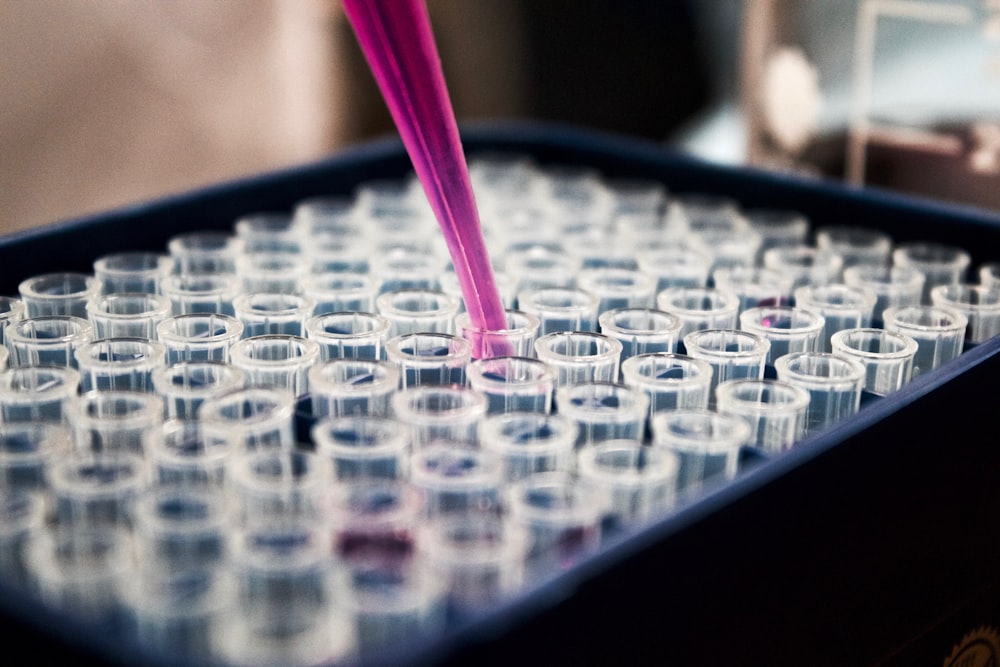
Advanced laboratory techniques were essential for uncovering the XPC-MDM2-p53 interaction mechanism.
Results and Analysis: The Case is Closed
The results were clear and striking: When XPC was present, p53 levels dropped. When XPC was silenced, p53 levels increased significantly . This proved that XPC was not just an innocent bystander; it was an active accomplice in promoting p53's degradation.
Data Tables: The Evidence File
This table shows data from the cell-based degradation test, where p53 protein levels were measured after manipulating XPC.
| Experimental Condition | Relative p53 Level | Interpretation |
|---|---|---|
| Normal (Control) Cells | 1.0 | Baseline p53 level |
| Cells with Extra XPC | 0.3 | High XPC leads to low p53 |
| Cells with Silenced XPC | 2.8 | Low XPC leads to high p53 |
This in vitro (test tube) experiment measured how much "destroy me" tag (Ubiquitin) was attached to p53 under different conditions.
| Reaction Components | Relative Ubiquitination | Interpretation |
|---|---|---|
| p53 + MDM2 | 1.0 | Baseline tagging by MDM2 alone |
| p53 + MDM2 + XPC | 3.5 | XPC enhances MDM2's ability to tag p53 |
This table summarizes the downstream effects observed in cells when XPC is overexpressed.
| Cellular Process | Effect when XPC is High | Long-Term Risk |
|---|---|---|
| p53 Activity | Decreased | Loss of tumor suppression |
| Cell Death (Apoptosis) | Reduced | Damaged cells survive |
| Cell Cycle Arrest | Bypassed | Cells divide with damaged DNA |

Visualization of the XPC-MDM2-p53 interaction network showing how disruption of this pathway could impact cancer development.
The Scientist's Toolkit: Essential Gear for the Investigation
This groundbreaking research relied on several key reagents and techniques.
siRNA
A molecular tool used to "silence" or turn off a specific gene (like the XPC gene), allowing scientists to see what happens when that protein is missing.
Antibodies
Highly specific proteins that bind to a target (e.g., XPC or p53). They are used like hooks to pull proteins out of a solution or to detect and visualize them.
Plasmids
Circular DNA molecules used as delivery trucks to introduce extra copies of a gene (like the XPC gene) into cells, forcing them to produce more of that protein.
Ubiquitination Assay Kit
A pre-packaged set of reagents that allows researchers to study the process of protein tagging in a controlled test tube environment.
Proteasome Inhibitor
A chemical that blocks the cell's recycling machine. By stopping it, scientists can see proteins (like p53) that are being tagged for destruction.
A New Paradigm and Future Hope
The discovery that XPC promotes the degradation of p53 flips a long-held belief on its head. XPC is no longer just a simple DNA repairman; it is a double agent with a second, critical function . In healthy cells, this partnership might be a way to fine-tune p53 levels, preventing an overzealous response to minor DNA damage. But in precancerous cells, if this process becomes overactive, it can cripple our best defense mechanism.
This new understanding is a game-changer for oncology. It suggests that drugs designed to disrupt the handshake between XPC and MDM2 could reawaken p53 in certain cancers, restoring the guardian's power and forcing tumor cells to self-destruct.
The story of p53, XPC, and MDM2 reminds us that in biology, as in any good drama, the lines between friend and foe are often more complex than they appear.
Understanding the XPC-MDM2-p53 interaction opens new possibilities for targeted cancer therapies that could restore p53 function in tumor cells.