Ubiquitin vs. SUMO: Decoding the Complex Crosstalk in Cellular Regulation and Therapeutic Targeting
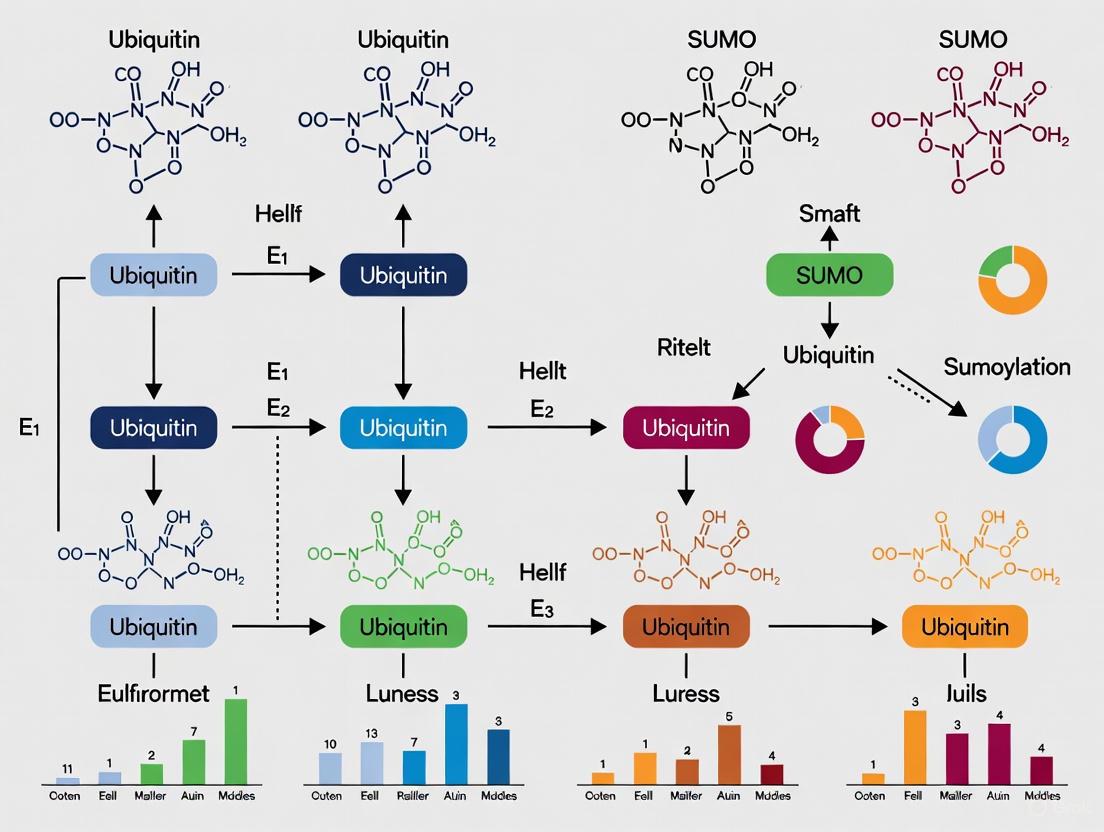
This article provides a comprehensive comparison of the ubiquitin and SUMO post-translational modification pathways, essential regulatory systems in eukaryotic cells.
Ubiquitin vs. SUMO: Decoding the Complex Crosstalk in Cellular Regulation and Therapeutic Targeting
Abstract
This article provides a comprehensive comparison of the ubiquitin and SUMO post-translational modification pathways, essential regulatory systems in eukaryotic cells. Tailored for researchers, scientists, and drug development professionals, it explores the fundamental biochemical mechanisms, distinctive functions in health and disease, and the dynamic interplay between these pathways. We delve into cutting-edge methodological approaches for studying these modifications, examine challenges in pathway-specific research, and validate their roles through comparative analysis in oncology and neurology. The content synthesizes current knowledge on therapeutic strategies that exploit these pathways, including proteasome inhibitors, SUMO-targeted ubiquitin ligases (StUbLs), and emerging technologies like PROTACs, offering insights for future drug discovery efforts.
Core Machinery and Distinct Cellular Functions of Ubiquitin and SUMO
The precise and dynamic nature of cellular signaling is largely governed by post-translational modifications (PTMs), with ubiquitin and small ubiquitin-like modifier (SUMO) representing two pivotal regulators in this intricate landscape [1]. These proteins are conjugated to target substrates through dedicated enzymatic cascades involving E1 (activating), E2 (conjugating), and E3 (ligating) enzymes [1] [2]. While these cascades share a fundamental three-step architecture, they diverge significantly in their complexity, enzyme specificity, and biological outcomes. Understanding the distinct mechanisms governing ubiquitin versus SUMO conjugation is crucial for dissecting their roles in cellular homeostasis and disease pathogenesis. This guide provides a systematic comparison of these two systems, focusing on architectural principles, experimental methodologies for their study, and the implications for therapeutic development.
Core Architectural Principles: A Side-by-Side Comparison
The ubiquitin and SUMO conjugation pathways, while mechanistically analogous, are defined by distinct components that dictate their specificity and functional scope.
Enzyme Complexity and Specificity
A primary distinction lies in the number of enzymes involved at each step, which directly correlates with the system's functional versatility.
- Ubiquitin System: Exhibits remarkable complexity, particularly at the E2 and E3 levels. The human genome encodes 2 E1 enzymes (Uba1 and Uba6), approximately 38 E2s, and over 600 E3 ligases [1] [2]. This expansion allows for immense substrate specificity and the generation of diverse ubiquitin chain topologies, directing targets toward proteasomal degradation or altering their function and localization [2].
- SUMO System: Operates with a significantly narrower enzyme repertoire. In humans, a single heterodimeric E1 (SAE1/SAE2) and one E2 (UBC9) are responsible for activating and transferring SUMO to all substrates [1] [3]. Specificity is conferred by a smaller, though diverse, set of E3 ligases and direct recognition of substrates by UBC9 itself [3].
Table 1: Core Enzyme Components in Human Ubiquitin and SUMO Pathways
| Component | Ubiquitin System | SUMO System |
|---|---|---|
| E1 Activating Enzyme | 2 (Uba1, Uba6) [1] | 1 Heterodimer (SAE1/SAE2) [1] [3] |
| E2 Conjugating Enzyme | ~38 [1] | 1 (UBC9) [1] [3] |
| E3 Ligase Enzymes | >600 [1] | Limited number (e.g., PIAS family, RanBP2) [3] |
| Primary E3 Types | RING, HECT, RBR [1] [2] | Not as extensively classified |
Structural Mechanisms of E1-E2 Thioester Transfer
Structural studies have revealed conserved yet distinct conformational changes that enable the transfer of the activated protein from E1 to E2.
- Ubiquitin E1-E2 Architecture: A crystal structure of the S. pombe Ub E1-E2 (Ubc4) complex revealed that E2 recognition is combinatorial, involving both the ubiquitin-fold domain (UFD) and the Cys domain of the E1 [4]. This interaction requires a ~25-degree rotation of the UFD and displacement of residues masking the E1 catalytic cysteine to bring the E1 and E2 active sites into proximity for thioester transfer [4].
- SUMO E1-E2 Architecture: The SUMO E1 undergoes a dramatic 130-degree rotation of its Cys domain after SUMO adenylation. This "active site remodeling" transits the catalytic cysteine over 35 Å to facilitate thioester bond formation with SUMO [5]. Subsequent unlocking of the UFD domain presents the E2 (UBC9) in an orientation where the active sites face each other, though they may remain separated by over 20 Å before final transfer [4].
Diagram 1: Core E1-E2-E3 Cascades for Ubiquitin and SUMO
Experimental Dissection: Methodologies and Reagents
A detailed understanding of these pathways relies on robust biochemical and biophysical assays. The following section outlines key experimental approaches and the necessary reagents.
Key Assays for Mechanistic Insight
- FRET-Based Kinetics Assays: High-sensitivity FRET (Förster Resonance Energy Transfer) assays are powerful for monitoring real-time dynamics and intermediate formation. This method has been used to determine kinetic parameters (Km) for SUMO1 and ATP binding to the E1 enzyme and to observe specific substrate recognition and thioester intermediates in both ubiquitin and SUMO cascades [5]. The assay typically involves labeling the E1, E2, or Ubl with donor and acceptor fluorophores. Conformational changes or binding events alter the FRET efficiency, allowing for quantitative measurement of reaction progress and affinity [5].
- Thioester Transfer Assays: These are fundamental biochemical assays to monitor the transfer of ubiquitin/SUMO from E1 to E2, and subsequently to a substrate. Reactions are performed in vitro with purified E1, E2, ATP, and ubiquitin/SUMO. The formation of the thioester-linked E2~Ub/SUMO conjugate is visualized by non-reducing SDS-PAGE, as the thioester bond is sensitive to reducing agents like β-mercaptoethanol [4] [6]. Coupling this assay with mutagenesis of E1-E2 interface residues has been critical for identifying contact points essential for activity [4].
- X-ray Crystallography: As demonstrated by the structure of the Ub E1-E2(Ubc4)/Ub/ATP·Mg complex (PDB: 4II2), crystallography provides atomic-resolution snapshots of enzymatic complexes [4]. These structures reveal conformational states, key interacting residues, and the spatial organization of active sites, offering an unparalleled view of the mechanistic underpinnings of the cascade. Stabilizing transient complexes, for example by introducing disulfide bonds, is often necessary for successful structural determination [4].
Table 2: Essential Research Reagents and Experimental Kits
| Reagent / Kit Name | Function / Application | Key Features & Specificity |
|---|---|---|
| Recombinant E1 Enzymes | Catalyzes ATP-dependent activation of Ub/SUMO | Human Uba1 (Ubiquitin E1), S. pombe Uba1, Heterodimeric SAE1/SAE2 (SUMO E1) [4] [5] |
| Recombinant E2 Enzymes | Accepts activated Ub/SUMO from E1; determines chain topology | Ubc4 (Ubiquitin), Ube2L3 (Ubiquitin, for HECT/RBR E3s), UBC9 (SUMO-specific) [4] [6] [3] |
| Fluorophore-Labeled Ubiquitin/SUMO | Enables FRET-based kinetic and binding studies | Site-specifically labeled (e.g., on cysteine residues); allows real-time monitoring of conjugation dynamics [5] |
| Active E3 Ligases | Provides substrate specificity for final conjugation step | RING-type (e.g., BRCA1/BARD1), HECT-type, RBR-type (e.g., Parkin), or SUMO E3s (e.g., PIAS) [1] [2] |
| SUMOylation & Ubiquitination Assay Kits | In vitro reconstitution of entire conjugation pathway | Includes E1, E2, E3, Ub/SUMO, ATP, and reaction buffers for streamlined experimental workflow |
Functional Consequences and Therapeutic Implications
The architectural differences between the ubiquitin and SUMO systems directly translate to their distinct cellular roles and their potential as therapeutic targets.
Biological Output and Cross-Talk
- Ubiquitin: The primary functional outcomes are tied to proteasomal degradation (via K48-linked chains), DNA repair, endocytosis, and immune signaling (via K63-linked and linear chains) [2]. The vast number of E3s allows for precise, signal-responsive control of a huge array of substrate proteins.
- SUMO: Sumoylation generally modulates protein-protein interactions, transcriptional activity, subcellular localization, and stability, often by competing with ubiquitination on the same lysine residue [1] [3]. It plays critical roles in processes like nuclear transport, stress response, and, as recent research highlights, uterine receptivity and embryo implantation [3].
- Convergence in StUbL Pathways: A fascinating point of convergence is the SUMO-Targeted Ubiquitin Ligase (StUbL) pathway. Here, proteins modified by SUMO are recognized by specialized RING-type E3 ubiquitin ligases that promote their ubiquitylation and degradation [7]. This "SUMO-primed ubiquitylation" is exploited by existing anti-cancer therapeutics like arsenic trioxide, which promotes the degradation of the PML-RARα oncoprotein by enhancing its sumoylation and subsequent StUbL-dependent ubiquitylation [7].
Diagram 2: StUbL Pathway Convergence
Application in Drug Discovery
The enzymatic cascades, particularly the E3 ligases, represent attractive drug targets. Strategies include:
- Protac Technology: Leverages the ubiquitin system to degrade specific disease-causing proteins by engineering bifunctional molecules that recruit a target protein to a E3 ubiquitin ligase [2].
- SUMO-Targeting Chimeras: A nascent approach mirroring Protacs, where a chimera recruits an E3 SUMO ligase to a target protein to induce its sumoylation, which can inactivate it or mark it for degradation via the StUbL pathway [7]. This holds promise for targeting oncogenic transcription factors.
- Direct E1 Inhibition: Small-molecule inhibitors of the SUMO E1 have been identified and characterized, showing potential as a new approach to cancer treatment by disrupting the entire SUMO conjugation pathway [5].
The comparative analysis of ubiquitin and SUMO E1-E2-E3 architectures reveals a elegant balance between conserved mechanistic principles and distinct biological strategies. The ubiquitin pathway employs a strategy of massive diversification at the E2 and E3 levels to achieve precise and irreversible outcomes like degradation. In contrast, the SUMO pathway achieves broad regulatory control through a minimal, streamlined enzymatic core, favoring reversible modulation of protein function. The emerging understanding of their interplay, particularly through the StUbL pathway, opens up novel therapeutic avenues. Future research, powered by the advanced experimental tools outlined in this guide, will continue to unravel the complexities of these systems and solidify their role in the next generation of therapeutics for cancer, neurological disorders, and beyond.
The precise regulation of cellular processes relies heavily on post-translational modifications (PTMs), with ubiquitin and small ubiquitin-like modifier (SUMO) representing two pivotal pathways. Although these modifiers share structural similarities and enzymatic cascades, they generate distinct functional outcomes through diverse modification patterns. Ubiquitination primarily targets proteins for proteasomal degradation but also regulates endocytosis, DNA repair, and kinase activation [8]. Conversely, SUMOylation predominantly modulates protein localization, activity, and stability, playing key roles in transcription, cell cycle, and DNA repair [9]. The diversity of modifications—mono, multi, and poly-chains—creates a complex language that controls virtually all aspects of eukaryotic cell biology. Understanding the nuances of these modifications is fundamental for research in targeted protein degradation and the development of novel therapeutics for cancer, neurodegenerative diseases, and other pathologies [7] [9].
Comparative Analysis of Modification Types
The following tables summarize the core characteristics and functional outcomes of the diverse modification types for ubiquitin and SUMO.
Table 1: Overview of Ubiquitin and SUMO Modification Types
| Feature | Ubiquitin | SUMO |
|---|---|---|
| Modifier Size | 76 amino acids [10] [8] | ~100 amino acids (including N-terminal extension) [11] |
| Primary Chain Types | MonoUb; Homotypic PolyUb (Lys6, Lys11, Lys27, Lys29, Lys33, Lys48, Lys63, Met1); Heterotypic/Branched Chains [10] | MonoSUMO; Multi-SUMO; PolySUMO (mainly SUMO2/3) [9] |
| Key Enzymes | E1 (2 in humans: UBA1, UBA6), E2 (~38 in humans), E3 (>600 in humans, RING, HECT, RBR families) [1] | E1 (SAE1/SAE2 heterodimer), E2 (UBC9), E3 (PIAS, RanBP2, Pc2 families) [1] [9] |
| Consensus Motif | None universal; recognized by E3 ligases [8] | ψ-K-X-D/E (where ψ is a hydrophobic residue) [9] |
Table 2: Functional Consequences of Different Modification Types
| Modification Type | Ubiquitin | SUMO |
|---|---|---|
| Monoconjugation | Endocytosis, histone regulation, DNA repair, viral budding, nuclear export [8]. | Alters protein-protein interactions, subcellular localization, and protein activity [12] [11]. |
| Multi-Conjugation | (Often grouped under polyubiquitination with mixed chain types or multiple monoUb sites) | Multiple acceptor lysines on a single substrate are modified [9]. Functional outcomes can be synergistic or distinct. |
| Homotypic Poly-Chains | Lys48-linked: Proteasomal degradation [10] [8]. Lys63-linked: DNA repair, signal transduction, endocytosis [10] [8]. Other linkages (Lys6, Lys11, Lys27, Lys29, Lys33, Met1) have distinct "atypical" roles [10]. | Poly-SUMO chains (primarily SUMO2/3): Serve as a platform for recruiting proteins containing SUMO-interacting motifs (SIMs) and for SUMO-targeted ubiquitin ligases (StUbLs) that direct substrates for degradation [7] [9]. |
Experimental Methodologies for Analysis
Investigating the diversity of ubiquitin and SUMO modifications requires specialized experimental protocols to capture their dynamic and complex nature.
Protocol: Investigating SUMO-Ubiquitin Cross-Talk at PML Nuclear Bodies
This methodology, adapted from a key study, examines the convergence of SUMO and ubiquitin pathways upon proteasome inhibition [13].
- 1. Cell Culture and Treatment: Utilize a cell line constitutively expressing an epitope-tagged version of SUMO1 (e.g., Hep2-SUMO cells). Culture cells under standard conditions (e.g., Dulbecco's modified Eagle's medium with 10% fetal calf serum). Treat cells with a proteasome inhibitor such as MG132 (10-20 µM) for 4-6 hours to block protein degradation [13].
- 2. Immunofluorescence and Microscopy: Plate cells on glass coverslips. Post-treatment, wash cells with PBS and fix with ice-cold methanol. Permeabilize cells and incubate with primary antibodies against the SUMO1 epitope-tag (e.g., anti-c-myc) and ubiquitin. Following washes, apply fluorescently-labeled secondary antibodies. Use high-resolution fluorescence or confocal microscopy to visualize the co-localization of SUMO1 and ubiquitin at PML nuclear bodies [13].
- 3. Western Blot Analysis: Harvest cells and prepare whole-cell lysates. Separate proteins by SDS-PAGE and transfer to a membrane. Probe the membrane with antibodies against ubiquitin to confirm an overall increase in ubiquitin-conjugated species due to proteasome inhibition. Re-probe with antibodies against free SUMO1 to observe the depletion of the free pool, indicating its shift into conjugated species [13].
- 4. Data Interpretation: Co-localization of SUMO and ubiquitin signals at discrete nuclear foci (PML bodies) upon MG132 treatment indicates pathway convergence. The increase in high-molecular-weight ubiquitin smears on Western blots, coupled with a reduction in free SUMO1, supports the hypothesis of SUMO-primed ubiquitination and a shared recycling mechanism [13].
Protocol: Identification of SUMO Substrates Using Denaturing Pull-Down
This mass spectrometry-based approach is used to identify novel SUMO substrates and characterize chain types [14].
- 1. Preparation of Cell Extract: Generate a cellular lysate with high sumoylation activity, such as from Xenopus egg extracts or cultured mammalian cells (e.g., HEK293T) [14].
- 2. His-Tagged SUMO Pull-Down: Incubate the extract with His-tagged SUMO1 or SUMO2 proteins. Under denaturing conditions (e.g., using 6 M guanidine hydrochloride), isolate the SUMO-conjugated substrates by immobilization on nickel-nitrilotriacetic acid (Ni-NTA) agarose beads. This harsh denaturation prevents non-specific binding and co-purification of non-covalent interactors [14].
- 3. Mass Spectrometry (MS) Analysis: After extensive washing under denaturing conditions, elute the bound proteins. Digest the eluted proteins with trypsin and analyze the resulting peptides by liquid chromatography-tandem mass spectrometry (LC-MS/MS). The identified proteins not present in control pull-downs (from extracts without His-SUMO) are considered putative SUMO substrates [14].
- 4. Data Validation and Functional Analysis: Validate the sumoylation of candidate substrates by co-transfecting them with SUMO in HEK293T cells and performing immunoprecipitation and Western blotting. Perform gene ontology (GO) analysis on the identified protein list to determine their enrichment in specific biological processes, cellular components, and molecular functions [14].
Pathway Diagrams and Molecular Logic
The diagrams below illustrate the core conjugation pathways and a key collaborative mechanism between SUMO and ubiquitin.
Ubiquitin and SUMO Conjugation Cascades
Diagram Title: Ubiquitin and SUMO Conjugation Cascades
SUMO-Targeted Ubiquitin Ligase (StUbL) Pathway
Diagram Title: SUMO-Targeted Ubiquitin Ligase Mechanism
The Scientist's Toolkit: Key Research Reagents
This section details essential reagents and tools for studying ubiquitin and SUMO modifications.
Table 3: Key Reagents for Ubiquitin and SUMO Research
| Reagent / Tool | Function / Application | Key Characteristics |
|---|---|---|
| Proteasome Inhibitors (e.g., MG132, PSI) | Blocks the 26S proteasome, leading to accumulation of ubiquitinated and SUMOylated proteins, allowing study of pathway dynamics and cross-talk [13]. | Reversible inhibitor; used to investigate protein turnover and the fate of modified proteins. |
| Linkage-Specific Antibodies | Detect and characterize specific polyubiquitin (Lys48, Lys63, etc.) or polySUMO chains in techniques like Western blotting and immunofluorescence [10]. | Essential for deciphering the "ubiquitin code" and understanding the functional consequence of specific chain types. |
| Epitope-Tagged Ubiquitin/SUMO (e.g., His-, HA-, Myc-) | Enable affinity purification of modified substrates from cell lysates under native or denaturing conditions for mass spectrometry analysis [13] [14]. | His-tag allows purification under denaturing conditions to minimize non-specific interactions. |
| SUMO-Targeting Chimeras (SUMO-TACs) | Novel proximity-inducing modality that recruits E3 SUMO ligases to oncogenic transcription factors, promoting their inactivation and degradation [7]. | Emerging therapeutic strategy that leverages the StUbL system for targeted protein degradation. |
| Deubiquitinases (DUBs) & SENPs | Enzymes that reverse ubiquitination and SUMOylation, respectively. Used to validate the nature of modifications and study dynamics [9] [8]. | SENPs have dual roles in SUMO maturation (pre-cleavage) and deconjugation from substrates [9]. |
In eukaryotic cells, post-translational modifications (PTMs) serve as crucial regulatory mechanisms that expand the functional repertoire of the proteome. Among these, ubiquitin and SUMO (Small Ubiquitin-like Modifier) represent two evolutionarily conserved ubiquitin-like proteins with fundamentally distinct biological roles. While both modifiers share structural similarities and utilize parallel enzymatic cascades for conjugation, they direct target proteins to vastly different cellular fates. Ubiquitin predominantly serves as a degradation signal, marking proteins for destruction via the proteasome system to maintain protein homeostasis and regulate vital processes. In contrast, SUMO modification primarily functions as a regulatory signal within the nuclear compartment, fine-tuning protein interactions, localization, and activity without typically triggering degradation. This comparison guide examines the specialized cellular roles, molecular mechanisms, and experimental approaches for investigating these two essential modification pathways, providing researchers with a structured framework for understanding their unique and occasionally intersecting functions.
Molecular Machinery and Enzymatic Cascades
The conjugation pathways for ubiquitin and SUMO involve analogous E1-E2-E3 enzymatic cascades, yet employ entirely distinct sets of enzymes that ensure pathway specificity.
Table 1: Comparative Enzymatic Machinery of Ubiquitin and SUMO Pathways
| Component | Ubiquitin System | SUMO System |
|---|---|---|
| E1 Activating Enzyme | UBA1 (single enzyme) | SAE1-SA2 heterodimer [15] [16] |
| E2 Conjugating Enzyme | ~35 enzymes (e.g., UBE2L3) [17] | Single enzyme: UBC9 [15] [16] |
| E3 Ligases | >600 enzymes (RING, HECT, RBR types) [18] | Limited number (PIAS, RanBP2, etc.) [16] |
| Proteases | ~100 Deubiquitinases (DUBs) | SENP, DeSI families [16] |
The SUMO E1 enzyme, a heterodimer of SAE1 and UBA2 (SAE2), activates SUMO in an ATP-dependent two-step process involving adenylation and thioester bond formation before transferring it to the sole SUMO E2 enzyme, UBC9 [15] [16]. Structural studies using cryo-EM have revealed that this transfer involves dramatic conformational changes, including a ~175° rotation of the ubiquitin-fold domain (UFD) to align the E1 and E2 active sites [15]. For ubiquitin, the E1 enzyme UBA1 charges one of approximately 35 E2 enzymes, which then partner with hundreds of different E3 ligases (RING, HECT, or RBR types) to provide substrate specificity [18]. The RBR-type E3 ubiquitin ligases, such as RNF19A and RNF19B, share characteristics of both RING and HECT types and have been shown to work with E2 enzymes like UBE2L3 [17] [18].
Figure 1: Comparative Enzymatic Cascades of Ubiquitin and SUMO Conjugation Pathways. While both systems utilize E1-E2-E3 enzymatic cascades, they employ distinct enzyme sets that ensure pathway specificity and different functional outcomes for modified substrates.
Functional Specialization and Biological Roles
Ubiquitin and SUMO pathways have evolved specialized cellular functions, with ubiquitin primarily governing protein degradation and turnover, while SUMO modification predominantly regulates nuclear processes without triggering target destruction.
Ubiquitin: Master Regulator of Protein Fate
The ubiquitin-proteasome system (UPS) represents the primary pathway for controlled protein degradation in eukaryotic cells, functioning as a crucial regulator of protein homeostasis (proteostasis) [16]. Through formation of polyubiquitin chains linked via lysine 48 (K48), ubiquitin tags proteins for recognition and degradation by the 26S proteasome, thereby recycling amino acids for new protein synthesis [16] [18]. This degradative function regulates fundamental cellular processes including cell cycle progression, signal transduction, and quality control of misfolded proteins. Beyond its canonical role in proteasomal targeting, ubiquitin also serves non-proteolytic functions through different chain linkages. K63-linked polyubiquitin chains act as scaffolding elements in inflammatory signaling pathways, such as NF-κB activation, by facilitating protein complex assembly rather than degradation [18]. Similarly, M1-linked linear ubiquitin chains regulate inflammasome assembly and necroptosis signaling [18].
SUMO: Nuclear Regulatory Architect
SUMOylation predominantly functions as a regulatory modification within the nuclear compartment, influencing diverse processes including transcriptional regulation, DNA repair, chromatin organization, and mitosis [15] [16]. Unlike ubiquitin, SUMO modification typically alters protein function through mechanisms such as modulating protein-protein interactions, changing subcellular localization, or masking interaction surfaces rather than targeting proteins for degradation [16]. In myeloid cells, SUMO operates as a potent repressor of innate immunity, maintaining a metastable heterochromatin state at specific genomic loci to prevent spontaneous type I interferon responses [19]. SUMO achieves this repression through modification of chromatin-associated factors like MORC3, which maintains repressive chromatin marks on interferon-responsive enhancers [19]. The mammalian SUMO family comprises three main members (SUMO1, SUMO2, and SUMO3) with partially specialized functions. While SUMO2 and SUMO3 can form polySUMO chains and are dynamically regulated by various cellular stresses, SUMO1 typically functions as a monomer or chain terminator [16] [19].
Table 2: Functional Specialization of Ubiquitin and SUMO Pathways
| Characteristic | Ubiquitin | SUMO |
|---|---|---|
| Primary Function | Protein degradation [16] [18] | Protein regulation [15] [16] |
| Chain Types | K48, K63, M1, K11, K27, K29, K33 [18] | PolySUMO (SUMO2/3) [16] |
| Cellular Localization | Cytoplasmic, nuclear [13] | Predominantly nuclear [16] |
| Stress Response | Misfolded protein clearance [16] | Heat shock, osmotic stress [20] |
| Immune Function | NF-κB activation [18] | Repression of innate immunity [19] |
Experimental Approaches and Research Methodologies
Investigating ubiquitin and SUMO pathways requires specialized methodologies to capture their dynamic nature and complex substrate profiles. Recent structural biology advances have provided unprecedented insights into the molecular mechanisms of these pathways.
Structural Biology Techniques
Cryo-electron microscopy (cryo-EM) has emerged as a powerful tool for elucidating the structural basis of ubiquitin and SUMO conjugation. Recent cryo-EM studies of the human SUMO E1 (SAE1-UBA2 heterodimer) in complex with UBC9 (E2) and SUMO1 adenylate have revealed dramatic conformational changes accompanying thioester transfer [15]. These structures demonstrate a ~175° rotation of the UFD domain, aligning the active sites of E1 and E2 enzymes separated by ~67 Å in E2-free structures [15]. The resolution of these complexes at 2.7 Å enables detailed analysis of interaction networks governing E1-E2 specificity and the conformational flexibility required for catalysis.
Functional and Phenotypic Screening Approaches
Genome-wide CRISPR-Cas9 screens provide powerful functional insights into ubiquitin and SUMO pathway components. In studies investigating the cytotoxic mechanism of the small molecule BRD1732, CRISPR screens identified RNF19A, RNF19B (RBR-type E3 ubiquitin ligases), and their shared E2 conjugating enzyme UBE2L3 as essential for compound sensitivity [17]. Parallel profiling using the PRISM platform across ~580 cancer cell lines further validated RNF19A expression as strongly associated with BRD1732 sensitivity, demonstrating the integration of genetic and pharmacogenetic approaches [17].
Quantitative proteomics methods, particularly those employing stable isotope labeling with amino acids in cell culture (SILAC), enable system-wide analysis of ubiquitin and SUMO modifications. Proteomic studies of SUMO-2 conjugates purified from cells treated with proteasome inhibitors have identified 73 SUMO-2-conjugated proteins whose accumulation depends on proteasome activity, revealing extensive cross-talk between SUMOylation and the ubiquitin-proteasome system [21]. These approaches demonstrate that a significant subset of SUMO-2-conjugated proteins are subsequently ubiquitinated and degraded by the proteasome, establishing cooperative integration between these pathways [21].
Figure 2: Experimental Approaches for Studying Ubiquitin and SUMO Pathways. Complementary methodologies ranging from genetic screens to structural biology provide comprehensive insights into the mechanisms and functions of these post-translational modification systems.
Pathway Crosstalk and Integrated Regulation
Despite their distinct primary functions, ubiquitin and SUMO pathways exhibit extensive cross-talk that enables integrated regulation of cellular processes. This interconnectivity is particularly evident in DNA repair, transcriptional regulation, and the cellular stress response.
Competitive modification occurs when ubiquitin and SUMO target the same lysine residue on substrate proteins. Approximately a quarter of SUMO-acceptor lysines also serve as ubiquitin conjugation sites, creating potential for direct competition [16]. This phenomenon was first observed in IκB-α, where SUMOylation protects against signal-induced ubiquitination and degradation [16] [13]. Similarly, the proliferating cell nuclear antigen (PCNA) can be modified at lysine 164 by either SUMO or ubiquitin, with SUMOylation occurring during S-phase and ubiquitination triggered by DNA damage, resulting in different functional outcomes [16].
Sequential modification represents another mode of cross-talk, where SUMOylation precedes ubiquitination. This mechanism is exemplified by SUMO-targeted ubiquitin ligases (STUbLs) such as yeast Slx5/Slx8 and mammalian RNF4, which specifically recognize SUMO-modified proteins and catalyze their ubiquitination [20]. STUbLs use SUMO-interacting motifs (SIMs) to bind SUMO chains or SUMOylated substrates, then mediate ubiquitin transfer to target them for proteasomal degradation [20]. This sequential modification system provides a quality control mechanism for disposing of excessively SUMOylated proteins and regulates SUMO-dependent signaling events.
The proteasome inhibition model demonstrates functional integration between these pathways. Inhibition of the proteasome leads to accumulation of ubiquitinated conjugates at PML nuclear bodies, which also recruit SUMOylated proteins [13]. Under these conditions, the free SUMO pool becomes depleted but can be regenerated from the conjugated pool upon recovery, suggesting that SUMO deconjugation may be required prior to proteasomal processing of SUMOylated proteins [13].
Research Toolkit: Essential Reagents and Methodologies
Table 3: Essential Research Reagents and Experimental Tools
| Reagent/Tool | Function/Application | Example Use |
|---|---|---|
| Crosslinking Strategy | Stabilizes E1-E2 complexes for structural studies | Disulfide bond between UBA2 C173 and UBC9 C93 for cryo-EM [15] |
| SUMO Inhibitors (SUMOi) | Chemical inhibition of sumoylation | TAK-981, ML-792 for probing SUMO function in innate immunity [19] |
| Proteasome Inhibitors | Block protein degradation | MG132, PSI for studying ubiquitin-SUMO cross-talk [13] |
| CRISPR-Cas9 KO Lines | Gene function analysis | RNF19A/B KO cells for validating E3 ligase dependencies [17] |
| SILAC Proteomics | Quantitative modification profiling | Identification of SUMO-2 targets affected by proteasome inhibition [21] |
| STUbL Mutants | Study SUMO-ubiquitin cross-talk | slx5Δ yeast strains accumulating SUMO chains [20] |
Ubiquitin and SUMO represent two highly specialized ubiquitin-like modification systems with distinct yet complementary cellular functions. Ubiquitin primarily serves as a degradation signal through the proteasome system, but also functions in non-proteolytic signaling through specific chain linkages. SUMO modification predominantly acts as a regulatory mechanism within the nuclear compartment, controlling transcription, DNA repair, and chromatin organization. Despite their specialization, these pathways exhibit extensive cross-talk through competitive modification at shared lysine residues and sequential modification via STUbLs, enabling integrated cellular responses to stress and DNA damage. The continued development of research tools including selective inhibitors, CRISPR-based screening approaches, and high-resolution structural methods will further advance our understanding of these essential regulatory pathways and their therapeutic potential in human disease.
PML nuclear bodies (PML-NBs) are dynamic, membrane-less organelles that function as central regulatory hubs within the nucleus, serving as a critical interface between the SUMOylation and ubiquitin modification pathways. These spherical structures, ranging from 0.1 to 2 µm in diameter, are nucleated by the PML protein, which polymerizes into a scaffold that concentrates hundreds of unrelated partner proteins [22] [23]. The integrative function of PML-NBs is particularly evident in their role in facilitating SUMO-primed ubiquitylation, a sequential post-translational modification process where SUMO modification serves as a signal for subsequent ubiquitin conjugation [7]. This unique capability positions PML-NBs as a key convergence point in cellular regulation, enabling the nucleus to efficiently coordinate diverse processes including protein quality control, transcriptional regulation, and stress response through spatial proximity [22] [23].
The architectural organization of PML-NBs directly supports their integrative function. Their core structural component, the PML protein, contains three critical lysine residues (K65, K160, and K490) that undergo SUMOylation and a SUMO-interacting motif (SIM) that facilitates non-covalent interactions with other SUMOylated proteins [22]. This combination of covalent SUMO modification and non-covalent SIM interactions creates a SUMO-rich environment within PML-NBs that serves as a platform for recruiting SUMO-targeted ubiquitin ligases (StUbLs) such as RNF4, which bridge the SUMO and ubiquitin pathways [7] [24]. The ability of PML-NBs to spatially concentrate these modification systems allows them to function as efficient sensors and integrators of cellular stress signals, ultimately directing client proteins toward specific fates including activation, sequestration, or degradation [22] [23].
Mechanistic Foundations: SUMO-Ubiquitin Networking in PML-NBs
The SUMO-Ubiquitin Sequential Modification Cascade
The integrative function of PML-NBs is exemplified by a well-defined biochemical cascade in which SUMO modification primes proteins for subsequent ubiquitylation. This SUMO-primed ubiquitylation pathway begins with stress-induced SUMOylation of client proteins, which can occur either directly within PML-NBs or in the nucleoplasm prior to recruitment [7] [24]. SUMOylated proteins are then recognized and concentrated within PML-NBs through SUMO-SIM interactions with the PML scaffold [22]. The high local concentration of SUMOylated proteins within PML-NBs facilitates their recognition by StUbLs, particularly RNF4, which contains multiple SIMs that bind polySUMO chains [24]. Once bound to SUMOylated substrates, RNF4 catalyzes their ubiquitylation, marking them for proteasomal degradation or altering their functional properties through non-proteolytic ubiquitin signaling [7] [25].
This sequential modification system is not limited to degradation pathways. Recent research has revealed that SUMO-primed ubiquitylation within PML-NBs can also trigger protective functions through the action of the p97/VCP disaggregase, which extracts ubiquitylated proteins from condensates and aggregates [25]. This dual capacity for directing proteins toward degradation or disaggregation highlights the versatile regulatory output generated by the SUMO-ubiquitin networking within PML-NBs and establishes them as decision-making hubs that determine protein fate in response to proteotoxic stress.
Structural Basis for PML-NB Function
The unique architecture of PML-NBs enables their role as integrative centers for post-translational modifications. PML proteins self-assemble into spherical shells through oligomerization of their N-terminal RBCC domains (RING, B-boxes, and coiled-coils), forming a stable insoluble scaffold [22] [23]. The interior of this shell is filled with a dynamic mixture of client proteins that undergo constant exchange with the nucleoplasm, creating a liquid-like condensate that concentrates modification enzymes and their substrates [23]. This structural organization is maintained through a combination of SUMO-SIM interactions and liquid-liquid phase separation (LLPS) driven by the multivalent nature of the PML protein and its associated partners [22].
Table 1: Core Structural Components of PML Nuclear Bodies
| Component | Type | Key Features | Functional Role |
|---|---|---|---|
| PML (isoforms I-VI) | Scaffold protein | RBCC domain, SUMOylation sites (K65, K160, K490), SIM motif | Forms structural shell, nucleates body assembly, recruits client proteins |
| SUMO (1, 2/3) | Modifier | Forms polymeric chains, stress-inducible (SUMO2/3) | Primes proteins for ubiquitylation, mediates protein-protein interactions |
| RNF4 | SUMO-targeted E3 ubiquitin ligase | Multiple SIM motifs, RING domain | Recognizes SUMOylated proteins, catalyzes ubiquitylation |
| SP100 | Permanent component | SUMOylation-dependent recruitment | Structural stabilization, contributes to antiviral function |
Post-translational modifications play a crucial role in regulating PML-NB dynamics. Arsenic treatment, for example, sharply increases PML-NB formation and promotes the recruitment of both the SUMO-conjugating enzyme UBC9 and substrate proteins like SP100, creating an environment that facilitates SUMOylation [23]. This stress-induced enhancement of PML-NB biogenesis demonstrates how these structures dynamically respond to cellular conditions to modulate the flux of proteins through the SUMO-ubiquitin modification system.
Functional Comparison: PML-NBs in Oncology vs. Neurology
PML-NBs in Leukemia Therapy
The therapeutic potential of manipulating PML-NBs is best established in oncology, particularly in the treatment of acute promyelocytic leukemia (APL). In APL, the oncogenic PML-RARα fusion protein disrupts normal PML-NB organization, blocking myeloid differentiation and promoting leukemogenesis [26]. Two effective therapeutic agents, arsenic trioxide (ATO) and all-trans retinoic acid (ATRA), both function through PML-NB-dependent mechanisms to eliminate the PML-RARα oncoprotein [7] [26]. ATO induces SUMOylation of PML-RARα, leading to its recognition by RNF4, ubiquitylation, and subsequent proteasomal degradation [24]. ATRA, meanwhile, activates RAR signaling and promotes PML-NB reorganization, releasing normal PML protein to reassemble into functional nuclear bodies [26].
Recent research has revealed additional therapeutic opportunities for targeting PML-NBs in non-APL leukemias. The combination of CDK4/6 inhibitors with ATRA synergistically enhances the formation of enlarged PML-NBs through conflicting cell cycle signals, leading to potent cytotoxicity across multiple acute myeloid leukemia cell lines [26]. This combination treatment triggers irreversible cell growth arrest, myeloid differentiation, or apoptosis depending on the cellular context, demonstrating how modulation of PML-NB dynamics can produce diverse anti-leukemic effects.
Table 2: PML-NB Targeting Therapeutics in Oncology
| Therapeutic Agent | Molecular Target | Effect on PML-NBs | Therapeutic Outcome |
|---|---|---|---|
| Arsenic Trioxide (ATO) | PML/PML-RARα | Induces SUMOylation, recruits RNF4 | Degradation of PML-RARα, differentiation/apoptosis |
| All-trans Retinoic Acid (ATRA) | RARα/PML-RARα | Reorganizes PML-NB structure | Releases normal PML, promotes differentiation |
| CDK4/6 inhibitor + ATRA | Cell cycle signaling | Forms enlarged PML-NBs | Conflicting signal-induced cytotoxicity, differentiation |
PML-NBs in Neurodegenerative Disease
In neurological contexts, PML-NBs have emerged as potential therapeutic targets for countering protein aggregation in neurodegenerative diseases. Recent groundbreaking research has demonstrated that recruiting TDP-43—a protein that forms pathological inclusions in amyotrophic lateral sclerosis (ALS), frontotemporal dementia (FTD), and Alzheimer's disease—to PML-NBs triggers a protective SUMOylation-ubiquitylation cascade that limits its aggregation [25]. This protective pathway involves compartmentalization of TDP-43 within PML-NBs, followed by SUMO-primed ubiquitylation that requires the p97/VCP disaggregase to maintain TDP-43 in a soluble state under proteotoxic stress conditions [25] [27].
The mechanistic difference between the oncological and neurological applications of PML-NB targeting lies in the ultimate fate of the modified client proteins. In oncology, SUMO-primed ubiquitylation typically directs oncoproteins toward proteasomal degradation, while in neurological contexts, this modification pathway appears to facilitate extraction from aggregates and maintenance of solubility without necessarily leading to degradation [7] [25]. This functional divergence highlights the remarkable versatility of PML-NBs as cellular tools for managing different types of proteostasis challenges.
Experimental Approaches and Data Comparison
Methodologies for Studying PML-NB Functions
Research into PML-NB functions employs diverse methodological approaches designed to characterize their dynamic composition, organizational changes under stress conditions, and functional outcomes. Key experimental protocols include:
PML-NB Formation and Drug Response Assay [26]:
- Cell lines (e.g., NB4 APL cells, HL60 non-APL cells) treated with ATRA (1µM), CDK4/6 inhibitor palbociclib (1µM), or combination
- PML-NB quantification via immunofluorescence using anti-PML antibodies at 24, 48, and 72 hours
- Assessment of myeloid differentiation markers (CD11b, CD38) by flow cytometry
- Cell cycle analysis by propidium iodide staining and flow cytometry
- Irreversible growth arrest measured by cell counting after drug washout
SUMO-Ubiquitin Cascade Analysis [25]:
- HEK293T cells transfected with Flag-tagged TDP-43 constructs (WT, SUMO2-TDP-43, tetra-SUMO2-TDP-43)
- Stress induction via sodium arsenite (0.5mM, 1h) or heat shock (43°C, 1h)
- Cellular fractionation into detergent-soluble and insoluble components
- Immunoblot analysis of fractions with anti-Flag antibodies
- Ubiquitylation assessment under proteasome (MG132) or p97 (CB-5083) inhibition
Protein Recruitment and Interaction Studies [24] [25]:
- Fluorescence Recovery After Photobleaching (FRAP) to measure protein dynamics in PML-NBs
- Fluorescence Resonance Energy Transfer (FRET) to detect molecular interactions
- Proximity-inducing recruitment systems (e.g., rapamycin-induced dimerization) to force client localization to PML-NBs
- Immunoprecipitation of SUMOylated and ubiquitylated proteins under stress conditions
Comparative Experimental Data
Table 3: Quantitative Analysis of PML-NB Interventions Across Disease Models
| Experimental Condition | System | Key Metrics | Results | Citation |
|---|---|---|---|---|
| ATRA + CDK4/6 inhibitor (palbociclib) | HL60 leukemia cells | PML-NB signal intensity | ~3.5-fold increase vs. control | [26] |
| Irreversible growth arrest | 80-90% after 72h pre-exposure | [26] | ||
| AML mouse model | Therapeutic efficacy | Significant improvement with minimal effect on normal hematopoiesis | [26] | |
| Arsenic trioxide treatment | APL cells | PML-RARα degradation | Complete clearance at therapeutic concentrations | [24] |
| Tetra-SUMO2-TDP-43 recruitment to PML | HEK293T cells + arsenite stress | Insoluble TDP-43 fraction | Reduced to <10% vs. 40% in WT TDP-43 | [25] |
| Tetra-SUMO2-TDP-43 + heat stress | HEK293T cells | Insoluble TDP-43 fraction | Reduced to ~20% vs. 80% in WT TDP-43 | [25] |
The experimental data demonstrate consistent patterns across different cellular models and stressors. First, interventions that enhance PML-NB formation or function consistently produce protective outcomes in their respective disease contexts. Second, the combination of multiple stressors or signals (e.g., cell cycle arrest plus mitogenic signaling) generates synergistic effects on PML-NB dynamics and function. Third, the recruitment of aggregation-prone proteins to PML-NBs consistently reduces their accumulation in insoluble fractions, supporting a general protective function of this compartment against proteotoxicity.
Visualization of Core Signaling Pathways
SUMO-Primed Ubiquitylation in PML-NBs
Diagram 1: SUMO-primed ubiquitylation pathway in PML nuclear bodies. Cellular stress induces PML-NB formation and SUMOylation of client proteins. SUMOylated proteins are recognized by the StUbL RNF4, which catalyzes ubiquitylation, determining final protein fate (degradation or disaggregation).
Therapeutic Targeting of PML-NBs in Disease
Diagram 2: Comparative therapeutic strategies targeting PML-NBs. In oncology (top), ATO induces SUMOylation and RNF4-mediated degradation of PML-RARα, while ATRA promotes PML-NB reorganization and differentiation. In neurology (bottom), TDP-43 recruitment to PML-NBs triggers a protective SUMO-ubiquitin cascade requiring p97 disaggregase.
The Scientist's Toolkit: Essential Research Reagents
Table 4: Key Research Reagents for PML-NB Studies
| Reagent/Cell Line | Specific Function | Experimental Application |
|---|---|---|
| NB4 APL cell line | Expresses PML-RARα fusion protein | Modeling APL, studying ATO/ATRA mechanisms |
| HL60 non-APL cell line | PML-RARA-negative myeloid leukemia | Studying non-APL differentiation therapies |
| Anti-PML antibodies (5E10) | Detect endogenous PML protein | Immunofluorescence, Western blotting |
| Palbociclib | CDK4/6 inhibitor | Inducing G1 cell cycle arrest, studying conflict signals |
| Arsenic trioxide (ATO) | Induces PML SUMOylation | Triggering SUMO-primed ubiquitylation cascade |
| All-trans retinoic acid (ATRA) | Activates RAR signaling | Promoting differentiation, PML-NB reorganization |
| RNF4 shRNA/siRNA | Depletes cellular RNF4 | Assessing requirement for SUMO-targeted ubiquitylation |
| MG132 proteasome inhibitor | Blocks proteasomal degradation | Distinguishing degradative vs. non-degradative ubiquitylation |
| CB-5083 p97 inhibitor | Inhibits p97/VCP disaggregase | Testing p97 role in aggregate resolution |
| Rapamycin-induced dimerization system | Forces protein proximity to PML-NBs | Studying recruitment effects on client proteins |
This comprehensive toolkit enables researchers to manipulate and monitor PML-NB dynamics across multiple experimental contexts. The combination of specific cell lines, pharmacological inhibitors, and molecular tools allows for detailed dissection of the SUMO-ubiquitin networks centered on these nuclear bodies, facilitating both basic mechanistic studies and therapeutic development.
PML nuclear bodies serve as a critical integration point for SUMO and ubiquitin signaling pathways, coordinating cellular responses to diverse stress signals through spatial organization of sequential post-translational modifications. The experimental data consistently demonstrate that therapeutic strategies targeting PML-NB function produce potent effects in both oncological and neurological contexts, albeit through distinct mechanistic endpoints—directing proteins toward degradation in cancer therapy while promoting solubility maintenance in neurodegenerative models. This functional versatility stems from the core capacity of PML-NBs to concentrate SUMOylation machinery and SUMO-targeted ubiquitin ligases, creating a modular system that can be adapted to different proteostasis challenges.
The emerging paradigm of induced proximity to PML-NBs as a therapeutic strategy represents a promising avenue for future drug development across multiple disease contexts. Whether through small molecule-induced recruitment, such as the combination of CDK4/6 inhibitors with ATRA in leukemia, or through more targeted proximity-inducing modalities like SUMO-targeting chimeras, the controlled spatial reorganization of disease-relevant proteins within PML-NBs offers a powerful approach to reprogram cellular fate decisions. As our understanding of PML-NB composition, dynamics, and regulatory networks continues to advance, so too will opportunities to develop innovative therapies that leverage this key convergence point in nuclear organization and signaling.
The post-translational modification of proteins by ubiquitin (Ub) and small ubiquitin-like modifier (SUMO) constitutes sophisticated regulatory languages that cells use to control nearly all aspects of eukaryotic biology. These modifications operate through analogous "writer-reader-eraser" paradigms, where dedicated enzymatic cascades covalently attach modifiers to substrates (writers), specialized domains interpret these modifications (readers), and protease activities remove the signals (erasers) [10] [28]. While sharing structural similarities, the ubiquitin and SUMO pathways have evolved distinct specificities and functions. The ubiquitin code exhibits tremendous complexity through the formation of polyubiquitin chains of eight different linkage types—Lys6, Lys11, Lys27, Lys29, Lys33, Lys48, Lys63, and Met1—each capable of encoding distinct cellular outcomes [10] [29]. In contrast, the SUMO pathway primarily modulates protein-protein interactions, subcellular localization, and stability through more limited chain formation [28] [30]. This guide provides a comparative analysis of the molecular machinery governing pathway specificity in these systems, with experimental approaches for their study.
Comparative Architecture of Ubiquitin and SUMO Systems
Table 1: Core Machinery of Ubiquitin and SUMO Pathways
| Component | Ubiquitin System | SUMO System |
|---|---|---|
| E1 Activating Enzymes | Dozens of E1 variants [31] | Single heterodimeric E1 (SAE1-SAE2) [28] |
| E2 Conjugating Enzymes | ~53 E2 enzymes in humans [31] | Single E2 (UBC9) [28] |
| E3 Ligating Enzymes | >500 E3 ligases (RING, HECT, RBR) [31] [30] | Limited E3s (PIAS family, RanBP2) [28] |
| Modification Types | MonoUb, multi-monoUb, 8 homotypic chains, heterotypic chains, branched chains [10] [30] | MonoSUMO, polySUMO chains (primarily SUMO2/3) [28] [30] |
| Reader Domains | Ubiquitin-Binding Domains (UBDs) [32] [10] | SUMO-Interacting Motifs (SIMs) [28] [30] |
| Eraser Enzymes | ~100 Deubiquitinases (DUBs) [33] | 7 Sentrin-specific proteases (SENPs) in humans [28] |
Figure 1: Comparative architecture of Ubiquitin and SUMO pathway machinery showing dramatic differences in enzyme complexity.
Writers: Specificity in Modification
Ubiquitin Writers: Extreme Diversification
The ubiquitination cascade begins with E1 activation, proceeds through E2 conjugation, and culminates in E3-mediated substrate modification. Humans possess dozens of E1 enzymes, approximately 53 E2s, and over 500 E3 ligases [31]. This extensive diversification enables exquisite substrate specificity and functional variety. E3 ligases fall into three major structural classes: RING types that facilitate direct Ub transfer from E2 to substrate, HECT types that form a catalytic E3-Ub thioester intermediate, and RBR types that employ a hybrid mechanism [30]. Linkage specificity is determined by cooperative interactions between E2 and E3 enzymes. For example, the RING E3 ligase RNF8 collaborates with the E2 enzyme Ubc13 to promote Lys63-linked ubiquitination on histone H1 in DNA damage response [32], while other E2-E3 pairs generate different chain types.
SUMO Writers: Constrained Specificity
In stark contrast, the SUMO pathway employs a single heterodimeric E1 (SAE1-SAE2) and a single E2 (UBC9) [28]. UBC9 uniquely recognizes SUMO consensus motifs (ψKxE, where ψ is a hydrophobic residue) on substrates, enabling direct E2-substrate recognition rarely observed in the ubiquitin system. This limited enzymatic repertoire is supplemented by a small number of E3 ligases, primarily from the PIAS family and RanBP2, which enhance conjugation efficiency and specificity but are not always essential [28]. SUMO chain formation occurs predominantly through SUMO2/3, which contain internal consensus sites, while SUMO1 primarily acts as a chain terminator [30].
Table 2: Writer Enzyme Specificity and Functions
| Feature | Ubiquitin Writers | SUMO Writers |
|---|---|---|
| E1 Diversity | Multiple E1 enzymes [31] | Single heterodimeric E1 (SAE1-SAE2) [28] |
| E2 Diversity | ~53 E2s with distinct functions [31] | Single E2 (UBC9) with broad specificity [28] |
| E3 Diversity | Hundreds of RING, HECT, RBR E3s [31] [30] | Limited E3 families (PIAS, RanBP2) [28] |
| Substrate Recognition | Primarily through E3-substrate interactions [31] | E2 (UBC9) directly recognizes consensus motifs [28] |
| Chain Formation | Extensive homotypic, heterotypic, and branched chains [10] [30] | Primarily SUMO2/3 chains; SUMO1 as chain terminator [30] |
| Stress Response | Diverse DNA damage responses via RNF8, RNF168 [32] | Heat shock, oxidative stress induce SUMO2/3 chains [28] [30] |
Readers: Decoding the Signals
Ubiquitin Readers: Linkage-Specific Recognition
Ubiquitin signals are interpreted by ubiquitin-binding domains (UBDs) that exhibit remarkable specificity for different ubiquitin chain architectures. Over 11 distinct UBD families have been identified, including UIM, UBA, UBZ, and NZF domains [31]. These domains often function cooperatively in multi-domain proteins to achieve linkage selectivity. For instance, in DNA double-strand break repair, RNF168 possesses tandem UDM motifs that specifically recognize ubiquitinated H1 and H2A histones, enabling propagation of DNA damage signals [32]. Different UBD arrangements allow discrimination between ubiquitin chain types—Lys48-linked chains typically target substrates for proteasomal degradation, while Lys63-linked and linear Met1-linked chains regulate signaling pathways in inflammation and beyond [29].
SUMO Readers: SIM-Dependent Interactions
SUMO modifications are recognized by proteins containing SUMO-interacting motifs (SIMs)—short hydrophobic sequences typically flanked by acidic residues [28] [30]. SIM-containing proteins often function in transcriptional regulation, DNA repair, and protein localization. Unlike the diverse UBD repertoire, SIMs represent a more uniform recognition system. The functional outcomes of SUMO recognition include altered subcellular localization, modified enzymatic activity, and changes in protein-protein interactions. SIM-mediated interactions frequently promote the assembly of multi-protein complexes at specific genomic locations or sites of DNA damage.
Figure 2: Reader domains decode Ubiquitin and SUMO modifications into distinct functional outcomes.
Erasers: Precision Signal Removal
Ubiquitin Erasers: Extensive DUB Diversity
Deubiquitinating enzymes (DUBs) provide temporal control of ubiquitin signals, with approximately 100 DUBs in humans belonging to several protease families [33]. DUBs exhibit remarkable specificity for different ubiquitin chain types and cellular contexts. Some DUBs preferentially cleave specific linkage types, while others edit ubiquitin chains or recycle ubiquitin from proteasomal substrates. This extensive DUB repertoire allows precise spatial and temporal control of ubiquitin signaling, with mutations in specific DUBs linked to various human diseases.
SUMO Erasers: SENP Specificity
SUMO deconjugation is mediated by sentrin-specific proteases (SENPs)—seven human enzymes with distinct subcellular localizations and substrate preferences [28]. SENPs exhibit specificity for different SUMO paralogs: SENP1 and SENP2 process all SUMO isoforms, while SENP3, SENP5, SENP6, and SENP7 preferentially deconjugate SUMO2/3 and SUMO chains [28]. This compartmentalization and paralog specificity ensures precise regulation of SUMYLATION dynamics in response to cellular signals.
Table 3: Eraser Enzyme Specificity and Regulation
| Feature | Ubiquitin Erasers (DUBs) | SUMO Erasers (SENPs) |
|---|---|---|
| Enzyme Diversity | ~100 deubiquitinases [33] | 7 sentrin-specific proteases [28] |
| Specificity Basis | Linkage type, cellular context [10] | SUMO paralog preference, subcellular localization [28] |
| Functional Roles | Signal termination, ubiquitin recycling, chain editing [33] | SUMO precursor processing, deconjugation [28] |
| Regulatory Mechanisms | Oxidation, phosphorylation, subcellular localization [34] | Transcriptional regulation, protein stability, oxidation [28] |
| Pathway Crosstalk | Regulation of SUMO pathways via ubiquitination [30] | Regulation of ubiquitin pathways via deSUMOylation [30] |
Experimental Approaches for Pathway Analysis
Ubiquitinomics and SUMO Proteomics
Mass spectrometry-based proteomics has revolutionized the study of ubiquitin and SUMO modifications. The key challenge is the low stoichiometry of these modifications, requiring efficient enrichment strategies before LC-MS/MS analysis.
Ubiquitin Modification Analysis: The most successful approach uses tandem ubiquitin-binding entities (TUBEs) or anti-K-ε-GG antibodies to enrich ubiquitinated peptides [31] [33]. After trypsin digestion, ubiquitinated sites are marked by a characteristic di-glycine (GG) remnant with a mass increment of 114.043 Da on modified lysines [31]. For comprehensive analysis, His-tagged ubiquitin expressed in cells enables purification under denaturing conditions, significantly reducing contaminating proteins [31]. Label-free quantification provides more reliable results than isotope-labeling methods for ubiquitinomics, as the latter can interfere with antibody-antigen interactions during enrichment [33].
SUMO Modification Analysis: SUMO proteomics faces additional challenges due to the larger tryptic fragments. Innovative approaches use mutated SUMO variants (Q87T or T90K) that generate shorter tags upon trypsin digestion, enabling better MS identification [30]. Antibodies specific for SUMO isoforms facilitate the enrichment of SUMOylated proteins, though the field lags behind ubiquitinomics in site-level mapping.
Functional Validation Experiments
Genetic Manipulation: RNAi or CRISPR-Cas9-mediated knockout of specific writers, readers, or erasers reveals their functional roles. For example, RNF168 deficiency causes defective DNA damage repair due to impaired H2A ubiquitination [32].
In Vitro Reconstitution: Purified E1, E2, and E3 components allow biochemical characterization of modification specificity. These systems can determine linkage specificity and kinetic parameters [30].
Cross-linking Mass Spectrometry: Identifies direct interactions between readers and specific ubiquitin/SUMO modifications, revealing structural basis for recognition [34].
Figure 3: Experimental workflows for ubiquitinomics and SUMO proteomics analysis.
The Scientist's Toolkit: Essential Research Reagents
Table 4: Key Research Reagents for Ubiquitin/SUMO Studies
| Reagent Type | Specific Examples | Applications and Functions |
|---|---|---|
| Affinity Tools | Anti-K-ε-GG antibody [33], TUBE domains [35], GST-qUBA [35] | Enrichment of ubiquitinated proteins/peptides for proteomics |
| Activity Probes | HA-Ub-VS, SUMO-VS [34] | Active-site directed profiling of DUBs and SENPs |
| Linkage-Specific Reagents | Linkage-specific UBDs [10], linkage-specific antibodies [10] | Detection and purification of specific ubiquitin chain types |
| Expression Constructs | His-tagged ubiquitin [31], SUMO mutants (Q87T/T90K) [30] | Affinity purification and improved MS identification |
| Inhibitors | Ginkgolic acid [28], ML792 [34] | Selective inhibition of SUMO E1 and other pathway components |
| Mass Spec Standards | AQUA ubiquitin peptides [10] | Absolute quantification of ubiquitin modifications |
Pathway Crosstalk and Hybrid Chains
An emerging paradigm in ubiquitin and SUMO biology is the extensive crosstalk between these modification systems, particularly through the formation of hybrid ubiquitin-SUMO chains [30]. Proteomic studies have identified ubiquitination on multiple lysine residues in all SUMO isoforms (SUMO1-3), suggesting diverse hybrid chain architectures [30]. These hybrid chains appear to be particularly important during cellular stress responses, where they may confer enhanced specificity and affinity for cognate receptors [30]. The SUMO-targeted ubiquitin ligases (STUbLs) represent a direct molecular bridge between these pathways, recognizing SUMOylated proteins and promoting their ubiquitination, often targeting them for degradation [36] [30]. This sophisticated interplay expands the coding potential of both systems and enables integrated response to genomic and proteostatic challenges.
Concluding Perspectives
The ubiquitin and SUMO pathways represent two sophisticated post-translational regulatory systems with distinct evolutionary strategies for achieving specificity. The ubiquitin system employs massive diversification of its enzymatic components to generate an incredibly complex code with diverse functional outcomes. In contrast, the SUMO pathway achieves specificity through a minimalist enzymatic core complemented by context-dependent factors that guide its functions. For drug development professionals, these differences present unique opportunities: the ubiquitin system offers numerous specific targets (e.g., individual E3s or DUBs) for therapeutic intervention, while the SUMO pathway presents challenges and opportunities for more global modulation. The emerging understanding of hybrid chains and pathway crosstalk reveals even greater complexity than previously appreciated and highlights the need for continued investigation into how these two systems collaboratively regulate cellular physiology and pathophysiology.
Advanced Technologies for Pathway Interrogation and Therapeutic Exploitation
Proteomic Workflows for Mapping the Ubiquitinome and SUMOylome
Protein post-translational modifications (PTMs) are crucial regulatory mechanisms that expand protein functionality by modifying amino acid chains after translation [37]. Among the diverse PTMs, ubiquitination and SUMOylation represent two essential pathways that regulate virtually all cellular processes. Ubiquitination primarily targets proteins for proteasomal degradation but also regulates protein-protein interactions, while SUMOylation modifies protein stability, subcellular localization, and molecular interactions [38] [39]. The systematic study of these modifications—termed the "ubiquitinome" and "SUMOylome"—has been revolutionized by advanced proteomic technologies, enabling researchers to map modification sites on a proteome-wide scale. These approaches provide critical insights for drug development, particularly in oncology and infectious diseases, where these pathways are frequently dysregulated [40] [41]. This guide compares contemporary proteomic workflows for ubiquitinome and SUMOylome analysis, highlighting methodological innovations, performance benchmarks, and practical applications for research and drug discovery.
Comparative Workflow Performance: Ubiquitinome vs. SUMOylome
Table 1: Performance comparison of ubiquitinome profiling workflows using different mass spectrometry acquisition methods.
| Workflow Parameter | Data-Dependent Acquisition (DDA) | Data-Independent Acquisition (DIA) | Fractionated DDA (UbiSite) |
|---|---|---|---|
| Typical K-GG Peptide Identifications | 21,434 | 68,429 | ~30% more than single-shot DDA |
| Quantitative Precision (Median CV) | >20% | ~10% | Not specified |
| Protein Input Requirement | 500 µg - 2 mg | 2 mg | 40 mg |
| MS Acquisition Time | 125 min | 75 min | ~20x longer than DIA |
| Missing Values in Replicates | ~50% | Minimal | Not specified |
| Key Advantages | Well-established | Superior coverage, precision, reproducibility | High identification numbers |
| Main Limitations | Semi-stochastic sampling, missing values | Complex data processing | High input, extensive fractionation |
Table 2: Characteristic features of ubiquitinome versus SUMOylome profiling.
| Feature | Ubiquitinome | SUMOylome |
|---|---|---|
| Modification Type | Ubiquitin (76 amino acids) | SUMO (∼100 amino acids) |
| Primary Enrichment Strategy | K-ε-GG antibody immunoaffinity | SUMO antibody immunoprecipitation |
| Typical Scale of Identifications | >70,000 ubiquitinated peptides | 803 SUMO2/3 targets (synaptic preparation) |
| Cellular Abundance | Highly abundant | Relatively low abundance |
| Key Biological Functions | Proteasomal degradation, signaling, DNA repair | Protein stability, nuclear transport, stress response |
| Technical Challenges | High dynamic range, chain topology | Low stoichiometry, rapid reversal |
| Recommended Lysis Buffer | Sodium deoxycholate (SDC) with chloroacetamide | Denaturing buffers with N-ethylmaleimide (NEM) |
| Protease Inhibition | Proteasome inhibitors (MG-132) | SENP inhibitors (NEM) |
Ubiquitinome Profiling: Methodologies and Applications
Advanced Ubiquitinome Workflow Optimizations
Recent innovations in ubiquitinome profiling have dramatically enhanced coverage, reproducibility, and quantitative accuracy. A groundbreaking development comes from the implementation of sodium deoxycholate (SDC)-based lysis protocols supplemented with chloroacetamide (CAA), which when compared to conventional urea-based buffers, yields approximately 38% more K-GG peptides (26,756 vs. 19,403) without compromising enrichment specificity [41]. This protocol immediately inactivates cysteine ubiquitin proteases through alkylation, preserving the ubiquitination landscape. When coupled with data-independent acquisition mass spectrometry (DIA-MS) and processed through deep neural network-based software (DIA-NN), this workflow quantifies over 70,000 ubiquitinated peptides in single MS runs—more than tripling the identification numbers achievable with data-dependent acquisition (DDA) while significantly improving quantitative precision (median CV of ~10%) [41].
The power of advanced ubiquitinomics is exemplified in studies mapping substrates of deubiquitinating enzymes (DUBs). When profiling USP7 inhibition, researchers simultaneously monitored ubiquitination changes and abundance shifts for more than 8,000 proteins at high temporal resolution [41]. This approach revealed that while ubiquitination of hundreds of proteins increased within minutes of USP7 inhibition, only a small fraction underwent degradation, effectively distinguishing regulatory ubiquitination from degradative ubiquitination events—a critical distinction for drug development efforts targeting DUBs.
Application in Host-Pathogen Interactions
Ubiquitinome profiling has yielded significant insights into host-pathogen interactions, particularly in the context of Mycobacterium tuberculosis (Mtb) infection. A comprehensive ubiquitinome analysis of human macrophages infected with Mtb identified 1,618 proteins with altered ubiquitination levels, with 1,182 lysine-ubiquitination sites in 828 proteins showing increased ubiquitination and 1,077 sites in 790 proteins displaying decreased ubiquitination [40]. Bioinformatic analysis revealed that proteins involved in immune response pathways, including autophagy, lysosomal function, NF-κB signaling, necroptosis, and ferroptosis, were predominantly upregulated. Additionally, the ubiquitination levels of numerous proteins governing conserved physiological processes—ribosome biogenesis, spliceosome function, nucleocytoplasmic transport, and mRNA surveillance—were significantly altered, suggesting these pathways are regulated by ubiquitination during pathogen challenge [40].
Diagram 1: Ubiquitination in host-pathogen interactions. This pathway illustrates how Mtb infection triggers ubiquitination changes that regulate immune pathways and cellular processes, ultimately determining infection outcome.
SUMOylome Profiling: Techniques and Research Applications
SUMOylome Workflow Specifications
SUMOylome mapping presents unique technical challenges compared to ubiquitinome analysis, primarily due to the lower stoichiometry of SUMOylation and its dynamic, reversible nature. Successful SUMOylome profiling typically requires denaturing immunoprecipitation with specific SUMO antibodies under conditions that preserve the relatively labile isopeptide bond while preventing deSUMOylation by SENP enzymes [42] [43]. Standard protocols incorporate N-ethylmaleimide (NEM) during sample preparation to inhibit SENP activity, maintaining the endogenous SUMOylation state [42]. Unlike ubiquitinome studies that benefit from tryptic digestion generating characteristic K-GG remnant peptides, SUMOylome analyses may utilize either trypsin or Lys-C digestion, with the latter producing longer remnant peptides (K-GGRLRLVLHLTSE) that can enhance identification specificity [41].
A notable application of SUMOylome profiling comes from neuroscience research, where investigators combined subcellular fractionation of postnatal day 14 rat brains with denaturing immunoprecipitation using SUMO2/3 antibodies followed by tandem mass spectrometry [42]. This approach identified 803 candidate SUMO2/3 targets, representing approximately 18% of the synaptic proteome, including neurotransmitter receptors, transporters, adhesion molecules, scaffolding proteins, and vesicular trafficking machinery. The findings established SUMO2/3 as a central regulator of synaptic organization and function, with particular relevance during synaptogenesis [42].
Plant SUMOylome Research Advances
While SUMOylation is essential for plant survival, studies of plant SUMOylome have been relatively scarce compared to mammalian systems due to challenges in identifying SUMOylated proteins and their specific modification sites [38] [43]. Recent advances in proteomic workflows are now enabling more comprehensive mapping of SUMO signaling pathways in plants, revealing SUMOylation's critical roles in stress tolerance, cell proliferation, protein stability, and gene expression regulation [38]. These developments are particularly significant for understanding plant stress response mechanisms and developing strategies to enhance crop resilience.
Diagram 2: SUMOylome profiling workflow. This experimental workflow illustrates the key steps in SUMOylome analysis, from sample preparation to target identification.
The Scientist's Toolkit: Essential Research Reagents
Table 3: Essential research reagents for ubiquitinome and SUMOylome studies.
| Reagent/Category | Specific Examples | Function & Application |
|---|---|---|
| Cell Lysis Reagents | Sodium deoxycholate (SDC), Urea, RIPA buffer | Protein extraction while preserving PTMs |
| Protease Inhibitors | MG-132 (proteasome), NEM (SENP), PR-619 (DUB) | Inhibit modification reversal and degradation |
| Enrichment Antibodies | K-ε-GG, SUMO1, SUMO2/3 antibodies | Immunoaffinity purification of modified peptides |
| Digestion Enzymes | Trypsin, Lys-C | Protein digestion to generate characteristic remnant peptides |
| MS Acquisition Modes | DDA, DIA | Peptide identification and quantification |
| Data Processing Tools | MaxQuant, DIA-NN | Spectral analysis and false discovery rate control |
| Validation Methods | Parallel reaction monitoring (PRM) | Targeted verification of identified sites |
Contemporary proteomic workflows for ubiquitinome and SUMOylome mapping have achieved unprecedented depth and precision, enabling researchers to decipher the complex regulatory networks governed by these essential post-translational modifications. The implementation of SDC-based lysis protocols coupled with DIA-MS acquisition and neural network-based data processing has particularly transformed ubiquitinome profiling, tripling identification numbers while significantly improving reproducibility [41]. For SUMOylome studies, refined immunoprecipitation strategies and specialized digestion protocols are illuminating the roles of SUMOylation in diverse biological contexts, from synaptic function to plant stress responses [38] [42].
These advanced methodologies are proving indispensable for drug discovery, particularly for targeting deubiquitinating enzymes and ubiquitin ligases in oncology and host-pathogen interactions [40] [41]. The ability to distinguish degradative from regulatory ubiquitination events provides crucial insights for developing more specific therapeutic agents. As these technologies continue to evolve, they will undoubtedly uncover new biological insights and therapeutic opportunities in the complex landscapes of ubiquitin and SUMO signaling pathways.
High-Throughput Screening for UPS and SUMO Pathway Modulators
The ubiquitin-proteasome system (UPS) and small ubiquitin-like modifier (SUMO) pathways represent two crucial post-translational modification systems with profound implications for cellular homeostasis and disease pathology. While both systems utilize parallel enzymatic cascades involving E1 activating, E2 conjugating, and E3 ligase enzymes, they regulate distinct cellular processes with the UPS primarily targeting proteins for proteasomal degradation and SUMOylation modulating protein-protein interactions, localization, and stability [44] [45]. The dysregulation of these pathways is increasingly recognized in various diseases, particularly in oncology and neurology, making them attractive targets for therapeutic intervention [7] [45]. High-throughput screening (HTS) technologies have emerged as powerful approaches for identifying small molecule modulators of these pathways, offering new opportunities for drug development against challenging targets. This review comprehensively compares current HTS methodologies for identifying UPS and SUMO pathway modulators, providing experimental protocols, performance data, and practical implementation guidance for researchers in the field.
Comparative HTS Platform Technologies
HTS Assay Formats and Their Applications
Table 1: Comparison of HTS Platforms for UPS and SUMO Pathway Screening
| HTS Platform | Biological Target | Throughput | Z'-factor | Key Advantages | Primary Applications |
|---|---|---|---|---|---|
| URT-Dual-Luciferase [46] | E3 Ubiquitin Ligases (SMURF1) | 96/384-well | 0.69 | Internal reference normalization, minimizes well-to-well variation | E3 ligase substrate degradation quantification |
| TR-FRET [47] | SUMO-SIM interactions | 1536-well | 0.88 | Homogeneous format, minimal interference, high sensitivity | Protein-protein interaction disruption |
| Fluorescence Polarization [47] | SUMO-SIM interactions | 384-well | Good (not specified) | Orthogonal validation, solution-based measurement | Secondary confirmation screening |
| Small Molecule Microarray [48] | E2 Enzymes (Ubc9) | Array-based | N/A | Targets "undruggable" E2 enzymes, direct binding detection | Challenging protein target screening |
| miRNA-focused qHTS [49] | Global SUMOylation via miRNA | 96/384-well | 0.5-0.66 | Functional cellular readout, pathway-level modulation | Phenotypic screening for SUMOylation enhancement |
| HTRF [50] | Skp2-Cks1 PPI | 384-well | Excellent (not specified) | High sensitivity, low protein consumption | E3-substrate interaction inhibition |
Quantitative Performance Metrics of HTS Systems
Table 2: Performance Characteristics of Representative HTS Assays
| Assay System | Signal-to-Background Ratio | Hit Rate | IC50 Range | Key Reagents | Validation Methods |
|---|---|---|---|---|---|
| TR-FRET SUMO-SIM [47] | 4.0 | 0.33% (≥40% inhibition) | <10 μM for confirmed hits | GST-SUMO1, FITC-S1 peptide, Tb-anti-GST | FP assay, NMR binding studies |
| URT-SMURF1 [46] | Significantly improved with normalization | Not specified | Compound-dependent | 3×FLAG-RL-UbR48-3×FLAG-FL-RHOB, SMURF1 | Immunoblotting, proteasome inhibition |
| HTRF Skp2-Cks1 [50] | High (specific values not provided) | Not specified | Not specified | GST-Skp2/Skp1, His6-Cks1, anti-GST-Eu, anti-His6-d2 | Pull-down assays, SDS-PAGE |
| miRNA qHTS [49] | High luciferase activation | Not specified | Functional in OGD protection | Dual-luciferase reporters, miRNA inhibitors | Immunoblotting, OGD protection assays |
Detailed Experimental Protocols
URT-Dual-Luciferase Assay for E3 Ubiquitin Ligase Modulators
The Ubiquitin-Reference Technique (URT) integrated with Dual-Luciferase reporting represents a sophisticated cell-based HTS platform for identifying E3 ubiquitin ligase modulators. The methodology involves the construction of a specialized fusion protein (3×FLAG-RL-UbR48-3×FLAG-FL-RHOB) where Renilla luciferase (RL) is connected to firefly luciferase (FL)-tagged substrate via a ubiquitin mutant (UbK48R) [46]. This design enables precise monitoring of substrate degradation through luciferase activity ratios.
Protocol Steps:
- Plasmid Construction: Generate pRUF(RL-UbR48-FL)-RHOB vector encoding the fusion protein with ubiquitin reference moiety
- Cell Transfection: Co-transfect HEK293T cells with pRUF-RHOB and E3 ligase (e.g., SMURF1) expression vectors
- Compound Screening: Seed transfected cells in 96/384-well plates and treat with small molecule libraries (typically 1-20 μM concentrations)
- Luciferase Measurement: After 16-24 hours, measure firefly and Renilla luciferase activities using Dual-Glo Luciferase Assay System
- Data Analysis: Calculate FL/RL ratio for each well; increased ratio indicates inhibition of substrate degradation
Critical Implementation Notes: The URT system dramatically improves assay quality (Z-factor: -0.12 to 0.69) by normalizing for cell density variations and transfection efficiency [46]. The UbK48R mutation prevents potential degradation of the reference signal, while MG-132 proteasome inhibition serves as essential validation control.
TR-FRET Assay for SUMO-SIM Interaction Inhibitors
Time-Resolved Fluorescence Resonance Energy Transfer (TR-FRET) assays enable highly sensitive detection of SUMO-SIM (SUMO-interacting motif) interactions in HTS-compatible formats. This platform identified the first non-peptidomimetic SUMO1-specific inhibitors through screening ~365,000 compounds [47].
Protocol Steps:
- Reagent Optimization: Titrate GST-SUMO1 (1-10 nM) with Tb-anti-GST antibody and FITC-labeled S1 peptide (F-S1, 500 nM optimal)
- Assay Assembly: Combine reagents in 1536-well format with test compounds (20 μM final concentration in <0.5% DMSO)
- Incubation: incubate plates for 1-4 hours at room temperature
- TR-FRET Measurement: Read using compatible plate readers (337 nm excitation, 490/520 nm emission)
- Hit Selection: Identify compounds showing ≥40% inhibition; apply F-ratio parameter to eliminate fluorescent interference
Validation Cascade: Primary TR-FRET hits undergo orthogonal validation using fluorescence polarization assays, followed by NMR chemical shift perturbation studies to confirm binding to the SIM-interaction surface of SUMO1 [47]. This multi-tiered approach ensures identification of genuine inhibitors rather than assay artifacts.
Diagram 1: SUMOylation Enzymatic Cascade. The pathway illustrates the sequential action of E1 activating, E2 conjugating, and E3 ligase enzymes culminating in SUMO attachment to substrate proteins.
The Scientist's Toolkit: Essential Research Reagents
Table 3: Key Research Reagents for UPS and SUMO HTS Applications
| Reagent/Category | Specific Examples | Function in HTS | Commercial Sources/References |
|---|---|---|---|
| SUMO Pathway Enzymes | GST-SUMO1, Ubc9 (E2), SAE1/SAE2 (E1) | Primary targets for inhibitor screening | [47] [48] [45] |
| E3 Ubiquitin Ligases | SMURF1, SMURF2, Skp2 | Key targets for degradation modulation | [46] [50] |
| Detection Systems | Dual-Luciferase, HTRF (anti-GST-Eu, anti-His-d2), TR-FRET | Signal generation and quantification | [46] [47] [50] |
| Specialized Vectors | pRUF-RHOB, pmirGLO, psiCHECK-1 | Assay construction and implementation | [46] [49] |
| Reference Compounds | Ginkgolic acid, anacardic acid, MG-132 | Assay validation and controls | [45] |
| Cell Lines | HEK293T, SHSY5Y neuroblastoma | Cellular assay implementation | [46] [49] |
Pathway Visualization and Screening Workflows
Diagram 2: HTS Workflow for Pathway Modulators. The flowchart illustrates the multi-stage screening cascade from assay development through mechanistic studies, highlighting key decision points and validation methodologies.
Comparative Analysis of Screening Strategies
Biochemical vs. Cellular Screening Approaches
The choice between biochemical and cellular HTS platforms involves significant trade-offs. Biochemical assays like TR-FRET and HTRF offer superior control over reaction conditions, minimal compound interference issues, and straightforward mechanism of action studies [47] [50]. These systems excel at identifying direct binders and achieve excellent Z'-factors (up to 0.88), enabling robust high-throughput implementation. However, they may miss compounds requiring cellular metabolism or those acting through indirect mechanisms.
Conversely, cell-based systems like the URT-Dual-Luciferase and miRNA qHTS platforms provide physiological relevance, intrinsic membrane permeability filtering, and pathway-level readouts [46] [49]. The URT system specifically addresses historical challenges in cell-based screening by incorporating internal reference normalization that dramatically improves data quality (Z-factor improvement from -0.12 to 0.69). Cellular assays also enable simultaneous assessment of compound toxicity and off-target effects, though they may require additional deconvolution to identify specific molecular targets.
Emerging Technologies and Specialized Applications
Recent technological innovations have expanded the scope of HTS for UPS and SUMO pathways. Small molecule microarrays (SMM) enable direct screening of compound binding to challenging targets like the E2 enzyme Ubc9, representing a powerful approach for "undruggable" proteins [48]. Meanwhile, miRNA-focused qHTS represents a paradigm shift in targeting global SUMOylation states rather than individual enzyme activities, demonstrating successful identification of cytoprotective compounds in ischemic models [49].
The integration of structural biology with HTS has yielded particularly valuable insights, as demonstrated by the co-crystal structures of cGAS inhibitors that explained species-specific potency differences and informed rational inhibitor design [51]. Such integrative approaches highlight the growing sophistication of HTS campaigns beyond simple compound identification toward mechanism elucidation and optimization.
The expanding repertoire of HTS technologies for UPS and SUMO pathway modulation reflects the growing therapeutic importance of these targets across diverse disease areas. The complementary strengths of biochemical and cellular approaches enable comprehensive screening campaigns that balance mechanistic clarity with physiological relevance. As structural insights deepen and screening technologies evolve, the integration of HTS with orthogonal validation methods and mechanism-of-action studies will continue to accelerate the discovery of novel modulators for these challenging but therapeutically promising pathways. The ongoing development of specialized tools—from SUMO-paralog specific assays to degradation-state selective screens—promises to unlock new opportunities for targeting the intricate biology of ubiquitin and SUMO modifications in human disease.
Targeted protein degradation (TPD) has emerged as a revolutionary therapeutic strategy that moves beyond traditional occupancy-based inhibition by harnessing the cell's natural protein disposal machinery. This field leverages two critical post-translational modification pathways: the ubiquitin-proteasome system (UPS) and the small ubiquitin-related modifier (SUMO) system. While ubiquitination primarily directs proteins for proteasomal degradation, SUMOylation regulates diverse cellular processes including transcription, DNA repair, and protein localization. The convergence of these pathways has created novel pharmacological modalities, most notably proteolysis-targeting chimeras (PROTACs) and SUMO-targeting chimeras, which enable precise targeting of disease-causing proteins previously considered "undruggable." This guide provides a comprehensive comparison of these two technologies, examining their mechanisms, experimental applications, and therapeutic potential for researchers and drug development professionals.
Proteolysis-Targeting Chimeras (PROTACs)
PROTACs are heterobifunctional molecules consisting of three core components: a ligand that binds to the protein of interest (POI), a ligand that recruits an E3 ubiquitin ligase, and a linker connecting these two moieties [52] [53]. The mechanism involves the formation of a ternary complex (POI-PROTAC-E3 ligase) that facilitates the transfer of ubiquitin chains to the target protein, marking it for recognition and degradation by the 26S proteasome [54] [52]. A key advantage of PROTACs is their catalytic nature – after facilitating ubiquitination, the PROTAC molecule dissociates and can participate in multiple degradation cycles, enabling sub-stoichiometric activity [54]. This technology has demonstrated particular utility against transcription factors, scaffolding proteins, and other targets lacking conventional binding pockets that comprise an estimated 85-90% of the human proteome [54].
SUMO-Targeting Chimeras and STUbL-Based Approaches
SUMO-targeting approaches leverage a distinct biological mechanism centered on SUMO-targeted ubiquitin ligases (STUbLs), which are E3 ubiquitin ligases that specifically recognize SUMO-modified proteins [7]. Rather than utilizing bifunctional chimeras like PROTACs, existing SUMO-targeting therapeutics work by enhancing the natural STUbL system. Drugs such as arsenic trioxide and fulvestrant exemplify this approach by leveraging SUMOylation-ubiquitylation cascades to inactivate oncogenic fusion proteins PML-RARα and estrogen receptor α, respectively [7]. Emerging SUMO-targeting chimeras represent a prospective advancement that would function by recruiting SUMO-primed proteins to the ubiquitination machinery, creating a targeted degradation pathway analogous to but distinct from PROTACs [7].
The following diagram illustrates the core mechanistic differences between these two targeted degradation pathways:
Comparative Technology Analysis
Table 1: Comparative Analysis of PROTACs versus SUMO-Targeting Approaches
| Feature | PROTACs | SUMO-Targeting Approaches |
|---|---|---|
| Core Mechanism | Induced proximity between POI and E3 ubiquitin ligase [54] [52] | Exploitation of SUMO-primed ubiquitylation via STUbLs [7] |
| Molecular Structure | Heterobifunctional chimera: POI ligand + linker + E3 ligase ligand [52] [53] | Monotherapeutic enhancement of endogenous STUbL system or SUMO-targeting chimeras [7] |
| Key Enzymes | E3 ubiquitin ligases (CRBN, VHL, MDM2, etc.) [54] [55] | SUMOylation enzymes + STUbLs (e.g., RNF4, TOPORS) [7] |
| Therapeutic Examples | ARV-471 (ER degraders), ARV-110 (AR degraders) [56] | Arsenic trioxide (PML-RARα degradation), Fulvestrant (ERα degradation) [7] |
| Development Stage | Advanced clinical trials (Phase III completed for some candidates) [54] [56] | Early-stage research with clinical validation of STUbL-enhancing drugs [7] |
| Target Scope | Proteins with accessible ligand-binding domains [54] [53] | SUMO-modified oncoproteins and aggregation-prone proteins [7] |
| Primary Applications | Oncology, immunology, neurodegenerative diseases [54] [53] | Oncology (particularly hematologic malignancies), neurology [7] |
Experimental Protocols and Methodologies
PROTAC Degradation Assay Protocol
Objective: To evaluate the efficiency of a PROTAC molecule in degrading a target protein of interest in a cellular model.
Materials and Reagents:
- Cells expressing the target protein
- PROTAC molecule (dissolved in DMSO)
- Appropriate E3 ligase ligands (e.g., CRBN or VHL ligands)
- Proteasome inhibitor (e.g., MG132)
- Neddylation inhibitor (e.g., MLN4924)
- Lysis buffer (RIPA buffer with protease inhibitors)
- Antibodies for target protein, ubiquitin, and loading control
- Western blotting equipment
Procedure:
- Cell Seeding and Treatment: Seed cells in 6-well plates at appropriate density and incubate for 24 hours. Treat cells with varying concentrations of PROTAC (typically 1 nM - 10 µM) for predetermined time points (e.g., 4, 8, 24 hours). Include DMSO-only treated cells as negative control [54] [52].
Inhibition Controls: Co-treat separate cell groups with PROTAC plus MG132 (10 µM) or MLN4924 (1 µM) to confirm proteasome and ubiquitin-dependent degradation mechanisms [57].
Protein Extraction and Quantification: Lyse cells in RIPA buffer, centrifuge at 14,000 × g for 15 minutes, and collect supernatant. Quantify protein concentration using BCA assay [55].
Western Blot Analysis: Separate proteins by SDS-PAGE, transfer to PVDF membrane, and block with 5% non-fat milk. Incubate with primary antibodies against target protein and loading control (e.g., GAPDH or actin) overnight at 4°C. Incubate with HRP-conjugated secondary antibody for 1 hour at room temperature. Develop using ECL reagent and visualize [55] [57].
Ternary Complex Validation: Employ techniques such as isothermal titration calorimetry (ITC) or time-resolved fluorescence resonance energy transfer (TR-FRET) to confirm and characterize the formation of POI-PROTAC-E3 ligase ternary complexes [57].
Data Analysis: Quantify band intensities using image analysis software. Calculate percentage degradation relative to DMSO control. Determine DC50 (half-maximal degradation concentration) using non-linear regression analysis [57].
SUMO-Targeted Degradation Assessment Protocol
Objective: To investigate STUbL-mediated degradation of SUMO-modified proteins.
Materials and Reagents:
- Cells with endogenous SUMOylation system
- STUbL-enhancing compounds (e.g., arsenic trioxide)
- SUMOylation inhibitors
- Ubiquitination assay reagents
- Antibodies for target protein, SUMO, ubiquitin
- Immunoprecipitation reagents
Procedure:
- Cellular Model Setup: Utilize appropriate cell lines expressing SUMO-modifiable target proteins (e.g., PML-RARα in hematopoietic cells) [7].
Compound Treatment: Treat cells with STUbL-enhancing compounds (e.g., arsenic trioxide at clinically relevant concentrations of 0.5-2 µM) for time courses ranging from 2-48 hours [7].
SUMOylation Assessment: Perform immunoprecipitation of target protein under denaturing conditions to preserve SUMO modifications. Analyze by Western blot using anti-SUMO antibodies to detect SUMO-conjugated forms [7].
Degradation Monitoring: Track target protein levels over time via Western blotting. Co-treat with proteasome inhibitors to confirm UPS-dependent degradation [7].
Ubiquitination Detection: Enrich ubiquitinated proteins using ubiquitin affinity matrices or perform ubiquitin immunoprecipitation followed by target protein detection [7].
Functional Assays: Assess downstream functional consequences such as transcriptional activity, cell viability, or apoptosis in parallel with degradation measurements [7].
Key Research Reagent Solutions
Table 2: Essential Research Reagents for Targeted Protein Degradation Studies
| Reagent Category | Specific Examples | Research Function | Commercial Sources/References |
|---|---|---|---|
| E3 Ligase Ligands | CRBN ligands (Thalidomide derivatives), VHL ligands, MDM2 ligands (Nutlin-3a) | Recruit specific E3 ubiquitin ligases to enable targeted ubiquitination [54] [52] | Available from multiple chemical suppliers (e.g., Sigma-Aldrich, MedChemExpress) |
| PROTAC Molecules | ARV-471 (ER degrader), ARV-110 (AR degrader), dBET (BRD4 degrader) | Benchmark compounds for validating degradation protocols [54] [56] | Available for research use from Arvinas, BMS, and academic sources |
| SUMO System Reagents | SUMOylation enzymes, Anti-SUMO antibodies, SUMO expression constructs | Monitor and manipulate SUMO modification states [7] | Available from cell signaling technology vendors |
| STUbL Modulators | Arsenic trioxide, Fulvestrant | Positive controls for STUbL-mediated degradation studies [7] | FDA-approved drugs available for research use |
| Pathway Inhibitors | MG132 (proteasome inhibitor), MLN4924 (neddylation inhibitor) | Validate mechanism of degradation [54] [57] | Available from multiple chemical biology suppliers |
| Detection Tools | Ubiquitin antibodies, TR-FRET assay kits, Isothermal titration calorimetry | Characterize ternary complex formation and ubiquitination [57] | Available from Thermo Fisher, Cisbio, Malvern Panalytical |
Signaling Pathways and Experimental Workflows
The following diagram illustrates the key experimental workflow for developing and validating targeted protein degraders:
Clinical Translation Landscape
PROTAC Clinical Advancements
The PROTAC platform has demonstrated remarkable progress in clinical development. As of 2025, over 40 PROTAC drug candidates are undergoing clinical evaluation, with three molecules advancing to Phase III trials [56]:
Vepdegestran (ARV-471): An ER-targeting PROTAC for ER+/HER2- breast cancer that showed statistically significant improvement in progression-free survival in patients with ESR1 mutations in the VERITAC-2 trial [56].
BMS-986365 (CC-94676): The first AR-targeting PROTAC to reach Phase III trials for metastatic castration-resistant prostate cancer (mCRPC), demonstrating approximately 100 times greater potency than enzalutamide in suppressing AR-driven gene transcription [56].
BGB-16673: A BTK-targeting PROTAC for relapsed/refractory B-cell malignancies currently in Phase III development [56].
Additional promising candidates in Phase II trials include ARV-110 and ARV-766 for prostate cancer, KT-474 for inflammatory diseases, and multiple BTK degraders for hematological malignancies [54] [56].
SUMO-Targeting Therapeutic Status
While SUMO-targeting chimeras remain primarily in preclinical development, the clinical validation of the underlying STUbL mechanism is well-established through approved therapeutics. Arsenic trioxide and fulvestrant demonstrate the therapeutic potential of leveraging SUMO-primed ubiquitination pathways, particularly in oncology [7]. The emerging approach of proximity-inducing recruitment of aggregation-prone proteins to PML nuclear bodies represents a prospective SUMO-based therapeutic modality for neurodegenerative diseases, though this remains at the proof-of-concept stage [7].
PROTAC and SUMO-targeting technologies represent distinct but complementary approaches in the targeted protein degradation landscape. PROTACs offer a modular, versatile platform with proven clinical translation potential, particularly for oncological targets. The technology's main advantage lies in its ability to be systematically engineered against diverse protein targets using established E3 ligase ligands. SUMO-targeting approaches leverage an endogenous parallel degradation pathway with natural relevance to specific disease contexts, particularly hematologic malignancies and protein aggregation disorders.
Future development in both fields will focus on expanding the repertoire of available E3 ligases beyond the current limited set (CRBN and VHL dominate current PROTACs), improving tissue-specific targeting, and overcoming emerging resistance mechanisms [55] [58]. For SUMO-targeting approaches, the conversion from mechanism-based drugs to designed chimera molecules represents the next frontier. Both technologies hold significant promise for addressing previously intractable therapeutic targets across oncology, neurology, and inflammatory diseases, potentially transforming treatment paradigms for complex diseases resistant to conventional therapies.
The post-translational modification landscape is governed by a complex interplay of signaling pathways, among which ubiquitination and SUMOylation are critical regulators of protein stability, function, and localization. While traditionally studied as parallel systems, the discovery of SUMO-targeted ubiquitin ligases (StUbLs) represents a fascinating point of convergence where these pathways intersect to direct precise protein degradation. StUbLs are specialized E3 ubiquitin ligases that specifically recognize proteins primed with small ubiquitin-like modifier (SUMO) modifications and subsequently catalyze their ubiquitination, marking them for proteasomal destruction [7]. This sophisticated two-tiered regulatory mechanism provides a quality control system that has attracted significant interest for its potential therapeutic application, particularly in oncology for eliminating recalcitrant oncoproteins that drive tumorigenesis.
The StUbL system exemplifies nature's capacity for creating layered regulatory networks. At its core, this pathway leverages the SUMOylation machinery to first "flag" target proteins, which are then recognized by StUbLs through their SUMO-interacting motifs (SIMs) [59]. This sequential modification creates a powerful regulatory switch that converts SUMO signals into degradation commands executed by the ubiquitin-proteasome system. The therapeutic exploitation of this endogenous system represents a paradigm shift in targeted protein degradation strategies, moving beyond traditional inhibition to complete elimination of pathological proteins [7]. This review comprehensively examines the current understanding of StUbL mechanisms, their validated roles in oncoprotein elimination, experimental approaches for investigation, and the emerging therapeutic modalities harnessing this unique degradation pathway.
Understanding the StUbL Mechanism: A Two-Step Recognition and Degradation System
The SUMO Primer: Marking Proteins for Destruction
The StUbL pathway initiates with SUMOylation, a reversible post-translational modification process that shares remarkable structural and mechanistic similarities with ubiquitination yet executes distinct cellular functions. The SUMOylation cascade begins with SUMO activation through an ATP-dependent step catalyzed by the heterodimeric E1 enzyme SAE1/SAE2 [60] [59]. The activated SUMO is then transferred to the sole E2 conjugating enzyme Ubc9, which directly interacts with and modifies substrate proteins at specific lysine residues within the consensus motif ΨKxE (where Ψ is a hydrophobic amino acid, K is lysine, x is any amino acid, and E is glutamate) [61] [60]. This modification is enhanced and granted substrate specificity by E3 SUMO ligases, with the protein inhibitors of activated STAT (PIAS) family serving as the major class [60].
SUMO isoforms display distinct modification patterns and functional specializations. SUMO1 predominantly modifies substrates as a single moiety (monoSUMOylation), while SUMO2 and SUMO3 can form polymeric chains (polySUMOylation) through internal lysine residues [60] [59]. This structural distinction is functionally critical, as polySUMO chains created by SUMO2/3 serve as the preferred recognition platform for StUbLs through their clustered SIMs [7] [59]. The SUMO system is dynamic and reversible through the action of sentrin-specific proteases (SENPs), which cleave SUMO modifications from substrates, providing a counter-regulatory mechanism to StUbL-mediated degradation [60].
StUbL Recognition and Ubiquitin Transfer
StUbLs constitute a specialized class of RING-type E3 ubiquitin ligases characterized by the presence of multiple SIMs that enable recognition of SUMO-modified substrates [7] [59]. The mammalian genome encodes two well-characterized StUbLs: RNF4 and RNF111 [59]. RNF4 contains four tandem SIMs that cooperatively bind to polySUMO chains, with higher affinity for SUMO2/3 modifications compared to SUMO1 [59]. This multivalent interaction provides the specificity and avidity required for selective recognition of heavily SUMOylated proteins.
Following substrate recognition, StUbLs catalyze the transfer of ubiquitin from E2 ubiquitin-conjugating enzymes to lysine residues on the SUMO-modified target protein [7] [62]. The RING domain of StUbLs facilitates direct ubiquitin transfer from the charged E2 to the substrate, typically generating K48-linked polyubiquitin chains that serve as a definitive degradation signal recognized by the 26S proteasome [62] [63]. This ubiquitin transfer effectively converts the SUMO "flag" into a degradation "tag," ensuring the precise elimination of proteins that have been appropriately SUMO-primed.
Table 1: Core Components of the StUbL Pathway and Their Functions
| Component | Type | Key Function | Specific Examples |
|---|---|---|---|
| SUMO E1 | Activating Enzyme | SUMO activation via ATP hydrolysis | SAE1/SAE2 heterodimer [60] [59] |
| SUMO E2 | Conjugating Enzyme | SUMO transfer to substrates | Ubc9 (UBE2I) [61] [60] |
| SUMO E3 | Ligase | Enhances SUMOylation specificity | PIAS family, RanBP2 [60] |
| SUMO | Modifier | Tags proteins for recognition | SUMO1 (mono), SUMO2/3 (poly-chains) [60] [59] |
| StUbL | E3 Ubiquitin Ligase | Recognizes SUMOylated proteins via SIMs and mediates ubiquitination | RNF4, RNF111 [59] |
| Ubiquitin E2 | Conjugating Enzyme | Carries activated ubiquitin | Various (e.g., UbcH5) [62] |
| SENPs | Proteases | Deconjugates SUMO, counter-regulates StUbL | SENP1-7 [60] |
The following diagram illustrates the complete StUbL mechanism from SUMO priming to proteasomal degradation:
Validated Therapeutic Applications: StUbLs in Clinical and Preclinical Oncology
Established StUbL-Dependent Anti-Cancer Therapeutics
The therapeutic potential of harnessing StUbL pathways is exemplified by two clinically approved antineoplastic agents: arsenic trioxide (ATO) and fulvestrant. These drugs do not directly inhibit their oncoprotein targets but instead initiate a cascade of post-translational modifications that culminate in StUbL-mediated degradation, highlighting a sophisticated indirect mechanism for oncoprotein elimination [7].
Arsenic Trioxide (ATO) in Acute Promyelocytic Leukemia (APL): ATO, a cornerstone in APL treatment, induces the SUMOylation of the oncogenic fusion protein PML-RARα, which results from the t(15;17) chromosomal translocation [7] [59]. ATO promotes the formation of nuclear matrix-associated PML nuclear bodies (PML NBs) and induces hyper-SUMOylation of PML-RARα, primarily with SUMO2/3 chains [59]. This creates an optimal recognition platform for RNF4, which binds to the polySUMOylated oncoprotein via its SIM domains and mediates its polyubiquitination [7] [59]. The ubiquitinated PML-RARα is subsequently extracted from nuclear compartments and degraded by the proteasome, leading to differentiation of promyelocytes and clinical remission [7].
Fulvestrant in Estrogen Receptor-Positive Breast Cancer: Fulvestrant, a selective estrogen receptor degrader (SERD), targets estrogen receptor α (ERα) for degradation in hormone receptor-positive breast cancers [7]. While its exact mechanism continues to be elucidated, evidence indicates that fulvestrant promotes ERα SUMOylation, creating a signal for recognition by StUbLs [7]. This StUbL-mediated ubiquitination and degradation depletes cellular levels of ERα, effectively eliminating the primary driver of tumor growth and circumventing resistance mechanisms that develop against traditional endocrine therapies that merely antagonize, rather than degrade, the receptor [7].
Table 2: Clinically Established Therapeutics Leveraging StUbL Pathways
| Therapeutic Agent | Molecular Target | Cancer Indication | StUbL Mechanism | Clinical Impact |
|---|---|---|---|---|
| Arsenic Trioxide (ATO) | PML-RARα oncoprotein | Acute Promyelocytic Leukemia (APL) | Induces polySUMOylation of PML-RARα, recognized by RNF4 for ubiquitination [7] [59] | High complete remission rates; part of curative regimen [7] |
| Fulvestrant | Estrogen Receptor α (ERα) | Hormone Receptor-Positive Breast Cancer | Promotes SUMOylation of ERα, leading to StUbL-mediated ubiquitination [7] | Overcomes resistance to aromatase inhibitors and tamoxifen [7] |
Emerging StUbL-Based Therapeutic Strategies
Beyond these established therapies, novel strategic approaches are harnessing the StUbL system for targeted protein degradation. These innovative modalities aim to expand the scope of druggable targets, particularly focusing on transcription factors and other challenging oncoproteins that have traditionally evaded successful targeting.
SUMO-Targeting Chimeras (STACs): This emerging technology employs heterobifunctional molecules that physically link E3 SUMO ligases to target proteins of interest, thereby inducing their proximity-driven SUMOylation and subsequent StUbL-mediated degradation [7]. STACs consist of two binding moieties connected by a chemical linker: one moiety binds to a SUMO E3 ligase (such as a member of the PIAS family), while the other binds to a specific oncogenic transcription factor previously considered "undruggable" [7]. By bringing the SUMOylation machinery in close proximity to the target, STACs induce its SUMO priming, creating a neo-substrate for StUbL recognition and degradation, effectively expanding the druggable proteome [7].
PML Nuclear Body Recruitment for Aggregation-Prone Proteins: Another innovative approach involves the targeted recruitment of aggregation-prone oncoproteins or pathological proteins to PML nuclear bodies, which function as catalytic hotspots for SUMOylation and subsequent StUbL activity [7] [59]. PML NBs naturally concentrate SUMOylation machinery components, including E1, E2, and E3 enzymes, creating a microenvironment optimized for SUMO priming [59]. By designing molecules that direct target proteins to these nuclear bodies, researchers can exploit the endogenous StUbL system to promote degradation of proteins involved not only in cancer but also potentially in neurodegenerative diseases characterized by toxic protein aggregates [7].
The following diagram illustrates these emerging therapeutic strategies that leverage the StUbL system:
Experimental Analysis of StUbL Activity: Methodologies and Protocols
Key Assays for Monitoring StUbL Function
Investigating StUbL-mediated degradation requires multifaceted experimental approaches that can capture the dynamic, multi-step nature of this process. The following methodologies represent cornerstone techniques for validating and quantifying StUbL activity in both cellular and biochemical contexts.
Co-immunoprecipitation (Co-IP) and SUMO Interaction Assays: Co-IP remains a fundamental technique for demonstrating physical interactions within the StUbL pathway. To validate StUbL binding to SUMOylated substrates, researchers typically employ co-immunoprecipitation under denaturing conditions that preserve SUMO modifications [59]. Critical controls include the use of SIM-mutant StUbLs that cannot bind SUMO, and SENP treatment to remove SUMO modifications before immunoprecipitation [59]. For enhanced specificity, tandem immunoprecipitation approaches can be used—first capturing the substrate protein, followed by immunoblotting for SUMO or StUbL components [59].
In Vitro SUMOylation and Ubiquitination Assays: Reconstituting the StUbL pathway in a cell-free system provides precise control over reaction components and allows direct mechanistic studies. A typical in vitro SUMOylation reaction includes: purified E1 (SAE1/SAE2), E2 (Ubc9), SUMO (SUMO1, 2, or 3), ATP regeneration system, and the substrate protein [59]. Following SUMOylation, the StUbL-mediated ubiquitination reaction is initiated by adding E1 ubiquitin-activating enzyme, specific E2 ubiquitin-conjugating enzyme (often UbcH5 family members), ubiquitin, and the StUbL (RNF4 or RNF111) [7] [59]. Reactions are typically terminated at various time points and analyzed by SDS-PAGE and immunoblotting using antibodies against the substrate, SUMO, and ubiquitin to track the modification cascade.
Cycloheximide Chase Assays for Protein Stability: To functionally assess the consequences of StUbL activity on target protein half-life, cycloheximide chase experiments are employed. This protocol involves treating cells with cycloheximide to inhibit new protein synthesis, followed by monitoring target protein levels over time via immunoblotting [7]. To specifically implicate StUbL in the degradation process, researchers combine this approach with genetic perturbation—knockdown or knockout of StUbL components (e.g., RNF4 siRNA) or overexpression of catalytic mutants [7] [59]. Stabilization of the target protein upon StUbL depletion provides strong evidence for its involvement in the degradation pathway.
Quantitative Proteomics for Global Substrate Identification: To identify novel StUbL substrates on a systems level, quantitative mass spectrometry-based proteomics approaches are employed. Stable Isotope Labeling with Amino acids in Cell culture (SILAC) can be combined with immunoprecipitation of SUMOylated proteins or StUbL complexes to quantify changes in protein interactions and stability upon StUbL manipulation [1]. Additionally, the use of Tandem Ubiquitin Binding Entities (TUBEs) allows enrichment of ubiquitinated proteins for proteomic analysis, enabling comprehensive mapping of the StUbL-dependent ubiquitinome [63] [1].
Table 3: Key Experimental Approaches for StUbL Pathway Analysis
| Methodology | Key Applications | Critical Controls | Technical Considerations |
|---|---|---|---|
| Co-Immunoprecipitation | Validate StUbL-substrate interactions; detect SUMOylated species [59] | SIM-mutant StUbL; SENP treatment; empty vector transfection [59] | Use denaturing lysis buffers to preserve SUMO modifications; include protease inhibitors |
| In Vitro Reconstitution | Direct mechanism study; identify minimal required components [59] | Omit individual components; use catalytically inactive mutants | Purify components to homogeneity; optimize ATP concentration; include NEM to inhibit deSUMOylases |
| Cycloheximide Chase | Measure protein half-life; assess functional degradation [7] | Non-targeting siRNA; proteasome inhibitor (MG132) controls [7] | Optimize cycloheximide concentration; perform multiple time points; quantify bands via densitometry |
| Quantitative Proteomics | Unbiased substrate identification; global pathway analysis [1] | Isotope label swapping; statistical false discovery control | Use diGly antibody enrichment for ubiquitome; SILAC or TMT labeling for quantification |
The Scientist's Toolkit: Essential Research Reagents
The following table compiles key reagents essential for experimental investigation of StUbL pathways, along with their specific applications and technical considerations for use.
Table 4: Essential Research Reagents for StUbL Investigation
| Reagent Category | Specific Examples | Research Application | Function & Notes |
|---|---|---|---|
| Chemical Inhibitors | TAK-981 (SUMOylation inhibitor) [60] | Inhibit global SUMOylation; validate SUMO-dependence | Blocks SUMO E1 activity; currently in clinical trials [60] |
| ML-792 (SUMO E1 inhibitor) [60] | Specific SUMO pathway inhibition | Analog of TAK-981; research-grade compound [60] | |
| MG132, Bortezomib (Proteasome inhibitors) [7] | Stabilize ubiquitinated substrates; confirm proteasomal degradation | Accumulation of polyubiquitinated species indicates StUbL activity [7] | |
| Molecular Tools | SENP1/2 catalytic domains (deSUMOylating enzymes) [60] [59] | Remove SUMO modifications; test SUMO-dependence | Catalytic fragment sufficient for in vitro deSUMOylation [59] |
| siRNA/shRNA against RNF4, RNF111 [7] [59] | Genetic perturbation of StUbLs | Assess substrate stabilization upon StUbL knockdown [7] | |
| SIM-mutant StUbL constructs [59] | Specific disruption of SUMO-binding | Critical negative control for interaction studies [59] | |
| Detection Reagents | Anti-SUMO1, Anti-SUMO2/3 antibodies [59] | Detect SUMOylated proteins in Western blot, IP | SUMO2/3 antibodies particularly important for StUbL substrates [59] |
| Anti-polyubiquitin (K48-linkage specific) antibodies [62] | Detect degradation-signaling ubiquitin chains | Preferentially recognizes K48-linked chains for proteasomal targeting [62] | |
| DiGly remnant antibodies (for proteomics) [1] | Enrich ubiquitinated peptides for mass spectrometry | Identifies endogenous ubiquitination sites; requires tryptic digest [1] |
Future Directions and Clinical Translation
The strategic exploitation of StUbL pathways represents a frontier in targeted protein degradation therapeutics with significant potential for innovation. Current research is focused on developing more sophisticated recruitment technologies, expanding the substrate scope beyond traditional oncoproteins, and addressing emerging resistance mechanisms. The clinical success of ATO and fulvestrant provides compelling proof-of-concept for StUbL-mediated degradation, while novel approaches like STACs and PML NB recruitment offer platforms for targeting previously intractable disease drivers [7].
Future directions include the development of isoform-specific StUbL modulators, combination strategies with conventional therapies, and extension of these principles to non-oncological indications such as neurodegenerative disorders where protein aggregation is pathological [7]. Additionally, advances in structural biology and mechanism-based screening will likely yield new chemical entities that can directly modulate StUbL activity or enhance substrate-specific SUMOylation. As our understanding of the intricate cross-talk between ubiquitin and SUMO pathways deepens, so too will our ability to rationally design therapeutics that reprogram this cellular machinery for precise disease intervention.
The ongoing clinical evaluation of TAK-981, a first-in-class SUMOylation inhibitor, will provide valuable insights into the therapeutic window of SUMO pathway modulation and potentially open new avenues for combinatorial approaches with StUbL-based strategies [60]. As this field advances, the integration of StUbL biology with emerging degradation technologies promises to significantly expand the arsenal of targeted protein degradation therapeutics available for combating complex human diseases.
The ubiquitin and SUMO (Small Ubiquitin-Like Modifier) pathways represent parallel, yet functionally distinct, post-translational modification systems that are critical for maintaining cellular homeostasis. The ubiquitin pathway regulates nearly all aspects of eukaryotic biology, primarily through the covalent attachment of ubiquitin to substrate proteins, which can target them for proteasomal degradation or alter their function, localization, or activity [10]. Similarly, SUMOylation modifies target proteins to regulate processes including DNA repair, mitosis, transcription, and chromatin organization [15]. Both pathways employ a cascade of E1 (activating), E2 (conjugating), and E3 (ligating) enzymes, with E3 ligases conferring substrate specificity. For the ubiquitin system, humans encode approximately 600 E3 ligases, far outnumbering the limited repertoire of E1 and E2 enzymes, making them attractive targets for therapeutic intervention [64] [65]. The intricate interplay and conservation between these pathways underscore the necessity for highly specific inhibition strategies. Engineering approaches, particularly ubiquitin variant (UbV) technology and directed evolution, have emerged as powerful methods to develop potent and selective inhibitors against these enzymes, offering promising avenues for research and drug development.
Comparative Analysis of Engineering Platforms
The field of targeted ligase inhibition has been revolutionized by two primary engineering approaches: Ubiquitin Variants and Directed Evolution. The table below provides a structured comparison of their core characteristics, methodologies, and research applications.
Table 1: Platform Comparison for Ubiquitin Variants and Directed Evolution
| Feature | Ubiquitin Variants (UbVs) | Directed Evolution |
|---|---|---|
| Core Principle | Engineering the native ubiquitin protein to generate high-affinity, specific binders [10]. | Iterative rounds of diversification and selection to optimize protein function or interaction [66]. |
| Therapeutic Example | - | Covalent NEDD4 inhibitors (e.g., Compound 15, IC₅₀ = 0.69 µM) [66]. |
| Key Advantage | Exploits natural, high-affinity interactions within the ubiquitination machinery. | Can target specific mechanistic steps (e.g., Ub exosite binding) and achieve high potency [66]. |
| Typical Format | Monomeric, engineered proteins or domains. | Small molecules or engineered proteins. |
| Primary Application | Basic research: dissecting E3 ligase functions and signaling pathways. | Drug discovery: development of potent, selective, and orally bioavailable lead compounds [66]. |
The experimental performance of inhibitors developed through these platforms is quantified using various biochemical and cellular assays. The following table summarizes key metrics for representative molecules.
Table 2: Quantitative Performance Data of Engineered Inhibitors
| Inhibitor / Approach | Target | Key Metric | Experimental Data | Assay Type |
|---|---|---|---|---|
| Covalent NEDD4 Inhibitor (Compound 15) [66] | NEDD4 (HECT E3) | Potency (IC₅₀) | 0.69 µM | Ub-TR-FRET (Ubiquitination) |
| Selectivity | >10-fold vs. other NEDD4 family members | Biochemical Selectivity Panel | ||
| Covalent NEDD4 Inhibitor (Compound 32) [66] | NEDD4 (HECT E3) | Potency (IC₅₀) | 0.12 µM | Ub-TR-FRET (Ubiquitination) |
| Pharmacokinetics | Favorable oral bioavailability | In vivo PK Study | ||
| Norclomipramine [66] | NEDD4/ITCH (HECT E3) | Mechanism | Reversible inhibition of Ub-chain elongation | Single-Turnover & Chain Elongation Assays |
| UbV Technology | Various E3s | Key Advantage | High specificity for individual E3 ligases | Phage Display & Functional Screening |
Experimental Protocols for Key Methodologies
Ub-TR-FRET Ubiquitination Assay for Inhibitor Screening
The Ubiquitination Time-Resolved Fluorescence Resonance Energy Transfer (Ub-TR-FRET) assay is a critical quantitative method for evaluating the efficacy of E3 ligase inhibitors in a high-throughput manner [66]. The protocol begins with assembling a reaction mixture containing the complete ubiquitination machinery: E1 activating enzyme, E2 conjugating enzyme (e.g., UBE2D family), the target E3 ligase (such as the HECT domain of NEDD4), ATP, and a mixture of unlabeled ubiquitin and ubiquitin tagged with fluorophores (e.g., Terbium cryptate as donor and Fluorescein as acceptor). The enzymatic reaction is initiated by adding the E3 ligase and is allowed to proceed in a low-volume microplate. As polyubiquitin chains form, the close proximity of the donor and acceptor fluorophores within the chain generates a FRET signal. The plate is read using a compatible plate reader that can perform time-resolved measurements to reduce background fluorescence. The FRET signal, quantified as the area under the curve (AUC) over time, is directly proportional to the amount of polyubiquitin chain formed. To determine inhibitor efficacy (IC₅₀), the assay is run with a dilution series of the test compound, and the AUC data is fitted to a dose-response model [66]. This assay was instrumental in characterizing the potent NEDD4 inhibitor Compound 32, which achieved an IC₅₀ of 0.12 µM.
Structural Validation via X-ray Crystallography
Determining the high-resolution structure of an inhibitor bound to its E3 ligase target is essential for elucidating its mechanism of action and guiding further optimization [66]. The protocol involves purifying the recombinant protein domain of interest (e.g., the HECT domain of NEDD4). Crystals of the protein are grown using vapor diffusion methods. The lead compound is then introduced to the crystals via soaking, where it diffuses into the pre-formed crystal lattice. X-ray diffraction data is collected at a synchrotron source, and the structure is solved using molecular replacement, with a known apo-structure of the protein as a model (e.g., PDB 2XBB for NEDD4). The refined structure reveals the precise binding pose of the inhibitor and the specific protein-inhibitor interactions. For instance, this method confirmed that Norclomipramine binds the Ub exosite in the N-lobe of the NEDD4 HECT domain, a hydrophobic pocket formed by residues L553, Y605, and L607, thereby competing with ubiquitin binding and inhibiting chain elongation [66].
Phage Display for Ubiquitin Variant Generation
Phage display is a powerful directed evolution technique for generating high-affinity UbVs. A library of ubiquitin genes is created with randomized sequences at positions known to interact with E2 or E3 enzymes. This library is cloned into a phage display vector, resulting in the presentation of the UbV library on the surface of filamentous bacteriophage particles. The library is then panned against the immobilized target protein (e.g., the catalytic domain of an E3 ligase). Non-binding phages are washed away, and specifically bound phages are eluted and amplified in E. coli for subsequent rounds of selection. After 3-4 rounds, individual clones are isolated, and their binding affinity and specificity for the target are characterized using techniques like surface plasmon resonance (SPR) and ELISA. The sequences of the most promising binders are determined to identify unique UbV families [10].
Pathway Diagrams and Logical Workflows
The following diagrams illustrate the core signaling pathways and experimental workflows central to understanding and inhibiting ubiquitin and SUMO ligases.
The Scientist's Toolkit: Essential Research Reagents
Successful research and development in ligase inhibition rely on a suite of specialized reagents and tools. The table below catalogs key solutions for experimental work in this field.
Table 3: Essential Research Reagent Solutions for Ligase Inhibition Studies
| Reagent / Material | Function & Application | Specific Example |
|---|---|---|
| Recombinant E1, E2, E3 Enzymes | Reconstitute the ubiquitination/SUMOylation cascade for biochemical assays. | Isolated HECT domain of NEDD4 [66]; SUMO E1 heterodimer (SAE1/SAE2) [15]. |
| Ub-TR-FRET Assay Kit | Quantitatively measure polyubiquitin chain formation in real-time for inhibitor screening. | Commercially available kits or custom setups with fluorescently-labeled Ub [66]. |
| Linkage-Specific Ubiquitin Antibodies | Detect and characterize specific polyubiquitin chain topologies in cells and tissues. | Antibodies for K48, K63, K11, and Met1 linkages [10]. |
| X-ray Crystallography Platform | Determine high-resolution 3D structures of ligand-E3 complexes for mechanistic insight. | Enables identification of binding poses (e.g., Norclomipramine in NEDD4 Ub exosite) [66]. |
| Cryo-EM Platform | Visualize large, dynamic enzyme complexes at near-atomic resolution. | Used to solve the structure of the SUMO E1-UBC9 complex during transthioesterification [15]. |
| Focused Chemical Libraries | Source of starting points for medicinal chemistry and structure-activity relationship (SAR) studies. | FDA-approved drug libraries (source of Norclomipramine) and covalent inhibitor libraries [66]. |
Ubiquitin variants and directed evolution represent two powerful, complementary platforms for the specific inhibition of ubiquitin and SUMO ligases. While UbVs offer a potentially universal method to generate highly specific protein-based inhibitors for research, directed evolution—particularly when informed by structural biology—has already proven its value in creating potent, selective, and drug-like small molecules, as exemplified by the covalent NEDD4 inhibitors. The continued refinement of these engineering approaches, supported by advanced experimental protocols and a growing toolkit of research reagents, is rapidly expanding the druggable landscape of the ubiquitin-proteasome system. This progress not only provides novel chemical probes to deconvolute the complex biology of ubiquitin and SUMO signaling but also paves the way for a new class of therapeutics targeting E3 ligases in cancer, neurological disorders, and other diseases.
Challenges, Specificity Issues, and Technical Optimization in Pathway Manipulation
The ubiquitin and small ubiquitin-like modifier (SUMO) pathways represent two essential protein modification systems that regulate countless cellular processes, from DNA repair to protein degradation. Despite sharing structural similarities and analogous enzymatic cascades, these pathways generate distinct biological outcomes through sophisticated mechanisms that prevent erroneous cross-reactivity. For researchers and drug development professionals targeting these pathways, understanding the molecular basis of this specificity is paramount for developing selective therapeutic interventions. This guide provides a structured comparison of the ubiquitin and SUMO systems, detailing the experimental approaches that elucidate their unique characteristics and the strategic exploitation of their differences for specific pathway modulation. We examine the key enzymatic components, structural features, and functional consequences that distinguish these pathways, with particular emphasis on their collaborative cross-talk in processes like the DNA damage response and protein quality control.
Comparative Framework: Ubiquitin vs. SUMO Pathway Machinery
Enzymatic Architecture and Molecular Recognition
The ubiquitin and SUMO modification systems both utilize a three-enzyme cascade (E1-E2-E3) for substrate conjugation, yet they achieve remarkable specificity through distinct molecular components and recognition patterns [28]. The quantitative differences in their enzymatic machinery are substantial and directly impact experimental design and therapeutic targeting strategies.
Table 1: Comparative Analysis of Ubiquitin and SUMO Pathway Components
| Feature | Ubiquitin Pathway | SUMO Pathway |
|---|---|---|
| E1 Activating Enzymes | Multiple (e.g., UBA1, UBA6) [67] | Single heterodimer (SAE1-UBA2) [15] [68] |
| E2 Conjugating Enzymes | Tens of enzymes (e.g., UBCH5 family, UBC13) [67] [28] | Single enzyme (UBC9) [28] [68] |
| E3 Ligases | Hundreds (RING, HECT, RBR families) [67] [28] | Limited number (PIAS family, RanBP2, Mms21) [67] [28] |
| Consensus Motif | Diverse, often determined by E3 ligases [68] | ψKxE/D (where ψ is hydrophobic) [28] [68] |
| Polymer Formation | K48, K63, and other linkage types [68] | SUMO2/3 form chains via internal consensus sites [28] [68] |
| Proteases | ~100 deubiquitinases (DUBs) across 5 families [68] | 6 SENP proteases, USPL1, DES1/2 [28] [68] |
The SUMO pathway achieves remarkable substrate specificity with a dramatically simpler enzymatic toolkit than the ubiquitin system. While ubiquitin utilizes numerous E2 enzymes in combination with hundreds of E3 ligases to achieve substrate diversity, SUMO relies primarily on a single E2 (UBC9) and limited E3 ligases [67] [28]. This fundamental difference has profound implications for therapeutic targeting: inhibiting the SUMO E1 effectively blocks global SUMOylation, whereas equivalent inhibition in the ubiquitin pathway would require targeting multiple E1 enzymes.
Structural studies have revealed how SUMO E1 maintains strict fidelity for its cognate E2, UBC9. Cryo-EM analyses demonstrate that the SUMO E1 UBA2 subunit undergoes dramatic conformational changes (~175° rotation of its UFD domain) to properly align active sites and ensure specific SUMO transfer to UBC9 [15]. Critical interface residues between SUMO E1 and UBC9 create a molecular "recognition code" that effectively excludes non-cognate E2s from other ubiquitin-like pathways, thus preventing erroneous cross-reactivity [15].
Functional Outcomes and Pathway Integration
Despite their distinct molecular components, the ubiquitin and SUMO pathways exhibit sophisticated cooperation in regulating cellular processes. A prime example of this functional integration occurs in the DNA damage response, where both modifiers coordinate to maintain genome stability [36] [67].
Table 2: Functional Specialization and Collaborative Roles in DNA Damage Response
| Aspect | Ubiquitin Pathway Role | SUMO Pathway Role | Collaborative Mechanism |
|---|---|---|---|
| Replication Stress | Activates DNA damage tolerance via PCNA ubiquitylation [36] | Promotes fork stabilization and remodeling [36] | Sequential modification of common substrates |
| Lesion Bypass | Coordinates Fanconi anemia pathway for interstrand cross-link repair [36] | Regulates recruitment of repair factors to damaged sites [67] | STUbL-mediated ubiquitylation of sumoylated targets [36] [67] |
| Signal Amplification | Generates proteolytic and non-proteolytic ubiquitin chains [67] | Creates SUMO chains that serve as recruitment platforms [67] | Hybrid SUMO-ubiquitin chains recognized by specialized effectors [67] |
| Mitotic DNA Synthesis | Orchestrates "do-or-die" final attempt at DNA synthesis [36] | Not directly involved in this late stage | Primarily ubiquitin-dependent with SUMO role in earlier stabilization |
The collaborative relationship between these pathways is exemplified by SUMO-targeted ubiquitin ligases (STUbLs) such as RNF4, which contain SUMO-interaction motifs (SIMs) that recognize sumoylated proteins and subsequently ubiquitylate them [36] [67] [7]. This sequential modification creates a powerful regulatory mechanism that converts SUMO-based signals into ubiquitin-directed outcomes, particularly protein degradation via the proteasome [67] [7]. In the context of cystic fibrosis, this cross-talk enables quality control for CFTR mutants, where Hsp27 facilitates SUMO-2 modification of F508del-CFTR, followed by RNF4-mediated ubiquitylation and proteasomal degradation [68].
Experimental Approaches for Pathway-Specific Investigation
Methodologies for Distinguishing Pathway Activities
Investigating ubiquitin and SUMO modifications requires specialized methodologies that can distinguish between these structurally similar yet functionally distinct modifications. Advanced proteomic techniques have been developed to specifically capture and identify modification sites for each pathway.
Sequential Peptide Immunopurification for SUMOylation Analysis: This sophisticated method enables comprehensive profiling of SUMOylation sites while simultaneously monitoring ubiquitylation status from the same sample [69]. The protocol involves:
- Cell Line Engineering: Stable expression of a double-mutant 6xHis-SUMO3 (Q87R/Q88N) that produces a shorter tryptic remnant (NQTGG) for improved MS identification [69].
- Affinity Purification: Under denaturing conditions, SUMOylated proteins are captured using Ni-NTA chromatography [69] [70].
- On-Bead Digestion: Bound proteins are digested with trypsin while still attached to the beads [69].
- Peptide Immunopurification: SUMO-modified peptides are enriched using a specific anti-K-(NQTGG) antibody cross-linked to protein A/G magnetic beads, achieving approximately 63% enrichment efficiency [69].
- LC-MS/MS Analysis: Using high-sensitivity MS methods with fixed AGC (5,000) and extended injection times (up to 3 seconds) to maximize SUMO peptide identification [69].
This approach enabled the identification of 10,388 SUMO sites in HEK293 cells, revealing extensive crosstalk between SUMOylation and ubiquitylation, particularly on deubiquitinase enzymes and proteasome subunits [69].
Structural Biology Approaches for Enzymatic Specificity: Cryo-EM has provided unprecedented insights into the molecular basis of pathway specificity. The structural characterization of human SUMO E1 in complex with UBC9 reveals:
- Sample Preparation: A disulfide crosslinking strategy between the catalytic cysteines of SUMO E1 (UBA2 C173) and UBC9 (C93) stabilizes the transient thioester transfer complex [15].
- Complex Stabilization: Formation of the SUMO1 adenylate intermediate followed by flash freezing captures the complex in a pre-catalytic state [15].
- High-Resolution Imaging: Cryo-EM reconstruction at 2.7 Å resolution enables visualization of interface residues and conformational changes [15].
This structural approach identified the ~175° rotation of the UFD domain that aligns the E1 and E2 active sites, along with the specific residue networks that ensure exclusive E1-E2 pairing in the SUMO pathway [15].
The Scientist's Toolkit: Essential Research Reagents
Table 3: Key Reagents for Ubiquitin/SUMO Pathway Research
| Reagent/Category | Specific Examples | Function/Application |
|---|---|---|
| SUMO Mutants | 6xHis-SUMO3-Q87R/Q88N [69] | MS-compatible SUMO variant for proteomic studies |
| Pathway Inhibitors | Ginkgolic acid (E1 inhibitor) [28], Arsenic trioxide (PML-RARα degradation) [7] | Block specific steps in conjugation cascades |
| Activity-Based Probes | Di-glycine remnant antibodies [69], SUMO interaction motif (SIM) peptides [67] | Detection and purification of modified proteins |
| Specialized Cell Lines | HEK293-SUMO3m [69], SENP knockout lines [28] | Enhanced detection of SUMOylated proteins |
| Crosslinking Reagents | Dimethyl pimelimidate (DMP) [69] | Antibody immobilization for immunopurification |
Strategic Pathway Modulation: Research and Therapeutic Applications
Exploiting Crosstalk for Targeted Protein Degradation
The most sophisticated application of ubiquitin-SUMO pathway knowledge lies in the strategic manipulation of their crosstalk for therapeutic purposes. The STUbL mechanism has been successfully leveraged in clinical interventions:
Arsenic Trioxide in Acute Promyelocytic Leukemia: This therapeutic promotes the SUMOylation of the PML-RARα oncogenic fusion protein, leading to its RNF4-mediated ubiquitylation and degradation [7]. The drug essentially hijacks the natural STUbL system to eliminate the driving oncoprotein.
Fulvestrant in Estrogen Receptor-Positive Breast Cancer: Similarly, this selective estrogen receptor degrader (SERD) enhances SUMOylation of estrogen receptor α, triggering its STUbL-dependent destruction [7].
Emerging Technologies - SUMO-Targeting Chimeras (STTs): These bifunctional molecules recruit SUMOylated proteins to the ubiquitin-proteasome system, representing a novel degradation-based therapeutic strategy [7]. Early proof-of-concept studies suggest potential applications in neurodegenerative diseases by redirecting aggregation-prone proteins to PML nuclear bodies for SUMO-primed degradation [7].
Visualizing Pathway Specificity and Crosstalk
The following diagrams illustrate key mechanisms that maintain pathway specificity and enable productive crosstalk between the ubiquitin and SUMO systems.
Diagram 1: Molecular basis of pathway specificity and crosstalk. The SUMO and ubiquitin pathways utilize distinct enzymatic components with specific molecular recognition patterns that prevent cross-reactivity. Their functional integration occurs through STUbL proteins that recognize SUMO-modified targets and mediate their ubiquitylation.
Diagram 2: Structural mechanism of E1-E2 specificity in SUMO pathway. UBC9 binding induces dramatic conformational changes in SUMO E1, including a 175° rotation of the UFD domain that aligns the active sites for efficient thioester transfer while excluding non-cognate E2s from other pathways.
The ubiquitin and SUMO pathways have evolved sophisticated mechanisms to maintain specificity while enabling productive cross-talk when biologically appropriate. For researchers and therapeutic developers, successful pathway modulation requires understanding both the distinct molecular features that prevent cross-reactivity and the specialized interfaces that enable collaboration. The experimental approaches and comparative data presented here provide a framework for designing targeted interventions that either maintain pathway specificity or strategically exploit their crosstalk for therapeutic benefit. As structural insights deepen and proteomic methodologies advance, the opportunities for precision manipulation of these essential regulatory systems will continue to expand, offering new avenues for therapeutic intervention in oncology, neurology, and beyond.
The dynamic recycling of protein modifications is a critical regulatory mechanism in cellular homeostasis. The ubiquitin and SUMO (Small Ubiquitin-Like Modifier) pathways represent two evolutionarily conserved post-translational modification systems that control virtually all nuclear processes. While historically studied in parallel, emerging research reveals extensive cross-talk between these pathways, creating a sophisticated regulatory network that fine-tunes protein stability, activity, and interaction networks [71] [72]. Understanding the enzymes that reverse these modifications—Deubiquitinating Enzymes (DUBs) for ubiquitin and SUMO-specific Proteases (SENPs) for SUMO—has become increasingly important in both basic research and drug development, particularly in cancer therapeutics [60] [73].
This comparison guide provides a systematic analysis of SENPs and DUBs, focusing on their biochemical properties, experimental characterization, and therapeutic targeting. As key regulators of their respective modification cycles, these protease families represent attractive targets for modulating cellular pathways in disease states, with several inhibitors currently in clinical development [60] [73].
Comparative Enzyme Classification and Specificity
Family Organization and Substrate Recognition
The human genome encodes approximately 100 DUBs compared to only 7 SENPs, reflecting the greater diversity of ubiquitin signaling topology [74] [75]. DUBs are categorized into six families based on catalytic domain structure: ubiquitin-specific proteases (USPs), ubiquitin C-terminal hydrolases (UCHs), ovarian tumor proteases (OTUs), Machado-Josephin domain proteases (MJDs), motif-interacting with ubiquitin-containing novel DUB family (MINDYs), and JAB1/MPN/MOV34 metalloenzymes (JAMMs) [75]. With nearly 55 members, the USP family represents the largest and most diverse DUB subclass [75]. In contrast, SENPs belong to a single family of cysteine proteases with a conserved C-terminal catalytic domain containing the characteristic catalytic triad of histidine, aspartic acid, and cysteine [73].
Table 1: Enzyme Family Classification and Characteristics
| Characteristic | DUBs | SENPs |
|---|---|---|
| Total Human Enzymes | ~100 [75] | 7 [73] |
| Catalytic Mechanism | Cysteine proteases (except JAMM metalloproteases) [74] | Cysteine proteases [73] |
| Major Families | USPs, UCHs, OTUs, MJDs, MINDYs, JAMMs [75] | Single family with conserved catalytic domain [73] |
| Substrate Specificity Determinants | Ubiquitin-binding domains, protein-protein interaction domains [74] | SUMO domain recognition, C-terminal tail specificity [76] |
| Chain Linkage Preference | Variable (e.g., USP28 prefers Lys11, Lys48, Lys63) [71] | SUMO isoform specificity (e.g., SENP1 prefers SUMO1) [76] |
Substrate and Chain Linkage Specificity
DUBs exhibit remarkable diversity in substrate recognition, with specificity governed by accessory domains that recognize different ubiquitin chain linkages and protein contexts. For example, USP28 demonstrates distinct preference for Lys11, Lys48, and Lys63 diubiquitin linkages, unlike other USPs with broader specificity [71]. This specificity is determined by structural elements surrounding the catalytic core that channel specific lysines toward catalytic residues [77]. SENP specificity is primarily determined by SUMO isoform recognition, with the C-terminal tails of SUMO isoforms directing endopeptidase activity. SENP1 shows superior efficiency as an endopeptidase for SUMO1, while SENP2 and SENP5-7 exhibit substantially higher isopeptidase than endopeptidase activities [76].
Experimental Characterization and Methodologies
Quantitative Activity Assays
Several well-established biochemical assays enable quantitative comparison of SENP and DUB activities. For high-throughput screening, fluorogenic substrates like ubiquitin-AMC (7-amido-4-methylcoumarin) and ubiquitin-rhodamine provide sensitive activity measurements, where cleavage releases a fluorescent signal [75]. SENP activities can be similarly quantified using fluorogenic tetrapeptide substrates based on SUMO consensus sequences, with studies demonstrating that the SUMO domain itself enhances catalysis through substrate-induced activation [76].
Table 2: Experimental Assays for Protease Activity Characterization
| Assay Type | Key Reagents | Applications | Readout |
|---|---|---|---|
| Fluorogenic Substrate Assays | Ubiquitin-AMC, Ubiquitin-rhodamine, SUMO-tetrapeptides [75] | High-throughput inhibitor screening, kinetic characterization | Fluorescence intensity (cleavage-dependent) |
| Diubiquitin Cleavage Assays | Defined linkage diubiquitin substrates (K11, K48, K63) [71] | Linkage specificity profiling | Immunoblotting, mass spectrometry |
| Protein Microarray Profiling | Protein arrays with ~9,000 spotted proteins [78] | Global substrate identification, biomarker discovery | Array scanning, computational analysis |
| Cell-Based Reporter Systems | SUMO-GFP fusion proteins, ubiquitin-pathway reporters [60] | Cellular pathway activity, inhibitor validation | Fluorescence, luminescence |
Structural and Mechanistic Studies
Structural biology approaches have revealed fundamental aspects of SENP and DUB mechanisms. Crystal structures of several USPs (including USP7/HAUSP, USP14, USP2, USP21, and USP8) demonstrate a conserved mechanism for ubiquitin recognition despite limited sequence homology outside catalytic domains [71]. Similarly, structural analysis of SENP catalytic domains complexed with SUMO isoforms has illuminated the molecular basis for SUMO isoform preference [76]. These structural insights enable rational design of selective inhibitors by targeting unique structural features in substrate-binding pockets.
Pathway Cross-Talk and Regulatory Networks
Integrated Signaling Networks
The ubiquitin and SUMO pathways are interconnected through multiple mechanisms of cross-talk. A key example is the regulation of USP28 by SUMO conjugation on its N-terminal domain, which negatively regulates its deubiquitinating activity [71]. This SUMO-mediated inhibition represents a direct mechanism through which SUMOylation can influence ubiquitin-dependent processes. Additionally, SUMO-targeted ubiquitin ligases (STUbLs) recognize polySUMO chains and promote ubiquitination of SUMO-modified substrates, creating a sequential modification system [71].
Diagram 1: SUMO-Ubiquitin Cross-Talk Network. This diagram illustrates the complex regulatory interactions between SUMOylation and ubiquitination pathways, including the reciprocal regulation of DUBs by SUMO modification.
Functional Consequences of Pathway Integration
The cross-regulation between SUMO and ubiquitin pathways creates sophisticated control mechanisms for cellular processes. For instance, the balance between SUMOylation and ubiquitination of specific transcription factors like IκBα determines NF-κB signaling output, with SUMOylation stabilizing the protein and ubiquitination targeting it for degradation [72]. In DNA damage response, coordinated SUMOylation and ubiquitination events regulate repair pathway choice and fidelity, with DUBs like USP28 and SENPs fine-tuning the dynamics of these modifications [71] [74].
Research Reagent Solutions
Essential Research Tools
Table 3: Key Reagents for Studying Deconjugation Enzymes
| Reagent Category | Specific Examples | Research Applications | Key Features |
|---|---|---|---|
| Recombinant Enzymes | Catalytic domains of 6 human SENPs [76], USP28 constructs [71] | Biochemical characterization, inhibitor screening | Defined catalytic activity, tag-purified |
| Defined Linkage Substrates | Lys11, Lys48, Lys63 diubiquitin chains [71], SUMO1/2/3 vinyl sulfones [73] | Specificity profiling, mechanistic studies | Homogeneous linkages, defined structures |
| Activity Probes | Ubiquitin-AMC, Ubiquitin-rhodamine [75], SUMO fluorogenic tetrapeptides [76] | High-throughput screening, kinetic assays | Sensitive, quantitative readouts |
| Inhibitors | TAK-981 (SUMOylation inhibitor) [60], PR-619 (broad DUB inhibitor) [75] | Pathway perturbation, therapeutic development | Specificity profiles, cell permeability |
| Cellular Reporters | SUMO-GFP fusions, ubiquitin pathway reporters [60] [78] | Cellular pathway activity, drug validation | Live-cell monitoring, physiological context |
Therapeutic Targeting and Clinical Relevance
Disease Associations and Inhibitor Development
Dysregulation of SUMO and ubiquitin pathways occurs in numerous diseases, particularly cancer. Altered expression of SUMO pathway components is frequently observed in tumors, with generally upregulated expression associated with poor prognosis in most cancer types [60]. Similarly, DUB dysregulation is implicated in oncogenesis, with examples including USP28 in colon carcinoma and USP9X in pancreatic cancer [71] [79]. These associations have stimulated extensive drug discovery efforts, with the first SUMO pathway inhibitor TAK-981 currently in clinical trials for cancer therapy [60].
The development of selective DUB inhibitors has advanced significantly, with strategies evolving from broad-spectrum cysteine-targeting compounds to more selective agents targeting allosteric sites or specific DUBs [75]. Innovative approaches include PROTACs (Proteolysis-Targeting Chimeras) that recruit E3 ligases to target proteins for degradation, and DUBTACs (Deubiquitinase-Targeting Chimeras) that recruit DUBs to stabilize specific substrates [75]. These technologies represent promising strategies for targeting previously "undruggable" proteins.
SENPs and DUBs represent functionally distinct yet interconnected enzyme families that govern the dynamic cycling of major post-translational modifications. While they share common catalytic mechanisms as cysteine proteases, they differ substantially in family size, substrate recognition mechanisms, and biological functions. Their experimental characterization requires specialized tools including linkage-specific substrates, activity probes, and selective inhibitors. The expanding landscape of therapeutic targeting for these enzymes, particularly in oncology, highlights their growing importance in biomedical research and drug development. Future research will likely focus on developing increasingly selective inhibitors and understanding the complex cross-regulation between these pathways in physiological and disease contexts.
The complexity of cellular signaling is substantially increased by post-translational modifications (PTMs), with ubiquitin and the small ubiquitin-like modifier (SUMO) representing two pivotal pathways. These modifications involve the covalent attachment of small proteins to lysine residues on target substrates, creating complex topologies including branching and hybrid chains that present significant analytical challenges. The ubiquitin and SUMO pathways share remarkable similarities in their enzymatic cascades but serve distinct cellular functions—ubiquitin primarily targets proteins for proteasomal degradation, while SUMO modulates protein interactions, localization, and stability [80] [78]. Understanding the crosstalk between these pathways and accurately mapping their complex chain architectures requires sophisticated methodological approaches that continue to evolve.
This guide provides a comparative analysis of current methodologies for dissecting ubiquitin and SUMO signaling networks, with particular emphasis on strategies for elucidating branching structures and hybrid chain topologies. We present experimental data, detailed protocols, and pathway visualizations to equip researchers with practical tools for navigating this challenging analytical landscape.
Fundamental Pathway Comparisons: Ubiquitin vs. SUMO
Enzymatic Machinery and Structural Features
Table 1: Comparative Analysis of Ubiquitin and SUMO Conjugation Machinery
| Feature | Ubiquitin Pathway | SUMO Pathway |
|---|---|---|
| E1 Activating Enzymes | Two distinct E1 enzymes [78] | Single heterodimeric E1 (SAE1/SAE2) [15] [69] |
| E2 Conjugating Enzymes | ~46 different E2 enzymes [78] | Single E2 (UBC9) [69] [78] |
| E3 Ligases | ~700 E3 ligases providing high specificity [78] | ~15 E3 ligases (e.g., PIAS family, RANBP2) [69] [78] |
| Chain Formation | Polyubiquitin chains via K6, K11, K27, K29, K33, K48, K63 linkages [78] | SUMO chains (SUMO2/3 primarily) via K11 linkage [78] |
| Consensus Motif | No universal consensus sequence | ψKxE/D (where ψ is aliphatic residue) [69] |
| Proteases | Deubiquitinases (DUBs) | SENP proteases [69] |
The fundamental difference in enzymatic complexity between these pathways is striking. The ubiquitin system employs numerous E2 and E3 enzymes to achieve substrate specificity, while SUMOylation relies primarily on a single E2 (UBC9) with a limited set of E3 ligases [69] [78]. Structural studies have revealed that SUMO E1 undergoes dramatic conformational changes during catalysis, with a ~175° rotation of its ubiquitin-fold domain (UFD) required for thioester transfer to UBC9 [15]. This rearrangement aligns the active sites of UBA2 and UBC9, enabling SUMO transfer.
Biological Functions and Pathway Crosstalk
Ubiquitin and SUMO modifications regulate diverse cellular processes. K48-linked ubiquitin chains primarily target substrates for proteasomal degradation, while K63-linked chains and other linkages function in signaling, DNA repair, and protein interactions [78]. SUMOylation predominantly regulates nuclear processes including transcription, DNA repair, and protein localization [78]. The crosstalk between these pathways is extensive and occurs through multiple mechanisms: SUMO can antagonize ubiquitination by competing for the same lysine residues, or synergize by providing a platform for ubiquitin ligase recruitment [36] [13] [69]. SUMO-targeted ubiquitin ligases (STUbLs) represent a direct interface, recognizing SUMOylated proteins and promoting their ubiquitylation [36].
Analytical Challenges in Complex Topologies
Branching and Hybrid Chain Architectures
The analytical challenges in studying ubiquitin and SUMO pathways multiply when addressing branched and hybrid chain topologies:
Mixed Chain Types: Both ubiquitin and SUMO can form homotypic chains with different linkage types, creating diverse signaling outcomes. For ubiquitin, K48-linked chains target for degradation while K63-linked chains function in signaling [78]. SUMO2/3 form chains through K11 linkages [78].
Hybrid Ubiquitin-SUMO Chains: Recent evidence reveals mixed chains containing both ubiquitin and SUMO, though their functions remain largely unexplored [69]. These hybrid structures create exceptional analytical challenges due to their heterogeneous composition.
Branching Points: A single substrate can be modified at multiple lysine residues by both ubiquitin and SUMO, creating branched structures that integrate signals from both pathways.
The promyelocytic leukemia protein (PML) nuclear bodies represent a key cellular site where SUMO-ubiquitin crosstalk occurs, serving as hubs for integrating these modification pathways [13]. Proteasome inhibition experiments demonstrate that SUMO and ubiquitin conjugates accumulate at PML nuclear bodies, highlighting their role in managing protein degradation under stress conditions [13].
Technical Limitations in Detection and Mapping
Table 2: Analytical Challenges in Ubiquitin/SUMO Research
| Challenge | Impact on Research | Current Solutions |
|---|---|---|
| Dynamic Nature | Rapid turnover of modifications makes capture difficult | Proteasome inhibition (MG132) to stabilize modifications [13] [69] |
| Low Abundance | Endogenous levels often below detection limits | Overexpression systems; enrichment strategies [69] |
| Branching Complexity | Difficult to determine linkage types in mixed chains | Sequential immunoaffinity purification [69] |
| Remnant Peptide Analysis | Complex MS/MS spectra from branched peptides | Specialized search engines (pLink-UBL) [81] |
| Small Molecule Substrates | Unexpected non-protein conjugates missed | Blind search approaches with pFind 3 [81] |
Mass spectrometry-based approaches face particular difficulties with branched peptide structures. The tryptic digestion of ubiquitin or SUMO-modified proteins generates peptides with complex fragmentation patterns that challenge conventional database search algorithms [69] [81]. Additionally, the hydrophilic nature of SUMOylated peptides makes them susceptible to displacement by more hydrophobic unmodified peptides during LC-MS analysis, reducing recovery rates [69].
Experimental Approaches and Methodologies
Advanced Enrichment Strategies
Sequential Peptide Immunopurification
A breakthrough method for studying ubiquitin-SUMO crosstalk involves sequential immunoaffinity purification that enables comprehensive profiling of both modifications from a single sample [69]. This protocol involves:
Cell Lysis and Initial Enrichment: Extract proteins under denaturing conditions to preserve modifications and inhibit deconjugating enzymes. For SUMOylated proteins, initial enrichment via nickel-nitrilotriacetic acid (NiNTA) chromatography is performed when using His-tagged SUMO constructs [69].
Trypsin Digestion: Digest enriched proteins on beads to generate peptides containing the remnant signatures of ubiquitin (di-glycine) or SUMO (varied remnants depending on the mutant used).
Cross-linked Antibody Enrichment: Use antibodies specific for modification remnants cross-linked to protein A/G magnetic beads with dimethyl pimelimidate (DMP). Optimal binding occurs at 2μg antibody per μL bead volume with 5mM DMP [69].
Sequential Elution: Elute first with acidic buffer (pH 2.5) for ubiquitin-modified peptides, then neutralize and perform a second immunopurification for SUMO-modified peptides using anti-K-(NQTGG) antibody [69].
LC-MS/MS Analysis: Analyze samples using high-sensitivity mass spectrometry with optimized parameters (AGC target of 5e3 with maximum injection time of 3000ms) [69].
This approach enabled the identification of 10,388 SUMO sites from HEK293 cells—a dramatic increase over previous methods [69]. The cross-linked antibody method significantly improves enrichment efficiency (34.7% versus 4.5% with in-solution binding) and recovery (568±6 SUMO peptides versus 235±39) [69].
Specialized Search Engines for UBL Analysis
The pLink-UBL search engine represents a specialized tool for identifying UBL modification sites without requiring mutation of the UBL protein [81]. Compared to general-purpose search engines like MaxQuant, pLink-UBL increases identified SUMOylation sites by 50-300% from the same datasets [81]. Key features include:
- Precise identification of UBL modification sites on protein substrates
- Compatibility with various UBL proteins without genetic manipulation
- Superior precision, sensitivity, and speed compared to "make-do" search engines
For unexpected modifications, including small molecule substrates, the pFind 3 blind search function enables identification of non-canonical conjugates. This approach recently revealed that spermidine is a major non-protein substrate of fission yeast SUMO Pmt3, a finding conserved in mice and humans [81].
Structural Biology Approaches
Cryo-electron microscopy has provided unprecedented insights into the SUMO conjugation mechanism. Recent structures of human SUMO E1 in complex with UBC9 reveal:
- A ~175° rotation of the UFD domain during thioester transfer
- A 17-Å center-of-mass translation that aligns active sites
- Remodeling of the cysteine cap within the SCCH domain to accommodate UBC9 [15]
These structural insights explain the molecular basis of E1-E2 specificity and identify key residues (E483, R512) whose mutation reduces thioester transfer ~10-fold without affecting SUMO activation [15]. Such structural data informs the design of specific inhibitors that can disrupt particular steps in the conjugation cascade.
Visualization of Signaling Pathways and Analytical Workflows
Ubiquitin and SUMO Conjugation Cascades
Figure 1: Ubiquitin/SUMO Conjugation Cascade. This diagram illustrates the sequential E1-E2-E3 enzymatic cascade responsible for ubiquitin and SUMO conjugation to substrate proteins. The pathway highlights common features between both systems while indicating points where branching and hybrid chain formation can occur.
Sequential Immunopurification Workflow
Figure 2: Sequential Immunopurification Workflow. This workflow enables the identification of both ubiquitin and SUMO modification sites from a single biological sample, facilitating the study of crosstalk between these modification pathways.
The Scientist's Toolkit: Essential Research Reagents
Table 3: Key Research Reagents for Ubiquitin/SUMO Analysis
| Reagent/Category | Specific Examples | Function/Application |
|---|---|---|
| Proteasome Inhibitors | MG132, Proteasome Inhibitor I (PSI) [13] [69] | Stabilize ubiquitin/SUMO conjugates by blocking degradation |
| SUMO Mutants | 6xHis-SUMO3-Q87R/Q88N [69], SUMO2 T91R [69] | Generate mass spectrometry-compatible remnant peptides |
| Enrichment Antibodies | Anti-di-glycine (Ubiquitin), Anti-K-(NQTGG) (SUMO) [69] | Immunoaffinity purification of modified peptides |
| Cross-linking Reagents | Dimethyl pimelimidate (DMP) [69] | Immobilize antibodies on magnetic beads |
| Specialized Cell Lines | HEK293-SUMO3m (stably expressing SUMO mutant) [69] | Provide consistent source of modified proteins for analysis |
| Search Algorithms | pLink-UBL, pFind 3 with blind search [81] | Identify modification sites and unexpected conjugates |
| Structural Probes | Disulfide cross-linking strategy between E1-E2 cysteines [15] | Stabilize transient complexes for structural studies |
Comparative Performance of Analytical Approaches
Method Efficiency and Yield
Table 4: Quantitative Comparison of Method Performance
| Method | Identified Sites | Enrichment Efficiency | Technical Requirements | Limitations |
|---|---|---|---|---|
| Traditional IP (in solution) | 110±15 SUMO sites [69] | 4.5±0.7% [69] | Standard MS capabilities | Low recovery of hydrophilic SUMO peptides |
| Cross-linked Antibody IP | 568±6 SUMO peptides [69] | 34.7±0.4% [69] | Antibody cross-linking expertise | Optimization required for different sample types |
| Sequential IP (Ub/SUMO) | 10,388 SUMO sites total [69] | 62.9% with PBS/glycerol buffer [69] | Multiple enrichment steps | Increased sample processing time |
| pLink-UBL Analysis | 50-300% more SUMO sites vs MaxQuant [81] | N/A | Specialized software | Requires familiarity with non-standard search engines |
| Cryo-EM of E1-E2 Complex | Atomic resolution structures [15] | N/A | High-end cryo-EM facility | Limited to stable complexes |
The data demonstrate substantial improvements in identification capabilities with advanced methodologies. The cross-linked antibody approach provides a 2.4-fold increase in SUMO peptide recovery compared to in-solution methods [69], while the specialized pLink-UBL search engine identifies 50-300% more SUMOylation sites than conventional approaches using the same raw data [81].
Applications in Disease Research
The analytical approaches discussed have significant implications for understanding human disease. In acute myeloid leukemia (AML), ubiquitin and SUMO conjugation patterns serve as biomarkers predicting response to standard chemotherapy [78]. Protein array-based screening identified 122 proteins whose modification status correlates with chemoresistance, enabling development of a prognostic score for patient stratification [78]. Similarly, SUMO pathway components are upregulated in various cancers, creating therapeutic vulnerabilities that can be exploited with SUMO inhibition [78].
Future Directions and Concluding Remarks
The field of ubiquitin and SUMO research continues to evolve with emerging technologies addressing existing challenges. The discovery of small molecule substrates like spermidine as SUMO conjugation targets suggests unexpected dimensions of these pathways [81]. Advanced structural techniques continue to reveal mechanistic details of the conjugation machinery [15], while improved computational tools enable more comprehensive analysis of complex datasets [81].
The analytical challenges posed by branching and hybrid chains in ubiquitin and SUMO topology require integrated approaches combining biochemical enrichment, advanced mass spectrometry, specialized bioinformatics, and structural biology. The methodologies compared in this guide provide researchers with powerful tools to dissect these complex modification networks, offering insights into fundamental cellular processes and opportunities for therapeutic intervention in human diseases characterized by dysregulated ubiquitin or SUMO signaling.
The concept of the therapeutic window represents a fundamental pillar in pharmacology and drug development, defining the precise dosage range within which a medication is effective without causing unacceptable adverse effects. Navigating this narrow range remains one of the most significant challenges in modern therapeutics, particularly in oncology and infectious diseases where the margin between benefit and harm is often exceptionally slim. While the pharmaceutical industry has witnessed remarkable scientific advancements, 90% of clinical drug development fails, prompting critical examination of the factors contributing to this high attrition rate [82]. A primary underlying issue in many failures is the inability to establish an optimal therapeutic window that balances clinical efficacy with manageable toxicity.
This challenge extends beyond conventional small molecule drugs to encompass novel modalities, with great variations observed in clinical trial success rates across different drug modalities and disease areas [83]. The growing recognition of this problem has stimulated innovative approaches to drug optimization, clinical trial design, and patient selection. Furthermore, at the molecular level, understanding cellular stress response pathways regulated by post-translational modifications like ubiquitin and SUMO offers intriguing insights into intrinsic cellular mechanisms that maintain homeostasis between adaptive responses and pathological outcomes. This article examines key lessons from both clinical successes and failures in therapeutic window optimization, with particular emphasis on the emerging role of ubiquitin and SUMO pathways in cellular stress management.
Clinical Landscape: Success Rates and Failure Patterns
Dynamic Nature of Clinical Development Success
Analysis of clinical drug development trends reveals a complex and evolving landscape. A comprehensive study analyzing 20,398 clinical development programs involving 9,682 molecular entities identified that clinical trial success rates (ClinSR) had been declining since the early 21st century, though they have recently hit a plateau and started to increase [83]. This dynamic pattern reflects the pharmaceutical industry's ongoing adaptation to scientific, regulatory, and methodological challenges. The development of a platform for continuous assessment of ClinSR (ClinSR.org) enables more accurate, timely evaluation of how these success rates change over time, providing valuable data for pharmaceutical and economic decision-making [83].
The variations in success rates across different development strategies are particularly illuminating. Surprisingly, the ClinSR for repurposed drugs is unexpectedly lower than that for all drugs in recent years, challenging conventional assumptions about drug development strategies [83]. This counterintuitive finding underscores the complexity of therapeutic optimization even for previously approved molecules when applied to new indications, where therapeutic windows may require recalibration for different disease contexts.
Analysis of Screen Failures in Early-Phase Trials
The screening process for clinical trials represents a critical juncture where optimization efforts can significantly impact development efficiency. A retrospective study across three French cancer centers revealed an average screen failure rate of 23% in early-phase trials, with patients consenting to participate but subsequently failing to meet all eligibility criteria [84]. The distribution of reasons for these screen failures provides crucial insights into potential areas for protocol optimization:
Table 1: Primary Reasons for Screen Failures in Early-Phase Oncology Trials
| Failure Category | Percentage | Specific Reasons |
|---|---|---|
| Radiological | 29.2% | Newly discovered brain metastases (45.8% of radiological failures), non-measurable disease, absence of target for mandatory biopsy |
| Biological | 23.8% | Vital organ dysfunction (70.8% of biological failures), laboratory abnormalities outside protocol range |
| Clinical | 22.3% | Serious/potentially life-threatening events, exclusion based on medical history |
| Performance Status Deterioration | 11.9% | ECOG performance status decline after consent |
| Administrative | 10.9% | Sponsor-related halts, patient consent withdrawal |
This analysis revealed that nearly half (47.5%) of screen-failed patients were still alive at 6 months, questioning the accuracy of current eligibility criteria for patient selection in early-phase trials [84]. The stringent criteria, while designed to ensure patient safety and obtain interpretable results, may exclude substantial numbers of patients who could potentially benefit from experimental therapies, thereby limiting the generalizability of trial results and impeding clinical research progress.
Dose Optimization Strategies: From Empirical to Molecular Approaches
Structured Framework for Drug Optimization
The high failure rate in oncology drug development (approximately 90-95%) has stimulated critical evaluation of current optimization strategies [82] [85]. Traditional approaches that overly emphasize potency and specificity through structure-activity relationship (SAR) often overlook the critical dimension of tissue exposure and selectivity through structure-tissue exposure/selectivity-relationship (STR) [82]. This imbalance can mislead drug candidate selection and negatively impact the balance of clinical dose, efficacy, and toxicity.
To address this limitation, the Structure-Tissue Exposure/Selectivity-Activity Relationship (STAR) framework has been proposed, classifying drug candidates into four distinct categories based on their pharmacological properties [82]:
Table 2: STAR Classification System for Drug Optimization
| Class | Specificity/Potency | Tissue Exposure/Selectivity | Required Dose | Clinical Outcome |
|---|---|---|---|---|
| I | High | High | Low | Superior efficacy/safety with high success rate |
| II | High | Low | High | Moderate efficacy with high toxicity; requires cautious evaluation |
| III | Relatively low (adequate) | High | Low | Clinical efficacy with manageable toxicity; often overlooked |
| IV | Low | Low | Variable | Inadequate efficacy/safety; should be terminated early |
This framework emphasizes the importance of balanced drug properties, particularly highlighting how Class III drugs with adequate potency but high tissue selectivity may represent overlooked opportunities due to their favorable therapeutic window achieved through low dosing requirements [82].
Evidence-Based Dose Optimization in Practice
The critical importance of dose optimization is particularly evident in therapeutic areas with narrow therapeutic indices, such as antimicrobial therapy. A retrospective study of vancomycin dosing in pediatric patients demonstrated a clear exposure-response relationship that challenged conventional therapeutic ranges [86]. The study analyzed 330 blood drug concentrations from 183 pediatric patients and found that 74.3% exhibited vancomycin trough concentrations below the conventionally recommended therapeutic window of 10-20 mg/L [86].
The analysis revealed distinct concentration thresholds for efficacy and toxicity:
- Patients responding positively to treatment exhibited significantly higher trough concentrations (8.4 ± 5.7 mg/L) compared to those with treatment failure (5.9 ± 4.4 mg/L)
- Patients developing nephrotoxicity had significantly elevated trough levels (17.8 ± 5.3 mg/L) compared to those without nephrotoxicity (6.4 ± 3.9 mg/L)
- Receiver operating characteristic curve analysis identified 5.9 mg/L (AUC = 0.643) and 14.8 mg/L (AUC = 0.960) as the thresholds associated with clinical effectiveness and safety, respectively [86]
Based on these findings, the study proposed a revised therapeutic window of 5.9-14.8 mg/L for vancomycin in pediatric patients, substantially lower than traditional adult-derived ranges [86]. This evidence-based refinement demonstrates how population-specific therapeutic windows can optimize the balance between efficacy and toxicity.
Molecular Perspectives: Ubiquitin and SUMO Pathways in Cellular Homeostasis
Ubiquitin and SUMO in DNA Replication and Stress Response
At the molecular level, cells employ sophisticated protein modification systems to maintain homeostasis between adaptive responses and pathological outcomes, offering intriguing parallels to therapeutic window concepts in drug development. The ubiquitin and SUMO (Small Ubiquitin-Like Modifier) pathways play critical roles in both DNA replication and replication-coupled repair processes [36]. These reversible post-translational modifications represent fundamental regulatory mechanisms that help cells maintain functional equilibrium under stress conditions.
When active replisomes encounter obstacles that impede fork progression, multiple genome surveillance pathways are activated to coordinate the replication stress response. Stalled replication forks undergo remodeling and reversal, thereby stabilizing the fork and facilitating replication restart [36]. In parallel, diverse tolerance mechanisms have evolved to enable lesion bypass or replication traverse, which transiently alters the replication machinery yet permits continuation of DNA synthesis. At the core of these processes are the DNA damage tolerance and Fanconi anemia pathways, whose components collaborate to prevent under-replication during S phase and beyond.
The synergistic action of ubiquitin and SUMO signaling is particularly evident through the activity of SUMO-targeted ubiquitin ligases (STUbLs) [36]. These enzymes sequester damaged replication forks at the nuclear periphery and promote recombination-mediated restart under stringent spatiotemporal control of the replication checkpoint. This coordinated response ensures that replication stress is managed without catastrophic failure, representing a biological optimization of the "therapeutic window" at the cellular level.
Structural Mechanisms of SUMOylation
Recent structural biology advances have illuminated the molecular mechanisms of SUMOylation, providing insights into how this pathway maintains specificity and efficiency. Cryo-EM structures of human SUMO E1 in complex with its dedicated E2 enzyme, UBC9, have revealed drastic conformational changes that accompany thioester transfer [15]. The SUMO E1 enzyme activates SUMO through a two-step process involving adenylation and thioester bond formation, followed by transfer of SUMO to UBC9.
During this process, the ubiquitin-fold domain (UFD) of SUMO E1 undergoes a dramatic ~175° rotation and 17-Å translation, aligning the active sites of E1 and E2 enzymes to enable thioester transfer [15]. This rearrangement is accompanied by a switch in interaction networks, where contacts stabilizing the inactive UFD conformation are broken and replaced by new ones in the active state. The structural characterization of this process reveals the molecular rules governing SUMO E1-UBC9 specificity, ensuring fidelity in pathway signaling.
Diagram 1: SUMO E1-E2 thioester transfer mechanism. The process involves dramatic conformational changes, including a ~175° rotation of the UFD domain, to enable SUMO transfer.
The regulation of SUMOylation extends beyond conjugation to include deconjugation by SUMO-specific proteases (SENPs). Studies in mouse models during the peri-implantation period have demonstrated dynamic changes in SUMO pathway components, with SUMO1 reaching highest levels in luminal and gland epithelium on day 5 of pregnancy, while SENP1 was high on day 4 but low on day 5 [3]. These coordinated fluctuations suggest precise regulation of sumoylation states during critical biological processes, with implications for cellular response thresholds.
Experimental Approaches and Research Tools
Key Methodologies for Therapeutic Window Optimization
Advancing therapeutic window optimization requires sophisticated methodological approaches spanning from molecular biology to clinical trial design:
Clinical Trial Methodologies
- Dynamic ClinSR Assessment: Utilizing platforms like ClinSR.org for continuous evaluation of how clinical success rates change over time [83]
- Screen Failure Analysis: Comprehensive tracking of reasons for screen failures to refine eligibility criteria [84]
- Therapeutic Drug Monitoring: Retrospective analysis of drug concentration distributions relative to outcomes, as demonstrated in vancomycin studies [86]
Molecular Biology Techniques
- Cryo-EM Structural Analysis: Enables visualization of macromolecular complexes like SUMO E1-E2 at near-atomic resolution [15]
- Crosslinking Strategies: Stabilization of transient enzyme complexes for structural studies through disulfide bonds between catalytic cysteines [15]
- Immunohistochemistry and Western Blot: Spatial and temporal localization of SUMO pathway components in tissue samples [3]
Pharmacokinetic/Pharmacodynamic Modeling
- Exposure-Response Analysis: Establishing relationships between drug concentrations and both efficacy and toxicity endpoints [86]
- ROC Curve Analysis: Identifying threshold concentrations associated with clinical outcomes [86]
Essential Research Reagent Solutions
Table 3: Key Research Reagents for Ubiquitin/SUMO and Therapeutic Window Studies
| Reagent/Category | Specific Examples | Research Application |
|---|---|---|
| SUMO Pathway Enzymes | SUMO E1 (SAE1-SA2 heterodimer), UBC9 (E2), SENP1-7 proteases | Study sumoylation mechanisms and cellular stress responses |
| Structural Biology Tools | Crosslinking reagents, cryo-EM sample preparation kits | Stabilization and visualization of enzyme complexes |
| Animal Models | Mouse pregnancy models, UBC9 knockout mice | In vivo study of SUMO pathway in development and disease |
| Clinical Database Resources | ClinicalTrials.gov, Drugs@FDA, ClinSR.org platform | Analysis of clinical trial success rates and failure patterns |
| Bioanalytical Assays | HPLC-MS/MS for therapeutic drug monitoring, SUMOylation assays | Quantification of drug concentrations and post-translational modifications |
| Cell-based Assay Systems | Ishikawa endometrial cancer cells, human endometrial stromal cells | Investigation of SUMO regulation in proliferation and apoptosis |
The optimization of therapeutic windows represents a multifaceted challenge requiring integration of molecular insights with clinical development strategies. Evidence from both successful and failed development programs highlights several key principles: the importance of tissue exposure and selectivity in addition to potency; the need for population-specific dosing regimens; the value of analyzing failure patterns to refine selection criteria; and the emerging insights from biological pathway regulation.
The parallel between clinical therapeutic windows and the balanced regulation of cellular stress response pathways by ubiquitin and SUMO modifications offers a compelling framework for future research. Just as SUMO-targeted ubiquitin ligases help maintain cellular homeostasis under replication stress [36], successful therapeutic interventions must navigate the delicate balance between efficacy and toxicity. The structural revelations of dramatic conformational changes during SUMO transfer [15] mirror the transformative approaches needed in clinical development paradigms.
As the field advances, integration of these multidisciplinary perspectives—from atomic-level structural biology to population-level clinical epidemiology—will be essential for improving the success rate of drug development. The continued refinement of therapeutic window optimization based on both molecular mechanisms and clinical evidence holds promise for delivering more effective and safer therapies to patients across diverse disease areas.
Delivery and Stability Hurdles for Protein-Based Therapeutics like PROTACs
Targeted protein degradation (TPD), particularly through proteolysis-targeting chimeras (PROTACs), represents a paradigm shift in therapeutic development by hijacking the cell's natural protein disposal machinery to eliminate disease-causing proteins [87] [88]. Unlike traditional small-molecule inhibitors that merely block protein activity, PROTACs catalytically degrade their targets, potentially overcoming drug resistance and targeting previously "undruggable" proteins [89] [88]. However, the translation of these protein-based therapeutics from bench to bedside faces substantial delivery and stability challenges stemming from their complex physicochemical properties [90]. These hurdles become particularly significant when viewed through the lens of ubiquitin and SUMO modification pathways—the very biological systems these therapeutics co-opt. This guide objectively compares the performance of emerging formulation strategies against these inherent limitations, providing experimental frameworks for evaluating their efficacy.
Fundamental Delivery and Stability Challenges
PROTACs face several interconnected barriers that limit their bioavailability and therapeutic efficacy.
Physicochemical and Biological Hurdles
- Molecular Obesity: PROTACs typically have high molecular weights (often >700 Da) and extensive polar surface areas, leading to poor membrane permeability and cellular uptake [90].
- Aqueous Instability: Their inherent hydrophobicity results in extremely low aqueous solubility, creating challenges for both oral and intravenous administration [90].
- Therapeutic Window Limitations: PROTACs exhibit a characteristic "hook effect" where high concentrations favor the formation of non-productive binary complexes (PROTAC-POI or PROTAC-E3) over the productive ternary complex, paradoxically reducing degradation efficacy [90] [91].
Key Challenges in the Context of Ubiquitin-SUMO Biology
The table below summarizes how these challenges impact therapeutic function relative to natural ubiquitin and SUMO pathways.
Table 1: Core Challenges for PROTACs in Ubiquitin/SUMO Pathway Context
| Challenge | Impact on Therapeutic Function | Contrast with Natural Ubiquitin/SUMO |
|---|---|---|
| Poor Membrane Permeability | Limits intracellular access to E3 ligases and proteasome machinery [90] | Natural ubiquitin/SUMO conjugation occurs intracellularly without transport barriers |
| Rapid Systemic Clearance | Reduces time available for ternary complex formation and ubiquitination [90] | Intracellular ubiquitin/SUMO pools are maintained at stable concentrations |
| Hook Effect | Diminishes degradation efficiency at high doses, complicating dosing [90] [91] | Natural E3-substrate interactions are highly specific without such concentration-dependent inversion |
| Off-Target Ubiquitination | Potential degradation of non-target proteins with similar structural motifs [88] | Natural ubiquitin/SUMO pathways exhibit precise substrate specificity via degron recognition |
Experimental Approaches for Evaluating PROTAC Delivery
Assessing Cellular Uptake and Permeability
Protocol: Parallel Artificial Membrane Permeability Assay (PAMPA)
- Membrane Preparation: Create lipid-oil barrier using phosphatidylcholine in dodecane on a 96-well filter plate [90].
- Sample Application: Add PROTAC solution (typically 10-100 µM in PBS at pH 7.4) to donor chamber.
- Incubation and Sampling: Incubate at 25°C for 4-16 hours; collect samples from acceptor chamber.
- Analysis: Quantify PROTAC concentration using LC-MS/MS; calculate apparent permeability (Papp).
- Data Interpretation: Papp < 1.0 × 10⁻⁶ cm/s indicates poor permeability; Papp > 1.0 × 10⁻⁵ cm/s suggests good passive diffusion [90].
Protocol: Cellular Uptake via LC-MS/MS Quantification
- Cell Culture: Seed appropriate cell lines (e.g., Caco-2 for intestinal models, HEK293 for general uptake) in 12-well plates.
- Dosing: Apply PROTACs (1-10 µM) in serum-free medium; incubate for 2-4 hours.
- Cell Lysis and Extraction: Wash cells with cold PBS; lyse with methanol:water (80:20) containing internal standard.
- Sample Analysis: Quantify intracellular PROTAC concentration using validated LC-MS/MS methods [90].
- Normalization: Normalize values to total cellular protein content (Bradford assay).
Evaluating Stability and Hook Effect
Protocol: Plasma Stability Assay
- Incubation Setup: Mix PROTAC (5 µM final) with 90% human or animal plasma in a 37°C water bath.
- Timepoint Sampling: Withdraw aliquots at 0, 15, 30, 60, 120, and 240 minutes.
- Protein Precipitation: Add cold acetonitrile (3:1 ratio) to precipitate proteins; centrifuge and collect supernatant.
- Analysis: Quantify remaining PROTAC by LC-MS/MS; calculate half-life from degradation kinetics [90].
Protocol: Hook Effect Characterization
- Dose-Response: Treat cells with PROTAC across a broad concentration range (0.1 nM to 100 µM) for 16-24 hours.
- Western Blot Analysis: Lyse cells; quantify target protein levels via immunoblotting.
- Quantification: Measure band intensity; plot degradation efficiency versus PROTAC concentration.
- Identification: Note the concentration where degradation efficiency decreases, indicating the hook effect region [90] [91].
Formulation Strategies to Overcome Delivery Hurdles
Multiple advanced formulation approaches have been developed to address PROTAC delivery limitations.
Table 2: Comparison of Formulation Strategies for PROTAC Delivery
| Formulation Platform | Mechanism of Action | Key Experimental Results | Limitations |
|---|---|---|---|
| Lipid Nanoparticles (LNPs) | Encapsulation protects PROTACs, enhances circulation time, and promotes cellular uptake via endocytosis [90]. | >80% encapsulation efficiency; 3-5x increase in plasma half-life; significant tumor growth inhibition in xenograft models [90]. | Potential immune reactions; complex manufacturing process. |
| Polymeric Micelles | Self-assembling amphiphilic polymers encapsulate hydrophobic PROTACs, improving solubility and stability [90]. | 50-100x solubility enhancement; sustained release over 48-72 hours; improved oral bioavailability in preclinical models [90]. | Stability issues in biological fluids; potential premature drug release. |
| Amorphous Solid Dispersions (ASDs) | Molecularly disperse PROTACs in polymer matrix, maintaining supersaturation after dissolution [90]. | 20-50x higher plasma concentrations than crystalline form; successful oral delivery in preclinical species [90]. | Physical stability concerns; potential for recrystallization over time. |
| Liposomes | Phospholipid bilayers encapsulate hydrophilic/lipophilic PROTACs, providing passive targeting to tumors (EPR effect) [90] [92]. | Enhanced tumor accumulation (5-10x vs. free drug); reduced off-target toxicity; extended circulation half-life [90] [92]. | Limited loading capacity; batch-to-batch variability. |
Connecting to Ubiquitin and SUMO Modification Pathways
Understanding the biological context of ubiquitin and SUMO pathways is essential for rational PROTAC design.
Diagram 1: Ubiquitin and SUMO Pathways in Targeted Degradation. PROTACs hijack E3 ubiquitin ligases to polyubiquitinate targets, marking them for proteasomal degradation. SUMOylation can prime substrates for subsequent ubiquitylation (StUbL system).
Key Differences in Biological Function
- Ubiquitin Signaling: Primarily directs proteins to the 26S proteasome for degradation via K48-linked polyubiquitin chains [87] [10]. The ubiquitin code is complex, with different chain linkages (K63, K11, K29, etc.) generating diverse functional outcomes [10].
- SUMO Modification: Generally modulates protein function, localization, and interactions without directly targeting for degradation [93] [7]. However, SUMO can prime substrates for subsequent ubiquitination through SUMO-targeted ubiquitin ligases (StUbLs) [7].
- PROTAC Mechanism: Exploits the ubiquitin-proteasome system but bypasses natural substrate recognition mechanisms, instead using synthetic ligands to bring E3 ligases into proximity with target proteins [87] [88].
The Scientist's Toolkit: Essential Research Reagents
Table 3: Key Reagents for PROTAC Delivery and Evaluation Research
| Reagent/Category | Specific Examples | Research Application |
|---|---|---|
| E3 Ligase Ligands | VHL ligands (e.g., VH032), CRBN ligands (e.g., Pomalidomide), MDM2 ligands (e.g., Nutlin-3) [91] [88] | Core component of PROTAC molecules; determines E3 ligase recruitment specificity |
| PROTAC Degraders | ARV-110, ARV-471, SJFα, SJFδ [90] [88] | Benchmark compounds for evaluating delivery efficiency and degradation efficacy |
| Formulation Excipients | PLGA polymers, DSPC phospholipids, Poloxamer surfactants [90] | Enable advanced delivery systems (nanoparticles, solid dispersions, micelles) |
| Analytical Standards | Stable isotope-labeled PROTACs, ubiquitin linkage-specific antibodies [10] | Quantification of PROTAC concentration and ubiquitin chain topology analysis |
| Cell-Based Assay Systems | HEK293 (ubiquitous), Caco-2 (permeability models), cancer cell lines (efficacy models) [90] | Evaluation of cellular uptake, degradation efficiency, and hook effect |
The development of effective delivery strategies for PROTACs and other protein-based therapeutics requires careful consideration of both physicochemical properties and biological context. While significant challenges remain, advanced formulation platforms have demonstrated substantial improvements in PROTAC solubility, stability, and targeted delivery. The most promising approaches appear to be lipid-based nanoparticles for intravenous delivery and amorphous solid dispersions for oral administration, both of which have shown >50x improvements in key pharmacokinetic parameters in preclinical models [90]. Future research directions should focus on expanding the repertoire of E3 ligases beyond the currently dominant CRBN and VHL systems [91] [88], developing stimuli-responsive release systems, and further exploring the intersection between synthetic PROTAC biology and natural ubiquitin-SUMO cross-talk mechanisms. As these delivery technologies mature, they will unlock the full potential of TPD, transforming treatment paradigms across oncology, neurodegenerative diseases, and beyond.
Functional Crosstalk, Disease Validation, and Comparative Pathway Analysis
The dynamic and reversible nature of post-translational modifications (PTMs) enables cells to rapidly adapt to environmental changes and cellular stresses. Among the more than 200 documented PTMs, ubiquitination and SUMOylation represent two essential regulatory mechanisms that control virtually every cellular process, from protein stability and localization to transcriptional activation and DNA repair [1]. These modifications, while operating through parallel enzymatic cascades, frequently intersect in their regulatory functions, creating a complex signaling network. This review focuses on a particularly intriguing aspect of their interaction: the direct competition between ubiquitin and small ubiquitin-like modifier (SUMO) for modification of identical lysine residues on target proteins.
The conceptual framework of competitive PTM occupancy has emerged as a critical mechanism for fine-tuning protein function. When SUMO and ubiquitin compete for the same lysine residue, they can initiate dramatically different downstream consequences for the modified protein and its cellular functions. This molecular antagonism represents a sophisticated regulatory switch that cells exploit to control protein stability, subcellular localization, and functional interactions [94]. Understanding this competitive landscape provides valuable insights for fundamental cell biology and presents potential therapeutic opportunities, particularly in oncology and neurology, where these pathways are frequently disrupted.
Biochemical Foundations of Competitive Modification
The Ubiquitin and SUMO Conjugation Machineries
Both ubiquitination and SUMOylation employ a three-step enzymatic cascade involving E1 activating, E2 conjugating, and E3 ligase enzymes, yet they maintain distinct components and regulatory features [1]. The human genome encodes two ubiquitin E1 enzymes (Uba1 and Uba6), approximately 38 ubiquitin E2 enzymes, and over 600 E3 ubiquitin ligases that provide remarkable substrate specificity [1]. In contrast, the SUMO pathway operates with a single E1 heterodimer (SAE1/SAE2), primarily one E2 conjugating enzyme (Ubc9), and a more limited repertoire of E3 ligases including the PIAS family, RanBP2, and Pc2 [95].
A key distinction between these pathways lies in their consensus targeting motifs. SUMOylation typically occurs at the ψKxE/D consensus motif (where ψ is a hydrophobic residue, K is the target lysine, x is any amino acid, and D/E is an acidic residue), though non-consensus modification also occurs [95]. Ubiquitination lacks such a well-defined consensus sequence, contributing to its broader substrate range. This enzymatic architecture creates a scenario where the more limited SUMOylation machinery must compete with the extensive ubiquitination system for access to shared lysine residues, suggesting the existence of sophisticated regulatory mechanisms to ensure proper modification balance.
Table 1: Core Enzymatic Components of Ubiquitin and SUMO Pathways
| Component | Ubiquitin Pathway | SUMO Pathway |
|---|---|---|
| E1 Activating Enzyme | Uba1, Uba6 (monomers) | SAE1/SAE2 (heterodimer) |
| E2 Conjugating Enzyme | 38 enzymes | Primarily Ubc9 |
| E3 Ligase Enzymes | >600 (RING, HECT, RBR families) | Limited (PIAS family, RanBP2, Pc2) |
| Consensus Motif | No strict consensus | ψKxE/D |
Structural Basis for Lysine Competition
The competition between ubiquitin and SUMO for shared lysine residues arises from their similar but distinct structural properties. Both modifiers utilize an isopeptide bond to attach their C-terminal glycine to the ε-amino group of target lysines. Mass spectrometry-based proteomic studies have revealed that approximately 24% of SUMOylation sites can also be ubiquitinated, demonstrating significant overlap in target residues [69]. This structural compatibility sets the stage for direct competition, where the modification outcome depends on relative enzyme concentrations, localization, and catalytic efficiencies.
The SUMO-interacting motif (SIM) plays a crucial role in determining modification outcomes by recruiting SUMOylation machinery to specific substrates and complexes. Recent research has highlighted how multivalent SUMO-SIM interactions can lead to the formation of phase-separated protein condensates, particularly in promyelocytic leukemia (PML) nuclear bodies, which serve as organizational hubs for SUMOylation events and potentially for competitive interactions with ubiquitin [96] [95].
Experimental Evidence and Case Studies
HTLV-1 Tax Protein: Partitioning by Competing Modifications
The HTLV-1 Tax oncoprotein provides a compelling example of functional antagonism between ubiquitination and SUMOylation on overlapping lysine residues. Research has demonstrated that Tax is both ubiquitinated and sumoylated on overlapping C-terminal lysine residues, with each modification directing distinct subcellular localizations and functional outcomes [94].
Ubiquitinated Tax localizes to the cytoplasm where it associates with the IκB kinase (IKK) complex, leading to IκB phosphorylation and degradation. This process enables nuclear translocation of RelA (an NF-κB subunit), a critical step in NF-κB pathway activation. In contrast, sumoylated Tax accumulates in discrete nuclear bodies where it recruits both RelA and free IKKγ, forming transcriptional activation complexes [94]. This modification-driven partitioning demonstrates how competition for the same lysine residues can direct a regulatory protein to functionally distinct cellular compartments.
Table 2: Functional Consequences of Tax Protein Modifications
| Modification | Localization | Molecular Interactions | Functional Outcome |
|---|---|---|---|
| Ubiquitination | Cytoplasmic | IKK complex | RelA nuclear translocation |
| SUMOylation | Nuclear bodies | RelA, IKKγ | Transcriptional activation |
The experimental approach to characterizing this competition involved arginine-for-lysine substitution mutants at the C-terminal lysine residues, which allowed researchers to dissect the specific contributions of each modification. Additionally, the use of Tax-6His fusion constructs with ubiquitin or SUMO-1 enabled purification and analysis of modified species under denaturing conditions using nickel-nitrilotriacetic acid (Ni-NTA) pulldown assays [94].
IκBα: Competitive Modifications with Functional Consequences
The NF-κB inhibitor IκBα represents another well-characterized example of direct competition between ubiquitination and SUMOylation. IκBα is ubiquitinated at lysine 21, targeting it for proteasomal degradation and subsequently activating NF-κB signaling [95]. SUMOylation can occur at this identical lysine residue, but produces the opposite functional outcome: protection against degradation and inhibition of NF-κB activation [95].
This competitive relationship is further complicated by phosphorylation events. Ubiquitination of IκBα requires prior phosphorylation at serines 32 and 36, but interestingly, this phosphorylation antagonizes SUMOylation at lysine 21 [95]. This multi-layered regulatory mechanism demonstrates how competing PTMs can be integrated with other modifications to create sophisticated control systems that respond to multiple cellular signals.
MRE11 in DNA Repair: Sequential Regulation
The DNA repair protein MRE11 demonstrates a more complex relationship between SUMOylation and ubiquitination that goes beyond simple competition. In response to DNA double-strand breaks, MRE11 undergoes PIAS1-dependent SUMOylation on chromatin, which surprisingly shields it from ubiquitin-mediated degradation during the initiation of DNA end resection [97]. Subsequently, MRE11 is deSUMOylated by SENP3 after it moves away from DNA break sites [97].
This regulatory sequence reveals a cooperative aspect to these modifications, where SUMOylation temporarily protects MRE11 from ubiquitination to ensure proper DNA repair function. Cancer-related MRE11 mutants with impaired SUMOylation exhibit compromised DNA repair ability, underscoring the functional importance of this regulatory mechanism [97]. The experimental evidence for this relationship included denaturing immunoprecipitation assays showing enhanced MRE11 SUMOylation following DNA damage, chromatin fractionation demonstrating SUMOylated MRE11 predominantly on chromatin, and in vitro SUMOylation assays confirming direct modification [97].
Methodological Approaches for Studying Modification Competition
Sequential Peptide Immunopurification
A significant technical advance in studying SUMO-ubiquitin crosstalk came with the development of sequential peptide immunopurification protocols. This innovative approach enables the comprehensive analysis of both SUMOylation and ubiquitination from a single biological sample [69]. The method involves several critical steps:
First, cells stably expressing a 6xHis-SUMO3-Q87R/Q88N mutant are generated. This engineered SUMO variant contains mutations that facilitate tryptic cleavage near the C-terminus, producing a standardized remnant peptide that can be efficiently recognized by specific antibodies [69]. Following protein extraction from whole cells, SUMOylated proteins are enriched using Ni-NTA chromatography under denaturing conditions to preserve labile modifications.
The purified proteins are then digested on-beads with trypsin, and the resulting peptides undergo immunoaffinity purification using an anti-K-(NQTGG) antibody that specifically recognizes the SUMO remnant motif [69]. For ubiquitination analysis, the flow-through from this step can be subsequently processed using anti-diGly antibodies that recognize the ubiquitin remnant. This sequential approach enables direct comparison of modification states at shared lysine residues.
Mass spectrometry analysis is performed using optimized parameters including an automatic gain control (AGC) target of 5,000 and extended injection times up to 3 seconds to maximize identification of modified peptides [69]. Cross-linking the antibody to protein A/G magnetic beads with dimethyl pimelimidate (DMP) significantly improves recovery by preventing antibody leakage during elution steps. Using 2 μg of antibody per μL of bead volume with a crosslinker concentration of 5 mM DMP has been shown to yield optimal results [69].
Pharmacological Inhibition Strategies
Pharmacological inhibition of specific pathway components provides another powerful approach for studying modification competition. Treatment with TAK243, a specific inhibitor of the ubiquitin-activating enzyme (UAE/E1), rapidly depletes cells of ubiquitinated proteins but unexpectedly leads to massive accumulation of SUMO2/3-modified proteins within 3-4 hours [96]. This accumulation requires the SUMO-conjugating enzyme UBC9 and the PML protein, indicating it represents authentic SUMOylation rather than nonspecific conjugation.
This reciprocal relationship was shown to be dependent on new protein synthesis, as cycloheximide treatment prevents the buildup of SUMOylated proteins following ubiquitin inhibition [96]. Quantitative proteomic analysis of proteins that become SUMOylated after TAK243 treatment revealed enrichment of transcription factors and DNA repair proteins, similar to the pattern observed with proteasome inhibition [96]. These findings suggest that when ubiquitin-mediated degradation is compromised, many nuclear proteins become redirected into SUMO-modified pools that accumulate in PML nuclear bodies.
Conversely, inhibition of SUMOylation using ML-792, a specific inhibitor of the SUMO E1 enzyme SAE1/SAE2, has been employed to demonstrate the functional consequences of reduced SUMOylation. In DNA repair studies, ML-792 treatment attenuates DNA end resection and ATR-CHK1 pathway activation, establishing the importance of SUMOylation in this process [97].
Visualization of Competitive Relationships
The following diagram illustrates the competitive dynamics between SUMOylation and ubiquitination on shared lysine residues and their functional consequences:
SUMO-Ubiquitin Competition and Functional Outcomes
The experimental workflow for analyzing this competitive relationship through sequential immunopurification is detailed below:
Sequential Immunopurification Workflow
Research Reagent Solutions
Table 3: Essential Research Reagents for Studying SUMO-Ubiquitin Competition
| Reagent | Specific Example | Research Application | Key Features |
|---|---|---|---|
| SUMO E1 Inhibitor | ML-792 | Inhibition of global SUMOylation | Selective for SAE1/SAE2, does not affect ubiquitination at low micromolar range [97] |
| Ubiquitin E1 Inhibitor | TAK243 | Inhibition of global ubiquitination | Prevents transfer of activated Ub from UAE to E2 enzymes [96] |
| SUMO Mutant Constructs | 6xHis-SUMO3-Q87R/Q88N | MS-based SUMO site identification | Generates standardized tryptic remnant for antibody recognition [69] |
| Modification-Specific Antibodies | Anti-K-(NQTGG) (SUMO remnant); Anti-diGly (Ubiquitin remnant) | Immunoaffinity purification of modified peptides | Enables enrichment of modified peptides from complex mixtures [69] |
| SUMO E3 Expression Vectors | PIAS1, PIAS4, RanBP2 | Investigation of substrate-specific SUMOylation | Identifies relevant E3 ligases for specific substrates [97] |
| Denaturing Lysis Buffers | 6M guanidinium-HCl | Preservation of labile modifications | Prevents deconjugation and preserves modification states during extraction [94] |
Discussion and Research Implications
The experimental evidence across multiple systems demonstrates that competition between SUMOylation and ubiquitination on shared lysine residues represents a fundamental regulatory mechanism in cellular signaling. Rather than operating in isolation, these modifications engage in dynamic crosstalk that integrates information from various signaling pathways to determine protein fate and function. The balance between these competing modifications appears particularly crucial for maintaining genome stability, proper immune responses, and controlled cell proliferation.
From a therapeutic perspective, the competitive relationship between SUMOylation and ubiquitination offers promising avenues for drug development. In oncology, approved therapeutics like arsenic trioxide and fulvestrant already leverage SUMO-ubiquitin signaling cascades to target oncogenic fusion proteins for degradation [7]. Emerging strategies such as SUMO-targeting chimeras represent innovative approaches to redirect the endogenous SUMO and ubiquitin machinery toward disease-causing proteins [7]. In neurodegenerative diseases, recruiting aggregation-prone proteins to PML nuclear bodies may facilitate their clearance through SUMO-primed ubiquitination, potentially mitigating the formation of neurotoxic inclusions [7].
Future research directions should focus on developing more sophisticated tools to precisely monitor the dynamics of competitive modification in real time, mapping the complete landscape of shared modification sites through advanced proteomics, and developing strategies to therapeutically manipulate the balance between these pathways in disease-specific contexts. As our understanding of this molecular antagonism deepens, it will undoubtedly reveal new opportunities for targeted therapeutic interventions across a spectrum of human diseases.
SUMO-primed ubiquitination represents a crucial signaling mechanism in cellular proteostasis, where SUMOylation serves as a molecular beacon for subsequent ubiquitin conjugation. This hierarchical modification system employs SUMO-targeted ubiquitin ligases (STUbLs) that recognize SUMO-modified substrates and catalyze their ubiquitylation, ultimately directing them for proteasomal degradation or altering their function. The crosstalk between these two post-translational modification pathways creates a sophisticated regulatory network that maintains protein homeostasis, with particular significance in genome stability, stress response, and the prevention of protein aggregation in pathological conditions [36] [16].
The evolutionary conservation of this mechanism from yeast to humans underscores its fundamental importance in cellular physiology. In yeast, the heterodimeric Slx5-Slx8 complex functions as a prototypical STUbL, while in mammals, RNF4 serves as the primary STUbL, with recent research identifying Topors as an additional player in this pathway [98] [25]. This review comprehensively compares the experimental evidence, methodological approaches, and functional outcomes of SUMO-primed ubiquitination across different biological contexts and model systems.
Comparative Analysis of SUMO-Ubiquitin Crosstalk
Key Experimental Findings Across Model Systems
Table 1: Comparative Analysis of SUMO-Primed Ubiquitination Across Experimental Systems
| Experimental System | Key Substrate(s) | STUbL Involved | Functional Outcome | Quantitative Impact |
|---|---|---|---|---|
| S. cerevisiae (Yeast) | MATα2 repressor [98] | Slx5-Slx8 | Protein degradation | 2-fold stabilization in STUbL mutants |
| Human cell lines | PML/RARα oncoprotein [7] | RNF4 | Oncoprotein degradation | Clinical response in APL patients |
| Human neurodegenerative models | TDP-43 [25] | RNF4/Topors | Reduced protein aggregation | 80% → <10% insolubility with tetra-SUMO2 fusion |
| C. glabrata (Fungal pathogen) | Undefined proteome [99] | CgSlx5-CgSlx8 | Stress resistance, pathogenesis | Essential for macrophage proliferation |
| DNA replication stress response | PCNA [16] | STUbL-mediated | Replication fork restart & repair | K164 competition between SUMO/Ub |
Quantitative Data on SUMO-Enhanced Substrate Solubility
Table 2: Quantitative Impact of SUMO Modification on TDP-43 Solubility Under Proteotoxic Stress
| TDP-43 Variant | Stress Condition | Soluble Fraction (%) | Insoluble Fraction (%) | Ubiquitylation Level |
|---|---|---|---|---|
| Wild-type | Sodium arsenite | ~60 | ~40 | Baseline |
| Mono-SUMO2 fusion | Sodium arsenite | >90 | <10 | Moderate increase |
| Tetra-SUMO2 fusion | Sodium arsenite | >95 | <5 | Strong increase |
| Wild-type | Heat stress | ~20 | ~80 | Baseline |
| Mono-SUMO2 fusion | Heat stress | ~50 | ~50 | Moderate increase |
| Tetra-SUMO2 fusion | Heat stress | >90 | <10 | Strong increase |
The data demonstrate that SUMO2 attachment, particularly as a chain, significantly enhances TDP-43 solubility under proteotoxic stress conditions. This protective effect correlates with increased ubiquitylation, suggesting that SUMO-primed ubiquitination alters the physicochemical properties of TDP-43, preventing its transition to insoluble aggregates [25].
Experimental Methodologies for Studying SUMO-Ubiquitin Crosstalk
Sequential Peptide Immunopurification for System-Wide Analysis
The comprehensive analysis of SUMO-ubiquitin crosstalk requires sophisticated proteomic approaches. The sequential immunoaffinity purification method enables simultaneous monitoring of both modifications from a single biological sample [69].
Protocol Overview:
- Cell Lysis and Initial Enrichment: HEK293 cells stably expressing 6xHis-SUMO3-Q87R/Q88N mutant are lysed under denaturing conditions. SUMOylated proteins are enriched using Ni-NTA chromatography.
- On-Bead Digestion: Enriched proteins are digested directly on beads using trypsin, which cleaves after the SUMO3 mutant remnant, generating peptides with a characteristic NQTGG signature.
- Cross-linked Immunoaffinity Purification: An anti-K-(NQTGG) antibody is cross-linked to protein A/G magnetic beads using dimethyl pimelimidate (DMP) at 5 mM concentration. The optimal antibody:ligand ratio is 1 mg antibody per 2 mg of protein digest.
- Peptide Elution and LC-MS/MS Analysis: Enriched peptides are eluted under acidic conditions and analyzed using high-sensitivity LC-MS/MS with optimized parameters: AGC target of 5,000 and maximum injection time of 3,000 ms.
- Data Processing: Identification of SUMOylation sites using database searching against the human proteome, with false discovery rate control at 1%.
This optimized protocol enables identification of over 10,000 SUMO sites from a single experiment, with enrichment efficiency reaching 62.9% using PBS with 50% glycerol as incubation buffer [69].
Solubility Fractionation Assay for Aggregation-Prone Proteins
For assessing the functional consequences of SUMO-primed ubiquitination on aggregation-prone proteins like TDP-43, researchers employ a solubility fractionation approach [25].
Detailed Protocol:
- Transient Transfection and Stress Induction: HEK293T cells are transfected with TDP-43 constructs (wild-type, mono-SUMO2 fusion, or tetra-SUMO2 fusion). At 24-48 hours post-transfection, cells are exposed to proteotoxic stress (43°C heat shock for 1 hour or 0.5-1 mM sodium arsenite for 1 hour).
- Cellular Fractionation: Cells are lysed in modified RIPA buffer (50 mM Tris-HCl pH 7.4, 150 mM NaCl, 1% NP-40, 0.5% sodium deoxycholate, 0.1% SDS) supplemented with protease inhibitors and N-ethylmaleimide to preserve SUMO conjugates.
- Centrifugation-Based Separation: Lysates are centrifuged at 16,000 × g for 30 minutes at 4°C to separate soluble (supernatant) and insoluble (pellet) fractions.
- Sample Preparation for Analysis: The insoluble pellet is solubilized in urea buffer (8 M urea, 50 mM Tris-HCl pH 7.4, 150 mM NaCl). Both fractions are subjected to SDS-PAGE and immunoblotting using anti-Flag antibodies (for tagged TDP-43) and ubiquitin antibodies.
- Quantification and Normalization: Band intensities are quantified by densitometry, with results normalized to loading controls and expressed as percentage distribution between soluble and insoluble fractions.
This methodology reliably demonstrates that tetra-SUMO2-TDP-43 remains predominantly soluble (>90%) even under severe proteotoxic stress, unlike wild-type TDP-43 which shifts predominantly to the insoluble fraction (~80%) under heat stress [25].
Visualization of SUMO-Primed Ubiquitination Pathways
Molecular Architecture of SUMO-to-Ubiquitin Signaling
Diagram 1: Molecular pathway of SUMO-primed ubiquitination showing the sequential modification cascade and functional outcomes.
Experimental Workflow for SUMO-Ubiquitin Crosstalk Analysis
Diagram 2: Experimental workflow for sequential immunoaffinity purification and proteomic analysis of SUMO-ubiquitin crosstalk.
The Scientist's Toolkit: Essential Research Reagents
Table 3: Key Research Reagents for Studying SUMO-Primed Ubiquitination
| Reagent Category | Specific Examples | Function/Application | Experimental Context |
|---|---|---|---|
| SUMO Mutants | 6xHis-SUMO3-Q87R/Q88N [69] | MS-compatible SUMO variant for proteomics | System-wide SUMO site identification |
| STUbL Reagents | Recombinant RNF4, Slx5-Slx8 complexes [98] [25] | In vitro ubiquitination assays | Validation of direct STUbL activity |
| Specific Antibodies | Anti-K-(NQTGG) custom antibody [69] | SUMO peptide immunopurification | Enrichment of SUMO-modified peptides |
| Cell Line Models | HEK293-SUMO3m stable line [69] | SUMO proteomics platform | Large-scale SUMOylation studies |
| Inhibitors | MG132 (proteasome) [69] [25] | Pathway manipulation | Distinguishing degradative vs. non-degradative functions |
| Aggregation Reporters | TDP-43 solubility constructs [25] | Monitoring protein aggregation | Assessing functional outcomes of SUMO-UBL |
| Proximity Tools | SUTACs (SUMO-Targeting Chimeras) [7] [100] | Targeted recruitment to PML bodies | Therapeutic exploration for neurodegeneration |
Discussion and Research Implications
The experimental evidence across multiple model systems establishes SUMO-primed ubiquitination as a critical mechanism in cellular proteostasis. The comparative data reveal both conserved principles and system-specific adaptations of this pathway. In DNA damage response, STUbL-mediated degradation of sumoylated proteins maintains genome stability [36], while in neurodegenerative contexts, the same pathway appears to mitigate protein aggregation through primarily non-degradative mechanisms [25].
The methodological advances in sequential immunoaffinity purification have dramatically expanded our understanding of the scope and regulation of SUMO-ubiquitin crosstalk, enabling identification of over 10,000 SUMOylation sites and their dynamic regulation in response to proteotoxic stress [69]. These technological improvements, particularly the cross-linking of antibodies to magnetic beads and optimization of incubation buffers, have significantly enhanced enrichment efficiency and reproducibility.
Emerging therapeutic applications leverage this mechanistic understanding, with approved drugs like arsenic trioxide and fulvestrant exploiting SUMO-primed ubiquitination to degrade oncoproteins [7]. The development of novel proximity-inducing modalities such as SUMO-targeting chimeras (SUTACs) represents a promising frontier for targeting previously "undruggable" oncogenic transcription factors and aggregation-prone proteins in neurodegeneration [7] [100]. The recent demonstration that recruitment of TDP-43 to PML nuclear bodies triggers a protective SUMO-ubiquitin cascade highlights the potential for functionalizing this pathway against protein aggregation diseases [25].
Future research directions should focus on defining optimal SUMO-STUbL signatures for specific pathological contexts, identifying specific binders for SUMO ligases and STUbLs, and developing more sophisticated tools to manipulate this pathway with spatiotemporal precision. The continued elucidation of SUMO-ubiquitin crosstalk will undoubtedly yield novel therapeutic strategies for cancer, neurodegenerative disorders, and infectious diseases.
Post-translational modifications (PTMs) provide a sophisticated regulatory layer that controls protein function, stability, and localization. Among these, ubiquitination and SUMOylation represent two crucial, yet functionally distinct, modification pathways that orchestrate diverse cellular processes [101]. While both utilize a cascade of E1, E2, and E3 enzymes to attach small protein modifiers to target substrates, their biological outcomes frequently diverge. The ubiquitin-proteasome system (UPS) primarily directs proteins for degradation, serving as a critical regulator of cellular proteostasis [101]. In contrast, SUMOylation more commonly modulates protein-protein interactions, subcellular localization, and transcriptional activity without necessarily triggering degradation [102] [28] [103]. Growing evidence implicates the dysregulation of both pathways in the pathogenesis of complex human diseases, particularly cancer and neurodegenerative disorders [102] [104] [101]. This review systematically compares how disruptions in ubiquitin and SUMO signaling contribute to oncogenesis and neurodegeneration, highlighting experimental approaches for investigating these pathways and emerging therapeutic strategies that target these modification systems.
Comparative Pathway Architecture and Molecular Mechanisms
Ubiquitin Conjugation Machinery
The ubiquitination cascade involves a more extensive enzymatic network compared to the SUMO pathway. The human genome encodes two E1 activating enzymes, approximately 38 E2 conjugating enzymes, and over 600 E3 ligases that provide substrate specificity [101]. This diversity enables precise regulation of numerous cellular targets. Ubiquitin itself contains seven lysine residues (K6, K11, K27, K29, K33, K48, K63) that can form polyubiquitin chains, with different linkage types encoding distinct functional outcomes. K48-linked chains predominantly target substrates for proteasomal degradation, while K63-linked chains often serve non-proteolytic roles in signaling, DNA repair, and trafficking [101].
SUMO Conjugation Machinery
The SUMO pathway operates with a more limited enzymatic repertoire but exhibits remarkable dynamic range. The system utilizes a single E1 activating enzyme (SAE1/SAE2 heterodimer), a single E2 conjugating enzyme (UBC9), and a limited set of E3 ligases including proteins from the PIAS family, RanBP2, and others [102] [28] [105]. Mammals express multiple SUMO paralogs: SUMO1, and the nearly identical SUMO2/3 which share 97% sequence identity but only approximately 50% identity with SUMO1 [102] [103]. A distinctive feature of SUMO2/3 is their ability to form poly-SUMO chains, particularly in response to cellular stress [102] [28]. SUMO4 and SUMO5 have also been identified but are less characterized, with SUMO4 expression restricted to specific tissues and its conjugation competence remaining debated [102] [103].
Table 1: Comparative Features of Ubiquitin and SUMO Modification Systems
| Feature | Ubiquitin System | SUMO System |
|---|---|---|
| Modifier Size | 76 amino acids | ~100 amino acids (with N-terminal extension) |
| E1 Enzymes | 2 (UBA1, UBA6) [101] | 1 heterodimer (SAE1/SAE2) [102] [105] |
| E2 Enzymes | ~38 [101] | 1 (UBC9) [102] [28] |
| E3 Ligases | >600 [101] | Limited set (PIAS family, RanBP2, etc.) [102] [28] |
| Chain Formation | Extensive (7 lysines) [101] | Primarily SUMO2/3 [102] [28] |
| Primary Functions | Protein degradation, signaling, trafficking [101] | Protein interactions, localization, transcription, stress response [102] [28] [103] |
Pathway Visualization
The following diagram illustrates the core conjugation and deconjugation cycles for both ubiquitin and SUMO, highlighting their parallel enzymatic architectures with distinct components:
Dysregulation in Cancer
Ubiquitin Pathway Defects in Oncogenesis
Dysregulation of the ubiquitin-proteasome system contributes significantly to cancer pathogenesis through multiple mechanisms. Abnormal E1 enzyme expression, particularly UBA1 upregulation, has been documented in lung cancer and cutaneous squamous cell carcinoma [101]. E2 enzyme dysregulation is also frequent; for instance, UBE2L3 overexpression in non-small cell lung cancer promotes degradation of the tumor suppressor p27, enabling uncontrolled proliferation [101]. Perhaps most significantly, E3 ligase alterations play crucial roles in oncogenesis. MDM2, which targets p53 for degradation, is commonly overexpressed in various cancers, effectively inactivating this critical tumor suppressor [101]. Similarly, SKP2 overexpression drives cell cycle progression by degrading p27 [101]. Therapeutically, proteasome inhibitors like bortezomib have demonstrated efficacy in hematological malignancies by inducing terminal unfolded protein response [101].
SUMO Pathway in Malignant Transformation
SUMOylation contributes to oncogenesis through both general and specific mechanisms. Global sumoylation elevation represents a feature of many transformed cells, potentially serving as an adaptive response to oncogenic stress [103]. Specific SUMO targets include critical tumor suppressors and oncogenes; for example, SUMOylation of PML-RARα in acute promyelocytic leukemia creates a dependency that is therapeutically exploited by arsenic trioxide [7]. This treatment promotes hyper-SUMOylation of the fusion oncoprotein, triggering its polyubiquitination and proteasomal degradation [7]. Similarly, the breast cancer therapeutic fulvestrant induces SUMO-dependent degradation of estrogen receptor α [7]. Emerging strategies aim to deliberately recruit E3 SUMO ligases to oncogenic transcription factors using SUMO-targeting chimeras, promoting their inactivation and clearance [7].
Table 2: Ubiquitin and SUMO Pathway Defects in Human Cancers
| Pathway Component | Molecular Defect | Cancer Association | Functional Consequence |
|---|---|---|---|
| Ubiquitin E1: UBA1 | Overexpression | Lung cancer, Cutaneous SCC [101] | Enhanced global ubiquitination |
| Ubiquitin E2: UBE2L3 | Overexpression | Non-small cell lung cancer [101] | p27 degradation, proliferation |
| Ubiquitin E3: MDM2 | Overexpression | Multiple cancers [101] | p53 degradation, survival |
| Ubiquitin E3: SKP2 | Overexpression | Multiple cancers [101] | p27 degradation, cell cycle progression |
| SUMO-Target: PML-RARα | Drug-induced hyperSUMOylation | Acute promyelocytic leukemia [7] | Oncoprotein degradation via ubiquitination |
| SUMO-Target: ERα | Drug-induced SUMOylation | Breast cancer [7] | Receptor degradation |
Dysregulation in Neurodegeneration
UPS Failure in Proteinopathies
Impaired ubiquitin-mediated proteostasis represents a hallmark of multiple neurodegenerative disorders. In conditions like Alzheimer's disease, Parkinson's disease, and Huntington's disease, the accumulation of misfolded, ubiquitinated proteins in inclusion bodies reflects UPS overload or dysfunction [102]. This failure to clear toxic protein aggregates creates a vicious cycle of proteostatic collapse, ultimately driving neuronal death [102] [104]. Specific UPS components have been genetically linked to neurodegeneration; for example, mutations in E3 ubiquitin ligases like PARKIN occur in familial Parkinson's disease, compromising mitochondrial quality control [101].
SUMOylation in Neuronal Integrity and Dysfunction
SUMO pathway dysregulation contributes to neurodegenerative pathogenesis through multiple mechanisms. Numerous disease-associated proteins are validated SUMO substrates, including huntingtin (Huntington's disease), alpha-synuclein (Parkinson's disease), tau (Alzheimer's disease), and ataxin-1 (spinocerebellar ataxia) [104]. SUMO modification frequently influences the aggregation propensity, subcellular localization, or toxicity of these proteins [102] [104]. Additionally, SUMOylation regulates broader disease-relevant processes including oxidative stress responses, protein aggregation dynamics, and proteasome function [104]. In diabetic neuropathy, SUMOylation of metabolic enzymes alters cellular bioenergetics, potentially influencing neuronal vulnerability [102]. A promising therapeutic approach involves leveraging SUMO-dependent protein aggregation; recent proof-of-concept studies demonstrate that recruiting aggregation-prone proteins to PML nuclear bodies can mitigate neurotoxic inclusion formation [7].
Experimental Approaches and Methodologies
Investigating SUMOylation Dynamics
Studying SUMOylation presents technical challenges due to its dynamic, low-stoichiometry nature. The following experimental workflow is commonly employed:
Key methodological considerations: Cell lysis must include N-ethylmaleimide (NEM) or similar SENP inhibitors to preserve SUMO conjugates [28]. Enrichment strategies often employ SUMO-specific antibodies or His-tagged SUMO variants with nickel chromatography. For identification of SUMOylation sites, mass spectrometry following tryptic digestion is preferred; SUMO modifications produce characteristic remnant peptides after digestion [28]. Functional validation requires lysine-to-arginine mutations in consensus motifs (ψKxD/E) or SENP-mediated deconjugation to confirm modification-dependent effects [28].
Research Reagent Solutions
Table 3: Essential Research Tools for Studying Ubiquitin and SUMO Pathways
| Reagent Category | Specific Examples | Research Application | Technical Considerations |
|---|---|---|---|
| SUMO Expression Plasmids | Wild-type SUMO1, SUMO2/3, conjugation-deficient mutants (C-terminal deletions) [102] [28] | Overexpression studies, identification of SUMO targets | SUMO2/3 preferred for stress response studies |
| SENP Inhibitors | N-Ethylmaleimide (NEM) [28] | Stabilization of SUMO conjugates during lysis | Use fresh and include in all lysis buffers |
| SUMO Pathway Antibodies | Anti-SUMO1, Anti-SUMO2/3, Anti-UBC9, Anti-SENP1 [3] | Immunoblot, immunohistochemistry, immunoprecipitation | SUMO2/3 antibodies cannot distinguish between isoforms [102] |
| Proteasome Inhibitors | Bortezomib, MG132 [101] | Investigation of ubiquitin-proteasome system | Can indirectly affect SUMO pathways |
| SUMO Mutants | SIM (SUMO-interacting motif) mutations, consensus site mutations (ψKxD/E to ψRxD/E) [28] [105] | Determination of modification-dependent effects | Critical for functional validation |
| SUMOylation Assay Systems | Recombinant E1 (SAE1/SAE2), E2 (UBC9), E3 ligases (PIAS, etc.) [28] | In vitro sumoylation assays | Requires ATP regeneration system |
Therapeutic Implications and Future Perspectives
The intricate involvement of ubiquitin and SUMO pathways in cancer and neurodegeneration presents both challenges and opportunities for therapeutic development. For cancer, successful strategies have included proteasome inhibitors in hematologic malignancies and SUMO-enforcing agents like arsenic trioxide in APL [7] [101]. Emerging approaches focus on targeted protein degradation using PROTACs (Proteolysis Targeting Chimeras) that harness ubiquitin E3 ligases to eliminate specific oncoproteins, and SUMO-targeting chimeras that similarly exploit the SUMO system [7]. For neurodegenerative diseases, strategies aimed at enhancing UPS function or modulating SUMOylation of specific aggregation-prone proteins represent promising avenues [7] [104]. The dynamic cross-talk between ubiquitin and SUMO systems, particularly through SUMO-targeted ubiquitin ligases (StUbLs), offers additional therapeutic nodes [36] [7]. However, significant challenges remain, including achieving sufficient specificity and managing compensatory responses. Future progress will require deeper understanding of cell-type-specific regulation of these pathways and development of more sophisticated tools for their manipulation.
The ubiquitin-proteasome system (UPS) and the SUMOylation pathway represent two pivotal post-translational modification systems that regulate cellular protein homeostasis, function, and fate. The UPS, responsible for the controlled degradation of intracellular proteins, has been a validated therapeutic target in oncology for over two decades, with proteasome inhibitors revolutionizing the treatment of multiple myeloma and mantle cell lymphoma [106] [107]. Meanwhile, the SUMO pathway, which involves the conjugation of Small Ubiquitin-like Modifier (SUMO) proteins to target proteins to modulate their activity, stability, and interactions, has emerged as a compelling new therapeutic frontier, particularly for cancers resistant to conventional treatments [28] [108]. This guide provides a comprehensive comparison between established proteasome inhibitors and emerging SUMO-based therapies, framing their therapeutic validation within the broader context of ubiquitin versus SUMO pathway research for scientists and drug development professionals.
The critical distinction between these pathways lies in their primary functions: the UPS primarily directs proteins for degradation via the 26S proteasome, while SUMOylation acts as a sophisticated regulatory mechanism affecting nuclear transport, transcription, DNA repair, and chromosome segregation without typically targeting proteins for degradation [28] [10]. As drug resistance and toxicity limitations persist with proteasome inhibition [106] [109] [110], investigating SUMO pathway inhibition represents a strategic approach to overcome these challenges and expand the therapeutic landscape for aggressive malignancies.
Established Proteasome Inhibitors: Clinical Efficacy and Limitations
Proteasome inhibitors function by targeting the catalytic subunits of the 26S proteasome, disrupting protein degradation and causing the accumulation of pro-apoptotic proteins within cancer cells. This section details the three primary proteasome inhibitors currently in clinical use, their mechanisms, and therapeutic profiles.
Table 1: Clinically Approved Proteasome Inhibitors in Oncology
| Inhibitor (Brand Name) | Structural Class | Inhibition Mechanism | Primary Targets | Key Clinical Applications | Route of Administration |
|---|---|---|---|---|---|
| Bortezomib (Velcade) [106] | Peptide boronic acid | Reversible | β5 subunit (Chymotrypsin-like) | Multiple Myeloma, Mantle Cell Lymphoma | Intravenous, Subcutaneous |
| Carfizomib (Kyprolis) [106] | Peptide epoxyketone | Irreversible | β5 subunit, β5i immunoproteasome | Relapsed/Refractory Multiple Myeloma | Intravenous |
| Ixazomib (Ninlaro) [106] | Peptide boronic acid | Reversible | β5 subunit | Relapsed Multiple Myeloma | Oral |
Table 2: Therapeutic Performance and Safety Profiles of Proteasome Inhibitors
| Inhibitor | Progression-Free Survival Benefit | Overall Survival Benefit | Most Common Significant Adverse Events (Reporting Odds Ratio) | Key Limitations |
|---|---|---|---|---|
| Bortezomib | Significant advantage over placebo [110] | May be superior to carfizomib [110] | Peripheral Neuropathy (OR: 1.98); Blood/Lymphatic Disorders (ROR=3.47) [109] [110] | Dose-limiting peripheral neuropathy, resistance in solid tumors [106] [107] |
| Carfizomib | Moderate, lower than bortezomib [110] | Lower than bortezomib [110] | Blood/Lymphatic Disorders (ROR=4.34) [109] | Limited efficacy in bortezomib-refractory patients, cardiovascular toxicity [106] |
| Ixazomib | Moderate, lower than bortezomib [110] | - | Gastrointestinal Disorders (ROR=2.04) [109] | Lower potency, unexpected AEs (asthenia, malaise, dehydration) [109] |
The efficacy of proteasome inhibitors is particularly evident in multiple myeloma, where bortezomib-based therapies have improved overall survival rates by 2 to 3-fold since their introduction [106]. However, significant challenges persist, including intrinsic resistance in some hematologic malignancies and nearly universal resistance in solid tumors [106]. Additionally, adverse events remain a considerable concern, with peripheral neuropathy being particularly dose-limiting for bortezomib [109] [110] [107].
The proteasome inhibitors market continues to grow, valued at approximately $2.7 billion in 2024 with projected compound annual growth rate of 8.7% through 2034, driven by increasing hematologic cancer incidence and development of next-generation inhibitors [111].
Emerging SUMO-Targeted Therapies: Preclinical Promise
SUMO pathway inhibition represents a novel therapeutic approach with distinct mechanisms from proteasome inhibitors. Rather than blocking protein degradation, SUMO inhibitors prevent the conjugation of SUMO proteins to cellular targets, disrupting key survival pathways in malignant cells.
Table 3: Emerging SUMO Pathway Inhibitors in Development
| Compound | Molecular Target | Inhibition Mechanism | Development Stage | Tested Cancer Models | Key Demonstrated Effects |
|---|---|---|---|---|---|
| TAK-981 [108] | SAE1 (E1 enzyme) | Inhibits SUMOylation initiation | Preclinical | Rhabdomyosarcoma (embryonal, alveolar) | Impairs proliferation and migration, chemosensitizes to actinomycin D and doxorubicin, reduces AKT, ERK, CAV1 phosphorylation |
The SUMO pathway utilizes a sequential enzymatic cascade analogous to ubiquitination, involving E1 (activating), E2 (conjugating), and E3 (ligating) enzymes [28]. TAK-981 specifically targets the SAE1 component of the E1 heterodimer, preventing the initial activation step of SUMOylation and thereby globally inhibiting substrate modification [108]. Transcriptomic and proteomic analyses have revealed distinct expression profiles of SUMOylation pathway components across different rhabdomyosarcoma subtypes, with SAE1 protein overexpression identified in rhabdomyosarcoma tissues and cells, positioning it as a potential biomarker for these malignancies [108].
Notably, TAK-991 demonstrates significant synergy with conventional chemotherapeutic agents. In preclinical studies, it enhanced the cytotoxic effects of both actinomycin D and doxorubicin in rhabdomyosarcoma cell lines, suggesting potential for combination regimens [108]. Mechanistically, TAK-981 reduces phosphorylation of key signaling proteins critical for cancer cell survival, including AKT, ERK, and CAV1 [108]. This mechanism is distinct from proteasome inhibitors, which primarily cause accumulation of unfolded proteins and induction of endoplasmic reticulum stress.
Comparative Therapeutic Mechanisms: Pathway Visualization
The following diagrams illustrate the distinct mechanisms of action for proteasome inhibitors versus SUMO-targeted therapies, highlighting their molecular targets and downstream effects.
Experimental Validation: Methodologies for Therapeutic Assessment
Robust experimental protocols are essential for validating the efficacy and mechanisms of both proteasome inhibitors and SUMO-targeted therapies. This section outlines key methodologies cited in the literature.
Proteasome Inhibitor Assessment Protocols
FAERS Database Analysis for Safety Profiling: A comprehensive analysis of the U.S. Food and Drug Administration Adverse Event Reporting System (FAERS) database from 2004-2023 quantified safety signals for proteasome inhibitors. Researchers extracted reports for bortezomib, carfizomib, and ixazomib, then applied reporting odds ratio (ROR) algorithms to detect significant safety signals based on System Organ Classification (SOC) and Preferred Terms (PT) in MedDRA (Medical Dictionary for Regulatory Activities). Statistical analysis was performed using R software, with visualization via ggplot2 package [109].
Meta-Analysis of Clinical Efficacy: A 2024 meta-analysis synthesized data from multiple randomized controlled trials to evaluate proteasome inhibitor effectiveness in multiple myeloma maintenance therapy. Researchers systematically searched four databases (Cochrane Library, Embase, PubMed, and Web of Science) through February 2023, identifying eight qualifying studies. They assessed outcomes including survival without progression (SWP), overall survival (OS), and specific adverse events using RevMan 5.3 software, calculating pooled odds ratios with 95% confidence intervals for dichotomous outcomes [110].
In-Cell Proteasome Activity Assay: To overcome limitations of traditional cell lysate assays, researchers developed a novel 'In-Cell Fluorogenic Proteasome Assay' utilizing cell-permeable substrates with an optimized digitonin-tween ratio. This method demonstrated that NMDAR antagonists significantly enhanced trypsin-like, chymotrypsin-like, and caspase-like activities of the proteasome in a dose-dependent manner across multiple cell lines (HepG2, Hep3B, T98G, and SH-SY5Y) - results not observed with traditional in vitro methods [112].
SUMO Inhibitor Validation Methods
Transcriptomic and Proteomic Profiling: Investigations of SUMO inhibition encompassed comprehensive transcriptomic and protein analyses to profile SUMOylation pathway components across different rhabdomyosarcoma subtypes. This approach identified heterogeneity in pathway component expression, enabling development of personalized therapy strategies [108].
Cell Proliferation and Migration Assays: Researchers evaluated TAK-981's therapeutic potential through standardized in vitro assays measuring rhabdomyosarcoma cell proliferation and migration capacity following treatment. These assays demonstrated significant suppression of both proliferation and migration capabilities [108].
Chemosensitization Assessment: Combination studies tested TAK-981 with conventional chemotherapeutic agents (actinomycin D and doxorubicin) to identify synergistic effects. Researchers treated rhabdomyosarcoma cell lines with TAK-981 alone and in combination with chemotherapeutics, then measured cytotoxicity and apoptotic markers to quantify enhancement of conventional drug efficacy [108].
Signaling Pathway Analysis: Western blot analysis determined TAK-981's effects on key survival pathways. Researchers measured phosphorylation levels of AKT, ERK, and CAV1 signaling proteins in treated versus untreated rhabdomyosarcoma cells to elucidate the molecular mechanisms underlying SUMO inhibition's anti-tumor effects [108].
The Scientist's Toolkit: Essential Research Reagents
Table 4: Key Research Reagents for Ubiquitin/SUMO Pathway Investigation
| Reagent Category | Specific Examples | Research Applications | Key Functions |
|---|---|---|---|
| Proteasome Inhibitors [106] | Bortezomib, Carfizomib, MG132, MLN9708 (Ixazomib) | Oncology research, protein degradation studies, apoptosis mechanisms | Inhibit proteasome activity; induce ER stress and apoptosis in malignant cells |
| SUMO Pathway Inhibitors [108] | TAK-981 | SUMOylation mechanism studies, combination therapy research, signaling pathway analysis | Blocks SUMO activation by targeting SAE1; impairs cancer cell proliferation and migration |
| Activity Assay Systems [109] [112] | Fluorogenic substrates (LLVY-AMC), Proteasome-Glo Luciferase System, In-Cell Fluorogenic Assay | Drug screening, mechanism of action studies, enzymatic activity measurement | Quantify proteasome activity in cell lysates or live cells; assess drug effects on proteasome function |
| Linkage-Specific Antibodies [10] | Met1-, Lys11-, Lys48-, Lys63-linked ubiquitin chain antibodies, Ser65-phosphoUb antibodies | Ubiquitin chain typing, post-translational modification detection, signaling pathway mapping | Detect specific ubiquitin chain linkages; identify phosphorylated ubiquitin species |
| Database Resources [109] [113] | FAERS, GEO, MSigDB, CTD, miRNet | Pharmacovigilance, transcriptomic analysis, gene set enrichment, drug-gene interaction prediction | Analyze adverse event reports; access omics datasets; identify regulatory networks |
The therapeutic validation journey from proteasome inhibitors to emerging SUMO-based therapies illustrates the expanding landscape of targeting protein modification pathways in oncology. While proteasome inhibitors have demonstrated significant success in hematologic malignancies, their limitations regarding resistance patterns and toxicity profiles have motivated investigation into alternative targets within the ubiquitin-proteasome system and related pathways [106] [107]. SUMO pathway inhibition represents a promising frontier with distinct mechanisms of action, particularly for malignancies resistant to existing therapies.
Future research directions include developing more specific inhibitors targeting individual components of both pathways, identifying predictive biomarkers for treatment response, and optimizing combination regimens that leverage synergistic mechanisms between these targeted approaches [106] [108]. The continued elucidation of crosstalk between ubiquitin, SUMO, and other post-translational modification systems will further refine therapeutic strategies and potentially unlock new applications beyond oncology, including neurodegenerative disorders and autoimmune conditions [112] [113]. As these fields advance, the integration of comprehensive safety monitoring, real-world evidence, and mechanistic preclinical studies will be essential for validating next-generation therapeutics targeting these fundamental cellular regulatory systems.
The functional diversity of the eukaryotic proteome is vastly expanded by post-translational modifications (PTMs), which act as sophisticated molecular switches to control protein activity, stability, localization, and interaction networks [114]. Among the hundreds of known PTMs, phosphorylation, acetylation, ubiquitination, and SUMOylation have emerged as particularly influential regulators of cellular signaling pathways. Rather than operating in isolation, these modifications engage in intricate crosstalk mechanisms that create synergistic regulatory networks capable of fine-tuning cellular responses to internal and external cues [114] [115]. This comparative analysis examines the molecular principles governing PTM integration, with particular emphasis on the dynamic interplay between ubiquitin and SUMO modification pathways, and provides experimental frameworks for investigating these relationships in the context of disease and therapeutic development.
The conceptual framework of PTM crosstalk represents a paradigm shift in our understanding of cellular signaling. Instead of linear modification pathways, we now recognize the existence of complex PTM networks where modifications can occur sequentially, synergistically, or antagonistically on single or multiple residues of target proteins [114] [115]. This network architecture enables combinatorial control of protein function, dramatically expanding the functional repertoire of the proteome and providing mechanisms for signal integration and noise reduction in cellular decision-making processes.
Fundamental Mechanisms of PTM Crosstalk
Basic Crosstalk Modalities
Research across multiple biological systems has revealed that PTM crosstalk operates through several conserved mechanistic principles. These mechanisms can be systematically categorized based on whether modifications target the catalytic machinery or the substrate proteins themselves [114].
Table 1: Fundamental Mechanisms of PTM Crosstalk
| Crosstalk Mechanism | Molecular Basis | Functional Outcome | Representative Example |
|---|---|---|---|
| Enzyme-centric | Enzymes catalyzing one PTM become substrates for another PTM | Regulation of enzyme activity, creating positive or negative feedback loops | Phosphorylation of E3 ubiquitin ligases regulating their activity [114] |
| Substrate-centric: Competitive | Different PTMs compete for modification of the same amino acid residue | Antagonistic regulation where one PTM blocks another | SUMO and ubiquitin competing for the same lysine residue [115] |
| Substrate-centric: Cooperative | Different residues on the same substrate are modified by distinct PTMs | Synergistic regulation creating combinatorial signaling outcomes | SUMOylation priming subsequent ubiquitination (StUbL system) [7] |
| Reader-directed | Modification creates binding platforms for reader domains that recruit additional modifying enzymes | Sequential modification cascades amplifying signaling responses | SUMO-SIM interactions recruiting ubiquitin ligases [116] |
Structural and Chemical Bases of Crosstalk
The molecular implementation of PTM crosstalk relies on fundamental structural and chemical principles. At the most basic level, competitive crosstalk often occurs when different PTMs target the same lysine residue, creating molecular interference where one modification physically blocks access to another [115]. This is particularly relevant for ubiquitination and SUMOylation, which both target the ε-amino group of lysine side chains. More complex cooperative crosstalk can occur through allosteric mechanisms, where one modification induces conformational changes that either expose or hide modification sites for other PTMs [114] [117].
The chemical properties of different PTMs also influence their crosstalk potential. Phosphorylation adds a negatively charged phosphate group that can dramatically alter protein conformation and interaction surfaces, while acetylation neutralizes the positive charge on lysine residues, affecting electrostatic interactions and protein stability [118]. Ubiquitination and SUMOylation involve the covalent attachment of small proteins that can serve as recognition elements for downstream effectors containing specialized binding domains such as UIMs (Ubiquitin-Interacting Motifs) and SIMs (SUMO-Interacting Motifs) [116].
Figure 1: Molecular Logic of PTM Crosstalk. This diagram illustrates the sequential relationship where an initial PTM creates a binding platform for reader proteins, which subsequently recruit modifying enzymes that catalyze additional modifications, ultimately regulating functional outcomes.
Comparative Analysis of Major PTM Pathways
Ubiquitin and SUMO Modification Systems
The ubiquitin and SUMO pathways share remarkable structural and enzymatic similarities while fulfilling distinct cellular functions. Both modifications utilize E1-E2-E3 enzymatic cascades for substrate conjugation and are reversible through the action of specific proteases [114] [116]. However, they diverge in their primary biological roles: ubiquitination predominantly targets proteins for proteasomal degradation (K48-linked chains) or regulates signaling pathways (K63-linked chains), while SUMOylation mainly modulates protein-protein interactions, subcellular localization, and transcriptional activity [69] [116].
Table 2: Comparative Features of Ubiquitin and SUMO Modification Systems
| Feature | Ubiquitin System | SUMO System |
|---|---|---|
| Modifier Size | 76 amino acids [119] | ~100 amino acids (SUMO1-3) [117] |
| E1 Activating Enzyme | UBA1-UBA6 (multiple) [114] | SAE1-SAE2 heterodimer [116] |
| E2 Conjugating Enzyme | ~40 UBC enzymes [114] | Unique UBC9 [116] [117] |
| E3 Ligases | Hundreds (RING, HECT, RBR types) [114] | Limited number (PIAS, RanBP2) [116] |
| Proteases | ~100 Deubiquitinases (DUBs) [114] | 7 SENPs (SUMO-specific proteases) [117] |
| Chain Types | Extensive (K48, K63, K11, etc.) [114] | Limited (SUMO2/3 form chains) [69] |
| Primary Functions | Protein degradation, signaling, trafficking [114] [120] | Nuclear processes, transcription, DNA repair [116] [117] |
The SUMO-targeted ubiquitin ligase (StUbL) system represents a particularly sophisticated crosstalk mechanism where SUMOylation serves as a priming signal for subsequent ubiquitination [7]. This pathway is exploited by approved therapeutics such as arsenic trioxide and fulvestrant, which leverage SUMO-ubiquitin cascades to inactivate and degrade oncogenic fusion proteins PML-RARα and estrogen receptor α, respectively [7].
Phosphorylation and Acetylation in Metabolic Regulation
Recent systems-level analyses have revealed a fundamental "division of labor" between phosphorylation and acetylation in metabolic regulation. The CAROM (Comparative Analysis of Regulators of Metabolism) approach, which integrates multi-omics datasets with genome-scale metabolic models and machine learning, has demonstrated that these PTMs target distinct enzyme classes with specific metabolic roles [118].
Acetylation preferentially targets growth-limiting enzymes with high connectivity in metabolic networks, particularly those operating at metabolic branch points and controlling flux through central carbon metabolism [118]. This positioning allows acetylation to serve as a master regulator of metabolic flux distribution in response to nutrient availability and energy status. In contrast, phosphorylation shows strong enrichment for enzymes involved in futile cycles and isozyme families, where it provides rapid fine-tuning of enzyme activity in response to transient signals [118].
This partitioning reflects the different timescales and regulatory functions of these PTMs: acetylation often implements slower, pathway-level metabolic adjustments, while phosphorylation enables rapid, enzyme-specific activity control. The machine learning models developed in the CAROM framework successfully predicted PTM targets based on reaction attributes including network connectivity, essentiality, and condition-specific factors such as maximum metabolic flux, achieving AUC values >0.8 across E. coli, S. cerevisiae, and mammalian systems [118].
Experimental Approaches for Studying PTM Crosstalk
Proteomic Methodologies for PTM Analysis
Advanced proteomic technologies have been instrumental in mapping the complex landscape of PTM crosstalk. The sequential peptide immunopurification approach has emerged as a particularly powerful method for simultaneously analyzing multiple PTMs from a single sample [69]. This methodology enables the dynamic profiling of SUMOylated and ubiquitylated proteins, revealing their co-regulation on specific protein classes.
Table 3: Key Experimental Protocols for PTM Crosstalk Analysis
| Method | Principle | Application | Key Insights |
|---|---|---|---|
| Sequential Immunopurification [69] | Sequential enrichment of different PTM-containing peptides from a single sample | Identification of 10,388 SUMO sites and their crosstalk with ubiquitination | Revealed co-regulation of SUMOylation and ubiquitylation on deubiquitinase enzymes and proteasome subunits [69] |
| CAROM Framework [118] | Machine learning classification of PTM targets using metabolic network attributes | Prediction of acetylation and phosphorylation targets across species | Identified enzyme properties (connectivity, essentiality, flux) that differentiate PTM targeting [118] |
| SUMO Mutant Strategy [69] | Expression of SUMO mutants (Q87R/Q88N) that generate immunopurification-friendly remnants | High-sensitivity identification of SUMOylation sites by mass spectrometry | Enabled identification of 1,640 SUMO sites across biological replicates with >70% reproducibility [69] |
| SSGSEA and WGCNA [113] | Bioinformatics analysis of PTM-related gene enrichment and co-expression networks | Identification of SUMOylation-related biomarkers in heart failure | Discovered PSME4 and CYLD as key SUMOylation-related biomarkers with diagnostic potential [113] |
The technical optimization of these approaches has been critical for their success. For SUMO proteomics, key advancements include cross-linked antibody immobilization to prevent antibody leakage, optimization of antibody-to-ligand ratios (1 mg antibody per 2 mg protein digest), and use of specific incubation buffers (PBS with 50% glycerol) to maximize recovery of hydrophilic SUMOylated peptides [69]. These refinements enabled identification of 1,118 SUMO peptides with enrichment levels of 62.9%, dramatically improving upon previous methods that achieved only 4.5% enrichment [69].
The Scientist's Toolkit: Essential Research Reagents
Table 4: Key Research Reagent Solutions for PTM Crosstalk Studies
| Reagent/Category | Specific Examples | Function/Application | Experimental Notes |
|---|---|---|---|
| SUMO Mutants | 6xHis-SUMO3-Q87R/Q88N [69], SUMO3 T90K [69] | Generate MS-analyzable remnant peptides after tryptic digestion | Critical for high-sensitivity identification of SUMOylation sites; enables immunopurification with anti-K-(NQTGG) antibody [69] |
| PTM-specific Antibodies | Anti-K-(NQTGG) [69], Anti-di-glycine [69] | Immunoaffinity purification of modified peptides | Cross-linking to protein A/G magnetic beads with DMP prevents antibody leakage; optimal at 2μg antibody/μL bead volume [69] |
| Proteasome Inhibitors | MG132 [69] | Stabilize ubiquitin conjugates and enhance SUMOylation detection | Treatment with 10μM MG132 for 8h significantly increases identification of SUMOylated and ubiquitylated proteins without affecting cell viability [69] |
| Bioinformatic Tools | CAROM [118], SSGSEA [113], WGCNA [113] | Prediction and analysis of PTM targets and their functional relationships | CAROM uses 13 enzyme/reaction properties including flux variability, essentiality, and network topology [118] |
Figure 2: Experimental Workflow for PTM Crosstalk Analysis. This diagram outlines the key steps in sequential immunopurification protocols, highlighting critical interventions (red ovals) that enhance PTM detection, including pharmacological inhibition, genetic engineering, and antibody optimization.
Functional Consequences of PTM Crosstalk in Disease
DNA Damage Response and Repair
The DNA damage response provides a paradigm for understanding how PTM crosstalk coordinates complex cellular processes. Following double-strand break formation, a carefully orchestrated modification cascade recruits and activates repair proteins through sequential and interdependent PTMs [116]. The initial phosphorylation of histone H2A.X (creating γ-H2A.X) by ATM/ATR kinases serves as a landing platform for MDC1, which in turn recruits the RNF8 ubiquitin ligase through phospho-dependent FHA domain interactions [116].
This phospho-ubiquitin crosstalk continues with RNF8 catalyzing K63-linked ubiquitination that recruits RNF168, which then amplifies the ubiquitin signal on histones H2A and H2A.X [116]. Simultaneously, SUMOylation enters this network through the action of PIAS family E3 ligases, which modify numerous damage response proteins [116]. The StUbL system, exemplified by RNF4, then recognizes SUMOylated targets via SUMO-interacting motifs (SIMs) and conjugates ubiquitin to them, ultimately directing certain proteins for proteasomal degradation while activating others [7] [116].
This sophisticated PTM network ensures proper recruitment of two key effector complexes with opposing functions in DNA repair: BRCA1 promotes homologous recombination, while 53BP1 favors non-homologous end joining [116]. The balance between these pathways is critical for maintaining genomic stability, and its dysregulation contributes to cancer development and progression.
Cancer-Specific PTM Networks
In breast cancer, PTM crosstalk plays a particularly prominent role in driving oncogenesis and therapeutic resistance. SUMOylation-phosphorylation crosstalk regulates numerous oncogenic signaling pathways, with phosphorylation frequently serving as a priming signal for subsequent SUMOylation [117]. For example, phosphorylation of Krüppel-like factor 8 (KLF8) at Ser-80 is required for its SUMOylation at Lys-67 in response to DNA damage, promoting repair and cell survival in breast cancer cells [117].
The SUMO-ubiquitin crosstalk also significantly influences breast cancer progression through multiple mechanisms. SUMOylation can serve as a degradation signal through the StUbL system, but can also compete with ubiquitination for the same lysine residues, thereby stabilizing certain oncoproteins [115] [117]. This competitive relationship creates delicate balance that can be therapeutically exploited, as demonstrated by the effectiveness of fulvestrant in targeting estrogen receptor α for degradation via SUMO-ubiquitin cascades [7].
Similar PTM networks operate in hepatocellular carcinoma, where ubiquitination-ferroptosis crosstalk has emerged as a key regulatory axis [119]. The E3 ubiquitin ligase RNF217 regulates iron metabolism by controlling the ubiquitination and degradation of ferroportin (FPN), thereby influencing cellular sensitivity to ferroptosis—a promising therapeutic avenue for liver cancer treatment [119].
The comparative analysis of PTM integration reveals underlying principles that govern the complex interplay between phosphorylation, acetylation, ubiquitination, and SUMOylation. Rather than existing as independent modification events, these PTMs form interconnected networks that enable sophisticated information processing and signal integration within cells. The division of labor between PTMs, with acetylation regulating metabolic flux at key nodal points and phosphorylation providing rapid fine-tuning of enzyme activity, exemplifies the functional specialization within these networks [118]. Meanwhile, the hierarchical relationship between SUMOylation and ubiquitination, particularly through the StUbL system, demonstrates how PTMs can be organized into sequential cascades that amplify and diversify cellular signals [7].
From a therapeutic perspective, the growing understanding of PTM crosstalk offers exciting opportunities for drug development. The success of existing therapeutics that leverage SUMO-ubiquitin crosstalk, such as arsenic trioxide and fulvestrant, provides clinical validation for targeting these networks [7]. Emerging approaches, including SUMO-targeting chimeras that recruit E3 SUMO ligases to specific oncoproteins, represent the next frontier in harnessing PTM crosstalk for therapeutic benefit [7]. As our knowledge of PTM networks expands and technologies for studying them advance, we can anticipate increasingly sophisticated strategies for manipulating these fundamental regulatory mechanisms to treat cancer, neurodegenerative diseases, and other pathological conditions.
Conclusion
The ubiquitin and SUMO pathways, while operating through mechanistically similar enzymatic cascades, have evolved to govern distinct yet deeply interconnected cellular processes. The crosstalk between these systems—from direct competition for substrate lysines to cooperative SUMO-primed ubiquitination—creates a sophisticated regulatory network that controls protein fate, localization, and activity. The clinical validation of proteasome inhibitors and the emergence of novel therapeutic modalities like StUbL recruitment and PROTACs underscore the immense potential of targeting these pathways. Future research must focus on deciphering the complex 'codes' of hybrid ubiquitin-SUMO modifications, developing more specific tools to manipulate these pathways with precision, and translating our growing understanding of their interplay into innovative therapies for cancer, neurodegenerative diseases, and beyond. The integration of advanced proteomics, structural biology, and chemical biology will be crucial to fully exploit this intricate regulatory landscape for therapeutic benefit.
References
- 1. Insights in Post-Translational Modifications: Ubiquitin and SUMO - PMC [https://pmc.ncbi.nlm.nih.gov/articles/PMC8952880/]
- 2. Ubiquitin ligases and beyond | BMC Biology - BioMed Central [https://bmcbiol.biomedcentral.com/articles/10.1186/1741-7007-10-22]
- 3. Dynamic changes in sumoylation related proteins SUMO1, ... [https://www.nature.com/articles/s41598-025-07677-0]
- 4. Structure of a ubiquitin E1-E2 complex [https://pmc.ncbi.nlm.nih.gov/articles/PMC3625138/]
- 5. Specific substrate recognition and thioester... | Semantic Scholar [https://www.semanticscholar.org/paper/Specific-substrate-recognition-and-thioester-in-and-Jiang-Saavedra/9fd44d7495947fc8bcd286aae36a546cbf74a1a9]
- 6. E2 enzymes: more than just middle men | Cell Research [https://www.nature.com/articles/cr201635]
- 7. Opinion Reprogramming SUMO-primed ubiquitylation [https://www.sciencedirect.com/science/article/pii/S0165614725002056]
- 8. Biochemistry, Ubiquitination - StatPearls - NCBI Bookshelf - NIH [https://www.ncbi.nlm.nih.gov/books/NBK556052/]
- 9. Mechanisms and functions of SUMOylation in health and ... [https://pmc.ncbi.nlm.nih.gov/articles/PMC10821541/]
- 10. Ubiquitin modifications | Cell Research [https://www.nature.com/articles/cr201639]
- 11. SUMO and ubiquitin in the nucleus: different functions, similar ... [https://genesdev.cshlp.org/content/18/17/2046.full]
- 12. Review SUMO: A History of Modification [https://www.sciencedirect.com/science/article/pii/S1097276505011822]
- 13. Comparison of the SUMO1 and ubiquitin conjugation ... [https://pmc.ncbi.nlm.nih.gov/articles/PMC1316262/]
- 14. Identification of Small Ubiquitin-like Modifier Substrates ... [https://www.sciencedirect.com/science/article/pii/S153594762034336X]
- 15. Cryo-EM structures reveal the molecular mechanism of ... [https://www.nature.com/articles/s41594-025-01681-8]
- 16. Ubiquitin-dependent and independent roles of SUMO in ... [https://pmc.ncbi.nlm.nih.gov/articles/PMC5129774/]
- 17. Highly specific intracellular ubiquitination of a small molecule [https://www.nature.com/articles/s41589-025-02011-1]
- 18. The Role of Protein Ubiquitination in the Onset and ... [https://pmc.ncbi.nlm.nih.gov/articles/PMC12248740/]
- 19. SUMO operates from a unique long tandem repeat to keep ... [https://pmc.ncbi.nlm.nih.gov/articles/PMC12311797/]
- 20. A SUMO-targeted ubiquitin ligase is involved in the ... [https://pmc.ncbi.nlm.nih.gov/articles/PMC3873881/]
- 21. The Ubiquitin-Proteasome System Is a Key Component of ... [https://www.sciencedirect.com/science/article/pii/S153594762030880X]
- 22. Structure and Function of PML Nuclear Bodies - PubMed Central [https://pmc.ncbi.nlm.nih.gov/articles/PMC12467877/]
- 23. PML nuclear bodies: from architecture to function [https://www.sciencedirect.com/science/article/abs/pii/S0955067418300231]
- 24. Arsenic-Induced SUMO-Dependent Recruitment of RNF4 into ... [https://pmc.ncbi.nlm.nih.gov/articles/PMC2993750/]
- 25. Induced proximity to PML protects TDP-43 from ... [https://www.nature.com/articles/s41589-025-01886-4]
- 26. Enlarged PML-nuclear bodies trigger conflicting cell cycle ... [https://www.nature.com/articles/s41419-025-07911-7]
- 27. Induced proximity to PML protects TDP-43 from ... [https://pubmed.ncbi.nlm.nih.gov/40246979/]
- 28. The SUMO pathway: emerging mechanisms that shape ... [https://pmc.ncbi.nlm.nih.gov/articles/PMC3079294/]
- 29. Research [https://elliottlab.web.ox.ac.uk/research]
- 30. Hybrid Chains: A Collaboration of Ubiquitin and ... [https://www.frontiersin.org/journals/chemistry/articles/10.3389/fchem.2019.00931/full]
- 31. Dissecting the ubiquitin pathway by mass spectrometry - PMC [https://pmc.ncbi.nlm.nih.gov/articles/PMC1828906/]
- 32. Writers, Readers, and Erasers of Histone Ubiquitylation in ... [https://pmc.ncbi.nlm.nih.gov/articles/PMC4923129/]
- 33. Ubiquitination-mediated molecular pathway alterations in ... [https://www.frontiersin.org/journals/endocrinology/articles/10.3389/fendo.2022.970843/full]
- 34. An expanded lexicon for the ubiquitin code - PubMed Central [https://pmc.ncbi.nlm.nih.gov/articles/PMC9595094/]
- 35. A Data Set of Human Endogenous Protein Ubiquitination ... [https://www.sciencedirect.com/science/article/pii/S1535947620302292]
- 36. Ubiquitin and SUMO pathways in DNA replication ... [https://pubmed.ncbi.nlm.nih.gov/41134662/]
- 37. Proteome and Ubiquitinome Analyses Reveal the ... [https://pmc.ncbi.nlm.nih.gov/articles/PMC12413316/]
- 38. Recent advances in proteomic workflows to interrogate the ... [https://pubmed.ncbi.nlm.nih.gov/40329655/]
- 39. Site-specific proteomic strategies to identify ubiquitin and ... [https://www.sciencedirect.com/science/article/pii/S1084952121002822]
- 40. Insights into the protein ubiquitinome in the host‒pathogen ... [https://www.frontiersin.org/journals/molecular-biosciences/articles/10.3389/fmolb.2025.1613454/full]
- 41. Time-resolved in vivo ubiquitinome profiling by DIA-MS ... [https://www.nature.com/articles/s41467-021-25454-1]
- 42. Proteomic Identification of an Endogenous Synaptic ... [https://www.frontiersin.org/journals/molecular-neuroscience/articles/10.3389/fnmol.2021.780535/full]
- 43. Recent advances in proteomic workflows to interrogate the ... [https://www.repository.cam.ac.uk/items/806990eb-75dd-4f70-a39a-8fa4ec8052a3]
- 44. Ubiquitylation - Latest research and news [https://www.nature.com/subjects/ubiquitylation]
- 45. Current Status of SUMOylation Inhibitors - PMC [https://pmc.ncbi.nlm.nih.gov/articles/PMC8483067/]
- 46. A cell-based high-throughput screening method ... [https://pmc.ncbi.nlm.nih.gov/articles/PMC6393603/]
- 47. Design of High Throughput Screening Assays and ... [https://pmc.ncbi.nlm.nih.gov/articles/PMC4609574/]
- 48. A Small-Molecule Microarray Approach for the ... [https://www.sciencedirect.com/science/article/pii/S2472555222069933]
- 49. A novel quantitative high-throughput screen identifies ... [https://pmc.ncbi.nlm.nih.gov/articles/PMC4759677/]
- 50. Establishment of high-throughput screening HTRF assay ... [https://www.nature.com/articles/s41598-021-00646-3]
- 51. Structural insight into the cGAS active site explains ... [https://www.nature.com/articles/s42004-025-01481-7]
- 52. PROTAC: a revolutionary technology propelling small ... [https://www.frontiersin.org/journals/oncology/articles/10.3389/fonc.2025.1676414/full]
- 53. PROTAC Technology as a New Tool for Modern ... [https://www.mdpi.com/1420-3049/30/10/2123]
- 54. Proteolysis‐Targeting Chimera (PROTAC) - PubMed Central [https://pmc.ncbi.nlm.nih.gov/articles/PMC12495453/]
- 55. Dual functionality of MDM2 in PROTACs expands the horizons ... [https://biomarkerres.biomedcentral.com/articles/10.1186/s40364-025-00826-7]
- 56. PROTAC Degraders in Clinical Trails: 2025 Update [https://www.biochempeg.com/article/434.html]
- 57. Targeted protein degradation via intramolecular bivalent ... [https://www.nature.com/articles/s41586-024-07089-6]
- 58. Ubiquitin ligases | Nature Structural & Molecular Biology [https://www.nature.com/subjects/ubiquitin-ligases/nsmb]
- 59. A Tale of Usurpation and Subversion: SUMO-Dependent ... [https://pmc.ncbi.nlm.nih.gov/articles/PMC8430037/]
- 60. Therapeutic Potential of Targeting the SUMO Pathway in Cancer [https://pmc.ncbi.nlm.nih.gov/articles/PMC8431684/]
- 61. The emerging roles of SUMOylation in the tumor ... [https://ehoonline.biomedcentral.com/articles/10.1186/s40164-023-00420-3]
- 62. E3 ubiquitin ligases: styles, structures and functions - PMC [https://pmc.ncbi.nlm.nih.gov/articles/PMC8607428/]
- 63. Ubiquitin ligase [https://en.wikipedia.org/wiki/Ubiquitin_ligase]
- 64. E3 ubiquitin ligases in signaling, disease, and therapeutics [https://www.sciencedirect.com/science/article/pii/S0968000425001860]
- 65. Emerging roles for E3 ubiquitin ligases in neural ... [https://www.frontiersin.org/journals/cell-and-developmental-biology/articles/10.3389/fcell.2025.1557653/full]
- 66. Structure-based design of potent and selective inhibitors ... [https://www.nature.com/articles/s42004-025-01557-4]
- 67. Cooperativity of the SUMO and Ubiquitin Pathways in ... [https://pmc.ncbi.nlm.nih.gov/articles/PMC4808808/]
- 68. CFTR Degradation: Cross-talk between the Ubiquitylation and ... [https://pmc.ncbi.nlm.nih.gov/articles/PMC4156008/]
- 69. Uncovering the SUMOylation and ubiquitylation crosstalk ... [https://www.nature.com/articles/ncomms14109]
- 70. Crosstalk Between SUMO and Ubiquitin-Like Proteins [https://www.frontiersin.org/journals/cell-and-developmental-biology/articles/10.3389/fcell.2021.671067/full]
- 71. Regulation of USP28 Deubiquitinating Activity by SUMO ... [https://pmc.ncbi.nlm.nih.gov/articles/PMC4263883/]
- 72. SUMO — A post-translational modification with therapeutic ... [https://pmc.ncbi.nlm.nih.gov/articles/PMC3000872/]
- 73. Small-molecule inhibitors targeting small ubiquitin-like ... [https://www.sciencedirect.com/science/article/abs/pii/S0223523422001295]
- 74. Regulation and Cellular Roles of Ubiquitin-specific ... [https://pmc.ncbi.nlm.nih.gov/articles/PMC2734102/]
- 75. Emerging roles of ubiquitin-specific proteases in the ... [https://www.sciencedirect.com/science/article/abs/pii/S0026895X25157519]
- 76. Small Ubiquitin-related Modifier (SUMO)-specific Proteases [https://www.sciencedirect.com/science/article/pii/S002192582074545X]
- 77. Catalysis of Lysine 48-Specific Ubiquitin Chain Assembly ... [https://www.sciencedirect.com/science/article/pii/S1097276510005745]
- 78. Ubiquitin and SUMO conjugation as biomarkers of acute ... [https://www.life-science-alliance.org/content/3/6/e201900577]
- 79. The multifaceted roles of deubiquitinating enzymes (DUBs) ... [https://www.nature.com/articles/s41419-025-08052-7]
- 80. Charting the evolutionary path of the SUMO modification ... [https://pmc.ncbi.nlm.nih.gov/articles/PMC11371177/]
- 81. Global Analysis of Protein and Small-Molecule Substrates ... [https://www.sciencedirect.com/science/article/pii/S1535947625000738]
- 82. Why 90% of clinical drug development fails and how to ... [https://www.sciencedirect.com/science/article/pii/S2211383522000521]
- 83. Dynamic clinical trial success rates for drugs in the 21st ... [https://www.nature.com/articles/s41467-025-64552-2]
- 84. Addressing screening failures in early-phase clinical trials ... [https://pmc.ncbi.nlm.nih.gov/articles/PMC12362514/]
- 85. Importance of Dose Optimisation in Oncology Clinical Trials [https://aardexgroup.com/the-importance-of-dose-optimisation-in-oncology-clinical-trials/]
- 86. Revised therapeutic window for vancomycin in pediatric patients [https://bmcpharmacoltoxicol.biomedcentral.com/articles/10.1186/s40360-025-01035-6]
- 87. Targeted protein degradation: mechanisms, strategies and ... [https://www.nature.com/articles/s41392-022-00966-4]
- 88. PROTACs: An Emerging Therapeutic Modality in Precision ... [https://pmc.ncbi.nlm.nih.gov/articles/PMC9424844/]
- 89. Design and development of PROTACs: A new paradigm in ... [https://www.sciencedirect.com/science/article/pii/S2590098625000181]
- 90. PROTAC Delivery Strategies for Overcoming Physicochemical ... [https://pmc.ncbi.nlm.nih.gov/articles/PMC12030311/]
- 91. Dual functionality of MDM2 in PROTACs expands the horizons ... [https://pmc.ncbi.nlm.nih.gov/articles/PMC12392632/]
- 92. Beyond canonical PROTAC: biological targeted protein ... [https://biomaterialsres.biomedcentral.com/articles/10.1186/s40824-023-00385-8]
- 93. A universal strategy for proteomic studies of SUMO and ... [https://pmc.ncbi.nlm.nih.gov/articles/PMC3477800/]
- 94. Exclusive Ubiquitination and Sumoylation on Overlapping ... [https://pmc.ncbi.nlm.nih.gov/articles/PMC1291224/]
- 95. Mechanisms and functions of SUMOylation in health and ... [https://jbiomedsci.biomedcentral.com/articles/10.1186/s12929-024-01003-y]
- 96. Inhibiting ubiquitination causes an accumulation of ... [https://pmc.ncbi.nlm.nih.gov/articles/PMC6802522/]
- 97. Crosstalk between SUMOylation and ubiquitylation ... [https://www.nature.com/articles/s41467-022-32920-x]
- 98. SUMO-independent in vivo activity of a SUMO-targeted ... [https://pmc.ncbi.nlm.nih.gov/articles/PMC2861189/]
- 99. SUMO-targeted Ubiquitin Ligases as crucial mediators of ... [https://journals.plos.org/plospathogens/article?id=10.1371/journal.ppat.1012742]
- 100. Rewiring the SUMO–Ubiquitin System for Next-Generation ... [https://www.proxidrugs.de/post/rewiring-the-sumo-ubiquitin-system-for-next-generation-therapies]
- 101. Ubiquitin and Ubiquitin-like Proteins in Cancer ... [https://pmc.ncbi.nlm.nih.gov/articles/PMC9105348/]
- 102. Role of SUMOylation in Neurodegenerative Diseases - PMC [https://pmc.ncbi.nlm.nih.gov/articles/PMC9654019/]
- 103. Sumoylation in Physiology, Pathology and Therapy [https://www.mdpi.com/2073-4409/11/5/814]
- 104. Review SUMO on the road to neurodegeneration [https://www.sciencedirect.com/science/article/pii/S016748890700078X]
- 105. SUMO and SUMOylation Pathway at the Forefront of Host ... [https://www.frontiersin.org/journals/cell-and-developmental-biology/articles/10.3389/fcell.2021.681057/full]
- 106. Overview of Proteasome - Inhibitor Anti-cancer Based ... Therapies [https://pmc.ncbi.nlm.nih.gov/articles/PMC4279864/]
- 107. Bortezomib in cancer therapy: Mechanisms, side effects ... [https://www.sciencedirect.com/science/article/pii/S002432052400715X]
- 108. Synthetic inhibition of the SUMO pathway by targeting ... [https://pubmed.ncbi.nlm.nih.gov/40549307/]
- 109. Safety assessment of proteasome inhibitors real world ... [https://www.nature.com/articles/s41598-025-96427-3]
- 110. Meta-analysis of effectiveness and safety of proteasome ... [https://pmc.ncbi.nlm.nih.gov/articles/PMC11382308/]
- 111. Market Size & Share Report, Proteasome – 2034 Inhibitors 2025 [https://www.gminsights.com/industry-analysis/proteasome-inhibitors-market]
- 112. Enhancing proteasome activity by NMDAR antagonists explains their... [https://www.nature.com/articles/s41598-024-84479-w?error=cookies_not_supported&code=6179cf46-508c-4fae-b76a-fb1ca9822dd3]
- 113. Identification of biomarkers associated with SUMO ... [https://pmc.ncbi.nlm.nih.gov/articles/PMC12537179/]
- 114. Crosstalk between Ubiquitination and Other Post-translational ... [https://pmc.ncbi.nlm.nih.gov/articles/PMC7748009/]
- 115. An inventory of crosstalk between ubiquitination and other ... [https://www.sciencedirect.com/science/article/pii/S258900422300353X]
- 116. Crosstalk between ubiquitin and other post-translational ... [https://pmc.ncbi.nlm.nih.gov/articles/PMC4074573/]
- 117. Crosstalk between SUMOylation and other post-translational ... [https://cmbl.biomedcentral.com/articles/10.1186/s11658-024-00624-3]
- 118. Metabolic signatures of regulation by phosphorylation and ... [https://pmc.ncbi.nlm.nih.gov/articles/PMC8762462/]
- 119. Frontiers | Research progress of ferroptosis pathway and its related... [https://www.frontiersin.org/journals/oncology/articles/10.3389/fonc.2025.1502673/full]
- 120. Exploring the role of ubiquitination in migraine... modifications [https://pubmed.ncbi.nlm.nih.gov/39958329/]