Advanced Strategies for Ubiquitinome Analysis from Limited Tissue Samples: A Guide for Translational Research
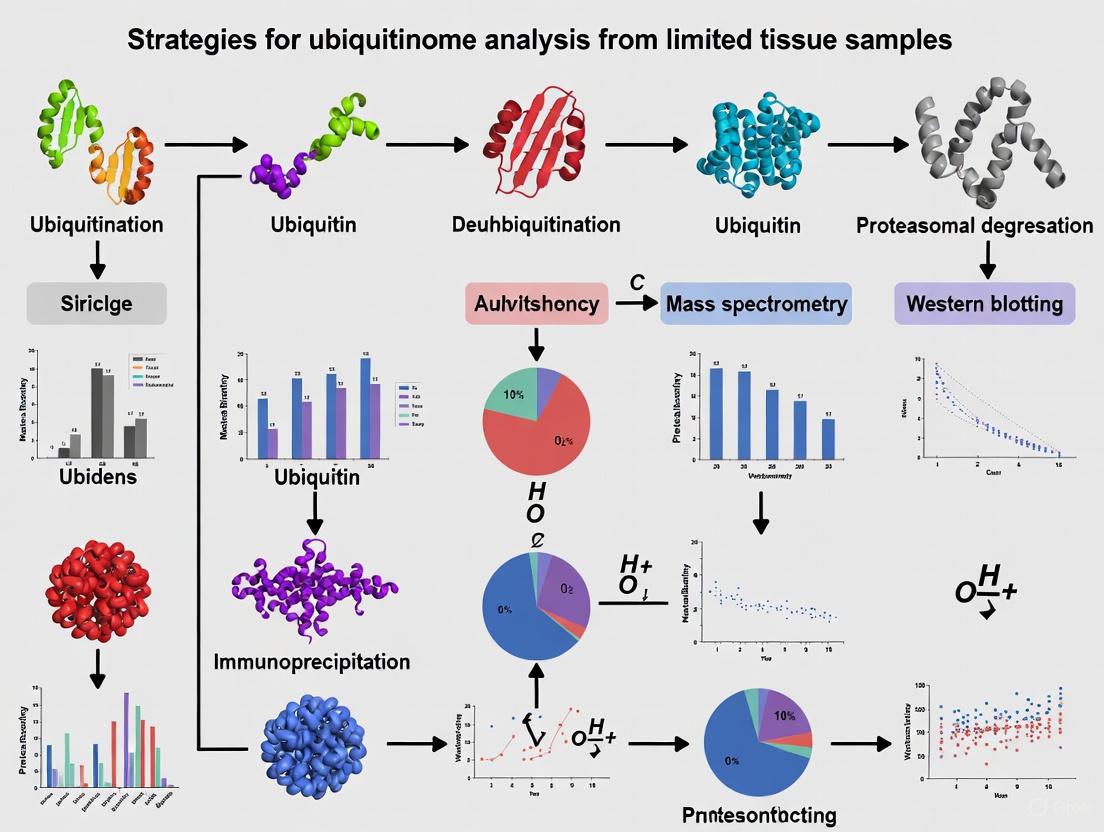
Comprehensive ubiquitinome profiling from limited tissue samples presents significant challenges for researchers and drug development professionals.
Advanced Strategies for Ubiquitinome Analysis from Limited Tissue Samples: A Guide for Translational Research
Abstract
Comprehensive ubiquitinome profiling from limited tissue samples presents significant challenges for researchers and drug development professionals. This article details cutting-edge methodologies that overcome traditional barriers of sample scarcity, enabling deep, quantitative analysis of ubiquitination signaling in physiologically relevant models. We explore foundational principles of ubiquitination, examine optimized mass spectrometry workflows like UbiFast and DIA-based diGly profiling that require sub-milligram sample inputs, address critical troubleshooting aspects for maximizing data quality from precious samples, and provide frameworks for biological validation. These advanced strategies empower the investigation of ubiquitin-mediated regulatory mechanisms in primary cells, patient-derived xenografts, and clinical specimens, opening new avenues for biomarker discovery and therapeutic development in cancer and other diseases.
Understanding the Ubiquitinome: Complexity, Challenges, and Research Significance
FAQs & Troubleshooting Guide: Addressing Key Experimental Challenges
This section provides practical solutions to common problems encountered in ubiquitin research, particularly when working with limited tissue samples.
Table 1: Frequently Asked Questions and Troubleshooting Guidelines
| Question | Possible Cause | Solution & Recommendation |
|---|---|---|
| Low ubiquitinated peptide yield after enrichment. | Low ubiquitination stoichiometry; inefficient antibody enrichment. | - Use linkage-specific antibodies for targeted enrichment [1].- Incorporate proteasome inhibitors (e.g., MG132) during sample prep to prevent substrate deubiquitination and increase yield [2]. |
| Rapid degradation of ubiquitinated substrate of interest. | Dominant K48-linked chains present; insufficient DUB inhibition. | - Confirm chain linkage: use UbiCRest (Ubiquitin Chain Restriction) analysis to map chain topology [3].- Pre-treat cells with p97/VCP inhibitors (e.g., CB5083, NMS873) to slow proteasome delivery, though effects may be indirect [3]. |
| Cannot determine if monoubiquitination is a proteasomal degron. | Outdated paradigm that monoubiquitination is only non-proteolytic. | - Re-evaluate using modern MS techniques. Emerging evidence shows monoubiquitination can serve as a potent proteasomal and autophagic degron [4]. |
| Inhibitor (e.g., b-AP15) shows unexpected effects. | Off-target inhibitor activity beyond alleged USP14/UCH37 specificity. | - Validate findings in DUB-knockout cell lines (e.g., CRISPR-Cas9 USP14/UCH37 DKO). Ubiquitinome profiling often reveals severe off-target effects [5]. |
| Branched chain function does not match homotypic chain behavior. | Incorrect assumption that branched chains are a simple sum of parts. | - Use defined ubiquitination systems like UbiREAD. Substrate-anchored chain identity dictates functional output in branched chains [3]. |
The Scientist's Toolkit: Essential Research Reagents
Table 2: Key Research Reagents for Ubiquitinome Analysis
| Reagent / Material | Function & Application |
|---|---|
| K-ε-GG Antibody | Enriches ubiquitinated peptides for mass spectrometry by recognizing the diGly-Lys remnant after trypsin digestion; essential for ubiquitinome studies [2] [1]. |
| Linkage-Specific Ub Antibodies (e.g., K48, K63) | Immunoblotting or immunoprecipitation to detect or enrich for ubiquitin chains of a specific linkage type [1]. |
| Proteasome Inhibitors (MG132) | Blocks degradation of ubiquitinated proteins, allowing their accumulation for easier detection [2]. |
| E1 Inhibitor (TAK243) | Blocks the ubiquitination cascade at the initiation step; useful for determining if a phenotype depends on new ubiquitination events [3]. |
| Tandem Ubiquitin Binding Entities (TUBEs) | High-affinity tools to protect ubiquitinated proteins from deubiquitination and proteasomal degradation during extraction, and to enrich endogenous ubiquitinated proteins without genetic tagging [1]. |
| Defined Ubiquitinated Reporters (e.g., K48-Ub4-GFP) | Synthesized substrates with bespoke ubiquitin chains, used in systems like UbiREAD to study intrinsic degradation kinetics and deubiquitination rates for specific chain types inside cells [3]. |
Experimental Protocols: Core Methodologies for the Field
This section outlines detailed workflows for key experiments cited in this guide.
Protocol: UbiREAD for Intracellular Degradation Kinetics
Purpose: To systematically measure the intracellular degradation and deubiquitination kinetics of a protein substrate modified with a defined ubiquitin chain type [3].
Workflow:
- Synthesis: Prepare ubiquitin chains of defined length and linkage in vitro. Use a distal Ub with a lysine-to-arginine mutation (e.g., K48R for K48-chains) to fix chain length.
- Conjugation: Conjugate the purified chains to a mono-ubiquitinated GFP-based degradation reporter substrate.
- Delivery: Deliver the bespoke ubiquitinated protein (e.g., K48-Ub4-GFP) into mammalian cells (e.g., RPE-1, HeLa) via electroporation.
- Monitoring:
- Degradation: Fix cells at high temporal resolution (e.g., 20 seconds to 20 minutes post-delivery) and analyze GFP fluorescence loss by flow cytometry.
- Deubiquitination: Harvest cells using ice-cold buffers to slow reactions. Analyze protein identity and deubiquitinated species by in-gel fluorescence or immunoblotting.
Key Controls:
- Electroporate unmodified GFP to establish baseline stability.
- Treat cells with MG132 to confirm proteasome dependence.
- Use E1 inhibitor TAK243 to confirm independence from intracellular ubiquitination.
Protocol: Ubiquitinome Analysis from Tissue Samples
Purpose: To profile global changes in protein ubiquitination from limited tissue samples, adapted from plant and macrophage infection studies [2] [6].
Workflow:
- Tissue Lysis & Protein Extraction:
- Grind frozen tissue in RIPA lysis buffer.
- Include protease inhibitors and a broad-spectrum DUB inhibitor (e.g., 50 μM PR-619) to preserve ubiquitination.
- Protein Digestion:
- Reduce, alkylate, and acetone-precipitate proteins.
- Digest the protein pellet into peptides using trypsin.
- Affinity Enrichment:
- Incubate the peptide mixture with anti-K-ε-GG antibody-conjugated beads.
- Wash beads thoroughly and elute the enriched ubiquitinated peptides.
- LC-MS/MS Analysis:
- Desalt peptides and separate using reverse-phase UHPLC.
- Analyze peptides using a high-resolution Orbitrap mass spectrometer.
- Data Analysis:
- Search MS data against appropriate protein databases, specifying diGly-Lys (K-ε-GG) as a variable modification.
- Use bioinformatics tools for functional categorization of proteins with altered ubiquitination sites.
Conceptual Diagrams: Visualizing the Ubiquitin Code
The following diagrams illustrate the core concepts and experimental workflows discussed in this guide.
Ubiquitin Code Complexity
UbiREAD Workflow
Ubiquitinome Analysis Pathway
Ubiquitin-like proteins (Ubls) are a family of structurally related modifiers that are conjugated to target proteins to regulate their activity, stability, subcellular localization, and interactions [7]. Similar to ubiquitin, Ubl conjugation occurs through a cascade of enzymatic reactions involving E1 activating enzymes, E2 conjugating enzymes, and E3 ligases [8]. Understanding Ubl biology is essential for unraveling cellular regulatory networks and disease mechanisms, particularly when studying limited tissue samples where traditional enzymatic preparation of homogeneous Ubl conjugates presents significant challenges [8] [9].
Technical Support Center
Frequently Asked Questions (FAQs)
Q1: What are the main classes of ubiquitin-like proteins and their primary functions? Ubls are categorized into type I (conjugatable) and type II (non-conjugatable) proteins [7]. The major type I Ubls in humans include SUMO, NEDD8, ISG15, FAT10, UFM1, ATG8, ATG12, and URM1 [8] [7]. These modifiers control diverse cellular processes: SUMO regulates transcription, DNA repair, and apoptosis [8]; NEDD8 primarily modifies cullins to regulate ubiquitin ligase activity [10]; ISG15 functions in antiviral immunity [10]; ATG8 and ATG12 are essential for autophagy [7]; UFM1 regulates endoplasmic reticulum homeostasis [10]; and FAT10 targets proteins for proteasomal degradation [10].
Q2: What specific challenges arise when studying the ubiquitinome from limited tissue samples? Limited tissue samples present multiple challenges: insufficient material for standard proteomic protocols, difficulty achieving homogeneous Ubl conjugate preparation enzymatically, low abundance of ubiquitinated peptides requiring highly sensitive enrichment, and maintaining sample integrity while inactivating deconjugating enzymes that remain active under non-denaturing conditions [8] [9] [10]. Specialized methods like chemical protein synthesis and denaturing lysis conditions are essential to address these limitations [8].
Q3: Which chemical synthesis methods can overcome limitations in preparing Ubl conjugates? Several chemical approaches enable precise preparation of Ubl conjugates when enzymatic methods fail:
- Solid-phase peptide synthesis (SPPS): Assembles peptides with defined sequences and modifications [8]
- Native chemical ligation (NCL): Joins unprotected peptide segments via thioester intermediates to form native amide bonds [8]
- Desulfurization/deselenization: Extends NCL applicability to proteins lacking native cysteine residues [8]
- Expressed protein ligation (EPL): Combines synthetic peptides with recombinant proteins [8]
- KAHA ligation: Enables chemoselective ligation through α-ketoacid-hydroxylamine chemistry [8]
Troubleshooting Guides
Problem: Low yield of ubiquitinated peptides during enrichment Possible Causes and Solutions:
- Insufficient sample denaturation: Use strong denaturants (e.g., 1% SDC) during lysis to inactivate deubiquitinases [9]
- Inefficient digestion: Optimize tryptic digestion conditions and consider adding TCEP and CAA for reduction and alkylation [9]
- Inadequate enrichment: Use ubiquitin remnant motif antibodies (e.g., K-ε-GG) and increase binding incubation time [11]
- Sample loss: Implement carrier proteins during precipitation steps and use stage tips for peptide purification [9]
Problem: High background in mass spectrometry analysis Possible Causes and Solutions:
- Non-specific antibody binding: Increase wash stringency and include ionic detergents in wash buffers [10]
- Carryover of abundant proteins: Implement strong cation exchange fractionation or high-pH reverse-phase separation before enrichment [11]
- Incomplete fractionation: Optimize LC gradients and consider using data-independent acquisition (DIA) to reduce missing values [11]
Experimental Methodologies for Limited Samples
Ubiquitinome Analysis Workflow from Mouse Heart Tissue
The following workflow was successfully implemented for ubiquitinome analysis from microgravity-exposed mouse hearts, demonstrating applicability to limited tissue samples [9]:
Key Buffer and Reagent Formulations
SDC Lysis Buffer [9]:
- 1% Sodium Deoxycholate (SDC)
- 10mM Tris(2-carboxyethyl)phosphine hydrochloride (TCEP)
- 40mM 2-Chloroacetamide (CAA)
- Function: Effective protein extraction and denaturation while inhibiting deubiquitinating enzymes
FASP Digestion Buffer [9]:
- 50mM Triethylammonium bicarbonate (TEAB)
- Sequencing-grade trypsin (1:50 enzyme-to-protein ratio)
- Function: Efficient protein digestion while compatible with SDC removal
Ubl Conjugation Pathways and Cross-Talk
The conjugation machinery for Ubls follows a conserved enzymatic cascade while maintaining specificity through dedicated E1 and E2 enzymes:
Research Reagent Solutions
Table: Essential Research Reagents for Ubl Studies
| Reagent/Category | Specific Examples | Function & Application |
|---|---|---|
| Ubl Expression Systems | bioUbL vectors [10], Multicistronic BioSUM0 [10] | In vivo biotinylation for stringent purification under denaturing conditions |
| Chemical Synthesis Tools | SPPS [8], NCL [8], KAHA ligation [8] | Precise preparation of Ubl conjugates with site-specific modifications |
| Enrichment Reagents | K-ε-GG antibodies [11], Streptavidin resins [10] | Isolation of ubiquitinated/Ubl-modified peptides or proteins |
| Mass Spectrometry Platforms | DIA-MS [11], LC-MS/MS [9] | Comprehensive ubiquitinome profiling with high quantification accuracy |
| Protease Inhibitors | SUMO protease inhibitors [10], Deubiquitinase inhibitors | Preservation of Ubl conjugates during sample preparation |
| Activity-Based Probes | Ubl E1 inhibitors [7], DUB probes [8] | Monitoring enzyme activities and profiling Ubl interactors |
Advanced Applications and Integration Strategies
Integrated Omics Analysis Framework
The power of ubiquitinome analysis is maximized when integrated with other omics datasets, particularly when working with limited tissues:
Data Analysis and Interpretation Guidelines
Quantitative Assessment of Ubiquitinome Changes: When analyzing ubiquitinome data from limited samples, focus on both the magnitude of change (fold-change) and the statistical significance (p-value, FDR) of altered ubiquitination sites. Implement robust normalization strategies to account for sample-to-sample variability, particularly important when working with minimal material where technical variance may be amplified.
Functional Annotation of Ubiquitination Events: Categorize identified ubiquitination sites based on:
- Degradative vs. Non-degradative Ubiquitination: Assess whether ubiquitination changes correlate with protein abundance alterations [9]
- Pathway Enrichment: Identify biological pathways significantly enriched in differentially ubiquitinated proteins [9]
- Structural Context: Map ubiquitination sites to protein domains and functional regions
Table: Ubiquitinome Analysis in Microgravity-Affected Mouse Hearts - Key Findings [9]
| Analysis Type | Number of Identified Changes | Key Affected Pathways | Functional Consequences |
|---|---|---|---|
| Proteomics | 156 differentially expressed proteins | Immune response, RNA splicing, protein folding | Altered transcription-mediated protein expression |
| Ubiquitinomics | 169 differentially ubiquitinated proteins | Muscle contraction, glucose metabolism | Excessive kinase activation, metabolic disorders |
| Integrated Analysis | Multiple convergent pathways | Hexokinase & phosphofructokinase regulation | Cardiac metabolic dysfunction under microgravity |
Frequently Asked Questions (FAQs)
FAQ 1: What are the primary analytical challenges in ubiquitinome analysis of tissue samples? The core challenges revolve around three key issues: the inherently low stoichiometry of the modification, its highly dynamic nature due to competing enzymatic activities, and the practical sample limitations associated with tissue biopsies [12] [13]. Unlike other post-translational modifications, the proportion of a given protein that is ubiquitinated at a specific site is often very small. This low stoichiometry means the signal of interest is easily lost in a vast background of unmodified peptides [14]. Furthermore, ubiquitination is rapidly added and removed by E3 ligases and deubiquitinases (DUBs), making it difficult to capture a stable snapshot of the ubiquitinome [12]. Finally, working with tissue samples often means a finite amount of starting material, which can limit the depth of analysis and the ability to perform replicate experiments.
FAQ 2: Why is low stoichiometry a particular problem in mass spectrometry-based ubiquitinome analysis? Low stoichiometry directly limits the detectability of ubiquitinated peptides. In a typical proteomics experiment without enrichment, most ubiquitinated peptides are at or below the detection limit of the mass spectrometer [14]. This is because the signal from the abundant, unmodified peptides dominates the analysis. Even with enrichment strategies, the recovery of low-stoichiometry sites can be inefficient. Quantitative studies of acetylation (which shares similar stoichiometry challenges) have shown that the median stoichiometry can be as low as 0.02% for many sites [14]. This means that for every 10,000 copies of a protein, only 2 might be modified at a specific lysine, presenting a significant "needle-in-a-haystack" problem.
FAQ 3: How does the dynamic nature of ubiquitination impact experimental results? The dynamic interplay between E3 ligases and DUBs means the ubiquitination status of a protein is in constant flux [12]. This can lead to rapid changes in ubiquitination levels during sample preparation. For example, the time taken to dissect a tissue and lyse cells can be sufficient for DUBs to remove ubiquitin marks or for E3s to add new ones, potentially obscuring the true biological state. This is especially critical when studying signaling events or responses to stimuli that occur on short timescales. Consequently, observed ubiquitination levels represent a net balance of addition and removal at a single time point, making it difficult to distinguish between highly dynamic sites and those that are statically modified.
FAQ 4: What specific issues arise from using limited tissue samples? The primary issue is low protein yield, which restricts the number of experiments and technical replicates that can be performed. With limited material, it becomes challenging to perform extensive fractionation, which is often necessary to achieve deep coverage of the ubiquitinome [15]. Furthermore, tissue heterogeneity can mask cell-type-specific ubiquitination events. Standard protocols developed for cell lines may not be directly transferable to tissues due to differences in protein composition and the presence of interfering substances like lipids and connective tissue. Finally, the need for efficient lysis to extract membrane-associated or nuclear proteins from tissues can be at odds with the need to maintain the integrity of the ubiquitinome during extraction.
Troubleshooting Guides
Troubleshooting Low Stoichiometry and Sensitivity
Problem: Inability to detect ubiquitination sites despite peptide enrichment.
| Observed Issue | Potential Root Cause | Recommended Solution | Key Reagents & Kits |
|---|---|---|---|
| Low number of identified diGly sites after enrichment. | Inefficient antibody-based enrichment; insufficient peptide material input. | Optimize the antibody-to-peptide input ratio. Use 1 mg peptide material with 31.25 µg anti-diGly antibody [15]. Employ data-independent acquisition (DIA) MS for improved sensitivity [15]. | PTMScan Ubiquitin Remnant Motif (K-ε-GG) Kit; Anti-K-ε-GG antibody |
| High background in MS spectra; non-specific binding. | Non-specific binding during enrichment step. | Include more stringent washes in the enrichment protocol. Use tandem Ub-binding domains (UBDs) for higher affinity and specificity over single UBDs [12]. | Tandem Ub-binding domains (e.g., from specific DUBs or E3 ligases) |
| Signal from ubiquitinated peptides is masked by abundant unmodified peptides. | Incomplete enrichment; low stoichiometry of modification. | Pre-fractionate peptides prior to diGly enrichment to reduce complexity [15]. Use proteasome inhibitors (e.g., MG132) to stabilize certain ubiquitinated proteins, but be aware this increases K48-linked chain peptides that can dominate the analysis [15]. | MG132 (Proteasome Inhibitor); Basic reversed-phase (bRP) chromatography for fractionation |
Troubleshooting Dynamic Ubiquitination
Problem: Inconsistent ubiquitination levels between replicates or inability to capture transient signaling events.
| Observed Issue | Potential Root Cause | Recommended Solution | Key Reagents & Kits |
|---|---|---|---|
| High variability in ubiquitination site quantification. | Deubiquitination during sample preparation. | Add deubiquitinase (DUB) inhibitors directly to the lysis buffer. Rapidly denature proteins after tissue lysis (e.g., by boiling in SDS buffer) to instantly halt enzyme activity [16]. | DUB Inhibitor Cocktails; SDS Lysis Buffer |
| Failing to capture expected changes in ubiquitination after a stimulus. | The ubiquitination event is highly transient and has already reversed by the time of analysis. | Perform precise time-course experiments with rapid quenching of metabolism. Consider using crosslinking agents to "trap" ubiquitin-substrate interactions, though this requires optimization to avoid artifacts [13]. | NEM (N-Ethylmaleimide); Crosslinking reagents (e.g., DSS, DSG) |
| Discrepancy between protein abundance and ubiquitination level. | Regulation by specific E3 ligases/DUBs is masked in global analysis. | Combine global ubiquitinome analysis with E3 ligase or DUB knockdown/knockout studies. Validate specific substrates using orthogonal methods like immunoblotting after immunoprecipitation [16]. | siRNAs targeting specific E3s (e.g., NEDD4); Antibodies for immunoprecipitation |
Troubleshooting Limited Tissue Samples
Problem: Inadequate ubiquitinome coverage from a small tissue biopsy.
| Observed Issue | Potential Root Cause | Recommended Solution | Key Reagents & Kits |
|---|---|---|---|
| Low protein yield leads to poor MS signal. | The starting amount of tissue is too low for standard protocols. | Scale down the entire workflow, including lysis, digestion, and enrichment, to be compatible with microgram quantities of protein. Use single-pot, solid-phase-enhanced sample preparation (SP3) or similar methods for efficient processing of low-input samples [13]. | SP3 Beads; Commercial kits for low-input proteomics (e.g., from Thermo Fisher, Promega) |
| High missing values across MS runs. | Limited sample prevents extensive fractionation, leading to co-elution and ion suppression. | Implement a Data-Independent Acquisition (DIA) MS method. DIA provides more complete data acquisition across samples and is better suited for low-input, complex samples compared to traditional DDA [15]. | Pre-built spectral libraries for DIA (e.g., from ProteomeTools); LC-MS systems with high sensitivity nanoflow sources |
| Inability to distinguish cell-type-specific ubiquitination in heterogeneous tissue. | The ubiquitination signal is an average across all cell types in the tissue. | Employ cell sorting (e.g., FACS) or laser-capture microdissection to isolate specific cell populations from the tissue prior to lysis. Alternatively, use proximity labeling techniques to mark and isolate proteins from specific cell types in vivo [17]. | Enzymes for tissue dissociation; Antibodies for cell sorting |
Experimental Protocols for Key Methodologies
Protocol: DiGly Peptide Enrichment and DIA-MS for Limited Tissue
This protocol is optimized for depth and reproducibility when tissue is limiting [15].
Tissue Lysis and Protein Digestion:
- Homogenize tissue in a denaturing lysis buffer (e.g., 8 M Urea, 100 mM Tris-HCl pH 8.0) supplemented with DUB inhibitors and protease inhibitors. Keep samples on ice.
- Reduce disulfide bonds with 5 mM DTT (30 min, 25°C) and alkylate with 15 mM iodoacetamide (30 min, 25°C in the dark).
- Dilute the urea concentration to below 2 M and digest proteins with sequencing-grade trypsin (1:50 w/w) overnight at 37°C.
- Acidify the peptide mixture with trifluoroacetic acid (TFA) to pH < 3 and desalt using C18 solid-phase extraction cartridges. Lyophilize to dryness.
diGly Peptide Enrichment:
- Resuspend peptides in immunoaffinity purification (IAP) buffer.
- Incubate the peptide solution with anti-K-ε-GG antibody-coupled beads (e.g., 31.25 µg antibody per 1 mg peptide input) for 2 hours at 4°C with gentle agitation [15].
- Wash the beads several times with IAP buffer and then with water to remove non-specifically bound peptides.
- Elute the bound diGly peptides with 0.1-0.2% TFA.
Mass Spectrometric Analysis (DIA):
- Analyze the enriched peptides on a high-resolution Orbitrap mass spectrometer coupled to a nanoflow LC system.
- Use an optimized DIA method with 46 precursor isolation windows covering the 400-1000 m/z range and a MS2 resolution of 30,000 [15].
- For identification, use a comprehensive spectral library. This can be generated by combining data from deep, fractionated DDA runs of similar samples with a direct-DIA search of the project-specific files [15].
Protocol: Stoichiometry Estimation via Partial Chemical Acetylation
This method, adapted from acetylation studies, provides a framework for conceptualizing ubiquitination stoichiometry [14] [18].
- Sample Preparation and Chemical Acetylation:
- Divide the tissue lysate into two aliquots.
- Treat one aliquot with a low concentration (e.g., 5%) of an acetylating reagent (like acetyl phosphate) under denaturing conditions to artificially acetylate a small, known fraction of all accessible lysines [14] [18]. The other aliquot serves as the native control.
- Quantitative MS Measurement:
- Combine the chemically acetylated sample with the native control using a stable isotope labeling method (e.g., SILAC or TMT).
- Digest the combined sample and enrich for diGly (ubiquitin remnant) peptides.
- By mass spectrometry, measure two things: (a) the relative increase in the abundance of each ubiquitinated peptide in the chemically acetylated channel, and (b) the median decrease in the abundance of all corresponding unmodified peptides.
- Stoichiometry Calculation:
- Calculate the stoichiometry (S) for each ubiquitination site using the formula:
S = (R_acetylated_peptide - 1) / ((1 / CP_ratio) - 1)whereR_acetylated_peptideis the ratio of the acetylated peptide (chemically acetylated/native) andCP_ratiois the median ratio of the corresponding unmodified peptides [14]. This estimates the fraction of a given protein molecule that is modified at a specific site in the native sample.
- Calculate the stoichiometry (S) for each ubiquitination site using the formula:
Visualization of Concepts and Workflows
Ubiquitinome Analysis from Tissue Workflow
Low Stoichiometry Challenge Concept
The Scientist's Toolkit: Research Reagent Solutions
| Reagent / Tool | Function in Ubiquitinome Analysis | Key Application Note |
|---|---|---|
| Anti-K-ε-GG (diGly) Antibody | Immunoaffinity enrichment of tryptic peptides containing the ubiquitin remnant motif. | The cornerstone of most ubiquitinome studies. Optimal performance requires titration against peptide input (e.g., 31.25 µg antibody per 1 mg peptide) [15]. |
| Deubiquitinase (DUB) Inhibitors | Prevent the removal of ubiquitin chains by endogenous DUBs during sample preparation. | Critical for preserving the native ubiquitination state. Must be added to lysis buffer immediately upon tissue disruption [16]. |
| Data-Independent Acquisition (DIA) | A mass spectrometry data acquisition technique that fragments all ions in predefined m/z windows. | Superior to traditional DDA for low-input samples, providing higher quantitative accuracy, sensitivity, and data completeness with fewer missing values [15]. |
| Linkage-Specific Ub Antibodies | Antibodies that recognize polyubiquitin chains with specific lysine linkages (e.g., K48, K63). | Used to study the topology of ubiquitin signaling. K48-linked chains often target proteins for proteasomal degradation, while K63-linked chains are involved in non-proteolytic signaling [16] [12]. |
| Tandem Ub-Binding Domains (UBDs) | High-affinity affinity reagents for enriching ubiquitinated proteins (not peptides) based on interactions with ubiquitin chains. | Useful for studying ubiquitin chain topology and for purifying ubiquitinated protein complexes prior to digestion. Offers an alternative to antibody-based approaches [12]. |
| Stable Isotope Labeling (SILAC/TMT) | Methods for multiplexed, quantitative mass spectrometry using isotopic tags. | Allows for precise comparison of ubiquitination levels across multiple conditions (e.g., control vs. treated) in a single MS run, minimizing run-to-run variability [14] [16]. |
Quantitative Data on Ubiquitination in Disease Models
The table below summarizes key quantitative findings from recent studies investigating ubiquitination dysregulation in specific disease models.
| Disease / Experimental Model | Key Ubiquitination-Related Finding | Quantitative Measurement | Biological & Clinical Impact |
|---|---|---|---|
| Systemic Lupus Erythematosus (SLE) [19] | Elevated EEF1A1 protein with reduced ubiquitinated form in T cells. | Significant elevation of EEF1A1 expression in SLE T cells; trajectory analysis showed progressive transcriptional dysregulation. | Promotes STAT1-mediated T cell dysfunction and Th1/Th2 imbalance, exacerbating renal pathology [19]. |
| Maize Lethal Necrosis (MLN) [2] | Global increase in protein ubiquitination levels upon viral infection. | Ubiquitination levels in co-infected (S+M) plants were significantly higher than in non-infected plants, similar to MG132-treated controls [2]. | Ubiquitin-proteasome system involvement in antiviral response; MG132 treatment increased viral replication [2]. |
| Acute Kidney Injury (AKI) [20] | Dysregulation of a coordinated ubiquitin-related network (E1-E2-E3, DUBs, UBLs). | One in twelve individuals has color vision deficiency, underscoring the need for clear data visualization [21]. | Regulates inflammatory responses, cell death pathways (apoptosis, pyroptosis, ferroptosis), and mitochondrial dysfunction [20]. |
| Human Breast Cancer [22] | UbiFast method enabled quantification of ~10,000 ubiquitylation sites from limited samples. | Profiling from 500 μg peptide per sample in a TMT10plex in approximately 5 hours [22]. | Identifies proteins modulated by ubiquitylation in basal and luminal breast cancer models for translational research [22]. |
Frequently Asked Questions & Troubleshooting Guides
FAQ: What are the primary steps for troubleshooting problems in experimental research on ubiquitination?
A systematic approach is crucial for resolving experimental challenges [23].
- Identify the Problem: Clearly define the issue's nature and scope by reviewing objectives, hypotheses, and methods against actual outcomes [23].
- Diagnose the Cause: Use theoretical knowledge and analytical tools (e.g., root cause analysis, statistical tests) to determine contributing factors, considering random, systematic, or human errors [23].
- Implement a Solution: Apply problem-solving skills to redesign experiments, adjust analyses, or revise interpretations, evaluating the feasibility and impact of each solution [23].
- Document the Process: Record all steps, rationale, and evidence in lab notebooks or research logs for clear communication and transparency [23].
- Learn and Share: Reflect on the experience to improve future research and share findings with the scientific community through appropriate channels [23].
FAQ: How can I investigate the ubiquitinome from limited tissue samples, such as patient biopsies?
Traditional ubiquitinome profiling requires large sample amounts, but recent methodological advances have overcome this barrier.
- The Challenge: Standard anti-K-ɛ-GG antibody enrichment does not work with peptides whose N-termini are derivatized with isobaric tags (e.g., TMT), previously restricting multiplexed analysis of limited tissues [22].
- The Solution: UbiFast Protocol. This highly sensitive, rapid, and multiplexed method uses on-antibody TMT labeling.
- K-ɛ-GG peptides are enriched and labeled with TMT reagents while still bound to the anti-K-ɛ-GG antibody. This protects the di-glycyl remnant from being labeled [22].
- Labeled peptides from multiple samples are combined, eluted, and analyzed by LC-MS/MS [22].
- This protocol allows for the quantification of approximately 10,000 ubiquitylation sites from as little as 500 μg of peptide per sample in a TMT10plex experiment in about 5 hours [22].
Troubleshooting Guide: Inconsistent Ubiquitination Results in Western Blot
- Problem: High background or smeared bands in western blot analysis of ubiquitinated proteins.
- Possible Cause: The dynamic nature of ubiquitination and the activity of deubiquitinating enzymes (DUBs) during sample preparation can lead to protein degradation or modification loss [20] [22].
- Solution:
- Use Proteasome Inhibitors: Include inhibitors like MG132 in your lysis buffer to stabilize the ubiquitinated proteome. Research shows MG132 treatment significantly increases detectable ubiquitination levels [2].
- Optimize Lysis Conditions: Use strong denaturing buffers (e.g., containing SDS) and rapid sample heating to instantly denature proteins and inactivate DUBs.
- Include DUB Inhibitors: Add specific DUB inhibitors to the lysis buffer for an additional layer of protection against deubiquitination.
Troubleshooting Guide: Low Yield in K-ɛ-GG Peptide Enrichment
- Problem: Poor recovery of ubiquitinated peptides during immunoenrichment, leading to low-depth ubiquitinome data.
- Possible Cause: Inefficient binding of K-ɛ-GG peptides to the antibody beads or losses during washing and elution.
- Solution: The UbiFast method demonstrates that performing TMT labeling on-antibody significantly improves the relative yield of K-ɛ-GG peptides (85.7%) compared to labeling in-solution after elution (44.2%) [22]. This integrated approach reduces sample handling losses and increases sensitivity.
The Scientist's Toolkit: Essential Research Reagents & Materials
This table lists key reagents and their functions for ubiquitination research, particularly relevant to the protocols discussed.
| Reagent / Material | Function / Application in Ubiquitination Research |
|---|---|
| Anti-K-ɛ-GG Antibody [22] | Enrichment of ubiquitinated peptides from complex protein digests for mass spectrometry analysis by recognizing the di-glycine remnant on lysine. |
| Tandem Mass Tag (TMT) Reagents [22] | Isobaric chemical tags for multiplexed, quantitative mass spectrometry. Allows comparison of up to 11 conditions in a single experiment. |
| MG132 (Proteasome Inhibitor) [2] | Inhibits the 26S proteasome, preventing the degradation of polyubiquitinated proteins. Used to stabilize the ubiquitinated proteome for analysis. |
| High-field Asymmetric Waveform Ion Mobility Spectrometry (FAIMS) [22] | Interface used in mass spectrometry to improve quantitative accuracy for post-translational modification analysis by reducing chemical noise. |
| Hydroxylamine [22] | Used to quench the TMT labeling reaction after the allotted time, preventing cross-labeling of samples when they are combined. |
| Ubiquitin-Activating Enzyme (E1) Inhibitors | Tool compounds to block the initiation of the ubiquitination cascade, used for functional studies of ubiquitination pathways [20]. |
| Deubiquitinating Enzyme (DUB) Inhibitors | Chemical probes to inhibit the activity of DUBs, helping to stabilize ubiquitin signals in cellular assays [20]. |
Detailed Experimental Protocols
This protocol enables deep-scale, multiplexed ubiquitinome analysis from small amounts of sample.
- Sample Preparation: Homogenize tissue and extract proteins. Digest proteins into peptides using trypsin.
- K-ɛ-GG Peptide Enrichment: Incubate the peptide sample with anti-K-ɛ-GG antibody conjugated to beads. Wash beads to remove non-specifically bound peptides.
- On-Antibody TMT Labeling: While peptides are bound to the beads, resuspend them in labeling buffer. Add 0.4 mg of TMT reagent per sample and incubate for 10 minutes. Quench the reaction with 5% hydroxylamine.
- Sample Pooling and Elution: Combine the TMT-labeled samples from different conditions. Elute the pooled K-ɛ-GG peptides from the antibody beads.
- Mass Spectrometry Analysis: Desalt and analyze the peptides by single-shot LC-MS/MS with a FAIMS interface.
This methodology tests the role of a specific protein's ubiquitination in a disease process.
- Gene Silencing (VIGS): Use a virus-induced gene silencing (VIGS) system, such as a cucumber mosaic virus (CMV)-based vector, to knock down the gene of interest (e.g., ZmGOX1) in vivo.
- Overexpression with Mutants (VOX): Use a viral vector (e.g., SCMV infectious clone) to overexpress the wild-type protein and mutants where lysine ubiquitination (Kub) sites have been mutated.
- Phenotypic Assessment: Evaluate the effect of silencing and overexpression on disease-relevant phenotypes (e.g., viral titer, cell death, organ pathology).
- Biochemical Confirmation: Perform western blotting to confirm changes in protein levels and ubiquitination status. Use targeted assays (e.g., measurement of phosphorylated STAT1 for EEF1A1 [19]) to link ubiquitination to signaling pathway activity.
Visualizing Ubiquitination Pathways and Workflows
Ubiquitin Cascade in Disease Pathogenesis
UbiFast Workflow for Limited Samples
Protein ubiquitination is a fundamental post-translational modification that regulates diverse cellular processes, including protein degradation, DNA repair, and immune response. Within the context of ubiquitinome analysis from limited tissue samples, a critical challenge lies in distinguishing functionally important ubiquitination events from incidental modifications. Evolutionary conservation analysis provides a powerful bioinformatic filter to address this challenge, as ubiquitination sites under strong functional constraint are more likely to be preserved across species and contribute to essential biological processes. Research has demonstrated that functional constraints shape ubiquitination site evolution, with sites involved in critical cellular functions exhibiting significantly higher conservation patterns. This technical guide provides methodologies and troubleshooting advice for researchers investigating the interplay between evolutionary conservation and ubiquitination site functionality.
Key Concepts: Evolutionary Signatures of Functional Ubiquitination
Conservation Patterns Across Evolutionary Time
Ubiquitination sites exhibit distinct evolutionary patterns that correlate with their functional importance. Analysis of conservation across a broad evolutionary scale from G. gorilla to S. pombe has revealed a crucial divergence point in evolutionary trajectories.
- Post-vertebrate divergence: Ubiquitination sites show significantly higher conservation than their flanking regions in organisms originating after vertebrate divergence.
- Pre-vertebrate divergence: The opposite pattern is observed, with ubiquitination sites evolving faster than their flanking regions before this divergence time [24].
This evolutionary shift suggests that functional constraints increased over time, enhancing conservation of ubiquitination sites to enable fine regulation of cellular and developmental processes [24].
Functional Categories with Enhanced Conservation
Ubiquitination sites involved in specific biological processes exhibit stronger evolutionary constraints. The table below summarizes functional categories with significantly conserved ubiquitination sites based on Gene Ontology analysis [24].
Table 1: Functional Categories Exhibiting Enhanced Ubiquitination Site Conservation
| Functional Category | Specific Terms | Relative Conservation | Biological Significance |
|---|---|---|---|
| Molecular Function | Enzyme binding, Transcription factor binding, Poly(A) RNA binding | High | Regulation of catalytic activity and gene expression |
| Cellular Component | Nucleus, Ribonucleoprotein complex, Intracellular organelle | High | Essential nuclear processes and organelle function |
| Biological Process | Developmental process, Cellular macromolecule metabolic process | High | Embryonic development and macromolecule homeostasis |
Conversely, ubiquitination sites in metabolic pathways (particularly amino acid, carbohydrate, and lipid metabolism) generally show lower conservation, suggesting more flexible regulatory requirements [24].
Experimental Protocols & Workflows
Workflow 1: Evolutionary Conservation Analysis of Ubiquitination Sites
Step-by-Step Protocol:
Data Acquisition: Compile ubiquitination sites of interest from mass spectrometry data or public databases such as PhosphoSitePlus. For human ubiquitination studies, initial datasets may contain >35,000 distinct diGly peptides from single measurements [15].
Ortholog Identification: Identify orthologs of your target proteins across multiple reference organisms spanning an appropriate evolutionary timescale. A broad evolutionary scale (e.g., from primates to yeast) enables detection of conservation patterns [24].
Sequence Alignment: Perform multiple sequence alignment of target proteins with their orthologs using standard tools (e.g., Clustal Omega, MUSCLE).
Evolutionary Rate Calculation: Calculate evolutionary conservation using Poisson distance, which corrects for multiple substitutions and has linear relationship with evolutionary time. Use the ten flanking residues around ubiquitination sites (excluding other lysine residues) as background for comparison [24].
Statistical Analysis: Perform z-score tests to examine differences between Poisson distances of ubiquitination sites versus flanking regions in individual reference organisms. Use chi-square tests to assess significance across multiple organisms [24].
Functional Categorization: Classify ubiquitinated proteins according to Gene Ontology terms and KEGG pathways. Calculate relative Poisson distance (ratio of ubiquitination site Poisson distance to flanking region Poisson distance) to control for protein-specific conservation differences [24].
Workflow 2: Ubiquitinome Analysis from Limited Tissue Samples
Step-by-Step Protocol:
Sample Preparation: Extract proteins from tissue samples (minimum 1-2 mg wet mammalian tissue). Consider proteasome inhibitor treatment (e.g., 10 µM MG132 for 4 hours) to preserve ubiquitination signals, but optimize duration to avoid cytotoxicity [15] [25].
Protein Digestion: Digest proteins using trypsin, which cleaves both the substrate protein and ubiquitin, leaving a diGlycine (diGly) remnant on modified lysine residues [12] [13].
diGly Peptide Enrichment: Enrich diGly-modified peptides using anti-diGly remnant antibodies. For limited samples, use 1 mg peptide material with 31.25 µg antibody as a starting point [15] [12].
Mass Spectrometry Analysis: Utilize Data-Independent Acquisition (DIA) methods, which provide superior sensitivity, quantitative accuracy, and data completeness compared to Data-Dependent Acquisition (DDA). DIA can identify ~35,000 diGly peptides in single measurements [15].
Data Analysis: Match spectra against comprehensive spectral libraries containing >90,000 diGly peptides for optimal identification [15].
Research Reagent Solutions
Table 2: Essential Reagents for Ubiquitination Conservation Studies
| Reagent / Tool | Function | Application Notes |
|---|---|---|
| Anti-diGly Antibodies | Immunoaffinity enrichment of ubiquitinated peptides | Critical for low-abundance ubiquitination detection; commercial kits available [15] [12] |
| Ubiquitin Traps | Pull-down of ubiquitinated proteins | ChromoTek Ubiquitin-Trap captures mono/polyubiquitinated proteins; not linkage-specific [25] |
| Proteasome Inhibitors | Preserve ubiquitination signals | MG-132 (5-25 µM, 1-2 hours); optimize to prevent cytotoxicity [15] [25] |
| Linkage-Specific Antibodies | Detect specific ubiquitin chain types | Available for M1, K48, K63 etc.; use after ubiquitin trapping for linkage determination [12] [25] |
| Spectral Libraries | DiGly peptide identification | Comprehensive libraries (>90,000 diGly peptides) dramatically improve identification rates [15] |
Troubleshooting Guide & FAQs
Sample Preparation & Experimental Design
Q: What is the minimum tissue amount required for ubiquitinome analysis? A: For mammalian tissues, a minimum of 1-2 mg wet tissue is typically required. This should yield approximately 20 µg total protein, which is sufficient for standard proteome profiling but may require adjustment for ubiquitinome studies where stoichiometry is low [26].
Q: How can I preserve ubiquitination signals during sample preparation? A: Treat cells/tissues with proteasome inhibitors like MG-132 (5-25 µM for 1-2 hours) prior to harvesting. However, avoid overexposure as it causes cytotoxic effects. Immediate freezing of samples and use of protease/deubiquitinase inhibitors in lysis buffers is also critical [25].
Technical Challenges in Detection
Q: Why do I detect smeared bands when analyzing ubiquitinated proteins by western blot? A: Smearing represents heterogeneous populations of ubiquitinated species with varying numbers of ubiquitin moieties and different chain lengths. This is normal and expected when analyzing polyubiquitinated proteins [25].
Q: My ubiquitination signal is weak despite enrichment. How can I improve detection? A: Consider these approaches: (1) Increase starting material if possible; (2) Optimize antibody-to-peptide ratio during enrichment; (3) Use DIA mass spectrometry instead of DDA for greater sensitivity; (4) Fractionate samples before MS analysis to reduce complexity [15] [12].
Data Analysis & Interpretation
Q: How do I distinguish between functionally important versus incidental ubiquitination sites? A: Apply evolutionary conservation analysis as described in Workflow 1. Functionally critical sites typically show: (1) Higher conservation than flanking regions in post-vertebrate species; (2) Association with specific functional categories like enzyme binding or developmental processes; (3) Location in structured protein domains rather than disordered regions [24] [27].
Q: What statistical measures are most appropriate for conservation analysis? A: Use Poisson distance to calculate evolutionary rates, as it corrects for multiple substitutions and has linear relationship with time. Follow with z-score tests for individual species comparisons and chi-square tests for significance across multiple organisms [24].
Advanced Applications: Integrating Conservation with Functional Studies
Evolutionary conservation analysis provides a powerful filter for prioritizing ubiquitination sites for functional validation. When combined with experimental approaches, it enables:
Identification of Regulatory Hotspots: Clusters of conserved ubiquitination sites within individual proteins often indicate critical regulatory regions, as observed in circadian clock proteins where dozens of cycling ubiquitination sites cluster with identical phases [15].
Conserved Regulatory Modules: Studies of conserved E3 ligase-substrate relationships, such as WWP2 regulation of TFEB/HLH-30, demonstrate how evolutionary conservation reveals functionally maintained ubiquitination pathways across species [28].
Disease Mutation Interpretation: Conserved ubiquitination sites that are mutated in human diseases represent high-priority candidates for therapeutic targeting, as their disruption likely has significant functional consequences.
By integrating evolutionary conservation analysis with robust ubiquitinome profiling, researchers can effectively navigate the complexity of ubiquitination signaling and focus experimental efforts on the most biologically significant regulatory events.
Cutting-Edge Workflows for Ubiquitinome Profiling from Limited Tissue Inputs
The UbiFast protocol represents a significant advancement in ubiquitinome research, enabling highly multiplexed, sensitive profiling of ubiquitylation sites from limited sample material, such as patient-derived tissues. This method centers on a key innovation: on-antibody TMT labeling of K-ε-GG peptides while they are bound to the anti-K-ε-GG antibody. This approach protects the di-glycine remnant from being derivatized by the TMT reagent, which would otherwise prevent antibody recognition and enrichment. The workflow allows for the quantification of over 10,000 distinct ubiquitylation sites from as little as 500 μg of peptide input per sample and reduces processing time to a few hours, making it suitable for large-scale studies [22].
The following diagram illustrates the core automated UbiFast workflow:
Key Research Reagent Solutions
Table 1: Essential Reagents for the UbiFast Protocol
| Reagent / Material | Function / Role | Key Details & Optimization |
|---|---|---|
| Anti-K-ε-GG Antibody | Enriches tryptic peptides containing the di-glycine (K-ε-GG) remnant left after ubiquitin modification [22]. | Use magnetic bead-conjugated version (HS mag anti-K-ε-GG) for automation; enables processing of up to 96 samples in a day [29]. |
| Tandem Mass Tags (TMT) | Isobaric labels for multiplexed quantitative comparison of up to 18 samples [22]. | Optimal labeling: 0.4 mg TMT reagent for 10 minutes while peptides are bound to the antibody [22]. |
| Hydroxylamine | Quenches the TMT labeling reaction after the incubation period [22]. | Use a final concentration of 5% for effective quenching [22]. |
| Magnetic Particle Processor | Automates bead handling and liquid transfer steps (e.g., KingFisher Apex) [29]. | Significantly improves reproducibility and reduces processing time to ~2 hours for a 10-plex [29]. |
| High-Field Asymmetric Waveform Ion Mobility Spectrometry (FAIMS) | Gas-phase separation technique integrated with LC-MS/MS [22]. | Improves quantitative accuracy for PTM analysis by reducing background chemical noise [22]. |
Frequently Asked Questions (FAQs) & Troubleshooting
Q1: Why does the protocol specify "on-antibody" labeling, and what are the advantages over traditional in-solution labeling?
A1: Traditional in-solution TMT labeling modifies the N-terminus of the di-glycine remnant, making it unrecognizable by the anti-K-ε-GG antibody and drastically reducing enrichment efficiency. The on-antibody method protects this epitope during the labeling reaction.
- Evidence of Superiority: A direct comparison demonstrated that on-antibody labeling identified 6,087 K-ε-GG peptide-spectrum matches (PSMs) with a relative yield of 85.7%, whereas in-solution labeling following enrichment yielded only 1,255 PSMs with a 44.2% relative yield [22].
- Additional Benefits: This approach also allows TMT contaminants to be washed away before elution, resulting in cleaner samples and higher sensitivity [22] [30].
Q2: What is a common cause of low K-ε-GG peptide recovery after enrichment, and how can it be improved?
A2: Low recovery can stem from antibody saturation, inefficient elution, or competition from overly abundant ubiquitin-derived peptides.
- Pre-enrichment Fractionation: For very deep coverage, consider basic reversed-phase (bRP) pre-fractionation of peptides before enrichment. This helps separate highly abundant internal ubiquitin-derived peptides (e.g., the K48-linked chain peptide) that compete for antibody binding sites [15].
- Input & Antibody Titration: For a standard single-shot analysis, using 1 mg of peptide input with ~31 μg (1/8 vial) of anti-diGly antibody has been determined as an optimal balance for yield and coverage [15].
- Automation: Implementing the protocol on a magnetic particle processor using bead-conjugated antibodies significantly improves reproducibility and reduces variability inherent in manual handling [29].
Q3: How does the UbiFast protocol perform with real-world tissue samples, like patient tumors?
A3: The protocol is specifically designed for this application. Its high sensitivity allows profiling from sub-milligram amounts of tissue, which is critical for clinically relevant samples.
- Integrated Workflows: UbiFast has been successfully serialized with other 'omic' analyses in the MONTE (Multi-Omic Native Tissue Enrichment) workflow. This allows for the concurrent analysis of the immunopeptidome, ubiquitylome, proteome, phosphoproteome, and acetylome from a single, limited tissue sample (as little as 50 mg wet weight) [31].
- Performance: The method has been used to quantify ~10,000 ubiquitylation sites from patient-derived breast cancer xenograft tissue using only 500 μg of peptide input per sample in a TMT10-plex experiment [22].
Q4: What are the key quantitative performance metrics of the automated UbiFast method?
A4: Automation leads to major improvements in depth, throughput, and data quality.
Table 2: Performance Metrics of the UbiFast Protocol
| Performance Aspect | Manual UbiFast | Automated UbiFast |
|---|---|---|
| Processing Time | ~5 hours for a 10-plex [22] | ~2 hours for a 10-plex [29] |
| Throughput | Limited by manual steps | Up to 96 samples in a single day [29] |
| Identified Sites | ~10,000 sites (from 500 μg input) [22] | ~20,000 sites (from 500 μg input in a TMT10-plex) [29] |
| Reproducibility | Good | Greatly improved, with significantly reduced variability across process replicates [29] |
Q5: Our lab wants to move toward Data-Independent Acquisition (DIA) for ubiquitinomics. Is this compatible with UbiFast?
A5: While UbiFast itself is a TMT-based multiplexing strategy, the enriched peptides are perfectly suitable for DIA analysis, which is a powerful alternative for label-free studies.
- DIA Advantages: DIA-MS has been shown to double the number of diGly peptides identified in a single measurement compared to Data-Dependent Acquisition (DDA), with vastly improved quantitative accuracy and data completeness [15] [30].
- Workflow Integration: You can enrich K-ε-GG peptides following the UbiFast or similar procedures and then analyze them using a optimized DIA method. This requires a comprehensive spectral library; one study used libraries containing >90,000 diGly peptides to identify over 35,000 distinct ubiquitination sites in a single DIA run [15].
FAQs: Optimizing DIA for Ubiquitinome Analysis
Q1: How does DIA improve the analysis of ubiquitinomes from limited tissue samples? DIA-MS significantly enhances the sensitivity and reproducibility of ubiquitinome analysis, which is crucial when sample material is scarce, such as with clinical tissue biopsies. Unlike traditional Data-Dependent Acquisition (DDA), DIA fragments all precursor ions within pre-defined windows, creating comprehensive and permanent digital proteome maps. This eliminates the stochastic sampling of low-abundance peptides, ensuring that the low-stoichiometry diGly peptides derived from ubiquitination are consistently detected and quantified across all runs. Applied to ubiquitinome analysis, a single DIA measurement can identify approximately 35,000 distinct diGly peptides—nearly double the number typically achievable with DDA—with greatly improved quantitative accuracy and data completeness [15] [32].
Q2: What are the key considerations when building a spectral library for deep ubiquitinome coverage? Generating a comprehensive, in-depth spectral library is the most critical step for a successful DIA-based ubiquitinome study. Key considerations include:
- Library Depth and Complexity: For ubiquitinome analysis, the spectral library should be as complete as possible. This often involves generating libraries from multiple cell lines or tissue states. For instance, one study created a library containing over 90,000 diGly peptides by combining data from proteasome inhibitor-treated and untreated cells [15].
- Handling High-Abundance Peptides: Ubiquitin-derived diGly peptides (like the K48-linked chain peptide) can be extremely abundant and compete for antibody binding sites during enrichment. To mitigate this, consider separating and processing fractions containing these highly abundant peptides separately to prevent them from masking co-eluting, lower-abundance peptides [15].
- Library Refinement: Using gas-phase fractionation (GPF) to refine a spectral library has been shown to outperform project-specific DDA libraries in benchmarking studies, leading to more robust protein quantification [33].
Q3: My DIA data has inconsistent peptide identifications across runs. How can this be improved? Inconsistent peak identification is a known challenge when tools process each run independently. To address this, utilize advanced cross-run analysis algorithms that integrate information across the entire dataset. Tools like DreamDIAlignR perform multi-run chromatogram alignment and peak picking before statistical scoring and FDR control. This ensures that peptide identification is based on a consensus across runs, not just the highest-scoring peak in a single run, which might be erroneous. This approach has been shown to identify up to 21.2% more quantitatively changing proteins compared to standard match-between-runs (MBR) methods, greatly enhancing cross-run reproducibility [34].
Troubleshooting Common DIA Experimental Issues
| Problem Area | Specific Issue | Possible Cause & Diagnostic Steps | Solution |
|---|---|---|---|
| Spectral Library | Low identification rates of diGly peptides. | Library is not comprehensive enough for your sample type or lacks depth. | Generate a deeper library using multiple cell lines/tissues, GPF, and fractionation. Pre-separate highly abundant ubiquitin-chain peptides [15] [33]. |
| Sample Preparation | Poor yield of diGly peptides after enrichment. | Input amount is too low; antibody is saturated. Peptide material from 1 mg of cell lysate is often required for deep coverage. | Titrate antibody and peptide input. The optimal ratio found is 1/8 of an anti-diGly antibody vial (31.25 µg) for 1 mg of peptide material [15]. |
| Quantification | High quantitative variance (CV) between technical replicates. | Standard DDA analysis suffers from stochastic precursor selection. Inconsistent peak picking in DIA. | Switch to a DIA workflow for superior reproducibility. Implement a cross-run analysis tool (e.g., DreamDIAlignR) that uses multi-run scores for consistent peak selection [34] [15]. |
| Instrument Method | Suboptimal number of diGly peptide identifications in single-run DIA. | DIA method parameters are not optimized for diGly peptides, which are often longer and have higher charge states. | Optimize DIA window placement and number. Use a method with higher MS2 resolution (e.g., 30,000) and a sufficient number of windows (e.g., 46) to balance cycle time and data quality [15]. |
Key Experimental Protocols
Protocol 1: Optimized Single-Run DIA for Ubiquitinome Analysis
This protocol is adapted from the workflow that achieved ~35,000 diGly site identifications in a single run [15].
- Protein Extraction and Digestion: Extract proteins from limited tissue samples (e.g., formalin-fixed paraffin-embedded (FFPE) tissue). Digest proteins using trypsin, which cleaves after lysine residues and leaves a characteristic diGly (K-ε-GG) remnant on ubiquitinated peptides.
- diGly Peptide Enrichment:
- Use 1 mg of total peptide material as input.
- Enrich using 31.25 µg (1/8 vial) of anti-diGly remnant motif antibody.
- This ratio optimizes peptide yield and coverage.
- Liquid Chromatography and Mass Spectrometry:
- Inject 25% of the total enriched material.
- Use a tailored DIA method on an Orbitrap mass spectrometer with the following parameters:
- MS2 Resolution: 30,000
- Number of Precursor Isolation Windows: 46
- Optimize window widths based on the empirical precursor distribution of diGly peptides.
- Data Analysis:
- Use a comprehensive, pre-existing spectral library or generate one using GPF.
- Process the raw DIA data with DIA software (e.g., DIA-NN, OpenSWATH, Spectronaut) using the tailored spectral library.
Protocol 2: Generating a Deep Spectral Library via Fractionation
- Sample Preparation: Create a "master mix" sample that is representative of your study. This can be a pool of all sample types or a heavily treated cell line (e.g., with proteasome inhibitor MG132) to increase ubiquitinated peptide diversity.
- Basic Reversed-Phase Fractionation:
- After digestion, separate peptides using basic reversed-phase (bRP) chromatography into 96 fractions.
- Concatenate these into 8-9 larger pools to reduce instrument time. Consider separating fractions rich in the highly abundant K48-linked ubiquitin peptide.
- DDA Analysis of Fractions: Analyze each fraction using a standard DDA method on a high-resolution mass spectrometer.
- Library Construction: Use software tools (e.g., FragPipe, MaxQuant, DIA-NN) to search the DDA data against a protein sequence database and build a consensus spectral library containing precursor m/z, charge, retention time, and fragment ion intensities [33].
Visualization of Key Concepts
DIA Ubiquitinome Analysis Workflow
The Ubiquitin Signaling Pathway
The Scientist's Toolkit: Research Reagent Solutions
| Reagent / Material | Function in DIA Ubiquitinome Analysis |
|---|---|
| Anti-diGly Remnant Motif Antibody | Immunoaffinity enrichment of tryptic peptides containing the K-ε-GG remnant, enabling the selective isolation of ubiquitinated peptides from a complex background [15] [13]. |
| Trypsin | Protease used for digesting proteins. It cleaves C-terminal to lysine residues, generating the characteristic diGly remnant on ubiquitinated lysines for antibody recognition [13]. |
| iRT Kit (Indexed Retention Time) | A set of synthetic peptides used to normalize retention times across different LC-MS/MS runs, improving the accuracy of peptide alignment and identification in DIA [33]. |
| Gas-Phase Fractionated (GPF) Spectral Library | A deep, project-specific spectral library generated by repeatedly analyzing a sample with DIA methods focused on specific m/z ranges. This provides superior identification and quantification compared to standard libraries [33]. |
| Proteasome Inhibitor (e.g., MG132) | Treatment used during sample preparation to block the degradation of ubiquitinated proteins by the proteasome, thereby increasing the intracellular pool of ubiquitinated substrates and improving coverage [15]. |
FAQs: Troubleshooting diGLY Enrichment from Tissue Lysates
Q1: My diGLY enrichment from tissue samples yields a very low number of identified sites. What are the primary factors I should optimize?
Low identification rates from tissues are often due to incomplete cell lysis, inefficient protein digestion, or insufficient starting material. Tissues have a more complex matrix than cultured cells.
- Solution: Ensure complete tissue homogenization using a mechanical homogenizer in a strong denaturing lysis buffer (e.g., 8M Urea) [35]. This disrupts the tissue architecture and inactivates deubiquitinating enzymes (DUBs). Use a stepwise digestion protocol with LysC followed by trypsin to ensure complete protein digestion, as under-digestion will bury diGLY peptides [35]. As a starting point, use at least 10-20 mg of protein lysate from tissue for a single enrichment to ensure sufficient diGLY peptide yield [35].
Q2: How can I distinguish diGLY peptides derived from ubiquitin versus the ubiquitin-like modifier NEDD8?
The standard diGLY antibody cannot distinguish between the identical C-terminal remnants of ubiquitin and NEDD8 [36] [35]. However, studies have shown that ~95% of all enriched diGLY peptides originate from ubiquitination under standard conditions [35].
- Solution: For definitive confirmation, you can use the catalytic domain of ubiquitin-specific protease 2 (USP2cc) to selectively deubiquitylate samples prior to enrichment. Treatment with USP2cc will remove ubiquitin signals but leave NEDD8-modified peptides (e.g., neddylated CUL5) intact [36]. Alternatively, to specifically assess NEDD8ylation, consider using a NEDD8-specific antibody for immunoprecipitation.
Q3: I am observing high background noise in my mass spectrometry data after diGLY enrichment. How can I improve specificity?
High background is frequently caused by non-specific binding during the immunoaffinity step or carry-over of highly abundant non-modified peptides.
- Solution: Perform the diGLY immunoprecipitation in a high-salt buffer (e.g., 150 mM NaCl) to reduce non-specific ionic interactions [35]. Include multiple stringent wash steps after the antibody incubation. Furthermore, consider pre-clearing your peptide digest with control agarose beads to remove peptides that bind non-specifically to the resin.
Q4: My quantitative results are inconsistent between technical replicates. How can I improve reproducibility?
Inconsistent quantification often stems from incomplete or uneven peptide labeling (in SILAC experiments) or variations in the immunoprecipitation efficiency.
- Solution: For SILAC-based workflows, ensure metabolic labeling is complete (>97%) by checking a small aliquot of lysate before mixing light and heavy channels [35]. For label-free approaches, using data-independent acquisition (DIA) mass spectrometry instead of data-dependent acquisition (DDA) can significantly improve quantitative accuracy and reproducibility, as it reduces missing values [15]. Always perform the diGLY enrichment on each replicate sample individually rather than pooling samples before enrichment.
Key Research Reagent Solutions
Table 1: Essential reagents for diGLY remnant capture protocols.
| Reagent / Kit | Function / Specificity | Key Considerations for Tissue Samples |
|---|---|---|
| Ubiquitin Remnant Motif (K-ε-GG) Antibody [35] | Immunoaffinity enrichment of diGLY-modified peptides after trypsin digestion. | The primary tool for site-specific ubiquitinome analysis. Use high-quality reagents to ensure specificity. |
| Anti-Ubiquitin Antibodies (P4D1, FK2) [1] | Enrich fully ubiquitinated proteins (not site-specific). | Useful for pre-enriching ubiquitinated proteins prior to digestion, which can increase depth for low-abundance targets in complex tissues. |
| Linkage-Specific Ub Antibodies [1] | Enrich for polyUb chains with specific linkages (e.g., K48, K63). | Used to study the architecture of Ub chains. Can be applied after protein-level enrichment. |
| Tandem Ubiquitin-Binding Entities (TUBEs) [1] | Protein-level enrichment of ubiquitinated substrates; protect Ub chains from DUBs. | Can be used in the initial lysis buffer to stabilize the ubiquitinome and prevent deubiquitination during tissue homogenization. |
| USP2cc Catalytic Domain [36] | Selective deubiquitinating enzyme. | A critical control to confirm that an identified diGLY site is derived from ubiquitin and not NEDD8. |
Quantitative Data from diGLY Proteomics Studies
Table 2: Summary of quantitative data from key diGLY proteomics studies, demonstrating the scale and application of the technology.
| Study Context | Scale of Ubiquitinome Identified | Key Quantitative Findings | Reference |
|---|---|---|---|
| Global Profiling (HCT116 cells) | ~19,000 diGLY sites on ~5,000 proteins [36] [37] | Upon 8h Bortezomib (proteasome inhibitor) treatment: • ~58% of quantified sites increased >2-fold. • ~13% of sites decreased >2-fold. • K48 linkages showed the strongest increase [36]. | [36] |
| Methodology Improvement (DIA vs DDA) | Single-shot DIA identified ~35,000 diGLY sites; double that of DDA [15] | DIA showed superior quantitative accuracy: • 45% of diGLY peptides had CV < 20%. • 77% had CV < 50% (vs. 15% with CV < 20% for DDA) [15]. | [15] |
| Linkage-Type Dynamics | Profiling of polyUb chain linkages [36] | Bortezomib treatment increased K11, K29, and K48 linkages >2-fold, while K63 linkages were largely unaffected [36]. | [36] |
Experimental Workflow for Tissue Lysates
The following diagram outlines a detailed protocol for diGLY remnant capture from complex tissue samples, incorporating critical steps to ensure success with challenging material.
Workflow for tissue diGLY proteomics
Troubleshooting Logic for Low Yield
When facing low yields of identified diGLY peptides, a systematic approach to troubleshooting is required. The following flowchart guides you through the most common points of failure.
Troubleshooting low diGLY yield
Spectral library generation stands as a critical computational and experimental process in mass spectrometry-based proteomics and metabolomics, enabling enhanced peptide and small molecule identification. Within the specific context of ubiquitinome analysis from limited tissue samples, comprehensive spectral libraries provide the reference frameworks essential for accurately interpreting complex mass spectrometry data. These libraries serve as curated collections of peptide or metabolite fragmentation patterns, significantly improving the sensitivity and accuracy of identification compared to theoretical predictions alone. For researchers working with precious limited tissue samples, optimized spectral library strategies overcome significant analytical bottlenecks by providing the reference data needed to maximize information extraction from minimal sample input. The following technical guidance addresses the specific experimental and computational challenges faced in this specialized field.
Experimental Protocols for Spectral Library Generation
Protocol 1: Generating MSnLib for Small Molecule Analysis
Application: Creating extensive multi-stage fragmentation libraries for small molecule analysis, relevant for studying ubiquitin and other post-translational modifications.
Materials and Reagents:
- LC-MS grade solvents: methanol, acetonitrile, water, formic acid
- Compound libraries (e.g., NIH NPAC collection, Enamine libraries, MedChemExpress bioactive compounds)
- High-resolution mass spectrometer capable of MSn fragmentation
- mzmine open-source software for data processing
Procedure:
- Metadata Curation: Begin with structural cleaning of input compounds (SMILES/InChI) including salt removal and harmonization using the provided Python script [38].
- Sample Preparation: Prepare compound solutions in appropriate solvents at optimal concentrations for MS analysis.
- High-Throughput Data Acquisition: Utilize dual-pump flow injection method to analyze up to 10 compounds per injection in both positive and negative ionization modes. Optimize automatic gain control, injection time, and mass resolution to maximize spectral quality [38].
- MSn Data Collection: Acquire multi-stage fragmentation trees using optimized collision energies for each fragmentation stage.
- Data Processing in mzmine: Implement automated library-building workflow to import data, build MSn trees, and annotate features against curated metadata.
- Quality Control: Apply automated checks including precursor purity assessment and fragment annotation rates.
- Spectra Merging and Export: Merge spectra at different levels and export in open MS library formats.
This protocol successfully generated MSn trees for 30,008 unique compounds (87% coverage), yielding 357,065 MS2 and over 2.3 million MSn spectra after merging and deduplication [38].
Protocol 2: Carafe for DIA-Based Spectral Library Generation
Application: Generating experiment-specific spectral libraries tailored to data-independent acquisition (DIA) proteomics, crucial for ubiquitinome analysis.
Materials and Reagents:
- DIA mass spectrometry data from limited tissue samples
- Carafe tool integrated into Skyline or standalone version
- Peptide detection results from DIA-NN or Skyline
Procedure:
- Training Data Generation: Input peptide detection results from DIA tools (DIA-NN or Skyline) into Carafe's first module [39].
- Interference Detection: Implement Carafe's two-pronged approach to identify and mask interfered peaks:
- Spectrum-centric approach: Identify peaks in a single MS2 spectrum associated with at least two different detected peptides.
- Peptide-centric approach: Detect peaks showing correlation with other fragment ions for a given peptide [39].
- Model Training: Train RT and fragment ion intensity prediction models using the generated training data, fine-tuning AlphaPeptDeep pretrained models.
- Library Generation: Use trained models to generate experiment-specific in silico spectral libraries in appropriate formats (Parquet, TSV, blib, or mzSpecLib).
Carafe demonstrates improved fragment ion intensity prediction and peptide detection relative to existing pretrained DDA models by directly addressing the DDA-DIA mismatch [39].
Protocol 3: FastSpel for Rapid Spectral Library Generation
Application: Fast generation of peptide spectral libraries for data-independent acquisition analysis and rescoring peptide-spectra matches.
Materials and Reagents:
- Mass spectrometry data (DDA or DIA)
- FastSpel computational tool
- MaxQuant or similar search engine results
Procedure:
- Data Input: Provide peptide sequences and corresponding mass spectrometry data.
- Intensity Prediction: Utilize FastSpel's optimized algorithm for predicting peptide MS/MS fragment intensity profiles.
- Library Construction: Generate spectral libraries using the predicted profiles.
- Application: Employ the generated libraries for DIA analysis or rescoring of peptide-spectrum matches identified by search engines.
FastSpel addresses computational efficiency challenges while maintaining high-quality spectral library generation [40].
Troubleshooting Guides and FAQs
Common Issues in Spectral Library Generation
Q1: Our spectral library generation from limited tissue samples yields poor coverage despite adequate sample preparation. What factors should we investigate?
A: Several factors can impact coverage:
- Ionization Efficiency: Ensure optimization for both positive and negative ionization modes, as many compounds are detected exclusively in one mode. MSnLib found over 12,200 compounds exclusively in positive mode and ~3,400 exclusively in negative mode [38].
- Interference Management: Implement robust interference detection like Carafe's two-pronged approach to mask interfered peaks during training [39].
- Fragmentation Optimization: Adjust collision energies based on precursor charge states and m/z ratios rather than using fixed parameters.
- Quality Control: Apply stringent quality checks including precursor purity assessment and fragment annotation rates.
Q2: How can we address the systematic differences between DDA-based spectral libraries and DIA data analysis?
A: The DDA-DIA mismatch arises primarily from differences in collision energy optimization. Effective solutions include:
- DIA-Specific Training: Use tools like Carafe that train directly on DIA data rather than adapting DDA-trained models [39].
- Peak Masking: Implement interference detection methods to identify and mask peaks contributed by multiple peptides in chimeric DIA spectra.
- Parameter Optimization: Adjust prediction parameters specifically for DIA fragmentation strategies rather than relying on DDA-optimized parameters.
Q3: What strategies can improve ubiquitination site detection from limited tissue samples?
A: For ubiquitinome analysis from scarce samples:
- Enrichment Techniques: Utilize K-GG antibody enrichment or UbiSite approaches to improve detection sensitivity [30].
- DIA Mass Spectrometry: Implement Data-Independent Acquisition to overcome dynamic range limitations of DDA [30].
- Multiplexing: Apply TMT labelling on anti-K-GG coated beads after pulldown (UbiFast methodology) to reduce sample requirements to sub-milligram levels [30].
Q4: Our in silico spectral predictions show poor correlation with experimental spectra. How can we improve prediction accuracy?
A: Prediction accuracy issues can be addressed by:
- Experiment-Specific Training: Fine-tune models using data generated with your specific LC-MS/MS settings as demonstrated by Carafe [39].
- Peak Interference Management: Mask interfered peaks during training to prevent them from adversely affecting model performance.
- Model Selection: Utilize modern deep learning frameworks like AlphaPeptDeep that can be fine-tuned on experimental data [39].
Essential Research Reagent Solutions
Table 1: Key Research Reagents for Spectral Library Generation and Ubiquitinome Analysis
| Reagent/Resource | Function/Application | Key Features |
|---|---|---|
| K-GG Antibody [30] | Enrichment of ubiquitinated peptides for ubiquitome analysis | Recognizes diGlycine remnant after trypsin digestion; enables identification of thousands of ubiquitination sites |
| UbiSite Antibody [30] | Alternative enrichment method for ubiquitinated peptides | Recognizes 13-mer LysC digestion fragment of ubiquitin; detects different site populations compared to K-GG |
| MSnLib Resource [38] | Open large-scale MSn spectral library for small molecule analysis | >2.3 million MSn spectra for 30,008 unique compounds; enables deeper structural insights for metabolite identification |
| Carafe Tool [39] | Generation of DIA-optimized spectral libraries | Trains directly on DIA data; implements interference detection; integrated into Skyline for accessibility |
| FastSpel Algorithm [40] | Rapid prediction of peptide MS/MS fragment intensity | Computationally efficient; improves peptide identification through rescoring |
| mzmine Software [38] | Open-source platform for MS data processing | Automated spectral library generation; MSn tree construction and visualization |
Workflow Visualization
Spectral Library Generation for Ubiquitinome Analysis
DIA-Optimized Spectral Library Generation with Interference Management
Comparative Analysis of Spectral Library Approaches
Table 2: Comparison of Spectral Library Generation Methods for Ubiquitinome Analysis
| Method | Application Scope | Key Advantages | Sample Requirements | Limitations |
|---|---|---|---|---|
| MSnLib [38] | Small molecule metabolomics, natural products | >2.3 million MSn spectra; open resource; machine learning-ready | 37,829 compounds analyzed | Limited to available compound collections |
| Carafe [39] | DIA proteomics, ubiquitinome analysis | Addresses DDA-DIA mismatch; trains on DIA data; interference management | Single DIA run for training | Requires DIA data for model training |
| FastSpel [40] | Peptide identification, rescoring | Computational efficiency; improved peptide identification | Depends on available MS data | Parameters may be difficult to interpret |
| K-GG Antibody [30] | Ubiquitin site profiling | Specific ubiquitin remnant enrichment; >10,000 sites detectable | Sub-milligram amounts with UbiFast | Cannot detect non-lysine ubiquitination |
| UbiSite [30] | Alternative ubiquitin enrichment | Different site specificity vs K-GG; ~30,000 sites per replicate | 50 mg cell culture for deep analysis | Complex workflow with LysC digestion |
Core Concepts: The Ubiquitin Code and Its Functional Consequences
What is the fundamental "Ubiquitin Code" that linkage-specific profiling aims to decipher? The ubiquitin code refers to the vast functional diversity arising from different ubiquitin chain architectures. Ubiquitin itself can form polymers by attaching its C-terminus to any one of seven internal lysine residues (K6, K11, K27, K29, K33, K48, K63) or the N-terminal methionine (M1) of another ubiquitin molecule [41] [12]. These distinct linkage types, combined with variations in chain length and branching, create a complex biochemical language that dictates specific cellular outcomes for modified proteins [42] [43]. Linkage-specific profiling is the experimental process of determining which of these linkages is present on a protein substrate and in what abundance.
Why is determining the specific linkage type so critical for understanding protein fate? The specific linkage type of a polyubiquitin chain is a primary determinant of the functional consequence for the modified protein. Different linkages are recognized by distinct sets of effector proteins containing unique ubiquitin-binding domains (UBDs), which ultimately direct the substrate to its fate [12] [44]. The table below summarizes the well-characterized functions associated with major ubiquitin chain linkages.
Table 1: Functional Consequences of Major Ubiquitin Chain Linkages
| Linkage Type | Primary Downstream Signaling Events | Key Biological Processes |
|---|---|---|
| K48 | Targeted proteasomal degradation [12] [44] | Cell cycle regulation, signal termination, stress response [43] |
| K63 | Modulation of protein-protein interactions, activation of protein kinases [12] | NF-κB pathway activation, DNA repair, endocytosis, inflammation [12] [44] |
| M1 (Linear) | Activation of inflammatory and cell death pathways [44] | NF-κB signaling, immune regulation [44] |
| K11 | Proteasomal degradation [44] | Cell cycle progression (e.g., mitotic regulation) [44] |
| K6 | DNA repair, mitochondrial quality control [44] | Antiviral responses, autophagy, mitophagy [44] |
| K27 | Cell proliferation [44] | DNA replication [44] |
| K29 | Autophagy, Wnt signaling regulation [44] | Neurodegenerative disorders [44] |
How is the ubiquitin code written and erased? The ubiquitination machinery is a hierarchical enzymatic cascade. An E1 activating enzyme initiates the process using ATP, followed by transfer of ubiquitin to an E2 conjugating enzyme. Finally, an E3 ligase facilitates the transfer of ubiquitin from the E2 to the specific lysine on the target protein or a preceding ubiquitin molecule [12] [44]. This system is reversed by deubiquitinases (DUBs), which cleave ubiquitin chains, providing dynamic control over the signal [12] [43]. The enormous combinatorial potential of ~40 E2s and over 600 E3s in humans is what allows for the precise and substrate-specific generation of the ubiquitin code [30].
Key Methodologies and Experimental Protocols
A. In Vitro Ubiquitin Chain Linkage Determination
This classic biochemical approach uses mutant forms of ubiquitin to determine the specific lysine residue used for chain formation in a reconstituted enzyme system [41].
Protocol: Determining Ubiquitin Chain Linkage Using Ubiquitin Mutants [41]
Materials and Reagents:
- E1 Enzyme (5 µM stock)
- E2 Enzyme (25 µM stock)
- E3 Ligase (10 µM stock)
- 10X E3 Ligase Reaction Buffer (500 mM HEPES, pH 8.0, 500 mM NaCl, 10 mM TCEP)
- Wild-type Ubiquitin, Ubiquitin K-to-R Mutants, Ubiquitin K-Only Mutants (each at 1.17 mM / 10 mg/mL)
- MgATP Solution (100 mM)
- Substrate protein of interest
Procedure:
Set up two parallel sets of nine 25 µL reactions.
- Set 1 (K-to-R Mutants): One reaction each with wild-type ubiquitin and the seven different Ubiquitin K-to-R mutants (K6R, K11R, K27R, K29R, K33R, K48R, K63R), plus a negative control without ATP.
- Set 2 (K-Only Mutants): One reaction each with wild-type ubiquitin and the seven different Ubiquitin K-Only mutants (where only one lysine remains, e.g., K6-Only), plus a negative control.
For each 25 µL reaction, combine the following in order:
- dH₂O to volume
- 2.5 µL of 10X E3 Ligase Reaction Buffer
- 1 µL of Ubiquitin or Ubiquitin mutant (~100 µM final)
- 2.5 µL of MgATP Solution (10 mM final)
- Substrate (5-10 µM final)
- 0.5 µL of E1 Enzyme (100 nM final)
- 1 µL of E2 Enzyme (1 µM final)
- E3 Ligase (1 µM final)
Incubate all reactions at 37°C for 30-60 minutes.
- Terminate the reactions by adding SDS-PAGE sample buffer (for western blot) or EDTA/DTT (for downstream applications).
- Analyze the reaction products by western blot using an anti-ubiquitin antibody.
Data Interpretation:
- In the K-to-R set, the reaction that fails to form polyubiquitin chains (showing only monoubiquitination) indicates the critical lysine. For example, if only the K63R mutant reaction shows no chains, linkage is K63-specific.
- The K-Only set verifies this finding; only the wild-type ubiquitin and the K63-Only mutant should form chains in this example.
Diagram 1: Logic flow for determining ubiquitin chain linkage using mutant ubiquitins.
B. Mass Spectrometry-Based Ubiquitinome Profiling
For global, site-specific profiling of ubiquitination directly from biological samples, mass spectrometry (MS) is the most powerful tool. The key innovation enabling this is the enrichment of peptides containing the di-glycine (GG) remnant, which is left on the modified lysine after trypsin digestion [15] [30].
Workflow: DiGly Antibody Enrichment for Ubiquitin Site Mapping [15] [12] [30]
- Sample Preparation: Cells or tissues are lysed, and proteins are digested with trypsin. To preserve ubiquitination, samples are often treated with proteasome inhibitors (e.g., MG132) prior to lysis [15] [44].
- Enrichment: Peptides containing the K-ε-GG modification are immunoaffinity purified using a specific anti-diGly antibody [15] [30].
- Chromatographic Fractionation (for depth): To achieve deep coverage, peptides can be pre-fractionated before enrichment to reduce complexity. For example, separating peptides into 96 fractions and concatenating them into 8 pools [15].
- Mass Spectrometry Analysis: Enriched peptides are analyzed by LC-MS/MS. Data-Independent Acquisition (DIA) methods have recently been shown to outperform traditional Data-Dependent Acquisition (DDA), identifying over 35,000 distinct diGly sites in a single measurement with superior quantitative accuracy [15].
- Data Analysis: Spectral libraries are used to match and quantify the identified diGly peptides, providing a system-wide view of the ubiquitinome.
Diagram 2: Core workflow for mass spectrometry-based ubiquitin site profiling.
The Scientist's Toolkit: Essential Research Reagents
Table 2: Key Research Reagent Solutions for Linkage-Specific Profiling
| Reagent / Tool | Function / Application | Key Characteristics |
|---|---|---|
| Ubiquitin Mutants (K-to-R, K-Only) [41] | Determine linkage specificity in in vitro assays. | K-to-R mutants identify required lysine; K-Only mutants verify it. Essential for biochemical characterization. |
| Anti-diGly (K-ε-GG) Antibody [15] [30] | Immunoaffinity enrichment of ubiquitinated peptides for MS. | Enables system-wide ubiquitin site mapping. Commercial kits (e.g., PTMScan) are widely used. |
| Linkage-Specific Ub Antibodies [12] [44] | Detect specific chain types (e.g., K48, K63) via western blot. | Not all linkages have high-quality antibodies available. Critical for validating MS findings or specific pathways. |
| Ubiquitin Traps (e.g., TUBEs, Nanobodies) [12] [44] | Affinity pulldown of ubiquitinated proteins from lysates. | Tandem Ub-Binding Entities (TUBEs) protect chains from DUBs. Useful for IP-MS and stabilizing labile modifications. |
| Ubiquiton System [45] | Inducible, linkage-specific polyubiquitylation of a protein of interest in cells. | A synthetic biology tool using engineered E3 ligases and acceptor tags to study the function of specific linkages in vivo. |
| Proteasome Inhibitors (MG-132) [15] [44] | Stabilize ubiquitinated proteins, particularly K48-linked substrates targeted for degradation. | Increases yield of ubiquitinated proteins for analysis. Treatment conditions (e.g., 5-25 µM for 1-4 hours) require optimization. |
Troubleshooting Common Experimental Challenges
FAQ: We see a smear instead of discrete bands in our ubiquitin western blot. Is this a problem? No, this is typically expected and indicates success. A smear represents a heterogeneous mixture of ubiquitinated proteins with varying numbers of ubiquitin moieties and chain lengths. A discrete ladder might appear in controlled in vitro reactions, but a smear in cellular lysates is normal [44].
FAQ: Our anti-diGly MS experiment yielded low ubiquitin site coverage. What are the potential causes? Low coverage can stem from several factors:
- Insufficient Enrichment: Ensure you are using a high-quality anti-diGly antibody and the correct amount of peptide input (1 mg of peptide lysate is a common starting point) [15].
- Sample Preparation: Use fresh protease and DUB inhibitors during lysis to prevent degradation of ubiquitin chains. Pre-fractionating your peptides before enrichment can dramatically increase depth [15].
- MS Acquisition Method: Consider switching from Data-Dependent Acquisition (DDA) to Data-Independent Acquisition (DIA). DIA has been proven to double the number of diGly peptide identifications in a single run and offers better quantitative accuracy and data completeness [15].
FAQ: How can we distinguish if a protein is modified by a single ubiquitin at multiple sites (multi-monoubiquitination) versus a polyubiquitin chain? This can be challenging. A combination of approaches is best:
- Use Ubiquitin Mutants: In vitro, using ubiquitin K-to-R mutants (which cannot form chains) will only allow monoubiquitination. If modification is abolished, it suggests a specific chain linkage is required [41].
- MS Analysis: Intact protein MS or specific MS/MS methods can sometimes distinguish chain topology. Furthermore, detecting the GG signature on a lysine within ubiquitin itself (from a tryptic digest of a polyubiquitin chain) is a clear indicator of a chain [12] [43].
- Linkage-Specific Reagents: Linkage-specific antibodies or UBDs can confirm the presence of a particular chain type [12].
FAQ: Our in vitro ubiquitination assay shows no activity. What should we check? Follow this checklist:
- Enzyme Integrity: Verify the activity of your E1, E2, and E3 enzymes. Include a positive control substrate if available.
- ATP: Ensure the MgATP solution is fresh and included in the reaction.
- Buffer Conditions: Check pH and reducing agent (TCEP) concentrations, as these are critical for enzymatic activity [41].
- Ubiquitin: Confirm you are using wild-type ubiquitin for initial testing, not a mutant that may be incapable of chain formation.
Advanced Applications & Analysis of Limited Samples
The field is rapidly advancing to address the challenges of complex sample types, including limited clinical tissues.
How can linkage-specific profiling be applied to the study of circadian biology? A recent study used an optimized diGly-DIA workflow to investigate ubiquitination across the circadian cycle. This systems-wide approach uncovered hundreds of cycling ubiquitination sites and revealed that dozens of ubiquitin clusters on individual membrane receptors and transporters oscillate with the same circadian phase. This highlights a previously unappreciated connection between ubiquitin dynamics and metabolic circadian regulation [15].
What are the key strategies for ubiquitinome analysis from limited tissue samples? Working with scarce samples, like patient biopsies, requires specialized methods to maximize information from minimal input:
- Tandem Mass Tagging (TMT): Protocols like UbiFast allow for multiplexing of up to 11 samples. Performing the TMT labeling on-bead after the diGly pulldown reduces sample loss and enables analysis at the sub-milligram level [30].
- Data-Independent Acquisition (DIA): DIA-MS provides higher sensitivity and more consistent quantification from low-abundance peptides compared to DDA, making it ideal for limited samples [15] [30].
- Sequential PTM Enrichment: From a single, precious sample, it is possible to perform sequential pulldowns for different PTMs (e.g., phosphorylation, acetylation, ubiquitination). This multi-omics approach reveals the interplay between different regulatory layers [30].
Maximizing Data Quality: Practical Solutions for Tissue-Specific Challenges
Frequently Asked Questions (FAQs)
1. What does "Sample Input Optimization" mean in the context of ubiquitinome analysis? Sample Input Optimization refers to the strategic process of maximizing the depth and quality of ubiquitination site data obtained from the smallest possible amount of starting biological material, such as limited tissue samples. This is crucial because ubiquitination is a low-stoichiometry modification, meaning only a small fraction of any given protein is ubiquitinated at a time, making its detection challenging, especially with scarce samples [15] [12].
2. I am working with precious patient tissue biopsies. What is the most sensitive mass spectrometry method I should use? For limited samples, Data-Independent Acquisition (DIA) mass spectrometry is highly recommended. When combined with anti-diGly remnant antibody enrichment, DIA has been shown to identify over 35,000 distinct diGly peptides in a single measurement from cell lines, doubling the identification rates and significantly improving quantitative accuracy compared to traditional Data-Dependent Acquisition (DDA) methods [15]. This enhanced sensitivity is ideal for situations where sample amount is a constraint.
3. My diGly peptide enrichment yields seem low. How can I improve them? Optimal enrichment is a key step. Based on titration experiments, a recommended starting point is to use 1 mg of peptide material and 31.25 µg of anti-diGly antibody for enrichment [15]. Furthermore, if you are working with proteasome-inhibitor treated samples (e.g., MG132), which accumulate highly abundant K48-linked ubiquitin chains, consider separating your peptide sample into fractions and isolating the K48-peptide-rich fraction to prevent it from dominating the antibody binding capacity and allowing for the detection of less abundant peptides [15].
4. How can I handle the high abundance of K48-linked ubiquitin chain peptides in my samples? A specific workflow has been developed to address this. After digestion, peptides are separated by basic reversed-phase (bRP) chromatography into many fractions (e.g., 96). The fractions containing the highly abundant K48-linked diGly peptide are then pooled separately from the rest. This prevents these abundant peptides from competing for binding sites during the antibody enrichment step, thereby improving the detection of co-eluting, lower-abundance diGly peptides [15].
Troubleshooting Guides
Problem: Low number of identified ubiquitination sites from a limited sample. Question: Why am I identifying so few diGly peptides, and how can I increase my coverage?
| Possible Cause | Diagnostic Steps | Recommended Solution |
|---|---|---|
| Insufficient MS Sensitivity | Compare your MS method; check if you are using DDA. | Switch to a Data-Independent Acquisition (DIA) method. Use a comprehensive spectral library to match and identify more peptides from a single run [15]. |
| Suboptimal Enrichment | Calculate your peptide-to-antibody ratio. | Use 1 mg of peptide input with 31.25 µg of anti-diGly antibody. For very precious samples, you can inject as little as 25% of the enriched material on the mass spectrometer when using DIA [15]. |
| High Abundant K48 Peptide Interference | Check if you used proteasome inhibitors (e.g., MG132). | Implement a pre-enrichment fractionation step using bRP chromatography to separate and pool the K48-peptide-rich fraction independently [15]. |
| Low Stoichiometry of Ubiquitination | Review sample preparation; avoid over-digestion. | Ensure efficient cell lysis and protein digestion. Use specific protease inhibitors to preserve ubiquitination and consider scaling down the workflow to maintain peptide concentration [12]. |
Problem: Inconsistent quantification of ubiquitination sites across sample replicates. Question: Why is my quantitative data for diGly peptides so variable?
| Possible Cause | Diagnostic Steps | Recommended Solution |
|---|---|---|
| Use of Data-Dependent Acquisition (DDA) | Check your mass spectrometry acquisition method. | Transition to a DIA-based workflow. DIA fragments all co-eluting ions within predefined windows, leading to more precise and accurate quantification with fewer missing values across samples [15]. |
| Incomplete Spectral Library | Review the library used for DIA analysis. | Generate or use a deep, comprehensive spectral library specific to your sample type. Merging DDA libraries with direct DIA search libraries can yield the most complete dataset for accurate quantification [15]. |
Experimental Protocol: DIA-based Ubiquitinome Analysis for Limited Input
This protocol is optimized for depth of coverage when material is limited [15].
1. Sample Preparation and Digestion
- Lysis: Lyse tissue or cells in a denaturing buffer (e.g., SDS-based) to inactivate deubiquitinases (DUBs) and preserve the ubiquitinome.
- Protein Digestion: Reduce, alkylate, and digest proteins to peptides using trypsin. This cleaves proteins after lysine and arginine, leaving a diGly remnant on previously ubiquitinated lysines.
- Desalting: Desalt the resulting peptides.
2. Pre-Enrichment Fractionation (Optional but Recommended)
- Basic Reversed-Phase (bRP) Chromatography: Separate the desalted peptides using bRP-HPLC into a high number of fractions (e.g., 96).
- Fraction Concatenation: Pool the fractions based on their chromatographic properties to create a smaller number of pools (e.g., 8 pools). Critical Step: Identify and pool fractions containing the highly abundant K48-linked diGly peptide separately to prevent signal suppression.
3. diGly Peptide Enrichment
- Antibody Coupling: Use an anti-K-ε-GG ubiquitin remnant motif antibody.
- Enrichment: Incubate the peptide pools with the antibody. The optimal ratio is 1 mg of peptide material to 31.25 µg of antibody.
- Wash and Elution: After incubation, wash the beads thoroughly to remove non-specifically bound peptides and elute the enriched diGly peptides.
4. Mass Spectrometric Analysis
- LC-MS/DIA Analysis: Analyze the enriched peptides by nano-flow liquid chromatography coupled to a high-resolution mass spectrometer.
- DIA Method: Use an optimized DIA method with ~46 precursor isolation windows and a high MS2 resolution (e.g., 30,000) to maximize diGly peptide identifications.
- Library Search: Use a comprehensive spectral library (e.g., containing >90,000 diGly peptides) to mine the DIA data for identification and quantification.
Experimental Workflow Diagram
Quantitative Comparison: DDA vs. DIA for Ubiquitinome Analysis
The table below summarizes key performance metrics when using Data-Dependent Acquisition (DDA) versus Data-Independent Acquisition (DIA) for diGly proteome analysis, based on data from single measurements of MG132-treated HEK293 cells [15].
| Performance Metric | Data-Dependent Acquisition (DDA) | Data-Independent Acquisition (DIA) |
|---|---|---|
| Distinct diGly Peptides Identified | ~20,000 | ~35,000 |
| Quantitative Precision (CV < 20%) | 15% of peptides | 45% of peptides |
| Data Completeness | Lower, more missing values | Higher, fewer missing values |
| Recommended for Limited Sample | Less Suitable | Highly Recommended |
The Scientist's Toolkit: Research Reagent Solutions
| Item | Function in Ubiquitinome Analysis |
|---|---|
| Anti-K-ε-GG Ubiquitin Remnant Motif Antibody | Enriches for tryptic peptides containing the diGlylysine remnant, enabling the specific isolation of ubiquitinated peptides from a complex background [15] [12]. |
| Data-Independent Acquisition (DIA) Mass Spectrometry | A mass spectrometry method that fragments all ions in a given m/z window simultaneously, providing superior sensitivity, quantitative accuracy, and data completeness compared to traditional DDA, especially for limited samples [15]. |
| Comprehensive Spectral Library | A curated database of peptide spectra (e.g., from fractionated samples) used to identify peptides from DIA data. A deep library (>90,000 diGly peptides) is critical for high coverage [15]. |
| Proteasome Inhibitor (e.g., MG132) | Blocks the degradation of ubiquitinated proteins by the proteasome, leading to the accumulation of ubiquitinated substrates and enhancing the signal for detection, particularly for K48-linked chains [15]. |
| Linkage-Specific Ubiquitin Antibodies | Antibodies that recognize polyUb chains of a specific linkage (e.g., K48, K63). Used to study the biology and topology of ubiquitin signaling [12]. |
In the field of ubiquitinome analysis, particularly when working with precious limited tissue samples, the precise titration of antibody and peptide input represents a fundamental experimental variable that directly determines success or failure. Efficient enrichment of ubiquitinated peptides via anti-diglycyl remnant (K-ε-GG) antibodies is a critical step in mass spectrometry-based ubiquitinome profiling [15] [22]. The central challenge researchers face is balancing sufficient antibody binding capacity with limited peptide availability from tissue samples, while maintaining high specificity and minimizing non-specific binding [12]. This technical guide addresses the optimization strategies and troubleshooting approaches necessary to achieve maximum enrichment efficiency, enabling robust ubiquitinome analysis even from sub-milligram tissue inputs.
Core Principles of Antibody-Peptide Titration
Fundamental Concepts and Their Impact on Enrichment Efficiency
The interaction between anti-K-ε-GG antibodies and ubiquitin-modified peptides follows predictable binding kinetics that can be optimized through systematic titration. The primary goal of titration is to achieve saturation binding of target ubiquitinated peptides while minimizing non-specific interactions [15]. When antibody capacity significantly exceeds target peptide quantities, researchers risk increased non-specific binding and reduced specificity. Conversely, insufficient antibody relative to peptide input leads to incomplete enrichment and reduced depth of coverage [22].
The unique aspect of ubiquitinated peptide enrichment involves competition between highly abundant internal standard peptides (particularly the K48-linked ubiquitin chain-derived peptide) and lower-abundance target peptides [15]. Without proper titration, these abundant peptides can monopolize antibody binding sites, reducing the detection of biologically relevant ubiquitination events. This phenomenon necessitates either separation of these competing peptides prior to enrichment or adjustment of antibody-to-peptide ratios to ensure comprehensive coverage [15].
Empirical Optimization Data for Ubiquitinated Peptide Enrichment
Recent systematic investigations have established optimal titration parameters for ubiquitinome studies. The table below summarizes key experimental findings:
Table 1: Optimized Titration Parameters for Ubiquitinated Peptide Enrichment
| Sample Type | Optimal Peptide Input | Optimal Antibody Amount | Resulting Identifications | Citation |
|---|---|---|---|---|
| HEK293 cells (DIA analysis) | 1 mg | 31.25 μg (1/8 vial) | 35,111 ± 682 diGly sites | [15] |
| Jurkat cells (on-antibody TMT) | 1 mg | Not specified | 6,087 K-ε-GG PSMs | [22] |
| Tissue samples (UbiFast) | 0.5 mg | Not specified | ~10,000 ubiquitylation sites | [22] |
| HeLa cells (proteasome inhibited) | Not specified | Not specified | >23,000 diGly peptides | [46] |
The implementation of these optimized parameters demonstrates significant improvements in ubiquitinome coverage. The DIA-based diGly workflow with proper titration identifies approximately 35,000 distinct diGly sites in single measurements of MG132-treated HEK293 samples—nearly double the identification rate of previous methods [15]. Similarly, the UbiFast protocol enables quantification of approximately 10,000 ubiquitination sites from just 500 μg of peptide input from tissue samples, representing a breakthrough for limited sample applications [22].
Experimental Protocols for Titration Optimization
Step-by-Step Titration Protocol
Sample Preparation: Begin with protein extraction from cells or tissue samples using 8M urea lysis buffer (50 mM Tris HCl pH 8.0, 75 mM NaCl, 1 mM EDTA) supplemented with protease inhibitors [47]. Reduce, alkylate, and digest proteins with trypsin (1:50 enzyme-to-substrate ratio) overnight at 37°C.
Peptide Cleanup: Desalt peptides using C18 solid-phase extraction cartridges. Dry peptides completely using a vacuum concentrator and reconstitute in immunoaffinity purification (IAP) buffer (50 mM MOPS/NaOH pH 7.2, 10 mM Na₂HPO₄, 50 mM NaCl) [15].
Antibody Titration Series: Prepare a series of anti-K-ε-GG antibody amounts (e.g., 15.625 μg, 31.25 μg, 62.5 μg, 125 μg) while maintaining a constant peptide input of 1 mg. Incubate with rotation for 2 hours at 4°C [15].
Wash and Elution: Wash beads three times with IAP buffer and twice with water. Elute ubiquitinated peptides with 0.15% trifluoroacetic acid (TFA) [22].
Sample Cleanup: Desalt eluted peptides using C18 StageTips prior to LC-MS/MS analysis [15].
Evaluation: Monitor enrichment efficiency by tracking the percentage of K-ε-GG peptides relative to total identified peptides (relative yield), targeting >85% for optimized conditions [22].
Advanced Method: On-Antibody TMT Labeling for Multiplexed Experiments
For multiplexed ubiquitinome analysis, the UbiFast protocol enables TMT labeling while peptides are bound to antibodies, significantly improving sensitivity [22]:
- Enrich ubiquitinated peptides from 0.5-1 mg peptide input using anti-K-ε-GG antibody.
- While peptides are bound to antibodies, label with 0.4 mg TMT reagent in 50 mM HEPES pH 8.5 for 10 minutes at room temperature.
- Quench the reaction with 5% hydroxylamine for 15 minutes.
- Combine labeled samples, wash, and elute peptides as described above.
- Analyze by LC-MS/MS, achieving ~10,000 ubiquitination sites from 0.5 mg tissue input [22].
Troubleshooting Guides and FAQs
Common Titration Issues and Solutions
Table 2: Troubleshooting Guide for Antibody and Peptide Input Titration
| Problem | Possible Causes | Recommended Solutions |
|---|---|---|
| Low ubiquitinated peptide yield | Insufficient antibody for peptide input | Increase antibody amount; titrate using 31.25 μg antibody per 1 mg peptide as starting point [15] |
| High background, non-specific binding | Excessive antibody relative to target peptides | Reduce antibody amount; include competition step with abundant K48 peptide [15] |
| Incomplete TMT labeling (on-antibody) | Insufficient TMT reagent | Use 0.4 mg TMT reagent per 1 mg peptide input; ensure fresh TMT reagents are used [22] |
| Poor reproducibility between replicates | Inconsistent peptide input amounts | Precisely quantify peptides before enrichment; use BCA assay with standardization [48] |
| Low signal in tissue samples | Limited starting material | Implement UbiFast protocol; use 0.5 mg peptide input with on-antibody TMT labeling [22] |
Frequently Asked Questions
Q1: What is the minimum peptide input required for robust ubiquitinome analysis? A: With optimized titration, the UbiFast protocol reliably quantifies ~10,000 ubiquitination sites from 500 μg of peptide input from tissue samples. For deeper coverage, 1 mg input is recommended [22].
Q2: How does antibody amount affect enrichment specificity? A: Oversaturation of antibody (excess relative to target peptides) increases non-specific binding, reducing the relative yield of true K-ε-GG peptides. The optimal balance achieves >85% relative yield of K-ε-GG peptides [22].
Q3: Can these titration principles be applied to other PTM analyses? A: Yes, similar titration strategies apply to other antibody-based enrichment workflows, including O-GlcNAc profiling, where proper antibody-to-peptide ratios significantly improve sensitivity and specificity [47].
Q4: How should we handle competition from abundant ubiquitin-derived peptides? A: Either pre-fractionate samples to separate highly abundant K48-linked ubiquitin chain-derived peptides or adjust antibody-to-peptide ratios to ensure comprehensive coverage of lower-abundance ubiquitination sites [15].
Q5: What quantification method is most reliable for peptide input normalization? A: Use BCA assay with standardization to ensure consistent peptide inputs across samples, which is critical for reproducible enrichment efficiency [48].
The Scientist's Toolkit: Essential Research Reagents
Table 3: Key Research Reagent Solutions for Ubiquitinated Peptide Enrichment
| Reagent/Kit | Function | Application Notes |
|---|---|---|
| Anti-K-ε-GG Antibody (PTMScan) | Immunoaffinity enrichment of ubiquitinated peptides | Use 31.25 μg per 1 mg peptide input for optimal results [15] |
| TMTpro 16plex Label Reagent | Multiplexed quantification of ubiquitination | Label with 0.4 mg reagent for 10 min while on antibody [22] |
| C18 StageTips | Peptide cleanup and desalting | Use after enrichment prior to LC-MS/MS analysis [15] |
| High pH Reverse-Phase Fractionation | Sample prefractionation | Reduces competition from abundant peptides; improves depth [15] |
| HCD-pd-ETD Acquisition | Mass spectrometry analysis | Preserves labile glycosidic bonds for confident site localization [47] |
Workflow Visualization
Figure 1: Optimized ubiquitinated peptide enrichment workflow with critical titration point.
The precise titration of antibody and peptide input represents a cornerstone technique in modern ubiquitinome analysis, particularly when working with limited tissue samples. Through systematic optimization of these parameters, researchers can achieve unprecedented depth of coverage—quantifying tens of thousands of ubiquitination sites from sub-milligram tissue inputs. The implementation of these titration principles, combined with advanced methodologies like on-antibody TMT labeling and DIA analysis, enables robust ubiquitinome profiling that was previously impossible with limited clinical samples. As the field advances toward single-cell proteomics and micro-scaled tissue analysis, these titration strategies will continue to play a critical role in unlocking the biological insights contained within the ubiquitin code.
The ubiquitin-proteasome system (UPS) is a fundamental regulatory mechanism in eukaryotic cells, controlling the stability, activity, and localization of thousands of proteins. Among the various ubiquitin chain linkage types, lysine 48 (K48)-linked polyubiquitin chains represent the most abundant ubiquitin linkage in cells and serve as the canonical signal for targeting substrates to the 26S proteasome for degradation [12]. This very abundance presents a significant analytical challenge in ubiquitinomics, particularly when working with limited tissue samples, as K48-linked peptides can dominate LC-MS/MS analyses and obscure the detection of lower-abundance but biologically important ubiquitination events. This technical support document addresses the specific experimental issues arising from K48 peptide abundance and provides troubleshooting guidance for comprehensive ubiquitinome profiling from scarce biological materials.
FAQ: Understanding the K48 Challenge
Why do K48-linked ubiquitin peptides dominate my ubiquitinome profiles?
K48-linked polyubiquitin chains constitute the primary ubiquitin topology for proteasomal targeting and subsequent degradation of substrate proteins [12]. Since the ubiquitin-proteasome system is continuously active in protein homeostasis, the steady-state levels of K48-linked conjugates remain high compared to other linkage types involved in non-proteolytic signaling. Furthermore, the E2 enzyme Cdc34 and certain E3 ligase complexes, such as SCF (Skp1-Cullin-F-box protein) complexes, are specifically adapted for processive synthesis of K48-linked chains, further contributing to their cellular prevalence [49].
How does K48 peptide abundance affect chromatography and detection?
In diGlycine (K-ɛ-GG) remnant enrichment workflows followed by LC-MS/MS analysis, the overabundance of K48-linked peptides creates several analytical bottlenecks:
- Column saturation: K48 peptides can monopolize chromatographic separation capacity, reducing resolution.
- Ion suppression: During MS analysis, highly abundant K48 peptides can suppress the ionization of less abundant but biologically important ubiquitination sites, including those with atypical linkages (K6, K11, K27, K29, K33, K63) or monoubiquitination events [12].
- Dynamic range limitations: MS instruments have finite dynamic range, causing low-abundance signals to be undetectable when intense K48-related signals are present.
Are there specific experimental scenarios where K48 interference is particularly problematic?
Yes, K48 interference is especially challenging in:
- Limited tissue samples: When sample input is restricted (e.g., <1 mg total protein), the relative abundance of K48 peptides can mask important cell-type or tissue-specific ubiquitination events.
- Branched chain analysis: K48 often forms part of heterotypic branched chains (e.g., K11/K48-branched chains), which are important for accelerated degradation but difficult to detect against a background of homotypic K48 chains [50].
- Non-degradative ubiquitination studies: Research focusing on ubiquitination in signaling, DNA repair, or inflammation requires methods to detect non-K48 linkages that are often lower in abundance.
Troubleshooting Guide: Practical Solutions for K48 Management
Pre-Enrichment Strategies to Modulate K48 Representation
Strategy 1: Subcellular Fractionation Protocol: Perform sequential centrifugation to isolate specific organelles (nuclear, mitochondrial, cytoplasmic fractions) prior to ubiquitin enrichment. This physically separates K48-enriched compartments (e.g., proteasome-rich fractions) from other cellular areas. Technical Tip: Use proteasome inhibitors (MG132, bortezomib) during tissue homogenization to prevent artificial degradation changes during processing. Expected Outcome: Reduces overall K48 background by analyzing subcellular fractions separately, allowing detection of compartment-specific ubiquitination.
Strategy 2: Linkage-Selective Immunodepletion Protocol: Prior to tryptic digestion and K-ɛ-GG enrichment, incubate protein lysates with K48-linkage specific antibodies conjugated to beads. This selectively removes a portion of K48-linked ubiquitinated proteins. Technical Tip: Optimize depletion conditions (antibody:lysate ratio, incubation time) to remove only a subset of K48 conjugates, as complete removal is neither feasible nor desirable. Expected Outcome: Reduces the dynamic range challenge in subsequent LC-MS/MS without completely eliminating K48 biological information.
Chromatographic Optimization for Improved Separation
Strategy 3: Modified Gradient Elution Protocol: Implement a shallow gradient specifically in the retention time window where K48 peptides typically elute. For reverse-phase LC, this often occurs at approximately 25-35% acetonitrile. Technical Tip: First run a standard gradient with a complex ubiquitinome sample to identify the exact elution profile of K48 peptides using linkage-specific spectral libraries. Expected Outcome: Improved separation of co-eluting peptides with similar hydrophobicity but different linkage types.
Strategy 4: Two-Dimensional Chromatography Protocol: Incorporate offline high-pH reversed-phase fractionation prior to low-pH nano-LC-MS/MS. Fractionate the enriched K-ɛ-GG peptide mixture into 8-12 fractions using a step gradient of acetonitrile in ammonium hydroxide (pH 10). Technical Tip: Pool early and late fractions non-adjacently to reduce MS analysis time while maintaining separation efficiency. Expected Outcome: Reduces sample complexity in individual LC-MS runs, mitigating ion suppression effects.
Mass Spectrometric Approaches for Enhanced Detection
Strategy 5: Data-Independent Acquisition (DIA) Protocol: Utilize DIA (also known as SWATH-MS) instead of traditional data-dependent acquisition (DDA). Set isolation windows to 4-8 m/z depending on instrument capabilities. Technical Tip: Generate a project-specific spectral library using fractionated samples to ensure comprehensive coverage of ubiquitination sites. Expected Outcome: Improves detection and quantification of low-abundance ubiquitination sites that would otherwise be missed in DDA due to stochastic precursor selection [30].
Strategy 6: Ion Mobility Separation Protocol: Implement high-field asymmetric waveform ion mobility spectrometry (FAIMS) or trapped ion mobility spectrometry (TIMS) as an additional separation dimension. Technical Tip: Optimize compensation voltages (CVs) for ubiquitinated peptides, which may have different mobility characteristics than unmodified peptides. Expected Outcome: Further reduces chemical noise and enables detection of low-abundance ubiquitination events [22].
Enrichment Method Innovations
Strategy 7: On-Bead TMT Labeling (UbiFast) Protocol: After K-ɛ-GG antibody enrichment but before elution, label peptides with Tandem Mass Tag (TMT) reagents while still bound to antibodies. Use 0.4 mg TMT reagent per 1 mg peptide input for 10 minutes. Technical Tip: Include a quenching step with 5% hydroxylamine to prevent cross-labeling when pooling samples. Expected Outcome: Significantly improves sensitivity, enabling quantification of >10,000 ubiquitination sites from as little as 500 μg of tissue peptide material [22].
Table 1: Comparison of K48 Management Strategies in Ubiquitinomics
| Strategy | Sample Input Requirements | Technical Complexity | Expected Increase in Non-K48 Site Detection | Compatibility with Limited Tissue |
|---|---|---|---|---|
| Subcellular Fractionation | >5 mg (starting material) | Medium | 2-3 fold | Limited |
| Linkage-Selective Immunodepletion | 1-2 mg | High | 3-5 fold | Moderate |
| Modified Gradient Elution | Any amount | Low | 1.5-2 fold | Excellent |
| Two-Dimensional Chromatography | 1-5 mg | Medium | 3-4 fold | Moderate |
| Data-Independent Acquisition | 0.5-2 mg | Medium | 2-3 fold | Good |
| On-Bead TMT Labeling (UbiFast) | 0.5-1 mg | High | 4-5 fold | Excellent |
Research Reagent Solutions for K48 Management
Table 2: Essential Research Reagents for Advanced Ubiquitinome Analysis
| Reagent / Tool | Specific Function | Application in K48 Management | Key References |
|---|---|---|---|
| K-ɛ-GG Antibody (Cell Signaling) | Enrichment of ubiquitinated peptides | Standard workflow for ubiquitin site profiling | [22] [30] |
| Linkage-Specific Ub Antibodies (K48) | Identification and depletion of K48 linkages | Immunodepletion to reduce K48 abundance | [12] |
| Tandem Mass Tag (TMT) Reagents | Multiplexed quantification | On-bead labeling for enhanced sensitivity (UbiFast) | [22] |
| Ubiquitin Binding Domains (TUBEs) | Protection from deubiquitinases; enrichment | An alternative enrichment strategy | [30] |
| Lbpro* Ubiquitinase | Ubiquitin chain cleavage and mapping | Identification of branched chains containing K48 | [50] |
| Proteasome Inhibitors (MG132, Bortezomib) | Prevention of proteasomal degradation | Stabilization of ubiquitinated substrates during processing | [50] |
Experimental Workflows: From Problem to Solution
Standard Workflow with K48 Interference
Optimized Workflow for Comprehensive Ubiquitinome Coverage
Managing the analytical challenge posed by abundant K48-linked ubiquitin peptides requires a multifaceted approach combining strategic sample preparation, chromatographic optimization, and advanced mass spectrometric acquisition. The methods detailed in this technical support document—particularly the UbiFast protocol for limited samples and DIA-MS for enhanced detection of low-abundance ubiquitination events—provide researchers with practical solutions to achieve more comprehensive ubiquitinome coverage. As the field advances toward single-cell ubiquitinomics and clinical translation using precious biopsy samples, these methodologies will become increasingly essential for deciphering the complex ubiquitin code in health and disease.
FAQs and Troubleshooting Guides
FAQ 1: How should I adjust my DIA window scheme for the analysis of ubiquitinated (K-ɛ-GG) peptides?
Answer: Ubiquitinated peptides often have longer sequences and higher charge states compared to unmodified peptides. A standard DIA window scheme designed for a full proteome may not be optimal. For deep ubiquitinome coverage, a method with 46 precursor isolation windows has been demonstrated to perform well. The number of windows can be balanced against the MS2 scan resolution; a resolution of 30,000 has been used effectively in conjunction with this window count to improve identifications by approximately 13% over standard methods [51].
FAQ 2: Can FAIMS improve my ubiquitinome analysis, and what CV values should I use?
Answer: Yes, High-Field Asymmetric Waveform Ion Mobility Spectrometry (FAIMS) can significantly improve the quantitative accuracy and depth of post-translational modification analysis, including ubiquitinomics. The use of a single compensation voltage (CV) has been shown to enable the quantification of over 5,000 proteins from complex samples. Implementing FAIMS with DIA has been reported to surpass 2,500 peptides identified per minute in high-throughput applications [22] [52].
FAQ 3: What is the benefit of a "library-free" DIA analysis for ubiquitinome studies?
Answer: Library-free analysis, enabled by software like DIA-NN, allows for reproducible and precise quantification without the need for experimentally generated DDA spectral libraries. This is particularly useful for studying ubiquitination in tissues or primary cells where generating a comprehensive library is impractical. This approach has been shown to identify over 68,000 K-GG peptides in a single run, matching the performance of analyses that use extensive spectral libraries [53].
Troubleshooting Guide: Low Identification Rates for Ubiquitinated Peptides
| Symptom | Possible Cause | Solution |
|---|---|---|
| Low yields of K-ɛ-GG peptides | Suboptimal antibody enrichment efficiency | Use on-antibody TMT labeling. Label peptides while bound to anti-K-ɛ-GG beads to improve relative yield of K-ɛ-GG peptides to ~86% compared to ~44% with in-solution labeling [22]. |
| Poor quantitative precision & data completeness | Stochastic sampling of DDA and run-to-run variability | Switch to a DIA-based workflow. DIA eliminates missing values across samples and provides superior quantitative precision, with median CVs for K-GG peptides around 10% [51] [53]. |
| Inefficient protein extraction for ubiquitinomics | Use of conventional urea-based lysis protocols | Adopt a SDC-based lysis protocol. This method, supplemented with chloroacetamide (CAA), can yield ~38% more K-GG peptides and improve reproducibility compared to urea buffer [53]. |
Experimental Protocols for Key Cited Studies
Protocol 1: Optimized DIA-MS Workflow for Deep Ubiquitinome Profiling
This protocol is adapted from studies that achieved identification of over 35,000 diGly peptides in single measurements [51] [53].
Sample Preparation & Lysis
- Lyse cells or tissue using a Sodium Deoxycholate (SDC)-based buffer supplemented with chloroacetamide (CAA) for immediate protease inactivation.
- Reduce, alkylate, and digest proteins using trypsin.
Peptide Enrichment
- Desalt the resulting peptide mixture.
- Enrich for diGly (K-ɛ-GG) peptides using anti-diGly remnant motif antibodies. An optimal starting point is to use 1 mg of peptide material with 31.25 µg of antibody [51].
Mass Spectrometry Analysis with Optimized DIA
- Reconstitute enriched peptides and inject a fraction (e.g., 25%) for LC-MS/MS analysis.
- Use a DIA method with the following optimized parameters:
- Number of Windows: 46
- MS2 Resolution: 30,000
- For additional selectivity, couple the method with a FAIMS Pro interface using a single, optimized CV value [52].
Data Processing
- Process the raw DIA data using a specialized software tool such as DIA-NN.
- Utilize the "library-free" mode, searching against a protein sequence database, or use a comprehensive in-spectral library generated from fractionated samples [53].
Protocol 2: UbiFast - A Highly Multiplexed Ubiquitylation Profiling Workflow
This protocol enables the quantification of ~10,000 ubiquitylation sites from 500 µg of peptide input in a TMT10plex [22].
Sample Preparation and Digestion
- Process cells or tissue to a peptide digest.
On-Antibody TMT Labeling
- Incubate the peptide sample (e.g., 0.5-1 mg) with anti-K-ɛ-GG antibody beads to allow binding.
- While peptides are bound to the beads, resuspend them in a solution containing a TMT10/11plex reagent (e.g., 0.4 mg) and incubate for 10 minutes. This labels the N-termini and lysine side chains of the peptides, but protects the ε-amine of the diGly remnant.
- Quench the reaction with 5% hydroxylamine.
Peptide Elution and Pooling
- Combine the TMT-labeled samples from different conditions.
- Elute the pooled, labeled K-ɛ-GG peptides from the antibody beads.
LC-MS Analysis and Data Acquisition
- Analyze the enriched peptides using a single-shot LC-MS/MS method.
- For improved quantitative accuracy, use the FAIMS device during data acquisition.
Workflow and Signaling Pathway Diagrams
Diagram: Optimized DIA-Ubiquitinome Profiling Workflow
Diagram: USP7 Inhibition ubiquitination Regulation
Data Presentation Tables
Table 1: Optimized DIA Method Parameters for Ubiquitinated Peptide Analysis
This table summarizes key instrument parameter optimizations from recent studies that significantly improved ubiquitinome coverage.
| Parameter | Standard/Full Proteome Setting | Optimized for Ubiquitinome | Performance Improvement | Citation |
|---|---|---|---|---|
| DIA Window Number | Not specified | 46 windows | ~13% increase in diGly peptide IDs [51] | [51] |
| MS2 Resolution | Not specified | 30,000 | Part of the optimized method leading to ~13% improvement [51] | [51] |
| Acquisition Mode | Data-Dependent (DDA) | Data-Independent (DIA) | More than tripled IDs (68,429 vs 21,434 K-GG peptides); Median CV ~10% [53] | [53] |
| LC Gradient Speed | Various | Short gradients (e.g., 60-200 SPD) | >5,000 proteins quantified from 200 ng HeLa with 200 SPD method [52] | [52] |
| Ion Mobility | Off | FAIMS (Single CV) | Surpassed 2,500 peptides ID'd/min; improved quantitative accuracy [52] | [52] |
Table 2: Comparison of Ubiquitinome Profiling Method Sensitivities
This table compares the performance of different methodological approaches, highlighting the sample input requirements and resulting depth of coverage.
| Method / Workflow | Sample Input (Peptides) | Number of Ubiquitination Sites Identified | Key Feature / Enabling Technology | Citation |
|---|---|---|---|---|
| DIA with optimized windows | 1 mg | ~35,000 diGly sites (single run) | Tailored DIA window scheme and high MS2 resolution [51] | [51] |
| DIA with SDC lysis & DIA-NN | 2 mg | ~68,000 K-GG peptides (single run) | SDC lysis protocol and neural network-based DIA processing [53] | [53] |
| UbiFast (On-antibody TMT) | 500 µg | ~10,000 ubiquitylation sites (TMT10plex) | TMT labeling while peptides are bound to anti-K-ɛ-GG beads [22] | [22] |
| Pre-TMT Enrichment | 1 mg (cells); 7 mg (tissue) | 5,000 - 9,000 ubiquitylated peptides | Enrichment prior to TMT labeling and offline fractionation [22] | [22] |
The Scientist's Toolkit: Research Reagent Solutions
Table 3: Essential Materials for Advanced Ubiquitinome Profiling
| Item | Function | Application Note |
|---|---|---|
| anti-K-ɛ-GG Antibody | Immunoaffinity purification of tryptic peptides derived from ubiquitinated proteins. The cornerstone of most ubiquitinome studies [51] [22] [53]. | Use at a ratio of 31.25 µg antibody per 1 mg of peptide input for optimal enrichment efficiency [51]. |
| Tandem Mass Tag (TMT) Reagents | Isobaric chemical labels for multiplexed quantitative analysis of up to 11/18 samples simultaneously [22]. | Employ "on-antibody" labeling to protect the diGly remnant and achieve high relative yield of K-ɛ-GG peptides [22]. |
| Sodium Deoxycholate (SDC) | A detergent for efficient protein extraction and solubilization during cell lysis. | SDC-based lysis buffer, supplemented with chloroacetamide (CAA), increases K-GG peptide yield by ~38% over urea-based methods [53]. |
| Chloroacetamide (CAA) | Alkylating agent that rapidly inactivates cysteine deubiquitinases (DUBs) upon lysis, preserving the native ubiquitinome [53]. | Preferred over iodoacetamide as it does not cause di-carbamidomethylation of lysines, which can mimic K-GG peptides [53]. |
| DIA-NN Software | A deep neural network-based software for processing DIA data. Boosts ubiquitinome coverage, quantitative accuracy, and enables library-free analysis [53]. | Use in "library-free" mode for maximal flexibility or with a project-specific spectral library for optimal depth [53]. |
Frequently Asked Questions (FAQs)
Q1: Why should I use a computational prediction tool before running experiments on limited tissue samples? Computational prediction directly addresses the core challenge of analyzing precious, low-abundance ubiquitination events from limited tissues. These tools rapidly analyze protein sequences in silico to prioritize the most promising ubiquitination targets for wet-lab validation. This prevents the wasteful use of valuable sample on low-probability targets, thereby optimizing experimental design and conserving material for high-confidence candidates [54].
Q2: My mass spectrometry data from a limited sample showed no ubiquitination. Does this mean my protein of interest isn't ubiquitinated? Not necessarily. A negative result in mass spectrometry, especially from limited tissue, often reflects the low stoichiometry of ubiquitination and the technical limitations of detection rather than a true biological negative. The dynamic and reversible nature of this modification means that ubiquitination might be transient or occur at levels below the detection threshold of your assay. Using a computational tool can provide independent evidence to guide further investigation, such as suggesting alternative experimental conditions or target proteins [54] [15].
Q3: What is the fundamental difference between tools that predict ubiquitination sites and those that predict ubiquitinated proteins? This is a crucial distinction. Most existing computational methods are designed to predict the specific lysine residue within a protein that is ubiquitinated [54]. In contrast, newer methods like UBIPredic aim to solve a different problem: predicting whether an entire, uncharacterized protein is a target for ubiquitination at all, without first identifying the specific site. This high-level prediction can be invaluable for initial target screening and is helpful for subsequently identifying ubiquitination sites [54].
Q4: How can I validate a computational prediction from a tool like UBIPredic or Ubigo-X when I have minimal sample material? With limited tissue, validation requires strategic, high-sensitivity methods. Following a computational prediction, you could:
- Utilize a highly sensitive DIA-MS workflow specifically designed for ubiquitinome analysis, which can double the number of identifications in a single measurement compared to traditional methods [15].
- Perform a targeted in vitro ubiquitination assay using recombinant components, which requires minimal sample input to test for the modification of your protein of interest [55].
- Employ Western blotting with antibodies specific to ubiquitin or the diGly remnant, though this requires careful optimization to avoid high background when material is scarce [55].
Troubleshooting Guide
Issue 1: Computational Prediction Does Not Match Experimental Results
| Symptom | Possible Cause | Solution |
|---|---|---|
| A high-confidence predicted ubiquitination site shows no experimental evidence. | The protein may not be expressed or present in the specific cellular context you are testing. | Confirm the expression of your target protein in your cell or tissue system before concluding the prediction is incorrect. |
| The site may be protected by protein-protein interactions or subcellular compartmentalization. | Check the functional annotations and predicted subcellular localization of your protein; the relevant E3 ligase or the lysine residue itself may not be accessible [54]. | |
| The ubiquitination event may be transient or occur under specific stimulatory conditions not replicated in your experiment. | Consult the feature set used by the predictor; if it includes functional domain information, it may offer clues about required pathways or conditions [54]. | |
| An experimentally confirmed site is not predicted by the tool. | The tool's model may not have been trained on data that includes the specific sequence or structural motif of your protein. | Use an ensemble tool like Ubigo-X that integrates multiple feature types (sequence, structure, function) for broader coverage, or try a different prediction algorithm [56]. |
Issue 2: High Background in Ubiquitination Detection Assays
| Symptom | Possible Cause | Solution |
|---|---|---|
| Non-specific bands in Western blot or high background in MS. | Inadequate blocking or antibody specificity. | Include a precise negative control (e.g., a non-ubiquitinated version of your protein). For MS, ensure thorough washing during the diGly-peptide enrichment step to reduce non-specific binding [15]. |
| Over-expression systems can lead to non-physiological ubiquitination. | Use the lowest possible expression level that allows for detection and consider using endogenous models if feasible. |
Table 1: Performance Metrics of UBIPredic for Predicting Ubiquitination Proteins. This method uses a random forest classifier with features from sequence evolution, functional domains, and subcellular localization [54].
| Validation Method | Accuracy | Matthew's Correlation Coefficient (MCC) |
|---|---|---|
| 5-Fold Cross-Validation | 90.13% | 80.34% |
| Independent Test Data | 87.71% | 75.43% |
Table 2: Performance Metrics of Ubigo-X for Predicting Ubiquitination Sites. This ensemble method uses image-based feature representation and weighted voting [56].
| Test Dataset | AUC | Accuracy | MCC |
|---|---|---|---|
| Balanced Data (PhosphoSitePlus) | 0.85 | 0.79 | 0.58 |
| Imbalanced Data (1:8 ratio) | 0.94 | 0.85 | 0.55 |
Table 3: Experimental Performance of DIA vs. DDA Mass Spectrometry for Ubiquitinome Analysis. Data-independent acquisition (DIA) provides superior depth and reproducibility from single measurements, a key advantage for limited samples [15].
| Metric | Data-Dependent Acquisition (DDA) | Data-Independent Acquisition (DIA) |
|---|---|---|
| Distinct diGly Peptides (Single Run) | ~20,000 | ~35,000 |
| Peptides with CV < 20% | 15% | 45% |
Experimental Protocol: DIA-MS for Ubiquitinome Analysis from Limited Input
This protocol is optimized for sensitivity, making it suitable for situations where sample material is precious [15].
Key Experiment: Deep Ubiquitinome Profiling using Data-Independent Acquisition Mass Spectrometry.
Detailed Methodology:
- Sample Preparation: Lyse cells or tissue. For cultured cells, treatment with a proteasome inhibitor (e.g., 10 µM MG132 for 4 hours) can enhance the detection of ubiquitinated proteins. Extract and digest proteins using a standard protocol (e.g., filter-aided sample preparation or in-solution digestion) with trypsin.
- Peptide Clean-up: Desalt the resulting peptides using a C18 solid-phase extraction column.
- diGly Peptide Enrichment: Enrich for ubiquitinated peptides using an anti-diGly remnant motif (K-ε-GG) antibody. The optimized ratio is to use 31.25 µg of antibody per 1 mg of peptide input [15].
- Mass Spectrometry Analysis:
- Instrument: Orbitrap mass spectrometer.
- Acquisition Mode: Data-Independent Acquisition (DIA).
- Method Settings: Use a method with 46 precursor isolation windows and an MS2 resolution of 30,000 for optimal performance with diGly peptides [15].
- Sample Injection: Inject only 25% of the total enriched material to maximize sensitivity across replicates.
- Data Analysis: Use a comprehensive spectral library (e.g., one containing >90,000 diGly peptides) for peptide matching. Software like Spectronaut or DIA-NN can be used for data processing and quantification.
Workflow and Pathway Visualizations
Diagram 1: A strategic workflow for analyzing ubiquitination in limited samples, showing how computational prediction guides targeted experimental design.
Diagram 2: The technical architecture of the UBIPredic tool, illustrating how it integrates multiple data types to predict ubiquitinated proteins [54].
The Scientist's Toolkit: Research Reagent Solutions
Table 4: Essential research reagents and resources for computational and experimental ubiquitination analysis.
| Item | Function in Ubiquitination Research | Example / Note |
|---|---|---|
| Anti-diGly Remnant Antibody | Immuno-enrichment of ubiquitinated peptides from complex digests for mass spectrometry analysis. | Critical for the DIA-MS protocol; available in PTMScan kits [15]. |
| Ubiquitination Prediction Tools | In silico identification of potential ubiquitination sites or proteins to guide experimental design. | UBIPredic (predicts ubiquitinated proteins) [54]. Ubigo-X (predicts ubiquitination sites via ensemble learning) [56]. |
| Recombinant E1, E2, E3 Enzymes | For performing in vitro ubiquitination assays to confirm and study specific ubiquitination events. | Used in "In Vitro Ubiquitin Conjugation Reaction" protocols [55]. |
| Proteasome Inhibitor (MG132) | Blocks degradation of ubiquitinated proteins by the proteasome, increasing their abundance for detection. | Used at 10 µM for 4 hours in cell culture to enhance ubiquitinome coverage [15]. |
| Spectral Library | A curated collection of peptide spectra used to identify and quantify peptides in DIA-MS data. | A comprehensive library (>90,000 diGly peptides) is key for deep ubiquitinome coverage [15]. |
From Data to Biology: Validation, Functional Analysis, and Translational Applications
For researchers investigating the ubiquitinome, particularly from precious limited tissue samples, the choice between Data-Independent Acquisition (DIA) and Data-Dependent Acquisition (DDA) mass spectrometry methodologies is crucial. These techniques differ fundamentally in how they select and fragment peptide ions for analysis, directly impacting identification depth, quantitative accuracy, and reproducibility—all critical factors for successful ubiquitin signaling research.
DDA (Data-Dependent Acquisition) operates in a targeted manner, where the mass spectrometer performs an initial full scan (MS1) and then selects the most abundant precursor ions for subsequent fragmentation and MS/MS analysis [57] [58]. This intensity-based selection can provide high-quality spectra for abundant peptides but often at the cost of missing lower-abundance species and exhibiting less consistency between runs.
DIA (Data-Independent Acquisition) takes a comprehensive approach by systematically fragmenting all ions within sequential, pre-defined mass-to-charge (m/z) windows across the entire chromatographic elution range [57] [58]. This unbiased acquisition strategy ensures that all detectable analytes, including low-abundance ubiquitinated peptides, are captured in every run, resulting in more complete and reproducible datasets.
Performance Comparison: Quantitative Data
The table below summarizes key performance metrics for DIA and DDA methodologies in ubiquitinome analysis, compiled from recent studies:
Table 1: Comparative Performance of DIA and DDA in Ubiquitinome Analysis
| Performance Metric | DIA Performance | DDA Performance | Context & Notes |
|---|---|---|---|
| Typical Ubiquitinated Peptide IDs (Single Shot) | ~35,000 peptides [51], ~68,429 peptides [53] | ~21,434 peptides [53] | In a direct benchmark, DIA more than tripled identifications [53]. |
| Quantitative Reproducibility (Coefficient of Variation) | Median CV ~10% [53]; 45-77% of peptides with CV <20-50% [51] | Lower reproducibility than DIA [53] | DIA's consistent fragmentation of all ions in every run greatly enhances reproducibility [57]. |
| Dynamic Range & Sensitivity | Superior for low-abundance peptides; less biased against low-intensity precursors [57] [51] | Bias towards high-abundance ions; can miss low-abundance peptides [57] [58] | Critical for detecting low-stoichiometry ubiquitination events. |
| Data Completeness | High; minimal missing values across sample sets [51] [53] | Moderate; significant missing values in replicate runs [53] | DIA's comprehensive capture reduces missing data, strengthening statistical power. |
Experimental Protocols for Ubiquitinome Analysis
Optimized Sample Preparation for Limited Tissue
Efficient lysis and protein extraction are paramount when working with limited tissue samples. An optimized protocol using Sodium Deoxycholate (SDC) has been demonstrated to significantly improve ubiquitin site coverage.
SDC-Based Lysis and Digestion Protocol [53]:
- Lysis: Lyse tissue or cell samples in SDC lysis buffer (e.g., 1-5% SDC) supplemented with a high concentration of Chloroacetamide (CAA, e.g., 40-50 mM) for rapid cysteine alkylation and deubiquitinase (DUB) inactivation. Immediate boiling of samples after lysis is recommended.
- Protein Digestion: Digest proteins directly in the SDC buffer using trypsin or a trypsin/Lys-C mix overnight at 37°C. SDC is compatible with enzymatic digestion and is efficiently removed by acidification.
- Peptide Cleanup: Acidify the digest with Trifluoroacetic Acid (TFA) to a final concentration of ~1-2%. This precipitates SDC, which can be removed by centrifugation. Desalt the resulting peptide supernatant using StageTips or solid-phase extraction cartridges.
- Peptide Quantification: Assess peptide concentration using a colorimetric assay (e.g., Quantitative Peptide Assay) to ensure sufficient input for enrichment.
DiGly Peptide Enrichment
The core of ubiquitinome analysis involves enriching for peptides containing the diGly remnant left after tryptic digestion of ubiquitinated proteins.
Immunoaffinity Purification Protocol [36] [51] [59]:
- Input: Use 1-2 mg of peptide material as starting input. For very limited samples, the protocol can be scaled down, but sensitivity will be impacted [53].
- Enrichment: Incubate the peptide mixture with an anti-K-ε-GG monoclonal antibody conjugated to beads. Typical incubations last 2 hours to overnight at 4°C with gentle agitation.
- Washing: Wash the beads extensively with ice-cold PBS or IP buffer to remove non-specifically bound peptides.
- Elution: Elute the enriched diGly-containing peptides using a low-pH elution buffer (e.g., 0.1-0.5% TFA). Alternatively, a two-step elution with buffer containing the diGly motif can be used for higher specificity [51].
- Desalting and Concentration: Desalt and concentrate the eluted peptides using C18 StageTips or micro-columns before MS analysis.
Mass Spectrometry Data Acquisition
DDA Acquisition Method [58] [60]:
- MS1 Scan: Full MS scan (e.g., 350-1400 m/z) at a high resolution (e.g., 60,000-120,000).
- MS2 Scan: Top 10-20 most intense precursors from the MS1 scan are selected for fragmentation (e.g., HCD fragmentation). Use a dynamic exclusion window to prevent repeated sequencing of the same peptides.
Optimized DIA Acquisition Method [51] [53]:
- MS1 Scan: Full MS scan at high resolution.
- DIA Windows: Divide a defined mass range (e.g., 400-1000 m/z) into numerous variable-width windows. Optimized methods use ~30-46 windows. Narrower windows in crowded m/z regions improve selectivity [51].
- MS2 Scans: Sequentially isolate and fragment all ions within each window using a collision energy profile optimized for diGly peptides. Use a high MS2 resolution (e.g., 30,000) and ensure the total cycle time is fast enough to provide ~8-10 data points across a chromatographic peak [61].
Troubleshooting Guides & FAQs
FAQ 1: Why is my DIA experiment yielding low identification numbers for ubiquitinated peptides?
- Potential Cause: Suboptimal spectral library or misconfigured acquisition parameters.
- Solutions:
- Library Quality: Ensure you are using a comprehensive, project-specific spectral library. Public libraries may lack relevance for your specific tissue or condition [61]. For deep coverage, build a library from fractionated samples similar to your biological matrix.
- Acquisition Settings: Avoid overly wide DIA windows. Windows should be < 25 m/z on average to reduce chimeric spectra [61]. Calibrate cycle time to match your LC peak width.
- Sample Input: For ubiquitinomics, a higher peptide input (≥1 mg) is often required due to the low stoichiometry of the modification. Titrate antibody amount to peptide input [51].
FAQ 2: How can I improve the reproducibility of my ubiquitinome quantitation across multiple samples?
- Potential Cause: Inconsistent sample preparation or inherent stochasticity of DDA acquisition.
- Solutions:
- Switch to DIA: The most effective solution is to adopt DIA-MS. Its systematic acquisition of all ions in every run drastically improves quantitative precision and reduces missing values [51] [53].
- Standardize Prep: Implement rigorous QC checkpoints: measure protein/peptide concentration, perform a scout run to assess digest quality, and screen for contaminants like salts or detergents that suppress ionization [61].
- Use Internal Standards: Spike in indexed Retention Time (iRT) peptides or synthetic diGly peptides for better retention time alignment and quantitative calibration across runs [61].
FAQ 3: My data shows high interference in DIA spectra. What can I do?
- Potential Cause: Co-elution of many peptides leading to complex, chimeric MS/MS spectra.
- Solutions:
- Chromatography: Lengthen the LC gradient to improve peptide separation. For complex samples, gradients ≥ 45 minutes are recommended [61].
- Window Design: Implement adaptive or variable window DIA schemes that place narrower windows in m/z regions with high peptide density [61].
- Software: Use advanced DIA analysis software (e.g., DIA-NN, Spectronaut) with powerful deconvolution algorithms that can resolve chimeric spectra effectively [53].
Visualizing the Workflow and Performance
The following diagram illustrates the optimized end-to-end workflow for DIA-based ubiquitinome analysis, highlighting key steps for managing limited samples.
Diagram: Optimized DIA Ubiquitinome Workflow.
The Scientist's Toolkit: Essential Research Reagents
Table 2: Key Reagents for Ubiquitinome Analysis from Limited Samples
| Reagent / Material | Function | Consideration for Limited Samples |
|---|---|---|
| Anti-K-ε-GG Antibody | Immunoaffinity enrichment of ubiquitin-derived diGly peptides. | Monoclonal antibodies offer high specificity. Titrate antibody to peptide input ratio to maximize yield [51]. |
| Sodium Deoxycholate (SDC) | Powerful, MS-compatible detergent for protein extraction and solubilization. | Superior to urea for lysis efficiency, leading to ~38% more diGly peptide identifications [53]. |
| Chloroacetamide (CAA) | Alkylating agent for cysteine residues. | Preferred over iodoacetamide as it prevents artifactual di-carbamidomethylation, which can mimic diGly mass shifts [53]. |
| Trypsin/Lys-C Mix | Protease for protein digestion. | Provides more complete digestion, reducing missed cleavages and generating peptides ideal for MS analysis. |
| Indexed Retention Time (iRT) Kit | Synthetic peptides for LC retention time calibration. | Critical for robust alignment of DIA runs across large sample batches, improving quantification accuracy [61]. |
| DIA-NN Software | Deep neural network-based software for DIA data processing. | Enables "library-free" analysis, maximizing ubiquitinated peptide identifications and quantitative accuracy without project-specific libraries [53]. |
Frequently Asked Questions (FAQs)
Q1: What are the main advantages of using Genetic Code Expansion (GCE) for studying post-translational modifications like oxidation? GCE allows for the site-specific incorporation of oxidative post-translational modifications (Ox-PTMs) as noncanonical amino acids (ncAAs), enabling production of homogenously modified protein at genetically programmed sites. This overcomes the major challenge of heterogeneous Ox-PTMs mixtures generated by traditional ROS/RNS methods, facilitating precise functional characterization of individual modification sites [62].
Q2: How much protein or tissue input is required for ubiquitinome analysis from limited samples? For ubiquitinome studies using the UbiFast protocol, you can quantify approximately 10,000 ubiquitination sites from as little as 500 μg of peptide per sample from cells or tissue in a TMT10plex experiment. For total proteome profiling, 200,000 cells (approximately 20 μg total protein) are typically sufficient, while phosphoproteomics requires at least 150 μg protein per sample [22] [26].
Q3: What mass spectrometry acquisition method provides better results for ubiquitinome analysis? Data Independent Acquisition (DIA) significantly outperforms Data Dependent Acquisition (DDA) for ubiquitinome studies. DIA identifies approximately 35,000 diGly peptides in single measurements—nearly double the identification count of DDA—with superior quantitative accuracy (45% of peptides showing CVs <20% compared to 15% with DDA) [15].
Q4: Can multiple PTMs be analyzed from the same limited sample? Yes, the SCASP-PTM protocol enables tandem enrichment of ubiquitinated, phosphorylated, and glycosylated peptides from a single sample without intermediate desalting steps, maximizing information obtained from precious limited tissue samples [63].
Q5: What are the key considerations when designing GCE experiments for Ox-PTMs? Critical factors include: bioavailability of the ncAA (may require dipeptide conversion for poor membrane permeability), sufficient intracellular stability of the ncAA, EF-Tu transport compatibility, ribosomal decoding efficiency, and post-incorporation stability of the modification on the protein [62].
Troubleshooting Guides
Issue 1: Low Ubiquitinome Coverage from Limited Tissue Samples
Problem: Incomplete ubiquitinome coverage when working with tissue samples under 1mg.
Solutions:
- Implement UbiFast Protocol: Utilize on-antibody TMT labeling where K-ε-GG peptides are labeled with TMT reagents while still bound to the anti-K-ε-GG antibody. This increases sensitivity and reduces processing time to approximately 5 hours [22].
- Optimize TMT Labeling: Use 0.4 mg of TMT reagent with 10-minute labeling time while peptides are bound to antibody, followed by quenching with 5% hydroxylamine [22].
- Apply FAIMS Separation: Incorporate High-field Asymmetric Waveform Ion Mobility Spectrometry (FAIMS) to improve quantitative accuracy for PTM analysis [22].
- Use DIA Acquisition: Switch from DDA to optimized DIA methods with 46 precursor isolation windows and MS2 resolution of 30,000 [15].
Prevention: Always pre-enrich for diGly peptides before TMT labeling, not after, to avoid antibody incompatibility with derivatized N-termini [22].
Issue 2: Incomplete or Heterogeneous Ox-PTM Incorporation in GCE
Problem: Poor yield or heterogeneity in site-specifically modified proteins.
Solutions:
- Evaluate Orthogonal System Compatibility: Match your Ox-PTM ncAA to appropriate orthogonal pairs - MjTyrRS-tRNACUA for bacteria, EcLeuRS-tRNACUA/EcTyrRS-tRNACUA for eukaryotes, or PylRS-tRNACUA for both [62].
- Assess ncAA Stability: Test Ox-PTM stability under cell culture conditions; many are redox-sensitive and may require stabilized mimetics [62].
- Optimize Delivery: For poorly internalized ncAAs, use dipeptide derivatives to improve cellular uptake [62].
- Characterize Incorporation Efficiency: Measure both absolute fidelity (protein produced without ncAA) and relative fidelity (ncAA vs canonical incorporation) using whole protein or tryptic digest mass spectrometry [62].
Issue 3: High Background or Non-Specific Enrichment in Ubiquitinome Profiling
Problem: Excessive non-Ub contaminants in diGly enrichments compromising sensitivity.
Solutions:
- Address K48-Peptide Interference: Separate highly abundant K48-linked ubiquitin-chain derived diGly peptides using basic reversed-phase chromatography into separate fractions before enrichment [15].
- Optimize Antibody:Input Ratio: Use 31.25 μg anti-diGly antibody per 1 mg peptide material for optimal yield [15].
- Implement Serial Enrichment: Use SCASP-PTM approach for sequential enrichment of ubiquitinated, phosphorylated, and glycosylated peptides from single samples without intermediate desalting [63].
- Validate with Controls: Include USP14/UCH37 knockout cells to verify specificity when studying proteasomal deubiquitination [5].
Experimental Protocols
Protocol 1: UbiFast for Limited Tissue Ubiquitinome Analysis
Table 1: Reagent Quantities for UbiFast Protocol
| Reagent | Quantity | Purpose |
|---|---|---|
| Tissue Peptide Extract | 500 μg/sample | Input material |
| Anti-K-ε-GG Antibody | 31.25 μg | Ubiquitin remnant enrichment |
| TMT Reagent | 0.4 mg | Peptide labeling |
| Hydroxylamine | 5% final concentration | Reaction quenching |
| FAIMS Device | N/A | Ion separation |
Procedure:
- Protein Extraction: Extract proteins from tissue samples using appropriate lysis buffers.
- Digestion: Digest proteins with trypsin to generate peptides.
- Peptide Enrichment: Incubate peptides with anti-K-ε-GG antibody for enrichment.
- On-Antibody TMT Labeling: While peptides are bound to antibody, add 0.4 mg TMT reagent and incubate for 10 minutes.
- Quenching: Add hydroxylamine to 5% final concentration to stop reaction.
- Peptide Elution: Elute TMT-labeled K-ε-GG peptides from antibody.
- FAIMS-MS Analysis: Analyze using FAIMS separation and LC-MS/MS with DIA acquisition [22].
Protocol 2: Genetic Code Expansion for Site-Specific Ox-PTM Incorporation
Table 2: GCE System Selection Guide
| Orthogonal System | Host Organisms | Best For Ox-PTM Types |
|---|---|---|
| MjTyrRS-tRNACUA | E. coli, bacteria | Aromatic amino acid derivatives |
| EcLeuRS-tRNACUA | Eukaryotes | Aliphatic amino acid derivatives |
| EcTyrRS-tRNACUA | Eukaryotes | Aromatic amino acid derivatives |
| PylRS-tRNACUA | E. coli & eukaryotes | Diverse structures, lysine analogs |
Procedure:
- ncAA Design: Synthesize Ox-PTM as amino acid, considering stability and membrane permeability.
- System Selection: Choose orthogonal pair based on ncAA structure and host organism.
- Efficiency Optimization: Evolve aaRS-tRNA pair using double sieve selection for specific ncAA incorporation.
- Delivery Optimization: For poorly internalized ncAAs, use dipeptide derivatives.
- Validation: Confirm site-specific incorporation via whole protein or tryptic digest MS.
- Functional Assay: Characterize homogeneous modified protein for functional consequences [62].
Table 3: Performance Comparison of Ubiquitinome Methods
| Method | Sample Input | Sites Identified | Quantitative Accuracy | Processing Time |
|---|---|---|---|---|
| Traditional diGly + SILAC | 1-7 mg | 5,000-9,000 | Moderate (15% CV <20%) | >24 hours |
| UbiFast + DIA | 500 μg | ~10,000 | High (45% CV <20%) | ~5 hours |
| SCASP-PTM (multi-PTM) | Tissue dependent | PTM-specific | Method dependent | Serial processing |
| Pre-TMT Enrichment | 1 mg | 6,087 | High (85.7% yield) | ~10 minutes labeling |
Table 4: GCE Incorporation Efficiency Parameters
| Parameter | Target Range | Measurement Method |
|---|---|---|
| Incorporation Efficiency | High GFP fluorescence | Reporter protein expression |
| Absolute Fidelity | Minimal protein without ncAA | MS of unmodified protein |
| Relative Fidelity | >90% ncAA incorporation | Tryptic digest MS |
| Orthogonal System Permissivity | Family of related ncAAs | Multiple substrate testing |
Signaling Pathways and Workflows
Ubiquitin-Proteasome System Pathway
Integrated Chemical Genomics & GCE Workflow
Research Reagent Solutions
Table 5: Essential Research Reagents for Integrated Ubiquitinome Analysis
| Reagent/Resource | Function | Application Notes |
|---|---|---|
| Anti-K-ε-GG Antibody | Enrichment of ubiquitin remnant peptides | Use prior to TMT labeling; 31.25 μg per 1mg peptide [22] |
| TMT10/11plex Reagents | Multiplexed quantitative labeling | 0.4 mg per sample with on-antibody labeling [22] |
| FAIMS Device | Ion mobility separation | Improves quantitative accuracy for PTM analysis [22] |
| Orthogonal aaRS-tRNA Pairs | Genetic code expansion | Mj, EcLeu, EcTyr, or Pyl systems based on application [62] |
| Proteasome Inhibitors (MG132) | Stabilize ubiquitinated proteins | 10 μM, 4h treatment for enhanced diGly signal [15] |
| DUB Inhibitors (b-AP15) | Study proteasomal deubiquitination | Validate specificity using USP14/UCH37 knockouts [5] |
| SCASP-PTM Kits | Serial PTM enrichment | Enables multi-PTM profiling from single samples [63] |
| Dipeptide ncAA Derivatives | Improved cellular uptake | For poorly internalized Ox-PTM ncAAs [62] |
This technical support center is designed to assist researchers in navigating the challenges of cross-species ubiquitination site analysis, particularly when working with limited tissue samples. Within the broader thesis context of ubiquitinome analysis from limited tissue samples, this resource provides targeted troubleshooting guidance for experimental workflows focused on identifying evolutionarily constrained ubiquitination sites—key regulatory points with high functional significance across species. The following sections address specific technical hurdles and provide practical solutions to enhance the reliability and depth of your conservation studies.
Frequently Asked Questions (FAQs)
Q1: What are the primary technological challenges in cross-species ubiquitination analysis from limited tissue samples? A1: The main challenges include: (1) Sample limitation - tissue samples often provide sub-milligram protein quantities, requiring highly sensitive methods; (2) Enrichment efficiency - effective isolation of ubiquitinated peptides from complex mixtures; (3) Quantitative accuracy - precise measurement across multiple species samples; (4) Evolutionary distance - accounting for sequence divergence while identifying functionally equivalent sites. The UbiFast protocol addresses sensitivity issues by enabling analysis from 500μg of peptide per sample [22].
Q2: How can I determine whether a ubiquitination site is functionally constrained versus neutrally evolving? A2: Functionally constrained sites demonstrate: (1) Evolutionary conservation - significant retention across related species; (2) Functional clustering - association with specific protein domains or functional regions; (3) Experimental validation - regulatory effects when mutated. Research indicates ubiquitination sites in organisms after vertebrate divergence are more conserved than their flanking regions, indicating functional constraint [24] [64]. Sites involved in developmental processes, cellular macromolecule metabolic processes, and enzyme binding show enhanced conservation [24].
Q3: What computational tools can enhance cross-species ubiquitination site prediction? A3: Several specialized tools are available:
- EUP - Uses ESM2 protein language model and conditional variational inference for cross-species prediction, available as a web server [65]
- SSUbi - Integrates sequence and structural information using capsule networks, specifically designed for species-specific prediction even with small sample sizes [66]
- Traditional machine learning approaches - UbiPred, CKSAAP_UbSite, and iUbiq-Lys provide alternative methods based on support vector machines and random forests [66]
Q4: How does tissue specificity affect ubiquitination site conservation analysis? A4: Tissue expression patterns significantly influence evolutionary rates. Proteins expressed in multiple tissues (broad expression) generally evolve more slowly than tissue-specific proteins [24]. This expression breadth correlates with pleiotropy, where proteins functioning in diverse cellular conditions face greater functional constraints. Therefore, ubiquitination sites in broadly expressed proteins may show higher conservation, complicating the distinction between general functional constraint and ubiquitination-specific constraint.
Q5: What mass spectrometry advancements specifically benefit ubiquitinome analysis from limited tissues? A5: Key advancements include:
- Data-Independent Acquisition (DIA) - Improves identification and quantification accuracy while reducing missing values [11] [51]
- On-antibody TMT labeling - Enables highly multiplexed quantification from minimal sample input [22]
- High-field Asymmetric Waveform Ion Mobility Spectrometry (FAIMS) - Enhances quantitative accuracy for PTM analysis [22]
- Sensitive diGly antibody-based enrichment - Allows comprehensive ubiquitinome coverage from 1mg peptide material [51]
Troubleshooting Guides
Low Ubiquitinated Peptide Yield from Limited Tissue Samples
Problem: Inadequate recovery of ubiquitinated peptides after enrichment, resulting in poor downstream coverage.
Potential Causes and Solutions:
Table: Troubleshooting Low Ubiquitinated Peptide Yield
| Cause | Detection Signs | Solution | Prevention |
|---|---|---|---|
| Insufficient starting material | Protein yield <0.5mg from tissue | Apply UbiFast protocol optimized for 500μg input [22] | Prescreen tissue samples for protein content; pool multiple biopsies if ethically approved |
| Suboptimal enrichment conditions | Low K-ɛ-GG peptide relative yield (<80%) | Use on-antibody TMT labeling: 10min with 0.4mg TMT reagent, >92% labeling efficiency [22] | Standardize antibody:peptide ratios; include quality control samples |
| Protease interference during preparation | Excessive protein degradation | Add N-ethylmaleimide (NEM) to lysates to inhibit deubiquitinases [67] | Work quickly on ice; use fresh protease inhibitors; employ strong denaturants (8M urea) |
| Inefficient digestion | Long peptides with missed cleavages | Optimize trypsin:protein ratio; extend digestion time; include lysC for complementary digestion [67] | Test digestion efficiency with standard protein mixtures |
Verification Step: Check enrichment efficiency by comparing K-ɛ-GG peptide percentages relative to total peptides. On-antibody TMT labeling should yield >85% relative K-ɛ-GG peptides compared to 44.2% with in-solution labeling [22].
Inconsistent Cross-Species Conservation Patterns
Problem: Ubiquitination sites show irregular conservation patterns that don't align with expected evolutionary relationships.
Potential Causes and Solutions:
Account for Evolutionary Timeframe
- Issue: Applying uniform conservation metrics across divergent species
- Solution: Recognize that ubiquitination sites show different conservation patterns before and after vertebrate divergence. Sites are more conserved than flanking regions in post-vertebrate organisms but show the opposite pattern in pre-vertebrate organisms [24]
- Application: Stratify analysis by evolutionary distance using Poisson distance calculations with z-score testing [24]
Consider Functional Context
- Issue: Treating all ubiquitination sites as functionally equivalent
- Solution: Categorize sites by functional attributes:
- Application: Use KEGG and Gene Ontology classification to identify functional categories influencing conservation patterns
Address Technical Variability
- Issue: Conservation signals obscured by methodological inconsistencies
- Solution: Implement standardized cross-species protocols:
- Uniform sample processing across species
- Consistent enrichment and quantification methods
- Balanced computational training datasets that account for species-specific sequence differences [66]
Verification Step: Calculate relative Poisson distance (ratio of ubiquitination site Poisson distance to flanking region Poisson distance) to normalize for background evolutionary rates [24].
Poor Quantitative Accuracy in Multiplexed Experiments
Problem: High coefficient of variation (CV) in TMT-based quantification of ubiquitination sites across multiple samples.
Solutions:
Implement On-Antibody TMT Labeling
- Label peptides while bound to anti-K-ɛ-GG antibody to protect the di-glycyl remnant from derivatization [22]
- Optimal conditions: 10min labeling with 0.4mg TMT reagent, followed by quenching with 5% hydroxylamine [22]
- This approach increases K-ɛ-GG peptide identifications by nearly 5-fold compared to in-solution labeling (6087 vs 1255 PSMs) [22]
Apply DIA Mass Spectrometry
- Use data-independent acquisition instead of DDA for improved quantitative accuracy
- DIA reduces missing values and improves reproducibility (45% of diGly peptides show CVs <20% vs. lower performance with DDA) [51]
- Optimized DIA methods can identify >35,000 distinct diGly peptides in single measurements [51]
Utilize FAIMS Technology
- Implement High-field Asymmetric Waveform Ion Mobility Spectrometry to improve quantitative accuracy for PTM analysis [22]
- This is particularly valuable for complex mixtures from multiple species with varying peptide backgrounds
Verification Step: Monitor quantitative precision by calculating coefficients of variation for replicate measurements. Target <20% CV for at least 45% of quantified ubiquitination sites [51].
Quantitative Data Tables
Table: Evolutionary Conservation Patterns of Human Ubiquitination Sites Across Taxonomic Groups [24]
| Organism Group | Divergence Time | Ubiquitination Site Conservation Pattern | Statistical Significance |
|---|---|---|---|
| Post-vertebrate organisms (G. gorilla to G. gallus) | After vertebrate divergence | Sites MORE conserved than flanking regions | Significant (p<0.05, z-score test) |
| Pre-vertebrate organisms (X. tropicalis to S. pombe) | Before vertebrate divergence | Sites LESS conserved than flanking regions | Significant (p<0.05, z-score test) |
| Overall trend | Broad evolutionary scale | Conservation pattern reverses at vertebrate divergence | Significant (p<0.05, chi-square test) |
Table: Functional Categories Influencing Ubiquitination Site Conservation [24]
| Functional Category | Relative Conservation Level | Key Specific Functions with High Constraint |
|---|---|---|
| Molecular Function | Variable | High: Enzyme binding, transcription factor bindingLow: Oxidoreductase activity |
| Cellular Component | Variable | High: Nucleus, ribonucleoprotein complexLow: Extracellular matrix |
| Biological Process | Variable | High: Developmental process, cellular macromolecule metabolic processLow: Lipid metabolic process, small molecule metabolic process |
| KEGG Pathways | Variable | High: Genetic information processing, environmental information processingLow: Metabolism pathways |
Table: Performance Comparison of Ubiquitination Site Analysis Methods [22] [51]
| Method Parameter | UbiFast (On-antibody TMT) | Traditional In-solution TMT | DIA-MS Workflow |
|---|---|---|---|
| Sample Input | 500μg peptide per sample | 1-7mg peptide per sample | 1mg peptide optimal |
| Processing Time | ~5 hours | ~18 hours | Variable |
| Sites Identified | ~10,000 sites | 5,000-9,000 sites | ~35,000 sites (single measurement) |
| Quantitative Accuracy | High (FAIMS-enhanced) | Moderate | High (45% peptides with CV<20%) |
| Relative Yield | 85.7% K-ɛ-GG peptides | 44.2% K-ɛ-GG peptides | Not specified |
Experimental Protocols
Cross-Species Ubiquitination Site Enrichment and Quantification
This protocol adapts the UbiFast method for cross-species analysis from limited tissue samples [22]:
Materials:
- Tissue samples from multiple species (minimum 50mg tissue or 500μg protein extract per species)
- Anti-K-ɛ-GG antibody (e.g., PTMScan Ubiquitin Remnant Motif Kit)
- TMTpro 16-plex reagents
- High-performance LC-MS/MS system with FAIMS capability
- Strong denaturation buffer (8M urea, 1% SDS, 50mM NEM in PBS) [67]
Procedure:
Sample Preparation:
- Homogenize tissue samples in denaturation buffer with protease inhibitors and NEM
- Reduce and alkylate proteins
- Digest with trypsin (1:50 ratio) overnight at 37°C
- Desalt peptides and quantify
On-Antibody TMT Labeling:
- Incubate 500μg peptides from each species with anti-K-ɛ-GG antibody
- While bound to antibody, label with species-specific TMT reagents (0.4mg reagent, 10min)
- Quench reaction with 5% hydroxylamine
- Combine labeled samples from multiple species
Peptide Elution and Cleanup:
- Elute TMT-labeled K-ɛ-GG peptides from antibody
- Acidify and desalt prior to MS analysis
LC-MS/MS Analysis with FAIMS:
- Separate peptides using high-pH reversed-phase chromatography
- Analyze with LC-MS/MS using FAIMS compensation voltage stepping
- Employ DIA methods for optimal quantification: 46 precursor isolation windows, MS2 resolution 30,000 [51]
Data Processing:
- Search data against appropriate multi-species protein databases
- Apply Poisson distance calculations for conservation analysis [24]
- Use relative Poisson distance (ubiquitination site vs. flanking regions) for normalized comparisons
Computational Identification of Conserved Ubiquitination Sites
Materials:
- Protein sequences for target species
- Known ubiquitination sites from reference databases (PLMD, CPLM 4.0)
- EUP web server or SSUbi computational framework [65] [66]
Procedure:
Data Collection:
- Obtain ubiquitination sites from public databases (CPLM 4.0 contains 182,120 experimentally verified sites across multiple species) [65]
- Retrieve corresponding protein sequences from UniProt
Sequence Alignment:
- Perform multiple sequence alignment of target proteins across species of interest
- Map known ubiquitination sites to aligned sequences
Conservation Analysis:
- Calculate Poisson distances for ubiquitination sites and flanking regions (10 residues excluding other lysines) [24]
- Perform z-score tests for individual species comparisons
- Conduct chi-square tests for overall significance across multiple species
Functional Annotation:
- Ansite conservation patterns with KEGG pathways and Gene Ontology terms
- Identify functional categories showing significant conservation constraints
Cross-Species Prediction:
Experimental Workflows and Signaling Pathways
Cross-Species Ubiquitination Site Analysis Workflow
Factors Influencing Ubiquitination Site Conservation
Research Reagent Solutions
Table: Essential Research Reagents for Cross-Species Ubiquitination Analysis
| Reagent/Category | Specific Examples | Function in Research | Application Notes |
|---|---|---|---|
| Enrichment Antibodies | Anti-K-ɛ-GG Ubiquitin Remnant Motif Antibody | Immunoaffinity enrichment of ubiquitinated peptides from tryptic digests | Critical for MS-based ubiquitinome analysis; use 31.25μg antibody per 1mg peptides [51] |
| Isobaric Labels | TMTpro 16-plex Reagents | Multiplexed quantification of samples from multiple species | Enable comparison of up to 16 conditions; optimal: 0.4mg reagent, 10min labeling [22] |
| Mass Spectrometry | DIA-Optimized LC-MS/MS with FAIMS | High-sensitivity identification and quantification | DIA identifies >35,000 diGly peptides single-shot; FAIMS improves PTM quantification [22] [51] |
| Computational Tools | EUP Web Server, SSUbi Framework | Prediction of ubiquitination sites across species | EUP uses ESM2 protein language model; SSUbi integrates sequence and structure [65] [66] |
| Database Resources | CPLM 4.0, PLMD, PhosphoSitePlus | Reference data for known ubiquitination sites | CPLM 4.0 contains 182,120 verified sites across species [65] |
| Inhibitors | MG132 (Proteasome Inhibitor), NEM (Deubiquitinase Inhibitor) | Stabilization of ubiquitinated proteins | MG132 increases K48-chain detection; NEM prevents deubiquitination during preparation [67] [51] |
FAQ: Core Concepts and Challenges
What makes E3 ubiquitin ligases attractive therapeutic targets? E3 ubiquitin ligases confer substrate specificity to the ubiquitin-proteasome system (UPS). With over 600 E3s in the human genome, each determines the fate of specific substrate proteins, affecting processes from cell signaling to degradation. This specificity makes them promising targets for therapies aimed at modulating specific disease pathways without causing broad cellular damage [68] [69].
Why is identifying E3 ligase substrates technically challenging? Substrate identification faces multiple hurdles: (1) the dynamic nature of protein ubiquitylation, with constant activity of E3 ligases and deubiquitinases (DUBs); (2) low stoichiometry of ubiquitylation; (3) transient E3-substrate interactions; and (4) the large size of the ubiquitin modification (8.6 kDa) which complicates mass spectrometry analysis [69].
How can I study ubiquitination in limited tissue samples? The UbiFast method enables quantification of approximately 10,000 ubiquitylation sites from as little as 500 μg of peptide per sample. This protocol uses Tandem Mass Tag (TMT) labeling while peptides are bound to anti-K-ɛ-GG antibodies, significantly enhancing sensitivity and enabling studies with primary tissues where sample amounts are limited [22].
Troubleshooting Guide: Experimental Obstacles and Solutions
Problem: Low Yield of Ubiquitinated Peptides
Issue: Inefficient enrichment of ubiquitinated peptides leads to poor downstream identification.
- Solution: Implement the on-antibody TMT labeling method (UbiFast), which has demonstrated 85.7% relative yield of K-ɛ-GG peptides compared to 44.2% with in-solution labeling [22].
- Optimization: Use 0.4 mg of TMT reagent with 10 minutes labeling time while peptides are antibody-bound, followed by quenching with 5% hydroxylamine.
- Verification: Include a positive control (e.g., lenalidomide-treated samples) to confirm system functionality by detecting known substrates [22].
Problem: High Background in Substrate Identification Screens
Issue: Non-specific interactions obscure genuine E3-substrate relationships in high-throughput screens.
- Solution: Employ the COMET (Combinatorial Mapping of E3 Targets) framework, which tests multiple E3s against numerous candidate substrates in a single experiment. This approach has successfully mapped 6,716 F-box-ORF combinations and 26,028 E3-transcription factor combinations [70].
- Validation: Combine with orthogonal methods such as BioID proximity labeling, which uses promiscuous biotin ligases to identify E3 interactomes [71].
Problem: Inefficient Target Degradation in Degrader Systems
Issue: PROTABs (proteolysis-targeting antibodies) or biodegraders fail to induce adequate target protein degradation.
- Solution: Optimize both E3 ligase and target binding arms. For cell-surface targets, screen multiple E3 ligases (e.g., ZNRF3, RNF43) as different ligases show variable efficiency against the same target [72].
- Epitope Consideration: The geometry of the ternary complex significantly impacts degradation efficiency. Test antibodies against different epitopes on your target protein [72].
- Affinity Optimization: Ensure ligase-binding arm affinity is approximately 1 nM for optimal degradation, as this approximates the saturating affinity for effective ternary complex formation [72].
Research Reagent Solutions
Table: Essential Research Reagents for E3 Ligase Substrate Identification
| Reagent/Tool | Function | Application Examples |
|---|---|---|
| K-ɛ-GG Antibody | Enriches ubiquitinated peptides by recognizing di-glycine remnant on lysine after tryptic digestion | Ubiquitinome profiling by LC-MS/MS; UbiFast protocol [22] |
| TMT/Isobaric Tags | Enables multiplexed quantification of ubiquitylation sites across multiple samples | Comparing up to 11 conditions simultaneously; requires on-antibody labeling for K-ɛ-GG peptides [22] |
| BioID System | Proximity-dependent biotin labeling to identify protein-protein interactions | Identifying E3 ligase interactomes using promiscuous biotin ligase [71] |
| COMET Framework | High-throughput screening of E3-substrate relationships | Testing thousands of E3-substrate combinations in a single experiment [70] |
| PROTABs | Bispecific antibodies tethering cell-surface E3 ligases to transmembrane targets | Inducing degradation of specific receptors (e.g., IGF1R degradation via ZNRF3) [72] |
Experimental Workflows
Protocol 1: UbiFast for Ubiquitinome Profiling from Limited Tissue
Purpose: Quantify ubiquitination sites from minimal tissue samples (e.g., patient biopsies).
Workflow:
- Protein Extraction: Extract and digest proteins from tissue samples (500 μg peptide input recommended).
- Peptide Enrichment: Incubate digested peptides with anti-K-ɛ-GG antibody beads.
- On-Antibody TMT Labeling: While peptides are bound to beads, label with TMT reagent (0.4 mg, 10 minutes).
- Quenching: Add 5% hydroxylamine to stop the reaction.
- Peptide Elution: Combine labeled samples and elute from antibodies.
- LC-MS/MS Analysis: Analyze using single-shot high-performance liquid chromatography with FAIMS (High-Field Asymmetric Waveform Ion Mobility Spectrometry) for improved quantitative accuracy.
- Data Analysis: Identify and quantify ubiquitylation sites using appropriate bioinformatics tools [22].
Protocol 2: COMET for High-Throughput E3-Substrate Mapping
Purpose: Systematically identify E3 ligase substrates at scale.
Workflow:
- Library Construction: Clone ORFs for candidate substrates and E3 ligases into appropriate vectors.
- Combinatorial Screening: Test E3-substrate pairs in a high-throughput format (e.g., 6,716 F-box-ORF combinations).
- Degradation Assay: Measure substrate stability in presence of candidate E3 ligases.
- Data Integration: Identify validated E3-substrate pairs from screening data.
- Computational Modeling: Use deep learning to predict structural basis of E3-substrate interactions and degron motifs.
- Experimental Validation: Confirm interactions using orthogonal methods (e.g., co-immunoprecipitation) [70].
Protocol 3: Cell-Based Screening for Functional Biodegraders
Purpose: Identify E3 ligases amenable to targeted protein degradation applications.
Workflow:
- Stable Cell Line Generation: Establish cell line expressing GFP-tagged protein of interest (POI).
- E3 Ligase Library Preparation: Select and clone E3 ligases into biodegrader vectors.
- Screening: Transferd E3 ligase library into POI-expressing cells.
- Detection: Monitor GFP signal reduction indicating POI degradation.
- Hit Validation: Confirm functional E3 ligases for your specific POI [73].
Advanced Technical Considerations
E3 Ligase Classification and Mechanisms
Understanding E3 ligase mechanisms informs experimental design:
- RING Finger Family: Largest E3 family; directly transfers ubiquitin from E2 to substrate. Includes CRL complexes (Cullin-RING Ligases) which use adaptor proteins (Skp1, VHL-box, SOCS-box) for substrate recognition [68].
- HECT Family: Forms thioester intermediate with ubiquitin before substrate transfer. NEDD4 subfamily members often require adaptor proteins for substrate targeting [68].
- RBR Family: Hybrid mechanism with RING1 domain (E2 binding) and RING2 domain (catalytic cysteine). Includes Parkin and ARIH1 [68].
Pathway Visualization: MARCH2 in Inflammation Regulation
Recent research reveals how E3 ligase MARCH2 controls NF-κB signaling through NEMO/IKKγ regulation, demonstrating therapeutic relevance in inflammatory bowel disease [74].
Data Analysis and Interpretation
Table: Quantitative Comparison of Ubiquitinome Profiling Methods
| Method | Sample Input | Ubiquitylation Sites Identified | Processing Time | Key Advantages |
|---|---|---|---|---|
| UbiFast | 500 μg peptides | ~10,000 sites | ~5 hours | High sensitivity, multiplexed (TMT10plex), ideal for limited samples [22] |
| Standard Pre-TMT Enrichment | 1 mg - 7 mg peptides | 5,000-9,000 sites | 18+ hours | Established protocol, but requires more sample and time [22] |
| SILAC-Based Profiling | Cell culture based | Variable | Multiple days | Metabolic labeling, but limited to cell culture systems [22] |
When interpreting data, consider that E3-substrate relationships are often complex rather than simple 1:1 associations. Multiple E3s may target the same substrate, and individual E3s typically have multiple substrates [70] [69].
Frequently Asked Questions (FAQs)
Q1: What is the primary advantage of using Data-Independent Acquisition (DIA) over Data-Dependent Acquisition (DDA) for ubiquitinome profiling from limited breast cancer samples?
A1: DIA offers significantly higher sensitivity and quantitative accuracy, making it superior for limited samples. A single DIA measurement can identify approximately 35,000 distinct diGly peptides—nearly double the amount typically identified by DDA. DIA also provides greater data completeness with lower quantitative variability (Coefficient of Variation <20% for 45% of peptides vs. 15% for DDA), which is crucial for detecting subtle ubiquitination changes in small tissue biopsies [15].
Q2: How can I mitigate the challenge of class imbalance when training deep learning models for breast cancer subtype classification?
A2: A proven strategy is to calculate class weights that are inversely proportional to the frequency of each class in your training data. Incorporate these weights directly into the loss function during model training. This penalizes misclassifications of underrepresented subtypes more heavily, forcing the model to pay more attention to them and improving generalization across all molecular classes [75].
Q3: Are there specific ubiquitination motifs that are conserved in human tissues, and could this knowledge aid in data analysis?
A3: Yes, sequence motif analysis has identified conserved patterns around ubiquitinated lysine residues. The most frequently enriched motifs include E-Kub, Kub-D, and E-X-X-X-Kub (where Kub is the ubiquitinated lysine). Acidic amino acids glutamic acid (E) and aspartic acid (D) are commonly found adjacent to modification sites, which can help in validating identified sites or designing targeted assays [76].
Q4: What is the recommended starting amount of peptide material for a TMT-based ubiquitinome profiling experiment when sample is limited?
A4: For the highly sensitive UbiFast protocol, which uses on-antibody TMT labeling, you can achieve deep coverage (quantifying over 10,000 ubiquitylation sites) starting with as little as 500 μg of peptide per sample in a TMT10-plex experiment. This is a substantial improvement over traditional methods that require multiple milligrams of input material [22].
Troubleshooting Guides
Issue 1: Low Yield of Ubiquitinated Peptides After Anti-K-ɛ-GG Enrichment
| Potential Cause | Solution | Reference |
|---|---|---|
| Insufficient antibody-to-peptide ratio | Titrate the antibody. A standard starting point is 31.25 μg of anti-diGly antibody per 1 mg of peptide input. | [15] |
| Competition from overly abundant K48-linked ubiquitin-chain peptides | Pre-fractionate peptides by basic reversed-phase (bRP) chromatography prior to enrichment. Isolate and handle fractions containing the highly abundant K48-peptide separately. | [15] |
| Suboptimal TMT labeling conditions | For on-antibody TMT labeling, use 0.4 mg of TMT reagent and a 10-minute labeling time. Ensure complete quenching with 5% hydroxylamine. | [22] |
Issue 2: High Quantitative Variability in Ubiquitinome Data
| Potential Cause | Solution | Reference |
|---|---|---|
| Inconsistent sample preparation | Use single-shot DIA analysis instead of DDA. Incorporate High-field Asymmetric Waveform Ion Mobility Spectrometry (FAIMS) to improve quantitative accuracy for PTM analysis. | [15] [22] |
| Inadequate fractionation or instrument time | For DDA library generation, fractionate into 8-12 fractions after basic pH reversed-phase separation. For single-shot DIA, use an LC-MS/MS method with 46 precursor isolation windows and a fragment scan resolution of 30,000. | [15] |
Issue 3: Poor Performance of AI Model in Classifying Specific Breast Cancer Subtypes
| Potential Cause | Solution | Reference |
|---|---|---|
| Imbalanced training data | Apply inverse frequency class weighting in the loss function. Consider data augmentation techniques for medical images to increase sample diversity for minority classes. | [75] |
| Reliance on a single data modality | Adopt a multimodal deep learning model that integrates image data (e.g., mammography) with clinical metadata (e.g., patient age, tumor class). This significantly improves AUC (e.g., from 61.3% to 88.87%) over image-only models. | [75] |
Key Experimental Protocols & Data
Protocol 1: DIA-Based Ubiquitinome Profiling for Limited Tissue
This protocol is optimized for depth and reproducibility from minimal input [15].
- Protein Digestion: Extract and digest proteins from tissue or cells using a standard protocol (e.g., filter-aided sample preparation or in-solution digestion) with trypsin.
- Peptide Pre-fractionation (Optional for Library Generation): For creating a deep spectral library, separate peptides using basic reversed-phase chromatography into 96 fractions, then concatenate into 8-12 super-fractions.
- diGly Peptide Enrichment: Resuspend peptides from 0.5-1 mg of protein digest in immunoaffinity purification (IAP) buffer. Enrich ubiquitinated peptides using anti-K-ɛ-GG motif antibody beads. Use 31.25 μg of antibody per 1 mg of peptide input. Wash beads thoroughly to remove non-specifically bound peptides.
- On-Antibody TMT Labeling (For Multiplexing): While peptides are bound to the beads, resuspend them in 50 mM HEPES (pH 8.5). Add 0.4 mg of TMT reagent dissolved in anhydrous acetonitrile and incubate for 10 minutes with agitation. Quench the reaction by adding hydroxylamine to a final concentration of 0.5% (v/v) for 15 minutes.
- Peptide Elution and Cleanup: Combine TMT-labeled samples if multiplexing. Elute peptides from the antibody beads with 0.2% trifluoroacetic acid (TFA). Desalt the eluate using C18 solid-phase extraction tips or columns.
- LC-MS/MS Analysis (DIA): Analyze 25% of the total enriched material on the mass spectrometer. Use the optimized DIA method with 46 variable windows covering the 400-1000 m/z range and an MS2 resolution of 30,000.
Protocol 2: Integrated Multi-Omics Analysis for Breast Cancer Subtyping
This protocol outlines the integration of multiple data types for robust patient stratification [77].
- Data Generation:
- Transcriptomics: Perform RNA sequencing (e.g., Illumina platform) on tumor tissue.
- Proteomics: Analyze protein expression using mass spectrometry-based platforms (e.g., LC-MS/MS) or reverse-phase protein arrays (RPPA).
- Metabolomics: Profile metabolites using techniques like liquid chromatography-mass spectrometry (LC-MS) or nuclear magnetic resonance (NMR) spectroscopy.
- Data Integration with MOFA+: Use the Multi-Omics Factor Analysis (MOFA+) unsupervised learning framework to integrate the three omics datasets. MOFA+ infers a set of latent factors that capture the common and unique sources of variation across the data modalities.
- Patient Clustering: Perform clustering (e.g., using k-means or hierarchical clustering) on the most important latent factors identified by MOFA+ (e.g., those correlating with clinical features like tumor grade). This reveals multi-omics clusters (MOCs) of patients.
- Survival Analysis: Validate the clinical relevance of the identified MOCs by performing Kaplan-Meier survival analysis and log-rank tests to assess differences in long-term patient outcomes.
Table 1: Performance Comparison of Ubiquitinome Profiling Methods
| Method | Sample Input | Number of diGly Sites Identified | Key Advantage | Reference |
|---|---|---|---|---|
| DIA (Single-shot) | 1 mg peptide | ~35,000 sites | High sensitivity & quantitative accuracy (45% of peptides with CV<20%) | [15] |
| UbiFast (TMT10-plex) | 0.5 mg peptide/sample | ~10,000 sites | High multiplexing capacity from very low input | [22] |
| DDA (Single-shot) | 1 mg peptide | ~20,000 sites | Established, widely used method | [15] |
Table 2: Multi-Omics Clusters (MOCs) in Breast Cancer and Their Characteristics
| Multi-Omics Cluster | Enriched PAM50 Subtype(s) | Long-Term Prognosis | Key Characterizing Features | [77] |
|---|---|---|---|---|
| MOC1 | Basal-like (74%), HER2-enriched (14%) | Poor | Enriched in cell-cycle related pathways | |
| MOC2 | Luminal B (42%), Luminal A (26%), HER2 (20%) | Intermediate | Mixed biological characteristics | |
| MOC3 | Luminal A (29%), Normal-like (34%) | Good | Enriched in immune-related pathways |
Visualized Workflows & Pathways
Ubiquitinome Profiling with DIA
Multi-Omics Integration with MOFA+
Ubiquitin Conjugation Cascade
The Scientist's Toolkit: Essential Research Reagents & Materials
Table 3: Key Reagents for Ubiquitinome Analysis in Breast Cancer
| Reagent / Material | Function / Application | Example / Note | |
|---|---|---|---|
| Anti-K-ε-GG Motif Antibody | Immunoaffinity enrichment of ubiquitinated peptides from complex digests. | Commercial kits (e.g., PTMScan Ubiquitin Remnant Motif Kit) are available and widely validated. Critical for depth of coverage. | [15] [22] |
| Tandem Mass Tag (TMT) Reagents | Multiplexed quantification of peptides across 2-16 samples in a single MS run. | Enables high-throughput profiling and reduces instrument time. The UbiFast protocol uses on-antibody TMT labeling. | [22] |
| Trypsin / Lys-C | Proteolytic enzymes for digesting proteins into peptides for MS analysis. | Trypsin is standard; Lys-C can be used to generate longer ubiquitin remnants for increased specificity over other Ub-like proteins. | [15] [76] |
| Proteasome Inhibitor (e.g., MG132) | Blocks degradation of polyubiquitinated proteins, enriching for ubiquitinated substrates in cells. | Treatment (e.g., 10 µM for 4 hours) prior to lysis significantly increases yield for ubiquitinome studies. | [15] |
| High-field Asymmetric Waveform Ion Mobility Spectrometry (FAIMS) | An interface that reduces chemical noise and improves signal-to-noise ratio in MS. | Integrated into the MS platform; enhances quantitative accuracy for PTM analysis like ubiquitinomics. | [22] |
| Multi-Omics Factor Analysis (MOFA+) | A computational tool for integrating multiple omics data types in an unsupervised fashion. | R/Python package used to identify latent factors and clusters from transcriptomic, proteomic, and metabolomic data. | [77] |
Conclusion
The advent of highly sensitive ubiquitinome profiling methods has fundamentally transformed our ability to investigate ubiquitination signaling in limited tissue samples and primary cells, bridging a critical gap between basic research and clinical translation. Methodologies such as UbiFast and optimized DIA workflows now enable the quantification of thousands of ubiquitination sites from sub-milligram sample inputs while maintaining high quantitative accuracy and reproducibility. These technical advances, combined with robust validation frameworks and computational prediction tools, provide researchers and drug development professionals with powerful strategies to uncover novel regulatory mechanisms in physiologically relevant systems. Future directions will likely focus on increasing multiplexing capabilities, further reducing sample requirements, and integrating ubiquitinome data with other omics layers to build comprehensive models of cellular regulation. These developments will accelerate the discovery of ubiquitination-based biomarkers and therapeutic targets, particularly in cancer and neurodegenerative diseases, ultimately enabling more personalized therapeutic interventions.
References
- 1. Current methodologies in protein ubiquitination characterization [https://cellandbioscience.biomedcentral.com/articles/10.1186/s13578-022-00870-y]
- 2. Proteome and Ubiquitinome Analyses Reveal the ... [https://pmc.ncbi.nlm.nih.gov/articles/PMC12413316/]
- 3. UbiREAD deciphers proteasomal degradation code of ... [https://pmc.ncbi.nlm.nih.gov/articles/PMC7617769/]
- 4. The Ubiquitin Code in the Ubiquitin-Proteasome System ... [https://www.sciencedirect.com/science/article/abs/pii/S096800041730169X]
- 5. A ubiquitinome analysis to study the functional roles of ... [https://www.sciencedirect.com/science/article/pii/S1874391922001166]
- 6. Insights into the protein ubiquitinome in the host‒pathogen ... [https://www.frontiersin.org/journals/molecular-biosciences/articles/10.3389/fmolb.2025.1613454/full]
- 7. Ubiquitin-like Protein Conjugation: Structures, Chemistry, and ... [https://pmc.ncbi.nlm.nih.gov/articles/PMC5815371/]
- 8. Chemical approaches to explore ubiquitin-like proteins [https://pubs.rsc.org/en/content/articlehtml/2025/cb/d4cb00220b]
- 9. Proteomic and ubiquitinome reveal that... | PLOS One analysis [https://journals.plos.org/plosone/article?id=10.1371/journal.pone.0313519]
- 10. A comprehensive platform for the analysis of ubiquitin-like ... [https://www.nature.com/articles/srep40756]
- 11. DIA-MS Ubiquitinome Services - Creative Proteomics Analysis [https://www.creative-proteomics.com/ngpro/dia-ms-ubiquitinome-analysis-services.html]
- 12. Current methodologies in protein ubiquitination ... [https://pmc.ncbi.nlm.nih.gov/articles/PMC9373315/]
- 13. Proteomic approaches to study ubiquitinomics - PMC [https://pmc.ncbi.nlm.nih.gov/articles/PMC10612121/]
- 14. Analysis of human acetylation stoichiometry defines ... [https://www.nature.com/articles/s41467-019-09024-0]
- 15. Data-independent acquisition method for ubiquitinome ... [https://www.nature.com/articles/s41467-020-20509-1]
- 16. Global ubiquitinome profiling identifies NEDD4 as a ... [https://www.nature.com/articles/s41467-022-29660-3]
- 17. Ubiquitinated Proteome: Ready for Global? [https://www.sciencedirect.com/science/article/pii/S1535947620302486]
- 18. Analysis of acetylation stoichiometry suggests that SIRT3 ... [https://pmc.ncbi.nlm.nih.gov/articles/PMC4641529/]
- 19. Single-Cell Transcriptomics Uncover EEF1A1-Driven ... [https://pmc.ncbi.nlm.nih.gov/articles/PMC12626703/]
- 20. The Role of Ubiquitination and Deubiquitination in ... [https://www.mdpi.com/2227-9059/13/12/2873]
- 21. Elements must meet minimum color contrast ratio thresholds [https://dequeuniversity.com/rules/axe/4.8/color-contrast]
- 22. Rapid and deep-scale ubiquitylation profiling for biology ... [https://www.nature.com/articles/s41467-019-14175-1]
- 23. Troubleshooting Problems in Experimental Research [https://www.linkedin.com/advice/1/what-most-effective-ways-troubleshoot-problems-experimental]
- 24. Functional constraints on adaptive evolution of protein ... [https://www.nature.com/articles/srep39949]
- 25. How to Better Study Ubiquitination [https://www.ptglab.com/news/blog/how-to-better-study-ubiquitination/?srsltid=AfmBOopPTPdyG6amuxV_GeF6oZOnnRv93bV6TmESKYuRw2xFQVCIzDVM]
- 26. FAQs - Protein Analysis Facility [https://wp.unil.ch/paf/faq/]
- 27. The origins and evolution of ubiquitination sites [https://pubmed.ncbi.nlm.nih.gov/22588506/]
- 28. Evolutionary conserved regulation of TFEB stability by the ... [https://www.sciencedirect.com/science/article/pii/S2589004225000987]
- 29. Automating UbiFast for High-throughput and Multiplexed ... [https://pmc.ncbi.nlm.nih.gov/articles/PMC9357436/]
- 30. Ubiquitomics: An Overview and Future - PMC [https://pmc.ncbi.nlm.nih.gov/articles/PMC7603029/]
- 31. Workflow enabling deepscale immunopeptidome ... [https://pmc.ncbi.nlm.nih.gov/articles/PMC10070353/]
- 32. Data-independent acquisition mass spectrometry (DIA-MS) for proteomic applications in oncology - Molecular Omics (RSC Publishing) DOI:10.1039/D0MO00072H [https://pubs.rsc.org/en/content/articlehtml/2021/mo/d0mo00072h]
- 33. Benchmarking of analysis strategies for data-independent acquisition proteomics using a large-scale dataset comprising inter-patient heterogeneity | Nature Communications [https://www.nature.com/articles/s41467-022-30094-0]
- 34. Scoring information integration with statistical quality control enhanced cross-run analysis of data-independent acquisition proteomics data | Communications Chemistry [https://www.nature.com/articles/s42004-025-01734-5]
- 35. Ubiquitin diGLY proteomics as an approach to identify ... - PMC [https://pmc.ncbi.nlm.nih.gov/articles/PMC6791129/]
- 36. Systematic and quantitative assessment of the ubiquitin ... [https://pmc.ncbi.nlm.nih.gov/articles/PMC3200427/]
- 37. Systematic and Quantitative Assessment of the Ubiquitin- ... [https://www.sciencedirect.com/science/article/pii/S1097276511006757]
- 38. efficient generation of open multi-stage fragmentation mass ... [https://pmc.ncbi.nlm.nih.gov/articles/PMC12510872/]
- 39. Carafe enables high quality in silico spectral library ... [https://www.nature.com/articles/s41467-025-64928-4]
- 40. FastSpel: A Method for Fast Spectral Library Generation [https://pubmed.ncbi.nlm.nih.gov/40864661/]
- 41. Protocol for Determining Ubiquitin Chain Linkage [https://www.rndsystems.com/resources/protocols/determine-ubiquitin-chain-linkage]
- 42. Linkage-specific ubiquitin chain formation depends on a ... [https://pmc.ncbi.nlm.nih.gov/articles/PMC7904580/]
- 43. Resolving the Complexity of Ubiquitin Networks - PMC [https://pmc.ncbi.nlm.nih.gov/articles/PMC7056813/]
- 44. How to Better Study Ubiquitination [https://www.ptglab.com/news/blog/how-to-better-study-ubiquitination/?srsltid=AfmBOorjsTKEMkaiZ9-tLITu21fuubotp2Lfj0j8oe6RWx75WDohO-9S]
- 45. Ubiquiton—An inducible, linkage-specific ... [https://www.sciencedirect.com/science/article/pii/S1097276523009619]
- 46. Detection of Protein Ubiquitination Sites by Peptide ... [https://pubmed.ncbi.nlm.nih.gov/32250355/]
- 47. Novel Antibodies for the Simple and Efficient Enrichment of ... [https://pmc.ncbi.nlm.nih.gov/articles/PMC8605273/]
- 48. How to avoid titration errors in your lab [https://www.metrohm.com/en/discover/blog/2024/avoid-titration-errors.html]
- 49. Mechanism of Lysine 48-Linked Ubiquitin-Chain Synthesis ... [https://www.sciencedirect.com/science/article/pii/S0092867405010391]
- 50. Structural basis of K11/K48-branched ubiquitin chain ... [https://www.nature.com/articles/s41467-025-64719-x]
- 51. Data-independent acquisition method for ubiquitinome analysis reveals regulation of circadian biology - PMC [https://pmc.ncbi.nlm.nih.gov/articles/PMC7801436/]
- 52. Unleash the power DIA combined with short gradients [https://www.evosep.com/applications/dia/]
- 53. Time-resolved in vivo ubiquitinome profiling by DIA-MS reveals USP7 targets on a proteome-wide scale | Nature Communications [https://www.nature.com/articles/s41467-021-25454-1]
- 54. Computational Prediction of Ubiquitination Proteins Using ... [https://pmc.ncbi.nlm.nih.gov/articles/PMC7235393/]
- 55. Protocols & Troubleshooting Guides [https://www.rndsystems.com/resources/protocols-troubleshooting-guides]
- 56. Ubigo-X: Protein ubiquitination site prediction using ... [https://www.sciencedirect.com/science/article/pii/S2001037025002910]
- 57. DIA vs DDA Mass Spectrometry [https://www.creative-proteomics.com/ngpro/resource-dia-vs-dda-mass-spectrometry-a-comprehensive-comparison.html]
- 58. DIA Proteomics vs DDA Proteomics: A Comprehensive ... [https://www.metwarebio.com/dia-vs-dda-proteomics/]
- 59. Quantitative Analysis of Ubiquitinated Proteins in Human ... [https://www.frontiersin.org/journals/endocrinology/articles/10.3389/fendo.2019.00328/full]
- 60. DDA vs. DIA: The Essential Guide to Label-Free ... [https://www.metwarebio.com/dda-vs-dia-label-free-quantitative-proteomics/]
- 61. Avoiding Failure in DIA Proteomics: Common Pitfalls and ... [https://www.creative-proteomics.com/ngpro/resource-dia-proteomics-failure-pitfalls-fixes.html]
- 62. Genetic Code Expansion: A Powerful Tool for Understanding ... [https://pmc.ncbi.nlm.nih.gov/articles/PMC5937447/]
- 63. Protocol for tandem enrichment of ubiquitinated, ... [https://www.sciencedirect.com/science/article/pii/S2666166725003508]
- 64. Functional constraints on adaptive evolution of protein ... [https://pubmed.ncbi.nlm.nih.gov/28054638/]
- 65. EUP: Enhanced cross-species prediction of ubiquitination ... [https://pmc.ncbi.nlm.nih.gov/articles/PMC12266453/]
- 66. Species-specific model based on sequence and structural ... [https://www.sciencedirect.com/science/article/abs/pii/S0022283624004017]
- 67. Deciphering Tissue-specific Ubiquitination by Mass Spectrometry - PMC [https://www.ncbi.nlm.nih.gov/pmc/articles/PMC3475722/]
- 68. Targeting E3 ubiquitin ligases and their adaptors as a ... [https://www.nature.com/articles/s12276-023-01087-w]
- 69. Systematic approaches to identify E3 ligase substrates - PMC [https://pmc.ncbi.nlm.nih.gov/articles/PMC5103871/]
- 70. Combinatorial mapping of E3 ubiquitin ligases to their ... [https://www.sciencedirect.com/science/article/pii/S1097276525000516]
- 71. Identification of E3 Ubiquitin Ligase Substrates Using ... [https://pubmed.ncbi.nlm.nih.gov/40299435/]
- 72. Antibody targeting of E3 ubiquitin ligases for receptor ... [https://www.nature.com/articles/s41586-022-05235-6]
- 73. Protocol to identify E3 ligases amenable to biodegraders ... [https://www.sciencedirect.com/science/article/pii/S2666166724005781]
- 74. The E3 ubiquitin ligase MARCH2 controls TNF-α mediated ... [https://biosignaling.biomedcentral.com/articles/10.1186/s12964-025-02260-6]
- 75. A Multimodal Deep Learning Model for the Classification of Breast Cancer Subtypes - PMC [https://pmc.ncbi.nlm.nih.gov/articles/PMC12025686/]
- 76. Ubiquitinome Profiling Reveals the Landscape of ... [https://pmc.ncbi.nlm.nih.gov/articles/PMC7801245/]
- 77. Comprehensive multi-omics analysis of breast cancer reveals distinct long-term prognostic subtypes | Oncogenesis [https://www.nature.com/articles/s41389-024-00521-6]