Decoding the Ubiquitinome: Proteomic Profiling of Ubiquitination Patterns in Cancer Pathogenesis and Therapy
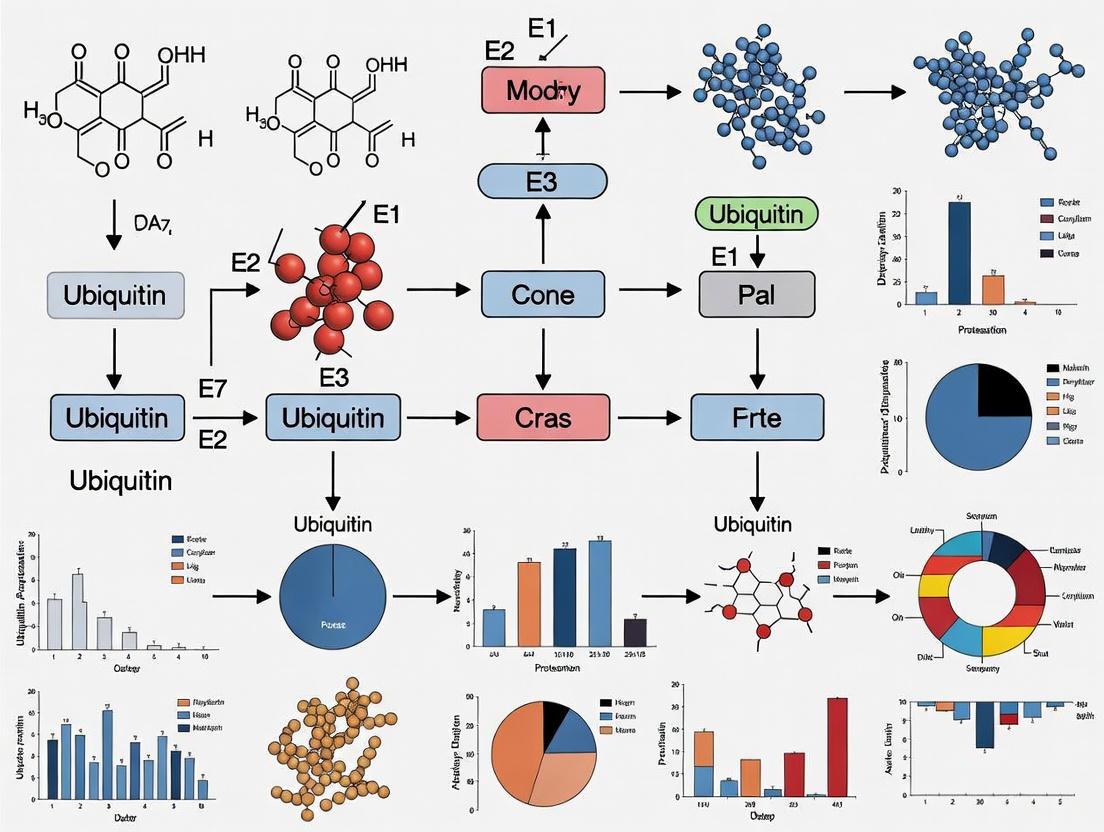
This article provides a comprehensive overview of how mass spectrometry-based proteomics is revolutionizing our understanding of protein ubiquitination in cancer.
Decoding the Ubiquitinome: Proteomic Profiling of Ubiquitination Patterns in Cancer Pathogenesis and Therapy
Abstract
This article provides a comprehensive overview of how mass spectrometry-based proteomics is revolutionizing our understanding of protein ubiquitination in cancer. It explores the fundamental role of ubiquitination in regulating oncoproteins, tumor suppressors, and cancer-related pathways. The content details methodological advances for profiling the ubiquitinome, including enrichment strategies, linkage-specific analysis, and data interpretation. It also addresses key challenges in ubiquitination research and discusses the validation of ubiquitination events as biomarkers and therapeutic targets. Aimed at researchers and drug development professionals, this review synthesizes current knowledge and future directions for exploiting the ubiquitin-proteasome system in oncology.
The Ubiquitin-Proteasome System: A Master Regulator in Cancer Biology
The Ubiquitination Enzymatic Cascade
Ubiquitination is a crucial post-translational modification process that regulates virtually all aspects of eukaryotic cell biology [1]. This three-step enzymatic cascade results in the covalent attachment of ubiquitin, a 76-amino acid protein, to substrate proteins, thereby influencing their stability, activity, localization, and interactions [2] [3].
The process begins with activation, where the E1 ubiquitin-activating enzyme utilizes ATP to form a high-energy thioester bond with the C-terminus of ubiquitin [3]. Subsequently, in the conjugation step, the activated ubiquitin is transferred to an E2 ubiquitin-conjugating enzyme [2]. Finally, in the ligation step, an E3 ubiquitin ligase facilitates the transfer of ubiquitin from the E2 to a specific lysine residue on the target substrate, forming an isopeptide bond [2] [3]. E3 ligases provide substrate specificity to the ubiquitination system, with humans possessing hundreds of different E3s compared to only two E1s and approximately thirty-five E2s [2] [3].
Table 1: Core Components of the Ubiquitination Cascade
| Component | Number in Humans | Key Function | Representative Examples |
|---|---|---|---|
| E1 (Activating Enzyme) | 2 [3] | Activates ubiquitin in an ATP-dependent manner | UBA1, UBA6 [3] |
| E2 (Conjugating Enzyme) | ~35 [3] | Accepts ubiquitin from E1 and cooperates with E3 for substrate transfer | UBC family [2] |
| E3 (Ligase) | >600 [2] | Confers substrate specificity and catalyzes ubiquitin transfer | HECT, RING, RBR types [2] |
The following diagram illustrates the sequential nature of the ubiquitination cascade:
The Complexity of Ubiquitin Signaling
Ubiquitination generates diverse signals through different modification types. Monoubiquitination (attachment of a single ubiquitin) and multi-monoubiquitination (multiple single ubiquitins on different lysines) primarily regulate endocytic trafficking, inflammation, and DNA repair [2] [3]. Polyubiquitination (chains of ubiquitin molecules) creates an extensive "ubiquitin code" where chain topology determines biological function [1].
Ubiquitin contains seven lysine residues (K6, K11, K27, K29, K33, K48, K63) and an N-terminal methionine (M1) that can serve as linkage points for polyubiquitin chain formation [2] [1]. The K48-linked chains represent the most abundant ubiquitin linkage and primarily target substrates for proteasomal degradation [2]. K63-linked chains typically function in non-proteolytic processes including DNA damage repair, kinase activation, and inflammatory signaling [2]. Other linkage types (K6, K11, K27, K29, K33, M1) constitute "atypical" chains with specialized functions in cell cycle regulation, innate immunity, and NF-κB signaling [2].
Table 2: Major Ubiquitin Linkage Types and Their Functions
| Linkage Type | Primary Functions | Biological Processes Regulated |
|---|---|---|
| K48 | Proteasomal degradation [2] | Protein turnover, homeostasis [2] |
| K63 | Non-proteolytic signaling [2] | DNA repair, kinase activation, endocytosis [2] |
| K11 | Cell cycle regulation [2] | Mitotic progression, ER-associated degradation [2] |
| K27 | Innate immune response [2] | Mitochondrial quality control, antiviral signaling [2] |
| M1 (Linear) | NF-κB activation [2] [1] | Inflammatory signaling, immunity [2] |
The following diagram illustrates how different ubiquitin chain linkages determine specific functional outcomes:
Ubiquitination in Cancer and Targeted Protein Degradation
Dysregulation of the ubiquitin system contributes significantly to tumorigenesis, making it a promising therapeutic target [2] [1]. E3 ubiquitin ligases regulate various biological processes and cellular responses to stress signals associated with cancer development [2]. The ubiquitin-like protein Ubiquitin D (UBD), also known as FAT10, has emerged as a particularly important player in cancer biology [4] [5].
Recent pan-cancer analyses reveal that UBD is frequently overexpressed in 29 cancer types, with elevated expression correlated with poor prognosis and higher histological grades [4] [5]. UBD expression significantly correlates with tumor microenvironment features including immune infiltration, checkpoint expression, microsatellite instability (MSI), tumor mutational burden (TMB), and neoantigens [5]. Mechanistically, UBD engages key oncogenic pathways including NF-κB, Wnt, and SMAD2 signaling, interacting with downstream effectors such as MAD2, p53, and β-catenin to promote tumor survival, proliferation, invasion, and metastasis [5].
Table 3: UBD/FAT10 as a Cancer Biomarker: Pan-Cancer Analysis Findings
| Parameter | Finding | Clinical Implications |
|---|---|---|
| Expression | Overexpressed in 29 cancer types [4] [5] | Potential diagnostic marker [4] [5] |
| Prognosis | Correlated with poor survival and higher histological grades [4] [5] | Prognostic biomarker [4] [5] |
| Genetic Alterations | Most common variation: gene amplification [5] | Patients with alterations show reduced overall survival [5] |
| Epigenetic Regulation | Reduced promoter methylation in 16 cancer types [5] | Potential epigenetic therapeutic target [5] |
| Immune Microenvironment | Correlated with immune infiltration, checkpoints, MSI, TMB [5] | Predictor of immunotherapy sensitivity [5] |
Experimental Protocol: In Vitro Ubiquitination Conjugation Reaction
The following detailed protocol enables researchers to investigate ubiquitination mechanisms in a controlled in vitro setting [6]. This approach can determine whether a specific protein is ubiquitinated, identify the type of ubiquitination (mono vs. poly), and characterize the required E2 and E3 enzymes [6].
Materials and Reagents
Table 4: Research Reagent Solutions for Ubiquitination Experiments
| Reagent | Stock Concentration | Function in Experiment |
|---|---|---|
| E1 Enzyme | 5 µM | Activates ubiquitin in ATP-dependent manner [6] |
| E2 Enzyme | 25 µM | Accepts ubiquitin from E1; determines chain topology [6] |
| E3 Ligase | 10 µM | Provides substrate specificity; catalyzes ubiquitin transfer [6] |
| 10X E3 Ligase Reaction Buffer | 500 mM HEPES (pH 8.0), 500 mM NaCl, 10 mM TCEP | Maintains optimal pH and ionic strength; prevents disulfide formation [6] |
| Ubiquitin | 1.17 mM (10 mg/mL) | Substrate for modification cascade [6] |
| MgATP Solution | 100 mM | Energy source for E1-mediated ubiquitin activation [6] |
| Substrate Protein | 5-10 µM | Target protein for ubiquitination [6] |
Procedure for 25 µL Reaction
Reaction Setup: In a microcentrifuge tube, combine components in the following order to achieve indicated working concentrations [6]:
- dH₂O (to final volume of 25 µL)
- 10X E3 Ligase Reaction Buffer (2.5 µL for 1X final concentration)
- Ubiquitin (1 µL for ~100 µM final)
- MgATP Solution (2.5 µL for 10 mM final)
- Substrate Protein (volume adjusted for 5-10 µM final)
- E1 Enzyme (0.5 µL for 100 nM final)
- E2 Enzyme (1 µL for 1 µM final)
- E3 Ligase (volume adjusted for 1 µM final)
Note: For negative control, replace MgATP solution with equivalent volume of dH₂O [6].
Incubation: Incubate the reaction mixture in a 37°C water bath for 30-60 minutes [6].
Reaction Termination: Choose appropriate termination method based on downstream applications [6]:
- For SDS-PAGE analysis: Add 25 µL of 2X SDS-PAGE sample buffer
- For downstream enzymatic applications: Add 0.5 µL of 500 mM EDTA (20 mM final) or 1 µL of 1 M DTT (100 mM final)
Analysis: Separate reaction products by SDS-PAGE and analyze by:
- Coomassie blue staining to visualize total protein patterns
- Western blotting with anti-ubiquitin antibodies to confirm ubiquitination
- Western blotting with anti-substrate antibodies to verify substrate modification
- Western blotting with anti-E3 ligase antibodies to detect autoubiquitination
The following workflow diagram outlines the key experimental steps and analysis options:
Data Interpretation Guidelines
- Successful Ubiquitination: Appearance of higher molecular weight smears or discrete ladder patterns above the substrate band [6]
- Negative Control: Lack of higher molecular weight species in reactions without ATP [6]
- E3 Autoubiquitination: Detection of ubiquitinated E3 ligase in Western blots with anti-E3 antibodies [6]
- Substrate Specificity: Ubiquitination patterns dependent on specific E2-E3 combinations [6]
Concluding Perspectives
The ubiquitin system represents a complex regulatory network that extends far beyond its initial characterization as a simple degradation signal. Understanding the enzymatic cascade, diverse ubiquitin chain architectures, and their functional consequences provides critical insights into normal cellular physiology and disease pathogenesis, particularly in cancer [2] [1]. The experimental approaches outlined here, combined with emerging technologies such as PROTACs (Proteolysis Targeting Chimeras) that harness the ubiquitin system for therapeutic purposes, continue to expand our ability to decipher and manipulate ubiquitin signaling in biomedical research [2].
The ubiquitin-proteasome system (UPS) is a crucial regulatory machinery for maintaining cellular protein homeostasis, primarily responsible for the specific recognition and degradation of proteins within eukaryotic cells [7]. The UPS process encompasses a sequential enzymatic cascade involving ubiquitin-activating enzymes (E1), ubiquitin-conjugating enzymes (E2), ubiquitin ligases (E3), and deubiquitinating enzymes (DUBs) [8]. Through ubiquitination and deubiquitination modifications, the UPS precisely controls the stability, localization, and activity of substrate proteins, thereby regulating fundamental cellular processes including cell cycle progression, apoptosis, DNA damage repair, and metabolic reprogramming [7] [8].
In carcinogenesis, dysregulation of UPS components leads to aberrant accumulation or degradation of oncoproteins and tumor suppressors, fundamentally contributing to tumor initiation, progression, and therapeutic resistance [7] [9]. This application note delineates the mechanistic insights into UPS dysregulation in cancer, provides experimental protocols for profiling ubiquitination patterns, and discusses emerging therapeutic strategies targeting the UPS, with particular emphasis on their application within proteomics-based cancer research.
Mechanistic Insights: UPS Dysregulation in Cancer
Dysregulation Patterns of Core UPS Components
Table 1: Dysregulation of UPS Components in Human Cancers
| UPS Component | Dysregulation Pattern | Cancer Type | Substrate/Pathway Affected | Biological Outcome |
|---|---|---|---|---|
| E3 Ligase MDM2 | Overexpression | Multiple Cancers | p53 degradation [9] | Uncontrolled tumor growth [9] |
| E3 Ligase RNF2 | Upregulation | Hepatocellular Carcinoma | H2A K119 monoubiquitination, E-cadherin repression [8] | Enhanced metastasis [8] |
| E3 Ligase Parkin | Dysregulated | Colorectal Cancer | PKM2 ubiquitination [8] | Altered glycolysis |
| E3 Ligase SPOP | Mutations/Inactivation | Prostate Cancer | FASN stabilization [10] | Enhanced lipogenesis |
| DUB USP22 | Overexpression | Pancreatic Cancer | Stabilizes DYRK1A [11] | Promotes proliferation |
| DUB USP28 | Upregulation | Pancreatic Cancer | Stabilizes FOXM1, activates Wnt/β-catenin [11] | Cell cycle progression, apoptosis inhibition |
| DUB USP21 | Overexpression | Pancreatic Cancer | Stabilizes TCF7 [11] | Maintains stemness |
| DUB USP9X | Context-dependent | Pancreatic Cancer | Hippo pathway (LATS kinase, YAP/TAZ) [11] | Dual roles (suppressor/promoter) |
| DUB OTUB2 | Upregulation | Colorectal Cancer | Inhibits PKM2 ubiquitination [8] | Enhanced glycolysis, progression |
| DUB BAP1 (UCH family) | Mutations | Mesothelioma, Melanoma | Multiple substrates [11] | "BAP1 cancer syndrome" |
Key Oncogenic Pathways Modulated by UPS Dysregulation
The dysregulation of E3 ligases and DUBs exerts profound effects on every hallmark of cancer by controlling the stability of key oncoproteins and tumor suppressors.
- Genome Instability and Proliferation: The well-characterized MDM2-p53 axis exemplifies UPS involvement in tumor suppression. MDM2, an E3 ligase, targets p53 for degradation; its overexpression leads to p53 inactivation, allowing uncontrolled proliferation [9]. Similarly, the ubiquitin-conjugating enzyme UBE2T monoubiquitinates the histone variant γH2AX, inducing CHK1 phosphorylation and enhancing radioresistance in hepatocellular carcinoma [8].
- Metabolic Reprogramming: The UPS directly regulates cancer metabolic pathways, including the Warburg effect and lipid metabolism. For instance, the E3 ligase Parkin facilitates the ubiquitination of pyruvate kinase M2 (PKM2), while the DUB OTUB2 inhibits this process, enhancing glycolysis and accelerating colorectal cancer progression [8]. In lipid metabolism, the E3 ligase NEDD4 targets ATP-citrate lyase (ACLY), a key enzyme in lipogenesis, for degradation. Dysregulation of this process, such as through reduced ACLY acetylation, stabilizes ACLY and promotes lipid synthesis in lung cancer [10].
- Immunity and Tumor Microenvironment: Ubiquitination modifications critically influence immune checkpoint protein stability. For example, the DUB USP2 stabilizes PD-1, thereby promoting tumor immune escape [8]. Conversely, metastasis suppressor protein 1 (MTSS1) promotes the monoubiquitination of PD-L1 at K263, mediated by the E3 ligase AIP4, leading to PD-L1 internalization and lysosomal degradation, thus inhibiting immune escape in lung adenocarcinoma [8].
- Histone Modification and Epigenetics: The UPS functions as a crucial determinant of the epigenetic landscape in cancer. It regulates the state of chromatin by influencing histones and histone modifiers through both proteolytic and non-proteolytic means [12]. For instance, RNF2-mediated monoubiquitination of histone H2A at lysine 119 leads to transcriptional repression of E-cadherin, enhancing the metastatic potential of hepatocellular carcinoma [8].
Experimental Protocols: Profiling Ubiquitination in Cancer
Protocol 1: Ubiquitination Site Mapping via Mass Spectrometry
Objective: To identify and quantify specific lysine ubiquitination sites on proteins from cancer cell lines or tumor tissues.
Workflow:
Cell Lysis and Protein Extraction:
- Lyse cells or homogenize tissue samples in a denaturing lysis buffer (e.g., 8 M Urea, 100 mM Tris-HCl pH 8.0) supplemented with protease inhibitors (e.g., 10 μM MG132) and DUB inhibitors (e.g., 10 mM N-Ethylmaleimide) to preserve ubiquitination states.
- Quantify protein concentration using a BCA assay.
Trypsin Digestion with Lysine Blocking:
- Reduce disulfide bonds with 5 mM DTT (30 min, 37°C) and alkylate with 15 mM Iodoacetamide (30 min, room temperature in the dark).
- Digest proteins with Lys-C (1:100 enzyme-to-protein ratio) for 4 hours at 30°C.
- Dilute the urea concentration to 2 M and continue digestion with trypsin (1:50 ratio) overnight at 37°C.
Ubiquitin Remnant Affinity Purification:
- Use anti-diGly remnant motif antibodies (e.g., K-ε-GG) conjugated to beads for immunoprecipitation.
- Incubate the digested peptides with the antibody beads for 2 hours at 4°C.
- Wash beads stringently to remove non-specifically bound peptides.
Mass Spectrometric Analysis:
- Elute the enriched ubiquitinated peptides from the beads.
- Desalt the peptides using C18 StageTips.
- Analyze by LC-MS/MS on a high-resolution instrument (e.g., Orbitrap Fusion Lumos).
- Use a data-dependent acquisition method with HCD fragmentation.
Data Processing and Bioinformatics:
- Search MS/MS data against a human protein database using software (e.g., MaxQuant) with the following parameters:
- Fixed modification: Carbamidomethyl (C)
- Variable modifications: Oxidation (M), Acetylation (Protein N-term), and GlyGly (K) for the ubiquitin remnant.
- Apply a false discovery rate (FDR) of <1% at both the peptide and protein levels.
- Use tools like Perseus for statistical analysis and visualization of differentially regulated ubiquitination sites.
- Search MS/MS data against a human protein database using software (e.g., MaxQuant) with the following parameters:
Protocol 2: Validation of E3 Ligase-DUB-Substrate Relationships
Objective: To validate the functional interaction between a specific E3 ligase or DUB and its putative substrate in a cancer context.
Workflow:
Co-Immunoprecipitation (Co-IP):
- Transfect cells with plasmids expressing the E3/DUB (e.g., OTUB1 [13] or TRIM28 [13]) and the candidate substrate (e.g., MYC pathway components [13]).
- After 48 hours, lyse cells in a non-denaturing IP lysis buffer.
- Incubate the cell lysate with an antibody against the E3/DUB or the substrate. Use normal IgG as a control.
- Add Protein A/G beads to capture the antibody-protein complex.
- Wash beads and elute the bound proteins by boiling in SDS-PAGE loading buffer.
Western Blot Analysis:
- Separate the eluted proteins by SDS-PAGE and transfer to a PVDF membrane.
- Probe the membrane with antibodies against the E3/DUB, the substrate, and ubiquitin (e.g., anti-polyubiquitin or anti-K48/K63-linkage specific antibodies) to assess co-precipitation and ubiquitination status.
Cycloheximide (CHX) Chase Assay:
- Treat cells (e.g., PANC-1 [11]) transfected with the E3/DUB or a control vector with CHX (50-100 μg/mL) to inhibit new protein synthesis.
- Harvest cells at different time points (e.g., 0, 2, 4, 8 hours).
- Analyze the protein levels of the substrate by Western blot to determine its half-life.
In Vivo Ubiquitination Assay:
- Co-transfect cells with plasmids for the substrate, HA- or Myc-tagged ubiquitin, and the E3 ligase or DUB.
- Treat cells with a proteasome inhibitor (e.g., MG132, 10 μM) for 4-6 hours before harvesting to accumulate ubiquitinated proteins.
- Lyse cells in a denaturing buffer (e.g., containing 1% SDS) and boil to dissociate protein complexes.
- Dilute the lysate and perform immunoprecipitation of the substrate.
- Detect poly-ubiquitinated forms of the substrate by Western blot using an anti-HA or anti-Myc antibody.
The Scientist's Toolkit: Research Reagent Solutions
Table 2: Essential Reagents for UPS and Cancer Research
| Reagent Category | Specific Example | Function/Application | Key Feature/Note |
|---|---|---|---|
| Proteasome Inhibitors | Bortezomib (BTZ), Carfilzomib [7] | Clinical PIs; induce ER stress & apoptosis in MM [7] | First-line therapy for Multiple Myeloma [7] |
| DUB Inhibitors | SIM0501 (USP1 inhibitor) [10] | Targeted DUB inhibitor for advanced solid tumors | FDA-approved for clinical trials [10] |
| E1 Enzyme Inhibitor | TAK-243 (MLN7243) | Inhibits ubiquitin activation | Broad-spectrum upstream inhibition |
| IAP Antagonists | LCL161 [10] | Induces TNF-dependent apoptosis | Enhances anti-tumor immune response [10] |
| PROTACs | ARV-110 (Bavdegalutamide), ARV-471 (Vepdegestrant) [8] | Targeted protein degradation; recruit E3 ligase to target | Phase II clinical trials [8] |
| Molecular Glues | CC-90009 [8] | Induces degradation of GSPT1 via CRL4CRBN | Phase II trials for leukemia [8] |
| Ubiquitin Mutation Plasmids | Ub(K48R), Ub(K63R) | Study specific ubiquitin chain linkage roles | K48: Proteasomal degradation; K63: Signaling |
| Activity-Based Probes | HA-Ub-VS, Cy5-Ub-PA | Label active DUBs and E1/E2 enzymes in complexes | Chemoproteomics applications |
| Critical Antibodies | Anti-K-ε-GG (diGly) [13] | Enrich ubiquitinated peptides for MS | Essential for ubiquitinomics |
| Anti-Polyubiquitin (linkage-specific) | Detect specific chain types in WB/IP | K48, K63, M1 (linear) | |
| Anti-OTUB1, Anti-TRIM28 [13] | Study specific UPS components | Validated in pancancer networks [13] |
Data Analysis & Visualization in Ubiquitinomics
Integrating proteomics data requires specialized bioinformatics pipelines. Key steps include:
- Differential Analysis: Identify ubiquitination sites significantly altered between experimental conditions (e.g., high-risk vs. low-risk ovarian cancer groups [14]).
- Pathway Enrichment: Utilize tools like GSEA to map ubiquitination targets to oncogenic pathways (e.g., MYC, oxidative phosphorylation [13]).
- Network Integration: Construct protein-protein interaction networks to visualize clusters of ubiquitination targets and identify key regulatory hubs [13] [14].
The precise dysregulation of E1, E2, E3 ligases, and DUBs constitutes a fundamental mechanism in carcinogenesis, impacting genomic stability, metabolism, immunity, and the epigenetic landscape. Modern proteomics and ubiquitinomics approaches provide powerful tools to map these alterations systematically. The continued development of targeted therapies, such as PROTACs and specific DUB inhibitors, underscores the immense translational potential of decoding the ubiquitin code in cancer. Integrating these molecular insights with robust experimental protocols will be pivotal for advancing diagnostic, prognostic, and therapeutic strategies in oncology.
Within the landscape of molecular oncology, the post-translational modification of proteins by ubiquitination serves as a critical regulatory mechanism controlling the stability and activity of key oncoproteins. Proteomics profiling of ubiquitination patterns in cancer research has unveiled complex regulatory networks that drive tumorigenesis [15] [8]. This application note examines the specific ubiquitination mechanisms governing two pivotal oncoproteins: c-Myc and Ras. Understanding these mechanisms provides fundamental insights into cancer cell proliferation, survival, and metabolic reprogramming, while also revealing potential therapeutic vulnerabilities. The aberrant stabilization of these oncoproteins through disrupted ubiquitination represents a common hallmark across diverse cancer types, making this area of research particularly compelling for drug development.
Ubiquitination and Stabilization of c-Myc in Triple-Negative Breast Cancer
Mechanism of c-Myc Stabilization by 66CTG
The c-Myc oncoprotein functions as a master transcriptional regulator driving cell proliferation, metabolic reprogramming, and ribosome biogenesis. Its abnormal high expression is a hallmark of numerous malignancies, directly correlated with tumor invasion, metastasis, recurrence, and drug resistance [16]. Traditionally, c-Myc is regulated by the GSK-3β/FBW7α ubiquitination pathway, where phosphorylation by GSK-3β prompts FBW7α recognition, leading to c-Myc ubiquitination and subsequent proteasomal degradation [16].
Recent research has uncovered a novel mechanism in triple-negative breast cancer (TNBC), where the long non-coding RNA CDKN2B-AS1 encodes a 66-amino acid peptide called 66CTG that stabilizes c-Myc. This peptide competes with c-Myc for binding to the F-box protein FBW7α, thereby reducing c-Myc ubiquitination. Through "sacrificing" itself, 66CTG stabilizes c-Myc protein levels in cancer cells, enhancing Cyclin D1 transcription and enabling cancer cells to bypass the G1 phase restriction point, accelerating cell cycle progression and promoting tumor growth [16].
Table 1: Key Components in c-Myc Stabilization Pathway
| Component | Type | Function in Pathway | Effect on c-Myc |
|---|---|---|---|
| c-Myc | Transcription Factor | Drives cell proliferation & metabolism | Core regulatory target |
| FBW7α | E3 Ubiquitin Ligase | Recognizes & ubiquitinates phosphorylated c-Myc | Promotes degradation |
| GSK-3β | Kinase | Phosphorylates c-Myc for FBW7α recognition | Facilitates degradation |
| 66CTG | Regulatory Peptide | Competes with c-Myc for FBW7α binding | Prevents degradation, stabilizes protein |
| CDKN2B-AS1 | lncRNA | Encodes 66CTG peptide | Upstream regulator |
Experimental Protocol for Studying c-Myc Ubiquitination
Objective: To assess c-Myc ubiquitination and stabilization in response to 66CTG expression in triple-negative breast cancer models.
Materials and Reagents:
- Cell lines: TNBC cell lines (MDA-MB-231, BT-549)
- Plasmid constructs: CDKN2B-AS1 expression vector, 66CTG mutant constructs
- Antibodies: Anti-c-Myc, anti-ubiquitin, anti-FBW7α, anti-66CTG custom antibody
- Proteasome inhibitor: MG132
- Protein synthesis inhibitor: Cycloheximide
Methodology:
Cell Culture and Treatment:
- Maintain TNBC cell lines in appropriate media supplemented with 10% FBS.
- For serum starvation experiments, wash cells with PBS and culture in serum-free media for 12-16 hours.
- Treat cells with MG132 (10 μM) for 6 hours prior to harvesting to inhibit proteasomal degradation.
Gene Modulation:
- Transient transfection: Use lipofection method to introduce CDKN2B-AS1 expression vectors or siRNA targeting 66CTG.
- Generate stable knockdown cells using lentiviral shRNA constructs targeting CDKN2B-AS1.
Co-Immunoprecipitation (Co-IP) Assay:
- Lyse cells in RIPA buffer supplemented with protease and phosphatase inhibitors.
- Pre-clear lysates with protein A/G beads for 30 minutes at 4°C.
- Incubate 500 μg of total protein with 2 μg of anti-c-Myc antibody overnight at 4°C.
- Add protein A/G beads and incubate for 2 hours at 4°C.
- Wash beads 3 times with lysis buffer and elute proteins with 2× Laemmli buffer.
Ubiquitination Detection:
- Resolve immunoprecipitated proteins by SDS-PAGE and transfer to PVDF membrane.
- Probe membrane with anti-ubiquitin antibody (1:1000) to detect ubiquitinated c-Myc.
- Reprobe membrane with anti-c-Myc antibody (1:2000) to confirm equal precipitation.
Protein Stability Assay:
- Treat cells with cycloheximide (100 μg/mL) to inhibit new protein synthesis.
- Harvest cells at 0, 30, 60, 120, and 240 minutes post-treatment.
- Analyze c-Myc protein levels by Western blotting and quantify by densitometry.
Functional Assays:
- Perform cell cycle analysis using propidium iodide staining and flow cytometry.
- Conduct cell proliferation assays using MTT or CCK-8 reagents.
Ras Ubiquitination and Its Impact on Signaling Dynamics
Dual Regulatory Mechanisms of Ras Ubiquitination
The Ras oncoprotein represents a critical signaling node transducing signals that control cell proliferation, differentiation, motility, and survival. Research has revealed that Ras ubiquitination occurs through distinct mechanisms with opposing functional consequences, creating a complex regulatory network [17] [18].
Activating Monoubiquitination: Site-specific monoubiquitination of Ras at primary lysine residues activates Ras by impeding GTPase-activating protein (GAP) function [18]. This modification has little effect on Ras GTP binding, intrinsic GTP hydrolysis, or exchange factor activation but severely abrogates the response to GAPs. This mechanism enables Ras to trigger persistent signaling without oncogenic mutations or receptor activation, representing a previously unrecognized pathway for Ras activation in cancer.
Inhibitory Polyubiquitination: In contrast, Rabex-5-mediated ubiquitination promotes Ras endosomal localization and suppresses ERK activation [17]. This process requires RIN1, a Ras effector, suggesting a feedback mechanism coupling Ras activation to subsequent ubiquitination and attenuation of signaling. This pathway defines essential elements in the regulatory circuitry linking Ras compartmentalization to signaling output.
Table 2: Comparative Analysis of Ras Ubiquitination Types
| Ubiquitination Type | Key Enzymes | Cellular Localization | Functional Outcome | Biological Effect |
|---|---|---|---|---|
| Monoubiquitination | Unknown E3 Ligase | Plasma Membrane | Ras Activation | Persistent signaling, tumor growth |
| Polyubiquitination | Rabex-5 (E3), RIN1 | Endosomal Compartments | Signal Suppression | Attenuated ERK activation |
| K63-Linked Polyubiquitination | Ubc13 (E2) | Various Membranes | Enhanced Signaling | Breast cancer metastasis |
Experimental Protocol for Analyzing Ras Ubiquitination
Objective: To characterize site-specific monoubiquitination of Ras and its functional consequences on GAP sensitivity.
Materials and Reagents:
- Purified Ras protein (wild-type and K-Ras mutants)
- Ubiquitination system: E1 enzyme, UbcH5 (E2), ubiquitin
- GTPase Activating Protein (GAP: p120GAP or NF1)
- Nucleotides: GTP, GDP, GTPγS
- NMR reagents: Deuterated buffers
Methodology:
In Vitro Ubiquitination Assay:
- Prepare reaction mixture containing: 50 nM E1, 100 nM E2 (UbcH5), 5 μM Ras, 10 μM ubiquitin in ubiquitination buffer (50 mM Tris-HCl pH 7.5, 2.5 mM MgCl₂, 0.5 mM DTT, 2 mM ATP).
- Incubate at 30°C for 2 hours.
- Stop reaction with SDS sample buffer and analyze by Western blotting with anti-Ras and anti-ubiquitin antibodies.
Chemical Ubiquitination of Ras (for Structural Studies):
- Express and purify recombinant Ras protein with a cysteine mutation at the desired site.
- Generate ubiquitin vinyl sulfone as the chemical modifier.
- Incubate Ras protein with ubiquitin vinyl sulfone in molar ratio 1:3 for 4 hours at room temperature.
- Purify ubiquitinated Ras using size exclusion chromatography.
NMR Spectroscopy Analysis:
- Prepare 15N-labeled Ras protein samples in NMR buffer (20 mM Tris-HCl pH 7.5, 5 mM MgCl₂, 50 mM NaCl, 0.5 mM DTT, 10% D₂O).
- Collect 1H-15N HSQC spectra of unmodified and ubiquitinated Ras.
- Analyze chemical shift perturbations to identify structural changes upon ubiquitination.
GTPase Activity Measurements:
- Load Ras with [γ-32P]GTP by incubation in nucleotide exchange buffer.
- Monitor GTP hydrolysis by thin-layer chromatography at time points 0, 5, 15, and 30 minutes.
- For GAP sensitivity assays, add 10-100 nM GAP protein and measure acceleration of GTP hydrolysis.
Computational Modeling:
- Generate structural models of ubiquitinated Ras using molecular dynamics simulations.
- Analyze steric clashes between ubiquitin and GAP using docking simulations.
Cellular Localization Studies:
- Express GFP-tagged Ras constructs in HEK293 or cancer cells.
- Treat cells with EGF (100 ng/mL) to stimulate Ras activation.
- Fix cells and visualize Ras localization by confocal microscopy.
- Use image analysis software to quantify plasma membrane vs. endosomal distribution.
Proteomics Approaches for Ubiquitination Profiling
Advanced proteomics technologies have enabled comprehensive mapping of ubiquitination events in cancer tissues, providing systems-level insights into oncoprotein regulation.
Ubiquitin Remnant Profiling Protocol
Objective: To identify and quantify differentially regulated ubiquitination sites in primary versus metastatic colon adenocarcinoma tissues using K-ε-GG antibody-based enrichment.
Materials and Reagents:
- Tissue samples: Primary colon adenocarcinoma and matched metastatic tissues
- Lysis buffer: 8 M urea, 10 mM EDTA, 10 mM DTT, 1% protease inhibitor cocktail
- Trypsin: Sequencing grade modified trypsin
- Antibody: Anti-Lys-ε-Gly-Gly (K-ε-GG) remnant antibody beads (PTMScan Ubiquitin Remnant Motif Kit)
- HPLC system: Shimadzu LC20AD with C18 column
- Mass spectrometer: Q-Exactive HF X
Methodology:
Sample Preparation:
- Homogenize tissue samples in lysis buffer using a high-intensity ultrasonic processor.
- Centrifuge at 12,000 × g for 10 minutes at 4°C and collect supernatant.
- Determine protein concentration using 2D Quant kit.
Protein Digestion:
- Reduce proteins with 10 mM DTT for 1 hour at 56°C.
- Alkylate with 30 mM iodoacetamide for 45 minutes at room temperature in darkness.
- Dilute samples with 100 mM NH₄HCO₃ to reduce urea concentration below 2 M.
- Digest with trypsin (1:50 ratio) overnight at 37°C, followed by second digestion (1:100 ratio) for 4 hours.
Peptide Fractionation:
- Desalt peptides using Strata-X C18 column.
- Fractionate peptides by high-pH reverse-phase HPLC into four fractions.
- Dry fractions by vacuum centrifugation.
Ubiquitinated Peptide Enrichment:
- Resuspend peptides in NETN buffer (100 mM NaCl, 1 mM EDTA, 50 mM Tris-HCl, 0.5% NP-40, pH 8.0).
- Incubate with anti-K-ε-GG antibody beads overnight at 4°C with gentle shaking.
- Wash beads four times with NETN buffer and twice with H₂O.
- Elute bound peptides with 0.1% trifluoroacetic acid.
LC-MS/MS Analysis:
- Resuspend peptides in 0.1% formic acid and load onto trap column.
- Separate peptides on homemade nanocapillary C18 column (75 μm × 25 cm, 3 μm particles) using 5-35% acetonitrile gradient over 40 minutes.
- Analyze peptides using Q-Exactive HF X mass spectrometer in data-dependent acquisition mode.
- Set MS1 resolution to 60,000 and MS2 resolution to 30,000.
Data Processing:
- Process raw files using MaxQuant software (v1.5.2.8).
- Search against SwissProt Human database with reverse decoy.
- Set carbamidomethylation as fixed modification, and Gly-Gly modification on lysine and methionine oxidation as variable modifications.
- Set false discovery rate (FDR) to <1% for peptide identification.
Table 3: Proteomics Analysis of Ubiquitination in Colon Adenocarcinoma
| Sample Comparison | Differentially Modified Ubiquitination Sites | Upregulated Sites | Downregulated Sites | Key Pathways Enriched |
|---|---|---|---|---|
| Metastatic vs Primary Colon Adenocarcinoma | 375 sites on 341 proteins | 132 sites on 127 proteins | 243 sites on 214 proteins | RNA transport, Cell cycle |
The Scientist's Toolkit: Essential Research Reagents
Table 4: Key Research Reagents for Studying Oncoprotein Ubiquitination
| Reagent/Category | Specific Examples | Application/Function |
|---|---|---|
| E3 Ligase Targets | FBW7α, Rabex-5, VHL | Recognize specific substrates and catalyze ubiquitin transfer |
| Deubiquitinases (DUBs) | OTUB2, USP2, CYLD | Remove ubiquitin marks, reverse ubiquitination |
| Ubiquitination Detection | Anti-K-ε-GG antibody, Ubiquitin remnant motif kit | Enrich and identify ubiquitinated peptides in proteomics |
| Proteasome Inhibitors | MG132, Bortezomib | Block proteasomal degradation to stabilize ubiquitinated proteins |
| Mass Spectrometry | Q-Exactive HF X, LC-MS/MS systems | Identify and quantify ubiquitination sites proteome-wide |
| PROTAC Molecules | ARV-110, ARV-471 | Induce targeted protein degradation via ubiquitin-proteasome system |
The intricate regulation of oncoproteins like c-Myc and Ras through ubiquitination represents a critical layer of control in cancer development and progression. The stabilization of c-Myc via the 66CTG-FBW7α axis in triple-negative breast cancer and the dual regulatory mechanisms of Ras monoubiquitination versus Rabex-5-mediated polyubiquitination exemplify the complexity of these pathways. Advanced proteomics approaches utilizing K-ε-GG antibody-based enrichment have enabled comprehensive mapping of ubiquitination events, revealing novel regulatory mechanisms and potential therapeutic targets. These findings not only deepen our understanding of cancer biology but also pave the way for developing innovative therapeutic strategies targeting the ubiquitin-proteasome system, including PROTACs and molecular glues, for more effective cancer treatments.
The ubiquitin-proteasome system (UPS) is a critical regulatory mechanism for cellular protein degradation, playing a fundamental role in maintaining cellular homeostasis. Ubiquitination, a pivotal post-translational modification, involves the covalent attachment of ubiquitin molecules to target proteins, ultimately influencing their stability, activity, and localization [8]. This process is executed through a sequential enzymatic cascade involving ubiquitin-activating (E1), ubiquitin-conjugating (E2), and ubiquitin-ligase (E3) enzymes [19] [8]. The specificity of substrate recognition is primarily determined by E3 ubiquitin ligases. Conversely, deubiquitinating enzymes (DUBs) can reverse this process, removing ubiquitin chains and stabilizing substrate proteins [8].
Dysregulation of the UPS is a hallmark of cancer, leading to the aberrant degradation of tumor suppressor proteins. Among the most critical tumor suppressors targeted by ubiquitination are p53 and PTEN. p53, often referred to as the "guardian of the genome," is a transcription factor that regulates cell cycle arrest, DNA repair, apoptosis, and senescence [20]. PTEN functions as a phosphatase that antagonizes the PI3K-AKT signaling pathway, a key driver of cell metabolism, growth, proliferation, and survival [21]. The loss of these proteins through genetic mutation or accelerated degradation is a common event in numerous human malignancies, underscoring the importance of understanding their regulation by ubiquitination for developing novel cancer therapeutics.
Ubiquitination Mechanisms and Key Regulatory Factors
The Ubiquitination Cascade and p53 Regulation
The regulation of p53 stability is predominantly controlled by the E3 ubiquitin ligase MDM2. Under normal conditions, MDM2 binds to p53 and promotes its polyubiquitination, primarily through K48-linked chains, leading to proteasomal degradation and maintenance of low intracellular p53 levels [22] [20]. This process is tightly regulated; in response to genotoxic stress, post-translational modifications on both p53 and MDM2 disrupt their interaction, stabilizing p53 and activating its tumor-suppressive transcriptional programs [20]. MDM2 itself is an E3 ligase for p53, and its activity is modulated by interaction with its homolog, MDMX [22]. Beyond MDM2, other E3 ligases, including ARF-BP1, and various deubiquitinating enzymes (DUBs) also contribute to the fine-tuning of p53 stability [22].
A novel mechanism of p53 regulation involves competitive ubiquitination. The transcription factor ATF3 can act as an "ubiquitin trap" by binding directly to the RING domain of MDM2. This binding allows ATF3 to compete with p53 for MDM2-mediated ubiquitination. When ATF3 is ubiquitinated by MDM2, it reduces the ubiquitination and subsequent degradation of p53, leading to p53 stabilization and activation in response to DNA damage. Cancer-derived mutants of ATF3 (e.g., R88G) that cannot be ubiquitinated fail to stabilize p53, highlighting the critical nature of this competitive mechanism for tumor suppression [23].
Consequences of PTEN Loss and Ubiquitination
PTEN loss is one of the most frequent events in cancer, observed in a high percentage of high-grade prostatic intraepithelial neoplasia (HG-PIN) lesions and advanced prostate cancers [21]. The conditional knockout of the Pten gene in mouse prostate epithelium rapidly leads to HG-PIN that progresses to invasive adenocarcinoma, closely mimicking the disease progression in humans [21]. While the canonical consequence of PTEN loss is hyperactivation of the PI3K-AKT-mTOR signaling pathway, recent proteomic and phosphoproteomic analyses of PTEN-deficient cells reveal a more complex landscape. PTEN deficiency induces widespread activation of tyrosine kinase signaling, including Src kinase and the receptor tyrosine kinase EphA2, suggesting that PTEN loss drives oncogenesis through both AKT-dependent and AKT-independent mechanisms [24].
Table 1: Key E3 Ligases and Regulatory Proteins for p53 and PTEN
| Target Protein | Regulatory Protein | Type | Function | Key Mechanism |
|---|---|---|---|---|
| p53 | MDM2 | E3 Ubiquitin Ligase | Major negative regulator; promotes p53 polyubiquitination and degradation [22] [20]. | Binds p53; RING domain recruits E2 enzyme for ubiquitin transfer. |
| p53 | MDMX (MDM4) | Binding Partner / Regulator | Homolog of MDM2; forms heterodimers with MDM2 to enhance its E3 ligase activity towards p53 [22]. | Stabilizes a closed E2-Ub conformation to promote ubiquitin transfer. |
| p53 | ATF3 | Transcription Factor / Substrate | Acts as a competitive "ubiquitin trap" for MDM2 [23]. | Binds MDM2 RING domain; its ubiquitination spares p53 from degradation. |
| p53 | Various DUBs | Deubiquitinating Enzyme | Reverses p53 ubiquitination; can stabilize p53 (e.g., USP7/HAUSP) [22]. | Cleaves ubiquitin chains from p53. |
| PTEN | Unknown E3 Ligases | E3 Ubiquitin Ligase | Putative regulators of PTEN stability; specific identities less characterized than for p53. | Promotes PTEN ubiquitination, potentially affecting stability and localization. |
Experimental Protocols for Profiling Ubiquitination
Protocol: Affinity Enrichment and Proteomic Analysis of Ubiquitinated Proteins
This protocol outlines a robust method for the global identification and quantification of ubiquitination sites from tissue samples, adapted from studies on human colon adenocarcinoma tissues [19]. It utilizes an antibody specific for the di-glycine (K-ε-GG) remnant left on ubiquitinated lysine residues after tryptic digestion.
I. Sample Preparation and Protein Extraction
- Homogenization: Snap-frozen tissue samples (30-50 mg) are incubated in a urea-based lysis buffer (e.g., 8 M Urea, 10 mM EDTA, 10 mM DTT, 1% Protease Inhibitor Cocktail) on ice.
- Sonication: Sonicate the tissue slurry on ice using a high-intensity ultrasonic processor (e.g., 3 cycles of 10-second pulses with 15-second intervals).
- Clarification: Centrifuge the lysate at 12,000-20,000 × g for 10 minutes at 4°C to remove insoluble debris.
- Protein Quantification: Collect the supernatant and determine protein concentration using a compatible assay kit (e.g., 2D Quant kit).
II. Trypsin Digestion and Peptide Cleanup
- Reduction and Alkylation: Reduce the protein extract with 10 mM DTT for 1 hour at 56°C. Alkylate with 30 mM iodoacetamide for 45 minutes at room temperature in darkness.
- Digestion: Dilute the sample with 100 mM NH₄HCO₃ to reduce the urea concentration below 2 M. Digest proteins first with trypsin (1:50 enzyme-to-protein ratio) overnight at 37°C, followed by a second digestion (1:100 ratio) for 4 hours.
- Desalting: Acidify peptides with 0.1% formic acid (FA) and load onto a C18 solid-phase extraction cartridge. Wash with 0.1% FA + 5% acetonitrile (ACN) and elute with 0.1% FA + 80% ACN. Dry the eluate using a vacuum concentrator.
III. High-pH Reverse-Phase Peptide Fractionation
- HPLC Setup: Reconstitute the dried peptides and fractionate using a Shimadzu LC20AD HPLC system equipped with a C18 column (5 μm particles, 10 mm ID, 250 mm length) with a high-pH mobile phase.
- Pooling: Combine the collected fractions based on UV chromatogram peaks to reduce complexity (e.g., into 4-6 pools). Dry the pooled fractions by vacuum centrifugation.
IV. Affinity Enrichment of K-ε-GG Peptides
- Incubation with Antibody Beads: Dissolve the dried peptide fractions in NETN buffer (100 mM NaCl, 1 mM EDTA, 50 mM Tris-HCl, 0.5% NP-40, pH 8.0). Incubate with pre-washed anti-K-ε-GG antibody beads (e.g., from PTMScan Ubiquitin Remnant Motif Kit, Cell Signaling Technology) with gentle shaking overnight at 4°C.
- Washing: Wash the beads 4 times with NETN buffer and twice with HPLC-grade water to remove non-specifically bound peptides.
- Elution: Elute the bound K-ε-GG-modified peptides from the beads with 0.1% trifluoroacetic acid.
- Final Cleanup: Desalt the eluted peptides using C18 ZipTips per the manufacturer's instructions. The peptides are now ready for LC-MS/MS analysis.
V. LC-MS/MS Analysis and Data Processing
- Liquid Chromatography: Separate the peptides using a UHPLC system (e.g., Thermo Scientific UltiMate 3000) with a C18 trap and analytical column. Use a gradient from 5% to 35% buffer B (98% ACN, 0.1% FA) over 45-60 minutes.
- Mass Spectrometry: Analyze the eluting peptides using a high-resolution tandem mass spectrometer (e.g., Q-Exactive HF-X) operating in data-dependent acquisition (DDA) mode. Key settings: MS1 resolution: 60,000; MS2 resolution: 30,000; top 15 most intense precursors for fragmentation.
- Database Search: Process the raw MS/MS data using search engines (e.g., MaxQuant) against the appropriate SwissProt database. Search parameters: Trypsin/P as enzyme, up to 2 missed cleavages, carbamidomethylation (C) as fixed modification, and oxidation (M) and GlyGly (K) as variable modifications. Set the false discovery rate (FDR) to <1% for protein and modification site identification.
Protocol: In Vitro Ubiquitination Assay
This protocol is used to validate specific E3 ligase-substrate relationships, such as MDM2-mediated ubiquitination of p53 or ATF3 [23].
I. Reaction Setup
- Component Assembly: In a low-volume reaction tube (25 μl total volume), combine the following:
- In vitro translated (IVT) substrate protein (e.g., p53, ATF3) - 0.5 μl of IVT reaction.
- Recombinant E1 activating enzyme (e.g., 50 ng).
- Recombinant E2 conjugating enzyme (e.g., UbcH5a, 210 ng).
- Recombinant E3 ligase (e.g., GST-MDM2, 200 ng).
- Ubiquitin (5 μg).
- Energy regenerating components: 2 mM ATP, 5 mM MgCl₂, in a buffer of 40 mM Tris-HCl, pH 7.5, 2 mM DTT.
- Optional Competition: To test competitive ubiquitination, include varying amounts of a potential competitor protein (e.g., recombinant ATF3).
II. Incubation and Termination
- Incubate the reaction mixture at 37°C for 90 minutes.
- Stop the reaction by adding SDS-loading buffer and boiling for 5 minutes.
III. Analysis
- Western Blotting: Resolve the reaction products by SDS-PAGE and transfer to a PVDF membrane.
- Detection: Probe the membrane with an antibody against the substrate protein (e.g., p53 or ATF3). A successful ubiquitination reaction will result in a characteristic laddering pattern, representing the substrate with multiple ubiquitin molecules attached, visible as higher molecular weight smears.
Table 2: Quantitative Ubiquitination Profiles in Cancer Models
| Study Model | Ubiquitination Change | Key Quantitative Findings | Downstream Consequences |
|---|---|---|---|
| Human Colon Adenocarcinoma (Metastatic vs Primary) [19] | Global Ubiquitinome | 375 differentially regulated ubiquitination sites (341 proteins). 132 sites upregulated, 243 sites downregulated in metastasis. | Enrichment in RNA transport and cell cycle pathways; altered CDK1 ubiquitination speculated as pro-metastatic. |
| PTEN-KO Mouse Prostate Tumors [21] | Proteomic & Transcriptomic Signature | Overexpression signatures: inflammation/immune alterations, neutrophil/myeloid lineage features, chromatin/histones, nutrient transporters. | Key nodal activities through Akt, NF-κB, and p53 predicted; immune/inflammation changes dominate molecular landscape. |
| PTEN-Deficient Human Cells [24] | Phosphoproteomic & Tyrosine Kinase Signaling | Widespread activation of tyrosine kinases; Src-mediated upregulation of EphA2 receptor tyrosine kinase. | Dual AKT and Src inhibition synergistically suppresses tumor growth, overcoming resistance to AKT inhibition alone. |
Signaling Pathways and Therapeutic Targeting
Pathway Diagrams
The Scientist's Toolkit: Key Research Reagents
Table 3: Essential Reagents for Ubiquitination Profiling and Functional Studies
| Reagent / Kit | Provider Examples | Function / Application |
|---|---|---|
| Anti-K-ε-GG Ubiquitin Remnant Motif Kit | Cell Signaling Technology | Immunoaffinity enrichment of tryptic peptides containing the di-glycine remnant for LC-MS/MS-based ubiquitinome profiling [19]. |
| Recombinant E1, E2 (UbcH5), E3 (MDM2) Enzymes | Boston Biochem, Sigma-Aldrich | Reconstitution of the ubiquitination cascade in vitro for mechanistic studies and validation of ligase-substrate relationships [23]. |
| Proteasome Inhibitor (MG132) | Selleck Chemicals, MilliporeSigma | Inhibits the 26S proteasome, blocking degradation of ubiquitinated proteins. Used to accumulate polyubiquitinated species in cells for detection [23]. |
| PTEN-Knockout Cell Models | ATCC, generated via CRISPR/Cas9 | Isogenic cell models to study the comprehensive proteomic and phosphoproteomic consequences of PTEN loss and identify therapeutic vulnerabilities [24]. |
| AKT and Src Inhibitors (Capivasertib, Dasatinib) | AstraZeneca, Bristol-Myers Squibb | FDA-approved small molecule inhibitors used in combination to test synthetic lethality in PTEN-deficient cancer models [24]. |
Discussion and Application in Cancer Research
The intricate ubiquitination networks governing p53 and PTEN stability represent a central node in cancer biology. Proteomic profiling, as outlined in the provided protocols, has been instrumental in moving beyond canonical pathways. For instance, in PTEN-deficient cancers, these approaches revealed a critical co-dependency on Src kinase signaling, explaining the limited efficacy of AKT inhibitors alone and paving the way for rational combination therapies [24]. Similarly, the discovery of non-canonical regulatory mechanisms, such as ATF3-mediated competitive trapping of MDM2, adds a new layer of complexity to the p53 regulatory network and opens novel avenues for therapeutic intervention [23].
From a drug development perspective, the UPS is a rich source of targets. While restoring the function of lost tumor suppressors like p53 and PTEN has been historically challenging, emerging strategies are showing promise. These include PROTACs (Proteolysis Targeting Chimeras) and molecular glues that leverage the UPS to degrade oncogenic proteins, and small molecules that disrupt the p53-MDM2 interaction or inhibit oncogenic DUBs [8] [20]. The quantitative ubiquitination data generated from experiments like those described herein are crucial for identifying new druggable components within these pathways, validating the mechanism of action of new compounds, and discovering biomarkers for patient stratification. Integrating ubiquitinome profiling with other omics datasets will provide a systems-level understanding of how ubiquitination rewires signaling networks in cancer, ultimately accelerating the development of novel targeted therapies.
The ubiquitin-proteasome system (UPS) is a crucial post-translational modification mechanism that governs the stability, activity, and localization of proteins involved in fundamental cellular processes. In cancer research, profiling ubiquitination patterns provides critical insights into the molecular mechanisms driving tumorigenesis. Ubiquitination involves a sequential enzymatic cascade comprising E1 activating, E2 conjugating, and E3 ligating enzymes, which culminate in the attachment of ubiquitin chains to substrate proteins [25] [26]. The specificity of this process is largely determined by E3 ubiquitin ligases, which recognize target substrates, while deubiquitinases (DUBs) reverse this modification by removing ubiquitin chains [25]. Dysregulation of this delicate equilibrium results in aberrant degradation or stabilization of oncoproteins and tumor suppressors, directly contributing to the acquisition of cancer hallmarks such as sustained proliferation, genomic instability, and metabolic reprogramming [25] [27] [26]. This Application Note outlines experimental frameworks for investigating ubiquitination in key cancer hallmarks, providing methodologies for proteomic profiling and functional validation.
Ubiquitination in Cell Cycle Regulation
Key Mechanisms and Experimental Analysis
Cell cycle progression is predominantly controlled by the timed degradation of key regulatory proteins via ubiquitination. Two multi-subunit E3 ligase complexes, the Anaphase-Promoting Complex/Cyclosome (APC/C) and the Skp1-Cul1-F-box (SCF) complex, are master regulators of cell cycle transitions [25] [28]. The APC/C, activated by its cofactors CDC20 and CDH1, targets mitotic cyclins and securing for degradation to facilitate mitotic exit and G1 maintenance [28]. Conversely, the SCF complex, which utilizes variable F-box proteins to recognize specific substrates, governs the degradation of G1/S regulators, enabling cell cycle commitment [28].
Table 1: Key Ubiquitination Targets in Cell Cycle Regulation
| Target Protein | Function | Regulating E3 Ligase | Ubiquitin Chain Type | Biological Outcome |
|---|---|---|---|---|
| Cyclin B1 | Mitotic progression | APC/CCDC20 | K11-linked | Promotes metaphase-to-anaphase transition [28] |
| p27Kip1 | CDK inhibitor | SCFSKP2 | K48-linked | Facilitates G1/S transition [25] [28] |
| Cyclin D1 | G1 progression | SCFFBXW7/APC/CCDH1 | K48-linked | Regulates G1 phase duration [25] |
| Wee1 | G2/M checkpoint kinase | APC/CCDH1/SCFβ-TrCP | K48-linked | Promotes mitotic entry [25] |
Figure 1: Ubiquitination regulates key cell cycle transitions. The SCF and APC/C E3 complexes trigger the degradation of specific proteins to drive unidirectional cell cycle progression.
Protocol: Co-immunoprecipitation for Analyzing E3-Substrate Interactions
Objective: To validate the interaction between a specific E3 ubiquitin ligase and its putative cell cycle substrate.
Materials:
- Plasmids: HA-Ubiquitin, Flag-tagged E3 ligase, Myc-tagged substrate (e.g., cyclin or CKI)
- Antibodies: Anti-Flag M2 Affinity Gel (Sigma, A2220), anti-Myc antibody (Cell Signaling, 2276S), anti-HA antibody (Cell Signaling, 3724S)
- Cell Line: HEK293T or relevant cancer cell line
- Proteasome Inhibitor: MG132 (Cayman Chemical, 10012628)
Procedure:
- Transfection: Seed HEK293T cells in a 6-well plate. At 60-70% confluency, co-transfect with plasmids encoding Flag-E3, Myc-substrate, and HA-Ubiquitin using a standard transfection reagent.
- Inhibition: 24-48 hours post-transfection, treat cells with 10 μM MG132 for 4-6 hours before harvesting to prevent substrate degradation.
- Lysis: Harvest cells using ice-cold IP Lysis Buffer (25 mM Tris-HCl pH 7.4, 150 mM NaCl, 1% NP-40, 1 mM EDTA) supplemented with protease and phosphatase inhibitors.
- Immunoprecipitation: Incubate 500 μg of total protein lysate with 20 μL of anti-Flag M2 agarose beads overnight at 4°C with gentle rotation.
- Washing: Wash beads 3-4 times with ice-cold lysis buffer.
- Elution & Analysis: Elute bound proteins by boiling in 2X Laemmli buffer. Analyze the immunoprecipitates and total cell lysates by Western blotting using anti-Myc (substrate) and anti-HA (ubiquitin) antibodies.
Ubiquitination in DNA Damage Response (DDR)
Signaling and Repair Pathway Choice
Ubiquitination plays an instrumental role in the DNA damage response (DDR), particularly in the signaling and repair of DNA double-strand breaks (DSBs). A well-characterized ubiquitination cascade initiated by the E3 ligases RNF8 and RNF168 establishes a platform at DNA damage sites that recruits repair factors [27] [29]. This cascade modulates the choice between the two primary DSB repair pathways: non-homologous end joining (NHEJ) and homologous recombination (HR) [29]. The RNF8-RNF168 axis promotes the accumulation of K48- and K63-linked ubiquitin chains on histones H2A and H2AX, creating a binding site for 53BP1, which favors NHEJ [29]. In contrast, during the S/G2 phases, HR is promoted by BRCA1, which can displace 53BP1, a process regulated by competing ubiquitination and acetylation events on histone H2A [29].
Table 2: Ubiquitination Enzymes and Targets in DNA Damage Response
| Ubiquitin Enzyme | Target Protein/Pathway | Function in DDR | Impact on Repair Choice |
|---|---|---|---|
| RNF8 | Histone H2A/H2AX | Initiates ubiquitin cascade at DSBs [29] | Recruitment platform for 53BP1/BRCA1 |
| RNF168 | Histone H2A/H2AX | Amplifies ubiquitin signaling [27] [29] | Stabilizes 53BP1 focus formation (NHEJ) |
| BRCA1/BARD1 | - | E3 ligase complex [29] | Promotes HR, antagonizes 53BP1 |
| VHL | HIF-1α (Indirect) | Degrades HIF-1α [27] | Affects genomic stability under hypoxia |
Figure 2: The ubiquitination cascade dictates DNA repair pathway choice. Following a DSB, the RNF8/RNF168 axis recruits 53BP1 to favor NHEJ in G1 or BRCA1 to favor HR in S/G2.
Protocol: Immunofluorescence for Monitoring Ubiquitin Foci at DSB Sites
Objective: To visualize and quantify the formation of ubiquitin conjugates at sites of DNA double-strand breaks.
Materials:
- Antibodies: Anti-γH2AX (phospho S139) antibody (Millipore, 05-636), Anti-K63-Ubiquitin (Abcam, ab179434), Secondary antibodies conjugated with different fluorophores
- Cell Line: U2OS or other adherent cell line
- DSB Inducer: Neocarzinostatin (NCS) (Sigma, N9162)
- Microscopy: Confocal microscope
Procedure:
- Induction of DSBs: Seed cells on glass coverslips in a 12-well plate. At 60-70% confluency, treat cells with 100-500 ng/mL NCS for 1 hour to induce DSBs.
- Fixation and Permeabilization: Rinse cells with PBS and fix with 4% paraformaldehyde for 15 minutes at room temperature. Permeabilize cells with 0.5% Triton X-100 in PBS for 10 minutes.
- Immunostaining: Incubate cells with a blocking solution (3% BSA in PBS) for 1 hour. Incubate with primary antibodies (anti-γH2AX and anti-K63-Ubiquitin) diluted in blocking solution overnight at 4°C.
- Detection: The next day, wash coverslips and incubate with appropriate fluorescently-labeled secondary antibodies for 1 hour at room temperature in the dark. Counterstain nuclei with DAPI.
- Imaging and Analysis: Mount coverslips and image using a confocal microscope. Co-localization of γH2AX (DSB marker) and K63-ubiquitin foci indicates active ubiquitin signaling at DNA damage sites.
Ubiquitination in Cancer Metabolism
Regulation of Metabolic Reprogramming
Cancer cells undergo metabolic reprogramming to meet the energetic and biosynthetic demands of rapid proliferation, a process heavily influenced by ubiquitination. Key enzymes in glycolysis, the tricarboxylic acid (TCA) cycle, and other metabolic pathways are regulated by specific E3 ligases, affecting their stability, localization, and activity [27] [26]. For instance, the glycolytic enzyme HK2 is stabilized by K63-linked ubiquitination by HUWE1, enhancing aerobic glycolysis and tumorigenesis [27]. Conversely, the E3 ligase TRIM21 mediates the degradation of PFK1, and its downregulation in some cancers leads to glycolytic upregulation [27]. Furthermore, central metabolic regulators like mTORC1 are controlled by ubiquitination; K63-linked ubiquitination by TRAF6 promotes mTORC1 activation and anabolic metabolism [26].
Table 3: Ubiquitination Targets in Cancer Metabolic Pathways
| Metabolic Enzyme/Regulator | Regulating E3 Ligase/DUB | Type of Modification | Effect on Cancer Metabolism |
|---|---|---|---|
| HK2 (Hexokinase 2) | HUWE1, TRAF6 | K63-linked ubiquitination [27] | Enhances glycolysis, promotes tumor growth |
| PFK1 (Phosphofructokinase) | TRIM21, A20 | K48-linked ubiquitination [27] | Downregulation increases glycolytic flux |
| PKM2 (Pyruvate Kinase M2) | TRIM58, Parkin | K48-linked ubiquitination [27] | Stabilization promotes Warburg effect |
| mTOR | TRAF6, FBXW7 | K63-/K48-linked ubiquitination [26] | Regulates activation and stability of mTORC1 |
Figure 3: Ubiquitination regulates key rate-limiting enzymes in the glycolytic pathway. E3 ligases can either activate (via K63-Ub) or target for degradation (via K48-Ub) glycolytic enzymes to modulate metabolic flux in cancer cells.
Protocol: Glycolytic Rate Measurement Following E3 Ligase Inhibition
Objective: To functionally assess the impact of a specific E3 ligase on cellular glycolytic metabolism.
Materials:
- Extracellular Flux Analyzer: Seahorse XF96 Analyzer (Agilent)
- Inhibitor: Small-molecule inhibitor of the target E3 ligase or siRNA for knockdown
- Seahorse Kits: XF Glycolysis Stress Test Kit (Agilent, 103020-100)
- Cell Line: Cancer cell line of interest
Procedure:
- Cell Preparation: Seed cells in XF96 cell culture microplates at an optimal density (e.g., 20,000-40,000 cells/well) and culture for 24 hours.
- Ligase Modulation: Treat cells with the E3 ligase inhibitor or corresponding siRNA for 24-48 hours. Include DMSO or scrambled siRNA controls.
- Assay Preparation: On the day of the assay, replace growth medium with XF Base Medium (supplemented with 2 mM L-glutamine) and incubate cells in a non-CO2 incubator for 1 hour.
- Glycolysis Stress Test: Using the Seahorse XF Analyzer, sequentially inject:
- Port A: 10 mM Glucose
- Port B: 1 μM Oligomycin
- Port C: 50 mM 2-Deoxy-D-glucose (2-DG)
- Data Analysis: Calculate key parameters from the recorded extracellular acidification rate (ECAR): Glycolysis (after glucose injection), Glycolytic Capacity (after oligomycin), and Glycolytic Reserve.
The Scientist's Toolkit: Key Research Reagents
Table 4: Essential Reagents for Ubiquitination and Cancer Research
| Reagent / Tool | Function / Application | Example Product (Supplier) |
|---|---|---|
| MG132 Proteasome Inhibitor | Blocks proteasomal degradation, stabilizes ubiquitinated proteins for detection. | MG132 (Cayman Chemical, 10012628) |
| HA-Ubiquitin Plasmid | Epitope-tagged ubiquitin for overexpression and pulldown of ubiquitinated proteins. | pRK5-HA-Ubiquitin (Addgene, 17608) |
| TUBE (Tandem Ubiquitin Binding Entity) | Affinity resin to enrich for polyubiquitinated proteins from cell lysates. | TUBE1 (LifeSensors, UM401) |
| K-ε-GG Motif Antibody | Immunoenrichment of ubiquitinated peptides for mass spectrometry-based ubiquitinomics. | Anti-K-ε-GG Ubiquitin Remnant Motif Antibody (Cell Signaling, 5562) |
| siRNA/E3 Ligase Inhibitors | To knock down or chemically inhibit specific E3 ligases for functional studies. | Custom siRNA pools (Dharmacon) |
| Deubiquitinase (DUB) Inhibitors | To inhibit DUB activity and study stabilized ubiquitination events. | PR-619 (Broad-spectrum DUB inhibitor, Sigma, 662141) |
Ubiquitination serves as a central regulatory mechanism intersecting the core cancer hallmarks of unchecked cell cycle progression, dysregulated DNA damage response, and metabolic reprogramming. The experimental protocols and analytical frameworks outlined in this Application Note provide a foundation for researchers to profile ubiquitination patterns, validate specific E3 ligase-substrate relationships, and assess functional consequences in cancer models. A deep understanding of the "ubiquitin code" in these processes not only elucidates tumor biology but also opens avenues for novel therapeutic strategies, including the development of targeted protein degraders and specific E3 ligase modulators. Integrating ubiquitinomic profiling with functional assays is paramount for advancing predictive diagnostics and personalized cancer treatment.
Cutting-Edge Proteomic Methodologies for Ubiquitinome Profiling
Protein ubiquitination is a crucial post-translational modification (PTM) that regulates diverse cellular processes, including proteasomal degradation, DNA damage repair, and immune responses [30]. The dysregulation of ubiquitination signaling networks is deeply implicated in tumorigenesis, influencing tumor metabolism, the immunological tumor microenvironment, and cancer stem cell stemness [30]. Consequently, profiling ubiquitination patterns provides a powerful approach for uncovering novel therapeutic targets and biomarkers in cancer research.
A breakthrough in ubiquitinomics was the development of antibodies specifically recognizing the di-glycine (K-ε-GG) remnant left on lysine residues after tryptic digestion of ubiquitylated proteins [31]. This innovation, coupled with advanced mass spectrometry (MS), enables the systematic identification and quantification of thousands of endogenous ubiquitination sites from complex biological samples [32] [15]. This Application Note details refined protocols and applications of K-ε-GG remnant antibody profiling, providing a structured framework for implementing this technology in cancer proteomics.
Key Research Reagent Solutions
The following table catalogues essential reagents and tools for conducting K-ε-GG remnant profiling experiments.
Table 1: Essential Research Reagents for K-ε-GG Remnant Profiling
| Reagent / Tool | Function / Application | Specific Examples / Notes |
|---|---|---|
| K-ε-GG Motif Antibody | Immunoaffinity enrichment of ubiquitinated peptides from complex digests. | PTMScan Ubiquitin Remnant Motif Kit; central to all protocols [33]. |
| Automation Platform | High-throughput, reproducible bead handling and peptide enrichment. | KingFisher Apex/Flex (bead-handler); AssayMAP Bravo (hybrid platform) [33]. |
| Isobaric Label Reagents | Multiplexed quantitative comparison of ubiquitylation sites across samples. | Tandem Mass Tag (TMT) reagents; used in on-antibody labeling protocols [31]. |
| Fractionation Methods | Pre-fractionation to reduce sample complexity and increase depth of analysis. | High-pH reversed-phase chromatography [32]. |
| Advanced MS Add-ons | Improves quantitative accuracy for PTM analysis in complex samples. | High-field Asymmetric Waveform Ion Mobility Spectrometry (FAIMS) [31]. |
Performance Metrics and Quantitative Data
Optimized K-ε-GG antibody workflows enable deep-scale ubiquitinome profiling. The table below summarizes typical performance data from published studies, which can be used for benchmarking.
Table 2: Representative Performance Data from Ubiquitin Profiling Studies
| Experimental Method / Context | Sample Input | Ubiquitination Sites Identified | Key Enabling Factors | Citation |
|---|---|---|---|---|
| Refined SILAC Workflow | Moderate protein input | ~20,000 sites | Optimized antibody input, cross-linking, off-line fractionation [32]. | [32] |
| UbiFast (On-Antibody TMT) | 500 μg peptide per sample (tissue) | ~10,000 sites | On-antibody TMT labeling, FAIMS, no need for pre-fractionation [31]. | [31] |
| Label-Free in Sigmoid Cancer | Human tissue samples | 1,249 sites within 608 proteins | PTMScan-based enrichment, LC-MS/MS, bioinformatics analysis [34]. | [34] |
| On- vs. In-Solution TMT | 1 mg Jurkat peptide | On-Antibody: 6,087 PSMs; In-Solution: 1,255 PSMs | Protection of K-ε-GG remnant during on-bead labeling [31]. | [31] |
Detailed Experimental Protocols
Core Manual Enrichment Protocol for Ubiquitinated Peptides
This protocol is adapted from methods used in sigmoid colon cancer ubiquitinome analysis and other large-scale studies [34] [15].
Step 1: Protein Extraction and Digestion
- Homogenize tissue or lyse cells in an appropriate denaturing buffer (e.g., SDS-based).
- Reduce disulfide bonds with dithiothreitol (DTT) and alkylate with iodoacetamide.
- Digest proteins to peptides using sequence-grade trypsin at a 1:50 (w/w) enzyme-to-protein ratio for 12-16 hours at 37°C.
Step 2: Peptide Clean-up and Desalting
- Acidify the digested peptide mixture to pH < 3 using trifluoroacetic acid (TFA).
- Desalt peptides using C18 solid-phase extraction (SPE) cartridges or columns.
- Lyophilize the eluted peptides and reconstitute in immunoaffinity purification (IAP) buffer.
Step 3: Immunoaffinity Enrichment (IAP) with K-ε-GG Antibody
- Incubate the peptide solution with the anti-K-ε-GG antibody conjugated to magnetic beads for 1-2 hours at 4°C with gentle agitation. The antibody-to-peptide ratio should be optimized [32].
- Pellet the beads using a magnetic rack and carefully remove the supernatant.
- Wash the beads multiple times with cold IAP buffer, followed by a final wash with water to remove residual salts and non-specifically bound peptides.
Step 4: Peptide Elution and Preparation for MS
- Elute the enriched K-ε-GG peptides from the antibody-bead complex using a diluted acid solution (e.g., 0.15% TFA).
- Desalt the eluted peptides using C18 StageTips or micro-columns.
- Lyophilize and reconstitute in a suitable MS injection solvent (e.g., 0.1% formic acid).
Automated High-Throughput Protocol Using KingFisher Apex
Automation significantly improves reproducibility and throughput [33].
Key Setup:
- Use the PTMScan HS Ubiquitin/SUMO Remnant Motif (K-ε-GG) Kit.
- Distribute magnetic beads, peptide samples (in IAP buffer), and wash/elution buffers across a 96-well plate according to the KingFisher Apex requirements.
Automated Enrichment:
- Load the plate onto the KingFisher Apex system.
- Run an automated protocol that sequentially mixes beads with samples for incubation, moves beads magnetically through a series of wash wells, and finally elutes the bound peptides into a collection plate.
- The total processing time is significantly reduced compared to manual protocols, with minimal user intervention.
Post-Processing:
- Desalt the eluted peptides and proceed directly to LC-MS analysis. Comparative data shows this automated workflow performs as well as, or better than, manual enrichment in terms of PTM peptide recovery and reproducibility [33].
Advanced Multiplexed Quantification: UbiFast Protocol
The UbiFast method allows for highly sensitive, multiplexed quantification of ubiquitylation sites, ideal for translational research with limited sample [31].
Step 1: Sample Preparation and Individual Enrichment
- Digest protein extracts from up to 10 different conditions (e.g., cell lines, treated vs. untreated tumors) individually.
- For each sample, enrich for K-ε-GG peptides using the core manual or automated protocol described above. Do not elute peptides.
Step 2: On-Antibody TMT Labeling
- While the K-ε-GG peptides are still bound to the antibody beads, resuspend the beads in a solution containing a unique TMT10plex or TMT11plex reagent.
- Incubate for 10 minutes to label the N-termini and lysine side chains of the enriched peptides. The di-glycine remnant is protected from derivatization by the antibody [31].
- Quench the reaction with 5% hydroxylamine.
Step 3: Peptide Pooling and Clean-up
- Combine the TMT-labeled samples from all conditions into a single tube. Since the samples are now multiplexed, they can be eluted from the beads as one pooled sample.
- Desalt the pooled peptide sample.
Step 4: LC-MS Analysis with FAIMS
- Analyze the sample by single-shot LC-MS/MS on an instrument equipped with a FAIMS device. The use of FAIMS improves quantitative accuracy by reducing background chemical noise [31].
- This entire workflow, from enriched peptides to ready-to-run sample, can be completed in approximately 5 hours.
Data Analysis and Biological Interpretation
Following LC-MS/MS, database searching identifies peptides and their corresponding ubiquitination sites. Label-free or isobaric tag-based quantification (LFQ/TMT) is used to determine abundance changes. Subsequent bioinformatics analysis is critical for biological insight:
- Pathway Analysis: Tools like KEGG and Gene Ontology (GO) can reveal ubiquitination-regulated pathways. In sigmoid colon cancer, this included glycolysis/gluconeogenesis and ferroptosis [34].
- Network Analysis: Protein-protein interaction (PPI) networks can highlight co-expressed, differentially ubiquitinated proteins [34].
- Integration with Transcriptomics/Proteomics: Correlating ubiquitination levels (DUPs) with gene (DEGs) and protein (DEPs) expression data can reveal complex regulatory models and potential biomarkers [34].
- Survival Analysis: Linking the expression of genes encoding DUPs to patient overall survival (e.g., via TCGA data) can identify prognostically relevant ubiquitination events [34].
Visualizing Workflows and Pathways
Experimental Workflow for UbiFast
(Diagram 1: UbiFast method for multiplexed ubiquitinome profiling)
Ubiquitination's Role in Cancer Signaling
(Diagram 2: Ubiquitination mechanisms in cancer pathogenesis)
In the field of cancer research, understanding the complex dynamics of protein regulation is paramount. Protein ubiquitylation, a key post-translational modification, involves the attachment of ubiquitin to substrate proteins, regulating a plethora of cellular processes including protein degradation, cell cycle progression, and signal transduction [31]. Dysregulation of ubiquitylation pathways has been strongly implicated in oncogenesis, cancer progression, and metastasis [31]. To systematically study these processes, researchers employ various tagging approaches that allow for the purification, detection, and quantification of ubiquitinated proteins. His tags, Strep tags, and epitope tags (such as V5 and HA) represent crucial biological tools that enable precise interrogation of ubiquitination patterns within cancer models. These tags function as universal epitopes, genetically engineered onto recombinant proteins, and are readily detected by commercially available antibodies or other binding molecules without typically compromising the native structure or function of the protein [35]. The integration of these tagging approaches with advanced mass spectrometry techniques has revolutionized our ability to profile ubiquitination patterns in cancer, providing insights that could lead to novel therapeutic strategies.
Tag Characteristics and Selection Criteria
Comparative Analysis of Common Tags
Selecting the appropriate tag for studying ubiquitylation in cancer research requires careful consideration of multiple biochemical and experimental factors. The table below provides a comprehensive comparison of the most commonly used tags in proteomics studies:
Table 1: Characteristics of Common Affinity Tags Used in Ubiquitylation Studies
| Tag Name | Length (Sequence) | Source/Origin | Primary Applications | Key Advantages | Important Limitations |
|---|---|---|---|---|---|
| His | H-H-H-H-H-H (6xHis) | Synthetic | Protein purification via IMAC | Most common purification tag; works under denaturing conditions; regenerable affinity matrix [35] | Nonspecific binding to endogenous histidine-rich proteins; requires controlled imidazole conditions [36] |
| Strep-tag II | WSHPQFEK or AWAHPQPGG | Synthetic | Protein purification | Regenerable affinity matrix; compatible with anaerobic conditions [35] | Lower binding capacity compared to His-tag systems |
| V5 | GKPIPNPLLGLDST (14 aa) | Simian virus 5 RNA polymerase α-subunit [37] | Immunoassays, membrane protein studies | Low hydrophilicity ideal for membrane proteins; high-affinity antibodies available (~20 pM) [37] [35] | Potential cross-reactivity in mammalian systems [35] |
| HA | YPYDVPDYA (9 aa) | Human influenza hemagglutinin [35] | Immunoassays, affinity purification | Strong immunoreactive epitope; mild elution conditions for purification [35] | Cleaved by Caspase-3/7 during apoptosis, losing immunoreactivity [35] |
| FLAG | DYKDDDDK (8 aa) | Synthetic [35] | Protein purification, immunoassays | Hydrophilic; contains internal enterokinase cleavage site [35] | May require specific proteases for tag removal |
| c-Myc | EQKLISEEDL (10 aa) | Human c-Myc protein [35] | Immunoassays | Well-characterized for various immunoassays | Not recommended for affinity purification due to harsh elution conditions [35] |
Strategic Selection for Cancer Ubiquitylation Studies
When investigating ubiquitination patterns in cancer research, tag selection must align with specific experimental goals and constraints. For purification applications in cancer proteomics, the His-tag remains the most practical choice due to its robust performance under various buffer conditions, including those containing chaotropes like 8M urea, which is particularly valuable when purifying proteins from inclusion bodies [36]. The Strep-tag II offers an excellent alternative when working under anaerobic conditions or when higher specificity is required [35]. For detection and imaging applications in cancer models, epitope tags such as V5 and HA provide superior performance. The V5 tag is particularly valuable for studying membrane-bound proteins like chimeric antigen receptors (CARs) in cancer immunotherapy research due to its low hydrophilicity, which minimizes interference with membrane integration [37]. When designing experiments for cancer tissue analysis, researchers must consider tag immunogenicity and background signals, especially in mouse models where humanized antibodies such as hu_SV5-Pk1 can significantly reduce cross-reactivity and improve signal-to-noise ratios in immunohistochemistry [37].
Experimental Protocols and Methodologies
His-Tagged Protein Purification via Immobilized Metal Affinity Chromatography (IMAC)
Principle: Histidine tags bind with high specificity to immobilized metal ions (Ni²⁺, Co²⁺, Cu²⁺) under physiological buffer conditions, enabling rapid single-step purification with 100-fold enrichments [36].
Table 2: IMAC Metal Ion Selection Guide for His-Tagged Protein Purification
| Metal Ion | Binding Specificity | Dynamic Binding Capacity | Recommended Applications | Considerations |
|---|---|---|---|---|
| Nickel (Ni²⁺) | Moderate | High (1-80 mg protein/mL resin) [36] | General laboratory purification; high-yield production | Higher nonspecific binding to endogenous histidine-rich proteins; requires imidazole optimization [36] |
| Cobalt (Co²⁺) | High | Moderate (~10 mg protein/mL resin) [36] | Applications requiring high purity with minimal contamination | Reduced nonspecific binding; preferred when purity is paramount [36] |
| Copper (Cu²⁺) | Very High | Highest | Plate coating for assays; not recommended for purification | Greatest binding capacity but poorest specificity [36] |
Detailed Protocol:
Cell Lysis and Preparation: Lyse cancer cells or tissue samples using appropriate lysis buffers. For intracellular proteins potentially in inclusion bodies, use denaturing conditions with 8M urea or 6M guanidine hydrochloride in the lysis buffer [36].
Resin Preparation: Equilibrate Ni-NTA or Co²⁺ resin with binding buffer (e.g., Tris-buffered saline, pH 7.2). For Ni-NTA resin, use 1-5 mL resin per liter of original cell culture [36].
Binding: Incubate clarified lysate with equilibrated resin for 30-60 minutes at 4°C with gentle agitation. Include 10-25 mM imidazole in the binding buffer to reduce nonspecific binding of endogenous proteins with histidine clusters [36].
Washing: Perform 3-5 wash steps with binding buffer containing 20-30 mM imidazole. Increase stringency with higher imidazole concentrations (up to 50 mM) if nonspecific binding is observed [36].
Elution: Elute purified His-tagged protein using elution buffer containing 150-300 mM imidazole. Alternatively, low pH buffer (0.1 M glycine-HCl, pH 2.5) or chelating agents (EDTA) can be used [36].
Buffer Exchange: Remove imidazole or adjust buffer conditions using desalting columns or dialysis for downstream applications.
Critical Considerations for Cancer Research:
- For purification from cell culture media or when studying metal-dependent proteins, use EDTA-compatible Ni-IMAC resins that maintain performance in the presence of chelators [36].
- Be aware that immunoglobulins and albumins naturally contain histidine clusters and can bind to IMAC supports, potentially causing high background in samples rich in these proteins [36].
V5 Epitope Tag Detection and Optimization in Cancer Models
Principle: The V5 epitope tag (NH₂-GKPIPNPLLGLDST-COOH) is recognized by high-affinity antibodies such as the murine muSV5-Pk1 (affinity ~20 pM) or its humanized version huSV5-Pk1, enabling sensitive detection in various immunoassays [37].
Detailed Protocol for Flow Cytometry and Immunohistochemistry:
Cell Preparation:
Fixation Optimization for Cancer Cells:
- Test different fixatives as signal preservation varies:
- 4% paraformaldehyde (PFA) in DPBS, pH 6.9: 30 min at room temperature
- Neutral-buffered 4% formaldehyde: 30 min at room temperature
- PAXgene Tissue FIX: 30 min at room temperature (requires stabilization step)
- 80% ethanol: 30 min at -20°C [37]
- Avoid over-fixation (beyond 30 min) as it can diminish V5 tag signal [37].
- Wash fixed cells three times with DPBS and once with FACS buffer before antibody staining.
- Test different fixatives as signal preservation varies:
Antibody Staining for Flow Cytometry:
- Resuspend fixed cells in FACS buffer containing anti-V5 antibody (muSV5-Pk1 or huSV5-Pk1) at manufacturer's recommended concentration.
- Incubate for 30-60 minutes at 4°C.
- Wash twice with FACS buffer.
- If using primary-only antibody, proceed to analysis. For secondary detection, incubate with appropriate fluorescently-labeled secondary antibody for 30 minutes at 4°C.
- Wash and resuspend in FACS buffer for acquisition.
Immunohistochemistry on FFPE Tissue Sections:
- Use hu_SV5-Pk1 monoclonal antibody for mouse tissue studies to avoid cross-reactivity and reduce background signals [37].
- For formalin-fixed paraffin-embedded (FFPE) tissues, optimize antigen retrieval methods based on tissue type.
- Employ chromogenic or fluorescent detection systems suitable for your microscope system.
Troubleshooting V5 Tag Detection:
- Low Signal: Avoid harsh detachment reagents like trypsin-EDTA which can compromise tag detection. Consider gentler alternatives like Accutase or collagenase-based treatments [37].
- High Background in Mouse Tissues: Use humanized huSV5-Pk1 antibody instead of murine muSV5-Pk1 to prevent cross-reactivity with murine tissues [37].
- Signal Loss After Fixation: Test alternative fixatives and limit fixation time to 30 minutes when possible [37].
Advanced Ubiquitin Profiling Using UbiFast Methodology
Principle: The UbiFast method enables highly sensitive, multiplexed quantification of ubiquitination sites from limited cancer tissue samples (as little as 500 μg peptide per sample) by combining anti-K-ɛ-GG antibody enrichment with on-antibody TMT labeling [31].
Detailed UbiFast Protocol:
Sample Preparation:
- Homogenize cancer tissue or cell samples in appropriate lysis buffer.
- Reduce and alkylate proteins using standard methods.
- Digest proteins with trypsin (1:50 enzyme-to-substrate ratio) overnight at 37°C.
K-ɛ-GG Peptide Enrichment:
- Incubate digested peptides with anti-K-ɛ-GG antibody-conjugated beads (20-40 μL beads per mg of peptide) for 2 hours at 4°C with gentle rotation [31].
- Wash beads 3-5 times with ice-cold PBS to remove non-specifically bound peptides.
On-Antibody TMT Labeling:
- While peptides are bound to antibody beads, resuspend in 100 μL of 50 mM HEPES, pH 8.5.
- Add 0.4 mg TMT reagent dissolved in anhydrous acetonitrile to the bead suspension [31].
- Incubate for 10 minutes at room temperature with gentle mixing.
- Quench the reaction by adding 5% hydroxylamine and incubating for 15 minutes [31].
Peptide Elution and Cleanup:
- Elute TMT-labeled K-ɛ-GG peptides from antibody beads using 2-3 bed volumes of 0.1% TFA.
- Combine labeled peptides from multiple samples (for TMT multiplexing).
- Desalt using C18 solid-phase extraction cartridges.
LC-MS/MS Analysis:
- Analyze samples using high-performance LC-MS/MS systems.
- Implement High-Field Asymmetric Waveform Ion Mobility Spectrometry (FAIMS) to improve quantitative accuracy for post-translational modification analysis [31].
- Use SPS-MS3 fragmentation for more accurate TMT quantification.
Method Advantages for Cancer Research:
- Enables quantification of ~10,000 ubiquitylation sites from minimal sample material (500 μg peptide) [31].
- Reduces sample processing time to approximately 5 hours for a TMT10plex experiment [31].
- Particularly valuable for profiling patient-derived breast cancer xenograft tissues and other clinically relevant samples where material is limited [31].
Research Reagent Solutions
Table 3: Essential Research Reagents for Ubiquitin-Tagging Studies
| Reagent Category | Specific Products | Application Notes |
|---|---|---|
| IMAC Resins | HisPur Ni-NTA Superflow Agarose, HisPur Cobalt Resin [36] | Nickel resin for high capacity; Cobalt resin for higher specificity with less nonspecific binding [36] |
| Epitope Tag Antibodies | muSV5-Pk1, huSV5-Pk1 [37] | murine and humanized anti-V5 antibodies with ~20 pM affinity; hu_SV5-Pk1 preferred for reduced background in mouse tissues [37] |
| Ubiquitin Enrichment Reagents | Anti-K-ɛ-GG Antibody [31] | Enriches tryptic peptides with di-glycyl remnant on lysine residues for ubiquitination site mapping |
| TMT Labeling Reagents | Tandem Mass Tags (TMT10plex, TMT11plex) [31] | Enable multiplexed quantification of ubiquitylation sites across multiple samples simultaneously |
| Cell Detachment Reagents | Accutase, Collagenase II/IV [37] | Gentle alternatives to trypsin-EDTA for preserving V5 tag antigenicity on cell surfaces |
| Fixation Reagents | 4% PFA (pH 6.9), Neutral-buffered Formaldehyde, PAXgene Tissue FIX [37] | Preserve cell morphology while maintaining epitope tag antigenicity for detection |
Workflow Visualization
UbiFast Experimental Workflow for Ubiquitination Profiling
IMAC Purification Workflow for His-Tagged Proteins
Applications in Cancer Research and Concluding Remarks
The integration of His, Strep, and epitope tagging approaches with advanced proteomic methods has dramatically accelerated our understanding of ubiquitination dynamics in cancer biology. These technologies enable researchers to map thousands of ubiquitination sites in patient-derived samples, identify substrates of E3 ligases targeted by therapeutic compounds like lenalidomide, and characterize ubiquitination patterns across different cancer subtypes [31]. The V5 epitope tag system, in particular, offers robust capabilities for tracking engineered cells in immunotherapy applications, including CAR-T cells, throughout the drug development process [37].
As cancer research continues to emphasize personalized medicine approaches, the ability to profile ubiquitination patterns from limited clinical samples using methods like UbiFast will become increasingly valuable [31]. Furthermore, the optimization of detection protocols for specific epitope tags in various tissue contexts enhances our capability to validate proteomic findings through orthogonal methods. The continued refinement of these tagging approaches and their associated protocols will undoubtedly contribute to the discovery of novel ubiquitination-related biomarkers and therapeutic targets in cancer, ultimately advancing our ability to develop more effective treatments for cancer patients.
Ubiquitin-Binding Domain (UBD) Based Affinity Purification
Protein ubiquitination is an essential post-translational modification that regulates diverse cellular functions, including protein degradation, DNA repair, signal transduction, and cell cycle progression [38]. This modification involves the covalent attachment of ubiquitin, a 76-amino acid protein, to substrate proteins via a sequential enzymatic cascade involving E1 (activating), E2 (conjugating), and E3 (ligating) enzymes [39] [40]. The versatility of ubiquitin signaling arises from the ability of ubiquitin itself to form polymers (polyubiquitin chains) through its internal lysine residues (K6, K11, K27, K29, K33, K48, K63) or N-terminal methionine (M1), creating distinct chain topologies that are decoded by specific ubiquitin-binding domains (UBDs) present in effector proteins [38] [40]. Defects in the ubiquitination machinery have been strongly implicated in various human pathologies, including multiple cancers and neurodegenerative diseases, making the comprehensive profiling of ubiquitination patterns a critical endeavor in biomedical research [39] [41].
The isolation of ubiquitinated proteins from complex biological samples presents significant challenges due to their typically low abundance and transient nature [40]. Among the various strategies developed to address this challenge, UBD-based affinity purification has emerged as a powerful technique. Unlike methods relying on epitope-tagged ubiquitin overexpression or anti-ubiquitin antibodies, UBD-based approaches can capture endogenous ubiquitination events without genetic manipulation [38]. While single UBDs often suffer from low affinity, recent advances have led to the development of high-affinity UBDs, such as the OtUBD derived from Orientia tsutsugamushi, which exhibits nanomolar affinity for ubiquitin and enables efficient capture of both monoubiquitinated and polyubiquitinated proteins from native biological systems [39] [40].
Current Methodologies for Enriching Ubiquitinated Proteins
The study of the ubiquitinome requires specialized enrichment techniques due to the low stoichiometry of ubiquitinated proteins. Currently, three primary methodologies dominate the field, each with distinct advantages and limitations, particularly in the context of cancer research where understanding altered ubiquitination patterns can reveal novel therapeutic targets.
Table 1: Comparison of Major Ubiquitinated Protein Enrichment Methodologies
| Method | Principle | Advantages | Disadvantages | Suitability for Cancer Research |
|---|---|---|---|---|
| Epitope-Tagged Ubiquitin | Expression of tagged ubiquitin (e.g., His, HA, Flag) in cells; purification via anti-tag antibodies [38]. | - High purity enrichment- Well-established protocols | - Requires genetic manipulation- May cause spurious ubiquitination patterns- Not suitable for clinical tissues [38] [40] | Limited; primarily for cell line models, not patient tissues. |
| Anti-Ubiquitin Antibodies | Immunoprecipitation using antibodies against ubiquitin (e.g., P4D1, FK1/FK2) or specific linkages [38] [41]. | - Works with endogenous ubiquitin- Applicable to clinical samples- Linkage-specific versions available [41] | - High cost- Potential for non-specific binding- Variable sensitivity and specificity [38] [40] | High; ideal for profiling patient tissues, as demonstrated in colon adenocarcinoma studies [41]. |
| Tandem Ubiquitin-Binding Entities (TUBEs) | Recombinant proteins with multiple UBDs for high-avidity binding to polyubiquitin chains [38] [40]. | - Protects polyubiquitin chains from deubiquitinases (DUBs)- Can be linkage-specific | - Poor affinity for monoubiquitinated proteins- Recombinant protein production required [39] [40] | Moderate; useful for studying degradation signaling (K48 chains) but misses monoubiquitination events. |
| High-Affinity Single UBDs (e.g., OtUBD) | Uses a single, naturally occurring UBD with nanomolar affinity for ubiquitin [39] [40]. | - Enriches both mono- and polyubiquitinated proteins- Cost-effective- Works under denaturing or native conditions [39] [42] | - Relatively new methodology- Requires in-house resin preparation | High; versatile for various sample types, can distinguish direct ubiquitination from protein complexes [39]. |
The limitations of traditional methods highlight the need for improved tools. Antibody-based approaches, while useful, can be expensive and may lack sufficient sensitivity or specificity for comprehensive profiling [40]. TUBEs excel at enriching polyubiquitinated proteins but perform poorly against monoubiquitinated proteins, which constitute a significant fraction of ubiquitinated proteins in mammalian cells [39] [42]. Furthermore, the widely used diGly antibody approach for proteomic site identification, while extremely effective, only reveals lysine modifications and cannot identify non-canonical ubiquitination sites on serine, threonine, or cysteine residues, nor non-protein substrates [39] [42].
OtUBD: A Novel Tool for Ubiquitin Enrichment
Development and Key Properties
OtUBD is a high-affinity ubiquitin-binding domain derived from a large deubiquitinase (DUB) protein produced by the bacterial pathogen Orientia tsutsugamushi [39] [40]. Research revealed that this particular UBD exhibits exceptionally high affinity for ubiquitin, with a dissociation constant (Kd) in the low nanomolar range, prompting its development as an affinity resin for enriching ubiquitinated proteins from complex biological samples [39] [42]. This high affinity enables OtUBD to outperform many existing UBD-based tools, as it does not require tandem repetition of multiple low-affinity domains to achieve efficient binding.
The OtUBD affinity resin can strongly enrich both mono- and polyubiquitinated proteins from crude lysates, addressing a significant limitation of TUBEs which primarily target polymeric ubiquitin [39] [42]. Furthermore, the protocol for OtUBD-mediated purification has been designed with flexibility in mind, offering different buffer formulations to specifically enrich for either proteins covalently modified by ubiquitin or both ubiquitinated proteins and their noncovalently associated interacting partners [39]. This versatility allows researchers to distinguish the pool of covalently ubiquitinated proteins (the ubiquitinome) from the ubiquitin- or ubiquitinated protein-interacting proteins (the ubiquitin interactome), providing a more comprehensive view of ubiquitin signaling networks [42].
Experimental Workflow for OtUBD-Based Affinity Purification
The following diagram illustrates the comprehensive workflow for OtUBD-based purification of ubiquitinated proteins, from resin preparation to proteomic analysis:
Diagram 1: Comprehensive workflow for OtUBD-based affinity purification.
Detailed Protocol for OtUBD-Mediated Enrichment
Expression and Purification of Recombinant OtUBD
The protocol begins with the production of the recombinant OtUBD protein. The OtUBD coding sequence is cloned into appropriate expression vectors (available through Addgene as plasmids #190089 and #190091) and transformed into E. coli expression strains [39] [42]. Cells are grown in Luria-Bertani (LB) medium supplemented with the appropriate antibiotic (ampicillin or kanamycin) at 37°C until the OD600 reaches approximately 0.6-0.8. Protein expression is then induced by adding isopropyl β-D-1-thiogalactopyranoside (IPTG) to a final concentration of 0.5-1.0 mM, and incubation continues for 12-16 hours at 18°C to promote proper protein folding [39].
Cells are harvested by centrifugation and lysed using a combination of lysozyme treatment, sonication, and mechanical disruption in the presence of protease inhibitors. The recombinant OtUBD, which contains an N-terminal cysteine and a His6 tag, is initially purified using Ni-NTA agarose chromatography under native conditions [39] [42]. The eluted protein is then buffer-exchanged into coupling buffer (50 mM Tris, 5 mM EDTA, pH 8.5) and treated with tris(2-carboxyethyl)phosphine (TCEP) to reduce the cysteine residue for subsequent coupling to SulfoLink resin according to the manufacturer's instructions [39]. The final OtUBD resin is stored in phosphate-buffered saline (PBS) with 0.02% sodium azide at 4°C for long-term stability.
Cell Lysis and Affinity Purification
For mammalian cells, cells are washed with cold PBS and lysed in an appropriate lysis buffer. The composition of the lysis buffer can be varied depending on the experimental goals. For native conditions (to purify both ubiquitinated proteins and their interactors): 50 mM Tris-HCl (pH 7.5), 150 mM NaCl, 1% Triton X-100, 1 mM EDTA, 1 mM N-ethylmaleimide (NEM), 10 mM β-glycerophosphate, 10 mM sodium fluoride, and protease inhibitor cocktail [39] [40]. For denaturing conditions (to purify only covalently ubiquitinated proteins): 50 mM Tris-HCl (pH 7.5), 1% SDS, 1 mM NEM, and protease inhibitor cocktail, with subsequent dilution with 4-5 volumes of 1% Triton X-100 to reduce SDS concentration [39].
The lysate is clarified by centrifugation at 15,000 × g for 15 minutes at 4°C, and the protein concentration is determined using a Bradford or BCA assay. For the pull-down, 1-2 mg of cleared lysate is incubated with 20-50 μL of packed OtUBD resin for 2 hours at 4°C with gentle rotation [39]. The resin is then washed extensively with the appropriate wash buffer (native or denaturing), and bound proteins are eluted by boiling in 2× SDS-PAGE sample buffer containing 50 mM DTT for 5-10 minutes. The eluted proteins can then be analyzed by immunoblotting with anti-ubiquitin antibodies or prepared for LC-MS/MS analysis.
Table 2: Key Research Reagents for OtUBD-Based Affinity Purification
| Reagent / Material | Function / Application | Examples / Specifications |
|---|---|---|
| OtUBD Plasmids | Expression of recombinant OtUBD protein | pRT498-OtUBD, pET21a-cys-His6-OtUBD (Addgene) [39] |
| Coupling Resin | Immobilization matrix for OtUBD | SulfoLink Coupling Resin (Thermo Scientific) [39] [42] |
| Protease Inhibitors | Prevent protein degradation during lysis | cOmplete EDTA-free Protease Inhibitor Cocktail (Roche) [39] |
| N-Ethylmaleimide (NEM) | Deubiquitinase (DUB) inhibitor; preserves ubiquitin conjugates [39] | 1-10 mM in lysis buffer |
| Chromatography Resin | Initial purification of His-tagged OtUBD | Ni-NTA Agarose (Qiagen) [39] |
| Lysis Buffers | Cell disruption and protein extraction | Varies based on native vs. denaturing protocol [39] [42] |
| Anti-Ubiquitin Antibodies | Detection of enriched ubiquitinated proteins | P4D1 (Enzo), E412J (Cell Signaling) [39] |
Application in Cancer Research: Profiling Ubiquitination in Colon Adenocarcinoma
The ability to profile global ubiquitination patterns has significant implications for understanding cancer biology and identifying novel therapeutic targets. As an illustrative example, researchers have employed ubiquitin proteomics to investigate differential ubiquitination between primary and metastatic colon adenocarcinoma tissues [41].
In this study, researchers compared primary colon adenocarcinoma tissues with metastatic colon adenocarcinoma tissues using anti-K-ε-GG antibody-based enrichment coupled with LC-MS/MS analysis [41]. They identified 375 differentially regulated ubiquitination sites from 341 proteins, with 132 sites from 127 proteins being upregulated in metastasis and 243 sites from 214 proteins being downregulated [41]. Bioinformatic analysis revealed that proteins with altered ubiquitination were enriched in pathways critically involved in cancer metastasis, including RNA transport and cell cycle regulation [41]. This approach demonstrated how ubiquitination profiling can reveal molecular mechanisms underlying cancer progression and identify potential biomarkers or drug targets.
The following diagram illustrates how OtUBD-based purification can be integrated into a cancer research pipeline to identify dysregulated ubiquitination events in tumor tissues:
Diagram 2: Application of OtUBD purification in cancer research.
Data Analysis and Integration with Proteomic Approaches
Combining OtUBD-mediated enrichment with liquid chromatography-tandem mass spectrometry (LC-MS/MS) enables comprehensive profiling of the ubiquitinome [39] [42]. Following affinity purification, proteins are typically separated by SDS-PAGE, digested with trypsin, and the resulting peptides are analyzed by LC-MS/MS. For ubiquitination site identification, the characteristic diGly (GlyGly) remnant left on modified lysine residues after trypsin digestion serves as a signature with a mass shift of 114.04 Da [38] [41].
Data processing involves searching MS/MS spectra against appropriate protein databases using search engines such as MaxQuant, with GlyGly modification on lysine specified as a variable modification [41]. Subsequent bioinformatic analysis includes quantification of ubiquitination site changes between experimental conditions, motif analysis of ubiquitination sites, pathway enrichment analysis using tools like GO and KEGG, and integration with protein-protein interaction networks to identify potentially dysregulated complexes in cancer [41].
The OtUBD approach provides specific advantages for these analyses, particularly its ability to detect non-canonical ubiquitination sites. Unlike diGly antibodies that only identify lysine modifications, OtUBD can capture ubiquitination on serine, threonine, cysteine, and the protein N-terminus, providing a more comprehensive view of the ubiquitinome [39] [40]. This capability is particularly valuable in cancer research where atypical ubiquitination events may play important roles in oncogenic signaling pathways.
Troubleshooting and Technical Considerations
Successful implementation of OtUBD-based affinity purification requires attention to several technical considerations. The choice between native and denaturing conditions represents a critical decision point. The native workflow preserves non-covalent protein-protein interactions, allowing the co-purification of ubiquitin-binding proteins alongside directly ubiquitinated substrates, which is valuable for mapping ubiquitin signaling complexes [39] [42]. In contrast, denaturing conditions effectively eliminate non-covalent interactions, enabling specific analysis of the covalently modified ubiquitinome without contaminating interactors.
Common challenges include non-specific binding, which can be addressed by optimizing wash stringency through increased salt concentration (up to 300-500 mM NaCl) or addition of low concentrations of non-ionic detergents. Incomplete DUB inhibition can lead to loss of ubiquitin conjugates, which can be mitigated by ensuring fresh NEM (or other DUB inhibitors) is added to all buffers and that processing occurs at 4°C whenever possible [39]. For proteomic applications, careful optimization of input protein amounts is essential, typically requiring 1-5 mg of lysate protein depending on the abundance of ubiquitinated proteins in the sample.
The versatility of the OtUBD system allows adaptation to various biological samples, including yeast, mammalian cell lines, and animal tissues, making it particularly valuable for comparative studies across different cancer models [39] [42]. Furthermore, the resin can be reused multiple times after regeneration with 2-3 column volumes of 0.1 M glycine (pH 2.5-3.0) followed by re-equilibration with storage buffer, making it an economical choice for large-scale profiling studies [39].
Ubiquitination is a critical and reversible post-translational modification (PTM) involving the covalent attachment of ubiquitin to a lysine residue on a target protein [43]. As the second most common PTM after phosphorylation, ubiquitination plays an essential role in diverse cellular processes including proteolysis, metabolism, signal transduction, and cell cycle regulation [13]. The ubiquitin-proteasome system is responsible for 80-90% of cellular proteolysis, making it a fundamental regulator of protein homeostasis [13]. In cancer biology, ubiquitination regulates tumor metabolic reprogramming and influences various aspects of cancer development and progression, including cell survival, proliferation, and differentiation [13]. Moreover, it modulates programmed cell death protein 1 and its ligand levels within the tumor microenvironment, thereby impacting immunotherapy efficacy [13].
Recent pancancer analyses have revealed that ubiquitination dysregulation serves as a significant hub in oncogenic pathways across multiple solid tumors, including lung cancer, esophageal cancer, cervical cancer, urothelial carcinoma, and melanoma [13]. The integration of ubiquitination signatures with molecular and microenvironmental landscapes provides a powerful framework for understanding cancer histology and developing prognostic biomarkers. This application note details standardized mass spectrometry workflows for bottom-up proteomics and diGly peptide analysis to characterize ubiquitination patterns in cancer research, providing researchers with robust protocols for profiling this crucial PTM.
Fundamentals of Bottom-Up Proteomics
Core Principles and Workflow
Bottom-up proteomics, also referred to as shotgun proteomics, is the most widely established strategy for comprehensive protein characterization in complex biological systems [44]. This approach involves enzymatically digesting proteins into smaller peptides, which are then separated and analyzed via liquid chromatography-tandem mass spectrometry (LC-MS/MS) [44]. The identified peptides are subsequently computationally assembled to infer the identity and quantity of the original proteins. This method's superiority for analyzing complex samples stems from converting the analytical challenge of dealing with a large variety of high-mass proteins into the more manageable task of analyzing a chemically uniform set of low-mass peptides [44].
The bottom-up approach is particularly advantageous for high-throughput applications because peptides are more readily separated by liquid chromatography and more efficiently ionized and fragmented in mass spectrometers compared to intact proteins [44]. This technique has become foundational to modern life science research, bridging the gap between genetic information and cellular behavior through highly reproducible peptide analysis. Its applications span biomarker identification, signal transduction pathway mapping, and drug mechanism elucidation, making it indispensable for cancer proteomics research [44].
Comparative Analysis of Proteomics Methods
Table 1: Comparison of Bottom-Up versus Top-Down Proteomics Approaches
| Feature | Bottom-Up Proteomics | Top-Down Proteomics |
|---|---|---|
| Sample Analyzed | Tryptic peptides (1–4 kDa) | Intact proteins (10–150+ kDa) |
| Protein Identification | Inference from peptides | Direct measurement of intact protein mass |
| PTM Characterization | Challenging; PTMs localized to specific peptides | Comprehensive; PTMs remain associated with whole protein |
| Throughput/Robustness | High-throughput, highly reproducible | Lower throughput, analytically challenging |
| Ideal Applications | Large-scale shotgun proteomics, quantification, biomarker discovery | Characterization of single proteoforms, high-resolution PTM analysis |
| Ubiquitination Studies | diGly peptide enrichment after tryptic digestion | Analysis of intact ubiquitinated proteins |
Bottom-up proteomics is particularly well-suited for ubiquitination studies because the tryptic digestion step cleaves proteins after lysine residues, generating peptides with C-terminal glycine-glycine (diGly) remnants from ubiquitination sites [43]. These diGly-modified peptides serve as specific signatures for ubiquitination sites and can be enriched for comprehensive ubiquitinome profiling. In contrast, while top-down proteomics provides complete information about all PTMs on a single protein molecule, it faces significant challenges in analyzing large ubiquitinated proteins and achieving high throughput for complex samples [44].
diGly Peptide Analysis for Ubiquitination Mapping
Principles of diGly Peptide Enrichment
The diGly peptide enrichment strategy capitalizes on the unique C-terminal glycine-glycine remnant that remains attached to lysine residues after tryptic digestion of ubiquitinated proteins [43]. This diGly modification serves as a specific marker for ubiquitination sites, allowing for targeted enrichment using anti-diGly antibodies. The approach provides a powerful method to identify ubiquitination sites across the proteome, offering insights into the regulatory functions of ubiquitination in cellular processes.
In cancer research, this technique has revealed significant ubiquitination differences between histological subtypes. Recent pancancer analyses demonstrate that ubiquitination scores are upregulated in squamous cell carcinomas (SQC) and neuroendocrine carcinomas (NEC) compared to adenocarcinomas (ADC), with associated enrichment in oxidative phosphorylation and MYC pathways [13]. Furthermore, the OTUB1-TRIM28 ubiquitination regulatory axis has been identified as a key modulator of MYC pathway activity and immunotherapy response, highlighting the critical importance of precise ubiquitination mapping in cancer biology [13].
Detailed diGly Enrichment Protocol
Materials Required:
- Lysis Buffer (8 M Urea, 50 mM Tris-HCl, 75 mM NaCl, pH 8.2)
- Reduction Buffer: 10 mM Dithiothreitol (DTT)
- Alkylation Buffer: 50 mM Iodoacetamide (IAA)
- Digestion Buffer: 50 mM Ammonium Bicarbonate
- Sequencing Grade Modified Trypsin
- Anti-diGly Antibody-conjugated Beads
- Immunoprecipitation Wash Buffers
- Elution Buffer: 0.1% Trifluoroacetic Acid
Procedure:
- Protein Extraction and Denaturation: Homogenize cell pellets or tissue samples in ice-cold lysis buffer. For recombinant CHO cells or cancer cell lines, use approximately 10-20 mg of total protein as starting material [43]. Centrifuge at 20,000 × g for 15 minutes at 4°C to remove insoluble material.
Reduction and Alkylation: Add DTT to a final concentration of 10 mM and incubate at 56°C for 30 minutes to reduce disulfide bonds. Cool to room temperature, then add IAA to 50 mM final concentration and incubate in the dark for 20 minutes for alkylation [43].
Protein Digestion: Dilute the sample with 50 mM ammonium bicarbonate to reduce urea concentration to below 2 M. Add trypsin at a 1:50 (w/w) enzyme-to-protein ratio and incubate overnight at 37°C with gentle agitation [43].
diGly Peptide Immunoprecipitation: Acidify the digest with trifluoroacetic acid to pH < 3. Incubate with anti-diGly antibody-conjugated beads for 2 hours at room temperature with end-over-end mixing [43].
Wash and Elution: Wash beads sequentially with ice-cold IP wash buffers. Elute bound diGly peptides with 0.1% TFA. Desalt eluted peptides using C18 StageTips or similar solid-phase extraction cartridges before LC-MS/MS analysis [43].
Advanced LC-MS/MS Methodologies
Instrumentation and Data Acquisition
Liquid chromatography tandem mass spectrometry (LC-MS/MS) serves as the analytical core of diGly peptide analysis [44]. The typical workflow involves nanoscale reversed-phase liquid chromatography for peptide separation coupled to high-resolution mass spectrometers equipped with nanoelectrospray ionization sources. For comprehensive ubiquitinome profiling, the following instrument parameters are recommended:
Liquid Chromatography Conditions:
- Column: C18 reversed-phase capillary column (75 μm ID × 25 cm length, 2 μm particle size)
- Mobile Phase A: 0.1% Formic acid in water
- Mobile Phase B: 0.1% Formic acid in acetonitrile
- Gradient: 2-30% mobile phase B over 120 minutes
- Flow Rate: 300 nL/min
- Temperature: 50°C
Mass Spectrometry Parameters:
- MS1 Resolution: 120,000 at m/z 200
- MS1 Scan Range: 300-1600 m/z
- AGC Target: 3e6 for MS1
- Maximum Injection Time: 100 ms
- Data-Dependent Acquisition: Top 20 most intense precursors for MS2
- MS2 Resolution: 15,000 at m/z 200
- Fragmentation: Higher-energy Collisional Dissociation (HCD) at 30% normalized collision energy
- Dynamic Exclusion: 30 seconds
Data Analysis and Bioinformatics
The analysis of diGly proteomics data involves multiple bioinformatics steps to confidently identify ubiquitination sites. Raw MS data is converted to open formats such as mzML using tools like msConvert [45] before database searching. Key steps include:
Database Search: Use search engines (MaxQuant, MS-GF+, etc.) against appropriate protein databases with the following parameters:
- Enzyme specificity: Trypsin with up to 2 missed cleavages
- Fixed modification: Carbamidomethylation of cysteine
- Variable modifications: diGly remnant (Gly-Gly) on lysine, oxidation of methionine, protein N-terminal acetylation
- Mass tolerance: 10 ppm for precursor ions, 0.02 Da for fragment ions
False Discovery Control: Apply strict false discovery rate (FDR) thresholds, typically ≤1% at both peptide and protein levels, using target-decoy approaches [46].
Quantitative Analysis: For differential ubiquitination analysis, utilize label-free quantification based on extracted ion currents or isobaric labeling approaches such as TMT or iTRAQ.
Bioinformatic Interpretation: Conduct pathway enrichment analysis using databases like KEGG and Reactome. Visualize ubiquitination networks using tools such as Cytoscape, ensuring proper color contrast for node discrimination as recommended in visualization studies [47].
Automated Workflows for Enhanced Reproducibility
Recent advancements in proteomics sample preparation have led to the development of fully integrated, automated platforms that cover the entire process from biological sample input to mass-spectrometry-ready peptide output [48]. These end-to-end solutions demonstrate superior intra- and interplate reproducibility compared to manual and semiautomated workflows, while significantly improving time efficiency [48].
For large-scale cancer studies analyzing ubiquitination patterns across multiple patient samples or treatment conditions, automation provides critical advantages:
- Standardized sample processing minimizes technical variability
- Higher throughput enables analysis of larger cohort sizes
- Reduced hands-on time increases operational efficiency
- Improved quantitative accuracy enhances biomarker discovery potential
Automated platforms are particularly valuable for drug development applications, such as targeted protein degradation studies, where high throughput and quantitative accuracy are indispensable for characterizing compound effects on the ubiquitin-proteasome system [48].
Research Reagent Solutions
Table 2: Essential Research Reagents for diGly Proteomics
| Reagent Category | Specific Products | Function in Workflow |
|---|---|---|
| Digestion Enzymes | Sequencing-grade trypsin, Lys-C | Specific protein cleavage to generate diGly-containing peptides |
| diGly Enrichment | Anti-K-ε-GG Antibody-conjugated beads | Immunoprecipitation of ubiquitinated peptides |
| Reduction/Alkylation | Dithiothreitol (DTT), Iodoacetamide (IAA) | Protein denaturation and cysteine blocking |
| Chromatography | C18 reversed-phase columns, Formic acid | Peptide separation before MS analysis |
| Mass Standards | iRT kits, Calibration solutions | LC and MS performance monitoring |
| Quantification Reagents | TMT, iTRAQ, SILAC amino acids | Multiplexed quantitative comparisons |
Ubiquitination in Cancer Signaling Pathways
The ubiquitination regulatory network significantly influences cancer histology and treatment response. Recent research has established that the OTUB1-TRIM28 ubiquitination axis modulates MYC pathway activity and alters oxidative stress responses, leading to immunotherapy resistance and poor prognosis [13]. Ubiquitination scores positively correlate with squamous or neuroendocrine transdifferentiation in adenocarcinoma, providing molecular insights into histological plasticity [13].
Ubiquitination-related prognostic signatures (URPS) effectively stratify patients into high-risk and low-risk groups with distinct survival outcomes across multiple cancer types, including lung cancer, esophageal cancer, cervical cancer, urothelial cancer, and melanoma [13]. This prognostic model not only predicts overall survival in surgical patients but also holds distinct value in predicting immunotherapy efficacy, offering clinical utility for treatment selection [13].
Data Management and Quality Control
Mass Spectrometry Data Formats
Table 3: Common Mass Spectrometry Data Formats in Proteomics
| Format | Type | Key Features | Applications |
|---|---|---|---|
| mzML | Open (XML-based) | Unified standard replacing mzData and mzXML | General proteomics data exchange |
| mzXML | Open (XML-based) | Early common format for proteomics data | Legacy data compatibility |
| mz5 | Open (HDF5-based) | Improved performance over XML formats | Large-scale proteomics studies |
| RAW | Proprietary (vendor-specific) | Native instrument data format | Primary data acquisition |
| imzML | Open (XML-based) | For mass spectrometry imaging | Spatial proteomics applications |
| mzDB | Open (SQLite-based) | Database-like structure for fast access | High-throughput screening data |
Proper data management is essential for reproducible ubiquitinome studies. The proteomics community has established standards through initiatives such as the Proteomics Standards Initiative (PSI) to ensure data quality and interoperability [45]. Researchers should convert proprietary vendor formats to open standards like mzML using tools such as msConvert for long-term data preservation and sharing [45].
Quality Assessment Metrics
Implementing rigorous quality control measures throughout the diGly peptide analysis workflow is crucial for generating reliable data. Key quality metrics include:
Sample Preparation QC:
- Protein quantification consistency across samples
- Digestion efficiency monitoring through missed cleavage rates
- Peptide yield normalization before enrichment
Enrichment Efficiency QC:
- diGly peptide enrichment specificity assessed by background non-modified peptides
- Reproducibility of ubiquitination site identification across replicates
- Quantitative precision of labeled reference standards
LC-MS/MS Performance QC:
- Retention time stability throughout acquisition sequences
- Mass accuracy calibration using internal standards
- Intensity correlation between technical replicates
Adherence to community-established guidelines for data quality assessment ensures that published ubiquitinome datasets meet standards for reproducibility and reusability [46]. The development of standardized quality metrics has been a focus of international workshops, emphasizing the importance of comprehensive quality tracking in proteomics research [46].
Bottom-up proteomics with diGly peptide enrichment provides a powerful, standardized approach for comprehensive ubiquitination profiling in cancer research. The methodologies detailed in this application note enable researchers to reliably identify and quantify ubiquitination sites across the proteome, offering insights into cancer mechanisms and potential therapeutic targets. The integration of automated workflows, robust LC-MS/MS analysis, and stringent bioinformatic processing ensures the generation of high-quality data suitable for biomarker discovery and drug development applications. As ubiquitination continues to emerge as a critical regulator of cancer biology and immunotherapy response, these proteomic workflows will play an increasingly important role in advancing both basic research and clinical applications in oncology.
The ubiquitin system represents a complex post-translational modification code that extends far beyond its initial characterization as a mere tag for proteasomal degradation. Since the seminal discovery of K48-linked polyubiquitin chains as the principal signal for protein degradation, our understanding of ubiquitin signaling has expanded to include multiple linkage types with diverse functional consequences [49]. The revelation that K63-linked chains function in non-proteolytic processes such as DNA repair, followed by the characterization of an ever-growing array of atypical ubiquitin linkages, has established ubiquitination as a sophisticated regulatory system with profound implications for cellular homeostasis and disease [49]. In cancer research, comprehensive profiling of ubiquitination patterns provides critical insights into disease mechanisms, offering potential for novel diagnostic and therapeutic applications.
The ubiquitin-proteasome system (UPS) regulates approximately 80% of intracellular protein degradation, positioning it as a master regulator of cell signaling, metabolism, and stress response pathways frequently dysregulated in cancer [34]. The human ubiquitination machinery consists of two E1 activating enzymes, more than 50 E2 conjugating enzymes, and over 600 E3 ligases, providing tremendous specificity and diversity in substrate targeting [34]. Beyond the well-characterized K48 and K63 linkages, chains formed through K6, K11, K27, K29, K33, and M1 (linear) linkages have been detected in vivo, each with distinct structural properties and cellular functions [50]. Furthermore, the discovery of heterotypic mixed-linkage and branched ubiquitin chains has added additional layers of complexity to the ubiquitin code [51]. Among these, K11/K48-branched ubiquitin chains have emerged as particularly important in regulating cell cycle progression and the response to proteotoxic stress in malignant cells [51].
Table 1: Major Ubiquitin Chain Linkages and Their Primary Functions
| Linkage Type | Abundance | Primary Functions | Relevance to Cancer |
|---|---|---|---|
| K48-linked | Most abundant | Proteasomal degradation [52] | Cell cycle regulation, oncoprotein turnover |
| K63-linked | Second most abundant | DNA repair, endocytosis, signaling complexes [52] [53] | DNA damage response, therapeutic resistance |
| K11-linked | Moderate | Proteasomal degradation, cell cycle regulation [51] | Mitotic regulation, proliferation |
| K29-linked | Lower | Proteotoxic stress response [54] | Stress adaptation, survival |
| K11/K48-branched | 10-20% of Ub polymers [51] | Priority degradation signal [51] | Rapid turnover of cell cycle regulators |
| K29/K48-branched | Emerging | Stress responses, targeted degradation [54] | Pathway regulation, protein quality control |
| M1-linear | Lower | Innate immune signaling [49] | Inflammation, microenvironment |
Ubiquitinomics, the large-scale profiling of ubiquitinated proteins, has revealed disease- and stage-specific patterns in cancers, including sigmoid colorectal cancer where recent studies have identified 1,249 ubiquitinated sites within 608 differentially ubiquitinated proteins [34]. The integration of ubiquitinomic data with transcriptomic and proteomic datasets offers unprecedented opportunities for understanding molecular mechanisms, discovering therapeutic targets, and developing reliable biomarkers within the framework of predictive, preventive, and personalized medicine (PPPM) [34].
Methodological Approaches for Linkage-Specific Ubiquitin Analysis
Biochemical Determination of Ubiquitin Chain Linkage
The gold-standard biochemical approach for determining ubiquitin chain linkage utilizes systematic ubiquitin mutagenesis in in vitro conjugation reactions [50]. This method employs two complementary sets of ubiquitin mutants: Lysine-to-Arginine (K-to-R) mutants, which prevent chain formation at specific lysines, and "K-Only" mutants, which retain just one lysine residue with the remaining six mutated to arginine [50].
The experimental workflow involves setting up parallel conjugation reactions with wild-type ubiquitin and specific ubiquitin mutants, followed by Western blot analysis with anti-ubiquitin antibodies. When chains linked via a specific lysine (e.g., K63) are formed, all K-to-R mutants except K63R will support chain formation, resulting in higher molecular weight smears on Western blots [50]. Conversely, when using K-Only mutants, only the mutant retaining the relevant lysine (e.g., K63 Only) will support robust chain formation [50]. This dual approach provides complementary verification of linkage specificity.
Diagram 1: Experimental workflow for ubiquitin chain linkage determination.
Mass Spectrometry-Based Ubiquitinomics
Advanced mass spectrometry approaches enable system-wide identification and quantification of ubiquitination sites and linkage types. The PTMScan ubiquitin remnant motif (K-ε-GG) method uses motif antibodies with high affinity for ubiquitinated lysine to specifically enrich ubiquitinated peptides from complex samples [34]. When combined with liquid chromatography-tandem mass spectrometry (LC-MS/MS), this approach allows large-scale qualitative and quantitative analysis of ubiquitinated proteins [34]. Label-free quantification technology provides particular advantages for ubiquitinomics, as it does not require expensive stable isotope labels, is not limited by sample conditions, and offers high identification throughput capable of detecting over 25,000 modification sites [34].
For branched chain analysis, sophisticated methods including Ub-AQUA (Ubiquitin Absolute Quantification) have been developed to precisely quantify different linkage types within complex ubiquitin polymers [51]. This approach has been instrumental in characterizing the composition of branched chains, revealing that K11/K48-branched chains contain almost equal amounts of K11- and K48-linked ubiquitin with minor populations of other linkages such as K33 [51].
Table 2: Key Research Reagents for Ubiquitin Linkage Analysis
| Reagent / Tool | Function / Application | Experimental Utility |
|---|---|---|
| Ubiquitin K-to-R Mutants [50] | Prevents chain formation at specific lysines | Identifies lysines required for chain linkage |
| Ubiquitin K-Only Mutants [50] | Retains only single lysine for chain formation | Verifies specific linkage capability |
| Linkage-Specific Antibodies [51] | Recognizes specific ubiquitin linkages | Detection and validation of chain types |
| K63 TUBE [53] | Tandem Ubiquitin Binding Entity for K63 chains | Enrichment of K63-ubiquitinated proteins |
| PTMScan Ubiquitin Remnant Motif (K-ε-GG) [34] | Enriches ubiquitinated peptides | Ubiquitinomics by mass spectrometry |
| UCHL5 (C88A mutant) [51] | Catalytically inactive DUB | Captures K11/K48-branched chains for structural studies |
Structural Insights into Linkage-Specific Recognition
Molecular Mechanisms of Linkage Selection
Structural biology approaches have revealed how E2 and E3 enzymes achieve linkage specificity through precise positioning of acceptor ubiquitins. For K63-linked chain formation, the Ubc13/Mms2 heterodimer complex positions K63 of the acceptor ubiquitin toward Ubc13's active site cysteine through interactions between a hydrophobic residue in Mms2 and the I44 hydrophobic patch of the bound acceptor ubiquitin [49]. Similarly, the human HECT E3 TRIP12, which generates K29 linkages and K29/K48-branched chains, resembles a pincer mechanism where tandem ubiquitin-binding domains engage the proximal ubiquitin to direct its K29 toward the ubiquitylation active site [54].
The geometry of the lysine side-chain itself plays a crucial role in determining linkage specificity. Studies with synthetic ubiquitins containing non-natural acceptor sites have demonstrated that the aliphatic side-chain specifying reactive amine geometry is an important determinant of the ubiquitin code [55]. For the K63-specific E2 complex UBE2N/UBE2V1, removal or addition of just a single methylene group from or onto the canonical K63 side-chain greatly reduces di-ubiquitin chain formation, indicating stringent geometric requirements [55]. This dependence on canonical lysine geometry extends to multiple E2s and E3s, including K48-linkage specific enzymes UBE2G1 and UBE2R2 [55].
Branched Ubiquitin Chain Recognition by the Proteasome
Structural studies of branched ubiquitin chain recognition by the 26S proteasome have revealed specialized mechanisms for decoding complex ubiquitin signals. Cryo-EM structures of human 26S proteasome in complex with K11/K48-branched ubiquitin chains demonstrate a multivalent substrate recognition mechanism involving a previously unknown K11-linked ubiquitin binding site at the groove formed by RPN2 and RPN10, in addition to the canonical K48-linkage binding site formed by RPN10 and RPT4/5 coiled-coil [51]. Furthermore, RPN2 recognizes an alternating K11-K48 linkage through a conserved motif similar to the K48-specific T1 binding site of RPN1 [51]. This intricate recognition system explains the molecular mechanism underlying priority processing of substrates marked with K11/K48-branched ubiquitin chains, which is particularly important during cell cycle progression and proteotoxic stress in cancer cells [51].
Diagram 2: Multivalent recognition of K11/K48-branched ubiquitin chains by proteasomal receptors.
Experimental Protocol: Determining Ubiquitin Chain Linkage
Materials and Reagent Setup
Essential Components:
- E1 Activating Enzyme (5 µM stock)
- E2 Conjugating Enzyme (25 µM stock) - selection depends on E3 compatibility [50]
- E3 Ligase (10 µM stock) - typically user-supplied
- 10X E3 Ligase Reaction Buffer (500 mM HEPES, pH 8.0, 500 mM NaCl, 10 mM TCEP)
- Wild-type Ubiquitin (1.17 mM, 10 mg/mL)
- Ubiquitin Mutants - Single Lysine and Lysine to Arginine sets (1.17 mM, 10 mg/mL)
- MgATP Solution (100 mM)
- Substrate protein (5-10 µM)
- Termination reagents: SDS-PAGE sample buffer (2X) or EDTA (500 mM)/DTT (1 M)
Critical Controls:
- Negative control: Replace MgATP Solution with dH₂O
- Wild-type ubiquitin control
- Full set of seven K-to-R mutants
- Full set of seven K-Only mutants for verification
Step-by-Step Procedure
Part 1: Initial Linkage Determination with K-to-R Mutants
Reaction Setup: Prepare nine 25 µL reactions in microcentrifuge tubes containing:
- 2.5 µL 10X E3 Ligase Reaction Buffer (1X final)
- 1 µL ubiquitin or ubiquitin K-to-R mutant (~100 µM final)
- 2.5 µL MgATP Solution (10 mM final)
- X µL substrate (5-10 µM final)
- 0.5 µL E1 Enzyme (100 nM final)
- 1 µL E2 Enzyme (1 µM final)
- X µL E3 Ligase (1 µM final)
- dH₂O to 25 µL total volume
Reactions should include: Wild-type ubiquitin, K6R, K11R, K27R, K29R, K33R, K48R, K63R mutants, and negative control without ATP [50].
Incubation: Transfer reactions to a 37°C water bath for 30-60 minutes.
Termination:
- For direct analysis: Add 25 µL 2X SDS-PAGE sample buffer
- For downstream applications: Add 0.5 µL EDTA (20 mM final) or 1 µL DTT (100 mM final)
Analysis: Separate reaction products by SDS-PAGE, transfer to PVDF or nitrocellulose membrane, and perform Western blot using anti-ubiquitin antibody.
Interpretation: Identify the specific K-to-R mutant that does not form polyubiquitin chains - this indicates the lysine residue essential for chain formation.
Part 2: Verification with K-Only Mutants
Reaction Setup: Prepare a second set of nine reactions identical to Part 1, but substituting K-to-R mutants with K-Only mutants (K6 Only, K11 Only, K27 Only, K29 Only, K33 Only, K48 Only, K63 Only).
Incubation and Analysis: Follow identical incubation, termination, and analysis procedures as in Part 1.
Verification: Confirm that only the K-Only mutant corresponding to the linkage identified in Part 1 supports robust chain formation.
Troubleshooting and Technical Considerations
Mixed Linkages: If all K-to-R mutants support chain formation, chains may be linked via M1 (linear) or contain mixed linkages [50]. In this case, complementary approaches such as mass spectrometry analysis may be required.
Branched Chains: Complex patterns may indicate branched ubiquitin chains. Recent studies show that branched chains account for 10-20% of ubiquitin polymers and require specialized detection methods [51].
Enzyme Compatibility: Note that each E2 enzyme functions with only a subset of E3 ligases, and some E3s are more promiscuous than others in their E2 partnerships [50].
Alternative Approaches: For complex chain architectures, consider complementary methods including Ub-AQUA mass spectrometry [51], linkage-specific antibodies [51], or specialized tools like K63 TUBE for K63-chain enrichment [53].
Concluding Perspectives
The expanding toolkit for linkage-specific ubiquitin profiling, encompassing biochemical, proteomic, and structural approaches, provides unprecedented capability to decipher the complex ubiquitin code in cancer biology. As these methodologies continue to evolve, they promise to reveal novel regulatory mechanisms, biomarkers for patient stratification, and therapeutic targets within the ubiquitin system. The integration of linkage-specific ubiquitin profiling into cancer research represents a powerful approach for advancing predictive, preventive, and personalized medicine paradigms in oncology.
Overcoming Challenges in Ubiquitination Research: From Low Stoichiometry to Data Complexity
Protein ubiquitination is a fundamental post-translational modification (PTM) that regulates virtually all aspects of eukaryotic biology, including proteasomal degradation, signal transduction, DNA repair, and cell cycle progression [8] [30]. Despite its critical role in cellular homeostasis and disease pathogenesis, particularly in cancer, the study of ubiquitination presents a significant analytical challenge due to its characteristically low stoichiometry under normal physiological conditions [38]. Furthermore, the dynamic and reversible nature of this modification, combined with the structural complexity of ubiquitin chains—which can vary in length, linkage type, and architecture—creates a complex landscape that requires sophisticated enrichment strategies to decipher [38] [8].
The necessity for effective enrichment is especially pronounced in cancer research, where ubiquitination regulates key oncogenic and tumor suppressive pathways. Tumor cells often exploit the ubiquitin-proteasome system to modulate the stability of critical regulatory proteins, thereby driving proliferation, metastasis, and therapeutic resistance [19] [8] [30]. The low abundance of many ubiquitinated species means they can be masked by more abundant unmodified proteins during mass spectrometric analysis, making their detection and accurate quantification without prior enrichment nearly impossible [38]. This application note details the current methodologies and protocols designed to overcome these hurdles, enabling comprehensive ubiquitinome profiling in cancer research.
Several strategic approaches have been developed to enrich for ubiquitinated proteins or peptides, each with distinct advantages, limitations, and optimal use cases. The table below summarizes the three primary categories of enrichment techniques.
Table 1: Core Strategies for Enriching Ubiquitinated Substrates
| Strategy | Core Principle | Key Advantages | Primary Limitations | Best Suited For |
|---|---|---|---|---|
| Ubiquitin Remnant Antibody-Based [19] [38] [34] | Immunoaffinity enrichment of tryptic peptides containing the K-ε-GG remnant using specific antibodies. | - Applicable to clinical/tissue samples- No genetic manipulation required- Highly specific enrichment | - High cost of antibodies- Potential sequence bias- Requires efficient tryptic digestion | - Discovery-level ubiquitinomics- Analysis of patient tissues and bio-specimens |
| Ubiquitin Tagging (StUbEx) [38] | Genetic incorporation of an affinity-tagged (e.g., His, Strep) ubiquitin into cells for protein-level purification. | - Relatively low-cost- Straightforward purification workflow- Good for substrate identification | - Not suitable for all cell types or tissues- May create artifacts- Co-purification of non-specific proteins | - Controlled cell culture systems- Identification of novel substrates |
| Ubiquitin-Binding Domain (UBD) [38] [56] | Use of engineered proteins or domains with high affinity for ubiquitin or specific linkage types. | - Can be linkage-specific- Enriches endogenous ubiquitination- Useful for structural studies | - Lower affinity for monoubiquitination- Requires optimization of binding conditions- Fewer commercially available reagents | - Studying specific polyubiquitin chain types- Interactome studies |
The choice of enrichment strategy depends heavily on the experimental goals, sample type, and available resources. For most discovery-phase proteomic studies in cancer research, particularly those involving human tissue samples, the ubiquitin remnant antibody-based approach is the most widely adopted and practical method [19] [34].
Detailed Experimental Protocol: K-ε-GG Antibody-Based Enrichment
This protocol is adapted from methodologies successfully applied to human colon adenocarcinoma tissues and sigmoid colon cancer, providing a robust framework for ubiquitinome profiling in cancer research [19] [34].
Sample Preparation and Protein Extraction
- Tissue Lysis: For frozen tissue samples (e.g., 50-100 mg), add a suitable volume (e.g., 500 μL to 1 mL) of urea-based lysis buffer (8 M Urea, 10 mM EDTA, 10 mM DTT, 1% Protease Inhibitor Cocktail) to the sample [19].
- Homogenization: Disrupt tissues using a high-intensity ultrasonic processor on ice. Perform three short bursts (e.g., 10 seconds each) with pauses to avoid overheating.
- Clarification: Centrifuge the lysate at 12,000 × g for 10 minutes at 4°C to pellet insoluble debris.
- Protein Quantification: Transfer the supernatant to a new tube and determine the protein concentration using a compatible assay, such as the 2D Quant kit or BCA assay [19].
Trypsin Digestion and Peptide Clean-up
- Reduction and Alkylation: Dilute the protein extract to a manageable urea concentration (< 2 M). Reduce with 10 mM DTT for 1 hour at 56°C, then alkylate with 30 mM iodoacetamide for 45 minutes at room temperature in darkness [19].
- Trypsin Digestion: Add sequencing-grade trypsin at a 1:50 (w/w) trypsin-to-protein ratio for overnight digestion at 37°C. The following day, add a second aliquot at a 1:100 ratio for an additional 4 hours to ensure complete digestion [19].
- Peptide Desalting: Acidify peptides with 0.1% trifluoroacetic acid (TFA) and desalt using a C18 solid-phase extraction column or cartridge according to the manufacturer's instructions. Eluted peptides should be dried using a vacuum concentrator.
High-pH Reversed-Phase Peptide Fractionation (Optional)
To reduce sample complexity and increase depth of coverage, fractionation is recommended prior to enrichment.
- Column Setup: Use a C18 column (e.g., 5 μm particles, 10 mm ID, 250 mm length) with a high-pH stable stationary phase.
- Separation: Separately inject peptide samples and run a gradient of increasing acetonitrile (e.g., 5% to 35%) in a volatile high-pH buffer (e.g., ammonium bicarbonate, pH 10).
- Pooling: Collect fractions across the elution profile and combine them into a smaller number of pools (e.g., 4-8 super-fractions) based on the chromatographic profile. Dry the pooled fractions for the next step [19].
Affinity Enrichment of K-ε-GG Peptides
This is the critical step for isolating ubiquitinated peptides.
- Resin Preparation: Gently resuspend the anti-K-ε-GG antibody-conjugated beads (commercially available in kits like the PTMScan Ubiquitin Remnant Motif Kit) [19].
- Peptide Binding: Resuspend the dried peptides in NETN buffer (100 mM NaCl, 1 mM EDTA, 50 mM Tris-HCl, 0.5% NP-40, pH 8.0). Incubate the peptide solution with the antibody beads at 4°C overnight with gentle shaking [19].
- Washing: After incubation, wash the beads four times with NETN buffer to remove non-specifically bound peptides, followed by two washes with pure water to remove residual salts and detergent [19].
- Elution: Elute the bound K-ε-GG peptides from the beads using 0.1% TFA. Collect the eluate and concentrate it using a vacuum concentrator.
- Final Clean-up: Desalt the enriched peptides using C18 ZipTips or StageTips prior to LC-MS/MS analysis [19].
The following workflow diagram illustrates the key stages of this protocol.
LC-MS/MS Analysis and Data Processing
- Chromatography: Separately resuspend enriched peptides in 0.1% formic acid and load onto a nanoflow UHPLC system equipped with a C18 trap and analytical column. Elute peptides using a shallow gradient (e.g., 5-35% acetonitrile in 0.1% formic acid over 60-120 minutes) [19].
- Mass Spectrometry Analysis: Analyze the eluting peptides using a high-resolution tandem mass spectrometer (e.g., Q-Exactive HF-X). Acquire data in data-dependent acquisition (DDA) mode, with a full MS1 scan followed by MS2 fragmentation of the top N most intense precursors [19].
- Database Searching: Process the raw MS/MS data using search engines (e.g., MaxQuant, Spectronaut) against the appropriate human protein database. Key search parameters include: trypsin as the enzyme, carbamidomethylation of cysteine as a fixed modification, and oxidation of methionine and Gly-Gly modification of lysine (K-ε-GG) as variable modifications. The false discovery rate (FDR) for peptides and proteins should be set to <1% [19] [57].
Advanced and Emerging Techniques
Tandem Enrichment for Multiple PTMs
To maximize the information obtained from precious clinical samples, sequential enrichment strategies for multiple PTMs from a single sample aliquot have been developed. The SCASP-PTM (SDS-cyclodextrin-assisted sample preparation-post-translational modification) protocol allows for the tandem enrichment of ubiquitinated, phosphorylated, and glycosylated peptides without intermediate desalting steps, significantly reducing sample loss and processing time [58]. This integrated approach is invaluable for building multi-layered molecular portraits of cancer tissues.
Linkage-Type Specific Analysis
Beyond identifying ubiquitination sites, understanding the biological outcome often requires knowledge of the polyubiquitin chain linkage type. A growing "molecular toolbox" of linkage-specific affinity reagents is available for this purpose [38] [56]. This includes:
- Antibodies specific for K48, K63, K11, and M1 linkages.
- Engineered Ubiquitin-Binding Domains (UBDs) and catalytically inactive Deubiquitinases (DUBs) with inherent linkage selectivity.
- Affimer molecules and macrocyclic peptides selected for specific chain recognition.
These tools can be coupled with immunoblotting, proteomics, or imaging to decipher the complex ubiquitin code in cancer signaling pathways [56].
Data Interpretation and Application in Cancer Research
Successful enrichment and identification yield quantitative data on thousands of ubiquitination sites. In a study of sigmoid colon cancer, this approach identified 1,249 ubiquitinated sites on 608 differentially ubiquitinated proteins (DUPs), revealing pathway alterations in glycolysis, ferroptosis, and immune responses [34]. Similarly, a comparative study of primary and metastatic colon adenocarcinoma identified 375 differentially regulated ubiquitination sites, implicating cell cycle proteins like CDK1 in metastasis [19].
Table 2: Key Findings from Cancer Ubiquitinomics Studies Using K-ε-GG Enrichment
| Cancer Type | Key Ubiquitinome Findings | Implicated Pathways | Potential Therapeutic Insights |
|---|---|---|---|
| Sigmoid Colon Cancer [34] | 1,249 ubiquitination sites on 608 DUPs; 46 DUPs correlated with overall survival. | Glycolysis/Gluconeogenesis, Salmonella infection, Ferroptosis. | Identification of patient stratification biomarkers and novel drug targets (e.g., survival-associated DUPs). |
| Metastatic Colon Adenocarcinoma [19] | 375 differentially modulated ubiquitination sites (132 up, 243 down) in metastasis. | RNA transport, Cell cycle. | Suggests altered ubiquitination of CDK1 as a pro-metastatic factor and potential target. |
| Pan-Cancer Analysis [57] | Identification of universally expressed and cancer-type-specific protein signatures. | Diverse, cancer-type-specific pathways. | Provides a resource for discovering diagnostic and therapeutic targets across multiple cancers. |
Integrating ubiquitinomics data with transcriptomic and proteomic datasets from resources like The Cancer Genome Atlas (TCGA) allows for the construction of relationship models (e.g., comparing ubiquitination levels with mRNA and protein expression), offering deeper functional insights and strengthening biomarker validation [34].
The Scientist's Toolkit: Key Research Reagent Solutions
Table 3: Essential Reagents for Ubiquitination Enrichment Studies
| Reagent / Kit | Function / Specificity | Example Application |
|---|---|---|
| PTMScan Ubiquitin Remnant Motif Kit [19] [34] | Immunoaffinity beads with anti-K-ε-GG antibody for enriching ubiquitinated tryptic peptides. | Global ubiquitinome profiling in tissue samples (e.g., colon cancer). |
| Linkage-Specific Ub Antibodies (e.g., K48, K63) [38] [56] | Detect or enrich for polyubiquitin chains of a specific linkage type. | Determining if ubiquitination leads to proteasomal degradation (K48) or signaling (K63). |
| StUbEx Cell System [38] | Cell line engineered to replace endogenous Ub with His- or Strep-tagged Ub. | Purification and identification of ubiquitinated substrates in cell culture models. |
| Tandem UBDs / DUB Probes [38] [56] | Engineered high-affinity domains for enriching endogenous ubiquitinated proteins or specific chain types. | Interactome studies of ubiquitinated proteins and structural analysis of ubiquitin chains. |
| SCASP-PTM Reagents [58] | Materials for sequential enrichment of ubiquitinated, phosphorylated, and glycosylated peptides from one sample. | Multi-PTM profiling from limited patient-derived samples. |
The enrichment of low-stoichiometry ubiquitination events is a critical, enabling step for proteomic dissection of this complex PTM. The K-ε-GG antibody-based enrichment protocol provides a robust, widely applicable method for discovery ubiquitinomics in cancer tissues, directly contributing to the identification of novel therapeutic targets and biomarkers for patient stratification [19] [34]. As the field advances, the integration of tandem PTM enrichment and the use of linkage-specific tools will further empower researchers to decode the ubiquitin network's role in tumorigenesis, paving the way for predictive diagnostics and personalized therapeutic strategies in the framework of 3P medicine.
Ubiquitination is a critical post-translational modification that regulates nearly all aspects of eukaryotic cell biology, with particular significance in cancer research [59] [60]. This modification involves the covalent attachment of ubiquitin—a 76-amino acid protein—to substrate proteins, thereby influencing their stability, activity, localization, and interaction properties [59] [61]. The versatility of ubiquitin as a modifier stems from its capacity to form diverse architectures, including monoubiquitination, multi-monoubiquitination, and various polymeric chain configurations [59] [60]. For cancer researchers and drug development professionals, deciphering the "ubiquitin code" is essential for understanding tumorigenesis, drug resistance mechanisms, and for developing novel therapeutic strategies such as proteolysis-targeting chimeras (PROTACs) [13] [62] [14].
Ubiquitin chains are primarily classified into three topological categories based on their linkage patterns. Homotypic chains consist of uniform linkages through the same acceptor site throughout the chain. Heterotypic chains incorporate multiple linkage types and can be further divided into mixed chains (each ubiquitin modified on only one site) and branched chains (containing at least one ubiquitin subunit modified concurrently on more than one site) [59] [60] [63]. The specific biological outcomes dictated by these different chain types—ranging from proteasomal degradation to non-degradative signaling—make their comprehensive profiling a crucial component of cancer proteomics research [13] [62].
Ubiquitin Chain Topologies: Structures and Functional Consequences
Homotypic Ubiquitin Chains
Homotypic ubiquitin chains represent the best-characterized class of ubiquitin polymers, with distinct functional specializations for each linkage type. These chains are synthesized through the coordinated actions of E1 activating enzymes, E2 conjugating enzymes, and E3 ligases, with the E2 often determining linkage specificity in RING E3-catalyzed reactions [64] [65]. The table below summarizes the key characteristics and cancer-related functions of major homotypic chain types.
Table 1: Characteristics and Functions of Major Homotypic Ubiquitin Chains
| Linkage Type | Structural Features | Primary Functions | Key Enzymes | Cancer Relevance |
|---|---|---|---|---|
| K48-linked | Compact conformation | Proteasomal degradation [61] | UBE2K, CDC34 [59] | Tumor suppressor degradation [13] |
| K63-linked | Open, extended conformation [61] | DNA repair, NF-κB signaling, endocytosis [60] [61] | UBE2N/UBE2V1, TRAF6 [59] | Cell survival, metastasis [13] |
| K11-linked | Compact conformation | Cell cycle regulation, ERAD [59] | UBE2S, APC/C [59] [60] | Dysregulated in multiple cancers [62] |
| K29-linked | Not fully characterized | Proteasomal degradation, lysosomal degradation [61] | UBE3C, UFD4 [59] | Linked to cancer pathways [59] |
| M1/Linear | Open, extended conformation | NF-κB signaling, inflammation [65] [66] | HOIP (LUBAC complex) [66] | Immune signaling in tumor microenvironment [13] |
Heterotypic and Branched Ubiquitin Chains
Branched ubiquitin chains represent a more recently discovered layer of complexity in ubiquitin signaling. These chains contain at least one ubiquitin subunit modified concurrently on two or more acceptor sites, resulting in a "forked" structure [59] [60]. Similar to branched oligosaccharides, these architectures significantly expand the information coding capacity of ubiquitin signals and can encode specialized functions that extend beyond those of homotypic chains [60] [63].
Several branched chain architectures with demonstrated physiological functions have been identified, including K11/K48, K29/K48, and K48/K63 linkages [59] [60]. The order of linkage assembly can generate architectural diversity even within chains sharing the same linkage types. For example, the anaphase-promoting complex (APC/C) generates K11/K48-branched chains by assembling K11 linkages on preformed K48-linked chains, whereas UBR5 creates the same linkage combination by attaching K48 linkages to preformed K11-linked chains [60].
Table 2: Experimentally Validated Branched Ubiquitin Chains and Their Functions
| Branched Linkage | Assembly Mechanism | Biological Function | Validated Substrates |
|---|---|---|---|
| K11/K48 | APC/C + UBE2C + UBE2S [59] [60] | Enhanced proteasomal degradation [59] [63] | Cyclin A, NEK2A [59] |
| K48/K63 | ITCH + UBR5 collaboration [59] [60] | Proteasomal degradation [59] | TXNIP [59] |
| K29/K48 | UBE3C or Ufd4 + Ufd2 [59] [60] | Proteasomal degradation [59] | VPS34, Ub-V-GFP [59] |
| K6/K48 | Parkin, NleL [59] | Unknown | Unknown [59] |
| K48/K63 | TRAF6 + HUWE1 [59] | Regulation of NF-κB signaling | TRAF6 [59] |
Experimental Protocols for Ubiquitin Chain Analysis
Protocol 1: Mass Spectrometry-Based Ubiquitin Chain Profiling
Purpose: To comprehensively identify and quantify ubiquitin chain linkage types and architectures in cancer samples.
Workflow Overview:
Detailed Methodology:
Sample Preparation:
- Homogenize tissue or cell samples in lysis buffer (8 M urea, 100 mM NH₄HCO₃, protease inhibitors)
- Reduce disulfide bonds with 5 mM dithiothreitol (37°C, 30 min)
- Alkylate with 15 mM iodoacetamide (room temperature, 30 min in darkness)
- Quantify protein concentration using BCA assay
Ubiquitin Enrichment:
- Utilize ubiquitin remnant motif antibodies (e.g., K-ε-GG antibody)
- Incubate digested peptides with antibody-conjugated beads (2 hours, 4°C)
- Wash beads sequentially with:
- Immunoaffinity purification (IAP) buffer 1
- IAP buffer 2
- Molecular grade water
- Elute peptides with 0.15% trifluoroacetic acid
Mass Spectrometry Analysis:
- Reconstitute peptides in 0.1% formic acid
- Separate using nanoflow liquid chromatography (C18 column, 75 μm × 25 cm)
- Perform data-independent acquisition (DIA) mass spectrometry [62]
- Use alternating low and high collision energy scans
- Employ reference spectral libraries for ubiquitin linkage identification
Data Processing:
- Process raw files using Spectronaut or similar software
- Search data against human proteome database
- Apply false discovery rate (FDR) threshold of <1%
- Normalize ubiquitin peptide abundances
- Utilize specialized software (Ubiquitin-Clip) for branched chain identification [60]
Protocol 2: Biochemical Reconstitution of Branched Ubiquitination
Purpose: To investigate the mechanisms of branched ubiquitin chain assembly using purified enzyme components.
Workflow Overview:
Detailed Methodology:
Enzyme Purification:
- Express and purify E1 (UBE1), E2s (e.g., UBE2C, UBE2D, UBE2N/UBE2V1), and E3s (e.g., TRAF6, HUWE1, Parkin) [59] [64]
- Use insect cell expression system for complex E3s (e.g., LUBAC components) [66]
- Employ affinity chromatography (Ni-NTA for His-tagged proteins, Strep-Tactin for Strep-tagged proteins)
- Verify purity by SDS-PAGE and Coomassie staining
Ubiquitination Reaction:
- Assemble reactions in ubiquitination buffer (50 mM Tris-HCl pH 7.5, 50 mM KCl, 5 mM MgCl₂, 2 mM ATP)
- Include energy regeneration system (1 mM DTT, 0.2 U/ml inorganic pyrophosphatase, 10 mM creatine phosphate, 0.1 U/ml creatine kinase)
- Component concentrations:
- E1: 100 nM
- E2: 1-5 μM
- E3: 0.5-2 μM
- Ubiquitin: 50-100 μM
- Incubate at 30°C for timepoints ranging from 0-180 minutes
Analysis of Ubiquitin Chains:
- Terminate reactions with SDS-PAGE sample buffer
- Separate products by SDS-PAGE (4-12% Bis-Tris gradient gels)
- Transfer to PVDF membranes for immunoblotting
- Probe with linkage-specific ubiquitin antibodies (e.g., K48-specific, K63-specific)
- For branched chain verification, use middle-down mass spectrometry or ubiquitin clipping [60] [63]
Table 3: Key Research Reagent Solutions for Ubiquitin Chain Analysis
| Reagent Category | Specific Examples | Function/Application | Commercial Sources |
|---|---|---|---|
| Linkage-Specific Antibodies | Anti-K48-ubiquitin, Anti-K63-ubiquitin, Anti-linear/M1-ubiquitin | Immunoblotting, immunofluorescence, immunohistochemistry | Cell Signaling Technology, Abcam |
| Ubiquitin Activating Enzyme (E1) | UBE1 | Essential for ubiquitin activation in in vitro assays | Boston Biochem, R&D Systems |
| Ubiquitin Conjugating Enzymes (E2s) | UBE2C (K11-specific), UBE2N/UBE2V1 (K63-specific), UBE2K (K48-specific) | Determine linkage specificity in RING E3-catalyzed reactions [59] [65] | Boston Biochem, Sigma-Aldrich |
| Ubiquitin Ligases (E3s) | Parkin (RBR), HOIP (RBR), TRAF6 (RING), HUWE1 (HECT) | Substrate recognition and catalysis [64] [60] | Various suppliers, often researcher-purified |
| Deubiquitinases (DUBs) | UCH37, OTUB1, CYLD | Editing or erasing ubiquitin signals; tool for verifying linkage identity [59] [63] | Boston Biochem, Enzo Life Sciences |
| Mass Spectrometry Standards | TMT/Isobaric tags, DiGly remnant peptides | Quantification and identification of ubiquitination sites | Thermo Fisher Scientific |
Cancer Research Applications and Therapeutic Implications
The profiling of ubiquitin chain topology has significant implications for cancer research, particularly in understanding tumor biology and developing targeted therapies. Recent pan-cancer proteomic studies have revealed that ubiquitination patterns can stratify patients into distinct prognostic groups and reflect the immune microenvironment [13] [62]. For example, a ubiquitination-related prognostic signature (URPS) effectively classified patients across multiple cancer types into high-risk and low-risk groups with significantly different survival outcomes [13].
Branched ubiquitin chains have emerged as particularly important in the context of targeted protein degradation therapies. The efficiency of small molecule-induced protein degradation, including PROTACs, often depends on the formation of branched ubiquitin chains on the target protein [59] [63]. Specifically, branched K48/K63 chains have been shown to enhance proteasomal targeting and degradation efficiency compared to homotypic K48 chains alone [59] [60] [63]. This understanding enables the rational design of more effective degraders by considering the ubiquitin chain architecture they promote.
The tumor microenvironment also exhibits distinct ubiquitination patterns. Single-cell RNA sequencing analyses have revealed that ubiquitination scores correlate with immune cell infiltration patterns, with implications for immunotherapy response [13] [14]. For instance, high ubiquitination scores in adenocarcinoma correlate with squamous or neuroendocrine transdifferentiation and altered immune cell populations, potentially contributing to immunotherapy resistance [13].
From a therapeutic perspective, several E3 ubiquitin ligases have been identified as highly expressed in specific tumor types, making them attractive targets for PROTAC development [62] [14]. HERC5 shows elevated expression in esophageal cancer, while RNF5 is overexpressed in liver cancer [62]. Additionally, the OTUB1-TRIM28 ubiquitination axis has been demonstrated to modulate the MYC pathway, influencing patient prognosis and potentially offering a strategy for targeting traditionally "undruggable" oncogenes like MYC [13].
The complexity of ubiquitin chain signaling—from homotypic to branched architectures—represents both a challenge and opportunity in cancer research. Comprehensive profiling of these modifications provides insights into tumor biology, prognostic stratification, and therapeutic targeting. The experimental approaches outlined in this article provide a framework for researchers to decode ubiquitin signaling in cancer contexts. As mass spectrometry technologies advance and our understanding of branched chain functions deepens, the targeting of specific ubiquitin chain assemblies holds promise for next-generation cancer therapeutics, particularly in the expanding field of targeted protein degradation.
Ubiquitination, the covalent attachment of a ubiquitin protein to lysine residues on substrate proteins, is a crucial post-translational modification (PTM) that regulates diverse cellular functions including protein degradation, signal transduction, and DNA repair [38] [67]. In cancer research, profiling ubiquitination patterns provides valuable insights into oncogenic pathways, tumor heterogeneity, and potential therapeutic targets [13]. The dysregulation of ubiquitination plays a significant role in tumor progression, metabolic reprogramming, and response to immunotherapy [13]. Precise localization of ubiquitination sites is therefore essential for understanding molecular mechanisms in cancer biology and developing targeted therapies. However, distinguishing these sites presents significant challenges due to the low stoichiometry of ubiquitination under physiological conditions, the complexity of ubiquitin chain architectures, and the dynamic nature of this reversible modification [38] [68]. This application note outlines integrated experimental and computational methodologies for precise ubiquitination site localization, with particular emphasis on applications in cancer proteomics research.
Experimental Methods for Ubiquitination Site Enrichment and Identification
Antibody-Based Enrichment Techniques
Traditional biochemical methods remain fundamental for ubiquitination detection, though they vary in throughput and specificity.
Western Blot: This conventional method uses anti-ubiquitin antibodies to detect ubiquitinated proteins, which typically appear as higher molecular weight bands or "ladder" patterns due to polyubiquitin chains [68]. While useful for initial validation, it offers low throughput and cannot pinpoint specific modification sites.
Immunoprecipitation (IP): Utilizing antibodies against ubiquitin or specific substrate proteins, IP enriches ubiquitinated proteins from complex mixtures before detection by western blot [68] [67]. This method is particularly valuable for studying ubiquitination status and sites of specific proteins of interest.
K-ε-GG Antibody Enrichment: A breakthrough in ubiquitination proteomics, this method uses antibodies specifically recognizing the di-glycine remnant (K-ε-GG) left on tryptically digested peptides after ubiquitination [69]. This technology has dramatically improved the capacity to enrich and identify endogenous ubiquitination sites from cellular lysates, enabling large-scale studies.
Mass Spectrometry-Based Identification
Mass spectrometry (MS) has emerged as the most powerful technique for precise ubiquitination site mapping [38] [68] [67]. Advanced MS approaches can accurately identify ubiquitinated peptides and their specific modification sites, providing detailed information for understanding ubiquitination function.
Liquid Chromatography-Tandem Mass Spectrometry (LC-MS/MS): Following enrichment, samples are analyzed using LC-MS/MS systems. Tryptic peptides are separated by nano-capillary LC and analyzed by high-resolution mass spectrometers such as Q-TOF instruments [70]. MS/MS spectra are matched to database sequences to identify peptides and their modifications.
Label-Free Quantification: This approach allows comparison of ubiquitination levels across different biological conditions without isotopic labeling. MaxQuant software is commonly used for protein identification and quantification, with statistical analysis performed using tools like Perseus and MetaboAnalyst [70].
Stable Isotope Labeling with Amino Acids in Cell Culture (SILAC): For precise quantitative studies, SILAC encoding enables accurate comparison of ubiquitination changes under different experimental conditions, such as proteasome or deubiquitinase inhibition [69].
Table 1: Comparison of Experimental Methods for Ubiquitination Site Detection
| Method | Principle | Applications | Throughput | Site-Specific Information |
|---|---|---|---|---|
| Western Blot | Immunodetection of ubiquitinated proteins | Validation of protein ubiquitination | Low | No |
| Immunoprecipitation | Antibody-based enrichment | Studying specific proteins | Medium | No |
| K-ε-GG Enrichment + MS | Anti-K-ε-GG antibody enrichment with mass spectrometry | Global ubiquitinome profiling | High | Yes |
| Ub Tagging + MS | Expression of tagged ubiquitin (His/Strep) | Controlled ubiquitinome studies | High | Yes |
Bioinformatics Tools for Ubiquitination Site Prediction
Machine Learning and Deep Learning Approaches
Computational prediction of ubiquitination sites has emerged as a valuable complement to experimental methods, significantly reducing costs and time requirements [67]. Various machine learning algorithms have been applied to this challenge:
Conventional Machine Learning: Early tools utilized support vector machines (SVM), random forests, and other classifiers with features including physicochemical properties, amino acid composition, and sequence patterns [71] [67]. For example, UbPred employed a random forest classifier trained on sequence and structural features, achieving 72% accuracy [67].
Deep Learning Models: More recently, deep learning approaches have demonstrated superior performance in ubiquitination site prediction. Convolutional neural networks (CNN), capsule networks, and densely connected convolutional neural networks have been developed to handle complex sequence patterns [71] [67]. These models can automatically learn relevant features from raw protein sequences, reducing reliance on hand-crafted features.
Advanced Prediction Tools and Frameworks
Several specialized tools have been developed specifically for ubiquitination site prediction:
Ubigo-X: A novel ensemble tool that combines three sub-models: Single-Type sequence-based features, k-mer sequence-based features, and structure-based/function-based features [71]. Ubigo-X employs image-based feature representation and weighted voting strategy, achieving an area under the curve (AUC) of 0.85-0.94 on independent tests [71].
DeepTL-Ubi: This tool utilizes transfer learning to predict ubiquitination sites across multiple species, demonstrating improved performance for species with limited training data [67].
ESA-UbiSite: An evolutionary screening algorithm that selects effective negatives from non-validated sites, achieving 0.92 test accuracy in human ubiquitination site prediction [72].
Table 2: Bioinformatics Tools for Ubiquitination Site Prediction
| Tool | Algorithm | Features | Performance | Access |
|---|---|---|---|---|
| Ubigo-X | Ensemble of Resnet34 and XGBoost | Sequence, structure, and function features | AUC: 0.85-0.94 | http://merlin.nchu.edu.tw/ubigox/ |
| DeepTL-Ubi | Densely connected CNN | Raw amino acid sequences | Improved cross-species prediction | Available online |
| UbPred | Random Forest | Sequence and structural features | Accuracy: 72% | Available online |
| ESA-UbiSite | SVM with evolutionary screening | Physicochemical properties | Accuracy: 0.92 | Available online |
Integrated Workflow for Ubiquitination Site Localization in Cancer Research
A robust protocol for ubiquitination site localization in cancer proteomics integrates both experimental and computational approaches:
Sample Preparation and Enrichment
Protein Extraction: Extract proteins from tissue or cell samples using SDS-containing buffer followed by acetone precipitation [70]. For cancer tissues, multi-region sampling helps address tumor heterogeneity [70].
Trypsin Digestion: Digest proteins to peptides using trypsin, which cleaves after lysine and arginine residues, generating K-ε-GG-containing peptides from ubiquitination sites [69].
K-ε-GG Peptide Enrichment: Enrich ubiquitinated peptides using anti-K-ε-GG antibody beads. Minimal fractionation prior to enrichment increases yield by three- to fourfold [69].
Mass Spectrometry Analysis
LC-MS/MS Analysis: Separate peptides using nano-capillary LC and analyze by high-resolution tandem mass spectrometry. Data-dependent acquisition can identify thousands of distinct K-ε-GG peptides from a single experiment [70] [69].
Data Processing: Identify and quantify ubiquitination sites using computational pipelines like MaxQuant, with search against human protein databases [70].
Computational Analysis and Validation
Bioinformatic Prediction: Screen identified proteins for additional potential ubiquitination sites using tools like Ubigo-X or DeepTL-Ubi [71] [67].
Functional Analysis: Perform pathway enrichment and protein-protein interaction analysis to place identified ubiquitination sites in biological context, particularly focusing on cancer-related pathways [13].
The following workflow diagram illustrates the integrated experimental and computational approach for precise ubiquitination site localization:
Applications in Cancer Research and Biomarker Discovery
Ubiquitination site mapping has significant implications for cancer research, particularly in the context of proteomic profiling:
Ubiquitination-Related Prognostic Signatures (URPS): Recent pancancer studies have identified URPS that effectively stratify patients into high-risk and low-risk groups with distinct survival outcomes across multiple cancer types including lung cancer, esophageal cancer, cervical cancer, urothelial cancer, and melanoma [13]. These signatures may serve as novel biomarkers for predicting immunotherapy response.
Tumor Heterogeneity Analysis: Multi-region proteomic profiling of tumors like cholangiocarcinoma has revealed significant intra-tumor heterogeneity, with specific ubiquitination patterns associated with different tumor regions [70]. Understanding this heterogeneity is crucial for developing effective targeted therapies.
Pathway Analysis in Cancer Subtypes: Ubiquitination site mapping has revealed upregulated ubiquitination in squamous cell carcinomas and neuroendocrine carcinomas compared to adenocarcinomas, with associated activation of oxidative phosphorylation and MYC pathways [13]. The OTUB1-TRIM28 ubiquitination regulatory axis has been identified as a key modulator of MYC pathway activity, influencing patient prognosis [13].
The Scientist's Toolkit: Research Reagent Solutions
Table 3: Essential Research Reagents for Ubiquitination Studies
| Reagent/Category | Function | Examples/Specifications |
|---|---|---|
| K-ε-GG Antibodies | Enrichment of ubiquitinated peptides for mass spectrometry | Commercial kits available from multiple vendors; essential for large-scale ubiquitinome studies |
| Ubiquitin Activation Inhibitors | Perturb ubiquitination pathways for functional studies | MG-132 (proteasome inhibitor), PR-619 (deubiquitinase inhibitor) |
| Tagged Ubiquitin Constructs | Expression-based ubiquitination profiling | His-tagged Ub, Strep-tagged Ub for purification of ubiquitinated proteins |
| Mass Spectrometry-Grade Enzymes | Protein digestion for MS analysis | Trypsin, Lys-C for specific cleavage patterns generating K-ε-GG signatures |
| Bioinformatics Tools | Computational prediction of ubiquitination sites | Ubigo-X, DeepTL-Ubi, UbPred, ESA-UbiSite |
| Protein Interaction Databases | Contextualizing identified ubiquitination sites | STITCH, STRING for network analysis; dbPTM for modification information |
Precise localization of ubiquitination sites through integrated experimental and computational approaches provides powerful insights into cancer biology and potential therapeutic targets. The combination of antibody-based enrichment, high-resolution mass spectrometry, and advanced machine learning models has dramatically improved our capacity to map the ubiquitinome in cancer cells and tissues. As these technologies continue to evolve, they will undoubtedly yield deeper understanding of ubiquitination patterns in cancer heterogeneity, progression, and treatment response, ultimately contributing to improved diagnostic and therapeutic strategies.
Ubiquitination, a pivotal post-translational modification, is fundamental to regulating protein stability, function, and localization. In cancer research, the ubiquitin-proteasome system (UPS) governs crucial oncogenic and tumor-suppressive pathways, influencing all hallmarks of cancer, from evading growth suppressors and reprogramming energy metabolism to navigating tumor immune responses [8]. Precise profiling of ubiquitination patterns is therefore essential for understanding tumor biology and developing targeted therapies, such as proteolysis-targeting chimeras (PROTACs) [8]. However, experimental artifacts introduced through common methodologies—specifically, the use of tagged-ubiquitin constructs and antibodies of insufficient specificity—can severely compromise data integrity. This application note details these pitfalls and provides validated protocols to ensure the reliability of ubiquitination data in cancer proteomics.
Pitfalls and Solutions in Experimental Design
The Impact of Fusion Tags on Ubiquitin Function
The use of fusion tags (e.g., GFP, mCherry, FLAG) is ubiquitous in molecular biology for detecting and purifying recombinant proteins. However, the choice of tag is critical when studying ubiquitination, as it can significantly alter the biological activity of ubiquitin itself.
Key Evidence: A seminal study investigating the stability of the spastin protein demonstrated that the ubiquitin fusion tag directly influences experimental outcomes. While overexpression of ubiquitin typically reduces spastin levels, this effect was lost when ubiquitin was fused to large fluorescent tags like GFP or mCherry. Crucially, the activity was retained when a small FLAG tag was used, highlighting that larger tags can interfere with ubiquitin's function [73]. This underscores a critical artifact: a false negative result arising not from the biological phenomenon but from the experimental tool.
General Tag-Related Artifacts: Beyond ubiquitin-specific studies, protein tags present universal challenges that must be considered [74]:
- Altered Protein Function & Structure: Tags can sterically hinder active sites or disrupt protein folding.
- Metabolic Burden: Large tags impose a heavy metabolic load on the host expression system, potentially reducing yield.
- Instability upon Removal: Cleavage of solubilizing tags can lead to the aggregation of the target protein.
Table 1: Advantages and Disadvantages of Common Protein Tags
| Tag | Size | Key Advantages | Key Disadvantages in Ubiquitination Studies |
|---|---|---|---|
| GFP/mCherry | ~27 kDa / ~26 kDa | Direct visualization via fluorescence. | Large size; high risk of steric interference and impaired ubiquitin function [73]. |
| His-tag | ~0.8 kDa | Small size; excellent for purification. | Can reduce enzymatic activity in some proteins; potential metal-induced non-specific binding. |
| Strep-tag | ~1 kDa | Small size; high specificity purification. | Generally well-tolerated, but efficacy depends on fusion site. |
| FLAG-tag | ~1 kDa | Very small; high-affinity antibodies for detection. | Small size minimizes functional interference, making it suitable for ubiquitin studies [73]. |
Challenges in Antibody Specificity for Ubiquitination Detection
Accurately detecting endogenous ubiquitination in cancer samples is fraught with challenges related to antibody specificity.
The Specificity Gap: Many commercially available ubiquitin antibodies are raised against the ubiquitin molecule itself. A significant limitation is their inability to distinguish between free ubiquitin, unanchored polyubiquitin chains, and the biologically relevant ubiquitin conjugates attached to substrate proteins [75]. This can lead to overestimation of substrate ubiquitination levels due to high background signals from the abundant free ubiquitin pool.
The Dynamic Range Problem: The proteome exhibits an extreme dynamic range of protein abundance. Critical ubiquitinated signaling molecules or potential biomarkers are often low-abundance proteins, whose signals can be masked by highly abundant non-ubiquitinated proteins during immunoprecipitation and western blotting [76]. Without highly specific antibodies, detecting these rare events is challenging.
Solution: linkage-specific antibodies. To address these issues, the field has moved towards developing linkage-specific ubiquitin antibodies. These reagents recognize the unique topological structures formed when ubiquitin molecules are linked through specific lysine residues (e.g., K48, K63). Their use allows researchers to decipher the functional consequences of ubiquitination, as different linkage types signal for distinct cellular outcomes (e.g., K48 for proteasomal degradation, K63 for signaling) [8].
Recommended Protocols for Robust Ubiquitination Analysis
Protocol: Validating Tagged-Ubiquitin Constructs
This protocol ensures that your chosen tagged-ubiquitin construct functions equivalently to untagged ubiquitin.
1. Principle: To test whether a fusion tag impairs ubiquitin's ability to modulate the stability of a known substrate, using spastin as a model protein [73].
2. Reagents and Equipment:
- COS-7 cell line (or a relevant cancer cell line for your study)
- Plasmids: HA-Spastin, untagged-Ub, GFP-Ub, mCherry-Ub, FLAG-Ub [73]
- Lipofectamine 2000 transfection reagent
- Cycloheximide (CHX)
- Cell culture materials (incubator, DMEM/F12 medium, FBS, multi-well plates)
- Western blot equipment and reagents
- Primary antibodies: Anti-HA, Anti-GFP, Anti-mCherry, Anti-FLAG
- Secondary antibodies conjugated to HRP
- Chemiluminescence detection system
3. Step-by-Step Procedure:
- Cell Seeding and Transfection: Seed COS-7 cells in 6-well plates. Upon reaching 60-80% confluency, co-transfect cells with a fixed amount of the HA-Spastin plasmid and one of the following: untagged-Ub, GFP-Ub, mCherry-Ub, or FLAG-Ub plasmid (4.0 µg total DNA per well, using a 1:1 ratio) [73].
- Cycloheximide Chase Assay: 24-36 hours post-transfection, treat the cells with cycloheximide (100 µg/mL) to inhibit new protein synthesis [73].
- Cell Lysis and Harvest: Collect cells at defined time points post-CHX treatment (e.g., 0, 2, 4, 8, 12 hours) by lysis.
- Western Blot Analysis: Resolve proteins by SDS-PAGE and perform western blotting.
- Probing: Probe the membrane with an anti-HA antibody to detect HA-Spastin protein levels. Re-probe with an antibody for your ubiquitin tag (e.g., anti-FLAG) and a loading control (e.g., GAPDH or Tubulin).
4. Data Analysis:
- Quantify the band intensity of HA-Spastin normalized to the loading control.
- Plot the relative protein level over time to determine the half-life.
- Expected Outcome: Co-expression with functional ubiquitin (untagged or FLAG-tagged) should accelerate the degradation of spastin, reducing its half-life. If a tagged ubiquitin (e.g., GFP-Ub) does not reduce spastin stability compared to the untagged control, it indicates the tag is impairing function.
Protocol: Confirming Ubiquitination with Linkage-Specific Antibodies
This protocol outlines a method to detect endogenous ubiquitination of a protein of interest (POI) using linkage-specific antibodies, minimizing background.
1. Principle: To immunoprecipitate the POI and subsequently detect its ubiquitination status using antibodies specific for K48- or K63-linked ubiquitin chains.
2. Reagents and Equipment:
- Relevant cancer cell line
- Lysis Buffer (e.g., RIPA buffer supplemented with protease and deubiquitinase inhibitors)
- Protein A/G Magnetic Beads
- Primary Antibody against the POI (for IP)
- Normal IgG (negative control)
- Linkage-specific ubiquitin antibodies (e.g., anti-K48-Ub, anti-K63-Ub)
- Western blot equipment and reagents
3. Step-by-Step Procedure:
- Cell Lysis: Lyse cells in an appropriate volume of ice-cold lysis buffer. Clarify the lysate by centrifugation at 14,000 x g for 15 minutes at 4°C.
- Immunoprecipitation (IP): Pre-clear the lysate with protein A/G beads for 30 minutes. Incubate the pre-cleared lysate with the POI-specific antibody conjugated to beads overnight at 4°C. Include a control with normal IgG.
- Washing and Elution: Wash the beads 3-5 times with cold lysis buffer to remove non-specifically bound proteins. Elute the bound proteins by boiling in 2X Laemmli sample buffer.
- Western Blot Analysis: Resolve the eluted proteins by SDS-PAGE and transfer to a membrane.
- Probing with Linkage-Specific Antibodies: Probe the membrane with the linkage-specific ubiquitin antibody (e.g., anti-K48-Ub). To confirm successful IP, re-probe the same membrane with the antibody against the POI.
4. Data Analysis: A smear or discrete bands at a molecular weight higher than the unmodified POI when probed with the linkage-specific antibody confirm the presence of that specific ubiquitin chain type on the POI. The IgG control lane should be clean.
The Scientist's Toolkit: Essential Research Reagents
Table 2: Key Research Reagent Solutions for Ubiquitination Studies
| Reagent / Solution | Function & Rationale | Considerations for Cancer Research |
|---|---|---|
| FLAG-Ubiquitin Plasmid | A validated construct where the small FLAG tag minimizes functional interference with ubiquitin activity, ideal for overexpression studies [73]. | Enables study of oncogene/tumor suppressor stability (e.g., p53, Myc) without tag-induced artifacts. |
| Linkage-Specific Ub Antibodies | Antibodies that specifically recognize polyubiquitin chains connected via K48, K63, or other lysines to decipher the functional outcome of ubiquitination [8]. | Critical for determining if ubiquitination leads to degradation (K48) or activation (K63) of cancer-relevant pathways. |
| Tandem Ubiquitin Binding Entities (TUBEs) | Engineered proteins with high affinity for polyubiquitin chains, used to protect ubiquitinated proteins from deubiquitinases (DUBs) during extraction and to enrich them from lysates. | Allows purification of unstable ubiquitinated oncoproteins or tumor suppressors that are otherwise difficult to detect. |
| Proteasome Inhibitor (e.g., MG132) | A drug that inhibits the 26S proteasome, preventing the degradation of ubiquitinated proteins and leading to their accumulation for easier detection. | Essential for pulse-chase experiments and for stabilizing low-abundance ubiquitinated substrates in cancer cell lines. |
| Deubiquitinase (DUB) Inhibitors | Small molecule inhibitors (e.g., PR-619) added to lysis buffers to prevent the removal of ubiquitin chains from substrates by endogenous DUBs during sample preparation. | Preserves the native ubiquitination state of proteins, which is crucial for accurate biomarker discovery in tumor samples. |
Visualizing Experimental Strategies and Pitfalls
Tag Selection Impact
Antibody Specificity
Ubiquitination is a critical post-translational modification (PTM) involving the covalent attachment of a small protein, ubiquitin, to substrate proteins, thereby regulating their stability, activity, and localization [77]. This modification is orchestrated by a cascade of enzymes (E1 activating, E2 conjugating, and E3 ligase enzymes) and is reversible through the action of deubiquitinating enzymes (DUBs) [77]. The functional plasticity of ubiquitination stems from its structural diversity; it can manifest as monoubiquitination, multi-monoubiquitination, or various polyubiquitin chain formations linked through different ubiquitin residues (e.g., K48, K63), each encoding distinct cellular signals [78]. In cancer research, profiling ubiquitination patterns is paramount because the ubiquitin-proteasome system (UPS) profoundly influences tumor cell proliferation, immune evasion, metastasis, and responses to therapy [79] [9]. Dysregulation of E3 ligases or DUBs can lead to the aberrant degradation of tumor suppressors or stabilization of oncoproteins, driving cancer progression [9]. Consequently, the precise identification and quantification of ubiquitination sites across the proteome—the ubiquitinome—provides invaluable insights into cancer mechanisms and potential therapeutic targets.
However, characterizing the ubiquitinome presents significant challenges. The stoichiometry of ubiquitination is typically low, and the modification generates complex fragmentation patterns during mass spectrometry (MS) analysis [78] [77]. Furthermore, tryptic digestion, the most common proteolytic method in proteomics, leaves only a minimal diglycine (diGly) remnant on the modified lysine, which can also originate from other ubiquitin-like modifiers such as NEDD8 and ISG15, creating ambiguity [78]. It is estimated that conventional trypsin-based methods fail to detect approximately 40% of ubiquitylation sites in the human proteome, a subset often referred to as the "dark ubiquitylome" [78]. This underscores the necessity for advanced data analysis pipelines and spectral interpretation tools, like MaxQuant, to enhance the sensitivity, specificity, and depth of ubiquitination profiling in cancer research.
Key Methodologies and Data Analysis Platforms
Mass Spectrometry Data Acquisition Strategies
The foundation of any ubiquitinome analysis is effective mass spectrometry data acquisition. Two primary methods are employed: Data-Dependent Acquisition (DDA) and Data-Independent Acquisition (DIA). In DDA, the mass spectrometer selects the most abundant precursor ions from a full MS1 scan for subsequent fragmentation and MS2 analysis [80]. While widely used, DDA can suffer from stochastic sampling and under-sampling of low-abundance peptides, which is particularly problematic for low-stoichiometry ubiquitination events [80].
Recently, Data-Independent Acquisition (DIA) has emerged as a powerful alternative. In DIA, the instrument fragments all ions within predefined, sequential mass-to-charge (m/z) windows, capturing fragmentation data for all eluting peptides [80]. This results in more complete data sets with fewer missing values across samples and a higher dynamic range. A landmark study demonstrated that a DIA-based workflow for diGly proteome analysis identified approximately 35,000 distinct diGly peptides in single measurements of MG132-treated cells, doubling the number of identifications achievable with DDA and significantly improving quantitative accuracy [80]. The reproducibility was also superior, with 45% of diGly peptides showing coefficients of variation (CVs) below 20% in replicate DIA analyses, compared to only 15% in DDA [80].
MaxQuant and MaxQuant.Live for Ubiquitinated Peptide Analysis
MaxQuant is one of the most widely used computational platforms for analyzing quantitative MS-based proteomics data, particularly from DDA experiments. It incorporates algorithms for mass calibration, feature detection, and matching between runs to enhance identification rates [78].
A critical innovation for ubiquitination studies is MaxQuant.Live (MQL), which enables real-time, interactive control of the mass spectrometer [81] [82]. MQL's precursor mass filtering feature is exceptionally valuable for ubiquitin-like modificomics. It allows the instrument to exclude unmodified peptides from fragmentation based on their mass, as peptides below a certain mass cannot physically carry the ubiquitin modification. This focuses sequencing efforts exclusively on potentially modified peptides, dramatically increasing the selectivity and identification rates for ubiquitinated peptides [81]. Applying this strategy to SUMO and ubiquitin proteomics workflows resulted in a much higher selectivity of modified peptides and a 30% increase in the identification of SUMO and ubiquitin sites from the same replicate samples [81]. This approach is particularly useful for digging deeper into modificomes without requiring prior knowledge or spectral libraries, though it can also be effectively combined with library-based DIA methods.
Table 1: Comparison of Data Acquisition and Analysis Methods for Ubiquitinomics.
| Method | Key Principle | Advantages | Disadvantages | Best Suited For |
|---|---|---|---|---|
| Data-Dependent Acquisition (DDA) | Selection of top-N most abundant precursors for fragmentation. | Well-established; extensive software support (e.g., MaxQuant). | Stochastic sampling; under-sampling of low-abundance peptides. | Discovery-phase studies without a pre-defined target list. |
| Data-Independent Acquisition (DIA) | Fragmentation of all precursors in sequential m/z windows. | Higher quantitative accuracy & reproducibility; more complete data. | Complex data deconvolution; requires spectral libraries. | Large-scale quantitative studies requiring high data completeness. |
| MaxQuant.Live Precursor Mass Filtering | Real-time exclusion of unmodified precursors based on mass. | Increases selectivity for modified peptides; boosts ID rates by ~30%. | Requires compatible instrumentation (Thermo Orbitrap). | Deep, targeted profiling of ubiquitin-like modifications. |
Spectral Libraries and Interpretation of Ubiquitinated Peptides
Spectral libraries are curated collections of identified peptide spectra that serve as references for matching and interpreting MS data. For DIA analysis, comprehensive spectral libraries are essential. Researchers have constructed extensive diGly spectral libraries containing over 90,000 diGly peptides by combining enrichments from multiple cell lines and conditions [80]. These libraries can be used to extract ubiquitination signals from complex DIA data with high confidence.
A key aspect of spectral interpretation involves recognizing the unique fragmentation patterns of ubiquitinated peptides. Trypsin cleavage after a diGly-modified lysine is impeded, resulting in peptides with longer sequences and higher charge states compared to unmodified peptides [80]. Furthermore, bioinformatic analyses have revealed non-trivial and diagnostic fragmentation patterns around the diGly scar itself, which can aid in their identification [78]. Using alternative proteases like LysC, which leaves a longer C-terminal ubiquitin scar, can generate even more distinctive diagnostic ions and help discriminate ubiquitination from other ubiquitin-like modifications [78]. Advanced search engines like MSFragger, which are often integrated into pipelines such as FragPipe, are powerful for identifying these modified peptides because they can perform open searches that are more sensitive to unexpected fragmentation patterns and modifications [78].
Experimental Protocol for Ubiquitinome Analysis Using DIA and Advanced MaxQuant Workflows
This protocol details a robust workflow for the large-scale identification and quantification of ubiquitination sites from cancer cell lines, integrating diGly enrichment, DIA mass spectrometry, and advanced data analysis.
Sample Preparation and diGly Peptide Enrichment
- Cell Culture and Lysis: Grow cancer cells of interest (e.g., HEK293, U2OS) under relevant conditions (e.g., treated with DMSO or 10 µM MG132 proteasome inhibitor for 4 hours to stabilize ubiquitinated substrates). Harvest cells and lyse using an appropriate buffer (e.g., SDS-containing lysis buffer).
- Protein Digestion: Digest the extracted proteins using sequencing-grade trypsin. A common approach involves reducing and alkylating cysteines, followed by overnight digestion with trypsin.
- Peptide Desalting and Quantification: Desalt the resulting peptides using C18 solid-phase extraction cartridges and quantify the peptide yield.
- diGly Peptide Enrichment: Enrich for ubiquitinated peptides using an anti-diGly remnant motif (K-ε-GG) antibody. The optimal ratio is to use 31.25 µg of anti-diGly antibody per 1 mg of total peptide input [80].
- Note: For samples treated with proteasome inhibitors like MG132, the abundance of K48-linked ubiquitin chain-derived diGly peptides is extremely high. To prevent these from dominating the enrichment and masking other sites, consider pre-fractionating the peptides by basic reversed-phase (bRP) chromatography into 96 fractions, pooling the fractions containing the highly abundant K48-peptide separately [80].
Mass Spectrometry Data Acquisition with DIA
- Chromatographic Separation: Separate the enriched diGly peptides using a nano-flow liquid chromatography (LC) system with a C18 reversed-phase column.
- DIA Method Setup: Acquire data on a high-resolution Orbitrap mass spectrometer. The optimized DIA method should cover a precursor range of 350-1650 m/z with 46 variable windows [80].
- MS1 Settings: Acquire MS1 spectra at a resolution of 120,000.
- MS2 Settings: Acquire MS2 spectra at a resolution of 30,000 with a normalized collision energy (e.g., 28-32%) for higher-energy collisional dissociation (HCD) [80]. Inject only 25% of the total enriched material to maintain sensitivity and prevent overloading [80].
Data Processing and Spectral Interpretation
- Spectral Library Generation:
- For DDA-based library: Analyze fractionated, enriched samples with a DDA method and process the data with MaxQuant to generate an initial list of identified diGly peptides.
- For direct-DIA library: Process the DIA files from your experimental samples with a directDIA search in Spectronaut or DIA-NN to build a project-specific library.
- For maximum depth, create a hybrid spectral library by merging the DDA library with the directDIA search results [80].
- DIA Data Analysis:
- Use specialized DIA software like Spectronaut, DIA-NN, or Skyline.
- Search the DIA data against the hybrid spectral library.
- Set the specificity to trypsin/P and allow for up to 2-3 missed cleavages. Set the diGly modification (mass shift of +114.04293 Da on lysine) as a variable modification.
- Data Analysis with MaxQuant and MSFragger:
- For DDA data, process raw files with MaxQuant (version 20.0 or higher), searching against the appropriate human proteome database.
- Within the FragPipe platform, which integrates MSFragger (version 3.8), enable the
deisotopinganddeneutral lossfeatures for improved PTM identification [78]. - Use the "Matching Between Runs" feature in MaxQuant to transfer identifications across samples and increase data completeness.
The following workflow diagram summarizes the key experimental and computational steps:
The Scientist's Toolkit: Essential Reagents and Software
Table 2: Key Research Reagent Solutions for Ubiquitinome Analysis.
| Tool / Reagent | Function / Application | Example / Specification |
|---|---|---|
| Anti-diGly Antibody | Immunoaffinity enrichment of tryptic peptides with K-ε-GG remnant. | PTMScan Ubiquitin Remnant Motif Kit (CST) [80]. |
| UbiSite Antibody | Enrichment of ubiquitinated peptides with longer C-terminal scar from LysC digestion. | Helps distinguish from NEDD8/ISG15 [78]. |
| Tandem Ubiquitin Binding Entities (TUBEs) | Affinity-based enrichment of intact ubiquitinated proteins using engineered high-affinity UBDs. | Protects polyUb chains from DUBs and proteasomal degradation [77]. |
| Proteasome Inhibitors | Stabilize ubiquitinated proteins, particularly K48-linked chains, by blocking proteasomal degradation. | MG132 (10 µM, 4h), Bortezomib [80]. |
| MaxQuant / FragPipe | Integrated computational platform for DDA proteomics data analysis. | Includes MSFragger search engine for high-sensitivity PTM discovery [78]. |
| MaxQuant.Live | Real-time mass spectrometer control software enabling precursor mass filtering. | Increases selectivity for ubiquitin/SUMO modified peptides [81]. |
| DIA Analysis Software | Tools for analyzing DIA data using spectral libraries. | Spectronaut, DIA-NN, Skyline [80]. |
Application in Cancer Research: From Signaling to Therapeutics
The advanced pipelines for ubiquitination profiling are illuminating critical mechanisms in cancer biology. For instance, applying a sensitive DIA ubiquitinome workflow to TNFα signaling comprehensively captured known ubiquitination sites while adding many novel ones, providing a more systems-wide view of this critical cancer-related pathway [80].
In pancreatic cancer research, multi-omics approaches integrating scRNA-seq and ubiquitinome data have identified TRIM9 as a key ubiquitination regulator. Functional studies revealed that TRIM9 acts as a tumor suppressor by promoting K11-linked ubiquitination and proteasomal degradation of the oncogenic protein HNRNPU, a mechanism dependent on its RING domain [83]. This discovery, enabled by precise ubiquitination profiling, highlights a potential new therapeutic axis.
Furthermore, systems-wide investigations have uncovered widespread, circadian-clock-regulated ubiquitination events on membrane receptors and transporters, linking ubiquitination to metabolic regulation in cancer [80]. The ability to identify clusters of ubiquitination sites on single proteins with the same circadian phase suggests novel, coordinated regulatory mechanisms that could be exploited therapeutically.
The following diagram illustrates the core ubiquitination process and its functional outcomes in cancer, as revealed by these proteomic studies:
In conclusion, the integration of sophisticated data acquisition methods like DIA with powerful analysis platforms such as MaxQuant and specialized spectral interpretation techniques is essential for illuminating the complex landscape of the ubiquitinome. These protocols provide researchers with a roadmap to explore the "dark ubiquitylome," offering unprecedented opportunities to decipher the role of ubiquitination in cancer pathogenesis and identify novel therapeutic targets for drug development.
From Discovery to Clinic: Validating Ubiquitination Biomarkers and Therapeutic Targets
The integration of ubiquitinome data with transcriptomic and proteomic datasets is revolutionizing our understanding of cancer biology. Ubiquitination, a crucial post-translational modification (PTM), regulates protein stability, activity, and localization by covalently attaching ubiquitin molecules to target proteins. This process involves a coordinated enzymatic cascade of E1 (activating), E2 (conjugating), and E3 (ligase) enzymes and is reversible through deubiquitinating enzymes (DUBs) [19] [84]. In cancer research, profiling ubiquitination patterns provides critical insights into disease mechanisms, as dysregulated ubiquitylation influences key processes including cell cycle progression, DNA damage repair, signal transduction, and metabolic reprogramming [85] [84]. The comprehensive analysis of ubiquitination events—the ubiquitinome—represents an essential layer of molecular information that, when correlated with transcript and protein abundance data, offers a systems-level view of oncogenic signaling networks and tumor microenvironment remodeling [86] [84].
Multi-omics integration enables researchers to move beyond static molecular inventories to dynamic pathway analysis, revealing how transcriptional regulation translates to functional protein changes through PTM modulation. This approach is particularly valuable for elucidating the complex mechanisms underlying multifactorial diseases such as cancer, cardiovascular disorders, and neurodegenerative conditions [86]. For instance, in hepatocellular carcinoma (HCC), integrated analyses have demonstrated that ubiquitination-related genes are significantly upregulated in tumor tissues, with expression levels correlating with poor patient prognosis and modulating immune responses within the tumor microenvironment [84]. Similarly, in colorectal cancer, ubiquitinome profiling has identified specific ubiquitination patterns associated with metastatic progression, revealing potential therapeutic targets for advanced disease [19].
Data Integration Strategies and Analytical Frameworks
Multi-Omics Integration Approaches
Integrating ubiquitinome data with transcriptomics and proteomics requires sophisticated computational methods that address the high dimensionality, heterogeneity, and technological variability inherent in multi-omics datasets [86]. Multiple computational frameworks have been developed for this purpose, each with distinct strengths and applications as summarized in Table 1.
Table 1: Computational Methods for Multi-Omics Data Integration
| Integration Approach | Key Characteristics | Representative Tools | Applications in Ubiquitinome Research |
|---|---|---|---|
| Network-Based | Constructs molecular interaction networks; identifies key regulatory nodes | Oncobox, SPIA, iPANDA | Reveals ubiquitination hubs in signaling pathways; identifies drug targets |
| Statistical and Enrichment | Combines p-values/enrichment scores from different omics layers | IMPaLA, MultiGSEA, PaintOmics | Identifies pathways enriched for differentially ubiquitinated proteins |
| Machine Learning-Supervised | Uses phenotype labels to train classification models | DIABLO, OmicsAnalyst | Develops diagnostic classifiers based on ubiquitination patterns |
| Machine Learning-Unsupervised | Discovers patterns without pre-defined labels | Clustering, PCA, Tensor Decomposition | Identifies novel cancer subtypes based on ubiquitination signatures |
| Ratio-Based Profiling | Scales sample data to common reference materials | Quartet Project Reference Materials | Enables cross-platform and cross-laboratory data comparison |
Network-based approaches have proven particularly valuable for ubiquitinome integration, as they provide a holistic view of relationships among biological components in health and disease [86]. These methods leverage protein-protein interaction networks and pathway topologies to identify key molecular interactions and biomarkers that might be missed when analyzing individual omics layers separately. For example, the Signaling Pathway Impact Analysis (SPIA) algorithm incorporates pathway topology to calculate perturbation factors for genes/proteins, generating pathway activation levels that reflect biological reality more accurately than enrichment-based methods alone [87].
The Drug Efficiency Index (DEI) methodology further extends this approach by integrating multi-omics data for personalized drug ranking, enabling researchers to prioritize therapeutic compounds based on their predicted efficacy against specific ubiquitination-driven pathway alterations in individual patients [87]. This strategy has shown particular promise for targeting KRAS-driven cancers, where ubiquitination plays a crucial role in modulating the functional networks of this notoriously challenging oncoprotein [85].
Addressing Technical Challenges in Data Integration
A significant obstacle in multi-omics integration is the technical variation introduced by different measurement platforms, laboratories, and batch effects. The Quartet Project addresses this challenge through ratio-based profiling, which scales the absolute feature values of study samples relative to those of concurrently measured reference materials [88]. This approach improves reproducibility and enables more robust cross-omics integration by providing built-in quality control metrics based on defined genetic relationships among reference samples (parents and monozygotic twins) and the central dogma of information flow from DNA to RNA to protein [88].
For ubiquitinome integration specifically, specialized computational strategies account for the regulatory relationships between different molecular layers. For instance, since non-coding RNAs (such as miRNAs and antisense lncRNAs) and DNA methylation typically downregulate gene expression, their incorporation into pathway activation analysis may require inverse weighting compared to standard mRNA-based calculations [87]. Similarly, the complementary use of different di-glycine-lysine-specific monoclonal antibodies during ubiquitinome enrichment improves coverage by accounting for their distinct sequence preferences [15].
Experimental Protocols for Ubiquitinome-Transcriptome-Proteome Integration
Ubiquitinome Profiling Using Anti-K-ε-GG Antibody Enrichment
Comprehensive ubiquitinome profiling relies on the specific enrichment and identification of ubiquitinated peptides through anti-K-ε-GG remnant motif antibodies, followed by high-sensitivity mass spectrometry analysis. The protocol below outlines the key steps for ubiquitinome characterization, adapted from studies on colorectal cancer and hepatocellular carcinoma [19] [84]:
Sample Preparation and Protein Extraction
- Begin with fresh-frozen or optimally preserved tissue samples or cell lines. For tissue samples, use a cryopulverizer to create a fine powder under liquid nitrogen cooling to prevent protein degradation and maintain ubiquitination states.
- Incubate samples in urea-based lysis buffer (8 M urea, 10 mM EDTA, 10 mM DTT, 1% protease inhibitor cocktail) with sonication on ice using a high-intensity ultrasonic processor (3 cycles of 30 seconds each).
- Remove debris by centrifugation at 12,000 × g for 10 minutes at 4°C. Collect supernatant and determine protein concentration using a compatible protein assay kit (e.g., 2D Quant kit).
Trypsin Digestion and Peptide Fractionation
- Reduce proteins with 10 mM DTT for 1 hour at 56°C and alkylate with 30 mM iodoacetamide for 45 minutes at room temperature in darkness.
- Dilute the protein sample with 100 mM NH₄HCO₃ to reduce urea concentration below 2 M.
- Digest proteins with trypsin at a 1:50 trypsin-to-protein mass ratio overnight at 37°C, followed by a second digestion at 1:100 ratio for 4 hours.
- Desalt peptides using a C18 solid-phase extraction cartridge (e.g., Strata-X C18) and elute with 0.1% formic acid in 80% acetonitrile.
- Fractionate peptides by high-pH reverse-phase HPLC using a C18 column (5 μm particles, 10 mm ID, 250 mm length). Combine fractions optimally (typically 4-8 fractions) to balance depth of coverage with analytical throughput.
Ubiquitinated Peptide Enrichment and LC-MS/MS Analysis
- Incubate tryptic peptides with anti-K-ε-GG remnant antibody-conjugated beads (e.g., PTMScan Ubiquitin Remnant Motif Kit, Cell Signaling Technology) in NETN buffer (100 mM NaCl, 1 mM EDTA, 50 mM Tris-HCl, 0.5% NP-40, pH 8.0) overnight at 4°C with gentle shaking.
- Wash beads four times with NETN buffer and twice with H₂O. Elute bound peptides with 0.1% trifluoroacetic acid.
- Desalt eluted peptides using C18 ZipTips and reconstitute in 0.1% formic acid for LC-MS/MS analysis.
- Analyze peptides on a UHPLC system (e.g., Thermo Scientific UltiMate 3000) coupled to a high-resolution tandem mass spectrometer (e.g., Q-Exactive HF X).
- Use a trap-and-elute configuration with a nanocapillary C18 analytical column (75 μm ID × 25 cm, 3 μm particles) at a flow rate of 250 nL/min.
- Employ a 50-minute gradient from 5% to 35% buffer B (98% ACN, 0.1% FA), with MS1 resolution set to 60,000 and MS2 resolution to 30,000. Use data-dependent acquisition with a dynamic exclusion of 30 seconds.
Data Processing and Ubiquitination Site Identification
- Process raw MS/MS data using search engines such as MaxQuant (v1.5.2.8 or later) against the appropriate species-specific protein database (e.g., SwissProt Human).
- Set carbamidomethylation of cysteine as a fixed modification and glycine-glycine modification on lysine (ubiquitin remnant) plus methionine oxidation as variable modifications.
- Apply a false discovery rate (FDR) threshold of <1% at the peptide-spectrum match level.
- Use label-free quantification (LFQ) algorithms for relative quantification of ubiquitination sites across samples.
Integrated Multi-Omics Data Analysis Workflow
Correlating ubiquitinome data with transcriptomic and proteomic profiles requires a systematic analytical approach that maintains data integrity while enabling cross-omics comparisons:
Data Preprocessing and Normalization
- Process transcriptomic data (RNA-seq) through standard pipelines including quality control (FastQC), alignment (STAR), and quantification (featureCounts). Normalize read counts using appropriate methods (e.g., DESeq2 or TPM).
- Process proteomic data similarly to ubiquitinome data but without K-ε-GG enrichment. Use label-free or isobaric labeling quantification with normalization to total protein or reference proteins.
- Apply ratio-based normalization using common reference materials where available to enable cross-platform and cross-laboratory comparisons [88].
Differential Abundance Analysis
- Identify differentially expressed genes (transcriptomics), proteins (proteomics), and ubiquitination sites (ubiquitinome) using appropriate statistical models (e.g., linear models with empirical Bayes moderation).
- Apply fold-change thresholds (typically |FC| > 1.5) and adjusted p-value thresholds (p < 0.05) to define significant alterations.
- For ubiquitination sites, consider both changes in site abundance and corresponding protein abundance to distinguish true ubiquitination changes from overall protein abundance changes.
Cross-Omics Correlation and Pathway Integration
- Perform pairwise correlation analysis between transcript-protein, transcript-ubiquitination site, and protein-ubiquitination site abundances.
- Utilize network-based integration methods (e.g., SPIA) to combine multi-omics datasets into unified pathway activation scores [87].
- Employ specialized tools for ubiquitinome-integrated pathway analysis that account for the regulatory role of ubiquitination in protein degradation and signaling modulation.
Functional Validation and Experimental Follow-up
- Prioritize candidate ubiquitination events based on multi-omics correlation strength, functional annotations, and known disease associations.
- Validate key findings using orthogonal methods such as Western blotting with ubiquitin-specific antibodies, immunoprecipitation, and functional assays.
- Employ genetic (siRNA, CRISPR) or pharmacological (proteasome inhibitors, DUB inhibitors) perturbations to establish causal relationships between ubiquitination changes and functional phenotypes.
Table 2: Essential Research Reagents and Resources for Ubiquitinome-Integrated Studies
| Reagent/Resource | Specifications | Application | Example Products/References |
|---|---|---|---|
| K-ε-GG Antibody | Anti-di-glycine remnant motif antibody | Enrichment of ubiquitinated peptides for MS analysis | PTMScan Ubiquitin Remnant Motif Kit (Cell Signaling Technology) [19] |
| Reference Materials | Matched DNA, RNA, protein from standardized cell lines | Cross-omics normalization and quality control | Quartet Project Reference Materials [88] |
| Mass Spectrometry System | High-resolution LC-MS/MS system | Identification and quantification of ubiquitinated peptides | Q-Exactive HF X (Thermo Fisher) [19] |
| Proteasome Inhibitor | 26S proteasome inhibitor | Stabilization of ubiquitinated proteins in samples | MG132 (used at 10-20 μM) [89] |
| Ubiquitinome Database | Curated database of protein ubiquitination | Reference for identified ubiquitination sites | Ubiquitin Site Reference Database [15] |
| Pathway Analysis Tool | Topology-based pathway analysis software | Integration of multi-omics data into pathway contexts | SPIA, Oncobox, DEI methods [87] |
| Cell Line Models | Isogenic cell lines with specific mutations | Modeling cancer-associated ubiquitination changes | KRAS-mutant vs. wild-type colorectal cancer cells [85] |
Application Notes and Technical Considerations
Case Study: Ubiquitinome Integration in Colorectal Cancer Metastasis
A landmark study on colorectal cancer metastasis exemplifies the power of integrative ubiquitinome analysis [19]. Researchers compared primary colon adenocarcinoma tissues with metastatic tissues using anti-K-ε-GG antibody-based enrichment and label-free quantitative proteomics. This approach identified 375 differentially regulated ubiquitination sites across 341 proteins, with 132 sites upregulated and 243 downregulated in metastatic samples compared to primary tumors. Bioinformatics analysis revealed enrichment of these ubiquitinated proteins in pathways highly associated with cancer metastasis, including RNA transport and cell cycle regulation. The integration of ubiquitinome data with functional validation experiments highlighted cyclin-dependent kinase 1 (CDK1) as a key protein whose altered ubiquitination may serve as a pro-metastatic factor in colon adenocarcinoma. This study demonstrates how ubiquitinome-transcriptome-proteome integration can reveal novel mechanisms of disease progression and identify potential therapeutic targets for advanced cancers.
Case Study: Ubiquitination in KRAS-Driven Cancers
Oncogenic KRAS mutations drive approximately 23% of all human cancers, with particularly high prevalence in pancreatic ductal adenocarcinoma (92%), colorectal cancer (49%), and non-small cell lung cancer (35%) [85]. Proteomic studies have revealed that KRAS mutations reshape the cellular proteome through altered ubiquitination patterns, influencing key processes such as metabolic reprogramming and interaction networks. Integrated analyses demonstrate that KRAS-mutant colorectal cancer tumors show enrichment of specific proteins (IGFBP2, KRT18) associated with aggressive phenotypes, while wild-type KRAS tumors exhibit more active immune microenvironments. The correlation of ubiquitinome data with phosphoproteomic and transcriptomic profiles has further elucidated how KRAS mutations modulate signaling intensity through ubiquitination-mediated regulation of key pathway components.
Technical Considerations for Optimal Results
Sample Quality and Preservation
- Rapid processing and flash-freezing of samples in liquid nitrogen is critical to preserve native ubiquitination states.
- Addition of proteasome inhibitors (e.g., MG132) and DUB inhibitors to preservation buffers prevents artifactual changes in ubiquitination during sample preparation.
- Matching sample types (e.g., primary tissues vs. cell lines) across omics measurements ensures comparable biological interpretations.
Experimental Design Considerations
- Include sufficient biological replicates (minimum n=3) to account for technical and biological variability in ubiquitination measurements.
- Incorporate reference samples analyzed across multiple batches to enable normalization and quality control.
- Balance depth of coverage with throughput needs when determining the number of HPLC fractions for ubiquitinome analysis.
Data Integration Challenges
- Account for the dynamic range differences between transcriptomic, proteomic, and ubiquitinome measurements when performing cross-omics correlations.
- Consider temporal relationships between molecular layers—transcript changes typically precede protein abundance changes, which may precede ubiquitination state changes.
- Apply multiple complementary integration methods to overcome limitations of individual approaches and generate more robust biological insights.
Integrative omics approaches correlating ubiquitinome data with transcriptomics and proteomics represent a powerful strategy for elucidating the complex regulatory networks underlying cancer biology. As these methodologies continue to mature and become more accessible, they promise to accelerate the discovery of novel biomarkers, therapeutic targets, and personalized treatment strategies for cancer patients.
Functional validation of ubiquitination sites is a critical step in cancer proteomics research, enabling researchers to decipher the roles of specific ubiquitination events in tumorigenesis, progression, and therapeutic resistance [34] [90]. The ubiquitin-proteasome system (UPS) regulates virtually all cellular processes through post-translational modification of proteins, with aberrant ubiquitination patterns now recognized as hallmarks of various cancers [34] [91]. This Application Note provides detailed protocols for employing CRISPR-based screening, RNA interference (RNAi), and ubiquitination site mutagenesis to functionally characterize ubiquitination events identified through proteomic profiling. These methodologies enable researchers to move from observational ubiquitinomics data to mechanistic understanding, particularly in the context of cancer biology and therapeutic development [92] [34].
The integration of these functional validation techniques with quantitative ubiquitinomics has revealed disease- and stage-specific patterns in cancer, offering promise for discovering therapeutic targets and reliable biomarkers within the framework of predictive, preventive, and personalized medicine [34]. This document outlines standardized protocols that have been successfully applied across multiple cancer types, including pancreatic, colorectal, and cervical cancers, to validate ubiquitination-related targets and explore their functional significance [92] [34] [91].
Table 1: Summary of quantitative data from key ubiquitination functional validation studies
| Study Focus | Cancer Type | Methodology | Key Quantitative Findings | Reference |
|---|---|---|---|---|
| G2E3 in autophagy | Pancreatic cancer | CRISPR-Cas9 knockout screen (660 ubiquitin-related genes) | G2E3 KO led to 3.2-fold accumulation of LC3B-II; 67% reduction in LC3B/LAMP1 co-localization | [92] |
| Ubiquitinomics profiling | Sigmoid colon cancer | Label-free quantitative ubiquitinomics | 1249 ubiquitinated sites within 608 differentially ubiquitinated proteins (DUPs) identified | [34] |
| USP37 pan-cancer analysis | Multiple cancers | RNA sequencing from TCGA/GTEx databases | USP37 aberrant expression significantly correlated with poor prognosis (p<0.05) in pancreatic cancer | [93] |
| Ubiquitination-related biomarkers | Cervical cancer | RNA sequencing + bioinformatics analysis | 5-gene signature (MMP1, RNF2, TFRC, SPP1, CXCL8) predicted survival (AUC>0.6 for 1/3/5 years) | [91] |
| RNAi-CRISPR control | HEK-293T cells | amiRNA + enoxacin enhancement | 50μM enoxacin enhanced amiRNA-mediated sgRNA repression by 4.3-fold without cell death | [94] |
Table 2: Ubiquitin chain types and their functional consequences in cancer radioresistance
| Ubiquitin Chain Type | Primary Function | Role in Radioresistance | Example E3 Ligases/DUBs | Therapeutic Implications | |
|---|---|---|---|---|---|
| K48-linked | Proteasomal degradation | Context-dependent: FBXW7 degrades p53 (radioresistance) vs. SOX9 (radiosensitization) | FBXW7, TRIM21, β-TrCP | Tissue-specific targeting required due to functional duality | [90] [95] |
| K63-linked | Signaling scaffold assembly | Stabilizes DNA repair factors (BRCA1) and antioxidant defense (GPX4) | TRAF4, TRAF6, TRIM26 | Inhibition sensitizes to radiotherapy + ferroptosis inducers | [90] [95] |
| Monoubiquitylation | Chromatin regulation, protein activity | Enhances DNA damage recognition (H2AX) and repair complex recruitment | RNF8, UBE2T, RNF40 | Potential for combination with DNA-damaging agents | [95] |
Experimental Protocols
CRISPR-Cas9 Loss-of-Function Screening for Ubiquitination Regulators
Purpose: To identify novel ubiquitination-related genes regulating specific cancer pathways using pooled CRISPR screening [92].
Workflow Overview:
- Reporter Cell Line Generation:
- Stably transduce pancreatic cancer cells (AsPC-1) with mCherry-GFP-LC3 autophagy flux reporter
- Validate reporter functionality using Torin1 (autophagy inducer) and chloroquine (lysosomal inhibitor) [92]
Pooled CRISPR Library Transduction:
- Use library containing 11,108 sgRNAs targeting 660 ubiquitin-related proteins (E1, E2, E3 ligases, deubiquitinating enzymes) + 1000 non-targeting control sgRNAs
- Transduce AsPC-1 reporter cells at low MOI (0.3-0.4) to ensure single integration
- Select with appropriate antibiotics for 7 days [92]
Fluorescence-Activated Cell Sorting (FACS):
- Induce autophagy with 1μM Torin1 for 12 hours
- Sort top 3% of cells with increased GFP:mCherry ratio (indicative of autophagic defects)
- Expand sorted cells and repeat sorting for 4 additional rounds to enrich autophagy-defective populations [92]
Next-Generation Sequencing and Analysis:
- Extract genomic DNA from sorted populations
- Amplify sgRNA regions and sequence using Illumina platforms
- Analyze differential gene enrichment using MAGeCK-VISPR software [92]
Validation of Hits:
- Generate monoclonal knockout cells for top candidates using CRISPR-Cas9
- Validate knockout via qPCR and DNA sequencing
- Confirm functional effects through immunoblotting (LC3B-II, GABARAPs), confocal microscopy, and migration/invasion assays [92]
RNAi-Mediated Control of CRISPR Functions
Purpose: To achieve precise spatiotemporal control of CRISPR-Cas9 activity using artificial miRNAs (amiRNAs) and RNAi enhancers, reducing off-target effects while maintaining on-target efficiency [94].
Detailed Protocol:
- amiRNA Design and Cloning:
- Design amiRNAs complementary to spacer sequences of target sgRNAs
- Use miR-30 scaffold for amiRNA expression driven by CMV-Pol II promoter
- Create both seed sequence (6 nt) and fully complementary (20 nt) designs
- Clone into appropriate mammalian expression vectors [94]
Co-transfection Optimization:
- Co-transfect HEK-293T cells with plasmids encoding amiRNAs + sgRNA/Cas9 complex
- Use lipid-based transfection reagents with 2:1 ratio (reagent:DNA)
- Maintain cells in DMEM + 10% FBS during transfection [94]
RNAi Enhancement with Enoxacin:
- Add enoxacin (Penetrex) 24h post-transfection at 50μM concentration
- Prepare fresh 50mM enoxacin stock in DMSO, dilute in culture medium
- Treat cells for 48 hours, refresh enoxacin every 24h [94]
Efficiency Assessment:
- Extract total RNA 72h post-transfection using TRIzol reagent
- Perform qRT-PCR to quantify sgRNA expression levels
- Analyze gene editing efficiency via TIDE analysis or indel quantification
- Assess cell viability using MTT assay to exclude cytotoxicity [94]
Troubleshooting Notes:
- If amiRNAs show weak effects: Increase enoxacin concentration (up to 75μM) but monitor cytotoxicity
- If off-target effects persist: Utilize amiRNAs with seed complementarity rather than full complementarity
- For poor transfection efficiency: Optimize transfection ratios or use viral delivery systems [94]
Site-Directed Mutagenesis of Ubiquitination Sites
Purpose: To validate specific ubiquitination sites identified through ubiquitinomics by mutating critical lysine residues and assessing functional consequences [34].
Workflow:
- Ubiquitination Site Identification:
- Analyze ubiquitinomics data to identify significantly altered ubiquitination sites
- Prioritize sites with >2-fold change in cancer vs. normal tissues
- Select lysine residues within functional domains or with known regulatory roles [34]
Mutagenesis Design:
- Design primers to mutate target lysine (K) codons to arginine (R) using overlap extension PCR
- Argine preserves positive charge but prevents ubiquitin conjugation
- Include silent restriction sites for screening purposes [34]
Mutant Generation and Validation:
- Perform site-directed mutagenesis using high-fidelity DNA polymerase
- Transform competent E. coli cells and screen colonies by restriction digest
- Confirm mutations by Sanger sequencing of entire coding region [34]
Functional Characterization:
- Express wild-type and mutant constructs in relevant cancer cell lines
- Assess protein stability via cycloheximide chase assays
- Evaluate functional consequences using pathway-specific assays (e.g., migration, invasion, proliferation)
- Analyze changes in ubiquitination status via immunoprecipitation + anti-ubiquitin immunoblotting [34]
The Scientist's Toolkit: Essential Research Reagents
Table 3: Key research reagents for ubiquitination site functional validation
| Reagent/Category | Specific Examples | Function/Application | Protocol Context |
|---|---|---|---|
| CRISPR Screening Tools | mCherry-GFP-LC3 reporter, Ubiquitin-focused sgRNA library (660 genes), MAGeCK-VISPR analysis software | Identification of novel ubiquitination regulators in specific pathways | CRISPR-Cas9 loss-of-function screening [92] |
| RNAi Components | Artificial miRNAs (miR-30 scaffold), Enoxacin (RNAi enhancer), CMV-Pol II promoter vectors | Precise control of CRISPR functions, reduction of off-target effects | RNAi-mediated CRISPR control [94] |
| Ubiquitinomics Tools | Anti-K-ε-GG antibody beads (PTMScan), Label-free quantitative proteomics, Liquid chromatography-tandem mass spectrometry (LC-MS/MS) | Identification and quantification of ubiquitination sites | Ubiquitinomics profiling and site identification [34] |
| Validation Reagents | Cycloheximide, Proteasome inhibitors (MG132), Lysosomal inhibitors (Chloroquine), Ubiquitin antibodies | Functional validation of ubiquitination sites and pathways | Site-directed mutagenesis and functional assays [92] [34] |
| Cell Culture Models | Pancreatic cancer cells (AsPC-1), HEK-293T, Patient-derived organoids, TCGA-derived cell lines | Disease-relevant models for ubiquitination studies | All protocols [92] [93] [94] |
Signaling Pathways in Ubiquitination-Mediated Therapy Resistance
The integration of CRISPR screening, RNAi technologies, and ubiquitination site mutagenesis provides a powerful framework for functional validation of ubiquitinomics findings in cancer research. These approaches enable researchers to move beyond correlation to establish causation, defining the functional significance of specific ubiquitination events in oncogenesis and treatment response. The protocols outlined herein have been successfully applied to identify novel therapeutic targets such as G2E3 in pancreatic cancer autophagy and to elucidate complex ubiquitin-mediated resistance mechanisms in radiotherapy [92] [90].
Future developments in this field will likely focus on increasing the precision and efficiency of these validation approaches. The combination of RNAi and CRISPR technologies offers particular promise for achieving spatiotemporal control of gene editing, potentially overcoming current limitations related to off-target effects and efficiency [94]. Furthermore, as ubiquitinomics technologies advance, enabling even deeper characterization of the ubiquitinome, the functional validation protocols described here will become increasingly essential for translating observational data into mechanistic understanding and ultimately, clinical applications in personalized cancer medicine [34] [91].
Ubiquitination, a fundamental post-translational modification, is critically involved in regulating protein stability, function, and localization. In cancer biology, dysregulation of the ubiquitin-proteasome system contributes significantly to tumor development, progression, and treatment resistance [96] [97]. The identification of ubiquitination-related molecular signatures has emerged as a promising approach for enhancing prognostic accuracy and informing therapeutic decisions in oncology. This Application Note details the methodologies for identifying, validating, and applying ubiquitination-based prognostic signatures in cancer research, providing a structured framework for researchers and drug development professionals.
Key Ubiquitination-Related Prognostic Signatures in Human Cancers
Research has identified specific ubiquitination-related gene signatures with significant prognostic value across various malignancies. The table below summarizes validated signatures from recent studies.
Table 1: Ubiquitination-Based Prognostic Signatures in Human Cancers
| Cancer Type | Signature Genes | Prognostic Correlation | Biological Implications | Citation |
|---|---|---|---|---|
| Diffuse Large B-Cell Lymphoma (DLBCL) | CDC34, FZR1, OTULIN | Poor prognosis: ↑CDC34, ↑FZR1, ↓OTULIN | Correlates with immune microenvironment composition; influences sensitivity to Boehringer Ingelheim compound 2536 and Osimertinib [96]. | |
| Laryngeal Cancer (LC) | PPARG, LCK, LHX1 | Risk score = ∑(βi × Expi) | Low-risk group: more activated immune function, higher infiltration of anti-cancer immune cells; high-risk group: may benefit more from chemotherapy [97]. | |
| Colorectal Cancer (CRC) | 9-gene signature (specific genes not listed in extract) | Stratifies patients into high/low-risk groups with distinct overall survival | Strongly related to immune cell fractions and immune-related genes; predicts response to regorafenib and sorafenib [98]. | |
| Ovarian Cancer (OC) | BARD1, BRCA2, FANCA, BRCA1, TOP2A, MYLIP | Risk model based on TOP2A and MYLIP | Significant differences in survival analysis and immune microenvironment among clusters [99]. |
Experimental Protocols for Signature Development and Validation
Protocol 1: Bioinformatics Workflow for Identifying Ubiquitination-Related Prognostic Signatures
Objective: To systematically identify ubiquitination-related genes (UbRGs) with prognostic value from public transcriptomic datasets.
Materials and Reagents:
- RNA-Seq and Clinical Data: From repositories such as The Cancer Genome Atlas (TCGA) and Gene Expression Omnibus (GEO).
- Ubiquitin-Related Genes (UbRGs) List: Curated from specialized databases (e.g., iUUCD 2.0, UbiBrowser 2.0).
- Software: R software with packages
limma,survminer,glmnet,ConsensusClusterPlus,clusterProfiler,CIBERSORT,oncoPredict, andSeurat.
Procedure:
- Data Collection and Preprocessing:
- Download RNA-Seq data and corresponding clinical information (especially overall survival data) for your cancer of interest from TCGA and GEO.
- Normalize expression data (e.g., to TPM or FPKM).
- Extract the expression matrix of curated UbRGs from the full dataset.
Identification of Differentially Expressed UbRGs (DUbRGs):
- Using the
limmaR package, compare UbRG expression between tumor and normal tissues. - Apply filtering criteria (e.g., FDR < 0.05 and |log2(Fold Change)| > 1) to identify significant DUbRGs [97].
- Using the
Prognostic Gene Screening:
- Perform univariate Cox regression analysis on the DUbRGs to identify genes significantly associated with overall survival (OS).
- Apply LASSO Cox regression analysis (using the
glmnetpackage) with 10-fold cross-validation to prevent overfitting and select the most robust prognostic genes from the univariate Cox results [96] [97]. - Conduct multivariate Cox regression on the LASSO-selected genes to identify those with independent prognostic value.
Prognostic Signature Construction:
- Construct a risk score model using the formula:
Risk score = Σ(Coefficienti × Expression leveli)for each selected gene [97]. - Stratify patients into high-risk and low-risk groups based on the median risk score.
- Construct a risk score model using the formula:
Signature Validation:
- Validate the prognostic power of the signature in an independent validation cohort (e.g., a different GEO dataset).
- Use Kaplan-Meier analysis with log-rank tests to compare survival between risk groups.
- Evaluate the predictive accuracy of the signature using time-dependent Receiver Operating Characteristic (ROC) curve analysis [97].
Protocol 2: Functional Characterization of Ubiquitination Signatures
Objective: To explore the biological and clinical implications of the identified ubiquitination signature.
Procedure:
- Cluster Analysis:
- Perform consensus clustering of patients based on the expression of the final prognostic UbRGs to identify molecular subtypes.
- Compare survival outcomes between the identified clusters [96].
Functional Enrichment Analysis:
- For genes correlated with the risk score (e.g., |R| > 0.45), perform Gene Ontology (GO) and Kyoto Encyclopedia of Genes and Genomes (KEGG) pathway enrichment analyses using the
clusterProfilerR package. - Use thresholds of FDR < 0.2 and P < 0.05 to identify significantly enriched terms and pathways [96].
- For genes correlated with the risk score (e.g., |R| > 0.45), perform Gene Ontology (GO) and Kyoto Encyclopedia of Genes and Genomes (KEGG) pathway enrichment analyses using the
Immune Microenvironment Assessment:
- Use the CIBERSORT algorithm to estimate the relative abundance of 22 types of tumor-infiltrating immune cells.
- Compare immune cell infiltration and tumor purity between high-risk and low-risk groups using the Wilcoxon rank-sum test [96] [97].
- Analyze the correlation between signature genes and immune cell populations or immune-related genes (e.g., immunomodulators, cytokines).
Drug Sensitivity Prediction:
- Employ the
oncoPredictR package to calculate the half-maximal inhibitory concentration (IC50) for a library of drugs. - Identify drugs with significantly different IC50 values between high-risk and low-risk groups [96] [98].
- Correlate signature gene expression with drug sensitivity to predict potential therapeutic agents.
- Employ the
Single-Cell Sequencing Analysis (Optional):
- Process single-cell RNA-seq data using the
Seuratpackage. - Filter cells, normalize data, perform dimensionality reduction (t-SNE), and cluster cells.
- Annotate cell types and visualize the distribution and expression of signature genes across different cell types within the tumor microenvironment [96].
- Process single-cell RNA-seq data using the
The Scientist's Toolkit: Essential Research Reagent Solutions
Table 2: Key Reagents and Tools for Ubiquitination Signature Research
| Item/Tool | Function/Description | Example Sources/References |
|---|---|---|
| TCGA & GEO Databases | Primary sources for bulk RNA-seq data and clinical information. | https://www.cancer.gov/ccg/research/genome-sequencing/tcga; https://www.ncbi.nlm.nih.gov/geo/ [96] [97] |
| Ubiquitin Gene Databases | Curated lists of ubiquitin-related genes (UbRGs). | iUUCD 2.0; UbiBrowser 2.0 [97] |
| R Statistical Software | Open-source environment for statistical computing and graphics. | https://www.r-project.org/ [96] |
| Bioinformatics R Packages | Specialized tools for differential expression, survival, and immune analysis. | limma, survminer, glmnet, CIBERSORT, oncoPredict [96] [97] |
| Single-Cell Analysis Tools | Platforms for processing and analyzing single-cell RNA-seq data. | Seurat R package; heiDATA database [96] |
| Cell Lines & Transfection Reagents | For in vitro validation of gene function (knockdown/overexpression). | Commercial vendors (e.g., ATCC); siRNA/shRNA constructs [97] |
| qRT-PCR Reagents | Quantification of signature gene expression levels. | Commercial kits (e.g., SYBR Green) [97] |
| Western Blot Reagents | Protein-level validation of signature gene expression. | Antibodies against target UbRGs (e.g., CDC34, PPARG) [97] |
| ELISA Kits | Quantification of secreted cytokines in cell culture supernatants. | Kits for IL6, TGFB1, VEGFC, etc. [97] |
Data Interpretation and Statistical Considerations
Proper interpretation of data generated from these protocols is crucial for valid conclusions.
- Correlation Analysis: To assess relationships between signature genes and immune features/drug sensitivity, use correlation tests. For normally distributed data with a linear relationship, use Pearson's correlation coefficient (r). For non-normally distributed or ordinal data, use Spearman's rank correlation coefficient (ρ) or Kendall's Tau-b (τ) [100]. Interpret the magnitude of the effect: 0.3-0.5 (weak), 0.5-0.7 (moderate), >0.7 (strong) [100].
- Survival Analysis: Kaplan-Meier curves and the log-rank test are standard for comparing survival between risk groups.
- Signature Performance: The Area Under the Curve (AUC) of the time-dependent ROC curve evaluates the predictive accuracy of the signature at 1, 3, and 5 years.
- Data Management and Validation: Carefully check data for errors and missing values upon entry. Experimental validation of bioinformatics findings (e.g., via qRT-PCR, Western Blot) is essential to confirm the biological and clinical relevance of the identified signature [97] [101].
Ubiquitination-related gene signatures offer a powerful tool for prognostic stratification and therapeutic guidance in cancer. The protocols outlined herein provide a comprehensive roadmap for researchers to discover, validate, and functionally characterize these signatures. Integrating these bioinformatics and experimental approaches will advance our understanding of the ubiquitin system in cancer biology and facilitate the development of personalized treatment strategies.
Ubiquitination, a pivotal post-translational modification, has emerged as a critical regulator of tumorigenesis and cancer metastasis. This process involves the sequential action of E1 (activating), E2 (conjugating), and E3 (ligase) enzymes that covalently attach ubiquitin chains to target proteins, determining their stability, localization, and function [102] [95]. The ubiquitin-proteasome system (UPS) regulates approximately 80-90% of cellular proteolysis and governs essential cellular processes including cell cycle progression, DNA repair, and signal transduction [13] [102]. Dysregulation of ubiquitination pathways contributes significantly to cancer development, progression, and therapeutic resistance, making it a focal point for oncological research [102] [95]. Recent advances in proteomic technologies have enabled detailed characterization of ubiquitination patterns, facilitating comparative analyses between primary and metastatic tumors across cancer types—a field now termed "comparative ubiquitinomics" [41]. This application note provides a structured framework for conducting such analyses, including standardized protocols, data interpretation guidelines, and resource requirements for researchers investigating the ubiquitin code in cancer progression.
Biological Context: Ubiquitination in Metastasis
Metastatic Cascade and Organ Tropism
The process of metastasis represents a pivotal event in cancer progression, accounting for over 90% of cancer-related deaths [103]. Metastasis involves a complex cascade where cancer cells dissociate from the primary tumor, invade surrounding tissues, enter circulation, and colonize distant organs. The "seed and soil" hypothesis posits that successful metastasis requires compatible interactions between circulating tumor cells (the "seed") and the microenvironment of distant organs (the "soil") [103]. Ubiquitination dynamically regulates each step of this metastatic cascade through modulation of key signaling pathways, transcription factors, and structural proteins.
Metastatic cells exhibit organ-specific preferences (organ tropism), with brain, lungs, liver, and bones being the most common sites for secondary tumors [103]. For instance, the incidence of bone metastasis in patients with breast, prostate, and lung cancers is as high as 75%, 70-85%, and 40%, respectively [103]. The distinct ubiquitination patterns in different tumor types and microenvironments contribute significantly to this organotropism through tissue-specific regulation of pathogenic proteins.
Genomic and Proteomic Landscape Differences
Comparative genomic analyses between primary and metastatic tumors have revealed significant differences in their molecular landscapes. A pan-cancer whole-genome sequencing analysis of 7108 tumor samples demonstrated that metastatic cancers generally exhibit increased clonality and lower intratumor heterogeneity compared to primary cancers, potentially due to selective pressures during metastatic spread or antitumor treatments [104]. While metastatic cancers show only a moderate increase in tumor mutation burden (TMB), they display an elevated frequency of structural variants (SVs), linked to TP53 alterations and genome ploidy changes [104].
At the proteomic level, metastatic tissues exhibit substantial alterations in their ubiquitination profiles. In colon adenocarcinoma, 375 ubiquitination sites across 341 proteins were identified as differentially regulated in metastatic tissues compared to primary tumors, with 132 sites upregulated and 243 sites downregulated [41]. These changes directly impact critical cancer-related pathways including RNA transport, cell cycle regulation, and DNA repair mechanisms [41].
Table 1: Key Quantitative Differences in Ubiquitination Patterns Between Primary and Metastatic Tumors
| Parameter | Primary Tumors | Metastatic Tumors | Biological Significance |
|---|---|---|---|
| Total differentially ubiquitinated sites | Baseline | 375 sites (341 proteins) [41] | Extensive remodeling of ubiquitinome |
| Upregulated ubiquitination sites | Baseline | 132 sites (127 proteins) [41] | Enhanced degradation of tumor suppressors |
| Downregulated ubiquitination sites | Baseline | 243 sites (214 proteins) [41] | Stabilization of oncoproteins |
| Structural variant frequency | Lower | Elevated [104] | Genomic instability |
| Intratumor heterogeneity | Higher | Lower [104] | Clonal selection |
| Tumor mutation burden | Baseline | Moderate increase [104] | Mutational processes adaptation |
Quantitative Ubiquitinomics Data
Pan-Cancer Ubiquitination Alterations
Comprehensive pan-cancer analyses have revealed consistent alterations in ubiquitination-related genes and proteins across multiple cancer types. The ubiquitin-conjugating enzyme E2 T (UBE2T) demonstrates elevated expression across numerous tumors, where its upregulation correlates with poor clinical outcomes and prognosis [102]. Genetic variation analysis identified "amplification" as the predominant alteration in the UBE2T gene, followed by mutations, with copy number variations occurring frequently across pan-cancer cohorts [102].
The establishment of a pancancer ubiquitination regulatory network has enabled the identification of key nodes and prognostic pathways. A conserved ubiquitination-related prognostic signature (URPS) effectively stratifies patients into high-risk and low-risk groups with distinct survival outcomes across all analyzed cancers, demonstrating the universal importance of ubiquitination signaling in cancer progression [13]. Functional enrichment analyses implicate pathways including 'cell cycle', 'ubiquitin-mediated proteolysis', 'p53 signaling', and 'mismatch repair' as key mechanisms through which ubiquitination components exert their oncogenic effects [102].
Functional Ubiquitination Signatures
Different ubiquitination chain topologies mediate distinct biological functions in cancer progression. K48-linked polyubiquitination primarily targets proteins for proteasomal degradation, while K63-linked chains facilitate non-proteolytic signaling complex assembly [95]. Tumors strategically manipulate these ubiquitin codes to promote survival and metastasis. For instance, in colorectal tumors with wild-type p53, FBXW7 promotes radioresistance by degrading p53, while in non-small cell lung cancer with SOX9 overexpression, the same E3 ligase enhances radiosensitivity by destabilizing SOX9 [95].
Monoubiquitination also plays critical roles in cancer progression, particularly in regulating DNA damage response. UBE2T/RNF8-mediated H2AX monoubiquitylation accelerates damage detection in hepatocellular carcinoma, while RNF40-generated H2Bub1 recruits the FACT complex to relax nucleosomes, facilitating DNA repair [95]. These specialized functions highlight the complexity of the ubiquitin code in cancer biology and the importance of chain-type-specific analyses in comparative ubiquitinomics.
Table 2: Ubiquitination Chain Types and Their Roles in Cancer Progression
| Ubiquitin Chain Type | Primary Function | Cancer-Related Role | Example Regulatory Components |
|---|---|---|---|
| K48-linked | Proteasomal targeting | Degradation of tumor suppressors or oncoproteins | FBXW7, SMURF2 [95] |
| K63-linked | Signaling scaffold assembly | DNA repair, kinase activation, immune signaling | TRAF4, TRAF6, TRIM26 [95] |
| Monoubiquitination | Protein activity modulation | DNA damage response, chromatin remodeling | UBE2T/RNF8 (H2AX), RNF40 (H2B) [95] |
| K11/K29-linked | Proteasomal degradation | Cell cycle regulation, DNA repair | RNF126 (MRE11) [95] |
Experimental Protocols
Sample Preparation and Protein Extraction
Protocol: Tissue Processing and Protein Extraction for Ubiquitinomics
Tissue Collection: Obtain matched primary and metastatic tumor tissues from patients during surgery (minimum n=3 per group). Immediately flash-freeze samples in liquid nitrogen and store at -80°C until use [41].
Protein Extraction:
- Incubate tissue samples in lysis buffer (8 M Urea, 10 mM EDTA, 10 mM DTT, 1% Protease Inhibitor Cocktail)
- Sonicate three times on ice using a high-intensity ultrasonic processor
- Remove debris by centrifugation at 12,000 × g at 4°C for 10 minutes
- Collect supernatant and determine protein concentration using a 2D Quant kit [41]
Trypsin Digestion:
- Reduce protein solution with 10 mM DTT for 1 hour at 56°C
- Alkylate with 30 mM iodoacetamide for 45 minutes at room temperature in darkness
- Dilute protein sample by adding 100 mM NH₄HCO₃ to reduce urea concentration to <2 M
- Add trypsin at 1:50 trypsin-to-protein mass ratio for first digestion overnight
- Add second trypsin dose at 1:100 ratio for 4-hour digestion [41]
Peptide Cleanup:
- Load peptides onto Strata-X C18 column
- Wash with 0.1% formic acid (FA) + 5% acetonitrile (ACN)
- Elute with 1 mL 0.1% FA + 80% ACN
- Dry eluted peptides using vacuum concentration [41]
Ubiquitinated Peptide Enrichment and LC-MS/MS Analysis
Protocol: Affinity Enrichment of Ubiquitinated Peptides
Ubiquitinated Peptide Enrichment:
- Dissolve tryptic peptides in NETN buffer (100 mM NaCl, 1 mM EDTA, 50 mM Tris-HCl, 0.5% NP-40, pH 8.0)
- Incubate with anti-Lys-ε-Gly-Gly (K-ε-GG) remnant antibody beads at 4°C overnight with gentle shaking
- Wash beads four times with NETN buffer and twice with H₂O
- Elute bound peptides with 0.1% trifluoroacetic acid
- Desalt with C18 ZipTips [41]
LC-MS/MS Analysis:
- Resuspend peptides in buffer A (0.1% FA) and centrifuge at 20,000 × g for 10 minutes
- Load onto Thermo Scientific UltiMate 3000 UHPLC system with trap and analytical columns
- Use trap column at 5 μL/min for 8 minutes, then elute into nanocapillary C18 column (ID 75 μm × 25 cm, 3 μm particles) at 250 nL/min flow rate
- Apply gradient: 5% to 25% buffer B (98% ACN, 0.1% FA) in 40 minutes, to 35% in 5 minutes, to 80% in 2 minutes, maintain at 80% for 2 minutes, return to 5% in 1 minute, and equilibrate for 6 minutes [41]
Mass Spectrometry Parameters:
- Ionization: nanoESI source with 2.0 kV ion source voltage
- MS1 scanning range: 350-1800 m/z, resolution: 60,000
- MS2 starting m/z: fixed at 100, resolution: 30,000
- Ion screening: charge 2+ to 6+, top 15 parent ions with intensity >20,000
- Fragmentation mode: HCD with fragment detection in Orbitrap
- Dynamic exclusion time: 30 seconds
- AGC settings: MS1 3E6, MS2 1E5 [41]
Data Processing and Bioinformatics Analysis
Protocol: Computational Analysis of Ubiquitinomics Data
Database Search:
- Process MS/MS data using MaxQuant search engine (v1.5.2.8)
- Search against SwissProt Human database concatenated with reverse decoy database
- Set trypsin/P as cleavage enzyme allowing up to two missing cleavages
- Set mass tolerance: precursor ions 20 ppm in First search and 5 ppm in Main search, fragment ions 0.05 Da
- Specify fixed modification: carbamidomethyl on Cys
- Specify variable modifications: Gly-Gly on lysine residues, oxidation on Met [41]
Bioinformatic Analysis:
- Identify differentially ubiquitinated sites with |Fold change| > 1.5 and p < 0.05
- Perform Gene Ontology (GO) enrichment analysis for Biological Process, Cellular Component, and Molecular Function
- Conduct KEGG pathway enrichment analysis
- Generate protein-protein interaction networks using STRING database
- Identify ubiquitination motifs using Motif-X algorithm [41]
Validation Studies:
- For candidate proteins, validate findings using western blotting with specific antibodies
- Perform functional validation using gene knockdown/overexpression in cell line models
- Assess impact on cancer phenotypes (proliferation, migration, invasion) using appropriate assays [83]
Signaling Pathways and Molecular Mechanisms
The ubiquitination network regulates cancer progression through several key signaling pathways. The following diagram illustrates the major ubiquitin-regulated pathways in cancer metastasis:
Diagram 1: Ubiquitin-Regulated Pathways in Cancer Metastasis. This diagram illustrates how different ubiquitin chain types regulate key cellular processes that drive the transition from primary to metastatic tumors.
Key Regulatory Mechanisms in Metastasis
The OTUB1-TRIM28 ubiquitination axis represents a critical regulatory mechanism identified through pancancer analysis. This axis influences histological fate of cancer cells by modulating MYC signaling and altering oxidative stress responses, ultimately leading to immunotherapy resistance and poor patient prognosis [13]. The ubiquitination score derived from this regulatory network positively correlates with squamous or neuroendocrine transdifferentiation in adenocarcinoma, highlighting its role in tumor plasticity [13].
In pancreatic cancer, TRIM9 has been identified as a key ubiquitination regulator that functions as a tumor suppressor. TRIM9 promotes K11-linked ubiquitination and proteasomal degradation of HNRNPU, an RNA-binding protein involved in tumor progression [83]. TRIM9 expression is downregulated in pancreatic tumors and correlates with better patient survival. Mechanistically, TRIM9-mediated degradation of HNRNPU depends on its RING domain, and in vivo studies demonstrate that TRIM9 overexpression reduces tumor growth, an effect rescued by HNRNPU co-expression [83].
Research Reagent Solutions
Table 3: Essential Research Reagents for Comparative Ubiquitinomics Studies
| Reagent/Category | Specific Examples | Function/Application | Reference |
|---|---|---|---|
| Ubiquitin Remnant Antibodies | Anti-K-ε-GG antibody beads | Enrichment of ubiquitinated peptides for MS analysis | [41] |
| Cell Line Models | Pancreatic cancer lines (PANC1, ASPC, BXPC3); Normal pancreatic epithelial cells (HPDE) | In vitro validation of ubiquitination targets | [102] |
| Proteasome Inhibitors | MG132, Bortezomib | Stabilize ubiquitinated proteins for detection | [95] |
| E3 Ligase Modulators | TRIM9 expression vectors, OTUB1 inhibitors | Functional validation of specific ubiquitination pathways | [13] [83] |
| Ubiquitin Variants | K48-only, K63-only ubiquitin mutants | Determine chain-type specific functions | [95] |
| Database Resources | TCGA, GTEx, GEO, cBioPortal, IEU GWAS | Access to cancer genomics and transcriptomics data | [13] [83] [102] |
| Bioinformatics Tools | MaxQuant, Seurat, WGCNA, CellChat | Data processing, normalization, and pathway analysis | [83] [41] |
The following diagram illustrates a standard experimental workflow for comparative ubiquitinomics analysis:
Diagram 2: Experimental Workflow for Comparative Ubiquitinomics. This diagram outlines the key steps in processing tissue samples for ubiquitinomics analysis, from initial protein extraction through bioinformatic processing and functional validation.
Concluding Remarks
Comparative ubiquitinomics provides powerful insights into the molecular mechanisms driving cancer progression from primary to metastatic disease. The standardized protocols and analytical frameworks presented in this application note enable systematic characterization of ubiquitination patterns across tumor types and disease stages. The consistent observation of ubiquitination pathway alterations in metastatic tumors highlights their potential as therapeutic targets, particularly through emerging strategies such as PROTACs (Proteolysis-Targeting Chimeras) that exploit the ubiquitin-proteasome system for targeted protein degradation [95]. Integration of ubiquitinomics data with genomic, transcriptomic, and clinical information will further enhance our understanding of cancer biology and accelerate the development of novel therapeutic interventions targeting the ubiquitin code in cancer.
The ubiquitin-proteasome system (UPS) represents a sophisticated regulatory network that controls protein turnover, function, and localization through a cascade of enzymatic reactions. This system is fundamental to maintaining cellular proteostasis, governing critical processes including cell cycle progression, DNA repair, and apoptosis [105] [106]. The UPS pathway initiates with ubiquitin activation by E1 enzymes, proceeds with ubiquitin conjugation by E2 enzymes, and culminates in substrate-specific ubiquitination by E3 ligases, which designate target proteins for proteasomal degradation [107] [106]. Conversely, deubiquitinating enzymes (DUBs) reverse this process by removing ubiquitin chains, providing a dynamic regulatory checkpoint [108].
In cancer therapeutics, targeted modulation of the UPS offers a promising strategy for disrupting the precise biological pathways that tumor cells depend on for survival and proliferation. The integration of proteomics profiling, particularly through mass spectrometry-based analyses like The Pan-Cancer Proteome Atlas (TPCPA), has significantly advanced our understanding of ubiquitination patterns across diverse malignancies [62]. This proteomic perspective enables the identification of novel therapeutic targets and biomarkers, paving the way for developing precision oncology approaches that exploit vulnerabilities in the cancer proteostasis network [13] [105].
Quantitative Profiling of UPS-Targeting Compounds
High-throughput screening (HTS) approaches have been instrumental in identifying potent modulators of the UPS with therapeutic potential. A representative screen of 257 small-molecule UPS-targeting compounds identified numerous candidates that significantly enhance macrophage-mediated bacterial clearance without compromising host cell viability, demonstrating the utility of UPS modulation in host-directed therapies [108]. The table below summarizes selected top-performing compounds from this screening effort.
Table 1: Selected UPS-Targeting Compounds from High-Throughput Screening
| Compound | Log10 FC (Intracellular Bacteria) | Effect on Nucleus Count | Effect on Axenic Growth |
|---|---|---|---|
| CB-5339 | -3.23 | Decrease | No Effect |
| EN219 | -2.68 | No Effect | No Effect |
| AZ-1 | -1.81 | No Effect | No Effect |
| BAY 11-7082 | -1.81 | No Effect | No Effect |
| HOIPIN-8 | -1.71 | No Effect | No Effect |
| RA190 | -1.65 | No Effect | No Effect |
| SMER3 | -1.61 | No Effect | No Effect |
| NSC689857 | -1.55 | No Effect | No Effect |
| AR antagonist 1 | -1.49 | No Effect | No Effect |
| BC-23 | -1.43 | Decrease | No Effect |
Proteasome Inhibitors: Mechanisms and Applications
Proteasome inhibitors represent a clinically validated class of UPS-targeting therapeutics that disrupt protein degradation, leading to the accumulation of polyubiquitinated proteins and proteotoxic stress within cancer cells [105] [106]. These compounds primarily target the 26S proteasome complex, which consists of a 20S core particle (CP) with catalytic activity and a 19S regulatory particle (RP) that recognizes ubiquitinated substrates [105]. The accumulation of misfolded proteins triggers unresolved endoplasmic reticulum stress and activates the mitochondrial pathway of apoptosis through modulation of B-cell lymphoma-2 (Bcl-2) family proteins [106].
The efficacy of proteasome inhibitors extends beyond direct cancer cell cytotoxicity to encompass immunomodulatory effects within the tumor immune microenvironment (TIME). Proteasome inhibition can enhance anti-tumor immunity by modulating immune cell function and stability of key immune regulators [109]. For instance, the stability of FOXP3, a transcription factor critical for regulatory T-cell (Treg) function, is regulated by ubiquitination, making proteasome activity essential for maintaining the immunosuppressive Treg phenotype within tumors [109].
Table 2: Experimentally Validated Proteasome Inhibitors in Cancer Research
| Inhibitor | Primary Target | Clinical/Research Application | Key Experimental Findings |
|---|---|---|---|
| Bortezomib | 26S Proteasome | Multiple Myeloma, Mantle Cell Lymphoma | FDA-approved; induces apoptosis via Bcl-2 family modulation [106] [109] |
| Delanzomib | 26S Proteasome | Experimental Cancer Therapy | Reduces intracellular bacterial load in infected macrophages [108] |
| MG-115 | 20S Proteasome | Preclinical Research | Significant reduction in intracellular bacterial burden in screening assays [108] |
| Capzimin | 20S Proteasome | Preclinical Research | Reduces intracellular pathogens with some effect on host nucleus count [108] |
E3 Ubiquitin Ligase Modulators
Mechanisms and Therapeutic Strategies
E3 ubiquitin ligases confer substrate specificity to the ubiquitination cascade, with over 600 E3 ligases encoded in the human genome [107] [110]. These enzymes can be categorized into three major classes: RING (Really Interesting New Gene), HECT (Homologous to E6-AP C-Terminus), and RBR (RING-Between-RING) ligases, each employing distinct mechanisms of ubiquitin transfer [107] [106]. Recent structural and biochemical studies have revealed new mechanistic classes of E3 ligases, including RING-Cys-Relay and RZ finger assemblies, expanding the mechanistic diversity of ubiquitin transfer [107].
Therapeutic targeting of E3 ligases has advanced significantly with the development of proteolysis-targeting chimeras (PROTACs), bifunctional molecules that recruit E3 ligases to specific protein targets, inducing their ubiquitination and subsequent degradation [107] [109]. This approach has expanded the druggable proteome to include proteins previously considered "undruggable," including transcription factors and non-enzymatic scaffolds [107]. The Pan-Cancer Proteome Atlas has identified several E3 ligases highly expressed in specific tumor types, including HERC5 in esophageal cancer and RNF5 in liver cancer, presenting novel opportunities for tissue-specific targeted protein degradation [62].
Experimental Protocol: E3 Ligase Substrate Identification
Purpose: To identify novel E3 ligase substrates and validate interactions using co-immunoprecipitation and ubiquitination assays.
Materials:
- HEK293T or relevant cancer cell lines
- Plasmid constructs: E3 ligase expression vector, putative substrate expression vector, mutant controls
- Proteasome inhibitor (e.g., MG-132, 10-20 μM)
- Lysis buffer: RIPA buffer supplemented with protease inhibitors and 20 mM N-ethylmaleimide (NEM)
- Antibodies: Anti-FLAG M2 affinity gel, anti-HA agarose, anti-ubiquitin (P4D1), substrate-specific antibodies
- Protein A/G agarose beads
Procedure:
- Transfection: Co-transfect cells with E3 ligase and substrate expression plasmids using appropriate transfection reagent. Include empty vector controls.
- Inhibition: Treat cells with MG-132 (10 μM) for 4-6 hours prior to harvesting to prevent substrate degradation.
- Cell Lysis: Harvest cells and lyse in RIPA buffer (150 mM NaCl, 1% NP-40, 0.5% sodium deoxycholate, 0.1% SDS, 50 mM Tris pH 8.0) with protease inhibitors and NEM.
- Immunoprecipitation: Incubate cell lysates with anti-FLAG M2 affinity gel (for FLAG-tagged E3) or appropriate antibody-conjugated beads at 4°C for 4 hours with gentle rotation.
- Washing: Wash beads 3-5 times with lysis buffer to remove non-specifically bound proteins.
- Elution: Elute bound proteins with 2× Laemmli buffer containing β-mercaptoethanol at 95°C for 10 minutes.
- Ubiquitination Assay: Separate proteins by SDS-PAGE and transfer to PVDF membrane. Probe with anti-ubiquitin antibody (1:1000) to detect polyubiquitinated substrates.
- Validation: Reprobe membrane with substrate-specific antibodies to confirm identity.
Technical Notes: Include catalytically inactive E3 ligase mutants (e.g., Cys-to-Ala mutations for HECT ligases) as negative controls. For endogenous validation, perform reciprocal co-IP with substrate antibodies and probe for endogenous E3 ligase interaction.
E3 Ligase Substrate Identification Workflow
Deubiquitinating Enzyme (DUB) Inhibitors
Therapeutic Targeting of DUBs
Deubiquitinating enzymes (DUBs) counterbalance the activity of E3 ligases by removing ubiquitin chains from substrate proteins, thereby regulating protein stability, localization, and activity [108]. The human genome encodes approximately 100 DUBs, which are categorized into six families based on their catalytic domains: ubiquitin-specific proteases (USPs), ubiquitin C-terminal hydrolases (UCHs), ovarian tumor proteases (OTUs), Machado-Joseph disease protein domain proteases (MJDs), motif interacting with ubiquitin-containing novel DUB family (MINDYs), and zinc finger with UFM1-specific peptidase domain protein (ZUFSP) [108].
DUB inhibitors have emerged as promising therapeutic agents in oncology and infectious disease. A notable example is AZ-1, a dual USP25/USP28 inhibitor identified through high-throughput screening of a UPS-targeted compound library [108]. This compound significantly enhanced macrophage-mediated clearance of intracellular Salmonella enterica and demonstrated broad-spectrum activity against multidrug-resistant Gram-negative pathogens including Pseudomonas aeruginosa, Klebsiella pneumoniae, and Acinetobacter baumannii [108]. Transcriptomic and signaling analyses revealed that AZ-1 suppresses key immune pathways, including nuclear factor-kappa B (NF-κB) signaling, highlighting the role of DUBs in regulating host immune responses to infection [108].
Experimental Protocol: DUB Inhibitor Screening in Cellular Models
Purpose: To evaluate the efficacy and cytotoxicity of DUB inhibitors using intracellular infection models.
Materials:
- Primary macrophages (e.g., bone marrow-derived macrophages) or relevant cell lines
- GFP-labeled bacterial pathogens (e.g., Salmonella Typhimurium UK-1)
- DUB inhibitor library compounds (e.g., AZ-1, HOIPIN-8, etc.)
- Cell viability assay reagents (e.g., MTT, CellTiter-Glo)
- Hoechst stain and HCS CellMask Red for nuclear and cytoplasmic staining
- High-content imaging system or flow cytometer
- Cell culture reagents and infection media
Procedure:
- Cell Seeding: Seed macrophages into 96-well imaging plates at 2×10^4 cells/well and culture overnight.
- Compound Treatment: Add DUB inhibitors at desired concentrations (typically 1-10 μM) to appropriate wells. Include DMSO vehicle controls.
- Infection: Infect macrophages with GFP-labeled bacteria at multiplicity of infection (MOI) 10:1 for 30 minutes.
- Extracellular Antibiotic Treatment: Replace medium with culture medium containing gentamicin (100 μg/mL) for 1 hour to kill extracellular bacteria.
- Maintenance: Replace with maintenance medium containing reduced gentamicin (10-20 μg/mL) for duration of experiment.
- Staining: At experimental endpoint (typically 16-24 hours post-infection), stain cells with Hoechst (1 μg/mL) and HCS CellMask Red according to manufacturer's instructions.
- Fixation: Fix cells with 4% paraformaldehyde for 15 minutes at room temperature.
- Imaging and Analysis: Acquire images using high-content imaging system. Quantify intracellular bacteria (GFP signal) per cell using appropriate analysis software.
- Viability Assessment: Perform parallel experiments for viability assessment using CellTiter-Glo or MTT assays according to manufacturer's protocols.
Technical Notes: Include positive controls (known effective inhibitors) and negative controls (DMSO only). For hit validation, perform dose-response curves (typically 0.1-50 μM) to determine IC50 values. Assess potential direct antibacterial effects by testing compounds in axenic culture without host cells.
Table 3: Experimentally Characterized DUB Inhibitors
| Inhibitor | Primary Target | Cellular Effect | Therapeutic Potential |
|---|---|---|---|
| AZ-1 | USP25/USP28 | Reduces intracellular bacterial load >1.5 log10; suppresses NF-κB signaling | Host-directed therapy against intracellular pathogens [108] |
| HOIPIN-8 | RNF31 (HOIP) | Reduces FOXP3 levels in Tregs by 60%; enhances anti-tumor immunity | Cancer immunotherapy combination [109] |
| P5091 | USP7 | Promotes MDM2 degradation and p53 pathway activation | Multiple myeloma therapy [109] |
| DUB-IN-3 | Unspecified DUB | Reduces intracellular bacterial burden with some effect on nucleus count | Anti-infective candidate [108] |
The Scientist's Toolkit: Essential Research Reagents
Table 4: Key Research Reagent Solutions for UPS-Targeted Therapy Development
| Reagent/Category | Specific Examples | Function/Application |
|---|---|---|
| E3 Ligase Modulators | PROTACs, Molecular Glues, CRBN/VHL ligands | Induce targeted protein degradation by recruiting E3 ligases to proteins of interest [107] [110] |
| DUB Inhibitors | AZ-1, HOIPIN-8, P5091, DUB-IN-3 | Specifically inhibit deubiquitinating enzymes to modulate protein stability and signaling pathways [108] [109] |
| Proteasome Inhibitors | Bortezomib, MG-132, Delanzomib, Carfilzomib | Block proteasomal degradation causing accumulation of polyubiquitinated proteins and proteotoxic stress [105] [106] |
| Activity Probes | Ubiquitin-based active site probes, HA-Ub-VS | Monitor DUB and E1/E2/E3 enzyme activities in complex proteomes; assess target engagement [107] |
| Mass Spectrometry Reagents | TMT/Isobaric tags, DIA-MS workflows | Quantitative proteomics to analyze ubiquitination patterns and proteome changes [62] |
Integrated Signaling Pathways in UPS-Targeted Therapies
The therapeutic efficacy of UPS-targeted compounds emerges from their impact on interconnected signaling networks that govern cell survival, immune function, and stress adaptation. The diagram below illustrates key signaling pathways modulated by proteasome inhibitors, E3 ligase modulators, and DUB inhibitors in cancer and infectious disease contexts.
UPS-Targeted Therapy Signaling Network
Concluding Perspectives
Targeting the ubiquitin-proteasome system represents a multifaceted therapeutic strategy with applications spanning oncology, infectious disease, and immunology. The expanding repertoire of proteasome inhibitors, E3 ligase modulators, and DUB inhibitors, coupled with advanced proteomic profiling capabilities, continues to reveal novel opportunities for therapeutic intervention. As our understanding of ubiquitination patterns in cancer deepens through initiatives like The Pan-Cancer Proteome Atlas, the precision with which we can target specific components of the UPS continues to improve [62].
Future directions in UPS-targeted therapy will likely focus on enhancing selectivity through tissue-specific E3 ligase engagement [110], developing combination strategies that leverage immunomodulatory effects [109], and exploiting synthetic lethal interactions in cancer-specific proteostatic vulnerabilities [105]. The integration of high-throughput screening approaches with structural biology and proteomic profiling will continue to drive innovation in this rapidly evolving field, ultimately expanding the druggable proteome and providing new therapeutic options for challenging diseases.
Conclusion
Proteomic profiling has unequivocally established the ubiquitinome as a critical layer of regulation in cancer, influencing tumor metabolism, the immune microenvironment, and cancer stemness. The methodological advances in mass spectrometry and enrichment strategies now allow for the detailed characterization of ubiquitination sites and chain architectures, moving beyond mere cataloging to functional insight. The validation of ubiquitination events, such as those on FOCAD in colorectal cancer, highlights their potential as prognostic biomarkers. Future research must focus on deciphering the spatial dynamics of ubiquitination within cells and tumors, and on translating these findings into novel therapeutic strategies. The continued development of targeted protein degradation approaches, such as PROTACs, and specific E3 ligase or DUB modulators, promises to open new avenues for precision oncology by exploiting the very system cancer cells depend on for survival and progression.
References
- 1. The ubiquitin system: from cell signalling to disease ... [https://www.nature.com/articles/s41418-020-00703-w]
- 2. E3 ubiquitin ligases: styles, structures and functions - PMC [https://pmc.ncbi.nlm.nih.gov/articles/PMC8607428/]
- 3. Ubiquitin [https://en.wikipedia.org/wiki/Ubiquitin]
- 4. Pan-cancer multi-omics profiling reveals ubiquitin D as a ... [https://pubmed.ncbi.nlm.nih.gov/41023261/]
- 5. Pan-cancer multi-omics profiling reveals ubiquitin D as a ... [https://link.springer.com/article/10.1007/s12672-025-03545-5]
- 6. Protocol for In Vitro Ubiquitin Conjugation Reaction [https://www.rndsystems.com/resources/protocols/vitro-ubiquitin-conjugation-reaction]
- 7. Targeting the Ubiquitin–Proteasome System for Cancer - PMC [https://pmc.ncbi.nlm.nih.gov/articles/PMC12495026/]
- 8. Ubiquitination and deubiquitination in cancer [https://molecular-cancer.biomedcentral.com/articles/10.1186/s12943-024-02046-3]
- 9. Study unravels the complex interplay of the UPS in cancer ... [https://www.news-medical.net/news/20250224/Study-unravels-the-complex-interplay-of-the-UPS-in-cancer-development-and-treatment.aspx]
- 10. The role of ubiquitination and deubiquitination in cancer ... [https://www.frontiersin.org/journals/oncology/articles/10.3389/fonc.2025.1464914/full]
- 11. The multifaceted roles of deubiquitinating enzymes (DUBs) ... [https://www.nature.com/articles/s41419-025-08052-7]
- 12. Ubiquitin proteasome system (UPS): a crucial determinant ... [https://pubmed.ncbi.nlm.nih.gov/40337853/]
- 13. Constructing a pancancer ubiquitination regulatory network to ... [https://pmc.ncbi.nlm.nih.gov/articles/PMC12382526/]
- 14. Prognostic model of ubiquitination-related genes in ovarian ... [https://www.frontiersin.org/journals/immunology/articles/10.3389/fimmu.2025.1654180/full]
- 15. Proteomic Analyses Reveal Divergent Ubiquitylation Site ... [https://www.sciencedirect.com/science/article/pii/S153594762033454X]
- 16. 陈策实课题组揭示c-Myc在三阴性乳腺癌中高表达的新机制 [https://kiz.cas.cn/xwzx/kydt/202507/t20250710_7883541.html]
- 17. Feedback regulation of Ras signaling by Rabex-5-mediated... [https://pubmed.ncbi.nlm.nih.gov/20655225/]
- 18. (PDF) Site-specific monoubiquitination activates Ras ... - Academia.edu [https://www.academia.edu/62962704/Site_specific_monoubiquitination_activates_Ras_by_impeding_GTPase_activating_protein_function]
- 19. Proteomic Analysis of Protein Ubiquitination Events in Human ... [https://pmc.ncbi.nlm.nih.gov/articles/PMC7511592/]
- 20. Targeting p53 pathways: mechanisms, structures and ... [https://www.nature.com/articles/s41392-023-01347-1]
- 21. Proteomic and transcriptomic profiling of Pten gene‐knockout ... [https://pmc.ncbi.nlm.nih.gov/articles/PMC7187266/]
- 22. Limiting the power of p53 through the ubiquitin proteasome ... [https://pmc.ncbi.nlm.nih.gov/articles/PMC4197966/]
- 23. Competitive ubiquitination activates the tumor suppressor ... [https://www.nature.com/articles/s41418-019-0463-x]
- 24. Proteomic Analysis of PTEN-Deficient Cells Reveals Src- ... [https://www.sciencedirect.com/science/article/pii/S1535947625004153]
- 25. The Involvement of Ubiquitination Machinery in Cell Cycle ... [https://pmc.ncbi.nlm.nih.gov/articles/PMC8198665/]
- 26. The role of ubiquitination and deubiquitination in cancer ... [https://molecular-cancer.biomedcentral.com/articles/10.1186/s12943-020-01262-x]
- 27. Ubiquitination Links DNA Damage and Repair Signaling to ... [https://pmc.ncbi.nlm.nih.gov/articles/PMC10179089/]
- 28. Ubiquitin signaling in cell cycle control and tumorigenesis [https://www.nature.com/articles/s41418-020-00648-0]
- 29. Chromatin Ubiquitination Guides DNA Double Strand ... [https://www.frontiersin.org/journals/cell-and-developmental-biology/articles/10.3389/fcell.2022.928113/full]
- 30. The role of ubiquitination in tumorigenesis and targeted ... [https://www.nature.com/articles/s41392-020-0107-0]
- 31. Rapid and deep-scale ubiquitylation profiling for biology ... [https://www.nature.com/articles/s41467-019-14175-1]
- 32. Refined Preparation and Use of Anti-diglycine Remnant (K- ... [https://www.sciencedirect.com/science/article/pii/S1535947620330565]
- 33. Automating PTM Profiling for Mass Spec: Scalable Proteomics ... [https://blog.cellsignal.com/high-throughput-proteomics-automating-ptm-enrichment-for-mass-spec]
- 34. Ubiquitinomics revealed disease- and stage-specific patterns ... [https://pmc.ncbi.nlm.nih.gov/articles/PMC10439878/]
- 35. Epitope Tags [https://www.bio-techne.com/research-areas/epitope-tags]
- 36. His-tagged Proteins–Production and Purification [https://www.thermofisher.com/us/en/home/life-science/protein-biology/protein-biology-learning-center/protein-biology-resource-library/pierce-protein-methods/his-tagged-proteins-production-purification.html]
- 37. The V5-Epitope Tag for Cell Engineering and Its Use in ... [https://pmc.ncbi.nlm.nih.gov/articles/PMC12292070/]
- 38. Current methodologies in protein ubiquitination ... [https://pmc.ncbi.nlm.nih.gov/articles/PMC9373315/]
- 39. Use of a High- Affinity Ubiquitin-Binding Domain to Detect and Purify ... [https://pmc.ncbi.nlm.nih.gov/articles/PMC12423275/]
- 40. A versatile new tool derived from a bacterial... | PLOS Biology [https://journals.plos.org/plosbiology/article?id=10.1371/journal.pbio.3001501]
- 41. Proteomic Analysis of Protein Ubiquitination Events in ... [https://www.frontiersin.org/journals/oncology/articles/10.3389/fonc.2020.01684/full]
- 42. Use of a High-Affinity Ubiquitin-Binding Domain to Detect ... [https://en.bio-protocol.org/en/bpdetail?id=5426&type=0]
- 43. LC-MS/MS Analysis to Study the Ubiquitin-Modified ... [https://pubmed.ncbi.nlm.nih.gov/39460922/]
- 44. Bottom-Up Proteomics: Principles, Workflow, and Analysis [https://www.technologynetworks.com/tn/articles/deconvoluting-the-proteome-principles-and-advances-in-bottom-up-proteomics-406583]
- 45. Mass spectrometry data format [https://en.wikipedia.org/wiki/Mass_spectrometry_data_format]
- 46. Recommendations for Mass Spectrometry Data Quality ... [https://pmc.ncbi.nlm.nih.gov/articles/PMC3237091/]
- 47. Discriminability of node colors in node-link diagrams and ... [https://www.sciencedirect.com/science/article/pii/S2468502X25000713]
- 48. A Flexible End-to-End Automated Sample Preparation ... [https://pubmed.ncbi.nlm.nih.gov/41002294/]
- 49. Breaking the K48-Chain: Linking Ubiquitin Beyond Protein ... [https://pmc.ncbi.nlm.nih.gov/articles/PMC11730971/]
- 50. Protocol for Determining Ubiquitin Chain Linkage [https://www.rndsystems.com/resources/protocols/determine-ubiquitin-chain-linkage]
- 51. Structural basis of K11/K48-branched ubiquitin chain ... [https://www.nature.com/articles/s41467-025-64719-x]
- 52. The UBA domain of conjugating enzyme Ubc1/Ube2K facilitates... [https://pmc.ncbi.nlm.nih.gov/articles/PMC7957398/]
- 53. Inactivation of GH3.5 by COP1-mediated K -linked 63 ... ubiquitination [https://www.nature.com/articles/s41467-025-58767-6?error=cookies_not_supported&code=39644993-5f79-495f-986d-afe8965a48ec]
- 54. TRIP12 structures reveal HECT E3 formation of K29 ... [https://www.nature.com/articles/s41594-025-01561-1]
- 55. Linkage-specific ubiquitin chain formation depends on a ... [https://pmc.ncbi.nlm.nih.gov/articles/PMC7904580/]
- 56. The Molecular Toolbox for Linkage Type-Specific Analysis ... [https://pubmed.ncbi.nlm.nih.gov/40192223/]
- 57. Proteomic signatures of 16 major types of human cancer ... [https://jhoonline.biomedcentral.com/articles/10.1186/s13045-020-01013-x]
- 58. Protocol for tandem enrichment of ubiquitinated, ... [https://www.sciencedirect.com/science/article/pii/S2666166725003508]
- 59. Assembly and disassembly of branched ubiquitin chains [https://pmc.ncbi.nlm.nih.gov/articles/PMC10267395/]
- 60. Emerging functions of branched ubiquitin chains [https://www.nature.com/articles/s41421-020-00237-y]
- 61. Frontiers | Unanchored Ubiquitin , Revisited Chains [https://www.frontiersin.org/journals/cell-and-developmental-biology/articles/10.3389/fcell.2020.582361/full]
- 62. The pan-cancer proteome atlas, a mass spectrometry ... [https://www.sciencedirect.com/science/article/abs/pii/S1535610825002120]
- 63. Review Assembly and function of branched ubiquitin chains [https://www.sciencedirect.com/science/article/abs/pii/S0968000422000883]
- 64. reactions: molecular mechanisms of RBR Chain ... ubiquitin ligases [https://pmc.ncbi.nlm.nih.gov/articles/PMC7458406/]
- 65. and beyond | BMC Biology | Full Text Ubiquitin ligases [https://bmcbiol.biomedcentral.com/articles/10.1186/1741-7007-10-22]
- 66. The linear ubiquitin assembly complex (LUBAC) generates... chain [https://elifesciences.org/articles/60660]
- 67. Machine learning-based approaches for ubiquitination site ... [https://bmcbioinformatics.biomedcentral.com/articles/10.1186/s12859-023-05581-w]
- 68. Ubiquitination Detection Methods [https://www.mtoz-biolabs.com/ubiquitination-detection-methods.html]
- 69. Methods for Quantification of in vivo Changes in Protein ... [https://www.sciencedirect.com/science/article/pii/S1535947620304576]
- 70. Proteomic profiling reveals common and region-specific ... [https://www.nature.com/articles/s41598-025-02713-5]
- 71. Ubigo-X: Protein ubiquitination site prediction using ... [https://pmc.ncbi.nlm.nih.gov/articles/PMC12303043/]
- 72. Signal-Seeker™: Useful Links [https://www.cytoskeleton.com/about-signal-seeker-useful-links]
- 73. Different fusion tags affect the activity of ubiquitin ... [https://pmc.ncbi.nlm.nih.gov/articles/PMC8678624/]
- 74. Protein tags: Advantages and disadvantages [https://www.ptglab.com/news/blog/protein-tags-advantages-and-disadvantages/?srsltid=AfmBOooly_Cit86rKlhiipNO658HHtwsPeFgY_AyiDluvlqNXC849uhU]
- 75. Progress and challenges in mass spectrometry-based ... [https://www.sciencedirect.com/science/article/pii/S0167779921001931]
- 76. Proteomics: Challenges, Techniques and Possibilities to ... [https://pmc.ncbi.nlm.nih.gov/articles/PMC2950283/]
- 77. Current methodologies in protein ubiquitination characterization [https://cellandbioscience.biomedcentral.com/articles/10.1186/s13578-022-00870-y]
- 78. Mass Spectral Feature Analysis of Ubiquitylated Peptides ... [https://pmc.ncbi.nlm.nih.gov/articles/PMC11623170/]
- 79. in Ubiquitination : mechanisms and therapeutic opportunities cancer [https://pubmed.ncbi.nlm.nih.gov/40537889/]
- 80. Data-independent acquisition method for ubiquitinome ... [https://www.nature.com/articles/s41467-020-20509-1]
- 81. MaxQuant.Live Enables Enhanced Selectivity and ... [https://pubmed.ncbi.nlm.nih.gov/33539096/]
- 82. [PDF] MaxQuant.Live Enables Enhanced Selectivity and ... [https://www.semanticscholar.org/paper/MaxQuant.Live-Enables-Enhanced-Selectivity-and-of-Hendriks-Akimov/1af09754e56756eb9deaf620727477a7f68b9c93]
- 83. Frontiers | Single-cell and multi-omics analysis identifies TRIM9 as... [https://www.frontiersin.org/journals/immunology/articles/10.3389/fimmu.2025.1631708/full]
- 84. Integrating multi-omics and experimental techniques to ... [https://www.frontiersin.org/journals/pharmacology/articles/10.3389/fphar.2025.1545472/full]
- 85. Proteomic Perspectives on KRAS-Driven Cancers and ... [https://pmc.ncbi.nlm.nih.gov/articles/PMC12650995/]
- 86. Integrating Multi-Omics Data: Methods and Applications in ... [https://www.sciencedirect.com/science/article/pii/S2215017X25000657]
- 87. Multi-omics data integration for topology-based pathway ... [https://pubs.rsc.org/en/content/articlehtml/2025/mo/d5mo00151j]
- 88. Multi-omics data integration using ratio-based quantitative ... [https://www.nature.com/articles/s41587-023-01934-1]
- 89. Proteome and Ubiquitinome Analyses Reveal the ... [https://pmc.ncbi.nlm.nih.gov/articles/PMC12413316/]
- 90. Decoding the ubiquitin network: molecular mechanisms and ... [https://pmc.ncbi.nlm.nih.gov/articles/PMC12492556/]
- 91. Identification and validation of ubiquitination-related genes ... [https://www.frontiersin.org/journals/genetics/articles/10.3389/fgene.2025.1578075/full]
- 92. CRISPR-Cas9 screening reveals G2E3 as a novel ... [https://www.nature.com/articles/s41420-025-02717-0]
- 93. An integrative pan-cancer analysis of USP37 and functional ... [https://pmc.ncbi.nlm.nih.gov/articles/PMC12415066/]
- 94. RNAi-mediated control of CRISPR functions - PMC [https://pmc.ncbi.nlm.nih.gov/articles/PMC7295050/]
- 95. Decoding the ubiquitin network: molecular mechanisms and ... [https://molecular-cancer.biomedcentral.com/articles/10.1186/s12943-025-02433-4]
- 96. A novel ubiquitination-based molecular signature predicts ... [https://pmc.ncbi.nlm.nih.gov/articles/PMC12619766/]
- 97. A novel ubiquitin-related genes-based signature ... [https://www.frontiersin.org/journals/pharmacology/articles/10.3389/fphar.2025.1513948/full]
- 98. Identification of crucial ubiquitin-associated genes for ... [https://pubmed.ncbi.nlm.nih.gov/38307218/]
- 99. Identification of ubiquitin markers for survival and ... [https://www.sciencedirect.com/science/article/pii/S2405844024133191]
- 100. Correlation analysis in clinical and experimental studies [https://pmc.ncbi.nlm.nih.gov/articles/PMC6375260/]
- 101. An Overview of the Fundamentals of Data Management ... [https://www.sciencedirect.com/science/article/pii/S0749208123000293]
- 102. Comprehensive pan‑cancer analysis reveals ubiquitin ... [https://www.spandidos-publications.com/10.3892/ol.2025.15237]
- 103. Invasion and metastasis in cancer: molecular insights and ... [https://www.nature.com/articles/s41392-025-02148-4]
- 104. Genetic differences between primary and metastatic cancer [https://pmc.ncbi.nlm.nih.gov/articles/PMC10539520/]
- 105. Targeting proteostasis for cancer therapy: current advances ... [https://molecular-cancer.biomedcentral.com/articles/10.1186/s12943-025-02472-x]
- 106. A new era in cancer therapy: targeting the Proteasome-Bcl-2 ... [https://pmc.ncbi.nlm.nih.gov/articles/PMC12369272/]
- 107. E3 ubiquitin ligases in signaling, disease, and therapeutics [https://www.sciencedirect.com/science/article/pii/S0968000425001860]
- 108. Targeting deubiquitinating enzymes and ubiquitin pathway ... [https://pmc.ncbi.nlm.nih.gov/articles/PMC12506015/]
- 109. The ubiquitin-proteasome system in the tumor immune ... [https://www.frontiersin.org/journals/immunology/articles/10.3389/fimmu.2025.1522427/full]
- 110. Study identifies new E3 ligase for targeted protein ... [https://www.ddw-online.com/study-identifies-new-e3-ligase-for-targeted-protein-degradation-37439-202510/]