From APF-1 to Ubiquitin: The Discovery of the Molecular Kiss of Death and Its Impact on Biomedicine
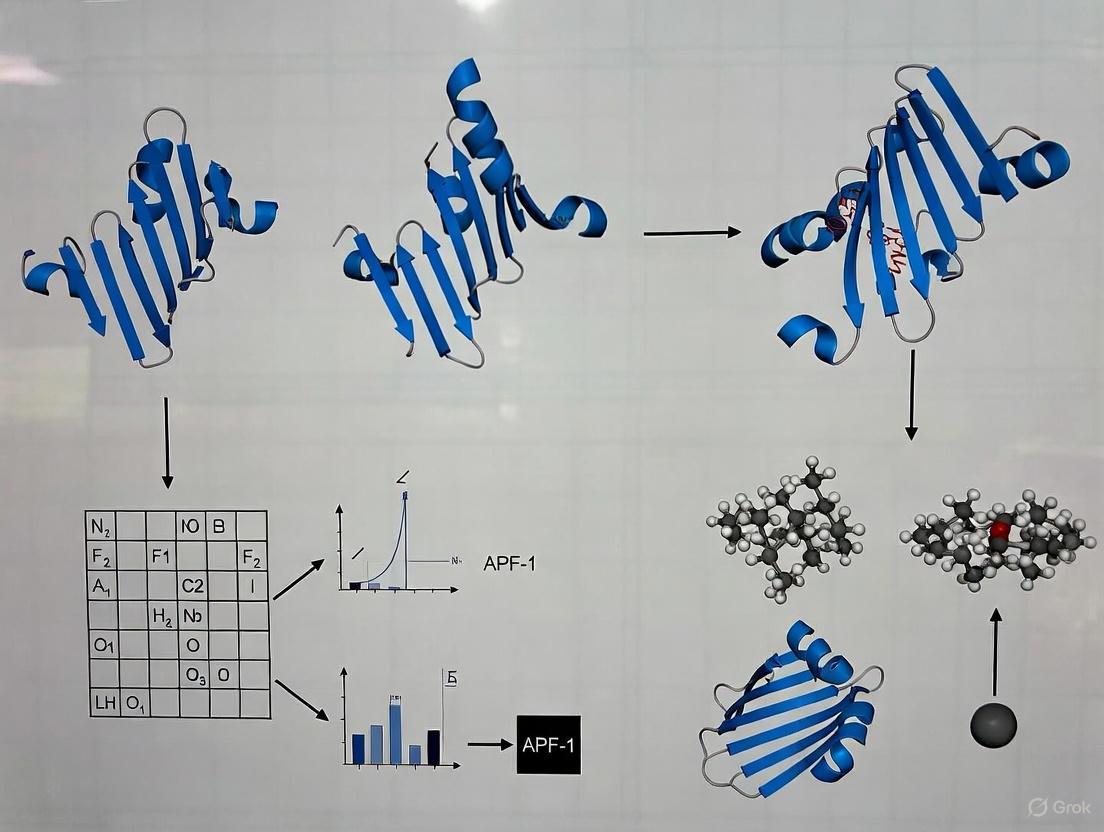
This article chronicles the foundational discovery of ATP-dependent proteolysis factor 1 (APF-1), later identified as the universal protein ubiquitin, which revolutionized the understanding of intracellular protein degradation.
From APF-1 to Ubiquitin: The Discovery of the Molecular Kiss of Death and Its Impact on Biomedicine
Abstract
This article chronicles the foundational discovery of ATP-dependent proteolysis factor 1 (APF-1), later identified as the universal protein ubiquitin, which revolutionized the understanding of intracellular protein degradation. We explore the seminal biochemical and genetic research that elucidated the ubiquitin-proteasome system, from its initial characterization in rabbit reticulocyte lysates to the identification of the E1-E2-E3 enzymatic cascade. For researchers and drug development professionals, this review synthesizes key methodological approaches, troubleshooting insights from early experiments, and the validation of ubiquitin's role as a central regulator in cell cycle control, DNA repair, and disease pathogenesis. The article concludes with an examination of the system's profound implications for developing novel therapeutic strategies, including targeted protein degradation.
The Serendipitous Discovery of APF-1: Unraveling the Mechanism of ATP-Dependent Proteolysis
For much of the mid-20th century, intracellular protein degradation was largely regarded as a nonspecific, end-process managed by the lysosomal system. However, a fundamental biochemical paradox challenged this simplistic view: the hydrolysis of peptide bonds is exergonic, yet experimental evidence consistently demonstrated that intracellular proteolysis required substantial metabolic energy in the form of adenosine triphosphate (ATP). This energy requirement made no thermodynamic sense for a process that should release energy, suggesting the existence of a more complex, energy-dependent regulatory mechanism [1] [2].
The collaboration between Avram Hershko, Aaron Ciechanover, and Irwin Rose was uniquely positioned to resolve this paradox. Their work, which would later earn them the 2004 Nobel Prize in Chemistry, began with a simple biological curiosity about this energy requirement and ultimately led to the discovery of the ubiquitin-proteasome system, fundamentally changing our understanding of cellular regulation [1] [3].
Historical Context: Key Observations Preceding Discovery
The intellectual journey toward understanding energy-dependent proteolysis rested on critical foundational discoveries made between the 1930s and 1970s, as summarized in Table 1.
Table 1: Foundational Discoveries Preceding the Ubiquitin System
| Time Period | Key Observation | Principal Investigators | Significance |
|---|---|---|---|
| 1939-1942 | Dynamic state of body proteins | Schoenheimer et al. | Established that cellular proteins undergo continuous synthesis and degradation [2] |
| 1953 | ATP dependence of proteolysis | Simpson | First demonstration of the energy paradox in protein degradation [1] [3] |
| Mid-1950s | Discovery of lysosome | de Duve | Identified the primary degradative organelle [2] |
| 1970s | Non-lysosomal ATP-dependent proteolysis | Goldberg, Etlinger et al. | Showed enucleated reticulocytes (lacking lysosomes) still exhibited ATP-dependent proteolysis [1] [3] |
The limitations of the lysosomal hypothesis became increasingly apparent through several lines of evidence. Researchers observed that different proteins exhibited vastly different half-lives within the same cell, and the stability of a single protein could vary significantly under different physiological conditions. This exquisite specificity could not be adequately explained by the presumably nonspecific lysosomal degradation process [2].
Experimental Breakthrough: The Reticulocyte System and APF-1
Critical Methodology: A Tractable Biochemical Assay
The pivotal technical breakthrough came with the adoption of the reticulocyte lysate system, which lacks lysosomes yet exhibits robust ATP-dependent proteolysis. This system allowed for biochemical fractionation that would have been impossible in whole-cell systems containing active lysosomes [1] [3].
Hershko, Ciechanover, and Rose employed a systematic fractionation approach:
- ATP depletion: Pre-depletion of endogenous ATP from reticulocyte lysates was crucial for observing the APF-1 requirement
- Biochemical fractionation: Separation of lysate components using anion-exchange chromatography (DEAE-cellulose)
- Functional reconstitution: Combining fractions to restore ATP-dependent proteolytic activity [1] [2]
Table 2: Key Fractions Isolated from Reticulocyte Lysates
| Fraction | Properties | Required Component Identified | Later Identification |
|---|---|---|---|
| Fraction I | Heat-stable | ATP-dependent Proteolysis Factor 1 (APF-1) | Ubiquitin [1] [3] |
| Fraction II | High molecular weight, ATP-stabilized | APF-2 | 26S Proteasome (core protease) [1] |
| Additional Factors | Required for full activity | Not initially characterized | E1, E2, E3 enzymes [3] |
The Discovery of Covalent Conjugation
The seminal experimental insight came when the researchers investigated the mechanism of APF-1. In a series of elegant experiments published in 1980, they made an astounding observation: APF-1 formed covalent conjugates with multiple proteins in Fraction II in an ATP-dependent manner [1] [3].
Key experimental evidence included:
- Radiolabeling studies: Using ¹²⁵I-labeled APF-1, they demonstrated ATP-promoted formation of high molecular weight complexes
- Chemical stability: The conjugates survived high pH (NaOH) treatment, indicating covalent bonds
- Reversibility: The association was reversed upon ATP removal
- Substrate targeting: Authentic proteolytic substrates were heavily modified with multiple APF-1 molecules [1]
This covalent attachment represented a completely novel mechanism for targeting proteins for destruction and explained the puzzling ATP requirement—energy was needed not for proteolysis itself, but for the tagging process that preceded it [1].
APF-1 to Ubiquitin: Connecting the Pieces
The connection between APF-1 and the previously known protein ubiquitin came through collaborative insight. Researchers noted the similarity between APF-1 conjugation and the known modification of histone H2A by a small protein called ubiquitin, first discovered by Gideon Goldstein and further characterized by Goldknopf and Busch [1].
Comparative analysis revealed:
- Structural identity: APF-1 was biochemically identical to ubiquitin
- Conservation: Ubiquitin was already known to be widely distributed and highly conserved
- Modification chemistry: Both systems used isopeptide bonds between the C-terminal glycine of ubiquitin and ε-amino groups of lysine residues in target proteins [1]
This connection provided immediate historical context and suggested that the researchers had discovered the physiological function of this previously enigmatic protein.
The Ubiquitin-Proteasome Pathway: Mechanism Revealed
The core mechanism of ubiquitin-dependent proteolysis involves a highly coordinated enzymatic cascade that explains the original energy paradox, as visualized in Figure 1.
Figure 1. The ubiquitin-proteasome pathway. The process resolves the energy paradox by requiring ATP only for the initial tagging phase, not the proteolysis itself.
The Enzymatic Cascade
The ubiquitin conjugation system employs three key enzymes that work sequentially:
E1 Ubiquitin-Activating Enzyme:
- Activates ubiquitin in an ATP-dependent reaction
- Forms a high-energy thioester bond with ubiquitin
- Single or few E1 enzymes in most cells [4]
E2 Ubiquitin-Conjugating Enzyme:
- Accepts activated ubiquitin from E1
- Carries ubiquitin via thioester linkage
- Multiple E2 enzymes with varying specificities [4]
E3 Ubiquitin Ligase:
Polyubiquitin Chain Recognition
A critical finding was that proteolytic targeting requires polyubiquitination—the attachment of a chain of at least four ubiquitin molecules linked through lysine 48 (K48). This specific chain architecture serves as the recognition signal for the 26S proteasome [1] [5].
The 26S proteasome itself consists of:
- 20S core particle: Contains the proteolytic active sites
- 19S regulatory particle: Recognizes polyubiquitinated substrates, removes ubiquitin chains, and unfolds substrates for degradation [5] [4]
The Scientist's Toolkit: Key Research Reagents
Table 3: Essential Research Reagents for Studying Ubiquitin-Mediated Proteolysis
| Reagent/Condition | Function in Research | Key Application |
|---|---|---|
| Reticulocyte Lysate | ATP-dependent proteolysis system | Foundational cell-free system for biochemical fractionation [1] [3] |
| ATP Depletion | Critical pretreatment step | Revealed APF-1/ubiquitin requirement by preventing pre-conjugation [1] |
| Proteasome Inhibitors (MG-132) | Blocks proteasomal degradation | Allows accumulation of ubiquitinated proteins for detection [4] |
| ²⁵I-APF-1/Ubiquitin | Radioactive tagging | Enabled detection and characterization of covalent conjugates [1] |
| Anti-Ubiquitin Antibodies | Immunodetection | Western blot, immunoprecipitation of ubiquitinated proteins [4] |
| DEAE-Cellulose Chromatography | Anion-exchange fractionation | Separated Fraction I (APF-1) and Fraction II (APF-2) [1] [2] |
Legacy and Implications: From Basic Mechanism to Therapeutic Applications
The discovery of ubiquitin-dependent proteolysis represents a classic example of how investigating a fundamental biochemical paradox can yield transformative biological insights with far-reaching applications.
The ubiquitin system has proven to be every bit as important as phosphorylation in regulating eukaryotic cell physiology, controlling virtually all cellular processes including:
- Cell cycle progression and division
- Signal transduction
- DNA repair
- Quality control of protein folding [1] [3]
The therapeutic implications are profound, leading to the development of targeted protein degradation technologies such as:
- PROTACs (Proteolysis-Targeting Chimeras): Bifunctional molecules that recruit E3 ligases to target proteins
- Molecular glues: Compounds that induce proximity between E3 ligases and target proteins
- Several candidates currently in clinical trials for cancer and other diseases [6] [7]
These applications directly descend from the fundamental understanding of how cells naturally use the ubiquitin system to selectively target proteins for destruction, a process initiated by the resolution of the energy paradox of ATP-dependent intracellular protein degradation.
This technical guide details the foundational methodology and experimental protocols that led to the discovery of a heat-stable essential factor, initially termed APF-1 (ATP-dependent Proteolysis Factor 1), from rabbit reticulocyte lysates. This work, pioneered by Avram Hershko, Aaron Ciechanover, and Irwin Rose, resolved the long-standing enigma of energy-dependent intracellular proteolysis and laid the biochemical groundwork for the discovery of the ubiquitin-proteasome system [1] [8]. The identification of APF-1, later recognized as the protein ubiquitin, introduced a novel paradigm of post-translational regulation through covalent protein conjugation [9] [3]. This document provides an in-depth reconstruction of the critical fractionation experiments, serving as an essential resource for researchers investigating protein degradation and its profound implications in cellular regulation and human disease.
Prior to the 1980s, the biochemical mechanisms governing intracellular protein degradation were poorly understood. A key metabolic puzzle was the ATP dependence of proteolysis—the hydrolysis of peptide bonds is an exergonic process, and there was no apparent thermodynamic requirement for energy input [1] [8]. Early work by Simpson in 1953 had established this energy requirement, but the mechanism remained elusive for nearly three decades [1] [3]. The prevailing assumption was that degradation occurred within lysosomes, but accumulating evidence suggested the existence of a major, non-lysosomal ATP-dependent proteolytic pathway [8].
A critical breakthrough came with the development of a cell-free system from rabbit reticulocytes by Etlinger and Goldberg in 1977 [1] [9]. Reticulocytes, which are devoid of lysosomes, provided an ideal model because they rapidly degrade abnormal proteins in a soluble, ATP-dependent manner [8] [9]. This system enabled the application of classical biochemical fractionation techniques to dissect the components of the proteolytic machinery, setting the stage for the discovery of APF-1.
Core Experimental Breakthrough: Fractionation and the Discovery of APF-1
The Hershko laboratory utilized the reticulocyte lysate system to systematically identify the essential components required for ATP-dependent proteolysis. The pivotal experimental strategy involved separating the lysate into functionally distinct biochemical fractions.
Initial Fractionation on DEAE-Cellulose
The foundational step was the separation of the reticulocyte lysate using anion-exchange chromatography on DEAE-cellulose [10] [9]. This process yielded two key fractions:
- Fraction I: The unadsorbed material, containing hemoglobin and other proteins.
- Fraction II: The adsorbed material, eluted with a high-salt buffer [9].
Individually, neither fraction demonstrated significant ATP-dependent proteolytic activity. However, when recombined, ATP-dependent protein degradation was reconstituted, indicating that both fractions contained essential components of the system [9].
Identification and Characterization of a Heat-Stable Factor (APF-1)
Further analysis of Fraction I revealed that its essential component was a low-molecular-weight, heat-stable polypeptide [9]. This factor was named APF-1 (ATP-dependent Proteolysis Factor 1) [1] [9]. The following table summarizes the key properties of APF-1 established during its initial identification.
Table 1: Characteristics of the Isolated APF-1 (Ubiquitin)
| Property | Experimental Observation | Significance |
|---|---|---|
| Heat Stability | Remained active after heating to 80-100°C [9]. | Facilitated easy purification and separation from the vast majority of cellular proteins. |
| Molecular Size | Small polypeptide; later identified as 76-amino acid ubiquitin [1] [9]. | Distinguished it from larger, canonical proteases. |
| Ubiquity | Later found to exist in all eukaryotic cells [9]. | Suggested a fundamental, conserved cellular role, not a specialized function. |
| Functional Requirement | Absolutely required for ATP-dependent proteolysis in the fractionated system [10] [9]. | Established it as a central, non-redundant component of the degradation machinery. |
Key Experimental Protocols
The following section details the core methodologies that enabled the discovery and functional characterization of APF-1.
Protocol 1: Fractionation of Reticulocyte Lysate via DEAE-Cellulose
This protocol describes the initial separation of the reticulocyte lysate into its active fractions [9].
- Lysate Preparation: Obtain rabbit reticulocyte lysate. Commercial lysates are often treated with micrococcal nuclease to degrade endogenous mRNA and reduce background protein synthesis [11].
- Chromatography: Apply the clarified lysate to a column of DEAE-cellulose resin equilibrated in a low-salt buffer (e.g., 20 mM Tris-HCl, pH 7.5).
- Fraction I Collection: The flow-through fraction, which does not bind to the resin, is collected. This is Fraction I and contains hemoglobin and the heat-stable APF-1.
- Fraction II Elution: Proteins adsorbed to the resin are eluted using a buffer containing a high salt concentration (e.g., 0.2-0.3 M NaCl). This eluate is Fraction II.
- Dialysis and Storage: Dialyze Fraction II against a low-salt buffer to remove excess salt. Both fractions can be stored at -80°C for future reconstitution experiments.
Protocol 2: Demonstration of ATP-Dependent APF-1 Conjugation
A critical experiment showed that APF-1 was not merely a cofactor, but became covalently attached to other proteins in an ATP-dependent reaction [10] [3].
- Reaction Setup: Incubate iodinated APF-1 (¹²⁵I-APF-1) with Fraction II in the presence of an ATP-regenerating system (ATP, Mg²⁺, phosphocreatine, creatine phosphokinase).
- Controls: Include control reactions lacking ATP, or containing non-hydrolyzable ATP analogs, UTP, or GTP, which were shown to be inactive [10].
- Inhibition Control: A separate reaction should include N-ethylmaleimide (NEM), a thiol alkylating agent, which inhibits conjugation [10].
- Analysis: Stop the reaction and analyze the products by SDS-polyacrylamide gel electrophoresis (SDS-PAGE) followed by autoradiography.
- Expected Result: In the complete system with ATP, high molecular weight conjugates of ¹²⁵I-APF-1 will be observed, demonstrating covalent linkage. These conjugates will be absent in the no-ATP and NEM controls [10].
Protocol 3: Confirming the Covalent Nature of Conjugates
The stability of the APF-1-protein linkage was tested against various denaturing conditions [10].
- Heat Denaturation: Boil the conjugation reaction mixture in SDS sample buffer before electrophoresis.
- Alkali and Acid Treatment: Incubate conjugates with NaOH (e.g., 0.1 M) or HCl (e.g., 0.1 M).
- Reducing Agents: Treat conjugates with agents like 2-mercaptoethanol to break disulfide bonds.
- Result: The APF-1 conjugates remained stable under all these conditions, providing strong evidence that the bond was a non-peptide, covalent isopeptide bond [10] [1].
The following diagram illustrates the logical flow of the experimental process that led from the initial biological observation to the definitive confirmation of covalent conjugation.
Data Presentation and Analysis
The experimental findings were quantifiable, providing robust support for the proposed model.
Quantitative Requirements for APF-1 Conjugation
The conjugation of APF-1 to proteins in Fraction II displayed specific biochemical requirements, mirroring the characteristics of the overall ATP-dependent proteolytic process [10].
Table 2: Biochemical Requirements for APF-1 Conjugation
| Parameter | Requirement | Experimental Evidence |
|---|---|---|
| Nucleotide | ATP | UTP and GTP were inactive [10]. |
| Divalent Cation | Mg²⁺ | Chelating agents inhibited conjugation [10]. |
| Inhibitors | N-ethylmaleimide (NEM) | Thiol alkylation inhibited conjugation, implying a crucial cysteine residue in the enzymatic machinery [10]. |
| ATP Concentration | Low concentrations (e.g., 0.1-0.2 mM) | Saturation occurred at low ATP levels, similar to the proteolysis reaction [10]. |
| Stability of Conjugates | Covalent and stable to SDS, heat, alkali, acid, and reducing agents. | Conjugates persisted through SDS-PAGE and various denaturing treatments [10]. |
The Scientist's Toolkit: Essential Research Reagents
The following table catalogs the key reagents and their critical functions in the fractionation and conjugation experiments.
Table 3: Essential Reagents for Reticulocyte Fractionation and APF-1 Studies
| Reagent / Material | Function in the Experimental Process |
|---|---|
| Rabbit Reticulocyte Lysate | Source of the ATP-dependent proteolysis system; chosen for its lack of lysosomes and high degradation activity [11] [9]. |
| DEAE-Cellulose Resin | Anion-exchange medium for the primary fractionation of the lysate into complementary Fractions I and II [10] [9]. |
| ATP-Regenerating System (ATP, Mg²⁺, Phosphocreatine, Creatine Phosphokinase) | Maintains a constant, high level of ATP in incubation mixtures, which is crucial for both proteolysis and conjugation assays [10] [11]. |
| N-Ethylmaleimide (NEM) | Thiol-reactive agent used to inhibit conjugation, thereby demonstrating the involvement of a cysteine-dependent enzymatic step (e.g., E1 activating enzyme) [10]. |
| Radiolabeled APF-1 (e.g., ¹²⁵I-APF-1) | Tracer for sensitive detection and analysis of APF-1 conjugation to high molecular weight proteins via SDS-PAGE and autoradiography [10] [3]. |
| Heat Block (80-100°C) | Used to denature and remove the majority of heat-labile proteins from Fraction I, allowing for the purification and concentration of the heat-stable APF-1 [9]. |
The Pathway to Degradation: A Modern Interpretation
While the initial studies identified the covalent conjugation of APF-1, subsequent work by Hershko, Rose, and others rapidly elucidated the enzymatic pathway and its purpose. We now understand that APF-1 is ubiquitin, and its conjugation is a multi-step process that marks proteins for degradation by the 26S proteasome. The following diagram illustrates this pathway, with the components discovered in the featured experiments highlighted.
The key discovery that APF-1/ubiquitin forms covalent conjugates corresponds to the Ligation and Polyubiquitination stages of this pathway. The initial experiments with Fraction II effectively captured the combined activity of the E1, E2, and E3 enzymes.
Discussion and Impact on Modern Biology
The simple yet powerful experiments detailing the fractionation of reticulocyte lysates and the identification of APF-1 had revolutionary implications.
- Paradigm Shift in Post-Translational Modification: The discovery established that covalent attachment of an entire protein (ubiquitin) could serve as a regulated signal, akin to phosphorylation, dramatically expanding the understanding of post-translational control [1].
- Resolution of the Energy Dependence: The requirement for ATP was explained by the multi-enzyme cascade needed to activate and conjugate ubiquitin, not by the proteolysis step itself [1] [3].
- Foundation for the Ubiquitin-Proteasome System: This work directly led to the characterization of the E1-E2-E3 enzymatic cascade and the recognition of the 26S proteasome as the ultimate protease [12] [3]. The "smear" of high molecular weight conjugates observed on gels was later understood to represent polyubiquitin chains that serve as the degradation signal [1] [9].
- Broad Physiological and Pathological Significance: The ubiquitin system is now known to be involved in nearly all aspects of cellular function, including cell cycle regulation, signal transduction, DNA repair, and immune response [8] [3]. Aberrations in the system are implicated in cancer, neurodegenerative diseases, and infectious diseases, making the core components identified in these early studies prime targets for therapeutic drug development [8].
The fractionation of reticulocyte lysates, leading to the identification of the heat-stable APF-1, stands as a classic example of how rigorous biochemistry can uncover fundamental biological principles. The methodology outlined here—from system establishment and fractionation to functional conjugation assays—provided the incontrovertible evidence for a novel protein-based tagging mechanism. This foundational research, recognized by the 2004 Nobel Prize in Chemistry, unlocked the field of ubiquitin research, revealing a complex and essential language of cellular regulation that continues to be deciphered by scientists and leveraged by drug development professionals today.
This technical guide provides an in-depth examination of ATP-dependent proteolysis factor 1 (APF-1), a seminal discovery in the understanding of regulated intracellular proteolysis. We detail the experimental characterization of APF-1 that revealed its identity as ubiquitin and its crucial function in forming covalent conjugates with protein substrates—the fundamental mechanism underlying targeted protein degradation in eukaryotic cells. Within the broader context of heat-stable protein research, the elucidation of APF-1's role established the biochemical foundation for the ubiquitin-proteasome system, a pathway essential for cellular regulation and a prime target for therapeutic intervention. This work summarizes key quantitative data, experimental methodologies, and the enzymatic cascade that defines this critical regulatory system.
The discovery of APF-1 emerged from investigations into a fundamental biochemical paradox: why did intracellular protein degradation require ATP despite the exergonic nature of peptide bond hydrolysis? This energy dependence, first observed by Simpson in 1953 [1], suggested a complex regulatory mechanism beyond simple lysosomal proteolysis or the action of conventional ATP-dependent proteases.
In the late 1970s, the laboratory of Avram Hershko, utilizing a biochemically tractable rabbit reticulocyte lysate system, resolved this ATP-dependent proteolytic activity into essential fractions [1]. Fraction I contained a single, heat-stable polypeptide component deemed essential for the reaction, which they designated ATP-dependent proteolysis factor 1 (APF-1) [1] [13]. This small, heat-stable protein would later be recognized as the central player in a novel post-translational modification system.
Experimental Characterization of APF-1 and its Conjugates
Key Experimental Findings
The initial characterization of APF-1 involved a series of elegant experiments that defined its unique behavior and mechanism of action. Researchers observed that upon incubation with Fraction II (containing the remaining enzymatic machinery) and ATP, iodinated APF-1 (¹²⁵I-APF-1) was promoted to high molecular weight forms [1]. Surprisingly, this association was found to be covalent and stable to high pH treatment, indicating a robust chemical linkage rather than a non-covalent complex [1]. This covalent modification occurred on multiple endogenous proteins in the reticulocyte lysate, as visualized by SDS-PAGE autoradiography.
A critical breakthrough came when APF-1 was shown to form multiple conjugates with model protein substrates like lysozyme, a known substrate for ATP-dependent degradation [14]. Analysis of the molecular weights and radioactivity ratios of these bands revealed that they consisted of lysozyme molecules with increasing numbers of APF-1 polypeptides attached [14]. This multi-valent conjugation was proposed as a potential targeting signal for proteolysis.
The Identity of APF-1 Revealed as Ubiquitin
In 1980, Wilkinson, Urban, and Haas demonstrated that APF-1 was identical to the previously characterized protein ubiquitin [15] [13]. The evidence supporting this identity was compelling across multiple experimental dimensions, summarized in the table below.
Table 1: Experimental Evidence Establishing APF-1 as Ubiquitin
| Experimental Parameter | APF-1 Characteristics | Ubiquitin Characteristics | Significance |
|---|---|---|---|
| Electrophoretic Mobility | Co-migrated in five different PAGE systems [15] | Identical migration pattern [15] | Indicates identical size and charge |
| Isoelectric Focusing | Matching isoelectric point [15] | Matching isoelectric point [15] | Confirms identical charge properties |
| Amino Acid Analysis | Excellent agreement in composition [15] | Excellent agreement in composition [15] | Confirms identical primary structure |
| Functional Activity | Activated ATP-dependent proteolysis [15] | Same specific activity as APF-1 [15] | Confirms functional identity |
| Conjugate Formation | Formed identical covalent conjugates [15] | Formed identical covalent conjugates [15] | Confirms identical mechanism of action |
This convergence of data unequivocally established that the heat-stable APF-1 was ubiquitin, a highly conserved, universally expressed protein whose function was previously enigmatic.
The APF-1/Ubiquitin Conjugation Pathway
Subsequent research, primarily by the Hershko, Ciechanover, and Rose teams, delineated the minimal enzymatic cascade required for the conjugation of APF-1/ubiquitin to substrate proteins. This pathway involves three distinct enzyme classes that act in sequence.
The Enzymatic Cascade
The conjugation of ubiquitin to substrate proteins proceeds through a three-step enzymatic cascade [3] [16]:
- Activation (E1): Ubiquitin is activated in an ATP-dependent reaction by E1 (ubiquitin-activating enzyme). The process involves the formation of a ubiquitin-adenylate intermediate, followed by the transfer of ubiquitin to an active-site cysteine residue on the E1, forming a high-energy thioester bond [17] [16]. This step was characterized by an APF-1-dependent ATP-PPi exchange reaction [17].
- Conjugation (E2): The activated ubiquitin is transferred from E1 to an active-site cysteine of an E2 (ubiquitin-conjugating enzyme) via a trans-thioesterification reaction [13] [16].
- Ligation (E3): An E3 (ubiquitin ligase) catalyzes the final transfer of ubiquitin from the E2 to a lysine ε-amino group on the target protein, forming a stable isopeptide bond [13] [3]. E3s confer substrate specificity to the system.
The following diagram illustrates this core pathway and the formation of a polyubiquitin chain, which serves as the degradation signal.
Figure 1: The APF-1/Ubiquitin Conjugation and Proteolysis Pathway. The E1-E2-E3 enzymatic cascade activates and conjugates ubiquitin to a substrate protein. A polyubiquitin chain linked through lysine 48 (K48) of ubiquitin targets the substrate for degradation by the 26S proteasome.
Key Experimental Protocols
The foundational understanding of the APF-1/ubiquitin system was derived from several key experimental approaches.
Table 2: Key Experimental Methodologies in Early APF-1 Research
| Experimental Goal | Protocol Description | Key Insight Gained |
|---|---|---|
| Fractionation of the Proteolytic System | ATP-depleted rabbit reticulocyte lysate was fractionated by chromatography (e.g., DEAE-cellulose) into Fraction I (APF-1) and Fraction II (APF-2) [1]. | The system could be biochemically dissected and reconstituted, revealing multiple essential components [1]. |
| Detection of Covalent Conjugates | ¹²⁵I-APF-1 was incubated with Fraction II and ATP. Conjugates were analyzed by SDS-PAGE followed by autoradiography [1] [14]. | APF-1 formed covalent, ATP-dependent attachments to multiple high molecular weight proteins, suggesting a novel tagging mechanism [14]. |
| Identification of APF-1 as Ubiquitin | APF-1 and authentic ubiquitin were compared via co-migration on multiple gel systems, amino acid analysis, and functional reconstitution assays [15]. | APF-1 and ubiquitin were physically and functionally identical, connecting a new proteolytic pathway to a known protein [15]. |
| Characterization of the Activation Step | E1 enzyme was incubated with ATP, ³²P-PPi, and APF-1/Ub to measure ATP-PPi exchange. Alternatively, formation of a E1-¹²⁵I-APF-1 thioester was assessed [17]. | Activation proceeded through an acyl-adenylate intermediate, with ubiquitin subsequently linked to E1 via a thioester bond [17]. |
The Scientist's Toolkit: Key Research Reagents
The following table outlines essential reagents and their functions as used in the seminal APF-1/ubiquitin experiments.
Table 3: Essential Research Reagents for APF-1/Ubiquitin Conjugation Studies
| Reagent / Material | Function in Experimental Context |
|---|---|
| Rabbit Reticulocyte Lysate | A cell-free system rich in the components of the ubiquitin-proteasome pathway, lacking lysosomes, ideal for biochemical fractionation [1] [13]. |
| ATP (and ATP-regenerating System) | The essential energy source for the activation of ubiquitin by E1; required for both conjugation and subsequent proteolysis [1] [14]. |
| Heat-Stable Protein Fraction (APF-1) | The initial designation for the ubiquitin polypeptide; the central modifier that is conjugated to substrate proteins [1]. |
| DEAE-Cellulose & Other Chromatography Media | Used for the fractionation of the reticulocyte lysate into distinct biochemical activities (e.g., Fraction I and II) [1]. |
| ¹²⁵I-labeled APF-1/Ubiquitin | Radioactive tracer enabling sensitive detection and analysis of covalent conjugate formation via SDS-PAGE and autoradiography [1] [14]. |
| Model Protein Substrates (e.g., Lysozyme) | Well-characterized proteins used to study the specificity and stoichiometry of APF-1 conjugation in a defined system [14]. |
The meticulous characterization of APF-1 and its capacity to form covalent substrate conjugates unveiled the ubiquitin-proteasome system, a paradigm-shifting discovery in cell biology. The realization that APF-1 was the well-conserved protein ubiquitin immediately suggested the broad physiological relevance of this pathway. The subsequent decades of research have confirmed that this system governs the controlled degradation of countless regulatory proteins, impacting nearly every cellular process, including the cell cycle, DNA repair, transcription, and immune responses [13] [3]. The initial biochemical reconstitution of APF-1 conjugation laid the essential groundwork for understanding a regulatory mechanism as central to cellular homeostasis as phosphorylation, and for the modern development of therapeutic agents that target the ubiquitin-proteasome pathway.
The discovery that ATP-dependent proteolysis factor 1 (APF-1) was identical to the previously characterized but functionally enigmatic protein ubiquitin represented a pivotal moment in cell biology. This breakthrough, achieved in 1980, connected a discrete biochemical activity—ATP-dependent protein degradation—with a universal cellular protein of unknown function. The identification hinged on critical experimental data demonstrating that APF-1 and ubiquitin were the same molecular entity, thereby unlocking the proteolytic function of the ubiquitin system. This guide provides a detailed technical analysis of the experimental methodologies and key findings that led to this fundamental discovery, which now underpins modern understanding of regulated protein degradation and its therapeutic applications in disease.
In the late 1970s, two separate lines of biological investigation converged unexpectedly onto the same protein. One track, pursued by Avram Hershko, Aaron Ciechanover, and Irwin Rose, focused on elucidating the mechanism of energy-dependent intracellular proteolysis. Their work identified a heat-stable, essential factor they termed APF-1 (ATP-dependent Proteolysis Factor 1), which formed covalent conjugates with protein substrates in an ATP-requiring reaction [1] [3].
Parallel research in other laboratories had identified a small, highly conserved protein present in all eukaryotic cells. This protein, initially discovered by Gideon Goldstein and colleagues during their search for thymopoietin and later found conjugated to histone H2A in chromatin, was named ubiquitin for its ubiquitous occurrence [1] [13]. However, its physiological function remained mysterious prior to 1980.
Table: Key Proteins Before the Identification Breakthrough
| Protein Designation | Known Properties Pre-1980 | Research Context |
|---|---|---|
| APF-1 | Heat-stable polypeptide; essential for ATP-dependent proteolysis in reticulocyte lysates; formed covalent conjugates with substrate proteins [1] | Biochemistry of protein degradation |
| Ubiquitin | 76-amino acid protein; ubiquitous in eukaryotes; conjugated to histone H2A in chromatin; function unknown [13] | Chromatin structure; lymphocyte differentiation |
The Experimental Breakthrough: Methodology and Findings
Biochemical Characterization of APF-1
The research that led to the identification began with rigorous biochemical fractionation of ATP-dependent proteolytic systems from rabbit reticulocytes. Reticulocyte lysates were chosen as a model system because they are devoid of lysosomes, allowing study of non-lysosomal proteolysis [18]. The experimental workflow involved:
- Fraction Preparation: Lysates were separated into two essential fractions: Fraction I (containing APF-1) and Fraction II (containing higher molecular weight components) [1].
- Conjugation Assays: Incubation of (^{125})I-labeled APF-1 with Fraction II and ATP resulted in the covalent attachment of APF-1 to multiple proteins in the fraction. This conjugation was ATP-dependent and reversible upon ATP removal [1].
- Stability Analysis: The APF-1-protein conjugates demonstrated surprising stability, surviving treatment with sodium hydroxide (NaOH), which indicated a covalent bond distinct from a typical labile ester linkage [1].
These observations suggested APF-1 was not a protease but a covalent tag for proteolysis, a novel biological paradigm at the time.
Critical Connection and Identity Confirmation
The conceptual link was made when researchers noticed the biochemical similarity between APF-1 and the known protein ubiquitin. This was primarily based on the precedent of ubiquitin being covalently conjugated to histone H2A via an isopeptide bond, as described by Goldknopf and Busch [1] [13].
The definitive experimental confirmation was achieved by Keith Wilkinson, Michael Urban, and Arthur Haas in the laboratory of Irwin Rose. They obtained authentic ubiquitin and demonstrated that APF-1 and ubiquitin were identical [1] [13] [19]. The key evidence included:
- Co-migration and Structural Identity: APF-1 co-purified and co-migrated with authentic ubiquitin in biochemical assays.
- Functional Replacement: Purified ubiquitin could functionally substitute for APF-1 in supporting ATP-dependent proteolysis in reconstituted systems [1] [13].
Table: Summary of Key Evidence Establishing APF-1/Ubiquitin Identity
| Experimental Evidence | Methodological Approach | Interpretation and Significance |
|---|---|---|
| Covalent Conjugation | (^{125})I-APF1 formed ATP-dependent, covalent conjugates with proteins in Fraction II [1] | Revealed APF-1's role as a post-translational modifier, analogous to known ubiquitin-histone conjugation |
| Biochemical Similarity | Noted similarity in size, stability, and conjugation behavior between APF-1 and ubiquitin [1] | Suggested the two proteins might be identical, forming a testable hypothesis |
| Direct Identity Confirmation | Purified ubiquitin replaced APF-1 activity in ATP-dependent proteolysis assays [13] [19] | Provided definitive functional proof that APF-1 was ubiquitin |
The following diagram synthesizes the key experimental workflow and the logical progression that led to the conclusive identification of APF-1 as ubiquitin:
The Scientist's Toolkit: Essential Research Reagents and Materials
The discovery of the ubiquitin-proteasome system relied on a specific set of biochemical tools and model systems. The table below catalogs key reagents essential for replicating the foundational experiments in this field.
Table: Essential Research Reagents for Ubiquitin System Discovery
| Research Reagent / Material | Function and Role in Discovery |
|---|---|
| Rabbit Reticulocyte Lysate | A cell-free system devoid of lysosomes, essential for biochemical fractionation and identification of the non-lysosomal, ATP-dependent proteolytic pathway [1] [18] |
| ATP (Adenosine Triphosphate) | Critical energy source required for both the activation of ubiquitin and the proteolytic process itself; its requirement was a key starting point for the research [1] [20] |
| Fraction I (APF-1/Ubiquitin) | The heat-stable fraction from reticulocytes containing free APF-1/Ubiquitin; essential for reconstituting proteolysis in vitro [1] |
| Fraction II (Enzymes & Proteasome) | The high molecular weight fraction containing E1, E2, E3 enzymes and the 26S proteasome; required for conjugation and degradation of ubiquitin-tagged substrates [1] [21] |
| (^{125})I-Labeled APF-1/Ubiquitin | Radiolabeled tracer enabling researchers to monitor the covalent conjugation of APF-1 to protein substrates in Fraction II via autoradiography [1] |
| Authentic Ubiquitin Sample | Purified ubiquitin protein, shared between laboratories, which was used for direct comparison and functional replacement studies to confirm APF-1's identity [1] |
Detailed Experimental Protocols
Protocol 1: Demonstrating Covalent APF-1 Conjugation
This foundational protocol is adapted from the 1980 work of Ciechanover, Hershko, and Rose [1].
- Preparation of Fractions: Lysate rabbit reticulocytes and separate into Fraction I (containing APF-1) and Fraction II (containing higher molecular weight factors) using ion-exchange chromatography.
- Iodination: Purify APF-1 from Fraction I and label with (^{125})I.
- Conjugation Reaction:
- Assay Tube: Combine (^{125})I-APF-1, Fraction II, and 2 mM ATP in an appropriate buffer (e.g., Tris-HCl, pH 7.6, with Mg(^{2+})).
- Control Tube: Set up an identical reaction omitting ATP or adding a non-hydrolyzable ATP analog.
- Incubation: Incubate mixtures at 37°C for 30 minutes.
- Termination and Analysis: Stop the reaction by adding SDS-PAGE sample buffer. Analyze proteins by SDS-Polyacrylamide Gel Electrophoresis (SDS-PAGE).
- Detection: Visualize conjugated proteins by autoradiography of the dried gel. The ATP-dependent appearance of high-molecular-weight, radiolabeled bands indicates successful covalent conjugation of APF-1.
Protocol 2: Functional Replacement Assay for Identity Confirmation
This protocol, based on the work of Wilkinson et al. (1980), confirms the identity of APF-1 as ubiquitin [1] [13].
- Base System Setup: Use a reconstituted proteolysis system where a Fraction II preparation is supplemented with an ATP-regenerating system and a model substrate (e.g., denatured lysozyme).
- Fraction I Depletion: Use a Fraction II preparation that has been rigorously depleted of endogenous APF-1/ubiquitin.
- Experimental Reactions:
- Test Tube 1: Add purified APF-1 isolated via the standard protocol.
- Test Tube 2: Add an equivalent molar amount of authentic, purified ubiquitin.
- Control Tube: No addition of APF-1 or ubiquitin.
- Proteolysis Measurement: Incubate at 37°C and measure substrate degradation over time by methods such as trichloroacetic acid (TCA) solubility of residual substrate or release of radioactive peptides from a labeled substrate.
- Interpretation: The functional replacement of APF-1 activity by purified ubiquitin, resulting in the restoration of ATP-dependent proteolysis, provides definitive evidence that APF-1 and ubiquitin are the same protein.
The critical breakthrough of identifying APF-1 as ubiquitin transformed a discrete biochemical observation into a fundamental biological principle. It provided a functional identity for ubiquitin and revealed that the molecule served as a universal tag for targeted protein destruction [18]. This discovery was the cornerstone that allowed subsequent research, including the genetic and cell biological work from Alexander Varshavsky's group, to elucidate the vast physiological roles of the ubiquitin system in regulating the cell cycle, DNA repair, transcription, and stress responses [22] [13] [19].
From a therapeutic perspective, establishing the identity of APF-1 opened the door to understanding the molecular basis of numerous diseases, including many cancers and neurodegenerative disorders, which are now known to involve dysregulation of the ubiquitin-proteasome pathway [19] [18]. This foundational knowledge directly enabled the development of targeted therapies, such as proteasome inhibitors, validating the immense practical significance of this basic biochemical discovery.
The discovery of the ubiquitin-proteasome system stands as a paradigmatic example of how international collaboration between biochemists with complementary expertise can unravel fundamental biological processes. This whitepaper traces the seminal partnership between Avram Hershko, Aaron Ciechanover, and Irwin Rose, whose combined intellectual curiosity and methodological rigor elucidated the ATP-dependent ubiquitin tagging mechanism for protein degradation. Their work, initiated through a chance meeting at a Fogarty Foundation conference in 1977 and sustained through decade-long transatlantic collaboration, transformed our understanding of cellular regulation and established a new paradigm in post-translational modification. This technical analysis examines the experimental methodologies, key reagents, and conceptual breakthroughs that defined their collaboration, providing insights into the biochemical foundation of what would become the 2004 Nobel Prize-winning discovery of ubiquitin-mediated proteolysis.
Prior to the groundbreaking work on ubiquitin, the field of intracellular protein degradation was characterized by a fundamental paradox: the hydrolysis of peptide bonds is thermodynamically exergonic, yet experimental evidence consistently demonstrated that proteolysis in mammalian cells required metabolic energy [1]. This apparent contradiction was first documented by Melvin Simpson in 1953 through isotopic labeling studies, yet the mechanism remained obscure for the subsequent 25 years [1] [23]. By the late 1970s, researchers had established that damaged or abnormal proteins were rapidly cleared from cells and that enzymes catalyzing rate-limiting steps in metabolic pathways were generally short-lived, suggesting sophisticated regulation rather than random degradation [1].
The scientific landscape was dominated by the lysosomal hypothesis of protein degradation, despite accumulating evidence that this organelle could not account for the observed specificity and ATP dependence [2]. The convergence of three distinct investigative trajectories—Hershko's work on ATP-dependent proteolysis, Ciechanover's biochemical fractionation expertise, and Rose's mechanistic enzymology background—would ultimately provide the necessary intellectual and technical framework to resolve this decades-old mystery.
The Collaborative Network: Intellectual Synergies
Investigator Backgrounds and Complementary Expertise
The collaboration brought together scientists with distinct yet complementary expertise, creating a synergistic environment for discovery:
Avram Hershko (Technion-Israel Institute of Technology): Having completed both MD (1965) and PhD (1969) degrees at Hebrew University-Hadassah Medical School, Hershko developed an interest in protein degradation during postdoctoral work with Gordon Tompkins at UCSF. His early studies focused on tyrosine amino transferase and bulk protein turnover, establishing the experimental foundation for investigating ATP-dependent proteolysis [1].
Aaron Ciechanover (Technion-Israel Institute of Technology): After completing military service following his MD (1974), Ciechanover joined Hershko's laboratory as a graduate student, where he would complete his PhD (1981) while developing the critical fractionation approaches that enabled system dissection [1].
Irwin A. "Ernie" Rose (Fox Chase Cancer Center): As a mechanistic enzymologist with a PhD (1952) from the University of Chicago, Rose brought expertise in isotopic labeling and enzyme reaction mechanisms. His interest in protein degradation dated to conversations with Simpson at Yale about the ATP dependence of proteolysis [1].
Formation and Structure of the Collaboration
The partnership began formally in 1977 after Hershko and Rose met at a Fogarty Foundation meeting where they discovered their mutual interest in ATP-dependent proteolysis [1]. Rose subsequently invited Hershko to conduct a sabbatical in his laboratory at the Institute for Cancer Research in Philadelphia, initiating a decade-long collaboration that featured annual summer visits by the Israeli researchers [1]. This arrangement provided access to specialized resources and additional expertise, including postdoctoral fellows Art Haas, Keith Wilkinson, and Cecile Pickart, who would make crucial contributions to identifying the molecular components [23].
Table: Key Investigators and Their Contributions
| Investigator | Institutional Affiliation | Primary Expertise | Key Contributions |
|---|---|---|---|
| Avram Hershko | Technion-Israel Institute of Technology | ATP-dependent proteolysis | System conception; experimental design |
| Aaron Ciechanover | Technion-Israel Institute of Technology | Biochemical fractionation | Fractionation methodology; conjugation studies |
| Irwin Rose | Fox Chase Cancer Center | Mechanistic enzymology | Isotopic methods; mechanistic interpretation |
| Art Haas | Fox Chase Cancer Center | Ubiquitin biochemistry | Covalent conjugation characterization |
| Keith Wilkinson | Fox Chase Cancer Center | Protein identification | APF-1/ubiquitin identity confirmation |
Experimental Breakthroughs: Methodological Innovation
System Development and Fractionation Strategy
The critical experimental foundation was established through adaptation of the reticulocyte lysate system, which Etlinger and Goldberg had previously demonstrated exhibited ATP-dependent proteolysis of denatured proteins while lacking lysosomes [1] [23]. This system provided a biochemical platform amenable to fractionation, avoiding the complications of lysosomal proteases.
The key methodological breakthrough came when Hershko and Ciechanover successfully separated the reticulocyte lysate into two essential complementing fractions [1] [2]:
- Fraction I: Contained a small, heat-stable protein designated APF-1 (ATP-dependent Proteolysis Factor 1)
- Fraction II: Contained a high molecular weight component (initially termed APF-2) later identified as the proteasome
This fractionation approach enabled detailed characterization of the individual components and reconstruction of the ATP-dependent proteolytic activity, establishing the multi-component nature of the system [24] [2].
Discovery of Covalent Protein Tagging
The seminal observation that transformed understanding of the system came from experiments examining the association between APF-1 and fraction II components. Researchers observed that ¹²⁵I-labeled APF-1 was promoted to a high molecular weight form upon incubation with fraction II and ATP [1]. Surprisingly, this association:
- Required low concentrations of ATP
- Was reversed upon ATP removal
- Remained stable under high pH conditions
- Survived NaOH treatment, indicating a covalent linkage
Further investigation revealed that APF-1 was covalently bound to multiple proteins in fraction II as judged by SDS/PAGE, with the bond later identified as an isopeptide linkage between the C-terminal glycine of ubiquitin and ε-amino groups of lysine residues on target proteins [1] [16].
Table: Key Experimental Findings from Covalent Conjugation Studies
| Experimental Observation | Technical Approach | Interpretation | Significance |
|---|---|---|---|
| ATP-dependent shift to HMW forms | ¹²⁵I-APF-1 incubation with Fraction II | Covalent modification | First evidence of protein tagging |
| Stability at high pH | NaOH treatment | Non-labile bond | Distinguished from electrostatic interactions |
| Multiple protein targets | SDS/PAGE analysis | Broad substrate range | Suggested general regulatory mechanism |
| Similar nucleotide requirements | Comparative kinetics | Functional linkage | Connected conjugation to proteolysis |
| Reversibility | ATP depletion | Dynamic regulation | Suggested regulatory control points |
Identification of APF-1 as Ubiquitin
The critical connection between APF-1 and the previously characterized protein ubiquitin emerged through interdisciplinary communication. A conversation between postdoctoral fellows Art Haas and Michael Urban revealed the similarity between APF-1 behavior and the known covalent modification of histone H2A by ubiquitin [1]. This insight led to comparative studies confirming the identity of APF-1 as ubiquitin, previously discovered by Gideon Goldstein in 1975 and known to be conjugated to histones, though for reasons unrelated to degradation [1] [16].
This connection unified two previously separate research areas—chromatin biology and protein degradation—and provided immediate access to structural information about ubiquitin that accelerated mechanistic studies.
The Scientist's Toolkit: Essential Research Reagents
The experimental breakthroughs depended on carefully selected and characterized research reagents that enabled precise dissection of the ubiquitin system:
Table: Essential Research Reagents in Early Ubiquitin Studies
| Reagent/Resource | Composition/Characteristics | Experimental Function | Key Insights Enabled |
|---|---|---|---|
| Reticulocyte Lysate | Lysate from immature red blood cells | ATP-dependent proteolysis assay system | Provided lysosome-free system for fractionation |
| APF-1 (Ubiquitin) | 8.6 kDa heat-stable protein | Covalent modification component | Identification of tagging mechanism |
| Fraction I | APF-1 containing fraction | Reconstitution of proteolytic activity | Established requirement for soluble factor |
| Fraction II | High molecular weight components | Reconstitution of proteolytic activity | Contained E2, E3, and proteasome activities |
| ¹²⁵I-labeled APF-1 | Radioiodinated ubiquitin | Tracing conjugation fate | Demonstrated covalent attachment to substrates |
| ATP-regenerating System | ATP, creatine phosphate, creatine kinase | Maintained energy dependence | Sustained ubiquitination cascade |
Biochemical Mechanisms: The Ubiquitin Conjugation Cascade
The collaboration systematically elucidated the enzymatic cascade responsible for ubiquitin conjugation, defining three essential enzyme classes:
E1: Ubiquitin-Activating Enzyme
The initial step involves ATP-dependent activation of ubiquitin through formation of a ubiquitin-adenylate intermediate, followed by transfer to a active site cysteine residue on E1, forming a thioester linkage [23] [16]. Haas employed isotope exchange at equilibrium to establish the reaction sequence and kinetic parameters, demonstrating tight binding constants (K~m~ for ATP ≈40 μM; K~m~ for ubiquitin = 0.58 μM) that ensure the system remains activated under physiological conditions [23].
E2: Ubiquitin-Conjugating Enzymes
The activated ubiquitin is transferred to a cysteine residue on E2 enzymes (ubiquitin-conjugating enzymes) through trans-thioesterification [24] [16]. The human genome encodes approximately 35 E2 enzymes characterized by a conserved ubiquitin-conjugating catalytic (UBC) fold [16].
E3: Ubiquitin Ligases
E3 enzymes catalyze the final transfer of ubiquitin to substrate proteins, typically forming an isopeptide bond with lysine ε-amino groups [24] [16]. Two major E3 families were identified:
- HECT domain E3s: Form transient thioester intermediates with ubiquitin
- RING domain E3s: Facilitate direct transfer from E2 to substrate
The collaboration established that E3 enzymes provide substrate specificity, explaining how the system selectively targets particular proteins under specific physiological conditions [13].
Diagram: Ubiquitin Proteasome Pathway Cascade. The three-enzyme cascade (E1-E2-E3) mediates ubiquitin activation, conjugation, and ligation to substrate proteins, leading to polyubiquitination and proteasomal degradation.
Visualization of Experimental Workflow
The critical experimental approaches that led to the discovery of the ubiquitin system are summarized in the following workflow:
Diagram: Key Experimental Workflow in Ubiquitin Discovery. The critical path from system establishment through fractionation to mechanistic elucidation.
Contemporary Relevance and Therapeutic Applications
The foundational work on ubiquitin has proven exceptionally influential across biomedical research and therapeutic development. The ubiquitin-proteasome system is now recognized as a master regulator of virtually all eukaryotic cellular processes, including cell cycle control, DNA repair, transcription, immune response, and apoptosis [25]. Dysregulation of ubiquitin signaling is implicated in numerous disease pathologies, including cancer, neurodegenerative disorders, and inflammatory conditions [25].
The mechanistic understanding of ubiquitin conjugation has enabled emerging therapeutic strategies, most notably:
- Proteasome Inhibitors: Bortezomib and other agents that directly target the proteasome for cancer therapy
- Targeted Protein Degradation: PROTACs (Proteolysis-Targeting Chimeras) and molecular glues that harness the ubiquitin system to selectively degrade disease-causing proteins [26]
- E3 Ligase Modulation: Small molecules targeting specific E3 ligases to manipulate substrate degradation
These applications demonstrate how the fundamental biochemical insights from the Hershko-Ciechanover-Rose collaboration continue to drive innovative therapeutic approaches decades later.
The collaboration between Hershko, Ciechanover, and Rose exemplifies how convergent expertise, methodological rigor, and intellectual curiosity can unravel biological complexity. Their systematic dissection of the ubiquitin system transformed protein degradation from a neglected backwater of biochemistry to a central paradigm in cellular regulation. The partnership combined Hershko's biological insight, Ciechanover's experimental skill, and Rose's mechanistic rigor to overcome technical challenges and conceptual barriers. Their work established not only a new biochemical pathway but also a conceptual framework for understanding how covalent protein modification directs functional outcomes—a framework that continues to expand with the discovery of new ubiquitin-like modifiers and their specialized functions. This collaboration underscores the enduring power of international scientific partnership in advancing fundamental knowledge with profound basic and translational implications.
Decoding the Ubiquitin Conjugation Cascade: From Biochemical Reconstitution to Modern Applications
The discovery of the three-step enzymatic cascade has its roots in the pioneering research on a heat-stable protein initially designated APF-1 (ATP-dependent Proteolysis Factor 1). This early work, which laid the foundation for our current understanding of the ubiquitin system, revealed a critical ATP-dependent proteolytic mechanism in reticulocyte extracts [25]. APF-1 was later identified as ubiquitin, a 76-amino-acid protein highly conserved across eukaryotes [27] [25]. The subsequent elucidation of its covalent attachment to substrate proteins earmarked for degradation revolutionized our understanding of regulated intracellular proteolysis [25]. This seminal discovery unveiled a complex post-translational modification system that extends far beyond protein degradation, regulating virtually all aspects of eukaryotic cell biology [25].
The ubiquitination process is orchestrated by a sequential E1-E2-E3 enzyme cascade [28] [29] [25]. This pathway involves the coordinated action of ubiquitin-activating enzymes (E1), ubiquitin-conjugating enzymes (E2), and ubiquitin ligases (E3), which together confer specificity and precision to the modification of thousands of cellular proteins [25]. The human genome encodes a remarkable diversity of these enzymes, with approximately 2 E1s, around 50 E2s, and over 600 E3s, allowing for tremendous substrate specificity and functional diversity [29] [30]. This review provides an in-depth technical examination of this core enzymatic cascade, framing it within its historical context and highlighting its critical importance in cellular regulation and therapeutic development.
The Core Enzymatic Machinery
E1: Ubiquitin-Activating Enzyme
The ubiquitination cascade initiates with the E1 ubiquitin-activating enzyme, which serves as the entry point for ubiquitin into the pathway. Humans primarily possess one major E1 enzyme (UAE or UBA1) for ubiquitin activation, though UBA6 can also activate ubiquitin [29]. The E1 enzyme performs the ATP-dependent activation of ubiquitin through a two-step mechanism:
- Step 1: E1 consumes ATP to form a high-energy ubiquitin-adenylate intermediate.
- Step 2: The activated ubiquitin is transferred to a catalytic cysteine residue within the E1 active site, forming a high-energy thioester bond between the C-terminal glycine of ubiquitin and the E1 cysteine sulfhydryl group [29] [31].
This activation reaction is fundamental to the entire ubiquitination process, as it primes ubiquitin for subsequent transfer through the cascade. The E1 enzyme interacts with all downstream E2 enzymes, serving as a common gateway for ubiquitin activation [30].
E2: Ubiquitin-Conjugating Enzyme
The activated ubiquitin is subsequently transferred from E1 to a E2 ubiquitin-conjugating enzyme via a transthiolation reaction [29] [31]. This transfer results in the formation of a similar thioester bond between the C-terminal glycine of ubiquitin and a conserved cysteine residue within the E2 active site [30].
The human genome encodes approximately 50 E2 enzymes, which demonstrate varying degrees of specificity for different E1 and E3 partners [29] [32]. While E2s alone lack the ability to recognize specific protein substrates, they play a crucial role in determining the type of ubiquitin chain linkage formed on the substrate, particularly in conjunction with RING-type E3 ligases [29] [30]. The E2 serves as a critical intermediary in the cascade, receiving activated ubiquitin and collaborating with E3 ligases to achieve substrate-specific modification.
E3: Ubiquitin Ligase
The final and most diverse component of the cascade is the E3 ubiquitin ligase, which is primarily responsible for substrate recognition specificity [31] [30]. With over 600 members in the human genome, E3 ligases impart remarkable specificity to the ubiquitination system, with each E3 typically recognizing a discrete set of substrate proteins [30]. E3 ligases function by simultaneously binding to both the E2~ubiquitin thioester conjugate and the protein substrate, facilitating the transfer of ubiquitin to the substrate [30].
E3 ligases are classified into several major families based on their structural features and mechanisms of action:
Table 1: Major Families of E3 Ubiquitin Ligases
| E3 Family | Mechanism of Action | Representative Examples | Catalytic Activity |
|---|---|---|---|
| RING | Acts as a scaffold, facilitating direct ubiquitin transfer from E2 to substrate | APC/C, SCF complex [30] | Non-catalytic [31] |
| HECT | Forms a catalytic thioester intermediate with ubiquitin before substrate transfer | E6-AP [28] [30] | Catalytic [31] |
| U-box | Similar to RING but with a different structural domain | UFD2 [30] | Non-catalytic [31] |
| PHD-finger | Rare family with specialized domain structure | - | Varies |
The fundamental difference in mechanism between RING and HECT E3s was elegantly demonstrated in the seminal 1995 study of E6-AP, which showed that formation of a ubiquitin thioester on the E3 itself is an essential intermediate step for HECT-type E3s, whereas RING-type E3s facilitate direct transfer from E2 to substrate [28].
The Ubiquitin Transfer Mechanism
The complete ubiquitin transfer follows an ordered pathway that ensures the faithful modification of specific cellular proteins. The cascade proceeds through these defined steps:
- E1 Activation: UAE (E1) consumes ATP to form a thioester bond with ubiquitin [29] [31].
- E2 Conjugation: Ubiquitin is transferred from E1 to an E2 conjugating enzyme via transthiolation, preserving the high-energy thioester bond [29] [31] [30].
- E3 Ligation: The E3 ligase binds both the E2~ubiquitin complex and the protein substrate, facilitating ubiquitin transfer.
- Isopeptide Bond Formation: The C-terminal glycine of ubiquitin forms an isopeptide bond with the ε-amino group of a lysine residue on the substrate protein [29] [31] [30].
For HECT-domain E3 ligases, an additional step occurs: ubiquitin is first transferred from the E2 to a catalytic cysteine within the HECT domain, forming a third thioester intermediate, before final transfer to the substrate [28] [30]. This distinctive mechanism was crucial in establishing that E3s possess defined enzymatic activity rather than functioning merely as docking proteins [28].
The following diagram illustrates the complete ubiquitin transfer cascade, highlighting the key intermediates and energy requirements:
Diversity of Ubiquitin Signals
A remarkable feature of the ubiquitin system is its ability to generate diverse signals through different ubiquitin modifications. Ubiquitin itself contains seven internal lysine residues (K6, K11, K27, K29, K33, K48, K63) and an N-terminal methionine (M1) that can serve as attachment points for additional ubiquitin molecules, enabling the formation of various polyubiquitin chains [25]. These different linkage types constitute a complex "ubiquitin code" that is interpreted by specialized receptor proteins to determine the functional outcome for the modified substrate [25].
Table 2: Major Ubiquitin Linkage Types and Their Functional Consequences
| Linkage Type | Primary Function | Structural Features | Cellular Process |
|---|---|---|---|
| K48-linked | Targets proteins for degradation by the 26S proteasome [29] [33] | Compact structure resistant to many DUBs [33] | Protein turnover, homeostasis [29] |
| K63-linked | Non-degradative signaling [29] | More open, extended chain structure [29] | DNA repair, NF-κB signaling, endocytosis [29] |
| K11-linked | Proteasomal degradation [29] | - | Cell cycle regulation [29] |
| M1-linked (Linear) | Inflammatory signaling [25] | - | NF-κB activation, immune response [25] |
| Monoubiquitination | Non-degradative signaling [30] | Single ubiquitin moiety | Endocytosis, histone regulation [30] |
The functional diversity of ubiquitin modifications extends the regulatory potential of the system far beyond protein degradation. For instance, monoubiquitination typically serves as a signal in membrane protein trafficking and histone regulation, while K63-linked chains are important for DNA repair, endocytosis, and activation of signaling pathways such as NF-κB [29] [30]. The specific interpretation of these different ubiquitin signals is essential for appropriate cellular responses.
Experimental Analysis of the Cascade
Key Experimental Evidence
The fundamental mechanisms of the E1-E2-E3 cascade were established through rigorous biochemical experimentation. A landmark study published in Nature in 1995 provided crucial evidence for the thioester cascade mechanism [28]. This research demonstrated that for the HECT E3 ligase E6-AP (involved in human papillomavirus E6-induced ubiquitination of p53), formation of a ubiquitin thioester on the E3 itself is an essential intermediate step [28]. The experimental approach involved:
- Thioester Assay: Detection of covalent E3-ubiquitin intermediates under non-reducing conditions.
- Cysteine Mapping: Identification of the specific cysteine residue (Cys-357) within a highly conserved region of E6-AP required for thioester formation [28].
- Transfer Order Analysis: Establishing the order of ubiquitin transfer as E1→E2→E6-AP→substrate through timed reactions and intermediate trapping [28].
This work was pivotal in transforming the understanding of E3 ligases from mere docking proteins to enzymes with defined catalytic activities [28].
Contemporary Research Methods
Modern research employs sophisticated techniques to study ubiquitination mechanisms:
- Orthogonal Ubiquitin Transfer (OUT): Engineered E1-E2-E3-ubiquitin pairs that operate orthogonally to native systems enable specific mapping of E3 substrates and signaling networks [32].
- Deubiquitinase (DUB) Profiling: Studying the resistance of different ubiquitin chain types to specific DUBs (e.g., Lys48-linked chains are resistant to USP7) provides insights into chain stability and function [33].
- Computational Prediction: Deep learning approaches like 2DCNN-UPP use dipeptide deviation features (DDE) and convolutional neural networks to identify ubiquitin-proteasome pathway proteins from sequence data [27].
- Mass Spectrometry: Quantitative proteomics methods enable comprehensive mapping of ubiquitination sites and chain linkage types across the proteome [25].
The following diagram illustrates a representative experimental workflow for analyzing ubiquitination mechanisms:
Research Reagent Solutions
Table 3: Essential Research Reagents for Studying Ubiquitination
| Reagent Category | Specific Examples | Function/Application |
|---|---|---|
| E1 Inhibitors | PYR-41, TAK-243 | Block ubiquitin activation, used to study global ubiquitination dependence [29] |
| E2 Enzymes | UbcH5, UbcH7, Ubc13 | Specific E2 conjugating enzymes for in vitro reconstitution studies [29] [32] |
| E3 Ligase Inhibitors | Nutlins (MDM2), SM-406 (IAP), Clomipramine (Itch) | Target specific E3-substrate interactions for functional studies [31] |
| DUB Inhibitors | PR-619 (pan-DUB inhibitor) | Study effects of blocked deubiquitination [29] |
| Engineered Enzyme Pairs | xUB-xE1-xE2 orthogonal systems | Isolate specific ubiquitination pathways without cross-reactivity [32] |
| Linkage-Specific Antibodies | K48-linkage, K63-linkage specific antibodies | Detect specific polyubiquitin chain types [25] |
| Activity-Based Probes | Ubiquitin-vinylsulfone, HA-Ub-VS | Label active site cysteines in E2s, E3s, and DUBs [29] |
Therapeutic Targeting and Clinical Relevance
The ubiquitin-proteasome system has emerged as a promising therapeutic target, particularly in oncology. The clinical validation of this approach came with the approval of bortezomib, a proteasome inhibitor for the treatment of multiple myeloma and mantle cell lymphoma [29]. This success prompted extensive drug discovery efforts targeting various components of the ubiquitin cascade.
Targeting E3 Ubiquitin Ligases
E3 ligases represent particularly attractive drug targets due to their substrate specificity. Unlike broader inhibitors that affect global ubiquitination, E3-targeted therapies offer the potential for precise intervention in specific pathological pathways [31]. Several strategies have been employed to develop E3 ligase inhibitors:
- Direct Catalytic Inhibition: Small molecules that block the enzymatic activity of HECT-domain E3s [31].
- Protein-Protein Interaction Inhibitors: Compounds that disrupt the interaction between RING-type E3s and their cognate E2 enzymes [31].
- Substrate Recognition Blockers: Molecules that interfere with E3-substrate binding [31].
Notable examples include Nutlins, which inhibit the MDM2-p53 interaction, leading to p53 stabilization and activation of apoptosis in cancer cells [31]. Similarly, IAP (Inhibitor of Apoptosis Protein) antagonists such as SM-406 and GDC-0152 promote cell death in tumors [31].
Enzyme Cascades in Pharmaceutical Synthesis
Beyond direct therapeutic targeting, the E1-E2-E3 cascade principle has inspired the development of multi-enzymatic cascades for sustainable pharmaceutical synthesis [34]. These approaches leverage the efficiency and specificity of enzymatic reactions to produce complex molecules:
- Molnupiravir Synthesis: A six-enzyme cascade (with two engineered enzymes) developed by Merck & Co. achieves a 69% yield of this COVID-19 therapeutic, significantly outperforming the traditional 10-step chemical synthesis [34].
- Islatravir Production: A nine-enzyme cascade (with five engineered enzymes) enables the synthesis of this HIV investigational drug with 51% yield, avoiding the need for protecting groups and multiple isolation steps required in conventional chemical synthesis [34].
These industrial applications demonstrate how engineered enzyme cascades can provide shorter, more efficient, and environmentally friendly synthetic routes to complex pharmaceutical compounds [34].
The E1-E2-E3 enzymatic cascade represents a fundamental regulatory mechanism that extends far beyond its initial discovery in the context of the heat-stable protein APF-1 and ATP-dependent protein degradation. This sophisticated system exemplifies how a conceptually simple biochemical modification—the covalent attachment of ubiquitin—can achieve remarkable specificity and functional diversity through a multi-enzyme cascade and complex "ubiquitin code."
The continued elucidation of ubiquitin cascade mechanisms, combined with advanced technologies for studying and engineering these pathways, promises to unlock new therapeutic opportunities across a spectrum of human diseases. From the development of targeted protein degradation therapies to sustainable pharmaceutical manufacturing, our growing understanding of this essential cellular pathway continues to drive innovation in both basic research and clinical applications.
Polyubiquitin Chains as the Proteasomal Degradation Signal
The discovery that polyubiquitin chains serve as the primary degradation signal for the proteasome is inextricably linked to the pioneering investigation of a heat-stable protein known as ATP-dependent proteolysis factor 1 (APF-1). In the late 1970s and early 1980s, groundbreaking work using a biochemical fractionation approach in rabbit reticulocytes revealed that APF-1 was an essential component of a non-lysosomal, ATP-dependent proteolytic system [15] [1]. The critical breakthrough came when APF-1 was identified as the previously known but functionally enigmatic protein, ubiquitin [15] [1]. This discovery unveiled a novel biological paradigm: a post-translational modification where the covalent attachment of multiple ubiquitin molecules to a substrate protein signals its destruction [1] [2].
Subsequent research established that this signal is not merely multiple monoubiquitination, but a distinct polyubiquitin chain in which the C-terminus of one ubiquitin molecule is covalently linked to a specific lysine residue on the preceding ubiquitin [35] [16]. The type of linkage within these chains creates a complex "ubiquitin code" that determines the fate of the modified protein [25]. Among the eight possible homotypic polyubiquitin chains (linked via Lys6, Lys11, Lys27, Lys29, Lys33, Lys48, Lys63, or the N-terminal methionine Met1), the Lys48 (K48)-linked chain was the first identified and remains the canonical signal for proteasomal degradation [35] [16]. This whitepaper provides an in-depth technical overview of the structure, recognition, and experimental analysis of polyubiquitin chains as proteasomal degradation signals, contextualized within the historical framework of APF-1 research.
The Biochemical Basis of Polyubiquitin Chain Signaling
The Ubiquitin Conjugation Cascade
The process of polyubiquitin chain formation is a sequential enzymatic cascade involving three key enzymes [4] [16]:
- E1 (Ubiquitin-Activating Enzyme): In an ATP-dependent process, E1 forms a high-energy thioester bond with the C-terminal glycine (Gly76) of ubiquitin.
- E2 (Ubiquitin-Conjugating Enzyme): The activated ubiquitin is transferred from E1 to a catalytic cysteine residue on an E2 enzyme, forming another thioester intermediate.
- E3 (Ubiquitin Ligase): An E3 enzyme, which confers substrate specificity, catalyzes the transfer of ubiquitin from the E2 to an ε-amino group of a lysine residue on the target protein, forming an isopeptide bond. To form a chain, this process repeats by attaching additional ubiquitin molecules to a lysine residue (most commonly K48) on the previously conjugated ubiquitin moiety [16].
This cascade results in a polyubiquitin chain that functions as a binding scaffold for proteasomal receptors [35].
Linkage Type Determines Functional Outcome
The specificity of the polyubiquitin signal is largely determined by the lysine residue within ubiquitin used for chain elongation. Different linkages are recognized as distinct cellular signals that direct proteins to diverse fates [35] [25]. The following table summarizes the primary functions of the major ubiquitin chain linkages.
Table 1: Functional Specificity of Major Polyubiquitin Linkages
| Linkage Type | Primary Function | Structural Role | Proteasomal Degradation |
|---|---|---|---|
| K48 | Canonical proteasomal degradation signal [35] [16] | Compact structure [35] | Primary signal [35] |
| K11 | Cell cycle regulation, ER-associated degradation (ERAD) [35] | Compact structure [35] | Yes [35] |
| K29 | Proteasomal degradation [35] | Not specified in sources | Yes [35] |
| K63 | DNA repair, endocytosis, NF-κB signaling, inflammation [35] [25] | Open, extended structure [35] | Generally No (non-proteolytic) [35] |
| M1 (Linear) | NF-κB activation, inflammatory signaling [25] | Linear structure [25] | No (non-proteolytic) [25] |
While K48-linked chains are the predominant degradation signal, it is now established that other chain types, notably K11 and K29, can also target substrates for proteasomal degradation, highlighting the complexity and versatility of the ubiquitin code [35].
Recognition by the Proteasome: Ubiquitin Receptors and Commitment Steps
The 26S proteasome is a 2.5 MDa multi-subunit complex responsible for the degradation of polyubiquitinated proteins [35]. It consists of a cylindrical 20S core particle, where proteolysis occurs, capped by one or two 19S regulatory particles that recognize ubiquitinated substrates, unfold them, and translocate them into the core [35]. The recognition of polyubiquitin chains is a critical, regulated step mediated by dedicated ubiquitin receptors.
Intrinsic and Extrinsic Ubiquitin Receptors
The proteasome utilizes a combination of intrinsic subunits and transiently associated adaptor proteins to bind polyubiquitinated substrates [35].
Table 2: Ubiquitin Receptors of the 26S Proteasome
| Receptor | Type | Location | Ubiquitin-Binding Domain | Key Functions & Notes |
|---|---|---|---|---|
| Rpn10/S5a | Intrinsic | 19S regulatory particle | UIM (Ubiquitin-Interacting Motif) [35] | One of the first identified receptors; binds K48 and K63 chains; deletion in yeast is viable [35]. |
| Rpn13 | Intrinsic | 19S regulatory particle | PRU (Pleckstrin-like Receptor of Ubiquitin) domain [35] | High-affinity receptor for K48 and K63 chains; simultaneous deletion with Rpn10 in mice causes severe liver disease [35]. |
| Rpt5 | Intrinsic | 19S regulatory particle (ATPase subunit) | Not specified [35] | Reported to bind ubiquitin; may function in close proximity to Rpn10 [35]. |
| hHR23A/B (Rad23 in yeast) | Extrinsic | Associates with Rpn10/Rpn13 | UBA (Ubiquitin-Associated) domains [35] | UBL-UBA protein; Ubl domain binds proteasome, UBA domains bind polyubiquitin chains; delivers substrates to proteasome [35]. |
| UBQLN1/2 (Dsk2 in yeast) | Extrinsic | Associates with Rpn10/Rpn13 | UBA domain [35] | UBL-UBA protein; mutations in UBQLN2 linked to motor neurone disease [35]. |
The following diagram illustrates the coordinated workflow of polyubiquitin chain recognition and processing by the 26S proteasome, integrating the key receptors and sequential steps involved.
The Two-Step Binding and Commitment Mechanism
Recognition of a polyubiquitinated substrate by the proteasome is not a simple one-step event. Instead, it involves a carefully orchestrated process [35]:
- Initial Binding: Polyubiquitin chains are recognized by high-affinity ubiquitin receptor sites on the 19S particle, primarily Rpn10 and Rpn13. This step is ATP-activated but easily reversible.
- Commitment to Degradation: Some substrates then become tightly bound and committed to proteolysis. This step requires the presence of an unstructured region in the substrate protein to initiate engagement with the proteasomal ATPase ring and ATP hydrolysis. This commitment step ensures that only properly tagged and "engagable" substrates are degraded, providing an additional layer of specificity.
Experimental Methodologies for Studying Polyubiquitination
The study of protein ubiquitination requires specific methodologies to detect, characterize, and validate this transient post-translational modification.
Detecting Protein Ubiquitination
- Immunoblotting (Western Blot): A common initial approach involves probing cell lysates with an anti-ubiquitin antibody. A characteristic "ladder" of higher molecular weight species, representing ubiquitinated forms of proteins, is observed. Treatment with proteasome inhibitors (e.g., MG132) causes accumulation of polyubiquitinated proteins, strengthening the signal [4].
- Co-immunoprecipitation (Co-IP): To determine if a specific protein of interest (POI) is ubiquitinated, lysates are incubated with an antibody against the POI. The immunoprecipitated complexes are then analyzed by Western blot with an anti-ubiquitin antibody. A successful Co-IP confirms that the POI is ubiquitinated [4].
- Ubiquitin Enrichment and Pulldown: As a complementary approach, polyubiquitinated proteins can be isolated from cell lysates using resins with high affinity for ubiquitin (e.g., tandem ubiquitin-binding entities). The eluted proteins can then be probed with an antibody against the POI to confirm its polyubiquitination status [4].
- Mass Spectrometry (MS)-Based Proteomics: Advanced techniques like Tandem Mass Tag (TMT) labeling enable large-scale, quantitative analysis of the ubiquitinome. After trypsin digestion, the characteristic di-glycine (Gly-Gly) remnant left on the modified lysine residue allows for the precise identification of ubiquitination sites by MS [4] [16].
Analyzing Degradation Dynamics
- Pulse-Chase Analysis: This classic technique is used to measure the half-life of a protein. Cells are pulsed with labeled amino acids to tag newly synthesized proteins, then chased with an excess of unlabeled amino acids. The rate of disappearance of the labeled POI over time, often assessed by immunoprecipitation, indicates its degradation rate. Modern versions use fluorescent labels (e.g., Click-iT Plus technology) for safer and more versatile temporal studies [4].
- Global vs. Specific Degradation: To distinguish between specific degradation of a POI and a general increase in proteasomal activity, global protein degradation rates can be assessed via traditional radioactive pulse-chase or by monitoring the loss of signal from fluorescently tagged proteins [4].
Key Research Reagents and Tools
A successful experimental workflow relies on a suite of specialized reagents.
Table 3: Essential Research Reagents for Ubiquitin-Proteasome System Studies
| Reagent / Tool | Function / Application | Example Use Case |
|---|---|---|
| Proteasome Inhibitors | Block the proteolytic activity of the 20S proteasome core. | MG132: Used to cause accumulation of polyubiquitinated proteins, facilitating their detection [4]. |
| Anti-Ubiquitin Antibodies | Detect ubiquitin and ubiquitinated proteins in techniques like Western Blot, Immunoprecipitation, and ELISA. | Validate increased global ubiquitination after proteasome inhibition; identify ubiquitinated proteins in Co-IP [4]. |
| Ubiquitin-Activating Enzyme (E1) Inhibitor | Inhibits the initial step of the ubiquitin cascade, blocking all cellular ubiquitination. | TAK-243 (also known as MLN7243); used as a negative control to confirm that a protein's modification is ubiquitin-dependent. |
| LanthaScreen Conjugation Assay Reagents | High-throughput screening (HTS) reagents to monitor the rate or extent of ubiquitin conjugation to a target protein. | Rapidly develop assays for screening inhibitors or activators of specific E2/E3 enzyme pairs [4]. |
| Ubiquitin Binding Resins | High-affinity resins (e.g., TUBEs - Tandem Ubiquitin Binding Entities) for enrichment of polyubiquitinated proteins from complex lysates. | Isolate and analyze endogenous polyubiquitinated proteins while protecting them from deubiquitinating enzymes [4]. |
| Linkage-Specific Ubiquitin Antibodies | Antibodies that recognize a particular polyubiquitin linkage type (e.g., K48-specific, K63-specific). | Determine the linkage type of the polyubiquitin chain on a substrate, providing insight into its probable fate [35] [25]. |
The journey from the serendipitous discovery of a heat-stable polypeptide, APF-1, to the elucidation of the complex polyubiquitin-proteasome system underscores the power of basic biochemical research. The covalent modification of proteins by polyubiquitin chains, particularly K48-linked chains, is a fundamental mechanism that controls the precise timing of destruction for a vast array of regulatory proteins, thereby maintaining cellular homeostasis [35] [4]. Dysregulation of this system is implicated in numerous human diseases, including cancer, neurodegenerative disorders, and immune pathologies [25].
The intricate recognition of polyubiquitin chains by a network of proteasomal receptors, as detailed in this review, represents a sophisticated level of control over protein stability. The expanding toolkit of experimental methods continues to decode the complexities of the ubiquitin code. Furthermore, the enzymes of the ubiquitin system—particularly the E3 ligases and deubiquitinating enzymes (DUBs)—are now recognized as promising therapeutic targets [25]. Understanding the precise mechanisms of polyubiquitin chain recognition and degradation is therefore not only of fundamental biological importance but also paves the way for novel drug development strategies aimed at manipulating protein stability for therapeutic benefit.
While the ubiquitin-proteasome system was first characterized as a mechanism for targeted protein degradation, subsequent research has revealed a far more complex landscape of ubiquitin signaling. This review explores the non-degradative functions of ubiquitin, focusing on monoubiquitination and alternative polyubiquitin chain linkages that regulate diverse cellular processes including DNA repair, endocytic trafficking, and inflammatory signaling. Framed within the historical context of APF-1 discovery, we examine the molecular mechanisms governing these specialized ubiquitin signals and provide technical guidance for their experimental investigation. The therapeutic implications of targeting specific ubiquitin signaling pathways are discussed, highlighting opportunities for drug development in cancer, neurodegenerative diseases, and immune disorders.
The ubiquitin field originated with the discovery of ATP-dependent proteolysis factor 1 (APF-1), a small, heat-stable protein that was later identified as ubiquitin [15] [1]. Early work by Ciechanover, Hershko, and Rose in the late 1970s and early 1980s established that APF-1/ubiquitin was covalently attached to substrate proteins prior to their degradation, revealing the fundamental outline of the ubiquitin-proteasome system [13]. This seminal work, recognized with the 2004 Nobel Prize in Chemistry, initially focused on the proteolytic functions of ubiquitin, particularly K48-linked polyubiquitin chains that target proteins for degradation by the 26S proteasome [21] [16].
Subsequent research has uncovered a remarkable complexity in ubiquitin signaling, now understood to encompass a diverse "ubiquitin code" that extends far beyond protein degradation [25]. This code includes monoubiquitination (attachment of a single ubiquitin molecule) and various polyubiquitin chain architectures linked through alternative lysine residues (K6, K11, K27, K29, K33, K63, M1) that mediate non-degradative functions [25] [16]. These diverse ubiquitin modifications operate as dynamic signals that regulate virtually all aspects of eukaryotic cell biology, from DNA repair and kinase activation to protein trafficking and immune responses [36] [25].
Monoubiquitination: Mechanisms and Biological Functions
Cellular Strategies for Generating Monoubiquitin Signals
Monoubiquitination involves the attachment of a single ubiquitin moiety to a substrate protein, typically resulting in non-proteolytic outcomes such as altered subcellular localization, protein-protein interactions, or activity [37]. Cells have evolved sophisticated mechanisms to ensure monoubiquitination occurs despite the potential for chain elongation:
Table 1: Cellular Strategies for Generating Monoubiquitination
| Strategy | Molecular Mechanism | Example |
|---|---|---|
| Coupled Monoubiquitination | Ubiquitin binding domains recruit E3 ligases via ubiquitin-modified E3 or E3 UBL domains | Eps15 monoubiquitination by Nedd4 or Parkin [37] |
| Rapid Substrate Dissociation | Low-affinity interactions between E3 and substrate promote fast dissociation after monoubiquitination | UIM-mediated recruitment of Nedd4 to Eps15 [37] |
| Self-Inactivation | Intramolecular interaction between conjugated ubiquitin and UBDs prevents further E3 binding | Parkin-mediated Eps15 monoubiquitination [37] |
| Specialized E2 Enzymes | E2 catalytic core mutations that impair chain elongation while permitting substrate ubiquitination | Cdc34 S139D mutant [38] |
The coupled monoubiquitination mechanism is exemplified by the monoubiquitination of Eps15, an endocytic regulator. Interestingly, Eps15 undergoes monoubiquitination through two distinct E3 ligases—Nedd4 and Parkin—using related but distinct mechanisms. Nedd4, a HECT-domain E3, utilizes its autoubiquitinated form to recruit Eps15 via the latter's ubiquitin-interacting motifs (UIMs), leading to Eps15 monoubiquitination [37]. In contrast, Parkin, a RING E3, uses its N-terminal ubiquitin-like (UBL) domain to interact with Eps15 UIMs, similarly positioning Eps15 for monoubiquitination [37].
The self-inactivation model provides another mechanism for ensuring monoubiquitination. Following Parkin-mediated monoubiquitination of Eps15, the conjugated ubiquitin moiety folds back to interact with Eps15's own UIM motifs, creating a closed conformation that prevents further association with Parkin and thus blocks ubiquitin chain elongation [37].
Specialized E2 enzymes with inherent chain elongation defects also contribute to monoubiquitination. Studies with the yeast E2 Cdc34 have identified point mutations (e.g., S139D) that specifically impair polyubiquitination while preserving monoubiquitination activity [38]. This mutant efficiently ubiquitinates substrate lysines but is essentially inactive toward K48 of ubiquitin, thereby converting a polyubiquitinating E2 into a monoubiquitinating enzyme [38].
Diagram 1: Mechanisms of Eps15 monoubiquitination by Nedd4 and Parkin, highlighting coupled monoubiquitination and self-inactivation strategies.
Biological Functions of Monoubiquitination
Monoubiquitination serves as a versatile regulatory signal across diverse cellular pathways:
Endocytic Trafficking: Monoubiquitination of cell surface receptors and endocytic proteins (e.g., Eps15) regulates their internalization and sorting through endosomal compartments [37]. This function typically involves recognition of monoubiquitinated cargo by ubiquitin-binding domains in endocytic adaptors.
DNA Repair: Multiple DNA repair factors undergo monoubiquitination that controls their recruitment to DNA damage sites or regulates their activity. The dynamic assembly and disassembly of ubiquitin chains, including monoubiquitination events, is crucial for proper DNA damage response [36].
Transcriptional Regulation: Histone monoubiquitination, particularly of H2A and H2B, contributes to epigenetic regulation of gene expression by modulating chromatin structure and recruiting transcriptional regulators [13].
Inflammatory Signaling: Monoubiquitination and atypical ubiquitin chains play important roles in regulating NF-κB signaling and inflammatory cell death pathways [25].
Alternative Ubiquitin Chain Linkages: Structural and Functional Diversity
Beyond monoubiquitination, ubiquitin can form polymers through different lysine residues, generating structurally and functionally distinct chain architectures:
Table 2: Alternative Ubiquitin Chain Linkages and Their Functions
| Linkage Type | Primary Functions | Cellular Processes | E2/E3 Specificity |
|---|---|---|---|
| K63-linked | Scaffolding, kinase activation | DNA damage tolerance, endocytosis, NF-κB signaling [38] [25] | Ubc13-MMS2 complex [38] |
| K11-linked | Cell cycle regulation | Mitotic progression, ER-associated degradation [25] | Ube2S, APC/C [25] |
| Met1-linked (Linear) | Immune signaling | NF-κB activation, inflammatory responses [25] | LUBAC complex [25] |
| K6-linked | DNA damage response, mitophagy | DNA repair, mitochondrial quality control [25] | Unknown |
| K27-linked | Immune signaling, protein aggregation | Kinase activation, autophagy [25] | Unknown |
| K29-linked | Proteasomal degradation, Wnt signaling | Protein degradation, developmental signaling [25] | Unknown |
| K33-linked | Kinase regulation, trafficking | Kinase suppression, endosomal sorting [25] | Unknown |
The functional diversity of ubiquitin chains is exemplified by K63-linked chains, which serve as scaffolding devices in multiple signaling pathways rather than degradation signals. In the NF-κB pathway, K63-linked chains activate kinase complexes through a mechanism that involves recognition by specific ubiquitin-binding domains [38]. Similarly, in DNA damage tolerance, K63-linked chains on PCNA recruit translesion synthesis polymerases to bypass damaged DNA templates [38].
Met1-linked linear chains (initiated on the N-terminal methionine of ubiquitin) have emerged as critical regulators of innate immunity and inflammation. These chains are assembled by the Linear UBiquitin Chain Assembly Complex (LUBAC) and function in NF-κB activation by modulating signaling complexes in the TNF receptor pathway [25].
The complexity of ubiquitin signaling is further enhanced by the formation of heterotypic and branched chains, which combine different linkage types within a single ubiquitin polymer. These mixed chains may create unique interaction surfaces recognized by specific effector proteins, expanding the coding potential of the ubiquitin system [25].
Experimental Approaches: Methods and Reagents
Distinguishing Mono- versus Polyubiquitination
A critical technical challenge in ubiquitin research is distinguishing between monoubiquitination, multi-monoubiquitination (single ubiquitins on multiple lysines), and polyubiquitination (ubiquitin chains on single lysines). The following protocol adapted from Boston Biochem provides a standardized approach:
Protocol: Differentiation Between Polyubiquitination and Multi-monoubiquitination
Materials Required:
- E1 activating enzyme (5 µM stock)
- E2 conjugating enzyme (25 µM stock)
- E3 ligase (10 µM stock)
- 10X E3 Ligase Reaction Buffer (500 mM HEPES pH 8.0, 500 mM NaCl, 10 mM TCEP)
- Wild-type ubiquitin (1.17 mM stock)
- Ubiquitin No K (all lysines mutated to arginine; 1.17 mM stock)
- MgATP Solution (100 mM)
- Substrate protein of interest
- SDS-PAGE and Western blot equipment
Procedure:
- Prepare two 25 µL reactions containing:
- 2.5 µL 10X E3 Ligase Reaction Buffer
- 1 µL ubiquitin (wild-type for Reaction 1, Ubiquitin No K for Reaction 2)
- 2.5 µL MgATP Solution
- Substrate protein (5-10 µM final)
- 0.5 µL E1 enzyme (100 nM final)
- 1 µL E2 enzyme (1 µM final)
- E3 ligase (1 µM final)
- dH₂O to 25 µL total volume
Incubate reactions at 37°C for 30-60 minutes
Terminate reactions by adding SDS-PAGE sample buffer or EDTA/DTT
Analyze by SDS-PAGE and Western blotting with anti-ubiquitin antibody
Interpretation:
- Polyubiquitination: High molecular weight smears in Reaction 1 (wild-type ubiquitin) but not Reaction 2 (Ubiquitin No K)
- Multi-monoubiquitination: High molecular weight bands in both Reaction 1 and Reaction 2
- Mixed Modification: Reduced high molecular weight species in Reaction 2 compared to Reaction 1, indicating both polyubiquitination and multi-monoubiquitination [39]
Diagram 2: Experimental workflow for distinguishing polyubiquitination from multi-monoubiquitination using wild-type and lysine-less ubiquitin mutants.
The Scientist's Toolkit: Essential Research Reagents
Table 3: Key Research Reagents for Studying Alternative Ubiquitination
| Reagent | Function/Description | Application Examples |
|---|---|---|
| Ubiquitin No K | Lysine-less ubiquitin (all lysines mutated to arginine) | Distinguishing polyubiquitination from multi-monoubiquitination [39] |
| Linkage-Specific Ubiquitin Mutants | Ubiquitin with single lysine residues available | Determining specific chain linkage preferences [38] |
| Linkage-Specific Antibodies | Antibodies recognizing specific ubiquitin linkages | Detecting endogenous chain types in cells [25] |
| Activity-Based Probes | Chemical tools capturing active ubiquitin enzymes | Profiling E1, E2, E3, and DUB activities [25] |
| DUB Inhibitors | Selective deubiquitinase inhibitors | Probing ubiquitin chain dynamics and stability [36] |
| E2 Enzyme Mutants | E2 variants with altered specificity (e.g., Cdc34 S139D) | Studying monoubiquitination vs. chain elongation [38] |
Therapeutic Implications and Future Perspectives
The expanding understanding of non-degradative ubiquitin signaling has opened new avenues for therapeutic intervention:
Cancer Therapeutics: Many cancers exhibit dysregulated ubiquitin signaling in cell cycle control, DNA repair, and transcriptional programs. Selective inhibitors targeting specific E3 ligases or DUBs involved in these processes are under development [25]. For instance, components of the SCF and APC/C complexes that regulate cell cycle progression via K11-linked chains represent attractive targets [25].
Neurodegenerative Diseases: Ubiquitin chain dynamics play crucial roles in protein quality control and clearance of toxic aggregates. Strategies to enhance protective ubiquitination events or disrupt pathological ubiquitin signals may slow neurodegeneration [25]. Interestingly, site-specific ubiquitination of Huntingtin appears to enhance aggregate formation rather than degradation, suggesting novel therapeutic approaches for Huntington's disease [25].
Immune Disorders: The Met1-linked ubiquitin machinery in NF-κB and inflammatory signaling pathways offers multiple targeting opportunities for autoimmune and inflammatory diseases [25]. Specific inhibition of LUBAC or Met1-chain-specific DUBs may provide therapeutic benefit in conditions driven by excessive inflammation.
Infectious Disease: Pathogens often manipulate host ubiquitin systems to establish infection. Targeting pathogen-specific ubiquitin manipulation or host factors involved in infection response represents an emerging strategy [25].
Future research directions include developing more sophisticated tools to decode the complexity of heterotypic and branched ubiquitin chains, understanding the dynamics of ubiquitin chain remodeling in cellular processes, and translating mechanistic insights into targeted therapeutics that exploit specific aspects of the ubiquitin code.
The journey from APF-1 as a factor in ATP-dependent proteolysis to the sophisticated ubiquitin code represents a paradigm shift in our understanding of post-translational regulation. Monoubiquitination and alternative ubiquitin chain linkages have emerged as essential regulatory mechanisms that extend far beyond protein degradation, encompassing diverse signaling functions in DNA repair, immune response, cell cycle control, and transcriptional regulation. The continued elucidation of these pathways, coupled with advances in experimental tools and therapeutic targeting strategies, promises to yield new insights into cellular regulation and novel approaches for treating human diseases.
This technical guide examines the core methodologies that enabled the discovery and characterization of the ATP-dependent proteolytic system, focusing on the heat-stable protein APF-1 (later identified as ubiquitin). Within the context of early ubiquitin research, we detail how the complementary application of biochemical fractionation, affinity chromatography, and covalent intermediate analysis revealed fundamental mechanisms of ubiquitin activation and protein tagging. These approaches not only elucidated the enzymology of the ubiquitin-proteasome system but also established paradigmatic experimental frameworks widely applicable in biochemical research. Designed for researchers, scientists, and drug development professionals, this review provides detailed protocols, data presentation in structured tables, and visual workflows to facilitate the application of these cornerstone techniques in contemporary research.
The period between the 1950s and 1980s witnessed significant paradigm shifts in understanding intracellular proteolysis. The initial conception of proteins as stable cellular components gave way to Rudolf Schoenheimer's "dynamic state" hypothesis, which recognized proteins as existing in a continual state of synthesis and degradation [2]. For decades, the lysosome was considered the primary site of intracellular protein degradation, but accumulating experimental evidence indicated the existence of a non-lysosomal, ATP-dependent proteolytic pathway [2]. This conceptual transition created the methodological imperative to isolate and characterize this unknown system.
The breakthrough emerged from studies using rabbit reticulocyte extracts, which served as a rich source for identifying and characterizing the ubiquitin-proteasome system [2]. Central to this discovery was a small, heat-stable polypeptide designated APF-1 (ATP-dependent Proteolytic Factor-1), later identified as ubiquitin [17] [13]. The critical finding that APF-1 formed covalent conjugates with protein substrates in an ATP-requiring process signaled a fundamentally new biological mechanism [17]. Unraveling this system relied upon three methodological cornerstones:
- Biochemical Fractionation to resolve and reconstitute the proteolytic machinery.
- Affinity Chromatography to isolate specific components and complexes.
- Covalent Intermediate Analysis to delineate the enzymatic mechanism of ubiquitin activation and transfer.
These techniques collectively provided the experimental foundation for a system now recognized as a master regulator of cellular physiology, with profound implications for drug discovery in areas ranging from cancer to neurodegenerative disease.
Biochemical Fractionation: Resolving the Proteolytic Machinery
Biochemical fractionation was instrumental in demonstrating that ATP-dependent proteolysis was not mediated by a single enzyme, but by a complex multicomponent system. The initial experimental strategy involved fractionating a crude reticulocyte lysate and functionally reconstituting proteolytic activity by recombining separated fractions [2].
Core Principles and Experimental Workflow
The objective was to separate the crude cellular extract into distinct fractions while tracking the ATP-dependent proteolytic activity. The key insight came from the finding that at least two complementing fractions were required: one containing the proteolytic activity and another containing a small, heat-stable protein (APF-1/ubiquitin) that stimulated proteolysis [2]. This functional dependence on multiple components was the first evidence of the system's complexity.
Table 1: Key Fractions in Early Ubiquitin System Reconstitution
| Fraction Name/Description | Key Components Identified | Functional Role in Reconstitution |
|---|---|---|
| Crude Reticulocyte Lysate | All soluble cellular proteins | Served as the starting material for ATP-dependent proteolysis; provided the complete system [2] |
| Fraction I (Hemoglobin-depleted) | E1, E2, E3 enzymes; Proteasome | Retained ATP-dependent proteolytic activity after initial anion-exchange chromatography [2] |
| Fraction II (Heat-stable) | APF-1 (Ubiquitin) | Restored proteolytic activity when added to Fraction I; identification of the essential, stimulatory factor [2] |
| Resolved "Protease" Fraction | 26S Proteasome | Catalyzed the final, ATP-dependent degradation of tagged substrates [2] |
| Resolved "Tagging Enzyme" Fraction | E1 (Ubiquitin-Activating Enzyme) | Identified as catalyzing the ATP-dependent activation of ubiquitin and its covalent attachment to the substrate [17] |
Detailed Protocol: Fractionation of Reticulocyte Lysate
This protocol is adapted from the pioneering work of Hershko, Ciechanover, and Rose.
- Preparation of Reticulocyte Lysate: Lysate freshly prepared from rabbit reticulocytes provides the source of ATP-dependent proteolytic activity.
- Hemoglobin Removal: The first purification step involves passing the crude lysate over an anion-exchange column (e.g., DEAE-cellulose). The majority of hemoglobin does not bind, while the ATP-dependent proteolytic activity is retained and subsequently eluted with a salt gradient (Fraction I) [2].
- Heat Fractionation: The original crude lysate or Fraction I is subjected to heat treatment (e.g., 60°C for 5-10 minutes). The precipitated, heat-labile proteins are removed by centrifugation, leaving the heat-stable proteins, including APF-1/ubiquitin, in the supernatant (Fraction II) [2].
- Functional Reconstitution Assay: The proteolytic activity is assayed by incubating a radiolabeled protein substrate (e.g., (^{125})I-labeled bovine serum albumin) with ATP and the different fractions. Degradation is measured by the production of acid-soluble radioactivity.
- Critical Control: The combination of Fraction I and Fraction II is necessary and sufficient to restore ATP-dependent proteolytic activity, confirming the multi-component nature of the system [2].
The following workflow diagram illustrates the key steps and logical flow of this fractionation and reconstitution process:
Affinity Chromatography: Isolation and Purification of System Components
Affinity chromatography is a powerful liquid chromatography technique that exploits specific biological interactions for purification [40] [41]. Its application was vital for moving from a functionally reconstituted system to the identification and purification of its specific molecular components, such as E1, E2, and E3 enzymes.
Principles and Application in Ubiquitin Research
The core principle involves immobilizing one member of a binding pair (the affinity ligand) to a solid support to capture its binding partner from a complex mixture [40]. In early ubiquitin research, this technique was used to isolate ubiquitin-binding proteins and enzymes involved in the conjugation cascade.
Table 2: Affinity Chromatography Supports and Elution Methods
| Support/Resin Type | Key Properties | Common Elution Methods |
|---|---|---|
| Beaded Agarose (e.g., CL-4B, CL-6B) | Low non-specific binding; large pore size; good for low-pressure applications; low cost [40] [41] | Specific: Competitive ligand (e.g., free ubiquitin). Non-specific: Low pH (0.1M Glycine·HCl, pH 2.5-3.0), high salt, chaotropic agents (e.g., 2-6 M Guanidine·HCl) [40] |
| Polyacrylamide-based (e.g., UltraLink) | Higher mechanical stability; suitable for medium-pressure applications [40] | Similar to agarose; often compatible with a wider range of pressures and flow rates. |
| Porous Silica (for HPAC) | High mechanical strength for HPLC systems; available in small particle sizes [41] | Gradient or step elution using changes in pH, ionic strength, or competitor concentration. |
Detailed Protocol: Ubiquitin-Affinity Chromatography for E1 Isolation
This protocol outlines a generic method for isolating ubiquitin-activating enzyme (E1) using immobilized ubiquitin.
- Ligand Immobilization: Recombinant ubiquitin is covalently coupled to a beaded agarose support (e.g., CNBr-activated Sepharose) according to the manufacturer's protocol [41]. The matrix is then blocked and equilibrated in a physiologic binding buffer (e.g., PBS or Tris-buffered saline).
- Sample Application: The Fraction I sample (from Section 2.2), containing E1, E2s, and other proteins, is applied to the ubiquitin-agarose column under conditions that favor specific binding (application buffer) [40] [41].
- Washing: The column is washed extensively with application buffer, potentially containing low levels of detergent or moderate salt, to remove non-specifically bound contaminants without eluting the target [40].
- Target Elution: The bound E1 enzyme is eluted using a specific or non-specific method.
- Biospecific Elution: Excess free ubiquitin in the elution buffer competes with the immobilized ubiquitin for binding to E1, resulting in gentle and specific elution.
- Non-specific Elution: A low-pH buffer (e.g., 0.1 M glycine-HCl, pH 2.5-3.0) is used to disrupt the protein-protein interaction. Eluted fractions must be immediately neutralized with 1 M Tris-HCl, pH 8.5, to preserve protein activity [40].
- Analysis: Eluted fractions are analyzed by SDS-PAGE and assayed for E1 activity (e.g., ATP-PP(_i) exchange or ubiquitin thioester formation).
The strategic role of affinity chromatography within the broader experimental pipeline is shown below:
Covalent Intermediate Analysis: Mechanistic Insights into Ubiquitin Activation
The discovery that APF-1/ubiquitin was covalently conjugated to substrates prior to degradation represented a paradigm shift [17]. Detailed mechanistic analysis of this activation and conjugation step was achieved through the study of covalent enzyme-intermediates, revealing the chemical nature of the energy-dependent step.
Experimental Evidence for a Thiolester Intermediate
The key experiment involved the identification of an enzyme that activated APF-1/ubiquitin with ATP. The requirement of APF-1 for ATP-PP(_i) and ATP-AMP exchange reactions suggested the formation of an AMP-polypeptide intermediate and its subsequent transfer [17]. Critical evidence came from experiments with radiolabeled APF-1, which demonstrated ATP-dependent labeling of the activating enzyme (E1) itself.
The linkage between the enzyme and ubiquitin was characterized as:
- Acid-stable, but
- Labile to treatment with mild alkali, hydroxylamine, borohydride, or mercuric salts [17].
This specific sensitivity profile is a classic signature of a thiolester bond, formed between the C-terminal carboxylate of ubiquitin (Gly76) and a cysteine thiol (-SH) group in the active site of the E1 enzyme. This high-energy intermediate provides the chemical driving force for the subsequent transfer of ubiquitin to substrate proteins.
Detailed Protocol: Trapping and Identifying the E1~Ub Thiolester
This protocol describes the core experiment used to demonstrate the covalent E1-ubiquitin intermediate.
- Reaction Setup: Incubate purified E1 enzyme with ATP and (^{125})I-labeled ubiquitin in an appropriate reaction buffer (e.g., containing Mg(^{2+})).
- Trapping the Intermediate: Stop the reaction at various time points by adding an equal volume of non-reducing SDS-PAGE sample buffer (lacking β-mercaptoethanol or DTT). The absence of reducing agent is critical to preserve the thiolester bond.
- Electrophoretic Analysis: Resolve the proteins by SDS-PAGE. The formation of a thiolester intermediate is indicated by the appearance of a novel, high-molecular-weight band corresponding to E1-(^{125})I-ubiquitin on the autoradiogram.
- Chemical Sensitivity Tests:
- Alkali/Lability Test: Expose the gel to a mild alkaline solution (e.g., 0.1 M NaOH) after fixation. The E1-(^{125})I-ubiquitin band should disappear due to hydrolysis of the thiolester.
- Hydroxylamine Sensitivity: Include 0.1 M hydroxylamine (NH(_2)OH) in a parallel reaction quenching step. Hydroxylamine specifically cleaves thiolesters, preventing the appearance of the band.
- Reducing Agent Control: Quench a parallel reaction with standard SDS-PAGE buffer containing β-mercaptoethanol. The band will not be observed, as the reducing agent breaks the thiolester bond.
The mechanistic pathway of ubiquitin activation, conjugation, and the experimental proof for the thiolester intermediate are summarized in the following diagram:
The Scientist's Toolkit: Essential Research Reagents and Materials
The experimental breakthroughs in early ubiquitin research were enabled by a specific set of biochemical reagents and materials. The following table details key components of this toolkit, which remain relevant for contemporary studies of post-translational modification systems.
Table 3: Essential Research Reagents and Materials for Ubiquitin System Studies
| Reagent/Material | Specific Example/Description | Function in Experimental Workflow |
|---|---|---|
| Reticulocyte Lysate | ATP-dependent proteolytic extract from rabbits [2] | Served as the foundational biological source for fractionation and reconstitution of the ubiquitin-proteasome system. |
| Ion-Exchange Chromatography Media | DEAE-Cellulose (Anion-Exchanger) [2] | Initial fractionation step to remove hemoglobin and resolve active fractions (Fraction I) from the crude lysate. |
| Affinity Chromatography Supports | CNBr-activated Beaded Agarose [41] | The solid-phase matrix for covalent immobilization of ubiquitin or other ligands to purify specific binding proteins like E1. |
| Radiolabeled Substrates | (^{125})I-labeled proteins (e.g., Bovine Serum Albumin) [2] | Used as tracer substrates in proteolysis assays; degradation was quantified by release of acid-soluble radioactivity. |
| Radiolabeled Ubiquitin | (^{125})I-APF-1/Ubiquitin [17] | Critical for tracking the formation of covalent intermediates (E1~Ub and Ub-protein conjugates) via autoradiography. |
| ATP and Analogues | ATP, Mg(^{2+}) salts [17] [2] | The essential energy source for the ubiquitin activation reaction and for proteasomal degradation. |
| Thiolester-Cleaving Agents | Hydroxylamine, Alkali (NaOH), β-mercaptoethanol [17] | Used as chemical tools to probe and confirm the nature of the covalent E1~Ub linkage as a thiolester bond. |
| Elution Buffers | 0.1 M Glycine·HCl (pH 2.5-3.0); competitive ligands (free Ubiquitin) [40] | Used to dissociate and recover specifically bound targets from affinity columns without permanent protein denaturation. |
The elucidation of the ubiquitin system stands as a testament to the power of classical biochemistry. The methodological trinity of fractionation, affinity purification, and covalent intermediate analysis provided a complete toolkit: fractionation revealed the system's complexity, affinity chromatography isolated its parts, and mechanistic enzymology explained its core energy-coupling reaction. These approaches, pioneered in the context of APF-1/ubiquitin research, transcended this specific field to become universal standards for dissecting complex metabolic pathways.
The discovery that a heat-stable polypeptide was activated via a thiolester intermediate to tag proteins for degradation created a new paradigm for regulated proteolysis and post-translational control. For today's researchers and drug developers, these foundational methods are not merely historical footnotes; they are essential, complementary techniques. Mastering them enables the deconvolution of similarly complex biological systems and continues to provide the mechanistic insights necessary for rational therapeutic intervention in diseases governed by ubiquitin and related pathways.
The discovery of ATP-dependent proteolysis factor 1 (APF-1) in the late 1970s marked the beginning of our understanding of targeted protein degradation. Researchers including Avram Hershko, Aaron Ciechanover, and Irwin Rose made the astounding observation that intracellular proteolysis was far more complicated than previously accepted models [1]. Their work revealed that APF-1, later identified as the protein ubiquitin, was covalently attached to protein substrates in an ATP-dependent manner, marking them for degradation [1] [3]. This covalent attachment of a small protein as a targeting signal proved to be as important to eukaryotic cells as better-understood modifications like phosphorylation [1].
This foundational research uncovered a sophisticated enzymatic cascade that would eventually be recognized as the ubiquitin-proteasome system (UPS). The initial experiments demonstrated that 125I-labeled APF-1 formed high molecular weight conjugates with cellular proteins upon incubation with fraction II and ATP, and that these associations were covalent in nature [1]. Subsequent work showed that authentic substrates of the system were heavily modified and that multiple molecules of APF-1 (ubiquitin) were attached to each molecule of substrate, representing the first observation of polyubiquitination [1]. These early investigations into APF-1 and its covalent attachment to substrates laid the groundwork for our current understanding of how specificity is achieved within the UPS, primarily through the action of E3 ubiquitin ligases and their recognition of molecular tags known as degrons.
The ubiquitin-proteasome system is the primary pathway for selective protein degradation in eukaryotic cells, responsible for regulating the majority of intracellular proteins [4] [42]. This system maintains cellular homeostasis by eliminating damaged, misfolded, or short-lived regulatory proteins, thereby providing crucial quality control and enabling rapid adaptive responses to changing conditions [4] [43].
The Enzymatic Cascade
Protein ubiquitination occurs through a sequential three-step enzymatic process:
- Ubiquitin Activation: An E1 ubiquitin-activating enzyme activates ubiquitin in an ATP-dependent two-step reaction, forming a thioester bond between the C-terminus of ubiquitin and a cysteine residue of E1 [44] [4] [42].
- Ubiquitin Conjugation: The activated ubiquitin is transferred to a cysteine residue of an E2 ubiquitin-conjugating enzyme [44] [4].
- Ubiquitin Ligation: An E3 ubiquitin ligase facilitates the transfer of ubiquitin from E2 to a lysine residue on the target protein, forming an isopeptide bond [44] [4] [42].
This process repeats to form polyubiquitin chains, with subsequent ubiquitin molecules typically attached through lysine residues of the previously conjugated ubiquitin [4]. The type of ubiquitin chain formed determines the fate of the modified protein. While K48-linked polyubiquitin chains primarily target substrates for proteasomal degradation, other chain types (K63-linked, K11-linked, etc.) regulate non-proteolytic functions such as protein trafficking, inflammation, and DNA repair [43] [7].
The Proteasome
The 26S proteasome is a 2.5 MDa multi-subunit complex where degradation of polyubiquitinated proteins occurs [4] [21]. It consists of a 20S proteolytic core particle capped by one or two 19S regulatory particles [4] [43]. The 20S core contains multiple protease active sites within its hollow chamber, ensuring that only unfolded proteins are degraded [4]. The 19S regulatory particle recognizes polyubiquitinated substrates, removes the ubiquitin chains, unfolds the target protein, and translocates it into the 20S core for degradation [43].
Table 1: Key Components of the Ubiquitin-Proteasome System
| Component | Number in Humans | Primary Function |
|---|---|---|
| E1 (Activating Enzyme) | 2 [43] | Activates ubiquitin in an ATP-dependent manner |
| E2 (Conjugating Enzyme) | ~40 [43] | Accepts ubiquitin from E1 and cooperates with E3 to ubiquitinate substrates |
| E3 (Ligase) | >600 [45] [43] | Determines substrate specificity by recognizing degrons |
| Deubiquitinating Enzymes (DUBs) | ~100 [43] | Removes ubiquitin from substrates, recycles ubiquitin |
| 26S Proteasome | Multiple subunits [4] | Degrades polyubiquitinated proteins |
Figure 1: The Ubiquitin-Proteasome Pathway. Ubiquitin is activated by E1, transferred to E2, and then ligated to target proteins by E3 enzymes. Polyubiquitinated substrates are recognized and degraded by the 26S proteasome.
E3 Ubiquitin Ligases: The Specificity Determinants
E3 ubiquitin ligases serve as the primary specificity determinants within the UPS by directly recognizing substrate proteins and facilitating their ubiquitination. The human genome encodes more than 600 E3 ligases, vastly outnumbering the approximately 40 E2s and 2 E1s, reflecting their central role in substrate selection [45] [43]. This extensive diversity allows for precise temporal and spatial control over protein degradation, enabling regulation of virtually all cellular processes.
Classification of E3 Ubiquitin Ligases
E3 ligases are classified into three major families based on their structural features and mechanisms of action:
- RING (Really Interesting New Gene) and U-box E3s: These E3s typically function as scaffolding proteins that simultaneously bind to an E2~ubiquitin thioester and substrate, facilitating direct transfer of ubiquitin from E2 to the substrate without forming a covalent intermediate [44] [43]. RING domains coordinate Zn²⁺ ions, while U-box domains serve similar functions without metal ion coordination [43].
- HECT (Homologous to E6AP C-Terminus) E3s: HECT E3s form an obligate thioester intermediate with ubiquitin before transferring it to substrates [44] [43]. They contain a conserved cysteine residue that accepts ubiquitin from E2 before catalyzing its transfer to the substrate.
- RBR (RING-Between-RING) E3s: RBR E3s employ a hybrid mechanism, with a RING1 domain that binds the E2~ubiquitin complex and a RING2 domain containing a catalytic cysteine that accepts ubiquitin before transferring it to substrates, similar to HECT E3s [43].
Additionally, multi-subunit E3 complexes such as Cullin-RING Ligases (CRLs) and the Anaphase-Promoting Complex/Cyclosome (APC/C) represent important regulatory machines that incorporate distinct substrate recognition modules [44].
Table 2: Major Families of E3 Ubiquitin Ligases
| E3 Family | Key Features | Representative Examples | Mechanism |
|---|---|---|---|
| RING-type | Largest E3 family; acts as scaffold for direct ubiquitin transfer | COP1, BB/EOD1, SIAH1, MDM2 [44] | Brings E2~Ub and substrate into proximity |
| HECT-type | Forms E3~Ub thioester intermediate | NEDD4, HECTD1, SMURF1 [44] | Catalytic cysteine accepts Ub before substrate transfer |
| RBR-type | Hybrid RING-HECT mechanism | HOIP, HOIL-1, HHARI [43] | RING1 binds E2, RING2 catalytic cysteine transfers Ub |
| Multi-subunit CRLs | Modular complexes with variable substrate receptors | SCF, BTB, DDB, APC/C [44] | Cullin scaffold brings together RING and substrate recognition modules |
Degrons: The Molecular Recognition Signals
Degrons are specific molecular features within substrate proteins that are recognized by E3 ubiquitin ligases or other components of the degradation machinery [45] [46]. These elements serve as essential "address labels" that direct proteins to their appropriate destinations within the cellular degradation landscape.
Types and Characteristics of Degrons
Degrons can be broadly categorized based on their location and regulatory properties:
- N-terminal degrons (N-degrons): Located at or near the N-terminus of proteins, often exposed after proteolytic processing [45].
- C-terminal degrons (C-degrons): Reside at the C-terminus, with specific terminal sequences determining recognition [45] [46].
- Internal degrons: Short linear motifs or structural elements within the protein sequence that can be surface-exposed or conditionally revealed [45].
Additionally, degrons may function constitutively (continuously promoting degradation) or conditionally, where their activity is regulated by post-translational modifications, conformational changes, protein-protein interactions, or subcellular localization [46].
Degron Recognition Mechanisms
Different E3 ligase families employ distinct strategies for degron recognition:
- Linear motif recognition: Many E3s, particularly those in CRL complexes, recognize short linear peptide motifs (typically 3-10 residues) in unstructured regions of substrate proteins [45] [46].
- Structural motif recognition: Some E3s recognize three-dimensional structural features rather than linear sequences.
- Conditional recognition: Many degrons are hidden in the native protein structure and become exposed only under specific conditions, such as protein misfolding, dissociation from binding partners, or post-translational modifications [45].
Recent research has revealed that C-degrons are more prevalent than previously appreciated, with specific C-terminal sequences recognized by dedicated receptor proteins. For instance, the C-degron -GG is recognized by KLHDC2, -RxxG by APPBP2, and -EE by DCAF12 [46].
Experimental Approaches for Mapping E3-Degron Relationships
Understanding the precise specificity of E3 ligases has been a major challenge in the field. Recent technological advances have enabled systematic mapping of E3-degron relationships on a proteome-wide scale.
Global Protein Stability (GPS) Profiling
The GPS platform is a powerful lentiviral-based screening technology that enables high-throughput stability profiling of protein substrates [45] [46]. This approach involves:
- Library Construction: Generating libraries of peptides or full-length open reading frames fused to a GFP reporter.
- Expression Screening: Expressing the library in human cells and sorting cells based on GFP fluorescence intensity, which correlates with fusion protein stability.
- Sequence Analysis: Using next-generation sequencing to quantify the relative abundance of each construct in different stability bins.
- Stability Scoring: Calculating a Protein Stability Index (PSI) for each peptide, with lower PSI values indicating instability [45].
GPS profiling can be combined with machine learning approaches to distinguish composition-dependent instability from sequence-specific degron activity. The difference between predicted and observed PSI values generates a "degron index" (DI) that identifies peptides with likely sequence-specific degrons [45].
Multiplex CRISPR Screening
Recent advances have enabled the development of multiplex CRISPR screening platforms that dramatically increase throughput for assigning E3 ligases to their cognate substrates [46]. This innovative approach:
- Combines GPS and CRISPR: Encodes both the GFP-tagged substrate and CRISPR sgRNAs targeting E3 ligases on the same vector.
- Enables Parallel Screening: Allows simultaneous performance of hundreds of CRISPR screens in a single experiment by expressing one GFP-tagged substrate and one sgRNA per cell.
- Identifies E3-Degron Pairs: Uses FACS to isolate cells with stabilized substrates, followed by paired-end sequencing to identify both the substrate and the E3 ligase targeted by the sgRNA [46].
This technology successfully recapitulated known C-degron pathways and identified novel relationships, such as the discovery that Cul2FEM1B targets C-terminal proline residues [46].
Figure 2: Workflow for Systematic Degron Identification. Experimental pipeline combining GPS profiling, machine learning, and multiplex CRISPR screening to identify E3-degron pairs.
Scanning Mutagenesis for Degron Mapping
To identify critical residues within degron motifs, researchers employ scanning mutagenesis approaches:
- Library Design: Generating comprehensive mutant libraries where each residue in a candidate degron peptide is systematically mutated.
- "Opposite" Mutagenesis Scheme: Mutating each amino acid to a residue with different chemical properties to maximize the chance of identifying functionally important positions.
- Stability Profiling: Determining the effect of each mutation on protein stability using the GPS platform.
- Motif Definition: Using the resulting mutational fingerprints to define the core degron motif and critical residues required for E3 recognition [45].
This approach has been used to map critical residues for over 5,000 predicted degrons, generating comprehensive datasets of degron motifs and their recognition patterns [45].
The Scientist's Toolkit: Essential Research Reagents and Methods
Table 3: Key Research Reagents and Methods for Studying E3-Degron Interactions
| Reagent/Method | Primary Function | Example Applications |
|---|---|---|
| GPS-Peptidome Library | Genome-wide screening of peptide stability | Identification of sequence-dependent degrons [45] |
| Multiplex CRISPR Vectors | Combined expression of substrates and sgRNAs | High-throughput E3-substrate pairing [46] |
| Proteasome Inhibitors | Block proteasomal activity | Accumulation of ubiquitinated proteins (e.g., MG132) [4] |
| Ubiquitin Enrichment Kits | Isolation of polyubiquitinated proteins | Detection of protein ubiquitination status [4] |
| MLN4924 | Inhibits NEDD8-activating enzyme | Blocks CRL-mediated degradation [45] |
| LanthaScreen Conjugation Assays | Monitor ubiquitin conjugation | High-throughput screening of E1-E2-E3 activity [4] |
| Site-Saturation Mutagenesis | Systematic protein mutation | Mapping critical degron residues [45] [46] |
The specific recognition of substrates by E3 ubiquitin ligases through degron motifs represents a fundamental mechanism for maintaining cellular homeostasis and regulating countless biological processes. From the initial discovery of APF-1 (ubiquitin) and its covalent attachment to protein substrates, our understanding of this system has expanded to encompass hundreds of E3 ligases with diverse recognition mechanisms. Modern technologies including GPS profiling, multiplex CRISPR screening, and systematic mutagenesis approaches are rapidly accelerating our understanding of E3-degron relationships at unprecedented scale and resolution. These advances not only provide fundamental insights into cellular regulation but also create new opportunities for therapeutic intervention through targeted protein degradation strategies.
Overcoming Experimental Hurdles: Troubleshooting the Ubiquitin-Proteasome System
The requirement for metabolic energy in intracellular proteolysis presented a biochemical paradox for much of the mid-20th century. The hydrolysis of peptide bonds is fundamentally exergonic, yet pioneering work by Simpson in 1953 had demonstrated that this cellular process required ATP, suggesting the existence of a more complex regulatory mechanism [1]. This energy dependence hinted at a biological process that could not be explained by the then-prevailing models of lysosomal degradation or simple ATP-dependent proteases [2]. The resolution to this paradox emerged from an unexpected direction: the discovery of a heat-stable protein in reticulocyte lysates that would eventually revolutionize our understanding of cellular regulation.
This essential factor, initially termed ATP-dependent proteolysis factor 1 (APF-1), was first identified in 1978 by Ciechanover, Hod, and Hershko, who found it to be an indispensable component of the ATP-dependent proteolytic system in reticulocytes [2] [47]. The true identity of APF-1 was soon revealed by Wilkinson, Urban, and Haas in 1980, who demonstrated through a series of elegant experiments that it was identical to ubiquitin, a previously known but functionally enigmatic protein [1] [15]. This discovery connected two seemingly disparate lines of research: the energy-dependent proteolytic pathway and the covalent modification of cellular proteins, laying the foundation for our modern understanding of the ubiquitin-proteasome system.
## The Ubiquitin-Mediated Energy Solution
The elegant series of experiments that resolved the ATP dependence paradox revealed a multi-enzyme cascade that consumes energy to mark proteins for destruction. The key insight was that ATP is not required for proteolysis itself, but for the activation and conjugation of ubiquitin to protein substrates.
### The Ubiquitin Conjugation Cascade
The ubiquitin system operates through a sequential enzymatic mechanism that transforms the energy stored in ATP into a specific degradation signal:
Activation (E1 Enzyme): The process initiates with the ATP-dependent activation of ubiquitin's C-terminal glycine residue. The E1 enzyme catalyzes the formation of a high-energy thioester bond between its active site cysteine and ubiquitin, consuming ATP in the process and releasing AMP and inorganic phosphate [47].
Conjugation (E2 Enzyme): The activated ubiquitin is then transferred to a cysteine residue on a ubiquitin-conjugating enzyme (E2) through a transesterification reaction, preserving the high-energy thioester bond [47].
Ligation (E3 Enzyme): Finally, a ubiquitin ligase (E3) facilitates the transfer of ubiquitin from the E2 to a lysine ε-amino group on the target protein, forming an isopeptide bond. The E3 enzymes provide substrate specificity, ensuring that only appropriate proteins are marked for degradation [3] [47].
Table 1: Enzymatic Components of the Ubiquitin-Proteasome System
| Component | Function | Energy Requirement |
|---|---|---|
| E1 (Ubiquitin-activating enzyme) | Activates ubiquitin using ATP; forms E1-ubiquitin thioester | ATP → AMP + PP_i (Energy consumed in activation) |
| E2 (Ubiquitin-conjugating enzyme) | Carries activated ubiquitin; forms E2-ubiquitin thioester | Transesterification (Energy preserved from E1 step) |
| E3 (Ubiquitin ligase) | Recognizes substrates and facilitates ubiquitin transfer | No direct ATP consumption (Provides substrate specificity) |
| 26S Proteasome | Degrades ubiquitin-tagged proteins | ATP required for unfolding, translocation, and proteolysis |
This enzymatic cascade explained the mysterious ATP requirement in intracellular proteolysis. The energy from ATP was not driving proteolysis directly, but rather fueling the precise tagging of cellular proteins with ubiquitin, which then served as a recognition signal for the ATP-dependent proteasome [1] [3].
### Polyubiquitin Chain Formation
A critical advancement came when Hershko, Ciechanover, and Rose discovered that substrates destined for degradation were modified by multiple molecules of APF-1/ubiquitin [1]. They observed that the ligase activity was processive, preferentially adding additional ubiquitin molecules to existing conjugates and forming polyubiquitin chains [1]. Later work by Chau and colleagues revealed that chains linked through lysine 48 (K48) of ubiquitin served as the primary signal for proteasomal targeting and degradation [1] [48]. This polyubiquitin chain formation significantly increased the energy investment per substrate but provided the specificity required for controlled protein degradation without indiscriminate proteolysis.
Diagram 1: The ubiquitin-proteasome pathway for targeted protein degradation.
## ATP Depletion in Modern Cell-Free Systems
Despite the elucidation of the ubiquitin system, ATP depletion remains a fundamental challenge in contemporary cell-free biology, particularly for cell-free protein synthesis (CFPS) and in vitro reconstitution experiments.
### Mechanisms of ATP Depletion
In cell-free systems, ATP is consumed through multiple parallel pathways:
- Biosynthetic Reactions: Transcription and translation are major ATP sinks, with amino acid activation, tRNA charging, and translocation all requiring substantial energy input [49].
- Energy Metabolism: Endogenous enzyme activities in cell extracts continue to consume ATP through basal metabolic processes [50].
- Cofactor Depletion: The accumulation of inorganic phosphate from ATP hydrolysis can form inhibitory magnesium phosphate complexes, further reducing system efficiency [49].
### Consequences of ATP Depletion
When ATP levels decline below critical thresholds, cell-free systems exhibit rapid functional collapse:
- Translation Arrest: Protein synthesis halts due to insufficient energy for tRNA charging and ribosome translocation [49].
- Loss of Ubiquitin Function: The E1-mediated activation of ubiquitin ceases, disrupting protein degradation and regulatory functions [1] [3].
- System Inactivation: Without homeostatic mechanisms, the entire cell-free reaction progresses toward biochemical equilibrium and functional failure [50].
## Methodologies for ATP Maintenance and System Reconstitution
Maintaining ATP levels is essential for sustained activity in cell-free applications. Multiple experimental strategies have been developed to address this challenge.
### Energy Regeneration Systems
The most direct approach involves implementing energy regeneration systems that continuously replenish ATP from lower-energy phosphodonors:
Table 2: Energy Regeneration Systems for Cell-Free Applications
| Energy Source | Mechanism | Advantages | Limitations |
|---|---|---|---|
| Phosphoenolpyruvate (PEP) | PEP + ADP → Pyruvate + ATP (via pyruvate kinase) | High energy transfer potential; well-established | Accumulates inorganic phosphate; requires magnesium supplementation |
| Acetyl Phosphate | Acetyl-P + ADP → Acetate + ATP (via acetate kinase) | Avoids some phosphate inhibition; compatible with multiple systems | Still generates some phosphate; less energy potential than PEP |
| Creatine Phosphate | Creatine-P + ADP → Creatine + ATP (via creatine kinase) | Effective for mammalian systems; minimal side products | Higher cost; system-dependent efficiency |
| Pyruvate (PANOx System) | Endogenous PDH/PTA pathway generates acetyl-P then ATP | Utilizes endogenous enzymes; minimizes exogenous components | Requires NAD/CoA cofactors; complex regulation |
| Glucose-6-Phosphate | Enters glycolytic pathway; generates 2 ATP per molecule | Central metabolic intermediate; supports multiple pathways | Rapid pH drop requires buffering optimization |
| Dual Energy Systems | Combination of multiple energy sources (e.g., glucose + PEP) | Extends reaction duration; circumplements single-system limitations | Increased complexity; potential metabolic conflicts |
### Fed-Batch and Continuous Exchange Methodologies
Strategic reagent addition protocols can significantly extend system lifetime:
Fed-Batch Supplementation: Kim and Swartz demonstrated that periodic additions of energy sources could extend protein synthesis duration from 20 minutes to 80 minutes, with corresponding increases in productivity [49]. This approach directly addresses substrate depletion but requires optimization of addition timing and concentration to avoid disruptive concentration fluctuations.
Continuous Exchange Systems: More advanced reactors maintain homeostasis by continuously supplying fresh substrates while removing inhibitory waste products. The continuous exchange cell-free (CECF) system has demonstrated remarkable longevity, supporting protein synthesis for extended periods [49] [50]. These systems more closely mimic cellular homeostasis but require specialized equipment and more complex operation.
Diagram 2: ATP regeneration and consumption cycle in cell-free systems.
### The Scientist's Toolkit: Essential Research Reagents
Table 3: Key Reagents for Ubiquitin and Cell-Free Energy Research
| Reagent/Condition | Function in Experimental Design | Technical Considerations |
|---|---|---|
| Reticulocyte Lysate | Source of endogenous ubiquitin system components; provides E1, E2, E3 enzymes and proteasome | Requires ATP-depletion steps to study ubiquitin dependence; contains endogenous ubiquitin pools |
| Heat-Stable Protein Fraction | Enriched preparation of APF-1/ubiquitin; used to reconstitute ATP-dependent proteolysis | Isolated through heat treatment (≥80°C) and column chromatography; replaces endogenous ubiquitin |
| Energy Regeneration System | Maintains ATP levels during prolonged incubations; enables extended reaction monitoring | Choice of system (PEP, acetyl-P, etc.) affects phosphate accumulation and magnesium requirements |
| ATPγS (Non-hydrolyzable Analog) | Negative control for ATP-dependent processes; distinguishes energy-dependent steps | Cannot support ubiquitin activation; confirms ATP requirement in proteolysis |
| Fraction II (APF-2) | High molecular weight fraction containing 26S proteasome activity; requires ATP for stability | Must be combined with APF-1/ubiquitin and substrate for complete degradation reconstitution |
| 3-Aminobenzamide | Inhibitor of poly(ADP-ribose) polymerase; distinguishes ATP depletion mechanisms | Useful for confirming that DNA damage response is not primary cause of ATP depletion |
## Experimental Protocol: Reconstituting Ubiquitin-Dependent Degradation
This protocol adapts the pioneering methodology used to identify APF-1/ubiquitin for contemporary cell-free applications.
### Reticulocyte Lysate Preparation and ATP Depletion
- Lysate Preparation: Prepare rabbit reticulocyte lysate through standard procedures, maintaining strict temperature control at 4°C throughout processing.
- ATP Depletion: Incubate lysate with 0.2 U/mL apyrase (ATP-diphosphohydrolase) for 30 minutes at 30°C to hydrolyze endogenous ATP pools.
- Desalting: Pass lysate through a Sephadex G-25 column equilibrated with ATP-free buffer to remove apyrase and hydrolyzed nucleotides.
- Verification: Confirm ATP depletion using a luciferase-based assay or TLC analysis.
### Fractionation and System Reconstitution
- Separation of Components: Apply ATP-depleted lysate to DEAE-cellulose column. Collect the flow-through containing Fraction I (enriched in ubiquitin and E2 enzymes).
- Fraction II Preparation: Elute bound proteins with high-salt buffer (approximately 250mM NaCl) to obtain Fraction II (containing E3 enzymes and proteasomal components).
- Ubiquitin/APF-1 Isolation: Prepare heat-stable fraction by heating Fraction I to 80°C for 10 minutes, followed by centrifugation to remove denatured proteins.
- Functional Reconstitution: Combine the following components in optimized buffer:
- 50-100 μg Fraction II proteins
- 5-10 μg heat-stable Fraction I proteins (or purified ubiquitin)
- 1-5 μg target substrate protein (e.g., radiolabeled model substrate)
- ATP-regeneration system (2mM ATP, 10mM creatine phosphate, 0.1mg/mL creatine kinase)
- Incubate at 37°C for 60-90 minutes
### Degradation Assessment and Analysis
- Trichloroacetic Acid (TCA) Precipitation: At designated timepoints, remove aliquots and precipitate with 10% TCA. Measure radiolabel in soluble fraction (degraded peptides) versus pellet (intact protein).
- Immunoblot Analysis: Resolve reaction products by SDS-PAGE. Probe with anti-ubiquitin antibodies to visualize ubiquitin-protein conjugates.
- Native Gel Electrophoresis: Analyze high molecular weight ubiquitin conjugates under non-denaturing conditions to observe polyubiquitin chain formation.
The discovery that APF-1 was ubiquitin, and that it operated through an ATP-dependent conjugation system, resolved one of the fundamental paradoxes of cellular biochemistry. This historical insight continues to inform modern approaches to managing ATP depletion in cell-free systems. The same principles that governed energy-dependent proteolysis in reticulocyte lysates—strategic ATP regeneration, minimization of inhibitory byproducts, and system reconstitution from functional components—remain directly relevant to contemporary challenges in synthetic biology, metabolic engineering, and therapeutic protein production.
As cell-free systems evolve from analytical tools to manufacturing platforms, the lessons from the ubiquitin system's discovery provide a conceptual framework for maintaining biochemical activity in acellular environments. The continued refinement of energy regeneration systems, coupled with a deeper understanding of ATP consumption pathways, promises to extend the capabilities of cell-free biology while honoring the pioneering work that first revealed the intricate connection between energy metabolism and cellular regulation.
The discovery of ATP-dependent proteolysis factor 1 (APF-1), later identified as ubiquitin, represented a paradigm shift in our understanding of intracellular protein degradation, moving beyond the classical view of the lysosome as the primary digestive compartment [1]. This breakthrough revealed a highly organized, energy-dependent system for marking cellular proteins for destruction, central to regulating cell cycle, signaling, and quality control [3]. While the ubiquitin-proteasome system governs selective, ATP-dependent degradation of short-lived and regulatory proteins, the lysosome remains the major site for bulk protein turnover via pathways like endocytosis and autophagy, as well as the degradation of long-lived proteins and entire organelles [51] [52].
Lysosomes contain over fifty different hydrolases, with proteases constituting a key component [51]. The potentially destructive activity of these enzymes, particularly upon their release from the lysosome, necessitates stringent control mechanisms. Unregulated lysosomal protease activity is implicated in pathologies ranging from neurodegenerative diseases to cancer [51] [52]. Therefore, managing proteolytic interference—the undesired cleavage of cellular components by lysosomal proteases—is a critical challenge in cell biology and drug development. This guide examines the inactivation of destructive lysosomal proteases, a field profoundly informed by the early principles of targeted proteolysis first uncovered during the investigation of APF-1 [1].
Lysosomal Proteases: Classes, Functions, and Regulatory Challenges
Major Classes of Lysosomal Proteases
Lysosomal proteases, also known as cathepsins, are classified based on their catalytic mechanism and are optimized for activity in the acidic lysosomal environment [51].
- Cysteine Cathepsins: This is the largest group, including well-characterized enzymes such as cathepsins B, C, F, H, K, L, O, S, V, X/Z, and W. They play crucial roles in physiological processes like bone resorption (cathepsin K) and antigen processing (cathepsin S) [51].
- Aspartic Proteases: This class includes cathepsins D and E [51].
- Serine Proteases: This group includes cathepsins A and G [51].
A critical characteristic of many lysosomal proteases is their instability at neutral pH; for instance, cathepsins L and B undergo irreversible inactivation and loss of their 3D structure outside the lysosome. However, some, like cathepsins K and S and the aspartic protease cathepsin D, retain significant activity at neutral pH, increasing their potential for destructive interference upon lysosomal leakage [51].
Physiological Roles and Pathological Dysregulation
Within the lysosome, these proteases are indispensable for constitutive protein degradation. However, their dysregulation is a feature of numerous diseases:
- Cancer: Cathepsins are often overexpressed and secreted in tumors, where they promote progression by degrading the extracellular matrix, facilitating invasion, and modulating the tumor microenvironment and immune responses [51] [53].
- Neurodegenerative Diseases: Lysosomal dysfunction and the release of cathepsins contribute to pathologies like Alzheimer's and Parkinson's disease [51] [52].
- Autoimmune and Inflammatory Disorders: Cathepsin S, through its role in antigen presentation, is a validated target in autoimmune diseases [53].
- Osteoporosis: Cathepsin K is a key therapeutic target due to its central role in bone matrix resorption [51] [53].
Endogenous and Pharmacological Control Mechanisms
The cell employs multiple strategies to constrain lysosomal protease activity to the correct spatial and temporal context. These natural mechanisms provide a blueprint for therapeutic intervention.
Endogenous Regulatory Systems
- Compartmentalization and pH: Sequestration within the acidic lysosome is the primary barrier to unwanted proteolysis. The neutral cytosolic pH inactivates many cathepsins irreversibly [51].
- Zymogen Activation: Most lysosomal proteases are synthesized as inactive precursors (proenzymes) and are activated by partial proteolysis only upon reaching the lysosomal compartment [51].
- Endogenous Protein Inhibitors: A system of endogenous proteins provides a crucial layer of regulation. These include:
- Cystatins: A superfamily of inhibitors that tightly and reversibly bind the active site of cysteine cathepsins.
- Thyropins: Another class of protein inhibitors that target a subset of cysteine cathepsins.
- Kunitz-type Inhibitors: A functionally diverse family that can inhibit both cysteine and serine proteases. They are also used as virulence factors by parasites like Fasciola hepatica to impair host immune responses [51].
Pharmacological Inhibition and Therapeutic Targeting
The development of synthetic inhibitors aims to achieve potency and selectivity that surpasses endogenous regulators, a significant challenge given the structural similarities among proteases within the same family [53]. Key approaches include:
- Small Molecule Inhibitors: These often feature covalent warheads (e.g., Michael acceptors, epoxides) that react with the active site cysteine or other nucleophilic residues. While potent, achieving specificity and avoiding off-target effects has been a major hurdle in clinical development [53].
- Novel Modalities:
- Non-Natural Peptide Inhibitors (NNPIs): A recent innovation involves screening libraries of non-natural peptides to rapidly identify potent and specific inhibitors. An initial peptide scaffold, derived from a natural substrate, is modified with a Michael acceptor. Site-saturation screening then optimizes each amino acid position for potency and selectivity against a specific cathepsin [53].
- Antibody-Peptide Inhibitor Conjugates (APICs): To overcome the challenges of systemic toxicity and poor cellular uptake, NNPIs can be conjugated to antibodies that target specific cell types (e.g., cancer cells). This approach ensures the inhibitor is delivered primarily to the diseased tissue, enhancing efficacy and safety [53].
- PROTACs (Proteolysis Targeting Chimeras): While not direct protease inhibitors, PROTACs represent the logical evolution of the ubiquitin system discovered through APF-1. These heterobifunctional molecules recruit a target protein to an E3 ubiquitin ligase, leading to its ubiquitination and proteasomal degradation. Recent advances allow for non-invasive monitoring of PROTAC efficacy using environment-sensitive reporters (ESRs) [54].
Table 1: Key Characteristics of Major Destructive Lysosomal Proteases
| Protease | Catalytic Type | Optimal pH | Key Physiological Roles | Associated Pathologies |
|---|---|---|---|---|
| Cathepsin B | Cysteine | Acidic | Antigen processing, general protein turnover | Cancer, inflammatory diseases |
| Cathepsin K | Cysteine | Acidic/Neutral | Bone matrix resorption | Osteoporosis |
| Cathepsin L | Cysteine | Acidic | General protein turnover, antigen processing | Cancer, viral infections |
| Cathepsin S | Cysteine | Acidic/Neutral | Antigen presentation (MHC class II) | Autoimmune disorders, cancer |
| Cathepsin D | Aspartic | Acidic | General protein turnover | Neurodegeneration, cancer |
Experimental Protocols for Profiling Proteolytic Events and Inhibitor Efficacy
Understanding and managing proteolytic interference requires robust methods to profile constitutive proteolytic events and validate inhibitor function in vivo.
Profiling Constitutive Proteolytic Events via N-Terminal Tagging
This protocol enables the system-wide identification of real, in vivo proteolytic cleavage sites, distinguishing them from predictions based on in vitro specificity [55].
- Sample Preparation: Prepare protein extracts from the biological sample of interest (e.g., E. coli culture, mouse tissue homogenate, human cell line cytosolic extract).
- N-Terminal Biotinylation: Block free amines (e.g., lysine side chains) by guanidination. Subsequently, label the newly created N-termini of proteins (from proteolytic cleavage) with sulfosuccinimidyl-2-(biotinamido)ethyl-1,3-dithiopropionate (NHS-SS-biotin). The disulfide bond in the spacer arm allows for subsequent elution.
- Affinity Enrichment: Digest the labeled protein mixture with trypsin. Pass the digest over a streptavidin affinity column to capture the N-terminal peptides conjugated to biotin.
- Elution and Analysis: Elute the bound peptides by cleaving the disulfide bond with a reducing agent like dithiothreitol (DTT). Analyze the eluted peptides using conventional liquid chromatography-tandem mass spectrometry (LC-MS/MS).
- Data Analysis: Map the identified N-terminal peptide sequences to the proteome to determine the precise in vivo cleavage sites of constitutive proteases like methionine aminopeptidases and mitochondrial processing peptidases [55].
Validating Inhibitor Delivery and Efficacy with APICs
This methodology outlines the steps for using Antibody-Peptide Inhibitor Conjugates for cell-type-specific protease inhibition [53].
- Inhibitor Design and Synthesis:
- Rational Design: Start with a known peptide substrate of the target protease (e.g., cathepsin S). Embed a Michael acceptor (e.g., a vinyl sulfone) into the peptide backbone to create a covalent warhead.
- Optimization via Screening: Create a library of NNPIs with variations at each amino acid position. Screen this library against the target protease to identify the most potent and specific sequence.
- Antibody Conjugation: Chemically conjugate the optimized NNPI to an antibody that specifically recognizes a cell-surface antigen on the target cells (e.g., a B-cell surface marker for lymphoma).
- In Vitro Validation:
- Cellular Internalization: Treat target cells with the APIC and confirm internalization using flow cytometry or fluorescence microscopy (if the inhibitor is fluorescently tagged).
- Target Engagement and Functional Assay: Lyse the cells and measure protease activity using fluorogenic substrates. For cathepsin S in lymphoma, confirm the functional outcome (e.g., altered antigen presentation and enhanced CD8+ T-cell-mediated killing of cancer cells) [53].
- In Vivo Efficacy Testing: Administer the APIC in a relevant animal disease model (e.g., a lymphoma xenograft model). Monitor tumor growth and progression to evaluate the therapeutic efficacy of targeted protease inhibition [53].
The Scientist's Toolkit: Essential Research Reagents
Table 2: Key Reagent Solutions for Lysosomal Protease Research
| Research Reagent | Function/Application | Example Use-Case |
|---|---|---|
| NHS-SS-Biotin | Chemical labeling of protein N-terminal for proteomics. | Profiling constitutive proteolytic events in cell lysates [55]. |
| Fluorogenic Peptide Substrates | Quantitative measurement of protease activity. | High-throughput screening of inhibitor libraries; kinetic assays. |
| Michael Acceptor Warheads | Covalent modification of active site nucleophile (e.g., Cys). | Design of irreversible inhibitors (e.g., NNPIs) for cysteine cathepsins [53]. |
| MG132 (Proteasome Inhibitor) | Inhibits the 26S proteasome. | Mechanistic studies to distinguish proteasomal vs. lysosomal degradation pathways [54]. |
| Cell-Targeting Antibody | Specific delivery of cargo to target cell populations. | Component of APICs for cell-type-specific inhibitor delivery [53]. |
| Environment-Sensitive Fluorophore (e.g., Nile Red) | Fluorescence increases in hydrophobic environments. | Core component of ESRs for non-invasive monitoring of protein levels in vivo [54]. |
Lysosomal Protease Regulation Pathways
Diagram Title: Lysosomal Protease Regulation Pathways
APIC-Mediated Targeted Inhibition
Diagram Title: APIC Targeted Inhibition Mechanism
The journey from the discovery of the heat-stable APF-1 to the modern understanding of the ubiquitin-proteasome and lysosomal systems has illuminated the sophisticated regulatory networks governing intracellular proteolysis [1] [3]. Managing the destructive potential of lysosomal proteases requires a multi-faceted strategy, leveraging endogenous principles of compartmentalization and inhibition, while pushing the boundaries of therapeutic design with novel agents like NNPIs and APICs [51] [53]. The ongoing development of advanced tools, such as environment-sensitive reporters for monitoring protein degradation in vivo, continues to build upon this legacy [54]. As these technologies mature, they hold the promise of delivering highly specific therapies for cancer, autoimmune, neurodegenerative, and other diseases rooted in proteolytic dysfunction.
Within the broader context of research on the heat-stable protein APF-1 (later identified as ubiquitin), the variable activity of biochemical fractions presented a significant challenge. This technical guide elucidates a critical resolution: the activity of Fraction II in reconstituting ATP-dependent proteolysis is profoundly affected by its content of pre-existing ubiquitin conjugates. We detail how the recognition of this phenomenon, driven by the ATP-dependent formation and ATP-hydrolysis-dependent disassembly of covalent APF-1-protein adducts, was pivotal in accurately defining the ubiquitin-proteasome system. This document provides an in-depth analysis of the foundational experiments, complete with structured data and methodologies, for scientists and drug development professionals exploring targeted protein degradation.
In the late 1970s, the laboratory of Avram Hershko, in collaboration with Aaron Ciechanover and Irwin Rose, embarked on a biochemical quest to understand ATP-dependent intracellular proteolysis. Their model system used rabbit reticulocyte lysates, which they separated into two essential fractions: Fraction I and Fraction II [1]. Fraction I was found to contain a single, heat-stable essential component termed APF-1 (ATP-dependent Proteolysis Factor 1), later identified as the protein ubiquitin [15]. Fraction II, a high molecular weight fraction, was believed to contain the proteolytic machinery [1].
A perplexing inconsistency emerged: the requirement for exogenous APF-1 supplementation was variable. In some preparations, Fraction II alone could support proteolysis; in others, the addition of purified APF-1 from Fraction I was absolutely necessary [1] [3]. This suggested that Fraction II's activity was not constant, pointing to an uncontrolled variable within the fraction itself. The key to resolving this inconsistency was the discovery that APF-1 was not just a cofactor, but was covalently conjugated to a wide array of proteins in Fraction II in an ATP-dependent manner [1]. This guide explores how these pre-existing conjugates, whose levels depended on the preparation protocol of Fraction II, were the primary determinant of its apparent activity.
Core Biochemical Principles: Conjugation and Deconjugation
The experimental observations were explained by a dynamic cycle of conjugation and deconjugation, centered on APF-1/ubiquitin.
- ATP-Dependent Conjugation: APF-1 was covalently attached to multiple proteins within Fraction II via an isopeptide bond, a reaction requiring ATP [1] [16]. This conjugation was the first step in targeting proteins for degradation.
- ATP-Hydrolysis-Dependent Deconjugation: The reversal of this process—the disassembly of these conjugates—was catalyzed by amidases (now known as deubiquitinases) present in Fraction II and required the hydrolysis of ATP [1].
The critical link to Fraction II activity was its preparation method. If Fraction II was prepared from reticulocytes without first depleting endogenous ATP, the pre-existing ATP drove the formation of covalent APF-1-protein conjugates. These conjugates were then sequestered within Fraction II during its isolation. During subsequent proteolysis assays, the endogenous amidases of Fraction II would hydrolyze ATP to disassemble these pre-formed conjugates, liberating free APF-1 and making it available for new rounds of proteolysis, thereby obviating the need for exogenous APF-1 [1]. Conversely, if ATP was first depleted, conjugates could not form during preparation, leaving APF-1 free and easily separated from Fraction II during fractionation. This ATP-depleted Fraction II was therefore devoid of APF-1 and required its addition back to function [1] [3].
Experimental Evidence and Data
The conclusion that pre-existing conjugates impacted Fraction II activity was supported by a series of key experiments.
Key Experimental Workflow
The following diagram illustrates the critical experimental workflow that established the role of pre-existing ubiquitin conjugates.
The following table summarizes the quantitative and observational data that cemented the understanding of pre-existing conjugate impact.
Table 1: Summary of Key Experimental Findings on Pre-existing Conjugates
| Experimental Observation | Description | Interpretation & Significance |
|---|---|---|
| Covalent Attachment | (^{125})I-labeled APF-1 formed high molecular weight complexes with proteins in Fraction II; linkage was stable to NaOH treatment [1]. | APF-1 was not just binding, but forming covalent, stable conjugates with target proteins, a novel signaling mechanism. |
| ATP Dependence of Conjugation | Conjugate formation required low concentrations of ATP; process was reversed upon ATP removal [1]. | The process was energy-dependent and reversible, explaining the dynamic state of conjugates in Fraction II. |
| Multiple Conjugates per Substrate | Up to 10-12 molecules of APF-1 could be conjugated to a single molecule of substrate protein (e.g., lysozyme) [1] [3]. | Suggested a processive, multi-step mechanism (later understood as polyubiquitin chain formation) for efficient degradation targeting. |
| APF-1 Identification as Ubiquitin | APF-1 and ubiquitin co-migrated on 5 gel systems, had identical amino acid analysis, and formed identical covalent conjugates [15]. | Unified two separate lines of research (chromatin biology and proteolysis); APF-1 was the previously known protein ubiquitin. |
Detailed Experimental Protocols
To enable replication and understanding, we detail the core methodologies used in these foundational studies.
Protocol 1: Fractionation of Reticulocyte Lysate and Preparation of Fraction II
This protocol is central to the phenomenon, as the method of preparation directly determines the level of pre-existing conjugates [1] [3].
- Lysate Preparation: Lysate rabbit reticulocytes in a hypotonic buffer. Centrifuge at high speed (e.g., 100,000 x g) to remove membranes and organelles. The supernatant is the starting "crude reticulocyte lysate."
- ATP Manipulation (Critical Step):
- For ATP-depleted Fraction II: Incubate the crude lysate with an ATP-scavenging system (e.g., apyrase or hexokinase/glucose) to hydrolyze endogenous ATP prior to chromatography.
- For ATP-rich Fraction II: Use the crude lysate directly for chromatography without prior ATP depletion.
- Chromatography: Subject the lysate (either ATP-depleted or not) to gel-filtration chromatography (e.g., Sephadex G-150). Collect the high molecular weight fractions, which constitute "Fraction II." This fraction contains the proteolytic activity and the E2/E3 enzymes but is variably enriched for APF-1/ubiquitin conjugates based on Step 2.
- Fraction I Preparation: The low molecular weight fractions from the column, which contain free APF-1/ubiquitin, are pooled and designated "Fraction I."
Protocol 2: In Vitro Ubiquitin Conjugation Assay
This assay was used to directly demonstrate the covalent attachment of APF-1/ubiquitin to Fraction II proteins and exogenous substrates [1] [56].
- Reaction Mixture:
- Source of E1, E2, E3 Enzymes: Fraction II (5-20 µg protein) or purified enzyme components.
- Ubiquitin/APF-1 Source: 1-5 µg of purified APF-1/ubiquitin (can be (^{125})I-labeled for detection).
- Energy Regeneration System: 2 mM ATP, 5 mM MgCl₂.
- Buffer: 50 mM Tris-HCl, pH 7.6.
- Optional Substrate: 1-2 µg of a model protein substrate (e.g., lysozyme).
- Incubation: Incubate the reaction mixture at 37°C for 30-60 minutes.
- Termination and Analysis: Stop the reaction by adding SDS-PAGE sample buffer. Resolve proteins by SDS-PAGE. Visualize APF-1/ubiquitin conjugates by:
- Autoradiography: If (^{125})I-APF-1 was used.
- Western Blotting: Using anti-ubiquitin antibodies (in modern applications).
- Coomasie Blue Staining: To observe higher molecular weight smears or shifts, indicating conjugation.
The Scientist's Toolkit: Key Research Reagents
The following table catalogues the essential reagents that defined this field, many of which are now fundamental tools in ubiquitin research.
Table 2: Essential Reagents for Studying Ubiquitin Conjugation and Fraction II Activity
| Reagent / Resource | Function in the Experimental Context |
|---|---|
| Rabbit Reticulocyte Lysate | A cell-free system rich in the components of the ubiquitin-proteasome system, amenable to biochemical fractionation [1]. |
| ATP (and ATP-Regenerating/ Depleting Systems) | To provide energy for the enzymatic cascade. ATP-depletion was a key manipulation to control pre-existing conjugate levels in Fraction II [1] [3]. |
| Purified APF-1/Ubiquitin | The central modifying protein. Used to supplement assays and trace conjugation via radioactive labeling [1] [15]. |
| Iodine-125 ((^{125})I) | Radioisotope used for labeling APF-1/ubiquitin, enabling sensitive detection of conjugate formation by autoradiography [1]. |
| Gel Filtration Chromatography Media (e.g., Sephadex) | To separate Fraction I (low MW, containing free ubiquitin) from Fraction II (high MW, containing conjugates and enzymatic machinery) [1]. |
| ATP-dependent Proteolysis Substrates (e.g., Lysozyme) | Model target proteins used to measure the functional output of the reconstituted system and to study the stoichiometry of ubiquitination [1] [3]. |
Legacy and Modern Research Applications
The resolution of the Fraction II activity problem was not merely a technical footnote; it had profound implications.
- Revealing a New Regulatory Paradigm: It solidified the concept of ubiquitin as a reversible, covalent post-translational modifier, akin to phosphorylation, but with the unique property of being a protein tag [1] [13]. This opened the field to understanding the "ubiquitin code."
- Foundation for Drug Discovery: The detailed mechanistic understanding of the ubiquitin-proteasome system, starting from these early fractionation experiments, directly enabled modern drug discovery. This includes the development of proteasome inhibitors (e.g., Bortezomib) and, more recently, technologies like PROTACs (Proteolysis-Targeting Chimeras) and molecular glue degraders that hijack the E3 ubiquitin ligase system for targeted protein degradation [57].
- Inspiration for Novel Biotechnologies: The principles of specific ubiquitin conjugation are now being repurposed for bioengineering. For example, the "ubi-tagging" system uses engineered ubiquitin ligases to create site-specific, multivalent antibody conjugates for therapeutic applications, demonstrating the enduring utility of these core biochemical concepts [58].
The investigation into the variable activity of Fraction II serves as a powerful case study in biochemistry. The apparent contradiction was resolved by recognizing that Fraction II was not a static entity but a dynamic repository of pre-formed ubiquitin conjugates. The preparation method of Fraction II, specifically the manipulation of ATP levels, controlled the equilibrium between free and conjugated ubiquitin, thereby dictating the fraction's functional state. This insight was crucial for accurately reconstituting the ATP-dependent proteolytic system in vitro and for establishing the foundational principle of ubiquitin conjugation as a central regulatory mechanism in cell biology. For today's researchers, it underscores the critical importance of understanding and controlling the pre-analytical variables in complex biochemical systems, a lesson that remains vital in the pursuit of new biological insights and therapeutic modalities.
The discovery that a heat-stable, small protein known as ATP-dependent proteolysis factor 1 (APF-1) was the central component of a novel, energy-dependent proteolytic system marked the genesis of ubiquitin research [1]. This foundational work, pioneered by Ciechanover, Hershko, and Rose, revealed the astounding mechanism of covalent protein modification as a regulatory signal, a finding that would eventually be recognized with a Nobel Prize [1]. They observed that APF-1 formed covalent, ATP-dependent conjugates with a wide range of target proteins in cell extracts, a conjugation that was reversible and necessary for the degradation of short-lived proteins [1]. This APF-1 was soon identified as ubiquitin, a protein previously known but without a clear physiological function [1] [59]. This established the core concept of the ubiquitin-proteasome system (UPS), where ubiquitin acts as a molecular tag, targeting proteins for degradation by the proteasome [60] [61].
Framed within this historical context, the central technical challenge for modern researchers is the precise and sensitive detection and quantification of these covalent ubiquitin-protein adducts. The "ubiquitin code" is immensely complex, encompassing monoubiquitination, multiple forms of polyubiquitination (differing in linkage types through Ub's lysine residues), and the involvement of ubiquitin-like proteins (UBLs) [60]. Furthermore, ubiquitinated proteins are often low in abundance and rapidly turned over, creating a significant detection barrier [61]. This guide details the contemporary strategies and methodologies developed to overcome these challenges, enabling the deep profiling of the "ubiquitylome" in both normal and disease states [60].
Core Principles of Ubiquitin-Protein Conjugation
Understanding the detection strategies requires a firm grasp of the biochemical principles underlying ubiquitin attachment. Ubiquitin is a 76-amino-acid, highly conserved protein that is conjugated to substrate proteins via a three-enzyme cascade [60] [61].
- Enzymatic Cascade: The E1 activating enzyme activates ubiquitin in an ATP-dependent manner. The activated ubiquitin is then transferred to an E2 conjugating enzyme. Finally, an E3 ubiquitin ligase facilitates the transfer of ubiquitin from the E2 to a lysine residue on the substrate protein, forming an isopeptide bond [61].
- The Ubiquitin Code: A substrate can be modified by a single ubiquitin (monoubiquitination) or by a chain of ubiquitin molecules (polyubiquitin chain). Polyubiquitin chains can be formed through different lysine residues within ubiquitin (e.g., K48, K63), with K48-linked chains being the canonical signal for proteasomal degradation [60] [61]. This diversity in linkage type creates a complex code that determines the functional outcome for the modified protein.
- Non-Proteolytic Functions: While the first function discovered was proteolytic, it is now clear that ubiquitination, particularly monoubiquitination and K63-linked polyubiquitination, plays critical non-proteolytic roles in DNA repair, endocytosis, and cell signaling [60].
- Ubiquitin-Like Proteins (UBLs): The system is further complicated by UBLs, such as SUMO, NEDD8, and ISG15, which are structurally similar to ubiquitin and are conjugated to substrates through analogous enzymatic cascades, thereby expanding the landscape of this type of post-translational modification [60].
Table 1: Key Ubiquitin Linkages and Their Primary Functions
| Linkage Type | Structural Role | Primary Functional Consequence |
|---|---|---|
| Monoubiquitination | Single Ub moiety attached | Alters protein activity, localization, and interactions [60] |
| Lys48 (K48) | Canonical polyUb chain | Targets substrate for degradation by the 26S proteasome [61] |
| Lys63 (K63) | Atypical polyUb chain | Regulates DNA repair, kinase activation, and endocytosis [61] |
| Other (K6, K11, K27, K29, K33) | Various chain structures | Diverse signaling outcomes, including proteasomal degradation and autophagy [61] |
Modern Methodologies for Detecting Ubiquitin Adducts
The field has moved far beyond simple biochemical fractionation. Current state-of-the-art methods rely heavily on mass spectrometry (MS) and antibody-based enrichment.
Mass Spectrometry-Based Proteomics (Ubiquitylomics)
Mass spectrometry has emerged as the cornerstone for system-wide analysis of ubiquitination. The typical workflow involves the enrichment of ubiquitinated peptides/proteins, followed by LC-MS/MS analysis [61].
- DiGly Antibody Enrichment: A revolutionary technique that exploits the fact that trypsin digestion of ubiquitinated proteins leaves a characteristic di-glycine (diGly) remnant attached to the modified lysine residue. Highly specific antibodies against this diGly motif are used to immunoaffinity purify ubiquitinated peptides from complex protein digests, which are then analyzed by LC-MS/MS to identify the precise site of ubiquitination [61].
- Quantitative Proteomics: Strategies like SILAC (Stable Isotope Labeling with Amino acids in Cell culture) are implemented to compare ubiquitylomes under different conditions (e.g., healthy vs. diseased, untreated vs. drug-treated). This allows researchers to distinguish dynamic, function-relevant changes from background noise and biological variation [61].
- Tandem Ubiquitin Binding Entities (TUBEs): TUBEs are engineered protein domains with high affinity for polyubiquitin chains. They are used to purify ubiquitinated proteins from cell lysates under denaturing conditions, which helps protect ubiquitin chains from cleavage by deubiquitinating enzymes (DUBs) and allows for subsequent analysis of the ubiquitinated proteome or the architecture of the ubiquitin chains themselves [60].
Biochemical and Cell Biological Techniques
While MS provides system-wide depth, other techniques offer complementary insights.
- Western Blotting with Linkage-Specific Antibodies: A foundational method where protein extracts are separated by SDS-PAGE and probed with ubiquitin antibodies. The development of linkage-specific antibodies (e.g., for K48 or K63 chains) allows for the preliminary assessment of chain topology. A characteristic "ladder" of high-molecular-weight signals indicates polyubiquitinated species [1].
- Activity-Based Probes for DUBs: These are chemical tools that covalently label active deubiquitinating enzymes, providing a readout of DUB activity in cell lysates. As DUBs are key regulators of the ubiquitin landscape, profiling their activity is an indirect but valuable strategy for understanding ubiquitin dynamics [60].
Experimental Protocols for Key Methodologies
Protocol: DiGly Capture for Ubiquitin Site Identification
This protocol is central to modern ubiquitylome profiling [61].
- Cell Lysis: Lyse cells or tissue in a denaturing lysis buffer (e.g., containing SDS) to inactivate endogenous DUBs and proteases, thereby preserving the native ubiquitination state.
- Protein Digestion: Dilute the lysate to reduce SDS concentration and digest the proteins to peptides using a sequence-specific protease, typically trypsin.
- diGly Peptide Enrichment: Incubate the peptide mixture with anti-diGly antibody beads. The antibodies will specifically bind to peptides containing the Gly-Gly modification on lysine.
- Washing: Wash the beads extensively with cold buffers to remove non-specifically bound peptides.
- Peptide Elution: Elute the enriched ubiquitinated peptides from the antibody beads using a low-ppH solution.
- LC-MS/MS Analysis: Desalt the eluted peptides and analyze them by liquid chromatography coupled to tandem mass spectrometry. The mass spectrometer will fragment the peptides, generating spectra that reveal their amino acid sequence and the site of the diGly modification.
- Data Analysis: Search the acquired MS/MS spectra against a protein database using software that can account for the diGly modification on lysine (+114.04293 Da) to identify the specific ubiquitination sites.
Protocol: Enrichment of Ubiquitinated Proteins Using TUBEs
This protocol is ideal for studying ubiquitinated proteins before proteolytic digestion [60].
- Preparation of TUBE Beads: Immobilize recombinant TUBE protein on agarose or magnetic beads.
- Cell Lysis with Protease Inhibition: Lyse cells in a buffer containing denaturants (e.g., urea) and a cocktail of DUB inhibitors (e.g., N-ethylmaleimide) to prevent deubiquitination during the purification process.
- Incubation and Capture: Incubate the clarified cell lysate with the TUBE beads for several hours at 4°C to allow binding.
- Stringent Washing: Wash the beads with a high-salt buffer to remove proteins that are non-specifically bound.
- Elution: Elute the captured ubiquitinated proteins using a denaturing Laemmli buffer for direct analysis by Western blot, or use a mild, competitive elution (e.g., with free ubiquitin) for downstream functional assays or further proteomic analysis.
The Scientist's Toolkit: Essential Research Reagents
A successful investigation into ubiquitin adducts relies on a suite of specialized reagents.
Table 2: Key Research Reagent Solutions for Ubiquitin Studies
| Reagent / Tool | Function and Utility | Key Characteristics |
|---|---|---|
| diGly-Site Specific Antibodies | Immunoaffinity purification of ubiquitinated peptides from tryptic digests for MS-based site mapping [61]. | High specificity for the Gly-Gly lysine remnant; essential for ubiquitylomic studies. |
| Linkage-Specific Ub Antibodies | Detection of specific polyubiquitin chain topologies (e.g., K48 vs. K63) via Western blot or immunofluorescence [61]. | Critical for deciphering the "ubiquitin code" and understanding functional consequences. |
| Tandem Ubiquitin Binding Entities (TUBEs) | Affinity purification of endogenous polyubiquitinated proteins from lysates while protecting against DUBs [60]. | High-affinity binders; used under denaturing conditions to preserve ubiquitin chains. |
| Proteasome Inhibitors (e.g., MG132, Bortezomib) | Block degradation of ubiquitinated proteins by the proteasome, leading to their accumulation for easier detection [61]. | A standard tool to stabilize ubiquitinated substrates in cell-based experiments. |
| Deubiquitinase (DUB) Inhibitors | Inhibit the activity of DUBs, preventing the cleavage of ubiquitin from substrates and preserving the ubiquitinated state [60]. | Used in lysis buffers and cell treatments to maintain the integrity of ubiquitin signals. |
| Ubiquitin-Activating Enzyme (E1) Inhibitor (e.g., TAK-243) | Blocks the initiation of the entire ubiquitination cascade by inhibiting E1 activity, serving as a powerful negative control [60]. | Useful for confirming the dependence of a signal on active ubiquitination. |
Visualization of Experimental Workflows and Signaling
The following diagrams, created using the specified color palette and contrast rules, summarize the key experimental and conceptual frameworks.
Ubiquitin Proteasome System Pathway
DiGly Capture MS Workflow
The discovery of ATP-dependent proteolysis factor 1 (APF-1), later identified as the protein ubiquitin, represents a cornerstone of molecular biology, revealing a fundamental system for targeted protein degradation and signaling in eukaryotic cells [1]. This heat-stable protein was first characterized in the 1970s through elegant biochemical fractionation of reticulocyte lysates, which lack lysosomes, thereby implicating a non-lysosomal, energy-dependent proteolytic pathway [1] [3]. The initial observation that APF-1 remained active after heat treatment was a critical clue to its unique biochemical nature, setting it apart from the majority of enzymes which are heat-labile [62]. This historical context is essential for modern researchers grappling with the instability of the enzymes—E1 (activating), E2 (conjugating), and E3 (ligating)—that constitute the ubiquitin system. Unlike the remarkably stable ubiquitin molecule itself, these enzymes are typically large, complex proteins prone to rapid inactivation, presenting a significant challenge for in vitro study and therapeutic development.
The early work of Hershko, Ciechanover, and Rose demonstrated that APF-1/ubiquitin was covalently conjugated to target proteins in an ATP-dependent manner prior to their degradation [1] [62]. This multi-enzyme cascade, now known as the ubiquitin-proteasome system (UPS), governs a vast array of cellular processes, from cell-cycle progression to immune responses [24] [43]. Its dysfunction is linked to numerous diseases, including cancer and neurodegenerative disorders, making its constituent enzymes prime targets for drug development [43]. However, a major bottleneck in this endeavor is the inherent instability of E1, E2, and E3 enzymes during purification and storage. This guide provides an in-depth technical framework for overcoming these challenges, leveraging lessons from the discovery of the UPS and incorporating contemporary strategies for enzyme preservation.
The Ubiquitin Enzyme Cascade: A System Built on a Stable Foundation
The ubiquitination cascade is a three-step enzymatic process. It begins with the E1 ubiquitin-activating enzyme, which activates ubiquitin in an ATP-dependent reaction, forming a thioester bond with the C-terminus of ubiquitin [24] [62]. The ubiquitin is then transferred to the active site cysteine of an E2 ubiquitin-conjugating enzyme. Finally, an E3 ubiquitin ligase facilitates the transfer of ubiquitin from the E2 to a lysine residue on the target protein, forming an isopeptide bond [24] [62]. E3 ligases, the most diverse components of the system, are primarily categorized into RING (Really Interesting New Gene) and HECT (Homologous to the E6-AP Carboxyl Terminus) families, which differ in their catalytic mechanisms [24].
The following diagram illustrates this canonical pathway and the central role of the stable ubiquitin molecule.
A key to understanding the system's biochemistry lies in the structural stability of ubiquitin. Ubiquitin is a compact, 76-amino-acid polypeptide with extensive intramolecular interactions that confer remarkable heat stability and resistance to proteases and extreme pH [62]. This inherent stability of the modifier starkly contrasts with the enzymes that handle it. The E1, E2, and E3 enzymes are often multi-domain or part of larger complexes, with functional dependency on precise three-dimensional structures, coordinated metal ions (in the case of RING E3s), and often transient protein-protein interactions, making them significantly more vulnerable to denaturation [24] [43].
Core Challenges in Purification and Preservation of Ubiquitin Enzymes
The instability of E1, E2, and E3 enzymes during purification and storage manifests in several ways, primarily through a loss of catalytic activity. The main challenges include:
- Thermal Lability: Unlike ubiquitin, most ubiquitin-system enzymes denature at elevated temperatures. This precludes the use of heat treatment as a purification step, a technique that was famously useful in the initial identification of APF-1 [1] [62].
- Proteolytic Degradation: Cellular extracts contain proteases that can readily degrade ubiquitin enzymes during the lengthy process of purification.
- Oxidative Damage: The reactive cysteine residues in the active sites of E1, E2, and HECT E3 enzymes are susceptible to oxidation, which irreversibly inactivates them.
- Dilution-Induced Inactivation: Many enzymes lose activity upon dilution due to the dissociation of essential co-factors or subunits. Maintaining a sufficiently high protein concentration is critical.
- Surface Adsorption: Adherence to tube and column surfaces can lead to a significant loss of protein, particularly at the low concentrations typical of purified samples.
The table below summarizes these key challenges and their direct impact on enzyme activity.
Table 1: Major Challenges in Preserving Ubiquitin Enzyme Activity
| Challenge | Impact on Enzyme Activity |
|---|---|
| Thermal Denaturation | Unfolding of protein structure, leading to irreversible loss of catalytic function. |
| Proteolysis | Cleavage of peptide backbone, destroying enzyme integrity and active sites. |
| Cysteine Oxidation | Inactivation of the critical catalytic cysteine residues in E1, E2, and HECT E3s. |
| Dilution Effects | Dissociation of oligomeric complexes or essential co-factors, reducing specific activity. |
| Surface Adsorption | Physical loss of enzyme quantity, reducing yield and effective concentration. |
Experimental Protocols for Stabilization and Activity Assessment
This section provides detailed methodologies for preserving enzyme activity during purification and for assessing success through functional assays.
A General Purification Workflow with Integrated Stabilization
The following protocol outlines a standard purification workflow for a recombinant E2 enzyme, incorporating specific steps to mitigate the challenges outlined above. All steps should be performed on ice or at 4°C unless otherwise specified.
Lysis and Extraction:
- Resuspend cell pellets in a chilled Lysis Buffer (e.g., 50 mM Tris-HCl pH 7.5, 150 mM NaCl, 10% Glycerol, 1 mM DTT, 1 mM EDTA, and a proprietary protease inhibitor cocktail).
- Stabilization Note: The inclusion of glycerol (10-20%) acts as a kosmotropic agent, stabilizing protein hydration shells. DTT (1-5 mM) is critical to maintain the reduced state of the catalytic cysteine. Protease inhibitors are non-negotiable.
Clarification and Batch Binding:
- Clarify the lysate by high-speed centrifugation (e.g., 20,000 x g for 30 min).
- Incubate the supernatant with affinity resin (e.g., Ni-NTA for His-tagged proteins) for 1-2 hours with gentle agitation.
Wash and Elution:
- Wash the resin extensively with Wash Buffer (Lysis Buffer with imidazole, e.g., 20-50 mM, if using Ni-NTA).
- Elute the protein with Elution Buffer (Lysis Buffer with high-concentration imidazole, e.g., 250-500 mM).
- Stabilization Note: For storage, immediately add glycerol to the eluate to a final concentration of 20% and consider exchanging into a storage buffer.
Buffer Exchange and Concentration:
- Use centrifugal concentrators or desalting columns to exchange the eluted protein into a final Storage Buffer (e.g., 50 mM Tris-HCl pH 7.5, 150 mM NaCl, 20% Glycerol, 1 mM DTT, 1 mM EDTA).
- Stabilization Note: Concentrate the protein to >1 mg/mL to minimize dilution-induced inactivation. Aliquot the protein, flash-freeze in liquid nitrogen, and store at -80°C. Avoid multiple freeze-thaw cycles.
Activity-Based Protein Profiling (ABP) for Functional Validation
To confirm that purified enzymes are not only present but also functionally active, Activity-Based Protein Profiling (ABP) is a powerful technique. This method uses chemical probes that covalently bind to the active sites of enzymes, providing a direct readout of functionality. As demonstrated in Plasmodium research, a ubiquitin-derived probe (Ub-Dha) can be used to capture active E1 and E2 enzymes [63].
Protocol: Ub-Dha Probe Assay for E1/E2 Activity
Reaction Setup:
- Prepare a reaction mixture containing assay buffer (e.g., 50 mM Tris pH 7.5, 50 mM NaCl, 5 mM MgCl₂), 1-5 µg of purified E1 or E2 enzyme, 2 µM Ub-Dha probe, and 2 mM ATP.
- Incubate at 30°C for 30-60 minutes.
Detection:
- Stop the reaction by adding SDS-PAGE loading buffer (without reducing agents like DTT or β-mercaptoethanol, to preserve the covalent bond).
- Resolve the proteins by SDS-PAGE and perform a western blot using an antibody against the probe's tag (e.g., streptavidin-HRP for a biotinylated Ub-Dha) or against ubiquitin.
- A successful labeling event, indicated by a shifted band corresponding to the enzyme-probe adduct, confirms the enzyme possesses an active catalytic site.
The workflow for this functional validation is outlined below.
The Scientist's Toolkit: Essential Reagents for Ubiquitin Enzyme Research
Table 2: Key Research Reagent Solutions for Ubiquitin Enzyme Studies
| Reagent | Function & Rationale |
|---|---|
| Dithiothreitol (DTT) | A reducing agent that maintains the catalytic cysteine residues of E1, E2, and HECT E3s in a reduced, active state, preventing oxidative inactivation. |
| Glycerol | A chemical chaperone used at 10-20% (v/v) in buffers to stabilize protein structure, reduce surface adsorption, and prevent cold denaturation. |
| Protease Inhibitor Cocktails | Essential mixtures of inhibitors (e.g., against serine, cysteine, metallo-proteases) to prevent proteolytic degradation of enzymes during extraction and purification. |
| Ub-Dha Activity-Based Probe | A ubiquitin-functionalized probe that covalently labels active ubiquitination enzymes, allowing for direct assessment of functional integrity [63]. |
| ATP & MgCl₂ | Cofactors required for the initial adenylation and activation step carried out by the E1 enzyme. Essential for any activity assay or probe labeling. |
Quantitative Data Presentation: Stabilizing Agents and Their Efficacy
The selection of stabilizing additives should be empirically determined for each enzyme. The following table provides a guideline based on common practices in the field.
Table 3: Efficacy of Common Additives in Stabilizing Ubiquitin Enzymes
| Additive | Typical Working Concentration | Mechanism of Action | Relative Efficacy for E1/E2/E3* |
|---|---|---|---|
| Glycerol | 10-20% (v/v) | Stabilizes protein hydration shell, reduces molecular motion. | High / High / Medium |
| DTT / TCEP | 1-5 mM | Reduces disulfide bonds and prevents oxidation of catalytic cysteines. | Critical / Critical / Critical |
| BSA | 0.1-1.0 mg/mL | Reduces surface adsorption and stabilizes dilute protein solutions. | Medium / Medium / Medium |
| EDTA/EGTA | 0.1-1.0 mM | Chelates metal ions, inhibiting metalloproteases and preventing oxidation. | Medium / Medium / Medium |
| Sucrose | 0.2-0.5 M | Functions as a non-penetrating osmolyte and steric stabilizer. | Medium / Medium / Low |
*Efficacy is generalized: E3 ligases, being diverse and often complex, show more variable responses. *Critical for E1, E2, and HECT E3s; less critical for some RING E3s which lack a catalytic cysteine.*
The journey to understand and harness the ubiquitin system, which began with the characterization of the heat-stable APF-1, now confronts the practical challenge of working with its inherently labile enzymes. The strategies outlined in this guide—from the consistent use of reducing agents and stabilizers like glycerol to the application of modern functional probes like Ub-Dha—provide a foundational framework for overcoming these challenges. By applying these rigorous purification and preservation protocols, researchers can ensure that the E1, E2, and E3 enzymes in their experiments are truly representative of their in vivo states. This reliability is paramount for driving forward the discovery of novel therapeutics that target the ubiquitin system, ultimately fulfilling the translational potential of the seminal discoveries made by the pioneers of the ubiquitin field.
Validating the Biological Universe of Ubiquitin: From In Vitro Systems to Human Disease
This technical guide provides a comprehensive framework for using genetic validation in yeast to establish essential gene functions, focusing on cell cycle regulation and stress response pathways. We frame these modern methodologies within the historical context of groundbreaking research on the heat-stable protein APF-1 (later identified as ubiquitin), which revolutionized understanding of regulated protein degradation. The protocols and data analysis techniques detailed herein are designed to equip researchers with robust tools for determining gene essentiality, characterizing mutant phenotypes, and elucidating molecular mechanisms in yeast models with direct relevance to human biology and drug development.
The discovery and characterization of the heat-stable protein APF-1 (ATP-dependent proteolysis factor 1) in the late 1970s and early 1980s marked a paradigm shift in understanding cellular regulation [1]. This small, abundant protein was initially identified through biochemical fractionation of reticulocyte lysates, where it was found to be covalently conjugated to target proteins in an ATP-dependent manner prior to their degradation [1] [13]. The subsequent identification of APF-1 as ubiquitin unified previously separate fields of chromatin biology and protein turnover, revealing a sophisticated regulatory system now known to be essential for cell cycle progression, stress response, and virtually all aspects of cellular physiology [13].
Genetic validation in yeast has been instrumental in translating biochemical observations into physiological understanding. The power of yeast genetics allowed researchers to move beyond cell-free systems to demonstrate that the ubiquitin system is essential for viability, required for cell cycle progression, and critical for appropriate stress responses [13]. This guide integrates these historical discoveries with contemporary techniques, providing a roadmap for establishing essential gene functions through targeted genetic approaches in yeast that remain relevant for modern drug discovery programs targeting regulated protein degradation pathways.
Experimental Design for Genetic Validation
Principles of Genetic Validation
Genetic validation of essential genes requires a multifaceted approach that combines classical genetics with modern molecular biology. Core principles include:
- Gene Disruption Analysis: Determining whether a gene is required for viability through targeted deletion attempts.
- Phenotypic Characterization: Detailed analysis of mutant strains under controlled conditions.
- Rescue Experiments: Complementation with wild-type alleles to confirm phenotype specificity.
- Dosage Effects: Investigating phenotypes associated with both depletion and overexpression.
Essential genes are identified when deletion mutants cannot be recovered despite multiple attempts using verified transformation protocols, indicating the gene product is required for cellular viability [64].
Strain Engineering Strategies
Table: Strain Engineering Strategies for Genetic Validation
| Strategy | Key Features | Applications | Validation Parameters |
|---|---|---|---|
| Gene Deletion | Complete ORF replacement with selectable marker | Essentiality testing | Viability assessment, mutant recovery |
| Promoter-Repressible Systems | MET3, GAL1, or tetO promoters controlling expression | Conditional depletion | Growth kinetics, morphological analysis |
| Degron Systems | Temperature-sensitive or auxin-inducible degrons | Acute protein depletion | Protein half-life, phenotypic onset |
| Allelic Replacement | Specific point mutations introduced at native locus | Structure-function analysis | Phenotypic complementation |
Establishing Gene Essentiality: Core Methodologies
Tetrad Analysis and Random Sporulation
For diploid organisms like Saccharomyces cerevisiae, heterozygous deletion strains are sporulated and subjected to tetrad dissection:
- Generate heterozygous deletion in diploid strain
- Induce sporulation in nitrogen-deficient medium
- Dissect tetrads using micromanipulation system
- Score spore viability and genotype
- Essential genes show 2:2 inviability with no viable haploid progeny carrying the deletion
Conditional Mutants and Repressible Promoters
For essential genes, conditional expression systems enable functional analysis:
Conditional Gene Expression System: Diagram showing repressible promoter system for essential gene analysis.
The MET3 promoter system provides tight regulation:
- ON condition: Minimal media without methionine and cysteine
- OFF condition: Minimal media supplemented with 0.2 mM methionine and cysteine [64]
- Time-course analysis: Monitor growth, morphology, and molecular markers over 48 hours
Quantitative Growth and Viability Assays
Table: Growth Phenotype Assessment Parameters
| Parameter | Method | Essential Gene Signature | Experimental Details |
|---|---|---|---|
| Doubling Time | Bioscreen C analyzer or OD600 measurements | Significant increase or irreversible arrest | Measurements every 15 min over 48h at 30°C [64] |
| Cell Viability | Colony forming units (CFUs) or vital staining | Rapid loss of viability upon depletion | 9h post-depletion for cell cycle regulators [64] |
| Morphological Defects | Microscopy (DIC, fluorescence) | Abnormal nuclei, cell size defects | Nuclear staining with Hoechst 33342 [65] |
| Stress Sensitivity | Spot assays on control vs. stress media | Increased sensitivity to specific stressors | Osmotic, oxidative, temperature stress [66] |
Cell Cycle Analysis Protocols
Cell Cycle Synchronization and Progression Analysis
Cell cycle defects are a hallmark of essential gene function. Established synchronization methods include:
- α-Factor Arrest: G1 arrest (5 μg/mL for 2-3 hours)
- Hydroxyurea Block: Early S-phase arrest (12 mM for 2-3 hours) [65]
- Nocodazole/Tiabendazole Arrest: M-phase arrest (100 μg/mL for 2-3 hours) [65]
Flow Cytometry for DNA Content Analysis
Protocol for cell cycle analysis:
- Fix cells in 70% ethanol
- Treat with RNase A (1 mg/mL) in 50 mM sodium citrate
- Stain with propidium iodide (50 μg/mL)
- Analyze on flow cytometer (≥10,000 events)
- Essential genes often show specific arrests (e.g., G2 arrest for replication factors) [64]
Microscopic Analysis of Cell Division Defects
Cell Cycle Defects in Essential Gene Mutants: Diagram showing progression from gene depletion to specific cell cycle defects.
Essential genes in cell cycle regulation typically display:
- Checkpoint Activation: Cell cycle arrest at specific stages
- Mitotic Defects: Abnormal spindle morphology, missegregation
- Nuclear Abnormalities: Fragmentation, mispositioning
- "Cut" Phenotype: Septation in absence of nuclear division [65]
Stress Response Profiling
Environmental Stress Response (ESR) Assays
The yeast environmental stress response involves hundreds of genes that are either induced (iESR) or repressed in response to environmental changes [66]. Key regulators include Msn2/4 transcription factors that translocate to the nucleus upon stress.
Quantitative Stress Resistance Profiling
Table: Stress Conditions and Assessment Methods
| Stress Type | Inducing Condition | Readout Method | Key Regulatory Pathways |
|---|---|---|---|
| Oxidative Stress | tert-butyl hydroperoxide (0.15-0.8 mM) or H₂O₂ | Growth curves, spot assays | Yap1, Skn7, OYE reductases [67] |
| Osmotic Stress | KCl (0.15-0.8 M) or sorbitol | Hsp12-GFP reporter, growth | HOG MAPK, cAMP/PKA [66] |
| Heat Shock | Temperature shift (30°C to 37-39°C) | Viability, protein aggregation | Hsf1, Hsp90, Ssa proteins |
| Nutrient Limitation | Carbon or nitrogen starvation | Reporter genes, autophagy | TOR, SNF1/AMPK, Rim15 |
Reporter-Based Dynamic Response Monitoring
Using fluorescent reporters like Hsp12-GFP enables quantitative tracking of stress response dynamics:
- Integrate HSP12-GFP reporter construct at neutral locus
- Expose to stress gradient (e.g., 0.15-0.8 M KCl)
- Monitor fluorescence accumulation by flow cytometry or time-lapse microscopy
- Parameterize response using:
- Response onset time (Ton)
- Response end time (Toff)
- Production rate (α) [66]
Machine learning approaches can analyze response dynamics across genetic backgrounds to identify modulators of stress response duration and intensity [66] [67].
Molecular Phenotyping Techniques
Chromatin and Transcriptional Analysis
For chromatin-associated proteins like Abf1 and Sap1:
- Chromatin Immunoprecipitation: Protein-DNA interactions
- Subtelomeric Silencing Assays: Reporter genes near telomeres
- Transcriptome Analysis: RNA-seq of depletion strains
Essential chromatin regulators often display:
- Defects in subtelomeric silencing (e.g., for adhesin genes in Candida glabrata) [64]
- Altered histone gene transcription [68]
- Abnormal chromosome segregation [65]
Protein Interaction Mapping
- Two-Hybrid Analysis: Binary interactions (e.g., Hir1-Asf1 interaction) [68]
- Co-immunoprecipitation: Complex formation in native conditions
- Genetic Interactions: Synthetic lethality/sickness profiles
The Scientist's Toolkit: Research Reagent Solutions
Table: Essential Research Reagents for Yeast Genetic Validation
| Reagent Category | Specific Examples | Function/Application | Key Characteristics |
|---|---|---|---|
| Selection Markers | Nourseothricin (NatMX), G418 (KanMX), Hygromycin (HphMX) | Selection of transformants | Concentration: 50-100 μg/mL in YPD [64] |
| Repressible Promoters | MET3, GAL1, tetO, Cup1 | Conditional gene expression | MET3: repressed by methionine/cysteine [64] |
| Synchronization Agents | α-Factor, Hydroxyurea, Nocodazole | Cell cycle synchronization | Concentration optimization required [65] |
| Vital Stains | Hoechst 33342, Propidium Iodide, FUN-1 | Nuclear staining, viability assessment | Hoechst: 1 μg/mL, 2 min incubation [65] |
| Stress Inducers | tert-butyl hydroperoxide, KCl, Hydrogen peroxide | Stress response profiling | Concentration gradients recommended [66] [67] |
| Reporters | Hsp12-GFP, LacZ, Luciferase | Quantitative phenotyping | Hsp12: Msn2/4-dependent stress reporter [66] |
Data Analysis and Interpretation Framework
Essentiality Criteria
A gene is considered essential when:
- Deletion mutants cannot be recovered despite repeated attempts
- Conditional mutants show rapid loss of viability upon depletion
- Depletion phenotypes are rescued by wild-type allele
- Multiple independent assays converge on essential function
Quantitative Phenotype Scoring
Develop standardized scoring systems for:
- Essentiality Confidence: High, medium, low based on evidence
- Phenotypic Severity: Quantitative measures of growth defects
- Specificity: How specific is the phenotype to particular conditions
Machine learning approaches can integrate data from multiple sources to predict gene essentiality and function across yeast species [67].
Genetic validation in yeast continues to provide fundamental insights into eukaryotic cell biology with direct relevance to human health. The historical studies on APF1/ubiquitin established a paradigm for moving from biochemical observations to physiological understanding through genetic approaches [1] [13]. Modern applications of these principles are identifying new essential genes, characterizing their functions in cell cycle and stress response, and revealing potential therapeutic targets. The methodologies outlined here provide a robust framework for such investigations, with particular relevance for understanding conserved cellular regulation mechanisms and developing strategies for therapeutic intervention in human diseases, including cancer, neurodegenerative disorders, and infectious diseases.
Ubiquitin, a 76-amino acid protein modifier, exhibits extraordinary sequence conservation across the eukaryotic domain of life, from protists to mammals. This high degree of preservation contrasts sharply with the extensive diversification of the ubiquitin system's enzymatic components. The ubiquitin molecule itself has remained virtually unchanged throughout eukaryotic evolution due to structural constraints, multifunctional requirements, and powerful genetic mechanisms that maintain sequence fidelity. This analysis examines the structural and functional basis for ubiquitin's conservation, its evolutionary origins from prokaryotic precursors, and the implications for targeted therapeutic interventions in human disease.
The discovery of the ubiquitin system emerged from investigations into ATP-dependent protein degradation in reticulocyte lysates. In groundbreaking work published in 1980, Ciechanover, Hershko, and Rose identified a heat-stable polypeptide initially termed ATP-dependent proteolysis factor 1 (APF-1) [1] [14]. This factor was shown to form covalent conjugates with target proteins in an ATP-requiring reaction, with target proteins bearing multiple molecules of APF-1 [14]. Subsequent research revealed that APF-1 was identical to the previously characterized protein ubiquitin [1], establishing the foundation for understanding the ubiquitin-proteasome system.
The early experimental approaches that uncovered the ubiquitin system relied on biochemical fractionation of reticulocyte lysates, which were particularly suitable for these studies as they lack lysosomes [1]. The key methodology involved:
- ATP-depletion experiments demonstrating the energy requirement for proteolysis
- Chromatographic separation of lysates into complementary fractions (I and II)
- Radiolabeling studies using ¹²⁵I-labeled APF-1 to track covalent conjugation to cellular proteins
- Characterization of the covalent bond between APF-1 and target proteins as stable to hydroxylamine and alkali treatment [1] [14]
These foundational experiments revealed that ubiquitination represents a protein modification system fundamentally different from phosphorylation or acetylation, involving covalent attachment of an entire protein to target substrates.
Structural Basis of Ubiquitin Conservation
Molecular Architecture and Stability
Ubiquitin adopts a compact, globular β-grasp fold characterized by a five-stranded β-sheet and a single α-helix [69] [70]. This structure is stabilized by extensive hydrophobic interactions that create a compact architecture highly resistant to proteolytic processing, temperature extremes, and pH changes [70]. The structural stability of ubiquitin is remarkable, with the protein retaining its fold at temperatures up to 75°C and under acidic conditions (pH 4) [69].
The functional surfaces of ubiquitin are critically important for its conserved role. Most ubiquitin-binding domains (UBDs) interact with a hydrophobic patch formed by Leu8, Ile44, and Val70 on the surface of ubiquitin's β-sheet [69]. Despite this common binding surface, ubiquitin exhibits considerable conformational plasticity in its sidechain orientations, enabling interactions with at least 24 structurally diverse UBD folds [69].
Table 1: Key Structural Elements of Ubiquitin and Their Functional Roles
| Structural Element | Key Residues | Functional Role | Conservation Level |
|---|---|---|---|
| Hydrophobic patch | Leu8, Ile44, Val70 | Primary binding surface for UBDs | Absolute conservation across eukaryotes |
| β-grasp fold | Entire structure | Structural stability, resistance to denaturation | >99% sequence identity |
| C-terminal glycine | Gly75-Gly76 | Covalent attachment to substrates | Absolute conservation |
| Lysine residues | Lys6, 11, 27, 29, 33, 48, 63 | Polyubiquitin chain formation | Absolute conservation of all seven lysines |
Functional Imperatives for Sequence Conservation
Ubiquitin must maintain precise surface topography to interact with numerous binding partners while preserving its structural integrity. The extreme conservation stems from several functional requirements:
- Recognition by E1, E2, and E3 enzymes: Ubiquitin must be properly activated and transferred through the enzymatic cascade
- Interaction with deubiquitinases (DUBs): The same structural features recognized by conjugating enzymes must be recognized for deconjugation
- Proteasome recognition: K48-linked polyubiquitin chains must be properly recognized by proteasomal subunits
- Diverse receptor binding: Ubiquitin interacts with numerous ubiquitin-binding domains in various signaling contexts [69] [70]
The concerted evolution of ubiquitin genes maintains sequence identity across multiple gene copies within eukaryotic genomes [70]. This mechanism prevents the accumulation of mutations in redundant ubiquitin coding sequences through homologous recombination, effectively "policing" the sequence fidelity of this essential cellular component.
Evolutionary Origins and Conservation Patterns
Pre-Eukaryotic Origins of Ubiquitin Signaling
Contrary to earlier assumptions that ubiquitination was exclusively eukaryotic, comparative genomic analyses have revealed that the ubiquitin toolkit predates eukaryotes [71] [70]. Several archaeal species, including Caldiarchaeum subterraneum, possess a minimal but complete ubiquitin system encoded in an operon-like cluster containing:
- A single-copy ubiquitin gene
- Ubiquitin-activating enzyme (E1)
- Ubiquitin-conjugating enzyme (E2)
- RING-type ubiquitin ligase (E3)
- Deubiquitinating enzyme related to Rpn11 [70]
This operon represents the most simplified genetic arrangement encoding a eukaryote-like ubiquitin signaling system [70]. The persistence of this system in diverse archaeal lineages demonstrates that ubiquitin signaling emerged prior to the eukaryotic radiation.
Table 2: Evolution of the Ubiquitin System from Prokaryotes to Eukaryotes
| Component | Prokaryotic System | Last Eukaryotic Common Ancestor | Modern Humans |
|---|---|---|---|
| Ubiquitin genes | Single copy in operon | Multiple loci (polyubiquitin, UBL fusions) | ~4-15 copy polyubiquitin arrays, 2 UBL fusions |
| E1 enzymes | 1-2 multifunctional | 2-3 specialized | 2 (Uba1, Uba6) |
| E2 enzymes | 1-2 | Multiple, partially specialized | ~40 |
| E3 enzymes | 1 RING-type | Hundreds (RING, HECT, U-box, etc.) | >600 |
| DUBs | 1 Rpn11-like | Multiple families | >100 |
Conservation Across Eukaryotic Lineages
Analysis of ubiquitin sequences across diverse eukaryotic species reveals virtually identical protein sequences [70]. The Last Eukaryotic Common Ancestor (LECA) possessed a ubiquitin system essentially as complex as modern eukaryotes, with most ubiquitin-related gene families already present [71]. This complexity included:
- The core ubiquitin system with E1, E2, and E3 enzymes
- SUMO and Ufm1 ubiquitin-like systems
- Multiple deubiquitinating enzyme families
- Various ubiquitin-binding domains [71]
The conservation of ubiquitin is particularly striking when compared to other essential eukaryotic proteins. While ribosomal proteins and histones also show high conservation, ubiquitin's sequence preservation is exceptional given its central role in numerous distinct cellular pathways.
Mechanistic Basis for Sequence Constraint
Structural Constraints on Sequence Evolution
The β-grasp fold of ubiquitin presents significant constraints on permissible mutations. This fold has been recruited for strikingly diverse biochemical functions across all domains of life, including:
- Catalytic roles in NUDIX phosphohydrolases
- Scaffolding of iron-sulfur clusters
- RNA binding
- Sulfur transfer in metabolite biosynthesis [72]
The structural requirements for maintaining this versatile fold limit the acceptable amino acid substitutions at multiple positions throughout the sequence. Additionally, the compact nature of the ubiquitin structure means that many residues participate in critical hydrophobic core interactions or surface features essential for function.
Functional Constraints from Signaling Complexity
Ubiquitin serves as a multifunctional signaling molecule whose interpretation depends on modification type and cellular context. The same ubiquitin molecule must participate in:
- K48-linked polyubiquitination targeting substrates for proteasomal degradation
- K63-linked chains functioning in DNA repair, endocytosis, and NF-κB signaling
- Monoubiquitination regulating membrane trafficking and chromatin dynamics [69] [24]
This multifunctionality creates strong evolutionary pressure against sequence changes that might preferentially affect one signaling function over others. The need to maintain compatibility with hundreds of distinct ubiquitin system components constrains evolutionary drift.
Experimental Analysis of Ubiquitin Function
Contemporary Structural Methodologies
Modern approaches for studying ubiquitin mechanism have evolved significantly from the early biochemical methods. Current techniques include:
Cryo-electron microscopy (cryo-EM) of giant E4 ubiquitin ligase complexes (e.g., UBR4) revealing massive 1.3 MDa ring structures with central substrate-binding arenas [73]. Sample preparation involves:
- Complex reconstitution by co-expressing UBR4, KCMF1, and CALM1 in insect cells
- Affinity purification via tags on complex components
- Grid preparation using vitrification methods
- Data collection on high-end cryo-EM instruments
- Image processing using focused classification and refinement algorithms [73]
E4 activity assays monitoring ubiquitin chain extension using ubiquitin variants (Ub* and Ub-K0) to track single ubiquitination events [73]. The protocol includes:
- Incubation of UBR4 complex with cognate E2 enzyme (UBE2A)
- Addition of ubiquitin variants (Ub* lacking C-terminal di-glycine motif and Ub-K0 with all lysines mutated)
- Reaction termination at time points
- Gel electrophoresis to detect Ub-K0–Ub* conjugation products
- Mutational analysis to test functional domains [73]
Genetic Approaches to Ubiquitin Function
Advanced genetic techniques allow systematic analysis of ubiquitin function in diverse biological contexts:
Natural variation mapping in yeast identifies genomic loci influencing UPS activity through:
- Reporter construction with tandem fluorescent timers (TFTs) fused to N-degrons
- High-throughput screening of genetically diverse populations
- Quantitative measurement of RFP/GFP ratios as degradation proxies
- Linkage analysis to identify loci affecting pathway activity [74]
This approach has identified 149 genomic loci influencing UPS activity across 20 different N-degrons, revealing a complex genetic architecture underlying ubiquitin-dependent proteolysis [74].
The Scientist's Toolkit: Essential Research Reagents
Table 3: Key Research Reagents for Ubiquitin System Investigation
| Reagent / Method | Function/Description | Key Application | Example Use |
|---|---|---|---|
| Tandem Fluorescent Timers (TFTs) | Fusion of fast-maturing GFP and slow-maturing RFP | Measures protein degradation kinetics in live cells | N-end rule activity quantification [74] |
| Ubiquitin variants (Ub*, Ub-K0) | Engineered ubiquitin with specific modifications | Tracking specific ubiquitination events | E4 ligase activity assays [73] |
| Cryo-EM with focused classification | High-resolution structural analysis | Determining architecture of large ubiquitin ligase complexes | UBR4 complex structure determination [73] |
| Mass photometry | Molecular weight determination of native complexes | Characterizing oligomeric states | Confirming UBR4 complex stoichiometry [73] |
| N-degron reporters | Protein constructs with specific N-terminal degradation signals | Assaying specific ubiquitin pathways | Genetic mapping of UPS activity [74] |
Visualizing Ubiquitin System Architecture and Evolution
Ubiquitin System Architecture and Polyubiquitin Chain Types
Evolutionary Trajectory of the Ubiquitin System
Implications for Biomedical Research and Therapeutics
The extreme conservation of ubiquitin has significant implications for drug development and disease modeling. The ubiquity and essential nature of ubiquitin signaling means that:
- Disease-associated mutations in ubiquitin itself are extremely rare, with most pathology arising from mutations in specific E3 ligases or DUBs [74]
- Model organisms provide highly relevant systems for studying ubiquitin-dependent processes, as the core machinery is conserved
- Therapeutic targeting of specific ubiquitin pathway components must consider the essential functions of the core ubiquitin molecule
Understanding the structural basis for ubiquitin's conservation informs the development of small molecules that modulate ubiquitin signaling, particularly for cancer and neurodegenerative diseases where ubiquitin-dependent proteolysis is disrupted.
Ubiquitin represents a remarkable example of evolutionary constraint in eukaryotic biology. Its exceptional sequence conservation stems from structural imperatives of the β-grasp fold, functional requirements for interaction with hundreds of cellular components, and genetic mechanisms that maintain sequence fidelity across multiple gene copies. The ubiquitin system evolved from prokaryotic precursors through a burst of innovation during eukaryogenesis, resulting in a sophisticated signaling network that the LECA already possessed in essentially modern form. The conservation of ubiquitin enables interdisciplinary approaches to studying its function, from biochemical analyses to genetic screens in model organisms, providing insights with broad relevance for understanding cellular regulation and developing novel therapeutics.
For decades following the discovery of the lysosome by Christian de Duve, the scientific community widely assumed that intracellular protein degradation occurred primarily within this organelle [2]. However, by the late 1970s, several lines of experimental evidence strongly suggested the existence of non-lysosomal proteolytic pathways [8]. A fundamental biochemical curiosity driving this inquiry was the paradoxical energy requirement for intracellular proteolysis—first demonstrated by Melvin Simpson in 1953—despite the hydrolysis of peptide bonds being an exergonic process that should not theoretically require ATP [1] [8]. This apparent contradiction hinted at a more complex regulatory mechanism than previously imagined.
The collaboration between Avram Hershko, Aaron Ciechanover, and Irwin Rose proved instrumental in resolving this enigma [1]. Their work, which would later earn them the 2004 Nobel Prize in Chemistry, began with studying ATP-dependent proteolysis in reticulocytes (immature red blood cells that lack lysosomes), a system first characterized by Etlinger and Goldberg [1] [75]. Through biochemical fractionation of reticulocyte lysates, they identified two essential components: Fraction I contained a small, heat-stable protein they termed APF-1 (ATP-dependent Proteolysis Factor 1), while Fraction II contained a higher molecular weight fraction [1]. These initial observations laid the foundation for discovering the ubiquitin-proteasome system, fundamentally changing our understanding of how cells regulate protein destruction.
The Discovery of APF-1 and the Ubiquitin Tagging Mechanism
Key Experimental Breakthrough: Covalent Conjugation
The critical breakthrough came when Ciechanover, Hershko, and Rose investigated the mechanism of APF-1 action [1]. In their seminal 1980 PNAS paper, they made the astounding observation that incubation of 125I-labeled APF-1 with Fraction II and ATP promoted the formation of high molecular weight complexes [1]. Surprisingly, this association was covalent—it survived high pH treatment and was reversible upon ATP removal [1]. The researchers demonstrated that:
- The covalent bond was stable to NaOH treatment
- APF-1 was bound to many different proteins as judged by SDS/PAGE
- Conjugation required low concentrations of ATP and was reversed upon ATP depletion
- The nucleotide and metal ion requirements for conjugation mirrored those for proteolysis
This covalent attachment of APF-1 to cellular proteins explained why some investigators had difficulty demonstrating APF-1 requirements in ATP-dependent proteolysis—when Fraction II was prepared without first depleting ATP, most APF-1 was already present in high molecular weight conjugates [1].
Identification of APF-1 as Ubiquitin
The connection between APF-1 and the previously known protein ubiquitin emerged through collaborative science [1]. A postdoctoral researcher in Rose's laboratory, Art Haas, characterized the covalent association, while discussions with colleague Michael Urban highlighted the similarity to a known ubiquitin conjugate—histone H2A modified by a small protein called ubiquitin [1]. This led to the pivotal realization that APF-1 was identical to ubiquitin, a protein first discovered by Gideon Goldstein during his search for thymopoietin [1] [8].
Ubiquitin had been previously observed as a covalent modifier of histone H2A (forming protein A24), but its physiological function remained mysterious until the 1980 PNAS papers revealed its central role in ATP-dependent proteolysis [1] [2]. This connection transformed our understanding of both ubiquitin and intracellular proteolysis, revealing that the previously observed histone modification was part of a far more extensive regulatory system.
The Polyubiquitin Chain Discovery
In a follow-up 1980 PNAS paper, Hershko et al. demonstrated that authentic substrates of the system were heavily modified and that multiple molecules of APF-1/ubiquitin were attached to each molecule of substrate [1]. This work revealed several essential elements of the system:
- The conjugation process was enzyme-catalyzed, representing the first demonstration of ubiquitin ligase activity
- The ligase activity was processive, preferentially adding additional ubiquitin molecules to existing conjugates
- Multiple ligases were active in Fraction II, explaining why many different proteins were ubiquitinated
- Nearly a decade later, Chau et al. showed that substrates for proteolysis formed polyubiquitin chains linked through K48 of one ubiquitin and the C-terminus of the next [1]
Table 1: Key Discoveries in Early Ubiquitin Research
| Year | Discovery | Significance | Researchers |
|---|---|---|---|
| 1978 | Identification of APF-1 | First component of non-lysosomal proteolytic system | Hershko, Ciechanover |
| 1980 | Covalent conjugation of APF-1 | Established protein tagging mechanism | Ciechanover, Hershko, Rose |
| 1980 | APF-1 identified as ubiquitin | Connected proteolysis to known protein | Wilkinson, Urban, Haas |
| 1980 | Polyubiquitin chains | Revealed multivalent tagging system | Hershko et al. |
| 2004 | Nobel Prize in Chemistry | Recognition of ubiquitin system importance | Hershko, Ciechanover, Rose |
The Proteasome: Architecture of the Proteolytic Machine
Structural Organization
The proteasome is a massive multi-subunit complex that serves as the executioner of the ubiquitin-proteasome system [75]. The most common form in mammals is the 26S proteasome, with a molecular mass of approximately 2000 kDa, comprising:
- 20S Core Particle: A hollow, cylindrical structure composed of four stacked heptameric rings forming a central proteolytic chamber [75]
- 19S Regulatory Particle: A cap complex that recognizes ubiquitinated substrates and initiates processing [75]
The 20S core particle's structure is highly conserved, measuring about 150 Å by 115 Å, with an interior chamber at most 53 Å wide [75]. The entrance can be as narrow as 13 Å, requiring substrate proteins to be at least partially unfolded for entry [75].
The outer two rings of the 20S core consist of seven α subunits each, serving as docking domains for regulatory particles and forming a gate that blocks unregulated access to the interior cavity [75]. The inner two rings each consist of seven β subunits containing the protease active sites that perform proteolysis [75].
Table 2: Proteasome Components and Functions
| Component | Structure | Function | Catalytic Activities |
|---|---|---|---|
| 20S Core Particle | 4 stacked rings (7 α, 7 β, 7 β, 7 α subunits) | Catalytic core; enclosed degradation chamber | Chymotrypsin-like, Trypsin-like, Peptidylglutamyl-peptide hydrolyzing |
| 19S Regulatory Particle | Multi-subunit cap complex | Substrate recognition, deubiquitination, unfolding, translocation | ATPase, deubiquitinating activities |
| Immunoproteasome | Alternative β subunits (β1i, β2i, β5i) | Specialized for antigen production | Altered cleavage preferences |
| 11S Regulatory Particle | Alternative cap (PA26) | Peptide production, particularly after infection | Activation of 20S core proteolysis |
The 26S Holoenzyme Mechanism
Groundbreaking work using cryo-electron microscopy has revealed the detailed mechanism of the 26S proteasome holoenzyme [75]. The process involves:
- Substrate Binding: Polyubiquitinated proteins are recognized by ubiquitin receptors in the 19S regulatory particle
- Engagement and Conformational Change: An unstructured region of the substrate engages with the AAA ATPase motor, triggering major conformational changes
- Deubiquitination: Rpn11 catalyzes substrate deubiquitination during translocation
- Unfolding and Translocation: The ATPase motor unfolds the substrate and translocates it into the 20S core particle
- Proteolysis: The substrate is degraded into peptides 7-8 amino acids long [75]
Recent structural studies of the yeast and human 26S proteasome in complex with polyubiquitylated substrates have confirmed this mechanism, illustrating how substrates are recognized, deubiquitylated, unfolded, and degraded [75].
Experimental Methodologies in Ubiquitin-Proteasome Research
Foundational Biochemical Protocols
The initial discovery of the ubiquitin-proteasome system relied on sophisticated biochemical fractionation techniques [1] [2]. Key methodological approaches included:
Reticulocyte Lysate System Preparation
- Source: Reticulocytes from phenylhydrazine-treated rabbits
- Advantage: Reticulocytes lack lysosomes, eliminating confounding lysosomal proteolysis
- Lysate Preparation: Cells lysed in hypotonic buffer, centrifuged to remove membranes
- ATP Depletion: Crucial pre-step to liberate APF-1/ubiquitin from pre-existing conjugates
Biochemical Fractionation Protocol
- Anion Exchange Chromatography: Initial separation of reticulocyte lysate on DEAE-cellulose
- Fraction I Preparation: Unbound fraction containing APF-1/ubiquitin
- Fraction II Preparation: Bound fraction eluted with high salt, containing proteolytic activity and conjugating enzymes
- Reconstitution Assay: Combining Fraction I and II with ATP to restore ATP-dependent proteolysis
Conjugation Assay Methodology
- Labeling: 125I-labeled APF-1 for tracking
- Incubation: With Fraction II and ATP at 37°C
- Detection: SDS-PAGE and autoradiography to identify high molecular weight conjugates
- Specificity Controls: Omission of ATP, Fraction II, or use of ATP analogs
Modern Proteomic Approaches
Contemporary research employs advanced proteomic technologies to study ubiquitin-proteasome system dynamics [76] [77]:
Mass Spectrometry-Based Proteomics
- Platform: Data-Independent Acquisition (DIA) mass spectrometry
- Advantage: Comprehensive characterization without pre-selection of targets
- Application: Identification of ubiquitination sites, quantification of protein turnover
- Utility: Pharmacodynamic studies of proteasome inhibitors
Affinity-Based Proteomic Platforms
- SomaScan Platform: Used in large-scale clinical studies (e.g., semaglutide trials)
- Olink Platform: Employed in population-scale studies (e.g., UK Biobank)
- Benefit: Enable analysis of thousands of serum samples for biomarker discovery
Computational Prediction Methods
- 2DCNN-UPP: Deep learning predictor for ubiquitin-proteasome pathway proteins
- Feature Extraction: Dipeptide Deviation from Expected Mean (DDE)
- Performance: 0.862 accuracy, 0.921 sensitivity in cross-validation [27]
Table 3: Key Research Reagent Solutions
| Reagent/Resource | Function | Application | Source/Example |
|---|---|---|---|
| Reticulocyte Lysate | ATP-dependent proteolysis system | Biochemical reconstitution assays | Phenylhydrazine-treated rabbits |
| SomaScan Platform | Multiplexed protein quantification | Large-scale clinical proteomics | Standard BioTools |
| Olink Explore HT | High-throughput protein quantification | Population-scale studies | Thermo Fisher |
| 2DCNN-UPP Predictor | Computational identification | Ubiquitin-proteasome pathway protein prediction | Deep learning algorithm |
| Human Protein Atlas | Antibody resource | Spatial proteomics, tissue mapping | SciLifeLab |
Validation of the Proteasome as the Ultimate Proteolytic Machine
Biochemical Validation
The initial validation of the proteasome as the central protease in the ubiquitin system came from multiple lines of biochemical evidence [1] [2]:
Reconstitution Experiments
- Purified 20S core particle and 19S regulatory particle could reconstitute degradation activity
- Demonstration of ATP dependence in the degradation process
- Specificity for polyubiquitinated substrates over unmodified proteins
Enzyme Cascade Characterization The ubiquitination cascade was systematically reconstituted with purified components:
- E1 (Ubiquitin-Activating Enzyme): Forms thioester bond with ubiquitin in ATP-dependent manner
- E2 (Ubiquitin-Conjugating Enzyme): Accepts ubiquitin from E1
- E3 (Ubiquitin Ligase): Recognizes specific substrates and facilitates ubiquitin transfer
Kinetic and Mechanistic Studies
- Processivity of polyubiquitin chain formation
- Specificity of proteasome for K48-linked polyubiquitin chains
- ATP hydrolysis requirements for substrate unfolding and translocation
Functional Validation in Cellular Physiology
The ubiquitin-proteasome system has been validated through its essential roles in numerous cellular processes [78] [19]:
Cell Cycle Regulation
- Controlled degradation of cyclins at specific cell cycle transitions
- Regulation of CDK inhibitors and other cell cycle regulators
- Mitotic exit controlled by APC/C (Anaphase-Promoting Complex/Cyclosome)
Transcription Factor Regulation
- Processing of NF-κB from its inhibitor I-κB
- Controlled turnover of hypoxia-inducible factors
- Regulation of steroid hormone receptors
Quality Control Systems
- Clearance of misfolded and damaged proteins
- ER-associated degradation (ERAD)
- Mitochondrial quality control
Contemporary Research and Therapeutic Applications
Disease Associations and Biomarker Discovery
Modern research has established crucial links between ubiquitin-proteasome system dysfunction and human disease [76]:
Renal Papillary Cell Carcinoma (PRCC)
- Identification of 10-gene ubiquitin-proteasome signature predictive of prognosis
- Key genes: UBE2C, DDB2, CBLC, BIRC3, PRKN, UBE2O, SIAH1, SKP2, UBC, CDC20
- High-risk score group associated with advanced tumor status and poor survival
- UBE2C and CDC20 highly expressed in tumor tissue and correlated with cancer immunity
Neurodegenerative Disorders
- Parkinson's Disease: UCH-L1 abundance in brain and presence in Lewy bodies
- Protein aggregation diseases: Impaired clearance of misfolded proteins
- Therapeutic strategy: Enhancement of proteasome activity to clear toxic aggregates
Inflammatory and Immune Diseases
- Immunoproteasome specialization for antigen production
- Regulation of inflammatory signaling pathways
- Connection to autoimmune disorders
Therapeutic Targeting and Drug Development
The ubiquitin-proteasome system has emerged as a valuable therapeutic target [76] [77]:
Proteasome Inhibitors
- Bortezomib: First-in-class proteasome inhibitor for multiple myeloma
- Mechanism: Reversible inhibition of chymotrypsin-like activity
- Clinical validation: Established efficacy in hematologic malignancies
Immunoproteasome-Specific Inhibitors
- Selective targeting of immunoproteasome subunits
- Application: Autoimmune and inflammatory diseases
- Benefit: Reduced off-target effects compared to broad proteasome inhibition
Ubiquitin Pathway Modulators
- E1 inhibitors: Block global ubiquitination
- E3 ligase modulators: Substrate-specific effects
- Deubiquitinase inhibitors: Stabilize specific protein substrates
Emerging Proteomic Technologies in Drug Development
- Quantum-Si's Platinum Pro: Benchtop single-molecule protein sequencer
- Momentum Biotechnologies: Mass spectrometry for protein interaction studies
- Spatial proteomics: Mapping protein expression in intact tissues (Akoya Biosciences, Lunaphore)
- Large-scale proteomics: Population studies (Regeneron Genetics Center, UK Biobank)
The validation of the proteasome as the "ultimate proteolytic machine" represents one of the most significant achievements in modern cell biology. What began as curiosity about energy-dependent protein degradation has evolved into a sophisticated understanding of a fundamental regulatory system that influences virtually all aspects of cellular physiology. The pioneering work on APF-1/ubiquitin by Hershko, Ciechanover, and Rose not only resolved the biochemical paradox of ATP-dependent proteolysis but also unveiled a complex regulatory strategy that rivals phosphorylation in its importance. Contemporary research continues to validate the proteasome's central role in health and disease, while emerging technologies in proteomics and computational biology promise to further illuminate this essential proteolytic system and its therapeutic applications.
Within the intricate landscape of cellular proteostasis, the ubiquitin-proteasome pathway and the heat shock protein (HSP) system represent two fundamental, interconnected mechanisms governing protein stability, function, and turnover. Early groundbreaking research on ATP-dependent proteolysis factor 1 (APF-1), later identified as ubiquitin, unveiled a sophisticated enzymatic cascade for targeted protein degradation [13] [15]. Concurrently, the inducible expression of molecular chaperones, the HSPs, was recognized as a primary defense against proteotoxic stress. This whitepaper delineates the distinct yet synergistic roles of these systems, framing them within the historical context of APF-1/ubiquitin research. We detail the molecular mechanisms, explore the regulatory crossroads—particularly the essential role of Heat Shock Factor 1 (HSF1) in responding to proteasome inhibition—and summarize key experimental data and methodologies [79] [80] [81]. Finally, we discuss the transformative therapeutic potential of leveraging these pathways, such as with engineered deubiquibodies (duAbs), for interventions in cancer and neurodegenerative diseases [82].
The discovery of ATP-dependent proteolysis in reticulocyte extracts marked a paradigm shift in cell biology, moving the understanding of intracellular protein degradation from a nonspecific, scavenger process to a highly selective, regulated mechanism. In 1978, a small, heat-stable polypeptide termed APF-1 was identified as an essential component of this system [13]. By 1980, APF-1 was conclusively demonstrated to be the previously characterized protein ubiquitin [15]. This critical finding connected a specific molecule to the ATP-dependent degradation machinery, initiating a new field of research.
The subsequent elucidation of the ubiquitin-proteasome pathway revealed a complex enzymatic cascade involving E1 (ubiquitin-activating), E2 (ubiquitin-conjugating), and E3 (ubiquitin-ligase) enzymes that collectively tag target proteins with a polyubiquitin chain, marking them for degradation by the 26S proteasome [13]. This system provides the cell with a powerful tool for the precise, rapid elimination of specific proteins, thereby controlling a vast array of processes including the cell cycle, DNA repair, signal transduction, and stress responses [13].
Parallel to these discoveries, the heat shock response was established as a primordial cellular defense mechanism. Central to this response is the rapid, stress-induced synthesis of heat shock proteins (HSPs), many of which function as molecular chaperones [83] [84]. These chaperones, such as HSP70 and HSP90, facilitate the proper folding of nascent polypeptides, the refolding of misfolded proteins, and the assembly and disassembly of protein complexes [84] [85]. The expression of most inducible HSPs is governed by the transcription factor Heat Shock Factor 1 (HSF1) [83].
For years, the ubiquitin and HSP systems were studied as largely separate pathways—one for destruction, the other for preservation. However, research over the past decades has illuminated a profound functional integration between them, creating a coordinated network for managing protein stability under both normal and stressful conditions.
Distinct Molecular Mechanisms and Functions
The Ubiquitin System: A Pathway for Targeted Degradation
The ubiquitin system functions as a precise protein elimination machine. Its core mechanism can be broken down into a sequential enzymatic cascade:
- Activation: The E1 enzyme activates ubiquitin in an ATP-dependent reaction, forming a high-energy thioester bond.
- Conjugation: The activated ubiquitin is transferred to an E2 enzyme (ubiquitin-conjugating enzyme).
- Ligation: An E3 enzyme (ubiquitin ligase) recognizes a specific degradation signal, or "degron," on the target protein and facilitates the transfer of ubiquitin from the E2 to a lysine residue on the target, forming an isopeptide bond.
- Polyubiquitination: The process is repeated, adding multiple ubiquitin molecules to form a polyubiquitin chain, typically linked through lysine 48 of ubiquitin. This chain serves as the primary recognition signal for the 26S proteasome [13].
- Degradation: The polyubiquitinated protein is unfolded and processively degraded within the core 20S catalytic chamber of the proteasome, while ubiquitin molecules are recycled [13].
This system's selectivity is immense, driven by the hundreds of different E3 ligases that recognize specific subsets of protein substrates, allowing for exquisite control over the half-lives of individual proteins.
Heat Shock Proteins: Champions of Protein Folding and Stability
HSPs, in contrast, are primarily concerned with maintaining protein structure and function. They are classified into families based on their molecular weight, such as HSP70, HSP90, and the small HSPs (sHSPs) [84]. Their chaperone functions are diverse:
- Folding: HSP70 and HSP40 (DNAJ) families assist in the de novo folding of newly synthesized polypeptides.
- Refolding: Upon heat shock or other stresses, HSPs bind to exposed hydrophobic regions of misfolded proteins, preventing aggregation and providing an opportunity for refolding.
- Stabilization: HSP90 specializes in stabilizing a specific set of "client" proteins, many of which are signal transduction factors.
- Aggregate Prevention: sHSPs can form large oligomeric complexes that bind to non-native proteins, sequestering them and preventing the formation of irreversible aggregates [84].
- Delivery for Degradation: When refolding fails, certain chaperones, including HSP70, can facilitate the transfer of irreversibly damaged proteins to the ubiquitin-proteasome system, directly linking the two systems [86].
The expression of most inducible HSPs is controlled by HSF1. Under non-stress conditions, HSF1 is kept in an inactive monomeric state through interaction with HSP90 and HSP70. Upon proteotoxic stress, misfolded proteins compete for these chaperones, releasing HSF1. HSF1 then trimerizes, becomes phosphorylated, and translocates to the nucleus, where it binds to heat shock elements (HSEs) in the promoters of its target genes, driving their transcription [83].
Key Experimental Evidence: HSF1 is Central to the Cross-Talk
A pivotal question emerged: how does the cell specifically sense and respond to a failure in the degradative machinery? A series of experiments in the late 1990s and early 2000s, using proteasome inhibitors, provided clarity and highlighted the non-redundant role of HSF1.
The table below summarizes seminal findings that dissected the roles of HSF1 and HSF2 in the response to proteasome inhibition:
Table 1: Key Experiments on HSF1 and HSF2 in Response to Proteasome Inhibition
| Experimental Approach | Key Finding | Interpretation | Citation |
|---|---|---|---|
| Treatment of K562 cells with proteasome inhibitors (MG132, lactacystin) | Induction of HSF2 DNA-binding activity and Hsp70 expression. | Down-regulation of the ubiquitin-proteasome pathway is a potent activator of HSF2. | [80] |
| Use of HSF1-deficient mouse embryonic fibroblasts (MEFs) | No induction of Hsp70 upon proteasome inhibitor treatment. | HSF1 is absolutely required for Hsp70 up-regulation in response to proteasome inhibition. | [79] [81] |
| Reintroduction of HSF1 into HSF1-deficient MEFs | Restoration of inducible Hsp70 expression after proteasome inhibition. | HSF1 is not only necessary but also sufficient for this response; HSF2 cannot compensate for the loss of HSF1. | [79] [81] |
| Overexpression of HSF2 isoforms in K562 cells | HSF2 overexpression did not mimic the essential function of HSF1 in the proteasome inhibition response. | HSF1 and HSF2 have non-redundant functions, with HSF1 being the critical transcription factor for this stress pathway. | [79] |
These loss-of-function and gain-of-function studies provided unambiguous evidence that HSF1, not HSF2, is the master regulator of the heat shock gene response when the ubiquitin-proteasome pathway is compromised [79] [81]. The activation of HSF2 under these conditions appears to be related to its own stabilization, as HSF2 is a relatively short-lived protein that accumulates when proteasome activity is inhibited [80]. However, this accumulation does not translate into functional redundancy with HSF1 for the critical task of inducing cytoprotective HSPs.
The following diagram synthesizes the experimental workflow and findings that established HSF1's essential role:
The Scientist's Toolkit: Key Research Reagents and Models
The research elucidating the relationship between the ubiquitin and HSP systems relied on a specific toolkit of reagents, cell models, and experimental assays.
Table 2: Essential Research Reagents and Models for Studying Ubiquitin-HSP Dynamics
| Reagent / Model | Function / Application | Key Insight Provided |
|---|---|---|
| Proteasome Inhibitors (MG132, Lactacystin, Hemin) | Chemically block the activity of the 26S proteasome. | Induces accumulation of ubiquitinated proteins and activates both HSF1 and HSF2, allowing dissection of the stress response. |
| HSF1-Deficient ( knockout ) Mouse Embryonic Fibroblasts (MEFs) | A loss-of-function model to probe HSF1-specific roles. | Provided unambiguous genetic evidence for the essential role of HSF1, and not other HSFs, in the Hsp response to proteasome inhibition. |
| Gel Mobility Shift Assay (EMSA) | Measures the DNA-binding activity of transcription factors like HSF1 and HSF2. | Revealed that proteasome inhibition induces the DNA-binding capacity of both HSF1 and HSF2. |
| ts85 Cell Line | A mouse cell line with a temperature-sensitive mutation in the E1 ubiquitin-activating enzyme. | Provided genetic confirmation that impairment of the ubiquitination system itself is a potent stress signal. |
| Deubiquibodies (duAbs) [82] | Engineered fusion proteins (OTUB1 DUB + target-binding peptide) for Targeted Protein Stabilization (TPS). | Emerging tool to selectively stabilize tumor suppressors (e.g., p53), demonstrating therapeutic targeting of the ubiquitin system. |
Therapeutic Implications and Future Directions
The intricate interplay between ubiquitin-mediated degradation and HSP-mediated protection offers a rich landscape for therapeutic intervention, particularly in cancer and neurodegenerative diseases.
- Cancer Therapeutics: Many cancer cells exhibit "non-oncogene addiction" to HSF1 and HSPs, relying on them to buffer the proteotoxic stress inherent in rapid proliferation and aneuploidy [83]. Inhibiting HSF1 activation or specific chaperones like HSP90 is a promising strategy to selectively induce proteostatic collapse in tumors. Conversely, as illustrated in recent research, stabilizing tumor suppressors like p53 using deubiquibodies (duAbs) represents a novel TPS approach to combat cancers where these proteins are hyper-degraded [82].
- Neurodegenerative Diseases: Conditions like Alzheimer's, Parkinson's, and Huntington's are characterized by the accumulation of toxic protein aggregates. Enhancing the HSP chaperone capacity via HSF1 activation is a long-sought therapeutic goal to promote the clearance of these aggregates, either through refolding or by facilitating ubiquitin-mediated degradation [86].
- Emerging Technologies: The field is moving towards highly specific perturbation tools. The duAb platform, which uses protein language models to design peptide binders for intrinsically disordered proteins and fuses them to deubiquitinase domains like OTUB1, exemplifies this trend [82]. This allows for the stabilization of previously "undruggable" targets, vastly expanding the TPS target space.
The following diagram illustrates the therapeutic strategy of using deubiquibodies to stabilize a target protein like p53:
The journey from the discovery of APF-1/ubiquitin to the modern understanding of proteostasis reveals a deeply integrated cellular network. The ubiquitin system and HSPs are not opposing forces but collaborative partners in managing protein stability. The ubiquitin pathway provides the decisive mechanism for the irreversible elimination of damaged or regulatory proteins, while the HSP system offers a first line of defense, attempting to salvage and refold proteins, and ultimately guiding terminally damaged substrates toward degradation. The transcription factor HSF1 acts as a central stress sensor, uniquely essential for mounting a protective chaperone response when the degradative capacity of the cell is overwhelmed. This refined molecular understanding, born from foundational experiments and now propelled by innovative technologies like deubiquibodies, continues to open new avenues for therapeutic intervention in a wide spectrum of human diseases driven by proteostatic dysfunction.
The foundational discovery of ATP-dependent proteolysis factor 1 (APF-1) in rabbit reticulocytes, later identified as ubiquitin, unveiled a fundamental system of intracellular protein regulation [15]. This ATP-dependent proteolytic system, pioneered by Hershko, Ciechanover, and colleagues, revealed the initial framework of a three-enzyme cascade involving E1 (activating), E2 (conjugating), and E3 (ligase) enzymes [13]. The E3 ubiquitin ligases have emerged as the pivotal specificity determinants within this system, responsible for recognizing substrate proteins and facilitating their ubiquitination, thereby dictating their stability, function, and fate [87]. With approximately 600 E3 ligases encoded in the human genome, these enzymes regulate virtually every cellular process, from cell cycle progression to synaptic plasticity [88]. Their dysfunction disrupts proteostasis, leading to the accumulation of toxic proteins or the inappropriate degradation of protective factors, creating a direct mechanistic link to complex human diseases. This whitepaper examines the central role of E3 ligase dysregulation in the pathogenesis of cancer and neurodegenerative disorders, framing this modern understanding within the context of the original APF-1 research that launched the field.
Historical and Mechanistic Foundation of Ubiquitin Signaling
The APF-1 Legacy and the Ubiquitin-Proteasome System
The initial characterization of the ATP-dependent proteolytic system in reticulocytes identified APF-1 as a small, heat-stable polypeptide essential for degradation [15]. Seminal work demonstrated that APF-1 was covalently conjugated to substrate proteins prior to their degradation, a process that required ATP [13]. The subsequent revelation that APF-1 was the previously characterized protein ubiquitin unified two seemingly disparate lines of research: one focused on chromatin structure through ubiquitinated histones, and the other on energy-dependent protein turnover [48] [13]. This convergence established the ubiquitin-proteasome system as a central regulatory pathway.
The modern understanding of the ubiquitin code has expanded significantly beyond the initial K48-linked degradative signal. Ubiquitin chains can be formed through different lysine residues (K6, K11, K27, K29, K33, K48, K63) or linear (M1) linkages, each conferring distinct functional consequences to the modified substrate [48] [89]. For instance, K48-linked chains primarily target proteins for proteasomal degradation, while K63-linked chains and monoubiquitination often regulate non-proteolytic functions such as signal transduction, DNA repair, and endocytosis [48] [88].
E3 Ligase Families and Catalytic Mechanisms
E3 ubiquitin ligases are categorized into three major families based on their structural domains and mechanisms of ubiquitin transfer: RING (Really Interesting New Gene), HECT (Homologous to E6-AP C-terminus), and RBR (RING-between-RING) [88] [87]. The RING family, the largest of the three, functions as a scaffold that simultaneously binds an E2~Ub conjugate and a substrate, facilitating the direct transfer of ubiquitin from the E2 to the substrate. In contrast, HECT family E3s form an obligate thioester intermediate with ubiquitin before transferring it to the substrate. RBR E3s employ a hybrid mechanism, utilizing a RING-like domain for E2 binding and a HECT-like domain for catalysis [88].
Table 1: Major E3 Ubiquitin Ligase Families and Characteristics
| E3 Family | Catalytic Mechanism | Representative Members | Key Structural Features |
|---|---|---|---|
| RING | Direct transfer from E2 to substrate; acts as a scaffold | Praja1, RNF114, RNF125, RNF138, RNF166 | C3HC4-type RING domain; often contains additional substrate-binding domains |
| HECT | Two-step mechanism: E3~Ub thioester intermediate followed by transfer | NEDD4, HECW1, HECW2 | C-terminal HECT domain with catalytic cysteine residue |
| RBR | Hybrid mechanism: RING1 for E2 binding, RING2 for catalytic transfer | Parkin, HOIP | RING1 domain, In-between-RING (IBR) domain, RING2 domain with catalytic cysteine |
Figure 1: The Ubiquitin Cascade. This diagram illustrates the sequential action of E1, E2, and E3 enzymes in conjugating ubiquitin (Ub) to a substrate protein, a process initiated by the original APF-1 discovery.
E3 Ligase Dysregulation in Carcinogenesis
In cancer, E3 ligases function as critical regulators of oncogenes and tumor suppressors, with their dysregulation occurring through mutation, altered expression, or epigenetic silencing. The RING-UIM subfamily of E3 ligases provides a compelling case study of multifaceted roles in tumorigenesis.
The RING-UIM E3 Ligase Subfamily in Cancer
The RING-UIM family, comprising RNF114, RNF125, RNF138, and RNF166, is characterized by an N-terminal RING domain, central zinc finger domains, and a C-terminal ubiquitin-interacting motif (UIM) [89]. These ligases are implicated in various biological processes, including immunity, inflammation, and DNA damage response, with emerging roles across cancer types.
Table 2: RING-UIM E3 Ligases in Human Cancers
| E3 Ligase | Cancer Type | Upstream Regulators | Key Substrates | Oncogenic Role |
|---|---|---|---|---|
| RNF114 | Colorectal Cancer | XAF1/VCP | JUP (Junonji) | Promotes proliferation, migration, invasion |
| Gastric Cancer | miR-218-5p, methylation | EGR1 | Drives proliferation and metastasis | |
| Cervical Cancer | - | PARP10 | Enhances migration and invasion | |
| RNF125 | Multiple Cancers | - | Multiple targets | Regulates degradation of oncogenic/tumor suppressive factors |
| RNF138 | Various Cancers | - | - | Maintains genomic integrity; context-dependent roles |
RNF114 demonstrates tissue-specific oncogenic functions across gastrointestinal malignancies. In colorectal cancer, it ubiquitinates and degrades JUP, facilitating Wnt/β-catenin signaling activation and driving proliferative and invasive phenotypes [89]. In gastric cancer, RNF114 is upregulated via miR-218-5p suppression and promoter hypomethylation, leading to degradation of the tumor suppressor EGR1 [89]. This tissue-enriched expression pattern is a hallmark of many E3 ligases, enabling specialized regulatory functions in different cellular contexts [87].
Broader E3 Landscape in Oncology
Beyond the RING-UIM family, numerous other E3 ligases contribute to carcinogenesis. For instance, the Praja family regulates neuronal maturation and differentiation, with implications for neural tumors [90]. The anaphase-promoting complex/cyclosome (APC/C), a multi-subunit E3 ligase, controls cell cycle progression by targeting cyclins and other cell cycle regulators for degradation, with frequent dysregulation in cancer [87].
Figure 2: RING-UIM E3 Ligase Signaling in Cancer. This diagram outlines how RING-UIM family E3 ligases, particularly RNF114, regulate oncogenic pathways through substrate ubiquitination.
E3 Ligase Dysfunction in Neurodegenerative Disorders
In neurodegeneration, E3 ligases are crucial for maintaining neuronal proteostasis through the clearance of aggregation-prone proteins. Their dysfunction leads to the accumulation of toxic aggregates, a hallmark of many neurodegenerative diseases.
Tauopathies and Alzheimer's Disease
The microtubule-associated protein tau (MAPT) is a key pathological substrate in Alzheimer's disease and related tauopathies. Recent research identifies Praja1 as a RING-H2 E3 ligase that directly ubiquitinates tau, targeting it for proteasomal degradation [90]. In human neuroblastoma SH-SY5Y cells, tau protein levels decreased in a manner dependent on Praja1's E3 ligase activity. Both in vivo and in vitro ubiquitination assays confirmed tau as a bona fide Praja1 substrate [90]. Notably, the P301L tau mutation, associated with familial tauopathies, remains susceptible to Praja1-mediated degradation, suggesting that enhancing this pathway could have therapeutic potential.
Evolutionary analyses reveal that the Praja1-tau interaction emerged after the duplication of the Praja family in the common ancestor of placental mammals, illustrating the evolutionary refinement of E3-substrate relationships [90]. This specificity is crucial for neuronal homeostasis, as both Praja1 and Praja2 contribute to neuronal maturation and differentiation and have been shown to target other aggregation-prone proteins associated with neurodegeneration, including TAR DNA-binding protein 43 (TDP-43) and α-synuclein [90].
Mitochondrial Stress and Neurodegeneration
The SIFI (silencing factor of the integrated stress response) complex represents a multi-subunit E3 ligase complex mutated in early-onset dementia and ataxia [91]. This complex, comprised of UBR4, KCMF1, and calmodulin, serves a critical quality control function by silencing the mitochondrial stress response after protein import stress has been resolved.
Under normal conditions, SIFI promotes the degradation of unimported mitochondrial precursors and stress response components like the cleaved form of DELE1 (cDELE1) and the kinase HRI [91]. It recognizes bifunctional substrate motifs that encode both protein localization and stability. When SIFI is mutated, prolonged stress response signaling occurs, ultimately triggering apoptosis in neurons [91]. This mechanism provides a direct link between mitochondrial import defects, persistent stress signaling, and neuronal death in specific neurodegenerative conditions.
Table 3: E3 Ligases Implicated in Neurodegenerative Disorders
| E3 Ligase | Neurodegenerative Disease | Key Substrates | Functional Consequences of Dysregulation |
|---|---|---|---|
| Praja1 | Alzheimer's disease, Tauopathies | Microtubule-associated protein tau (MAPT) | Accumulation of hyperphosphorylated tau, neurofibrillary tangle formation |
| SIFI Complex (UBR4/KCMF1) | Early-onset dementia, Ataxia | cDELE1, HRI, mitochondrial precursors | Persistent integrated stress response activation, mitochondrial dysfunction, neuronal apoptosis |
| Parkin (RBR family) | Parkinson's Disease | Multiple mitochondrial proteins | Impaired mitophagy, accumulation of damaged mitochondria |
Experimental and Therapeutic Applications
Advanced Methodologies for E3 Ligase Research
The identification of E3 ligase substrates has been a persistent challenge in the field. Traditional methods include yeast two-hybrid screens, co-immunoprecipitation coupled with mass spectrometry, and in vitro ubiquitination assays. Recently, advanced techniques like E3-substrate tagging by ubiquitin biotinylation (E-STUB) have been developed to broadly and accurately identify E3 ligase targets [92].
E-STUB employs proximity-dependent labeling to biotinylate ubiquitylated substrates near an E3 ligase of interest, enabling their subsequent purification and identification through mass spectrometry [92]. This method has proven particularly valuable for characterizing the actions of protein degraders (PROTACs and molecular glues), revealing both direct and collateral ubiquitination events, including those that do not lead to substrate degradation [92].
For investigating tau ubiquitination by Praja1, as described in [90], key experimental approaches include:
- In vivo ubiquitination assays: Transfection of cells with expression plasmids for tau, ubiquitin, and Praja1, followed by immunoprecipitation of tau and immunoblotting with anti-ubiquitin antibodies to detect polyubiquitinated species.
- In vitro ubiquitination assays: Reconstitution of the ubiquitination cascade using purified E1, E2, E3 (Praja1), ubiquitin, and substrate (tau) proteins in ATP-containing buffer, followed by Western blot analysis.
- Protein stability assays: Treatment of neuroblastoma cells with cycloheximide to block new protein synthesis, followed by monitoring of tau degradation over time in the presence or absence of Praja1 overexpression.
- Mutational analysis: Use of catalytically inactive Praja1 mutants or tau lysine mutants to validate specific enzyme-substrate relationships.
E3 Ligases as Therapeutic Targets
The specificity of E3 ligases for particular substrates makes them attractive therapeutic targets. PROTACs (Proteolysis-Targeting Chimeras) are heterobifunctional molecules that consist of one ligand that binds an E3 ubiquitin ligase, another ligand that binds a target protein meant for degradation, and a linker connecting them [87]. By bringing the E3 ligase into proximity with the target protein, PROTACs induce target ubiquitination and degradation by the proteasome.
This approach has shown remarkable promise in cancer therapy, where PROTACs can target oncoproteins previously considered "undruggable" [87]. In neurodegeneration, enhancing the activity of specific E3 ligases like Praja1 could potentially facilitate the clearance of pathological protein aggregates, offering a novel therapeutic strategy for conditions like Alzheimer's disease [90].
Figure 3: PROTAC Mechanism of Action. Heterobifunctional PROTAC molecules recruit E3 ligases to disease-relevant proteins, inducing their ubiquitination and subsequent proteasomal degradation.
The Scientist's Toolkit: Key Research Reagents
Table 4: Essential Research Reagents for E3 Ligase Investigations
| Research Tool | Function/Application | Example Use Case |
|---|---|---|
| E-STUB Methodology | Proximity-dependent labeling to identify E3 substrates | Comprehensive mapping of E3 ligase substrates in native cellular environments [92] |
| UBE1 (UBA1) Inhibitors | Selective inhibition of ubiquitin-activating enzyme E1 | Investigating global ubiquitination dependence of cellular processes |
| Proteasome Inhibitors (e.g., MG132, Bortezomib) | Block degradation of ubiquitinated proteins | Confirming proteasome-dependent substrate turnover; stabilizing low-abundance ubiquitinated proteins for detection [90] |
| Specific E3 Ligase Expression Plasmids | Overexpression or knockdown of target E3s | Functional studies of E3 activity; determining substrate specificity [90] |
| Ubiquitin Mutants (K48R, K63R, etc.) | Define chain linkage specificity | Determining ubiquitin chain topology required for specific downstream outcomes [48] |
| Heterobifunctional PROTACs | Induce targeted protein degradation | Validating E3 ligase engagement and function; therapeutic development [87] |
The journey from the initial discovery of APF-1 as a factor in ATP-dependent proteolysis to our current understanding of E3 ubiquitin ligases as sophisticated specificity determinants has revealed their fundamental importance in human health and disease. Their dysregulation creates pathogenic cascades in both cancer and neurodegeneration—through either excessive degradation of tumor suppressors or insufficient clearance of neurotoxic proteins. The therapeutic manipulation of E3 ligase activity, particularly through innovative modalities like PROTACs, represents a promising frontier for targeted intervention in these complex diseases. As new technologies like E-STUB and machine learning approaches enhance our ability to decipher the intricate relationships between E3 ligases and their substrates, we move closer to realizing the full therapeutic potential of modulating this critical regulatory system that traces its origins to the foundational APF-1 research.
Conclusion
The journey from an obscure heat-stable factor, APF-1, to the recognized central player in ubiquitin-dependent proteolysis represents a paradigm shift in cell biology. This discovery established that regulated protein degradation is as crucial to cellular control as transcription and translation. The elegant E1-E2-E3 enzymatic cascade provides a highly specific mechanism for targeting virtually any cellular protein, governing processes from cell division to stress response. The validation of this system in living organisms and its direct links to human disease, such as cancer and neurodegeneration, underscore its fundamental importance. Future directions are poised to exploit this knowledge therapeutically, with the development of proteolysis-targeting chimeras (PROTACs) and other small molecules that hijack the ubiquitin system to degrade disease-causing proteins, opening a new frontier in targeted drug development. The legacy of early ubiquitin research continues to provide a rich foundation for biomedical innovation.
References
- 1. The discovery of ubiquitin-dependent proteolysis - PMC [https://pmc.ncbi.nlm.nih.gov/articles/PMC1266097/]
- 2. Tracing the history of the ubiquitin proteolytic system [https://www.sciencedirect.com/science/article/abs/pii/S0006291X09011887]
- 3. The ubiquitin system for protein degradation and some of ... [https://www.nature.com/articles/4401702]
- 4. Protein Degradation using the Ubiquitin-Proteasome ... [https://www.thermofisher.com/us/en/home/life-science/cell-analysis/cell-analysis-learning-center/protein-degradation-resource-center/protein-degradation-using-ubiquitin-proteasome-pathway.html]
- 5. ATP-DEPENDENT STEPS IN THE BINDING OF UBIQUITIN ... [https://pmc.ncbi.nlm.nih.gov/articles/PMC3038635/]
- 6. Targeted protein degradation of HSP90 and associated ... [https://pmc.ncbi.nlm.nih.gov/articles/PMC12538226/]
- 7. Targeted protein degradation: mechanisms, strategies and ... [https://www.nature.com/articles/s41392-022-00966-4]
- 8. Intracellular protein degradation: from a vague idea thru ... [https://www.nature.com/articles/4401692]
- 9. Research Profile - Avram Hershko - Lindau Mediatheque [https://mediatheque.lindau-nobel.org/laureates/hershko/research-profile]
- 10. ATP-dependent conjugation of reticulocyte proteins with ... [https://pubmed.ncbi.nlm.nih.gov/6769112/]
- 11. Reticulocyte Lysate - an overview [https://www.sciencedirect.com/topics/immunology-and-microbiology/reticulocyte-lysate]
- 12. Purification of two high molecular weight proteases from ... [https://www.sciencedirect.com/science/article/pii/S0021925818475643]
- 13. The early history of the ubiquitin field - PMC - PubMed Central [https://pmc.ncbi.nlm.nih.gov/articles/PMC2249785/]
- 14. Proposed role of ATP in protein breakdown: conjugation ... [https://pubmed.ncbi.nlm.nih.gov/6990414/]
- 15. Ubiquitin is the ATP-dependent proteolysis factor I of rabbit ... [https://pubmed.ncbi.nlm.nih.gov/6249803/]
- 16. Ubiquitin [https://en.wikipedia.org/wiki/Ubiquitin]
- 17. Activation of the heat-stable polypeptide of the ATP ... - PubMed [https://pubmed.ncbi.nlm.nih.gov/6262770/]
- 18. Discovering the Ubiquitin Proteolytic System [https://rainmaker.uthsc.edu/discovering-the-ubiquitin-proteolytic-system/]
- 19. A prize for protein degradation | Nature Cell Biology [https://www.nature.com/articles/ncb1104-1011]
- 20. Activation of the heat-stable polypeptide of the ATP- ... [https://pmc.ncbi.nlm.nih.gov/articles/PMC319882/]
- 21. The complexity of recognition of ubiquitinated substrates by ... [https://www.sciencedirect.com/science/article/pii/S0167488913002802]
- 22. Discovery of Cellular Regulation by Protein Degradation - PMC [https://pmc.ncbi.nlm.nih.gov/articles/PMC3259866/]
- 23. Ubiquitin at Fox Chase - PMC [https://www.ncbi.nlm.nih.gov/pmc/articles/PMC1187975/]
- 24. Interactions of Bacterial Proteins with Host Eukaryotic ... [https://pmc.ncbi.nlm.nih.gov/articles/PMC3131157/]
- 25. The ubiquitin system: from cell signalling to disease ... [https://www.nature.com/articles/s41418-020-00703-w]
- 26. Targeted protein degradation technologies: Emerging ... [https://www.sciopen.com/article/10.26599/NR.2025.94907983]
- 27. Identification of the ubiquitin–proteasome pathway domain ... [https://www.frontiersin.org/journals/genetics/articles/10.3389/fgene.2022.851688/full]
- 28. Protein ubiquitination involving an E1-E2-E3 enzyme ... [https://pubmed.ncbi.nlm.nih.gov/7800044/]
- 29. Ubiquitin-like protein conjugation and the ... - PubMed Central [https://pmc.ncbi.nlm.nih.gov/articles/PMC7097807/]
- 30. Ubiquitin ligase [https://en.wikipedia.org/wiki/Ubiquitin_ligase]
- 31. E1, E2, E3 Enzyme and Their Regulators [https://www.bocsci.com/resources/e1-e2-e3-enzyme-and-their-regulators.html?srsltid=AfmBOopQIudY48NJq5GlsenrNkjIxzemGY4DMHZwupSHKa_9LIe8E3oN]
- 32. Orthogonal Ubiquitin Transfer through Engineered E1-E2 ... [https://www.sciencedirect.com/science/article/pii/S1074552112002888]
- 33. Protein-linked Ubiquitin Chain Structure Restricts Activity of ... [https://www.sciencedirect.com/science/article/pii/S0021925820655636]
- 34. Industrially Relevant Enzyme for Drug Synthesis and Their... Cascades [https://pmc.ncbi.nlm.nih.gov/articles/PMC8998672/]
- 35. The recognition of ubiquitinated proteins by the proteasome [https://pmc.ncbi.nlm.nih.gov/articles/PMC4980412/]
- 36. Ubiquitin-chains dynamics and its role regulating crucial ... [https://pubmed.ncbi.nlm.nih.gov/34895814/]
- 37. Cellular strategies for making monoubiquitin signals - PMC [https://pmc.ncbi.nlm.nih.gov/articles/PMC3476054/]
- 38. Mechanisms of mono- and poly-ubiquitination: Ubiquitination ... [https://pmc.ncbi.nlm.nih.gov/articles/PMC2927562/]
- 39. Distinguish Between Poly-ubiquitination and Multi-mono ... [https://www.rndsystems.com/resources/protocols/distinguish-between-poly-ubiquitination-and-multi-mono-ubiquitination]
- 40. Overview of Affinity Purification [https://www.thermofisher.com/us/en/home/life-science/protein-biology/protein-biology-learning-center/protein-biology-resource-library/pierce-protein-methods/overview-affinity-purification.html]
- 41. Affinity Chromatography: A Review of Trends and ... [https://pmc.ncbi.nlm.nih.gov/articles/PMC7584770/]
- 42. Protein Degradation - The Cell - NCBI Bookshelf - NIH [https://www.ncbi.nlm.nih.gov/books/NBK9957/]
- 43. The Effect of Dysfunctional Ubiquitin Enzymes in ... [https://www.mdpi.com/1422-0067/21/17/6335]
- 44. E3 Ubiquitin Ligases: Ubiquitous Actors in Plant Development ... [https://pmc.ncbi.nlm.nih.gov/articles/PMC5914405/]
- 45. Elucidation of E3 Ubiquitin Ligase Specificity Through ... [https://pmc.ncbi.nlm.nih.gov/articles/PMC10594193/]
- 46. Defining E3 ligase–substrate relationships through ... [https://www.nature.com/articles/s41556-023-01229-2]
- 47. The Ubiquitin Conjugating Enzyme: An Important ... [https://www.mdpi.com/1422-0067/21/8/2894]
- 48. Breaking the K48-Chain: Linking Ubiquitin Beyond Protein ... [https://pmc.ncbi.nlm.nih.gov/articles/PMC11730971/]
- 49. REVIEW Methods for energizing cell-free protein synthesis [https://www.sciencedirect.com/science/article/abs/pii/S1389172309001017]
- 50. Cell-Free Systems: A Proving Ground for Rational Biodesign [https://www.frontiersin.org/journals/bioengineering-and-biotechnology/articles/10.3389/fbioe.2020.00788/full]
- 51. Lysosomal Proteases and Their Inhibitors - PMC [https://pmc.ncbi.nlm.nih.gov/articles/PMC11432586/]
- 52. Lysosomes as a therapeutic target [https://www.nature.com/articles/s41573-019-0036-1]
- 53. A new class of protease inhibitors delivered specifically to ... [https://communities.springernature.com/posts/a-new-class-of-protease-inhibitors-delivered-specifically-to-target-cells]
- 54. Non-invasive in vivo monitoring of PROTAC-mediated ... [https://www.nature.com/articles/s41467-025-57191-0]
- 55. Profiling constitutive proteolytic events in vivo - PMC [https://pmc.ncbi.nlm.nih.gov/articles/PMC2267409/]
- 56. Ubiquitination screen using protein microarrays for ... [https://pmc.ncbi.nlm.nih.gov/articles/PMC1911201/]
- 57. Applications of protein ubiquitylation and deubiquitylation ... [https://pubmed.ncbi.nlm.nih.gov/38582446/]
- 58. Site-directed multivalent conjugation of antibodies to ... [https://www.nature.com/articles/s41551-024-01342-z]
- 59. Early work on the ubiquitin proteasome system, an ... [https://www.nature.com/articles/4401691]
- 60. The Ubiquitin Tale: Current Strategies and Future Challenges [https://pmc.ncbi.nlm.nih.gov/articles/PMC11406696/]
- 61. Quantitative proteomics to decipher ubiquitin signaling - PMC [https://pmc.ncbi.nlm.nih.gov/articles/PMC3498854/]
- 62. The Ubiquitination Machinery of the Ubiquitin System [https://bioone.org/journals/the-arabidopsis-book/volume-2014/issue-12/tab.0174/The-Ubiquitination-Machinery-of-the-Ubiquitin-System/10.1199/tab.0174.full]
- 63. Activity-based protein profiling reveals both canonical and ... [https://journals.plos.org/plospathogens/article?id=10.1371/journal.ppat.1013032]
- 64. Abf1 Is an Essential Protein That Participates in Cell Cycle ... [https://pmc.ncbi.nlm.nih.gov/articles/PMC8708972/]
- 65. Fission Yeast Sap1 Protein Is Essential for Chromosome ... [https://pmc.ncbi.nlm.nih.gov/articles/PMC219360/]
- 66. Genetic screen of the yeast environmental stress response ... [https://pmc.ncbi.nlm.nih.gov/articles/PMC6711295/]
- 67. Machine learning reveals genes impacting oxidative stress ... [https://www.nature.com/articles/s41467-025-60189-3]
- 68. Yeast ASF1 protein is required for cell cycle regulation of ... [https://pubmed.ncbi.nlm.nih.gov/11404324/]
- 69. Ubiquitin and its binding domains - PMC [https://pmc.ncbi.nlm.nih.gov/articles/PMC6295927/]
- 70. Ubiquitin Signaling: Extreme Conservation as a Source of ... [https://pmc.ncbi.nlm.nih.gov/articles/PMC4197634/]
- 71. The Eukaryotic Ancestor Had a Complex Ubiquitin Signaling ... [https://pmc.ncbi.nlm.nih.gov/articles/PMC4327156/]
- 72. Structure and evolution of ubiquitin and ... - PubMed - NIH [https://pubmed.ncbi.nlm.nih.gov/22350875/]
- 73. Architecture of the UBR4 complex, a giant E4 ligase central to ... [https://pmc.ncbi.nlm.nih.gov/articles/PMC7618180/]
- 74. Variation in ubiquitin system genes creates substrate ... [https://pmc.ncbi.nlm.nih.gov/articles/PMC9634822/]
- 75. Proteasome [https://en.wikipedia.org/wiki/Proteasome]
- 76. Identification and validation of ubiquitin-proteasome ... [https://pmc.ncbi.nlm.nih.gov/articles/PMC9792205/]
- 77. 2025 Proteomics Breakthroughs [https://www.genengnews.com/topics/drug-discovery/2025-proteomics-breakthroughs/]
- 78. Ubiquitin system for regulated protein degradation [https://laskerfoundation.org/winners/ubiquitin-system-for-regulated-protein-degradation/]
- 79. Disruption of Heat Shock Factor 1 Reveals an Essential Role ... [https://pmc.ncbi.nlm.nih.gov/articles/PMC85482/]
- 80. Heat Shock Response and Protein Degradation [https://pmc.ncbi.nlm.nih.gov/articles/PMC109094/]
- 81. Disruption of Heat Shock Factor 1 Reveals an Essential Role ... [https://pubmed.ncbi.nlm.nih.gov/10733569/]
- 82. Programmable protein stabilization with language model ... [https://pmc.ncbi.nlm.nih.gov/articles/PMC11997201/]
- 83. Roles of heat shock factor 1 beyond the heat shock response [https://pmc.ncbi.nlm.nih.gov/articles/PMC11105406/]
- 84. The Emerging Role of Heat Shock Factor 1 (HSF1) and Heat ... [https://pmc.ncbi.nlm.nih.gov/articles/PMC10057451/]
- 85. The interaction of heat shock proteins with cellular ... [https://www.sciencedirect.com/science/article/pii/S1355814523000640]
- 86. The Ubiquitin System and the Heat Shock Response [https://link.springer.com/chapter/10.1007/978-3-642-75815-7_7]
- 87. E3 ubiquitin ligases and their therapeutic potential in ... [https://www.sciencedirect.com/science/article/abs/pii/S0006295225001376]
- 88. Emerging roles for E3 ubiquitin ligases in neural ... [https://www.frontiersin.org/journals/cell-and-developmental-biology/articles/10.3389/fcell.2025.1557653/full]
- 89. The enigma of the RING-UIM E3 ligases - PubMed Central - NIH [https://pmc.ncbi.nlm.nih.gov/articles/PMC12522283/]
- 90. E3 ligase Praja1 mediates ubiquitination and degradation ... [https://pubmed.ncbi.nlm.nih.gov/41182881/]
- 91. Stress response silencing by an E3 ligase mutated in ... [https://www.nature.com/articles/s41586-023-06985-7]
- 92. Identifying the targets of E3 ubiquitin ligases [https://www.ludwigcancerresearch.org/ludwig-link/september-2024/identifying-the-targets-of-e3-ubiquitin-ligases/]