From Discovery to Therapy: The Historical Journey and Modern Impact of the Ubiquitin-Proteasome System
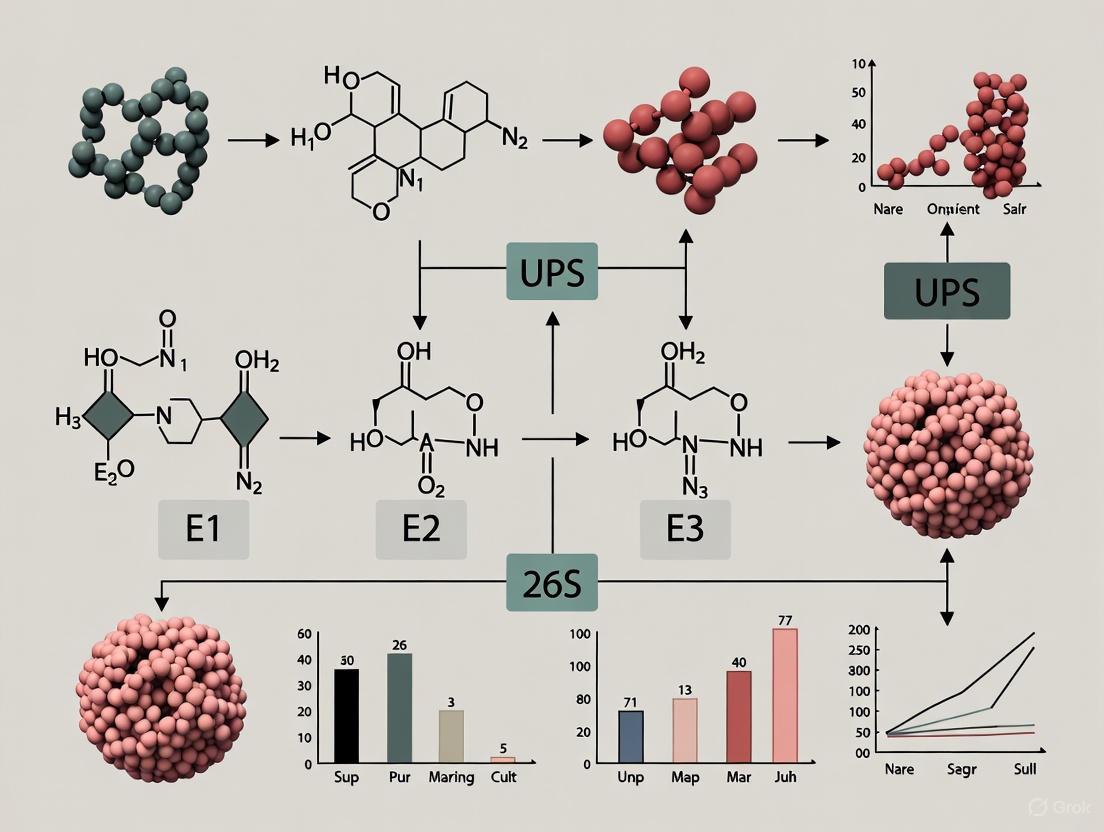
This article provides a comprehensive exploration of the Ubiquitin-Proteasome System (UPS), tracing its foundational discovery in the 1980s to its current status as a pivotal target in precision medicine.
From Discovery to Therapy: The Historical Journey and Modern Impact of the Ubiquitin-Proteasome System
Abstract
This article provides a comprehensive exploration of the Ubiquitin-Proteasome System (UPS), tracing its foundational discovery in the 1980s to its current status as a pivotal target in precision medicine. Tailored for researchers, scientists, and drug development professionals, it details the core enzymatic cascade and historical milestones. The scope extends to modern 'ubiquitinomics' methodologies, the application of UPS-targeting therapies like proteasome inhibitors and PROTACs in oncology, and the troubleshooting of challenges such as drug resistance. Finally, it validates the system's role through comparative analysis in immunology and neurodegeneration, synthesizing key insights for future therapeutic innovation.
The Foundational Discovery and Core Mechanics of the Ubiquitin-Proteasome System
Prior to the discovery of the ubiquitin-proteasome system (UPS), scientific understanding of intracellular protein degradation was predominantly centered on the role of lysosomes. These membrane-bound organelles, with their acidic and protease-filled interiors, were considered the primary site for the breakdown of exogenous proteins, aged organelles, and cellular debris [1]. However, this model could not account for the selective, energy-dependent turnover of specific proteins observed in cells. A pivotal shift began with 1977 work by Joseph Etlinger and Alfred L. Goldberg on ATP-dependent protein degradation in reticulocytes (immature red blood cells), which notably lack lysosomes [1] [2]. This research provided the first compelling evidence for a second, non-lysosomal intracellular degradation mechanism, setting the stage for a paradigm-changing discovery.
The Discovery of a Heat-Stable Polypeptide
Initial Identification and Characterization
In 1978, the laboratory of Avram Hershko at the Technion, with key contributions from Aaron Ciechanover, made the critical observation that would eventually lead to the identification of the ubiquitin system. They described a heat-stable polypeptide that was an essential component of the ATP-dependent proteolytic system in reticulocytes [1] [2] [3]. This polypeptide, with a molecular weight of approximately 8.5 kDa, was found to be indispensable for ATP-dependent proteolysis. The remarkable heat stability of this factor—retaining its biological activity after boiling—became a crucial property that facilitated its isolation and subsequent characterization, distinguishing it from most other cellular proteins.
The initial experiments demonstrated that this polypeptide participated in a novel enzymatic cascade. It was first activated in an ATP-dependent manner to form a high-energy intermediate, later identified as a thiolester linkage with the C-terminal glycine of ubiquitin [4]. This activated polypeptide could then be conjugated to substrate proteins, marking them for degradation by a downstream proteolytic complex.
From APF-1 to Ubiquitin
The heat-stable factor was initially termed ATP-dependent Proteolysis Factor 1 (APF-1) [1]. A crucial breakthrough came when APF-1 was recognized to be identical to a previously known protein, ubiquitin, which had been identified in 1975 but whose function was unknown [1]. The name "ubiquitin" derived from its ubiquitous presence across virtually all eukaryotic cell types [5]. The connection between the histone-modifying activity of ubiquitin and its role in proteolysis represented a seminal moment of convergence in biochemical research.
Elucidating the Enzymatic Cascade
The discovery of the heat-stable polypeptide prompted a series of experiments to unravel the mechanism by which it targeted proteins for degradation. Key methodological advances enabled researchers to dissect this complex process.
The Covalent Affinity Purification Breakthrough
A pivotal methodological innovation came in 1982 with the development of "covalent affinity" chromatography for purifying the ubiquitin-activating enzyme [4]. This sophisticated approach exploited the covalent nature of the intermediate formed during the activation process.
- Affinity Matrix: Ubiquitin was covalently linked to a Sepharose column.
- Binding Requirements: Enzyme binding required the presence of ATP and Mg²⁺, essential cofactors for the activation reaction.
- Elution Characteristics: The bound enzyme could not be displaced by high salt concentrations but was specifically eluted by conditions that disrupt thiolester bonds, including elevated pH, increased thiol compound concentrations, or joint supplementation of AMP and pyrophosphate [4].
This purification strategy confirmed the formation of a covalent, thiolester intermediate between the activating enzyme and the Sepharose-bound ubiquitin. The purified enzyme was characterized as a 210 kDa protein composed of two 105 kDa subunits [4].
The Three-Enzyme Cascade
The combined work of Hershko, Ciechanover, and Rose at the Fox Chase Cancer Center elucidated the fundamental three-enzyme cascade that constitutes the ubiquitination pathway [1]:
Table 1: The Ubiquitin Conjugation Enzyme Cascade
| Enzyme | Designation | Number in Humans | Primary Function |
|---|---|---|---|
| E1 | Ubiquitin-activating enzyme | 2 | Activates ubiquitin in an ATP-dependent reaction, forming a thiolester bond |
| E2 | Ubiquitin-conjugating enzyme | ~38 | Accepts activated ubiquitin from E1 and cooperates with E3 for substrate transfer |
| E3 | Ubiquitin ligase | >600 | Recognizes specific substrate proteins and facilitates ubiquitin transfer from E2 to substrate |
This cascade enables the specific tagging of target proteins with ubiquitin, marking them for recognition and degradation by the proteasome. The extensive diversity of E3 ligases, in particular, provides the substrate specificity that allows the UPS to regulate a vast array of cellular processes with precision [5].
The Proteasome: From Discovery to Molecular Machinery
Identification of the Proteolytic Complex
While the ubiquitination system was being elucidated, parallel research was identifying the proteolytic machinery that would execute the final degradation step. In the late 1970s, a large multi-protein complex with proteolytic activity was identified and given various names, including multicatalytic proteinase complex by Sherwin Wilk and Marion Orlowski [1]. Later, the ATP-dependent complex responsible for ubiquitin-dependent degradation was discovered and named the 26S proteasome [1].
The 26S proteasome is composed of two primary components:
- 20S Core Particle: A barrel-shaped complex of four stacked rings (α7β7β7α7) forming a central proteolytic chamber where protein degradation occurs [1].
- 19S Regulatory Particle: A cap structure that recognizes polyubiquitinated proteins, removes the ubiquitin tags, unfolds the substrate, and translocates it into the 20S core for degradation [1].
Structural Insights
Significant advances in understanding proteasome function came with structural elucidation. The first structure of the proteasome core particle was solved by X-ray crystallography in 1994 [1]. More recently, cryo-electron microscopy (cryo-EM) studies have revealed the architecture of the complete 26S proteasome in complex with polyubiquitinated substrates, providing atomic-level insights into the mechanisms of substrate recognition, deubiquitination, unfolding, and degradation [1].
Diagram 1: The Ubiquitin-Proteasome System Pathway. This diagram illustrates the complete pathway from substrate recognition to degradation, highlighting the key steps of ubiquitination and proteasomal processing.
Methodologies and Research Tools
The elucidation of the UPS relied on the development of sophisticated experimental approaches and research tools that enabled researchers to probe this complex system.
Key Experimental Protocols
Table 2: Key Experimental Methods in UPS Discovery
| Method/Technique | Application in UPS Discovery | Key Insights Generated |
|---|---|---|
| Covalent Affinity Chromatography [4] | Purification of E1 ubiquitin-activating enzyme using ubiquitin-Sepharose | Confirmed thiolester intermediate formation; enabled enzyme characterization |
| ATP-dependent Proteolysis Assays [1] [2] | Measuring degradation of radiolabeled proteins in reticulocyte extracts | Established energy requirement and identified essential components |
| Heat Inactivation Studies [1] [3] | Differential stability of proteolytic system components | Identified heat-stable factor (APF-1/ubiquitin) as distinct from proteolytic machinery |
| Immunoprecipitation & Western Blotting [5] | Detection of ubiquitin-protein conjugates and chain topology | Revealed diversity of ubiquitin linkages and conjugate structures |
Modern Research Reagents
Contemporary ubiquitin research employs sophisticated tools to dissect the complexity of ubiquitin signaling:
Table 3: Essential Research Reagents for Ubiquitin System Studies
| Research Tool | Composition/Type | Primary Application | Key Function |
|---|---|---|---|
| Linkage-Specific Antibodies [5] | Monoclonal antibodies | Immunoblotting, immunofluorescence | Detection of specific polyubiquitin chain types (e.g., K48, K63) |
| TUBEs (Tandem Ubiquitin Binding Entities) [5] | Engineered ubiquitin-binding domains | Ubiquitin conjugate purification, stabilization | High-affinity capture of polyubiquitinated proteins; prevent deubiquitination |
| Activity-Based DUB Probes [5] | Selective DUB inhibitors | Enzyme activity profiling, inhibitor screening | Identification of active deubiquitinating enzymes and their inhibition |
| Di-Gly Antibody (KGG Remnant) [5] | Anti-KGG monoclonal antibody | Ubiquitinomics, mass spectrometry | Enrichment of ubiquitinated peptides after tryptic digest |
| Recombinant E1, E2, E3 Enzymes [6] | Purified recombinant proteins | In vitro ubiquitination assays | Reconstitution of ubiquitination cascades with defined components |
From Fundamental Discovery to Therapeutic Applications
The discovery of the UPS has fundamentally transformed biomedical research and therapeutic development, providing new paradigms for treating human diseases.
Nobel Prize Recognition
The profound significance of the ubiquitin-proteasome system was recognized with the award of the 2004 Nobel Prize in Chemistry to Aaron Ciechanover, Avram Hershko, and Irwin Rose for their pioneering work in discovering this fundamental biological system [1]. The Nobel Committee highlighted how their research revealed one of the most important regulatory mechanisms in eukaryotic cells, with far-reaching implications for understanding disease processes.
Therapeutic Targeting of the UPS
The UPS has emerged as a major therapeutic target across multiple disease areas:
- Proteasome Inhibitors: Drugs like bortezomib (Velcade) directly inhibit the proteasome's proteolytic activity and have become mainstays in the treatment of multiple myeloma [5].
- Targeted Protein Degradation: The revolutionary PROTAC (Proteolysis-Targeting Chimera) technology creates bifunctional molecules that recruit E3 ubiquitin ligases to specific target proteins, inducing their degradation [7] [6]. This approach has expanded the "druggable genome" by targeting proteins previously considered undruggable.
- Molecular Glue Degraders: Compounds that induce novel interactions between E3 ligases and target proteins, leading to targeted degradation [6].
- Immunoproteasome Inhibitors: Selective inhibitors targeting the immunoproteasome for autoimmune and inflammatory diseases [1].
The field continues to evolve with emerging approaches such as Degrader-Antibody Conjugates (DACs), which combine the cell-type specificity of antibodies with the catalytic efficiency of protein degraders to minimize off-target effects [6].
The journey from the observation of a mysterious "heat-stable polypeptide" to the elucidation of the sophisticated ubiquitin-proteasome system represents one of the most compelling narratives in modern biochemistry. This discovery transformed our understanding of how cells control protein turnover, moving from a view of degradation as a bulk process to recognizing it as an exquisitely regulated mechanism central to virtually all cellular functions. The continued exploration of this system—from its fundamental mechanisms to its therapeutic exploitation—stands as a testament to the power of basic scientific research to revolutionize biology and medicine.
The discovery of the ubiquitin-proteasome system (UPS) fundamentally reshaped our understanding of cellular protein homeostasis, earning Avram Hershko, Aaron Ciechanover, and Irwin Rose the Nobel Prize in Chemistry in 2004 [8]. Their pioneering work in the late 1970s and 1980s, utilizing biochemical approaches with reticulocyte lysates, revealed a sophisticated ATP-dependent proteolytic system [8]. At the heart of this system is a highly coordinated, three-enzyme cascade that conjugates the small protein ubiquitin to substrate proteins, thereby marking them for their eventual fate—most famously, degradation by the proteasome [9]. This enzymatic cascade, composed of E1 (activating), E2 (conjugating), and E3 (ligating) enzymes, ensures the precise spatiotemporal control of protein degradation, a process now known to regulate virtually all aspects of eukaryotic biology [9].
The historical context of UPS research illustrates a journey from fundamental biochemical discovery to the recognition of its profound therapeutic potential. Initially focused on basic mechanisms of protein turnover, the field has expanded to elucidate the system's critical roles in cell cycle control, DNA repair, immune regulation, and signaling [10] [11] [9]. Dysregulation of the UPS is implicated in numerous human diseases, including cancer, neurodegenerative disorders, and immune dysfunctions, making its components attractive targets for drug development [11] [9]. This article provides an in-depth technical guide to the core enzymatic cascade of ubiquitination, framing it within its historical discovery and highlighting the experimental approaches that continue to drive this revolutionary field forward.
The Core Enzymatic Cascade: A Three-Step Mechanism
The ubiquitination of a protein substrate is the result of a sequential, energy-dependent process involving three distinct enzymes. The following diagram illustrates the complete sequence of this enzymatic cascade.
E1: Ubiquitin-Activating Enzyme
The cascade initiates with a single E1 ubiquitin-activating enzyme, which acts as the master regulator of the pathway. The E1 enzyme utilizes ATP to activate ubiquitin for conjugation through a two-step mechanism [12]:
- Adenylation: The E1 enzyme binds both ATP and ubiquitin, catalyzing the adenylation of the C-terminal glycine of ubiquitin, forming a ubiquitin-adenylate intermediate and releasing pyrophosphate.
- Thioester Formation: The adenylated ubiquitin is then transferred to a specific cysteine residue within the E1 active site, forming a high-energy E1~Ub thioester bond. This reaction is driven by ATP hydrolysis, making the initial step irreversible and highly favorable [12].
Structural studies reveal that E1 enzymes undergo remarkable conformational changes during this process. The Cys domain rotates approximately 130 degrees to bring the catalytic cysteine into proximity with the ubiquitin carbonyl carbon, a process termed 'active site remodeling' [12]. The E1 enzyme, now charged with ubiquitin, is primed to interact with an E2 conjugating enzyme.
E2: Ubiquitin-Conjugating Enzyme
The second step involves the transfer of activated ubiquitin from E1 to an E2 ubiquitin-conjugating enzyme:
- E2 Recruitment and Transthiolation: The E1~Ub thioester complex recruits one of dozens of potential E2 enzymes. The E2 active site cysteine then nucleophilically attacks the E1~Ub thioester bond, resulting in a transthiolation reaction that forms an E2~Ub thioester complex [12] [13].
- Structural Interface: The E1-E2 interaction is combinatorial, involving recognition of the E2 by both the E1 ubiquitin-fold domain (UFD) and the E1 Cys domain. This dual interface ensures fidelity in pairing and efficient thioester transfer [12].
The human genome encodes approximately 40 E2 enzymes, which exhibit varying degrees of specificity for different E3 ligases and can influence the type of ubiquitin chain formed on the substrate [13].
E3: Ubiquitin Ligase
The final and most diverse step is mediated by an E3 ubiquitin ligase, which provides substrate specificity to the pathway. There are two primary mechanistic classes of E3 ligases:
- RING-type E3 Ligases: The vast majority of E3s contain a RING (Really Interesting New Gene) domain. These E3s function as scaffolds that simultaneously bind the E2~Ub complex and the substrate protein. They facilitate the direct transfer of ubiquitin from the E2 to a lysine residue on the substrate, typically without forming a covalent E3-ubiquitin intermediate [13].
- HECT-type E3 Ligases: A smaller class of E3s contains a HECT (Homology to E6-AP C Terminus) domain. These enzymes utilize a two-step mechanism. First, ubiquitin is transferred from the E2 to a catalytic cysteine within the HECT domain, forming an E3~Ub thioester intermediate. Second, the E3 directly catalyzes the transfer of ubiquitin from itself to the substrate [14] [13].
The human genome encodes over 600 E3 ligases, allowing for exquisite specificity in the recognition of thousands of distinct protein substrates [13]. This diversity enables the UPS to regulate nearly every cellular process.
Quantitative Landscape of the Ubiquitin System
The following tables summarize key quantitative aspects of the ubiquitin enzymatic cascade, highlighting the diversity of its components and the functional outcomes of different ubiquitin linkages.
Table 1: Enzymatic Components of the Human Ubiquitin System
| Component | Number of Genes (Human) | Key Functional Features |
|---|---|---|
| E1 (Activating Enzyme) | 2 | Single E1 for ubiquitin; ATP-dependent; forms thioester with Ub [13] |
| E2 (Conjugating Enzyme) | ~40 | Transient E2~Ub thioester; influences chain topology [13] |
| E3 (Ligase Enzyme) | 600+ | Provides substrate specificity; RING-type (direct transfer) vs. HECT-type (covalent intermediate) [13] |
| Deubiquitinases (DUBs) | ~100 | Cleaves ubiquitin from substrates; proofreading and ubiquitin recycling [10] |
Table 2: Ubiquitin Chain Linkages and Functional Consequences
| Ubiquitin Linkage Type | Primary Function | Prototypical E3 Ligase(s) |
|---|---|---|
| K48-linked | Proteasomal degradation [10] [11] | APC/C, SCF complexes [13] |
| K11-linked | Proteasomal degradation; ER-associated degradation (ERAD) [11] | UBR1, UBR2, CHIP [11] |
| K63-linked | Non-proteolytic signaling (DNA repair, inflammation, endocytosis) [10] [11] | TRAF6, CHIP, ITCH [11] |
| Met1-linked (Linear) | NF-κB activation and inflammatory signaling [9] | LUBAC complex [9] |
| Monoubiquitination | Endocytosis, histone regulation, protein trafficking [13] | C-Cbl (EGFR endocytosis) [13] |
Substrate Recognition: The Critical Role of E3 Ligases and Degrons
E3 ubiquitin ligases achieve substrate specificity by recognizing specific degradation signals, or degrons, on their target proteins. The following diagram maps the primary degron recognition pathways used by E3 ligases to identify their substrates.
The molecular mechanisms of degron recognition are highly sophisticated:
- Phosphodegrons: Many E3s, particularly those within the SCF (Skp1-Cul1-F-box) complex, recognize substrates only after a specific serine, threonine, or tyrosine residue has been phosphorylated. For example, the F-box protein FBW7 uses arginine residues to form hydrogen bonds with the phosphate group on its substrates, stabilizing the E3-substrate interaction [13].
- Oxygen-Dependent Degrons: The von Hippel-Lindau (VHL) E3 ligase complex recognizes the transcription factor HIF-α only under normal oxygen conditions when a specific proline residue in HIF-α is hydroxylated. Under hypoxic conditions, this modification does not occur, and HIF-α escapes degradation, allowing it to activate hypoxic response genes [13].
- N-degrons: The N-end rule pathway relates the half-life of a protein to the identity of its N-terminal residue. E3 ligases known as N-recognins bind to destabilizing N-terminal residues (e.g., Arg, Lys, His, Phe, Trp, Tyr) that are often exposed after proteolytic cleavage [13].
- Misfolding Recognition: E3 ligases involved in protein quality control, such as San1 in yeast or CHIP in mammals, can recognize exposed hydrophobic patches or other structural features characteristic of misfolded proteins. Some of these E3s, like San1, even possess disordered regions that facilitate binding to a wide variety of misfolded clients [13].
Key Experimental Methodologies and Reagents
Understanding the UPS cascade has been driven by specific biochemical and cell-based assays. Below are detailed methodologies for key experiments that have elucidated the mechanism.
In Vitro Ubiquitination Assay
This foundational biochemical assay reconstitutes the ubiquitination cascade using purified components to study the mechanism directly [14].
Procedure:
- Reaction Setup: Combine in a test tube: 50-100 nM E1 enzyme, 1-2 µM E2 enzyme, 0.5-1 µM E3 ligase, 10-20 µM ubiquitin, 1-2 mM ATP, 5-10 mM MgCl₂, and an energy-regenerating system (e.g., creatine phosphate/creatine kinase). Include the substrate protein at a concentration of 1-5 µM.
- Incubation: Incubate the reaction at 30°C for 60-90 minutes.
- Termination and Analysis: Stop the reaction by adding SDS-PAGE loading buffer (with or without a reducing agent like DTT or β-mercaptoethanol). Analyze the products by Western blotting using an antibody against the substrate or ubiquitin. The formation of higher molecular weight smears indicates mono- or polyubiquitination of the substrate.
Key Insight: The requirement for all three enzymes (E1, E2, E3) and ATP can be tested by omitting each component individually. Furthermore, the use of a reducing agent can break thioester bonds (E1~Ub and E2~Ub), but not isopeptide bonds (substrate-Ub), allowing these intermediates to be distinguished [14].
Thioester Intermediate Analysis
This experiment directly demonstrates the formation of covalent E2~Ub and E3~Ub thioester intermediates, which is a hallmark of the HECT-type E3 ligase mechanism [14].
Procedure:
- Charging Reactions: Set up two separate reactions. The first contains E1, E2, ubiquitin, and ATP. The second contains E1, a HECT E3 (like E6-AP), ubiquitin, and ATP.
- Non-reducing Gel Electrophoresis: Terminate the reactions with SDS-PAGE loading buffer that lacks a reducing agent (omit DTT/β-mercaptoethanol).
- Detection: Perform Western blotting using an anti-ubiquitin antibody. The presence of a band corresponding to the molecular weight of E2 + Ub or E3 + Ub indicates a stable thioester intermediate. This band should disappear when the experiment is repeated under reducing conditions, which cleave the thioester bond.
Historical Context: This methodology was used in the seminal 1995 paper on E6-AP to prove it forms a ubiquitin thioester, establishing that some E3s have direct enzymatic activity rather than functioning merely as scaffolds [14].
Reporter-Based Activity Measurement in Cells
Reporter constructs are used to monitor UPS activity in living cells, providing a tool for high-throughput screening of inhibitors or studying UPS function in disease models [10].
Common Reporters:
- GFPu: This reporter consists of a stable protein (e.g., Green Fluorescent Protein, GFP) fused to a potent degron, such as the CL1 degron. In cells, GFPu is constitutively synthesized and rapidly degraded by the UPS, resulting in low fluorescence. Inhibition of the proteasome (e.g., with Bortezomib) or the ubiquitin cascade leads to GFPu accumulation and increased cellular fluorescence, which is quantifiable by microscopy or flow cytometry [10].
- Ubᵉ⁸⁷⁶ᵛ-GFP: A non-cleavable ubiquitin mutant (G76V) is fused to GFP. This single ubiquitin acts as a primer for the formation of a polyubiquitin chain, efficiently targeting the reporter for degradation. Its degradation is less dependent on specific E3 ligases compared to degron-based reporters [10].
Application: These reporters have been used in transgenic animal models to investigate UPS activity in aging and neurodegenerative diseases, helping to test hypotheses about proteasome impairment in conditions like Huntington's disease [10].
The Scientist's Toolkit: Essential Research Reagents
Table 3: Key Reagents for Studying the Ubiquitin Cascade
| Reagent / Tool | Function and Application | Example Use Case |
|---|---|---|
| Proteasome Inhibitors (e.g., Bortezomib, MG-132) | Blocks degradation of ubiquitinated proteins by the proteasome, causing their accumulation. | Validating UPS-dependent substrate degradation; studying the effects of blocked proteolysis [10]. |
| ATP-depleting Systems | Depletes ATP, which is essential for E1-mediated ubiquitin activation. | Serves as a negative control in in vitro ubiquitination assays to demonstrate ATP dependence [14]. |
| Ubiquitin-Activating Enzyme (E1) Inhibitor (e.g., PYR-41) | Specifically inhibits the E1 enzyme, blocking the entire ubiquitination cascade upstream. | Investigating the functional consequences of global ubiquitination inhibition in cells [9]. |
| UPS Reporters (e.g., GFPu, Ubᵉ⁸⁷⁶ᵛ-GFP) | Fluorescent protein fusions designed for rapid UPS-mediated degradation. | Measuring global UPS activity in live cells via fluorescence; high-throughput drug screening [10]. |
| Activity-Based Probes for DUBs | Irreversibly bind to active deubiquitinases (DUBs) for their identification and characterization. | Profiling active DUBs in cell lysates; studying DUB function and inhibitor specificity [10]. |
The demystification of the E1-E2-E3 enzymatic cascade, beginning with foundational biochemical work, has revealed a complex regulatory system of extraordinary scope and specificity. The historical journey from initial discovery in reticulocyte lysates to the current molecular-level understanding, powered by structural biology and sophisticated cellular assays, stands as a testament to the power of basic scientific research [14] [8].
The profound understanding of this cascade has opened up entirely new therapeutic frontiers. The clinical success of the proteasome inhibitor Bortezomib in treating multiple myeloma validated the UPS as a druggable system [10]. Today, the field is rapidly advancing beyond proteasome inhibition to target the system with greater precision. Strategies now focus on E3 ligases themselves, leveraging their intrinsic specificity to target pathogenic proteins for degradation [11] [15]. Technologies such as PROTACs (Proteolysis-Targeting Chimeras) and molecular glues represent a paradigm shift in drug discovery. These bifunctional molecules hijack the endogenous E3 machinery to selectively degrade protein targets previously considered "undruggable," ushering in a new era of targeted protein degradation [11] [15]. As we continue to decipher the nuances of the ubiquitin code, the enzymatic cascade discovered decades ago promises to yield transformative therapies for cancer, neurodegenerative diseases, and immune disorders for years to come.
The ubiquitin-proteasome system (UPS) represents the primary pathway for targeted intracellular protein degradation in eukaryotic cells, a process fundamental to virtually all cellular processes. The discovery of this system, which earned the 2004 Nobel Prize in Chemistry for Aaron Ciechanover, Avram Hershko, and Irwin Rose, revolutionized our understanding of how cells control protein turnover [1] [2]. Before this discovery, protein degradation was largely attributed to lysosomes, but pioneering work in the late 1970s revealed a separate, energy-dependent proteolytic pathway in reticulocytes (which lack lysosomes), hinting at a more complex degradation machinery [1] [2]. The term "proteasome" was coined after the identification of a multi-catalytic proteinase complex, which was later understood to function in concert with ubiquitin tagging [1] [16]. This historical foundation underscores the proteasome's role as a sophisticated cellular machine, essential for maintaining protein homeostasis and regulating countless physiological processes.
Architectural Organization of the Proteasome
The 20S Core Particle (CP)
The 20S core particle serves as the catalytic heart of the proteasome. This barrel-shaped complex exhibits a highly conserved α7β7β7α7 ring structure, comprising four stacked heptameric rings [1] [16] [17]. The two outer rings are formed by seven distinct α-subunits that function as a gated channel, controlling substrate entry into the proteolytic chamber. The two inner rings are composed of seven β-subunits, three of which (β1, β2, and β5) contain the catalytic threonine residues responsible for the proteasome's peptidylglutamyl-peptide-hydrolyzing, trypsin-like, and chymotrypsin-like activities, respectively [16] [18]. The interior chamber of the 20S CP measures approximately 53 Å in width, with entry pores as narrow as 13 Å, necessitating substrate unfolding before degradation [1].
Table 1: Catalytic Subunits of the Standard 20S Core Particle and the Immunoproteasome
| Subunit Type | Standard Proteasome | Immunoproteasome | Catalytic Activity |
|---|---|---|---|
| Caspase-like | β1 (PSMB6) | β1i (PSMB9/LMP2) | Cleavage after acidic residues |
| Trypsin-like | β2 (PSMB7) | β2i (PSMB10/MECL1) | Cleavage after basic residues |
| Chymotrypsin-like | β5 (PSMB8) | β5i (PSMB8/LMP7) | Cleavage after hydrophobic residues |
Regulatory Particles and Proteasome Diversity
The 20S core particle can be activated by various regulatory complexes that cap one or both ends, enabling substrate recognition, unfolding, and translocation.
- 19S Regulatory Particle (RP): The primary regulator, forming the 26S proteasome (when one 19S RP is attached) or the 30S proteasome (when two are attached) [16]. The 19S RP is further divided into:
- The Base: Contains six AAA-ATPase (Rpt1-6) subunits and three non-ATPases (Rpn1, Rpn2, Rpn13). This subcomplex is responsible for substrate recognition, deubiquitination, unfolding, and gate opening [17] [18].
- The Lid: Comprises at least nine non-ATPase subunits (Rpn3, 5-9, 11, 12, 15) that facilitate the removal of ubiquitin chains before substrate degradation [17].
- Immunoproteasome: In immune cells, the constitutive catalytic β-subunits can be replaced by inducible counterparts (β1i, β2i, and β5i) upon exposure to pro-inflammatory signals like interferon-gamma [19] [1]. The immunoproteasome often associates with the 11S regulator (PA28), which enhances the production of antigenic peptides for MHC class I presentation [19] [18].
- Other Regulators: Additional regulators include PA200/Blm10 and PI31, which can modulate proteasome activity in specific tissues or under certain conditions [19] [16].
The following diagram illustrates the overall structure and composition of the 26S proteasome.
The Ubiquitin-Proteasome Pathway: A Stepwise Mechanism
Protein degradation by the proteasome is a tightly controlled, multi-step process initiated by the covalent attachment of a ubiquitin chain to the target protein.
Ubiquitin Tagging: A three-enzyme cascade mediates substrate ubiquitination.
- E1 (Ubiquitin-activating enzyme): Activates ubiquitin in an ATP-dependent manner [19] [20].
- E2 (Ubiquitin-conjugating enzyme): Accepts the activated ubiquitin from E1 [19] [20].
- E3 (Ubiquitin ligase): Recognizes specific substrate proteins and facilitates the transfer of ubiquitin from E2 to a lysine residue on the substrate. The human genome encodes hundreds of E3 ligases, providing exquisite substrate specificity [19] [16]. Repetition of this process builds a polyubiquitin chain, most commonly linked through lysine 48 (K48) of ubiquitin, which serves as the primary degradation signal [19] [17].
Substrate Recognition and Processing: The polyubiquitinated substrate is recognized by ubiquitin receptors (e.g., Rpn10 and Rpn13) within the 19S RP [17]. The substrate is then unfolded by the ATP-dependent motor of the Rpt1-6 ring. The integral deubiquitinase Rpn11 removes the ubiquitin chain for recycling, and the unfolded polypeptide is translocated into the catalytic chamber of the 20S CP for degradation [17].
Degradation and Product Release: Within the 20S core, the polypeptide is cleaved into short peptides (typically 7-9 amino acids long). These peptides are released into the cytosol and can be further degraded to amino acids by other cellular proteases or used for antigen presentation [1].
The workflow of the ubiquitin-proteasome pathway is summarized in the diagram below.
Experimental Methodologies for Proteasome Research
Key Research Reagent Solutions
Table 2: Essential Research Reagents for Proteasome Studies
| Reagent / Method | Function / Target | Key Applications |
|---|---|---|
| Peptide Aldehydes (e.g., MG132) | Reversible inhibitor of proteasome catalytic sites [18] | Early-stage research; studying proteasome inhibition effects in cells. |
| Peptide Boronates (e.g., Bortezomib) | High-affinity, reversible inhibitor (primarily β5 subunit) [18] | Clinical therapy (myeloma, lymphoma); mechanistic biochemistry. |
| PROTACs (Proteolysis-Targeting Chimeras) | Bifunctional molecules recruiting E3 ligase to non-native target protein [21] | Targeted protein degradation; drug discovery for "undruggable" targets. |
| Anti-Ubiquitin Antibodies (K48-linkage specific) | Immunoaffinity enrichment of K48-polyubiquitinated proteins [22] | Ubiquitinomics; identifying endogenous proteasome substrates. |
| Mass Spectrometry (MS) with DiGly Antibody Enrichment | Proteome-wide identification of ubiquitination sites [22] | Systems biology of UPS; quantifying changes in ubiquitination. |
Protocol: Analysis of Proteasome Activity and Inhibition
This protocol outlines a standard method for evaluating proteasome function and the efficacy of inhibitory compounds.
Cell Lysis and Proteasome Isolation:
- Harvest cells and lyse using a non-ionic detergent-based buffer (e.g., 50 mM Tris-HCl, pH 7.5, 150 mM NaCl, 1% NP-40, 1 mM DTT) to maintain complex integrity.
- Clarify the lysate by centrifugation at 20,000 × g for 15 minutes at 4°C.
- The 26S proteasome can be partially purified from the supernatant via ultracentrifugation or affinity-based methods.
Activity Assay:
- Incubate proteasome-containing samples with fluorogenic peptide substrates in an assay buffer (e.g., 50 mM HEPES, pH 7.5, 5 mM MgCl₂, 1 mM DTT).
- Use substrate-specific peptides: Suc-LLVY-AMC for chymotrypsin-like (β5) activity, Boc-LRR-AMC for trypsin-like (β2) activity, and Z-LLE-AMC for caspase-like (β1) activity. Cleavage releases the fluorescent AMC group.
- For inhibitor testing, pre-incubate the proteasome sample with the compound (e.g., 1-1000 nM bortezomib) for 15-30 minutes before adding the substrate.
Quantification and Analysis:
- Measure fluorescence (excitation ~380 nm, emission ~460 nm) kinetically over 30-60 minutes using a plate reader.
- Calculate enzyme velocity from the linear phase of the reaction. Determine IC₅₀ values for inhibitors by fitting velocity data against inhibitor concentration using a non-linear regression model.
Assembly of the Proteasome Complex
The biogenesis of the 26S proteasome is a sophisticated process facilitated by dedicated assembly chaperones, which prevent off-pathway aggregation and ensure the correct stoichiometric incorporation of subunits [23].
20S Core Particle Assembly: Assembly begins with the formation of the α-ring, guided by chaperones PAC1-PAC2 and PAC3-PAC4 heterodimers, which ensure the correct ordering of α-subunits [23]. The β-subunits are then incorporated onto the α-ring with the assistance of the intramolecular chaperone Ump1, forming a half-proteasome. Two half-proteasomes dimerize to form the mature 20S core particle, a step that triggers the self-activation of β-subunits by propeptide cleavage and the degradation of Ump1 [23].
19S Regulatory Particle Assembly: The assembly pathway of the 19S RP is less well-characterized but is known to involve several modular subcomplexes. The base and lid assemble separately before combining, a process that requires additional non-ATPase factors to form a functional RP capable of docking onto the 20S CP [17] [23].
The chaperone-mediated assembly of the 20S proteasome is depicted below.
Therapeutic Targeting of the Proteasome
The proteasome has been successfully validated as a drug target, particularly in hematologic malignancies. Bortezomib (Velcade), a first-in-class dipeptide boronate inhibitor, reversibly targets the chymotrypsin-like activity of the β5 subunit [18]. It is approved for the treatment of multiple myeloma and mantle cell lymphoma. Bortezomib's mechanism of action involves disrupting essential cellular processes in malignant cells, including NF-κB signaling by preventing the degradation of its inhibitor, IκBα [19] [18]. This leads to an accumulation of pro-apoptotic proteins and cell cycle arrest.
A more recent revolutionary approach is the development of PROTACs (Proteolysis-Targeting Chimeras). These heterobifunctional molecules consist of one ligand that binds a target protein of interest, another that recruits an E3 ubiquitin ligase (e.g., VHL or CRBN), and a linker connecting them [21]. By bringing the E3 ligase into proximity with a non-native substrate, PROTACs induce its ubiquitination and subsequent degradation by the proteasome. This technology has expanded the druggable genome, allowing targeting of proteins previously considered "undruggable." Examples in clinical development for hematologic malignancies include NX-2127 (a BTK degrader) and SIAIS178 (a BCR-ABL degrader) [21].
The Ubiquitin-Proteasome System (UPS) represents one of the most sophisticated regulatory mechanisms in eukaryotic cells, governing the selective degradation of intracellular proteins. For decades, protein degradation was considered a nonspecific, scavenging process, while protein synthesis was recognized as the primary site of cellular regulation. This perspective shifted dramatically with the discovery that ATP-dependent protein degradation selectively targeted abnormal and short-lived regulatory proteins [24]. The resolution of this paradox—that energy-dependent degradation enables exquisite specificity—formed the foundation of UPS research. The seminal work of Aaron Ciechanover, Avram Hershko, and Irwin Rose, recognized by the 2004 Nobel Prize in Chemistry, established the fundamental biochemical principles of ubiquitin-mediated proteolysis [25], revealing a complex system that controls countless cellular processes, from cell cycle progression to DNA repair and immune response.
Foundational Discoveries: Mapping the Ubiquitin-Proteasome Pathway
The elucidation of the UPS pathway resulted from a series of interconnected experiments that progressively revealed its components and mechanisms. Key milestones are summarized in the table below.
Table 1: Key Historical Milestones in UPS Pathway Elucidation
| Year | Key Discovery | Experimental System | Principal Investigators | Significance |
|---|---|---|---|---|
| 1975 | Isolation of Ubiquitin | Calf thymus tissue | Gideon Goldstein | Identification of a universal, heat-stable polypeptide later named ubiquitin [24]. |
| 1977 | ATP-Dependent Proteolysis | Reticulocyte cell-free extract | Alfred Goldberg et al. | Established an in vitro system for energy-dependent protein degradation [24]. |
| 1978 | Identification of APF-1 | Fractionated reticulocyte extract | Ciechanover & Hershko | Discovery of ATP-dependent, heat-stable factor (APF-1, later ubiquitin) essential for proteolysis [24]. |
| 1980 | Covalent Binding & Polyubiquitination | Reticulocyte extract | Ciechanover, Hershko, Rose | Demonstrated covalent attachment of APF-1 to substrate proteins and formation of polyubiquitin chains—the "kiss of death" [24]. |
| 1981-1983 | E1-E2-E3 Enzymatic Cascade | Biochemical reconstitution | Ciechanover, Hershko, Rose | Proposed and validated the multi-step enzymatic cascade for substrate ubiquitination [24]. |
| 1980s-1990s | Physiological Substrates & Functions | Various mutant cell lines | Multiple groups | Linked UPS to cell cycle control, DNA repair, and immune response (e.g., p53 degradation) [24] [26]. |
| 2004 | Nobel Prize in Chemistry | - | Ciechanover, Hershko, Rose | Recognition of the discovery of ubiquitin-mediated protein degradation [25]. |
The Energy Dependence Paradox and Early Experimental Systems
The initial breakthrough stemmed from investigating a fundamental biochemical contradiction. While digestive protein degradation (e.g., by trypsin) requires no energy, early experiments in the 1950s indicated that the breakdown of the cell's own proteins is energy-dependent [24]. This observation remained unexplained for decades. A critical experimental advance came in 1977 when Goldberg and his colleagues developed a cell-free extract from reticulocytes (immature red blood cells) that could catalyze the ATP-dependent breakdown of abnormal proteins [24]. This in vitro system provided the essential tool for dissecting the pathway biochemically, without the complexity of a living cell.
The Discovery of APF-1 and the Ubiquitin Tag
Using the reticulocyte extract, Ciechanover and Hershko made a pivotal discovery in 1978. When they separated the extract using chromatography, they found it divided into two fractions, neither of which was active alone, but ATP-dependent proteolysis resumed when the fractions were recombined [24]. They identified the active component in one fraction as a small, heat-stable polypeptide with a molecular weight of approximately 9,000 Da, which they named APF-1 (Active Principle in Fraction 1). This protein was later confirmed to be ubiquitin [24].
The decisive biochemical insight came in 1980. Ciechanover, Hershko, and Rose demonstrated that APF-1 was not just a cofactor but was covalently bound to target proteins via a stable chemical bond [24]. Furthermore, they observed that multiple APF-1 molecules could be attached to a single target protein, a phenomenon they termed polyubiquitination [24]. This was the "kiss of death"—the signal that marked a protein for destruction.
Elucidating the Enzymatic Cascade: E1, E2, and E3
Between 1981 and 1983, the same researchers deciphered the enzymatic machinery responsible for ubiquitin conjugation. They established the multi-step ubiquitin-tagging hypothesis, involving three distinct enzyme classes [24]:
- E1 (Ubiquitin-Activating Enzyme): Activates ubiquitin in an ATP-dependent reaction.
- E2 (Ubiquitin-Conjugating Enzyme): Accepts the activated ubiquitin from E1.
- E3 (Ubiquitin Ligase): Recognizes specific substrate proteins and facilitates the transfer of ubiquitin from E2 to the substrate, often forming a polyubiquitin chain.
This cascade allows for tremendous specificity, primarily determined by the hundreds of different E3 ligases that recognize distinct sets of substrate proteins [24] [26].
The Proteasome: Identification of the Cellular "Waste Disposer"
The final component of the pathway, the proteasome, was identified as the structure that recognizes and degrades polyubiquitinated proteins. A human cell contains roughly 30,000 of these barrel-shaped complexes [24]. The proteasome's active sites are sequestered inside its barrel, and access is controlled by a "lock" that recognizes the polyubiquitin tag. The proteasome denatures the target protein using ATP, removes the ubiquitin tag for recycling, and degrades the protein into short peptides [24].
Detailed Experimental Protocols of Foundational UPS Studies
Protocol 1: Fractionation of Reticulocyte Extract and Discovery of APF-1
This protocol outlines the key experiment that led to the identification of ubiquitin (APF-1) as an essential factor for ATP-dependent protein degradation [24].
Table 2: Key Research Reagents for Reticulocyte Extract Fractionation
| Reagent / Material | Function / Role in the Experiment |
|---|---|
| Reticulocytes (Rabbit) | Source for creating the cell-free extract. These cells are highly specialized for protein degradation. |
| DEAE-Cellulose Chromatography | Ion-exchange chromatography resin used to separate the reticulocyte extract into two fractions (I and II). |
| ATP (Adenosine Triphosphate) | The cell's energy currency, required to drive the ubiquitination reaction and proteasomal degradation. |
| Radioactively Labeled Protein Substrate (e.g., ³⁵S-labeled lysozyme) | A model substrate whose degradation can be tracked by measuring the release of acid-soluble radioactivity. |
| ATP-Regenerating System | A cocktail of enzymes (e.g., creatine phosphokinase) and substrates (e.g., creatine phosphate) that maintains a constant level of ATP in the reaction. |
Methodology:
- Preparation of Crude Extract: Reticulocytes from anemic rabbits are lysed, and a post-mitochondrial supernatant is prepared to create a crude cell-free extract.
- Chromatographic Fractionation: The crude extract is applied to a DEAE-cellulose column. The large bulk of hemoglobin, which interfered with the assays, was not retained. The column was then eluted with a salt gradient, separating the extract into two key fractions:
- Fraction I: Contained the small, heat-stable protein APF-1 (later identified as ubiquitin).
- Fraction II: Contained the enzymatic machinery required for conjugation and degradation.
- Reconstitution Assay: The degradation of the radioactively labeled substrate is tested in separate tubes containing:
- Fraction I only.
- Fraction II only.
- Fraction I + Fraction II.
- All tubes are supplemented with ATP and an ATP-regenerating system.
- Measurement of Degradation: After incubation, the reaction is stopped with trichloroacetic acid (TCA). The amount of protein degraded is quantified by measuring the radioactivity in the TCA-soluble supernatant, which represents peptides and amino acids.
Interpretation: Proteolysis occurred only in the tube containing both fractions, demonstrating that APF-1 in Fraction I was an essential, discrete component of the ATP-dependent proteolytic pathway.
Protocol 2: Demonstration of Covalent Ubiquitin-Protein Conjugation
This critical experiment provided the first evidence that APF-1/ubiquitin forms a covalent bond with substrate proteins [24].
Methodology:
- Incubation Setup: The reconstituted system (Fraction I + Fraction II) is incubated with radioactively labeled substrate and ATP.
- SDS-PAGE Analysis: At timed intervals, samples are taken, and the reaction is stopped. The proteins are separated by SDS-polyacrylamide gel electrophoresis (SDS-PAGE), which resolves proteins based on molecular weight.
- Autoradiography: The gel is subjected to autoradiography to visualize the radioactive proteins.
Interpretation: In addition to the band for the substrate protein, the autoradiograph revealed a ladder of new, higher molecular weight bands. These bands represented substrate proteins with increasing numbers of APF-1 molecules attached. This provided direct visual evidence for the covalent conjugation and polyubiquitination of target proteins, the central signal for degradation.
The UPS Enzymatic Cascade: A Modern Visualization
The following diagram illustrates the modern understanding of the ubiquitin-proteasome pathway, built upon the foundational discoveries.
Diagram 1: The Ubiquitin-Proteasome System (UPS) Enzymatic Cascade. This pathway depicts the sequential action of E1, E2, and E3 enzymes to tag a target protein with a polyubiquitin chain, which is then recognized and degraded by the proteasome in an ATP-dependent process.
The historical mapping of the UPS pathway represents a triumph of biochemical investigation. What began as the resolution of an energy-dependence paradox evolved into the discovery of a universal regulatory system. The key experiments—fractionation of reticulocyte extracts, demonstration of covalent ubiquitin conjugation, and elucidation of the E1-E2-E3 cascade—provided the mechanistic framework that underpins our current understanding. This knowledge has been transformative, revealing the UPS's critical role in health and disease. The system's importance is highlighted by the clinical success of proteasome inhibitors, such as bortezomib, in treating cancers like multiple myeloma [26], and the ongoing development of therapies targeting specific E3 ligases. The foundational work of Ciechanover, Hershko, and Rose not only unveiled a fundamental cellular process but also opened a vast new frontier for drug discovery and therapeutic intervention.
The Ubiquitin Proteasome System (UPS) represents a fundamental and essential pathway for maintaining protein homeostasis within eukaryotic cells. This sophisticated system orchestrates the controlled degradation of intracellular proteins, thereby influencing a vast array of cellular processes, including the cell cycle, gene expression, DNA repair, and responses to cellular stress [27] [1]. At its core, the UPS involves the covalent attachment of a small, highly conserved protein—ubiquitin—to target substrate proteins, which in most cases marks them for destruction by the 26S proteasome [28]. The discovery of this system and its intricate mechanics, which earned the Nobel Prize in Chemistry in 2004 for Aaron Ciechanover, Avram Hershko, and Irwin Rose, revolutionized our understanding of protein turnover, moving beyond the view of the lysosome as the primary degradation site to recognize an ATP-dependent, non-lysosomal proteolytic pathway [1] [2].
The importance of the UPS extends far beyond mere waste disposal. It acts as a critical regulatory mechanism, with its dysfunction being implicated in numerous human diseases, particularly cancers and neurodegenerative disorders [29] [2]. For researchers and drug development professionals, understanding the UPS is not only about grasping a basic physiological process but also about identifying novel therapeutic targets. This whitepaper provides an in-depth technical guide to the ubiquitin molecule, the mechanics of the UPS, its historical context, and the contemporary experimental tools used to probe its function, thereby framing our current knowledge within the rich history of its discovery.
The Ubiquitin Molecule: Structure, Function, and Diversity of Signals
Ubiquitin is a compact, 76-amino acid protein with a molecular weight of approximately 8.5 kDa that is remarkably conserved across all eukaryotes [30] [31]. Its structure is characterized by a stable β-grasp fold, which presents several key residues critical for its function. The C-terminus of ubiquitin ends in a glycine-glycine (Gly-Gly) motif, and the C-terminal glycine is the site of activation and conjugation [28]. The molecule also contains seven internal lysine residues (K6, K11, K27, K29, K33, K48, and K63), which serve as potential attachment points for additional ubiquitin molecules, enabling the formation of polyubiquitin chains [30] [31].
The functional outcome of ubiquitylation is profoundly determined by the type of ubiquitin modification:
- Monoubiquitylation: The attachment of a single ubiquitin molecule to a substrate lysine. This can alter the protein's activity, localization, or interactions, and is involved in processes like histone regulation and endocytosis [30].
- Multi-monoubiquitylation: The attachment of single ubiquitin molecules to multiple lysine residues on the same substrate.
- Polyubiquitylation: The formation of a chain of ubiquitin molecules linked through one of the seven lysine residues or the N-terminal methionine (M1) of the preceding ubiquitin. The topology of the chain dictates a specific signaling outcome [32] [33]:
- K48-linked chains: The most well-characterized linkage, primarily targeting the modified substrate for degradation by the 26S proteasome [1].
- K63-linked chains: Generally involved in non-proteolytic signaling pathways, such as DNA repair, inflammation, and endocytosis [32].
- Other linkages (K11, K29, etc.) are being increasingly understood to play distinct roles in degradation and signaling, adding immense complexity to the ubiquitin code [22].
Recent structural biology efforts, encompassing X-ray crystallography, NMR, and cryo-electron microscopy (cryo-EM), have provided deep insights into how these different chain linkages are recognized by specific receptors and effector proteins, dictating the downstream fate of the modified substrate [33].
Historical Context and Key Discoveries of the UPS
The elucidation of the UPS is a testament to systematic biochemical investigation. The journey began in the late 1970s and early 1980s, challenging the prevailing notion that lysosomes were the primary site for intracellular protein degradation.
Table 1: Historical Milestones in UPS Discovery
| Year/Period | Key Discovery | Lead Researchers | Significance |
|---|---|---|---|
| 1977-1978 | Identification of an ATP-dependent proteolytic system in reticulocytes (which lack lysosomes) [1]. | Goldberg, Etlinger [1] | Provided the first evidence of a non-lysosomal degradation pathway. |
| Late 1970s | Discovery of a heat-stable polypeptide (APF-1) essential for ATP-dependent proteolysis; later identified as ubiquitin [1] [2]. | Hershko, Ciechanover, Rose [27] [2] | Isolated the key component of the system and established its fundamental role. |
| Early 1980s | Reconstitution of the ubiquitination cascade and identification of the three-enzyme sequence (E1, E2, E3) [27]. | Hershko, Ciechanover, Rose [27] | Defined the core enzymatic mechanism of the pathway. |
| Mid-1980s | Discovery that a polyubiquitin chain (specifically K48-linked) is the signal for proteasomal degradation [1]. | Hershko, Varshavsky | Established the molecular code for protein targeting to the proteasome. |
| 1990s | Solving the first X-ray crystal structure of the 20S proteasome [1]. | Multiple groups | Provided atomic-level insight into the degradation machine. |
| 2004 | Award of the Nobel Prize in Chemistry for the discovery of ubiquitin-mediated protein degradation [1] [28]. | Ciechanover, Hershko, Rose | Formal recognition of the paradigm-shifting nature of the discovery. |
| 2010s-Present | High-resolution cryo-EM structures of the entire 26S proteasome, detailed mechanistic studies of E3 ligases, and development of targeted protein degradation drugs [1] [2]. | Multiple groups | Pushing the frontiers towards therapeutic application and systems-level understanding. |
The collaborative work, particularly between Hershko's laboratory at the Technion and Rose's at the Fox Chase Cancer Center, was instrumental in piecing together the enzymatic cascade [1] [2]. A pivotal conceptual advance was the understanding that ATP hydrolysis was required not for proteolysis itself, but for the prior conjugation of ubiquitin to the target protein, forming a multi-ubiquitin chain that serves as a recognition signal [27] [2].
The Core Mechanism: The Ubiquitin-Proteasome Pathway
The ubiquitin-proteasome pathway is a sequential process catalyzed by three families of enzymes, culminating in the degradation of the target protein by the proteasome.
The Enzymatic Cascade: E1, E2, and E3
- Activation (E1): The process initiates with a single E1 ubiquitin-activating enzyme. It uses ATP to adenylate the C-terminal glycine of ubiquitin, forming a high-energy thioester bond between ubiquitin and a cysteine residue in its own active site [28]. This step activates ubiquitin for transfer.
- Conjugation (E2): The activated ubiquitin is then transferred to the catalytic cysteine of one of several dozen E2 ubiquitin-conjugating enzymes (also called UBCs) [30] [28].
- Ligation (E3): Finally, an E3 ubiquitin ligase (numbering in the hundreds) facilitates the transfer of ubiquitin from the E2 to a lysine ε-amino group on the target protein, forming an isopeptide bond [30] [28]. The E3 ligase is primarily responsible for substrate recognition, providing the system with its immense specificity. There are two major classes of E3s: RING ligases, which act as scaffolds to bring the E2~Ub and substrate together, and HECT ligases, which form a thioester intermediate with ubiquitin before transferring it to the substrate [2].
This cycle repeats to build a polyubiquitin chain on the substrate. The following diagram illustrates this enzymatic cascade:
The 26S Proteasome: The Degradation Machine
The 26S proteasome is a massive 2.5 MDa multi-subunit complex responsible for the degradation of polyubiquitinated proteins [1] [28]. It is composed of two primary entities:
- 20S Core Particle (CP): A barrel-shaped structure composed of four stacked heptameric rings. The two outer rings are made of α-subunits that control gated access to the interior. The two inner rings are made of β-subunits that contain the proteolytic active sites, facing an enclosed inner chamber. This architecture ensures that proteins are degraded in a compartmentalized manner, preventing uncontrolled proteolysis in the cytoplasm [1].
- 19S Regulatory Particle (RP): One or two 19S particles cap the ends of the 20S core. The 19S RP is responsible for recognizing polyubiquitinated substrates, removing the ubiquitin chain (via deubiquitinating enzymes, or DUBs), unfolding the target protein in an ATP-dependent manner, and translocating the unfolded polypeptide into the 20S core for degradation [1].
The degradation process yields short peptides (typically 7-9 amino acids long), which are further degraded into amino acids by cellular peptidases and recycled for new protein synthesis. The ubiquitin molecules are also cleaved off and recycled [1] [28].
Quantitative Analysis of Ubiquitinated Proteins: An Experimental Protocol
Modern proteomics has enabled the systematic, large-scale identification and quantification of ubiquitination events. The following workflow, based on a 2019 study of human pituitary adenomas, exemplifies a standard label-free quantitative ubiquitinomics approach [30] [31].
Detailed Methodology
Sample Preparation:
- Extract total proteins from tissue (e.g., tumor vs. control) or cells.
- Denature and reduce proteins to ensure accessibility.
- Digest the protein mixture to peptides with trypsin. A key feature here is that trypsin cleaves after the two C-terminal glycine residues of ubiquitin, leaving a di-glycine (Gly-Gly) remnant with a mass shift of 114.04 Da attached to the modified lysine (ε-amino group) of the substrate-derived peptide. This K-ε-GG moiety is the signature for ubiquitination sites [30] [31].
Enrichment of Ubiquitinated Peptides:
- Due to the low stoichiometry of ubiquitinated peptides, enrichment is crucial.
- Incubate the tryptic peptide mixture with an anti-K-ε-GG antibody conjugated to beads. This antibody specifically immunoaffinity-purifies peptides containing the di-glycine remnant [30] [31].
- Wash away non-specifically bound peptides.
- Elute the enriched ubiquitinated peptides.
Liquid Chromatography-Tandem Mass Spectrometry (LC-MS/MS):
- Separate the enriched peptides by liquid chromatography (LC) based on hydrophobicity.
- Analyze the eluting peptides by tandem mass spectrometry (MS/MS). The mass spectrometer first measures the mass-to-charge ratio (m/z) of intact peptides (MS1) and then selects precursor ions for fragmentation to generate MS2 spectra [32] [30].
Data Processing and Quantification:
- Use computational software (e.g., MaxQuant) to search the MS2 spectra against a protein sequence database.
- Identify proteins and localize the ubiquitination sites based on the presence of the di-glycine remnant and the fragmentation pattern.
- For label-free quantification (LFQ), the intensity of the precursor ion in the MS1 spectrum is used to determine the relative abundance of the ubiquitinated peptide across different samples [30] [31].
The following diagram visualizes this experimental protocol and its key outcomes:
The Scientist's Toolkit: Key Reagents for Ubiquitin Research
Table 2: Essential Research Reagents for UPS Investigation
| Reagent / Tool | Function / Application | Example Use-Case |
|---|---|---|
| Proteasome Inhibitors (e.g., MG-132, Bortezomib) | Inhibit the proteolytic activity of the 20S proteasome, causing accumulation of polyubiquitinated proteins [28]. | Validating UPS-dependent degradation; studying the effects of impaired protein turnover. |
| Anti-Ubiquitin Antibodies | Detect global ubiquitin conjugates via Western blot, immunofluorescence, or ELISA [28]. | Assessing overall ubiquitination levels in cells or tissues under different conditions. |
| Anti-K-ε-GG Antibodies | Immunoaffinity enrichment of ubiquitinated peptides for mass spectrometry-based ubiquitinomics [30] [31]. | Identifying ubiquitination sites and quantifying changes in substrate ubiquitination. |
| Tandem Mass Tag (TMT) Reagents | Isobaric labels for multiplexed relative quantification of proteins and PTMs across multiple samples in a single MS run [32]. | High-throughput profiling of ubiquitination changes across multiple experimental conditions or time points. |
| E1/E2/E3 Enzymes (Recombinant) | For in vitro reconstitution of ubiquitination reactions to study enzyme kinetics, specificity, and mechanism [28]. | Biochemical characterization of specific E3 ligase activity and substrate profiling. |
| Deubiquitinase (DUB) Inhibitors | Selectively inhibit DUBs to prevent ubiquitin chain editing and substrate deubiquitination [28] [2]. | Probing the role of specific DUBs in regulating ubiquitin-dependent pathways. |
UPS in Disease and Therapeutic Targeting
The critical role of the UPS in cellular regulation makes its dysfunction a contributor to many diseases. In neurodegeneration, such as in Alzheimer's and Parkinson's diseases, the accumulation of ubiquitin-positive protein aggregates is a hallmark, suggesting an impairment in UPS clearance of misfolded proteins [29] [2]. In cancer, oncoproteins are often stabilized due to decreased ubiquitination or tumor suppressors are hyper-degraded due to overactive E3 ligases [2].
This understanding has led to successful therapeutics and novel modalities:
- Proteasome Inhibitors: Drugs like Bortezomib are used clinically to treat multiple myeloma by blocking proteasomal degradation, leading to the accumulation of toxic proteins and apoptosis in cancer cells [2].
- Targeted Protein Degradation (TPD): A revolutionary approach using bifunctional molecules like PROTACs (Proteolysis-Targeting Chimeras). A PROTAC consists of one ligand that binds an E3 ubiquitin ligase (e.g., VHL or CRBN) connected by a linker to another ligand that binds a target protein of interest (POI). This brings the E3 ligase into proximity with the POI, leading to its ubiquitination and degradation by the proteasome. This allows for the targeted degradation of proteins previously considered "undruggable" [2].
Ubiquitin, as a conserved molecular tag, sits at the heart of a complex and elegant system that maintains protein homeostasis. From its initial discovery as a key to ATP-dependent protein degradation to the current deep mechanistic and structural understanding, research into the UPS has continuously provided profound insights into cellular physiology. The development of sophisticated quantitative proteomic methods now allows researchers to decode the "ubiquitinome" with unprecedented precision, while the translation of this knowledge is yielding a new generation of therapeutics. For scientists and drug developers, the UPS remains a rich source of fundamental biological questions and promising clinical opportunities.
Methodological Revolutions and Therapeutic Applications in Drug Development
The ubiquitin-proteasome system (UPS), discovered approximately 40 years ago, represents one of the most intricate regulatory networks in eukaryotic cells, governing a multitude of cellular processes including protein homeostasis, cell cycle progression, DNA repair, and signal transduction [22]. This system employs a sophisticated enzymatic cascade—comprising ubiquitin-activating enzymes (E1), ubiquitin-conjugating enzymes (E2), and ubiquitin ligases (E3)—to covalently attach ubiquitin molecules to target proteins, while deubiquitinases (DUBs) reverse this modification [34]. The resulting ubiquitin code, with its diverse topologies including monoubiquitination, multiple monoubiquitination, and various polyubiquitin chains differing in linkage types and architecture, creates enormous complexity that long challenged comprehensive analysis [35].
Mass spectrometry (MS) has emerged as a transformative technology that has fundamentally reshaped our understanding of the ubiquitinome—the complete set of ubiquitin modifications within a biological system [22]. From early studies that identified mere dozens of ubiquitination sites, MS-based proteomics has evolved to enable system-wide ubiquitinome profiling, permitting researchers to decode the ubiquitin code on a proteome-wide scale [35]. This technical guide examines the methodological breakthroughs in MS-based ubiquitinomics, detailing how these advances have illuminated UPS biology and accelerated drug discovery efforts targeting this crucial regulatory system.
The Evolution of Mass Spectrometry Approaches in Ubiquitinomics
From Targeted Analyses to Global Profiling
Initial mass spectrometry approaches for studying ubiquitination relied heavily on tagged ubiquitin pulldown strategies, which often suffered from experimental artifacts, high background, and limited site identification [35]. The true revolution in ubiquitinomics came with the development of antibodies specifically recognizing the diglycine (K-GG) remnant left on trypsinized peptides derived from ubiquitinated proteins [35]. This innovation enabled the specific enrichment of ubiquitinated peptides from complex biological samples, dramatically increasing scalability and sensitivity.
The subsequent adoption of advanced MS acquisition techniques, particularly Data-Independent Acquisition (DIA), has addressed critical limitations of traditional Data-Dependent Acquisition (DDA). DDA's semi-stochastic sampling often led to missing values across replicate runs, reducing the number of robustly quantified ubiquitination sites in large sample series [36]. In contrast, DIA fragments all ions within predetermined isolation windows, ensuring comprehensive and reproducible data acquisition [36]. When coupled with neural network-based processing tools like DIA-NN, this approach has more than tripled ubiquitinated peptide identification compared to DDA, with single experiments now quantifying up to 70,000 ubiquitinated peptides while significantly improving robustness and quantification precision [36].
Advanced Instrumentation and Hybrid Systems
Modern mass spectrometry platforms have been instrumental in advancing ubiquitinomics. Orbitrap analyzers provide exceptionally high mass resolution (>100,000 at m/z 35,000), enabling precise mass measurements essential for distinguishing subtle modifications in complex samples [37]. Hybrid systems such as quadrupole-Orbitrap and quadrupole-time-of-flight (TOF) configurations combine the strengths of different mass analyzers, offering superior sensitivity and mass accuracy for detecting low-abundance ubiquitinated peptides [37].
Table 1: Mass Spectrometry Platforms in Ubiquitinomics
| Technology | Key Principle | Advantages for Ubiquitinomics | Typical Performance |
|---|---|---|---|
| Orbitrap MS | Electrostatic field traps ions in orbiting motion | Ultra-high resolution and mass accuracy | Resolution >100,000 at m/z 35,000 [37] |
| Q-TOF MS | Quadrupole mass filter with time-of-flight detection | High speed and good mass accuracy | Rapid analysis of complex mixtures [37] |
| FT-ICR MS | Traps ions in magnetic field, measures cyclotron motion | Exceptional mass resolution and accuracy | Unparalleled precision for complex samples [37] |
| Ion Trap MS | Three-dimensional electric field traps ions | Capability for multi-stage MS (MSn) | Detailed structural information [37] |
Current Methodological Standards in Ubiquitinomics
Optimized Sample Preparation Protocols
Robust ubiquitinome profiling begins with optimized sample preparation. Recent innovations have introduced sodium deoxycholate (SDC)-based lysis protocols that significantly improve ubiquitin site coverage compared to traditional urea-based methods [36]. When supplemented with chloroacetamide (CAA) and immediate sample boiling, this approach rapidly inactivates cysteine ubiquitin proteases, preserving the native ubiquitination state while avoiding artifacts like di-carbamidomethylation of lysine residues that can mimic K-GG remnants [36]. This SDC-based method yields approximately 38% more K-GG peptides than urea buffer without compromising enrichment specificity [36].
Critical to accurate ubiquitinome interpretation is the parallel analysis of matched proteomes, which enables researchers to distinguish true changes in ubiquitination from alterations in underlying protein abundance [36] [35]. This is particularly important for discriminating regulatory ubiquitination events from those leading to protein degradation, as only a small fraction of proteins with increased ubiquitination actually undergo degradation [36].
Enrichment Strategies and Analytical Workflows
The core ubiquitinomics workflow involves several critical steps: (1) efficient protein extraction using denaturing conditions to preserve modifications; (2) tryptic digestion generating K-GG remnant peptides; (3) immunoaffinity enrichment using K-GG specific antibodies; and (4) liquid chromatography coupled to tandem mass spectrometry [36] [38]. For quantitative analyses, isobaric labeling approaches like tandem mass tagging (TMT) enable multiplexed comparisons of up to 11 conditions, significantly reducing sample requirements and instrument time [35].
Table 2: Quantitative Performance of Ubiquitinomics Methods
| Method | Typical Ubiquitination Sites Identified | Quantitative Precision | Throughput | Key Applications |
|---|---|---|---|---|
| DDA with K-GG Antibody | ~20,000 sites [36] | Moderate (CV ~20%) [36] | Moderate | Targeted studies, validation [35] |
| DIA with K-GG Antibody | ~70,000 sites in single runs [36] | High (median CV ~10%) [36] | High | Large-scale dynamic studies [36] |
| UbiSite (LysC-based) | ~30,000 sites per replicate [35] | High specificity | Lower | Alternative enrichment strategy [35] |
| TMT Multiplexing | ~10,000+ sites [35] | High for relative quantification | Very High | Time-course studies, multiple conditions [35] |
Diagram 1: Ubiquitinomics Experimental Workflow. This diagram illustrates the core steps in mass spectrometry-based ubiquitinome profiling, highlighting key methodological decision points between DDA and DIA acquisition strategies.
Applications in Basic Research and Drug Discovery
Decoding Biological Signaling Networks
The application of advanced ubiquitinomics has revealed unprecedented insights into cellular signaling networks. A landmark study employing time-resolved ubiquitinome profiling following inhibition of the deubiquitinase USP7 demonstrated the power of this approach to dissect the scope and kinetics of DUB activity on a proteome-wide scale [36]. This research quantified ubiquitination changes on hundreds of proteins within minutes of USP7 inhibition, yet revealed that only a small fraction of these ubiquitination events led to protein degradation, highlighting the predominance of regulatory ubiquitination in USP7 function [36].
Ubiquitinomics has also illuminated the complex interplay between ubiquitination and other post-translational modifications. Sequential pulldown approaches now enable the analysis of multiple "PTMomes" (phosphoproteome, acetylome, ubiquitinome) from the same sample, revealing how these modifications act in concert to coordinate cellular events [35]. This multi-PTM profiling provides a more integrated view of cellular signaling networks and their perturbation in disease states.
Accelerating Targeted Protein Degradation Therapeutics
The UPS has emerged as a particularly promising arena for drug discovery, with MS-based ubiquitinomics playing a crucial role in characterizing mechanisms of action for emerging therapeutic modalities. Proteolysis-targeting chimeras (PROTACs) and other targeted protein degradation approaches leverage the ubiquitin system to direct specific proteins for destruction, and ubiquitinomics provides essential tools for validating target engagement and understanding resistance mechanisms [22].
Ubiquitinome profiling enables rapid mode-of-action studies for candidate drugs targeting DUBs or ubiquitin ligases with high precision and throughput [36]. This application is particularly valuable in early drug discovery, where understanding the specificity and off-target effects of UPS-targeting compounds can guide lead optimization and reduce late-stage attrition. Multiple components of the UPS are already validated drug targets, with proteasome inhibitors clinically approved for hematological malignancies and E3 ligase modulators showing promise for degrading otherwise "undruggable" proteins [36].
Essential Research Reagents and Tools
Table 3: Research Reagent Solutions for Ubiquitinomics
| Reagent/Tool | Function | Key Features | Considerations |
|---|---|---|---|
| K-GG Antibody | Immunoaffinity enrichment of ubiquitinated peptides | High specificity for diglycine remnant; commercial availability (Cell Signaling Technology) | Exhibits bias for certain amino acid contexts [35] |
| SDC Lysis Buffer | Protein extraction with protease inhibition | Immediate boiling with CAA inactivates DUBs; 38% improved yield vs urea [36] | Avoids di-carbamidomethylation artifacts [36] |
| DIA-NN Software | Neural network-based DIA data processing | Specialized scoring for modified peptides; library-free analysis capability | Enables >70,000 ubiquitinated peptide IDs [36] |
| TMT Multiplexing | Isobaric labeling for quantitative comparisons | Allows 11-plex experiments; reduced sample requirements | UbiFast method labels peptides on-bead after enrichment [35] |
| UbiSite Antibody | Recognition of LysC ubiquitin fragments | Alternative to K-GG antibody; different sequence bias | Identified ~64,000 sites with proteasome inhibition [35] |
The Ubiquitin Signaling Network: Complexity and Function
Diagram 2: The Ubiquitin-Proteasome System Signaling Network. This diagram illustrates the enzymatic cascade governing protein ubiquitination and the diverse functional outcomes determined by ubiquitin chain topology.
Future Perspectives and Concluding Remarks
As mass spectrometry technologies continue to advance, several emerging trends promise to further transform ubiquitinomics research. The integration of artificial intelligence and machine learning with spectral interpretation is already enhancing identification confidence and quantification accuracy, particularly for modified peptides [36]. Single-cell ubiquitinomics represents another frontier, though significant technical hurdles remain in achieving sufficient sensitivity for low-abundance ubiquitination events at the single-cell level [37].
The growing appreciation of ubiquitination's diversity—including non-canonical ubiquitination on cysteine, serine, threonine, and protein N-termini, as well as the complex landscape of ubiquitin chain branching and mixed linkages—presents both challenges and opportunities for methodological development [34]. Future ubiquitinomics approaches will need to address this complexity more comprehensively, moving beyond K-GG-centric analyses to capture the full spectrum of ubiquitin modifications.
Mass spectrometry has fundamentally transformed our ability to decipher the ubiquitin code, progressing from isolated observations to system-wide profiling of ubiquitination dynamics. This transformation has not only illuminated basic mechanisms of ubiquitin signaling but also created new avenues for therapeutic intervention in cancer, neurodegenerative diseases, and other pathologies linked to UPS dysregulation. As ubiquitinomics methodologies continue to evolve in sensitivity, throughput, and comprehensiveness, they will undoubtedly uncover new layers of complexity in ubiquitin signaling and accelerate the development of novel UPS-targeting therapeutics.
The introduction of proteasome inhibitors (PIs) represents a paradigm shift in the treatment of multiple myeloma (MM), transforming it from a uniformly fatal malignancy to a manageable condition. This in-depth technical guide examines the journey of PIs from fundamental understanding of the ubiquitin-proteasome system (UPS) to clinical mainstays. We explore the molecular mechanisms, clinical efficacy, and safety profiles of approved PIs—bortezomib, carfilzomib, and ixazomib—alongside emerging next-generation agents. The review details how targeting intracellular protein degradation disrupts critical survival pathways in myeloma cells, highlighting both established protocols and future directions including combination therapies with immunomodulatory drugs and monoclonal antibodies. Comprehensive analysis of clinical data and experimental methodologies provides researchers and drug development professionals with essential insights into this success story of targeted cancer therapy.
Historical Context of UPS Discovery
The ubiquitin-proteasome system (UPS), discovered approximately 40 years ago, represents the primary pathway for regulated intracellular protein degradation in eukaryotic cells [22]. This seminal discovery, which earned Aaron Ciechanover, Avram Hershko, and Irwin Rose the 2004 Nobel Prize in Chemistry, revealed a sophisticated enzymatic cascade that targets proteins for degradation [1] [2]. The system begins with the ATP-dependent activation of ubiquitin by E1 enzymes, followed by transfer to E2 conjugating enzymes, and finally substrate-specific ubiquitination by E3 ligases. Polyubiquitinated proteins are then recognized and degraded by the 26S proteasome complex into small peptides [18]. The UPS regulates countless cellular processes including cell cycle progression, transcription factor activation, DNA repair, and apoptosis by controlling the turnover of key regulatory proteins [39] [18].
The 26S Proteasome: Structural and Functional Organization
The 26S proteasome is a 2.5 MDa multi-subunit complex comprising a catalytic 20S core particle capped by one or two 19S regulatory particles [1] [18]. The 20S core particle forms a hollow, cylindrical structure composed of four stacked heptameric rings: two outer α-rings and two inner β-rings. The proteolytic active sites reside within the β-rings, featuring three distinct catalytic activities: chymotrypsin-like (β5 subunit), trypsin-like (β2 subunit), and caspase-like (β1 subunit) [18]. The 19S regulatory particle recognizes polyubiquitinated substrates, removes ubiquitin chains, unfolds target proteins, and translocates them into the catalytic chamber of the 20S core in an ATP-dependent manner [1]. This sophisticated architecture ensures precise regulation of protein degradation, making it an attractive target for therapeutic intervention.
Diagram 1: The Ubiquitin-Proteasome System (UPS). The UPS comprises a ubiquitination cascade (E1-E2-E3 enzymes) that tags proteins for degradation by the 26S proteasome complex.
Multiple Myeloma: A Disease of Protein Homeostasis Dysregulation
Multiple myeloma, the second most common hematologic malignancy, originates from malignant plasma cells that accumulate in the bone marrow [40]. These cells characteristically produce massive quantities of monoclonal immunoglobulins, creating exceptional metabolic stress on protein production and degradation machinery [39]. This unique biology renders myeloma cells exquisitely sensitive to proteasome inhibition, as they depend heavily on the UPS to manage the endoplasmic reticulum stress resulting from high-volume immunoglobulin synthesis [39] [41]. Additionally, proteasome inhibition disrupts critical survival pathways in myeloma cells, particularly nuclear factor kappa B (NF-κB) signaling, which depends on UPS-mediated degradation of its endogenous inhibitor IκBα [41] [18].
Proteasome Inhibitors: Mechanisms and Molecular Targets
Classes of Proteasome Inhibitors
Proteasome inhibitors can be classified based on their chemical structure, mechanism of action, and target specificity. The major classes include peptide boronates (bortezomib, ixazomib), epoxyketones (carfilzomib), and peptide aldehydes (MG132) [18]. Peptide aldehydes were the first generation PIs but proved unsuitable for clinical use due to rapid oxidation and export via multidrug resistance carriers [18]. Boronic acid derivatives reversibly inhibit the proteasome by forming stable tetrahedral intermediates with the catalytic threonine residue, while epoxyketones form irreversible morpholino adducts with the same residue [18]. These mechanistic differences translate to distinct clinical profiles, with irreversible inhibitors potentially offering more sustained proteasome inhibition but different toxicity spectra.
Downstream Effects of Proteasome Inhibition
Proteasome inhibition triggers multiple interconnected downstream effects that collectively induce apoptosis in myeloma cells. These include: (1) inhibition of NF-κB signaling through stabilization of IκBα, suppressing pro-survival signals; (2) accumulation of unfolded proteins leading to endoplasmic reticulum stress and activation of the unfolded protein response; (3) disruption of cell cycle progression through stabilization of cyclin-dependent kinase inhibitors; (4) induction of oxidative stress and mitochondrial dysfunction; (5) suppression of adhesion molecule expression, potentially disrupting protective interactions with the bone marrow microenvironment; and (6) inhibition of angiogenesis, limiting tumor vascularization [39]. The relative contribution of each mechanism to the overall antimyeloma effect varies between different PIs and clinical contexts.
Diagram 2: Mechanism of Action of Proteasome Inhibitors in Multiple Myeloma. Proteasome inhibitors target the 26S proteasome, triggering multiple downstream effects that collectively induce apoptosis in malignant plasma cells.
Clinically Approved Proteasome Inhibitors: Efficacy and Safety Profiles
First-in-Class Agent: Bortezomib
Bortezomib (PS-341/Velcade), a dipeptide boronic acid analog, was the first proteasome inhibitor approved for clinical use. It reversibly inhibits the chymotrypsin-like activity of the β5 subunit of the 20S proteasome [18]. The U.S. Food and Drug Administration (FDA) approved bortezomib in 2003 for relapsed/refractory multiple myeloma under a Fast-Track Application, based on phase II trials demonstrating significant activity in heavily pretreated patients [18]. Subsequent studies led to its incorporation into front-line regimens, where bortezomib-based combinations achieved higher overall response rates and superior response qualities compared to prior standards of care, including in patients with high-risk disease features [41]. The drug's development exemplified successful collaboration between academia and industry, establishing proteasome inhibition as a validated therapeutic strategy in oncology [18].
Second-Generation Agents: Carfilzomib and Ixazomib
Carfilzomib (Kyprolis), a tetrapeptide epoxyketone, represents the second generation of PIs with an irreversible binding mechanism and greater specificity for the proteasome [39] [40]. This structural distinction translates to reduced neurotoxicity compared to bortezomib and maintained efficacy in some bortezomib-resistant settings [40] [42]. Ixazomib (Ninlaro) stands as the first oral PI approved for MM treatment, featuring a boronate structure similar to bortezomib but with optimized pharmacokinetics for oral administration [39] [40]. Its convenience has facilitated extended treatment durations and novel combination strategies, expanding the therapeutic arsenal against myeloma.
Table 1: Clinically Approved Proteasome Inhibitors for Multiple Myeloma
| Parameter | Bortezomib | Carfilzomib | Ixazomib |
|---|---|---|---|
| Brand Name | Velcade | Kyprolis | Ninlaro |
| Year Approved | 2003 (MM) | 2012 (RRMM) | 2015 (RRMM) |
| Molecular Class | Peptide boronate | Epoxyketone | Peptide boronate |
| Binding Mechanism | Reversible | Irreversible | Reversible |
| Administration Route | Intravenous/Subcutaneous | Intravenous | Oral |
| Primary Target | β5 subunit (Chymotrypsin-like) | β5 subunit (Chymotrypsin-like) | β5 subunit (Chymotrypsin-like) |
| Key Metabolic Pathway | Oxidative deboronation | Peptidase cleavage | Oxidative metabolism |
Comparative Safety Analysis from Real-World Evidence
Large-scale pharmacovigilance studies utilizing the FDA Adverse Event Reporting System (FAERS) database provide crucial insights into the real-world safety profiles of approved PIs. Analysis spanning from 2004 to 2023 encompassing 20,629,811 adverse event reports revealed distinct safety signals for each agent [40]. Bortezomib demonstrated the most significant signal for "blood and lymphatic system disorders" (ROR = 3.47, 95% CI 3.37–3.57), with "enteric neuropathy" being the most significant preferred term (ROR = 134.96, 95% CI 45.67–398.79) [40]. Carfilzomib showed an even stronger association with hematologic toxicity (ROR = 4.34, 95% CI 4.17–4.53), while ixazomib's most significant system-level association was with "gastrointestinal disorders" (ROR = 2.04, 95% CI 1.96–2.12) [40]. These findings complement clinical trial data and inform risk mitigation strategies in specific patient populations.
Table 2: Safety Profiles of Proteasome Inhibitors Based on FAERS Database Analysis (2004-2023)
| Safety Parameter | Bortezomib | Carfilzomib | Ixazomib |
|---|---|---|---|
| Most Significant SOC Signal | Blood and lymphatic system disorders (ROR=3.47) | Blood and lymphatic system disorders (ROR=4.34) | Gastrointestinal disorders (ROR=2.04) |
| Most Significant PT Signal | Enteric neuropathy (ROR=134.96) | Light chain analysis increased (ROR=76.65) | Light chain analysis increased (ROR=67.15) |
| Characteristic Toxicities | Peripheral neuropathy, thrombocytopenia, herpes zoster reactivation | Fatigue, anemia, thrombocytopenia, cardiovascular events | Diarrhea, nausea, constipation, thrombocytopenia |
| Median Time-to-Onset of AEs | 38 days (IQR 12-109) | 57 days (IQR 13-190) | 81 days (IQR 41-186) |
| Uncommon but Significant AEs | - | - | Asthenia, malaise, pyrexia, decreased appetite, dehydration, falls |
Evolution of Treatment Protocols and Combination Regimens
Proteasome Inhibitor-Based Combination Therapies
The true potential of PIs has been realized through rational combination strategies that synergistically target multiple pathways in myeloma cells. Proteasome inhibitor-based combinations have become established as a cornerstone of therapy throughout the myeloma treatment algorithm, incorporating agents from other key classes including immunomodulatory drugs (lenalidomide, pomalidomide), monoclonal antibodies (daratumumab, elotuzumab), and histone deacetylase inhibitors [39]. These combinations leverage complementary mechanisms of action to overcome de novo and acquired resistance, achieving deeper and more durable responses than single-agent therapy. The synergistic activity between PIs and immunomodulatory drugs is particularly noteworthy, forming the backbone of many highly effective regimens in both newly diagnosed and relapsed/refractory settings [39] [42].
Advancements in Front-Line Therapy: The ADVANCE Trial
The recent ADVANCE trial (2025) exemplifies the continued evolution of PI-based front-line therapy [42]. This randomized, multi-center study compared the three-drug KRd regimen (carfilzomib, lenalidomide, dexamethasone) with the four-drug DKRd regimen (adding daratumumab) in 306 newly diagnosed multiple myeloma patients. The results demonstrated superior efficacy for DKRd, with 59% of patients achieving minimal residual disease (MRD)-negative status after eight cycles compared to 36% with KRd [42]. At 32.7 months of follow-up, progression-free survival was 86% for DKRd versus 79% for KRd, without significant additional toxicity in appropriately selected patients [42]. These findings establish DKRd as a new standard of care for eligible patients, highlighting how optimized PI-based combinations continue to raise the therapeutic bar in myeloma.
Methodologies for Clinical Response Assessment
Contemporary myeloma treatment protocols employ sophisticated response assessment methodologies. Key endpoints include overall response rate (ORR), complete response (CR) rate, very good partial response (VGPR) rate, minimal residual disease (MRD) status, progression-free survival (PFS), and overall survival (OS) [42]. MRD assessment using next-generation flow cytometry or next-generation sequencing at sensitivity thresholds of 10^-5 to 10^-6 has emerged as a powerful surrogate endpoint for long-term outcomes [42]. The International Myeloma Working Group (IMWG) uniform response criteria provide standardized definitions for these endpoints, enabling consistent evaluation across clinical trials. These methodologies allow precise quantification of treatment benefits and facilitate regulatory approval of novel regimens.
The Scientist's Toolkit: Essential Research Reagents and Methodologies
Key Research Reagents for UPS and PI Research
Table 3: Essential Research Reagents for Studying the Ubiquitin-Proteasome System and Proteasome Inhibitors
| Reagent/Category | Specific Examples | Research Applications |
|---|---|---|
| Proteasome Inhibitors (Research Grade) | MG132, MG262, Epoxomicin, Lactacystin | Mechanism of action studies, in vitro and in vivo models of proteasome inhibition |
| Activity-Based Probes | MV151, Bodipy-TMR-Ahx3L3VS | Profiling proteasome activity, subunit specificity, inhibitor occupancy studies |
| Ubiquitination Reagents | E1/E2/E3 enzymes, Ubiquitin mutants (K48, K63) | In vitro ubiquitination assays, chain topology studies, substrate identification |
| Antibodies | Anti-ubiquitin, anti-K48/K63 linkage, anti-20S/19S subunits, anti-IκBα | Western blotting, immunohistochemistry, monitoring UPS inhibition and downstream effects |
| Cell Lines | MM.1S, RPMI8226, U266 (myeloma lines) | In vitro screening of PIs, mechanism studies, resistance modeling |
| Animal Models | SCID-hu, Vk*MYC, 5TGM1 models | Preclinical efficacy testing, toxicity assessment, combination therapy evaluation |
Mass Spectrometry-Based Ubiquitinomics Approaches
Mass spectrometry (MS)-based proteomics has emerged as a transformative technology for characterizing protein ubiquitylation in an unbiased fashion [22]. Key methodologies include affinity purification (AP) strategies using ubiquitin-binding domains or di-glycine remnant immunoaffinity enrichment following tryptic digestion, which captures the signature Gly-Gly modification left on lysine residues after ubiquitin conjugation [22]. Quantitative approaches like SILAC (stable isotope labeling with amino acids in cell culture) or TMT (tandem mass tag) labeling enable dynamic assessment of ubiquitin-modified proteins in response to PI treatment [22]. These ubiquitinomics approaches facilitate comprehensive mapping of the ubiquitin-modified proteome, identification of novel PI targets, and understanding of resistance mechanisms. Data processing pipelines such as MaxQuant incorporate specific algorithms for ubiquitin remnant peptide identification and quantification.
Diagram 3: Experimental Workflow for Ubiquitinomics. Mass spectrometry-based ubiquitinomics employs specialized enrichment strategies followed by LC-MS/MS analysis and bioinformatic processing to comprehensively characterize the ubiquitinated proteome.
Emerging Trends and Future Directions
Next-Generation Proteasome Inhibitors
Several next-generation PIs are currently in clinical development, aiming to overcome limitations of existing agents. Marizomib (NPI-0052), an irreversible PI of natural product origin, exhibits broad proteasome subunit inhibition including activity against the β1, β2, and β5 subunits, potentially overcoming resistance to subunit-specific inhibitors [41]. Additional compounds targeting the 20S core particle are in various pipeline stages, as documented in the "20s Proteasome Inhibitor - Pipeline Insight, 2025" report [43]. Development strategies include improved tissue distribution, reduced neurotoxicity, enhanced oral bioavailability, and activity in PI-resistant disease. Novel formulations such as nanoparticle-encapsulated PIs may improve therapeutic indices by enhancing tumor-specific delivery.
Integration with Novel Therapeutic Modalities
Proteasome inhibitors are increasingly being combined with emerging therapeutic modalities beyond conventional chemotherapy. Promising approaches include combinations with B-cell maturation antigen (BCMA)-directed chimeric antigen receptor (CAR) T-cell therapies and bispecific T-cell engagers [44] [42]. Studies have shown that the intensity of bridging therapy prior to CAR-T infusion affects hematopoietic recovery, with intensive chemotherapy (3 or more drugs) associated with slower neutrophil and platelet recovery and increased incidence of cytopenias [44]. Rational sequencing of PIs with these immunotherapies represents an active area of investigation. Additionally, research is exploring PI combinations with protein-degrading technologies such as proteolysis-targeting chimeras (PROTACs) that harness the UPS for targeted protein degradation [2].
Biomarker Development and Precision Medicine
Future applications of PIs will likely incorporate sophisticated biomarker strategies to enable personalized treatment approaches. Genomic studies have revealed that extramedullary myeloma, an aggressive disease variant, is characterized by near-universal MAPK pathway alterations (94% of tumors) and greater genomic complexity compared to marrow-based disease [44]. Such molecular insights may predict differential responses to PI-based therapies. Revised free light chain reference intervals that account for age and renal function have improved risk stratification in monoclonal gammopathy of undetermined significance (MGUS), reducing overdiagnosis and enabling more precise identification of high-risk individuals who might benefit from early intervention [44]. Advancements in ubiquitinomics technologies will further facilitate identification of predictive biomarkers for PI response and resistance.
Proteasome inhibitors have fundamentally transformed the therapeutic landscape of multiple myeloma, validating the UPS as a compelling target for cancer therapy. From the pioneering development of bortezomib to the refinement of second-generation agents and their integration into sophisticated combination regimens, PIs have consistently pushed the boundaries of treatment efficacy. Ongoing research continues to optimize their use through improved dosing strategies, novel combinations with immunotherapeutic agents, and biomarker-driven patient selection. As our understanding of the UPS expands and new technologies emerge, proteasome inhibition will undoubtedly remain a cornerstone of myeloma therapy while providing valuable insights for targeting protein degradation pathways in other malignancies. The success story of PIs in myeloma serves as a powerful paradigm for translational research, demonstrating how fundamental biological discoveries can be systematically developed into life-changing cancer therapies.
The ubiquitin-proteasome system (UPS) is the primary pathway for controlled intracellular protein degradation in eukaryotic cells, a discovery recognized by the award of the 2004 Nobel Prize in Chemistry to Aaron Ciechanover, Avram Hershko, and Irwin Rose [1]. This system regulates critical processes, including the cell cycle, gene expression, and responses to oxidative stress, by tagging proteins with ubiquitin chains for recognition and degradation by the proteasome [45] [1]. The UPS involves a cascade of enzymes: E1 (activating), E2 (conjugating), and E3 (ligating) enzymes. E3 ubiquitin ligases are particularly crucial as they confer substrate specificity, determining which proteins are ubiquitinated [46]. Of the over 600 E3 ligases in the human genome, only a handful are currently used in targeted protein degradation (TPD) [47] [48].
Proteolysis-Targeting Chimeras (PROTACs) represent a revolutionary therapeutic paradigm that hijacks this natural UPS to degrade disease-causing proteins [45]. First conceptualized by Crews and colleagues in 2001, PROTACs are heterobifunctional molecules that bring an E3 ubiquitin ligase into proximity with a protein of interest (POI), leading to the POI's ubiquitination and subsequent degradation by the proteasome [49] [50] [51]. This event-driven mechanism operates catalytically, meaning a single PROTAC molecule can mediate multiple rounds of degradation, offering significant advantages over traditional occupancy-driven inhibitors [52] [50].
Historical and Mechanistic Foundation
The Ubiquitin-Proteasome System: A Historical Perspective
The UPS pathway was elucidated through foundational work in the late 1970s and 1980s. Key milestones included the discovery of ATP-dependent protein degradation in reticulocytes (which lack lysosomes) and the identification of ubiquitin's role in marking proteins for degradation [1]. The 26S proteasome, the central protease of the pathway, was discovered as a large, multi-subunit complex comprising a 20S core particle (CP) capped by 19S regulatory particles (RP) [1]. The 20S CP contains the proteolytic active sites, while the 19S RP recognizes ubiquitinated proteins, unfolds them, and translocates them into the core for degradation [1] [46].
The ubiquitination process involves three sequential steps:
- Activation: Ubiquitin is activated by an E1 enzyme in an ATP-dependent reaction [45] [48].
- Conjugation: The activated ubiquitin is transferred to an E2 conjugating enzyme [46].
- Ligation: An E3 ligase facilitates the transfer of ubiquitin from E2 to a lysine residue on the target protein [46].
Polyubiquitin chains, linked via lysine 48 (K48) of ubiquitin, serve as the primary signal for proteasomal degradation [45].
PROTAC Mechanism of Action
PROTACs are not inhibitors but catalytic degraders. Their mechanism transcends simple binary complex formation, relying instead on the formation of a productive POI-PROTAC-E3 Ligase Ternary Complex [51]. This induced proximity enables the E2-loaded ubiquitin to transfer onto the POI [50]. After ubiquitination, the PROTAC molecule is released and can catalyze another round of degradation, making it a substrate for the proteasome [50].
The following diagram illustrates the complete PROTAC mechanism, from ternary complex formation to proteasomal degradation.
A key advantage of this mechanism is its ability to target "undruggable" proteins, such as transcription factors, scaffolding proteins, and proteins without defined active sites, which are often impervious to conventional small-molecule inhibitors [45] [52] [51]. Furthermore, because PROTACs act catalytically, they can achieve efficacy at lower doses and show potential to overcome resistance mutations that arise from target overexpression or mutations that reduce inhibitor binding [50] [48].
PROTAC Design and E3 Ligase Landscape
Components of a PROTAC Molecule
A typical PROTAC consists of three elemental components:
- A POI-binding ligand: This is often a known inhibitor or binder of the target protein.
- An E3 ligase-binding ligand: A small molecule that recruits a specific E3 ubiquitin ligase.
- A linker: A chemical tether that connects the two ligands. The linker's length, composition, and geometry are critical for stabilizing the ternary complex and determining degradation efficiency and selectivity [45] [50].
Key E3 Ligases in PROTAC Technology
While the human genome encodes over 600 E3 ligases, current PROTAC development relies heavily on a small subset. The expansion of the E3 ligase repertoire is a major focus in the TPD field [53].
Table 1: Key E3 Ligases Utilized in PROTAC Development
| E3 Ligase | Ligand Origin | Notable Features | Example Targets |
|---|---|---|---|
| Cereblon (CRBN) | Thalidomide, Lenalidomide (IMiDs) [49] [51] | Most widely used; well-characterized; high ligand affinity [48] | BRD4, BTK, IKZF1/3 [50] [51] |
| Von Hippel-Lindau (VHL) | Small-molecule analogs of HIF-1α peptide [49] [51] | First small-molecule recruiter; enables oral bioavailability [45] | BRD4, IRAK4, ERRα [49] [51] |
| MDM2 | Nutlin [50] | Key regulator of p53 [48] | AR [50] |
| DCAF15 | Sulfonamides (e.g., E7820) [47] | Novel target; nuclear localized; requires optimization for potency [47] | BRD4, RBM39 [47] |
| DCAF16 | Electrophilic PROTACs [47] | Covalent binder; enables degradation of nuclear proteins [47] | BRD4 [47] |
| cIAP1 | Bestatin analogs [51] | Early-use ligase in PROTAC design [51] | N/A |
The heavy reliance on CRBN and VHL underscores the need to deconvolute and recruit new E3 ligases to access different tissue distributions, substrate profiles, and avoid potential resistance mechanisms [53] [47].
Clinical Translation and Current Landscape
The PROTAC field has progressed rapidly from concept to clinical trials. As of early 2025, several PROTAC candidates have demonstrated proof-of-concept in humans, with a robust pipeline behind them [52].
Table 2: Selected PROTACs in Clinical Development
| PROTAC Name | Target | E3 Ligase | Indication | Highest Phase (Status) | Key Findings/Notes |
|---|---|---|---|---|---|
| ARV-110 (Bavdegalutamide) | AR | N/A | mCRPC | Phase III [52] | First PROTAC with clinical POC; degrades mutant AR; PSA reductions in AR T878X/H875Y mutants [45] [52] |
| ARV-471 | ER | N/A | ER+/HER2− Breast Cancer | Phase III (NDA submitted) [52] | Promising efficacy; being explored in combo with Palbociclib; meaningful benefit in ESR1-mutant subgroup [45] [52] |
| BMS-986365 | AR | N/A | mCRPC | Phase III [52] | Dual-acting AR degrader and antagonist [52] |
| BGB-16673 | BTK | N/A | B-cell malignancies | Phase III [52] | First BTK-targeting PROTAC to Phase III [52] |
| NX-2127 | BTK | CRBN | B-cell malignancies | Phase I (halted) [45] | Also has IMiD-like degradation of Ikaros/Aiolos [45] |
| KT-333 | STAT3 | N/A | Lymphomas, Solid Tumors | Phase I [45] | Targets key transcription factor [45] |
| CFT-8634 | BRD9 | N/A | Sarcoma | Phase I/II [45] | Orphan drug designation [45] |
POC = Proof-of-Concept; mCRPC = Metastatic Castration-Resistant Prostate Cancer; PSA = Prostate-Specific Antigen.
The clinical data for ARV-110 and ARV-471 have been particularly instructive. They demonstrated for the first time that PROTACs can achieve robust target protein degradation in humans and confer clinical benefit, with manageable safety profiles and no dose-limiting toxicity observed up to high doses [45] [52]. The evolution of these agents highlights a trajectory of increasing sophistication.
Experimental Considerations and Protocols
A Framework for PROTAC Discovery and Validation
Developing a potent PROTAC requires a multi-stage process. The following workflow outlines key steps from design to mechanistic validation.
Key Validation Experiments: A DCAF15 Case Study
A study developing DP1, a BRD4 degrader recruiting DCAF15, provides a template for rigorous mechanistic validation [47]. The following experiments confirmed that degradation was on-target and UPS-dependent:
- Ligand Competition: Pre-treatment with excess E3 ligand (E7820) or POI ligand (JQ1) blocked DP1-induced BRD4 degradation, confirming dependency on both binding events [47].
- Proteasome Inhibition: Pre-treatment with the proteasome inhibitor Carfilzomib rescued BRD4 levels, confirming dependence on proteasomal activity [47].
- Neddylation Inhibition: Pre-treatment with MLN4924, an inhibitor of the neddylation activation cascade for Cullin-RING E3 ligases, rescued BRD4 levels, confirming involvement of a Cullin-based E3 complex [47].
- E3 Ligase Knockout: DP1 failed to degrade BRD4 in isogenic DCAF15 knockout cells, providing definitive genetic evidence for the specific E3 ligase requirement [47].
- Inactive Control: A stereoisomer of the POI ligand (DP1(R)) failed to induce degradation, ruling out off-target effects of the ligands alone [47].
The Scientist's Toolkit: Essential Reagents for PROTAC Research
Table 3: Key Research Reagent Solutions for PROTAC Development
| Reagent / Tool | Function / Application | Examples / Notes |
|---|---|---|
| E3 Ligase Ligands | Recruit specific E3 ligases to form ternary complex. | Thalidomide derivatives (for CRBN) [49]; VHL ligands (VH032) [51]; Sulfonamides (for DCAF15) [47]. |
| Proteasome Inhibitors | Validate UPS-dependency of degradation. | Carfilzomib, Bortezomib [47]. Rescue of POI levels confirms mechanism. |
| Neddylation Inhibitor | Inhibit activation of Cullin-RING E3 ligases. | MLN4924 [47]. Used to confirm involvement of CRL-type E3s. |
| Genetic Tools (CRISPR/siRNA) | Knockout or knockdown E3 ligase or POI. | Validates specificity and genetic requirement, as in DCAF15 KO study [47]. |
| Inactive Control PROTAC | Control for off-target effects. | An enantiomer of the active POI ligand that loses binding affinity [47]. |
| DNA-Encoded Libraries (DELs) | Discover novel E3 ligase ligands. | Emerging approach to expand the repertoire of ligandable E3s [49]. |
PROTAC technology has unequivocally transformed the landscape of drug discovery by turning the cell's own garbage disposal system into a therapeutic strategy. Framed within the historical context of UPS research, it stands as a brilliant example of translational science, where fundamental biochemical discoveries have been harnessed for innovative medicine. The clinical progress of ARV-110, ARV-471, and others validates the therapeutic feasibility of this approach.
The future of the field lies in addressing its current limitations. Key areas of focus include: expanding the E3 ligase toolbox beyond CRBN and VHL to enable tissue-specific targeting and overcome potential resistance [53]; improving drug-like properties and delivery through advanced prodrug strategies and nano-formulations to enhance solubility and bioavailability [50]; and achieving greater precision with conditional PROTACs activated by disease-specific stimuli (e.g., hypoxia, enzymes, light) to minimize off-target effects [50]. As these challenges are met, the ability to degrade any protein of interest will move from a powerful concept to a standard modality in the therapeutic arsenal, offering new hope for treating diseases driven by proteins once deemed "undruggable."
High-Throughput Screening and CRISPR-Based Tools for Identifying UPS Components
The ubiquitin-proteasome system (UPS) represents a fundamental regulatory mechanism in eukaryotic cells, responsible for the controlled degradation of intracellular proteins. Since its initial discovery in the 1980s, the UPS has been recognized as a crucial player in maintaining cellular homeostasis through its involvement in cell cycle progression, transcription regulation, oxidative stress response, and autophagy [46]. The system comprises a sophisticated enzymatic cascade involving ubiquitin-activating enzymes (E1), ubiquitin-conjugating enzymes (E2), and ubiquitin ligases (E3), which work in concert to tag target proteins with ubiquitin chains for recognition and degradation by the 26S proteasome [46]. For decades, researchers faced significant challenges in systematically characterizing the approximately 700 E3 ubiquitin ligases and deubiquitinases (DUBs) that confer specificity to the UPS, as traditional approaches for assigning E3s to their cognate substrates remained labor-intensive and low-throughput [54] [55].
The advent of high-throughput screening (HTS) technologies marked a transformative shift in biological discovery, enabling researchers to rapidly conduct millions of chemical, genetic, or pharmacological tests using robotics, data processing software, liquid handling devices, and sensitive detectors [56]. When combined with the revolutionary CRISPR-Cas9 genome editing system, which provides a simple yet effective method for targeted genetic modifications, HTS has empowered scientists to systematically investigate gene functionality across diverse biological contexts [57]. This powerful combination has accelerated our understanding of UPS components and their roles in human diseases, particularly in cancer, where UPS dysregulation contributes significantly to tumor initiation, progression, and therapeutic resistance [46]. The integration of these technologies has thus opened new avenues for comprehensive phenotypic characterization of the UPS, facilitating drug discovery and advancing our fundamental understanding of cellular protein homeostasis.
Technical Foundations
High-Throughput Screening Principles
High-throughput screening (HTS) is a method for scientific discovery that enables researchers to quickly conduct millions of chemical, genetic, or pharmacological tests. Using robotics, data processing/control software, liquid handling devices, and sensitive detectors, HTS allows for the rapid recognition of active compounds, antibodies, or genes that modulate particular biomolecular pathways [56]. The methodology relies on microtiter plates as key labware, with standard formats including 96, 384, 1536, 3456, or 6144 wells. A screening facility typically maintains a library of stock plates whose contents are carefully catalogued, and assay plates are created as needed by pipetting small amounts of liquid (often nanoliters) from stock plates to empty plates [56].
The defining feature of HTS is its remarkable throughput, with typical screens evaluating 10,000-100,000 compounds per day, while ultra-high-throughput screening (uHTS) can conduct 100,000 or more assays daily [56] [58]. Automation is an essential element in HTS's usefulness, typically involving integrated robot systems that transport assay-microplates from station to station for sample and reagent addition, mixing, incubation, and finally readout or detection [56]. The process of hit selection—identifying compounds with desired effects—requires sophisticated statistical approaches, with methods varying depending on whether screens include replicates. For primary screens without replicates, robust statistical methods such as z-score, SSMD, B-score, and quantile-based methods have been developed to account for outliers common in HTS experiments [56].
CRISPR-Cas9 System Fundamentals
The CRISPR-Cas system functions as an adaptive immune mechanism in bacteria and archaea, defending against invading genetic elements. These systems consist of CRISPR repeat-spacer arrays transcribed into CRISPR RNA (crRNA) and trans-activating CRISPR RNA (tracrRNA), along with Cas proteins possessing endonuclease activity [57]. The Type II CRISPR-Cas9 system from Streptococcus pyogenes (SpCas9) was the first to be characterized and widely applied in genome editing. Cas9, guided by a single-guide RNA (sgRNA)—a fusion of crRNA and tracRNA—recognizes specific DNA targets via the protospacer adjacent motif (PAM) and introduces double-strand breaks (DSBs) [57].
The DSBs generated by Cas9 are repaired through either non-homologous end joining (NHEJ) or homology-directed repair (HDR) pathways. NHEJ, the predominant repair mechanism, introduces random insertions or deletions (indels), often resulting in frameshift mutations that inactivate target genes [57]. The simplicity of generating targeted edits has catalyzed the development of advanced genome editing tools, including CRISPR-Cas9 knockouts, epigenome editing, base/prime editing, and RNA editing, which have been extensively applied in functional genomics, therapeutic discovery, and disease modeling [57].
Table: Evolution of CRISPR-Cas9 Screening Applications for UPS Research
| Development Phase | Key Technical Advancements | Impact on UPS Research |
|---|---|---|
| Initial Implementation (pre-2015) | First CRISPR knockout screens; arrayed and pooled formats | Enabled systematic knockout of individual UPS components |
| Specialized Library Design (2015-2020) | UPS-focused sgRNA libraries; improved coverage and specificity | Targeted screening of ~700 E3s/DUBs with multiple sgRNAs per gene |
| Chemical-Genetic Screens (2020-present) | Integration with compound treatments; pathway-specific inhibition | Revealed gene-compound interactions; identified synthetic lethal pairs |
| Multiplexed Screening (2023-present) | Simultaneous assessment of hundreds of substrate-E3 relationships | High-throughput mapping of degron motifs and substrate specificities |
Methodological Approaches
UPS-Focused CRISPR Screen Design
The development of CRISPR-Cas9 screening techniques coupled with chemical inhibition of specific biological processes enables high-throughput investigation of the ubiquitin-proteasome system. A comprehensive protocol for conducting UPS-specific chemical-genetic CRISPR-Cas9 screens begins with careful design of the sgRNA library. Researchers have developed specialized libraries containing 6,306 sgRNAs targeting 685 components of the human ubiquitin proteasome system, along with targeting and non-targeting control sgRNAs [59]. For each UPS gene, optimal library design includes nine sgRNAs—seven selected from previously published genome-wide essentiality screens and two designed to target key catalytic or binding residues [59]. This approach ensures comprehensive coverage while maintaining practical screen size.
Library synthesis requires meticulous execution, beginning with preparation of 20-30 15 cm LB agar plates containing carbenicillin to achieve sufficient coverage. For a UPS sgRNA library with 6,306 sgRNAs, at least 1.26 × 10^6 bacterial colonies are needed to achieve 200-fold coverage [59]. The lentiGuidePuro vector must be digested using BsmBI restriction enzyme, followed by gel purification of the digested plasmid to isolate the ~8,300 bp vector backbone. Simultaneously, sgRNA oligos are amplified through PCR using specific universal primers, with careful attention to avoid excessive amplification cycles that can introduce sgRNA representation bias [59]. The resulting PCR product is then subjected to Esp3I digestion (an isoschizomer of BsmBI) and purified through polyacrylamide gel electrophoresis before ligation into the prepared vector backbone.
Chemical-Genetic Screening Methodology
Chemical-genetic CRISPR screening represents a powerful approach for identifying E3s/DUBs whose loss renders cells sensitive or resistant to compounds targeting diverse biological processes. In a landmark study, researchers performed parallel screens testing 41 compounds targeting cell cycle progression, genome stability, metabolism, and vesicular transport against a comprehensive UPS-focused library [54]. This approach identified 466 gene-compound interactions covering 25% of the interrogated E3s/DUBs, with genes and compounds clustering functionally according to their biological roles [54].
Critical to success is the determination of appropriate chemical compound concentrations and infection conditions. Consistent culture conditions and reagents are essential throughout the screen to ensure meaningful and reproducible results. The protocol can be adapted for use in various cell lines, with HAP1 cells serving as a popular model due to their haploid genotype, which simplifies genetic analysis [59]. For each screen, cells transduced with the sgRNA library are divided into treated and untreated groups, with the treated group exposed to the compound of interest at a predetermined concentration. Following selection and expansion, genomic DNA is extracted from both populations and the sgRNA representations are determined through next-generation sequencing to identify enriched or depleted sgRNAs in the treated versus untreated conditions [59] [54].
Multiplexed CRISPR Screening Platforms
Recent technological advances have enabled the development of multiplex CRISPR screening platforms that dramatically increase throughput for mapping E3 ligase-substrate relationships. This approach addresses the fundamental limitation of traditional CRISPR screens, where only one substrate can be assayed per experiment [55]. The multiplex platform combines the Global Protein Stability (GPS) expression system with CRISPR screening by encoding both GFP-tagged substrates and CRISPR sgRNAs on the same vector [55].
Following transduction of Cas9-expressing target cells at low multiplicity of infection, each cell in the resulting population expresses one GFP-tagged substrate and one sgRNA targeting an E3 ubiquitin ligase. When the sgRNA disrupts the cognate E3 ligase for a particular substrate, stabilization of the fusion protein occurs, resulting in increased GFP fluorescence [55]. Cells expressing stabilized substrates are isolated by fluorescence-activated cell sorting (FACS), followed by PCR amplification and paired-end sequencing to simultaneously identify both the GFP-fusion substrate and the E3 ligase targeted by the sgRNA. This innovative approach successfully performed approximately 100 CRISPR screens in a single experiment, refining known C-degron pathways and identifying novel recognition motifs [55].
Multiplex CRISPR Screening Workflow
Experimental Protocols
Core Screening Protocol
A standardized protocol for conducting UPS-focused chemical-genetic CRISPR screens begins with cell preparation and optimization. The human HAP1 cell line serves as an effective model, though the approach can be adapted to other cell lines. Cells are maintained in consistent culture conditions to ensure reproducibility, with careful attention to avoiding bacterial or fungal contamination [59]. Before initiating the full-scale screen, preliminary experiments determine optimal chemical compound concentrations by establishing dose-response curves for each compound to identify concentrations that induce measurable phenotypic effects without causing excessive cell death.
The screening process proper involves transducing cells with the UPS-focused sgRNA library at an appropriate multiplicity of infection (MOI ~0.3) to ensure most cells receive only one sgRNA. Following puromycin selection to eliminate untransduced cells, the selected population is divided into treated and untreated groups. The treated group receives the compound of interest at the predetermined concentration, while both populations are cultured for approximately 14-16 days to allow for phenotypic manifestation [59]. Throughout this period, cell density is maintained between 2-8 × 10^5 cells/mL to prevent overconfluence, which can introduce selective pressures unrelated to the experimental conditions.
For sample preparation and sequencing, genomic DNA is extracted from approximately 4 × 10^7 cells from both treated and untreated populations, ensuring coverage of at least 500 cells per sgRNA to maintain library representation [59]. The sgRNA inserts are amplified through PCR using specific primers that add Illumina sequencing adapters and sample barcodes. The resulting libraries are quantified, pooled at equimolar ratios, and sequenced on an Illumina platform to determine sgRNA abundance in each condition. Bioinformatic analysis follows using specialized algorithms such as MAGeCK to identify sgRNAs significantly enriched or depleted in treated versus untreated populations, indicating genetic interactions with the tested compounds [54] [55].
Validation Approaches
Following primary screening, rigorous validation is essential to confirm putative hits. Secondary screening involves testing individual sgRNAs against the phenotype of interest in a targeted format. For UPS components identified in chemical-genetic screens, validation includes assessing whether genetic ablation of the putative hit confers resistance or sensitivity to the compound in a dose-dependent manner [54]. Additionally, complementation experiments using cDNA vectors expressing CRISPR-resistant versions of the targeted gene can demonstrate reversibility, confirming on-target effects.
For E3 ligase-substrate relationships identified through multiplex screening, validation requires multiple orthogonal approaches. Co-immunoprecipitation assays determine whether the E3 ligase and putative substrate physically interact in cells [55] [60]. Ubiquitination assays assess whether ablation of the E3 ligase reduces ubiquitination of the substrate, while cycloheximide chase experiments measure substrate half-life with and without the E3 ligase [60]. For transcription factors like MYC, whose stability is regulated by the UPS, fluorescent protein-based sensors can monitor abundance changes following E3 ligase manipulation, providing dynamic readouts of protein turnover [60].
Table: Essential Research Reagents for UPS CRISPR Screening
| Reagent Category | Specific Examples | Function in UPS Screens |
|---|---|---|
| CRISPR Vectors | lentiGuide-Puro (Addgene #52963) | sgRNA expression with puromycin resistance |
| Library Resources | UPS-focused sgRNA libraries (6,306 sgRNAs) | Targeted knockout of 685 UPS components |
| Cell Lines | HAP1, HEK293A | Screening models with high transduction efficiency |
| Detection Systems | GFP-based degradation sensors | Real-time monitoring of protein stability |
| UPS Modulators | Bortezomib, MLN4924 | Proteasome and neddylation inhibition controls |
| Sequencing Tools | Illumina platform adapters | sgRNA abundance quantification |
Key Applications and Findings
Mapping E3 Ligase-Substrate Relationships
CRISPR-based screening approaches have dramatically accelerated the mapping of E3 ubiquitin ligases to their cognate substrates, addressing a fundamental challenge in UPS research. Traditional methods for assigning E3s to substrates remained labor-intensive and low-throughput, creating a significant knowledge gap despite the human genome encoding over 600 E3 ubiquitin ligases [55]. The multiplex CRISPR screening platform has enabled systematic mapping of degron motifs—specific molecular features recognized by E3s—by performing approximately 100 CRISPR screens in a single experiment [55].
This approach has successfully refined understanding of C-degron pathways, confirming known relationships and discovering novel ones. For instance, screens identified Cul2FEM1B as a regulator of C-terminal proline degrons, expanding the repertoire of recognized degradation signals [55]. Similarly, comprehensive profiling revealed that Cul4DCAF12 recognizes not only canonical C-terminal -EE* motifs but also degrons with glutamic acid at the penultimate position followed by other residues (-EI, -EM, -ES*), demonstrating greater flexibility in degron recognition than previously appreciated [55]. These findings highlight how CRISPR-based screens can systematically define the rules governing substrate recognition by E3 ligases, providing fundamental insights into UPS specificity.
Chemical-Genetic Interaction Mapping
Chemical-genetic CRISPR screens have revealed how specific UPS components modulate cellular responses to diverse compounds, creating functional maps of E3/DUB activities. A comprehensive screen testing 41 compounds against a UPS-focused library identified 466 gene-compound interactions, covering 25% of interrogated E3s/DUBs [54]. These interactions clustered functionally, with inhibitors of related pathways showing similar patterns of genetic interactions, effectively grouping UPS components by biological pathway association.
Notably, different E3s exhibited distinct interaction patterns. Some genes, such as FBXW7, showed interactions with multiple compounds across different pathways, suggesting broad regulatory roles [54]. In contrast, others like RNF25 and FBXO42 displayed more specific interactions, with RNF25 primarily affecting sensitivity to methyl methanesulfonate (a DNA-damaging agent) and FBXO42 interacting specifically with mitotic inhibitors [54]. Follow-up investigation of E3s showing sensitivity to mitotic inhibitors revealed increased aberrant mitoses upon their mutation, implicating these genes in cell cycle regulation. These chemical-genetic interaction maps thus provide functional annotation for UPS components and reveal potential therapeutic opportunities for targeting specific vulnerabilities in cancer cells.
Oncoprotein Regulation Insights
CRISPR-based UPS screens have provided particularly valuable insights into the regulation of oncoproteins, revealing new therapeutic possibilities for challenging drug targets. For example, a focused screen identifying regulators of MYC protein stability discovered UBR5, a HECT-type E3 ligase, as a novel regulator of MYC degradation [60]. This finding was significant because MYC is deregulated in over 50% of human cancers but has proven difficult to target directly with conventional small molecules due to its intrinsically disordered structure.
The screen utilized a fluorescent sensor system combining MYC-GFP fusions with CRISPR-Cas9 knockout of UPS components, enabling identification of genetic perturbations that stabilized MYC [60]. Validation experiments demonstrated physical interaction between UBR5 and MYC, with UBR5 depletion reducing K48-linked ubiquitination of MYC and leading to its accumulation even in the presence of the well-characterized MYC E3 ligase FBXW7 [60]. Interestingly, in cancer cell lines with amplified MYC expression, UBR5 depletion reduced cell survival due to excessive MYC stabilization triggering apoptosis, revealing a potential vulnerability in MYC-driven cancers. This example illustrates how CRISPR-based UPS screens can identify new regulatory relationships with therapeutic implications for oncoproteins traditionally considered "undruggable."
MYC Degradation Pathway
Data Analysis and Interpretation
Bioinformatic Analysis Methods
The analysis of CRISPR screening data requires specialized bioinformatic approaches to distinguish true hits from background noise. The process begins with quality control measures to ensure data integrity, using metrics like the Z-factor or strictly standardized mean difference (SSMD) to evaluate the separation between positive and negative controls [56]. For UPS-focused screens, non-targeting sgRNAs and essential genes serve as negative and positive controls respectively, establishing expected distributions for sgRNA abundances.
Following quality control, read count normalization addresses technical variations between samples. Approaches like median ratio normalization or variance stabilization ensure comparability between treated and untreated populations [59]. For hit identification, the MAGeCK algorithm has become a standard tool, using a robust ranking algorithm to identify sgRNAs significantly enriched or depleted in experimental conditions compared to controls [55]. MAGeCK accounts for multiple testing through false discovery rate (FDR) correction, with FDR < 0.05 typically considered significant. For chemical-genetic screens, gene-level scores aggregate the effects of multiple sgRNAs targeting the same gene, increasing confidence in identified hits [54].
Advanced analysis extends beyond individual hit identification to explore systems-level relationships. Hierarchical clustering of genetic interaction profiles groups E3s/DUBs with similar patterns of sensitivity/resistance across compound treatments, revealing functional relationships [54]. Similarly, gene set enrichment analysis identifies biological pathways overrepresented among screening hits, connecting UPS components to specific cellular processes. These approaches transform individual genetic interactions into comprehensive maps of UPS functional organization.
Interpretation and Prioritization Strategies
Effective interpretation of UPS screening data requires careful consideration of both statistical significance and biological relevance. While statistical thresholds (e.g., FDR < 0.05) provide initial filtering, additional criteria help prioritize hits for validation. Effect size measures, such as log2 fold changes, indicate the magnitude of phenotypic impact, with larger effects often representing more promising candidates [56]. Consistency across multiple sgRNAs targeting the same gene increases confidence in on-target effects, reducing false positives from idiosyncratic sgRNA behavior.
For chemical-genetic screens, the pattern of interactions across compound classes provides valuable context for interpretation. E3s/DUBs showing specific interactions with compounds targeting particular pathways may represent specialized regulators of those processes, while genes interacting with diverse compounds may play broader housekeeping roles [54]. Integration with existing knowledge, such as protein-protein interaction networks or gene expression patterns, can further support biological plausibility. For example, the co-amplification of UBR5 and MYC in cancer cells lent credibility to their functional relationship and suggested context-specific importance [60].
Finally, practical considerations influence prioritization, including the availability of reagents for validation experiments, the potential for therapeutic development, and alignment with research goals. E3 ligases representing novel substrate relationships or exhibiting strong synthetic lethal interactions in specific contexts may warrant focused investigation, particularly if they belong to druggable protein classes or offer new insights into UPS organization.
Technical Considerations and Limitations
Methodological Challenges
Despite their power, CRISPR-based UPS screens face several methodological challenges that require careful consideration. Library representation remains a critical factor, as insufficient coverage can lead to stochastic sampling errors and false conclusions. Maintaining at least 500 cells per sgRNA throughout the screen ensures adequate representation, requiring large culture scales—typically millions of cells for genome-scale libraries [59]. For UPS-focused subgenomic libraries, reduced scale may be feasible, but maintaining complexity remains essential.
Screen dynamics introduce additional considerations. The duration of compound treatment must balance allowing phenotypic manifestation with avoiding secondary effects. Typical screens run for 14-16 population doublings, sufficient for protein turnover and phenotypic establishment without excessive accumulation of adaptive mutations [59]. For degradation-focused screens, verification that observed effects stem from altered protein stability rather than transcriptional changes requires orthogonal validation using cycloheximide chase experiments or direct ubiquitination assays [60].
Technical limitations also influence screen design and interpretation. CRISPR-Cas9 efficiency varies across genomic loci and cell types, potentially leaving some targets inadequately perturbed. The use of multiple sgRNAs per gene mitigates this concern but doesn't eliminate it entirely [59]. For multiplex screens, the dual-vector approach (combining GPS substrate and sgRNA expression) creates potential for recombination or separation during transduction, though low MOI transduction minimizes this risk [55]. Awareness of these limitations ensures appropriate experimental design and cautious interpretation of results.
Emerging Solutions and Innovations
Recent technological advances address many challenges in UPS-focused CRISPR screening. Improved Cas9 variants with expanded targeting ranges and reduced off-target effects enhance genetic perturbation efficiency [57]. For example, "high-fidelity" Cas9 variants minimize off-target cleavage while maintaining on-target activity, increasing confidence that observed phenotypes stem from intended targets [57].
The integration of CRISPR screening with single-cell technologies represents another significant advancement. CRISPR-pooled screens with single-cell RNA sequencing readouts enable high-resolution mapping of genetic perturbations to transcriptional outcomes, revealing how UPS component ablation influences broader cellular states [57]. For protein degradation studies, combining CRISPR screening with mass spectrometry-based proteomics directly measures changes in protein abundance, providing complementary data to genetic interactions.
Finally, computational methods continue to evolve, with machine learning approaches improving sgRNA design and hit identification [57]. These algorithms incorporate features like sgRNA sequence composition, chromatin accessibility, and CRISPR cutting efficiency to predict optimal sgRNAs, enhancing screen quality. As these innovations mature, they will further empower comprehensive investigation of the ubiquitin-proteasome system, deepening our understanding of its organization and therapeutic potential.
The ubiquitin-proteasome system (UPS), once primarily studied in cancer and neurodegenerative contexts, has emerged as a critical regulator of immune homeostasis and inflammation. This in-depth technical guide explores the expanding role of UPS modulation in autoimmune and inflammatory diseases. We examine molecular mechanisms, experimental approaches, and therapeutic strategies that target specific UPS components to restore immune tolerance. Recent advances in proteasome inhibitors, E3 ligase modulators, and deubiquitinating enzyme (DUB) inhibitors offer promising avenues for precise immunomodulation with potentially fewer off-target effects than conventional immunosuppressants. This review synthesizes current understanding of UPS pathophysiology in autoimmunity and provides technical guidance for researchers developing targeted interventions within this complex regulatory system.
The ubiquitin-proteasome system represents one of the most sophisticated protein degradation pathways in eukaryotic cells, discovered through pioneering work that earned the 2004 Nobel Prize in Chemistry. Initially characterized for its role in protein quality control and homeostasis, the UPS has since been recognized as a master regulator of virtually all cellular processes, including immune cell signaling, activation, and differentiation [61]. The UPS orchestrates the selective degradation of intracellular proteins through a coordinated enzymatic cascade involving E1 (activating), E2 (conjugating), and E3 (ligating) enzymes that conjugate ubiquitin chains to target proteins, marking them for destruction by the 26S proteasome [22] [61].
Beyond its established role in oncology, particularly with proteasome inhibitors like bortezomib for multiple myeloma, UPS modulation has gained significant attention in autoimmune and inflammatory diseases. This paradigm shift recognizes that UPS dysfunction contributes fundamentally to broken immune tolerance, chronic inflammation, and tissue damage characteristic of conditions like rheumatoid arthritis (RA), systemic lupus erythematosus (SLE), and multiple sclerosis (MS) [62]. The precise spatiotemporal control exerted by the UPS over key immune signaling molecules positions it as an attractive therapeutic target for restoring immune homeostasis without causing broad immunosuppression.
UPS in Immune Signaling and Inflammation: Core Mechanisms
Regulation of Inflammatory Signaling Pathways
The UPS exerts sophisticated control over fundamental inflammatory pathways through targeted degradation of signaling components, transcription factors, and regulatory proteins. Understanding these mechanisms provides the foundation for targeted therapeutic interventions.
NF-κB Pathway Regulation: The NF-κB pathway serves as a prime example of UPS-mediated inflammatory control. In unstimulated cells, NF-κB remains sequestered in the cytoplasm by inhibitory IκB proteins. Upon activation through pattern recognition receptors (PRRs) or cytokine receptors, the IκB kinase (IKK) complex phosphorylates IκB, triggering its K48-linked ubiquitination and proteasomal degradation [63]. This releases NF-κB for nuclear translocation and transcription of pro-inflammatory genes. The UPS further fine-tunes this pathway by regulating the stability of NF-κB subunits and upstream signaling components, including the linear ubiquitin chain assembly complex (LUBAC), which modulates TNF receptor signaling complex formation [64].
Inflammasome and Cell Death Control: Ubiquitination critically regulates inflammasome activation and inflammatory cell death pathways, particularly in the TNF signaling cascade. The TNF-induced signaling complex is dynamically controlled by competing ubiquitination and deubiquitination events that determine cellular fate toward survival or death [64]. For instance, ubiquitin ligases like c-IAP1/2 mediate K11-, K48-, and K63-linked ubiquitination of RIP1, while LUBAC generates linear ubiquitin chains on components including NEMO, RIP1, and TNFR1, creating signaling platforms that activate NF-κB and MAPK pathways while suppressing cell death [64].
Table 1: UPS Regulation of Key Inflammatory Pathways
| Pathway | UPS Components Involved | Molecular Targets | Immunological Outcome |
|---|---|---|---|
| NF-κB Signaling | LUBAC, c-IAP1/2, K48-linked ubiquitination | IκB, NEMO, RIP1 | Activation of pro-inflammatory gene transcription |
| TNF Signaling | LUBAC, c-IAP1/2, A20 | RIP1, TNFR1, TRADD | Determination of cell survival vs. death outcomes |
| Inflammasome Activation | TRIM31, A20, BRCC3 | NLRP3, ASC, Caspase-1 | Regulation of IL-1β and IL-18 maturation |
| JAK-STAT Signaling | SOCS proteins, SLIM | JAKs, STATs | Termination of cytokine signaling |
| NLRP3 Inflammasome | BRCC3, TRIM31 | NLRP3, ASC | Control of inflammasome assembly and activity |
UPS Dysregulation in Autoimmune Pathogenesis
Dysregulation of specific UPS components contributes significantly to autoimmune disease pathogenesis through multiple mechanisms. In antiphospholipid syndrome (APS), UPS imbalance promotes activation of proinflammatory and prothrombotic pathways, contributing to disease progression [65]. Experimental evidence suggests that low-dose proteasome inhibitors may alleviate clinical manifestations of APS by reducing inflammatory mediators, indicating the therapeutic potential of UPS modulation [65].
Genetic studies have identified polymorphisms in UPS components associated with increased autoimmune disease susceptibility. For instance, variations in genes encoding immunoproteasome subunits alter antigen processing and presentation, potentially generating autoreactive T cell epitopes [61]. Additionally, impaired ubiquitin-mediated degradation of autoreactive lymphocytes during central tolerance induction can permit escape of self-reactive immune cells to peripheral tissues.
The UPS also regulates key aspects of innate immunity relevant to autoimmunity, including monocyte/macrophage activation and "trained immunity" - a paradigm of innate immune memory that may contribute to chronic inflammation in autoimmune diseases [66]. DAMPs and PAMPs trigger TLR-mediated activation of myeloid cells, inducing pro-inflammatory cytokines like IL-1β, IL-6, IL-17, IFNs, and TNFα through UPS-dependent signaling cascades [66] [63].
Experimental Approaches and Methodologies
Ubiquitinomics and Proteomic Profiling
Mass spectrometry (MS)-based proteomics has emerged as a transformative technology for characterizing protein ubiquitination in an unbiased fashion [22]. Ubiquitinomics approaches enable comprehensive mapping of ubiquitination sites, ubiquitin chain linkages, and dynamics in response to immunological stimuli.
Key Methodological Considerations:
- Enrichment Strategies: Anti-ubiquitin antibodies, ubiquitin-binding domains (e.g., UBA, UBAN), and tandem ubiquitin-binding entities (TUBEs) enable purification of ubiquitinated proteins from complex biological samples.
- DiGly Capture: Antibodies recognizing the diglycine remnant left after tryptic digestion of ubiquitinated proteins allow site-specific ubiquitination mapping.
- Quantitative Proteomics: SILAC, TMT, or label-free quantification coupled with MS enables monitoring of ubiquitination dynamics during immune cell activation.
- Linkage-Specific Analysis: Ubiquitin linkage-specific antibodies and deubiquitinases with defined specificity help decipher the complex ubiquitin code in immune signaling.
Table 2: Key Research Reagent Solutions for UPS-Immunology Research
| Reagent/Category | Specific Examples | Research Application | Technical Function |
|---|---|---|---|
| Proteasome Inhibitors | Bortezomib, MG132, Carfilzomib | Inhibit proteolytic activity of proteasome | Experimental induction of UPS disruption; therapeutic application |
| E3 Ligase Modulators | MLN4924 (NAE inhibitor), PROTACs | Targeted protein degradation | Specific perturbation of E3 ligase function; targeted degradation of pathogenic proteins |
| DUB Inhibitors | PR-619, P5091, HBX 41,108 | Inhibition of deubiquitinating enzymes | Stabilization of ubiquitinated substrates; probing DUB functions |
| Ubiquitinomics Tools | DiGly antibody, TUBEs, linkage-specific antibodies | Ubiquitin proteomics | Enrichment and detection of ubiquitinated proteins; mapping ubiquitination sites |
| Activity Reporters | Ubiquitin protease substrates, Ub-Fluor | DUB and ubiquitination assays | Monitoring enzymatic activities in vitro and in cells |
| UPS Signaling Modulators | IAP antagonists, LUBAC inhibitors | Specific pathway inhibition | Targeted disruption of NF-κB and cell death pathways |
Functional Validation of UPS Targets
Following identification of putative UPS targets in autoimmune contexts, rigorous functional validation is essential:
Genetic Manipulation Approaches:
- CRISPR/Cas9-mediated knockout of E3 ligases, DUBs, or ubiquitination sites in immune cells
- RNAi screening to identify UPS components regulating immune pathways
- Transgenic expression of ubiquitin variants (UbVs) that selectively inhibit specific E2-E3 interactions
Functional Immune Assays:
- T cell proliferation, differentiation, and cytokine production following UPS perturbation
- B cell antibody class switching and plasma cell differentiation assays
- Monocyte/macrophage polarization and inflammasome activation studies
- Dendritic cell antigen presentation and T cell priming capacity
In Vivo Disease Models:
- Experimental autoimmune encephalomyelitis (EAE) with UPS-targeted interventions
- Collagen-induced arthritis with tissue-specific UPS component deletion
- Lupus-prone mouse models (MRL/lpr, NZB/NZW) treated with proteasome inhibitors
Therapeutic Targeting Strategies
Established and Emerging Modalities
Proteasome Inhibitors: While bortezomib and carfilzomib were originally developed for hematological malignancies, their application in autoimmune diseases shows promise. In SLE, proteasome inhibition depletes plasma cells and reduces autoantibody production [65]. Second-generation proteasome inhibitors with improved specificity and reduced neurotoxicity are under investigation for autoimmune applications.
Immunoproteasome-Selective Inhibitors: The immunoproteasome, containing alternative catalytic subunits (LMP2, LMP7, and MECL-1), is preferentially expressed in immune cells and plays specialized roles in antigen processing and inflammatory signaling [61]. Selective immunoproteasome inhibitors like ONX 0914 (PR-957) show efficacy in autoimmune models including RA, SLE, and MS with potentially reduced off-target effects compared to broad-spectrum proteasome inhibitors.
E3 Ligase Modulators: The specificity of E3 ligases for particular substrates makes them attractive therapeutic targets. Strategies include:
- Small molecule inhibitors of E3 ligase activity (e.g., MDM2 inhibitors)
- Molecular glues that redirect E3 ligase activity toward pathogenic proteins
- Proteolysis-targeting chimeras (PROTACs) that hijack E3 ligases to degrade specific targets
DUB Inhibitors: Deubiquitinating enzymes counterbalance ubiquitin ligase activity, and specific DUB families regulate immune signaling pathways. For instance, the DUB A20 (TNFAIP3) serves as a critical negative regulator of NF-κB signaling, and A20 polymorphisms associate with multiple autoimmune diseases [64]. Selective DUB inhibitors could modulate specific inflammatory pathways with precision.
Table 3: UPS-Targeted Therapies in Autoimmune Disease Clinical Development
| Therapeutic Agent | UPS Target | Mechanism of Action | Development Stage | Autoimmune Indications |
|---|---|---|---|---|
| Bortezomib | 20S Proteasome | Reversible proteasome inhibition | Clinical trials | SLE, antibody-mediated rejection |
| KZR-616 | Immunoproteasome | Selective immunoproteasome inhibition | Phase 2 | SLE, lupus nephritis |
| MLN4924 | NEDD8-Activating Enzyme | Cullin-RING ligase inactivation | Preclinical | Multiple inflammatory models |
| PROTACs Platform | Specific E3 Ligases | Targeted protein degradation | Discovery/Preclinical | Various autoimmune targets |
| RA-9 | JAMM DUBs | Selective DUB inhibition | Preclinical | Inflammatory arthritis models |
Integration with Other Therapeutic Approaches
UPS-targeted therapies show particular promise when integrated with other treatment modalities:
Combination with Biologics: Proteasome inhibitors may enhance the efficacy of anti-CD20 B cell depletion by targeting long-lived plasma cells that escape direct B cell targeting.
Microbiome-UPS Interactions: Emerging evidence links gut microbiome composition to autoimmune pathogenesis [65] [67]. UPS modulation may influence this axis through effects on intestinal barrier function, immune cell trafficking, and mucosal immunity.
CAR-T Cell Applications: In innovative approaches, UPS components are being engineered into CAR-T cells to enhance persistence or incorporate safety switches. Inducible caspase-9 (iCasp9) systems represent UPS-based safety mechanisms that allow rapid ablation of therapeutic cells in case of adverse events [68].
Visualization of Key Signaling Pathways
UPS Regulation of TNF Signaling Pathway
Diagram 1: UPS regulation of TNF signaling. The pathway shows how competing ubiquitination (cIAPs, LUBAC) and deubiquitination (A20, CYLD) events determine signaling outcomes toward inflammation or cell death.
UPS Experimental Workflow for Autoimmunity Research
Diagram 2: Experimental workflow for UPS research in autoimmunity. The pipeline illustrates from sample preparation through ubiquitinomics profiling to functional validation of targets.
Future Directions and Challenges
The therapeutic targeting of UPS in autoimmune diseases faces several challenges and opportunities. Safety considerations remain paramount, as systemic UPS inhibition may disrupt protein homeostasis in non-immune tissues. Strategies to enhance specificity include:
- Tissue-specific targeting approaches (e.g., nanoparticle delivery to inflamed tissues)
- Immunoproteasome-selective inhibitors that spare constitutive proteasome function
- Temporal modulation strategies that exploit differential UPS dependency between cell types
Biomarker development will be crucial for patient stratification and treatment monitoring. Potential biomarkers include:
- UPS component expression patterns in immune cell subsets
- Circulating ubiquitin conjugates as indicators of pathway activation
- Proteasome activity profiles in peripheral blood mononuclear cells
Emerging technological advances are expanding UPS targeting possibilities:
- Bifunctional degraders (PROTACs) for previously "undruggable" autoimmune targets
- Ubiquitin variant (UbV) technologies for specific disruption of pathogenic E3-substrate interactions
- CRISPR screening platforms to identify novel UPS-immune network connections
- Single-cell ubiquitinomics to resolve cell-type specific UPS functions in heterogeneous immune populations
The integration of UPS-targeted approaches with other emerging modalities—including microbiome manipulation, metabolic interventions, and neuroimmune modulation—represents a promising frontier for restoring immune tolerance in autoimmune diseases.
The ubiquitin-proteasome system represents a master regulatory network whose targeted modulation holds significant promise for autoimmune and inflammatory diseases. Moving beyond the initial applications in oncology, UPS-targeted therapies offer the potential for precise immunomodulation that addresses underlying immune dysregulation rather than merely suppressing symptoms. As our understanding of cell-type-specific and pathway-selective UPS functions deepens, next-generation therapeutics with improved efficacy-safety profiles will likely emerge. The continued development of sophisticated ubiquitinomics technologies, combined with innovative chemical biology approaches, positions UPS modulation as a cornerstone of future autoimmune disease management strategies aimed at restoring immune homeostasis rather than causing broad immunosuppression.
Navigating Challenges and Optimizing UPS-Targeted Therapies
The Ubiquitin-Proteasome System (UPS) represents a pivotal proteolytic pathway for the regulated degradation of intracellular proteins, thereby controlling a vast array of cellular processes, including cell cycle progression, apoptosis, and stress response [1] [69]. The discovery of the UPS, recognized by the 2004 Nobel Prize in Chemistry, revolutionized our understanding of cellular homeostasis and provided a new therapeutic target [1]. Proteasome inhibitors (PIs), such as bortezomib, carfilzomib, and ixazomib, have since emerged as powerful chemotherapeutic agents, demonstrating remarkable efficacy in hematological malignancies like multiple myeloma and mantle cell lymphoma [70] [69]. These inhibitors primarily target the proteolytic activities of the 20S core particle of the proteasome, inducing apoptosis in cancer cells by disrupting protein homeostasis and the balance of critical regulatory proteins [1] [70].
However, the clinical success of PIs is often curtailed by the emergence of drug resistance. Initial promising responses are frequently followed by relapse, as malignant cells exploit both innate and acquired mechanisms to evade treatment [71] [69]. A comprehensive understanding of these resistance mechanisms—ranging from point mutations in the proteasome itself to broader adaptations in cellular survival pathways—is essential for developing novel strategies to overcome this challenge and improve patient outcomes. This review delves into the molecular underpinnings of tumor evasion to proteasome inhibitors, framing this discussion within the historical context of UPS research.
The Ubiquitin-Proteasome System: A Historical Perspective and Therapeutic Target
The journey to understanding the UPS began with pivotal experiments in the late 1970s and early 1980s. Key work by Joseph Etlinger and Alfred L. Goldberg in 1977 on ATP-dependent protein degradation in reticulocytes, which lack lysosomes, first suggested the existence of a second, non-lysosomal intracellular degradation mechanism [1] [2]. Subsequently, a heat-stable polypeptide that played a role in this ATP-dependent proteolysis was identified by Ciechanover, Hershko, and Rose [2]. This polypeptide was later recognized as ubiquitin, a discovery that would unravel the multistep enzymatic pathway of protein ubiquitination [1].
The proteolytic machine at the heart of this system, the 26S proteasome, was isolated and characterized in the following years. The 26S proteasome is composed of a catalytic 20S core particle (CP) capped by one or two 19S regulatory particles (RP) [1] [69]. The 20S CP is a barrel-shaped complex of four stacked rings, with the two outer rings composed of seven α-subunits each that function as gated entry channels, and the two inner rings composed of seven β-subunits each, three of which (β1, β2, and β5) contain the proteolytic active sites [1] [70]. These sites are characterized by three distinct peptidase activities: caspase-like (C-L, β1), trypsin-like (T-L, β2), and chymotrypsin-like (CT-L, β5) [70] [69]. The development of PIs was a direct result of this foundational knowledge, with bortezomib designed as a reversible inhibitor that primarily targets the CT-L activity of the β5 subunit [70] [71].
Table 1: Key Historical Milestones in UPS Research
| Year | Discovery | Key Researchers | Significance |
|---|---|---|---|
| 1977 | Identification of ATP-dependent non-lysosomal proteolysis | Etlinger & Goldberg | Revealed existence of a second major degradation pathway [1] |
| 1978-1980 | Identification of ubiquitin and its role in ATP-dependent proteolysis | Ciechanover, Hershko, Rose | Elucidated the enzymatic cascade of protein ubiquitination [1] [2] |
| 1980s-1990s | Isolation and structural characterization of the 20S and 26S proteasome | Multiple groups (Wilk, Orlowski, Baumeister) | Defined the central protease complex and its regulation [1] |
| 1994 | First X-ray crystal structure of the 20S proteasome | Provided atomic-level insight into the catalytic core [1] | |
| 2004 | Award of Nobel Prize in Chemistry | Ciechanover, Hershko, Rose | Recognition of the UPS's fundamental importance [1] |
Molecular Mechanisms of Proteasome Inhibitor Resistance
Tumor cells deploy a diverse arsenal of mechanisms to circumvent the cytotoxic effects of PIs. These can be broadly categorized into mutations of the drug target, upregulation of compensatory pathways, and alterations in cellular survival and stress response programs.
Mutations in the Proteasome β5 Subunit (PSMB5)
The most direct mechanism of acquired resistance to PIs, particularly bortezomib, involves point mutations in the PSMB5 gene encoding the β5 subunit. These mutations typically occur around the S1 substrate-binding pocket, reducing the inhibitor's binding affinity without completely abrogating proteolytic activity [71].
Table 2: Documented PSMB5 Mutations Conferring Bortezomib Resistance
| Nucleotide Mutation | Amino Acid Substitution | Experimental Model | Proposed Mechanism |
|---|---|---|---|
| G322A | Ala49Thr | JurkatB cells, THP1/BTZ, MM cell lines [71] | Disrupts hydrogen bonding network critical for bortezomib binding [71] |
| C323T | Ala109Val (precursor) / Ala50Val (mature) | JurkatB cells [71] | Conformational change in the S1 pocket reducing affinity [71] |
| G322A + C326T | Ala49Thr + Ala50Val (conjoined) | JurkatB cells [71] | Stronger resistance via combined disruption of binding contacts [71] |
| G332T | Cys52Phe | CEM/BTZ cells [71] | Indirect effect on binding pocket via adjacent helix [71] |
| A310G / G311T | Met45Val / Met45Ile | THP1/BTZ, NSCLC cells [71] | Alters residues in proximity to the binding pocket [71] |
Computer modeling of these mutants, such as the Ala49Thr substitution, suggests that the conformational change disrupts the tight hydrogen-bonding network between bortezomib and key residues (e.g., Ala49 and Ala50) of the PSMB5 protein, thereby impairing drug binding [71]. While these mutations are readily selected for in vitro, their clinical significance in patient samples remains a subject of ongoing investigation [71].
Upregulation and Overexpression of Proteasome Subunits
Beyond discrete mutations, cancer cells can achieve resistance through the overexpression of proteasome subunits, effectively increasing the pool of target enzymes that must be inhibited. This includes the upregulation of the standard 20S catalytic subunits as well as the induction of immunoproteasome subunits (β1i/LMP2, β2i/MECL1, β5i/LMP7) [71]. The immunoproteasome, often induced by pro-inflammatory cytokines like interferon-gamma, possesses altered catalytic properties and can influence the cell's sensitivity to specific inhibitors [70] [71]. Furthermore, the overexpression of the PSMB5 gene alone has been demonstrated to confer a resistant phenotype in model systems, highlighting the capacity of cancer cells to simply "out-produce" the drug target [71].
Activation of Compensatory Survival Pathways and Efflux Pumps
The inhibition of the proteasome creates immense intracellular stress, and cancer cells can activate alternative pathways to survive. One critical pathway is the Aggrephagy pathway, a selective form of autophagy for clearing protein aggregates. When the proteasome is blocked, ubiquitinated proteins accumulate and can form aggregates. These aggregates are tagged by receptors like p62 and subsequently targeted to autophagosomes for lysosomal degradation, providing an escape route for cells to alleviate proteotoxic stress [72]. The interplay between the UPS and autophagy represents a key compensatory mechanism where inhibition of one system can upregulate the other [72].
Another major resistance mechanism involves the multidrug resistance (MDR) phenotype, driven by the overexpression of efflux transporters on the cell membrane. Notably, P-glycoprotein (P-gp/ABCB1), an ATP-binding cassette (ABC) transporter, can pump PIs like bortezomib out of the cell, reducing intracellular drug concentration [72]. The stability and turnover of these efflux pumps are themselves regulated by the UPS. For instance, the E3 ubiquitin ligase FBXO15 has been shown to interact with and promote the ubiquitination of ABCB1, and its downregulation is associated with increased ABCB1 levels and resistance to chemotherapeutics [72].
Alterations in Cellular Stress and Apoptotic Responses
PIs exert their cytotoxic effects largely by inducing endoplasmic reticulum (ER) stress and the unfolded protein response (UPR), ultimately triggering apoptosis if the stress is unresolved [70] [71]. Resistant cells often display adaptations that dampen this response. For example, cells expressing mutant PSMB5 can prevent the accumulation of unfolded proteins and subsequent excessive ER stress, thereby avoiding the activation of apoptotic cascades [71].
The role of the transcription factor NF-κB in PI resistance is complex and context-dependent. Initially, it was thought that PIs block the canonical NF-κB pathway by stabilizing its inhibitor, IκBα, thereby suppressing NF-κB's pro-survival signals [70]. However, more recent studies indicate that PIs can also activate non-canonical NF-κB pathways or upstream kinases (e.g., RIP2, IKKβ) in certain cancer types, potentially contributing to resistance [70]. This duality underscores the need for a nuanced view of signaling pathways in the resistance landscape.
Table 3: Summary of Key Resistance Mechanisms and Their Functional Consequences
| Resistance Mechanism | Key Components | Functional Outcome for Cancer Cell |
|---|---|---|
| Target Mutation | PSMB5 (e.g., Ala49Thr, Ala50Val) [71] | Reduced drug binding; maintained proteasome activity |
| Target Overexpression | PSMB5 gene amplification; Immunoproteasome induction [71] | Increased target burden; altered catalytic specificity |
| Compensatory Degradation | Aggrephagy (p62, LC3); Lysosomal pathway [72] | Clearance of cytotoxic protein aggregates via alternative pathway |
| Drug Efflux | P-gp/ABCB1 transporter [72] | Reduced intracellular concentration of the drug |
| Damped Apoptotic Signaling | Reduced ER stress response; Alterations in BCL-2 family proteins [70] [71] | Failure to commit to programmed cell death |
Experimental Protocols for Investigating Resistance
To systematically study these resistance mechanisms, researchers have developed standardized in vitro and in vivo protocols.
Generation of PI-Resistant Cell Lines
A common approach involves the gradual, stepwise exposure of cancer cell lines to increasing concentrations of a PI like bortezomib.
Protocol:
- Parental Cell Culture: Maintain susceptible parental cells (e.g., Jurkat T-lymphoblastic cells, 8226 multiple myeloma cells) in appropriate media.
- Initial Drug Selection: Expose cells to a low, sub-lethal concentration of bortezomib (e.g., 5-10 nM) for 48-72 hours.
- Recovery and Repassaging: Remove the drug and allow surviving cells to recover and proliferate in drug-free media.
- Dose Escalation: Upon stable growth, re-challenge the cells with a higher concentration of bortezomib (e.g., a 2-fold increase). Repeat steps 3 and 4 over several months.
- Clonal Selection: After a significant level of resistance is achieved (e.g., IC50 increased 10-fold), isolate single-cell clones by limiting dilution to establish homogeneous resistant populations (e.g., JurkatB, 8226/BTZ) [71].
- Characterization: Continuously monitor and validate resistance by comparing the IC50 of the resistant line to the parental line using cell viability assays (e.g., MTT, CellTiter-Glo).
Assessing Proteasome Activity
The chymotrypsin-like, trypsin-like, and caspase-like activities of the proteasome are typically measured using fluorogenic peptide substrates.
Protocol:
- Cell Lysis: Prepare cell lysates from resistant and parental cells in a buffer compatible with proteasome activity (e.g., containing ATP).
- Reaction Setup: Incubate lysates with specific fluorogenic substrates:
- Chymotrypsin-like: Suc-LLVY-AMC (Cleavage releases fluorescent AMC)
- Trypsin-like: Z-ARR-AMC
- Caspase-like: Z-LLE-AMC
- Inhibition Assay: To assess the inhibitory effect of a drug, pre-incubate lysates with a range of bortezomib concentrations before adding the substrate.
- Measurement: Monitor the increase in fluorescence (excitation ~380 nm, emission ~460 nm) over time using a plate reader. The rate of fluorescence generation is proportional to proteasome activity [71].
- Data Analysis: Calculate the percentage inhibition at each drug concentration and the IC50 value. Resistant lines will show a rightward shift in the dose-response curve and a higher IC50, particularly for the chymotrypsin-like activity [71].
Visualization of Key Concepts
Proteasome Inhibitor Resistance Mechanisms
The following diagram synthesizes the primary mechanisms by which cancer cells develop resistance to proteasome inhibitors, connecting molecular-level changes to their ultimate survival advantage.
Experimental Workflow for Resistance Studies
This diagram outlines a standard experimental pipeline for generating and characterizing proteasome inhibitor-resistant cancer cell models.
The Scientist's Toolkit: Key Research Reagents
Table 4: Essential Reagents for Studying Proteasome Inhibitor Resistance
| Reagent / Tool | Function / Specificity | Example Use in Resistance Research |
|---|---|---|
| Bortezomib | Reversible inhibitor, primarily targets β5 CT-L activity [70] [71] | Gold-standard PI for generating resistant cell lines and in vitro assays [71]. |
| Carfilzomib | Irreversible epoxyketone inhibitor targeting β5 CT-L activity [69] | Studying resistance to second-generation PIs and cross-resistance patterns. |
| Fluorogenic Peptide Substrates (Suc-LLVY-AMC, Z-ARR-AMC, Z-LLE-AMC) | Selective substrates for CT-L, T-L, and C-L activities, respectively [71] | Quantifying residual proteasome activity in resistant cell lysates after drug treatment [71]. |
| Anti-PSMB5 Antibodies | Detect β5 subunit protein expression | Confirming PSMB5 overexpression via Western Blot (WB). |
| Anti-Immunoproteasome Subunit Antibodies (e.g., anti-LMP2, anti-LMP7) | Detect immunoproteasome induction | Assessing immunoproteasome contribution to resistance via WB or flow cytometry [71]. |
| p62/SQSTM1 and LC3 Antibodies | Markers for autophagosome formation and aggrephagy flux [72] | Monitoring activation of compensatory autophagy in resistant cells (e.g., by immunofluorescence or WB) [72]. |
| P-gp/ABCB1 Inhibitors (e.g., Tariquidar, Verapamil) | Chemical blockers of the efflux pump [72] | Testing if co-treatment re-sensitizes resistant cells by increasing intracellular PI concentration [72]. |
| CRISPR-Cas9 System | Gene editing tool | Validating causal role of specific mutations (e.g., introducing A49T into naive cells) or knocking out efflux pumps/E3 ligases. |
The historical elucidation of the UPS has been a triumph of basic science, directly leading to the development of transformative cancer therapeutics. However, as detailed in this review, the clinical efficacy of PIs is consistently challenged by the remarkable adaptability of tumor cells. Resistance arises through a multifaceted interplay of direct target modification, upregulation of compensatory degradation pathways like aggrephagy, enhanced drug efflux, and rewiring of apoptotic and stress response networks.
Overcoming this resistance requires equally sophisticated, multi-pronged strategies. Future efforts are increasingly focused on combination therapies that simultaneously target the proteasome and these resistance pathways. For instance, co-administration of PIs with autophagy inhibitors or P-gp antagonists is a promising area of preclinical and clinical investigation [72] [69]. The development of next-generation PIs, including those targeting the immunoproteasome or specific deubiquitinating enzymes (DUBs), offers another avenue to circumvent existing resistance mechanisms [73] [69]. Furthermore, novel modalities like Proteolysis-Targeting Chimeras (PROTACs), which hijack the UPS to degrade specific oncoproteins, represent a paradigm shift in targeted protein degradation with the potential to overcome limitations of traditional PIs [73] [72]. As our understanding of the UPS continues to deepen, rooted in its rich historical context, so too will our ability to design smarter, more effective therapeutic regimens to outmaneuver tumor resistance.
The ubiquitin-proteasome system (UPS) represents a sophisticated regulatory network for controlled protein degradation, a process fundamental to cellular homeostasis. Within this system, E3 ubiquitin ligases perform the crucial function of conferring substrate specificity, recognizing target proteins for ubiquitination and subsequent degradation by the proteasome [74] [75]. The human genome encodes more than 600 E3 ligases, which collectively regulate approximately 20% of cellular proteins subjected to proteasomal degradation [74] [76]. Historically, therapeutic targeting of the UPS focused on broad inhibition of proteasomal activity, exemplified by the FDA-approved drug Bortezomib for multiple myeloma and mantle cell lymphoma [74] [77]. However, this approach inherently lacks specificity, inhibiting overall protein degradation and resulting in significant cytotoxicity [74] [78].
The central challenge in modern UPS drug discovery lies in developing strategies to target individual E3 ligases with high specificity, thereby minimizing off-target toxicity while achieving therapeutic objectives. This technical guide examines contemporary approaches to achieve this specificity, framed within the historical context of UPS research and the evolving understanding of E3 ligase biology. By focusing on the structural, computational, and mechanistic features of E3 ligases, researchers can now design interventions that selectively modulate specific ligases, paving the way for more precise therapeutics with improved safety profiles [75] [79].
E3 Ligase Biology and Historical Context
The Ubiquitin-Proteasome Pathway: A Nobel Prize-Winning Discovery
The foundational understanding of the UPS emerged from pioneering work in the late 1970s and early 1980s, which culminated in the awarding of the 2004 Nobel Prize in Chemistry to Aaron Ciechanover, Avram Hershko, and Irwin Rose [1] [77]. Their research elucidated the sequential enzymatic cascade involving ubiquitin-activating (E1), ubiquitin-conjugating (E2), and ubiquitin-ligase (E3) enzymes that collectively tag proteins for degradation [77]. The discovery of the 26S proteasome, composed of a 20S catalytic core and 19S regulatory caps, provided the mechanistic link between ubiquitination and proteolytic degradation [1] [77]. This historical breakthrough revealed a sophisticated cellular quality control system that maintains protein homeostasis through targeted degradation, with E3 ligases serving as the crucial specificity determinants within this pathway [75].
E3 Ligase Classification and Functional Mechanisms
E3 ubiquitin ligases are categorized into three major classes based on their structural domains and mechanisms of ubiquitin transfer:
- RING (Really Interesting New Gene) E3s: The largest class, characterized by a RING finger domain that facilitates direct transfer of ubiquitin from E2 enzymes to substrates [80] [75]. RING E3s function primarily as scaffolds, bringing E2~ubiquitin complexes into proximity with substrate proteins.
- HECT (Homologous to E6-AP Carboxyl Terminus) E3s: Feature an active-site cysteine that forms a thioester intermediate with ubiquitin before transferring it to substrates [80] [78]. This two-step mechanism distinguishes HECT ligases from RING ligases.
- RBR (RING-Between RING-RING) E3s: Hybrid ligases that employ a RING-HECT hybrid mechanism, combining features of both major classes [75].
The SCF (Skp1, Cullin, F-box protein) complex, a multisubunit RING E3 ligase, represents one of the most extensively studied E3 families [74]. Within SCF complexes, Cullins act as molecular scaffolds, RBX proteins recruit E2 enzymes, and F-box proteins determine substrate specificity by recognizing specific degradation motifs (degrons) in target proteins [74]. The activity of cullin-based E3 ligases is further regulated by neddylation, a post-translational modification that disrupts inhibitory binding and activates the ligase complex [74].
Regulatory Complexity of E3 Ligases
E3 ligase activity is precisely controlled through multiple regulatory mechanisms, including post-translational modifications (phosphorylation, sumoylation, ubiquitylation), adaptor protein binding, and oligomerization [80]. Homotypic and heterotypic oligomerization of E3 ligases represents a particularly sophisticated regulatory layer, with some ligases (e.g., SMURF1, NEDD4.1) being inhibited by oligomerization, while others (e.g., E6AP, TRAF6) are activated [80]. This regulatory complexity both challenges and enables targeted interventions, as these natural control mechanisms can be exploited for therapeutic specificity.
Table 1: Major E3 Ligase Families and Their Characteristics
| E3 Family | Representative Members | Mechanism of Action | Key Regulatory Mechanisms |
|---|---|---|---|
| RING Ligases | SCF complexes, VHL, MDM2 | Direct ubiquitin transfer from E2 to substrate | Cullin neddylation, adaptor protein binding, substrate recognition domains |
| HECT Ligases | NEDD4, HUWE1, E6AP | Thioester intermediate formation followed by transfer | Auto-inhibitory oligomerization, phosphorylation, allosteric regulation |
| RBR Ligases | HOIP, HOIL-1, PARC | RING-HECT hybrid mechanism | Domain-domain interactions, phosphorylation |
Strategies for Achieving Specificity in E3 Ligase Targeting
Structural-Based Approaches: Exploiting Unique Binding Pockets
Structural biology has revealed distinct binding pockets and protein-protein interaction interfaces across E3 ligase families that can be exploited for specific targeting. For the von Hippel-Lindau (VHL) E3 ligase, researchers have successfully developed high-affinity small-molecule ligands that bind to the substrate recognition domain with nanomolar affinity [79]. These ligands, typically hydroxyproline-based compounds, mimic the natural degron of HIF-1α, the primary physiological substrate of VHL [79]. Similar approaches have been applied to other E3 ligases, including MDM2 and IAP family members, by targeting unique structural features in their substrate-binding domains. The key advantage of structure-based design is the ability to achieve specificity through complementary molecular interactions with ligase-specific residues lining these binding pockets, thereby minimizing cross-reactivity with other E3 family members [75] [79].
Molecular Glue Degraders: Inducing Neomorphic Interactions
Molecular glue degraders represent an innovative approach that induces or strengthens interactions between an E3 ligase and a target protein, leading to selective ubiquitination and degradation [81]. Unlike traditional inhibitors, molecular glues do not necessarily block enzymatic activity but instead create novel protein-protein interfaces that redirect E3 ligase activity toward specific neo-substrates [81]. Notable examples include immunomodulatory drugs like thalidomide analogs, which reprogram CRL4CRBN E3 ligase to target transcription factors such as IKZF1/3 for degradation [81]. The specificity of molecular glues derives from their ability to stabilize ternary complexes that would not form under physiological conditions, effectively hijacking the ubiquitination machinery for therapeutic purposes while avoiding broad UPS inhibition [82] [81].
PROTAC Technology: Bifunctional Degraders
PROteolysis TArgeting Chimeras (PROTACs) are bifunctional molecules composed of an E3 ligase ligand connected to a target protein binder via a chemical linker [75] [79]. PROTACs function through induced proximity, simultaneously engaging an E3 ligase and a protein of interest to form a productive ternary complex that results in target ubiquitination and degradation [79]. This approach offers several advantages for achieving specificity:
- Catalytic mechanism: A single PROTAC molecule can facilitate multiple rounds of degradation
- Substrate specificity: Degradation depends on the target-binding moiety
- Ligase selectivity: Determined by the E3-recruiting moiety
- Spatiotemporal control: Can be engineered into the PROTAC design
The development of high-quality E3 ligase ligands has been fundamental to advancing PROTAC technology, with VHL and CRBN ligands representing the most widely utilized classes [79]. Optimization of PROTAC specificity involves careful tuning of the linker length and composition, along with rational selection of the E3 ligase based on tissue distribution and physiological function [75] [79].
Targeting Regulatory Mechanisms: Oligomerization and Post-Translational Modifications
The natural regulatory mechanisms of E3 ligases provide additional opportunities for specific targeting. As many E3 ligases are controlled by homotypic or heterotypic oligomerization, small molecules that modulate these interactions can achieve precise control of ligase activity [80]. For instance, the HECT ligase SMURF1 is auto-inhibited through homodimerization, which can be disrupted by compounds that bind at the dimer interface [80]. Similarly, the activity of RING E3s like RNF4 is activated by stress-induced dimerization, presenting an opportunity for context-dependent inhibition [80]. Post-translational modifications, particularly phosphorylation and neddylation, also offer targeting avenues, as demonstrated by MLN4924, a NEDD8-activating enzyme inhibitor that indirectly modulates the activity of cullin-RING ligases by blocking their neddylation [74].
Diagram 1: Strategic Framework for Specific E3 Ligase Targeting. This diagram illustrates the multi-faceted approaches to achieve specificity in E3 ligase targeting, highlighting four major strategies and their specific implementation tactics.
Experimental Approaches and Methodologies
High-Throughput Screening for E3 Ligase Inhibitors
High-throughput screening (HTS) represents a powerful approach for identifying novel E3 ligase inhibitors and modulators. The screening methodology typically involves the following key steps:
Assay Development: Establish robust biochemical or cell-based assays that monitor E3 ligase activity. Common formats include ubiquitination assays using specific substrates, protein-protein interaction assays, or degradation reporters [78].
Library Screening: Screen diverse chemical libraries (10,000-1,000,000 compounds) using the developed assay. Both target-based (biochemical) and phenotypic (cell-based) screening approaches have proven successful [78].
Hit Validation: Confirm primary hits through counter-screens and secondary assays to exclude false positives and assess preliminary specificity [78].
Mechanistic Characterization: Elucidate the mechanism of action for validated hits through biochemical, biophysical, and structural studies [78].
For HECT-family E3 ligases, specific challenges include the development of assays that capture the complete catalytic cycle, including thioester formation and ubiquitin transfer [78]. Successful examples include the identification of clomipramine as an inhibitor of the ITCH HECT E3 ligase through a combination of in vitro and cell-based screening approaches [78].
Structural Biology Techniques for E3 Ligase Characterization
Structural biology provides the foundation for rational design of specific E3 ligase inhibitors and degraders. Key methodologies include:
X-ray Crystallography: Determines high-resolution structures of E3 ligases, often in complex with substrates, E2 enzymes, or small-molecule inhibitors. This technique revealed the molecular architecture of the SCF complex and the mechanism of substrate recognition by F-box proteins [74].
Cryo-Electron Microscopy (Cryo-EM): Enables structural determination of large, dynamic E3 complexes such as the 26S proteasome and multi-subunit cullin-RING ligases [1]. Recent advances in cryo-EM have provided atomic-resolution structures of the human 26S proteasome holoenzyme in complex with polyubiquitylated substrates [1].
NMR Spectroscopy: Characterizes protein dynamics, mapping conformational changes and allosteric regulation mechanisms that can be targeted for specific inhibition [80].
These structural techniques have been instrumental in identifying unique binding pockets and protein-protein interfaces that enable specific targeting of individual E3 ligases while sparing related family members [80] [79].
Ternary Complex Analysis for Targeted Protein Degradation
For PROTACs and molecular glues, comprehensive characterization of the ternary complex (E3 ligase:PROTAC:target protein) is essential for understanding and optimizing specificity. Key analytical approaches include:
- Surface Plasmon Resonance (SPR): Measures binding kinetics and affinities within the ternary complex
- Cellular Thermal Shift Assay (CETSA): Confirms target engagement in a cellular context
- X-ray Crystallography/Cryo-EM: Determines high-resolution structures of ternary complexes
- Hydrogen-Deuterium Exchange Mass Spectrometry (HDX-MS): Maps conformational changes upon complex formation
These techniques help establish the structure-activity relationships that govern ternary complex formation and degradation efficiency, enabling rational optimization of degraders for enhanced specificity [79].
Table 2: Key Research Reagents for E3 Ligase Studies
| Research Reagent | Function/Application | Key Characteristics |
|---|---|---|
| MLN4924 (Pevonedistat) | NEDD8-activating enzyme inhibitor | Indirectly inhibits cullin-RING ligases by blocking neddylation; research tool and clinical candidate |
| VHL Ligands (e.g., VH032) | High-affinity VHL binders | Enable PROTAC development and VHL complex studies; Kd values in nanomolar range |
| CRBN Ligands (e.g., Pomalidomide) | Molecular glue degraders | Recruit CRL4CRBN to neo-substrates; foundational for immunomodulatory drug research |
| Ubiquitination Assay Kits | In vitro ubiquitination monitoring | Measure E1-E2-E3 activity using fluorescence, luminescence, or gel-based readouts |
| Tandem Ubiquitin Binding Entities (TUBEs) | Polyubiquitin chain detection | Isolate and analyze ubiquitinated proteins from cellular lysates |
| Proteasome Inhibitors (e.g., MG132) | 20S proteasome inhibition | Block degradation of ubiquitinated proteins; useful for studying ubiquitination events |
Case Studies in Specific E3 Ligase Targeting
VHL-Targeted Degraders: A Structural Success Story
The von Hippel-Lindau (VHL) E3 ligase exemplifies successful specific targeting through structure-based design. Researchers capitalized on detailed structural knowledge of the VHL:HIF-1α interaction to develop high-affinity hydroxyproline-based ligands that bind the VHL substrate recognition domain with nanomolar affinity [79]. These ligands served as the foundation for VHL-recruiting PROTACs that demonstrate remarkable specificity for both the E3 component and the target protein. Optimization efforts focused on modifying the hydroxyproline group and adjacent substituents to enhance binding affinity while maintaining selectivity over other proline-hydroxylating enzymes [79]. The resulting VHL-based PROTACs have shown promising efficacy in degrading various disease-relevant proteins, including BRD4, ERRα, and BCR-ABL, with minimal off-target toxicity [79]. This case highlights how detailed structural understanding enables the development of highly specific E3-targeting modalities.
SCF Ligase Targeting: Complex Regulation for Specific Intervention
The SCF (Skp1-Cullin-F-box) family of E3 ligases presents both challenges and opportunities for specific targeting. As multi-subunit complexes containing variable F-box proteins that determine substrate specificity, SCF ligases can be targeted through multiple strategies:
F-box Protein Inhibition: Developing small molecules that disrupt the interaction between F-box proteins and their specific substrates. For example, inhibitors of the F-box protein Skp2, which is amplified in many cancers and promotes degradation of tumor suppressors like p27 [74].
Cullin Neddylation Inhibition: Using NEDD8-activating enzyme inhibitors like MLN4924 to globally regulate SCF ligase activity [74]. While this approach lacks individual ligase specificity, it demonstrates the therapeutic potential of targeting SCF complexes.
Substrate Recruitment Modulation: Designing molecules that alter substrate recognition by F-box proteins, potentially achieving specificity through the combinatorial nature of SCF complexes [74].
The complexity of SCF regulation, including the role of CAND1 in exchanging F-box proteins, provides additional avenues for specific intervention that leverage natural regulatory mechanisms [74].
Diagram 2: High-Throughput Screening Workflow for E3 Ligase Inhibitors. This diagram outlines the key stages in a comprehensive screening campaign for identifying specific E3 ligase modulators, from assay development to optimized chemical probes.
Future Perspectives and Emerging Technologies
Computational and AI-Driven Approaches
The expanding structural and chemical data on E3 ligases is enabling increasingly sophisticated computational approaches for specific targeting. Machine learning algorithms are being deployed to predict E3 ligase-substrate relationships, model ternary complex formation, and design optimized degraders with enhanced specificity [75]. These approaches leverage large-scale proteomic, structural, and chemical data to identify patterns that would be difficult to discern through traditional methods. Additionally, molecular dynamics simulations provide insights into the flexibility and conformational landscapes of E3 ligases, revealing transient pockets and allosteric sites that can be targeted for specific inhibition [75]. As these computational methods mature, they will likely accelerate the discovery of specific E3-targeting compounds while reducing the empirical optimization required.
Tissue-Selective and Context-Dependent Targeting
Emerging research reveals that many E3 ligases exhibit tissue-enriched expression patterns, suggesting opportunities for tissue-selective targeting with reduced systemic toxicity [75]. For example, certain E3 ligases are predominantly expressed in neural tissues where they regulate neurodevelopment and synaptic function, while others show muscle-specific expression and function [75]. Leveraging these natural expression patterns could enable the development of therapeutics that selectively modulate E3 activity in disease-relevant tissues while sparing healthy organs. Additionally, the regulation of E3 ligases by cellular context and signaling pathways provides opportunities for context-dependent targeting, where compounds exhibit preferential activity in disease states characterized by specific pathway activation [80] [75].
Expanding the E3 Ligandable Landscape
Despite significant progress, the vast majority of the approximately 600 human E3 ligases remain unexploited for therapeutic purposes [76] [75]. Current targeted protein degradation approaches predominantly utilize just two E3 ligases (VHL and CRBN), highlighting the need to expand the E3 ligandable landscape [79]. Ongoing efforts focus on developing chemical ligands for additional E3 families, including RBR ligases, HECT ligases, and less characterized RING ligases [75] [78]. Success in this endeavor would dramatically expand the toolbox for targeted protein degradation, enabling matching of specific E3 ligases to particular therapeutic contexts based on their expression patterns, regulatory mechanisms, and subcellular localization [75].
The pursuit of specificity in E3 ligase targeting represents a frontier in UPS drug discovery, building upon the foundational understanding of ubiquitin-mediated protein degradation recognized by the Nobel Prize in Chemistry. By leveraging structural insights, innovative modalities like PROTACs and molecular glues, and advanced screening technologies, researchers are developing increasingly sophisticated strategies to target individual E3 ligases with minimal off-target toxicity. These approaches mark a significant evolution from broad proteasomal inhibition to precise molecular interventions that harness the natural specificity of the ubiquitin-proteasome system. As our understanding of E3 biology deepens and technologies advance, the therapeutic targeting of E3 ligases promises to yield transformative therapies for cancer, neurodegenerative disorders, and other diseases with unprecedented specificity and reduced toxicity profiles.
The Ubiquitin-Proteasome System (UPS) represents one of the most sophisticated and essential regulatory mechanisms in eukaryotic cells, governing the precise control of protein stability, function, and localization. This system operates through a delicate equilibrium between two opposing forces: ubiquitination, which tags proteins for degradation or functional modification, and deubiquitination, which reverses these tags. The dynamic balance between these processes ensures proper cellular homeostasis, influencing nearly every aspect of cell biology from cell cycle progression to stress response [83]. The historical discovery of the UPS revolutionized our understanding of protein turnover, revealing a complex cryptographic system within cells where proteins are marked for their fate through a sophisticated code of ubiquitin tags. This article explores the critical equilibrium between ubiquitination and deubiquitination, examining its molecular mechanisms, cellular functions, experimental methodologies, and therapeutic implications within the broader context of UPS research.
Ubiquitin itself is a small, 76-amino acid protein that becomes covalently attached to substrate proteins through a sequential enzymatic cascade. The process begins with ubiquitin activation by E1 enzymes, proceeds through transfer to E2 conjugating enzymes, and culminates with substrate-specific ligation by E3 ubiquitin ligases [83]. The resulting modifications range from single ubiquitin molecules (monoubiquitination) to complex chains (polyubiquitination) whose topology—determined by which of ubiquitin's seven lysine residues or N-terminal methionine is linked—dictates the functional outcome [83]. The K48-linked chains typically target proteins for proteasomal degradation, while K63-linked chains and monoubiquitination often serve non-proteolytic signaling functions [84] [83].
Counterbalancing this intricate modification system is a diverse array of deubiquitinating enzymes (DUBs) that hydrolyze ubiquitin-protein bonds, thereby reversing ubiquitin signals and maintaining free ubiquitin pools. The equilibrium between these opposing forces enables rapid, precise adjustments to protein levels and activities without requiring new protein synthesis, making it particularly crucial for regulating rapid cellular processes such as cell cycle transitions and stress responses [83]. Disruption of this equilibrium contributes to various human diseases, including cancer, neurodegeneration, and metabolic disorders, highlighting its fundamental importance to cellular and organismal health [83] [85].
Molecular Mechanisms of the Ubiquitin-Deubiquitination Equilibrium
The Ubiquitination Cascade
The ubiquitination process employs a three-enzyme sequential mechanism that confers both specificity and regulatory potential. E1 ubiquitin-activating enzymes initiate the cascade by catalyzing the ATP-dependent formation of a thioester bond between its active-site cysteine and ubiquitin's C-terminal glycine. The activated ubiquitin is then transferred to a cysteine residue on an E2 conjugating enzyme. Finally, E3 ubiquitin ligases facilitate the transfer of ubiquitin from E2 to a lysine residue on the substrate protein, often utilizing additional specificity factors to recognize particular substrates [83]. This hierarchical system provides multiple regulatory checkpoints, with the vast substrate repertoire largely determined by the estimated 600-700 E3 ligases in humans that recognize specific degradation signals or degrons on target proteins [73].
The functional diversity of ubiquitination is encoded in the topology of ubiquitin chains. The anaphase-promoting complex/cyclosome (APC/C) and Skp1-Cul1-F-box protein (SCF) complexes, two major E3 ligase families responsible for cell cycle regulation, generate K11-linked and K48-linked polyubiquitin chains, respectively, to target key regulators like cyclins and CDK inhibitors for proteasomal degradation [83]. In contrast, K63-linked ubiquitination, as observed in survivin regulation during mitosis, controls dynamic protein-protein interactions and subcellular localization without triggering degradation [84]. This ubiquitin code is further complicated by mixed chain linkages, ubiquitin phosphorylation, and crosstalk with other post-translational modifications, creating an extensive regulatory vocabulary for controlling protein fate.
Deubiquitination as a Counter-Regulatory Force
Deubiquitinating enzymes (DUBs) provide the essential counterbalance to ubiquitination, comprising approximately 100 enzymes classified into two broad categories: cysteine proteases and metalloproteases. DUBs perform three critical functions: (1) processing ubiquitin precursors to generate mature ubiquitin; (2) removing ubiquitin chains from substrate proteins to reverse ubiquitin signals; and (3) editing ubiquitin chains to refine ubiquitin signals [86] [87]. The SAGA complex deubiquitination module, containing USP22, ATXN7, ATXN7L3, and ENY2, exemplifies the sophisticated regulation of DUB activity, which is controlled through allosteric interactions between subunit domains [86]. When ATXN7L3 is downregulated by shRNA, the SAGA deubiquitination activity is specifically inactivated, leading to a dramatic increase in global H2B ubiquitination and a moderate increase in H2A ubiquitination, establishing SAGA as the major H2B deubiquitinase in human cells [86].
The dynamic equilibrium between ubiquitination and deubiquitination creates a responsive regulatory system capable of rapid adaptation. For instance, at gene regulatory elements, different equilibria of H2B ubiquitination/deubiquitination are established, with changes in H2B ubiquitination being necessary but not sufficient to trigger parallel activation of gene expression [86]. This precise control enables cells to maintain homeostasis while retaining the flexibility to respond to changing conditions, a balance that becomes disrupted in various disease states.
Experimental Methodologies for Studying Ubiquitin Equilibrium
Advanced Sensor Technologies
Recent methodological advances have revolutionized our ability to quantify and visualize ubiquitin dynamics. High-affinity free ubiquitin sensors represent a particularly significant innovation, featuring avidity-based fluorescent sensors with dissociation constants (Kd) as low as 60 pM [87]. These sensors enable researchers to distinguish and quantify the pools of free, protein-conjugated, and thioesterified ubiquitin from cell lysates using a newly developed workflow. Alternatively, free ubiquitin in fixed cells can be visualized microscopically by staining with a sensor, providing spatial information about ubiquitin distribution. Real-time assays using these sensors offer unprecedented flexibility and precision to measure deubiquitination of virtually any ubiquitinated conjugate, enabling detailed kinetic studies of DUB activity and substrate turnover [87].
The development of diubiquitin-based FRET probes has further advanced our ability to quantify the ubiquitin linkage specificity of deubiquitinating enzymes [87]. These specialized tools allow researchers to monitor the cleavage preferences of DUBs for specific ubiquitin chain types, providing crucial information about their biological functions and regulatory roles. Combined with traditional techniques such as ubiquitin-ovomucoid fusion proteins as model substrates for monitoring degradation and deubiquitination by proteasomes, these new methodologies provide a comprehensive toolkit for dissecting the complexities of ubiquitin equilibrium [87].
Quantitative Assessment Protocols
A robust experimental workflow for quantifying ubiquitin homeostasis involves multiple complementary approaches. The protein standard absolute quantification (PSAQ) method enables precise measurement of cellular ubiquitin pools by mass spectrometry, using isotopically labeled ubiquitin as an internal standard [87]. This approach can be combined with the sensor-based technologies to provide a comprehensive picture of ubiquitin dynamics. For assessing deubiquitination activity in real time, fluorescence-based assays using ubiquitin C-terminal 7-amido-4-methylcoumarin substrates offer sensitive kinetic measurements of DUB activity [87].
For targeted studies of specific ubiquitination events, knockdown approaches using short hairpin RNA (shRNA), as demonstrated in SAGA complex studies, remain invaluable [86]. When ATXN7L3 was downregulated by shRNA, researchers could specifically inactivate SAGA deubiquitination activity and observe the consequent increases in global H2B ubiquitination, establishing causal relationships between specific DUBs and their substrate preferences. Systematic quantitative assessment of the ubiquitin-modified proteome, exemplified by Kim et al.'s work, provides a global perspective on ubiquitin dynamics, though this approach requires sophisticated instrumentation and bioinformatics support [87].
Table 1: Key Research Reagents for Studying Ubiquitin Equilibrium
| Research Reagent | Function/Application | Key Characteristics |
|---|---|---|
| High-affinity ubiquitin sensors [87] | Quantify free ubiquitin pools | Kd down to 60 pM; distinguish free, conjugated, and thioesterified ubiquitin |
| Diubiquitin-based FRET probes [87] | Measure DUB linkage specificity | Enables kinetic analysis of chain-type preference |
| shRNA for DUB knockdown [86] | Specific inactivation of deubiquitination activity | Allows establishment of causal relationships |
| Ubiquitin-ovomucoid fusion proteins [87] | Model substrates for proteasomal degradation | Monitor deubiquitination by proteasomes |
| PSAQ standards [87] | Absolute quantification of ubiquitin pools | Mass spectrometry-based precise measurement |
Biological Significance and Therapeutic Implications
Cell Cycle Regulation
The ubiquitin-deubiquitination equilibrium exerts particularly critical control over cell cycle progression, ensuring the unidirectional and orderly transition between cell cycle phases. The anaphase-promoting complex/cyclosome (APC/C) and Skp1-Cul1-F-box protein (SCF) complexes, two major E3 ligase families, target key cell cycle regulators for degradation at specific transition points [83]. APC/C, activated by its coactivators CDC20 and CDH1, functions from mitosis through late G1 phase, mediating the proteasomal degradation of Cyclin B1 and Securin to facilitate chromosome segregation and anaphase onset [83]. The sequential activation of APC/C^CDC20 and APC/C^CDH1 creates a swift transition during anaphase, enabling irreversible mitotic exit and G1 maintenance.
The deubiquitinating enzyme hFAM provides a compelling example of counter-regulation in mitosis, controlling chromosome alignment and segregation by regulating the dynamic association of Survivin with centromeres [84]. Survivin itself undergoes both K48 and K63-linked ubiquitination during mitosis, with K63 deubiquitination mediated by hFAM required for dissociation of Survivin from centromeres, while K63 ubiquitination mediated by Ufd1 is required for its association [84]. This precise regulation of ubiquitin status controls dynamic protein-protein interactions critical for accurate chromosome segregation, independent of protein degradation, illustrating the diverse functional roles of ubiquitin modification.
Table 2: Quantitative Effects of Ubiquitination/Deubiquitination on Regulatory Proteins
| Protein | Regulatory Enzyme | Effect | Quantitative Impact |
|---|---|---|---|
| FOXP3 [73] | RNF31 (E3 ligase) | Stabilization via linear ubiquitination | - |
| FOXP3 [73] | KLHDC2 (E3 ligase) | Degradation via K48-linked ubiquitination | Half-life extended 4x upon knockout |
| FOXP3 [73] | Itch (E3 ligase) | Nuclear translocation via K63-linked ubiquitination | 50% reduced nuclear localization in deficiency |
| Histone H2B [86] | SAGA complex (DUB) | Deubiquitination | Strong global increase when inhibited |
| Survivin [84] | hFAM (DUB) | K63 deubiquitination | Regulates centromere dissociation |
Therapeutic Targeting and Disease Applications
The critical equilibrium between ubiquitination and deubiquitination presents numerous therapeutic opportunities, particularly in oncology. Proteasome inhibitors such as bortezomib have demonstrated clinical efficacy in multiple myeloma and mantle cell lymphoma, establishing proof-of-concept for targeting the UPS in cancer therapy [73]. More recent strategies focus on developing specific DUB inhibitors, such as the USP7 inhibitor P5091 which shows promise in multiple myeloma by promoting MDM2 degradation and activating p53 [73]. The UPS5 inhibition alongside PD-(L)1 blockade represents another promising cancer treatment strategy that leverages the interconnectedness of ubiquitin signaling and immune regulation [73].
Proteolysis Targeting Chimeras (PROTACs) exemplify the therapeutic harnessing of ubiquitination machinery. These bifunctional molecules recruit target proteins to E3 ubiquitin ligases, inducing their ubiquitination and subsequent degradation [73]. While over 600 E3 ligases are encoded in the human genome, only a limited number have well-defined targeting small molecules suitable for PROTAC technology, highlighting both the potential and current limitations of this approach. For instance, KLHDC2 has been identified as an efficient E3 degrader for FOXP3, suggesting that small-molecule PROTACs targeting this interaction could represent a potential strategy for immunotherapy by modulating Treg function [73].
In metabolic diseases, the UPS has emerged as a potential target for Metabolic Dysfunction-Associated Steatotic Liver Disease (MASLD), with numerous ubiquitination pathways implicated in its pathogenesis [85]. The deubiquitinating enzyme USP19 modulates adipogenesis and potentiates high-fat-diet-induced obesity and glucose intolerance in mice, suggesting DUB inhibition as a potential therapeutic strategy for metabolic disorders [85]. As our understanding of tissue-specific and pathway-specific ubiquitin equilibria deepens, so too will opportunities for targeted therapeutic intervention across a spectrum of human diseases.
Visualizing the Ubiquitin-Proteasome System Pathway
The following diagram illustrates the core pathway of the ubiquitin-proteasome system, highlighting the critical equilibrium between ubiquitination and deubiquitination:
Ubiquitin-Proteasome System and Equilibrium
The dynamic balance between ubiquitination (blue) and deubiquitination (red) processes determines the fate of substrate proteins, directing them toward either degradation or functional modification. This equilibrium maintains precise control over protein homeostasis, with the proteasome (green) serving as the terminal endpoint for proteins tagged with K48 or K11-linked ubiquitin chains.
The critical equilibrium between ubiquitination and deubiquitination represents a fundamental regulatory principle in cell biology, enabling precise control of protein function, localization, and stability. As research methodologies advance, particularly in sensor technologies and quantitative mass spectrometry, our understanding of this delicate balance continues to deepen. The historical context of UPS discovery reveals a progressively more complex picture of regulatory sophistication, with the ubiquitin code expanding to include diverse chain linkages, phosphorylation events, and crosstalk with other post-translational modifications.
Future research directions will likely focus on several key areas: (1) elucidating the roles and mechanisms of non-proteolytic ubiquitin signals mediated by K6, K27, and K29 polyubiquitin chains in cell cycle control and other processes; (2) further investigating the specificity and diversity of deubiquitinating enzymes in regulating cellular processes; (3) understanding how the balance of ubiquitination-deubiquitination is achieved to ensure accurate cellular functioning; and (4) developing more sophisticated therapeutic approaches that target specific components of the ubiquitin equilibrium [83]. As these investigations proceed, they will undoubtedly reveal new insights into cellular regulation and provide novel therapeutic avenues for addressing human diseases characterized by disruptions in protein homeostasis.
The Ubiquitin-Proteasome System (UPS) represents the primary pathway for targeted intracellular protein degradation in eukaryotic cells, a process fundamental to cellular homeostasis [88] [29]. Its discovery and elaboration revealed a sophisticated regulatory mechanism where proteins are marked for destruction by the covalent attachment of ubiquitin chains, then degraded by the 26S proteasome complex [88]. In the neuron, a post-mitotic cell with unique structural and functional complexities, the UPS plays particularly critical roles in synaptic plasticity, axon guidance, and the maintenance of protein quality control [29]. Historically, research into neurodegenerative diseases like Alzheimer's disease (AD), Parkinson's disease (PD), and Huntington's disease (HD) has focused heavily on the impairment of this canonical ubiquitin-dependent degradation, as evidenced by the prominent ubiquitin-positive protein aggregates found in affected brains [89] [90] [29].
However, a paradigm shift is underway. Emerging research highlights the significance of ubiquitin-independent proteasomal pathways, particularly in the context of age-related neurodegenerative diseases [91]. The 20S core proteasome, once thought to be non-functional without its regulatory caps, is now recognized as a key player in the direct degradation of intrinsically disordered, oxidized, or misfolded proteins—hallmarks of the pathological processes in neurodegeneration [91]. It is estimated that a substantial portion of the proteome, potentially up to 20% of proteins, may be degraded through these ubiquitin-independent mechanisms under normal or stress conditions [91]. This review will explore the intricate relationship between UPS dysfunction, protein aggregation, and the emerging role of ubiquitin-independent proteasomal degradation in neurodegeneration, framing this discussion within the historical context of UPS research and its future therapeutic applications.
Molecular Architecture of the UPS and Ubiquitin-Independent Pathways
The Canonical Ubiquitin-Proteasome System
The canonical UPS is a hierarchical enzymatic cascade. The process begins with ubiquitin activation by an E1 ubiquitin-activating enzyme in an ATP-dependent manner. The activated ubiquitin is then transferred to an E2 ubiquitin-conjugating enzyme. Finally, an E3 ubiquitin ligase facilitates the covalent attachment of ubiquitin to a lysine residue on the target protein [88] [92]. The human genome encodes hundreds of E3 ligases, which provide the system with its remarkable substrate specificity [88]. Polyubiquitin chains, particularly those linked through Lys-48 of ubiquitin, serve as the canonical signal for proteasomal degradation [88] [92].
The 26S proteasome, the executive arm of the UPS, is a massive multi-subunit complex. It consists of a barrel-shaped 20S core particle (CP) capped by one or two 19S regulatory particles (RP) [91] [88]. The 19S RP recognizes ubiquitinated substrates, removes the ubiquitin chains via deubiquitinating enzymes (DUBs), and unfolds the target protein in an ATP-dependent process. The unfolded polypeptide is then translocated into the proteolytic chamber of the 20S core, where it is digested into short peptides [88].
Ubiquitin-Independent Proteasomal Degradation
Beyond the canonical UPS, the 20S proteasome can operate independently to degrade substrates without the need for ubiquitination or the 19S cap [91]. This ubiquitin-independent pathway is particularly adept at handling intrinsically disordered proteins (IDPs), oxidized proteins, and other misfolded proteins that expose hydrophobic patches [91]. These structural features are recognized directly by the 20S core's access gates.
The 20S proteasome's activity can be modulated by alternative regulatory complexes, forming different proteasome types:
- Immunoproteasome: Contains alternative catalytic subunits induced by interferon-gamma and plays a role in antigen production and oxidative stress response.
- 20S Core Particle alone: Can degrade unstructured proteins directly.
- Hybrid Proteasomes: Combine a 19S cap with an alternative activator like PA28γ on the opposite end.
- Neuronal Membrane Proteasome: Associated with neuronal membranes and involved in local protein degradation.
- 20S-20S Homodimer: A complex of two 20S core particles.
- 20S-PA28/11S Activator: Activated by the PA28 complex, enhancing peptide hydrolysis.
- 20S-PA200/Blm10 Activator: Involved in nuclear processes and spermatogenesis.
The diagram below illustrates the diverse composition of proteasome complexes, highlighting the various regulatory caps that can activate the 20S core particle.
Table 1: Proteasome Complexes and Their Putative Roles in Neurodegeneration
| Proteasome Complex | Key Components | Primary Degradation Role | Implication in Neurodegeneration |
|---|---|---|---|
| 26S Proteasome | 20S Core + 19S Regulatory Particle | Ubiquitin-dependent degradation of folded proteins | Often impaired; leads to accumulation of ubiquitinated proteins [91] [29] |
| 20S Core Particle | 20S Core only (β1, β2, β5 activities) | Ubiquitin-independent degradation of IDPs, oxidized/misfolded proteins [91] | Key pathway for degrading aggregation-prone proteins like tau, α-synuclein [91] |
| Immunoproteasome | 20S Core with inducible β1i, β2i, β5i | Production of antigenic peptides; stress response [91] | Upregulated in response to neuroinflammation; potential protective role |
| 20S-PA28γ | 20S Core + PA28γ activator | Peptide hydrolysis for antigen presentation & cellular homeostasis [91] | Role in nuclear proteostasis; potential link to nuclear aggregates |
| Neuronal Membrane Proteasome | 20S Core at neuronal membranes | Local protein degradation; synaptic remodeling [91] | Dysfunction may impair synaptic plasticity and receptor turnover |
Protein Aggregation and UPS Dysfunction in Neurodegenerative Diseases
A defining neuropathological feature of major neurodegenerative diseases is the accumulation of specific misfolded proteins that form toxic oligomers and insoluble aggregates [91] [29]. In many cases, these aggregates are decorated with ubiquitin, suggesting a failed attempt by the UPS to eliminate them [89] [90] [29]. This interplay between aggregation and UPS impairment creates a vicious cycle: protein aggregates can directly inhibit the proteasome, and a dysfunctional proteasome further promotes the accumulation of misfolded proteins, exacerbating neurotoxicity [90] [29].
Table 2: Key Aggregated Proteins in Neurodegeneration and Their Degradation Pathways
| Disease | Aggregated Protein(s) | Evidence for UPS Impairment | Evidence for Ubiquitin-Independent Degradation |
|---|---|---|---|
| Alzheimer's Disease (AD) | Amyloid-β, Tau | Ubiquitin-positive neurofibrillary tangles; decreased proteasomal activity in AD brains [90] [29] | Tau can be directly degraded by the 20S proteasome in a ubiquitin-independent manner [91] |
| Parkinson's Disease (PD) | α-Synuclein | Mutations in the E3 ligase Parkin cause familial PD; proteasomal inhibition can induce PD-like pathology [29] | α-Synuclein, an IDP, is a substrate for ubiquitin-independent 20S degradation [91] |
| Huntington's Disease (HD) | Huntingtin (mutant with polyQ expansion) | Proteasomal subunits sequestered in huntingtin aggregates; impaired UPS function [90] | Mutant huntingtin can be degraded by the 20S proteasome, potentially influenced by its polyQ length [91] |
The diagram below illustrates the central role of proteasomal dysfunction, encompassing both UPS and ubiquitin-independent pathways, in the vicious cycle of protein aggregation and neurodegeneration.
Experimental Approaches for Studying UPS and Ubiquitin-Independent Pathways
Investigating the complex roles of protein degradation in neurodegeneration requires a multifaceted experimental toolkit. The following section outlines key methodologies and reagents used in this field.
Key Methodologies
1. Proteasomal Activity Assays: These assays use fluorogenic peptides that are substrates for the different catalytic activities of the proteasome (e.g., chymotrypsin-like, trypsin-like, caspase-like). Upon cleavage by the proteasome, a fluorescent group is released, allowing for the quantification of proteasomal activity in cell lysates or tissue homogenates. To distinguish between 26S and 20S activities, assays can be performed with and without ATP or specific inhibitors of the 19S regulatory particle [91].
2. Ubiquitin-Pull Down and Proteomics: This technique involves using ubiquitin-binding domains (e.g., TUBEs - Tandem Ubiquitin-Binding Entities) immobilized on beads to affinity-purify ubiquitinated proteins from complex mixtures like brain lysates. The purified proteins can then be identified and quantified using mass spectrometry. This allows researchers to profile the global ubiquitinome and identify which proteins are accumulating due to UPS impairment in disease models [88].
3. Systematic Substrate Identification:
- Proteasomal-Induced Proteolysis Mass Spectrometry (PIP-MS): A recently developed method that systematically identifies proteins degraded by the ubiquitin-independent 20S proteasome. It involves incubating cell lysates with active 20S proteasomes and monitoring the depletion of substrate proteins over time using quantitative mass spectrometry [91].
- Global Protein Stability (GPS) Peptidome Screening: This method uses a peptidome library to profile protein stability and degradation on a global scale. It has been adapted to identify ubiquitin-independent proteasome substrates by assessing which proteins are stabilized or destabilized upon specific inhibition of the UPS or the 20S core [91].
4. In vivo Model Systems: Transgenic animal models (e.g., mice expressing mutant human tau or α-synuclein) and patient-derived iPSC (induced pluripotent stem cell) neurons are crucial for studying protein aggregation and degradation pathways in a physiological context. These models allow for the testing of therapeutic compounds and genetic manipulations that enhance proteasomal function.
The experimental workflow for identifying and validating ubiquitin-independent substrates of the 20S proteasome is summarized below.
The Scientist's Toolkit: Research Reagent Solutions
Table 3: Essential Reagents for Studying Proteasomal Dysfunction in Neurodegeneration
| Reagent / Tool | Function/Description | Key Application in Research |
|---|---|---|
| MG132 | A peptide aldehyde that acts as a potent, reversible inhibitor of the 20S proteasome's chymotrypsin-like activity. | Used to chemically inhibit the proteasome in cells or in vitro, inducing UPS impairment and modeling protein accumulation seen in neurodegeneration [29]. |
| Fluorogenic Peptide Substrates (e.g., Suc-LLVY-AMC) | Peptides conjugated to a fluorophore (like AMC) that fluoresce upon proteasomal cleavage. | Measuring the chymotrypsin-like, trypsin-like, and caspase-like activities of the proteasome in biochemical assays to quantify functional changes in disease [91]. |
| TUBEs (Tandem Ubiquitin-Binding Entities) | Engineered ubiquitin-binding proteins with high affinity for polyubiquitin chains. | Used to purify and stabilize ubiquitinated proteins from cell or tissue lysates for proteomic analysis or detection, preventing deubiquitination and degradation [88]. |
| PA28α/γ Recombinant Protein | The recombinant form of the PA28 proteasome activator. | Used in in vitro assays to study the activation of the 20S core particle and its role in ubiquitin-independent degradation of specific substrates like tau [91]. |
| siRNA/shRNA against Proteasome Subunits | Genetic tools to knock down the expression of specific proteasome subunits (e.g., β5 of the 20S, or subunits of the 19S cap). | Allows for the specific inhibition of particular proteasome complexes in cell cultures to dissect their individual roles in degrading pathogenic proteins [91]. |
| Antibodies for Proteasome Subunits (e.g., PSMB5/β5) | Specific antibodies targeting core and regulatory particles. | Used for immunohistochemistry, Western blotting, and ELISA to assess the localization, expression levels, and potential sequestration of proteasomes in protein aggregates in patient tissues [91] [29]. |
Therapeutic Targeting of Protein Degradation Pathways
The recognition that proteasomal dysfunction is a central event in neurodegeneration has made it an attractive therapeutic target. Strategies have evolved from non-specific enhancement to sophisticated, targeted approaches.
Historical and Current Strategies: Early strategies focused on general proteasomal enhancement. For instance, the natural compound Withaferin A was identified as an allosteric activator of the 20S proteasome, promoting the degradation of oxidized proteins and potentially offering a strategy to boost ubiquitin-independent clearance of misfolded proteins [91]. Similarly, small molecule inducers of the immunoproteasome, such as ONX 0914, have been explored to enhance the degradation capacity under inflammatory conditions prevalent in neurodegenerative brains [91]. However, a major challenge has been the lack of specificity, as global proteasome activation could lead to unintended degradation of critical cellular regulators.
Emerging and Future Directions: The field is now moving towards more targeted approaches. A promising strategy is the development of proteasome activators that specifically engage alternative regulatory caps, like PA28 or PA200, to steer degradation towards specific classes of problematic proteins (e.g., intrinsically disordered proteins) without broadly affecting the entire UPS [91]. Another revolutionary approach is the use of molecular glue degraders and PROTACs (Proteolysis-Targeting Chimeras). These bifunctional molecules are designed to bring a specific E3 ubiquitin ligase into proximity with a target protein of interest, thereby hijacking the UPS to selectively degrade the pathogenic protein (e.g., tau or α-synuclein) [88]. While primarily leveraging the ubiquitin-dependent pathway, this represents the ultimate translation of UPS knowledge into a targeted therapeutic modality. Finally, gene therapy aimed at delivering genes for proteasome subunits or activators to the brain holds long-term potential for restoring proteostasis in a sustained manner.
The journey from the initial discovery of the ubiquitin-proteasome system to our current understanding of its dysfunction in neurodegeneration has been marked by significant conceptual advances. The historical focus on the canonical, ubiquitin-dependent pathway has rightly highlighted its critical role, as evidenced by the pervasive ubiquitin staining in pathological inclusions. However, the emerging prominence of ubiquitin-independent proteasomal degradation represents a critical expansion of this paradigm. The 20S proteasome and its alternative activators are now recognized as a first line of defense against the intrinsically disordered and damaged proteins that are central to the pathology of Alzheimer's, Parkinson's, and Huntington's diseases.
Moving forward, a holistic view of proteasomal function—encompassing both ubiquitin-dependent and independent mechanisms—will be essential for developing effective therapies. The intricate crosstalk between these pathways, and their collective failure in the aging or stressed brain, creates a tipping point toward proteostatic collapse and neuronal death. Future research must continue to elucidate the precise regulation of these diverse proteasome complexes and their substrate specificities. The therapeutic challenge is to develop strategies that can safely and specifically enhance the capacity of these pathways, either globally or against specific pathogenic drivers, to break the vicious cycle of aggregation and toxicity. Success in this endeavor will rely on a deep and nuanced appreciation of the full spectrum of the cell's protein degradation machinery.
The ubiquitin-proteasome system (UPS) represents the principal pathway for controlled intracellular protein degradation in eukaryotic cells. Discovered through pioneering work in the 1970s and 1980s by Aaron Ciechanover, Avram Hershko, and Irwin Rose—recognized with the 2004 Nobel Prize in Chemistry—this system orchestrates the precise tagging and degradation of target proteins via a cascade of enzymatic reactions [1] [77]. The process initiates with ubiquitin activation by an E1 enzyme in an ATP-dependent manner, followed by transfer to an E2 conjugating enzyme, and finally substrate specificity is conferred by an E3 ubiquitin ligase which facilitates ubiquitin transfer to the target protein [46] [93]. Polyubiquitinated proteins are then recognized and degraded by the 26S proteasome, a multi-subunit complex comprising a 20S catalytic core and 19S regulatory caps [1] [77]. This exquisite intracellular regulatory mechanism provided the foundational conceptual framework for developing proteolysis-targeting chimeras (PROTACs) as a revolutionary therapeutic modality [94].
PROTACs represent a paradigm shift in pharmacotherapy, moving beyond traditional occupancy-based inhibition to event-driven catalytic protein degradation [95]. These heterobifunctional molecules consist of three fundamental elements: a target-binding warhead, an E3 ligase-binding ligand, and a connecting linker [96] [97]. By hijacking the endogenous UPS, PROTACs induce proximity between the target protein and an E3 ubiquitin ligase, leading to polyubiquitination and subsequent proteasomal degradation of the target [97] [98]. The catalytic nature of PROTACs enables sustained target degradation even after the degrader dissociates, potentially allowing for lower dosing frequencies and reduced off-target effects compared to conventional inhibitors [95]. This comprehensive review examines the critical design parameters for optimizing PROTAC efficacy, with particular emphasis on linker chemistry and E3 ligase recruitment strategies, framed within the historical context and mechanistic foundation of the UPS.
PROTAC Mechanism of Action and Historical Development
The Molecular Mechanism of Targeted Protein Degradation
PROTACs induce targeted protein degradation through a multi-step mechanism that exploits the natural ubiquitin-proteasome pathway [97]. The process initiates when the PROTAC molecule simultaneously engages both the protein of interest (POI) via its warhead and an E3 ubiquitin ligase via its ligand, forming a productive ternary complex [98]. This induced proximity enables the E3 ligase, already in complex with a ubiquitin-charged E2 conjugating enzyme, to transfer ubiquitin molecules to lysine residues on the surface of the target protein [97]. Repeated cycles of ubiquitination result in the formation of a polyubiquitin chain, which serves as a recognition signal for the 26S proteasome [1]. The ubiquitinated protein is then unfolded, translocated into the proteolytic core of the proteasome, and degraded into small peptide fragments [1] [77]. The PROTAC molecule is subsequently released intact and can catalyze additional rounds of degradation, operating in a sub-stoichiometric, catalytic manner [97].
Table 1: Key Events in PROTAC-Mediated Protein Degradation
| Step | Process | Key Players | Outcome |
|---|---|---|---|
| 1 | Ternary Complex Formation | POI, PROTAC, E3 Ligase | Induced proximity between target and ligase |
| 2 | Ubiquitination | E2 enzyme, E3 ligase | Polyubiquitin chain formation on target protein |
| 3 | Recognition | 26S proteasome | Binding of ubiquitinated target to proteasome |
| 4 | Degradation | 20S core particle | Proteolytic cleavage into peptide fragments |
| 5 | PROTAC Recycling | - | Catalyst regeneration for subsequent cycles |
The following diagram illustrates the complete PROTAC mechanism of action within the ubiquitin-proteasome system:
Historical Evolution of PROTAC Technology
The conceptual foundation for PROTACs was established in 2001 with the seminal work of Sakamoto et al., who reported the first chimeric molecule capable of recruiting target proteins to the UPS for degradation [94]. This early PROTAC consisted of a phosphopeptide that bound the Skp1-Cullin-F box complex (SCFβ-TRCP) E3 ligase, linked to ovalicin, which targeted methionine aminopeptidase-2 [97]. Despite demonstrating proof-of-concept, these first-generation PROTACs faced significant limitations due to their peptidic nature, resulting in poor cell permeability and metabolic instability [97]. A critical advancement came in 2008 with the development of the first entirely small-molecule PROTACs, which utilized non-peptidic E3 ligands such as nutlin-3 for MDM2 recruitment [96] [97]. This breakthrough opened the door to creating cell-permeable degraders with therapeutic potential.
The field expanded significantly with the identification and optimization of small-molecule ligands for additional E3 ligases, particularly cereblon (CRBN) and von Hippel-Lindau (VHL) [96] [94]. The discovery that immunomodulatory imide drugs (IMiDs) such as thalidomide, lenalidomide, and pomalidomide bind CRBN revolutionized PROTAC design, providing well-characterized, synthetically accessible E3 ligands [96]. Concurrently, extensive medicinal chemistry efforts developed potent hydroxyproline-based ligands for VHL [97] [94]. These advances culminated in the development of PROTACs with remarkable efficacy and selectivity profiles, eventually leading to clinical-stage candidates such as ARV-471 and ARV-110, which established clinical proof-of-concept for this modality [95] [94].
Critical Components in PROTAC Design
E3 Ubiquitin Ligase Recruitment Strategies
The human genome encodes approximately 600 E3 ubiquitin ligases, which confer substrate specificity to the ubiquitination process [96] [93]. However, the vast majority of successful PROTACs developed to date utilize only a handful of these ligases, with CRBN and VHL being the most predominantly employed [96] [94]. The selection of an appropriate E3 ligase is a critical determinant of PROTAC efficacy, influenced by multiple factors including tissue-specific expression, subcellular localization, and intrinsic catalytic activity [95].
Cereblon (CRBN) ligands, derived from IMiDs such as pomalidomide and lenalidomide, represent the most commonly utilized E3 recruiters in PROTAC design [96]. These ligands offer synthetic versatility with multiple exit vectors for linker attachment, primarily at the phthalimide moiety (positions 4 and 5) or the glutarimide nitrogen [96]. CRBN-recruiting PROTACs have demonstrated efficacy against diverse target classes, including kinases, nuclear receptors, and transcription factors [96] [94]. The well-characterized binding mode and favorable physicochemical properties of CRBN ligands contribute to their widespread application in TPD.
Von Hippel-Lindau (VHL) ligands constitute the second major class of E3 recruiters, typically consisting of hydroxyproline-based compounds that mimic the natural HIF-1α substrate [97] [94]. These ligands often exhibit higher structural complexity compared to their CRBN counterparts but offer complementary advantages in terms of degradation efficiency and selectivity profiles [97]. VHL-based PROTACs have proven particularly effective for targets that show limited degradation with CRBN recruiters, highlighting the value of E3 ligase diversification in PROTAC optimization.
Table 2: Comparison of Major E3 Ligases Utilized in PROTAC Design
| E3 Ligase | Ligand Class | Common Linker Attachment Points | Advantages | Limitations |
|---|---|---|---|---|
| CRBN | IMiDs (thalidomide, lenalidomide, pomalidomide) | Phthalimide C4, C5; Glutarimide N | Favorable physicochemical properties; Multiple exit vectors; Extensive precedent | Potential degradation of neosubstrates; Limited tissue expression in some cases |
| VHL | Hydroxyproline-based | Hydroxyproline; Acetamide nitrogen; Aryl ring | High degradation efficiency for certain targets; Complementary to CRBN | Increased structural complexity; Potentially challenging physicochemical properties |
| MDM2 | Nutlin; RG7112 | Imidazole; Piperazine | Potential for p53 stabilization in oncology | Toxicity concerns; Limited degradation efficiency |
| IAP | LCL161; MV1 | Various positions on the scaffold | Alternative mechanism of action | Potential for auto-ubiquitination and degradation of the E3 itself |
Emerging strategies in E3 ligase recruitment focus on expanding the repertoire of utilized ligases to enable tissue-specific targeting and overcome potential resistance mechanisms [95]. Recent efforts have explored ligands for E3s such as RNF114, DCAF16, and KEAP1, though these remain less characterized than CRBN and VHL [96]. The development of dual-ligand PROTACs, featuring two copies of the E3 ligase ligand, represents another innovative approach to enhance ternary complex stability and degradation potency [98]. This design demonstrated up to a tenfold increase in degradation efficiency and prolonged duration of action in preclinical models [98].
Linker Design and Optimization Strategies
The linker component of PROTACs, historically receiving less attention than the warhead or E3 ligand, has emerged as a critical determinant of degradation efficacy and physicochemical properties [97]. Linkers serve not merely as spacers but as functional elements that influence the conformational flexibility, orientation, and proximity of the ternary complex [97] [98]. Optimal linker design facilitates productive interactions between the POI and E3 ligase, enabling efficient ubiquitin transfer while minimizing steric hindrance.
Linker length represents a fundamental parameter in PROTAC optimization. Empirical evidence suggests that even minor adjustments in linker length can dramatically alter degradation potency, with optimal spans typically ranging between 5-20 atoms [97]. Insufficient length may prevent ternary complex formation due to steric clashes, while excessive length can reduce complex stability through entropic penalties and increased flexibility [97]. Systematic evaluation of linker length through modular synthesis approaches represents a standard practice in PROTAC development.
Linker composition profoundly influences PROTAC properties beyond mere length. The most common linker classes include:
- Polyethylene glycol (PEG)-based linkers: Offer enhanced solubility and compatibility with biological systems due to their hydrophilic nature [95] [98].
- Alkyl chains: Provide flexibility and may improve membrane permeability but can increase hydrophobicity [95].
- Rigid aromatic or alkyne motifs: Can restrict conformational flexibility and potentially enhance selectivity by enforcing specific ternary complex orientations [97].
Recent advances in linker design have incorporated functional elements beyond simple connectors, including substrates for specific enzymes to enable conditional activation, or chemical groups that modulate solubility and pharmacokinetic properties [97]. The traditional "trial-and-error" approach to linker optimization is increasingly supplemented by structure-guided design, leveraging crystallographic or cryo-EM data of ternary complexes to inform rational linker selection [97].
Table 3: Linker Classes and Their Characteristics in PROTAC Design
| Linker Type | Representative Structures | Key Properties | Impact on PROTAC |
|---|---|---|---|
| PEG-Based | Triethylene glycol, Tetraethylene glycol | High solubility, Flexibility, Biocompatibility | Improved aqueous solubility; Reduced aggregation; Enhanced pharmacokinetics |
| Alkyl | -CH₂-CH₂-CH₂-; -CH₂-CH₂-CH₂-CH₂- | Flexibility, Hydrophobicity | Increased membrane permeability; Potential solubility challenges |
| Aromatic | Phenyl, Biphenyl | Rigidity, Planarity | Restricted conformational flexibility; Potential for enhanced selectivity |
| Heterocyclic | Piperazine, Triazole | Polarity, Structural diversity | Modulation of physicochemical properties; Versatile synthetic access |
The following diagram illustrates key linker design parameters and their influence on PROTAC function:
Experimental Approaches for PROTAC Development and Evaluation
Synthetic Methodologies for PROTAC Assembly
The synthesis of PROTACs presents unique challenges due to their typically high molecular weight (often 700-1000 Da) and structural complexity [96] [98]. A convergent strategy, wherein the warhead and E3 ligand are functionalized with appropriate linker attachments separately before final conjugation, has proven most effective [96] [98]. This approach allows for modular optimization of individual components and facilitates the creation of analog libraries for structure-activity relationship studies.
For CRBN-based PROTACs, synthetic routes typically begin with functionalization of the phthalimide ring or glutarimide nitrogen of IMiDs [96]. Position 4 of the phthalimide ring often serves as a preferred attachment point, accessible through nucleophilic aromatic substitution or palladium-catalyzed cross-coupling reactions [96]. Alternatively, alkylation of the glutarimide nitrogen provides a synthetically tractable exit vector, though this modification may influence CRBN binding affinity [96]. VHL ligand functionalization typically involves modification of the hydroxyproline ring or adjacent aromatic systems, often requiring sophisticated protecting group strategies to preserve the critical hydroxyproline-VHL interaction [97].
Recent innovations in PROTAC synthesis include the use of bioorthogonal chemistry, particularly copper-catalyzed azide-alkyne cycloaddition (CuAAC), for efficient conjugation [98]. This approach was successfully employed in the synthesis of dual-ligand PROTACs, where L-aspartic acid served as a molecular cornerstone for dimer synthesis, followed by CuAAC to conjugate both dimers through a flexible PEG linker [98]. The development of solid-phase synthetic methodologies for PROTACs represents another advancement, enabling rapid generation of diverse degrader libraries for systematic optimization [97].
Analytical and Biological Evaluation Methods
Comprehensive evaluation of PROTAC activity requires multifaceted approaches that assess both biochemical and cellular parameters. Initial characterization typically includes assessment of binary binding affinities for the POI and E3 ligase using techniques such as surface plasmon resonance (SPR), isothermal titration calorimetry (ITC), or fluorescence polarization assays [97]. However, binary binding alone is insufficient to predict degradation efficacy, as it does not account for the critical ternary complex formation [95].
Ternary complex formation represents a key determinant of PROTAC efficiency and can be evaluated through methods such as:
- AlphaScreen/AlphaLISA: Proximity-based assays that quantify ternary complex formation [97]
- Analytical ultracentrifugation: Provides information on complex stoichiometry and stability [97]
- Cryo-electron microscopy: Enables structural visualization of ternary complexes at near-atomic resolution [97]
Cellular degradation assessment typically employs Western blotting or immunofluorescence to quantify target protein levels following PROTAC treatment [98]. Time-course and dose-response experiments establish potency (DC₅₀) and maximal degradation efficacy (Dmax) [98]. Complementary techniques include:
- Cellular thermal shift assays (CETSA): Confirm target engagement in cells [97]
- Ubiquitination assays: Directly demonstrate PROTAC-induced ubiquitination of the target protein [97]
- Pulse-chase experiments: Evaluate the kinetics of protein degradation and synthesis [98]
For advanced candidates, pharmacological assessment includes evaluation of catalytic efficiency, duration of action, and specificity profiling against related proteins or potential off-targets [98]. The ideal PROTAC exhibits sustained degradation persistence after compound washout, indicative of efficient catalytic turnover [98]. Specificity can be assessed through proteomic approaches such as multiplexed quantitative mass spectrometry, which enables global profiling of protein abundance changes in response to PROTAC treatment [97].
Research Toolkit: Essential Reagents and Methodologies
Table 4: Key Research Reagent Solutions for PROTAC Development
| Reagent/Method | Function | Application in PROTAC Development |
|---|---|---|
| CRBN Ligands (Pomalidomide, Lenalidomide derivatives) | E3 ligase recruitment | CRBN-based PROTAC assembly; Multiple exit vectors for linker attachment |
| VHL Ligands (Hydroxyproline-based compounds) | E3 ligase recruitment | VHL-based PROTAC assembly; Complementary degradation profiles to CRBN |
| CuAAC Chemistry | Bioorthogonal conjugation | Efficient PROTAC assembly; Modular synthesis approaches |
| PEG Linkers | Spacer elements | Balancing flexibility and hydrophilicity; Improving solubility |
| AlphaScreen Technology | Ternary complex detection | Quantifying POI-PROTAC-E3 interactions; Optimization of linker length/composition |
| Cellular Thermal Shift Assay (CETSA) | Target engagement assessment | Confirming cellular target engagement; Differentiating binders from degraders |
| Quantitative Mass Spectrometry | Proteome-wide profiling | Assessing degradation selectivity; Identifying off-target effects |
PROTAC technology has evolved from a conceptual framework rooted in fundamental UPS biology to a transformative therapeutic modality with substantial clinical validation. The optimization of PROTAC design—particularly through sophisticated linker chemistry and strategic E3 ligase recruitment—has enabled unprecedented control over protein degradation with remarkable potency and selectivity. The continued expansion of the E3 ligase repertoire, advancement in ternary complex characterization methods, and innovation in linker technologies promise to further enhance the scope and efficacy of targeted protein degradation. As the field progresses, the integration of computational modeling, structural biology, and chemical synthesis will likely accelerate the rational design of next-generation degraders, potentially addressing currently undruggable targets across diverse therapeutic areas. The historical elucidation of the ubiquitin-proteasome system has thus provided not only fundamental biological insights but also a robust foundation for one of the most promising therapeutic paradigms in modern drug discovery.
Validating UPS Roles Through Comparative Biology and Cross-Disease Analysis
The Ubiquitin-Proteasome System (UPS) serves as a critical post-translational regulatory mechanism, maintaining cellular homeostasis in physiological conditions and becoming dysregulated in cancer. This technical review examines the dual role of the UPS in governing two pivotal players in tumor immunology: the immune checkpoint protein PD-L1 and the transcription factor NF-κB. We explore how cancer cells hijack ubiquitination and deubiquitination processes to stabilize PD-L1 and constitutively activate NF-κB, thereby fostering an immunosuppressive tumor microenvironment. Conversely, we detail how UPS components can be targeted to degrade PD-L1 and modulate NF- signaling to restore anti-tumor immunity. The review provides structured quantitative data, experimental methodologies, and pathway visualizations to serve as a resource for researchers and drug development professionals working in cancer immunotherapy.
The Ubiquitin-Proteasome System (UPS) is the primary pathway for targeted intracellular protein degradation in eukaryotic cells. This highly regulated process involves a cascade of enzymes: ubiquitin-activating (E1), conjugating (E2), and ligating (E3) enzymes that collectively tag substrate proteins with ubiquitin chains [99]. The 26S proteasome then recognizes and degrades these ubiquitinated proteins into short peptides [100]. The specificity of this system is largely determined by E3 ubiquitin ligases, while deubiquitinating enzymes (DUBs) reverse this process by removing ubiquitin chains, thereby stabilizing proteins [101]. The UPS regulates virtually all cellular processes, from cell cycle progression to signal transduction. In the context of immunity, the UPS plays a crucial role in immune cell development, activation, and the termination of immune responses [22]. However, cancer cells frequently exploit this system to evade immune destruction. This review delves into the mechanistic interplay between the UPS and two key regulators of cancer immunity: the immune checkpoint PD-L1 and the transcription factor NF-κB, providing a comparative analysis of their regulation and the therapeutic opportunities this presents.
UPS-Mediated Regulation of PD-L1 in Tumor Immunity
Mechanisms of PD-L1 Ubiquitination and Degradation
Programmed cell death ligand 1 (PD-L1) expressed on tumor cells engages with PD-1 on T cells, leading to T cell exhaustion and immune evasion. The surface stability of PD-L1 is tightly controlled by the UPS, primarily through K48-linked ubiquitination that targets it for proteasomal degradation [99]. Central to this process is the E3 ubiquitin ligase SPOP (Speckle-type POZ protein), which directly binds to and ubiquitinates PD-L1, promoting its degradation [99]. This natural anti-tumor mechanism is often subverted in cancers through various strategies:
- Competitive Binding: In colorectal cancer, aldehyde dehydrogenase 2 (ALDH2) competes with SPOP for PD-L1 binding, thereby shielding PD-L1 from ubiquitination and degradation [99].
- Transcriptional Interference: In hepatocellular carcinoma, the transcription factor BCLAF1 binds to and inhibits SPOP, resulting in enhanced PD-L1 stability [99].
- Phosphorylation-Induced Inactivation: Cyclin-dependent kinase 4 (CDK4) phosphorylates SPOP at Ser6, promoting its interaction with 14-3-3γ, which prevents SPOP from recognizing and ubiquitinating PD-L1 [99].
Table 1: Key Regulators of PD-L1 Ubiquitination and Their Roles in Cancer
| Regulator | Type | Mechanism of Action | Effect on PD-L1 | Cancer Context |
|---|---|---|---|---|
| SPOP | E3 Ubiquitin Ligase | Direct ubiquitination via K48 linkage | Degradation | Colorectal Cancer |
| SGLT2 | Transporter | Competes with SPOP for PD-L1 binding | Stabilization | Multiple Cancers |
| BCLAF1 | Transcription Factor | Binds to and inhibits SPOP | Stabilization | Hepatocellular Carcinoma |
| CDK4 | Kinase | Phosphorylates SPOP, preventing PD-L1 recognition | Stabilization | Multiple Cancers |
| USP22 | Deubiquitinase | Directly removes ubiquitin chains from PD-L1 | Stabilization | Breast Cancer |
Deubiquitinases in PD-L1 Stabilization
Deubiquitinating enzymes (DUBs) counterbalance the activity of E3 ligases by removing ubiquitin chains, thereby stabilizing their substrate proteins. Members of the Ubiquitin-Specific Protease (USP) family have been implicated in stabilizing PD-L1 in the tumor microenvironment [101]. For instance, USP22 has been identified as a direct deubiquitinase for PD-L1, protecting it from proteasomal degradation and contributing to immune evasion in breast cancer models [102]. The targeting of specific USPs thus presents a promising strategy to reduce PD-L1 levels and enhance anti-tumor immunity.
UPS-Mediated Regulation of NF-κB in Immunity and Cancer
The NF-κB Signaling Pathway
NF-κB (nuclear factor kappa-light-chain-enhancer of activated B cells) is a master transcription factor of inflammation and immunity, governing the expression of hundreds of genes, including cytokines, chemokines, and adhesion molecules [103]. Its activity is regulated by the UPS at multiple levels. In the canonical pathway, inflammatory signals (e.g., TNF-α, IL-1) lead to the activation of the IKK complex, which phosphorylates the inhibitory protein IκBα. This phosphorylation marks IκBα for K48-linked ubiquitination and subsequent degradation by the proteasome, freeing the p50/RelA dimer to translocate to the nucleus and activate target genes [103].
NF-κB as a Positive Regulator of PD-L1
A critical connection between NF-κB and immune evasion is its role as a direct transcriptional activator of the PD-L1 gene. NF-κB can bind to the promoter of PD-L1 and induce its expression [104]. This regulation occurs downstream of several oncogenic and inflammatory signals. For example, in nasopharyngeal carcinoma, the crosstalk between NF-κB and STAT3 signaling pathways in tumor vascular endothelial cells leads to the upregulation of PD-L1, facilitating immune escape [105]. This establishes a dangerous liaison in cancer: NF-κB activation promotes PD-L1 expression, which in turn suppresses anti-tumor T cell function.
Diagram 1: UPS regulation of PD-L1 and NF-κB in cancer. Inflammatory and oncogenic signals activate NF-κB via UPS-mediated IκBα degradation. Nuclear NF-κB transcriptionally upregulates PD-L1, whose protein stability is post-translationally controlled by USP22 (stabilization) and SPOP (degradation).
Experimental Approaches for Studying UPS in Immune Regulation
Methodologies for Analyzing Protein Ubiquitination
Understanding the UPS-mediated regulation of proteins like PD-L1 and NF-κB components requires robust experimental techniques.
- Co-immunoprecipitation (Co-IP) and Ubiquitination Assays: To identify E3 ligases or DUBs for a specific substrate like PD-L1, researchers often co-transfect cells with the substrate and candidate enzyme. After treating cells with a proteasome inhibitor (e.g., MG132) to accumulate ubiquitinated proteins, the substrate is immunoprecipitated. The associated ubiquitination is then detected via immunoblotting with anti-ubiquitin antibodies [99]. This method confirmed SPOP-mediated ubiquitination of PD-L1.
- Cycloheximide (CHX) Chase Assay: This assay measures protein half-life to infer UPS regulation. Cells expressing the protein of interest are treated with CHX, a protein synthesis inhibitor. Protein levels are monitored by immunoblotting at different time points. If a manipulated enzyme (E3 or DUB) affects the degradation rate, it indicates regulatory involvement. For instance, SPOP overexpression shortens PD-L1's half-life [99].
- Mass Spectrometry (MS)-based Ubiquitinomics: This unbiased proteomic approach involves enriching ubiquitinated peptides from cell lysates using antibodies specific for ubiquitin remnants (di-glycine signatures) after tryptic digestion. Subsequent MS analysis identifies and quantifies sites of ubiquitination across the proteome, providing a global view of UPS dynamics [22].
Evaluating Functional Outcomes in Immunity
- In Vitro T-cell Killing Assay: The functional consequence of modulating PD-L1 ubiquitination is tested by co-culturing tumor cells (with manipulated E3/DUB expression) with activated T cells. Cytotoxicity is measured via lactate dehydrogenase (LDH) release or flow cytometry-based killing assays. PD-L1 stabilization typically reduces T-cell killing capacity, while its degradation enhances it [105] [99].
- Animal Tumor Models: The in vivo significance is validated using syngeneic mouse models. Tumor cells with knocked-down SPOP or overexpressed USP22 show accelerated growth due to increased PD-L1 stability and subsequent T-cell exhaustion. Conversely, treatment with small-molecule inhibitors targeting stabilizing DUBs can inhibit tumor growth and improve response to anti-PD-1 therapy [101].
Table 2: Key Reagent Solutions for UPS and Cancer Immunity Research
| Research Reagent/Tool | Category | Primary Function in Research | Example Application |
|---|---|---|---|
| MG132 / Bortezomib | Proteasome Inhibitor | Blocks degradation of ubiquitinated proteins, allowing their detection. | Accumulating ubiquitinated PD-L1 in Co-IP assays [99]. |
| Cycloheximide (CHX) | Protein Synthesis Inhibitor | Halts new protein synthesis to study degradation kinetics of existing proteins. | CHX chase assay to determine PD-L1 protein half-life [99]. |
| Anti-Ubiquitin Antibodies | Immunological Reagent | Detect ubiquitin or ubiquitin remnants on proteins. | Immunoblotting to confirm substrate ubiquitination [22]. |
| SPOP siRNA/shRNA | Genetic Tool | Knocks down the E3 ligase SPOP to study loss-of-function effects. | Validating SPOP's role in PD-L1 degradation and T-cell-mediated killing [99]. |
| USP-specific Inhibitors | Small Molecule Inhibitors | Pharmacologically inhibit deubiquitinating enzyme activity. | Assessing the effect of USP7 or USP22 inhibition on PD-L1 stability and tumor growth [101]. |
| Recombinant E3/DUB Enzymes | Protein Reagent | Purified enzymes for in vitro biochemical studies. | In vitro deubiquitination assays with USP22 and ubiquitinated PD-L1 [101]. |
Therapeutic Targeting and Preclinical Applications
The intricate role of the UPS in regulating PD-L1 and NF-κB presents a rich landscape for therapeutic intervention. Strategies aim to either promote the degradation of immunosuppressive proteins or inhibit pro-tumorigenic signaling.
- Promoting PD-L1 Degradation: Strategies that enhance the interaction between E3 ligases like SPOP and PD-L1 are under investigation. The SGLT2 inhibitor canagliflozin, commonly used for diabetes, was found to disrupt the SGLT2-PD-L1 interaction, freeing PD-L1 to be recognized and ubiquitinated by SPOP, leading to its degradation and enhanced T-cell anti-tumor activity in preclinical models [99].
- Targeting Oncogenic DUBs: Inhibiting DUBs that stabilize PD-L1 or NF-κB components is a promising approach. For example, targeting USP7 can disrupt the function of regulatory T cells (Tregs) and M2 macrophages within the tumor microenvironment, thereby alleviating immunosuppression and promoting cytotoxic T-cell activity [101]. Similarly, USP22 inhibition directly reduces PD-L1 stability [102].
- Combination with Immunotherapy: USP inhibitors are being explored in combination with immune checkpoint blockers (ICBs). Preclinical data suggests that a USP7 inhibitor can synergize with PD-1 blockade in Lewis lung carcinoma models, leading to superior tumor control compared to either agent alone [101]. This approach aims to simultaneously reduce multiple immunosuppressive pathways.
Diagram 2: Therapeutic targeting of the UPS in cancer immunity. Green arrows indicate promoting desired effects; red T-bars indicate inhibition of undesired processes. Drugs can promote PD-L1 degradation, inhibit its stabilization, or block NF-κB activation.
The UPS represents a master regulatory switch controlling the delicate balance between immune activation and tolerance. In cancer, this balance is tilted towards immunosuppression through the coordinated stabilization of PD-L1 and activation of NF-κB. The comparative analysis reveals a complex network where the UPS controls both the transcription of PD-L1 (via NF-κB) and the post-translational stability of the PD-L1 protein itself. Targeting the UPS components—such as with specific E3 ligase enhancers or DUB inhibitors—offers a compelling strategy to dismantle this network and restore anti-tumor immunity. Future research should focus on developing more specific and potent small-molecule modulators of these enzymes and exploring their synergistic potential in combination with existing immunotherapies. Understanding the UPS in the context of the tumor immune microenvironment will be instrumental in developing the next generation of cancer therapeutics.
The ubiquitin-proteasome system (UPS) represents the primary pathway for controlled intracellular protein degradation in eukaryotic cells, playing an indispensable role in maintaining cellular homeostasis, regulating signal transduction, and eliminating damaged proteins [106] [107]. For decades, the canonical model of ubiquitin-dependent proteasomal degradation dominated scientific understanding, in which proteins are tagged with polyubiquitin chains for recognition and degradation by the 26S proteasome complex [106] [108]. However, accumulating evidence has revealed that the proteasome also degrades a significant subset of cellular proteins through ubiquitin-independent mechanisms (UbInPD) that diverge from this established paradigm [109] [91] [110]. Understanding these alternative pathways is not merely an academic exercise but has profound implications for deciphering cellular physiology and developing novel therapeutic strategies for cancer, neurodegenerative disorders, and other human diseases [91] [111] [112].
This technical guide provides a comprehensive analysis of both canonical and ubiquitin-independent proteasomal pathways, situating them within the historical context of UPS research. We synthesize current structural and mechanistic understanding, present validated experimental approaches for pathway investigation, and discuss emerging therapeutic implications for drug development professionals. By integrating recent systematic studies that reveal UbInPD as more prevalent than previously appreciated, this review aims to equip researchers with the conceptual frameworks and methodological tools necessary to navigate this expanding field [109] [110].
Historical Context and Fundamental Principles
The Discovery of the Ubiquitin-Proteasome System
The elucidation of the UPS represents a landmark achievement in cellular biology, culminating in the Nobel Prize in Chemistry in 2004. Initial discoveries in the late 1970s and 1980s identified an ATP-dependent proteolytic system in reticulocytes and characterized ubiquitin as a key heat-stable polypeptide factor [107]. This foundational work established the fundamental three-enzyme cascade (E1-E2-E3) responsible for ubiquitin conjugation and revealed the proteasome as the macromolecular complex executing degradation [106] [107]. For years thereafter, the prevailing dogma held that ubiquitination was an obligatory step for proteasomal degradation, with the 26S proteasome functioning exclusively as the executive arm of the UPS [108].
The first crack in this ubiquitin-centric view emerged with the discovery that ornithine decarboxylase (ODC) undergoes rapid degradation by the 26S proteasome without ubiquitination [113]. This exception was initially regarded as an evolutionary anomaly, but subsequent investigations gradually identified additional proteins undergoing UbInPD, including p21, p53, and Fos [110]. Recent systematic studies using advanced screening technologies have now dramatically expanded the catalog of UbInPD substrates, demonstrating that this degradation pathway is far more prevalent than previously recognized and performs both regulatory and protein quality control functions [109] [91] [110].
Structural Organization of the Proteasome
To understand the mechanistic basis for different degradation pathways, one must first appreciate the structural organization of the proteasome. The 20S core particle (CP) forms the catalytic heart of the proteasome, composed of four stacked heptameric rings (α7β7β7α7) that create a sealed proteolytic chamber [106] [108]. The outer α-rings control access to the interior through a narrow gated pore, while the inner β-rings contain the proteolytic active sites [106]. In the canonical 26S proteasome, one or two 19S regulatory particles (RPs) bind to the α-rings of the CP, forming the RP-CP or RP-CP-RP configurations [108]. The 19S RP contains a base subcomplex with six AAA+ ATPases that unfold substrates and translocate them into the CP, plus a lid subcomplex that recognizes ubiquitinated proteins and removes ubiquitin chains [108]. Additionally, the proteasome can associate with alternative regulators such as PA28γ, PA200, and PI31 that modify its activity and specificity [106] [91].
Figure 1: Structural organization of proteasome complexes showing 26S proteasome for canonical ubiquitin-dependent degradation and 20S core particle with alternative activators for ubiquitin-independent pathways.
Canonical Ubiquitin-Dependent Degradation
The Ubiquitination Cascade
The canonical UPS begins with the ATP-dependent activation of ubiquitin by the E1 enzyme, forming a thioester bond with an internal cysteine residue [106]. The activated ubiquitin is then transferred to an E2 conjugating enzyme, which collaborates with an E3 ubiquitin ligase to attach ubiquitin to lysine residues on the target protein [106]. The human genome encodes two E1 enzymes, approximately 37 E2 enzymes, and over 1,000 E3 ligases, providing tremendous specificity in substrate selection [106]. Polyubiquitin chains containing at least four ubiquitin moieties linked through lysine 48 (K48) serve as the primary degradation signal recognized by the 26S proteasome [106].
26S Proteasome Function
The 19S regulatory particle of the 26S proteasome recognizes polyubiquitinated substrates through ubiquitin receptors such as Rpn10 and Rpn13 [108]. Following binding, the deubiquitinase Rpn11 removes the ubiquitin chains prior to degradation, allowing ubiquitin recycling [108]. The AAA+ ATPase ring of the 19S RP uses ATP hydrolysis to unfold the substrate protein and translocate the unfolded polypeptide through the gated channel into the catalytic chamber of the 20S core particle [106] [108]. This process consumes substantial energy, with hundreds of ATP molecules potentially required for the degradation of a single protein substrate [108]. Within the catalytic chamber, the substrate is cleaved into small peptides 2-24 amino acids in length, which are subsequently released for further processing or antigen presentation [91].
Table 1: Key Components of the Canonical Ubiquitin-Proteasome System
| Component | Representative Examples | Function | ATP Dependence |
|---|---|---|---|
| E1 Enzymes | UBA1, UBA6 | Ubiquitin activation | ATP-dependent |
| E2 Enzymes | ~37 in humans | Ubiquitin conjugation | ATP-independent |
| E3 Ligases | >1,000 in humans | Substrate recognition | ATP-independent |
| 19S Regulatory Particle | Rpn10, Rpn13, ATPases | Substrate recognition, deubiquitination, unfolding | ATP-dependent |
| 20S Core Particle | β1, β2, β5 subunits | Proteolytic degradation | ATP-independent |
Ubiquitin-Independent Proteasomal Degradation
Mechanisms and Substrate Classes
Ubiquitin-independent proteasomal degradation (UbInPD) encompasses several distinct mechanisms that bypass the ubiquitination system while still utilizing the proteasome's proteolytic capacity. The best-characterized form involves direct recognition and degradation of substrates by the 20S core particle without any regulatory complexes [91]. This pathway preferentially targets intrinsically disordered proteins (IDPs) that lack stable tertiary structure, as well as oxidatively damaged proteins that have undergone partial unfolding [108] [91]. Recent systematic studies have identified specific C-terminal degrons (C-degrons) that promote UbInPD, with thousands of peptide sequences capable of mediating this process [109] [110].
Another well-documented UbInPD mechanism employs accessory proteins that deliver substrates to the proteasome. The antizyme (AZ) family represents the prototypical example, with AZ1 facilitating the degradation of ornithine decarboxylase (ODC) and other substrates including cyclin D1, Aurora A, and Mps1 [113]. More recently, Ubiquilin family proteins have been identified as mediators of UbInPD for a subset of substrates, highlighting the diversity of targeting mechanisms [110]. Additionally, alternative proteasome activators such as PA28γ and PA200 can stimulate ubiquitin-independent degradation, particularly of disordered proteins [91].
Structural Basis for UbInPD
The 20S core particle can directly degrade substrates without regulatory particles because its α-subunit gates can open spontaneously or in response to interactions with unstructured regions of substrate proteins [106] [91]. This gating mechanism normally excludes properly folded proteins but permits entry of intrinsically disordered or partially unfolded substrates [108] [91]. Structural studies indicate that hydrophobic patches or specific terminal sequences on substrate proteins interact with the outer surface of the α-ring, inducing conformational changes that open the gate and allow substrate entry [106] [91]. This mechanism explains why oxidized proteins, which expose hydrophobic regions normally buried in the native structure, are preferential substrates for ubiquitin-independent degradation [106].
Table 2: Major Pathways of Ubiquitin-Independent Proteasomal Degradation
| Pathway | Key Mediators | Representative Substrates | Regulatory Influence |
|---|---|---|---|
| 20S Core Particle Direct Degradation | α-ring gate, hydrophobic patches | Oxidized proteins, IDPs | Oxidative stress, protein damage |
| C-degron Pathway | C-terminal motifs, Ubiquilin proteins | REC8, CDCA4, mislocalized proteins | Proliferation, protein quality control |
| Antizyme-Mediated Degradation | Antizyme 1, 2, 3 | ODC, cyclin D1, Aurora A, c-Myc | Polyamine levels, cell cycle progression |
| Alternative Activator Pathways | PA28γ, PA200 | Tau, α-synuclein (under stress) | Cellular stress, neurodegeneration |
Figure 2: Diverse mechanisms of ubiquitin-independent proteasomal degradation showing different substrate classes, recognition mechanisms, and functional outcomes.
Comparative Analysis: Key Distinctions and Overlaps
The coexistence of ubiquitin-dependent and independent pathways raises fundamental questions about their respective roles and regulation. Several key distinctions emerge from comparative analysis. While ubiquitin-dependent degradation primarily targets regulated proteins with specific degradation signals (degrons), ubiquitin-independent pathways often function in quality control by eliminating damaged or misfolded proteins [106] [91]. Energetically, canonical UPS degradation is highly ATP-intensive due to requirements for ubiquitination, substrate unfolding, and translocation, whereas direct 20S-mediated degradation can proceed without ATP [106] [108].
From a structural perspective, ubiquitin-dependent degradation requires the complete 26S holoenzyme with 19S regulatory particles, while ubiquitin-independent degradation primarily utilizes the 20S core particle, sometimes with alternative activators [106] [91]. Regulatory mechanisms also differ significantly: the canonical UPS is highly specific through E3 ligase-substrate interactions, while UbInPD exhibits broader specificity based on structural features like intrinsic disorder or oxidative damage [106] [91]. Importantly, some proteins can be degraded through both pathways depending on cellular context, with p21 providing a notable example of such dual regulation [110].
Environmental factors distinctly influence these pathways. Oxidative stress represents a particularly important regulatory node: mild oxidative stress enhances ubiquitin-dependent degradation, while severe oxidative stress impairs 26S assembly and shifts degradation toward ubiquitin-independent mechanisms [106]. Metabolic status also differentially impacts these pathways, with nutrient deprivation promoting proteasome reorganization into cytoplasmic condensates that may alter degradation preferences [108].
Table 3: Functional Comparison of Ubiquitin-Dependent and Independent Degradation Pathways
| Characteristic | Ubiquitin-Dependent Pathway | Ubiquitin-Independent Pathway |
|---|---|---|
| Primary Function | Regulated protein turnover, signaling | Protein quality control, stress response |
| Proteasome Complex | 26S (20S + 19S) | 20S core particle, hybrid proteasomes |
| Energy Requirement | High ATP consumption | ATP-independent or low requirement |
| Specificity Mechanism | E3 ligase-substrate recognition, ubiquitin code | Structural features, degrons, adaptor proteins |
| Key Substrates | Cell cycle regulators, signaling proteins | Oxidized proteins, IDPs, mislocalized proteins |
| Oxidative Stress Response | Impaired under severe stress | Enhanced for damaged protein clearance |
| Metabolic Influence | Active in high-energy states | Prominent during stress, nutrient limitation |
Experimental Approaches for Pathway Validation
Pharmacological and Genetic Validation
Distinguishing between ubiquitin-dependent and independent degradation requires carefully designed experimental approaches. Pharmacological inhibition provides a primary validation method. E1 inhibitors such as MLN7243 block ubiquitin conjugation globally, while proteasome inhibitors like bortezomib prevent proteolytic activity regardless of upstream targeting mechanisms [110]. A substrate stabilized by both inhibitor types suggests ubiquitin-dependent degradation, whereas stabilization only with proteasome inhibitors indicates UbInPD [110]. Genetic approaches complement pharmacological studies, with siRNA-mediated knockdown of specific E2 or E3 enzymes helping establish ubiquitin dependence [110].
Advanced degron mapping techniques have proven particularly valuable for identifying UbInPD signals. The Global Protein Stability (GPS)-peptidome approach systematically screens protein fragments or peptides for degradation signals and tests their ubiquitin dependence [109] [110]. This method enabled the discovery of thousands of UbInPD-promoting sequences and identified specific C-degrons that mediate ubiquitin-independent targeting [109] [110]. For full-length proteins, similar principles apply using GPS-ORFeome screens that test large collections of open reading frames under E1 inhibition conditions [110].
In Vitro Reconstitution Assays
Reductionist biochemical approaches provide definitive evidence for UbInPD. Purified 20S proteasome incubated with candidate substrates can demonstrate direct degradation without ubiquitination machinery or ATP [91] [110]. These assays are particularly convincing when showing degradation kinetics comparable to established UbInPD substrates like ODC while excluding ubiquitin-dependent standards [113]. For adaptor-mediated UbInPD, adding purified components such as antizyme to the system can reconstitute the targeting mechanism [113].
Table 4: Experimental Toolkit for Differentiating Degradation Pathways
| Method | Experimental Approach | Interpretation of Results |
|---|---|---|
| E1 Inhibition | MLN7243 treatment blocks ubiquitin activation | UbInPD substrates continue degrading; ubiquitin-dependent substrates stabilize |
| Proteasome Inhibition | Bortezomib treatment blocks proteolytic activity | All proteasome substrates stabilize regardless of targeting mechanism |
| GPS-Peptidome Screening | High-throughput degron identification under E1 inhibition | Identifies sequences that promote degradation without ubiquitination |
| In Vitro Reconstitution | Purified 20S + substrate ± ATP | Direct demonstration of ubiquitin- and ATP-independent degradation |
| Genetic E3 Knockdown | siRNA against specific ubiquitin ligases | Ubiquitin-dependent substrates stabilize; UbInPD substrates unaffected |
| Oxidative Stress Induction | Hydrogen peroxide or menadione treatment | Shifts degradation toward UbInPD as 26S dissociates |
Figure 3: Experimental workflow for distinguishing between ubiquitin-dependent and independent degradation pathways using pharmacological and biochemical approaches.
Research Reagent Solutions
Investigating proteasomal degradation pathways requires specialized reagents and tools. The following table summarizes essential materials for studying both canonical and ubiquitin-independent mechanisms.
Table 5: Essential Research Reagents for Studying Proteasomal Pathways
| Reagent Category | Specific Examples | Primary Applications | Key Considerations |
|---|---|---|---|
| Proteasome Inhibitors | Bortezomib, MG132, carfilzomib | Block proteolytic activity of all proteasome forms | Distinguish proteasome-dependent degradation but not targeting mechanism |
| Ubiquitination Inhibitors | MLN7243 (E1 inhibitor), PYR-41 (E1 inhibitor) | Block global ubiquitin conjugation | Identify UbInPD substrates; can increase UbInPD flux by reducing competition |
| Antibodies | Anti-polyubiquitin (K48-linked), anti-proteasome subunits | Detect ubiquitination status, proteasome localization | K48-specific ubiquitin antibodies most relevant for degradation signaling |
| Fluorescent Reporters | GFP-degron fusions, Ubiquitin-Renilla luciferase | Real-time degradation monitoring in live cells | GPS technology enables high-throughput degron screening |
| Purified Proteasomes | 20S core particle, 26S holoenzyme | In vitro degradation assays | Commercial preparations vary in activity; test with control substrates |
| Cell Lines | HEK293T, U2OS, mIMCD-3 | Genetic and pharmacological manipulation | Validate findings across multiple cell types to exclude cell-specific effects |
Implications for Disease and Therapeutics
The existence of multiple proteasomal degradation pathways has profound implications for understanding disease mechanisms and developing targeted therapies. In cancer, both ubiquitin-dependent and independent pathways regulate key oncoproteins and tumor suppressors. The canonical UPS controls cell cycle regulators such as p27 and cyclins, while UbInPD targets proteins including REC8 and CDCA4 that influence proliferation and survival [110]. Cancer cells frequently exploit these pathways to eliminate tumor suppressors, making component-specific inhibition an attractive therapeutic strategy [111] [112]. The clinical success of proteasome inhibitors like bortezomib in multiple myeloma demonstrates the therapeutic potential of targeting this system, though current approaches lack pathway specificity [111] [112].
Neurodegenerative diseases represent another major area where alternative degradation pathways play crucial roles. Alzheimer's disease, Parkinson's disease, and Huntington's disease are characterized by accumulated protein aggregates that overwhelm normal clearance mechanisms [91]. Both ubiquitin-dependent and independent pathways contribute to the clearance of aggregation-prone proteins like tau, α-synuclein, and huntingtin [91]. Under oxidative stress conditions common in neurodegeneration, UbInPD may become particularly important as 26S function declines [106] [91]. Enhancing specific degradation pathways represents a promising therapeutic approach for these currently intractable conditions.
Emerging therapeutic strategies aim to achieve greater specificity than general proteasome inhibition. Targeted protein degradation technologies, including PROTACs and molecular glues, primarily hijack the ubiquitin-dependent pathway but are expanding to exploit alternative mechanisms [114]. The discovery of UbInPD-specific adaptors like antizyme and Ubiquilin proteins opens possibilities for developing degraders that bypass the ubiquitin system entirely, potentially overcoming limitations of current approaches [110] [113]. As our understanding of degradation pathway interplay deepens, so too will opportunities for innovative therapeutics that modulate proteostasis with unprecedented precision.
The historical paradigm of ubiquitin as an obligatory component of proteasomal targeting has been fundamentally transformed. We now recognize that ubiquitin-independent degradation represents not merely isolated exceptions but a prevalent and physiologically significant pathway complementing the canonical UPS. These alternative mechanisms perform essential quality control functions, provide rapid regulation of specific protein subsets, and serve as adaptive responses under stress conditions that compromise ubiquitin-dependent degradation.
For researchers and drug development professionals, this expanded understanding necessitates more nuanced experimental approaches that specifically test degradation mechanisms rather than assuming ubiquitin dependence. The methodologies outlined herein provide a framework for such investigations, while the growing toolkit of chemical and genetic reagents enables increasingly precise dissection of proteasomal pathways. As we continue to elucidate the complex interplay between different degradation mechanisms and their roles in health and disease, we open new frontiers for therapeutic intervention in cancer, neurodegeneration, and other protein homeostasis disorders.
The ubiquitin-proteasome system (UPS) represents the primary pathway for targeted intracellular protein degradation, serving as a critical regulator of cellular proteostasis. This sophisticated system controls the precise turnover of proteins involved in cell cycle progression, DNA repair, stress response, and signal transduction [88]. The UPS operates through a coordinated enzymatic cascade: E1 ubiquitin-activating enzymes activate ubiquitin, E2 ubiquitin-conjugating enzymes carry the activated ubiquitin, and E3 ubiquitin ligases confer substrate specificity by transferring ubiquitin to target proteins [115]. Polyubiquitinated substrates, particularly those modified via Lys48-linked chains, are recognized and degraded by the 26S proteasome, a multi-subunit protease complex consisting of a 20S core particle and 19S regulatory caps [88].
Dysregulation of this meticulously orchestrated system has been implicated in the pathogenesis of numerous human diseases. Notably, growing evidence reveals contrasting UPS disruptions in two major age-associated disease classes: cancer and neurodegenerative disorders [116]. While neurodegenerative diseases often exhibit impaired proteasomal function leading to accumulation of toxic protein aggregates, many cancers display enhanced proteasomal activity that facilitates the degradation of tumor suppressor proteins [116]. This review examines the molecular basis of UPS dysregulation across these diseases, integrates experimental approaches for studying these mechanisms, and discusses the therapeutic implications of targeting UPS components.
Molecular Mechanisms of UPS Dysregulation
Shared Pathways, Divergent Outcomes
The ubiquitin-proteasome system governs numerous cellular processes that are perturbed in both neurodegeneration and cancer, albeit often in opposing directions. Key regulatory proteins and pathways demonstrate this diametric relationship:
- p53 Dynamics: The tumor suppressor p53 is frequently downregulated in cancer through enhanced UPS-mediated degradation, allowing uncontrolled cell proliferation [116]. Conversely, p53 expression is upregulated in Alzheimer's disease (AD), Parkinson's disease (PD), and Huntington's disease (HD), where it may promote neuronal apoptosis [116].
- Pin1 Regulation: The multifunctional protein Pin1, which regulates protein phosphorylation signaling, is notably upregulated in numerous cancers but downregulated in AD, representing another example of inverse regulation [116].
- Cell Cycle Components: Proteins that control cell cycle progression are often degraded in neurons but stabilized in cancer cells. This differential regulation reflects the distinct priorities of post-mitotic neurons versus rapidly dividing cancer cells [116].
Table 1: Contrasting Regulation of Key UPS Components in Neurodegeneration and Cancer
| Component | Role/Function | Status in Neurodegeneration | Status in Cancer |
|---|---|---|---|
| p53 | Tumor suppressor transcription factor | Upregulated | Frequently downregulated |
| Pin1 | Phosphorylation-dependent prolyl isomerase | Downregulated (AD) | Upregulated |
| Cell cycle regulators | Control division/proliferation | Often degraded in post-mitotic neurons | Stabilized, promoting proliferation |
Despite these contrasting patterns, both disease classes share fundamental UPS-related vulnerabilities. Oxidative stress, DNA damage, inflammatory processes, metabolic dysregulation, and aberrant cell cycle activation represent common pathophysiological features that underscore the interconnected nature of these conditions [116].
UPS Dysfunction in Neurodegenerative Proteinopathies
Neurodegenerative diseases are characterized by progressive neuronal loss and the accumulation of misfolded protein aggregates, hallmarks that directly implicate UPS impairment in their pathogenesis [115]. Several neurodegenerative conditions exhibit distinct patterns of UPS disruption:
Alzheimer's Disease: AD brains display accumulation of ubiquitinated proteins within neurofibrillary tangles and amyloid plaques, suggesting compromised proteasomal degradation [115]. The UPS targets both Aβ peptides and hyperphosphorylated tau for degradation, and diminished proteasomal activity may contribute to the accumulation of these toxic species [91].
Parkinson's Disease: Mutations in several UPS-related genes cause familial PD, including parkin (an E3 ubiquitin ligase) and UCHL1 (a deubiquitinating enzyme) [115]. Lewy bodies, the pathological hallmark of PD, contain ubiquitinated α-synuclein aggregates, indicating failed proteasomal clearance [115].
Huntington's Disease: HD is caused by polyglutamine expansion in huntingtin protein, resulting in toxic aggregates that impair proteasomal function [115]. The mutant huntingtin protein may directly obstruct the proteasome, creating a vicious cycle of accumulating protein damage [115].
Beyond the canonical ubiquitin-dependent pathway, recent evidence highlights the significance of ubiquitin-independent proteasomal degradation in neurodegeneration [91]. The 20S proteasome can degrade intrinsically disordered, oxidized, or misfolded proteins without ubiquitination, potentially accounting for up to 20% of cellular protein degradation under normal or stress conditions [91]. Key neurodegenerative disease proteins including tau, α-synuclein, and huntingtin have been identified as substrates for ubiquitin-independent degradation, suggesting this pathway may represent an important therapeutic target [91].
UPS Manipulation in Oncogenesis
Cancer cells frequently exploit the UPS to eliminate tumor suppressor proteins and activate oncogenic pathways. Multiple mechanisms underlie UPS dysregulation in malignancy:
Enhanced Proteasomal Activity: Many cancers exhibit elevated proteasome expression and activity, enabling rapid degradation of cell cycle inhibitors and pro-apoptotic proteins [116].
E3 Ligase Dysregulation: Alterations in specific E3 ubiquitin ligases occur across cancer types. Some E3 ligases target tumor suppressors for degradation, while loss of tumor-suppressive E3 ligases allows accumulation of oncoproteins [88].
Deubiquitinating Enzyme Alterations: Abnormal expression of deubiquitinating enzymes (DUBs) that remove ubiquitin from substrates can stabilize oncoproteins in cancer cells [88].
The critical role of UPS in oncogenesis is further evidenced by the clinical efficacy of proteasome inhibitors in hematological malignancies. Bortezomib, carfilzomib, and ixazomib demonstrate that targeted disruption of proteasomal function can effectively induce cancer cell death, validating the UPS as a therapeutic target in oncology [88].
Experimental Approaches for UPS Investigation
Methodologies for Assessing UPS Function
Research into UPS dysfunction employs diverse methodological approaches to quantify proteasomal activity, identify protein substrates, and characterize degradation mechanisms:
Proteasome Activity Assays: Fluorogenic peptide substrates that mimic proteasomal cleavage preferences (chymotrypsin-like, trypsin-like, caspase-like) are widely used to measure proteasomal function in cell lysates, tissue extracts, or purified systems [91]. These assays can distinguish between different proteolytic activities of the proteasome's catalytic subunits.
Ubiquitinomics: Mass spectrometry-based techniques enable system-wide profiling of the ubiquitin code, identifying ubiquitinated proteins, quantifying ubiquitin chain linkages, and mapping modification sites [88]. Advanced ubiquitinomics can reveal disease-specific alterations in ubiquitin signaling networks.
Proteasomal-Induced Proteolysis Mass Spectrometry (PIP-MS): This novel method systematically identifies human 20S proteasome substrates by incubating cell lysates with active 20S proteasomes and monitoring protein degradation via quantitative mass spectrometry [91]. PIP-MS has revealed numerous neurodegeneration-relevant proteins degraded through ubiquitin-independent mechanisms.
Global Protein Stability (GPS) Peptidome Screening: This technique profiles protein degradation kinetics on a global scale, enabling identification of ubiquitin-independent proteasome substrates by monitoring protein stability changes when proteasomal function is inhibited [91].
Live-Cell Imaging with UPS Reporters: Fluorescent-based UPS reporter proteins (e.g., ubiquitin fusion degradation substrates) allow real-time monitoring of proteasomal activity in living cells, providing dynamic information about UPS function under physiological and pathological conditions [115].
Diagram 1: Experimental workflow for UPS analysis
Model Systems for Cross-Disease Validation
Understanding UPS dysregulation across neurodegeneration and cancer requires complementary model systems that recapitulate disease-specific features:
Table 2: Model Systems for Studying UPS in Disease Contexts
| Model System | Applications in UPS Research | Key Advantages | Limitations |
|---|---|---|---|
| Cell Culture Models | Primary screening for proteasome activity, substrate turnover, pathway analysis | High throughput, genetic manipulation, controlled environment | Limited complexity, may not reflect tissue context |
| Animal Models | Transgenic models of neurodegeneration (tauopathy, synucleinopathy), xenograft cancer models, UPS reporter animals | Whole-organism physiology, disease progression, therapeutic testing | Species differences, cost and time intensive |
| Patient-Derived Samples | Post-mortem brain tissue, peripheral blood mononuclear cells, tumor biopsies | Human disease relevance, identification of biomarkers | Limited availability, post-mortem changes, confounding variables |
| Organoid Systems | Cerebral organoids, tumor organoids | Human-derived, 3D architecture, cell-cell interactions | Immaturity, variability, lack of full tissue complexity |
The Scientist's Toolkit: Essential Research Reagents
Table 3: Key Research Reagents for UPS Investigation
| Reagent Category | Specific Examples | Research Applications |
|---|---|---|
| Proteasome Inhibitors | MG132, Bortezomib, Epoxomicin | Inhibit proteasomal activity to study substrate accumulation, apoptotic pathways, and protein turnover |
| Ubiquitin-Related Reagents | Ubiquitin-activating enzyme (E1) inhibitors, TAK-243 | Block ubiquitination cascade to study substrate specificity and degradation mechanisms |
| DUB Inhibitors | PR-619, P5091, G5 | Target deubiquitinating enzymes to investigate ubiquitin chain editing and substrate stability |
| Activity Reporters | Fluorogenic substrates (Suc-LLVY-AMC, Boc-LRR-AMC), Ubiquitin fusion degradation (UFD) reporters | Quantify proteasomal activity in real-time, monitor UPS function in live cells |
| Antibodies | Anti-ubiquitin, anti-K48-linked ubiquitin, anti-K63-linked ubiquitin, anti-proteasome subunits | Detect protein ubiquitination, characterize ubiquitin chain linkages, quantify proteasome expression |
| CRISPR Libraries | E3 ligase knockout pools, DUB knockout collections | Systematic screening for UPS components involved in disease pathways |
Therapeutic Implications and Future Directions
The contrasting nature of UPS dysregulation in neurodegeneration and cancer presents both challenges and opportunities for therapeutic development. Several strategic approaches have emerged:
Proteasome Inhibitors: While successful in hematologic cancers, their application in neurodegeneration requires enhanced specificity and brain penetration [88]. Second-generation proteasome inhibitors with reduced toxicity profiles are under investigation.
UPS Component-Targeted Therapies: Specific targeting of E3 ligases or DUBs rather than the proteasome itself may yield greater selectivity. Molecular glues that redirect E3 ligases to degrade specific pathogenic proteins represent a promising approach [88].
Activators of Proteasomal Function: Strategies to enhance proteasomal activity or expression may have therapeutic potential in neurodegenerative diseases, though this approach risks promoting oncogenesis [91].
Disease-Modifying Strategies: Interventions targeting shared upstream processes, particularly biological aging hallmarks such as oxidative stress, mitochondrial dysfunction, and cellular senescence, may simultaneously impact both disease classes [116].
Diagram 2: Therapeutic strategies targeting UPS in disease
Future research directions should prioritize developing tissue-specific UPS modulators, elucidating the full spectrum of ubiquitin-independent degradation mechanisms, and exploring the therapeutic potential of alternative proteasome complexes such as the immunoproteasome [91]. Additionally, advanced biomarker development to monitor UPS function in patients could enable personalized therapeutic approaches tailored to an individual's proteostatic profile.
The ubiquitin-proteasome system represents a critical nexus in the pathogenesis of both neurodegeneration and cancer, with contrasting patterns of dysregulation emerging as a fundamental theme. While neurodegenerative diseases typically feature impaired proteasomal function and accumulation of toxic protein aggregates, cancers often exhibit enhanced UPS activity that promotes degradation of tumor suppressors. This inverse relationship reflects the divergent cellular priorities of post-mitotic neurons versus rapidly dividing cancer cells. Understanding these diametric disease mechanisms provides a conceptual framework for developing targeted therapies that restore proteostatic balance in each disease context. Continued investigation of UPS biology, coupled with advanced technologies for monitoring and modulating proteasomal function, holds significant promise for addressing the therapeutic challenges presented by these complex age-associated diseases.
The maintenance of protein homeostasis, or proteostasis, is fundamental to cellular health and function. Eukaryotic cells have evolved two major intracellular systems for the controlled degradation of proteins: the ubiquitin-proteasome system (UPS) and the autophagy-lysosomal pathway [117] [118]. For decades, these systems were investigated as largely distinct pathways with separate functions and substrates. However, pioneering research initiated as early as the 2000s began to reveal a more complex, interdependent relationship between them [117]. Historical context reveals that while the UPS was first characterized for its role in targeted degradation of short-lived proteins, and autophagy was initially viewed as a non-selective bulk degradation process, our understanding has evolved significantly. It is now established that both systems are essential for proteostasis, and their activities are carefully orchestrated through multiple interfacing elements [117] [119]. This whitepaper examines the complementary and sometimes redundant relationships between these two degradation systems, exploring the molecular mechanisms of their crosstalk and its implications for cellular health and disease.
Molecular Architecture of the UPS and Autophagy
The Ubiquitin-Proteasome System: A Targeted Degradation Machinery
The UPS represents the primary pathway for targeted degradation of intracellular proteins, functioning as a precise, regulated system for eliminating specific proteins [88]. This system operates through a coordinated enzymatic cascade that tags proteins for degradation with ubiquitin, a highly conserved 76-amino acid protein [117] [88].
The Ubiquitination Cascade involves three key enzyme classes:
- E1 ubiquitin-activating enzymes: Initiate the process by activating ubiquitin in an ATP-dependent manner [117] [88].
- E2 ubiquitin-conjugating enzymes: Receive and carry the activated ubiquitin [117] [88].
- E3 ubiquitin ligases: Facilitate the final transfer of ubiquitin to specific target substrates, with over 600 E3 ligases in humans providing exquisite substrate specificity [88].
The 26S Proteasome is the proteolytic complex that degrades ubiquitinated proteins. It consists of:
- 20S core particle: A barrel-shaped complex containing proteolytic sites [120].
- 19S regulatory particle: Recognizes ubiquitinated substrates, removes ubiquitin chains, and unfolds proteins for degradation [120].
Table 1: Major Ubiquitin Chain Linkages and Their Functions
| Linkage Type | Primary Function | Cellular Role |
|---|---|---|
| K48 | Proteasomal degradation | Primary signal for UPS-mediated degradation [117] [88] |
| K63 | Non-proteolytic signaling | DNA repair, endocytosis, autophagy targeting [117] [88] |
| K11 | Proteasomal degradation | Cell cycle regulation [88] |
| K29 | Lysosomal degradation | Potential role in autophagic degradation [88] |
| M1 (linear) | Inflammatory signaling | Immune and inflammatory responses [88] |
The Autophagy-Lysosomal System: A Bulk Degradation Pathway
Autophagy is a highly conserved catabolic process that delivers cytoplasmic components to lysosomes for degradation. While initially characterized as a non-selective bulk degradation system, it is now recognized to include selective forms such as mitophagy (for mitochondria), pexophagy (for peroxisomes), and aggrephagy (for protein aggregates) [120] [119].
The autophagic process involves several key stages:
- Phagophore formation: Initiation of a double-membrane structure that expands to form an autophagosome [120].
- Cargo recognition and engulfment: Mediated by specific receptors like p62 and NBR1 that bind both ubiquitin and LC3 (an autophagosome membrane protein) [120].
- Lysosomal fusion: The autophagosome fuses with lysosomes to form autolysosomes where degradation occurs [120].
- Degradation and recycling: Lysosomal hydrolases break down contents, and resulting macromolecules are recycled back to the cytoplasm [119].
Autophagy-related gene (Atg) proteins form the core machinery of autophagy, with more than 40 Atg proteins identified to participate in autophagy or autophagy-related processes [120].
Figure 1: Core Autophagy Pathway. Cellular stress inhibits mTOR, leading to ULK1 complex activation and initiation of the autophagic cascade, culminating in lysosomal degradation of cellular components [119].
An Evolving Paradigm: From Distinct Pathways to Interconnected Networks
Historical Perspective: Separate Systems with Distinct Roles
The initial paradigm viewed the UPS and autophagy as independent systems with separate cellular responsibilities. The UPS was characterized as the primary pathway for degrading short-lived proteins (constituting 80-90% of cellular proteins) and soluble misfolded proteins, while autophagy was considered responsible for eliminating long-lived proteins, insoluble protein aggregates, and damaged organelles [117] [119]. This functional distinction was supported by early experimental evidence showing different kinetic profiles for the degradation of various protein classes by each system.
The Discovery of Compensatory Crosstalk
A pivotal shift in understanding began with studies demonstrating that inhibition of one system could activate or enhance the other. In 2013, a landmark study demonstrated for the first time that proteasomes are activated in response to pharmacological inhibition of autophagy under nutrient-deficient conditions in cultured human colon cancer cells [121]. This activation was evidenced by increased proteasomal activities and upregulation of proteasomal subunits, including the proteasome β5 subunit, PSMB5 [121]. Conversely, autophagy inhibition was found to compromise the degradation of ubiquitin-proteasome pathway substrates, largely due to p62 accumulation, which delays delivery of ubiquitinated proteins to proteasomal proteases [122].
Table 2: Evidence for Compensatory Crosstalk Between UPS and Autophagy
| Experimental Manipulation | Effect on Other System | Key Findings |
|---|---|---|
| Autophagy inhibition (pharmacological or genetic) | Proteasome activation | Increased proteasomal activities and subunit expression [121] |
| Proteasome inhibition | Autophagy induction | Upregulation of autophagic activity to alleviate proteotoxic stress [88] |
| Co-inhibition of both systems | Synergistic accumulation of polyubiquitinated proteins | Enhanced proteotoxicity and cell death [121] |
| p62 accumulation (autophagy deficiency) | Impaired UPS substrate degradation | Delayed delivery to proteasome despite normal proteasomal activity [122] |
Molecular Interfaces Bridging the UPS and Autophagy
p62/SQSTM1: A Central Coordinator
The multifunctional protein p62 (also known as sequestosome 1, SQSTM1) serves as a critical molecular link between the UPS and autophagy. p62 contains several functional domains that enable its role as an adaptor protein:
- PB1 domain: Mediates oligomerization and interaction with proteasomal components [120]
- UBA domain: Binds ubiquitin and polyubiquitin chains (with higher affinity for K63 linkages) [120]
- LIR domain: Interacts with LC3 on autophagosomal membranes [120]
- ZZ, TB, and NLS/NES domains: Participate in various signaling pathways and cellular localization [120]
p62 shuttles between the nucleus and cytoplasm to bind ubiquitinated cargoes and facilitate both nuclear and cytosolic protein quality control [120]. When cellular p62 levels are manipulated, the quantity and location pattern of ubiquitinated proteins change with considerable impact on cell survival, and altered p62 levels can contribute to various diseases [120].
The Ubiquitin Code: A Shared Language
Both degradation systems utilize ubiquitin modifications as recognition signals, though they often recognize different ubiquitin chain topologies. While K48-linked chains represent the classical signal for proteasomal degradation, K63-linked chains are frequently associated with autophagic clearance [120]. However, this distinction is not absolute, as recent evidence indicates that the proteasome can accept various ubiquitin chain types, including homogeneous, heterogeneous, linear, and branched chains [120]. Similarly, autophagy can also accept multiple types of ubiquitin chains, suggesting significant flexibility in substrate recognition [120].
Figure 2: Ubiquitin Cascades and Degradation Fate. The hierarchical enzymatic cascade of E1-E2-E3 enzymes conjugates ubiquitin to substrates, with different ubiquitin chain types directing substrates to proteasomal or autophagic degradation [117] [88].
Additional Regulatory Interfaces
Beyond p62 and ubiquitin recognition, several other molecular components facilitate crosstalk:
- HDAC6: A deacetylase that influences autophagic degradation and can be modulated by both p62 and the proteasome [120]
- Transcriptional regulators: Shared transcription factors like Nrf2 can coordinately regulate components of both systems [120]
- Deubiquitinases (DUBs): Enzymes that remove ubiquitin chains, providing regulatory checkpoints for both pathways [88] [119]
Experimental Approaches for Studying UPS-Autophagy Crosstalk
Methodologies for Monitoring System Activity
Proteasomal Activity Assays:
- Utilize fluorescent substrates specific for different proteasomal activities (chymotrypsin-like, trypsin-like, caspase-like)
- Measure changes in proteasomal subunit expression (e.g., PSMB5) via immunoblotting
- Employ GFP-based reporters with degradation signals (e.g., GFPu) to monitor UPS function in living cells [122]
Autophagy Flux Measurements:
- Monitor LC3-I to LC3-II conversion via immunoblotting
- Use tandem fluorescent LC3 reporters (e.g., mRFP-GFP-LC3) to track autophagosome formation and lysosomal degradation
- Assess p62 degradation kinetics as an autophagy flux indicator [120] [122]
Protein Aggregation and Ubiquitination Status:
- Analyze accumulation of polyubiquitinated proteins under conditions of single or dual pathway inhibition [121] [122]
- Employ filter trap assays or immunofluorescence to monitor aggregate formation
- Use proximity ligation assays to visualize colocalization of ubiquitin, p62, and proteasomal components
Pharmacological and Genetic Manipulation Strategies
Proteasomal Inhibition:
- MG132, lactacystin, or bortezomib to block proteasomal activity
- siRNA-mediated knockdown of specific proteasomal subunits
Autophagy Modulation:
- Early-stage inhibitors: 3-Methyladenine (3-MA) to block autophagosome formation
- Late-stage inhibitors: Chloroquine, bafilomycin A1 to prevent lysosomal degradation
- Genetic approaches: siRNA against ATG genes or autophagy receptors
Table 3: Research Reagent Solutions for Studying UPS-Autophagy Crosstalk
| Reagent Category | Specific Examples | Function/Application |
|---|---|---|
| Proteasome Inhibitors | MG132, Bortezomib, Lactacystin | Block proteasomal activity to study compensatory autophagy [121] |
| Autophagy Inhibitors | Chloroquine, Bafilomycin A1, 3-Methyladenine | Inhibit autophagic flux at different stages [121] |
| Activity Reporters | GFP-u, Tandem fluorescent-LC3 | Monitor system activity in live cells [122] |
| Protein Degradation Sensors | Cycloheximide chase assays | Measure degradation kinetics of specific substrates |
| Ubiquitin Probes | TUBE (Tandem Ubiquitin Binding Entities) | Detect and purify ubiquitinated proteins |
| Genetic Tools | siRNA against ATG genes, proteasomal subunits, p62 | Specific pathway manipulation [121] |
Pathophysiological Implications and Therapeutic Opportunities
Disease Contexts of UPS-Autophagy Dysregulation
The coordinated function of UPS and autophagy is crucial for preventing protein aggregation diseases. In Huntington's disease, the accumulation of mutant huntingtin protein involves dysfunction in both clearance pathways, with tissue-specific variations observed in UPS and autophagy impairment [123]. Similar cooperative dysfunction has been documented in other neurodegenerative disorders, including Alzheimer's and Parkinson's diseases, where the accumulation of characteristic protein aggregates (amyloid-β, tau, α-synuclein) reflects inadequate clearance by both systems [88] [120].
In cancer, tumor cells often exploit the UPS-autophagy relationship to support survival under stress conditions. Proteasome inhibitors like bortezomib have shown clinical efficacy in multiple myeloma, with evidence suggesting that resistance mechanisms may involve upregulation of autophagic activity as a compensatory survival mechanism [88].
Emerging Therapeutic Strategies
Dual Pathway Targeting: Simultaneous inhibition of both UPS and autophagy is being explored as a strategy to overcome compensatory activation and enhance efficacy against resistant cancers [121] [122].
Targeted Protein Degradation: PROTACs (Proteolysis-Targeting Chimeras) and other molecular degraders hijack the UPS for selective degradation of disease-causing proteins, representing one of the most promising therapeutic avenues [88] [114].
Enhancers of Autophagy: Compounds that stimulate autophagic activity are being investigated for neurodegenerative diseases characterized by protein aggregation, with the goal of enhancing clearance of toxic aggregates [120].
The historical view of the UPS and autophagy as separate, largely redundant degradation systems has been replaced by a more nuanced understanding of their relationship as complementary and interdependent networks. While they can partially compensate for each other's deficiency, evidence from multiple experimental systems demonstrates that they are not fully redundant. Instead, they function as an integrated proteostasis network with both distinct and overlapping substrates, connected through molecular adaptors like p62 and shared recognition signals in the form of ubiquitin codes.
The functional relationship between these systems is context-dependent, varying by cell type, physiological condition, and nature of the proteotoxic challenge. Under basal conditions, they appear to handle largely distinct substrate pools, but under stress or when one system is compromised, significant crosstalk and compensation occur. This dynamic interplay offers both challenges and opportunities for therapeutic intervention, particularly in age-related diseases where both systems often decline in efficiency. A comprehensive understanding of UPS-autophagy crosstalk thus provides critical insights for developing novel strategies to combat protein aggregation diseases, cancer, and other conditions characterized by proteostasis disruption.
{ whitepaper title }
Evolutionary Conservation: Validating Fundamental UPS Roles from Plants to Humans
{ author and affiliation }
Abstract: The Ubiquitin-Proteasome System (UPS) represents a quintessential biological pathway whose core components and mechanistic principles have been preserved across the eukaryotic lineage. This whitepaper synthesizes historical context and contemporary research to delineate the profound evolutionary conservation of the UPS from plants to humans. We detail the core enzymatic cascade—comprising E1, E2, and E3 enzymes—and the 26S proteasome complex, highlighting its non-catalytic and catalytic subunit architecture. Quantitative analyses of sequence and functional homology are presented in structured tables. Furthermore, we provide detailed experimental protocols for probing UPS function and a curated toolkit of essential reagents. The document underscores how this deep conservation validates the UPS as a critical therapeutic target, leveraging insights from fundamental biology for drug development, particularly in oncology.
The discovery of the Ubiquitin-Proteasome System (UPS) marked a paradigm shift in our understanding of cellular protein homeostasis. Before its elucidation, protein degradation was primarily attributed to the lysosomal pathway [77]. The pivotal turning point came from independent research streams in the 1970s and 1980s. The existence of a second, ATP-dependent proteolytic pathway in reticulocytes was demonstrated, and the small protein ubiquitin was identified, though its function was not yet known [77]. The foundational work of Avram Hershko, Aaron Ciechanover, and Irwin Rose, for which they were awarded the 2004 Nobel Prize in Chemistry, unraveled the enzymatic cascade that conjugates ubiquitin to target proteins, marking them for degradation by a large proteolytic complex, the 26S proteasome [77].
From an evolutionary perspective, the UPS is a deeply conserved system, fundamental to eukaryotic life. Its role in critical processes such as cell cycle progression, signal transduction, and stress responses made its conservation imperative for the development of complex cellular life [46] [77]. The high degree of conservation in the UPS core machinery, from plants to humans, provides a powerful validation of its fundamental biological role. In plants, for instance, the UPS is instrumental in regulating hormone signaling and development, while in humans, it controls the precise degradation of oncoproteins and tumor suppressors [124] [46]. This evolutionary grounding underscores the value of basic research in diverse organisms for understanding human disease mechanisms. The system's importance is further highlighted by the clinical success of proteasome inhibitors, such as bortezomib, in treating hematologic malignancies, proving the UPS as a viable drug target [125] [46] [77].
The Core UPS Machinery: A Conserved Enzymatic Cascade
The UPS operates through a sequential, three-enzyme cascade that covalently attaches a chain of ubiquitin molecules to specific substrate proteins, thereby designating them for degradation. This core mechanism is remarkably conserved across eukaryotes.
The Ubiquitination Cascade
The process of ubiquitination involves three key classes of enzymes that act in sequence [46] [77]:
- E1 (Ubiquitin-Activating Enzyme): This initial enzyme activates ubiquitin in an ATP-dependent reaction, forming a high-energy thioester bond between a cysteine residue in its active site and the C-terminal glycine of ubiquitin. There is typically only one or a few E1 enzymes, representing a bottleneck in the pathway [46] [77].
- E2 (Ubiquitin-Conjugating Enzyme): The activated ubiquitin is then transferred from E1 to the active-site cysteine of an E2 enzyme, again via a thioester bond. Organisms possess several dozen E2s, which provide an initial layer of specificity [46] [77].
- E3 (Ubiquitin Ligase): This final enzyme facilitates the transfer of ubiquitin from the E2 to a lysine residue on the target protein, forming an isopeptide bond. E3s are responsible for the exquisite substrate specificity of the UPS. They recognize and bind to specific short peptide sequences or structural motifs in the target proteins, known as degrons [46] [126]. With hundreds to over a thousand members, the E3 ligase family provides the vast recognition capacity of the system [126].
A polyubiquitin chain, typically linked through lysine 48 of ubiquitin, serves as the primary signal for proteasomal degradation [46] [77].
The Proteasome: The Conserved Degradation Machine
The 26S proteasome is the macromolecular complex that recognizes, unfolds, and degrades ubiquitinated proteins. It is composed of two primary multi-subunit structures [77]:
- The 20S Core Particle (CP): This is the catalytic heart of the proteasome. It is a barrel-shaped structure composed of four stacked heptameric rings arranged as α7β7β7α7. The outer α-rings control gated access to the inner catalytic chamber. The inner β-rings contain the proteolytic active sites, which face the interior of the chamber. Three primary catalytic activities are housed within the β-subunits: Chymotrypsin-like (β5), Caspase-like (β1), and Trypsin-like (β2) [77].
- The 19S Regulatory Particle (RP): One or two 19S particles cap the ends of the 20S core. The 19S RP is responsible for recognizing polyubiquitinated substrates, deubiquitinating them, unfolding the polypeptide chain, and translocating the unfolded protein into the 20S core for degradation in an ATP-dependent manner [77].
Figure 1: The Ubiquitin-Proteasome System Pathway
Quantitative Evidence of Evolutionary Conservation
The evolutionary conservation of the UPS is not merely anecdotal; it is supported by robust quantitative data comparing its core components across model organisms and humans.
Table 1: Conservation of Core Proteasome Subunits Between Model Organisms and Humans
| Subunit Type | Proteolytic Activity | S. cerevisiae | A. thaliana | H. sapiens | Sequence Identity to Human (%) |
|---|---|---|---|---|---|
| 20S Core Particle | |||||
| β1 | Caspase-like | Pre1 | PBE1 | PSMB6 | ~70-75% |
| β2 | Trypsin-like | Pup1 | PBB1 | PSMB7 | ~65-70% |
| β5 | Chymotrypsin-like | Pre2 | PBA1 | PSMB5 | ~70-75% |
| 19S Regulatory Particle | |||||
| Rpt1 | ATPase | Rpt1 | RPT1a | PSMC2 | ~75-80% |
| Rpn1 | Ubiquitin Receptor | Rpn1 | RPN1a | PSMD2 | ~60-65% |
Table 2: Conservation of the Ubiquitin-Conjugating Machinery
| Enzyme Class | Representative Gene | S. cerevisiae | A. thaliana | H. sapiens | Functional Conservation Notes |
|---|---|---|---|---|---|
| E1 | UBA1 | Uba1 | UBA1 | UBE1 | Highly conserved; single gene in yeast, multiple in plants/humans. |
| E2 | CDC34 | Cdc34 | UBC2 | UBE2R1/Cdc34 | Key regulator of cell cycle (SCF complex). |
| E3 (RING) | RBX1 | Rbx1 | RBX1 | RBX1 | Essential component of Cullin-RING Ligases (CRLs). |
Experimental Protocols for Investigating UPS Function
To empirically validate the function and conservation of the UPS, researchers employ a suite of well-established biochemical and cellular assays. Below are detailed methodologies for key experiments.
Protocol: In Vitro Ubiquitination Assay
Objective: To reconstitute the ubiquitination of a specific substrate protein using purified components, demonstrating the direct activity of E1, E2, and E3 enzymes.
Materials:
- Purified recombinant E1 enzyme, E2 enzyme, and E3 ligase of interest.
- Purified substrate protein.
- Ubiquitin (wild-type and/or mutant, e.g., K48-only).
- ATP and ATP-regenerating system (Creatine Phosphate and Creatine Kinase).
- Reaction buffer (e.g., 50 mM Tris-HCl pH 7.5, 5 mM MgCl₂, 2 mM DTT).
Method:
- Reaction Setup: On ice, assemble a 50 µL reaction mixture containing:
- 1x Reaction Buffer.
- 2 mM ATP.
- 5 mM Creatine Phosphate.
- 0.1 U/µL Creatine Kinase.
- 100 nM E1 enzyme.
- 500 nM E2 enzyme.
- 500 nM E3 ligase.
- 1 µM Substrate protein.
- 50 µM Ubiquitin.
- Incubation: Transfer the reaction tube to a 30°C or 37°C heat block and incubate for 60-90 minutes.
- Termination: Stop the reaction by adding 4x SDS-PAGE loading buffer containing a reducing agent (e.g., DTT or β-mercaptoethanol) and heating at 95°C for 5 minutes.
- Analysis: Resolve the reaction products by SDS-Polyacrylamide Gel Electrophoresis (SDS-PAGE). Analyze the gel by:
- Western Blotting: Using an antibody against the substrate protein to observe an upward mobility shift due to ubiquitination.
- Western Blotting: Using an anti-ubiquitin antibody to detect high molecular weight smears corresponding to polyubiquitinated substrate.
- Coomassie/Staining: If components are highly pure and abundant, direct staining can visualize the ubiquitin ladder.
Protocol: Measuring Proteasome Activity in Cell Lysates
Objective: To quantify the chymotrypsin-like, trypsin-like, and caspase-like activities of the proteasome in lysates from different organisms or treated cells.
Materials:
- Fluorogenic peptide substrates:
- Suc-LLVY-AMC (for Chymotrypsin-like activity, β5 subunit).
- Z-ARR-AMC (for Trypsin-like activity, β2 subunit).
- Z-LLE-AMC (for Caspase-like activity, β1 subunit).
- Cell lysis buffer (e.g., 50 mM Tris-HCl pH 7.5, 1 mM DTT, 5 mM MgCl₂, 250 mM Sucrose).
- Assay buffer.
- Specific proteasome inhibitor (e.g., MG-132, Lactacystin) for control background subtraction.
- Fluorescence plate reader capable of exciting at ~380 nm and detecting emission at ~460 nm (for AMC).
Method:
- Lysate Preparation: Harvest cells and lyse in ice-cold lysis buffer. Clarify the lysate by centrifugation at high speed (e.g., 15,000 x g) for 15 minutes at 4°C. Determine the protein concentration of the supernatant.
- Reaction Setup: In a 96-well plate, add:
- 50-100 µg of total cell lysate protein.
- Assay buffer to a final volume of 100 µL.
- 50 µM of the specific fluorogenic substrate.
- For background control wells: Pre-incubate lysate with 20 µM MG-132 for 15 minutes before adding the substrate.
- Incubation and Measurement: Incubate the plate at 37°C and measure the fluorescence (Ex/Em ~380/460 nm) kinetically every 5 minutes for 60-120 minutes.
- Data Analysis: Calculate the rate of fluorescence increase (slope) for each sample during the linear phase of the reaction. Subtract the rate from the inhibitor-treated control to determine the specific proteasome activity. Normalize activities to total protein content.
Figure 2: Experimental Workflow for UPS Functional Analysis
The Scientist's Toolkit: Key Research Reagent Solutions
A robust investigation of the UPS requires a specific set of reagents and tools. The following table details essential items for a research program focused on the evolutionary conservation and function of the UPS.
Table 3: Essential Research Reagents for UPS Investigation
| Reagent Category | Specific Example(s) | Function & Application |
|---|---|---|
| Small Molecule Inhibitors | MG-132, Bortezomib (Velcade), Lactacystin | Reversible or irreversible inhibitors of the proteasome's catalytic activity. Used to block protein degradation and study substrate accumulation, apoptosis induction, and pathway dynamics. |
| Fluorogenic Substrates | Suc-LLVY-AMC, Z-ARR-AMC, Z-LLE-AMC | Peptide substrates linked to a fluorescent group (e.g., AMC). Cleavage by the proteasome releases the fluorophore, allowing quantitative measurement of its three distinct proteolytic activities in real-time. |
| Ubiquitin-Related Reagents | Recombinant Ubiquitin (WT, K48R, K63R), E1/E2/E3 Enzymes | Purified components for reconstituting the ubiquitination cascade in vitro. Mutant ubiquitins (e.g., K48R) are used to study the role of specific chain linkages. |
| Antibodies | Anti-Ubiquitin (linkage-specific, e.g., K48), Anti-Proteasome Subunits, Anti-Substrates (e.g., p27, p53) | Critical for detecting protein ubiquitination (Western Blot, IP), assessing proteasome subunit expression, and monitoring the stabilization of known UPS substrates upon inhibition. |
| Genetic Tools | siRNA/shRNA (e.g., vs. PSMB5, E3 ligases), CRISPR/Cas9 Knockout Kits | Tools for targeted knockdown or knockout of specific UPS components in cells to study loss-of-function phenotypes, genetic interactions, and substrate specificity. |
| Expression Vectors | Plasmids for HA-/FLAG-Ubiquitin, Dominant-Negative E3s, Substrate Reporters | Used for transient or stable overexpression to probe pathway function, monitor substrate turnover (pulse-chase), and identify novel E3-substrate relationships. |
The evolutionary conservation of the Ubiquitin-Proteasome System, from its core enzymatic cascade to the intricate structure of the 26S proteasome, provides a powerful framework for understanding fundamental cellular biology and human disease. This deep homology validates the use of diverse model organisms to unravel UPS mechanisms, with findings from plants and yeast frequently providing direct insights applicable to human physiology [124] [127].
The clinical success of proteasome inhibitors like bortezomib in treating multiple myeloma and other cancers stands as a testament to the translational power of this basic scientific knowledge [46] [77]. However, the future of UPS-targeted therapy extends beyond broad-spectrum proteasome inhibition. Current research is increasingly focused on achieving greater specificity by targeting upstream components, particularly the E3 ubiquitin ligases, which number in the hundreds and confer substrate specificity [46] [126]. Technologies such as PROTACs (Proteolysis-Targeting Chimeras) represent a paradigm shift. These bifunctional molecules are designed to hijack specific E3 ligases to induce the degradation of target oncoproteins, offering a potentially more precise and efficacious therapeutic strategy with reduced off-target effects [46].
Furthermore, the exploration of UPS function in plant biology, such as its role in regulating distinct processes like hormone signaling and stress responses, continues to reveal novel E3 ligases and regulatory mechanisms [124] [128]. This research not only advances agricultural science but also serves as a rich, untapped reservoir for discovering new biological principles and drug targets with relevance to human health. The continued integration of evolutionary context, detailed mechanistic studies, and innovative technologies ensures that the UPS will remain at the forefront of biomedical research and therapeutic development for years to come.
Conclusion
The journey of UPS research, from its foundational discovery to its validation as a central cellular regulator, has fundamentally reshaped our understanding of disease pathogenesis and treatment. The key takeaways reveal the UPS as a master switch controlling oncogenic proteins, immune checkpoints, and inflammatory pathways. The development of proteasome inhibitors and PROTACs validates its druggability, offering powerful new modalities in the precision medicine arsenal. Future directions must focus on overcoming therapeutic resistance, developing highly selective ligands for the vast family of E3 ligases, and exploiting the growing understanding of ubiquitin-independent proteasomal degradation. The continued integration of 'ubiquitinomics' and structural biology will be crucial for mapping the complex ubiquitin code and translating these insights into next-generation therapies for cancer, neurodegenerative disorders, and autoimmune diseases, solidifying the UPS's legacy as a cornerstone of biomedical research and clinical innovation.
References
- 1. - Wikipedia Proteasome [https://en.wikipedia.org/wiki/Proteasome]
- 2. Understanding the Ubiquitin : Proteasome and... System History [https://link.springer.com/chapter/10.1007/978-981-97-5077-1_1]
- 3. The possible role of the ubiquitin proteasome system in the... [https://cardiab.biomedcentral.com/articles/10.1186/1475-2840-6-35]
- 4. "Covalent affinity" purification of ubiquitin -activating enzyme [https://pubmed.ncbi.nlm.nih.gov/6277904/]
- 5. System: The Next Class of Drug Targets? Ubiquitin [https://www.genengnews.com/insights/ubiquitin-system-the-next-class-of-drug-targets/]
- 6. Revolutionizing Health: Insights from Discovery on Target and the TPD & Induced Proximity Summit – Future Fields [https://futurefields.io/blogs/the-dish/targeted-protein-degradation]
- 7. Ubiquitin‐Independent Degradation: An Emerging PROTAC Approach? - PMC [https://pmc.ncbi.nlm.nih.gov/articles/PMC11755708/]
- 8. The ubiquitin-proteasome system regulates plant hormone signaling - PMC [https://pmc.ncbi.nlm.nih.gov/articles/PMC3066055/]
- 9. The ubiquitin system: from cell signalling to disease ... [https://www.nature.com/articles/s41418-020-00703-w]
- 10. Measuring activity in the ubiquitin-proteasome system [https://pmc.ncbi.nlm.nih.gov/articles/PMC3758771/]
- 11. Ubiquitin proteasome system in immune regulation and therapeutics - PMC [https://pmc.ncbi.nlm.nih.gov/articles/PMC10163937/]
- 12. Structure of a ubiquitin E1-E2 complex [https://pmc.ncbi.nlm.nih.gov/articles/PMC3625138/]
- 13. Ubiquitin ligase [https://en.wikipedia.org/wiki/Ubiquitin_ligase]
- 14. Protein ubiquitination involving an E1-E2-E3 enzyme ubiquitin thioester cascade - PubMed [https://pubmed.ncbi.nlm.nih.gov/7800044/]
- 15. 20 Years of the Ubiquitin Revolution: Honoring Nobel ... [https://seedtherapeutics.com/20-years-of-the-ubiquitin-revolution-honoring-nobel-laureate-professor-avram-hershko-and-the-future-of-targeted-protein-degradation/]
- 16. The proteasome: Overview of structure and functions - PMC [https://pmc.ncbi.nlm.nih.gov/articles/PMC3524306/]
- 17. Molecular Architecture and Assembly of the Eukaryotic Proteasome - PMC [https://pmc.ncbi.nlm.nih.gov/articles/PMC3827779/]
- 18. Development of Proteasome Inhibitors as Therapeutic Drugs - PMC [https://pmc.ncbi.nlm.nih.gov/articles/PMC3546515/]
- 19. The Ubiquitin – Proteasome in Immune Cells - PMC System [https://pmc.ncbi.nlm.nih.gov/articles/PMC7824874/]
- 20. A primer on the Ubiquitin - proteasome • iBiology System [https://www.ibiology.org/cell-biology/primer-ubiquitin-proteasome-system/]
- 21. PROTACs: A Promising Therapeutic Approach for Hematologic Malignancies - Premier Science [https://premierscience.com/pji-25-786/]
- 22. Ubiquitinomics: History , methods, and applications in basic research... [https://pubmed.ncbi.nlm.nih.gov/35353442/]
- 23. Molecular mechanisms of proteasome assembly | Nature Reviews Molecular Cell Biology [https://www.nature.com/articles/nrm2630]
- 24. The Nobel Prize in Chemistry 2004 - Popular information - NobelPrize.org [https://www.nobelprize.org/prizes/chemistry/2004/popular-information/]
- 25. The Nobel Prize in Chemistry 2004 - NobelPrize.org [https://www.nobelprize.org/prizes/chemistry/2004/summary/]
- 26. Drug discovery in the ubiquitin – proteasome system [https://www.nature.com/articles/nrd2056?error=cookies_not_supported&code=f2d44cb3-94e4-4d7f-a12c-3f207fa3f80c]
- 27. The ubiquitin system for protein and some of its degradation ... roles in [https://pubmed.ncbi.nlm.nih.gov/16094395/]
- 28. using the Protein -Proteasome Pathway Degradation Ubiquitin [https://www.thermofisher.com/hk/en/home/life-science/cell-analysis/cell-analysis-learning-center/protein-degradation-resource-center/protein-degradation-using-ubiquitin-proteasome-pathway.html]
- 29. , the proteasome and Ubiquitin in neuronal... protein degradation [https://www.nature.com/articles/nrn2499?error=cookies_not_supported&code=94be4525-993c-4afa-9089-c72344334498]
- 30. Frontiers | Quantitative Analysis of Ubiquitinated Proteins in Human Pituitary and Pituitary Adenoma Tissues [https://www.frontiersin.org/journals/endocrinology/articles/10.3389/fendo.2019.00328/full]
- 31. Quantitative Analysis of Ubiquitinated Proteins in Human Pituitary and Pituitary Adenoma Tissues - PMC [https://pmc.ncbi.nlm.nih.gov/articles/PMC6540463/]
- 32. Quantifying Ubiquitin Signaling - PMC [https://pmc.ncbi.nlm.nih.gov/articles/PMC4441763/]
- 33. Ubiquitin-A structural perspective - PubMed [https://pubmed.ncbi.nlm.nih.gov/39824171/]
- 34. Proteomic approaches to study ubiquitinomics - PMC [https://pmc.ncbi.nlm.nih.gov/articles/PMC10612121/]
- 35. Ubiquitomics: An Overview and Future [https://www.mdpi.com/2218-273X/10/10/1453]
- 36. Time-resolved in vivo ubiquitinome profiling by DIA- MS reveals... [https://www.nature.com/articles/s41467-021-25454-1?error=cookies_not_supported&code=c1897eea-2aee-4ff5-9b89-2887e86a8419]
- 37. Advancements and Emerging Techniques in Mass Spectrometry: A Comprehensive Review | LCGC International [https://www.chromatographyonline.com/view/advancements-and-emerging-techniques-in-mass-spectrometry-a-comprehensive-review]
- 38. DIA- MS Ubiquitinome Analysis Services - Creative Proteomics [https://www.creative-proteomics.com/ngpro/dia-ms-ubiquitinome-analysis-services.html]
- 39. The proteasome and proteasome in inhibitors multiple myeloma [https://pubmed.ncbi.nlm.nih.gov/29196868/]
- 40. Safety assessment of proteasome inhibitors real world adverse event analysis from the FAERS database | Scientific Reports [https://www.nature.com/articles/s41598-025-96427-3]
- 41. in the treatment of Proteasome inhibitors multiple myeloma [https://www.nature.com/articles/leu2009173?error=cookies_not_supported&code=4b41a564-1c23-4900-b49a-0cf6d7fddbaf]
- 42. New Standard-of-Care Emerges for Multiple Myeloma - InventUM [https://news.med.miami.edu/new-standard-of-care-emerges-for-multiple-myeloma/]
- 43. 20s Proteasome Inhibitor - Pipeline Insight, 2025 [https://www.researchandmarkets.com/reports/4382581/20s-proteasome-inhibitor-pipeline-insight-2025]
- 44. April and May 2025: What's New in Myeloma? | Int'l Myeloma Fnd [https://www.myeloma.org/blog/april-may-2025-whats-new-in-myeloma]
- 45. From PROTAC to TPD: Advances and Opportunities in Targeted... [https://pmc.ncbi.nlm.nih.gov/articles/PMC10818447/]
- 46. Targeting the Ubiquitin–Proteasome System for Cancer - PMC [https://pmc.ncbi.nlm.nih.gov/articles/PMC12495026/]
- 47. In vivo target induced by protein based on... degradation PROTACs [https://www.nature.com/articles/s41392-020-00245-0?error=cookies_not_supported]
- 48. Frontiers | PROTAC : An Effective Targeted Protein Degradation... [https://www.frontiersin.org/journals/pharmacology/articles/10.3389/fphar.2021.692574/full]
- 49. Ligands for E : How They Were Found and How to... 3 Ligase PROTACs [https://pubmed.ncbi.nlm.nih.gov/33143537/]
- 50. New-generation advanced PROTACs as potential therapeutic agents in... [https://molecular-cancer.biomedcentral.com/articles/10.1186/s12943-024-02024-9]
- 51. An overview of PROTACs : a promising drug discovery paradigm [https://link.springer.com/article/10.1186/s43556-022-00112-0]
- 52. Global landscape of PROTAC: Perspectives from patents, drug pipelines, clinical trials, and licensing transactions - ScienceDirect [https://www.sciencedirect.com/science/article/abs/pii/S0223523425008207]
- 53. : Current and Emerging Approaches for... Targeted Protein Degradation [https://pubmed.ncbi.nlm.nih.gov/38981094/]
- 54. A comprehensive phenotypic CRISPR -Cas9 screen of the ubiquitin ... [https://pubmed.ncbi.nlm.nih.gov/33539788/]
- 55. Defining E3 ligase–substrate relationships through multiplex CRISPR ... [https://www.nature.com/articles/s41556-023-01229-2?error=cookies_not_supported]
- 56. High-throughput screening - Wikipedia [https://en.wikipedia.org/wiki/High-throughput_screening]
- 57. Frontiers | Unraveling the future of genomics: CRISPR , single-cell... [https://www.frontiersin.org/journals/genome-editing/articles/10.3389/fgeed.2025.1565387/full]
- 58. Adaptation of High-Throughput Screening in Drug Discovery—Toxicological Screening Tests - PMC [https://pmc.ncbi.nlm.nih.gov/articles/PMC3269696/]
- 59. Chemical-genetic CRISPR -Cas9 screens in human cells using... [https://pmc.ncbi.nlm.nih.gov/articles/PMC8339234/]
- 60. Identification of the HECT E3 ligase UBR5 as a regulator of MYC degradation using a CRISPR/Cas9 screen | Scientific Reports [https://www.nature.com/articles/s41598-020-76960-z]
- 61. (PDF) The ubiquitin - proteasome system [https://www.academia.edu/14806747/The_ubiquitin_proteasome_system]
- 62. Therapeutic strategies within the ubiquitin proteasome system | Cell Death & Differentiation [https://www.nature.com/articles/cdd200982]
- 63. Inflammatory responses and inflammation-associated diseases in organs - PMC [https://pmc.ncbi.nlm.nih.gov/articles/PMC5805548/]
- 64. Ubiquitination in the regulation of inflammatory cell death and cancer | Cell Death & Differentiation [https://www.nature.com/articles/s41418-020-00708-5]
- 65. Frontiers | Editorial: Autoimmunity: novel insights and future perspectives [https://www.frontiersin.org/journals/immunology/articles/10.3389/fimmu.2025.1728233/full]
- 66. Common innate pathways to autoimmune disease - PMC [https://pmc.ncbi.nlm.nih.gov/articles/PMC8324042/]
- 67. Evolving understanding of autoimmune mechanisms and new therapeutic strategies of autoimmune disorders | Signal Transduction and Targeted Therapy [https://www.nature.com/articles/s41392-024-01952-8]
- 68. Frontiers | Innovations in immunotherapy for autoimmune ... diseases [https://www.frontiersin.org/journals/immunology/articles/10.3389/fimmu.2025.1647066/full]
- 69. Revisiting Proteasome Inhibitors: Molecular Underpinnings of Their Development, Mechanisms of Resistance and Strategies to Overcome Anti-Cancer Drug Resistance | MDPI [https://www.mdpi.com/1420-3049/27/7/2201]
- 70. Proteasome inhibitors in cancer therapy - PMC [https://pmc.ncbi.nlm.nih.gov/articles/PMC3088792/]
- 71. The resistance mechanisms of proteasome inhibitor bortezomib | Biomarker Research | Full Text [https://biomarkerres.biomedcentral.com/articles/10.1186/2050-7771-1-13]
- 72. Protein degradation: expanding the toolbox to restrain cancer drug resistance | Journal of Hematology & Oncology | Full Text [https://jhoonline.biomedcentral.com/articles/10.1186/s13045-023-01398-5]
- 73. Frontiers | Commentary: The ubiquitin- proteasome system in the... [https://www.frontiersin.org/journals/immunology/articles/10.3389/fimmu.2025.1522427/full]
- 74. SCF E as Anticancer Targets - PMC 3 Ubiquitin Ligases [https://pmc.ncbi.nlm.nih.gov/articles/PMC3323109/]
- 75. E3 ubiquitin ligases and their therapeutic potential in disease Management - ScienceDirect [https://www.sciencedirect.com/science/article/abs/pii/S0006295225001376]
- 76. Discovery Approaches to Target Drug E 3 Ligases [https://pubmed.ncbi.nlm.nih.gov/39686906/]
- 77. The Ubiquitin-Proteasome System as a Prospective Molecular Target for Cancer Treatment and Prevention - PMC [https://pmc.ncbi.nlm.nih.gov/articles/PMC3306609/]
- 78. Screening for E3-Ubiquitin ligase inhibitors: challenges and opportunities | Oncotarget [https://www.oncotarget.com/article/2431/text/]
- 79. of small molecule ligands for the von Hippel-Lindau... Discovery [https://pubs.rsc.org/en/content/articlelanding/2022/cs/d2cs00387b]
- 80. Regulation of E ubiquitin 3 by homotypic and... | F1000Research ligases [https://f1000research.com/articles/9-88]
- 81. Ubiquitin E as Molecular Machines and Platforms for 3 ... Ligases Drug [https://www.research.ed.ac.uk/en/publications/e3-ubiquitin-ligases-as-molecular-machines-and-platforms-for-drug]
- 82. Ubiquitin E3 ligases assisted technologies in protein degradation: Sharing pathways in neurodegenerative disorders and cancer - PubMed [https://pubmed.ncbi.nlm.nih.gov/38521359/]
- 83. Ubiquitin signaling in cell cycle control and tumorigenesis | Cell Death & Differentiation [https://www.nature.com/articles/s41418-020-00648-0]
- 84. Chromosome alignment and segregation regulated by ubiquitination of survivin - PubMed [https://pubmed.ncbi.nlm.nih.gov/16322459/]
- 85. The ubiquitin - proteasome : A potential target for the MASLD system [https://pubmed.ncbi.nlm.nih.gov/40370547/]
- 86. The tightly controlled deubiquitination activity of the human SAGA... [https://pubmed.ncbi.nlm.nih.gov/21746879/]
- 87. High-affinity free ubiquitin sensors for quantifying... | Nature Methods [https://www.nature.com/articles/s41592-019-0469-9?error=cookies_not_supported]
- 88. Protein Degradation Through Ubiquitination : Insights... | Preprints.org [https://www.preprints.org/manuscript/202504.2585/v1]
- 89. Ubiquitin proteasome system as a pharmacological target in neurodegeneration - PubMed [https://pubmed.ncbi.nlm.nih.gov/17009921/]
- 90. The ubiquitin proteasome system as a potential target for the treatment of neurodegenerative diseases - PubMed [https://pubmed.ncbi.nlm.nih.gov/23151138/]
- 91. Frontiers | Mechanisms of ubiquitin - independent proteasomal... [https://www.frontiersin.org/journals/cell-and-developmental-biology/articles/10.3389/fcell.2024.1531797/full]
- 92. Ubiquitin-Proteasome-Mediated Protein Degradation and Disorders of the Central Nervous System [https://www.mdpi.com/1422-0067/26/3/966]
- 93. Targeting the Ubiquitin–Proteasome System and Recent Advances in Cancer Therapy - PMC [https://pmc.ncbi.nlm.nih.gov/articles/PMC10778545/]
- 94. PROTAC targeted protein degraders: the past is prologue | Nature Reviews Drug Discovery [https://www.nature.com/articles/s41573-021-00371-6]
- 95. PROTAC Technology as a New Tool for Modern Pharmacotherapy - PMC [https://pmc.ncbi.nlm.nih.gov/articles/PMC12114078/]
- 96. Frontiers | E Ligands in Successful 3 : An Overview... Ligase PROTACs [https://www.frontiersin.org/journals/chemistry/articles/10.3389/fchem.2021.707317/full]
- 97. strategies for the design of Current : a critical review PROTAC linkers [https://www.explorationpub.com/Journals/etat/Article/100218]
- 98. Dual-ligand PROTACS mediate superior target protein degradation in... [https://pubs.rsc.org/en/content/articlehtml/2024/sc/d4sc03555k]
- 99. Spandidos Publications: Oncology Reports [https://www.spandidos-publications.com/10.3892/or.2025.9000]
- 100. Modulators of the ubiquitin – proteasome from natural... system [https://pubs.rsc.org/en/content/articlelanding/2025/np/d5np00004a]
- 101. Targeting ubiquitin specific proteases (USPs) in cancer immunotherapy: from basic research to preclinical application | Journal of Experimental & Clinical Cancer Research | Full Text [https://jeccr.biomedcentral.com/articles/10.1186/s13046-023-02805-y]
- 102. The ubiquitin–proteasome system in breast cancer - ScienceDirect [https://www.sciencedirect.com/science/article/abs/pii/S1471491423000965]
- 103. Targeting the NF - κB as a potential pathway of immune... regulator [https://link.springer.com/article/10.1007/s00018-023-05098-8]
- 104. Frontiers | Regulation of PD - L Expression by 1 - NF in Cancer κB [https://www.frontiersin.org/journals/immunology/articles/10.3389/fimmu.2020.584626/full]
- 105. Tumor vascular endothelial cells promote immune escape by... [https://pubmed.ncbi.nlm.nih.gov/40000620/]
- 106. -proteasome pathway and cellular responses to oxidative... Ubiquitin [https://pmc.ncbi.nlm.nih.gov/articles/PMC3109097/]
- 107. The Ubiquitin- Proteasome System in Immune Cells [https://pubmed.ncbi.nlm.nih.gov/33466553/]
- 108. Frontiers | Proteasome dynamics in response to metabolic changes [https://www.frontiersin.org/journals/cell-and-developmental-biology/articles/10.3389/fcell.2025.1523382/full]
- 109. Ubiquitin-independent proteasomal degradation driven by C-degron pathways - PubMed [https://pubmed.ncbi.nlm.nih.gov/37201526/]
- 110. - Ubiquitin proteasomal independent driven by C-degron... degradation [https://pmc.ncbi.nlm.nih.gov/articles/PMC10237035/]
- 111. Drug discovery in the ubiquitin-proteasome system - PubMed [https://pubmed.ncbi.nlm.nih.gov/16816840/]
- 112. Drug discovery in the ubiquitin–proteasome system | Nature Reviews Drug Discovery [https://www.nature.com/articles/nrd2056]
- 113. - Ubiquitin Proteasomal Independent ... | IntechOpen Degradation [https://www.intechopen.com/chapters/72348]
- 114. Small molecule targeted protein degradation via the UPS : venturing... [https://pubs.rsc.org/en/content/articlelanding/2025/md/d4md00718b]
- 115. Frontiers | Dysregulation of Ubiquitin-Proteasome System in... [https://www.frontiersin.org/journals/aging-neuroscience/articles/10.3389/fnagi.2016.00303/full]
- 116. At the Crossroads Between Neurodegeneration and Cancer ... [https://pmc.ncbi.nlm.nih.gov/articles/PMC6519136/]
- 117. between the proteasomal system and Relationship - PMC autophagy [https://pmc.ncbi.nlm.nih.gov/articles/PMC3627065/]
- 118. Autophagy and Ubiquitin-Proteasome System - PubMed [https://pubmed.ncbi.nlm.nih.gov/31777002/]
- 119. Frontiers | Crosstalk Between Mammalian Autophagy and the... [https://www.frontiersin.org/journals/cell-and-developmental-biology/articles/10.3389/fcell.2018.00128/full]
- 120. p62 links the autophagy pathway and the ubiqutin–proteasome system... [https://cmbl.biomedcentral.com/articles/10.1186/s11658-016-0031-z]
- 121. A novel crosstalk between two major protein degradation systems ... [https://pubmed.ncbi.nlm.nih.gov/23934082/]
- 122. Autophagy inhibition compromises degradation of ubiquitin-proteasome pathway substrates - PubMed [https://pubmed.ncbi.nlm.nih.gov/19250912/]
- 123. The Differential Profiling of Ubiquitin-Proteasome and Autophagy Systems in Different Tissues before the Onset of Huntington's Disease Models - PubMed [https://pubmed.ncbi.nlm.nih.gov/25178567/]
- 124. distinct species is critical to safeguard... Conserving evolutionarily [https://www.nature.com/articles/s41598-021-03616-x?error=cookies_not_supported]
- 125. An historic perspective of proteasome inhibition - PubMed [https://pubmed.ncbi.nlm.nih.gov/22726542/]
- 126. Ubiquitin-Proteasome System Project | BioGRID [https://thebiogrid.org/project/1/ubiquitin-proteasome-system.html]
- 127. A framework for evolutionary systems biology | BMC Systems Biology | Full Text [https://bmcsystbiol.biomedcentral.com/articles/10.1186/1752-0509-3-27]
- 128. ' Plants Amidst Evolution Influence: Intriguing... | ShunCy Human [https://shuncy.com/article/how-have-plants-adapted-to-humans]