High pH Reverse-Phase Fractionation for diGly Peptides: A Complete Guide to Deep Ubiquitinome Analysis
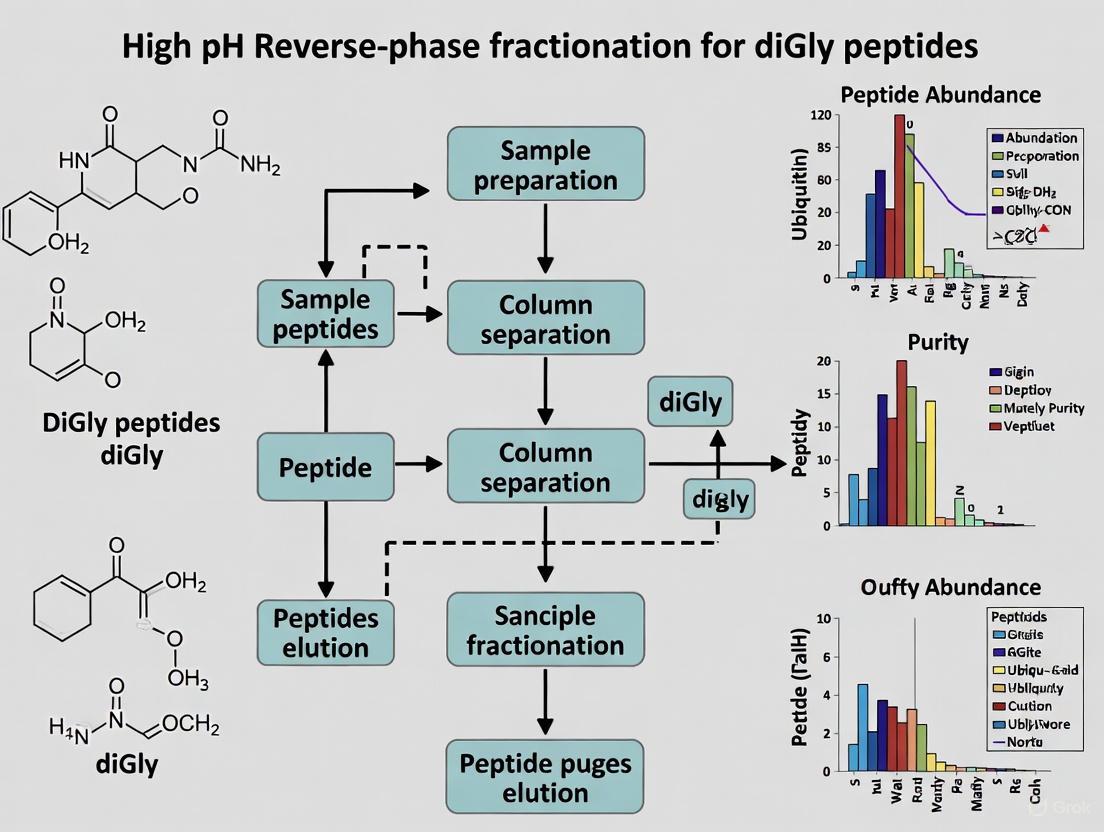
This comprehensive guide explores high pH reverse-phase fractionation as a powerful strategy for deep ubiquitinome analysis through diGly peptide enrichment.
High pH Reverse-Phase Fractionation for diGly Peptides: A Complete Guide to Deep Ubiquitinome Analysis
Abstract
This comprehensive guide explores high pH reverse-phase fractionation as a powerful strategy for deep ubiquitinome analysis through diGly peptide enrichment. Covering foundational principles to advanced applications, we detail how this orthogonal separation technique significantly improves proteome coverage, identification depth, and detection sensitivity for ubiquitination sites. The article provides actionable methodological protocols, optimization strategies for challenging samples, and comparative validation against traditional approaches like strong-cation exchange chromatography. Designed for proteomics researchers and drug development professionals, this resource demonstrates how optimized high pH fractionation enables groundbreaking discoveries in neurodegenerative disease research, circadian biology, and therapeutic development by uncovering previously inaccessible ubiquitination dynamics.
Understanding diGly Peptides and High pH Fractionation Fundamentals
What are diGly Peptides? The Ubiquitin Signature for Mass Spectrometry
In mass spectrometry-based proteomics, diglycine (diGly) peptides are signature tryptic peptides used to pinpoint sites of ubiquitination on substrate proteins. When ubiquitinated proteins are digested with the protease trypsin, a characteristic Lys-ε-Gly-Gly (diGly) remnant is left attached to the modified lysine residue. The development of highly specific antibodies against this diGly remnant has enabled the affinity enrichment and subsequent large-scale identification of ubiquitination sites, a methodology often referred to as diGly proteomics. This approach has become the cornerstone for systematically interrogating the "ubiquitinome"—the full complement of ubiquitin-modified proteins in a cell or tissue. The following application note details the critical role of high pH reversed-phase fractionation in achieving the deep coverage necessary for sophisticated ubiquitinome analyses, providing researchers with detailed protocols and context for its application in drug discovery and fundamental biological research.
Protein ubiquitylation is one of the most prevalent post-translational modifications (PTMs) within cells, regulating nearly every cellular, physiological, and pathophysiological process [1]. This modification involves the covalent attachment of the small protein ubiquitin to lysine residues on substrate proteins. The enzymatic cascade of E1 (activating), E2 (conjugating), and E3 (ligating) enzymes facilitates this process, conferring specificity to the system [2]. Once attached, ubiquitin can itself be modified on one of its seven lysine residues, leading to the formation of polyubiquitin chains. The topology of these chains encodes specific biological functions; for instance, K48-linked chains typically target substrates for proteasomal degradation, whereas K63-linked chains often play roles in non-proteolytic signaling pathways such as intracellular trafficking, kinase activation, and the DNA damage response [3].
The key to mass spectrometric detection of ubiquitylation sites lies in a specific proteolytic signature. When ubiquitinated proteins are digested with trypsin, cleavage occurs after arginine and lysine residues. However, the isopeptide bond between the C-terminal glycine of ubiquitin and the epsilon-amino group of the modified lysine on the substrate resists cleavage. This results in a tryptic peptide derived from the substrate protein that contains a Gly-Gly remnant linked to the modified lysine—the so-called diGly remnant [1]. This K-ε-Gly-Gly motif provides a unique and mass-traceable handle for identifying the exact site of ubiquitination.
It is critical to note that while ubiquitin is the primary source of diGly peptides, two related ubiquitin-like proteins (UBLs), NEDD8 and ISG15, also generate an identical diGly remnant upon tryptic digestion [1]. However, studies have shown that in unstimulated cells, the contribution of ISG15 is negligible, and the vast majority (~95%) of diGly peptides identified originate from ubiquitin rather than NEDD8 [1] [2]. The development of monoclonal antibodies that specifically recognize the diGly remnant has revolutionized the field, enabling the immunopurification of these modified peptides from complex proteomic digests for identification by liquid chromatography and tandem mass spectrometry (LC-MS/MS) [2].
The Critical Role of High pH Reverse-Phase Fractionation in DiGLY Proteomics
The stoichiometry of protein ubiquitination is typically low, meaning that only a tiny fraction of any given protein is ubiquitinated at a specific moment. Consequently, diGly-containing peptides are inherently low-abundance species within a vast background of unmodified peptides. To achieve the depth of coverage required for meaningful biological discovery, powerful enrichment and fractionation strategies are essential. High pH reverse-phase (RP) fractionation has emerged as a pivotal orthogonal separation step that dramatically increases the depth of ubiquitinome analysis by reducing sample complexity prior to the critical antibody-based enrichment of diGly peptides.
This technique separates peptides based on their hydrophobicity under basic conditions (typically pH ~10), using a stationary phase and solvents that are compatible with subsequent LC-MS/MS analysis. The orthogonality of high pH RP separation to the low pH RP chromatography used in standard LC-MS/MS methods ensures that peptide mixtures are effectively simplified, which alleviates issues of peptide suppression and maximizes the efficiency of the subsequent diGly immunoprecipitation.
Protocol: Offline High pH Reverse-Phase Fractionation
The following protocol, adapted from recent methodologies, describes a robust offline fractionation procedure [4] [5] [3].
Materials:
- Pierce High pH Reversed-Phase Peptide Fractionation Kit (Thermo Fisher Scientific, catalog # 84868) or empty column cartridges (e.g., 6 mL volume) packed with a polymeric C18 resin (300 Å pore size, 50 μm particle size).
- Buffers: 0.1% Trifluoroacetic Acid (TFA) in water, HPLC-grade water, 10 mM Ammonium Formate (pH 10), and Acetonitrile (ACN).
Procedure:
- Column Preparation: For every ~10 mg of protein digest, prepare a column with a 1:50 (w/w) ratio of protein to stationary phase material (e.g., 0.5 g of resin for 10 mg digest in a 6 mL cartridge) [3]. Condition the column with approximately 10 column volumes of 0.1% TFA, followed by 10 column volumes of water.
- Sample Loading: Load the acidified peptide mixture (in 0.5% TFA) onto the prepared column.
- Washing: Wash the column with 10 column volumes of 0.1% TFA to remove salts and other impurities, followed by 10 column volumes of water to equilibrate the column to the starting conditions for elution.
- Step-Gradient Elution: Elute the bound peptides in a step-gradient of increasing acetonitrile concentration in 10 mM ammonium formate (pH 10). A highly effective and simple scheme is to collect three distinct fractions:
- Sample Recovery: Lyophilize (freeze-dry) all collected fractions to completeness to remove the volatile solvents and buffer. The dried peptide fractions are now ready for the subsequent diGly immunoprecipitation step.
This simple three-fraction protocol has been demonstrated to enable the identification of over 23,000 diGly peptides from a single sample of HeLa cells, a significant improvement over non-fractionated approaches [5]. For even deeper coverage, more complex fractionation schemes (e.g., 96 fractions concatenated into 8 or 12 pools) can be employed, ultimately enabling the creation of spectral libraries containing over 90,000 diGly peptides [6].
The Scientist's Toolkit: Essential Reagents for diGly Proteomics
The table below summarizes key reagents and their critical functions in a typical diGly proteomics workflow.
Table 1: Essential Research Reagent Solutions for diGly Proteomics
| Reagent / Kit | Function in Workflow | Key Characteristics |
|---|---|---|
| PTMScan Ubiquitin Remnant Motif (K-ε-GG) Kit [1] | Immunoaffinity enrichment of diGly peptides from complex digests. | Contains monoclonal antibody specific for the K-ε-GG motif; conjugated to beads for pull-down. |
| Pierce High pH Reversed-Phase Peptide Fractionation Kit [7] | Orthogonal peptide fractionation to reduce sample complexity prior to enrichment. | Proprietary pH-stable resin in spin column format; improves protein identifications by ≥50%. |
| Stable Isotope Labeling Amino Acids (SILAC) [1] [2] | Metabolic labeling for quantitative comparison of ubiquitination sites between samples. | Uses "light" (K0/R0) and "heavy" (K8/R10) Lys/Arg for accurate multiplexed quantification. |
| Proteasome Inhibitors (e.g., MG132, Bortezomib) [6] [3] | Treatment to stabilize ubiquitinated proteins and increase diGly peptide yield. | Blocks degradation of polyubiquitinated proteins, increasing their abundance for detection. |
| N-Ethylmaleimide (NEM) [1] | Deubiquitylating enzyme (DUB) inhibitor in lysis buffer. | Alkylating agent that irreversibly inhibits DUBs, preserving the endogenous ubiquitinome during preparation. |
Integrated Workflow: From Cells to Ubiquitinome Data
A complete diGly proteomics workflow integrates sample preparation, fractionation, enrichment, and state-of-the-art mass spectrometry. The following diagram illustrates the key stages of this process.
Figure 1: Integrated workflow for diGly proteomics analysis.
Detailed Protocol for End-to-End Ubiquitinome Analysis
Step 1: Cell Culture and Lysis
- Culture cells in SILAC media for at least six doublings to ensure complete metabolic labeling [3].
- To stabilize the ubiquitinome, treat cells with a proteasome inhibitor such as 10 µM MG132 for 4 hours or 1 µM Bortezomib for 8 hours [2] [6].
- Lyse cells in a denaturing buffer (e.g., 8M Urea, 50 mM Tris-HCl, pH 8.0) supplemented with 5 mM N-Ethylmaleimide (NEM) to inhibit deubiquitylating enzymes (DUBs) and preserve ubiquitin modifications [1].
Step 2: Protein Digestion
- Quantify protein concentration. Reduce disulfide bonds with 5 mM dithiothreitol (DTT) and alkylate cysteine residues with 10 mM iodoacetamide.
- Perform a two-step enzymatic digestion. First, digest with LysC (1:200 enzyme-to-substrate ratio) for 4 hours, followed by an overnight digestion with trypsin (1:50 ratio) at 30°C [1] [3].
- Acidify the peptide digest with Trifluoroacetic Acid (TFA) to a final concentration of 0.5% to precipitate and remove detergents like sodium deoxycholate (DOC). Centrifuge and collect the supernatant.
Step 3: High pH Reverse-Phase Fractionation
- Perform the fractionation protocol as described in Section 2.1. The three resulting dried peptide fractions are processed separately through the subsequent diGly enrichment.
Step 4: diGly Peptide Immunoprecipitation (IP)
- For each fraction, resuspend the dried peptides in 1.4 mL of Immunoaffinity Purification (IAP) buffer (50 mM MOPS pH 7.2, 10 mM Na₂HPO₄, 50 mM NaCl) [8].
- Incubate the peptide solution with the anti-diGly antibody-conjugated beads (e.g., one batch of beads as defined by the manufacturer) for 2 hours at 4°C with gentle agitation [8].
- Wash the beads thoroughly: three times with ice-cold IAP buffer and twice with PBS to remove non-specifically bound peptides.
- Elute the bound diGly peptides with two rounds of 0.15% TFA. Desalt the pooled eluates using StageTips or commercial desalting columns.
Step 5: Mass Spectrometry and Data Analysis
- Analyze the enriched diGly peptides by LC-MS/MS. For maximum depth and quantitative accuracy, Data-Independent Acquisition (DIA) is now preferred over traditional Data-Dependent Acquisition (DDA). DIA has been shown to identify over 35,000 distinct diGly peptides in a single measurement with superior quantitative accuracy and data completeness [6].
- Use specialized software (e.g., Spectronaut, DIA-NN, MaxQuant) to search the acquired spectra against a protein sequence database and a comprehensive diGly spectral library for peptide identification and site localization.
- Perform statistical analysis to determine significant changes in diGly site abundance across experimental conditions.
Performance Benchmarks and Applications
The implementation of high pH fractionation and optimized diGly enrichment has led to a dramatic increase in the scale and quantitative precision of ubiquitinome analyses. The following table summarizes key performance metrics from recent seminal studies.
Table 2: Quantitative Performance of diGly Proteomics Workflows
| Study / Method | Sample Type | Key Workflow Features | Identified diGly Sites | Quantitative Precision |
|---|---|---|---|---|
| Standard DDA with Fractionation [5] | HeLa cells (MG132) | Offline high-pH RP (3 fractions), diGly-IP | >23,000 sites | Not specified (Label-free) |
| SILAC-based DDA [2] | HCT116 cells (Bortezomib) | Metabolic labeling, diGly-IP | 19,000+ sites in ~5,000 proteins | Quantified temporal changes upon proteasome inhibition |
| Optimized DIA [6] | HEK293 cells (MG132) | Deep spectral library, optimized DIA, diGly-IP | ~35,000 sites in single runs | 45% of peptides with CV <20% |
| In Vivo Application [5] [3] | Mouse brain tissue | High-pH RP fractionation, diGly-IP | Deep coverage of endogenous ubiquitinome | Demonstrated feasibility for complex tissues |
The power of diGly proteomics extends far from mere cataloging. It has been successfully applied to:
- Identify E3 Ligase Substrates: Coupling diGly proteomics with inducible RNAi against specific E3 ligases (e.g., HUWE1) has led to the discovery of novel substrates like DDIT4 [9].
- Decipher Signaling Pathways: Application to TNFα signaling has comprehensively captured known ubiquitination events while adding many novel regulatory sites [6].
- Investigate Circadian Biology: Systems-wide analysis across the circadian cycle uncovered hundreds of rhythmically ubiquitinated proteins, revealing new connections between ubiquitin-mediated proteostasis and metabolism [6].
- Monitor Protein Homeostasis: Quantitative tracking of diGly site changes in response to proteotoxic stress provides a dynamic readout of cellular protein homeostasis (proteostasis) function [10].
DiGly peptides provide a direct and interpretable mass spectrometric signature for ubiquitination, making them an indispensable tool for modern proteomics. The integration of high pH reverse-phase fractionation is a critical step that empowers researchers to achieve the deep, comprehensive ubiquitinome coverage required for meaningful biological discovery and drug target identification. As mass spectrometry technology continues to advance, particularly with the adoption of DIA methods, the sensitivity, reproducibility, and quantitative accuracy of diGly proteomics will only increase. This robust workflow now enables the systematic and quantitative assessment of ubiquitin signaling across diverse biological systems, from cultured cells to complex in vivo models, opening new frontiers in our understanding of this crucial regulatory system in health and disease.
In proteomic research, the deep analysis of complex peptide mixtures, such as those generated for diGly peptide enrichment in ubiquitination studies, demands highly resolutive and orthogonal separation techniques. High pH Reverse-Phase Chromatography (High pH RP) has emerged as a powerful first-dimension fractionation method in multidimensional liquid chromatography (MDLC) workflows. Its core principle lies in exploiting a different selectivity mechanism compared to standard low pH Reverse-Phase Chromatography, thereby providing exceptional orthogonality. This application note details the fundamental principles of High pH RP, its quantitative advantages for comprehensive proteome coverage, and provides a detailed protocol for its implementation, specifically framed within the context of diGly peptide research.
Core Separation Principles
The exceptional utility of High pH RP in orthogonal separations stems from two foundational principles: a distinct mechanism of peptide retention and a powerful fraction concatenation strategy.
Peptide Retention Mechanism at High pH: The chromatographic behavior of peptides in a reversed-phase column is governed by their hydrophobicity and their ionization state. At a high pH (typically pH 10), the acidic residues (aspartic and glutamic acid) and the C-terminus of peptides are deprotonated, carrying a negative charge. Conversely, the basic residues (arginine, lysine, and histidine) are largely uncharged. This dramatically alters the overall hydrophobicity and interaction with the stationary phase compared to low pH (pH ~2.7), where acidic groups are neutral and basic groups are protonated. This shift in charge distribution causes a significant change in elution order for many peptides, making the separation orthogonal to standard low pH RP-MS analyses [11] [12] [13].
The Role of Fraction Concatenation: To maximize the orthogonality and efficiency of a two-dimensional (2D) LC setup, a concatenation strategy is employed after the first-dimension High pH RP separation. Instead of combining adjacent fractions, this method pools fractions that are widely spaced in the elution profile (e.g., Fraction 1, 16, 31, 46). This approach ensures that each pooled "concatenated fraction" contains peptides from the early, middle, and late segments of the first-dimension gradient. When these concatenated fractions are subsequently analyzed by low pH RP-MS, the peptides are spread across the entire chromatographic window of the second dimension, resulting in a more uniform utilization of the separation space and a significant reduction in repeated sampling of the same peptides [11] [12]. The workflow and its benefit are illustrated below.
Performance Data and Comparative Analysis
When evaluated against traditional strong cation exchange (SCX) chromatography, the High pH RP strategy with concatenation demonstrates superior performance in key metrics for shotgun proteomics, a foundation for diGly peptide analysis.
Table 1: Quantitative Comparison of First-Dimension Fractionation Techniques
| Performance Metric | Strong Cation Exchange (SCX) | Concatenated High pH RP | Improvement Factor |
|---|---|---|---|
| Unique Peptide Identifications | Baseline | ~37,633 [12] | 1.8-fold [11] [12] |
| Unique Protein Identifications | Baseline | ~4,363 [12] | 1.6-fold [11] [12] |
| Separation Orthogonality | Moderate (peptide grouping by charge) | High (uniform 2D space coverage) | Significantly Improved [11] |
| Sample Processing | Requires desalting steps | Desalting often unnecessary | Simplified, reduced time [11] [14] |
| Estimated Sample Loss | High (can be ≥50%) | Reduced | Critical for limited samples [11] |
The data in Table 1 underscores the tangible benefits of the High pH RP approach. The ~80% increase in peptide identifications translates to a deeper probing of the proteome, which is directly relevant for detecting low-abundance modified peptides like diGly-containing peptides. Furthermore, the reduced sample loss is a critical advantage for clinical samples or precious enriched ubiquitome preparations where material is limited [11].
Detailed Experimental Protocol
This protocol is designed for the off-line first-dimension fractionation of a complex peptide mixture, such as a tryptic digest following diGly peptide enrichment.
Materials and Reagent Setup
The Scientist's Toolkit: Essential Reagents and Equipment
| Item | Function/Description |
|---|---|
| HPLC System | An HPLC system with a quaternary pump, degasser, and fraction collector (e.g., Agilent 1100 series, Thermo Accela). |
| XBridge BEH C18 Column | 250 mm x 4.6 mm, 5 µm particles (e.g., Waters). Stable at high pH. |
| Ammonium Formate, NH₄HCO₃ | For preparation of volatile, MS-compatible high pH mobile phases. |
| Acetonitrile (ACN) | HPLC-grade organic solvent for the mobile phase. |
| Water | HPLC-grade water (e.g., Barnstead Nanopure purified). |
| Speed-Vac Concentrator | For drying down collected fractions. |
- Mobile Phase A (MPA): 10 mM Ammonium Formate in water. Adjust to pH 10.0 using ammonium hydroxide.
- Mobile Phase B (MPB): 10 mM Ammonium Formate in 90% Acetonitrile/10% water. Adjust to pH 10.0.
Step-by-Step Procedure
- Sample Preparation: Reconstitute your dried peptide sample (e.g., 100-500 µg) in Mobile Phase A. A note of significant value: desalting is often not necessary prior to High pH RP fractionation, simplifying processing and minimizing sample loss [11] [12].
- Column Equilibration: Equilibrate the C18 column with 5% MPB at a flow rate of 0.5 mL/min until a stable UV baseline is observed (typically 10-15 minutes, monitoring at 214 nm or 280 nm).
- Sample Loading and Separation: Inject the sample onto the column. Execute the following linear gradient:
- 0-10 min: Hold at 5% MPB.
- 10-70 min: Ramp from 5% to 35% MPB.
- 70-85 min: Ramp from 35% to 70% MPB.
- 85-95 min: Hold at 70% MPB for column cleaning.
- 95-105 min: Re-equilibrate to 5% MPB.
- Fraction Collection: Collect 60 fractions at regular intervals (e.g., one fraction per minute) throughout the entire gradient elution.
- Fraction Concatenation: Pool the 60 fractions into 15 final concatenated fractions using a non-adjacent pooling scheme. For example:
- Concatenated Fraction 1: Combine original fractions 1, 16, 31, 46.
- Concatenated Fraction 2: Combine original fractions 2, 17, 32, 47.
- Continue this pattern until all 60 fractions are pooled into 15.
- Sample Drying: Dry down the concatenated fractions completely using a Speed-Vac concentrator.
- Second-Dimension Analysis: Store the dried fractions at -80°C until ready for reconstitution and analysis by standard low pH RPLC-MS/MS.
Applications in diGly Peptide Research
The principles and protocols described above are directly applicable and highly beneficial for research focused on ubiquitination via diGly peptide enrichment.
- Enhanced Coverage of the Ubiquitinome: The 1.8-fold increase in peptide identification power directly enables the detection of a greater number of low-abundance endogenous diGly peptides, leading to a more comprehensive profiling of the ubiquitinome [11].
- Reduced Sample Loss for Enriched Samples: The simplified workflow and elimination of desalting steps are crucial because sample losses are cumulative. After undergoing immunoaffinity enrichment for diGly peptides, which is a low-yield process, preserving as much material as possible for downstream LC-MS is paramount. The High pH RP workflow directly addresses this need [11].
- Improved Separation of Critical Pairs: The altered selectivity at high pH can resolve peptides that are otherwise co-eluted at low pH. This is particularly valuable for separating isomeric peptides or distinguishing deamidated forms from endogenous diGly peptides, a common challenge in this field [13].
High pH Reverse-Phase Chromatography is not merely an alternative to SCX; it represents a superior first-dimension fractionation strategy for in-depth proteomics. Its core principles—altered peptide selectivity at alkaline pH and efficient use of the separation space through fraction concatenation—provide demonstrable gains in proteomic coverage, simplicity, and sample recovery. For scientists engaged in diGly peptide research, adopting this robust and effective methodology can significantly enhance the depth and reliability of ubiquitination studies, ultimately contributing to a better understanding of this critical post-translational modification in health and disease.
The analysis of post-translational modifications (PTMs), such as protein ubiquitylation, presents a significant challenge in proteomics due to the low stoichiometry of modified peptides against a backdrop of highly complex biological samples. The detection of ubiquitylation sites typically relies on the immunopurification of tryptic peptides containing a K-ε-diglycine (diGly) remnant, but the depth of this analysis is often limited by sample complexity [5]. High pH reverse-phase (RP) liquid chromatography as a first-dimension fractionation step prior to low pH RP-LC-MS/MS has emerged as a powerful strategy to overcome this limitation. This application note details why the orthogonality of high pH and low pH reversed-phase systems provides a superior separation foundation for in-depth diGly peptide research, and provides a detailed protocol for its implementation.
The core advantage of this two-dimensional (2D) separation stems from the orthogonal separation mechanisms at high and low pH. While both dimensions utilize reversed-phase chromatography, the change in pH significantly alters the physicochemical properties of peptides. At high pH, the charge distribution within peptide chains changes, affecting their hydrophobicity and resulting in a distinct elution profile compared to low pH separations [11]. This orthogonality, when combined with fraction concatenation, maximizes peak capacity and provides a more uniform coverage of the separation space compared to traditional methods like strong-cation exchange (SCX), leading to dramatic improvements in proteome coverage and the detection of low-abundance modified peptides [11].
Theoretical Basis: The Mechanism of Orthogonality
The exceptional performance of the high pH/low pH RP-LC system is rooted in a fundamental change in peptide properties with mobile phase pH. Although the same hydrophobic stationary phase is used in both dimensions, the alteration in pH directly impacts the ionization state of acidic and basic amino acid side chains, thereby modulating peptide hydrophobicity and retention.
Charge Distribution and Hydrophobicity: The pH of the mobile phase governs the protonation state of ionizable groups on peptides (e.g., carboxylic acids on aspartic and glutamic acid, basic amines on lysine and the N-terminus). At a low pH (e.g., ~2.5-3), common for standard LC-MS/MS, carboxylic acids are protonated and neutral, while basic residues are fully protonated and carry positive charges. In contrast, at a high pH (e.g., ~10), carboxylic acids are deprotonated and negatively charged, while basic residues become deprotonated and neutral [11] [15]. This shift in charge distribution alters the overall hydrophobicity of the peptide, causing its retention time on the same reversed-phase material to differ significantly between the two pH conditions.
Superior Orthogonality over SCX: Strong-cation exchange (SCX), a historically popular first-dimension separation, groups peptides based on their charge. However, most tryptic peptides carry 2+, 3+, and 4+ charges, leading to non-uniform clustering in the 2D separation space and reduced overall separation efficiency [11]. Conversely, concatenated high pH RP-LC spreads peptides more uniformly across the entire low pH RP separation window, resulting in a much more effective utilization of the available peak capacity and a greater number of identifications [11].
The following diagram illustrates the superior orthogonality and uniform coverage achieved by a high pH/low pH system compared to other common 2D-LC approaches.
Quantitative Performance and Applications in diGly Research
The implementation of high pH RP fractionation has yielded substantial quantitative improvements in proteomic analyses, which are particularly critical for the detection of low-abundance diGly peptides.
Table 1: Performance Gains from High pH RP Fractionation in Proteomic Studies
| Application Context | Performance Metric | Without Fractionation | With High pH RP Fractionation | Improvement | Reference |
|---|---|---|---|---|---|
| Global Proteomics (Nuclear Extracts) | Proteins Identified | 3,344 | 8,896 | ~2.7-fold | [16] |
| Peptides Identified | 23,093 | 138,417 | ~6.0-fold | [16] | |
| 2D-LC-MS/MS (MCF10A Cell Digest) | Unique Peptides Identified | ~20,907* | 37,633 | ~1.8-fold | [11] |
| Unique Proteins Identified (≥2 peptides) | ~2,727* | 4,363 | ~1.6-fold | [11] | |
| Ubiquitylation Site Analysis (HeLa Cells) | diGly Peptides Identified | Not Reported | >23,000 | Significant depth enabled by fractionation | [5] |
| Targeted Proteomics (Low-Abundance Proteins) | Peptide Signal Intensity | Baseline | Up to 18-fold increase | Enhanced detection & quantitation | [16] |
*Estimated baseline from SCX-RPLC method used for comparison in [11].
A specific study on ubiquitylation site detection demonstrated that integrating a fast, offline high pH reverse-phase fractionation step (into only three fractions) prior to diGly peptide immunopurification enabled the identification of over 23,000 diGly peptides from a single HeLa cell sample upon proteasome inhibition [5]. This simple modification to the workflow, coupled with improved wash steps and peptide fragmentation control, resulted in a robust method for uncovering the "deep ubiquitinome" of both cell lines and complex in vivo samples like mouse brain tissue [5].
Detailed Experimental Protocol: High pH RP Fractionation for diGly Peptide Analysis
This protocol is adapted from established methodologies for in-depth ubiquitinome analysis [5] and micro-flow fractionation for limited samples [16].
Research Reagent Solutions
Table 2: Essential Materials and Reagents
| Item | Function/Description | Example |
|---|---|---|
| RP Column (High pH) | Separates peptides by hydrophobicity at high pH. | C18 column (e.g., 2.1 mm i.d. x 150 mm, 3 µm particles) |
| HPLC System | Delivers high-precision gradient for fractionation. | Any system capable of micro-flow rates (e.g., 50-100 µL/min) |
| Ammonium Bicarbonate (ABC) | Volatile buffer for high-pH mobile phase; ensures system stability and MS-compatibility. | 5-10 mM, pH 10 [16] |
| Acetonitrile (ACN) | Organic modifier for RP gradient elution. | LC-MS Grade |
| Formic Acid (FA) | Acidifies samples for low pH LC-MS/MS analysis; used in low-pH mobile phase. | LC-MS Grade |
| diGly Antibody Beads | Immunoaffinity enrichment of K-ε-diglycine remnant peptides. | Commercial Agarose/Resin Conjugates |
Step-by-Step Procedure
Step 1: Sample Preparation and Tryptic Digestion
- Isolate proteins from your source material (e.g., cells, tissue).
- Reduce, alkylate, and digest proteins into peptides using trypsin following standard protocols.
- Desalt the resulting peptide mixture using a C18 solid-phase extraction (SPE) cartridge. Dry the eluted peptides completely in a vacuum concentrator.
Step 2: High pH Reverse-Phase Fractionation
- Reconstitution: Reconstitute the dried peptide pellet in 0.5-1.0 mL of 5 mM ammonium bicarbonate, pH 10 [16]. Gently vortex to ensure full dissolution.
- LC Setup: Install a C18 column suitable for high pH operation. Use mobile phase A: 5 mM ammonium bicarbonate, pH 10 and mobile phase B: acetonitrile.
- Fractionation Gradient: Inject the reconstituted peptide sample. Run a shallow linear gradient (e.g., 5-35% B over 60 minutes) at a micro-flow rate (e.g., 50-100 µL/min) to achieve high-resolution separation [5] [16].
- Fraction Collection: Based on the UV chromatogram (e.g., 214 nm), collect fractions at regular time intervals across the entire peptide elution window. For a balance between depth and throughput, collecting 24-60 fractions is typical [11].
Step 3: Fraction Concatenation
- To maximize orthogonality and reduce the number of subsequent analyses, pool non-adjacent fractions. For example, if 60 fractions are collected, pool them into 12-15 final fractions by combining fractions 1, 13, 25, 37, and 49 into concatenated fraction "A"; fractions 2, 14, 26, 38, and 50 into fraction "B"; and so on [11]. This ensures each final fraction contains peptides from across the entire high pH elution range.
Step 4: Enrichment of diGly Peptides
- Dry the concatenated fractions completely.
- Reconstitute each fraction in Immunoprecipiation (IP) Buffer (e.g., 50 mM MOPS-NaOH, pH 7.2, 10 mM Na₂HPO₄, 50 mM NaCl).
- Incubate each fraction with diGly motif-specific antibody-conjugated beads overnight at 4°C with gentle agitation [5].
- The next day, wash the beads stringently with IP buffer and then with water to remove non-specifically bound peptides.
Step 5: Low pH LC-MS/MS Analysis
- Elute the enriched diGly peptides from the antibody beads using a low-pH aqueous solution (e.g., 0.1-0.5% formic acid).
- Analyze each eluate by standard low pH nano-flow RP-LC-MS/MS using a C18 column and a gradient eluted with 0.1% formic acid in water and acetonitrile.
The complete workflow, from sample preparation to MS analysis, is summarized below.
The high pH/low pH RP-LC strategy represents a significant advancement for proteomic analyses requiring great depth, particularly the study of PTMs like ubiquitylation. Its primary benefits include:
- Enhanced Detection of Low-Abundance Species: By reducing sample complexity before immunoenrichment, this method significantly increases the likelihood of detecting low-stoichiometry diGly peptides, with studies showing signal enhancements of up to 18-fold for targeted assays [16].
- Reduced Sample Loss: The strategy eliminates the need for desalting steps between the two LC dimensions, which is a common source of sample loss in SCX-based methods. This is crucial when working with precious or limited samples [11].
- Streamlined Workflow and High Reproducibility: Peptide-level fractionation is more amenable to automation and is highly reproducible, making it more compatible with quantitative biomarker validation methods like stable isotope dilution [17].
In conclusion, the orthogonality provided by high pH and low pH reversed-phase systems is not merely an academic curiosity but a practical and powerful tool. The distinct separation selectivities at different pH values enable a more uniform and comprehensive fractionation of complex peptide mixtures. When applied to diGly peptide research, this advantage directly translates into an unprecedented depth of ubiquitinome analysis, allowing researchers to uncover novel insights into the roles of protein ubiquitylation in health and disease.
In-depth proteomic analysis, particularly for the study of specific post-translational modifications like lysine-linked glycine (diGly) peptides in ubiquitination studies, requires effective peptide fractionation to reduce sample complexity prior to LC-MS/MS analysis. For years, strong cation exchange (SCX) chromatography has been a widely adopted first-dimension separation method. However, SCX presents significant limitations including inadequate peptide resolution, substantial sample losses during desalting steps, and variable recovery that compromises reproducibility [11].
High pH reversed-phase (high-pH RP) fractionation has emerged as a powerful alternative, offering superior orthogonality to low-pH reversed-phase LC-MS systems. This application note details the key advantages of high-pH RP over traditional SCX, supported by quantitative data and detailed protocols, providing a robust framework for its implementation in diGly peptide research and drug development workflows.
Performance Comparison: Quantitative Advantages of High-pH RP
Independent studies consistently demonstrate that high-pH RP fractionation outperforms SCX across critical performance metrics essential for reliable proteomic analysis, including identification numbers, resolution, and sample recovery.
Table 1: Comparative Performance of High-pH RP vs. SCX Fractionation
| Performance Metric | Strong Cation Exchange (SCX) | High-pH Reversed-Phase | Improvement | Source |
|---|---|---|---|---|
| Peptide Identifications | 20,907 (from tryptic human digest) | 37,633 (from tryptic human digest) | ~80% increase [11] | |
| Protein Identifications | 2,727 (from tryptic human digest) | 4,363 (from tryptic human digest) | ~60% increase [11] | |
| Protein IDs vs. Unfractionated | Not specified | ≥ 50% increase | N/A | [18] [7] |
| Separation Orthogonality | Limited; peptides group by charge | High; uniform 2D space coverage | Superior utilization of separation window | [11] |
| Sample Recovery | Poor due to required desalting steps | High; no desalting needed | Reduced sample losses (often >50%) | [11] |
The orthogonality of high-pH RP is visually apparent in the more uniform distribution of peptides across the two-dimensional separation space compared to SCX, which tends to group tryptic peptides (typically carrying 2+, 3+, and 4+ charges) non-uniformly [11]. Furthermore, high-pH RP eliminates the need for sample desalting before or after fractionation, a step that typically results in significant sample losses—often around 50% or more—making it particularly advantageous for precious clinical or limited samples [11].
Experimental Protocols
Protocol: High-pH Reversed-Phase Fractionation Using a Commercial Kit
This protocol is adapted for the Pierce High pH Reversed-Phase Peptide Fractionation Kit and is suitable for fractionating 10-100 μg of peptide sample, including diGly-modified peptides [18] [7].
Materials and Reagents:
- Pierce High pH Reversed-Phase Peptide Fractionation Kit (contains spin columns and 0.1% triethylamine buffer)
- Microcentrifuge
- Peptide sample (digested proteins)
- Acetonitrile (ACN)
- Elution solvent (0.1% triethylamine in water, pH 10)
- Collection tubes
Step-by-Step Procedure:
- Conditioning: Add 200 μL of acetonitrile to a spin column. Centrifuge at 3,000 × g for 1 minute. Discard the flow-through.
- Equilibration: Add 200 μL of 0.1% triethylamine (elution solvent) to the column. Centrifuge at 3,000 × g for 1 minute. Discard the flow-through. Repeat this step once.
- Sample Loading: Dissolve the peptide sample in 100-200 μL of 0.1% triethylamine. Load onto the center of the resin bed. Centrifuge at 3,000 × g for 1 minute. Collect the flow-through if desired, as it may contain very hydrophilic peptides.
- Washing: Add 200 μL of 0.1% triethylamine. Centrifuge at 3,000 × g for 1 minute. Discard the flow-through.
- Fraction Elution: Elute peptides in a stepwise gradient of increasing acetonitrile concentration in 0.1% triethylamine (e.g., 5%, 7.5%, 10%, 12.5%, 15%, 17.5%, 20%, and 50% ACN). For each step:
- Add 200 μL of the specific ACN elution solvent.
- Centrifuge at 3,000 × g for 1 minute.
- Collect the eluate in a fresh tube.
- This yields 8 distinct fractions.
- Acidification and Storage: Acidify each fraction with formic acid (to ~pH <3) for MS compatibility. Samples can be dried in a SpeedVac concentrator and stored at -80°C until LC-MS/MS analysis.
Protocol: Micro-Flow High-pH RP for Limited Samples
This method is optimized for small sample amounts (30-60 μg) and uses ammonium bicarbonate as a stable buffer, increasing detection of low-abundance proteins [19].
Materials and Reagents:
- HPLC system capable of micro-flow rates
- High-pH stable C18 column (e.g., 2.1 mm inner diameter)
- Ammonium bicarbonate buffer (pH 10)
- Acetonitrile (ACN)
- Peptide sample
Step-by-Step Procedure:
- System Setup: Configure the micro-flow LC system with a C18 column. Use a binary solvent system: Mobile Phase A (5 mM ammonium bicarbonate, pH 10) and Mobile Phase B (90% ACN, 5 mM ammonium bicarbonate, pH 10).
- Sample Loading: Dissolve the dried peptide sample in Mobile Phase A and load onto the column.
- Gradient Elution and Fraction Collection: Run a linear gradient from 2% to 40% Mobile Phase B over 60 minutes at a micro-flow rate (e.g., 10-50 μL/min). Collect fractions at regular time intervals (e.g., 1-minute intervals) or based on UV trigger.
- Fraction Concatenation: To maximize orthogonality and reduce the number of analyses, pool fractions from non-adjacent time intervals. For example, if 60 fractions are collected, pool fractions 1, 13, 25, 37, and 49 to create "Concatenated Fraction 1." Repeat for fractions 2, 14, 26, 38, 50, and so on, to create 12 post-concatenation fractions [11].
- Analysis: Acidify and analyze concatenated fractions by standard low-pH RP LC-MS/MS.
Workflow and Mechanism Visualization
The following diagram illustrates the core mechanism and workflow of high-pH reversed-phase fractionation, highlighting its orthogonality to the second dimension low-pH LC-MS analysis.
High-pH RP Fractionation Workflow and Mechanism. The process begins with a complex peptide mixture, which undergoes high-pH RP separation where peptides are resolved by hydrophobicity under alkaline conditions. The collected fractions are often concatenated before the final, orthogonal low-pH RPLC-MS/MS analysis, leading to a significant increase in protein and peptide identifications.
The Scientist's Toolkit: Essential Research Reagent Solutions
Table 2: Key Reagents and Kits for High-pH Reversed-Phase Fractionation
| Item Name | Function/Application | Key Features |
|---|---|---|
| Pierce High pH Reversed-Phase Peptide Fractionation Kit | Fractionation of complex peptide samples for deep proteome and diGly peptide analysis. | Spin-column format; proprietary pH-resistant resin; no desalting needed; suitable for 10-100 μg peptides [18] [7]. |
| PolySulfoethyl A SCX Column | For alternative SCX fractionation or multidimensional setups (e.g., ReST, cross-linking). | 5 μm particles; used in online and offline SCX workflows [20]. |
| Triethylamine (TEA) Buffer | Standard high-pH mobile phase for reversed-phase fractionation. | Typically used as 0.1% solution in water (pH ~10) [18] [7]. |
| Ammonium Bicarbonate Buffer | Alternative high-pH buffer for system stability in micro-flow applications. | Optimized for robustness and minimal LC clogging issues [19]. |
| C18 Microcolumns / StageTips | For micro-gradient fractionation and sample clean-up. | Used in custom, low-volume fractionation setups [21]. |
| Titansphere TiO2 Microspheres | For phosphopeptide enrichment prior to fractionation. | 5 μm spheres for metal oxide affinity chromatography (MOAC) [21]. |
Application-Specific Considerations for diGly Peptide Research
The benefits of high-pH RP fractionation are particularly impactful for the analysis of post-translational modifications (PTMs). While data-driven rescoring platforms have shown challenges with PTM-rich samples—with one study noting up to 75% of lost peptides exhibited PTMs—comprehensive fractionation at the peptide level remains a more robust strategy for deepening PTM coverage [22].
For diGly peptide research, high-pH RP offers distinct advantages. The hydrophobicity-based separation mechanism is highly complementary to the standard low-pH RP separation used in LC-MS, increasing the probability of separating and detecting low-abundance ubiquitinated peptides. Furthermore, the elimination of desalting steps minimizes sample loss, which is critical for preserving often-substoichiometric levels of diGly peptides. The high reproducibility of high-pH RP, with elution profiles varying by less than 20%, ensures that quantitative results across sample cohorts are reliable, a cornerstone of successful biomarker discovery and drug development [18] [7].
The Ubiquitin-Proteasome System (UPS) represents a crucial regulatory pathway for protein degradation and signaling in eukaryotic cells. Within this system, protein ubiquitination—the covalent attachment of the 76-amino acid protein ubiquitin to lysine residues on target substrates—serves as a primary signal directing proteins for proteasomal degradation or functional modulation [1]. The discovery that tryptic digestion of ubiquitylated proteins generates peptides with a characteristic diglycine (diGly) remnant conjugated to the ε-amino group of modified lysines has revolutionized our ability to study ubiquitination events at a systems-wide scale [1] [4]. This diGly signature, recognized by specific antibodies, enables enrichment and mass spectrometry-based identification of ubiquitination sites, providing unprecedented insights into the regulatory scope of the UPS [1] [5].
The integration of high pH reverse-phase fractionation into diGly analysis workflows has substantially enhanced our capacity to explore the deep ubiquitinome. This technique reduces sample complexity prior to diGly immunoenrichment, significantly improving the depth and reliability of ubiquitination site identification [5] [3]. As research continues to elucidate the complex relationships between ubiquitination patterns and cellular physiology, diGly proteomics has emerged as an indispensable tool for deciphering the biological context of UPS function in both health and disease.
Biological Context of the Ubiquitin-Proteasome System
Regulatory Roles of Ubiquitination
Protein ubiquitination governs virtually all cellular processes through sophisticated regulatory mechanisms. The modification typically involves a cascade of E1 (activating), E2 (conjugating), and E3 (ligating) enzymes that covalently attach ubiquitin to target proteins [6]. This system exhibits remarkable versatility—ubiquitin itself contains seven lysine residues (K6, K11, K27, K29, K33, K48, K63) that can serve as linkage sites for polyubiquitin chain formation, with different chain topologies encoding distinct cellular functions [23] [6]. While K48-linked chains predominantly target substrates for proteasomal degradation, K63-linked chains play key roles in non-proteolytic processes including intracellular trafficking, kinase signaling, and DNA damage response [3].
The UPS exerts precise control over protein quality through several specialized mechanisms. During ribosome-associated protein quality control (RQC), ubiquitination of ribosomal proteins like RPS10 and RPS20 by E2 enzymes such as UBE2D3 directs faulty nascent chains for degradation [24]. Similarly, the PARKIN-PINK1 pathway orchestrates mitophagy by depositing ubiquitin chains on damaged mitochondria, marking them for autophagic clearance [23]. These examples illustrate how specific ubiquitination events coordinate protein quality control mechanisms essential for cellular homeostasis.
The diGly Signature as a Ubiquitin Footprint
The diGly remnant (K-ε-GG) serves as a specific footprint of ubiquitination that persists after tryptic digestion. This signature arises because trypsin cleaves after arginine and lysine residues, but the isopeptide bond between the substrate lysine and ubiquitin's C-terminal glycine resists proteolysis, leaving a glycine-glycine moiety attached to the modified lysine [1] [3]. Antibodies developed against this diGly motif enable highly specific enrichment of formerly ubiquitinated peptides from complex biological samples, facilitating comprehensive ubiquitinome mapping [1].
It is important to note that identical diGly remnants can theoretically originate from ubiquitin-like modifiers such as NEDD8 and ISG15, which share the C-terminal glycine-glycine motif [1]. However, empirical studies demonstrate that approximately 95% of diGly peptides captured by this approach derive from genuine ubiquitination events, with less than 6% attributable to ubiquitin-like modifications [1] [6]. This high specificity, combined with the method's sensitivity, has established diGly proteomics as the gold standard for system-wide ubiquitination analysis.
High pH Reverse-Phase Fractionation for diGly Proteomics
Principles and Benefits in diGly Analysis
High pH reverse-phase fractionation employs alkaline mobile phases (typically pH ≈10) with acetonitrile gradients to separate peptides based on hydrophobicity before diGly enrichment. This orthogonal separation strategy dramatically reduces sample complexity, minimizing competition during subsequent antibody-based enrichment and significantly enhancing detection of low-abundance ubiquitination sites [5] [3]. The technique provides excellent orthogonality to the low pH reverse-phase chromatography typically used in LC-MS/MS analysis, maximizing proteome coverage [7].
Commercial kits specifically designed for this application incorporate proprietary reversed-phase resins in user-friendly spin column formats. These systems enable efficient fractionation of 10-100μg peptide samples without requiring desalting steps before LC-MS analysis, simplifying workflow integration [7]. When applied to diGly proteomics, this pre-fractionation approach typically increases protein identifications by ≥50% compared to unfractionated samples, with elution profiles varying by less than 20% between replicates [7].
Technical Implementation and Optimization
Effective implementation requires careful method optimization based on sample characteristics. For typical tryptic digests from cell lines or tissues, fractionation into 3-8 fractions provides an optimal balance between depth of coverage and analytical throughput [5] [3]. The following table summarizes key performance metrics from published studies incorporating high pH fractionation in diGly workflows:
Table 1: Performance Metrics of diGly Proteomics with High pH Fractionation
| Sample Type | Fractionation Scheme | diGly Peptides Identified | Key Methodological Notes | Reference |
|---|---|---|---|---|
| HeLa cells (proteasome inhibited) | 3 fractions (7%, 13.5%, 50% AcN) | >23,000 | Offline high-pH RP with polymeric C18 material (300Å, 50μm) | [5] [3] |
| HEK293 cells (MG132 treated) | 96 fractions concatenated to 8 | 67,000 (library) | Separate handling of K48-peptide pools to reduce competition | [6] |
| Mouse brain tissue | 3 fractions | ~10,000 | Effective for complex tissue samples | [5] [3] |
| U2OS cells (untreated) | 96 fractions concatenated to 8 | 6,000 additional sites | Library depth enhances single-shot DIA identifications | [6] |
A critical consideration in fractionation design involves managing highly abundant diGly peptides—particularly the K48-linked ubiquitin chain-derived peptide—which can compete for antibody binding sites and suppress detection of less abundant species [6]. Some advanced workflows address this by separately processing fractions containing abundant diGly peptides, thereby improving overall coverage [6].
Figure 1: Workflow integrating high pH reverse-phase fractionation for deep diGly proteome analysis. The fractionation step significantly reduces sample complexity before diGly immunoenrichment, enabling more comprehensive ubiquitinome coverage.
Quantitative diGly Proteomics: Methodological Advances
Acquisition Strategies and Their Applications
Quantitative diGly proteomics has evolved substantially with the adoption of advanced mass spectrometry acquisition strategies. The table below compares the primary quantification approaches used in contemporary ubiquitinome research:
Table 2: Comparison of Quantitative Methodologies in diGly Proteomics
| Method | Multiplexing Capacity | Typical CV | Sites Identified (Single Experiment) | Best Applications | Key References |
|---|---|---|---|---|---|
| Label-Free (DDA) | Unlimited (sequential) | 15-25% | ~20,000 | Large sample cohorts, tissue analysis | [5] [24] |
| SILAC | 2-3 plex | 10-15% | ~10,000-15,000 | Cell culture studies, substrate identification | [1] [24] |
| TMT/Isobaric Tags | 6-16 plex | 6-10% | 8,000-36,000 | Time courses, multi-condition experiments | [23] |
| DIA | Unlimited (sequential) | <10% | 35,000+ | High-completeness studies, signaling dynamics | [6] |
Data Independent Acquisition (DIA) has emerged as a particularly powerful approach for diGly analysis, demonstrating superior sensitivity and quantitative accuracy compared to data-dependent acquisition (DDA) methods [6]. In head-to-head comparisons, DIA identified approximately 35,000 diGly peptides in single measurements of proteasome inhibitor-treated cells—nearly double the number identified by DDA—with significantly lower coefficients of variation (45% of peptides with CVs <20% versus 15% for DDA) [6].
Experimental Design Considerations
Selection of an appropriate quantification strategy depends on multiple experimental factors. For dynamic systems such as signaling cascades or circadian regulation studies, high multiplexity approaches like TMT labeling provide unparalleled capabilities to capture temporal changes [23] [6]. When analyzing limited biological materials such as clinical specimens or tissue biopsies, DIA methods offer superior sensitivity and data completeness [6]. For substrate identification studies focused on specific E3 ligases or E2 enzymes, SILAC-based approaches have proven highly effective in characterizing enzyme-substrate relationships [24].
Regardless of the quantification method selected, careful attention to antibody-to-peptide ratios during diGly enrichment is essential for reproducible results. Overloading the IP system, particularly with abundant K48-linked peptides following proteasome inhibition, can compromise quantification accuracy and depth of coverage [23]. Titration experiments indicate that enrichment from 1mg of peptide material using approximately 30μg of anti-diGly antibody typically provides optimal results for most applications [6].
Detailed Experimental Protocol
Sample Preparation and Fractionation
Note: This protocol assumes starting material of 10mg protein from cultured cells or tissue. Adjust scales proportionally for different input amounts.
Cell Culture and Lysis
- Culture cells in appropriate medium (for SILAC experiments, use DMEM lacking lysine and arginine, supplemented with dialyzed FBS and either light (K0R0) or heavy (K8R10) isotopes for at least 6 cell doublings) [1] [3].
- Treat cells with experimental conditions (e.g., 10μM MG132 or bortezomib for 4-8 hours to stabilize ubiquitinated proteins) [6] [3].
- Wash cells with PBS, dissociate with trypsin/EDTA if adherent, and pellet by centrifugation.
- Lyse cell pellet in 2mL ice-cold lysis buffer (8M urea, 150mM NaCl, 50mM Tris-HCl, pH 8.0) supplemented with protease inhibitors (Complete Protease Inhibitor Cocktail) and 5mM N-ethylmaleimide (NEM) to inhibit deubiquitinases [1].
- Sonicate lysate for 10 minutes at 4°C, then boil at 95°C for 5 minutes to denature proteins and inactivate enzymes.
Protein Digestion
- Reduce proteins with 5mM DTT for 30 minutes at 50°C.
- Alkylate with 10mM iodoacetamide for 15 minutes in the dark.
- Digest first with Lys-C (1:200 enzyme-to-substrate ratio) for 4 hours at 30°C [1].
- Dilute sample with 50mM ammonium bicarbonate to reduce urea concentration to <2M.
- Digest with trypsin (1:50 enzyme-to-substrate ratio) overnight at 30°C [1] [3].
- Acidify with TFA to 0.5% final concentration, centrifuge at 10,000 × g for 10 minutes to remove precipitates, and collect supernatant containing peptides.
High pH Reverse-Phase Fractionation
- Prepare empty column cartridge with 0.5g of C18 polymeric stationary phase (300Å, 50μm) for ~10mg protein digest (1:50 w/w ratio) [3].
- Condition column with 10 column volumes of 100% AcN, then equilibrate with 10 column volumes of 0.1% TFA.
- Load acidified peptide supernatant onto column.
- Wash with 10 column volumes of 0.1% TFA followed by 10 column volumes of H₂O.
- Elute peptides stepwise with 10 column volumes each of:
- 10mM ammonium formate (pH 10) with 7% AcN
- 10mM ammonium formate (pH 10) with 13.5% AcN
- 10mM ammonium formate (pH 10) with 50% AcN [3]
- Lyophilize all fractions to completeness before diGly enrichment.
diGly Peptide Enrichment and Mass Spectrometry
Immunoaffinity Enrichment
- Reconstitute each fraction in 1.5mL immunoaffinity purification (IAP) buffer (50mM MOPS-NaOH, pH 7.5, 10mM Na₂HPO₄, 50mM NaCl).
- Wash ubiquitin remnant motif (K-ε-GG) antibody beads with PBS (2×) [3].
- Incubate each fraction with antibody beads (approximately 30μg antibody per 1mg peptide input) for 2 hours at 4°C with gentle agitation [6].
- Wash beads sequentially with:
- IAP buffer (3×)
- HPLC-grade H₂O (3×) [3]
- Elute diGly peptides with 0.2% TFA (2×), collecting eluates in low-protein-binding tubes.
- Desalt peptides using C18 StageTips or commercial desalting columns.
Liquid Chromatography and Mass Spectrometry
- Reconstitute desalted peptides in 0.1% formic acid.
- Separate peptides using a 50-120cm C18 column with 2-4hr reverse-phase gradients.
- Analyze using Orbitrap mass spectrometer with appropriate acquisition method:
- For DIA analyses, utilize comprehensive spectral libraries (e.g., >90,000 diGly peptides) for optimal identification rates [6].
The Scientist's Toolkit: Essential Research Reagents
Table 3: Key Research Reagent Solutions for diGly Proteomics
| Reagent/Kit | Manufacturer | Function | Application Notes |
|---|---|---|---|
| PTMScan Ubiquitin Remnant Motif (K-ε-GG) Kit | Cell Signaling Technology | Immunoaffinity enrichment of diGly peptides | Core component; proprietary antibody amount [1] [3] |
| Pierce High pH Reversed-Phase Peptide Fractionation Kit | Thermo Scientific | Orthogonal peptide separation | 12 spin columns; improves IDs by ≥50% [7] |
| SILAC DMEM (Lysine/Arginine-free) | Thermo Fisher | Metabolic labeling medium | Catalog #88364; requires dialyzed FBS [1] |
| Heavy Lysine (K8) and Arginine (R10) | Cambridge Isotope Labs | Stable isotope labels for quantification | CNLM-291-H-PK (K8); CNLM-539-H-PK (R10) [1] |
| Lys-C and Trypsin | Wako/Sigma | Proteolytic digestion | Sequential digestion improves efficiency [1] |
| SepPak tC18 Columns | Waters | Peptide desalting | 500mg cartridges for 30mg protein digest [1] |
Biological Applications and Case Studies
Exploring Circadian Regulation Through Ubiquitinome Dynamics
Application of diGly proteomics to circadian biology has revealed unprecedented insights into temporal regulation of protein stability. A recent comprehensive analysis across the circadian cycle identified hundreds of cycling ubiquitination sites with remarkable temporal coordination [6]. Particularly striking was the discovery of ubiquitin clusters—multiple modification sites on individual membrane protein receptors and transporters that exhibited synchronized cycling patterns [6]. These findings suggest previously unappreciated connections between ubiquitin-mediated degradation and metabolic regulation through circadian-controlled protein turnover.
The biological significance of these findings is profound—they establish ubiquitination as a crucial regulatory layer in circadian biology beyond transcriptional control. The methodology employed in this study, combining high-throughput diGly profiling with advanced computational analysis, demonstrates how temporal ubiquitinome mapping can reveal novel regulatory principles in complex biological systems [6].
Deciphering PARKIN/PINK1 Signaling in Mitophagy
The PARKIN/PINK1 pathway represents a paradigm for signal-dependent ubiquitination, where mitochondrial damage triggers a cascade of ubiquitination events marking damaged organelles for clearance. Quantitative diGly analysis of this system has identified the most comprehensive collection of PARKIN- and PINK1-dependent ubiquitylation targets to date, revealing both expected and novel substrates [23]. This study employed multiplexed isobaric labeling to capture the dynamics of mitochondrial protein ubiquitination following mitochondrial depolarization, providing unprecedented temporal resolution of the mitophagy process.
Beyond simply cataloging substrates, this approach revealed a subset of proteins recruited to mitochondria during mitophagy, suggesting additional regulatory layers beyond substrate ubiquitination [23]. The biological context here is particularly significant—understanding these mechanisms has direct relevance to Parkinson's disease pathology, where defective mitophagy contributes to neuronal degeneration.
Figure 2: PARKIN/PINK1-mediated mitophagy pathway highlighting ubiquitination events detectable by diGly proteomics. The pathway illustrates how mitochondrial damage triggers a ubiquitination cascade that marks damaged organelles for clearance, with multiple steps amenable to diGly-based analysis.
Targeting E2 Enzyme Specificity in Protein Quality Control
Defining the specific functions of individual E2 enzymes represents a particular challenge in ubiquitin biology due to their promiscuity in vitro and functional redundancy. A focused study on UBE2D3 employed SILAC-based diGly proteomics to identify physiological substrates by comparing ubiquitination patterns in UBE2D3-depleted cells versus controls [24]. This approach revealed UBE2D3's unexpected specialization in ribosome-associated protein quality control, specifically ubiquitinating ribosomal proteins RPS10 and RPS20 to target faulty nascent chains for degradation [24].
The biological context here extends beyond substrate identification to mechanistic understanding—UBE2D3 depletion particularly affected metabolic pathways, especially retinol metabolism, connecting ubiquitination to metabolic regulation [24]. This case study demonstrates how diGly proteomics can move beyond cataloging modifications to elucidate specific enzyme functions within the UPS, with important implications for understanding disease mechanisms and developing targeted therapeutics.
The integration of high pH reverse-phase fractionation with diGly peptide enrichment has transformed our ability to study the ubiquitin-proteasome system in comprehensive detail. This powerful combination enables researchers to explore the regulatory complexity of ubiquitin signaling across diverse biological contexts, from circadian regulation to quality control pathways. As mass spectrometry technologies continue to advance, particularly with the adoption of DIA methods and improved computational approaches, diGly proteomics will undoubtedly yield further insights into the intricate regulatory networks governed by the UPS. These methodological advances, coupled with the foundational protocols and reagents described here, provide researchers with an unprecedented toolkit for deciphering the biological context of ubiquitin-mediated regulation in health and disease.
Practical Protocols: Implementing High pH RP Fractionation for diGly Enrichment
The post-translational modification of proteins by ubiquitin is involved in numerous critical cellular events, and its dysregulation is implicated in various diseases, making it a significant area of focus for drug development [4]. Tracking protein ubiquitination relies on the detection of peptides containing a diglycine remnant conjugated to the epsilon amino group of lysine (K-ε-diglycine, or diGly) after tryptic digestion of ubiquitinated proteins [4]. The depth of ubiquitinome profiling is critically dependent on the effectiveness of peptide separation and enrichment prior to mass spectrometric analysis. High pH reverse-phase fractionation has emerged as a superior method for reducing sample complexity, offering greater orthogonality to subsequent low pH LC-MS/MS analysis compared to traditional strong cation exchange (SCX) chromatography [11]. This application note details a comprehensive and optimized workflow, from protein digestion through to LC-MS/MS analysis, specifically framed within diGly peptide research, enabling the routine detection of over 23,000 diGly peptides from complex cell lysates [4].
Experimental Protocol
Materials and Reagents
- Cell Line: HeLa (human cervical cancer) cells are used in this protocol [4].
- Lysis Buffer: A suitable buffer for protein extraction, such as RIPA buffer, supplemented with protease and deubiquitinase inhibitors to preserve ubiquitination states.
- Proteasome Inhibitor: MG-132 or a similar agent to inhibit proteasomal degradation and enhance the yield of ubiquitinated proteins for analysis [4].
- Trypsin: Sequencing-grade trypsin for protein digestion.
- diGly-Lysine Antibody: Anti-K-ε-GG antibody for the immunoenrichment of diGly-modified peptides.
- Pierce High pH Reversed-Phase Peptide Fractionation Kit (Thermo Scientific, Catalog #84868): This kit contains spin columns with proprietary reversed-phase resin and a high pH buffer (0.1% triethylamine) for orthogonal peptide fractionation [7].
- Mass Spectrometry-Grade Solvents: Including water, acetonitrile, and formic acid.
Step-by-Step Workflow
Step 1: Protein Extraction and Digestion Begin by lysing cells, such as proteasome-inhibited HeLa cells, using an appropriate lysis buffer. Reduce and alkylate the extracted proteins using agents like dithiothreitol (DTT) and iodoacetamide (IAA). Subsequently, digest the proteins into peptides using sequencing-grade trypsin overnight at 37°C [4].
Step 2: High pH Reverse-Phase Fractionation To significantly reduce sample complexity, fractionate the resulting peptide mixture using the Pierce High pH Reversed-Phase Peptide Fractionation Kit [4] [7].
- Conditioning: Condition the spin columns with acetonitrile followed by the high-pH buffer.
- Loading: Load the digested peptide sample (e.g., 10-100 µg) onto the column.
- Fractionation: Elute peptides using a step gradient of increasing acetonitrile (e.g., 5%, 10%, 12.5%, 15%, 17.5%, 20%, 22.5%, 25%, 27.5%, 30%, 35%, 40%) in the high-pH buffer. The kit's spin column format simplifies this process and eliminates the need for an additional desalting step before LC-MS/MS analysis [7].
- Concatenation: A key improvement to the workflow is the concatenation of non-adjacent fractions. For example, combine early, middle, and late eluting fractions into a single sample. This strategy, such as pooling 60 initial fractions into 15 final concatenated fractions, dramatically improves separation orthogonality and proteome coverage by ensuring that each final fraction contains peptides with a wide range of hydrophobicities [11].
Step 3: Enrichment of diGly Peptides Reconstitute the concatenated fractions and subject them to immunopurification using an anti-K-ε-GG antibody. This critical step enriches for peptides containing the diGly modification. Efficient cleanup using a filter-based plug to retain the antibody beads is recommended to maximize specificity and recovery of diGly peptides [4].
Step 4: LC-MS/MS Analysis Desalt the enriched diGly peptides and analyze them via LC-MS/MS.
- Chromatography: Use low pH reverse-phase nano-flow liquid chromatography for the second dimension of separation.
- Mass Spectrometry: Employ a high-resolution mass spectrometer (e.g., LTQ-Orbitrap) with advanced peptide fragmentation settings in the ion routing multipole. Data-dependent acquisition is used to trigger MS/MS scans for peptide identification [4] [25].
The entire experimental workflow is summarized in the diagram below.
Key Advantages of the Workflow
The integration of offline high pH reverse-phase fractionation with fraction concatenation offers several major advantages over traditional SCX-based methods:
- Increased Identifications: This approach results in an ~80% increase in unique peptide identifications and a ~60% increase in protein identifications compared to SCX-RPLC [11].
- Improved Orthogonality: The two-dimensional separation space is utilized more uniformly, leading to better resolution of complex peptide mixtures [11].
- Reduced Sample Loss: The high pH RPLC method uses low-salt or salt-free buffers, eliminating the need for a desalting step between the first and second dimensions of chromatography, which is a significant source of sample loss [11].
- Simplified Processing: The spin column format and compatibility with samples containing salts or urea streamline the sample preparation process [7] [11].
Results and Data Presentation
Performance of the Optimized Workflow
The efficacy of the described workflow, incorporating high pH fractionation and diGly peptide enrichment, is demonstrated by its ability to achieve deep coverage of the ubiquitinome. As shown in the table below, this method enables the routine identification of a vast number of diGly peptides and is applicable to various sample types.
Table 1: Summary of diGly Peptide Identification Using the Optimized Workflow
| Sample Type | Number of Identified diGly Peptides | Key Methodological Improvements |
|---|---|---|
| HeLA Cell Lysate | >23,000 [4] | Offline high-pH fractionation; advanced fragmentation settings; filter-based cleanup [4]. |
| Brain Tissue (in vivo sample) | Efficacy demonstrated [4] | Robust workflow applicable to complex in vivo samples [4]. |
| MCF10A Cell Line | 37,633 unique peptides; 4,363 proteins (from a total digest) [11] | Concatenated high-pH RPLC-low-pH RPLC [11]. |
Research Reagent Solutions
The following table lists essential materials and reagents required to implement this protocol successfully.
Table 2: Key Research Reagent Solutions for diGly Peptide Analysis
| Item | Function/Application | Catalog Number Example |
|---|---|---|
| Pierce High pH Reversed-Phase Peptide Fractionation Kit | Orthogonal fractionation of complex peptide samples to reduce complexity and increase protein identifications prior to LC-MS/MS. | Thermo Scientific, #84868 [7] |
| Anti-K-ε-GG (diGly-Lysine) Antibody | Immunoaffinity enrichment of ubiquitinated peptides from complex peptide mixtures. | Various suppliers (e.g., Cell Signaling Technology) |
| Sequencing Grade Modified Trypsin | Enzyme for proteolytic digestion of proteins into peptides for mass spectrometry analysis. | Various suppliers (e.g., Promega) |
| LTQ-Orbitrap Mass Spectrometer | High-resolution mass spectrometry for sensitive detection and identification of peptides. | Thermo Scientific [4] [25] |
Discussion
The concatenated high pH reverse-phase fractionation strategy represents a significant advancement in sample preparation for deep ubiquitinome profiling. Its superior orthogonality to the second dimension low pH LC-MS/MS, combined with higher peptide recovery due to simplified processing, makes it an attractive and powerful alternative to SCX chromatography [11]. The ability to work with limited and complex samples, such as clinical biopsies or brain tissue, without substantial sample loss is particularly valuable for translational research and drug development [4] [11]. The workflow detailed here, from digestion through fractionation, enrichment, and analysis, provides researchers with a robust and highly sensitive method for the systematic screening and characterization of protein ubiquitination, paving the way for novel discoveries in cell biology and therapeutic target identification [25].
In-depth analysis of the ubiquitinome through the enrichment of endogenous diGlycine (diGly or K-ε-GG) remnant peptides presents unique challenges in proteomics, primarily due to the low stoichiometry of ubiquitination relative to non-modified peptides [3] [6]. Effective sample preparation is not merely a preliminary step but the foundational determinant for successful high pH reverse-phase fractionation and subsequent mass spectrometry identification. The overarching goal is to maximize the purity, recovery, and quantitative accuracy of diGly peptides from complex biological lysates, enabling systems-wide investigations into ubiquitin signaling [6]. This application note details optimized protocols for preparing samples that are compatible with deep ubiquitinome profiling, framing them within the context of a broader thesis on high pH reverse-phase fractionation for diGly research. The guidelines herein are designed to provide researchers, scientists, and drug development professionals with a robust framework to navigate the critical initial stages of sample processing, ensuring that the starting material is of sufficient quality and purity for in-depth analysis.
Key Considerations for Sample Preparation
Sample Amount and Lysis Conditions
The initial quantity of protein material is a critical factor for achieving deep ubiquitinome coverage. The recommended starting point is several milligrams of total protein for a successful diGly peptide immunoprecipitation [3]. For cultured cells, this typically translates to a cell pellet from one 150 cm² culture plate per condition, lysed in 2 mL of ice-cold lysis buffer [3].
The choice of lysis buffer must accomplish complete protein solubilization while being compatible with downstream digestion and mass spectrometry. For standard cell culture samples, a buffer containing 50 mM Tris-HCl (pH 8.2) with 0.5% sodium deoxycholate (DOC) is recommended [3]. Following lysis, samples should be boiled at 95 °C for 5 minutes and then sonicated to ensure complete disruption and denaturation. When working with more complex tissues, such as mouse brain tissue, a more rigorous lysis buffer containing 100 mM Tris-HCl (pH 8.5), 12 mM sodium DOC, and 12 mM sodium N-lauroylsarcosinate has been successfully employed [3].
Table 1: Recommended Lysis Buffers for Different Sample Types
| Sample Type | Lysis Buffer Composition | Post-Lysis Treatment |
|---|---|---|
| Cultured Cells (e.g., HeLa) | 50 mM Tris-HCl, 0.5% Sodium Deoxycholate (pH 8.2) [3] | Boil (95°C, 5 min), then sonicate [3] |
| Tissue (e.g., Mouse Brain) | 100 mM Tris-HCl, 12 mM Sodium DOC, 12 mM Sodium N-lauroylsarcosinate (pH 8.5) [3] | Sonicate, then boil (95°C, 5 min) [3] |
Protein Digestion and Peptide Cleanup
Following lysis and protein quantification, samples are subjected to a sequential digestion protocol to generate peptides. The process involves:
- Reduction and Alkylation: Proteins are reduced with 5 mM 1,4-dithiothreitol (DTT) for 30 minutes at 50°C and subsequently alkylated with 10 mM iodoacetamide for 15 minutes in the dark [3].
- Dual Enzyme Digestion: Protein digestion is first performed with Lys-C (at a 1:200 enzyme-to-substrate ratio) for 4 hours, followed by an overnight digestion with trypsin (at a 1:50 enzyme-to-substrate ratio) at 30°C or room temperature [3].
- Detergent Precipitation: After digestion, trifluoroacetic acid (TFA) is added to a final concentration of 0.5% to precipitate the detergents (DOC and N-lauroylsarcosinate). The sample is then centrifuged at 10,000 x g for 10 minutes, and the supernatant, which contains the peptides, is collected for further processing [3].
This cleanup step is vital, as remaining detergents can interfere with subsequent fractionation and enrichment steps, as well as suppress ionization during mass spectrometry analysis.
The Scientist's Toolkit: Research Reagent Solutions
Table 2: Essential Reagents and Materials for diGly Peptide Sample Preparation
| Item | Function/Application | Key Considerations |
|---|---|---|
| Sodium Deoxycholate (DOC) | Ionic detergent for efficient cell lysis and protein solubilization [3] | Must be precipitated with acid (0.5% TFA) and removed by centrifugation after digestion [3]. |
| Trifluoroacetic Acid (TFA) | Ion-pairing reagent and acidifier for peptide binding and cleanup [3] [26] | 0.1% TFA is standard for binding; 0.5% final concentration used for post-digestion detergent precipitation [3] [26]. |
| Trypsin & Lys-C | Proteases for generating diGly remnant peptides from ubiquitinated proteins [3] | Sequential digestion (Lys-C followed by trypsin) is recommended for efficient and complete protein digestion [3]. |
| Anti-diGly (K-ε-GG) Antibody | Immunoaffinity enrichment of diGly-modified peptides prior to MS analysis [3] [6] | The amount of antibody must be titrated against peptide input; 31.25 µg antibody per 1 mg of peptides is an optimal starting point [6]. |
| C18 Reverse-Phase Material | Stationary phase for high-pH fractionation and solid-phase extraction (SPE) [3] [26] | Polymeric material with 300 Å pore size is suitable for peptide separation. The protein digest to stationary phase ratio should be ~1:50 (w/w) for fractionation [3]. |
| Ammonium Formate | Volatile buffer for high-pH reverse-phase fractionation and mobile phase modifier [3] [27] | Provides buffering capacity at high pH; MS-compatible. A 10 mM solution at pH 10 is used for fractionation [3] [27]. |
Integrated Workflow for In-Depth Ubiquitinome Analysis
The following diagram illustrates the comprehensive journey of a sample from biological material to a analyzed dataset, highlighting the critical sample preparation steps within the broader context of diGly research.
Optimized Experimental Protocols
Protocol: Sample Preparation from Cultured Cells
This protocol is adapted from a established methodology for the purification, detection, and identification of diGly peptides [3].
Materials:
- Cell Line: HeLa or U2OS cells.
- Culture Medium: DMEM supplemented with 10% FBS and penicillin/streptomycin. For SILAC labeling, use DMEM lacking arginine and lysine, supplemented with dialyzed FBS and either "Light" (Lys0, Arg0) or "Heavy" (Lys8, Arg10) amino acids [3].
- Lysis Buffer: 50 mM Tris-HCl, 0.5% Sodium Deoxycholate, pH 8.2 [3].
- Digestion Reagents: 1,4-Dithiothreitol (DTT), Iodoacetamide (IAA), Lys-C, Trypsin [3].
- Precipitation Reagent: Trifluoroacetic Acid (TFA) [3].
Procedure:
- Cell Culture and Treatment: Grow cells to confluence. For proteasome inhibition, treat cells with 10 µM bortezomib (or MG132) for 8 hours. Use DMSO as a mock treatment control [3] [6].
- Cell Harvesting: Wash cells with PBS, dissociate using trypsin/EDTA, and pellet cells by centrifugation [3].
- Lysis: Lyse the cell pellet in ice-cold lysis buffer (e.g., 2 mL per pellet from a 150 cm² culture plate). Boil the lysate at 95 °C for 5 minutes and then sonicate for 10 minutes at 4 °C [3].
- Protein Quantification: Determine the total protein concentration using a colorimetric assay (e.g., BCA assay). For SILAC experiments, mix light and heavy labeled protein lysates in a 1:1 ratio based on protein amount [3].
- Reduction and Alkylation:
- Reduce proteins with 5 mM DTT for 30 minutes at 50 °C.
- Alkylate with 10 mM IAA for 15 minutes in the dark [3].
- Protein Digestion:
- Digest proteins first with Lys-C (1:200 enzyme-to-substrate ratio) for 4 hours.
- Follow with an overnight digestion with trypsin (1:50 enzyme-to-substrate ratio) at 30 °C [3].
- Peptide Cleanup:
- Add TFA to the digest to a final concentration of 0.5%.
- Centrifuge at 10,000 x g for 10 minutes to precipitate and remove the detergent.
- Collect the supernatant containing the purified peptides for the next stage of high pH reverse-phase fractionation [3].
Protocol: Titration of Anti-diGly Antibody for Enrichment
Maximizing the yield of diGly peptides during the enrichment step is crucial for depth of coverage. The following optimization is based on recent research [6].
Aim: To determine the optimal ratio of anti-diGly antibody to peptide input for maximum recovery. Method: Titrate the amount of anti-diGly antibody against a fixed amount of peptide material from untreated cells to mimic endogenous conditions. The enrichment efficiency is then assessed by the number of unique diGly peptides identified via LC-MS/MS. Result: The optimal condition for single DIA experiments was found to be enrichment from 1 mg of peptide material using 31.25 µg (1/8th of a commercial vial) of anti-diGly antibody [6]. This ratio provides an excellent balance between depth of coverage and reagent use.
Quantitative Data and Performance Metrics
Adherence to optimized sample preparation guidelines directly translates to superior analytical outcomes. The table below summarizes the performance achievable with refined protocols.
Table 3: Impact of Optimized Sample Preparation and Workflow on diGly Peptide Identification
| Method / Condition | Number of Identified diGly Peptides | Key Parameter | Source |
|---|---|---|---|
| Optimized Workflow (DDA) | >23,000 | HeLa cells treated with proteasome inhibitor [3] | [3] |
| DIA with Hybrid Library | 35,111 ± 682 | Single measurement of MG132-treated HEK293 cells [6] | [6] |
| DIA vs DDA (CV <20%) | 45% of peptides (DIA) vs 15% (DDA) | Coefficient of Variation (CV) showing superior DIA quantification accuracy [6] | [6] |
| Offline High-pH Fractionation | ~8,896 proteins detected | From 24-concatenated fractions of nuclear extracts vs 3,344 without fractionation [19] | [19] |
Robust and reproducible sample preparation is the cornerstone of successful deep ubiquitinome analysis. The guidelines presented here—emphasizing stringent lysis conditions, efficient digestion, thorough cleanup, and careful titration of enrichment reagents—provide a reliable path to generating high-quality diGly peptide samples. When integrated with high pH reverse-phase fractionation and advanced mass spectrometry acquisition like DIA, these protocols enable researchers to routinely identify tens of thousands of ubiquitination sites, thereby unlocking the potential to investigate complex ubiquitin-driven biological processes with unprecedented depth and accuracy.
Within modern proteomics, the analysis of post-translational modifications (PTMs) such as ubiquitylation is crucial for understanding cellular signaling and regulatory mechanisms. The enrichment and separation of peptides containing a K-ε-diglycine (diGly) remnant, a signature of ubiquitylation, present significant analytical challenges due to sample complexity and the substoichiometric nature of this modification. High pH reversed-phase (RP) fractionation serves as a critical first separation step to reduce complexity and enable deep ubiquitinome coverage. This application note provides a detailed framework for selecting appropriate stationary phases, specifically comparing conventional C18 columns with alternative phases like C8 and those with embedded polar groups (EPG), for high pH fractionation of diGly peptides. We present optimized protocols and experimental data to guide researchers in designing robust, reproducible workflows for in-depth ubiquitylation site analysis, supporting drug development and basic research in signal transduction.
Stationary Phase Chemistry and Selection Criteria
Fundamental Interactions in Reversed-Phase Chromatography
The retention and selectivity of peptides in reversed-phase chromatography are governed by three primary molecular interactions: dispersive interactions (transient electronic forces such as van der Waals forces), polar interactions (including hydrogen bonding and dipole-dipole interactions), and ionic interactions (charge-based attractions) [28]. The balance of these interactions determines the separation efficiency for complex peptide mixtures, including diGly-modified peptides. Conventional C18 phases primarily exert strong dispersive interactions due to their long alkyl chains, providing excellent retention for hydrophobic analytes. However, alternative phases introduce additional interaction mechanisms that can enhance selectivity for specific applications [28].
Comparison of Stationary Phase Properties
The following table summarizes key characteristics of common stationary phases used in high pH peptide fractionation, highlighting their suitability for diGly peptide separations.
Table 1: Properties of Stationary Phases for High pH Peptide Fractionation
| Stationary Phase | Key Interactions | Retention Characteristics | Advantages for diGly Peptides | Potential Limitations |
|---|---|---|---|---|
| Conventional C18 | Strong dispersive (hydrophobic) | Highest retention for hydrophobic peptides | Robust, widely available; excellent for deep fractionation [29] | Can exhibit silanol activity; potentially excessive retention for some hydrophilic peptides |
| C8 | Dispersive (moderate) | Lower retention than C18; faster elution | Reduced analysis time; less peak tailing for some basic compounds [30] | Potentially insufficient retention for very hydrophobic peptides |
| Embedded Polar Group (EPG) | Dispersive + Hydrogen bonding (acceptor) | Reduced hydrophobicity; unique selectivity | Improved peak shape for basic analytes; different selectivity can resolve critical pairs [28] [31] | Slightly different retention profile may require method adjustment |
| Perfluorophenyl (PFP) | Dispersive + Dipole-dipole + π-π | Significantly different selectivity from C18 | Orthogonal selectivity; useful for resolving isobaric modifications | Less common; requires more method development |
When selecting a stationary phase, scientists must consider the specific goals of the fractionation experiment. For the deepest possible coverage, C18 columns with high peak capacity are often preferred for generating many fractions [29]. However, for faster profiling or when analyzing specific peptide classes, C8 or EPG phases may offer superior performance, including improved peak shapes and different selectivity that can aid in resolving challenging diGly peptide pairs [28] [30]. The inherent inertness of EPG phases towards basic compounds is a particular advantage for minimizing silanol interactions, which can cause peak tailing and reduce resolution [31].
Experimental Protocols
Protocol 1: High pH Reversed-Phase Fractionation Using C18 StageTips
This miniaturized protocol is optimized for limited sample amounts, such as diGly peptide enrichments from tissue biopsies, and enhances peptide recovery through superior desalting [32].
Materials:
- Research Reagent Solutions: C18 StageTip material (e.g., Empore C18 disks), Methanol (LC-MS grade), Acetonitrile (LC-MS grade), Water (LC-MS grade), Ammonium hydroxide (NH₄OH, LC-MS grade) or triethylammonium bicarbonate (TEAB, 1 M solution, pH ~8.5)
- Equipment: Microcentrifuge, Piper tips (10-200 μL), Low-adsorption microcentrifuge tubes
Procedure:
- StageTip Preparation: Punch out a small disk of C18 material and pack it securely into a pipet tip. Condition the StageTip by centrifuging through 100 μL of methanol (400 × g, 2 min), followed by 100 μL of 50% acetonitrile/0.1% formic acid, and finally equilibrate with 100 μL of 0.1% formic acid.
- Sample Loading: Acidify the peptide digest to pH <3. Load the sample onto the conditioned C18 StageTip slowly by centrifugation (400 × g, 5-10 min).
- Desalting: Wash the StageTip with 100 μL of 0.1% formic acid to remove salts. Centrifuge thoroughly to remove all liquid.
- High pH Elution for Fractionation: Prepare an elution series of increasing acetonitrile concentration (e.g., 10%, 15%, 20%, 25%) in 5 mM ammonium hydroxide, pH 10. Elute peptides stepwise by applying each eluent (50 μL) and collecting the flow-through into separate low-adsorption tubes.
- Pooling (Concatenation): For deeper coverage, concatenate the fractions by pooling, for example, fraction 1 with fraction 5, fraction 2 with fraction 6, etc. This reduces the number of LC-MS runs while maintaining resolution.
- Vacuum Concentration: Dry down all fractions completely in a vacuum concentrator. The peptides are now ready for subsequent diGly peptide immunopurification [32].
Protocol 2: Offline High pH Fractionation for Deep Ubiquitinome Coverage
This column-based protocol is scaled for larger sample amounts and is designed for ultra-deep coverage, as applied in ubiquitinome analysis [5].
Materials:
- Research Reagent Solutions: C18 or alternative phase column (e.g., 2.1 mm i.d. × 150 mm, 3 μm particle size), Mobile Phase A: 5-10 mM ammonium bicarbonate, pH 10, Mobile Phase B: 90% Acetonitrile, 5-10 mM ammonium bicarbonate, pH 10, Water and Acetonitrile (LC-MS grade)
- Equipment: HPLC system capable of handling high pH mobile phases, Fraction collector, Vacuum concentrator
Procedure:
- Column Equilibration: Equilibrate the chosen column (e.g., C18, C8, or EPG) with 5% Mobile Phase B (95% Mobile Phase A) for at least 10 column volumes at a flow rate of 0.2 mL/min.
- Sample Preparation: Reconstitute the dried peptide digest in Mobile Phase A. Centrifuge at 20,000 × g for 10 min to remove any insoluble material.
- Gradient Separation: Inject the sample and run a shallow linear gradient from 5% to 35% Mobile Phase B over 60 minutes for 12 fractions (adjust gradient steepness for a different number of fractions).
- Timed Fraction Collection: Collect fractions in timed intervals (e.g., 1-minute intervals for a 60-minute gradient).
- Fraction Concatenation: Pool early, middle, and late eluting fractions to create concatenated fractions. For example, for a 12-fraction collection, pool fractions 1, 4, 7, and 10; fractions 2, 5, 8, and 11; and fractions 3, 6, 9, and 12.
- Acidification and Drying: Acidify each pooled fraction with formic acid (to pH <3) and dry completely in a vacuum concentrator. The dried fractions can now be used for the subsequent diGly peptide enrichment workflow [5].
Workflow Visualization
Diagram 1: High pH RP Workflow for diGly Peptide Analysis
The Scientist's Toolkit
Table 2: Essential Research Reagent Solutions for diGly Peptide Analysis
| Item | Function/Application | Key Considerations |
|---|---|---|
| C18, C8, or EPG RP Columns | Primary high pH fractionation of complex peptide digests. | Select based on required retention, selectivity, and sample amount. C18 for deepest coverage; C8/EPG for specific selectivity or faster runs [28] [30]. |
| diGly Remnant Antibody Beads | Immunoaffinity enrichment of K-ε-diglycine modified peptides. | Critical for specificity; use efficient cleanup (e.g., filter plugs) to reduce non-specific binding [5]. |
| Ammonium Bicarbonate / TEAB | Preparation of high pH (pH 10) mobile phases for fractionation. | Volatile salts compatible with mass spectrometry; ensure consistent pH for reproducible retention times [29] [32]. |
| StageTip Micro-Columns | Miniaturized solid-phase extraction for desalting and fractionation. | Maximizes peptide recovery from limited samples (e.g., tissue biopsies, phospho-/ubiquitinome enrichments) [32]. |
| Bio-Inert LC System | LC system with passivated fluidic paths for analyzing sensitive analytes. | Reduces surface interactions, improves peak shape for ions and peptides, and enhances sensitivity [33]. |
The strategic selection of a stationary phase for high pH reversed-phase fractionation is a critical determinant in the success of deep ubiquitinome studies. While C18 columns remain the workhorse for achieving maximum peptide separation and deep coverage due to their strong hydrophobic retention [29], C8 and Embedded Polar Group (EPG) phases offer compelling advantages in specific scenarios. C8 columns can reduce analysis times and maintain good resolution [30], while EPG phases provide improved peak shape for basic compounds and complementary selectivity through hydrogen bonding interactions [28] [31].
The described protocols, ranging from micro-scale StageTip fractionation to conventional column-based separation, provide researchers with robust tools to integrate this powerful pre-fractionation step into their diGly peptide workflow. As demonstrated, the simple modification of incorporating high pH RP fractionation into a ubiquitinome analysis workflow, prior to diGly peptide immunopurification, can dramatically increase the number of identified ubiquitylation sites, enabling the detection of over 23,000 diGly peptides from a single cell line sample and facilitating the in-depth analysis of complex in vivo samples such as brain tissue [5]. By making an informed choice on stationary phase chemistry and applying the optimized protocols outlined herein, researchers can significantly enhance the depth and quality of their ubiquitylation site analyses, thereby accelerating discovery in basic research and therapeutic development.
In bottom-up proteomics, the comprehensive analysis of complex peptide mixtures, such as those generated from enriched diGly-modified peptides, presents a significant challenge due to the vast dynamic range of protein abundances and sample complexity. High pH reversed-phase liquid chromatography (high pH RP-HPLC) has emerged as a powerful first-dimension separation technique in two-dimensional (2D) LC-MS/MS workflows. When coupled with a fraction concatenation strategy, it significantly enhances separation orthogonality and proteome coverage [11]. This application note details the implementation of a concatenated high pH RP-LC fractionation method, framed within a thesis investigating the ubiquitinome via diGly peptide enrichment. This protocol is designed to provide researchers in proteomics and drug development with a robust methodology for in-depth analysis of post-translational modifications.
The Rationale for Concatenated High pH RP-LC Fractionation
The Need for Orthogonal Separations
The effectiveness of a 2D LC separation depends on the chromatographic resolving power of each stage and the orthogonality of the two separations [11]. While strong cation exchange (SCX) chromatography has been widely adopted as a first dimension due to its different separation mechanism, it has limitations, including reduced peptide resolution, lower sample recovery, and sample losses due to required desalting steps [11]. High pH RP-LC overcomes these limitations by offering superior peptide resolution and employing low-salt or salt-free buffers, which generate cleaner samples for downstream LC-MS/MS analysis and often eliminate the need for extra desalting steps [11] [17].
The Orthogonality of pH
The orthogonality between high pH and low pH RP-LC separations stems from the change in peptide charge distribution upon altering pH. This pH shift alters the chromatographic selectivity, meaning peptides elute in a different order in the second dimension than they did in the first [11] [34]. The combination of isocratic organic modifier conditions with a recurring eluent pH gradient has been proposed as an effective fractionation method for peptide mixtures, separating them based on both hydrophobic properties and isoelectric point (pI) values [34].
The Power of Concatenation
Fraction concatenation—the pooling of non-adjacent fractions from the first dimension—further optimizes the 2D separation. By combining early, middle, and late eluting fractions from the high pH RP separation into a single, concatenated fraction, this strategy effectively compensates for imperfect orthogonality and ensures a more uniform use of the second-dimension low pH RP separation window [11]. This leads to a broader coverage of the chromatographic space and a significant increase in peptide and protein identifications compared to traditional adjacent fraction pooling or SCX-RPLC methods [11].
Table 1: Quantitative Comparison of First-Dimension Fractionation Methods in 2D LC-MS/MS
| Fractionation Method | Peptide Identifications | Protein Identifications | Key Advantages |
|---|---|---|---|
| SCX-RPLC | Baseline (20,904 peptides) | Baseline (2,729 proteins) | Established method, good orthogonality |
| High pH RP-RPLC (Concatenated) | ~80% more (37,633 peptides) | ~60% more (4,363 proteins) | Superior resolution, reduced sample loss, higher orthogonality [11] |
| High pH RP-RPLC (vs. SDS-PAGE/OFFGEL) | N/A | Highest depth of analysis | Highest peptide resolution, best for detecting low-abundance proteins [17] |
Experimental Protocol: High pH RP-LC Fractionation with Concatenation for diGly Peptides
Sample Preparation and diGly Peptide Enrichment
This protocol begins with a peptide mixture derived from trypsin-digested proteins. For ubiquitinome studies, trypsin cleavage leaves a characteristic diGly (K-ε-GG) remnant motif on ubiquitinated lysine residues, which can be immunoaffinity enriched.
- Protein Extraction and Digestion: Extract proteins using an appropriate lysis buffer. Reduce, alkylate, and digest proteins with sequencing-grade trypsin.
- diGly Peptide Enrichment: Enrich for ubiquitinated peptides using anti-K-ε-GG antibodies according to the manufacturer's protocol [35] [36]. This step is critical for isolating the target sub-proteome for downstream fractionation.
- Sample Clean-up: Desalt the enriched diGly peptide sample using a C18 solid-phase extraction (SPE) cartridge. Elute peptides with 30-50% acetonitrile (ACN) in 0.1% trifluoroacetic acid (TFA) and dry completely in a vacuum concentrator.
High pH Reversed-Phase Liquid Chromatography
- LC System: Standard HPLC system capable of handling high pH mobile phases.
- Column: C18 column (e.g., 2.1 mm or 4.6 mm i.d., 150-250 mm length, 3-5 μm particle size).
- Mobile Phase:
- Buffer A: 10 mM Ammonium Formate or Ammonium Bicarbonate, pH 10.
- Buffer B: 90% ACN, 10% 10 mM Ammonium Formate/Bicarbonate, pH 10.
- Gradient:
- 0 min: 5% B
- 5 min: 5% B
- 65 min: 35% B
- 80 min: 70% B
- 85 min: 70% B
- 90 min: 5% B (for column re-equilibration)
- Flow Rate: 0.2-0.5 mL/min for a 2.1 mm i.d. column; 0.8-1.0 mL/min for a 4.6 mm i.d. column.
- Fraction Collection: Collect 60 fractions at equal time intervals (e.g., one fraction per minute) across the entire gradient elution window.
Fraction Concatenation Strategy
To create 15 final concatenated fractions from the 60 initial high pH RP fractions, pool the fractions according to the following scheme. This ensures that each final fraction contains peptides from across the entire first-dimension elution profile.
Table 2: Concatenation Scheme for 60 Fractions into 15 Final Fractions
| Final Concatenated Fraction # | Initial High pH Fractions to Pool |
|---|---|
| 1 | 1, 16, 31, 46 |
| 2 | 2, 17, 32, 47 |
| 3 | 3, 18, 33, 48 |
| ... | ... |
| 15 | 15, 30, 45, 60 |
- After collection, pool the fractions as outlined in Table 2 into 15 separate low-retention microcentrifuge tubes.
- Dry down each of the 15 concatenated fractions completely in a vacuum concentrator.
- Reconstitute each fraction in 10-20 µL of 0.1% formic acid in water for subsequent low pH nanoLC-MS/MS analysis.
Second Dimension: Low pH nanoLC-MS/MS Analysis
Reanalyze each of the 15 concatenated fractions using a standard low pH RP nanoLC-MS/MS system.
- Column: C18 nanoLC column (e.g., 75 µm i.d., 25 cm length, 2 µm particle size).
- Mobile Phase: 0.1% Formic Acid in Water (A) and 0.1% Formic Acid in ACN (B).
- Gradient: Use a 60-120 min linear gradient from 5% to 35% B.
- MS Analysis: Acquire data in a data-dependent acquisition (DDA) or data-independent acquisition (DIA) mode on a high-resolution mass spectrometer.
The following workflow diagram summarizes the entire protocol from sample to data analysis:
The Scientist's Toolkit: Essential Research Reagents
Table 3: Key Research Reagent Solutions for Concatenated High pH Fractionation
| Item | Function/Description | Example/Note |
|---|---|---|
| Anti-K-ε-GG Antibody | Immunoaffinity enrichment of ubiquitinated peptides; crucial for ubiquitinome studies. | Used in diGly remnant motif pulldown [35] [36]. |
| High pH Stable C18 Column | First-dimension separation of peptides based on hydrophobicity at high pH. | XBridge BEH C18 or similar [11]. |
| Ammonium Formate/Bicarbonate (pH 10) | Mobile phase buffer for high pH RP-LC; provides the pH shift for orthogonality. | Must be volatile for MS compatibility [11] [17]. |
| Sequencing Grade Trypsin | Proteolytic enzyme that generates peptides and the K-ε-GG remnant on ubiquitinated lysines. | Essential for sample preparation [17] [36]. |
| C18 Solid Phase Extraction (SPE) Cartridge | Desalting and clean-up of peptide samples before high pH fractionation. | Redizes salts for robust HPLC separation [11]. |
| Nanoflow C18 LC Column | Second-dimension separation; provides high-resolution separation prior to MS injection. | Key for final high-sensitivity analysis [11] [17]. |
Practical Considerations for Implementation
- Determining Concatenation Scheme: The number of final concatenated fractions should be determined by the first-dimension gradient time and the desired number of second-dimension LC-MS/MS analyses. A longer first-dimension gradient more effectively resolves peptides in neighboring fractions, reducing overlap in the final concatenated fractions [11].
- Minimizing Sample Loss: A key advantage of this method is its compatibility with samples containing salts, often eliminating the need for desalting between the immuno-enrichment and high pH fractionation steps. This combined desalting-fractionation operation reduces processing time and minimizes sample losses, which is critical for small-sized clinical or biological samples [11].
- Orthogonality and Sorbent Selection: When designing multidimensional workflows, note that the highest orthogonality to low pH RP-LC is achieved with sorbents like quaternary methyl-ammonium (QMA) and mixed strong anion exchange/reversed-phase (MAX), rather than a second RP separation. However, high pH RP-LC remains an excellent choice due to its high resolution and compatibility with downstream MS analysis [37].
Within the framework of advanced research on high pH reverse-phase fractionation for diGLY peptides, the strategic integration and order of sample preparation steps are paramount. The depth and accuracy of ubiquitinome analysis are heavily influenced by two critical factors: whether peptide fractionation is performed before or after the diGLY antibody enrichment, and the overall compatibility of these techniques. The diGLY proteomics approach leverages antibodies that recognize the Lys-ε-Gly-Gly (diGLY) remnant left on peptides after tryptic digestion of ubiquitylated proteins [1]. This method has revolutionized the field, enabling the identification of tens of thousands of ubiquitylation sites from virtually any eukaryotic tissue or cell source [1] [6]. However, given the low stoichiometry of ubiquitination relative to unmodified peptides, effective enrichment is non-negotiable. This application note delineates optimized, sequential workflows that combine high pH reversed-phase (HpH RP) fractionation with diGLY immunoenrichment to achieve maximal coverage and quantitative accuracy, providing a definitive guide for researchers and drug development professionals.
The Strategic Sequence: Fractionation Before Enrichment
Rationale and Workflow
The pre-enrichment fractionation strategy is designed for projects requiring the deepest possible coverage of the ubiquitinome. By reducing sample complexity prior to the highly specific antibody pull-down, this method increases the likelihood of identifying low-abundance diGLY peptides that might otherwise be lost in the background.
The workflow involves first separating the complex peptide mixture from a full proteome digest based on hydrophobicity using HpH RP chromatography. The collected fractions are then individually subjected to diGLY antibody enrichment before final LC-MS/MS analysis [6] [5]. This order is particularly advantageous when dealing with limited sample amounts, as it prevents the loss of material that can occur during multiple clean-up steps post-enrichment [16]. A key consideration in this workflow is the handling of the highly abundant K48-linked ubiquitin-chain derived diGLY peptide, which can compete for antibody binding sites. To mitigate this, some protocols isolate and process fractions containing this peptide separately, thereby improving the detection of co-eluting, less abundant peptides [6].
Protocol: Pre-Enrichment HpH RP Fractionation
Sample Preparation and Digestion
- Lysis: Lyse cells or tissue in a denaturing buffer (e.g., 8 M Urea, 50 mM Tris-HCl, pH 8.0) supplemented with protease inhibitors. The inclusion of 5 mM N-Ethylmaleimide (NEM) is recommended to inhibit deubiquitinating enzymes (DUBs) and preserve ubiquitin signals [1].
- Digestion: Quantify protein concentration. Reduce disulfide bonds with 1,4-dithiothreitol (DTT), alkylate with iodoacetamide (IAA), and digest proteins. A typical protocol uses Lys-C (e.g., 1:200 enzyme-to-substrate ratio) for 4 hours followed by trypsin (e.g., 1:50 ratio) overnight at 30°C [1] [3].
- Acidification and Cleanup: Acidify the peptide digest with trifluoroacetic acid (TFA) to a final concentration of 0.5% to precipitate and remove detergents like sodium deoxycholate (DOC). Centrifuge and collect the supernatant [3]. Desalt the peptides using a C18 solid-phase extraction (SPE) cartridge [1].
High pH Reversed-Phase Fractionation
- Column Preparation: Pack an empty chromatography column cartridge with a C18 reversed-phase resin with a large pore size (e.g., 300 Å). The amount of resin should be scaled to the amount of peptide digest, with a recommended ratio of 50:1 (resin-to-protein, w/w) [3]. Commercial kits like the Pierce High pH Reversed-Phase Peptide Fractionation Kit are also available [7].
- Fractionation: Load the desalted peptide mixture onto the column. Elute peptides in a stepwise or gradient manner using an ammonium formate (pH 10) or triethylamine (TEA)-based buffer with increasing concentrations of acetonitrile (e.g., 7%, 13.5%, and 50% ACN) [3] [38]. The number of fractions can be adjusted based on the desired depth of analysis, ranging from 3 [3] to 96 fractions that are later concatenated into 8-12 pools to reduce analysis time [6].
- Lyophilization: Lyophilize all collected fractions to completeness to remove organic solvent and volatile buffers [3].
diGLY Immunoenrichment and Analysis
- Enrichment: Reconstitute each lyophilized fraction and subject it to diGLY immunoprecipitation using anti-K-ε-GG antibody conjugated to beads. A recommended starting point is to use 31.25 µg of antibody per 1 mg of peptide input [6].
- Cleanup and MS Analysis: Wash the beads thoroughly to remove non-specifically bound peptides. Elute the enriched diGLY peptides, desalt, and analyze by LC-MS/MS [1] [5].
The Strategic Sequence: Fractionation After Enrichment
Rationale and Workflow
For studies prioritizing throughput, quantitative accuracy, and robustness, performing HpH RP fractionation after the diGLY enrichment is the preferred method. This approach is highly compatible with quantitative MS methods like Data-Independent Acquisition (DIA), which benefits from simplified peptide mixtures to build comprehensive spectral libraries [6].
In this workflow, the diGLY antibody enrichment is performed on the complex, unfractionated peptide digest. This single enrichment step pulls out the diGLY-modified peptides, which are then fractionated at high pH to reduce their complexity before mass spectrometry. This order of operations is more efficient in terms of hands-on time and is less prone to sample loss from multiple post-enrichment processing steps, making it ideal for higher-throughput quantitative studies [6]. The DIA method, when combined with this workflow, has been shown to identify over 35,000 distinct diGLY peptides in a single measurement with superior quantitative accuracy and data completeness compared to traditional Data-Dependent Acquisition (DDA) [6].
Protocol: Post-Enrichment HpH RP Fractionation
Initial Steps and Enrichment
- Lysis and Digestion: Perform protein extraction, reduction, alkylation, and digestion as described in Section 2.2 (Steps 1-3) [1] [3].
- Bulk diGLY Immunoenrichment: Without prior fractionation, use the diGLY remnant motif antibody to enrich for modified peptides from the entire peptide digest. The optimal input is typically 1-10 mg of total peptides, with antibody amounts scaled accordingly [6] [3].
Fractionation of Enriched Peptides
- Fractionation Setup: Desalt the enriched diGLY peptides. Use a micro-flow HpH RP system for limited samples or standard kits for larger amounts [16].
- Peptide Separation: Fractionate the enriched diGLY peptides using a C18 column and a gradient of increasing acetonitrile (e.g., from 5% to 35%) in a high pH buffer such as ammonium bicarbonate (pH ~10) [16] [6].
- Fraction Concatenation: Collect fractions in timed intervals. To maximize robustness and reduce MS instrument time, concatenate the fractions into a smaller number of pools (e.g., 8-12) by combining early, middle, and late eluting fractions [6].
- Lyophilization: Lyophilize the concatenated fractions.
Mass Spectrometric Analysis
- LC-MS/MS Analysis: Reconstitute the fractions and analyze by LC-MS/MS. For the deepest coverage, use a DIA method optimized for diGLY peptides, which often have higher charge states and longer lengths. This includes using narrower DIA window widths and higher MS2 resolution [6].
Comparative Performance Data
The choice of workflow has a direct and measurable impact on experimental outcomes. The following table summarizes key quantitative data from studies employing these different strategies.
Table 1: Performance Comparison of diGLY Proteomics Workflows
| Workflow Strategy | Sample Type | Key Methodological Features | Performance Output | Source |
|---|---|---|---|---|
| Pre-Enrichment Fractionation | HeLa cells (MG132 treated) | Offline HpH RP into 3 fractions prior to diGLY IP | >23,000 diGLY peptides identified | [5] [3] |
| Pre-Enrichment Fractionation | HEK293 & U2OS cells (MG132 treated) | 96 fractions concatenated to 8, separate handling of K48-peptide | ~93,000 unique diGLY peptides (library depth) | [6] |
| Post-Enrichment Fractionation | HEK293 cells (MG132 treated) | diGLY IP followed by single-shot DIA MS (no fractionation) | ~35,000 diGLY peptides identified | [6] |
| Post-Enrichment Fractionation | HEK293 cells (MG132 treated) | diGLY IP followed by DDA MS (no fractionation) | ~20,000 diGLY peptides identified | [6] |
The Scientist's Toolkit: Essential Research Reagent Solutions
Successful execution of these integrated workflows relies on a set of key reagents and tools. The following table details essential components for diGLY proteomics studies.
Table 2: Essential Reagents for Integrated diGLY Proteomics
| Item | Function/Application | Key Considerations |
|---|---|---|
| Ubiquitin Remnant Motif (K-ε-GG) Antibody | Immunoaffinity enrichment of diGLY-modified peptides from complex digests. | The core reagent for site-specific ubiquitinome analysis. Commercial kits (e.g., PTMScan) are available [1] [6]. |
| Pierce High pH Reversed-Phase Peptide Fractionation Kit | Orthogonal peptide fractionation using spin columns to reduce sample complexity. | User-friendly; improves protein identifications by ≥50% for unfractionated samples; no desalting required post-fractionation [7]. |
| Stable Isotope-Labeled Amino Acids (SILAC) | Metabolic labeling for accurate quantitative comparison of ubiquitylation sites between samples. | Allows for precise relative quantification; requires culture in "heavy" and "light" media for at least six cell doublings [1] [3]. |
| N-Ethylmaleimide (NEM) | Deubiquitinating enzyme (DUB) inhibitor. | Preserves the ubiquitinome by preventing the removal of ubiquitin during lysis and sample preparation; must be prepared fresh [1]. |
| Lys-C and Trypsin Proteases | Sequential digestion of proteins to generate peptides with the diGLY remnant. | LysC digestion can help reduce mis-cleavages; TPCK-treated trypsin is recommended to minimize chymotryptic activity [1] [3]. |
| Data-Independent Acquisition (DIA) Mass Spectrometry | LC-MS/MS acquisition method for comprehensive, reproducible peptide quantification. | Superior to DDA for diGLY analysis, offering higher identification rates, better quantitative accuracy, and fewer missing values [6]. |
High pH reverse-phase (high-pH RP) fractionation is a powerful technique for reducing sample complexity in proteomic analyses. By separating peptides based on their hydrophobicity under alkaline conditions, it significantly deepens proteome coverage and enhances the identification of low-abundance species, including post-translational modifications such as diGly-modified peptides. This application note details protocols and data for integrating this method into the analysis of challenging biological samples, with a specific focus on brain tissue and exosome-derived diGly peptides.
Quantitative Performance of High-pH RP Fractionation
The implementation of high-pH RP fractionation consistently yields substantial improvements in proteomic depth across various sample types. The following table summarizes key performance metrics from recent studies.
Table 1: Performance Metrics of High-pH RP Fractionation in Proteomic Studies
| Sample Type | Key Parameter Measured | Performance without Fractionation | Performance with High-pH RP Fractionation | Fold Improvement & Notes |
|---|---|---|---|---|
| Cells & Exosomes [39] | Protein Groups Identified | Baseline | ~6 μg protein digest capacity | 1.85-fold increase vs. no fractionation |
| Cells & Exosomes [39] | Peptides Identified | Baseline | - | 1.71-fold increase vs. no fractionation |
| Neuronal Tissue (Trigeminal Ganglion) [40] | Protein/Peptide Identification | Limited by sample size (~0.1g tissue) | Optimized workflow for limited samples | Enables deep proteome & phosphoproteome analysis from tiny samples |
| Rat Brain Substantia Nigra Exosomes [41] | Proteins Identified from Exosomes | - | 51, 48, and 70 proteins from replicates | First-ever proteomic analysis of exosomes from this brain region |
Detailed Experimental Protocols
Protocol 1: High-pH RP Peptide Fractionation for Deep Proteome Coverage
This protocol is adapted for the fractionation of complex peptide mixtures from digested cell, exosome, or tissue lysates prior to LC-MS/MS analysis [39] [29] [42].
Materials:
- Lysis Buffer: 5% SDS for efficient protein extraction, particularly from dense neuronal tissues [40].
- Digestion Enzymes: Trypsin, Mass Spectrometry Grade.
- Reduction/Alkylation Agents: Dithiothreitol (DTT) and Iodoacetamide (IAA).
- Chromatography System: High-performance liquid chromatography (HPLC) system capable of generating precise gradients.
- High-pH RP Column: C18 reversed-phase column.
- Buffers: Ammonium formate or ammonium hydroxide (pH 10), Acetonitrile (ACN), Water.
Procedure:
- Protein Extraction and Digestion:
Sample Loading:
- Acidify the peptide digest and desalt using C18 solid-phase extraction or S-Trap columns [40].
- Reconstitute the purified peptides in a high-pH mobile phase (e.g., 10 mM ammonium formate, pH 10).
Gradient Elution and Fractionation:
- Load the peptide sample onto the C18 column equilibrated with the high-pH buffer.
- Separate peptides using a shallow gradient of increasing organic solvent (e.g., 5% to 35% acetonitrile over 60-90 minutes).
- Collect eluted peptides in multiple timed fractions (e.g., 12-96 fractions) across the entire gradient.
Fraction Concatenation:
LC-MS/MS Analysis:
- Concentrate and reconcatenated fractions in a low-pH mobile phase.
- Analyze each fraction via low-pH nanoLC-MS/MS.
Diagram 1: High-pH RP peptide fractionation workflow.
Protocol 2: Isolation of Exosomes from Brain Tissue for Subsequent Proteomics
This protocol describes a method for isolating exosomes from solid brain tissue, a critical first step before proteomic analysis like diGly peptide enrichment [43] [41] [44].
Materials:
- Brain Tissue: Freshly dissected or frozen tissue from regions of interest (e.g., cerebrum, cerebellum, substantia nigra).
- Digestion Solution: Collagenase Type III or Trypsin-EDTA in an appropriate buffer like Hibernate-E Ca²⁺.
- Protease Inhibitors: e.g., cOmplete Protease Inhibitor Cocktail.
- Centrifugation Equipment: Refrigerated centrifuge capable of up to 12,000 × g.
- Filtration: 0.22 μm filters.
- Concentration Devices: 10 kDa ultrafiltration tubes (e.g., Amicon Ultra).
Procedure:
- Tissue Dissociation:
Clarification and Debris Removal:
- Centrifuge the digest at 300 × g for 5 min to remove intact cells. Transfer the supernatant.
- Centrifuge the supernatant at 2,000 × g for 10 min to pellet cellular debris. Transfer the supernatant.
- Centrifuge the resulting supernatant at 10,000 × g for 30 min to remove large vesicles and debris [43] [44].
Filtration and Concentration:
- Pass the supernatant through a 0.22 μm filter to enrich for small extracellular vesicles (sEVs) and particles under 200 nm [43].
- Transfer the filtrate to a 10 kDa ultrafiltration unit and centrifuge at 5,000 × g to concentrate the extracellular particle (EP) fraction [43].
- Wash the concentrate with PBS to remove soluble contaminants.
Diagram 2: Brain tissue exosome isolation workflow.
The Scientist's Toolkit: Research Reagent Solutions
Table 2: Essential Materials for Brain Tissue and Exosome Proteomics
| Item | Function/Application | Example Products & Catalog Numbers |
|---|---|---|
| Collagenase Type III | Enzymatic dissociation of brain tissue for exosome release [43]. | MP Biomedicals, Cat# 215070401 |
| S-Trap Micro Columns | Efficient protein digestion and clean-up for complex or problematic samples (e.g., SDS lysates) [40]. | Protifi, Cat# C02-MICRO-10 |
| cOmplete Protease Inhibitor Cocktail | Prevents proteolytic degradation during tissue processing and exosome isolation [43]. | Roche, Cat# 05892970001 |
| Ultrafiltration Tubes (10 kDa) | Concentrates clarified tissue supernatants to isolate extracellular vesicles [43]. | Amicon Ultra, Millipore, Cat# UFC901024 |
| Anti-CD63 / CD81 / TSG101 Antibodies | Immunocapture and Western Blot validation of exosome markers [41] [44]. | e.g., Anti-CD63 (Abcam ab134045), Anti-TSG101 (Santa Cruz sc-7964) |
| Trypsin, Mass Spectrometry Grade | Highly specific proteolytic enzyme for generating peptides for LC-MS/MS analysis [40]. | Promega, Cat# V5280 |
| High-pH RP C18 Well Plate/Column | Core component for peptide fractionation based on hydrophobicity [39] [42]. | Custom-coated 96-well plates [39] or commercial HPLC columns |
Solving Challenges: Optimization Strategies for Enhanced diGly Detection
Managing Abundant K48-linked Ubiquitin Peptides That Compete for Antibody Binding
In ubiquitinome research, the antibody-based enrichment of peptides containing the diglycine (diGly) remnant is a cornerstone technique for the system-wide identification of ubiquitination sites by mass spectrometry (MS) [6] [45]. However, the high natural abundance of K48-linked ubiquitin chains, which is further elevated upon proteasomal inhibition, presents a significant experimental challenge [6] [46]. These abundant K48-linked diGly peptides competitively saturate the anti-diGly antibody's binding sites, thereby reducing the enrichment efficiency and subsequent detection of lower-abundance ubiquitination events from substrate proteins [6]. This competition can lead to substantial gaps in ubiquitinome coverage and obscure the biological functions of non-degradative ubiquitin signaling. This Application Note details a robust protocol, embedded within a broader thesis on diGly peptide analysis, that employs high-pH reversed-phase (bRP) fractionation to mitigate this issue, thereby enabling deeper and more comprehensive ubiquitinome profiling for researchers and drug development professionals.
The K48 Competition Problem and Its Impact
K48-linked ubiquitin chains are the most abundant polyubiquitin topology in cells and are the primary signal targeting substrates for degradation by the 26S proteasome [46] [47]. During MS-based ubiquitinome analysis, tryptic digestion of proteins conjugated with K48-linked chains generates a characteristic, highly abundant diGly peptide. When a cell line, such as HEK293 or U2OS, is treated with a proteasome inhibitor like MG132 (10 µM, 4 hours), the intracellular levels of K48-linked ubiquitinated proteins and the corresponding diGly peptide surge dramatically [6].
This overabundance has a direct and negative impact on diGly antibody-based enrichment:
- Competition for Binding Sites: The finite binding capacity of the anti-diGly antibody is overwhelmingly occupied by the K48-derived peptides.
- Reduced Dynamic Range: The signal from co-eluting, lower-abundance diGly peptides from other linkage types or mono-ubiquitination events is suppressed.
- Incomplete Ubiquitinome Coverage: This results in the under-representation of thousands of biologically relevant ubiquitination sites in the final LC-MS/MS analysis, potentially missing key regulatory events in pathways such as TNF signaling or circadian biology [6].
Protocol: High-pH Reverse-Phase Fractionation for Managing K48 Peptides
This protocol describes a fractionation strategy to separate the highly abundant K48-linked diGly peptide from the complex peptide mixture prior to enrichment, thus preserving antibody capacity for other ubiquitinated peptides.
Materials and Reagents
- Cell Line: HEK293 or U2OS cells.
- Proteasome Inhibitor: MG132 (10 µM working solution).
- Lysis Buffer: A suitable buffer for protein extraction (e.g., SDS-containing buffer).
- Digestion Enzyme: Sequencing-grade trypsin.
- Anti-diGly Antibody: PTMScan Ubiquitin Remnant Motif (K-ε-GG) Kit (Cell Signaling Technology) or equivalent [6].
- Chromatography System: HPLC or FPLC system capable of micro-flow rates and fraction collection [16].
- bRP Column: C18 column (e.g., 2.1 mm internal diameter, 100 mm length).
- Mobile Phase A: Ammonium bicarbonate (e.g., 10 mM, pH 10) [16].
- Mobile Phase B: Acetonitrile.
Step-by-Step Procedure
Cell Treatment and Protein Extraction:
- Culture HEK293 cells to ~80% confluency.
- Treat with 10 µM MG132 for 4 hours to inhibit the proteasome and enrich for ubiquitinated proteins [6].
- Harvest cells and lyse using an appropriate SDS-containing buffer.
- Reduce, alkylate, and digest the extracted proteins with trypsin.
High-pH bRP Fractionation:
- Reconstitute the resulting peptide mixture (from 1-2 mg of protein input) in Mobile Phase A.
- Load the peptides onto the C18 bRP column equilibrated in Mobile Phase A.
- Separate peptides using a linear gradient from 5% to 35% Mobile Phase B over 60-90 minutes at a micro-flow rate (e.g., 50-200 µL/min) [16].
- Collect fractions at regular intervals (e.g., 1-minute intervals) into a 96-well plate.
K48 Peptide Identification and Fraction Pooling:
- Analyze a small aliquot of each fraction by LC-MS/MS to identify the 2-3 fractions that contain the overwhelming majority of the K48-linked diGly peptide. This peptide is easily identifiable by its high signal intensity and known sequence (LIFAGKQLEDGR).
- Critical Step: Pool the remaining fractions (those devoid of the highly abundant K48 peptide) by concatenation. For example, if 96 fractions were collected, they can be pooled into 8 non-adjacent fractions to reduce the number of subsequent enrichment reactions while maintaining depth of coverage [6]. The K48-rich fractions are processed separately.
diGly Peptide Enrichment:
- For each pooled fraction (and the separate K48-rich pool), perform immunoaffinity enrichment using the anti-diGly antibody.
- The optimal starting point is to use 1 mg of peptide material and 31.25 µg (1/8th of a vial) of antibody for the enrichment [6].
- After enrichment, elute the diGly peptides and acidify them for MS analysis.
Mass Spectrometry Analysis:
- Analyze the enriched peptides using a Data-Independent Acquisition (DIA) method optimized for diGly peptides. A method with 46 precursor isolation windows and a fragment scan resolution of 30,000 has been shown to provide superior results [6].
- Only 25% of the total enriched material is typically required for injection when using a sensitive DIA workflow [6].
Logical Workflow
The following diagram illustrates the core decision-making process within the fractionation protocol for managing K48-linked peptides.
Expected Results and Data Analysis
Implementing this fractionation strategy yields a dramatic improvement in the depth and quality of ubiquitinome data.
- Increased Peptide Identifications: This workflow enabled the identification of over 35,000 distinct diGly peptides in a single measurement of MG132-treated HEK293 cells, effectively doubling the number of sites identified compared to standard Data-Dependent Acquisition (DDA) methods [6].
- Improved Quantitative Accuracy: The DIA method, facilitated by the reduced dynamic range challenge, demonstrated superior quantitative accuracy, with 77% of diGly peptides showing a coefficient of variation (CV) below 50% across replicates, compared to a much lower percentage with DDA [6].
Table 1: Quantitative Comparison of Ubiquitinome Coverage With and Without K48 Management
| Parameter | Standard DDA Workflow | bRP Fractionation + DIA Workflow |
|---|---|---|
| Distinct diGly Peptides (single run) | ~20,000 | ~35,000 [6] |
| Quantitative Precision (CV < 50%) | Significantly lower | 77% of peptides [6] |
| Spectral Library Depth | N/A | >90,000 diGly peptides [6] |
| Required Enrichment Input | Higher (no fractionation) | Optimal at 1 mg peptide [6] |
Table 2: Research Reagent Solutions for K48 Peptide Management
| Reagent / Solution | Function / Role in Protocol |
|---|---|
| PTMScan Ubiquitin Remnant Motif (K-ε-GG) Kit | Immunoaffinity enrichment of diGly-modified peptides from complex digests [6]. |
| Micro-flow High-pH RP-LC System | Pre-fractionates peptides based on hydrophobicity at basic pH, separating the abundant K48 peptide from the bulk mixture [6] [16]. |
| Ammonium Bicarbonate Buffer (pH 10) | A robust and effective mobile phase for high-pH fractionation, minimizing LC system clogging and pressure issues [16]. |
| Proteasome Inhibitor (e.g., MG132) | Blocks degradation of ubiquitinated proteins, thereby increasing the yield of ubiquitin conjugates for analysis [6]. |
Troubleshooting and Optimization
- Low Overall DiGly Peptide Yield: Ensure the antibody-to-peptide input ratio is optimized. A titration experiment is recommended to establish the ideal conditions for your specific sample type.
- Poor Fractionation Resolution: Verify the pH of the mobile phase A and ensure the bRP column is properly equilibrated. Using ammonium bicarbonate as the buffer can enhance system stability [16].
- High Background in MS: Process the K48-rich fractions separately and consider not enriching them if the goal is to discover non-K48 ubiquitination events. The high signal from these peptides can interfere with the detection of lower-abundance species even in DIA mode.
The management of abundant K48-linked diGly peptides through high-pH reversed-phase fractionation is a critical enhancement to standard ubiquitinome protocols. By alleviating the competitive binding for anti-diGly antibodies, this method unlocks a deeper and more quantitative view of the ubiquitinome. The integration of this fractionation strategy with a sensitive DIA-MS workflow provides researchers with a powerful tool to probe ubiquitin signaling in biological systems with unprecedented depth, as demonstrated in applications ranging from TNF signaling to circadian biology [6]. This approach is particularly valuable for drug development professionals seeking to understand the complex role of ubiquitination in disease pathways.
Optimal Peptide Input and Antibody Ratio for Maximum Enrichment Efficiency
Within the framework of high pH reverse-phase fractionation for diGly peptide research, achieving maximum enrichment efficiency is paramount for deep ubiquitinome coverage. The critical parameters governing this process are the amount of peptide material used as input and the ratio of this input to the anti-diGly antibody during the immunopurification step. Optimizing this relationship is essential to mitigate competition effects, particularly from highly abundant endogenous diGly peptides, and to ensure the robust and reproducible identification of thousands of ubiquitination sites. This application note details optimized protocols and data-driven specifications for these key parameters, enabling researchers to consistently achieve high-efficiency enrichments.
Optimized Parameters for diGly Peptide Enrichment
Based on extensive titration experiments, the following conditions have been established as optimal for enriching diGly peptides from complex digests. These parameters balance depth of coverage with practical sample requirements and reagent use.
Table 1: Optimal Enrichment Parameters for diGly Peptides
| Parameter | Recommended Specification | Notes and Context |
|---|---|---|
| Peptide Input | 1 mg | This quantity is optimal for single-shot DIA analysis from cells not treated with a proteasome inhibitor. Using more than 2 mg of peptide input can lead to increased non-specific binding [6]. |
| Anti-diGly Antibody | 31.25 µg | This represents 1/8th of a commercial vial of antibody (e.g., PTMScan Kit). The enrichment is highly specific, with ~95% of identified diGly peptides originating from ubiquitination versus other ubiquitin-like modifications [1] [6]. |
| Input-to-Antibody Ratio | 1 mg : 31.25 µg | This optimized ratio maximizes peptide yield and depth of coverage, effectively minimizing the competition from highly abundant peptides like the K48-linked ubiquitin chain signature [6]. |
| Injected Amount for LC-MS/MS | 25% of total enriched material | The high sensitivity of modern DIA methods means only a fraction of the final enriched sample needs to be injected for analysis, allowing for multiple technical replicates from a single enrichment [6]. |
Detailed Experimental Protocol
This protocol assumes prior protein extraction, reduction, alkylation, and digestion. The critical steps of high pH reverse-phase fractionation and diGly immunoenrichment are described in detail below.
Offline High pH Reverse-Phase Fractionation
Fractionating the peptide sample prior to immunoenrichment dramatically reduces sample complexity and increases the depth of ubiquitinome coverage by reducing the dynamic range and competition during antibody binding [3] [5].
- Column Preparation: Pack an empty column cartridge (e.g., 6 mL volume) with a high-pH compatible C18 reversed-phase polymeric stationary phase material (300 Å, 50 µm). For approximately 10 mg of protein digest, use 0.5 g of resin, maintaining a protein-to-resin ratio of about 1:50 (w/w) [3].
- Sample Loading: Load the clarified peptide digest onto the prepared column.
- Washing: Wash the column with approximately 10 column volumes of 0.1% Trifluoroacetic Acid (TFA), followed by 10 column volumes of HPLC-grade water to remove salts and impurities [3].
- Peptide Elution: Elute the peptides in a step-gradient into three distinct fractions using 10 column volumes of each of the following 10 mM ammonium formate (pH 10) solutions:
- Fraction 1: 7% Acetonitrile (ACN)
- Fraction 2: 13.5% ACN
- Fraction 3: 50% ACN [3]
- Sample Concentration: Lyophilize all three fractions to completeness. The fractions can be reconstituted and pooled or processed separately for ultra-deep coverage.
diGly Peptide Immunoenrichment
This procedure describes the immunoaffinity purification of diGly-containing peptides from the fractionated or whole proteome digest.
- Sample Reconstitution: Reconstitute the lyophilized peptide sample (up to 1 mg) in 1 mL of Immunoaffinity Purification (IAP) buffer (e.g., 50 mM MOPS pH 7.2, 10 mM Na2HPO4, 50 mM NaCl).
- Antibody Bead Preparation: Wash a batch of protein A agarose beads conjugated with ubiquitin remnant motif (K-ε-GG) antibodies twice with PBS. For 1 mg of peptide input, use 31.25 µg of antibody [6].
- Incubation and Binding: Combine the peptide solution with the prepared antibody beads. Incubate the mixture for 1.5 to 2 hours at 4°C with gentle agitation to allow the antibodies to bind the diGly peptides.
- Washing: After incubation, transfer the bead slurry to a microspin column or a filter plug system. Wash the beads extensively to remove non-specifically bound peptides:
- First, wash twice with 1 mL of IAP buffer.
- Second, wash twice with 1 mL of HPLC-grade water. The use of a filter plug to retain beads significantly improves specificity by reducing non-specific binding [5].
- Peptide Elution: Elute the purified diGly peptides from the beads by adding two aliquots of 50 µL of 0.1% TFA. Gently vortex the beads during each elution step to maximize recovery.
- Sample Cleanup and Analysis: Desalt the combined eluents using StageTips or a similar micro-desalting method. Lyophilize the cleaned-up peptides and reconstitute them in a suitable LC-MS/MS loading solvent (e.g., 0.1% Formic Acid). Only 25% of this final material is typically required for a single LC-MS/MS injection when using a sensitive DIA method [6].
The following workflow diagram illustrates the key stages of this protocol.
The Scientist's Toolkit: Key Research Reagent Solutions
Table 2: Essential Reagents for diGly Peptide Enrichment Workflows
| Reagent / Kit | Function in the Protocol | Key Characteristics |
|---|---|---|
| PTMScan Ubiquitin Remnant Motif (K-ε-GG) Kit | Immunoaffinity enrichment of diGly-modified peptides from complex digests. | Contains the specific antibody conjugated to beads; highly specific for the diglycine remnant left after tryptic digestion [1]. |
| Pierce High pH Reversed-Phase Peptide Fractionation Kit | Orthogonal fractionation of complex peptide samples by hydrophobicity at high pH. | Includes pH-resistant reversed-phase spin columns and high pH buffer (0.1% triethylamine); easy-to-use spin column format, improves protein identifications by ≥50% [7] [18]. |
| C18 Stationary Phase Material (300 Å, 50 µm) | For offline high-pH reverse-phase fractionation prior to enrichment. | Polymeric material with large pore size (300 Å) for better peptide separation; enables fractionation of 10 mg of digest [3]. |
| IAP Buffer (50 mM MOPS, pH 7.2) | The binding and wash buffer for the immunoenrichment step. | Provides optimal pH and ionic strength conditions for specific antibody-diGly peptide interaction, minimizing non-specific binding [1]. |
The meticulous optimization of peptide input and antibody ratio is a cornerstone of successful diGly proteomics. Adherence to the specified protocol of using 1 mg of peptide input with a 31.25 µg aliquot of anti-diGly antibody, preceded by high pH reverse-phase fractionation, ensures maximum enrichment efficiency. This optimized workflow directly addresses the challenge of peptide competition, enabling the consistent and reproducible identification of over 35,000 distinct diGly peptides in a single analysis. By implementing these detailed application notes, researchers can achieve unprecedented depth and reliability in their explorations of the ubiquitinome.
The analysis of post-translational modifications, such as lysine ubiquitination, via the enrichment of diGly-containing peptides, is a cornerstone of proteomic research for understanding cellular signaling and degradation pathways. This research is often framed within the context of high pH reverse-phase fractionation, a method used to reduce sample complexity and increase proteomic depth. However, the efficacy of this and other downstream analytical techniques is critically dependent on the initial quality of the sample. Nowhere is this challenge more pronounced than when working with complex biological matrices like brain tissue, where the intricate cellular architecture and the hydrophobic nature of membrane-embedded proteins present significant obstacles. This application note details specialized protocols for handling these complex samples, from preservation to protein extraction and digestion, ensuring optimal outcomes for diGly peptide research.
Key Experimental Protocols
Protocol: The "Zap-and-Freeze" Technique for Synaptic Vesicle Imaging
This technique allows for the ultrastructural observation of ultrafast synaptic vesicle recycling, a process critical for understanding neuronal communication, which is often dysregulated in neurodegenerative diseases. The ability to capture these dynamics provides a window into the molecular mechanisms that could be relevant to protein turnover and ubiquitination signaling in the brain [48].
- Application: Observing real-time synaptic vesicle fusion and recycling in live brain tissue.
- Key Equipment: High-frequency electrical stimulator, High-pressure freezer, Transmission Electron Microscope.
- Reagents: Artificial Cerebrospinal Fluid (aCSF), Cryogenic protectants (e.g., 20% Dextran).
- Procedure:
- Tissue Preparation: Obtain fresh cortical brain tissue samples from model organisms (e.g., mice) or, where available and with appropriate consent, from human patients undergoing medically necessary surgery (e.g., epilepsy treatment) [48].
- Stimulation ("Zap"): Apply a brief, precise electrical stimulus (e.g., 1-2 ms pulse) to the live brain tissue to trigger synchronous synaptic vesicle exocytosis [48].
- Rapid Freezing ("Freeze"): Within milliseconds (e.g., 5-100 ms) following the stimulus, rapidly freeze the tissue using a high-pressure freezer to instantaneously preserve the cellular structures in their active state [48].
- Fixation and Processing: While still frozen, the tissue can be freeze-substituted and processed for conventional resin embedding.
- Imaging and Analysis: Section the resin-embedded tissue and observe under an electron microscope. Identify and quantify sites of vesicle fusion with the plasma membrane and subsequent endocytic events [48].
Protocol: Sequential Extraction for Membrane Protein Enrichment from Brain Tissue
This protocol is designed to overcome the challenges of solubilizing and digesting membrane proteins, which are often underrepresented in standard proteomic workflows but are crucial targets for diGly peptide studies due to their rapid regulation and turnover.
- Application: Efficient extraction and solubilization of membrane proteins from brain tissue for downstream proteomic analysis.
- Key Equipment: Dounce homogenizer, Ultracentrifuge, Sonicator, Bicinchoninic Acid (BCA) Assay Kit.
- Reagents:
- Lysis Buffer A: 50mM Tris-HCl (pH 7.5), 150mM NaCl, 1% Triton X-100, protease inhibitors, and deubiquitinase inhibitors.
- Lysis Buffer B: 50mM Tris-HCl (pH 7.5), 150mM NaCl, 1% SDS.
- Digestion Buffer: 2M Urea, 50mM Tris-HCl (pH 8.0).
- Reducing/Alkylating Agents: Dithiothreitol (DTT), Iodoacetamide (IAA).
- Enzymes: Sequencing-grade Trypsin/Lys-C mix.
- Procedure:
- Tissue Homogenization: Homogenize 50-100 mg of fresh or snap-frozen brain tissue in 10 volumes of ice-cold Lysis Buffer A using a Dounce homogenizer (15-20 strokes).
- Cytosolic Protein Extraction: Centrifuge the homogenate at 20,000 x g for 30 minutes at 4°C. Collect the supernatant, which contains the cytosolic and soluble protein fraction.
- Membrane Protein Solubilization: Resuspend the resulting pellet (containing membrane and organellar fragments) in an equal volume of Lysis Buffer B. Sonicate the suspension on ice (3 cycles of 10-second pulses at 20% amplitude) to shear DNA and solubilize membrane proteins.
- Clarification: Centrifuge the solubilized membrane fraction at 20,000 x g for 30 minutes at 20°C. Collect the supernatant, which now contains the solubilized membrane proteins.
- Protein Precipitation and Digestion: a. Combine the cytosolic (Buffer A) and membrane (Buffer B) fractions. Precipitate proteins using a methanol-chloroform protocol to remove detergents and salts. b. Redissolve the protein pellet in Digestion Buffer. c. Reduce disulfide bonds with 5mM DTT (30 minutes, 25°C) and alkylate with 15mM IAA (30 minutes, 25°C in the dark). d. Digest the proteins with a 1:50 (w/w) enzyme-to-protein ratio of Trypsin/Lys-C mix overnight at 37°C.
- Peptide Clean-up: Acidify the digest with 1% trifluoroacetic acid (TFA) and desalt the peptides using C18 solid-phase extraction columns.
Data Presentation
Table 1: Comparative Analysis of Protein Extraction Efficiency from Mouse Brain Tissue (n=5)
| Fraction | Average Protein Yield (μg/mg tissue) | % of Total Extractable Protein | Number of Unique Proteins Identified (LC-MS/MS) | Number of Unique diGly Sites Identified |
|---|---|---|---|---|
| Cytosolic (Buffer A) | 45.2 ± 5.1 | 68.5% | 2,850 | 310 |
| Membrane (Buffer B) | 20.8 ± 3.7 | 31.5% | 1,450 | 195 |
| Total | 66.0 ± 7.2 | 100% | 4,300 | 505 |
Table 2: Key Metrics for Synaptic Vesicle Recycling from Zap-and-Freeze Experiments
| Measurement | Mouse Brain Tissue (Mean ± SD) | Human Cortical Tissue (Mean ± SD) |
|---|---|---|
| Vesicle Fusion Latency (post-stimulus) | 5.2 ± 0.8 ms | 6.1 ± 1.1 ms |
| Ultrafast Endocytosis Latency | 52.4 ± 6.3 ms | 61.5 ± 8.7 ms |
| Vesicle Reformation Time | 4.8 ± 0.5 s | 5.3 ± 0.7 s |
| Dynamin1xA Protein Presence at Endocytic Sites | 100% of sites (n=150) | 100% of sites (n=45) |
Mandatory Visualizations
Signaling Pathway of Synaptic Vesicle Recycling
Workflow for Membrane Protein DiGly Analysis
The Scientist's Toolkit: Research Reagent Solutions
Table 3: Essential Reagents for Brain Tissue and Membrane Protein Research
| Reagent Solution | Function/Application in Protocol |
|---|---|
| Triton X-100 | Mild non-ionic detergent for solubilizing cytosolic and peripheral membrane proteins during the initial extraction phase. |
| Sodium Dodecyl Sulfate (SDS) | Strong ionic detergent critical for the efficient solubilization of integral membrane proteins by disrupting lipid-lipid and lipid-protein interactions. |
| Deubiquitinase (DUB) Inhibitors | Added to lysis buffers to preserve the native ubiquitinome and prevent the cleavage of diGly remnants from peptides during sample preparation. |
| Trypsin/Lys-C Mix | Protease combination for efficient protein digestion. Lys-C, active in denaturing buffers, provides initial cleavage, improving tryptic access and efficiency. |
| Cross-linked Magnetic Protein A/G Beads | Used with anti-diGly antibodies for the immunoprecipitation and enrichment of diGly-modified peptides from complex peptide digests. |
| Dynamin1xA Inhibitor (e.g., Dynasore) | Small molecule used in functional studies to inhibit the GTPase activity of dynamin, blocking synaptic vesicle endocytosis and validating its role in the observed processes [48]. |
In the field of diGly proteomics, where researchers aim to comprehensively map protein ubiquitination sites, sample loss during preparation represents a critical bottleneck. The enrichment of low-abundance diglycine-modified peptides from complex biological mixtures is particularly vulnerable to inefficiencies in desalting and processing steps. These losses severely compromise detection sensitivity, quantitative accuracy, and overall experimental depth, potentially obscuring biologically significant ubiquitination events. Within the context of a broader thesis on high pH reverse-phase fractionation for diGly peptide research, this application note details optimized protocols and strategic improvements designed to minimize sample loss throughout the workflow. By implementing these refined methodologies, researchers can achieve unprecedented depth in ubiquitinome coverage, enabling more robust and reproducible investigations into ubiquitin signaling pathways in both cellular and in vivo models [5] [6].
Critical Points of Sample Loss in diGly Proteomics
The journey from raw biological sample to mass spectrometry analysis is fraught with potential for sample loss, particularly at the following stages:
- Cell/Tissue Lysis and Protein Extraction: Inefficient recovery can occur at the initial stage, especially with hard-to-lyse samples like brain tissue. The use of specific lysis buffers containing sodium deoxycholate (DOC) and sodium N-lauroylsarcosinate, followed by boiling and sonication, has been shown to improve protein yield significantly [3].
- Peptide Cleanup and Desalting: This is a major point of loss, especially when using C18 reversed-phase resins. Traditional methods can exhibit poor binding of hydrophilic peptides, and sample overloading can lead to catastrophic peptide loss [49].
- diGly Peptide Immunoenrichment: The immunopurification step using K-ε-GG motif-specific antibodies is highly specific but can suffer from non-specific binding and inefficient elution, leading to the loss of valuable low-abundance peptides [1] [6].
- Sample Transfer and Fractionation: Each liquid transfer step incurs a minor loss, which becomes substantial over dozens of manipulations. Furthermore, complex, multi-step fractionation protocols (e.g., collecting 96 fractions) inherently increase the surface area for adsorption and sample loss [6].
Table 1: Major Sources of Sample Loss and Their Impact in diGly Proteomics
| Processing Stage | Primary Cause of Loss | Impact on Data |
|---|---|---|
| Peptide Desalting | Poor binding to C18 resin, especially for hydrophilic peptides; overloading columns [49] | Reduced overall peptide recovery, biased against hydrophilic diGly peptides |
| Immunoaffinity Enrichment | Non-specific binding to beads, inefficient elution, competition from abundant peptides [6] | Lower specificity, loss of low-stoichiometry ubiquitylation sites |
| High pH Fractionation | Multiple tube transfers, adsorption to vial surfaces, incomplete recovery [11] | Decreased quantitative reproducibility, missing values across samples |
| Solvent Evaporation | Peptide adherence to tube walls, especially in low-concentration samples [50] | Inconsistent sample amounts for MS injection, poor technical reproducibility |
Optimized Desalting and Sample Cleanup Protocols
High-Efficiency Peptide Desalting Using C18 Spin Columns
A robust desalting protocol is the first critical step to ensure a high-quality sample for subsequent enrichment.
Materials:
- Pierce Peptide Desalting Spin Columns (C18 resin, maximum binding capacity 5 mg) or similar [49]
- Solvents: 0.1% Trifluoroacetic acid (TFA), 0.4% TFA, 0.5% Acetic Acid, 50% Acetonitrile/0.5% Acetic Acid [1]
- Centrifuge and vacuum concentrator
Protocol:
- Conditioning: Load the spin column with 100% Acetonitrile and centrifuge at 1,500 x g for 1 minute. Repeat with 0.4% TFA [1].
- Equilibration: Wash the column three times with 0.1% TFA, centrifuging after each wash.
- Sample Loading: Acidify the protein digest to pH <3 using TFA to ensure optimal peptide binding. Load the sample onto the column and centrifuge [50].
- Washing: Wash the column three times with 0.1% TFA to remove salts and buffers.
- Elution: Elute peptides with 50% Acetonitrile, 0.5% Acetic acid into a fresh collection tube. It is recommended to elute in multiple fractions (e.g., 2-3) to maximize recovery [1].
- Concentration: Dry the eluted peptides using a vacuum concentrator for subsequent steps.
Key Improvement: For samples containing detergents, which are notoriously difficult to remove and can interfere with MS analysis, use Pierce Detergent Removal Resin or HiPPR Detergent Removal Spin Columns at the protein level prior to digestion [50].
Integrated Desalting and Crude Fractionation via High pH Reversed-Phase Chromatography
Replacing traditional desalting with an offline high pH reversed-phase (RP) fractionation step simultaneously desalts and reduces sample complexity, minimizing overall handling losses [11] [5].
Materials:
- Polymer-based C18 material (e.g., 300 Å, 50 μm) packed in an empty column cartridge [3]
- Solvents: 10 mM Ammonium Formate (pH 10), Acetonitrile (ACN), 0.1% TFA [3]
- HPLC system or manual gradient system
Protocol:
- Column Preparation: Pack a 6 mL column cartridge with 0.5 g of stationary phase material for every ~10 mg of protein digest [3].
- Sample Loading: Load the acidified peptide mixture onto the column.
- Washing: Wash with 10 column volumes of 0.1% TFA, followed by 10 volumes of H₂O to remove salts [3].
- Step Elution (Crude Fractionation): Elute peptides in a step gradient using 10 column volumes of 10 mM Ammonium Formate (pH 10) containing 7%, 13.5%, and 50% Acetonitrile, respectively [3]. This simple 3-fraction scheme has been shown to significantly improve depth without excessive handling.
- Lyophilization: Completely dry down all fractions by lyophilization before diGly enrichment.
This approach provides superior orthogonality when coupled with low-pH nano-LC-MS/MS and, critically, eliminates the need for a separate desalting step, thereby reducing sample losses [11]. Studies have demonstrated that high pH RPLC has a higher tolerance for samples where salts have not been fully removed, offering a robust and forgiving cleanup strategy [11].
Advanced Workflow Improvements to Minimize Loss
Optimized diGly Immunopurification
The enrichment step itself can be a significant source of loss. The following adaptations have proven effective:
- Filter-based Enrichment: Using a filter plug to retain antibody beads during washing and elution steps results in higher specificity for diGly peptides and reduces non-specific binding and peptide loss [5] [3].
- Antibody and Peptide Titration: To avoid competition effects and maximize yield, a titration of antibody amount against peptide input is crucial. For a single, in-depth DIA analysis, enrichment from 1 mg of peptide material using 31.25 µg of anti-diGly antibody has been determined as optimal [6]. This ensures the antibody is not saturated, allowing for the capture of lower-abundance peptides.
Concatenated High pH Fractionation for Maximum Orthogonality
For the most comprehensive studies, a concatenated high pH RP fractionation strategy is recommended. This method pools non-adjacent fractions from the first dimension to better utilize the separation window in the second dimension (low pH LC-MS/MS), dramatically improving proteome coverage while managing the number of MS analyses required [11].
Procedure:
- Perform a high pH RP separation with a long, shallow gradient (e.g., 60-120 minutes), collecting a large number of fractions (e.g., 60-96) [6] [51].
- Instead of pooling adjacent fractions, concatenate the fractions by combining early, middle, and late fractions. For example, if 60 fractions are collected, they can be pooled into 15 final fractions by combining fractions 1, 16, 31, and 46; fractions 2, 17, 32, and 47; and so on [11].
- This method has been shown to increase identifications of peptides by 1.8-fold and proteins by 1.6-fold compared to traditional strong-cation exchange (SCX) chromatography, while also reducing sample processing losses by eliminating the desalting requirement between dimensions [11].
The following diagram illustrates the decision-making process for selecting the optimal sample preparation workflow based on sample amount and analytical goals, incorporating the strategies discussed above to minimize loss.
The Scientist's Toolkit: Essential Reagents and Materials
Table 2: Key Research Reagent Solutions for diGly Proteomics
| Item | Function/Application | Key Features & Recommendations |
|---|---|---|
| Ubiquitin Remnant Motif (K-ε-GG) Kit [1] | Immunoaffinity enrichment of diGly peptides from complex digests | Contains motif-specific antibody; critical for specificity; titration is required for optimal performance [6] |
| Polymer-based C18 Material (300 Å, 50 µm) [3] | Offline high pH reversed-phase fractionation | Stable over a wide pH range (2-12); can be cleaned with alkali for reuse [52] |
| Pierce Peptide Desalting Spin Columns [49] | Rapid desalting and cleanup of peptide samples | Capacity up to 5 mg; ideal for fast cleanup without full fractionation; high recovery of native and TMT-labeled peptides |
| HiPPR Detergent Removal Spin Columns [50] | Removal of detergents from protein or peptide samples | Essential for samples containing SDS, Triton, etc.; prevents MS contamination and ion suppression |
| N-Ethylmaleimide (NEM) [1] | Deubiquitinase (DUB) inhibitor in lysis buffer | Preserves the ubiquitinome by preventing deubiquitination during sample preparation; prepare fresh in ethanol |
Concluding Remarks
Minimizing sample loss is not a single intervention but a holistic strategy that spans the entire diGly proteomics workflow. By adopting the optimized desalting protocols, integrating cleanup with fractionation, and implementing refined immunoenrichment techniques outlined in this note, researchers can significantly enhance the sensitivity and depth of their ubiquitinome analyses. The strategic use of high pH reversed-phase fractionation serves as a powerful cornerstone in this effort, providing superior separation orthogonality while concurrently reducing sample losses associated with traditional methods. These improvements are particularly vital for pushing the boundaries of ubiquitin research, enabling the confident detection of low-abundance modifications from valuable and limited samples, such as clinical biopsies and in vivo tissues [11] [5].
In the field of proteomics, the analysis of complex protein mixtures, such as those generated in ubiquitinome studies targeting diGly-modified peptides, often requires extensive fractionation to achieve sufficient depth. High pH reverse-phase liquid chromatography (high pH RPLC) has emerged as a superior first-dimension separation technique, outperforming traditional methods like off-gel isoelectric focusing (OG-IEF) and strong-cation exchange (SCX) chromatography [53] [11]. The core challenge lies in optimizing the number of fractions collected to maximize peptide and protein identifications while balancing experimental throughput, resource consumption, and sample losses. This application note provides detailed protocols and data-driven guidelines for fraction number optimization within the context of diGly peptide research, enabling researchers to design efficient and effective proteomics workflows.
The Critical Role of Fractionation in diGly Proteomics Protein ubiquitylation is a post-translational modification involved in nearly all cellular processes, but its analysis is challenging due to the low stoichiometry of ubiquitination and the complexity of biological samples [1] [6]. Immunoaffinity enrichment of peptides containing the K-ε-diglycine (diGly) remnant left after tryptic digestion is the method of choice for ubiquitinome studies [1] [5]. However, the dynamic range and complexity of higher eukaryotic proteomes mean that prefractionation prior to enrichment and mass spectrometric analysis is essential to maximize the number of ubiquitination sites identified [53] [11]. Fractionation reduces sample complexity, thereby increasing the analytical dynamic range and improving the detection of low-abundance diGly peptides [11].
Comparative Performance of Fractionation Schemes
High pH RPLC vs. Alternative Methods
The selection of a first-dimension fractionation strategy significantly impacts the depth of proteome coverage. As demonstrated in a direct comparison of high pH RPLC (Hp-RP) and off-gel IEF (OG-IEF) for the analysis of peripheral blood mononuclear cell lysate, Hp-RP yielded more identified peptides and proteins in a 12-fraction replicate analysis [53]. Furthermore, Hp-RP demonstrated superior resolution, defined as the ability to limit a specific peptide to one particular fraction, leading to a more uniform distribution of total and unique peptides across all collected fractions [53].
Table 1: Comparative Performance of Fractionation Techniques
| Fractionation Technique | Number of Unique Peptides | Number of Unique Proteins | Key Advantages | Key Limitations |
|---|---|---|---|---|
| High pH RPLC [53] [11] | 37,633 (in a specific study) | 4,363 (in a specific study) | High resolution; uniform peptide distribution; clean fractions (low salt); high peak capacity; no desalting required | Requires pH-stable columns; optimization of pH and solvent conditions |
| Off-gel IEF (OG-IEF) [53] | Fewer than Hp-RP | Fewer than Hp-RP | Separates by isoelectric point | Lower resolution; less uniform peptide distribution |
| Strong-cation exchange (SCX) [11] | ~20,800 (in a specific study) | ~2,700 (in a specific study) | Orthogonal mechanism to RPLC | Reduced peptide resolution; sample losses due to desalting; non-uniform use of 2D space |
| Concatenated High pH RPLC [11] | 80% more than SCX-RPLC | 60% more than SCX-RPLC | Maximized orthogonality; reduced sample processing; minimal sample loss | Requires careful pooling strategy |
The Power of Fraction Concatenation
A significant advancement in 2D-LC strategies is the use of fraction concatenation. This approach involves pooling non-adjacent fractions from the first-dimension high pH RPLC separation before the second-dimension low pH RPLC-MS/MS analysis [11]. For instance, 60 fractions collected from the first dimension can be pooled into 15 final fractions [11].
This strategy offers two major benefits:
- Improved Orthogonality: It compensates for the imperfect orthogonality of the two RPLC dimensions by ensuring that each concatenated fraction contains peptides eluting across a wide range of the first-dimension gradient. This leads to a more uniform coverage of the separation space in the second dimension [11].
- Reduced Sample Losses: Concatenation reduces the number of fractions for downstream analysis, which simplifies processing and minimizes sample handling losses. This is particularly critical for valuable or limited samples, such as clinical biopsies [11].
Optimized Protocol for diGly Peptide Analysis
This section provides a detailed methodology for in-depth ubiquitinome analysis, incorporating high pH RPLC fractionation optimized for diGly peptide detection.
Sample Preparation and Digestion
- Cell Lysis: Lyse cells or tissue in a urea-based lysis buffer (e.g., 8 M Urea, 50 mM Tris-HCl, pH 8.0) supplemented with protease inhibitors and 5 mM N-Ethylmaleimide (NEM) to preserve ubiquitin modifications by inhibiting deubiquitinating enzymes [1].
- Protein Digestion: Reduce, alkylate, and digest proteins. A typical protocol involves sequential digestion with LysC and trypsin enzymes [1] [6].
- Peptide Desalting: Desalt the resulting peptides using a C18 solid-phase extraction cartridge (e.g., Sep-Pak tC18) according to the manufacturer's instructions. Elute peptides with a solution of 50% acetonitrile and 0.5% acetic acid [1].
High pH RPLC Fractionation
- Column Selection: Use a C18 column suitable for high pH separations. Polymer-based columns (e.g., SOURCE RPC) are recommended for their stability over a wide pH range [54].
- Mobile Phase Preparation:
- Chromatographic Separation: Separately, 1-10 mg of peptides per run. Use a long, shallow gradient (e.g., 60-120 minutes) for high-resolution separation. Collect 60-96 fractions across the entire organic solvent gradient [6].
- Fraction Concatenation: Pool the fractions non-adjacently into a reduced number of final fractions. For example, if 60 fractions are collected, pool them into 15 final fractions by combining fractions 1, 16, 31, and 46; fractions 2, 17, 32, 47; and so on [11]. This strategy maximizes orthogonality for the second dimension.
diGly Peptide Enrichment and MS Analysis
- Immunoaffinity Enrichment: For each concatenated fraction, enrich diGly-modified peptides using a specific anti-K-ε-GG antibody kit (e.g., PTMScan Ubiquitin Remnant Motif Kit). The optimal starting peptide material is 1 mg per enrichment, using 31.25 µg of antibody [6].
- Mass Spectrometry Analysis: Analyze the enriched diGly peptides by LC-MS/MS. Data-Independent Acquisition (DIA) methods are highly recommended as they provide superior quantitative accuracy, higher identification rates, and greater data completeness compared to Data-Dependent Acquisition (DDA) [6].
Diagram 1: Experimental workflow for in-depth diGly proteome analysis using high pH RPLC fractionation.
Strategic Fraction Number Optimization
The optimal number of fractions is not a fixed value but depends on the specific research goals, sample quantity, and available instrument time. The table below outlines recommended strategies based on common scenarios.
Table 2: Strategic Guide to Fraction Number Optimization
| Research Goal | Recommended Scheme | Expected Performance & Rationale | Resource & Throughput Consideration |
|---|---|---|---|
| Maximum Depth Discovery (e.g., unperturbed ubiquitinome) | 96 fractions concatenated to 24-30 [6] | ~90,000 diGly sites: Maximizes identifications from complex samples by spreading the peptide load over many MS runs. | Highest resource consumption. Very low throughput; suitable for foundational, discovery-phase projects. |
| Balanced Profiling (e.g., treatment vs. control) | 60 fractions concatenated to 12-15 [11] [6] | ~35,000 diGly sites in single shots: Excellent depth with robust quantification. Ideal for systems-wide studies of ubiquitin signaling. | Moderate resource consumption. Balances depth with a feasible number of MS runs for multi-sample experiments. |
| Targeted / Validation | 3 crude fractions [5] | ~23,000 diGly sites: A robust and reproducible method for deeper analysis than single-shot, with minimal fractionation overhead. | Lower resource consumption. Higher throughput; suitable for time-series or multi-condition experiments where ultra-depth is not critical. |
| Rapid Screening | Single-shot (no fractionation) [6] | <15,000 diGly sites: Lowest depth but fastest turnaround. Useful for assessing sample quality or major changes. | Minimal resource consumption. Maximum throughput. |
The Scientist's Toolkit: Essential Reagents and Materials
Table 3: Research Reagent Solutions for diGly Proteomics
| Item | Function / Role | Example / Specification |
|---|---|---|
| Anti-K-ε-GG Antibody | Immunoaffinity enrichment of ubiquitin-modified peptides following tryptic digestion. | PTMScan Ubiquitin Remnant Motif Kit [1] [6] |
| High pH Stable RPLC Column | First-dimension fractionation of peptides based on hydrophobicity at alkaline pH. | Polymer-based C18 column (e.g., SOURCE RPC) for pH stability >7.5 [54] |
| Ion-Pairing Agent | Modifies peptide retention and improves chromatographic resolution by interacting with charged groups. | Trifluoroacetic Acid (TFA, 0.1%) for low pH; Ammonium Hydroxide for high pH [54] |
| Protease Inhibitor (NEM) | Alkylating agent that inhibits deubiquitinating enzymes (DUBs) to preserve endogenous ubiquitin conjugates during lysis. | N-Ethylmaleimide, fresh 5 mM solution in lysis buffer [1] |
| Desalting Cartridge | Purification and buffer-exchange of peptides after digestion and prior to fractionation or enrichment. | C18-based Solid-Phase Extraction (SPE) cartridge (e.g., Sep-Pak tC18) [1] |
Optimizing the number of fractions in high pH RPLC is a critical step in designing a successful diGly proteomics experiment. The data and protocols presented here demonstrate that concatenated high pH RPLC is a superior fractionation scheme, offering enhanced identifications, reduced sample loss, and greater orthogonality compared to traditional methods. The choice between a deep 96-fraction, a balanced 15-fraction, or a rapid 3-fraction approach should be guided by a clear balance between the desired depth of analysis and the constraints of sample quantity, instrument time, and experimental throughput. By applying these optimized protocols, researchers can effectively uncover the deep ubiquitinome to advance our understanding of ubiquitin signaling in health and disease.
Troubleshooting Poor Chromatographic Separation and Peak Broadening
In the analysis of post-translational modifications, particularly ubiquitination sites via diGly peptide enrichment, poor chromatographic separation and peak broadening present significant analytical challenges that compromise detection sensitivity and quantitative accuracy. These issues become particularly detrimental when working with low-abundance modified peptides from limiting samples, where maximum analytical performance is crucial. High pH reversed-phase liquid chromatography (HpHRP) has emerged as a powerful fractionation technique that addresses these challenges by providing superior separation orthogonality and resolution compared to traditional methods like strong cation exchange (SCX) chromatography [11] [14].
The fundamental advantage of HpHRP lies in its complementary separation mechanism to conventional low pH reversed-phase chromatography, creating an orthogonal two-dimensional separation system that dramatically improves peak capacity and reduces sample complexity prior to mass spectrometric analysis [11]. This technical approach is particularly valuable for ubiquitinome studies where detecting low-abundance diGly peptides against a background of unmodified peptides requires exceptional separation efficiency. This application note details systematic troubleshooting approaches and optimized protocols to overcome common chromatographic challenges in diGly peptide analysis, enabling researchers to achieve deeper ubiquitinome coverage with improved reproducibility.
Fundamental Principles of High pH Reversed-Phase Separation
Mechanism of Separation Orthogonality
The exceptional separation capability of HpHRP stems from its pH-dependent selectivity compared to traditional low pH reversed-phase chromatography. At high pH (typically pH 10), the charge distribution within peptide chains is altered, with acidic residues (aspartic and glutamic acid) becoming deprotonated while basic residues remain largely protonated [11]. This change in ionization state significantly alters retention behavior on reversed-phase stationary phases, creating separation orthogonality that distributes peptides more uniformly across the two-dimensional chromatographic space [11].
The orthogonality provided by HpHRP is substantially superior to SCX-RPLC, which tends to group tryptic peptides with similar charge states (typically 2+, 3+, and 4+) rather than distributing them across the separation space [11]. This uniform spatial distribution is critical for comprehensive ubiquitinome analysis, as it prevents clustering of modified peptides in limited regions of the chromatogram and reduces competitive ionization effects during MS analysis.
Advantages Over Alternative Fractionation Methods
Table 1: Comparison of Fractionation Techniques for diGly Peptide Analysis
| Technique | Resolution | Orthogonality to Low pH RPLC | Sample Recovery | Processing Complexity |
|---|---|---|---|---|
| High pH RPLC | High [14] | Excellent [11] | High [11] | Moderate |
| Strong Cation Exchange (SCX) | Moderate [11] | Good [11] | Reduced due to required desalting [11] | High |
| Off-gel IEF | Moderate | Good | Variable | High |
| Single Dimension RPLC | High | Not Applicable | High | Low |
When directly compared to off-gel isoelectric focusing (OG-IEF) for complex proteome analysis, HpHRP demonstrates superior fractionation performance, with significantly better resolution and more uniform distribution of peptides across collected fractions [53]. This improved resolution directly translates to increased proteome coverage in diGly peptide analyses, as it reduces the complexity of individual fractions and minimizes ion suppression effects during LC-MS/MS.
An additional practical advantage of HpHRP is its higher tolerance to sample contaminants such as salts and urea compared to SCX [11]. This characteristic eliminates the need for extensive sample desalting steps that typically result in substantial sample losses (often ≥50%), making HpHRP particularly advantageous for precious clinical samples where material is limited [11] [19].
Troubleshooting Common Chromatographic Issues
Diagnostic Framework and Solutions
Table 2: Troubleshooting Guide for Poor Separation and Peak Broadening
| Problem | Potential Causes | Recommended Solutions | Expected Outcome |
|---|---|---|---|
| Severe Peak Broadening | Inappropriate acidic modifier concentration [55] | Optimize TFA/FA concentration (0.01-0.1%) [55] | Sharper peaks, improved resolution |
| Column overloading | Reduce sample loading (1:50 protein:stationary phase ratio) [3] | Symmetric peak shapes | |
| Poor Peak Resolution | Suboptimal stationary phase selection | Implement complementary selectivity columns [56] | Increased peak capacity |
| Inadequate gradient optimization | Extend gradient time (e.g., 60-120 min) [11] | Better separation of complex mixtures | |
| Insufficient Orthogonality | Non-optimized fraction concatenation | Apply concatenation scheme (e.g., 60→15 fractions) [11] | More uniform 2D space utilization |
| Incorrect pH adjustment | Use volatile buffers (ammonium bicarbonate, pH 10) [19] | Improved separation complementarity | |
| Low MS Signal | Ion-pairing induced suppression | Replace TFA with FA for MS-compatible analyses [55] | 9-fold signal improvement [55] |
| Carryover Between Fractions | Fraction collection timing | Increase interval between fraction collections | Reduced overlap between fractions |
Optimizing Mobile Phase Conditions
The choice and concentration of acidic modifiers significantly impact both chromatographic performance and mass spectrometric detection. Trifluoroacetic acid (TFA) provides excellent peptide separation with narrow peak widths but causes substantial electrospray ionization suppression (approximately 9-fold signal reduction compared to formic acid) [55]. For applications requiring maximum sensitivity for low-abundance diGly peptides, formic acid (0.1-1.0%) represents a superior alternative, though with potentially slightly reduced chromatographic resolution [55].
Mobile phase pH critically influences separation selectivity. Ammonium bicarbonate (pH 10) has been demonstrated as an optimized buffer for system stability and robustness in micro-flow HpHRP applications, providing excellent reproducibility without column clogging or pressure issues even after extended use [19]. The alkaline conditions must be precisely controlled, as slight variations can significantly alter peptide retention times and compromise separation orthogonality.
Stationary Phase Selection Strategy
Stationary phase chemistry dramatically impacts peptide separation selectivity. Based on the Peptide RPC Characterization Protocol, reversed-phase columns can be categorized into three distinct groups: neutral phases (high ligand density, endcapped), negative charge/polar character phases (low ligand density, uncapped), and positive character phases (positively charged ligands or silica surface) [56]. For HpHRP fractionation, neutral C18 phases with high ligand density typically provide the most robust performance, though exploring alternative selectivities can resolve specific separation challenges.
When developing methods for complex diGly peptide analyses, employing stationary phases with complementary selectivity in a two-dimensional separation scheme significantly enhances overall proteome coverage [56]. The spatial separation of columns in principal component analysis (PCA) score plots correlates directly with their ability to provide different chromatographic profiles, enabling rational column selection for improved resolution of challenging peptide mixtures [56].
Experimental Protocols for Enhanced diGly Peptide Analysis
Comprehensive Workflow for Ubiquitinome Analysis
Diagram 1: Comprehensive diGly peptide analysis workflow. The high pH RP fractionation step (green) is critical for reducing sample complexity prior to immunoenrichment and final LC-MS/MS analysis.
Detailed High pH Reversed-Phase Fractionation Protocol
Materials Required:
- Stationary Phase: C18 polymeric material (300 Å, 50 μm) [3]
- Mobile Phase A: 10 mM ammonium formate, pH 10 [3]
- Mobile Phase B: 10 mM ammonium formate, pH 10, with 50% acetonitrile [3]
- Column Hardware: Empty column cartridge (6 mL for ~10 mg digest) [3]
- Sample: Tryptic digest of ubiquitinated proteins
Step-by-Step Procedure:
Column Preparation: Pack 0.5 g of C18 stationary phase into a 6 mL empty column cartridge to achieve a 1:50 protein-to-stationary phase ratio (w/w) [3].
Sample Loading: Dilute the tryptic peptide digest in 0.1% TFA and load onto the prepared column. Maintain loading flow rate at 0.5-1.0 mL/min to ensure optimal binding.
Column Washing: Wash the column with 10 column volumes of 0.1% TFA followed by 10 column volumes of H₂O to remove non-specifically bound contaminants [3].
Stepwise Elution: Elute peptides sequentially using 10 column volumes each of:
- 10 mM ammonium formate (pH 10) with 7% acetonitrile
- 10 mM ammonium formate (pH 10) with 13.5% acetonitrile
- 10 mM ammonium formate (pH 10) with 50% acetonitrile [3]
Fraction Processing: Lyophilize all fractions to completeness and reconstitute in appropriate buffers for subsequent diGly peptide enrichment.
Critical Considerations:
- For limited samples (30-60 μg), implement micro-flow rates with microliter fraction collection to maintain sensitivity while achieving effective fractionation [19].
- To minimize sample losses, avoid desalting steps between digestion and HpHRP fractionation, as HpHRP exhibits higher tolerance to salts and urea compared to SCX [11].
Fraction Concatenation Strategy
Diagram 2: Fraction concatenation strategy. Combining early, middle, and late eluting peptides from initial fractions (e.g., 60) into concatenated fractions (e.g., 15) improves orthogonality in the second dimension separation.
The concatenation approach involves pooling non-adjacent fractions from the first dimension separation to create fractions with wider elution windows for the second dimension analysis. This strategy effectively compensates for imperfect orthogonality between the two separation dimensions and makes more efficient use of the second dimension separation space [11]. In practice, collecting 60 initial fractions and concatenating them into 15 final fractions has been shown to provide excellent results with minimal overlap between neighboring concatenated fractions [11].
Research Reagent Solutions
Table 3: Essential Materials for High pH RPLC Fractionation of diGly Peptides
| Reagent/Equipment | Specification | Function | Application Note |
|---|---|---|---|
| Stationary Phase | C18 polymeric material, 300 Å pore size, 50 μm particles [3] | Peptide separation by hydrophobicity | Suitable for high pH operation with excellent stability |
| Mobile Phase Buffer | 10 mM Ammonium formate, pH 10 [3] | Maintains alkaline conditions | Volatile buffer compatible with MS analysis |
| Acidic Modifier | Trifluoroacetic acid (TFA) or Formic acid (FA) [55] | Ion-pairing reagent for improved resolution | TFA provides better separation; FA offers better MS sensitivity |
| diGly Antibody | K-ε-GG monoclonal antibody conjugated to protein A agarose [3] | Immunoaffinity enrichment of ubiquitinated peptides | Critical for specificity; requires careful washing |
| Column Hardware | Empty column cartridge (6 mL capacity) [3] | Housing for stationary phase | Appropriate for ~10 mg protein digest |
| Protease | Sequencing grade trypsin [3] | Protein digestion to peptides | Maintains 1:50 enzyme-to-substrate ratio |
Performance Metrics and Applications
Quantitative Improvements in Proteome Coverage
The implementation of concatenated HpHRP fractionation for diGly peptide analysis delivers substantial improvements in analytical performance. In direct comparisons with traditional SCX-RPLC, the HpHRP approach increased peptide identifications by approximately 1.8-fold (80% increase) and protein identifications by 1.6-fold (60% increase) from trypsin-digested human cell samples [11]. These improvements directly translate to enhanced ubiquitinome coverage, with studies routinely identifying over 23,000 diGly peptides from a single sample of HeLa cells upon proteasome inhibition [5].
For targeted proteomics applications, HpHRP fractionation increased peptide signals by up to 18-fold while maintaining high quantitative precision, significantly improving detection of low-abundance proteins that are difficult to quantify with direct LC-MS analyses [19]. This enhanced sensitivity enables the detection of targeted endogenous peptides in complex panels, such as a 25 cell-cycle-control protein panel, where detection increased by two-fold following fractionation [19].
Applications in Ubiquitinome Research
The improved chromatographic performance of HpHRP fractionation has enabled sophisticated applications in ubiquitination research. The method has been successfully applied to:
- Comprehensive ubiquitinome profiling of various cell types, including HeLa and U2OS cells [3]
- Analysis of in vivo samples such as mouse brain tissue, demonstrating utility for complex endogenous samples [5]
- Quantitative ubiquitinome studies using SILAC labeling to monitor dynamic changes in protein ubiquitination [3]
- Investigation of CDK4/6 inhibitors in breast cancer models, revealing novel insights into cell cycle regulation [19]
The robust fractionation performance provided by HpHRP makes it particularly valuable for studies where sample amount is limited, such as clinical biopsies, where reduced sample losses during processing directly translate to increased analytical depth and more comprehensive biological insights.
High pH reversed-phase chromatography represents a superior fractionation methodology for diGly peptide analysis, effectively addressing common chromatographic challenges including poor separation and peak broadening. Through optimized mobile phase conditions, appropriate stationary phase selection, and implementation of fraction concatenation strategies, researchers can achieve dramatic improvements in ubiquitinome coverage and detection sensitivity. The detailed protocols and troubleshooting guidelines provided in this application note establish a robust framework for implementing this powerful technique, enabling deeper insights into the complex landscape of protein ubiquitination in biological and clinical research contexts.
Performance Validation: How High pH RP Fractionation Advances Ubiquitinome Research
Within the field of ubiquitinome research, the identification of protein ubiquitination sites relies heavily on the mass spectrometric detection of tryptic peptides containing a characteristic diglycine (diGly) remnant on modified lysine residues. The low stoichiometry of this modification within complex biological samples presents a significant analytical challenge, necessitating sophisticated fractionation and enrichment strategies prior to analysis. High pH reverse-phase fractionation has emerged as a pivotal technique for achieving deep ubiquitinome coverage. This application note details how this method, as part of an optimized workflow, has driven dramatic quantitative improvements in diGly peptide and site identifications, enabling the routine detection of tens of thousands of sites from a single sample and providing researchers with an unprecedented view of ubiquitin signaling.
Key Quantitative Advancements
The implementation of optimized workflows, with high-pH reverse-phase fractionation as a central component, has led to a step-change in the depth of ubiquitinome analysis. The following table summarizes the key quantitative improvements reported in recent studies.
Table 1: Summary of Quantitative Improvements in diGly Peptide and Site Identifications
| Study Description | Key Methodological Improvements | Number of Identified diGly Peptides/Sites | Sample Type |
|---|---|---|---|
| Improved Orbitrap Detection [57] [3] | Offline high-pH RP fractionation into 3 fractions; optimized HCD fragmentation; filter-based cleanups | >23,000 diGly peptides | HeLa cells (proteasome inhibited) |
| Data-Independent Acquisition (DIA) [6] | Extensive spectral libraries (>90,000 diGly peptides); diGly-optimized DIA; separate handling of abundant K48-peptide | ~35,000 distinct diGly sites in a single measurement | HEK293 cells (proteasome inhibited) |
| Deep Spectral Library [6] | Combination of multiple cell lines (HEK293, U2OS) with/without proteasome inhibition | ~90,000 total diGly sites in consolidated library | Multiple human cell lines |
| Systematic Ubiquitinome Assessment [58] | Quantitative diGly proteomics using anti-diGly antibody | ~19,000 diGly sites within ~5,000 proteins | Human cells |
These figures represent a remarkable evolution from earlier studies, which typically reported identifications in the thousands. The move from data-dependent acquisition (DDA) to data-independent acquisition (DIA) is particularly noteworthy, as it has not only increased the sheer number of identifications but also significantly improved quantitative reproducibility and data completeness [6].
Detailed Experimental Protocol
The following section provides a detailed methodology for a deep ubiquitinome analysis, incorporating high-pH fractionation and immunoenrichment to achieve the high identification rates described above.
Sample Preparation and Lysis
- Cell Culture and Treatment:
- Culture cells (e.g., HeLa, HEK293) in appropriate medium. For quantitative experiments, use SILAC (Stable Isotope Labeling with Amino Acids in Cell Culture) media for metabolic labeling [1] [3].
- To enhance the detection of ubiquitinated substrates, treat cells with a proteasome inhibitor such as 10 µM MG132 or Bortezomib for 4-8 hours [3] [6].
- Cell Lysis:
- Lyse cells in a denaturing buffer to preserve ubiquitination and inhibit deubiquitinases. A common formulation is 8 M Urea, 150 mM NaCl, 50 mM Tris-HCl, pH 8.0, supplemented with protease inhibitors [1].
- Critical: Include 5-20 mM N-Ethylmaleimide (NEM) in the lysis buffer to irreversibly inhibit deubiquitinating enzymes (DUBs) and prevent the loss of Ubiquitin modifications during processing [1] [59].
- Protein Digestion:
- Peptide Cleanup:
- Precipitate detergents by acidifying the digest with trifluoroacetic acid (TFA) to a final concentration of 0.5%. Centrifuge to remove the precipitate.
- Desalt the peptides using a C18 solid-phase extraction cartridge (e.g., Sep-Pak) and lyophilize [1].
High pH Reverse-Phase Fractionation
Reducing sample complexity through fractionation is critical for deep coverage. High-pH RP fractionation offers superior orthogonality to the low-pH RP separation used in typical LC-MS/MS, leading to greater proteome coverage [11].
- Setup: Use a high-pH stable reversed-phase resin. Commercial kits (e.g., Pierce High pH Reversed-Phase Peptide Fractionation Kit) are available in a user-friendly spin column format [7] [60].
- Loading and Washing: Reconstitute the peptide sample in a high-pH solvent (e.g., 0.1% TFA or 0.1% triethylamine). Load onto the column and wash with water or a low-organic solvent to remove salts.
- Elution: Elute peptides in a step-gradient of increasing acetonitrile (e.g., 7%, 13.5%, and 50% ACN) in a high-pH buffer (e.g., 10 mM Ammonium Formate, pH 10). The number of fractions can be adjusted based on sample complexity and desired depth:
- Post-Fractionation: Lyophilize the concatenated fractions to completeness. No additional desalting is required prior to the next step, minimizing sample loss [11].
diGly Peptide Immunoenrichment
- Antibody Bead Preparation: Use a monoclonal antibody specific for the K-ε-GG remnant. Wash the antibody-conjugated beads (e.g., Protein A agarose) with PBS.
- Immunoprecipitation (IP): Resuspend each fractionated peptide sample in IP buffer (e.g., 50 mM MOPS, 10 mM Na2HPO4, 50 mM NaCl, pH 7.2). Incubate with the antibody beads for several hours at 4°C with gentle agitation.
- Washing: After incubation, wash the beads extensively with IP buffer and then with water to remove non-specifically bound peptides. A filter-based plug can be used to retain beads efficiently during washing, increasing specificity [57] [3].
- Elution: Elute the bound diGly peptides with a low-pH solution, such as 0.1-0.5% TFA. Collect the eluate and lyophilize for MS analysis.
Mass Spectrometric Analysis
- Data Acquisition:
- For Deep Library Generation: Analyze fractions using Data-Dependent Acquisition (DDA) on an Orbitrap mass spectrometer with HCD fragmentation [57] [6].
- For Optimal Quantitative Profiling: Utilize Data-Independent Acquisition (DIA). Methods with ~46 precursor isolation windows and high MS2 resolution (e.g., 30,000) have been optimized for diGly peptides, which often have higher charge states [6].
- Data Analysis: Process DDA data using standard database search engines (e.g., MaxQuant, Sequest). For DIA data, use the comprehensive diGly spectral library to mine the single-run MS data with specialized software (e.g., Spectronaut, DIA-NN).
Workflow Visualization
The following diagram illustrates the integrated workflow for deep ubiquitinome analysis, highlighting the critical role of high-pH fractionation.
Figure 1: Integrated workflow for deep ubiquitinome analysis, showing the key steps from sample preparation to data analysis.
The Scientist's Toolkit: Essential Research Reagents
Successful implementation of this protocol relies on specific, high-quality reagents. The following table lists the essential materials and their functions.
Table 2: Key Research Reagent Solutions for diGly Proteomics
| Reagent / Kit | Function / Application | Key Features |
|---|---|---|
| Ubiquitin Remnant Motif (K-ε-GG) Antibody [1] [58] | Immunoaffinity enrichment of diGly-containing peptides from tryptic digests. | High specificity for the diglycine remnant; enables site-specific identification. |
| Pierce High pH Reversed-Phase Peptide Fractionation Kit [7] [60] | Orthogonal peptide fractionation to reduce sample complexity prior to enrichment or MS. | Spin-column format; eliminates need for desalting after fractionation; improves protein IDs by ≥50%. |
| SILAC DMEM Media (Lysine/Arginine deficient) [1] | Metabolic labeling for accurate quantitative comparison of ubiquitination changes between samples. | Allows for precise relative quantification; compatible with a wide range of cell types. |
| N-Ethylmaleimide (NEM) [1] [59] | Deubiquitinase (DUB) inhibitor. | Preserves the ubiquitinome by preventing cleavage of ubiquitin from substrates during lysis. |
| Tandem Ubiquitin Binding Entities (TUBEs) [59] | Enrichment of polyubiquitinated proteins (alternative to diGly peptide IP). | Binds polyUb chains of various linkages; useful for studying ubiquitin chain topology. |
Concluding Remarks
The integration of high pH reverse-phase fractionation into the diGly peptide workflow represents a cornerstone achievement in ubiquitinome research. This methodological refinement, coupled with advancements in immunoaffinity enrichment and mass spectrometry acquisition like DIA, has collectively enabled the field to transition from cataloging thousands to routinely identifying tens of thousands of ubiquitination sites. This dramatic increase in quantitative depth provides researchers and drug development professionals with a more powerful and comprehensive toolset to decipher the complex roles of ubiquitination in cellular regulation and disease, paving the way for novel therapeutic discoveries.
Comprehensive analysis of the ubiquitinome, the entirety of protein ubiquitination sites within a biological sample, presents significant analytical challenges due to the dynamic nature, low stoichiometry, and tremendous complexity of this post-translational modification. Effective ubiquitinome coverage relies heavily on efficient prefractionation techniques to reduce sample complexity prior to mass spectrometric analysis. For years, strong cation exchange (SCX) chromatography has been the cornerstone first-dimension separation method in multidimensional proteomic workflows. However, the emergence of high pH reverse-phase (high pH RP) chromatography as an alternative fractionation strategy promises enhanced performance for ubiquitinome studies. This application note provides a detailed comparative analysis of these two techniques, focusing on their application within a broader thesis on high pH reverse-phase fractionation for diGly peptide research, presenting structured quantitative data, detailed experimental protocols, and practical implementation guidance for researchers, scientists, and drug development professionals.
Technical Comparison of Fractionation Techniques
Fundamental Separation Mechanisms
The orthogonality between the first-dimension separation and the second-dimension low pH reverse-phase LC-MS/MS analysis is a critical determinant of overall system performance.
SCX Chromatography: Separates peptides based on their net positive charge under acidic conditions. Tryptic peptides, which typically carry 2+, 3+, and 4+ charges, tend to group during SCX fractionation, leading to non-uniform use of the two-dimensional separation space [11]. This clustering effect reduces overall separation efficiency despite the technique's theoretical orthogonality to RP separation.
High pH RP Chromatography: Operates on a hydrophobic interaction mechanism similar to low pH RP but with altered selectivity due to changes in peptide charge distribution at elevated pH. At high pH (typically pH 10), acidic residues are deprotonated while basic residues remain charged, creating different chromatographic behavior compared to low pH conditions where acidic residues are protonated [11]. This difference in retention mechanisms provides the orthogonality necessary for effective two-dimensional separation.
Quantitative Performance Comparison
Direct comparative studies demonstrate significant advantages for high pH RP fractionation in proteomic analyses, with similar benefits extending to ubiquitinome-specific applications.
Table 1: Quantitative Comparison of Fractionation Techniques for Proteome Coverage
| Performance Metric | SCX-RPLC | High pH RP-RPLC with Concatenation | Improvement Factor |
|---|---|---|---|
| Unique Peptide Identifications | Baseline | 37,633 | 1.8-fold increase [11] |
| Unique Protein Identifications | Baseline | 4,363 | 1.6-fold increase [11] |
| Separation Orthogonality | Moderate | High, with uniform 2D space coverage [11] | Significant improvement |
| Sample Processing | Requires desalting steps | Minimal sample cleanup needed [11] | Reduced processing time |
| Sample Loss | Significant (~50%) [11] | Minimal | Major improvement for precious samples |
The implementation of fraction concatenation further enhances the performance of high pH RP separation. This strategy involves pooling non-adjacent fractions from across the first-dimension elution profile (e.g., combining early, middle, and late fractions) rather than simply combining adjacent fractions [11]. This approach compensates for imperfect orthogonality between dimensions and enables more efficient use of the second-dimension separation window, resulting in a broader distribution of peptides across the chromatographic space [11].
Table 2: Ubiquitinome Coverage Achieved with Enhanced High pH RP Methods
| Methodological Improvement | Ubiquitinome Coverage | Experimental Context |
|---|---|---|
| Standard diGly enrichment | ~3,300 distinct K-ε-GG peptides [61] | SILAC-labeled Jurkat cells, 5 mg protein input |
| Offline high pH fractionation into 3 fractions | >23,000 diGly peptides [5] | HeLa cells with proteasome inhibition |
| Optimized workflows | Up to 24,000 diGly peptides from single sample [5] | Cell lysates and mouse brain tissue |
Detailed Experimental Protocols
High pH Reverse-Phase Fractionation for Ubiquitinome Analysis
Principle: Fractionation of digested peptides using reverse-phase chromatography at pH 10 followed by fraction concatenation to enhance orthogonality with subsequent low pH nanoLC-MS/MS analysis.
Materials:
- Solvent A: 10 mM ammonium formate, pH 10.0, in water
- Solvent B: 10 mM ammonium formate, pH 10.0, in 90% acetonitrile/10% water
- C18 Reverse-Phase Column: 1.0 × 150 mm, 3 µm particle size (or similar)
- Peptide Sample: 100 µg to 1 mg of tryptic digest from ubiquitinome enrichment
Procedure:
- Column Equilibration: Equilibrate the C18 column with 5% solvent B at a flow rate of 0.1 mL/min for 15 minutes.
- Sample Loading: Dissolve the peptide sample in 100 µL of 5% solvent B and load onto the column.
- Gradient Elution: Apply a linear gradient from 5% to 40% solvent B over 60 minutes, followed by a increase to 95% solvent B over 5 minutes. Hold at 95% B for 5 minutes before re-equilibration.
- Fraction Collection: Collect 1-minute fractions (approximately 100 µL each) throughout the gradient elution.
- Fraction Concatenation: Pool fractions using a concatenation scheme where early, middle, and late eluting fractions are combined. For example, when collecting 60 fractions, pool fractions 1, 21, and 41; fractions 2, 22, and 42; and so forth to create 20 concatenated fractions [11].
- Sample Concentration: Concentrate the concatenated fractions to complete dryness using a vacuum centrifuge.
- Storage: Store dried peptides at -20°C until LC-MS/MS analysis.
Critical Considerations:
- The number of concatenated fractions should be optimized based on the first-dimension gradient time and the desired number of LC-MS/MS analyses [11].
- Longer gradients in the first dimension provide better resolution between neighboring fractions, reducing overlap in the concatenated fractions [11].
- High pH RP exhibits higher tolerance to samples where salts or other reagents have not been completely removed, potentially eliminating desalting steps and reducing sample losses [11].
Strong Cation Exchange Fractionation Protocol
Principle: Fractionation of peptides based on net charge under acidic conditions using a salt gradient.
Materials:
- SCX Buffer A: 5 mM KH₂PO₄, 25% acetonitrile, pH 3.0
- SCX Buffer B: 5 mM KH₂PO₄, 25% acetonitrile, 500 mM KCl, pH 3.0
- SCX Column: PolySULFOETHYL A (1.0 × 150 mm, 5 µm, 300 Å) or similar
- Peptide Sample: 100 µg to 1 mg of tryptic digest
Procedure:
- Column Equilibration: Equilibrate the SCX column with 100% buffer A at 0.1 mL/min for 15 minutes.
- Sample Loading: Dissolve peptide sample in 100 µL of buffer A and load onto the column.
- Gradient Elution: Apply a salt gradient from 0% to 50% buffer B over 45 minutes, collecting 1-minute fractions.
- Desalting: Desalt each fraction using C18 StageTips or similar solid-phase extraction.
- Concentration: Concentrate fractions to dryness using a vacuum centrifuge.
- Storage: Store dried peptides at -20°C until LC-MS/MS analysis.
Critical Considerations:
- SCX separation efficiency for tryptic peptides is affected by the clustering of peptides with similar charge states (2+, 3+, and 4+), reducing separation resolution [11].
- Sample desalting is typically required both before and after SCX fractionation, leading to significant sample losses (approximately 50% in routine preparations) [11].
- SCX fractions can be targeted for specific dissociation methods; early fractions (lower charge peptides) are better suited for CID, while later fractions (higher charge peptides) perform better with ETD [62].
The Scientist's Toolkit: Essential Research Reagents
Table 3: Key Research Reagent Solutions for Ubiquitinome Fractionation Studies
| Reagent/Material | Function | Application Notes |
|---|---|---|
| K-ε-GG Antibody | Immunoaffinity enrichment of diGly-modified peptides | Critical for ubiquitination site identification; specificity verified [61] [5] |
| C18 Reverse-Phase Material | High pH separation of peptides | High resolution provided; compatible with concatenation strategy [11] |
| SCX Resin | Charge-based separation of peptides | Traditional approach; suffers from peptide clustering and requires desalting [11] [62] |
| Ammonium Formate, pH 10 | Mobile phase for high pH separation | Volatile buffer compatible with MS; maintains stable high pH [11] |
| Proteasome Inhibitors (e.g., MG-132) | Enhance ubiquitinated peptide detection | Increases ubiquitinated protein levels by blocking degradation [61] [5] |
Workflow Integration and Data Analysis
The integration of fractionation techniques within the overall ubiquitinome analysis workflow is crucial for achieving optimal results. The following diagram illustrates the comparative workflows for both fractionation approaches and their impact on the final ubiquitinome coverage:
The molecular basis for the superior orthogonality achieved with high pH RP fractionation stems from fundamental differences in peptide separation mechanisms, as illustrated below:
The comparative analysis presented in this application note demonstrates clear advantages of high pH reverse-phase fractionation over traditional SCX for ubiquitinome coverage. The enhanced peptide and protein identification rates (1.8-fold for peptides, 1.6-fold for proteins), superior separation orthogonality, reduced sample processing requirements, and minimized sample losses position high pH RP as the preferred method for comprehensive ubiquitinome analysis. The implementation of fraction concatenation further optimizes the utilization of the two-dimensional separation space, making this approach particularly valuable for studies where sample material is limited, such as clinical biopsies or specialized tissue samples. For researchers focused on diGly peptide research, adopting high pH RP fractionation with concatenation provides a robust, efficient, and deeply penetrating analytical platform that significantly advances our ability to decipher the complex landscape of protein ubiquitination in biological systems and disease models.
The ubiquitin-proteasome system (UPS) plays an indispensable role in regulating circadian biology by ensuring the timely degradation of core clock proteins. This controlled proteolysis is essential for maintaining the approximately 24-hour oscillation of the molecular clock [63] [64]. At the heart of circadian rhythms are transcription-translation feedback loops (TTFLs) that generate rhythmic gene expression of key regulators such as PERIOD and CRYPTOCHROME. The stability and timing of these proteins are precisely controlled by post-translational modifications, with ubiquitin-mediated degradation ensuring they are cleared at specific times within the circadian cycle [63].
Disruptions in ubiquitin-mediated clock protein turnover can profoundly impact human health, contributing to impaired sleep timing, altered circadian phase, and reduced rhythm amplitude [63]. This application note details a methodology that leverages high pH reverse-phase fractionation for deep ubiquitinome coverage, enabling the systematic investigation of circadian ubiquitination dynamics at an unprecedented scale.
Key Research Reagent Solutions
Table 1: Essential research reagents for diGly peptide analysis
| Reagent / Material | Function / Application |
|---|---|
| anti-diGly Antibody (K-ε-GG) | Immunoaffinity enrichment of ubiquitin-derived diGly-containing peptides from complex digests [6]. |
| Proteasome Inhibitor (e.g., MG132, 10 µM) | Blocks proteasomal degradation, increasing the abundance of ubiquitinated proteins for enhanced detection [6]. |
| Trypsin | Protease that digests proteins; cleaves C-terminally to lysine, generating peptides with a diGly remnant on formerly ubiquitinated lysines [6]. |
| High pH Reverse-Phase Chromatography | Fractionates complex peptide mixtures based on hydrophobicity under basic conditions, reducing sample complexity for deeper analysis [6]. |
| Data-Independent Acquisition (DIA) Optimized Mass Spectrometry | Provides sensitive, reproducible, and accurate quantification of thousands of diGly peptides in single measurements [6]. |
Methodology: Deep Ubiquitinome Analysis via High pH Fractionation
Sample Preparation and Fractionation
The following workflow is designed for in-depth ubiquitinome analysis from cell lines, such as HEK293 and U2OS, which can be synchronized to study circadian rhythms [6].
- Cell Lysis and Digestion: Extract proteins using standard lysis buffers. Digest the resulting protein mixture to peptides using trypsin.
- High pH Reverse-Phase Fractionation: Separate the complex peptide mixture using basic reversed-phase (bRP) chromatography. A typical protocol involves fractionating the digest into 96 fractions, which are subsequently concatenated into 8 or more pools to reduce analysis time while maintaining depth.
- K48-Peptide Management (Optional but Recommended): The diGly peptide derived from K48-linked ubiquitin chains is highly abundant and can compete for antibody binding sites. Isolate and process fractions containing this peptide separately to prevent interference with the detection of co-eluting, lower-abundance peptides. This step is particularly crucial for samples treated with proteasome inhibitors like MG132 [6].
- diGly Peptide Enrichment: Enrich the concatenated fractions for diGly-modified peptides using anti-diGly remnant motif (K-ε-GG) antibodies. From titration experiments, enriching 1 mg of peptide material using 31.25 µg of antibody has been determined to be optimal [6].
Mass Spectrometric Analysis
- Spectral Library Generation: Analyze the enriched fractions using Data-Dependent Acquisition (DDA) to create a comprehensive spectral library. This library is foundational for subsequent DIA analysis.
- Data-Independent Acquisition (DIA): For single-shot, high-throughput analyses, use a tailored DIA method. An optimized method utilizing 46 precursor isolation windows and a fragment scan resolution of 30,000 has been shown to improve diGly peptide identifications by 13% compared to standard proteome methods [6].
- Sensitivity Optimization: The high sensitivity of the DIA workflow allows for the injection of only 25% of the total enriched material to achieve deep coverage, enabling the analysis of multiple conditions from a single preparation [6].
Application to Circadian Biology
To investigate circadian ubiquitination, apply the above workflow to cells harvested across multiple time points throughout the circadian cycle. The resulting data can be analyzed to identify ubiquitination sites that oscillate with a 24-hour period, revealing novel connections between ubiquitination and circadian regulation [6].
Key Experimental Findings and Data
This optimized DIA-based diGly workflow yields a dramatic increase in the depth and quality of ubiquitinome data, which is critical for capturing dynamic changes in signaling pathways like those in the circadian clock.
Table 2: Quantitative comparison of DDA and DIA performance for diGly proteome analysis
| Parameter | Data-Dependent Acquisition (DDA) | Data-Independent Acquisition (DIA) |
|---|---|---|
| Typical diGly Peptides (Single Run) | ~20,000 peptides [6] | ~35,000 peptides (with hybrid library) [6] |
| Quantitative Reproducibility (CV < 20%) | 15% of peptides [6] | 45% of peptides [6] |
| Total Distinct Peptides (6 Replicates) | ~24,000 peptides [6] | ~48,000 peptides [6] |
| Key Advantage | Well-established method for library generation. | Superior sensitivity, data completeness, and quantitative accuracy for single-run analyses. |
The application of this workflow to circadian biology has uncovered a remarkable extent of rhythmic ubiquitination. A systems-wide investigation identified hundreds of cycling ubiquitination sites and dozens of cycling ubiquitin clusters within individual membrane protein receptors and transporters, highlighting new connections between metabolism and circadian regulation [6].
Workflow and Signaling Pathway Diagrams
Diagram 1: Deep ubiquitinome analysis workflow.
Diagram 2: Core circadian feedback loop with UPS.
The identification and validation of disease-specific protein signatures are paramount for deciphering the molecular pathology of neurodegenerative diseases. High pH reverse-phase fractionation has emerged as a critical sample preparation technique, particularly for in-depth mass spectrometry-based peptidomic and proteomic analyses. This protocol details the application of this methodology to study diGly-modified peptides and other proteomic alterations within the context of Huntington's disease (HD) and other neurodegenerative conditions, providing a framework for biomarker discovery and validation in disease models.
The method enhances sensitivity and proteome coverage by reducing sample complexity prior to LC-MS/MS analysis, which is especially valuable when working with limited clinical samples like cerebrospinal fluid (CSF) [32]. When applied to the study of post-translational modifications (PTMs) such as ubiquitination (detected via diGly peptide remnants), this technique enables researchers to investigate protein degradation pathways and regulatory mechanisms implicated in neurodegenerative processes [65].
Experimental Protocols
High pH Reverse-Phase Micro-Scale Fractionation for Peptide Samples
This protocol adapts the StageTip-based high pH reversed-phase fractionation method for proteome and phosphoproteome digests [32] specifically for diGly peptide enrichment studies in neurodegenerative disease models.
Materials & Reagents:
- C18 StageTip micro-columns (or self-made using Empore C18 disks)
- Ammonium hydroxide, high purity
- Formic acid (FA), LC-MS grade
- Acetonitrile (ACN), LC-MS grade
- Water, LC-MS grade
- Trifluoroacetic acid (TFA)
- Buffer A: 0.1% TFA in water
- Buffer B: 0.1% TFA in acetonitrile
- High pH Buffer A: 10 mM ammonium formate, pH 10
- High pH Buffer B: 10 mM ammonium formate in 90% ACN, pH 10
- Peptide sample (50-200 μg from cell cultures, tissue homogenates, or CSF)
Procedure:
- Sample Preparation: Digest proteins from your disease model (e.g., HD patient-derived cells, animal model brain tissue, or CSF) using trypsin following standard proteomic protocols. Desalt peptides using C18 StageTips.
StageTip Conditioning:
- Activate C18 material with 100 μL of Buffer B
- Equilibrate with 100 μL of Buffer A
- Centrifuge at 1,000 × g for 2 min between steps
Sample Loading:
- Reconstitute dried peptide digest in 20 μL High pH Buffer A
- Load onto conditioned StageTip
- Centrifuge at 1,000 × g for 3 min
Fractionation Elution: Elute peptides stepwise using increasing concentrations of High pH Buffer B:
- Fraction 1: 20 μL of 10% Buffer B in Buffer A
- Fraction 2: 20 μL of 15% Buffer B in Buffer A
- Fraction 3: 20 μL of 20% Buffer B in Buffer A
- Fraction 4: 20 μL of 25% Buffer B in Buffer A
- Fraction 5: 20 μL of 50% Buffer B in Buffer A
- Fraction 6: 20 μL of 80% Buffer B in Buffer A Collect each fraction in separate tubes
Sample Reconstitution:
- Acidify each fraction with 1% final concentration of FA
- Dry completely in a vacuum concentrator
- Reconstitute in 10 μL 0.1% FA for LC-MS/MS analysis
Notes: For diGly peptide analysis, perform immunoaffinity enrichment between steps 1 and 2 using anti-diGly remnant antibodies. For TMT-labeled samples, fractionate after labeling and pooling [32].
CSF Peptidomic Profiling for Biomarker Discovery
This protocol summarizes the CSF peptidomics workflow validated for discovering ALS-specific biomarkers [66], adaptable for HD and other neurodegenerative diseases.
Materials & Reagents:
- CSF samples (200 μL recommended)
- Standard peptides (StdPep) for normalization
- Sodium deoxycholate (DOC)
- Triethylammonium bicarbonate (TEAB)
- Tris(2-carboxyethyl)phosphine (TCEP)
- Iodoacetamide (IAA)
- Trypsin (for proteomics, omit for peptidomics)
Procedure:
- CSF Processing: Centrifuge CSF at 20,000 × g for 10 min at 4°C to remove debris
Peptide Separation: Separate peptides from intact proteins using 10 kDa molecular weight cut-off filters
Peptide Cleanup: Desalt peptides using C18 StageTips as in section 2.1
Fractionation: Apply high pH reverse-phase fractionation as in section 2.1 (6-8 fractions recommended)
LC-MS/MS Analysis: Analyze fractions using nano-flow LC-MS/MS with data-dependent acquisition (DDA) or data-independent acquisition (DIA)
Data Normalization: Normalize peptide quantities to spiked-in standard peptides (StdPep) to control for analytical variation [66]
Validation: For candidate verification, use parallel reaction monitoring (PRM) for targeted quantification in a separate validation cohort [66].
Key Findings in Neurodegenerative Disease Models
Huntington's Disease Insights from Recent Studies
Table 1: Key Proteomic and Pathological Findings in Huntington's Disease
| Finding | Experimental Model | Significance | Reference |
|---|---|---|---|
| HTT1a transcript generated via cryptic polyA activation in intron 1 | Knock-in mice (50-190 CAG repeats) | Somatic CAG expansion drives pathogenic HTT1a protein production | [67] |
| Intranuclear aggregates associate with >150 CAG repeats | Human HD post-mortem brain tissue | Aggregates mark neurons with transcriptional dysregulation | [67] |
| Allele-specific CRISPR reduction of mutant HTT | Patient-derived cells & mouse models | Improved motor function and reduced aggregates | [68] |
| Huntingtin-lowering gene therapy (AMT-130) | Phase I/II clinical trials | Reduced CSF neurofilament light chain; potential disease modification | [69] [70] |
| 3D genome architecture alterations | Q140 knock-in mouse model | Global changes in genome structure preventable by Msh3 knockout | [67] |
Cross-Neurodegenerative Disease Peptidomic Profiling
Table 2: CSF Peptidomic Biomarkers Across Neurodegenerative Diseases
| Disease | Regulated Peptides/Proteins | Direction | Specificity | Reference |
|---|---|---|---|---|
| Amyotrophic Lateral Sclerosis (ALS) | NFL, MAP1B, MYL1, APOC1 | Upregulated | ALS-specific (except NFL) | [66] |
| ALS | CADM3, SCG1, PENK | Downregulated | ALS-specific | [66] |
| Alzheimer's Disease | SMOC1, CNN3 | Upregulated | Associated with Aβ pathology | [71] |
| Alzheimer's Disease | YWHAZ, YWHAE, PPIA | Upregulated | Associated with Aβ and tau pathology | [71] |
| Alzheimer's Disease | Endo-lysosomal proteins (HEXB, TPP1) | Upregulated | Early change in AD continuum | [71] |
| Autoantibody-positive Neurodegenerative Dementia | ARRB1, CAPN2 | Upregulated | Associated with frontal lobe function preservation | [72] |
Pathway Visualization
Diagram 1: Huntington's disease molecular pathogenesis pathway. This diagram illustrates the central role of somatic CAG expansion in driving pathology through HTT1a production and protein aggregation, ultimately leading to transcriptional dysregulation and neuronal death. Mismatch repair (MMR) systems promote repeat instability, creating a pathogenic feedback loop.
Diagram 2: Integrated proteomic workflow for neurodegenerative disease biomarker discovery. This workflow highlights the position of high pH reverse-phase fractionation following diGly enrichment and prior to LC-MS/MS analysis, enabling comprehensive PTM profiling from limited clinical samples.
The Scientist's Toolkit: Research Reagent Solutions
Table 3: Essential Research Reagents for Neurodegenerative Disease Proteomics
| Reagent/Category | Specific Examples | Function/Application | Considerations |
|---|---|---|---|
| Fractionation Materials | C18 StageTips, Empore C18 disks | Peptide separation by hydrophobicity at high pH | Enables fractionation of limited samples; minimal peptide loss [32] |
| Mass Spectrometry Standards | TMT/Isobaric tags, Standard peptides (StdPep) | Multiplexing, quantification normalization | StdPep normalization provides CV <20% for peptide quantification [66] [32] |
| PTM Enrichment Reagents | Anti-diGly remnant antibodies, TiO2, IMAC | Enrichment of ubiquitinated (diGly) or phosphorylated peptides | Essential for PTM studies; requires optimized buffers |
| Proteolytic Enzymes | Trypsin, Lys-C | Protein digestion for mass spectrometry analysis | Trypsin most common; Lys-C provides complementary digestion |
| Chromatography Buffers | Ammonium formate (pH 10), TFA, ACN | Mobile phases for high pH fractionation and LC-MS | High purity reagents essential for sensitivity |
| Disease Model Systems | HD knock-in mice, patient-derived iPSCs, CSF biobanks | Biological context for validation | CSF volume of 200μL sufficient for peptidomics [66] |
Discussion and Implementation Notes
The integration of high pH reverse-phase fractionation into neurodegenerative disease proteomics workflows significantly enhances detection sensitivity for diGly peptides and other PTMs. This is particularly valuable for tracking protein degradation pathways and aggregation processes relevant to HD and other proteinopathies.
When applying these methods to Huntington's disease models, researchers should prioritize samples with varying CAG repeat lengths and disease stages to capture the dynamic nature of somatic expansion and its molecular consequences. The recent identification of HTT1a as a key pathogenic driver [67] suggests diGly enrichment studies should specifically target this proteoform and its interaction partners.
For biomarker validation, the multi-cohort approach demonstrated in recent ALS research [66] provides an excellent template, with independent discovery and validation cohorts ensuring robust, clinically relevant findings. The remarkable specificity of peptide biomarkers distinguishing ALS from other neurodegenerative diseases highlights the potential for similar approaches in HD differential diagnosis.
These protocols and insights provide a foundation for advancing proteomic research in Huntington's disease, with high pH fractionation serving as a critical enabling technology for comprehensive PTM analysis that could unlock novel therapeutic targets and biomarker signatures.
In-depth analysis of the ubiquitin-modified proteome (ubiquitinome) is critical for understanding cellular signaling, protein degradation, and disease mechanisms. The enrichment of peptides containing the diglycine (diGly) remnant left after tryptic digestion of ubiquitinated proteins has enabled mass spectrometry-based ubiquitinome studies. However, the low stoichiometry of ubiquitination has traditionally required extensive peptide fractionation and long measurement times, compromising throughput, robustness, and quantitative accuracy. Data-dependent acquisition (DDA) has been the predominant method for such analyses but suffers from stochastic precursor selection and missing values across samples. This application note demonstrates how a optimized data-independent acquisition (DIA) workflow combined with high-pH reversed-phase fractionation significantly improves reproducibility and quantitative accuracy for diGly proteome analysis, doubling identifications and substantially reducing coefficients of variation compared to DDA methods.
Comparative Performance: DIA vs. DDA for diGly Proteomics
Experimental Design for Method Comparison
To rigorously evaluate the performance of DIA against DDA for ubiquitinome analysis, a systematic comparison was conducted using HEK293 cells treated with the proteasome inhibitor MG132 (10 µM, 4 hours) [6]. Following treatment, proteins were extracted, digested, and diGly-containing peptides were enriched using anti-diGly remnant antibodies. The enriched peptides were then analyzed using both optimized DIA and conventional DDA methods on Orbitrap mass spectrometers, with three independent biological replicates, each measured in duplicate [6].
Quantitative Results and Performance Metrics
The DIA-based diGly workflow identified approximately 36,000 distinct diGly peptides across all replicates, with 45% of peptides exhibiting coefficients of variation (CVs) below 20% and 77% below 50% [6]. In contrast, DDA methods identified substantially fewer peptides (approximately 20,000) with a smaller percentage demonstrating good reproducibility (15% with CVs <20%) [6]. Overall, the six DIA experiments yielded nearly 48,000 distinct diGly peptides compared to 24,000 from DDA analyses [6].
Table 1: Performance Comparison Between DDA and DIA Methods for diGly Peptide Analysis
| Parameter | DDA Method | DIA Method | Improvement |
|---|---|---|---|
| Distinct diGly peptides identified in single measurements | ~20,000 | ~35,000 | ~75% increase |
| Percentage of peptides with CV <20% | 15% | 45% | 3-fold increase |
| Total distinct diGly peptides across 6 replicates | ~24,000 | ~48,000 | 100% increase |
| Quantitative accuracy (based on CV distribution) | Lower | Higher | Significant improvement |
Detailed Experimental Protocol
Sample Preparation and diGly Peptide Enrichment
Cell Culture and Proteasome Inhibition:
- Culture HEK293 or U2OS cells in appropriate medium under standard conditions [6].
- Treat cells with 10 µM MG132 proteasome inhibitor for 4 hours to accumulate ubiquitinated proteins [6].
- Harvest cells by centrifugation and wash with ice-cold PBS.
Protein Extraction and Digestion:
- Lyse cells using a mild lysis buffer (50 mM Tris/HCl pH 7.0, 150 mM NaCl, 1% Triton X-100) supplemented with protease inhibitors (e.g., Roche Complete Tablets) and deubiquitinase inhibitors (200 µM PR-619) [36] [6].
- For tissue samples, snap-freeze and grind tissue in liquid nitrogen before lysis [36].
- Separate soluble and insoluble fractions by centrifugation at 14,000 rpm for 20 minutes at 4°C [36].
- Denature proteins with 8 M urea, reduce with DTT, and alkylate with chloracetamide (CAA) or iodoacetamide [36] [6].
- Digest proteins first with LysC (1:25 enzyme:substrate ratio, 4 hours) followed by trypsin (1:25 ratio, 16 hours) in 50 mM ammonium bicarbonate [73] [6].
High-pH Reversed-Phase Fractionation:
- Prior to diGly enrichment, separate peptides using high-pH reversed-phase chromatography to reduce complexity [6].
- Use an XBridge Protein BEH C4 column (300 Å, 3.5 μm, 2.1 mm × 250 mm) or equivalent [74] [6].
- Mobile phase A: 20 mM ammonium formate in water, pH 10; Mobile phase B: 20 mM ammonium formate in acetonitrile, pH 10 [74].
- Apply a 60-minute gradient from 10% to 70% mobile phase B at a flow rate of 150 μL/min [74].
- Collect 24-96 fractions and concatenate into 8-12 pools to reduce sample loss and analysis time [19] [6].
- For micro-flow fractionation of limited samples (30-60 μg), use ammonium bicarbonate as buffer for system stability [19].
diGly Peptide Enrichment:
- Use anti-diGly remnant motif (K-ε-GG) antibodies for immunoaffinity enrichment [36] [6].
- For 1 mg of peptide material, use 31.25 μg of anti-diGly antibody (approximately 1/8 of a commercial vial) [6].
- Incubate peptides with antibody for 2 hours at 4°C with gentle rotation.
- Wash beads extensively with ice-cold PBS to remove non-specifically bound peptides.
- Elute diGly peptides with 0.1% trifluoroacetic acid or 0.1% formic acid [6].
- Desalt peptides using C18 StageTips or similar micro-columns before MS analysis.
Optimized DIA Method Parameters
Liquid Chromatography:
- Use nanoflow LC system with C18 analytical column (75 μm × 25 cm, 1.6 μm particles) [6].
- Mobile phase A: 0.1% formic acid in water; Mobile phase B: 0.1% formic acid in acetonitrile.
- Apply a 90-120 minute linear gradient from 3% to 30% B at a flow rate of 300 nL/min.
Mass Spectrometry:
- Use an Orbitrap mass spectrometer capable of high-resolution DIA analysis [6].
- MS1 settings: Resolution = 120,000; Scan range = 350-1650 m/z [6].
- DIA settings: 46 variable windows covering 400-1200 m/z; MS2 resolution = 30,000; Normalized HCD collision energy = 28-32% [6].
- Use a cycle time of ~3 seconds to ensure sufficient points per peak [6].
Spectral Library Generation:
- Generate comprehensive spectral libraries by fractionating diGly-enriched peptides from MG132-treated cells into 96 fractions using high-pH reversed-phase chromatography [6].
- Concatenate fractions into 8-12 pools and analyze each by DDA to build an extensive library [6].
- Process separate fractions containing highly abundant K48-linked ubiquitin-chain derived diGly peptides to prevent competition during enrichment [6].
- Combine libraries from different cell lines or conditions to increase coverage (e.g., 89,650 diGly sites from HEK293 and U2OS cells) [6].
Table 2: Key Research Reagent Solutions for diGly Proteomics
| Reagent/Resource | Function | Specifications |
|---|---|---|
| Anti-diGly Remnant Motif (K-ε-GG) Antibody | Immunoaffinity enrichment of ubiquitinated peptides | 31.25 μg per 1 mg peptide input [6] |
| High-pH Reversed-Phase Column | Peptide fractionation prior to enrichment | XBridge BEH C4, 300Å, 3.5μm, 2.1×250mm [74] |
| Proteasome Inhibitor | Accumulation of ubiquitinated proteins | MG132, 10 μM, 4-hour treatment [6] |
| Protease Inhibitors | Prevention of protein degradation during extraction | Roche Complete Tablets or equivalent [36] |
| Deubiquitinase Inhibitor | Preservation of ubiquitination states | PR-619, 200 μM [36] |
| Alkylation Reagent | Cysteine blocking | Chloracetamide (CAA) or iodoacetamide, 40-50 mM [36] [73] |
| Ammonium Formate Buffer | Mobile phase for high-pH separation | 20 mM in water, pH 10 [74] |
Workflow Visualization
Diagram 1: Comprehensive DIA diGly Proteomics Workflow
The optimized DIA workflow for diGly proteomics, incorporating high-pH reversed-phase fractionation and tailored acquisition parameters, represents a significant advancement over traditional DDA methods. The dramatic improvement in quantitative reproducibility—evidenced by the 3-fold increase in peptides with CVs below 20%—enables more reliable detection of ubiquitination changes in biological systems. This enhanced performance facilitates the investigation of dynamic ubiquitin signaling in various contexts, from TNF signaling to circadian biology, providing researchers with a robust tool for comprehensive ubiquitinome profiling. The detailed protocols and parameters described herein should serve as a valuable resource for researchers aiming to implement this cutting-edge methodology in their own laboratories.
In the field of proteomics, ubiquitinomics—the system-wide study of protein ubiquitination—faces significant challenges related to coverage, reproducibility, and quantitative precision. Traditional methods relying on data-dependent acquisition (DDA) mass spectrometry are limited by stochastic sampling and considerable missing values, hindering comprehensive analysis. The integration of high pH reverse-phase fractionation for the generation of deep spectral libraries, combined with data-independent acquisition (DIA) mass spectrometry, represents a transformative advancement. This powerful synergy enables unprecedented depth and robustness in profiling the ubiquitinome, allowing researchers to capture dynamic signaling events in drug response and disease states with high precision. This Application Note details protocols and data demonstrating how this combination achieves deep, quantitative ubiquitinome coverage, providing a framework for applications in basic research and drug development.
Key Advantages of DIA over DDA in Ubiquitinomics
The transition from DDA to DIA mass spectrometry marks a critical evolution in ubiquitinomics. In DDA, the instrument selectively fragments the most abundant precursor ions, resulting in semi-stochastic sampling and substantial missing values across replicate runs. In contrast, DIA systematically fragments all ions within sequential isolation windows, enabling comprehensive and reproducible data acquisition [75].
Quantitative benchmarking reveals the stark performance differences between these approaches. When analyzing proteasome inhibitor-treated HCT116 cells, a single DIA run identified an average of 68,429 diglycine (K-GG) remnant peptides—more than triple the 21,434 peptides identified by a state-of-the-art DDA method under comparable conditions [75]. Beyond expanded coverage, DIA demonstrates superior quantitative precision, with median coefficients of variation (CV) for quantified K-GG peptides of approximately 10% across replicates. Furthermore, over 68,000 ubiquitinated peptides can be consistently quantified across at least three replicate samples, ensuring robust data for statistical analysis in complex experimental designs [75].
Table 1: Performance Comparison of DDA and DIA in Ubiquitinome Profiling
| Parameter | Data-Dependent Acquisition (DDA) | Data-Independent Acquisition (DIA) |
|---|---|---|
| Average K-GG Peptide Identifications | 21,434 | 68,429 |
| Quantitative Reproducibility (Median CV) | >20% | ~10% |
| Peptides in ≥3 Replicates | ~50% of IDs | 68,057 peptides |
| Missing Values | High in large sample series | Significantly reduced |
| Quantitative Accuracy | Moderate | Excellent |
Integrated Workflow for Deep Ubiquitinomics
The following protocol describes an optimized end-to-end workflow, from cell lysis to data analysis, designed for maximum ubiquitinome depth and reproducibility. The schematic below outlines the key stages of this integrated process.
Reagents and Equipment
Table 2: Essential Research Reagent Solutions for Ubiquitinomics Workflow
| Item | Function/Description | Key Consideration |
|---|---|---|
| SDC Lysis Buffer | Protein extraction; Sodium Deoxycholate-based buffer supplemented with Chloroacetamide (CAA) [75]. | Immediate boiling and high CAA concentration rapidly inactivate cysteine proteases, increasing ubiquitin site coverage. |
| K-ε-GG Antibody | Immunoaffinity purification of diGly-modified peptides from tryptic digests [75] [36]. | Critical for enrichment specificity. Variable affinity may exist depending on cognate peptide sequence [76]. |
| High-pH Reverse-Phase Column | Offline fractionation of enriched diGly peptides (e.g., C18 column) [75] [76]. | Generates a deep, comprehensive spectral library for subsequent DIA analysis. |
| DIA-NN Software | Deep neural network-based data processing software for DIA-MS data [75]. | Can be used in library-free or library-based mode; specifically optimized for ubiquitinomics. |
Step-by-Step Protocol
Sample Lysis and Protein Extraction
- Lyse cells immediately in pre-heated SDC lysis buffer (e.g., 5% SDC, 50 mM Tris/HCl pH 8.5, 5 mM TCEP, 20 mM Chloroacetamide) [75].
- Vortex samples thoroughly and boil at 95°C for 10 minutes to ensure efficient protein extraction and simultaneous alkylation.
- Cool samples to room temperature and digest with Lys-C (1:100 enzyme-to-protein ratio) for 3-4 hours.
- Dilute the SDC concentration to <1% and proceed with tryptic digestion overnight at 37°C.
Note: SDC-based lysis has been shown to yield ~38% more K-GG peptides compared to conventional urea-based buffers, with improved enrichment specificity and reproducibility [75].
DiGly Peptide Enrichment and Fractionation
- Acidify the digested peptide sample to pH ~2 using trifluoroacetic acid (TFA) and desalt using C18 solid-phase extraction cartridges.
- Dry the desalted peptides and resuspend in immunoaffinity purification (IAP) buffer.
- Enrich diGly-modified peptides by incubating with anti-K-ε-GG antibody-conjugated beads for at least 2 hours at 4°C [75] [36].
- Wash beads extensively with IAP buffer and then with water to remove non-specifically bound peptides.
- Elute diGly peptides with 0.1% TFA.
- Subject enriched peptides to high pH reverse-phase fractionation. Typically, separate peptides over a 60-90 minute gradient using a C18 column and a high-pH mobile phase (e.g., ammonium formate). Collect 24-96 fractions which are subsequently pooled into a smaller number of samples (e.g., 8-12) in a non-contiguous manner to maximize peptide diversity in each pool [76].
Spectral Library Generation and DIA Acquisition
- Create a deep spectral library by analyzing the fractionated, enriched peptides using a DDA method on a high-resolution mass spectrometer. This library will serve as a reference for the DIA data analysis.
- Prepare single-shot samples for comparative analysis. Resuspend enriched (but non-fractionated) diGly peptides in LC-MS loading buffer.
- Acquire DIA data using an optimized method. A typical setup on an Orbitrap instrument involves:
- MS1 Scan: 120,000 resolution, scan range 350-1650 m/z.
- DIA MS2 Scans: 30,000 resolution; use ~30-40 variable windows covering the 400-1000 m/z range.
- Collision Energy: Stepped (e.g., 25, 27.5, 30%) [75].
Data Processing and Analysis
- Process DIA data using specialized software such as DIA-NN.
- Utilize the deep spectral library generated in Step 3.2.3 as the reference for peptide identification and quantification in the single-shot DIA runs.
- Apply stringent false discovery rate (FDR) controls (typically <1% at both peptide and protein level).
- Export quantitative results for downstream statistical analysis and biological interpretation.
Application in Drug Target Profiling
This integrated workflow is particularly powerful for profiling the mode of action of drugs targeting the ubiquitin-proteasome system, such as deubiquitinase (DUB) inhibitors.
A prime application is the comprehensive mapping of substrates for the oncology target USP7 (Ubiquitin Specific Protease 7). Following USP7 inhibition, this DIA-based ubiquitinomics approach can simultaneously record ubiquitination changes and consequent abundance changes for over 8,000 proteins at high temporal resolution [75]. The method dissects the scope of USP7 action by revealing that while ubiquitination of hundreds of proteins increases within minutes of inhibition, only a small fraction of those targets are subsequently degraded. This allows researchers to distinguish regulatory ubiquitination events from those leading to proteasomal degradation [75].
The following diagram illustrates the analytical power of correlating ubiquitination and protein abundance data to decipher DUB inhibitor pharmacology.
The combination of high pH reverse-phase fractionation for deep spectral library generation and DIA mass spectrometry represents a state-of-the-art workflow for ubiquitinomics. This integrated approach provides a dramatic increase in identification depth, quantitative precision, and analytical robustness compared to traditional DDA-based methods. The detailed protocol outlined herein enables researchers to achieve system-level understanding of ubiquitin signaling dynamics, making it an indispensable tool for target discovery and mechanistic profiling of therapeutics in drug development.
Conclusion
High pH reverse-phase fractionation represents a transformative approach for diGly peptide analysis, enabling unprecedented depth in ubiquitinome characterization. By providing superior separation orthogonality, reduced sample loss, and enhanced compatibility with mass spectrometry, this methodology has proven essential for uncovering biologically significant ubiquitination events in complex systems from brain tissue to disease models. The integration of optimized high pH fractionation with advanced diGly enrichment and DIA mass spectrometry creates a powerful pipeline that consistently identifies tens of thousands of ubiquitination sites, doubling previous capabilities. As research continues to reveal the crucial role of ubiquitination in aging, neurodegeneration, and cellular signaling, these technical advancements will drive future discoveries in basic biology and therapeutic development, potentially leading to novel biomarkers and intervention strategies for protein homeostasis-related disorders.
References
- 1. Ubiquitin diGLY proteomics as an approach to identify and ... [https://pmc.ncbi.nlm.nih.gov/articles/PMC6791129/]
- 2. Systematic and quantitative assessment of the ubiquitin ... [https://pmc.ncbi.nlm.nih.gov/articles/PMC3200427/]
- 3. Detection of Protein Ubiquitination Sites by Peptide ... [https://www.jove.com/t/59079/detection-protein-ubiquitination-sites-peptide-enrichment-mass]
- 4. Detection of Protein Ubiquitination Sites by Peptide ... [https://pubmed.ncbi.nlm.nih.gov/32250355/]
- 5. Improvement of ubiquitylation site detection by Orbitrap ... [https://www.sciencedirect.com/science/article/pii/S1874391917303718]
- 6. Data-independent acquisition method for ubiquitinome ... [https://www.nature.com/articles/s41467-020-20509-1]
- 7. Pierce™ High pH Reversed-Phase Peptide Fractionation Kit [https://www.thermofisher.com/order/catalog/product/84868]
- 8. Immunoprecipitation of diGly peptides [https://bio-protocol.org/exchange/minidetail?id=9930499&type=30]
- 9. Quantitative Lys-ϵ-Gly-Gly (diGly) Proteomics Coupled ... [https://www.sciencedirect.com/science/article/pii/S002192582037366X]
- 10. Using the Ubiquitin-modified Proteome to Monitor Protein ... [https://www.sciencedirect.com/science/article/pii/S1535947620338226]
- 11. High pH reversed-phase chromatography with fraction ... [https://pmc.ncbi.nlm.nih.gov/articles/PMC3337716/]
- 12. Reversed-phase chromatography with multiple fraction ... [https://pmc.ncbi.nlm.nih.gov/articles/PMC3120047/]
- 13. Impact of Mobile Phase pH on Reversed-Phase Column ... [https://www.waters.com/nextgen/us/en/library/application-notes/2023/impact-of-mobile-phase-ph-on-reversed-phase-column-selectivity-for-lc-ms-peptide-separations.html?srsltid=AfmBOopRhQHJ81wW_6096E4pBTGHGLMysKG4GzdrP97cGpLxlscwGO59]
- 14. High pH Reverse Phase separation technique (HpHRP) [https://bpmsf.ucsd.edu/protein-based-analysis/protein-sequencing/sequencing-HpHRP.html]
- 15. pH gradient high-performance liquid chromatography [https://pubmed.ncbi.nlm.nih.gov/15628159/]
- 16. A micro-flow, high-pH, reversed-phase peptide ... [https://www.sciencedirect.com/science/article/pii/S2215016123003035]
- 17. Systematic Comparison of Fractionation Methods for In- ... [https://pmc.ncbi.nlm.nih.gov/articles/PMC3430803/]
- 18. Thermo Scientific Pierce High pH Reversed-Phase Peptide ... [https://www.fishersci.com/shop/products/thermo-scientific-pierce-high-ph-reversed-phase-peptide-fractionation-kit/PI84868]
- 19. A micro-flow, high-pH, reversed-phase peptide ... [https://pubmed.ncbi.nlm.nih.gov/37577163/]
- 20. Online Peptide Fractionation Using a Multiphasic ... [https://pmc.ncbi.nlm.nih.gov/articles/PMC4458731/]
- 21. Fractionation of Enriched Phosphopeptides Using pH ... [https://www.mdpi.com/1422-0067/21/11/3971]
- 22. Comparative Analysis of Data‐Driven Rescoring Platforms for ... [https://pmc.ncbi.nlm.nih.gov/articles/PMC11962579/]
- 23. Highly Multiplexed Quantitative Mass Spectrometry Analysis of ... [https://pmc.ncbi.nlm.nih.gov/articles/PMC5241079/]
- 24. Ubiquitinome Profiling Reveals in Vivo UBE2D3 Targets ... [https://www.sciencedirect.com/science/article/pii/S1535947623000580]
- 25. Systematic screening and structural characterization of ... [https://www.sciencedirect.com/science/article/pii/S209517792100085X]
- 26. How to Optimize an SPE Protocol for Peptide ... - Verified Peptides [https://verifiedpeptides.com/knowledge-hub/how-to-optimize-an-spe-protocol-for-peptide-purification/]
- 27. How to choose your acidic mobile phase modifier for peptide ... [https://www.biotage.com/blog/how-to-choose-your-acidic-mobile-phase-modifier-for-peptide-purification-using-reversed-phase-flash-chromatography]
- 28. Choosing the Stationary-Phase Chemistry [https://www.chromatographyonline.com/view/avoiding-reversed-phase-chromatography-problems-through-informed-method-development-practices-choosi]
- 29. Offline High pH Reversed-Phase Peptide Fractionation for ... [https://pubmed.ncbi.nlm.nih.gov/26584926/]
- 30. C8 vs C18 Column: Which Should You Choose? [https://www.sepscience.com/c8-vs-c18-columns-which-should-you-choose-11217]
- 31. Journal of Chromatography A [https://www.sciencedirect.com/science/article/abs/pii/S0021967399002502]
- 32. High pH Reversed-Phase Micro-Columns for Simple, ... [https://pubmed.ncbi.nlm.nih.gov/28188525/]
- 33. HPLC 2025 Update: The Rise of GLP-1 Therapeutics [https://www.chromatographyonline.com/view/the-rise-of-glp-1-therapeutics]
- 34. pH gradient reversed-phase liquid chromatography as a ... [https://www.sciencedirect.com/science/article/abs/pii/S0039914007007291]
- 35. Aging and diet alter the protein ubiquitylation landscape in ... [https://www.nature.com/articles/s41467-025-60542-6]
- 36. Global Proteome and Ubiquitinome Changes in the ... [https://pmc.ncbi.nlm.nih.gov/articles/PMC6731087/]
- 37. Orthogonality of separation and sorbent evaluation in ... [https://www.sciencedirect.com/science/article/pii/S277239172500060X]
- 38. In-Depth Analysis of Tissue Phosphoproteomics with TiO2 ... [https://pubmed.ncbi.nlm.nih.gov/39716009]
- 39. Development of a high-pH reversed-phase well plate for ... [https://pubmed.ncbi.nlm.nih.gov/35099582/]
- 40. Optimized Workflow for Proteomics and Phosphoproteomics ... [https://pmc.ncbi.nlm.nih.gov/articles/PMC11179667/]
- 41. Comprehensive account of exosome isolation from rat ... [https://www.sciencedirect.com/science/article/abs/pii/S1046202325001422]
- 42. High pH Reversed-Phase Peptide Fractionation Service [https://www.mtoz-biolabs.com/high-ph-reversed-phase-peptide-fractionation-service.html]
- 43. Protocol for the isolation and characterization of porcine brain ... [https://pmc.ncbi.nlm.nih.gov/articles/PMC12385349/]
- 44. Lipidomic and proteomic insights from extracellular ... [https://www.nature.com/articles/s41398-025-03512-2]
- 45. Current methodologies in protein ubiquitination ... [https://pmc.ncbi.nlm.nih.gov/articles/PMC9373315/]
- 46. Structural basis for the recognition of K48-linked Ub chain ... [https://pmc.ncbi.nlm.nih.gov/articles/PMC6443662/]
- 47. K48- and K63-linked ubiquitin chain interactome reveals ... [https://pmc.ncbi.nlm.nih.gov/articles/PMC11109483/]
- 48. Scientists Freeze Brain Activity Mid-Message and Reveal ... [https://scitechdaily.com/scientists-freeze-brain-activity-mid-message-and-reveal-hidden-signals/]
- 49. C18 Columns and Peptide Desalting for Mass Spectrometry [https://www.thermofisher.com/us/en/home/life-science/protein-biology/protein-mass-spectrometry-analysis/sample-prep-mass-spectrometry/c18-columns-peptide-clean-up-mass-spectrometry.html]
- 50. Mass Spectrometry Sample Clean-Up Support ... [https://www.thermofisher.com/de/en/home/technical-resources/technical-reference-library/mass-spectrometry-support-center/mass-spectrometry-reagents-support/ms-sample-clean-up-support/ms-sample-clean-up-support-troubleshooting.html]
- 51. An off-line high pH reversed-phase fractionation and nano- ... [https://www.sciencedirect.com/science/article/abs/pii/S1570023214006722]
- 52. Reverse Phased Chromatography (RPC) in Practice [https://www.sigmaaldrich.com/US/en/technical-documents/protocol/analytical-chemistry/purification/reverse-phased-chromatography-in-practice?srsltid=AfmBOoqqOy0hbUFommJo-l150HuCCNQrEUt5v6TrkcIKDolEn-LSskGQ]
- 53. High pH reversed-phase chromatography as a superior ... [https://pubmed.ncbi.nlm.nih.gov/23956148/]
- 54. Reverse Phased Chromatography (RPC) in Practice [https://www.sigmaaldrich.com/US/en/technical-documents/protocol/analytical-chemistry/purification/reverse-phased-chromatography-in-practice?srsltid=AfmBOoqRE6yxDYlMN74J9a6M_Qo7w60G6ZcDV5ZqD2Kd0w_HbTQisObi]
- 55. Optimization of Reversed-Phase Peptide Liquid ... [https://pmc.ncbi.nlm.nih.gov/articles/PMC2291751/]
- 56. Method Development for Reversed-Phase Separations of ... [https://www.chromatographyonline.com/view/method-development-for-reversed-phase-separations-of-peptides-a-rational-screening-strategy-for-column-and-mobile-phase-combinations-with-complementary-selectivity]
- 57. of ubiquitylation Improvement detection by Orbitrap mass... site [https://pubmed.ncbi.nlm.nih.gov/29122726/]
- 58. Systematic and Quantitative Assessment of the Ubiquitin- ... [https://www.sciencedirect.com/science/article/pii/S1097276511006757]
- 59. Small Molecule‐Induced Alterations of Protein ... [https://pmc.ncbi.nlm.nih.gov/articles/PMC12322627/]
- 60. Thermo Scientific Pierce High - pH ... Reversed Phase Peptide [https://www.fishersci.co.uk/shop/products/thermo-scientific-pierce-high-ph-reversed-phase-peptide-fractionation-kit/15362617]
- 61. Methods for Quantification of in vivo Changes in Protein ... [https://www.sciencedirect.com/science/article/pii/S1535947620304576]
- 62. Targeted SCX Based Peptide Fractionation for Optimal ... [https://www.longdom.org/open-access/targeted-scx-based-peptide-fractionation-for-optimal-sequencing-by-collision-induced-and-electron-transfer-dissociation-32088.html]
- 63. The ubiquitin-proteasome system in circadian regulation [https://www.frontiersin.org/journals/neuroscience/articles/10.3389/fnins.2025.1632905/full]
- 64. The ubiquitin-proteasome system in circadian regulation [https://pubmed.ncbi.nlm.nih.gov/40933192/]
- 65. Recent Advances in Mass Spectrometry-Based Studies of ... [https://www.sciencedirect.com/science/article/pii/S1535947625001021]
- 66. Peptidomic analysis of CSF reveals new biomarker ... [https://pmc.ncbi.nlm.nih.gov/articles/PMC12340150/]
- 67. 2025 Conference [https://chdifoundation.org/2025-conference/]
- 68. CRISPR-Cas9 in Huntington's Disease: Progress and ... [https://www.synthego.com/blog/crispr-huntington-research/]
- 69. Huntington's Disease Research Tracks Cure Claims In 2025 [https://pharma-journal.com/huntingtons-disease-ai-therapies-2025/]
- 70. Huntington's disease clinical trials update: March 2025 - PMC [https://pmc.ncbi.nlm.nih.gov/articles/PMC12231940/]
- 71. Cerebrospinal fluid proteome profiling across the Alzheimer's ... [https://molecularneurodegeneration.biomedcentral.com/articles/10.1186/s13024-025-00841-0]
- 72. Cognitive Function and Proteomic Changes in Patients ... [https://link.springer.com/article/10.1007/s40120-025-00828-5]
- 73. Comparative Analysis of Quantitative Mass Spectrometric ... [https://pmc.ncbi.nlm.nih.gov/articles/PMC8063867/]
- 74. Two-Dimensional Separation Using High-pH and Low- ... [https://pmc.ncbi.nlm.nih.gov/articles/PMC6516780/]
- 75. Time-resolved in vivo ubiquitinome profiling by DIA-MS ... [https://www.nature.com/articles/s41467-021-25454-1]
- 76. Mass Spectral Feature Analysis of Ubiquitylated Peptides ... [https://pmc.ncbi.nlm.nih.gov/articles/PMC11623170/]