MG-132 in Ubiquitination Research: A Comprehensive Guide from Mechanism to Application
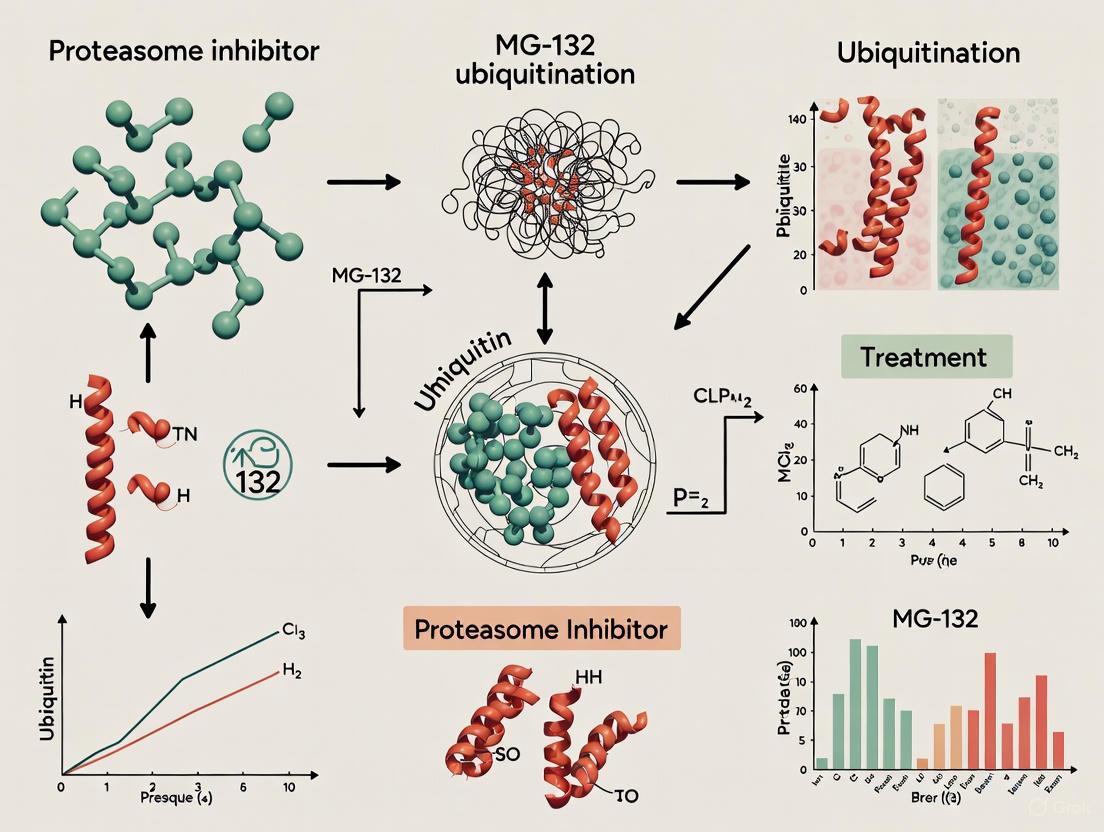
This article provides a comprehensive resource for researchers and drug development professionals on the use of the proteasome inhibitor MG-132 in ubiquitination studies.
MG-132 in Ubiquitination Research: A Comprehensive Guide from Mechanism to Application
Abstract
This article provides a comprehensive resource for researchers and drug development professionals on the use of the proteasome inhibitor MG-132 in ubiquitination studies. It covers the foundational biology of the ubiquitin-proteasome system and MG-132's specific mechanism of action, including its inhibition of the chymotrypsin-like activity of the β5 subunit. The content details methodological protocols for application in various cancer models, such as melanoma and breast cancer, and offers troubleshooting strategies for common experimental challenges like optimizing treatment duration and confirming specificity. Finally, it presents a comparative analysis of MG-132 against clinical-grade proteasome inhibitors, validating its role in modern drug discovery and preclinical research.
Understanding the Ubiquitin-Proteasome System and MG-132's Core Mechanism
The Ubiquitin-Proteasome System represents the primary mechanism for controlled intracellular protein degradation in eukaryotic cells, transitioning from being perceived as a nonspecific scavenger process to a highly complex, temporally controlled, and tightly regulated process that plays major roles in a variety of basic pathways during cell life and death [1]. This sophisticated system maintains cellular protein homeostasis by selectively degrading short-lived regulatory proteins, misfolded proteins, and damaged proteins, thereby influencing virtually all cellular processes.
The UPS consists of two coordinated steps: (1) covalent attachment of multiple ubiquitin molecules to the protein substrate, and (2) degradation of the targeted protein by the 26S proteasome complex with subsequent release of reusable ubiquitin [1]. Ubiquitin itself is a highly conserved 76-amino acid polypeptide that serves as a molecular label [2]. The pattern of ubiquitination determines the fate of the target protein; while polyubiquitination typically targets proteins for proteasomal degradation, monoubiquitination can regulate processes such as endocytosis, DNA repair, and transcriptional regulation [2].
The UPS participates in a wide array of biological functions including antigen presentation, regulation of gene transcription, cell cycle control, and activation of NF-κB [2]. The system degrades key regulators of cell cycle and division such as mitotic and G1 cyclins, cyclin-dependent kinase inhibitors, growth regulators such as c-Fos and c-Jun, tumor suppressors such as p53, surface receptors, and ion channels [1]. Given its fundamental role in cellular regulation, dysregulation of the UPS has been implicated in the pathogenesis of several diseases, including neurodegenerative disorders, cancer, and muscle wasting diseases [1] [2].
The Proteasome Inhibitor MG-132: Properties and Applications
Biochemical Properties of MG-132
MG-132 (also known as Z-Leu-Leu-Leu-al) is a potent, reversible, and cell-permeable proteasome inhibitor belonging to the class of synthetic peptide aldehydes with a inhibition constant (Ki) of 4 nM [3]. As a substrate analog, it functions as a transition-state inhibitor primarily targeting the chymotrypsin-like activity of the 26S proteasome complex [3]. Its chemical structure consists of a tripeptide (Leu-Leu-Leu) backbone with a benzyloxycarbonyl (Cbz) protecting group and a C-terminal aldehyde functional group that reacts with the catalytic threonine residue of the proteasome [3].
While MG-132 is widely used as a proteasome inhibitor, it is important to note that peptide aldehydes like MG-132 are not entirely specific to the proteasome and may also inhibit certain lysosomal cysteine proteases and calpains at higher concentrations [3]. This lack of complete specificity should be considered when interpreting experimental results, particularly at higher inhibitor concentrations.
Cellular Effects of MG-132 Treatment
MG-132 exerts profound effects on cellular physiology by blocking the degradation of ubiquitin-conjugated proteins in mammalian cells and permeable strains of yeast without affecting the ATPase or isopeptidase activities of the 26S complex [3]. Treatment with MG-132 leads to the accumulation of polyubiquitinated proteins, which can be visualized by western blotting, serving as a key indicator of proteasome inhibition [3].
Beyond its direct effect on protein degradation, MG-132 influences multiple signaling pathways. It activates c-Jun N-terminal kinase (JNK1), which initiates apoptosis, and inhibits NF-κB activation with an IC50 of 3 μM [3]. The compound also prevents β-secretase cleavage, suggesting potential applications in Alzheimer's disease research [3]. In cancer models, MG-132 has demonstrated significant anti-tumor activity across various cell lines, inducing cell cycle arrest and promoting apoptosis through multiple molecular pathways [4].
Table 1: Quantitative Profiling of MG-132 Effects in A375 Melanoma Cells
| Parameter | Effect/Value | Experimental Conditions | Reference |
|---|---|---|---|
| Cytotoxicity (IC50) | 1.258 ± 0.06 µM | 48-hour treatment, CCK-8 assay | [4] |
| Migration Suppression | Significant reduction | 0.125-0.5 µM, wound healing assay | [4] |
| Apoptosis Induction | 85.5% total apoptosis | 2 µM for 24 hours, flow cytometry | [4] |
| Early Apoptosis | 46.5% | 2 µM for 24 hours, Annexin V/PI staining | [4] |
| NF-κB Inhibition | IC50 = 3 µM | Various cell types | [3] |
Quantitative Analysis of MG-132 Effects
Anti-tumor Efficacy Metrics
Research has demonstrated that MG-132 exhibits potent anti-tumor activity across various cancer cell lines. Systematic investigations using A375 melanoma cells have revealed that MG-132 effectively suppresses cellular proliferation with an IC50 of approximately 1.258 µM following 48 hours of treatment [4]. This cytotoxic effect is both time-dependent and concentration-dependent, with more pronounced effects observed at longer exposure times and higher concentrations.
The anti-proliferative effects of MG-132 extend beyond melanoma cells. Comparative studies have shown that the compound exhibits broad cytotoxicity against diverse cancer cell types including A549 (lung carcinoma), MCF-7 (breast cancer), and Hela (cervical cancer) cells, though with varying potency [4]. This broad activity profile highlights the fundamental importance of proteasome function for cell viability and proliferation across different tissue types and malignancies.
Apoptosis and Cell Cycle Modulation
MG-132 treatment induces concentration-dependent apoptosis as quantified by flow cytometry with Annexin V/PI staining. At a concentration of 2 µM, MG-132 treatment for 24 hours induces early apoptosis in 46.5% of A375 cells and total apoptotic response in 85.5% of cells [4]. This robust apoptotic response underscores the potency of proteasome inhibition as a therapeutic strategy for eliminating cancer cells.
The molecular mechanisms underlying MG-132-induced apoptosis involve dual regulatory capacity. Through MDM2 inhibition, MG-132 activates the p53/p21/caspase-3 axis while simultaneously suppressing CDK2/Bcl2, thereby triggering cell cycle arrest and DNA damage cascades [4]. Additionally, MAPK pathway activation emerges as a critical driver of apoptosis, suggesting that combinatorial targeting of proteasomal and MAPK pathways may enhance treatment efficacy [4].
Table 2: MG-132 Mechanism of Action: Molecular Targets and Functional Outcomes
| Molecular Target | Effect | Downstream Consequences |
|---|---|---|
| 20S Proteasome | Inhibition of chymotrypsin-like activity | Accumulation of polyubiquitinated proteins |
| p53 Pathway | Stabilization and activation | Cell cycle arrest, DNA damage response |
| MAPK Pathway | Activation | Induction of apoptosis |
| NF-κB Pathway | Inhibition | Reduced cell survival signaling |
| MDM2 | Inhibition | Enhanced p53 stability and activity |
| Bcl-2 | Suppression | Promoted mitochondrial apoptosis |
Experimental Protocols for Ubiquitination Studies
Detection of Protein Ubiquitination Using MG-132
Purpose: To detect and analyze ubiquitinated proteins in cultured cells using MG-132 to prevent degradation of polyubiquitinated species.
Principle: MG-132 inhibits the 26S proteasome, causing accumulation of ubiquitin-conjugated proteins that would otherwise be rapidly degraded, thereby enabling their detection by western blotting or other methods.
Reagents and Solutions:
- MG-132 stock solution: Prepare at 100 mM in DMSO, aliquot and store at -20°C [3]
- Cell culture medium: Appropriate for cell line being studied (e.g., RPMI1640 with 10% FBS for A375 cells) [4]
- Lysis buffer: 50 mM Tris-HCl (pH 7.4), 150 mM NaCl, 1% Triton X-100, 0.5% glycerol, 20 mM NaF, 2 mM Na3VO4, 0.1 mM leupeptin, 2 mM PMSF [4]
- Proteasome inhibitor working concentration: 10 µM MG-132 for 4-hour treatment [5]
Procedure:
- Cell Culture and Treatment: Culture cells in appropriate medium until 70-80% confluent. Add MG-132 to final concentration of 10 µM from DMSO stock solution. Include vehicle control (DMSO alone) [5].
- Incubation: Treat cells for 4 hours at 37°C in 5% CO2 to allow accumulation of ubiquitinated proteins [5].
- Cell Lysis: Extract proteins using lysis buffer with protease inhibitors. Centrifuge at 12,000 × g for 15 minutes at 4°C to remove insoluble material [4].
- Immunoprecipitation (Optional): For specific protein ubiquitination analysis, pre-clear lysates with protein A/G for 1 hour. Incubate with primary antibody against protein of interest overnight at 4°C. Add protein A/G for 1 hour at 4°C to capture immune complexes [5].
- Detection: Separate proteins by SDS-PAGE (8-12% gradient recommended) and transfer to PVDF membrane. Detect ubiquitinated signals with anti-ubiquitin antibody [5]. For total ubiquitin conjugates, direct western blotting without immunoprecipitation is sufficient.
Troubleshooting Tips:
- High background: Optimize antibody concentrations; include proper controls
- Weak signal: Increase MG-132 concentration (up to 20 µM) or treatment time (up to 6 hours)
- Cytotoxicity concerns: Reduce treatment time for sensitive cell lines
- Specificity issues: Confirm proteasome inhibition by detecting accumulation of known proteasome substrates
Ubiquitination Assay with MG-132 for E3 Ligase Studies
Purpose: To investigate the role of specific E3 ubiquitin ligases in protein ubiquitination using MG-132-based stabilization.
Application Example: This protocol has been adapted for studying E3 ligases such as FBXO45 and can be applied to other E3 ligases of interest to detect target protein ubiquitination and functional consequences [6].
Procedure:
- Plasmid Transfection: Transfect cells with plasmids encoding the E3 ligase of interest and its putative substrate. Include empty vector as control.
- MG-132 Treatment: 24-48 hours post-transfection, treat cells with 10 µM MG-132 for 4 hours to accumulate ubiquitinated forms.
- Ubiquitination Detection: Lyse cells and perform western blotting to detect ubiquitinated substrates using target-specific antibodies. Smearing or higher molecular weight bands indicate ubiquitination.
- Functional Assessment: Perform Cell Counting Kit-8 (CCK-8) assay according to manufacturer's instructions to assess functional consequences of ubiquitination on cell viability/proliferation [6].
Figure 1: Experimental Workflow for Detection of Protein Ubiquitination Using MG-132
Signaling Pathways Modulated by MG-132
Molecular Mechanisms of MG-132 Action
MG-132 exerts its effects through multiple interconnected signaling pathways that collectively determine cellular fate. Understanding these pathways is essential for proper experimental design and interpretation of results involving proteasome inhibition.
The p53/p21 pathway plays a central role in MG-132-mediated effects. Through inhibition of MDM2 (an E3 ubiquitin ligase responsible for p53 degradation), MG-132 stabilizes and activates p53, leading to transcriptional upregulation of p21, a cyclin-dependent kinase inhibitor [4]. This activation results in cell cycle arrest predominantly in the G1 phase, preventing DNA replication in damaged cells. Concurrently, MG-132 suppresses CDK2 and Bcl-2 expression, further promoting cell cycle arrest and reducing anti-apoptotic signaling.
The MAPK pathway represents another critical arm of MG-132 signaling. Treatment with MG-132 activates multiple MAPK subfamilies including JNK, p38, and ERK, with JNK activation being particularly important for apoptosis induction [4] [3]. This MAPK activation serves as a cellular stress response to proteasome inhibition and contributes to the transcriptional activation of pro-apoptotic factors.
Additionally, MG-132 significantly impacts the NF-κB pathway by preventing the degradation of IκB, the inhibitory protein that sequesters NF-κB in the cytoplasm [3]. With an IC50 of 3 μM for NF-κB inhibition, MG-132 effectively blocks the nuclear translocation of NF-κB and its subsequent transcriptional activation of pro-survival genes, thereby sensitizing cells to apoptosis.
Figure 2: Key Signaling Pathways Modulated by MG-132 Treatment
Integration of Cellular Responses
The cellular response to MG-132 represents an integrated network of signaling events rather than isolated pathway manipulations. The convergence of p53 activation, MAPK stimulation, and NF-κB inhibition creates a synergistic pro-apoptotic environment that effectively eliminates susceptible cells.
The temporal sequence of these events is critical for understanding MG-132 mechanisms. Early events following proteasome inhibition include rapid accumulation of polyubiquitinated proteins and activation of stress signaling pathways such as JNK and p38 MAPK. Intermediate events involve stabilization of transcription factors like p53 and subsequent transcriptional regulation of target genes. Late events encompass cell cycle arrest, mitochondrial outer membrane permeabilization, caspase activation, and eventual apoptotic cell death.
The balance between these competing signals determines cell fate decisions following MG-132 exposure. While transient or mild proteasome inhibition may activate protective mechanisms including autophagy and heat shock responses, sustained and potent inhibition typically commits cells to apoptosis through both intrinsic (mitochondrial) and extrinsic (death receptor) pathways.
The Scientist's Toolkit: Research Reagent Solutions
Table 3: Essential Research Reagents for Ubiquitin-Proteasome System Studies
| Reagent/Category | Specific Examples | Function/Application | Key Features |
|---|---|---|---|
| Proteasome Inhibitors | MG-132, Bortezomib, Lactacystin, Epoxomicin | Inhibit proteasomal activity; stabilize ubiquitinated proteins | MG-132: reversible, cell-permeable, peptide aldehyde [3] |
| Cell Viability Assays | CCK-8, MTT, WST assays | Quantify cytotoxicity and anti-proliferative effects | CCK-8: highly sensitive, water-soluble formazan [4] |
| Apoptosis Detection | Annexin V/PI staining, Caspase assays | Quantify apoptotic cell populations | Annexin V/PI: distinguishes early/late apoptosis [4] |
| Protein Analysis | Western blot reagents, Ubiquitin antibodies | Detect ubiquitinated proteins and pathway components | Anti-ubiquitin: detects mono/polyubiquitinated species [5] |
| Cell Cycle Analysis | PI staining, Flow cytometry | Assess cell cycle distribution and arrest | PI: intercalates into DNA, quantifies DNA content [4] |
| E3 Ligase Tools | Expression plasmids, CRISPR/Cas9 systems | Manipulate specific E3 ligase expression | CRISPR: enables knockout of RNF19A/B, UBE2L3 [7] |
Technical Considerations for MG-132 Applications
Optimization and Troubleshooting
Successful application of MG-132 in ubiquitination studies requires careful experimental optimization across multiple parameters. Concentration and duration of treatment should be tailored to specific cell types and experimental goals. While 10 µM for 4 hours is standard for ubiquitination accumulation studies [5], cytotoxicity assays may require lower concentrations (1-2 µM) for longer durations (24-48 hours) to observe phenotypic effects [4].
Solvent controls are essential given MG-132 is typically dissolved in DMSO. Final DMSO concentrations should be kept consistent across all treatment groups and generally maintained below 0.1% to minimize solvent toxicity. Time-course experiments are recommended to establish optimal treatment windows for capturing specific molecular events, as early signaling events may precede downstream phenotypic consequences.
Validation of proteasome inhibition should include monitoring accumulation of known proteasome substrates (e.g., p53, IκBα) or polyubiquitinated proteins by western blotting. This confirmation is particularly important when using MG-132 in new cell systems where permeability or metabolism may affect inhibitor activity.
Advanced Applications and Emerging Approaches
Beyond conventional ubiquitination studies, MG-132 serves as a valuable tool for emerging research applications. These include studying non-proteolytic ubiquitin signaling, where MG-132 helps distinguish between degradative and signaling functions of ubiquitination [1] [2]. The compound also facilitates research on ubiquitin-independent proteasomal degradation by blocking this alternative route for protein turnover [1].
Recent advances have revealed that small molecules themselves can undergo direct ubiquitination, as demonstrated with BRD1732, which is ubiquitinated by RNF19A and RNF19B E3 ligases using UBE2L3 as the E2 conjugating enzyme [7]. This novel finding opens possibilities for bifunctional small molecules that could bridge targets to ubiquitination machinery, expanding the therapeutic potential of ubiquitin system modulation.
The continuing development of more specific proteasome inhibitors such as bortezomib, carfilzomib, and ixazomib provides additional tools for dissecting UPS functions [8] [9]. These clinical-grade inhibitors offer improved specificity compared to MG-132 and have validated the UPS as a therapeutic target in human diseases, particularly multiple myeloma and other hematologic malignancies.
The 20S core particle (CP) is the essential proteolytic engine of the ubiquitin-proteasome system, responsible for the controlled degradation of intracellular proteins. This barrel-shaped complex serves as the primary molecular target for the proteasome inhibitor MG-132, which potently and reversibly blocks its catalytic activity [4] [10]. The 20S proteasome exists as both a stand-alone complex and as the catalytic centerpiece of the larger 26S proteasome, where it collaborates with 19S regulatory particles to execute ubiquitin-dependent proteolysis [11] [12]. Understanding the precise structure and function of the 20S proteasome is fundamental for researchers utilizing MG-132 to dissect ubiquitination pathways and their roles in cellular regulation, disease pathogenesis, and therapeutic development.
Architectural Organization of the 20S Proteasome
The 20S proteasome exhibits a highly conserved, quintessential architecture characterized by a stacked ring structure.
Quaternary Structure and Subunit Composition
This complex is a 750 kDa macromolecular assembly comprising 28 subunits arranged in four heptameric rings that form an α1–7β1–7β1–7α1–7 structure [13] [12]. The two outer rings are composed of seven distinct α-subunits (α1-α7) that function as a gated channel, controlling substrate entry into the proteolytic chamber. The two inner rings are formed by seven different β-subunits (β1-β7), with three specific subunits housing the catalytic active sites [13].
Table 1: Subunit Composition of the Mammalian 20S Core Particle
| Ring Location | Subunit Name | Systematic Nomenclature | Primary Function |
|---|---|---|---|
| Outer Ring (α) | α1 | PSMA6 | Forms gate structure; substrate entry control |
| α2 | PSMA2 | Forms gate structure; substrate entry control | |
| α3 | PSMA4 | Forms gate structure; substrate entry control | |
| α4 | PSMA7 | Forms gate structure; substrate entry control | |
| α5 | PSMA5 | Forms gate structure; substrate entry control | |
| α6 | PSMA1 | Forms gate structure; substrate entry control | |
| α7 | PSMA3 | Forms gate structure; substrate entry control | |
| Inner Ring (β) | β1 | PSMB6 | Caspase-like activity (constitutive) |
| β2 | PSMB7 | Trypsin-like activity (constitutive) | |
| β5 | PSMB5 | Chymotrypsin-like activity (constitutive) | |
| β1i | PSMB9 | Caspase-like activity (immunoproteasome) | |
| β2i | PSMB10 | Trypsin-like activity (immunoproteasome) | |
| β5i | PSMB8 | Chymotrypsin-like activity (immunoproteasome) | |
| β3, β4, β6, β7 | PSMB3, PSMB2, PSMB1, PSMB4 | Structural roles |
Catalytic Mechanism and Active Sites
The proteolytic activity of the 20S proteasome is mediated by N-terminal threonine residues in three specific β-subunits that function as nucleophiles in the hydrolysis of peptide bonds. Each β-ring contains three active sites that provide distinct cleavage preferences [12] [14]:
- β1 (PSMB6): Exhibits caspase-like activity, preferentially cleaving after acidic residues
- β2 (PSMB7): Demonstrates trypsin-like activity, cleaving after basic residues
- β5 (PSMB5): Possesses chymotrypsin-like activity, favoring cleavage after hydrophobic residues
This multicatalytic capacity enables the proteasome to process a diverse array of protein substrates into small peptides typically 3-25 amino acids in length [15]. The immunoproteasome, which incorporates inducible catalytic subunits (β1i, β2i, β5i) during inflammatory responses, exhibits altered cleavage preferences that optimize antigenic peptide generation for MHC class I presentation [13] [14].
MG-132 Mechanism of Action and Experimental Applications
Molecular Pharmacology of MG-132
MG-132 (carbobenzoxyl-L-leucyl-L-leucyl-leucinal) is a peptide aldehyde proteasome inhibitor that specifically targets the chymotrypsin-like activity of the β5 subunit through reversible covalent binding [16] [10]. Its structure features a C-terminal aldehyde group that forms a hemiacetal adduct with the catalytic threonine residue, effectively blocking the active site. The Leu-Leu-Leu backbone confers specificity for the hydrophobic S1 pocket of the β5 subunit, making MG-132 particularly potent against the chymotrypsin-like activity while having lesser effects on the trypsin-like and caspase-like activities at lower concentrations [4] [14].
The following diagram illustrates the molecular mechanism of MG-132 and its cellular consequences:
Quantitative Profiling of MG-132 Effects
MG-132 demonstrates potent anti-proliferative and pro-apoptotic effects across multiple cancer cell models. Systematic investigations have quantified its cellular impact:
Table 2: Quantitative Effects of MG-132 in Experimental Models
| Experimental System | Parameter Measured | Result | Reference Context |
|---|---|---|---|
| A375 Melanoma Cells | IC50 (48h treatment) | 1.258 ± 0.06 µM | [4] |
| A375 Melanoma Cells | Apoptosis Induction (2 µM, 24h) | 85.5% total apoptosis (46.5% early) | [4] |
| A375 Melanoma Cells | Migration Suppression | Significant inhibition at 0.125-0.5 µM | [4] |
| Neural Stem Cells | Viability Reduction | Concentration-dependent decrease | [16] |
| Neural Stem Cells | Neuronal Differentiation | Increased percentage of neurons | [16] |
| Cancer Cachexia Model | Survival Time | Significant extension in mice | [17] |
| Cancer Cachexia Model | Proinflammatory Cytokines | Reduced TNF-α and IL-6 levels | [17] |
Experimental Protocols for MG-132 Applications
Protocol 1: Assessing Cytotoxicity and IC50 Determination
Principle: This protocol utilizes the CCK-8 assay to quantify cell viability and determine the half-maximal inhibitory concentration (IC50) of MG-132 [4].
Reagents:
- MG132 stock solution (10 mM in DMSO)
- Cell Counting Kit-8 (CCK-8)
- Cell culture medium (appropriate for cell line)
- 96-well tissue culture plates
- DMSO (vehicle control)
Procedure:
- Seed cells in 96-well plates at 70-80% confluence and allow to adhere overnight.
- Prepare serial dilutions of MG-132 in culture medium (typical range: 0.1-10 µM).
- Replace medium with MG-132-containing medium, including DMSO vehicle controls.
- Incubate for desired duration (8-48 hours) at 37°C, 5% CO₂.
- Add CCK-8 reagent (10% of total volume) to each well and incubate for 1-4 hours.
- Measure absorbance at 450 nm using a microplate reader.
- Calculate percentage viability relative to vehicle controls and determine IC50 using non-linear regression analysis.
Technical Notes: Maintain DMSO concentration constant across all treatments (typically ≤0.1%). Include positive controls (e.g., celastrol) for assay validation [4].
Protocol 2: Apoptosis Analysis via Flow Cytometry
Principle: This method employs Annexin V-FITC/PI dual staining to distinguish between viable, early apoptotic, late apoptotic, and necrotic cells following MG-132 treatment [4].
Reagents:
- Annexin V-FITC/PI Apoptosis Detection Kit
- Binding buffer (10 mM HEPES/NaOH, pH 7.4, 140 mM NaCl, 2.5 mM CaCl₂)
- Phosphate-buffered saline (PBS), ice-cold
- Flow cytometry tubes
- MG132 working solutions
Procedure:
- Treat cells in 6-well plates with MG-132 (0.5-2 µM) for 12-24 hours.
- Harvest cells using gentle trypsinization or cell scraping.
- Wash cells twice with ice-cold PBS and resuspend in binding buffer.
- Stain with Annexin V-FITC (5 µl) and PI (10 µl) for 15-20 minutes in the dark.
- Analyze by flow cytometry within 1 hour using appropriate laser settings.
- Use FlowJo software or equivalent for data analysis and quadrant statistics.
Technical Notes: Include unstained and single-stained controls for compensation. Process samples immediately after staining for optimal results [4].
Protocol 3: Western Blot Analysis of Pathway Modulation
Principle: This protocol detects changes in protein expression and phosphorylation of key pathway components affected by MG-132-mediated proteasome inhibition [4] [16].
Reagents:
- RIPA lysis buffer with protease and phosphatase inhibitors
- BCA protein assay kit
- SDS-PAGE gel electrophoresis system
- PVDF or nitrocellulose membranes
- Primary antibodies against targets of interest (p53, p21, Bcl-2, caspase-3, etc.)
- HRP-conjugated secondary antibodies
- ECL detection reagents
Procedure:
- Treat cells with MG-132 (0.5-2 µM) for 6-24 hours.
- Lyse cells in RIPA buffer and determine protein concentration.
- Separate equal protein amounts (20-40 µg) by SDS-PAGE and transfer to membranes.
- Block membranes with 5% non-fat milk or BSA for 1-2 hours.
- Incubate with primary antibodies overnight at 4°C with gentle shaking.
- Wash membranes and incubate with HRP-conjugated secondary antibodies.
- Develop using ECL reagent and image with chemiluminescence detection system.
- Normalize to loading controls (β-actin, GAPDH) for quantitative analysis.
Technical Notes: Include both positive and negative controls. Optimize antibody concentrations for specific targets [4] [16].
The Scientist's Toolkit: Essential Research Reagents
Table 3: Key Research Reagents for MG-132 Studies
| Reagent / Material | Function & Application | Example Usage |
|---|---|---|
| MG132 (MedChemExpress) | Reversible proteasome inhibitor | Molecular target validation; concentration 0.1-10 µM [4] |
| CCK-8 Assay Kit (Beyotime) | Cell viability and proliferation assessment | IC50 determination [4] |
| Annexin V-FITC/PI Apoptosis Kit (Solarbio) | Discrimination of apoptotic cells | Flow cytometry-based apoptosis quantification [4] |
| Proteasome Activity Assay Kits | Direct measurement of proteasome function | Monitoring chymotrypsin-like activity inhibition |
| Primary Antibodies (ABclonal) | Detection of pathway proteins by western blot | p53, p21, caspase-3, Bcl-2 analysis [4] |
| Human Cancer Cell Lines (A375, etc.) | Model systems for mechanistic studies | A375 melanoma cells for anti-cancer efficacy [4] |
| Neural Stem Cells (NSCs) | Specialized model for neurobiology | Differentiation and toxicity studies [16] |
Regulatory Complexes and Functional Specialization
The 20S core particle can associate with various regulatory complexes that modulate its activity, substrate specificity, and cellular localization.
19S Regulatory Particle (PA700)
The 19S regulatory particle binds to one or both ends of the 20S core in an ATP-dependent manner to form the 26S proteasome, which specializes in ubiquitin-dependent degradation [13] [12]. The 19S RP contains ubiquitin receptors, deubiquitinating enzymes (Rpn11, USP14), and a hexameric ring of AAA-ATPases (Rpt1-Rpt6) that unfolds substrates and translocates them into the 20S catalytic chamber [13].
11S Regulators (PA28αβ, PA28γ)
The 11S family of proteasome activators includes the heteroheptameric PA28αβ (induced by interferon-γ and primarily cytosolic) and the homoheptameric PA28γ (constitutively nuclear) [11] [13]. These ATP-independent regulators facilitate the degradation of unstructured proteins and enhance the production of antigenic peptides for MHC class I presentation by opening the α-ring gate of the 20S core [11].
Specialized 20S Proteasome Forms
- Immunoproteasome: Incorporates inducible catalytic subunits (β1i, β2i, β5i) during inflammatory responses, optimizing antigenic peptide generation [13] [14].
- Thymoproteasome: Contains the β5t subunit specifically expressed in cortical thymic epithelial cells, contributing to positive T-cell selection [12].
- Spermatoproteasome: Testis-specific forms that support spermatogenesis through specialized protein degradation requirements [12].
Research Applications and Strategic Considerations
MG-132 serves as a powerful tool for investigating diverse biological processes through targeted proteasome inhibition:
Key Research Applications
- Ubiquitination Pathway Analysis: Validating putative substrates of the ubiquitin-proteasome system by demonstrating their stabilization upon MG-132 treatment.
- Protein Turnover Studies: Measuring degradation kinetics of regulatory proteins by comparing half-lives with and without proteasome inhibition.
- Cell Cycle Regulation: Investigating control mechanisms by preventing degradation of cyclins, CDK inhibitors, and other cell cycle regulators.
- Apoptosis Mechanisms: Dissecting apoptotic pathways by monitoring accumulation of pro-apoptotic proteins following proteasome inhibition.
- Neurodegeneration Modeling: Mimicking protein aggregation phenotypes characteristic of neurodegenerative diseases by impairing clearance of misfolded proteins.
- Cancer Biology: Exploiting the heightened sensitivity of certain cancer cells to proteasome inhibition for mechanistic studies and therapeutic development.
Experimental Design Considerations
When incorporating MG-132 into research protocols, several factors require careful optimization:
- Treatment Duration: Short-term treatments (2-8 hours) typically assess direct substrate stabilization, while longer exposures (12-48 hours) evaluate downstream phenotypic consequences.
- Concentration Range: Utilize dose-response designs (0.1-10 µM) to establish specific versus broad effects and minimize off-target impacts.
- Cell Type Variability: Account for differential sensitivity across cell types, influenced by factors such as proliferation rate, proteasome subunit composition, and ABC transporter expression.
- Combination Strategies: Consider synergistic approaches with other pathway inhibitors to dissect complex regulatory networks and potential therapeutic combinations.
- Validation Experiments: Include complementary approaches such as RNA interference of proteasome subunits to confirm specificity of MG-132 effects.
The structured investigation of MG-132's molecular target provides critical insights for advancing ubiquitination research and developing novel therapeutic strategies that modulate proteasome function with precision and efficacy.
The 26S proteasome is a multi-subunit complex responsible for the regulated degradation of intracellular proteins, a process critical for maintaining cellular homeostasis, controlling cell cycle progression, and eliminating misfolded proteins. The catalytic core of this complex is the 20S proteasome, a barrel-shaped structure composed of four stacked rings: two identical outer α-rings and two identical inner β-rings. The β-rings contain three distinct proteolytic active sites characterized by their substrate specificity: chymotrypsin-like (β5), trypsin-like (β2), and caspase-like (β1) activities [18] [3]. Among these, the chymotrypsin-like activity, which cleaves after hydrophobic residues, is considered the most critical for the overall protein degradation rate and is a primary target for therapeutic intervention [19].
MG-132 (carbobenzoxyl-L-leucyl-L-leucyl-leucinal) is a potent, reversible, and cell-permeable proteasome inhibitor belonging to the class of synthetic peptide aldehydes [3]. It was discovered in the 1990s and has since become a fundamental tool in biomedical research for studying proteasome function, modeling neurodegeneration, and investigating cancer cell death pathways [18] [4]. Its ability to selectively inhibit the proteasome's chymotrypsin-like site makes it an invaluable compound for dissecting the intricacies of the ubiquitin-proteasome system (UPS).
Table 1: Core Proteasome Catalytic Activities and Their Inhibition by MG-132
| Active Site | Catalytic Subunit | Primary Specificity | Inhibition by MG-132 |
|---|---|---|---|
| Chymotrypsin-like | β5 | Hydrophobic residues | Potent inhibition (Ki = 4 nM) [3] |
| Caspase-like | β1 | Acidic residues | Inhibited at higher concentrations [18] |
| Trypsin-like | β2 | Basic residues | Inhibited at higher concentrations [18] |
Molecular Mechanism of MG-132 Action
MG-132 functions as a transition-state inhibitor that covalently, yet reversibly, binds to the catalytic N-terminal threonine residue of the proteasome's β-subunits. Its structure mimics a protein substrate, consisting of a C-terminal aldehyde group linked to a tripeptide backbone (Leu-Leu-Leu) and an N-terminal carbobenzoxy (Cbz) protective group [3].
The inhibition mechanism proceeds as follows:
- Cell Permeability and Targeting: The hydrophobic leucine residues and relatively small molecular size allow MG-132 to readily cross the cell membrane and enter the cytoplasm [3].
- Binding to the 20S Core: MG-132 accesses the proteolytic chamber of the 20S proteasome by passing through the gates formed by the outer α-rings.
- Nucleophilic Attack: The hydroxyl group of the catalytic N-terminal threonine (Thr1) of the β5 subunit performs a nucleophilic attack on the electrophilic aldehyde carbon of MG-132.
- Hemiacetal Formation: This attack results in the formation of a reversible, covalent hemiacetal adduct between MG-132 and the active site threonine [3]. This adduct mimics the tetrahedral transition state of peptide bond hydrolysis, thereby stalling the proteolytic process.
This specific interaction primarily blocks the chymotrypsin-like activity at low nanomolar concentrations. However, at higher exposure levels, MG-132 can also inhibit the caspase-like and trypsin-like activities, leading to a more comprehensive disruption of protein turnover [18]. The specificity of MG-132 is not absolute; it is also known to inhibit certain lysosomal cysteine proteases and calpains, which should be considered when interpreting experimental results [3].
Diagram 1: Molecular Inhibition Mechanism of MG-132.
Quantitative Profiling of MG-132 Inhibition
The potency and specificity of MG-132 have been quantified across various experimental systems, from cell-free assays to cellular models. In cell-free assays using purified human erythrocyte proteasomes, MG-132 exhibits an inhibition constant (Kᵢ) of 4 nM for the chymotrypsin-like (β5) site [3]. This high potency is reflected in cellular models, where it effectively induces cytotoxicity and apoptosis. For instance, in A375 melanoma cells, the half-maximal inhibitory concentration (IC₅₀) for cell viability was determined to be 1.258 µM [4]. The effects are concentration-dependent, as demonstrated in uterine leiomyosarcoma (Ut-LMS) cell lines, where a 24-hour treatment with 2 µM MG-132 induced significant apoptosis and membrane damage [20].
Table 2: Quantitative Effects of MG-132 in Various Experimental Models
| Experimental Model | Key Metric | Reported Value / Effect | Source / Context |
|---|---|---|---|
| Cell-Free Assay | Inhibition Constant (Kᵢ) for β5 site | 4 nM | [3] |
| A375 Melanoma Cells | Proliferation IC₅₀ (48h) | 1.258 µM | [4] |
| Ut-LMS Cell Lines | Apoptosis Induction (24h) | Significant effect at 2 µM | [20] |
| HEK293T Cells | Proteasome Activity (Chymotrypsin-like) | >50% reduction at 100 nM (60 min) | [21] |
| NRK-49F Fibroblasts | Suppression of TGF-β1-induced fibrosis | Maximal effect at 2.5 µM | [22] |
Experimental Protocols for Assessing MG-132 Activity
Protocol 1: Cell-Free Proteasome Inhibition Assay
This protocol is adapted from established methods for directly measuring the effect of compounds on proteasome activity in a purified system [18] [21].
Materials:
- Purified 20S proteasome (e.g., from human erythrocytes)
- MG-132 (dissolved in DMSO, e.g., 100 mM stock)
- Proteasome substrate buffer: 50 mM Tris-HCl, 25 mM KCl, 10 mM NaCl, 1 mM MgCl₂, 0.1 mM EDTA, pH 7.5
- Fluorogenic proteasome substrates:
- Suc-LLVY-AMC (for chymotrypsin-like, β5 activity)
- Plate reader capable of fluorescence detection (excitation ~380 nm, emission ~460 nm)
Procedure:
- Pre-incubation: Dilute MG-132 to 4x the desired final concentration in substrate buffer. Pre-incubate this with an equal volume of the purified proteasome (e.g., 2.5 µg) for 30-60 minutes at 37°C. Include a vehicle control (DMSO).
- Reaction Initiation: Add the fluorogenic substrate (e.g., Suc-LLVY-AMC at a final concentration of 20 µM) to start the reaction.
- Kinetic Measurement: Immediately monitor the increase in fluorescence due to the release of free AMC for 30-60 minutes.
- Data Analysis: Calculate the rate of substrate hydrolysis (fluorescence units per minute) for both the inhibitor-treated and control samples. Percent inhibition is calculated as:
[1 - (Rate_inhibitor / Rate_control)] × 100.
Protocol 2: Cell-Based Apoptosis Analysis via Flow Cytometry
This protocol details the assessment of MG-132-induced apoptosis in cancer cell lines, a key phenotypic outcome of proteasome inhibition [20] [4].
Materials:
- Adherent cancer cell line (e.g., A375, SK-UT-1)
- MG-132 (dissolved in DMSO)
- Culture medium and supplements
- Annexin V binding buffer
- FITC-conjugated Annexin V and Propidium Iodide (PI)
- Flow cytometer with 488 nm excitation
Procedure:
- Cell Seeding and Treatment: Seed cells in 6-well plates and allow to adhere overnight. Treat cells with a range of MG-132 concentrations (e.g., 0.5 µM, 1 µM, 2 µM) for 24 hours. Include a vehicle control.
- Cell Harvesting: After treatment, collect both floating and adherent cells (using mild trypsinization), and wash once with cold PBS.
- Staining: Resuspend the cell pellet (~1×10⁶ cells) in 100 µL of Annexin V binding buffer. Add FITC-Annexin V and PI as per manufacturer's instructions. Incubate for 15 minutes in the dark at room temperature.
- Analysis: Add 400 µL of binding buffer and analyze by flow cytometry within 1 hour. Use untreated and single-stained controls for compensation and gating.
- Interpretation: Cells positive for Annexin V-FITC (early apoptotic) and double-positive for Annexin V-FITC and PI (late apoptotic/necrotic) are quantified as a percentage of the total population.
Diagram 2: Cell-Based Apoptosis Assay Workflow.
Research Reagent Solutions
A successful investigation into MG-132's mechanism requires a specific toolkit of high-quality reagents and functional assays.
Table 3: Essential Research Reagents for MG-132 Studies
| Reagent / Assay Type | Specific Example | Primary Function in Research |
|---|---|---|
| Proteasome Inhibitor | MG-132 (Z-Leu-Leu-Leu-al) | Primary investigational molecule; potently and reversibly inhibits the β5 site of the proteasome. |
| Proteasome Activity Assay | Proteasome-Glo Cell-Based Assay | Luminescent assay to directly measure chymotrypsin-like, caspase-like, and trypsin-like activity in live cells. |
| Fluorogenic Substrate | Suc-LLVY-AMC | Cell-free substrate for specifically quantifying chymotrypsin-like (β5) activity. |
| Apoptosis Detection Kit | Annexin V-FITC / PI Apoptosis Detection Kit | Distinguishes and quantifies live, early apoptotic, and late apoptotic/necrotic cell populations via flow cytometry. |
| Western Blot Antibodies | Anti-p53, Anti-p21, Anti-Ubiquitin, Anti-Cleaved Caspase-3 | Validate downstream effects of proteasome inhibition, including protein stabilization, cell cycle arrest, and apoptosis initiation. |
| Positive Control Inhibitor | Epoxomicin | Irreversible proteasome inhibitor often used as a control for complete proteasome shutdown. |
MG-132 serves as a critical molecular tool for dissecting the function of the ubiquitin-proteasome system. Its well-defined mechanism, centered on the potent and reversible inhibition of the proteasome's chymotrypsin-like (β5) site via hemiacetal formation, underpins its widespread use in modeling proteotoxic stress, inducing apoptosis in cancer cells, and studying protein degradation dynamics. The experimental frameworks and reagents outlined herein provide a foundation for rigorous research into proteasome biology and the continued exploration of MG-132's applications in both basic science and therapeutic development.
Quantitative Profiling of MG-132 Induced Cellular Effects
MG-132, a potent and reversible proteasome inhibitor, induces a cascade of quantifiable cellular changes by disrupting the ubiquitin-proteasome system (UPS). The tables below summarize key experimental findings from published research.
Table 1: Cytotoxic and Apoptotic Effects of MG-132 on Cancer Cell Lines
| Cell Line | Cell Type | MG-132 IC50 (μM) | Treatment Duration | Key Apoptotic Effects | Source |
|---|---|---|---|---|---|
| A375 | Melanoma | 1.258 ± 0.06 | 48 h | 2 µM induced 85.5% total apoptosis in 24 h | [4] |
| A375 | Melanoma | - | 24 h | 2 µM induced 46.5% early apoptosis | [4] |
| C26 Tumor-bearing Mice | Colon Adenocarcinoma (in vivo) | - | 0.1 mg/kg for 14 days | Attenuated muscle weight loss, reduced TNF-α & IL-6 | [17] |
| Breast Cancer Cells | Breast Cancer | 1 (Synergy with Propolin G) | 24 h | Combination with Propolin G showed synergistic apoptosis (CI=0.63) | [23] |
Table 2: MG-132 Mediated Changes in Molecular and Serum Markers
| Parameter Analyzed | Experimental System | Effect of MG-132 Treatment | Biological Significance | Source |
|---|---|---|---|---|
| E3 Ubiquitin Ligases | C26 Cancer Cachexia Model | Downregulation of MuRF1 and MAFbx | Suppression of muscle atrophy pathways | [17] |
| Pro-inflammatory Cytokines | C26 Cancer Cachexia Model | Reduced serum and muscle levels of TNF-α and IL-6 | Attenuation of systemic inflammation | [17] |
| p53/p21 Pathway | A375 Melanoma Cells | Activation of p53/p21/caspase-3 axis; Suppression of CDK2/Bcl2 | Induction of cell cycle arrest and apoptosis | [4] |
| αB-Crystallin PTMs | C2C12 Myotubes | Altered phosphorylation and O-GlcNAcylation patterns | Translocation to cytoskeleton for proteoprotection | [24] |
Mechanistic Insights and Signaling Pathways
MG-132 exerts its effects primarily by inhibiting the 26S proteasome, leading to the accumulation of polyubiquitinated proteins and proteotoxic stress. This disruption activates multiple downstream signaling pathways.
Diagram 1: MG-132-induced signaling pathways. MG-132 core inhibition (yellow) triggers primary cellular consequences (red) and activates multiple downstream signaling pathways (green, blue, orange) that converge on apoptosis.
The core mechanism involves the stabilization of polyubiquitinated proteins, particularly those with K48-linked chains which are the canonical signal for proteasomal degradation [25] [26]. This accumulation disrupts protein homeostasis, leading to proteotoxic stress. Key consequences include:
- Activation of the Unfolded Protein Response (UPR): Proteotoxic stress triggers the PERK/ATF4/CHOP signaling pathway, which can ultimately lead to apoptosis [23].
- Induction of Apoptotic Pathways: MG-132 stabilizes tumor suppressor p53 by inhibiting its MDM2-mediated ubiquitination, activating the p21/caspase-3 axis and suppressing anti-apoptotic proteins like Bcl-2 [4].
- Modulation of Inflammatory Pathways: The inhibitor can reduce the activation of NF-κB and subsequent production of pro-inflammatory cytokines such as TNF-α and IL-6, which are implicated in conditions like cancer cachexia [17].
Detailed Experimental Protocols
Protocol for Assessing Cytotoxicity via CCK-8 Assay
This protocol is used to determine the half-maximal inhibitory concentration (IC50) of MG-132 on adherent cancer cell lines [4].
Key Materials:
- Cell Lines: A375 (melanoma), A549 (lung), Hela (cervical), MCF-7 (breast)
- Reagents: MG132 (MedChemExpress, CAS 133407-82-6), CCK-8 kit (Beyotime), DMSO, RPMI-1640 medium with 10% FBS
Procedure:
- Cell Seeding: Seed cells in a 96-well plate at a density that will reach 70-80% confluence after 24 hours.
- Treatment: Prepare serial dilutions of MG-132 in culture medium. Add the treatments to the wells, using 1% DMSO as a negative control and a known cytotoxic agent (e.g., Celastrol) as a positive control. Include replicates for each concentration.
- Incubation: Treat cells for 8, 12, 24, and 48 hours in a 37°C, 5% CO₂ incubator.
- Viability Measurement: Add 10 µL of CCK-8 solution to each well and incubate for 1-4 hours.
- Quantification: Measure the absorbance at 450 nm using a plate reader. Calculate the percentage of cell viability relative to the DMSO control.
- Data Analysis: Plot dose-response curves and calculate the IC50 value using non-linear regression in software such as GraphPad Prism.
Protocol for Apoptosis Analysis via Flow Cytometry
This method quantifies the percentage of cells in early and late apoptosis after MG-132 exposure [4].
Key Materials:
- Reagents: ANNEXIN V-FITC/PI Apoptosis Detection Kit (Solarbio)
- Equipment: Flow cytometer (e.g., BD FACSAria Fusion)
Procedure:
- Cell Treatment: Inoculate A375 cells (or other relevant line) into 6-well plates. At 70-80% confluence, treat with MG-132 (e.g., 0.5, 1, 2 µM) for 24 hours.
- Cell Harvest: Collect both floating and adherent cells (using trypsin without EDTA), and wash with cold PBS.
- Staining: Resuspend the cell pellet (~1x10⁶ cells) in 100 µL of 1X Binding Buffer. Add 5 µL of Annexin V-FITC and 10 µL of Propidium Iodide (PI). Incubate for 15 minutes in the dark at room temperature.
- Analysis: Add 400 µL of 1X Binding Buffer and analyze by flow cytometry within 1 hour.
- Compensation and Gating: Use single-stained controls to set compensation. On a dot plot of Annexin V-FITC vs. PI, distinguish populations: Annexin V⁻/PI⁻ (viable), Annexin V⁺/PI⁻ (early apoptosis), Annexin V⁺/PI⁺ (late apoptosis/necrosis).
- Quantification: Analyze the data using FlowJo software. Results from a representative study are shown in Table 1.
Protocol for Western Blot Analysis of Pathway Modulation
This protocol details the steps to detect changes in protein expression and cleavage in response to MG-132 [4].
Key Materials:
- Antibodies: Primary antibodies against target proteins (e.g., VEGFR-2, p53, p21, caspase-3, Bcl-2, CDK2, β-actin).
- Reagents: RIPA Lysis Buffer, PVDF Membrane, ECL Luminescent Developer (Biosharp).
Procedure:
- Protein Extraction:
- Seed cells in 6-well plates (2x10⁴/well). After 12 hours, treat with MG-132 (0.5, 1, 2 µM) for 24 hours.
- Lyse cells on ice using RIPA buffer supplemented with protease and phosphatase inhibitors.
- Centrifuge at 14,000 x g for 15 minutes at 4°C. Collect the supernatant and determine protein concentration.
- Gel Electrophoresis and Transfer:
- Separate 20-40 µg of total protein by 10% SDS-PAGE.
- Transfer proteins to a PVDF membrane using a wet or semi-dry transfer system.
- Antibody Incubation:
- Block the membrane with 5% skimmed milk in TBST for 2 hours at room temperature.
- Incubate with primary antibody (diluted in TBST as per manufacturer's recommendation, e.g., 1:1000) overnight at 4°C.
- Wash the membrane 3 times with TBST for 3 minutes each.
- Incubate with an HRP-conjugated secondary antibody (e.g., 1:5000 dilution) for 1 hour at room temperature. Wash again.
- Detection:
- Develop the membrane with ECL reagent.
- Image the chemiluminescence using a system like a Tanon-5200 analyzer.
- Perform densitometric analysis using ImageJ software, normalizing target protein levels to a loading control like β-actin.
The Scientist's Toolkit: Research Reagent Solutions
Table 3: Essential Reagents for MG-132-based Ubiquitination Studies
| Reagent / Kit | Manufacturer / Source | Key Function | Application Note |
|---|---|---|---|
| MG132 (Proteasome Inhibitor) | MedChemExpress (CAS 133407-82-6) | Reversibly inhibits the chymotrypsin-like activity of the 20S proteasome core. | Typically used in 0.5-10 µM range; dissolve in DMSO for stock solutions. |
| CCK-8 Cell Viability Kit | Beyotime | Measures cell proliferation/cytotoxicity via dehydrogenase activity. | More sensitive and stable than MTT; non-radioactive. |
| Annexin V-FITC/PI Apoptosis Kit | Beijing Solarbio Science & Technology | Distinguishes between viable, early, and late apoptotic/necrotic cells. | Crucial for confirming MG-132-induced programmed cell death. |
| Proteasome Activity Assay Kits | Various | Directly measures chymotrypsin-, trypsin-, or caspase-like proteasome activities. | Confirms on-target engagement of MG-132. |
| SCASP-PTM Protocol Reagents | Literature [27] | Tandem enrichment of ubiquitinated, phosphorylated, and glycosylated peptides for mass spectrometry. | For system-wide analysis of MG-132-induced PTM changes. |
| Antibodies: p53, p21, Cleaved Caspase-3, Bcl-2, MuRF1, MAFbx | Various (e.g., ABclonal, Santa Cruz Biotechnology) | Detects key proteins in apoptosis, cell cycle, and atrophy pathways via Western Blot. | Validate mechanistic pathways; check phosphorylation-specific antibodies. |
The proteasome inhibitor MG-132 (carbobenzoxy-Leu-Leu-leucinal) is a pivotal research tool in ubiquitination studies, primarily functioning as a reversible inhibitor of the 26S proteasome's chymotrypsin-like activity. By blocking the ubiquitin-proteasome system (UPS), MG-132 induces the accumulation of polyubiquitinated proteins, thereby enabling the investigation of protein turnover, degradation pathways, and the downstream cellular consequences of UPS inhibition [28] [17]. This application note details the primary downstream effects of MG-132 on NF-κB signaling, cell cycle progression, and apoptotic pathways, providing structured quantitative data, experimental protocols, and visualization tools for researchers and drug development professionals.
Key Downstream Effects of MG-132
The inhibition of the proteasome by MG-132 has multifaceted consequences on critical cellular processes. The following table summarizes its primary downstream effects, which are explored in detail in subsequent sections.
Table 1: Key Downstream Effects of Proteasome Inhibitor MG-132
| Cellular Pathway | Effect of MG-132 | Key Mediators & Readouts | Functional Outcome |
|---|---|---|---|
| NF-κB Signaling | Inhibition of canonical activation [17] [29] | Stabilization of IκBα; reduced nuclear translocation of p65; downregulation of IL-6, TNF-α [30] [17] | Attenuated inflammatory response; potential reduction in cell survival signals |
| Cell Cycle | Induction of cell cycle arrest [4] | Upregulation of p21/WAF1; downregulation of CDK2 [4] | Inhibition of proliferation |
| Apoptosis | Activation of intrinsic (mitochondrial) pathway [31] [4] | Caspase-3/9 activation; PARP cleavage; Bax upregulation; Bcl-2 downregulation [28] [31] | Caspase-dependent apoptosis |
| Reactive Oxygen Species (ROS) | Increased intracellular ROS generation [28] [32] | Measurable by DCFH-DA probe and flow cytometry [28] | Enhanced DNA damage and oxidative stress |
Inhibition of the NF-κB Signaling Pathway
MG-132 exerts a profound inhibitory effect on the canonical NF-κB pathway. Under normal conditions, NF-κB activation requires the phosphorylation, ubiquitination, and proteasomal degradation of its inhibitory protein, IκBα. MG-132 prevents the degradation of IκBα, thereby trapping the NF-κB complex (typically a p65/p50 heterodimer) in the cytoplasm and preventing its nuclear translocation and subsequent pro-survival gene transcription [17] [29].
Key Evidence:
- In a cancer cachexia model, MG-132 (0.1 mg/kg/day, i.p.) treatment suppressed NF-κB activity, evidenced by decreased levels of the p65 subunit and reduced expression of downstream inflammatory cytokines TNF-α and IL-6 in mouse gastrocnemius muscle [17].
- In a myocardial infarction rat model, MG-132 administration led to a significant decrease in the expression of NF-κB p65, IL-1β, and matrix metalloproteinase-2 (MMP-2), indicating a suppression of the NF-κB-mediated remodeling process [30].
Table 2: Quantitative Effects of MG-132 on NF-κB Pathway Components In Vivo
| Parameter Measured | Model | MG-132 Dose & Duration | Observed Effect |
|---|---|---|---|
| NF-κB p65 Expression | Rat Myocardial Infarction [30] | 0.1 mg/kg/day for 28 days | Significant decrease |
| IL-1β Expression | Rat Myocardial Infarction [30] | 0.1 mg/kg/day for 28 days | Significant decrease |
| TNF-α Level | Mouse Cancer Cachexia [17] | 0.1 mg/kg/day for 14 days | Significant reduction in serum and muscle |
| IL-6 Level | Mouse Cancer Cachexia [17] | 0.1 mg/kg/day for 14 days | Significant reduction in serum and muscle |
Impact on Cell Cycle Progression
MG-132 induces cell cycle arrest, primarily by stabilizing tumor suppressor proteins that are normally degraded by the proteasome. A key mediator of this effect is p21/WAF1, a cyclin-dependent kinase (CDK) inhibitor whose expression is upregulated in a p53-dependent manner following MG-132 treatment [33] [4].
Key Evidence:
- In human melanoma A375 cells, treatment with MG132 led to a dose-responsive upregulation of p21 and downregulation of CDK2, which is consistent with the induction of cell cycle arrest [4].
- Cell cycle analysis via flow cytometry in A375 cells confirmed that MG-132 treatment alters the distribution of cells across different cell cycle phases [4].
Diagram 1: MG-132 induces cell cycle arrest via p53/p21.
Activation of Apoptotic Pathways
The pro-apoptotic effect of MG-132 is a cornerstone of its anti-cancer research applications. It primarily triggers the intrinsic (mitochondrial) apoptotic pathway by disrupting the equilibrium of pro- and anti-apoptotic Bcl-2 family proteins and promoting the activation of caspases [28] [31].
Key Evidence:
- In oral squamous cell carcinoma (OSCC) CAL27 cells, co-treatment with 0.2 µM MG132 and 2 µM cisplatin further activated the p53-mediated apoptotic pathway compared to either agent alone. This was demonstrated by enhanced cell apoptosis, Bax upregulation, and Bcl-2 downregulation [28].
- In malignant pleural mesothelioma (MPM) cells, treatment with 0.5 µM MG132 induced significant apoptosis, characterized by mitochondrial release of cytochrome c and Smac/DIABLO, and cleavage of caspases 3, 7, 9, and PARP [31].
- In A375 melanoma cells, a 24-hour treatment with 2 µM MG132 induced a total apoptotic rate of 85.5%, with 46.5% of cells in early apoptosis [4].
Table 3: Quantitative Apoptosis Data from MG-132 Treatment in Cancer Cell Lines
| Cell Line | MG-132 Concentration | Treatment Duration | Apoptotic Readout | Result |
|---|---|---|---|---|
| A375 (Melanoma) [4] | 2 µM | 24 h | Total Apoptosis (Flow Cytometry) | 85.5% |
| A375 (Melanoma) [4] | 2 µM | 24 h | Early Apoptosis (Annexin V+/PI-) | 46.5% |
| CAL27 (OSCC) [28] | 0.2 µM (+ 2 µM CDDP) | 48 h | Synergistic Apoptosis Activation | Marked Enhancement |
| As4.1 (Juxtaglomerular) [32] | 0.3-0.4 µM (IC₅₀) | 48 h | Caspase-Independent Apoptosis | Growth Inhibition |
It is important to note that the role of MG-132 in apoptosis is context-dependent. In some specific scenarios, such as in response to high doses of UV irradiation, MG-132 can paradoxically block apoptosis by stabilizing p53 and upregulating p21, leading to cell cycle arrest instead of death [33].
Diagram 2: MG-132 activates the mitochondrial apoptotic pathway.
Essential Protocols for Key Assays
Protocol: Assessing Cell Viability and Cytotoxicity (CCK-8 Assay)
This protocol is used to determine the IC₅₀ of MG-132 and assess its cytotoxic effects, as performed in A375 melanoma and other cell lines [28] [4].
Research Reagent Solutions:
- MG132 Stock Solution: Typically dissolved in DMSO at a high concentration (e.g., 10-20 mM) and stored at -20°C or -80°C.
- Cell Culture Medium: Appropriate medium for your cell line (e.g., DMEM or RPMI-1640) supplemented with 10% FBS.
- CCK-8 Reagent: Commercially available cell counting kit.
Procedure:
- Seed cells in a 96-well plate at a density of 5,000-10,000 cells/well in 100 µL of culture medium. Allow cells to adhere overnight.
- Prepare Treatment Dilutions: Dilute the MG132 stock solution in culture medium to achieve the desired final concentrations (e.g., 0.125 µM to 10 µM). Include a vehicle control (DMSO at the same final concentration as in treated wells, typically ≤0.1%).
- Treat Cells: Aspirate the medium from the plate and add 100 µL of the MG132 dilutions or control to respective wells. Incubate for the desired time (e.g., 24, 48 hours).
- Add CCK-8 Reagent: After treatment, add 10 µL of CCK-8 reagent directly to each well. Incubate the plate for 1-4 hours in a cell culture incubator.
- Measure Absorbance: Using a microplate reader, measure the absorbance at 450 nm. The reference wavelength can be 600-650 nm.
- Calculate Viability: Calculate the percentage of cell viability relative to the vehicle control. The IC₅₀ value can be determined using non-linear regression analysis of the dose-response curve.
Protocol: Analyzing Apoptosis by Annexin V/PI Staining and Flow Cytometry
This protocol allows for the quantification of early and late apoptotic cells, as demonstrated in A375 and CAL27 cells [28] [4].
Research Reagent Solutions:
- Annexin V Binding Buffer: 10 mM HEPES, 140 mM NaCl, 2.5 mM CaCl₂, pH 7.4.
- Annexin V-FITC Conjugate
- Propidium Iodide (PI) Staining Solution
Procedure:
- Harvest Cells: After MG-132 treatment, collect both floating and adherent cells (detached using trypsin without EDTA is recommended). Pellet cells by centrifugation at 300 × g for 5 minutes.
- Wash Cells: Wash the cell pellet once with cold PBS and resuspend in 100 µL of Annexin V Binding Buffer at a density of 1 × 10⁶ cells/mL.
- Stain Cells: Add 5 µL of Annexin V-FITC and 5-10 µL of PI solution to the cell suspension. Incubate for 10-15 minutes at room temperature in the dark.
- Analyze by Flow Cytometry: Within 1 hour, add 400 µL of Annexin V Binding Buffer to each tube and analyze using a flow cytometer. Use FITC (Ex=488 nm, Em=530 nm) and PI (Ex=488 nm, Em=617 nm) channels.
- Gating Strategy:
- Viable Cells: Annexin V-/PI-
- Early Apoptotic Cells: Annexin V+/PI-
- Late Apoptotic/ Necrotic Cells: Annexin V+/PI+
Protocol: Evaluating NF-κB Inhibition by Western Blot
This protocol assesses the effect of MG-132 on key components of the NF-κB pathway by measuring IκBα stabilization and p65 nuclear translocation [28] [17].
Research Reagent Solutions:
- RIPA Lysis Buffer: For total protein extraction.
- Nuclear and Cytoplasmic Extraction Reagents (NER/CER): For subcellular fractionation to analyze p65 localization.
- Primary Antibodies: Anti-IκBα, anti-NF-κB p65, anti-Lamin B1 (nuclear marker), anti-β-actin (loading control).
- SDS-PAGE and Western Blotting Systems.
Procedure:
- Cell Treatment and Lysis: Treat cells with MG-132 (e.g., 0.2-10 µM) for a predetermined time (e.g., 4-18 hours). Lyse cells using RIPA buffer (for total protein) or perform subcellular fractionation.
- Protein Quantification and Electrophoresis: Determine protein concentration using a BCA or Bradford assay. Load equal amounts of protein (20-40 µg) onto a 10-12% SDS-polyacrylamide gel and separate by electrophoresis.
- Protein Transfer and Blocking: Transfer proteins from the gel to a PVDF membrane. Block the membrane with 5% non-fat milk in TBST for 1-2 hours at room temperature.
- Antibody Incubation: Incubate the membrane with primary antibodies (diluted 1:1,000 in blocking buffer) overnight at 4°C. Wash the membrane and incubate with an HRP-conjugated secondary antibody for 1 hour at room temperature.
- Detection: Develop the blot using an enhanced chemiluminescence (ECL) reagent and detect signals using a chemiluminescence imager.
- Expected Results: MG-132 treatment should lead to the accumulation of IκBα in the cytoplasmic fraction and a decrease in nuclear p65 levels compared to the control.
The Scientist's Toolkit: Key Research Reagents
Table 4: Essential Reagents for MG-132 Ubiquitination Studies
| Reagent / Assay Kit | Function / Application | Example Vendor / Citation |
|---|---|---|
| MG132 (CAS 133407-82-6) | Core proteasome inhibitor; research tool | MedChemExpress [28] [4] |
| Cell Counting Kit-8 (CCK-8) | Colorimetric assay for cell viability/cytotoxicity | Beyotime Institute of Biotechnology [28] [4] |
| Annexin V-FITC/PI Apoptosis Kit | Flow cytometry-based detection of apoptotic cells | Multiple vendors (e.g., Solarbio) [28] [4] |
| ROS Assay Kit (DCFH-DA) | Fluorescent detection of intracellular reactive oxygen species | Beyotime Institute of Biotechnology [28] |
| TUNEL Assay Kit In Situ Cell Death Detection | Fluorescent labeling of DNA fragmentation in apoptotic cells | Roche [28] [33] |
| Caspase Activity Assay Kits (Colorimetric/Fluorometric) | Measure caspase-3, -8, -9 activation | BD Biosciences [31] |
| Nuclear Extraction Kit | Subcellular fractionation for NF-κB pathway analysis | Multiple commercial vendors |
| Antibodies: p53, p21, Bax, Bcl-2, PARP, IκBα, NF-κB p65 | Key markers for Western blot analysis | Various (e.g., Abmart, Cell Signaling Tech, Santa Cruz) [28] [31] |
MG-132 serves as a powerful tool for dissecting the complexities of the ubiquitin-proteasome system. Its defined downstream effects—inhibition of NF-κB signaling, induction of cell cycle arrest, and activation of the mitochondrial apoptotic pathway—make it invaluable for research in cancer biology, drug mechanism studies, and cellular stress response. The protocols and data summarized in this application note provide a robust framework for researchers to effectively utilize MG-132 in their ubiquitination studies, ensuring accurate and reproducible investigation of proteasomal function in cellular regulation.
Practical Protocols: Applying MG-132 in Experimental Ubiquitination Studies
The proteasome inhibitor MG-132 (Z-Leu-Leu-Leu-al) is a crucial tool compound in ubiquitination studies and cancer research, known for its potent and reversible inhibition of the 26S proteasome complex with an IC50 of 100 nM [34] [35]. Its application extends to investigating protein degradation pathways, cell cycle regulation, and apoptosis induction. Determining precise half-maximal inhibitory concentration (IC50) values and effective concentration ranges across diverse cell lines is fundamental for designing reproducible experiments and interpreting biological outcomes accurately. This application note synthesizes current data on MG-132 cytotoxicity to establish robust dosage guidelines for research applications.
Quantitative Cytotoxicity Profile of MG-132
The anti-proliferative effects of MG-132 have been demonstrated across a broad spectrum of cancer cell lines. The effective concentration varies significantly depending on the cell type, treatment duration, and specific experimental conditions. The table below summarizes the key IC50 values and effective concentration ranges reported in recent literature.
Table 1: Experimentally Determined IC50 Values and Effective Concentration Ranges for MG-132
| Cell Line | Cell Type / Origin | IC50 Value | Effective Concentration Range | Key Observed Effects | Citation |
|---|---|---|---|---|---|
| A375 | Human Melanoma | 1.258 ± 0.06 µM (48h) | 0.5 - 2 µM | Significant apoptosis (85.5% at 2µM), migration suppression, G2/M arrest [4] | |
| SK-LMS-1 | Uterine Leiomyosarcoma | Not specified | 0 - 2 µM (24h) | Dose-dependent apoptosis, G2/M arrest, autophagy induction [20] [36] | |
| SK-UT-1 | Uterine Leiomyosarcoma | Not specified | 0 - 2 µM (24h) | Dose-dependent apoptosis, G2/M arrest, increased ROS, autophagy [20] [36] | |
| SK-UT-1B | Uterine Leiomyosarcoma | Not specified | 0 - 2 µM (24h) | Dose-dependent apoptosis, autophagy induction [20] [36] | |
| ES-2 | Ovarian Cancer | ~1.5 µM (Significant effect) | 1.5 - 2 µM | Mutant p53 downregulation, apoptosis induction [37] | |
| HEY-T30 | Ovarian Cancer | < 0.5 µM | 0.5 - 2 µM | Wild-type p53 stabilization, apoptosis induction [37] | |
| OVCAR-3 | Ovarian Cancer | < 0.5 µM | 0.5 - 2 µM | Cell death induction [37] | |
| HeLa | Cervical Cancer | ~5 µM (IC50 for growth) | 0.5 - 10 µM | Cell growth inhibition, cell death induction [35] | |
| A549 | Lung Carcinoma | ~20 µM (IC50 for growth) | 10 - 20+ µM | ROS-influenced growth inhibition and cell death [35] |
Detailed Experimental Protocols
Standard Cytotoxicity Assessment (CCK-8/XTT/MTT Assay)
This protocol is adapted from multiple studies to provide a generalized method for determining cell viability and IC50 values [4] [20] [37].
Workflow Overview:
Materials:
- Cell Lines: Adherent or suspension cells in log-phase growth.
- MG-132 Stock Solution: Typically 10-100 mM in DMSO. Store at -20°C.
- Cell Culture Plates: 96-well flat-bottom plates.
- Cell Viability Kit: CCK-8, XTT, or MTT assay kit.
- Microplate Reader: Capable of measuring absorbance at appropriate wavelengths.
Procedure:
- Cell Seeding: Harvest and count cells. Seed cells in 96-well plates at an optimized density (e.g., 2,000-10,000 cells/well in 100 µL complete medium) [4] [20]. Include blank wells (medium only) and control wells (cells with vehicle, e.g., DMSO).
- Pre-incubation: Allow cells to adhere and recover for 18-24 hours in a humidified incubator (37°C, 5% CO₂).
- Drug Preparation: Prepare a serial dilution of MG-132 in complete culture medium. The final DMSO concentration should be consistent across all wells (typically ≤0.1% v/v).
- Treatment: Remove old medium from wells and add 100 µL of the MG-132 dilution series to the test wells. Add vehicle-containing medium to control wells.
- Incubation: Incubate the plates for the desired treatment duration (e.g., 24, 48, or 72 hours) [4].
- Viability Assay:
- Absorbance Measurement: Measure the absorbance using a microplate reader (450 nm for CCK-8, 570 nm for MTT).
- Data Analysis: Calculate cell viability as a percentage of the vehicle control. Plot dose-response curves and calculate IC50 values using non-linear regression in software such as GraphPad Prism.
Apoptosis Analysis via Flow Cytometry
This protocol details the quantification of MG-132-induced apoptosis using Annexin V/propidium iodide (PI) staining [4] [20] [37].
Materials:
- Binding Buffer: 10 mM HEPES/NaOH (pH 7.4), 140 mM NaCl, 2.5 mM CaCl₂.
- Annexin V-FITC or Annexin V-APC
- Propidium Iodide (PI) or 7-AAD Staining Solution
- Flow Cytometer
Procedure:
- Cell Treatment: Treat cells in 6-well plates with the desired concentrations of MG-132 (e.g., 0.5, 1, 2 µM) for 24 hours [4].
- Cell Harvesting: Collect both floating and adherent cells (use trypsinization for adherent cells). Combine cells in a centrifuge tube and pellet by centrifugation at 1500 rpm for 5 minutes.
- Washing: Wash cells once with cold PBS and centrifuge again.
- Staining: Resuspend the cell pellet (approximately 1 x 10⁵ cells) in 100-500 µL of binding buffer.
- Add Annexin V-FITC/APC and PI (or 7-AAD) according to the manufacturer's instructions.
- Gently vortex the cells and incubate for 15-20 minutes at room temperature in the dark.
- Analysis: Within 1 hour, analyze the stained cells using a flow cytometer. Use untreated and single-stained controls to set up compensation and quadrants.
- Quantification: The populations are defined as:
- Viable Cells: Annexin V⁻/PI⁻
- Early Apoptotic: Annexin V⁺/PI⁻
- Late Apoptotic/Necrotic: Annexin V⁺/PI⁺
Key Signaling Pathways Modulated by MG-132
MG-132 exerts its effects through multiple interconnected signaling pathways. The diagram below illustrates the core molecular mechanisms.
Pathway Descriptions:
- p53 Pathway Stabilization: MG-132 inhibits MDM2-mediated ubiquitination and degradation of p53, leading to its stabilization. This activates p21 transcription, resulting in cell cycle arrest, and modulates pro-apoptotic proteins like Bax, promoting apoptosis [4] [37].
- MAPK Pathway Activation: MG-132 can activate the MAPK pathway (including JNK and p38), which serves as a critical driver of apoptosis in certain cell types, such as melanoma [4].
- NF-κB Pathway Inhibition: By preventing the degradation of IκBα (the inhibitor of NF-κB), MG-132 suppresses NF-κB activity, contributing to apoptosis and reducing pro-inflammatory cytokine production [17].
- Reactive Oxygen Species (ROS): Proteasome inhibition often leads to increased intracellular ROS, which can cause oxidative stress, glutathione depletion, and mitochondrial dysfunction, culminating in cytochrome c release and apoptosis [20] [35].
- Autophagy Induction: As a compensatory protein degradation mechanism, autophagy is frequently activated in response to proteasome inhibition. This is marked by the conversion of LC3-I to LC3-II and can sometimes serve as a pro-survival mechanism [20] [37] [38].
The Scientist's Toolkit: Research Reagent Solutions
Table 2: Essential Reagents for MG-132 Ubiquitination Studies
| Reagent / Kit | Function / Application | Example Supplier / Catalog |
|---|---|---|
| MG-132 | Potent, reversible proteasome inhibitor. Used to induce accumulation of polyubiquitinated proteins. | MedChemExpress (HY-13259) [4] [34] |
| Annexin V-FITC/PI Apoptosis Kit | Quantification of apoptotic cells via flow cytometry. Distinguishes early and late apoptosis. | Beijing Solarbio Science & Technology [4] |
| CCK-8 Assay Kit | Cell viability and proliferation assay. More sensitive and convenient than MTT. | Beyotime, Shanghai, China [4] |
| Lactate Dehydrogenase (LDH) Release Assay Kit | Measures cell membrane integrity and cytotoxicity. | Dyne Bio (GBL-P500) [20] [36] |
| Anti-Ubiquitin Antibody | Detection of accumulated ubiquitinated proteins by Western blot. | Enzo Biochem (BML-PW0930) [36] |
| Anti-Cleaved Caspase-3 & Anti-PARP Antibodies | Key markers for confirming apoptosis induction. | Cell Signaling Technology (9664S, 9542S) [20] [36] [37] |
| Anti-LC3B Antibody | Marker for autophagy induction (detects LC3-I and lipidated LC3-II). | Cell Signaling Technology (2775S) [36] |
| N-Acetylcysteine (NAC) | ROS scavenger. Used to investigate the role of oxidative stress in MG-132-induced effects. | Sigma-Aldrich (A7250) [20] [36] |
The ubiquitin-proteasome system (UPS) is a primary degradation pathway for cellular proteins, essential for maintaining protein homeostasis (proteostasis) by eliminating misfolded, damaged, or short-lived regulatory proteins [39] [10]. This system involves a cascade where proteins are tagged for degradation by ubiquitin (a 76-amino acid protein) through the sequential action of E1 (ubiquitin-activating), E2 (ubiquitin-conjugating), and E3 (ubiquitin-ligase) enzymes. The polyubiquitinated protein is then recognized and degraded by the 26S proteasome, a multi-subunit complex comprising a 20S catalytic core and 19S regulatory caps [39] [40]. Proteasome inhibitors like MG132 (carbobenzoxyl-L-leucyl-L-leucyl-leucinal) exploit the heightened dependence of certain cancer cells on robust proteasome activity to manage their excessive protein synthesis and degrade cell cycle checkpoints [41]. MG132 is a peptide aldehyde that potently and reversibly inhibits the chymotrypsin-like activity of the proteasome's β subunit [4] [10]. The therapeutic effect of MG132 is profoundly dependent on treatment duration, initiating with rapid protein stabilization and culminating in the irreversible commitment to apoptosis. This application note delineates these temporal phases and provides detailed protocols for researchers investigating UPS-dependent processes in cancer biology.
Dual-Phase Mechanism of MG132 Action
The cellular response to MG132 is biphasic, transitioning from adaptive survival signaling to terminal apoptotic execution as exposure time increases. The diagram below illustrates the key molecular events in this temporal sequence.
Short-Term Effects (0-8 Hours): Protein Stabilization and Adaptive Signaling
Immediately following MG132 exposure, the inhibition of the proteasome's chymotrypsin-like activity leads to the rapid accumulation of polyubiquitinated proteins and the stabilization of key short-lived regulatory proteins [23] [10]. A critical early event is the stabilization of p53, often resulting from the inhibition of its negative regulator, MDM2. This triggers the p53/p21 signaling axis, leading to cell cycle arrest, providing a transient protective response [4]. Simultaneously, short-term or transient exposure to MG132 can induce the expression of heat shock proteins, notably Hsp72. Hsp72 exerts an anti-apoptotic effect by suppressing the activation of stress kinases like JNK (c-Jun N-terminal kinase), thereby creating a temporary window where cells can resist apoptosis [42]. During this phase, the unfolded protein response (UPR) is also initiated as the endoplasmic reticulum (ER) struggles with the accumulation of misfolded proteins. The UPR initially attempts to restore proteostasis by globally reducing protein translation and upregulating chaperone proteins [23].
Long-Term Effects (>12-24 Hours): ER Stress and Apoptosis Induction
With sustained proteasome inhibition, the adaptive mechanisms of the cell are overwhelmed. The UPR transitions from a pro-survival to a pro-apoptotic signal, notably through the sustained activation of the PERK/ATF4/CHOP pathway [23]. CHOP activation promotes the expression of pro-apoptotic Bcl-2 family proteins. Furthermore, MG132 treatment leads to the downregulation of anti-apoptotic proteins like Bcl-2 and Mcl-1, while also activating pro-apoptotic members [4] [31]. This disrupts mitochondrial membrane integrity, resulting in the release of cytochrome c and Smac/DIABLO into the cytosol [31]. Cytochrome c facilitates the formation of the apoptosome and activation of initiator caspase-9, which in turn cleaves and activates effector caspases-3 and -7. The release of Smac/DIABLO neutralizes inhibitor of apoptosis proteins (IAPs), further promoting caspase activity [31]. The culmination of this cascade is the execution of apoptosis, characterized by DNA fragmentation, cleavage of structural and repair proteins like PARP, and eventual cell death.
Quantitative Profiling of MG132 Effects
The concentration- and time-dependent effects of MG132 on cancer cells can be quantified using standardized assays. The data below, derived from studies on A375 melanoma cells, provides a reference for expected outcomes [4].
Table 1: Cytotoxicity and Apoptosis Profile of MG132 in A375 Melanoma Cells
| Parameter | Concentration | Time | Result | Measurement Method |
|---|---|---|---|---|
| IC50 | 1.258 ± 0.06 µM | 48 h | 50% Cell Viability Inhibition | CCK-8 Assay |
| Early Apoptosis | 2 µM | 24 h | 46.5% | Annexin V/PI Staining |
| Total Apoptosis | 2 µM | 24 h | 85.5% | Annexin V/PI Staining |
| Cell Migration | 0.125 - 0.5 µM | 24 h | Significant Suppression | Wound Healing Assay |
Table 2: Key Protein Expression Changes in Response to MG132
| Protein / Pathway | Change | Functional Outcome | Citation |
|---|---|---|---|
| p53 / p21 | Upregulated | Cell Cycle Arrest | [4] |
| Cleaved Caspase-3 | Upregulated | Apoptosis Execution | [4] [31] |
| Bcl-2 / CDK2 | Downregulated | Promotion of Apoptosis & Cell Cycle Dysregulation | [4] |
| MAPK Pathway (JNK) | Activated | Stress-Induced Apoptosis | [4] [42] |
| Polyubiquitinated Proteins | Accumulated | Proteotoxic Stress | [23] |
| Mcl-1 | Downregulated | Promotion of Mitochondrial Apoptosis | [31] |
Experimental Protocols
Protocol 1: Determining Cytotoxicity (IC50) via CCK-8 Assay
This protocol is used to establish the half-maximal inhibitory concentration (IC50) of MG132 for a cell line of interest [4].
- Key Reagents: MG132 (MedChemExpress, CAS 133407-82-6), DMSO, CCK-8 kit (e.g., Beyotime), cell culture medium, 96-well plates.
- Procedure:
- Cell Seeding: Seed target cells (e.g., A375, MCF-7) in 96-well plates at a density of 5,000-10,000 cells per well in 100 µL of complete medium. Culture until 70-80% confluent.
- Drug Treatment: Prepare a serial dilution of MG132 in medium (e.g., 0.1 µM to 10 µM). Add 100 µL of each concentration to the wells. Include a negative control (1% DMSO in medium) and a blank control (medium only). Perform replicates for each concentration (n≥3).
- Incubation: Incubate cells for the desired duration (e.g., 24 h, 48 h) at 37°C in 5% CO₂.
- Viability Measurement: Add 10 µL of CCK-8 solution to each well. Incubate for 1-4 hours.
- Absorbance Reading: Measure the absorbance at 450 nm using a microplate spectrophotometer.
- Data Analysis: Calculate cell viability:
(OD_drug - OD_blank) / (OD_control - OD_blank) * 100%. Plot viability against log(drug concentration) and use non-linear regression to calculate the IC50 value.
Protocol 2: Apoptosis Analysis via Annexin V/PI Staining and Flow Cytometry
This protocol quantifies the percentage of cells in early and late apoptosis after MG132 treatment [4] [31].
- Key Reagents: ANNEXIN V-FITC/PI Apoptosis Detection Kit, flow cytometry binding buffer, 6-well plates.
- Procedure:
- Cell Treatment: Seed cells in 6-well plates. After adherence, treat with MG132 (e.g., 0.5, 1, 2 µM) for 24 hours.
- Cell Harvesting: Collect both adherent and floating cells by trypsinization without EDTA. Combine cells and wash twice with cold PBS.
- Staining: Resuspend ~1x10⁵ cells in 100 µL of binding buffer. Add 5 µL of Annexin V-FITC and 10 µL of Propidium Iodide (PI). Incubate for 15 minutes at room temperature in the dark.
- Analysis: Add 400 µL of binding buffer and analyze by flow cytometry (e.g., BD FACSAria Fusion) within 1 hour. Use FlowJo software to gate the populations: Annexin V⁻/PI⁻ (viable), Annexin V⁺/PI⁻ (early apoptotic), Annexin V⁺/PI⁺ (late apoptotic/necrotic).
Protocol 3: Monitoring Signaling Pathways via Western Blotting
This protocol is used to detect changes in protein levels and activation states in response to MG132 [4] [31].
- Key Reagents: RIPA lysis buffer, protease/phosphatase inhibitors, primary antibodies (e.g., anti-p53, anti-caspase-3, anti-PARP, anti-Bcl-2, anti-β-actin), HRP-conjugated secondary antibodies, ECL reagent.
- Procedure:
- Cell Lysis: Treat cells in 6-well plates with MG132. Wash with PBS and lyse cells on ice using RIPA buffer supplemented with inhibitors.
- Protein Quantification: Centrifuge lysates and determine protein concentration in the supernatant using a BCA or Bradford assay.
- Electrophoresis: Separate 20-40 µg of total protein by 10% or 12% SDS-PAGE.
- Transfer: Transfer proteins from the gel to a PVDF membrane.
- Blocking and Incubation: Block the membrane with 5% non-fat milk for 1-2 hours. Incubate with primary antibody overnight at 4°C. The next day, wash the membrane and incubate with HRP-conjugated secondary antibody for 1 hour at room temperature.
- Detection: Develop the membrane using an ECL luminescent reagent and image using a chemiluminescence analyzer (e.g., Tanon-5200). Analyze band intensities with ImageJ software.
The Scientist's Toolkit: Essential Research Reagents
Table 3: Key Reagent Solutions for MG132 Ubiquitination Studies
| Reagent / Kit | Function / Application | Example Supplier / Catalog |
|---|---|---|
| MG132 (Proteasome Inhibitor) | Reversibly inhibits chymotrypsin-like activity of the 26S proteasome, leading to accumulation of ubiquitinated proteins. | MedChemExpress (HY-13259) |
| CCK-8 Assay Kit | Measures cell proliferation and cytotoxicity in a high-throughput manner. | Beyotime (C0038) |
| Annexin V-FITC/PI Apoptosis Kit | Differentiates between live, early apoptotic, and late apoptotic/necrotic cell populations. | Solarbio (CA1020) |
| Proteasome Activity Assay Kit | Directly measures chymotrypsin-like, trypsin-like, and caspase-like proteasome activities. | Abcam (ab107921) |
| Anti-Ubiquitin Antibody | Detects accumulated polyubiquitinated proteins via western blot or immunofluorescence. | Cell Signaling Technology (3936) |
| Anti-Cleaved Caspase-3 Antibody | Key marker for detecting ongoing apoptosis. | Cell Signaling Technology (9664) |
| Caspase Inhibitor (e.g., Z-VAD-fmk) | Pan-caspase inhibitor used to confirm caspase-dependent apoptosis mechanisms. | EMD-CalBiochem (218826) |
| TAK-243 (E1 Inhibitor) | Inhibits ubiquitin activation, used to investigate ubiquitin-independent degradation pathways. | N/A |
The temporal dimension of MG132 treatment is a critical determinant of experimental and therapeutic outcomes. Short-term exposure (0-8 hours) is optimal for studying protein stabilization, cell cycle arrest, and initial stress responses. In contrast, long-term exposure (>12-24 hours) is required to induce irreversible, caspase-mediated apoptosis. The quantitative data and standardized protocols provided herein serve as a foundational guide for researchers aiming to design rigorous experiments that dissect the role of the ubiquitin-proteasome system in cancer biology and therapy development. A thorough understanding of these treatment duration strategies ensures the accurate interpretation of mechanistic studies and enhances the reproducibility of research in the field.
Within the context of investigating the proteasome inhibitor MG-132 for ubiquitination studies, validating its efficacy is a critical first step. Confirming that the treatment successfully inhibits the proteasome and leads to the anticipated accumulation of ubiquitinated proteins ensures that subsequent observations on cellular outcomes—such as apoptosis, cell cycle arrest, or altered signaling pathways—are a direct consequence of proteasome inhibition [17] [43]. This document outlines detailed protocols and application notes for directly measuring proteasome activity and monitoring ubiquitin conjugate accumulation, providing a framework for researchers to reliably validate MG-132 treatment in their experimental systems.
Core Principles and Mechanisms of MG-132 Action
MG-132 (carbobenzoxyl-L-leucyl-L-leucyl-leucinal) is a potent, cell-permeable, and reversible peptide aldehyde that primarily inhibits the proteasome by targeting the chymotrypsin-like activity of the 20S catalytic core subunit [43] [4]. By blocking the proteolytic activity of the proteasome, MG-132 prevents the degradation of polyubiquitinated proteins, leading to their intracellular accumulation [44]. This inhibition has a cascade of downstream effects, including the stabilization of various regulatory proteins, which can induce neuronal differentiation in certain models upon short-term exposure and trigger apoptosis following prolonged treatment [43]. The stabilization of transcription factors like p53 and the inhibition of NF-κB activation via prevented IκBα degradation are key consequences that underscore the broad signaling impact of MG-132 [17] [33].
Table 1: Key Cellular Processes and Proteins Affected by MG-132-Induced Proteasome Inhibition
| Cellular Process | Key Proteins Stabilized or Upregulated | Key Proteins or Pathways Inhibited | Observed Outcome |
|---|---|---|---|
| Apoptosis | p53, p21/WAF1, c-Jun, cleaved caspase-3 [33] [43] [4] | Bcl-2, CDK2 [4] | Activation of programmed cell death [43] [4] |
| Inflammation & Muscle Atrophy | IκBα [17] | NF-κB, TNF-α, IL-6, MuRF1, MAFbx/atrogin-1 [17] | Attenuated systemic inflammation and muscle wasting [17] |
| Cell Cycle | p21/WAF1 [33] [4] | CDK2 [4] | Cell cycle arrest [4] |
| Stress Signaling | Phospho-p38 MAPK, Phospho-JNK [43] | Survival-mediating Akt phosphorylation [43] | Promotion of stress-induced pathways |
The following diagram illustrates the core mechanism of MG-132 action and its primary downstream consequences on key cellular signaling pathways:
Experimental Protocols
Protocol 1: Direct Measurement of Proteasome Activity
This protocol describes a fluorometric method to directly quantify the inhibition of the chymotrypsin-like activity of the 20S proteasome in cell lysates following MG-132 treatment, using a commercial 20S Proteasome Activity Assay Kit [43].
Materials and Reagents
- Cell Line: Adherent cells (e.g., PC12, A375, HeLa) [43] [4]
- MG-132 Stock Solution: Dissolve in DMSO to a typical stock concentration of 10-50 mM. Store at -20°C or -80°C [17] [43].
- 20S Proteasome Activity Assay Kit (e.g., Merck, Cat. # APT280) containing reaction buffer and fluorogenic substrate (e.g., Suc-LLVY-aminoluciferin) [43].
- Lysis Buffer: 50 mM HEPES (pH 7.5), 5 mM EDTA, 150 mM NaCl, 1% Triton X-100. Supplement with fresh protease inhibitors as needed [43].
- Equipment: Microplate reader capable of measuring fluorescence (e.g., excitation ~380 nm, emission ~460 nm), cell culture incubator, centrifuge.
Step-by-Step Procedure
Cell Treatment and Lysis:
- Plate cells at an appropriate density (e.g., 5 x 10^6 cells per sample) and allow them to adhere overnight [43].
- Treat cells with the desired concentration of MG-132 (e.g., 2.5 µM) or vehicle control (DMSO) for a specified duration (e.g., 1-24 hours) [43].
- Terminate treatment, wash cells with cold PBS, and lyse them using the provided lysis buffer on ice for 30 minutes.
- Centrifuge lysates at 16,000 x g for 15 minutes at 4°C to remove insoluble debris. Transfer the supernatant to a new tube and keep on ice.
Proteasome Activity Reaction:
- Transfer 20 µL of each clarified cell lysate to a 96-well black μClear bottom plate [43].
- Add the fluorogenic proteasome substrate, prepared according to the kit instructions, to each well.
- For a negative control representing maximal inhibition, pre-treat a separate aliquot of lysate with lactacystin (a specific, irreversible proteasome inhibitor) for 30 minutes prior to the assay [43].
Fluorescence Measurement and Data Analysis:
- Immediately place the plate in a pre-warmed (37°C) microplate reader and measure the fluorescence (e.g., at 380/460 nm) kinetically every 5-10 minutes for 1-2 hours.
- Calculate the rate of fluorescence increase (Relative Fluorescence Units per minute, RFU/min) for each sample, which corresponds to proteasome activity.
- Normalize the proteasome activity in MG-132-treated samples to the vehicle control (DMSO, set as 100% activity). The lactacystin control should show minimal activity.
Protocol 2: Monitoring Ubiquitin Conjugate Accumulation by Western Blot
This protocol details the detection of accumulated polyubiquitinated proteins in whole-cell lysates via western blotting, a standard method for confirming functional proteasome inhibition [44] [4].
Materials and Reagents
- Lysis Buffer (Western Blot): 50 mM Tris base (pH 7.4), 150 mM NaCl, 1% Triton X-100, 10% glycerol, 1 mM EGTA, 1 mM Na-orthovanadate, 1 mM PMSF, and commercial protease inhibitor cocktail [43] [4].
- Antibodies: Primary antibody against Ubiquitin (e.g., P4D1) or Lys-48-linked Ubiquitin chains, and a loading control antibody such as β-Actin [4].
- Other Reagents: SDS-PAGE gels, PVDF or nitrocellulose membranes, ECL detection reagents.
Step-by-Step Procedure
Cell Treatment and Protein Extraction:
- Treat cells with MG-132 (typical concentrations range from 0.5 µM to 10 µM) for 3 to 24 hours [43] [4].
- Wash cells with cold PBS and lyse directly in 1X Laemmli SDS sample buffer or western blot lysis buffer. If using lysis buffer, clarify lysates by centrifugation and determine protein concentration. Mix an aliquot with SDS-PAGE sample buffer containing DTT or β-mercaptoethanol.
- Denature samples by heating at 95-100°C for 5-10 minutes.
Gel Electrophoresis and Blotting:
- Load equal amounts of total protein (20-50 µg) onto a 4-12% or 10% SDS-PAGE gel. A gradient gel is preferable for resolving a wide range of molecular weights.
- Run the gel at constant voltage until the dye front nears the bottom.
- Transfer proteins from the gel to a PVDF membrane using standard wet or semi-dry transfer protocols.
Immunodetection:
- Block the membrane with 5% non-fat milk or BSA in TBST for 1 hour at room temperature.
- Incubate with the primary anti-ubiquitin antibody (diluted as per manufacturer's recommendation in blocking buffer) overnight at 4°C.
- Wash the membrane 3-4 times for 5 minutes each with TBST.
- Incubate with an appropriate HRP-conjugated secondary antibody for 1 hour at room temperature.
- Wash again thoroughly with TBST.
- Develop the blot using ECL reagent and image with a chemiluminescence system. A characteristic "smear" of high-molecular-weight proteins indicates accumulated polyubiquitinated conjugates.
- Strip and re-probe the membrane with an anti-β-Actin antibody to confirm equal loading.
The experimental workflow for these two key validation protocols is summarized below:
Data Presentation and Analysis
The following tables summarize typical quantitative data and key reagents used in validating MG-132 efficacy.
Table 2: Exemplary Quantitative Data from MG-132 Validation Experiments
| Cell Line | MG-132 Concentration | Treatment Duration | Proteasome Activity (% of Control) | Key Ubiquitinated Proteins / Pathways Affected | Primary Experimental Readout | Source |
|---|---|---|---|---|---|---|
| PC12 | 2.5 µM | 1 - 24 h | Significant inhibition measured [43] | Stabilization of p53, p-JNK, p-p38; Caspase-3 cleavage [43] | Neurite retraction; Apoptosis [43] | [43] |
| A375 | 1.258 µM (IC50) | 48 h | N/D | p53/p21/caspase-3 activation; CDK2/Bcl2 suppression [4] | Cytotoxicity (CCK-8); Apoptosis (85.5% at 2µM) [4] | [4] |
| HeLa | 4 µM | 2 - 3 h | ~20-fold reporter accumulation [45] | Accumulation of UFD substrate (UbG76V-GFP) [45] | Fluorescent reporter accumulation [45] | [45] |
| C26 Tumor-bearing mice | 0.1 mg/kg | Daily injections | N/D | Downregulation of MuRF1, MAFbx; Inhibition of NF-κB [17] | Attenuated muscle weight loss; Reduced TNF-α, IL-6 [17] | [17] |
Table 3: Research Reagent Solutions for Validation of MG-132 Treatment
| Reagent / Assay | Function / Specificity | Example Use Case |
|---|---|---|
| MG-132 | Reversible, cell-permeable proteasome inhibitor targeting chymotrypsin-like activity of 20S core [43] [4] | General induction of proteasome inhibition in cellular models. |
| Lactacystin | Specific, irreversible proteasome inhibitor [43] | Positive control for maximal proteasome inhibition in activity assays. |
| 20S Proteasome Activity Assay Kit | Fluorometric measurement of chymotrypsin-like activity [43] | Direct quantitative validation of proteasome inhibition in cell lysates. |
| Anti-Ubiquitin Antibody (e.g., P4D1) | Detects mono- and polyubiquitinated proteins [44] | Western blot analysis of global ubiquitin conjugate accumulation. |
| Anti-K48-linkage Specific Ubiquitin Antibody | Specific for K48-linked polyubiquitin chains (canonical degradation signal) [44] | Western blot to specifically confirm accumulation of proteasomal substrates. |
| UbG76V-GFP Reporter | Validated UFD (Ubiquitin Fusion Degradation) substrate [45] | Live-cell imaging and flow cytometry to monitor UPS inhibition. |
| ODD-Luc Reporter | CRL2VHL substrate (Oxygen-Dependent Degradation domain of HIF1α) [45] | Luminescence-based monitoring of specific ubiquitin ligase pathway substrate accumulation. |
The rigorous validation of MG-132 efficacy through direct measurement of proteasome activity and monitoring of ubiquitin conjugate accumulation is a foundational requirement for research in ubiquitination and proteasomal degradation. The protocols and data presented herein provide a reliable framework for researchers to confirm target engagement before proceeding to investigate the complex downstream biological effects of proteasome inhibition, ensuring the integrity and interpretability of their experimental findings.
Application Notes: MG-132 in Diverse Model Systems
The proteasome inhibitor MG-132 (Carbobenzoxy-L-leucyl-L-leucyl-L-leucinal) serves as a powerful tool for investigating ubiquitination dynamics and protein homeostasis across various cancer research domains. Its application provides critical insights into mechanisms of apoptosis induction, chemosensitization, and reversal of therapeutic resistance.
Breast Cancer: Overcoming Resistance and Synergistic Combinations
In estrogen receptor-positive (ER+) breast cancer, MG-132 demonstrates synergistic effects when combined with antiestrogens. Research shows combined treatment with MG-132 and antiestrogens like fulvestrant or 4-hydroxytamoxifen significantly enhances growth inhibition compared to single-agent treatments [46]. This combination therapy effectively restores sensitivity in antiestrogen-resistant cell lines (LCC2 and RTx6), indicating potential for addressing acquired therapeutic resistance [46].
The molecular mechanism involves dramatic upregulation of the cyclin-dependent kinase inhibitor p21WAF1 through increased mRNA expression, leading to cell cycle arrest [46]. Additionally, MG-132 enhances paclitaxel efficacy in breast cancer models by suppressing paclitaxel-induced NF-κB activation, thereby preventing one key mechanism of chemoresistance [47]. Recent investigations also reveal that combining MG-132 with propolin G, a c-prenylflavanone from Taiwanese propolis, induces synergistic proteotoxic stress through PERK/ATF4/CHOP pathway activation and autophagy induction [23].
Table 1: MG-132 Efficacy in Breast Cancer Models
| Cancer Model | Combination Therapy | Key Findings | Molecular Mechanisms |
|---|---|---|---|
| ER+ Breast Cancer (MCF-7, T47D, ZR-75.1) | Anti-estrogens (fulvestrant, tamoxifen) | Synergistic growth inhibition; Efficacy in antiestrogen-resistant lines | p21WAF1 upregulation; Cell cycle arrest [46] |
| Breast Cancer (EO771, MCF-7) | Paclitaxel | Enhanced therapeutic efficacy compared to monotherapy | NF-κB pathway inhibition [47] |
| Breast Cancer | Propolin G | Synergistic anti-proliferation (CI: 0.63) | PERK/ATF4/CHOP activation; Autophagy induction [23] |
Melanoma: Apoptosis Induction and Migration Suppression
In A375 human melanoma cells, MG-132 exhibits potent anti-tumor activity with an IC50 of 1.258 ± 0.06 µM after 48 hours of treatment [4]. The compound significantly suppresses cellular migration at sub-cytotoxic concentrations (0.125-0.5 µM) as demonstrated in wound healing assays [4].
Mechanistic studies reveal MG-132 induces apoptosis through dual regulatory capacity: (1) MDM2 inhibition activates the p53/p21/caspase-3 axis while suppressing CDK2/Bcl-2, triggering cell cycle arrest and DNA damage cascades; and (2) MAPK pathway activation emerges as a critical apoptosis driver [4]. Treatment with 2 µM MG132 for 24 hours induces early apoptosis in 46.5% of cells and total apoptotic response in 85.5% of A375 cells [4].
Table 2: Quantitative Anti-Melanoma Effects of MG-132 in A375 Cells
| Parameter | Result | Experimental Conditions |
|---|---|---|
| Cytotoxicity (IC50) | 1.258 ± 0.06 µM | 48-hour treatment [4] |
| Migration Suppression | Significant reduction | 0.125-0.5 µM, 24-hour wound healing assay [4] |
| Early Apoptosis Induction | 46.5% of cells | 2 µM, 24-hour treatment [4] |
| Total Apoptotic Response | 85.5% of cells | 2 µM, 24-hour treatment [4] |
| Key Pathway Modulation | Dose-responsive | p53/p21/caspase-3 activation; CDK2/Bcl-2 suppression [4] |
Cancer Cachexia: Ameliorating Muscle Wasting
MG-132 demonstrates significant potential in addressing cancer cachexia, a multifactorial syndrome characterized by progressive skeletal muscle loss that affects 50-80% of advanced cancer patients and contributes directly to mortality [48] [49]. In colon-26 mouse models of cancer cachexia, MG-132 treatment alleviates characteristic symptoms including weight loss, muscle atrophy, and functional impairment [50].
The therapeutic mechanism involves suppression of ubiquitin-proteasome pathway activity, specifically reducing expression of the muscle-specific E3 ubiquitin ligases MuRF1 and MAFbx/Atrogin-1, which are critically implicated in muscle protein degradation [50]. MG-132 also decreases systemic inflammation by reducing levels of pro-inflammatory cytokines TNF-α and IL-6, and inhibits NF-κB signaling in muscle tissue [50]. Treatment efficacy is more pronounced during early cachexia stages, highlighting the importance of timely intervention [50].
Experimental Protocols
Protocol: MG-132 Sensitivity and IC50 Determination in Melanoma Cells
Purpose: To evaluate MG-132 cytotoxicity and determine half-maximal inhibitory concentration (IC50) in A375 melanoma cells.
Materials:
- A375 human melanoma cells (or other cell lines of interest)
- MG-132 (MedChemExpress, CAS: 133407-82-6) prepared as 10 mM stock in DMSO
- Cell Counting Kit-8 (CCK-8) or MTT assay reagents
- 96-well tissue culture plates
- Complete growth medium (RPMI-1640 with 10% FBS)
Procedure:
- Seed A375 cells in 96-well plates at 5,000-8,000 cells/well in 100 μL complete medium and incubate overnight (37°C, 5% CO₂).
- Prepare serial dilutions of MG-132 (recommended range: 0.1-10 μM) in complete medium, including vehicle control (0.1% DMSO).
- Replace medium with MG-132-containing medium (100 μL/well), using at least 3-5 replicates per concentration.
- Incubate for desired duration (24, 48, or 72 hours).
- Add 10 μL CCK-8 solution to each well and incubate for 1-4 hours.
- Measure absorbance at 450 nm using a microplate reader.
- Calculate cell viability: % Viability = (ODₜᵣₑₐₜₑ𝒹/ODᵥₑₕᵢcₗₑ) × 100.
- Determine IC50 using non-linear regression analysis of log(inhibitor) vs. response curves in GraphPad Prism or similar software.
Notes: Include a positive control (e.g., 1-5 μM celastrol). For time-course experiments, refresh MG-132-containing medium every 24 hours [4].
Protocol: Apoptosis Analysis by Flow Cytometry
Purpose: To quantify MG-132-induced apoptosis using Annexin V/PI staining.
Materials:
- Annexin V-FITC/PI Apoptosis Detection Kit
- Flow cytometry buffer (PBS with 1% FBS)
- 6-well or 12-well tissue culture plates
- Flow cytometer with 488 nm excitation
Procedure:
- Seed A375 or other cancer cells in 6-well plates (2-3 × 10⁵ cells/well) and incubate overnight.
- Treat with MG-132 (0.5, 1, 2 μM) or vehicle control for 24 hours.
- Harvest cells using gentle trypsinization, collect by centrifugation (300 × g, 5 minutes).
- Wash cells twice with cold PBS.
- Resuspend cells in 100 μL binding buffer at 1 × 10⁶ cells/mL.
- Add 5 μL Annexin V-FITC and 5 μL propidium iodide (PI), incubate for 15 minutes at room temperature in the dark.
- Add 400 μL binding buffer and analyze by flow cytometry within 1 hour.
- Use FlowJo software to distinguish viable (Annexin V⁻/PI⁻), early apoptotic (Annexin V⁺/PI⁻), late apoptotic (Annexin V⁺/PI⁺), and necrotic (Annexin V⁻/PI⁺) populations.
Notes: Avoid over-trypsinization; include unstained and single-stained controls for compensation [4] [28].
Protocol: Western Blot Analysis of Apoptotic and Cell Cycle Regulators
Purpose: To evaluate MG-132-mediated modulation of key signaling pathways.
Materials:
- RIPA lysis buffer with protease and phosphatase inhibitors
- BCA or Bradford protein assay kit
- SDS-PAGE gel electrophoresis system
- PVDF or nitrocellulose membranes
- Primary antibodies: p53, p21, cleaved caspase-3, Bcl-2, Bax, CDK2, β-actin
- HRP-conjugated secondary antibodies
- ECL detection reagents
Procedure:
- Treat cells with MG-132 (0.5, 1, 2 μM) or vehicle for 24 hours.
- Lyse cells in RIPA buffer (20-30 minutes on ice), centrifuge (12,000 × g, 15 minutes, 4°C).
- Determine protein concentration, prepare samples with Laemmli buffer.
- Separate 20-40 μg protein by SDS-PAGE (10-12% gels), transfer to membranes.
- Block membranes with 5% non-fat milk or BSA in TBST (1 hour, room temperature).
- Incubate with primary antibodies (diluted in blocking buffer) overnight at 4°C.
- Wash membranes 3× with TBST (5 minutes each).
- Incubate with HRP-conjugated secondary antibodies (1:5000) for 1 hour at room temperature.
- Wash membranes 3× with TBST, develop with ECL reagents.
- Image using chemiluminescence detection system, analyze band densities with ImageJ software.
Notes: Include loading controls; optimize antibody concentrations for specific applications [4] [28] [46].
Protocol: Combination Studies with Chemotherapeutic Agents
Purpose: To evaluate synergistic interactions between MG-132 and conventional chemotherapeutics.
Materials:
- Chemotherapeutic agents (cisplatin, paclitaxel, etc.)
- 96-well plates for viability assays
- Software for synergy calculation (CompuSyn, R, etc.)
Procedure:
- Seed cells in 96-well plates as described in Protocol 2.1.
- Treat with MG-132 and chemotherapeutic agent alone and in combination using a matrix of concentrations.
- Incubate for 48-72 hours, assess viability using CCK-8 or MTT assay.
- Calculate combination index (CI) using the Chou-Talalay method:
- CI < 1 indicates synergy
- CI = 1 indicates additive effect
- CI > 1 indicates antagonism
- For strong synergy (CI < 0.7), proceed to mechanistic studies using Protocols 2.2 and 2.3.
Notes: Fixed-ratio designs simplify CI calculations; include single-agent and vehicle controls [47] [28] [46].
Signaling Pathway Diagrams
MG-132 Signaling in Melanoma Cells
MG-132 in Cancer Cachexia Pathway
Experimental Workflow for MG-132 Studies
The Scientist's Toolkit: Research Reagent Solutions
Table 3: Essential Reagents for MG-132 Research Applications
| Reagent/Cell Line | Specifications | Research Application |
|---|---|---|
| MG-132 | MedChemExpress, CAS: 133407-82-6; 10 mM stock in DMSO | Primary investigational agent for proteasome inhibition studies |
| A375 Cells | Human melanoma cell line | Primary model for melanoma studies, apoptosis, migration assays [4] |
| MCF-7 Cells | ER+ human breast cancer cell line | Hormone-responsive breast cancer model, combination with antiestrogens [46] |
| CAL27 Cells | Human oral squamous cell carcinoma | Chemosensitization studies with cisplatin [28] |
| Annexin V/FITC Apoptosis Kit | Flow cytometry-based detection | Quantification of early/late apoptotic populations [4] [28] |
| CCK-8 Assay Kit | Cell Counting Kit-8; colorimetric viability assay | High-throughput cytotoxicity and IC50 determination [4] |
| Anti-p21 Antibody | Western blot, immunofluorescence | Detection of cell cycle regulator activation [46] |
| Anti-p53 Antibody | Western blot, immunoprecipitation | Monitoring p53 stabilization and pathway activation [4] [28] |
| Colon-26 Model | Mouse colon adenocarcinoma cell line | In vivo cancer cachexia studies [50] |
Within the framework of investigations into the ubiquitin-proteasome system (UPS), the proteasome inhibitor MG-132 represents a cornerstone reagent for stabilizing ubiquitinated proteins. This application note details a refined methodology for the synergistic use of MG-132 with ubiquitin-trap affinity purification to achieve high-yield isolation of ubiquitinated protein complexes. This protocol is designed for researchers engaged in the study of protein turnover, degradation signaling, and the development of targeted protein degradation therapeutics, providing a reliable standard to enhance reproducibility and data quality in ubiquitination studies [4] [51].
Scientific Background and Principle
The ubiquitin-proteasome pathway is the primary mechanism for controlled intracellular protein degradation in mammalian cells [4]. MG-132 (Z-Leu-Leu-Leu-CHO) is a potent, cell-permeable peptide aldehyde that acts as a reversible and selective inhibitor of the 26S proteasome's chymotrypsin-like activity, with an inhibition constant (Ki) of 4 nM [51]. By binding the β-subunit of the 20S proteasome core, it effectively blocks the degradation of polyubiquitinated proteins [4].
This inhibition leads to the accumulation of ubiquitin-protein conjugates, making them available for subsequent isolation. Ubiquitin-Trap Technology refers to the use of affinity matrices containing ubiquitin-binding domains (UBDs) to specifically capture and purify these accumulated ubiquitinated proteins from cell lysates. The combination of MG-132-mediated stabilization followed by Ubiquitin-Trap purification offers a powerful tool for profiling cellular ubiquitination events, identifying substrates of specific E3 ligases, and characterizing dynamics in ubiquitin signaling [52].
MG-132 exerts its effects through multiple molecular mechanisms. In melanoma A375 cells, it demonstrates potent anti-tumor activity with an IC50 of 1.258 ± 0.06 µM and induces significant apoptosis [4]. Mechanistic studies reveal its dual regulatory capacity: it activates the p53/p21/caspase-3 axis while suppressing CDK2/Bcl2, triggering cell cycle arrest and DNA damage cascades. Furthermore, MAPK pathway activation emerges as a critical driver of MG-132-induced apoptosis [4]. Treatment with MG-132 has also been shown to significantly increase the expression of specific proteins like MCPIP1 in HepG2 and HeLa cells, further illustrating its profound impact on cellular proteostasis [53].
Table 1: Key Characteristics of the Proteasome Inhibitor MG-132
| Parameter | Specification | Experimental Context |
|---|---|---|
| Chemical Name | Z-Leu-Leu-Leu-CHO | [51] |
| Molecular Weight | 475.6 g/mol | [51] |
| CAS Number | 133407-82-6 | [51] |
| Solubility | 25 mg/mL in DMSO or 100% Ethanol | [51] |
| Ki (Proteasome) | 4 nM | [51] |
| IC50 (A375 Cells) | 1.258 ± 0.06 µM | 48-hour treatment [4] |
| Apoptosis Induction | 85.5% total apoptosis (A375) | 24-hour treatment with 2 µM [4] |
| Primary Mechanism | Inhibition of 26S proteasome chymotrypsin-like activity | [4] [51] |
Required Materials and Reagents
Research Reagent Solutions
Table 2: Essential Reagents for MG-132 and Ubiquitin-Trap Protocols
| Item | Function/Description | Example/Catalog Reference |
|---|---|---|
| MG-132 | Potent, cell-permeable proteasome inhibitor; stabilizes ubiquitinated proteins. | BML-PI102 (Enzo Life Sciences) [51] |
| Ubiquitin-Trap Agarose | Affinity resin for purification of polyubiquitinated proteins from cell lysates. | n/a |
| Cell Culture Medium | Supports growth of relevant cell lines (e.g., A375, HEK293, HepG2, HeLa). | RPMI-1640 [4] |
| Fetal Bovine Serum (FBS) | Serum supplement for cell culture medium. | 10% (v/v) [4] |
| Dimethyl Sulfoxide (DMSO) | Vehicle solvent for preparing MG-132 stock solution. | ≥99.9% purity [4] |
| Lysis Buffer | Hypotonic buffer for cell disruption and protein extraction. | 50 mM Tris-HCl, pH 7.4, 150 mM NaCl, 0.1% Triton X-100 [4] |
| Protease Inhibitor Cocktail | Prevents non-proteasomal proteolytic degradation during lysis. | EDTA-free |
| Phosphatase Inhibitor Cocktail | Preserves phosphorylation states of proteins. | n/a |
| N-Ethylmaleimide (NEM) | Deubiquitinase (DUB) inhibitor; prevents loss of ubiquitin conjugates. | 5-10 mM in lysis buffer |
| SDS-PAGE Gel | For subsequent analysis of purified ubiquitinated proteins. | 4-20% gradient gels |
| Primary Antibody: Anti-Ubiquitin | Detection of polyubiquitinated proteins via western blot. | n/a |
| Primary Antibody: Anti-p53 | Monitor upstream stabilization in MG-132-treated cells. | n/a |
Equipment
- Cell culture incubator (37°C, 5% CO₂)
- Biological safety cabinet
- Inverted microscope
- Refrigerated centrifuge
- Microcentrifuge
- Rocking platform or rotator (4°C)
- Heating block (95°C)
- Western blotting apparatus
- Chemiluminescence imaging system
Step-by-Step Protocol
Preparation of MG-132 Stock Solution
- Weighment: Accurately weigh 5 mg of MG-132 powder [51].
- Reconstitution: Dissolve the powder in 200 µL of high-purity, anhydrous DMSO to yield a concentrated stock solution of 25 mg/mL (approximately 52.6 mM).
- Aliquoting: Aliquot the stock solution into small, single-use volumes (e.g., 5-10 µL) to minimize freeze-thaw cycles.
- Storage: Store aliquots at -80°C for long-term stability. Under these conditions, solutions are stable for up to two months. Avoid storage at -20°C for extended periods [51].
Cell Culture and MG-132 Treatment
- Cell Seeding: Seed an appropriate cell line (e.g., A375, HEK293, HeLa) into culture plates or dishes. The required cell number is context-dependent; for a standard experiment, A375 cells were inoculated at 2 x 10^4 cells per well in a 6-well plate [4]. Culture until they reach 70-80% confluence [4].
- Treatment Preparation: Dilute the MG-132 stock solution in pre-warmed serum-free or complete culture medium to the desired working concentration. Critical: The final concentration of DMSO in the culture medium should not exceed 0.1% (v/v). A negative control with vehicle (DMSO) only must be included.
- Dosing and Incubation:
- Recommended Concentration Range: 0.5 µM to 2 µM [4].
- Incubation Time: A 24-hour incubation is effective for robust accumulation of ubiquitinated proteins [4]. Shorter time points (e.g., 8-12 hours) may be sufficient for some targets.
- Conditions: Incubate treated cells at 37°C in a 5% CO₂ humidified incubator.
Cell Lysis and Lysate Preparation
Note: Perform all subsequent steps on ice or at 4°C to preserve protein integrity and ubiquitination status.
- Washing: Following treatment, aspirate the medium and wash the cells gently with ice-cold Phosphate-Buffered Saline (PBS).
- Lysis: Add an appropriate volume of ice-cold Lysis Buffer, supplemented with fresh Protease Inhibitor Cocktail, Phosphatase Inhibitors, and 10 mM N-Ethylmaleimide (NEM) to inhibit deubiquitinating enzymes.
- Harvesting: Scrape the cells from the plate and transfer the lysate to a pre-chilled microcentrifuge tube.
- Clarification: Incubate the lysate on ice for 30 minutes with intermittent vortexing. Centrifuge at 16,000 × g for 15 minutes at 4°C to pellet insoluble debris.
- Protein Quantification: Carefully transfer the clarified supernatant to a new tube. Determine the protein concentration using a compatible assay (e.g., BCA or Bradford). Proceed immediately to the capture step or snap-freeze lysates at -80°C.
Ubiquitin-Trap Affinity Purification
- Bead Equilibration: Gently resuspend the Ubiquitin-Trap Agarose slurry. Transfer a suitable volume (e.g., 20-50 µL of settled beads per sample) to a column or microcentrifuge tube. Wash the beads three times with 10 bead volumes of Lysis Buffer (without inhibitors) to remove the storage solution.
- Pre-Clearing (Optional but Recommended): Incubate the clarified lysate with control agarose beads (e.g., empty beads) for 30 minutes at 4°C with rotation. Centrifuge to remove beads that non-specifically bind to the resin.
- Capture: Incubate the pre-cleared lysate (typically 500 µg - 2 mg total protein) with the equilibrated Ubiquitin-Trap beads for 2-4 hours (or overnight) at 4°C with end-over-end rotation.
- Washing: Pellet the beads by brief centrifugation (500 × g for 2 minutes). Carefully aspirate the supernatant.
- Wash the beads 3-5 times with 10 bead volumes of Lysis Buffer.
- Perform one final wash with a wash buffer lacking detergent (e.g., 50 mM Tris-HCl, pH 7.4, 150 mM NaCl) to remove residual Triton X-100 before elution.
- Elution: Elute the bound ubiquitinated proteins using one of two methods:
- SDS Elution Buffer: Add 2X Laemmli SDS-PAGE sample buffer to the beads, heat at 95°C for 5-10 minutes, and collect the supernatant for immediate western blot analysis.
- Competitive Elution: Elute with a buffer containing high concentrations of free ubiquitin (e.g., 0.2 mg/mL) for downstream applications like mass spectrometry.
Expected Results and Data Interpretation
Successful execution of this protocol will result in the efficient enrichment of polyubiquitinated proteins. Analysis of the eluates by SDS-PAGE and western blotting using an anti-ubiquitin antibody (e.g., FK2) should reveal a characteristic high-molecular-weight smearing pattern in the MG-132 treated sample, which is the hallmark of heterogeneous polyubiquitin chains. This smearing should be markedly intensified compared to the vehicle (DMSO) control lane.
Table 3: Quantifiable Effects of MG-132 Treatment in a Model System (A375 Melanoma Cells)
| Assay Readout | Effect of MG-132 (2 µM, 24h) | Significance / Implication |
|---|---|---|
| Cytotoxicity (IC50) | 1.258 ± 0.06 µM | Potent anti-proliferative activity [4]. |
| Total Apoptosis | 85.5% of cells | Massive induction of programmed cell death [4]. |
| Early Apoptosis | 46.5% of cells | Indicates a significant portion of cells in the initial phase of apoptosis [4]. |
| Cell Migration | Significantly suppressed | Demonstrates anti-metastatic potential at therapeutic concentrations [4]. |
| p53/p21 Pathway | Activated | Key tumor suppressor pathway induction [4]. |
| Caspase-3 | Activated | Executioner caspase in apoptotic cascade [4]. |
Troubleshooting Guide
- Low Ubiquitin Signal: Ensure MG-132 is active (make fresh aliquots, avoid repeated freeze-thaw), optimize inhibitor concentration and treatment time, and include NEM in the lysis buffer to prevent deubiquitination.
- High Non-Specific Binding: Increase the number and stringency of washes (e.g., include a wash with buffer containing 300-500 mM NaCl), pre-clear the lysate, and ensure the lysate is properly clarified by high-speed centrifugation.
- Protein Degradation: Confirm that protease inhibitors are fresh and added to the lysis buffer. Keep samples on ice at all times during lysis and preparation.
- Cell Death Before Harvest: If apoptosis is too extensive, consider reducing the MG-132 treatment concentration or duration. Monitor cell morphology before lysis.
Molecular Pathways and Workflow
The following diagrams illustrate the core molecular mechanism of MG-132 and the integrated experimental workflow.
Diagram 1: MG-132 molecular mechanism. MG-132 inhibits the proteasome, leading to the stabilization of polyubiquitinated proteins and activation of downstream stress pathways that converge on apoptosis [4].
Diagram 2: Ubiquitin-Trap experimental workflow. The integrated protocol from cell treatment to analysis of captured ubiquitinated proteins.
Solving Common Problems and Enhancing Experimental Outcomes with MG-132
Quantitative Profiling of MG-132 Cytotoxicity
The effective use of the proteasome inhibitor MG-132 in ubiquitination studies requires careful consideration of its dose- and time-dependent effects on cell viability across different cell models. The data below provide a reference framework for establishing a balance between effective proteasome inhibition and acceptable cytotoxicity in experimental designs.
Table 1: Cytotoxic Profile of MG-132 Across Cell Lines
| Cell Line | Cell Type | Treatment Duration | IC₅₀ Value | Key Apoptotic Marker | Citation |
|---|---|---|---|---|---|
| A375 | Melanoma | 24 hours | 1.258 ± 0.06 µM | 85.5% total apoptosis (at 2 µM) | [4] |
| C6 | Glioma | 24 hours | 18.5 µM | Cleaved PARP, ↑ Bax/Bcl-2 ratio | [54] |
| MG-63 | Osteosarcoma | 24 hours | ~10 µM* | Synergy with Cisplatin (5 µg/ml) | [55] |
| HOS | Osteosarcoma | 24 hours | ~10 µM* | Synergy with Cisplatin (5 µg/ml) | [55] |
| H1299 | NSCLC | 48 hours | < 5 µM* | Reduced c-Met expression | [56] |
| H441 | NSCLC | 48 hours | < 0.5 µM* | Reduced c-Met expression | [56] |
Note: IC₅₀ values marked with an asterisk () are estimates derived from experimental context in the source material.*
Table 2: Key Signaling Pathways Modulated by MG-132
| Pathway | Effect | Observed Outcome | Cell Line | Citation |
|---|---|---|---|---|
| p53/p21 | Activation | G2/M Cell Cycle Arrest | A375, MG-63, HOS | [4] [55] |
| Caspase-3/PARP | Activation | Apoptosis Execution | A375, C6, MG-63, HOS | [4] [54] [55] |
| Bcl-2/Bax | Altered Ratio (↓Bcl-2/↑Bax) | Promotes Mitochondrial Apoptosis | C6 | [54] |
| MAPK (JNK/p38) | Activation | Stress-Induced Apoptosis | A375 | [4] |
| NF-κB | Inhibition | Attenuated Cell Survival | MG-63, HOS | [55] |
| PI3K/Akt | Inhibition | Attenuated Cell Survival | MG-63, HOS | [55] |
| Oxidative Stress | ROS Increase | Apoptosis (Reversed by Tiron) | C6 | [54] |
Experimental Protocols
Protocol: Determining Baseline MG-132 Cytotoxicity (CCK-8 Assay)
This protocol is adapted from studies on A375 melanoma and OS cells to establish a dose-response curve for MG-132 in a new cell line [4] [55].
Reagents and Materials:
- Cell line of interest (e.g., A375, C6, MG-63)
- MG-132 (e.g., MedChemExpress, CAS 133407-82-6), dissolved in DMSO to 1-10 mM stock
- CCK-8 kit (e.g., Beyotime, Dojindo)
- 96-well cell culture plates
- CO₂ incubator (37°C, 5% CO₂)
- Microplate reader
Procedure:
- Seed Cells: Inoculate cells into a 96-well plate at a density of 5,000-10,000 cells per well in 100 µL of complete medium. Incubate for 24 hours until cells are 70-80% confluent.
- Prepare MG-132 Dilutions: Prepare a serial dilution of MG-132 in culture medium to create a concentration range (e.g., 0.125 µM to 40 µM). Include a negative control (medium with 1% DMSO) and a positive control (e.g., 1-10 µM Celastrol).
- Apply Treatment: Aspirate the medium from the 96-well plate and add 100 µL of the various MG-132 solutions or controls to the wells in triplicate or septuplicate.
- Incubate: Return the plate to the CO₂ incubator for the desired treatment duration (e.g., 8, 12, 24, or 48 hours).
- Assay Viability: Add 10 µL of CCK-8 solution directly to each well. Incubate the plate for 1-4 hours at 37°C.
- Quantify: Measure the absorbance at 450 nm using a microplate reader.
- Calculate: Calculate cell viability as a percentage: (A{MG-132} / A{DMSO}) × 100. Plot viability against MG-132 concentration to determine the IC₅₀ value.
Protocol: Analyzing MG-132-Induced Apoptosis (Flow Cytometry)
This protocol details the steps for quantifying apoptosis via Annexin V/PI staining, as performed in A375 and OS cells [4] [55].
Reagents and Materials:
- Cell line of interest
- MG-132 stock solution
- Annexin V-FITC/PI Apoptosis Detection Kit (e.g., Beijing Solarbio Science & Technology Co., Ltd.)
- Binding Buffer
- Flow cytometry tubes
- Flow cytometer (e.g., BD FACSAria Fusion)
Procedure:
- Treat Cells: Inoculate cells into a 6-well plate. At 70-80% confluence, treat with desired concentrations of MG-132 (e.g., 0.5, 1, and 2 µM) for 24 hours. Include a 1% DMSO vehicle control.
- Harvest Cells: Collect both floating and adherent cells (using trypsin without EDTA), and combine them in a centrifuge tube. Pellet cells by centrifugation at 1500 rpm for 5 minutes.
- Wash: Gently resuspend the cell pellet in cold PBS and centrifuge again. Aspirate the supernatant completely.
- Stain: Resuspend the cell pellet in 500 µL of Binding Buffer. Add 5 µL of Annexin V-FITC and 5 µL of Propidium Iodide (PI). Mix gently and incubate for 15-20 minutes at room temperature in the dark.
- Analyze: Analyze the stained cells using a flow cytometer within 1 hour. Use FlowJo software to distinguish between live (Annexin V⁻/PI⁻), early apoptotic (Annexin V⁺/PI⁻), late apoptotic (Annexin V⁺/PI⁺), and necrotic (Annexin V⁻/PI⁺) cell populations.
Protocol: Assessing Synergistic Effects with Cisplatin
This protocol is designed to evaluate the combined effect of MG-132 and cisplatin, demonstrating a strategy to enhance efficacy while potentially lowering individual drug doses [55].
Reagents and Materials:
- OS cells (e.g., MG-63, HOS) or other cancer cell lines
- MG-132 stock solution (1 mM in DMSO)
- Cisplatin (e.g., from MCE, 1 mM in DMSO)
- CCK-8 kit or MTT reagent
- 96-well plates
- Microplate reader
Procedure:
- Seed Cells: Plate cells in a 96-well plate at 5,000 cells per well and incubate for 24 hours.
- Apply Treatments: Apply treatments in septuplicate:
- Control: 1% DMSO in medium.
- MG-132 alone: e.g., 10 µM.
- Cisplatin alone: e.g., 5 µg/ml.
- Combination: Both 10 µM MG-132 and 5 µg/ml Cisplatin.
- Incubate: Incubate the plate for 24-48 hours at 37°C in a 5% CO₂ incubator.
- Measure Viability: Perform a CCK-8 assay as described in Protocol 2.1.
- Analyze Synergy: Compare the viability in the combination group to the individual treatment groups. Significantly lower viability in the combination group indicates a synergistic interaction. The combination index can be calculated using software like CompuSyn.
Signaling Pathway Diagrams
The Scientist's Toolkit: Research Reagent Solutions
Table 3: Essential Reagents for MG-132 Cytotoxicity Studies
| Reagent / Kit | Specific Example(s) | Primary Function in Protocol |
|---|---|---|
| Proteasome Inhibitor | MG-132 (Calbiochem, MedChemExpress) | Primary investigative agent; inhibits chymotrypsin-like activity of the 26S proteasome. |
| Cell Viability Assay Kit | CCK-8 (Beyotime, Dojindo), MTT | Quantifies metabolic activity of cells to determine IC₅₀ and cytotoxic profiles. |
| Apoptosis Detection Kit | Annexin V-FITC/PI Kit (Beijing Solarbio) | Distinguishes between live, early apoptotic, and late apoptotic/necrotic cell populations. |
| Primary Antibodies | Anti-PARP, Anti-Cleaved Caspase-3, Anti-p21, Anti-Bcl-2, Anti-Bax (Cell Signaling, Santa Cruz) | Detect key apoptosis and cell cycle regulatory proteins by Western blot. |
| Chemotherapy Agent | Cisplatin (Sigma-Aldrich, MCE) | DNA-damaging agent used in combination studies to investigate synergistic effects. |
| Antioxidant | Tiron (Sigma-Aldrich) | Scavenges ROS; used to investigate the role of oxidative stress in MG-132-induced apoptosis. |
| mRNA Analysis Kit | NucleoSpin RNA Extraction (Clontech), iScript cDNA Synthesis (Bio-Rad) | Isolate RNA and perform reverse transcription for qPCR analysis of gene expression (e.g., c-Met). |
Within the realm of cellular biology research, the proteasome inhibitor MG-132 (carbobenzoxyl-L-leucyl-L-leucyl-leucinal) serves as an indispensable pharmacological tool for investigating the ubiquitin-proteasome system (UPS). By reversibly inhibiting the chymotrypsin-like activity of the 20S proteasome's β-subunit, MG-132 effectively blocks ATP-dependent protein degradation, leading to the accumulation of polyubiquitinated proteins [4]. This action makes it particularly valuable for studying ubiquitination dynamics, protein turnover, and proteotoxic stress pathways. However, the very mechanism that makes MG-132 so useful also introduces significant experimental challenges, primarily concerning the induction of compensatory cellular feedback loops and off-target effects that can confound experimental outcomes.
A primary artifact mechanism involves the proteasome's autoregulatory response to inhibition. Research has demonstrated that mammalian 26S proteasomes possess several associated ubiquitin ligases, including Ube3c/Hul5. When proteolysis is inhibited—even partially—by agents like MG-132, Rpn13, a ubiquitin receptor subunit of the 19S regulatory particle, becomes extensively and selectively poly-ubiquitinated by Ube3c/Hul5 [57]. This modification significantly decreases the proteasome's capacity to bind and degrade ubiquitin-conjugated proteins without affecting its peptidase activity against small peptides. This autoinhibitory mechanism, potentially evolved to prevent binding of ubiquitin conjugates to defective proteasomes, can persist beyond the wash-out of MG-132, leading to prolonged downstream effects that are misinterpreted as direct treatment outcomes. Furthermore, MG-132's influence extends to key signaling pathways; it inhibits MDM2, stabilizing p53 and activating the p21 pathway, and can simultaneously induce ER stress and activate MAPK pathways, driving apoptosis through multiple mechanisms [4] [23]. This document provides detailed protocols to optimize the use of MG-132 and its wash-out, enabling researchers to distinguish genuine ubiquitination phenomena from experimental artifacts.
Key Quantitative Data on MG-132 Effects and Experimental Parameters
The following tables consolidate essential quantitative data from research utilizing MG-132, providing a reference for designing experiments and interpreting results.
Table 1: Cytotoxicity and Apoptotic Effects of MG-132 in Cancer Cell Lines
| Cell Line | Cell Type | MG-132 IC50 (μM) | Treatment Duration | Key Apoptotic Effects |
|---|---|---|---|---|
| A375 [4] | Melanoma | 1.258 ± 0.06 | 48 hours | Early apoptosis (46.5%), total apoptosis (85.5%) at 2μM, 24h |
| A549 [4] | Lung adenocarcinoma | Data available | 48 hours | Good killing ability (specific IC50 not shown) |
| MCF-7 [4] | Breast cancer | Data available | 48 hours | Good killing ability (specific IC50 not shown) |
| Hela [4] | Cervical cancer | Data available | 48 hours | Good killing ability (specific IC50 not shown) |
| Breast Cancer Cells [23] | Breast cancer | Used at 1 μM (synergy with Propolin G) | 24 hours | Synergistic apoptosis (CI=0.63), reduced proteasome activity |
Table 2: Key Signaling Pathway Components Modulated by MG-132 Treatment
| Pathway | Key Components | Regulation by MG-132 | Functional Outcome |
|---|---|---|---|
| p53 Pathway [4] | p53, p21, MDM2, Caspase-3 | Activated | Cell cycle arrest, DNA damage response, Apoptosis |
| CDK2, Bcl-2 | Suppressed | Loss of cell cycle control, Reduced anti-apoptotic signaling | |
| MAPK Pathway [4] | ERK, JNK, p38 | Activated | Stress response, Apoptosis driver |
| Unfolded Protein Response (UPR) [23] | PERK, ATF4, CHOP | Activated | Proteotoxic stress, ER stress-induced apoptosis |
| Autophagy [23] | ULK1, Beclin1, ATG5, LC3-II | Upregulated | Autophagy-mediated cell death |
Detailed Experimental Protocols
Protocol 1: Optimized MG-132 Treatment for Ubiquitination Accumulation Studies
This protocol is designed to effectively inhibit the proteasome to study ubiquitination while minimizing the induction of the Rpn13 autoubiquitination artifact and other stress responses.
Research Reagent Solutions:
- MG-132 Stock Solution: 10 mM in DMSO. Aliquot and store at -20°C to -80°C. Avoid more than 3 freeze-thaw cycles.
- Cell Culture Medium: Appropriate medium (e.g., RPMI-1640, DMEM) supplemented with 10% Fetal Bovine Serum (FBS).
- Phosphate-Buffered Saline (PBS): Calcium- and magnesium-free, sterile.
- Lysis Buffer: RIPA buffer or similar, supplemented with 1x protease inhibitor cocktail (without EDTA) and 10 mM N-Ethylmaleimide (NEM) to freeze deubiquitinase (DUB) activity. Critical: Add NEM fresh before use.
Methodology:
- Cell Seeding: Seed adherent cells in culture plates at a density that will reach 70-80% confluence at the time of treatment. Allow cells to adhere for at least 12-24 hours.
- Treatment Preparation: Dilute the 10 mM MG-132 stock solution in pre-warmed culture medium to achieve a final working concentration of 1 - 2 μM. Ensure the final DMSO concentration does not exceed 0.1% (v/v). Prepare a vehicle control with an equal concentration of DMSO.
- Inhibition: Remove the existing culture medium from cells and replace it with the MG-132-containing or vehicle-control medium.
- Incubation: Incubate cells for a strictly limited duration of 4 - 8 hours in a 37°C, 5% CO₂ incubator. Note: Longer incubations (e.g., 24 hours) significantly increase the risk of Rpn13 ubiquitination and sustained proteotoxic stress [57] [4].
- Termination and Harvest: a. For protein analysis, immediately place the culture plate on ice. Aspirate the medium and wash cells twice with ice-cold PBS. b. Lyse cells directly in the plate using an appropriate volume of ice-cold lysis buffer containing NEM. c. Scrape the lysates, transfer to microcentrifuge tubes, and clarify by centrifugation at >12,000 x g for 15 minutes at 4°C. d. Transfer the supernatant to a new tube and proceed with protein quantification and immunoblotting.
Protocol 2: Wash-Out Procedure to Restore Basal Proteasome Function
This wash-out protocol is critical for experiments designed to study recovery from proteasome inhibition or to distinguish acute effects from long-term adaptive responses.
Research Reagent Solutions:
- Pre-warmed "Wash" Medium: Standard culture medium (without MG-132 or DMSO), pre-warmed to 37°C.
- Pre-warmed "Recovery" Medium: Standard culture medium, pre-warmed to 37°C.
Methodology:
- Inhibition Phase: Treat cells with MG-132 as described in Protocol 1 (Steps 1-4).
- Wash-Out: a. Following the inhibition period, carefully and completely aspirate the MG-132-containing medium from the cells. b. Gently add a generous volume (e.g., 2-3x the culture volume) of pre-warmed "Wash" medium to the cells. Gently swirl the plate and aspirate. Repeat this wash step three times to ensure complete removal of the inhibitor. c. After the final wash, add pre-warmed "Recovery" medium to the cells.
- Recovery Incubation: Return the cells to the 37°C, 5% CO₂ incubator for a defined recovery period (e.g., 1, 2, 4, 8 hours). The required duration depends on the cell type and the extent of inhibition.
- Validation of Wash-Out Efficacy: a. Monitor Rpn13 Modification: Analyze cell lysates collected immediately after wash-out and at various recovery time points by immunoblotting for Rpn13. A successful wash-out should show a gradual decrease in higher molecular weight ubiquitinated forms of Rpn13 [57]. b. Assay Proteasome Activity: Use a fluorogenic substrate (e.g., Suc-LLVY-AMC) to measure the recovery of chymotrypsin-like activity in lysates from washed-out cells compared to vehicle-treated and continuously inhibited controls. c. Monitor Ubiquitin Conjugate Clearance: Immunoblot for polyubiquitinated proteins to confirm that protein degradation resumes, leading to a reduction in the accumulated ubiquitin conjugates.
The Scientist's Toolkit: Essential Research Reagents
Table 3: Key Reagents for MG-132 Ubiquitination Studies
| Reagent / Material | Function & Application in Research | Critical Notes |
|---|---|---|
| MG-132 (Carbobenzoxyl-L-leucyl-L-leucyl-leucinal) | Reversible proteasome inhibitor. Used to block degradation of ubiquitinated proteins, allowing for their accumulation and study [4]. | Aliquot to avoid freeze-thaw cycles. Use minimal DMSO concentration in controls. |
| N-Ethylmaleimide (NEM) | Irreversible cysteine protease inhibitor. Added fresh to lysis buffers to inhibit deubiquitinases (DUBs), preserving the endogenous ubiquitin-conjugate profile upon cell lysis [58]. | Critical for accurate ubiquitination state analysis. Toxic; handle with care. |
| Dithiothreitol (DTT) | Reducing agent. Used in in vitro assays to reverse oxidative inhibition of DUBs, which can be a confounding factor in activity measurements [58]. | Not for use in cell culture; for biochemical assays only. |
| Fluorogenic Proteasome Substrate (e.g., Suc-LLVY-AMC) | Peptide substrate used to measure the chymotrypsin-like activity of the proteasome in cell lysates or purified complexes. | Essential for quantifying inhibition efficiency and recovery after wash-out. |
| Anti-Ubiquitin Antibody | Immunodetection of accumulated polyubiquitinated proteins via western blotting. | Validates effective proteasome inhibition. |
| Anti-Rpn13 Antibody | Immunodetection of Rpn13 and its polyubiquitinated forms. Key biomarker for detecting the autoregulatory artifact [57]. | Crucial for monitoring protocol success and avoiding artifacts. |
| Anti-p53 / Anti-p21 Antibodies | Immunodetection of stabilized p53 and its downstream target p21. Monitors activation of a key pathway triggered by MG-132 [4]. | Confirms on-target cellular stress response. |
Signaling Pathways and Experimental Workflows
The following diagrams, generated with Graphviz, illustrate the core signaling pathways affected by MG-132 and the logical workflow for artifact-free experimental design.
Diagram 1: Cellular Signaling Pathways and Artifacts Induced by MG-132. MG-132 inhibits the proteasome, leading to ubiquitin accumulation and proteotoxic stress. This stress activates the p53 and UPR pathways, driving apoptosis. A key artifact is the ubiquitination of Rpn13, which further inactivates the proteasome.
Diagram 2: Experimental Workflow for Artifact Prevention. This workflow guides researchers in choosing the correct protocol based on their experimental goal, emphasizing short-term inhibition to avoid artifacts and validating wash-out for recovery studies.
Within the context of ubiquitination studies, the proteasome inhibitor MG-132 is an indispensable research tool for stabilizing ubiquitinated proteins and elucidating degradation pathways [17]. However, as a peptide aldehyde, its potential to inhibit other cellular proteases, such as calpains and cathepsins, poses a significant risk of experimental artifacts [59]. This Application Note provides detailed protocols and strategies to confirm the specificity of MG-132 action, ensuring that observed biological effects are truly attributable to proteasome inhibition.
Mechanism of MG-132 and Rationale for Specificity Testing
MG-132 (carbobenzoxyl-L-leucyl-L-leucyl-leucinal) functions as a competitive, reversible inhibitor that primarily targets the chymotrypsin-like activity of the 26S proteasome's 20S core particle [4]. It binds to the catalytic threonine residues, blocking the hydrolysis of ubiquitinated proteins [59].
The concern for off-target effects arises from MG-132's peptide-based structure and aldehyde warhead, which can interact with the active sites of other serine and cysteine proteases. These non-specific interactions can lead to:
- Misinterpretation of protein accumulation data in ubiquitination studies.
- Confounding effects in apoptosis assays, as non-proteasomal proteases are key players in cell death pathways [4].
- Ambiguity in signaling pathway analysis, given the proteasome's role in regulating multiple critical cellular proteins [17].
Table 1: Primary Known Targets of MG-132
| Target Protease | Inhibition Potency | Primary Cellular Role |
|---|---|---|
| 20S Proteasome (Chymotrypsin-like activity) | Primary Target (IC₅₀ ~0.1-0.2 µM) [4] | ATP-dependent degradation of ubiquitinated proteins |
| Calpains (Calcium-dependent cysteine proteases) | Known Off-target (IC₅₀ ~0.1-1 µM) | Calcium-mediated signaling, apoptosis, cytoskeletal remodeling |
| Cathepsins (Lysosomal proteases) | Potential Off-target | Protein degradation in lysosomes |
| Other Non-Proteasomal Proteases | Variable, requires validation | Diverse cellular processes |
The following diagram illustrates the primary intended inhibition pathway of MG-132 and its potential off-target interactions, which the subsequent protocols are designed to detect.
Diagram 1: MG-132's intended and off-target inhibition pathways.
Experimental Protocols for Specificity Confirmation
Direct Protease Activity Profiling Assay
This protocol uses fluorogenic substrates to quantitatively measure the activity of various proteases in cell lysates after MG-132 treatment, providing a direct readout of specificity [59].
Materials & Reagents:
- Lysis Buffer: 50 mM Tris-HCl (pH 7.5), 150 mM NaCl, 5 mM MgCl₂, 1 mM DTT, 0.5% NP-40, 10% glycerol.
- Proteasome Activity Buffer: 50 mM HEPES (pH 7.5), 5 mM MgCl₂, 1 mM DTT.
- Fluorogenic Substrates:
- Suc-LLVY-AMC (for proteasome chymotrypsin-like activity)
- Boc-LRR-AMC (for proteasome trypsin-like activity)
- Z-LLE-AMC (for proteasome caspase-like activity)
- Suc-LLVY-AMC (also for calpain activity in a separate buffer)
- Z-FR-AMC (for cathepsin L activity)
- Positive Control Inhibitors: MG-132 (proteasome/calpain), Lactacystin (specific proteasome), E-64 (specific for cysteine proteases like calpains/cathepsins).
- Equipment: Microplate fluorometer, cell culture labware, centrifuge.
Procedure:
- Prepare Cell Lysates:
- Culture A375 cells (or other relevant cell line) to 80% confluence in 6-well plates.
- Treat cells with MG-132 at your working concentration (e.g., 2 µM) and a vehicle control (DMSO) for 4 hours.
- Wash cells with ice-cold PBS and lyse using 200 µL of Lysis Buffer per well on ice for 20 minutes.
- Centrifuge lysates at 16,000 × g for 15 minutes at 4°C. Collect the supernatant.
- Determine protein concentration using a Bradford or BCA assay.
Set Up Activity Reactions:
- In a black 96-well plate, combine 50 µL of lysate (10-20 µg total protein) with 50 µL of the appropriate Activity Buffer.
- For calpain activity assessment, include a buffer containing 5 mM CaCl₂ to activate calpains.
- For cathepsin activity, use an acetate buffer (pH 5.5) to mimic lysosomal conditions.
- Pre-incubate the plate at 37°C for 5 minutes.
Initiate Reaction and Measure:
- Add the specific fluorogenic substrate to a final concentration of 50 µM per well.
- Immediately measure the fluorescence (excitation 380 nm, emission 460 nm) every 2 minutes for 1-2 hours at 37°C using a plate reader.
Data Analysis:
- Calculate the rate of fluorescence increase (RFU/min) for each sample during the linear phase.
- Normalize the activity in the MG-132-treated sample to the vehicle control (set as 100%).
- Specific proteasome inhibition is confirmed if MG-132 strongly suppresses the proteasomal Suc-LLVY-AMC hydrolysis but has minimal effect on calpain activity (in the presence of Ca²⁺) and cathepsin activity under acidic conditions.
Specificity Validation via Selective Inhibitors
This method uses pharmacological co-treatment with more specific inhibitors to isolate the proteasome-dependent effects of MG-132 [59].
Materials & Reagents:
- MG-132
- Lactacystin (highly specific, irreversible proteasome inhibitor)
- E-64 (membrane-permeable cysteine protease inhibitor, targets calpains/cathepsins)
- Z-FA-FMK (general cysteine protease inhibitor)
Procedure:
- Design Co-treatment Groups:
- Seed cells in multiple culture dishes and treat them as follows for 6-8 hours:
- Group 1: Vehicle control (DMSO)
- Group 2: MG-132 alone (e.g., 2 µM)
- Group 3: Lactacystin alone (e.g., 10 µM)
- Group 4: E-64 alone (e.g., 10 µM)
- Group 5: MG-132 + E-64
- Group 6: Z-FA-FMK alone (e.g., 20 µM)
- Group 7: MG-132 + Z-FA-FMK
- Seed cells in multiple culture dishes and treat them as follows for 6-8 hours:
- Analyze Relevant Phenotypes:
- Western Blot for Ubiquitinated Proteins: Probe with anti-ubiquitin antibody (e.g., P4D1). A true proteasome-specific effect will show a similar accumulation of poly-ubiquitinated proteins in Groups 2, 3, 5, and 7. If MG-132's effect is augmented by E-64 or Z-FA-FMK, it suggests off-target cysteine protease involvement.
- Apoptosis Assay: Use flow cytometry with Annexin V/PI staining. Compare the apoptotic rates across all groups. If the apoptosis caused by MG-132 (Group 2) is significantly blocked by E-64 or Z-FA-FMK (Groups 5 & 7), it indicates a major contribution from off-target cysteine protease inhibition.
Monitoring Canonical Downstream Pathways
This protocol validates specificity by examining well-established, direct consequences of proteasome inhibition, such as the stabilization of specific proteins and the induction of the Unfolded Protein Response (UPR) [17] [4].
Materials & Reagents:
- Antibodies for Western Blot: Anti-IκBα, Anti-p53, Anti-BiP/GRP78, Anti-CHOP, Anti-β-Actin (loading control).
- qPCR reagents for sensing UPR genes: HSPA5 (BiP), DDIT3 (CHOP), XBP1s.
Procedure:
- Treat cells with MG-132 (2 µM) and vehicle control for 4-8 hours.
- Perform Western Blot Analysis:
- Harvest cells and extract total protein.
- Separate 20-30 µg of protein by SDS-PAGE and transfer to a PVDF membrane.
- Probe with antibodies against IκBα (a well-known rapid-turnover protein degraded by the proteasome) and p53. Specific proteasome inhibition should lead to a clear stabilization of these proteins.
- Probe for UPR markers like BiP and CHOP. Their induction is a secondary but specific consequence of proteasome inhibition leading to ER stress.
- Conduct qPCR Analysis:
- Extract total RNA and synthesize cDNA.
- Perform qPCR for UPR-related genes (HSPA5, DDIT3, XBP1s). An increase in their transcription supports specific proteasome inhibition.
Data Presentation and Analysis
Quantitative Data from Specificity Assays
Table 2: Example Results from a Direct Protease Activity Profiling Assay This table summarizes typical data obtained from Protocol 3.1, illustrating how to differentiate specific from non-specific inhibition.
| Protease Activity Measured | Assay Conditions | Relative Activity with Vehicle Control | Relative Activity with 2 µM MG-132 | Relative Activity with 10 µM Lactacystin |
|---|---|---|---|---|
| Proteasome (Chymotrypsin-like) | Suc-LLVY-AMC, pH 7.5 | 100% | 15% | 5% |
| Calpain | Suc-LLVY-AMC, pH 7.5 + Ca²⁺ | 100% | 40% | 95% |
| Cathepsin L | Z-FR-AMC, pH 5.5 | 100% | 75% | 98% |
| Proteasome (Trypsin-like) | Boc-LRR-AMC, pH 7.5 | 100% | 90% | 10% |
The Scientist's Toolkit: Essential Research Reagents
Table 3: Key Reagents for Specificity Validation of Proteasome Inhibitors
| Reagent Name | Specificity / Function | Application in Specificity Testing |
|---|---|---|
| MG-132 | Reversible inhibitor of proteasome and some cysteine proteases. | The compound under investigation; its effects are benchmarked against more specific agents. |
| Lactacystin | Highly specific, irreversible proteasome inhibitor. | Gold-standard control to define the proteasome-specific portion of a cellular phenotype. |
| Bortezomib | Specific, reversible boronate-based proteasome inhibitor (clinical agent). | Pharmacologically relevant control for proteasome-specific effects. |
| E-64 | Irreversible inhibitor of cysteine proteases (calpains, cathepsins). | Used to block off-target cysteine protease activity and isolate proteasome-specific effects. |
| Z-FA-FMK | Broad-spectrum, cell-permeable cysteine protease inhibitor. | Used to confirm or rule out the involvement of cysteine proteases in an observed effect. |
| Suc-LLVY-AMC | Fluorogenic substrate for proteasome's chymotrypsin-like activity and calpains. | Core reagent for direct enzymatic activity assays under different buffer conditions. |
| Anti-Ubiquitin Antibody | Detects accumulated poly-ubiquitinated proteins. | Standard readout for effective proteasome inhibition via western blot. |
| Anti-IκBα Antibody | Detects a short-lived protein rapidly degraded by the proteasome. | Sensitive and specific biomarker to confirm successful proteasome inhibition. |
Relying solely on the accumulation of poly-ubiquitinated proteins is insufficient to demonstrate the specific action of MG-132. The integrated experimental strategies outlined herein—direct enzymatic profiling, the use of selective pharmacological co-inhibitors, and monitoring canonical downstream pathways—provide a robust framework for researchers to confidently attribute their findings to proteasome inhibition, thereby ensuring the validity of conclusions drawn in ubiquitination studies and drug development research.
The following table summarizes key quantitative findings from recent studies on MG-132 combination therapies, demonstrating significant enhancement in efficacy across various cancer models.
Table 1: Summary of Synergistic MG-132 Combination Therapies in Cancer Models
| Combination Agent | Cancer Model | Key Quantitative Findings | Reported Combination Index (CI) | Primary Mechanisms |
|---|---|---|---|---|
| Propolin G | Breast Cancer Cells | Minimal effect individually (1 μM MG132, 10 μM Propolin G); combination synergistically suppressed proliferation and induced apoptosis [23] [60] | 0.63 (synergistic) [23] [60] | Proteasome activity reduction, PERK/ATF4/CHOP pathway activation, autophagy induction [23] |
| Cisplatin (CDDP) | Oral Squamous Cell Carcinoma (CAL27) | Significant reduction in cell viability with 0.2 μM MG132 + 2 μM CDDP vs. either agent alone [28] | Not specified | Enhanced ROS generation, DNA damage, p53-mediated apoptosis (Bax↑, Bcl-2↓) [28] |
| Propolin G | Breast Cancer Cells | Accumulation of polyubiquitinated proteins; increased expression of ULK1, Beclin1, ATG5, LC3-II [23] [60] | Not specified | ER stress-mediated apoptosis, autophagy-mediated cell death [23] |
| Cisplatin (CDDP) | Oral Squamous Cell Carcinoma (CAL27) | Notably inhibited colony formation and proliferation; further hampered by co-treatment [28] | Not specified | Cell cycle arrest, enhanced apoptotic pathway activation [28] |
Experimental Protocols
Protocol 1: Combination Treatment with MG-132 and Propolin G for Breast Cancer Cells
This protocol is adapted from studies demonstrating synergistic induction of ER stress- and autophagy-mediated apoptosis in breast cancer cells [23] [60].
Reagents and Materials
- Breast cancer cell lines (e.g., MDA-MB-231, MCF-7)
- MG-132 (MedChemExpress, CAS 133407-82-6): Prepare 10 mM stock solution in DMSO
- Propolin G: Prepare 10 mM stock solution in DMSO
- Cell culture medium (DMEM or RPMI-1640) with 10% FBS
- 96-well plates for viability assays
- Annexin V-FITC/PI apoptosis detection kit
- Western blot reagents for detecting ubiquitinated proteins, PERK, ATF4, CHOP, ULK1, Beclin1, ATG5, and LC3-II
Procedure
- Cell Seeding and Culture: Seed breast cancer cells in 96-well plates at a density of 5×10³ cells/well and allow to adhere overnight in complete medium at 37°C with 5% CO₂.
- Treatment Application:
- Prepare treatment groups: vehicle control (DMSO), MG-132 alone (1 μM), Propolin G alone (10 μM), and combination (1 μM MG-132 + 10 μM Propolin G).
- Apply treatments and incubate for 24-48 hours.
- Viability Assessment: Use Cell Counting Kit-8 (CCK-8) according to manufacturer instructions. Add 10 μl CCK-8 solution to each well, incubate for 4 hours, and measure absorbance at 450 nm.
- Apoptosis Detection:
- Harvest treated cells by trypsinization.
- Wash with PBS and resuspend in binding buffer.
- Add Annexin V-FITC and propidium iodide (PI) according to kit instructions.
- Analyze by flow cytometry within 1 hour.
- Mechanistic Analysis:
- For proteasome activity: Measure using fluorescent substrate Succinyl-LLVY-AMC.
- For protein expression: Perform Western blotting for polyubiquitinated proteins, UPR markers (PERK, ATF4, CHOP), and autophagy markers (ULK1, Beclin1, ATG5, LC3-I/II).
Data Analysis
- Calculate combination index (CI) using Chou-Talalay method where CI < 1 indicates synergy, CI = 1 indicates additive effect, and CI > 1 indicates antagonism.
- Perform statistical analysis using one-way ANOVA with post-hoc tests.
Protocol 2: MG-132 and Cisplatin Combination in Oral Squamous Cell Carcinoma
This protocol is adapted from research showing MG-132 significantly enhances cisplatin sensitivity in OSCC cells [28].
Reagents and Materials
- Oral squamous cell carcinoma cell line (e.g., CAL27)
- MG-132 (MedChemExpress, CAS 133407-82-6)
- Cisplatin (CDDP; MedChemExpress)
- ROS assay kit (DCFH-DA probe)
- TUNEL assay kit
- EdU proliferation assay kit
- Colony formation assay materials (crystal violet, methanol)
- Antibodies for p53, Bax, Bcl-2, and GAPDH
Procedure
- Cell Culture and Treatment:
- Maintain CAL27 cells in high-glucose DMEM with 10% FBS, penicillin (100 U/ml), and streptomycin (100 μg/ml).
- Seed cells at appropriate densities for various assays and allow to adhere overnight.
- Apply treatments: vehicle, MG-132 (0.2 μM), cisplatin (2 μM), or combination.
- Viability and Proliferation Assays:
- CCK-8 Assay: Perform as described in Protocol 1.
- EdU Assay: Incubate cells with 10 μM EdU for 2 hours, fix, permeabilize, and detect using Click reaction according to kit instructions.
- Colony Formation: Seed 1×10³ cells/well in 6-well plates, treat for 7 days, fix with methanol, stain with 0.1% crystal violet, and count colonies (>20 cells).
- ROS Measurement:
- Harvest treated cells and incubate with 10 μM DCFH-DA for 20 minutes at 37°C.
- Wash twice with PBS and analyze fluorescence using flow cytometry (excitation 488 nm, emission 525 nm).
- Apoptosis and Cell Cycle Analysis:
- For apoptosis: Use Annexin V-FITC/PI staining and flow cytometry as described in Protocol 1.
- For cell cycle: Fix cells in 70% ethanol, treat with RNase A, stain with PI, and analyze DNA content by flow cytometry.
- Protein Expression Analysis:
- Perform Western blotting for p53, Bax, Bcl-2, and loading control GAPDH.
Data Analysis
- Express ROS levels as fold-change compared to control.
- Calculate apoptosis as percentage of Annexin V-positive cells.
- Analyze cell cycle distribution using FlowJo software.
Signaling Pathways in MG-132/Propolin G Combination Therapy
The diagram below illustrates the molecular mechanisms through which the MG-132 and Propolin G combination induces synergistic apoptosis in cancer cells.
MG-132/Propolin G Synergistic Apoptosis Signaling
Experimental Workflow for Combination Studies
The diagram below outlines a comprehensive experimental approach for evaluating MG-132 combination therapies.
MG-132 Combination Therapy Workflow
The Scientist's Toolkit: Key Research Reagent Solutions
Table 2: Essential Reagents for MG-132 Combination Studies
| Reagent/Catalog Item | Function/Application | Example Usage in Protocols |
|---|---|---|
| MG-132 (MedChemExpress) | Proteasome inhibitor: Reversible inhibitor of the chymotrypsin-like activity of the 26S proteasome | Used at 0.2-2 μM in combination studies; induces accumulation of polyubiquitinated proteins [28] [4] |
| Propolin G | c-prenylflavanone from Taiwanese propolis: Natural compound with anticancer properties | Used at 10 μM in combination with MG-132; enhances proteasome inhibition and induces apoptosis [23] [61] |
| Cisplatin (CDDP) | Platinum-based chemotherapeutic: DNA-damaging agent | Used at 2 μM with MG-132 (0.2 μM) to enhance sensitivity in OSCC models [28] |
| Annexin V-FITC/PI Apoptosis Kit | Apoptosis detection: Distinguishes early/late apoptosis and necrosis | Quantitative apoptosis measurement in flow cytometry after combination treatment [28] |
| CCK-8 Cell Viability Kit | Viability/proliferation assay: Measures metabolic activity | Assessment of combination effects on cell viability after 48-hour treatment [28] |
| DCFH-DA ROS Probe | Reactive oxygen species detection: Fluorescent probe for intracellular ROS | Measurement of oxidative stress induced by combination treatments [28] [54] |
| LC3B Antibody | Autophagy marker detection: Measures LC3-I to LC3-II conversion | Evaluation of autophagy induction in MG-132/Propolin G combination studies [23] [38] |
Within the realm of ubiquitination studies, the proteasome inhibitor MG-132 (MG132) serves as a powerful chemical probe for dissecting protein turnover dynamics and cellular stress pathways. However, its effects are profoundly influenced by the timing and duration of treatment, factors that can determine whether a cell undergoes differentiation, survival, or apoptosis. This application note provides a detailed experimental framework for designing studies with MG-132, emphasizing the critical importance of treatment onset and staging. We present consolidated quantitative data, standardized protocols, and visual guides to enable researchers to precisely control this variable and accurately interpret the complex, time-dependent biological responses elicited by proteasome inhibition.
Quantitative Data on Treatment Timing Effects
The temporal dimension of MG-132 treatment is a critical determinant of cellular outcomes. The data below summarize key findings on how treatment timing influences phenotypic results in various disease models.
Table 1: Time-Dependent Effects of MG-132 Treatment
| Cell Type/Model | Early Treatment Effects (Onset <24 h) | Late Treatment Effects (Onset >24 h) | Key Quantitative Findings | Primary Assays |
|---|---|---|---|---|
| PC12 (Pheochromocytoma) | Neuronal differentiation; neurite outgrowth [43] | Apoptosis; morphological deterioration [43] | - Biphasic response: differentiation peaks at ~24 h, followed by apoptosis.- Caspase-3 cleavage evident at 24 h [43]. | Phase-contrast microscopy, nuclear staining, flow cytometry (Annexin V/PI), caspase-3 immunoblot [43] |
| Cancer Cachexia (C26 Mouse Model) | Prevention of muscle wasting [17] | Attenuation of advanced cachexia [17] | - MG-132 (0.1 mg/kg) from day 5 (prevention) was more effective than from day 12 (treatment) in reducing weight loss and improving survival [17]. | Body/gastrocnemius muscle weight, serum cytokines (TNF-α, IL-6) ELISA, histology [17] |
| A375 (Melanoma) | Induction of apoptosis [4] | Not Reported | - IC50: 1.258 µM at 48 h.- 2 µM for 24 h induced total apoptosis in 85.5% of cells [4]. | CCK-8, flow cytometry (Annexin V/PI), Western blot (p53, p21, caspase-3) [4] |
| NIH 3T3 (Fibroblast) | Perturbation of growth factor signaling [62] | Not Reported | - 6h pre-treatment with 25 µM MG-132 reduced PDGF-stimulated pMEK and pERK [62]. | Quantitative immunoblotting (pMEK, pERK, pAkt) [62] |
Detailed Experimental Protocols
Protocol 1: Establishing a Biphasic Response in PC12 Cells
This protocol is designed to capture the time-dependent shift from MG-132-induced differentiation to apoptosis in rat pheochromocytoma (PC12) cells [43].
Workflow Overview
Key Materials
- Cell Line: Wild-type PC12 cells [43].
- MG-132: Prepare a 10 mM stock solution in DMSO. Aliquot and store at -20°C. Avoid freeze-thaw cycles [43].
- Control Vehicle: High-purity DMSO at equivalent dilution (e.g., 0.025% v/v) [43].
- Culture Medium: DMEM supplemented with 5% fetal calf serum and 10% heat-inactivated horse serum [43].
- Lysis Buffer (Western Blot): 50 mM Tris base (pH 7.4), 150 mM NaCl, 10% glycerol, 1 mM EGTA, 1 mM Na-orthovanadate, 5 mM ZnCl₂, 100 mM NaF, 10 mg/ml aprotinin, 1 mg/ml leupeptin, 1 mM PMSF, and 1% Triton X-100 [43].
Step-by-Step Procedure
- Cell Seeding and Starvation: Seed PC12 cells at a density of 1 x 10⁶ cells per culture dish. Allow cells to adhere for 24 hours. Replace the growth medium with a low-serum medium (0.5% horse serum) for 24 hours to synchronize cell cycles and reduce basal mitogenic signaling [43].
- MG-132 Treatment: Prepare working concentrations of MG-132 (2.5 µM) in the low-serum medium. Replace the starvation medium with the treatment medium. Include vehicle control (DMSO) and a no-treatment control for baseline measurements.
- Time-Course Incubation: Maintain cells in MG-132 for durations spanning 5 minutes, 15 minutes, 30 minutes, 1, 3, 6, 24, 28, 30, and 48 hours. Plan the start of treatments such that all time points can be harvested simultaneously to minimize technical variance [43].
- Cell Harvesting and Lysis:
- For Morphology: Observe and record live cell morphology using phase-contrast microscopy at each time point.
- For Biochemical Analysis: Wash cells with ice-cold PBS and lyse using Western blot lysis buffer containing protease and phosphatase inhibitors. Clarify lysates by centrifugation at 13,000 x g for 15 minutes at 4°C [43].
- Downstream Analysis: Proceed with analysis via WST-1 assay, Annexin V/PI staining and flow cytometry, or Western blotting for targets like cleaved caspase-3, p-Akt (Ser473), p-p38, and p-JNK [43].
Protocol 2: Evaluating Early vs. Late Intervention in a Cancer Cachexia Model
This protocol uses a mouse model of colon-26 (C26) adenocarcinoma-induced cachexia to test the preventive versus therapeutic potential of MG-132 [17].
Workflow Overview
Key Materials
- Animals: Male BALB/c mice (6–8 weeks old) [17].
- Cell Line: Murine colon 26 adenocarcinoma (C26) cells [17].
- MG-132 Formulation: Dissolve in DMSO (25 mg/ml stock) and dilute to 0.1 mg/kg in sterile PBS immediately before intraperitoneal (i.p.) injection [17].
- Vehicle Control: Sterile PBS containing an equivalent concentration of DMSO.
Step-by-Step Procedure
- Model Establishment: Harvest logarithmically growing C26 cells and suspend in PBS at 1 x 10⁷ cells/ml. Inject 100 µl of the suspension subcutaneously into the armpit of each mouse (Day 0) [17].
- Group Randomization and Dosing:
- On Day 5, when tumors are palpable, randomize tumor-bearing mice into groups.
- MG-132 Prevention (MP) Group: Administer MG-132 (0.1 mg/kg, i.p.) from Day 5.
- MG-132 Treatment (MT) Group: Administer MG-132 (0.1 mg/kg, i.p.) from Day 12, when advanced cachexia symptoms are observed.
- Cancer Cachexia (CC) Group: Administer sterile PBS vehicle from Day 5.
- Healthy Control (HC) Group: Non-tumor-bearing mice injected with PBS.
- In-life Monitoring: Record body weight, food intake, and spontaneous physical activity daily. Monitor tumor volume using calipers (V = (a × b²)/2, where a is length and b is width) [17].
- Terminal Analysis: On Day 19, euthanize a subset of mice from each group.
- Collect blood via retro-orbital plexus for serum preparation. Analyze serum for glucose, triglyceride, albumin, TNF-α, and IL-6 levels.
- Dissect and weigh tumors and gastrocnemius muscles.
- Snap-freeze muscle specimens at -80°C for RNA and protein analysis (e.g., MuRF1, MAFbx mRNA and protein levels) [17].
- Survival Study: For the remaining mice, continue monitoring and record survival time.
Visualizing Signaling Pathways and Experimental Workflows
The cellular response to MG-132 involves a complex interplay of signaling pathways that evolve over time. The diagram below integrates key findings from multiple studies.
MG-132 Induces Biphasic Signaling Dynamics
The Scientist's Toolkit: Research Reagent Solutions
Table 2: Essential Reagents for MG-132 Studies in Ubiquitination Research
| Reagent/Catalog | Function and Application in MG-132 Studies | Example Usage in Protocol |
|---|---|---|
| MG-132 (CAS 133407-82-6)Reversible, cell-permeable proteasome inhibitor. | Blocks chymotrypsin-like activity of 26S proteasome, leading to accumulation of polyubiquitinated proteins and induction of ER stress & apoptosis [4] [43]. | - 2.5 µM for PC12 differentiation/apoptosis time course [43].- 1-2 µM for A375 melanoma apoptosis studies [4]. |
| Lactacystin (Analog)Irreversible proteasome inhibitor. | Used as a positive control for maximal proteasome inhibition in activity assays [43]. | In the 20S Proteasome Activity Assay Kit to validate inhibition [43]. |
| Annexin V-FITC / PI Apoptosis Kit | Distinguishes early apoptotic (Annexin V+/PI-) and late apoptotic/necrotic (Annexin V+/PI+) cells by flow cytometry [4] [43]. | Quantify apoptosis in PC12 cells after 24-48h MG-132 treatment [43]. |
| CCK-8 Cell Viability Kit | Measures mitochondrial dehydrogenase activity; tetrazolium salt produces water-soluble formazan dye [4]. | Determine IC50 of MG-132 in A375 cells after 48h treatment [4]. |
| Phospho-Specific Antibodies(p-Akt Ser473, p-p38, p-JNK, p-ERK, p-MEK) | Monitor activation status of key survival and stress signaling pathways perturbed by MG-132 [43] [62]. | Western blot analysis of PC12 cell lysates from time-course experiment [43]. |
| Proteasome Activity Assay Kit(e.g., 20S Proteasome Activity Assay) | Fluorometric measurement of the chymotrypsin-like proteasome activity using LLVY-aminoluciferin substrate [43]. | Confirm proteasome inhibition efficiency in cell lysates from MG-132-treated samples [43]. |
| Cytokine ELISA Kits(TNF-α, IL-6) | Quantify serum or tissue levels of pro-inflammatory cytokines modulated by MG-132 in vivo [17]. | Analyze serum from C26 cachexia model mice to assess systemic inflammation [17]. |
Benchmarking MG-132: Validation and Comparison with Clinical Proteasome Inhibitors
The ubiquitin-proteasome system (UPS) is a critical pathway for regulated intracellular protein degradation, governing essential cellular processes including cell cycle progression, apoptosis, and stress responses [63]. At the heart of this system lies the 26S proteasome, a massive 2.4-MDa molecular machine comprising a 20S catalytic core particle capped by one or two 19S regulatory particles [63]. The 20S core contains three principal proteolytic activities: chymotrypsin-like (CT-L), trypsin-like (T-L), and caspase-like (Casp-L) [64] [65]. Proteasome inhibitors have emerged as powerful tools for studying UPS function and as valuable therapeutics for specific malignancies, with MG-132 serving as a fundamental research tool and bortezomib achieving clinical approval for multiple myeloma and other hematological cancers [64] [63]. This application note provides a comparative analysis of the binding kinetics and selectivity of these two prototypical proteasome inhibitors, framed within the context of ubiquitination studies research.
Comparative Mechanistic Profiling of MG-132 and Bortezomib
Structural Characteristics and Binding Mechanisms
MG-132 (Carbobenzyl-Leu-Leu-Leu-aldehyde) is a peptide aldehyde that acts as a reversible inhibitor primarily targeting the chymotrypsin-like (β5) subunit of the proteasome [43] [10]. Its peptidic structure mimics natural proteasome substrates, allowing competitive binding at the active sites.
Bortezomib (PS-341) is a dipeptidyl boronic acid that forms slow, tight-binding reversible complexes with the proteasome, demonstrating particularly high affinity for the chymotrypsin-like (β5) site while also inhibiting the caspase-like (β1) activity at higher concentrations [64]. This boronic acid moiety reacts with the catalytic threonine residue to form a stable tetrahedral transition state analog.
Table 1: Fundamental Characteristics of MG-132 and Bortezomib
| Parameter | MG-132 | Bortezomib |
|---|---|---|
| Chemical Class | Peptide aldehyde | Dipeptidyl boronic acid |
| Inhibition Reversibility | Reversible | Reversible |
| Primary Target | Chymotrypsin-like (β5) subunit | Chymotrypsin-like (β5) subunit |
| Secondary Targets | Limited caspase-like activity | Caspase-like (β1) at higher concentrations |
| Research/Clinical Status | Research tool only | FDA-approved for multiple myeloma & mantle cell lymphoma |
| Plasma Protein Binding | Not well characterized | Approximately 83% [64] |
Selectivity and Inhibition Profiles
Quantitative analysis of proteasome inhibition reveals distinct selectivity patterns for each compound:
Table 2: Comparative Inhibition Profiles of MG-132 and Bortezomib
| Inhibition Parameter | MG-132 | Bortezomib |
|---|---|---|
| Chymotrypsin-like (β5) IC₅₀ | 2.5 μM (in cell treatment) [43] | Low nanomolar range [64] |
| Caspase-like (β1) Activity | Moderate inhibition (IC₅₀ ~1.60 μM) [65] | Inhibited at higher concentrations [64] |
| Trypsin-like (β2) Activity | Minimal effect [65] | Minimal effect at therapeutic doses [64] |
| Cellular Phenotype | Biphasic response: differentiation → apoptosis [43] | Direct apoptosis in malignant cells [64] [66] |
| Ubiquitylome Impact | Alters ~14,000 unique ubiquitylation sites [67] | Distinct ubiquitylome profile vs. MG-132 [67] |
The distinct inhibition profiles translate to different research applications. MG-132 induces a biphasic response in PC12 rat pheochromocytoma cells, initially stimulating neuronal differentiation within 24 hours followed by apoptotic cell death upon prolonged exposure [43]. Bortezomib directly induces apoptosis in multiple myeloma cells and dramatically impairs lymphocyte development by inducing apoptotic cell death accompanied by strongly increased caspase 3/7 activity [66].
Research Reagent Solutions
Table 3: Essential Research Reagents for Proteasome Inhibition Studies
| Reagent/Category | Specific Examples | Research Function |
|---|---|---|
| Proteasome Inhibitors | MG-132, Bortezomib, Carfilzomib, Lactacystin | Fundamental research tools for UPS inhibition |
| Activity Assays | 20S Proteasome Activity Assay Kit [43] | Direct measurement of proteasomal chymotryptic activity |
| Fluorogenic Substrates | Suc-LLVY-AMC (CT-L), Boc-LRR-AMC (T-L), Z-LLE-AMC (Casp-L) [65] | Selective measurement of specific proteolytic activities |
| Cell Viability Assays | WST-1 assay [43] | Determination of living cells based on mitochondrial dehydrogenase activity |
| Apoptosis Detection | AnnexinV-FITC, Propidium Iodide, Caspase-3 activation assays [43] [64] | Quantification of apoptotic cells and pathways |
| Pathway Analysis Reagents | Phospho-specific antibodies (Akt, p38, JNK, c-Jun) [43] | Monitoring stress signaling pathway activation |
Experimental Protocols
Protocol 1: Assessing Proteasome Inhibition in Cell Culture
Materials: MG-132 (stock solution in DMSO), cell culture medium, lysis buffer, fluorogenic substrate Suc-LLVY-AMC.
- Cell Treatment: Seed appropriate cell line (e.g., PC12, RPMI-8226) at 10⁶ cells per dish. After 24 hours, serum-starve cells (0.5% horse serum) for 24 hours to reduce mitogenic signals [43].
- Inhibitor Application: Treat cells with 2.5 μM MG-132 or 26 nM bortezomib for desired duration (typically 1-48 hours). Include DMSO vehicle control.
- Cell Lysis: Harvest cells and lyse in appropriate buffer (50 mM HEPES pH 7.5, 5 mM EDTA, 150 mM NaCl, 1% Triton X-100) [43].
- Proteasome Activity Assay: Incubate 20 μL cell lysate with Suc-LLVY-AMC substrate. Measure fluorescence (380/460 nm) over time using a microplate reader [43].
- Data Analysis: Calculate percentage inhibition relative to vehicle control using linear portions of fluorescence curves.
Protocol 2: Monitoring Ubiquitination Changes Following Proteasome Inhibition
Materials: Proteasome inhibitor (MG-132 or bortezomib), fixation buffer (4% paraformaldehyde), immunostaining reagents.
- Treatment: Expose cells (HeLa, RPMI-8226) to inhibitors for 2-6 hours. Use 1.0 μM TCH-013 or 2.5 μM MG-132 for moderate inhibition [65].
- Fixation and Permeabilization: Fix cells with 4% paraformaldehyde, then permeabilize with 0.1% Triton X-100 in TBS [43].
- Immunofluorescence: Incubate with anti-ubiquitin primary antibody followed by appropriate Alexa Fluor-conjugated secondary antibody [65].
- Quantification: Image cells using confocal microscopy and quantify fluorescent intensity of ubiquitin conjugates. Expect approximately 33% increase in ubiquitin accumulation with effective proteasome inhibition [65].
Protocol 3: Evaluating Apoptotic Responses to Prolonged Proteasome Inhibition
Materials: AnnexinV-FITC/PI staining kit, caspase-3 activation assays, Hoechst 33342 nuclear stain.
- Extended Treatment: Treat PC12 cells with 2.5 μM MG-132 for 24-48 hours to observe apoptotic transition [43].
- Nuclear Morphology Assessment: Stain cells with Hoechst 33342 (1 μg/mL) for 10 minutes. Visualize nuclear condensation and fragmentation using fluorescence microscopy [43].
- Flow Cytometry Analysis: Harvest cells and stain with AnnexinV-FITC and PI according to manufacturer's instructions. Analyze by flow cytometry to distinguish live, early apoptotic, and late apoptotic/necrotic populations [43] [64].
- Caspase Activation: Monitor caspase-3 cleavage via Western blotting or caspase activity assays after 24 hours of MG-132 treatment [43].
Signaling Pathway Visualizations
Figure 1: Biphasic Cellular Response to MG-132 Treatment. MG-132 inhibits the proteasome, leading to accumulation of ubiquitinated proteins (UPS proteins) and NFκB activation. Initially, this promotes differentiation, but prolonged treatment shifts the balance toward apoptosis [43] [68].
Figure 2: Cellular Targets and Effects of Bortezomib. Bortezomib induces phosphatidylserine (PS) exposure on platelets and apoptosis in lymphocytes and myeloma cells, leading to both therapeutic effects and side effects including thrombocytopenia and lymphocyte depletion [64] [66].
Applications in Ubiquitination Studies Research
Ubiquitylome Analysis
Large-scale ubiquitylome analyses have identified more than 14,000 unique sites of ubiquitylation in over 4,400 protein groups affected by proteasome inhibitors [67]. MG-132, bortezomib, and carfilzomib each produce distinct ubiquitylation signatures despite their common target. Surprisingly, proteasome inhibition decreases ubiquitylation at specific sites on certain proteins like Mortality factor 4-like 1 (MORF4L1), which demonstrates significantly decreased ubiquitylation at lysine 187 and lysine 104 upon proteasome inhibition while increasing in protein abundance approximately two-fold [67]. This counterintuitive finding highlights the complexity of UPS regulation.
Strategic Implementation in Research
MG-132 is ideal for:
- Fundamental UPS mechanism studies
- Differentiation-apoptosis transition models
- Short-term inhibition experiments requiring reversibility
- Academic research with budget constraints
Bortezomib is preferred for:
- Translational cancer research
- Hematological malignancy models
- Studies requiring high-affinity, sustained inhibition
- Investigating therapeutic resistance mechanisms
The distinct binding kinetics and selectivity profiles of MG-132 and bortezomib make them complementary tools for ubiquitination studies. MG-132's reversible inhibition and biphasic cellular responses provide insights into UPS dynamics, while bortezomib's high-affinity binding and clinical relevance make it invaluable for therapeutic development. Understanding their differential effects on the ubiquitylome enables more precise experimental design and interpretation in proteasome research.
The proteasome, a multi-catalytic protease complex, serves as the executioner of the ubiquitin-proteasome system (UPS), responsible for the regulated degradation of intracellular proteins and maintenance of cellular homeostasis [10]. Pharmacological inhibition of the proteasome has emerged as a transformative strategy in cancer therapy, particularly for hematological malignancies. Among these inhibitors, MG-132 (carbobenzoxyl-L-leucyl-L-leucyl-leucinal) represents a foundational research tool that has profoundly informed the development of clinical-grade therapeutic agents [4] [51]. As a potent, cell-permeable proteasome inhibitor, MG-132 has enabled the dissection of UPS mechanisms in cellular physiology and disease pathogenesis. Its value extends beyond its direct application, serving as a structural and mechanistic template that has guided pharmaceutical development. This application note details how cross-inhibitor profiling of MG-132 illuminates the path for developing clinically viable proteasome-targeted therapies, providing detailed protocols for leveraging this compound in preclinical investigations.
Table 1: Key Characteristics of the Proteasome Inhibitor MG-132
| Characteristic | Specification |
|---|---|
| Chemical Name | Carbobenzoxyl-Leu-Leu-Leu-aldehyde |
| Molecular Weight | 475.6 g/mol |
| CAS Number | 133407-82-6 |
| Solubility | DMSO (25 mg/mL), 100% ethanol (25 mg/mL) |
| Primary Target | Chymotrypsin-like activity of 20S proteasome (Ki = 4 nM) |
| Cellular Activity | Inhibits NF-κB activation (IC50 = 3 μM) |
| Storage Conditions | -80°C; stable in solution for up to 2 months at -80°C |
Mechanistic Insights: Proteasome Inhibition and Cellular Consequences
Structural Basis of Proteasome Inhibition
The 20S proteasome core particle forms a barrel-shaped structure comprising four stacked heptameric rings with three catalytic subunits (β1, β2, and β5) possessing caspase-like, trypsin-like, and chymotrypsin-like activities, respectively [69] [13]. MG-132 functions as a peptide aldehyde that selectively targets the chymotrypsin-like activity of the β5 subunit, forming a reversible covalent bond with the catalytic threonine residue [51]. This interaction prevents the proteolytic processing of ubiquitinated protein substrates, leading to their accumulation within the cell. The tri-leucine peptide backbone of MG-132 confers specificity for the proteasome's substrate-binding channels, while the C-terminal aldehyde moiety enables covalent modification of the active site threonine residue. This mechanistic action has served as a blueprint for the development of later-generation inhibitors, including the clinically approved bortezomib, carfilzomib, and ixazomib [69] [70].
downstream Cellular Consequences
Proteasome inhibition by MG-132 triggers a cascade of cellular events stemming from the disruption of protein homeostasis. The accumulation of polyubiquitinated proteins generates proteotoxic stress, activating the unfolded protein response (UPR) and endoplasmic reticulum (ER) stress pathways [23]. Specifically, MG-132 treatment activates the PERK/ATF4/CHOP signaling axis, leading to the transcriptional upregulation of pro-apoptotic factors [23]. Additionally, MG-132 stabilizes tumor suppressor proteins typically degraded by the proteasome, including p53 and p21, resulting in cell cycle arrest and apoptosis induction [4] [71]. In melanoma models, MG-132 demonstrates potent anti-tumor activity through dual regulation of the MDM2/p53/caspase-3 axis and activation of MAPK pathways, inducing apoptosis in up to 85.5% of treated cells at 2 μM concentration within 24 hours [4]. These pleiotropic effects highlight the complex cellular adaptation to proteasome inhibition and underscore the importance of understanding these mechanisms for therapeutic development.
Figure 1: MG-132-induced cellular signaling pathways. MG-132 inhibits the 20S proteasome, leading to accumulation of polyubiquitinated proteins and triggering ER stress/UPR activation through the PERK/ATF4/CHOP axis, ultimately inducing apoptosis. Simultaneously, stabilized p53 and p21 promote cell cycle arrest.
Quantitative Profiling: Comparative Analysis of Proteasome Inhibitors
Cross-inhibitor profiling reveals critical pharmacodynamic differences between research-grade and clinical inhibitors. Quantitative assessment of potency, selectivity, and cellular effects provides invaluable data for candidate selection and optimization.
Table 2: Comparative Profiling of MG-132 and Clinical-Grade Proteasome Inhibitors
| Parameter | MG-132 | Bortezomib | Carfilzomib | Ixazomib |
|---|---|---|---|---|
| Inhibitor Class | Peptide aldehyde | Boronate peptide | Epoxyketone | Boronate peptide |
| Primary Target | β5 subunit (Chymotrypsin-like) | β5 subunit (Chymotrypsin-like) | β5 subunit (Chymotrypsin-like) | β5 subunit (Chymotrypsin-like) |
| Reversibility | Reversible | Reversible | Irreversible | Reversible |
| Cellular IC50 | 1.258 ± 0.06 µM (A375 cells) [4] | Low nM range (multiple myeloma) [69] | Low nM range (multiple myeloma) [69] | Low nM range (multiple myeloma) [69] |
| Administration | Research use only | Intravenous/Subcutaneous | Intravenous | Oral |
| Key Mechanisms | p53 stabilization, MAPK activation, PERK/ATF4/CHOP induction [4] [23] | NF-κB inhibition, cell cycle arrest, ER stress induction [69] | Sustained proteasome inhibition, oxidative stress induction [69] | Convenient dosing, synergistic with immunomodulatory agents [69] |
| Clinical Status | Preclinical research tool | FDA-approved for multiple myeloma, mantle cell lymphoma [69] [70] | FDA-approved for multiple myeloma [69] | FDA-approved for multiple myeloma [69] |
MG-132 demonstrates a distinct inhibition profile compared to clinical inhibitors. While it primarily targets the chymotrypsin-like activity of the proteasome, it exhibits broader off-target effects, including inhibition of cathepsin L and calpain, which contributes to its cellular toxicity and limited therapeutic window [72]. This promiscuity, while problematic for clinical development, provides valuable insights into the consequences of combinatorial protease inhibition. The nanomolar potency against cathepsin L (IC50 ≈ 10-100 nM) positions MG-132 as a unique dual-inhibitor scaffold, potentially informing the development of next-generation antiviral agents, given the role of cathepsin L in SARS-CoV-2 viral entry [72].
Research Applications and Therapeutic Insights
Informing Clinical Inhibitor Development
MG-132 profiling has directly informed the development and application of clinical proteasome inhibitors through several key mechanisms:
Resistance Mechanism Elucidation: MG-132 studies have revealed that prolonged proteasome inhibition triggers compensatory cellular adaptations, including upregulation of alternative protein degradation pathways like autophagy and increased proteasome subunit expression [13]. These findings have prompted the development of combination therapies that target both the proteasome and these resistance pathways.
Biomarker Identification: Research with MG-132 has helped identify potential biomarkers of proteasome inhibitor sensitivity, including PPM1D status - an oncogenic phosphatase degraded by the proteasome in a ubiquitin-independent manner [71]. Tumors with PPM1D amplification may exhibit reduced sensitivity to proteasome inhibitors due to their accumulation upon treatment, suggesting PPM1D as both a predictive biomarker and potential cotarget.
Combination Therapy Strategies: MG-132 synergizes with various anticancer agents, including the flavanone propolin G in breast cancer models (combination index = 0.63) [23]. This synergy operates through enhanced proteotoxic stress and activation of the PERK/ATF4/CHOP UPR axis, providing a rationale for clinical combination regimens.
Repurposing for Novel Indications
Beyond oncology, MG-132 profiling has revealed potential applications in other therapeutic areas:
Renal Protection: In diabetic nephropathy models, MG-132 (10 μg/kg) attenuated renal dysfunction by suppressing Akt phosphorylation and subsequent inflammatory activation, reducing urinary protein excretion and glomerular damage [73].
Antiviral Applications: MG-132 demonstrates dual inhibitory activity against both SARS-CoV-2 main protease (Mpro) and human cathepsin-L, revealing a potential scaffold for developing broad-spectrum antiviral agents [72]. This represents a promising repurposing avenue for proteasome inhibitor pharmacology.
Experimental Protocols
Protocol 1: Quantitative Assessment of MG-132 Cytotoxicity and IC50 Determination
Purpose: To determine the half-maximal inhibitory concentration (IC50) of MG-132 in cancer cell lines.
Materials:
- MG-132 (lyophilized powder, ≥98% purity)
- Cell lines of interest (e.g., A375 melanoma cells, MCF-7 breast cancer cells)
- RPMI-1640 or DMEM culture medium with 10% fetal bovine serum
- 96-well tissue culture plates
- CCK-8 assay kit
- Microplate reader capable of 450 nm measurements
Procedure:
- Prepare a 10 mM stock solution of MG-132 in DMSO and store at -80°C.
- Seed cells in 96-well plates at a density of 5×10³ cells/well in 100 μL complete medium and incub overnight.
- Prepare serial dilutions of MG-132 in complete medium (recommended range: 0.1-10 μM).
- Replace medium in test wells with 100 μL of MG-132-containing medium; include DMSO-only vehicle controls.
- Incubate cells for 24-48 hours at 37°C in 5% CO₂.
- Add 10 μL CCK-8 solution to each well and incubate for 2-4 hours.
- Measure absorbance at 450 nm using a microplate reader.
- Calculate percentage viability relative to vehicle controls and determine IC50 using nonlinear regression analysis.
Notes: Ensure DMSO concentration does not exceed 0.1% in all treatments. Include a positive control (e.g., 10 μM celastrol) for assay validation [4].
Protocol 2: Apoptosis Analysis via Annexin V/PI Staining
Purpose: To quantify MG-132-induced apoptosis using flow cytometry.
Materials:
- MG-132 stock solution (10 mM in DMSO)
- Annexin V-FITC/PI Apoptosis Detection Kit
- Phosphate-buffered saline (PBS)
- Flow cytometer with 488 nm excitation
- 6-well tissue culture plates
Procedure:
- Seed cells in 6-well plates at 2×10⁵ cells/well and incubate overnight.
- Treat cells with MG-132 (0.5, 1, and 2 μM) for 24 hours; include DMSO vehicle control.
- Collect both adherent and floating cells by trypsinization.
- Wash cells twice with cold PBS and resuspend in 1× binding buffer.
- Stain with Annexin V-FITC and propidium iodide according to manufacturer's instructions.
- Analyze within 1 hour using flow cytometry, collecting at least 10,000 events per sample.
- Identify populations: viable cells (Annexin V⁻/PI⁻), early apoptotic (Annexin V⁺/PI⁻), late apoptotic (Annexin V⁺/PI⁺), and necrotic (Annexin V⁻/PI⁺).
Notes: Avoid excessive washing as it may cause loss of apoptotic cells. Use appropriate compensation controls for flow cytometry [4].
Protocol 3: Western Blot Analysis of Apoptotic Signaling Pathways
Purpose: To evaluate molecular mechanisms of MG-132-induced cell death.
Materials:
- MG-132 stock solution (10 mM in DMSO)
- RIPA lysis buffer with protease and phosphatase inhibitors
- BCA protein assay kit
- SDS-PAGE gel electrophoresis system
- PVDF membranes
- Primary antibodies (anti-p53, anti-p21, anti-caspase-3, anti-PARP, anti-β-actin)
- HRP-conjugated secondary antibodies
- Enhanced chemiluminescence detection reagents
Procedure:
- Treat cells with MG-132 (0.5, 1, and 2 μM) for 24 hours.
- Lyse cells in RIPA buffer on ice for 30 minutes, then centrifuge at 14,000×g for 15 minutes.
- Determine protein concentration using BCA assay.
- Separate 20-30 μg protein by SDS-PAGE and transfer to PVDF membranes.
- Block membranes with 5% non-fat milk for 1 hour at room temperature.
- Incubate with primary antibodies overnight at 4°C.
- Wash membranes and incubate with HRP-conjugated secondary antibodies for 1 hour.
- Detect signals using ECL reagent and image with a chemiluminescence detection system.
- Analyze band intensities normalized to β-actin loading control.
Notes: Include both cleaved and full-length forms of caspases and PARP to assess activation [4] [23].
Figure 2: Experimental workflow for comprehensive MG-132 profiling. The flowchart outlines key steps from experimental design through data analysis, highlighting multiple assay endpoints for thorough inhibitor characterization.
The Scientist's Toolkit: Essential Research Reagent Solutions
Table 3: Key Research Reagents for MG-132 Profiling Studies
| Reagent/Catalog Number | Application | Experimental Function |
|---|---|---|
| MG-132 (BML-PI102) | Proteasome inhibition studies | Selective inhibitor of 20S proteasome chymotrypsin-like activity; induces ER stress and apoptosis [51] |
| CCK-8 Assay Kit | Cell viability assessment | Colorimetric measurement of cellular metabolic activity for IC50 determination [4] |
| Annexin V-FITC/PI Apoptosis Kit | Apoptosis quantification | Flow cytometry-based discrimination of apoptotic cell populations [4] |
| Proteasome Activity Assay Kit | Target engagement validation | Fluorogenic substrate-based measurement of chymotrypsin-like, caspase-like, and trypsin-like proteasome activities [23] |
| Primary Antibodies (p53, p21, caspase-3, PARP, LC3) | Mechanism elucidation | Western blot detection of key signaling pathways modulated by proteasome inhibition [4] [23] |
| Proteasome-Glo Assay | High-throughput screening | Luminescent measurement of proteasome activity in cell-based systems [10] |
MG-132 serves as a critical tool for understanding the complex cellular responses to proteasome inhibition and provides a structural blueprint for developing clinically viable inhibitors. Through comprehensive cross-inhibitor profiling, researchers can elucidate resistance mechanisms, identify predictive biomarkers, and design rational combination strategies. The experimental protocols detailed herein enable systematic evaluation of proteasome inhibitors across multiple cellular endpoints, facilitating the translation of basic research findings into improved therapeutic approaches. As the field advances, MG-132 continues to inform emerging applications beyond oncology, including antiviral therapy and tissue protection, highlighting the enduring value of this foundational research compound in drug development science.
The proteasome inhibitor MG-132 (carbobenzoxyl-L-leucyl-L-leucyl-leucinal) serves as a powerful tool for investigating the ubiquitin-proteasome system (UPS) in cellular physiology and disease. As a reversible inhibitor that targets the β-subunit of the 20S proteasome core, MG-132 blocks catalytic activity, leading to the accumulation of polyubiquitinated proteins and subsequent proteotoxic stress [4] [10]. While MG-132 treatment produces rapid, pharmacologically-induced effects, validating these findings through genetic knockdown models provides crucial evidence for establishing specific pathway mechanisms. This application note details integrated methodologies for correlating MG-132-induced phenotypes with genetic interventions, focusing particularly on apoptosis induction, cell cycle arrest, and signaling pathway modulation in cancer models.
Quantitative Profiling of MG-132 Effects
The anti-tumor effects of MG-132 have been quantified across multiple cancer cell lines, demonstrating its potency as a proteasome inhibitor and its utility as a tool compound for UPS research.
Table 1: Cytotoxicity Profile of MG-132 Across Cancer Cell Lines
| Cell Line | Cancer Type | IC50 Value (μM) | Treatment Duration | Key Findings |
|---|---|---|---|---|
| A375 | Melanoma | 1.258 ± 0.06 | 48 hours | Significant migration suppression and apoptosis induction [4] |
| A549 | Lung | Data not specified | 48 hours | Good killing ability observed [4] |
| MCF-7 | Breast | Data not specified | 48 hours | Good killing ability observed [4] |
| Hela | Cervical | Data not specified | 48 hours | Good killing ability observed [4] |
Table 2: Concentration-Dependent Apoptosis Induction in A375 Melanoma Cells
| MG-132 Concentration (μM) | Early Apoptosis (%) | Total Apoptotic Response (%) | Key Molecular Effects |
|---|---|---|---|
| 0.5 | Data not specified | Data not specified | Initial pathway activation |
| 1 | Data not specified | Data not specified | Moderate effects |
| 2 | 46.5 | 85.5 | Strong activation of p53/p21/caspase-3 axis; suppression of CDK2/Bcl2 [4] |
Experimental Protocols
Protocol 1: Assessing MG-132 Cytotoxicity via CCK-8 Assay
Purpose: To determine the half-maximal inhibitory concentration (IC50) of MG-132 on target cell lines.
Materials:
- MG-132 (MedChemExpress, CAS: 133407-82-6) [4]
- Cell lines of interest (e.g., A375, A549, MCF-7, Hela)
- RPMI-1640 medium with 10% fetal bovine serum
- 96-well cell culture plates
- CCK-8 assay kit (Beyotime) [4]
- Plate reader capable of measuring OD450
Procedure:
- Inoculate cells into 96-well plates at appropriate density.
- Incubate until cell density reaches 70-80%.
- Prepare serial dilutions of MG-132 in DMSO (final DMSO concentration not exceeding 1%).
- Add MG-132 treatments to cells, with 1% DMSO as negative control and celastrol as positive control.
- Incubate for predetermined time points (8h, 12h, 24h, 48h).
- Add CCK-8 reagent according to manufacturer's instructions.
- Measure absorbance at 450nm using plate reader.
- Calculate cell viability and determine IC50 values using appropriate statistical software.
Protocol 2: Apoptosis Analysis via Flow Cytometry
Purpose: To quantify MG-132-induced apoptosis using Annexin V/PI staining.
Materials:
- ANNEXIN V-FITC/PI Apoptosis Detection Kit (Solarbio) [4]
- Flow cytometer (e.g., BD FACSAria Fusion)
- 6-well cell culture plates
- MG-132 stock solution
- PBS buffer
- Centrifuge
Procedure:
- Inoculate cells (e.g., A375) into 6-well plates.
- At 70-80% confluence, add MG-132 at concentrations (0.5, 1, 2 μM) with 1% DMSO control.
- Incubate for 24 hours.
- Collect cells by trypsinization and centrifugation (1500 rpm for 5 min).
- Resuspend cells in binding buffer.
- Add Annexin V-FITC and propidium iodide according to kit instructions.
- Incubate in dark for 15 minutes at room temperature.
- Analyze apoptosis using flow cytometry within 1 hour.
- Analyze data using FlowJo software, distinguishing early apoptotic (Annexin V+/PI-), late apoptotic (Annexin V+/PI+), and necrotic (Annexin V-/PI+) populations.
Protocol 3: Genetic Knockdown Validation via siRNA
Purpose: To validate MG-132 mechanism by targeting specific pathway components.
Materials:
- Validated siRNA targeting genes of interest (e.g., p53, MAPK pathway components)
- Non-targeting control siRNA
- Transfection reagent
- Appropriate cell culture media and plates
- Western blot reagents for validation
Procedure:
- Seed cells in appropriate vessel to reach 30-50% confluence at time of transfection.
- Prepare siRNA-transfection reagent complexes according to manufacturer's instructions.
- Add complexes to cells and incubate for 24-48 hours.
- Verify knockdown efficiency via western blot or qRT-PCR.
- Treat siRNA-transfected cells with MG-132 at relevant concentrations.
- Assess phenotypic effects using assays parallel to MG-132 treatment (apoptosis, cell cycle, etc.).
- Compare effects in knockdown vs. control cells to identify pathway specificity.
Protocol 4: In Vivo Cachexia Model for MG-132 Evaluation
Purpose: To assess MG-132 effects in a whole-animal system.
Materials:
- Male BALB/c mice (6-8 weeks old) [17]
- Murine colon 26 adenocarcinoma (C26) cells [17]
- MG-132 dissolved in DMSO and diluted to 0.1 mg/kg [17]
- Sterile PBS
- Equipment for measuring serum biomarkers and tissue analysis
Procedure:
- Establish cancer cachexia model by subcutaneously implanting C26 cells into mouse armpits.
- Randomize tumor-bearing mice into treatment groups:
- MG-132 prevention group (treatment from day 5)
- MG-132 treatment group (treatment from day 12)
- Cancer cachexia control (PBS treatment)
- Healthy control (no tumor) [17]
- Administer MG-132 intraperitoneally at specified time points.
- Monitor body weight, food intake, spontaneous activity, and survival daily.
- On day 19, collect blood via retro-orbital plexus and euthanize subset of mice.
- Collect and weigh tumors and gastrocnemius muscles.
- Analyze serum for glucose, triglyceride, albumin, total proteins, TNF-α, and IL-6 levels.
- Assess muscle histology and mRNA/protein levels of NF-κB pathway components.
Signaling Pathway Visualization
MG-132 Mechanism of Action Diagram
This diagram illustrates the multifaceted mechanism of MG-132-induced apoptosis, highlighting the primary pathways engaged upon proteasome inhibition. The visualization shows how MG-132 targeting of the proteasome leads to proteotoxic stress, which subsequently activates parallel apoptotic pathways including p53-mediated signaling, MAPK activation, ER stress response, and autophagy induction [4] [23].
Mechanistic Validation Workflow Diagram
This workflow outlines the integrated approach for correlating MG-132 findings with genetic knockdown models. The process begins with phenotypic observation following MG-132 treatment, proceeds through pathway analysis to identify putative targets, and culminates in genetic validation experiments to confirm mechanistic specificity.
Research Reagent Solutions
Table 3: Essential Research Reagents for MG-132 Studies
| Reagent/Catalog | Supplier | Application | Key Features |
|---|---|---|---|
| MG-132 (CAS 133407-82-6) | MedChemExpress | Proteasome inhibition | Reversible inhibitor, IC50 ~1.258 μM in A375 cells [4] |
| ANNEXIN V-FITC/PI Apoptosis Kit | Solarbio | Apoptosis quantification | Distinguishes early/late apoptotic and necrotic populations [4] |
| CCK-8 Assay Kit | Beyotime | Cell viability assessment | Non-radioactive, high-throughput compatible [4] |
| Anti-p53, p21, Caspase-3 antibodies | Various (e.g., ABclonal) | Western blot analysis | Pathway mechanism validation [4] |
| C26 Adenocarcinoma Cells | Department of Pathology, Chongqing University | In vivo cachexia model | Well-characterized cachexia model [17] |
| Propolin G | Natural product isolation | Combination studies | Synergistic with MG-132 in breast cancer models [23] |
Data Interpretation and Integration
Successful mechanistic validation requires careful correlation between pharmacological and genetic approaches. Key considerations include:
Temporal Dynamics: MG-132 produces rapid effects (hours to days), while genetic knockdown requires longer timelines (days) for protein turnover.
Compensatory Mechanisms: Genetic models may activate compensatory pathways not engaged in acute pharmacological inhibition.
Dose-Response Correlation: MG-132 concentration should be calibrated to produce phenotypic effects comparable to genetic knockdown efficiency.
Pathway Specificity: Combined approach using MG-132 with pathway-specific inhibitors or activators can elucidate mechanism hierarchy.
The combination of MG-132 treatment with genetic validation provides robust evidence for pathway mechanism, as demonstrated in studies showing MG-132's dual regulatory capacity through MDM2 inhibition with p53/p21/caspase-3 axis activation and MAPK pathway engagement [4]. Furthermore, correlation with genetic TEAD degradation models confirms the utility of this integrated approach for target validation [74].
The strategic integration of MG-132 pharmacological studies with genetic knockdown models provides a powerful framework for mechanistic validation in ubiquitin-proteasome system research. The protocols and analytical approaches outlined herein enable researchers to distinguish direct pathway effects from secondary consequences, strengthening mechanistic conclusions and supporting therapeutic target identification. This dual-methodology approach is particularly valuable in cancer biology, where UPS manipulation represents a promising therapeutic strategy with multiple clinical applications.
The proteasome inhibitor MG-132 has emerged as a pivotal tool in pharmacological research, enabling the identification and validation of novel therapeutic targets for cancer and infectious diseases. This application note details the mechanistic role of MG-132 in disrupting the ubiquitin-proteasome system (UPS) and provides standardized protocols for its use in experimental models. By compiling quantitative data on MG-132's efficacy across various cell lines and outlining its emerging potential in antimalarial therapy, this document serves as an essential resource for researchers engaged in targeted drug discovery. The accompanying diagrams and reagent tables facilitate the implementation of these methodologies in investigating proteostasis disruption as a therapeutic strategy.
The ubiquitin-proteasome system (UPS) represents a regulated protein degradation pathway essential for cellular homeostasis, governing processes such as cell cycle control, stress response, and signal transduction [75]. In disease states characterized by rapid proliferation—including cancer and parasitic infections—protein quality control mechanisms become critically important for survival and replication. MG-132 (carbobenzoxyl-L-leucyl-L-leucyl-leucinal), a potent peptide aldehyde proteasome inhibitor, specifically blocks the chymotrypsin-like activity of the 20S proteasome core, preventing the degradation of polyubiquitinated proteins and leading to their accumulation within cells [4] [23]. This disruption of proteostasis induces endoplasmic reticulum (ER) stress, activates unfolded protein response (UPR) pathways, and ultimately triggers programmed cell death [23].
In malaria parasites, Plasmodium falciparum, the UPS has gained recognition as a promising multi-stage drug target due to its central importance in the parasite's life cycle and its contribution to artemisinin resistance [76] [75]. The annotation of the Plasmodium falciparum genome has revealed proteins with similarity to human 26S proteasome subunits, suggesting potential susceptibility to targeted inhibition [75]. This application note synthesizes current research on MG-132's applications, providing standardized protocols and analytical frameworks for exploiting UPS inhibition in novel therapeutic development.
Quantitative Profiling of MG-132 Bioactivity
Anti-Cancer Efficacy Across Cell Lines
MG-132 demonstrates potent anti-tumor activity across diverse cancer models. Systematic investigations have quantified its efficacy through cytotoxicity measurements, apoptosis induction, and migration suppression.
Table 1: Cytotoxicity Profile of MG-132 in Human Cancer Cell Lines
| Cell Line | Cancer Type | IC₅₀ Value (μM) | Treatment Duration | Key Findings | Source |
|---|---|---|---|---|---|
| A375 | Melanoma | 1.258 ± 0.06 | 48h | Significant migration suppression; apoptosis induction | [4] |
| A549 | Lung | 1.301 ± 0.08 | 48h | Dose-dependent cytotoxicity | [4] |
| MCF-7 | Breast | 1.422 ± 0.11 | 48h | Synergistic with propolin G (CI=0.63) | [4] [23] |
| Hela | Cervical | 1.385 ± 0.09 | 48h | Robust apoptosis induction | [4] |
| SK-LMS-1 | Uterine Leiomyosarcoma | <2.0 | 24h | G2/M phase arrest; autophagy induction | [20] |
| SK-UT-1 | Uterine Leiomyosarcoma | <2.0 | 24h | ROS-dependent apoptosis | [20] |
| SK-UT-1B | Uterine Leiomyosarcoma | <2.0 | 24h | Altered cell cycle regulatory proteins | [20] |
Table 2: Apoptosis Induction by MG-132 in A375 Melanoma Cells
| MG-132 Concentration (μM) | Early Apoptosis (%) | Late Apoptosis/Necrosis (%) | Total Apoptotic Response (%) | Additional Observations |
|---|---|---|---|---|
| 0.5 | 12.4 | 8.7 | 21.1 | Moderate caspase-3 activation |
| 1.0 | 28.7 | 15.3 | 44.0 | Significant PARP cleavage |
| 2.0 | 46.5 | 39.0 | 85.5 | Robust mitochondrial dysfunction |
Anti-Malarial Potential via UPS Targeting
In malaria research, the UPS has been identified as a promising target for chemotherapeutic intervention. While direct studies with MG-132 in Plasmodium models are limited in the available literature, compelling evidence supports the broader strategy of proteasome inhibition for malaria treatment.
Table 3: UPS as a Target for Anti-Malarial Drug Development
| Parameter | Significance in Malaria Parasites | Research Evidence |
|---|---|---|
| Stage-specific vulnerability | Essential for liver, blood, and transmission stages | Demonstrated essential function across parasite life cycle [75] |
| Resistance mechanism | Associated with artemisinin resistance | Polymorphisms in Kelch13 gene linked to highly active UPS [76] |
| Therapeutic advantage | Overcomes existing drug resistance | Works synergistically with artemisinin against resistant strains [76] |
| Conservation | Broad-spectrum target across Plasmodium species | Highly conserved across Plasmodium species [76] |
Experimental Protocols
Standardized Cytotoxicity Assessment (CCK-8 Assay)
Principle: This protocol measures cell viability based on the reduction of Water-Soluble Tetrazolium Salt (WST-8) by cellular dehydrogenases to an orange-colored formazan product, proportional to the number of living cells.
Materials:
- Cell Counting Kit-8 (CCK-8) or equivalent
- 96-well cell culture plates
- Microplate reader capable of measuring 450 nm absorbance
- MG-132 stock solution (typically 10 mM in DMSO)
- Complete cell culture medium
Procedure:
- Cell Seeding: Seed cells in 96-well plates at a density of 5,000 cells/well in 100 μL complete medium. Allow cells to adhere overnight (approximately 70-80% confluence).
- Compound Treatment: Prepare serial dilutions of MG-132 in culture medium to achieve final concentrations ranging from 0.125 μM to 10 μM. Include vehicle control (DMSO at equivalent concentration, typically ≤0.1%).
- Incubation: Treat cells with MG-132 solutions for desired duration (typically 24-48 hours) at 37°C in a 5% CO₂ incubator.
- Viability Measurement: Add 10 μL of CCK-8 solution directly to each well. Incubate plates for 1-4 hours at 37°C.
- Absorbance Reading: Measure absorbance at 450 nm using a microplate reader. Calculate cell viability relative to vehicle-treated controls.
- Data Analysis: Generate dose-response curves and calculate IC₅₀ values using appropriate software (e.g., GraphPad Prism).
Technical Notes:
- Optimal cell density and treatment duration vary by cell line and should be determined empirically.
- Include background control wells (medium + CCK-8 without cells) for absorbance correction.
- Ensure DMSO concentrations are consistent across all treatments to avoid solvent toxicity artifacts.
Apoptosis Detection via Annexin V/7-AAD Staining
Principle: This protocol distinguishes early apoptotic (Annexin V+/7-AAD-), late apoptotic (Annexin V+/7-AAD+), and necrotic (Annexin V-/7-AAD+) cells based on phosphatidylserine externalization and membrane integrity.
Materials:
- Annexin V binding buffer
- Fluorescently conjugated Annexin V
- 7-AAD or propidium iodide staining solution
- Flow cytometer with appropriate laser and filter configurations
- Cold phosphate-buffered saline (PBS)
Procedure:
- Cell Treatment: Treat cells with MG-132 (0.5-2 μM) for 24 hours in 6-well plates.
- Cell Harvesting: Collect both adherent and floating cells by gentle trypsinization. Combine cell populations and wash twice with cold PBS.
- Staining: Resuspend approximately 1×10⁵ cells in 100 μL of Annexin V binding buffer. Add Annexin V conjugate (typically 5 μL) and 7-AAD (typically 5 μL). Incubate for 15 minutes at room temperature in the dark.
- Analysis: Add 400 μL of additional binding buffer to each tube and analyze by flow cytometry within 1 hour.
- Gating Strategy: Establish quadrants using untreated cells (negative control), Annexin V-only stained cells (early apoptosis control), and 7-AAD-only stained cells (necrotic control).
Technical Notes:
- Process samples quickly and maintain on ice to prevent additional apoptosis.
- Include appropriate controls for compensation and gating strategy establishment.
- Analyze data using FlowJo or similar software, with a minimum of 10,000 events per sample.
Western Blot Analysis for UPS Pathway Components
Principle: This protocol detects accumulation of polyubiquitinated proteins and activation of stress response pathways following proteasome inhibition.
Materials:
- RIPA lysis buffer supplemented with protease and phosphatase inhibitors
- Polyubiquitin, caspase-3, PARP, p53, p21, and β-actin antibodies
- PVDF or nitrocellulose membranes
- Chemiluminescence detection system
Procedure:
- Protein Extraction: Lyse MG-132-treated cells (typically 2×10⁴ cells/well in 6-well plates) in RIPA buffer. Centrifuge at 12,000×g for 15 minutes at 4°C to remove insoluble material.
- Protein Quantification: Determine protein concentration using BCA or Bradford assay.
- Electrophoresis: Separate 20-30 μg of total protein by SDS-PAGE (8-12% gels depending on target protein molecular weight).
- Membrane Transfer: Transfer proteins to PVDF membrane using wet or semi-dry transfer systems.
- Immunoblotting: Block membranes with 5% non-fat milk or BSA for 1 hour. Incubate with primary antibodies overnight at 4°C, followed by appropriate HRP-conjugated secondary antibodies for 1 hour at room temperature.
- Detection: Develop blots using enhanced chemiluminescence substrate and image with a digital documentation system.
Technical Notes:
- Include loading controls (e.g., β-actin, GAPDH) for normalization.
- Optimize antibody concentrations and exposure times to ensure linear detection range.
- Stripping and reprobing may be necessary for limited sample availability.
Signaling Pathways and Molecular Mechanisms
MG-132-Induced Apoptotic Signaling in Cancer Cells
MG-132 exerts its anti-cancer effects through multiple interconnected pathways that culminate in programmed cell death. The diagram below illustrates the key molecular events triggered by proteasome inhibition.
Pathway Description: MG-132 inhibits the 20S proteasome core, preventing degradation of polyubiquitinated proteins [4]. This leads to:
- p53/p21 Pathway Activation: Accumulation of ubiquitinated proteins stabilizes p53, which upregulates p21, inducing cell cycle arrest primarily at G2/M phase [4] [20].
- MAPK Pathway Activation: ERK, JNK, and p38 subfamilies are activated, serving as critical apoptosis drivers [4].
- Mitochondrial Apoptosis: Downregulation of Bcl-2 and activation of caspase-3 execute programmed cell death [4] [20].
- Secondary Effects: ROS production and autophagy induction further contribute to cell death mechanisms in a cell-type specific manner [20].
UPS Targeting in Malaria Parasites
In Plasmodium species, the UPS represents a multi-stage target essential for parasite survival throughout its complex life cycle.
Pathway Description: The Plasmodium proteasome shares similarity with human 26S proteasome subunits but exhibits sufficient structural differences to allow selective targeting [75]. Key aspects include:
- Multi-Stage Essentiality: The UPS is crucial for liver, blood, and transmission stages of the parasite life cycle [75].
- Resistance Connection: Polymorphisms in the Kelch13 gene, a known marker for artemisinin resistance, are associated with a highly active UPS [76].
- Therapeutic Synergy: Proteasome inhibitors demonstrate synergistic activity with artemisinin against resistant strains, potentially overcoming existing drug resistance [76].
- Conserved Target: The UPS is highly conserved across Plasmodium species, offering broad-spectrum antimalarial potential [76].
The Scientist's Toolkit: Essential Research Reagents
Table 4: Key Reagent Solutions for MG-132 Research Applications
| Reagent/Category | Specific Examples | Research Application | Technical Notes |
|---|---|---|---|
| Proteasome Inhibitors | MG-132, Bortezomib, Carfilzomib | UPS pathway disruption | MG-132: reversible peptide aldehyde; Bortezomib: boronic acid derivative (clinical use) [4] [20] |
| Cell Viability Assays | CCK-8, MTT, LDH release | Cytotoxicity quantification | CCK-8: higher sensitivity; MTT: metabolic activity; LDH: membrane integrity [4] [20] |
| Apoptosis Detection | Annexin V/7-AAD, Caspase-3/7 assays | Programmed cell death measurement | Flow cytometry with Annexin V/7-AAD distinguishes apoptosis stages [4] [20] |
| Protein Analysis | Ubiquitin antibodies, PARP, p53, β-actin | UPS target engagement validation | Western blot for polyubiquitinated proteins confirms proteasome inhibition [23] [6] |
| Pathway Reporters | p21, Bcl-2, LC3-II, pPERK | Mechanism of action studies | Key markers for cell cycle arrest, apoptosis, and autophagy [4] [23] [20] |
| Cell Lines | A375, MCF-7, HCT116, SK-UT-1 | Disease-specific modeling | A375: melanoma; MCF-7: breast cancer; HCT116: colorectal; SK-UT-1: uterine sarcoma [4] [20] [77] |
Advanced Research Applications
High-Content Morphological Profiling
Advanced imaging techniques enable unbiased analysis of MG-132-induced cellular changes. The Cell Painting assay, which uses multiplex fluorescence microscopy to label eight cellular components, can identify morphological signatures associated with drug response and resistance [77]. This approach has successfully categorized bortezomib-resistant cancer cells based on morphological features alone, without drug treatment, providing a powerful method for predicting therapeutic susceptibility [77].
Synergistic Combination Strategies
MG-132 demonstrates enhanced efficacy in combination therapies:
- With Natural Compounds: Combined treatment with propolin G (1 μM MG-132 + 10 μM propolin G) synergistically suppresses breast cancer cell proliferation (CI=0.63) through enhanced proteotoxic stress [23].
- With Chemotherapeutics: Co-administration with paclitaxel produces enhanced anti-proliferative effects in triple-negative breast cancer models [23].
- With Antimalarials: Proteasome inhibitors work synergistically with artemisinin against resistant Plasmodium strains [76].
MG-132 serves as a versatile and indispensable tool for investigating the therapeutic potential of UPS inhibition in both oncology and infectious disease. The standardized protocols, quantitative profiles, and mechanistic frameworks provided in this application note enable researchers to systematically explore proteasome inhibition as a strategy for identifying novel drug targets. As drug resistance continues to challenge conventional therapies, targeting fundamental cellular maintenance systems like the UPS offers promising avenues for next-generation therapeutic development. The integration of high-content screening methods and combination approaches will further enhance the utility of MG-132 in delineating novel disease-relevant pathways and accelerating targeted drug discovery.
Application Notes
The proteasome inhibitor MG-132 (Z-LLL-CHO) is a cornerstone tool for investigating the ubiquitin-proteasome system (UPS). While its role in cancer research is well-established, its application in modeling neurodegeneration and probing host-pathogen interactions in infectious diseases provides critical insights into cellular proteostasis. These applications leverage MG-132's ability to induce proteotoxic stress, apoptosis, and modulate inflammatory pathways, making it invaluable for studying disease mechanisms and identifying potential therapeutic strategies.
Application in Neurodegeneration Models
The inhibition of the UPS is a key pathological feature in several neurodegenerative disorders. MG-132 is extensively used to model this dysfunction in vitro, enabling the study of subsequent cellular stress responses and neuronal death.
- Key Model System: Human dopaminergic LUHMES neurons (differentiated from conditionally immortalized mesencephalic neural precursor cells) serve as a highly relevant model for Parkinson's disease research [78].
- Induced Pathophenotype: Treatment with MG-132 triggers a cascade of events including:
- Proteostatic Stress: Accumulation of polyubiquitinated proteins [78].
- Energetic Deficit: Compromise of cellular energy metabolism [78].
- Oxidative Stress: Generation of reactive oxygen species [78].
- Transcriptional Changes: Upregulation of counter-regulatory responses, such as glutathione synthesis and proteasome subunit expression, typically observed between 6 and 12 hours post-treatment [78].
- Apoptosis: Ultimately leading to neuronal degeneration [78].
- Rescue Mechanism: Neurons treated with MG-132 can be protected by thiol-based compounds. The addition of L-cysteine (Cys) or glutathione (GSH) to the culture medium significantly reduces cell death. This protection is primarily attributed to the antioxidant effects of these thiols, countering MG-132-induced oxidative stress, rather than chemical inactivation of MG-132 [78].
Application in Infectious Disease Studies
Viruses often hijack the host's UPS to facilitate their own replication. MG-132 is employed to dissect these complex host-pathogen interactions by inhibiting the proteasome and observing the impact on the viral life cycle.
- Key Model System: Pseudorabies virus (PRV) infection in porcine kidney (PK-15) cells [79] [80].
- Antiviral Effect: MG-132 treatment leads to a significant, dose-dependent decrease in PRV replication [79] [80].
- Mechanism of Action: The suppression occurs primarily during the early stages of viral replication. MG-132 specifically impairs the viral uncoating process, a critical step where the viral capsid is removed to release genetic material into the host cell [79] [80].
- Underlying Pathology: PRV infection itself dramatically reduces the expression of cellular poly-ubiquitin and free ubiquitin. The inhibitory effect of MG-132 can be partially mitigated by the ectopic expression of ubiquitin, suggesting that PRV exploits the UPS to enhance its own proliferation [79] [80].
The following tables summarize key quantitative findings from MG-132 studies in cancer, neurodegeneration, and infectious disease research.
Table 1: Cytotoxicity and Apoptosis Induction by MG-132
| Cell Type | Application Field | Key Metric | Value | Citation |
|---|---|---|---|---|
| A375 Melanoma Cells | Cancer Research | IC₅₀ (48h treatment) | 1.258 ± 0.06 µM | [4] |
| A375 Melanoma Cells | Cancer Research | Apoptosis Rate (2 µM, 24h) | 85.5% (total apoptotic cells) | [4] |
| PC12 Neuronal Cells | Neurodegeneration | Treatment Concentration | 2.5 µM | [43] |
| PK-15 Cells | Infectious Disease | Viability (10 µM, 24h) | Not significantly impaired | [80] |
Table 2: Key Signaling Pathway Modulations by MG-132
| Affected Pathway / Process | Observed Effect | Biological Consequence | Research Field |
|---|---|---|---|
| p53/p21/caspase-3 axis | Activation | Cell cycle arrest & apoptosis | Cancer [4] |
| MAPK pathways (JNK, p38) | Activation | Stress response & apoptosis driver | Cancer, Neurodegeneration [4] [43] |
| NF-κB pathway | Inhibition (via IκBα stabilization) | Reduced inflammation & muscle atrophy | Cancer Cachexia [17] |
| PERK/ATF4/CHOP UPR pathway | Activation | Proteotoxic stress & apoptosis | Cancer (Combination Therapy) [23] |
| Akt (Ser473) phosphorylation | Decline after 24h | Reduced survival signaling | Neurodegeneration [43] |
Experimental Protocols
Protocol 1: Modeling Proteasome Dysfunction in Human Neurons
This protocol details the use of MG-132 to induce proteotoxic stress in human LUHMES neurons, a model for studying Parkinson's disease-like pathology [78].
Workflow Overview
A. Neuronal Differentiation and Culture
- Cell Line: Use conditionally immortalized human LUHMES neural precursor cells.
- Differentiation: Plate cells on surfaces coated with poly-L-ornithine (1 mg/mL) and fibronectin (1 µg/mL). Induce differentiation for 4-5 days in medium supplemented with tetracycline (1 µg/mL), dBcAMP (1 mM), recombinant human GDNF (2 ng/mL), and recombinant human FGF-2 (1 ng/mL) [78].
- Maintenance: Culture cells at 37°C in a humidified incubator with 5% CO₂.
B. Reagent Preparation
- MG-132 Stock: Prepare a 5-10 mM stock solution in high-grade DMSO. Aliquot and store at -80°C. Avoid repeated freeze-thaw cycles [78] [51].
- Thiol Stocks: Prepare fresh L-cysteine (Cys) and glutathione (GSH) solutions in culture-grade water or PBS. Sterile-filter before use [78].
C. MG-132 Treatment and Thiol Intervention
- Treatment: Apply MG-132 to differentiated LUHMES neurons at a final concentration typically ranging from 2 to 10 µM. A DMSO vehicle control (e.g., 0.1% v/v) must be included.
- Intervention: To study rescue effects, supplement the culture medium with L-cysteine or glutathione (e.g., 100-500 µM) concurrently with or prior to MG-132 addition [78].
- Incubation: Treat cells for desired durations (e.g., 6-48 hours) based on the experimental endpoint.
D. Endpoint Analysis
- Cell Viability: Use the WST-1 assay according to the manufacturer's protocol. Measure formazan dye absorbance at 440 nm with a reference wavelength of 650 nm [43].
- Apoptosis Quantification: Use an Annexin V-FITC/PI apoptosis detection kit. Analyze stained cells using a flow cytometer (e.g., BD FACSAria Fusion) [4] [43].
- Transcriptome Analysis: Isolate total RNA and perform RNA sequencing or qPCR to analyze changes in stress response genes (e.g., HSPs, proteasome subunits, GSH synthesis enzymes) [78].
Protocol 2: Assessing Antiviral Efficacy Against Pseudorabies Virus (PRV)
This protocol describes how to use MG-132 to investigate the role of the UPS in the replication cycle of Pseudorabies Virus (PRV) [79] [80].
Experimental Workflow
A. Cell Culture and Virus Infection
- Cells: Culture porcine kidney (PK-15) cells in DMEM supplemented with 10% Fetal Bovine Serum (FBS) and penicillin/streptomycin at 37°C with 5% CO₂ [80].
- Virus: Use Pseudorabies Virus (PRV) or a recombinant PRV expressing EGFP (PRV-EGFP) for easier quantification.
- Infection: Infect PK-15 cells with PRV at a pre-optimized Multiplicity of Infection (MOI), typically an MOI of 1, allowing virus adsorption for 1-2 hours. Subsequently, replace the inoculum with fresh maintenance medium [80].
B. MG-132 Treatment and Sample Collection
- Treatment: Add MG-132 (e.g., 0-10 µM) to the culture medium at the time of infection to target early replication stages. A DMSO vehicle control is essential.
- Cytotoxicity Control: Include a well with uninfected cells treated with the highest concentration of MG-132 to monitor any direct effects on cell viability, for example, using a Cell Counting Kit-8 (CCK-8) [80].
- Harvesting: Collect cell culture supernatants and/or cell lysates at 24 hours post-infection (hpi) for viral titer quantification and protein analysis.
C. Viral Replication Quantification
- Plaque Assay: Titrate infectious virus particles in the supernatant. Serially dilute samples, inoculate onto fresh PK-15 monolayers, overlay with carboxymethyl cellulose, and incubate for 48-72 hours. Fix and stain cells with crystal violet to count plaques [80].
- qPCR Analysis: Extract total DNA from cell lysates. Perform qPCR using primers specific for a PRV gene (e.g., gB) to quantify viral genome copy numbers [80].
The Scientist's Toolkit: Key Research Reagent Solutions
Table 3: Essential Reagents for MG-132 Studies
| Reagent / Kit | Function / Application | Example Supplier / Catalog |
|---|---|---|
| MG-132 | Potent, cell-permeable, reversible proteasome inhibitor. Used to induce proteotoxic stress. | Selleck Chemicals (S2619) [80] [51] |
| L-Cysteine (L-Cys) | Thiol compound used to protect neurons from MG-132-induced oxidative stress. | Sigma-Aldrich [78] |
| Annexin V-FITC/PI Apoptosis Kit | Flow cytometry-based detection of apoptotic and necrotic cell populations. | Beijing Solarbio Science & Technology [4] |
| WST-1 Cell Viability Kit | Colorimetric assay to measure cell proliferation and viability. | Roche (Cat. # 11 644 807 001) [43] |
| CCK-8 Kit | Colorimetric assay for convenient analysis of cell viability and cytotoxicity. | Beyotime [4] |
| Proteasome Activity Assay Kit | Directly measure chymotrypsin-like proteasome activity in cell lysates. | Merck (Cat. # APT280) [43] |
| Dulbecco’s Modified Eagle Medium (DMEM) | Standard cell culture medium for PK-15 and other mammalian cell lines. | HyClone (SH30022.01) [80] |
| Fetal Bovine Serum (FBS) | Essential supplement for cell culture media to support cell growth. | Gibco (16000044) [80] |
Pathway Mechanistic Insights
The following diagram integrates key mechanistic findings from the search results, illustrating how MG-132 influences cellular processes in neurodegeneration and viral infection models.
Integrated Mechanism of MG-132 Action
Conclusion
MG-132 remains an indispensable tool for dissecting the complexities of the ubiquitin-proteasome system. Its well-characterized mechanism as a reversible inhibitor of the proteasome's chymotrypsin-like activity provides a foundational platform for studying protein degradation, cellular stress, and apoptosis. The experimental insights gained from MG-132 studies directly inform the development and application of clinical proteasome inhibitors, bridging basic research and therapeutic innovation. Future research directions should focus on exploiting MG-132's synergistic potential in combination therapies, further elucidating its role in non-oncological pathologies, and refining its use in high-throughput screening platforms to identify next-generation therapeutics that target protein homeostasis.
References
- 1. The ubiquitin-proteasome pathway: The complexity and ... [https://pmc.ncbi.nlm.nih.gov/articles/PMC34259/]
- 2. Ubiquitin/Proteasome System | Cell Metabolism [https://www.tocris.com/cell-biology/ubiquitin-and-proteasome-system]
- 3. MG132 [https://en.wikipedia.org/wiki/MG132]
- 4. Mechanistic insights into proteasome inhibitor MG132 ... [https://www.nature.com/articles/s41598-025-99151-0]
- 5. 4.8. Ubiquitination Assay [https://bio-protocol.org/exchange/minidetail?id=6523530&type=30]
- 6. An optimized protocol to detect protein ubiquitination and ... [https://www.sciencedirect.com/science/article/pii/S2666166723001570]
- 7. Highly specific intracellular ubiquitination of a small molecule [https://www.nature.com/articles/s41589-025-02011-1]
- 8. Advances in and applications of proteasome inhibitors - PMC [https://pmc.ncbi.nlm.nih.gov/articles/PMC2560982/]
- 9. Ubiquitin-like protein conjugation and the ... [https://www.nature.com/articles/nrd3321]
- 10. A Practical Review of Proteasome Pharmacology [https://www.sciencedirect.com/science/article/pii/S0031699724012857]
- 11. Structure, Function, and Allosteric Regulation of the 20S ... [https://pmc.ncbi.nlm.nih.gov/articles/PMC10526260/]
- 12. The proteasome: Overview of structure and functions - PMC [https://pmc.ncbi.nlm.nih.gov/articles/PMC3524306/]
- 13. Cellular Responses to Proteasome Inhibition [https://www.mdpi.com/1422-0067/20/14/3379]
- 14. Proteasome Inhibitors: An Expanding Army Attacking a ... [https://pmc.ncbi.nlm.nih.gov/articles/PMC3503453/]
- 15. The 20S as a stand-alone proteasome in cells can degrade ... [https://www.nature.com/articles/s41467-021-26427-0]
- 16. Proteasome Inhibitor MG132 is Toxic and Inhibits the ... [https://pmc.ncbi.nlm.nih.gov/articles/PMC7692322/]
- 17. MG132-mediated inhibition of the ubiquitin–proteasome ... [https://pmc.ncbi.nlm.nih.gov/articles/PMC7087863/]
- 18. Chemical and Biological Mechanisms Relevant to the Rescue of... [https://pmc.ncbi.nlm.nih.gov/articles/PMC11851368/]
- 19. Specific Cell-Permeable Inhibitor of Proteasome Trypsin ... [https://www.sciencedirect.com/science/article/pii/S1074552111001244]
- 20. induces cell type‑specific anticancer effects in uterine... MG 132 [https://www.spandidos-publications.com/10.3892/mmr.2025.13524]
- 21. Anthricin-induced hyperactive proteasome and its molecular ... [https://pmc.ncbi.nlm.nih.gov/articles/PMC11462260/]
- 22. Proteasome inhibitor MG132 inhibits the process of renal ... [https://pmc.ncbi.nlm.nih.gov/articles/PMC6434245/]
- 23. Proteostasis Disruption by Proteasome Inhibitor MG132 and ... [https://pmc.ncbi.nlm.nih.gov/articles/PMC12256276/]
- 24. Impact of MG132 induced-proteotoxic stress on αB- ... [https://www.sciencedirect.com/science/article/abs/pii/S0300908424000798]
- 25. Biochemistry, Ubiquitination - StatPearls - NCBI Bookshelf - NIH [https://www.ncbi.nlm.nih.gov/books/NBK556052/]
- 26. Polyubiquitin - an overview [https://www.sciencedirect.com/topics/medicine-and-dentistry/polyubiquitin]
- 27. Protocol for tandem enrichment of ubiquitinated, ... [https://www.sciencedirect.com/science/article/pii/S2666166725003508]
- 28. Proteasome inhibitor MG132 enhances the sensitivity of ... [https://pmc.ncbi.nlm.nih.gov/articles/PMC10133788/]
- 29. Interplay between proteasome inhibitors and NF-κB pathway ... [https://biosignaling.biomedcentral.com/articles/10.1186/s12964-023-01433-5]
- 30. Impact of proteasome inhibitor MG-132 on expression ... [https://pmc.ncbi.nlm.nih.gov/articles/PMC6090422/]
- 31. Proteasome Inhibitor MG132 Induces Apoptosis and ... [https://pmc.ncbi.nlm.nih.gov/articles/PMC2533141/]
- 32. Proteasome inhibitor MG132 reduces growth of As4.1 ... [https://pubmed.ncbi.nlm.nih.gov/20449726/]
- 33. MG132 inhibition of proteasome blocks apoptosis induced by ... [https://pmc.ncbi.nlm.nih.gov/articles/PMC3266179/]
- 34. MG-132 (MG132) | Proteasome Inhibitor [https://www.medchemexpress.com/MG-132.html?srsltid=AfmBOorq_08VrYdN2XFvf1h67zSFD8MnggUsjVhT_9V51_Uy-u0TgIAp]
- 35. MG-132 – Proteasome Inhibitor, Cell-Permeable [https://www.apexbt.com/mg-132.html]
- 36. MG132 induces cell type‑specific anticancer effects in ... [https://pmc.ncbi.nlm.nih.gov/articles/PMC12015380/]
- 37. Proteasome Inhibitor MG-132 and PKC-ι-Specific ... [https://pmc.ncbi.nlm.nih.gov/articles/PMC11988680/]
- 38. MG132 Induces Progerin Clearance and Improves Disease ... [https://www.mdpi.com/2073-4409/11/4/610]
- 39. Targeting the Ubiquitin–Proteasome System for Cancer - PMC [https://pmc.ncbi.nlm.nih.gov/articles/PMC12495026/]
- 40. Ubiquitination and deubiquitination in cancer [https://molecular-cancer.biomedcentral.com/articles/10.1186/s12943-024-02046-3]
- 41. Clinical Use of Proteasome Inhibitors in the Treatment of ... [https://pmc.ncbi.nlm.nih.gov/articles/PMC4381198/]
- 42. Proteasome Inhibitors Activate Stress Kinases and Induce ... [https://www.sciencedirect.com/science/article/pii/S0021925818677555]
- 43. Prolonged treatment with the proteasome inhibitor MG-132 ... [https://www.nature.com/articles/s41598-022-09763-z]
- 44. Quantitative Profiling of Ubiquitylated Proteins Reveals ... [https://www.sciencedirect.com/science/article/pii/S1535947620319228]
- 45. Quantitative Cell-based Protein Degradation Assays to ... [https://pmc.ncbi.nlm.nih.gov/articles/PMC3089497/]
- 46. Oncology Reports [https://www.spandidos-publications.com/10.3892/or.2016.4873]
- 47. Proteasome Inhibitor Carbobenzoxy-L-Leucyl ... [https://pmc.ncbi.nlm.nih.gov/articles/PMC5779800/]
- 48. Cancer cachexia: molecular mechanisms and treatment ... [https://jhoonline.biomedcentral.com/articles/10.1186/s13045-023-01454-0]
- 49. Mechanisms and pharmacotherapy of cancer cachexia ... [https://pmc.ncbi.nlm.nih.gov/articles/PMC11707257/]
- 50. MG132-mediated inhibition of the ubiquitin-proteasome ... [https://pubmed.ncbi.nlm.nih.gov/23535871/]
- 51. MG-132 [https://www.enzo.com/product/mg-132/]
- 52. Molecular features defining the efficiency of bioPROTACs [https://www.nature.com/articles/s42003-025-08352-w]
- 53. Proteasome inhibitor MG-132 induces MCPIP1 expression [https://pmc.ncbi.nlm.nih.gov/articles/PMC3806276/]
- 54. Proteasome inhibitor MG-132 induces C6 glioma cell ... [https://pmc.ncbi.nlm.nih.gov/articles/PMC4002511/]
- 55. Proteasome Inhibitor MG132 Enhances Cisplatin-Induced ... [https://pmc.ncbi.nlm.nih.gov/articles/PMC7844646/]
- 56. Proteasome Inhibitors Diminish c-Met Expression and ... [https://pmc.ncbi.nlm.nih.gov/articles/PMC7751221/]
- 57. Autoubiquitination of the 26S Proteasome on Rpn13 Regulates... [https://pmc.ncbi.nlm.nih.gov/articles/PMC4193922/]
- 58. inactivation of deubiquitinases by... | Nature Communications Reversible [https://www.nature.com/articles/ncomms2532?error=cookies_not_supported]
- 59. Recent advances and future perspectives of ... [https://www.sciencedirect.com/science/article/abs/pii/S0045206823001670]
- 60. and Autophagy-Mediated Apoptosis in Breast Cancer [https://pubmed.ncbi.nlm.nih.gov/40661805/]
- 61. Propolin G-Suppressed Epithelial-to-Mesenchymal Transition in ... [https://www.semanticscholar.org/paper/Propolin-G-Suppressed-Epithelial-to-Mesenchymal-in-Pai-Chen/a3fcbcf4d5bace041ebe6a377f22be9b82afa3c1]
- 62. Systemic Perturbation of the ERK Signaling Pathway by the ... [https://journals.plos.org/plosone/article?id=10.1371/journal.pone.0050975]
- 63. A Practical Review of Proteasome Pharmacology - PMC [https://pmc.ncbi.nlm.nih.gov/articles/PMC6423620/]
- 64. The Proteasome Inhibitor Bortezomib Induces Apoptosis ... [https://pmc.ncbi.nlm.nih.gov/articles/PMC8396574/]
- 65. Non-competitive modulation of the proteasome by imidazoline ... [https://pmc.ncbi.nlm.nih.gov/articles/PMC3600058/]
- 66. Proteasome inhibition drastically but reversibly impairs ... [https://www.nature.com/articles/4402297]
- 67. In-depth proteomic analysis of proteasome inhibitors ... [https://pubmed.ncbi.nlm.nih.gov/33848640/]
- 68. The proteasome reduces immobilization-induced... inhibitor MG 132 [https://bmcmusculoskeletdisord.biomedcentral.com/articles/10.1186/1471-2474-12-185]
- 69. Revisiting Proteasome Inhibitors - PubMed Central - NIH [https://pmc.ncbi.nlm.nih.gov/articles/PMC9000344/]
- 70. Proteasome Inhibitors against Glioblastoma—Overview of ... [https://www.mdpi.com/1718-7729/30/11/702]
- 71. PPM1D is directly degraded by proteasomes in a ... [https://jbiomedsci.biomedcentral.com/articles/10.1186/s12929-025-01185-z]
- 72. Structural and Biochemical Analysis of the Dual Inhibition ... [https://pmc.ncbi.nlm.nih.gov/articles/PMC8583849/]
- 73. MG132 protects against renal dysfunction by regulating Akt ... [https://www.nature.com/articles/s41598-018-38425-2]
- 74. Targeting the Hippo pathway in cancers via ubiquitination ... [https://elifesciences.org/reviewed-preprints/92450v1]
- 75. The proteasome of malaria parasites: A multi-stage drug ... [https://www.sciencedirect.com/science/article/pii/S2211320711000145]
- 76. Combating Malaria: Targeting the Ubiquitin-Proteasome ... [https://pmc.ncbi.nlm.nih.gov/articles/PMC12031434/]
- 77. High-content microscopy reveals a morphological ... [https://pmc.ncbi.nlm.nih.gov/articles/PMC10584373/]
- 78. Chemical and Biological Mechanisms Relevant to the ... [https://www.mdpi.com/2076-3921/14/2/128]
- 79. The ubiquitin-proteasome system is essential for efficient ... [https://pubmed.ncbi.nlm.nih.gov/40517584/]
- 80. The ubiquitin-proteasome system is essential for efficient ... [https://www.sciencedirect.com/science/article/abs/pii/S0378113525002378]