Optimizing MG-132 Treatment: A Strategic Guide to Time and Concentration for Cancer Research
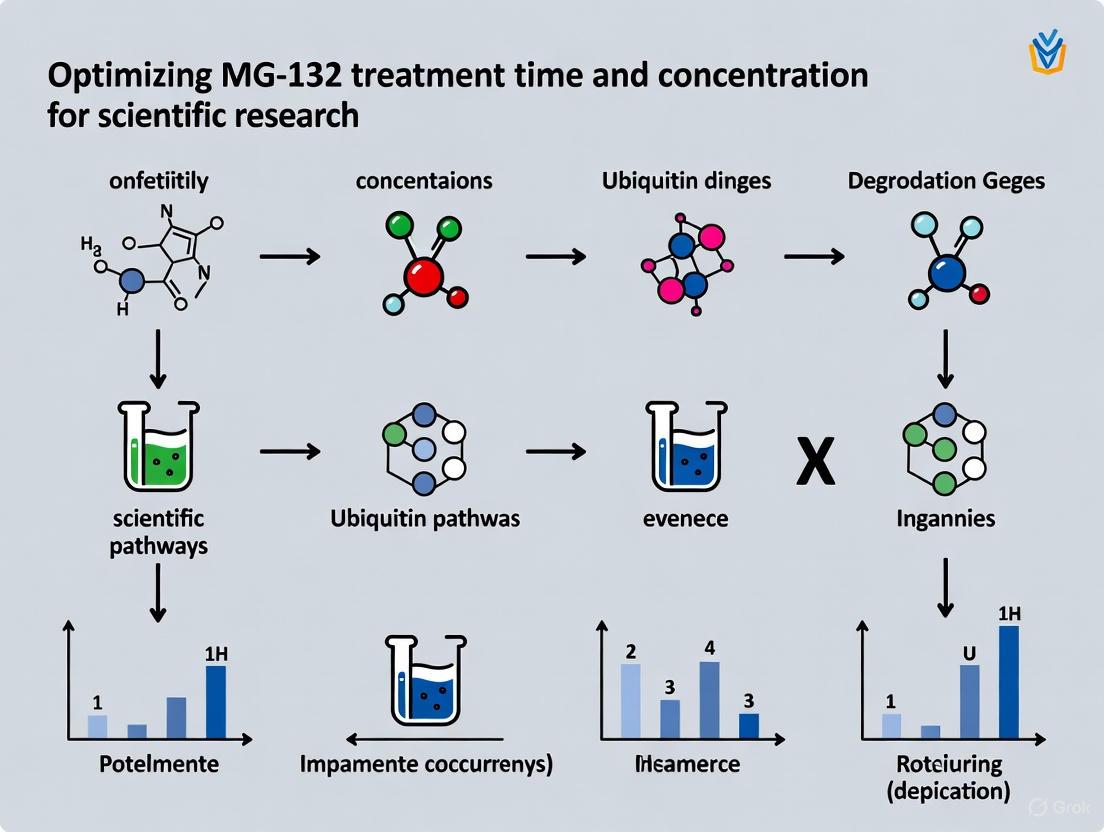
This article provides a comprehensive guide for researchers and drug development professionals on optimizing the proteasome inhibitor MG-132, a critical tool compound and precursor to clinical agents.
Optimizing MG-132 Treatment: A Strategic Guide to Time and Concentration for Cancer Research
Abstract
This article provides a comprehensive guide for researchers and drug development professionals on optimizing the proteasome inhibitor MG-132, a critical tool compound and precursor to clinical agents. It synthesizes current scientific evidence to establish foundational mechanisms of action, detail methodological best practices for application across cancer cell types, address common challenges in experimental optimization, and validate strategies through comparative analysis with combination therapies. The scope covers concentration-dependent efficacy, time-sensitive phenotypic outcomes, cell type-specific responses, and the translation of MG-132 insights to broader drug discovery principles.
Understanding MG-132: Mechanisms of Action and Cellular Consequences
FAQ & Troubleshooting Guide
This technical support resource addresses common questions and experimental challenges related to using the proteasome inhibitor MG-132 in research settings. The guidance is framed within the context of optimizing treatment time and concentration for reproducible and meaningful results.
Frequently Asked Questions
Q1: What is the primary molecular target of MG-132, and what is its fundamental mechanism of action?
A1: MG-132 (carbobenzoxyl-L-leucyl-L-leucyl-leucinal) is a peptide aldehyde that primarily functions as a reversible inhibitor of the 20S catalytic core particle of the 26S proteasome [1] [2]. Its fundamental mechanism involves blocking the proteasome's chymotrypsin-like activity, which is one of its key proteolytic functions. By inhibiting this essential component of the Ubiquitin-Proteasome System (UPS), MG-132 prevents the degradation of polyubiquitinated proteins. This leads to the accumulation of these proteins within the cell, disrupting protein homeostasis and thereby inducing a cascade of cellular effects, including cell cycle arrest and apoptosis [1] [3] [4].
Q2: My MG-132 treatment is causing unexpected or off-target effects in my experiment. What could be the reason?
A2: MG-132 is a peptide aldehyde, a class known to inhibit other cellular proteases. It is documented to also inhibit calpain and NF-κB activation (IC50 = 3 µM) [2]. The observed effects in your experiment could therefore be a combination of proteasome inhibition and these other activities.
- Troubleshooting Steps:
- Consider Specificity: For a more proteasome-specific effect, consider using an irreversible inhibitor like lactacystin, which covalently modifies the proteasome's catalytic threonine residues and is more specific [2].
- Verify Inhibition: Include a verification assay, such as a western blot to detect the accumulation of global polyubiquitinated proteins, to confirm that proteasome inhibition is occurring under your experimental conditions [3].
- Review Concentration/Duration: High concentrations or prolonged treatment times can exacerbate off-target effects. Titrate the inhibitor to find the lowest effective concentration for your specific system (see Table 1 for guidance).
Q3: Why do I observe different cytotoxic effects when using MG-132 on different cell lines?
A3: The sensitivity to MG-132 is highly cell-type dependent, influenced by factors such as the baseline metabolic rate, the reliance on specific protein degradation pathways, and genetic variations.
- Evidence from Literature: Cytotoxicity testing has shown that the IC50 value of MG-132 can vary significantly between cell lines. For instance, the IC50 for melanoma A375 cells was reported as 1.258 µM after 48 hours of treatment, while other cell lines like A549, MCF-7, and Hela also show varying sensitivities [1].
- Troubleshooting Steps:
- Perform a Dose-Response Curve: Always establish a new dose-response curve for every unique cell line or experimental condition.
- Monitor Time-Course Effects: Remember that the effects of MG132 are both dose- and time-dependent [5]. A time-course study is crucial for identifying the optimal treatment window.
Q4: How does MG-132 treatment affect major cell signaling pathways, complicating data interpretation?
A4: Proteasome inhibition systemically perturbs the intracellular environment by stabilizing a wide array of regulatory proteins. Two key pathways affected are:
- The MAPK/ERK Pathway: MG-132 treatment has been shown to reduce growth factor-stimulated phosphorylation of ERK. This is not only due to the upregulation of dual-specificity phosphatases (DUSPs) but also involves a reduction in the activation of the upstream kinase MEK, indicating a multi-level perturbation of this kinase cascade [6].
- The p53 and Apoptosis Pathways: Mechanistic studies show that MG-132 can inhibit MDM2, leading to the activation of the p53/p21 axis and suppression of CDK2/Bcl2, which triggers cell cycle arrest and apoptosis [1].
The following diagram illustrates the primary molecular interactions and pathways affected by MG-132 treatment:
Quantitative Data for Experimental Optimization
The following tables consolidate key quantitative data from published research to aid in experimental design.
Table 1: Cytotoxicity and Apoptosis Profile of MG-132 in Various Cell Models
| Cell Line / Model | Reported IC50 / Effective Dose | Treatment Duration | Key Observed Effect |
|---|---|---|---|
| Melanoma A375 cells [1] | IC50: 1.258 ± 0.06 µM | 48 hours | Cytotoxicity |
| Melanoma A375 cells [1] | 2 µM | 24 hours | Total Apoptosis: 85.5% |
| Esophageal EC9706 cells [5] | ~4 µM | 24 hours | Significant growth inhibition |
| Esophageal EC9706 Xenograft [5] | 10 mg/kg (systemic) | 25 days | Tumor growth inhibition |
| Mdx Mice (DMD model) [7] | 1-10 µg/kg/day (systemic) | 8 days | Rescue of DGC protein expression |
Table 2: Optimized In Vitro Protocol for Apoptosis & Signaling Analysis (A375 cells) [1]
| Experimental Step | Parameter | Specification |
|---|---|---|
| Cell Seeding | Plating Format | 6-well plates |
| Seeding Density | 2 x 10^4 cells/well | |
| MG-132 Treatment | Working Concentrations | 0.5 µM, 1 µM, 2 µM |
| Vehicle Control | 1% DMSO | |
| Treatment Duration | 24 hours | |
| Endpoint Analysis | Apoptosis Assay | Annexin V-FITC/PI staining & Flow Cytometry |
| Protein Expression | Western Blot for p53, p21, caspase-3, etc. | |
| Cell Migration | Wound Healing Assay (0.125 - 0.5 µM) |
Detailed Experimental Protocols
Protocol 1: Assessing Apoptosis via Flow Cytometry [1]
This protocol is adapted from studies on A375 melanoma cells and is a standard method for quantifying apoptosis.
- Cell Seeding and Treatment: Seed A375 cells in 6-well plates at a density of 2 x 10^4 cells per well and allow them to adhere for 24 hours. Treat cells with optimized concentrations of MG-132 (e.g., 0.5, 1, and 2 µM) for 24 hours, using 1% DMSO as a vehicle control.
- Cell Harvesting: After treatment, collect both adherent and floating cells. Wash the cell pellet once with cold PBS.
- Staining: Resuspend the cells in Annexin V binding buffer. Add Annexin V-FITC and Propidium Iodide (PI) according to the manufacturer's instructions (e.g., using an Annexin V-FITC/PI Apoptosis Detection Kit). Incubate for 15-20 minutes at room temperature in the dark.
- Flow Cytometry Analysis: Analyze the stained cells using a flow cytometer (e.g., BD FACSAria Fusion) within 1 hour. Use FlowJo software to quantify the populations of viable (Annexin V-/PI-), early apoptotic (Annexin V+/PI-), late apoptotic (Annexin V+/PI+), and necrotic (Annexin V-/PI+) cells.
Protocol 2: Evaluating Protein Expression Changes via Western Blot [1] [5]
- Protein Extraction: Following MG-132 treatment, lyse cells on ice using RIPA or a similar lysis buffer supplemented with protease and phosphatase inhibitors. Centrifuge lysates at 12,000-14,000 rpm for 15 minutes at 4°C to collect the supernatant.
- Electrophoresis and Transfer: Separate 20-40 µg of total protein per sample by 10-12% SDS-PAGE. Electrophoretically transfer proteins from the gel to a PVDF membrane.
- Blocking and Antibody Incubation: Block the membrane with 5% non-fat milk in TBST for 1-2 hours. Incubate with primary antibodies (e.g., against p53, p21, cleaved caspase-3, NF-κB, β-actin) diluted in blocking buffer overnight at 4°C.
- Detection: The next day, wash the membrane and incubate with an appropriate HRP-conjugated secondary antibody for 1 hour at room temperature. After further washing, develop the signal using an ECL luminescent developer and capture the image using a chemiluminescence analyzer. Perform densitometry analysis with software like ImageJ.
The Scientist's Toolkit: Essential Research Reagents
Table 3: Key Reagent Solutions for MG-132 Experiments
| Reagent / Kit | Function / Application | Example Supplier / Catalog |
|---|---|---|
| MG132 | Reversible proteasome inhibitor; primary research compound. | MedChemExpress; Calbiochem; Cayman Chemical; Peptide Institute [1] [2] [6] |
| CCK-8 Assay Kit | Cell viability and cytotoxicity testing. | Beyotime [1] |
| Annexin V-FITC/PI Apoptosis Kit | Quantification of apoptotic cells via flow cytometry. | Beijing Solarbio Science & Technology [1] |
| Anti-Ubiquitin Antibodies | Detection of global ubiquitinated proteins to confirm proteasome inhibition. | Cell Signaling Technology; Thermo Fisher Scientific [3] [8] |
| Antibodies for Signaling Proteins | Western blot analysis of pathway components (e.g., p53, p21, caspase-3, ERK, MEK). | Cell Signaling Technology; ABclonal [1] [6] |
| Lactacystin | More specific, irreversible proteasome inhibitor; used for control experiments. | MilliporeSigma; Enzo Life Sciences [2] |
Troubleshooting Guides and FAQs
FAQ: Why is my MG-132 treatment not inducing the expected level of apoptosis in my cancer cell lines?
Answer: Ineffective apoptosis induction can often be traced to the concentration and duration of MG-132 treatment. The proteasome inhibitor MG-132 exerts its anti-tumor activity by activating key molecular pathways, including p53 and MAPK, but this is highly dependent on proper dosing.
- Confirm Optimal Concentration: The half-maximal inhibitory concentration (IC50) of MG-132 for A375 melanoma cells has been determined to be 1.258 ± 0.06 µM [1]. Using a sub-optimal concentration is a common cause of failure.
- Verify Treatment Time: Apoptosis is a time-dependent process. Flow cytometry analysis shows that treatment of A375 cells with 2 µM MG132 for 24 hours can induce early apoptosis in 46.5% of cells and a total apoptotic response in 85.5% of cells [1]. Ensure your treatment duration is sufficient for the apoptotic machinery to activate.
- Check the p53 Status of Your Cell Line: MG132 stabilizes and activates the p53 protein [1] [9]. If you are using a cell line with a mutant or deleted TP53 gene, the p53-mediated apoptotic pathway may be compromised, leading to reduced cell death. The p53 protein is mutated in approximately 50% of all cancers [10].
FAQ: I am observing inconsistent results in my cell migration (wound healing) assays with MG-132. What could be the reason?
Answer: Inconsistency in functional assays like wound healing can often be attributed to subtle variations in cell confluency and drug concentration at the time of treatment.
- Standardize Cell Density: Perform the wound healing assay when cell density reaches approximately 80% confluency [1]. Over-confluent or sparse cultures can alter cell-cell contacts and migration dynamics.
- Use Validated Sub-IC50 Doses: For migration assays, MG-132 should be used at concentrations that suppress migration without causing widespread cell death. Studies have successfully used concentrations of 0.125, 0.25, and 0.5 µM MG132, well below the IC50, to demonstrate significant suppression of A375 cell migration [1].
FAQ: How does MG-132 actually activate the p53 pathway at the molecular level?
Answer: MG-132 activates p53 primarily by inhibiting its primary cellular regulator. Under normal conditions, the p53 protein is constantly ubiquitinated by the E3 ubiquitin ligase MDM2 and targeted for degradation by the 26S proteasome, keeping its levels low [9]. MG-132, as a proteasome inhibitor, blocks this degradation process. This leads to:
- Stabilization and Accumulation of the p53 protein within the nucleus [1] [9].
- Post-translational Modification: The accumulated p53 is then activated by phosphorylation by kinases such as ATM, ATR, Chk1, and Chk2 in response to DNA damage and other stress signals [10] [9].
- Transcriptional Activation: The stabilized, activated p53 protein forms tetramers that bind to specific DNA sequences, acting as a transcription factor to activate the expression of genes involved in cell cycle arrest (e.g., p21) and apoptosis (e.g., Bax, Puma, Noxa) [10] [9].
The diagram below illustrates this central mechanism of p53 activation.
The tables below consolidate key quantitative findings from research on MG-132 to assist in experimental design.
Table 1: Cytotoxic and Apoptotic Effects of MG-132 on A375 Melanoma Cells [1]
| Parameter | Value | Experimental Context |
|---|---|---|
| IC50 Value | 1.258 ± 0.06 µM | 48-hour treatment of A375 human melanoma cells |
| Early Apoptosis | 46.5% | After 24h treatment with 2 µM MG132 |
| Total Apoptosis | 85.5% | After 24h treatment with 2 µM MG132 |
| Migration Inhibition | Significant suppression | At sub-IC50 concentrations (0.125 - 0.5 µM) |
Table 2: Efficacy of MG-132 in Other Experimental Models
| Cell Line / Model | Finding | Concentration / Dose | Citation |
|---|---|---|---|
| Multiple Esophageal Cancer Cells (EC9706, EC109, EC1, TE-1) | Marked decrease in cell viability | 5 µM for 24 hours | [5] |
| EC9706 Xenograft Model | Significant suppression of tumor growth | 10 mg/kg (intraperitoneal) for 25 days | [5] |
| MCF-7 Breast Cancer Cells | Altered chromatin accessibility & transcription | 1 µM for 4 and 24 hours | [11] |
Experimental Protocols for Key Assays
Protocol 1: Assessing MG-132-Induced Apoptosis via Flow Cytometry This protocol is adapted from studies demonstrating MG-132's potent pro-apoptotic effects [1] [5].
- Cell Seeding: Seed your chosen cell line (e.g., A375, EC9706) in 6-well plates and culture until they reach 70-80% confluency.
- Treatment: Add MG-132 to the culture medium at the desired concentrations (e.g., 0.5, 1, 2 µM). Use 1% DMSO as a vehicle control.
- Incubation: Treat cells for 24 hours.
- Cell Harvesting: Collect cells, including floating cells in the culture medium, by gentle trypsinization (use EDTA-free trypsin if possible). Combine all cells and wash twice with cold PBS.
- Staining: Resuspend the cell pellet in Annexin V binding buffer. Stain cells with Annexin V-FITC and Propidium Iodide (PI) according to the manufacturer's instructions (e.g., using an Annexin V-FITC/PI Apoptosis Detection Kit). Incubate in the dark for 15-20 minutes at room temperature.
- Analysis: Analyze the stained cells immediately using a flow cytometer. Quantify the populations: Annexin V-FITC+/PI- (early apoptotic), Annexin V-FITC+/PI+ (late apoptotic/necrotic), and total apoptosis (sum of both).
Protocol 2: Evaluating Anti-Proliferative Effect via CCK-8 Assay This colorimetric assay is widely used to determine cell viability and MG-132's IC50 [1] [5].
- Cell Seeding: Seed cells (e.g., A375, MCF-7) in 96-well plates at a density that will reach 70-80% confluency at the time of treatment.
- Dose-Response Treatment: When cells are ready, add a series of concentrations of MG-132 (e.g., from 0.1 µM to 10 µM) to the wells. Include a negative control (1% DMSO) and a positive control (e.g., celastrol). Use at least quadruplicate wells for each condition.
- Incubation: Incubate cells for the desired time period (e.g., 24, 48 hours).
- CCK-8 Reagent Addition: At the end of the treatment, add 10 µL of CCK-8 solution directly to each well containing 100 µL of culture medium. Return the plate to the incubator for 1-4 hours.
- Absorbance Measurement: Measure the absorbance of each well at a test wavelength of 450 nm and a reference wavelength of 630 nm using a plate reader.
- Calculation: Calculate cell viability as a percentage: (Atreated / Acontrol) × 100. Plot viability against MG-132 concentration to determine the IC50 value.
Signaling Pathways Activated by MG-132
Mechanistic studies reveal that MG-132 exerts its anti-cancer effects through a multi-targeted mechanism. The diagram below integrates the key pathways documented in the search results.
The Scientist's Toolkit: Key Research Reagent Solutions
Table 3: Essential Reagents for Investigating MG-132 Mechanisms
| Reagent / Kit | Function / Application | Example Use in Context |
|---|---|---|
| MG132 (Proteasome Inhibitor) | Reversible inhibitor of the 26S proteasome's chymotrypsin-like activity; leads to accumulation of poly-ubiquitinated proteins. | Core reagent used at concentrations ranging from 0.1 µM to 10 µM to induce p53 stabilization, MAPK activation, and apoptosis [1] [5] [11]. |
| Annexin V-FITC/PI Apoptosis Detection Kit | Differentiates between live (Annexin V-/PI-), early apoptotic (Annexin V+/PI-), and late apoptotic/necrotic (Annexin V+/PI+) cells via flow cytometry. | Used to quantify the percentage of cells undergoing apoptosis after MG-132 treatment, showing dose-dependent increases [1] [5]. |
| CCK-8 Cell Viability/Cytotoxicity Kit | Colorimetric assay based on the reduction of a tetrazolium salt by cellular dehydrogenases; indicates metabolically active cells. | Determines the IC50 value of MG-132 and assesses its anti-proliferative effects across various cell lines [1] [5]. |
| Antibodies for Western Blotting | Protein detection and quantification to analyze expression changes in signaling pathways. | Used to confirm MG-132's mechanism, showing upregulation of p53, p21, and caspase-3, and downregulation of CDK2 and Bcl-2 [1]. |
| RNA Sequencing Services | Genome-wide analysis of transcriptional changes and identification of differentially expressed genes. | Revealed that MG-132 reprograms the chromatin landscape and RNAPII transcription in breast cancer cells [11]. |
The following table summarizes key quantitative findings from recent studies on MG-132 treatment across different cancer cell types.
| Cell Line/Model | Cytostatic Effects | Apoptotic Effects | Key Mechanisms Observed |
|---|---|---|---|
| Breast Cancer Cells (Combination with Propolin G) | Minimal effect with MG132 (1 µM) or Propolin G (10 µM) alone [12] | Synergistic apoptosis with combination (CI=0.63); Accumulation of polyubiquitinated proteins [12] | Activated PERK/ATF4/CHOP UPR pathway; Induced autophagy (↑ULK1, Beclin1, ATG5, LC3-II) [12] |
| Uterine Leiomyosarcoma (Ut-LMS: SK-LMS-1, SK-UT-1, SK-UT-1B) | Dose-dependent reduction in cell viability (0-2 µM, 24h) [13] | Dose-dependent apoptosis; ↑cleaved PARP & caspase-3; LDH release indicating membrane damage [13] | G2/M phase arrest; Altered p21, p27, p53; Induced autophagy (↑LC3-II); ROS-dependent apoptosis in some cell lines [13] |
| Nasal Mucosa Fibroblasts (Cytostatic Drug Effects) | Dose-dependent toxic effect (Mitomycin C: 0.25 mg/ml; Doxorubicin: 0.25 mg/ml; 5-FU: 12.5 mg/ml) [14] | Not a primary focus of the study [14] | Established model for studying cytostatic drug effects on proliferation and fibrotization [14] |
Experimental Protocols for Key Assays
Protocol 1: Assessing Cell Viability and Cytotoxicity (MTT & LDH Assays)
This protocol is used to determine the cytostatic and cytotoxic effects of MG-132, as demonstrated in uterine leiomyosarcoma studies [13].
- Cell Seeding and Treatment: Seed cells in a 96-well plate at a density of 5,000 cells/well and allow them to adhere overnight. Treat the cells with a concentration gradient of MG-132 (e.g., 0-2 µM) for 24 hours [13].
- MTT Assay for Viability: After treatment, add 20 µl of MTT solution (5 mg/ml) to each well and incubate for 2 hours at 37°C to allow formazan crystal formation. Dissolve the crystals by adding 150 µl of DMSO to each well. Measure the absorbance at 570 nm using a microplate reader. Calculate cell viability as a percentage of the untreated control group [13].
- LDH Assay for Cytotoxicity: Culture cells in a 96-well plate and treat with MG-132 for 24 hours. Add 100 µl of LDH PLUS Reaction Mixture to each well, mix gently, and allow the reaction to proceed in the dark for 30 minutes at room temperature. Measure the absorbance at 490 nm. Normalize values to the control group to assess membrane damage and cell death [13].
Protocol 2: Analyzing Apoptosis via Flow Cytometry
This method is critical for quantifying the shift from cytostasis to apoptosis and requires careful troubleshooting to ensure accurate data [15] [13].
- Cell Staining: Harvest treated and control cells. Resuspend the cell pellet in a binding buffer containing Annexin V and a viability dye like 7-AAD or Propidium Iodide (PI). Incubate for 15-20 minutes at room temperature in the dark [15] [13].
- Flow Cytometry Setup and Controls:
- Instrument Calibration: Use calibration beads to ensure the flow cytometer is performing optimally [15].
- Viability Dye: Always include a viability dye to distinguish between live, early apoptotic, and late apoptotic/necrotic cells. For example:
- Annexin V negative, PI negative: Viable cells.
- Annexin V positive, PI negative: Early apoptosis.
- Annexin V positive, PI positive: Late apoptosis/post-apoptotic necrosis [15].
- Gating and Compensation: Use single-stained controls (cells or compensation beads) for each fluorochrome to set up compensation accurately. Collect at least 5,000 positive events for reliable compensation calculations [15].
- Data Acquisition and Analysis: Acquire data on the flow cytometer and use the gating strategy to quantify the percentage of cells in each apoptotic stage.
Protocol 3: Investigating Mechanism via Western Blotting
Western blotting is used to confirm the activation of specific cell death pathways in response to MG-132 [12] [13].
- Protein Preparation and Gel Electrophoresis:
- Lyse treated cells in an appropriate RIPA buffer supplemented with protease and phosphatase inhibitors (e.g., 1.0 µg/ml leupeptin, PMSF, 2.5 mM sodium orthovanadate) to prevent protein degradation [16].
- Shear genomic DNA by sonication (e.g., 3 x 10-second bursts on ice) to reduce sample viscosity and ensure complete lysis, especially for nuclear and membrane-bound targets [16].
- Load 20-30 µg of protein per lane for mini-gels. For detection of low-abundance or modified targets, load up to 100 µg of protein [16].
- Transfer and Blocking:
- For wet transfer, use 25 mM Tris, 192 mM Glycine, 20% methanol at 70V for 2 hours at 4°C. For high molecular weight proteins, reduce methanol to 5-10% and increase transfer time [16].
- Block the membrane for at least 1 hour at room temperature in a suitable blocking buffer (e.g., 5% BSA in TBST for phospho-proteins or 5% non-fat dry milk in TBST for others) [17] [16].
- Antibody Incubation and Detection:
- Incubate with primary antibody diluted in the recommended buffer (check datasheet) overnight at 4°C. A common starting dilution is 1:1000 [16].
- Incubate with an HRP-conjugated secondary antibody for 1 hour at room temperature. Do not use sodium azide in any buffers as it inhibits HRP [17].
- Detect using a chemiluminescent substrate. For low-abundance targets, use a high-sensitivity substrate and optimize exposure time to avoid signal saturation [17].
Signaling Pathways in MG-132 Induced Cell Death
Proteasome Inhibition to Apoptosis
Cell Fate Decision Pathways
Troubleshooting Guides and FAQs
Flow Cytometry Troubleshooting for Apoptosis Assays
| Problem | Potential Source | Recommended Solution |
|---|---|---|
| Weak or No Signal | Detection antibody too dilute [15] | Titrate antibody concentration for your specific cell type and conditions [15]. |
| Target inaccessibility [15] | Check protein location and use appropriate fixation/permeabilization methods. Keep cells on ice during surface staining to prevent internalization [15]. | |
| Instrument misalignment [15] | Use calibration beads to check laser alignment and instrument performance [15]. | |
| High Background Fluorescence | Cell death from processing [15] | Use viability dyes (PI, 7-AAD) to gate out dead cells and reduce non-specific binding [15]. |
| Non-specific Fc receptor binding [15] | Use Fc receptor blocking reagents to prevent antibody binding to Fc receptors rather than target antigens [15]. | |
| Poor compensation [15] | Ensure single-stained controls are brighter than sample signal and collect >5,000 events for accurate compensation [15]. |
Western Blotting Troubleshooting for Signaling Analysis
| Problem | Potential Source | Recommended Solution |
|---|---|---|
| Weak or No Signal | Incomplete transfer [17] | Stain gel post-transfer to check efficiency. For low MW proteins, use 0.2 µm pore nitrocellulose and shorter transfer times [17] [16]. |
| Low antibody concentration or activity [17] | Increase antibody concentration. Perform a dot blot to check antibody activity. Do not reuse pre-diluted antibodies [17] [16]. | |
| Buffer contains sodium azide (for HRC) [17] | Sodium azide inhibits HRP. Avoid its use in buffers with HRP-conjugated antibodies [17]. | |
| High Background | Antibody concentration too high [17] | Decrease concentration of primary and/or secondary antibody [17]. |
| Insufficient blocking or washing [17] | Increase blocking time (≥1 hr at RT). Increase wash number/volume. Add 0.05% Tween 20 to wash buffer [17]. | |
| Sub-optimal blocking buffer [16] | Do not use milk with avidin-biotin systems. For phosphoproteins, use BSA in TBS instead of milk or casein [17] [16]. | |
| Multiple Bands | Protein degradation [16] | Use fresh samples and add protease/phosphatase inhibitors (e.g., leupeptin, PMSF) to lysis buffer [16]. |
| Post-translational modifications [16] | Glycosylation, ubiquitination, or phosphorylation can cause shifts. Consult databases like PhosphoSitePlus for information [16]. | |
| Isoform reactivity [16] | Check antibody datasheet to see if it detects multiple isoforms or splice variants [16]. |
Frequently Asked Questions (FAQs)
Q1: Why does MG-132 cause cytostasis at lower concentrations and apoptosis at higher concentrations? The differential effect is due to the severity of proteotoxic stress. Lower levels of proteasome inhibition primarily activate stress-response pathways (like cell cycle checkpoints) that halt proliferation, allowing the cell to manage the stress. Higher levels of inhibition cause an overwhelming accumulation of misfolded proteins, triggering irreversible apoptotic pathways like the PERK/ATF4/CHOP axis [12] [13].
Q2: How can I confirm that autophagy is playing a pro-death role in my MG-132 treatment model? Monitor key autophagy markers via western blotting, such as the conversion of LC3-I to LC3-II and increased levels of proteins like ULK1, Beclin1, and ATG5 [12]. To functionally test its role, use pharmacological inhibitors (e.g., chloroquine) or genetic knockdown of essential autophagy genes (e.g., ATG5). If inhibiting autophagy reduces cell death, it suggests a pro-death function in your context.
Q3: My flow cytometry data for Annexin V/PI shows high background in the untreated controls. What could be wrong? This is often due to high basal cell death from sample processing [15]. Ensure:
- You are using fresh, healthy cells.
- You have optimized the tissue dissociation protocol to be as gentle as possible.
- You are including a viability dye and gating on the viable cell population.
- You have used Fc receptor blocking reagents to minimize non-specific antibody binding [15].
Q4: I see no signal for my target protein on my western blot, but my loading control is fine. What should I check?
- Antibody Specificity: Confirm the antibody is validated for western blotting and is reactive with your species. Check the recommended dilution buffer (BSA vs. milk) on the datasheet [16].
- Sample Integrity: Ensure your target is expressed in your cell line or tissue. Use a positive control. Add protease inhibitors to prevent degradation [16].
- Transfer Efficiency: For high molecular weight proteins, increase transfer time or add 0.01-0.05% SDS to the transfer buffer. For low molecular weight proteins, shorten transfer time to prevent "blow-through" [17] [16].
The Scientist's Toolkit: Research Reagent Solutions
| Item/Category | Function/Application | Examples & Notes |
|---|---|---|
| Proteasome Inhibitors | Induce proteotoxic stress to study cytostasis and apoptosis. | MG-132 (reversible peptide aldehyde), Bortezomib (FDA-approved dipeptide boronate) [12] [13]. |
| Viability & Cytotoxicity Assays | Quantify cytostatic (growth arrest) and cytotoxic (cell death) effects. | MTT/MTS (metabolic activity), LDH release (membrane integrity) [14] [13]. |
| Apoptosis Detection Reagents | Detect and quantify programmed cell death. | Annexin V (phosphatidylserine exposure), 7-AAD/PI (membrane integrity), caspase-3 activity assays [15] [13]. |
| Autophagy Detection Reagents | Monitor autophagy induction and flux. | Antibodies against LC3-II, p62, ULK1, Beclin1. Tandem fluorescent LC3 probes can track autophagosome-lysosome fusion [12]. |
| Pathway-Specific Antibodies | Analyze mechanism of action via Western Blot. | Antibodies for UPR markers (PERK, ATF4, CHOP), apoptotic markers (cleaved PARP, cleaved caspase-3), cell cycle regulators (p21, p53) [12] [13] [16]. |
| Fc Receptor Blocking Reagents | Reduce background and non-specific binding in flow cytometry. | Crucial for obtaining clean data when staining immune cells or other Fc receptor-expressing cells [15]. |
| Protease & Phosphatase Inhibitors | Maintain protein integrity and post-translational modification states during lysis. | Essential for detecting labile proteins and phosphorylation events. Use cocktails for broad-spectrum protection [16]. |
Core Concepts: Biphasic Responses and MG-132
Biphasic responses are a fundamental phenomenon in cell biology where a single stimulus triggers two distinct, temporally separated phases of cellular activity. In the context of therapeutic agents like the proteasome inhibitor MG-132, understanding these phases is critical for optimizing treatment protocols. MG-132 exerts its effects by disrupting the ubiquitin-proteasome system, leading to the accumulation of damaged proteins and ultimately inducing cell death in cancerous cells [1] [13]. The time-course of its action often involves an initial induction phase, characterized by the initiation of signaling cascades, followed by a maintenance or execution phase, where phenotypes like apoptosis become fully established [18]. This guide provides troubleshooting support for researchers studying these dynamic processes.
Troubleshooting Guide: FAQs on MG-132 Time-Course Experiments
1. FAQ: My MG-132 treatment in A375 melanoma cells shows inconsistent apoptosis rates between experiments. What could be the cause?
- Issue: Inconsistent apoptosis quantification.
- Solution: Adhere to a standardized timing protocol. Apoptosis is highly time- and concentration-dependent. One study on A375 cells showed that a 24-hour treatment with 2 µM MG-132 induced early apoptosis in 46.5% of cells and a total apoptotic response in 85.5% of cells [1]. Ensure you are using the same time points and precise drug concentrations. Verify the health of your cell line and the consistency of your serum batches.
- Preventative Step: Perform a full time-course and concentration-response curve to establish the optimal window for apoptosis analysis in your specific cell system.
2. FAQ: How can I confirm that a observed cellular pause is part of a biphasic response versus a terminal cell cycle arrest?
- Issue: Differentiating between a temporary phase and permanent arrest.
- Solution: Implement longitudinal tracking and analyze phase-specific markers. Research on DNA damage-induced senescence shows that early JNK and Erk MAPK signaling (within 12 hours) controls the initiation of cell senescence, while late activity (after 12 hours) regulates the secretory phenotype [18]. For MG-132, which can induce G2/M phase arrest [13], monitor cells after drug wash-out to see if they re-enter the cycle or proceed to death. Western blot for cleaved caspase-3 and cell cycle regulators like p21 can help distinguish the cell's fate [1] [13].
3. FAQ: I am not observing the expected phosphorylation dynamics in the MAPK pathway with MG-132 treatment. What should I check?
- Issue: Absent or weak signaling pathway activation.
- Solution: Re-optimize your timing for protein harvest. Signaling bursts can be transient. The cited research on A375 melanoma cells identified activation of the MAPK pathway as a critical mechanism for MG-132-induced apoptosis [1]. You may be harvesting proteins too early or too late. Perform a detailed time-course experiment, collecting samples at early time points (e.g., 0.5, 1, 2, 4, 8 hours) post-treatment to capture the signaling peak.
4. FAQ: My negative control (DMSO) shows unexpected cytotoxicity. How do I resolve this?
- Issue: Solvent toxicity in control groups.
- Solution: Ensure the DMSO concentration does not exceed 0.1% (v/v). In the referenced studies, 1% DMSO was used as a negative control [1], but lower concentrations are generally safer. Use the highest purity DMSO available and make sure it is thoroughly mixed in the culture medium. Include a vehicle-only control (complete medium with DMSO) and an untreated control (complete medium only) to isolate the effect of the solvent.
Key Experimental Protocols & Data
The following tables summarize core quantitative data and methodologies from key studies on MG-132.
Table 1: Quantitative Cytotoxicity of MG-132 Across Cell Lines
Data sourced from CCK-8 assay after 48 hours of treatment [1].
| Cell Line | Cancer Type | Reported IC₅₀ Value (µM) |
|---|---|---|
| A375 | Melanoma | 1.258 ± 0.06 |
| A549 | Lung Carcinoma | Data in source (See [1]) |
| MCF-7 | Breast Adenocarcinoma | Data in source (See [1]) |
| Hela | Cervical Adenocarcinoma | Data in source (See [1]) |
Table 2: MG-132 Induced Apoptosis in A375 Melanoma Cells
Data from flow cytometry (Annexin V/PI staining) after 24 hours of treatment [1].
| MG-132 Concentration (µM) | Early Apoptosis (%) | Total Apoptotic Response (%) |
|---|---|---|
| 2 | 46.5 | 85.5 |
Detailed Protocol: Assessing Apoptosis via Flow Cytometry
This method is used to quantify the percentage of cells undergoing apoptosis [1].
- Seed cells in 6-well plates and allow to adhere overnight.
- Treat with MG-132 at desired concentrations (e.g., 0.5, 1, 2 µM). Use 1% DMSO as a negative control.
- Incubate for 24 hours (or your determined time-point) at 37°C and 5% CO₂.
- Collect cells and follow the instructions of an Annexin V-FITC/PI Apoptosis Detection Kit.
- Analyze samples immediately using a flow cytometer (e.g., BD FACSAria Fusion).
- Use software like FlowJo to distinguish live (Annexin V-/PI-), early apoptotic (Annexin V+/PI-), late apoptotic (Annexin V+/PI+), and necrotic (Annexin V-/PI+) cell populations.
Detailed Protocol: Western Blot Analysis for Key Pathways
This method is used to detect changes in protein expression and cleavage in response to MG-132 [1].
- Cell Treatment: Inoculate cells (e.g., 2 x 10⁴/well) in 6-well plates. After 12 hours, add MG-132 (0.5, 1, 2 µM) for 24 hours.
- Protein Extraction: Lyse cells with RIPA buffer (e.g., 50 mM Tris-HCl pH 7.4, 150 mM NaCl, 1% Triton X-100, 20 mM NaF) supplemented with protease and phosphatase inhibitors (e.g., 2 mM PMSF, 0.1 mM leupeptin).
- Electrophoresis & Transfer: Separate proteins by 10% SDS-PAGE and transfer to a PVDF membrane.
- Blocking and Antibody Incubation: Block membrane with 5% skimmed milk for 2 hours at room temperature. Incubate with primary antibodies (e.g., against cleaved caspase-3, p53, p21, Bcl2, β-actin as loading control) overnight at 4°C.
- Detection: Wash membrane and incubate with a peroxidase-conjugated secondary antibody (e.g., rabbit IgG) for 1 hour at room temperature. Develop signal using an ECL luminescent developer and image with a chemiluminescence analyzer.
- Analysis: Perform grayscale value analysis using software like ImageJ.
Signaling Pathway Visualizations
Biphasic JNK-ERK Signaling in Senescence
MG-132 Induced Apoptosis Mechanism
The Scientist's Toolkit: Research Reagent Solutions
Table 3: Essential Reagents for MG-132 Time-Course Research
| Reagent / Kit | Specific Function | Example Use in Protocol |
|---|---|---|
| MG132 | Potent, cell-permeable proteasome inhibitor. Blocks the chymotrypsin-like activity of the proteasome. | Dissolved in DMSO to create a stock solution, then diluted in culture medium to treat cells at various concentrations (e.g., 0.5-2 µM) and time points [1] [13]. |
| CCK-8 Assay Kit | Measures cell viability and proliferation based on metabolic activity. | Used to determine the IC₅₀ value of MG132 after 24-48 hours of treatment [1]. |
| Annexin V-FITC/PI Apoptosis Kit | Distinguishes between live, early apoptotic, and late apoptotic/necrotic cells by detecting phosphatidylserine exposure and membrane integrity. | Cells are treated, stained according to kit instructions, and analyzed by flow cytometry to quantify apoptosis [1] [13]. |
| LDH Release Assay Kit | Measures lactate dehydrogenase enzyme released upon cell membrane damage, indicating cytotoxicity. | Confirms MG132-induced membrane damage in a dose-dependent manner [13]. |
| Antibody: Cleaved Caspase-3 | Detects the active, cleaved form of caspase-3, a key executioner of apoptosis. | Used in Western blot to confirm activation of the apoptotic pathway downstream of MG132 treatment [1] [13]. |
| Antibody: p53 / p21 | Detects tumor suppressor p53 and its downstream target p21, involved in cell cycle arrest. | Western blot analysis shows upregulation of these proteins, indicating cell cycle arrest in response to DNA damage and proteasome inhibition [1] [13]. |
| N-Acetylcysteine (NAC) | Reactive oxygen species (ROS) scavenger. | Used to investigate the role of ROS in MG132-induced apoptosis; pre-treatment can reduce apoptosis in some cell lines [13]. |
Accumulation of Polyubiquitinated Proteins and Induction of Proteotoxic Stress
FAQ & Troubleshooting Guide
Frequently Asked Questions
Q1: What is the expected outcome when MG-132 treatment is successful? A successful MG-132 treatment will lead to the accumulation of polyubiquitinated proteins and the induction of proteotoxic stress, which can be confirmed by:
- Increased polyubiquitin levels: Detectable via western blot using ubiquitin antibodies.
- Activation of stress responses: Upregulation of unfolded protein response (UPR) markers (e.g., GRP78, cleaved ATF6) and heat shock proteins (HSP27, HSP70, HSP90) [19].
- Reduced cell viability: Dose- and time-dependent inhibition of proliferation, often preceding apoptosis [20].
Q2: My western blot shows no increase in polyubiquitinated proteins after MG-132 treatment. What could be wrong? This is a common issue. Please check the following:
- Drug Activity and Stability: Ensure your MG-132 stock solution is fresh. Reconstitute the lyophilized powder in DMSO for a 10 mM stock, aliquot to avoid multiple freeze-thaw cycles, and store at -20°C protected from light. The solution is typically stable for one month [21].
- Insufficient Concentration or Duration: The working concentration for MG-132 typically ranges from 5 μM to 50 μM, with treatment duration from 1 to 24 hours [21]. A dose-response experiment is recommended to establish optimal conditions for your specific cell type.
- Inefficient Proteasome Inhibition: Verify proteasome inhibition by checking the stabilization of a known short-lived proteasome substrate (e.g., p53, IκBα) in your system [22] [21].
Q3: I observe excessive, rapid cell death upon MG-132 treatment. How can I adjust the protocol? Rapid cell death may indicate the concentration is too high for your cell type.
- Titrate the Dose: Start with a lower concentration range (e.g., 1-10 μM) and treat for a shorter duration (e.g., 4-8 hours) [20].
- Monitor Apoptosis Markers: Use Annexin V/PI staining and check for cleavage of caspases (e.g., caspase-3, caspase-8) to confirm apoptosis and adjust conditions accordingly [20].
- Cell Line Variability: Be aware that different cell lines have varying sensitivities. For example, in esophageal cancer research, MG-132 at 5 μM for 24 hours induced marked apoptosis in several cell lines, but the exact sensitivity should be determined empirically [20].
Q4: My experimental results show high variability between replicates after MG-132 treatment. What steps should I take? High variability can stem from technical or biological sources.
- Repeat the Experiment: Unless cost or time-prohibitive, simply repeating the experiment can rule out simple mistakes [23].
- Check Controls: Ensure you have appropriate positive and negative controls. A positive control (e.g., a known proteasome substrate) can confirm the assay is functioning correctly [24] [23].
- Standardize Protocols: Ensure consistent cell seeding density, drug addition timing, and reagent handling. Variable aspiration during wash steps in cell-based assays is a common, often overlooked, source of error [24].
Troubleshooting Common Problems
| Problem | Potential Cause | Suggested Solution |
|---|---|---|
| No accumulation of polyubiquitinated proteins | Inactive drug; insufficient concentration/duration | Use fresh MG-132 stock; perform a dose-response (1-50 μM) and time-course (1-24 h) [21] [20]. |
| Excessive cell death | Concentration too high; cell line overly sensitive | Titrate to lower doses (start at 1-5 μM); reduce treatment time; assess viability more frequently [20]. |
| High background noise in ubiquitin western blot | Non-specific antibody binding; overloading of protein | Optimize antibody concentration; include a no-primary-antibody control; reduce total protein loaded [23]. |
| Unexpected results in downstream assays (e.g., NF-κB activation) | Off-target effects; complex feedback loops | Use a combination of proteasome inhibitors (e.g., epoxomicin) to confirm findings; review literature for cell-specific pathway crosstalk [25] [26]. |
Experimental Protocols & Data
Standardized Protocol: MG-132 Treatment for Inducing Proteotoxic Stress
Objective: To reliably induce the accumulation of polyubiquitinated proteins and activate proteotoxic stress pathways in mammalian cell culture.
Reagents and Materials:
- MG-132 (e.g., Cell Signaling Technology #2194) [21]
- Appropriate cell culture medium and supplements
- Dimethyl Sulfoxide (DMSO)
- Phosphate-Buffered Saline (PBS)
- Lysis Buffer (e.g., RIPA buffer supplemented with protease inhibitors)
Procedure:
- Preparation of MG-132 Stock Solution:
- Reconstitute 1 mg of MG-132 lyophilized powder in 210.3 μL of pure DMSO to create a 10 mM stock solution [21].
- Aliquot and store at -20°C, protected from light. Avoid repeated freeze-thaw cycles; discard aliquots after one month.
Cell Seeding and Treatment:
- Seed cells in appropriate culture vessels and allow them to adhere and reach the desired confluence (e.g., 60-70%).
- Dilute the 10 mM MG-132 stock in pre-warmed culture medium to achieve the final working concentration. Note: The final concentration of DMSO in the culture medium should not exceed 0.1% (v/v). A vehicle control with 0.1% DMSO must be included.
- Replace the cell culture medium with the medium containing MG-132 or vehicle control.
- Incubate cells for the desired duration (e.g., 4-24 hours) in a standard 37°C, 5% CO₂ incubator [21] [20].
Post-Treatment Analysis (Sample Collection):
- For protein extraction: Aspirate the medium, wash cells once with PBS, and lyse the cells directly in the culture dish using an appropriate lysis buffer. Scrape the lysates and clarify by centrifugation.
- For RNA extraction: Harvest cells directly in an appropriate RNA stabilization or lysis buffer.
- For cell viability/apoptosis assays: Process cells according to the specific assay kit protocol (e.g., trypsinization for flow cytometry).
Quantitative Data from Key Studies
The table below summarizes experimental data from published research using MG-132, providing a reference for expected outcomes.
Table 1: MG-132 Effects in Various Experimental Models
| Cell Type / Model | MG-132 Concentration | Treatment Duration | Key Observed Effects |
|---|---|---|---|
| HEK293 Cells [26] | Not Specified | 24 hours | Altered polyubiquitin linkage profile: Increase in K11, K48, and K63 linkages under proteasome inhibition. |
| Esophageal Cancer EC9706 Cells [20] | 2 - 10 µM | 12 - 36 hours | Dose- and time-dependent suppression of cell viability. Significant effects noted at 4-10 µM. |
| Mouse Embryonic Fibroblasts (MEFs) [19] | N/A (UCH-L3 KO model) | N/A | Accumulation of polyubiquitinated proteins; induction of UPR (cleaved ATF6, Grp78) and heat shock response (HSP27, HSP70). |
| IL-10-/- Mouse Colitis Model [25] | 0.6 - 15.0 µmol/kg (in vivo) | 4 weeks (injection 3x/week) | Ameliorated intestinal inflammation; decreased TNF-α mRNA; suppressed NF-κB activation. |
| EC9706 Xenograft Model [20] | 10 mg/kg (in vivo) | 25 days | Significant suppression of tumor growth without overt body weight loss or signs of toxicity. |
The Scientist's Toolkit
Table 2: Essential Research Reagents and Their Functions
| Reagent | Function in Proteotoxic Stress Research |
|---|---|
| MG-132 | A potent, cell-permeable proteasome inhibitor that prevents the degradation of polyubiquitinated proteins, leading to their accumulation and inducing proteotoxic stress [21] [20]. |
| Antibody: Ubiquitin | Detects total levels of mono- and polyubiquitinated proteins in western blot or immunohistochemistry, serving as a primary readout for proteasome inhibition [19] [26]. |
| Antibody: Lys48-linkage Specific Ubiquitin | Specifically recognizes polyubiquitin chains linked through Lys48, the primary signal for proteasomal degradation, allowing for targeted pathway analysis [26]. |
| Antibody: HSP70 | A marker for the heat shock response, a key pathway activated by proteotoxic stress to mitigate protein misfolding [19]. |
| Annexin V / Propidium Iodide (PI) | Used in flow cytometry to quantify apoptosis, a common downstream consequence of severe or prolonged proteotoxic stress [20]. |
| Caspase-3 & Caspase-8 Antibodies | Detect cleavage and activation of these caspases, providing mechanistic insight into the apoptosis pathway induced by proteotoxic stress [20]. |
Signaling Pathways and Workflows
The following diagrams illustrate the core biological concepts and experimental workflows related to MG-132 induced proteotoxic stress.
Mechanism of MG-132 Induced Proteotoxic Stress
Experimental Workflow for MG-132 Studies
Practical Application: Establishing Effective Dosing and Timing Across Models
In the field of cancer research and drug development, the half-maximal inhibitory concentration (IC50) serves as a fundamental quantitative parameter for assessing the potency of therapeutic compounds. This value denotes the concentration of a compound at which 50% of cell viability is inhibited, providing researchers with a crucial metric to compare the efficacy of different compounds and make informed decisions in the development of cancer treatments [27]. For researchers focusing on proteasome inhibitors like MG-132, accurate determination of IC50 values across diverse cell lines is essential for understanding therapeutic potential, mechanisms of action, and selectivity.
The cytotoxicity assay, particularly those measuring IC50, has become an indispensable tool in early-stage treatment studies, enabling the evaluation of anti-cancer agent effectiveness [27]. These assays provide a bridge between molecular discoveries and potential clinical applications, especially in optimizing MG-132 treatment parameters. However, the IC50 determination process presents significant challenges, including its time-dependent nature and sensitivity to experimental conditions, which researchers must carefully control to generate reliable, reproducible data [27].
This technical support center article provides comprehensive guidance on benchmarking cytotoxicity for MG-132 research, addressing common experimental challenges, and establishing standardized protocols for accurate IC50 determination across diverse cellular models.
Theoretical Foundations: Understanding IC50 in Cellular Context
Definition and Significance of IC50
The IC50 (half-maximal inhibitory concentration) represents the concentration of a compound where 50% of a specific biological process is inhibited. In cytotoxicity testing, this typically refers to the concentration that reduces cell viability by 50% compared to untreated controls [27]. It provides a standardized measurement for comparing compound potency across different experimental conditions and cell lines.
For MG-132, a potent proteasome inhibitor, the IC50 value helps researchers determine appropriate dosing ranges for subsequent experiments and provides insights into the compound's mechanism of action across different cellular contexts [1]. The IC50 is not a static value but depends on multiple factors including exposure time, cell type, and metabolic state of the cells [27].
Key Parameters in Cytotoxicity Assessment
Beyond IC50, several related parameters provide additional insights into compound effects:
- ICr0: The drug concentration at which the effective growth rate becomes zero [27]
- ICrmed: The drug concentration that reduces the control population's growth rate by half [27]
- EC50 (half-maximal effective concentration): Measures activation or stimulation effects rather than inhibition [28]
- Therapeutic Index: Ratio between toxic and therapeutic concentrations
These complementary metrics offer a more comprehensive understanding of compound effects, especially for agents like MG-132 that may exhibit complex concentration-dependent behaviors.
Experimental Design and Methodologies
Cell Culture Considerations
Proper cell culture techniques form the foundation of reliable cytotoxicity testing:
Cell Line Selection: Different cell lines exhibit varying sensitivity to MG-132. Common models used in proteasome inhibitor research include:
- A375 melanoma cells [1]
- HCT116 human colorectal cancer cells [27]
- MCF-7 breast cancer cells [1]
- ELT3 uterine leiomyoma cells [29]
- Primary human uterine smooth muscle cells (as normal controls) [29]
Culture Conditions: Maintain cells in appropriate media (typically DMEM or RPMI-1640) supplemented with 10% fetal bovine serum and 1% penicillin/streptomycin at 37°C in a humidified 5% CO₂ atmosphere [27] [1]. Regularly monitor cells for mycoplasma contamination and maintain them in exponential growth phase for assays.
Seeding Density Optimization: Determining the optimal cell seeding density is critical for assay performance. The table below summarizes recommended densities for common cell lines used in MG-132 research:
Table: Recommended Cell Seeding Densities for Cytotoxicity Assays
| Cell Line | Tissue Origin | Recommended Seeding Density (cells/well) | Assay Format |
|---|---|---|---|
| A375 | Melanoma | 5,000-10,000 | 96-well plate |
| HCT116 | Colorectal cancer | 5,000-10,000 | 96-well plate |
| MCF-7 | Breast cancer | 8,000-12,000 | 96-well plate |
| ELT3 | Uterine leiomyoma | 5,000 | 96-well plate |
| Ut-SMCs | Uterine smooth muscle | 5,000-8,000 | 96-well plate |
MG-132 Treatment Protocol
Compound Preparation:
- Prepare a stock solution of MG-132 in DMSO (typically 10-100 mM)
- Store aliquots at -20°C protected from light
- Perform serial dilutions in culture medium immediately before use
- Ensure final DMSO concentration does not exceed 0.1% (v/v) to avoid solvent toxicity
Treatment Scheme:
- Seed cells in 96-well plates and allow to adhere for 24 hours
- Prepare MG-132 concentrations covering a range of at least 3 log units (e.g., 0.1-100 µM)
- Include negative controls (vehicle only) and positive controls (e.g., 1-10 µM staurosporine)
- Treat cells in triplicate or quadruplicate for each concentration
- Incubate for desired exposure time (typically 24-72 hours)
Time Course Considerations: MG-132 effects are time-dependent. Include multiple time points (24, 48, 72 hours) in preliminary experiments to determine optimal exposure duration for your specific research questions [1].
MTT Cytotoxicity Assay Protocol
The MTT (3-(4,5-dimethylthiazol-2-yl)-2,5-diphenyltetrazolium bromide) assay provides a reliable, cost-effective method for assessing cell viability [27] [30].
Reagent Preparation:
- MTT Solution: Dissolve MTT in DPBS to 5 mg/ml, filter-sterilize, and store protected from light at 4°C [30]
- Solubilization Solution: Prepare 40% dimethylformamide with 2% glacial acetic acid and 16% SDS, adjust to pH 4.7 [30]
Assay Procedure:
- After MG-132 treatment, carefully remove culture medium
- Add MTT solution diluted in culture medium to a final concentration of 0.5 mg/ml
- Incubate plates for 2-4 hours at 37°C
- Carefully remove MTT solution and add solubilization solution (100-200 µl/well)
- Gently agitate plates until formazan crystals are completely dissolved
- Measure absorbance at 570 nm with a reference wavelength of 630-650 nm
Data Analysis:
- Calculate mean absorbance for each treatment group
- Subtract background absorbance from blank wells
- Normalize data to vehicle control (100% viability) and positive control (0% viability)
- Generate dose-response curves using nonlinear regression
- Calculate IC50 values using four-parameter logistic curve fitting
Figure 1: Experimental workflow for MTT cytotoxicity assay to determine MG-132 IC50 values
Troubleshooting Common Experimental Issues
FAQ: Addressing Cytotoxicity Assay Challenges
Q1: Why do I obtain low absorbance values in my MTT assay? A: Low absorbance typically indicates insufficient signal generation. This can result from:
- Low cell density: Optimize seeding density for each cell line [31]
- Short MTT incubation: Extend incubation time to 3-4 hours
- Inadequate formazan solubilization: Ensure complete dissolution before reading
- Cell metabolic inhibition: Include a positive control to verify assay performance
Q2: How can I address high variability between replicate wells? A: High well-to-well variability often stems from:
- Uneven cell seeding: Use consistent technique and confirm uniform distribution
- Air bubbles: Remove bubbles from wells before reading with a fine needle [31]
- Edge effects: Use outer wells for blanks or buffer controls
- Contamination: Maintain sterile technique throughout the procedure
Q3: What causes high background in negative controls? A: Elevated control values may result from:
- Excessive cell density: Reduce seeding density to prevent overgrowth [31]
- Serum components: Test different serum batches for background effects
- Compound interference: Some test compounds may directly reduce MTT
- Contaminated reagents: Prepare fresh MTT solution
Q4: Why do I get inconsistent IC50 values for MG-132 between experiments? A: IC50 variability can arise from:
- Cell passage number: Use low-passage cells and document passage history
- Serum batch effects: Use the same serum batch for related experiments
- Growth phase differences: Use consistently log-phase cultures
- DMSO concentration variations: Standardize vehicle concentration across treatments
- Timing inconsistencies: Precisely control exposure and assay times
Q5: How does cell confluence affect IC50 determination? A: Confluence significantly impacts results because:
- Contact inhibition alters metabolism and proliferation rates [27]
- Nutrient depletion in dense cultures affects compound sensitivity
- Cell cycle distribution changes with confluence, affecting MG-132 response
- Always target 60-70% confluence at treatment initiation for consistency
Advanced Troubleshooting: MG-132 Specific Challenges
Proteasome Inhibition Dynamics: MG-132 induces time-dependent effects that complicate IC50 determination. The compound requires sufficient exposure to manifest full cytotoxic effects, but prolonged exposure may trigger secondary effects unrelated to primary proteasome inhibition [1]. Consider using shorter exposure times (8-24 hours) for mechanism-of-action studies and longer exposures (48-72 hours) for maximal cytotoxicity assessment.
Cell Line-Specific Variability: Different cell lines exhibit dramatically different sensitivity to MG-132. The table below illustrates reported IC50 values across various models:
Table: Experimentally Determined MG-132 IC50 Values in Diverse Cell Lines
| Cell Line | Tissue Origin | Reported IC50 (µM) | Exposure Time | Assay Method |
|---|---|---|---|---|
| A375 | Melanoma | 1.258 ± 0.06 | 48 hours | CCK-8 [1] |
| ELT3 | Uterine leiomyoma | 1.5-2.0 | 24-48 hours | MTT [29] |
| A549 | Lung carcinoma | 2.1 | 48 hours | CCK-8 [1] |
| MCF-7 | Breast cancer | 1.8 | 48 hours | CCK-8 [1] |
| Hela | Cervical cancer | 2.3 | 48 hours | CCK-8 [1] |
Mechanistic Considerations: MG-132 exerts cytotoxicity through multiple pathways including p53 stabilization, caspase activation, and ROS generation [1] [29]. The dominant mechanism may vary by cell type, affecting concentration-response relationships. Include mechanistic endpoints (e.g., western blotting for apoptotic markers) alongside viability assays to confirm expected biological effects.
The Scientist's Toolkit: Essential Research Reagents and Materials
Core Reagent Solutions
Table: Essential Reagents for MG-132 Cytotoxicity Research
| Reagent/Material | Function/Application | Key Considerations |
|---|---|---|
| MG-132 (MedChemExpress) | Proteasome inhibition | Purity >98%, prepare fresh DMSO stocks, store at -80°C |
| Cell culture plates (96-well) | Assay platform | Tissue culture treated, flat-bottom for uniform reading |
| MTT reagent (Thiazolyl Blue) | Viability assessment | Filter sterilize, protect from light, use within 1 month |
| DMSO (cell culture grade) | Compound solvent | Sterile filter, maintain <0.5% final concentration |
| Fetal Bovine Serum | Cell culture supplement | Heat-inactivate, test multiple lots for consistency |
| Annexin V-FITC/PI kit | Apoptosis detection | Distinguish early vs. late apoptosis [1] |
| LDH assay kit | Membrane integrity assessment | Complementary viability method [29] |
| Crystal violet | Colony formation staining | Long-term proliferation assessment [29] |
Equipment Essentials
- Microplate reader: Capable of 570 nm absorbance measurement with reference wavelength
- CO₂ incubator: Maintain stable 37°C, 5% CO₂, and high humidity
- Biosafety cabinet: Class II for sterile cell culture work
- Inverted microscope: For monitoring cell morphology and confluence
- Flow cytometer: For apoptosis and cell cycle analysis (advanced applications) [1]
Data Interpretation and Analysis
IC50 Calculation Methods
Accurate IC50 determination requires appropriate curve fitting and statistical analysis:
Nonlinear Regression Models:
- Four-parameter logistic (4PL) curve: Most common for symmetric data
- Asymmetric models: For data with unequal slope factors
- Constraints: Fix bottom to 0% and top to 100% for better fit
Quality Control Parameters:
- R² value: >0.90 for reliable curve fitting
- Hill slope: Typically -1 to -3 for cytotoxic compounds
- Confidence intervals: Report 95% CI for IC50 values
- Outlier detection: Use statistical methods to identify aberrant points
Normalization Methods:
- Vehicle control: Set as 100% viability
- Positive control: Set as 0% viability (e.g., high-dose MG-132 or reference cytotoxic agent)
- Background subtraction: Use media-only wells as blank
MG-132 Mechanism of Action and Pathway Analysis
MG-132 induces cytotoxicity through coordinated modulation of multiple signaling pathways. Understanding these mechanisms provides context for interpreting IC50 values and concentration-dependent effects.
Figure 2: MG-132 mechanism of action showing key pathways leading to growth arrest and apoptosis
Statistical Considerations and Reporting Standards
Experimental Replication:
- Technical replicates: Minimum 3 wells per concentration
- Biological replicates: Minimum 3 independent experiments
- Independent preparations: Fresh MG-132 dilutions for each experiment
Data Reporting:
- Report IC50 with 95% confidence intervals
- Include Hill slope and R² values for curve fits
- Provide representative dose-response curves
- Document cell passage number and culture conditions
- Specify assay duration and time points
Statistical Testing:
- Use ANOVA with post-hoc testing for multiple comparisons
- Employ appropriate tests for normally and non-normally distributed data
- Correct for multiple comparisons where applicable
- Report exact p-values rather than thresholds
Successful determination of IC50 values for MG-132 across diverse cell lines requires meticulous attention to experimental detail, appropriate controls, and standardized protocols. By implementing the troubleshooting strategies, methodological refinements, and analytical approaches outlined in this technical guide, researchers can generate robust, reproducible cytotoxicity data that advances our understanding of proteasome inhibition in cancer therapy.
The dynamic nature of cellular responses to MG-132 necessitates careful consideration of exposure times, endpoint selection, and mechanistic validation. When these factors are properly controlled, IC50 values serve as powerful metrics for comparing compound potency, elucidating mechanisms of action, and guiding subsequent experimental designs in proteasome inhibitor research.
MG-132, a potent peptide-aldehyde proteasome inhibitor, has emerged as a crucial research tool for investigating the ubiquitin-proteasome system (UPS) in cellular processes. Its effects are profoundly dependent on treatment duration and concentration, creating a complex landscape that researchers must navigate to achieve desired experimental outcomes. Short-term exposure typically induces adaptive cellular responses including differentiation and stress pathway activation, while prolonged treatment consistently drives cells toward apoptotic death through multiple interconnected mechanisms. Understanding these temporal dynamics is essential for designing experiments that accurately probe specific biological pathways and avoid confounding results from overlapping cellular responses. This guide provides a comprehensive technical resource for optimizing MG-132 treatment protocols across diverse experimental systems.
Core Concepts: Temporal Effects of MG-132 Exposure
The Biphasic Nature of MG-132 Responses
Research across multiple cell types reveals that MG-132 exposure follows a biphasic pattern characterized by distinct early adaptive responses and late cytotoxic effects:
- Short-term exposure (≤24 hours): Typically induces neuronal differentiation in PC12 cells, activates protective signaling pathways including initial Akt phosphorylation, and triggers stress response mechanisms without immediate cell death [32].
- Prolonged exposure (>24 hours): Leads to apoptosis through declined survival signaling, sustained stress kinase activation, and executioner caspase cleavage. The shift from adaptive to cytotoxic responses generally occurs around the 24-hour mark, though this transition varies by cell type and concentration [32].
Key Signaling Pathways with Temporal Dynamics
The following diagram illustrates the major signaling pathways activated during MG-132 treatment and how they shift over time:
Cell Type-Specific Response Parameters
Table 1: MG-132 Effects Across Different Cell Models
| Cell Type | Short-Term Effects (≤24h) | Prolonged Effects (>24h) | Key Concentration | Primary Outcome | Citation |
|---|---|---|---|---|---|
| PC12 (Rat pheochromocytoma) | Neuronal differentiation, neurite outgrowth | Morphological deterioration, apoptosis | 2.5 µM | Biphasic: differentiation → apoptosis | [32] |
| A375 (Human melanoma) | Migration suppression | Apoptosis induction | IC50: 1.258 µM | 85.5% total apoptosis at 2 µM/24h | [33] |
| C6 (Rat glioma) | Progressive proliferation inhibition | Apoptosis via oxidative stress | IC50: 18.5 µM/24h | >5-fold ROS increase | [34] |
| Ut-LMS (Uterine leiomyosarcoma) | Dose-dependent viability reduction | Apoptosis, G2/M arrest, autophagy | 0-2 µM/24h | Cell line-specific ROS responses | [13] |
| TMK1 (Human gastric adenocarcinoma) | Proliferation suppression | Sustained growth inhibition | 1 µM/24h | 60% proliferation reduction | [35] |
| Breast cancer cells | Minimal individual effect | Synergistic apoptosis with propolin G | 1 µM | Combination CI: 0.63 (synergistic) | [12] |
Critical Time Point Analysis
Table 2: Temporal Dynamics of Key Molecular Events in PC12 Cells
| Time Point | Morphological Changes | Signaling Pathway Activity | Cell Fate Indicators |
|---|---|---|---|
| Early Phase (<12h) | Neurite outgrowth, differentiation phenotype | Initial Akt phosphorylation, early stress signaling | Viability maintained, differentiation markers upregulated |
| Transition Phase (12-24h) | Neurite retraction, reduced adhesion | Peak stress signaling (p38, JNK, c-Jun), declining survival pathways | Initial caspase-3 activation detected |
| Late Phase (24-48h) | Rounding, detachment, floating cells | Sustained stress signaling, minimal Akt activity, caspase-3 cleavage | Massive apoptosis, significantly reduced viability |
Troubleshooting Guides & FAQs
Common Experimental Challenges and Solutions
Q: Why do I observe variable apoptosis rates in my cell lines despite using the same MG-132 concentration and treatment duration?
A: Apoptosis sensitivity to MG-132 is highly cell type-dependent due to several factors:
- Basal proteasome activity levels: Cancer cells often have elevated proteasome activity and are more susceptible [34] [13]
- Oxidative stress management capacity: Cells with robust antioxidant systems may resist MG-132-induced apoptosis longer [34]
- Cell cycle distribution: Rapidly dividing cells typically show higher sensitivity
- Alternative protein clearance pathways: Autophagy activation can temporarily compensate for proteasome inhibition [36]
Solution: Perform concentration and time course experiments for each new cell type. Include assessment of proteasome activity inhibition using specific fluorogenic substrates to verify consistent target engagement across cell lines.
Q: How can I isolate differentiation effects from apoptosis when studying MG-132 in neuronal models?
A: The biphasic nature of MG-132 response requires careful temporal control:
- For differentiation studies: Limit treatment to 12-18 hours and use lower concentrations (1-2.5 µM). Monitor neurite outgrowth quantitatively and assess early differentiation markers [32]
- To avoid apoptosis contamination: Check for cleaved caspase-3 before concluding differentiation effects. Consider pulse-chase strategies with MG-132 washout after 12 hours
- Use pathway-specific inhibitors: SB203580 (p38 inhibitor) or LY294002 (PI3K/Akt inhibitor) can help dissect signaling contributions [32]
Q: What controls are essential for validating MG-132-specific effects rather than general cellular stress responses?
A: Comprehensive experimental design should include:
- Proteasome activity assays: Directly measure chymotrypsin-like activity inhibition using substrates like Succinyl-LLVY-AMC [34]
- Ubiquitinated protein accumulation: Western blot analysis of polyubiquitinated proteins to confirm proteasome inhibition
- Appropriate vehicle controls: DMSO concentration matching MG-132 solutions
- Specificity controls: Compare effects with other proteasome inhibitors (lactacystin, bortezomib) when possible
- Cell health monitors: Include assessment of oxidative stress (ROS detection) and ER stress markers to contextualize findings [34] [12]
Protocol Optimization FAQs
Q: What is the optimal treatment duration for studying cell cycle arrest versus apoptosis?
A: Timing depends on your specific research focus:
- Cell cycle analysis: 12-16 hours treatment typically reveals maximal arrest effects before significant apoptosis occurs [13]
- Apoptosis studies: 24-48 hours treatments are generally required, with flow cytometry analysis of annexin V/PI staining for quantification [33] [13]
- Cell type considerations: Fast-growing cancer lines may undergo apoptosis more rapidly (16-24 hours) compared to primary cells or differentiated lines
Q: How does serum concentration in culture media affect MG-132 activity and timing?
A: Serum concentration significantly influences cellular responses:
- Standard conditions: Most protocols use 5-10% serum during MG-132 treatment [32] [33]
- Serum starvation: Can sensitize cells to MG-132-induced apoptosis and accelerate timing of effects
- Differentiation studies: Some protocols incorporate serum reduction (0.5% horse serum) to enhance differentiation responses in neuronal models [32]
- Recommendation: Maintain consistent serum conditions within experiments and account for this variable when comparing results across studies
Essential Methodologies for Time-Course Experiments
Comprehensive Experimental Workflow
The following diagram outlines a systematic approach for characterizing temporal responses to MG-132 treatment:
Detailed Protocol: Time-Course Analysis of MG-132 Effects
Materials and Reagents:
- MG-132 (typically prepared as 10-20 mM stock in DMSO, stored at -20°C)
- Appropriate cell culture medium and supplements
- Fluorogenic proteasome substrate (Succinyl-LLVY-AMC for chymotrypsin-like activity)
- Lysis buffer for Western blotting (50 mM Tris base pH 7.4, 150 mM NaCl, 1% Triton X-100, with protease and phosphatase inhibitors)
- Antibodies for key signaling molecules: phospho-Akt (Ser473), phospho-p38, phospho-JNK, cleaved caspase-3, PARP, and appropriate loading controls
Methodology:
- Cell seeding and pretreatment: Plate cells at optimal density (typically 50-70% confluence) and allow attachment for 24 hours. Serum starvation may be applied if studying differentiation [32].
- MG-132 treatment: Add fresh medium containing desired MG-132 concentrations. Include vehicle controls with equivalent DMSO concentration.
- Time-point harvesting: Collect cells at predetermined intervals (e.g., 3, 6, 12, 18, 24, 36, 48 hours) for various analyses.
- Proteasome activity assessment: Harvest cells in specific lysis buffer, measure protein concentration, and incubate with proteasome substrate. Monitor fluorescence release over time [34].
- Cell viability and apoptosis analysis:
- Western blot analysis: Resolve proteins by SDS-PAGE, transfer to membranes, and probe with specific antibodies to track temporal changes in signaling pathways [32] [33].
- Morphological assessment: Capture brightfield images at each time point. For neuronal differentiation, quantify neurite length and branching using image analysis software.
The Scientist's Toolkit: Essential Research Reagents
Table 3: Key Reagents for MG-132 Time-Course Experiments
| Reagent/Category | Specific Examples | Function/Application | Technical Notes |
|---|---|---|---|
| Proteasome Inhibitors | MG-132, Lactacystin, Bortezomib | Experimental treatment; specificity controls | MG-132 stock: 10-20 mM in DMSO; avoid freeze-thaw cycles |
| Viability/Cytotoxicity Assays | MTT, WST-1, LDH release | Quantify metabolic activity and membrane integrity | Use time-matched controls; LDH detects later-stage cytotoxicity |
| Apoptosis Detection | Annexin V-FITC/PI, caspase-3 cleavage antibodies, PARP cleavage antibodies | Quantify apoptosis progression and mechanisms | Annexin V detects early apoptosis; PI detects late apoptosis/necrosis |
| Pathway Inhibitors | LY294002 (PI3K/Akt), SB203580 (p38), SP600125 (JNK) | Dissect contribution of specific signaling pathways | Pre-treat 1 hour before MG-132; use multiple concentrations |
| Oxidative Stress Detection | DCFH-DA, Tiron, N-acetylcysteine (NAC) | Measure and modulate ROS involvement | NAC pretreatment (1-2 hours) tests ROS-dependent mechanisms [34] [13] |
| Autophagy Modulators | Chloroquine, 3-Methyladenine, Rapamycin | Investigate autophagy compensation during proteasome inhibition | Autophagy inhibition may enhance MG-132 toxicity [36] |
| Protein Degradation Markers | Anti-ubiquitin antibodies, proteasome activity substrates | Confirm proteasome inhibition and ubiquitinated protein accumulation | Fluorogenic substrates directly measure proteasome activity |
Advanced Technical Considerations
Integration with Other Cellular Stress Pathways
MG-132 treatment does not occur in isolation but intersects with multiple proteostasis mechanisms:
- ER stress unfolded protein response (UPR): MG-132 activates PERK/ATF4/CHOP signaling, particularly during prolonged exposure, creating synergistic pro-apoptotic signaling [12]
- Autophagy cross-talk: Proteasome inhibition frequently upregulates autophagy as a compensatory degradation mechanism. This can be visualized by LC3-I to LC3-II conversion and increased autophagosome formation [36] [13]
- Oxidative stress integration: ROS generation represents both a consequence and amplifier of MG-132 toxicity, creating feed-forward loops that accelerate apoptosis timing [34]
Cell Type-Specific Protocol Modifications
Different experimental systems require tailored approaches:
- Primary vs. transformed cells: Primary cells generally require higher MG-132 concentrations and longer exposure times for similar effects
- Neuronal models: PC12 cells and other neuronal precursors show the distinctive biphasic response, requiring careful timing to isolate differentiation effects [32]
- Cancer cell lines: Hematological malignancies often show greater sensitivity than solid tumor-derived lines, reflecting their dependence on proteasome function
- In vivo applications: Timing considerations become more complex due to pharmacokinetic factors, tissue distribution, and metabolic clearance
FAQs: Addressing Common Experimental Challenges
Q1: What are the primary considerations for optimizing tissue dissociation to preserve cell type-specific information in solid tumors?
The choice of tissue dissociation protocol is critical, as it directly impacts cell viability, the diversity of cell types recovered, and the preservation of surface proteins essential for cell type identification. Different enzymatic cocktails can significantly alter observed cell type composition, gene expression, and the spectrum of detectable surface proteins.
For healthy skin and cutaneous melanoma, five dissociation protocols were systematically compared. The three-step protocol using consecutive Dispase I, Collagenase IV, and Trypsin with EDTA (D/C/T) demonstrated the highest dissociation efficiency, yielding 2–6 fold more viable cells per mg of tissue compared to other methods. This protocol also successfully captured a heterogeneous cell type composition, including keratinocytes, melanocytes, fibroblasts, and immune cells [37]. To minimize stress signatures and epitope loss, consider cold-active protease protocols where feasible, as proteolytic enzymes like trypsin can cleave cell surface proteins [37].
Q2: How can researchers accurately identify and profile cell type-specific states within the complex tumor microenvironment?
Spatially resolved techniques and advanced computational frameworks are key to deconvolving cell type-specific information.
- Spatial Transcript Profiling: Platforms like the NanoString GeoMx Digital Spatial Profiler allow for the profiling of >1,000 RNAs in situ from formalin-fixed, paraffin-embedded (FFPE) tissue sections. By selecting specific 200µm-diameter regions of interest (ROIs) enriched for particular cell populations (e.g., melanocyte-rich, keratinocyte-rich, immune-rich areas), researchers can directly link gene expression to morphological context [38] [39].
- Machine Learning Decomposition: Tools like the EcoTyper framework utilize bulk tumor transcriptomes to identify fundamental cell states and cellular ecosystems (ecotypes). This machine-learning approach uses non-negative matrix factorization (NMF) to reconstruct the weighted contribution of transcriptional states within each cell type, which can then be validated with single-cell RNA sequencing (scRNA-seq) data [40]. This has been successfully applied to soft tissue sarcomas, identifying 23 distinct cell states across malignant, immune, and stromal cells [40].
Q3: What is a key example of a cell type-specific biomarker discovery in melanoma development?
Spatial transcript profiling revealed that the damage-associated molecular pattern (DAMP) protein S100A8 is expressed specifically by keratinocytes within the tumor microenvironment during melanoma growth, not by immune cells as previously thought. Immunohistochemistry on 252 tumors confirmed that prominent keratinocyte-derived S100A8 and its binding partner S100A9 are present in melanoma but not in benign tumors, suggesting epidermal injury is an early, detectable indicator of melanoma development [38] [39].
Q4: How should treatment conditions be optimized for a drug like the proteasome inhibitor MG-132 in cancer research?
Optimizing MG-132 treatment requires careful consideration of concentration and exposure time, as its effects can be biphasic.
- Concentration Optimization: In human esophageal cancer EC9706 cells, MG132 suppressed proliferation in a dose-dependent manner. A concentration of 2 µM showed modest growth inhibition, which substantially increased at 4 µM and reached near-maximal effects at 10 µM [5].
- Time-Dependent Effects: Treatment response can shift over time. In PC12 rat pheochromocytoma cells, a 24-hour treatment with 2.5 µM MG-132 initially induced neuronal differentiation, but a prolonged treatment of 48 hours led to apoptosis. This was characterized by a decline in survival-mediating Akt phosphorylation and sustained activation of stress pathways (p38 MAPK, JNK) and caspase-3 [41]. Furthermore, in the EC9706 xenograft model, administration of 10 mg/kg MG132 significantly suppressed tumor growth after 10 days, with effects becoming more pronounced over a 25-day treatment period [5].
- Combination Therapy: MG-132 can enhance the efficacy of standard chemotherapeutics. When EC9706 cells were treated with a combination of 5 µM MG-132 and 100 µg/ml cisplatin, a significant increase in apoptosis was observed compared to either agent alone. This was associated with the downregulation of NF-κB and activation of caspase-3 and -8 [5].
Troubleshooting Guides
Issue: Poor Cell Type Representation in Single-Cell Suspensions from Solid Tumors
Potential Causes and Solutions:
- Cause: Suboptimal Dissociation Protocol.
- Solution: Systematically test and optimize enzymatic cocktails. For skin and melanoma, the D/C/T protocol is a validated starting point. Avoid enzymes known to cleave surface epitopes of interest if subsequent CITE-seq or flow cytometry is planned [37].
- Cause: Loss of Sensitive Cell Types During Processing.
- Solution: Implement stringent and rapid dead cell removal and minimize processing time. Use cold-active enzymes or shorter incubation times at 37°C to reduce cellular stress responses that can alter transcriptomes [37].
Issue: High Background in CITE-seq Surface Protein Data
Potential Causes and Solutions:
- Cause: Non-specific Antibody Binding or Inadequate Washing.
- Solution: Implement a dynamic thresholding approach during bioinformatic analysis. Use cell type-specific ridge plots based on transcriptome-derived cell annotations to gate populations and set manual thresholds for each antibody and experiment. This accounts for background variance that cannot be easily automated and improves confident signal detection [37].
Issue: Difficulty in Linking Bulk Omics Data to Specific Cell States
Potential Causes and Solutions:
- Cause: Computational Limitations in Deconvolving Heterogeneous Samples.
- Solution: Employ a tool like EcoTyper. This framework uses CIBERSORTx to estimate cell type abundance and cell type-specific gene expression profiles from bulk transcriptomes. It then applies NMF to reconstruct underlying transcriptional cell states and identifies co-occurring cellular communities (ecotypes) that are associated with clinical outcomes [40].
Key Data for Experimental Design
Table 1: Optimized Tissue Dissociation Protocols for Solid Tumors
| Tissue Type | Recommended Protocol | Key Enzymes/Cocktail | Performance Metrics | Key Considerations |
|---|---|---|---|---|
| Skin & Melanoma | Three-step Dissociation [37] | Dispase I, Collagenase IV, Trypsin with EDTA | Highest efficiency (2-6x more cells/mg); Captures keratinocytes, melanocytes, fibroblasts, immune cells. | High efficiency but may cleave some surface proteins. |
| General Solid Tumors | Cold-Active Protease [37] | Dispase I + Cold-Active Protease | Preserves surface epitopes; Reduces cellular stress. | Milder dissociation; may be less efficient for tough tissues. |
Table 2: MG-132 Treatment Optimization Across Model Systems
| Cell/Model System | Cell Type | Effective Concentration | Critical Time Points | Observed Outcome |
|---|---|---|---|---|
| EC9706 (in vitro) [5] | Esophageal Squamous Carcinoma | 2 - 10 µM | 24 - 36 hours | Dose-dependent suppression of cell proliferation. |
| PC12 (in vitro) [41] | Rat Pheochromocytoma | 2.5 µM | 24 hours (Initial) >48 hours (Prolonged) | Biphasic: Neuronal differentiation followed by apoptosis. |
| EC9706 (Xenograft) [5] | In vivo Model | 10 mg/kg (i.p.) | 10-25 days | Significant suppression of tumor growth after 10 days. |
| Combination Therapy [5] | Esophageal Squamous Carcinoma | 5 µM MG-132 + 100 µg/ml Cisplatin | 24 hours | Potentiated apoptosis; enhanced caspase-3/8 activation. |
Essential Signaling Pathways
Diagram: Biphasic Cellular Response to Prolonged MG-132 Treatment
The Scientist's Toolkit: Research Reagent Solutions
Table 3: Essential Reagents for Cell Type-Specific Tumor Analysis
| Reagent / Tool | Function / Application | Key Considerations |
|---|---|---|
| NanoString GeoMx DSP [38] [39] | High-plex spatial RNA profiling from FFPE tissues. Maintains morphological context; ideal for archival samples. | |
| CITE-seq Antibody Panels [37] | Simultaneous single-cell transcriptome and surface protein measurement. Panel design is critical; requires titration and validation. | |
| EcoTyper Framework [40] | Machine learning tool to identify cell states and ecosystems from bulk transcriptomes. Requires a training cohort with bulk RNA-seq data. | |
| MACS Skin Dissociation Kit [37] | Enzymatic cocktail for tissue dissociation. Can be combined with mechanical dissociators (gentleMACS). | |
| Liberase DH [37] | Blend of collagenase and neutral protease enzymes for tissue dissociation. A alternative to traditional collagenase. | |
| Annexin V-FITC/PI Kit [5] [41] | Flow cytometry-based detection of apoptotic cells. Standard for quantifying early/late apoptosis and necrosis. |
This technical support guide provides detailed methodologies and troubleshooting for quantifying apoptosis, focusing on the key markers Caspase-3 and PARP via Flow Cytometry and Western Blot. The content is framed within the context of optimizing experiments involving the proteasome inhibitor MG-132, a compound known to induce apoptosis in various cell lines after prolonged treatment [41]. The following sections address specific, high-level issues researchers might encounter during experimental setup and validation.
Frequently Asked Questions (FAQs)
1. During MG-132 treatment optimization, what are the key apoptotic markers to track, and when do they typically appear?
When establishing MG-132 treatment conditions, it is crucial to monitor a time-dependent sequence of apoptotic events. The table below outlines the key markers and their appearance based on research:
| Marker / Event | Typical Onset Post MG-132 Treatment | Detection Method | Significance in Apoptosis |
|---|---|---|---|
| Phospho-JNK / Phospho-p38 | Within 1 hour [41] | Western Blot | Early stress signaling; precedes caspase activation. |
| Caspase-3 Cleavage | ~24 hours [41] | Western Blot, Flow Cytometry | Activation of a key executioner caspase. |
| PARP Cleavage | Following Caspase-3 activation [42] | Western Blot | Hallmark caspase-3 substrate cleavage; confirms commitment to apoptosis. |
| DNA Fragmentation | After caspase activation [43] | Flow Cytometry (Sub-G1 peak) | Late-stage apoptotic event. |
| Phosphatidylserine Externalization | Early stage, before membrane integrity loss [43] | Flow Cytometry (Annexin V staining) | Early marker of apoptosis. |
2. How can I distinguish between apoptosis and necrosis when my MG-132 treatment results in high cell death?
The mechanism of cell death can be determined by analyzing the specific cleavage pattern of PARP and using viability dyes in flow cytometry.
- PARP Cleavage Patterns: A hallmark of apoptosis is the caspase-mediated cleavage of full-length PARP (116 kDa) into specific fragments of 89 kDa and 24 kDa [44] [42]. In contrast, during necrosis, PARP is cleaved by different proteases (e.g., lysosomal proteases like cathepsins), resulting in a dominant 50 kDa fragment [45].
- Flow Cytometry Gating: Use Annexin V in conjunction with a membrane-impermeant viability dye like 7-AAD or Propidium Iodide (PI). Apoptotic cells are typically Annexin V positive and 7-AAD negative, indicating phosphatidylserine exposure with an intact membrane. Necrotic cells, or cells in late apoptosis, will be both Annexin V and 7-AAD positive due to loss of membrane integrity [43].
3. Why are my Western blot results for cleaved Caspase-3 inconsistent across replicates in my MG-132 time-course experiment?
Inconsistent band detection can stem from several factors:
- Sample Preparation: Ensure consistent protein extraction and complete cell lysis. Use lysis buffers supplemented with protease inhibitors to prevent post-lysis protein degradation [41].
- Antibody Specificity: Validate that your antibody specifically recognizes the cleaved (activated) form of Caspase-3, not the full-length pro-caspase. Always include a positive control, such as lysate from cells treated with a known apoptosis inducer [42].
- Normalization: Variations in protein loading can cause inconsistencies. Normalize your results using a housekeeping protein (e.g., β-actin, GAPDH) or total protein stain to ensure equal loading across all lanes [46] [42].
4. My flow cytometry data shows a high background with Annexin V staining. How can I improve the signal-to-noise ratio?
An uneven background in Annexin V staining can be mitigated by:
- Optimized Washing: After staining, ensure cells are washed thoroughly but gently with the provided binding buffer to remove unbound Annexin V reagent [43].
- Appropriate Controls: Include essential controls to properly gate your population. You need:
- Unstained cells: To assess autofluorescence.
- Annexin V single-stained cells: To set the Annexin V positive gate.
- 7-AAD (or PI) single-stained cells: To set the dead cell gate.
- A sample treated with a known apoptosis inducer: As a positive control for staining [43].
- Calcium Concentration: Confirm that the Annexin V binding buffer contains the required concentration of Calcium (Ca²⁺), as this is essential for Annexin V binding to phosphatidylserine [43].
Troubleshooting Guides
Table 1: Troubleshooting Western Blot for Apoptosis Detection
| Problem | Possible Cause | Solution |
|---|---|---|
| Faint or no bands for cleaved PARP/Caspase-3 | 1. Apoptosis not sufficiently induced.2. Protein transfer inefficiency.3. Antibody concentration too low. | 1. Optimize MG-132 concentration and treatment time (e.g., try >24 hrs) [41]. Include a positive control (e.g., camptothecin-treated cells) [43].2. Use a reversible protein stain (e.g., Ponceau S) to confirm successful transfer to the membrane [46].3. Titrate the antibody for optimal concentration. |
| High background on blot | 1. Inadequate blocking.2. Non-specific antibody binding. | 1. Extend blocking time (e.g., 1 hour at room temperature or overnight at 4°C) with a suitable blocking agent (e.g., 5% BSA or non-fat dry milk).2. Increase the number and duration of washes with TBS-T. Validate antibody specificity. |
| Inconsistent band patterns across lanes | 1. Inconsistent sample loading.2. Uneven protein transfer. | 1. Precisely measure protein concentration of all lysates before loading using a protein assay (e.g., BCA assay) [46].2. Ensure even contact between gel and membrane during the transfer setup. Use fresh transfer buffer. |
Table 2: Troubleshooting Flow Cytometry for Apoptosis Detection
| Problem | Possible Cause | Solution |
|---|---|---|
| Low percentage of Annexin V+ cells despite known treatment | 1. Incorrect timing of analysis.2. Loss of early apoptotic cells during washing.3. Inadequate Annexin V concentration. | 1. Analyze cells at multiple time points post-treatment, as apoptosis is a dynamic process [41].2. Be gentle during washing and centrifugation steps to avoid losing fragile apoptotic cells.3. Titrate the Annexin V conjugate to determine the optimal staining concentration. |
| High viability dye (7-AAD/PI) staining in untreated samples | 1. Mechanical cell damage during processing.2. Over-fixation or harsh fixation methods. | 1. Handle cells gently. Use wide-bore pipette tips for resuspension.2. For Annexin V staining, do not fix cells. Perform analysis immediately on live, unfixed cells. If fixation is necessary, optimize the protocol carefully [43]. |
Research Reagent Solutions
The following table details key reagents essential for experiments detecting apoptosis via Caspase-3 and PARP.
| Reagent / Kit | Function / Application | Example Use Case |
|---|---|---|
| MG-132 | Reversible, cell-permeable proteasome inhibitor. | Induces apoptosis in PC12 cells at 2.5 µM for 24-48 hours; also used in malignant pleural mesothelioma (MPM) studies [41] [47]. |
| Annexin V Conjugates (FITC, PE, BV421) | Binds to phosphatidylserine exposed on the outer leaflet of the plasma membrane during early apoptosis. | Used in flow cytometry with a viability dye (7-AAD) to distinguish early apoptotic (Annexin V+/7-AAD-) from late apoptotic/necrotic cells (Annexin V+/7-AAD+) [43]. |
| Anti-active Caspase-3 Antibodies | Detects the cleaved, activated form of Caspase-3. | Used in flow cytometry (on fixed/permeabilized cells), Western blot, and immunofluorescence to confirm executioner caspase activation [43] [42]. |
| Anti-cleaved PARP Antibodies | Specifically detects the 89 kDa fragment of PARP generated by caspase cleavage. | A hallmark marker for apoptosis in Western blot analysis; confirms the downstream action of activated caspases [43] [42]. |
| Caspase Activity Assay Kits | Fluorometric or colorimetric measurement of caspase enzyme activity using specific substrates (e.g., DEVD for Caspase-3). | Quantifies caspase activation in cell lysates, providing functional data beyond protein detection via Western blot [43] [47]. |
| Proteasome Activity Assay Kit | Measures the chymotrypsin-like activity of the 20S proteasome. | Essential for confirming the efficacy of MG-132 treatment in your experimental system [41]. |
| LY294002, SB203580, SP600125 | Pharmacological inhibitors of PI3K/Akt, p38 MAPK, and JNK pathways, respectively. | Used to dissect signaling pathways involved in MG-132-induced stress signaling and apoptosis [41]. |
| WST-1 Assay | Measures mitochondrial dehydrogenase activity as an indicator of cell viability. | Used to determine the proportion of living cells and assess the cytotoxic effects of MG-132 treatments [41]. |
Experimental Workflows and Signaling Pathways
Apoptosis Detection Workflow
This diagram outlines the core decision-making process for selecting and implementing apoptosis detection methods in the context of MG-132 research.
MG-132 Induced Apoptosis Signaling Pathway
This diagram illustrates the proposed signaling pathway through which prolonged MG-132 treatment leads to apoptosis, as evidenced in PC12 and other cell lines.
This technical support center is designed to assist researchers in optimizing experiments that investigate the functional impacts of the proteasome inhibitor MG-132. The guidance below provides detailed methodologies, troubleshooting, and reagent information specifically framed within the context of MG-132 treatment research, aiding scientists in generating reliable and reproducible data on migration, cell cycle arrest, and reactive oxygen species (ROS) production.
Experimental Protocols & Methodologies
Cell Migration and Invasion Assays
Detailed Protocol (Transwell Assay):
- Step 1: Cell Preparation. Culture and maintain cells (e.g., A375 melanoma cells) in appropriate media. Prior to the assay, serum-starve cells (e.g., in 0.1-1% FBS media) for 24-48 hours to synchronize the cell cycle and increase sensitivity to chemoattractants. Use gentle dissociation reagents like TrypLE or EDTA instead of standard trypsin to preserve cell surface receptors critical for migration [48].
- Step 2: Assay Setup. For invasion assays, coat the membrane of the Transwell insert with a thin layer of extracellular matrix (e.g., Corning Matrigel matrix). Chill the plate and pipette tips to 4°C to prevent premature gelling during plating [49] [48]. Seed a suspension of MG-132-treated and control cells into the upper chamber in serum-free medium. Add a chemoattractant (e.g., medium with 10% FBS or specific growth factors) to the lower chamber [49].
- Step 3: Incubation and Analysis. Incubate the plates for the optimized timeframe (typically 24-48 hours for migration, 48-72 hours for invasion). To analyze, non-migrated cells on the upper surface of the membrane are removed by wiping with a cotton swab. Cells that have migrated to the underside are fixed, stained (e.g., with crystal violet), and imaged. Quantification can be performed by microscopy counting or, for higher throughput, by dissociing cells and using a method like flow cytometry or a plate reader [49].
Troubleshooting FAQ:
- Q: My negative control (no chemoattractant) shows high levels of migration. What could be wrong? A: This indicates a potential issue with the serum starvation step. Ensure the serum-free medium used in the upper chamber is thoroughly depleted of growth factors. Furthermore, confirm that the cells are healthy and that the assay duration is not excessively long, leading to random migration driven by proliferation.
- Q: The results of my migration assay are inconsistent between replicates. A: Inconsistency often stems from uneven cell seeding or errors in matrix plating for invasion assays. Ensure a homogeneous cell suspension is seeded. For invasion assays, practice consistent pipetting techniques to lay down a uniform matrix layer and allow it to set completely at 37°C before introducing cells [48].
Cell Cycle Analysis
Detailed Protocol (Flow Cytometry):
- Step 1: Cell Treatment and Fixation. Treat cells with MG-132 (e.g., 0.5-2 µM for 24 hours) and harvest during exponential growth. Gently wash cells with PBS and resuspend the cell pellet. For fixation, add ice-cold 70% ethanol drop-wise while gently vortexing the tube to prevent cell clumping and hypotonic shock. Fix cells at -20°C for at least 2 hours or overnight [50] [51].
- Step 2: Staining. Centrifuge to remove ethanol and wash with PBS. Resuspend the cell pellet in a staining solution containing a DNA-binding dye and RNase. Propidium Iodide (PI) is commonly used, but requires RNase treatment to prevent false positives from RNA binding. Alternatives include FxCycle stains or DAPI [50]. Incubate in the dark for 15-30 minutes at room temperature.
- Step 3: Flow Cytometry and Analysis. Analyze samples on a flow cytometer at the lowest possible flow rate to ensure high-resolution data and low coefficients of variation (CV) [51]. The resulting histogram of DNA content (fluorescence intensity) versus cell count is modeled using software to determine the percentage of cells in G0/G1, S, and G2/M phases.
Troubleshooting FAQ:
- Q: My flow cytometry histogram does not show clear separation between the G0/G1 and G2/M peaks. A: Poor peak resolution can be caused by several factors. Ensure the flow cytometer is properly calibrated and that samples are run at a low flow rate [51]. Also, verify that the cell sample is of high quality, with minimal cell debris and clumps, and that the staining solution is fresh and contains sufficient RNase if using PI.
- Q: How can I specifically analyze the S-phase population? A: For more accurate S-phase quantitation, use a dual-labeling approach. Pulse cells with a thymidine analog like EdU (5-ethynyl-2’-deoxyuridine) before fixation. After fixation, use a "click" chemistry reaction (e.g., Click-iT EdU Assay) to detect the incorporated EdU, followed by DNA staining with a dye like FxCycle Violet. This provides a direct measurement of DNA-synthesizing cells [50].
Measuring Reactive Oxygen Species (ROS) Production
Detailed Protocol (Fluorogenic Probes):
- Step 1: Probe Loading. Harvest MG-132-treated and control cells. Load cells with a redox-sensitive fluorescent probe. Common choices include:
- DCFH-DA (e.g., H2DCFDA): For general peroxides (H2O2, ROO-). This cell-permeable dye is deacetylated by intracellular esterases to DCFH, which is oxidized to fluorescent DCF in the presence of ROS [52] [53].
- Dihydroethidium (DHE): For superoxide (O2•−). DHE is oxidized to ethidium, which fluoresces upon intercalation with DNA [53]. Incubate cells with the probe (e.g., 20 µM) in the dark for 30 minutes at 37°C.
- Step 2: Measurement and Quantification. Wash cells to remove excess extracellular dye. Fluorescence can be measured using a fluorescence plate reader, flow cytometer, or fluorescence microscope. For DCF, use excitation/emission of ~485/530 nm [52] [53]. ROS levels are expressed as a percentage of the control or as fluorescence units per mg of protein.
Troubleshooting FAQ:
- Q: My positive control for ROS is not working, or I am detecting high fluorescence in my untreated controls. A: Fluorescent ROS probes are prone to artefacts. The probes can be oxidized by light, so all steps must be performed in the dark. High background can be caused by auto-oxidation of the probe; ensure the probe is fresh and prepared correctly. Always include a positive control (e.g., cells treated with a known ROS inducer like tert-butyl hydroperoxide) and a negative control (unstained cells) to validate the assay [54].
- Q: What is the best way to confirm that an observed effect is due to a specific ROS? A: Use chemical scavengers and genetic tools to pinpoint the ROS involved. For example, the antioxidant Tiron can be used to scavenge superoxide, and it has been shown to effectively block MG-132-induced oxidative stress and apoptosis in C6 glioma cells [52]. Alternatively, use controlled generation systems, such as expressing d-amino acid oxidase for H2O2, to confirm the role of a specific species [54]. Avoid over-interpreting results from a single probe or scavenger.
The following tables summarize key quantitative findings from research on MG-132 across different cancer cell lines, providing a reference for expected outcomes.
Table 1: Cytotoxicity and Apoptosis Induction by MG-132
| Cell Line | Cell Type | IC50 / Effective Concentration | Apoptotic Effect (after 24h) | Citation Context |
|---|---|---|---|---|
| A375 | Human Melanoma | IC50: 1.258 ± 0.06 µM | 2 µM induced 85.5% total apoptosis (46.5% early) | [1] |
| C6 | Rat Glioma | IC50: 18.5 µM | 18.5 µM induced apoptosis via caspase-3 activation & PARP cleavage | [52] |
| SK-UT-1 | Uterine Leiomyosarcoma | 2 µM (tested range 0-2 µM) | Dose-dependent apoptosis induction | [13] |
Table 2: MG-132-Induced Cell Cycle Arrest
| Cell Line | Cell Type | Cell Cycle Arrest Phase | Key Regulatory Proteins Modulated |
|---|---|---|---|
| A375 | Human Melanoma | Information missing in search results | Activation of p53/p21; Suppression of CDK2/Bcl-2 [1] |
| SK-LMS-1, SK-UT-1 | Uterine Leiomyosarcoma | G2/M Phase Arrest | Altered p21, p27, and p53 expression [13] |
Table 3: ROS Production in Response to MG-132
| Cell Line | Cell Type | ROS Level Change | Intervention & Effect |
|---|---|---|---|
| C6 | Rat Glioma | >5-fold increase | Tiron (ROS scavenger) blocked oxidative stress and attenuated apoptosis [52] |
| SK-UT-1, SK-UT-1B | Uterine Leiomyosarcoma | Increased | N-acetylcysteine (NAC) reduced MG-132-induced apoptosis [13] |
| SK-LMS-1 | Uterine Leiomyosarcoma | Unchanged | N/A [13] |
Research Reagent Solutions
This table lists essential reagents and their functions for the experiments discussed.
Table 4: Essential Reagents for Key Assays
| Reagent / Kit | Primary Function | Key Considerations |
|---|---|---|
| Corning Transwell Inserts | To study cell migration and invasion through a porous membrane. | Choose the correct pore size for your cells (e.g., 8 µm for lymphocytes). Use Matrigel for invasion assays [49]. |
| Annexin V-FITC/PI Apoptosis Kit | To distinguish between live, early apoptotic, late apoptotic, and necrotic cells by flow cytometry. | Use on live, unfixed cells. Avoid prolonged exposure to light. Combine with cell cycle analysis for comprehensive profiling [1] [13]. |
| Propidium Iodide (PI) / RNase Staining Solution | To stain cellular DNA for cell cycle analysis by flow cytometry. | RNase is essential to prevent RNA binding by PI. Fixed cells are required [50]. |
| Vybrant DyeCycle Stains | For live-cell cycle analysis by flow cytometry without fixation. | Low cytotoxicity allows for combination with other live-cell applications and subsequent cell sorting [50]. |
| DCFH-DA / H2DCFDA | A cell-permeable fluorogenic probe for detecting general peroxides (H2O2, ROO-). | Susceptible to light and auto-oxidation. Include rigorous controls. Results should be interpreted as "oxidative activity" rather than a specific ROS [54] [53]. |
| Dihydroethidium (DHE) | A fluorogenic probe for detecting superoxide (O2•−). | The oxidation product intercalates with DNA, amplifying the signal. More specific for superoxide than DCFH-DA [53]. |
| N-Acetylcysteine (NAC) | A widely used antioxidant to investigate the role of ROS in observed phenomena. | Note that NAC has multiple modes of action beyond ROS scavenging, such as boosting glutathione levels and altering cysteine pools [54]. |
Signaling Pathways and Experimental Workflows
The diagrams below illustrate the core signaling pathways affected by MG-132 and the standard workflows for key experiments.
MG-132 Signaling Pathway
Diagram 1: MG-132 induces apoptosis and cell cycle arrest via multiple interconnected pathways, including oxidative stress and p53 activation [52] [1] [13].
Cell Cycle Assay Workflow
Diagram 2: Standard workflow for analyzing MG-132-induced cell cycle arrest using flow cytometry [50] [51].
ROS Detection Workflow
Diagram 3: Standard workflow for detecting MG-132-induced ROS production using fluorogenic probes [52] [53].
Navigating Experimental Challenges and Synergistic Combinations
Addressing Off-Target Effects and Cytotoxicity in Primary Cells
Frequently Asked Questions (FAQs) and Troubleshooting Guides
CRISPR/Cas9 Genome Editing
FAQ 1: What are the main factors that influence CRISPR/Cas9 off-target effects, and how can I minimize them in my primary cell experiments?
Off-target effects occur when the CRISPR/Cas9 system cleaves untargeted genomic sites with sequences similar to your target site. The table below summarizes the key factors and mitigation strategies.
Table 1: Key Factors Affecting CRISPR/Cas9 Off-Target Effects and Mitigation Strategies
| Factor | Impact on Off-Target Effects | Evidence-Based Mitigation Strategy |
|---|---|---|
| Number of Mismatches | The likelihood of off-target effects decreases steeply as the number of mismatches increases. The rate drops from ~59% with 1 mismatch to 0% with 4 or more mismatches [55]. | Design sgRNAs with at least 4 mismatches to any other genomic sequence. Use in silico tools (e.g., Cas-OFFinder) to screen sgRNA designs [56] [55]. |
| Position of Mismatches | Mismatches located in the "seed sequence" (the 8-12 nucleotides proximal to the PAM site) are more disruptive and significantly decrease off-target effects [56] [55]. | Prioritize sgRNA designs where potential off-target sites have mismatches within the seed region. |
| GC Content | The evidence does not suggest GC-content significantly affects off-target likelihood [55]. | Focus on mismatch number and position rather than GC-content during sgRNA design. |
| Chromatin Accessibility | Cas9 cleaves more efficiently in open chromatin regions [55]. | Consider the epigenetic landscape of your primary cell type. Use unbiased detection methods to identify off-targets in relevant cell types [56]. |
Troubleshooting Guide: I am detecting off-target effects in my primary cells. What should I do?
- Verify Your sgRNA Design: Re-analyze your sgRNA sequence using multiple in silico prediction tools (e.g., CCTop, Cas-OFFinder) to nominate potential off-target sites for validation [56] [55].
- Switch to High-Fidelity Cas Variants: If using standard SpCas9, consider upgrading to engineered high-fidelity variants such as eSpCas9 or SpCas9-HF1 [56] [57].
- Employ Unbiased Detection Methods: Use sensitive, genome-wide methods to identify off-target sites without prior assumptions. The table below compares key experimental methods.
Table 2: Experimental Methods for Detecting Off-Target Effects [56]
| Method | Principle | Advantages | Disadvantages for Primary Cells |
|---|---|---|---|
| GUIDE-seq | Integrates double-stranded oligodeoxynucleotides (dsODNs) into double-strand breaks (DSBs) in cells. | Highly sensitive; low false positive rate; does not require a reference genome [56]. | Limited by transfection efficiency, which can be low in some primary cells [56]. |
| Digenome-seq | Digests purified genomic DNA with Cas9/sgRNA ribonucleoprotein (RNP) complex followed by whole-genome sequencing (WGS). | Highly sensitive; in vitro method not limited by cell viability or delivery [56]. | Expensive; requires high sequencing coverage; does not account for chromatin accessibility in living cells [56]. |
| CIRCLE-seq | Circularizes sheared genomic DNA, incubates with Cas9/sgRNA RNP, and sequences linearized DNA. | Highly sensitive in vitro method; eliminated background [56]. | Low validation rate; does not reflect the intracellular environment [56]. |
| Whole-Genome Sequencing (WGS) | Sequences the entire genome of edited cells and compares it to unedited controls. | Comprehensive analysis of the entire genome; unbiased [56]. | Very expensive; limited number of clones can be analyzed; difficult to distinguish from spontaneous mutations [56] [55]. |
The following diagram illustrates the logical workflow for addressing off-target effects, from sgRNA design to experimental validation.
MG-132 Cytotoxicity
FAQ 2: I am observing high cytotoxicity in my primary cells treated with MG-132. How can I optimize the treatment conditions?
MG-132 is a potent proteasome inhibitor that induces apoptosis by disrupting protein homeostasis. Cytotoxicity is an expected mechanism of action, but it must be carefully managed to achieve experimental goals without complete cell death. The following diagram outlines the key signaling pathways activated by MG-132 treatment that lead to apoptosis.
Troubleshooting Steps:
Titrate the Concentration and Time: Cytotoxicity is dose- and time-dependent. Start with a low nanomolar range and perform a detailed time-course experiment.
- Evidence: In cancer cell lines, an IC50 of 1.258 µM has been reported, with 2 µM inducing apoptosis in 85.5% of cells within 24 hours [1]. Primary cells are often more sensitive; therefore, begin titration well below this range (e.g., 0.1 - 1 µM) and monitor viability at 8, 16, and 24 hours.
Monitor Key Apoptotic Markers: Use the following experimental protocols to quantify apoptosis and understand the mechanism.
Experimental Protocol: Apoptosis Quantification by Flow Cytometry
- Method: Harvest MG-132 treated and control primary cells.
- Staining: Use an Annexin V-FITC/PI apoptosis detection kit according to the manufacturer's instructions. Annexin V-FITC binds to phosphatidylserine (exposed on the outer leaflet in early apoptosis), and Propidium Iodide (PI) stains DNA in late apoptotic and necrotic cells with compromised membranes.
- Analysis: Analyze stained cells using a flow cytometer. Differentiate populations: viable cells (Annexin V-/PI-), early apoptotic (Annexin V+/PI-), late apoptotic (Annexin V+/PI+), and necrotic (Annexin V-/PI+) [1] [13].
Experimental Protocol: Analysis of Apoptotic Pathway by Western Blot
- Protein Extraction: Lyse cells after MG-132 treatment (e.g., 0.5, 1, 2 µM for 24 h) in RIPA buffer supplemented with protease and phosphatase inhibitors [1] [13].
- Western Blotting: Resolve proteins by SDS-PAGE, transfer to a PVDF membrane, and probe with primary antibodies against:
- Normalization: Use an antibody against a housekeeping protein like β-actin for normalization [1].
Consider Combination Strategies with Adjuvants: Research indicates that co-treatment with antioxidants or other agents can modulate MG-132-induced cytotoxicity.
- Evidence: The ROS scavenger N-Acetylcysteine (NAC) has been shown to effectively reduce MG-132-induced apoptosis in some cell lines [13]. If your primary cells are sensitive to oxidative stress, testing a combination of a lower MG-132 dose with NAC (e.g., 1-5 mM) may help control excessive cell death.
Table 3: Quantitative Cytotoxicity Data for MG-132 from Preclinical Studies
| Cell Type | Reported IC50 / Effective Dose | Key Observed Cytotoxicity Mechanisms | Citation |
|---|---|---|---|
| A375 Melanoma Cells | IC50: 1.258 ± 0.06 µM (48h) | Apoptosis (85.5% at 2µM/24h), p53/p21 activation, Caspase-3 cleavage, MAPK pathway activation [1]. | [1] |
| Uterine Leiomyosarcoma Cells (SK-UT-1, etc.) | Dose-dependent reduction at 0-2 µM (24h) | Apoptosis, Caspase-3 and PARP cleavage, G2/M cell cycle arrest, ROS increase (in some lines) [13]. | [13] |
| Breast Cancer Cells | Synergistic effect with propolin G at 1 µM | Proteasome inhibition, accumulation of polyubiquitinated proteins, activation of PERK/ATF4/CHOP UPR pathway, autophagy [12]. | [12] |
The Scientist's Toolkit: Key Research Reagent Solutions
Table 4: Essential Reagents for Studying Off-Target Effects and Cytotoxicity
| Reagent / Kit | Function | Key Application in this Context |
|---|---|---|
| Annexin V-FITC/PI Apoptosis Detection Kit | Flow cytometry-based quantification of apoptotic and necrotic cell populations. | Standardized method to measure MG-132-induced cytotoxicity in primary cells [1] [13]. |
| CellTiter-Glo 3D Assay | Luminescent assay to quantify ATP levels, a marker of metabolically active cells. | Assessing overall cell viability and metabolic health after CRISPR editing or drug treatment [58]. |
| Caspase-Glo 3/7 Assay | Luminescent assay to measure the activity of executioner caspases-3 and -7. | Specifically confirming the activation of the apoptotic pathway following MG-132 treatment [58]. |
| Lactate Dehydrogenase (LDH) Release Assay | Colorimetric assay measuring LDH enzyme released upon cell membrane damage. | Quantifying necrotic cell death or overall membrane integrity loss due to cytotoxic insults [13]. |
| Palbociclib (Cdk4/6 Inhibitor) | Reversible inhibitor of cyclin-dependent kinases 4 and 6. | A tool for inducing G1 phase cell cycle synchronization in primary cells (e.g., RPE1) to study stage-specific effects [59]. |
| N-Acetylcysteine (NAC) | Antioxidant and reactive oxygen species (ROS) scavenger. | Used to investigate the role of oxidative stress in MG-132-induced cytotoxicity and to potentially mitigate it [13]. |
Featured Synergy: MG-132 and Propolin G in Breast Cancer
Experimental Protocol for Combination Treatment
Objective: To evaluate the synergistic anticancer effects of the proteasome inhibitor MG-132 and Propolin G, a c-prenylflavanone from Taiwanese propolis, in breast cancer cells [12].
Materials and Reagents:
- Cell lines: Breast cancer cell lines (e.g., Triple-Negative Breast Cancer models).
- MG-132: A reversible, cell-permeable peptide aldehyde proteasome inhibitor. Prepare a stock solution in DMSO [41].
- Propolin G: Isolated from Taiwanese propolis. Prepare a stock solution in DMSO or ethanol [60].
- Cell culture medium (appropriate for the cell line used).
- Cell viability assay kit (e.g., CCK-8, WST-1, or MTT).
- Annexin V-FITC/PI apoptosis detection kit.
- Western blot reagents for analyzing target proteins (e.g., polyubiquitinated proteins, LC3-II, cleaved caspase-3, CHOP).
Procedure:
- Cell Seeding: Seed breast cancer cells in 96-well plates or culture dishes and allow them to adhere for 24 hours.
- Treatment: Apply the following treatments for 24-48 hours:
- Control group (vehicle, e.g., DMSO).
- MG-132 alone (e.g., 1 µM).
- Propolin G alone (e.g., 10 µM).
- Combination of MG-132 (1 µM) and Propolin G (10 µM).
- Viability and Synergy Assessment: After treatment, perform a cell viability assay. Calculate the Combination Index (CI) using software like CompuSyn. A CI < 1 indicates synergy [12].
- Mechanistic Analysis:
- Apoptosis: Use flow cytometry with Annexin V-FITC/PI staining to quantify apoptotic cells.
- Proteasome Activity: Measure proteasome activity using a specific assay kit.
- Protein Expression: Analyze the accumulation of polyubiquitinated proteins and the expression of proteins in the UPR (e.g., PERK, ATF4, CHOP) and autophagy pathways (e.g., ULK1, Beclin1, ATG5, LC3-II) via Western blotting [12].
Key Quantitative Data on Synergistic Effects
Table 1: Summary of synergistic effects between MG-132 and Propolin G in breast cancer cells.
| Parameter | MG-132 Alone (1 µM) | Propolin G Alone (10 µM) | Combination Treatment | Significance/CI Value |
|---|---|---|---|---|
| Cell Viability | Minimal effect | Minimal effect | Significant suppression | CI = 0.63 (Synergistic) [12] |
| Proteasome Activity | Reduced | Not significantly affected | Significantly reduced vs. single agents | [12] |
| Apoptosis Induction | Moderate | Moderate | Significantly enhanced | [12] |
| Polyubiquitinated Proteins | Accumulated | Slight accumulation | Marked accumulation | [12] |
Troubleshooting Guides & FAQs
Frequently Asked Questions
Q1: What is the primary mechanism behind the observed synergy between MG-132 and Propolin G? A: The synergy arises from enhanced proteotoxic stress. MG-132 inhibits the proteasome, leading to the accumulation of misfolded and polyubiquitinated proteins. Propolin G further disrupts protein homeostasis, pushing the cell into irreversible proteostatic collapse. This triggers enhanced apoptosis via the PERK/ATF4/CHOP unfolded protein response pathway and induces autophagy-mediated cell death [12].
Q2: My combination treatment is not showing synergy. What could be the reason? A: Several factors can affect the outcome:
- Cell Line Specificity: The effect can vary based on cancer type and genetic background. Always perform a dose-response curve for each cell line.
- Incorrect Dosing: The concentrations used might be too high (causing overwhelming toxicity) or too low (sub-therapeutic). Use a matrix of concentrations to find the optimal synergistic ratio. The cited study used 1 µM MG-132 and 10 µM Propolin G [12].
- Timing of Administration: Simultaneous application is standard, but sequential dosing (e.g., MG-132 pre-treatment) may be explored based on the hypothesis.
- Compound Solubility and Stability: Ensure both compounds are properly dissolved and the stocks are fresh.
Q3: I am observing high cytotoxicity in the control group. What should I check? A: High background cytotoxicity often points to vehicle toxicity. DMSO is a common solvent for both MG-132 and Propolin G. Ensure the final concentration of DMSO in your culture medium does not exceed 0.1% (v/v), as higher concentrations can be toxic to cells.
Q4: Can other natural compounds be combined with MG-132? A: Yes, the strategy of combining proteasome inhibitors with natural bioactive compounds is a validated research approach. For example, MG-132 has shown synergistic effects with cisplatin in esophageal squamous cell carcinoma and osteosarcoma, and with celecoxib in liver cancer cells [5] [61]. The principles of proteotoxic stress induction are broadly applicable.
Q5: How does prolonged exposure to MG-132 affect cells? A: Treatment with MG-132 can have biphasic effects. Initially (e.g., within 24 hours), it may induce processes like neuronal differentiation in certain cell models. However, prolonged treatment (e.g., beyond 24 hours) consistently leads to the activation of stress kinases (p38, JNK) and the induction of apoptosis [41].
Mechanism of Action Visualization
The following diagram illustrates the key signaling pathways activated by the synergistic combination of MG-132 and Propolin G, leading to enhanced cancer cell death.
The Scientist's Toolkit: Research Reagent Solutions
Table 2: Essential reagents for studying MG-132 and natural compound synergies.
| Reagent / Tool | Function / Application | Example Usage in Research |
|---|---|---|
| MG-132 | Reversible proteasome inhibitor. Blocks the chymotrypsin-like activity of the 20S proteasome, leading to accumulation of polyubiquitinated proteins. | Induces proteotoxic stress and ER stress; used at 1-10 µM in vitro [12] [41]. |
| Propolin G | A c-prenylflavanone from Taiwanese propolis with anticancer activity. | Synergizes with MG-132; induces caspase-dependent apoptosis; used at ~10 µM in vitro [12] [60]. |
| Cisplatin | Platinum-based chemotherapeutic drug. | MG132 sensitizes cancer cells to cisplatin-induced apoptosis by downregulating NF-κB and activating caspases [5] [61]. |
| Annexin V-FITC/PI Kit | Flow cytometry-based detection of apoptotic cells (early and late apoptosis/necrosis). | Quantifying the enhancement of apoptosis in combination therapy vs. monotherapy [12] [41]. |
| Proteasome Activity Assay Kit | Measures the chymotrypsin-like, caspase-like, or trypsin-like activity of the 20S proteasome. | Confirming target engagement by MG-132 and its potential enhancement by combination partners [12] [41]. |
| LY294002 | PI3K inhibitor. | Investigating the role of the survival-mediating Akt pathway in MG-132-induced cell death [41]. |
| Z-VAD-FMK | Pan-caspase inhibitor. | Determining if cell death from the combination is caspase-dependent apoptosis [60]. |
| Chloroquine / Bafilomycin A1 | Autophagy inhibitors (block lysosomal degradation). | Used to investigate the role of autophagy (e.g., pro-death or pro-survival) in the combination treatment mechanism [12] [61]. |
Counteracting Resistance Mechanisms and Compensatory Pathways
Research Reagent Solutions
The following table details key reagents essential for studying MG-132 and overcoming experimental resistance.
| Reagent/Category | Specific Examples | Function & Application in Research |
|---|---|---|
| Core Inhibitors | MG-132, Bortezomib (BTZ), Epoxomicin [62] | Potent proteasome inhibitors used to block ubiquitin-proteasome pathway; induce apoptosis and study protein degradation [21] [63]. |
| Combination Tools | Cycloheximide [62], PI3K/mTOR inhibitors (e.g., Dactolisib) [64], AKT inhibitors (e.g., Ipatasertib) [64] | Used with MG-132 to discern protein synthesis vs. degradation; blocks compensatory AKT activation from mTORC1 inhibition [64]. |
| Control & Specificity Reagents | siRNA against PSMB5 [63], IGF1R/EGFR inhibitors [64] | Confirms on-target proteasome effect; blocks specific RTK-upregulation feedback loops triggered by pathway inhibition [64]. |
| Viability & Staining Assays | Evans Blue Dye (EBD) [7], Fluorogenic proteasome substrates (Suc-LLVY-amc) [63] | Assesses in vivo membrane integrity/damage; directly measures chymotrypsin-like proteasome activity in vitro [63]. |
Quantitative Data for Experimental Design
This table summarizes critical quantitative data from key studies to guide your experimental design with MG-132.
| Experimental Model | Reported MG-132 Concentration | Treatment Duration | Key Outcome & Context |
|---|---|---|---|
| In Vivo (mdx mice systemic) [7] | 1, 5, or 10 μg/kg/24 hours | 8 days (via osmotic pump) | Rescued DGC protein expression; reduced membrane damage and histopathology [7]. |
| In Vivo (mdx mice local) [7] | 20 μmol/L | 24 hours (single injection) | Rescued expression and membrane localization of dystrophin-associated proteins [7]. |
| Cell Culture (General) [21] | 5 - 50 μM | 1 - 24 hours | Typical working range for in vitro assays (apoptosis, protein stabilization) [21]. |
| Cell Culture (Cytotoxicity IC50) [62] | ~0.13 - 0.29 μM (MCF-7, MDA-MB-231) | 72 hours | Cell growth inhibition (GI50) in various cancer cell lines [62]. |
| Proteasome Inhibition (IC50) [21] | 100 nM (ZLLL-MCA) 850 nM (SucLLVY-MCA) | N/A (enzyme activity) | Potency for inhibiting specific proteasome catalytic activities [21]. |
| Bortezomib-Resistant Cells [63] | IC50: 0.26 μM (WT) vs. 287 μM (Resistant) | 48 hours | Demonstrates cross-resistance in THP1/BTZ200 cells with mutated PSMB5 subunit [63]. |
Detailed Experimental Protocols
Protocol 1: In Vivo Systemic Administration in Mouse Models
This protocol is adapted from a study demonstrating the efficacy of MG-132 in rescuing dystrophin-associated proteins in mdx mice [7].
Key Materials:
- Laboratory Animals: 6-month-old male mdx mice [7].
- MG-132 Preparation: Reconstitute in a suitable vehicle (e.g., PBS with minimal DMSO) [7].
- Delivery System: Subcutaneous osmotic minipumps (e.g., Alzet Minipumps) [7].
Methodology:
- Pump Preparation: Load the osmotic pump with the MG-132 solution under sterile conditions. The study delivered doses of 1, 5, or 10 μg/kg/24 hours [7].
- Surgical Implantation: Anesthetize the mouse and make a small incision in the anterior back region. Insert the primed pump subcutaneously and close the wound [7].
- Treatment Duration: Maintain the delivery system for the desired period (e.g., 8 days) [7].
- Tissue Collection: After treatment, euthanize the animal and quickly dissect the target skeletal muscle tissues (e.g., gastrocnemius, diaphragm). Flash-freeze tissues in isopentane cooled by liquid nitrogen and store at -80°C for subsequent analysis [7].
Downstream Analysis:
- Immunofluorescence & Western Blot: Analyze the expression and localization of target proteins (e.g., dystrophin, β-dystroglycan) [7].
- Membrane Integrity Assay: Perform vital staining with Evans Blue Dye to assess muscle membrane damage [7].
- Histopathology: Use Hematoxylin and Eosin (H&E) staining to evaluate the amelioration of dystrophic pathology [7].
Protocol 2: Inducing and Studying Bortezomib Resistance In Vitro
This protocol outlines the generation of proteasome inhibitor-resistant cell lines, a critical model for studying cross-resistance to MG-132 [63].
Key Materials:
Methodology:
- Initial Culture: Maintain THP1 cells in standard RPMI-1640 medium supplemented with fetal calf serum [63].
- Stepwise Selection: Expose cells to progressively increasing concentrations of BTZ over several months.
- Start with a low, sub-lethal concentration (e.g., 5-10 nM).
- Gradually increase the dose (e.g., to 50, 100, and 200 nM) as cells adapt and proliferate. Continuously culture the cells in the presence of the drug [63].
- Confirmation of Resistance: Use a cell growth inhibition assay (e.g., MTT or similar) to determine the IC50 of both the parental and resistant cell lines for BTZ and MG-132. A significant increase in IC50 confirms a resistant phenotype [63].
Downstream Analysis:
- Cross-Resistance Testing: Treat both parental and resistant cell lines with MG-132 and related peptides to establish cross-resistance profiles [63].
- Proteasome Activity Assay: Use fluorogenic substrates (e.g., Suc-LLVY-amc for chymotrypsin-like activity) to confirm that resistance is linked to reduced drug binding or proteasome activity [63].
- Genetic Analysis: Sequence the PSMB5 gene (encoding the β5 proteasome subunit) in resistant clones to identify potential mutations that confer resistance [63].
Troubleshooting Guides & FAQs
FAQ 1: Why does prolonged inhibition of mTORC1 with rapalogs or ATP-competitive inhibitors sometimes lead to increased tumor cell viability, and how can this be countered?
- Answer: This is a classic compensatory feedback mechanism. Inhibition of mTORC1 relieves its negative feedback on upstream receptor tyrosine kinase (RTK) signaling, particularly through the insulin/IGF-1 receptors. This results in hyperactivation of the PI3K-AKT pathway, a key survival signal, thereby blunting the therapeutic effect [64].
- Solution: Implement combination therapy.
- Experimental Strategy: Co-administer an mTOR inhibitor (e.g., everolimus) with a PI3K inhibitor (e.g., alpelisib) or an AKT inhibitor (e.g., capivasertib) [64].
- Rationale: This dual blockade prevents the rebound activation of AKT, leading to more profound pathway suppression and enhanced anti-tumor efficacy in preclinical models [64].
FAQ 2: We confirmed that our MG-132 solution is prepared correctly, but we see no accumulation of proteasome substrates or induction of apoptosis in our cell model. What could be the reason?
- Answer: The most likely cause is intrinsic or acquired resistance to proteasome inhibition.
- Troubleshooting Steps:
- Check for Efflux Pumps: Determine if your cell line expresses high levels of multidrug resistance (MDR) efflux pumps like P-glycoprotein (P-gp/ABCB1). MG-132 is a known substrate for some of these pumps and can be actively exported from cells [63].
- Investigate Proteasome Mutations: If working with a model derived from prolonged proteasome inhibitor exposure, mutations in the PSMB5 gene (e.g., as seen in bortezomib-resistant cells) can confer high-level cross-resistance to MG-132 [63].
- Confirm Mechanism: Use a fluorogenic proteasome activity assay to verify that MG-132 is indeed failing to inhibit proteasome function in your specific cells [63].
FAQ 3: How can we determine if an observed cellular effect is truly due to proteasome inhibition and not an off-target effect of MG-132?
- Answer: MG-132 also inhibits calpain, so specificity must be confirmed [21].
- Solution: Employ a multi-pronged validation strategy.
- Use a More Specific Inhibitor: Include a highly specific proteasome inhibitor (e.g., Epoxomicin [62]) in your experiments. If it recapitulates the phenotype, it's likely due to proteasome inhibition.
- Measure Direct Proteasome Activity: Use cell-based assays with fluorogenic proteasome substrates (Suc-LLVY-amc for chymotrypsin-like activity) to directly confirm that MG-132 is inhibiting the proteasome under your experimental conditions [63].
- Genetic Knockdown: Use siRNA or CRISPR to knock down the expression of a key proteasome subunit (e.g., PSMB5). Observing the same phenotype as with MG-132 treatment strongly supports an on-target effect [63].
FAQ 4: Our in vitro data with MG-132 is promising, but how do we design an in vivo experiment that accounts for potential compensatory pathways?
- Answer: A robust in vivo design should include monitoring for known adaptive resistance mechanisms.
- Experimental Workflow:
- Pre-Treatment Biopsy/Baseline: Analyze tumor samples before treatment initiation for baseline activation status of key signaling pathways (e.g., p-AKT, p-ERK, RTK levels) via Western blot or IHC [64].
- In Vivo Dosing: Administer MG-132 using a validated method (e.g., systemic delivery via osmotic pump [7]).
- Post-Treatment Analysis: At the endpoint, collect treated tumors and analyze them again for the same signaling markers. Specifically check for increases in p-AKT or p-ERK, which are hallmarks of compensatory feedback loops [64].
- Rationale for Combination: If feedback activation is detected, it provides a strong rationale for subsequent in vivo studies combining MG-132 with a relevant AKT or MEK/ERK pathway inhibitor [64].
Pathway & Experimental Visualization
Compensatory PI3K-AKT-mTOR Signaling
This diagram illustrates the key compensatory feedback loop where mTORC1 inhibition leads to increased PI3K/AKT signaling, a common resistance mechanism.
MG-132 Resistance Investigation Workflow
This flowchart outlines a systematic experimental approach for investigating resistance to MG-132 in a research model.
In experimental oncology and drug development, proteasome inhibitors like MG-132 represent valuable tools for studying cellular stress pathways and potential therapeutic interventions. A substantial body of evidence indicates that MG-132 exerts its anti-tumor effects primarily through the induction of oxidative stress, leading to apoptotic cell death in various cancer models [52] [1] [65]. Simultaneously, the cysteine prodrug N-acetylcysteine (NAC) has emerged as a critical research reagent for investigating and mitigating oxidative stress pathways in experimental systems. Understanding the precise mechanisms of both compounds is essential for optimizing experimental design in MG-132 concentration and timing studies, as well as for properly interpreting results related to oxidative stress manipulation.
This technical support document provides troubleshooting guidance and methodological frameworks for researchers investigating the complex interplay between pro-oxidant compounds like MG-132 and antioxidant systems in experimental models, with particular focus on proper measurement techniques and mechanistic understanding.
MG-132 Experimental Profiling: Quantitative Cytotoxicity and Apoptosis Data
Table 1: MG-132 Cytotoxicity Profiles Across Cell Lines
| Cell Line | Cancer Type | IC50 Value | Treatment Duration | Key Apoptotic Markers | Citation |
|---|---|---|---|---|---|
| C6 glioma cells | Glioma | 18.5 μM | 24 hours | ↑Bax, ↑cleaved caspase-3, ↑PARP cleavage, ↓Bcl-2, ↓XIAP | [52] |
| A375 melanoma cells | Melanoma | 1.258 ± 0.06 μM | 48 hours | p53/p21 activation, caspase-3 cleavage, CDK2/Bcl-2 suppression | [1] |
| EC9706 cells | Esophageal squamous cell carcinoma | ~2-4 μM (significant inhibition) | 24-36 hours | Caspase-3/8 activation, NF-κB downregulation | [5] |
| CPAEC cells | Calf pulmonary artery endothelial | Dose-dependent inhibition (0.1-10 μM) | 24 hours | Caspase-dependent apoptosis, GSH depletion, MMP loss | [65] |
Table 2: MG-132-Induced Apoptosis Quantification in A375 Melanoma Cells
| MG-132 Concentration | Early Apoptosis Rate | Total Apoptotic Response | Cell Cycle Alterations | Treatment Duration |
|---|---|---|---|---|
| 0.5 μM | Not specified | Not specified | Not specified | 24 hours |
| 1 μM | Not specified | Not specified | Not specified | 24 hours |
| 2 μM | 46.5% | 85.5% | Cell cycle arrest observed | 24 hours |
Troubleshooting Guide: Experimental Challenges in MG-132 Oxidative Stress Research
FAQ: How should I determine appropriate MG-132 concentrations for my cellular model?
Start with a dose-range finding experiment using at least 5 concentrations spanning 0.1-20 μM, with 24-hour exposure as an initial timepoint. Remember that sensitivity varies significantly between cell types, with reported IC50 values ranging from 1.26 μM in A375 melanoma cells to 18.5 μM in C6 glioma cells [52] [1]. Always include vehicle controls (typically DMSO at 0.1-0.5%) and confirm proteasome inhibition by measuring chymotrypsin-like activity using fluorescent substrates like Succinyl-LLVY-AMC [52].
FAQ: Why does NAC sometimes fail to rescue cells from MG-132-induced cytotoxicity despite its antioxidant properties?
The protective efficacy of NAC depends on multiple factors, including timing of administration, cell type, and the specific death pathways activated. NAC is not a potent direct scavenger of H2O2 and has relatively low rate constants for reaction with many physiological oxidants [66] [54]. More importantly, emerging evidence indicates that NAC's antioxidative effects primarily stem from its metabolism to hydrogen sulfide (H2S) and subsequent conversion to sulfane sulfur species, rather than direct radical scavenging or glutathione precursor activity [66] [67]. If GSH depletion is a primary death mechanism (as observed in CPAEC cells [65]), NAC may provide better protection than in cases where caspase activation or other irreversible death effectors dominate.
FAQ: What are the best practices for measuring ROS in MG-132-treated cells?
Avoid overinterpreting data from single ROS detection methods. The field has moved toward multi-modal assessment due to limitations of individual approaches [54]. For MG-132 studies:
- Use DCFH-DA as a general oxidative stress indicator, but recognize it detects various ROS including HO•, ONOO−, and ROO•, not specifically H2O2 [68] [69]
- Combine with more specific probes like DHE for O2•− detection [65]
- Validate findings with oxidative damage biomarkers (lipid peroxidation via TBARS/MDA, protein oxidation via AOPP, or DNA damage via 8-OHdG) [69]
- Always include appropriate controls (untreated, vehicle, and antioxidant-treated) to confirm signal specificity
FAQ: My MG-132 treatment shows variable effects on cell death between experiments. What could explain this?
Consider the following technical factors:
- Serum concentration variations (affects basal antioxidant capacity)
- Cell confluence at treatment initiation (denser cultures may show resistance)
- Passage number and mitochondrial health (affects ROS production and sensitivity)
- Batch-to-batch variability in MG-132 solubility and stability
- Antioxidant composition in your culture medium (some formulations include antioxidants that can blunt MG-132 effects)
Standardize culture conditions and always include internal positive controls (e.g., a reference cell line with known response) to monitor experimental consistency.
Detailed Experimental Protocols
Protocol: Measuring MG-132-Induced Intracellular ROS Using DCFH-DA
Principle: Cell-permeable DCFH-DA is deacetylated by cellular esterases to non-fluorescent DCFH, which is oxidized to fluorescent DCF by various ROS [68] [69].
Procedure:
- Seed cells in appropriate multi-well plates (black plates with clear bottoms recommended for fluorescence reading)
- After MG-132 treatment, wash cells twice with PBS (pH 7.4)
- Load cells with 10-20 μM DCFH-DA in serum-free medium and incubate for 30 minutes at 37°C in the dark
- Replace with fresh medium and measure fluorescence immediately (Ex/Em = 485/530 nm)
- Normalize fluorescence to protein content or cell number
- Include controls: untreated cells, vehicle control, and a positive control (e.g., tert-butyl hydroperoxide)
Troubleshooting Notes:
- Avoid prolonged incubation with DCFH-DA as the probe itself can generate ROS upon oxidation
- DCF fluorescence can be quenched by mitochondrial inhibitors; validate in your system
- For flow cytometry applications, use identical instrument settings across experiments [68]
Protocol: Assessing Apoptotic Markers in MG-132-Treated Cells
Western Blot Analysis for Key Apoptotic Proteins:
- Extract proteins using RIPA buffer with protease and phosphatase inhibitors
- Resolve 20-30 μg protein by SDS-PAGE (12% gel for caspases, 10% for other markers)
- Transfer to PVDF membranes and block with 5% non-fat milk
- Probe with primary antibodies against:
- Use appropriate HRP-conjugated secondary antibodies and chemiluminescent detection
Annexin V/Propidium Iodide Staining for Flow Cytometry:
- Harvest cells after MG-132 treatment (include floating cells)
- Wash with cold PBS and resuspend in binding buffer
- Stain with Annexin V-FITC and PI according to manufacturer instructions
- Analyze by flow cytometry within 1 hour
- Distinguish populations: viable (Annexin V-/PI-), early apoptotic (Annexin V+/PI-), late apoptotic (Annexin V+/PI+) [5] [1]
The Scientist's Toolkit: Essential Research Reagents
Table 3: Key Reagents for MG-132 and Oxidative Stress Research
| Reagent/Category | Specific Examples | Research Application | Technical Notes |
|---|---|---|---|
| Proteasome Inhibitors | MG132, Bortezomib, Carfilzomib | Induce ER stress and oxidative stress | MG132 is a peptide aldehyde; prepare fresh in DMSO; light-sensitive |
| ROS Detection Probes | DCFH-DA, DHE, MitoSOX Red | General ROS, superoxide detection, mitochondrial superoxide | Understand limitations and specificity; use multiple probes for validation [54] |
| Apoptosis Assays | Annexin V/PI, caspase activity assays, mitochondrial membrane potential dyes | Quantify apoptotic cell death, caspase activation, mitochondrial health | Combine methods for conclusive evidence of apoptosis |
| Antioxidants | N-acetylcysteine (NAC), Tiron, Vitamin E | Investigate oxidative stress mechanisms, rescue experiments | NAC mechanisms may involve H2S/sulfane sulfur, not just ROS scavenging [66] |
| Oxidative Damage Biomarkers | TBARS/MDA (lipid peroxidation), 8-OHdG (DNA damage), AOPP (protein oxidation) | Assess downstream oxidative damage | More stable than direct ROS measurements but represent cumulative damage [69] |
| GSH Assessment | CMFDA, DTNB, GSH/GSSG assays | Evaluate redox balance and antioxidant capacity | GSH depletion is a key MG-132 effect in some models [65] |
Molecular Mechanisms: MG-132 and NAC Signaling Pathways
MG-132 and NAC Mechanism Diagram
Experimental Workflow for MG-132 Studies
Advanced Technical Considerations: NAC Mechanism Refinement
Recent research has fundamentally shifted our understanding of NAC's mechanism beyond its conventional roles as a glutathione precursor or direct radical scavenger. Evidence now indicates that NAC-derived cysteine undergoes desulfuration to generate hydrogen sulfide (H2S), which is subsequently oxidized to sulfane sulfur species within mitochondria [66] [67]. These sulfane sulfur species (primarily hydropersulfides) produced by 3-mercaptopyruvate sulfurtransferase (MST) and sulfide:quinone oxidoreductase (SQR) appear to be the actual mediators of NAC's immediate antioxidative and cytoprotective effects [66].
This revised mechanism explains several previously puzzling observations:
- NAC is a poor direct scavenger of physiologically relevant oxidants like H2O2 (rate constant: 0.16 M-1s-1 at pH 7.4) [66]
- NAC can provide protection without consistently restoring glutathione levels [66]
- The mitochondrial compartment is particularly important for NAC's antioxidant effects [66]
For MG-132 researchers, this means that NAC's efficacy may depend on the functional integrity of mitochondrial H2S/sulfane sulfur production pathways, which varies between cell types and physiological conditions.
For researchers and drug development professionals working with the proteasome inhibitor MG-132, defining its therapeutic window is a critical step in experimental design and potential clinical translation. A precise therapeutic window ensures maximum efficacy against target cells while minimizing off-target toxicity. This technical support center provides troubleshooting guides, detailed protocols, and visual resources to help you navigate the complexities of optimizing MG-132 treatment parameters within the context of your research on this potent compound.
The effective concentration of MG-132 varies significantly depending on cell type, treatment duration, and whether it is used as a monotherapy or in combination. The tables below summarize key efficacy and toxicity data from various studies to guide your initial experimental designs.
Table 1: Monotherapy Efficacy of MG-132 Across Cell Lines
| Cell Line | Cancer Type | IC50 / Effective Concentration | Treatment Duration | Key Findings | Source |
|---|---|---|---|---|---|
| A375 | Melanoma | 1.258 ± 0.06 µM | 48 hours | Significant induction of apoptosis; suppression of cellular migration. [1] | |
| CAL27 | Oral Squamous Cell Carcinoma | 0.2 µM | 48 hours | Significantly reduced cell viability in a dose-dependent manner. [70] | |
| C6 Glioma | Glioma | 18.5 µM | 24 hours | Induced apoptosis via oxidative stress; ~70% proteasome inhibition at 3h. [52] | |
| Hep G2 | Hepatocellular Carcinoma | 5-50 µM | 1-24 hours | Apoptosis induced in a time- and dose-dependent manner. [71] | |
| Various (A549, Hela, MCF-7) | Multiple | Varies | 48 hours | Demonstrated potent killing ability across diverse cancer cell lines. [1] |
Table 2: Efficacy of MG-132 in Combination Therapy
| Cell Line | Combination Drug | MG-132 Concentration | Combination Effect | Source |
|---|---|---|---|---|
| CAL27 (OSCC) | Cisplatin (2 µM) | 0.2 µM | Significant reduction in cell viability vs. either drug alone; enhanced apoptosis. [70] | |
| SKOV3 (Ovarian Cancer) | Cisplatin (3.0 µg/mL) | 1.5 µg/mL (~3.15 µM) | Higher apoptotic rates and increased Caspase-3/Beclin1 expression. [72] | |
| Ovarian Carcinoma | Cisplatin | Not Specified | Enhanced sensitivity of ovarian cancer cells to cisplatin. [1] |
Table 3: Toxicity and Adaptive Responses to MG-132
| Cell / Model System | MG-132 Concentration | Exposure Time | Observed Effect | Source |
|---|---|---|---|---|
| PC12 (Neuronal) | 0.1 µM | 2+ weeks (Chronic) | Adaptation; protection against oxidative stress; elevated CuZnSOD. [73] | |
| PC12 (Neuronal) | 40 µM | Acute (Challenge) | Induced toxicity. [73] | |
| C6 Glioma | 18.5 µM | 24 hours | >5-fold increase in ROS; apoptosis. [52] |
Core Signaling Pathways and Experimental Workflows
Understanding the molecular mechanisms activated by MG-132 is crucial for interpreting your experimental results. The following diagrams map the key apoptotic pathways and a general workflow for concentration-response experiments.
Apoptotic Pathways Induced by MG-132
Experimental Workflow for Therapeutic Window Determination
The Scientist's Toolkit: Essential Research Reagents
Table 4: Key Reagent Solutions for MG-132 Experiments
| Reagent / Kit | Function / Application | Example Usage in Context |
|---|---|---|
| MG-132 | Potent, reversible proteasome and calpain inhibitor. Prevents degradation of ubiquitinated proteins. | Reconstitute to 10 mM stock in DMSO; typical working range 0.1-50 µM. [71] |
| Cell Viability Kits (CCK-8, MTT) | Measure metabolic activity to assess cell proliferation and cytotoxicity. | Determine IC50 values after 24-48h treatment; quantify synergy in combination studies. [70] [1] |
| Apoptosis Detection Kits (Annexin V-FITC/PI) | Distinguish between early/late apoptotic and necrotic cell populations. | Confirm and quantify MG-132-induced apoptosis via flow cytometry after 24h treatment. [70] [1] |
| Proteasome Activity Assay (Succinyl-LLVY-AMC) | Directly measure chymotrypsin-like proteasome activity. | Validate on-target engagement of MG-132; measure inhibition kinetics (e.g., ~70% inhibition at 3h). [52] |
| ROS Detection Probe (DCFH-DA) | Measure intracellular levels of reactive oxygen species (ROS). | Link proteasome inhibition to oxidative stress; use antioxidant (e.g., Tiron) to rescue. [70] [52] |
| Antibodies (p53, Bcl-2, Bax, Caspase-3, PARP cleavage) | Mechanistic studies via Western Blot to elucidate apoptotic pathways. | Demonstrate p53 stabilization, Bax/Bcl-2 ratio shift, and caspase activation. [70] [1] [52] |
Troubleshooting Guides and FAQs
Issue 1: Lack of Expected Cytotoxicity
Q: I treated my A375 melanoma cells with 1 µM MG-132 for 24 hours but did not observe the expected level of cell death. What could be wrong?
- Check Your Concentration and Duration: The IC50 for A375 cells is approximately 1.26 µM after 48 hours. [1] A 24-hour treatment at 1 µM may be insufficient. Solution: Perform a time-course and dose-response experiment (e.g., 0.5-5 µM over 24-72 hours) to establish optimal conditions for your specific setup.
- Verify Stock Solution Integrity: MG-132 is unstable with repeated freeze-thaw cycles and sensitive to light. Solution: Prepare a fresh 10 mM stock in DMSO, aliquot into single-use portions, and store desiccated at -20°C, protected from light. [71]
- Confirm Proteasome Inhibition: Lack of effect may indicate failed target engagement. Solution: Include a positive control using a proteasome activity assay (e.g., Succinyl-LLVY-AMC) to confirm that your MG-132 batch and treatment protocol effectively inhibit the proteasome. [52]
Issue 2: High Background Toxicity in Primary Cells
Q: My experiments show high toxicity in non-malignant control cells at concentrations effective against cancer cells, narrowing the therapeutic window.
- Investigate the Adaptation Phenomenon: Research indicates that chronic, low-dose MG-132 (0.1 µM) can upregulate antioxidant defenses like CuZnSOD in non-neuronal cells, potentially offering protection. [73] Solution: Consider pre-treating normal cells with a very low, non-toxic dose of MG-132 to see if it induces a protective adaptive response against a subsequent higher challenge dose.
- Explore Combination Strategies: Using MG-132 at lower doses in combination with standard chemotherapeutics (e.g., cisplatin) can enhance cancer cell death while potentially reducing monotherapy-related toxicity. [70] [72] Solution: Titrate down the concentration of MG-132 and your companion drug to find a synergistic ratio that effectively kills cancer cells while sparing normal cells.
Issue 3: Interpreting Mechanistic Data
Q: My Western blot results for apoptotic proteins are inconclusive. How can I robustly confirm the mechanism of action?
- Adopt a Multi-Modal Approach: Do not rely on a single assay. The synergistic effect of MG-132 and cisplatin in CAL27 cells was confirmed by combining cell viability, colony formation, ROS generation, TUNEL assay, and Western blot for p53, Bax, and Bcl-2. [70]
- Focus on Key Markers: MG-132 induces apoptosis through multiple interconnected pathways. Solution: Your experimental panel should include key markers like:
Issue 4: Unexpected ROS Results
Q: The role of ROS in MG-132-induced cell death seems inconsistent in the literature. How should I approach this?
- Recognize Cell-Type Dependence: ROS is a critical mediator in some cells (e.g., C6 glioma) but may play a lesser role in others. Solution: Always validate the role of ROS in your specific model. Use the antioxidant Tiron (e.g., 1 mM) to scavenge ROS. If Tiron rescues cell death, ROS is a key mechanism; if not, other pathways dominate. [52]
- Differentiate Acute vs. Chronic Effects: Note that acute high-dose MG-132 induces toxic ROS, [52] while chronic low-dose exposure may upregulate antioxidant proteins as an adaptive survival mechanism. [73] The context of your treatment regimen is critical.
Validation and Broader Impact: From In Vitro Data to Clinical Translation
Apoptosis, or programmed cell death, is a tightly regulated process essential for maintaining tissue homeostasis and eliminating damaged or infected cells [74]. Its deregulation is a hallmark of cancer, leading to the accumulation of malignant cells. The apoptosis pathway is divided into two main streams: the intrinsic pathway, activated by internal cellular stressors like DNA damage, and the extrinsic pathway, activated by external death signals binding to cell surface receptors [74]. In hematologic malignancies, proteins that inhibit apoptosis, such as BCL-2 and IAPs, are frequently overexpressed, contributing to treatment resistance and poor prognosis [74]. Recent evidence from solid tumors, specifically glioma, reveals that the extrinsic apoptotic pathway is a critical mechanism associated with tumor recurrence [75]. This resource provides troubleshooting and methodological guidance for researching these conserved mechanisms, with a focus on using the proteasome inhibitor MG-132.
Core Experimental Protocol: MG-132 Treatment
The following table summarizes the standard protocol for using MG-132 in in vitro experiments. Deviations from these guidelines are a common source of experimental inconsistency.
Table 1: Standardized Experimental Protocol for MG-132
| Parameter | Specification | Rationale & Troubleshooting Notes |
|---|---|---|
| Molecular Weight | 475.6 g/mol [21] | Critical for accurate molarity calculations. |
| Purity | >98% [21] | Use of lower purity reagents can introduce variability. |
| Stock Solution | Reconstitute to 10 mM in DMSO [21] | Ensure complete solubilization of the lyophilized powder. |
| Working Concentration | 5 - 50 µM [21] | Troubleshooting: Start with a dose-response curve (e.g., 5, 10, 20, 50 µM) to determine the optimal dose for your specific cell line. |
| Treatment Duration | 1 - 24 hours [21] | Troubleshooting: Time-course experiments are essential. Apoptosis markers may appear after several hours. |
| Vehicle Control | DMSO (at the same dilution as used for the highest MG-132 dose) | Critical: A vehicle control is mandatory to rule out effects caused by the solvent itself. |
| Storage (Lyophilized) | -20°C, desiccated, and protected from light [21] | |
| Storage (Solution) | -20°C, in aliquots, protected from light; use within 1 month [21] | Troubleshooting: Avoid multiple freeze-thaw cycles, which degrade the compound and cause loss of potency. |
Frequently Asked Questions (FAQs) & Troubleshooting
1. Q: I am not observing the expected apoptotic effect in my solid tumor cell line using MG-132. What could be wrong? A: Several factors could be at play:
- Cell Line Variability: Solid and hematological cancer cell lines have heterogeneous genetic backgrounds. Confirm the baseline expression of pro-survival proteins (e.g., BCL-2, MCL-1) and components of the extrinsic pathway (e.g., FADD, CASP8) in your specific model [74] [75].
- Insufficient Treatment Time: Apoptosis is a cascade event. Ensure you are running a time-course experiment (e.g., 6, 12, 18, 24 hours) and measuring late-stage apoptosis markers.
- Impropotent Compound: Check the storage conditions and age of your stock solution. Always use a fresh aliquot and confirm the activity of your MG-132 batch with a positive control, such as a known sensitive cell line.
2. Q: My negative control (DMSO vehicle) is showing cytotoxic effects. How can I resolve this? A: This indicates the DMSO concentration is too high.
- Solution: Ensure the final DMSO concentration in your cell culture media does not exceed 0.1% (v/v). For a 10 mM stock, this typically limits the maximum MG-132 concentration to 10 µM without diluting the stock further. Always prepare a vehicle control that matches the highest DMSO concentration used in your treated samples.
3. Q: How can I validate the specific inhibition of the proteasome by MG-132 in my experiment? A: It is crucial to confirm on-target activity.
- Method: Perform a western blot for known proteasome substrates, such as p53, IκBα, or cyclins. Accumulation of these proteins after 4-8 hours of treatment is a functional indicator of successful proteasome inhibition [21].
4. Q: Our research suggests the extrinsic pathway is key in our glioma models. How can I investigate its specific contribution during MG-132 treatment? A: To dissect the pathway, you can:
- Measure Key Molecules: Use western blot to monitor the expression and cleavage of extrinsic pathway components like FADD and CASP8 before and after MG-132 treatment [75].
- Genetic Knockdown: Utilize siRNA or CRISPR/Cas9 to knock down key extrinsic pathway genes (e.g., FADD, CASP8) and assess if MG-132-induced apoptosis is attenuated.
- Combine with Agonists: Co-treat cells with MG-132 and an extrinsic pathway agonist (e.g., a TRAIL receptor agonist) to look for synergistic effects, which would suggest pathway engagement.
Visualizing Apoptotic Pathways and Experimental Workflow
The following diagrams, created with Graphviz, illustrate the core apoptotic pathways and a generalized experimental workflow for cross-model validation.
Apoptosis Signaling Pathways
Experimental Workflow for Cross-Model Validation
The Scientist's Toolkit: Research Reagent Solutions
Table 2: Essential Reagents for Apoptosis Research
| Reagent / Material | Function in Research | Key Application Notes |
|---|---|---|
| MG-132 | Potent, cell-permeable proteasome and calpain inhibitor. Prevents the degradation of short-lived proteins, leading to the accumulation of pro-apoptotic factors and induction of apoptosis [21]. | Core tool for probing the ubiquitin-proteasome pathway. Use in combination with pathway-specific assays to dissect mechanism of action. |
| Venetoclax | Selective small-molecule inhibitor of the anti-apoptotic protein BCL-2. Activates the intrinsic apoptotic pathway [74] [75]. | Positive control for intrinsic pathway activation. Useful for comparing cell sensitivity between hematological and solid tumor models. |
| Recombinant TRAIL | Recombinant death ligand that activates the extrinsic apoptotic pathway by binding to DR4/DR5 receptors [74]. | Key reagent for specifically engaging the extrinsic pathway. Can be used in co-treatment studies with MG-132 to test for synergy. |
| Z-VAD-FMK | Broad-spectrum, cell-permeable caspase inhibitor. Irreversibly binds to the catalytic site of caspase enzymes [74]. | Critical control: Used to confirm that cell death observed in experiments is caspase-dependent apoptosis. |
| Antibodies (IκBα, p53) | Used in Western Blot to detect accumulation of specific proteasome substrates. | Functional validation that MG-132 is effectively inhibiting the proteasome in your experimental system [21]. |
| Antibodies (Cleaved Caspase-3, PARP) | Gold-standard markers for detecting apoptosis. Recognize specific cleavage products generated by executioner caspases [74]. | Essential for endpoint validation of apoptotic induction in both solid and hematological cancer models. |
Comparative Analysis with Clinical Proteasome Inhibitors (Bortezomib, Carfilzomib)
Frequently Asked Questions (FAQs)
Q1: What are the key mechanistic differences between the research tool MG-132 and clinical proteasome inhibitors? MG-132 is a reversible, peptide aldehyde inhibitor that primarily targets the proteasome's chymotrypsin-like (ChT-L) activity but can also inhibit other proteases like calpain, which may lead to off-target effects in experiments [2]. In contrast, bortezomib is a boronate-based inhibitor that reversibly binds the ChT-L site, while carfilzomib is an epoxyketone that forms an irreversible, highly selective bond with the same site [76]. This irreversible binding contributes to carfilzomib's sustained proteasome inhibition and potentially different cytotoxicity profile.
Q2: How should I determine the appropriate treatment concentration and duration for MG-132 in my cell lines? Optimal dosing is highly cell-type dependent and follows a biphasic response. A survey of published literature shows that common treatment concentrations range from 1 μM to 50 μM, with exposure times from 1 hour to 48 hours [2]. Starting points for optimization often use 5-10 μM for 24 hours [5] [41]. It is critical to conduct a dose-time response curve for your specific cell model, as prolonged treatment (e.g., beyond 24 hours) can shift the cellular response from initial differentiation to apoptosis [41].
Q3: My MG-132 treatment is not showing the expected effect. How can I verify proteasome inhibition in my experiment? To confirm proteasome activity inhibition, you can use a 20S Proteasome Activity Assay Kit [41]. This fluorometric assay measures the chymotrypsin-like activity in cell lysates. Effective inhibition should show a significant reduction in activity compared to untreated controls. Always include a positive control, such as lactacystin, to validate your assay system [41] [2].
Q4: What are the primary signaling pathways I should analyze when comparing MG-132 to clinical inhibitors? Key pathways to investigate include those involved in apoptosis and cell survival. Specifically, monitor:
- Apoptosis Execution: Cleavage and activation of caspase-3 and caspase-8 [5].
- Stress Signaling: Phosphorylation of JNK and p38 MAPK [41].
- Survival Pathways: Phosphorylation of Akt (which declines during prolonged treatment) and levels of NF-κB, a key transcription factor downregulated by proteasome inhibition [5] [41].
Q5: Can MG-132 be used to sensitize cells to other chemotherapeutic agents? Yes, research indicates that MG-132 can enhance the cytotoxicity of other agents. For example, in human esophageal cancer EC9706 cells, pre-treatment with 5 μM MG-132 significantly enhanced cisplatin-induced apoptosis, increasing the apoptosis rate from 23% (cisplatin alone) to 68% (combination treatment) [5]. This suggests its potential role as an adjuvant in combination therapy research.
Quantitative Data Comparison: Proteasome Inhibitors
Table 1: Comparative Profile of Key Proteasome Inhibitors
| Feature | MG-132 | Bortezomib (Velcade) | Carfilzomib |
|---|---|---|---|
| Primary Mechanism | Reversible inhibition [2] | Reversible inhibition [76] | Irreversible inhibition [76] |
| Main Target | Chymotrypsin-like (ChT-L) site [2] | Chymotrypsin-like (ChT-L) site [76] | Chymotrypsin-like (ChT-L) site [76] |
| Selectivity | Lower (also inhibits calpain, NF-κB activation) [2] | Moderate [76] | Higher selectivity for the β5 subunit [76] |
| Common Research Concentration | 1 - 50 μM [2] | 0.1 - 20 μM [2] | Information not available in search results |
| Clinical Approval Status | Research tool only [2] | Approved for Multiple Myeloma [76] | Approved for Relapsed/Refractory Multiple Myeloma [77] |
Table 2: Exemplary In Vitro & In Vivo Effects of MG-132
| Experiment Model | Treatment Concentration/Dose | Key Findings |
|---|---|---|
| EC9706 (Esophageal Cancer Cells) | 2 - 10 μM for 12-36 hours [5] | Suppressed cell proliferation in a dose- and time-dependent manner [5]. |
| EC9706 Xenograft Model | 10 mg/kg, intraperitoneal for 25 days [5] | Significantly inhibited tumor growth without causing overt toxicity in mice [5]. |
| PC12 (Rat Pheochromocytoma Cells) | 2.5 μM for various durations [41] | Biphasic response: Neuronal differentiation at ~24h, followed by apoptosis upon prolonged treatment [41]. |
| Synergy with Cisplatin (EC9706 Cells) | 5 μM MG-132 + 100 μg/ml cisplatin for 24h [5] | Markedly decreased cell viability vs. individual agents; increased apoptosis from 23% to 68% [5]. |
The Scientist's Toolkit: Essential Research Reagents
Table 3: Key Reagents for Proteasome Inhibitor Research
| Reagent / Assay | Function / Application | Example Usage |
|---|---|---|
| MG132 | Reversible proteasome inhibitor; induces apoptosis and can sensitize cells to other agents. | Dissolve in DMSO to 10 mM stock; use at 1-50 μM working concentration to block proteasomal degradation [2]. |
| Lactacystin | Irreversible, more specific proteasome inhibitor; useful for validating MG-132 findings. | Use at 10-25 μM for several hours to irreversibly inhibit proteasome activity [2]. |
| CCK-8 Assay | Measures cell viability and proliferation based on mitochondrial dehydrogenase activity. | Quantify the dose- and time-dependent inhibition of cell proliferation by MG-132 [5]. |
| Annexin V-FITC / PI Apoptosis Kit | Distinguishes between early apoptotic (Annexin V+/PI-), late apoptotic (Annexin V+/PI+), and necrotic (Annexin V-/PI+) cells. | Detect and quantify apoptosis induced by prolonged MG-132 treatment or its combination with chemotherapeutics [5]. |
| 20S Proteasome Activity Assay Kit | Fluorometrically measures the chymotrypsin-like activity of the proteasome in cell lysates. | Verify the efficacy of MG-132 inhibition in your experimental system [41]. |
| Western Blotting Reagents | Analyze changes in key signaling proteins and apoptosis markers. | Probe for cleaved caspases, phosphorylated JNK, p38, Akt, and downregulation of NF-κB [5] [41]. |
Experimental Protocols
Protocol 1: Dose- and Time-Dependent Cell Viability Assay using MG-132 This protocol is adapted from studies on EC9706 and PC12 cells [5] [41].
- Cell Seeding: Seed cells in 96-well plates at a density of 5x10⁵ cells/ml (200 μl per well) and allow them to adhere overnight.
- Treatment Preparation: Prepare a dilution series of MG-132 (e.g., 1, 2, 5, 10, 20 μM) from a DMSO stock solution in culture medium. Include a vehicle control (DMSO at the same concentration).
- Application: After adherence, remove old medium and add 100 μl of fresh medium containing the MG-132 dilutions or vehicle control to respective wells. Use at least 4 replicate wells per condition.
- Time-Course Incubation: Set up separate plates for each time point (e.g., 12, 24, 36, 48 hours). Incubate all plates at 37°C in a humidified 5% CO₂ atmosphere.
- Viability Measurement: At each time point, add 10 μl of CCK-8 solution directly to each well. Incubate the plate for 2-4 hours at 37°C.
- Data Acquisition: Measure the optical density (OD) at 490 nm with a reference wavelength of 630 nm using a microplate reader. Calculate cell viability as a percentage: (ODtreated / ODcontrol) × 100.
Protocol 2: Analyzing Apoptosis via Flow Cytometry This protocol is used to confirm and quantify MG-132-induced apoptosis [5].
- Cell Treatment: Treat cells (e.g., EC9706) with desired concentrations of MG-132, a clinical inhibitor, or a combination for a set duration (e.g., 24 hours).
- Cell Harvesting: Collect both adherent and floating cells. Wash the cell pellet twice with cold phosphate-buffered saline (PBS).
- Staining: Resuspend approximately 1x10⁵ cells in 100 μl of Annexin V-binding buffer. Add 5 μl of Annexin V-FITC and 5 μl of propidium iodide (PI). Incubate the mixture for 15 minutes at room temperature in the dark.
- Flow Cytometry: Add 400 μl of Annexin V-binding buffer to each tube and analyze the cells using a flow cytometer within 1 hour. Use untreated cells to set baseline fluorescence and compensate for spectral overlap.
- Data Analysis: The quadrants are defined as follows: lower left (Annexin V-/PI-, viable cells), lower right (Annexin V+/PI-, early apoptotic), upper right (Annexin V+/PI+, late apoptotic), and upper left (Annexin V-/PI+, necrotic).
Signaling Pathway and Experimental Workflow Diagrams
Proteasome Inhibitor Apoptosis Signaling
MG-132 Experimental Workflow
MG-132 as a Tool for Target Discovery and Pathway Deconvolution
Key Mechanisms and Experimental Applications of MG-132
MG-132 (Z-Leu-Leu-Leu-al) is a potent, cell-permeable proteasome inhibitor that selectively targets the catalytic β-subunit of the 20S proteasome core, with an inhibition constant (Kᵢ) of 4 nM [78]. It effectively blocks the ubiquitin-proteasome pathway (UPP), preventing the degradation of short-lived proteins and leading to the accumulation of polyubiquitinated proteins, which induces proteotoxic stress and apoptosis [78] [12]. This core mechanism makes it a valuable tool for deconvoluting cellular pathways dependent on protein turnover.
Table 1: Key Biochemical and Application Profiles of MG-132
| Attribute | Specification | Experimental Significance |
|---|---|---|
| Molecular Weight | 475.6 Da [78] [79] | For accurate molar concentration preparation. |
| Purity | ≥98% [78] [79] | Ensures experimental consistency and specificity. |
| Solubility | DMSO (25 mg/mL) or 100% ethanol (25 mg/mL) [78] | A stock solution is stable for up to one week at -20°C [78]. |
| Primary Target | 20S Proteasome (Kᵢ = 4 nM) [78] | Specifically inhibits chymotrypsin-like activity. |
| Common Working Concentration | 0.5 - 2 µM [1] | Effective for inducing apoptosis in various cancer cell lines. |
| IC₅₀ in A375 Melanoma | 1.258 ± 0.06 µM (48h) [1] | Serves as a baseline for cytotoxicity assays. |
Essential Research Reagent Solutions
Table 2: Key Reagents for MG-132-based Research
| Reagent / Material | Function / Role | Key Details / Alternatives |
|---|---|---|
| MG-132 | Primary proteasome inhibitor | CAS 133407-82-6; handle under desiccating conditions; air-sensitive [78] [79]. |
| Cell Lines (e.g., A375, MDA-MB-231) | Disease models for target discovery | A375 (melanoma), MDA-MB-231 (metastatic breast cancer) are well-characterized [1] [80]. |
| DMSO (Dimethyl Sulfoxide) | Standard solvent for reconstitution | Use at low concentrations (e.g., ≤0.1%) as a vehicle control [1]. |
| Propolin G | Combination agent for synergistic studies | A c-prenylflavanone from propolis; synergizes with MG-132 (CI=0.63) in breast cancer [12]. |
| Apoptosis Detection Kit (Annexin V/PI) | Quantifies apoptotic cell death | Used in flow cytometry to distinguish early/late apoptosis and necrosis [1]. |
| Antibodies for Western Blot | Mechanistic pathway validation | Key targets: p53, p21, cleaved caspase-3, Bcl-2, CDK2, LC3-II, polyubiquitinated proteins [1] [12]. |
Detailed Experimental Protocols
Cytotoxicity and IC₅₀ Determination (CCK-8 Assay)
This protocol is used to determine the half-maximal inhibitory concentration (IC₅₀) of MG-132 for a specific cell line, a prerequisite for subsequent functional experiments [1].
- Seed cells (e.g., A375, MCF-7) in a 96-well plate at a density of 2 x 10⁴ cells/well and culture until 70-80% confluent.
- Prepare MG-132 treatments by serially diluting the DMSO stock solution in culture medium to cover a range of concentrations (e.g., 0.1 µM to 10 µM). Use 1% DMSO as a negative control.
- Add treatments to the cells and incubate for the desired time (e.g., 24h, 48h).
- Add CCK-8 reagent (10 µL per well) and incubate for 1-4 hours at 37°C.
- Measure absorbance at 450 nm using a plate reader.
- Calculate cell viability and plot a dose-response curve to determine the IC₅₀ value [1].
Apoptosis Analysis via Flow Cytometry
This method quantifies the percentage of cells undergoing MG-132-induced apoptosis [1].
- Seed and treat cells in 6-well plates (e.g., A375 cells) with MG-132 at concentrations around the IC₅₀ (e.g., 0.5, 1, and 2 µM) for 24 hours.
- Harvest cells by trypsinization, collect by centrifugation (1500 rpm for 5 min), and wash with PBS.
- Resuspend cell pellet in 1x Binding Buffer at a density of 1 x 10⁶ cells/mL.
- Stain cells by adding Annexin V-FITC and Propidium Iodide (PI) as per kit instructions (e.g., incubate for 15 min in the dark).
- Analyze samples immediately using a flow cytometer. Use untreated and single-stained controls for compensation and gating.
- Analyze data with software like FlowJo to distinguish viable (Annexin V⁻/PI⁻), early apoptotic (Annexin V⁺/PI⁻), late apoptotic (Annexin V⁺/PI⁺), and necrotic (Annexin V⁻/PI⁺) populations [1].
Target Pathway Analysis via Western Blotting
This protocol confirms the mechanistic effects of MG-132 on key signaling pathways at the protein level [1].
- Treat cells in 6-well plates with MG-132 (e.g., 0.5, 1, 2 µM) for 24 hours.
- Lyse cells on ice using RIPA buffer supplemented with protease and phosphatase inhibitors.
- Quantify protein concentration using a BCA or Bradford assay.
- Separate proteins (20-40 µg per lane) by SDS-PAGE (e.g., 10% gel) and transfer to a PVDF membrane.
- Block membrane with 5% non-fat milk or BSA in TBST for 1-2 hours at room temperature.
- Incubate with primary antibodies overnight at 4°C (e.g., anti-p53, anti-p21, anti-cleaved caspase-3, anti-Bcl-2, anti-LC3).
- Incubate with HRP-conjugated secondary antibody for 1 hour at room temperature.
- Detect signals using an ECL chemiluminescent substrate and image with a chemiluminescence analyzer. Use β-actin as a loading control [1].
Signaling Pathway Diagrams
Diagram 1: MG-132 induced apoptotic signaling network.
Troubleshooting Guides and FAQs
FAQ 1: What is the recommended concentration range for MG-132 in cancer cell lines?
The optimal concentration is cell line-dependent and should be determined empirically. A general starting range is 0.5 to 2 µM for a 24 to 48-hour treatment [1]. For example, the IC₅₀ for A375 melanoma cells is approximately 1.26 µM at 48 hours [1]. It is critical to perform a dose-response curve (e.g., CCK-8 assay) for each new cell line under your specific experimental conditions.
FAQ 2: My MG-132 treatment does not induce significant apoptosis. What could be wrong?
- Check Compound Stability: MG-132 is air-sensitive and degrades upon repeated freeze-thaw cycles. Prepare aliquots of the stock solution in DMSO and store them at -80°C. Avoid multiple freeze-thaw cycles [78] [79].
- Verify Concentration: Ensure the final concentration of DMSO in your culture medium does not exceed 0.1% (v/v), as higher concentrations can be toxic and confound results. Always include a vehicle control (DMSO at the same concentration) [1].
- Confirm Assay Sensitivity: Use a sensitive apoptosis detection method like Annexin V/PI staining coupled with flow cytometry, which can detect early-stage apoptosis more reliably than morphology alone [1].
- Assess Treatment Time: Apoptosis may require 24 hours or more to become detectable. Extend the treatment time and use positive controls (e.g., Staurosporine) to validate your assay.
FAQ 3: How can I confirm that MG-132 is effectively inhibiting the proteasome in my experiment?
The most direct method is to detect the accumulation of polyubiquitinated proteins via Western blotting. This is a hallmark of proteasome inhibition [12]. Additionally, you can monitor the stabilization of known short-lived proteins that are degraded via the proteasome, such as p53. An increase in p53 levels upon treatment is a strong indicator of effective proteasome inhibition [1].
FAQ 4: Can MG-132 be used in combination with other drugs for synergistic studies?
Yes, MG-132 is an excellent candidate for combination therapy. Research shows it acts synergistically with other compounds. For instance, combining 1 µM MG-132 with 10 µM Propolin G (a natural compound) resulted in a Combination Index (CI) of 0.63, indicating strong synergy in breast cancer cells [12]. When testing combinations, always use sub-therapeutic concentrations of each agent alone and in combination to properly assess synergistic, additive, or antagonistic effects.
FAQ 5: Besides apoptosis, what other cellular processes should I investigate?
MG-132 impacts multiple interconnected pathways. For a comprehensive analysis, consider investigating:
- Autophagy: Proteasome inhibition often upregulates autophagy as a compensatory protein degradation mechanism. Monitor LC3-I to LC3-II conversion and p62/SQSTM1 degradation by Western blot [12].
- The Unfolded Protein Response (UPR): ER stress is a common consequence of proteasome inhibition. Analyze key UPR markers like phosphorylated PERK, ATF4, and CHOP [12].
- Cell Migration: MG-132 can inhibit cell migration, which can be assessed using a wound healing (scratch) assay [1].
Core Concepts: ADME and Physicochemical Properties
1.1 What are ADME properties and why are they critical in drug development? ADME stands for Absorption, Distribution, Metabolism, and Excretion. These properties describe how a drug moves through and is processed by the body, and they have become a major cause of failure for new drug candidates [81]. Analyzing these properties helps researchers predict a drug's bioavailability, efficacy, and potential for toxicity early in the development process [82].
1.2 How do fundamental physicochemical properties dictate a drug's behavior? The key physicochemical properties of a drug molecule directly influence its ADME profile and are therefore critical to its success [83] [84]. The most significant properties are:
- Lipophilicity: Often measured as the calculated partition coefficient (LogP) or distribution coefficient at pH 7.4 (LogD), this reflects a molecule's affinity for lipid versus aqueous environments. It profoundly impacts absorption, membrane permeability, and metabolic stability [83] [85].
- Solubility: The ability of a drug to dissolve in aqueous media is essential for its systemic exposure after oral administration. Poor solubility is a major challenge that can lead to inadequate absorption [83].
- pKa (Dissociation Constant): This value determines the degree of ionization of a molecule at a given pH, which in turn influences its solubility, permeability, and overall absorption profile [84].
1.3 What is the "Solubility Forecast Index" and how is it used? The Solubility Forecast Index (SFI) is a simple yet effective guide for predicting solubility challenges early in drug design. It is calculated as SFI = cLogD₍pH7.4₎ + Number of Aromatic Rings. A higher SFI indicates a greater risk of poor solubility, helping chemists prioritize compounds with more favorable developability profiles [85].
Experimental Protocols & Best Practices
2.1 Key Methodologies for Profiling Physicochemical Properties High-throughput assays are employed to efficiently assess the properties of potential drug candidates [83].
- Solubility Measurement:
- Protocol: A common high-throughput method involves using a nominal 10 mM DMSO stock solution of the compound, which is then diluted (e.g., 1:20) into a pH 7.4 phosphate buffer. The kinetic solubility is quantified using techniques like chemiluminescent nitrogen detection (CLND), which has a dynamic range typically from 1 μM to 500 μM [85].
- Lipophilicity Measurement:
- Protocol: The established model for measuring hydrophobicity involves the partition or distribution of a compound between octanol and aqueous buffers (e.g., at pH 7.4). The distribution coefficient (LogD) at the relevant pH is determined experimentally. High-performance liquid chromatography (HPLC) with various stationary phases can also be used to evaluate lipophilicity and parameters like plasma protein binding [83] [85].
- pKa Determination:
- Protocol: Techniques such as potentiometric titration (e.g., using a Sirius T3 instrument) are standard for accurately determining the pKa values of ionizable compounds. This provides critical data for understanding a molecule's solubility and permeability across different physiological pH levels [84].
2.2 How can researchers model human ADME profiles preclinically? A combination of in silico, in vitro, and in vivo approaches is used to build a more complete picture.
- Physiologically Based Pharmacokinetic (PBPK) Modeling: This sophisticated computational approach integrates physiological, biochemical, and molecular data to create a virtual representation of the human body. PBPK models simulate drug ADME under various scenarios, helping to predict human pharmacokinetics, optimize dosing, and evaluate drug-drug interactions before extensive clinical trials [81] [82].
- Advanced In Vitro Models: To overcome the limitations of simple cell assays, more complex systems like microphysiological systems (MPS) or organ-on-a-chip (OOC) are being adopted. These systems, such as fluidically linked gut-liver models, can better recapitulate human physiology and processes like first-pass metabolism, providing a more accurate in vitro estimation of human oral bioavailability [86].
- Integrating Data: The most robust strategy is a "combination approach" where in silico (PBPK) modeling is used in conjunction with data from advanced in vitro and early clinical studies to elucidate complex ADME properties [86].
Troubleshooting Common Experimental Issues
3.1 How can I troubleshoot issues with poor compound solubility in assays? Poor solubility can cause equipment failures, false positives, and nonspecific interactions in high-throughput screening [83].
- Problem: Unreliable assay results or compound precipitation.
- Solution:
- Early Forecasting: Calculate the Solubility Forecast Index (SFI) for your compound series. Prioritize compounds with lower SFI values (indicating fewer aromatic rings and lower lipophilicity) [85].
- Formulation Adjustment: Use appropriate co-solvents (e.g., DMSO), surfactants, or complexing agents to enhance solubility in assay buffers.
- Probe for "Molecular Obesity": Assess if the molecule has excessive lipophilicity driven by an overabundance of aromatic rings. Consider synthetic strategies to reduce aromatic count and increase the fraction of sp³-hybridized carbon atoms, which generally improves solubility [83] [87].
3.2 What should I do if my lead compound has good potency but poor metabolic stability? This is a common issue where a compound is active against its target but is rapidly cleared from the body.
- Problem: High metabolic clearance leading to short half-life and low exposure.
- Solution:
- Monitor Lipophilicity Efficiency (LiPE): Use Lipophilic Ligand Efficiency (LLE or LiPE), calculated as pIC₅₀ (or pEC₅₀) - LogD, to guide optimization. A high LiPE indicates potent activity without excessive lipophilicity, which is often linked to poor metabolic stability. Aim to maintain potency while reducing lipophilicity [83] [87].
- Employ In Vitro Met-ID: Use human liver microsomes or hepatocytes to identify metabolic soft spots. This metabolic identification (Met-ID) data can guide targeted structural modifications to block vulnerable sites on the molecule [82].
3.3 How can I address discrepancies between animal and human bioavailability data? Weak correlation between animal and human bioavailability is a well-known challenge due to interspecies physiological differences [86].
- Problem: Animal models provide a poor quantitative prediction of human oral bioavailability.
- Solution:
- Use Animal Data Qualitatively: Rely on animal pharmacokinetic studies as a qualitative indicator of general absorption and distribution trends, not for precise human dose predictions [86].
- Incorporate Human-Relevant Tools: Supplement animal data with advanced in vitro human models, such as gut-liver OOC systems, which can simulate oral absorption and first-pass metabolism to provide a more human-relevant bioavailability estimate [86].
- Leverage PBPK Modeling: Use PBPK models, informed by in vitro data, to simulate and predict human pharmacokinetics, thereby rationalizing and bridging the gap between preclinical models and human outcomes [81] [86].
The Scientist's Toolkit: Essential Research Reagents & Materials
The following table details key reagents and materials used in ADME and physicochemical property research, with specific examples relevant to MG-132 studies.
| Item Name | Function/Application | Relevance to MG-132 Research |
|---|---|---|
| MG-132 | A potent, cell-permeable, reversible proteasome inhibitor that blocks the chymotrypsin-like activity of the 20S proteasome [32]. | Used to study the effects of proteasome inhibition on cellular processes like differentiation and apoptosis [32]. |
| ACD cLogD Software | Software for predicting the distribution coefficient (LogD) of compounds, a key parameter for estimating solubility and membrane permeability [85]. | Useful for analyzing the physicochemical properties of MG-132 and its analogs during optimization. |
| Sirius T3 | Instrument for analytical characterization of physicochemical properties, including pKa and log P/D via potentiometric titration [84]. | Enables precise measurement of key properties for new proteasome inhibitor candidates. |
| Immobilized Artificial Membrane (IAM) HPLC Columns | HPLC columns used to mimic cell membranes and assess the drug partitioning behavior, aiding in the estimation of volume of distribution [83]. | Can be used to study the membrane interaction potential of MG-132 and related compounds. |
| LY294002 | A highly selective inhibitor of phosphatidylinositol 3-kinase (PI3K), which blocks the kinase activity of Akt [32]. | Used in signaling studies to decipher connections between proteasome inhibition and survival pathways like Akt [32]. |
| SB203580 | A selective p38 MAPK inhibitor that blocks the enzyme's catalytic activity [32]. | Used to investigate the role of p38 stress signaling in MG-132-induced effects [32]. |
| SP600125 | A potent and selective ATP-competitive inhibitor of JNK [32]. | Employed to probe the contribution of JNK stress signaling in cellular responses to proteasome inhibition [32]. |
| WST-1 Assay Reagent | A tetrazolium salt used in colorimetric assays to determine the proportion of viable cells based on mitochondrial dehydrogenase activity [32]. | Commonly used to assess cell viability and proliferation in response to MG-132 treatment [32]. |
Signaling Pathways in MG-132 Treatment
Research using the proteasome inhibitor MG-132 in model systems like PC12 cells reveals a complex and time-dependent interplay of signaling pathways. The following diagram illustrates the key pathways involved in the biphasic response—initial differentiation followed by apoptosis upon prolonged treatment.
Biphasic Signaling of MG-132 Treatment
Quantitative Data for Experimental Design
The biological effects of MG-132 are highly dependent on concentration and treatment duration. The table below summarizes key quantitative findings from published research to inform experimental design.
| Cell Type / Model | Treatment Concentration | Treatment Duration | Observed Outcome | Key Pathway/Marker Changes | Source |
|---|---|---|---|---|---|
| Rat PC12 (Pheochromocytoma) | 2.5 µM | 0-6 h | Initial neuronal differentiation | Activation of differentiative signaling | [32] |
| Rat PC12 (Pheochromocytoma) | 2.5 µM | >24 h (Prolonged) | Apoptosis (Programmed Cell Death) | ↓ Akt phosphorylation; ↑ p38, JNK, c-Jun phosphorylation; Caspase-3 activation | [32] |
| Bovine Oocyte | 10 µM | 16-22 h (Late maturation) | Improved blastocyst development rate | Altered proteome (e.g., ↑ GAPDH, TUBA1C, P4HB; ↓ ASNS, HSP90B1) | [88] |
| Bovine Oocyte | 10 µM | 0-6 h (Early maturation) | Impaired meiosis progression; Reduced fertilization & development | Prevention of meiosis II progression | [88] |
Troubleshooting Guide: FAQs on MG-132 Experimental Applications
Q1: My MG-132 treatment in cancer cell lines shows variable efficacy. What are the established effective concentration ranges and how can I optimize them?
A: Variable efficacy often stems from cell-type-specific sensitivity. The established effective concentration range for MG-132 in cancer research is typically between 0.5 µM and 2 µM for a 24-hour treatment. However, the optimal dose can vary.
- Actionable Tip: Always begin with a dose-response curve. For instance, in A375 melanoma cells, the IC50 was determined to be 1.258 µM [1]. In uterine leiomyosarcoma (Ut-LMS) cell lines, treatment with 0-2 µM MG132 for 24 hours induced a dose-dependent reduction in cell viability and apoptosis [13]. Confirming your specific cell line's sensitivity within this range is crucial for optimizing cytotoxicity while minimizing off-target effects.
Q2: I am investigating the induction of apoptosis by MG-132. What are the key molecular markers I should monitor to confirm the activation of apoptotic pathways?
A: MG-132 induces apoptosis primarily through the intrinsic (mitochondrial) pathway. Key markers to monitor via Western blot include:
- Cleavage of Caspases: Look for cleaved/activated forms of caspase-9 (initiator) and caspases-3/7 (effectors) [47] [13].
- Cleavage of PARP: The cleavage of poly ADP-ribose polymerase (PARP) is a hallmark of apoptosis and serves as a reliable indicator [47] [13].
- Mitochondrial Markers: Check for the release of mitochondrial pro-apoptotic factors such as Cytochrome c and Smac/DIABLO into the cytosol [47].
- Regulatory Proteins: Monitor changes in the levels of Bcl-2 family proteins, particularly Mcl-1, which has been identified as a major inhibitor of MG-132-induced apoptosis in some cancers [47].
Q3: MG-132 is known to affect multiple signaling pathways. Which ones are most critical for its anti-cancer effects, and how can I track them?
A: Beyond apoptosis, MG-132's anti-cancer effects are mediated by its impact on several critical signaling pathways.
- p53/p21 Pathway: MG-132 stabilizes the p53 tumor suppressor and upregulates the cell cycle inhibitor p21, leading to cell cycle arrest [1] [13].
- MAPK Pathway: The anti-melanoma activity of MG-132 involves the activation of the MAPK pathway, which is a critical driver of apoptosis [1].
- Autophagy: Proteasome inhibition by MG-132 often leads to the compensatory activation of autophagy. This can be tracked by observing an increased ratio of LC3B-II/LC3B-I and the accumulation of proteins like p62 [89] [13] [12]. The activation of the PERK/ATF4/CHOP branch of the unfolded protein response (UPR) is also a key mechanism, especially in combination therapies [12].
Q4: Can MG-132 inhibit processes beyond cell proliferation, such as cell migration and invasion?
A: Yes. Sub-apoptotic doses of MG-132 have demonstrated anti-invasive and anti-migratory properties. For example, in malignant pleural mesothelioma (MPM) cells, sub-apoptotic doses inhibited invasion by reducing Rac1 activity [47]. Similarly, in A375 melanoma cells, MG-132 at concentrations as low as 0.125-0.5 µM significantly suppressed cellular migration in wound healing assays [1]. This suggests MG-132 has potential therapeutic value in controlling metastasis.
Experimental Protocols for Key MG-132 Mechanisms
Protocol 1: Assessing Apoptosis Induction via Flow Cytometry
This protocol is validated for quantifying MG-132-induced apoptosis in various cancer cell lines, including melanoma and uterine leiomyosarcoma [1] [13].
- Key Reagents: Annexin V-FITC, Propidium Iodide (PI) or 7-AAD, MG-132 stock solution (dissolved in DMSO).
- Detailed Procedure:
- Cell Seeding and Treatment: Seed cells (e.g., A375 or SK-LMS-1) in 6-well plates and allow to adhere overnight. Treat with a concentration gradient of MG-132 (e.g., 0.5, 1, 2 µM) for 24 hours. Use 1% DMSO as a vehicle control.
- Cell Harvesting: Collect both floating and adherent cells (using trypsinization). Combine cells in a centrifuge tube and wash with cold PBS.
- Staining: Resuspend the cell pellet (~1x10⁶ cells) in 100 µL of Annexin V binding buffer. Add Annexin V-FITC and PI (or 7-AAD) according to the manufacturer's instructions. Incubate for 15-30 minutes in the dark at room temperature.
- Analysis: Add additional binding buffer and analyze the cells immediately using a flow cytometer. Apoptotic cells are identified as Annexin V-positive and PI-negative (early apoptosis) or Annexin V and PI double-positive (late apoptosis).
- Expected Outcome: In A375 cells, a 2 µM treatment for 24h induced early apoptosis in 46.5% and a total apoptotic response in 85.5% of cells [1].
Protocol 2: Evaluating Cell Cycle Arrest via DNA Content Analysis
This protocol is used to determine the phase of the cell cycle in which MG-132 induces arrest [1] [13].
- Key Reagents: MG-132, DNA staining solution (e.g., Propidium Iodide), RNase A, 70% ethanol.
- Detailed Procedure:
- Treatment: Treat cells in 6-well plates with MG-132 (e.g., 0.5, 1, 2 µM) for 24 hours.
- Fixation: Harvest cells, wash with PBS, and gently resuspend the pellet in ice-cold 70% ethanol to fix the cells. Fix at -20°C for at least 2 hours or overnight.
- Staining: Centrifuge to remove ethanol, wash with PBS, and treat with RNase A (100 µg/mL) at 37°C for 30 minutes to remove RNA. Add PI staining solution (e.g., 50 µg/mL) and incubate in the dark for 30 minutes at 4°C.
- Analysis: Analyze the DNA content on a flow cytometer. The distribution of cells in different cell cycle phases (G0/G1, S, G2/M) is determined based on PI fluorescence intensity.
- Expected Outcome: MG-132 has been shown to induce G2/M phase arrest in various cell lines, such as SK-LMS-1 and SK-UT-1 Ut-LMS cells [13]. Western blot analysis can corroborate this by showing altered expression of cell cycle regulators like p21, p27, and p53 [1] [13].
Protocol 3: Monitoring Autophagy Induction via Western Blot
As proteasome inhibition can activate autophagy, this protocol is critical for a comprehensive understanding of MG-132's mechanism [89] [13] [12].
- Key Reagents: MG-132, RIPA lysis buffer, protease inhibitors, antibodies against LC3B and p62.
- Detailed Procedure:
- Treatment and Lysis: Treat cells with MG-132 for the desired duration (e.g., 24 hours). Lyse cells in RIPA buffer supplemented with protease inhibitors.
- Protein Quantification and Electrophoresis: Determine protein concentration using a BCA assay. Load equal amounts of protein (e.g., 20-40 µg) onto an SDS-PAGE gel (12-15% is suitable for detecting LC3B) and perform electrophoresis.
- Western Blotting: Transfer proteins to a PVDF membrane. Block the membrane with 5% non-fat milk and incubate with primary antibodies against LC3B (to detect both LC3B-I and the lipidated form LC3B-II) and p62 overnight at 4°C.
- Detection: After incubation with an HRP-conjugated secondary antibody, develop the membrane using an ECL substrate.
- Expected Outcome: Successful autophagy induction is indicated by an increase in the LC3B-II/LC3B-I ratio and/or the accumulation of the p62 protein [89] [13]. In HGPS-like patient cells, MG-132-induced progerin clearance was linked to increased LC3B-II/LC3B-I ratios and the delocalization of progerin into cytoplasmic autophagic vacuoles [89].
Table 1: Summary of Anti-Cancer Effects of MG-132 in Preclinical Models
| Cancer Type | Cell Line/Model | Effective Concentration | Key Findings | Primary Mechanism | Citation |
|---|---|---|---|---|---|
| Melanoma | A375 | IC50: 1.258 µM | 85.5% apoptosis at 2 µM; inhibited migration | p53/p21 & MAPK activation; Caspase-3 cleavage | [1] |
| Uterine Leiomyosarcoma | SK-LMS-1, SK-UT-1 | 0-2 µM (24h) | Dose-dependent apoptosis; G2/M cell cycle arrest | Cleaved PARP & Caspase-3; Altered p21/p53 | [13] |
| Malignant Pleural Mesothelioma | NCI-H2452, NCI-H2052 | 0.5 µM (Apoptosis) | Mitochondrial Cyto c/Smac release; Caspase 9/3/7 activation | Mcl-1 dependent apoptosis; Reduced Rac1 activity (invasion) | [47] |
| Triple-Negative Breast Cancer | MDA-MB-231 (Combo) | 1 µM MG132 + 10 µM Propolin G | Synergistic apoptosis (CI=0.63) | Proteasome inhibition; PERK/ATF4/CHOP UPR; Autophagy | [12] |
| Diffuse Large B-Cell Lymphoma | OCI-LY10 xenograft | 50 mg/kg (in vivo) | Inhibited tumor growth | AID accumulation; rescued class switch recombination | [90] |
| Progeroid Syndromes | HGPS-like patient fibroblasts | Not Specified | Clearance of progerin & other aberrant prelamin A isoforms | Autophagy activation; Splicing factor (SRSF-1) downregulation | [89] |
Table 2: Key Research Reagent Solutions for MG-132 Studies
| Reagent / Assay | Specific Function / Target | Example Application in MG-132 Research |
|---|---|---|
| MG-132 | Potent, cell-permeable proteasome inhibitor (Ki = 4 nM); blocks chymotrypsin-like activity. | Induces endoplasmic reticulum stress, apoptosis, and autophagy across various cancer models. [47] [1] [78] |
| Annexin V / PI Apoptosis Kit | Detects phosphatidylserine externalization (early apoptosis) and membrane integrity (necrosis). | Quantifying dose-dependent apoptosis in A375 melanoma and Ut-LMS cells. [1] [13] |
| LC3B Antibody | Marker for autophagosome formation; shift from LC3B-I to LC3B-II indicates autophagy induction. | Demonstrating MG-132-induced autophagy in HGPS-like cells and Ut-LMS cells. [89] [13] |
| Antibodies: Cleaved Caspase-3, Cleaved PARP | Key markers for the execution phase of apoptosis. | Confirming activation of the apoptotic pathway in MPM and Ut-LMS cells. [47] [13] |
| p53 and p21 Antibodies | Critical regulators of cell cycle arrest and DNA damage response. | Elucidating MG-132-induced cell cycle arrest in melanoma and other cancers. [1] [13] |
| WST-1 / MTT / CCK-8 Assay | Measures cellular metabolic activity as a surrogate for cell viability and proliferation. | Determining IC50 values and cytotoxicity profiles in various cell lines. [47] [1] [91] |
The Scientist's Toolkit: Visualization of Key Pathways
Diagram: MG-132 Induced Apoptosis and Autophagy Signaling
Conclusion
Optimizing MG-132 treatment is a multifaceted endeavor that hinges on a precise, context-dependent balance between time and concentration. The evidence consistently shows that low-dose, short-term exposure can induce cytostasis and differentiation, while higher concentrations or prolonged treatment reliably trigger apoptosis across diverse cancer models through mechanisms involving p53 stabilization, MAPK pathway activation, and oxidative stress. The successful application of MG-132 in synergistic combinations, particularly with natural products like propolin G, highlights its potential to overcome therapeutic resistance. For the drug development community, MG-132 remains an indispensable tool for probing proteasome biology. The future of this field lies in leveraging these detailed mechanistic insights to inform the development of next-generation proteasome inhibitors with improved therapeutic indices and to design more effective combinatorial clinical regimens that exploit cancer-specific vulnerabilities to proteotoxic stress.
References
- 1. Mechanistic insights into proteasome inhibitor MG132 ... [https://www.nature.com/articles/s41598-025-99151-0]
- 2. Proteasome Inhibitors [https://www.labome.com/method/Proteasome-Inhibitors.html]
- 3. Protein Degradation using the Ubiquitin-Proteasome ... [https://www.thermofisher.com/us/en/home/life-science/cell-analysis/cell-analysis-learning-center/protein-degradation-resource-center/protein-degradation-using-ubiquitin-proteasome-pathway.html]
- 4. The ubiquitin-proteasome pathway: The complexity and ... [https://pmc.ncbi.nlm.nih.gov/articles/PMC34259/]
- 5. Proteasome inhibitor MG132 inhibits the proliferation and ... [https://pmc.ncbi.nlm.nih.gov/articles/PMC4020493/]
- 6. Systemic Perturbation of the ERK Signaling Pathway by the ... [https://journals.plos.org/plosone/article?id=10.1371/journal.pone.0050975]
- 7. Proteasome Inhibitor (MG-132) Treatment of mdx Mice ... [https://pmc.ncbi.nlm.nih.gov/articles/PMC1868305/]
- 8. Ubiquitin/Proteasome [https://www.cellsignal.com/pathways/ubiquitin-proteasome-pathway?srsltid=AfmBOoqLoW0E7M9k_SJlKZFCmR2O7v1wT7_3nfLnfky2gsS7WxpeUYYs]
- 9. p53 Pathway for Apoptosis Signaling [https://www.thermofisher.com/us/en/home/life-science/antibodies/antibodies-learning-center/antibodies-resource-library/cell-signaling-pathways/p53-mediated-apoptosis-pathway.html]
- 10. Targeting p53 pathways: mechanisms, structures and ... [https://www.nature.com/articles/s41392-023-01347-1]
- 11. Proteasome Inhibition Reprograms Chromatin Landscape ... [https://pmc.ncbi.nlm.nih.gov/articles/PMC11019832/]
- 12. Proteostasis Disruption by Proteasome Inhibitor MG132 and ... [https://pmc.ncbi.nlm.nih.gov/articles/PMC12256276/]
- 13. induces cell type‑specific anticancer effects in uterine... MG 132 [https://www.spandidos-publications.com/10.3892/mmr.2025.13524]
- 14. Study of Dosage-Dependent Effects of Cytostatic Drugs ... [https://pmc.ncbi.nlm.nih.gov/articles/PMC6986950/]
- 15. Flow Cytometry Troubleshooting Guide [https://www.bio-techne.com/applications/flow-cytometry/flow-cytometry-troubleshooting-guide]
- 16. Western Blotting Troubleshooting Guide [https://www.cellsignal.com/learn-and-support/troubleshooting/western-blot-troubleshooting-guide?srsltid=AfmBOopyahX8pYhly540DgmI0LLkdGk2Spk3rGAHmQVb5Gtjnj1erCUO]
- 17. Western Blot Troubleshooting [https://www.thermofisher.com/us/en/home/life-science/protein-biology/protein-biology-learning-center/protein-gel-electrophoresis-information/western-blot-troubleshooting.html]
- 18. Biphasic JNK-Erk signaling separates the induction and ... [https://www.sciencedirect.com/science/article/pii/S2405471223001588]
- 19. Skeletal muscles of Uchl3 knockout mice show ... [https://www.sciencedirect.com/science/article/abs/pii/S0197018610001208]
- 20. Proteasome inhibitor MG132 inhibits the proliferation and promotes the cisplatin-induced apoptosis of human esophageal squamous cell carcinoma cells - PMC [https://www.ncbi.nlm.nih.gov/pmc/articles/PMC4020493/]
- 21. MG-132 | Cell Signaling Technology [https://www.cellsignal.com/products/activators-inhibitors/mg-132/2194]
- 22. Proteotoxic stress and the ubiquitin proteasome system - PMC [https://pmc.ncbi.nlm.nih.gov/articles/PMC10807858/]
- 23. Troubleshooting Protocols - Biological Sciences: Summer ... [https://guides.library.cmu.edu/biologicalsciencesSRI/troubleshooting]
- 24. Teaching troubleshooting skills to graduate students - PMC [https://pmc.ncbi.nlm.nih.gov/articles/PMC11407763/]
- 25. The effect of proteasome inhibitor MG132 on experimental ... [https://pmc.ncbi.nlm.nih.gov/articles/PMC2673755/]
- 26. Polyubiquitin Linkage Profiles in Three Models of ... [https://pmc.ncbi.nlm.nih.gov/articles/PMC3060499/]
- 27. Assessment of Cell Viability in Drug Therapy: IC50 and ... [https://pmc.ncbi.nlm.nih.gov/articles/PMC11859577/]
- 28. EC50 如何测与IC50 , ED50 有何区别常见的生物活性数值大 ... [https://www.ouryao.com/thread-801622-1-1.html]
- 29. Proteasome inhibitor MG132 modulates signal transduction ... [https://pmc.ncbi.nlm.nih.gov/articles/PMC11843184/]
- 30. Cell Viability Assays - Assay Guidance Manual - NCBI Bookshelf [https://www.ncbi.nlm.nih.gov/books/NBK144065/]
- 31. Cytotoxicity Assay Protocol & Troubleshooting - Creative Biolabs [https://www.creativebiolabs.net/cytotoxicity-assay.htm]
- 32. Prolonged treatment with the proteasome inhibitor MG-132 ... [https://pmc.ncbi.nlm.nih.gov/articles/PMC8987075/]
- 33. Mechanistic insights into proteasome inhibitor MG132 ... [https://pmc.ncbi.nlm.nih.gov/articles/PMC12034790/]
- 34. Proteasome inhibitor MG-132 induces C6 glioma cell ... [https://www.nature.com/articles/aps201116]
- 35. Proteasome inhibitor MG-132 lowers gastric ... [https://www.sciencedirect.com/science/article/abs/pii/S0006291X08006803]
- 36. Proteasome inhibition boosts autophagic degradation of ... [https://www.nature.com/articles/s41388-019-0675-z]
- 37. Dynamic thresholding and tissue dissociation optimization ... [https://www.nature.com/articles/s42003-023-05182-6]
- 38. High-plex spatial RNA profiling reveals cell type-specific ... [https://pmc.ncbi.nlm.nih.gov/articles/PMC9714472/]
- 39. High-Plex Spatial RNA Profiling Reveals Cell Type‒ ... [https://www.sciencedirect.com/science/article/pii/S0022202X21023708]
- 40. Sarcoma microenvironment cell states and ecosystems are ... [https://pmc.ncbi.nlm.nih.gov/articles/PMC11058033/]
- 41. Prolonged treatment with the proteasome inhibitor MG-132 ... [https://www.nature.com/articles/s41598-022-09763-z]
- 42. Apoptosis western blot guide [https://www.abcam.com/en-us/knowledge-center/western-blot/western-blot-analysis-of-apoptosis]
- 43. Apoptosis Detection [https://www.bdbiosciences.com/en-us/learn/research/cell-biology/apoptosis]
- 44. Activation and Caspase-mediated Inhibition of PARP - PMC [https://pmc.ncbi.nlm.nih.gov/articles/PMC99613/]
- 45. Characterization of the necrotic cleavage of poly(ADP- ... [https://www.nature.com/articles/4400851]
- 46. Guide to western blot quantification [https://www.abcam.com/en-us/knowledge-center/western-blot/western-blot-quantification]
- 47. Proteasome Inhibitor MG132 Induces Apoptosis and ... [https://pmc.ncbi.nlm.nih.gov/articles/PMC2533141/]
- 48. Beginners Guide to Setting Up Migration and Invasion ... [https://bitesizebio.com/25685/beginners-guide-to-setting-up-migration-and-invasion-assays/]
- 49. Transwell Cell Migration and Invasion Assay Guide [https://www.corning.com/worldwide/en/products/life-sciences/resources/stories/at-the-bench/corning-transwell-migration-assay-ultimate-guide-from-setup-to-analysis.html]
- 50. Cell Cycle Assays for Flow Cytometry [https://www.thermofisher.com/us/en/home/life-science/cell-analysis/flow-cytometry/flow-cytometry-assays-reagents/cell-cycle-assays-flow-cytometry.html]
- 51. Flow Cytometry Troubleshooting Guide [https://www.cellsignal.com/learn-and-support/troubleshooting/flow-cytometry-troubleshooting-guide?srsltid=AfmBOoqDmV3iO0_8jVROZQMuk_cxZsRsoeL-3JwbBYOEgRz0Pcvg7qdI]
- 52. Proteasome inhibitor MG-132 induces C6 glioma cell ... [https://pmc.ncbi.nlm.nih.gov/articles/PMC4002511/]
- 53. Approaches and Methods to Measure Oxidative Stress in ... [https://pmc.ncbi.nlm.nih.gov/articles/PMC6434272/]
- 54. Guidelines for measuring reactive oxygen species and ... [https://www.nature.com/articles/s42255-022-00591-z]
- 55. Which Factors Affect the Occurrence of Off-Target Effects ... [https://www.frontiersin.org/journals/plant-science/articles/10.3389/fpls.2020.574959/full]
- 56. Off-target effects in CRISPR/Cas9 gene editing - PMC [https://pmc.ncbi.nlm.nih.gov/articles/PMC10034092/]
- 57. Off-target effects in CRISPR-Cas genome editing for ... [https://www.sciencedirect.com/science/article/pii/S2162253125001908]
- 58. Multi-assay assessment of cytotoxicity reveals multiple ... [https://www.nature.com/articles/s41598-025-86792-4]
- 59. Reversible and effective cell cycle synchronization method ... [https://www.life-science-alliance.org/content/8/5/e202403000]
- 60. Propolin G, a prenylflavanone, isolated from Taiwanese ... [https://pubmed.ncbi.nlm.nih.gov/17685631/]
- 61. MG132 - an overview [https://www.sciencedirect.com/topics/biochemistry-genetics-and-molecular-biology/mg132]
- 62. MG132 | Proteasome inhibitor | Mechanism | Concentration [https://www.selleckchem.com/products/MG132.html]
- 63. Proteasome inhibition and mechanism of resistance to a ... [https://pmc.ncbi.nlm.nih.gov/articles/PMC6153520/]
- 64. How compensatory mechanisms and adaptive rewiring ... [https://pmc.ncbi.nlm.nih.gov/articles/PMC9033251/]
- 65. MG132, A Proteasome Inhibitor, Induced Death of Calf ... [https://ar.iiarjournals.org/content/30/3/879]
- 66. N-acetyl cysteine functions as a fast-acting antioxidant by ... [https://pmc.ncbi.nlm.nih.gov/articles/PMC6455997/]
- 67. The mechanism of action of N-acetylcysteine (NAC) [https://www.sciencedirect.com/science/article/pii/S0163725821001182]
- 68. Measurement and Clinical Significance of Biomarkers of ... [https://pmc.ncbi.nlm.nih.gov/articles/PMC5494111/]
- 69. The Role of Antioxidants Supplementation in Clinical Practice [https://pmc.ncbi.nlm.nih.gov/articles/PMC7909411/]
- 70. Proteasome inhibitor MG132 enhances the sensitivity of ... [https://pmc.ncbi.nlm.nih.gov/articles/PMC10133788/]
- 71. MG-132 #2194 [https://www.cellsignal.com/products/activators-inhibitors/mg-132/2194?srsltid=AfmBOopYvdBdBNCUgGJ2CCfVxFAAHsUU85vBxja94B0OoBcwjW29NOwz]
- 72. Proteasome Inhibitor MG132 Enhances Sensitivity to ... [https://www.sciencedirect.com/science/article/pii/S1048891X2407587X]
- 73. Adaptation to chronic MG132 reduces oxidative toxicity by ... [https://pmc.ncbi.nlm.nih.gov/articles/PMC2901869/]
- 74. Targeting the Apoptosis Pathway in Hematologic ... [https://pmc.ncbi.nlm.nih.gov/articles/PMC4152229/]
- 75. Establishment and validation of a recurrent prediction model ... [https://bmcimmunol.biomedcentral.com/articles/10.1186/s12865-025-00746-z]
- 76. Comparative Mechanisms of Action of Proteasome Inhibitors [https://www.cancernetwork.com/view/comparative-mechanisms-action-proteasome-inhibitors]
- 77. Carfilzomib vs bortezomib in patients with multiple ... [https://pmc.ncbi.nlm.nih.gov/articles/PMC6346374/]
- 78. MG-132 [https://www.enzo.com/product/mg-132/]
- 79. MG-132, proteasome inhibitor (CAS 133407-82-6) [https://www.abcam.com/en-us/products/biochemicals/mg-132-proteasome-inhibitor-ab141003]
- 80. VIBRANT: spectral profiling for single-cell drug responses [https://pmc.ncbi.nlm.nih.gov/articles/PMC11214684/]
- 81. ADME Properties in Drug Delivery - PMC - PubMed Central [https://pmc.ncbi.nlm.nih.gov/articles/PMC12114914/]
- 82. ADME Optimisation 2025 | Accelerate Drug Development [https://www.pharmaron.com/pharmaron-stories/adme-optimisation-2025/]
- 83. Balancing Act: Optimizing Physicochemical Properties for ... [https://pharmafeatures.com/balancing-act-optimizing-physicochemical-properties-for-successful-drug-discovery/]
- 84. Physicochemical Property Study [https://dmpkservice.wuxiapptec.com/physicochemical.html]
- 85. Getting physical in drug discovery: a contemporary ... [https://www.sciencedirect.com/science/article/abs/pii/S1359644610001923]
- 86. Addressing 6 Major Challenges in ADME Drug Development [https://cn-bio.com/6-challenges-in-adme-drug-development/]
- 87. Improving drug candidates by design: a focus on ... [https://pubmed.ncbi.nlm.nih.gov/21790149/]
- 88. Treatment with the Proteasome Inhibitor MG132 during the ... [https://journals.plos.org/plosone/article?id=10.1371/journal.pone.0048613]
- 89. MG132 Induces Progerin Clearance and Improves Disease ... [https://www.mdpi.com/2073-4409/11/4/610]
- 90. Experimental and Therapeutic Medicine [https://www.spandidos-publications.com/10.3892/etm.2025.12863]
- 91. - MG activates sodium palmitate-induced autophagy in human... 132 [https://lipidworld.biomedcentral.com/articles/10.1186/s12944-024-02268-w]