Optimizing SDS-PAGE Buffer Selection: A Guide to MES, MOPS, and Tris-Acetate for Ubiquitin Chain Resolution
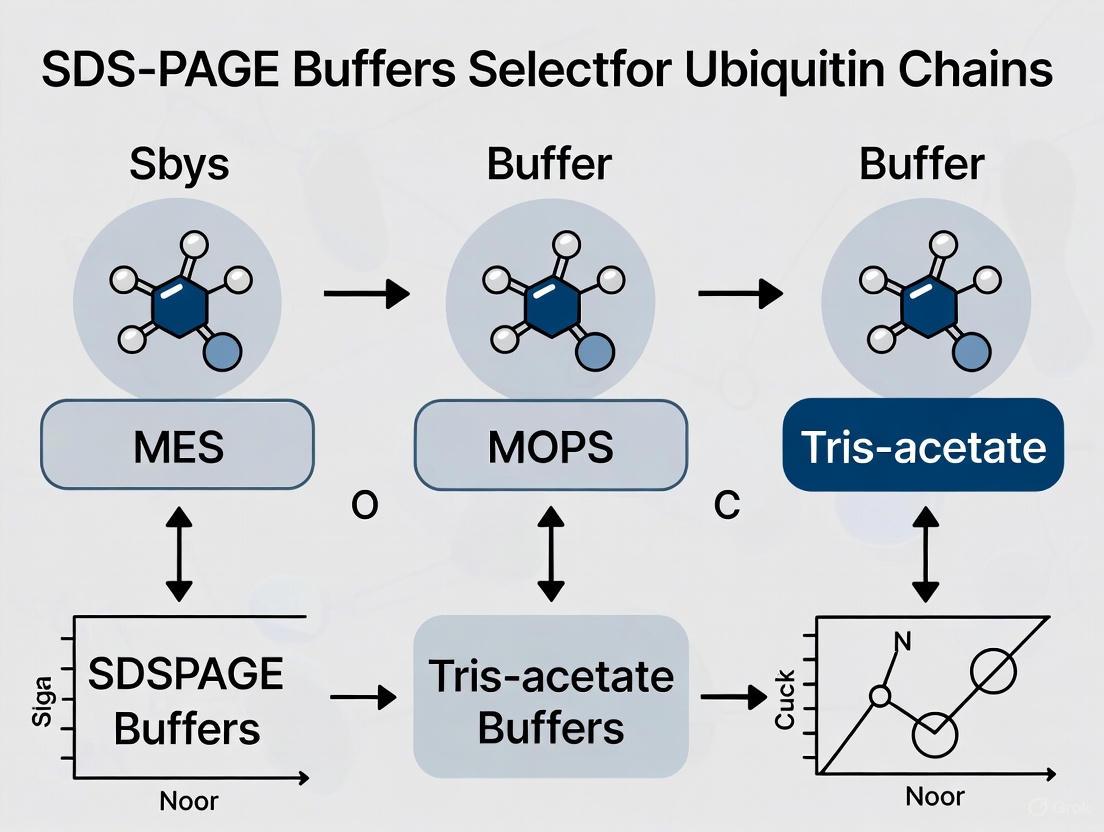
This article provides a comprehensive guide for researchers analyzing ubiquitinated proteins, detailing how strategic selection of SDS-PAGE running buffers—MES, MOPS, and Tris-acetate—significantly impacts the resolution of different ubiquitin chain lengths...
Optimizing SDS-PAGE Buffer Selection: A Guide to MES, MOPS, and Tris-Acetate for Ubiquitin Chain Resolution
Abstract
This article provides a comprehensive guide for researchers analyzing ubiquitinated proteins, detailing how strategic selection of SDS-PAGE running buffers—MES, MOPS, and Tris-acetate—significantly impacts the resolution of different ubiquitin chain lengths and architectures. We cover foundational principles of ubiquitin biology and electrophoresis, offer methodological protocols for buffer application, present troubleshooting solutions for common pitfalls like smearing and poor transfer, and validate findings through comparative analysis with alternative techniques. Targeted at scientists and drug development professionals, this resource aims to enhance data quality in ubiquitin research by optimizing electrophoretic separation conditions.
Ubiquitin Chains and Electrophoresis: Why Your Buffer Choice Matters
Ubiquitination is a critical post-translational modification that regulates virtually every cellular process in eukaryotes, from proteasomal degradation to DNA repair, inflammation, and cell signaling. The versatility of ubiquitin signaling stems from the remarkable structural diversity of ubiquitin chains themselves. A single ubiquitin moiety can be attached to substrate proteins (monoubiquitination) or can form polymers (polyubiquitin chains) through eight different linkage types: the seven internal lysine residues (K6, K11, K27, K29, K33, K48, K63) or the N-terminal methionine (M1) [1]. Beyond these homotypic chains, where all ubiquitin units are connected through the same residue, cells also assemble heterotypic chains containing multiple linkage types. Among the most complex are branched ubiquitin chains, where a single ubiquitin molecule is modified at two or more sites simultaneously, creating highly specialized architectural scaffolds [2] [3].
Recent technological advances have revealed that branched chains are not rare artifacts but rather abundant functional components of the ubiquitin system. Quantitative analyses indicate that 10-20% of all ubiquitin in polymeric chains exists in branched architectures [4], with specific branched linkages like K29/K48 and K48/K63 playing specialized roles in proteotoxic stress responses, protein degradation, and inflammatory signaling [2] [5]. The emerging understanding of this combinatorial complexity has established ubiquitin chains as sophisticated carriers of biological information, though this same complexity presents significant technical challenges for researchers seeking to decipher the ubiquitin code.
A critical aspect of experimental success in ubiquitin research lies in selecting appropriate electrophoretic conditions to resolve the diverse array of ubiquitinated species. This application note provides detailed methodologies for the preservation, analysis, and interpretation of ubiquitin signaling, with particular emphasis on optimal SDS-PAGE buffer selection to unlock the biological insights encoded in ubiquitin chain architecture.
The Critical Role of SDS-PAGE Buffer Selection in Ubiquitin Research
The resolution of ubiquitin chains by SDS-PAGE is fundamentally influenced by buffer composition, which directly impacts the ability to distinguish between different chain lengths and architectures. Ubiquitylated proteins can be modified by 20 or more ubiquitin molecules, adding >200 kDa to their molecular mass and typically appearing as smears that stretch toward the top of the gel [1]. The choice of gel and running buffer system must therefore be carefully considered based on the specific experimental goals.
Table 1: SDS-PAGE Buffer Systems for Ubiquitin Chain Resolution
| Buffer System | Optimal Separation Range | Key Applications for Ubiquitin Research | Gel Type Recommendations |
|---|---|---|---|
| MES Buffer [1] | Improved resolution of small ubiquitin oligomers (2-5 ubiquitins) | Analyzing short-chain ubiquitination, mono-ubiquitination, and early chain elongation events | NuPAGE Novex Bis-Tris Gels (8-12% acrylamide) |
| MOPS Buffer [1] | Improved resolution of longer chains (≥8 ubiquitins) | Studying extended polyubiquitin chains and high molecular weight ubiquitinated species | NuPAGE Novex Bis-Tris Gels (8-12% acrylamide) |
| Tris-Acetate (TA) Buffer [1] | Superior for 40-400 kDa range | Resolving ubiquitinated proteins of intermediate molecular weight | NuPAGE Novex Tris-Acetate Gels (3-8% acrylamide) |
| Tris-Glycine (TG) Buffer [1] | Can separate chains up to 20 ubiquitins with 8% acrylamide | General purpose ubiquitin analysis; requires higher acrylamide concentration (12%) for mono-ubiquitin detection | Traditional Laemmli system gels |
Experimental data demonstrates that these buffer systems provide distinct separation profiles for ubiquitin chains of different lengths. When using pre-poured gradient gels, MES buffer provides optimal resolution of smaller ubiquitin oligomers comprising 2-5 ubiquitins, while MOPS buffer excels at resolving longer chains containing eight or more ubiquitins [1]. The Tris-acetate system is particularly valuable for resolving ubiquitinated proteins in the 40-400 kDa molecular weight range, making it ideal for studying the modification of specific protein substrates. Traditional Tris-glycine systems can still separate ubiquitin chains comprising up to 20 ubiquitins when using approximately 8% acrylamide gels, though detection of mono-ubiquitin and short oligomers requires increased acrylamide concentrations around 12% [1].
The neutral pH environment (pH 7) of the NuPAGE Bis-Tris system provides significant advantages over traditional Laemmli systems, including improved protein stability during electrophoresis, sharper band resolution, and extended gel shelf life [6]. This is particularly valuable for preserving the integrity of ubiquitin chains during analysis.
Advanced Methods for Analyzing Branched Ubiquitin Chains
Ub-Clipping for Architectural Analysis
The Ub-clipping methodology represents a breakthrough in the analysis of ubiquitin chain architecture. This technique utilizes an engineered viral protease, Lbpro* from foot-and-mouth disease virus, which cleaves ubiquitin after Arg74, generating two products: a truncated ubiquitin (residues 1-74) from the distal moiety and a GlyGly-modified ubiquitin (1-74) that retains the signature dipeptide from the modification site [4]. This approach collapses complex polyubiquitin samples into GlyGly-modified monoubiquitin species that can be analyzed by mass spectrometry, enabling both quantification of linkage composition and identification of branched species through detection of ubiquitin molecules with multiple GlyGly modifications [4].
Ub-clipping Method Workflow
Application of Ub-clipping to cellular systems has revealed the surprising abundance of branched ubiquitin chains, with approximately 10-20% of ubiquitin in polymers existing in branched architectures [4]. In whole cell lysates, branch-point ubiquitin accounts for approximately 0.5% of all ubiquitin, while in TUBE-enriched polyubiquitin preparations, 4-7% of ubiquitin is modified with two GlyGly modifications, confirming the significant presence of branched species [4].
Branch-Specific Antibodies and Interactor Screening
An alternative approach for branched chain analysis involves the development of linkage-specific reagents. Researchers have successfully engineered bispecific antibodies that recognize particular branched ubiquitin chains, such as the K11/K48-bispecific antibody created using knobs-into-holes heterodimerization technology [3]. This antibody functions as a coincidence detector, gaining avidity from simultaneous detection of K11- and K48-linkages, and efficiently recognizes K11/K48-branched trimers while failing to detect monomeric ubiquitin or homotypic dimers containing only one linkage type [3].
Table 2: Characteristics of Major Branched Ubiquitin Chain Types
| Branched Chain Type | Biological Functions | Synthetic E3 Ligases | Detection Methods |
|---|---|---|---|
| K29/K48-branched [2] | Proteotoxic stress responses, targeted protein degradation | TRIP12 (preferentially branches from K48-linked di-Ub acceptors) | Ub-clipping/MS, specialized E3 assays |
| K11/K48-branched [3] | Mitotic regulation, protein quality control, degradation of aggregation-prone proteins | APC/C and other mitotic E3s | Bispecific antibodies, Ub-clipping |
| K48/K63-branched [5] | Inflammatory signaling, proteasomal degradation (context-dependent) | Ubc1 (yeast), unidentified human E3s | Interactor screens, SPR with HIP1, PARP10 |
Interactor screening using enzymatically synthesized native ubiquitin chains has identified the first K48/K63-branched chain-specific binding proteins, including histone ADP-ribosyltransferase PARP10/ARTD10, E3 ligase UBR4, and huntingtin-interacting protein HIP1 [5]. These branch-specific interactors demonstrate that cellular machinery can distinguish branched chains from their homotypic counterparts, enabling specialized functional outcomes.
Detailed Experimental Protocols
Protocol 1: Preservation and Preparation of Ubiquitylated Samples
Materials Needed:
- Lysis buffer (50 mM Tris-HCl pH 7.5, 150 mM NaCl, 1% NP-40)
- DUB inhibitors: 50-100 mM N-ethylmaleimide (NEM) or iodoacetamide (IAA)
- Metalloproteinase inhibitors: 10 mM EDTA or EGTA
- Proteasome inhibitor: 10 µM MG132 (or equivalent)
- Protein assay reagent
- 4× LDS sample buffer
- Reducing agent (e.g., DTT)
Procedure:
- Pre-treatment (if studying proteasomal targets): Incubate cells with 10 µM MG132 for 4-6 hours prior to lysis to preserve K48-linked and other proteasome-targeting ubiquitin chains [1].
- Cell lysis: Aspirate culture medium and lyse cells in ice-cold lysis buffer containing freshly added DUB inhibitors (50-100 mM NEM) and metalloproteinase inhibitors (10 mM EDTA). The high concentration of NEM is critical for preserving K63- and M1-linked chains [1].
- Sample preparation: Determine protein concentration using a compatible assay. Mix 20-40 µg of protein with 4× LDS sample buffer and reducing agent. Heat samples at 70°C for 10 minutes (rather than 100°C to prevent Asp-Pro bond cleavage) [6].
- Electrophoresis: Load samples onto appropriate NuPAGE Novex Bis-Tris or Tris-Acetate gels based on target molecular weight ranges (see Table 1). Run at constant voltage (200V) for approximately 35-45 minutes until adequate separation is achieved.
Troubleshooting Tips:
- If ubiquitin smears appear faint or undetectable, increase concentrations of DUB inhibitors and verify inhibitor freshness.
- For branched chain analysis, include TUBE (tandem ubiquitin-binding entity) pulldowns prior to Ub-clipping to remove free monoubiquitin and enable accurate chain length estimation [4].
- When studying phosphorylation-dependent ubiquitin signaling (e.g., PINK1/Parkin mitophagy), include phosphatase inhibitors in lysis buffers.
Protocol 2: Chain Linkage Analysis Using TUBE-Based Capture
Materials Needed:
- Chain-specific TUBEs (K48-, K63-, or pan-specific)
- Streptavidin magnetic beads
- Binding/wash buffer (50 mM Tris pH 7.5, 150 mM NaCl, 0.1% NP-40, 10 mM NEM)
- Elution buffer (1× LDS sample buffer with 50 mM DTT)
- Blocking buffer (1% BSA in wash buffer)
Procedure:
- Coupling: Incubate biotinylated TUBEs with streptavidin magnetic beads for 30 minutes at room temperature with gentle rotation.
- Blocking: Wash beads twice with wash buffer, then incubate with blocking buffer for 1 hour at 4°C to reduce nonspecific binding.
- Binding: Incubate 200-500 µg of cell lysate with TUBE-coupled beads for 2 hours at 4°C with gentle rotation.
- Washing: Wash beads three times with ice-cold wash buffer containing fresh DUB inhibitors.
- Elution: Elute bound proteins by incubating beads with elution buffer at 70°C for 10 minutes.
- Analysis: Resolve eluted proteins by SDS-PAGE using appropriate buffer systems (Table 1) and proceed to immunoblotting with target-specific antibodies.
TUBE-Based Ubiquitin Capture Workflow
Application Notes:
- K63-TUBEs effectively capture inflammatory signaling-induced ubiquitination (e.g., L18-MDP-induced RIPK2 ubiquitination) while K48-TUBEs capture PROTAC-induced ubiquitination [7].
- Include control TUBEs with point mutations in ubiquitin-binding domains to confirm specificity.
- For branched chain studies, combine TUBE enrichment with subsequent Ub-clipping for architectural analysis.
Research Reagent Solutions
Table 3: Essential Reagents for Ubiquitin Chain Analysis
| Reagent Category | Specific Examples | Key Applications | Considerations |
|---|---|---|---|
| DUB Inhibitors [1] [5] | N-ethylmaleimide (NEM; 50-100 mM), Iodoacetamide (IAA; 50-100 mM), Chloroacetamide (CAA) | Preserving ubiquitin chains during cell lysis and immunoprecipitation | NEM preferred for mass spectrometry; CAA more cysteine-specific; consider off-target effects |
| Linkage-Specific TUBEs [4] [7] | K48-TUBE, K63-TUBE, M1-TUBE, Pan-TUBE | Enriching specific chain types from complex lysates | Enables endogenous target analysis; compatible with HTS formats |
| Bispecific Antibodies [3] | K11/K48-bispecific antibody | Detecting endogenous branched ubiquitin chains | Functions as coincidence detector; does not recognize homotypic chains |
| Specialized Proteases [4] | Lbpro* (engineered viral protease) | Ub-clipping for architectural analysis | Cleaves after Ub Arg74; generates diagnostic GlyGly-modified fragments |
| E3 Ligase Assay Systems [2] [8] | TRIP12 (K29/K48 branching), HUWE1 (small molecule ubiquitination) | Studying chain synthesis mechanisms | Pulse-chase assays define acceptor preferences and linkage specificity |
The complexity of ubiquitin signaling extends far beyond simple monoubiquitination to encompass an elaborate array of homotypic, mixed, and branched chains that constitute a sophisticated biological code. Decrypting this code requires carefully optimized methodologies, with SDS-PAGE buffer selection representing a fundamental parameter that directly influences experimental outcomes. The strategic application of MES, MOPS, and Tris-acetate buffer systems enables researchers to resolve the full spectrum of ubiquitin chain architectures, from short oligomers to extended polymers. When combined with emerging technologies such as Ub-clipping, branch-specific antibodies, and chain-selective TUBEs, these electrophoretic techniques provide powerful approaches to elucidate the biological functions of branched and complex ubiquitin signals. As drug discovery increasingly targets the ubiquitin system through PROTACs and molecular glues, these methodologies will prove essential for characterizing compound mechanisms and developing the next generation of ubiquitin pathway therapeutics.
Ubiquitination generates a complex landscape of protein modifications that present significant analytical challenges in molecular biology. The characteristic "smear" observed when analyzing ubiquitinated proteins by SDS-PAGE stems from the inherent heterogeneity of ubiquitin chain length, linkage type, and topological complexity. This application note examines the fundamental principles underlying this phenomenon and provides optimized electrophoretic methodologies for ubiquitin research, with particular emphasis on buffer selection and sample preparation techniques that preserve ubiquitin chain architecture while ensuring clear resolution and interpretation of results.
The distinctive smearing pattern observed for ubiquitinated proteins on SDS-PAGE gels represents a direct visual manifestation of the complexity of the ubiquitin code. Unlike discrete protein bands corresponding to single molecular species, ubiquitinated proteins appear as broad smears due to several interconnected factors:
Chain Length Heterogeneity: Ubiquitin chains vary considerably in length, from single ubiquitin modifications to polymers containing dozens of ubiquitin molecules. Each additional 8.6 kDa ubiquitin moiety creates a new molecular species with slightly different migration properties [9]. This continuum of molecular weights manifests as a continuous smear rather than discrete bands.
Linkage Diversity: Ubiquitin can form chains through eight different linkage types (M1, K6, K11, K27, K29, K33, K48, K63), each potentially exhibiting slightly different electrophoretic mobility despite identical molecular weight [7] [5]. The coexistence of multiple linkage types in cellular contexts further amplifies heterogeneity.
Branched Architectures: Approximately 10-20% of cellular ubiquitin chains are branched, where a single ubiquitin molecule serves as a branch point for multiple chains [10] [9] [5]. These complex topologies create extraordinary molecular diversity that challenges standard electrophoretic separation.
The migration properties of these heterogeneous populations are further complicated by incomplete denaturation and anomalous migration behaviors common to ubiquitinated proteins, creating the characteristic smear that, while challenging to interpret, contains valuable information about the ubiquitination state.
Buffer Systems for Ubiquitin SDS-PAGE: MES, MOPS, and Tris-Acetate
The choice of running buffer significantly impacts resolution of ubiquitinated proteins. Different buffer systems offer distinct advantages depending on the experimental goals and molecular weight range of interest.
Table 1: Electrophoresis Buffer Systems for Ubiquitin Analysis
| Buffer System | Optimal Separation Range | Advantages for Ubiquitin Research | Limitations | Recommended Applications |
|---|---|---|---|---|
| Tris-Acetate | 10-200 kDa | Superior resolution of high molecular weight complexes; better separation of polyubiquitinated species | Longer run times; increased heating | Analysis of extensively ubiquitinated proteins; resolving long chains |
| MES | 10-150 kDa | Sharp band separation for lower MW ubiquitinated proteins; faster separation | Compression of higher molecular weight species | Routine analysis of monoubiquitination and short chains (≤4 ubiquitins) |
| MOPS | 10-200 kDa | Balanced performance across wider mass range; good for mixed samples | Moderate resolution across all ranges | General purpose ubiquitination screening; mixed samples |
The Tris-acetate buffer system, with its larger pore size and enhanced resolution of high molecular weight complexes, is particularly advantageous for resolving polyubiquitinated proteins where the characteristic smear extends into high molecular weight regions [7]. The superior separating capabilities of Tris-acetate for proteins above 75 kDa make it ideal for distinguishing ubiquitin chains of different lengths.
Methodologies and Experimental Protocols
Protocol: Analysis of Endogenous RIPK2 Ubiquitination Using TUBE-Based Enrichment
This protocol demonstrates an approach for analyzing linkage-specific ubiquitination of endogenous proteins, incorporating critical steps to preserve ubiquitin chains during sample preparation [7].
Materials and Reagents
- Cell Line: THP-1 human monocytic cells
- Stimulants: L18-MDP (200-500 ng/mL) for K63-linked ubiquitination; RIPK2 PROTAC (RIPK degrader-2) for K48-linked ubiquitination
- Inhibitors: Ponatinib (100 nM) for RIPK2 inhibition; protease and phosphatase inhibitor cocktails
- Lysis Buffer: 50 mM Tris-HCl (pH 7.5), 150 mM NaCl, 1% NP-40, 1 mM EDTA, 10% glycerol supplemented with 10 mM N-ethylmaleimide (NEM) to inhibit deubiquitinases
- TUBE Reagents: K48-TUBE, K63-TUBE, or Pan-TUBE conjugated to magnetic beads (LifeSensors, UM401M)
- Electrophoresis: Tris-acetate running buffer, 4-12% Bis-Tris gradient gels
Procedure
Cell Treatment and Lysis:
- Culture THP-1 cells at density of 1×10^6 cells/mL
- Pre-treat with Ponatinib (100 nM) or DMSO control for 30 minutes
- Stimulate with L18-MDP (200 ng/mL) for 30-60 minutes or RIPK2 PROTAC for indicated times
- Lyse cells in optimized lysis buffer (500 μL per 1×10^7 cells) with brief sonication to disrupt nucleic acids
- Clarify lysates by centrifugation at 16,000×g for 15 minutes at 4°C
Ubiquitin Enrichment:
- Incubate 500 μg clarified lysate with 25 μL TUBE-conjugated magnetic beads for 2 hours at 4°C with end-over-end mixing
- Wash beads 3× with lysis buffer without detergents
- Elute bound proteins with 2× Laemmli buffer containing 50 mM DTT at 95°C for 10 minutes
SDS-PAGE and Immunoblotting:
- Separate proteins using Tris-acetate running buffer on 4-12% Bis-Tris gradient gels at 150V for 60-90 minutes
- Transfer to PVDF membranes using standard protocols
- Probe with anti-RIPK2 antibody (1:1000) and appropriate secondary antibodies
- Develop using enhanced chemiluminescence substrate
Expected Results
- L18-MDP stimulation should induce K63-linked ubiquitination of RIPK2, detectable as a smear using K63-TUBE or Pan-TUBE but not K48-TUBE
- RIPK2 PROTAC treatment should induce K48-linked ubiquitination, captured by K48-TUBE and Pan-TUBE but not K63-TUBE
- Ponatinib pre-treatment should abolish L18-MDP-induced ubiquitination
- The characteristic smear should be most prominent in the high molecular weight region (>75 kDa)
Protocol: DRUSP-TUBE Method for Enhanced Ubiquitinomics
The Denatured-Refolded Ubiquitinated Sample Preparation (DRUSP) method addresses key challenges in ubiquitin proteomics by combining denaturing conditions with refolding strategies to improve ubiquitin chain preservation [11].
Materials
- Lysis Buffer: 8 M urea, 50 mM Tris-HCl (pH 8.0), 75 mM NaCl, 1× protease inhibitor cocktail
- Refolding Buffer: 50 mM Tris-HCl (pH 7.5), 150 mM NaCl
- TUBE Reagents: Pan-selective or chain-specific TUBEs
- Filtration Devices: 10 kDa molecular weight cut-off centrifugal filters
Procedure
Denaturing Extraction:
- Lyse cells or tissues in urea-based denaturing buffer
- Sonicate samples to ensure complete disruption and DNA shearing
- Clarify by centrifugation at 16,000×g for 15 minutes
Refolding and TUBE Enrichment:
- Dilute denatured lysates 10-fold with refolding buffer
- Concentrate using 10 kDa MWCO filters and repeat refolding process
- Incubate refolded lysates with TUBE reagents as described in Protocol 3.1.2
- Process through SDS-PAGE using appropriate buffer systems
Advantages
- Nearly 3-fold stronger ubiquitin signal compared to native protocols
- Approximately 10-fold improvement in ubiquitinated protein enrichment
- Reduced deubiquitinase activity and proteasomal degradation during processing
- Compatibility with both pan-specific and chain-specific TUBEs
The Scientist's Toolkit: Essential Reagents for Ubiquitin Research
Table 2: Key Research Reagents for Ubiquitinated Protein Analysis
| Reagent / Tool | Function | Application Notes | Commercial Sources |
|---|---|---|---|
| TUBEs (Tandem Ubiquitin Binding Entities) | High-affinity ubiquitin chain enrichment with linkage specificity | K48-TUBEs preferentially bind degradation signals; K63-TUBEs bind signaling chains; Pan-TUBEs capture all linkages | LifeSensors |
| Linkage-Specific Antibodies | Immunodetection of specific ubiquitin linkages | Variable specificity; validation required for each application; useful for Western blotting | Multiple vendors |
| Deubiquitinase Inhibitors | Preserve ubiquitin signals during processing | N-ethylmaleimide (NEM) and chloroacetamide (CAA) most common; each has distinct off-target effects | Sigma-Aldrich, Thermo Fisher |
| PROTACs | Induce targeted protein ubiquitination and degradation | Useful for studying K48-linked ubiquitination in specific proteins | Various pharmaceutical and biotech companies |
| UbiCRest Assay | Linkage characterization through DUB sensitivity | Uses linkage-specific DUBs to characterize chain topology | LifeSensors |
Troubleshooting the Ubiquitin Smear
Optimizing Smear Interpretation
The ubiquitin smear contains valuable information when properly interpreted:
- Position Matters: The vertical position of the smear indicates molecular weight distribution, with higher regions representing more extensively ubiquitinated species
- Intensity Variations: Regions of increased intensity within the smear may suggest preferred chain lengths or accumulation of specific ubiquitinated species
- Treatment Effects: Drug treatments or cellular stimulations typically alter smear pattern, intensity, or distribution in meaningful ways
Addressing Common Artifacts
- Overly Diffuse Smears: Often result from incomplete denaturation; increase DTT concentration or include mild denaturation steps
- Vertical Streaking: Typically indicates proteolysis during sample preparation; optimize inhibitor cocktails and processing speed
- Disappearing Smears: Suggest deubiquitinase activity; implement more potent DUB inhibitors like NEM or PR-619
- Poor Transfer Efficiency: Common with high molecular weight ubiquitinated species; extend transfer times or use specialized buffers
Workflow Visualization
Ubiquitin Analysis Workflow: This diagram illustrates the integrated approach for analyzing ubiquitinated proteins, highlighting critical decision points for buffer selection based on molecular weight ranges.
The characteristic smear of ubiquitinated proteins in SDS-PAGE represents both a challenge and an opportunity in proteomics research. Rather than regarding this pattern as an artifact to be eliminated, researchers should recognize it as valuable data reflecting the complexity of ubiquitin signaling. Through strategic buffer selection—employing Tris-acetate for high molecular weight complexes, MES for shorter chains, and MOPS for general screening—combined with robust preservation methods like TUBE enrichment and DRUSP processing, the ubiquitin smear transforms from a technical nuisance to an informative readout of ubiquitin chain architecture. These optimized electrophoretic approaches enable more accurate interpretation of ubiquitination events, advancing both basic research and drug discovery efforts targeting the ubiquitin-proteasome system.
In the study of ubiquitin signaling, the precise separation of ubiquitinated proteins and ubiquitin chains of different lengths and linkages is a cornerstone of experimental biochemistry. The choice of running buffer in SDS-polyacrylamide gel electrophoresis (SDS-PAGE) fundamentally governs this separation process by establishing the electrical environment that dictates protein migration. While the ubiquitin machinery exhibits remarkable specificity—with E3 ligases like TRIP12 generating K29-linked chains and RNF114 building K11-linked chains [2] [12]—the analytical separation of these complexes hinges on appropriate buffer selection. MES (2-(N-morpholino)ethanesulfonic acid), MOPS (3-(N-morpholino)propanesulfonic acid), and Tris-acetate represent three buffer systems with distinct separation characteristics tailored to different molecular weight ranges. Their effectiveness stems from the interplay between their inherent chemical properties—including ionic strength, buffering capacity, and conductivity—and the electrophoretic mobility of proteins. Understanding how these buffers govern protein migration is essential for researchers dissecting complex ubiquitination events, from the characterization of branched ubiquitin chains [2] to the analysis of ubiquitinated small molecules [13] and the development of novel research tools like ubi-tagged antibodies [14].
Buffer Chemistry and Separation Principles
Fundamental Mechanisms of Electrophoretic Separation
SDS-PAGE separates proteins based on their molecular weights under denaturing conditions. The key principle involves the binding of sodium dodecyl sulfate (SDS) to proteins, imparting a uniform negative charge density that causes proteins to migrate toward the anode when an electric field is applied. The polyacrylamide gel acts as a molecular sieve, with smaller proteins migrating faster than larger ones. The running buffer system critically influences this process through several mechanisms. First, the buffer components establish the pH environment, typically between 6.4 and 8.8 for these buffer systems, which affects the charge of certain amino acid side chains and the overall electrophoretic mobility. Second, the ionic strength of the buffer determines the electrical conductivity of the system, influencing both the rate of migration and heat generation during electrophoresis. Third, the specific counter-ions present in the buffer (e.g., acetate, sulfate, or chloride) interact with the protein-SDS complexes and affect their mobility and sharpness of bands. The selection of an appropriate buffer system is therefore paramount for achieving optimal resolution within a targeted molecular weight range, particularly for the precise analysis of ubiquitin conjugates that may differ by subtle molecular weight increments.
Chemical Properties of MES, MOPS, and Tris-Acetate
MES (pKa = 6.15) operates effectively in the pH range of 5.5-6.7. As a sulfonic acid buffer, MES provides good buffering capacity in its working range and contributes to a relatively low conductivity system, which helps minimize heat generation. The MES zwitterion structure reduces its interaction with protein-SDS complexes, promoting sharper band resolution.
MOPS (pKa = 7.20) functions optimally between pH 6.5-7.9. Similar to MES, MOPS is a sulfonic acid-based buffer with low conductivity characteristics. Its slightly higher pKa value makes it suitable for separations where a near-neutral pH is desirable. The chemical stability of MOPS under electrophoretic conditions makes it reliable for reproducible results.
Tris-Acetate utilizes Tris (pKa = 8.06) as the buffering component and acetate as the primary counter-ion. This system operates effectively at pH 7.5-8.5. The acetate ions contribute to higher conductivity compared to sulfate-based systems, which can result in increased heat generation but also enables higher resolution for larger proteins due to altered electrophoretic dynamics.
The following diagram illustrates the strategic selection process for these buffer systems in ubiquitin research:
Quantitative Comparison of Buffer Systems
Performance Characteristics and Optimal Separation Ranges
The differential migration properties of MES, MOPS, and Tris-acetate buffers make each system uniquely suited for specific molecular weight ranges relevant to ubiquitin research. As shown in Table 1, these systems provide complementary separation capabilities that cover the entire spectrum of ubiquitin-related complexes, from free ubiquitin (8.6 kDa) to large ubiquitinated protein complexes exceeding 200 kDa.
Table 1: Separation Characteristics of SDS-PAGE Buffer Systems
| Buffer System | Effective Separation Range | Optimal Resolution Zone | Primary Applications in Ubiquitin Research |
|---|---|---|---|
| MES | 5-60 kDa | 10-25 kDa | Short ubiquitin chains (di-, tri-ubiquitin); E2~Ub intermediates (~35 kDa) |
| MOPS | 20-100 kDa | 40-70 kDa | Medium ubiquitin chains; ubiquitinated small proteins; E3 ligase domains |
| Tris-Acetate | 30-200+ kDa | 50-150 kDa | Long ubiquitin chains; ubiquitinated substrates; E3 ligase complexes |
Migration Patterns of Ubiquitin-Related Proteins
The practical utility of each buffer system becomes evident when examining the migration behavior of specific ubiquitin-related proteins and complexes. Table 2 provides theoretical migration data for key ubiquitination components, illustrating how buffer selection dramatically influences separation efficacy across different molecular weight classes.
Table 2: Theoretical Migration of Ubiquitin-Related Proteins in Different Buffer Systems
| Protein/Complex | Theoretical MW (kDa) | Relative Migration in MES | Relative Migration in MOPS | Relative Migration in Tris-Acetate |
|---|---|---|---|---|
| Free Ubiquitin | 8.6 | Fast | Very fast | Very fast |
| K48-linked Di-ubiquitin | 17.2 | Optimal separation | Fast | Fast |
| E2~Ub Intermediate (e.g., UBE2L3~Ub) | ~35 | Good separation | Optimal separation | Moderate separation |
| HUWE1 HECT Domain | ~50 | Poor separation | Good separation | Optimal separation |
| TRIP12 HECT Domain | ~70 | Very poor separation | Good separation | Optimal separation |
| K48-linked Tetra-ubiquitin | 34.4 | Good separation | Optimal separation | Moderate separation |
| Ubiquitinated Substrate (e.g., HMCES~Ub) | ~65-100 | Very poor separation | Good separation | Optimal separation |
Experimental Protocols for Ubiquitin Chain Analysis
Protocol 1: Separation of Short Ubiquitin Chains Using MES Buffer
Purpose: To resolve short ubiquitin chains (di- and tri-ubiquitin) and E2~Ub intermediates using MES SDS-PAGE buffer system.
Background: This protocol is optimized for the analysis of ubiquitin chain formation assays, such as those studying TRIP12-mediated K29-linked chain formation [2] or RNF114-catalyzed K11-linked chain elongation [12]. The MES buffer system provides exceptional resolution in the 10-25 kDa range where these short chains migrate.
Materials:
- MES SDS Running Buffer (20X): 1 M MES, 1 M Tris Base, 69.3 mM SDS, 20.5 mM EDTA, pH ~7.3
- 4-12% Bis-Tris Precast Gels
- Protein Molecular Weight Standards (e.g., 5-60 kDa range)
- Ubiquitination reaction samples (e.g., containing E1, E2, E3, ubiquitin, ATP)
- 4X LDS Sample Buffer
- Sample Reducing Agent (e.g., 500 mM DTT)
Procedure:
- Sample Preparation:
- Combine ubiquitination reaction samples with 4X LDS Sample Buffer to achieve 1X final concentration.
- Add DTT to 50 mM final concentration.
- Heat samples at 70°C for 10 minutes to denature proteins.
Gel Setup:
- Dilute 20X MES Running Buffer to 1X working concentration in deionized water.
- Assemble gel electrophoresis apparatus according to manufacturer instructions.
- Load 5-20 μL of prepared samples and molecular weight standards into appropriate wells.
Electrophoresis:
- Run gels at constant voltage: 150 V for 10 minutes, then 200 V for approximately 35-40 minutes.
- Stop electrophoresis when the loading dye front reaches the bottom of the gel.
Analysis:
- Process gels for Western blotting with anti-ubiquitin antibodies or stain with Coomassie/SYPRO Ruby for total protein visualization.
Technical Notes:
- For optimal resolution of E2~Ub thioester intermediates, omit reducing agent and do not heat samples above 37°C to preserve the thioester linkage.
- MES buffer is ideal for detecting the branched ubiquitin chains generated by TRIP12, which modifies K29 on K48-linked di-ubiquitin acceptors [2].
Protocol 2: Analysis of Large Ubiquitin Conjugates Using Tris-Acetate Buffer
Purpose: To separate high molecular weight ubiquitin conjugates and ubiquitinated protein substrates using Tris-acetate SDS-PAGE buffer system.
Background: This protocol is designed for analyzing large ubiquitin complexes, such as polyubiquitinated substrates (e.g., HMCES~Ub [15]) or ubiquitinated E3 ligases. The Tris-acetate system maintains excellent resolution for proteins above 60 kDa, where MES and MOPS buffers show limited separation capability.
Materials:
- Tris-Acetate SDS Running Buffer (20X): 1 M Tris, 1 M Tricine, 35.3 mM SDS, pH ~8.3
- 3-8% Tris-Acetate Precast Gels
- High Molecular Weight Protein Standards (e.g., 30-200 kDa range)
- Ubiquitinated protein samples
- 4X LDS Sample Buffer
- Sample Reducing Agent
Procedure:
- Sample Preparation:
- Mix protein samples with 4X LDS Sample Buffer (1X final).
- Add reducing agent and heat at 70°C for 10 minutes.
- For very large complexes (>150 kDa), heating at 50°C for 20 minutes may improve entry into the gel.
Gel Setup:
- Dilute 20X Tris-Acetate Running Buffer to 1X working concentration.
- Load samples and high molecular weight standards.
Electrophoresis:
- Run at constant voltage: 125 V for 60-90 minutes until dye front reaches gel bottom.
- The lower voltage and longer run time enhance resolution of high molecular weight species.
Analysis:
- Transfer to PVDF membrane for Western blotting with target protein antibodies.
- Stain with Coomassie Blue to visualize total protein pattern.
Technical Notes:
- Tris-acetate gels are essential for detecting the activated SPRTN-ubiquitin complex involved in DNA repair [15].
- This system is ideal for analyzing the ubiquitination of drug-like small molecules by HUWE1, where the shift in molecular weight confirms modification [13].
The Scientist's Toolkit: Essential Reagents for Ubiquitin Electrophoresis
Table 3: Key Research Reagents for Ubiquitin SDS-PAGE Analysis
| Reagent/Category | Specific Examples | Function in Ubiquitin Research |
|---|---|---|
| E3 Ligases | TRIP12, HUWE1, RNF114, Deltex E3s | Catalyze specific ubiquitin chain formation (e.g., TRIP12 for K29 linkages [2]) |
| Ubiquitin Mutants | K0 Ubiquitin (lysine-less), K48R, K63R | Control linkage specificity and study chain elongation requirements [16] |
| Specialized Buffers | MES, MOPS, Tris-Acetate SDS Running Buffers | Optimize separation of different ubiquitin chain lengths and conjugates |
| Detection Systems | Anti-ubiquitin antibodies, linkage-specific antibodies | Identify ubiquitinated proteins and determine chain topology |
| E2~Ub Stabilizers | RING E3 ligases with specific linchpin residues | Stabilize E2~Ub intermediates for structural and functional studies [17] |
| Ubiquitination Assay Components | E1 enzyme, ATP, E2 enzymes (e.g., UBE2L3, UBE2G2) | Reconstitute ubiquitination cascades in vitro [13] [14] |
Advanced Applications and Technical Considerations
Specialized Methodologies for Complex Ubiquitin Analysis
The experimental workflow for ubiquitin analysis often requires specialized approaches to address specific research questions. The following diagram outlines a comprehensive strategy for analyzing ubiquitin modifications, from sample preparation to interpretation:
Troubleshooting Common Electrophoresis Issues in Ubiquitin Research
Problem: Poor resolution of short ubiquitin chains (<25 kDa) Solution: Switch to MES buffer system and use higher percentage gels (12-15% acrylamide)
Problem: Incomplete transfer of high molecular weight ubiquitin conjugates Solution: Use Tris-acetate gels with lower acrylamide concentration (3-6%) and extend transfer time
Problem: Smearing of E2~Ub thioester intermediates Solution: Eliminate reducing agents and lower heating temperature during sample preparation
Problem: Inconsistent migration between gels Solution: Prepare fresh running buffer and ensure consistent temperature during electrophoresis
The strategic selection of MES, MOPS, and Tris-acetate buffer systems provides researchers with a powerful toolkit for addressing the diverse separation challenges inherent in ubiquitin research. From resolving short ubiquitin chains that elucidate E3 specificity—such as TRIP12's formation of K29 linkages [2]—to analyzing large ubiquitin conjugates central to DNA damage response [15], these buffer systems enable precise characterization of ubiquitination events. The protocols and guidelines presented here offer a foundation for optimal experimental design, ensuring that buffer selection enhances rather than hinders the investigation of ubiquitin signaling. As research continues to expand into non-traditional ubiquitination substrates, including small molecules [13] and engineered antibody constructs [14], the fundamental principles of buffer chemistry remain essential for advancing our understanding of this versatile post-translational modification system.
Protein ubiquitination is a versatile post-translational modification that regulates virtually all cellular processes, with its functional diversity originating from complex polyubiquitin chains. These chains can be linked in eight distinct ways, forming homotypic polymers, heterotypic mixed chains, or branched architectures [1] [18]. The analysis of these ubiquitinated proteins by SDS-PAGE presents unique challenges due to the substantial molecular weight increases and atypical migration patterns inherent to ubiquitin modifications. A single ubiquitin moiety adds approximately 8.5 kDa to a protein's mass, and proteins can be modified by 20 or more ubiquitin molecules, adding over 200 kDa and resulting in characteristic smears on immunoblots rather than discrete bands [1]. The migration behavior of ubiquitin chains themselves is unusual; even di-, tri-, and tetraubiquitin species of identical mass and charge run at distinct positions on denaturing SDS-PAGE gels, indicating that ubiquitin does not fully unfold and migrates according to molecular shape rather than strictly by molecular weight [18].
The selection of appropriate gel and running buffer systems is therefore critical for resolving ubiquitin chains of different lengths and linkage types. The most common buffer systems for ubiquitin research include MES (2-(N-morpholino) ethane sulfonic acid), MOPS (3-(N-morpholino) propane sulfonic acid), and Tris-acetate, each offering distinct advantages for specific molecular weight ranges and experimental goals [1] [6]. Understanding the performance characteristics of these buffer systems enables researchers to match their electrophoretic conditions to the target chain size, thereby optimizing resolution and data quality in ubiquitination studies.
Technical Comparison of Buffer Systems
Resolution Characteristics by Molecular Weight
The separation performance of SDS-PAGE buffer systems varies significantly across different molecular weight ranges, making specific buffers preferable for particular ubiquitin chain lengths. Experimental data demonstrates that MES buffer provides superior resolution for relatively small ubiquitin oligomers comprising 2-5 ubiquitins, while MOPS buffer offers improved resolution for longer polyubiquitin chains containing eight or more ubiquitins [1]. Tris-acetate buffer systems are particularly effective for separating proteins in the broader molecular mass range of 40-400 kDa, making them suitable for many ubiquitinated proteins [1] [6]. Traditional Tris-glycine buffers can separate ubiquitin chains comprising up to 20 ubiquitins on single-concentration acrylamide gels (approximately 8%), though resolution of mono-ubiquitin and short oligomers requires higher acrylamide concentrations (around 12%) [1].
Table 1: Optimal Buffer Selection Based on Ubiquitin Chain Size
| Target Ubiquitin Chain Size | Recommended Buffer | Separation Range | Key Advantages |
|---|---|---|---|
| Mono-ubiquitin & short oligomers (2-5 ubiquitins) | MES | Improved resolution of small ubiquitin oligomers | Sharp band separation in lower molecular weight range |
| Medium-length chains | MOPS | Enhanced resolution for chains ≥8 ubiquitins | Superior performance for longer polyubiquitin species |
| Large ubiquitinated proteins (40-400 kDa) | Tris-Acetate | 40-400 kDa | Excellent for high molecular weight ubiquitinated proteins |
| Broad range (1-20 ubiquitins) | Tris-Glycine | Up to 20 ubiquitin chains | Versatile for various chain lengths on standard gels |
Buffer System Chemistry and Properties
The chemical properties and operating principles of each buffer system contribute significantly to their performance characteristics in ubiquitin research. The NuPAGE Bis-Tris discontinuous buffer system operates at a neutral pH (approximately 7.0), utilizing chloride ions as leading ions and MES or MOPS as trailing ions, with Bis-Tris as the common ion [6]. This neutral pH environment provides maximum stability for both proteins and the gel matrix, resulting in sharper band resolution and improved protein stability compared to traditional Laemmli systems that operate at highly alkaline pH (9.5), which can cause protein deamination, alkylation, and disulfide bond reoxidation [6].
The NuPAGE Tris-Acetate discontinuous buffer system employs acetate as the leading ion and tricine as the trailing ion, with Tris as the common ion, operating at pH 8.1 during electrophoresis [6]. This system is specifically formulated for separating large molecular weight proteins and can also be used with Tris-Glycine Native Running Buffer for resolving native proteins [19]. The formulation of these specialized buffer systems represents a significant advancement over traditional Tris-glycine systems, offering longer shelf life, reduced protein modifications, and maintenance of protein reduction states during electrophoresis [6].
Table 2: Biochemical Properties of SDS-PAGE Buffer Systems for Ubiquitin Research
| Buffer System | Operating pH | Leading Ion | Trailing Ion | Gel Compatibility | Key Features for Ubiquitin Research |
|---|---|---|---|---|---|
| MES | ~7.0 | Chloride | MES | NuPAGE Bis-Tris Gels | Neutral pH preserves ubiquitin chain integrity; optimal for short chains |
| MOPS | ~7.0 | Chloride | MOPS | NuPAGE Bis-Tris Gels | Neutral pH environment; superior for long chain resolution |
| Tris-Acetate | 8.1 | Acetate | Tricine | NuPAGE Tris-Acetate Gels | Ideal for large proteins; compatible with native electrophoresis |
| Tris-Glycine | 9.5 | Chloride | Glycinate | Traditional Tris-Glycine Gels | Broad compatibility; requires higher acrylamide for short chains |
Experimental Protocols for Ubiquitin Chain Analysis
Sample Preparation for Ubiquitination Studies
Proper sample preparation is critical for preserving the native ubiquitylation state of proteins during experimental procedures. The reversible nature of protein ubiquitylation necessitates stringent measures to prevent deubiquitylation, which can occur rapidly through the action of deubiquitylases (DUBs) present in cell extracts. To effectively preserve ubiquitylation states, include DUB inhibitors in all cell lysis buffers, particularly during immunoprecipitation or pull-down experiments where extracts may be incubated for several hours under non-denaturing conditions [1].
Inhibition of Deubiquitylases (DUBs): DUBs belong to five different families, including four cysteine protease families and one metalloprotease family. Effective inhibition requires:
- EDTA or EGTA (to chelate heavy metal ions essential for metalloprotease DUBs)
- Iodoacetamide (IAA) or N-ethylmaleimide (NEM) (to alkylate active site cysteine residues of cysteine protease DUBs)
- Concentrations of 5-10 mM IAA or NEM are commonly used, but some proteins (e.g., IRAK1) may require up to 10-fold higher concentrations (50-100 mM) for optimal preservation
- NEM is generally preferred over IAA for mass spectrometry applications, as IAA modification creates a 114 Da adduct identical to the Gly-Gly dipeptide remnant from trypsin-digested ubiquitylated proteins, potentially interfering with ubiquitylation site identification [1]
Proteasome Inhibition: For studying proteins modified by ubiquitin linkages that target substrates to proteasomal degradation (all types except K63-linked and M1-linked chains), include proteasome inhibitors such as MG132 (Z-leucyl-leucyl-leucyl-CHO) in cell culture media prior to lysis. This treatment blocks protein degradation and preserves the ubiquitylated forms of proteins, facilitating their detection. Note that prolonged incubation (12-24 hours) with MG132 can induce cytotoxic effects and stress responses that may confound results [1].
Direct SDS Lysis: As an alternative to DUB inhibitors, deubiquitylases can be inactivated by extracting cells directly into boiling lysis buffer containing 1% SDS, providing immediate denaturation and preserving the ubiquitylation state at the time of lysis [1].
UbiCRest Protocol for Linkage Type Determination
The UbiCRest (Ubiquitin Chain Restriction) method employs linkage-specific deubiquitylating enzymes (DUBs) to characterize ubiquitin chain linkage types and architecture on polyubiquitylated proteins or purified polyubiquitin chains. This qualitative method provides insights into ubiquitin chain composition within hours and can be performed with western blotting quantities of endogenously ubiquitylated proteins [18].
Table 3: Linkage-Specific DUBs for UbiCRest Analysis
| Linkage Type | Recommended DUB | Working Concentration | Specificity Notes |
|---|---|---|---|
| All eight linkages (positive control) | USP21 or USP2 | 1-5 µM (USP21) | Cleaves all linkage types including proximal ubiquitin |
| All except Met1 (positive control) | CCHFV viral OTU (vOTU) | 0.5-3 µM | Does not cleave Met1 linkages |
| Lys6 | OTUD3 | 1-20 µM | Also cleaves Lys11 chains equally well |
| Lys11 | Cezanne | 0.1-2 µM | Very active; non-specific at high concentrations |
| Lys27 | OTUD2 | 1-20 µM | Also cleaves Lys11, Lys29, Lys33 |
| Lys29 | TRABID | 0.5-10 µM | Cleaves Lys29 and Lys33 equally well |
| Lys33 | TRABID | 0.5-10 µM | Cleaves Lys29 and Lys33 equally well |
| Lys48 | OTUB1 | 1-20 µM | Highly Lys48-specific; not very active |
| Lys63 | OTUD1 | 0.1-2 µM | Very active; non-specific at high concentrations |
Procedure:
- Prepare substrate: Use polyubiquitylated proteins or purified polyubiquitin chains. The substrate can be obtained from immunoprecipitation, tandem-repeated ubiquitin-binding entities (TUBEs) pull-down, or in vitro ubiquitylation reactions.
- Set up DUB reactions: In parallel reactions, incubate the substrate with individual linkage-specific DUBs from the panel in Table 3. Include appropriate positive and negative controls.
- Incubation conditions: Use DUB-specific buffers and incubation times according to established protocols [18]. Typically, reactions are incubated at 37°C for 1-2 hours.
- Terminate reactions: Add SDS-PAGE sample buffer and heat at 95°C for 5 minutes.
- Analysis: Separate reaction products by SDS-PAGE using the appropriate buffer system for your target chain size (Table 1), followed by western blotting with ubiquitin-specific antibodies.
Data Interpretation:
- Complete cleavage with a specific DUB indicates presence of that linkage type
- Partial cleavage suggests mixed linkage chains
- Resistance to all linkage-specific DUBs but cleavage by USP21 may indicate linear/Met1 linkages or complex chain architectures
- Comparison of cleavage patterns across the DUB panel reveals chain composition and architecture [18]
Ubiquitin Mutant Approach for Linkage Determination
This method utilizes ubiquitin mutants in which specific lysine residues are mutated to arginine (preventing chain formation) or where only a single lysine remains available (restricting chain formation to specific linkages) to determine ubiquitin chain linkage through in vitro ubiquitylation reactions [20].
Materials:
- E1 activating enzyme (5 µM stock)
- E2 conjugating enzyme (25 µM stock)
- E3 ligase (10 µM stock)
- 10X E3 ligase reaction buffer (500 mM HEPES, pH 8.0, 500 mM NaCl, 10 mM TCEP)
- Wild-type ubiquitin (1.17 mM, 10 mg/mL)
- Ubiquitin K-to-R mutants (K6R, K11R, K27R, K29R, K33R, K48R, K63R; 1.17 mM each)
- Ubiquitin K-only mutants (K6-only, K11-only, K27-only, K29-only, K33-only, K48-only, K63-only; 1.17 mM each)
- MgATP solution (100 mM)
- SDS-PAGE sample buffer (2X)
Procedure - Part 1: Identification with K-to-R Mutants:
- Set up nine 25 µL ubiquitylation reactions, each containing:
- 2.5 µL 10X E3 ligase reaction buffer
- 1 µL ubiquitin (wild-type or K-to-R mutant)
- 2.5 µL MgATP solution (10 mM final)
- Substrate protein (5-10 µM final)
- 0.5 µL E1 enzyme (100 nM final)
- 1 µL E2 enzyme (1 µM final)
- E3 ligase (1 µM final)
- dH₂O to 25 µL total volume
Reactions include: (1) wild-type ubiquitin, (2) K6R, (3) K11R, (4) K27R, (5) K29R, (6) K33R, (7) K48R, (8) K63R, and (9) negative control (no ATP).
Incubate reactions at 37°C for 30-60 minutes.
Terminate reactions by adding 25 µL 2X SDS-PAGE sample buffer.
Analyze by SDS-PAGE and western blotting with anti-ubiquitin antibody.
Identify linkage: The reaction that fails to form polyubiquitin chains (showing only mono-ubiquitylation) indicates the lysine residue required for chain formation.
Procedure - Part 2: Verification with K-Only Mutants:
- Set up nine reactions as above, but using wild-type ubiquitin and the seven K-only mutants.
Process and analyze as described in Part 1.
Verify linkage: Only the wild-type ubiquitin and the specific K-only mutant corresponding to the linkage type should support polyubiquitin chain formation [20].
The Scientist's Toolkit: Essential Research Reagents
Table 4: Essential Reagents for Ubiquitin Chain Analysis
| Reagent Category | Specific Examples | Function in Ubiquitin Research |
|---|---|---|
| DUB Inhibitors | N-ethylmaleimide (NEM), Iodoacetamide (IAA) | Preserve ubiquitin chains by inhibiting deubiquitylases during cell lysis |
| Proteasome Inhibitors | MG132 | Prevent degradation of proteasome-targeted ubiquitylated proteins |
| Linkage-Specific DUBs | OTUB1 (Lys48), OTUD1 (Lys63), Cezanne (Lys11) | Characterize ubiquitin chain linkage types in UbiCRest |
| Ubiquitin Mutants | K-to-R series, K-only series | Determine chain linkage in in vitro ubiquitylation assays |
| Ubiquitin Binding Reagents | TUBEs (Tandem-repeated Ubiquitin-Binding Entities) | Enrich and stabilize polyubiquitylated proteins from lysates |
| Specialized Buffers | MES, MOPS, Tris-Acetate SDS Running Buffers | Optimize resolution of different ubiquitin chain sizes by SDS-PAGE |
| Detection Antibodies | Linkage-specific anti-ubiquitin antibodies | Identify specific ubiquitin linkage types by western blot |
Workflow Visualization
Advanced Techniques and Future Directions
Ub-Clipping for Architectural Analysis
Ub-clipping represents a cutting-edge methodology for understanding polyubiquitin signal architecture. This technique utilizes an engineered viral protease, Lbpro* (L102W mutant), from foot-and-mouth disease virus, which cleaves ubiquitin after Arg74, generating truncated ubiquitin (residues 1-74) and GlyGly-modified ubiquitin remnants [4]. This approach enables:
Quantification of branched chains: Ub-clipping has revealed that approximately 10-20% of ubiquitin in polymers exists as branched chains, with detectable di-GlyGly and tri-GlyGly modified ubiquitin species in cellular samples [4].
Analysis of coexisting modifications: The method allows assessment of combinatorial complexity, such as phosphorylation in specific chain contexts, providing unprecedented insight into the ubiquitin code architecture.
Application to complex mixtures: Lbpro* remains active in conditions containing 1 M urea, enabling treatment of cell lysates while inhibiting endogenous ligases and deubiquitylases. This collapses high molecular weight ubiquitin conjugates to a monoubiquitin species that can be analyzed for global linkage composition [4].
Integration with Mass Spectrometry
Mass spectrometry-based techniques continue to revolutionize ubiquitin chain research, particularly when combined with appropriate buffer systems for initial separation:
GlyGly remnant detection: Trypsin digestion of ubiquitylated proteins generates peptides with a 114 Da GlyGly modification on ubiquitinated lysine residues, enabling mapping of ubiquitination sites [4].
Absolute quantitation: AQUA (Absolute QUAntitation) techniques using labeled ubiquitin-derived peptides allow quantification of polyubiquitin linkage composition [4].
Middle-down approaches: Partial trypsin digestion under optimized native conditions results in a single cleavage event at Arg74 of ubiquitin, enabling characterization of chain length and linkage while preserving some architectural information [18].
The continuing development of specialized buffer systems and analytical methodologies ensures that researchers can increasingly match their electrophoretic conditions to their specific experimental needs in ubiquitin research, from basic linkage identification to complex architectural studies of branched and hybrid ubiquitin chains.
Practical Protocols: Selecting and Using the Right Buffer for Your Ubiquitin Experiment
The post-translational modification of proteins with polyubiquitin (pUb) chains represents one of the most sophisticated regulatory mechanisms in eukaryotic cells, governing fundamental processes including proteasomal degradation, signal transduction, and DNA repair [18] [1]. The biological outcome of ubiquitination is primarily determined by the chain linkage type and length, creating a complex "ubiquitin code" that requires precise analytical tools for deciphering [9]. Among these tools, SDS-PAGE remains a fundamental technique for the initial separation and analysis of ubiquitinated proteins. However, the accurate resolution of ubiquitin chains is profoundly influenced by the choice of electrophoresis buffer system, a factor often overlooked that can significantly impact experimental outcomes and data interpretation [1].
The migration behavior of ubiquitin chains on SDS-PAGE does not strictly follow molecular weight predictions due to the protein's compact structure and resistance to complete denaturation. Different ubiquitin linkage types, despite identical mass and charge, demonstrate distinct electrophoretic mobilities [18]. This technical nuance, combined with the inherent heterogeneity of cellular ubiquitination—where proteins may be modified at multiple sites with chains of varying lengths and linkage types—often results in the characteristic "smear" observed when analyzing ubiquitylated proteins [18]. Within this context, the selection of appropriate running buffers emerges as a critical parameter for optimizing resolution across specific molecular weight ranges, particularly for short ubiquitin oligomers comprising 2-5 ubiquitins where precise separation is essential for accurate analysis.
Comparative Analysis of SDS-PAGE Buffer Systems
Systematic Evaluation of Buffer Performance
The resolution of ubiquitin chains by SDS-PAGE is highly dependent on the buffer system employed during electrophoresis. Empirical studies have demonstrated that MES buffer provides superior separation for shorter ubiquitin oligomers, while MOPS and Tris-acetate buffers offer advantages for different molecular weight ranges [1]. The table below summarizes the optimal applications and separation characteristics of these three common buffer systems for ubiquitin chain analysis.
Table 1: Performance Characteristics of SDS-PAGE Buffer Systems for Ubiquitin Chain Resolution
| Buffer System | Optimal Separation Range | Key Applications in Ubiquitin Research | Technical Considerations |
|---|---|---|---|
| MES Buffer | 2-5 ubiquitin oligomers | Resolution of short-chain ubiquitination; analysis of di-ubiquitin linkage standards | Provides sharp band separation in lower molecular weight range |
| MOPS Buffer | 8+ ubiquitin chains | Analysis of extended polyubiquitin chains; studying processive ubiquitination | Superior resolution for longer polymers |
| Tris-Acetate Buffer | 40-400 kDa proteins | Analysis of high molecular weight ubiquitylated proteins; studying monoubiquitination and multi-monoubiquitination | Optimal for proteins modified by single or multiple ubiquitins |
When using pre-poured gradient gels, the choice between MES and MOPS running buffers dramatically affects the resolution of ubiquitin oligomers. MES buffer demonstrates exceptional performance in resolving relatively small ubiquitin oligomers comprising 2-5 ubiquitins, providing distinct band separation that enables accurate identification of chain lengths in this critical range [1]. In contrast, MOPS buffer offers improved resolution for polyubiquitin chains containing eight or more ubiquitins, making it the preferred choice for analyzing extended polymers [1].
For traditional gels prepared with a single acrylamide concentration, an approximately 8% gel with Tris-glycine buffer can separate ubiquitin chains comprising up to 20 ubiquitins, though with reduced resolution compared to gradient systems [1]. To detect monoubiquitin and short ubiquitin oligomers effectively, the acrylamide concentration must be increased to around 12%, albeit at the expense of resolution for longer polyubiquitin chains [1]. This underscores the importance of aligning buffer selection with both gel composition and the specific experimental objectives.
Technical Considerations for Method Selection
The migration anomalies observed with ubiquitin chains stem from the protein's unique structural properties. Despite identical mass and charge, different linkage-type di-ubiquitin species run at distinct positions on denaturing SDS-PAGE gels, indicating that ubiquitin does not fully unfold under standard conditions [18]. This behavior necessitates empirical optimization of buffer systems rather than reliance on theoretical molecular weight calculations.
For comprehensive analysis across a broad size range, researchers may employ a dual-buffer approach, using MES buffer to resolve shorter chains (2-5 ubiquitins) and MOPS buffer for longer polymers. This strategy is particularly valuable when studying ubiquitin chain elongation processes or when both short and long chains are present in the same sample. Additionally, the use of pre-cast gradient gels with appropriate buffers enhances resolution across multiple chain lengths, though MES buffer remains specifically superior for the 2-5 ubiquitin oligomer range [1].
Detailed Experimental Protocols
SDS-PAGE Protocol for Optimal Short Ubiquitin Chain Resolution
Materials Required:
- MES SDS Running Buffer (e.g., 1X NuPAGE MES SDS Running Buffer)
- Pre-cast gradient gels (4-12% Bis-Tris or similar)
- Electrophoresis system compatible with pre-cast gels
- Protein molecular weight standards, including ubiquitin chain markers if available
- Sample buffer (e.g., Laemmli buffer with DTT or β-mercaptoethanol)
Procedure:
- Sample Preparation: Dilute protein samples in appropriate sample buffer. For preservation of ubiquitin chains, include 20-50 mM N-ethylmaleimide (NEM) or iodoacetamide (IAA) in lysis and sample buffers to inhibit deubiquitinases (DUBs) [1]. Heat samples at 70°C for 10 minutes, as excessive heat may promote ubiquitin chain aggregation.
Gel Setup: Remove pre-cast gradient gel from packaging and rinse wells with deionized water. Place gel in electrophoresis chamber and fill with 1X MES SDS Running Buffer. For optimal resolution of 2-5 ubiquitin oligomers, MES buffer is specifically recommended over MOPS or Tris-glycine systems [1].
Loading and Electrophoresis: Load samples and molecular weight markers into wells. Run gel at constant voltage (typically 150-200V) until the dye front approaches the bottom of the gel. MES buffer provides optimal resolution for 2-5 ubiquitin oligomers within standard run times.
Transfer and Immunoblotting: For subsequent ubiquitin detection, transfer proteins to PVDF or nitrocellulose membranes using standard protocols. Immunoblot with appropriate antibodies targeting ubiquitin or specific ubiquitin linkages.
Table 2: Essential Research Reagents for Ubiquitin Chain Analysis
| Reagent/Category | Specific Examples | Function/Application |
|---|---|---|
| DUB Inhibitors | N-ethylmaleimide (NEM), Iodoacetamide (IAA) | Preserve endogenous ubiquitination by inhibiting deubiquitinating enzymes during sample preparation |
| Proteasome Inhibitors | MG132 | Stabilize proteasome-targeted ubiquitinated proteins by blocking degradation |
| Ubiquitin Chain Binders | Tandem-repeated Ubiquitin-Binding Entities (TUBEs) | Protect ubiquitin chains from DUBs and proteasomal degradation; enable enrichment of ubiquitylated proteins |
| Linkage-Specific DUBs | OTUB1 (K48-specific), AMSH (K63-specific) | UbiCRest assay for linkage type identification through differential cleavage patterns |
| Linkage-Selective Tools | K48-TUBEs, K63-TUBEs | Selective capture and analysis of specific ubiquitin chain linkage types |
UbiCRest Assay for Linkage Type Determination
The UbiCRest (Ubiquitin Chain Restriction) assay provides a qualitative method for identifying specific ubiquitin linkage types present on polyubiquitinated proteins [18]. This approach utilizes linkage-specific deubiquitinases (DUBs) to cleave particular ubiquitin linkages, followed by gel-based analysis to interpret linkage composition.
Protocol:
- Sample Preparation: Immunoprecipitate the ubiquitinated protein of interest using standard protocols with comprehensive DUB inhibition (20-50 mM NEM or IAA).
DUB Treatment: Aliquot the purified ubiquitinated material into multiple tubes. Treat each aliquot with a different linkage-specific DUB (e.g., OTUB1 for K48 linkages, AMSH for K63 linkages) under optimal reaction conditions.
Analysis: Resolve the DUB-treated samples by SDS-PAGE using MES buffer for optimal resolution of the resulting cleavage products. Visualize by immunoblotting with ubiquitin antibodies.
Interpretation: Compare the cleavage patterns across different DUB treatments. The disappearance of specific high-molecular-weight species after treatment with a particular linkage-specific DUB indicates the presence of that linkage type in the sample.
Advanced Applications and Recent Methodologies
TUBE-Based Technologies for Linkage-Specific Analysis
Recent advances in ubiquitin research have introduced Tandem Ubiquitin Binding Entities (TUBEs) as powerful tools for studying linkage-specific ubiquitination in cellular contexts [7]. These specialized affinity matrices contain multiple ubiquitin-binding domains connected in tandem, conferring nanomolar affinities for polyubiquitin chains and protecting them from deubiquitination and degradation.
The application of chain-specific TUBEs enables researchers to differentiate between distinct biological processes associated with different ubiquitin linkages. For instance, K63-TUBEs specifically capture RIPK2 ubiquitination induced by inflammatory stimuli like L18-MDP, while K48-TUBEs selectively bind RIPK2 ubiquitination promoted by PROTAC molecules targeting the protein for degradation [7]. This technology provides a high-throughput compatible approach for investigating context-dependent ubiquitination signaling in physiological relevant conditions.
UbiREAD for Deciphering the Ubiquitin Code
The recently developed UbiREAD (Ubiquitinated Reporter Evaluation After Intracellular Delivery) technology represents a breakthrough in systematically comparing how different ubiquitin chains impact intracellular degradation [9]. This method involves synthesizing defined ubiquitin chains conjugated to a GFP reporter and delivering them into cells via electroporation to monitor degradation kinetics with high temporal resolution.
UbiREAD has revealed fundamental insights into ubiquitin-dependent degradation, demonstrating that K48-Ub3 serves as the minimal intracellular proteasomal degradation signal, with degradation occurring remarkably rapidly (half-life of ~1 minute) once this threshold is reached [9]. In contrast, K63-ubiquitinated substrates undergo rapid deubiquitination rather than degradation. For branched K48/K63 chains, the substrate-anchored chain identity determines the degradation/deubiquitination behavior, establishing that branched chains are not simply the sum of their parts [9].
Diagram 1: MES Buffer enables optimal resolution of short ubiquitin chains for downstream applications.
The Scientist's Toolkit: Essential Reagents and Materials
Successful analysis of short ubiquitin oligomers requires not only optimal buffer conditions but also a comprehensive set of specialized reagents to preserve, detect, and characterize ubiquitination events. The table below catalogues essential research tools for ubiquitin chain analysis, with particular emphasis on reagents compatible with MES buffer systems for short chain resolution.
Table 3: Advanced Research Tools for Ubiquitin Chain Analysis
| Tool Category | Specific Examples | Primary Function | Compatibility Notes |
|---|---|---|---|
| Chain-Length Standards | Defined ubiquitin oligomers (Ub2-Ub7) | Reference standards for SDS-PAGE migration | Essential for validating MES buffer performance |
| Linkage-Specific Antibodies | Anti-K48, Anti-K63, Anti-M1/linear | Detection of specific ubiquitin linkages by immunoblotting | Compatible with MES buffer SDS-PAGE |
| DUB Inhibitor Cocktails | NEM, IAA at 20-100 mM concentrations | Preserve endogenous ubiquitination states | Critical for all ubiquitination studies |
| Recombinant DUBs | OTUB1, Cezanne, AMSH, vOTU | UbiCRest assay for linkage determination | Define specificity profiles for each DUB lot |
| TUBE Reagents | K48-TUBEs, K63-TUBEs, Pan-TUBEs | Enrichment of polyubiquitinated proteins | Enable study of endogenous ubiquitination |
| Ubiquitin Mutants | K48R, K63R, K48-only, K63-only | Define linkage specificity in cellular contexts | Use with appropriate controls for interpretation |
The resolution of short ubiquitin oligomers comprising 2-5 ubiquitins represents a critical technical challenge in ubiquitin research, with significant implications for accurate data interpretation. The strategic implementation of MES buffer in SDS-PAGE protocols provides researchers with a robust method for achieving optimal separation in this size range, enabling more precise analysis of ubiquitin chain length and linkage. When integrated with complementary methodologies including UbiCRest, TUBE-based enrichment, and emerging technologies like UbiREAD, this fundamental electrophoretic technique contributes to a comprehensive toolkit for deciphering the complex ubiquitin code. As the field continues to evolve with the discovery of increasingly diverse ubiquitin signaling roles, the precise resolution of short ubiquitin chains using MES buffer will remain an essential competency for researchers exploring ubiquitin biology and its therapeutic applications.
In the complex study of the ubiquitin-proteasome system, the resolution of polyubiquitin chains by SDS-PAGE presents a substantial technical challenge. Each ubiquitin moiety adds approximately 8 kDa to a protein's molecular weight, creating a heterogeneous population of modified proteins that can exceed 400 kDa [21]. The separation efficiency of these extended polymers is not merely a function of gel composition but is profoundly influenced by the choice of running buffer. Within this context, 3-(N-morpholino)propanesulfonic acid (MOPS) buffer emerges as a superior electrophoretic medium for resolving longer polyubiquitin chains, particularly those comprising eight or more ubiquitin units [1]. This application note details the strategic implementation of MOPS-SDS running buffer within a broader methodological framework for ubiquitin chain analysis, providing researchers with optimized protocols to address a critical need in proteostasis research and drug development.
The buffering system selected for SDS-PAGE fundamentally governs the migration characteristics of proteins through its impact on ion mobility, stacking efficiency, and overall electrophoretic resolution. MOPS, a zwitterionic buffer with a pKa of 7.2 at 25°C and an effective buffering range of 6.5-7.9, provides optimal conditions for maintaining stable pH during electrophoresis, which is crucial for reproducible separation of high molecular weight ubiquitin conjugates [22]. When compared to alternative buffer systems, MOPS demonstrates distinct advantages for specific applications in ubiquitin research, as systematically evaluated in the following sections.
Comparative Analysis of Electrophoretic Buffer Systems
The resolution of polyubiquitin chains by SDS-PAGE is highly dependent on the buffer system employed. Empirical evidence demonstrates that different buffers optimize separation across specific molecular weight ranges, making strategic selection crucial for experimental success.
Table 1: Comparative Performance of SDS-PAGE Buffer Systems for Ubiquitin Chain Separation
| Buffer System | Optimal Separation Range | Key Characteristics | Primary Applications in Ubiquitin Research |
|---|---|---|---|
| MOPS | Chains with ≥8 ubiquitins | Slower protein migration; superior resolution of high molecular weight complexes [23] | Analysis of extensively polyubiquitylated proteins; studying chain elongation |
| MES | Chains with 2-5 ubiquitins | Faster protein migration; enhanced resolution of smaller ubiquitin oligomers [1] | Studying short-chain ubiquitination; mono-ubiquitination analysis |
| Tris-Acetate | 40-400 kDa proteins | Superior for high molecular weight proteins in broad range [1] | General analysis of ubiquitylated proteins of medium to large size |
| Tris-Glycine | Up to 20 ubiquitin chains | Versatile separation across multiple chain lengths with standard gels [1] | Comprehensive ubiquitination profiling when using single-percentage gels |
The electrophoretic resolution of ubiquitin chains varies significantly across these buffer systems. While MES buffer provides excellent separation of smaller ubiquitin oligomers (2-5 ubiquitins), MOPS buffer is demonstrably superior for resolving longer chains of eight or more ubiquitins [1]. This differential performance stems from the distinct pKa values of these Good's buffers, which influence ion mobility and consequently affect protein migration rates through the polyacrylamide matrix [23]. The migration velocity of proteins in MOPS buffer is characteristically slower than in MES buffer, thereby enabling enhanced resolution of high molecular weight species that would otherwise co-migrate in faster buffer systems [23].
Table 2: Technical Specifications of MOPS-SDS Running Buffer
| Parameter | Specification | Technical Notes |
|---|---|---|
| pH (1X) | 7.7 ± 0.20 | Optimal for neutral pH electrophoresis; compatible with Bis-Tris gels [24] |
| Composition | 50 mM MOPS, 50 mM Tris Base, 0.1% SDS, 1 mM EDTA [23] | SDS maintains protein denaturation; EDTA chelates metal ions |
| Concentration | 20X concentrate | Dilute to 1X working concentration with distilled water [24] |
| Storage | Room temperature (4°C-25°C) [23] | Slight coloration over time does not affect performance [24] |
| Compatibility | NuPAGE Bis-Tris gels | Formulated specifically for use with Bis-Tris gel systems [23] |
The Scientist's Toolkit: Essential Reagents for Ubiquitin Preservation and Analysis
Successful analysis of polyubiquitin chains requires careful attention to sample preparation and preservation. The following reagents are essential for maintaining ubiquitin chain integrity throughout the experimental workflow.
Table 3: Essential Research Reagents for Ubiquitin Chain Analysis
| Reagent/Category | Specific Examples | Function & Importance |
|---|---|---|
| DUB Inhibitors | N-ethylmaleimide (NEM; up to 50-100 mM), Iodoacetamide (IAA), EDTA/EGTA [1] [21] | Preserve ubiquitination status by alkylating active site cysteine residues of deubiquitylases; EDTA chelates metal ions essential for metalloproteinase DUBs [1] |
| Proteasome Inhibitors | MG132 [1] [21] | Prevent degradation of polyubiquitylated proteins by the 26S proteasome, allowing accumulation for detection [1] |
| Chain-Linkage Specific Reagents | TUBEs (Tandem-repeated Ubiquitin-Binding Entities), linkage-specific antibodies (anti-K48, anti-K63) [7] [21] | Enable selective capture and identification of specific ubiquitin chain linkages; K48-linked chains target proteins for degradation while K63-linked chains regulate signaling [7] |
| Lysis Buffer | SDS-containing buffer (1% SDS) [1] | Rapidly denatures proteins and inactivates DUBs when added directly to boiling cells, preserving ubiquitination state [1] |
| Gel Systems | NuPAGE Bis-Tris gels with MOPS running buffer [23] | Provide neutral pH environment that improves protein stability and sharpness of bands compared to traditional Tris-glycine systems [23] |
Detailed Experimental Protocol: MOPS-Based Separation of Polyubiquitin Chains
Sample Preparation: Preserving Ubiquitin Chain Integrity
Cell Lysis and Inhibition: Lyse cells directly in boiling buffer containing 1% SDS to instantly denature proteins and inactivate enzymes [1]. Supplement lysis buffer with DUB inhibitors including 50-100 mM N-ethylmaleimide (NEM) and 5-10 mM EDTA [1] [21]. For K63-linked chains, higher NEM concentrations (up to 100 mM) are particularly crucial due to their sensitivity to deubiquitylation [21].
Proteasome Inhibition: Treat cells with 10-20 μM MG132 for 4-6 hours prior to lysis to prevent degradation of polyubiquitylated proteins [1]. Avoid extended treatments (>12 hours) as this may induce stress-related ubiquitylation [1] [21].
Sample Denaturation: Add LDS sample buffer to lysates and heat at 70°C for 10 minutes [23]. Avoid boiling at higher temperatures as the neutral pH of NuPAGE buffers provides complete reduction under mild heating conditions while preventing cleavage of acid-labile bonds [23].
Reducing Agent Preparation: Add fresh DTT to samples immediately before loading, as this reducing agent is unstable in solution [23]. Do not prepare reducing agent in advance for storage.
Electrophoresis Procedure: MOPS Buffer Implementation
Gel Selection: Use pre-cast NuPAGE Bis-Tris polyacrylamide gels with appropriate percentage based on target separation range [23]. For comprehensive analysis of polyubiquitin chains, 8% gels provide good separation across a broad molecular weight range [21].
Buffer Preparation: Dilute MOPS-SDS Running Buffer (20X) to 1X working concentration with distilled water [24]. For a standard mini-gel system, dilute 25 mL of 20X buffer with 475 mL deionized water. The diluted buffer is stable for several months when stored at room temperature.
Electrophoresis Parameters: Load pretreated protein samples (20-40 μg per lane) into gel wells. Run electrophoresis at constant voltage (150-200 V) for approximately 50-60 minutes or until dye front reaches the gel bottom [23]. The MOPS buffer system generates less heat than traditional Tris-glycine systems, allowing for higher voltage and shorter run times without compromising resolution.
Post-Electrophoresis Processing: For western blotting, transfer proteins to PVDF membranes (0.2 μm pore size) at 30 V for 2.5 hours [21]. Faster transfers may cause unfolding of ubiquitin chains, reducing antibody recognition. For optimal detection of long ubiquitin chains, avoid rapid transfer protocols.
Troubleshooting and Optimization Guidelines
Despite the robust performance of MOPS buffer systems, researchers may encounter specific challenges when working with polyubiquitin chains. The following troubleshooting guide addresses common issues:
Poor Resolution of High Molecular Weight Chains: If chains exceeding 8 ubiquitin units show inadequate separation, verify that the MOPS buffer is freshly diluted to 1X concentration and check gel compatibility. MOPS buffer is specifically formulated for Bis-Tris gels and may not perform optimally with other gel types [23]. Additionally, ensure adequate running time for larger proteins to resolve.
Smearing in Upper Gel Region: Excessive smearing near the gel top often indicates incomplete denaturation or aggregation. Increase SDS concentration in sample buffer to 2% and ensure complete heating at 70°C for 10 minutes [23]. Proteasome inhibition with MG132 is also critical to prevent partial degradation during sample preparation [1].
Inconsistent Western Blot Signals: For immunodetection of polyubiquitin chains, optimize transfer conditions by implementing a slower transfer protocol (30 V for 2.5 hours) to prevent unfolding of ubiquitin chains [21]. Pre-treatment of PVDF membranes with denaturing solutions (6 M guanidine-HCl) can significantly enhance antibody recognition for certain epitopes [21].
Loss of Specific Linkage Detection: When using linkage-specific antibodies, note that commercial antibodies vary considerably in their recognition efficiency for different chain types. For instance, some anti-ubiquitin antibodies recognize K48 and K63 linkages well but poorly detect M1 linkages [21]. Validate antibody performance with appropriate controls.
MOPS-SDS running buffer provides an indispensable tool for researchers investigating protein ubiquitylation, particularly when studying extended polyubiquitin chains with eight or more ubiquitin monomers. The superior resolution capabilities of MOPS buffer, combined with appropriate sample preservation techniques and optimized electrophoretic conditions, enable clear discrimination of high molecular weight ubiquitin conjugates that are often poorly resolved in alternative buffer systems. As research continues to unravel the complexity of ubiquitin signaling in health and disease, the methodological refinements outlined in these application notes will support more precise characterization of this crucial post-translational modification, ultimately advancing both basic science and drug discovery efforts targeting the ubiquitin-proteasome system.
The resolution of high molecular weight (HMW) protein complexes, particularly ubiquitin chains, presents significant challenges in proteomics research and drug development. This application note details the superior performance of Tris-acetate gel electrophoresis for the separation and analysis of proteins in the 40-400 kDa range. We provide validated protocols and comprehensive data demonstrating how the Tris-acetate system offers enhanced resolution, improved transfer efficiency, and superior protein integrity compared to traditional Tris-glycine and Bis-Tris systems, making it particularly suitable for ubiquitin chain research.
The selection of appropriate electrophoresis conditions is paramount for successful separation and analysis of high molecular weight (HMW) protein complexes. Traditional Tris-glycine gel systems, while adequate for broad-range protein separation, compress HMW proteins into a narrow region at the gel top, resulting in poor resolution [25] [26]. This limitation becomes particularly problematic when working with ubiquitin chains and other HMW complexes essential for understanding cellular signaling, protein degradation, and therapeutic development.
The Tris-acetate discontinuous buffer system specifically addresses these challenges through its unique chemistry. Operating at a neutral pH (approximately 7.0-8.1), this system minimizes protein modification and degradation while providing larger pore sizes that facilitate better migration of HMW proteins [25] [27]. The system employs three key ions: acetate as the leading ion, tricine as the trailing ion, and Tris as the common ion, creating an optimal environment for HMW protein separation [25]. For researchers investigating ubiquitin chains, which often form complex multimers exceeding 150 kDa, the Tris-acetate system provides the resolution necessary for accurate analysis and detection.
Technical Specifications and Performance Data
Comparative Gel System Characteristics
Table 1: Comparison of SDS-PAGE Gel Systems for Protein Separation
| Parameter | Tris-Glycine | Bis-Tris | Tris-Acetate |
|---|---|---|---|
| Optimal pH Range | 8.6-9.5 [26] | 6.4 [26] | 7.0-8.1 [25] [26] |
| Primary Application | General use, broad-range proteins [25] | Small to medium proteins (6-260 kDa) [28] | High molecular weight proteins (30-500 kDa) [25] [27] |
| HMW Protein Resolution | Compresses HMW proteins [25] [26] | Moderate for HMW proteins [26] | High resolution for HMW proteins [25] [27] |
| Shelf Life | Short [26] | Increased stability [26] | Up to 8 months [25] [27] |
| Protein Integrity | Protein degradation at high pH [26] | Good, requires antioxidant [26] | Excellent, minimal modification [25] |
Tris-Acetate Gel Configurations and Specifications
Table 2: NuPAGE Tris-Acetate Gel Specifications and Configurations
| Specification | Available Options |
|---|---|
| Gel Sizes | Mini: 8 cm × 8 cm (1.0 or 1.5 mm thick)Midi: 8 cm × 13 cm (1.0 mm thick) [25] [27] |
| Well Configurations | Mini (up to 60 µL/well): 10, 12, 15 wellsMidi (up to 100 µL/well): 12+2, 20, 26 wells [25] |
| Polyacrylamide Concentrations | 7%, 3-8% gradient [25] [27] |
| Optimal Separation Range (Denaturing) | 30-500 kDa [25] [27] |
| Storage Conditions | 2-8°C [25] [27] |
| Recommended Running Buffer | NuPAGE Tris-Acetate SDS Running Buffer [25] [28] |
| Compatible Equipment | Mini Gel Tank, XCell SureLock Mini-Cell, SureLock Tandem Midi Gel Tank, XCell4 SureLock Midi-Cell, Bio-Rad Criterion (with adapters) [25] [27] |
Recommended Reagents and Materials
Table 3: Essential Research Reagent Solutions for Tris-Acetate Electrophoresis
| Reagent | Composition/Description | Function in Protocol |
|---|---|---|
| LDS Sample Buffer (4X) | Tris base (141 mM), Tris HCl (106 mM), LDS (2%), EDTA (0.51 mM), SERVA Blue G-250 (0.22 mM), phenol red (0.175 mM), pH 8.5 [28] | Denatures proteins and provides negative charge; formulated to maintain pH >7.0 to minimize Asp-Pro cleavage [25] |
| Tris-Acetate SDS Running Buffer (20X) | Tris base (50 mM), Tricine (50 mM), SDS (0.1%), pH 8.24 [28] | Provides trailing ion (tricine) and SDS for continued protein denaturation during electrophoresis [25] |
| Sample Reducing Agent | DTT (0.5 M, 10X) [29] | Reduces disulfide bonds for complete protein denaturation; essential for reduced samples [29] |
| Protein Antioxidant | 200X concentrate [29] | Added to running buffer in upper chamber for reduced samples; minimizes protein oxidation during electrophoresis [29] [28] |
| Tris-Glycine Native Sample Buffer | Tris HCl (100 mM), glycerol (10%), bromophenol blue (0.00025%), pH 8.6 [28] | Used for native (non-denatured) protein separations with Tris-acetate gels [25] [28] |
| Transfer Buffer | NuPAGE Transfer Buffer or Bis-tris transfer buffer [25] [28] | Optimized for efficient transfer of HMW proteins from gel to membrane |
Experimental Protocol for HMW Protein Separation
Sample Preparation
Protein Extraction: Use appropriate lysis buffer for your protein of interest. For membrane proteins, ensure thorough lysis with appropriate detergents to extract proteins from membranes [30].
Sample Denaturation:
Non-Reduced Samples: For non-reduced separation, omit DTT and do not add Protein Antioxidant to the running buffer in the upper chamber [29]
Gel Electrophoresis
Gel Preparation:
- Remove Tris-acetate gel from storage (2-8°C) and equilibrate to room temperature
- Remove tape from bottom of gel cassette
- Place gel in electrophoresis chamber with appropriate orientation
Buffer Preparation:
- Dilute 20X Tris-Acetate SDS Running Buffer to 1X with deionized water
- For reduced samples: Add Protein Antioxidant to the upper buffer chamber only (final 1X concentration) [29]
Loading and Running:
- Load prepared samples into wells (up to 60 µL for mini gels, 100 µL for midi gels)
- Include appropriate molecular weight standards
- Run at constant voltage: 125 V for mini gels, 150 V for midi gels (approximate run time: 60-90 minutes)
- Continue electrophoresis until dye front reaches bottom of gel
Protein Transfer for Western Blotting
Membrane Selection: Use PVDF membrane with 0.45 µm pore size for optimal HMW protein transfer [26]
Transfer Buffer Optimization:
Transfer Conditions:
Diagram 1: HMW Protein Analysis Workflow - This diagram illustrates the complete experimental workflow for separating and analyzing high molecular weight proteins using the Tris-acetate system, highlighting critical steps for optimal results.
Application in Ubiquitin Chain Research
The Tris-acetate system is particularly valuable for ubiquitin chain research, where precise resolution of HMW complexes is essential. Recent studies employing ubiquitin tagging (ubi-tagging) techniques for antibody conjugation highlight the importance of proper electrophoresis systems for analyzing these constructs [14].
In ubi-tagging applications, researchers have successfully generated and analyzed ubiquitin-based conjugates including:
- Fluorescently labeled Fab' fragments
- Defined Fab' multimers
- Fab'-peptide and nanobody-peptide conjugates
- Tetravalent bispecific T-cell engagers [14]
These complexes, often exceeding 150 kDa, require the enhanced resolution provided by Tris-acetate gels for accurate characterization. The neutral pH environment of the Tris-acetate system (pH ~7.0) helps preserve the integrity of ubiquitin conjugates during analysis, minimizing artifacts that could interfere with experimental interpretation [25].
Diagram 2: Ubiquitin Conjugation and Analysis - This diagram shows the ubi-tagging conjugation process and subsequent analysis using Tris-acetate gels, highlighting the importance of specific ubiquitin tags and enzymes in creating defined conjugates for research applications.
Troubleshooting and Optimization Guidelines
Common Issues and Solutions
- Poor HMW Protein Resolution: Ensure use of Tris-acetate SDS running buffer (not MOPS or MES buffers) and appropriate gel percentage (3-8% gradient or 7% for HMW proteins) [26]
- Inefficient Transfer: Reduce methanol concentration in transfer buffer to ≤10%, add 0.1% SDS, and extend transfer time [26]
- Protein Degradation: Maintain samples at neutral pH during preparation and use LDS sample buffer instead of traditional Laemmli buffer to minimize Asp-Pro bond cleavage [25]
- Smiling Bands or Band Artifacts: Ensure consistent temperature during electrophoresis and proper buffer concentrations
Optimization for Specific Applications
For ubiquitin chain analysis:
- Use non-reducing conditions when analyzing native ubiquitin complexes
- Employ gradient gels (3-8%) when analyzing ubiquitin polymers of varying lengths
- Consider extended run times for optimal separation of very high molecular weight complexes (>200 kDa)
Tris-acetate gel electrophoresis provides a superior platform for resolving high molecular weight protein complexes in the 40-400 kDa range, offering significant advantages over traditional Tris-glycine and Bis-Tris systems. The neutral pH environment, optimized buffer system, and appropriate gel matrix create ideal conditions for separating challenging HMW complexes such as ubiquitin chains. The protocols and guidelines presented here enable researchers to consistently achieve high-resolution separation, efficient transfer, and accurate analysis of HMW proteins, advancing research in protein biochemistry, ubiquitin signaling, and therapeutic development.
In the analysis of protein ubiquitylation, the separation of ubiquitin chains and ubiquitylated proteins by SDS-PAGE presents unique technical challenges. The covalent attachment of multiple ubiquitin molecules—each 8.5 kDa—to substrate proteins creates complex mixtures of high molecular weight species with subtle size differences. The separation resolution of these complexes is profoundly influenced by both the acrylamide gel percentage and the choice of electrophoresis running buffer. Optimal pairing of these parameters is therefore critical for accurate analysis in ubiquitin research, particularly in drug development contexts where precise characterization of ubiquitin chain topology can inform therapeutic targeting strategies. This application note provides detailed methodologies for achieving superior separation of ubiquitin chains through strategic buffer and gel matrix selection.
Theoretical Foundation: Gel and Buffer Chemistry
Polyacrylamide Gel Matrix Fundamentals
The polyacrylamide gel matrix serves as a molecular sieve during electrophoresis, with pore size determined by the percentage of acrylamide and bis-acrylamide cross-linker [31]. The relationship between protein size and optimal gel percentage follows established principles, where lower percentage gels with larger pores better resolve high molecular weight proteins, while higher percentage gels with smaller pores provide superior separation of lower molecular weight proteins [32] [33].
Table 1: Standard Gel Percentage Recommendations Based on Protein Size
| Protein Size (kDa) | Recommended Gel Percentage (%) | Example Applications in Ubiquitin Research |
|---|---|---|
| 4-40 | 20 | Free ubiquitin, mono-ubiquitylation |
| 12-45 | 15 | Short ubiquitin chains (2-5 ubiquitins) |
| 10-70 | 12.5 | Short to medium ubiquitin chains |
| 15-100 | 10 | Medium ubiquitin chains on small substrates |
| 25-200 | 8 | Polyubiquitylated small proteins |
| >200 | 5-6 | Polyubiquitylated large proteins, smears |
For ubiquitin research, where proteins may be modified by 20 or more ubiquitin molecules (adding >200 kDa), the separation system must accommodate a wide molecular weight range [1]. Gradient gels (e.g., 4-20%) often provide the best compromise, allowing resolution of both modified proteins and the attached ubiquitin chains themselves [33].
Electrophoresis Buffer Systems and Their Mechanisms
The discontinuous buffer system in SDS-PAGE employs different pH values and ions in the stacking and resolving gels to concentrate proteins into sharp bands before separation [34]. The key buffers used in ubiquitin research—Tris-Glycine (TG), MES, MOPS, and Tris-Acetate (TA)—differ in their pH ranges and ionic properties, affecting both protein migration and resolution [1].
In the stacking gel (pH 6.8), glycine from the running buffer exists predominantly as zwitterions with minimal net charge, creating a steep voltage gradient that concentrates proteins into a narrow zone [34]. When this zone enters the resolving gel at higher pH (8.8), glycine becomes negatively charged and migrates rapidly ahead of the proteins, which then separate based on size in the polyacrylamide matrix [34].
Buffer and Gel Pairing Strategies for Ubiquitin Chain Resolution
Empirical Optimization for Ubiquitin Chain Topology
The resolution of different ubiquitin chain lengths requires strategic pairing of buffer systems with gel percentages. Empirical data demonstrate that no single buffer-gel combination provides optimal resolution across all ubiquitin chain lengths [1].
Table 2: Optimal Buffer and Gel Pairings for Ubiquitin Chain Resolution
| Separation Goal | Recommended Buffer | Optimal Gel Type | Separation Range |
|---|---|---|---|
| Short ubiquitin oligomers (2-5 ubiquitins) | MES | Precast 12-15% gradient | 17-42 kDa |
| Medium ubiquitin chains (5-8 ubiquitins) | MOPS | Precast 10% gradient | 42-68 kDa |
| Long polyubiquitin chains (8+ ubiquitins) | MOPS or Tris-Glycine | 8% constant concentration | 68 kDa to >200 kDa |
| Full range: mono-ubiquitin to long chains | Tris-Acetate | 4-20% gradient | 8.5 kDa to >200 kDa |
| High resolution of 40-400 kDa proteins | Tris-Acetate | 3-8% gradient | Ideal for ubiquitylated proteins |
MES (2-(N-morpholino) ethane sulfonic acid) buffer provides superior resolution of small ubiquitin oligomers comprising 2-5 ubiquitins, while MOPS (3-(N-morpholino) propane sulfonic acid) buffer yields better resolution of polyubiquitin chains containing eight or more ubiquitins [1]. Tris-Acetate buffer is particularly valuable for resolving ubiquitylated proteins in the 40-400 kDa molecular mass range, which encompasses many substrate proteins with attached ubiquitin chains [1].
Traditional Tris-Glycine buffers remain effective for separating ubiquitin chains comprising up to 20 ubiquitins when using single-concentration gels around 8% acrylamide [1]. However, to detect mono-ubiquitin and short ubiquitin oligomers simultaneously with longer chains, the acrylamide concentration must be increased to around 12%, albeit at the expense of reduced resolution for longer polyubiquitin chains [1].
Decision Framework for Experimental Planning
The following workflow diagram illustrates the logical decision process for selecting appropriate electrophoresis conditions based on research goals in ubiquitin chain analysis:
Detailed Experimental Protocols
Protocol 1: MES Buffer System for Short Ubiquitin Oligomers
Application: Resolution of ubiquitin chains containing 2-5 ubiquitins (17-42 kDa) [1]
Reagent Preparation:
- MES Running Buffer (20X Stock): 1 M MES, 1 M Tris Base, 69.3 mM SDS, 20.5 mM EDTA, pH 7.3
- 12% Resolving Gel Solution: 3.0 mL 30% acrylamide/bis solution (29.2:0.8), 1.9 mL dH₂O, 1.9 mL 1.5 M Tris-HCl (pH 8.8), 75 µL 10% SDS, 15 µL 10% APS, 5 µL TEMED [32]
- Sample Preparation Buffer (2X): 125 mM Tris-HCl (pH 6.8), 4% SDS, 20% glycerol, 0.02% bromophenol blue, 10% β-mercaptoethanol [34]
Methodology:
- Prepare the resolving gel by combining all components except TEMED and APS. Add catalysts last and pour immediately between clean glass plates.
- Overlay with water-saturated butan-1-ol to ensure a flat interface and allow polymerization for 30-60 minutes.
- Prepare stacking gel (4% acrylamide) and pour over polymerized resolving gel. Insert comb avoiding bubbles.
- Prepare samples in 2X sample buffer, denature at 95°C for 5 minutes, and cool on ice.
- Load 15-25 µL per well (15-40 µg total protein for complex mixtures) [31].
- Run at constant voltage (150-200 V) until dye front reaches bottom of gel (approximately 45-60 minutes).
Technical Notes: MES buffer provides excellent resolution in the 10-200 kDa range but may not adequately resolve very high molecular weight polyubiquitylated proteins (>200 kDa) [1].
Protocol 2: MOPS Buffer System for Long Polyubiquitin Chains
Application: Resolution of polyubiquitin chains containing eight or more ubiquitins (>68 kDa) and high molecular weight ubiquitylated proteins [1]
Reagent Preparation:
- MOPS Running Buffer (20X Stock): 1 M MOPS, 1 M Tris Base, 69.3 mM SDS, 20 mM EDTA, pH 7.7
- 8% Resolving Gel Solution: 2.0 mL 30% acrylamide/bis solution (29.2:0.8), 3.38 mL dH₂O, 2.5 mL 1.5 M Tris-HCl (pH 8.8), 100 µL 10% SDS, 50 µL 10% APS, 5 µL TEMED [32]
- DUB Preservation Additives: Include 50-100 mM N-ethylmaleimide (NEM) or iodoacetamide (IAA) in lysis buffer to preserve ubiquitin chains by inhibiting deubiquitylases (DUBs) [1]
Methodology:
- Prepare 8% resolving gel as described in Protocol 1, modifying acrylamide volume as indicated.
- Assemble gel cassette and load prepared samples.
- Run at constant voltage (125-150 V) for approximately 90 minutes to achieve optimal separation of high molecular weight species.
- For western blot transfer of high molecular weight ubiquitylated proteins, use wet transfer systems with extended transfer times (2-3 hours for proteins >150 kDa) [33].
Technical Notes: MOPS buffer demonstrates superior performance for resolving longer ubiquitin chains but provides less optimal separation of mono-ubiquitin and short oligomers [1]. Include proteasome inhibitors (e.g., MG132) during cell treatment to preserve ubiquitylated proteins targeted for degradation [1].
Protocol 3: Tris-Acetate Buffer System for High Molecular Weight Ubiquitylated Proteins
Application: Resolution of ubiquitylated proteins in the 40-400 kDa range [1]
Reagent Preparation:
- Tris-Acetate Running Buffer (10X Stock): 1 M Tris Base, 1 M Tricine, 1% SDS, pH 8.24
- 3-8% Gradient Gel: Use commercially available Tris-Acetate precast gels for consistency
- Sample Buffer (2X, Lithium Dodecyl Sulfate Formula): 106 mM Tris-HCl (pH 8.5), 141 mM Tris Base, 2% LDS, 10% glycerol, 0.51 mM EDTA, 0.22 mM SERVA Blue G250, 0.175 mM phenol red
Methodology:
- Use commercially prepared Tris-Acetate gradient gels to ensure consistent gradient formation.
- Assemble specific gel tank compatible with Tris-Acetate buffer systems.
- Dilute 10X running buffer to 1X, adding 0.1% antioxidant if performing reduced electrophoresis.
- Load samples and run at constant voltage (125 V for 30 minutes, then 250 V for 60-90 minutes).
- Process for western blotting using low-porosity PVDF membranes (0.2 µm) for efficient transfer of high molecular weight proteins.
Technical Notes: Tris-Acetate systems provide the best resolution for very high molecular weight ubiquitylated proteins but require specialized equipment and buffers not always compatible with standard SDS-PAGE systems [1].
The Scientist's Toolkit: Essential Reagents for Ubiquitin Electrophoresis
Table 3: Critical Research Reagents for Ubiquitin Chain Analysis
| Reagent Category | Specific Examples | Function in Ubiquitin Research |
|---|---|---|
| Deubiquitylase Inhibitors | N-ethylmaleimide (NEM), Iodoacetamide (IAA) | Preserve ubiquitin chains during cell lysis by alkylating active site cysteines of DUBs [1] |
| Proteasome Inhibitors | MG132, Bortezomib, Carfilzomib | Prevent degradation of proteasome-targeted ubiquitylated proteins, enhancing detection [1] |
| Ubiquitin Linkage Reagents | TUBEs (Tandem-repeated Ubiquitin-Binding Entities) | Capture and enrich ubiquitylated proteins from complex mixtures [1] |
| Linkage-Specific Antibodies | K48-linkage specific, K63-linkage specific, M1-linear specific antibodies | Identify specific ubiquitin chain topologies by immunoblotting [35] |
| Gel Electrophoresis Buffers | MES, MOPS, Tris-Acetate, Tris-Glycine | Optimize resolution of different ubiquitin chain lengths and molecular weights [1] |
| Activated E2/E3 Enzymes | gp78RING-Ube2g2 (K48-specific), HOIP (M1-specific) | Generate specific ubiquitin linkages for control experiments [14] [35] |
Troubleshooting and Quality Control
Common Technical Challenges and Solutions
Problem: Smearing of high molecular weight ubiquitin signals. Solution: Optimize DUB inhibition by increasing NEM concentration to 50-100 mM during cell lysis [1]. Prepare fresh inhibitors immediately before use.
Problem: Poor resolution of short ubiquitin chains. Solution: Switch to MES buffer system with higher percentage gels (12-15%) and ensure adequate cooling during electrophoresis to prevent band broadening.
Problem: Inefficient transfer of high molecular weight ubiquitylated proteins. Solution: Use Tris-Acetate gels with larger pore sizes (3-8%) and extend transfer time in wet transfer systems [33]. Consider adding 0.1% SDS to transfer buffer to maintain protein solubility.
Problem: Variable migration between gels. Solution: Use pre-cast gels with consistent acrylamide formulations and fresh, pre-mixed running buffers. Include pre-stained molecular weight markers in all runs to normalize for inter-gel variability [31].
Quality Assessment Metrics
- Ubiquitin Chain Resolution: Sharp, discrete bands for short chains (2-5 ubiquitins); well-defined smearing pattern for heterogeneous polyubiquitylated proteins
- Transfer Efficiency: Even detection of both high and low molecular weight species on western blots
- Reproducibility: Consistent migration patterns between experimental replicates with minimal lane-to-lane variation
- Specificity: Appropriate linkage-specific antibody recognition with minimal non-specific background
Strategic pairing of electrophoresis buffers with optimized acrylamide gel percentages is fundamental to successful ubiquitin chain analysis. The MES buffer system excels for short ubiquitin oligomers, MOPS for extended polyubiquitin chains, and Tris-Acetate for high molecular weight ubiquitylated substrates. By implementing the detailed protocols and troubleshooting guidelines provided in this application note, researchers can significantly enhance the resolution and reproducibility of their ubiquitin analyses, advancing both basic mechanistic studies and drug discovery efforts targeting the ubiquitin-proteasome system.
Ubiquitination is a dynamic and reversible post-translational modification that regulates virtually all aspects of cellular physiology. The accurate capture of ubiquitination states through techniques like western blotting or mass spectrometry requires sample preparation that effectively preserves this delicate ubiquitin landscape. This protocol details the essential use of deubiquitinase (DUB) and proteasome inhibitors to maintain ubiquitin signals by preventing the rapid erasure of ubiquitin modifications during cell lysis and processing. Within the broader context of optimizing ubiquitin chain research, the selection of appropriate SDS-PAGE running buffers—such as MES, MOPS, or Tris-acetate—is critical for the effective separation of ubiquitin chains of different lengths and linkage types.
The Scientist's Toolkit: Essential Research Reagents
The following table catalogs key reagents crucial for experiments aimed at preserving and analyzing cellular ubiquitination.
Table 1: Essential Research Reagents for Ubiquitination Studies
| Reagent | Function & Mechanism | Key Considerations |
|---|---|---|
| DUB Inhibitor (e.g., PR619) | Broad-spectrum, cell-permeable inhibitor of cysteine protease DUBs; prevents removal of Ub from substrates [36]. | Rapidly stabilizes the ubiquitinome; ideal for capturing dynamic changes. |
| Proteasome Inhibitor (e.g., MG132) | Reversible inhibitor of the proteasome's chymotrypsin-like activity; blocks degradation of polyubiquitinated proteins [36]. | Prevents loss of proteasome-targeted proteins; reduces feedback on ubiquitination. |
| E1 Inhibitor (e.g., TAK243) | Inhibits the ubiquitin-activating enzyme (UBA1), preventing all downstream ubiquitination [36]. | Serves as a critical control to measure turnover kinetics of Ub conjugates. |
| Ubiquitin Activation System (E1, E2, E3) | Recombinant enzymes (E1, E2, E3) for in vitro ubiquitination; essential for techniques like ubi-tagging [14]. | Enables controlled, linkage-specific conjugation of ubiquitin to target proteins. |
| Linkage-Specific Ub Antibodies | Antibodies that specifically recognize K48, K63, M1, or other linkage types in poly-Ub chains [35] [36]. | Critical for immunoblotting or immunofluorescence to discern chain topology. |
Quantitative Framework for Inhibitor Use
The effective application of inhibitors requires an understanding of their kinetics and optimal concentrations. The data below, derived from system-wide studies, provide a guideline for experimental design.
Table 2: Inhibitor Kinetics and Quantitative Impact on the Ubiquitinome
| Parameter | DUB Inhibition (PR619) | Proteasome Inhibition (MG132) | E1 Inhibition (TAK243) |
|---|---|---|---|
| Typical Working Concentration | 10-20 µM [36] | 10-20 µM [36] | 1 µM [36] |
| Time to Maximal Ub-Conjugate Accumulation | ≤ 3 hours [36] | ≤ 3 hours [36] | N/A (causes depletion) |
| Impact on K48-Linked Ub Chains | Accumulation [36] | Strong accumulation [36] | Depletion [36] |
| Impact on K63-Linked Ub Chains | Accumulation [36] | No strong accumulation [36] | Depletion [36] |
| Proteasome-Independent Substrate Regulation | Regulates a large network (>40,000 sites) [36] | Limited | N/A |
Experimental Protocol for Cell-Based Sample Preparation
This protocol outlines the steps for preparing cell lysates with preserved ubiquitination for downstream western blot analysis.
Materials
- Cell culture of interest
- Complete culture medium
- DUB inhibitor (e.g., PR619, 10 mM stock in DMSO)
- Proteasome inhibitor (e.g., MG132, 10 mM stock in DMSO)
- DMSO (vehicle control)
- Pre-chilled PBS
- Lysis Buffer (e.g., RIPA buffer) supplemented with:
- EDTA (1-5 mM)
- Freshly added broad-spectrum DUB inhibitor (e.g., 10 µM PR619)
- Freshly added proteasome inhibitor (e.g., 10 µM MG132)
- Cell scrapers
- Pre-chilled microcentrifuge tubes
- Sonicator or needle/syringe for mechanical shearing
Method
- Inhibitor Treatment: Apply DUB and proteasome inhibitors to your cell culture. For a final concentration of 10 µM, add 1 µL of each 10 mM stock directly to 1 mL of culture medium. Include a vehicle control (DMSO only). Gently swirl the plate/dish to ensure even distribution.
- Incubation: Incubate the cells for the desired time (e.g., 3 hours) at standard culture conditions (37°C, 5% CO₂) [36].
- Cell Harvesting:
- Aspirate the medium.
- Gently rinse the cells with 5-10 mL of ice-cold PBS to remove residual inhibitors and serum.
- Aspirate the PBS completely.
- Cell Lysis:
- Add an appropriate volume of supplemented, pre-chilled lysis buffer directly to the cells (e.g., 100-200 µL for a 6-well plate well).
- Incubate on ice for 5 minutes to allow buffer penetration.
- Use a cell scraper to dislodge the lysed cells and transfer the suspension to a pre-chilled microcentrifuge tube.
- Clarification:
- Sonicate the lysate briefly (3 x 5-second pulses, on ice) or pass it through a 25-gauge needle 10-15 times to shear DNA and reduce viscosity.
- Centrifuge the lysate at >12,000 x g for 15 minutes at 4°C.
- Sample Storage: Carefully transfer the supernatant (cleared lysate) to a new pre-chilled tube. Place on ice for immediate use or store at -80°C.
Workflow Visualization
The following diagram illustrates the logical sequence and key decision points in the sample preparation protocol.
Ubiquitin Signaling and Inhibitor Mechanisms
Understanding the ubiquitin-proteasome pathway is key to appreciating the function of the inhibitors described in this protocol. The cascade and sites of inhibitor action are summarized below.
SDS-PAGE Buffer Selection for Ubiquitin Chain Separation
The choice of SDS-PAGE running buffer influences the resolution of ubiquitinated proteins. Different ubiquitin chain types and lengths can be better resolved with specific buffer systems.
Table 3: SDS-PAGE Running Buffer Selection for Ubiquitin Research
| Running Buffer | Optimal Separation Range | Utility in Ubiquitin Research | Composition & Notes |
|---|---|---|---|
| Tris-Acetate | High molecular weight (≥30 kDa); superior for large proteins and complexes. | Ideal for resolving polyubiquitin chains of higher molecular weight (e.g., tetra-Ub and longer). | Contains Tris base and acetic acid; often used with gradient gels for broad-range separation. |
| Tris-Glycine | Broad range (10-250 kDa); the traditional standard. | Suitable for general assessment of total protein ubiquitination and lower-order ubiquitin chains. | Tris base and glycine; can have lower resolution for small proteins and short chains near the dye front. |
| Bis-Tris (with MOPS) | Low to mid molecular weight (up to 200 kDa); excellent resolution and sharp bands. | Excellent for separating proteins with mono- or short-chain ubiquitination; provides stable pH during runs. | Uses Bis-Tris and MOPS; preferred for mass spectrometry samples due to compatibility. |
| Bis-Tris (with MES) | Low molecular weight (up to 80-100 kDa); high resolution for small proteins. | Best for resolving free ubiquitin, mono-Ub, and very short ubiquitin chains; can distinguish unmodified and monoubiquitinated species. | Uses Bis-Tris and MES; ideal for focusing on the lower end of the molecular weight spectrum. |
Solving Common Problems: Optimization Strategies for Clearer Ubiquitin Data
For researchers studying ubiquitin chains, achieving crisp, high-resolution separation on SDS-PAGE is paramount for accurate interpretation of experimental results. The choice of running buffer and gel system directly impacts the visualization of ubiquitin chains, which are central to understanding cellular signaling, protein degradation, and targeted protein modulation. Smearing and poor resolution not only obscure valuable data but can lead to misinterpretation of chain topology and molecular weight. The Tris-acetate gel system, operating at pH 8.1-8.2, provides superior resolution for high molecular weight proteins (36-400 kDa) compared to traditional Tris-glycine systems, making it particularly valuable for studying polyubiquitin chains [37]. This application note provides detailed methodologies for troubleshooting common SDS-PAGE issues within the context of ubiquitin research, with specific emphasis on buffer selection and optimization.
Buffer System Compatibility and Applications
The selection of an appropriate buffer and gel system is fundamental to successful protein separation. Different buffer systems maintain specific pH ranges during electrophoresis, which critically affects protein mobility and resolution. The table below summarizes key buffer systems used in protein electrophoresis, with particular emphasis on applications relevant to ubiquitin chain analysis.
Table 1: SDS-PAGE Buffer Systems for Protein Separation
| Buffer System | Compatible Gel Types | Optimal Separation Range | pH Range | Primary Applications in Ubiquitin Research |
|---|---|---|---|---|
| Tris-Acetate | Tris-Acetate gels | 36-400 kDa [37] | 8.1-8.2 [37] | High molecular weight polyubiquitin chains, branched ubiquitin complexes |
| Tris-MES | Bis-Tris system gels [38] | Low to medium MW proteins | Not specified | Denatured Bis-Tris systems, routine ubiquitin chain analysis |
| MOPS-SDS | NuPAGE Bis-Tris gels [19] | Broad range | Not specified | General ubiquitin studies, compatible with Bis-Tris systems |
| MES-SDS | NuPAGE Bis-Tris gels [19] | Broad range | Not specified | General ubiquitin studies, compatible with Bis-Tris systems |
Special Considerations for Ubiquitin Chain Analysis
Ubiquitin chains present unique electrophoretic challenges due to their potential for forming complex topological structures. Research indicates that specific E3 ligases like TRIP12 generate K29-linked ubiquitin chains and K29/K48-branched chains, which require precise geometric arrangements for proper formation [2]. These specialized structures may exhibit atypical migration patterns in SDS-PAGE, necessitating optimized buffer conditions. The Tris-acetate system operates at a significantly lower pH (8.1-8.2) during electrophoresis compared to traditional Laemmli systems, enabling better band resolution for high molecular weight complexes [37], making it particularly suitable for analyzing polyubiquitin chains and branched ubiquitin complexes.
Troubleshooting Common SDS-PAGE Issues in Ubiquitin Research
Comprehensive Problem-Solution Framework
Smearing, poor resolution, and distorted bands are frequent challenges in SDS-PAGE that can particularly complicate ubiquitin chain analysis. The table below systematizes common issues, their potential causes, and targeted solutions based on established troubleshooting protocols.
Table 2: Troubleshooting SDS-PAGE Issues in Ubiquitin Chain Analysis
| Problem | Potential Causes | Recommended Solutions | Relevance to Ubiquitin Research |
|---|---|---|---|
| Smeared bands | Voltage too high [39] [40]; Protein concentration too high [40]; High salt concentration [40] | Run gel at 10-15 V/cm [39]; Reduce protein load; Dialyze sample or desalt [40] | Critical for distinguishing closely migrating ubiquitin chain types |
| Poor resolution | Improper running buffer preparation [39]; Gel run time too short [39] [40]; Incorrect acrylamide percentage [40] | Remake running buffer [39]; Run until dye front nears bottom [39]; Use gradient or appropriate % gel [40] | Essential for separating heterogenous ubiquitin chain populations |
| "Smiling" bands | Excessive heat generation during electrophoresis [39] [40] | Run in cold room or with ice packs [39]; Use lower voltage for longer time [39]; Use magnetic stirrer in outer chamber [41] | Ensures even migration for accurate molecular weight determination of ubiquitin conjugates |
| Vertical streaking | Sample precipitation [40]; Protein aggregation [42] | Centrifuge samples before loading [40]; Add DTT/BME to lysis solution [42]; For hydrophobic proteins, add 4-8M urea [42] | Prevents artifacts that obscure ubiquitin chain patterns |
| Edge distortion | Edge effect from empty peripheral wells [39] | Load all wells with samples or protein controls [39] | Ensures reliability of samples across all lanes for quantitative ubiquitin studies |
| Atypical long run time | Buffer concentration too high [40]; Current too low [40] | Dilute buffer if necessary; Increase voltage [40] | Maintains consistent run times for experimental reproducibility |
Special Considerations for Ubiquitin Chain Studies
Ubiquitin chain analysis presents unique challenges that require specialized approaches. Studies of E3 ligases like TRIP12 have revealed that branched ubiquitin chain formation depends on precise geometric arrangements where the epsilon amino group of the acceptor lysine is positioned exactly relative to the E3~Ub active site [2]. This molecular precision necessitates equally precise electrophoretic separation for accurate analysis. Furthermore, the use of specialized chemical tools such as C-terminal ubiquitin thioesters in "Bypassing System" (ByS) approaches, which circumvent the need for E1 and E2 enzymes, requires optimized electrophoretic conditions to properly resolve the resulting ubiquitination products [43].
Experimental Protocols for Optimal SDS-PAGE in Ubiquitin Research
Protocol 1: Tris-Acetate SDS-PAGE for High Molecular Weight Ubiquitin Complexes
Purpose: To resolve high molecular weight ubiquitin complexes (36-400 kDa) under denaturing conditions.
Materials:
- Tris-Acetate/SDS Running Buffer (20X) [37]
- Tris-Acetate precast gels or homemade gels with appropriate acrylamide concentration
- Protein samples (ubiquitin chains or ubiquitinated substrates)
- Appropriate protein ladder
- Electrophoresis apparatus with cooling capability
Methodology:
- Buffer Preparation: Dilute 20X Tris-Acetate/SDS Running Buffer to 1X concentration (final: 50 mM Tricine, 50 mM Tris Base, 0.1% SDS) [37].
- Sample Preparation: Mix protein samples with appropriate SDS sample buffer. For ubiquitin complexes, consider both reducing and non-reducing conditions based on experimental goals.
- Gel Setup: Assemble electrophoresis apparatus according to manufacturer instructions. Fill both inner and outer chambers with 1X running buffer.
- Sample Loading: Load recommended protein amounts (typically 10-20 µg per well for complex mixtures) [41]. Load all peripheral wells to prevent edge effects [39].
- Electrophoresis Conditions: Run at constant voltage according to manufacturer recommendations. For Tris-Acetate systems, maintain temperature between 10°C-20°C [41]. Consider using a magnetic stirrer in the outer chamber for even heat distribution.
- Termination: Stop electrophoresis when the dye front reaches the bottom of the gel.
Visualization and Analysis:
- Transfer for western blotting with ubiquitin-specific antibodies
- Stain with Coomassie, silver stain, or fluorescent stains based on sensitivity requirements
- Analyze band patterns with attention to expected molecular weights for different ubiquitin chain types
Protocol 2: Optimization of Electrophoretic Conditions for Ubiquitin Chain Resolution
Purpose: To systematically optimize SDS-PAGE conditions for specific ubiquitin chain types.
Materials:
- Selected buffer system (Tris-Acetate, Tris-MES, or MOPS-based)
- Precast gels with appropriate percentage or gradient
- Reference ubiquitin chains (if available)
- Standard protein ladder
Methodology:
- Voltage Optimization: Prepare identical samples and run on multiple gels at different voltages (e.g., 100V, 130V, 150V). Compare resolution and smearing [39] [40].
- Temperature Management: Run duplicate gels at room temperature and with cooling (ice pack or cold room). Compare band straightness and resolution [39] [41].
- Buffer Concentration Series: Prepare running buffers at different concentrations (e.g., 0.5X, 1X, 2X) to assess migration rate and resolution [40].
- Time Course Analysis: Run identical samples and stop gels at different time points to determine optimal run duration for target ubiquitin chains.
Evaluation Parameters:
- Band sharpness and definition
- Resolution between adjacent bands
- Straightness of bands across lanes
- Reproducibility between replicates
Visualization: Experimental Workflow for SDS-PAGE Optimization
The following diagram illustrates the systematic troubleshooting approach for addressing smearing and poor resolution in SDS-PAGE analysis of ubiquitin chains:
The Scientist's Toolkit: Essential Reagents for Ubiquitin Electrophoresis
Table 3: Essential Research Reagents for SDS-PAGE Analysis of Ubiquitin Chains
| Reagent/Chemical | Function/Purpose | Application Notes for Ubiquitin Research |
|---|---|---|
| Tris-Acetate/SDS Running Buffer | Resolves high molecular weight proteins (36-400 kDa) under denaturing conditions [37] | Ideal for polyubiquitin chains and high molecular weight ubiquitin complexes |
| Tris-MES SDS Running Buffer | Gel electrophoresis for denatured Bis-Tris systems [38] | Compatible with SimplePAGE Bis-Tris modified preformed gels for routine ubiquitin analysis |
| NuPAGE Tris-Acetate SDS Running Buffer | Formulated for separation of proteins in denatured state on Tris-Acetate gels [19] | Excellent for large molecular weight ubiquitin conjugates |
| DTT (Dithiothreitol) | Reducing agent for breaking disulfide bonds [41] | Essential for analyzing reduced ubiquitin chains; less odor than βME but less stable |
| β-Mercaptoethanol (βME) | Alternative reducing agent for disulfide bond reduction | More stable than DTT; can be included in freeze-thaw cycles of sample buffer |
| Urea | Denaturant that aids protein solubility | Add 4-8M to lysate for hydrophobic proteins prone to aggregation [42] |
| Glycerol | Increases density of sample buffer for proper well loading | Ensures samples sink in wells; critical for preventing pre-run diffusion [42] |
| Protease Inhibitor Cocktails | Prevent protein degradation during sample preparation | Critical for preserving ubiquitin chain architecture during extraction |
Optimal SDS-PAGE separation of ubiquitin chains requires careful attention to buffer selection, electrophoretic conditions, and sample preparation. The Tris-acetate buffer system, with its lower operating pH and superior resolution for high molecular weight complexes (36-400 kDa), provides significant advantages for ubiquitin research [37]. Methodical troubleshooting of common issues like smearing, poor resolution, and band distortion systematically addresses the root causes while maintaining the integrity of valuable samples. By implementing these standardized protocols and optimization strategies, researchers can achieve reliable, reproducible separation of ubiquitin chains, facilitating accurate interpretation of ubiquitination states and cellular signaling pathways.
Within the ubiquitin-proteasome system, the detection of high-molecular-weight (HMW) polyubiquitin signals presents significant technical challenges. These labile protein modifications, which can exceed 400 kDa, are susceptible to degradation during sample preparation and often transfer inefficiently during western blotting, leading to loss of critical biological information [1] [21]. This application note details optimized methodologies for preserving, resolving, and detecting HMW ubiquitin conjugates, with particular emphasis on buffer system selection for SDS-PAGE. The protocols presented herein are framed within a broader thesis investigating the differential capabilities of MES, MOPS, and Tris-acetate buffer systems for ubiquitin chain research, providing researchers with standardized approaches to maximize data quality and reliability.
Preserving the Ubiquitination State Prior to Electrophoresis
Inhibition of Deubiquitinating Enzymes (DUBs)
Protein ubiquitylation is a reversible modification that can be rapidly lost through hydrolysis catalyzed by deubiquitylases (DUBs). Preserving the native ubiquitination state requires the inclusion of effective DUB inhibitors in cell lysis buffers, particularly during immunoprecipitation or pull-down experiments which involve extended incubations under non-denaturing conditions [1].
DUBs comprise five families, including metalloproteinases and cysteine proteinases. Comprehensive inhibition therefore requires:
- EDTA or EGTA (to chelate metal ions and inhibit metalloproteinases)
- Cysteine protease inhibitors such as N-ethylmaleimide (NEM) or iodoacetamide (IAA) to alkylate active site cysteine residues [1]
While many protocols use NEM or IAA at 5-10 mM, research indicates that up to 10-fold higher concentrations (50-100 mM) are necessary to effectively preserve certain ubiquitin linkages, particularly K63- and M1-linked chains [1] [21]. NEM demonstrates superior stability compared to IAA and is preferred for mass spectrometry applications, as IAA creates an adduct identical in mass to the Gly-Gly dipeptide remnant left after tryptic digestion of ubiquitylated proteins [1].
Table 1: DUB and Proteasome Inhibitors for Preserving Ubiquitin Signals
| Inhibitor | Working Concentration | Target | Mechanism of Action |
|---|---|---|---|
| NEM | 50-100 mM | Cysteine DUBs | Alkylates active site cysteine residues |
| IAA | 50-100 mM | Cysteine DUBs | Alkylates cysteine residues (light-sensitive) |
| EDTA/EGTA | Standard concentrations | Metalloproteinase DUBs | Chelates essential metal ions |
| MG132 | 10-50 µM | 26S Proteasome | Inhibits chymotryptic-like protease activity |
For experiments where immunoblotting is the final readout, either NEM or IAA is suitable. However, if samples are destined for mass spectrometry analysis, NEM is strongly recommended to avoid interference with ubiquitylation site identification [1].
Proteasome Inhibition
With the exception of K63-linked and M1-linked chains, all ubiquitin chain types can target proteins to the 26S proteasome for degradation. Proteasome inhibition is therefore essential to prevent the rapid turnover of ubiquitylated proteins and facilitate their detection [1] [21].
MG132 (Z-leucyl-leucyl-leucyl-CHO) is the most widely used proteasome inhibitor, effectively blocking protein degradation and preserving the ubiquitylated forms of proteins of interest. However, prolonged treatment (12-24 hours) can induce cytotoxic effects and trigger cellular stress responses that may alter the ubiquitination landscape [1]. Researchers should therefore use the shortest effective inhibitor treatment time possible for their experimental system.
Optimizing Electrophoresis Conditions for Ubiquitin Chain Separation
Buffer and Gel System Selection
The choice of electrophoresis buffer and gel system dramatically impacts the resolution of different ubiquitin chain lengths. Each ubiquitin monomer adds approximately 8 kDa to the molecular weight of a protein, creating a heterogeneous mixture of conjugates that can span from 8 kDa (monoubiquitination) to over 400 kDa (long polyubiquitin chains) [21]. The table below summarizes optimal electrophoresis conditions for resolving different ubiquitin chain types:
Table 2: Optimal Electrophoresis Conditions for Ubiquitin Chain Separation
| Buffer System | Optimal Gel Type | Separation Range | Best Applications |
|---|---|---|---|
| Tris-Acetate (TA) | 3-8% gradient gels | 40-400 kDa | HMW proteins >150 kDa; superior overall resolution [1] [44] |
| Tris-Glycine (TG) | 8% constant | Up to 20 ubiquitins | General purpose ubiquitin blotting; good separation of long chains [1] [21] |
| Tris-Glycine (TG) | 12% constant | Mono-ubiquitin to ~5 ubiquitins | Smaller ubiquitin chains; mono-ubiquitination [1] [21] |
| MES | Pre-cast gradient | 2-5 ubiquitin chains | Enhanced resolution of small ubiquitin oligomers [1] |
| MOPS | Pre-cast gradient | 8+ ubiquitin chains | Improved resolution of longer polyubiquitin chains [1] |
Tris-acetate buffer systems provide superior separation of HMW proteins (>150 kDa) compared to Tris-glycine systems. When using pre-cast gradient gels, MES buffer offers enhanced resolution of small ubiquitin oligomers (2-5 ubiquitins), while MOPS buffer improves separation of longer chains (8+ ubiquitins) [1].
Protocol: Optimized SDS-PAGE for Ubiquitin Chain Resolution
Materials:
- Appropriate gel system (see Table 2)
- Corresponding running buffer
- Pre-stained HMW protein standards
- 2X SDS-PAGE sample buffer (125 mM Tris-HCl, pH 6.8, 4% SDS, 20% glycerol, 0.02% bromophenol blue)
- Reducing agent (100 mM DTT or 5% β-mercaptoethanol)
Procedure:
- Prepare cell lysates in lysis buffer containing fresh DUB and proteasome inhibitors as detailed in Section 2.1.
- Mix lysate with 2X SDS-PAGE sample buffer containing reducing agent.
- Denature samples at 95°C for 5-10 minutes.
- Centrifuge briefly to collect condensate.
- Load samples onto appropriate gel system based on target ubiquitin chain size (refer to Table 2).
- Electrophorese at constant voltage according to manufacturer's recommendations:
- MES buffer: 150-200 V for approximately 45 minutes
- MOPS buffer: 150-200 V for approximately 45 minutes
- Tris-acetate: 150 V for approximately 1 hour
- Tris-glycine: 125 V for approximately 1.5-2 hours
- Proceed to transfer optimization (Section 4).
Technical Note: For Tris-glycine gels, increasing the acrylamide concentration to 12% improves resolution of smaller ubiquitin chains but reduces separation of longer polyubiquitin chains [1] [21].
Transfer Optimization for High-Molecular-Weight Ubiquitinated Proteins
Membrane Selection and Transfer Conditions
Reliable transfer of HMW ubiquitinated proteins (>150 kDa) from gels to membranes represents a common challenge in western blotting. The following table summarizes optimized transfer conditions for different system types:
Table 3: Transfer Conditions for High-Molecular-Weight Ubiquitinated Proteins
| Transfer System | Membrane Type | Optimal Conditions | Additional Considerations |
|---|---|---|---|
| Rapid Dry Transfer (e.g., iBlot 2) | Nitrocellulose or PVDF | 20-25 V for 8-10 minutes [44] | Default 7-minute transfer is insufficient for >150 kDa proteins |
| Semi-Dry Transfer | Nitrocellulose or PVDF | Constant current, 10-12 minutes [44] | Use high-quality transfer stacks |
| Wet/Tank Transfer | PVDF (0.2 µm pore) | 30 V for 2.5 hours [21] | Faster transfers may cause incomplete unfolding of ubiquitin chains |
PVDF membranes with 0.2 µm pore size are generally preferred for ubiquitin blotting as they provide higher signal strength compared to nitrocellulose, particularly for smaller ubiquitin chains [21]. For proteins >150 kDa, transfer times must be increased regardless of the transfer system used, as these large proteins migrate more slowly through the gel matrix [44].
Protocol: Optimized Western Transfer for HMW Ubiquitin Conjugates
Materials:
- Completed SDS-PAGE gel (from Section 3.2)
- PVDF membrane (0.2 µm pore size)
- Transfer apparatus
- Transfer buffer appropriate for system
- 20% ethanol in deionized water
Procedure for Rapid Dry Transfer Systems:
- Following electrophoresis, carefully open the cassette and remove the gel.
- If using Bis-Tris or Tris-glycine gels (not Tris-acetate), equilibrate the gel in 20% ethanol for 5-10 minutes with gentle shaking. This step removes buffer salts and allows the gel to adjust to its final size before transfer [44].
- Assemble the transfer stack according to manufacturer instructions.
- Transfer at 20-25 V for 8-10 minutes (extended from the default 7 minutes) [44].
- Disassemble stack and proceed with immunodetection.
Procedure for Wet/Tank Transfer Systems:
- Following electrophoresis, carefully open the cassette and remove the gel.
- Equilibrate gel in transfer buffer for 5-15 minutes.
- Pre-wet PVDF membrane briefly in methanol, then rinse in transfer buffer.
- Assemble the gel-membrane sandwich with appropriate filter papers and fiber pads.
- Place cassette in transfer tank filled with pre-chilled transfer buffer.
- Transfer at 30 V constant voltage for 2.5 hours at 4°C [21].
- Disassemble and proceed with immunodetection.
Technical Note: When not using Tris-acetate gels, a 20% ethanol equilibration step significantly improves transfer efficiency of HMW proteins by removing contaminating electrophoresis buffer salts and preventing excessive heat generation during transfer [44].
Determining Ubiquitin Chain Linkage
Ubiquitin Mutant-Based Linkage Determination
A powerful method for determining ubiquitin chain linkage utilizes ubiquitin mutants in in vitro ubiquitination reactions. This approach employs two sets of ubiquitin mutants: lysine-to-arginine (K-to-R) mutants, which prevent chain formation through specific lysines, and "K-only" mutants, which contain only a single lysine residue with all others mutated to arginine [20].
Materials and Reagents:
- E1 activating enzyme
- E2 conjugating enzyme
- E3 ligase
- 10X E3 ligase reaction buffer (500 mM HEPES, pH 8.0, 500 mM NaCl, 10 mM TCEP)
- Wild-type ubiquitin
- Ubiquitin K-to-R mutant series (K6R, K11R, K27R, K29R, K33R, K48R, K63R)
- Ubiquitin K-only mutant series (K6-only, K11-only, K27-only, K29-only, K33-only, K48-only, K63-only)
- MgATP solution (100 mM)
- Substrate protein
- SDS-PAGE sample buffer
Procedure: Part A: Initial Linkage Screening with K-to-R Mutants
- Set up nine 25 µL reactions containing:
- 2.5 µL 10X E3 ligase reaction buffer
- 1 µL ubiquitin (wild-type or K-to-R mutant)
- 2.5 µL MgATP solution (10 mM final)
- Substrate protein (5-10 µM final)
- 0.5 µL E1 enzyme (100 nM final)
- 1 µL E2 enzyme (1 µM final)
- E3 ligase (1 µM final)
- dH₂O to 25 µL total volume
Reactions should include: wild-type ubiquitin, each of the seven K-to-R mutants, and a negative control without ATP [20].
- Incubate reactions at 37°C for 30-60 minutes.
- Terminate reactions by adding 25 µL 2X SDS-PAGE sample buffer.
- Analyze by western blotting with anti-ubiquitin antibody.
- Interpret results: The reaction that fails to form polyubiquitin chains indicates the lysine residue essential for linkage. If all reactions produce chains, linkages may be M1-linear or mixed [20].
Part B: Linkage Verification with K-Only Mutants
- Set up nine reactions as in Part A, but using wild-type ubiquitin and the seven K-only mutants.
- Process and analyze as in Part A.
- Interpret results: Only the wild-type ubiquitin and the K-only mutant containing the actual linkage lysine will form polyubiquitin chains [20].
This systematic approach enables definitive identification of ubiquitin chain linkage, providing critical information about the potential functional consequences of the modification.
Visualization: Experimental Workflow for Ubiquitin Signal Preservation
The following diagram illustrates the complete optimized workflow for preserving and detecting HMW ubiquitin signals, from sample preparation through to analysis:
The Scientist's Toolkit: Essential Research Reagents
Table 4: Essential Reagents for Ubiquitin Studies
| Reagent Category | Specific Examples | Function/Application |
|---|---|---|
| DUB Inhibitors | NEM (50-100 mM), IAA (50-100 mM), EDTA/EGTA | Preserve ubiquitination state during sample preparation [1] [21] |
| Proteasome Inhibitors | MG132 (10-50 µM) | Prevent degradation of ubiquitinated proteins [1] [21] |
| Ubiquitin Mutants | K-to-R series, K-only mutants | Determine ubiquitin chain linkage [20] |
| Specialized Buffers | MES, MOPS, Tris-acetate, Tris-glycine | Optimize resolution of different ubiquitin chain lengths [1] |
| Linkage-Specific Reagents | Ubiquitin-binding domains (UBDs), linkage-specific DUBs | Analyze ubiquitin chain topology [1] |
| Membrane Types | PVDF (0.2 µm pore) | Enhanced detection sensitivity for ubiquitinated proteins [21] |
The successful detection of HMW ubiquitin signals requires an integrated approach addressing sample preparation, electrophoretic separation, and efficient transfer. Critical to this process is the appropriate selection of SDS-PAGE buffer systems—MES for small ubiquitin oligomers, MOPS for longer chains, and Tris-acetate for HMW ubiquitinated proteins—combined with rigorous inhibition of DUBs and proteasomal degradation during sample preparation. The methodologies detailed in this application note provide researchers with a standardized framework for overcoming the technical challenges associated with HMW ubiquitin conjugate analysis, enabling more reliable detection and characterization of these critical regulatory modifications.
The detection of protein ubiquitination, a central post-translational modification regulating diverse cellular processes from protein degradation to immune signaling, presents unique challenges for researchers. The fundamental obstacle lies in the distinct structural landscapes of ubiquitin epitopes presented to antibodies in denatured versus native conditions. During immunoblotting procedures following SDS-PAGE, proteins are denatured, linearized, and the ubiquitin modification must survive this process while remaining accessible to antibodies. In contrast, native detection methods such as immunoprecipitation or proximity ligation assays require antibody recognition of three-dimensional, conformation-dependent epitopes on folded ubiquitin or ubiquitin chains. This dichotomy necessitates specialized reagent strategies tailored to the specific experimental context and the type of ubiquitin modification under investigation—whether monoubiquitination, polyubiquitination, or linkage-specific chain recognition.
The complexity of the ubiquitin code, comprising eight possible linkage types (M1, K6, K11, K27, K29, K33, K48, K63) with distinct biological functions, further complicates detection. K48-linked chains primarily target substrates for proteasomal degradation, whereas K63-linked chains regulate signal transduction and protein trafficking [45]. Understanding these linkage-specific functions requires detection tools that can differentiate between chain types in various experimental setups. The choice of SDS-PAGE buffer system (MES, MOPS, or Tris-acetate) influences protein separation efficiency and resolution of ubiquitinated species, making optimization critical for accurate detection and interpretation.
Core Challenges in Ubiquitin Detection
Epitope Instability and Accessibility
The native isopeptide bond linking ubiquitin to substrate lysines is inherently susceptible to cleavage by deubiquitinating enzymes (DUBs) present in cell lysates, potentially leading to signal loss before detection [46]. This instability is particularly problematic in native applications where endogenous DUB activity remains intact. For denatured detection, the primary challenge shifts to epitope accessibility—the ubiquitin modification must be exposed after protein denaturation and linearization yet remain stable throughout the process. The large size of ubiquitin (76 amino acids) compared to other post-translational modifications creates additional steric hindrance that can block antibody access, especially when multiple ubiquitin molecules form complex chains [46].
Linkage Specificity Requirements
Differentiating between ubiquitin linkage types represents a significant technical hurdle due to the high structural similarity between chains. Conventional antibodies often lack the specificity to distinguish between, for instance, K48- versus K63-linked chains, leading to ambiguous results. This challenge is compounded by the fact that some proteins are modified by multiple chain types simultaneously or in a context-dependent manner. Mass spectrometry analyses have revealed that proteins like the KCNQ1 ion channel can carry predominantly K48-linked chains (72%) alongside K63-linked chains (24%) and minor populations of atypical chains [47]. Without linkage-specific tools, researchers cannot discern these biologically important patterns.
Table 1: Key Challenges in Ubiquitin Epitope Detection
| Challenge | Impact on Denatured Detection | Impact on Native Detection |
|---|---|---|
| Epitope Stability | Moderate (heat-stable isopeptide bond) | High (susceptible to DUB cleavage) |
| Epitope Accessibility | High (requires linear epitope exposure) | Moderate (dependent on 3D conformation) |
| Linkage Specificity | Requires specialized antibodies | Requires specialized binders or TUBEs |
| Signal-to-Noise Ratio | Affected by ubiquitin abundance | Affected by non-specific binding |
Research Reagent Solutions
The research community has developed sophisticated reagent systems to address these ubiquitin detection challenges, with particular advancements in linkage-specific tools and nanobody technologies.
Tandem Ubiquitin-Binding Entities (TUBEs)
TUBEs are engineered multimeric ubiquitin-binding domains that overcome the low affinity of individual ubiquitin-binding modules, achieving nanomolar affinities for polyubiquitin chains. Their application has revolutionized the study of endogenous protein ubiquitination by protecting ubiquitin chains from deubiquitinating enzymes during cell lysis and purification [45]. Critically, linkage-specific TUBEs have been developed that can differentiate between K48- and K63-linked ubiquitination in high-throughput assays. For example, researchers have employed K63-TUBEs to capture endogenous RIPK2 ubiquitination following inflammatory stimulation with L18-MDP, while K48-TUBEs specifically captured PROTAC-induced RIPK2 ubiquitination [45]. This specificity enables researchers to dissect context-dependent ubiquitination events that were previously indistinguishable.
Nanobody-Based Tools
Nanobodies, the recombinant variable domains of heavy-chain-only antibodies from camelids, offer distinct advantages for ubiquitin detection due to their small size, stability, and engineering flexibility. Their single-domain nature allows them to probe epitopes inaccessible to conventional antibodies, and they can be functionally expressed in the reducing environment of the cytosol [48]. Recent work has produced highly specific nanobodies against ubiquitin-like modifiers such as ISG15, with VHHISG15-A and VHHISG15-B recognizing distinct epitopes on the C- and N-terminal domains, respectively [48]. These nanobodies enable immunoprecipitation and proteomic identification of conjugated substrates with minimal background contamination. The modular nature of nanobodies also permits their incorporation into more complex experimental tools, such as the engineered deubiquitinases (enDUBs) described in Section 5.
Site-Specific Ubiquitin Antibodies
Generating antibodies against specific ubiquitination sites requires specialized approaches due to the large size of ubiquitin and the lability of the native isopeptide bond. Successful strategies incorporate proteolytically stable ubiquitin-peptide conjugates as immunogens, using either native isopeptide linkages through thiolysine-mediated ligation or stable amide triazole isosteres via click chemistry [46]. The latter approach preserves the overall structure of the ubiquitin-lysine environment while preventing cleavage by DUBs during immunization. This methodology enabled the development of a monoclonal antibody specifically recognizing ubiquitin on lysine 123 of yeast histone H2B, demonstrating that carefully designed antigens can yield high-quality site-specific ubiquitin antibodies [46].
Table 2: Research Reagent Solutions for Ubiquitin Detection
| Reagent Type | Key Features | Applications | Examples |
|---|---|---|---|
| Linkage-Specific TUBEs | Nanomolar affinity, protects from DUBs, linkage-selective | IP, pull-down, HTS assays | K48-TUBE, K63-TUBE [45] |
| Ubiquitin Nanobodies | Small size (15 kDa), stable cytosolic expression, engineerable | IP, imaging, functional modulation | VHHISG15-A, VHHISG15-B [48] |
| Site-Specific Antibodies | Target specific ubiquitination sites, proteolytically stable | Immunoblotting, ChIP, immunofluorescence | Anti-H2B-K123ub [46] |
| Engineered DUBs (enDUBs) | Linkage-selective, substrate-targeted | Live-cell ubiquitin editing, functional studies | OTUD1-K63, OTUD4-K48 enDUBs [47] |
Experimental Protocols
TUBE-Based Ubiquitin Enrichment and Detection
This protocol enables specific capture and detection of linkage-dependent ubiquitination from cell lysates, suitable for both denatured and native applications.
Materials:
- K48- or K63-specific TUBEs (available commercially)
- Lysis buffer: 50 mM Tris-HCl (pH 7.5), 150 mM NaCl, 1% NP-40, 1 mM EDTA, supplemented with 10 mM N-ethylmaleimide (DUB inhibitor)
- TUBE binding buffer: 50 mM Tris-HCl (pH 7.5), 150 mM NaCl, 0.1% NP-40
- Elution buffer: 1X SDS-PAGE sample buffer
Method:
- Prepare cell lysates in ice-cold lysis buffer (500-1000 µg total protein per sample).
- Incubate lysates with 2-5 µg linkage-specific TUBEs for 2 hours at 4°C with gentle rotation.
- Add pre-washed streptavidin beads (if using biotinylated TUBEs) and incubate for an additional hour.
- Pellet beads and wash three times with TUBE binding buffer.
- Elute bound proteins with 30 µL elution buffer by heating at 95°C for 5 minutes.
- Proceed to SDS-PAGE and immunoblotting with appropriate antibodies.
Application Notes: For denatured detection, include DUB inhibitors throughout lysis and include a heating step to expose epitopes. For native applications, omit heating and use gentle elution conditions to preserve protein complexes. When working with chain-specific TUBEs, verify specificity using linkage-defined ubiquitin standards [45].
Nanobody-Assisted Ubiquitin Immunoprecipitation
This protocol utilizes nanobodies for highly specific ubiquitin conjugate enrichment, with particular utility for low-abundance modifications.
Materials:
- ISG15-specific nanobodies (VHHISG15-A or VHHISG15-B) [48]
- Nanobody binding buffer: 50 mM HEPES (pH 7.4), 150 mM NaCl, 1% Triton X-100
- Wash buffer: 50 mM HEPES (pH 7.4), 300 mM NaCl, 0.5% Triton X-100
- Elution buffer: 0.1 M glycine (pH 2.5)
Method:
- Express and purify nanobodies with C-terminal HA-His6 tags using periplasmic expression in E. coli and nickel-affinity chromatography.
- Couple 100 µg nanobody to 50 µL protein G beads using standard crosslinking chemistry.
- Prepare cell lysates in nanobody binding buffer (1-2 mg total protein).
- Incubate lysates with nanobody-coupled beads for 2 hours at 4°C.
- Wash beads three times with wash buffer.
- Elute with 50 µL elution buffer and neutralize with 1 M Tris-HCl (pH 8.0).
- Analyze by immunoblotting or mass spectrometry.
Application Notes: VHHISG15-A recognizes denatured ISG15 under immunoblotting conditions, while both nanobodies work for native applications. The high affinity of VHHISG15-B (KD = 2.88 nM) makes it particularly suitable for capturing low-abundance conjugates [48].
Advanced Applications: Engineered DUBs for Ubiquitin Chain Editing
A cutting-edge application for ubiquitin detection and manipulation involves engineered deubiquitinases (enDUBs) that combine linkage-specific DUB catalytic domains with target-directed nanobodies. These tools allow selective removal of specific ubiquitin chain types from individual proteins in live cells, enabling functional studies of chain-specific ubiquitination [47].
enDUB Design Strategy:
- Select DUB catalytic domains with known linkage specificity:
- OTUD1 for K63-linked chains
- OTUD4 for K48-linked chains
- Cezanne for K11-linked chains
- TRABID for K29/K33-linked chains
- USP21 as a non-specific control
- Fuse catalytic domain to GFP-targeting nanobody via flexible linker
- Express enDUBs in cells containing GFP-tagged target protein
- Assess chain-specific deubiquitination effects on target function and localization
Experimental Workflow:
- Transfect cells with target protein-GFP fusion and linkage-selective enDUB.
- Allow 48 hours for enDUB expression and target deubiquitination.
- Monitor effects on target protein abundance, localization, and function.
- Validate linkage-specific deubiquitination by immunoblotting with chain-specific antibodies.
This approach revealed distinct functions for different ubiquitin chains on KCNQ1 potassium channels: K11 and K63 chains promote endocytosis and reduce recycling, while K48 chains are necessary for forward trafficking [47]. The following diagram illustrates the enDUB design and application workflow:
Diagram 1: Engineered DUB (enDUB) Design and Application. Linkage-specific deubiquitinase (DUB) catalytic domains are fused to GFP-targeting nanobodies to create enDUBs that selectively remove specific ubiquitin chain types from target proteins in live cells [47].
Buffer Selection for Ubiquitin SDS-PAGE Analysis
The choice of SDS-PAGE buffer system significantly impacts resolution of ubiquitinated proteins. Different buffer systems provide optimal separation for specific molecular weight ranges relevant to ubiquitin research.
MES Buffer: Ideal for low molecular weight proteins (10-40 kDa), making it suitable for resolving free ubiquitin (8.6 kDa) and small ubiquitin-like modifiers (e.g., ISG15, 15 kDa). Provides excellent separation of ubiquitin chains in the lower molecular weight range.
MOPS Buffer: Optimal for medium molecular weight proteins (20-100 kDa), appropriate for resolving monoubiquitinated substrates and short ubiquitin chains. Effective for detecting proteins like ubiquitinated RIPK2 (∼60 kDa) [45].
Tris-Acetate Buffer: Best for high molecular weight proteins (30-500 kDa), making it essential for resolving polyubiquitinated high molecular weight complexes and proteins with extensive ubiquitination. Critical for detecting proteins like ubiquitinated KCNQ1 channels (∼75 kDa monomer, ∼300 kDa tetramer with ubiquitin chains) [47].
Recommendations:
- Use MES buffer when studying free ubiquitin or small ubiquitinated peptides
- Choose MOPS buffer for typical monoubiquitination or short chain detection
- Select Tris-acetate buffer for polyubiquitinated high molecular weight complexes
- Include ubiquitin ladder standards when possible to verify chain resolution
The challenges of detecting ubiquitin epitopes in denatured versus native contexts require researchers to employ sophisticated reagent systems and optimized protocols. The emergence of linkage-specific TUBEs, highly specific nanobodies, and targeted enDUBs provides powerful tools to dissect the complex ubiquitin code in biological systems. Successful detection depends not only on selecting appropriate affinity reagents but also on optimizing buffer conditions and sample preparation methods to preserve the labile ubiquitin modification while ensuring epitope accessibility. As research continues to reveal the intricate roles of different ubiquitin chain types in cellular regulation, these advanced detection methodologies will prove increasingly valuable for both basic research and drug development targeting the ubiquitin-proteasome system.
The study of ubiquitin chains is pivotal for understanding diverse cellular processes, from protein degradation to signaling. However, the structural integrity of these post-translational modifications is exceptionally vulnerable during sample processing. A primary challenge is the preservation of ubiquitin chain architecture against artifactual degradation by endogenous deubiquitinases (DUBs) and other proteases. These enzymes remain active during cell lysis and subsequent handling, often leading to the rapid loss of ubiquitin signals and generating misleading data. The problem is frequently manifested on SDS-PAGE gels as the disappearance of characteristic high-molecular-weight smears or the appearance of non-physiological banding patterns [18].
Furthermore, the choice of electrophoresis conditions, specifically the SDS-PAGE running buffer, is not merely a matter of convenience but a critical determinant for the accurate resolution of ubiquitinated proteins. Different buffer systems, such as MES, MOPS, and Tris-Acetate, create distinct electrophoretic environments that significantly impact the separation fidelity of ubiquitin chains, which are known to migrate anomalously on SDS-PAGE [18]. This application note provides detailed methodologies for quenching DUB activity during sample preparation and offers a strategic framework for selecting the optimal SDS-PAGE buffer to minimize artifacts and ensure the reliable analysis of ubiquitin chain architecture.
The Scientist's Toolkit: Essential Reagents for Ubiquitin Chain Analysis
The following table catalogues essential reagents required for experiments aimed at preserving and analyzing ubiquitinated proteins.
Table 1: Key Research Reagent Solutions for Ubiquitin Chain Analysis
| Reagent | Function & Application in Ubiquitin Research |
|---|---|
| DUB Inhibitors (e.g., PR-619, N-Ethylmaleimide) | Broad-spectrum cysteine protease inhibitors added directly to lysis buffer to irreversibly halt endogenous DUB activity, preserving ubiquitin chains during sample preparation [18]. |
| Linkage-Specific DUBs (e.g., OTUB1, Cezanne, AMSH) | Recombinant enzymes used in UbiCRest assays to diagnostically cleave specific ubiquitin linkages, enabling the deciphering of chain topology [18]. |
| NuPAGE LDS Sample Buffer | A proprietary sample buffer used under mild heating conditions (70°C) to denature proteins while minimizing artifactual protein modifications like disulfide bond formation or Asp-Pro cleavage [6]. |
| NuPAGE MES SDS Running Buffer | A running buffer with a lower pKa, providing faster migration and optimal resolution for small to medium-sized proteins and ubiquitin chains [23] [6]. |
| NuPAGE MOPS SDS Running Buffer | A running buffer that provides slower protein migration compared to MES, recommended for resolving medium- to large-sized proteins [23] [6]. |
| NuPAGE Tris-Acetate SDS Running Buffer | A running buffer designed for use with high-percentage Tris-Acetate gels to effectively separate large molecular weight complexes (e.g., 36-400 kDa) [49] [6]. |
Quantitative Comparison of SDS-PAGE Buffer Systems
Selecting the appropriate discontinuous buffer system is crucial for achieving high-resolution separation of ubiquitinated proteins. The following table summarizes the key properties and applications of three common systems.
Table 2: Quantitative Comparison of SDS-PAGE Running Buffers for Protein Separation
| Parameter | MES Buffer | MOPS Buffer | Tris-Acetate Buffer |
|---|---|---|---|
| Effective Separation Range | 1-200 kDa (optimal for lower MW) [6] | 1-200 kDa (optimal for medium-large MW) [23] [6] | 36-400 kDa (optimal for high MW) [6] |
| Leading Ion | Chloride (Cl⁻) [6] | Chloride (Cl⁻) [6] | Acetate (CH₃COO⁻) [6] |
| Trailing Ion | MES⁻ [6] | MOPS⁻ [6] | Tricine⁻ [6] |
| Typical Gel Buffer | Bis-Tris-HCl (pH 6.4) [6] | Bis-Tris-HCl (pH 6.4) [6] | Tris-Acetate (pH 7.0) [6] |
| Running Buffer pH | ~7.3 [6] | ~7.7 [23] | 8.3 [6] |
| Operating pH during Electrophoresis | ~7.0 (Neutral) [6] | ~7.0 (Neutral) [6] | ~8.1 (Mildly Alkaline) [6] |
| Key Advantage for Ubiquitin Research | Sharp resolution of low MW proteins and small ubiquitin chains; faster run time [23]. | Superior resolution for medium-large proteins; well-suited for analyzing polyubiquitinated species [23]. | Unmatched resolution of very high MW complexes and long ubiquitin chains; superior to Tris-Glycine for mAbs [49]. |
Experimental Protocols
Protocol 1: DUB-Inhibited Sample Preparation for SDS-PAGE
This protocol is designed to preserve the native ubiquitination state of proteins by inactivating DUBs from the moment of cell lysis.
1. Lysis Buffer Preparation: Prepare a fresh lysis buffer compatible with your downstream applications (e.g., RIPA or a modified NP-40 buffer). Supplement it with the following components immediately before use:
- 1x Complete EDTA-free Protease Inhibitor Cocktail
- 20-50 µM PR-619 (a broad-spectrum DUB inhibitor) or 5-10 mM N-Ethylmaleimide (NEM) [18].
- 1 mM DTT can be included if reducing conditions are desired, but note that it is incompatible with NEM.
2. Cell Lysis and Sample Collection:
- Aspirate culture media from adherent cells and wash once with cold PBS.
- Lyse cells directly in the dish by adding cold, supplemented lysis buffer (e.g., 150 µL for a 6-well plate).
- Gently rock the dish on ice for 15-20 minutes.
- Scrape the lysate and transfer it to a pre-chilled microcentrifuge tube.
- Clarify the lysate by centrifugation at >15,000 x g for 15 minutes at 4°C.
- Critical Step: Immediately transfer the supernatant (cleared lysate) to a new pre-chilled tube. Keep samples on ice at all times.
3. Protein Denaturation:
- Mix the cleared lysate with 1x NuPAGE LDS Sample Buffer.
- If reducing conditions are required, add NuPAGE Sample Reducing Agent to a final concentration of 1x.
- Heat the samples at 70°C for 10 minutes, as this mild heating is sufficient for denaturation without causing excessive protein degradation or artifactual bond cleavage [6].
- The denatured samples can now be loaded onto a gel or stored at -80°C.
Protocol 2: UbiCRest Assay for Linkage-Type Analysis
The UbiCRest assay uses linkage-specific DUBs to decipher the architecture of ubiquitin chains on a substrate of interest [18].
1. Substrate Preparation:
- Generate the ubiquitinated substrate, which can be a purified protein, an immunoprecipitated protein, or even a crude cell lysate.
- If using immunoprecipitated material, wash the beads thoroughly with a mild, non-denaturing buffer to remove contaminants. Elute the protein if necessary, or perform the assay directly on beads.
2. DUB Treatment Setup:
- Set up a series of parallel reactions in low-protein-binding microcentrifuge tubes. For a standard 20 µL reaction:
- Substrate: ~100-500 ng of ubiquitinated protein (or equivalent from IP).
- Reaction Buffer: 50 mM Tris-HCl (pH 7.5), 50 mM NaCl, 1 mM DTT, 5 mM MgCl₂.
- DUB Enzyme: Add one of the following (or a control with buffer alone) at the specified working concentration [18]:
- USP2 or USP21 (1-5 µM): Positive control; cleaves all linkages.
- OTUB1 (1-20 µM): Lys48-specific.
- Cezanne (0.1-2 µM): Lys11-specific.
- AMSH/OTUD1 (0.1-2 µM): Lys63-specific.
- Incubate reactions for 1-2 hours at 37°C.
3. Reaction Termination and Analysis:
- Stop the reactions by adding 1x NuPAGE LDS Sample Buffer and heating at 70°C for 10 minutes.
- Load the entire reaction onto an appropriate SDS-PAGE gel (e.g., a 4-12% Bis-Tris gel with MES or MOPS buffer).
- Analyze by western blotting using an antibody against your protein of interest or ubiquitin.
- Interpretation: The cleavage pattern by specific DUBs reveals the linkage types present. For example, the disappearance of a high-MW smear in the OTUB1-treated lane indicates the presence of Lys48-linked chains on the substrate.
Workflow Visualization
The following diagram illustrates the integrated experimental workflow for preparing and analyzing ubiquitinated proteins, from cell lysis to data interpretation.
Fig 1. Integrated workflow for ubiquitin chain analysis.
Troubleshooting Guide
Table 3: Troubleshooting Common Artifacts in Ubiquitin Analysis
| Problem | Potential Cause | Recommended Solution |
|---|---|---|
| Loss of high-molecular-weight ubiquitin smears on Western blot. | Incomplete DUB inhibition during sample preparation. | Increase concentration of DUB inhibitors (PR-619/NEM); ensure lysis buffer is ice-cold and samples are processed quickly [18]. |
| Poor resolution of ubiquitin chains; smeared bands. | Incorrect SDS-PAGE buffer or gel percentage selected. | Switch to a more appropriate buffer system: use MES for smaller chains, MOPS for medium-length chains, or Tris-Acetate for very long chains and large complexes [23] [49] [6]. |
| Artifactual disulfide bond formation between monomers. | Sample denaturation without adequate reducing agent or improper heating. | Use fresh DTT or β-mercaptoethanol in the sample buffer. Avoid boiling; heat samples at 70°C for 10 minutes instead [50] [6]. |
| Inconclusive UbiCRest results (no cleavage). | DUB enzyme is inactive or reaction conditions are suboptimal. | Include a positive control DUB like USP2. Titrate DUB concentration and ensure correct buffer pH and co-factors (e.g., DTT) are present [18]. |
| Ubiquitinated proteins appear as a fuzzy background. | Heterogeneous ubiquitination or sample degradation. | Confirm protease inhibitors are fresh and used at correct concentration. Consider using a gradient gel (e.g., 4-12% Bis-Tris) for better separation of heterogeneous samples [18]. |
Beyond SDS-PAGE: Validating Your Ubiquitin Findings with Complementary Techniques
Protein ubiquitination is a crucial post-translational modification that regulates virtually all cellular processes, with its functional diversity originating from the structural complexity of polyubiquitin chains. These chains can be linked in eight distinct ways (M1, K6, K11, K27, K29, K33, K48, K63), forming homotypic chains (single linkage type) or heterotypic chains (multiple linkage types), including mixed and branched architectures [18]. This combinatorial complexity presents significant challenges for biochemical analysis, particularly when studying proteins that display characteristic high-molecular-weight "smears" on immunoblots rather than discrete bands. These smears represent heterogeneous ubiquitination states that conventional electrophoresis alone cannot decipher [18].
The UbiCRest (Ubiquitin Chain Restriction) methodology was developed to address this challenge by exploiting the intrinsic linkage-specificity of deubiquitinating enzymes (DUBs) to characterize ubiquitin chain composition and architecture [18]. When integrated with SDS-PAGE, this technique enables researchers to deconvolute complex ubiquitination patterns into specific linkage information. However, the electrophoretic separation of ubiquitinated proteins and the resolution of DUB-generated fragments are highly dependent on appropriate buffer selection. The choice between MES, MOPS, and Tris-acetate SDS running buffers significantly impacts protein migration, band sharpness, and the ability to interpret ubiquitin chain architecture, making buffer selection a critical consideration in experimental design [23] [25] [51].
Technical Considerations for Electrophoresis Buffer Selection
Fundamental Properties of SDS-PAGE Buffers for Ubiquitin Research
The effective analysis of ubiquitinated proteins requires understanding how different electrophoresis buffer systems affect protein separation. MES (2-(N-morpholino)ethanesulfonic acid) and MOPS (3-(N-morpholino)propanesulfonic acid) are both Good's buffers with minimal interference in biological systems, but they offer distinct separation characteristics for protein analysis [52] [23]. MES buffer, with a pKa of 6.15 at 25°C and an effective buffer range of pH 5.5-6.7, provides faster migration and is recommended for separating small to medium-sized proteins [52] [51]. In contrast, MOPS buffer, typically used at pH 7.7, allows proteins to run slower, making it ideal for resolving medium to large-sized proteins [23] [24]. The Tris-acetate system operates at a significantly lower pH (8.1 during electrophoresis) and is specifically optimized for high molecular weight proteins (30-500 kDa), offering enhanced resolution and transfer efficiency for large ubiquitin conjugates [25].
The migration differences between buffer systems arise from their distinct ion migration patterns and pH environments. In MES buffer, the lower pKa results in faster ion migration, affecting protein stacking and separation range [23]. The neutral pH environment common to these modern buffer systems (compared to traditional Tris-glycine systems) helps preserve protein integrity by minimizing aspartyl-prolyl (Asp-Pro) peptide bond cleavage that can occur in more acidic environments [25] [51]. This is particularly important for ubiquitin research, where protein integrity is essential for accurate analysis.
Comparative Analysis of Buffer Systems
Table 1: Comparison of SDS-PAGE Running Buffers for Ubiquitin Research
| Parameter | MES SDS Buffer | MOPS SDS Buffer | Tris-Acetate SDS Buffer |
|---|---|---|---|
| Effective pH | 7.3 [51] | 7.7 [23] [24] | 8.1 (during electrophoresis) [25] |
| Optimal Protein Separation Range | Small to medium-sized proteins [53] [51] | Medium to large-sized proteins [23] [24] | High molecular weight proteins (30-500 kDa) [25] |
| Migration Speed | Faster [23] | Slower [23] [24] | Intermediate for large proteins |
| Primary Applications in Ubiquitin Research | Analysis of small ubiquitin modifiers, short chains, DUB cleavage fragments | Resolution of medium-length ubiquitin chains, conjugated proteins | Separation of high molecular weight ubiquitinated species, branched chains |
| Key Feature | Low UV absorption [52] | High resolution for medium-large proteins [24] | Enhanced transfer efficiency for large ubiquitinated proteins [25] |
| Compatible Gel Systems | NuPAGE Bis-Tris, Bolt Bis-Tris Plus [51] | NuPAGE Bis-Tris [23] | NuPAGE Tris-Acetate [25] |
Buffer Compatibility with Ubiquitin Chain Electrophoresis
Ubiquitin chains exhibit atypical migration on SDS-PAGE gels that does not always correlate with molecular weight, as different linkage types with identical mass and charge can run at distinct positions due to variations in molecular shape and incomplete unfolding [18]. This characteristic migration pattern can be exploited analytically but requires optimal buffer conditions for consistent results. The Tris-acetate system is particularly valuable for analyzing high molecular weight ubiquitinated proteins and branched ubiquitin chains, as its composition and lower polyacrylamide concentration near the top of gradient gels facilitate better separation and transfer of large ubiquitin conjugates [25] [54].
For UbiCRest integration, MES buffer may provide better resolution of smaller DUB-generated fragments, while MOPS and Tris-acetate buffers are more suitable for analyzing the parent ubiquitinated species before DUB treatment. The choice of running buffer should also consider downstream applications; for example, both MES and MOPS buffers are compatible with N-terminal sequencing of proteins via Edman degradation, allowing subsequent protein characterization [51].
UbiCRest Methodology and Integration with Electrophoresis
Principles of UbiCRest
The UbiCRest technique leverages the linkage specificity of deubiquitinating enzymes to digest ubiquitin chains in a controlled manner, revealing information about chain linkage type and architecture through characteristic band shifts on SDS-PAGE [18]. This method addresses a fundamental challenge in ubiquitin research: the interpretation of the "smear" typically observed when analyzing polyubiquitinated proteins. By treating samples with a panel of DUBs having known linkage specificities, researchers can deduce the chain types present based on the distinctive digestion patterns observed following electrophoretic separation [18].
The power of UbiCRest lies in its ability to provide qualitative insights into ubiquitin chain composition and architecture within hours, using western blotting quantities of endogenously ubiquitinated proteins [18]. This makes it particularly valuable for studying dynamic ubiquitination events in signaling pathways and protein degradation mechanisms. When combined with appropriate electrophoresis buffer systems, UbiCRest enables researchers to correlate ubiquitin chain structure with biological function, advancing our understanding of the ubiquitin code.
DUB Toolkit and Specificity
Table 2: Essential DUBs for UbiCRest Analysis
| Linkage Specificity | Recommended DUB | Working Concentration | Notes on Specificity |
|---|---|---|---|
| All eight linkages | USP21 or USP2 | 1-5 µM (USP21) | Positive control; cleaves all linkages including proximal ubiquitin [18] |
| All excluding Met1 | vOTU (CCHFV viral OTU) | 0.5-3 µM | Positive control; does not cleave Met1 linkages [18] |
| Lys6 | OTUD3 | 1-20 µM | Also cleaves Lys11 chains equally well; targets other isopeptide linkages at high concentrations [18] |
| Lys11 | Cezanne | 0.1-2 µM | Very active; non-specific at very high concentrations (Lys63 > Lys48 > others) [18] |
| Lys27 | OTUD2 | 1-20 µM | Also cleaves Lys11, Lys29, Lys33; prefers longer Lys11 chains [18] |
| Lys29/Lys33 | TRABID | 0.5-10 µM | Cleaves Lys29 and Lys33 equally well, and Lys63 with lower activity [18] |
| Lys48 | OTUB1 | 1-20 µM | Highly Lys48-specific; not very active; can be used at high concentrations [18] |
| Lys63 | OTUD1 | 0.1-2 µM | Very active; non-specific at high concentrations [18] |
Workflow Integration
Detailed Experimental Protocol
Protocol 1: UbiCRest Assay with Electrophoretic Readout
Sample Preparation
Begin with ubiquitinated protein samples or purified polyubiquitin chains. The sample can be obtained from immunoprecipitation experiments, in vitro ubiquitination reactions, or purified ubiquitin chains. Adjust the sample concentration to ensure sufficient signal for western blot detection, typically 10-50 µg of total protein for endogenous ubiquitination studies. Divide the sample into aliquots for each DUB treatment condition and positive/negative controls.
DUB Treatment
Prepare the DUB master mixes according to the concentrations specified in Table 2. For each reaction, combine:
- 10 µL of ubiquitinated sample
- 2 µL of 10× DUB reaction buffer (typically 500 mM Tris-HCl pH 7.5, 500 mM NaCl, 100 mM DTT, 50 mM MgCl₂)
- 1 µL of linkage-specific DUB (at appropriate working concentration)
- Nuclease-free water to 20 µL total volume
Include control reactions with:
- No DUB (negative control)
- USP21 (pan-specific positive control)
- vOTU (cleaves all linkages except Met1)
Incubate reactions at 37°C for 1-2 hours. Terminate reactions by adding 5 µL of 5× LDS sample buffer and heating at 70°C for 10 minutes [25] [51].
Electrophoresis Conditions
Based on your protein size range, select the appropriate buffer system:
- For fragments <30 kDa: Use MES SDS Running Buffer with NuPAGE Bis-Tris gels [51]
- For fragments 30-120 kDa: Use MOPS SDS Running Buffer with NuPAGE Bis-Tris gels [23]
- For high molecular weight complexes >120 kDa: Use Tris-Acetate SDS Running Buffer with NuPAGE Tris-Acetate gels [25]
Prepare 1× running buffer from 20× concentrates by diluting with deionized water. Do not adjust pH. Load 15-25 µL of each DUB-treated sample per well. Run gels at constant voltage (150-200V) until the dye front reaches the bottom of the gel. The MES buffer system will run faster than MOPS, which in turn is faster than Tris-acetate for proteins of equivalent size [23].
Post-Electrophoresis Analysis
Transfer proteins to PVDF or nitrocellulose membranes using appropriate transfer systems. For high molecular weight ubiquitin conjugates, the Tris-acetate system provides superior transfer efficiency [25]. Probe membranes with ubiquitin-specific antibodies or antibodies against the protein of interest. Analyze the banding patterns to determine linkage composition:
- Complete digestion with a linkage-specific DUB indicates presence of that linkage type
- Partial digestion suggests heterogeneous chains or branched structures
- Shift to lower molecular weight species reveals chain length
- Compare patterns across DUB treatments to deduce chain architecture
Protocol 2: Buffer Optimization for Ubiquitinated Proteins
Comparative Buffer Analysis
To determine the optimal buffer system for your specific ubiquitinated protein, prepare identical samples and run them in parallel using MES, MOPS, and Tris-acetate buffer systems. Use prestained protein standards to monitor migration. Note the resolution of specific bands within the ubiquitin smear and the sharpness of band separation.
Electrophoresis Conditions for Buffer Comparison
- Gel type: Use corresponding gel chemistries for each buffer (Bis-Tris gels for MES/MOPS, Tris-Acetate gels for Tris-acetate buffer)
- Protein load: 20 µg per well for Coomassie staining, 10 µg per well for western blotting
- Running conditions: Constant 150V for mini-gel systems
- Staining: Silver stain or Coomassie Blue for total protein visualization
- Western transfer: Identical conditions for all buffers to compare transfer efficiency
Research Reagent Solutions
Table 3: Essential Research Reagents for UbiCRest and Ubiquitin Electrophoresis
| Reagent Category | Specific Product Examples | Specifications & Applications |
|---|---|---|
| SDS Running Buffers | NuPAGE MES SDS Running Buffer (20X) [51] | 50 mM MES, 50 mM Tris Base, 0.1% SDS, 1 mM EDTA, pH 7.3; for small-medium proteins |
| NuPAGE MOPS SDS Running Buffer (20X) [23] | 50 mM MOPS, 50 mM Tris Base, 0.1% SDS, 1 mM EDTA, pH 7.7; for medium-large proteins | |
| NuPAGE Tris-Acetate SDS Running Buffer (20X) [25] | For high molecular weight proteins (30-500 kDa); enhanced transfer efficiency | |
| Gel Systems | NuPAGE Bis-Tris Gels [23] [51] | Compatible with MES/MOPS buffers; neutral pH environment preserves protein integrity |
| NuPAGE Tris-Acetate Gels [25] | 3-8% gradient; optimized for high molecular weight ubiquitinated proteins | |
| DUB Enzymes | Linkage-specific DUBs (see Table 2) [18] | Recombinantly expressed and purified; quality-controlled for specificity |
| Sample Preparation | NuPAGE LDS Sample Buffer [25] [51] | Maintains pH >7.0 at 70°C to minimize Asp-Pro cleavage during denaturation |
| NuPAGE Antioxidant [25] | Additive for running buffer to minimize protein oxidation during electrophoresis |
Case Study: Analysis of K29/K48-Branched Ubiquitin Chains
Recent research on HECT-type E3 ligase Ufd4 provides an excellent example of integrated ubiquitin chain analysis. Ufd4 preferentially catalyzes K29-linked ubiquitination on K48-linked ubiquitin chains to generate K29/K48-branched ubiquitin chains that serve as enhanced degradation signals [54]. Structural visualization of this process required biochemical validation through a combination of linkage-specific analysis and electrophoretic separation.
In this study, Ufd4-mediated polyubiquitination reactions were reconstituted using yeast Ub-activating enzyme (E1) Uba1, Ub-conjugating enzyme (E2) Ubc4, and wild-type Ub on various substrates including monoUb, K29-linked diUb, and K48-linked diUb. Enhanced polyubiquitination was observed on K48-linked diUb substrates compared to other chain types, visualized through SDS-PAGE analysis [54]. To confirm the branched nature of these chains, researchers employed a combination of mutagenesis (K29R mutations in proximal vs. distal Ub positions) and middle-down mass spectrometry analysis (Ub-clipping), which revealed double-glycine remnants characteristic of branched chains [54].
The electrophoretic analysis of these branched chains demonstrated their atypical migration patterns, consistent with the established understanding that ubiquitin chains do not migrate according to strict molecular weight standards on SDS-PAGE gels due to variations in molecular shape and incomplete unfolding [18]. This case highlights the importance of appropriate buffer selection and integrated methodology for advancing our understanding of complex ubiquitin chain architectures.
Troubleshooting and Technical Considerations
Common Experimental Challenges
Precipitation of sample buffer during storage is a common issue that can be resolved by bringing the buffer to room temperature and mixing until the LDS/SDS goes into solution. Alternatively, store sample buffer at room temperature to prevent precipitation [23] [51].
Incomplete DUB digestion may result from insufficient DUB concentration, incorrect reaction conditions, or presence of DUB inhibitors in the sample. Optimize DUB concentration using controlled substrates and ensure fresh DTT is added to reaction buffers.
Poor resolution of ubiquitin chains on gels can be addressed by selecting the appropriate buffer system for the target protein size and ensuring proper gel composition. For high molecular weight ubiquitinated proteins (>120 kDa), Tris-acetate gels provide superior resolution compared to Bis-Tris gels [25].
Difficulty transferring large ubiquitin conjugates can be mitigated by using Tris-acetate gel systems, which are specifically designed for efficient transfer of high molecular weight proteins [25].
Methodological Limitations
While the UbiCRest approach provides valuable qualitative information about ubiquitin chain linkage types and architecture, it has inherent limitations. The method is not quantitative and cannot determine the exact stoichiometry of different chain types within heterogeneous samples. Additionally, DUB specificity is not absolute, with many enzymes displaying secondary activities at high concentrations or extended incubation times [18]. These limitations necessitate careful interpretation of results and confirmation with complementary approaches such as mass spectrometry or linkage-specific antibodies where possible.
The integration of DUB profiling with electrophoresis provides a powerful framework for deciphering the complex language of ubiquitin signaling. By selecting appropriate buffer systems and following optimized protocols, researchers can extract meaningful information from the characteristic smears of ubiquitinated proteins, advancing our understanding of this crucial regulatory mechanism in cellular function and disease.
Within ubiquitin research, the specificity of an antibody is not merely a technical detail but the very foundation of data reliability. The unique challenge in analyzing ubiquitin chains lies in their diverse linkage types—including K48, K63, and M1 (linear)—each encoding distinct cellular functions, from targeting proteins for proteasomal degradation to activating inflammatory signaling pathways [1] [7]. A antibody intended to detect K63-linked chains, for instance, must not cross-react with K48-linked or M1-linked chains, as such non-specificity would lead to erroneous biological conclusions. This application note details rigorous protocols to validate linkage-specific ubiquitin antibodies, framed within the critical context of optimizing SDS-PAGE conditions to preserve the integrity of these complex protein modifications.
The Critical Interplay Between SDS-PAGE Buffer Selection and Ubiquitin Chain Separation
The selection of an appropriate SDS-PAGE running buffer is a pivotal first step in the accurate characterization of ubiquitinated proteins. Different buffer systems resolve proteins across distinct molecular weight ranges, directly impacting the clarity and reliability of subsequent immunoblotting results.
Buffer-Specific Protein Separation Ranges
The table below summarizes the optimal applications of three common running buffers for ubiquitin research:
Table 1: SDS-PAGE Running Buffer Characteristics for Ubiquitin Research
| Running Buffer | Optimal Protein Separation Range | Key Applications in Ubiquitin Research |
|---|---|---|
| MES | Small- to medium-sized proteins [55] | Superior resolution of small ubiquitin oligomers (2-5 ubiquitins) [1]. |
| MOPS | Medium- to large-sized proteins [23] | Improved resolution of longer polyubiquitin chains (≥8 ubiquitins) [1]. |
| Tris-Acetate | High molecular weight proteins (30-500 kDa) [25] | Superior resolution and transfer efficiency for large, polyubiquitylated proteins [1] [49]. |
Impact on Ubiquitin Chain Analysis
The migration of polyubiquitin chains in SDS-PAGE is influenced not only by their mass but also by their linkage-dependent three-dimensional structure, leading to distinct banding patterns for chains of identical length but different linkages [18]. The Tris-Acetate system offers significant advantages for western blotting of high molecular weight ubiquitylated proteins. Its neutral pH environment helps preserve protein integrity by minimizing acid-induced cleavage of aspartyl-prolyl bonds, a known issue in traditional Laemmli (Tris-Glycine) systems [25]. Furthermore, the specialized gel buffer and gradient of Tris-Acetate gels allow for more efficient transfer of large proteins to membranes, ensuring higher detection sensitivity [25].
Experimental Protocol 1: Validation of Linkage Specificity Using Recombinant Ubiquitin Chains
This protocol uses well-defined substrates to establish an antibody's baseline specificity profile.
Materials and Reagents
- Linkage-Specific Antibody: The antibody under validation.
- Recombinant Ubiquitin Chains: Homotypic chains (K11, K48, K63, M1, etc.) available from commercial sources (e.g., R&D Systems, Ubiquigent).
- SDS-PAGE Running Buffer: MES, MOPS, or Tris-Acetate, selected based on the target chain length (see Table 1).
- Appropriate Secondary Antibodies: Conjugated to HRP or fluorescent dyes.
Methodology
- Sample Preparation: Dilute equal masses (e.g., 50-100 ng) of various recombinant ubiquitin chains in LDS sample buffer.
- SDS-PAGE: Load and separate the chains on a Bis-Tris gel (for MES/MOPS) or a Tris-Acetate gel (for larger polymers) using the selected running buffer.
- Western Blotting: Transfer proteins to a PVDF or nitrocellulose membrane.
- Immunoblotting: Probe the membrane with the linkage-specific antibody following the manufacturer's recommended conditions.
- Data Analysis: A valid, specific antibody will produce a strong signal only for its intended target linkage and show minimal to no signal for other linkage types.
Experimental Protocol 2: Confirming Specificity in a Cellular Context Using Deubiquitylases (UbiCRest)
The UbiCRest assay provides a powerful method to confirm antibody specificity against endogenously ubiquitylated proteins by exploiting the defined linkage preferences of deubiquitylases (DUBs) [18].
Workflow Diagram
The following diagram illustrates the key steps and logic of the UbiCRest protocol:
Detailed Procedure
- Preserve Ubiquitination: Lyse cells under denaturing conditions (e.g., with 1% SDS) and include high concentrations of DUB inhibitors (e.g., 20-50 mM N-ethylmaleimide (NEM) or Iodoacetamide (IAA)) in the lysis buffer to prevent post-lysis deubiquitylation [1].
- Prepare Samples: Divide the lysate into several aliquots.
- DUB Digestion: As detailed in the UbiCRest protocol [18], treat each aliquot with a different purified, linkage-specific DUB. Key examples include:
- OTUB1: Highly specific for cleaving K48-linked chains.
- OTUD1: Specific for K63-linked chains.
- Cezanne: Preferentially cleaves K11-linked chains.
- vOTU: Cleaves all linkage types except M1.
- Incubate: Conduct reactions at 37°C for 1-2 hours.
- Analyze: Terminate the reactions with LDS sample buffer, run SDS-PAGE (selecting MES for analyzing short-chain digestion products or MOPS/Tris-Acetate for full-length proteins), and perform western blotting with the antibody under validation.
Interpretation of Results
- Specific Antibody: The signal should be abolished or significantly reduced only in the aliquot treated with the DUB that cleaves the antibody's claimed target linkage. For example, a true K63-specific antibody signal should disappear after OTUD1 treatment but remain intact after OTUB1 treatment.
- Cross-Reactive Antibody: A signal that is diminished by multiple DUBs indicates cross-reactivity with those linkage types.
Experimental Protocol 3: Orthogonal Validation with Tandem Ubiquitin Binding Entities (TUBEs)
TUBEs are engineered high-affinity ubiquitin-binding proteins that can be used as an orthogonal method to validate antibody specificity by enriching for endogenous ubiquitylated proteins in a linkage-specific manner [7].
Methodology
- Stimulate Cells: Treat cells with relevant stimuli (e.g., L18-MDP to induce K63-linked ubiquitylation of RIPK2, or a PROTAC to induce K48-linked ubiquitylation) [7].
- Enrich with TUBEs: Incubate cell lysates with magnetic beads conjugated to pan-specific, K48-specific, or K63-specific TUBEs.
- Pull-Down: Recover the TUBE-bound ubiquitylated proteins.
- Immunoblot: Analyze the eluates by western blotting with the antibody under validation.
Data Interpretation
A validated K63-specific antibody should detect proteins enriched by K63-TUBEs and Pan-TUBEs from cells treated with a K63-inducing stimulus (e.g., L18-MDP), but show minimal signal in precipitates from K48-TUBEs [7]. This pattern provides strong, orthogonal confirmation of antibody specificity in a physiological context.
The Scientist's Toolkit: Essential Reagents for Validation
Table 2: Key Research Reagent Solutions for Ubiquitin Antibody Validation
| Reagent / Tool | Function in Validation | Key Characteristic |
|---|---|---|
| Linkage-Specific DUBs [18] | To selectively cleave a specific ubiquitin linkage from a modified protein, confirming the linkage type recognized by an antibody. | Defined enzymatic specificity (e.g., OTUB1 for K48, OTUD1 for K63). |
| Chain-Selective TUBEs [7] | To immunoprecipitate endogenous proteins modified by a specific chain type from cell lysates, providing an orthogonal validation method. | High-affinity, linkage-specific ubiquitin binding (e.g., K48 vs. K63 TUBEs). |
| Recombinant Ubiquitin Chains | To serve as defined standards for testing an antibody's direct binding profile against all possible linkage types. | Homotypic chains of defined linkage (K6, K11, K48, K63, M1, etc.). |
| DUB Inhibitors (NEM/IAA) [1] | To preserve the native ubiquitination state of proteins during cell lysis and sample preparation by inhibiting endogenous deubiquitylases. | Alkylates active site cysteine residues of DUBs; use at 20-50 mM. |
Robust antibody validation is non-negotiable in ubiquitin research. The intricate nature of ubiquitin signaling demands a multi-pronged approach that combines the use of defined recombinant chains, linkage-specific enzymatic tools like DUBs, and orthogonal affinity-based methods like TUBEs. Furthermore, the critical role of SDS-PAGE buffer selection in this process cannot be overstated. By carefully matching the separation system—MES for short oligomers, MOPS for long chains, and Tris-Acetate for large ubiquitylated proteins—to the biological question at hand, and by adhering to the rigorous validation protocols outlined herein, researchers can generate reliable, interpretable, and high-quality data that truly advances our understanding of the ubiquitin code.
The integration of polyacrylamide gel electrophoresis (PAGE) with mass spectrometry (MS) represents a powerful correlative approach for comprehensive protein analysis, particularly in specialized applications such as ubiquitin chain characterization. While SDS-PAGE provides high-resolution separation of denatured protein mixtures based on molecular weight, blue native (BN)-PAGE preserves native protein-protein interactions within multi-protein complexes [56]. Both techniques serve as exceptional fractionation tools prior to MS analysis, enabling researchers to overcome the complexity of biological samples and achieve in-depth structural proteomics [57]. For ubiquitin chain research, where post-translational modifications create diverse proteoforms, these correlative approaches allow for detailed characterization of chain topology, connectivity, and interacting partners that would be challenging to resolve using either technique alone.
The fundamental challenge in integrating gels with MS has been the efficient recovery of proteins from the polyacrylamide matrix, especially for high molecular weight complexes and modified proteins. Traditional methods like electroelution and passive extraction often suffered from low recovery rates and long processing times, particularly for membrane proteins and large complexes [57]. Recent technological advancements, including the development of PEPPI-MS (passively eluting proteins from polyacrylamide gels as intact species for MS), have significantly improved protein recovery rates, with mean values of 68% for proteins below 100 kDa and 57% for those above 100 kDa [57]. This breakthrough has accelerated the adoption of PAGE-based fractionation workflows in structural mass spectrometry, making these correlative approaches more accessible to researchers studying complex ubiquitination events.
Technical Considerations for Buffer Selection in Ubiquitin Research
SDS-PAGE Buffer Systems: MES, MOPS, and Tris-Acetate
The selection of appropriate electrophoresis buffers is critical for optimal separation of ubiquitin chains, which can exhibit subtle molecular weight differences and structural diversity. Three primary buffer systems offer distinct advantages for ubiquitin research:
MES Buffer System (2-(N-morpholino)ethanesulfonic acid) provides optimal resolution for low to medium molecular weight proteins (typically 5-60 kDa), making it suitable for studying mono-ubiquitination and short ubiquitin chains. The MES system operates at neutral pH and offers faster run times compared to other buffers, though it may not adequately resolve longer ubiquitin chains or ubiquitinated high molecular weight substrates.
MOPS Buffer System (3-(N-morpholino)propanesulfonic acid) extends the separation range to medium and higher molecular weight proteins (approximately 10-200 kDa), enabling resolution of more complex ubiquitin chains and ubiquitinated proteins. The MOPS system maintains stable pH during electrophoresis and provides sharp band separation, which is crucial for distinguishing between different ubiquitin chain linkage types.
Tris-Acetate Buffer System offers the highest resolution for high molecular weight proteins (10-260 kDa) and is particularly advantageous for studying polyubiquitinated complexes and large ubiquitinated substrates [30]. The Tris-acetate system, with its pH of 7.0, provides superior resolution for very large proteins compared to basic Tris-glycine gels (pH 8.6) [30]. This makes it ideal for capturing the full heterogeneity of ubiquitin modifications in complex biological samples.
Table 1: Electrophoresis Buffer Systems for Ubiquitin Chain Separation
| Buffer System | Separation Range | Optimal Ubiquitin Application | pH | Resolution Characteristics |
|---|---|---|---|---|
| MES | 5-60 kDa | Mono-ubiquitin, short chains | ~6.5-7.0 | Excellent for low MW separations |
| MOPS | 10-200 kDa | Medium-length chains, modified substrates | ~7.0-7.5 | Broad range with sharp bands |
| Tris-Acetate | 10-260 kDa | Polyubiquitin chains, large complexes | 7.0 | Superior for high MW complexes |
Buffer Composition and Gel Chemistry Considerations
The pH of gel casting buffers significantly influences SDS-PAGE protein resolution. While traditional Tris-glycine gels are basic (pH 8.6) and offer lower resolution, Bis-Tris gels (pH 6.4) and Tris-acetate gels (pH 7.0) provide enhanced resolution and sharper bands [30]. For ubiquitin research, maintaining optimal pH throughout electrophoresis is crucial, as ubiquitin chains can exhibit different migration patterns based on buffer pH and composition. The selection of running buffer depends on gel composition and the proteins of interest, with Tris-acetate buffers being particularly beneficial for very large proteins [30].
Proper sample preparation is equally critical for high-resolution separation. Incomplete lysis or denaturation can lead to blurry bands and altered protein mobility. For ubiquitin studies, efficient lysis is essential to extract ubiquitinated proteins from complexes without disrupting the ubiquitin modifications. The SDS sample buffer must thoroughly denature proteins and provide sufficient negative charge to facilitate accurate resolution during gel electrophoresis [30]. Incomplete denaturation may lead to blurry bands, while insufficient negative charge will alter protein mobility, potentially confounding the interpretation of ubiquitin chain ladder patterns.
Experimental Workflows and Protocols
GeLC-MS Workflow for Ubiquitin Characterization
The GeLC-MS workflow integrates SDS-PAGE separation with liquid chromatography-mass spectrometry, enabling comprehensive analysis of ubiquitin modifications. This approach is particularly valuable for ubiquitin research as it allows separation of different ubiquitin chain types and lengths prior to detailed MS characterization.
Table 2: GeLC-MS Protocol for Ubiquitin Chain Analysis
| Step | Procedure | Key Parameters | Ubiquitin-Specific Considerations |
|---|---|---|---|
| Sample Preparation | Denature samples in SDS buffer with loading dye | 95°C for 5 minutes; non-reducing conditions for linkage analysis | Preserve ubiquitin linkages; avoid boiling for certain complexes |
| Gel Electrophoresis | Separate using appropriate buffer system (MES/MOPS/Tris-acetate) | 150-200V for 45-60 minutes; constant voltage | Include ubiquitin ladder standards; optimize % gel for chain length |
| Protein Visualization | Stain with Coomassie, silver, or fluorescent stains | CBB provides reversible staining for PEPPI-MS | Fluorescent stains offer highest sensitivity for low-abundance chains |
| Gel Excision | Cut gel slices corresponding to regions of interest | Refer to molecular weight markers | Excise entire "ladder" regions for comprehensive analysis |
| In-gel Protein Recovery | PEPPI-MS extraction: grind gel, shake in 0.05% SDS/100 mM ammonium bicarbonate | 10 min shaking; 68% recovery rate <100 kDa [57] | Optimize extraction time for different chain lengths |
| MS Analysis | LC-MS/MS with appropriate ionization | Reversed-phase UHPLC with ESI-MS/MS | Use collision energy optimized for ubiquitin signature peptides |
Blue Native PAGE-MS for Ubiquitin Complex Analysis
For studying ubiquitin in protein complexes, BN-PAGE preserves native interactions while providing separation by size and charge. The protocol involves:
Sample Preparation: Isolate mitochondrial or cellular fractions under non-denaturing conditions using mild detergents such as digitonin. For ubiquitin research, this preserves interactions between ubiquitinated proteins and their binding partners.
BN-PAGE Separation: Cast gradient gels (4-16% acrylamide) and run with Coomassie G-250 additive at 4°C to maintain complex integrity. The blue cathode buffer (0.02% Coomassie) is replaced with clear buffer after one-third of the run time.
Gel Slicing and Processing: Cut the entire lane into equal slices (typically 1-2 mm thickness). Each slice is processed separately for MS analysis, either by in-gel digestion or passive extraction.
LC-MS/MS Analysis: Subject tryptic digests from each slice to label-free semi-quantitative LC-MS/MS. Generate abundance profiles for each protein across the BN gel dimension.
Data Analysis: Apply protein correlation profiling to identify potentially interacting proteins by correlating their abundance profiles with known complex subunits [56]. This approach can detect fully assembled complexes as well as assembly intermediates.
Visualization of Workflows
GeLC-MS Workflow for Ubiquitin Analysis
BN-PAGE MS for Protein Complex Analysis
The Scientist's Toolkit: Essential Reagents and Materials
Table 3: Research Reagent Solutions for Ubiquitin Electrophoresis-MS
| Reagent/Category | Specific Examples | Function in Ubiquitin Research | Application Notes |
|---|---|---|---|
| Lysis Buffers | RIPA, NP-40, Digitonin (for BN-PAGE) | Extract ubiquitinated proteins while preserving modifications | Digitonin preserves native complexes; harsh detergents for complete extraction |
| Electrophoresis Buffers | MES, MOPS, Tris-acetate, Bis-Tris gels | Optimal separation of ubiquitin chains by size | Tris-acetate for large polyubiquitin chains; MES for mono-ubiquitin |
| Staining Reagents | Coomassie Brilliant Blue, SYPRO Ruby, Silver stain | Visualize ubiquitin chains after separation | CBB reversible for PEPPI-MS; fluorescent for highest sensitivity |
| Protein Recovery | PEPPI-MS extraction buffer [57] | Efficient extraction from gel matrix | 0.05% SDS/100 mM ammonium bicarbonate with CBB enhancer |
| Mass Spectrometry | Trypsin/Lys-C, TMT labels, Crosslinkers | Digest and label for ubiquitin site mapping | Trypsin generates signature ubiquitin peptides (LRGG) |
| Ubiquitin Standards | Recombinant ubiquitin chains, Linkage-specific antibodies | Reference standards for identification | K48, K63, linear ubiquitin chains for calibration |
Technical Notes and Optimization Strategies
Troubleshooting Common Issues in Ubiquitin Gel-MS
Poor Band Separation: Incomplete sample denaturation in SDS buffer often causes blurry bands in ubiquitin chain separations. Ensure complete denaturation at 95°C for 5 minutes, but avoid extended boiling that might aggregate ubiquitinated proteins. For membrane proteins or ubiquitinated complexes, increase SDS concentration or include mild reducing agents.
Low Protein Recovery from Gels: Traditional passive extraction methods typically yield poor recovery of high molecular weight ubiquitin chains. The PEPPI-MS method significantly improves recovery by using Coomassie Brilliant Blue as an extraction enhancer, achieving mean recovery of 68% for proteins below 100 kDa and 57% for those above 100 kDa [57]. For high molecular weight ubiquitin complexes, consider extending extraction time or incorporating alternative purification methods that avoid precipitation steps.
Optimizing MS Detection of Ubiquitin Modifications: Ubiquitin-modified peptides can be challenging to detect by MS due to their large size and complexity. Use longer gradient LC separations to resolve complex peptide mixtures, and optimize collision energy for ubiquitin signature peptides (e.g., LRGG remnant). For linkage-type determination, incorporate immunoaffinity enrichment with linkage-specific antibodies prior to MS analysis.
Data Interpretation and Correlation Strategies
The protein correlation profiling approach used in BN-PAGE MS analysis identifies potentially interacting proteins by correlating their abundance profiles across gel slices with known complex subunits [56]. This method has successfully identified chaperones and novel candidates involved in complex I biogenesis, demonstrating its power for discovering proteins involved in ubiquitin-dependent processes.
For ubiquitin research, correlate SDS-PAGE migration patterns with MS identification results to build comprehensive models of ubiquitin chain architecture. Combine data from different buffer systems (MES for short chains, Tris-acetate for long chains) to obtain complete coverage of ubiquitination states. Integrate BN-PAGE MS data to understand how ubiquitination affects protein complex formation and stability.
In the specialized field of ubiquitin research, the accurate analysis of protein ubiquitylation by immunoblotting is a cornerstone technique. Protein ubiquitination, a versatile post-translational modification, regulates virtually all cellular processes, from proteasome-mediated degradation to cell signaling and DNA repair [1]. The complexity of ubiquitin signals—including eight distinct linkage types and chains of varying lengths—poses significant analytical challenges [18]. When separated by SDS-PAGE, ubiquitinated proteins often appear as high-molecular weight smears rather than discrete bands, complicating their resolution and interpretation [18]. The selection of an appropriate electrophoresis buffer system is therefore not merely a technical detail but a critical determinant of data quality, directly influencing the resolution of specific ubiquitin chains and the validity of experimental conclusions. This application note provides a direct performance comparison of MES, MOPS, and Tris-acetate buffer systems for the analysis of ubiquitin chains, offering optimized protocols to guide researchers in selecting the ideal conditions for their experimental needs.
Technical Comparison: Electrophoresis Buffer Systems for Ubiquitin Chain Resolution
The migration and separation of ubiquitin chains during SDS-PAGE are influenced by the buffer system's ionic composition and pH, which affect both protein charge and gel pore characteristics. Unlike typical globular proteins, ubiquitin chains do not migrate strictly according to their molecular weight, as ubiquitin does not fully unfold in SDS, leading to linkage-dependent migration differences even for chains of identical mass [18].
Table 1: Performance Characteristics of SDS-PAGE Buffer Systems for Ubiquitin Chain Resolution
| Buffer System | Optimal Resolution Range | Key Advantages | Key Limitations | Best Applications in Ubiquitin Research |
|---|---|---|---|---|
| MES | 2-5 ubiquitin oligomers [1] | Superior resolution of small ubiquitin oligomers [1] | Limited resolution for longer chains [1] | Analysis of short-chain ubiquitylation, monoubiquitylation |
| MOPS | 8+ ubiquitin chains [1] | Excellent resolution of longer polyubiquitin chains [1] | Poor resolution of shorter chains and monoubiquitin [1] | Studying extended polyubiquitin chains, proteasomal targeting |
| Tris-Acetate | 40-400 kDa proteins [1] | Broad linear range ideal for various ubiquitinated proteins [1] | May not optimize specific ubiquitin chain lengths [1] | General ubiquitylation detection, mixed-chain analysis |
| Tris-Glycine | Up to 20 ubiquitins [1] | Versatile; can resolve long chains with appropriate acrylamide percentage [1] | Requires optimization of acrylamide concentration for specific targets [1] | Flexible applications when acrylamide percentage is optimized |
Table 2: Buffer System Recommendations Based on Experimental Goals
| Research Goal | Recommended Buffer | Gel Percentage | Additional Considerations |
|---|---|---|---|
| Short-chain ubiquitylation analysis | MES [1] | 12% [1] | Increases resolution of mono-ubiquitin and short oligomers |
| Long polyubiquitin chain characterization | MOPS [1] | 8-10% [1] | Pre-poured gradient gels with MOPS buffer provide optimal separation |
| Broad-range ubiquitinated protein detection | Tris-Acetate [1] | 8% [1] | Ideal for initial surveys of unknown ubiquitinated proteins |
| Comprehensive chain length analysis | Tris-Glycine [1] | 8-12% gradient [1] | Balances resolution of short and long chains; requires optimization |
Critical Methodological Considerations for Ubiquitin Research
Preservation of Ubiquitylation Status
The dynamic nature of protein ubiquitylation necessitates careful sample preparation to preserve the in vivo ubiquitylation state:
Deubiquitylase (DUB) Inhibition: DUB activity must be blocked immediately upon cell lysis. While traditional protocols use 5-10 mM N-ethylmaleimide (NEM) or iodoacetamide (IAA), research indicates that up to 50 mM NEM may be required to fully preserve certain ubiquitin linkages, particularly K63- and M1-linked chains [1]. NEM is preferred over IAA for mass spectrometry applications, as IAA creates adducts identical in mass to the Gly-Gly remnant left after trypsin digestion of ubiquitylated proteins [1].
Proteasome Inhibition: To prevent degradation of ubiquitylated proteins, proteasome inhibitors such as MG132 should be included during cell treatment prior to lysis. This is particularly important for proteins modified with K48-linked and other proteasome-targeting ubiquitin chains [1]. However, prolonged inhibitor treatment (12-24 hours) can induce cellular stress responses, potentially confounding results [1].
Electrophoresis and Transfer Optimization
Gel Percentage Selection: The optimal acrylamide percentage must balance resolution needs for different chain lengths. While 8% gels can separate ubiquitin chains containing up to 20 ubiquitins, higher percentages (12%) are necessary to resolve monoubiquitin and short oligomers [1].
Gel Type Considerations: Pre-poured gradient gels offer the advantage of broader separation ranges, with the gradient itself performing the stacking function that would otherwise require a separate stacking gel [58].
Transfer Efficiency: Complete transfer of high-molecular-weight ubiquitinated proteins from gels to membranes can be challenging. Optimization of transfer conditions is essential to prevent loss of high-molecular-weight ubiquitin conjugates during western blotting [1].
Integrated Protocol for Ubiquitin Chain Analysis
Sample Preparation for Ubiquitinated Proteins
Cell Lysis: Lyse cells in buffer containing 50 mM Tris-HCl (pH 7.5), 150 mM NaCl, 1% IGEPAL, 10% glycerol, supplemented with:
Protein Quantification: Determine protein concentration using a compatible assay (e.g., BCA assay).
Sample Denaturation: Mix protein samples with 6× Laemmli buffer (0.375 M Tris pH 6.8, 12% SDS, 60% glycerol, 0.6 M DTT, 0.06% bromophenol blue) [59]. Heat at 70-100°C for 5-10 minutes to denature proteins while preserving ubiquitin linkages [58].
SDS-PAGE Electrophoresis
Gel Selection: Based on research goals, select appropriate gel and buffer combination (refer to Table 2).
Electrophoresis Conditions:
- Load 20-50 μg of protein per lane alongside pre-stained protein markers
- Run at constant voltage (100-150V) until dye front approaches bottom of gel
- For MES buffer: Use 12% gels for optimal short-chain resolution
- For MOPS buffer: Use 8-10% gels for long-chain separation
- For Tris-acetate: Use 8% gels for broad molecular weight range
Post-Electrophoresis Analysis:
The Scientist's Toolkit: Essential Reagents for Ubiquitin Research
Table 3: Key Research Reagents for Ubiquitin Chain Analysis
| Reagent/Category | Specific Examples | Function/Application | Experimental Notes |
|---|---|---|---|
| DUB Inhibitors | NEM, IAA, PR-619 [1] [59] | Preserve ubiquitin conjugates during sample preparation | NEM superior for K63/M1 chains; concentration up to 50 mM may be needed [1] |
| Proteasome Inhibitors | MG132 [1] | Stabilize degradation-targeted ubiquitinated proteins | Avoid prolonged treatment (>12h) to prevent stress artifacts [1] |
| Ubiquitin Enrichment Tools | TUBEs (Tandem Ubiquitin Binding Entities) [1] [59] | Affinity purification of ubiquitinated proteins; protect from DUBs/proteasomes | Can be pan-specific or linkage-selective; used with agarose resin [59] |
| Linkage-Specific DUBs | OTUB1 (K48-specific), AMSH (K63-specific), Cezanne (K11-specific) [18] | UbiCRest assay for linkage type identification | Used in parallel reactions to characterize chain linkage [18] |
| Specialized Ubiquitin Variants | Avi-tagged ubiquitin [60] | Purification of mono-ubiquitinated proteins | Enables study of specific ubiquitinated forms for biochemical analysis [60] |
Advanced Applications and Workflow Integration
The UbiCRest method provides a powerful approach for characterizing ubiquitin chain linkage types using linkage-specific deubiquitylases (DUBs) [18]. This technique involves treating ubiquitinated samples with a panel of DUBs with known linkage specificities, followed by SDS-PAGE analysis to observe cleavage patterns that reveal chain composition.
The strategic selection of electrophoresis buffer systems is paramount for successful ubiquitin chain analysis. MES, MOPS, and Tris-acetate buffers each offer distinct advantages for specific applications within ubiquitin research. MES buffer provides superior resolution of small ubiquitin oligomers (2-5 ubiquitins), making it ideal for studying monoubiquitylation and short-chain modifications. MOPS buffer excels in separating longer polyubiquitin chains (8+ ubiquitins), facilitating the analysis of extended chains typically associated with proteasomal targeting. Tris-acetate offers a broad separation range (40-400 kDa), serving as a versatile option for initial surveys of ubiquitinated proteins. By aligning buffer selection with specific research objectives and implementing robust sample preservation methods, researchers can significantly enhance the quality and reliability of their ubiquitin data, advancing our understanding of this crucial regulatory system.
Conclusion
The strategic selection of SDS-PAGE running buffers—MES for short ubiquitin oligomers, MOPS for extended chains, and Tris-acetate for high molecular weight complexes—is crucial for obtaining high-quality data in ubiquitination studies. This electrophoretic optimization, when combined with rigorous sample preservation and appropriate validation techniques, provides researchers with a powerful framework for deciphering the complex language of ubiquitin signaling. As research continues to reveal the pathological significance of ubiquitin in cancer, neurodegenerative diseases, and immune disorders, these methodological refinements will become increasingly vital for drug development efforts targeting the ubiquitin-proteasome system, potentially enabling more precise diagnostics and therapeutics that modulate specific ubiquitin chain architectures.
References
- 1. Optimising methods for the preservation, capture and ... [https://pmc.ncbi.nlm.nih.gov/articles/PMC4709362/]
- 2. TRIP12 structures reveal HECT E3 formation of K29 ... [https://www.nature.com/articles/s41594-025-01561-1]
- 3. Assembly and Function of Heterotypic Ubiquitin Chains in ... [https://pmc.ncbi.nlm.nih.gov/articles/PMC5669814/]
- 4. Insights into ubiquitin chain architecture using Ub-clipping [https://pmc.ncbi.nlm.nih.gov/articles/PMC6823057/]
- 5. K48- and K63-linked ubiquitin chain interactome reveals ... [https://www.life-science-alliance.org/content/7/8/e202402740]
- 6. One-Dimensional SDS Gel Electrophoresis of Proteins with ... [https://www.thermofisher.com/us/en/home/references/protocols/proteins-expression-isolation-and-analysis/sds-page-protocol/one-dimensional-sds-gel-electrophoresis-of-proteins-pre-cast-gels-.html]
- 7. Unraveling chain specific ubiquitination in cells using ... [https://www.nature.com/articles/s41598-025-07242-9]
- 8. Selective ubiquitination of drug-like small molecules by the ... [https://www.nature.com/articles/s41467-025-63442-x]
- 9. UbiREAD deciphers proteasomal degradation code of ... [https://pmc.ncbi.nlm.nih.gov/articles/PMC7617769/]
- 10. Structural basis of K11/K48-branched ubiquitin chain ... [https://www.nature.com/articles/s41467-025-64719-x]
- 11. Super Enhanced Purification of Denatured-Refolded ... [https://www.sciencedirect.com/science/article/pii/S1535947624001427]
- 12. Identification of RNF114 as ADPr-Ub reader through non- ... [https://pmc.ncbi.nlm.nih.gov/articles/PMC12241653/]
- 13. Selective ubiquitination of drug-like small molecules by the ... [https://pmc.ncbi.nlm.nih.gov/articles/PMC12405493/]
- 14. Site-directed multivalent conjugation of antibodies to ... [https://www.nature.com/articles/s41551-024-01342-z]
- 15. Allosteric activation of the SPRTN protease by ubiquitin ... [https://www.nature.com/articles/s41467-025-61224-z]
- 16. A Perturbed Ubiquitin Landscape Distinguishes Between ... [https://pmc.ncbi.nlm.nih.gov/articles/PMC3098606/]
- 17. Tuning ubiquitin transfer by RING E3 ubiquitin ligases ... [https://www.life-science-alliance.org/content/8/10/e202503394]
- 18. Deubiquitinase–based analysis of ubiquitin chain ... [https://pmc.ncbi.nlm.nih.gov/articles/PMC5011418/]
- 19. NuPAGE™ Tris-Acetate SDS Running Buffer (20X) [https://www.thermofisher.com/order/catalog/product/LA0041]
- 20. Protocol for Determining Ubiquitin Chain Linkage [https://www.rndsystems.com/resources/protocols/determine-ubiquitin-chain-linkage]
- 21. Extracting Better Ubiquitin Data from your Samples [https://bitesizebio.com/31971/extracting-better-ubiquitin-data-samples/]
- 22. MOPS Buffer [https://www.advancionsciences.com/products/mops-buffer/]
- 23. NuPAGE™ MOPS SDS Running Buffer (20X) 500 mL [https://www.thermofisher.com/order/catalog/product/NP0001]
- 24. MOPS-SDS Running Buffer (20X) [https://www.bostonbioproducts.com/products/mops-sds-running-buffer-20x-bp-178]
- 25. NuPAGE Tris-Acetate Gels [https://www.thermofisher.com/us/en/home/life-science/protein-biology/protein-gel-electrophoresis/protein-gels/nupage-tris-acetate-gels.html]
- 26. Five Fast Tips for Blotting Large Proteins [https://bitesizebio.com/24228/five-fast-tips-for-blotting-large-proteins/]
- 27. Western Blot | Invitrogen™ NuPAGE Tris-Acetate Gels (TAE) [https://www.antteknik.com/en/products/?p=protein-electrophoresis-western-blot-invitrogen-nupage-tris-acetate-gels-tae]
- 28. Protein Electrophoresis Buffers and Reagents [https://www.thermofisher.com/us/en/home/life-science/protein-biology/protein-gel-electrophoresis/protein-electrophoresis-buffers-reagents.html]
- 29. Tris-Acetate SDS Buffer Kit (for Tris-Acetate Gels) [https://www.gbiosciences.com/Buffers-Reagents-Chemicals/Electrophoresis-Related-Buffers-Chemicals/Tris-Acetate_SDS_Buffer_Kit?srsltid=AfmBOookm5vsz-RrZFMMLPnCNJzC_MBZr-OUjczKSPauxMMZjwDBGt-R]
- 30. SDS PAGE [https://www.bostonbioproducts.com/research-and-discovery/sds-page/]
- 31. Electrophoresis in western blot [https://www.abcam.com/en-us/technical-resources/guides/western-blot-guide/electrophoresis]
- 32. How to choose an acrylamide gel concentration for western ... [https://hellobio.com/how-to-choose-an-acrylamide-gel-concentration-for-western-blot/]
- 33. How to Choose the Right Gel % for Your Protein Sample [https://nusep.us/blogs/precast-gel-education-center/how-to-choose-the-right-gel-for-your-protein-sample?srsltid=AfmBOoq7scSGNpB_wGEzp5eMnJDfgFwHbLmxYF1tRUqulAAVOgkDjqFa]
- 34. SDS-PAGE: The science behind all those bubbles [https://www.antibodiesinc.com/pages/sds-page-demystified?srsltid=AfmBOop8JVkvL3yxEc-tGXMWq6ThZxd_uVoTQHhbYr7qkCh-V2fra2wc]
- 35. STING induces HOIP-mediated synthesis of M1 ubiquitin ... [https://pmc.ncbi.nlm.nih.gov/articles/PMC11696098/]
- 36. Deubiquitinating enzymes and the proteasome regulate ... [https://www.nature.com/articles/s41467-022-30376-7]
- 37. Tris-Acetate/SDS Running Buffer [20X] [https://www.gbiosciences.com/Buffers-Reagents-Chemicals/Electrophoresis-Related-Buffers-Chemicals/Tris-Acetate_SDS_Running_Buffer?srsltid=AfmBOorunofBw5TUV3QlMhd09r4m0V0pSkYXNlVRtFMOd37W3oSjmDgZ]
- 38. 1X Tris-MES SDS-PAGE Running Buffer Powder [https://biofargo.com/products/1x-tris-mes-sds-page-running-buffer-powder?srsltid=AfmBOooi0u3BDAxeVw5WnLQbXbJxV4gHxJQ1XBWWtqOXdjldL5bFSZI5]
- 39. Troubleshooting SDS-PAGE Gel Running Issues [https://www.goldbio.com/blogs/articles/troubleshooting-sds-page-gel-running-issues?srsltid=AfmBOopDychw4cCZq9XKcFxl67P0m5O0QpNjbDvYokF4PsdsiTV1uQ1S]
- 40. Troubleshooting Sodium Dodecyl Sulfate- Polyacrylamide ... [https://www.hycultbiotech.com/sds-page/troubleshooting/]
- 41. Tips for Optimal SDS-PAGE Separation [https://www.rockland.com/resources/tips-for-optimal-sds-page-separation/?srsltid=AfmBOorrR5e3t_pRQN-DWcp4GAHroJOqIDExiGZlvFAv7zHmoVteDomO]
- 42. Troubleshooting SDS-PAGE Sample Preparation Issues [https://www.goldbio.com/blogs/articles/troubleshooting-sds-page-sample-preparation-issues?srsltid=AfmBOoo03x-UMwu8YMXWi9QU8yuFYALf8diCQTDXZ_s6d9zJ1urX2cgi]
- 43. Protein ubiquitination and formation of polyubiquitin chains ... [https://pmc.ncbi.nlm.nih.gov/articles/PMC5485889/]
- 44. Successful Transfer High Molecular Weight Proteins during ... [https://www.thermofisher.com/mx/es/home/life-science/protein-biology/protein-biology-learning-center/protein-biology-resource-library/protein-biology-application-notes/successful-transfer-high-mw-proteins-western-blotting.html]
- 45. Unraveling chain specific ubiquitination in cells using tandem ... [https://pmc.ncbi.nlm.nih.gov/articles/PMC12217038/]
- 46. Strategy for Development of Site-Specific Ubiquitin ... [https://www.frontiersin.org/journals/chemistry/articles/10.3389/fchem.2020.00111/full]
- 47. Decoding polyubiquitin regulation of KV7. 1 (KCNQ1) ... [https://www.nature.com/articles/s41467-025-60893-0]
- 48. Identification and characterization of nanobodies specific ... [https://pmc.ncbi.nlm.nih.gov/articles/PMC12406269/]
- 49. Improving SDS-PAGE method for monoclonal antibodies [https://pubmed.ncbi.nlm.nih.gov/33596474/]
- 50. Methods to identify and avoid artifactual formation of ... - PubMed [https://pubmed.ncbi.nlm.nih.gov/1616709/]
- 51. NuPAGE™ MES SDS Running Buffer (20X), 500 mL - FAQs [https://www.thermofisher.com/order/catalog/product/NP0002/faqs]
- 52. 0.1mol/L MES Buffer: Properties, Uses, and Safety Guidelines [https://biochemazone.com/0-1mol-l-mes-buffer-properties-preparation/?srsltid=AfmBOorfchZJPxskNciiKpA3NSFgxjfwuju3uPUi1xNIDJ3mD86wgV0M]
- 53. MES SDS running buffer powder for mPAGE ® Bis-Tris gels [https://www.sigmaaldrich.com/US/en/product/mm/mpmes?srsltid=AfmBOora0iKEDqlxpe4T6NPKcjv7YwrcCoZ9Z4H9PXL-K-Zu2fOIvAkI]
- 54. Structural visualization of HECT-type E3 ligase Ufd4 ... [https://www.nature.com/articles/s41467-025-59569-6]
- 55. NuPAGE™ MES SDS Running Buffer (20X) 500 mL [https://www.thermofisher.com/order/catalog/product/NP0002]
- 56. LC-MS/MS as an alternative for SDS-PAGE in blue native ... [https://pubmed.ncbi.nlm.nih.gov/19688755/]
- 57. In-depth structural proteomics integrating mass ... [https://www.frontiersin.org/journals/analytical-science/articles/10.3389/frans.2022.1107183/full]
- 58. Overview of Protein Electrophoresis [https://www.thermofisher.com/cl/es/home/life-science/protein-biology/protein-biology-learning-center/protein-biology-resource-library/pierce-protein-methods/overview-electrophoresis.html]
- 59. Purification and Detection of Ubiquitinated Plant Proteins ... [https://pmc.ncbi.nlm.nih.gov/articles/PMC9908296/]
- 60. Preparation and purification of mono-ubiquitinated proteins ... [https://journals.plos.org/plosone/article?id=10.1371/journal.pone.0229000]