Preserving Protein Ubiquitination in Cell Lysates: A Complete Guide to Methods, Troubleshooting, and Validation
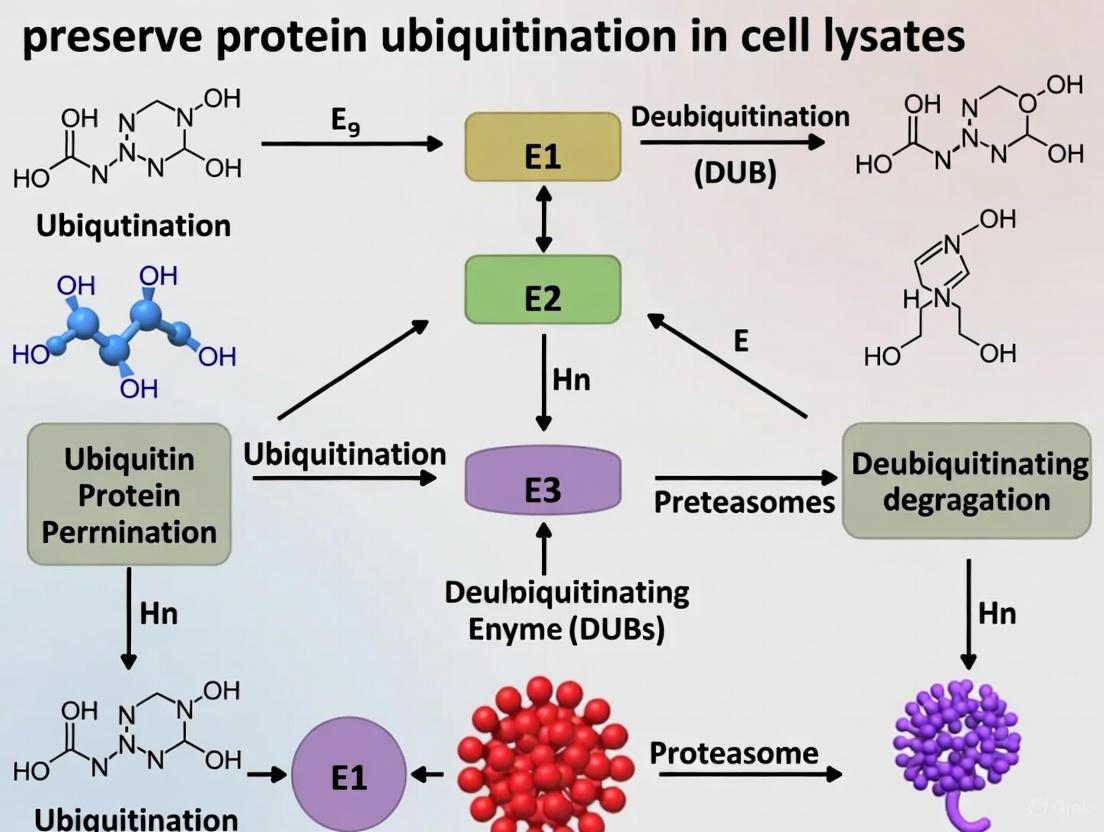
This article provides researchers, scientists, and drug development professionals with a comprehensive framework for preserving labile protein ubiquitination states during cell lysis and subsequent analysis.
Preserving Protein Ubiquitination in Cell Lysates: A Complete Guide to Methods, Troubleshooting, and Validation
Abstract
This article provides researchers, scientists, and drug development professionals with a comprehensive framework for preserving labile protein ubiquitination states during cell lysis and subsequent analysis. It covers the fundamental challenges of ubiquitin chain stability, details optimized lysis buffer formulations and handling protocols, outlines common pitfalls and troubleshooting strategies, and presents a comparative analysis of validation techniques like Western blot and ELISA. The guide synthesizes current methodologies to ensure accurate capture of the native ubiquitome for functional studies and therapeutic discovery.
Understanding the Ubiquitination Landscape: Why Preservation is Critical
Ubiquitination is a crucial post-translational modification that regulates virtually all cellular pathways in eukaryotes, governing processes from protein degradation to DNA repair and immune signaling [1] [2]. This versatility stems from the remarkable structural diversity of ubiquitin signals. The 76-amino acid ubiquitin protein can be conjugated to substrate proteins via its C-terminal glycine (G76) forming an isopeptide bond with lysine residues, or less commonly, with serine, threonine, or the N-terminal methionine (M1) of target proteins [3] [2]. When ubiquitin itself becomes the substrate, with additional ubiquitin molecules attaching to any of its seven lysine residues (K6, K11, K27, K29, K33, K48, K63) or its N-terminal methionine (M1), various polyubiquitin chain architectures emerge [3] [4].
The complexity of ubiquitin signaling extends beyond simple homotypic chains (comprising a single linkage type) to include heterotypic chains with mixed linkages and branched architectures where two or more ubiquitin moieties attach to distinct lysine residues of a single ubiquitin molecule within a polyubiquitin chain [5]. These bifurcated structures significantly expand the signaling capacity of the ubiquitin system, constituting a substantial fraction of cellular polyubiquitin [5]. Recent technological innovations have revealed that approximately 10-20% of ubiquitin in polymers exists in the context of branched chains, highlighting their biological significance [6]. The combinatorial complexity of ubiquitin chain architecture, including chain length, linkage type, and overall topology, forms a sophisticated "ubiquitin code" that is interpreted by cellular machinery to determine specific functional outcomes for modified proteins [2].
Methodological Challenges in Preserving Ubiquitination States
Fundamental Preservation Challenges
Studying endogenous ubiquitin signaling presents significant technical challenges, primarily due to the low stoichiometry of protein ubiquitination under normal physiological conditions and the highly transient, reversible nature of this modification [4] [7]. The dynamic equilibrium between ubiquitin conjugation by E1-E2-E3 enzymatic cascades and deconjugation by deubiquitinating enzymes (DUBs) means that the observed ubiquitination state in experimental conditions may not accurately reflect physiological states without proper stabilization [2]. This is particularly problematic during cell lysis and subsequent processing steps, when disrupted cellular integrity can lead to rapid deubiquitination or aberrant ubiquitination if preservation methods are not rigorously applied [3].
Another significant challenge arises from the structural diversity of ubiquitin modifications themselves. Traditional biochemical approaches often struggle to distinguish between different chain architectures, and many ubiquitin antibodies exhibit cross-reactivity or poor specificity [4] [7]. This is especially true for branched or atypical chains, which may be present at low abundance but possess high signaling importance. Furthermore, the need to preserve protein-protein interactions for certain analytical methods while preventing artificial interactions introduces additional methodological constraints that must be carefully balanced [3].
Critical Preservation Parameters
Table 1: Key Challenges in Ubiquitination Research
| Challenge | Impact on Research | Potential Consequences |
|---|---|---|
| Transient Nature | Rapid deubiquitination during sample processing | Loss of signal, inaccurate representation of in vivo states |
| Low Abundance | Difficulty detecting endogenous ubiquitination | False negatives, requirement for heavy enrichment |
| Structural Diversity | Inability to resolve complex chain architectures | Oversimplification of ubiquitin codes |
| Antibody Specificity | Cross-reactivity with non-ubiquitin epitopes | False positives, misinterpretation of results |
| Proteolytic Degradation | Loss of ubiquitinated substrates during analysis | Incomplete ubiquitome profiling |
Essential Methodologies for Preserving Ubiquitin Signals
Inhibition of Deubiquitinating Enzymes (DUBs)
Preserving the native ubiquitination state of proteins begins with effective inhibition of DUB activity immediately upon cell lysis. DUBs belong to five different families, including four classes of cysteine proteases and one class of metalloproteases, necessitating the use of combination inhibitors [3]. For comprehensive DUB inhibition, buffers must contain both chelating agents (EDTA or EGTA, 5-10 mM) to remove heavy metal ions required by metalloproteases, and cysteine alkylating agents (N-ethylmaleimide [NEM] or iodoacetamide [IAA], 10-50 mM) to target the active site cysteine residues of the majority of DUBs [3].
The concentration of alkylating agents is critical, as standard concentrations (5-10 mM) may be insufficient for preserving certain ubiquitination events. Research indicates that up to 10-fold higher concentrations (50 mM) of NEM or IAA may be necessary to fully preserve the ubiquitination status of some proteins, particularly those modified with K63-linked or M1-linked ubiquitin chains [3]. The choice between NEM and IAA involves important trade-offs: while IAA is photolabile and degrades within minutes when exposed to light (preventing continued alkylation), NEM forms more stable adducts and is preferred when mass spectrometry analysis is planned, as IAA modifications can interfere with the identification of ubiquitylation sites due to identical mass with Gly-Gly remnants [3].
For specialized applications, direct lysis in boiling buffer containing 1% SDS effectively denatures and inactivates DUBs instantly, though this approach is incompatible with downstream techniques requiring native protein conformation, such as co-immunoprecipitation [3]. Emerging strategies include the use of ubiquitin variants with C-terminal reactive probes that covalently inactivate some DUBs, though broad-spectrum chemical DUB inhibitors with complete coverage remain an area of active development [3].
Proteasome and Protease Inhibition
As the primary degradation machinery for many ubiquitinated proteins, the proteasome must be inhibited to prevent turnover of polyubiquitinated substrates, particularly those containing K48-linked chains. MG132 (Z-leucyl-leucyl-leucyl-CHO) is the most widely used proteasome inhibitor, typically applied at concentrations of 5-25 μM for 1-2 hours prior to cell harvesting [3] [7]. Treatment with MG132 blocks degradation and allows accumulation of ubiquitinated proteins, significantly facilitating their detection.
However, prolonged incubation with MG132 (12-24 hours) can induce cytotoxic effects and cellular stress responses that may artifactually alter ubiquitination patterns [3]. Therefore, optimization of treatment duration is essential for each experimental system. In addition to proteasomal inhibition, general protease inhibition through commercial cocktail tablets or specific inhibitors targeting serine, cysteine, aspartic, and aminopeptidases should be included to prevent nonspecific proteolysis during sample preparation.
Table 2: Key Inhibitors for Preserving Ubiquitination States
| Inhibitor | Target | Working Concentration | Mechanism | Considerations |
|---|---|---|---|---|
| NEM | Cysteine DUBs | 10-50 mM | Alkylates active site cysteine | Stable adducts; preferred for MS |
| IAA | Cysteine DUBs | 10-50 mM | Alkylates active site cysteine | Light-sensitive; short activity window |
| EDTA/EGTA | Metalloprotease DUBs | 5-10 mM | Chelates essential metal ions | Broad metal chelation |
| MG132 | 26S Proteasome | 5-25 μM | Inhibits chymotryptic activity | Cytotoxic with prolonged use |
| Broad-spectrum protease inhibitors | Various proteases | As recommended | Mixed mechanisms | Prevents general proteolysis |
Advanced Analytical Techniques for Ubiquitin Chain Architecture
Ub-clipping Methodology
The Ub-clipping technique represents a significant advancement in deciphering ubiquitin chain architecture [6]. This innovative method utilizes an engineered viral protease, Lbpro* (L102W mutant), from foot-and-mouth disease virus, which cleaves ubiquitin after Arg74, generating two characteristic products: a truncated ubiquitin (residues 1-74) and a GlyGly-modified ubiquitin (1-74) that retains the signature dipeptide remnant on the modified lysine residues [6]. This unique "clippase" activity collapses complex polyubiquitin samples into simplified monoubiquitin species while preserving information about modification sites.
The power of Ub-clipping lies in its ability to reveal branched chain architectures through intact mass analysis of the generated monoubiquitin. When a ubiquitin molecule serves as a branch point with multiple modifications, it appears as di-GlyGly or tri-GlyGly modified species after Lbpro* treatment [6]. Application of this method to whole cell lysates has demonstrated that approximately 10-20% of ubiquitin in polymers exists in branched configurations, highlighting the prevalence and potential importance of these complex architectures in cellular signaling [6]. The technique is compatible with complex samples, including cell lysates in conditions containing 1 M urea, which simultaneously inhibits endogenous ligases and DUBs while maintaining Lbpro* activity [6].
UbiREAD Technology for Functional Decoding
The UbiREAD (Ubiquitin Reader Endogenous Array Detection) platform enables systematic assessment of the degradation capacity of diverse ubiquitin chains on substrate proteins [1]. This approach has revealed fundamental insights into ubiquitin code interpretation, demonstrating that K48-linked ubiquitin chains must consist of at least three ubiquitin molecules to efficiently target GFP for degradation with a half-life of approximately 1 minute [1]. Shorter K48-linked chains (di-ubiquitin) remain stable intracellularly due to disassembly by DUBs [1].
Furthermore, UbiREAD has elucidated hierarchical relationships in branched ubiquitin chains containing both K48 and K63 linkages. In these mixed architectures, the ubiquitin chain directly conjugated to the substrate protein overrides the influence of the branching ubiquitin chain in determining the substrate's fate [1]. This finding has profound implications for understanding how cells prioritize conflicting degradation signals within complex ubiquitin structures.
Tandem Hybrid Ubiquitin-Binding Domains (ThUBDs) for Enhanced Enrichment
Effective enrichment of ubiquitinated proteins is essential given their low cellular abundance. Traditional affinity-based methods using tagged ubiquitin or ubiquitin antibodies face limitations including incomplete coverage and linkage bias. Recent innovations in tandem hybrid ubiquitin-binding domains (ThUBDs) have addressed these challenges through engineered protein constructs combining multiple UBDs with complementary specificity and affinity profiles [8].
Two particularly effective constructs, ThUDQ2 (combining UBA domains from DSK2p and ubiquilin 2) and ThUDA20 (combining DSK2p-UBA with RABGEF1-derived A20-ZnF), demonstrate markedly higher affinity for ubiquitinated proteins compared to naturally occurring UBDs and exhibit nearly unbiased high affinity across all seven lysine-linked ubiquitin chain types [8]. Application of ThUBD-based profiling with mass spectrometry has enabled identification of 1,092 and 7,487 putative ubiquitinated proteins from yeast and mammalian cells, respectively, dramatically expanding the detectable ubiquitinome [8].
Experimental Protocols for Ubiquitination Studies
Comprehensive Protocol for Preservation and Enrichment
Step 1: Cell Treatment and Lysis
- Treat cells with 5-25 μM MG132 for 1-2 hours prior to harvesting to stabilize ubiquitinated proteins [7].
- Prepare ice-cold lysis buffer containing:
- 50 mM Tris-HCl (pH 7.5)
- 150 mM NaCl
- 1% NP-40 or similar detergent
- 5-10 mM EDTA or EGTA
- 20-50 mM NEM (freshly prepared)
- 10 mM MG132
- General protease inhibitor cocktail
- Lyse cells directly in pre-heated SDS buffer (1% SDS, 50 mM Tris-HCl pH 7.5) for complete DUB denaturation if downstream applications permit [3].
Step 2: Ubiquitinated Protein Enrichment
- For ThUBD-based enrichment: Incubate cleared lysates with ThUBD-coupled beads for 2-4 hours at 4°C with gentle rotation [8].
- For ubiquitin trap enrichment: Use commercial Ubiquitin-Trap reagents (agarose or magnetic beads) per manufacturer's instructions, typically with 1-2 hour incubation [7].
- Wash beads extensively with lysis buffer containing reduced detergent (0.1% NP-40) and DUB inhibitors.
Step 3: Ubiquitin Chain Architecture Analysis
- For Ub-clipping: Resuspend samples in clipping buffer (50 mM HEPES pH 7.5, 100 mM NaCl, 10 mM DTT) and add Lbpro* enzyme (0.5-2 μg) [6].
- Incubate at 37°C for 1-2 hours, then terminate reaction by adding SDS-PAGE loading buffer.
- Analyze by immunoblotting with linkage-specific antibodies or by mass spectrometry.
Electrophoretic Separation Optimization
Proper separation of ubiquitinated proteins is critical for resolution of different chain types and lengths. The choice of gel system and running buffer significantly impacts resolution:
- MES buffer: Optimal for resolving small ubiquitin oligomers (2-5 ubiquitins) [3].
- MOPS buffer: Superior for longer ubiquitin chains (8+ ubiquitins) [3].
- Tris-acetate (TA) buffer: Best for proteins in the 40-400 kDa range, including heavily ubiquitinated species [3].
- Tris-glycine (TG) buffer with 8% acrylamide: Can separate chains up to 20 ubiquitins, while 12% acrylamide improves resolution of mono-ubiquitin and short chains [3].
Research Reagent Solutions
Table 3: Essential Research Reagents for Ubiquitination Studies
| Reagent Category | Specific Examples | Key Applications | Advantages/Limitations |
|---|---|---|---|
| DUB Inhibitors | NEM (20-50 mM), IAA (20-50 mM) | Preservation of ubiquitination during lysis | NEM preferred for MS compatibility; IAA light-sensitive |
| Proteasome Inhibitors | MG132 (5-25 μM), Bortezomib | Stabilization of degradation substrates | MG132 requires optimization to avoid cytotoxicity |
| Enrichment Tools | ThUBDs [8], TUBEs [3], Ubiquitin-Trap [7] | Pull-down of ubiquitinated proteins | ThUBDs offer broad linkage coverage; commercial traps convenient |
| Linkage-specific Antibodies | K48-specific, K63-specific, M1-linear specific | Immunoblotting, immunofluorescence | Variable specificity; requires validation |
| Specialized Enzymes | Lbpro* [6], Linkage-specific DUBs | Ub-clipping, chain linkage mapping | Lbpro* enables branching analysis; DUBs require optimization |
| Tagged Ubiquitin | His-Ub, Strep-Ub, HA-Ub | Affinity purification, pulse-chase studies | May not fully mimic endogenous ubiquitin |
Concluding Remarks
The complexity of ubiquitin signaling necessitates equally sophisticated methodological approaches for its preservation and characterization. The integration of robust preservation techniques—combining potent DUB inhibition with strategic proteasome blockade—alongside advanced analytical methods like Ub-clipping and high-affinity ThUBD enrichment provides an powerful toolkit for deciphering the ubiquitin code. Particularly critical is the recognition that branched chains constitute a substantial proportion of cellular ubiquitin polymers and exhibit hierarchical signaling properties that must be considered when interpreting ubiquitination data.
As the field continues to evolve, emerging technologies including improved DUB-resistant ubiquitin variants, more comprehensive linkage-specific reagents, and computational tools for predicting chain architecture will further enhance our ability to capture and interrogate the full complexity of ubiquitin signaling. The methodologies outlined herein provide a foundation for researchers seeking to maintain the integrity of ubiquitination states from cell culture to analytical endpoint, ensuring that experimental observations faithfully reflect biological reality.
Visualizing Key Workflows
Ubiquitin Analysis Workflow Overview
Ubiquitin Chain Architectural Diversity
The analysis of protein ubiquitination in cell lysates is a cornerstone of research in cellular signaling, protein homeostasis, and targeted protein degradation. However, a significant technical challenge complicates this work: the rapid and coordinated degradation of ubiquitin signals by endogenous deubiquitinases (DUBs) and proteases. Upon cell lysis, these enzymes, once sequestered in their respective cellular compartments, are released into a homogenized environment where they can freely access and cleave ubiquitin conjugates. This activity leads to the loss of critical ubiquitination information, resulting in inaccurate data regarding substrate ubiquitination status, chain linkage type, and protein half-life.
DUBs are specialized proteases that catalyze the removal of ubiquitin from substrate proteins or edit ubiquitin chains by cleaving the isopeptide bond [9] [10]. Their enzymatic activity is stringently regulated in living cells but becomes a primary vulnerability in lysates. Similarly, other proteases, which hydrolyze peptide bonds, are activated by the changes in ionic composition and pH that often accompany cell disruption [11]. This application note, framed within a broader thesis on preserving protein ubiquitination, details the mechanisms of these degradative enzymes and provides validated protocols to inhibit them, thereby safeguarding the integrity of ubiquitin signals for downstream analysis.
Mechanisms of Signal Degradation in Lysates
The Role and Catalytic Mechanisms of Deubiquitinases (DUBs)
DUBs are the primary actors in the erosion of ubiquitin signals. They are categorized into two major classes based on their catalytic mechanisms: cysteine proteases and metalloproteases.
- Cysteine Proteases: This class constitutes the majority of DUBs, including Ubiquitin-Specific Proteases (USPs), Ubiquitin C-terminal Hydrolases (UCHs), Ovarian Tumor proteases (OTUs), and Machado-Joseph Disease proteases (MJDs) [9]. Their catalytic mechanism involves a nucleophilic attack on the isopeptide bond by a catalytic cysteine residue. This cysteine thiol group forms a covalent intermediate with the ubiquitin moiety, which is subsequently resolved by a water molecule, leading to cleavage and the release of free ubiquitin or edited chains [9] [10].
- Metalloproteases: The JAMM/MPN+ family of DUBs are zinc-dependent metalloproteases. Their activity relies on a coordinated zinc ion in the active site, which activates a water molecule to hydrolyze the isopeptide bond directly, without forming a covalent intermediate [9].
In the context of cell lysates, the vulnerability arises because DUBs retain their catalytic competence. The disruption of cellular architecture grants them access to ubiquitinated substrates that they might not encounter in vivo, leading to non-physiological deubiquitination.
Activation of Proteases Upon Cell Lysis
Beyond DUBs, the cell lysis procedure can activate a broad spectrum of proteases, contributing to a general degradation of proteins and the destruction of ubiquitin conjugates.
- Dormant Zymogens: Many proteases are synthesized as inactive precursors, or zymogens, that contain a prodomain blocking the active site. The conditions of cell lysis, such as alterations in calcium ion (Ca²⁺) concentration or pH, can trigger limited proteolysis (in cis or trans) that removes the prodomain, leading to protease activation [11].
- Environmental Shifts: For instance, certain proteases like plant metacaspases are activated by millimolar concentrations of Ca²⁺, which can occur during physical disruption of cells [11]. Similarly, shifts from neutral to acidic pH during lysate preparation can activate other proteases, such as legumains [11].
Table 1: Key Enzyme Classes that Degrade Ubiquitin Signals in Lysates
| Enzyme Class | Catalytic Mechanism | Primary Action in Lysates | Key Regulatory Cofactors |
|---|---|---|---|
| Cysteine DUBs (e.g., USPs, UCHs, OTUs) | Catalytic cysteine; nucleophilic attack | Cleaves isopeptide bond, removing ubiquitin from substrates | — |
| Metalloprotease DUBs (JAMM/MPN+ family) | Zinc-dependent; water activation | Hydrolyzes isopeptide bond, removing ubiquitin from substrates | Zinc (Zn²⁺) |
| Metacaspase-like Proteases | Catalytic cysteine-histidine dyad | Cleaves peptide bonds after Arg/Lys residues; general protein degradation | Calcium (Ca²⁺) |
| Legumain-like Proteases | Cysteine protease | Cleaves peptide bonds after Asn/Asp residues; general protein degradation | pH shift |
Strategies and Reagents for Preserving Ubiquitination
To combat the enzymatic degradation of ubiquitin signals, a multi-pronged pharmacological approach is essential. The following strategies should be implemented immediately upon cell lysis.
Direct Pharmacological Inhibition of DUBs
Small molecule inhibitors that target the active sites of DUBs are a first line of defense.
- Broad-Spectrum DUB Inhibitors: Compounds such as PR-619 act as pan-DUB inhibitors by covalently modifying the catalytic cysteine residue present in many DUB families, providing broad protection against deubiquitination [10].
- Metal Chelators: For zinc-dependent metalloprotease DUBs, chelating agents like 1,10-Phenanthroline are highly effective. By sequestering Zn²⁺ ions, they inactivate this entire class of DUBs [9] [10].
A combination of a cysteine protease inhibitor and a metal chelator ensures comprehensive coverage against the major DUB families.
Inactivation of the Broader Protease Landscape
A robust ubiquitin preservation strategy must also account for non-DUB proteases.
- Serine/Cysteine Protease Inhibition: Phenylmethylsulfonyl fluoride (PMSF) is a widely used irreversible inhibitor of serine proteases and some cysteine proteases.
- Cysteine Protease Targeting: N-Ethylmaleimide (NEM) alkylates free thiol groups, irreversibly inhibiting cysteine-dependent enzymes, including most DUBs and many other proteases. It is a cornerstone reagent for preserving ubiquitination [12].
- Protease Inhibitor Cocktails: Commercial cocktails typically contain a mix of inhibitors targeting serine, cysteine, aspartic, and metallo-proteases, providing a convenient and broad-spectrum solution.
Table 2: The Researcher's Toolkit for Preserving Ubiquitination
| Research Reagent | Target Enzymes | Mechanism of Action | Recommended Working Concentration |
|---|---|---|---|
| N-Ethylmaleimide (NEM) | Cysteine proteases (incl. most DUBs) | Alkylates catalytic cysteine residues | 1-10 mM |
| PR-619 | Broad-spectrum cysteine DUBs | Reversible, cell-permeable inhibitor of cysteine DUBs | 10-50 µM |
| 1,10-Phenanthroline | Zinc metalloproteases (incl. JAMM DUBs) | Chelates Zn²⁺ ions, inactivating metalloenzymes | 1-5 mM |
| PMSF | Serine proteases | Irreversibly alkylates catalytic serine residue | 0.1-1 mM |
| EDTA/EGTA | Metalloproteases | Chelates metal ions (Ca²⁺, Mg²⁺, Zn²⁺) | 1-10 mM |
| Complete Mini EDTA-free Protease Inhibitor Cocktail | Broad-spectrum proteases | Pre-blended mixture of inhibitors | As per manufacturer |
Validated Protocols for Ubiquitin-Preserving Lysate Preparation
Protocol 1: Denaturing Lysis for Ubiquitinome Analysis
This protocol is optimized for downstream applications like immunoblotting of ubiquitinated species or proteomic analysis of the ubiquitinome, where preserving the covalent ubiquitin-substrate relationship is paramount [12].
Prepare Lysis Buffer: Create a strongly denaturing buffer to instantly inactivate enzymes. A standard formulation is:
- 1% SDS
- 50 mM Tris-HCl, pH 7.5
- 150 mM NaCl
- 10 mM NEM (add fresh)
- 5 mM 1,10-Phenanthroline (add fresh)
- 1 mM PMSF (add fresh)
Pre-heat Lysis Buffer: Heat the lysis buffer to 95°C before use.
Rapid Cell Lysis: Aspirate culture media from cell pellets and immediately add the pre-heated 95°C lysis buffer. Vortex vigorously for 10-20 seconds to ensure immediate and uniform denaturation.
Further Denaturation: Incubate the lysate in a 95°C heat block for an additional 5-10 minutes.
DNA Shearing and Clarification: Pass the lysate through a 21-25 gauge needle 5-10 times to shear genomic DNA. Centrifuge at >16,000 × g for 10 minutes to remove insoluble debris. The supernatant is now ready for analysis or can be stored at -80°C.
Protocol 2: Native Lysis for Functional Studies and Ubiquitin Interactome
This method uses mild detergents to maintain protein-protein interactions, which is crucial for co-immunoprecipitation or studying ubiquitin-binding proteins, while still inhibiting degradative enzymes [12].
Prepare Lysis Buffer: Use a non-denaturing, inhibitor-rich buffer:
- 1% Triton X-100 or NP-40
- 50 mM Tris-HCl, pH 7.5
- 150 mM NaCl
- 5 mM NEM (add fresh)
- 10 mM EDTA (chelates metals)
- 1x concentration of a commercial protease inhibitor cocktail (EDTA-free)
Pre-cool Buffer: Keep the lysis buffer ice-cold.
Rapid Inhibition: Harvest cells and rapidly resuspend the pellet in the ice-cold lysis buffer. Gently vortex to mix.
Gentle Lysis: Incubate the cell suspension on a rotator at 4°C for 20-30 minutes to allow for complete lysis.
Clarification: Centrifuge the lysate at >16,000 × g for 15 minutes at 4°C to pellet nuclei and insoluble material. Transfer the supernatant (cleared lysate) to a new tube and proceed immediately to downstream applications.
Advanced Detection: OtUBD-Based Enrichment of Ubiquitinated Proteins
Once ubiquitination is preserved, robust enrichment methods are required for detection. The OtUBD affinity resin, derived from a high-affinity ubiquitin-binding domain, is a powerful tool for enriching mono- and poly-ubiquitinated proteins from complex lysates [12].
The following workflow diagrams the process of using OtUBD resin with lysates prepared via the protocols above to specifically isolate the ubiquitinome.
The integrity of ubiquitination data generated from cell lysates is critically dependent on preemptively neutralizing the inherent vulnerabilities posed by DUBs and proteases. Understanding their catalytic mechanisms allows for the rational design of inhibition strategies. The consistent and immediate use of a combination of specific DUB inhibitors (like NEM and 1,10-Phenanthroline) and broad-spectrum protease inhibitors during cell lysis is non-negotiable for accurate results. By adopting the denaturing or native protocols outlined in this document, researchers can effectively preserve the native ubiquitination state of proteins, ensuring that subsequent analysis by immunoblotting or advanced proteomic tools like the OtUBD enrichment reflects the true biological state within the cell.
Biological and Clinical Implications of Capturing the Native Ubiquitome
The term "native ubiquitome" refers to the complete set of ubiquitylated proteins and their specific ubiquitin chain configurations present within a cell at a given moment. Capturing this dynamic landscape in its native state is critical because ubiquitination is a key post-translational modification regulating diverse cellular processes, including protein degradation, cell signaling, DNA repair, and apoptosis [13] [14]. The inherent lability of ubiquitin modifications, coupled with the activity of deubiquitinating enzymes (DUBs) during cell lysis, poses a significant challenge. Therefore, methodological optimization is essential to preserve the in vivo ubiquitination state for accurate analysis, which has direct implications for understanding disease mechanisms and developing targeted therapies [15].
Key Methodological Principles for Preserving the Native Ubiquitome
Successful capture of the native ubiquitome hinges on adhering to several core principles during sample preparation. These practices are designed to stabilize ubiquitin-protein conjugates and prevent post-lysis artifacts.
- Rapid Denaturation and DUB Inhibition: A primary concern is the rapid action of DUBs after cell lysis. To mitigate this, researchers must use hot SDS-based lysis buffers to instantly denature proteins and inactivate enzymes. The addition of DUB inhibitors, such as N-ethylmaleimide (NEM) or iodoacetamide (IAA), to the lysis buffer is crucial to prevent the cleavage of ubiquitin chains [15].
- Proteasome Inhibition for Pathway Analysis: When studying ubiquitination pathways not directly linked to proteasomal degradation, using proteasome inhibitors like MG-132 is recommended. This prevents the loss of ubiquitylated proteins targeted for degradation, thereby stabilizing them for detection [14] [16].
- Optimized Lysis and Immunoblotting Conditions: The use of denaturing lysis conditions, such as buffers containing 1% SDS followed by a dilution step, is a common and effective strategy for ubiquitination assays [16]. Furthermore, for immunoblotting, optimizing gel systems (e.g., Tris-Acetate gels for better separation of high molecular weight proteins) and using high-affinity ubiquitin antibodies are vital for reliable detection [15].
Detailed Experimental Protocols
This section provides a step-by-step guide for a standard cell-based ubiquitination assay, incorporating the key principles of native ubiquitome preservation.
In Vivo Ubiquitination Assay Protocol
The following protocol is adapted from established methods for detecting protein ubiquitination in mammalian cells [14] [16].
Key Reagents and Materials:
- Plasmids: His- or HA-tagged Ubiquitin, Flag- or MYC-tagged protein of interest (POI), E3 ligase plasmid (e.g., Flag-FBXO45).
- Cell Lines: HEK293T cells or other relevant cell lines.
- Inhibitors: MG-132 (proteasome inhibitor), NEM (DUB inhibitor).
- Lysis Buffers: Denaturing lysis buffer (1% SDS, 50 mM Tris-HCl pH 7.5, 0.5 mM EDTA, 1 mM DTT) and regular IP lysis buffer.
- Beads: Ni-NTA agarose (for His-Ub pull-down) or antibody-conjugated beads.
Procedure:
Cell Transfection and Treatment:
- Seed HEK293T cells in a 10 cm dish and transfect with the plasmids of interest (e.g., His-Ub, POI, E3 ligase) using a transfection reagent like Lipofectamine 2000 [14].
- Approximately 24 hours post-transfection, treat cells with 10-20 μM MG-132 for 4-6 hours before harvesting to block proteasomal degradation and enrich for ubiquitylated proteins [14] [16].
Cell Harvesting and Denaturing Lysis:
- Aspirate the medium and wash cells twice with ice-cold PBS.
- Lyse cells directly in 1 mL of denaturing lysis buffer (1% SDS) containing a protease inhibitor cocktail and 5-10 mM NEM. Scrape the cells and transfer the lysate to a microcentrifuge tube [16].
- Immediately incubate the lysates at 95-100°C for 5-10 minutes to ensure complete denaturation and inactivation of DUBs [15] [16].
Clearing and Dilution of Lysates:
- Centrifuge the boiled lysates at >12,000 × g for 10 minutes to remove insoluble debris.
- Transfer the supernatant to a new tube and dilute it ten-fold with regular IP lysis buffer (without SDS) to reduce the SDS concentration for effective antibody binding [16].
Immunoprecipitation (IP):
Elution and Immunoblotting:
- Elute the bound proteins by boiling the beads in 2X Laemmli sample buffer.
- Resolve the proteins by SDS-PAGE. For better separation of poly-ubiquitylated species, Tris-Acetate gels are recommended [15].
- Analyze by Western blotting using antibodies against the tag of your POI (e.g., HA) to detect the characteristic smearing pattern of ubiquitination [14].
Workflow Visualization
The following diagram illustrates the logical flow of the protocol described above.
The Scientist's Toolkit: Essential Research Reagents
The table below catalogues the key reagents and their functions essential for conducting research on the native ubiquitome.
Table 1: Essential Reagents for Ubiquitome Research
| Reagent / Material | Function / Purpose | Examples / Notes |
|---|---|---|
| Tagged Ubiquitin | Enables purification and detection of ubiquitylated proteins. | His-tag (Ni-NTA pull-down), HA-tag (immunodetection) [14]. |
| Proteasome Inhibitor | Stabilizes poly-ubiquitylated proteins destined for degradation. | MG-132; used in cell culture prior to lysis [14] [16]. |
| DUB Inhibitor | Prevents deubiquitination during sample preparation, preserving chain integrity. | N-ethylmaleimide (NEM), Iodoacetamide (IAA); added to lysis buffer [15]. |
| Denaturing Lysis Buffer | Instantly denatures proteins and inactivates enzymes like DUBs. | Contains 1% SDS; samples are typically boiled [16]. |
| Affinity Beads | For the isolation (pull-down) of ubiquitylated proteins. | Ni-NTA Agarose (for His-Ub), Antibody-conjugated beads (e.g., Anti-Flag) [14]. |
| Linkage-Specific DUBs | Tool enzymes to decipher ubiquitin chain topology. | Used to selectively cleave specific linkage types (e.g., K48, K63) in vitro [15]. |
| Ubiquitin-Binding Domains (UBDs) | Recombinant proteins to detect or pull down specific chain types. | TUBEs (Tandem-repeated UBDs) enhance ubiquitin affinity and inhibit DUBs [15]. |
Advanced Applications and Quantitative Analysis
Moving beyond basic detection, advanced applications allow for a more nuanced dissection of the ubiquitome. A critical step is identifying the topology of ubiquitin chains, as different linkages dictate different functional outcomes. This can be achieved by employing linkage-specific ubiquitin-binding domains (UBDs) in pull-down assays or by using linkage-specific deubiquitylases (DUBs) to selectively cleave chains in vitro prior to immunoblotting, thereby confirming their identity [15]. Furthermore, while immunoblotting is semi-quantitative, it remains the most common method for initial analysis due to its high specificity and relatively low cost [15]. For more robust quantification, data can be normalized to the total protein input or the immunoprecipitated target protein levels.
Table 2: Analysis of Ubiquitin Chain Linkages
| Linkage Type | Primary Biological Function | Recommended Analytical Tools |
|---|---|---|
| K48-linked | Canonical signal for proteasomal degradation. | Immunoblot with K48-linkage specific antibody; validation with OTUB1 (K48-specific DUB) [15]. |
| K63-linked | Non-degradative signaling (e.g., DNA repair, NF-κB pathway). | Immunoblot with K63-linkage specific antibody; validation with AMSH (K63-specific DUB) [15]. |
| Linear (M1-linked) | Regulation of inflammatory signaling and immunity. | Immunoblot with linear-linkage specific antibody; validation with OTULIN (linear-specific DUB) [15]. |
| Other (K11, K29, etc.) | Diverse functions including ERAD, proteolysis. | Linkage-specific antibodies; use of tandem-repeated UBDs (TUBEs) for enrichment [15]. |
The faithful capture and analysis of the native ubiquitome is a cornerstone for advancing our understanding of ubiquitin-dependent signaling in health and disease. As detailed in this application note, success relies on a meticulous methodology that prioritizes the stabilization of ubiquitin conjugates from the moment of cell lysis. By integrating rapid denaturation, specific enzyme inhibition, and optimized detection protocols, researchers can achieve a more accurate representation of the in vivo ubiquitination landscape. The continued refinement of these techniques, coupled with the development of new reagents, will undoubtedly unlock deeper insights into the complex biology of ubiquitin and its clinical applications.
Optimized Protocols for Lysis and Stabilization of Ubiquitinated Proteins
Essential Components of a Ubiquitination-Preserving Lysis Buffer
In the study of protein ubiquitination, the initial step of cell lysis is critical. The quality of data generated in subsequent analyses is profoundly influenced by the method of sample preparation. Ubiquitination is a transient post-translational modification that regulates diverse cellular processes, from protein degradation to signal transduction [17]. Preserving this labile modification during cell lysis requires a buffer that not only effectively disrupts the cell membrane but also instantly inactivates cellular enzymatic activities that would otherwise erase the ubiquitin signature. This application note details the composition and formulation of a robust ubiquitination-preserving lysis buffer, framed within a broader methodological context for studying ubiquitin dynamics in cell lysates. The protocols and recommendations herein are designed to provide researchers and drug development professionals with a reliable foundation for capturing an accurate snapshot of the cellular ubiquitome.
Core Chemical Components and Their Functions
A effective ubiquitination-preserving lysis buffer must achieve several objectives: rapid denaturation of enzymes, stabilization of weak protein-protein interactions, and prevention of artefactual modifications. The table below summarizes the essential components and their specific roles.
Table 1: Essential Components of a Ubiquitination-Preserving Lysis Buffer
| Component | Typical Concentration | Critical Function | Rationale & Mechanism |
|---|---|---|---|
| SDS (Sodium Dodecyl Sulfate) | 1-2% | Denaturant | Rapidly denatures proteins and disrupts cellular structures, instantly inactivating deubiquitinating enzymes (DUBs) and proteases [15]. |
| N-Ethylmaleimide (NEM) | 10-25 mM | Deubiquitinase Inhibitor | Irreversibly alkylates cysteine residues in the active site of DUBs, preventing the cleavage of ubiquitin from substrates [15] [17]. |
| Iodoacetamide (IAA) | 10-50 mM | Alkylating Agent | Blocks cysteine residues to prevent disulfide bond rearrangement and non-specific alkylation, often used in conjunction with NEM [15]. |
| Protease Inhibitor Cocktail | 1X | Protease Inhibition | Broad-spectrum inhibition of serine, cysteine, aspartic, and metallo-proteases that could degrade ubiquitinated proteins or the ubiquitin chain itself [17]. |
| EDTA/EGTA | 5-10 mM | Chelating Agent | Chelates metal ions (Mg²⁺, Ca²⁺) that are essential cofactors for many metalloproteases and DUBs [15] [17]. |
Key Considerations for Component Usage
- Order of Addition: For optimal effectiveness, NEM and IAA should be added to the lysis buffer immediately before use, as they can hydrolyze and lose potency in aqueous solutions.
- Denaturation vs. Interaction: While SDS provides the most effective DUB inhibition, it denatures proteins and precludes native immunoprecipitation. For experiments requiring protein interactions, non-ionic detergents like Triton X-100 can be used, but they require a higher concentration of DUB inhibitors and faster processing [15].
- Compatibility: The use of SDS necessitates sample boiling and dilution for compatibility with downstream techniques like immunoblotting or pull-down assays.
Recommended Experimental Protocol
The following protocol is optimized for the lysis of adherent mammalian cells (e.g., HEK-293) for subsequent ubiquitination analysis by denaturing immunoprecipitation and immunoblotting.
Reagents and Materials
Table 2: The Scientist's Toolkit for Ubiquitination Analysis
| Item | Function/Application |
|---|---|
| Ubiquitination-Preserving Lysis Buffer (See Table 1) | Core reagent for cell lysis and ubiquitin signal preservation. |
| HEK-293 Cell Line | A widely used model system for ubiquitination studies [17]. |
| Proteasome Inhibitor (e.g., MG132) | Optional; used to enrich for ubiquitinated proteins by blocking their degradation [17]. |
| Dithiothreitol (DTT) | Reducing agent for Laemmli sample buffer; note that it inactivates NEM [17]. |
| Streptavidin Agarose | For pull-down of biotinylated proteins in advanced techniques like Ub-POD [17]. |
| Benzonase Nuclease | Degrades nucleic acids to reduce sample viscosity [17]. |
Step-by-Step Procedure
Pre-treatment (Optional): To accumulate ubiquitinated substrates, treat cells with a proteasome inhibitor such as MG132 (e.g., 10 µM for 4-6 hours) prior to lysis [17].
Buffer Preparation: Prepare a fresh ubiquitination-preserving lysis buffer. A recommended formulation is:
- 1% SDS
- 50 mM Tris-HCl (pH 7.5)
- 150 mM NaCl
- 10 mM NEM
- 25 mM IAA
- 5 mM EDTA
- 1X Protease Inhibitor Cocktail
Cell Lysis:
- Place the culture dish on ice and aspirate the medium.
- Rinse cells gently with ice-cold Phosphate Buffered Saline (PBS).
- Add an appropriate volume of the pre-cooled lysis buffer directly to the cells (e.g., 100 µL per 1x10⁶ cells).
- Immediately scrape the cells and transfer the lysate to a microcentrifuge tube.
Sample Processing:
- Vortex the lysate vigorously for 10-15 seconds to ensure complete homogenization and shearing of DNA.
- Incubate on ice for 10-15 minutes.
- Clarify the lysate by centrifugation at >14,000 x g for 10 minutes at 4°C.
- Transfer the supernatant to a new tube, carefully avoiding the pellet.
Post-Lysis and Downstream Analysis:
- Determine protein concentration using a detergent-compatible assay (e.g., BCA assay).
- Dilute the lysate with standard Laemmli sample buffer containing DTT (355 mM final concentration) for immunoblotting. The DTT will reduce the sample and inactivate any remaining NEM [17].
- For ubiquitin enrichment (e.g., streptavidin pull-down for Ub-POD experiments), the lysate can be diluted 10-fold with a buffer lacking SDS to reduce its concentration before incubation with beads [17].
The following workflow diagram illustrates the key steps of this protocol:
Methodological Context and Advanced Techniques
Understanding the lysis buffer's role within the broader landscape of ubiquitination research is key to designing robust experiments.
Integration with Ubiquitin Detection Workflows
The ubiquitination-preserving lysis buffer is the foundational first step for multiple downstream analytical techniques. In the Ub-POD (Ubiquitin-specific Proximity-Dependent Labeling) method, which identifies substrates of specific E3 ligases, cell lysis under denaturing conditions is crucial after the proximity-based biotinylation has occurred in live cells. This allows for the effective capture of biotinylated, ubiquitinated substrates without losing the modification [17]. Similarly, for mass spectrometric analysis of ubiquitinated peptides, the initial preservation of ubiquitination in the whole-cell lysate is a prerequisite for the subsequent tandem enrichment of modified peptides [18].
The Broader Ubiquitination Pathway
The diagram below outlines the core ubiquitination cascade, highlighting the stage targeted by the lysis buffer. The buffer's primary function is to freeze the process after the E3 ligase has acted, preventing reversal by DUBs.
Troubleshooting and Best Practices
- High Background in Immunoblots: This can result from incomplete inhibition of DUBs, leading to non-specific bands. Ensure the use of fresh NEM/IAA and consider increasing their concentration within the recommended range.
- Low Ubiquitin Signal: If specific ubiquitinated proteins are not detected, confirm the efficacy of proteasome inhibition (if used) and verify that the lysis buffer is being added to cells rapidly and directly.
- Sample Viscosity: If the lysate is too viscous due to DNA, add Benzonase nuclease to the lysis buffer to digest nucleic acids [17].
- Validation: Always include relevant controls, such as cells treated with a DUB inhibitor and cells expressing a well-characterized ubiquitinated protein, to validate the entire workflow from lysis to detection.
The integrity of any research on protein ubiquitination hinges on the initial sample preparation. The ubiquitination-preserving lysis buffer described here, with its critical combination of a strong denaturant and specific enzyme inhibitors, provides a reliable method to "freeze" the cellular ubiquitination state at the moment of lysis. By integrating this robust lysis protocol with advanced detection techniques, researchers can achieve a more accurate and comprehensive understanding of the dynamic ubiquitin code, thereby accelerating discovery in both basic research and drug development.
Step-by-Step Guide to Gentle Cell Lysis and Rapid Processing
The integrity of protein post-translational modifications is paramount in cellular biology research, particularly in the study of the ubiquitin-proteasome system. Protein ubiquitination, a key regulator of degradation, signal transduction, and immune responses, is a transient and labile modification that can be rapidly altered during cell disruption [19]. Preserving the native ubiquitination state of proteins during cell lysis presents a significant methodological challenge, as conventional lysis methods can induce cellular stress, activate deubiquitinases (DUBs), and promote protein degradation [19] [20].
This application note provides a detailed, optimized protocol for gentle cell lysis and rapid processing specifically designed to maintain the endogenous ubiquitination landscape of proteins for downstream analysis. The methods outlined herein are essential for researchers investigating targeted protein degradation, ubiquitin signaling dynamics, and E3 ligase function in drug discovery contexts [19] [21].
The Science of Ubiquitination Preservation
Ubiquitination involves the covalent attachment of ubiquitin to target proteins via an enzymatic cascade (E1, E2, E3), forming structurally and functionally distinct polyubiquitin chains [19] [13]. Among the eight linkage types, K48-linked chains primarily target proteins for proteasomal degradation, while K63-linked chains regulate signal transduction and protein trafficking [19]. Preserving these specific linkages during cell lysis is critical for accurate experimental interpretation.
Cellular stressors introduced during lysis—including shear forces, temperature fluctuations, and proteolytic activity—can rapidly degrade ubiquitin chains or alter their linkage patterns. Furthermore, DUBs released upon membrane disruption can actively remove ubiquitin modifications, fundamentally changing the biological signal being measured [20]. Therefore, lysis conditions must achieve complete cell disruption while simultaneously inactivating endogenous enzymatic activities that compromise ubiquitin integrity.
Lysis Buffer Composition and Reagents
The composition of the lysis buffer forms the foundation for preserving ubiquitination. A specialized buffer optimized to maintain polyubiquitination should include the following components [19] [22] [23]:
Table 1: Essential Components of Ubiquitin-Preserving Lysis Buffer
| Component | Recommended Concentration | Function | Critical Considerations |
|---|---|---|---|
| Detergent | 0.1-1% (v/v) Non-ionic (e.g., NP-40) | Solubilizes membranes while preserving protein interactions | Avoid harsh ionic detergents like SDS that denature ubiquitin complexes [24] |
| Protease Inhibitors | Commercial cocktail tablets or solution | Broad-spectrum inhibition of proteases | Essential to prevent protein degradation; use complete mini tablets |
| DUB Inhibitors | 1-5 mM N-ethylmaleimide (NEM) or 0.1-1 µM PR-619 | Inhibits deubiquitinating enzymes | Critical for preserving ubiquitin chain integrity [20] |
| Chelating Agents | 5-10 mM EDTA or EGTA | Inhibits metalloproteases | Prevents metal-dependent protease activity |
| Reducing Agents | 1-5 mM DTT or TCEP | Maintains reducing environment | Prevents oxidative damage to proteins; may affect some DUB inhibitors |
| OSMOTIC BUFFER | 20-50 mM HEPES or Tris, pH 7.4-7.8 | Maintains physiological pH | Hypotonic conditions promote cell swelling and gentle disruption |
| SALTS | 100-150 mM NaCl | Maintains ionic strength | Mimics intracellular conditions; prevents non-specific binding |
Table 2: Research Reagent Solutions for Ubiquitination Studies
| Reagent/Tool | Specific Function | Application Notes |
|---|---|---|
| Chain-Selective TUBEs (Tandem Ubiquitin Binding Entities) | High-affinity capture of specific polyubiquitin chains (K48, K63) | Enables linkage-specific ubiquitination analysis; nanomolar affinity preserves endogenous signals [19] |
| DUB Inhibitors (PR-619, NEM) | Potent inhibition of deubiquitinases | PR-619 is a pan-DUB inhibitor used at 4µM in research settings [20] |
| Proteasome Inhibitors (MG-132, Bortezomib) | Prevent degradation of ubiquitinated proteins | Used in pre-lysis cell treatment to accumulate ubiquitinated targets |
| OTUB1 Catalytic Domain | Targeted protein stabilization | Research tool for stabilizing specific ubiquitinated proteins [20] |
| HUWE1 Ligase Components | Study specific ubiquitination pathways | Reconstituted system (E1, UBE2L3/E2, HUWE1HECT) for in vitro ubiquitination [21] |
Equipment and Preparation
Essential Laboratory Equipment
- Pre-chilled microcentrifuges (4°C capability)
- Sonicator with microtip probe (for optional brief sonication)
- Dounce homogenizer (for tissue samples)
- Temperature-controlled orbital shaker
- Liquid nitrogen storage (for snap-freezing)
Pre-Lysis Preparation
- Pre-cool Equipment: Chill centrifuges, rotors, and tubes to 4°C before use [23]
- Prepare Inhibitor Cocktails: Add protease and DUB inhibitors to lysis buffer immediately before use
- Coordinate Team Timing: Designate specific roles for rapid processing of multiple samples
- Pre-chill Cells: Harvest cells and keep on ice throughout processing
Step-by-Step Lysis Protocol
Cell Culture Lysis (Suspension Cells)
Adherent Cell Lysis
- Remove culture medium by gentle aspiration
- Wash monolayer gently with 10 mL ice-cold PBS containing protease inhibitors
- Drain completely and place culture vessel on ice
- Add ice-cold lysis buffer directly to cells (1 mL per 10⁷ cells or 150 cm²)
- Lyse cells using cell scraper to detach lysed material
- Transfer lysate to pre-chilled microcentrifuge tube
- Incubate on ice for 15 minutes with occasional gentle vortexing
- Clear lysate by centrifugation (16,000 × g, 15 minutes, 4°C)
- Proceed immediately to downstream applications or snap-freeze
Tissue Sample Lysis
- Snap-freeze tissue immediately after collection in liquid nitrogen
- Grind frozen tissue to fine powder under liquid nitrogen using pre-cooled mortar and pestle [23]
- Transfer powder to pre-chilled tube containing lysis buffer (5-10 volumes)
- Homogenize using Dounce homogenizer (10-15 strokes) or rotor-stator homogenizer
- Continue extraction with end-over-end mixing at 4°C for 30 minutes
- Clear lysate by centrifugation (16,000 × g, 20 minutes, 4°C)
Quality Assessment and Validation
Quantitative Lysate Assessment
Table 3: Quality Control Metrics for Ubiquitin-Preserving Lysis
| Parameter | Acceptance Criteria | Assessment Method |
|---|---|---|
| Protein Concentration | 3-10 mg/mL (cultured cells) | Bradford or BCA assay |
| Ubiquitinated Protein Integrity | Distinct high-molecular-weight smears on western blot | Anti-ubiquitin immunoblot |
| Protease/DUB Activity | <10% degradation of control substrate | Fluorometric protease activity assay |
| Linkage-Specific Preservation | K48/K63 chains detectable by chain-selective TUBEs | TUBE-based capture assays [19] |
| Phosphoprotein Preservation | Intact phosphorylation patterns | Phospho-specific antibodies |
Validation Experiments
Linkage-Specific Ubiquitination Capture Assay:
- Coat 96-well plates with chain-selective TUBEs (K48, K63, or pan-specific)
- Incubate cleared lysates in TUBE-coated plates for 2 hours at 4°C with gentle agitation
- Wash extensively with lysis buffer to remove non-specifically bound proteins
- Elute captured proteins with 2× Laemmli buffer at 95°C for 5 minutes
- Analyze by immunoblotting for target proteins of interest [19]
DUB Inhibition Efficiency Test:
- Prepare lysates with and without DUB inhibitors
- Incubate at 4°C for various time points (0, 30, 60, 120 minutes)
- Monitor ubiquitin signal degradation by western blot
- Optimal inhibition should maintain >90% ubiquitin signal after 60 minutes
Downstream Applications and Workflow Integration
Troubleshooting Common Issues
Table 4: Troubleshooting Guide for Ubiquitination Preservation
| Problem | Potential Cause | Solution |
|---|---|---|
| Low ubiquitin signal | DUB activity during lysis | Increase DUB inhibitor concentration; reduce processing time |
| High background on western | Non-specific antibody binding | Optimize antibody dilution; increase wash stringency |
| Protein degradation | Inadequate protease inhibition | Use fresh inhibitor cocktails; maintain samples at 4°C |
| Incomplete cell lysis | Insufficient detergent concentration | Optimize detergent concentration; add brief sonication step |
| Loss of linkage specificity | Harsh lysis conditions | Use gentler detergents; avoid repeated freeze-thaw cycles |
| Poor TUBE enrichment | Suboptimal binding conditions | Verify TUBE coating efficiency; optimize incubation time |
The preservation of protein ubiquitination states during cell lysis requires a meticulously optimized balance between efficient cell disruption and maintenance of labile post-translational modifications. The protocols outlined herein, emphasizing rapid processing, temperature control, and comprehensive enzyme inhibition, provide a robust framework for reliable ubiquitination studies. Implementation of these methods enables researchers to accurately capture the native ubiquitination landscape, supporting advanced research in targeted protein degradation, ubiquitin signaling pathways, and therapeutic development.
Utilizing DUB Inhibitors and Protease Inhibitor Cocktails Effectively
The ubiquitin-proteasome system (UPS) represents a fundamental regulatory network that orchestrates cellular protein homeostasis through post-translational modifications [9]. Within this system, deubiquitinases (DUBs) function as master regulators by catalyzing the removal of ubiquitin modifications from substrate proteins, thereby controlling their stability, localization, and activity [9]. The dynamic balance between ubiquitination and deubiquitination is essential for numerous cellular processes, including protein degradation, DNA repair, kinase activation, and endocytosis [9]. Dysregulation of DUB activity has been implicated in various pathological conditions, including cancer, inflammatory disorders, and neurodegenerative diseases, positioning DUBs as promising therapeutic targets [9] [25].
Preserving native ubiquitination states during cell lysis and protein extraction presents a significant experimental challenge, as endogenous DUBs and proteases remain active and can rapidly alter the ubiquitin landscape. Effective utilization of DUB inhibitors and protease inhibitor cocktails is therefore essential for obtaining accurate, reproducible data in ubiquitination studies. This application note provides detailed methodologies and strategic approaches for implementing these inhibitors in research aimed at maintaining authentic protein ubiquitination patterns in cell lysates.
DUB Biology and Therapeutic Relevance
Molecular Classification and Mechanisms
Deubiquitinases are categorized into seven primary families based on their structural characteristics and catalytic mechanisms [9] [25]. The largest family, ubiquitin-specific proteases (USPs), primarily cleave ubiquitin from K48-linked polyubiquitin chains that target proteins for proteasomal degradation [9]. Other significant families include ubiquitin C-terminal hydrolases (UCHs), ovarian tumor proteases (OTUs), Machado-Joseph disease proteases (MJDs), JAMM metalloproteases, MINDY proteases, and ZUP1 [9]. With the exception of JAMM metalloproteases, which utilize zinc ions in their active sites, all DUB families are cysteine proteases that rely on a catalytic triad of conserved amino acids (His, Cys, and Asn/Asp) for enzymatic activity [25].
DUBs demonstrate remarkable specificity toward different ubiquitin chain linkages and cellular substrates. This specificity is governed not only by their catalytic domains but also through additional protein-interaction domains, such as ubiquitin-binding motifs, which enhance their affinity and selectivity for particular substrates [9]. Furthermore, DUB activity can be modulated by post-translational modifications, including phosphorylation, and through interactions with regulatory co-factors that influence their cellular localization and substrate recognition [9].
Pathophysiological Significance and Druggability
DUB dysfunction has been directly implicated in numerous disease pathways. For instance, USP7 promotes cancer progression by regulating key tumor suppressors and oncogenes [9], while aberrant regulation of UCH-L1 has been linked to Parkinson's disease pathogenesis [9]. The therapeutic potential of targeting DUBs has attracted significant attention due to their druggable active sites and critical regulatory functions [9]. Several DUB inhibitors have shown promise in preclinical and clinical studies, particularly for cancer therapy, including inhibitors targeting USP1, USP7, USP14, and USP30 [25]. Beyond conventional inhibition, DUB-targeting strategies have expanded to include novel approaches such as proteolysis-targeting chimeras (PROTACs) and deubiquitinase-targeting chimeras (DUBTACs) [25].
Inhibitor Strategies for Preserving Ubiquitination States
Comprehensive Protease Inhibition
Broad-spectrum protease inhibitor cocktails are essential for preventing general proteolytic degradation during cell lysis and protein extraction. These cocktails typically include inhibitors targeting multiple protease classes [26]:
- Serine protease inhibitors: AEBSF and Aprotinin inhibit serine proteases such as trypsin and chymotrypsin [26] [27].
- Cysteine protease inhibitors: E-64 specifically targets cysteine proteases, including lysosomal and cytoplasmic cathepsins [26] [27].
- Aspartic acid protease inhibitors: Pepstatin A blocks aspartic proteases like pepsin and cathepsins D/E [26] [27].
- Aminopeptidase inhibitors: Bestatin prevents N-terminal degradation by aminopeptidases [26] [27].
Formulations are available with or without EDTA. EDTA-containing cocktails inhibit metalloproteases by chelating essential metal ions but can interfere with downstream applications such as phosphoproteomics or metal-affinity chromatography [26]. EDTA-free formulations preserve divalent cations and are preferred for phosphorylation studies and kinase activity assays [27].
Table 1: Composition and Characteristics of Commercial Protease Inhibitor Cocktails
| Product Format | Inhibitor Classes Targeted | EDTA Content | Key Applications | Compatibility Considerations |
|---|---|---|---|---|
| Liquid Cocktail (100X) | Serine, Cysteine, Aspartic proteases, Aminopeptidases | Separate vial | General protein extraction | Incompatible with 2D gels or IMAC due to EDTA |
| Liquid Cocktail (EDTA-Free) | Serine, Cysteine, Aspartic proteases, Aminopeptidases | None | Phosphorylation studies, kinase assays | Ideal for metal-sensitive applications |
| Tablet | Serine, Cysteine, Aspartic proteases, Aminopeptidases | Included in formulation | Standard western blotting | Requires reconstitution |
| Mini Tablet (EDTA-Free) | Serine, Cysteine, Aspartic proteases, Aminopeptidases | None | Co-IP, pull-down assays, phosphoproteomics | No interference with metal-binding |
Strategic DUB Inhibition
While general protease cocktails protect against non-specific proteolysis, targeted DUB inhibitors are essential for maintaining specific ubiquitination patterns. DUB inhibitors can be broadly categorized into several classes based on their mechanisms and applications:
- Active-site directed inhibitors: Compounds such as PR-619 act as broad-spectrum DUB inhibitors that covalently modify the catalytic cysteine residue in multiple DUB families [28].
- Substrate-based probes: Fluorogenic substrates like Ub-AMC (ubiquitin-7-amino-4-methylcoumarin) and the more recent Ub-ACA derivatives enable quantitative assessment of DUB activity [29]. These probes utilize a C-terminal fluorophore that is released upon cleavage by DUBs, generating a measurable fluorescent signal.
- Activity-based probes: Cell-permeable probes such as Biotin-cR10-Ub-PA incorporate a ubiquitin moiety with a reactive warhead that covalently binds to active DUBs, enabling their capture and identification in native cellular environments [28].
- High-throughput screening platforms: Advanced assay systems like the Amplified Luminescent Proximity Homogeneous Assay (AlphaLISA) allow quantitative assessment of DUB inhibition in live cells, facilitating drug discovery campaigns [28].
Table 2: Representative DUB Inhibitors and Their Experimental Applications
| Inhibitor/Probe | Mechanism of Action | Specificity | Effective Concentration | Key Applications |
|---|---|---|---|---|
| PR-619 | Pan-DUB inhibitor, covalent modification of catalytic cysteine | Broad-spectrum | Varies by DUB (typically µM range) | Initial validation studies, proof-of-concept experiments |
| Ub-ACA | Fluorogenic substrate, C-terminal ACA release upon cleavage | Active DUBs | 400 nM in activity assays | DUB enzyme kinetics, inhibitor screening |
| Biotin-cR10-Ub-PA | Activity-based probe, covalent capture with propargylamine warhead | DUBs recognizing ubiquitin | Determined empirically per cell type | Target engagement studies, DUB profiling in live cells |
| VLX1570 (USP14 inhibitor) | Specific inhibition of proteasome-associated DUB | USP14 | Sub-micromolar | Multiple myeloma therapy, proteasome function studies |
| P5091 (USP7 inhibitor) | Allosteric inhibition of USP7 deubiquitinase activity | USP7 | 1-10 µM | p53 pathway studies, cancer models |
Experimental Protocols for Ubiquitination Preservation
Cell Lysis with Optimized Inhibition Cocktails
Materials and Reagents:
- Appropriate cell culture samples
- Lysis buffer (e.g., RIPA, NP-40, or Tris-based)
- EDTA-free Protease Inhibitor Cocktail (200X in DMSO) [27]
- Broad-spectrum DUB inhibitor (e.g., PR-619)
- Phosphatase inhibitors (if studying phospho-ubiquitin cross-talk)
- Pre-chilled PBS
- Refrigerated centrifuge
Procedure:
- Prepare complete lysis buffer immediately before use by adding protease inhibitor cocktail at 1X concentration (e.g., 5 µL/mL for 200X stock) and DUB inhibitor at recommended working concentration.
- Place culture dishes on ice and aspirate growth medium carefully.
- Wash cells gently with ice-cold PBS to remove residual serum proteases.
- Add appropriate volume of complete lysis buffer to cover cells (typically 100-200 µL per 10 cm² culture area).
- Incubate on ice for 15-30 minutes with occasional gentle agitation.
- Scrape adherent cells using a cold cell scraper and transfer lysate to a pre-chilled microcentrifuge tube.
- Clarify lysate by centrifugation at 14,000 × g for 15 minutes at 4°C.
- Transfer supernatant to a new pre-chilled tube and proceed immediately to downstream applications or flash-freeze in liquid nitrogen for storage at -80°C.
Critical Considerations:
- Maintain samples at 4°C throughout the procedure to minimize enzymatic activity.
- Avoid repeated freeze-thaw cycles of lysates and inhibitor stocks.
- For phosphorylation studies, include phosphatase inhibitors in the lysis buffer [26].
- For metalloprotease inhibition without EDTA, consider alternative chelators compatible with downstream applications.
DUB Activity Profiling Using Fluorogenic Substrates
Materials and Reagents:
- Cell lysates or purified DUB enzymes
- Fluorogenic DUB substrates (e.g., Ub-ACA, UBL-ACAs) [29]
- Reaction buffer (e.g., 50 mM Tris-HCl, pH 7.5, 5 mM DTT)
- Black 96-well or 384-well microplates
- Fluorescence plate reader with appropriate filters (excitation ~360 nm, emission ~460 nm)
- Test compounds for inhibitor screening
Procedure:
- Prepare reaction mixture containing reaction buffer and fluorogenic substrate (typically 400 nM final concentration) [29].
- Add test compounds at desired concentrations for inhibitor studies.
- Initiate reaction by adding DUB source (cell lysate or purified enzyme, typically 50 nM for recombinant DUBs).
- Incubate at room temperature or 37°C while protecting from light.
- Monitor fluorescence emission at 460 nm over time (30-60 minutes).
- Calculate initial reaction velocities from the linear portion of the progress curves.
- Determine inhibitor potency (IC50 values) by testing compound dilutions in duplicate or triplicate.
Applications:
- Quantitative assessment of DUB activity in cell lysates
- High-throughput screening for DUB inhibitors
- Kinetic characterization of DUB enzymes
- Specificity profiling using different ubiquitin-like protein (UBL) substrates [29]
DUB Inhibition Pathway
Cell-Based DUB Capture Assays
Materials and Reagents:
- Cell-permeable activity-based probes (e.g., Biotin-cR10-Ub-PA) [28]
- Cells expressing target DUB (endogenous or transfected)
- Lysis buffer with optimized inhibitors
- Streptavidin-coated beads
- Detection reagents (antibodies, AlphaLISA beads)
Procedure:
- Treat live cells with cell-permeable DUB probe (Biotin-cR10-Ub-PA) for predetermined time.
- For inhibitor studies, pre-treat cells with test compounds before probe addition.
- Harvest cells and lyse using optimized lysis buffer with inhibitors.
- Incubate lysates with streptavidin-coated beads to capture biotinylated DUB-probe complexes.
- Wash beads thoroughly to remove non-specifically bound proteins.
- Elute bound proteins or analyze directly by Western blotting or AlphaLISA detection.
- For AlphaLISA quantification, use anti-HA acceptor beads for HA-tagged DUBs and streptavidin donor beads [28].
Applications:
- Target engagement studies in physiological cellular environment
- High-throughput screening for cell-permeable DUB inhibitors
- Assessment of inhibitor potency and selectivity in live cells
Cell-Based DUB Capture Workflow
The Scientist's Toolkit: Essential Research Reagents
Table 3: Key Research Reagents for Ubiquitination Studies
| Reagent Category | Specific Examples | Function and Application |
|---|---|---|
| Broad-Spectrum Protease Inhibitors | Halt Protease Inhibitor Cocktail, Pierce Protease Inhibitor Tablets | Prevent general proteolysis during cell lysis and protein extraction [26] |
| EDTA-Free Formulations | Protease Inhibitor Cocktail (EDTA-Free, 200X in DMSO) | Inhibit serine, cysteine, and aspartic proteases without chelating metal ions [27] |
| DUB-Specific Inhibitors | PR-619 (pan-DUB), P5091 (USP7-specific) | Selectively block deubiquitinating activity to preserve ubiquitination states [28] [25] |
| Fluorogenic DUB Substrates | Ub-ACA, Ub-AMC, UBL-ACAs | Quantify DUB activity through fluorescence release upon cleavage [29] |
| Activity-Based DUB Probes | Biotin-cR10-Ub-PA | Covalently capture active DUBs in native cellular environments [28] |
| Phosphatase Inhibitors | Halt Phosphatase Inhibitor Cocktail | Preserve phosphorylation status during ubiquitination studies [26] |
| Detection Systems | AlphaLISA, Western Blot | Quantify DUB inhibition and ubiquitination states in high-throughput formats [28] |
Troubleshooting and Optimization Strategies
Common Challenges and Solutions
Incomplete Ubiquitination Preservation:
- Problem: Residual DUB activity despite inhibitor use.
- Solution: Implement combination approach using both broad-spectrum DUB inhibitors (e.g., PR-619) and specific inhibitors targeting highly active DUBs in your system. Validate inhibition using fluorogenic substrates [29].
Cellular Toxicity:
- Problem: Reduced cell viability during live-cell pretreatment with DUB inhibitors.
- Solution: Optimize inhibitor concentration and treatment duration. Consider using less toxic prodrug formulations or alternative inhibitors with improved selectivity profiles.
Downstream Application Interference:
- Problem: Inhibitor components interfering with subsequent analyses.
- Solution: Use EDTA-free formulations for phosphorylation studies and metal-affinity chromatography. Consider desalting or dialysis steps to remove inhibitors before incompatible downstream applications [26] [27].
Inconsistent Results:
- Problem: Variable ubiquitination patterns between experiments.
- Solution: Standardize lysis procedures, maintain consistent inhibitor concentrations, and avoid repeated freeze-thaw cycles of lysates and inhibitor stocks.
Validation Methodologies
Rigorous validation of ubiquitination preservation is essential for generating reliable data. Recommended approaches include:
- Western blot analysis: Monitor global ubiquitination patterns using anti-ubiquitin antibodies and assess specific protein ubiquitination through immunoprecipitation followed by ubiquitin detection.
- DUB activity assays: Confirm effective DUB inhibition using fluorogenic substrates parallel to experimental samples [29].
- Mass spectrometry: Utilize quantitative proteomics to comprehensively assess ubiquitination sites and patterns under different inhibition conditions.
- Control experiments: Include appropriate positive and negative controls, such as DUB-overexpressing cells and catalytically inactive DUB mutants.
The strategic implementation of DUB inhibitors and protease inhibitor cocktails is fundamental for preserving authentic protein ubiquitination states in cell lysates. As research continues to elucidate the complex roles of DUBs in cellular regulation and disease pathogenesis, refined inhibition strategies will become increasingly important for both basic research and drug discovery efforts. The methodologies outlined in this application note provide a framework for maintaining ubiquitination integrity while accommodating the specific requirements of diverse experimental systems. By selecting appropriate inhibitor combinations, optimizing lysis conditions, and implementing rigorous validation procedures, researchers can significantly enhance the reliability and reproducibility of their ubiquitination studies, ultimately advancing our understanding of this crucial regulatory system.
The study of ubiquitination and deubiquitination processes is fundamental to understanding cellular protein homeostasis. A significant challenge in this field, particularly when working with cell lysates, is the rapid and uncontrolled activity of deubiquitinating enzymes (DUBs) and ubiquitin-like proteases (ULPs), which can degrade the very ubiquitin signals researchers aim to preserve. Advanced chemical tools, specifically activity-based probes (ABPs) and engineered ubiquitin variants, provide powerful strategies to address this problem. These tools enable scientists to capture, inhibit, and profile enzyme activities, thereby stabilizing ubiquitin conjugates for downstream analysis. This application note details the synthesis, characterization, and implementation of fluorogenic ubiquitin (Ub) and ubiquitin-like (UBL) probes, offering researchers validated protocols to control protease activity in lysate-based experiments.
Activity-Based Probes: Fluorogenic Ub/UBL-ACA Substrates
Probe Design and Synthesis via Activated Cysteine-based Protein Ligation
Fluorogenic probes are designed to be quenched in their intact state but emit a strong fluorescent signal upon cleavage by specific proteases. This makes them ideal for monitoring enzyme activity in real-time. The synthesis of Ub/UBL-ACA probes utilizes Activated Cysteine-based Protein Ligation (ACPL), a one-step technique that overcomes the limitations of traditional expressed protein ligation (EPL) [29].
The ACPL method employs 2-nitro-5-thiocyanobenzoic acid (NTCB) to activate a cysteine residue introduced at the C-terminus of recombinant Ub or a UBL (via a Gly-to-Cys mutation). This activated cysteine then undergoes a one-step exchange reaction with the amine group of glycyl-2-(7-amino-2-oxo-2H-chromen-4-yl)acetic acid (Gly-ACA), a highly water-soluble fluorophore, to form the final probe [29]. The use of Gly-ACA is critical, as it offers superior aqueous solubility (allowing reaction concentrations up to 500 mM) compared to the traditionally used Gly-AMC (limited to ~40 mM), leading to improved reproducibility and yield [29]. This strategy has been successfully applied to generate a panel of 12 active probes, including Ub-ACA and 11 UBL-ACAs, several of which are the first reported fluorogenic substrates for their respective UBLs [29].
Table 1: Synthesized Ub/UBL-ACA Probes and Key Characteristics
| Probe Name | Active Against | Notable Features |
|---|---|---|
| Ub-ACA | Cysteine DUBs (e.g., UCHL1, UCHL3, USP family) | Preserves native-like secondary structure per CD spectroscopy [29]. |
| SUMO1-ACA | SENP Proteases | - |
| SUMO2-ACA | SENP Proteases | - |
| SUMO3-ACA | SENP Proteases | - |
| SUMO4-ACA | SENP Proteases | Cleaved efficiently despite distinct structural differences from other SUMOs [29]. |
| NEDD8-ACA | DEN1/NEDP1 | - |
| ISG15-ACA | USP18 | - |
| UFM1-ACA | UFSP1, UFSP2 | - |
| URM1-ACA | Unknown Human Protease(s) | Suggests existence of unidentified URM1-specific protease(s) in human cells [29]. |
| GABARAP-ACA | ATG4 Proteases | - |
| GABARAPL2-ACA | ATG4 Proteases | - |
| MNSFβ-ACA | Specific Proteases | - |
Experimental Protocol: Probe Synthesis and Validation
Protocol: Synthesis of Ub-ACA via ACPL [29]
Materials:
- Recombinant Ub1–75-G76C-6×His protein (purified to >90%)
- Gly-ACA (glycyl-2-(7-amino-2-oxo-2H-chromen-4-yl)acetic acid)
- 2-nitro-5-thiocyanobenzoic acid (NTCB)
- Tris(2-carboxyethyl)phosphine (TCEP)
- 1X Phosphate-Buffered Saline (PBS)
- Ni-NTA resin
- FPLC system
Procedure:
- Reaction Setup: In a microcentrifuge tube, combine the following reagents:
- 500 µM Ub1–75-G76C-6×His
- 1 mM TCEP
- 5 mM NTCB
- 500 mM Gly-ACA
- 1X PBS buffer to volume.
- Incubation: Mix the reaction thoroughly and incubate overnight at 37°C.
- Purification: Purify the reaction products using FPLC.
- Removal of Unreacted Protein: Incubate the purified product with Ni-NTA resin to remove any unreacted His-tagged protein.
- Validation: Analyze the final product (Ub-ACA) by SDS-PAGE and electrospray ionization mass spectrometry (ESI-MS) to confirm successful conjugation and purity. A typical yield is 26%.
Application Note: Using Probes in Cell Lysates To confirm probe activity in a complex biological milieu, incubate the synthesized probe (e.g., at 400 nM) with human cell lysates. The generation of fluorescence over time can be monitored using a plate reader, confirming that the probes are efficiently cleaved by endogenous enzymes [29]. This validates their utility for profiling protease activity directly in lysates.
Engineered Ubiquitin and Ubiquitin-like Proteins
Chemical protein synthesis provides unparalleled control for producing engineered Ub and UBLs with precise modifications, which are crucial for mechanistic and functional studies. These tools are especially valuable when the desired ubiquitinated proteins or chain topologies are difficult to access through enzymatic means [13].
Chemical Synthesis Strategies
The primary methods for generating engineered ubiquitin and UBL tools include [13]:
- Native Chemical Ligation (NCL): Involves the chemoselective ligation of an unprotected peptide thioester with another peptide containing an N-terminal cysteine, resulting in a native amide bond at the ligation site. This has been used to synthesize SUMO proteins, NEDD8, and ISG15 conjugates.
- Expressed Protein Ligation (EPL): A semi-synthetic method that combines a recombinant protein thioester with a synthetic peptide. This has been applied, for instance, to generate lipidated LC3 for autophagy studies.
- Solid-Phase Peptide Synthesis (SPPS): Allows for the direct assembly of peptides and small proteins with non-canonical amino acids and site-specific labels.
These techniques enable the incorporation of post-translational modifications (PTMs), non-hydrolyzable linkages, stable isotopes, and fluorescent tags into Ub/UBL proteins, facilitating studies on conjugation, recognition, and degradation.
Table 2: Engineered Ub/UBLs and Their Research Applications [13]
| Ub/UBL Family | Synthetic Approach | Application |
|---|---|---|
| SUMO Family | NCL, KAHA ligation, Click Chemistry | Study of SUMOylation in transcription, DNA repair; preparation of SUMO-RanGAP1 and SUMO-PML conjugates. |
| NEDD8 | NCL, KAHA ligation | Investigation of neddylation pathways, particularly in the regulation of cullin proteins. |
| ISG15 | NCL | Research into ISG15's role in the immune response and viral infection. |
| UFM1 | KAHA ligation | Probing the UFM1 pathway's function in endoplasmic reticulum stress and development. |
| ATG8 Family | Expressed Protein Ligation (EPL) | Study of autophagy using site-specifically lipidated LC3. |
| URM1 | NCL | Exploration of the less-defined URM1 pathway and its thiocarboxylate form. |
Experimental Protocol: In Vitro Ubiquitination Assay
This protocol allows researchers to test whether a protein of interest can be ubiquitinated by a specific set of enzymes, which is a key step before attempting to preserve these conjugates in lysates [30].
Materials:
- E1 Activating Enzyme (5 µM stock)
- E2 Conjugating Enzyme (25 µM stock)
- E3 Ligase (10 µM stock)
- 10X E3 Ligase Reaction Buffer (500 mM HEPES, pH 8.0, 500 mM NaCl, 10 mM TCEP)
- Ubiquitin (1.17 mM stock)
- MgATP Solution (100 mM)
- Substrate protein of interest
- SDS-PAGE sample buffer (2X) or EDTA/DTT for termination
Procedure for a 25 µL Reaction [30]:
- Master Mix: In a microcentrifuge tube, combine the components in the order listed below. For a negative control, replace the MgATP solution with an equal volume of dH₂O.
| Reagent | Volume | Final Concentration |
|---|---|---|
| dH₂O | X µL (to 25 µL total) | - |
| 10X E3 Ligase Reaction Buffer | 2.5 µL | 1X |
| Ubiquitin | 1 µL | ~100 µM |
| MgATP Solution | 2.5 µL | 10 mM |
| Substrate Protein | X µL | 5-10 µM |
| E1 Enzyme | 0.5 µL | 100 nM |
| E2 Enzyme | 1 µL | 1 µM |
| E3 Ligase | X µL | 1 µM |
- Incubation: Incubate the reaction in a 37°C water bath for 30-60 minutes.
- Termination:
- For SDS-PAGE analysis: Add 25 µL of 2X SDS-PAGE sample buffer.
- For downstream enzymatic applications: Add 0.5 µL of 500 mM EDTA (20 mM final) or 1 µL of 1 M DTT (100 mM final).
- Analysis:
- Coomassie Stain: Separates and visualizes all protein species; ubiquitinated products typically appear as a smear or ladder above the substrate band.
- Western Blot: Use anti-ubiquitin and anti-substrate antibodies to verify the identity of the ubiquitinated species. Use an anti-E3 ligase antibody to distinguish substrate ubiquitination from E3 autoubiquitination.
The Scientist's Toolkit: Research Reagent Solutions
Table 3: Essential Reagents for Ubiquitin Research
| Reagent / Tool | Function / Application |
|---|---|
| Fluorogenic Probes (e.g., Ub-ACA) | Real-time monitoring of DUB/ULP activity; high-throughput screening of inhibitors in cell lysates [29]. |
| Recombinant Ub/UBL-GxC Proteins | Essential precursors for the custom synthesis of probes and engineered conjugates via ACPL or other ligation methods [29]. |
| E1, E2, and E3 Enzymes | Required for in vitro reconstruction of the ubiquitination cascade to study specific signaling events [30]. |
| NTCB (2-nitro-5-thiocyanobenzoic acid) | Activates cysteine residues in proteins for conjugation via the ACPL technique [29]. |
| Gly-ACA Fluorophore | A water-soluble fluorogenic compound used to create sensitive substrates for protease assays [29]. |
| SENP Proteases | Specific proteases for deSUMOylation; used to validate SUMO-ACA probes and study SUMOylation dynamics [29] [13]. |
| DUB Inhibitors (e.g., broad-spectrum) | Critical for adding to cell lysis buffers to preserve endogenous ubiquitin signals by inhibiting DUB activity during sample preparation. |
Signaling Pathways and Experimental Workflows
Troubleshooting Ubiquitination Loss: A Problem-Solving Guide
Protein ubiquitination is a reversible post-translational modification that regulates diverse cellular processes, including proteasomal degradation, signal transduction, and DNA repair [31] [32]. The dynamic nature of this process presents significant experimental challenges, as the ubiquitination status of proteins can be rapidly altered during sample preparation. Incomplete inhibition of deubiquitylases (DUBs) and inadequate prevention of sample degradation represent two major pitfalls that can compromise data quality and lead to erroneous conclusions in ubiquitination studies [15] [3]. This application note provides detailed methodologies to overcome these challenges, framed within the broader context of preserving native protein ubiquitination states in cell lysates for research and drug development applications.
The Ubiquitination Machinery and Reversal System
Ubiquitination involves a sequential enzymatic cascade comprising E1 activating, E2 conjugating, and E3 ligase enzymes that attach ubiquitin to substrate proteins [32] [33]. This process is reversible through the action of deubiquitylases (DUBs), which cleave ubiquitin from modified proteins [3] [33]. The balance between these opposing forces determines the ubiquitination status of cellular proteins at any moment. When cells are lysed for experimentation, this delicate balance is disrupted, potentially leading to rapid deubiquitination unless appropriate precautions are implemented [3].
Table 1: Key Enzymes in Ubiquitination and Deubiquitination Pathways
| Enzyme Type | Function | Key Characteristics |
|---|---|---|
| E1 Activators | Activates ubiquitin in ATP-dependent manner | Initiates ubiquitin transfer cascade [33] |
| E2 Conjugators | Accepts ubiquitin from E1 | Transfers ubiquitin to target proteins [32] |
| E3 Ligases | Facilitates final ubiquitin transfer to substrates | Over 600 in human genome; provides substrate specificity [34] |
| Deubiquitylases (DUBs) | Removes ubiquitin from modified proteins | >100 enzymes; multiple families (cysteine proteases, metalloproteases) [3] [33] |
Pitfall 1: Incomplete DUB Inhibition and Optimization Strategies
The Critical Need for Effective DUB Inhibition
During cell lysis, the compartmentalization that maintains DUB activity regulation is lost, allowing these enzymes to rapidly remove ubiquitin modifications from proteins. This is particularly problematic during lengthy procedures such as immunoprecipitation, where samples may be incubated for several hours under non-denaturing conditions [3]. Without effective DUB inhibition, researchers may significantly underestimate the true extent of protein ubiquitination or fail to detect labile modifications entirely.
Optimized DUB Inhibition Protocols
Based on systematic evaluation, the following protocol provides effective DUB inhibition for ubiquitination studies:
Lysis Buffer Composition:
Inhibitor Selection Guidelines:
- For immunoblotting: Both NEM and IAA are suitable [3]
- For mass spectrometry: NEM is preferred as IAA modifications interfere with tryptic peptide identification (C4H6N2O2 adduct has identical mass to Gly-Gly dipeptide remnant from ubiquitination) [3]
- For K63- and M1-linked chains: NEM demonstrates superior preservation compared to IAA [3]
Alternative Approaches:
Table 2: Quantitative Comparison of DUB Inhibitor Efficacy
| Inhibitor | Concentration Range | Mechanism | Advantages | Limitations |
|---|---|---|---|---|
| NEM | 10-100 mM | Alkylates active site cysteine residues | More effective for K63/M1 chains; MS-compatible | Can modify other cysteine-containing proteins |
| IAA | 10-100 mM | Alkylates active site cysteine residues | Light-sensitive (self-destructs) | Interferes with MS identification of ubiquitylation sites |
| EDTA/EGTA | 5-10 mM | Chelates metal ions | Inhibits metalloproteinase DUB family | Does not inhibit cysteine-based DUBs |
Diagram 1: Impact of DUB Inhibition on Experimental Outcomes
Pitfall 2: Sample Degradation and Proteasomal Processing
Proteasome Inhibition to Preserve Ubiquitinated Species
Proteins modified with various ubiquitin linkages (K6, K11, K27, K29, K33, and K48) are continuously targeted to the 26S proteasome for degradation [3]. To accurately capture the ubiquitination status of proteins at the time of lysis, proteasomal activity must be effectively inhibited. This is particularly important for proteins with rapid turnover rates or those subjected to regulated degradation.
Optimized Proteasome Inhibition Protocol
Cell Treatment Prior to Lysis:
- MG132: 10-20 µM for 4-6 hours before cell harvesting [3]
- Alternative proteasome inhibitors: Lactacystin, Epoxomicin, or Bortezomib can be used depending on specific requirements
Considerations for Experimental Design:
- Treatment duration: Prolonged incubation (12-24 hours) with MG132 can induce cellular stress responses and secondary effects [3]
- Cytotoxicity: Monitor cell viability with extended inhibitor treatments [3]
- Specificity: Recognize that proteasome inhibitors will affect global protein turnover, potentially altering cellular physiology
Validation of Inhibition Efficacy:
- Monitor accumulation of polyubiquitinated proteins by western blotting as an indicator of effective proteasome inhibition [33]
- Use positive control proteins with known rapid turnover to confirm inhibition efficacy
Comprehensive Sample Preparation Workflow
The following integrated protocol ensures preservation of ubiquitination states during sample preparation:
Diagram 2: Comprehensive Sample Preparation Workflow
Electrophoretic Separation and Detection of Ubiquitinated Proteins
Optimization of Separation Conditions for Ubiquitin Chains
The substantial molecular weight added by polyubiquitin chains (approximately 8.6 kDa per ubiquitin) necessitates careful selection of electrophoretic conditions to achieve optimal resolution [3] [33].
Table 3: Electrophoresis Conditions for Optimal Ubiquitin Chain Separation
| Separation System | Optimal Separation Range | Key Applications | Protocol Details |
|---|---|---|---|
| MES Buffer | 2-5 ubiquitin oligomers | Short chain resolution | Pre-cast gradient gels; improved resolution of small ubiquitin oligomers [3] |
| MOPS Buffer | 8+ ubiquitin chains | Long chain resolution | Pre-cast gradient gels; superior for extended polyubiquitin chains [3] |
| Tris-Acetate (TA) Buffer | 40-400 kDa proteins | High molecular weight proteins | Excellent for ubiquitinated proteins in this range [3] |
| Tris-Glycine (TG) Buffer | Up to 20 ubiquitins | General purpose | 8% acrylamide for long chains; 12% for mono-ubiquitin/short chains [3] |
Specialized Techniques for Ubiquitin Chain Identification
Linkage-Specific Analysis:
- Ubiquitin-binding entities (TUBEs): Tandem-repeated ubiquitin-binding domains with nanomolar affinity for polyubiquitin chains can capture ubiquitinated proteins while protecting them from DUBs [3] [34]
- Linkage-specific TUBEs: K48- or K63-specific TUBEs can differentiate between degradation-associated and signaling-associated ubiquitination [34]
- Deubiquitylase-based method: Treatment with linkage-specific DUBs to confirm chain topology [15] [3]
Immunoblotting Optimization:
The Scientist's Toolkit: Essential Research Reagents
Table 4: Key Research Reagents for Ubiquitination Studies
| Reagent Category | Specific Examples | Function & Application |
|---|---|---|
| DUB Inhibitors | NEM (50-100 mM), IAA (50-100 mM) | Preserve ubiquitination state during sample preparation [3] |
| Proteasome Inhibitors | MG132, Lactacystin, Bortezomib | Prevent degradation of ubiquitinated proteins [3] [33] |
| Ubiquitin Affinity Reagents | Pan-TUBEs, K48-TUBEs, K63-TUBEs | Capture and enrich ubiquitinated proteins; protect from DUBs [3] [34] |
| Linkage-Specific Tools | Linkage-specific DUBs, Ubiquitin mutants | Analyze ubiquitin chain topology and linkage types [3] [34] |
| Validation Antibodies | Anti-ubiquitin, linkage-specific antibodies | Detect ubiquitinated proteins; confirm specific chain types [33] [35] |
Troubleshooting and Quality Control Measures
Assessing Ubiquitination Preservation Efficacy
Positive Control Development:
Detection of Common Artifacts:
- Smearing patterns on western blots: May indicate ongoing deubiquitination or degradation during sample processing [3]
- Complete absence of signal: Suggests complete deubiquitination, potentially due to ineffective DUB inhibition
- Unexpected banding patterns: May indicate sample degradation or improper electrophoretic conditions
Validation Through Complementary Methods:
- Confirm key findings using multiple detection methods (e.g., TUBE enrichment followed by immunoblotting) [34]
- Utilize genetic controls where possible (e.g., DUB knockout cells) to validate antibody specificity [35]
- Employ orthogonal approaches such as mass spectrometry to confirm ubiquitination sites when possible [3]
Maintaining the native ubiquitination state of proteins during experimental procedures requires meticulous attention to both DUB inhibition and prevention of proteasomal degradation. The optimized protocols presented here, incorporating higher-than-conventional concentrations of DUB inhibitors and appropriate proteasome inhibition strategies, provide a robust framework for reliable detection of protein ubiquitination. Implementation of these methods will enhance data quality and reproducibility in ubiquitination research, ultimately supporting more accurate biological insights and facilitating drug development efforts targeting the ubiquitin-proteasome system.
Optimizing Inhibitor Concentrations and Handling Temperatures
Within the framework of research methods aimed at preserving protein ubiquitination in cell lysates, the precise control of the cell lysis environment is paramount. The ubiquitin-proteasome system (UPS) is a highly dynamic and rapid process, and the post-lysis landscape is fraught with enzymatic activities that can rapidly degrade or alter ubiquitin signatures. This application note provides detailed protocols for optimizing inhibitor concentrations and handling temperatures to effectively halt these processes, thereby preserving the native ubiquitination state of proteins for accurate analysis. The recommendations are tailored for researchers, scientists, and drug development professionals requiring high-integrity data from ubiquitination studies.
Background and Significance
Protein ubiquitination is a key post-translational modification regulating diverse cellular processes, including protein degradation, DNA repair, and inflammatory signaling [36] [37] [38]. However, the very enzymes responsible for ubiquitination—E1, E2, and E3 ligases—as well as deubiquitinases (DUBs) and proteases, remain active after cell lysis. Without proper inhibition and temperature control, these activities lead to the rapid loss of ubiquitin chains and the degradation of target proteins, compromising experimental results.
The effectiveness of preservation strategies hinges on two core tenets: the use of specific inhibitory compounds at optimized concentrations to block enzymatic activities, and the maintenance of a cold chain to slow down biochemical reactions. This document synthesizes current research to provide a standardized, yet flexible, approach for stabilizing the ubiquitinated proteome.
Based on a review of current literature, the following tables summarize key quantitative data for inhibitor use and temperature effects. These values serve as a critical starting point for experimental design.
Table 1: Optimized Concentrations of Key Inhibitors for Ubiquitination Research
| Inhibitor/Target | Optimized Concentration | Cellular Context | Key Experimental Outcome | Source Citation |
|---|---|---|---|---|
| HDAC Inhibitors (Tacedinaline, Entinostat) | Identified via HTS | In vivo and in vitro | Significantly enhanced HDR-associated gene editing efficiency | [39] |
| NEDD4 HECT Domain Inhibitor (Compound 15) | IC~50~ = 0.69 µM | Biochemical assay | Potent inhibition of NEDD4-mediated polyubiquitination | [38] |
| NEDD4 HECT Domain Inhibitor (Compound 32) | IC~50~ = 0.12 µM | Biochemical assay & in vivo | Potent lead with oral bioavailability | [38] |
| PDIA1 Inhibitor (P1) | Effective in cellular screening | THP1 monocytes | Suppressed NLRP3 inflammasome assembly | [40] |
| PDIA1 Inhibitor (PACMA31) | Effective in cellular screening | THP1 monocytes | Suppressed NLRP3 inflammasome assembly | [40] |
Table 2: Temperature Optimization Guidelines for Cell Culture and Handling
| Process | Optimal Temperature | Cell Type/System | Rationale and Impact | Source Citation |
|---|---|---|---|---|
| Standard Mammalian Cell Culture | 36°C to 37°C | Human and mammalian cell lines | Optimal growth temperature | [41] |
| Hypothermic Shift for Protein Production | 30°C to 35°C | CHO and HEK293 cells | Extends culture longevity and improves recombinant protein product quality and specific productivity (up to 2-fold increase) | [42] |
| Insect Cell Culture | 27°C | Sf9 and Sf21 cells | Optimal growth; viability decreases above 30°C | [41] |
| Cell Cryopreservation | Controlled rate of -1°C/min | General cell lines | Prevents ice crystal formation, maximizing post-thaw viability | [43] |
Detailed Experimental Protocols
Protocol: Preservation of Ubiquitination States During Cell Lysis
This protocol is designed to minimize post-lysis deubiquitination and protein degradation for downstream applications such as immunoprecipitation, western blotting, or mass spectrometry.
I. Materials and Reagents
- Cell Line: Adherent or suspension cells (e.g., HEK293T, THP1) [36] [40].
- Pre-chilled PBS (Phosphate Buffered Saline): For washing cells.
- Lysis Buffer Base: 50 mM Tris-HCl (pH 7.5), 150 mM NaCl, 1 mM EDTA.
- Detergent: 1% Triton X-100 or NP-40.
- Protease Inhibitor Cocktail (PIC): Commercial tablet or solution.
- Deubiquitinase (DUB) Inhibitors: e.g., PR-619, N-Ethylmaleimide (NEM).
- Phosphatase Inhibitors: e.g., Sodium Fluoride (NaF), Sodium Orthovanadate (Na~3~VO~4~).
- E1/E2/E3 Inhibitors: As required by experimental target (e.g., compounds from Table 1).
- Protein Assay Kit: e.g., BCA or Bradford assay.
- Equipment: Refrigerated centrifuge, ice buckets, pre-chilled microcentrifuge tubes, cell scrapers (for adherent cells).
II. Step-by-Step Procedure
- Culture and Treatment: Culture cells under standard conditions (37°C, 5% CO~2~) and apply experimental treatments as required [41].
- Pre-cool Equipment: Ensure all centrifuges, rotors, and tubes are pre-cooled to 4°C. Perform all subsequent steps on ice or in a cold room.
- Wash Cells:
- For adherent cells: Aspirate medium and gently wash the monolayer twice with a generous volume of ice-cold PBS.
- For suspension cells: Pellet cells by centrifugation at 200 x g for 5 minutes at 4°C. Gently resuspend the pellet in ice-cold PBS and re-pellet.
- Prepare Complete Lysis Buffer: To the lysis buffer base, add detergent and inhibitors immediately before use. A suggested final formulation is:
- 50 mM Tris-HCl (pH 7.5)
- 150 mM NaCl
- 1 mM EDTA
- 1% Triton X-100
- 1x Protease Inhibitor Cocktail
- 10-50 µM PR-619 (broad-spectrum DUB inhibitor)
- 5-10 mM N-Ethylmaleimide (NEM)
- 1 mM Na~3~VO~4~ and 10 mM NaF (phosphatase inhibitors)
- Lyse Cells:
- For adherent cells: Add an appropriate volume of complete lysis buffer directly to the culture dish. Incubate on ice for 15-20 minutes with occasional rocking. Scrape the lysate and transfer it to a pre-chilled microcentrifuge tube.
- For suspension cells: Resuspend the cell pellet in complete lysis buffer by gentle pipetting. Incubate on ice for 15-20 minutes with occasional vortexing.
- Clarify Lysate: Centrifuge the lysate at >12,000 x g for 15 minutes at 4°C to pellet insoluble material (including nuclei and detergent-insoluble aggregates [36]).
- Collect and Quantify: Immediately transfer the clarified supernatant (the protein lysate) to a new pre-chilled tube. Perform protein quantification using a standard assay.
- Immediate Use or Storage: For best results, proceed directly to downstream analysis. If storage is necessary, flash-freeze aliquots in liquid nitrogen and store at -80°C. Avoid repeated freeze-thaw cycles.
Protocol: Acute Pharmacological Inhibition for Functional Studies
This protocol describes acute treatment with inhibitors to modulate ubiquitination pathways in live cells prior to lysis, as demonstrated in studies targeting PDIA1 and the NLRP3 inflammasome [40].
I. Materials and Reagents
- Inhibitor stock solution (e.g., P1, PACMA31, or other target-specific inhibitors from Table 1) prepared in appropriate solvent (e.g., DMSO).
- Cell culture medium.
- Control vehicle (e.g., DMSO at the same concentration as inhibitor stocks).
II. Step-by-Step Procedure
- Cell Preparation: Seed and culture cells to the desired confluence/density. Perform any required priming or pre-treatment (e.g., LPS priming for inflammasome studies [40]).
- Dilute Inhibitor: Dilute the inhibitor stock solution into pre-warmed cell culture medium to achieve the final working concentration (see Table 1 for guidance). Ensure the vehicle control is prepared identically.
- Acute Treatment: Remove the existing culture medium from cells and replace it with the medium containing the inhibitor or vehicle control.
- Incubate: Return cells to the incubator (37°C, 5% CO~2~) for the determined treatment duration. Note that for some targets, short, acute treatments (e.g., 1-6 hours) are sufficient for full target engagement and can minimize off-target toxicity associated with chronic treatment [40].
- Terminate and Lyse: Following treatment, immediately place cells on ice, wash twice with ice-cold PBS, and proceed with the lysis protocol described in Section 4.1 to preserve the ubiquitination state achieved during inhibition.
Signaling Pathways and Workflow Visualizations
Ubiquitin-Proteasome System and Key Inhibition Points
The following diagram illustrates the ubiquitin-proteasome pathway, highlighting critical nodes where inhibitor concentration and temperature control are essential for preserving ubiquitination states in lysates.
Diagram 1: Key Inhibition Points in the UPS. This map shows the ubiquitin cascade from activation to proteasomal degradation. Nodes in red highlight degradation machinery, while green and yellow indicate key enzymes and substrates. Dashed red lines show where specific inhibitors and cold temperature act to preserve ubiquitinated proteins for research.
Experimental Workflow for Lysate Preparation
This workflow outlines the key steps for preparing cell lysates with preserved ubiquitination states, integrating both inhibitor use and temperature control.
Diagram 2: Workflow for Lysate Preparation. The process emphasizes critical cold-chain steps (green) from washing through lysate collection, and proper storage procedures (blue). The initial cell culture and treatment is highlighted in yellow to denote standard conditions.
The Scientist's Toolkit: Essential Research Reagents
Table 3: Key Research Reagent Solutions for Ubiquitination Studies
| Reagent Category | Specific Examples | Function in Research |
|---|---|---|
| Broad-Spectrum DUB Inhibitors | PR-619, N-Ethylmaleimide (NEM) | Prevents the cleavage of ubiquitin chains from target proteins by deubiquitinating enzymes after lysis, crucial for preserving ubiquitin signatures. |
| E3 Ligase-Specific Inhibitors | Compound 32 (NEDD4), P1 (PDIA1) | Inhibits specific E3 ubiquitin ligases in live-cell treatments to study the function of a particular ligase or modulate pathways upstream of lysis. |
| Proteasome Inhibitors | MG-132, Bortezomib, Carfilzomib | Blocks the final step of protein degradation by the 26S proteasome, leading to the accumulation of ubiquitinated proteins. |
| Cryoprotectants | DMSO, Glycerol, Commercial solutions (e.g., Bambanker) | Protects cells from ice crystal formation during cryopreservation, maintaining high post-thaw viability for consistent experiments. |
| Chemically Defined Media | Serum-free, CO~2~/bicarbonate-buffered media | Provides a consistent, controllable environment for cell culture, eliminating variability from serum and ensuring stable pH, which supports protein homeostasis. |
Strategies for Difficult-to-Lyse Cells and Tissues
The integrity of protein ubiquitination research is fundamentally dependent on the initial step of cell lysis. Efficient and well-controlled disruption of difficult-to-lyse cells and tissues is paramount for preserving labile post-translational modifications, including the diverse linkages of polyubiquitin chains. Incomplete lysis risks under-representing specific cellular compartments, while overly aggressive methods can disrupt protein complexes and modify ubiquitination patterns, ultimately compromising data reliability [44] [45]. This application note details optimized strategies for overcoming lysis barriers in challenging biological samples, with a consistent focus on methodologies that maintain the native ubiquitination state for subsequent analysis, such as the detection of K48- and K63-linked chains using tools like Tandem Ubiquitin Binding Entities (TUBEs) [19].
The challenges are particularly acute in fields like cancer research, metagenomics, and forensic science, where samples are often limited, irreplaceable, and inherently tough to process. Research institutions worldwide have experienced substantial losses due to compromised samples and suboptimal extraction processes [44]. This document provides validated, detailed protocols and analytical frameworks to navigate these challenges, ensuring that downstream ubiquitination analysis is built upon a foundation of high-quality, representative lysates.
Fundamental Principles and Challenges in Cell Lysis
Key Obstacles in Processing Resilient Samples
Difficult-to-lyse samples, such as bone, skin, fibrous tissues, and certain bacterial species, present unique physical and biochemical barriers. The primary challenges include:
- Structural Integrity: Tissues like bone are mineralized and require demineralization steps (e.g., with EDTA) alongside physical disruption [44]. Similarly, skin possesses a dense extracellular matrix of collagen and elastin that resists standard lysis buffers [46].
- Sample Integrity and Target Preservation: Harsh mechanical, chemical, or enzymatic treatments can damage or degrade target molecules, reducing yields and compromising the functionality of proteins and their modifications for downstream analysis [47]. The dynamic state of ubiquitination is especially vulnerable.
- Reproducibility and Contamination: Achieving consistent results is difficult due to variations in tissue type, cell density, and manual processing. Furthermore, contamination from nucleases, proteases, or other cellular components can interfere with downstream analyses [47].
- Inhibition of Downstream Applications: Reagents essential for effective lysis can become inhibitors later. For example, while EDTA is effective for demineralizing bone, it is also a known PCR inhibitor, requiring careful balance in protocol design [44].
Choosing the appropriate lysis strategy requires a balanced consideration of the sample type, the intracellular target, and the desired downstream application. There is no one-size-fits-all solution, and a combination of methods is often required.
Table 1: Comparison of Primary Cell Disruption Methods
| Method Type | Key Principle | Ideal Sample Types | Key Advantages | Major Considerations for Ubiquitination Research |
|---|---|---|---|---|
| Mechanical Homogenization (Bead Beating) [44] [47] | Physical shearing using beads. | Bacterial cells, tough tissues, fungal spores. | Highly efficient; suitable for high-throughput; works on tough samples. | Can generate heat and cause protein denaturation/aggregation; may fragment ubiquitin chains if overly aggressive. |
| Chemical Lysis [45] | Use of detergents to solubilize membranes. | Cultured mammalian cells, soft tissues. | Rapid and gentle on protein complexes; easily scalable. | Detergents can interfere with mass spectrometry; may not fully disrupt tissues with robust extracellular matrices. |
| Enzymatic Lysis [45] [46] | Use of enzymes to degrade specific structural components. | Tissues rich in specific polymers (e.g., collagen in skin). | Highly specific; preserves protein native state. | Can be slow and expensive; enzyme contamination (e.g., proteases) must be removed post-lysis. |
Optimized Protocols for Challenging Samples
The following protocols have been specifically selected and optimized for processing difficult-to-lyse samples while preserving protein integrity and post-translational modifications.
Sequential Enzymatic Digestion for Skin Tissue
This protocol, optimized for single-cell RNA sequencing and adaptable for proteomics, is designed to maximize cell yield and viability from human skin tissue, a sample known for its resilient extracellular matrix [46]. The sequential use of enzymes ensures gradual and complete dissociation.
Detailed Workflow:
Tissue Preparation:
- Obtain freshly collected or viably frozen non-affected skin from surgical resections. Remove visible fat from the tissue section using a scalpel.
- Weigh the tissue and submerge in a petri dish containing RPMI medium with 10% FBS.
- Using sharp scissors or a scalpel, mince the tissue into fine pieces (approximately 2 mm³) while keeping it submerged to prevent drying.
Dispase II Digestion (Extracellular Matrix Loosening):
- Transfer the minced tissue into a 50 mL conical tube containing pre-warmed digestion buffer: 10 mg/mL Dispase II in RPMI with 10% FBS.
- Incubate the tube at 37°C for 45 minutes with constant shaking (800 rpm).
- After incubation, pellet the partially digested tissue by gentle centrifugation (e.g., 300 × g for 5 minutes). Carefully remove and discard the supernatant.
- For further mechanical disruption, transfer the pellet back to a petri dish and mince it more finely.
Liberase/DNase Digestion (Complete Dissociation):
- Transfer the tissue back to a 50 mL tube and resuspend in the second digestion buffer: RPMI/10% FBS containing 0.5 mg/mL Liberase TL (a blend of collagenase I and II) and 50 U/mL DNase I.
- Incubate at 37°C for 45 minutes with shaking (800 rpm).
- Pass the resulting cell suspension through a 40 µm cell strainer into a new 50 mL tube. Rinse the strainer at least three times with additional media to recover all cells.
- Pellet the cells by centrifugation. If the pellet is contaminated with red blood cells, lyse them using 1× RBC lysis buffer according to the manufacturer's protocol.
Post-Lysis Processing:
- Resuspend the final cell pellet in an appropriate lysis buffer for protein extraction (e.g., RIPA buffer supplemented with protease and deubiquitinase inhibitors) if proceeding directly to protein work. For functional assays, proceed with cell counting and viability analysis [46].
Combined Mechanical and Chemical Lysis for Bone and Fibrous Tissues
This protocol uses a synergistic "combo power punch" approach to tackle extremely tough samples like bone, which is mechanically hard and chemically resistant [44].
Detailed Workflow:
Demineralization and Pre-Softening (Chemical Step):
- Grind frozen bone samples under liquid nitrogen to a fine powder using a mortar and pestle.
- Transfer the powder to a tube containing a demineralization buffer, typically incorporating EDTA (10-50 mM) to chelate calcium and dissolve the mineral matrix. Include a compatible detergent (e.g., SDS or CHAPS) to begin disrupting cell membranes.
- Incubate this mixture for 4-16 hours at 4°C with constant rotation.
Bead-Based Homogenization (Mechanical Step):
- Transfer the softened tissue slurry to a tube containing specialized beads (e.g., ceramic, stainless steel, or zirconia). The choice of bead material and size should be optimized for the specific sample [44].
- Use a bead mill homogenizer, such as the Bead Ruptor Elite. Critical parameters to control include:
- Speed: Optimize for sufficient shearing without excessive heat generation.
- Time: Multiple short cycles (e.g., 30-60 seconds) with cooling intervals are better than one long cycle.
- Temperature: Perform the homogenization in a cold room or use a homogenizer equipped with a cryo-cooling unit to prevent heat-induced protein degradation and ubiquitination loss [44].
- Homogenize until the tissue is fully disrupted.
Clarification and Clean-Up:
- Centrifuge the lysate at high speed (e.g., 12,000 × g for 10 minutes at 4°C) to pellet insoluble debris, beads, and any remaining particulates.
- Carefully transfer the clarified supernatant to a fresh tube.
- For some applications, a buffer exchange or desalting step may be necessary to remove EDTA or other inhibitors that could interfere with downstream ubiquitination enrichment protocols like TUBEs [44] [19].
Quantitative Analysis of Lysis Efficiency
Evaluating the success of a lysis protocol is critical. The following table summarizes comparative data from a study on skin digestion methods, highlighting key metrics of cell yield and viability [46].
Table 2: Quantitative Comparison of Tissue Digestion Methods on Human Skin
| Digestion Method | Key Enzymes / Reagents | Incubation Time | Average Cell Viability | Average Cell Yield per Gram of Tissue | Key Findings / Best For |
|---|---|---|---|---|---|
| Sequential Digestion [46] | Dispase II, followed by Liberase TL & DNase I | 45 min + 45 min | Highest Viability | Highest Yield | Optimal for preserving cell integrity and maximizing recovery for scRNA-seq and proteomics. |
| Simultaneous Digestion [46] | Collagenase IV, Hyaluronidase, DNase I | 2 hours | Moderate | Moderate | A reasonable balance between speed and efficiency for less sensitive applications. |
| Overnight Digestion [46] | Collagenase IV, DNase I | ~16 hours | Lowest | Low | Increased processing time leads to reduced viability; not recommended for labile targets. |
Specialized Workflow for Ubiquitination Preservation
Research focusing on protein ubiquitination requires additional layers of protocol refinement to capture these transient modifications accurately.
Preserving Linkage-Specific Ubiquitination in Cell Lysates
The core challenge is to halt the activity of deubiquitinases (DUBs) and proteases the moment lysis occurs.
- Lysis Buffer Optimization: Standard RIPA buffer can be used, but it must be supplemented with a robust cocktail of inhibitors immediately before use. This should include:
- Deubiquitinase (DUB) Inhibitors: Such as PR-619 or N-ethylmaleimide (NEM), which are critical for preventing the cleavage of ubiquitin chains.
- Protease Inhibitors: A broad-spectrum cocktail to prevent general protein degradation.
- Phosphatase Inhibitors: If phosphorylation crosstalk is being studied.
- Rapid Processing: Keep samples on ice at all times and process them quickly to minimize post-lysis enzymatic activity.
- Compatible Lysis Methods: While mechanical lysis is efficient, the heat generated must be controlled. A cooled, bead-based homogenizer is often more suitable than sonication for this application, as it provides rapid and uniform lysis with temperature control [44] [19].
Enrichment and Analysis Using TUBEs
For the specific detection of endogenous ubiquitinated proteins, Tandem Ubiquitin Binding Entities (TUBEs) can be employed as a powerful tool in a high-throughput format [19].
- Principle: TUBEs are engineered high-affinity ubiquitin-binding proteins that protect ubiquitin chains from DUBs and proteasomal degradation during cell lysis and immunoprecipitation.
- Application: As demonstrated in research, chain-specific TUBEs (e.g., K48- or K63-specific) can be coated on 96-well plates to selectively capture and quantify distinct ubiquitin linkages on native target proteins like RIPK2. This allows for the investigation of context-dependent ubiquitination, such as the K63-linked ubiquitination induced by an inflammatory stimulus (L18-MDP) versus the K48-linked ubiquitination induced by a PROTAC degrader [19].
- Workflow Integration: Lysates prepared with DUB inhibitors can be directly applied to TUBE-coated plates for affinity enrichment, followed by detection via immunoblotting or other immunoassays.
The Scientist's Toolkit: Essential Reagents and Materials
Table 3: Key Research Reagent Solutions for Lysis and Ubiquitination Studies
| Reagent / Material | Function | Application Note |
|---|---|---|
| Liberase TL [46] | A proprietary, highly purified blend of Collagenase I and II. | Gentle and efficient degradation of collagen in tissues like skin; superior lot-to-lot consistency. |
| Dispase II [46] | Neutral protease that cleaves fibronectin and collagen IV. | Ideal for the initial loosening of tissue structure while maintaining high cell viability. |
| EDTA (Ethylenediaminetetraacetic acid) [44] | Chelating agent that binds calcium ions. | Critical for demineralizing tough tissues like bone. Must be removed or diluted for downstream enzymatic steps. |
| Tandem Ubiquitin Binding Entities (TUBEs) [19] | High-affinity ubiquitin-binding proteins for enrichment and protection of polyubiquitin chains. | Essential for probing specific ubiquitin linkages (K48, K63); can be pan-selective or chain-specific. |
| DUB Inhibitors (e.g., PR-619) [19] | Irreversibly inhibits a broad range of deubiquitinating enzymes. | Critical additive to lysis buffer to prevent the erasure of ubiquitination signals during and after cell disruption. |
| Specialized Beads (Ceramic, Steel) [44] | Mediate mechanical shearing force in homogenizers. | Ceramic beads are ideal for general use; steel beads are better for extremely tough samples. Size should be matched to the sample. |
Visualizing Key Workflows and Signaling Pathways
The following diagrams illustrate the core experimental workflow and a key ubiquitination signaling pathway relevant to this field.
Experimental Workflow for Ubiquitination-Preserving Lysis
This diagram outlines the critical decision points and steps in processing a difficult-to-lyse sample for ubiquitination analysis.
Workflow for Ubiquitination-Preserving Lysis. This chart outlines the strategic combination of lysis methods and the critical inclusion of DUB inhibitors to ensure high-quality data from difficult samples.
Context-Dependent Ubiquitination Signaling Pathway
This diagram simplifies a key finding from the literature [19], showing how different stimuli lead to distinct ubiquitination events on the same protein, RIPK2, which can be captured using specific tools.
Context-Dependent Ubiquitination of RIPK2. Different stimuli recruit different E3 ligases to the same target protein, resulting in functionally distinct ubiquitin linkages that can be selectively detected.
Validating Inhibitor Efficacy and Sample Quality Control
Protein ubiquitination is a crucial post-translational modification that regulates diverse cellular processes, including protein degradation, signal transduction, and immune responses [19]. This modification involves the covalent attachment of ubiquitin molecules to target proteins through a sequential enzymatic cascade involving E1 (activating), E2 (conjugating), and E3 (ligase) enzymes [21]. The ubiquitin-proteasome system (UPS) has recently been exploited in drug discovery, introducing novel modalities such as PROTACs (Proteolysis Targeting Chimeras) and molecular glues to hijack ubiquitin E3 ligases for targeted protein degradation [19].
Validating inhibitor efficacy and maintaining sample quality present significant challenges in ubiquitination research. Protein ubiquitylation is complex, and when analyzed inappropriately, can lead to misinterpretation of results and erroneous conclusions [15]. Sample preparation methods significantly impact the reliability of ubiquitination data, requiring optimized procedures to preserve labile ubiquitin modifications throughout experimental workflows [15]. This application note provides detailed methodologies and quality control measures to address these challenges, enabling robust assessment of inhibitor efficacy in ubiquitination studies.
Table 1: Key Quantitative Parameters for Ubiquitination Assay Validation
| Parameter | Target Value | Experimental Example | Significance |
|---|---|---|---|
| Z-factor | >0.5 | 0.605 for SARS-CoV-2 RdRp reporter assay [48] | Indicates excellent assay quality and high-throughput screening capability |
| Coefficient of Variation (CV) | <10% | Median CV of 4.36% for plasma proteomics [49] | Demonstrates high reproducibility across samples and batches |
| Protein Identification Depth | 7,500+ proteins | 8,144±429 proteins from 500ng cell lysates [49] | Ensures comprehensive proteome coverage |
| Inhibitor Potency (IC₅₀) | Low micromolar range | BI8626 and BI8622 for HUWE1HECT [21] | Measures compound effectiveness |
Table 2: Comparison of Ubiquitin Linkage Detection Methods
| Method | Sensitivity | Throughput | Linkage Specificity | Key Applications |
|---|---|---|---|---|
| Chain-specific TUBEs | High (endogenous proteins) | High (96-well format) | Excellent (K48 vs K63 differentiation) | Monitoring PROTAC-mediated ubiquitination [19] |
| Immunoblotting | Moderate | Low to Moderate | Good (with linkage-specific antibodies) | Routine ubiquitination analysis [15] |
| Mass Spectrometry | Variable | Moderate | Excellent | Comprehensive linkage identification [15] |
| Reporter Gene Assays | High | High | Indirect measure | High-throughput inhibitor screening [48] |
Essential Reagents and Research Tools
Table 3: Research Reagent Solutions for Ubiquitination Studies
| Reagent/Category | Specific Examples | Function/Application |
|---|---|---|
| Ubiquitin Enrichment Tools | Tandem Ubiquitin Binding Entities (TUBEs) [19], Chain-specific TUBEs (K48, K63) [19] | High-affinity capture of polyubiquitinated proteins; preservation of ubiquitin signals from DUBs |
| Deubiquitinase Inhibitors | N-ethylmaleimide (NEM) [15], Iodoacetamide (IAA) [15] | Prevention of ubiquitin chain removal during sample preparation; preservation of native ubiquitination states |
| Lysis Buffers | Optimized lysis buffer with DUB inhibitors [19] | Effective protein extraction while maintaining ubiquitin modifications |
| Ubiquitin Ligases | HUWE1 [21], RIPK2 [19] | Key enzymes in ubiquitination cascades; targets for inhibitor validation |
| Validation Reagents | Linkage-specific deubiquitylases (DUBs) [15], Ubiquitin binding domains (UBDs) [15] | Verification of specific ubiquitin chain topology |
| Cell Culture Supplements | Lyophilized Human Platelet Lysate (L-HPL) [50] | Xeno-free, consistent cell culture supplement for maintaining cell viability and function |
Experimental Protocols
Protocol 1: Sample Preparation for Ubiquitination Analysis
Objective: To preserve native ubiquitination states during cell lysis and sample preparation.
Reagents Required:
- Lysis buffer: 50 mM Tris-HCl (pH 7.5), 150 mM NaCl, 1% NP-40, 0.5% sodium deoxycholate, 1 mM EDTA
- Protease inhibitor cocktail
- DUB inhibitors: 10 mM N-ethylmaleimide (NEM) or 20 mM iodoacetamide (IAA) [15]
- Phosphatase inhibitors (if studying phospho-ubiquitination)
- Benzonase (optional, for reducing viscosity)
Procedure:
- Pre-cool equipment and solutions to 4°C to minimize enzymatic activity.
- Prepare fresh lysis buffer supplemented with protease inhibitors and DUB inhibitors immediately before use.
- Harvest cells at 70-80% confluence using gentle scraping or trypsinization.
- Wash cell pellet with ice-cold phosphate-buffered saline (PBS) containing DUB inhibitors.
- Lyse cells using 3-5 volumes of lysis buffer relative to cell pellet volume.
- Incubate on ice for 15-30 minutes with occasional vortexing.
- Clarify lysate by centrifugation at 16,000 × g for 15 minutes at 4°C.
- Transfer supernatant to a fresh pre-chilled tube without disturbing the pellet.
- Determine protein concentration using compatible assay (e.g., BCA assay).
- Process immediately for downstream applications or store at -80°C with minimal freeze-thaw cycles.
Quality Control Measures:
- Include positive and negative controls in each experiment
- Verify inhibition of DUB activity by monitoring ubiquitin smearing patterns
- Assess protein integrity by SDS-PAGE and Coomassie staining
Protocol 2: Chain-Specific TUBE Assay for Monitoring Ubiquitination Dynamics
Objective: To specifically capture and quantify linkage-specific ubiquitination events on endogenous proteins.
Reagents Required:
- Chain-specific TUBEs (K48-, K63-, or Pan-specific) [19]
- Coating buffer: PBS (pH 7.4)
- Blocking buffer: 3% BSA in PBS-Tween
- Wash buffer: PBS with 0.05% Tween-20
- Detection antibodies: target protein-specific antibody, ubiquitin linkage-specific antibodies
- L18-MDP (for K63 ubiquitination induction) or PROTACs (for K48 ubiquitination induction) [19]
Procedure:
- Coat plates with chain-specific TUBEs (1-2 µg/mL in coating buffer) overnight at 4°C.
- Block plates with blocking buffer for 2 hours at room temperature.
- Prepare cell lysates according to Protocol 1, ensuring preservation of ubiquitin chains.
- Incubate lysates (50-100 µg) in TUBE-coated plates for 3 hours at 4°C with gentle shaking.
- Wash plates 3-5 times with wash buffer to remove non-specific binders.
- Detect captured proteins using target-specific primary antibodies (1:1000 dilution) overnight at 4°C.
- Incubate with HRP-conjugated secondary antibodies (1:5000 dilution) for 1 hour at room temperature.
- Develop signal using enhanced chemiluminescence substrate.
- Quantify signals using densitometry or plate reader.
Applications:
- Monitoring PROTAC-mediated K48-linked ubiquitination [19]
- Detecting inflammatory signaling-induced K63-linked ubiquitination [19]
- Evaluating inhibitor efficacy against specific ubiquitination types
Protocol 3: Validation of Inhibitor Specificity and Efficacy
Objective: To assess inhibitor effects on specific ubiquitination pathways and exclude off-target effects.
Reagents Required:
- Test inhibitors (e.g., BI8626, BI8622 for HUWE1) [21]
- Pathway-specific inducers (e.g., L18-MDP for RIPK2 ubiquitination) [19]
- Control inhibitors (e.g., Ponatinib for RIPK2 inhibition) [19]
- Cell viability assay reagents (e.g., MTT, CellTiter-Glo)
Procedure:
- Seed cells in appropriate culture vessels and allow to adhere overnight.
- Pre-treat cells with test inhibitors at varying concentrations (30 minutes to 2 hours before stimulation).
- Induce ubiquitination using pathway-specific stimuli (e.g., 200 ng/mL L18-MDP for 30 minutes for K63 ubiquitination).
- Prepare lysates using Protocol 1.
- Analyze ubiquitination using Protocol 2 or immunoblotting.
- Assess cell viability in parallel to exclude cytotoxicity artifacts.
- Evaluate pathway specificity by examining related but distinct ubiquitination events.
Interpretation:
- Specific inhibitors should block target ubiquitination without affecting unrelated pathways
- Dose-response curves should demonstrate concentration-dependent effects
- IC₅₀ values should be consistent across multiple experimental replicates
Signaling Pathways and Experimental Workflows
Quality Control and Troubleshooting
Critical Quality Control Checkpoints
Sample Quality Assessment:
- Protein Integrity: Verify absence of degradation by SDS-PAGE with Coomassie staining
- Ubiquitin Preservation: Monitor characteristic ubiquitin smearing pattern by immunoblotting
- Inhibitor Activity: Confirm functional activity of DUB inhibitors using control reactions
Assay Performance Validation:
- Z-factor Calculation: Determine using positive and negative controls for each assay plate
- Reference Intervals: Establish expected ranges for key ubiquitination events
- Cross-reactivity Testing: Validate specificity of linkage-specific detection reagents
Common Issues and Solutions
Problem: Loss of ubiquitin signals during sample preparation
- Cause: Inadequate DUB inhibition or improper lysis conditions
- Solution: Include fresh NEM (10 mM) or IAA (20 mM) in all buffers; optimize lysis duration [15]
Problem: High background in TUBE assays
- Cause: Non-specific binding or insufficient washing
- Solution: Optimize blocking conditions; increase wash stringency; include no-lysate controls
Problem: Inconsistent results between experiments
- Cause: Batch-to-batch variability in reagents or cell culture conditions
- Solution: Implement standardized protocols; use master mixes; include internal controls
Problem: Inability to detect endogenous ubiquitination
- Cause: Low abundance of target protein or insufficient enrichment
- Solution: Scale up cell number; optimize enrichment conditions; use more sensitive detection methods
Robust validation of inhibitor efficacy and stringent sample quality control are essential for reliable ubiquitination research. The protocols and methodologies presented here provide a comprehensive framework for preserving, detecting, and quantifying protein ubiquitination events. By implementing these standardized approaches—including optimized sample preparation, chain-specific detection methods, and rigorous quality control measures—researchers can generate more reproducible and biologically relevant data. These advanced techniques are particularly valuable for drug discovery applications, where accurate assessment of compound effects on the ubiquitin-proteasome system can accelerate the development of novel therapeutic agents targeting ubiquitination pathways.
Validating and Analyzing Ubiquitination: Choosing the Right Detection Method
Ubiquitylation is a critical post-translational modification that controls a wide variety of processes in eukaryotes, including protein degradation, cell signaling, DNA repair, and trafficking [51]. The ability of ubiquitin to act as a multifunctional signal stems from its capacity to form diverse polymeric structures. Ubiquitin can be conjugated to substrates as a single monomer (monoubiquitylation) or as polymers (polyubiquitylation) in which additional ubiquitin molecules are attached through one of its seven lysine residues (K6, K11, K27, K29, K33, K48, K63) or its N-terminal methionine (M1) [51]. Western blot analysis is an indispensable tool for detecting these ubiquitin modifications, providing information about protein size shifts that indicate ubiquitination status and potential chain topology.
The complexity of ubiquitin signals is substantial. Chains can be homotypic (uniformly linked through the same acceptor site), heterotypic mixed (containing more than one linkage type but each ubiquitin modified on only one site), or branched (comprised of ubiquitin subunits simultaneously modified on at least two different acceptor sites) [51]. Among these, branched ubiquitin chains have recently emerged as specialized signals with distinct cellular functions. For example, K11/K48-branched chains are particularly efficient at targeting proteins for degradation by the proteasome and play crucial roles in cell cycle progression and proteotoxic stress response [52]. The Western blotting protocols detailed in this application note are designed to help researchers preserve and detect these complex ubiquitination states in cell lysates, enabling accurate interpretation of ubiquitin-dependent regulatory mechanisms.
Sample Preparation for Preserving Ubiquitination States
Critical Considerations for Lysis Conditions
Preserving the native ubiquitination state of proteins during cell lysis is paramount for accurate analysis. The labile nature of ubiquitin conjugates, which can be rapidly disassembled by deubiquitinating enzymes (DUBs), necessitates specific precautions. The recommended approach involves:
- Use of Denaturing Lysis Buffers: Rapidly denature enzymes to prevent deubiquitination. A buffer containing 8 M urea or 6 M guanidine HCl is highly effective [53].
- Inclusion of Deubiquitinase Inhibitors: Add 50 mM N-ethylmaleimide to the lysis buffer to irreversibly inhibit cysteine-based DUBs [53]. Commercially available DUB inhibitor cocktails can also be used.
- Maintenance of Low Temperature: Perform all extraction procedures on ice or at 4°C to slow enzymatic activity.
- Protease and Phosphatase Inhibition: Include broad-spectrum protease inhibitors to prevent general proteolysis and phosphatase inhibitors where phosphorylation may regulate ubiquitination.
Optimized Protocol for Denaturing Lysis
This protocol is adapted from an established method for isolating neuronal ubiquitin conjugates and minimizes post-lysis deubiquitination [53]:
- Prepare Lysis Buffer: 8 M urea, 1% SDS, 50 mM N-ethylmaleimide in PBS, supplemented with protease inhibitor cocktail.
- Harvest Cells: Rapidly wash cells with ice-cold PBS and drain thoroughly.
- Lyse Cells: Add 100-200 µL of lysis buffer per 10⁶ cells. Vortex immediately and thoroughly.
- Sonicate: Sonicate lysates on ice (3 pulses of 10 seconds each) to reduce viscosity and ensure complete lysis.
- Clarify Lysates: Centrifuge at 16,000 × g for 15 minutes at 4°C to remove insoluble debris.
- Determine Protein Concentration: Use a compatible protein assay (e.g., BCA assay adapted for SDS-containing samples).
- Prepare Samples: Add Laemmli buffer containing DTT (final concentration 50 mM) and heat at 95°C for 5-10 minutes before loading gel.
Table 1: Lysis Buffer Components and Their Functions
| Component | Concentration | Function |
|---|---|---|
| Urea | 8 M | Denatures proteins and inactivates enzymes |
| SDS | 1% | Solubilizes proteins and inactivates enzymes |
| N-ethylmaleimide | 50 mM | Inhibits deubiquitinating enzymes |
| PBS | 1X | Maintains physiological pH and ionic strength |
| Protease inhibitor cocktail | 1X | Prevents general proteolysis |
Electrophoresis and Transfer Considerations
Gel Electrophoresis for Ubiquitin Detection
The polymeric nature of ubiquitin chains presents unique challenges for electrophoresis. Gradient gels (4-20% acrylamide) are recommended over fixed-percentage gels as they provide better resolution across the broad molecular weight range expected for ubiquitinated proteins. For investigating higher-order ubiquitin polymers, low-percentage gels (6-10% acrylamide) can improve separation of high molecular weight species. When studying specific ubiquitin chain types, note that different linkage types can adopt distinct conformations that may affect mobility. For example, K63-linked and M1-linked chains tend to adopt more extended conformations than K48-linked chains, which may affect their apparent molecular weight on SDS-PAGE.
Transfer Optimization
Efficient transfer of ubiquitinated proteins, particularly high-molecular-weight complexes, is essential for detection:
- Membrane Selection: PVDF membranes are preferred over nitrocellulose for their superior protein binding capacity and durability, especially important for the multiple stripping and reprobing steps often required in ubiquitin studies.
- Transfer Conditions: For proteins >100 kDa, use wet transfer systems with pre-chilled buffers. Consider extending transfer times (90-120 minutes at 100V or overnight at 30V) for high molecular weight complexes.
- Transfer Buffer: Include 0.01-0.1% SDS in the transfer buffer to improve elution of large ubiquitin conjugates, but avoid excessive SDS as it can reduce membrane binding efficiency.
- Validation of Transfer: Verify complete transfer using reversible staining methods such as Ponceau S or commercial total protein stains.
Detection and Normalization Strategies
Antibody Selection and Application
The choice of antibodies is critical for specific ubiquitin detection:
- Pan-Ubiquitin Antibodies: Recognize ubiquitin regardless of linkage type (e.g., P4D1, FK2). Useful for initial assessment of total ubiquitination but cannot distinguish chain topology.
- Linkage-Specific Antibodies: Available for specific linkages (K48, K63, K11, etc.). Essential for determining chain topology. Must be rigorously validated using defined ubiquitin chains.
- Primary Antibody Incubation: Dilute antibodies in TBST with 5% BSA. Incubate overnight at 4°C with gentle agitation for optimal specificity.
Table 2: Ubiquitin Antibody Types and Their Applications
| Antibody Type | Examples | Applications | Limitations |
|---|---|---|---|
| Pan-ubiquitin | P4D1, FK2 | General ubiquitination detection | Cannot distinguish linkage types |
| Linkage-specific | K48-specific, K63-specific | Determining chain topology | Requires rigorous validation |
| HA- or FLAG-tagged ubiquitin | Anti-HA, Anti-FLAG | Detection of recombinant ubiquitin | Requires expression of tagged ubiquitin |
Normalization Methods for Quantitative Western Blotting
Accurate normalization is essential for quantitative ubiquitination studies. Recent methodological advances and journal requirements have shifted toward total protein normalization (TPN) as the gold standard:
- Total Protein Normalization (TPN): Normalizes target protein signal to the total protein in each lane, addressing variability in protein loading, transfer efficiency, and providing a larger dynamic range for detection [54]. TPN can be achieved with fluorescent total protein stains (e.g., No-Stain Protein Labeling Reagents) or traditional stains like Coomassie.
- Housekeeping Protein (HKP) Limitations: Traditional loading controls like GAPDH, β-actin, or tubulin are falling out of favor due to documented expression variability under different experimental conditions, potential saturation of abundant HKPs, and narrow linear dynamic range [54].
- Implementation of TPN: After transfer, stain membrane with fluorescent total protein stain, image, then proceed with immunodetection. Normalize ubiquitin signals to the total protein signal in each lane.
Data Interpretation and Troubleshooting
Interpreting Ubiquitin Western Blot Patterns
Proper interpretation of ubiquitin Western blot data requires understanding several key concepts:
- Ladder Patterns: True polyubiquitination typically appears as a ladder of discrete bands with approximately 8 kDa increments (the molecular weight of ubiquitin). Smear patterns may indicate heterogeneous ubiquitination or protein degradation.
- Size Shifts: Monoubiquitination typically adds ~8 kDa, while polyubiquitination creates higher molecular weight ladders. Note that branched chains may produce more complex patterns.
- Branching Indications: Recent research has revealed that branched ubiquitin chains, such as K11/K48 hybrids, can function as potent degradative signals [52] [51]. These may be suspected when linkage-specific antibodies show co-localization or when proteasomal targeting efficiency seems enhanced beyond typical K48 chains.
Troubleshooting Common Issues
- High Background: Increase blocking time, optimize antibody concentrations, increase wash stringency.
- Missing Ladders: Check deubiquitinase inhibition during lysis; verify antibody specificity; test longer exposure times.
- Non-specific Bands: Include ubiquitin knockout controls if available; pre-absorb antibodies; try different antibody clones.
- Poor Transfer Efficiency: Optimize transfer conditions for high molecular weight complexes; add minimal SDS to transfer buffer.
Advanced Applications: Studying Chain Topology
Branching Detection Methods
Beyond standard Western blotting, several advanced approaches can provide insight into ubiquitin chain topology:
- Limited Protcolytic Digestion: Use linkage-specific proteases (e.g., UCHL5 for K11/K48-branched chains) to selectively cleave specific linkages [52].
- Two-Dimensional Ubiquitin Scanning: Combine separation by molecular weight with subsequent linkage-specific detection.
- Mass Spectrometry Correlation: Use Western blotting to identify regions of interest for subsequent MS-based linkage determination.
Functional Implications of Chain Topology
Understanding the biological consequences of different ubiquitin chain types is essential for contextualizing Western blot data:
- K48-linked Chains: Classical proteasomal targeting signal [51].
- K63-linked Chains: Non-degradative signaling roles in DNA repair, inflammation, and trafficking [51].
- K11/K48-branched Chains: Potent degradative signals that recruit proteasomal receptors through multivalent interactions [52].
- K29/K48-branched Chains: Involved in proteasomal degradation, particularly in ubiquitin fusion degradation pathway [51].
Ubiquitination Cascade and Outcomes
Research Reagent Solutions
Table 3: Essential Reagents for Ubiquitin Western Blotting
| Reagent/Category | Specific Examples | Function/Application |
|---|---|---|
| Deubiquitinase Inhibitors | N-ethylmaleimide, PR-619, DUB inhibitor cocktails | Preserve ubiquitin conjugates during lysis |
| Ubiquitin Antibodies | P4D1 (pan-ubiquitin), linkage-specific antibodies (K48, K63, K11) | Detect total ubiquitination or specific chain types |
| Proteasome Inhibitors | MG-132, Bortezomib, Carfilzomib | Accumulate ubiquitinated substrates in live cells |
| Tagged Ubiquitin | HA-ubiquitin, FLAG-ubiquitin, Myc-ubiquitin | Express recombinant ubiquitin for pull-down assays |
| Positive Controls | Commercially available ubiquitin ladders, cell lysates with known ubiquitination | Validate antibody performance and experimental conditions |
| Normalization Reagents | Fluorescent total protein stains, No-Stain Protein Labeling Reagents | Accurate quantification through total protein normalization |
| E3 Ligase Modulators | MLN4924 (NAE inhibitor), PROTACs | Manipulate ubiquitination pathways experimentally |
Ubiquitin Western Blot Workflow
Western blotting remains a fundamental technique for analyzing protein ubiquitination, providing information about both the extent and nature of this complex modification. The methods outlined in this application note emphasize the preservation of native ubiquitination states through appropriate lysis conditions, optimized detection strategies using linkage-specific antibodies, and implementation of rigorous normalization practices. As research continues to reveal the functional significance of diverse ubiquitin chain architectures, particularly branched chains like K11/K48 hybrids that serve as priority signals for proteasomal degradation [52], the ability to accurately detect and interpret these modifications through Western blotting becomes increasingly vital for advancing our understanding of ubiquitin-dependent cellular regulation.
Within the field of protein ubiquitination research, accurate and efficient quantification of target proteins is paramount. The Enzyme-Linked Immunosorbent Assay (ELISA) provides a robust platform that meets these demands, offering significant advantages in sensitivity and throughput over traditional methods like Western blotting. This is particularly crucial for studying dynamic ubiquitination processes, where capturing transient and context-dependent post-translational modifications requires highly sensitive and quantitative techniques [19] [34]. This application note details the principles and protocols of ELISA, highlighting its application in the specific context of protein ubiquitination research, and provides a validated protocol for quantifying ubiquitinated proteins from cell lysates.
Key Advantages of ELISA in Ubiquitination Research
ELISA offers a combination of sensitivity, throughput, and quantification that is ideally suited for probing the ubiquitin-proteasome system.
Superior Sensitivity and Quantification
Traditional protein quantification methods like Lowry, BCA, and Bradford assays can significantly overestimate the concentration of specific transmembrane proteins when used on heterogeneous samples, as they detect all proteins present [55]. In contrast, ELISA's antibody-based specificity allows for the accurate quantitation of a specific target protein within a complex mixture, such as a cell lysate [55]. This specificity is essential for reliably measuring changes in the abundance of a specific ubiquitinated protein.
Table 1: Key Performance Specifications of a Validated ELISA
| Specification | Description | Typical Value |
|---|---|---|
| Precision | Intra-assay and inter-assay reproducibility. | <10% Coefficient of Variation (CV) [56] |
| Linearity of Dilution | Accuracy of measurement across serial dilutions. | 70-130% of expected value [56] |
| Sensitivity (LoD) | Lowest level of analyte distinguishable from background. | e.g., <10 pg/mL for a phospho-Tau assay [56] |
| Specificity | Minimal cross-reactivity with related analytes. | Validated against a panel of similar substances [56] |
| Recovery | Accuracy of measurement in complex matrices like serum or lysate. | Typically 80-120% [56] |
Enhanced Throughput for Screening
ELISA is fundamentally designed for high-throughput analysis in a 96-well microplate format, enabling the simultaneous processing of dozens of samples [57]. This capability is a dramatic improvement over low-throughput, semi-quantitative techniques like Western blotting [19] [34]. This high-throughput capacity is exploited in advanced applications such as:
- Drug Discovery: Cell-ELISA-based high-throughput screening (HTS) has been successfully used to identify novel androgen receptor degraders for prostate cancer therapy [58].
- Multiplexing: Next-generation platforms like nELISA can profile hundreds of proteins simultaneously from thousands of samples, generating millions of data points in days [59].
Diagram 1: High-Throughput ELISA Workflow. The process is easily automated for 96-well plates.
Application in Protein Ubiquitination Studies
The quantitative power of ELISA can be directly applied to study protein ubiquitination, a key regulatory mechanism in cells.
ELISA-Based Ubiquitination Measurement
A specific ELISA protocol has been developed to quantitate the ubiquitylation levels of a protein-of-interest [60]. This method involves tagging the target protein with biotin (e.g., an HBH or AviTag), which allows for its highly specific immobilization on NeutrAvidin-coated plates. After a denaturation step to remove non-covalently bound interacting proteins, the ubiquitin chains conjugated to the target protein are detected using anti-ubiquitin antibodies, including linkage-specific antibodies (e.g., for K48 or K63 chains) [60]. This approach is simpler, more sensitive, and more easily quantifiable than traditional immunoblotting of immunoprecipitated proteins [60].
Differentiation of Ubiquitin Linkages
Different polyubiquitin chain linkages dictate distinct functional outcomes for the modified protein. For example, K48-linked chains primarily target proteins for proteasomal degradation, whereas K63-linked chains are involved in non-degradative signaling [19] [34]. ELISA-based methods can be combined with tools like chain-specific Tandem Ubiquitin Binding Entities (TUBEs) to capture and differentiate these context-dependent ubiquitination events in a high-throughput format [19] [34]. This has been demonstrated in studies of RIPK2, where K63-ubiquitination induced by an inflammatory stimulus and K48-ubiquitination induced by a PROTAC molecule were clearly distinguished [34].
Diagram 2: Differentiating Ubiquitin Linkages via ELISA. The assay specifically measures ubiquitin chain type conjugated to the target protein.
Detailed Protocol: ELISA for Protein Ubiquitylation Measurement
The following protocol is adapted from a published methodology for measuring ubiquitylation of a biotin-tagged protein [60].
Research Reagent Solutions
Table 2: Essential Reagents for ELISA-Based Ubiquitination Assay
| Item | Function | Example/Detail |
|---|---|---|
| NeutrAvidin-Coated Plate | Solid phase for immobilizing biotin-tagged protein of interest. | High affinity and specificity for biotin [60]. |
| Lysis Buffer | Extract proteins while preserving ubiquitination state. | Includes protease inhibitors (e.g., PMSF, Leupeptin), deubiquitinase inhibitor (N-Ethylmaleimide), and proteasome inhibitor (e.g., MG-132) [60]. |
| Urea-Based Denaturing Buffer | Dissociates proteins non-covalently bound to the target protein. | Reduces background by removing interacting proteins that may also be ubiquitinated [60]. |
| Linkage-Specific Anti-Ub Antibodies | Detect specific types of polyubiquitin chains. | e.g., Anti-Lys48 (Apu2) or Anti-Lys63 (Apu3) [60]. |
| HRP-Conjugated Secondary Antibody | Enzymatic signal generation for detection. | Binds to the primary anti-ubiquitin antibody [60]. |
| Chemiluminescent Substrate | Generate light signal for quantification. | Reacts with HRP enzyme; signal measured by a plate reader [60]. |
Step-by-Step Procedure
Lysate Preparation:
- Culture cells expressing the biotin-tagged target protein (e.g., generated via CRISPR-Cas9 or stable expression).
- Treat cells with relevant inhibitors (e.g., 10 µM MG-132 for 3 hours to accumulate ubiquitinated species).
- Lyse cells on ice with 1 mL of lysis buffer.
- Centrifuge at 14,000 x g for 15 min at 4°C. Collect the supernatant for immediate use or store at -80°C [60].
Immobilization of Target Protein:
- Wash a NeutrAvidin-coated 96-well plate with Wash Buffer (400 µL/well).
- Block the plate with Blocking Buffer (100 µL/well) for 15-30 minutes on ice.
- Add cell lysate (50-150 µL/well, amount requires optimization) to the plate. Include control wells with lysate from cells not expressing the biotin-tagged protein to determine background signal.
- Incubate for 2 hours at 4°C to allow the biotin-tagged protein to bind to the plate.
- Wash the plate once with Wash Buffer (400 µL/well) [60].
Denaturation and Washing:
- Add Denaturing Buffer (100 µL/well) and incubate for 5 minutes at room temperature. This critical step removes proteins that are bound to, but not covalently ubiquitinated, to the target.
- Wash the plate five times with Urea Wash Buffer (400 µL/well) to remove all dissociated material [60].
Detection of Ubiquitination:
- Block the plate again with Blocking Buffer (100 µL/well) for 20 minutes at room temperature.
- Add the primary antibody (e.g., Anti-Lys48 or Anti-Lys63 ubiquitin antibody, typically at 1:500 dilution in Blocking Buffer, 50 µL/well) and incubate for 1 hour at room temperature.
- Wash the plate with Wash Buffer (400 µL/well).
- Add the HRP-conjugated secondary antibody (diluted in Blocking Buffer, 50 µL/well) and incubate for 1 hour at room temperature.
- Wash the plate thoroughly with Wash Buffer [60].
Signal Detection and Quantification:
- Add a chemiluminescent substrate according to the manufacturer's instructions.
- Measure the luminescent signal immediately using a plate reader capable of luminescence detection.
- Quantify the level of ubiquitination by comparing signals to controls and standards [60].
Advanced Technological Developments
The ELISA platform continues to evolve, pushing the boundaries of sensitivity and multiplexing.
- Digital ELISA: These platforms provide ultra-sensitive, single-molecule detection by partitioning samples into numerous wells or droplets, revolutionizing the detection of low-abundance biomarkers [61] [62].
- Next-Generation Multiplexing: Platforms like nELISA use DNA-barcoded beads and a novel "CLAMP" assay design to overcome reagent cross-reactivity, enabling highly multiplexed (e.g., 191-plex), high-throughput protein quantification from a single sample with sub-picogram per milliliter sensitivity [59].
- Market Evolution: The "ELISA 2.0" market is driving a shift from colorimetric detection to more sensitive chemiluminescent, fluorescent, and electrochemiluminescent methods, integrated with automation and microfluidics for greater efficiency [62].
ELISA-based quantification represents a powerful and versatile tool for researchers studying protein ubiquitination. Its superior sensitivity, high throughput, and robust quantitative capabilities provide a reliable means to detect and measure specific ubiquitination events in a complex cellular background. The provided protocol and overview of advanced developments offer a pathway for scientists to integrate this critical methodology into their research, enabling deeper insights into the ubiquitin-proteasome system and accelerating drug discovery.
Within the framework of broader thesis research on methods to preserve protein ubiquitination in cell lysates, selecting the appropriate detection technique is paramount. Ubiquitination, a crucial post-translational modification, regulates diverse cellular processes including protein degradation, cell signaling, and immune responses [63]. The transient nature of this modification and the low abundance of ubiquitinated species in cell lysates necessitate sensitive and specific detection methods [64]. This application note provides a detailed comparative analysis of two foundational techniques—Western Blot and Enzyme-Linked Immunosorbent Assay (ELISA)—for the detection of ubiquitin and ubiquitinated proteins, offering structured protocols and guidance to inform method selection for research and drug development.
Technical Comparison: Western Blot vs. ELISA
The choice between Western Blot and ELISA hinges on the experimental objectives, requiring a clear understanding of their respective capabilities and limitations. Table 1 summarizes the core technical differences between the two methods.
Table 1: Key Technical Differences Between Western Blot and ELISA for Ubiquitin Detection
| Feature | Western Blot | ELISA |
|---|---|---|
| Best For | Protein characterization, validation, and detecting post-translational modifications [65] | High-throughput screening and precise quantification [65] |
| Quantitative Nature | Semi-quantitative [65] | Fully quantitative [65] |
| Sensitivity | Moderate (typically ng/mL range) [65] | High (can detect down to pg/mL) [65] [66] |
| Molecular Weight Information | Yes, provides size determination [65] | No [65] |
| Detection of Ubiquitin Linkages | Yes, with linkage-specific antibodies [19] [64] | Possible with linkage-specific antibodies (e.g., K48, K63) [60] [19] |
| Post-Translational Modification Analysis | Yes (e.g., can resolve different ubiquitin chain types) [65] | Limited [65] |
| Throughput | Low to medium | High (can be automated) [65] |
| Time Required | 1–2 days [65] | 4–6 hours [65] |
| Key Advantage | Provides information on protein size and integrity; can confirm target identity and detect modifications [65] [67] | Excellent for quantifying concentration or monitoring changes in protein levels over time [67] |
Preserving Ubiquitination in Cell Lysates
Successful detection of ubiquitination is critically dependent on preserving this labile modification during cell lysis and sample preparation. The following steps are essential:
- Proteasome Inhibition: Treat cells with proteasome inhibitors such as MG-132 (e.g., 10 μM for 3 hours at 37°C) prior to harvesting to prevent the degradation of polyubiquitinated proteins, thereby accumulating the modification signal [60] [64].
- Deubiquitinase (DUB) Inhibition: Include DUB inhibitors in the lysis buffer. A common and effective agent is N-Ethylmaleimide (NEM), which alkylates cysteine residues to inactivate cysteine-based DUBs [60].
- Comprehensive Protease Inhibition: Use broad-spectrum protease inhibitor cocktails, including PMSF, leupeptin, and pepstatin A, to prevent general protein degradation [60].
- Lysis Buffer Considerations: Employ a denaturing or harsh lysis buffer (e.g., RIPA buffer) to dissociate ubiquitinated proteins from binding partners and inactivate enzymes rapidly [60] [19].
Detailed Experimental Protocols
Protocol: ELISA for Protein Ubiquitylation Measurement
This protocol outlines a sandwich ELISA designed to specifically capture and quantify ubiquitinated proteins, such as biotin-tagged CFTR, from cell lysates [60].
A. Principle Biotinylated proteins of interest are immobilized on a NeutrAvidin-coated plate. After denaturation to remove associated proteins, ubiquitin chains conjugated to the target protein are quantified using anti-ubiquitin antibodies [60].
B. Reagents and Materials
- Pierce NeutrAvidin Coated 96-Well White Plate
- Lysis Buffer (e.g., containing 1% NP-40, protease inhibitors, and 5 mM NEM)
- Wash Buffer (e.g., PBS with 0.1% Tween-20)
- Blocking Buffer (e.g., PBS with 3% BSA)
- Denaturing Buffer (e.g., 4 M Urea)
- Primary Antibodies: Anti-ubiquitin (e.g., Anti-Lys48 or Anti-Lys63 specific)
- Secondary Antibody: HRP-conjugated
- TMB Substrate and Stop Solution
- Microplate reader
C. Procedure
- Lysate Preparation: Lyse pretreated cells in appropriate buffer. Centrifuge at 14,000 x g for 15 min at 4°C and collect the supernatant [60].
- Plate Blocking: Wash the NeutrAvidin plate with Wash Buffer. Block with Blocking Buffer for 15-30 minutes on ice [60].
- Protein Immobilization: Add cell lysate to the plate (50-150 µL/well). Incubate for 2 hours at 4°C to allow biotin-tagged proteins to bind NeutrAvidin [60].
- Denaturation and Washing:
- Wash plate once with Wash Buffer.
- Add Denaturing Buffer (100 µL/well). Incubate for 5 minutes at room temperature to dissociate interacting proteins.
- Wash plate 5 times with Urea Wash Buffer [60].
- Ubiquitin Detection:
- Block the plate again with Blocking Buffer for 20 minutes at RT.
- Add primary antibody (50 µL/well, e.g., 1:500 dilution) and incubate for 1 hour at RT.
- Wash the plate.
- Add HRP-conjugated secondary antibody and incubate for 1 hour at RT.
- Wash the plate thoroughly [60].
- Signal Development and Quantification:
Diagram 1: ELISA workflow for ubiquitination detection.
Protocol: Western Blot for Ubiquitin Detection
Western Blot is used for confirming ubiquitination, determining the molecular weight of modified species, and characterizing ubiquitin chain linkages.
A. Principle Proteins are separated by molecular weight via SDS-PAGE, transferred to a membrane, and probed with antibodies specific to ubiquitin or the protein of interest. The resulting bands provide information on the size and pattern of ubiquitination [65] [63].
B. Reagents and Materials
- SDS-PAGE Gel and Electrophoresis System
- PVDF or Nitrocellulose Membrane
- Transfer Apparatus
- Blocking Buffer (e.g., 5% non-fat milk or BSA in TBST)
- Primary Antibodies: Anti-ubiquitin, linkage-specific anti-ubiquitin (e.g., Apu2 for K48, Apu3 for K63), and anti-target protein [60] [64]
- Secondary Antibody: HRP-conjugated
- Chemiluminescent Substrate
- Imaging System
C. Procedure
- Protein Separation:
- Prepare cell lysates as described in Section 3.
- Mix lysate with SDS-PAGE loading buffer and denature at 95°C for 5 minutes.
- Load samples and separate proteins by molecular weight using SDS-PAGE [65].
- Protein Transfer:
- Transfer proteins from the gel to a PVDF or nitrocellulose membrane using wet or semi-dry transfer systems [65].
- Blocking:
- Incubate the membrane in Blocking Buffer for 1 hour at room temperature to prevent nonspecific antibody binding [65].
- Antibody Incubation:
- Incubate membrane with primary antibody diluted in Blocking Buffer overnight at 4°C.
- Wash membrane 3 times for 5-10 minutes each with TBST.
- Incubate with HRP-conjugated secondary antibody for 1 hour at room temperature.
- Wash membrane 3 times for 5-10 minutes each with TBST [65].
- Signal Detection:
- Incubate membrane with chemiluminescent substrate according to manufacturer's instructions.
- Image the membrane using a chemiluminescence-compatible imaging system [65].
Diagram 2: Western blot workflow for ubiquitination detection.
The Scientist's Toolkit: Key Research Reagents
Successful ubiquitination research relies on specific reagents designed to capture, preserve, and detect this dynamic modification. Table 2 lists essential tools for the study of protein ubiquitination.
Table 2: Essential Reagents for Ubiquitination Research
| Reagent / Tool | Function / Description | Key Feature |
|---|---|---|
| MG-132 (Proteasome Inhibitor) | Inhibits the 26S proteasome, preventing degradation of polyubiquitinated proteins and increasing their detection levels [60] [64]. | Allows accumulation of K48-linked polyubiquitinated substrates. |
| N-Ethylmaleimide (NEM) | Irreversibly inhibits deubiquitinases (DUBs) by alkylating active-site cysteines, thereby stabilizing ubiquitin conjugates during lysis [60]. | Critical for preserving the ubiquitination state by preventing deubiquitination. |
| Linkage-Specific Anti-Ubiquitin Antibodies | Antibodies that specifically recognize polyubiquitin chains connected via a particular lysine residue (e.g., K48, K63) [60] [19] [64]. | Enables differentiation between ubiquitin signals for degradation (K48) and signaling (K63). |
| Tandem Ubiquitin Binding Entities (TUBEs) | Engineered ubiquitin-binding domains with high affinity for polyubiquitin chains. Used to enrich for ubiquitinated proteins from lysates with minimal deubiquitination [19]. | Can be pan-specific or linkage-specific (e.g., K48 or K63); protect chains from DUBs. |
| Ubiquitin-Trap (Nanobody-Based) | Anti-ubiquitin VHH nanobody coupled to beads for immunoprecipitation of mono- and polyubiquitinated proteins from various cell lysates [64]. | Provides a clean, low-background pulldown for downstream analysis like WB or MS. |
| Ubiquitin ELISA Kits | Pre-coated plates and optimized reagents for the quantitative measurement of free ubiquitin or ubiquitin conjugates in biological samples [66]. | Offers a standardized, high-throughput solution for quantification. |
Method Selection and Concluding Remarks
The decision to use Western Blot or ELISA hinges on the research question. Table 3 provides a concise guide to method selection based on common experimental goals.
Table 3: Guidance for Method Selection Based on Research Objective
| Research Objective | Recommended Method | Rationale |
|---|---|---|
| High-throughput screening of ubiquitination levels under different drug treatments | ELISA | Superior speed, throughput, and quantitative capabilities [65] [67]. |
| Confirmation of protein ubiquitination and determination of molecular weight | Western Blot | Provides size information and visual confirmation, ruling out false positives [65] [67]. |
| Investigating specific ubiquitin chain linkages (e.g., K48 vs. K63) | Western Blot (or TUBE-based ELISA) | Western Blot effectively separates and allows probing with linkage-specific antibodies. TUBE-based ELISA can also be applied [60] [19]. |
| Precise quantification of ubiquitin concentration in serum or plasma | ELISA | Provides absolute quantification with high sensitivity, unlike the semi-quantitative Western Blot [66] [67]. |
| Studying protein ubiquitination in a new, uncharacterized system | Western Blot (Followed by ELISA) | Western Blot is ideal for initial characterization. It can be followed by ELISA for targeted, quantitative analysis [65] [67]. |
For a comprehensive understanding, these techniques are often used in concert. ELISA excels in initial screening and quantitative analysis, while Western Blot is indispensable for confirmatory testing and detailed characterization of ubiquitinated proteins. By integrating the sample preservation strategies and optimized protocols outlined herein, researchers can significantly enhance the reliability and depth of their findings in the complex field of protein ubiquitination.
Incorporating Controls and Leveraging Linkage-Specific Reagents
Protein ubiquitination is a fundamental post-translational modification that regulates diverse cellular processes, including proteasomal degradation, signal transduction, and inflammatory responses [19]. The biological outcome of ubiquitination depends critically on the linkage type of polyubiquitin chains, with K48-linked chains primarily targeting substrates for proteasomal degradation and K63-linked chains predominantly regulating non-proteolytic functions such as inflammatory signaling [19]. Research in this field presents a significant methodological challenge: preserving labile ubiquitination events during cell lysis and analysis while accurately discriminating between ubiquitin linkage types. This application note addresses these challenges by detailing controlled experimental protocols and the implementation of linkage-specific reagents to study endogenous protein ubiquitination, with a focus on applications in drug discovery, particularly for characterizing PROTACs (Proteolysis Targeting Chimeras) and molecular glues [19].
The critical importance of incorporating appropriate controls is emphasized throughout, as the dynamic and heterogeneous nature of ubiquitin signaling necessitates rigorous experimental validation. This note provides a comprehensive framework for investigating linkage-specific ubiquitination using specialized affinity reagents, quantitative live-cell methodologies, and advanced proteomic approaches, enabling researchers to obtain physiologically relevant insights into ubiquitin-mediated regulatory mechanisms.
Ubiquitin Linkage Types and Functional Consequences
Ubiquitin contains seven lysine residues (K6, K11, K27, K29, K33, K48, K63) and an N-terminal methionine, each capable of forming structurally and functionally distinct polyubiquitin chains [19] [68]. The K48 and K63 linkage types represent the most extensively characterized ubiquitin modifications, serving as paradigms for understanding the functional consequences of specific chain architectures.
Table 1: Characteristics of Major Ubiquitin Linkage Types
| Linkage Type | Primary Functions | Cellular Processes | Research Tools for Detection |
|---|---|---|---|
| K48-linked chains | Proteasomal degradation, protein turnover | Cell cycle progression, protein quality control | K48-TUBEs, linkage-specific antibodies, mass spectrometry |
| K63-linked chains | Signal transduction, protein trafficking, scaffold assembly | NF-κB activation, DNA repair, inflammatory signaling | K63-TUBEs, linkage-specific antibodies, ubiquitin binding domains |
| M1-linked chains | Inflammatory signaling, NF-κB pathway regulation | Immune responses, cell death | Linear ubiquitin-specific antibodies |
| K11-linked chains | Proteasomal degradation, cell cycle regulation | Mitotic progression, ER-associated degradation | K11-specific antibodies, ubiquitin binding domains |
| K6-linked chains | DNA damage response, mitophagy | DNA repair, mitochondrial quality control | Affinity reagents under development |
The functional specificity of ubiquitin linkages necessitates precise analytical tools capable of discriminating between chain types while preserving the native ubiquitination state during experimental procedures. The development of linkage-specific reagents has dramatically enhanced our ability to investigate these modifications in physiological contexts [19] [68].
Application 1: Investigating Inflammatory Signaling and PROTAC Activity
The inflammatory regulator RIPK2 (Receptor-Interacting Serine/Threonine-Protein Kinase 2) provides an excellent model system for demonstrating the application of linkage-specific reagents in studying endogenous protein ubiquitination. In response to bacterial components such as muramyldipeptide (MDP), RIPK2 undergoes K63-linked ubiquitination, facilitating the formation of signaling complexes that activate NF-κB and promote proinflammatory cytokine production [19]. Conversely, RIPK2-directed PROTACs induce K48-linked ubiquitination, targeting the kinase for proteasomal degradation [19]. This dichotomy offers a compelling experimental system for evaluating linkage-specific ubiquitination events.
Key Experimental Findings
Table 2: Quantitative Analysis of RIPK2 Ubiquitination Using Linkage-Specific TUBEs
| Experimental Condition | TUBE Type | Ubiquitination Signal | Biological Interpretation |
|---|---|---|---|
| L18-MDP stimulation (200 ng/mL, 30 min) | K63-TUBE | Strong signal (+++) | Inflammation-induced K63 ubiquitination for signalosome assembly |
| L18-MDP stimulation (200 ng/mL, 30 min) | K48-TUBE | Minimal signal (±) | Specificity of inflammatory response toward K63 linkages |
| RIPK2 PROTAC (RIPK degrader-2) | K48-TUBE | Strong signal (+++) | Targeted degradation via K48 ubiquitination |
| RIPK2 PROTAC (RIPK degrader-2) | K63-TUBE | Minimal signal (±) | Specificity of PROTAC-induced degradation pathway |
| Ponatinib pre-treatment (100 nM) + L18-MDP | K63-TUBE | Significant reduction (+/-) | Kinase activity dependence of K63 ubiquitination |
Detailed Protocol: Linkage-Specific Assessment of Endogenous RIPK2 Ubiquitination
Materials and Reagents
- Human monocytic THP-1 cells (or relevant cell line)
- L18-MDP (Lysine 18-muramyldipeptide; 200 ng/mL working concentration)
- RIPK2 PROTAC (e.g., RIPK degrader-2)
- Ponatinib (100 nM working concentration)
- Linkage-specific TUBEs (K48-TUBEs, K63-TUBEs, Pan-TUBEs)
- Lysis buffer: 50 mM Tris-HCl (pH 7.5), 150 mM NaCl, 1% NP-40, 1 mM EDTA, 10% glycerol, supplemented with fresh protease inhibitors (1 mM PMSF, 10 μg/mL aprotinin, 10 μg/mL leupeptin) and deubiquitinase inhibitors (1 μM PR-619, 5 mM N-ethylmaleimide)
- Anti-RIPK2 antibody for immunoblotting
- Protein G agarose beads
Cell Stimulation and Lysis
- Culture THP-1 cells in appropriate medium and maintain in logarithmic growth phase.
- For inhibitor studies, pre-treat cells with Ponatinib (100 nM) or vehicle control (DMSO) for 30 minutes.
- Stimulate cells with L18-MDP (200 ng/mL) for 30 minutes or RIPK2 PROTAC (concentration to be optimized for specific compound) for predetermined time.
- Critical Step: Pre-chill all equipment and buffers to 4°C to preserve ubiquitination.
- Rapidly wash cells with ice-cold PBS and lyse in pre-chilled lysis buffer (500 μL per 10⁷ cells).
- Critical Step: Perform lysis with gentle rotation at 4°C for 30 minutes to maintain protein complexes.
- Clarify lysates by centrifugation at 16,000 × g for 15 minutes at 4°C.
- Quantify protein concentration using Bradford or BCA assay.
TUBE-Based Affinity Enrichment
- Coat 96-well plates with linkage-specific TUBEs (K48, K63, or Pan-TUBEs) according to manufacturer's instructions.
- Control Requirement: Include wells coated with non-specific IgG to assess background binding.
- Incubate 200-500 μg of clarified cell lysate with TUBE-coated wells for 2 hours at 4°C with gentle agitation.
- Wash wells three times with ice-cold lysis buffer to remove non-specifically bound proteins.
- Elute bound proteins with 2× Laemmli buffer containing 100 mM DTT at 95°C for 10 minutes.
Detection and Analysis
- Resolve eluted proteins by SDS-PAGE (4-12% gradient gels recommended).
- Transfer to PVDF membranes and block with 5% BSA in TBST.
- Probe with anti-RIPK2 antibody (1:1000 dilution) overnight at 4°C.
- Control Requirement: Include input lysate samples (10-20 μg) to verify total RIPK2 expression.
- Detect with HRP-conjugated secondary antibodies and enhanced chemiluminescence.
- Quantify band intensities using densitometry software.
Application 2: Advanced Methodologies for Ubiquitination Analysis
Live-Cell Monitoring of Ubiquitination Dynamics
The NanoBRET (Bioluminescence Resonance Energy Transfer) system enables real-time monitoring of ubiquitination events in live cells, providing kinetic information that traditional endpoint assays cannot capture [69]. This methodology involves tagging the protein of interest with a luciferase donor and using a ubiquitin molecule tagged with an acceptor fluorophore. When ubiquitination occurs and the acceptor is brought into proximity with the donor, BRET occurs and can be quantified [69].
Protocol: NanoBRET Assay for Ubiquitination Dynamics
- Clone protein of interest as fusion with NanoLuc luciferase (donor).
- Co-express with HaloTag-ubiquitin (acceptor) in relevant cell line.
- Treat cells with HaloTag ligand conjugated to BRET acceptor dye.
- Control Requirement: Include cells expressing donor-only constructs to establish baseline BRET.
- Measure BRET ratio following experimental treatments using compatible plate reader.
- Calculate normalized BRET ratio by dividing acceptor emission by donor emission.
Tandem Enrichment of Ubiquitinated Peptides for Mass Spectrometry
The SCASP-PTM (SDS-cyclodextrin-assisted sample preparation-post-translational modification) protocol enables sequential enrichment of ubiquitinated, phosphorylated, and glycosylated peptides from a single biological sample, maximizing informational yield from precious specimens [18]. This approach is particularly valuable for comprehensive signaling studies where crosstalk between modification types may occur.
Key Advantages of SCASP-PTM Methodology
- Eliminates need for intermediate desalting steps, reducing sample loss
- Compatible with small sample quantities (≤100 μg protein input)
- Enables multiplexed PTM analysis from a single specimen
- Maintains modification integrity through specialized buffers
The Scientist's Toolkit: Essential Research Reagents
Table 3: Key Research Reagent Solutions for Ubiquitination Studies
| Reagent Category | Specific Examples | Function and Application |
|---|---|---|
| Linkage-Specific TUBEs | K48-TUBEs, K63-TUBEs, M1-TUBEs | High-affinity capture of specific polyubiquitin chains from cell lysates; preserve labile modifications |
| Deubiquitinase Inhibitors | PR-619, N-ethylmaleimide | Prevent artifactual deubiquitination during cell lysis and processing |
| Activity-Based Probes | Ubiquitin-vinylsulfone, HA-Ub-VS | Profile deubiquitinating enzyme activities and identify active DUBs |
| Linkage-Specific Antibodies | K48-linkage specific, K63-linkage specific | Detect specific ubiquitin linkages by immunoblotting and immunofluorescence |
| Recombinant E2-E3 Enzymes | gp78RING-Ube2g2 (K48-specific), other E2-E3 pairs | Define ubiquitination specificity in reconstituted systems |
| Live-Cell Reporter Systems | NanoBRET ubiquitination sensors, HiBiT-tagged degrons | Monitor real-time ubiquitination and protein turnover dynamics |
| Affinity Matrices | Ubiquitin-binding domain resins, linkage-specific TUBE plates | Enrich ubiquitinated proteins or specific chain types from complex mixtures |
Visualizing Experimental Workflows
TUBE-Based Ubiquitination Analysis Workflow
Ubiquitin Linkage Signaling Pathways
The strategic implementation of appropriate controls and linkage-specific reagents is indispensable for rigorous ubiquitination research. The methodologies detailed in this application note—particularly the use of chain-specific TUBEs, live-cell monitoring systems, and tandem enrichment approaches—provide powerful frameworks for investigating endogenous protein ubiquitination in physiologically relevant contexts. As the ubiquitin field continues to evolve, these techniques will prove essential for characterizing novel therapeutic modalities such as PROTACs and molecular glues, ultimately advancing drug discovery efforts targeting the ubiquitin-proteasome system.
Conclusion
Preserving the native state of protein ubiquitination in cell lysates is a foundational requirement for accurate biochemical and clinical research. A successful strategy requires a holistic approach that combines foundational knowledge of ubiquitin chain complexity with rigorously optimized lysis protocols, proactive troubleshooting, and appropriate validation methods. As research continues to reveal the critical roles of branched and atypical ubiquitin chains in disease, future directions will involve developing more specific DUB inhibitors, novel stabilization chemistries, and highly multiplexed detection platforms. Mastering these techniques is paramount for advancing drug discovery, particularly for therapies targeting the ubiquitin-proteasome system in cancer and other diseases.
References
- 1. Decoding ubiquitin signals inside cells [https://www.nature.com/articles/s41580-025-00919-z]
- 2. Ubiquitin-chains dynamics and its role regulating crucial ... [https://www.sciencedirect.com/science/article/abs/pii/S1084952121003050]
- 3. Optimising methods for the preservation, capture and ... [https://pmc.ncbi.nlm.nih.gov/articles/PMC4709362/]
- 4. Current methodologies in protein ubiquitination characterization [https://cellandbioscience.biomedcentral.com/articles/10.1186/s13578-022-00870-y]
- 5. Emerging tools and methods to study cell signalling ... [https://pubmed.ncbi.nlm.nih.gov/40380883/]
- 6. Insights into ubiquitin chain architecture using Ub-clipping [https://pmc.ncbi.nlm.nih.gov/articles/PMC6823057/]
- 7. How to Better Study Ubiquitination [https://www.ptglab.com/news/blog/how-to-better-study-ubiquitination/?srsltid=AfmBOoqgum0uEd1kGyniofVD_KFt3F2WybAN-zx2ZFHxlfsIvL6TsWAj]
- 8. Enhanced Purification of Ubiquitinated Proteins by ... [https://www.sciencedirect.com/science/article/pii/S1535947620336288]
- 9. Deubiquitinase dynamics: methodologies for understanding ... [https://pmc.ncbi.nlm.nih.gov/articles/PMC12123204/]
- 10. Deubiquitinases: From mechanisms to their inhibition by ... [https://www.sciencedirect.com/science/article/pii/S1097276521009473]
- 11. Mechanisms controlling plant proteases and their substrates [https://pmc.ncbi.nlm.nih.gov/articles/PMC10070405/]
- 12. Use of a High-Affinity Ubiquitin-Binding Domain to Detect and ... [https://pmc.ncbi.nlm.nih.gov/articles/PMC12423275/]
- 13. Chemical approaches to explore ubiquitin-like proteins [https://pubs.rsc.org/en/content/articlehtml/2025/cb/d4cb00220b]
- 14. An optimized protocol to detect protein ubiquitination and ... [https://pmc.ncbi.nlm.nih.gov/articles/PMC10050764/]
- 15. Optimising methods for the preservation, capture and ... [https://www.sciencedirect.com/science/article/pii/S0006291X15305015]
- 16. Protein stability assay and ubiquitination assay [https://bio-protocol.org/exchange/minidetail?id=7508876&type=30]
- 17. Ub-POD: A Ubiquitin-Specific Proximity-Dependent ... [https://pmc.ncbi.nlm.nih.gov/articles/PMC12222633/]
- 18. Protocol for tandem enrichment of ubiquitinated, ... [https://www.sciencedirect.com/science/article/pii/S2666166725003508]
- 19. Unraveling chain specific ubiquitination in cells using tandem ... [https://pmc.ncbi.nlm.nih.gov/articles/PMC12217038/]
- 20. Programmable protein stabilization with language model ... [https://pmc.ncbi.nlm.nih.gov/articles/PMC11997201/]
- 21. Selective ubiquitination of drug-like small molecules by the ... [https://www.nature.com/articles/s41467-025-63442-x]
- 22. How To Optimize Your Cell Lysis Method [https://www.mpbio.com/us/how-to-optimize-your-cell-lysis-method?srsltid=AfmBOopng0-qG7qCpbAn8mwpc4qdDhuU3niKwhrh-JIWvnBMqEzgJyLq]
- 23. Traditional Methods of Cell | Thermo Fisher Scientific - US Lysis [https://www.thermofisher.com/us/en/home/life-science/protein-biology/protein-biology-learning-center/protein-biology-resource-library/pierce-protein-methods/traditional-methods-cell-lysis.html]
- 24. Getting Cell Lysis Right in Gene Therapy Manufacturing [https://themedicinemaker.com/issues/2025/articles/october/getting-cell-lysis-right-in-gene-therapy-manufacturing/]
- 25. Recent advances in small molecule inhibitors of ... [https://www.sciencedirect.com/science/article/abs/pii/S0223523425000893]
- 26. Protease and Phosphatase Inhibitors [https://www.thermofisher.com/us/en/home/life-science/protein-biology/protein-purification-isolation/cell-lysis-fractionation/protease-phosphatase-inhibition.html]
- 27. Protease Inhibitor Cocktail EDTA-Free: Revolutionizing Pr... [https://glycoprotein-b.com/index.php?g=Wap&m=Article&a=detail&id=16]
- 28. Cell-Based Covalent-Capture Deubiquitinase Assay for ... [https://pmc.ncbi.nlm.nih.gov/articles/PMC11406687/]
- 29. A Simple, Quick, and Scalable Route to Fluorogenic ... [https://pmc.ncbi.nlm.nih.gov/articles/PMC12455564/]
- 30. Protocol for In Vitro Ubiquitin Conjugation Reaction [https://www.rndsystems.com/resources/protocols/vitro-ubiquitin-conjugation-reaction]
- 31. The Ubiquitin Tale: Current Strategies and Future Challenges [https://pmc.ncbi.nlm.nih.gov/articles/PMC11406696/]
- 32. Protein Degradation - The Cell - NCBI Bookshelf - NIH [https://www.ncbi.nlm.nih.gov/books/NBK9957/]
- 33. Protein Degradation using the Ubiquitin-Proteasome ... [https://www.thermofisher.com/us/en/home/life-science/cell-analysis/cell-analysis-learning-center/protein-degradation-resource-center/protein-degradation-using-ubiquitin-proteasome-pathway.html]
- 34. Unraveling chain specific ubiquitination in cells using ... [https://www.nature.com/articles/s41598-025-07242-9]
- 35. Antibody validation for Western blot: By the user, for the user [https://pmc.ncbi.nlm.nih.gov/articles/PMC6983856/]
- 36. Proteome solubility is differentially reshaped by thermal stress ... [https://pmc.ncbi.nlm.nih.gov/articles/PMC12391699/]
- 37. Molecular features defining the efficiency of bioPROTACs [https://www.nature.com/articles/s42003-025-08352-w]
- 38. Structure-based design of potent and selective inhibitors ... [https://www.nature.com/articles/s42004-025-01557-4]
- 39. Optimizing HDAC inhibitors to enhance HDR-associated ... [https://www.sciencedirect.com/science/article/pii/S2405844025013520]
- 40. Optimizing PDIA1 Inhibition as a Strategy to Inhibit NLRP3 ... [https://pmc.ncbi.nlm.nih.gov/articles/PMC12398332/]
- 41. Cell Culture Environment | Thermo Fisher Scientific - US [https://www.thermofisher.com/us/en/home/references/gibco-cell-culture-basics/cell-culture-environment.html]
- 42. How to Optimize Cell Culture Media for High-Yield ... [https://cellculturecompany.com/how-to-optimize-cell-culture-media-for-high-yield-recombinant-protein-production-in-mammalian-cells/]
- 43. Cell culture and maintenance protocol [https://www.abcam.com/en-us/technical-resources/protocols/cell-culture-and-maintenance-protocol]
- 44. How to Work with Challenging or Limited Genomic ... [https://blog.omni-inc.com/blog/how-to-work-with-challenging-or-limited-genomic-samples-updated-for-2025]
- 45. Addressing Challenges in Cell Lysis: Effective Strategies ... [https://www.intechopen.com/chapters/1198600]
- 46. Optimization of Tissue Digestion Methods for ... [https://www.mdpi.com/2073-4409/13/3/266]
- 47. Key Considerations for Cell Lysis & Tissue Homogenization [https://www.preomics.com/blog/key-considerations-for-achieving-efficient-reproducible-cell-lysis-and-tissue-homogenization]
- 48. Construction and validation of a cell based reporter assay ... [https://www.nature.com/articles/s41598-025-03813-y]
- 49. a fully automated sample-to-data system for proteomic ... [https://www.nature.com/articles/s41421-025-00844-7]
- 50. Lyophilized human platelet lysate: manufacturing, quality ... [https://www.frontiersin.org/journals/cell-and-developmental-biology/articles/10.3389/fcell.2025.1513444/full]
- 51. Emerging functions of branched ubiquitin chains [https://www.nature.com/articles/s41421-020-00237-y]
- 52. Structural basis of K11/K48-branched ubiquitin chain ... [https://pmc.ncbi.nlm.nih.gov/articles/PMC12528685/]
- 53. A Novel Strategy to Isolate Ubiquitin Conjugates Reveals ... [https://pmc.ncbi.nlm.nih.gov/articles/PMC3098581/]
- 54. 2024 Guide to Quantitative Western Blot Publication [https://www.thermofisher.com/blog/life-in-the-lab/2023-guide-to-quantitative-western-blot-publication/]
- 55. Evaluating the efficacy of protein quantification methods on ... [https://pmc.ncbi.nlm.nih.gov/articles/PMC11614547/]
- 56. ELISA Kit Validation and Quality Testing [https://www.thermofisher.com/us/en/home/life-science/antibodies/immunoassays/elisa-kits/elisa-kit-validation-quality-testing.html]
- 57. An overview of ELISA: a review and update on best laboratory ... [https://pmc.ncbi.nlm.nih.gov/articles/PMC11808753/]
- 58. Cell-ELISA-Based High-Throughput Screening Leads to ... [https://pubmed.ncbi.nlm.nih.gov/41105396/]
- 59. nELISA: a high-throughput, high-plex platform enables ... [https://www.nature.com/articles/s41592-025-02861-6]
- 60. ELISA Based Protein Ubiquitylation Measurement [https://en.bio-protocol.org/en/bpdetail?id=3430&type=0]
- 61. Analytical techniques for nucleic acid and protein detection ... [https://www.nature.com/articles/s12276-025-01453-w]
- 62. Next-Generation ELISA (ELISA 2.0) Market Research ... [https://www.insightaceanalytic.com/report/next-generation-elisa-market/3241]
- 63. Ubiquitination detection techniques - PMC - PubMed Central [https://pmc.ncbi.nlm.nih.gov/articles/PMC10625345/]
- 64. How to Better Study Ubiquitination [https://www.ptglab.com/news/blog/how-to-better-study-ubiquitination/?srsltid=AfmBOooQC3_xqrH3EV06vxmZM0U8mcCa3aD6cweAx0AxIS-8VOQ23-wy]
- 65. ELISA vs. Western Blot: Choosing the Best Immunoassay ... [https://www.metwarebio.com/elisa-vs-western-blot-comparison/]
- 66. Human Ubiquitin ELISA Kit (A2387) [https://www.antibodies.com/catalog/elisa-kits/human-ubiquitin-elisa-kit-a2387]
- 67. ELISA vs Western Blot: When to Use Each Immunoassay ... [https://www.thermofisher.com/blog/life-in-the-lab/western-blot-or-elisa/]
- 68. The Molecular Toolbox for Linkage Type-Specific Analysis ... [https://pubmed.ncbi.nlm.nih.gov/40192223/]
- 69. Quantitative insights into protein turnover and ... [https://pubmed.ncbi.nlm.nih.gov/40992850/]