SUMO to the Rescue: The Brain's Secret Weapon Against Alzheimer's
In the intricate landscape of the brain, a tiny molecular process is emerging as a surprising ally in the fight against Alzheimer's disease.
Synapse Protection
Cognitive Recovery
Molecular Regulation
Imagine your brain's neurons as a bustling city, with proteins as the workers ensuring everything runs smoothly. Now imagine a special delivery system that can instantly change a worker's instructions, redirecting their location or even switching their function on or off. This isn't science fiction—this is the world of SUMOylation, a crucial cellular process that's becoming a beacon of hope in our understanding and potential treatment of Alzheimer's disease.
For decades, Alzheimer's research has been dominated by the frustrating pursuit of treatments targeting the usual suspects: amyloid-beta plaques and tau tangles. While these pathological hallmarks remain central to the disease, therapies aimed at removing them have shown limited success in restoring cognitive function. This has prompted scientists to look elsewhere—and they're discovering answers in the most unexpected place: a tiny molecular tag called SUMO that may hold the key to protecting synapses and even reversing cognitive damage long thought to be permanent.
The SUMO System: Your Brain's Molecular Supervisor
SUMOylation acts as a molecular switch that fine-tunes protein activity in neurons, making it essential for learning and memory.
What is SUMOylation?
SUMO stands for Small Ubiquitin-like Modifier—a small protein that can be attached to other proteins in a process called SUMOylation. Think of it as a molecular switch that can dramatically alter a protein's behavior: changing its location within the cell, determining which other proteins it interacts with, or even activating and deactivating its functions 7 .
This process is particularly vital in neurons, where rapid adaptation is essential for learning and memory. Unlike other modifications that might mark proteins for destruction, SUMOylation typically fine-tunes protein activity, making it especially important for complex neuronal processes.
SUMO Paralogs: A Family of Modifiers
The SUMO family includes multiple members, with SUMO-1, SUMO-2, and SUMO-3 being the most studied in the brain. SUMO-2 and SUMO-3 are almost identical and are often referred to collectively as SUMO2/3, while SUMO-1 is more distinct 7 . Research is increasingly revealing that SUMO2/3 appears particularly important for cognitive function and the brain's response to Alzheimer's pathology.
The Alzheimer's Context: Beyond Plaques and Tangles
The amyloid cascade hypothesis has long dominated Alzheimer's research, proposing that the accumulation of amyloid-beta peptides triggers a toxic cascade leading to synaptic dysfunction, tangles of tau protein, and eventual cell death 3 . However, this hypothesis has faced challenges—most notably the weak correlation between amyloid plaque load and cognitive impairment, whereas synapse loss shows a much stronger relationship with disease symptoms 3 .
This is where SUMO enters the picture. Rather than directly reducing amyloid levels, enhancing SUMOylation appears to protect synapses against amyloid toxicity, allowing neurons to function normally even in the presence of pathological aggregates 1 . It's like giving neurons better armor instead of trying to remove every weapon from the battlefield.
SUMO Paralogs in the Brain and Their Potential Roles in Alzheimer's Disease
| SUMO Paralog | Sequence Features | Expression in Brain | Potential Role in Alzheimer's |
|---|---|---|---|
| SUMO-1 | ~50% identity with SUMO2/3 | Abundant | Co-localizes with tau aggregates; may regulate APP processing |
| SUMO-2/3 | 97% identical to each other; can form poly-SUMO chains | Abundant; dynamically regulated by neuronal activity | Critical for synaptic protection; impaired by Aβ binding; enhancement prevents and reverses cognitive deficits |
| SUMO-4 | Restricted expression pattern | Limited data available | Role in Alzheimer's not well characterized |
The SUMO-Synapse Connection: How a Tiny Tag Protects Your Memories
SUMOylation is essential for synaptic plasticity, the cellular foundation of learning and memory.
SUMOylation and Synaptic Plasticity
Synaptic plasticity—the ability of connections between neurons to strengthen or weaken over time—is the cellular foundation of learning and memory. Research has demonstrated that SUMOylation is essential for long-term potentiation (LTP), the persistent strengthening of synaptic connections that underlies memory formation 4 .
When researchers experimentally inhibited SUMOylation in the hippocampus—a brain region critical for memory—they found that both LTP and memory formation were significantly impaired. This established SUMOylation as a novel regulator of cognitive functioning 4 .
The Dark Side: How Alzheimer's Pathology Hijacks SUMO
Here's where the story takes a troubling turn. In Alzheimer's disease, amyloid-beta oligomers (soluble, toxic clusters of Aβ) appear to disrupt normal SUMO function. Recent research has revealed that Aβ peptides can bind directly to SUMO-2 through non-covalent interactions, effectively inhibiting its activity and preventing it from modifying its target proteins 5 .
This interference creates a vicious cycle: amyloid-beta disrupts SUMOylation, and impaired SUMOylation leaves synapses vulnerable to amyloid-beta toxicity. The result is progressive synaptic dysfunction that manifests as cognitive decline.
SUMOylation Process in Healthy vs Alzheimer's Brain
Healthy Brain
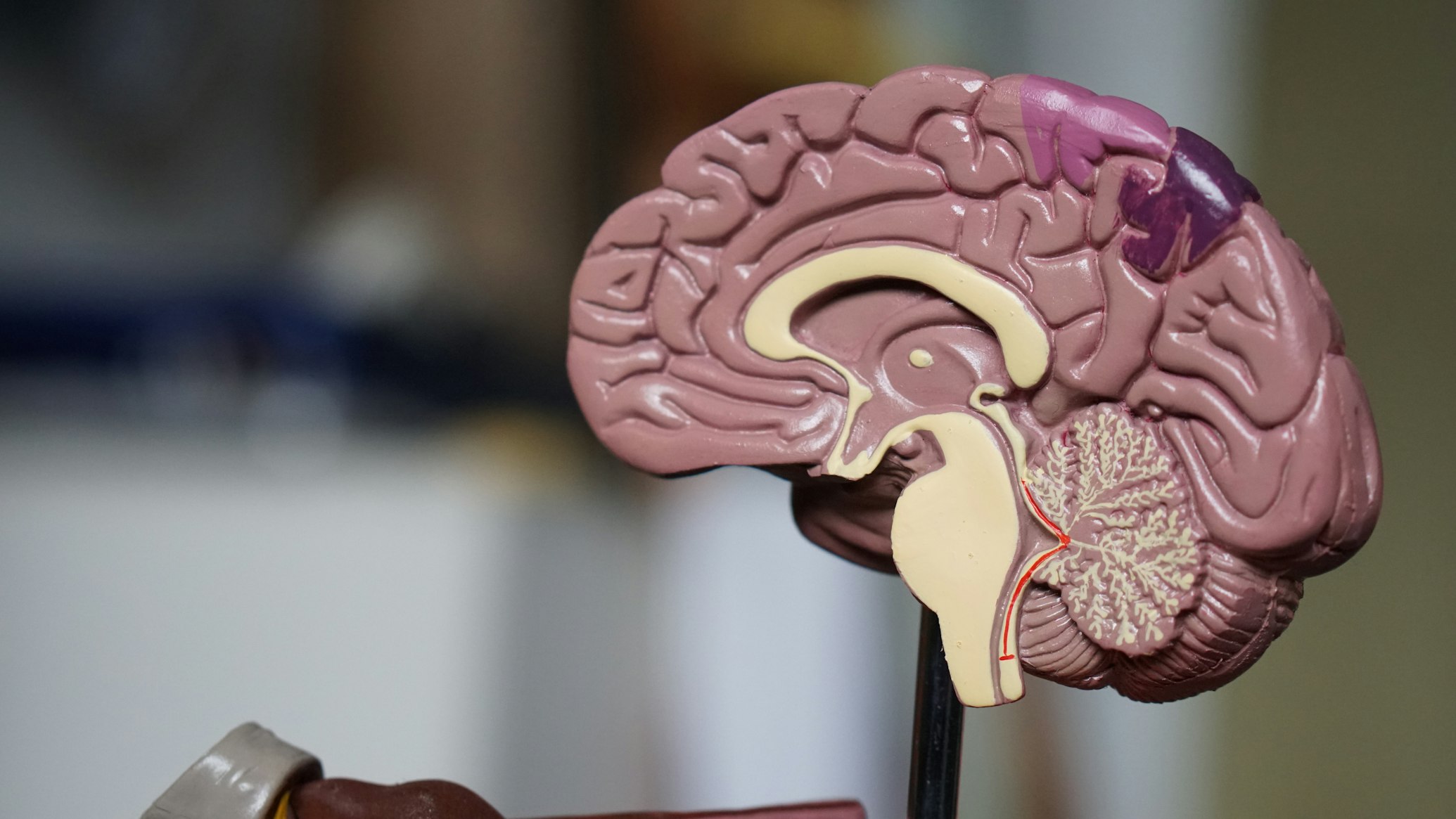
Normal SUMOylation supports synaptic plasticity and cognitive function
Alzheimer's Brain

Amyloid-beta disrupts SUMOylation, leading to synaptic dysfunction
A Revolutionary Experiment: Enhancing SUMO2 to Combat Alzheimer's Pathology
Groundbreaking research demonstrates that enhancing SUMO2 conjugation can prevent and reverse cognitive deficits in Alzheimer's models.
The Promise of SUMO Enhancement
A groundbreaking 2025 study published in Alzheimer's & Dementia has generated considerable excitement in the scientific community. The research demonstrated for the first time that genetically or pharmacologically enhancing SUMO2 conjugation could both prevent and reverse cognitive and synaptic impairments in a mouse model of Alzheimer's disease 1 .
This approach represented a significant departure from conventional strategies. Instead of trying to clear amyloid-beta—akin to cleaning up debris after a storm—the researchers aimed to strengthen the brain's inherent resilience to the existing pathology.
Methodology: A Multi-Pronged Approach
Genetic Enhancement Model
The researchers crossed amyloid precursor protein (APP) transgenic mice (which develop Alzheimer's-like pathology) with mice genetically engineered to overexpress human SUMO2. This allowed them to test whether elevated SUMO2 levels could protect against amyloid-induced impairments 1 .
Pharmacological Intervention
The team developed a novel biologic therapeutic called SBT02—a recombinant analogue of human SUMO2 designed to enhance SUMO conjugation in the brain. This provided a potential drug-based approach to boosting SUMO activity 1 .
Two-Treatment Paradigm
To comprehensively assess therapeutic potential, they tested SBT02 in two scenarios:
- Prophylactic treatment: Administered before the development of significant pathology
- Therapeutic reversal: Administered after the establishment of advanced amyloid pathology 1
Comprehensive Assessment
The researchers employed multiple measures to evaluate outcomes:
- Electrophysiology: To measure long-term potentiation (LTP) in hippocampal slices as an indicator of synaptic function
- Behavioral testing: To assess learning and memory through well-established maze tests
- Biochemical analysis: To examine amyloid load and SUMO conjugation levels 1
Key Research Models and Assessment Methods in SUMO-Alzheimer's Research
| Research Model/Method | Description | Utility in SUMO Research |
|---|---|---|
| APP Transgenic Mice | Genetically modified mice that overproduce human amyloid-beta and develop Alzheimer's-like pathology | Test how SUMO enhancement affects cognitive function in the presence of amyloid pathology |
| SUMO2 Transgenic Mice | Mice engineered to overexpress human SUMO2 protein | Study the protective effects of increased SUMO2 conjugation capacity |
| Electrophysiology (LTP) | Technique to measure synaptic strength and plasticity in brain slices | Quantify functional synaptic improvements with SUMO enhancement |
| Behavioral Mazes | Tests such as Morris water maze that assess spatial learning and memory | Evaluate cognitive benefits of SUMO-based interventions |
Remarkable Results: Prevention and Recovery
Genetic Enhancement Findings
APP transgenic mice with elevated SUMO2 expression were completely protected from the cognitive deficits and LTP impairments typically seen in these models. Remarkably, this protection occurred without any reduction in amyloid pathology, suggesting SUMO2 was working through a different mechanism—making synapses resistant to amyloid toxicity rather than removing the amyloid itself 1 .
Pharmacological Results
Systemically administered SBT02 displayed excellent brain penetration, achieving high bioavailability where it was needed most. In prophylactic treatment, SBT02 prevented the development of synaptic and behavioral deficits. Even more impressively, in mice with established, late-stage pathology, SBT02 reversed pre-existing LTP and cognitive impairments—essentially restoring cognitive function despite the continued presence of extensive amyloid load 1 .
Mechanistic Insights
The research confirmed that SBT02 doesn't act by altering amyloid processing or clearance. Instead, it directly counteracts the synaptotoxic effects of amyloid-beta oligomers, allowing neurons to maintain normal communication even in a hostile environment 1 .
Effects of SUMO2 Enhancement in Alzheimer's Model Mice
| Intervention | Timing | Effect on Amyloid Pathology | Effect on Synaptic Function (LTP) | Effect on Cognition |
|---|---|---|---|---|
| Genetic SUMO2 Overexpression | Throughout life | No significant change | Complete protection from impairment | Normal learning and memory |
| SBT02 (SUMO2 analogue) | Prophylactic (before pathology) | No significant change | Prevention of deficits | Preservation of cognitive function |
| SBT02 (SUMO2 analogue) | Therapeutic (after pathology establishment) | No significant change | Restoration of impaired LTP | Reversal of cognitive deficits |
The Scientist's Toolkit: Key Research Reagents in SUMO-Alzheimer's Investigation
Specialized research tools enable precise manipulation and measurement of the SUMO system in Alzheimer's studies.
| Research Tool | Type/Composition | Primary Research Application |
|---|---|---|
| TAT-Ubc9 Proteins | Cell-penetrating recombinant proteins (wild-type and dominant-negative forms) | Acute manipulation of SUMOylation in brain slices and neuronal cultures; testing functional necessity of SUMOylation |
| SBT02 | Recombinant analogue of human SUMO2 | Pharmacological enhancement of SUMO2 conjugation; testing therapeutic potential |
| SUMO Isoform-Specific Antibodies | Antibodies distinguishing SUMO-1 vs SUMO2/3 conjugates | Detecting changes in specific SUMO pathways in post-mortem brain tissue and model systems |
| SENP Inhibitors | Compounds or genetic approaches targeting SUMO-specific proteases | Modulating deSUMOylation dynamics; understanding balance between SUMO conjugation and deconjugation |
| APP Transgenic Mice | Genetic mouse models overexpressing human amyloid precursor protein | Testing SUMO-based interventions in a pathologically relevant context |
TAT-Ubc9 Proteins
Enable acute manipulation of SUMOylation in neuronal cultures
SBT02 Therapeutic
Recombinant SUMO2 analogue for pharmacological enhancement
Transgenic Models
APP and SUMO2 transgenic mice for in vivo studies
Conclusion: The Future of SUMO-Based Therapeutics
The emerging research on SUMO and Alzheimer's disease represents a significant shift in our approach to this devastating condition. Instead of focusing exclusively on removing pathological hallmarks like amyloid plaques, enhancing SUMOylation offers a complementary strategy: protecting synapses and making them resilient to existing pathology.
The implications are profound. The ability of SUMO enhancement to reverse pre-existing cognitive deficits in animal models, even in the presence of advanced pathology, suggests we may be able to restore function rather than merely slow decline. This is particularly important for the millions already living with Alzheimer's symptoms.
While the SBT02 biologic and similar approaches are still in preclinical development, they represent a promising new therapeutic avenue. Future research will need to determine optimal timing for intervention, potential side effects of long-term SUMO enhancement, and how SUMO-based strategies might combine with other therapeutic approaches.
As research continues to unravel the intricate dance between SUMOylation and neuronal survival, we're witnessing the birth of a new paradigm in Alzheimer's treatment—one that acknowledges the complexity of the disease while offering innovative solutions grounded in our brain's inherent capacity for resilience. The tiny SUMO tag, once an obscure molecular curiosity, may well become a powerful ally in our fight against one of humanity's most challenging neurological conditions.
Next Research Steps
- Determine optimal timing for SUMO-based interventions
- Investigate potential side effects of long-term SUMO enhancement
- Explore combination therapies with other approaches
- Translate findings from animal models to human trials
Therapeutic Potential
- Synapse protection rather than amyloid removal
- Potential to reverse existing cognitive deficits
- Novel mechanism of action distinct from current approaches
- Possible application to other neurodegenerative diseases