The Cellular Double Agent
How Flipping a Cancer "Shield" into a "Kill Signal" Offers New Hope
Introduction: The Body's Misdirected Maintenance Crew
Imagine a city where the maintenance crews, meant to fix broken streetlights, are instead hired by criminals to reinforce their hideouts with impenetrable shields. This is the frustrating reality inside many cancer cells. For years, scientists have known that a protein called SUMO1 acts like one of these misdirected crews, creating a protective shield around cancer proteins, allowing tumors to grow unchecked and resist therapy.
But what if we could not just block this crew, but turn them into a demolition team that destroys the very fortress they built? Groundbreaking research has done just that, discovering a new class of drugs that flips the SUMO1 shield into a "destroy me" signal, leading to dramatic survival benefits in mice with aggressive human cancers.
Key Insight
Instead of just inhibiting cancer proteins, researchers are now using PROTACs to completely eliminate them by hijacking the cell's own waste disposal system.
Cellular Tags: The Language of Life and Death
To understand this breakthrough, we need to learn a bit of the cell's molecular language. Our cells use a sophisticated system of chemical "tags" to manage their proteins—the tiny machines that do almost everything in the body.
The SUMO Tag
The "Shield"
The SUMO1 protein acts like a protective shield. When attached to another protein, it can hide that protein from the cell's quality-control systems, stabilize it, or change its function. In cancer, SUMO1 often shields proteins that drive tumor growth and chemotherapy resistance.
The Ubiquitin Tag
The "Kiss of Death"
In contrast, Ubiquitin is a tag that means the opposite. When a protein is marked with a chain of ubiquitin molecules, it is swiftly delivered to the cell's garbage disposal—a massive complex called the proteasome—and chewed up into harmless bits.
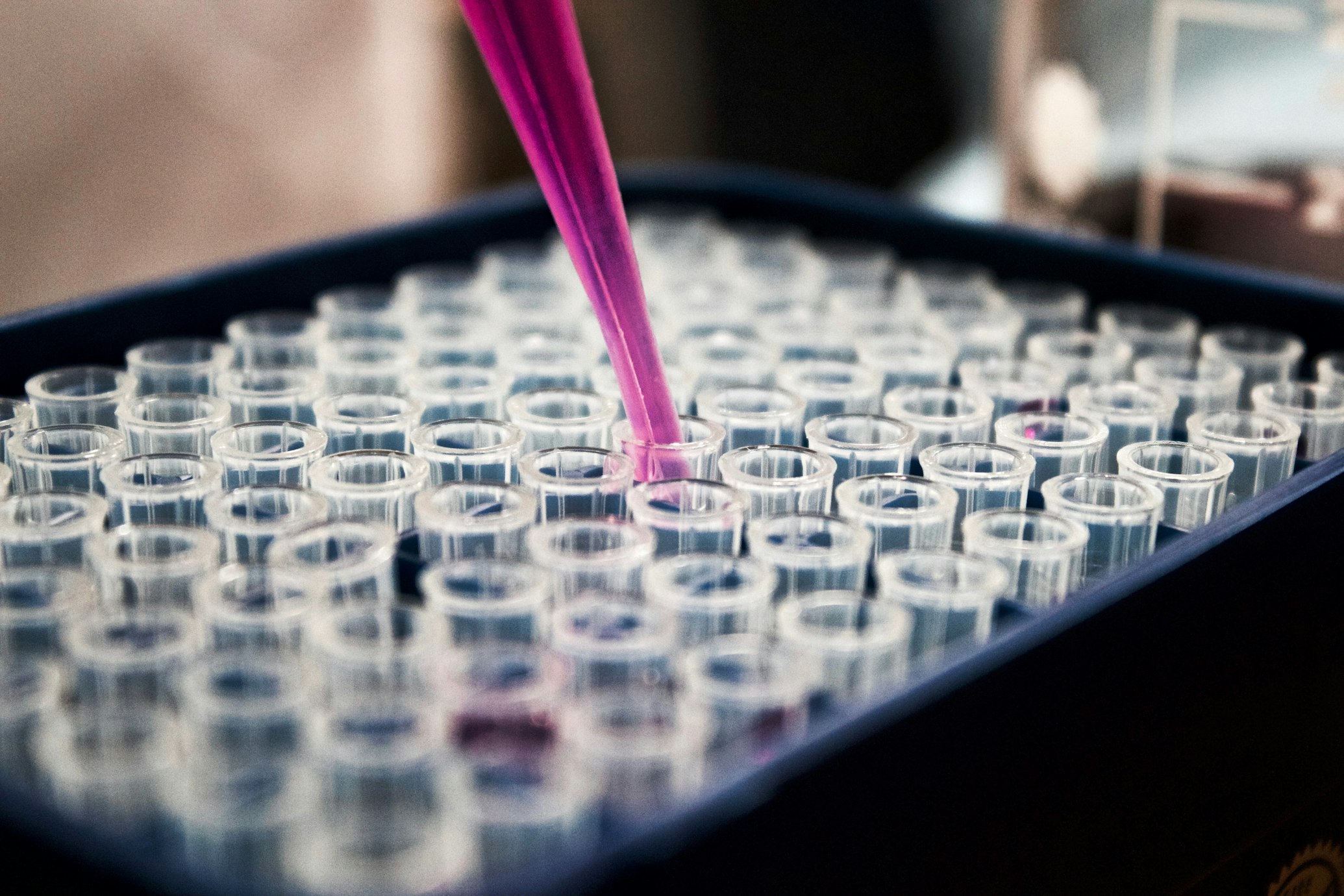
Molecular visualization of protein tagging mechanisms in cells
The Molecule That Plays Both Sides: Meet the PROTAC Degrader
The heroes of this story are a class of drugs known as PROTACs (PROteolysis TArgeting Chimeras). Think of a PROTAC as a brilliant double-agent with two hands.
Target Binding
One hand grabs tightly onto the target we want to destroy—the SUMO1 protein.
Ubiquitin Recruitment
The other hand recruits the cell's ubiquitin-tagging machinery, the "demolition crew."
Forced Interaction
The connecting link holds these two hands together, forcing a confrontation.
By bringing the SUMO1 "shield" and the ubiquitin "demolition crew" into close proximity, the PROTAC tricks the cell into tagging SUMO1 for destruction. The shield is not just removed; it is actively thrown into the woodchipper.

Laboratory research on molecular mechanisms of protein degradation
A Deep Dive Into the Pivotal Experiment
To test whether this theory worked in a living system, researchers conducted a crucial experiment using mice implanted with patient-derived tumors—a setup that closely mirrors human cancer.
Methodology: Step-by-Step
Tumor Models
Mice were implanted with two types of aggressive human cancer cells: triple-negative breast cancer and a type of lymphoma, both known to be heavily dependent on SUMO1-shielded proteins.
Treatment Groups
The mice were divided into three groups: Control (placebo), PROTAC (active treatment), and Inactive PROTAC (control for specificity).
Monitoring
Researchers tracked tumor volume and animal survival over several weeks to assess treatment efficacy.
Results and Analysis: A Resounding Success
The results were striking. Mice treated with the active PROTAC showed rapid and significant tumor shrinkage compared to both control groups. But the most important result was the survival data.
Mouse Survival Rates Over Time
Analysis: This data proves the PROTAC was doing its job inside the tumors. It successfully led to the near-complete elimination of the SUMO1 protein, and crucially, it showed a marked increase in ubiquitin tags on the remaining SUMO1, confirming the "kiss of death" mechanism. By destroying the SUMO1 shield, the PROTAC successfully disrupted the very processes that make these cancers aggressive.
The Scientist's Toolkit: Key Reagents in the Degradation Mission
Here's a look at the essential tools that made this discovery possible.
The core drug molecule; a "heterobifunctional" degrader that binds both SUMO1 and an E3 ubiquitin ligase, enabling the destruction of SUMO1.
The "recruiting hand" of the PROTAC; a chemical group that specifically binds to a chosen E3 ubiquitin ligase, the enzyme that places the ubiquitin tag.
Mice implanted with actual human tumor tissue. These are considered "gold standard" models because they preserve the complexity of human cancer.
A workhorse lab technique used to detect and measure the levels of specific proteins (like SUMO1) in tissue samples, confirming degradation.
Specialized tools (like ubiquitin-binding antibodies) used to pull down and analyze ubiquitinated proteins, proving SUMO1 was being tagged.
Advanced microscopy and data analysis tools to visualize and quantify the effects of PROTAC treatment on tumors at the cellular level.
Conclusion: A New Paradigm for Powerful Therapies
This research is more than just a new drug; it's a demonstration of a powerful new way to think about treating disease. Instead of just inhibiting a harmful protein, we can now, with tools like PROTACs, order its complete eradication.
Research Impact
The ability to hijack the cell's own waste disposal system to destroy a key player like SUMO1—a target previously considered "undruggable"—opens up a vast new frontier in medicine.
While moving from mice to human patients is a significant journey that will take years, this study provides a compelling beacon of hope, showing that by cleverly manipulating the cell's own language, we can turn its strongest shields into its greatest weaknesses.

The future of targeted cancer therapies: turning cellular defenses into vulnerabilities
References
References will be added here manually in the required format.