TUBEs Protocol: A Complete Guide to Ubiquitin Enrichment for Disease Research and Drug Development
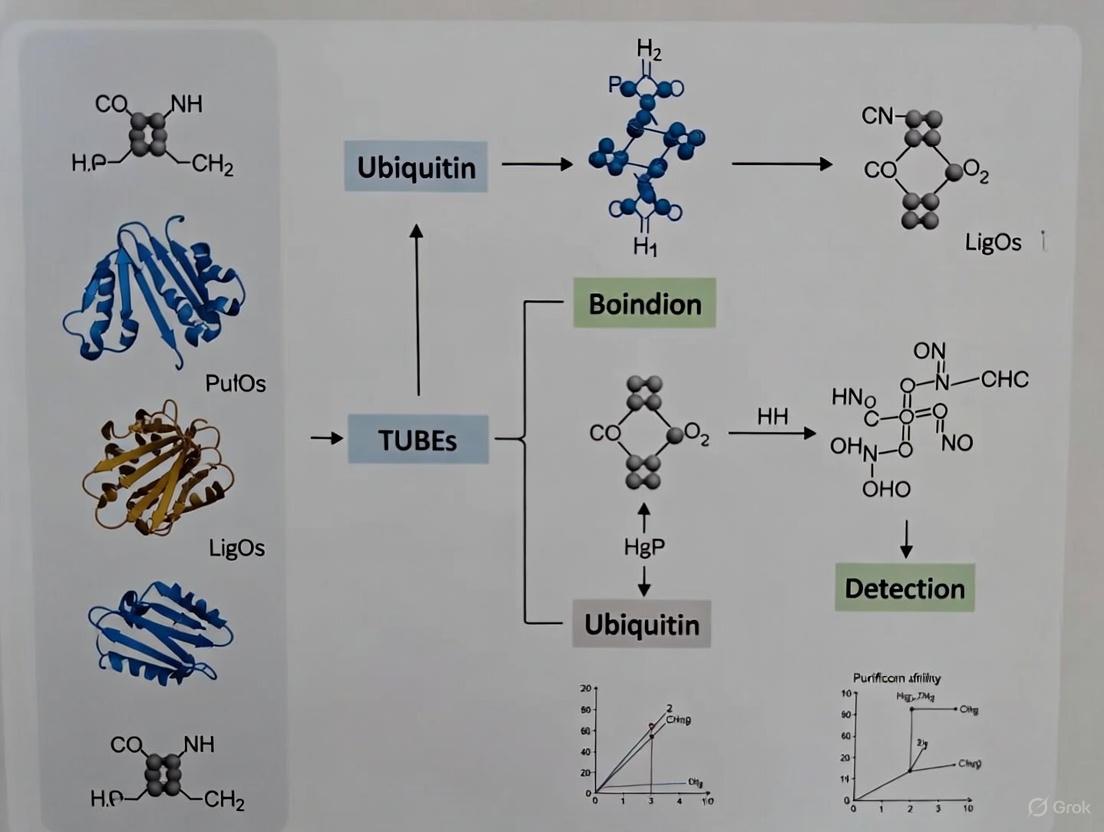
This article provides a comprehensive guide to Tandem Ubiquitin Binding Entities (TUBEs), engineered reagents for high-affinity enrichment of polyubiquitinated proteins.
TUBEs Protocol: A Complete Guide to Ubiquitin Enrichment for Disease Research and Drug Development
Abstract
This article provides a comprehensive guide to Tandem Ubiquitin Binding Entities (TUBEs), engineered reagents for high-affinity enrichment of polyubiquitinated proteins. Tailored for researchers and drug development professionals, it covers the fundamental principles of TUBE technology, detailed step-by-step protocols for various applications including plant and mammalian systems, and essential troubleshooting strategies. The content also explores the validation of TUBE specificity and a comparative analysis with alternative methods like OtUBD and antibody-based approaches. By synthesizing foundational knowledge with advanced methodological and comparative insights, this guide serves as a vital resource for leveraging TUBEs in proteomics, target validation for PROTACs, and elucidating ubiquitin signaling in disease.
Understanding TUBEs: Core Principles and Advantages in Ubiquitin Research
What Are TUBEs? Defining Tandem Ubiquitin Binding Entities
Tandem Ubiquitin Binding Entities (TUBEs) are engineered protein tools designed to specifically recognize and bind polyubiquitin chains. They are constructed by fusing multiple ubiquitin-associated domains (UBA) in tandem, which confers high-affinity binding to polyubiquitinated proteins in the nanomolar range [1] [2]. The primary function of TUBEs is to protect polyubiquitinated proteins from two major cellular processes: deubiquitination by deubiquitinating enzymes (DUBs) and degradation by the proteasome [2]. This protective function is crucial for experimental detection and analysis, as it stabilizes otherwise transient ubiquitination events, enabling researchers to study the ubiquitin-proteasome system (UPS) with greater accuracy.
The UPS is a complex pathway involving multiple enzymes that ultimately label target proteins with polyubiquitin chains, typically marking them for proteasomal degradation. However, ubiquitination can also influence protein-protein interactions, subcellular localization, and activity [2]. The ability of TUBEs to intercept and stabilize ubiquitinated proteins makes them invaluable for exploring this multifaceted post-translational modification. Their development addresses a significant challenge in the field: the lack of experimental tools for reliably detecting polyubiquitinated forms of proteins of interest (POIs), which has hindered progress in understanding the intricate roles of polyubiquitin chains [1].
Key Properties and Types of TUBEs
TUBEs are categorized based on their specificity toward different polyubiquitin chain linkages. The two main forms are pan-selective TUBEs, which bind to all types of polyubiquitin chains, and chain-selective TUBEs, which are engineered to recognize specific ubiquitin linkages (e.g., K48-linked or K63-linked chains) [1]. This selectivity allows researchers to investigate the functional consequences of specific ubiquitin chain topologies.
A defining feature of TUBEs is their modularity and ability to be conjugated to various entities. This versatility enables their use in a wide array of experimental formats, from simple protein pulldowns to high-throughput assays [1]. The core quantitative property of TUBEs is their high binding sensitivity to polyubiquitin chains, which operates in the nanomolar range, making them significantly more sensitive than traditional ubiquitin antibodies for detection and enrichment purposes [1].
Table 1: Key Properties and Types of TUBEs
| Property | Description | Experimental Advantage |
|---|---|---|
| Affinity | Binds polyubiquitin chains in the nanomolar range [1] | High-sensitivity detection and capture |
| Specificity | Available as pan-selective or chain-selective [1] | Enables broad or linkage-specific ubiquitin research |
| Core Function | Protects ubiquitin chains from DUBs and proteasomal degradation [2] | Stabilizes transient ubiquitination signals |
| Modularity | Can be conjugated to different solid supports or labels [1] | Flexible application across multiple experimental platforms |
Research and Drug Discovery Applications
TUBEs have become critical tools in both basic research and pharmaceutical development, particularly in the emerging field of targeted protein degradation (TPD).
Basic Research Applications
In fundamental science, TUBEs are primarily used to enrich and purify polyubiquitinated proteins from complex cell or tissue lysates. For example, a protocol for purifying ubiquitinated plant proteins after transient expression in Nicotiana benthamiana has been described, demonstrating the method's applicability in plant biology [2]. This pulldown capability allows for the subsequent identification of ubiquitin ligase substrates via mass spectrometry. Furthermore, TUBEs can serve as a superior alternative to ubiquitin antibodies in Western blotting, providing a more sensitive and specific detection method for polyubiquitinated proteins [1]. This helps in visualizing ubiquitination dynamics under various physiological or stress conditions.
Drug Discovery and PROTAC Validation
The most significant application of TUBEs is in the realm of drug discovery, especially for the validation and characterization of PROteolysis-TArgeting Chimeras (PROTACs) and other small molecules that modulate the UPS [1]. PROTACs are heterobifunctional molecules that recruit a target protein to an E3 ubiquitin ligase, leading to its ubiquitination and degradation. TUBEs are used in cell-based and in vitro assays to confirm and quantify the polyubiquitination of a target protein in response to PROTAC treatment [1]. This provides direct mechanistic insight and facilitates the critical step of confirming induced ubiquitination during the drug development process, thereby speeding up the discovery pipeline.
Figure 1: TUBEs in the PROTAC Mechanism. PROTACs recruit an E3 ligase to the target protein, leading to its polyubiquitination and degradation. TUBEs can bind and stabilize the polyubiquitinated protein for detection.
Detailed Experimental Protocols
The following sections provide detailed methodologies for key applications of TUBEs.
Protocol 1: Purification of Ubiquitinated Proteins Using TUBEs
This protocol is adapted for plant proteins but can be modified for other systems [2].
Key Reagents:
- TUBE Agarose Conjugates: Pan-selective or chain-selective TUBEs conjugated to agarose beads.
- Lysis Buffer: A buffer containing protease inhibitors and, critically, DUB inhibitors (e.g., N-ethylmaleimide) to preserve endogenous ubiquitination.
- Wash Buffer: A mild detergent-based buffer to remove non-specifically bound proteins.
- Elution Buffer: A buffer containing SDS or competing free ubiquitin to elute bound proteins.
Procedure:
- Sample Preparation: Homogenize tissue or lyse cells in the prepared lysis buffer. Clear the lysate by centrifugation at high speed (e.g., 14,000 × g for 15 minutes).
- Incubation with TUBEs: Incubate the clarified supernatant with TUBE-agarose beads for 2-4 hours at 4°C with gentle agitation.
- Washing: Pellet the beads and wash them 3-4 times with wash buffer to remove unbound proteins.
- Elution: Elute the bound polyubiquitinated proteins by boiling the beads in SDS-PAGE sample buffer or with a competing agent. The eluate can now be analyzed by Western blotting or mass spectrometry.
Protocol 2: Assessing Ubiquitination in Cell-Based Assays
This protocol uses TUBEs as capture reagents in microtiter plates to assess ubiquitination in a format amenable to high-throughput screening [1].
Key Reagents:
- Biotinylated TUBEs: TUBEs conjugated to biotin.
- Streptavidin-Coated Plates: Microtiter plates coated with streptavidin to capture biotinylated TUBEs.
- Detection Antibody: An antibody specific to the protein of interest (POI), conjugated to a reporter enzyme (e.g., HRP).
Procedure:
- Plate Coating: Immobilize biotinylated TUBEs onto the streptavidin-coated plate.
- Sample Application: Apply cell lysates (from treated or control conditions) to the TUBE-coated wells and incubate. Polyubiquitinated proteins will be captured.
- Detection: After washing, add the detection antibody specific to the POI. Following another wash, add a chemiluminescent or colorimetric substrate for the reporter enzyme.
- Analysis: Measure the signal, which is proportional to the amount of polyubiquitinated POI captured. This allows for the quantification of ubiquitination levels in response to drug treatments like PROTACs.
Table 2: Key Reagent Solutions for TUBE-Based Assays
| Reagent | Function | Application Example |
|---|---|---|
| TUBE Agarose Conjugates | Solid-phase affinity matrix for enrichment | Purification of ubiquitinated proteins from lysate [2] |
| Biotinylated TUBEs | Capture reagent for plate-based assays | High-throughput assessment of POI ubiquitination [1] |
| DUB Inhibitors | Preserve endogenous ubiquitin chains | Added to lysis buffer to prevent deubiquitination during preparation [2] |
| Chain-Selective TUBEs | Isolate specific ubiquitin linkage types | Studying the functional role of K48 vs. K63 chains [1] |
Figure 2: TUBE Affinity Purification Workflow. The process involves incubating lysate with TUBE-conjugated beads, washing away unbound material, and eluting the enriched polyubiquitinated proteins for analysis.
Tandem Ubiquitin Binding Entities represent a powerful and versatile technological advancement for studying the ubiquitin-proteasome system. Their high affinity, specificity, and ability to stabilize polyubiquitin chains address long-standing challenges in the field. As detailed in these application notes, TUBEs are indispensable for purifying ubiquitinated proteins, detecting ubiquitination with high sensitivity, and validating the mechanism of action of novel therapeutic modalities like PROTACs. Their continued use and development will undoubtedly accelerate both basic research and drug discovery efforts focused on the UPS.
Tandem Ubiquitin Binding Entities (TUBEs) represent a groundbreaking technological advancement in ubiquitin research, enabling high-affinity capture and analysis of polyubiquitinated proteins. These engineered proteins achieve nanomolar affinity for polyubiquitin chains through strategic assembly of multiple ubiquitin-binding domains (UBDs), creating an avidity effect that dramatically enhances binding strength compared to single domains. This application note details the molecular basis of TUBE affinity, presents quantitative binding data, and provides standardized protocols for utilizing TUBE technology in both basic research and drug discovery applications, particularly in the characterization of targeted protein degradation therapeutics such as PROTACs and molecular glues.
The ubiquitin-proteasome system (UPS) represents a crucial regulatory pathway in cellular homeostasis, controlling protein degradation and numerous signaling processes. Ubiquitination involves the covalent attachment of ubiquitin molecules to target proteins, forming polyubiquitin chains through different linkage types that dictate distinct functional outcomes. Among the eight known linkage types (M1, K6, K11, K27, K29, K33, K48, and K63), K48-linked chains primarily target proteins for proteasomal degradation, while K63-linked chains predominantly regulate signal transduction, protein trafficking, and autophagy [3] [4]. Traditional methods for studying ubiquitination, including immunoprecipitation with ubiquitin antibodies or mass spectrometry approaches, face significant limitations in sensitivity, specificity, and throughput. These challenges are particularly evident in drug discovery programs focused on targeted protein degradation, where assessing linkage-specific ubiquitination of endogenous proteins remains technically challenging [3].
TUBE technology was developed to overcome these limitations by providing high-affinity reagents specifically designed to recognize and capture polyubiquitinated proteins. TUBEs are engineered as tandem repeats of ubiquitin-associated (UBA) domains, creating multivalent binding entities that exhibit dramatically enhanced affinity for polyubiquitin chains compared to single UBA domains [5] [6]. The fundamental innovation lies in harnessing the avidity effect – the synergistic increase in binding strength when multiple interacting domains engage simultaneously with a polyubiquitin chain. This molecular design enables TUBEs to bind polyubiquitin chains with dissociation constants (Kds) in the nanomolar range, representing up to a 1000-fold increase in affinity compared to individual UBA domains [5] [6].
Beyond their exceptional binding affinity, TUBEs provide the unique capability to stabilize polyubiquitin chains against deubiquitinating enzymes (DUBs) and proteasomal degradation, even in the absence of traditional protease inhibitors normally required to preserve ubiquitination signals [5]. This protective function makes TUBEs particularly valuable for studying dynamic ubiquitination events in physiological conditions. Furthermore, TUBEs can be conjugated to various solid supports and detection moieties, enabling their application across diverse experimental formats including pulldown assays, Western blotting, high-throughput screening, and microscopy [1] [7].
Molecular Basis of High-Affinity Binding
Structural Design Principles
The exceptional affinity of TUBEs for polyubiquitin chains stems from their sophisticated structural design, which mimics natural ubiquitin-recognition systems but with enhanced valency and specificity. Each TUBE consists of multiple ubiquitin-binding domains (UBDs) connected by flexible linkers that optimize spatial arrangement for simultaneous engagement with multiple ubiquitin subunits within a polyubiquitin chain [5]. This modular architecture creates a cooperative binding effect where the initial weak interaction of a single UBD with one ubiquitin moiety positions adjacent UBDs for subsequent binding events, dramatically increasing the overall binding strength and residence time [6].
The UBA domains employed in TUBE construction are derived from natural ubiquitin receptors that have evolved to recognize specific structural features of ubiquitin chains. When assembled in tandem, these domains create an extended binding surface that can accommodate the specific three-dimensional architecture of different polyubiquitin chain types. For K48-linked chains, which adopt compact conformations, and K63-linked chains, which exhibit more extended structures, the spatial organization of UBDs in TUBEs can be optimized to preferentially recognize distinct chain morphologies [8]. This structural compatibility at the molecular level explains the linkage selectivity observed with specialized TUBE variants.
The Avidity Effect
The dramatic enhancement in binding affinity exhibited by TUBEs compared to single UBA domains is primarily attributable to the avidity effect (also known as multivalency effect). While individual UBA domains typically bind monoubiquitin with micromolar affinity (Kd ~10-100 μM), the tandem arrangement in TUBEs enables simultaneous engagement with multiple ubiquitin subunits within a polyubiquitin chain, resulting in nanomolar affinities (Kd ~1-10 nM) [5] [6]. This represents an increase in binding strength of up to 10,000-fold for certain chain types.
The avidity effect operates through both kinetic and thermodynamic mechanisms. Kinetically, the simultaneous dissociation of multiple UBD-ubiquitin interactions becomes statistically improbable, resulting in significantly prolonged binding half-lives. Thermodynamically, the binding energy represents the sum of individual UBD-ubiquitin interactions minus the entropic cost of restricting flexible linkers, yielding a net substantial gain in binding free energy. For a tetra-ubiquitin chain, a TUBE containing four UBDs could theoretically engage all four ubiquitin subunits simultaneously, creating an interaction network of exceptional stability [6].
Linkage Selectivity Mechanisms
TUBEs achieve linkage specificity through strategic selection and arrangement of UBDs with inherent preferences for particular ubiquitin chain architectures. Natural UBDs exhibit varying degrees of selectivity based on their ability to recognize surface patches and inter-ubiquitin interfaces unique to specific chain types. By combining multiple copies of selective UBDs, TUBEs amplify these inherent preferences into strong linkage discrimination [7].
For example, K48-selective TUBEs incorporate UBDs that recognize the characteristic closed conformation and specific surface epitopes of K48-linked chains, which are compact due to hydrophobic interactions between adjacent ubiquitin molecules. In contrast, K63-selective TUBEs utilize UBDs that prefer the more open, extended conformation of K63-linked chains, where ubiquitin subunits do not make extensive contacts with each other [8] [7]. This structural specialization enables K63-selective TUBEs to exhibit 1,000 to 10,000-fold preference for K63-linked chains over K48-linked chains, while K48-selective "high-fidelity" (HF) TUBEs provide enhanced selectivity for degradation-relevant ubiquitin signals [7].
Table 1: Affinity and Selectivity Profiles of Different TUBE Types
| TUBE Type | Representative Affinity (Kd) | Selectivity Profile | Primary Applications |
|---|---|---|---|
| Pan-Selective | 1-10 nM for various chains | Binds all ubiquitin linkage types | Comprehensive ubiquitome analysis; initial ubiquitination studies |
| K48-Selective HF | Low nM for K48 chains | Enhanced selectivity for K48-linked chains | Studying proteasomal degradation; PROTAC validation |
| K63-Selective | Low nM for K63 chains | 1,000-10,000x preference for K63-linked chains | Signal transduction studies; autophagy and inflammation research |
| M1-Selective | Not specified | Selective for linear/M1-linked chains | NF-κB signaling pathway analysis |
Quantitative Affinity Data
The binding performance of TUBEs has been rigorously characterized through multiple biophysical techniques, establishing their exceptional affinity for polyubiquitin chains. Pan-selective TUBEs (TUBE1 and TUBE2) typically exhibit dissociation constants in the 1-10 nM range for various polyubiquitin chain types, with variations depending on specific chain length and linkage [5]. This high affinity enables efficient capture of polyubiquitinated proteins even at low abundance, a critical advantage for studying endogenous ubiquitination events without overexpression artifacts.
The affinity maturation achieved through TUBE engineering represents a remarkable improvement over natural ubiquitin receptors. Single UBA domains generally display micromolar affinity (Kd ~1-100 μM) for ubiquitin, limiting their utility for efficient pulldown applications without crosslinking [6]. The tandem arrangement in TUBEs enhances this affinity by approximately 1000-fold, bringing it into the low nanomolar range and enabling effective isolation of polyubiquitinated proteins under physiological conditions [5] [6].
Table 2: Comparison of TUBE Affinities with Natural Ubiquitin Binding Domains
| Binding Entity | Typical Affinity (Kd) | Relative Improvement | Practical Implications |
|---|---|---|---|
| Single UBA Domain | 1-100 μM | Baseline | Limited utility for direct pulldowns; requires crosslinking |
| Pan-Selective TUBEs | 1-10 nM | ~1000x | Efficient capture of polyubiquitinated proteins from complex lysates |
| K48-Selective TUBEs | Low nM for K48 chains | Not specified | Selective enrichment of degradation-targeted proteins |
| K63-Selective TUBEs | Low nM for K63 chains | Not specified | Specific isolation of signaling-associated ubiquitination |
Specialized TUBE variants offer tailored affinity profiles for specific research applications. For instance, TUBE3 maintains nanomolar affinity for polyubiquitin chains while exhibiting reduced relative affinity for monoubiquitin, decreasing background signal and increasing sensitivity for detecting polyubiquitinated proteins specifically [6]. This refined binding profile is particularly valuable in proteomics applications where distinguishing between mono- and polyubiquitination is essential for correct biological interpretation.
Research Applications and Protocols
Pulldown of Polyubiquitinated Proteins
The following protocol describes the standardized procedure for isolating polyubiquitinated proteins from cell lysates using agarose-conjugated TUBEs, enabling subsequent analysis by Western blotting or mass spectrometry [6].
Materials:
- Agarose-TUBE (e.g., UM401 for TUBE1, UM402 for TUBE2)
- Cell lysis buffer (e.g., 50 mM Tris-HCl pH 7.5, 150 mM NaCl, 1% NP-40, with fresh protease inhibitors)
- TBS-T wash buffer (20 mM Tris-HCl pH 7.5, 150 mM NaCl, 0.1% Tween-20)
- Elution buffer (0.2 M glycine-HCl, pH 2.5)
- Neutralization buffer (1 M Tris-HCl, pH 8.0)
Procedure:
- Cell Lysis and Preparation:
- Pre-chill cell lysis buffer to 4°C.
- Treat cells according to experimental design and wash with ice-cold PBS.
- Add 500 μL of lysis buffer to a 10 cm tissue culture dish containing approximately 1.5×10⁶ cells.
- Collect cells by scraping and transfer lysate to a pre-chilled 1.5 mL microcentrifuge tube.
- Incubate on ice for 15 minutes with occasional vortexing.
Clarification:
- Centrifuge lysate at ~14,000×g for 10 minutes at 4°C.
- Transfer supernatant to a new tube, avoiding the pellet.
TUBE Incubation:
- Add 10-20 μL of equilibrated Agarose-TUBE slurry to the clarified lysate.
- Incubate for 4 hours at 4°C with gentle end-over-end mixing.
Washing:
- Centrifuge at 2,500×g for 2 minutes to collect resin.
- Carefully remove supernatant.
- Wash resin with 500 μL TBS-T buffer, repeating three times.
Elution:
- Add 50-100 μL of elution buffer to the washed resin.
- Incubate for at least 1 hour at 4°C with gentle mixing.
- Centrifuge at 13,000×g for 5 minutes.
- Transfer supernatant to a new tube and neutralize with 1/10 volume of neutralization buffer.
Analysis:
- Analyze eluates by SDS-PAGE and Western blotting with target-specific antibodies.
- Alternatively, process samples for mass spectrometry analysis.
Far-Western Blotting with Biotin-TUBEs
This protocol utilizes biotin-conjugated TUBEs for direct detection of polyubiquitinated proteins on membrane blots, offering an alternative to traditional ubiquitin antibodies with enhanced sensitivity and specificity [6].
Materials:
- Biotin-TUBE (UM301 for TUBE1, UM302 for TUBE2)
- Blocking buffer (e.g., 5% non-fat dry milk in TBS-T)
- Streptavidin-HRP conjugate
- Enhanced chemiluminescence (ECL) reagents
Procedure:
- Protein Separation and Transfer:
- Separate proteins by SDS-PAGE using standard protocols.
- Transfer to PVDF or nitrocellulose membrane.
Blocking:
- Block membrane with blocking buffer for 1 hour at room temperature.
TUBE Probing:
- Dilute Biotin-TUBE to 0.2-1 μg/mL in blocking buffer.
- Incubate membrane with Biotin-TUBE solution for 2 hours at room temperature or overnight at 4°C.
- Note: Unlike conventional Western blotting, heating of the membrane is not required when using TUBEs.
Detection:
- Wash membrane three times with TBS-T, 10 minutes each.
- Incubate with streptavidin-HRP conjugate diluted according to manufacturer recommendations.
- Wash again three times with TBS-T.
- Develop with ECL reagents and image.
Comparison:
- For method validation, compare signals with traditional ubiquitin antibody detection using split samples.
High-Throughput Screening Applications
TUBE technology has been adapted for high-throughput screening formats, enabling quantitative assessment of linkage-specific ubiquitination in response to small molecule treatments, PROTACs, or molecular glues [3] [4].
Application Example: Monitoring RIPK2 Ubiquitination
- Cellular Treatment:
- For K63 ubiquitination: Treat THP-1 cells with L18-MDP (200-500 ng/mL) for 30-60 minutes to induce inflammatory signaling.
- For K48 ubiquitination: Treat with RIPK2-directed PROTAC (RIPK degrader-2) to induce degradation-specific ubiquitination.
Cell Lysis:
- Lyse cells using optimized buffer that preserves polyubiquitination.
TUBE-Based Capture:
- Transfer lysates to microtiter plates coated with chain-selective TUBEs (K48-TUBE, K63-TUBE, or pan-TUBE).
- Incubate to allow binding of ubiquitinated proteins.
Detection:
- Detect captured ubiquitinated RIPK2 using target-specific antibodies coupled to appropriate detection systems (e.g., luminescence, fluorescence).
Data Analysis:
Research Reagent Solutions
The successful implementation of TUBE-based methodologies requires access to specialized reagents optimized for ubiquitin research. The following table details key solutions for designing experiments focused on polyubiquitin chain detection and analysis.
Table 3: Essential Research Reagents for TUBE-Based Applications
| Reagent Category | Specific Products | Function and Application |
|---|---|---|
| Core TUBE Reagents | GST-TUBE (UM101, UM102), His-TUBE (UM201, UM202, UM203), Agarose-TUBE (UM401, UM402) | Primary tools for ubiquitin binding; choice depends on conjugation method and downstream application |
| Chain-Selective TUBEs | K48-HF TUBE, K63-TUBE, M1-TUBE | Selective capture of specific ubiquitin linkage types for mechanistic studies |
| Detection TUBEs | Biotin-TUBE (UM301, UM302), TAMRA-TUBE | Visualization and detection of polyubiquitinated proteins in blotting or imaging applications |
| Specialized Assay Kits | K48 Linkage ELISA Kit (PA480), K63 Linkage ELISA Kit (PA630), PROTAC In vitro Ubiquitination Assay Kit (PA770) | Ready-to-use systems for specific ubiquitination monitoring in high-throughput formats |
| Inhibitor Controls | SI9619, SI9649, SI9710 | Specific inhibitors for validating ubiquitination pathways and assay specificity |
TUBE technology represents a transformative approach for studying the ubiquitin-proteasome system, offering unprecedented affinity and specificity for polyubiquitin chains through ingeniously engineered multivalent binding architectures. The molecular mechanism underlying TUBE efficacy centers on the avidity effect generated by tandem UBD arrangements, which enables nanomolar affinity – a dramatic improvement over natural ubiquitin receptors. This enhanced binding capability, combined with linkage selectivity and protective functions against deubiquitination, positions TUBEs as essential tools for contemporary ubiquitin research.
The provided protocols and application guidelines establish robust frameworks for implementing TUBE-based methodologies across diverse research scenarios, from basic mechanism studies to drug discovery applications. Particularly in the rapidly expanding field of targeted protein degradation, where assessing linkage-specific ubiquitination of endogenous targets remains challenging, TUBE technology offers a reliable, sensitive, and potentially high-throughput solution. As ubiquitin research continues to evolve, TUBE-based approaches will undoubtedly play an increasingly central role in deciphering the complex ubiquitin code and developing novel therapeutic strategies that modulate the ubiquitin-proteasome system.
Protection from DUBs and Proteasomal Degradation
Tandem Ubiquitin Binding Entities (TUBEs) are engineered tools that have revolutionized the study of the ubiquitin-proteasome system by addressing a critical experimental challenge: the transient nature of ubiquitin signals. Through their high-affinity, multi-domain structure, TUBEs specifically protect polyubiquitin chains from deubiquitinating enzymes (DUBs) and proteasomal degradation, enabling accurate analysis of ubiquitination states under physiological conditions. This application note details the mechanistic basis of this protection, provides quantitative comparisons of TUBE performance, and presents standardized protocols for utilizing TUBEs in both basic research and drug discovery applications, particularly in the characterization of targeted protein degradation therapeutics.
Tandem Ubiquitin Binding Entities (TUBEs) are recombinant proteins composed of multiple ubiquitin-binding domains (UBDs) linked in tandem, creating a high-avidity tool for capturing polyubiquitinated proteins [5]. Unlike traditional methods that rely on ubiquitin antibodies or epitope-tagged ubiquitin overexpression, TUBEs bind polyubiquitin chains with nanomolar affinity (Kd ≈ 1-10 nM), enabling highly specific isolation of ubiquitinated proteins from complex biological samples without the artifacts commonly associated with immunological approaches [5] [9].
The core innovation of TUBE technology lies in its ability to stabilize transient ubiquitination events in cellular contexts. In standard experimental conditions, polyubiquitin chains are rapidly removed by cellular DUBs or lead to substrate degradation by the 26S proteasome, making accurate detection challenging. TUBEs address this fundamental limitation by physically shielding ubiquitin chains from these cellular processes, thereby preserving the ubiquitination state of proteins during analysis [10]. This protective function persists even in the absence of proteasome or DUB inhibitors typically required to stabilize ubiquitinated species, simplifying experimental design and improving reliability [5].
Key Advantages: Mechanistic Basis of Protection
Protection from Deubiquitinating Enzymes (DUBs)
The multi-valent architecture of TUBEs, incorporating multiple UBDs in a single polypeptide, creates a high-affinity interaction with polyubiquitin chains that sterically hinders DUB access. This shielding effect was demonstrated in studies using trypsin-resistant TUBE (TR-TUBE), where exogenous expression of TR-TUBE in cells effectively preserved ubiquitination states by binding to and masking polyubiquitin chains from DUB activity [10]. The affinity of this interaction is crucial, with dissociation constants in the nanomolar range ensuring strong binding under physiological conditions [5].
This protective capability enables researchers to capture and analyze ubiquitination events that would otherwise be too transient to detect. For example, in experiments identifying substrates of specific E3 ubiquitin ligases, TR-TUBE expression allowed accumulation of ubiquitinated proteins by preventing DUB-mediated deubiquitination, facilitating subsequent isolation and identification through mass spectrometry [10]. This application is particularly valuable for characterizing the substrate specificity of the approximately 600 E3 ligases encoded in the human genome, most of which remain poorly characterized.
Protection from Proteasomal Degradation
TUBEs provide equally critical protection from proteasomal degradation, the primary fate for many polyubiquitinated proteins. By sequestering ubiquitin chains, TUBEs prevent recognition by proteasomal receptors that normally initiate the degradation process [5]. Research has confirmed that TUBEs protect ubiquitylated substrates from proteasome-mediated degradation as efficiently as specific proteasome inhibitors, but without the potential pleiotropic effects these pharmacological agents may introduce [10].
This aspect is particularly important in the context of Targeted Protein Degradation (TPD) drug discovery, where molecules like PROTACs (Proteolysis Targeting Chimeras) and molecular glues function by inducing ubiquitination and subsequent degradation of target proteins [3]. When evaluating the efficacy of such degraders, TUBEs enable researchers to specifically capture and quantify the induced ubiquitination event before the target protein is destroyed, providing direct evidence of mechanism of action rather than inferring ubiquitination from observed degradation.
Table 1: Quantitative Performance Metrics of TUBE Technology
| Parameter | Performance Value | Experimental Significance |
|---|---|---|
| Affinity for Polyubiquitin | 1-10 nM Kd [5] | High specificity enrichment reduces background |
| DUB Protection | Efficient as specific DUB inhibitors [10] | Stabilizes transient ubiquitination without pharmacological inhibition |
| Proteasome Protection | Efficient as proteasome inhibitors [10] | Enables detection of degradation-prone targets |
| Chain-Type Specificity | Pan-specific, K48-, K63-, and M1-selective available [3] [5] | Enables linkage-specific ubiquitination analysis |
Research Applications and Experimental Data
Application in Inflammatory Signaling Research
The protective capabilities of TUBEs have enabled sophisticated analysis of signaling pathways where ubiquitination plays a regulatory role. A compelling example comes from research on RIPK2 (Receptor-Interacting Serine/Threonine-Protein Kinase 2), a key regulator of inflammatory signaling. In this study, researchers used chain-specific TUBEs to differentiate between context-dependent ubiquitination events on endogenous RIPK2 [3].
When human monocytic THP-1 cells were stimulated with L18-MDP (Lysine 18-muramyldipeptide), a component of bacterial cell walls, K63-linked ubiquitination of RIPK2 was induced, which could be faithfully captured using K63-TUBEs or pan-selective TUBEs but not with K48-TUBEs [3]. This K63 ubiquitination creates a signaling scaffold that activates the NF-κB pathway and promotes production of proinflammatory cytokines. Conversely, when cells were treated with RIPK2 PROTAC, a targeted degrader molecule designed to induce RIPK2 degradation, the resulting ubiquitination was captured using K48-TUBEs and pan-selective TUBEs but not K63-TUBEs [3].
This application demonstrates how the combination of TUBE protection and linkage specificity enables researchers to distinguish between non-degradative signaling ubiquitination (K63-linked) and degradative ubiquitination (K48-linked) on the same endogenous protein in response to different stimuli—a capability crucial for understanding signaling dynamics and developing targeted therapeutics.
Comparison with Alternative Ubiquitin Enrichment Methods
TUBEs offer distinct advantages over other methods for studying protein ubiquitination. The following table compares the key technical approaches:
Table 2: Comparison of Ubiquitin Enrichment Methodologies
| Method | Mechanism | Advantages | Limitations | DUB/Proteasome Protection |
|---|---|---|---|---|
| TUBEs | Tandem UBDs with nanomolar affinity [5] | High affinity; inherent protection; works at endogenous levels | Less effective for monoubiquitination [9] | Yes [5] [10] |
| OtUBD | Single high-affinity UBD from O. tsutsugamushi [9] | Effective for mono- and polyubiquitin; economical | Newer method with less validation | Not specifically reported |
| diGly Antibody | Antibody against tryptic ubiquitin remnant (K-ε-GG) [10] | Excellent for proteomics; identifies modification sites | Requires protein digestion; reveals only lysine modifications [9] | No |
| Epitope-Tagged Ubiquitin | Overexpression of tagged ubiquitin with anti-tag IP [9] | Wide implementation; good sensitivity | Overexpression artifacts; non-physiological [9] | No |
| Ubiquitin Antibodies | Direct immunoprecipitation with anti-ubiquitin antibodies [9] | No overexpression needed | Poor specificity; high background [5] | No |
Detailed Experimental Protocols
Protocol 1: Detection of Endogenous Protein Ubiquitination Using TUBE Pull-Down
This protocol describes a procedure for capturing and detecting the ubiquitination state of an endogenous protein of interest from cell culture, utilizing the DUB and proteasome protection afforded by TUBEs.
Materials and Reagents
- TUBE Reagents: Pan-specific or linkage-specific TUBEs (e.g., LifeSensors UM401M magnetic beads) [3] [5]
- Cell Lysis Buffer: 50 mM Tris-HCl (pH 7.5), 150 mM NaCl, 1% Triton X-100, 1 mM N-Ethylmaleimide (NEM), 10 μM MG132, and complete EDTA-free protease inhibitor cocktail [3] [9]
- Wash Buffer: 50 mM Tris-HCl (pH 7.5), 150 mM NaCl, 0.1% Triton X-100
- Elution Buffer: 1X SDS-PAGE sample buffer with 50 mM DTT
- Antibodies: Primary antibody against protein of interest, appropriate HRP-conjugated secondary antibody
Procedure
Cell Treatment and Lysis:
- Treat cells with desired experimental conditions (e.g., L18-MDP for RIPK2 ubiquitination [3] or PROTACs for targeted degradation).
- Wash cells with ice-cold PBS and lyse using optimized lysis buffer (0.5-1 mL per 10⁷ cells). The buffer must contain NEM to inhibit DUBs and preserve ubiquitin chains during lysate preparation.
- Clarify lysates by centrifugation at 15,000 × g for 15 minutes at 4°C.
TUBE Pull-Down:
- Incubate 500 μg - 1 mg of clarified cell lysate with 25 μL of TUBE-conjugated magnetic beads for 2 hours at 4°C with end-over-end mixing.
- Collect beads using a magnetic separator and discard supernatant.
Washing:
- Wash beads three times with 500 μL of wash buffer, incubating for 5 minutes with mixing during each wash.
- After final wash, completely remove wash buffer.
Elution and Analysis:
- Elute captured proteins by adding 40 μL of Elution Buffer and heating at 95°C for 5 minutes.
- Separate eluates by SDS-PAGE and transfer to PVDF membrane.
- Detect the protein of interest by immunoblotting using specific antibodies.
The following diagram illustrates the experimental workflow for the TUBE pull-down protocol:
Protocol 2: Chain-Linkage Specific Ubiquitination Analysis
This protocol leverages linkage-specific TUBEs to differentiate between types of polyubiquitin chains on a target protein, which is crucial for understanding the functional consequences of ubiquitination.
Materials and Reagents
- Chain-Specific TUBEs: K48-TUBEs, K63-TUBEs, and Pan-TUBEs (e.g., LifeSensors K48 HF TUBEs, K63 TUBEs) [3] [5]
- Lysis Buffer: As in Protocol 4.1.1
- Wash and Elution Buffers: As in Protocol 4.1.1
Procedure
Sample Preparation:
- Divide cell lysates from treated cells into equal aliquots (minimum 500 μg per pull-down).
- Prepare separate tubes for each linkage-specific TUBE (K48, K63, Pan).
Parallel TUBE Pull-Downs:
- Incubate each lysate aliquot with the respective TUBE type (K48-, K63-, or Pan-TUBE) following the same procedure as Protocol 4.1.2, steps 2-4.
Analysis:
- Process all samples in parallel through SDS-PAGE and western blotting.
- Probe membranes with antibody against the protein of interest.
- Compare signals across different TUBE types to determine linkage specificity.
The application of this protocol to RIPK2 research demonstrated that L18-MDP stimulation induced K63-linked chains (captured by K63-TUBE), while a RIPK2 PROTAC induced K48-linked chains (captured by K48-TUBE) [3]. This linkage-specific information is functionally critical since K48-linked chains typically target proteins for proteasomal degradation, while K63-linked chains mediate non-proteolytic signaling functions.
The Scientist's Toolkit: Essential Research Reagents
Table 3: Key Research Reagent Solutions for TUBE-Based Ubiquitination Studies
| Reagent / Tool | Supplier Examples | Function & Application | Key Features |
|---|---|---|---|
| Pan-TUBEs | LifeSensors [5] | Capture all polyubiquitin linkage types; general ubiquitination studies | Binds K48, K63, M1, K6, K11, K27, K29, K33 linkages; 1-10 nM Kd |
| K48-TUBEs | LifeSensors [5] | Specifically enrich K48-linked polyubiquitin chains | Identifies degradative ubiquitination; used in PROTAC validation [3] |
| K63-TUBEs | LifeSensors [5] | Specifically enrich K63-linked polyubiquitin chains | Identifies signaling ubiquitination; inflammation research [3] |
| TR-TUBE | Available in research plasmids [10] | Trypsin-resistant for mass spectrometry applications | Enables ubiquitin remnant proteomics without ubiquitin-derived peptides |
| TAMRA-TUBE | LifeSensors (UM202) [5] | Fluorescent labeling for imaging applications | Single TAMRA fluorophore on tag doesn't interfere with ubiquitin binding |
| OtUBD Affinity Resin | Can be prepared from Addgene plasmids [9] | Enrichment of both mono- and polyubiquitinated proteins | High affinity (low nM Kd); useful for complete ubiquitinome analysis |
The unique capacity of TUBEs to protect polyubiquitin chains from DUBs and proteasomal degradation represents a fundamental advancement in ubiquitin research methodology. This protective function enables researchers to capture and analyze ubiquitination events with unprecedented accuracy under physiological conditions, without relying solely on pharmacological inhibitors that may have pleiotropic effects. The applications detailed herein—from fundamental signaling studies to cutting-edge drug discovery efforts for targeted protein degradation—highlight how TUBE technology provides critical insights into ubiquitin-dependent cellular processes. As research continues to uncover the complexity of the ubiquitin code, TUBEs will remain essential tools for deciphering the roles of specific ubiquitination events in health and disease.
Protein ubiquitination is a crucial post-translational modification that regulates diverse cellular processes, including proteolysis, cell signaling, DNA repair, and immune responses [3] [11]. The functional consequences of ubiquitination are determined by the topology of polyubiquitin chains, which can be formed through different lysine residues (K6, K11, K27, K29, K33, K48, K63) or the N-terminal methionine (M1) of ubiquitin [3]. Among these linkage types, K48-linked chains are primarily associated with targeting proteins for proteasomal degradation, while K63-linked chains predominantly regulate non-proteolytic functions such as signal transduction, protein trafficking, and inflammation [3] [11] [4]. This linkage-specific functionality, often referred to as the "ubiquitin code," creates a critical need for research tools that can distinguish between these different ubiquitin signals.
Tandem Ubiquitin Binding Entities (TUBEs) have emerged as powerful reagents for deciphering this ubiquitin code. These engineered affinity tools consist of multiple ubiquitin-associated (UBA) domains that confer nanomolar affinity for polyubiquitin chains, significantly outperforming traditional antibodies [3] [12]. TUBEs are classified into two main categories based on their binding preferences: pan-selective TUBEs that recognize all ubiquitin linkage types, and chain-selective TUBEs that exhibit specificity for particular chain topologies such as K48 or K63 linkages [3] [4] [12]. This application note provides a comprehensive overview of TUBE technology, detailing the distinct applications, experimental protocols, and research applications of both pan-selective and chain-selective TUBEs, with a focus on studying linkage-specific ubiquitination events in drug discovery and basic research.
Understanding Polyubiquitin Linkage Specificity
Functional Consequences of Major Ubiquitin Linkages
The ubiquitin system constitutes a sophisticated post-translational regulatory mechanism where different chain architectures encode distinct cellular instructions. The K48-linked polyubiquitin chains represent the canonical signal for proteasomal degradation, marking substrate proteins for destruction by the 26S proteasome [3] [11]. In contrast, K63-linked polyubiquitin chains function as regulatory scaffolds in multiple signaling pathways, including NF-κB activation, kinase regulation, DNA damage repair, and endocytic trafficking [3] [11]. Other linkage types continue to be elucidated: K11-linked chains participate in cell cycle regulation and endoplasmic reticulum-associated degradation (ERAD), M1-linear chains regulate inflammatory signaling pathways, while the functions of K6, K27, K29, and K33 linkages remain less characterized but are increasingly recognized in various cellular processes [13].
The development of targeted protein degradation technologies, particularly PROteolysis TArgeting Chimeras (PROTACs) and molecular glues, has further emphasized the importance of understanding linkage specificity. These therapeutic strategies deliberately exploit the K48-degradation pathway by hijacking E3 ubiquitin ligases to facilitate target protein ubiquitination and subsequent proteasomal destruction [3] [11] [4]. Similarly, inflammatory signaling pathways typically engage K63 ubiquitination, making this linkage type an attractive target for anti-inflammatory therapeutics [3].
Technical Challenges in Studying Linkage-Specific Ubiquitination
Researchers face significant methodological challenges when investigating linkage-specific ubiquitination events. Traditional approaches such as mass spectrometry are labor-intensive, require sophisticated instrumentation, and may lack sensitivity for detecting dynamic changes in endogenous protein ubiquitination [3] [11]. The use of chain-selective antibodies often suffers from limited affinity and specificity compared to TUBE technology [12]. Alternative methods employing exogenously expressed mutant ubiquitins, where lysines are mutated to arginine to prevent specific chain formations, may not accurately recapitulate physiological ubiquitination involving wild-type ubiquitin [3] [11]. These limitations highlight the critical need for high-affinity, linkage-specific tools like TUBEs that can capture endogenous ubiquitination events with high sensitivity and specificity.
TUBE Technology: Pan-Selective vs. Chain-Selective Applications
TUBEs are engineered proteins comprising multiple ubiquitin-associated domains arranged in tandem, creating a binding surface with dramatically enhanced affinity for polyubiquitin chains compared to single UBAs. This architecture enables sub-nanomolar binding affinities that protect polyubiquitin chains from deubiquitinase (DUB) activity during cell lysis and immunoprecipitation procedures, thereby preserving the native ubiquitination status of proteins [3] [12]. The molecular basis for linkage specificity in chain-selective TUBEs involves precise structural complementarity to the unique three-dimensional conformations adopted by different ubiquitin linkage types. For instance, K48-linked chains form compact structures, while K63-linked chains assume more extended conformations, enabling specific recognition by their respective TUBEs [12].
Comparative Analysis of TUBE Types
Table 1: Characteristics of Pan-Selective and Chain-Selective TUBEs
| TUBE Type | Binding Specificity | Affinity Range | Primary Applications | Advantages |
|---|---|---|---|---|
| Pan-Selective | All ubiquitin linkage types | Nanomolar for polyUb chains | Global ubiquitome analysis; Total target protein ubiquitination | Comprehensive ubiquitin capture; Ideal for initial discovery |
| K48-Selective | Preferentially K48-linked chains | ~20 nM for K48; >2 μM for other linkages [12] | Studying proteasomal degradation; PROTAC mechanism validation | High fidelity for degradation signals; Minimal cross-reactivity |
| K63-Selective | Preferentially K63-linked chains | Nanomolar for K63 [3] | Investigating inflammatory signaling; Kinase activation pathways | Specificity for non-degradative ubiquitination |
| M1-Selective (Linear) | Met1-linked linear chains | Not specified in sources | NF-κB signaling; Inflammation research | Specific for linear ubiquitination events |
Experimental Workflow for Linkage-Specific Ubiquitination Analysis
The following diagram illustrates a generalized experimental workflow for studying linkage-specific ubiquitination using TUBE technology:
Detailed Experimental Protocols
Protocol 1: Assessment of Endogenous Protein Ubiquitination Using TUBE-Based Capture
This protocol details the procedure for studying linkage-specific ubiquitination of endogenous proteins, adapted from the RIPK2 case study [3] [11].
Materials and Reagents
- TUBE Reagents: Pan-selective, K48-selective, or K63-selective TUBEs (commercially available from LifeSensors) [4] [12]
- Cell Line: Appropriate cell line for biological question (e.g., THP-1 human monocytic cells for inflammatory signaling)
- Stimuli/Inhibitors: L18-MDP (200-500 ng/mL) for K63 ubiquitination induction; PROTAC molecules for K48 ubiquitination induction; Ponatinib (100 nM) for RIPK2 inhibition [3] [11]
- Lysis Buffer: Modified RIPA buffer containing protease inhibitors (EDTA-free), DUB inhibitors (N-ethylmaleimide), and PR-619 to preserve polyubiquitin chains [3]
- Detection Antibodies: Target protein-specific antibody (e.g., anti-RIPK2); HRP-conjugated secondary antibodies
Step-by-Step Procedure
Cell Treatment and Stimulation:
- Culture THP-1 cells in appropriate medium and maintain at 37°C with 5% CO₂.
- Pre-treat cells with inhibitors (e.g., Ponatinib at 100 nM) or DMSO vehicle control for 30 minutes.
- Stimulate with L18-MDP (200-500 ng/mL) for 30-60 minutes to induce K63 ubiquitination or PROTAC molecules to induce K48 ubiquitination.
Cell Lysis and Protein Extraction:
- Lyse cells using optimized lysis buffer (50 mM Tris-HCl pH 7.5, 150 mM NaCl, 1% NP-40, 0.5% sodium deoxycholate, 1 mM EDTA) supplemented with fresh DUB and protease inhibitors.
- Maintain samples at 4°C throughout lysis and clarification steps.
- Centrifuge at 14,000 × g for 15 minutes at 4°C to remove insoluble material.
- Determine protein concentration using compatible assay (e.g., BCA assay).
TUBE-Based Ubiquitin Capture:
- For 96-well plate format: Coat wells with chain-selective TUBEs (K48-TUBE, K63-TUBE) or pan-selective TUBEs (1-2 μg/well) in coating buffer overnight at 4°C.
- Block plates with 3% BSA in TBST for 2 hours at room temperature.
- Apply 50-100 μg of cell lysate per well and incubate for 3 hours at 4°C with gentle agitation.
- Wash plates 3-5 times with ice-cold wash buffer to remove non-specifically bound proteins.
Detection and Analysis:
- Detect captured ubiquitinated proteins using target-specific primary antibodies (e.g., anti-RIPK2 at manufacturer's recommended dilution).
- Incubate with appropriate HRP-conjugated secondary antibodies.
- Develop using enhanced chemiluminescence substrate and image with compatible detection system.
- For quantitative analysis: Utilize luminescence-based readout systems compatible with high-throughput screening [14].
Expected Results and Interpretation
- L18-MDP stimulation: Strong signal with K63-TUBEs and pan-TUBEs, minimal signal with K48-TUBEs [3] [11]
- PROTAC treatment: Strong signal with K48-TUBEs and pan-TUBEs, minimal signal with K63-TUBEs [3] [4]
- Inhibitor pre-treatment: Reduction in linkage-specific ubiquitination signal (e.g., Ponatinib abrogates L18-MDP-induced RIPK2 ubiquitination) [3]
Protocol 2: High-Throughput Screening for Molecular Glues and Protein Degraders
This protocol adapts TUBE technology for high-throughput screening applications, enabling drug discovery campaigns targeting the ubiquitin-proteasome system.
Materials and Reagents
- TUBE-Coated Plates: 96-well or 384-well plates pre-coated with linkage-specific TUBEs (commercially available)
- Cell-Based System: Reporter cell lines or primary cells relevant to screening target
- Compound Libraries: Small molecule collections for screening
- Detection Reagents: Compatible luminescence or fluorescence detection system (e.g., NanoBiT technology) [14]
Step-by-Step Procedure
Cell Seeding and Compound Treatment:
- Seed appropriate cells in TUBE-coated plates at optimized density.
- Treat with compound libraries at desired concentrations; include controls (DMSO, known activators/inhibitors).
- Incubate for predetermined time based on biological response (typically 4-24 hours).
Cell Lysis and Capture:
- Lyse cells directly in plates using optimized lysis buffer with DUB inhibitors.
- Incubate with gentle agitation for 1-2 hours to allow ubiquitin capture.
High-Throughput Detection:
- Wash plates 3 times with automated plate washer.
- Incubate with primary detection antibody specific to target protein.
- For luminescence-based detection: Use NanoLuc or similar technology for quantitative readout [14].
- Read plates using compatible plate reader.
Data Analysis:
- Normalize signals to positive and negative controls.
- Calculate Z-factor for assay quality assessment.
- Identify hits based on statistical thresholds.
Research Applications and Case Studies
Case Study: RIPK2 Ubiquitination in Inflammatory Signaling
The application of chain-selective TUBEs to study RIPK2 ubiquitination provides a compelling demonstration of this technology's utility in deciphering complex signaling pathways. RIPK2 is a critical regulator of inflammatory signaling that undergoes context-dependent ubiquitination: K63-linked ubiquitination in response to inflammatory stimuli (L18-MDP) versus K48-linked ubiquitination when targeted by PROTAC degraders [3] [11].
Experimental Findings:
- Inflammatory Stimulation: Treatment of THP-1 cells with L18-MDP induced robust K63-linked ubiquitination of endogenous RIPK2, captured efficiently by K63-TUBEs and pan-TUBEs but not by K48-TUBEs [3] [11].
- PROTAC-Induced Degradation: A RIPK2-directed PROTAC (RIPK degrader-2) induced K48-linked ubiquitination, specifically captured by K48-TUBEs and pan-TUBEs with minimal signal in K63-TUBE captures [3] [4].
- Kinase Inhibition: Pre-treatment with the RIPK2 inhibitor Ponatinib completely abrogated L18-MDP-induced K63 ubiquitination, demonstrating the utility of TUBE technology for evaluating compound effects on linkage-specific ubiquitination [3].
This case study highlights how chain-selective TUBEs can discriminate between functionally distinct ubiquitination events on the same endogenous protein, providing critical insights for drug discovery efforts targeting ubiquitination pathways.
Application in Targeted Protein Degradation (TPD) Research
The emergence of PROTACs and molecular glues as therapeutic modalities has created an urgent need for robust assays to characterize compound-induced ubiquitination. Traditional methods such as Western blotting are low-throughput and semi-quantitative, while reporter gene assays may suffer from artifacts [3] [11]. TUBE-based assays address these limitations by enabling:
- High-Throughput Assessment: Screening of PROTAC libraries against novel E3 ligases to identify productive ligase:target pairs [4]
- Mechanistic Validation: Confirmation that candidate degraders induce K48-linked ubiquitination as expected for proteasomal targeting [3] [4]
- Linkage Specificity Profiling: Evaluation of whether compounds induce the intended ubiquitin linkage type, particularly important for molecular glues that may have more complex effects on E3 ligase activity [4]
Exploring Atypical Ubiquitin Linkages
While K48 and K63 linkages represent the most extensively studied ubiquitin signals, chain-selective TUBEs are increasingly valuable for investigating less characterized atypical linkages. Research applications include:
- Autophagy and Mitophagy: K63-linked ubiquitination has been implicated in selective autophagy pathways; TUBE-based assays can identify compounds that modulate these processes [4]
- DNA Damage Response: Multiple ubiquitin linkages (including K6, K11, K27, K29, K33) participate in DNA repair pathways; linkage-specific tools are essential for dissecting these complex regulations [13]
- Immune Signaling: Linear (M1) and K11-linked chains play important roles in inflammatory and immune signaling pathways [13]
The Scientist's Toolkit: Essential Research Reagents
Table 2: Key Reagent Solutions for TUBE-Based Ubiquitination Studies
| Reagent/Product | Specific Function | Application Context |
|---|---|---|
| K48-TUBE HF | High-fidelity capture of K48-linked polyUb chains (~20 nM affinity) [12] | PROTAC validation; Degradation mechanism studies |
| K63-TUBE | Selective enrichment of K63-linked polyUb chains | Inflammatory signaling; Kinase regulation studies |
| Pan-Selective TUBE | Comprehensive capture of all ubiquitin linkage types | Global ubiquitination analysis; Initial target assessment |
| TUBE-Coated Plates | 96-well plates pre-coated with linkage-specific TUBEs | High-throughput screening applications |
| DUB Inhibitors (N-ethylmaleimide, PR-619) | Preserve polyubiquitin chains during cell lysis | Essential component of lysis buffer for all applications |
| PROTAC Ubiquitination Assay Kit | Complete system for in vitro ubiquitination assays | E3 ligase engagement studies; PROTAC optimization |
Technical Considerations and Best Practices
Experimental Design and Optimization
Successful implementation of TUBE technology requires careful experimental planning and optimization:
- Sample Preparation: Always include fresh DUB inhibitors in lysis buffers to prevent ubiquitin chain disassembly during processing. Maintain samples at 4°C throughout preparation.
- Controls: Include appropriate controls for linkage specificity assessment (e.g., known K48 vs. K63 inducers) and specificity validation (e.g., competition with free ubiquitin).
- Quantification: For quantitative comparisons, ensure protein input normalization and consider using internal standards for mass spectrometry applications.
- Validation: Confirm key findings with complementary approaches such as linkage-specific deubiquitinases (DUBs) that can cleave specific ubiquitin linkages [13] [15].
Troubleshooting Common Issues
- High Background Signal: Optimize wash stringency (salt concentration, detergent type); titrate TUBE concentration; include non-specific blocking agents.
- Low Signal Strength: Verify DUB inhibition; increase protein input; extend incubation time; confirm target protein expression.
- Lack of Specificity: Validate linkage specificity of TUBE batches with control samples; check for antibody cross-reactivity in detection steps.
TUBE technology represents a transformative approach for deciphering the ubiquitin code, offering researchers powerful tools to investigate linkage-specific ubiquitination with unprecedented sensitivity and specificity. The complementary applications of pan-selective and chain-selective TUBEs enable both comprehensive ubiquitome analysis and precise dissection of specific ubiquitin signals. As the ubiquitin field continues to evolve, particularly with the growing therapeutic focus on targeted protein degradation and ubiquitination pathway modulation, TUBE-based methodologies will play an increasingly critical role in both basic research and drug discovery pipelines. The protocols and applications detailed in this overview provide a foundation for implementing these powerful technologies to advance understanding of ubiquitin-dependent cellular regulation and facilitate the development of novel therapeutic strategies targeting the ubiquitin-proteasome system.
Ubiquitination is a crucial post-translational modification that regulates virtually all cellular processes in eukaryotes. This modification involves the covalent attachment of ubiquitin, a 76-amino acid protein, to target substrates. The functional outcome of ubiquitination is determined by the topology of the polyubiquitin chain formed through specific linkages between ubiquitin molecules. Ubiquitin contains seven lysine residues (K6, K11, K27, K29, K33, K48, K63) and an N-terminal methionine (M1), each capable of forming distinct polyubiquitin chains with unique biological functions [16] [17]. Among these, K48-linked ubiquitin chains represent the canonical signal for proteasomal degradation, while K63-linked chains primarily mediate non-proteolytic functions in cellular signaling, protein trafficking, and DNA repair [3] [18]. Understanding the specific roles of these ubiquitin linkages has been revolutionized by the development of Tandem Ubiquitin Binding Entities (TUBEs), which enable researchers to precisely capture and analyze defined ubiquitin chain types from complex biological samples [3] [7].
Table 1: Fundamental Characteristics of K48 and K63 Ubiquitin Linkages
| Characteristic | K48-Linked Ubiquitination | K63-Linked Ubiquitination |
|---|---|---|
| Primary Function | Targets substrates for proteasomal degradation [3] | Regulates signal transduction, protein interactions, and subcellular localization [3] |
| Chain Structure | Compact structure favoring proteasome recognition [16] | Extended, open structure ideal for protein scaffolding [16] |
| Key E2 Enzymes | UBE2R1, UBE2K [19] | Ubc13-Uev1a heterodimer [17] [20] |
| Cellular Processes | Protein turnover, cell cycle progression, quality control [3] [21] | DNA repair, NF-κB and MAPK signaling, immune response, autophagy [17] [3] [18] |
| Therapeutic Targeting | PROTACs exploit for targeted protein degradation [3] | Inhibitors of Ubc13, TRAF6 for inflammatory diseases and cancer [3] [18] |
Molecular Mechanisms and Functional Consequences
K48-Linked Ubiquitination: The Degradation Signal
The K48-linked ubiquitin chain serves as the primary signal for proteasome-mediated degradation, functioning as a critical regulator of protein homeostasis, cell cycle progression, and elimination of misfolded proteins [16] [3]. The molecular machinery involves specific E2 conjugating enzymes (such as UBE2R1) and E3 ligases that precisely assemble K48-linked chains on target substrates [19]. These compact chains are readily recognized by proteasomal receptors, leading to substrate unfolding and degradation [16]. The crucial role of K48-linked ubiquitination extends to DNA damage response, where it regulates the recruitment of repair proteins like 53BP1 by promoting the degradation of barrier proteins such as JMJD2A and JMJD2B [21]. In neurodegenerative diseases, impaired K48-linked ubiquitination contributes to the accumulation of toxic protein aggregates, highlighting its essential role in neuronal health [22].
K63-Linked Ubiquitination: The Signaling Scaffold
K63-linked ubiquitination serves as a versatile regulatory mechanism in numerous signaling pathways without targeting substrates for degradation [17] [18]. These chains adopt an extended conformation that creates binding platforms for the assembly of signaling complexes [16]. The Ubc13-Uev1a heterodimer specifically catalyzes K63-linked chain formation [17] [20], which is critical for activating key immune signaling pathways including NF-κB and MAPK cascades following stimulation of pattern recognition receptors like TLRs, NLRs, and RLRs [17]. In cancer biology, K63-linked ubiquitination regulates oncogenic pathways through modification of critical players such as Akt, β-catenin, c-Myc, and YAP/TAZ, influencing tumor initiation, development, and metastasis [18]. Additionally, K63-linked chains play important roles in DNA damage repair, selective autophagy, and mitochondrial quality control [17] [22].
Diagram 1: Functional divergence of K48 and K63 ubiquitin linkages. K48 linkages primarily target proteins for proteasomal degradation and regulate protein turnover, while K63 linkages coordinate diverse signaling processes in immunity, DNA repair, and cellular homeostasis.
TUBEs Technology: Principles and Applications
Tandem Ubiquitin Binding Entities (TUBEs) represent a groundbreaking technology designed to address the challenges of studying endogenous ubiquitination. These engineered reagents comprise multiple ubiquitin-associated (UBA) domains arranged in tandem, conferring nanomolar affinities for polyubiquitin chains—a significant advantage over single UBA domains or traditional antibodies [7]. TUBEs are available in both pan-selective variants that bind all ubiquitin linkages and chain-selective forms with 1,000 to 10,000-fold preference for specific linkage types such as K48 or K63 [7]. This specificity enables researchers to discriminate between different ubiquitin signals in physiological contexts, making TUBEs invaluable for deciphering the complex ubiquitin code. Notably, TUBEs protect polyubiquitin chains from deubiquitinating enzyme (DUB) activity during cell lysis and purification, preserving labile ubiquitination events that would otherwise be lost [3] [7]. This protective function is particularly crucial for capturing transient signaling complexes regulated by K63 ubiquitination or rapid degradation signals mediated by K48 linkages.
Research Applications of TUBEs
The versatility of TUBEs technology supports diverse experimental approaches for studying ubiquitination. Key applications include:
- Affinity Enrichment: TUBEs enable pull-down of ubiquitylated proteins from complex cell lysates for detection by western blotting or mass spectrometry analysis, overcoming limitations of traditional immunoprecipitation [7].
- High-Throughput Screening: TUBE-AlphaLISA and TUBE-DELFIA formats facilitate quantitative screening of ubiquitinated proteins in pharmacological and genetic screens [3] [7].
- Functional Assays: TUBEs help characterize deubiquitinase (DUB) specificity through assays like UbiTest, identifying DUBs responsible for cleaving particular ubiquitin linkages [7].
- Microscopy: Fluorescently labeled TUBEs allow visualization of ubiquitin dynamics in fixed and live cells [7].
Table 2: TUBEs Reagents for Ubiquitin Research
| Reagent Type | Specificity | Key Applications | Advantages |
|---|---|---|---|
| Pan-Selective TUBEs (TUBE1, TUBE2) | All ubiquitin linkages [7] | Ubiquitome studies, total ubiquitination assessment | Comprehensive ubiquitin capture, stabilization of diverse chains |
| K48-Selective TUBE | Enhanced selectivity for K48-linked chains [7] | Studying proteasomal degradation, PROTAC validation | Specific detection of degradation signals |
| K63-Selective TUBE | 1,000-10,000-fold preference for K63-linked chains [7] | Signaling pathway analysis, DNA repair studies, immune signaling | Selective capture of non-degradative ubiquitin signals |
| M1-Selective TUBE | Linear ubiquitin chains [23] | NF-κB signaling, innate immunity research | Specific isolation of linear ubiquitination events |
| Phospho-TUBE | Ser65-phosphorylated ubiquitin [7] | Mitophagy, Parkinson's disease research | Detection of ubiquitin phosphorylation in mitochondrial quality control |
Experimental Protocols: TUBEs in Practice
Protocol: Studying Linkage-Specific Ubiquitination of RIPK2
This protocol demonstrates how chain-selective TUBEs can differentiate between K48 and K63 ubiquitination in a physiological context using RIPK2 as a model protein [3].
Materials & Reagents
- THP-1 human monocytic cells or other relevant cell line
- K48-TUBE, K63-TUBE, and Pan-TUBE magnetic beads (LifeSensors)
- L18-MDP (Lysine 18-muramyldipeptide, 200-500 ng/mL)
- RIPK2 PROTAC (e.g., RIPK degrader-2)
- Ponatinib (100 nM), RIPK2 inhibitor
- Lysis buffer: 10 mM HEPES, 1.5 mM MgCl2, 10 mM KCl, 0.5 mM DTT, 0.5% IGEPAL, 0.02% SDS, 70 mM NEM, protease inhibitor cocktail [23]
- Wash buffer: 100 mM Tris-HCl, 150 mM NaCl, 5 mM EDTA, 0.08% NP-40 [23]
- Anti-RIPK2 antibody for immunoblotting
Procedure
- Cell Stimulation and Lysis
- Culture THP-1 cells under standard conditions.
- For K63 ubiquitination: Treat cells with 200-500 ng/mL L18-MDP for 30-60 minutes to stimulate NOD2-RIPK2 signaling.
- For K48 ubiquitination: Treat cells with RIPK2 PROTAC to induce degradative ubiquitination.
- For inhibition control: Pre-treat cells with 100 nM Ponatinib for 30 minutes before L18-MDP stimulation.
- Lyse cells in appropriate volume of lysis buffer (optimized to preserve polyubiquitination).
TUBE-based Affinity Enrichment
- Aliquot 100 μL streptavidin magnetic beads per sample.
- Wash beads thoroughly with wash buffer.
- Add 4 μL of appropriate TUBE (K48-selective, K63-selective, or pan-selective) to beads and incubate for 2 hours at 4°C with rotation [23].
- Wash beads to remove unbound TUBEs.
- Add 300-500 μg cell lysate in 500 μL wash buffer to TUBE-bound beads.
- Incubate for 2 hours at 4°C with rotation.
Wash and Elution
- Wash beads twice with wash buffer.
- Elute bound proteins by incubating in 1X sample buffer at 96°C for 5 minutes at 800 rpm.
- Collect supernatant for downstream analysis.
Analysis
- Analyze eluates by SDS-PAGE and western blotting with anti-RIPK2 antibody.
- Expected results: L18-MDP stimulation enriched with K63-TUBE; RIPK2 PROTAC treatment enriched with K48-TUBE; pan-TUBE captures both ubiquitination types.
Diagram 2: Experimental workflow for TUBE-based analysis of linkage-specific ubiquitination. Cells are stimulated under different conditions to induce K48 or K63 ubiquitination, followed by lysis with NEM to preserve ubiquitin chains. Lysates are then incubated with chain-selective or pan-selective TUBEs for affinity enrichment and subsequent analysis.
Protocol: TUBE-based High-Throughput Screening for PROTAC Development
This protocol outlines a high-throughput screening approach using TUBEs to evaluate PROTAC efficacy and linkage specificity [3].
Materials & Reagents
- 96-well plates coated with chain-specific TUBEs
- Cell lines expressing target protein of interest
- PROTAC library compounds
- Control compounds (inactive analogs, known degraders)
- Lysis buffer with protease and DUB inhibitors
- Detection antibodies
- AlphaLISA or DELFIA detection reagents
Procedure
- Plate Coating
- Coat 96-well plates with K48-TUBE, K63-TUBE, or Pan-TUBE according to manufacturer's instructions.
- Block plates with appropriate blocking buffer.
Compound Treatment and Cell Lysis
- Seed cells in 96-well format and treat with PROTAC compounds for predetermined timepoints.
- Include controls: DMSO (vehicle), known degraders, and non-degrading controls.
- Lyse cells directly in plates using lysis buffer with DUB inhibitors.
Target Capture and Detection
- Transfer lysates to TUBE-coated plates and incubate 2 hours at 4°C with shaking.
- Wash plates to remove unbound material.
- Incubate with target-specific detection antibody.
- For AlphaLISA: Add acceptor and donor beads, incubate, and read fluorescence.
- For DELFIA: Add europium-labeled secondary antibody, develop with enhancement solution, read time-resolved fluorescence.
Data Analysis
- Normalize signals to vehicle controls.
- K48-TUBE signal indicates productive degradative ubiquitination.
- K63-TUBE signal may indicate non-productive or signaling ubiquitination.
- Calculate ratio of K48/K63 signal as indicator of degradation efficiency.
The Scientist's Toolkit: Essential Research Reagents
Table 3: Key Research Reagent Solutions for Ubiquitin Linkage Studies
| Reagent/Category | Specific Examples | Function and Application |
|---|---|---|
| Chain-Selective TUBEs | K48-TUBE, K63-TUBE, M1-TUBE (LifeSensors) [7] | Selective enrichment of specific ubiquitin linkages from complex samples for downstream analysis |
| Pan-Selective TUBEs | TUBE1, TUBE2 (LifeSensors) [7] | Comprehensive capture of all ubiquitinated proteins for ubiquitome studies |
| DUB Inhibitors | N-ethylmaleimide (NEM), PR-619 | Preserve ubiquitin chains during cell lysis by inhibiting deubiquitinating enzymes [23] |
| Ubiquitin Activating Enzyme Inhibitors | TAK-243, PYR-41 | Inhibit E1 ubiquitin activating enzyme, controlling global ubiquitination |
| Linkage-Specific Antibodies | Anti-K48 ubiquitin, Anti-K63 ubiquitin (various vendors) | Traditional detection method for specific ubiquitin linkages in western blot and immunofluorescence |
| PROTAC Molecules | RIPK2 PROTAC, ARV-110, ARV-471 | Induce targeted K48-linked ubiquitination and degradation of specific proteins of interest [3] |
| Pathway Agonists/Antagonists | L18-MDP (NOD2 agonist), Ponatinib (RIPK2 inhibitor) [3] | Modulate specific signaling pathways to study physiological ubiquitination responses |
Data Interpretation and Technical Considerations
Expected Results and Interpretation
When applying TUBEs technology to study ubiquitin linkages, researchers should anticipate distinct patterns that reflect the underlying biology:
- Successful K48-linked ubiquitination: Strong enrichment with K48-TUBE accompanied by decreased total target protein levels over time, indicating proteasomal degradation [3].
- Successful K63-linked ubiquitination: Robust enrichment with K63-TUBE without substantial target protein depletion, typically associated with pathway activation and complex formation [3].
- Simultaneous K48 and K63 signals: Some proteins may show both linkage types, potentially indicating regulatory competition or branched ubiquitin chains [19].
- PROTAC efficiency assessment: Effective degraders produce strong K48-TUBE signal with minimal K63-TUBE signal, while inefficient compounds may show reverse patterns or balanced linkage usage [3].
Troubleshooting and Optimization
Common challenges in TUBEs experiments and recommended solutions:
- Low ubiquitination signal: Increase NEM concentration in lysis buffer (e.g., 70 mM) to better preserve ubiquitin chains [23].
- High background: Optimize wash stringency by increasing salt concentration (up to 300 mM NaCl) or adding mild detergents.
- Incomplete linkage specificity: Validate TUBE specificity using control samples with known ubiquitination linkages.
- Poor PROTAC performance: Optimize treatment duration and concentration; consider ternary complex formation requirements.
- Discrepancies between TUBE and antibody results: Consider that TUBEs may capture ubiquitination patterns not detected by specific antibodies due to epitope masking or conformation.
The critical functional distinction between K48 and K63 ubiquitin linkages represents a fundamental paradigm in cell signaling regulation. K48-linked ubiquitination serves as the primary degradation signal, maintaining protein homeostasis and controlling key regulatory proteins through proteasomal destruction [16] [3]. In contrast, K63-linked ubiquitination provides a versatile scaffolding mechanism that coordinates diverse signaling pathways in immunity, DNA repair, and cellular homeostasis without triggering degradation [17] [18]. The development of TUBEs technology has revolutionized our ability to discriminate between these linkages in physiological contexts, enabling researchers to decipher the complex ubiquitin code with unprecedented specificity [3] [7].
The applications of TUBEs extend from basic mechanism studies to drug discovery, particularly in the rapidly advancing field of targeted protein degradation using PROTACs. By providing linkage-specific readouts of ubiquitination events, TUBEs offer critical insights into the molecular mechanisms of PROTAC activity and facilitate the identification of optimal degraders [3]. As the ubiquitin field continues to evolve, emerging research areas including branched ubiquitin chains [19], phosphorylation-dependent ubiquitin signaling [7], and non-canonical ubiquitination linkages [16] will further benefit from TUBEs technology. The integration of TUBEs with advanced proteomics, high-throughput screening, and structural biology approaches promises to unlock new therapeutic opportunities targeting the ubiquitin system for cancer, neurodegenerative disorders, and inflammatory diseases.
A Step-by-Step TUBE Protocol: From Cell Lysis to Ubiquitin Enrichment
Ubiquitination is a critical post-translational modification that regulates diverse cellular functions, including proteasomal degradation, signal transduction, and immune responses [3]. The specificity of ubiquitin signaling is largely governed by the topology of polyubiquitin chains, with lysine 48 (K48)-linked chains primarily targeting proteins for degradation and lysine 63 (K63)-linked chains playing key roles in non-proteolytic signaling pathways [3] [24]. Tandem Ubiquitin Binding Entities (TUBEs) have emerged as powerful tools for studying these ubiquitination events due to their nanomolar affinities for polyubiquitin chains and ability to protect ubiquitinated proteins from deubiquitinase activity [3]. When conjugated to agarose beads, TUBEs provide an effective affinity matrix for capturing and analyzing ubiquitinated proteins from complex biological samples. The success of these applications depends critically on the appropriate use of TUBE-conjugated agarose and carefully formulated lysis buffers that preserve native ubiquitination states while effectively extracting target proteins from cells and tissues.
Essential Reagents and Their Functions
Critical Lysis Buffer Components for Ubiquitination Studies
Effective lysis buffer formulation is crucial for successful ubiquitination studies, as it must achieve complete cell lysis while preserving labile ubiquitin chains and preventing post-lysis protein degradation. The table below summarizes essential lysis buffer components and their functions:
Table 1: Critical Lysis Buffer Components for Ubiquitination Studies
| Component | Representative Examples | Function | Considerations for Ubiquitination Studies |
|---|---|---|---|
| Detergents | NP-40, Triton X-100, SDS, Sodium Deoxycholate | Solubilize cell membranes; extract proteins from different cellular compartments | Non-ionic detergents (NP-40) preserve protein-protein interactions; ionic detergents (SDS) provide harsher lysis [25] [26] |
| Salts | NaCl (150 mM) | Maintain ionic strength; prevent non-specific protein binding | Physiological salt concentrations (150 mM NaCl) help maintain native protein interactions [25] |
| Buffers | Tris-HCl (50 mM, pH 8.0), HEPES (10 mM) | Maintain stable pH environment | pH 7.4-8.0 typically preserves protein structure and interactions [25] [23] |
| Protease Inhibitors | PMSF, Protease Inhibitor Cocktails | Inhibit serine, cysteine, and metalloproteases | Essential to prevent degradation of ubiquitinated proteins; must be added fresh [25] [27] |
| Phosphatase Inhibitors | NaF, Na₄P₂O₇, Na₃VO₄ | Preserve phosphorylation states | Critical when studying crosstalk between phosphorylation and ubiquitination [25] |
| Deubiquitinase Inhibitors | N-Ethylmaleimide (NEM, 70 mM) | Inhibit deubiquitinating enzymes (DUBs) | Preserves labile ubiquitin chains during lysis; particularly important for linear ubiquitination studies [23] |
| Reducing Agents | DTT (0.5 mM) | Prevent oxidative damage to proteins | Concentration must be optimized as it may affect some antibody-antigen interactions [23] |
Research Reagent Solutions for TUBE-Based Assays
The following table outlines key reagents essential for implementing TUBE-based ubiquitination assays:
Table 2: Essential Research Reagents for TUBE-Based Ubiquitination Studies
| Reagent | Specific Examples | Function | Application Notes |
|---|---|---|---|
| TUBE-Conjugated Agarose | M1-specific TUBE (#UM-0306), Pan-selective TUBEs, K48-TUBEs, K63-TUBEs [23] [3] | Affinity capture of ubiquitinated proteins; protection from deubiquitination | Chain-specific TUBEs differentiate ubiquitin linkage types; Pan-TUBEs capture all ubiquitin chains [3] |
| Lysis Buffers | NP-40 Lysis Buffer, RIPA Buffer, HEPES-based Buffer [25] [23] | Extract proteins while preserving ubiquitin modifications | Buffer choice depends on protein localization and application; RIPA for harsh lysis, NP-40 for native conditions [25] |
| Protease Inhibitor Cocktails | Commercial cocktails (e.g., ab65621) [25] | Prevent protein degradation during extraction | Must be added fresh to lysis buffers; broad-spectrum cocktails recommended [25] [27] |
| Magnetic Beads | MagnaLink Streptavidin Magnetic Beads (#M-1003-010) [23] | Solid support for TUBE conjugation | Enable easy washing and elution; compatible with high-throughput applications [3] |
| Wash Buffers | Tris-based Wash Buffer (100 mM Tris, 150 mM NaCl, 0.08% NP-40) [23] | Remove non-specifically bound proteins | Mild detergents reduce background while maintaining specific interactions [23] |
| Elution Buffers | 1X Sample Buffer (SDS-containing) [23] | Elute captured proteins for downstream analysis | Denaturing conditions release all bound material for western blot analysis [23] |
Experimental Protocols
Cell Lysis and Lysate Preparation Protocol
Proper cell lysis is the foundational step for successful ubiquitination studies. The following protocol describes the optimized procedure for preparing lysates suitable for TUBE-based assays:
Cell Culture and Treatment: Culture and treat cells according to experimental design. For inflammatory signaling studies, treat THP-1 cells with 200-500 ng/ml L18-MDP for 30 minutes to induce K63-linked ubiquitination of RIPK2 [3].
Lysis Buffer Preparation: Prepare fresh ice-cold lysis buffer appropriate for your target protein. For cytoplasmic or membrane proteins, use NP-40 lysis buffer (150 mM NaCl, 1% NP-40, 50 mM Tris-HCl pH 8.0). For nuclear proteins or harsh lysis conditions, use RIPA buffer (50 mM Tris-HCl pH 8.0, 150 mM NaCl, 1% NP-40, 0.5% sodium deoxycholate, 0.1% SDS) [25]. Supplement with:
- 1 mM PMSF (freshly prepared)
- 1X protease inhibitor cocktail
- 1X phosphatase inhibitor cocktail (for phosphoprotein studies)
- 70 mM NEM (for linear ubiquitination studies) [23]
Cell Harvesting:
Cell Lysis:
Clarification:
Protein Quantification:
TUBE-Conjugated Agarose Pull-Down Assay
This protocol details the procedure for capturing ubiquitinated proteins using TUBE-conjugated agarose:
Bead Preparation:
- Aliquot 100 μL of streptavidin magnetic beads per sample [23].
- Wash beads thoroughly with Wash Buffer (100 mM Tris-HCl, 150 mM NaCl, 5 mM EDTA, 0.08% NP-40) [23].
- Add 4 μL of appropriate TUBE (e.g., M1-specific TUBE for linear chains, K48-TUBE, or K63-TUBE for linkage-specific studies) [23].
- Incubate for 2 hours on a rotator at 4°C to conjugate TUBEs to beads [23].
Pre-clearing (Optional):
Ubiquitinated Protein Capture:
Washing:
- Collect beads using a magnetic separator or brief centrifugation.
- Wash twice with Wash Buffer [23].
- For stringent washing, increase salt concentration to 300-500 mM NaCl in Wash Buffer.
Elution:
Downstream Applications and Analysis
Captured ubiquitinated proteins can be analyzed using various techniques:
Western Blot Analysis:
- Separate eluted proteins by SDS-PAGE.
- Transfer to membranes and probe with target-specific antibodies.
- For RIPK2 ubiquitination analysis, use anti-RIPK2 antibody to detect polyubiquitinated species [3].
Mass Spectrometry Analysis:
- Process eluted samples for proteomic analysis.
- Enables identification of ubiquitination sites and interacting proteins [23].
High-Throughput Screening:
Application Example: Studying RIPK2 Ubiquitination Dynamics
The utility of TUBE-based approaches is exemplified in studies of Receptor-Interacting Serine/Threonine-Protein Kinase 2 (RIPK2), a key regulator of inflammatory signaling. Researchers have successfully employed chain-specific TUBEs to differentiate context-dependent ubiquitination of endogenous RIPK2 [3]:
- K63-linked Ubiquitination: Treatment of THP-1 cells with L18-MDP (200-500 ng/ml for 30 minutes) induces K63-linked ubiquitination of RIPK2, which can be captured using K63-TUBEs or Pan-TUBEs but not with K48-TUBEs [3].
- K48-linked Ubiquitination: Treatment with RIPK2 PROTAC (RIPK degrader-2) induces K48-linked ubiquitination, captured specifically by K48-TUBEs and Pan-TUBEs but not K63-TUBEs [3].
- Inhibition Studies: Pre-treatment with Ponatinib (100 nM for 30 minutes) completely abrogates L18-MDP-induced RIPK2 ubiquitination, demonstrating the utility of TUBE assays for inhibitor characterization [3].
This application highlights how chain-selective TUBEs can selectively capture and quantify distinct context-dependent ubiquitin linkages, providing insights into inflammatory signaling mechanisms and facilitating drug discovery efforts targeting the ubiquitin-proteasome system.
Experimental Workflow and Signaling Pathways
The following diagram illustrates the complete experimental workflow for TUBE-based analysis of protein ubiquitination:
TUBE-Based Ubiquitination Analysis Workflow
The diagram above outlines the key steps in TUBE-based ubiquitination analysis, from cell treatment and lysis through to downstream application. This workflow enables researchers to capture and study specific ubiquitination events using chain-selective TUBEs that differentiate between ubiquitin linkage types in various biological contexts [3] [23].
TUBE-conjugated agarose combined with optimized lysis buffers provides a powerful platform for studying protein ubiquitination in diverse biological contexts. The chain-specificity of TUBEs enables researchers to differentiate between ubiquitin linkage types, offering insights into the complex regulation of cellular processes by ubiquitination. The protocols and reagents detailed in this application note serve as essential resources for researchers investigating ubiquitin-mediated processes in basic research and drug discovery, particularly in the characterization of novel therapeutic approaches that target the ubiquitin-proteasome system, such as PROTACs and molecular glues.
Within the context of targeted protein degradation and ubiquitin-proteasome system (UPS) research, the analysis of polyubiquitinated proteins presents a significant challenge due to their low abundance, rapid degradation, and the technical limitations of traditional tools like ubiquitin antibodies [5] [1]. Tandem Ubiquitin Binding Entities (TUBEs) are engineered protein reagents that address these challenges. Comprising multiple ubiquitin-binding domains (UBDs) in tandem, TUBEs bind to polyubiquitin chains with nanomolar affinity, offering a powerful method for the enrichment, detection, and stabilization of polyubiquitinated proteins from complex biological samples, including mammalian cell cultures [5] [6] [1].
This protocol details the application of TUBE technology for the isolation of polyubiquitinated proteins from THP-1 cells, a human monocytic cell line widely used in immunology and drug discovery research. The method is instrumental for investigating UPS dynamics in response to various stimuli, PROTAC molecules, or molecular glues.
Key Research Reagent Solutions
The following table summarizes the essential reagents required for a TUBE-based pulldown experiment.
Table 1: Essential Reagents for TUBE Assay
| Reagent Name | Function / Description | Example Catalog Numbers |
|---|---|---|
| TUBE (Various forms) | High-affinity capture of polyubiquitinated proteins. Available as pan-selective or chain-selective (e.g., K48, K63) variants. | UM201 (His₆-TUBE1), UM202 (His₆-TUBE2), UM401 (Agarose-TUBE1) [6] |
| THP-1 Cell Line | A human monocytic cell line used as a model system for immunology and cellular signaling studies. | ATCC TIB-202 [28] |
| Cell Lysis Buffer | To extract proteins from THP-1 cells while maintaining the integrity of ubiquitin modifications. Typically contains protease and deubiquitylase inhibitors. | - |
| Glutathione Resin / IMAC Resin | For pulldown and purification of TUBE-bound polyubiquitinated complexes, depending on the TUBE tag (GST or His₆). | - |
Detailed Protocol for TUBE Pulldown from THP-1 Cells
Cell Culture and Lysis
- Culture THP-1 cells in appropriate media (e.g., RPMI-1640 supplemented with 10% Fetal Calf Serum) [28].
- Treat cells as required for your experiment (e.g., with a PROTAC, inhibitor, or activator).
- Pre-chill cell lysis buffer to 4°C. It is critical that the lysis buffer contains a cocktail of protease and deubiquitylase inhibitors to stabilize ubiquitin modifications.
- Wash the cells and add 500 µL of ice-cold lysis buffer per 1.5 x 10⁶ cells in a 10 cm tissue culture dish [6].
- Scrape the cells and transfer the lysate to a pre-chilled 1.5 mL microcentrifuge tube.
- Clarify the lysate by centrifugation at ~14,000 x g for 10 minutes at 4°C [6]. Transfer the supernatant (cleared lysate) to a new tube.
TUBE Pulldown and Purification
This section provides a consolidated workflow for the core pulldown procedure.
Table 2: TUBE Pulldown Procedure
| Step | Action | Incubation | Temperature |
|---|---|---|---|
| 1. Incubate Lysate with TUBEs | Add TUBEs to the cleared lysate to a final concentration of 100-200 µg/mL (1.8-3 µM) [6]. | 15 minutes | 4°C |
| 2. Capture TUBE Complexes | Add the appropriate affinity resin (e.g., Glutathione resin for GST-TUBEs, IMAC for His₆-TUBEs). | 4 hours | 4°C |
| 3. Wash Beads | Pellet beads by centrifugation and wash 3-5 times with a suitable wash buffer (e.g., TBS-T) to remove non-specifically bound proteins. | - | 4°C |
| 4. Elute Proteins | Elute the captured polyubiquitinated proteins using 0.2 M glycine HCl, pH 2.5, or directly by boiling in SDS-PAGE sample buffer [6]. | ≥1 hour | 4°C (for low pH elution) |
Downstream Analysis
The eluted proteins can be analyzed by:
- Western Blotting: Using ubiquitin antibodies or antibodies against your protein of interest to detect its ubiquitinated forms [1].
- Mass Spectrometry (MS): For proteomic-wide identification of ubiquitinated substrates [5] [1].
Experimental Workflow and Signaling Context
The following diagrams illustrate the experimental procedure and the biological context of the UPS, which the TUBE assay is designed to probe.
Diagram 1: TUBE Pulldown Workflow from THP-1 Cells
Diagram 2: Ubiquitin-Proteasome System & TUBE Mechanism
This protocol provides a detailed method for adapting the Tandem Ubiquitin Binding Entity (TUBE) assay for use in plant systems, specifically using Nicotiana benthamiana. The TUBE assay is a powerful technique for isolating and characterizing polyubiquitinated proteins, enabling the study of protein degradation via the ubiquitin-proteasome system (UPS). Within the broader context of TUBE protocol research, this adaptation is significant as it extends the application of this biochemical tool to a versatile plant model organism. Nicotiana benthamiana is an ideal system for this purpose due to the well-established Agrobacterium-mediated transient expression assay, which allows for rapid, high-level expression of proteins of interest, including ubiquitin-related constructs [29] [30]. This method is particularly valuable for researchers and drug development professionals investigating protein stability, protein-protein interactions, and degradation signaling pathways in a plant context.
Principle of the TUBE Assay in Plants
The core principle of the TUBE assay relies on the use of recombinant proteins containing multiple ubiquitin-binding domains (UBDs) in tandem. These TUBEs exhibit high affinity and avidity for polyubiquitin chains, allowing them to efficiently pull down polyubiquitinated proteins from complex cellular lysates while protecting these chains from deubiquitinating enzyme (DUB) activity. When adapted for N. benthamiana, the assay leverages the plant's cellular machinery to express and ubiquitinate target proteins. The subsequent isolation using TUBEs facilitates the analysis of ubiquitination dynamics, identification of ubiquitinated substrates, and characterization of ubiquitin chain topology.
The workflow can be summarized in the following diagram:
Materials and Reagents
Plant Materials and Growth
- Nicotiana benthamiana seeds: Source from a reliable research supplier [30].
- Potting soil: Use a soilless potting mix (e.g., Growing Mix, PRO-LINE HFC/HydraFiber) [30].
- Growth chamber or controlled environment: Capable of maintaining 24 °C with a 16-h light/8-h dark photoperiod [30].
Bacterial Strains and Constructs
- Agrobacterium tumefaciens strain: EHA105 or GV3101 [31] [30].
- Binary vector: For expressing the gene of interest (e.g., pC1300S backbone) [30].
- TUBE construct: A binary vector suitable for expressing the Tandem Ubiquitin Binding Entity in plants. The construct should be fused to an affinity tag (e.g., FLAG, HIS, or GST) for purification.
- p19 plasmid: Agrobacterium carrying the p19 gene from tomato bushy stunt virus to suppress gene silencing and enhance protein expression [30].
Reagents and Solutions
- Luria-Bertani (LB) broth: For bacterial culture [30].
- Antibiotics: Kanamycin sulfate (50 mg/mL stock) and Rifampicin (50 mg/mL stock in methanol) [30].
- Acetosyringone: 100 mM stock solution in DMSO or water [31] [30].
- Infiltration Buffer: 10 mM MES, 10 mM MgCl₂, pH 5.6 [30]. For a simplified protocol without a pH meter, filter-sterilized water can be used [29].
- Extraction Buffer: 25 mM Tris-HCl (pH 7.5), 150 mM NaCl, 1 mM EDTA, 10% glycerol [31]. Supplement with fresh 2% Polyvinylpolypyrrolidone (PVPP), 10 mM DTT, 1x protease inhibitor cocktail, and 1 mM PMSF immediately before use [31].
- TUBE Lysis Buffer: Extraction Buffer with 0.15% Nonidet P 40 substitute [31].
- Wash Buffer: Identical to TUBE Lysis Buffer but without PVPP.
- Elution Buffer: TBS with 1 mM EDTA and 1x protease inhibitor, containing a competing agent such as 3x FLAG peptide (if using FLAG-tagged TUBEs) or free ubiquitin [31].
- TBS (Tris-Buffered Saline): 10 mM Tris-HCl, 150 mM NaCl, pH 7.4 [31].
- 4x SDS Loading Buffer: 200 mM Tris-HCl (pH 6.8), 8% SDS, 40% glycerol, 0.04% bromophenol blue, 400 mM DTT [31].
Equipment
- Incubator shaker: For bacterial culture at 28 °C [30].
- Laminar flow hood or Bunsen burner: For sterile work [30].
- 1 mL needleless syringes: For agroinfiltration [31] [30].
- Liquid nitrogen: For flash-freezing tissue.
- Mortar and pestle: Pre-chilled, for grinding tissue.
- Refrigerated centrifuge: Capable of >12,000 x g.
- Tube rotator: For end-over-end mixing at 4 °C.
- Affinity beads: Anti-FLAG M2 affinity gel or similar, depending on the TUBE tag [31].
Table 1: Research Reagent Solutions and Essential Materials
| Item | Function/Application | Example/Specification |
|---|---|---|
| Nicotiana benthamiana | Plant model system for transient expression | 4-6 week old plants, 4-6 true leaf stage [30] |
| Agrobacterium tumefaciens | Biological vector for gene delivery | Strain EHA105 [30] |
| TUBE Construct | High-affinity capture of polyubiquitinated proteins | Plasmid with multiple ubiquitin-binding domains and an affinity tag (e.g., FLAG) |
| p19 Suppressor | Enhances protein yield | Suppressor of post-transcriptional gene silencing [30] |
| Infiltration Buffer | Suspension medium for Agrobacterium | 10 mM MES, 10 mM MgCl₂, 150 µM acetosyringone [30] |
| Extraction Buffer | Plant tissue lysis and protein extraction | Tris-HCl buffer with glycerol, EDTA, NaCl [31] |
| Protease Inhibitors | Preserves protein integrity during extraction | Commercial tablet or cocktail [31] |
| PVPP | Binds phenolic compounds | 2% w/v added fresh to Extraction Buffer [31] |
| Anti-FLAG Beads | Immunoaffinity purification | Beads for binding FLAG-tagged TUBE-protein complexes [31] |
| 3x FLAG Peptide | Competitive elution of bound proteins | Elution from FLAG beads [31] |
Procedure
Plant Growth and Preparation
- Sow seeds: Sprinkle 20-50 N. benthamiana seeds on the surface of moist potting soil in a 9 cm pot. Cover with plastic to maintain humidity [30].
- Germinate and grow: Place pots in a growth chamber (24 °C, 16-h light/8-h dark). Remove the plastic cover once seedlings emerge (after ~2 weeks) [30].
- Transplant seedlings: After two weeks, transfer individual seedlings to separate pots. Grow for an additional three to five weeks until plants reach the 4-6 true-leaf stage, which is optimal for infiltration [30].
- Prepare plants for infiltration: Water the plants thoroughly approximately 30 minutes before agroinfiltration to reduce plant stress and facilitate the process [31] [30].
Agrobacterium Culture Preparation and Infiltration
This section outlines the process of introducing genetic material into plant cells, which is foundational for expressing the TUBE and proteins of interest.
- Initiate bacterial cultures: In a laminar flow hood, inoculate individual tubes containing 3 mL of LB broth supplemented with appropriate antibiotics (e.g., Kanamycin 100 µg/mL, Rifampicin 30 µg/mL) with Agrobacterium strains harboring the TUBE construct, your gene of interest, and the p19 plasmid [30].
- Grow primary culture: Incubate the tubes for 36-40 hours at 28 °C in a shaker at 220 rpm in the dark [30].
- Establish secondary culture: Transfer 25 µL of the primary culture into a 50 mL conical tube containing 15 mL of fresh LB broth with antibiotics. Grow this culture overnight at 28 °C until it reaches the logarithmic growth phase (OD₆₀₀ between 0.6 and 1.0) [30]. Note: If a spectrometer is unavailable, reference Figure 2 in [30] for visual dilution guidance.
- Prepare for infiltration: Pellet the bacterial cells by centrifugation at 3,200 x g for 10 minutes. Resuspend the pellet in Infiltration Buffer to the desired OD₆₀₀ (typically 0.1-0.3 for each strain) [31] [30].
- Activate virulence: Add acetosyringone to the bacterial suspension to a final concentration of 150-200 µM. Incubate the mixture at room temperature for 3 hours to activate the bacterial virulence machinery [30].
- Combine strains: Mix the Agrobacterium suspensions containing the TUBE construct, your protein of interest, and the p19 suppressor in a ratio of 3:2 (Target:TUBE + p19). Always include a negative control (e.g., empty vector with TUBE and p19) [31] [30].
- Infiltrate plants: Using a 1 mL needleless syringe, gently press the tip against the abaxial (lower) side of a leaf. Apply counter-pressure on the other side with a finger, and slowly inject the bacterial suspension. The infiltrated area will appear as a dark, water-soaked patch. Infiltrate multiple spots per leaf and multiple leaves per plant, marking the areas [30].
Protein Extraction and TUBE Assay
- Harvest tissue: At 36-48 hours post-infiltration (or after a time-course optimized for your protein), use a cork borer to collect leaf discs from the infiltrated areas. Flash-freeze the tissue immediately in liquid nitrogen. Store at -80 °C if not processing immediately. Note: A preliminary time-course experiment is recommended to determine the peak expression time for your protein [31].
- Grind tissue: Grind the frozen tissue to a fine powder in a mortar and pestle pre-chilled with liquid nitrogen.
- Homogenize and extract: Add 2 mL of pre-chilled Extraction Buffer (supplemented with PVPP, DTT, and protease inhibitors) per gram of tissue powder. As the powder thaws, continue grinding to homogenize the mixture [31].
- Clarify lysate: Transfer the homogenate to a 1.5 mL tube and centrifuge at maximum speed (>12,000 x g) for 10 minutes at 4 °C. Transfer the supernatant to a new tube and repeat the centrifugation step to ensure the lysate is clear [31].
- Add detergent: Add NP-40 to the clarified supernatant to a final concentration of 0.15% [31].
- Pre-clear lysate (Optional but recommended): Add 20 µL of equilibrated Protein G sepharose beads to the lysate. Incubate for 30 minutes at 4 °C with rotation. Pellet the beads by centrifugation at 12,000 x g for 30 seconds and transfer the supernatant to a new tube [31].
- TUBE Immunoprecipitation: Add 10-20 µL of equilibrated anti-FLAG beads (or appropriate affinity beads) to the pre-cleared lysate. Incubate for 3 hours at 4 °C on a tube rotator [31].
- Wash beads: Pellet the beads by brief centrifugation (12,000 x g for 1 min at 4 °C). Carefully discard the supernatant. Wash the beads three times with 1 mL of Wash Buffer (Lysis Buffer with 0.15% NP-40), repeating the centrifugation and supernatant removal each time [31].
- Elute bound proteins: After the final wash, remove all residual wash buffer. Add 100 µL of diluted 3x FLAG peptide (or appropriate elution agent) to the beads. Incubate for 1 hour at 4 °C on a rotator. Pellet the beads and transfer the supernatant (elution fraction) to a new tube [31].
- Prepare samples for analysis: Add the appropriate volume of 4x SDS loading buffer to the input, flow-through, and elution samples. Boil the samples at 95-100 °C for 5-10 minutes. Analyze by Western blotting using antibodies against your protein of interest, ubiquitin, and the tag on your TUBE construct [31].
Table 2: Key Experimental Parameters and Their Specifications
| Parameter | Specification / Recommended Condition | Rationale / Comment |
|---|---|---|
| Plant Age | 4-6 weeks (4-6 true leaf stage) [30] | Optimal balance between leaf surface area and physiological robustness. |
| Agrobacterium Strain | EHA105 [30] | High virulence, suitable for N. benthamiana. |
| Final OD₆₀₀ for Infiltration | 0.1 - 0.3 per strain [31] | Precludes the need for spectrometer use in simplified protocol [29]. |
| Acetosyringone Incubation | 150-200 µM, 3 hours at room temp [30] | Activates Agrobacterium virulence genes. |
| Post-Infiltration Incubation | 36 - 48 hours [31] | Standard for peak protein expression; requires optimization. |
| Lysis Buffer Detergent | 0.15% NP-40 [31] | Aids in membrane protein solubilization while maintaining protein interactions. |
| TUBE Incubation Time | 3 hours at 4 °C [31] | Ensures sufficient binding of polyubiquitinated proteins. |
| Number of Washes | 3 times [31] | Reduces non-specific binding effectively. |
Expected Results and Analysis
A successful TUBE assay will yield an elution fraction enriched with polyubiquitinated proteins. When analyzed by Western blot:
- Input lane: Should show a smear of polyubiquitinated proteins above the expected molecular weight of your protein of interest.
- Flow-through lane: May show a decrease in the signal for higher molecular weight smears, indicating successful pull-down.
- Elution lane: Should show a clear enrichment of the polyubiquitinated smear compared to the input. The negative control (empty vector) should not show this enrichment, confirming the specificity of the TUBE pull-down for ubiquitinated proteins.
Troubleshooting
| Problem | Potential Cause | Solution |
|---|---|---|
| Low protein expression | Inefficient agroinfiltration; gene silencing | Include p19 suppressor; ensure correct bacterial OD and activation; check plant health [30]. |
| High non-specific binding | Inefficient washing; lysate too concentrated | Increase number of washes; optimize detergent concentration; pre-clear lysate [31]. |
| No ubiquitinated proteins detected | Target protein is not ubiquitinated; TUBE activity compromised | Verify protein function and expression; include a positive control TUBE construct; check lysis buffer for presence of DUB inhibitors. |
| Excessive protein degradation | Protease activity during extraction | Ensure all steps are performed at 4°C; supplement lysis buffer with fresh protease inhibitors [31]. |
| High background in negative control | Non-specific binding to beads | Use a different affinity tag/bead combination; include a more stringent wash (e.g., higher salt concentration). |
Within the ubiquitin-proteasome system (UPS), the specific linkage type of polyubiquitin chains dictates the functional outcome for modified proteins. Lysine 48 (K48)-linked chains primarily target substrates for proteasomal degradation, whereas Lysine 63 (K63)-linked chains are key regulators of non-degradative processes, including inflammatory signal transduction and protein trafficking [3] [32]. The emergence of novel therapeutic modalities, such as Proteolysis Targeting Chimeras (PROTACs), which redirect E3 ubiquitin ligases to induce K48-linked ubiquitination and degradation of target proteins, has intensified the need for precise analytical tools to study ubiquitination [3].
A significant challenge in the field has been the lack of high-throughput methods capable of detecting and differentiating linkage-specific ubiquitination events on endogenous proteins in complex cellular environments. Traditional methods like western blotting are low-throughput and semi-quantitative, while mass spectrometry-based approaches, though comprehensive, can be labor-intensive and require sophisticated instrumentation [3] [33]. This application note details a robust, high-throughput workflow leveraging Tandem Ubiquitin Binding Entities (TUBEs) to enable the specific capture, detection, and analysis of linkage-dependent protein ubiquitination, integrating seamlessly with downstream immunoblotting and mass spectrometry proteomics.
Tandem Ubiquitin Binding Entities (TUBEs) are engineered, high-affinity reagents composed of multiple ubiquitin-associated (UBA) domains designed to bind polyubiquitin chains with nanomolar affinity. Their key advantages include:
- High Affinity and Specificity: TUBEs shield polyubiquitin chains from deubiquitinases (DUBs) and proteasomal degradation during lysis, preserving the native ubiquitination state [3] [32].
- Linkage Selectivity: Chain-specific TUBEs (e.g., K48-TUBEs, K63-TUBEs, M1-TUBEs) allow for the selective enrichment of proteins modified with a particular polyubiquitin linkage [3] [23].
- Versatility: TUBEs can be coupled to magnetic beads or coated directly onto microplates for high-throughput assays and are compatible with downstream analysis by immunoblotting or mass spectrometry [3] [34].
Application Note: Analysis of Context-Dependent RIPK2 Ubiquitination
Experimental Rationale and Design
Receptor-Interacting Serine/Threonine-Protein Kinase 2 (RIPK2) is a critical signaling node in the inflammatory response. Stimulation with muramyldipeptide (MDP) initiates the formation of the NOD2 signaling complex, leading to K63-linked ubiquitination of RIPK2 and activation of NF-κB signaling [3]. In contrast, a RIPK2-directed PROTAC molecule is designed to recruit an E3 ligase to RIPK2, promoting its K48-linked ubiquitination and subsequent proteasomal degradation [3]. This paradigm makes RIPK2 an ideal model to demonstrate the utility of TUBEs in deciphering context-dependent ubiquitination.
The experimental design involves treating human monocytic THP-1 cells under three conditions:
- Inflammatory Stimulation: Treatment with L18-MDP (200-500 ng/mL) for 30-60 minutes.
- Targeted Degradation: Treatment with a RIPK2 PROTAC (e.g., RIPK degrader-2).
- Inhibition Control: Pre-treatment with the RIPK2 inhibitor Ponatinib (100 nM) followed by L18-MDP stimulation.
Following treatment, cells are lysed under semi-denaturing conditions optimized to preserve polyubiquitin chains, including the use of N-Ethylmaleimide (NEM) to inhibit DUBs [23] [34]. The lysates are then subjected to enrichment using pan-selective, K48-selective, or K63-selective TUBEs.
Key Signaling Pathway
The diagram below illustrates the contrasting ubiquitination pathways of RIPK2 induced by inflammatory stimuli versus PROTAC molecules.
Quantitative Data Analysis
The application of chain-specific TUBEs enables the quantitative assessment of RIPK2 ubiquitination. The following table summarizes typical results obtained from TUBE-based pulldown assays followed by immunoblotting with an anti-RIPK2 antibody.
Table 1: Quantification of Linkage-Specific RIPK2 Ubiquitination Signals Under Different Treatment Conditions
| Treatment Condition | Pan-TUBE Enrichment | K48-TUBE Enrichment | K63-TUBE Enrichment | Biological Interpretation |
|---|---|---|---|---|
| L18-MDP (Inflammatory Stimulus) | Strong Signal | Low/No Signal | Strong Signal | Induction of K63-linked ubiquitination for signaling. |
| RIPK2 PROTAC | Strong Signal | Strong Signal | Low/No Signal | Induction of K48-linked ubiquitination for degradation. |
| Ponatinib + L18-MDP | Signal Abolished | No Signal | No Signal | Kinase inhibition prevents RIPK2 activation and ubiquitination. |
Data adapted from Ali et al., Scientific Reports 15, 22961 (2025) [3].
These results demonstrate that chain-selective TUBEs can effectively differentiate between distinct functional ubiquitination events on the same endogenous target protein, providing a clear readout for drug mechanism of action.
Detailed Experimental Protocols
Protocol 1: TUBE-Based Enrichment for Immunoblotting
This protocol is optimized for a 96-well plate TUBE format, enabling higher throughput analysis compared to traditional magnetic bead-based methods [3].
Materials:
- TUBE Plates: K48-, K63-, or Pan-TUBE coated microplates (e.g., from LifeSensors) [3] [32].
- Cell Lysis Buffer: 10 mM HEPES, 1.5 mM MgCl2, 10 mM KCl, 0.5 mM DTT, 0.5% IGEPAL, 0.02% SDS, 70 mM NEM, protease, and phosphatase inhibitors [23]. (Note: 70mM NEM preferentially preserves linear polyubiquitination [23]).
- Wash Buffer: 100 mM Tris-HCl, 150 mM NaCl, 5 mM EDTA, 0.08% NP-40 [23].
- Elution Buffer: 1X Laemmli SDS-PAGE sample buffer.
Procedure:
- Cell Lysis: Harvest and lyse cells (e.g., THP-1) in the provided lysis buffer. Clarify lysates by centrifugation at 14,000 x g for 15 minutes at 4°C.
- Protein Quantification: Determine the protein concentration of the supernatant. Use 50-300 µg of total protein per well of the TUBE plate [3] [23].
- Binding Incubation: Apply the lysate to the TUBE-coated plate. Incubate for 2 hours with gentle agitation at 4°C.
- Washing: Empty the wells and wash thoroughly with Wash Buffer (3-4 times) to remove non-specifically bound proteins.
- Elution: Elute bound ubiquitinated proteins by adding 1X SDS-PAGE sample buffer and heating at 96°C for 5-10 minutes [23].
- Downstream Analysis: Resolve the eluates by SDS-PAGE and perform immunoblotting with antibodies against the protein of interest (e.g., anti-RIPK2) and ubiquitin.
Protocol 2: TUBE-Based Enrichment for Mass Spectrometry Proteomics
This protocol describes the enrichment of ubiquitinated proteins for subsequent label-free LC-MS/MS analysis, enabling proteome-wide profiling of ubiquitination changes [34].
Materials:
- Biotinylated TUBEs: Pan-selective or linkage-specific (e.g., LifeSensors).
- Streptavidin Magnetic Beads: e.g., MagnaLink streptavidin magnetic beads (Vector Laboratories) [23].
- MS-Compatible Lysis & Wash Buffers: As in Protocol 1, but avoid components that interfere with MS (e.g., SDS).
- MS-Compatible Elution Buffer: 50 mM Ammonium bicarbonate with 30% Acetonitrile, or commercial MS-compatible elution buffers.
Procedure:
- Bead Preparation: Aliquot 100 µL of streptavidin magnetic beads. Wash and resuspend in Wash Buffer. Add 4 µg of biotinylated TUBE and incubate for 2 hours on a rotator at 4°C to conjugate [23].
- Cell Lysis and Binding: Lysate cells as in Protocol 1. Incubate 300-500 µg of lysate with the TUBE-bound beads for 2 hours on a rotator at 4°C [23] [34].
- Washing: Pellet beads and wash twice with Wash Buffer.
- On-Bead Digestion (Common Approach): Resuspend beads in 50 mM ammonium bicarbonate. Add trypsin and digest overnight at 37°C. Acidify peptides and desalt before LC-MS/MS.
- Elution and Digestion (Alternative): Elute ubiquitinated proteins from the TUBE-bead complex using the MS-compatible elution buffer. Dry down the eluate and reconstitute in digestion buffer for in-solution tryptic digestion [34].
- LC-MS/MS Analysis: Analyze the resulting peptides using a nanoLC-MS/MS system, typically with data-dependent acquisition (DDA) or data-independent acquisition (DIA/SWATH) for quantification [33] [34].
Protocol 3: Imaging Mass Spectrometry (IMS) for Spatial Proteomics
While not directly using TUBEs, Imaging Mass Spectrometry (IMS) represents a powerful complementary downstream technology for mapping protein spatial distributions, which can be informed by TUBE-based ubiquitination data [35].
Materials:
- nanoPOTS Chip: A microfabricated glass nanowell chip for minimal-volume sample processing [35].
- Laser Capture Microdissection (LCM) System.
- LC-MS/MS System: High-sensitivity nanoflow system, ideally with a column of ≤50µm internal diameter [35].
Procedure:
- Tissue Voxelation: Using an LCM system, dissect tissue sections into discrete voxels (e.g., 100 µm x 100 µm) and capture them directly into the nanowells of a nanoPOTS chip pre-populated with DMSO [35].
- Automated Nanodroplet Processing: On the nanoPOTS platform, perform all sample preparation steps (reduction, alkylation, tryptic digestion) in ~200 nL volumes to minimize surface adsorptive losses [35].
- LC-MS/MS Analysis: Transfer digested peptides to a 96-well plate and analyze using a custom, automated nanoLC-MS/MS system with a long ion accumulation time to maximize sensitivity [35].
- Data Processing and Visualization: Process raw data with tools like MaxQuant. Register protein identification and quantification data with the spatial coordinates from the LCM dissection. Visualize using a platform like Trelliscope to generate quantitative protein images across the tissue section [35].
The Scientist's Toolkit: Key Research Reagent Solutions
Table 2: Essential Reagents and Tools for TUBEs-Based Ubiquitination Research
| Item | Function / Application | Example Product / Specification |
|---|---|---|
| Chain-Specific TUBEs | Selective enrichment of K48-, K63-, M1-, etc., linked polyubiquitinated proteins. | K48-TUBE, K63-TUBE, M1-TUBE (e.g., from LifeSensors) [3] [32] [23]. |
| Pan-Selective TUBEs | Broad enrichment of polyubiquitinated proteins, regardless of linkage type. | TUBE1, TUBE2 (e.g., LifeSensors) [3] [32]. |
| TUBE-Coated Microplates | High-throughput, plate-based assay format for ubiquitination analysis. | 96-well TUBE plates [3] [32]. |
| Biotinylated TUBEs | For coupling to streptavidin magnetic beads, ideal for sample preparation for mass spectrometry. | Biotinylated Pan-TUBE [23] [34]. |
| Deubiquitinase (DUB) Inhibitors | Preserve the endogenous ubiquitinome during cell lysis and preparation. | N-Ethylmaleimide (NEM) [23]. |
| Specific Target Antibodies | Detection of the ubiquitinated form of a protein of interest after enrichment by immunoblotting. | e.g., Anti-RIPK2 antibody [3]. |
| Magnetic Beads | Solid support for TUBE-based pulldown assays. | Streptavidin-coated magnetic beads (e.g., MagnaLink) [23]. |
Integrated Downstream Analysis Workflow
The following diagram summarizes the comprehensive experimental workflow from cell treatment to final data analysis, highlighting the integration points for immunoblotting, mass spectrometry proteomics, and imaging.
Targeted protein degradation via Proteolysis-Targeting Chimeras (PROTACs) represents a revolutionary therapeutic strategy to eliminate disease-causing proteins by hijacking the ubiquitin-proteasome system (UPS) [36]. PROTACs are heterobifunctional molecules that simultaneously bind to a target protein of interest (POI) and an E3 ubiquitin ligase, forming a ternary complex that facilitates the transfer of ubiquitin chains to the POI [37]. Among the various polyubiquitin chain linkages, lysine 48 (K48)-linked chains serve as the primary signal for proteasomal degradation [36] [38]. The K48-specific Tandem Ubiquitin Binding Entity (K48-TUBE) has emerged as a critical tool for validating PROTAC efficacy by specifically detecting and enriching K48-linked ubiquitination events on target proteins, providing researchers with a highly specific method to confirm successful PROTAC-induced ubiquitination prior to degradation [12] [3].
The ubiquitin-proteasome system involves a coordinated enzymatic cascade where E1 activating enzymes, E2 conjugating enzymes, and E3 ligases work together to attach ubiquitin to substrate proteins [39]. When a PROTAC successfully brings an E3 ligase into proximity with its target, the E3 ligase facilitates the attachment of ubiquitin molecules, typically forming K48-linked polyubiquitin chains on the target protein [37]. These chains are then recognized by the 26S proteasome, leading to the degradation of the ubiquitinated protein [36]. K48-TUBEs function as engineered affinity reagents composed of multiple ubiquitin-associated (UBA) domains that exhibit nanomolar affinity specifically for K48-linked polyubiquitin chains, enabling researchers to capture and analyze these degradation signals with exceptional precision [12] [7].
Key Advantages of K48-TUBEs in PROTAC Validation
Traditional methods for monitoring PROTAC activity, such as Western blotting to measure target protein depletion, present significant limitations including low throughput, semi-quantitative results, and an inability to directly confirm the molecular mechanism of action [3] [40]. K48-TUBE technology addresses these limitations by enabling direct measurement of the ubiquitination event that precedes degradation, providing earlier and more mechanistic confirmation of PROTAC efficacy [40].
The high specificity of K48-TUBEs is a critical advantage, with the K48-TUBE HF variant demonstrating enhanced selectivity for K48-linked polyubiquitin chains (~20 nM) over all other linkages (>2 µM) [12]. This selectivity enables researchers to distinguish PROTAC-induced degradation signals from other ubiquitination events that may occur in the cellular environment. For instance, K63-linked ubiquitination typically regulates non-proteolytic processes such as signal transduction and protein trafficking, while K48-linked chains are predominantly associated with proteasomal targeting [3] [38]. This distinction was clearly demonstrated in a recent study investigating the inflammatory regulator RIPK2, where K48-TUBEs specifically captured PROTAC-induced ubiquitination while K63-TUBEs captured inflammation-induced ubiquitination [3].
Additionally, K48-TUBEs offer practical advantages for experimental workflow. Their high affinity for polyubiquitin chains helps protect ubiquitinated proteins from deubiquitinases (DUBs) during cell lysis and processing, preserving the native ubiquitination state for accurate analysis [7]. This combination of specificity, affinity, and protection makes K48-TUBEs particularly valuable for high-throughput screening campaigns in PROTAC discovery and optimization [40].
Experimental Protocol: Using K48-TUBEs to Validate PROTAC Activity
The following diagram illustrates the complete experimental workflow for validating PROTAC-induced target ubiquitination using K48-TUBEs:
Detailed Step-by-Step Methodology
Cell Treatment and Lysis
Procedure:
- Cell Seeding: Plate appropriate cell lines expressing the target protein of interest at 70-80% confluence in multi-well plates suitable for your experimental scale.
- PROTAC Treatment: Treat cells with varying concentrations of PROTAC compounds for optimal timepoints (typically 2-6 hours). Include controls such as:
- DMSO vehicle control
- PROTAC alone
- E3 ligase ligand alone
- Target protein ligand alone
- Cell Lysis: Lyse cells using ice-cold lysis buffer (e.g., RIPA buffer) supplemented with:
- Protease inhibitors (complete mini-tablets)
- Phosphatase inhibitors (for phospho-protein targets)
- Deubiquitinase (DUB) inhibitors such as N-ethylmaleimide (NEM) or chloroacetamide (CAA) to preserve ubiquitination states [38]
- Clarification: Centrifuge lysates at 14,000 × g for 15 minutes at 4°C and transfer supernatants to fresh tubes.
- Quantification: Determine protein concentration using BCA or Bradford assay.
K48-TUBE-Based Enrichment of Ubiquitinated Proteins
Procedure:
- Bead Preparation: Resuspend K48-TUBE-conjugated magnetic beads (commercially available from LifeSensors) and aliquot 25-50 μL bead suspension per sample.
- Bead Equilibration: Wash beads twice with ice-cold PBS + 0.1% Tween-20.
- Sample Incubation: Incubate clarified cell lysates (200-500 μg total protein) with prepared beads for 2 hours at 4°C with gentle rotation.
- Bead Washing: Collect beads using a magnetic separator and wash three times with wash buffer (e.g., Tris-buffered saline with 0.1% Tween-20).
- Protein Elution: Elute bound proteins with 2× Laemmli buffer containing 100 mM DTT by heating at 95°C for 5-10 minutes.
Detection and Analysis
Procedure:
- Western Blotting: Separate eluted proteins by SDS-PAGE and transfer to PVDF membranes.
- Immunoblotting: Probe membranes with:
- Primary antibodies against your target protein
- K48-linkage specific ubiquitin antibodies (for verification)
- Loading controls (e.g., GAPDH, actin)
- Signal Detection: Develop blots using enhanced chemiluminescence and image with a digital imaging system.
- Quantification: Quantify band intensities using image analysis software (e.g., ImageJ).
- UbMax Determination: Identify the PROTAC concentration that produces maximal target ubiquitination (UbMax) by plotting ubiquitination signal against PROTAC concentration.
- Correlation Analysis: Compare UbMax values with DC50 values (concentration causing 50% target degradation) from traditional degradation assays to establish correlation between ubiquitination and degradation efficacy [40].
Expected Results and Data Interpretation
Quantitative Analysis of PROTAC Efficacy
When successfully implemented, the K48-TUBE assay provides quantitative data on PROTAC-induced target ubiquitination. The table below summarizes key parameters that can be derived from K48-TUBE validation experiments:
Table 1: Key Quantitative Parameters in K48-TUBE PROTAC Validation
| Parameter | Description | Interpretation | Typical Range |
|---|---|---|---|
| UbMax | Maximum ubiquitination signal achieved | Induces maximal target ubiquitination | Varies by PROTAC |
| EU50 | PROTAC concentration producing 50% of maximal ubiquitination | Potency for inducing ubiquitination | nM to μM range |
| Ubiquitination Kinetics | Time to maximal target ubiquitination | Optimal treatment duration | 2-6 hours |
| Signal-to-Noise Ratio | Specific vs. background ubiquitination | Assay quality | >5:1 |
| Correlation with DC50 | Relationship between ubiquitination and degradation | Predictive value of assay | R² >0.8 [40] |
Case Study: Validation of RIPK2 PROTACs
A recent study demonstrated the power of K48-TUBEs for validating PROTAC activity in a physiological context [3]. Researchers investigated the ubiquitination dynamics of Receptor-Interacting Serine/Threonine-Protein Kinase 2 (RIPK2), a key regulator of inflammatory signaling. The experimental approach involved:
- Stimulation Control: Using L18-MDP to induce K63-linked ubiquitination of RIPK2 via inflammatory pathways
- PROTAC Treatment: Applying RIPK2 degrader-2, a PROTAC designed to induce K48-linked ubiquitination and degradation of RIPK2
- Linkage-Specific Capture: Enriching ubiquitinated RIPK2 using K48-TUBEs, K63-TUBEs, or pan-selective TUBEs
The results clearly demonstrated that K48-TUBEs specifically captured PROTAC-induced RIPK2 ubiquitination, while K63-TUBEs captured inflammation-induced ubiquitination [3]. This linkage-specific discrimination highlights the value of K48-TUBEs in confirming the intended mechanism of PROTAC activity and differentiating it from other ubiquitination events that may occur in the cellular environment.
The Scientist's Toolkit: Essential Reagents for K48-TUBE Experiments
Table 2: Essential Research Reagents for K48-TUBE-Based PROTAC Validation
| Reagent / Tool | Function | Key Features | Example Sources |
|---|---|---|---|
| K48-TUBE HF | Selective enrichment of K48-ubiquitinated proteins | ~20 nM affinity for K48 chains, >2 μM for other linkages [12] | LifeSensors |
| K63-TUBE | Control for non-degradative ubiquitination | 1,000-10,000-fold preference for K63 chains [7] | LifeSensors |
| Pan-Selective TUBE | Total ubiquitination assessment | Binds all ubiquitin linkage types [7] | LifeSensors |
| DUB Inhibitors | Preserve ubiquitination states during processing | NEM, chloroacetamide, PR-619 [38] | Multiple vendors |
| TUBE-Conjugated Magnetic Beads | High-throughput ubiquitin enrichment | Compatible with 96-well plate formats [41] | LifeSensors |
| Linkage-Specific Ub Antibodies | Verification of ubiquitin chain types | K48-specific, K63-specific, pan-ubiquitin | Multiple vendors |
Troubleshooting and Technical Considerations
Optimization Strategies
Successful implementation of K48-TUBE protocols requires attention to several technical considerations:
DUB Inhibitor Selection: The choice of deubiquitinase inhibitor can significantly impact results. N-ethylmaleimide (NEM) provides more complete inhibition of DUB activity but may have off-target effects, while chloroacetamide (CAA) is more specific but may allow partial chain disassembly [38]. Testing both inhibitors in your system is recommended.
Cell Lysis Conditions: Use lysis buffers that maintain protein-protein interactions while effectively releasing ubiquitinated proteins from cellular structures. Avoid harsh denaturing conditions that might disrupt TUBE-ubiquitin interactions.
PROTAC Treatment Timing: Conduct time-course experiments to identify the optimal treatment duration for detecting maximal ubiquitination, which typically precedes maximal degradation by 1-2 hours.
Controls: Always include appropriate controls such as:
- Target protein knockout/depletion cells
- E3 ligase impaired cells
- Non-degrading PROTAC analogs (e.g., E3 ligase binding-deficient)
Advanced Applications
Beyond basic validation, K48-TUBE technology enables several advanced applications in targeted protein degradation research:
High-Throughput Screening: TUBE-embedded microtiter plates facilitate rapid screening of PROTAC libraries by monitoring ubiquitination as a primary readout [41] [40].
Mechanistic Studies: Combining K48-TUBEs with other linkage-specific TUBEs enables detailed mapping of ubiquitination dynamics in response to different stimuli or PROTAC designs.
Proteomic Analysis: K48-TUBE enrichment coupled with mass spectrometry allows global profiling of proteins undergoing K48-linked ubiquitination in response to PROTAC treatment [12].
The integration of K48-TUBE technology into PROTAC development workflows provides a robust, specific, and quantitative method for validating the molecular mechanism of degrader compounds, accelerating the development of this promising therapeutic modality.
Troubleshooting Your TUBE Assay: Solving Common Problems and Optimizing Results
Within the ubiquitin-proteasome system (UPS), the precise detection and analysis of protein ubiquitination are fundamental for advancing our understanding of cellular regulation and for drug discovery efforts, particularly in the field of targeted protein degradation [1]. A significant technical challenge in this process is the preservation of the native ubiquitination state of proteins during cell lysis and subsequent experimental procedures. Protein ubiquitylation is a reversible modification, and this labile state can be easily lost through the action of deubiquitinating enzymes (DUBs) or through continued degradation by the proteasome [42]. Therefore, the inclusion of specific inhibitors in the lysis buffer is not merely an optimization step but a critical requirement for obtaining reliable data. This application note details optimized protocols for the use of DUB and proteasome inhibitors, framed within the context of research utilizing Tandem Ubiquitin Binding Entities (TUBEs) to capture and study polyubiquitinated proteins [1] [5].
The Critical Role of Inhibition in Ubiquitination Studies
The Problem of Deubiquitination and Degradation
DUBs are proteases that catalyze the removal of ubiquitin from substrate proteins, with five major families identified, most of which are cysteine proteases [42] [43]. During cell lysis, the release of cellular contents provides DUBs with access to their substrates, leading to rapid deubiquitination if their activity is not blocked [42]. Concurrently, proteins marked with certain types of polyubiquitin chains (e.g., K48-linked) are continually targeted for destruction by the 26S proteasome [1] [44]. Inhibiting these processes is therefore essential to "freeze" the ubiquitination status of the proteome as it existed in the intact cell.
Synergy with TUBE Technology
TUBEs are engineered protein domains with nanomolar affinity for polyubiquitin chains, enabling the enrichment of ubiquitylated proteins from complex lysates [1] [5]. Notably, TUBEs themselves have been demonstrated to protect ubiquitylated proteins from deubiquitination and proteasomal degradation [5]. The use of chemical inhibitors described in this note works synergistically with TUBE technology by stabilizing the ubiquitome from the moment of cell lysis until the point of TUBE binding, ensuring a more accurate and robust capture of the physiological state.
Optimizing Inhibitor Usage in Lysis Buffers
DUB Inhibitors: Preserving the Ubiquitin Signature
The effective inhibition of DUBs requires a strategy that targets multiple enzyme classes and blocks their active sites irreversibly.
- Key Reagents and Mechanism: The most commonly used DUB inhibitors are alkylating agents such as N-Ethylmaleimide (NEM) and Iodoacetamide (IAA), which covalently modify the critical cysteine residues in the active sites of cysteine-based DUBs [42]. It is also essential to include metal chelators like EDTA or EGTA to inhibit metalloprotease-family DUBs [42].
- Optimized Concentration: While many protocols suggest using 5-10 mM NEM or IAA, research indicates that this concentration can be insufficient for preserving the ubiquitylation status of some proteins, such as IRAK1 [42]. Empirical data shows that concentrations up to 50-100 mM may be required to fully protect certain ubiquitin chains, with NEM often proving more effective than IAA at preserving K63- and M1-linked chains [42].
- Considerations for Downstream Applications: The choice between NEM and IAA can be influenced by the planned downstream analysis. IAA is light-sensitive and its activity decays rapidly, which can prevent over-alkylation. However, the adduct it forms on cysteine residues has a mass identical to the Gly-Gly dipeptide remnant left by trypsin digestion during mass spectrometry, which can interfere with the identification of ubiquitylation sites. Therefore, NEM is recommended for samples destined for mass spectrometric analysis [42].
Table 1: Summary of DUB Inhibitors for Lysis Buffer
| Inhibitor | Mechanism of Action | Recommended Working Concentration | Key Considerations |
|---|---|---|---|
| N-Ethylmaleimide (NEM) | Alkylates active site cysteine residues of DUBs [42] | 10 - 100 mM | More stable than IAA; preferred for MS applications [42] |
| Iodoacetamide (IAA) | Alkylates active site cysteine residues of DUBs [42] | 10 - 100 mM | Light-sensitive; adduct interferes with MS-based ubiquitin site mapping [42] |
| EDTA/EGTA | Chelates metal ions, inhibiting metalloprotease DUBs [42] | 1 - 10 mM | Should be used in combination with NEM or IAA |
Proteasome Inhibitors: Preventing Target Protein Degradation
Proteasome inhibitors are used to prevent the degradation of polyubiquitinated proteins, thereby facilitating their accumulation and subsequent detection.
- Key Reagents and Mechanism: MG132 (Z-leucyl-leucyl-leucyl-CHO) is a widely used, cell-permeable peptide aldehyde that inhibits the chymotryptic-like activity of the proteasome [42]. Other common inhibitors include Bortezomib and Carfilzomib, which are FDA-approved for the treatment of multiple myeloma [43].
- Application Protocol: To be effective, proteasome inhibitors must be applied to live cells prior to lysis. Cells are typically treated with MG132 (at a common concentration of 10-20 µM) for several hours before harvesting. This pre-treatment allows for the accumulation of polyubiquitinated proteins that would otherwise be rapidly degraded [42].
- Caveats: Prolonged treatment with MG132 (e.g., 12-24 hours) can induce cellular stress responses and cause cytotoxicity, which may indirectly influence ubiquitination patterns. Treatment duration should therefore be optimized to the minimal effective time [42].
Table 2: Summary of Proteasome Inhibitors for Cell Pre-treatment
| Inhibitor | Mechanism of Action | Recommended Pre-treatment | Key Considerations |
|---|---|---|---|
| MG132 | Reversible inhibitor of the proteasome's chymotryptic-like activity [42] | 10 - 20 µM for 4 - 8 hours | Cell-permeable; extended use can cause cytotoxic stress [42] |
| Bortezomib | Reversible inhibitor targeting the chymotryptic site [43] | Clinically relevant concentration ~ 20 nM | FDA-approved; used in research for highly specific inhibition |
| Carfilzomib | Irreversible epoxyketone inhibitor of the chymotryptic-like activity [43] | Clinically relevant concentration ~ 10 nM | FDA-approved; provides sustained inhibition |
Recommended Protocols for Lysis Under Denaturing and Native Conditions
The choice of lysis method depends on the experimental goal, particularly whether the aim is to analyze total ubiquitination or to perform pull-down assays under native conditions.
Protocol 1: Fully Denaturing Lysis for Maximum Ubiquitin Preservation
This method is optimal for directly assessing the global ubiquitination state by Western blotting and provides the highest level of protection against DUBs.
- Pre-treatment: Incubate cells with 10-20 µM MG132 for 4-6 hours before harvesting.
- Preparation of Lysis Buffer: Prepare a denaturing lysis buffer containing:
- 1% SDS
- 50 mM NEM (or 50 mM IAA, if not using MS)
- 10 mM EDTA
- 50 mM Tris-HCl, pH 7.5
- Add fresh protease inhibitors (without EDTA).
- Lysis: Aspirate culture media and immediately lyse cells by adding boiling denaturing lysis buffer directly to the culture dish. Scrape the lysates and transfer to a microcentrifuge tube.
- Shearing and Clarification: Boil samples for 5-10 minutes, then briefly sonicate to shear genomic DNA and reduce viscosity. Centrifuge at >15,000 x g for 10 minutes to remove insoluble material.
- Compatibility: This total lysate is suitable for direct SDS-PAGE and immunoblotting. For TUBE pulldowns, the SDS must be diluted to a non-denaturing concentration (typically 0.1% or lower) prior to incubation.
Protocol 2: Native Lysis for TUBE Pulldowns and Functional Studies
This method preserves protein-protein interactions and is ideal for immunoprecipitation or TUBE-based enrichment of ubiquitinated proteins [42] [3].
- Pre-treatment: Incubate cells with 10-20 µM MG132 for 4-6 hours.
- Preparation of Lysis Buffer: Prepare a non-denaturing lysis buffer, for example:
- 1% Triton X-100 or NP-40
- 50 mM NEM
- 10 mM EDTA
- 150 mM NaCl
- 50 mM Tris-HCl, pH 7.5
- Add fresh protease inhibitors (without EDTA).
- Optional: 20 mM Glycerol-2-phosphate (to inhibit phosphatases).
- Lysis: Place the culture dish on ice and wash cells with ice-cold PBS. Aspirate PBS and add cold non-denaturing lysis buffer. Incubate on a rotator at 4°C for 30 minutes.
- Clarification: Centrifuge the lysate at >15,000 x g for 15 minutes at 4°C to pellet insoluble debris. Transfer the clarified supernatant to a new tube.
- Downstream Application: The clarified lysate is now ready for immediate use in TUBE pulldown assays or other immunoprecipitation experiments [3].
Workflow and Pathway Diagrams
The following diagram illustrates the logical workflow for selecting and applying the optimal lysis and inhibition strategy based on your experimental goals.
The molecular relationships between the key components of the UPS, the inhibitors, and the protective role of TUBEs are summarized in the following pathway.
The Scientist's Toolkit: Essential Research Reagents
The following table catalogues key reagents essential for experiments focused on protein ubiquitination and the use of TUBEs.
Table 3: Key Research Reagents for Ubiquitination Studies
| Reagent/Solution | Function & Application | Example |
|---|---|---|
| DUB Inhibitors | Alkylating agents that inhibit deubiquitinating enzymes (DUBs) to prevent loss of ubiquitin signal during lysis [42]. | N-Ethylmaleimide (NEM), Iodoacetamide (IAA) |
| Proteasome Inhibitors | Reversible or irreversible inhibitors that block the 26S proteasome, preventing degradation of polyubiquitinated proteins [42] [43]. | MG132, Bortezomib, Carfilzomib |
| Pan-Selective TUBEs | Engineered binding entities with high affinity for all polyubiquitin chain types; used to enrich and protect ubiquitinated proteins [1] [5]. | LifeSensors TUBE1/TUBE2 (e.g., UM401M) |
| Linkage-Specific TUBEs | TUBEs selective for specific ubiquitin chain linkages (e.g., K48, K63) to study chain-type-specific ubiquitination [1] [3]. | LifeSensors K48-TUBE, K63-TUBE |
| DUB Inhibitor Cocktails | Broad-spectrum chemical inhibitors that target multiple DUB families, used as a supplement to NEM/IAA [44] [45]. | PR619 |
| Chain-Linkage Specific Antibodies | Antibodies for detecting specific polyubiquitin chain topologies by Western blotting [42]. | Anti-K48-Ub, Anti-K63-Ub |
The efficient enrichment of polyubiquitinated proteins is a critical, yet often limiting, step in the study of the ubiquitin-proteasome system (UPS). Inefficient pull-down can lead to low signal-to-noise ratios, masking biologically significant ubiquitination events and compromising data reliability. Tandem Ubiquitin Binding Entities (TUBEs) are engineered affinity tools designed to overcome this hurdle by binding polyubiquitin chains with nanomolar affinity, offering a significant advantage over traditional ubiquitin antibodies [1]. Their application is vital in contemporary research, including the development of Proteolysis Targeting Chimeras (PROTACs), where confirming target ubiquitination is essential [3]. This Application Note details a protocol and strategic framework to systematically optimize enrichment efficiency using TUBEs, thereby enhancing the sensitivity and reproducibility of your ubiquitination studies.
Strategic Optimization Approaches
Optimizing enrichment efficiency requires a multi-faceted strategy. The selection of the appropriate TUBE type and fine-tuning of binding and wash conditions are fundamental to maximizing the capture of specific polyubiquitinated proteins while minimizing non-specific background.
Leverage Chain-Selective TUBEs for Specificity: TUBEs exist in two primary forms: pan-selective and chain-selective. Pan-selective TUBEs recognize all polyubiquitin linkages and are ideal for general enrichment and protecting ubiquitinated proteins from deubiquitinases (DUBs) [1]. For studies focused on specific ubiquitin-dependent processes, chain-selective TUBEs are superior. For example, K48-TUBEs specifically capture proteins targeted for proteasomal degradation, while K63-TUBEs are used for proteins involved in inflammatory signaling, enabling the dissection of context-dependent ubiquitination [3]. This specificity directly enhances the effective signal by isolating only the ubiquitin chain population of interest.
Precisely Optimize Wash Stringency: The stringency of the wash buffers is a critical parameter for removing off-target proteins without eluting your target. A key factor is temperature control. It is crucial to preheat wash buffers for a minimum of 15 minutes before use to ensure they have reached the stated temperature (e.g., 65°C) [46]. Even small deviations of +/- 2°C can significantly impact results; a hotter wash can cause drop-out of targets, while a colder wash reduces the on-target percentage by failing to remove non-specifically bound material [46].
Ensure Complete Bead Resuspension: During both the capture and wash steps, it is vital that the Streptavidin beads (or other solid supports) remain fully and consistently resuspended. The protocol should include vigorous vortexing every 10-12 minutes during the capture step to improve binding kinetics [46]. Furthermore, beads must not be allowed to dry out at any point, as this can irreversibly compromise their function and reduce yield [46].
Utilize a Plate-Based Protocol for Reproducibility: When processing multiple samples, employing a plate-based protocol instead of individual tubes has been demonstrated to result in lower sample-to-sample variability [46]. To prevent evaporation, which can lead to capture failure, ensure the plate is tightly sealed and avoid using the perimeter wells [46].
Table 1: TROUBLESHOOTING GUIDE FOR LOW ENRICHMENT EFFICIENCY
| Problem | Potential Cause | Recommended Solution |
|---|---|---|
| High Background Noise | Incomplete washing or non-specific binding | Increase wash stringency (ensure correct temperature); use fresh, high-quality sealing films to prevent cross-contamination [46]. |
| Low Target Signal | Beads drying out; insufficient binding time; low affinity TUBE | Never let beads dry; extend hybridization/incubation time (e.g., from 4 to 16 hours) for complex samples [46]. |
| Inconsistent Results Between Replicates | Evaporation; uneven bead resuspension | Use a plate protocol, avoid edge wells, and ensure proper sealing [46]. Vortex beads vigorously and frequently [46]. |
| Failure to Detect Specific Linkage | Incorrect TUBE selection | Employ chain-selective TUBEs (e.g., K48- or K63-TUBE) tailored to the biological context [3]. |
Detailed Experimental Protocol
Materials and Reagents
- Cell Line: THP-1 human monocytic cells (or other relevant cell line).
- Stimuli/Inhibitors: L18-MDP (200-500 ng/mL) to induce K63-linked ubiquitination of RIPK2 [3]. Ponatinib (100 nM) for inhibition control [3]. PROTAC of interest.
- Lysis Buffer: Use a lysis buffer optimized to preserve polyubiquitination, containing protease inhibitors (e.g., Aprotinin, Pepstatin, Leupeptin, PMSF) and DUB inhibitors to prevent chain disassembly [3].
- TUBE Reagents: Pan-selective or chain-specific TUBEs (e.g., TUBE1-conjugated magnetic beads, UM401M from LifeSensors) [3].
- Wash Buffers: As recommended by the TUBE manufacturer. Must be pre-heated.
- Equipment: Magnetic stand, thermomixer, calibrated heating block or water bath, vortex.
Step-by-Step Procedure
A. Cell Treatment and Lysis
- Treat cells (e.g., THP-1) with your experimental stimulus (L18-MDP, PROTAC) or inhibitor (Ponatinib) for the desired duration (e.g., 30-60 minutes) [3].
- Lyse cells using the pre-cooled, inhibitor-supplemented lysis buffer.
- Clarify the lysate by centrifugation at >14,000 x g for 15 minutes at 4°C. Transfer the supernatant to a new tube.
- Determine the protein concentration of the lysate. A typical starting point is 50-100 µg of total protein per enrichment reaction [3].
B. TUBE-Based Enrichment of Polyubiquitinated Proteins
- Equilibration: Resuspend the TUBE-conjugated magnetic beads thoroughly by vortexing.
- Binding: Incubate the clarified cell lysate with the beads for 4 hours at 4°C with gentle rotation. For complex samples or smaller panels, extending this incubation to 16 hours can improve yield [46].
- Washing: Capture the beads on a magnetic stand and carefully remove the supernatant.
- Wash the beads 3-4 times with the recommended wash buffer.
- Crucially, pre-heat the "heated wash buffers" a minimum of 15 minutes before use to ensure they have reached 65°C [46].
- During room-temperature washes, vortex vigorously to keep beads fully resuspended [46].
- Do not let the beads dry out between washes.
C. Elution and Analysis
- After the final wash, completely remove the wash buffer.
- Elute the bound polyubiquitinated proteins by adding an appropriate elution buffer (e.g., Laemmli buffer for Western blotting) and heating at 95°C for 5-10 minutes.
- Analyze the eluates by Western blotting using antibodies against your protein of interest (e.g., anti-RIPK2) [3].
Workflow Visualization
The following diagram summarizes the key stages of the optimized TUBE enrichment protocol and the primary factors influencing efficiency at each stage.
The Scientist's Toolkit: Key Research Reagent Solutions
Table 2: ESSENTIAL REAGENTS FOR TUBE-BASED UBIQUITIN ENRICHMENT
| Research Reagent | Function / Application | Key Considerations |
|---|---|---|
| Pan-Selective TUBEs | Broad enrichment of polyubiquitinated proteins; protects chains from DUBs [1]. | Ideal for general ubiquitination detection and stabilizing labile ubiquitination events. |
| Chain-Selective TUBEs (K48, K63) | Specific capture of proteins with defined ubiquitin chain linkages [3]. | Essential for studying linkage-specific functions (e.g., degradation vs. signaling). |
| Magnetic Bead-Conjugated TUBEs | Solid support for facile pull-down and washing in high-throughput formats [3]. | Enables automation and processing of multiple samples with low variability. |
| DUB Inhibitors | Preserve endogenous ubiquitin chains in cell lysates by inhibiting deubiquitinases. | Critical additive in lysis buffer to prevent loss of signal during preparation. |
| Linkage-Specific Antibodies | Validate enrichment specificity and detect ubiquitin chains via Western blot. | Used post-enrichment for confirmation. K48-specific antibodies can confirm degradation signals [47]. |
Achieving robust and reliable enrichment of polyubiquitinated proteins is foundational to advancing research in the ubiquitin-proteasome system and targeted protein degradation. By systematically applying the strategies outlined herein—judicious TUBE selection, meticulous control of wash stringency, and adherence to a reproducible protocol—researchers can effectively overcome the challenge of low signal. This optimized approach ensures that critical ubiquitination events are captured with high fidelity, accelerating drug discovery and deepening our understanding of cellular regulation.
In tandem ubiquitin binding entity (TUBE) research, the isolation of specific ubiquitinated proteins from complex cellular lysates presents a significant challenge due to the transient nature of ubiquitination and the high concentration of non-ubiquitinated proteins in cellular extracts. Control agarose resins serve as the fundamental experimental component that enables researchers to distinguish true ubiquitination signals from non-specific binding events. These resins, which lack the specific ubiquitin-binding domains but share identical chemical composition and physical properties with active TUBE resins, provide the necessary baseline for validating specificity in ubiquitin pull-down assays. Without proper control resins, artifacts from non-specific protein binding can lead to misinterpretation of results, false identification of ubiquitination events, and ultimately, invalid scientific conclusions. This application note details the critical importance, proper implementation, and analytical interpretation of control agarose resins within the context of TUBE-based ubiquitin proteomics research.
Table: Key Research Reagent Solutions for TUBE Assays
| Reagent Type | Specific Product/Example | Primary Function in TUBE Protocols |
|---|---|---|
| Experimental Resin | TUBE-conjugated agarose (e.g., TUBE1 cat# UM401) | High-affinity capture of polyubiquitinated proteins from lysates |
| Control Resin | Control agarose (e.g., cat# UM400) | Identification of non-specific binding to the resin matrix |
| Binding Enhancers | Tandem Ubiquitin Binding Entities (TUBEs) | Protect polyubiquitinated proteins from deubiquitinases and proteasomal degradation |
| Lysis Buffer Additives | PR-619, 1-10-phenanthroline | Inhibit deubiquitinating enzymes (DUBs) to preserve ubiquitination |
| Affinity Handles | Epitope tags (HA, FLAG, Myc) | Enable detection and secondary purification of target proteins |
The Scientific Basis for Control Resins in Affinity Purification
Fundamental Principles of Non-Specific Binding
Control agarose resins function as negative controls by replicating the chemical environment of the active TUBE resin without containing the specific ubiquitin-binding domains. The agarose matrix itself, typically a cross-linked 6% beaded agarose (CL-6B), presents a porous, spongy structure with a diameter of 50-150μm that can non-specifically interact with cellular proteins through various mechanisms [48]. These include hydrophobic interactions with the polysaccharide backbone, ionic interactions with residual charge groups, and physical entrapment within the porous matrix. In typical immunoprecipitation experiments, non-specific binding to the agarose matrix represents one of the most significant sources of background noise, which can only be identified and accounted for through the parallel use of control resins [49].
The chemical composition of agarose (a polysaccharide of D-galactose-3,6-anhydro-L-galactose) contains a low level of ionic and hydrophobic groups that can interact non-specifically with cellular proteins, particularly those with exposed hydrophobic regions or extreme isoelectric points [50]. While manufacturers block reactive groups to minimize adsorption, this process is never complete, leaving residual binding capacity that varies between resin batches. This fundamental property of agarose necessitates the inclusion of control resins in every TUBE experiment to establish a baseline for non-specific binding.
Consequences of Inadequate Controls in Ubiquitination Studies
The failure to implement proper control resins can lead to several critical misinterpretations in ubiquitin research. Non-specific binding to the resin matrix may be incorrectly interpreted as ubiquitination, particularly when analyzing low-abundance ubiquitinated species or when working with novel ubiquitination targets. Furthermore, proteins that interact with the agarose matrix rather than the TUBE moiety may be falsely identified as ubiquitination substrates in proteomic screens. In quantitative ubiquitination studies, background binding can skew calculations of ubiquitination efficiency and obscure genuine biological changes in ubiquitination patterns [51].
The importance of appropriate controls is particularly heightened in TUBE-based research due to the technique's enhanced sensitivity for capturing labile ubiquitination events. While TUBEs protect polyubiquitinated substrates from deubiquitinating enzymes (DUBs) and proteasomal degradation—even in the absence of proteasome inhibitors—this very sensitivity increases the potential for capturing non-specific interactions if proper controls are not implemented [51]. The high binding affinity of TUBEs, with dissociation constants for tetra-ubiquitin in the nanomolar range, makes the use of appropriate control resins essential for distinguishing genuine high-affinity ubiquitin binding from non-specific background.
Experimental Design: Integrating Control Resins into TUBE Protocols
Recommended Experimental Setup
The minimal recommended experimental design for TUBE-based ubiquitination studies includes three parallel conditions processed simultaneously with identical samples and protocols. The experimental condition uses TUBE-conjugated agarose resin to capture ubiquitinated proteins. The control resin condition uses unconjugated control agarose with identical chemical composition to identify proteins that bind non-specifically to the resin matrix. The lysate input control reserves a portion of the original lysate prior to any purification to represent total protein content. This tripartite design enables researchers to distinguish true ubiquitinated proteins (present in experimental but absent in control resin) from non-specifically bound proteins (present in both experimental and control resin) and from total cellular proteins (present in lysate input).
Table: Quantitative Comparison of Agarose Resin Performance
| Performance Characteristic | Agarose Beads | Magnetic Beads | Implication for TUBE Experiments |
|---|---|---|---|
| Binding Capacity | +++ (High, due to porous structure) | ++ (Moderate, surface binding only) | Agarose preferred for large-volume samples |
| Non-specific Binding | ++ (Moderate to high) | + (Lower) | Control resins more critical for agarose |
| Reproducibility | ++ (Moderate) | +++ (High) | Requires careful standardization |
| Ease of Use | + (Centrifugation required) | +++ (Magnetic separation) | Agarose more time-consuming |
| Processing Time | + (1-1.5 hours) | +++ (∼30 minutes) | Throughput considerations |
| Suitable Sample Volume | >2mL | <2mL | Agarose preferred for larger preparations |
Protocol: TUBE Assay with Control Agarose Resins
Materials Required:
- TUBE-conjugated agarose (e.g., TUBE1 cat# UM401) and control agarose (cat# UM400) [51]
- Lysis buffer: 50 mM Tris-HCl (pH 7.5), 150 mM NaCl, 5 mM DTT, 1 mM EDTA, 10% glycerol, 1 mM PMSF, 1× protease inhibitor, 2% IGEPAL, 50 μM PR-619, and 5 mM 1-10-phenanthroline [51]
- Wash buffer: 1× Tris-buffered saline with 0.1% Tween-20 (TBST)
- Elution buffer: 1× Laemmli buffer (0.375 M Tris pH 6.8, 12% SDS, 60% glycerol, 0.6 M DTT, 0.06% bromophenol blue)
Methodology:
- Sample Preparation: Harvest 0.5-1.0g of plant tissue (e.g., Nicotiana benthamiana leaves 24-48 hours post-infiltration) or cell pellet. Snap-freeze in liquid nitrogen and store at -80°C until use [51].
- Cell Lysis: Grind frozen tissue under liquid nitrogen or lyse cells in 3-5 volumes of lysis buffer. The lysis buffer must include deubiquitinase inhibitors (PR-619 and 1-10-phenanthroline) to preserve ubiquitination states.
- Clarification: Centrifuge lysates at 15,000 × g for 15 minutes at 4°C. Transfer supernatant to a new tube and determine protein concentration.
- Resin Preparation: Aliquot 20-50μL of TUBE-conjugated agarose and control agarose resin into separate microcentrifuge tubes. Pre-wash resins with 1mL of lysis buffer without detergents or inhibitors.
- Incubation: Add equal protein amounts (500-2000μg) to both TUBE-conjugated and control agarose resins. Incubate with end-over-end rotation for 2-4 hours at 4°C.
- Washing: Pellet resins by gentle centrifugation (1000 × g, 1 minute). Wash three times with 1mL TBST wash buffer, fully aspirating supernatant between washes.
- Elution: Elute bound proteins by adding 50μL 1× Laemmli buffer and heating at 95°C for 5-10 minutes.
- Analysis: Resolve eluates by SDS-PAGE followed by western blotting with anti-ubiquitin antibodies or target protein-specific antibodies.
TUBE Assay with Control Resin Workflow
Data Interpretation and Analysis
Analytical Framework for Specificity Validation
When analyzing results from TUBE experiments with control resins, researchers should apply a systematic approach to distinguish true ubiquitination events from non-specific binding. The fundamental principle is that proteins appearing in both TUBE-conjugated and control agarose eluates represent non-specific binders, while proteins enriched specifically in the TUBE-conjugated agarose eluates represent genuine ubiquitination targets. This analytical framework requires side-by-side comparison of experimental and control samples using western blotting for known ubiquitination targets or mass spectrometry for discovery-based approaches.
For western blot analysis, compare signals between experimental and control lanes using anti-ubiquitin antibodies (e.g., clone P4D1-A11) or antibodies against specific target proteins. True ubiquitination appears as characteristic smearing or discrete higher molecular weight bands present only in the TUBE-conjugated agarose lane. For mass spectrometry-based identifications, apply quantitative criteria such as minimum fold-enrichment (typically ≥5-fold) in TUBE samples compared to control resins, with statistical significance (p < 0.05) after multiple testing correction.
Troubleshooting Common Issues
Several common issues can arise in TUBE experiments that control resins help identify and resolve. High background across both experimental and control resins typically indicates excessive non-specific binding, which can be addressed by increasing wash stringency (increasing salt concentration to 300-500mM NaCl or adding mild detergents), including carrier proteins (BSA at 0.1-0.5mg/mL) during incubation, or reducing sample input. Insufficient signal in experimental samples despite adequate input may indicate ubiquitin loss during processing, requiring verification of deubiquitinase inhibitor activity or assessment of TUBE resin binding capacity. Inconsistent results between replicates often stems from variable resin handling or incomplete washing, which can be standardized using precisely measured resin volumes and consistent washing protocols.
The control resin also helps monitor for proteolytic degradation during processing. Similar degradation patterns in both experimental and control samples indicate general proteolysis during sample preparation, while degradation specific to the experimental sample may suggest inadequate protection of ubiquitinated proteins despite TUBE presence. In such cases, additional protease inhibitors or shorter processing times may be necessary.
Advanced Applications and Methodological Extensions
Integration with Other Ubiquitin Enrichment Strategies
Control agarose resins maintain their critical importance when TUBE-based approaches are integrated with complementary ubiquitin enrichment strategies. For example, in ligase trap methodologies where ubiquitin ligases are fused to polyubiquitin-binding domains to isolate ubiquitinated substrates, control resins provide the essential baseline for distinguishing specific ligase-substrate interactions from non-specific binding [52]. Similarly, when TUBE-based purification is coupled with linkage-specific ubiquitin antibodies (e.g., for K63-linked chains as studied in USP53/USP54 research) or ubiquitin chain restriction analysis, control resins enable researchers to ascertain that observed signals derive from specific ubiquitin linkages rather than non-specific protein associations [53].
The importance of control resins extends to specialized TUBE variants, including pan-selective TUBEs that bind all polyubiquitin linkages and chain-selective TUBEs targeting specific linkages such as K48 or K63 [51]. Regardless of TUBE specificity, the fundamental need to control for non-specific binding to the solid support matrix remains constant. This principle also applies to TUBEs conjugated to different moieties for specialized applications including enrichment, detection, and imaging of polyubiquitinated proteins.
Future Directions in Ubiquitin Affinity Purification
As TUBE technology evolves toward higher sensitivity and specificity, the role of control resins becomes increasingly critical. Emerging approaches include TUBEs with engineered ubiquitin-binding domains exhibiting enhanced linkage specificity, TUBE conjugates optimized for mass spectrometry compatibility, and miniaturized TUBE formats for high-throughput applications. Throughout these methodological advancements, the consistent implementation of properly matched control resins remains essential for validating technological improvements and ensuring biological relevance.
Recent developments in ubiquitin research, including the discovery of previously uncharacterized deubiquitinases with unique linkage specificities (e.g., USP53 and USP54 for K63-linked chains) and new ubiquitin-dependent extraction mechanisms (e.g., UBH-UBX modules that enhance p97/VCP unfolding activity), highlight the expanding complexity of the ubiquitin code [54] [53]. As our understanding of ubiquitin signaling grows more sophisticated, the fundamental requirement for rigorous experimental controls in TUBE-based research becomes ever more critical for generating reliable, reproducible data that advances both basic science and drug discovery efforts.
High background signal is a frequent challenge in Tandem Ubiquitin Binding Entities (TUBEs) assays, often compromising data interpretation and reliability. This issue primarily stems from non-specific binding interactions that occur during the experimental workflow. The strategic optimization of wash stringency and buffer composition is a critical intervention to suppress this background noise, thereby enhancing the signal-to-noise ratio and the overall specificity of the assay. This document provides detailed application notes and protocols for researchers aiming to refine their TUBEs methodology, framed within the broader context of ubiquitin-proteasome system research and targeted drug development.
The Principles of Wash Stringency
Stringency refers to the conditions that promote the dissociation of non-specifically bound or partially matched molecules from their targets while preserving the desired specific interactions. In the context of TUBEs assays, which often rely on affinity binding principles similar to other molecular techniques, optimizing stringency is paramount for obtaining clean results.
The fundamental goal of increasing stringency is to allow only perfectly matched hybrids or high-affinity specific bindings to persist. This is achieved by systematically adjusting key physical and chemical parameters of the wash buffer [55]. The following diagram illustrates the core relationship between these parameters and the outcome of the wash step.
The most effective method to increase stringency and detect only completely matched hybrids is to raise the temperature and lower the salt concentration of the wash buffer [55]. Here’s why:
- Raising the Temperature: Higher thermal energy disrupts the hydrogen bonds that stabilize mismatched or weak interactions. Only perfectly complementary sequences or high-affinity binders, which form more hydrogen bonds, can withstand this increased thermal stress [55].
- Lowering the Salt Concentration: Salt ions (e.g., Na⁺) neutralize the negative charges on the phosphate backbones of nucleic acids (or similar repulsive forces in protein interactions). Lowering the salt concentration reduces this shielding effect, thereby increasing the electrostatic repulsion between non-perfectly matched strands and facilitating their dissociation [55].
Key Buffer Parameters for Optimization
A successful optimization strategy involves the careful calibration of several interdependent parameters. The table below summarizes the key variables, their effects, and recommended optimization strategies.
Table 1: Key Parameters for Wash Buffer Optimization
| Parameter | Effect on Stringency | Consequence of Improper Use | Optimization Strategy |
|---|---|---|---|
| Temperature [55] | Increased temperature increases stringency. | Too low: High background. Too high: Loss of specific signal. | Incrementally increase from a baseline (e.g., room temperature to 65°C). |
| Salt Concentration [55] | Decreased salt concentration increases stringency. | Too high: High background. Too low: Loss of specific signal. | Use a low-salt buffer (e.g., 0.1X SSC) for high stringency versus 2X SSC for lower stringency [55]. |
| Wash Volume [56] | Adequate volume is required to remove unbound molecules. | Too little: High background. Too much: Risk of stripping bound molecules. | Use a volume at least equal to the coating volume; 200-300 µL is a common industry standard [56]. |
| Number of Wash Cycles [56] | More cycles reduce background, but with diminishing returns. | Too few: High background. Too many: Reduced signal strength and prolonged assay time. | Typically 3 cycles; adjust based on background vs. signal. Manufacturer-coated plates may require fewer washes [56]. |
| Incubation Time [57] | Longer wash times can increase stringency. | Too short: Incomplete removal of background. Too long: Risk of losing specific signal. | Begin with protocol recommendations and adjust incrementally if background persists [57]. |
Detailed Protocol for Wash Buffer Optimization in TUBEs Assays
Research Reagent Solutions
The following table details the essential materials and reagents required to execute the optimization protocol effectively.
Table 2: Essential Research Reagents and Materials
| Item | Function / Description | Example / Note |
|---|---|---|
| TUBEs Agarose Beads | Solid-phase matrix for ubiquitinated protein pull-down. | Select based on specific ubiquitin chain linkage preference (e.g., K48, K63). |
| High-Stringency Wash Buffer | Removes non-specifically bound proteins while retaining targets. | Typically contains Tris-HCl, NaCl, and a non-ionic detergent like NP-40. |
| Low-Salt Elution Buffer | For final elution of bound ubiquitinated proteins. | May contain low-pH conditions or competitive eluents like SDS sample buffer. |
| Protease Inhibitors | Prevents proteolytic degradation of samples during the procedure. | Must be added fresh to all lysis and wash buffers. |
| Phosphatase Inhibitors | Prevents dephosphorylation of proteins, if phosphorylation status is of interest. | Crucial for phospho-proteomics studies integrated with TUBEs. |
| BCA Assay Kit | For quantifying protein concentration before the assay. | Ensures equal loading of protein across experimental conditions. |
Step-by-Step Optimization Workflow
The optimization process is iterative. The following workflow provides a systematic approach to identifying the ideal wash conditions for a specific TUBEs assay setup.
Procedure:
Establish a Baseline:
- Perform the TUBEs pull-down assay according to your standard laboratory protocol [58].
- For the wash steps, use your standard wash buffer (e.g., a buffer containing 150 mM NaCl) at room temperature for a standard duration (e.g., 5 minutes per wash, for 3 cycles). This will serve as the high-background control.
Assess the Result:
- Analyze the results via Western blot or other relevant detection methods.
- Quantify the specific target signal and the non-specific background signal. The goal of optimization is to maximize the ratio between the two.
Adjust One Variable at a Time:
- It is critical to change only one parameter per experiment to unambiguously attribute any observed effect to that specific change.
- First Iteration: Increase Temperature. Repeat the assay, but perform the wash steps at a higher temperature (e.g., 30°C, then 37°C, etc.). Keep the salt concentration and number of washes constant [55].
- Second Iteration: Decrease Salt Concentration. Using the best temperature from the first iteration, now systematically lower the NaCl concentration in the wash buffer (e.g., from 150 mM to 100 mM, then 50 mM) [55].
- Further Iterations: If background remains high, consider slightly increasing the number of wash cycles or the duration of each wash [56] [57].
Test and Evaluate Each Condition:
- For each new set of conditions, repeat the full TUBEs assay.
- Compare the signal-to-noise ratio to the baseline and previous iterations.
Document the Optimal Protocol:
- Once an acceptable balance between low background and strong specific signal is achieved, document the precise conditions (buffer composition, temperature, wash volume, number and duration of cycles) as the optimized protocol for that specific assay [58].
- Pro Tip: Always use freshly prepared wash buffers to prevent contamination or degradation that can contribute to high background [57].
Troubleshooting Common Issues
Table 3: Troubleshooting Guide for High Background in TUBEs Assays
| Problem | Potential Cause | Recommended Solution |
|---|---|---|
| Persistently high background after optimization | Non-specific binding to the beads themselves. | Include a more effective blocking agent in the wash buffer (e.g., BSA, non-fat dry milk) pre-clear the lysate. |
| Loss of specific signal | Wash stringency is too high. | Reduce the wash temperature and/or increase the salt concentration slightly. Re-optimize to find a balance. |
| High variability between replicates | Inconsistent wash volumes or aspiration. | Precisely calibrate automated plate washers or meticulously standardize manual washing techniques to ensure consistent residual volumes [56]. |
| High background across entire membrane | Insufficient number of washes. | Increase the number of wash cycles from 3 to 4 or 5 [56]. |
In the study of the ubiquitin-proteasome system (UPS), Tandem Ubiquitin Binding Entities (TUBEs) have emerged as powerful tools for the detection, enrichment, and analysis of polyubiquitinated proteins. These engineered protein domains, with nanomolar affinity for polyubiquitin chains, are invaluable for applications ranging from protein pulldowns to high-throughput drug screening for PROTAC (Proteolysis Targeting Chimeras) discovery [1] [3]. However, the path to reliable data is fraught with potential experimental artifacts. Missteps in sample preparation, method selection, or data interpretation can lead to misleading conclusions about protein ubiquitination. This application note details common pitfalls encountered in TUBE-based research and provides validated protocols to prevent them, ensuring the integrity of your research outcomes.
Common Artifacts and Preventative Strategies
The following table summarizes major experimental pitfalls, their consequences, and key preventative measures.
Table 1: Common Artifacts in TUBE-Based Ubiquitination Research
| Pitfall | Impact on Data | Preventative Strategy |
|---|---|---|
| Sample Degradation by DUBs | Loss of ubiquitin signal; underestimation of ubiquitination levels [5]. | Use DUB inhibitors (e.g., N-ethylmaleimide - NEM) in lysis buffer; utilize TUBEs' inherent DUB-protective properties [5]. |
| Inappropriate Lysis Buffer | Poor preservation of ubiquitin chains and native protein complexes [3]. | Employ optimized, stringent lysis buffers to maintain complex integrity and prevent non-specific interactions. |
| Overlooking Linkage Specificity | Misassignment of ubiquitin chain function (e.g., K48 vs. K63) [3]. | Select chain-specific TUBEs (K48, K63, M1) to dissect specific signaling events; confirm with pan-TUBEs [3] [5]. |
| Antibody Cross-Reactivity | High background noise, false positives, and inability to detect endogenous proteins [5] [59]. | Validate antibodies rigorously; use TUBEs as alternative capture reagents in Western blots and ELISAs [1] [5]. |
| PROTAC Off-Target Effects | Inefficient degradation or unintended ubiquitination of non-target proteins [3]. | Implement chain-specific TUBE-HTS assays to confirm on-target, linkage-specific ubiquitination [3]. |
Loss of Ubiquitin Signal from Deubiquitinase (DUB) Activity
A primary challenge in ubiquitination studies is the rapid reversal of the modification by endogenous deubiquitinases (DUBs) present in cell lysates. This activity can lead to a significant and rapid loss of the ubiquitin signal before analysis.
Prevention Protocol:
- Lysis Buffer Formulation: Supplement standard lysis buffers with a cocktail of DUB inhibitors. N-ethylmaleimide (NEM) at 5-10 mM is highly effective, as it alkylates cysteine residues critical for the catalytic activity of many DUBs [59].
- Leverage TUBE Properties: TUBEs are renowned for their ability to protect polyubiquitin chains from DUBs and proteasomal degradation. Immediately upon cell lysis, add TUBEs to the lysate to shield the ubiquitinated proteins from enzymatic cleavage, even in the presence of DUB inhibitors [5].
- Work Quickly: Keep lysates on ice and process them for downstream applications as rapidly as possible to minimize time for DUB activity.
Misinterpretation of Ubiquitin Chain Linkage
Ubiquitin chains of different linkages, such as K48-linked (typically degradative) and K63-linked (typically signaling), govern distinct cellular outcomes. Using non-selective enrichment tools can obscure these critical differences.
Prevention Protocol:
- Select the Appropriate TUBE: Utilize chain-selective TUBEs (e.g., K48-TUBEs, K63-TUBEs) to isolate and study specific ubiquitin linkages. For example, in a study of RIPK2, K63-TUBEs specifically captured ligand-induced signaling ubiquitination, while K48-TUBEs captured PROTAC-induced degradative ubiquitination [3].
- Pan-TUBE Control: Include a pan-selective TUBE, which binds all chain types, to provide a total ubiquitination readout and ensure no linkage is completely overlooked in the experimental context [1] [3].
- Experimental Workflow: The diagram below illustrates a robust strategy for differentiating ubiquitin linkages using TUBEs.
Artifacts from Antibody Cross-Reactivity and Low Affinity
Traditional ubiquitin antibodies are notorious for being notoriously non-selective, leading to high background, false positives, and an inability to robustly detect endogenous ubiquitinated proteins without overexpression systems [5] [60].
Prevention Protocol:
- Replace Antibodies with TUBEs: Use TUBEs as highly sensitive and specific affinity reagents in place of antibodies for key techniques.
- Western Blotting: Use TUBEs for the initial immunoprecipitation or pulldown of ubiquitinated proteins, followed by detection with a target-specific antibody [1] [5].
- ELISA/Microtiter Plates: Coat plates with TUBEs to capture polyubiquitinated proteins from lysates in a high-throughput compatible format. This provides a quantitative and robust alternative to antibody-based capture [1] [3].
- Validate Antibodies: If antibodies must be used, they must be rigorously validated using appropriate positive and negative controls, including linkage-specific ubiquitin chains if possible.
Inefficient or Off-Target PROTAC Characterization
A critical challenge in targeted protein degradation is confirming that a PROTAC molecule induces the intended K48-linked ubiquitination of the target protein, rather than non-productive or off-target ubiquitination.
Prevention Protocol:
- Implement a TUBE-Based HTS Assay: Develop high-throughput screening assays using TUBEs to directly monitor target protein ubiquitination.
- Chain-Specific Capture: Use K48-TUBEs in a plate-based assay to specifically quantify the degradative ubiquitination of your target protein (POI) in response to PROTAC treatment [3].
- Cellular Context: This can be performed in a cellular model, providing physiological relevance that is missing from purely in vitro assays. The workflow below outlines this process.
Detailed Experimental Protocols
Protocol 1: TUBE-Based Pull-Down for Western Blot Analysis
This protocol is designed for the reliable enrichment of polyubiquitinated proteins from cell lysates for subsequent detection by immunoblotting.
Cell Lysis:
- Lyse cells in an optimized, stringent lysis buffer (e.g., RIPA buffer) supplemented with 5-10 mM NEM and 1x protease inhibitor cocktail.
- Clarify the lysate by centrifugation at 14,000-16,000 x g for 15 minutes at 4°C.
Pre-Clearing (Optional but Recommended):
- Incubate the clarified lysate with the bead matrix (e.g., agarose or magnetic beads) without TUBE for 30 minutes at 4°C. Pellet the beads and transfer the supernatant to a new tube. This reduces non-specific binding.
TUBE Incubation:
- Add the appropriate TUBE (pan-selective or chain-selective) directly to the lysate. As a starting point, use 1-2 µg of TUBE per 500 µg of total protein.
- Incubate for 2 hours at 4°C with gentle rotation.
Bead Capture:
- Add the appropriate bead slurry (e.g., glutathione-sepharose for GST-tagged TUBEs, streptactin beads for Strep-tagged TUBEs) and incubate for an additional 1 hour at 4°C with rotation.
Washing:
- Pellet the beads and wash 3-4 times with ice-cold lysis buffer (without inhibitors) to remove non-specifically bound proteins.
Elution and Analysis:
- Elute the bound proteins by boiling the beads in 2X Laemmli SDS-sample buffer for 5-10 minutes.
- Resolve the eluates by SDS-PAGE and perform Western blotting with an antibody against your protein of interest (POI) to detect the polyubiquitinated species, which appear as higher molecular weight smears or discrete bands.
Protocol 2: TUBE-Based HTS Assay for PROTAC Characterization
This protocol enables the quantitative, linkage-specific assessment of PROTAC-induced ubiquitination in a 96-well plate format.
Plate Coating:
- Coat a 96-well microtiter plate with a K48-selective TUBE (e.g., 100 µL of 2 µg/mL solution in PBS per well). Incubate overnight at 4°C.
Blocking:
- Remove the coating solution and block the wells with 200 µL of a protein-based blocking buffer (e.g., 3-5% BSA in TBST) for 2 hours at room temperature to prevent non-specific binding.
Sample Preparation and Incubation:
- Prepare lysates from cells treated with PROTAC molecules, DMSO (vehicle control), and a known positive control. Use the optimized lysis buffer with DUB inhibitors.
- Add 100 µL of clarified lysate to the blocked, TUBE-coated wells. Incubate for 2 hours at room temperature with gentle shaking.
Detection:
- Wash the wells 3-5 times with wash buffer (e.g., TBST).
- Add a primary antibody specific to the target protein (POI). Incubate for 1-2 hours.
- Wash again and add an HRP-conjugated secondary antibody. Incubate for 1 hour.
- After a final wash, develop the signal using a chemiluminescent or colorimetric substrate and read on a plate reader.
Data Analysis:
- Normalize the signal from PROTAC-treated wells to the vehicle control. A potent PROTAC will show a strong, dose-dependent increase in signal, indicating successful K48-linked ubiquitination of the target.
The Scientist's Toolkit: Key Research Reagents
Table 2: Essential Reagents for TUBE-Based Ubiquitination Studies
| Reagent / Tool | Function & Application | Example & Notes |
|---|---|---|
| Pan-Selective TUBEs | Broad capture of all polyubiquitin chain types; ideal for assessing total ubiquitination load or as a primary enrichment tool [1] [5]. | LifeSensors TUBE1/2 (e.g., UM401M). Affinity in nanomolar range (Kd ~1-10 nM). |
| Chain-Selective TUBEs | Specific isolation of defined ubiquitin linkages (K48, K63, M1) to decipher biological function [3] [5]. | LifeSensors K48 HF TUBE, K63 TUBE. Critical for PROTAC validation and signaling studies. |
| DUB Inhibitors | Preserve labile ubiquitin signals during sample preparation by inhibiting deubiquitinating enzymes [59]. | N-Ethylmaleimide (NEM), PR-619. Always include in lysis buffer. |
| TUBE-Compatible Beads | Solid matrix for immobilizing TUBEs to pull down ubiquitinated complexes from lysates. | Glutathione Sepharose (GST-TUBE), Streptactin MagBeads (Strep-TUBE), Magnetic Protein A/G. |
| Linkage-Specific Antibodies | Detection of specific ubiquitin chain types in Western Blot after TUBE pulldown; validation of linkage specificity. | Various commercial suppliers (e.g., K48-linkage specific). Requires rigorous validation. |
| Fluorescent TUBEs (TAMRA) | Visualization of ubiquitin dynamics in cells using imaging techniques [5]. | LifeSensors TAMRA-TUBE 2. Fluorophore on tag does not interfere with ubiquitin binding. |
Validating TUBE Specificity and Comparing Ubiquitin Enrichment Technologies
Tandem Ubiquitin Binding Entities (TUBEs) are engineered, high-affinity reagents composed of multiple ubiquitin-associated (UBA) domains that enable the specific detection and enrichment of polyubiquitinated proteins. Their ability to discriminate between different ubiquitin chain linkage types, particularly the abundant K48 and K63 linkages, provides a critical tool for decoding the ubiquitin code. This application note details the mechanistic basis, experimental protocols, and practical applications of chain-selective TUBEs, with a specific focus on differentiating K48-linked chains (primarily targeting proteins for proteasomal degradation) from K63-linked chains (involved in non-proteolytic signaling processes). We provide validated methodologies for employing these tools in both pull-down and high-throughput screening assays to investigate ubiquitination dynamics in diverse cellular contexts.
Ubiquitination is a crucial post-translational modification that regulates virtually every cellular process, including protein degradation, signal transduction, DNA repair, and immune responses [3] [60]. The functional consequences of ubiquitination are determined by the topology of the polyubiquitin chains assembled on substrate proteins. Among the eight possible linkage types, lysine 48 (K48)-linked chains are predominantly associated with targeting proteins for degradation by the 26S proteasome, while lysine 63 (K63)-linked chains primarily regulate non-proteolytic processes such as protein trafficking, autophagy, and activation of inflammatory signaling pathways like NF-κB [3] [61] [60]. The ability to distinguish between these specific chain types is therefore fundamental to understanding their distinct biological roles.
Traditional methods for studying ubiquitination, such as immunoblotting with generic ubiquitin antibodies, often fail to differentiate between linkage types and can be limited by low throughput and sensitivity [60]. To address these challenges, Tandem Ubiquitin Binding Entities (TUBEs) were developed as engineered affinity reagents with nanomolar binding affinities for polyubiquitin chains [7]. By incorporating multiple ubiquitin-binding domains (UBDs) in tandem, TUBEs achieve significantly higher affinity for polyubiquitin chains compared to single UBDs, protecting ubiquitinated substrates from deubiquitinating enzymes (DUBs) during isolation and enabling more accurate analysis of the ubiquitome [7] [60].
Chain-selective TUBEs represent a further refinement of this technology, offering pronounced preference for specific ubiquitin linkage types. For instance, K48-selective TUBEs demonstrate enhanced selectivity for K48-linked polyubiquitin chains, making them ideal tools for studying proteasomal degradation, whereas K63-selective TUBEs exhibit a remarkable 1,000 to 10,000-fold preference for K63-linked chains, facilitating research into autophagy, DNA repair, and various signaling pathways [7]. The strategic application of these reagents allows researchers to dissect complex ubiquitination signals with unprecedented precision, enabling insights into disease mechanisms and supporting the development of targeted therapeutics such as PROTACs (Proteolysis Targeting Chimeras) and molecular glues [3] [41].
Mechanism of Linkage Specificity
The remarkable ability of chain-selective TUBEs to discriminate between K48 and K63 ubiquitin linkages stems from the precise molecular architecture of their ubiquitin-binding domains and their interaction with the unique structural features presented by each chain type.
Structural Basis for Discrimination
K48- and K63-linked ubiquitin chains adopt distinct three-dimensional conformations that are recognized by specific UBDs within TUBEs. K48-linked chains typically form compact, closed structures where the hydrophobic patch surrounding Ile44 on one ubiquitin monomer interacts with the same region on adjacent monomers. This creates specific interaction surfaces that K48-selective TUBEs are engineered to recognize with high affinity [7]. In contrast, K63-linked chains adopt more open, extended conformations that present different binding interfaces. The K63-selective TUBEs contain UBA domains that have evolved to preferentially bind to these extended conformations through complementary surface interactions [7].
The specificity is achieved through precise amino acid compositions within the binding pockets of the UBA domains that differentiate the unique spatial arrangements and surface chemistries of each linkage type. This molecular complementarity allows K63-selective TUBEs to achieve their 1,000 to 10,000-fold binding preference for K63-linked chains over other linkage types, while K48-selective TUBEs show correspondingly enhanced selectivity for the compact structures of K48-linked chains [7].
Role of Tandem Domain Arrangement
The "tandem" arrangement of multiple UBA domains within a single TUBE molecule is crucial for both affinity and specificity. This configuration allows for avidity effects, where simultaneous, multivalent interactions with multiple ubiquitin monomers in a chain significantly enhance binding strength compared to single UBA domains. Furthermore, the specific spacing and orientation of these domains are optimized to match the characteristic repeat distances of their preferred chain types, adding an additional layer of linkage selectivity beyond the intrinsic specificity of individual domains [7].
Table 1: Key Characteristics of Chain-Selective TUBEs
| Feature | K48-Selective TUBE | K63-Selective TUBE | Pan-Selective TUBE |
|---|---|---|---|
| Primary Specificity | Enhanced selectivity for K48-linked chains | 1,000-10,000× preference for K63-linked chains | Binds all ubiquitin linkages |
| Primary Cellular Functions | Proteasomal degradation, protein quality control | Autophagy, DNA repair, NF-κB signaling, protein trafficking | General ubiquitination monitoring |
| Affinity (Kd) | Nanomolar range | Nanomolar range | Nanomolar range |
| Common Applications | Studying protein turnover, PROTAC validation | Investigating inflammatory signaling, autophagy assays | Global ubiquitome analysis, DUB studies |
Experimental Protocols
This section provides detailed methodologies for implementing chain-selective TUBEs in various experimental contexts, from basic pull-down assays to advanced high-throughput screening applications.
Protocol 1: Affinity Enrichment of Linkage-Specific Ubiquitinated Proteins
This protocol describes the use of chain-selective TUBEs for the enrichment and detection of endogenous ubiquitinated proteins with specific linkage types from cell lysates.
Materials and Reagents
- K48- or K63-selective TUBEs (as magnetic beads or resin conjugates)
- Cell lysis buffer (e.g., RIPA buffer) supplemented with DUB inhibitors (e.g., 10-20 mM N-Ethylmaleimide [NEM] or chloroacetamide [CAA]) and complete protease inhibitors
- Wash buffer (e.g., Tris-buffered saline with 0.1% Triton X-100)
- Elution buffer (2× SDS-PAGE sample buffer containing 4% SDS and 100 mM DTT)
- Antibodies for detection: anti-ubiquitin, anti-K48-linkage specific, anti-K63-linkage specific, and target protein-specific antibodies
Procedure
- Cell Lysis and Preparation: Harvest cells and lyse in ice-cold lysis buffer. Critical: Maintain DUB inhibitors at all stages to prevent chain disassembly. Clear lysate by centrifugation at 15,000 × g for 15 minutes at 4°C. Quantify protein concentration.
- TUBE Incubation: Incubate 500-1000 μg of cell lysate with K48- or K63-selective TUBE-conjugated beads (10-20 μL bead slurry) for 2-4 hours at 4°C with gentle rotation.
- Washing: Pellet beads and wash three times with 1 mL of wash buffer (5 minutes per wash with rotation).
- Elution: Elute bound proteins by adding 40 μL of 2× SDS-PAGE sample buffer and heating at 95°C for 10 minutes.
- Analysis: Resolve eluates by SDS-PAGE and transfer to membranes for immunoblotting with linkage-specific or target protein-specific antibodies.
Key Considerations
- The choice of DUB inhibitor can affect results. NEM provides more complete chain stabilization but has potential off-target effects; CAA is more cysteine-specific but may allow partial disassembly [38].
- Include controls with pan-selective TUBEs and non-selective beads to assess specificity.
- For mass spectrometry analysis, elute with a mild acid or competitive elution with free ubiquitin to preserve protein interactions.
Protocol 2: High-Throughput Assessment of Linkage-Specific Ubiquitination Using TUBE-Coated Plates
This protocol adapts TUBE technology for 96-well plate format, enabling quantitative, high-throughput analysis of linkage-specific ubiquitination events in response to stimuli or therapeutic compounds.
Materials and Reagents
- TUBE-coated microtiter plates (K48-, K63-, or pan-selective)
- Blocking buffer (e.g., 3% BSA in TBST)
- Cell lysates prepared with DUB inhibitors as in Protocol 1
- Detection antibodies (target protein-specific and HRP-conjugated secondary antibodies)
- Chemiluminescent or fluorescent detection reagents compatible with plate readers
Procedure
- Plate Preparation: Equilibrate TUBE-coated plate to room temperature. Block wells with 200 μL blocking buffer for 1 hour at room temperature.
- Sample Incubation: Add 100 μL of prepared cell lysate (diluted to 0.5-1 mg/mL in lysis buffer) to each well. Incubate for 2 hours at room temperature with gentle shaking.
- Washing: Wash wells 3-4 times with 200 μL wash buffer per well.
- Primary Antibody Incubation: Add target protein-specific primary antibody diluted in blocking buffer. Incubate for 1-2 hours at room temperature.
- Secondary Antibody Incubation: After washing, add HRP-conjugated secondary antibody and incubate for 1 hour at room temperature.
- Detection: Add appropriate chemiluminescent or fluorescent substrate and measure signal using a plate reader.
Application Example: Monitoring RIPK2 Ubiquitination
This approach has been successfully applied to study the inflammatory regulator RIPK2. When stimulated with L18-MDP (a NOD2 agonist), RIPK2 undergoes K63-linked ubiquitination, which is specifically captured by K63-TUBEs but not K48-TUBEs. Conversely, when treated with a RIPK2-targeting PROTAC, the resulting K48-linked ubiquitination is detected specifically with K48-TUBEs [3] [24]. This demonstrates how chain-selective TUBEs can differentiate context-dependent ubiquitination events on the same target protein.
Diagram 1: Workflow for affinity enrichment of ubiquitinated proteins using chain-selective TUBEs. Cell lysates are incubated with different TUBE types, each selectively enriching specific ubiquitin chain linkages for subsequent detection.
Data Interpretation and Validation
Proper interpretation of data generated with chain-selective TUBEs requires understanding their specificity profiles and implementing appropriate validation strategies.
Specificity Controls and Verification
Rigorous experimental controls are essential to confirm that observed signals genuinely reflect linkage-specific ubiquitination:
Cross-Selectivity Testing: Always test samples with both K48- and K63-selective TUBEs in parallel. Authentic K48-linked ubiquitination should show strong enrichment with K48-TUBEs and minimal signal with K63-TUBEs, and vice versa [3].
Competition Assays: Pre-incubate TUBEs with free ubiquitin chains of defined linkage (K48 or K63) to demonstrate competitive inhibition of target protein binding.
Linkage-Specific Antibody Validation: After TUBE enrichment, probe blots with linkage-specific antibodies to confirm the chain type present [60].
DUB Treatment Controls: Treat samples with linkage-specific deubiquitinases (e.g., OTUB1 for K48 chains, AMSH for K63 chains) prior to TUBE pull-down to verify disappearance of specific signals [38].
Table 2: Troubleshooting Common Issues with Chain-Selective TUBEs
| Problem | Potential Causes | Solutions |
|---|---|---|
| High background with both K48 and K63 TUBEs | Incomplete blocking, insufficient washing, or DUB inhibitor interference | Optimize blocking conditions; increase wash stringency; test different DUB inhibitors (NEM vs. CAA) |
| Weak signal with specific TUBE | Low abundance of target linkage, TUBE saturation, or inefficient binding | Concentrate lysate; reduce lysate:TUBE ratio; ensure fresh DUB inhibitors |
| Unexpected cross-reactivity | Non-specific binding or improper TUBE specificity | Include competition controls; verify TUBE specificity with known standards |
| Inconsistent results between replicates | Variable lysis efficiency or inconsistent incubation times | Standardize lysis protocol; use precise timing for all steps |
Quantitative Applications
The high-throughput TUBE platform enables quantitative assessment of linkage dynamics in response to various stimuli:
Stimulus Time Course: Monitor the kinetics of K48 vs. K63 ubiquitination following cellular stimulation. For example, inflammatory stimuli like L18-MDP induce rapid K63 ubiquitination of RIPK2 that peaks around 30 minutes and declines by 60 minutes [3].
Inhibitor Dose Response: Evaluate the potency of DUB inhibitors or ubiquitination pathway inhibitors by measuring their effect on specific chain accumulation.
PROTAC Characterization: Quantify the efficiency of K48 ubiquitination induced by PROTAC compounds on target proteins, providing a direct measure of degradation complex formation [3] [41].
Diagram 2: Context-dependent ubiquitination of RIPK2 captured by chain-selective TUBEs. Inflammatory stimuli promote K63-linked ubiquitination detected by K63-TUBEs, while PROTAC treatment induces K48-linked ubiquitination detected by K48-TUBEs.
Research Reagent Solutions
The successful implementation of TUBE-based methodologies requires access to specialized reagents and tools. The following table catalogues essential solutions for studying linkage-specific ubiquitination.
Table 3: Essential Research Reagents for TUBE-Based Ubiquitination Studies
| Reagent Category | Specific Examples | Key Applications | Considerations |
|---|---|---|---|
| Chain-Selective TUBEs | K48-selective HF TUBE; K63-selective TUBE; M1-linear TUBE | Linkage-specific pull-downs; high-throughput screening | Selectivity profiles vary; verify with known standards |
| Pan-Selective TUBEs | TUBE1; TUBE2 | Global ubiquitome analysis; protection from DUBs | Useful as positive controls for overall ubiquitination |
| TUBE-Coated Plates | K48-, K63-, M1-, or pan-selective TUBE microplates | HTS for molecular glues; PROTAC characterization; drug screening | Enable quantitative, multiwell format assays |
| DUB Inhibitors | N-Ethylmaleimide (NEM); Chloroacetamide (CAA) | Preservation of ubiquitin chains during processing | NEM more potent but less specific; CAA more cysteine-specific |
| Validation Tools | Linkage-specific ubiquitin antibodies; Recombinant ubiquitin chains; DUBs with defined specificity | Specificity verification; competition assays; method validation | Essential for confirming TUBE specificity and results |
| Specialized TUBEs | Phospho-TUBE (Ser65-phosphorylated ubiquitin) | Mitophagy studies; Parkinson's disease research | Emerging tool for specialized ubiquitination modifications |
Chain-selective TUBEs represent a transformative technology for deciphering the complex language of ubiquitin signaling, offering unprecedented capability to discriminate between K48 and K63 ubiquitin linkages with high specificity and affinity. The methodologies outlined in this application note provide researchers with robust, reproducible protocols for investigating linkage-specific ubiquitination events in both conventional laboratory settings and high-throughput screening environments. As the ubiquitin field continues to evolve, with growing interest in branched chains [38] [61] and the therapeutic potential of targeted protein degradation [3] [41], these tools will play an increasingly vital role in advancing our understanding of ubiquitin biology and accelerating drug discovery efforts.
The study of protein ubiquitylation is essential for understanding critical cellular processes and the pathogenesis of numerous diseases, including cancer and neurodegenerative disorders. A significant challenge in this field is the low stoichiometry of ubiquitylated proteins at steady state, making their enrichment a critical first step for detection and analysis [62] [47]. Among the various methods developed, Tandem Ubiquitin Binding Entities (TUBEs) and antibody-based enrichment have emerged as two leading techniques. This application note provides a detailed comparison of these methods, focusing on cost, selectivity, and susceptibility to artifacts, to inform researchers and drug development professionals in selecting the appropriate protocol for their specific needs. The content is framed within the broader context of advancing ubiquitin research and targeted protein degradation (TPD) therapeutics.
Tandem Ubiquitin Binding Entities (TUBEs)
TUBEs are recombinant affinity reagents constructed by fusing multiple ubiquitin-binding domains (UBDs) in tandem. This architecture confers high-affinity binding to polyubiquitin chains, with dissociation constants (Kd) in the low nanomolar range (e.g., 1-10 nM) [5]. TUBEs are engineered to recognize all polyubiquitin chain types ("pan-TUBEs") or to be linkage-specific for chains such as K48, K63, or M1 (linear) [5] [47]. A critical functional advantage is their ability to protect polyubiquitylated substrates from deubiquitylases (DUBs) and proteasomal degradation during cell lysis, even in the absence of standard inhibitors [62] [5].
Antibody-Based Enrichment
This method utilizes antibodies raised against ubiquitin to immunoprecipitate ubiquitylated proteins from complex mixtures. Commonly used antibodies include P4D1 and FK1/FK2, which recognize a broad range of ubiquitin linkages, as well as linkage-specific antibodies (e.g., for K48 or K63 chains) [47]. These reagents allow for the study of endogenous ubiquitination without the need for genetic manipulation, making them applicable to clinical and animal tissue samples [47].
The Ubiquitin Code
Ubiquitin can modify protein substrates as a single moiety (monoubiquitylation) or form polymers (polyubiquitylation) through one of its seven lysine residues or its N-terminal methionine. These diverse chain types, or the "ubiquitin code," dictate distinct functional outcomes for the modified substrate, such as proteasomal degradation (canonically K48-linked chains) or signal activation (K63-linked chains) [62] [47]. The ability of an enrichment method to accurately capture this complexity without bias is a key metric of its performance.
Comparative Analysis: TUBEs vs. Antibody-Based Enrichment
The table below provides a structured, quantitative comparison of the critical parameters for TUBEs and antibody-based enrichment methods.
Table 1: Comprehensive Comparison of TUBEs and Antibody-Based Enrichment
| Parameter | TUBEs | Antibody-Based Enrichment |
|---|---|---|
| Affinity (Kd) | High affinity for polyUb; Kd in the 1-10 nM range [5]. | Varies by antibody; generally high affinity, but less frequently quantified in published literature. |
| Cost Efficiency | Reported as cost-effective for large-scale studies compared to antibodies [5]. | Antibodies are notoriously expensive for large-scale proteomic studies [5] [47]. |
| Selectivity for PolyUb vs. MonoUb | High efficiency for polyubiquitylated proteins due to avidity effect. Lower performance for monoubiquitylation [62]. | Broad selectivity; capable of enriching both monoubiquitylated and polyubiquitylated proteins, depending on the antibody used [47]. |
| Linkage Selectivity | Available as pan-specific or linkage-specific (K48, K63, M1) reagents [5] [47]. | Available as pan-specific or linkage-specific reagents [47]. |
| Protection from DUBs/Proteasome | Yes. Protects ubiquitylated proteins from deubiquitylation and degradation during lysis [62] [5]. | No inherent protective function. Requires the addition of inhibitors like N-ethylmaleimide (NEM) to prevent deubiquitylation [62]. |
| Suitability for Endogenous Studies | Yes, designed for endogenous proteins. | Yes, the primary method for endogenous studies without genetic tags [47]. |
| Common Artifacts & Drawbacks | Potential bias against monoubiquitylated substrates. | High cost; potential for non-selective binding and associated artifacts [5] [47]; epitope masking. |
Detailed Methodologies and Protocols
Protocol for Ubiquitylated Protein Enrichment Using Pan-TUBEs
This protocol is adapted for a pan-TUBE reagent, such as LifeSensors' UM501M, to isolate ubiquitylated proteins from mammalian cell lysates for downstream analysis by western blot or mass spectrometry [5].
Reagents and Equipment:
- Pan-TUBE reagent (e.g., MBP-fused TUBE)
- Amylose Resin
- Cell Lysis Buffer (e.g., 50 mM Tris-HCl pH 7.5, 150 mM NaCl, 1% NP-40, 1 mM DTT) supplemented with protease inhibitors and DUB inhibitors (e.g., 10 mM NEM) if TUBEs are not used for protection.
- Wash Buffer (Lysis Buffer without detergents or with low detergent)
- Elution Buffer (e.g., 50 mM Tris-HCl pH 7.5, 150 mM NaCl, 20 mM Maltose)
Procedure:
- Lysate Preparation: Harvest cells and lyse in chilled Lysis Buffer. Centrifuge at 15,000 × g for 15 minutes at 4°C to clear the lysate. Determine the protein concentration.
- TUBE-Resin Preparation: Incubate the Pan-TUBE reagent with Amylose Resin for 1 hour at 4°C with gentle rotation. Wash the resin twice with Lysis Buffer to remove unbound TUBE.
- Affinity Enrichment: Incubate the cleared cell lysate (typically 1-5 mg total protein) with the TUBE-bound resin for 2-4 hours at 4°C with gentle rotation.
- Washing: Pellet the resin and carefully remove the supernatant. Wash the resin 3-4 times with 10-15 column volumes of Wash Buffer to remove non-specifically bound proteins.
- Elution: Elute the bound ubiquitylated proteins by incubating the resin with Elution Buffer containing 20 mM maltose for 30 minutes at 4°C. Repeat the elution step once and pool the eluates.
- Downstream Analysis: The eluted proteins can be denatured in SDS-PAGE sample buffer for western blotting or processed for mass spectrometry analysis.
Protocol for Ubiquitylated Protein Enrichment Using Ubiquitin Antibodies
This protocol uses a broad-specificity anti-ubiquitin antibody (e.g., FK2) coupled to agarose beads to immunoprecipitate endogenous ubiquitylated proteins [47].
Reagents and Equipment:
- Anti-Ubiquitin Antibody (e.g., FK2 Agarose)
- Cell Lysis Buffer (e.g., RIPA Buffer) supplemented with protease inhibitors and 10-20 mM NEM to inhibit DUBs.
- Wash Buffer (e.g., PBS with 0.1% Tween-20)
- Elution Buffer (e.g., low-ppH glycine buffer or 1X SDS-PAGE sample buffer)
Procedure:
- Lysate Preparation and Pre-clearing: Lyse cells in RIPA Buffer with inhibitors. Clear the lysate by centrifugation. To reduce non-specific binding, pre-clear the lysate by incubating with control agarose resin for 30 minutes at 4°C.
- Immunoprecipitation: Incubate the pre-cleared lysate with FK2 Agarose for 2-4 hours or overnight at 4°C with gentle rotation.
- Washing: Pellet the beads and wash extensively (3-5 times) with Wash Buffer.
- Elution: For western blot analysis, proteins can be directly eluted by boiling the beads in 1X SDS-PAGE sample buffer for 10 minutes. For mass spectrometry, a gentler, low-pH elution (e.g., 0.1 M glycine, pH 2.5-3.0) is recommended, followed by neutralization.
- Downstream Analysis: Proceed with western blotting or mass spectrometry.
Research Reagent Solutions
The following table lists key reagents essential for experiments in ubiquitin enrichment and analysis.
Table 2: Essential Research Reagents for Ubiquitin Enrichment Studies
| Reagent / Tool | Function / Application | Example & Notes |
|---|---|---|
| Pan-TUBEs | Enrichment of all polyubiquitin chain types from cell lysates and tissues. | LifeSensors' TUBE 2 (Cat. No. UM202); used for general profiling and protection assays [5]. |
| Linkage-Specific TUBEs | Selective enrichment of specific ubiquitin chain architectures (e.g., K48, K63). | LifeSensors' K48 TUBE, K63 TUBE; for studying chain-specific functions [5]. |
| Anti-Ubiquitin Antibodies (Pan) | Immunoprecipitation and detection of a wide range of ubiquitylated proteins. | FK1/FK2 antibodies (for IP); P4D1 (often used for western blotting) [47]. |
| Linkage-Specific Antibodies | Immunoprecipitation and detection of specific ubiquitin chain linkages. | Anti-K48 linkage, Anti-K63 linkage-specific antibodies; useful for focused studies [47]. |
| OtUBD | A novel, high-affinity UBD for enriching a broad range of ubiquitylated proteins, including monoubiquitylation. | Recombinant OtUBD (Kd ~5 nM); effective for monoubiquitylated proteins where TUBEs are weak [62]. |
| DUB Inhibitors | Prevent deubiquitylation during sample preparation, preserving the ubiquitinome. | N-Ethylmaleimide (NEM); often required in lysis buffers for antibody-based methods [62]. |
Workflow and Decision Pathway
The following diagram illustrates the logical decision process for selecting the appropriate ubiquitylated protein enrichment method based on key experimental goals.
The choice between TUBEs and antibody-based enrichment is not a matter of one being universally superior, but rather depends on the specific experimental objectives. TUBEs offer significant advantages in cost-effectiveness for large-scale studies and provide crucial protection of labile polyubiquitin chains, making them ideal for profiling the polyubiquitylated proteome. However, their lower affinity for monoubiquitylation is a notable limitation. Antibody-based methods remain a powerful and well-established tool for studying both mono- and polyubiquitylation of endogenous proteins across various sample types, including patient tissues, though at a higher cost and with a greater risk of artifacts. Emerging tools like the high-affinity OtUBD, which effectively binds monoubiquitylated proteins, highlight the ongoing innovation in this field. By carefully weighing the factors of cost, selectivity for ubiquitin chain type, and the need for protection against deubiquitylation, researchers can select the optimal strategy to advance their research in ubiquitin signaling and drug development.
The ubiquitin-proteasome system (UPS) is a crucial regulatory pathway involved in diverse cellular functions, with its specificity largely determined by the type of polyubiquitin chain formed on target proteins. Among the eight known linkage types, K48-linked chains primarily target proteins for proteasomal degradation, while K63-linked chains predominantly regulate signal transduction and protein trafficking [11] [3]. Investigating these specific ubiquitination events has traditionally relied on two principal methodologies: tagged ubiquitin systems and, more recently, Tandem Ubiquitin Binding Entities (TUBEs). Each approach presents distinct advantages and limitations regarding physiological relevance and potential for artifact generation.
Tagged ubiquitin systems, which involve the overexpression of epitope-tagged or mutant ubiquitins, have been instrumental in foundational discoveries but may not accurately represent modifications involving wild-type ubiquitin [11] [3]. In contrast, TUBEs are engineered protein domains that bind with nanomolar affinity to polyubiquitin chains, enabling the study of endogenous ubiquitination events without requiring genetic modification [1] [7] [5]. This application note provides a detailed comparison of these technologies, supported by quantitative data and standardized protocols for assessing linkage-specific ubiquitination in physiological contexts.
Technology Comparison: Principles and Artifact Assessment
Fundamental Technical Differences
The core distinction between these methodologies lies in their approach to detecting ubiquitination. Tagged ubiquitin systems, such as those using ubiquitin with lysine-to-arginine mutations or epitope tags (e.g., HA, FLAG, Myc), require cellular transfection and overexpression, which can disrupt native ubiquitin pools and potentially overwhelm endogenous enzymatic machinery [11] [3]. This artificial elevation of ubiquitin or specific mutant forms can skew cellular signaling and degradation pathways, producing observations that may not reflect physiological conditions.
TUBEs technology utilizes tandem ubiquitin-binding domains (UBDs) that recognize polyubiquitin chains with high affinity and specificity without perturbing the native ubiquitin system [1] [7]. These reagents can be deployed directly on cell lysates or in live-cell assays, capturing endogenous ubiquitination events as they occur naturally. Additionally, TUBEs provide the unique benefit of protecting ubiquitinated substrates from deubiquitinating enzymes (DUBs) and proteasomal degradation, even in the absence of inhibitors normally required to block these activities [5].
Quantitative Performance Comparison
Table 1: Comparative Analysis of TUBEs vs. Tagged Ubiquitin Systems
| Feature | TUBEs | Tagged Ubiquitin Systems |
|---|---|---|
| Physiological Relevance | Studies endogenous proteins in native state [11] [3] | Requires overexpression; may disrupt native ubiquitin pools [11] [3] |
| Affinity/Sensitivity | Nanomolar range (Kd 1-10 nM) [7] [5] | Varies; dependent on transfection efficiency and expression levels |
| Linkage Specificity | Chain-selective variants available (K48, K63, M1) with 1,000-10,000-fold preference [7] | Limited by mutagenesis feasibility and antibody availability |
| Throughput Capability | Compatible with HTS formats (96-well plates, AlphaLISA, DELFIA) [11] [14] | Generally low-throughput due to transfection requirements and Western blotting |
| DUB Protection | Yes, protects ubiquitinated proteins from deubiquitination [5] | No inherent protection; requires DUB inhibitors |
| Artifact Potential | Low; minimal perturbation of native systems [11] [3] | Moderate to High; overexpression can cause crowding artifacts [11] [3] |
| Primary Applications | HTS, PROTAC development, endogenous protein studies, mass spectrometry [11] [7] [63] | Mechanistic studies, ubiquitin mutant analysis, pathway mapping |
Table 2: Chain-Selective TUBEs and Their Applications
| TUBE Type | Specificity | Key Applications | Representative Findings |
|---|---|---|---|
| Pan-Selective (TUBE1, TUBE2) | Binds all ubiquitin chain linkages [7] | Comprehensive ubiquitome analysis, total ubiquitination assessment | Captures both K48 and K63 ubiquitination of RIPK2 [11] [3] |
| K48-Selective HF TUBE | Enhanced selectivity for K48-linked chains [7] | Studying proteasomal degradation, PROTAC mechanism validation | Specifically captures PROTAC-induced K48 ubiquitination of RIPK2 [11] [3] |
| K63-Selective TUBE | 1,000-10,000-fold preference for K63-linked chains [7] | Signal transduction, DNA repair, inflammation pathways | Specifically captures L18-MDP-induced K63 ubiquitination of RIPK2 [11] [3] |
| Phospho-TUBE (In development) | Ser65-phosphorylated ubiquitin [7] | Mitophagy, Parkinson's disease research, mitochondrial quality control | Research tool for PINK1-parkin pathway analysis |
Experimental Evidence: Case Study in Inflammatory Signaling
RIPK2 as a Model System
Recent research has applied both technologies to study the ubiquitination of Receptor-Interacting Serine/Threonine-Protein Kinase 2 (RIPK2), a crucial regulator of inflammatory signaling pathways [11] [3]. In physiological conditions, muramyldipeptide (MDP) binding to NOD2 receptors recruits RIPK2 and E3 ligases including XIAP, inducing K63-linked ubiquitination that serves as a signaling scaffold for NF-κB activation [11] [3]. Conversely, RIPK2 PROTACs (Proteolysis Targeting Chimeras) induce K48-linked ubiquitination that targets RIPK2 for proteasomal degradation.
Comparative Experimental Findings
Studies using chain-specific TUBEs demonstrated that inflammatory agent L18-MDP stimulated K63 ubiquitination of endogenous RIPK2 was faithfully captured in 96-well plates coated with K63-TUBEs or Pan-selective TUBEs, but not with K48-TUBEs [11] [3]. Conversely, RIPK2 PROTAC-mediated ubiquitination was captured using K48-TUBEs and Pan-selective TUBEs, while K63-TUBEs did not capture significant PROTAC-induced RIPK2 ubiquitination signals [11] [3]. This precise differentiation of context-dependent ubiquitin linkages highlights the specificity and physiological relevance of TUBEs technology.
Parallel studies using tagged ubiquitin systems have provided important insights but with greater potential for artifacts. For instance, overexpression of mutant ubiquitins (e.g., K48R or K63R) may not accurately represent modifications involving wild-type ubiquitin, as the altered ubiquitin pools can disrupt the natural balance of chain types and cellular responses [11] [3].
Detailed Experimental Protocols
Protocol 1: Assessment of Linkage-Specific Ubiquitination Using TUBEs
This protocol enables quantitative analysis of endogenous protein ubiquitination with linkage specificity, suitable for high-throughput screening applications [11] [3].
Materials and Reagents
- Cell line: THP-1 human monocytic cells (or other relevant cell type)
- Inducers: L18-MDP (200-500 ng/mL) for K63 ubiquitination; RIPK2 PROTAC (e.g., RIPK degrader-2) for K48 ubiquitination
- Inhibitors: Ponatinib (100 nM) for RIPK2 inhibition
- TUBEs reagents: K48-TUBE, K63-TUBE, Pan-TUBE (LifeSensors)
- Coating buffer: PBS, pH 7.4
- Lysis buffer: Modified RIPA buffer with protease inhibitors and DUB inhibitors (or omit if using TUBEs for protection)
- Detection antibody: Target-specific antibody (e.g., anti-RIPK2) and appropriate HRP-conjugated secondary antibody
- Plate: 96-well microtiter plate
Procedure
- Plate Coating: Coat 96-well plate with 100 μL per well of chain-selective TUBEs (2 μg/mL in PBS). Incubate overnight at 4°C.
- Cell Treatment and Lysis:
- Culture THP-1 cells to 70-80% confluence.
- Pre-treat with inhibitor (e.g., Ponatinib, 100 nM, 30 min) or vehicle control.
- Stimulate with L18-MDP (200 ng/mL, 30 min) for K63 ubiquitination or PROTAC (concentration optimized, 2-24 hours) for K48 ubiquitination.
- Lyse cells using optimized lysis buffer (50 μg total protein per condition).
- Ubiquitin Capture:
- Block TUBE-coated plates with 5% BSA for 1 hour.
- Add cell lysates to appropriate wells (50 μg/well).
- Incubate for 2 hours at room temperature with gentle shaking.
- Target Detection:
- Wash plates 3× with TBST.
- Add primary antibody against target protein (1:1000 dilution).
- Incubate 1 hour, wash 3× with TBST.
- Add HRP-conjugated secondary antibody (1:5000 dilution).
- Incubate 1 hour, wash 3× with TBST.
- Develop with chemiluminescent substrate and read plate.
- Data Analysis: Normalize signals to total target protein input. Compare linkage-specific ubiquitination across conditions.
Protocol 2: Validation Using Tagged Ubiquitin System
This protocol provides a comparative approach using traditional tagged ubiquitin methodology [11] [3].
Materials and Reagents
- Plasmids: Epitope-tagged ubiquitin (e.g., HA-Ub, Myc-Ub) or mutant ubiquitins (K48R, K63R)
- Transfection reagent: PEI or lipofectamine
- Cell line: HEK293T or other easily transfectable cell line
- Immunoprecipitation: Anti-tag antibody beads (e.g., anti-HA agarose)
- Lysis buffer: As in Protocol 1, but with added DUB inhibitors (N-ethylmaleimide, 10 mM)
Procedure
- Transfection: Transfect cells with tagged ubiquitin constructs using standard protocols. Include empty vector controls.
- Treatment: 24-48 hours post-transfection, treat cells with stimulators (L18-MDP or PROTAC) as in Protocol 1.
- Cell Lysis: Lyse cells in buffer containing DUB inhibitors.
- Immunoprecipitation:
- Incubate lysates with anti-tag antibody beads (2 hours, 4°C).
- Wash beads 3× with lysis buffer.
- Elute bound proteins with SDS sample buffer.
- Detection:
- Separate proteins by SDS-PAGE.
- Transfer to PVDF membrane.
- Probe with target-specific antibody and tag-specific antibody.
- Data Analysis: Compare ubiquitination patterns across different ubiquitin mutants.
Signaling Pathway and Experimental Workflow
The following diagrams illustrate the key signaling pathways and experimental methodologies discussed in this application note.
Diagram 1: RIPK2 ubiquitination signaling pathways showing both K63-mediated inflammatory signaling and PROTAC-induced K48-mediated degradation.
Diagram 2: Comparative experimental workflows for TUBEs-based assays and traditional tagged ubiquitin approaches.
Research Reagent Solutions
Table 3: Essential Research Reagents for Ubiquitination Studies
| Reagent | Type | Key Function | Example Applications |
|---|---|---|---|
| K48-Selective HF TUBE | Chain-selective TUBE | Selective capture of K48-linked polyubiquitin chains | Studying proteasomal degradation, PROTAC validation [7] |
| K63-Selective TUBE | Chain-selective TUBE | Selective capture of K63-linked polyubiquitin chains (1,000-10,000× preference) | Signal transduction, inflammation, DNA repair studies [7] |
| Pan-Selective TUBE (TUBE1, TUBE2) | Pan-selective TUBE | Comprehensive capture of all ubiquitin chain linkages | Total ubiquitination assessment, ubiquitome studies [7] [5] |
| TAMRA-TUBE 2 | Fluorescent TUBE | Imaging of ubiquitinated proteins in cells | Fluorescence microscopy, cellular localization studies [5] |
| Mutant Ubiquitin Plasmids | Tagged ubiquitin system | Specific chain type disruption through lysine mutations | Mechanistic studies of chain specificity [11] [3] |
| Epitope-Tagged Ubiquitin | Tagged ubiquitin system | Immunoprecipitation of ubiquitinated proteins | Traditional ubiquitination validation [11] [3] |
| Ubiquitination Enzymes | Enzymatic system | In vitro ubiquitination assays | Ubi-tagging conjugation approaches [64] |
The choice between TUBEs and tagged ubiquitin systems represents a critical methodological consideration in ubiquitin research. TUBEs technology offers significant advantages for studies requiring physiological relevance, including the ability to monitor endogenous ubiquitination events without perturbation of native ubiquitin pools, superior protection against DUB-mediated deubiquitination, and compatibility with high-throughput screening formats essential for modern drug discovery programs. The demonstrated capability of chain-specific TUBEs to differentiate between K48- and K63-linked ubiquitination of RIPK2 in response to distinct cellular stimuli underscores their utility for probing context-dependent ubiquitin signaling [11] [3].
While tagged ubiquitin systems remain valuable for specific applications such as detailed mechanistic studies and ubiquitin mutant analysis, their tendency to generate artifacts through overexpression makes them less suitable for physiological investigations. As the field advances, particularly in targeted protein degradation therapeutics, TUBEs-based approaches provide a robust platform for quantifying linkage-specific ubiquitination events in native cellular environments, accelerating the development of novel UPS-targeting therapeutics.
The study of the ubiquitin code is crucial for understanding critical cellular processes and disease mechanisms. For over a decade, Tandem Ubiquitin Binding Entities (TUBEs) have been a cornerstone technology for enriching polyubiquitinated proteins. However, the recent development of the OtUBD affinity resin, derived from a bacterial deubiquitylase, presents a significant methodological advancement. This analysis compares the technical specifications, performance characteristics, and practical applications of these two tools, providing researchers with a framework for selecting appropriate methodologies for ubiquitin research. The emergence of OtUBD addresses several limitations of TUBEs, particularly in detecting monoubiquitylation and non-canonical ubiquitin linkages, while offering a cost-effective and versatile alternative for proteomic studies.
Protein ubiquitylation is an essential post-translational modification regulating diverse cellular processes, including protein degradation, DNA repair, and signal transduction [62]. The complexity of the "ubiquitin code" arises from the ability of ubiquitin to form chains of different linkages and architectures through its internal lysine residues or N-terminal methionine [65]. However, the low abundance of ubiquitylated species in biological samples necessitates efficient enrichment methods prior to analysis [62]. Traditional approaches include ectopic expression of tagged ubiquitin, immunoprecipitation with anti-ubiquitin antibodies, and the use of Tandem Ubiquitin Binding Entities (TUBEs) [62]. More recently, the OtUBD affinity resin has emerged as a promising tool with distinct advantages for specific applications [9] [66]. This comparative analysis examines the mechanistic basis, performance characteristics, and optimal applications of TUBEs versus the novel OtUBD affinity resin, providing researchers with evidence-based guidance for methodological selection in ubiquitin studies.
Technical Comparison: TUBEs vs. OtUBD Affinity Resin
Fundamental Mechanisms and Design
TUBEs are recombinant ubiquitin-affinity reagents engineered by fusing multiple ubiquitin-binding domains (UBDs) in tandem [62]. These typically bind to ubiquitin with low affinity individually (Kd values in the micromolar range), but the multivalent design creates avidity effects that greatly increase binding strength toward polyubiquitin chains [62]. This architecture makes TUBEs particularly effective for protecting polyubiquitylated proteins from deubiquitylase (DUB) cleavage and proteasomal degradation after cell lysis [62]. However, this avidity-based mechanism inherently favors substrates with multiple ubiquitin modifications.
The OtUBD affinity resin utilizes a different approach based on a single, high-affinity ubiquitin-binding domain (OtUBD) derived from a deubiquitylase (OtDUB) in the bacterium Orientia tsutsugamushi [62] [9]. This singular domain binds monomeric ubiquitin with exceptionally high affinity (Kd ≈ 5 nM), more than 500-fold tighter than any other natural UBD described to date [62]. Unlike TUBEs, OtUBD recognizes ubiquitin at the isoleucine-44 hydrophobic patch, a common ubiquitin-binding interface [62]. This mechanism allows OtUBD to capture both monoubiquitylated and polyubiquitylated proteins with high efficiency without requiring multiple binding sites.
Performance Characteristics and Limitations
Table 1: Comparative Performance Metrics of TUBEs and OtUBD
| Performance Characteristic | TUBEs | OtUBD Affinity Resin |
|---|---|---|
| Affinity for Ubiquitin | Low individual affinity (μM range), high avidity for chains | Exceptionally high single-domain affinity (5 nM Kd) |
| Monoubiquitylation Detection | Inefficient due to avidity requirement | Excellent, comparable to DUB inhibitors like NEM [62] |
| Polyubiquitylation Detection | Excellent for all chain types | Excellent for all chain types [9] |
| Linkage Specificity | Some TUBEs designed for specific linkages [62] | Broad specificity, works with all linkage types [9] |
| Non-canonical Site Detection | Limited | Capable of detecting non-lysine ubiquitylation [62] |
| DUB Protection | Effective for polyubiquitylated proteins | Effective for both mono- and polyubiquitylated proteins [62] |
| Cost Considerations | Moderate to high (multiple domains) | Economical (single domain production) [9] |
The key limitations of TUBEs primarily relate to their poor efficiency in enriching monoubiquitylated proteins, which can constitute over 50% of ubiquitylated proteins in some mammalian cell types [62]. Additionally, while some TUBEs can be engineered for linkage specificity, this requires additional customization. The OtUBD technology, while superior for monoubiquitylation studies, does not naturally provide linkage specificity, though it can be combined with linkage-specific DUBs in UbiCREST assays to determine chain topology [9].
Experimental Applications and Protocols
OtUBD Affinity Purification Workflow
The OtUBD protocol provides both native and denaturing workflows for different experimental goals [9]. The native workflow allows co-purification of both ubiquitylated proteins and their interacting partners, while the denaturing workflow specifically isolates covalently ubiquitylated proteins.
Table 2: Key Research Reagent Solutions for OtUBD Experiments
| Reagent / Material | Function / Application | Specifications / Notes |
|---|---|---|
| pRT498-OtUBD Plasmid | Recombinant OtUBD expression | Addgene plasmid #190089 [9] |
| pET21a-cys-His6-OtUBD | Recombinant OtUBD expression | Addgene plasmid #190091 [9] |
| SulfoLink Coupling Resin | OtUBD immobilization | For creating affinity resin [9] |
| Ni-NTA Agarose | Purification of His-tagged OtUBD | For protein purification [9] |
| cOmplete EDTA-free Protease Inhibitor Cocktail | Sample preparation | Prevents protein degradation [9] |
| N-ethylmaleimide (NEM) | DUB inhibition | Preserves ubiquitylated species [62] |
| Anti-ubiquitin Antibodies | Detection | P4D1 (Enzo) or E412J (Cell Signaling) [9] |
Protocol: OtUBD-based Enrichment of Ubiquitylated Proteins from Cell Lysates
Step 1: Resin Preparation
- Express and purify recombinant OtUBD with an N-terminal His6 tag using standard bacterial expression systems [9].
- Immobilize purified OtUBD on SulfoLink coupling resin via cysteine residues, following manufacturer's instructions [9].
- As an alternative, use amylose resin for MBP-OtUBD fusions [62].
Step 2: Cell Lysis and Sample Preparation
- Harvest yeast or mammalian cells and lyse using appropriate methods (e.g., glass bead disruption for yeast, detergent-based lysis for mammalian cells) [9].
- Include DUB inhibitors like N-ethylmaleimide (NEM) in the lysis buffer (e.g., 10 mM) to preserve ubiquitylated species [62] [9].
- For denaturing conditions: Use lysis buffers containing 1% SDS and denature at 95°C, followed by dilution to 0.1% SDS with standard lysis buffer [9].
- For native interactome studies: Use mild non-denaturing detergents (e.g., 0.5% Triton X-100) to preserve protein interactions [9].
Step 3: Affinity Purification
- Incubate cleared cell lysates with OtUBD affinity resin for 2-4 hours at 4°C with gentle rotation [9].
- Wash resin extensively with appropriate buffer (e.g., 20 mM Tris pH 7.5, 150 mM NaCl, 0.5% Triton X-100) to remove non-specifically bound proteins [9].
- For higher specificity, include a wash with 0.5 M NaCl to remove electrostatic interactions [9].
Step 4: Elution and Analysis
- Elute bound proteins using Laemmli sample buffer (with DTT or β-mercaptoethanol) at 95°C for 5-10 minutes [9].
- For downstream proteomics: Elute using a step gradient of ubiquitin solution (0.1-1 mg/mL) to competitively displace bound proteins [9].
- Analyze eluates by immunoblotting with anti-ubiquitin antibodies or process for LC-MS/MS analysis [9].
TUBEs-Based Enrichment Protocol
Protocol: Standard TUBEs-Mediated Ubiquitin Enrichment
Step 1: TUBEs Selection and Preparation
- Select appropriate TUBEs based on experimental needs: generic polyubiquitin TUBEs or linkage-specific variants [62].
- Common TUBEs are based on UBA domains from proteins like Ubiquilin 1 (4xTR-TUBE) [62].
Step 2: Cell Lysis with DUB Protection
- Lyse cells in the presence of TUBEs (typically 3 μM) to provide immediate protection from DUBs and proteasomal degradation [62].
- Alternatively, use covalent DUB inhibitors like NEM in the lysis buffer.
Step 3: Affinity Capture
- Incubate lysates with TUBEs-bound to appropriate resin (varies by TUBEs design) for 1-2 hours at 4°C [62].
- Wash with standard buffers, avoiding harsh conditions that might disrupt ubiquitin-binding domain interactions.
Step 4: Elution and Analysis
- Elute using standard Laemmli buffer or competitive elution with free ubiquitin.
- Analyze by immunoblotting or mass spectrometry.
Data Analysis and Interpretation
Distinguishing Ubiquitinome from Ubiquitin Interactome
A critical consideration in ubiquitin proteomics is distinguishing between directly ubiquitylated proteins (the ubiquitinome) and proteins that merely associate with ubiquitin or ubiquitylated proteins (the ubiquitin interactome). The OtUBD protocol specifically addresses this through buffer formulation:
- Denaturing conditions (e.g., 1% SDS lysis): Isolate covalently ubiquitylated proteins only [9].
- Native conditions (e.g., 0.5% Triton X-100): Co-purify both ubiquitylated proteins and their interaction partners [9].
Combining both approaches with quantitative proteomics (e.g., SILAC or label-free quantification) enables comprehensive mapping of both ubiquitin modifications and ubiquitin-dependent protein complexes [9].
Integration with Functional Assays
Both TUBEs and OtUBD enrichments can be integrated with complementary ubiquitin assays:
- UbiCREST: Combined with linkage-specific DUBs to determine ubiquitin chain topology [9].
- Quantitative proteomics: Identification of ubiquitylation sites and quantification of ubiquitylation changes under different conditions [62] [9].
- Functional validation: Combining enrichment data with RNAi or CRISPR-based screening of E3 ligases and DUBs to establish functional relationships [53] [65].
The comparative analysis of TUBEs and OtUBD affinity resin reveals a complementary landscape of tools for ubiquitin research. TUBEs remain the preferred choice for studies specifically focused on polyubiquitin chains, particularly when DUB protection is a primary concern. However, the emerging OtUBD technology offers distinct advantages for comprehensive ubiquitinome profiling, especially where monoubiquitylation, non-canonical ubiquitin modifications, or cost-effectiveness are significant considerations.
The development of OtUBD represents a notable advancement in the ubiquitin researcher's toolkit, addressing specific gaps in existing methodologies. Its ability to efficiently capture both mono- and polyubiquitylated substrates, combined with its compatibility with various downstream applications, makes it particularly valuable for exploratory studies aiming to characterize the full spectrum of ubiquitylation events in biological systems. As research continues to unravel the complexity of the ubiquitin code, methodological innovations like OtUBD will be crucial for deciphering the physiological and pathological roles of diverse ubiquitin modifications in cellular regulation and disease pathogenesis.
The ubiquitin-proteasome system (UPS) represents a crucial regulatory mechanism in cellular homeostasis, with its dysregulation implicated in various diseases, including inflammatory disorders and cancers [3]. Receptor-Interacting Serine/Threonine-Protein Kinase 2 (RIPK2) serves as a critical signaling node in the innate immune response, particularly downstream of nucleotide-binding oligomerization domain-containing proteins (NOD1/2) [67] [68]. Understanding the complex ubiquitination patterns of RIPK2 is essential for deciphering its dual roles in inflammatory signaling and protein degradation.
This application note demonstrates how Tandem Ubiquitin Binding Entities (TUBEs) can effectively differentiate context-dependent, linkage-specific ubiquitination of endogenous RIPK2 in response to inflammatory stimuli versus targeted protein degradation. We provide validated protocols and data demonstrating the utility of chain-specific TUBEs for high-throughput screening applications in drug discovery.
RIPK2 Biology and Ubiquitination Significance
RIPK2 is a 540-amino acid protein comprising three main domains: an N-terminal kinase domain (KD), an intermediate domain, and a C-terminal caspase activation and recruitment domain (CARD) [67] [69]. The CARD domain facilitates homotypic interactions with NOD1/2 receptors, while the kinase domain, though dispensable for signaling, plays a structural role in scaffolding [70] [71]. RIPK2 functions as a key adaptor protein in the NOD signaling pathway, bridging bacterial sensing to NF-κB and MAPK pathway activation [67] [68].
Ubiquitin Linkage Specificity in RIPK2 Signaling
Ubiquitination serves distinct cellular functions dictated by polyubiquitin chain topology. The major ubiquitin linkages include K48-linked chains that target proteins for proteasomal degradation and K63-linked chains that regulate non-proteolytic signaling processes [3]. For RIPK2, these linkages dictate opposing functional outcomes:
- K63-linked ubiquitination: Promotes inflammatory signaling through NF-κB and MAPK pathways, occurring at multiple lysine residues including K182, K203, K209, K306, K326, K369, K410, K527, K537, and K538 [70]
- K48-linked ubiquitination: Targets RIPK2 for proteasomal degradation, limiting inflammatory signaling [72]
Table 1: Key Ubiquitination Sites and Their Functional Consequences on RIPK2
| Ubiquitination Site | Linkage Type | Functional Outcome | Regulating Enzyme |
|---|---|---|---|
| K209 | K63-linked | NF-κB activation | XIAP |
| K410/K538 | K63-linked | NLR signaling | XIAP |
| Multiple sites | K48-linked | Proteasomal degradation | OTUB2 (removal) |
Tandem Ubiquitin Binding Entities (TUBEs) are engineered affinity matrices with nanomolar affinities for polyubiquitin chains [3]. Their design incorporates multiple ubiquitin-associated domains in tandem, conferring several advantages over traditional ubiquitin detection methods:
- Protection against deubiquitinases (DUBs): Prevents artificial loss of ubiquitin signals during sample processing
- Linkage specificity: Chain-selective TUBEs (K48-, K63-, or pan-specific) enable discrimination of ubiquitin chain topology
- High-throughput compatibility: Suitable for 96-well plate formats for drug screening applications
- Endogenous protein analysis: Enables study of native proteins without overexpression artifacts
Experimental Validation: Context-Dependent RIPK2 Ubiquitination
Study Design and Cellular Model
We utilized human monocytic THP-1 cells to investigate endogenous RIPK2 ubiquitination under two distinct conditions:
- Inflammatory stimulation: Treatment with L18-MDP (Lysine 18-muramyldipeptide) at 200-500 ng/ml for 30-60 minutes to induce K63-linked ubiquitination
- PROTAC-induced degradation: Treatment with RIPK2 PROTAC (RIPK degrader-2) to induce K48-linked ubiquitination
Cells were lysed in a specialized buffer optimized to preserve polyubiquitination, and lysates were subjected to TUBE-based enrichment followed by immunoblotting with anti-RIPK2 antibody [3].
Results and Data Interpretation
The chain-specific TUBEs successfully differentiated context-dependent ubiquitination of endogenous RIPK2:
- L18-MDP stimulation: Induced robust K63 ubiquitination captured by K63-TUBEs and pan-TUBEs, but not K48-TUBEs
- PROTAC treatment: Induced K48 ubiquitination captured by K48-TUBEs and pan-TUBEs, with minimal signal in K63-TUBEs
- Time-dependent effects: RIPK2 ubiquitination was more pronounced at 30 minutes compared to 60 minutes post-L18-MDP stimulation
Table 2: Quantitative Analysis of RIPK2 Ubiquitination Signals Under Different Conditions
| Experimental Condition | K48-TUBE Enrichment | K63-TUBE Enrichment | Pan-TUBE Enrichment |
|---|---|---|---|
| Untreated THP-1 cells | - | - | - |
| L18-MDP (30 min) | - | ++++ | ++++ |
| L18-MDP (60 min) | - | ++ | ++ |
| RIPK2 PROTAC | ++++ | - | ++++ |
| L18-MDP + Ponatinib | - | - | - |
Treatment with the RIPK2 inhibitor Ponatinib (100 nM) completely abrogated L18-MDP-induced RIPK2 ubiquitination, confirming the specificity of the observed signal [3].
Detailed Experimental Protocols
TUBE-Based Enrichment of Ubiquitinated RIPK2
Materials Required:
- THP-1 cells (or other relevant cell type)
- L18-MDP (InvivoGen, cat# tlrl-imdp) or RIPK2 PROTAC
- Ponatinib (optional inhibitor)
- Lysis buffer: 50 mM Tris-HCl (pH 7.5), 150 mM NaCl, 1% NP-40, 1 mM EDTA, supplemented with fresh protease inhibitors and DUB inhibitors (10 mM N-ethylmaleimide)
- Chain-specific TUBE magnetic beads (K48-, K63-, and pan-specific; LifeSensors, cat# UM401M)
- Anti-RIPK2 antibody for detection
- Magnetic separation rack
Procedure:
- Cell stimulation: Culture THP-1 cells at appropriate density. Treat with either:
- 200-500 ng/ml L18-MDP for 30-60 minutes for inflammatory signaling, OR
- 1 μM RIPK2 PROTAC for 4-6 hours for degradation studies
Cell lysis: Harvest cells and lyse in pre-cooled lysis buffer (500 μL per 10⁷ cells). Incubate on ice for 15 minutes with occasional vortexing.
Clarification: Centrifuge lysates at 16,000 × g for 15 minutes at 4°C. Transfer supernatant to a new tube.
TUBE enrichment: Add 50 μL of appropriate TUBE magnetic beads (K48, K63, or pan-specific) to 500 μg of clarified lysate. Incubate with end-over-end rotation for 2 hours at 4°C.
Bead washing: Capture beads using a magnetic rack. Wash three times with 500 μL lysis buffer without DUB inhibitors.
Elution: Elute bound proteins by adding 50 μL 2× Laemmli buffer and boiling at 95°C for 10 minutes.
Detection: Subject eluates to SDS-PAGE and Western blotting using anti-RIPK2 antibody.
High-Throughput Screening Adaptation
For HTS applications, the protocol can be scaled to 96-well format with the following modifications:
- Use 50 μg lysate per well
- Reduce TUBE bead volume to 10 μL per well
- Utilize automated liquid handling systems for washing steps
- Implement plate-based chemiluminescent detection
Signaling Pathway Visualization
The Scientist's Toolkit: Essential Research Reagents
Table 3: Key Research Reagent Solutions for RIPK2 Ubiquitination Studies
| Reagent | Supplier (Example) | Function in Protocol | Critical Notes |
|---|---|---|---|
| K63-TUBEs | LifeSensors | Specific enrichment of K63-ubiquitinated RIPK2 | Essential for detecting inflammatory signaling |
| K48-TUBEs | LifeSensors | Specific enrichment of K48-ubiquitinated RIPK2 | Critical for monitoring PROTAC efficacy |
| Pan-TUBEs | LifeSensors | Total ubiquitinated RIPK2 enrichment | Useful for overall ubiquitination assessment |
| L18-MDP | InvivoGen | NOD2 agonist inducing K63 ubiquitination | Use at 200-500 ng/ml for 30-60 min |
| RIPK2 PROTAC | Custom synthesis | Induces K48 ubiquitination and degradation | Confirm specificity for RIPK2 |
| Ponatinib | Selleck Chemicals | RIPK2 kinase inhibitor control | Validates specificity at 100 nM |
| Anti-RIPK2 Antibody | Multiple suppliers | Detection of enriched RIPK2 | Verify specificity for endogenous protein |
| DUB Inhibitors | Sigma-Aldrich | Preserve ubiquitin signals during lysis | Include 10 mM NEM in lysis buffer |
Discussion and Applications
The ability to differentiate K48- versus K63-linked ubiquitination of endogenous RIPK2 using chain-specific TUBEs provides researchers with a powerful tool for investigating inflammatory signaling and targeted protein degradation. This methodology offers several advantages over traditional approaches:
Overcoming Limitations of Conventional Methods:
- Mass spectrometry: Labor-intensive, requires sophisticated instrumentation
- Mutant ubiquitin expression: May not accurately represent wild-type ubiquitin modifications
- Western blotting alone: Low throughput, provides semi-quantitative data with limited sensitivity [3]
Applications in Drug Discovery: This TUBE-based platform enables rapid evaluation of PROTACs (Proteolysis Targeting Chimeras) and molecular glues that hijack E3 ligases for targeted protein degradation [3]. The high-throughput compatibility facilitates screening of compounds that modulate RIPK2 ubiquitination, with particular relevance for inflammatory bowel disease, Blau syndrome, and other NOD-driven pathologies [70] [68].
The methodology also provides insights into the dynamic balance between K63-linked ubiquitination that promotes inflammatory signaling versus K48-linked ubiquitination that terminates signaling through proteasomal degradation, as exemplified by the regulatory role of OTUB2 in deubiquitinating RIPK2 [72].
This case study validates chain-specific TUBEs as a robust methodology for unraveling context-dependent ubiquitination of endogenous RIPK2. The provided protocols enable researchers to distinguish between inflammatory signaling (K63-linked) and degradation-oriented (K48-linked) ubiquitination events in a high-throughput compatible format. This approach significantly advances our ability to study ubiquitination dynamics in physiological relevant settings and accelerates the development of targeted therapeutics for ubiquitin pathway-related diseases.
Conclusion
TUBE technology represents a powerful and versatile methodology that has revolutionized the study of the ubiquitin-proteasome system. By offering high-affinity, linkage-specific enrichment while protecting ubiquitinated substrates from deubiquitination and degradation, TUBEs provide a more physiologically relevant snapshot of cellular ubiquitination. The robust protocols and troubleshooting guidance outlined enable researchers to reliably investigate ubiquitin signaling in diverse biological contexts, from basic mechanisms to drug discovery. Looking forward, the application of TUBEs is poised to accelerate the development of targeted protein degradation therapeutics like PROTACs and molecular glues, and to further uncover the intricate role of ubiquitin codes in human disease, paving the way for novel diagnostic and therapeutic strategies.
References
- 1. ( Tandem ) as Tools to Explore... Ubiquitin Binding Entities TUBEs [https://pubmed.ncbi.nlm.nih.gov/34432245/]
- 2. Purification and Detection of Ubiquitinated Plant Proteins Using... [https://escholarship.org/uc/item/10w8g47c]
- 3. Unraveling chain specific ubiquitination in cells using tandem ubiquitin binding entities | Scientific Reports [https://www.nature.com/articles/s41598-025-07242-9]
- 4. HTS Screening of Poly-Ubiquitin Linkage-Specific Molecular Glues and Protein Degraders - LifeSensors [https://lifesensors.com/hts-screening-of-poly-ubiquitin-linkage-specific-molecular-glues-and-protein-degraders/]
- 5. Tandem Ubiquitin Binding Entities (TUBEs) [https://lifesensors.com/our-technologies/tandem-ubiquitin-binding-entities-tubes/]
- 6. TUBE (Tandem Ubiquitin Binding Entity) (LifeSensors) [https://www.nacalai.com/global/reagent/distributed/12.html]
- 7. Unveiling the Power of TUBEs: Revolutionizing Ubiquitin Research - LifeSensors [https://lifesensors.com/unveiling-the-power-of-tubes-revolutionizing-ubiquitin-research/]
- 8. Mechanism of Polyubiquitin Chain Recognition by the ... [https://pmc.ncbi.nlm.nih.gov/articles/PMC3030398/]
- 9. Use of a High-Affinity Ubiquitin-Binding Domain to Detect and ... [https://pmc.ncbi.nlm.nih.gov/articles/PMC12423275/]
- 10. Detection of ubiquitination activity and identification ... [https://www.sciencedirect.com/science/article/abs/pii/S0076687918305287]
- 11. Unraveling chain specific ubiquitination in cells using tandem ... [https://pmc.ncbi.nlm.nih.gov/articles/PMC12217038/]
- 12. K48-TUBEs [https://lifesensors.com/a-new-generation-of-tubes/]
- 13. OTU Deubiquitinases Reveal Mechanisms of Linkage ... [https://pmc.ncbi.nlm.nih.gov/articles/PMC3705208/]
- 14. A Novel Luminescence-Based High-Throughput Approach ... [https://www.sciencedirect.com/science/article/pii/S2472555222065571]
- 15. Neutron-encoded diubiquitins to profile linkage selectivity ... [https://www.nature.com/articles/s41467-023-37363-6]
- 16. Breaking the K48-Chain: Linking Ubiquitin Beyond Protein ... [https://pmc.ncbi.nlm.nih.gov/articles/PMC11730971/]
- 17. K63 ubiquitination in immune signaling - PMC - PubMed Central [https://pmc.ncbi.nlm.nih.gov/articles/PMC8755460/]
- 18. Role of K63-linked ubiquitination in cancer [https://www.nature.com/articles/s41420-022-01204-0]
- 19. Emerging tools and methods to study cell signalling ... [https://pmc.ncbi.nlm.nih.gov/articles/PMC12224918/]
- 20. Review K63 ubiquitination in immune signaling [https://www.sciencedirect.com/science/article/abs/pii/S1471490621002635]
- 21. K48-linked ubiquitination and protein degradation regulate ... [https://www.nature.com/articles/cr201258]
- 22. Ubiquitin signalling in neurodegeneration: mechanisms ... [https://www.nature.com/articles/s41418-020-00706-7]
- 23. Tandem Ubiquitin Binding Entity (TUBE) Assay [https://bio-protocol.org/exchange/minidetail?type=30&id=10276797&utm_source=miniprotocol]
- 24. Unraveling chain specific ubiquitination in cells using ... [https://pubmed.ncbi.nlm.nih.gov/PMC12217038]
- 25. Immunoprecipitation and co-immunoprecipitation protocol [https://www.abcam.com/en-us/technical-resources/protocols/immunoprecipitation]
- 26. Cell Lysis Methods: A Guide to Efficient Protein Extraction [https://www.bosterbio.com/blog/post/cell-lysis-the-first-and-crucial-step-in-molecular-biology?srsltid=AfmBOory98G3e45RVyGyykgmJm5kgfi5rGkL3cr4Db094BID2iAfYO89]
- 27. Cell and Nuclear Extraction Protocols [https://www.thermofisher.com/us/en/home/references/protocols/cell-and-tissue-analysis/elisa-protocol/elisa-sample-preparation-protocols/cell-nuclear-extraction-protocols.html]
- 28. Differentiation of THP1 Cells into Macrophages for ... [https://bio-protocol.org/en/bpdetail?id=1638&type=0]
- 29. Simplified Protocol to Demonstrate Gene Expression in Nicotiana benthamiana Using an Agrobacterium-Mediated Transient Assay - PubMed [https://pubmed.ncbi.nlm.nih.gov/38798979/]
- 30. Simplified Protocol to Demonstrate Gene Expression in Nicotiana benthamiana Using an Agrobacterium-Mediated Transient Assay [https://bio-protocol.org/en/bpdetail?id=4987&type=0]
- 31. Protein Immunoprecipitation Using Nicotiana benthamiana Transient Expression System [https://bio-protocol.org/en/bpdetail?id=1520&type=0]
- 32. Unraveling Chain specific Ubiquitination in Cells Using ... [https://lifesensors.com/unraveling-chain-specific-ubiquitination-in-cells-using-tandem-ubiquitin-binding-entities-in-a-high-throughput-assay/]
- 33. Mass spectrometry-based proteomics as an emerging tool in ... [https://pmc.ncbi.nlm.nih.gov/articles/PMC10464495/]
- 34. Small Molecule-Induced Alterations of Protein ... [https://pubmed.ncbi.nlm.nih.gov/40444580/]
- 35. Automated mass spectrometry imaging of over 2000 ... [https://www.nature.com/articles/s41467-019-13858-z]
- 36. Targeted protein degradation: mechanisms, strategies and ... [https://www.nature.com/articles/s41392-022-00966-4]
- 37. PROTAC'ing oncoproteins: targeted protein degradation for ... [https://molecular-cancer.biomedcentral.com/articles/10.1186/s12943-022-01707-5]
- 38. K48- and K63-linked ubiquitin chain interactome reveals ... [https://pmc.ncbi.nlm.nih.gov/articles/PMC11109483/]
- 39. Cellular parameters shaping pathways of targeted protein ... [https://pmc.ncbi.nlm.nih.gov/articles/PMC12048530/]
- 40. Accelerating PROTAC drug discovery: Establishing a ... [https://www.sciencedirect.com/science/article/pii/S0006291X22011792]
- 41. LifeSensors Targeted Protein Degredation [https://www.2bscientific.com/blog/2025/november/lifesensors-targeted-protein-degredation]
- 42. Optimising methods for the preservation, capture and ... [https://pmc.ncbi.nlm.nih.gov/articles/PMC4709362/]
- 43. Deubiquitinases (DUBs) and DUB inhibitors: a patent review [https://pmc.ncbi.nlm.nih.gov/articles/PMC4834700/]
- 44. Deubiquitinating enzymes and the proteasome regulate ... [https://www.nature.com/articles/s41467-022-30376-7]
- 45. Proteomics-Based Identification of DUB Substrates Using ... [https://www.sciencedirect.com/science/article/pii/S2451945620303779]
- 46. Protocol tips to boost your NGS target capture success [https://eu.idtdna.com/page/support-and-education/decoded-plus/protocol-tips-to-boost-your-ngs-target-capture-success/]
- 47. Current methodologies in protein ubiquitination characterization [https://cellandbioscience.biomedcentral.com/articles/10.1186/s13578-022-00870-y]
- 48. Immunoprecipitation practical tools magnetic beads and agarose ... resin [https://www.abbkine.com/immunoprecipitation-practical-tools-magnetic-beads-and-agarose-resin-performance-competition/]
- 49. Immunoprecipitation (IP): The Complete Guide [https://www.antibodies.com/applications/immunoprecipitation]
- 50. silica and Comparing for analysis of proteins with SEC agarose resins [https://www.sepscience.com/comparing-silica-and-agarose-resins-for-analysis-of-proteins-with-sec-7375]
- 51. Purification and Detection of Ubiquitinated Plant Proteins ... [https://pmc.ncbi.nlm.nih.gov/articles/PMC9908296/]
- 52. Isolation of ubiquitinated substrates by tandem affinity ... [https://escholarship.org/uc/item/7sp2d0j0]
- 53. Discovery and mechanism of K63-linkage-directed ... [https://www.nature.com/articles/s41589-024-01777-0]
- 54. A UBH-UBX module amplifies p97/VCP's unfolding power to ... [https://pmc.ncbi.nlm.nih.gov/articles/PMC12630741/]
- 55. Optimizing Stringency in Wash Buffers for Hybridization Assays [https://www.letstalkacademy.com/increasing-stringency-hybridization-buffers/]
- 56. ELISA Plate Washing Optimization | Boster Bio [https://www.bosterbio.com/protocol-and-troubleshooting/picokine-elisa-optimization/washing?srsltid=AfmBOorFUHG8BZyw6xdqrPE6sKLhkVkASRxnb8Unx7AilV4-sBvBGqui]
- 57. How do I reduce high background in my FISH assay? [https://www.ogt.com/resources/fish-resources-and-support/fish-resources/optimise-your-fish-assay-simple-fixes-for-reducing-high-background-signal/]
- 58. How to Write an Effective Lab Protocol [https://bitesizebio.com/45202/how-to-write-an-effective-lab-protocol/]
- 59. Optimising methods for the preservation, capture and ... [https://www.sciencedirect.com/science/article/pii/S0006291X15305015]
- 60. Current methodologies in protein ubiquitination ... [https://pmc.ncbi.nlm.nih.gov/articles/PMC9373315/]
- 61. Emerging functions of branched ubiquitin chains [https://www.nature.com/articles/s41421-020-00237-y]
- 62. A versatile new tool derived from a bacterial deubiquitylase to ... [https://pmc.ncbi.nlm.nih.gov/articles/PMC9278747/]
- 63. TUBEs-Mass Spectrometry for Identification and Analysis of ... [https://pubmed.ncbi.nlm.nih.gov/27613035/]
- 64. Site-directed multivalent conjugation of antibodies to ... [https://www.nature.com/articles/s41551-024-01342-z]
- 65. Functional landscape of ubiquitin linkages couples K29- ... [https://link.springer.com/article/10.1038/s44318-025-00599-7]
- 66. Use of a High-Affinity Ubiquitin-Binding Domain to Detect ... [https://pubmed.ncbi.nlm.nih.gov/40948893/]
- 67. Current advances on RIPK2 and its inhibitors in pathological ... [https://pmc.ncbi.nlm.nih.gov/articles/PMC12095162/]
- 68. RIPK2 NODs to XIAP and IBD [https://www.sciencedirect.com/science/article/abs/pii/S1084952120300768]
- 69. Current advances on RIPK2 and its inhibitors in ... [https://www.frontiersin.org/journals/molecular-neuroscience/articles/10.3389/fnmol.2025.1492807/full]
- 70. Structure shows that the BIR2 domain of E3 ligase XIAP ... [https://www.life-science-alliance.org/content/6/11/e202201784]
- 71. A regulatory region on RIPK2 is required for XIAP binding ... [https://pmc.ncbi.nlm.nih.gov/articles/PMC7645253/]
- 72. Deubiquitination of RIPK2 by OTUB2 augments NOD2 ... [https://pmc.ncbi.nlm.nih.gov/articles/PMC11446981/]