Ubiquitination Profiling in Cancer: Decoding Molecular Signatures from Primary to Metastatic Tumors
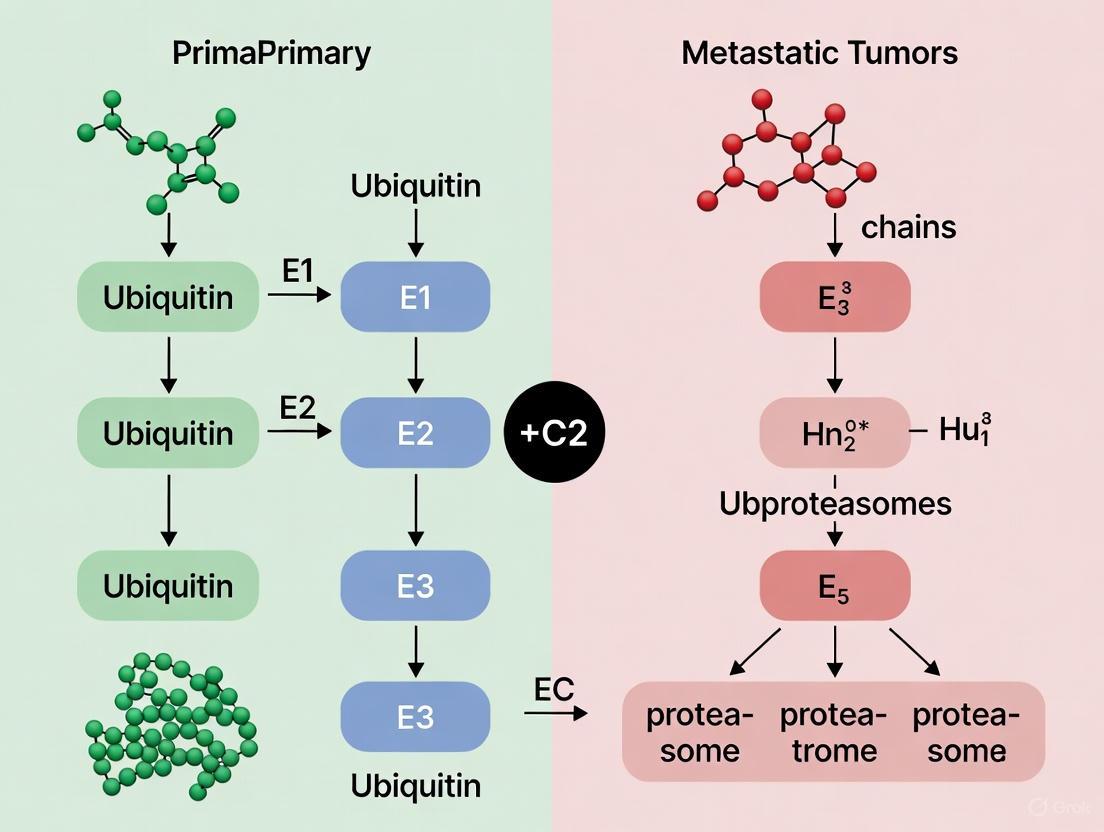
This article provides a comprehensive analysis of the evolving ubiquitination landscape during cancer progression from primary tumors to metastases.
Ubiquitination Profiling in Cancer: Decoding Molecular Signatures from Primary to Metastatic Tumors
Abstract
This article provides a comprehensive analysis of the evolving ubiquitination landscape during cancer progression from primary tumors to metastases. It explores the foundational molecular mechanisms driven by ubiquitin-related enzymes, details advanced methodological approaches for profiling ubiquitination events, addresses key technical challenges, and discusses validation strategies for translating findings into clinical applications. Aimed at researchers, scientists, and drug development professionals, this review synthesizes current evidence to highlight ubiquitination-based biomarkers and therapeutic targets, offering a roadmap for leveraging the ubiquitin-proteasome system to combat metastatic disease.
The Ubiquitin Switch in Metastasis: Unraveling Core Mechanisms and Pathway Dysregulation
The Ubiquitin-Proteasome System (UPS) is a crucial regulatory mechanism in eukaryotic cells, responsible for the targeted degradation of most short-lived proteins [1]. This system maintains cellular homeostasis by controlling the precise levels of numerous regulatory proteins, thereby influencing vital processes including cell cycle progression, signal transduction, and stress response [2] [3]. The UPS performs a complete protein degradation cascade, from tagging specific proteins for destruction to their proteolytic breakdown, ensuring cellular health and function.
Fundamentals of the UPS Pathway
The UPS operates through a well-defined enzymatic cascade and a complex degradation machine.
The Ubiquitination Cascade
Ubiquitination involves three key enzymatic steps that culminate in the attachment of a ubiquitin chain to a target protein [4] [1].
- Activation (E1): A ubiquitin-activating enzyme (E1) utilizes ATP to form a high-energy thioester bond with ubiquitin, a highly conserved 76-amino acid protein [4] [1].
- Conjugation (E2): The activated ubiquitin is transferred to a cysteine residue on a ubiquitin-conjugating enzyme (E2) via a trans(thio)esterification reaction [4].
- Ligation (E3): A ubiquitin ligase (E3) facilitates the final transfer of ubiquitin from the E2 to a lysine residue on the substrate protein, forming an isopeptide bond [4] [1]. E3 ligases provide substrate specificity, with hundreds of different E3s ensuring the correct proteins are targeted.
Table: Core Enzymatic Components of the Ubiquitination Cascade
| Enzyme Type | Number in Humans | Primary Function |
|---|---|---|
| Ubiquitin-activating (E1) | 2 [4] | ATP-dependent activation of ubiquitin |
| Ubiquitin-conjugating (E2) | 35 [4] | Accepts ubiquitin from E1 and cooperates with E3 for substrate transfer |
| Ubiquitin ligase (E3) | Hundreds [1] | Confers substrate specificity for targeted ubiquitination |
Following polyubiquitination, primarily via K48-linked chains, the substrate is recognized and degraded by the 26S proteasome [4]. This large multiprotein complex unfolds the targeted protein and hydrolyzes it into small peptides, which are recycled by the cell [1]. The system is counterbalanced by Deubiquitinating Enzymes (DUBs), which cleave ubiquitin chains, editing signals or recycling ubiquitin to maintain the free ubiquitin pool [2] [3].
Diagram 1: The Ubiquitin-Proteasome System (UPS) Cascade. This diagram illustrates the sequential E1-E2-E3 enzymatic cascade leading to substrate polyubiquitination and subsequent degradation by the 26S proteasome.
Methodologies for Ubiquitination Profile Analysis
Comparative studies of ubiquitination profiles, such as between primary and metastatic tumors, require robust proteomic techniques. A key methodology involves affinity enrichment coupled with liquid chromatography-tandem mass spectrometry (LC-MS/MS) [5].
Experimental Protocol for Ubiquitinome Profiling
The following protocol outlines the major steps for identifying and quantifying ubiquitination sites in tissue samples, such as primary and metastatic colon adenocarcinoma [5]:
- Sample Preparation: Tissues are homogenized, and proteins are extracted using a lysis buffer containing urea and protease inhibitors. Protein concentration is determined, and disulfide bonds are reduced and alkylated.
- Trypsin Digestion: Proteins are digested with trypsin, which cleaves peptide bonds. A critical outcome is that trypsin also cleaves after residue Gly76 in ubiquitin, leaving a di-glycine (K-ε-GG) remnant on the modified lysine of the substrate peptide [4].
- Peptide Fractionation: The complex peptide mixture is simplified by high-pH reverse-phase HPLC, fractionating peptides into fewer pools to reduce complexity.
- Affinity Enrichment: Ubiquitinated peptides are isolated from the mixture using antibodies specific for the K-ε-GG remnant motif. This step is crucial for enriching the low-abundance ubiquitinated peptides.
- LC-MS/MS Analysis: Enriched peptides are separated by nanoflow liquid chromatography and analyzed by a high-resolution mass spectrometer (e.g., Q-Exactive HF X). The instrument fragments selected peptides to generate sequence data.
- Data Processing & Bioinformatic Analysis: MS/MS spectra are searched against protein databases to identify peptides and their corresponding ubiquitination sites. Label-free quantification (LFQ) is used to compare ubiquitination levels between sample groups, followed by Gene Ontology (GO) and KEGG pathway analysis to determine biological functions of differentially ubiquitinated proteins.
Diagram 2: Ubiquitinome Profiling Workflow. The process from tissue sample to bioinformatic analysis, highlighting the critical K-ε-GG immunoenrichment step.
Comparative Analysis of Ubiquitination in Primary vs. Metastatic Tumors
Dysregulation of the UPS is implicated in cancer progression, and comparative ubiquitinome profiling reveals significant differences between primary and metastatic lesions.
Key Findings in Colon Adenocarcinoma
A landmark study performing ubiquitinome profiling on human primary colon adenocarcinoma and matched metastatic tissues identified profound changes [5]:
- Differential Ubiquitination: A total of 375 ubiquitination sites across 341 proteins were significantly altered in metastases, with 132 sites (127 proteins) upregulated and 243 sites (214 proteins) downregulated [5].
- Pro-Metastatic Signaling: Bioinformatic analysis indicated that proteins with altered ubiquitination were enriched in pathways critical for cancer metastasis, such as RNA transport and cell cycle. For example, altered ubiquitination of CDK1 was speculated to be a pro-metastatic factor [5].
Table: Quantitative Summary of Ubiquitination Changes in Metastatic Colon Adenocarcinoma [5]
| Ubiquitination Profile | Number of Sites | Number of Proteins | Biological Context |
|---|---|---|---|
| Total Differentially Ubiquitinated | 375 | 341 | Metastatic vs. Primary Tissue |
| Upregulated in Metastasis | 132 | 127 | Potential stabilization of pro-metastatic proteins |
| Downregulated in Metastasis | 243 | 214 | Potential enhanced degradation of tumor suppressors |
Ubiquitination Heterogeneity in Clear Cell Renal Cell Carcinoma
Tumor heterogeneity extends to ubiquitination pathways. In clear cell renal cell carcinoma (CCRCC), genetic heterogeneity exists between primary tumors and their metastases, affecting genes like VHL, PBRM1, SETD2, and BAP1 which are central to UPS function and protein degradation [6]. This inter-tumoral and inter-metastatic heterogeneity can influence tumor behavior and treatment response.
Prognostic Ubiquitination Signatures in Lung Adenocarcinoma
The prognostic power of ubiquitination is demonstrated in lung adenocarcinoma (LUAD), where a Ubiquitination-Related Risk Score (URRS) was developed based on four genes: DTL, UBE2S, CISH, and STC1 [7]. Patients with high URRS had significantly worse prognosis, higher tumor mutation burden, and higher expression of immune checkpoint proteins like PD-1/PD-L1, suggesting the UPS signature could help guide therapy [7].
The Scientist's Toolkit: Key Research Reagents
Successful ubiquitination profiling requires specific, high-quality reagents.
Table: Essential Research Reagents for Ubiquitination Profiling
| Reagent / Material | Function in Research | Example Application |
|---|---|---|
| K-ε-GG Motif Antibody | Immuno-enrichment of ubiquitinated peptides from tryptic digests for MS-based proteomics. | Isolation of ubiquitinated peptides prior to LC-MS/MS analysis [5]. |
| Ubiquitin-Activating Enzyme (E1) Inhibitor | Selective inhibition of the ubiquitination cascade initiation; a tool for functional UPS studies. | Investigating the consequences of blocked protein degradation on cell cycle or stress response. |
| Proteasome Inhibitors | Block degradation of polyubiquitinated proteins, causing their accumulation for study. | Bortezomib, used in research and as a therapeutic agent in multiple myeloma. |
| High-Resolution Mass Spectrometer | Identifies and quantifies peptides and their post-translational modifications with high accuracy. | Q-Exactive HF X system for detecting ubiquitinated peptides [5]. |
| Deubiquitinating Enzyme (DUB) Inhibitors | Block the removal of ubiquitin chains, stabilizing ubiquitin signals on substrates. | Probing the dynamics and function of specific ubiquitination events. |
The Ubiquitin-Proteasome System is a master regulator of protein turnover, vital for cellular homeostasis. Advanced proteomic methodologies now enable detailed comparative analysis of ubiquitination profiles, revealing that significant differences exist between primary and metastatic tumors across various cancers. These alterations in the ubiquitinome influence critical cancer pathways, contribute to tumor heterogeneity, and hold prognostic value. Understanding these differences provides a foundation for developing novel therapeutic strategies that target the UPS in specific cancer contexts.
Ubiquitination, a critical post-translational modification mediated by a sequential enzymatic cascade involving E1, E2, and E3 enzymes, and reversibly regulated by deubiquitinases (DUBs), plays an indispensable role in controlling cellular homeostasis. Dysregulation of this machinery is increasingly recognized as a hallmark of cancer, influencing tumor initiation, progression, and metastasis. This review comprehensively compares the altered expression and function of ubiquitination system components between primary and metastatic tumors across various cancer types, including colon adenocarcinoma, melanoma, and gastric cancer. We synthesize experimental evidence from proteomic analyses, functional enrichment studies, and molecular validation, highlighting how distinct ubiquitination profiles contribute to metastatic potential. The objective comparison of therapeutic targeting strategies, from proteasome inhibitors to novel E1/E2/E3/DUB-targeting agents, provides a foundational resource for researchers and drug development professionals focused on leveraging the ubiquitination system for cancer intervention.
The ubiquitination process regulates a wide variety of biological processes such as DNA repair, cell cycle regulation, signal transduction, apoptosis, and oncogenesis/metastasis [5]. This sophisticated modification involves a consecutive cascade of three enzyme families: ubiquitin-activating enzymes (E1), ubiquitin-conjugating enzymes (E2), and ubiquitin ligases (E3), which collectively coordinate the covalent attachment of ubiquitin to substrate proteins, targeting them for proteasomal degradation or altering their function, localization, or activity [8]. This process is reversible through the action of deubiquitinases (DUBs), which remove ubiquitin chains, thereby providing dynamic control over protein stability and function [8]. In tumorigenesis, cancer cells frequently modulate members of the ubiquitination pathway to stabilize oncogenic signaling molecules and destabilize tumor suppressors. The altered biological processes involve tumor metabolism, the immunological tumor microenvironment (TME), cancer stem cell (CSC) stemness, and ultimately, metastatic dissemination [8]. Understanding the differential regulation of this machinery between primary and metastatic lesions is crucial for elucidating the molecular drivers of cancer progression and identifying novel therapeutic vulnerabilities.
Comparative Ubiquitination Profiles in Primary versus Metastatic Tumors
Global Ubiquitinome Alterations in Colon Adenocarcinoma
A pioneering label-free quantitative proteomic study directly compared human primary colon adenocarcinoma tissues with metastatic colon adenocarcinoma tissues, revealing profound differences in their ubiquitination profiles. The research identified 375 ubiquitination sites from 341 proteins as differentially modified (|Fold change| > 1.5, p < 0.05) in metastatic compared to primary tissues [5]. Among these, 132 ubiquitination sites from 127 proteins were upregulated and 243 ubiquitination sites from 214 proteins were downregulated in the metastatic group, suggesting a widespread rewiring of the ubiquitinome during cancer progression [5]. Bioinformatics analysis indicated that proteins with altered ubiquitination in metastatic tissues were significantly enriched in pathways highly related to cancer metastasis, such as RNA transport and cell cycle regulation. Specifically, the altered ubiquitination of CDK1 was speculated to be a pro-metastatic factor in colon adenocarcinoma [5]. This study provides the first scientific evidence elucidating the biological functions of protein ubiquitination in human colon adenocarcinoma metastasis, offering potential novel biomarkers and therapeutic targets.
Table 1: Summary of Key Ubiquitination-Related Profiling Studies in Cancer
| Cancer Type | Comparison | Key Findings | Implicated Pathways |
|---|---|---|---|
| Colon Adenocarcinoma [5] | Primary vs. Metastatic Tissue | 375 differentially modified ubiquitination sites (132 up, 243 down) | RNA transport, Cell cycle |
| Skin Cutaneous Melanoma (SKCM) [9] | Primary vs. Metastatic Tumors | Identification of 4 prognostic URGs (HCLS1, CORO1A, NCF1, CCRL2); High-risk score correlates with poor survival | EMT signaling pathway |
| Gastric Cancer (GC) [10] | Primary (23132/87) vs. Metastatic (MKN45) Cell Lines | Higher expression of UBC, UBB, RPS27A genes in metastatic cells; Higher proteasome activity in metastatic cells | Apoptosis, β-catenin signaling |
| Pan-Cancer [11] | Multiple Cancer Types | Ubiquitination score correlates with squamous/neuroendocrine transdifferentiation; URPS stratifies patient risk | MYC pathway, Oxidative phosphorylation |
Ubiquitination-Related Gene Signatures in Melanoma Progression
In Skin Cutaneous Melanoma (SKCM), the deadliest form of skin cancer, comprehensive bioinformatic analysis has identified critical ubiquitination-related genes (URGs) driving progression. Univariate and multivariate Cox regression models characterized risk scores and identified four critical genes (HCLS1, CORO1A, NCF1, and CCRL2) related to prognosis [9]. Patients in the low-risk group, as defined by this URG signature, showed significantly longer survival than those in the high-risk group. Furthermore, characteristic risk scores correlated with several clinicopathological variables and reflected the infiltration of multiple immune cells within the tumor microenvironment [9]. Functional validation through in vitro experiments demonstrated that knockdown of HCLS1, CORO1A, and CCRL2 affected cellular malignant biological behavior, including viability, colony formation, and migration, through the EMT signaling pathway [9]. This underscores the functional role of these URGs in promoting the metastatic phenotype.
Pan-Cancer Ubiquitination Regulatory Network
A comprehensive study integrating data from 4,709 patients across 26 cohorts and five solid tumor types (lung cancer, esophageal cancer, cervical cancer, urothelial cancer, and melanoma) constructed a pan-cancer ubiquitination regulatory network [11]. This research established a conserved ubiquitination-related prognostic signature (URPS) that effectively stratified patients into high-risk and low-risk groups with distinct survival outcomes across all analyzed cancers. The URPS also served as a novel biomarker for predicting immunotherapy response [11]. A key finding was the identification of the OTUB1-TRIM28 ubiquitination axis as a crucial modulator of the MYC pathway, influencing patient prognosis. Furthermore, the ubiquitination score was positively correlated with squamous or neuroendocrine transdifferentiation in adenocarcinoma, linking ubiquitination to histological fate and tumor plasticity [11].
Experimental Methodologies for Ubiquitination Profiling
Proteomic Workflow for Ubiquitinome Analysis
The detailed methodology for global ubiquitination profiling, as applied in the colon adenocarcinoma study, provides a robust protocol for comparative analyses [5].
1. Protein Extraction and Digestion:
- Tissues are homogenized in lysis buffer (8 M Urea, 10 mM EDTA, 10 mM DTT, 1% Protease Inhibitor Cocktail) followed by sonication and centrifugation to collect supernatant [5].
- Proteins are reduced with 10 mM DTT, alkylated with 30 mM iodoacetamide, and diluted to reduce urea concentration [5].
- Trypsin digestion is performed at a 1:50 trypsin-to-protein mass ratio overnight, followed by a second 4-hour digestion at a 1:100 ratio [5].
- Peptides are desalted using C18 pillars and can be fractionated by high-pH reverse-phase HPLC to reduce complexity [5].
2. Affinity Enrichment of Ubiquitinated Peptides:
- Tryptic peptides are incubated with anti-Lys-ε-Gly-Gly (K-ε-GG) remnant antibody beads (from PTMScan ubiquitin remnant motif kit) at 4°C overnight with gentle shaking [5].
- This step is critical for specifically enriching for peptides containing the di-glycine remnant, a signature of ubiquitination left after tryptic digestion [5].
- Beads are washed extensively with NETN buffer and water, and bound peptides are eluted with 0.1% trifluoroacetic acid [5].
3. LC-MS/MS Analysis and Data Processing:
- Enriched peptides are separated by ultra-high-performance liquid chromatography (UHPLC) on a nanocapillary C18 column with an increasing gradient of acetonitrile [5].
- Peptides are ionized and analyzed by tandem mass spectrometry (e.g., Q-Exactive HF X) in a data-dependent acquisition mode [5].
- The resulting MS/MS data are processed using search engines like MaxQuant against human protein databases, with Gly-Gly modification on lysine and oxidation on methionine set as variable modifications [5].
- False discovery rate (FDR) is typically adjusted to <1% for high-confidence identification [5].
Functional Validation Techniques
To confirm the functional role of identified ubiquitination-related genes, a combination of molecular and cellular assays is employed:
- In Vitro Knockdown Experiments: siRNA-mediated knockdown of target URGs (e.g., HCLS1, CORO1A, CCRL2) in cancer cell lines, followed by functional assays [9].
- Cell Viability and Proliferation Assays: Using methods like CCK-8 assay to measure optical density at 450nm over time to assess cell viability post-knockdown [9].
- Colony Formation Assay: Transfected cells are seeded at low density, stained with crystal violet after 14 days, and imaged to count colonies, measuring long-term proliferative capacity [9].
- Migration and Invasion Assays: Utilizing Transwell chambers to quantify the migratory and invasive potential of cancer cells following URG modulation [9].
- Quantitative RT-PCR: Validating gene expression changes using specific primers and normalization to housekeeping genes like β-actin [9] [10].
- Western Blotting: Determining total ubiquitin content, Ub distribution (free vs. conjugated pools), and levels of key proteins (e.g., β-catenin) following experimental manipulation [10].
Table 2: Key Reagents and Research Tools for Ubiquitination Studies
| Reagent / Tool | Function / Application | Example Use Case |
|---|---|---|
| Anti-K-ε-GG Antibody Beads [5] | Affinity enrichment of ubiquitinated peptides from tryptic digests for mass spectrometry. | Global ubiquitinome profiling in colon adenocarcinoma tissues [5]. |
| Usp2 Deubiquitinating Enzyme [10] | Broad-specificity DUB that hydrolyzes Ub chains; used to convert conjugated Ub to free monomers for quantitative analysis. | Accurate determination of total cellular Ub content in gastric cancer cell lines [10]. |
| Specific siRNAs [9] [10] | Targeted knockdown of ubiquitin genes (UBB, UBC) or ubiquitination-related genes (HCLS1, CORO1A, etc.) to assess function. | Validation of pro-survival role of UBB/UBC in gastric cancer cells [10] and role of URGs in melanoma metastasis [9]. |
| Proteasome Activity Assay [10] | Measures chymotrypsin-like (or other) activity of the 20S proteasome core. | Comparing proteasome activity between primary and metastatic gastric cancer cell lines [10]. |
Altered Ubiquitination Machinery: E1/E2/E3 Enzymes and DUBs in Metastasis
Dysregulation of Ubiquitin Genes and Enzyme Cascades
The core components of the ubiquitination system are frequently altered in metastatic cancers. In gastric cancer, metastatic cell lines (MKN45) show a statistically significant higher expression of three out of four ubiquitin-coding genes (UBC, UBB, and RPS27A) compared to primary cell lines (23132/87) [10]. Although the total ubiquitin protein content was similar, the metastatic cells exhibited significantly higher proteasome activity, indicating an accelerated protein turnover rate that may support metastatic growth [10]. Furthermore, the combined knockdown of UBB and UBC was more detrimental to the primary gastric cancer cell line, causing reduced cell viability via apoptosis induction and decreased levels of the oncoprotein β-catenin, identifying them as pro-survival genes [10]. Beyond the ubiquitin genes themselves, enzymes in the cascade are crucial. For instance, Ubc13, an E2 enzyme that catalyzes K63-linked polyubiquitination, is required for breast cancer metastasis in vivo by increasing metastasis-associated gene expression [5]. The pan-cancer study identified the E3 ligase TRIM28 and the DUB OTUB1 as key players in a ubiquitination regulatory axis that modulates the MYC pathway, influencing patient prognosis and immunotherapy response [11].
Therapeutic Targeting of the Ubiquitination System
The critical role of the ubiquitination machinery in cancer has made it a promising therapeutic target. Several classes of drugs have been developed:
- Proteasome Inhibitors: Small molecule inhibitors like bortezomib, carfilzomib, oprozomib, and ixazomib have achieved tangible success, particularly in hematological malignancies [8].
- E1 Enzyme Inhibitors: Compounds such as MLN7243 and MLN4924 (Pevonedistat) have shown potential in preclinical cancer treatment [8].
- E2 Enzyme Inhibitors: Examples include Leucettamol A and CC0651 [8].
- E3 Ligase Targeting: Molecules like nutlin and MI-219 (targeting the MDM2 E3 ligase) aim to reactivate p53 tumor suppressor function [8].
- DUB Inhibitors: Compounds such as G5 and F6 that target deubiquitinase activity are under investigation [8].
The pan-cancer ubiquitination-related prognostic signature (URPS) offers a novel strategy to identify patients who are more likely to benefit from immunotherapy, thereby personalizing treatment approaches [11]. Furthermore, targeting ubiquitination regulators, such as the OTUB1-TRIM28 axis, presents a novel strategy for drug development against traditionally "undruggable" targets like MYC [11].
The systematic comparison of ubiquitination machinery between primary and metastatic tumors reveals a complex, yet decipherable, landscape of molecular alterations. From the global ubiquitinome shifts in colon adenocarcinoma to the specific URG signatures in melanoma and the pan-cancer regulatory networks, it is evident that the ubiquitination system is profoundly rewired during cancer progression. The consistent upregulation of ubiquitin genes like UBB and UBC, the dysregulation of specific E2/E3/DUB enzymes, and the resultant changes in key oncogenic pathways (e.g., MYC, β-catenin) underscore the critical role of this system in driving metastasis. The experimental methodologies and research tools outlined provide a roadmap for continued investigation. As our understanding deepens, the targeted inhibition of specific nodes within this network—beyond the established proteasome inhibitors—holds immense promise for developing novel, effective therapeutics to combat advanced and metastatic cancer.
The ubiquitin-proteasome system (UPS) is a crucial post-translational modification mechanism that regulates protein degradation and function, playing pivotal roles in cellular homeostasis, signaling transduction, and immune responses [12] [7]. In cancer biology, ubiquitination governs key processes including cell cycle progression, DNA repair, and apoptosis through precise regulation of oncoproteins and tumor suppressors [12]. The dynamic nature of ubiquitination, involving E1 activating enzymes, E2 conjugating enzymes, E3 ligases, and deubiquitinases (DUBs), creates a complex regulatory network that is frequently dysregulated in malignancies [13] [14].
Metastasis represents the most lethal aspect of cancer progression, accounting for the majority of cancer-related deaths. Understanding the molecular drivers of metastasis is therefore paramount for developing effective therapeutic strategies. Emerging evidence suggests that ubiquitination pathways may undergo significant reprogramming during the metastatic transition, potentially revealing novel vulnerabilities for therapeutic intervention [15]. This review synthesizes current proteomic evidence regarding ubiquitination profile alterations between primary and metastatic tumors, providing a comparative analysis of ubiquitin-related molecular changes across different cancer types.
Analytical Techniques for Ubiquitination Profiling
Mass Spectrometry-Based Proteomics
Modern ubiquitination profiling primarily relies on advanced mass spectrometry techniques coupled with innovative sample preparation methods. The foundational approach involves ubiquitin branch (K-ε-GG) antibody-based enrichment of ubiquitinated peptides followed by liquid chromatography tandem mass spectrometry (LC-MS/MS) analysis [15]. This methodology enables global identification and quantification of ubiquitination sites across the proteome.
For tissue proteomic analysis, formalin-fixed paraffin-embedded (FFPE) samples are typically deparaffinized and homogenized in high-denaturation lysis buffers (e.g., 6M guanidine hydrochloride) to ensure complete protein extraction [16]. Following protein reduction and alkylation, samples undergo enzymatic digestion (typically with trypsin) and peptide purification. Liquid chromatography separation is commonly performed using C18 reversed-phase columns with acetonitrile gradients, and MS analysis is conducted using high-resolution instruments such as Orbitrap Exploris platforms operating in data-dependent acquisition (DDA) or data-independent acquisition (DIA) modes [16].
Bioinformatics Integration
Comprehensive analysis of ubiquitination profiles requires integration of multiple bioinformatics approaches. Weighted gene co-expression network analysis (WGCNA) identifies gene modules correlated with ubiquitination activity [17]. Functional enrichment analysis using Gene Ontology (GO) and Kyoto Encyclopedia of Genes and Genomes (KEGG) pathways reveals biological processes and signaling pathways influenced by differential ubiquitination [17] [15]. Additionally, protein-protein interaction networks constructed through databases like STRING provide insights into the interconnected nature of ubiquitination targets [13].
Table 1: Key Experimental Methodologies in Ubiquitination Profiling
| Technique | Principle | Application in Ubiquitination Research | Key Advantages |
|---|---|---|---|
| K-ε-GG Antibody Enrichment | Immunoaffinity purification of ubiquitinated peptides using antibodies specific for diglycine remnant | Identification of ubiquitination sites in primary vs. metastatic tissues [15] | High specificity for ubiquitination sites; Compatible with clinical samples |
| Label-Free Quantitative Proteomics | MS1-based quantification without isotopic labeling | Comparative analysis of ubiquitination levels between tissue types [15] | No chemical derivatization required; Broad dynamic range |
| Stable Isotope Labeling (SILAC) | Metabolic incorporation of heavy isotopes in cell culture | Quantitative comparison of protein ubiquitination across conditions [18] | High quantitative accuracy; Reduced technical variability |
| WGCNA | Systems biology approach to identify correlated gene modules | Identification of ubiquitin-correlated gene networks in cancer [17] | Unsupervised analysis; Identifies coordinated expression patterns |
| Immunohistochemistry Validation | Antibody-based protein detection in tissue sections | Confirmation of proteomic findings in clinical specimens [19] | Spatial context preservation; Clinical compatibility |
Comparative Ubiquitination Landscapes Across Cancers
Colon Adenocarcinoma
A comprehensive study comparing human primary colon adenocarcinoma tissues with metastatic lesions (lymph node metastases) revealed dramatic alterations in the ubiquitination landscape [15]. The investigation identified 375 differentially regulated ubiquitination sites across 341 proteins when comparing metastatic to primary tissues. Notably, 132 ubiquitination sites on 127 proteins were upregulated in metastases, while 243 sites on 214 proteins were downregulated [15].
Motif analysis identified 15 distinct ubiquitination motifs enriched in the metastatic samples, suggesting potential preferences for specific E3 ligases in the metastatic environment [15]. Pathway enrichment analysis indicated that proteins with altered ubiquitination patterns were significantly involved in RNA transport and cell cycle regulation, both processes critical for metastatic progression. Particularly compelling was the finding that altered ubiquitination of CDK1 may serve as a pro-metastatic factor in colon adenocarcinoma [15].
Lung Adenocarcinoma (LUAD)
In LUAD, ubiquitination-related genes have been leveraged to construct prognostic models that effectively stratify patient risk [17] [7]. One systematic analysis identified three key gene modules with the strongest ubiquitin associations through WGCNA, yielding 197 ubiquitin-correlated genes differentially expressed between LUAD and normal tissues [17]. Further refinement identified nine independent prognostic genes (B4GALT4, DNAJB4, GORAB, HEATR1, LPGAT1, FAT1, GAB2, MTMR4, and TCP11L2) that formed a robust risk model [17].
Functional validation demonstrated that knocking down HEATR1 significantly reduced LUAD cell viability, migration, and invasion, establishing a direct functional role for this ubiquitination-related gene in metastatic behavior [17]. Another study developed a ubiquitination-related risk score (URRS) based on four genes (DTL, UBE2S, CISH, and STC1), where high URRS was associated with worse prognosis, elevated PD-1/PD-L1 expression, increased tumor mutation burden (TMB), and higher tumor neoantigen load [7].
Pancreatic Cancer
A multi-omic comparison of primary pancreatic tumors versus metastatic lesions revealed both conservation and divergence in molecular features [19]. Genomic alterations showed remarkable similarity between primary and metastatic sites, with no significant differences in gene or pathway-level alterations after false-discovery rate correction. However, proteomic analyses identified significantly elevated expression of ERCC1 and TOP1 in metastatic lesions, both of which are regulated by ubiquitination and confer resistance to chemotherapeutic agents [19].
Table 2: Ubiquitination Alterations in Primary vs. Metastatic Tissues Across Cancers
| Cancer Type | Key Ubiquitination Changes in Metastasis | Functional Consequences | Experimental Validation |
|---|---|---|---|
| Colon Adenocarcinoma | 375 differentially regulated ubiquitination sites (132 upregulated, 243 downregulated) | Impact on RNA transport and cell cycle pathways; CDK1 ubiquitination as pro-metastatic factor [15] | Label-free quantitative proteomics of clinical specimens [15] |
| Lung Adenocarcinoma | Dysregulation of UBA1, UBA6, HEATR1, and other ubiquitination-related genes | Promotion of cell survival, migration, and invasion; Correlation with immune infiltration [17] [14] | CCK-8, wound healing, and transwell assays after gene knockdown [17] |
| Pancreatic Cancer | Elevated ERCC1 and TOP1 protein expression in metastases | Increased resistance to oxaliplatin and irinotecan, respectively [19] | Multi-omic analysis of 713 patient samples; IHC validation [19] |
| Multiple Cancers (Pan-Cancer) | UBD/FAT10 overexpression in 29 cancer types | Correlation with poor prognosis, higher histological grades, and immune microenvironment remodeling [13] | TCGA and GTEx data analysis; promoter methylation assessment [13] |
Key Signaling Pathways Regulated by Ubiquitination in Metastasis
HIF-1α Stabilization Pathway
Under normoxic conditions, HIF-1α undergoes prolyl hydroxylation by PHD enzymes, enabling recognition by the von Hippel-Lindau (VHL) E3 ubiquitin ligase complex and subsequent proteasomal degradation [12]. In hypoxic tumor environments and through ubiquitination pathway dysregulation, HIF-1α stabilization occurs, promoting transcription of genes involved in angiogenesis, metabolic reprogramming, and metastasis [12]. This pathway illustrates how disrupted ubiquitination can drive metastatic progression through transcription factor stabilization.
Diagram 1: HIF-1α ubiquitination regulates metastasis
UBD/FAT10-Mediated Immune Evasion
Ubiquitin D (UBD), also known as FAT10, demonstrates frequent overexpression across multiple cancer types and correlates with poor prognosis [13]. UBD expression is induced by pro-inflammatory cytokines (IFN-γ and TNF-α) and engages key oncogenic pathways including NF-κB, Wnt, and SMAD2 signaling. In hepatocellular carcinoma, UBD promotes immune evasion by upregulating PD-L1 expression, fostering an immunosuppressive tumor microenvironment permissive for metastatic growth [13].
Transcription Factor Ubiquitination
Numerous transcription factors critical for cancer progression are regulated by ubiquitination. For example, the p53 tumor suppressor is targeted for ubiquitin-mediated degradation by MDM2, while oncogenic transcription factors may gain stability through altered ubiquitination [12] [7]. Targeting these specific ubiquitination events using PROTACs (PROteolysis TArgeting Chimeras) or specific E3 ligase inhibitors represents an emerging therapeutic strategy for metastatic cancers [12].
The Scientist's Toolkit: Essential Research Reagents
Table 3: Key Research Reagent Solutions for Ubiquitination Studies
| Reagent/Catalog Number | Vendor Examples | Specific Application | Functional Role |
|---|---|---|---|
| K-ε-GG Ubiquitin Remnant Motif Antibody | Cell Signaling Technology, PTM Bio | Enrichment of ubiquitinated peptides for mass spectrometry | Specifically recognizes diglycine lysine remnant after tryptic digestion [15] |
| SILAC Kits (Stable Isotope Labeling with Amino Acids in Cell Culture) | Thermo Fisher Scientific | Metabolic labeling for quantitative proteomics | Enables accurate quantification of ubiquitination changes between conditions [18] |
| Proteasome Inhibitors (MG-132, Bortezomib) | Selleck Chemicals, MedChemExpress | Stabilization of ubiquitinated proteins | Prevents degradation of polyubiquitinated proteins for detection [12] |
| TUBE (Tandem Ubiquitin Binding Entity) | LifeSensors | Affinity purification of polyubiquitinated proteins | Enrichment of endogenous polyubiquitinated protein complexes [15] |
| Ubiquitin Activating Enzyme E1 Inhibitors | MilliporeSigma, Cayman Chemical | Inhibition of ubiquitination cascade | Investigates consequences of global ubiquitination inhibition [14] |
| Deubiquitinase (DUB) Inhibitors | Bio-Techne, APExBIO | Inhibition of deubiquitination enzymes | Stabilizes ubiquitination events for detection; probes DUB function [12] |
Comparative proteomic analyses reveal that ubiquitination profiles undergo significant alterations during the transition from primary to metastatic tumors across multiple cancer types. These changes impact critical biological processes including cell cycle regulation, DNA damage response, immune evasion, and therapeutic resistance. The consistency of ubiquitination pathway dysregulation in metastasis, despite cancer-type specific differences, highlights the fundamental importance of ubiquitination in cancer progression.
Future research directions should focus on longitudinal tracking of ubiquitination dynamics throughout metastatic progression, development of more comprehensive ubiquitination site libraries, and functional validation of newly identified ubiquitination events in metastasis. Additionally, the therapeutic potential of targeting metastasis-specific ubiquitination events warrants further investigation, particularly in combination with existing modalities such as immunotherapy and chemotherapy. The continuing refinement of ubiquitination profiling technologies promises to uncover novel diagnostic biomarkers and therapeutic targets for combating metastatic disease.
Key Signaling Pathways Regulated by Ubiquitination in Metastasis (e.g., MYC, EMT, Oxidative Phosphorylation)
The ubiquitin-proteasome system (UPS) represents a crucial post-translational regulatory mechanism that governs virtually all aspects of cellular homeostasis through targeted protein degradation and functional modulation. In the context of cancer metastasis—the devastating process of cancer dissemination to distant organs—ubiquitination emerges as a pivotal molecular switch controlling key signaling pathways that drive tumor progression [20]. The dynamic equilibrium between ubiquitination, mediated by E1-E2-E3 enzyme cascades, and deubiquitination, catalyzed by deubiquitinating enzymes (DUBs), determines the stability, activity, and localization of critical metastasis-regulating proteins [21]. Understanding how this equilibrium shifts in favor of tumor progression through specific ubiquitination events provides not only fundamental biological insights but also unveils novel therapeutic vulnerabilities.
This review systematically compares the ubiquitination-mediated regulation of three cornerstone pathways in metastasis: the MYC oncogenic network, the epithelial-mesenchymal transition (EMT) program, and oxidative phosphorylation (OXPHOS) metabolism. By synthesizing current evidence from proteomic analyses and functional studies, we highlight how ubiquitination profiles distinctively rewire these pathways during the transition from primary to metastatic tumors, and how these molecular insights are being translated into targeted therapeutic strategies.
MYC Ubiquitination Dynamics in Metastatic Progression
Regulatory Complexity of MYC Ubiquitination
The MYC oncoprotein is a master transcription factor that regulates numerous aspects of cell biology, including growth, proliferation, metabolism, and apoptosis. As an unstable protein with a short half-life (typically less than 30 minutes), MYC is exquisitely controlled by ubiquitin-mediated degradation [22]. Under normal physiological conditions, MYC degradation is primarily regulated by a phosphorylation-dependent mechanism involving Thr58 and Ser62 residues within its N-terminal transactivation domain. Phosphorylation at Ser62 stabilizes MYC, while subsequent Thr58 phosphorylation by GSK3β promotes recognition by the E3 ubiquitin ligase SCFFbw7, leading to K48-linked polyubiquitination and proteasomal degradation [22].
In metastatic progression, this regulatory balance is disrupted. Research has identified at least 18 ubiquitin ligases that mediate MYC ubiquitination, with consequences for both MYC stability and transcriptional activity [22]. While most E3 ligases, including SCFFbw7, target MYC for degradation, others paradoxically stabilize MYC or enhance its activity. For instance, SCFβ-TRCP mediates K33/K63/K48 mixed linkage ubiquitination that counteracts SCFFbw7-mediated degradation, while RNF4 catalyzes K11- and K33-linked ubiquitination resulting in MYC stabilization [22]. The ubiquitin ligase HUWE1 exemplifies this complexity—it ubiquitinates MYC without triggering degradation, instead enhancing p300 recruitment and MYC transactivation capacity [22].
Context-Dependent Regulation and Therapeutic Implications
The functional outcome of MYC ubiquitination demonstrates remarkable context dependency. The ubiquitin ligase UBR5 prevents excessive MYC accumulation that would otherwise trigger apoptosis, thereby promoting survival in MYC-driven cancers [22]. This protective mechanism potentially facilitates metastatic dissemination by enabling cancer cells to withstand stress conditions. Similarly, FBXL16 stabilizes MYC by antagonizing SCFFbw7-mediated ubiquitination without competing for MYC binding, instead potentially forming a complex that directly suppresses FBW7 ligase activity [22].
Table 1: Key E3 Ubiquitin Ligases Regulating MYC Stability and Activity
| E3 Ligase | Ubiquitin Linkage | Effect on MYC | Functional Outcome in Cancer |
|---|---|---|---|
| SCFFbw7 | K48-linked | Degradation | Tumor suppression, lost in metastatic cells |
| SCFβ-TRCP | K33/K63/K48 mixed | Stabilization | Counteracts SCFFbw7, promotes oncogenesis |
| RNF4 | K11/K33-linked | Stabilization | Enhances MYC-driven tumor growth |
| HUWE1 | Not specified | Enhanced activity | Promotes MYC transactivation without degradation |
| UBR5 | Not specified | Prevents accumulation | Supports cell survival in MYC-high environments |
| FBXL16 | Not specified | Stabilization | Antagonizes FBW7, promotes cancer growth |
Deubiquitinating enzymes also contribute significantly to MYC regulation in metastasis. USP7 maintains c-Myc stability by removing degradative ubiquitin marks, supporting pancreatic cancer glycolysis and tumor growth [23]. In pancreatic ductal adenocarcinoma (PDAC), hypoxia and extracellular matrix stiffness induce USP7 expression, which subsequently stabilizes c-Myc, upregulates glycolysis-related genes, and promotes the Warburg effect—a metabolic hallmark of aggressive cancers [23]. Small-molecule inhibition of USP7 with P5091 effectively suppresses tumor growth in PDAC models, highlighting the therapeutic potential of targeting MYC-regulating DUBs [23].
Ubiquitination Control of Epithelial-Mesenchymal Transition
Regulation of EMT Transcription Factors
Epithelial-mesenchymal transition (EMT) represents a fundamental cellular reprogramming process wherein epithelial cells lose their polarity and cell-cell adhesion while acquiring migratory and invasive mesenchymal characteristics. This process, hijacked during cancer progression, enables tumor cell dissemination from primary sites and initiates metastatic spread [21]. Ubiquitination critically regulates EMT by controlling the stability of key EMT-transcription factors (EMT-TFs) through coordinated actions of E3 ligases and DUBs.
The stability of Snail, a master EMT-TF, is dynamically controlled by ubiquitination. In colorectal cancer, mitogen and stress-activated protein kinase 1 (MSK1) recruits USP5 to deubiquitinate and stabilize Snail, facilitating EMT and metastasis [21]. Conversely, in triple-negative breast cancer, the E3 ligase MARCH2 ubiquitinates Snail, driving its degradation and suppressing tumor growth and metastasis [21]. Similar regulation applies to other EMT-TFs, including ZEB1, Twist, and Slug, establishing ubiquitination as a central mechanism controlling the EMT master switch.
Proteomic Signatures in Metastatic Tissues
Comparative proteomic analyses of ubiquitination events in human primary and metastatic colon adenocarcinoma tissues reveal dramatic rewiring of the ubiquitinome during metastatic progression. A study identifying 375 differentially regulated ubiquitination sites (132 upregulated, 243 downregulated in metastasis) highlighted enrichment in RNA transport and cell cycle pathways [24]. These findings suggest that ubiquitination-mediated regulation of these processes confers advantages for metastatic colonization.
The interplay between different ubiquitination enzymes creates complex regulatory networks. For instance, E3 ligase carboxyl terminus of Hsc70-interacting protein (CHIP) polyubiquitinates the DUB OTUD3, promoting its degradation and thereby suppressing lung cancer metastasis [20]. Conversely, many DUBs stabilize oncoproteins to promote metastasis, as exemplified by USP51, which facilitates colorectal cancer stemness and chemoresistance by forming a positive feed-forward loop with HIF1A [25].
Table 2: Selected E3 Ligases and DUBs Regulating EMT in Metastasis
| Enzyme | Type | EMT Target | Effect on Metastasis |
|---|---|---|---|
| MARCH2 | E3 Ligase | Snail | Suppressive via Snail degradation |
| TRIM65 | E3 Ligase | ARHGAP35 | Promotive via target degradation |
| TRAF4 | E3 Ligase | TrkA | Promotive via non-proteolytic ubiquitination |
| FBXW2 | E3 Ligase | β-catenin, EGFR | Suppressive via target degradation |
| USP5 | DUB | Snail | Promotive via Snail stabilization |
| USP51 | DUB | HIF1A | Promotive via stabilization and stemness |
| OTUD1 | DUB | SMAD7 | Suppressive via SMAD7 stabilization |
| CHIP | E3 Ligase | OTUD3 | Suppressive via DUB degradation |
Diagram 1: Ubiquitination Regulation of Epithelial-Mesenchymal Transition. Extracellular signals activate EMT transcription factors whose stability is controlled by balanced ubiquitination (degradation) and deubiquitination (stabilization), ultimately determining metastatic output.
Metabolic Rewiring Through OXPHOS Ubiquitination
OXPHOS Upregulation in Metastatic and Resistant Cells
While the Warburg effect (aerobic glycolysis) characterizes many cancers, emerging evidence indicates that oxidative phosphorylation (OXPHOS) is specifically upregulated in metastatic and therapy-resistant cells. Chemoresistant and cancer stem cells activate OXPHOS to meet their energy demands and enhance survival under stress [26]. This metabolic rewiring represents an adaptive response that facilitates metastatic progression and treatment evasion.
Analysis of clinical datasets reveals an inverse correlation between OXPHOS gene expression and patient survival following chemotherapy, suggesting that OXPHOS activation promotes therapeutic resistance [26]. Malignancies appear to contain heterogeneous subpopulations—rapidly dividing cells primarily utilizing glycolysis, and slower-cycling cancer stem cells or therapy-resistant cells dependent on OXPHOS with high metastatic potential [26]. This metabolic heterogeneity presents significant challenges for effective cancer treatment.
Ubiquitination in Metabolic Control
Ubiquitination plays a crucial yet underexplored role in regulating OXPHOS components and mitochondrial function during metastatic progression. The ubiquitin-proteasome system controls the stability of mitochondrial proteins, albeit through mechanisms distinct from cytoplasmic regulation. Additionally, mitochondrial dynamics—including fission, fusion, and mitophagy—are governed by ubiquitination events that influence metastatic potential.
Several E3 ligases and DUBs have been implicated in coordinating metabolic transitions during metastasis. For example, the ubiquitin ligase HUWE1 regulates mitochondrial metabolism under stress conditions, though its specific role in OXPHOS control in metastasis requires further investigation [22]. The regulatory mechanisms connecting ubiquitination to metabolic rewiring represent an emerging frontier in cancer metastasis research with significant therapeutic implications.
Table 3: OXPHOS Inhibitors in Clinical Development for Resistant Cancers
| Therapeutic Agent | Molecular Target | Cancer Type | Clinical Trial Status |
|---|---|---|---|
| Metformin | Complex I | Prostate, various | Phase II (combined with abiraterone) |
| IACS-010759 | Complex I | Advanced cancers | Phase I |
| CPI-613 | PDH, KGDH | Solid tumors | Phase I/II |
| Gossypol + Phenformin | Multiple | NSCLC (resistant) | Preclinical models |
| VLX600 | Mitochondrial metabolism | Advanced tumors | Phase I |
Experimental Approaches for Ubiquitination Profiling
Proteomic Methodologies
Comprehensive profiling of ubiquitination events in metastatic tissues relies on advanced proteomic techniques. The cornerstone methodology employs anti-Lys-ε-Gly-Gly (K-ε-GG) remnant antibody-based affinity enrichment coupled with liquid chromatography-tandem mass spectrometry (LC-MS/MS) [24]. This approach enables system-wide identification and quantification of ubiquitination sites, allowing direct comparison between primary and metastatic tissues.
The standard workflow involves: (1) tissue protein extraction under denaturing conditions; (2) tryptic digestion to generate peptides; (3) enrichment of ubiquitinated peptides using K-ε-GG-specific antibodies; (4) fractionation by high-pH reverse-phase HPLC; and (5) LC-MS/MS analysis with database searching for site identification [24]. This methodology successfully identified 375 differentially regulated ubiquitination sites between primary and metastatic colon adenocarcinoma tissues, providing unprecedented insights into ubiquitinome remodeling during metastatic progression [24].
Functional Validation Approaches
Following proteomic identification, functional validation of key ubiquitination events employs standardized experimental protocols. Co-immunoprecipitation (Co-IP) assays determine physical interactions between ubiquitination enzymes and their substrates. Cells are lysed in NP-40-containing buffer, followed by incubation with target-specific antibodies and Protein G-agarose beads. Precipitated complexes are then analyzed by Western blotting to confirm interactions [23].
Protein half-life determinations assess the functional consequences of ubiquitination on substrate stability. Cells are treated with cycloheximide to inhibit new protein synthesis, and samples are collected at timed intervals for Western blot analysis. This approach demonstrated that USP7 maintains c-Myc stability in pancreatic cancer cells, with c-Myc half-life significantly reduced upon USP7 inhibition [23].
Functional assays for metastasis-associated phenotypes include migration and invasion tests using Transwell systems, glycolytic capacity measurements via extracellular acidification rate monitoring, and in vivo metastatic models such as tail vein injection for experimental metastasis assessment [23].
Diagram 2: Experimental Workflow for Ubiquitination Proteomics. The standardized protocol for identifying differentially regulated ubiquitination sites in primary versus metastatic tissues, from sample preparation through bioinformatic analysis.
The Scientist's Toolkit: Research Reagent Solutions
Table 4: Essential Research Reagents for Ubiquitination-Metastasis Studies
| Reagent/Category | Specific Examples | Research Application | Key Function |
|---|---|---|---|
| K-ε-GG Antibodies | PTMScan Ubiquitin Remnant Motif Kit (CST) | Ubiquitinome profiling | Enrichment of ubiquitinated peptides for MS analysis |
| E3 Ligase Inhibitors | P5091 (USP7 inhibitor) | Functional validation | Target-specific inhibition of deubiquitination |
| Proteasome Inhibitors | MG132, Bortezomib | Mechanism studies | Block protein degradation to assess ubiquitination |
| Ubiquitin Activating Enzyme Inhibitors | TAK-243 (UBA1 inhibitor) | Pathway interrogation | Global ubiquitination cascade inhibition |
| DUB Inhibitors | PR-619 (pan-DUB inhibitor) | Screening approaches | Broad-spectrum DUB inhibition for phenotype assessment |
| Expression Plasmids | pcDNA3.1-USP7, Ubiquitin mutants | Gain-of-function studies | Ectopic expression to test pathway manipulation |
| siRNA/shRNA Libraries | USP family sets, E3 ligase collections | Loss-of-function screening | Targeted gene knockdown to assess functional contributions |
| Animal Models | KPC mice (pancreatic cancer), Metastasis models | In vivo validation | Assessment of metastatic potential in physiological context |
Concluding Perspectives
The comparative analysis of ubiquitination pathways regulating MYC, EMT, and OXPHOS in metastasis reveals both unique and overlapping regulatory principles. MYC ubiquitination demonstrates remarkable complexity with context-dependent outcomes, while EMT regulation centers on balanced control of transcription factor stability. OXPHOS ubiquitination represents an emerging frontier with significant implications for therapy-resistant metastases.
Future research directions should include: (1) comprehensive mapping of ubiquitination dynamics throughout metastatic progression using temporal models; (2) exploration of spatial regulation of ubiquitination within tumor microenvironments; (3) development of isoform-specific ubiquitination enzyme inhibitors; and (4) integration of ubiquitination profiling into clinical trial designs for metastatic cancers.
The shifting equilibrium between E3 ligases and DUBs throughout cancer progression presents both challenges and opportunities [27]. Evidence suggests that E3 ligases predominantly suppress EMT in early stages, while DUBs gain prominence in advanced disease [27]. This temporal dimension of ubiquitination regulation must be considered for effective therapeutic targeting. As our understanding of ubiquitination networks in metastasis deepens, so does the potential for innovative therapies that disrupt these crucial pathways in metastatic cancer.
Ubiquitination-Mediated Regulation of Epithelial-Mesenchymal Transition (EMT) and Cell Invasion
The ubiquitin-proteasome system (UPS) represents a crucial regulatory mechanism in cellular homeostasis, governing the degradation and functionality of proteins through the covalent attachment of ubiquitin molecules. This process involves a sequential enzymatic cascade comprising ubiquitin-activating enzymes (E1), ubiquitin-conjugating enzymes (E2), and ubiquitin ligases (E3), which collectively determine the specificity of substrate targeting [28] [29]. Within cancer biology, the UPS has emerged as a master regulator of epithelial-mesenchymal transition (EMT), a fundamental process driving tumor metastasis. During EMT, epithelial cells undergo a phenotypic transformation, losing cell-cell adhesion and gaining migratory and invasive properties that facilitate metastasis [30] [31]. This transition is characterized by the downregulation of epithelial markers such as E-cadherin and the upregulation of mesenchymal markers including vimentin and N-cadherin.
The regulation of EMT is orchestrated by core transcription factors (EMT-TFs) such as Snail, Slug, ZEB1/ZEB2, and Twist, which are themselves tightly controlled by ubiquitination [30]. Understanding the differential ubiquitination profiles between primary and metastatic tumors provides critical insights into the molecular drivers of cancer progression and unveils potential therapeutic vulnerabilities. This review systematically compares the ubiquitin-mediated regulatory mechanisms governing EMT and cell invasion across these distinct tumor stages, integrating recent pan-cancer genomic evidence with mechanistic studies to inform drug development strategies.
Ubiquitination Landscapes in Primary Versus Metastatic Tumors
Genomic and Microenvironmental Differences
Recent pan-cancer whole-genome comparisons reveal that metastatic tumors generally exhibit lower intratumour heterogeneity and a more conserved karyotype compared to primary tumors, with only a modest increase in mutation burden overall [32]. However, substantial genomic landscape transformations occur in specific cancers including breast, prostate, thyroid, kidney renal clear cell carcinomas, and pancreatic neuroendocrine tumors during progression to metastatic stages [32]. These advanced tumors display elevated frequencies of structural variants and increased clonality, suggesting evolutionary bottlenecks that may select for UPS-related adaptations.
The tumor microenvironment further influences ubiquitination dynamics through stress signaling. Hypoxia, mediated by HIF-1α, represents a key microenvironmental factor that induces EMT by regulating the expression of EMT-TFs including Snail, Twist, ZEB1, and ZEB2 [31]. Similarly, TGF-β signaling serves as a master regulator of EMT, coordinating both Smad-dependent and independent pathways to promote invasive capabilities [31]. These microenvironmental cues are integrated through ubiquitination networks that ultimately determine EMT-TF stability and activity.
Table 1: Comparative Features of Primary and Metastatic Tumors Relevant to Ubiquitination
| Feature | Primary Tumors | Metastatic Tumors | Biological Significance |
|---|---|---|---|
| Intratumour Heterogeneity | Higher | Lower (increased clonality) | Suggests evolutionary selection in metastases [32] |
| Karyotype Stability | Variable | Generally conserved | UPS may maintain genomic integrity [32] |
| Structural Variants | Lower frequency | Elevated frequency | May affect ubiquitination enzyme genes [32] |
| Therapy-Induced Mutational Footprints | Minimal | Prominent (e.g., platinum-based therapies) | Alters ubiquitination substrate landscape [32] |
| EMT-TF Expression | Variable, often lower | Consistently elevated | Tightly regulated by UPS [30] |
Ubiquitination-Related Molecular Subtypes and Prognostic Signatures
Bioinformatic analyses across multiple cancer types have identified distinct ubiquitination-related molecular subtypes with prognostic significance. In lung adenocarcinoma, ubiquitination-based risk scores incorporating genes such as DTL, UBE2S, CISH, and STC1 effectively stratify patients into high-risk and low-risk groups with divergent survival outcomes [7]. High-risk patients demonstrate elevated PD-1/PD-L1 expression, increased tumor mutation burden, and enhanced tumor microenvironment scores, suggesting a more immunosuppressive and aggressive phenotype [7].
Similarly, a pan-cancer ubiquitination regulatory network analysis across five solid tumor types (lung, esophageal, cervical, urothelial cancers, and melanoma) established a conserved ubiquitination-related prognostic signature (URPS) that effectively categorizes patients based on survival probability and immunotherapy response [11]. This signature further associates with histological fate decisions, demonstrating positive correlation with squamous or neuroendocrine transdifferentiation in adenocarcinoma contexts [11].
Table 2: Key Ubiquitination-Related Genes in Cancer Prognostication
| Gene | Ubiquitination Role | Cancer Type | Prognostic Association | Proposed Mechanism |
|---|---|---|---|---|
| UBE2T | E2 ubiquitin-conjugating enzyme | Oral squamous cell carcinoma | Poor prognosis | Induces EMT via IL-6/JAK/STAT pathway [33] |
| UBE2S | E2 ubiquitin-conjugating enzyme | Lung adenocarcinoma | Poor prognosis | Regulates cell cycle and EMT pathways [7] |
| SPOP | E3 ubiquitin ligase adapter | Prostate cancer | Variable (context-dependent) | Mutated in 10-15% of cases; substrate-specific effects [28] |
| OTUB1 | Deubiquitinating enzyme | Pan-cancer (multiple types) | Poor prognosis | Forms complex with TRIM28 to modulate MYC pathway [11] |
| CISH | SOCS family protein (UPS-related) | Lung adenocarcinoma | Favorable prognosis | Potential tumor suppressor function [7] |
Experimental Analysis of Ubiquitination in EMT Regulation
Methodologies for Ubiquitination-EMT Research
Bioinformatics Approaches
Comprehensive ubiquitination network analyses typically integrate data from multiple cohorts across various cancer types. Standard methodology includes:
- Data Collection and Integration: Bulk and single-cell RNA sequencing data from repositories such as The Cancer Genome Atlas (TCGA) and Gene Expression Omnibus (GEO) [11] [7].
- Ubiquitination Regulatory Network Construction: Correlation coefficient matrices are standardized with significance screening (p < 0.05) to map molecular profiles to interaction networks [11].
- Prognostic Model Development: Least absolute shrinkage and selection operator (LASSO) Cox regression and Random Survival Forest algorithms identify key ubiquitination-related genes for risk stratification [7].
- Validation: Independent patient cohorts, cell line models, and in vivo experiments verify computational predictions [11].
Functional Studies in Oral Squamous Cell Carcinoma
The mechanistic role of specific ubiquitination enzymes can be elucidated through well-designed functional studies:
- Gene Identification: Bioinformatics analysis of head and neck cancer databases identifies candidate genes with expression patterns correlating with cancer stage progression [33].
- In Vitro Validation: SAS oral squamous cell carcinoma cells with fluorescent ubiquitination-based cell cycle indicators (Fucci) enable visualization of cell cycle dynamics during EMT experiments [33].
- Pathway Analysis: RNA sequencing followed by gene set enrichment analysis (GSEA) identifies activated signaling pathways downstream of ubiquitination enzymes [33].
- Functional Assays: Treatment with pathway-specific agonists/antagonists (e.g., IL-6, JAK inhibitors) coupled with migration assays and RT-qPCR for EMT markers establishes causal relationships [33].
Key Signaling Pathways in Ubiquitination-Mediated EMT
UBE2T/IL-6/JAK/STAT3 Axis in Oral Cancer
In oral squamous cell carcinoma, UBE2T has been identified as a poor prognostic factor that enhances motility and induces EMT. RNA sequencing analyses reveal that UBE2T upregulates various motility- and EMT-related factors including ankyrin repeat domain 1, endothelin-1, interleukin-6 (IL-6), matrix metalloproteinase-9, and plasminogen activator, urokinase [33]. UBE2T activates the IL-6/Janus protein tyrosine kinase (JAK)/signal transducer and activator of transcription 3 (STAT3) signaling pathway, and treatment with IL-6 induces EMT while JAK inhibition suppresses mesenchymal traits and cancer cell motility [33].
OTUB1-TRIM28 Regulation of MYC Pathway
A pan-cancer ubiquitination regulatory network analysis identified OTUB1-TRIM28 ubiquitination as a crucial modulator of the MYC pathway, influencing patient prognosis across multiple cancer types [11]. This regulatory axis exemplifies how deubiquitinating enzymes can establish oncogenic regulatory circuits that drive tumor progression through metabolic reprogramming and EMT induction.
The following diagram illustrates the key ubiquitination-regulated signaling pathways in EMT:
The Scientist's Toolkit: Essential Research Reagents and Methodologies
Table 3: Key Research Reagents for Investigating Ubiquitination in EMT
| Reagent/Method | Category | Function in Research | Example Application |
|---|---|---|---|
| SAS-Fucci Cells | Cell Line | Visualize cell cycle dynamics during EMT | Track EMT progression in oral cancer models [33] |
| ConsensusClusterPlus | Bioinformatics Tool | Unsupervised molecular subtyping | Identify ubiquitination-related subtypes in TCGA data [7] |
| LASSO Cox Regression | Statistical Method | Feature selection for prognostic models | Develop ubiquitination-related risk scores [11] [7] |
| Ruxolitinib | JAK Inhibitor | Block JAK/STAT signaling | Validate UBE2T/IL-6 pathway in EMT [33] |
| Recombinant IL-6 | Cytokine | Activate JAK/STAT pathway | Induce EMT in OSCC cells [33] |
| Core-Crosslinked Polymeric Micelles | Drug Delivery System | Targeted therapy to metastases | Study nanomedicine tropism in metastatic models [34] |
Experimental Workflow for Ubiquitination-EMT Studies
The following diagram outlines a comprehensive experimental workflow for investigating ubiquitination-mediated regulation of EMT:
Discussion and Therapeutic Implications
The comparative analysis of ubiquitination profiles between primary and metastatic tumors reveals a complex regulatory network that governs EMT and metastatic progression. Several key themes emerge from this comparison. First, the ubiquitination machinery demonstrates both conserved and cancer-type-specific alterations during tumor progression, with certain E2 and E3 enzymes consistently dysregulated across multiple cancer types while others show context-dependent expression patterns. Second, metastatic tumors appear to leverage ubiquitination pathways to maintain a stable yet aggressive phenotype characterized by lower intratumour heterogeneity but enhanced EMT signaling. Third, the ubiquitination status significantly influences immunotherapy response, potentially through modulation of immune checkpoint proteins and tumor microenvironment composition.
From a therapeutic perspective, the ubiquitin-proteasome system presents promising but challenging drug targets. The specificity of E3 ubiquitin ligases offers theoretical potential for precise intervention, while deubiquitinating enzymes represent equally attractive targets for pharmacological inhibition [11] [28]. Clinical evidence suggests that ubiquitination-based prognostic signatures may effectively stratify patients for targeted therapies and immunotherapies, potentially improving treatment outcomes in aggressive and metastatic cancers [11] [7]. Furthermore, the emerging concept of secondary metastatic dissemination - where established metastases themselves become sources for further dissemination - underscores the need for therapies that target the ubiquitination pathways maintaining mesenchymal traits and metastatic capacity in these advanced lesions [35].
Future research directions should focus on elucidating the complete ubiquitination networks governing EMT across diverse cancer types, developing isoform-specific inhibitors for key ubiquitination enzymes, and exploring combination therapies that simultaneously target ubiquitination pathways and conventional therapeutic modalities. The integration of ubiquitination signatures into clinical decision-making represents a promising avenue for personalizing cancer therapy and overcoming the therapeutic challenges posed by metastatic disease.
The Role of Ubiquitination in Tumor Microenvironment (TME) and Immune Cell Infiltration
The ubiquitin-proteasome system (UPS) has emerged as a pivotal post-translational regulatory mechanism governing immune cell function and infiltration within the tumor microenvironment (TME). Ubiquitination—the covalent attachment of ubiquitin molecules to target proteins—orchestrates protein stability, localization, and activity through a coordinated enzymatic cascade involving E1 activating, E2 conjugating, and E3 ligase enzymes [36] [28]. This reversible modification, counterbalanced by deubiquitinating enzymes (DUBs), constitutes a critical regulatory node in tumor immunology, influencing immune checkpoint expression, metabolic adaptation, and cellular cross-talk within the TME [11] [28]. Research increasingly reveals that ubiquitination pathways are dynamically rewired between primary and metastatic tumors, creating distinct immunosuppressive niches that facilitate immune evasion and disease progression [11]. Understanding these differential ubiquitination profiles provides crucial insights for developing novel immunotherapeutic strategies that target the UPS to enhance anti-tumor immunity.
Molecular Mechanisms: Ubiquitination of Immune Checkpoints and Signaling Pathways
Regulation of PD-1/PD-L1 Axis by Ubiquitination
The PD-1/PD-L1 immune checkpoint axis represents a well-characterized ubiquitination target with profound implications for tumor immune evasion. The E3 ubiquitin ligase SPOP directly binds to PD-L1, promoting its K48-linked polyubiquitination and subsequent proteasomal degradation in colorectal cancer cells [36]. This degradation pathway is competitively inhibited by ALDH2, which binds PD-L1 and prevents SPOP recognition, thereby stabilizing PD-L1 and enhancing immune suppression [36]. Similarly, in hepatocellular carcinoma, the transcription factor BCLAF1 binds and sequesters SPOP, inhibiting its E3 ligase activity toward PD-L1 and resulting in PD-L1 accumulation [36]. Beyond SPOP-mediated regulation, the membrane transporter SGLT2 competes with SPOP for PD-L1 binding, and SGLT2 inhibition with canagliflozin restores SPOP-mediated PD-L1 degradation, revitalizing T cell cytotoxicity [36].
Table 1: E3 Ubiquitin Ligases Regulating PD-1/PD-L1 Stability
| E3 Ligase | Target | Ubiquitination Type | Biological Outcome | Cancer Context |
|---|---|---|---|---|
| SPOP | PD-L1 | K48-linked | Degradation via proteasome | Colorectal Cancer, HCC |
| c-Cbl/Cbl-b | LAG3 | K63-linked | Signal activation | Melanoma, Colon Ca |
| β-TrCP | IκB/β-catenin | K48-linked | NF-κB activation/Wnt inhibition | Pancancer |
| FBXO32 | Cyclin D1 | K27-linked | Stabilization | Breast Cancer |
Novel Activation Mechanism of LAG3 Through Ubiquitination
Recent research has illuminated a novel non-degradative ubiquitination mechanism controlling lymphocyte activation gene 3 (LAG3) function. Upon ligand binding (MHC class II or FGL1), LAG3 undergoes rapid K63-linked polyubiquitination at a conserved lysine residue (K498) in its cytoplasmic domain, mediated by the E3 ligases c-Cbl and Cbl-b [37] [38]. This modification liberates the immunosuppressive FSALE motif from membrane sequestration by disrupting interactions with phospholipids, thereby activating LAG3-mediated T cell inhibition [37]. Ubiquitination-deficient LAG3 (K498R) mutants show significantly impaired immunosuppressive capacity, with enhanced cytokine secretion and restored T cell proliferation upon antigen stimulation [37]. This mechanism represents a paradigm shift in immune checkpoint regulation, demonstrating that ubiquitination can directly activate, rather than degrade, inhibitory receptors.
F-box Proteins in Immune Regulation
The F-box protein family, serving as substrate recognition components of SKP1-CUL1-F-box (SCF) E3 ubiquitin ligase complexes, constitutes a diverse regulatory network within the TME. These proteins are classified into three subfamilies based on their structural domains: FBXL (leucine-rich repeats), FBXW (WD40 repeats), and FBXO (other domains) [39]. The functional heterogeneity of F-box proteins enables precise control over immune responses, with β-TrCP (FBXW1) playing particularly important roles in NF-κB and Wnt signaling pathway regulation [39]. Interestingly, β-TrCP expression shows significant negative correlation with immune scores and CD8+ T cell infiltration in lung adenocarcinoma and renal cell carcinoma, suggesting its involvement in establishing immunosuppressive microenvironments [39].
Comparative Ubiquitination Profiles: Primary Versus Metastatic Tumors
Pancancer Ubiquitination Signature and Histological Fate
Comprehensive analysis of ubiquitination patterns across cancer types has revealed conserved molecular profiles that distinguish primary and metastatic lesions. A ubiquitination-related prognostic signature (URPS) derived from 4,709 patients across 26 cohorts effectively stratified patients into distinct risk categories with differential survival outcomes and therapy responses [11]. This signature demonstrates that ubiquitination scores positively correlate with squamous or neuroendocrine transdifferentiation in adenocarcinomas, suggesting ubiquitination-mediated histological plasticity during tumor progression [11]. Specifically, the OTUB1-TRIM28 ubiquitination axis modulates MYC pathway activity and oxidative stress responses, driving immunotherapy resistance and poor prognosis [11]. Single-cell RNA sequencing analyses further associate ubiquitination signatures with specific macrophage infiltration patterns, highlighting the role of ubiquitination in shaping the immune landscape of metastatic niches.
Table 2: Ubiquitination-Associated Changes in Primary vs. Metastatic TME
| Parameter | Primary Tumors | Metastatic Tumors | Biological Significance |
|---|---|---|---|
| Ubiquitination Score | Lower URPS | Higher URPS | Predicts poor prognosis |
| Immune Infiltration | Higher CD8+ T cells | Reduced CD8+ T cells | Immunosuppressive shift |
| Metabolic Pathways | Glycolysis dominant | OXPHOS adaptation | Metabolic reprogramming |
| PD-L1 Stability | SPOP-mediated degradation | ALDH2/BCLAF1 stabilization | Enhanced immune evasion |
| LAG3 Activation | Limited ubiquitination | Enhanced K63-ubiquitination | T cell exhaustion |
Mitochondrial Transfer and Ubiquitination in Metastatic Immunosuppression
Emerging evidence reveals that mitochondrial transfer from cancer cells to tumor-infiltrating lymphocytes (TILs) represents a novel ubiquitination-independent mechanism of immune evasion in metastatic sites. Cancer cells transfer mitochondria containing mutated mitochondrial DNA (mtDNA) to TILs via tunneling nanotubes (TNTs) and extracellular vesicles (EVs) [40]. These transferred mitochondria evade mitophagy through associated inhibitory molecules and eventually achieve homoplasmy in recipient T cells [40]. The resulting metabolic abnormalities induce T cell senescence and functional impairment, characterized by defective effector functions and memory formation [40]. Clinically, the presence of tumor-derived mtDNA mutations in T cells correlates with poor response to immune checkpoint inhibitors in melanoma and non-small cell lung cancer, highlighting the clinical relevance of this mechanism in treatment-resistant metastatic disease [40].
Experimental Approaches for Ubiquitination Analysis in TME
Methodologies for Profiling Ubiquitination Networks
Cutting-edge proteomic and genomic technologies enable comprehensive mapping of ubiquitination networks within the TME. Immunoprecipitation-mass spectrometry (IP-MS) approaches allow identification of ubiquitination sites and linkage-specific polyubiquitin chains, as demonstrated in the characterization of LAG3 ubiquitination at K498 [37]. For E3 ligase discovery, TurboID-mediated proximity labeling coupled with mass spectrometry enables identification of enzyme-substrate relationships, successfully identifying Cbl family members as bona fide LAG3 E3 ligases [37]. Functional validation employs CRISPR/Cas9-mediated knockout of candidate E3 ligases and DUBs, followed by assessment of target protein stability and immune cell function [37] [36]. To evaluate the immunological consequences of ubiquitination modifications, in vivo tumor models (e.g., MC38 colon carcinoma, B16 melanoma) with ubiquitination-deficient mutants (e.g., LAG3K498R) demonstrate the critical role of specific ubiquitination events in controlling anti-tumor immunity [37].
Single-Cell Analysis of Ubiquitination Landscapes
Single-cell RNA sequencing (scRNA-seq) technologies enable deconvolution of cell-type-specific ubiquitination patterns within the heterogeneous TME. Analysis of ubiquitination-related gene signatures at single-cell resolution has revealed predominant enrichment of LAG3 and Cbl co-expression in exhausted T cell (TEX) populations [37] [11]. This co-expression signature serves as a superior predictive biomarker for LAG3-targeted therapy response compared to LAG3 expression alone, with responders showing 51.7-fold higher LAG3+Cbl+ prevalence compared to non-responders [37]. Similarly, ubiquitination scores derived from scRNA-seq data correlate with macrophage infiltration patterns and functional states, providing insights into how ubiquitination shapes the immunosuppressive niche in metastatic lesions [11].
Table 3: Key Research Reagents for Investigating Ubiquitination in TME
| Reagent/Resource | Function/Application | Example Use Cases |
|---|---|---|
| Ubiquitination Linkage-Specific Antibodies | Detect K48, K63, K11 polyubiquitin chains | Verification of LAG3 K63-ubiquitination [37] |
| TurboID Proximity Labeling System | Identify E3 ligase-substrate interactions | Discovery of Cbl family as LAG3 E3 ligases [37] |
| CBL Small-Molecule Inhibitor | Pharmacologically disrupt E3 ligase activity | Validation of Cbl-mediated LAG3 ubiquitination [37] |
| Cycloheximide (CHX) Chase | Measure protein half-life | Confirmation of non-degradative LAG3 ubiquitination [37] |
| SPOP Expression Constructs | Modulate PD-L1 ubiquitination | Restoration of PD-L1 degradation in cancer cells [36] |
| Ubiquitin Mutant Plasmids | Define ubiquitin linkage specificity | Determination of LAG3 K63-linked ubiquitination [37] |
| scRNA-seq Platforms | Cell-type-specific ubiquitination signature | Identification of LAG3+Cbl+ exhausted T cells [37] [11] |
Signaling Pathways and Molecular Interactions
The following diagrams illustrate key ubiquitination-mediated regulatory pathways in the tumor microenvironment, generated using Graphviz DOT language.
Diagram 1: LAG3 activation via ubiquitination. Ligand binding recruits Cbl E3 ligases, mediating K63-linked ubiquitination that liberates the FSALE motif, activating T cell inhibition [37] [38].
Diagram 2: PD-L1 stability regulation. SPOP mediates K48-linked ubiquitination and degradation of PD-L1, while competitors (ALDH2, BCLAF1, SGLT2) stabilize PD-L1 to promote immune evasion [36].
Concluding Perspectives and Therapeutic Implications
The intricate role of ubiquitination in shaping the tumor immune microenvironment extends beyond canonical protein degradation to include sophisticated regulation of immune checkpoint activation, metabolic adaptation, and cellular cross-talk. The distinct ubiquitination profiles between primary and metastatic tumors highlight dynamic rewiring of the ubiquitin landscape during cancer progression, offering new opportunities for therapeutic intervention [11]. Promisingly, several targeting strategies are emerging: inhibition of stabilizing interactions (e.g., SGLT2 inhibitors to restore SPOP-mediated PD-L1 degradation), modulation of E3 ligase activity (e.g., Cbl inhibitors to block LAG3 activation), and exploitation of ubiquitination signatures as biomarkers for patient stratification [37] [36]. Furthermore, the integration of artificial intelligence and precision medicine approaches holds tremendous potential for deciphering complex ubiquitination networks and developing next-generation immunotherapies that target the UPS to overcome resistance mechanisms in advanced malignancies [41]. As our understanding of ubiquitination mechanisms in the TME continues to expand, so too will opportunities to harness this knowledge for improving cancer immunotherapy outcomes across the disease spectrum, from primary to metastatic lesions.
From Bench to Biomarker: Advanced Techniques for Ubiquitination Profiling and Analysis
Mass Spectrometry-Based Proteomics for Ubiquitin Remnant Profiling (K-ε-GG)
Protein ubiquitination is a crucial post-translational modification that regulates diverse cellular processes, including protein degradation, cell cycle progression, and signal transduction [42] [43]. The dysregulation of ubiquitination pathways has been implicated in various pathologies, particularly cancer, where it influences tumor development and metastasis [5] [43]. Mass spectrometry-based proteomics has transformed our ability to study ubiquitination on a global scale, with the anti-diglycine remnant (K-ε-GG) antibody enrichment technique emerging as a powerful tool for identifying and quantifying ubiquitination sites [42] [44]. This methodology enables researchers to profile thousands of ubiquitination sites simultaneously, providing unprecedented insights into the ubiquitin landscape of cells and tissues. Within cancer research, this technology offers particular promise for elucidating molecular differences between primary and metastatic tumors, potentially revealing novel therapeutic targets and biomarkers for disease progression [5].
Technical Foundations of K-ε-GG Profiling
Biochemical Basis of K-ε-GG Detection
The K-ε-GG ubiquitin remnant profiling methodology leverages a specific biochemical event that occurs during sample preparation. When ubiquitinated proteins are digested with trypsin, the C-terminal glycine-glycine (GG) remnant of ubiquitin remains attached to the modified lysine (ε-amino group) on target peptides [42] [45]. This K-ε-GG modification creates a unique epitope that can be recognized by highly specific antibodies [45] [44]. The commercialization of these anti-K-ε-GG antibodies has dramatically improved the detection of endogenous protein ubiquitination sites by mass spectrometry, enabling large-scale profiling studies that were previously challenging with earlier methodologies [44].
Evolution of Methodological Approaches
Several methodological approaches have been developed for ubiquitination profiling, each with distinct advantages and limitations. Ubiquitin tagging-based approaches utilize epitope tags (Flag, HA, His, etc.) fused to ubiquitin, allowing purification of ubiquitinated substrates through affinity resins [43]. While cost-effective, these methods may generate artifacts as tagged ubiquitin cannot completely mimic endogenous ubiquitin, and they are infeasible for clinical tissue samples [43]. Ubiquitin antibody-based approaches employ antibodies that recognize all ubiquitin linkages (P4D1, FK1/FK2) or linkage-specific antibodies (M1-, K11-, K48-, K63-linkage specific) to enrich endogenously ubiquitinated substrates without genetic manipulation [43]. Ubiquitin-binding domain (UBD)-based approaches utilize proteins containing UBDs (E3 ubiquitin ligases, deubiquitinases, ubiquitin receptors) to bind and enrich ubiquitinated proteins, though low affinity of single UBDs can limit purification efficiency [43].
The K-ε-GG antibody-based approach represents a significant advancement by specifically enriching tryptic peptides containing the diglycine remnant, enabling highly specific identification of exact ubiquitination sites [42] [45] [44]. This method has been successfully applied to clinical samples, making it particularly valuable for cancer research involving patient tissues [5].
Comparative Performance of K-ε-GG Methodologies
Table 1: Performance Comparison of Ubiquitin Profiling Methods
| Method | Throughput | Sensitivity | Specificity | Application in Tissues | Key Advantages | Key Limitations |
|---|---|---|---|---|---|---|
| K-ε-GG Antibody Enrichment | High (∼20,000 sites) [44] | High (moderate protein input) [44] | High (specific antibody) [45] | Excellent [5] | Identifies exact modification sites; works with clinical samples | High antibody cost; potential non-specific binding |
| Ubiquitin Tagging-Based | Medium (hundreds to thousands of sites) [43] | Medium | Medium | Poor (requires genetic manipulation) [43] | Easy and low-cost | Artifacts from tagged ubiquitin; infeasible for patient tissues |
| UBD-Based Approaches | Low to Medium | Low to Medium | Variable | Good | Enriches endogenous ubiquitination | Low affinity of single UBDs; limited application |
| Conventional Immunoblotting | Low (single proteins) | Low | High | Good | Suitable for validation | Time-consuming; low-throughput |
Table 2: Quantitative Performance of Optimized K-ε-GG Workflow
| Parameter | Standard Protocol | Optimized Protocol [44] | Improvement Factor |
|---|---|---|---|
| Protein Input | ~35 mg | 5 mg | 7-fold |
| Identified Sites | ~2,000 | ~20,000 | 10-fold |
| Antibody Amount | Not specified | 31 μg per enrichment | Not specified |
| Key Innovations | Basic fractionation | Cross-linked antibodies, optimized fractionation | Enhanced specificity and efficiency |
Experimental Protocols for K-ε-GG Profiling
Standard Workflow for K-ε-GG Enrichment
The standard protocol for K-ε-GG ubiquitin remnant profiling involves multiple critical steps [42] [5] [45]:
Cell Lysis and Protein Extraction: Cells or tissues are lysed in urea-containing buffer (8 M urea, 50 mM Tris-HCl, pH 7.5, 150 mM NaCl) with protease inhibitors and deubiquitinase inhibitors to preserve ubiquitination states [5] [44].
Protein Digestion: Proteins are reduced with dithiothreitol (DTT), alkylated with iodoacetamide, and digested with trypsin (typically at 1:50 enzyme-to-substrate ratio) overnight at 25°C [5] [44].
Peptide Cleanup: Digested peptides are desalted using C18 solid-phase extraction cartridges and vacuum-dried [5].
Offline Fractionation: For deep coverage, peptides are fractionated using high-pH reverse-phase HPLC, often pooled in a non-contiguous manner to reduce sample complexity [44].
Immunoaffinity Enrichment: Peptides are resuspended in immunoaffinity purification (IAP) buffer and incubated with anti-K-ε-GG antibody conjugated to protein A agarose beads for 1-2 hours at 4°C [45] [44].
Wash and Elution: Beads are washed extensively with PBS or IAP buffer, and bound peptides are eluted with 0.15% trifluoroacetic acid [44].
Mass Spectrometry Analysis: Enriched peptides are desalted and analyzed by LC-MS/MS using high-resolution instruments (e.g., Q-Exactive HF-X) [5].
Critical Optimization Strategies
Several refinements to the standard protocol have significantly enhanced performance:
Antibody Cross-linking: Treatment of antibody beads with dimethyl pimelimidate (DMP) crosslinks antibodies to protein A agarose, reducing antibody leakage and improving reproducibility [44].
Peptide Input Titration: Systematic optimization of peptide-to-antibody ratios maximizes enrichment efficiency while minimizing non-specific binding [44].
Fractionation Schemes: Non-contiguous pooling of basic reverse-phase fractions (e.g., combining fractions 1, 9, 17, etc.) reduces sample complexity while maintaining high coverage [44].
Stable Isotope Labeling: Incorporation of SILAC (stable isotope labeling by amino acids in cell culture) enables precise quantification of ubiquitination changes in response to cellular perturbations [44].
Application in Cancer Research: Primary vs. Metastatic Tumors
Case Study: Colon Adenocarcinoma Ubiquitination Profiling
A landmark application of K-ε-GG profiling in cancer research compared ubiquitination signatures between primary and metastatic colon adenocarcinoma tissues [5]. This study demonstrated the power of this technology to identify molecular features associated with cancer progression:
Experimental Design: Researchers performed anti-K-ε-GG antibody-based enrichment followed by LC-MS/MS analysis on three primary colon adenocarcinoma tissues and three metastatic colon adenocarcinoma tissues (pathologic stage: pT3N1Mx) [5].
Differential Ubiquitination: The study identified 375 differentially regulated ubiquitination sites (|Fold change| > 1.5, p < 0.05) on 341 proteins when comparing metastatic to primary tissues. Among these, 132 sites on 127 proteins were upregulated in metastasis, while 243 sites on 214 proteins were downregulated [5].
Pathway Analysis: Bioinformatics analysis revealed that proteins with altered ubiquitination in metastasis were enriched in pathways highly relevant to cancer progression, including RNA transport and cell cycle regulation [5].
Potential Therapeutic Targets: The cell cycle regulator CDK1 was identified as having altered ubiquitination patterns in metastatic tissues, suggesting it may represent a pro-metastatic factor and potential therapeutic target in colon adenocarcinoma [5].
Table 3: Key Findings from Colon Adenocarcinoma Ubiquitin Profiling Study
| Parameter | Primary Tumors | Metastatic Tumors | Biological Significance |
|---|---|---|---|
| Total Differential Sites | - | 375 (341 proteins) | Extensive ubiquitination remodeling in metastasis |
| Upregulated Sites | - | 132 (127 proteins) | Potential activation of pro-metastatic pathways |
| Downregulated Sites | - | 243 (214 proteins) | Potential suppression of tumor suppressors |
| Key Pathways | - | RNA transport, Cell cycle | Pathways critical for cancer progression |
| Prominent Targets | - | CDK1 | Cell cycle regulation potential therapeutic target |
Biological Insights from Cancer Ubiquitination Profiling
The application of K-ε-GG profiling to cancer samples has revealed several important biological principles:
Ubiquitination Landscape Remodeling: Cancer progression involves extensive remodeling of the ubiquitination landscape, with hundreds of sites showing differential regulation between primary and metastatic lesions [5].
Network-Level Regulation: Rather than isolated changes, ubiquitination alterations in cancer form coordinated networks that impact critical cellular processes, including cell cycle control, signaling pathways, and stress response mechanisms [5].
Therapeutic Implications: Identification of differentially ubiquitinated proteins in metastatic tissues provides new opportunities for targeted therapies, particularly for proteins that are not differentially expressed at the mRNA or total protein level [5].
The Scientist's Toolkit: Essential Research Reagents
Table 4: Key Research Reagents for K-ε-GG Ubiquitin Remnant Profiling
| Reagent/Kit | Supplier | Function | Application Notes |
|---|---|---|---|
| PTMScan Ubiquitin Remnant Motif Kit | Cell Signaling Technology [45] | Immunoaffinity enrichment of K-ε-GG peptides | Widely used in published studies; includes proprietary antibody |
| Anti-diglycine Remnant (K-ε-GG) Antibody | Cell Signaling Technology [44] | Recognition of diglycine remnant on ubiquitinated lysines | Core component of enrichment workflow |
| His-tagged Ubiquitin | Multiple vendors | Ubiquitin tagging for alternative enrichment approaches | Useful for UBIMAX method [46] |
| Ubiquitin E1 Inhibitor | Multiple vendors | Blocks ubiquitin activation | Important control for specificity [46] |
| Deubiquitinase Inhibitors (PR-619) | LifeSensors [44] | Preserves ubiquitination states during lysis | Critical for maintaining endogenous ubiquitination |
| Stable Isotope Amino Acids (SILAC) | Multiple vendors | Metabolic labeling for quantification | Enables precise quantitative comparisons [44] |
Emerging Methodologies and Future Directions
Innovative Approaches in Ubiquitin Profiling
While K-ε-GG antibody enrichment remains the most widely used method for ubiquitin remnant profiling, several innovative approaches are expanding the technological landscape:
UBIMAX (UBiquitin target Identification by Mass spectrometry in Xenopus egg extracts): This method combines Xenopus egg extracts with MS-based proteomics to identify ubiquitin targets under specific biological conditions. The system allows precise control over experimental conditions and has been used to identify DNA damage-responsive ubiquitination events [46].
Linkage-Specific Antibodies: Antibodies that recognize specific ubiquitin linkage types (K48, K63, etc.) enable researchers to probe the structural features of ubiquitin chains, providing insights into the functional consequences of ubiquitination [43].
Tandem Ubiquitin-Binding Entities (TUBEs): Engineered tandem ubiquitin-binding domains with enhanced affinity for polyubiquitin chains allow purification of ubiquitinated proteins while protecting them from deubiquitinases [43].
Current Challenges and Future Outlook
Despite significant advances, several challenges remain in ubiquitin remnant profiling:
Depth of Coverage: While optimized protocols can identify ~20,000 ubiquitination sites, the complete ubiquitinome likely contains significantly more sites, necessitating further technological improvements [44].
Sensitivity for Low-Abundance Modifications: The stoichiometry of protein ubiquitination is typically low, making it challenging to detect modifications on regulatory proteins present in limited copies [43].
Structural Complexity: Ubiquitin chains can form complex architectures (homotypic, heterotypic, branched) that are difficult to decipher with standard approaches [43].
Future directions will likely focus on integrating multiple complementary approaches, improving sensitivity through advances in mass spectrometry instrumentation, and developing computational tools to better interpret the complex ubiquitination code in health and disease.
Mass spectrometry-based proteomics for ubiquitin remnant profiling using K-ε-GG antibodies has emerged as a powerful technology for comprehensively characterizing the ubiquitin landscape in biological systems. When applied to cancer research, particularly in comparing primary and metastatic tumors, this approach reveals extensive remodeling of ubiquitination networks that potentially drive disease progression. The continuous refinement of experimental protocols, including antibody cross-linking, optimized fractionation, and quantitative mass spectrometry, has dramatically enhanced the sensitivity, specificity, and coverage of ubiquitination site mapping. As this technology continues to evolve alongside complementary methodologies, it promises to yield increasingly detailed insights into the role of ubiquitination in cancer metastasis, potentially identifying novel biomarkers and therapeutic targets for diagnostic and intervention strategies.
Anti-K-ε-GG Antibody-Based Enrichment and Affinity Purification Methods
Ubiquitination, the covalent attachment of ubiquitin to substrate proteins, represents a crucial post-translational modification that regulates diverse cellular functions including protein stability, activity, and localization [43]. The dysregulation of ubiquitination signaling is intimately linked to cancer pathogenesis and metastasis [20]. Within the context of comparing ubiquitination profiles between primary and metastatic tumors, the anti-K-ε-GG antibody-based enrichment method has emerged as a powerful proteomic technique for systematically mapping ubiquitination sites across the proteome [5]. This guide objectively compares the performance of this key methodology with alternative approaches, providing researchers with experimental data and protocols to inform their study designs in cancer research, particularly for investigations comparing primary and metastatic lesions.
Principles of Ubiquitination Detection
The DiGly Remnant Signature
The fundamental principle underlying anti-K-ε-GG antibody-based methods centers on the diglycine remnant that remains on modified lysine residues after tryptic digestion of ubiquitinated proteins [5]. When ubiquitin-modified proteins are digested with trypsin, the C-terminal glycine-glycine sequence of ubiquitin remains attached via an isopeptide bond to the ε-amino group of the modified lysine, creating a distinct diGly signature with a predictable mass shift of 114.04292 Da that can be detected by mass spectrometry [47].
Key Technological Advances
The commercialization of antibodies specifically recognizing this K-ε-GG motif has dramatically accelerated ubiquitinome studies by enabling highly specific enrichment of formerly ubiquitinated peptides from complex biological samples [5] [47]. This approach has proven particularly valuable for profiling ubiquitination in clinical specimens such as tumor tissues, where genetic manipulation approaches are infeasible [43] [5].
Method Comparison: Performance Characteristics
Table 1: Comparison of Ubiquitin Enrichment Method Performance Characteristics
| Method | Throughput | Sensitivity | Specificity | Required Input | Applications | Key Limitations |
|---|---|---|---|---|---|---|
| Anti-K-ε-GG Antibody | High | 35,000+ diGly sites in single DIA run [47] | High (specific to diGly remnant) [5] | 1 mg peptides [47] | Clinical tissues, cell lines, animal models [5] | Cannot distinguish ubiquitin from UBL modifications [48] |
| Ubiquitin Pan Nanobody | Medium | 52 endogenous RNF111 substrates identified [49] | Recognizes all ubiquitin chains and monoubiquitination [49] | Not specified | Identification of endogenous substrates [49] | Limited commercial availability |
| Ubiquitin Tagging (StUbEx) | Medium | 277 ubiquitination sites in HeLa cells [43] | Moderate (potential co-purification issues) [43] | Requires genetic manipulation | Controlled cell systems | Artifacts from tagged ubiquitin expression [43] |
| UBD-Based Enrichment | Low | Limited by UBD affinity [43] | Linkage-selective options available [43] | Not specified | Linkage-specific ubiquitination studies | Low affinity of single UBDs [43] |
Table 2: Quantitative Performance Comparison in Biological Applications
| Application Context | Method | Identifications | Quantitative Precision | Reference |
|---|---|---|---|---|
| Colon Adenocarcinoma (Primary vs Metastatic) | Anti-K-ε-GG | 375 differentially modified ubiquitination sites | 132 upregulated, 243 downregulated in metastasis | [5] |
| TNF Signaling Pathway | Anti-K-ε-GG with DIA | Comprehensive known and novel sites | High accuracy with <20% CV for 45% of diGly peptides | [47] |
| RNF111/Arkadia Substrates | Ubiquitin Pan Nanobody | 52 potential substrates | Label-free quantification | [49] |
| Proteasome-Inhibited Cells | Anti-K-ε-GG with DIA | 35,111 diGly sites in single run | 77% of diGly peptides with CV <50% | [47] |
Experimental Protocols
Standard Anti-K-ε-GG Antibody Enrichment Protocol
The following protocol has been successfully applied to human primary and metastatic colon adenocarcinoma tissues [5]:
Protein Extraction: Homogenize tissue samples in lysis buffer (8 M urea, 10 mM EDTA, 10 mM DTT, 1% protease inhibitor cocktail) with sonication on ice. Remove debris by centrifugation at 12,000 × g for 10 minutes at 4°C.
Protein Digestion:
- Reduce proteins with 10 mM DTT for 1 hour at 56°C
- Alkylate with 30 mM iodoacetamide for 45 minutes at room temperature in darkness
- Dilute urea concentration to <2 M with 100 mM NH₄HCO₃
- Digest with trypsin (1:50 ratio) overnight followed by second digestion (1:100 ratio) for 4 hours
Peptide Clean-up: Desalt peptides using C18 solid-phase extraction cartridges
Affinity Enrichment:
- Incubate tryptic peptides with anti-K-ε-GG remnant antibody beads in NETN buffer (100 mM NaCl, 1 mM EDTA, 50 mM Tris-HCl, 0.5% NP-40, pH 8.0) at 4°C overnight with gentle shaking
- Wash beads four times with NETN buffer and twice with H₂O
- Elute bound peptides with 0.1% trifluoroacetic acid
LC-MS/MS Analysis:
- Separate peptides using nanoflow LC system with C18 column
- Analyze with Q-Exactive HF X mass spectrometer in data-dependent acquisition mode
- MS1 resolution: 60,000; MS2 resolution: 30,000
- Dynamic exclusion: 30 seconds
Advanced DIA-Based Ubiquitinome Profiling
For enhanced sensitivity and reproducibility, the following DIA workflow modifications are recommended [47]:
Spectral Library Generation:
- Treat cells with 10 μM MG132 (proteasome inhibitor) for 4 hours
- Separate peptides by basic reversed-phase chromatography into 96 fractions
- Concatenate into 8 fractions, processing K48-linked ubiquitin-chain derived diGly peptides separately
- Enrich diGly peptides from each fraction separately
DIA Method Optimization:
- Use 46 precursor isolation windows
- Set MS2 resolution to 30,000
- Employ 1 mg peptide input with 31.25 μg anti-diGly antibody
- Inject only 25% of total enriched material
Data Analysis:
- Utilize comprehensive spectral libraries (>90,000 diGly peptides)
- Implement hybrid spectral library approach combining DDA and direct DIA searches
Research Reagent Solutions
Table 3: Essential Research Reagents for Ubiquitination Studies
| Reagent/Category | Specific Examples | Function/Application | Performance Notes |
|---|---|---|---|
| K-ε-GG Antibodies | PTMScan Ubiquitin Remnant Motif Kit (CST) [5] | Enrichment of diGly-modified peptides from tryptic digests | High specificity; enables identification of thousands of ubiquitination sites |
| Linkage-Specific Antibodies | K48-, K63-, M1-linkage specific antibodies [43] | Selective enrichment of ubiquitin chains with specific linkages | Reveals chain architecture; limited to characterized linkages |
| N-terminal Ubiquitination Antibodies | Anti-GGX antibodies (1C7, 2B12, 2E9, 2H2) [48] | Detection of N-terminal ubiquitination sites | No cross-reactivity with isopeptide-linked diGly modifications |
| Ubiquitin Pan Nanobodies | Nanobodies recognizing all ubiquitin chains [49] | Enrichment of ubiquitinated proteins prior to digestion | Complementary approach to diGly enrichment; different specificity |
| DUB Inhibitors | Proteasome inhibitors (MG132) [47] | Stabilization of ubiquitinated proteins | Increases identification of K48-linked substrates |
| Mass Spectrometry Standards | TMT, iTRAQ, SILAC reagents [50] | Quantitative comparison of ubiquitination across samples | Enables multiplexed experiments; improved quantification accuracy |
Application in Cancer Research
The application of anti-K-ε-GG antibody-based methods in profiling ubiquitination differences between primary and metastatic tumors has yielded significant insights into cancer biology. In a comparative study of human primary colon adenocarcinoma and metastatic tissues, this approach identified 375 differentially modified ubiquitination sites between the two tissue types, with 132 sites upregulated and 243 downregulated in metastases [5]. Bioinformatic analysis revealed enrichment in pathways highly relevant to cancer metastasis, including RNA transport and cell cycle regulation [5].
The method has proven particularly valuable for identifying potential therapeutic targets. For instance, altered ubiquitination of CDK1 was identified as a potential pro-metastatic factor in colon adenocarcinoma, demonstrating how ubiquitinome profiling can reveal novel regulatory mechanisms in cancer progression [5]. Additionally, these approaches have identified Smurf2 as a tumor suppressor in colorectal cancer, where high expression correlates with better patient outcomes and regulates epithelial cell adhesion molecule (EpCAM) expression through ubiquitin-mediated mechanisms [51].
Anti-K-ε-GG antibody-based enrichment represents the most sensitive and specific method for comprehensive ubiquitinome profiling, particularly suited for comparative studies between primary and metastatic tumors. While alternative methods including ubiquitin pan nanobodies and UBD-based approaches offer complementary advantages for specific applications, the quantitative performance, sensitivity, and applicability to clinical samples position anti-K-ε-GG antibody-based methods as the cornerstone technology for ubiquitination profiling in cancer research. The ongoing development of enhanced mass spectrometry acquisition methods like DIA coupled with improved enrichment protocols continues to expand the depth and precision of ubiquitination analyses, promising new insights into the role of ubiquitin signaling in cancer metastasis.
Protein ubiquitination, a crucial post-translational modification, regulates numerous cellular processes including protein stability, signal transduction, and DNA repair. Dysregulation of ubiquitin signaling is intimately associated with cancer pathogenesis and progression, particularly in the development of metastatic disease [20]. The ability to accurately profile global ubiquitination patterns is therefore essential for understanding the molecular differences between primary and metastatic tumors. This comparison guide evaluates two principal high-throughput platforms for ubiquitination detection: the innovative Tandem Hybrid Ubiquitin Binding Domain (ThUBD)-coated plates and the established Tandem Ubiquitin Binding Entity (TUBE)-based assays. We objectively compare their performance characteristics and provide experimental data to inform researcher selection for cancer biology applications, particularly in the context of ubiquitination profile comparisons between primary and metastatic tumors.
ThUBD-Coated Plates
ThUBD-coated plates utilize an artificial tandem hybrid ubiquitin-binding domain developed to enable universal and highly sensitive detection of all polyubiquitin chain modification signals [52]. This platform employs a fusion protein previously developed in research laboratories to densely coat 96-well plates, creating a high-throughput, sensitive, and specific platform for identifying and quantifying ubiquitinated proteins [53]. The key innovation of ThUBD is its unbiased high-affinity capture capability, allowing it to bind proteins modified with all types of ubiquitin chains without linkage bias, a significant limitation of previous methodologies [53].
TUBE-Based Assays
TUBE (Tandem Ubiquitin Binding Entity) assays represent earlier technology utilizing ubiquitin-binding domains for capturing ubiquitinated proteins. While specific performance metrics for TUBE-based plates were not detailed in the search results, they served as the benchmark against which ThUBD-coated plates were evaluated, with the newer ThUBD technology demonstrating superior performance characteristics [53].
Performance Comparison and Experimental Data
Direct Performance Metrics
Table 1: Quantitative Performance Comparison Between ThUBD and TUBE Platforms
| Performance Parameter | ThUBD-Coated Plates | TUBE-Based Assays | Measurement Context |
|---|---|---|---|
| Linear Detection Range | 16-fold wider | Reference baseline | Capture of polyubiquitinated proteins from complex proteome samples [53] |
| Ubiquitin Linkage Bias | Unbiased detection of all ubiquitin chain types | Shows linkage bias | Ability to capture diverse ubiquitin chain architectures [53] |
| Detection Specificity | Precisely differentiates ubiquitinated from non-ubiquitinated proteins | Not specified | Specificity in complex biological samples [52] |
| Application Versatility | Global ubiquitination profiles & target-specific ubiquitination status | Not specified | Support for various research applications [53] |
Experimental Validation Data
The ThUBD-coating technology has been rigorously evaluated across multiple biological sample types, including cells, tissues, and urine, demonstrating strong universality and specificity [52]. The platform efficiently detects ubiquitination signals across different mass ranges, confirming its robustness in diverse experimental contexts relevant to cancer research. Furthermore, this technology provides technical support for Proteolysis-Targeting Chimeras (PROTACs) development, an emerging therapeutic approach that harnesses the ubiquitin-proteasome system for targeted protein degradation [53].
Research Applications in Primary vs. Metastatic Tumors
Ubiquitination Profiling in Cancer Metastasis
The role of ubiquitination in cancer metastasis is increasingly recognized as crucial. E3 ubiquitin ligases and deubiquitinases (DUBs) are dramatically dysregulated during metastatic progression, strongly associating with poorer patient prognosis [20]. These components regulate multiple steps of the metastatic cascade, including epithelial-mesenchymal transition (EMT), invasion, and migration, through diverse mechanisms [20]. High-throughput detection platforms like ThUBD-coated plates enable researchers to identify specific ubiquitination events driving these processes.
Relevant Cancer Models and Findings
- Colon Adenocarcinoma: Proteomic analysis of human primary and metastatic colon adenocarcinoma tissues has identified distinct ubiquitination profiles, with 375 ubiquitination sites from 341 proteins showing differential modification between primary and metastatic groups [5].
- Gastric Cancer: Primary (23132/87) and metastatic (MKN45) gastric cancer cell lines demonstrate significantly different expression patterns of ubiquitin-coding genes, with metastatic lines showing higher expression of UBC, UBB, and RPS27A genes [10].
- Colorectal Cancer: Smurf2, an E3 ubiquitin ligase, shows differential expression between primary and metastatic colorectal tumors, with high Smurf2 expression associated with longer overall survival and functioning as a tumor suppressor [51].
Figure 1: Ubiquitination Pathways in Cancer Metastasis. E3 ligases and deubiquitinases (DUBs) are dysregulated in metastasis, leading to degradation of metastasis suppressors or stabilization of oncoproteins that drive metastatic progression.
Detailed Experimental Protocols
ThUBD-Coated Plate Methodology
Plate Preparation and Sample Processing
- Plate Coating: Coat 96-well plates densely with ThUBD fusion protein using optimized binding buffer conditions [53].
- Sample Preparation: Extract proteins from primary and metastatic tumor tissues or cell lines using appropriate lysis buffers (e.g., RIPA buffer for tissue samples) [51].
- Protein Quantification: Determine protein concentration using standardized methods (e.g., BCA assay) [51].
- Ubiquitin Capture: Incubate complex proteome samples with ThUBD-coated plates to allow unbiased, high-affinity capture of ubiquitinated proteins [53].
- Washing and Elution: Remove non-specifically bound proteins through stringent washing, then elute captured ubiquitinated proteins for downstream analysis [53] [52].
- Detection and Quantification: Detect and precisely quantify ubiquitination signals using appropriate detection methods [52].
Data Analysis
- Quantify ubiquitination signals by comparing sample values to standard curves generated from known ubiquitinated protein standards.
- Analyze differential ubiquitination between primary and metastatic samples using appropriate statistical methods.
- Validate specific ubiquitination events through orthogonal methods when necessary.
Complementary Ubiquitination Detection Methods
Mass Spectrometry-Based Ubiquitinomics
- Protein Extraction: Prepare protein extracts from primary and metastatic tissues using urea-based lysis buffers [5].
- Trypsin Digestion: Digest proteins with trypsin after reduction and alkylation steps [5].
- HPLC Fractionation: Fractionate tryptic peptides by high pH reverse-phase HPLC [5].
- Affinity Enrichment: Enrich ubiquitinated peptides using anti-Lys-ε-Gly-Gly (K-ε-GG) remnant motif antibodies [5].
- LC-MS/MS Analysis: Analyze enriched peptides by liquid chromatography coupled with tandem mass spectrometry [5].
- Database Search: Process MS/MS data using search engines like MaxQuant against appropriate protein databases [5].
The Scientist's Toolkit: Essential Research Reagents
Table 2: Key Research Reagent Solutions for Ubiquitination Studies
| Reagent/Category | Specific Examples | Function/Application | Research Context |
|---|---|---|---|
| Ubiquitin Capture Reagents | ThUBD fusion protein, TUBE | High-affinity capture of ubiquitinated proteins | High-throughput ubiquitination profiling [53] [52] |
| Ubiquitin Remnant Antibodies | Anti-K-ε-GG motif antibodies | Enrichment of ubiquitinated peptides for mass spectrometry | Ubiquitinome analysis by LC-MS/MS [5] |
| E3 Ligase Reagents | Smurf2 antibodies, siRNA | Investigate specific E3 ligase functions | Colorectal cancer metastasis models [51] |
| Ubiquitin Gene Expression Tools | UBB/UBC siRNA, expression vectors | Modulate ubiquitin availability | Gastric cancer cell line studies [10] |
| Protac Compounds | BRD4 degraders, celastrol-derived compounds | Targeted protein degradation studies | Novel therapeutic development [54] |
Figure 2: High-Throughput Workflow for Ubiquitination Profiling. Integrated process from sample preparation through data analysis for comparing ubiquitination profiles in primary versus metastatic tumors.
The comparison between ThUBD-coated plates and TUBE-based assays reveals significant advantages of the ThUBD platform for high-throughput ubiquitination detection, particularly in cancer metastasis research. The 16-fold wider linear range and unbiased ubiquitin chain capture of ThUBD-coated plates provide researchers with a more powerful tool for identifying subtle but biologically significant differences in ubiquitination profiles between primary and metastatic tumors.
These technological advances come at a critical time when understanding the ubiquitination landscape in cancer progression is increasingly important for both basic research and therapeutic development. The ability to precisely quantify ubiquitination events using platforms like ThUBD-coated plates enables deeper investigation into how ubiquitination pathways drive metastatic progression and how they might be targeted for therapeutic intervention, particularly through emerging modalities like PROTACs. As ubiquitination research in cancer metastasis continues to evolve, these high-throughput detection platforms will play an essential role in elucidating the complex molecular mechanisms underlying tumor progression and treatment resistance.
Bioinformatics Pipelines for Ubiquitination Site Identification and Functional Enrichment (GO, KEGG)
Ubiquitination is a critical, reversible post-translational modification that regulates diverse cellular functions, including protein degradation, signal transduction, and cell cycle progression [11]. The versatility of ubiquitination stems from the complexity of ubiquitin conjugates, which can range from a single ubiquitin monomer to polymers with different lengths and linkage types [55]. In cancer research, particularly when comparing primary and metastatic tumors, dysregulation of the ubiquitin-proteasome system contributes significantly to tumor progression, metabolic reprogramming, and immunotherapy response [11]. A pancancer study revealed that ubiquitination-related prognostic signatures can effectively stratify patients into distinct risk groups across multiple solid tumor types, demonstrating the fundamental role of ubiquitination in cancer metastasis [11]. This guide provides a comprehensive comparison of bioinformatics pipelines for identifying ubiquitination sites and conducting subsequent functional enrichment analysis, with special emphasis on applications in primary versus metastatic tumor research.
Experimental Methodologies for Ubiquitination Site Identification
Mass Spectrometry-Based Ubiquitinome Profiling
Mass spectrometry (MS)-based ubiquitinomics has become the primary method for global ubiquitin signaling profiling, relying on immunoaffinity purification and MS-based detection of diglycine-modified peptides (K-ε-GG) generated by tryptic digestion of ubiquitin-modified proteins [56]. Recent methodological advances have significantly improved the depth, precision, and throughput of ubiquitination site identification.
Table 1: Comparison of Ubiquitination Site Identification Methodologies
| Method | Principle | Throughput | Key Applications | Limitations |
|---|---|---|---|---|
| Tagged Ub Exchange (StUbEx) | Expression of His/Strep-tagged Ub replaces endogenous Ub; purification via affinity resins [55] | Medium | Screening ubiquitinated substrates in cell lines [55] | Cannot be used in animal/patient tissues; potential structural artifacts [55] |
| Ub Antibody-Based Enrichment | Anti-Ub antibodies (P4D1, FK1/FK2) enrich endogenous ubiquitinated proteins [55] | High | Profiling ubiquitination in clinical samples without genetic manipulation [55] | High antibody cost; potential non-specific binding [55] |
| Linkage-Specific Antibodies | Antibodies specific to chain linkages (M1, K48, K63) enrich specific ubiquitin architectures [55] | Medium | Studying specific ubiquitin signaling pathways [55] | Limited to known linkage types; availability constraints [55] |
| UBD-Based Approaches (TUBEs) | Tandem-repeated Ub-binding entities with high affinity for ubiquitinated proteins [55] | High | Preservation of labile ubiquitination; proteasome inhibition not required [55] | Optimization required for different sample types [55] |
| SDC-Based Lysis with DIA-MS | Sodium deoxycholate lysis with data-independent acquisition MS; deep neural network processing [56] | Very High | Comprehensive, temporal ubiquitinome profiling; drug target validation [56] | Technical expertise required; computational resources needed [56] |
Advanced Workflow for Deep Ubiquitinome Profiling
A scalable workflow coupling improved sample preparation with advanced MS acquisition has recently been developed, achieving unprecedented depth in ubiquitination site identification. This method utilizes sodium deoxycholate (SDC)-based protein extraction supplemented with chloroacetamide (CAA) for immediate cysteine protease inactivation, followed by tryptic digestion, immunoaffinity purification of K-GG remnant peptides, and data-independent acquisition mass spectrometry (DIA-MS) with neural network-based data processing [56].
This optimized protocol has demonstrated remarkable performance, quantifying over 70,000 ubiquitinated peptides in single MS runs while significantly improving robustness and quantification precision compared to conventional data-dependent acquisition (DDA) methods [56]. When applied to profile the deubiquitinase USP7, an oncology target, this method simultaneously recorded ubiquitination and consequent abundance changes for more than 8,000 proteins at high temporal resolution, enabling distinction between regulatory ubiquitination leading to protein degradation versus non-degradative events [56].
Research Reagent Solutions for Ubiquitination Studies
Table 2: Essential Research Reagents for Ubiquitination Studies
| Reagent/Category | Specific Examples | Function/Application |
|---|---|---|
| Ubiquitin Tags | 6× His-tagged Ub, Strep-tagged Ub [55] | Affinity purification of ubiquitinated substrates in living cells |
| Lysis Buffers | SDC buffer with chloroacetamide, Urea buffer [56] | Protein extraction while preserving ubiquitination and inactivating deubiquitinases |
| Enrichment Reagents | Anti-Ub antibodies (P4D1, FK1/FK2), Linkage-specific antibodies [55] | Immunoaffinity purification of ubiquitinated proteins or specific ubiquitin chain types |
| Protease Inhibitors | MG-132, Other proteasome inhibitors [56] | Prevent degradation of ubiquitinated proteins to boost ubiquitin signal |
| MS Standards | Synthetic K-GG peptides [56] | Quality control and quantification calibration in mass spectrometry |
| Bioinformatics Tools | DIA-NN, MaxQuant [56] | Data processing, ubiquitination site identification, and quantification |
Bioinformatics Pipelines for Functional Enrichment Analysis
Comparative Analysis of Enrichment Methods
Following ubiquitination site identification, functional enrichment analysis is essential for extracting biological meaning from the resulting gene or protein sets. Three primary methods dominate this field: Gene Ontology (GO), Kyoto Encyclopedia of Genes and Genomes (KEGG), and Gene Set Enrichment Analysis (GSEA), each with distinct strengths and applications [57].
Table 3: Functional Enrichment Methods Comparison
| Feature | GO Enrichment | KEGG Enrichment | GSEA |
|---|---|---|---|
| Analytical Focus | Functional ontology across BP, MF, CC categories [57] | Pathway-centric mapping to metabolic/signaling pathways [57] | Coordinated expression changes in predefined gene sets [57] |
| Input Requirements | Differentially expressed gene (DEG) list with cutoff [57] | DEG list with cutoff [57] | All genes ranked by expression change [57] |
| Statistical Foundation | Hypergeometric test [57] [58] | Hypergeometric/Fisher's exact test [57] [59] | Rank-based enrichment score calculation [57] [59] |
| Key Output | Functional terms (BP/MF/CC) [57] | Pathway diagrams and maps [57] | Enrichment plots showing distribution in ranked list [57] |
| Optimal Use Case | Detailed functional classification of DEGs [57] | Exploring metabolic/signaling pathway interactions [57] | Identifying subtle, coordinated expression changes without clear DEG cutoff [57] |
| Tools | clusterProfiler, ShinyGO [57] [58] | KEGG Mapper, clusterProfiler [57] | GSEA desktop, fgsea [57] |
Statistical Foundations: Fisher's Exact Test vs. GSEA
The statistical approaches underlying these enrichment methods differ significantly. Fisher's Exact Test (FET) is used in over-representation analysis (ORA) methods like GO and KEGG, which compares the functional annotations of a test gene list against a reference list via a contingency table [59]. This approach requires discrete gene lists with predefined thresholds (e.g., log₂FC > 1, FDR < 0.05), making it ideal when researchers have a clear, non-ambiguous gene list [59].
In contrast, GSEA evaluates whether genes from a predefined gene set tend to accumulate toward the top or bottom of a ranked gene list, using all genes from a dataset without applying arbitrary thresholds [59]. Genes are typically ranked by a metric such as: Rank = sign(log₂FC) × -log₁₀(P-value), which incorporates both the direction and significance of expression changes [59]. This makes GSEA particularly powerful when studying subtle but coordinated changes where individual genes may not reach strict significance thresholds [57] [59].
Practical Implementation with Bioinformatics Tools
For researchers investigating ubiquitination in primary versus metastatic tumors, ShinyGO provides a user-friendly graphical interface for enrichment analysis, supporting over 14,000 species based on annotations from Ensembl and STRING-db [58]. This tool calculates enrichment p-values using the hypergeometric distribution and computes false discovery rates (FDRs) via the Benjamini-Hochberg procedure, while also providing fold enrichment values that indicate effect size beyond statistical significance [58].
The Gene Ontology Consortium endorses the PANTHER classification system for enrichment analysis, which is maintained with up-to-date GO annotations [60]. Critical to proper implementation is the selection of an appropriate reference list, which should represent all genes from which the test list was derived (e.g., all genes detected in an experiment) rather than the entire genome, to avoid biased results [60] [58].
Application in Primary vs. Metastatic Tumor Research
Integrating Ubiquitination Profiling with Multi-Omics Data
In cancer metastasis research, ubiquitination profiling is most powerful when integrated with other omics technologies. A recent study on colorectal carcinoma (CRC) demonstrated this approach through multi-omics profiling of matched normal colon, primary tumor, and metastatic tissues using Hi-C, ATAC-seq, and RNA-seq technologies alongside ubiquitination analysis [11] [61]. This integration revealed that widespread alteration of 3D chromatin structure during metastasis was accompanied by dysregulation of genes including SPP1, with ubiquitination playing a regulatory role [11].
Researchers identified primary tumor-specific and metastatic tumor-specific gene expression patterns, with 5,605 genes significantly changed in at least one pairwise comparison between normal, primary, and metastatic tissues [61]. This approach enabled the discovery that liver metastasis transcriptomes were more similar to normal liver than to other tissue types, potentially revealing prerequisites for successful metastasis [61].
Advanced Tools for Interpreting Enrichment Results
Interpreting the large number of enriched Gene Ontology Biological Process (GOBP) terms generated from ubiquitination datasets remains challenging. Traditional tools often yield overly general and fragmented keywords without effectively utilizing quantitative metrics [62]. To address this, GOREA was developed as an improved tool for summarizing GOBP terms, integrating binary cut and hierarchical clustering while incorporating GOBP term hierarchy to define representative terms [62].
GOREA ranks clusters based on normalized enrichment scores (NES) or gene overlap proportions and visualizes results as a heatmap accompanied by a panel of broad GOBP terms and representative terms for each cluster [62]. Compared to alternative methods, GOREA produces more specific and interpretable clusters while significantly reducing computational time, making it particularly valuable for analyzing complex datasets comparing primary and metastatic tumors [62].
Bioinformatics pipelines for ubiquitination site identification and functional enrichment have evolved dramatically, enabling unprecedented insights into cancer metastasis mechanisms. The integration of advanced mass spectrometry techniques like SDC-based lysis with DIA-MS has revolutionized ubiquitination site identification, while sophisticated enrichment tools like GOREA have enhanced our ability to extract biological meaning from complex datasets.
For researchers comparing primary and metastatic tumors, a combined approach utilizing multiple enrichment methods typically yields the most comprehensive insights. Starting with GO for functional annotation, proceeding to KEGG for pathway exploration, and applying GSEA for validating subtle regulation provides complementary perspectives on the biological processes altered during metastasis [57]. As ubiquitination continues to emerge as a promising therapeutic target in metastatic cancer, these bioinformatics pipelines will play an increasingly vital role in translating ubiquitination signatures into clinical applications, particularly for stratifying patients and predicting immunotherapy response [11].
Construction of Ubiquitination-Related Prognostic Signatures (URPS) and Risk Models
Ubiquitination, a critical post-translational modification, has emerged as a pivotal regulator of cancer progression and metastasis. This process involves the covalent attachment of ubiquitin to target proteins, regulating their stability, localization, and function through a enzymatic cascade involving E1 activating, E2 conjugating, and E3 ligase enzymes [63]. The ubiquitin-proteasome system (UPS) governs approximately 80-90% of intracellular proteolysis, making it a fundamental regulator of cellular homeostasis [11]. In cancer biology, ubiquitination influences diverse processes including tumor metabolism, immune microenvironment modulation, and cancer stem cell maintenance [63]. More recently, research has revealed that ubiquitination-related genes (URGs) demonstrate significant dysregulation between primary and metastatic tumors, suggesting their potential as robust prognostic biomarkers across multiple cancer types [20] [64]. The construction of ubiquitination-related prognostic signatures (URPS) represents a sophisticated approach to stratify cancer patients based on their molecular profiles, enabling more accurate prediction of clinical outcomes and therapeutic responses. These signatures leverage the systematic analysis of URG expression patterns to develop risk models that can distinguish between indolent and aggressive disease forms, particularly in the context of metastatic progression [11].
Methodological Framework for URPS Development
Data Acquisition and Preprocessing
The development of URPS begins with comprehensive data acquisition from multiple sources. Researchers typically obtain transcriptomic data and corresponding clinical information from public repositories such as The Cancer Genome Atlas (TCGA) and Gene Expression Omnibus (GEO) [7] [64]. For studies focusing on the primary versus metastatic tumor context, datasets containing both primary and metastatic samples are essential. The SKCM study specifically analyzed differentially expressed URGs between primary and metastatic tumor samples using the criteria of false discovery rate (FDR) < 0.05 and |log2Fold change (FC)| > 1 [64]. Data preprocessing steps include quantile normalization, background correction, and log2 transformation of raw data using robust multi-array average algorithms [65]. To remove batch effects across different datasets, the R package "sva" is commonly employed, ensuring data normalization and comparability [65].
Identification of Ubiquitination-Related Genes
A critical step in URPS construction is the compilation of a comprehensive URG list. Sources such as the iUUCD 2.0 database provide extensive collections of URGs, including ubiquitin-activating enzymes (E1s), ubiquitin-conjugating enzymes (E2s), and ubiquitin-protein ligases (E3s) [7] [64]. One study utilized 966 URGs obtained from this database for subsequent analysis [7]. Differential expression analysis between normal and tumor tissues or between primary and metastatic samples is performed using the "limma" R package, applying statistical thresholds (typically FDR < 0.05 and |log2FC| > 1) to identify clinically relevant URGs [64] [65].
Molecular Subtyping and Feature Selection
Consensus clustering using algorithms such as K-means is applied to identify distinct molecular subtypes based on URG expression profiles. This process, implemented through the "ConsensusClusterPlus" R package, helps categorize patients into subgroups with similar ubiquitination patterns [7] [64] [65]. For prognostic model development, feature selection employs multiple statistical approaches:
- Univariate Cox regression to identify genes significantly associated with survival outcomes
- Random Survival Forests to evaluate variable importance (e.g., importance > 0.25) [7]
- LASSO Cox regression for feature selection and regularization to prevent overfitting [7] [66]
These methods collectively identify the most informative URGs for inclusion in the final prognostic signature.
Model Construction and Validation
The actual URPS is constructed using the selected genes through multivariate Cox regression analysis. The risk score is typically calculated using a formula that incorporates the expression level of each signature gene weighted by its regression coefficient [7] [66]. Patients are then stratified into high-risk and low-risk groups based on the median risk score or optimized cutoff values. The prognostic performance of URPS is validated using multiple external datasets to ensure robustness [7] [65]. Time-dependent receiver operating characteristic (ROC) curves assess the predictive accuracy at 1-, 3-, and 5-year intervals [7].
Table 1: Key Statistical Methods for URPS Development
| Analytical Step | Method | Implementation | Purpose |
|---|---|---|---|
| Data Preprocessing | Robust Multi-array Average | R "affy" package | Normalization and background correction |
| Differential Expression | Limma | R "limma" package | Identify significantly dysregulated URGs |
| Clustering | Consensus Clustering | R "ConsensusClusterPlus" | Identify molecular subtypes |
| Feature Selection | Univariate Cox, Random Survival Forest, LASSO | R "survival", "randomForestSRC", "glmnet" | Select prognostic URGs |
| Validation | Time-dependent ROC | R "survivalROC" | Assess predictive accuracy |
Comparative Analysis of URPS Across Cancer Types
Lung Adenocarcinoma (LUAD)
In lung adenocarcinoma, a ubiquitination-related risk score (URRS) was developed based on four genes: DTL, UBE2S, CISH, and STC1 [7]. The risk score formula was: Risk score = ∑(βRNA × ExpRNA), where βRNA represents the coefficient from multivariate Cox regression analysis and ExpRNA represents the gene expression level [7]. This model demonstrated significant prognostic value, with patients in the high-risk group showing worse overall survival (Hazard Ratio [HR] = 0.54, 95% Confidence Interval [CI]: 0.39–0.73, p < 0.001) [7]. The prognostic performance was further confirmed in six external validation cohorts (HR = 0.58, 95% CI: 0.36–0.93, pmax = 0.023) [7]. Notably, the high-risk group exhibited higher PD1/L1 expression levels (p < 0.05), increased tumor mutation burden (TMB, p < 0.001), elevated tumor neoantigen load (TNB, p < 0.001), and enhanced tumor microenvironment scores (p < 0.001) [7]. Functional experiments revealed that upregulation of STC1, UBE2S, and DTL was associated with worse prognosis, while upregulation of CISH correlated with better outcomes [7].
Skin Cutaneous Melanoma (SKCM)
For metastatic melanoma, researchers developed a URPS based on four critical genes: HCLS1, CORO1A, NCF1, and CCRL2 [64]. SKCM patients in the low-risk group showed significantly longer survival compared to those in the high-risk group [64]. The characteristic risk scores correlated with several clinicopathological variables and reflected the infiltration of multiple immune cells in the tumor microenvironment [64]. Experimental validation through in vitro studies demonstrated that knockdown of HCLS1, CORO1A, and CCRL2 affected cellular malignant biological behavior through the epithelial-mesenchymal transition (EMT) signaling pathway, providing mechanistic insight into their role in melanoma progression [64].
Pancreatic Adenocarcinoma (PAAD)
In pancreatic adenocarcinoma, a ubiquitination-related mRNA-lncRNA prognostic panel was developed and validated [67]. This signature demonstrated satisfied prediction efficiency and outperformed four other recognized panels in evaluating PAAD patients' survival status [67]. The study comprehensively analyzed tumor immune microenvironment, mutation burden, and chemotherapy response to demonstrate the underlying mechanism of prognostic differences according to their panel [67]. Interestingly, the findings revealed that FTI-277, a farnesyltransferase inhibitor, had better curative effects in high-risk patients, while MK-2206, an Akt allosteric inhibitor, showed superior therapeutic effects in low-risk patients [67].
Pancancer Applications
A comprehensive pancancer study integrated data from 4,709 patients across 26 cohorts covering five solid tumor types: lung cancer, esophageal cancer, cervical cancer, urothelial cancer, and melanoma [11]. This research constructed a conserved ubiquitination-related prognostic signature (URPS) that effectively stratified patients into high-risk and low-risk groups with distinct survival outcomes across all analyzed cancers [11]. The URPS served as a novel biomarker for predicting immunotherapy response, with the potential to identify patients more likely to benefit from immunotherapy in clinical settings [11]. Additionally, single-cell resolution analysis revealed that URPS enabled more precise classification of distinct cell types and was associated with macrophage infiltration within the tumor microenvironment [11].
Table 2: Comparative URPS Models Across Cancer Types
| Cancer Type | Signature Genes | Prognostic Value | Biological Insights |
|---|---|---|---|
| Lung Adenocarcinoma | DTL, UBE2S, CISH, STC1 | HR = 0.54, 95% CI: 0.39–0.73 [7] | Associated with immune checkpoint expression and TMB [7] |
| Skin Cutaneous Melanoma | HCLS1, CORO1A, NCF1, CCRL2 | Significant survival difference (p < 0.05) [64] | Regulates EMT pathway [64] |
| Pancreatic Adenocarcinoma | mRNA-lncRNA panel | Superior to 4 recognized panels [67] | Predictive of chemotherapy response [67] |
| Pancancer Signature | Multiple | Effective across 5 cancer types [11] | Predicts immunotherapy response [11] |
Experimental Validation of URPS
In Vitro Functional Assays
Functional validation of URPS typically involves in vitro experiments to confirm the biological roles of signature genes. In the SKCM study, researchers performed gene knockdown experiments using small interfering RNAs (siRNAs) targeting HCLS1, CORO1A, and CCRL2 [64]. The siRNAs were introduced into B16 melanoma cells with GP-transfect-Mate, and empty vectors were used as controls [64]. Cellular assays included:
- Cell viability assays using CCK-8 reagent measured at 450nm optical density at 0, 24, 48, 72, and 96 hours [64]
- Cell colony formation assays with cells stained with crystal violet after 14 days [64]
- Cell migration and invasion assays performed using 24-well Transwell chambers [64]
These experiments demonstrated that knockdown of the identified genes significantly affected cellular malignant biological behaviors through regulation of the EMT signaling pathway [64].
Molecular Validation Techniques
Reverse transcription-quantitative polymerase chain reaction (RT-qPCR) serves as a crucial validation method for URPS models. For example, in the LUAD study, RT-qPCR was utilized to validate the expression of signature genes [7]. Similarly, in the PAAD study, real-time PCR results uncovered that the RNA expression of AC005062.1 in all three PAAD cell lines was elevated several thousand-fold [67]. The standard RT-qPCR protocol involves:
- RNA extraction using kits such as RNAeasy RNA Isolation Kit with Spin Column
- Reverse transcription with PrimeScript RT Master Mix Perfect Real-Time kit
- PCR amplification using standard SYBR Green PCR kit with reactions performed in triplicate and results normalized to reference genes like β-actin [64]
In Vivo Validation
While not explicitly detailed in the cited studies, in vivo validation using animal models is often mentioned as part of comprehensive validation strategies. The PAAD study specifically mentioned experimental validation "in vitro and vivo," suggesting the use of animal models to confirm the functional significance of their identified signature [67].
Clinical Applications and Therapeutic Implications
Prognostic Stratification
URPS models demonstrate significant utility in stratifying patients into distinct prognostic groups. The pancancer study showed that URPS could effectively identify high-risk and low-risk patients across multiple cancer types, providing clinicians with valuable information for treatment planning [11]. Similarly, the LUAD URRS model successfully categorized patients into groups with significantly different survival outcomes, with the high-risk group showing worse prognosis [7]. This stratification capability is particularly valuable for identifying patients who might benefit from more aggressive treatment approaches or closer monitoring.
Prediction of Therapy Response
Beyond prognostic stratification, URPS models show promise in predicting response to various cancer therapies. The LUAD study found that the high URRS group had lower IC50 values for various chemotherapy drugs, suggesting increased susceptibility to certain chemotherapeutic agents [7]. In the context of immunotherapy, the pancancer URPS demonstrated potential as a biomarker for predicting immunotherapy response [11]. This application is particularly relevant given the variable response rates to immune checkpoint inhibitors across different cancer types and individual patients.
Tumor Microenvironment and Immune Modulation
URPS models provide insights into the tumor immune microenvironment, which significantly influences therapy response and clinical outcomes. The LUAD study revealed that the high-risk group had higher PD1/L1 expression levels and increased immune infiltration [7]. Similarly, the SKCM URPS correlated with infiltration patterns of various immune cells [64]. These findings suggest that ubiquitination processes play crucial roles in shaping the antitumor immune response, potentially through regulation of immune checkpoint proteins and modulation of cytokine signaling pathways [63].
Table 3: Clinical Applications of URPS Models
| Application | Mechanism | Clinical Utility |
|---|---|---|
| Prognostic Stratification | Identification of high-risk patients based on URG expression patterns | Guides treatment intensity and monitoring frequency |
| Chemotherapy Response Prediction | Association with drug sensitivity and resistance mechanisms | Informs drug selection for individualized regimens |
| Immunotherapy Response Prediction | Correlation with immune checkpoint expression and TME composition | Identifies candidates most likely to benefit from immunotherapy |
| Metastasis Risk Assessment | Regulation of EMT and invasion pathways | Early intervention for high-risk patients |
Research Reagent Solutions
Table 4: Essential Research Reagents for URPS Development and Validation
| Reagent Category | Specific Examples | Application | Key Features |
|---|---|---|---|
| RNA Isolation Kits | RNAeasy RNA Isolation Kit with Spin Column (Beyotime) [64] | Total RNA extraction from cells and tissues | Spin column format for high-quality RNA |
| Reverse Transcription Kits | PrimeScript RT Master Mix Perfect Real-Time Kit (Takara) [64] | cDNA synthesis from RNA templates | Includes all components for efficient reverse transcription |
| qPCR Reagents | SYBR Green PCR Kit (Takara) [64] | Quantitative gene expression analysis | Sensitive detection with wide dynamic range |
| Cell Culture Media | Dulbecco's Modified Eagle Medium (DMEM) with FBS [64] | Maintenance of cell lines | Standardized formulation for consistent cell growth |
| Transfection Reagents | GP-transfect-Mate (Genepharma) [64] | Introduction of nucleic acids into cells | High efficiency with low cytotoxicity |
| Cell Viability Assays | CCK-8 reagent [64] | Measurement of cell proliferation and toxicity | Colorimetric assay compatible with high-throughput screening |
| Migration Assay Systems | Transwell Chambers (Corning) [64] | Evaluation of cell migration and invasion | Chamber-based system with porous membrane |
Signaling Pathways and Experimental Workflows
Ubiquitination Signaling Pathways in Cancer Metastasis
URPS Development Workflow
The construction of ubiquitination-related prognostic signatures represents a significant advancement in cancer prognostication and personalized medicine. These models leverage the crucial role of ubiquitination processes in cancer progression, particularly in the context of metastatic development. Through comprehensive bioinformatics analyses followed by experimental validation, URPS models have demonstrated robust performance across multiple cancer types including lung adenocarcinoma, skin cutaneous melanoma, pancreatic adenocarcinoma, and in pancancer applications. The integration of URPS with clinical practice holds promise for improved risk stratification, therapy selection, and ultimately, better patient outcomes. As research in this field advances, the refinement of these signatures and their integration with other molecular and clinical parameters will further enhance their utility in cancer management.
Integration of Ubiquitination Data with Transcriptomic and Genomic Datasets
Ubiquitination, a crucial post-translational modification, regulates protein stability, function, and localization, thereby influencing key cellular processes in cancer development and progression [43] [68]. The versatile nature of ubiquitination—from mono-ubiquitination to complex polyubiquitin chains with different linkage types—creates a complex regulatory landscape that is challenging to characterize [43]. In the context of cancer research, particularly when comparing primary and metastatic tumors, integrating ubiquitination data with transcriptomic and genomic datasets provides unprecedented insights into tumor evolution and metastatic mechanisms. This multi-omics integration enables researchers to move beyond simple correlation analyses to establish causal relationships within ubiquitination-regulated networks, offering potential biomarkers and therapeutic targets for advanced cancers [24] [69].
The complexity of ubiquitination signaling, combined with its interplay with transcriptional and genomic alterations, demands sophisticated analytical approaches. Recent advances in mass spectrometry, bioinformatics tools, and multi-omics integration strategies have significantly enhanced our ability to map ubiquitination networks and their functional consequences in cancer biology [43]. This guide systematically compares the methodologies, data types, and analytical frameworks for integrating ubiquitination data with other omics datasets, with a specific focus on applications in primary versus metastatic tumor research.
Key Ubiquitination Profiling Methodologies and Their Applications
Mass Spectrometry-Based Ubiquitination Profiling
Mass spectrometry (MS) has emerged as the cornerstone technology for high-throughput identification and quantification of protein ubiquitination sites. The development of anti-diglycine (K-ε-GG) remnant antibodies that specifically recognize the glycine-glycine remnant left on ubiquitinated lysine residues after trypsin digestion has revolutionized this field [24] [43]. This approach enables the affinity enrichment and subsequent identification of ubiquitinated peptides from complex protein mixtures.
Zhang et al. demonstrated the power of this methodology in their comparative analysis of human primary and metastatic colon adenocarcinoma tissues [24]. Their experimental protocol involved tissue protein extraction, tryptic digestion, HPLC fractionation, affinity enrichment using K-ε-GG specific antibodies, and liquid chromatography-tandem mass spectrometry (LC-MS/MS) analysis. This workflow identified 375 differentially regulated ubiquitination sites between primary and metastatic tissues, with 132 sites upregulated and 243 downregulated in metastases [24]. The quantitative nature of this label-free proteomics approach enabled direct comparison of ubiquitination levels between tissue types, revealing significant alterations in metastatic tumors.
Table 1: Comparison of Ubiquitination Profiling Methods
| Method Type | Key Features | Throughput | Applications in Cancer Research | Limitations |
|---|---|---|---|---|
| Antibody-Based Enrichment (K-ε-GG) | Uses antibodies specific to diglycine remnant; works with endogenous ubiquitin | Medium | Tissue-specific profiling (e.g., primary vs. metastatic tumors) [24] | High antibody cost; potential non-specific binding [43] |
| Ubiquitin Tagging (His/Strep-tagged) | Genetic incorporation of affinity tags into ubiquitin | High | Cell culture studies; identification of ubiquitination substrates [43] | Cannot mimic endogenous ubiquitin perfectly; not suitable for human tissues [43] |
| Linkage-Specific Antibodies | Antibodies specific to particular ubiquitin chain linkages | Low to Medium | Studying specific ubiquitin signaling pathways (e.g., K48 vs K63 chains) [43] | Limited to characterized linkage types; availability constraints [43] |
| Immunoblotting | Traditional approach using anti-ubiquitin antibodies | Low | Validation of ubiquitination for individual proteins [43] | Time-consuming; low-throughput; not for site identification [43] |
Bioinformatics Tools for Ubiquitination Site Prediction
Complementing experimental approaches, computational tools have been developed to predict ubiquitination sites from protein sequence data. EUP (ESM2 based Ubiquitination sites Prediction protocol) represents a recent advancement that leverages deep learning for cross-species ubiquitination site prediction [70]. This tool utilizes a pretrained protein language model (ESM2) to extract lysine site-dependent features and applies conditional variational autoencoder networks to enable prediction across multiple species including animals, plants, and microbes [70].
The EUP webserver, freely available at https://eup.aibtit.com/, provides researchers with an accessible tool for predicting ubiquitination sites without extensive computational resources [70]. This approach is particularly valuable for preliminary screening and prioritization of potential ubiquitination sites for experimental validation, especially when working with non-model organisms or when experimental data is limited.
Integration with Transcriptomic and Genomic Data
Analytical Frameworks for Multi-Omics Integration
The true power of ubiquitination data emerges when integrated with transcriptomic and genomic datasets. Several studies have demonstrated innovative approaches to this integration. Yang et al. combined ubiquitination-related gene expression with clinical outcomes in hepatocellular carcinoma (HCC), calculating ubiquitination scores to categorize cell types within the tumor microenvironment [68]. Their analysis revealed that ubiquitination-related genes were significantly upregulated in HCC tissues, with high expression levels correlating with poor patient prognosis [68].
In pancreatic cancer research, a multi-omics approach incorporating single-cell RNA sequencing (scRNA-seq), spatial transcriptomics, and genomic data identified TRIM9 as a key ubiquitination regulator [69]. The analytical workflow included:
- scRNA-seq data processing and cell type identification
- Spatial transcriptomics validation of cell-type localization
- Summary-data-based Mendelian Randomization (SMR) analysis to prioritize causal genes
- Weighted Gene Co-expression Network Analysis (WGCNA) to identify TRIM9-co-expressed modules
- Machine learning-based prognostic model construction [69]
This comprehensive approach established TRIM9 as a tumor suppressor in pancreatic cancer that promotes K11-linked ubiquitination and proteasomal degradation of HNRNPU, revealing both the regulatory mechanism and its functional consequences [69].
Table 2: Multi-Omics Studies Integrating Ubiquitination Data
| Cancer Type | Ubiquitination Data Type | Integrated Omics Data | Key Findings | Reference |
|---|---|---|---|---|
| Colon Adenocarcinoma | LC-MS/MS ubiquitination sites (375 differential sites) | - | CDK1 ubiquitination alterations may be pro-metastatic [24] | [24] |
| Pancreatic Cancer | Ubiquitination-related gene set (405 genes) | scRNA-seq, spatial transcriptomics, GWAS | TRIM9 regulates HNRNPU stability via K11-linked ubiquitination [69] | [69] |
| Hepatocellular Carcinoma | Ubiquitination-related gene expression | Transcriptomics, clinical outcomes | UBE2C promotes HCC proliferation, invasion, and metastasis [68] | [68] |
| Skin Cutaneous Melanoma | Ubiquitination-related genes (1,366 genes) | Transcriptomics, clinical data | 4-gene ubiquitination signature (HCLS1, CORO1A, NCF1, CCRL2) predicts prognosis [9] | [9] |
| Laryngeal Squamous Cell Carcinoma | Ubiquitination-related genes (1,393 genes) | Transcriptomics, machine learning | Identified WDR54, KAT2B, NBEAL2, LNX1 as ubiquitination-related biomarkers [71] | [71] |
Workflow Visualization for Multi-Omics Integration
The following diagram illustrates a generalized workflow for integrating ubiquitination data with transcriptomic and genomic datasets in cancer research:
Comparative Analysis of Ubiquitination Profiles in Primary vs. Metastatic Tumors
Experimental Evidence from Multiple Cancer Types
Studies across various cancer types have consistently demonstrated distinct ubiquitination profiles between primary and metastatic tumors. In colon adenocarcinoma, Zhang et al. identified 375 ubiquitination sites with significant differences between primary and metastatic tissues [24]. Notably, 132 sites were upregulated in metastases while 243 were downregulated, suggesting extensive rewiring of ubiquitination networks during tumor progression [24]. Bioinformatics analysis indicated that proteins with altered ubiquitination in metastatic tissues were enriched in pathways highly related to cancer metastasis, including RNA transport and cell cycle regulation [24].
In skin cutaneous melanoma (SKCM), comprehensive analysis of ubiquitination-related genes led to the development of a prognostic signature based on four genes (HCLS1, CORO1A, NCF1, and CCRL2) [9]. This signature effectively stratified patients into high-risk and low-risk groups, with significant differences in survival outcomes [9]. Functional experiments demonstrated that knockdown of these genes affected cellular malignant behavior through the epithelial-mesenchymal transition (EMT) signaling pathway, establishing a mechanistic link between ubiquitination regulation and metastatic progression [9].
Analytical Approaches for Comparative Ubiquitination Profiling
The comparison of ubiquitination profiles between primary and metastatic tumors employs several analytical frameworks:
Differential Ubiquitination Site Analysis This approach identifies specific lysine residues with significantly altered ubiquitination levels between sample groups. The standard workflow includes:
- Protein extraction and tryptic digestion
- Enrichment of ubiquitinated peptides using K-ε-GG antibodies
- LC-MS/MS analysis for identification and quantification
- Statistical analysis to identify significant changes (typically |Fold change| > 1.5, p < 0.05)
- Motif analysis to identify conserved sequences around regulated sites [24]
Ubiquitination-Related Gene Signature Development This method focuses on gene expression patterns of ubiquitination-related genes rather than direct ubiquitination site measurement:
- Compilation of ubiquitination-related genes from databases (e.g., iUUCD 2.0, GeneCards)
- Differential expression analysis between sample groups
- Machine learning algorithms (LASSO, Boruta) to identify minimal gene sets
- Validation in independent cohorts
- Functional characterization through in vitro experiments [71] [9]
Pathway-Centric Integration Analysis This approach places ubiquitination alterations in the context of broader cellular pathways:
- Identification of proteins with altered ubiquitination
- Gene Ontology and KEGG pathway enrichment analysis
- Integration with transcriptomic data to identify coordinated changes
- Network analysis to identify hub proteins and key regulatory nodes [24] [68]
The Scientist's Toolkit: Essential Research Reagents and Solutions
Table 3: Essential Research Reagents for Ubiquitination Studies
| Reagent/Solution | Function | Example Application | Key Features |
|---|---|---|---|
| K-ε-GG Antibody Beads | Affinity enrichment of ubiquitinated peptides | Enrichment of ubiquitinated peptides from tissue lysates for MS analysis [24] | High specificity for diglycine remnant; compatible with various sample types |
| Linkage-Specific Ub Antibodies | Detection of specific ubiquitin chain types | Studying K48-linked (proteasomal degradation) vs K63-linked (signaling) ubiquitination [43] | Specific to particular linkage types (K48, K63, M1, etc.) |
| Tagged Ubiquitin Constructs | Expression of affinity-tagged ubiquitin in cells | Identification of ubiquitination substrates in cell culture models [43] | His, Strep, or FLAG tags for purification; various chain mutants |
| Proteasome Inhibitors | Inhibition of proteasomal degradation | Stabilization of ubiquitinated proteins for detection (e.g., MG132) [68] | Prevents degradation of polyubiquitinated proteins |
| Deubiquitinase Inhibitors | Inhibition of deubiquitinating enzymes | Preservation of ubiquitination states during protein extraction [43] | Broad-spectrum or specific DUB inhibitors |
| Ubiquitin Activation Enzyme Inhibitors | Inhibition of E1 ubiquitin-activating enzymes | Blocking global ubiquitination to study specific pathways [68] | Targets E1 enzymes (e.g., PYR-41) |
| Lysis Buffers with DTT and IAA | Protein extraction and alkylation | Maintaining protein integrity while reducing disulfide bonds [24] | Contains urea, DTT, iodoacetamide, protease inhibitors |
The integration of ubiquitination data with transcriptomic and genomic datasets represents a powerful approach for unraveling the molecular mechanisms driving cancer progression from primary to metastatic disease. The consistent findings across multiple cancer types—including colon adenocarcinoma, pancreatic cancer, hepatocellular carcinoma, and skin cutaneous melanoma—highlight the fundamental role of ubiquitination remodeling in tumor evolution.
The methodologies and analytical frameworks presented in this guide provide researchers with comprehensive tools for designing studies that capture the complexity of ubiquitination regulation in cancer. As mass spectrometry technologies continue to advance and computational tools become more sophisticated, the integration of ubiquitination data with other omics layers will undoubtedly yield deeper insights into cancer biology and identify novel therapeutic vulnerabilities for metastatic disease.
The distinct ubiquitination profiles observed between primary and metastatic tumors not only serve as potential biomarkers for disease progression but also reveal actionable targets for therapeutic intervention. Future research directions should focus on longitudinal studies tracking ubiquitination dynamics throughout disease progression, single-cell ubiquitination profiling to resolve tumor heterogeneity, and the development of small molecules targeting disease-specific ubiquitination regulators.
Navigating Technical Challenges and Optimizing Ubiquitination Detection
Overcoming Limitations in Ubiquitin Antibody Affinity and Specificity
Protein ubiquitination, a critical post-translational modification, regulates diverse cellular processes including protein degradation, DNA repair, and signal transduction. In cancer biology, ubiquitination plays a pivotal role in tumor progression and metastasis. However, research in this field faces significant challenges due to limitations in ubiquitin antibody affinity and specificity. These technical constraints become particularly problematic when studying the dynamic ubiquitination landscape differences between primary and metastatic tumors, where precise detection of ubiquitination events is essential for understanding molecular drivers of cancer progression.
The development of reliable antibodies for ubiquitin research has been hampered by several factors: the large size of ubiquitin (76 amino acids), the instability of the native isopeptide linkage, and the diversity of ubiquitin chain topologies. This comparison guide objectively evaluates current ubiquitin detection technologies, providing researchers with experimental data and methodologies to select optimal reagents for profiling ubiquitination changes throughout cancer progression.
Technical Challenges in Ubiquitin Detection
Epitope Accessibility and Recognition Specificity
A fundamental challenge in ubiquitin detection stems from how different antibodies recognize their target epitopes. Antibodies can be broadly categorized into two classes based on their recognition patterns:
- Broad-spectrum recognition antibodies target exposed epitopes on ubiquitin molecules that remain accessible whether ubiquitin is in a free state, monoubiquitinated, or part of polyubiquitin chains. In Western Blot experiments, these antibodies detect ubiquitinated proteins across all molecular weight ranges, forming a characteristic continuous smear pattern that comprehensively reflects the ubiquitination state spectrum of the sample.
- State-specific antibodies recognize epitopes that become spatially obscured during polyubiquitin chain formation. These effectively identify free ubiquitin (8.5kDa) and monoubiquitination modifications but fail to recognize polyubiquitin chains where epitopes are buried within the chain structure. Consequently, they display only discrete band patterns in detection [72].
Sample Preparation Considerations
The interpretation of detection results is further complicated by differences in sample preparation strategies:
- Full-spectrum samples: Whole-cell lysates treated with proteasome inhibitors contain complete modification profiles from free ubiquitin to highly polyubiquitinated proteins, making them ideal for displaying global ubiquitination states.
- Specific samples: Cell models overexpressing free ubiquitin, purified ubiquitin proteins, or specific monoubiquitination samples are better suited for validation with state-specific antibodies [72].
Comparative Performance Analysis of Ubiquitin Affinity Reagents
Mono- versus Polyubiquitination Detection
A critical comparison of commercially available ubiquitin affinity reagents reveals significant performance variations in detecting different ubiquitination states (Table 1).
Table 1: Performance comparison of ubiquitin affinity reagents in detecting Rac1 ubiquitination
| Reagent | Mono-Ub Detection | Poly-Ub Detection | Heavy/Light Chain Interference | Overall Signal Clarity |
|---|---|---|---|---|
| UBA01-beads | Yes | Yes | No | High |
| FK2 Agarose | Yes | Yes | Yes | Moderate |
| Tubes (Lifesensors) | No | Yes | No | Low for mono-Ub |
| UBIQAPTURE-Q | No | No | No | Very Low |
| DSK2 UBA | No | Yes | No | Low for mono-Ub |
| CUB02-beads (control) | No | No | No | N/A [73] |
Experimental data generated using 3T3 cells treated with cytosolic necrotizing factor 1 (CN04) and MG-132 demonstrated that UBA01-beads and FK2 agarose effectively captured both mono- and polyubiquitinated Rac1 species. However, UBA01-beads provided superior results without the heavy and light chain contamination that commonly plagues antibody-based immunoprecipitation systems (a problem indicated by red arrows in the original study) [73].
Affinity for Chain-Specific Ubiquitin
Further analysis comparing the affinity of top-performing reagents for different ubiquitin chain types revealed important differences (Table 2).
Table 2: Affinity performance for chain-specific ubiquitin recognition
| Ubiquitin Chain Type | UBA01-beads Performance | FK2 Agarose Performance | Significance |
|---|---|---|---|
| K48-linked chains | High affinity at low concentrations | Moderate affinity at low concentrations | UBA01 consistently outperformed FK2 at low concentrations |
| K63-linked chains | High affinity at low concentrations | Moderate affinity at low concentrations | UBA01 showed superior detection of low-abundance species |
| Linear ubiquitin chains | Comparable performance | Comparable performance | Both reagents performed equally well [73] |
The superior performance of UBA01-beads at detecting low concentrations of K48 and K63 ubiquitin chains suggests it provides better sensitivity for detecting endogenous ubiquitination events, which typically occur at low abundance [73].
Advanced Methodologies for Ubiquitination Profiling in Cancer Research
Protocol for Ubiquitination Profiling in Tumor Tissues
Comprehensive characterization of ubiquitination differences between primary and metastatic tumors requires optimized experimental workflows:
Sample Preparation and Preservation
- Collect tumor tissues within 0.5 hours after surgery
- Immediately freeze samples in liquid nitrogen for at least three hours
- Store at -80°C until analysis
- Use lysis buffer containing 8M urea, 10mM EDTA, 10mM DTT, and 1% protease inhibitor cocktail
- Remove DNA by passing lysate through a filter system [74]
Ubiquitin Enrichment and Detection
- Incubate tryptic peptides with anti-Lys-ε-Gly-Gly (K-ε-GG) remnant antibody beads at 4°C overnight with gentle shaking
- Wash beads four times with NETN buffer and twice with H2O
- Elute bound peptides with 0.1% trifluoroacetic acid
- Desalt with C18 ZipTips before LC-MS/MS analysis [5]
Liquid Chromatography and Mass Spectrometry Parameters
- Separate peptides using Nano Elute UHPLC system with 60-minute gradient
- Set mobile phase B gradient: 0-44 min (6-22%), 44-56 min (22-30%), 56-58 min (30-80%)
- Use times-TOF Pro mass spectrometer with ion source voltage of 2.0 kV
- Apply parallel accumulation serial fragmentation (PASEF) mode for data acquisition
- Set dynamic exclusion time of tandem MS scanning to 30 seconds [74]
Ubiquitination Workflow in Cancer Research
Ubiquitination Alterations in Primary versus Metastatic Tumors
Application in Colorectal Cancer Research
Recent ubiquitinome studies of colorectal cancer (CRC) have revealed significant ubiquitination alterations between primary and metastatic tumors:
Ubiquitinome Characterization
- Identification of 1,690 quantifiable ubiquitination sites and 870 quantifiable proteins in CRC tissues
- Highly ubiquitinated proteins (≥10 modification sites) are specifically involved in G-protein coupling, glycoprotein coupling, and antigen presentation
- Differential ubiquitination content observed in 1,172 up-regulated and 1,700 down-regulated proteins in CRC versus normal adjacent cells [74]
Metastasis-Related Findings
- Analysis of primary versus metastatic colon adenocarcinoma tissues identified 375 differentially regulated ubiquitination sites
- 132 ubiquitination sites from 127 proteins were upregulated in metastases
- 243 ubiquitination sites from 214 proteins were downregulated in metastases
- These differentially ubiquitinated proteins were enriched in pathways highly related to cancer metastasis, including RNA transport and cell cycle regulation [5]
Key Ubiquitination Regulator in CRC
Research has identified FOCAD as a significant protein with survival-related ubiquitination patterns in colorectal cancer:
- Increased ubiquitination of FOCAD at Lys583 and Lys587 is potentially associated with patient survival
- FOCAD functions in RNA localization and translation in CRC
- Germline deletions of FOCAD increase susceptibility to intestinal polyps and tumors [74]
The Scientist's Toolkit: Essential Reagents for Ubiquitination Research
Table 3: Essential research reagents for ubiquitination studies in cancer biology
| Reagent Category | Specific Examples | Primary Function | Application Context |
|---|---|---|---|
| Ubiquitin Affinity Beads | UBA01-beads, TUBEs, FK2 Agarose | Enrichment of ubiquitinated proteins from complex lysates | Comparative analysis of ubiquitination profiles in primary vs. metastatic tumors |
| Control Beads | CUB02-beads (with point mutations abolishing Ub binding) | Control for non-specific binding during immunoprecipitation | Essential for verifying specificity in ubiquitination detection assays |
| Deubiquitinase Inhibitors | N-ethylmaleimide (NEM) | Prevent deubiquitination during sample processing | Preservation of native ubiquitination states in tissue samples |
| Linkage-Specific Antibodies | K48-linkage specific, K63-linkage specific, Linear Ub chain antibodies | Detection of specific ubiquitin chain topologies | Functional characterization of ubiquitin signaling in tumor progression |
| Proteasome Inhibitors | MG-132 | Stabilize polyubiquitinated proteins by blocking proteasomal degradation | Enhances detection of ubiquitinated species in cellular assays |
| Ubiquitin Remnant Motif Antibodies | Anti-K-ε-GG antibodies | Enrichment and detection of ubiquitinated peptides in mass spectrometry | Ubiquitinome profiling of clinical tumor samples [5] [73] |
Emerging Strategies and Future Directions
Innovative Approaches for Antibody Development
Recent advances in site-specific ubiquitin antibody development have addressed several historical challenges:
Chemical Synthesis for Antigen Preparation
- Synthesis of full-length ubiquitin and derivatives attached to target peptides
- Chemical ligation technologies enabling synthesis of well-defined Ub-modified polypeptides
- Use of proteolytically stable triazole isostere to replace native isopeptide bond
- Preservation of overall structure around native Ub-lysine environment while preventing cleavage by deubiquitinating enzymes [75]
Immunization and Validation Strategies
- Design of non-hydrolyzable Ub-peptide conjugates for immunization
- Creation of extended native isopeptide-linked Ub-peptide conjugates for screening
- Comprehensive validation in native biological contexts [75]
Technological Advancements
The field of ubiquitination detection continues to evolve with several promising developments:
- Chain-type-specific antibodies: Reagents specifically recognizing K48, K63, and other key linkage types
- Single-cell level detection: Ultra-high-sensitivity platforms to analyze ubiquitination state heterogeneity at single-cell resolution
- Dynamic process monitoring: Real-time imaging technologies to track spatiotemporal dynamics of ubiquitination modifications
- Multi-omics integration: Incorporation of ubiquitination data with phosphoproteomics, acetylomics, and other modification datasets [72]
Overcoming limitations in ubiquitin antibody affinity and specificity remains crucial for advancing cancer research, particularly in understanding the molecular differences between primary and metastatic tumors. The comparative data presented in this guide demonstrates that careful reagent selection significantly impacts the quality and interpretability of ubiquitination data. Technologies such as UBA01-beads show superior performance in detecting both monoubiquitination and polyubiquitination events without the technical artifacts associated with traditional antibody-based methods.
As research progresses, the development of more specific ubiquitin detection reagents, combined with optimized protocols for sample preservation and analysis, will enable deeper insights into how ubiquitination pathways drive tumor progression and metastasis. These advances will ultimately contribute to the identification of novel therapeutic targets and biomarkers for cancer diagnosis and treatment.
Addressing Bias in Ubiquitin Chain Linkage Recognition and Enrichment
The systematic comparison of ubiquitination profiles between primary and metastatic tumors is a cutting-edge frontier in cancer research. Ubiquitination, a crucial post-translational modification, regulates virtually all cellular processes, and its dysregulation is intimately linked to cancer progression and metastasis [29] [43]. The complexity of ubiquitin signaling arises not only from the modification itself but from the diverse topologies of ubiquitin chains that can form through different lysine linkages (K6, K11, K27, K29, K33, K48, K63) and methionine (M1) linkages, each encoding distinct functional outcomes [76] [43]. Technical bias in recognizing and enriching these specific chain types presents a significant challenge for researchers, potentially skewing data interpretation and leading to incomplete biological insights. This guide objectively compares current methodologies for ubiquitin chain analysis, with a specific focus on their application in cancer research, particularly in distinguishing ubiquitination profiles between primary and metastatic lesions.
Understanding Ubiquitin Chain Linkage Diversity and Functional Consequences
Ubiquitin chains are classified based on their linkage type, which dictates their three-dimensional structure and determines their functional fate within the cell. The table below summarizes the primary ubiquitin chain linkages and their known cellular functions.
Table 1: Ubiquitin Chain Linkages and Their Primary Functions
| Linkage Type | Primary Cellular Functions |
|---|---|
| K48-linked | Targets substrates for proteasomal degradation; most abundant chain type [43]. |
| K63-linked | Regulates non-proteolytic signaling (e.g., kinase activation, endocytosis, DNA repair) [5] [43]. |
| K11-linked | Involved in cell cycle regulation and ER-associated degradation (ERAD) [43]. |
| M1-linked (Linear) | Regulates inflammatory signaling and NF-κB pathway activation [43]. |
| K6-, K27-, K29-, K33-linked | Atypical chains with less-defined functions; implicated in DNA damage repair, autophagy, and kinase regulation [43]. |
In the context of cancer metastasis, specific chain linkages have been implicated in driving the process. For instance, in lung cancer, the ubiquitin ligase CHIP suppresses metastasis by regulating the stability of the deubiquitinase OTUD3, thereby inhibiting the OTUD3-GRP78 signaling axis [77]. Conversely, in bladder cancer, the E2 enzyme UBE2C promotes lymphatic metastasis by orchestrating a crosstalk between monoubiquitination and K63-linked polyubiquitination of the substrate SNAT2 [78]. These examples underscore the critical importance of accurately detecting and quantifying specific ubiquitin chain types to understand metastatic mechanisms.
Comparative Analysis of Ubiquitin Enrichment Methodologies
The core of accurate ubiquitinome profiling lies in the initial enrichment step. The following table provides a structured comparison of the three primary methodologies, highlighting their relative performance and suitability for tumor research.
Table 2: Comparison of Key Ubiquitin Enrichment Methodologies
| Methodology | Principle | Advantages | Limitations | Suitability for Tumor Research |
|---|---|---|---|---|
| Ubiquitin Remnant Antibody (K-ε-GG) | Affinity enrichment of tryptic peptides containing diglycine remnant on modified lysines [5] [43]. | - High specificity and sensitivity.- Applicable to any sample, including clinical tissues [5] [74].- Compatible with quantitative MS. | - Requires tryptic digestion, destroying intact chain architecture.- Provides no native information on chain linkage or length.- Antibody cost can be high. | Excellent. Ideal for global ubiquitination site mapping in primary vs. metastatic tumor tissues [5] [74]. |
| Linkage-Specific Antibodies | Immunoaffinity purification using antibodies targeting specific ubiquitin chain linkages (e.g., K48, K63) [43]. | - Direct information on chain linkage.- Can be applied to intact proteins or peptides.- Works with endogenous ubiquitin. | - Coverage is limited to characterized linkages.- Potential for cross-reactivity and varying antibody quality.- High cost for comprehensive linkage analysis. | Good. Best for validating and quantifying specific, hypothesis-driven linkages in tumor samples [43]. |
| Tandem Ubiquitin-Binding Entities (TUBEs) | Use of engineered tandem Ub-binding domains (UBDs) to purify polyubiquitinated proteins [43]. | - Protects ubiquitin chains from deubiquitinases (DUBs).- Captures endogenous ubiquitin conjugates.- Can preserve chain topology. | - Limited ability to distinguish between linkage types with high specificity.- Requires genetic manipulation or recombinant protein expression. | Moderate. Useful for stabilizing and pulling down ubiquitinated complexes from cell line models of metastasis. |
Detailed Experimental Protocols for Ubiquitination Analysis
Global Ubiquitinome Profiling Using K-ε-GG Antibody Enrichment
This protocol, widely used in recent cancer ubiquitinome studies [5] [74], involves the following steps:
- Sample Preparation: Homogenize frozen primary and metastatic tumor tissues (e.g., from colorectal cancer patients) in a denaturing lysis buffer (e.g., 8 M Urea) to inactivate endogenous DUBs and proteases [5] [74].
- Protein Digestion: Reduce, alkylate, and digest the extracted proteins with trypsin. This cleaves the protein substrates and ubiquitin, leaving a di-glycine (K-ε-GG) remnant on the modified lysine residue with a mass shift of 114.04 Da [5] [43].
- Peptide Fractionation:Optional Fractionate the complex peptide mixture using high-pH reverse-phase HPLC to reduce sample complexity and increase depth of analysis [5].
- Affinity Enrichment: Incubate the peptides with anti-K-ε-GG remnant motif antibody beads (e.g., from PTMScan kits) to specifically immunoprecipitate ubiquitinated peptides [5].
- LC-MS/MS Analysis: Desalt the enriched peptides and analyze them via liquid chromatography-tandem mass spectrometry (LC-MS/MS). The resulting MS/MS spectra are searched against protein databases using software like MaxQuant, specifying the K-ε-GG modification as a variable modification to identify and quantify ubiquitination sites [5] [74].
Workflow for Ubiquitination Analysis in Cancer Research
The following diagram illustrates the logical workflow for applying these methodologies in a study comparing primary and metastatic tumors.
The Scientist's Toolkit: Key Research Reagent Solutions
Successful ubiquitination profiling relies on a suite of specialized reagents and tools. The table below details essential solutions for researchers in this field.
Table 3: Essential Research Reagents for Ubiquitination Studies
| Research Reagent | Function/Application | Key Examples & Notes |
|---|---|---|
| K-ε-GG Motif Antibodies | Immunoaffinity enrichment of ubiquitinated peptides from trypsin-digested samples for MS-based ubiquitinome profiling [5] [43]. | - PTMScan Ubiquitin Remnant Motif Kit (Cell Signaling Technology) is widely cited [5].- Critical for site identification in tissue samples. |
| Linkage-Specific Ub Antibodies | Detection or enrichment of specific ubiquitin chain types (e.g., K48, K63) via immunoblotting or immunoaffinity purification [43]. | - Quality and specificity vary significantly between vendors.- Essential for validating linkage-specific findings from proteomic studies. |
| Tandem UBD (TUBE) Reagents | Recombinant proteins with high avidity for polyubiquitin chains; used to pull down ubiquitinated proteins and protect chains from DUBs [43]. | - Useful for stabilizing labile ubiquitination events in cell-based models of metastasis. |
| Deubiquitinase (DUB) Inhibitors | Added to lysis buffers to prevent the artifactual loss of ubiquitin chains during sample preparation, preserving the native ubiquitome [43]. | - e.g., N-ethylmaleimide (NEM). A standard component of ubiquitination lysis buffers. |
| Tagged-Ub Plasmids (His, HA, Flag) | Expression of tagged ubiquitin in cell lines to enable purification of ubiquitinated proteins under denaturing conditions using affinity resins (e.g., Ni-NTA for His) [43]. | - Enables ubiquitinome profiling in engineered cell lines but is not suitable for clinical tissue samples. |
The choice of methodology for ubiquitin chain recognition and enrichment is not trivial and directly shapes the biological conclusions drawn from experiments comparing primary and metastatic tumors. While K-ε-GG antibody-based enrichment currently offers the most robust and widely applicable path for global ubiquitination site quantification in clinical specimens, researchers must remain cognizant of its inherent limitation: the loss of native chain topology information. A comprehensive understanding of the ubiquitin code in cancer metastasis will likely require a multi-faceted approach. This includes complementing global ubiquitinome maps with hypothesis-driven experiments using linkage-specific tools and functional validation, thereby mitigating the biases of any single method and illuminating the full complexity of ubiquitin-driven metastatic pathways.
Strategies for Low-Input Proteome Samples and Trace Target Protein Analysis
The characterization of protein ubiquitination events in tumor tissues represents a critical frontier in cancer research, particularly for understanding the molecular drivers of metastasis. Such investigations often rely on clinically limited samples, such as fine needle aspiration biopsies or laser-captured microdissected tissues, where sample input can be extremely low. This guide objectively compares current technologies and methodologies enabling proteomic analysis, including ubiquitination profiling, from low-input and trace samples, providing researchers with a structured framework for selecting appropriate strategies based on experimental requirements.
Table 1: Comparison of Low-Input Proteomic Platforms
| Platform/Technology | Typical Sample Input | Key Strengths | Identified Proteins/Applications | Primary Citation |
|---|---|---|---|---|
| autoPOTS (Automated Preparation in One Pot) | 1 - 500 cells | Fully automated; uses commercial instrumentation; minimizes adsorptive losses. | ~1,095 protein groups from ~130 lymphocytes. | [79] |
| nanoPOTS (Nanodroplet Processing in One Pot) | Single cells to 10s of cells | Extreme miniaturization to nanoliter volumes; high sensitivity. | ~1,100 protein groups per single cell. | [79] |
| Ultra-Low-Input Spatial Tissue Proteomics | Single cells to 50-cell regions | Links histology with proteomics; analyzes archival FFPE tissue. | ~2,000 proteins from single hepatocytes; ~5,000 from 50-cell regions. | [80] |
| Q-LIT (Quadrupole-Linear Ion Trap) PRM | ≤ 100 ng (Low-input) | Cost-effective; capable of both global and targeted proteomics; fast assay development. | Quantification of low-level proteins (e.g., cytokines, transcription factors) from 1 ng samples. | [81] |
| K-ε-GG Ubiquitin Remnant Profiling | Tissue samples (milligram scale) | Antibody-based enrichment for system-wide ubiquitination site mapping. | 375 differentially regulated ubiquitination sites in colon cancer metastasis. | [5] |
Experimental Protocols for Key Methodologies
AutoPOTS for Automated Trace Sample Processing
The autoPOTS platform utilizes an unmodified commercial liquid handling robot for sample preparation in low-volume 384-well plates. The workflow is designed to compensate for evaporation during incubation by periodically adding water or buffer [79].
- Protein Extraction and Digestion: Cells are lysed in a urea-based buffer, followed by reduction, alkylation, and tryptic digestion. All steps are performed automatically by the robotic platform with volumes in the low-microliter range to maintain high analyte concentrations [79].
- LC-MS Analysis: An autosampler modified with a 10-port valve automatically retrieves over 90% of the prepared sample from the well plate. Peptides are concentrated on a solid-phase extraction column and then separated on a 30 μm i.d. nanoLC column operating at ~40 nL/min before MS analysis [79].
Ubiquitination Site Mapping via K-ε-GG Enrichment
This protocol is used for global profiling of ubiquitination sites, such as in primary versus metastatic colon adenocarcinoma tissues [5].
- Tissue Lysis and Digestion: Proteins are extracted from tissue samples using a urea-based lysis buffer with sonication. Extracted proteins are then reduced, alkylated, and digested with trypsin [5].
- Affinity Enrichment: Tryptic peptides are incubated with anti-K-ε-GG remnant motif antibody beads to selectively enrich for peptides containing the diglycine remnant of ubiquitination. After washing, the bound ubiquitinated peptides are eluted from the beads [5].
- LC-MS/MS and Bioinformatics: The enriched peptides are analyzed by liquid chromatography coupled to a high-resolution tandem mass spectrometer (e.g., Q-Exactive HF X). The resulting data are searched against protein databases to identify ubiquitination sites, and bioinformatics analyses (GO, KEGG) are performed to determine the biological pathways involved [5].
Targeted Assay Development with Q-LIT
The Q-LIT platform enables rapid development of targeted proteomics assays from global data-independent acquisition measurements without high-mass accuracy [81].
- Library Generation: Global proteomic data is first acquired using Data-Independent Acquisition on the Q-LIT instrument to create a spectral library of peptides present in the sample [81].
- PRM Assay Scheduling and Optimization: An automated software tool is used to schedule and optimize Parallel Reaction Monitoring assays directly from the DIA libraries. The quadrupole isolates precursor ions, which are then fragmented and all product ions are measured in the linear ion trap [81].
- Quantification: This targeted PRM approach allows for highly sensitive and consistent quantification of specific proteins, including low-abundance targets like transcription factors, from very low sample amounts (e.g., 1 ng) without requiring stable isotope-labeled standards [81].
Technology Selection and Workflow Diagram
The following diagram illustrates the decision pathway for selecting an appropriate low-input proteomics strategy based on sample type and research objectives.
The Scientist's Toolkit: Key Research Reagent Solutions
| Item | Function/Benefit | Application Context |
|---|---|---|
| Anti-K-ε-GG Remnant Motif Antibody Beads | Immunoaffinity enrichment of ubiquitinated peptides from tryptic digests for LC-MS/MS analysis. | System-wide ubiquitination profiling (e.g., in primary vs. metastatic tumors) [5]. |
| Low-Volume 384-Well Plates | Enables processing in low-microliter volumes to maintain high sample concentration and minimize surface adsorption. | Automated sample preparation platforms like autoPOTS for trace samples and single cells [79]. |
| Narrow-Bore Packed LC Columns (e.g., 30 μm i.d.) | Provides ultrasensitive peptide separations at nanoflow rates (e.g., 40 nL/min), dramatically enhancing detection. | Critical for all low-input and single-cell MS-based proteomics workflows [79]. |
| C18-Coated Particles for SPE/LC | Standard reversed-phase chromatography media for desalting (SPE) and separating peptides prior to MS injection. | Used in autoPOTS and other low-input workflows for sample cleanup and separation [79]. |
| Hybrid Quadrupole-Linear Ion Trap (Q-LIT) Mass Spectrometer | A versatile, cost-effective instrument capable of both global (DIA) and highly sensitive targeted (PRM) proteomics. | Rapid development of targeted assays for low-abundance proteins in limited samples [81]. |
The advancement of technologies such as automated micro-volume sample processing, ultrasensitive LC-MS, and targeted Q-LIT methods has made the proteomic and ubiquitinomic analysis of trace samples not only feasible but increasingly robust. The choice of strategy is primarily dictated by the sample type, the required depth of analysis, and the specific biological questions. As these technologies continue to evolve and become more accessible, they hold the promise of unlocking molecular insights from even the most limited clinical specimens, thereby accelerating biomarker discovery and the development of novel therapeutic strategies for cancer and other diseases.
Optimizing Sample Preparation, Lysis Buffers, and Enrichment Conditions
The comparison of ubiquitination profiles between primary and metastatic tumors represents a cutting-edge frontier in cancer research. Ubiquitination, a crucial post-translational modification, regulates protein stability, localization, and activity, with profound implications for cancer progression and metastasis [20]. The ubiquitin-proteasome system (UPS) comprises a cascade of E1 (activating), E2 (conjugating), and E3 (ligating) enzymes that coordinate the attachment of ubiquitin to target proteins, while deubiquitinases (DUBs) reverse this process [20] [82]. Dysregulation of specific E3 ligases and DUBs has been strongly associated with metastatic progression, influencing key processes such as epithelial-mesenchymal transition (EMT), invasion, and migration [20].
However, capturing accurate ubiquitination signatures from tumor tissue presents significant technical challenges. The tumor microenvironment, particularly in metastatic lesions, exhibits distinct biological properties compared to primary tumors, including reduced tumor-infiltrating lymphocytes and altered immune marker expression [83] [84]. These immunological differences are compounded by technical obstacles in protein extraction from fibrous tissues and the need to preserve labile ubiquitin modifications during sample processing. This guide systematically compares current methodologies for sample preparation, lysis buffers, and enrichment conditions to enable robust ubiquitination profiling in comparative oncology studies.
Comparative Analysis of Sample Preparation Methodologies
Lysis Buffer Composition for Ubiquitination Studies
Table 1: Comparison of Lysis Buffer Formulations for Ubiquitination Research
| Buffer Component | Standard RIPA Buffer | TFA-Based SPEED Method | TUBE-Optimized Lysis Buffer | Functional Purpose |
|---|---|---|---|---|
| Detergent | 1% NP-40 or Triton X-100 | 5% Trifluoroacetic Acid (TFA) | Not specified | Membrane disruption, protein solubilization |
| Denaturing Agent | None | TFA (intrinsic) | Not specified | Protein denaturation, enzyme inactivation |
| Protease Inhibitors | Standard cocktail | Not specified | Included | Prevent protein degradation |
| DUB Inhibitors | Often omitted | Not specified | N-ethylmaleimide (NEM) | Preserve ubiquitin signatures |
| Crosslink Preservation | No | Yes (does not disrupt most crosslinks) | Not specified | Maintain protein complexes |
| Primary Application | General protein extraction | Fibrous tissues (e.g., skin) | Ubiquitin-modified protein enrichment | |
| Key Advantage | Widely established, standardized | Superior for crosslinked matrices | Specifically preserves polyubiquitination |
Performance Metrics Across Methodologies
Table 2: Quantitative Performance Comparison of Sample Preparation Methods
| Methodology | Protein Groups Identified | Protocol Duration | Compatibility with Downstream Analysis | Special Requirements |
|---|---|---|---|---|
| Standard RIPA Lysis | ~3000-4000 (typical for cell lines) | 30-60 minutes | Western blot, mass spectrometry | None |
| TFA-Based SPEED Method | >6200 (healthy human skin) | Not specified | Liquid chromatography-mass spectrometry (LC-MS) | Acid compatibility |
| TUBE-Based Enrichment | Not quantitatively specified | 4-6 hours (including enrichment) | Western blot, HTS assays | Specialized TUBE reagents |
| Urea-Based Denaturing Lysis | ~4000-5000 | 60-90 minutes | Mass spectrometry, immunoblotting | Centrifugation steps |
Experimental Protocols for Ubiquitination Analysis
Protocol 1: SPEED Method for Challenging Tissues
The SPEED (Sample Preparation by Easy Extraction and Digestion) method, adapted for fibrous tissues like skin, addresses the challenges posed by extensively crosslinked extracellular matrices [85].
Detailed Procedure:
- Sample Homogenization: Begin with 2-mm punch biopsies of tumor tissue. Homogenize in 100 μL of 5% trifluoroacetic acid (TFA) using mechanical disruption.
- Protein Extraction: Incubate the homogenate at 90°C for 10 minutes with constant agitation (1000 rpm).
- Acid Neutralization: Add 500 μL of 100 mM triethylammonium bicarbonate (TEAB) to neutralize the TFA.
- Protein Precipitation: Add 600 μL of acetone and incubate at -20°C for 60 minutes.
- Protein Pellet Collection: Centrifuge at 13,000 × g for 15 minutes at 4°C. Wash pellet twice with 90% acetone.
- Protein Digestion: Resuspend the pellet in 50 μL of TEAB and add 0.5 μg trypsin for overnight digestion at 37°C.
- Peptide Cleanup: Desalt using C18 solid-phase extraction columns prior to LC-MS analysis.
Key Advantages: This method significantly enhances proteome coverage, enabling identification of over 6200 protein groups in healthy human skin samples. The approach allows for use of minimally invasive 2-mm punch biopsies, facilitating greater patient enrollment in clinical studies [85].
Protocol 2: TUBE-Based Enrichment for Linkage-Specific Ubiquitination
Tandem Ubiquitin Binding Entities (TUBEs) enable selective capture of polyubiquitinated proteins with linkage specificity, particularly valuable for differentiating K48- versus K63-linked ubiquitination events [82].
Detailed Procedure:
- Cell Lysis: Lyse tumor tissue or cells in TUBE-optimized lysis buffer (supplemented with 10 mM N-ethylmaleimide to inhibit DUBs).
- Protein Quantification: Determine protein concentration using BCA assay.
- TUBE Incubation: Incubate 500 μg of total protein with 2 μg of chain-specific TUBEs (K48-, K63-, or pan-specific) for 2 hours at 4°C with gentle rotation.
- Bead Capture: Add 50 μL of magnetic streptavidin beads and incubate for an additional 60 minutes.
- Washing: Wash beads three times with ice-cold PBS containing 0.1% Tween-20.
- Elution: Elute bound proteins with 2× Laemmli buffer containing 100 mM DTT at 95°C for 10 minutes.
- Analysis: Proceed with Western blotting using target-specific antibodies or mass spectrometry analysis.
Application Example: This protocol has been successfully applied to investigate RIPK2 ubiquitination dynamics, demonstrating that inflammatory agent L18-MDP stimulates K63 ubiquitination, while PROTAC treatment induces K48 ubiquitination [82].
The Researcher's Toolkit: Essential Reagents and Technologies
Table 3: Essential Research Reagents for Ubiquitination Studies
| Reagent/Category | Specific Examples | Function/Application | Considerations for Primary vs. Metastatic Tumors |
|---|---|---|---|
| E3 Ligase Inhibitors | Small molecule inhibitors targeting specific E3s | Functional perturbation of ubiquitination pathways | Metastatic tumors may exhibit different E3 ligase dependency [20] |
| DUB Inhibitors | N-ethylmaleimide (NEM), PR-619 | Preserve ubiquitin signatures during processing | Essential for both primary and metastatic samples |
| PROTACs | RIPK2 degraders, FAK degraders | Induce targeted protein degradation via ubiquitination | Can target metastasis-promoting oncoproteins [20] |
| Activity-Based Probes | Ub-Dha (Ubiquitin-dehydroalanine) | Capture active ubiquitin machinery | Reveals enzymatic activity differences [86] |
| Chain-Specific TUBEs | K48-TUBE, K63-TUBE, Pan-TUBE | Enrich for linkage-specific ubiquitination | Enables detection of signaling vs. degradation ubiquitination [82] |
| Mass Spectrometry-Grade Reagents | Triethylammonium bicarbonate, TFA | Optimal for proteomic sample preparation | Consistent performance across sample types |
Visualizing Experimental Workflows
Ubiquitination Analysis Workflow
Ubiquitin Signaling in Cancer Progression
Discussion and Research Implications
The optimized sample preparation methods detailed in this guide enable researchers to overcome significant technical barriers in ubiquitination profiling. The SPEED method addresses challenges posed by fibrous tissues and extracellular matrix proteins [85], while TUBE-based technologies facilitate the capture of linkage-specific ubiquitination events that drive different cellular outcomes [82]. These technical advances are particularly relevant for comparing primary and metastatic tumors, which demonstrate distinct biological behaviors and therapeutic vulnerabilities.
Metastatic tumors exhibit notable immunological differences from their primary counterparts, including reduced tumor-infiltrating lymphocyte counts and lower PD-L1 expression [83]. These differences extend to molecular features such as HLA-A gene methylation and focal deletions, resulting in reduced immune cell infiltration in metastatic lesions [84]. Understanding how ubiquitination pathways contribute to these immune-evasive phenotypes represents a promising area for therapeutic development.
The emergence of PROTACs (Proteolysis-Targeting Chimeras) and DUBTACs (Deubiquitinase-Targeting Chimeras) as therapeutic modalities highlights the clinical relevance of ubiquitination research [20]. These approaches can target previously "undruggable" oncoproteins and metastasis-promoting factors, offering new avenues for intervention in advanced disease. As research in this field progresses, optimized sample preparation and analysis methods will be crucial for translating basic discoveries into clinically actionable insights that may ultimately improve outcomes for patients with metastatic cancer.
Troubleshooting High-Background Noise in High-Throughput Assays
High-background noise is a pervasive challenge in high-throughput screening (HTS) that can compromise data quality, reduce detection sensitivity, and lead to both false positives and false negatives in drug discovery and molecular biology research. Effective noise reduction is particularly crucial in sensitive applications such as ubiquitination profiling, where accurate quantification of post-translational modifications is essential for understanding cancer progression and therapeutic targeting. This guide systematically compares established background correction methodologies, their underlying mechanisms, and practical implementation strategies to assist researchers in selecting optimal approaches for their specific experimental contexts, with particular emphasis on applications in cancer research involving primary and metastatic tumor comparison.
Background noise in HTS originates from multiple technical and biological sources that manifest differently across detection modalities. Understanding these sources is fundamental to selecting appropriate correction strategies.
Spatial noise patterns vary across individual plates and can significantly impact measurement accuracy. These include edge effects, dispensing gradients, incubation temperature variations, and reader optical inconsistencies [87]. In RNAi screening, such spatial effects require specialized correction methods to improve signal-to-noise ratio and enhance statistical detection power.
Signal detection complexities arise from the inherent limitations of detection technologies. Fluorescence intensity assays suffer from autofluorescence, light scattering, and non-specific probe binding, while luminescence assays contend with chemical background and reagent instability [88]. Absorbance-based methods face challenges with turbidity and non-specific absorption. Advanced detection systems employ wavelength optimization through either filter-based systems (minimal signal loss, effective wavelength separation) or monochromators (flexibility, spectral scanning capability) to mitigate these issues [88].
Biological and environmental factors including cell debris, non-specific antibody binding, compound fluorescence, and environmental contaminants contribute significantly to background. In cell-based assays, extracellular matrix components and dead cells can generate substantial noise, particularly in high-content imaging applications [89]. Maintaining strict environmental controls through proper sealing, temperature regulation, and contamination prevention is essential for noise minimization [88].
Comparative Analysis of Background Correction Methodologies
Statistical and Computational Approaches
Table 1: Statistical Background Correction Methods for HTS Data
| Method | Key Algorithm | Primary Applications | Advantages | Limitations |
|---|---|---|---|---|
| SbacHTS | Spatial background modeling | High-throughput RNAi screening | User-friendly Galaxy framework; Effective spatial pattern detection | Specifically designed for RNAi screens |
| CASANOVA | ANOVA-based clustering | qHTS concentration-response profiling | Automatic QC; <5% error rate; Identifies inconsistent response patterns | Requires multiple concentration-response profiles |
| Sigma Clipping | Iterative outlier rejection | Astronomical image analysis adaptable to HTS | Robust against extreme outliers; Simple implementation | May eliminate weak true signals in high-noise scenarios |
| Background2D | Grid-based local estimation with interpolation | Image-based HCS with spatial variations | Models background gradients; Handles complex spatial patterns | Computationally intensive; Parameter tuning required |
| Z-Factor | Signal window normalization | Assay quality assessment | Simple dimensionless metric (-1 to 1); Widely adopted | Assumes normal distribution; Doesn't scale with signal strength |
| SSMD | Distribution-based effect size | RNAi and qHTS quality assessment | Robust to sample size; Handles non-normal distributions | Less intuitive; Limited software implementation |
Experimental and Instrument-Based Approaches
Table 2: Experimental Methods for Background Noise Reduction
| Method | Technical Basis | Optimal Application Context | Noise Reduction Efficacy | Implementation Complexity |
|---|---|---|---|---|
| Time-Resolved Fluorescence (TRF) | Long-lived lanthanide fluorophores | FRET, binding assays | High (reduces short-lived background) | Moderate (specialized reagents required) |
| Affinity Enrichment with K-ε-GG | Ubiquitin remnant motif antibody | Ubiquitination profiling [5] | High (specific enrichment) | High (protocol optimization needed) |
| Automated Liquid Handling | Precision dispensing | All HTS formats | Moderate to high (reduces volumetric errors) | Moderate (equipment investment) |
| High-Throughput Exposure System (HTES) | Controlled aerosol delivery with humidification | Air-liquid interface inhalation toxicology [90] | High (notably low background noise reported) | High (specialized equipment) |
| Microplate Material Selection | Optical optimization | Fluorescence, luminescence, absorbance | Moderate (technology-specific improvement) | Low (simple substitution) |
| Sigma Clipping with Source Masking | Statistical outlier rejection + morphological operations | Image-based screening | High (iterative refinement) | Moderate (parameter optimization required) |
Experimental Protocols for Key Correction Methods
SbacHTS Spatial Background Correction Protocol
The SbacHTS methodology addresses spatial artifacts through a multi-step process designed for high-throughput RNAi screening applications [87]:
Implementation Workflow:
- Data Input Preparation: Format screening data to include plate identifiers, well positions, and raw measurement values. Ensure data includes appropriate spatial coordinates for pattern recognition.
Spatial Pattern Detection: Utilize the SbacHTS algorithm to identify systematic spatial biases across plates. The software employs spatial statistics to distinguish true biological signals from positional artifacts.
Background Modeling: Apply hierarchical spatial modeling based on established statistical frameworks [87] to estimate background contributions for each well position.
Noise Correction: Subtract the spatially-modeled background from raw measurements while preserving biological signals. The correction algorithm optimizes the trade-off between noise reduction and signal preservation.
Quality Assessment: Evaluate correction efficacy through signal-to-noise ratio calculations and spatial autocorrelation analysis of residuals.
Application Notes: SbacHTS is accessible through the Galaxy open-source framework (http://www.galaxy.qbrc.org/) and supports visualization of spatial patterns pre- and post-correction [87]. For ubiquitination profiling studies comparing primary and metastatic tumors, spatial correction should be applied before cross-sample comparison to eliminate plate-position artifacts that could confound biological differences.
K-ε-GG Ubiquitin Remnant Enrichment Protocol for Ubiquitination Profiling
This protocol enables specific detection of ubiquitination sites while minimizing background from non-modified peptides, particularly valuable for comparing primary and metastatic tumor tissues [5]:
Sample Preparation:
- Protein Extraction: Homogenize tissue samples (primary colon adenocarcinoma and metastatic tissues) in lysis buffer (8 M urea, 10 mM EDTA, 10 mM DTT, 1% protease inhibitor cocktail). Perform sonication on ice and centrifuge at 12,000 × g for 10 minutes at 4°C to remove debris [5].
Protein Digestion: Reduce proteins with 10 mM DTT (56°C for 1 hour), alkylate with 30 mM iodoacetamine (room temperature, 45 minutes in darkness), and digest with trypsin (1:50 trypsin-to-protein ratio overnight, followed by 1:100 for 4 hours).
Peptide Desalting: Desalt using Strata-X C18 columns, washing with 0.1% formic acid + 5% acetonitrile, and eluting with 0.1% formic acid + 80% acetonitrile.
Ubiquitinated Peptide Enrichment:
- Antibody Incubation: Dissolve tryptic peptides in NETN buffer (100 mM NaCl, 1 mM EDTA, 50 mM Tris-HCl, 0.5% NP-40, pH 8.0) and incubate with anti-Lys-ε-Gly-Gly (K-ε-GG) remnant antibody beads at 4°C overnight with gentle shaking [5].
Wash and Elution: Wash beads four times with NETN buffer and twice with H₂O. Elute bound peptides with 0.1% trifluoroacetic acid.
LC-MS/MS Analysis: Analyze using Q-Exactive HF X mass spectrometer with LC separation (Thermo Scientific UltiMate 3000 UHPLC with C18 column). Use data-dependent acquisition mode with MS1 resolution 60,000 and MS2 resolution 30,000.
Data Processing: Process MS/MS data using MaxQuant against SwissProt Human database with carbamidomethylation as fixed modification, and Gly-Gly lysine and methionine oxidation as variable modifications. Set false discovery rate to <1% [5].
Diagram 1: Ubiquitin Remnant Enrichment Workflow for Low-Noise Profiling
CASANOVA Quality Control Protocol for qHTS
The Cluster Analysis by Subgroups using ANOVA (CASANOVA) method identifies and filters compounds with multiple cluster response patterns to improve potency estimation in quantitative HTS [91]:
Implementation Procedure:
- Data Preparation: Compile concentration-response data for all compounds with multiple replicates. Ensure consistent concentration spacing across experimental repeats.
Response Pattern Clustering: Apply ANOVA-based clustering to group similar response patterns across experimental repeats. The algorithm identifies statistically supported subgroups within each compound's replicate data.
Cluster Validation: Evaluate clustering quality using error rate metrics. CASANOVA demonstrates <5% error rates for both incorrect separation of true clusters and incorrect clumping of disparate clusters in validation studies [91].
Potency Estimation: For compounds with single-cluster responses, calculate potency estimates (e.g., AC50) using weighted averaging approaches that demonstrate <10-fold bias in simulation studies.
Data Filtering: Flag compounds with multiple cluster responses for additional scrutiny or exclusion from downstream analysis.
Application Context: This method is particularly valuable in large-scale initiatives like Tox21 where multiple concentration-response profiles are generated for each compound [91]. When applied to ubiquitination studies, CASANOVA can identify inconsistent assay responses that might stem from technical artifacts rather than true biological differences between primary and metastatic tumor samples.
The Scientist's Toolkit: Essential Research Reagent Solutions
Table 3: Key Research Reagents for Background Reduction in HTS Applications
| Reagent/Resource | Primary Function | Application Context | Background Reduction Mechanism | Key Considerations |
|---|---|---|---|---|
| Anti-K-ε-GG Antibody Beads | Ubiquitinated peptide enrichment | Ubiquitination profiling [5] | Specific isolation of ubiquitin remnants | Cell Signaling Technology PTMScan kit |
| SigmaClip Statistics (Astropy) | Iterative outlier rejection | Astronomical image analysis adapted to HTS [92] | Removes extreme values from background estimation | Adjustable sigma and iteration parameters |
| SbacHTS Software | Spatial background correction | RNAi screening [87] | Models spatial noise patterns | Galaxy framework implementation |
| VITROCELL 96 Exposure System | Controlled aerosol delivery | Air-liquid interface toxicology [90] | Precise dosing with low background noise | 96-well format for throughput |
| SExtractorBackground Algorithm | Mesh-based background estimation | Image-based screening [92] | (2.5 * median) - (1.5 * mean) calculation | Falls back to median for skewed distributions |
| White Opaque Microplates | Signal reflection | Luminescence assays [88] | Enhances light signal collection | Optimal for luminance detection |
| Black Opaque Microplates | Signal isolation | Fluorescence assays [88] | Reduces cross-talk and light scattering | Optimal for fluorescence applications |
| Polypropylene Microplates | Compound storage | Compound management [88] | DMSO resistant with low binding | Preferred for compound plates |
| Cyclic Olefin Copolymer Plates | Assay performance | Various HTS applications [88] | DMSO resistant with acoustic compatibility | Suitable for assay and compound plates |
Application to Ubiquitination Profiling in Cancer Research
The accurate assessment of ubiquitination profiles in primary versus metastatic tumors represents a critical application where background noise reduction is paramount. Research demonstrates significant differences in ubiquitination patterns between primary colon adenocarcinoma and metastatic tissues, with 375 ubiquitination sites across 341 proteins showing differential modification [5]. These subtle molecular differences can be obscured by technical noise without appropriate correction methodologies.
Biological Context: Metastatic breast cancers exhibit significantly different immunological microenvironments compared to primary tumors, with reduced TIL counts, PD-L1 expression, and expression of immune-related genes [83]. Similarly, ubiquitination pathway alterations in metastatic colon adenocarcinoma affect key cancer-related processes including RNA transport and cell cycle regulation [5]. Accurate detection of these molecular differences requires optimized background reduction to distinguish true biological signals from technical artifacts.
Integrated Noise Reduction Strategy:
- Experimental Design: Implement block randomization of primary and metastatic samples across plates to distribute spatial artifacts evenly.
Sample Preparation: Utilize the K-ε-GG enrichment protocol to maximize specific signal detection while minimizing non-specific background [5].
Data Processing: Apply spatial correction methods like SbacHTS to address plate-based artifacts before cross-sample comparison.
Quality Control: Employ CASANOVA-like approaches to identify inconsistent replicate measurements that might indicate technical issues rather than biological variation.
Validation: Confirm findings through orthogonal methods such as Western blotting for key ubiquitination targets identified in the profiling study [5].
Diagram 2: Integrated Framework for Noise Reduction in Ubiquitination Profiling
Effective troubleshooting of high-background noise in HTS requires a systematic approach combining appropriate experimental design, optimized detection methodologies, and sophisticated computational correction. The methods compared in this guide—from spatial correction algorithms like SbacHTS to specialized enrichment techniques like K-ε-GG immunocapture—provide researchers with multiple strategies for enhancing data quality. For ubiquitination profiling studies comparing primary and metastatic tumors, implementing an integrated approach that addresses both technical and biological sources of variation is essential for detecting meaningful molecular differences that could inform therapeutic development. As HTS technologies continue to evolve, maintaining rigorous attention to background reduction will remain fundamental to extracting biologically significant insights from high-throughput data.
Data Normalization and Validation to Ensure Reproducible Quantification
In the field of ubiquitination profile comparison between primary and metastatic tumors, data normalization and validation stand as critical pillars for ensuring reproducible and biologically relevant quantification. The sensitivity of molecular profiling techniques, including metabolomics and gene-expression analysis, means that observed differences can easily stem from technical noise rather than true biological variation [93]. Technical variables such as sample handling, instrumentation drift, and enzymatic efficiencies can introduce non-biological variance that obscures the genuine ubiquitination signatures distinguishing primary from metastatic lesions [94] [93]. Normalization corrects for these inconsistencies, acting as a filter to remove technical "noise" and highlight the true biological "signal," thereby ensuring that comparisons across tissue samples are valid and reliable [93]. Without this foundational step, the credibility of research conclusions, particularly for high-stakes applications like biomarker validation and drug development, is severely compromised.
Normalization Methodologies: A Comparative Analysis
Various normalization strategies are employed at different stages of analysis, each with distinct advantages and limitations. The choice of method depends on the data type, the biological question, and the required stringency.
Table 1: Comparison of Common Normalization Methods
| Normalization Method | Principle | Key Applications | Primary Advantages | Key Limitations |
|---|---|---|---|---|
| Housekeeping Genes [94] | Standardizes target gene expression to constitutively expressed internal control genes. | Real-time RT-PCR gene-expression analysis. | Controls for variations in input material and enzymatic efficiency. | A single gene can introduce large errors; requires validation of stability [94]. |
| Geometric Mean of Multiple Genes [94] | Uses the geometric mean of several carefully selected, stable control genes. | High-throughput, accurate RT-PCR expression profiling. | More robust and reliable than single-gene normalization; reduces error [94]. | Requires initial validation to identify the most stably expressed genes in the sample set. |
| Internal Isotopic Standards [93] | Introduces a uniformly labeled biological matrix as an internal standard in every sample. | Mass spectrometry-based metabolomics and proteomics. | Corrects for instrument drift, ion suppression, and sample loss; enables absolute quantification [93]. | Can be more complex and costly to implement than non-isotopic methods. |
| Total Ion Current (TIC) [93] | Normalizes the abundance of each feature to the total ion current measured in the sample. | Metabolomics and proteomics profiling. | Simple and easy to implement. | May oversimplify data and miss outliers; can be skewed by high-abundance features [93]. |
The conventional use of a single housekeeping gene for normalization in gene-expression analysis, such as RT-PCR, has been shown to lead to "relatively large errors in a significant proportion of samples tested" [94]. A more robust strategy involves identifying the most stably expressed control genes from different functional classes within a given set of tissues and using the geometric mean of these genes to calculate a reliable normalization factor [94]. In metabolomics, methods like IROA's Isotopic Ratio Outlier Analysis system embed normalization directly into the sample via stable isotope labeling, providing a universal internal standard that significantly improves reproducibility and cross-study comparisons [93].
Experimental Protocols for Ubiquitination Profiling
The following detailed protocol is adapted from methodologies used in ubiquitination-related cancer research, particularly relevant for profiling primary versus metastatic tumors.
Protocol 1: Ubiquitination-Related Gene Expression Analysis via qRT-PCR
This protocol is crucial for quantifying the expression of ubiquitination-related genes (URGs) like those in the UBA family, which are potential biomarkers in cancer [9] [95].
- RNA Extraction: Extract total RNA from homogenized primary and metastatic tumor tissues using a commercial RNA Isolation Kit with a spin column. Assess RNA quality and integrity.
- cDNA Synthesis: Reverse transcribe 1 μg of total RNA into cDNA using a PrimeScript RT Master Mix Perfect Real-Time kit. The reaction typically includes incubation at 37°C for 15 minutes, followed by inactivation at 85°C for 5 seconds.
- Quantitative PCR (qPCR): Perform PCR reactions in triplicate using a standard SYBR Green PCR kit. The 20 μL reaction mix should contain SYBR Green Master Mix, forward and reverse primers (e.g., for genes like
HCLS1,CORO1A, orUBA1), and cDNA template.- Primer Sequences: Utilize validated primers, for example:
- Thermocycling Conditions: A standard two-step cycling protocol is used: initial denaturation at 95°C for 30 seconds, followed by 40 cycles of 95°C for 5 seconds and 60°C for 30 seconds, concluding with a melt curve analysis.
- Data Normalization and Analysis: Normalize the raw cycle threshold (Ct) values of the target URGs to the Ct value of the reference gene, β-actin, using the 2^–ΔΔCt method to calculate relative fold changes in expression between primary and metastatic samples [9]. The use of a stable reference gene is critical, as the conventional use of a single gene for normalization can lead to relatively large errors [94].
Protocol 2: In Vitro Functional Validation of URGs in Melanoma
This protocol assesses the functional impact of URGs on cellular malignant behavior, a key step in validating findings from expression profiling [9].
- Cell Culture: Maintain melanoma cell lines (e.g., B16) in Dulbecco’s Modified Eagle Medium (DMEM) supplemented with 10% heat-inactivated fetal bovine serum in a humidified incubator at 37°C with 5% CO₂.
- Gene Knockdown: Transfect cells with target-specific siRNAs (e.g., against
HCLS1,CORO1A) using a transfection reagent. An empty vector should be used as a control. The knockdown efficiency is typically assessed 48-72 hours post-transfection via qRT-PCR.- Example siRNA Target Sequence for HCLS1: 5’- GCUGUCGGCUUCAAUGAAATT -3’ [9].
- Functional Assays:
- Cell Viability Assay: At 48 hours post-transfection, seed cells into 96-well plates. At intervals (0, 24, 48, 72, 96 h), add a CCK-8 reagent and measure the optical density at 450 nm to assess viability [9].
- Colony Formation Assay: After transfection, seed a low density of cells (e.g., 500 cells) into 12-well plates. Culture for 14 days, replacing the medium periodically. Stain the resulting colonies with crystal violet, image them, and count to determine clonogenic survival [9].
- Migration and Invasion Assays: Use Transwell chambers. For invasion assays, coat the membrane with Matrigel. Seed transfected cells in the upper chamber and assess their ability to migrate toward or invade through the membrane toward a serum-containing medium in the lower chamber after an appropriate incubation period [9].
Visualizing the Research Workflow
The following diagram illustrates the logical workflow for conducting a ubiquitination profile comparison study, from sample preparation to data interpretation.
The Scientist's Toolkit: Essential Research Reagents and Materials
Table 2: Key Research Reagent Solutions for Ubiquitination Profiling
| Item | Function/Application | Example/Specification |
|---|---|---|
| RNA Isolation Kit | Extraction of high-quality total RNA from tissue samples for downstream gene-expression analysis. | RNAeasy RNA Isolation Kit with Spin Column [9]. |
| Reverse Transcription Kit | Synthesis of complementary DNA (cDNA) from RNA templates for qRT-PCR. | PrimeScript RT Master Mix Perfect Real-Time kit [9]. |
| SYBR Green qPCR Kit | Fluorescence-based detection and quantification of amplified DNA during qPCR. | Standard SYBR Green PCR kit [9]. |
| Validated Primer Sets | Gene-specific amplification for quantifying expression of target URGs and reference genes. | e.g., Primers for HCLS1, CORO1A, UBA1, and reference genes like β-actin [9]. |
| Internal Isotopic Standards | Normalization of metabolomics/proteomics data; corrects for technical variation and enables absolute quantification. | IROA's stable isotope-labeled biological matrix [93]. |
| Cell Transfection Reagent | Introduction of siRNA or DNA constructs into cells for functional genetic studies (knockdown/overexpression). | GP-transfect-Mate [9]. |
| Target-Specific siRNAs | Selective knockdown of gene expression to study gene function in vitro. | e.g., siRNA targeting HCLS1, CORO1A [9]. |
In the precise field of ubiquitination profiling, the path to reproducible quantification is inextricably linked to rigorous data normalization and validation. As demonstrated, leveraging multiple control genes or internal isotopic standards provides a more robust foundation than single-gene or non-standardized methods, directly impacting the reliability of conclusions drawn about differences between primary and metastatic tumors. Furthermore, coupling normalized expression data with functional in vitro assays creates a powerful, validated pipeline. For researchers and drug developers, adopting these stringent practices is not merely a technical formality but a fundamental requirement for generating credible, actionable data that can reliably inform cancer prognosis and therapeutic strategies.
Validating Ubiquitination Targets and Comparative Pan-Cancer Analysis
In Vitro and In Vivo Functional Validation of Key Ubiquitination Events
Protein ubiquitination, a crucial post-translational modification, involves the covalent attachment of ubiquitin to target proteins via a sequential enzymatic cascade involving E1 (activating), E2 (conjugating), and E3 (ligase) enzymes [96] [97]. This modification determines protein fate, with K48-linked polyubiquitin chains typically targeting substrates for proteasomal degradation, while K63-linked chains are often involved in non-proteolytic signaling pathways including NF-κB activation and DNA damage repair [97]. The specificity of ubiquitination is largely determined by E3 ubiquitin ligases, with over 600 encoded in the human genome [97].
In cancer biology, ubiquitination regulates critical processes including cell cycle progression, apoptosis, and immune signaling. Mounting evidence reveals that metastatic tumors exploit ubiquitination pathways to support survival and dissemination [97]. Research demonstrates significant immunological differences between primary and metastatic breast cancers, with metastatic lesions showing reduced tumor-infiltrating lymphocytes (TILs) and PD-L1 expression compared to primary tumors [83]. This evolving understanding of ubiquitination's role in cancer progression underscores the necessity for robust functional validation methods to characterize key ubiquitination events driving metastasis.
Comparative Analysis of Ubiquitination Assessment Methodologies
Table 1: Comparison of Key Ubiquitination Assessment Methodologies
| Method | Key Principle | Primary Application | Throughput | Key Advantages | Major Limitations |
|---|---|---|---|---|---|
| In Vitro Ubiquitination Assays [96] [98] | Reconstitutes ubiquitination with recombinant E1, E2, E3 enzymes and substrate | Validation of enzyme activity, substrate identification, and mechanistic studies | Medium | Controlled environment, direct activity assessment, customizable components | May lack physiological context and regulatory complexity |
| K-ε-GG Immunoaffinity Enrichment + MS [99] | Antibody-based enrichment of tryptic peptides with lysine-glycine-glycine remnants from ubiquitinated proteins | System-wide identification and quantification of endogenous ubiquitination sites | High | High sensitivity, site-specific identification, compatibility with quantitative MS | Requires specific antibodies, may miss low-abundance sites |
| In Vivo Biotin-Tagged Ubiquitin [100] | Expression of biotinylated ubiquitin for affinity purification of ubiquitinated proteins | Identification of ubiquitinated proteins from specific cellular states or synchronized populations | Medium | Denaturing conditions possible, reduces background, enables temporal studies | Requires genetic engineering, potential interference with normal ubiquitin function |
| Plant-Based In Planta Validation [101] | Transient expression in Nicotiana benthamiana leaves via agroinfiltration | Functional validation of E3 ligase activity and substrate interactions in cellular context | Low to Medium | Physiological cellular environment, can study protein degradation and immune responses | Plant-specific system may not fully recapitulate mammalian signaling |
Quantitative Performance Metrics
Table 2: Performance Metrics of Ubiquitination Profiling Methods
| Method | Sensitivity | Site Resolution | Quantification Capability | Typical Experiment Duration | Required Sample Input |
|---|---|---|---|---|---|
| In Vitro Assays [96] | High (ng of recombinant protein) | Moderate (protein level) | Semi-quantitative (Western blot) | 4-6 hours | 500 ng recombinant protein |
| K-ε-GG Enrichment + MS [99] | Very High (detects >3,300 distinct K-ε-GG peptides) | High (single lysine resolution) | Quantitative (SILAC, TMT, label-free) | 2-3 days | 5 mg protein per label state |
| In Vivo Biotin Tagging [100] | High (identifies low-abundance mitotic regulators) | Moderate (protein level) | Semi-quantitative (spectral counting) | 3-5 days | 3×10⁸ synchronized cells |
| In Planta Validation [101] | Moderate | Moderate (protein level) | Semi-quantitative (Western blot) | 3-4 days | Leaf tissue samples |
Experimental Protocols for Ubiquitination Validation
In Vitro Ubiquitination Assay Protocol
The in vitro ubiquitination assay enables direct assessment of E3 ligase activity under controlled conditions [96] [98]. The standard protocol involves:
Reaction Setup:
- Prepare a 30 μL reaction mixture containing: 40 mM Tris-HCl (pH 7.5), 5 mM CaCl₂, 2 mM ATP, 2 mM DTT, 50 ng E1 enzyme, 250 ng E2 enzyme, 1 μg ubiquitin, and 500 ng purified recombinant substrate protein [98]
- Include essential controls: omit E1, omit E2, and use catalytically inactive E3 mutant (e.g., C63S substitution in RING domain) [101]
- Incubate at 30°C with agitation for 1-2 hours [96] [98]
Termination and Analysis:
- Stop reactions by adding SDS-PAGE loading buffer and boiling for 5 minutes [98]
- Separate proteins by SDS-PAGE (7.5-8% gel) and transfer to nitrocellulose membrane [98] [101]
- Detect ubiquitination by Western blotting using anti-ubiquitin (1:3,000) or epitope tag-specific antibodies [98]
- Validate equal protein loading by membrane staining with Coomassie blue or immunoblotting for the recombinant protein [101]
Critical Considerations:
- Test multiple E2 enzymes as different E2-E3 combinations yield varying ubiquitination patterns [101]
- Include catalytically compromised E3 mutants to confirm activity specificity [101]
- For RING-type E3 ligases, identify conserved Cys and His residues in the RING domain using tools like PROSITE before designing mutants [101]
K-ε-GG Immunoaffinity Enrichment Mass Spectrometry Protocol
This method enables system-wide identification and quantification of endogenous ubiquitination sites [99]:
Sample Preparation and Digestion:
- Lyse cells under denaturing conditions (e.g., 8 M urea, 1% SDS) including 50 mM N-ethylmaleimide to inhibit deubiquitinases [100]
- Reduce, alkylate, and digest proteins with trypsin to generate peptides with di-glycine (K-ε-GG) remnants on ubiquitinated lysines [99]
Peptide Enrichment:
- Enrich K-ε-GG peptides using anti-K-ε-GG antibodies conjugated to agarose beads [99]
- Minimal fractionation prior to immunoaffinity enrichment increases yield 3-4 fold [99]
- Wash beads stringently and elute enriched peptides
Mass Spectrometry Analysis:
- Analyze peptides using high-resolution LC-MS/MS (e.g., Q-Exactive or Orbitrap instruments) [96] [100]
- Use 15-cm reverse-phase columns with 5-50% acetonitrile gradients for peptide separation [100]
- Identify ubiquitination sites using search engines (MaxQuant, Proteome Discoverer) with K-ε-GG (glycyl-glycyl modification on lysine, +114.0429 Da) as variable modification [96] [100]
Quantification Approaches:
- Employ SILAC (Stable Isotope Labeling with Amino Acids in Cell Culture) or TMT (Tandem Mass Tagging) for relative quantification across conditions [96] [99]
- Process data with software such as MaxQuant (version 1.3.0.5 or later) with false discovery rate set at 1% for both peptides and proteins [100]
In Vivo Biotinylated Ubiquitin Purification Protocol
This approach enables purification of ubiquitinated proteins from specific cellular states [100]:
Cell Engineering and Synchronization:
- Stably express pTRE-bioUb6-BirA (biotinylatable ubiquitin) and BirA (biotin ligase) in target cells (e.g., U2OS tet-OFF) [100]
- Supplement culture medium with 5 μM biotin [100]
- Synchronize cells at specific cell cycle stages (e.g., prometaphase using thymidine and STLC treatment) [100]
Purification Under Denaturing Conditions:
- Lyse synchronized cells (∼3×10⁸ cells per sample) in 8 M urea, 1% SDS lysis buffer with protease inhibitors and N-ethylmaleimide [100]
- Dilute lysate with high-salt buffer (1.43 M NaCl) and incubate with NeutrAvidin Agarose resin for 1-3 hours [100]
- Wash beads extensively under denaturing conditions to reduce nonspecific binding [100]
Downstream Analysis:
- Elute with Laemmli buffer + 100 mM DTT for Western blot analysis [100]
- For proteomics, digest on-bead with trypsin and analyze by LC-MS/MS [100]
- Validate candidates by immunoblotting of purified material [100]
Ubiquitination Signaling Pathways in Cancer Progression
Ubiquitination Signaling in Cancer Progression
The diagram illustrates how different ubiquitin chain topologies dictate functional outcomes in cancer progression. K48-linked polyubiquitination (red pathway) primarily targets regulatory proteins like cyclins and securins for proteasomal degradation, controlling cell cycle progression [97]. In contrast, K63-linked ubiquitination (blue pathway) activates signaling pathways including NF-κB and TGF-β through E2 complexes like UBE2N/UBE2V1, promoting expression of metastasis-associated genes (MMP1, IL13RA2, CD44) [97]. Metastatic tumors exhibit distinct ubiquitination profiles with overexpression of specific E2 enzymes (UBE2C, UBE2S) that drive hypoxia adaptation and chromosomal instability, while creating an immunosuppressive microenvironment characterized by reduced TILs and PD-L1 expression compared to primary tumors [97] [83].
The Scientist's Toolkit: Essential Research Reagents
Table 3: Essential Research Reagents for Ubiquitination Studies
| Reagent Category | Specific Examples | Function & Application | Key Considerations |
|---|---|---|---|
| Enzymes | E1 (Human, Enzo UW9410), E2 (Ubc5b/UBE2D2), E3 (Recombinant RING/HECT domains) [98] | Reconstitute ubiquitination cascade in vitro; test enzyme specificity | Quality and activity validation critical; test multiple E2s for each E3 [101] |
| Ubiquitin Variants | Recombinant ubiquitin (R&D Systems), Biotinylated ubiquitin, Myc/FLAG-tagged ubiquitin [98] [100] | Enable detection and purification; tags must not interfere with conjugation | Biotinylated ubiquitin enables stringent purification under denaturing conditions [100] |
| Antibodies | Anti-ubiquitin (P4D1, Santa Cruz), Anti-K-ε-GG, Epitope tag antibodies (anti-MBP, anti-GFP) [98] | Detect ubiquitination via Western blot; enrich ubiquitinated peptides/proteins | Anti-K-ε-GG antibodies crucial for mass spectrometry-based site mapping [99] |
| Inhibitors | MG-132 (proteasome), PR-619 (deubiquitinase) [99] | Probe ubiquitin system dynamics; stabilize ubiquitinated species | Use combination treatments to reveal regulated ubiquitination sites [99] |
| Expression Systems | pMAL-c2 (MBP tagging), pTRE-bioUb6-BirA (biotin-tagged ubiquitin) [98] [100] | Recombinant protein production; in vivo ubiquitin tagging | MBP tag enhances solubility; inducible systems control expression timing [98] [100] |
| Cell Lines | U2OS tet-OFF (doxycycline-regulated), Jurkat (lymphoma), RPE1 (retinal pigment epithelial) [99] [100] | Model systems for synchronization and perturbation studies | Select based on synchronizability, transfection efficiency, and biological relevance |
Integration of Methodologies: A Case Study in Lung Adenocarcinoma
A comprehensive multi-omics approach recently identified and validated key E3 ubiquitin ligases in lung adenocarcinoma (LUAD) progression [102]. Researchers integrated data from the IUUCD 2.0 ubiquitin database with TCGA transcriptomics, identifying 19 E3 ligases upregulated in LUAD. The top five hub genes (CDC20, AURKA, CCNF, POC1A, and UHRF1) were associated with poor prognosis and altered immune infiltration [102].
Experimental validation demonstrated that these E3 ligases were negatively correlated with B cell and dendritic cell infiltration, but positively correlated with neutrophils [102]. CDC20, a key cell cycle regulator, showed enriched activity in G2M checkpoint, mTORC1 signaling, oxidative phosphorylation, and glycolysis pathways in high-expression tumors [102]. This integrated approach exemplifies how combining bioinformatics with functional validation identifies clinically relevant ubiquitination regulators.
Spatial transcriptomics and single-cell analysis further revealed distinct expression patterns of these E3 ligases across tumor microenvironments, with CDC20 particularly elevated in malignant epithelial cells [102]. Drug sensitivity analysis identified CCNF expression as a potential biomarker for response to specific antitumor agents, highlighting the translational potential of systematic ubiquitination profiling [102].
Functional validation of ubiquitination events requires methodologically diverse approaches, each with distinct strengths and applications. The most powerful insights emerge from integrating controlled in vitro systems with physiological in vivo contexts to establish both mechanism and biological relevance. As ubiquitination profiling technologies advance, particularly in sensitivity and spatial resolution, our understanding of how ubiquitination networks differ between primary and metastatic tumors will continue to deepen.
The emerging paradigm reveals that metastatic cells co-opt specific ubiquitination pathways to support survival in challenging microenvironments, while simultaneously shaping an immunosuppressive niche [97] [83]. Targeting these metastasis-specific ubiquitination events holds therapeutic promise, particularly for treatment-resistant advanced cancers. The methodologies detailed in this guide provide the foundational toolkit for discovering and validating such targets, ultimately enabling development of novel strategies to disrupt the ubiquitin-mediated mechanisms that drive cancer progression.
Clinical Validation in Independent Patient Cohorts and Multi-Cancer Datasets
The transition from primary to metastatic cancer represents a critical juncture in disease progression, accounting for the majority of cancer-related mortality. Within this complex biological process, protein ubiquitination has emerged as a crucial regulatory mechanism governing cancer metastasis. Ubiquitination, an essential post-translational modification, regulates target protein stability, function, and localization through the coordinated action of E1, E2, and E3 enzymes [5]. The development of specific antibodies against the ubiquitin remnant motif (K-ε-GG) has enabled proteomic-scale profiling of ubiquitination events, providing unprecedented insights into cancer biology [5] [103]. This guide objectively compares experimental approaches and performance metrics in ubiquitination profiling studies focused on delineating differences between primary and metastatic tumors, with emphasis on clinical validation across independent patient cohorts and multi-cancer datasets.
Experimental Methodologies for Ubiquitination Profiling
Core Proteomic Workflow for Ubiquitinome Analysis
The standard experimental pipeline for ubiquitination profiling involves multiple critical stages, each contributing to the overall data quality and reliability.
- Sample Preparation and Protein Extraction: Tissues or cell lines are lysed using high-urea buffers (e.g., 8M urea) supplemented with protease inhibitors to preserve post-translational modifications. Proteins are extracted, reduced with DTT, and alkylated with iodoacetamide to prevent disulfide bond formation [5].
- Trypsin Digestion and Peptide Fractionation: Proteins are digested with trypsin, which cleaves proteins at lysine and arginine residues while leaving the K-ε-GG remnant intact. Peptides are often fractionated using high-pH reverse-phase HPLC to reduce sample complexity before enrichment [5].
- Affinity Enrichment of Ubiquitinated Peptides: The critical enrichment step utilizes anti-K-ε-GG remnant motif antibodies (e.g., PTMScan Ubiquitin Remnant Motif Kit) to selectively isolate ubiquitinated peptides from complex biological samples. This enrichment is typically performed overnight at 4°C with gentle shaking in NETN buffer [5] [103].
- LC-MS/MS Analysis and Database Search: Enriched peptides are separated by nano-liquid chromatography and analyzed by high-resolution tandem mass spectrometry (e.g., Q-Exactive HF X). The resulting MS/MS spectra are processed using search engines like MaxQuant against relevant protein databases, with K-ε-GG modification and methionine oxidation specified as variable modifications [5].
Emerging Techniques in Ubiquitinomics
Recent methodological advances have enhanced our ability to study ubiquitination in specific biological contexts:
- Integrative Proximal-Ubiquitomics: This approach combines APEX2-based proximity labeling with K-ε-GG enrichment to identify substrates within the native microenvironment of deubiquitinases (DUBs), providing spatial resolution to ubiquitination events [104].
- Multi-omics Integration: Combining ubiquitinome data with genomic and transcriptomic datasets enables the identification of functionally relevant ubiquitination events in cancer progression [105] [106].
Figure 1: Experimental workflow for ubiquitination profiling in primary and metastatic tumors.
Comparative Performance Across Cancer Types
Ubiquitination Profiling in Colon Adenocarcinoma
A landmark study directly compared ubiquitination profiles between human primary and metastatic colon adenocarcinoma tissues, identifying 375 differentially modified ubiquitination sites from 341 proteins when comparing metastatic to primary colon cancer tissues [5] [15]. The distribution showed 132 upregulated sites (127 proteins) and 243 downregulated sites (214 proteins) in metastatic tissues, indicating widespread reprogramming of the ubiquitinome during cancer progression [5].
Table 1: Ubiquitination Profile Differences in Colon Adenocarcinoma
| Parameter | Primary Colon Cancer | Metastatic Colon Cancer | Change |
|---|---|---|---|
| Total Differential Ubiquitination Sites | Reference | 375 sites | - |
| Upregulated Sites | Reference | 132 sites (127 proteins) | + |
| Downregulated Sites | Reference | 243 sites (214 proteins) | - |
| Conserved Ubiquitination Motifs | 15 motifs identified | 15 motifs identified | Conserved |
| Key Pathways Altered | Baseline | RNA transport, Cell cycle | Enriched |
Bioinformatic analysis revealed enrichment of altered ubiquitination events in metastasis-related pathways including RNA transport and cell cycle regulation. Specifically, altered ubiquitination of CDK1 was identified as a potential pro-metastatic factor in colon adenocarcinoma [5]. The study identified 15 conserved ubiquitination motifs in both primary and metastatic tissues, with acidic residues (glutamic acid and aspartic acid) frequently flanking the ubiquitinated lysine [5] [103].
Ubiquitin Gene Expression in Gastric Cancer Models
Research comparing primary (23132/87) and metastatic (MKN45) gastric cancer cell lines revealed significant differences in ubiquitin gene expression. Metastatic MKN45 cells showed statistically significant higher expression of three out of four ubiquitin-coding genes (UBC, UBB, and RPS27A) compared to primary gastric cancer cells [10].
Table 2: Ubiquitin System Components in Gastric Cancer Models
| Component | Primary GC Cells (23132/87) | Metastatic GC Cells (MKN45) | Functional Significance |
|---|---|---|---|
| UBC Gene Expression | Baseline | Significantly increased (p=0.029) | Polyubiquitin chain formation |
| UBB Gene Expression | Baseline | Significantly increased (p=0.025) | Polyubiquitin chain formation |
| RPS27A Gene Expression | Baseline | Significantly increased (p<0.001) | Ubiquitin-ribosomal fusion |
| Total Ubiquitin Content | 1.74 ± 0.10 ng/μg protein | 2.01 ± 0.21 ng/μg protein | Not significant |
| Proteasome Activity | Baseline | Significantly increased (p=0.009) | Protein degradation capacity |
Despite the differential gene expression, total ubiquitin protein content was similar between primary and metastatic gastric cancer cells. However, metastatic cells exhibited significantly higher proteasome activity, suggesting enhanced protein degradation capacity in advanced disease [10]. Simultaneous knockdown of UBB and UBC reduced ubiquitin content and decreased viability in primary gastric cancer cells through apoptosis induction, identifying these genes as potential therapeutic targets [10].
Pan-Cancer Genomic Comparisons
A harmonized pan-cancer whole-genome comparison of 7,108 tumors provided crucial context for understanding genomic differences between primary and metastatic cancers across 23 cancer types [105] [106]. This analysis revealed that metastatic tumors generally exhibit lower intratumor heterogeneity and conserved karyotypes, with only modest increases in mutation burden but elevated structural variant frequencies [106].
Table 3: Pan-Cancer Genomic Features: Primary vs. Metastatic
| Genomic Feature | Primary Tumors | Metastatic Tumors | Pan-Cancer Consistency |
|---|---|---|---|
| Intratumor Heterogeneity | Higher | Lower | Consistent across most types |
| Tumor Mutation Burden | Reference | Moderate increase (1.25-1.55x) | Variable by cancer type |
| Structural Variants | Reference | Elevated | Consistent across most types |
| Karyotype Conservation | Established early | Generally conserved | Strong |
| Driver Alterations | Baseline | TP53, CDKN2A, TERT enriched | Pan-cancer enrichment |
The extent of genetic differences varied significantly across cancer types. Breast, prostate, thyroid, kidney renal clear cell, and pancreatic neuroendocrine cancers displayed extensive genomic transformation in advanced stages, while other cancer types showed more consistent genomic portraits between primary and metastatic lesions [106]. Treatment exposure introduced an evolutionary bottleneck that selected for therapy-resistant drivers in approximately 53% of metastatic patients, with TP53 alterations frequently associated with multiple treatment resistance mechanisms [106].
Clinical Validation Frameworks
Multi-Cohort Machine Learning Approaches
Recent advances in validation methodologies have incorporated multi-cohort machine learning frameworks to identify robust biomarkers. One study integrated 12 machine learning algorithms to construct 113 combinatorial models for prostate cancer diagnosis, validated across five datasets from TCGA and GEO databases [107]. This approach identified a 9-gene diagnostic panel with mean AUC of 0.91, demonstrating the power of integrated computational approaches for biomarker validation [107].
The optimal model was selected based on the highest average AUC across multiple external validation datasets, with feature selection performed using LASSO, Ridge, and Elastic Net algorithms. This methodology ensures that identified biomarkers maintain performance across diverse patient populations and technical platforms [107].
International Multi-Institutional Validation
Rigorous validation of cancer biomarkers requires assessment across multiple institutions and technical platforms. An international multi-institutional validation study of a deep learning-based classifier for prostate cancer detection and Gleason grading demonstrated the importance of this approach [108]. The AI tool achieved sensitivity of 0.971-1.000 and specificity of 0.875-0.976 for tumor detection across five external cohorts from high-volume pathology institutes, with quadratically weighted kappa levels of 0.72-0.77 for Gleason grading agreement with expert urologic pathologists [108].
This study highlighted that performance variations across institutions, scanners, and magnification levels remained within clinically acceptable ranges, supporting the robustness of properly validated biomarkers and algorithms [108].
Signaling Pathways and Biological Mechanisms
Ubiquitination regulates multiple cellular processes relevant to cancer metastasis through both degradative and non-degradative mechanisms. K48-linked polyubiquitination typically targets substrates for proteasomal degradation, while K63-linked chains and mono-ubiquitination regulate signal transduction, kinase activation, endocytosis, and transcription [5].
In colon adenocarcinoma, proteins with altered ubiquitination in metastatic tissues were enriched in RNA transport and cell cycle pathways, suggesting these processes are particularly important for metastatic progression [5]. CDK1, a key cell cycle regulator, showed altered ubiquitination patterns in metastatic tissues, potentially representing a pro-metastatic mechanism [5].
In gastric cancer, ubiquitin gene expression appeared independent of transcription factors YY1, HSF1, and SP1 despite their established roles in ubiquitin regulation in other contexts [10]. This suggests cancer-specific mechanisms of ubiquitin regulation that may represent therapeutic opportunities.
Figure 2: Ubiquitination mechanisms regulating cancer metastasis processes.
Research Reagent Solutions
Table 4: Essential Research Reagents for Ubiquitination Profiling
| Reagent/Kit | Manufacturer | Function | Key Applications |
|---|---|---|---|
| Anti-K-ε-GG Remnant Motif Antibody | Cell Signaling Technology | Enrichment of ubiquitinated peptides | Ubiquitinome profiling by LC-MS/MS [5] |
| PTMScan Ubiquitin Remnant Motif Kit | Cell Signaling Technology | Immunoaffinity enrichment of ubiquitinated peptides | Large-scale ubiquitination studies [5] |
| Usp2 Deubiquitinating Enzyme | Multiple suppliers | Converts conjugated ubiquitin to monomeric form | Quantification of total ubiquitin content [10] |
| Strata-X C18 Columns | Phenomenex | Peptide desalting and cleanup | Sample preparation for MS analysis [5] |
| Nano-LC Systems | Thermo Scientific | Peptide separation prior to MS | High-resolution ubiquitinome analysis [5] |
| High-Resolution Mass Spectrometers | Thermo Fisher Scientific | Identification and quantification of ubiquitinated peptides | Ubiquitination site mapping [5] |
The comprehensive comparison of ubiquitination profiles between primary and metastatic tumors has revealed widespread reprogramming of the ubiquitinome during cancer progression. Clinical validation across independent patient cohorts and multi-cancer datasets remains essential for distinguishing robust biomarkers from context-specific findings. The integration of proteomic ubiquitination profiling with genomic and transcriptomic data provides a powerful framework for identifying key regulatory mechanisms in cancer metastasis. As ubiquitination profiling technologies continue to advance, particularly with spatial resolution and single-cell applications, our understanding of ubiquitin-mediated regulation in cancer progression will deepen, potentially revealing novel therapeutic targets for preventing or treating metastatic disease.
Comparative Ubiquitination Profiles Across Major Cancers (e.g., Lung, Colon, Pancreatic, Breast)
The ubiquitin-proteasome system (UPS) represents a crucial regulatory mechanism in cellular homeostasis, governing approximately 80-90% of intracellular protein degradation in eukaryotic cells [109] [11]. This system involves a sequential enzymatic cascade comprising ubiquitin-activating enzymes (E1), ubiquitin-conjugating enzymes (E2), and ubiquitin ligases (E3), which collectively coordinate the attachment of ubiquitin molecules to target proteins [109] [110]. The human genome encodes an estimated 600-700 E3 ligases and approximately 40 E2 enzymes, creating an intricate network of regulatory potential [20] [109]. Ubiquitination outcomes are remarkably diverse, ranging from proteasomal degradation for Lys-48-linked polyubiquitin chains to non-proteolytic regulatory functions including signal transduction, DNA repair, and receptor trafficking mediated by alternative chain linkages or monoubiquitination [20] [109] [110].
In carcinogenesis, dysregulation of ubiquitination pathways contributes fundamentally to tumor development and progression. Ubiquitination modifications influence key cancer hallmarks including cell cycle progression, apoptosis evasion, metabolic reprogramming, and metastasis [20] [109]. The development of proteolysis-targeting chimeras (PROTACs) has further highlighted the therapeutic relevance of ubiquitination, enabling targeted degradation of previously "undruggable" oncoproteins like KRAS and c-Myc [20]. This article provides a comprehensive comparison of ubiquitination profiles across major cancer types, with particular emphasis on differential patterns between primary and metastatic lesions, to identify potential prognostic biomarkers and therapeutic targets within the ubiquitination machinery.
Ubiquitination Enzyme Alterations Across Cancers
Pan-Cancer Genetic Alterations
Comprehensive pan-cancer analyses reveal consistent dysregulation of specific ubiquitination enzymes across multiple malignancies. A systematic investigation of ubiquitin-conjugating enzyme 2T (UBE2T) demonstrated elevated expression across numerous tumor types, where its upregulation correlated significantly with poor clinical outcomes and prognosis [111]. Genetic alteration analysis identified gene amplification as the predominant mechanism of UBE2T dysregulation, followed by somatic mutations [111]. The GSCALite database analysis further confirmed high frequencies of UBE2T copy number variations with relatively infrequent single nucleotide variants across pan-cancer cohorts [111].
Table 1: Key Ubiquitination Enzymes Dysregulated in Major Cancers
| Enzyme | Cancer Type | Expression Pattern | Primary Functional Consequence | Clinical Correlation |
|---|---|---|---|---|
| UBE2T | Multiple Cancers (Pan-cancer) | Upregulated | DNA repair pathway dysregulation, proliferation | Poor overall survival [111] |
| UBE2S | Lung Adenocarcinoma | Upregulated | Interaction with TRIM21 mediates K11-linked ubiquitination | Poor prognosis, promotes lymphatic metastasis [7] |
| UBE2E2 | Ovarian Cancer | Upregulated | Enhances Snail-mediated EMT and Nrf2-mediated antioxidant activity | Promotes metastasis [20] |
| NEDD4 | Colon Cancer | Upregulated | Promotes xenograft tumor growth and metastasis | Tumor aggressiveness [112] |
| OTUB1 | Pan-Cancer (Multiple) | Upregulated | TRIM28 ubiquitination modulating MYC pathway | Immunotherapy resistance [11] |
| UBTD1 | Colorectal Cancer | Upregulated | Stabilizes c-Myc protein via β-TrCP interaction | Poorer survival, lymph node metastasis [113] |
Functional studies demonstrate that elevated UBE2T expression associates with fundamental cancer phenotypes including enhanced cellular proliferation, invasion capacity, and epithelial-mesenchymal transition (EMT) progression [111]. These findings position UBE2T as both a potential prognostic biomarker and therapeutic target across multiple cancer types.
Cancer-Specific Ubiquitination Profiles
Lung Cancer Ubiquitination Patterns
In lung adenocarcinoma (LUAD), ubiquitination-related gene signatures demonstrate significant prognostic value. A risk model incorporating four ubiquitination-related genes (DTL, UBE2S, CISH, and STC1) effectively stratified patients into high-risk and low-risk groups with distinct clinical outcomes [7]. Patients with higher ubiquitination-related risk scores (URRS) exhibited significantly worse prognosis (Hazard Ratio [HR] = 0.54, 95% Confidence Interval [CI]: 0.39–0.73, p < 0.001), a finding validated across six independent cohorts [7]. The high URRS group additionally showed elevated PD-1/PD-L1 expression, increased tumor mutation burden (TMB), and heightened tumor neoantigen load (TNB), suggesting potential implications for immunotherapy response prediction [7].
Molecular subtyping of LUAD based on ubiquitination profiles has identified two distinct subtypes with characteristic mutation patterns. One subtype demonstrates predominant mutations in TP53, TTN, and CSMD3, while the other shows prevalence of KRAS mutations alongside TP53 and TTN [7]. These differential mutation profiles correspond with variations in tumor microenvironment (TME) composition and immune infiltration patterns, influencing both disease progression and therapeutic susceptibility.
Colon Cancer Ubiquitination Signatures
In colon cancer (CC), ubiquitination-based prognostic models have demonstrated robust predictive capacity. A seven-gene signature derived from ubiquitination-related genes effectively stratified patients into high-risk and low-risk subgroups with significantly different overall survival outcomes [112]. This model showed strong performance in both training (TCGA-COAD cohort) and validation (GSE17538 dataset) groups, confirming its reliability [112].
The tumor microenvironment analysis revealed substantial differences in immune cell infiltration between risk groups, with the high-risk group exhibiting significantly increased infiltration of immunosuppressive cells including Tregs and macrophages [112]. Additionally, the high-risk group demonstrated elevated expression of immune checkpoint molecules such as PD-1, CTLA-4, and LAG-3, suggesting a potential basis for their worse prognosis and indicating possible susceptibility to immune checkpoint blockade therapies [112].
Pancreatic Cancer Ubiquitinome
Comprehensive ubiquitination profiling in pancreatic ductal adenocarcinoma (PDAC) has identified specific ubiquitination signatures with clinical relevance. A landmark study establishing the ubiquitinome of 60 PDAC patient-derived xenografts (PDXs) identified 38 ubiquitination site profiles that correlated with transcriptomic phenotypes of tumors [114]. Among these, four ubiquitination profiles demonstrated notable prognostic capabilities for patient survival [114].
Critically, this ubiquitinome analysis revealed numerous theranostic markers, including 17 ubiquitination profiles with predictive potential for gemcitabine response, seven for 5-FU, six for oxaliplatin, and thirteen for irinotecan [114]. These findings were validated using proximity ligation assays (PLA) on paraffin-embedded tissues, supporting their potential application in clinical settings to guide personalized treatment selection [114].
Breast Cancer Ubiquitination Landscape
Bibliometric analysis of breast cancer-related ubiquitination research reveals evolving focus areas, with recent emphasis on triple-negative breast cancer (TNBC) and the interconnected realms of metabolism and immunity [110]. Research output in this domain has increased substantially since 2017, with 64% of publications from the past two decades appearing since 2015, reflecting growing recognition of ubiquitination's importance in breast cancer pathophysiology [110].
Experimental studies demonstrate that E3 ligases and deubiquitinating enzymes (DUBs) regulate multiple steps of the metastatic cascade in breast cancer, primarily through modulation of epithelial-mesenchymal transition (EMT), invasion, and migration processes [20]. These regulatory functions occur through diverse mechanisms including proteasomal degradation of metastasis-associated proteins, non-proteolytic polyubiquitination activating oncogenic signaling, and histone monoubiquitination altering gene expression profiles [20].
Primary versus Metastatic Tumor Ubiquitination Profiles
Immunological Divergence in Primary and Metastatic Lesions
Comparative analyses of primary tumors and their metastatic counterparts reveal significant evolution of the ubiquitination landscape during cancer progression. In breast cancer, comprehensive assessment demonstrates that metastatic lesions are immunologically more inert than corresponding primary tumors, with significantly reduced tumor-infiltrating lymphocyte (TIL) counts and lower PD-L1 protein expression [83]. At the transcriptional level, metastases show coordinated downregulation of multiple immune-related pathways including chemoattractant ligand/receptor pairs (CCL19/CCR7, CXCL9/CXCR3, IL15/IL15R), interferon-regulated genes (STAT1, IRF-1, -4, -7, IFI-27, -35), and cytotoxic effector molecules (granzyme/granulysin) [83].
This immunological attenuation extends to reduced expression of MHC class I molecules and immune proteasome components (PSMB-8, -9, -10) in metastases, potentially facilitating immune evasion [83]. Conversely, specific immune-oncology targets including macrophage markers (CD163, CCL2/CCR2, CSF1/CSFR1), protumorigenic toll-like receptor pathway genes (CD14/TLR-1, -2, -4, -5, -6/MyD88), and inhibitory complement receptors (CD-59, -55, -46) maintain expression in metastatic lesions, representing potential therapeutic targets for advanced disease [83].
Ubiquitination-Driven Metabolic Reprogramming in Metastasis
Ubiquitination modifications play pivotal roles in metabolic reprogramming during cancer progression. In colorectal cancer, the ubiquitin-like protein UBTD1 promotes metastasis through stabilization of the c-Myc oncoprotein [113]. Mechanistically, UBTD1 binds to the E3 ligase β-transducin repeat-containing protein (β-TrCP), interrupting its interaction with c-Myc and thereby prolonging c-Myc protein half-life [113]. This stabilization enhances transcription of the glycolytic regulator HK2 (hexokinase 2), driving glycolytic flux and facilitating cancer progression [113].
Table 2: Experimentally Validated Ubiquitination-Related Metastasis Mechanisms
| Cancer Type | Ubiquitination Component | Metastasis Mechanism | Experimental Validation |
|---|---|---|---|
| Colorectal Cancer | UBTD1 | Stabilizes c-Myc via β-TrCP interaction, enhancing HK2 expression and glycolysis | Proteomics, metabolomics, co-immunoprecipitation [113] |
| Breast Cancer | Multiple E3 ligases and DUBs | Regulation of EMT, invasion, and migration through diverse mechanisms | Literature review of experimental studies [20] |
| Pan-Cancer | OTUB1-TRIM28 axis | Modulates MYC pathway and oxidative stress, influencing histological fate | Single-cell RNA-seq, in vivo validation [11] |
| Lung Cancer | UBE2S | Interacting with TRIM21 mediates K11-linked ubiquitination of LPP | Lymphatic metastasis models [20] |
This ubiquitination-mediated metabolic reprogramming creates a favorable environment for metastatic growth, highlighting the intricate connection between post-translational modifications and cancer metabolism in disease progression.
Methodologies for Ubiquitination Profiling
Ubiquitinome Analysis by Mass Spectrometry
Comprehensive ubiquitination profiling employs specialized proteomic techniques to map the "ubiquitinome" - the complete set of protein ubiquitination modifications in a biological sample. The predominant methodology involves immuno-enrichment of diGlycine-conjugated peptides (diGly-pept), which correspond to the remnant two C-terminal glycine residues of ubiquitin that remain conjugated to substrate lysine residues after trypsin digestion [114]. These diGly-pept are subsequently identified and quantified using high-resolution mass spectrometry, providing information on ubiquitinated proteins, specific modification sites, and relative ubiquitination levels [114].
This approach was successfully applied to profile 60 PDAC patient-derived xenografts, requiring:
- Sample Preparation: Frozen PDX tissues processed for protein extraction and tryptic digestion [114]
- diGly-Peptide Enrichment: Anti-diGly antibody-based immunoaffinity purification [114]
- LC-MS/MS Analysis: Liquid chromatography coupled with tandem mass spectrometry for peptide identification [114]
- Bioinformatic Processing: Computational pipelines for ubiquitination site identification and quantification [114]
The validity of identified ubiquitination biomarkers was confirmed using proximity ligation assays (PLA) on paraffin-embedded tissues, demonstrating translational potential for clinical application [114].
Ubiquitination-Related Prognostic Model Construction
The development of ubiquitination-based prognostic signatures follows a systematic bioinformatic workflow:
- Data Acquisition: Transcriptomic data and clinical information sourced from public repositories (TCGA, GEO) [112] [7]
- Ubiquitination-Related Gene Selection: Curated from specialized databases (GeneCards, iUUCD 2.0) [112] [7]
- Molecular Subtyping: Unsupervised clustering using algorithms like K-means with Euclidean distance to identify ubiquitination-related subtypes [112] [7]
- Feature Selection: Combination of Univariate Cox regression, Random Survival Forests, and LASSO Cox regression to identify prognostic ubiquitination genes [7]
- Model Construction: Risk score calculation based on gene expression weighted by regression coefficients [112] [7]
- Validation: Assessment in independent patient cohorts to verify prognostic performance [112] [7]
This methodology has generated validated prognostic models across multiple cancer types including lung adenocarcinoma, colon cancer, and pan-cancer cohorts [112] [11] [7].
Key Signaling Pathways and Visualization
Ubiquitination Regulatory Network in Pan-Cancer
Comprehensive analysis of ubiquitination networks across multiple cancers reveals conserved pathways influencing tumor progression and therapy response. A pan-cancer study integrating data from 4,709 patients across 26 cohorts identified the OTUB1-TRIM28 ubiquitination axis as a critical regulator of MYC pathway activity and oxidative stress response [11]. This ubiquitination circuitry influences histological fate determination, with higher ubiquitination scores correlating with squamous or neuroendocrine transdifferentiation in adenocarcinomas [11].
The resulting Ubiquitination-Related Prognostic Signature (URPS) effectively stratified patients into high-risk and low-risk groups with distinct survival outcomes across all analyzed cancers, including those receiving immunotherapy [11]. Single-cell resolution analysis further associated URPS with macrophage infiltration patterns within the tumor microenvironment, highlighting the interface between ubiquitination signaling and immune contexture [11].
Ubiquitination Pathways in Cancer Progression and Metastasis
Experimental Workflow for Ubiquitination Profiling
The technical workflow for comprehensive ubiquitination analysis involves multiple coordinated experimental and computational phases, from sample preparation through clinical validation.
Experimental Workflow for Ubiquitination Profiling
The Scientist's Toolkit: Research Reagent Solutions
Table 3: Essential Research Reagents for Ubiquitination Studies
| Reagent Category | Specific Examples | Research Application | Function |
|---|---|---|---|
| Cell Line Models | PDAC cell lines (PANC1, ASPC, BXPC3); CRC lines (SW620, HCT116); Patient-derived organoids | In vitro ubiquitination studies | Provide physiologically relevant models for mechanistic studies [111] [114] [113] |
| Animal Models | Patient-derived xenografts (PDXs) in immunocompromised mice | In vivo ubiquitination profiling and therapeutic testing | Maintain tumor microenvironment and heterogeneity for translational studies [114] |
| Mass Spectrometry | High-resolution LC-MS/MS with diGly peptide enrichment | Ubiquitinome mapping | Comprehensive identification and quantification of ubiquitination sites [114] |
| Validation Antibodies | Anti-UBE2T (Abclonal A6853); Anti-c-Myc (CST 13987); Anti-β-TrCP (CST 4394) | Western blot, immunohistochemistry | Specific detection of ubiquitination enzymes and targets [111] [113] |
| Molecular Tools | Lentiviral shRNA vectors; Overexpression plasmids; Proteolysis-targeting chimeras (PROTACs) | Functional validation | Targeted manipulation of ubiquitination pathways [20] [113] |
Comparative analysis of ubiquitination profiles across major cancer types reveals both conserved and tissue-specific alterations in the ubiquitin-proteasome system. The consistent dysregulation of specific enzymes like UBE2T across multiple malignancies suggests common oncogenic mechanisms, while cancer-specific signatures highlight the contextual nature of ubiquitination rewiring in carcinogenesis. The divergence between primary and metastatic ubiquitination profiles further underscores the dynamic evolution of ubiquitination landscapes during cancer progression, with significant implications for immune evasion and metabolic adaptation.
Future research directions should prioritize comprehensive mapping of the approximately 600 E3 ligases and 100 deubiquitinating enzymes whose functions remain partially characterized, particularly in the context of metastasis-associated processes like intravasation, extravasation, and metastatic dormancy [20]. The rapid advancement of ubiquitination-targeting therapeutic modalities including PROTACs, deubiquitinase-targeting chimeras (DUBTACs), and molecular glues offers promising avenues for clinical translation [20]. Additionally, integrating ubiquitination profiling with other omics datasets will provide more holistic understanding of cancer pathophysiology and identify novel biomarker combinations for personalized oncology approaches. As ubiquitination profiling technologies become increasingly accessible, their implementation in clinical trial design and routine oncological practice holds potential to significantly advance precision cancer medicine.
Ubiquitination, a critical post-translational modification, has emerged as a pivotal regulator of cancer progression, metastasis, and therapeutic response. This process involves the covalent attachment of ubiquitin to target proteins, modulating their stability, function, and localization, thereby influencing key oncogenic pathways [115]. The dynamic interplay between ubiquitination and deubiquitination constitutes a sophisticated regulatory network that cancer cells often hijack to drive proliferation, invasion, and metastasis [115]. Within the context of tumor evolution, the transition from primary to metastatic disease represents a critical juncture in cancer progression, marked by molecular reprogramming and altered ubiquitination profiles. This guide provides a comprehensive comparison of ubiquitination profiles between primary and metastatic tumors, examining their prognostic value, correlation with survival outcomes, and implications for therapy response. By synthesizing experimental data across multiple cancer types, we aim to elucidate the potential of ubiquitination-based biomarkers as tools for risk stratification and treatment personalization.
Ubiquitination Profiles in Primary versus Metastatic Tumors
Comparative Ubiquitinomic Landscapes
Proteomic analyses reveal significant alterations in ubiquitination patterns between primary and metastatic tumors across various cancer types. These differences provide insights into the molecular mechanisms driving cancer progression and offer potential prognostic biomarkers.
Table 1: Global Ubiquitination Profile Changes in Metastatic versus Primary Tumors
| Cancer Type | Key Findings | Number of Differentially Modified Sites/Proteins | Functional Implications |
|---|---|---|---|
| Colon Adenocarcinoma [5] [15] | Significant ubiquitination changes in metastatic vs. primary tissues | 375 ubiquitination sites from 341 proteins (132 upregulated, 243 downregulated) | Enriched in RNA transport, cell cycle regulation; CDK1 ubiquitination proposed as pro-metastatic factor |
| Gastric Cancer [10] | Higher UBC, UBB, RPS27A expression in metastatic MKN45 vs. primary 23132/87 cells | 3/4 ubiquitin coding genes significantly upregulated | Enhanced proteasome activity in metastatic cells; UBB/UBC knockdown reduces viability in primary cells via apoptosis |
| Diffuse Large B-Cell Lymphoma [116] | Identification of ubiquitination-based prognostic signature | 3 key ubiquitination-related genes (CDC34, FZR1, OTULIN) | Correlated with endocytosis, T-cell function, and drug sensitivity |
The molecular signatures distinguishing primary and metastatic tumors extend beyond mere quantitative differences in ubiquitination, encompassing qualitative changes in modification sites and pathway enrichment. In colon adenocarcinoma, the ubiquitination profile of metastatic tissues showed enrichment in pathways highly related to cancer metastasis, such as RNA transport and cell cycle regulation [5]. Notably, altered ubiquitination of CDK1 was speculated to be a pro-metastatic factor, highlighting how specific ubiquitination events can directly influence metastatic competence [5].
Ubiquitination-Based Prognostic Signatures
The prognostic utility of ubiquitination-related genes extends across cancer types, enabling risk stratification and outcome prediction. These signatures often outperform traditional histopathological criteria in predicting metastatic potential and survival outcomes.
Table 2: Ubiquitination-Based Prognostic Models in Various Cancers
| Cancer Type | Prognostic Signature Components | Predictive Performance | Clinical Implications |
|---|---|---|---|
| Ovarian Cancer [117] | 17-gene ubiquitination signature | 1-year AUC=0.703, 3-year AUC=0.704, 5-year AUC=0.705 | High-risk group had significantly lower overall survival; immune microenvironment differences observed |
| Diffuse Large B-Cell Lymphoma [116] | CDC34, FZR1, OTULIN | Significant survival association in validation cohorts | Elevated CDC34/FZR1 with low OTULIN correlated with poor prognosis; informed drug sensitivity predictions |
| Breast Cancer Liver Metastasis [118] | Conditional survival nomogram with 14 variables | Dynamic risk assessment over time | Improved prognostic accuracy over traditional static models |
The development of a 17-gene ubiquitination-based prognostic model for ovarian cancer demonstrates the sophisticated risk stratification possible with these molecular signatures [117]. This model not only predicted survival outcomes but also reflected differences in the immune microenvironment, with low-risk patients showing higher levels of CD8+ T cells, M1 macrophages, and follicular helper cells [117]. Similarly, in DLBCL, a ubiquitination-based signature identified three key genes (CDC34, FZR1, and OTULIN) whose expression patterns correlated with distinct survival outcomes and therapeutic vulnerabilities [116].
Experimental Methodologies for Ubiquitination Profiling
Proteomic Workflow for Ubiquitination Analysis
Comprehensive ubiquitination profiling requires specialized methodologies to enrich, identify, and quantify ubiquitinated peptides amid complex biological samples. The following workflow represents state-of-the-art approaches used in the cited studies:
Figure 1: Experimental workflow for ubiquitination profiling using anti-K-ε-GG antibody-based enrichment and LC-MS/MS analysis [5].
The core innovation enabling precise ubiquitination profiling is the commercialization of antibodies specific for the diglycine remnant (K-ε-GG) left on ubiquitinated lysine residues after trypsin digestion of ubiquitin-modified proteins [5]. This methodology allows specific enrichment of ubiquitinated peptides from complex protein digests, dramatically improving the sensitivity and specificity of ubiquitination site identification.
Bioinformatics and Validation Approaches
Following mass spectrometry analysis, comprehensive bioinformatics processing extracts biological insights from raw ubiquitination data:
Database Search and Quantification: MS/MS data processed using MaxQuant against SwissProt Human database with reverse decoy for FDR control; carbamidomethylation as fixed modification; Gly-Gly lysine and methionine oxidation as variable modifications [5].
Differential Expression Analysis: Identification of differentially ubiquitinated sites using fold-change thresholds (typically |FC| > 1.5) and statistical significance (p < 0.05) [5].
Functional Enrichment Analysis: GO and KEGG pathway analysis to identify biological processes and pathways enriched in differentially ubiquitinated proteins [5] [117].
Prognostic Model Construction: For signature development, studies employed univariate Cox regression followed by LASSO regularization to identify most predictive genes, then constructed risk scores based on multivariate Cox coefficients [116] [117].
Experimental Validation: Key findings typically validated through Western blotting, cell viability assays, apoptosis detection, and manipulation of candidate genes in cell line models [10] [117].
Key Signaling Pathways and Molecular Mechanisms
Ubiquitination regulates multiple facets of cancer progression through modulation of critical signaling pathways. The mechanistic insights gleaned from comparative ubiquitination profiling reveal how metastatic cells exploit the ubiquitin system to gain survival and proliferative advantages.
Figure 2: Key ubiquitination-mediated pathway alterations during transition from primary to metastatic tumors.
The ubiquitination changes observed in metastatic tumors converge on several high-impact cancer pathways. In colon adenocarcinoma, proteins with altered ubiquitination were enriched in RNA transport and cell cycle pathways, with specific emphasis on CDK1 ubiquitination as a potential pro-metastatic factor [5]. The Wnt/β-catenin pathway emerges as a common node regulated by ubiquitination in multiple cancers, with FBXO45 identified as a key E3 ubiquitin ligase promoting ovarian cancer growth, spread, and migration through this pathway [117]. In gastric cancer, UBB and UBC were established as pro-survival genes whose knockdown reduced oncogenic β-catenin levels [10].
The "seed and soil" theory of metastasis provides a useful framework for understanding how ubiquitination modifications create favorable conditions for metastatic colonization [119]. According to this theory, cancer cells (the "seed") require a conducive microenvironment (the "soil") at distant sites for successful metastatic growth. Ubiquitination regulates multiple aspects of this process, from the initial detachment of cancer cells from the primary tumor to their survival in circulation and eventual colonization of distant organs.
Research Reagent Solutions
The experimental approaches discussed require specialized reagents and tools designed specifically for ubiquitination research. The following table details key research solutions essential for conducting comprehensive ubiquitination studies.
Table 3: Essential Research Reagents for Ubiquitination Studies
| Reagent/Catalog | Application | Experimental Function | Example Use |
|---|---|---|---|
| Anti-K-ε-GG Antibody Beads (PTMScan Kit) [5] | Ubiquitinated Peptide Enrichment | Immunoaffinity purification of tryptic peptides with diglycine remnant | Enrichment of ubiquitinated peptides from tissue digests prior to LC-MS/MS |
| Usp2 Deubiquitinating Enzyme [10] | Ubiquitin Pool Analysis | Converts conjugated ubiquitin to free monomer for quantification | Determination of total ubiquitin content and distribution between free/conjugated pools |
| Proteasome Activity Assay Kits | Proteasome Function | Measures chymotrypsin-like activity of 20S proteasome core | Comparison of proteasome activity between primary and metastatic cell lines |
| LASSO COX Regression [116] [117] | Prognostic Signature Development | Identifies most predictive genes while reducing overfitting | Construction of ubiquitination-based prognostic models from gene expression data |
| CIBERSORT Algorithm [116] [117] | Immune Microenvironment Analysis | Deconvolutes immune cell composition from expression data | Correlation of ubiquitination signatures with immune cell infiltration patterns |
These specialized reagents and computational tools enable researchers to dissect the complex ubiquitination landscape with increasing precision. The anti-K-ε-GG antibody technology has been particularly transformative, allowing specific enrichment of ubiquitinated peptides that would otherwise be undetectable amid the complex background of non-modified peptides in tissue digests [5]. Similarly, advanced computational methods like LASSO COX regression have proven essential for distilling complex ubiquitination signatures into clinically applicable prognostic models [116] [117].
Clinical Implications and Therapeutic Opportunities
The prognostic value of ubiquitination profiles extends beyond mere prediction to informing therapeutic strategies and revealing novel therapeutic targets. Several aspects of the ubiquitination machinery present attractive opportunities for therapeutic intervention.
Predictive Biomarkers for Therapy Response
Ubiquitination signatures offer potential for predicting response to various cancer therapies. In breast cancer liver metastasis, conditional survival analysis using a nomogram incorporating multiple variables provided dynamic risk assessment that evolved as patients survived longer past initial diagnosis [118]. This approach acknowledged that prognostic factors change over time, offering more personalized and accurate predictions than static models.
Drug sensitivity analyses in DLBCL revealed significant differences in IC50 values for compounds including Boehringer Ingelheim 2536 and Osimertinib between high-risk and low-risk groups defined by ubiquitination signatures [116]. This suggests that ubiquitination profiles can inform drug selection and identify patients most likely to benefit from specific therapeutic agents.
Targeted Therapeutic Approaches
The expanding understanding of ubiquitination in cancer has catalyzed development of targeted therapeutic strategies:
PROTACs Technology: Proteolysis-Targeting Chimeras (PROTACs) represent a groundbreaking approach that harnesses the ubiquitin-proteasome system to selectively degrade target proteins. To date, 50 ubiquitination-related genes have been targeted by PROTACs, with several emerging as promising clinical drug targets [117]. These compounds offer advantages including reduced dosing requirements, enhanced therapeutic duration, minimized toxicity, and ability to overcome drug resistance [117].
Deubiquitinase Inhibitors: The identification of specific deubiquitinating enzymes that stabilize oncoproteins has prompted development of DUB inhibitors. For instance, USP14 inhibitors have shown potential in DLBCL by modulating β-catenin stability [116].
E3 Ligase Modulation: Specific E3 ligases such as FBXO45 in ovarian cancer represent promising therapeutic targets [117]. Similarly, SPOP mutations in prostate cancer impair substrate binding and ubiquitination, resulting in upregulation of oncogenic substrates [115].
The integration of ubiquitination profiling into clinical decision-making promises more personalized treatment approaches. As these molecular signatures continue to be refined and validated, they offer the potential to guide therapy selection, identify resistance mechanisms, and monitor treatment response across multiple cancer types.
The comprehensive comparison of ubiquitination profiles between primary and metastatic tumors reveals profound molecular reprogramming during cancer progression. Quantitative ubiquitinomic analyses consistently identify specific ubiquitination alterations associated with metastatic competence across diverse cancer types, including colon adenocarcinoma, gastric cancer, ovarian cancer, and DLBCL. The development of ubiquitination-based prognostic signatures demonstrates superior risk stratification compared to conventional clinicopathological criteria, with implications for treatment personalization and survival prediction. From a therapeutic perspective, the ubiquitin system presents multiple targeting opportunities through PROTACs technology, DUB inhibitors, and E3 ligase modulation. As research in this field advances, ubiquitination profiling is poised to become an integral component of precision oncology, offering insights that bridge molecular characterization with clinical decision-making to improve outcomes for cancer patients.
Ubiquitination Signatures as Predictors of Immunotherapy and Chemotherapy Efficacy
Protein ubiquitination, a fundamental post-translational modification, has emerged as a crucial regulatory mechanism in cancer progression and treatment response. This process involves the covalent attachment of ubiquitin molecules to target proteins, thereby influencing their stability, function, and localization [120]. The ubiquitin-proteasome system encompasses approximately 600 E3 ubiquitin ligases and 100 deubiquitinases (DUBs) that confer substrate specificity, creating an extensive regulatory network that controls diverse cellular processes [121] [120]. In cancer biology, ubiquitination regulates key pathways including cell cycle progression, DNA repair, signal transduction, and immune recognition [120]. Recent advances in bioinformatics and proteomics have enabled researchers to identify specific ubiquitination signatures that correlate with disease progression and treatment outcomes across various malignancies. Particularly, differential ubiquitination patterns between primary and metastatic tumors offer promising insights into tumor evolution and therapeutic vulnerabilities [24]. This review systematically compares established ubiquitination-related gene signatures and their utility in predicting responses to immunotherapy and chemotherapy, providing a foundation for personalized treatment approaches in oncology.
Comparative Analysis of Ubiquitination Signatures Across Cancers
Comprehensive multi-cancer analyses have identified distinct ubiquitination-related gene signatures with prognostic and predictive value. The table below summarizes key ubiquitination signatures across different cancer types:
Table 1: Ubiquitination-Related Gene Signatures as Predictive Biomarkers Across Cancers
| Cancer Type | Ubiquitination-Related Genes in Signature | Predictive Value | Associated Therapeutic Implications | Reference Dataset |
|---|---|---|---|---|
| Epithelial Ovarian Carcinoma (EOC) | HSP90AB1, FBXO9, SIGMAR1, STAT1, SH3KBP1, EPB41L2, DNAJB6, VPS18, PPM1G, AKAP12, FRK, PYGB | Prognostic stratification; Chemotherapy sensitivity | High-risk group shows reduced sensitivity to most chemotherapies except dasatinib; Lower tumor mutation burden | TCGA-EOC [122] |
| Skin Cutaneous Melanoma (SKCM) | HCLS1, CORO1A, NCF1, CCRL2 | Prognostic stratification; Immune landscape assessment | Low-risk group shows longer survival; Correlates with immune cell infiltration patterns | TCGA-SKCM [9] |
| Sarcoma (SARC) | CALR, CASP3, BCL10, PSMD7, PSMD10 | Prognostic stratification; Immunotherapy response prediction | High-risk patients potential beneficiaries of immune checkpoint inhibitor therapy | TCGA-SARC [123] |
| Colorectal Cancer (CRC) | 9-gene signature (specific genes not fully listed) | Prognostic stratification; Chemotherapy response | High-risk patients may benefit from sorafenib and regorafenib; Low-risk patients respond better to immunotherapy | TCGA-CRC, GEO datasets [124] |
| Colorectal Cancer (specific study) | MAGI3 | Chemotherapy response prediction | MAGI3-high patients have good RFS (~80%, 5-year) without adjuvant chemotherapy; MAGI3-medium patients benefit from fluoropyrimidine-based chemotherapy | TCGA-CRC, clinical validation [125] |
The development of these signatures typically follows a standardized bioinformatics workflow that integrates multi-omics data with clinical outcomes. Ubiquitination signatures not only stratify patients based on prognosis but also inform treatment selection, highlighting their dual utility in clinical decision-making.
Table 2: Clinical Utility of Ubiquitination Signatures in Cancer Management
| Application Domain | Specific Utility | Cancer Types with Evidence | Key Findings |
|---|---|---|---|
| Prognostic Stratification | Identification of high-risk patients with poor overall survival | EOC, SKCM, SARC, CRC | High-risk ubiquitination signatures consistently associate with aggressive disease course and reduced survival [122] [9] [123] |
| Chemotherapy Response Prediction | Selection of patients likely to benefit from specific chemotherapeutic agents | EOC, CRC | MAGI3 expression predicts fluoropyrimidine response in CRC; EOC signature identifies dasatinib-sensitive cases [122] [125] |
| Immunotherapy Guidance | Identification of patients with improved response to immune checkpoint inhibitors | SARC, CRC | Low-risk ubiquitination signatures in SARC and CRC associate with better immunotherapy response; high-risk SARC patients may still benefit from ICIs [123] [124] |
| Tumor Microenvironment Characterization | Assessment of immune cell infiltration and immunosuppressive features | EOC, SKCM | Ubiquitination signatures correlate with specific immune cell populations (M2 macrophages, B cells, CD4 T cells) in TME [122] [9] |
Ubiquitination Differences Between Primary and Metastatic Tumors
Comparative proteomic analyses have revealed significant differences in ubiquitination patterns between primary and metastatic tumors, offering insights into the molecular mechanisms driving cancer progression. A comprehensive study of colon adenocarcinoma tissues identified 375 differentially ubiquitinated sites between primary and metastatic lesions, with 132 sites upregulated and 243 downregulated in metastases [24]. Functional enrichment analysis indicated that these altered ubiquitination events predominantly affect pathways crucial for cancer metastasis, including RNA transport and cell cycle regulation [24]. Specifically, altered ubiquitination of CDK1 has been proposed as a pro-metastatic factor in colon adenocarcinoma [24].
In melanoma, ubiquitination-related molecular subtypes demonstrate distinct metastatic potentials, with specific ubiquitination patterns enabling more accurate prognostic stratification than conventional staging alone [9]. The functional roles of identified ubiquitination genes in metastasis have been validated through experimental approaches, demonstrating that knockdown of HCLS1, CORO1A, and CCRL2 influences cellular malignant behavior through the EMT signaling pathway [9]. These findings establish a direct link between ubiquitination regulation and the metastatic cascade.
The workflow for identifying metastasis-associated ubiquitination signatures typically integrates multi-omics approaches as illustrated below:
Diagram 1: Workflow for Metastasis Ubiquitination Profiling
Methodologies for Ubiquitination Signature Discovery and Validation
Bioinformatic Approaches for Signature Development
The identification of ubiquitination-related prognostic signatures typically follows a standardized bioinformatics pipeline utilizing publicly available cancer genomics datasets. The standard protocol begins with acquisition of RNA-seq data and corresponding clinical information from databases such as The Cancer Genome Atlas (TCGA) and Gene Expression Omnibus (GEO) [122] [123] [124]. Differential gene expression analysis is performed between tumor and normal tissues using R packages like "limma," with subsequent intersection of differentially expressed genes against comprehensive ubiquitination-related gene databases (e.g., GeneCards, iUUCD 2.0) to identify differentially expressed ubiquitin-related genes (DEURGs) [122] [9] [123].
Unsupervised clustering analysis using algorithms such as ConsensusClusterPlus then stratifies patients into molecular subtypes based on DEURGs expression patterns [122] [123]. For prognostic model development, univariate Cox regression analysis first identifies DEURGs with significant survival associations, followed by LASSO-Cox regression to construct a multi-gene signature and calculate risk scores [122] [123] [124]. The final model is validated using internal cross-validation within TCGA datasets and external validation using independent GEO datasets when available [123] [124].
Experimental Validation of Ubiquitination Signatures
Functional validation of identified ubiquitination signatures employs standardized experimental approaches. For in vitro validation, gene expression in clinical samples is typically confirmed using quantitative real-time PCR (qRT-PCR) [122] [9]. Protein expression levels are validated through immunohistochemical staining using databases like the Human Protein Atlas or laboratory-based Western blot assays [122] [125].
Cellular assays investigate the functional impact of candidate genes through gene knockdown approaches (siRNA or shRNA) followed by assessment of malignant phenotypes including cell viability (CCK-8 assays), colony formation, migration, and invasion (Transwell assays) [9] [125]. Mechanistic studies employ co-immunoprecipitation and ubiquitination assays to identify substrate proteins and confirm E3 ligase activity [125]. In vivo validation utilizes xenograft models in immunodeficient mice or chemically-induced cancer models (e.g., AOM/DSS for colorectal cancer) to confirm the functional role of ubiquitination-related genes in tumor growth and therapy response [125].
Ubiquitination in Therapy Response Prediction
Predicting Chemotherapy Response
Ubiquitination signatures demonstrate significant utility in predicting response to conventional chemotherapy agents. In colorectal cancer, MAGI3, identified as a novel E3 ubiquitin ligase that targets c-Myc for degradation, serves as a potent predictor of adjuvant chemotherapy response [125]. Stage II/III CRC patients with high MAGI3 expression exhibit favorable recurrence-free survival (approximately 80% at 5 years) without adjuvant chemotherapy, while patients with medium MAGI3 levels derive significant benefit from fluoropyrimidine-based regimens [125]. This stratification prevents unnecessary treatment toxicity in low-risk patients while ensuring appropriate therapy for those likely to benefit.
In epithelial ovarian carcinoma, a 12-gene ubiquitination signature identifies patients with differential sensitivity to chemotherapeutic agents [122]. The high-risk group exhibits reduced sensitivity to most chemotherapy drugs except dasatinib, suggesting potential application for treatment selection [122]. Furthermore, ubiquitination signatures in colorectal cancer can identify patients likely to respond to targeted agents such as sorafenib and regorafenib, as confirmed through cell viability assays [124].
Predicting Immunotherapy Response
The role of ubiquitination in regulating immune responses extends to predicting outcomes with immune checkpoint inhibitors. Ubiquitination directly regulates key immune checkpoint molecules, with multiple E3 ligases and deubiquitinases controlling PD-1/PD-L1 stability and expression [120] [124]. In sarcoma, a 5-gene ubiquitination signature (CALR, CASP3, BCL10, PSMD7, PSMD10) stratifies patients into risk groups with distinct immunotherapy responses [123]. Analysis reveals that high-risk sarcoma patients may derive particular benefit from immune checkpoint inhibitor therapy [123].
Similarly, in colorectal cancer, patients with low ubiquitination-related risk scores demonstrate better responses to immune checkpoint blockade [124]. Ubiquitination signatures also correlate with tumor microenvironment characteristics that influence immunotherapy efficacy, including immune cell infiltration patterns and tumor mutational burden [122] [123]. The mechanism by which ubiquitination regulates immunotherapy response involves multiple pathways as illustrated below:
Diagram 2: Ubiquitination Regulation of Immunotherapy Response
Table 3: Essential Research Reagents for Ubiquitination Signature Studies
| Reagent/Resource | Specific Examples | Application in Ubiquitination Research | Key Features |
|---|---|---|---|
| Ubiquitin Remnant Motif Antibodies | PTMScan Ubiquitin Remnant Motif (K-ε-GG) Kit (Cell Signaling Technology) | Enrichment of ubiquitinated peptides for mass spectrometry-based proteomics | Specifically recognizes diglycine remnant left on ubiquitinated lysines after trypsin digestion [24] |
| Bioinformatics Databases | TCGA (The Cancer Genome Atlas), GEO (Gene Expression Omnibus), iUUCD 2.0, GeneCards | Ubiquitination signature discovery and validation | Provide transcriptomic, proteomic, and clinical data for bioinformatic analysis [122] [9] [123] |
| Ubiquitination-Related Gene Sets | 2,830 ubiquitination-related genes from iUUCD; 4,299 ubiquitin-related genes from GeneCards | Reference sets for identifying differentially expressed ubiquitination-related genes | Comprehensive collections of experimentally validated ubiquitination pathway components [9] [124] |
| Clustering & Statistical Analysis Tools | R packages: "ConsensusClusterPlus," "limma," "pheatmap," "survival" | Patient stratification, differential expression analysis, survival analysis | Enable unbiased clustering, visualization, and statistical validation of ubiquitination signatures [122] [9] [123] |
| Functional Validation Reagents | siRNA/shRNA constructs, qRT-PCR primers, co-immunoprecipitation antibodies | Mechanistic studies of candidate ubiquitination-related genes | Confirm functional roles of signature genes in tumor progression and therapy response [9] [125] |
Ubiquitination signatures represent powerful emerging tools for predicting therapy response and guiding treatment decisions in oncology. The consistent demonstration that these signatures stratify patients based on prognosis, chemotherapy sensitivity, and immunotherapy response across multiple cancer types highlights their potential clinical utility. The integration of ubiquitination signatures with existing biomarkers such as PD-L1 expression, tumor mutational burden, and microsatellite instability may enhance predictive accuracy and enable more precise patient selection for specific treatments [126].
Future research directions should address several key challenges, including standardization of ubiquitination signature assays for clinical application, validation in prospective clinical trials, and development of targeted therapies that directly modulate ubiquitination pathways. The differential ubiquitination patterns between primary and metastatic tumors offer promising insights into the molecular drivers of cancer progression and potential therapeutic vulnerabilities. As our understanding of the ubiquitin code deepens, ubiquitination signatures are poised to become integral components of precision oncology, enabling more effective matching of patients with optimal treatment strategies based on the ubiquitination landscape of their tumors.
The OTUB1-TRIM28 ubiquitination axis represents a critical regulatory mechanism in oncogenesis, functioning as a master modulator of the MYC signaling pathway. This axis has been identified through pancancer analysis as a central hub coordinating tumor progression, metastatic potential, and response to immunotherapy [11]. OTUB1 (OTU deubiquitinase, ubiquitin aldehyde binding 1) is a deubiquitinating enzyme that belongs to the ovarian tumor (OTU) superfamily, while TRIM28 (tripartite motif-containing 28) is a multifunctional protein that acts as both an E3 ubiquitin ligase and a SUMO ligase under certain conditions [127] [128]. Their interaction creates a dynamic regulatory switch that controls the stability and activity of key oncoproteins, particularly those within the MYC pathway, which is frequently dysregulated across cancer types [11] [129].
Research demonstrates that this axis is not merely a bystander in cancer progression but an active driver of malignant transformation. The OTUB1-TRIM28 interaction influences histological fate decisions in cancer cells, promoting transitions between adenocarcinoma, squamous cell carcinoma, and neuroendocrine phenotypes [11]. This plasticity has profound implications for tumor behavior and therapeutic resistance. Understanding the precise mechanisms through which this ubiquitination axis operates provides not only fundamental biological insights but also reveals novel therapeutic opportunities for targeting traditionally "undruggable" oncoproteins like MYC through their regulatory modifiers [11].
Comparative Analysis of OTUB1-TRIM28-MYC Pathway Components Across Cancers
Table 1: OTUB1-TRIM28-MYC Axis Expression and Functional Impact Across Cancer Types
| Cancer Type | OTUB1 Expression | TRIM28 Expression | MYC Pathway Activation | Clinical Correlation |
|---|---|---|---|---|
| Colorectal Cancer | Overexpressed in tumor tissues [127] | Not specified | Indirectly modulated via EMT [127] | Associated with metastasis and poor survival; independent prognostic factor [127] |
| Gastric Cancer | Not specified | Overexpressed and stabilizes PD-L1 [128] | Not specified | Positively correlates with PD-L1; poor survival in 466-patient cohort [128] |
| Multiple Solid Tumors (Lung, Esophageal, Cervical, Urothelial, Melanoma) | Upregulated in high-risk groups [11] | Upregulated in high-risk groups [11] | Directly modulated by OTUB1-TRIM28 ubiquitination [11] | Stratifies patients into distinct prognostic groups; predicts immunotherapy response [11] |
Table 2: Functional Consequences of OTUB1-TRIM28 Axis Dysregulation
| Biological Process | Molecular Mechanism | Downstream Effects |
|---|---|---|
| EMT and Metastasis | OTUB1 promotes EMT in colorectal cancer [127]; TRIM28 stabilizes oncogenic transcription factors [128] | Enhanced cell migration and invasion; increased metastatic potential [127] [130] |
| Immune Evasion | TRIM28 stabilizes PD-L1 by inhibiting ubiquitination and promoting SUMOylation [128] | Suppressed T-cell activation; resistance to checkpoint immunotherapy [128] |
| Metabolic Reprogramming | Modulation of MYC pathway alters oxidative phosphorylation [11] | Enhanced tumor growth and therapy resistance [11] |
| Histological Transdifferentiation | Ubiquitination score correlates with squamous/neuroendocrine fate in adenocarcinoma [11] | Tumor plasticity and adaptation to therapeutic pressures [11] |
Key Experimental Methodologies for Studying the Axis
Ubiquitination Regulation Analysis
The investigation of OTUB1-TRIM28 ubiquitination requires sophisticated methodologies to capture this dynamic post-translational modification. Co-immunoprecipitation (Co-IP) assays are fundamental for validating protein-protein interactions within this axis. The protocol involves: (1) Cell lysis under non-denaturing conditions; (2) Incubation with specific antibodies against OTUB1 or TRIM28; (3) Pull-down using protein A/G beads; (4) Western blot analysis to detect interacting partners [128]. For direct interaction validation, in vitro transcription/translation systems producing recombinant OTUB1 and TRIM28 proteins can be employed in conjunction with Co-IP to confirm direct binding without cellular co-factors [128].
Ubiquitination status detection has evolved significantly with new high-throughput platforms. The ThUBD-coated 96-well plate method enables sensitive, specific capture of ubiquitinated proteins with a 16-fold wider linear range compared to previous TUBE-based approaches [53]. The workflow consists of: (1) Preparation of complex proteome samples from tumor tissues or cell lines; (2) Incubation in ThUBD-coated plates; (3) Washing to remove non-specifically bound proteins; (4) Elution and detection of captured ubiquitinated proteins via immunoblotting or mass spectrometry [53]. This method is particularly valuable for assessing global ubiquitination profiles and target-specific ubiquitination status in response to experimental manipulations of the OTUB1-TRIM28 axis.
Functional Validation Experiments
In vitro functional assays are crucial for establishing causal relationships within the OTUB1-TRIM28-MYC pathway. Gene modulation approaches include CRISPR-Cas9-mediated knockout, siRNA/shRNA knockdown, and overexpression systems [11] [128]. For instance, TRIM28 knockout in gastric cancer cells significantly decreases PD-L1 expression, establishing its regulatory role [128]. Following genetic manipulation, phenotypic assays assess migration (transwell assays), invasion (Matrigel invasion chambers), proliferation (MTT/CellTiter-Glo), and apoptosis (annexin V/propidium iodide staining) [127].
In vivo validation typically employs xenograft mouse models where cancer cells with modulated OTUB1 or TRIM28 expression are implanted subcutaneously or orthotopically [127]. Outcome measures include tumor growth kinetics, metastatic burden, and survival analysis. For immune context evaluation, syngeneic models with competent immune systems allow assessment of how OTUB1-TRIM28 manipulation affects tumor-immune interactions and response to immunotherapy [11] [128]. These in vivo models provide critical preclinical data supporting the therapeutic relevance of targeting this axis.
Signaling Pathway Visualization
Diagram 1: OTUB1-TRIM28 Ubiquitination Axis in MYC Pathway Modulation. This diagram illustrates the central role of the OTUB1-TRIM28 axis in modulating MYC signaling and stabilizing PD-L1, leading to key cancer hallmarks including metabolic reprogramming, histological transdifferentiation, and immunotherapy resistance [11] [128].
Research Reagent Solutions
Table 3: Essential Research Tools for Investigating the OTUB1-TRIM28-MYC Axis
| Reagent/Category | Specific Examples | Research Application |
|---|---|---|
| Gene Modulation Tools | CRISPR-Cas9 KO, siRNA/shRNA, overexpression plasmids [11] [128] | Functional validation of OTUB1 and TRIM28 through genetic manipulation |
| Ubiquitination Assay Systems | ThUBD-coated plates [53], Ub tagging (His/Strep) [55], linkage-specific antibodies [55] | Detection and quantification of ubiquitination status and chain linkage types |
| Interaction Validation Reagents | Co-IP antibodies, protein A/G beads, in vitro transcription/translation kits [128] | Confirmation of protein-protein interactions within the axis |
| Pathway Activation Reporters | MYC activity luciferase reporters, oxidative phosphorylation assays [11] | Assessment of downstream pathway modulation |
| Animal Models | Xenograft models, hepatic metastasis models [127], syngeneic immunocompetent models [128] | Preclinical validation of therapeutic targeting |
Discussion and Research Implications
The OTUB1-TRIM28 ubiquitination axis represents a paradigm shift in understanding MYC pathway regulation, moving beyond direct targeting to regulatory network manipulation. This axis functions as a molecular rheostat fine-tuning MYC activity through protein stabilization mechanisms that transcend simple degradation signals [11]. The pancancer conservation of this regulatory module suggests fundamental importance in oncogenic rewiring, making it a compelling target for therapeutic development.
From a translational perspective, targeting the OTUB1-TRIM28 axis offers a promising strategy for indirect MYC pathway inhibition. Since MYC itself has been notoriously difficult to drug directly, its regulatory modifiers provide alternative access points for therapeutic intervention [11]. The additional impact on immune checkpoint regulation through PD-L1 stabilization further enhances the attractiveness of this target, potentially enabling dual antitumor effects through both direct oncogenic pathway suppression and immune potentiation [128]. Future research should focus on developing specific small-molecule inhibitors against OTUB1's deubiquitinating activity or disrupting the OTUB1-TRIM28 protein-protein interaction.
For researchers investigating ubiquitination profiles in primary versus metastatic tumors, the OTUB1-TRIM28 axis offers a compelling case study. Its involvement in epithelial-mesenchymal transition and metastatic progression [127] [130] suggests potential differential regulation between primary and secondary lesions. Comprehensive mapping of this axis across the metastatic cascade could reveal stage-specific vulnerabilities amenable to therapeutic exploitation. The methodologies outlined in this guide provide a roadmap for such comparative analyses, enabling precise characterization of ubiquitination-mediated regulatory switches throughout tumor evolution.
Conclusion
The comparative profiling of ubiquitination between primary and metastatic tumors reveals a dynamic and critical layer of cancer regulation. Key takeaways include the consistent identification of specific ubiquitination signatures associated with metastatic progression, the central role of enzymes like E3 ligases and DUBs in driving invasion and therapy resistance, and the proven utility of ubiquitination-based prognostic models. Future directions must focus on overcoming methodological limitations to achieve unbiased, high-throughput profiling, and on translating these findings into clinical practice through the development of novel USP inhibitors, PROTACs, and ubiquitination-based biomarkers for personalized cancer therapy, ultimately offering new avenues to disrupt the metastatic cascade.
References
- 1. Ubiquitin/Proteasome [https://www.cellsignal.com/pathways/ubiquitin-proteasome-pathway?srsltid=AfmBOoqgiBySUlV7YJec-tLF-aBiy5SKxX5WZwZtKI2URAyVI5O-qQuw]
- 2. Modulators of the ubiquitin–proteasome system from natural products: chemical structures and their potential for drug discovery - Natural Product Reports (RSC Publishing) [https://pubs.rsc.org/en/content/articlelanding/2025/np/d5np00004a]
- 3. Ubiquitination-Proteasome System (UPS) and Autophagy Two Main Protein Degradation Machineries in Response to Cell Stress - PMC [https://pmc.ncbi.nlm.nih.gov/articles/PMC8909305/]
- 4. Ubiquitin [https://en.wikipedia.org/wiki/Ubiquitin]
- 5. Proteomic Analysis of Protein Ubiquitination Events in Human ... [https://pmc.ncbi.nlm.nih.gov/articles/PMC7511592/]
- 6. Mutation Profile Variability in the Primary Tumor and ... [https://www.mdpi.com/2072-6694/13/23/5906]
- 7. Construction of ubiquitination-related risk model for ... [https://www.nature.com/articles/s41598-025-92177-4]
- 8. The role of ubiquitination in tumorigenesis and targeted drug discovery [https://pubmed.ncbi.nlm.nih.gov/32296023/]
- 9. Ubiquitination-related biomarkers in metastatic melanoma ... [https://pmc.ncbi.nlm.nih.gov/articles/PMC10235493/]
- 10. The Ubiquitin Gene Expression Pattern and Sensitivity to ... [https://www.mdpi.com/1422-0067/21/15/5435]
- 11. Constructing a pancancer ubiquitination regulatory network to ... [https://pmc.ncbi.nlm.nih.gov/articles/PMC12382526/]
- 12. Ubiquitination of transcription factors in cancer [https://pmc.ncbi.nlm.nih.gov/articles/PMC12330937/]
- 13. Pan- cancer multi-omics profiling reveals ubiquitin D as a novel... [https://link.springer.com/article/10.1007/s12672-025-03545-5]
- 14. Multi-omics analysis identifies UBA family as potential pan- cancer ... [https://pmc.ncbi.nlm.nih.gov/articles/PMC11880792/]
- 15. Analysis of Protein Proteomic Events in Human... Ubiquitination [https://pubmed.ncbi.nlm.nih.gov/33014840/]
- 16. profiling reveals the significance of lipid metabolism in small... Proteomic [https://translational-medicine.biomedcentral.com/articles/10.1186/s12967-024-05926-w]
- 17. Frontiers | Identification of biomarkers based on ubiquitin -correlated... [https://www.frontiersin.org/journals/pharmacology/articles/10.3389/fphar.2025.1646396/full]
- 18. Quantitative proteomics of primary with varying tumors ... metastatic [https://pubmed.ncbi.nlm.nih.gov/22623409/]
- 19. Multi-omic molecular comparison of primary versus metastatic ... [https://www.nature.com/articles/s41416-019-0507-5?error=cookies_not_supported&code=f9a194a0-6911-4e9b-8c19-bafabce88b88]
- 20. Ubiquitination in Cancer Metastasis: Emerging Functions ... [https://pmc.ncbi.nlm.nih.gov/articles/PMC10617293/]
- 21. Role of Ubiquitin-regulated EMT in Cancer Metastasis and ... [https://pmc.ncbi.nlm.nih.gov/articles/PMC12594574/]
- 22. Targeting the MYC -Proteasome Degradation Pathway... Ubiquitination [https://pmc.ncbi.nlm.nih.gov/articles/PMC8226175/]
- 23. -specific protease 7 maintains c- Ubiquitin stability to support... Myc [https://translational-medicine.biomedcentral.com/articles/10.1186/s12967-024-05962-6]
- 24. Proteomic Analysis of Protein Ubiquitination Events in ... [https://www.frontiersin.org/journals/oncology/articles/10.3389/fonc.2020.01684/full]
- 25. Ubiquitin-specific proteases as key regulators in the ... [https://link.springer.com/article/10.1007/s12672-025-04103-9]
- 26. Cancer resistance and metastasis are maintained through ... [https://www.sciencedirect.com/science/article/abs/pii/S0304383524000983]
- 27. Ubiquitination and deubiquitination in the regulation of ... [https://www.sciencedirect.com/science/article/pii/S0167488922000520]
- 28. The role of ubiquitination and deubiquitination in urological ... [https://www.frontiersin.org/journals/pharmacology/articles/10.3389/fphar.2025.1532878/full]
- 29. The ubiquitin –proteasome system and signal transduction pathways... [https://jbiomedsci.biomedcentral.com/articles/10.1186/1423-0127-19-67]
- 30. - Regulation by E3 of ... Epithelial Mesenchymal Transition Ubiquitin [https://pubmed.ncbi.nlm.nih.gov/26560121/]
- 31. Frontiers | The regulatory network of - epithelial ... mesenchymal [https://www.frontiersin.org/journals/oncology/articles/10.3389/fonc.2025.1592467/full]
- 32. Pan-cancer whole-genome comparison of primary and ... [https://www.nature.com/articles/s41586-023-06054-z]
- 33. UBE2T promotes epithelial ‑ mesenchymal and motility in... transition [https://www.spandidos-publications.com/10.3892/ol.2025.15219?text=fulltext]
- 34. Analysis of nanomedicine primary tumor vs. metastasis ... [https://www.sciencedirect.com/science/article/pii/S2211124725008575]
- 35. Primary and secondary metastatic dissemination [https://pmc.ncbi.nlm.nih.gov/articles/PMC12281838/]
- 36. Molecular mechanisms and potential targeting strategies of ... [https://www.spandidos-publications.com/10.3892/or.2025.9000]
- 37. Decoding LAG3 activation: ubiquitination liberates ... [https://pmc.ncbi.nlm.nih.gov/articles/PMC12586731/]
- 38. Unlocking LAG3: Ubiquitin's unexpected role [https://www.sciencedirect.com/science/article/abs/pii/S0092867425003484]
- 39. F-box proteins at the crossroads of ubiquitination and ... [https://www.frontiersin.org/journals/immunology/articles/10.3389/fimmu.2025.1596344/full]
- 40. Immune evasion through mitochondrial transfer in the ... [https://www.nature.com/articles/s41586-024-08439-0]
- 41. PD-1/PD-L1 Cancer Immunotherapeutics Reshape Tumor ... [https://pmc.ncbi.nlm.nih.gov/articles/PMC12532714/]
- 42. Global Mass Spectrometry-Based Analysis of Protein ... [https://pubmed.ncbi.nlm.nih.gov/34432246/]
- 43. Current methodologies in protein ubiquitination ... [https://pmc.ncbi.nlm.nih.gov/articles/PMC9373315/]
- 44. Refined Preparation and Use of Anti-diglycine Remnant (K- ... [https://pmc.ncbi.nlm.nih.gov/articles/PMC3591673/]
- 45. PTMScan® Ubiquitin Remnant Motif (K-epsilon-GG) Kit [https://www.cellsignal.com/products/proteomic-analysis-products/ubiquitin-remnant-motif-k-epsilon-gg-kit/5562?srsltid=AfmBOop8R4DPN5s-WPbY8nAjqQBPtAWpaMJeEllrmVSYIgzQAWP5sNQM]
- 46. Profiling ubiquitin signalling with UBIMAX reveals DNA ... [https://www.nature.com/articles/s41467-023-43873-0]
- 47. Data-independent acquisition method for ubiquitinome ... [https://www.nature.com/articles/s41467-020-20509-1]
- 48. Antibody toolkit reveals N-terminally ubiquitinated ... [https://www.nature.com/articles/s41467-021-24669-6]
- 49. Quantitative Ubiquitylome Analysis Reveals the Specificity ... [https://www.sciencedirect.com/science/article/pii/S1535947621001456]
- 50. Deep, Quantitative Coverage of the Lysine Acetylome ... [https://pmc.ncbi.nlm.nih.gov/articles/PMC4563726/]
- 51. Tumor-suppressive role of Smad ubiquitination regulatory ... [https://www.nature.com/articles/s41598-022-09390-8]
- 52. [Evaluation of high-throughput detection technology for ... [https://pubmed.ncbi.nlm.nih.gov/40873330/]
- 53. A high-throughput method for specific, rapid, precise and efficient... [https://pubmed.ncbi.nlm.nih.gov/41197384/]
- 54. A direct high-throughput protein quantification strategy ... [https://www.sciencedirect.com/science/article/pii/S2451945622001659]
- 55. Current methodologies in protein ubiquitination characterization: from... [https://cellandbioscience.biomedcentral.com/articles/10.1186/s13578-022-00870-y]
- 56. Time-resolved in vivo ubiquitinome profiling... | Nature Communications [https://www.nature.com/articles/s41467-021-25454-1?error=cookies_not_supported&code=636437d9-8baa-4ed3-a190-62aa3bba229c]
- 57. GO vs KEGG vs GSEA: How to Choose the Right ... [https://www.metwarebio.com/go-vs-kegg-vs-gsea-enrichment-analysis/]
- 58. ShinyGO 0.85 [https://bioinformatics.sdstate.edu/go/]
- 59. Fisher's Exact Test vs. GSEA for Functional Enrichment [https://www.biobam.com/differences-between-fishers-exact-test-and-gsea-for-functional-enrichment/]
- 60. GO enrichment analysis [http://geneontology.org/docs/go-enrichment-analysis/]
- 61. 3D genome landscape of primary and metastatic colorectal ... [https://www.nature.com/articles/s42003-025-07647-2]
- 62. GOREA: Unbiased Interpretation of Functional Enrichment [https://www.sciencedirect.com/science/article/pii/S1016847825001074]
- 63. The role of ubiquitination in tumorigenesis and targeted ... [https://www.nature.com/articles/s41392-020-0107-0]
- 64. Ubiquitination-related biomarkers in metastatic melanoma ... [https://www.frontiersin.org/journals/oncology/articles/10.3389/fonc.2023.1170190/full]
- 65. Machine learning‐derived identification of prognostic ... [https://pmc.ncbi.nlm.nih.gov/articles/PMC10805490/]
- 66. Development and validation of a prognostic signature ... [https://www.nature.com/articles/s41598-024-72635-1]
- 67. A prospective prognostic signature for pancreatic ... [https://link.springer.com/article/10.1007/s10142-023-01158-1]
- 68. Frontiers | Integrating multi-omics and experimental techniques to... [https://www.frontiersin.org/journals/pharmacology/articles/10.3389/fphar.2025.1545472/full]
- 69. Single-cell and multi-omics analysis identifies TRIM9 as a ... [https://www.frontiersin.org/journals/immunology/articles/10.3389/fimmu.2025.1631708/full]
- 70. EUP: Enhanced cross-species prediction of ubiquitination sites via... [https://journals.plos.org/ploscompbiol/article?id=10.1371/journal.pcbi.1013268]
- 71. Transcriptomics-based exploration of ubiquitination-related ... [https://pmc.ncbi.nlm.nih.gov/articles/PMC12070575/]
- 72. How to achieve precise detection result ana [https://www.antbioinc.com/blogs/technical-articles/ubiquitination-antibodies-how-to-achieve-precise-detection-result-analysis-based-on-epitope-specificity]
- 73. Comparison of UBA01 (Ubiquitination Affinity Beads) and ... [https://www.cytoskeleton.com/comparison-of-uba01-ubiquitination-affinity-beads-and-cub02-ubiquitination-control-beads-with-tubes-]
- 74. Comprehensive characterization of ubiquitinome of human ... [https://translational-medicine.biomedcentral.com/articles/10.1186/s12967-022-03645-8]
- 75. Strategy for Development of Site-Specific Ubiquitin Antibodies [https://pmc.ncbi.nlm.nih.gov/articles/PMC7047734/]
- 76. The Diversity of Ubiquitin Recognition: Hot Spots and ... [https://www.sciencedirect.com/science/article/pii/S1097276510003655]
- 77. ligase CHIP regulates OTUD3 stability and suppresses... Ubiquitin [https://www.nature.com/articles/s41418-020-0571-7?error=cookies_not_supported&code=9dc82fde-e532-4156-94d5-71d69427a0c9]
- 78. JCI - UBE2C-induced crosstalk between mono- and polyubiquitination... [https://www.jci.org/articles/view/179122]
- 79. Fully Automated Sample Processing and Analysis Workflow for... [https://pmc.ncbi.nlm.nih.gov/articles/PMC8140400/]
- 80. A framework for ultra-low-input spatial tissue proteomics [https://www.sciencedirect.com/science/article/pii/S2405471223002879]
- 81. Rapid assay development for low input targeted ... [https://www.nature.com/articles/s41467-025-58757-8]
- 82. Unraveling chain specific ubiquitination in cells using ... [https://www.nature.com/articles/s41598-025-07242-9]
- 83. Immunological differences between primary and metastatic ... [https://www.sciencedirect.com/science/article/pii/S0923753419318782]
- 84. Study identifies molecular differences between primary ... [https://unclineberger.org/news/study-identifies-molecular-differences-between-primary-breast-cancer-and-its-metastases/]
- 85. Scalable Acid-Aided Lysis of Skin Samples Improves ... [https://www.sciencedirect.com/science/article/pii/S0022202X25024108]
- 86. Activity-based protein profiling reveals both canonical and ... [https://journals.plos.org/plospathogens/article?id=10.1371/journal.ppat.1013032]
- 87. SbacHTS: spatial background correction for noise - high ... throughput [https://pubmed.ncbi.nlm.nih.gov/23814141/]
- 88. Basics of Assay Equipment and Instrumentation for High ... [https://www.ncbi.nlm.nih.gov/books/NBK92014/]
- 89. and cell type classification — Bering... Visualize background noise [https://bering.readthedocs.io/en/latest/notebooks/tutorials/plotting/node_classification_performance.html]
- 90. Next-generation high - throughput in vitro exposure system for early... [https://enveurope.springeropen.com/articles/10.1186/s12302-025-01258-8]
- 91. Quality Control of Quantitative High Throughput Screening ... [https://pmc.ncbi.nlm.nih.gov/articles/PMC6520559/]
- 92. Estimation (photutils. Background ) — photutils... background [https://photutils.readthedocs.io/en/latest/user_guide/background.html]
- 93. How Metabolomics Normalization Boosts Study ... [https://www.iroatech.com/blog/how-metabolomics-normalization-enhances-reproducibility-in-studies/]
- 94. Accurate normalization of real-time quantitative RT-PCR data ... [https://pmc.ncbi.nlm.nih.gov/articles/PMC126239/]
- 95. Frontiers | Multi-omics analysis identifies UBA family as potential... [https://www.frontiersin.org/journals/immunology/articles/10.3389/fimmu.2025.1510503/full]
- 96. Protein Ubiquitination : Assays, Sites... - Creative Proteomics [https://www.creative-proteomics.com/resource/protein-ubiquitination-detection-assays-site-identification-proteomics.htm]
- 97. The importance of regulatory ubiquitination in cancer and ... [https://pmc.ncbi.nlm.nih.gov/articles/PMC5397262/]
- 98. Auto- and Substrate- In Assays - PMC vitro Ubiquitination [https://pmc.ncbi.nlm.nih.gov/articles/PMC9018431/]
- 99. Methods for Quantification of in vivo Changes in Protein ... [https://www.sciencedirect.com/science/article/pii/S1535947620304576]
- 100. Using in Vivo Biotinylated Ubiquitin to Describe a Mitotic Exit ... [https://pmc.ncbi.nlm.nih.gov/articles/PMC4159658/]
- 101. Video: Functional Characterization of RING-Type E3 Ubiquitin ... [https://www.jove.com/v/60533/functional-characterization-ring-type-e3-ubiquitin-ligases-vitro]
- 102. Multi-omics analysis of core E3 ubiquitin ligase identifies prognostic... [https://www.jcancer.org/v16p1363.htm]
- 103. Ubiquitinome Profiling Reveals the Landscape of ... [https://pmc.ncbi.nlm.nih.gov/articles/PMC7801245/]
- 104. Integrative proximal-ubiquitomics profiling for ... [https://www.sciencedirect.com/science/article/pii/S2451945625001278]
- 105. Genetic differences between primary and metastatic cancer [https://www.nature.com/articles/s41392-023-01596-0]
- 106. Pan-cancer whole-genome comparison of primary and ... [https://pmc.ncbi.nlm.nih.gov/articles/PMC10247378/]
- 107. Integrating multi - cohort machine learning and clinical sample... [https://cancerci.biomedcentral.com/articles/10.1186/s12935-025-03788-w]
- 108. An international multi -institutional validation study of the algorithm for... [https://www.nature.com/articles/s41698-023-00424-6?error=cookies_not_supported&code=bd21a3e9-82fc-42b1-bfd7-9052d1ef3d93]
- 109. The Ubiquitin System: An Emerging Therapeutic Target for ... [https://pmc.ncbi.nlm.nih.gov/articles/PMC8431782/]
- 110. Visualization analysis of breast cancer-related ubiquitination ... [https://pmc.ncbi.nlm.nih.gov/articles/PMC11958930/]
- 111. Comprehensive pan‑cancer analysis reveals ubiquitin ... [https://www.spandidos-publications.com/10.3892/ol.2025.15237]
- 112. Development and validation of a novel ubiquitination-related ... [https://pmc.ncbi.nlm.nih.gov/articles/PMC9641125/]
- 113. The ubiquitin-like protein UBTD1 promotes colorectal ... [https://www.nature.com/articles/s41419-024-06890-5]
- 114. Pancreatic ductal adenocarcinoma ubiquitination profiling ... [https://pmc.ncbi.nlm.nih.gov/articles/PMC10244909/]
- 115. The role of ubiquitination and deubiquitination in urological ... [https://pmc.ncbi.nlm.nih.gov/articles/PMC12325273/]
- 116. A novel ubiquitination-based molecular signature predicts ... [https://pmc.ncbi.nlm.nih.gov/articles/PMC12619766/]
- 117. Prognostic model of ubiquitination-related genes in ovarian ... [https://www.frontiersin.org/journals/immunology/articles/10.3389/fimmu.2025.1654180/full]
- 118. Real-time survival assessment in breast cancer with liver ... [https://pmc.ncbi.nlm.nih.gov/articles/PMC12185854/]
- 119. Invasion and metastasis in cancer: molecular insights and ... [https://www.nature.com/articles/s41392-025-02148-4]
- 120. Targeting ubiquitin signaling for cancer immunotherapy [https://www.nature.com/articles/s41392-020-00421-2]
- 121. Ubiquitin ligases in cancer immunotherapy - PubMed Central [https://pmc.ncbi.nlm.nih.gov/articles/PMC6488401/]
- 122. Ubiquitin-related gene markers predict immunotherapy ... [https://www.nature.com/articles/s41598-024-76945-2]
- 123. Integration of ubiquitination-related genes in predictive ... [https://pmc.ncbi.nlm.nih.gov/articles/PMC11513255/]
- 124. Identification of crucial ubiquitin-associated genes for ... [https://www.sciencedirect.com/science/article/abs/pii/S0378111924000969]
- 125. E3 ubiquitin ligase MAGI3 degrades c-Myc and acts as a predictor for... [https://molecular-cancer.biomedcentral.com/articles/10.1186/s12943-022-01622-9]
- 126. Immunotherapy-related biomarkers: Confirmations and ... [https://www.sciencedirect.com/science/article/pii/S1040842823002238]
- 127. promotes OTUB and serves as a marker of poor... 1 metastasis [https://pmc.ncbi.nlm.nih.gov/articles/PMC4351937/]
- 128. TRIM28 promotes the escape of gastric cancer cells from ... [https://www.nature.com/articles/s41392-023-01450-3]
- 129. Constructing a pancancer ubiquitination regulatory network ... [https://pubmed.ncbi.nlm.nih.gov/40854820/]
- 130. Role of Ubiquitin-regulated EMT in Cancer Metastasis and ... [https://www.ijbs.com/v21p6081.htm]