Ubiquitination-Targeted Therapies: A Comparative Analysis of Efficacy Across Cancer and Genetic Diseases
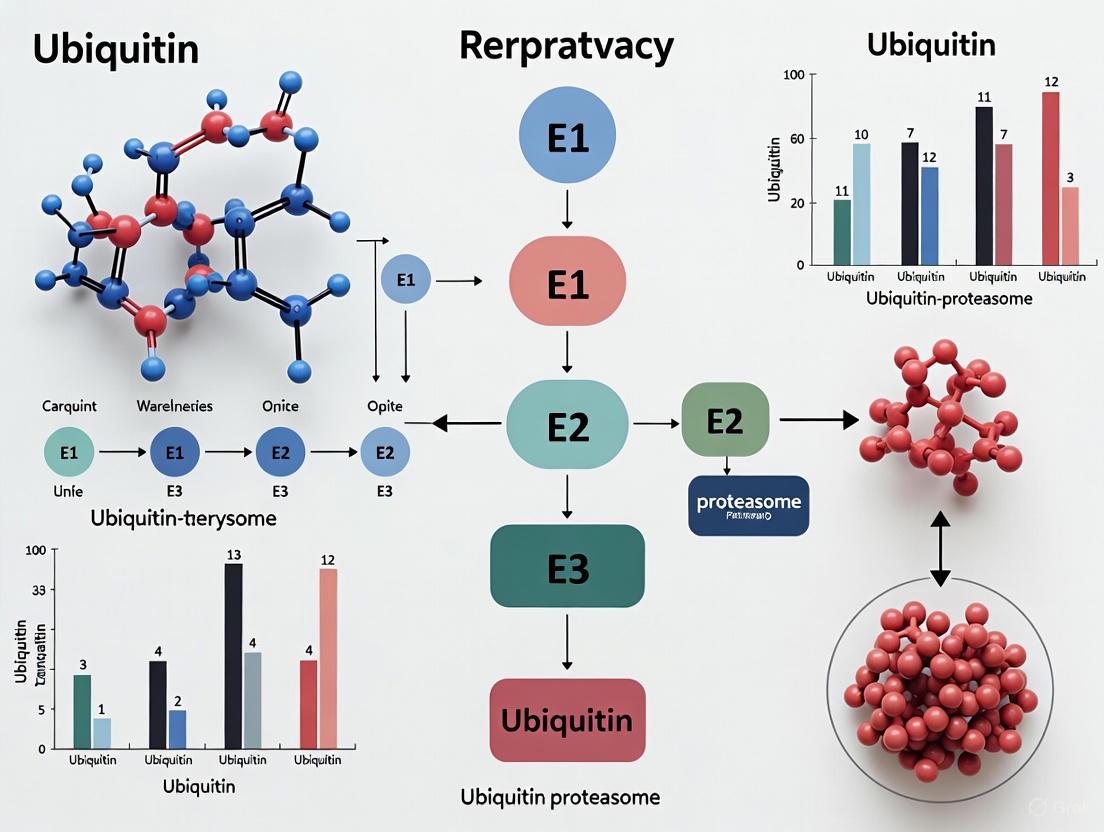
This article provides a comprehensive comparative analysis of the efficacy of ubiquitination-targeted therapies, a rapidly advancing field in precision medicine.
Ubiquitination-Targeted Therapies: A Comparative Analysis of Efficacy Across Cancer and Genetic Diseases
Abstract
This article provides a comprehensive comparative analysis of the efficacy of ubiquitination-targeted therapies, a rapidly advancing field in precision medicine. Targeting the ubiquitin-proteasome system (UPS) has evolved beyond proteasome inhibitors to include novel strategies like molecular glues and PROTACs. We explore foundational mechanisms across diseases, including recent evidence for Becker Muscular Dystrophy (BMD) treatment using TRIM63 and α-synuclein aggregation inhibitors. The review methodically compares applications in oncology—such as USP inhibitors and Bcl-2 axis targeting—with genetic disorders, addressing shared challenges like drug resistance and optimization strategies. By synthesizing validation data from preclinical and bioinformatic models, this analysis aims to guide researchers and drug development professionals in prioritizing the most promising therapeutic avenues for clinical translation.
Decoding the Ubiquitin-Proteasome System: Core Mechanisms and Disease Foundations
The ubiquitination cascade represents a crucial post-translational modification system that governs virtually all aspects of eukaryotic cell biology, from protein degradation to signal transduction [1]. This sophisticated enzymatic pathway involves a sequential three-step process mediated by ubiquitin-activating enzymes (E1), ubiquitin-conjugating enzymes (E2), and ubiquitin ligases (E3) working in concert to modify target proteins with the small protein modifier ubiquitin [2] [3]. The human genome encodes a remarkably selective yet diverse enzymatic machinery for ubiquitination, comprising approximately 2 E1 enzymes, around 40 E2 enzymes, and over 700 E3 ligases [2]. This tiered enzymatic system provides both specificity and versatility in regulating protein fate, where E1 enzymes initiate the cascade, E2 enzymes determine ubiquitin chain topology, and E3 ligases confer substrate specificity [2] [3]. The resulting "ubiquitin code"—consisting of monoubiquitination, multiple monoubiquitination, or various polyubiquitin chains linked through different lysine residues—dictates diverse functional outcomes for the modified substrate, including proteasomal degradation, altered activity, or changed subcellular localization [2] [1]. Understanding the comparative functions and regulatory mechanisms of these enzymes is fundamental to exploiting this system for therapeutic interventions, particularly in diseases like cancer where ubiquitination pathways are frequently dysregulated [3] [1] [4].
The Enzymatic Machinery of Ubiquitination
E1 Ubiquitin-Activating Enzymes: Cascade Initiation
The ubiquitination cascade initiates with E1 ubiquitin-activating enzymes, which prime and transfer ubiquitin to E2 conjugating enzymes. Two E1 enzymes have been identified in humans: UBA1, which serves as the primary activator for the vast majority of E2s, and UBA6, a specialized E1 with a more restricted set of partners [5] [3]. The E1 enzyme utilizes ATP to form a high-energy thioester bond between its active site cysteine residue and the C-terminal glycine of ubiquitin [2] [3]. This activated ubiquitin is then transferred to the catalytic cysteine of an E2 enzyme. UBA6 is evolutionarily distinct and uniquely charges the dedicated E2 USE1 (UBE2Z), a reflection of its unique C-terminal ubiquitin-fold domain that selectively engages specific E2 partners [5]. Research has demonstrated that UBA1 and UBA6 pathways can function in parallel with the same E3 ligases to degrade identical targets in a spatially distinct manner, adding a layer of complexity to ubiquitination regulation [5]. The critical importance of E1 function is highlighted by the embryonic lethality observed in UBA6-deficient mice before day 5 of development [5], underscoring the non-redundant functions of these activating enzymes.
E2 Ubiquitin-Conjugating Enzymes: Specificity Determinants
E2 ubiquitin-conjugating enzymes serve as the central specificity determinants in the ubiquitination cascade, receiving activated ubiquitin from E1 and cooperating with E3 ligases to modify substrate proteins [6] [3]. The human genome encodes approximately 40 E2 enzymes that exhibit remarkable functional diversity despite structural conservation [2]. E2 enzymes primarily determine the topology of ubiquitin chains assembled on substrates, with different E2s specializing in specific linkage types [2]. For instance, the E2 complex UBE2N(UBC13)-UEV1A specifically generates Lys63-linked ubiquitin chains, while combinations of other E2s with appropriate E3s create different chain architectures [2].
Recent research has revealed that E2 functions extend beyond simple ubiquitin carriers, with some E2s exhibiting remarkable regulatory properties. UBE2J2, a membrane-anchored E2 involved in ER-associated degradation (ERAD), recently has been shown to act as a sensor for lipid packing [6]. In loosely-packed ER-like membranes, UBE2J2 becomes inactive due to membrane association that impedes ubiquitin loading, while tighter membrane packing promotes its active conformation and interaction with E1 [6]. This lipid-sensing capability allows UBE2J2 to relay membrane property information to multiple E3 ligases, including RNF145, MARCHF6, and RNF139, thereby integrating membrane homeostasis with ubiquitination activity [6]. Another E2, USE1, functions specifically with the UBA6 E1 enzyme and partners with the UBR1-3 subfamily of N-recognin E3s to degrade N-end rule substrates like RGS4, RGS5, and Arg(R)-GFP [5].
Table 1: Characteristics of Selected E2 Ubiquitin-Conjugating Enzymes
| E2 Enzyme | Specialized Functions | Chain Linkage Specificity | Regulatory Partners | Cellular Role |
|---|---|---|---|---|
| UBE2N-UEV1A | Forms complex with UEV1A | Lys63-linked chains [2] | TRAF6, CHIP E3 ligases [2] | DNA repair, signaling [2] |
| USE1 (UBE2Z) | Dedicated E2 for UBA6 [5] | K48-specific discharge [5] | UBR1-3 N-recognins [5] | N-end rule pathway [5] |
| UBE2J2 | Membrane-anchored, lipid sensor [6] | Priming E2, Ser/Thr modification [6] | RNF145, MARCHF6, RNF139 [6] | ER-associated degradation [6] |
| UBE2G2 | ERAD complex [6] | Lys48-linked chains [6] | AUP1 membrane adapter [6] | Proteasomal degradation [6] |
E3 Ubiquitin Ligases: Substrate Recognition Specialists
E3 ubiquitin ligases represent the largest and most diverse component of the ubiquitination cascade, with over 700 members in humans that provide exquisite substrate specificity [2] [3]. E3s are categorized into three major families based on their structural features and catalytic mechanisms: Really Interesting New Gene (RING)-type, homologous with E6-associated protein C-terminus (HECT)-type, and RING-Between-RING (RBR)-type E3 ligases [2]. RING-type E3s function as scaffolds that position E2 enzymes adjacent to substrates to promote direct ubiquitin transfer, while HECT-type E3s form an intermediate thioester bond with ubiquitin on their active site cysteine before transferring it to substrates [2]. RBR-type E3s utilize a hybrid mechanism that combines features of both RING and HECT-type enzymes [2].
The TRIM family of E3 ligases exemplifies the critical regulatory roles of E3s in immune responses, while the UBR family (UBR1, UBR2, UBR3) of N-recognin E3s demonstrates how E3s recognize specific degradation signals, particularly in the N-end rule pathway that targets proteins with specific N-terminal residues for destruction [2] [5]. Another crucial E3 complex, the linear ubiquitin chain assembly complex (LUBAC), specifically synthesizes Met1-linked (linear) ubiquitin chains using various E2 enzymes including UBE2K, UBCH5A, UBCH5B, UBCH5C, and UBCH7 [2]. The substrate specificity of E3s is often mediated by specialized domains, such as the UBR domain in UBR1-3 that recognizes type-I (basic) and type-II (bulky hydrophobic) N-terminal degrons [5].
Table 2: Major E3 Ubiquitin Ligase Families and Their Characteristics
| E3 Family | Catalytic Mechanism | Representative Members | Key Functions | Regulatory Features |
|---|---|---|---|---|
| RING-type | Scaffold for E2-substrate proximity [2] | TRIM family, UBR1-3 [2] [5] | Immune regulation, N-end rule pathway [2] [5] | Multi-domain architecture [5] |
| HECT-type | Thioester intermediate [2] | HUWE1 [4] | MYCN regulation in neuroblastoma [4] | Regulated by adaptor proteins [1] |
| RBR-type | Hybrid mechanism [2] | HOIP (LUBAC complex) [2] | Linear ubiquitin chain assembly [2] | Multi-step catalysis [2] |
| SCF complex | Multi-subunit RING E3 [3] | Fbxw7 [4] | MYCN degradation [4] | Substrate recognition by F-box proteins [3] |
Quantitative Analysis of Ubiquitination Cascade Components
Comparative Enzyme Kinetics and Degradation Efficiency
The ubiquitination cascade operates with remarkable efficiency, with kinetic studies revealing precise metrics for different enzymatic components and their substrates. Quantitative analysis of ubiquitination kinetics using degron-based substrates has identified several high-performance degradation sequences with potential applications in proteasome reporting and therapeutic development [7]. These studies employ computational models incorporating first-order reaction kinetics to distinguish between multi-monoubiquitination and polyubiquitination mechanisms, providing insight into the molecular dynamics of substrate targeting [7].
Experimental assessment of E2 ubiquitin loading has yielded precise quantitative measurements of enzyme activity under various conditions. For UBE2J2, researchers have demonstrated that membrane composition dramatically impacts loading efficiency, with only minimal activity observed in ER-like membranes containing 33% saturated fatty acids, compared to near-complete loading within 1 minute in detergent solution [6]. This quantitative difference highlights the critical importance of cellular context in E2 enzyme regulation. Furthermore, UBE2J1, despite structural similarity to UBE2J2, shows markedly different kinetics, with efficient ubiquitin loading in both detergent solution and ER-like membranes, achieving complete loading of the correctly oriented fraction within 30 seconds [6].
Table 3: Quantitative Metrics in Ubiquitination Cascade Components
| Parameter | Experimental Measurement | Impact on Function | Experimental System |
|---|---|---|---|
| UBE2J2 loading | Minimal in 33% SFA membranes; complete in 1 min in detergent [6] | Membrane lipid packing regulates E2 activity [6] | Liposome reconstitution [6] |
| UBE2J1 loading | Complete within 30s in both membranes and detergent [6] | Distinct from UBE2J2 despite similarity [6] | Liposome reconstitution [6] |
| Degron efficiency | Subset shows higher ubiquitination rate vs. peptidase degradation [7] | Identifies ideal proteasomal targeting motifs [7] | Degron-based substrate assay [7] |
| UBA6-USE1 pathway | Cytoplasmic degradation of RGS4/5 proteins [5] | Spatially distinct from UBA1-UBE2A/B pathway [5] | N-end rule substrate turnover [5] |
Regulatory Mechanisms in the Ubiquitination Cascade
Alternative Activation Pathways and Spatial Regulation
Beyond the canonical UBA1-dependent pathway, the UBA6-USE1 cascade represents an alternative ubiquitination pathway that functions in parallel to degrade overlapping substrates in spatially distinct cellular compartments [5]. This pathway demonstrates how alternative E1-E2 combinations can achieve compartment-specific protein degradation, with the UBA6-USE1 axis operating primarily in the cytoplasm while UBA1-UBE2A/B mediates turnover of both nuclear and a phenotypically distinct pool of cytoplasmic substrates [5]. The UBA6-USE1 cascade collaborates with the UBR1-3 subfamily of N-recognin E3s to degrade N-end rule substrates including RGS4, RGS5, and model substrates like Arg(R)-GFP [5]. This pathway exemplifies how alternative ubiquitination cascades can provide regulatory specificity through spatially restricted activity rather than completely novel substrate choices.
Lipid-Mediated Regulation of Ubiquitination Enzymes
Membrane composition has emerged as a critical regulator of ubiquitination enzymes, particularly for membrane-associated components of the ERAD pathway. The E2 enzyme UBE2J2 exhibits remarkable sensitivity to lipid packing, serving as a membrane property sensor that translates bilayer characteristics into ubiquitination activity [6]. In loosely-packed membranes mimicking the native ER environment, UBE2J2 adopts an inactive conformation, while tighter lipid packing promotes its active state and facilitates interaction with E1 [6]. Concurrently, the E3 ligase RNF145 directly senses cholesterol levels, which alter its oligomerization status and catalytic activity [6]. This dual regulation at both E2 and E3 levels creates a sophisticated system for monitoring membrane homeostasis and coordinating appropriate degradation responses for lipid metabolic enzymes.
Post-Translational Modifications of Ubiquitin
The ubiquitin code is further complicated by post-translational modifications of ubiquitin itself, which add another regulatory layer to the ubiquitination cascade. Phosphorylation and acetylation of ubiquitin have been identified through mass spectrometry-based studies, with specific modifications exerting distinct effects on ubiquitin function [2]. For example, PTEN-induced putative kinase 1 (PINK1)-dependent phosphorylation at Ser65 of ubiquitin occurs at mitochondria and is crucial for quality control mechanisms, while acetylation of ubiquitin at Lys6 and Lys48 inhibits ubiquitin chain elongation [2]. Additionally, pathogenic bacteria have evolved mechanisms to subvert host ubiquitination through unusual ubiquitin modifications, such as the phosphoribosylation of ubiquitin on specific arginine residues by Legionella pneumophila effector SdeA, which enables ATP-independent ubiquitination of host proteins [2].
Experimental Approaches for Dissecting Ubiquitination Mechanisms
Key Methodologies for Ubiquitination Cascade Analysis
Cutting-edge research in ubiquitination mechanisms employs sophisticated experimental systems to dissect the complex interactions and regulatory controls within this pathway. Reconstitution of purified ERAD components into membranes of defined lipid composition has proven invaluable for dissecting how specific lipids and global membrane properties regulate the ubiquitination cascade [6]. This approach allows researchers to isolate individual reactions and determine how membrane properties affect each membrane-associated enzyme separately, revealing the step-wise impact of lipid environment on ubiquitination efficiency.
Engineered enzyme systems represent another powerful approach for dissecting ubiquitination mechanisms. Recent work has created a modular Uba1-nanobody fusion (Uba1-VHH05) that selectively engages E2s fused to the 6e-tag, enabling selective ubiquitin transfer to defined E2 enzymes without altering other cascade components [8]. This plug-and-play interface preserves native Uba1 catalytic activity while allowing precise dissection of E2-specific functions and offering a new tool to generate orthogonal ubiquitin cascades both in vitro and in cellular environments [8].
Degron-based substrates have emerged as crucial tools for quantitatively analyzing ubiquitination kinetics [7]. By incorporating known degradation sequences into standardized substrates, researchers can comparatively assess ubiquitination rates across different degron-E3 pairs and determine the importance of ubiquitination site location relative to the degron sequence. This approach has identified several candidate portable degrons with higher ubiquitination rates compared to peptidase-dependent degradation, ideal characteristics for proteasomal targeting motifs in reporter systems [7].
Affinity reagents for ubiquitome analysis have also advanced significantly, with engineered proteins like the GST-qUBA reagent (four tandem repeats of ubiquitin-associated domain from UBQLN1 fused to GST) enabling isolation of polyubiquitinated proteins and identification of endogenous ubiquitination sites without proteasome inhibitors or ubiquitin overexpression [9]. This approach has identified hundreds of endogenous ubiquitination sites in human cells and revealed unexpected breadth in ubiquitination targets, including significant mitochondrial protein representation [9].
Ubiquitination Cascade Pathway
The Scientist's Toolkit: Essential Research Reagents
Table 4: Key Research Reagents for Ubiquitination Cascade Studies
| Reagent / Tool | Composition / Type | Experimental Function | Research Application |
|---|---|---|---|
| GST-qUBA Reagent | Four tandem UBA domains from UBQLN1 fused to GST [9] | Affinity isolation of polyubiquitinated proteins [9] | Proteome-wide ubiquitination site identification [9] |
| Uba1-VHH05 Fusion | Uba1 with nanobody replacing UFD domain [8] | Selective ubiquitin transfer to tagged E2s [8] | Dissection of E2-specific functions; orthogonal cascades [8] |
| Degron-Based Substrates | Portable degrons fused to reporter constructs [7] | Quantitative analysis of ubiquitination kinetics [7] | Comparison of degron efficiency; proteasome reporter development [7] |
| Defined Lipid Liposomes | Synthetic membranes with controlled lipid composition [6] | Reconstitution of membrane-associated ubiquitination [6] | Analysis of lipid regulation on E2/E3 activity [6] |
| HA-Tagged USE1 | Retrovirally expressed tagged E2 [5] | Proteomic analysis of E2-interacting partners [5] | Identification of E3s that associate with specific E2s [5] |
Therapeutic Targeting of the Ubiquitination Cascade
Clinical Applications and Emerging Strategies
The ubiquitination cascade represents a promising therapeutic target, particularly in oncology, where multiple strategies have been developed to intervene at different levels of the pathway [3] [1]. Proteasome inhibitors such as bortezomib and carfilzomib have achieved notable clinical success in multiple myeloma and mantle cell lymphoma, validating the ubiquitin-proteasome system as a viable drug target [3]. These agents target the final step in the degradation cascade, preventing the breakdown of polyubiquitinated proteins and disrupting protein homeostasis in cancer cells.
More specific targeting approaches include E3 ligase inhibitors, such as MDM2 antagonists (nutlin-3a, RG7112) that prevent degradation of tumor suppressor p53, and immunomodulatory drugs (thalidomide, lenalidomide) that redirect CRL4 CRBN E3 ligase activity toward specific transcription factors [3]. Additionally, strategies like proteolysis-targeting chimeras (PROTACs) harness the endogenous ubiquitination machinery to degrade specific protein targets by bringing them into proximity with E3 ligases, offering a promising approach for targeting previously "undruggable" proteins [4].
Research in neuroblastoma has demonstrated the therapeutic potential of targeting ubiquitination pathways, with inhibitors of the deubiquitinase USP7 showing promise in promoting degradation of oncogenic MYCN protein [4]. Similarly, in Becker muscular dystrophy, targeting dystrophin ubiquitination through TRIM63 inhibitors has improved myogenic cell engraftment and dystrophin expression in vivo, highlighting applications beyond oncology [10].
The continued development of tools to precisely manipulate specific components of the ubiquitination cascade, such as engineered E1 enzymes with redirected E2 specificity [8], promises to expand our therapeutic capabilities further. As our understanding of the nuanced regulation of this system grows, so too will opportunities to develop increasingly targeted interventions with enhanced efficacy and reduced off-target effects.
Therapeutic Targeting Strategies
Ubiquitination is a sophisticated post-translational modification that transcends its initial characterization as a mere marker for proteasomal degradation. The discovery that ubiquitin chains of different topologies encode distinct cellular signals has revolutionized our understanding of this regulatory system. While K48-linked chains remain the paradigm for targeting proteins for degradation, K63-linked and M1-linked (linear) ubiquitin chains have emerged as critical regulators of non-degradative processes including cell signaling, DNA repair, and immune response [11] [12]. This expansion of the "ubiquitin code" represents a fundamental shift in our molecular understanding of cellular regulation.
The biological implications of this complexity are profound. Since the initial discovery of K48-linked polyubiquitin's role in degradation, subsequent research has revealed that different linkage types are not merely redundant but constitute specialized signaling languages within the cell [11]. The structural attributes of each chain type create unique surfaces that are specifically recognized by effector proteins, thereby translating the ubiquitin signal into appropriate cellular responses [13] [12]. This review provides a comparative analysis of the functions, experimental approaches, and therapeutic implications of these atypical ubiquitin linkages, with particular emphasis on their roles in disease pathways and targeted intervention strategies.
Comparative Analysis of Atypical Ubiquitin Linkages
Table 1: Structural and Functional Characteristics of Atypical Ubiquitin Linkages
| Linkage Type | Chain Architecture | Primary Biological Functions | Key E3 Ligases | Recognizing Domains/Effectors |
|---|---|---|---|---|
| K63-linked | Extended, relaxed structure [14] | DNA damage repair [14], NF-κB signaling [15], endocytic trafficking [12] | TRAF6 [14], Mms2/Ubc13 complex [11] | TAB2/3, RAP80 [14] [15] |
| M1-linked (Linear) | Linear, extended structure [13] | NF-κB activation [13] [16], TNF signaling [16], inflammation [13] | LUBAC (HOIP/HOIL-1/SHARPIN) [13] [16] | NEMO (UBAN domain) [13] [16] |
| K48-K63 Branched | Heterotypic, branched architecture [15] | Amplifies NF-κB signaling [15], protects from deubiquitination [15] | HUWE1 (with TRAF6) [15], UBR5/ITCH [17] | TAB2 [15] |
Table 2: Quantitative Assessment of Ubiquitin Linkage Functions in Experimental Systems
| Linkage Type | Experimental Readout | Cellular Sensitivity | Key Regulatory DUBs | Therapeutic Implications |
|---|---|---|---|---|
| K63-linked | Binds DNA via Thr9, Lys11, Glu34 (DIP motif) [14]; impaired repair with DIP mutations [14] | Increased sensitivity to DNA-damaging agents (etoposide, cisplatin) [14] | USP53/USP54 (K63-specific) [18], CYLD [15] | Genome maintenance, cancer therapy resistance [14] [18] |
| M1-linked (Linear) | Essential for TNF-RSC formation; NF-κB activation [16] | Defective embryonic lethality in LUBAC-deficient mice [13] | OTULIN, CYLD [13] | Inflammatory and autoimmune diseases [13] [16] |
| K48-K63 Branched | Enhances NF-κB signaling; protects K63 chains from CYLD [15] | Not specified in available search results | CYLD (inhibited by K48 branch) [15] | Inflammatory signaling amplification [15] |
Molecular Mechanisms and Signaling Pathways
K63-Linked Ubiquitin in DNA Repair and Signaling
K63-linked polyubiquitin chains play a surprisingly direct role in the DNA damage response through a non-canonical mechanism: direct binding to DNA. These chains utilize a DNA-interacting patch (DIP) composed of Thr9, Lys11, and Glu34 residues to interact with DNA, facilitating the recruitment of repair factors to damage sites [14]. This interaction is length-dependent, requiring at least four ubiquitin moieties for stable binding, and shows preference for single-stranded DNA and linear DNA with free ends [14]. The biological significance is underscored by cancer-associated mutations within the DIP motif that impair DNA binding capacity, resulting in defective DNA repair and increased cellular sensitivity to DNA-damaging agents [14].
Beyond DNA repair, K63 linkages are specifically decoded by specialized deubiquitinases. Recently discovered USP53 and USP54 exhibit remarkable specificity for K63-linked chains, with USP53 capable of a unique en bloc deubiquitination activity that removes entire K63-linked chains from substrate proteins [18]. Disease-associated mutations in USP53 cluster within its catalytic domain and abrogate this activity, linking K63 chain regulation to pediatric cholestasis [18]. This discovery revises the previous annotation of USP53 as a catalytically inactive pseudoenzyme and highlights the therapeutic relevance of K63-specific deubiquitinases.
M1-Linked Linear Ubiquitin in Immune Signaling
Linear ubiquitination is exclusively generated by the linear ubiquitin chain assembly complex (LUBAC), comprising HOIP, HOIL-1, and SHARPIN [13] [16]. HOIP contains a unique linear ubiquitin chain determining domain (LDD) that positions the acceptor ubiquitin's N-terminus for Met1 linkage formation [13]. The catalytic activity of full-length HOIP is autoinhibited and requires binding of HOIL-1 and SHARPIN UBL domains for activation [13]. LUBAC preferentially assembles linear chains on substrates pre-modified with K63-linked ubiquitin, creating heterotypic signaling platforms [13].
In TNF receptor signaling, LUBAC-generated linear chains are indispensable for full NF-κB activation by modifying key signaling components including NEMO, RIP1, and RIP2 [16]. The UBAN domain of NEMO specifically recognizes M1-linked diubiquitin, translating the linear ubiquitin signal into downstream NF-κB pathway activation [16]. This pathway is finely tuned by the opposing actions of the deubiquitinases OTULIN and CYLD, which cleave linear chains with remarkable specificity [13]. The physiological importance is demonstrated by mouse models: HOIL-1 deficiency causes embryonic lethality, while SHARPIN-deficient mice exhibit chronic proliferative dermatitis [13] [16].
Branched Ubiquitin Chains as Regulatory Integrators
Branched ubiquitin chains containing both K48 and K63 linkages represent an emerging dimension of ubiquitin coding. These heterotypic polymers are synthesized through collaboration between E3 ligases with distinct specificities. During NF-κB signaling, TRAF6 first assembles K63-linked chains, after which HUWE1 generates K48 branches on the K63 chains [15]. This cooperative mechanism creates a branched ubiquitin signal with unique properties that neither linkage type possesses alone [15].
The K48-K63 branched chain serves a dual regulatory function: it maintains recognition by TAB2 (which typically binds K63 linkages) while simultaneously protecting the K63 linkages from cleavage by the deubiquitinase CYLD [15]. This protective effect amplifies and sustains NF-κB signaling in response to interleukin-1β stimulation [15]. Similar collaborative mechanisms are observed with other E3 pairs; for instance, ITCH and UBR5 generate K48-K63 branched chains on the pro-apoptotic regulator TXNIP, converting a non-degradative K63 signal into a proteolytic signal [17].
Figure 1: Signaling Pathways of Atypical Ubiquitin Linkages. K63 linkages (blue) in DNA repair; Linear M1 linkages (red) in TNF signaling; Branched K48/K63 linkages (purple) in IL-1β signaling.
Experimental Approaches and Methodologies
Key Experimental Protocols for Ubiquitin Research
The study of atypical ubiquitin linkages relies on specialized methodologies that enable specific detection and functional characterization. In vitro ubiquitin chain binding assays have been instrumental in identifying novel functions, such as the interaction between K63-linked chains and DNA. In these experiments, synthetic polyubiquitin chains of defined linkage (K63, K48, K11, M1, etc.) are incubated with target molecules like dsDNA, ssDNA, or nucleosomes, followed by pull-down assays and Western blotting with linkage-specific antibodies [14]. Specificity is confirmed through competition experiments, chain length dependence tests, and mutation of critical interaction motifs like the DIP domain in K63 chains [14].
Mass spectrometry-based quantification strategies have revealed the abundance and dynamics of branched ubiquitin chains in cells. Absolute quantification (AQUA) methodologies utilize synthetic stable isotope-labeled ubiquitin peptides as internal standards to precisely measure the relative abundance of different linkage types [15]. This approach demonstrated that K48-K63 branched linkages are surprisingly abundant in mammalian cells and increase in response to specific stimuli like IL-1β [15]. For functional studies, reconstituted ubiquitination systems with purified E1, E2, and E3 enzymes (e.g., TRAF6 with HUWE1) allow precise dissection of the biochemical requirements for branched chain formation [15].
The Scientist's Toolkit: Essential Research Reagents
Table 3: Essential Research Reagents for Studying Atypical Ubiquitin Linkages
| Reagent Category | Specific Examples | Applications and Functions |
|---|---|---|
| Linkage-Specific Antibodies | Anti-K63-Ub, Anti-M1-Ub (linear), Anti-K48-Ub [14] [12] | Immunoblotting, immunofluorescence; detect specific chain types in cells and tissues |
| Defined Ubiquitin Chains | Synthetic K63-, K48-, M1-linked tetraubiquitin [14] [19] | In vitro binding assays, DUB activity profiling, structural studies |
| Activity-Based Probes | Ubiquitin-propargylamide (Ub-PA) probes [18] | DUB activity profiling, identification of active deubiquitinases |
| Recombinant E3 Ligases | TRAF6, LUBAC components, HUWE1 [14] [13] [15] | In vitro ubiquitination assays, reconstitution of ubiquitination cascades |
| DUB Inhibitors | K63-specific inhibitors, OTULIN inhibitors [13] [18] | Functional studies of specific DUBs, therapeutic exploration |
Figure 2: Experimental Workflow for Ubiquitin Chain Analysis. Key methodologies for detecting and characterizing atypical ubiquitin linkages.
Therapeutic Implications and Future Perspectives
The expanding understanding of atypical ubiquitin linkages opens new avenues for therapeutic intervention. Components of the linear ubiquitination pathway represent promising targets for inflammatory and autoimmune diseases. Given LUBAC's critical role in NF-κB activation, selective inhibition of HOIP catalytic activity could provide a more targeted approach compared to broad immunosuppressants [13] [16]. Similarly, the discovery of K63-specific deubiquitinases like USP53 and their association with human disease (progressive familial intrahepatic cholestasis) highlights the potential for developing linkage-specific DUB modulators [18].
The emerging role of K63 linkages in DNA damage response suggests that targeting the interaction between K63 chains and DNA repair machinery could sensitize cancer cells to conventional DNA-damaging chemotherapeutics [14]. This approach is particularly compelling given the observed correlation between mutations in the K63 DNA-binding motif and defective DNA repair in cancer patients [14]. For branched ubiquitin chains, the collaborative mechanism between E3 ligases provides multiple nodal points for therapeutic intervention, potentially allowing selective disruption of specific signaling outputs without globally disrupting protein degradation [17] [15].
Future research directions will need to address the dynamic interplay between different linkage types in spatial and temporal contexts. The development of more sophisticated tools, including improved linkage-specific antibodies, sensors for real-time monitoring of ubiquitin chain dynamics in live cells, and selective small molecule modulators of specific E3 ligases and DUBs will be essential for translating our mechanistic understanding into therapeutic advances [12]. As we continue to decode the complex language of the ubiquitin code, the therapeutic potential of targeting specific ubiquitin linkages promises to open new frontiers in precision medicine.
Deubiquitinating enzymes (DUBs) are a critical class of proteases that counterbalance the ubiquitin system by removing ubiquitin modifications from substrate proteins. This dynamic regulation impacts virtually all cellular processes, and dysregulation of DUB activity is implicated in numerous diseases, making them promising therapeutic targets [20] [21]. This guide provides a comparative analysis of DUB families and their functions, focusing on their emerging roles in therapeutic development.
The ubiquitin-proteasome system (UPS) is a crucial regulatory mechanism for cellular protein homeostasis, controlling the degradation of approximately 80-90% of cellular proteins [22]. Within this system, DUBs function as key regulatory components that reverse the process of ubiquitination by cleaving ubiquitin chains from protein substrates [20] [23]. The human genome encodes approximately 100 DUBs, which are systematically classified into distinct families based on their catalytic mechanisms and structural features [22] [20]. These enzymes maintain ubiquitin homeostasis by processing ubiquitin precursors, editing ubiquitin chains, and ultimately determining the fate and function of target proteins, thereby influencing critical processes ranging from cell cycle progression and signal transduction to DNA damage repair and immune responses [20] [24].
Comprehensive Classification of DUB Families
DUBs are systematically classified based on their catalytic domain architecture and mechanistic properties. The major classes include cysteine-dependent deubiquitinases and one family of zinc-dependent metalloproteases [22] [25]. The table below provides a detailed comparison of the primary DUB families.
Table 1: Classification and Characteristics of Major DUB Families
| DUB Family | Catalytic Type | Human Members | Characteristic Domains | Ubiquitin Chain Linkage Specificity | Key Functions |
|---|---|---|---|---|---|
| USP (Ubiquitin-Specific Proteases) | Cysteine protease | ~58 [25] | USP catalytic domain, various accessory domains (DUSP, UBL, UIM) [25] | Broad specificity (K48, K63, M1) [20] | Largest family; diverse cellular functions including protein degradation, cell cycle regulation, DNA repair [20] |
| OTU (Ovarian Tumor Proteases) | Cysteine protease | 14 [25] | OTU domain [20] | Variable; often specific for particular chain types [20] | Regulates abundance of selected ubiquitin chain types under specific physiological conditions [20] |
| UCH (Ubiquitin C-Terminal Hydrolases) | Cysteine protease | 4 [25] | UCH catalytic domain [20] | Preferentially cleaves small adducts from ubiquitin C-terminus [25] | Processes ubiquitin precursors; essential in intracellular ubiquitin cycle [20] |
| MJD (Machado-Josephin Domain Proteases) | Cysteine protease | 5 [25] | Josephin domain [20] | Prefers O-linked ubiquitination [20] | Associated with neurodegenerative diseases; unique enzymatic characteristics [20] |
| JAMM/MPN | Zinc metalloprotease | 14 [25] | JAMM domain coordinating zinc ions [25] [20] | Preferentially cleaves K63-linked chains [20] | Only metal-dependent DUB family; uses zinc-dependent mechanism for isopeptide bond hydrolysis [25] [20] |
| MINDY | Cysteine protease | 4 [20] | Motif interacting with ubiquitin [20] | Preferentially hydrolyzes K48-linked polyubiquitin from distal end [20] | Recently discovered family; specific for K48-linked chains [20] |
| ZUFSP | Cysteine protease | 1 [20] | Unique protease fold [20] | Specifically cleaves K63-linked polyubiquitin [20] | Prototype of a novel class of DUBs; unique structural characteristics [20] |
The classification reflects the evolutionary diversity of deubiquitination machinery. Most DUB families belong to cysteine proteases, which employ an active-site cysteine residue for nucleophilic attack during catalysis [22] [25]. In contrast, the JAMM/MPN family represents the sole class of zinc-dependent metalloprotease DUBs [22] [25]. This exquisite linkage-specific regulation enables the DUB system to coordinate a wide array of cellular processes with high specificity.
Molecular Mechanisms and Functional Roles
Catalytic Mechanisms of DUB Action
DUBs employ distinct catalytic mechanisms based on their classification. Cysteine protease DUBs use a catalytic triad or dyad (cysteine, histidine, and aspartate or asparagine) where the histidine polarizes the cysteine residue, enabling nucleophilic attack on the isopeptide bond between ubiquitin and substrate proteins [25] [20]. The JAMM/MPN metalloproteases coordinate zinc ions with histidine, aspartate, and serine residues, which activate water molecules to hydrolyze the isopeptide bond [25] [20].
The modular structure of DUBs, combining catalytic cores with specialized recognition domains such as zinc finger (ZnF) domains, ubiquitin-like (UBL) folds, and ubiquitin-interacting motifs (UIMs), enables precise spatiotemporal control of ubiquitin signaling networks in response to cellular demands [22].
Key Functional Roles in Cellular Processes
- Ubiquitin Homeostasis: DUBs maintain cellular ubiquitin levels by processing inactive ubiquitin precursors (from genes UBA52, RPS27A, UBB, and UBC) to generate active monoubiquitin, and by recycling ubiquitin from polyubiquitin chains [25].
- Signal Modulation: By reversing ubiquitination, DUBs regulate key signaling pathways including NF-κB, PI3K/Akt/mTOR, and MAPK cascades, thereby influencing cell survival, proliferation, and stress responses [20].
- Proteasome Regulation: Specific DUBs like USP14 associate with the proteasome to prevent inhibitory ubiquitin chain accumulation and regulate substrate degradation [21].
Diagram 1: DUB Regulatory Network in Ubiquitin Signaling. This diagram illustrates how DUBs counterbalance the ubiquitination process to regulate diverse cellular outcomes.
DUBs in Human Disease and Targeted Therapies
DUB dysregulation contributes to numerous pathological conditions, including cancer, neurodegenerative disorders, inflammatory diseases, and viral infections [20] [24]. The table below highlights specific DUBs implicated in major human diseases and current therapeutic targeting strategies.
Table 2: DUBs in Human Diseases and Therapeutic Development
| Disease Category | Key DUBs Involved | Molecular Mechanisms | Therapeutic Approaches in Development |
|---|---|---|---|
| Neurodegenerative Diseases (e.g., Parkinson's Disease) | UCH-L1, USP30, USP15, OTUD3 [22] [26] | UCH-L1: Regulates α-synuclein degradation and neuroprotection [22]. USP30: Negative regulator of PINK1/Parkin-mediated mitophagy [22]. OTUD3: Stabilizes iron regulatory protein 2 (IRP2) to ameliorate iron deposition [22]. | DUB inhibitors for PD intervention; targeting proteostasis imbalance, mitochondrial integrity, and neuronal survival [22]. |
| Cancer | Multiple USP family members (USP7, USP28, USP22), BAP1 (UCH family) [20] [27] | USP28: Stabilizes oncogenes like c-Myc, Notch1 [25]. BAP1: Frequently mutated in multiple malignancies ("BAP1 cancer syndrome") [27]. USP22: Cancer stem cell marker that promotes stemness in hepatocellular carcinoma [27]. | Small-molecule DUB inhibitors; some approaching clinical trials for oncology indications [20] [21]. |
| Inflammatory Disorders | A20, OTULIN, CYLD [20] [24] | Negative regulation of NF-κB activation; CYLD mutations in familial cylindromatosis [24]. | Targeting DUBs to modulate immune signaling pathways [20]. |
| Viral Infections | Various host DUBs (USP3, USP21, CYLD) and viral-encoded DUBs [24] | Host DUBs: Regulate RIG-I-like receptors and STING-mediated antiviral signaling [24]. Viral DUBs: Hijack host ubiquitin system to facilitate viral survival and replication [24]. | DUB inhibitors as antiviral strategies; targeting virus-host interactions [24]. |
The development of small-molecule modulators targeting DUB activity represents a promising therapeutic strategy that may transcend the limitations of conventional therapies by addressing underlying pathogenic mechanisms rather than only alleviating symptoms [22]. For Parkinson's disease, DUB-targeted strategies offer superior multi-pathway intervention compared to conventional single-target therapies [22]. In oncology, first-generation DUB inhibitors are now approaching clinical trials [21].
Experimental Approaches for DUB Research
Key Methodologies in DUB Investigation
Research into DUB function and therapeutic targeting employs several specialized experimental approaches:
Activity-Based Profiling: Mechanism-based probes covalently label active DUBs to enable functional characterization and identification of novel family members [28]. These probes typically exploit the nucleophilic active-site cysteine to form thioether bonds, allowing monitoring of DUB activity in complex proteomes.
High-Throughput Screening: Automated screening assays identify selective DUB inhibitors, though challenges exist with maintaining DUB activity without generating false positives from reducing agents [21].
Genetic Manipulation: CRISPR/Cas9-mediated knockout and RNA interference techniques elucidate DUB functions in cellular and animal models, particularly in pathways relevant to cancer and neurodegeneration [22] [27].
Structural Studies: X-ray crystallography and cryo-EM reveal DUB mechanisms and inform rational drug design by visualizing enzyme-substrate interactions and catalytic domains [20] [28].
Essential Research Reagents and Tools
Table 3: Essential Research Reagents for DUB Investigations
| Reagent Category | Specific Examples | Research Applications | Key Functions |
|---|---|---|---|
| Activity-Based Probes | Ubiquitin-based covalent probes [28] | Functional profiling of DUB activity in complex proteomes | Covalently label active-site cysteine residues to monitor DUB activity and identity |
| DUB Inhibitors | Small-molecule inhibitors targeting specific DUB families [21] | Therapeutic validation and functional studies | Selectively inhibit DUB activity to investigate biological functions and therapeutic potential |
| Recombinant DUB Proteins | Purified USP7, USP14, UCH-L1, etc. [20] | Biochemical assays, structural studies, and high-throughput screening | Provide defined enzymatic sources for mechanistic studies and inhibitor screening |
| Ubiquitin Chain Types | K48-linked, K63-linked, and other linkage-specific ubiquitin chains [20] | Substrate specificity profiling | Determine linkage preferences and enzymatic activities of different DUB families |
| Cell Line Models | Cancer cell lines, iPSC-derived neurons [22] [29] | Cellular validation of DUB functions | Provide physiological context for studying DUB roles in disease-relevant pathways |
| Animal Disease Models | Parkinson's models, tumor xenografts [22] [27] | In vivo therapeutic efficacy studies | Evaluate physiological effects of DUB modulation in complex organisms |
Diagram 2: Experimental Workflow for DUB-Targeted Therapeutic Development. This diagram outlines the key stages in translating basic DUB research into potential therapies, with associated experimental approaches indicated by dashed lines.
DUBs represent a sophisticated regulatory system that maintains cellular homeostasis through precise control of ubiquitin signaling. Their classification into distinct families with specialized functions reflects evolutionary adaptation to diverse cellular requirements. The growing understanding of DUB mechanisms in diseases, particularly neurodegenerative disorders and cancer, has positioned them as promising therapeutic targets.
Future research directions include developing more selective DUB inhibitors, understanding tissue-specific DUB functions, and exploring combination therapies that target multiple components of the ubiquitin system. The ongoing clinical development of first-generation DUB inhibitors will provide critical validation of this target class and potentially establish new treatment paradigms for diseases with high unmet medical needs. As our knowledge of DUB biology continues to expand, so too will opportunities for therapeutic intervention across a spectrum of human disorders.
The ubiquitin-proteasome system (UPS) serves as the primary pathway for selective protein degradation in eukaryotic cells, regulating approximately 80% of intracellular proteins including those controlling cell cycle progression, stress responses, and apoptosis [30]. This sophisticated proteolytic system employs a cascade of E1 (activating), E2 (conjugating), and E3 (ligating) enzymes that tag target proteins with polyubiquitin chains, marking them for recognition and degradation by the 26S proteasome complex [31] [30]. The crucial role of UPS in maintaining protein homeostasis becomes starkly evident in cancer, where dysregulation of its components leads to uncontrolled proliferation and evasion of programmed cell death. Comprehensive genomic analyses of over 9,000 human tumors across 33 cancer types reveal that approximately 19% of all cancer driver genes affect UPS function [32], highlighting its fundamental importance in oncogenesis. The precision of UPS targeting is determined by the combinatorial specificity of E2-E3 enzyme pairs, with human genomes encoding approximately 50 E2s and 600 E3s that confer substrate specificity [31] [30]. This review systematically examines how cancer cells hijack this intricate degradation machinery to fuel their growth and survival, while exploring the therapeutic implications of targeting UPS components.
Fundamental Mechanisms of UPS Dysregulation in Cancer
Genetic Alterations in UPS Components
Cancer cells frequently harbor mutations in UPS components that disrupt normal protein degradation patterns, leading to stabilization of oncoproteins and accelerated degradation of tumor suppressors. Table 1 summarizes the key genetic alterations in UPS components and their oncogenic consequences. A landmark pan-cancer analysis utilizing machine learning approaches (deepDegron) has identified numerous mutations that result in degron loss, including gain-of-function truncating mutations in GATA3 and PPM1D that confer increased protein stability [32]. These mutations effectively shield oncoproteins from their normal regulatory degradation, providing a direct mechanistic link between UPS dysregulation and cancer progression.
Table 1: Genetic Alterations in UPS Components and Their Oncogenic Consequences
| UPS Component | Genetic Alteration | Cancer Type(s) | Molecular Consequence | Functional Outcome |
|---|---|---|---|---|
| E3 Ligase FBW7 | Loss-of-function mutations | T-cell leukemia, colorectal cancer | Stabilization of c-Myc, Notch, cyclin E | Uncontrolled proliferation; genomic instability [30] |
| E3 Ligase MDM2 | Amplification/overexpression | Various cancers (e.g., neuroblastoma, cervical cancer) | Enhanced p53 degradation | Evasion of p53-mediated apoptosis and cell cycle arrest [30] [33] |
| E2 Enzyme UBE2C | Overexpression | Gastric, colorectal, breast, thyroid cancers | Chromosomal instability, cell cycle dysregulation | Enhanced proliferation, migration, invasion, and drug resistance [30] |
| GATA3 | Truncating mutations (degron loss) | Breast cancer | Increased protein stability | Altered transcriptional program, tumor progression [32] |
| PPM1D | Truncating mutations (degron loss) | Various cancers | Increased protein stability | Dysregulated stress signaling, survival advantage [32] |
Transcriptional and Post-translational Dysregulation
Beyond genetic mutations, cancer cells exploit transcriptional and post-translational mechanisms to dysregulate UPS function. Numerous E2 enzymes and E3 ligases are transcriptionally upregulated in cancers, often correlating with poor prognosis. For instance, UBE2C is overexpressed in gastric, colorectal, breast, and thyroid cancers, where it promotes chromosomal instability and drives cell cycle progression by overriding the G2/M checkpoint [30]. Similarly, UBE2S, another E2 enzyme, is upregulated in endometrial carcinoma and lung adenocarcinoma, where it promotes tumor progression through SOX6/β-catenin signaling and perturbation of p53 signaling pathways [30]. Post-translational modifications further modulate the activity of UPS components, creating complex regulatory networks that cancer cells manipulate to their advantage. The deubiquitinating enzymes (DUBs), particularly ubiquitin-specific proteases (USPs), counterbalance ubiquitination and are frequently dysregulated in cancer, stabilizing oncoproteins and activating pro-survival pathways [34].
UPS-Driven Evasion of Apoptosis: Molecular Mechanisms and Experimental Evidence
Stabilization of Anti-apoptotic Proteins
Cancer cells deploy multiple UPS-mediated strategies to evade apoptosis, predominantly through regulation of BCL-2 family proteins and caspase activators. A fundamental mechanism involves the enhanced degradation of pro-apoptotic proteins and stabilization of anti-apoptotic factors. The E3 ligase MDM2 exemplifies this strategy—when amplified or overexpressed in various cancers, it excessively ubiquitinates p53, leading to its proteasomal degradation and effectively disabling a master regulator of apoptosis [35] [33]. Similarly, the multi-BH domain pro-apoptotic proteins BAX and BAK, which promote mitochondrial outer membrane permeabilization (MOMP), are tightly controlled by UPS-mediated degradation in cancer cells [35]. Experimental evidence from immunoblotting and co-immunoprecipitation assays demonstrates that several E3 ligases, including MULE/ARF-BP1 and GP78, directly ubiquitinate BAX and BAK, targeting them for proteasomal degradation and raising the threshold for apoptosis induction [35].
Disruption of Caspase Activation Cascades
The UPS further modulates apoptosis by regulating caspase activation, a hallmark of apoptotic execution. Both initiator caspases (caspase-2, -8, -9, -10) and executioner caspases (caspase-3, -7) are subject to ubiquitination that typically suppresses their activity [35]. Table 2 outlines key post-translational modifications of caspases in cancer and their functional consequences. For instance, phosphorylation of caspase-9 at Thr125 by multiple kinases including CDK1, ERK1/2, and p38 MAPK creates a recognition motif for the E3 ubiquitin ligase, leading to its ubiquitination and degradation, thereby suppressing mitotic cell death [35]. Experimental validation of these mechanisms typically involves site-directed mutagenesis of ubiquitination sites followed by cycloheximide chase assays to measure protein half-life, coupled with in vitro ubiquitination assays using purified E1, E2, and E3 components.
Table 2: Post-translational Modifications of Caspases in Cancer and Functional Consequences
| Caspase | Modifying Kinase/Phosphatase | Modification Site | Functional Consequence | Cancer Context |
|---|---|---|---|---|
| Caspase-2 | CK2 | Ser157 | Suppression of caspase activity | TRAIL resistance in esophageal cancer, colon cancer, glioma cells [35] |
| Caspase-8 | SRC, FYN, LYN | Tyr397, Tyr465 | Suppression of caspase activity | Colon cancer [35] |
| Caspase-9 | CDK1, ERK1/2, p38 MAPK | Thr125 | Ubiquitination and degradation; suppression of caspase activity | Suppression of mitotic cell death [35] |
| Caspase-9 | AKT | Ser196 (human specific) | Suppression of caspase activity | Prostate cancer cells, colon cancer cells [35] |
| Caspase-3 | p38 MAPK (PP2A) | Ser150 | Suppression of caspase activity | [35] |
Diagram 1: UPS-mediated regulation of apoptotic machinery in cancer cells. UPS dysregulation stabilizes anti-apoptotic proteins (green) while promoting degradation of pro-apoptotic factors (red), collectively enabling apoptosis evasion.
Experimental Approaches for Studying UPS-Mediated Apoptosis Evasion
Research into UPS-mediated apoptosis regulation employs specialized experimental protocols to capture these dynamic processes:
Protein Half-life Determination: Cycloheximide chase assays are routinely used, where cells are treated with a translation inhibitor (typically 100 µg/mL cycloheximide) and harvested at time points (0, 30, 60, 120, 240 minutes) for immunoblotting analysis of protein levels. Densitometric quantification reveals degradation kinetics [35].
In Vitro Ubiquitination Assays: Purified E1, E2, E3 enzymes, ubiquitin, and ATP-regenerating system are incubated with substrate protein at 30°C for 90 minutes. Reactions are terminated with SDS sample buffer, followed by immunoblotting with anti-ubiquitin and substrate-specific antibodies to detect polyubiquitinated species [35].
Co-immunoprecipitation (Co-IP): Cells are lysed in NP-40 buffer (150mM NaCl, 1% NP-40, 50mM Tris pH 8.0) with protease and phosphatase inhibitors. Target proteins are immunoprecipitated with specific antibodies and protein A/G beads, followed by washing and immunoblotting to detect interacting partners [35].
UPS-Driven Proliferation: Cell Cycle Control and Signaling Pathway Dysregulation
Dysregulation of Cell Cycle Components
The UPS exerts precise control over cell cycle progression by regulating the timed degradation of cyclins, CDK inhibitors, and other cell cycle regulators. Cancer cells systematically corrupt this control mechanism to drive uncontrolled proliferation. Key E3 ligases in cell cycle regulation include the anaphase-promoting complex/cyclosome (APC/C), which typically targets cyclins and other mitotic regulators for degradation but is frequently dysregulated in cancer [31]. The APC/C co-activators CDC20 and CDH1 are particularly important, with CDC20 frequently overexpressed in various cancers and CDH1 often downregulated or inactivated [31]. Experimental evidence from RNA interference studies demonstrates that CDC20 depletion in colorectal cancer cells inhibits Wnt signaling and attenuates cell proliferation, while CDH1 deficiency in mouse models leads to increased rates of spontaneous epithelial tumors [31].
Oncogenic Signaling Pathway Stabilization
Beyond cell cycle regulators, the UPS controls the stability of numerous oncogenic signaling proteins. A prime example is the E3 ligase FBW7, a critical tumor suppressor that targets multiple oncoproteins including c-Myc, cyclin E, and Notch for degradation [30]. FBW7 is frequently mutated in various cancers, leading to stabilization of its oncogenic substrates. The Wnt/β-catenin pathway is another key signaling cascade regulated by UPS, particularly in colorectal cancer where several USPs, including USP7, stabilize key components of this pathway [34]. USP7 exhibits a dual role in cancer—it can deubiquitinate and stabilize both the tumor suppressor p53 and its negative regulator MDM2, creating a complex regulatory circuit that cancer cells manipulate [34].
Diagram 2: UPS control of proliferation signaling in cancer. Dysregulated UPS components (red) promote degradation of tumor suppressors and stabilization of oncoproteins, driving uncontrolled proliferation. Targetable UPS components (green) represent therapeutic opportunities.
Comparative Efficacy of UPS-Targeted Therapeutic Approaches
Direct Proteasome Inhibitors
The clinical validation of UPS targeting in cancer therapy began with proteasome inhibitors, which demonstrate particularly strong efficacy in hematological malignancies. Table 3 compares the established and emerging UPS-targeted therapeutic approaches. Bortezomib, the first FDA-approved proteasome inhibitor, has become a mainstay treatment for multiple myeloma and mantle cell lymphoma [31] [33]. Its mechanism involves binding to the β5 subunit of the 20S proteasome, inhibiting its chymotrypsin-like activity and leading to accumulation of pro-apoptotic proteins, cell cycle arrest, and activation of terminal unfolded protein response [33]. Second-generation proteasome inhibitors like carfilzomib offer improved efficacy profiles, though resistance mechanisms remain a challenge [33].
Table 3: Comparison of UPS-Targeted Therapeutic Approaches in Cancer
| Therapeutic Class | Representative Agents | Molecular Target | Primary Cancer Indications | Efficacy Advantages | Limitations/Resistance Mechanisms |
|---|---|---|---|---|---|
| Proteasome Inhibitors | Bortezomib, Carfilzomib | 20S proteasome core particle | Multiple myeloma, mantle cell lymphoma | Established efficacy in hematologic malignancies; FDA-approved | Limited efficacy in solid tumors; resistance development [31] [33] |
| E1 Enzyme Inhibitors | TAK-243, PYZD-4409 | Ubiquitin-activating enzyme (UBA1) | Various preclinical models | Blocks entire ubiquitination cascade; broad substrate range | Potential toxicity due to widespread effects [30] |
| E3 Ligase Modulators | MDM2-p53 inhibitors (Nutlins) | MDM2-p53 interaction | Cancers with wild-type p53 | Specific pathway targeting; potential for combination therapies | Limited to specific genetic contexts [33] |
| DUB Inhibitors | USP7, USP1 inhibitors | Deubiquitinating enzymes | Colorectal cancer, HR-deficient cancers | Overcome resistance to conventional therapies; synthetic lethal approaches | Selectivity challenges due to conserved catalytic domains [34] |
| PROTACs | ARV-471, DT2216 | Hijack E3 ligases to degrade specific targets | Various preclinical and clinical models | High specificity; ability to target "undruggable" proteins | Optimization of linker chemistry; pharmacokinetic challenges [34] |
Emerging Strategies: E3 Ligase and DUB Targeting
Beyond proteasome inhibition, more targeted approaches are emerging that focus on specific UPS components. E3 ligase modulators offer greater specificity by targeting individual ligase-substrate interactions. MDM2 inhibitors such as Nutlins disrupt the MDM2-p53 interaction, stabilizing p53 and reactivating apoptosis in cancers with wild-type p53 status [33]. Similarly, DUB inhibitors represent a promising therapeutic class, with USP inhibitors showing particular promise in colorectal cancer models [34]. The development of selective DUB inhibitors faces significant challenges due to high conservation within catalytic domains, but emerging structural biology approaches and proximity-based modalities like DUB-targeting chimeras (DUBTACs) offer potential solutions [34].
Advanced Therapeutic Platforms: PROTACs and Molecular Glues
Proteolysis-targeting chimeras (PROTACs) represent a revolutionary approach that hijacks the UPS to selectively degrade target proteins. These bifunctional molecules consist of one ligand that binds to a target protein of interest, connected via a linker to another ligand that recruits an E3 ubiquitin ligase [34]. This induced proximity results in polyubiquitination and degradation of the target protein. PROTACs offer several advantages over traditional inhibitors, including the ability to target "undruggable" proteins, catalytic mode of action, and potential to overcome resistance mutations [34]. Molecular glue degraders represent a related approach that induces neo-interactions between E3 ligases and target proteins, often with more favorable drug-like properties [34].
The Scientist's Toolkit: Essential Research Reagents and Methodologies
Core Research Reagents for UPS Studies
Ubiquitin-Activating Enzyme (E1) Inhibitor TAK-243: Selective E1 inhibitor used to block global protein ubiquitination in experimental models; validates E1-dependent processes and assess consequences of UPS inhibition [30].
Proteasome Inhibitors (MG132, Bortezomib): Reversible (MG132) and irreversible (Bortezomib) proteasome inhibitors used to investigate proteasome-dependent degradation; employed in pulse-chase experiments and protein stabilization studies [35] [33].
Cycloheximide: Protein synthesis inhibitor used in chase experiments (typically at 100 µg/mL) to measure protein half-lives and identify UPS substrates with altered stability in cancer cells [35].
Ubiquitin Variants (UbVs): Engineered ubiquitin molecules that selectively inhibit or activate specific DUBs or E3 ligases; enable precise interrogation of individual UPS components without broad system disruption [34].
PROTAC Molecules: Bifunctional degraders (e.g., ARV-471 for estrogen receptor degradation) used experimentally to validate target degradation concepts and study consequences of specific protein loss in cancer models [34].
Specialized Methodologies for UPS Research
Tandem Ubiquitin Binding Entities (TUBEs): Affinity matrices used to purify polyubiquitinated proteins from cell lysates; enable detection and identification of ubiquitinated substrates under different physiological conditions [35].
Di-Glycine (K-ε-GG) Antibody Mass Spectrometry: Proteomic approach to identify and quantify endogenous ubiquitination sites; uses antibodies specific for di-glycine remnant left after tryptic digestion of ubiquitinated proteins [32].
deepDegron Machine Learning Platform: Computational tool to identify mutations that result in degron loss or creation; analyzes cancer genomics data to predict mutations altering protein stability [32].
In Vitro Reconstitution Assays: Purified systems containing E1, E2, E3 enzymes, ubiquitin, and ATP used to demonstrate direct ubiquitination of candidate substrates; provides mechanistic evidence beyond cellular assays [35].
The systematic dysregulation of the ubiquitin-proteasome system represents a fundamental hallmark of cancer, driving both proliferative advantage and apoptosis evasion through diverse molecular mechanisms. The comprehensive characterization of UPS alterations across cancer types—affecting approximately 19% of cancer driver genes [32]—underscores the central role of protein degradation dysregulation in oncogenesis. While established therapies like proteasome inhibitors have demonstrated clinical success in hematological malignancies, emerging strategies targeting specific E3 ligases, DUBs, and utilizing PROTAC technology offer promising avenues for more precise therapeutic intervention. The continuing challenges of therapeutic resistance, tumor microenvironment complexity, and achieving specificity in targeting UPS components will require integrated multi-omics approaches and advanced disease models. As our understanding of ubiquitin biology deepens, the development of next-generation UPS-targeted therapies holds significant potential for transforming cancer treatment across a broad spectrum of malignancies.
The ubiquitin-proteasome system (UPS), a crucial pathway for maintaining cellular protein homeostasis, has emerged as a significant therapeutic target for various pathologies beyond oncology [36] [37]. This regulatory system orchestrates the targeted degradation of proteins through a sequential enzymatic cascade involving E1 activating, E2 conjugating, and E3 ligase enzymes, ultimately labeling substrates for proteasomal degradation with a polyubiquitin chain [38] [37]. In neuromuscular diseases, particularly Becker Muscular Dystrophy (BMD), dysregulation of specific UPS components contributes substantially to disease pathogenesis, opening promising avenues for targeted molecular interventions [29] [36]. BMD serves as a compelling model for investigating UPS-targeted therapies in genetic neuromuscular disorders, characterized by its X-linked inheritance pattern and progressive muscle degeneration resulting from mutations in the dystrophin gene [39] [40]. This review systematically compares emerging therapeutic strategies that modulate ubiquitination pathways to address the underlying pathology of BMD, providing researchers with critical experimental data and methodological frameworks for advancing this innovative approach.
BMD Pathophysiology and UPS Dysregulation
Becker Muscular Dystrophy is an X-linked recessive disorder caused by in-frame mutations in the dystrophin gene located at Xp21.2, resulting in partially functional but deficient or dysfunctional dystrophin protein [40]. The condition manifests with progressive proximal muscle weakness, primarily affecting the hips, pelvic area, thighs, and shoulders, with notable cardiac involvement representing a significant cause of morbidity [39] [41]. The dystrophin protein normally stabilizes the muscle cell membrane (sarcolemma) by connecting the internal cytoskeleton to the extracellular matrix through the dystrophin-glycoprotein complex [40]. In BMD, dystrophin deficiency or dysfunction disrupts this complex, leading to sarcolemmal instability, calcium influx, protein degradation, and eventual muscle fiber necrosis [40].
Recent research has identified that poly-ubiquitination plays a critical role in regulating dystrophin stability in BMD pathophysiology [29]. Specifically, the long non-coding RNA H19 normally binds to the dystrophin C-terminal zinc-finger domain (ZNF), thereby inhibiting TRIM63-mediated poly-ubiquitination [29]. BMD mutations induce conformational changes in the ZNF domain, reducing lncRNA H19 binding and consequently increasing dystrophin ubiquitination and degradation [29]. This molecular insight has revealed promising targets for therapeutic intervention, focusing on inhibiting specific UPS components to stabilize dystrophin expression.
Table 1: Key Characteristics of Becker Muscular Dystrophy
| Feature | Description |
|---|---|
| Genetic Basis | X-linked recessive inheritance; mutations in dystrophin gene (Xp21.2) [40] |
| Protein Defect | Partially functional but deficient or dysfunctional dystrophin (10-40% of normal) [40] |
| Clinical Onset | Wide variability from 5 to 60 years of age [39] [40] |
| Primary Symptoms | Progressive proximal muscle weakness, calf pseudohypertrophy, cardiac complications [39] [41] [40] |
| Key Pathogenic Mechanism | Disruption of dystrophin-glycoprotein complex leading to sarcolemmal instability [40] |
| UPS Involvement | Increased TRIM63-mediated poly-ubiquitination of dystrophin [29] |
Experimental Models and Methodologies for Investigating UPS in BMD
Induced Pluripotent Stem Cell (iPSC) Models
The utilization of BMD patient-derived induced pluripotent stem cells (iPSCs) has emerged as a powerful platform for investigating disease mechanisms and screening potential therapeutics [29]. The established experimental protocol involves:
- iPSC Differentiation: BMD iPSCs are differentiated into myogenic cells using specific induction protocols, typically involving timed exposure to growth factors like BMP4, FGF2, and HGF to promote myogenic progenitor formation, followed by serum-free media to stimulate terminal differentiation into multinucleated myotubes [29].
- In Vitro Assessment: Differentiated BMD myogenic cells undergo comprehensive characterization, including:
- Proliferation assays (e.g., BrdU incorporation or MTT assays) to quantify cell growth rates
- Cell cycle analysis via flow cytometry with propidium iodide staining
- Apoptosis measurement using Annexin V/propidium iodide staining and caspase activity assays
- Senescence detection through β-galactosidase staining
- Membrane damage assessment via dye exclusion assays
- Myotube formation evaluation by immunostaining for myosin heavy chain and counting myotube number and diameter [29]
- Therapeutic Testing: Candidate molecules targeting ubiquitination pathways are applied to the differentiated cultures, typically in concentration ranges from 1-100 μM, with exposure times varying from 24 hours to several days depending on the experimental endpoint [29].
- In Vivo Engraftment: Treated BMD iPSC-derived myogenic cells are transplanted into immunodeficient mouse models (e.g., NSG mice) via intramuscular injection. Engraftment efficiency is assessed weeks post-transplantation through histological analysis of muscle tissues for human-specific markers and dystrophin expression [29].
Molecular Techniques for UPS Analysis
Comprehensive evaluation of UPS involvement requires specialized molecular methodologies:
- Ubiquitination assays using immunoprecipitation of dystrophin followed by ubiquitin immunoblotting to detect polyubiquitinated species
- Protein stability measurements via cycloheximide chase experiments to determine dystrophin half-life
- Protein-protein interaction studies employing co-immunoprecipitation and proximity ligation assays to characterize interactions between dystrophin, lncRNA H19, and E3 ligases like TRIM63 [29]
- Gene expression analysis using RT-qPCR and RNA-seq to evaluate transcriptional changes in UPS components and muscle-specific genes
Diagram 1: UPS Dysregulation in BMD Pathogenesis. BMD mutations reduce lncRNA H19 binding to dystrophin, permitting increased TRIM63-mediated ubiquitination and degradation.
Comparative Analysis of Ubiquitination-Targeted Therapeutic Strategies
Candidate Molecule Efficacy
Recent preclinical investigations have evaluated multiple candidate molecules targeting ubiquitination pathways in BMD models, with two categories demonstrating significant therapeutic potential [29]:
Table 2: Comparison of Ubiquitination-Targeted Therapies for BMD
| Therapeutic Category | Molecular Targets | Proposed Mechanism of Action | In Vitro Efficacy | In Vivo Engraftment Results |
|---|---|---|---|---|
| TRIM63 Inhibitors | TRIM63 E3 ubiquitin ligase | Direct inhibition of dystrophin ubiquitination | Improved myotube formation; Reduced apoptosis [29] | Significant improvement in cell survival and dystrophin expression [29] |
| α-Synuclein Aggregation Inhibitors | Protein aggregation pathways | Reduction of proteotoxic stress; potential indirect UPS modulation | Enhanced cell viability; Reduced membrane damage [29] | Significant improvement in cell survival and dystrophin expression [29] |
| Other UPS-Targeting Compounds | Various UPS components | Modulation of ubiquitination cascade | Variable results across different compounds [29] | Limited or no significant improvement reported [29] |
Experimental Outcomes and Metrics
Quantitative assessment of therapeutic efficacy revealed compelling data supporting ubiquitination-targeted approaches:
- Cell Survival: TRIM63 inhibitors and α-synuclein aggregation inhibitors increased BMD myogenic cell survival by significant margins in both in vitro and in vivo engraftment models [29]
- Dystrophin Expression: Treated animals showed markedly enhanced dystrophin expression in transplanted muscle tissues compared to controls, approaching near-normal levels in optimal cases [29]
- Functional Improvement: Treated cells demonstrated improved resistance to membrane stress and enhanced capacity for forming structurally intact myotubes [29]
- Pathway Modulation: Molecular analyses confirmed reduced dystrophin polyubiquitination and extended protein half-life in treated systems [29]
Research Reagent Solutions for UPS Studies in BMD
Table 3: Essential Research Reagents for Investigating UPS in BMD Models
| Reagent/Category | Specific Examples | Research Application |
|---|---|---|
| Cell Models | BMD patient-derived iPSCs; Immortalized myoblast cell lines | Foundation for in vitro disease modeling and therapeutic screening [29] |
| E3 Ligase Reagents | TRIM63 antibodies, expression vectors, and activity assays | Direct investigation of primary ubiquitination mechanism in BMD [29] |
| Dystrophin Detection Tools | Domain-specific antibodies; Immunofluorescence staining kits | Assessment of dystrophin expression, localization, and stability [29] |
| Ubiquitination Assays | Ubiquitin conjugation kits; Proteasome activity assays | Evaluation of UPS function and therapeutic effects on ubiquitination [29] |
| Animal Models | Immunodeficient mice (e.g., NSG) for cell engraftment studies | In vivo validation of therapeutic efficacy and dystrophin expression [29] |
| Small Molecule Inhibitors | TRIM63 inhibitors; α-synuclein aggregation inhibitors | Experimental therapeutic intervention targeting specific UPS components [29] |
Diagram 2: Experimental Workflow for Evaluating UPS-Targeted Therapies in BMD. The process begins with patient-derived iPSCs, progresses through in vitro differentiation and therapeutic testing, and culminates in in vivo validation.
The investigation of ubiquitin-proteasome system involvement in Becker Muscular Dystrophy has unveiled promising therapeutic opportunities for addressing this progressive neuromuscular disorder. Current evidence strongly supports the continued development of TRIM63 inhibitors and α-synuclein aggregation inhibitors as viable strategies for stabilizing dystrophin expression and improving muscle cell survival [29]. The established experimental frameworks utilizing BMD patient-derived iPSCs provide robust platforms for evaluating additional UPS-targeting compounds and combination therapies. Future research directions should prioritize optimizing compound specificity and delivery methods, investigating potential synergies between different ubiquitination-targeting approaches, and extending these strategies to related neuromuscular conditions with similar protein homeostasis disturbances. As the field advances, ubiquitination-targeted therapies may substantially impact the therapeutic landscape for BMD and potentially other genetic neuromuscular disorders characterized by protein instability.
Therapeutic Arsenal: From PROTACs to USP Inhibitors in Clinical Translation
The ubiquitin-proteasome system (UPS) is a fundamental regulatory mechanism in eukaryotic cells, responsible for the controlled degradation of intracellular proteins and the maintenance of cellular homeostasis [42]. This system orchestrates a multi-step process beginning with ubiquitin activation by the E1 enzyme, followed by ubiquitin conjugation via E2 enzymes, and culminating in substrate-specific ubiquitination by E3 ligases, which marks target proteins for degradation by the 26S proteasome [42]. In cancer cells, particularly hematologic malignancies, this precise regulatory system becomes dysregulated, leading to abnormal accumulation of oncogenic proteins and disrupted cell cycle control [42]. The critical dependence of multiple myeloma (MM) and other hematologic cancer cells on proteasome function provided the foundational rationale for developing proteasome inhibitors (PIs) as a transformative therapeutic strategy [42] [43]. This review comprehensively examines the clinical efficacy, limitations, and future directions of proteasome inhibitors within the broader context of ubiquitination-targeted cancer therapies, providing researchers and drug development professionals with a detailed comparative analysis of this essential drug class.
Clinical Efficacy of Proteasome Inhibitors in Hematologic Malignancies
Mechanism of Action and Molecular Targets
Proteasome inhibitors exert their anti-tumor effects through multiple interconnected mechanisms that collectively disrupt protein homeostasis in cancer cells. The primary action involves inhibition of the proteolytic activities of the 26S proteasome, particularly the chymotrypsin-like activity of the β5 subunit, leading to intracellular accumulation of polyubiquitinated proteins [44] [43]. This accumulation induces endoplasmic reticulum stress, disrupts normal protein turnover, and activates pro-apoptotic signaling pathways [44]. Key molecular consequences include modulation of nuclear factor kappa B (NF-κB) signaling through stabilization of inhibitor of kappa B (IκB), prevention of degradation of pro-apoptotic proteins, upregulation of the pro-apoptotic protein NOXA, phosphorylation of Bcl-2, inhibition of p53 degradation, caspase activation, reactive oxygen species (ROS) generation, and anti-angiogenic effects [45] [44]. The net result is a coordinated push toward apoptosis, to which hematologic cancer cells demonstrate particular vulnerability due to their high protein synthesis rates and dependency on proteasome-mediated regulation of cell cycle and survival proteins [42] [43].
Comparative Clinical Efficacy Across Hematologic Malignancies
Table 1: Clinical Efficacy of Approved Proteasome Inhibitors in Key Hematologic Malignancies
| Proteasome Inhibitor | Mechanism | Key Indications | Representative Trial Efficacy Data | Regulatory Status |
|---|---|---|---|---|
| Bortezomib | Reversible inhibitor of chymotrypsin-like activity of β5 subunit [44] | Newly diagnosed and relapsed/refractory Multiple Myeloma (MM); Mantle Cell Lymphoma (MCL) [43] | SUMMIT (Phase II): ORR 35% in heavily pretreated MM [43]APEX (Phase III): Superior to high-dose dexamethasone (TTP 6.2 vs 3.5 months) [43]VISTA (Phase III): Bortezomib-MP vs MP: ORR 71% vs 35%, CR 30% vs 4% [43] | FDA-approved for MM and MCL [43] |
| Carfilzomib | Irreversible epoxyketone inhibitor; selectively binds β5 subunit [46] | Relapsed/refractory MM [46] | Phase III (ASPIRE): KRd vs Rd: PFS 26.3 vs 17.6 months [46]Phase III (ENDEAVOR): Kd vs Vd: PFS 18.7 vs 9.4 months [46] | FDA-approved for RRMM [46] |
| Ixazomib | First oral PI; reversible boronate inhibitor of β5 subunit [46] | Relapsed/refractory MM [46] | TOURMALINE-MM1 (Phase III): IRd vs Rd: PFS 20.6 vs 14.7 months [46] | FDA-approved for RRMM [46] |
Table 2: Combination Regimen Efficacy with Proteasome Inhibitors in Multiple Myeloma
| Combination Regimen | Clinical Setting | Efficacy Outcomes | Reference |
|---|---|---|---|
| Bortezomib + Melphalan + Prednisone (MP) | Newly diagnosed MM (VISTA trial) | ORR 71%, CR 30%, TTP 24 months; established new standard for transplant-ineligible patients [43] | [43] |
| Bortezomib + Thalidomide + Dexamethasone (VTd) | Newly diagnosed MM (IFM trials) | Superior response rates versus Vd alone; preferred induction for transplant-eligible patients [47] | [47] |
| Bortezomib + Lenalidomide + Dexamethasone (VRd) | Newly diagnosed MM (IFM2009) | Extended PFS versus Rd alone; established backbone for MM treatment [47] | [47] |
| Daratumumab + VTd (Dara-VTd) | Newly diagnosed MM (CASSIOPEIA) | Improved response rates and MRD negativity; demonstrates synergy of monoclonal antibodies with PIs [47] | [47] |
| Carfilzomib + Lenalidomide + Dexamethasone (KRd) | Relapsed MM (ASPIRE) | PFS 26.3 months vs 17.6 months with Rd alone [46] | [46] |
| Ixazomib + Lenalidomide + Dexamethasone (IRd) | Relapsed MM (TOURMALINE-MM1) | PFS 20.6 months vs 14.7 months with Rd alone [46] | [46] |
The clinical efficacy of proteasome inhibitors is most comprehensively established in multiple myeloma, where they have fundamentally transformed treatment paradigms and patient outcomes. Bortezomib, the first-in-class PI, demonstrated remarkable single-agent activity in phase I trials enrolling patients with various hematologic malignancies, which led to its accelerated development in MM [43]. The subsequent SUMMIT and CREST phase II trials established the efficacy of bortezomib in relapsed and refractory MM, with response rates of 35% and 50%, respectively, in heavily pretreated populations [43]. The landmark APEX phase III trial confirmed bortezomib's superiority over high-dose dexamethasone, leading to its regulatory approval and establishing a new standard of care [43].
Second-generation PIs were developed to address limitations of bortezomib, particularly peripheral neuropathy and drug resistance. Carfilzomib, an irreversible tetrapeptide epoxyketone inhibitor, demonstrates sustained proteasome inhibition without off-target effects, resulting in significant survival benefits in relapsed MM, particularly when used at first relapse [46]. The ASPIRE and ENDEAVOR trials established the efficacy of carfilzomib-based combinations, demonstrating significant improvements in progression-free survival [46]. Ixazomib, the first oral PI, offers comparable efficacy with the convenience of oral administration and a differentiated safety profile, particularly regarding reduced neurotoxicity [46]. The TOURMALINE-MM1 trial confirmed the efficacy of ixazomib in combination with lenalidomide and dexamethasone, providing an important oral option for prolonged therapy [46].
The integration of PIs into combination regimens represents perhaps their most significant clinical impact. The VISTA trial established bortezomib with melphalan and prednisone as a standard for transplant-ineligible patients, while the IFM group demonstrated the superiority of bortezomib-based triplets (VTd, VRd) as induction therapy for transplant-eligible patients [47] [43]. More recently, the CASSIOPEIA trial showed that adding daratumumab to VTd further improves response rates and depth of response (including MRD negativity), highlighting the synergistic potential of PIs with immunotherapeutic agents [47].
Limitations and Adverse Effects of Proteasome Inhibitors
Comparative Safety Profiles and Adverse Event Management
Table 3: Comparative Safety Profiles of Proteasome Inhibitors Based on Real-World Evidence
| Adverse Event | Bortezomib | Carfilzomib | Ixazomib | Management Strategies |
|---|---|---|---|---|
| Peripheral Neuropathy | Most significant SOC signal: "Nervous system disorders"; PT "enteric neuropathy" (ROR=134.96) [46] | Lower incidence compared to bortezomib [46] | Reduced neurotoxicity versus bortezomib [46] | Schedule modification (weekly vs biweekly); subcutaneous administration; dose reduction; gabapentin/pregabalin for symptomatic relief [44] |
| Hematologic Toxicities | "Blood and lymphatic system disorders" (ROR=3.47); thrombocytopenia [46] | "Blood and lymphatic system disorders" (ROR=4.34) [46] | Thrombocytopenia, neutropenia, anemia [46] | Regular monitoring; dose holds for severe cytopenias; growth factor support; platelet transfusions [46] |
| Gastrointestinal Toxicity | Nausea, diarrhea [46] | Nausea, fatigue, anemia [46] | Most significant SOC: "Gastrointestinal disorders" (ROR=2.04) [46] | Prophylactic antiemetics; antidiarrheals; adequate hydration [46] |
| Other Notable AEs | Herpes zoster reactivation [43] | Increased light chain analysis (ROR=76.65) [46] | Increased light chain analysis (ROR=67.15); asthenia, malaise, decreased appetite (unexpected AEs) [46] | VZV prophylaxis for bortezomib [43]; supportive care |
Despite their significant efficacy, proteasome inhibitors are associated with characteristic adverse event profiles that necessitate careful management and limit their utility in certain patient populations. Analysis of the FDA Adverse Event Reporting System (FAERS) database provides real-world insights into the comparative safety signals of the three major PIs [46]. Bortezomib demonstrates the most significant safety signal for "blood and lymphatic system disorders" (Reporting Odds Ratio/ROR=3.47) and particularly concerning peripheral neuropathy, with "enteric neuropathy" showing an exceptionally high ROR of 134.96 [46]. Carfilzomib also shows significant hematologic toxicity signals (ROR=4.34 for blood and lymphatic disorders), while ixazomib's most significant system organ class signal is for gastrointestinal disorders (ROR=2.04) [46].
The neurotoxicity associated with bortezomib represents one of its most treatment-limiting adverse effects, with peripheral sensory neuropathy occurring in approximately 30-40% of patients in clinical trials [44] [43]. This toxicity has been successfully mitigated through several strategy modifications, including the adoption of subcutaneous administration (which reduces neurotoxicity without compromising efficacy), switching to weekly dosing schedules, and employing proactive dose reduction at the earliest signs of neuropathy [46] [44]. Hematologic toxicities, particularly thrombocytopenia, are common with all PIs but follow distinct patterns—bortezomib induces transient cyclical thrombocytopenia, while carfilzomib and ixazomib cause more sustained suppression [46]. Gastrointestinal side effects, including nausea, diarrhea, and constipation, are prevalent with all PIs but are most significantly associated with ixazomib in real-world analyses [46].
The temporal pattern of adverse events also differs among PIs. Real-world data demonstrates that the median time-to-onset of adverse reactions is 38 days for bortezomib, 57 days for carfilzomib, and 81 days for ixazomib, suggesting a later toxicity profile with the newer agents [46]. This information is crucial for designing appropriate monitoring schedules and patient education. Additionally, the FAERS analysis identified six unexpected adverse events for ixazomib not listed in the prescribing information: asthenia, malaise, pyrexia, decreased appetite, dehydration, and falls, highlighting the value of post-marketing surveillance in fully characterizing drug safety profiles [46].
Mechanisms of Resistance to Proteasome Inhibitors
Despite initial efficacy, resistance to proteasome inhibitors inevitably develops in most patients with advanced hematologic malignancies, representing a fundamental clinical challenge. The mechanisms underlying PI resistance are multifactorial and include proteasome subunit mutations, overexpression of immunoproteasome subunits, enhanced autophagy activation, and alterations in cellular stress response pathways [45] [44]. Mutations in the PSMB5 gene encoding the β5 proteasome subunit have been specifically identified as conferring resistance to bortezomib and carfilzomib by reducing drug binding affinity [44]. Cancer cells may also exploit alternative protein degradation pathways, particularly the autophagy-lysosome system, to compensate for proteasome inhibition, providing a rationale for combining PI with autophagy inhibitors [45]. Additionally, upregulation of anti-apoptotic Bcl-2 family proteins, particularly Mcl-1, has been implicated in mediating resistance to PI-induced apoptosis, highlighting the potential therapeutic synergy between PIs and Bcl-2 inhibitors like venetoclax [45]. The tumor microenvironment also contributes to resistance through protective interactions between cancer cells and bone marrow stromal cells, which activate pro-survival signaling pathways that counteract PI-induced cytotoxicity [44].
Experimental Approaches and Methodologies in Proteasome Inhibitor Research
Standardized Assays for Evaluating Proteasome Inhibitor Activity
The evaluation of proteasome inhibitor efficacy and mechanism employs well-established experimental methodologies that provide critical data for preclinical development. Key approaches include:
Ubiquitin-AMC Based Deubiquitinating Enzyme (DUB) Activity Assay: This high-throughput screening method utilizes ubiquitin conjugated to the fluorogenic compound 7-amino-4-methylcoumarin (Ub-AMC) as a substrate [48]. In the presence of active DUBs, cleavage releases AMC, generating a fluorescent signal detectable at excitation/emission wavelengths of 355-365/455-465 nm [48]. Inhibition of DUB activity by experimental compounds reduces fluorescence in a dose-dependent manner, allowing quantitative assessment of potency (IC50 values). This assay is particularly valuable for characterizing broad-spectrum USP inhibitors like YM155, which simultaneously targets multiple ubiquitin-specific proteases [48].
Cell Thermal Shift Assay (CETSA): CETSA evaluates drug-target engagement in cellular contexts by measuring protein stabilization against thermal denaturation [48]. Briefly, cell lysates or intact cells are treated with experimental compounds, heated to incremental temperatures, and centrifuged to separate precipitated proteins from soluble fractions [48]. Western blot analysis of soluble target proteins (e.g., USP28) demonstrates thermal stabilization in the presence of bound inhibitors, confirming direct target engagement. This method is essential for validating that observed cellular effects result from specific interactions with intended targets rather than off-pathway effects [48].
Auto-ubiquitylation Assay: This assay evaluates the functional consequences of DUB inhibition using pre-formed ubiquitin chains generated through an in vitro ubiquitination system containing E1 activating enzyme, E2 conjugating enzymes (e.g., UBE2W, UBE2N), E3 ligases, ubiquitin, and ATP [48]. Following incubation to allow ubiquitin chain formation, reactions are treated with experimental DUBs with or without inhibitory compounds. The persistence or disappearance of polyubiquitin chains, detected by immunoblotting with ubiquitin-specific antibodies (e.g., FK2), directly visualizes DUB activity and its inhibition [48].
The Scientist's Toolkit: Essential Research Reagents
Table 4: Key Research Reagents for Investigating the Ubiquitin-Proteasome System
| Reagent/Category | Specific Examples | Research Applications | Key Functions |
|---|---|---|---|
| Proteasome Inhibitors | Bortezomib (PS-341), Carfilzomib (PR-171), MG132 | Mechanism of action studies; combination therapy screening; resistance modeling [44] [43] | Selective inhibition of proteasome catalytic activities; induction of ER stress and apoptosis |
| DUB Activity Probes | Ubiquitin-AMC (7-amino-4-methylcoumarin) [48] | High-throughput screening of DUB inhibitors; enzymatic kinetics | Fluorogenic substrate for quantitative DUB activity measurement |
| Ubiquitination System Components | E1 (UBE1), E2 (UBE2W, UBE2N), E3 ligases, Ubiquitin [48] | In vitro reconstitution of ubiquitination; substrate specificity studies | Enzymatic machinery for ubiquitin chain formation |
| Detection Antibodies | K48-linkage specific polyubiquitin (CST 8081S) [49]; K63-linkage specific (Abcam ab179434); mono/poly-ubiquitin conjugates (FK2) [48] | Western blot; immunofluorescence; monitoring global ubiquitination changes | Specific detection of ubiquitin chain types and ubiquitinated proteins |
| Cell Line Models | Multiple myeloma (MM1.S, RPMI-8226, U266); Lymphoma (SU-DHL-2, SU-DHL-4) [48] | Preclinical efficacy testing; mechanism studies; biomarker identification | Representative models of hematologic malignancies for translational research |
Emerging Directions and Future Perspectives
Novel Therapeutic Strategies Targeting the Ubiquitin-Proteasome System
Research efforts are increasingly focused on developing novel approaches to target the UPS beyond conventional proteasome inhibition:
PROTAC (Proteolysis-Targeting Chimera) Technology: PROTACs represent a revolutionary approach that hijacks the ubiquitin-proteasome system for targeted protein degradation [42] [50]. These bifunctional molecules consist of one ligand that binds to a target protein of interest connected via a linker to another ligand that recruits an E3 ubiquitin ligase [50]. This induced proximity results in polyubiquitination and subsequent proteasomal degradation of the target protein. PROTACs offer several advantages over traditional inhibitors, including event-driven catalytic activity, ability to target "undruggable" proteins, and potential to overcome resistance mutations [42]. While the technology faces challenges related to molecular size, pharmacokinetic properties, and the limited repertoire of well-characterized E3 ligase ligands, it represents one of the most promising frontiers in UPS-targeted therapy [50].
Deubiquitinating Enzyme (DUB) Inhibitors: Targeting the approximately 100 human deubiquitinating enzymes that reverse ubiquitination offers complementary therapeutic opportunities to proteasome inhibition [50] [48]. Compounds like YM155, initially characterized as a survivin suppressor, have been redefined as broad-spectrum USP inhibitors that simultaneously target multiple deubiquitinases, leading to degradation of oncogenic clients like c-Myc and the intracellular domain of Notch1 [48]. The clinical translation of DUB inhibitors has faced challenges, as demonstrated by the early termination of the VLX1570 trial due to toxicity concerns, highlighting the need for more selective agents [48]. However, several other USP inhibitors remain in clinical development (NCT02321293, NCT03272503), underscoring the continued interest in this target class [48].
Combination with Immunotherapy: Emerging research elucidates crucial connections between the UPS and anti-tumor immunity, providing rationale for combining PIs with immune checkpoint inhibitors [50] [49]. The UPS regulates key immune checkpoint proteins including PD-L1 through E3 ligases such as SPOP and TRIM21, which promote its ubiquitination and degradation [49]. Tumor cells can exploit UPS dysregulation to stabilize PD-L1 expression and evade immune destruction [49]. Preclinical studies demonstrate that targeting specific E3 ligases or DUBs can modulate PD-L1 levels and enhance T-cell mediated cytotoxicity, suggesting promising synergy between UPS-targeted therapies and immuncheckpoint blockade [50] [49].
Conceptual Framework for UPS in Cancer Therapy
UPS Targeting Therapeutic Strategies
Molecular Mechanisms of Proteasome Inhibitor Action
Proteasome Inhibitor Mechanism of Action
Proteasome inhibitors have fundamentally transformed the treatment landscape for hematologic malignancies, particularly multiple myeloma, where they form the backbone of modern combination regimens. The comparative analysis presented herein demonstrates a clear evolution from first-generation (bortezomib) to second-generation agents (carfilzomib, ixazomib), with improving efficacy profiles and differentiated toxicity patterns that enable more personalized treatment approaches. Nevertheless, significant challenges persist, including characteristic adverse effects, development of drug resistance, and limited efficacy in certain malignancy subtypes. The future of UPS-targeted therapy lies in developing novel approaches that move beyond direct proteasome inhibition to encompass PROTAC technology, DUB inhibition, and rational combinations with immunotherapeutic agents. These emerging strategies, grounded in an increasingly sophisticated understanding of ubiquitin-proteasome biology, promise to expand the therapeutic potential of UPS modulation and address current limitations, ultimately improving outcomes for patients with hematologic malignancies.
Targeted protein degradation (TPD) represents a paradigm shift in modern drug discovery, moving beyond the transient inhibition offered by traditional small-molecule inhibitors toward the irreversible removal of disease-causing proteins [51] [52]. This approach harnesses the cell's innate protein quality control machinery—primarily the ubiquitin-proteasome system (UPS)—to achieve catalytic elimination of specific proteins [53]. TPD has unlocked therapeutic possibilities for proteins previously considered "undruggable," including transcription factors, scaffolding proteins, and regulatory proteins that lack conventional binding pockets [54] [55]. Two leading technologies dominate the TPD landscape: PROteolysis-Targeting Chimeras (PROTACs) and Molecular Glue Degraders (MGDs) [51] [56]. Although both share the common goal of inducing targeted protein degradation via the UPS, their structural architectures, mechanisms of action, and discovery pathways differ significantly, offering complementary advantages and challenges for therapeutic development [52].
The fundamental distinction lies in their molecular design: PROTACs are heterobifunctional molecules engineered to bridge a target protein with an E3 ubiquitin ligase, while molecular glues are typically monovalent compounds that induce novel protein-protein interactions by binding to a single protein component [51] [55]. Both modalities function catalytically, enabling a single degrader molecule to facilitate the destruction of multiple target protein copies, thus offering potential advantages in potency and dosing frequency compared to conventional occupancy-driven inhibitors [55] [53]. This comparative guide examines the mechanisms, experimental characterization, and therapeutic applications of these revolutionary technologies, providing researchers with a framework for their implementation in drug discovery.
Comparative Mechanisms of Action
PROTACs: Heterobifunctional Inducers of Proximity
PROTACs are rationally designed chimeric molecules consisting of three core components: a ligand that binds the protein of interest (POI), a ligand that recruits an E3 ubiquitin ligase, and a chemical linker that connects these two moieties [54] [57]. The mechanism of action follows a precisely orchestrated sequence:
- Ternary Complex Formation: The PROTAC molecule simultaneously engages both the POI and an E3 ubiquitin ligase, forming a productive ternary complex [54] [58].
- Ubiquitin Transfer: The induced proximity enables the E3 ligase to transfer ubiquitin chains to lysine residues on the target protein surface [53] [57].
- Proteasomal Degradation: Poly-ubiquitinated proteins are recognized and degraded by the 26S proteasome into small peptides [57].
- Catalytic Recycling: The PROTAC molecule is released unchanged and can initiate additional degradation cycles [58] [57].
A critical advantage of PROTACs is their event-driven pharmacology, which contrasts with the occupancy-driven model of traditional inhibitors [54]. This catalytic mechanism allows for sub-stoichiometric activity, potentially reducing dosing requirements and minimizing off-target effects [58]. However, PROTAC activity is highly dependent on ternary complex cooperativity, which is influenced by linker composition, length, and geometry [54]. Additionally, PROTACs can exhibit a characteristic "hook effect" at high concentrations, where saturation of binding sites prevents efficient ternary complex formation, leading to paradoxical reductions in degradation efficiency [54] [58].
Molecular Glues: Surface Remodelers for Induced Interactions
Molecular glues operate through a more subtle mechanism centered on induced molecular complementarity [51] [55]. These typically smaller, monovalent compounds function by:
- Surface Remodeling: Binding to either an E3 ligase or target protein and inducing conformational changes or creating novel interaction surfaces [55].
- Interface Stabilization: Enhancing weak, pre-existing interactions or facilitating entirely novel protein-protein interfaces that would not occur naturally [51] [59].
- Ternary Complex Formation: Stabilizing a complex between the E3 ubiquitin ligase and the target protein, leading to ubiquitination and degradation [55].
Unlike PROTACs, molecular glues do not require pre-existing high-affinity ligands for both components, and they typically lack a connecting linker [52]. Their mechanism often relies on plastic protein-protein interfaces that can adapt to form novel interaction surfaces [51]. This property enables molecular glues to target proteins lacking conventional binding pockets, significantly expanding the druggable proteome [55]. However, this mechanism also presents substantial challenges for rational design, as the structural principles governing molecular glue activity are complex and often unpredictable [55].
Table 1: Comparative Analysis of PROTACs and Molecular Glues
| Feature | PROTACs | Molecular Glues |
|---|---|---|
| Molecular Structure | Heterobifunctional (two ligands + linker) | Monovalent (single molecule) |
| Molecular Weight | Higher (typically 700-1200 Da) [52] [58] | Lower (typically <500 Da) [52] |
| Linker Requirement | Essential component requiring optimization | Linker-less [52] |
| Mechanism | Induces proximity between pre-existing binding sites | Creates novel protein-protein interface [55] [52] |
| Discovery Approach | Rational, modular design [51] | Historically serendipitous; increasingly screening-based [55] [59] |
| Oral Bioavailability | Often challenging due to size [52] [58] | Generally more favorable [52] |
| BBB Penetration | Limited | More feasible [52] |
| E3 Ligase Utilization | CRBN, VHL, MDM2, and others [54] | Predominantly CRBN; expanding to DCAF16, others [55] [59] |
Diagram 1: Comparative mechanisms of PROTACs and molecular glues. PROTACs physically bridge pre-existing binding sites, while molecular glues induce surface changes that enable novel protein-protein interactions.
Experimental Characterization and Validation
Key Methodologies for Degrader Evaluation
Rigorous experimental characterization is essential for validating the mechanism and efficacy of protein degraders. The following methodologies represent standard approaches in the field:
HiBiT Degradation Assays: The HiBiT system enables precise quantification of target protein levels in live cells. In this endpoint degradation assay, cells expressing C-terminally tagged target protein (e.g., BRD9-HiBiT) are treated with degraders, and protein levels are quantified via luminescence [59]. This approach allows for determination of DC50 (half-maximal degradation concentration) and Dmax (maximal degradation efficacy) values critical for comparing degrader potency [59].
Global Proteomic Analysis: Unbiased quantitative proteomics, such as multiplexed tandem mass tag (TMT) experiments, assesses degradation selectivity across the proteome. Cells treated with degraders are analyzed by mass spectrometry to quantify thousands of proteins simultaneously, identifying off-target effects and confirming selective degradation [59].
Ternary Complex Stability Assessment: Techniques including surface plasmon resonance (SPR), isothermal titration calorimetry (ITC), and analytical ultracentrifugation evaluate the formation, stability, and cooperativity of the POI-degrader-E3 ligase complex [54]. These biophysical measurements provide critical insights into the molecular determinants of degradation efficiency.
Mechanistic Validation: Pharmacological inhibition using proteasome inhibitors (e.g., Bortezomib) or NEDD8-activating enzyme (NAE1) inhibitors (e.g., MLN4924) confirms UPS dependence [59]. Competition experiments with excess target protein ligand further validate specific engagement.
Table 2: Key Experimental Protocols for Degrader Characterization
| Method | Key Parameters Measured | Typical Workflow | Interpretation Guidelines |
|---|---|---|---|
| HiBiT Degradation Assay [59] | DC50, Dmax, kinetics | 1. Seed BRD9-HiBiT HEK293 cells2. Treat with compound gradient (6-24h)3. Measure luminescence4. Calculate relative protein levels | DC50 < 100 nM indicates high potency; Dmax > 80% indicates high efficacy |
| Global Proteomics [59] | Selectivity ratio, off-target effects | 1. Treat cells with degraders (6h)2. Perform TMT labeling and LC-MS/MS3. Quantify ~8,000 proteins4. Statistical analysis (adjusted p-value) | Significant degradation: >70% reduction, p < 0.001; Selective: single significantly degraded protein |
| Ternary Complex Analysis [54] | Binding affinity, cooperativity | 1. Purify POI and E3 ligase2. Measure complex formation by SPR/ITC3. Analyze binding kinetics | Positive cooperativity enhances degradation efficiency |
| Mechanistic Validation [59] | UPS dependence, target engagement | 1. Pre-treat with Bortezomib/MLN49242. Assess degradation rescue3. Competition with high-affinity ligands | Complete rescue confirms UPS dependence; Competition confirms specific engagement |
Case Study: Characterization of a Novel Molecular Glue
A recent study exemplifies the comprehensive characterization of AMPTX-1, a novel molecular glue degrader targeting BRD9 through recruitment of DCAF16 [59]. The experimental workflow included:
Potency and Selectivity Profiling: HiBiT assays demonstrated exceptional potency (DC50 = 0.05 nM) and efficacy (Dmax = 88%) in HEK293 cells, with sustained degradation over 24 hours [59]. Global proteomics in MV4-11 cells treated with 100 nM AMPTX-1 quantified 8,350 proteins, with BRD9 being the only significantly degraded protein (adjusted p-value = 1.84e-9), confirming remarkable selectivity [59].
Mechanistic Validation: Degradation was completely abolished by pre-treatment with proteasome inhibitor Bortezomib or NAE1 inhibitor MLN4924, confirming UPS and CRL dependence [59]. Competition with excess BRD9 inhibitor BI-7273 prevented degradation, demonstrating target-specific engagement.
Hook Effect Characterization: AMPTX-1 exhibited a characteristic hook effect at concentrations >100 nM, where degradation efficiency decreased due to saturation of binding sites and formation of non-productive binary complexes [59]. This phenomenon is typical of bifunctional degradation mechanisms.
In Vivo Validation: Oral administration of AMPTX-1 in mouse xenograft models demonstrated BRD9 degradation, highlighting the favorable drug-like properties and therapeutic potential of this molecular glue [59].
Diagram 2: Experimental workflow for comprehensive characterization of protein degraders, from initial screening to in vivo validation.
Therapeutic Applications and Clinical Translation
Oncology: The Leading Frontier
Both PROTACs and molecular glues have demonstrated significant potential in oncology, addressing longstanding challenges in cancer therapy:
PROTAC Clinical Candidates: ARV-110 (bavdegalutamide) targets the androgen receptor for prostate cancer, while ARV-471 (vepdegestrant) degrades the estrogen receptor for breast cancer treatment [54] [52]. These candidates have progressed to late-stage clinical trials, with ARV-471 completing Phase III and submitting a New Drug Application to the FDA [54].
Approved Molecular Glues: Immunomodulatory imide drugs (IMiDs) including thalidomide, lenalidomide, and pomalidomide represent clinically validated molecular glues that recruit transcription factors IKZF1 and IKZF3 to the CRBN E3 ligase [51] [55]. These agents have revolutionized multiple myeloma treatment, demonstrating the therapeutic potential of targeted protein degradation.
Addressing Resistance Mechanisms: Both modalities can overcome resistance to conventional therapies, including target overexpression, mutation, and compensatory pathway activation [54] [58]. By eliminating proteins entirely rather than merely inhibiting activity, degraders prevent residual function and bypass common resistance mechanisms.
Expanding Beyond Oncology
The application of targeted protein degradation is expanding into diverse therapeutic areas:
Neurodegenerative Diseases: The ability to eliminate toxic protein aggregates makes both technologies promising for conditions like Alzheimer's, Parkinson's, and Huntington's diseases [52]. Molecular glues may offer advantages for central nervous system targets due to their typically smaller size and improved blood-brain barrier penetration [52].
Autoimmune and Inflammatory Disorders: Degradation of key inflammatory mediators such as IRAK4 and transcription factors offers novel intervention strategies for chronic inflammatory conditions [52].
Metabolic and Rare Diseases: Stabilization of protein complexes or elimination of misfolded proteins holds promise for conditions like hereditary transthyretin amyloidosis, where the molecular glue tafamidis stabilizes transthyretin tetramers to prevent aggregation [55].
Research Reagent Solutions
Table 3: Essential Research Tools for Targeted Protein Degradation Studies
| Reagent/Category | Specific Examples | Research Application | Key Features |
|---|---|---|---|
| E3 Ligase Ligands | CRBN (thalidomide, lenalidomide), VHL (VH032), MDM2 (nutlin), DCAF16 ligands [54] [59] | PROTAC assembly and molecular glue optimization | Define E3 ligase compatibility and degradation efficiency |
| Target Protein Binders | Kinase inhibitors, BET bromodomain ligands (JQ1), AR/ER antagonists [54] [57] | Warhead selection for POI targeting | Determine target engagement and ternary complex formation |
| Linker Libraries | PEG chains, alkyl chains, piperazine derivatives [54] [58] | PROTAC optimization and ternary complex geometry | Fine-tune molecular length, flexibility, and physicochemical properties |
| Proteasome Inhibitors | Bortezomib, carfilzomib [59] | Mechanistic validation of UPS dependence | Confirm proteasome-dependent degradation pathway |
| NEDD8-Activating Enzyme Inhibitors | MLN4924 [59] | Validation of CRL-mediated degradation | Confirm cullin RING ligase involvement |
| Cell Line Models | BRD9-HiBiT HEK293, MV4-11, MCF-7 [59] | Degradation potency and selectivity assessment | Provide physiologically relevant cellular context |
| Proteomic Platforms | TMT multiplexed proteomics, DIA mass spectrometry [52] [59] | Global profiling of degradation selectivity | Unbiased assessment of on- and off-target effects |
Future Directions and Emerging Technologies
The TPD field continues to evolve with several innovative strategies addressing current limitations:
PROTAC 2.0 Technologies: Next-generation PROTACs include activatable PROTACs for spatiotemporal control, dual-targeting PROTACs for addressing complex disease pathways, and antibody-conjugated PROTACs (DAC-PROTACs) for improved tissue targeting [58]. Nano-PROTACs utilizing lipid nanoparticles or polymeric carriers enhance bioavailability and tissue distribution [58].
Expanding the E3 Ligase Toolbox: While current degraders predominantly utilize CRBN and VHL, emerging research focuses on recruiting novel E3 ligases including DCAF16, KEAP1, KLHDC2, and others to broaden the targetable proteome and address resistance mechanisms [59].
Rational Design Approaches: Advances in computational modeling, structure-based design, and artificial intelligence (e.g., AlphaFold Multimer, MaSIF) are enabling more systematic discovery and optimization of both PROTACs and molecular glues [55] [52]. These approaches aim to overcome the historical serendipity in molecular glue discovery.
Lysosomal-Targeting Degraders: Technologies such as LYTACs (Lysosome-Targeting Chimeras) and AbTACs (Antibody-based PROTACs) extend protein degradation beyond the ubiquitin-proteasome system to target extracellular and membrane proteins through lysosomal degradation pathways [53].
The continued evolution of PROTAC and molecular glue technologies represents one of the most promising frontiers in chemical biology and therapeutic development, offering unprecedented opportunities to intervene in disease processes through targeted elimination of pathogenic proteins.
Becker muscular dystrophy (BMD) is an X-linked genetic disorder characterized by progressive muscle weakness, cardiac complications, and respiratory decline, caused by in-frame mutations in the dystrophin gene that lead to the production of a truncated, partially functional dystrophin protein [60]. While dystrophin's primary role involves stabilizing the sarcolemma during muscle contraction, recent research has uncovered a critical secondary mechanism driving disease progression: dysregulated protein ubiquitination. The E3 ubiquitin ligase TRIM63 (also known as MuRF1) has emerged as a central player in this pathogenic process, responsible for tagging dystrophin and other structural proteins for degradation via the ubiquitin-proteasome system [60] [61].
The molecular pathogenesis of BMD involves a vicious cycle where dystrophin mutations lead to conformational changes in its C-terminal zinc-finger domain (ZNF), reducing its binding to the protective lncRNA H19 [60] [29]. This loss of protection increases TRIM63-mediated, K48-linked poly-ubiquitination of dystrophin at Lys3584, marking it for proteasomal degradation and accelerating the loss of this already compromised protein [60]. This mechanism explains the perplexing disease progression in BMD patients who produce dystrophin protein, as the increased turnover mediated by TRIM63 effectively reduces dystrophin stability and membrane localization. Consequently, targeted inhibition of TRIM63 represents a promising therapeutic strategy aimed at preserving existing dystrophin and slowing disease progression in BMD patients.
Comparative Analysis of Ubiquitination-Targeted Therapeutic Strategies
The recognition that ubiquitination pathways critically influence dystrophin stability has spurred investigation into multiple therapeutic strategies. The table below compares three prominent approaches currently under investigation.
Table 1: Comparison of Ubiquitination-Targeted Therapeutic Strategies for BMD
| Therapeutic Approach | Molecular Target | Mechanism of Action | Experimental Evidence | Therapeutic Potential |
|---|---|---|---|---|
| TRIM63 Inhibition (e.g., Nifenazone) | TRIM63/MuRF1 E3 ligase | Directly inhibits TRIM63, reducing dystrophin ubiquitination and degradation | BMD iPSC-derived myogenic cells: Improved cell survival, reduced apoptosis, enhanced dystrophin expression [60] [29] | High; directly targets primary ubiquitination mechanism |
| α-Synuclein Aggregation Inhibition (e.g., SynuClean-D) | α-Synuclein (SNCA) protein complex | Disrupts MRCKα-dystrophin-α-synuclein complex, reducing dystrophin phosphorylation & subsequent ubiquitination [60] | In vivo engraftment: Significant improvement in BMD iPSC myogenic cell survival and dystrophin expression [60] | Medium; targets upstream regulatory mechanism |
| MRCKα Inhibition (e.g., BDP5290) | MRCKα kinase | Inhibits dystrophin phosphorylation, the initial step that triggers TRIM63-mediated ubiquitination [60] | In vitro studies: Reduced dystrophin phosphorylation and ubiquitination in BMD iPSC-derived skeletal muscle progenitors [60] | Medium; targets upstream regulatory mechanism |
Experimental Validation: Methodologies and Key Findings
In Vitro Models Using BMD iPSC-Derived Myogenic Cells
Experimental Protocol: To evaluate the myogenic potential and therapeutic responses in BMD, researchers employed induced pluripotent stem cells (iPSCs) derived from BMD patients [60]. These cells were differentiated into skeletal muscle progenitor cells (MPCs) using a established protocol involving WNT activation for mesoderm induction, followed by somite induction using specific cytokines [60]. MPCs were then isolated using fluorescence-activated cell sorting (FACS) for surface markers (CD10+ CD24− fraction). The sorted MPCs were expanded and subsequently differentiated into myotubes to assess their differentiation potential and response to therapeutic compounds.
Key Findings: BMD iPSC-derived MPCs demonstrated significant deficiencies compared to healthy controls, including:
- Reduced proliferation with statistically significant slower growth rates (<0.001 by day 15)
- Cell-cycle arrest evidenced by reduction in dividing cells (S + G2/M phases, <0.05)
- Increased apoptosis with higher annexin V expression (<0.05)
- Elevated senescence shown by increased DPP4 expression (<0.001)
- Impaired myotube formation capacity [60]
Treatment with a TRIM63 inhibitor (nifenazone) significantly ameliorated these deficits, improving cell viability and facilitating more robust myotube formation [60].
In Vivo Engraftment Models
Experimental Protocol: The therapeutic efficacy of TRIM63 inhibition was further validated using an in vivo muscle engraftment model in NSG immunodeficient mice [60] [29]. BMD iPSC-derived myogenic progenitor cells were transplanted into mouse muscle with subsequent evaluation over 8-12 weeks. Experimental groups received either a TRIM63 inhibitor (nifenazone), an α-synuclein aggregation inhibitor (SynuClean-D), or a MRCKα inhibitor (BDP5290), allowing direct comparison of therapeutic efficacy.
Key Findings: Animals treated with the TRIM63 inhibitor showed:
- Significant improvement in BMD iPSC myogenic cell survival post-engraftment
- Enhanced dystrophin expression in regenerated muscle fibers
- Superior functional outcomes compared to other treatment modalities [60]
The α-synuclein aggregation inhibitor also demonstrated efficacy, though through a distinct mechanistic pathway, while the MRCKα inhibitor showed less pronounced effects in this particular model system [60].
Molecular Pathways and Mechanisms
The molecular relationship between dystrophin deficiency and increased TRIM63-mediated ubiquitination represents a key pathogenic pathway in BMD. The following diagram illustrates this mechanism and the points of therapeutic intervention:
Diagram 1: TRIM63-mediated ubiquitination pathway in BMD and therapeutic intervention point. BMD mutations cause conformational changes in dystrophin that reduce protective lncRNA H19 binding, enabling increased TRIM63-mediated ubiquitination and subsequent dystrophin degradation. TRIM63 inhibitors directly block this pathogenic ubiquitination.
The Scientist's Toolkit: Essential Research Reagents
Table 2: Key Research Reagents for Investigating TRIM63-Targeted Therapies in BMD
| Research Reagent | Specific Function/Example | Experimental Application |
|---|---|---|
| BMD iPSC Lines | Patient-derived cells with confirmed dystrophin mutations; enable disease modeling and drug screening [60] | In vitro differentiation into myogenic progenitor cells and myotubes for pathophysiological studies |
| TRIM63 Inhibitors | Nifenazone: Small molecule inhibitor of TRIM63 E3 ligase activity [60] | In vitro and in vivo testing to assess dystrophin stabilization and functional improvement |
| α-Synuclein Aggregation Inhibitors | SynuClean-D: Disrupts MRCKα-dystrophin-α-synuclein complex formation [60] | Comparative studies to evaluate alternative ubiquitination pathway modulation |
| Myogenic Differentiation Reagents | WNT pathway activators; specific cytokines (e.g., for somite induction) [60] | Directed differentiation of iPSCs into skeletal muscle progenitor cells and mature myotubes |
| Flow Cytometry Markers | CD10, CD24 surface markers for MPC isolation; Annexin V, DPP4 for apoptosis/senescence [60] | Isolation of specific cell populations and quantification of cell death/senescence pathways |
| Ubiquitination Assays | Antibodies specific for K48-linked polyubiquitin chains [60] | Measurement of dystrophin ubiquitination levels and TRIM63 activity in experimental models |
The strategic inhibition of TRIM63 represents a promising therapeutic avenue for Becker muscular dystrophy that directly addresses the pathological ubiquitination of dystrophin. Current evidence demonstrates that targeting this specific E3 ligase can stabilize dystrophin protein, improve myogenic cell survival, and enhance engraftment efficiency in experimental models [60]. The comparative analysis presented herein suggests that TRIM63 inhibition may offer advantages over alternative ubiquitination-targeted approaches by intervening at a more direct point in the pathogenic cascade.
Future research directions should prioritize the development of more specific and potent TRIM63 inhibitors with favorable pharmacokinetic profiles for clinical application. Additionally, combination therapies that pair TRIM63 inhibition with other mechanistic approaches, such as utrophin modulators [62] or fibrosis-reducing agents, may yield synergistic benefits. The continued refinement of BMD-specific biomarkers and clinical outcome measures will be essential for translating these promising preclinical findings into meaningful therapies for patients suffering from this progressive neuromuscular disorder.
The ubiquitin-proteasome system (UPS) is a vital pathway for maintaining cellular homeostasis by regulating the degradation of damaged or short-lived proteins in eukaryotic cells [63]. Within this system, Ubiquitin-Specific Proteases (USPs) constitute the largest and most diverse family of deubiquitinating enzymes (DUBs), with over 50 members identified in humans that collectively account for approximately 60% of all human DUBs [64] [65]. These enzymes function as cysteine proteases that specifically remove ubiquitin molecules from substrate proteins, thereby counteracting the process of ubiquitination and rescuing target proteins from proteasomal degradation [63] [48]. Through this deubiquitination activity, USPs regulate the stability, localization, and function of numerous proteins involved in critical cellular processes including cell cycle progression, DNA damage repair, signal transduction, and immune responses [63] [64].
In recent years, USPs have emerged as promising therapeutic targets in oncology due to their frequent overexpression in various malignancies and their ability to stabilize key oncoproteins and suppress tumor suppressor pathways [34] [64]. The development of USP inhibitors represents a novel approach in cancer therapy that aims to exploit the dependency of cancer cells on specific deubiquitinating enzymes for maintaining their malignant phenotype. This comparative guide provides a comprehensive analysis of the current landscape of USP inhibitor development, with a focus on their mechanisms of action, selectivity profiles, and potential clinical applications in cancer treatment, particularly in the context of overcoming therapy resistance and enhancing anti-tumor immune responses.
The Ubiquitin-Proteasome Pathway and USP Mechanism
The Ubiquitin-Proteasome System
Protein degradation via the ubiquitin-proteasome system involves a tightly regulated enzymatic cascade [63] [66]. The process begins with ubiquitin activation by an E1 ubiquitin-activating enzyme in an ATP-dependent reaction. The activated ubiquitin is then transferred to an E2 ubiquitin-conjugating enzyme, and finally attached to a specific lysine residue on the target protein by an E3 ubiquitin ligase, which provides substrate specificity [63] [66]. This process is repeated to form a polyubiquitin chain on target proteins, which serves as a recognition signal for the 26S proteasome—a multi-subunit protease complex consisting of a 20S core particle with proteolytic activity and two 19S regulatory particles that recognize ubiquitinated proteins [63]. The proteasome then degrades the targeted substrate proteins into small peptides, while deubiquitinating enzymes (DUBs) recycle ubiquitin molecules for reuse [63].
USP Structural Biology and Catalytic Mechanism
USPs are characterized by their conserved catalytic domain architecture, which typically consists of three subdomains arranged in a configuration resembling a right hand with fingers, palm, and thumb structural motifs [66] [64]. The catalytic site is located in the cleft between the palm and thumb subdomains, while the finger domain is responsible for interactions with distal ubiquitin molecules [66]. Most USPs utilize a catalytic triad composed of cysteine, histidine, and aspartate (or asparagine) residues to perform hydrolytic cleavage of isopeptide bonds between ubiquitin and substrate proteins [63] [66].
The catalytic mechanism of USPs involves several distinct steps [66]. First, USP7 specifically binds to its substrate, followed by a conformational change to an activated state. Next, the catalytic cysteine is deprotonated by the histidine residue, and the resulting thiolate anion performs a nucleophilic attack on the carbonyl carbon of Gly76 in ubiquitin, forming a thioester intermediate between USP7 and ubiquitin. Finally, this intermediate is hydrolyzed, releasing free ubiquitin and regenerating the active enzyme [66]. Many USPs contain additional protein-interaction domains that confer substrate specificity and regulate their cellular functions, such as ubiquitin-like domains (UBL), zinc finger domains, and other specialized motifs [65].
Table 1: Major USP Subfamilies and Their Characteristics
| USP Subfamily | Representative Members | Key Structural Features | Cellular Functions |
|---|---|---|---|
| Classical USPs | USP7, USP1, USP9X | Catalytic triad (Cys, His, Asp/Asn), variable regulatory domains | Cell cycle regulation, DNA damage repair, apoptosis |
| USP with TRAF Domain | USP7 | N-terminal TRAF-like domain for substrate recognition | p53/MDM2 regulation, immune modulation |
| USP with UBL Domains | USP7, USP5, USP13 | Multiple ubiquitin-like domains at C-terminus | Substrate recognition, enzymatic regulation |
| USP1-UAF1 Complex | USP1 | Requires UAF1 cofactor for full activity | DNA damage repair (ID complex, FANCD2) |
Figure 1: The Ubiquitin-Proteasome Pathway and USP Mechanism. The diagram illustrates the sequential enzymatic cascade of protein ubiquitination (E1-E2-E3) leading to proteasomal degradation, and the reversal of this process through deubiquitination by USP enzymes, which results in substrate protein stabilization.
Comparative Analysis of Key USP Inhibitors in Development
Selective USP1 Inhibitors
USP1 plays a critical role in DNA damage repair through its regulation of the ID (ICL-associated DNA damage) complex and the FANCD2 protein in the Fanconi anemia pathway [67]. KSQ-4279 (also known as RO7623066) represents a clinical-stage USP1 inhibitor that has demonstrated remarkable selectivity for USP1 over other deubiquitinases, maintaining exquisite specificity even at concentrations 10,000 times higher than its IC50 value for USP1 [67]. This inhibitor binds to a cryptic hydrophobic pocket situated between the palm and thumb subdomains of the USP1 fold, displacing several residues of the hydrophobic core in a region termed the "replaced by inhibitor region" (RIR) [67]. Biochemical assays and cryo-EM structural analyses have revealed that KSQ-4279 binding induces substantial increases in the thermal stability of USP1, potentially through filling this hydrophobic tunnel-like pocket [67].
Another well-characterized USP1 inhibitor, ML323, the first selective USP1 inhibitor discovered, shows a slightly different selectivity profile. While highly specific for USP1 at low concentrations, ML323 begins to inhibit the closely related enzymes USP12 and USP46 at concentrations approximately 100 times higher than its IC50 for USP1 [67]. Both USP12 and USP46 share the common feature of binding to the UAF1 cofactor, similar to USP1 [67]. In functional assays, KSQ-4279 demonstrated more potent disruption of FANCI-FANCD2Ub-dsDNA deubiquitination compared to ML323, with nearly complete inhibition observed after 20 minutes of incubation with the enzyme [67].
The therapeutic rationale for USP1 inhibition leverages the concept of synthetic lethality in cancers with homologous recombination deficiency (HRD) or BRCA1/2 mutations [67] [34]. CRISPR screening studies have identified that approximately 67% (six out of nine) of ovarian and breast cancer cell lines with HRD or BRCA1/2 mutations were dependent on USP1 for survival [34]. Furthermore, the combination of USP1 inhibitors with PARP inhibitors in BRCA1/2 mutant tumors has shown enhanced efficacy compared to either agent alone, suggesting a promising approach for overcoming PARP inhibitor resistance [67].
USP7 Inhibitors and Immunomodulatory Functions
USP7 has emerged as a particularly promising therapeutic target due to its dual role in regulating both tumor suppressor pathways and anti-tumor immune responses [68] [69]. USP7 stabilizes multiple oncogenic proteins and plays a crucial role in modulating the immunosuppressive functions of regulatory T cells (Tregs) and tumor-associated macrophages (TAMs) within the tumor microenvironment [68] [69]. Through its deubiquitination and stabilization of the histone acetyltransferase Tip60 and the transcription factor Foxp3, USP7 promotes the formation of Foxp3 dimers that activate the transcription of immunosuppressive genes including CTLA4 and IL-10, while suppressing pro-inflammatory cytokines such as IL-2 and IFN-γ [68] [69].
The USP7 inhibitor P5091 has demonstrated significant anti-tumor effects in murine models of Lewis lung carcinoma, where it slowed tumor growth and promoted the infiltration of M1 macrophages and IFN-γ-expressing CD8+ T cells [69]. Depletion experiments confirmed that tumor-associated macrophages were essential for mediating these therapeutic effects [69]. Mechanistic studies revealed that USP7 inhibition mediates macrophage reprogramming through activation of the p38 MAPK pathway and increases PD-L1 expression in tumors, suggesting potential synergy with PD-1/PD-L1 checkpoint inhibitors [69].
Several USP7 inhibitors are currently in various stages of preclinical and clinical development. These compounds typically target the catalytic domain of USP7, which contains the characteristic cysteine protease catalytic triad (Cys223, His464, and Asp481) [68] [69]. The unique structural feature of USP7 among USP family members is the presence of an N-terminal TRAF-like domain that facilitates substrate recognition and protein-protein interactions [68].
Broad-Spectrum USP Inhibitors
YM155 (Sepantronium bromide), originally identified as a survivin suppressor, has been characterized as a broad-spectrum USP inhibitor with activity against multiple ubiquitin-specific proteases [48]. This small molecule compound features a naphthoquinone core structure, which bears the ability to accept electrons to form semiquinones and hydroxyquinones that can generate reactive oxygen species (ROS) [48]. Since the catalytic activity of cysteine protease USPs is susceptible to inhibition by oxidation, this property likely contributes to YM155's broad inhibitory profile across multiple USP family members [48].
In biochemical assays, YM155 has been shown to inhibit the deubiquitinase activity of multiple USPs, leading to accelerated degradation of oncogenic substrate proteins such as c-Myc and the intracellular domain of Notch1 (ICN1) [48]. In cancer models driven by these proteins, YM155 induced profound apoptosis and markedly inhibited tumor growth in xenograft models [48]. The broad-spectrum USP inhibition activity of YM155 may explain its relatively wide anti-cancer activity across various cancer types, which contrasts with the more restricted activity profiles of highly selective USP inhibitors [48].
Table 2: Key USP Inhibitors in Preclinical and Clinical Development
| Inhibitor | Primary Target(s) | Development Stage | Key Mechanisms & Applications | Selectivity Profile |
|---|---|---|---|---|
| KSQ-4279/ RO7623066 | USP1 | Phase 1 Clinical Trials | Synthetic lethality in HRD/BRCA-mutant cancers; combination with PARP inhibitors | Highly selective for USP1 (>10,000-fold selectivity) |
| ML323 | USP1 | Preclinical Tool Compound | DNA damage repair inhibition; chemical biology studies | Selective for USP1 at low concentrations; inhibits USP12/46 at higher concentrations |
| P5091 | USP7 | Preclinical Development | Immunomodulation; Treg and macrophage function inhibition; combination with PD-1 inhibitors | Selective for USP7 |
| YM155 | Multiple USPs | Phase II Clinical Trials (evaluated as survivin inhibitor) | Broad-spectrum USP inhibition; c-Myc and Notch1 destabilization | Broad activity across multiple USPs |
| VLX1570 | USP14, UCHL5 | Clinical Trials (terminated due to toxicity) | Proteasome-associated DUB inhibition | Selective for USP14 and UCHL5 |
Experimental Approaches for Evaluating USP Inhibitors
Biochemical Assays for DUB Activity and Inhibition
Standardized biochemical assays form the foundation for evaluating the potency and selectivity of USP inhibitors. The Ubiquitin-Rhodamine (Ub-Rhodamine) assay serves as a primary high-throughput screening method, where the cleavage of ubiquitin-rhodamine substrates by active USPs generates a fluorescent signal that can be quantified to measure enzymatic activity and inhibition [67]. For more comprehensive selectivity profiling, the DUBprofiler assay platform enables parallel screening against panels of nearly 50 deubiquitinase enzymes, providing detailed selectivity matrices for candidate inhibitors [67].
Gel-based deubiquitination assays using auto-ubiquitinated protein substrates or specific ubiquitinated proteins offer complementary approaches for visualizing USP inhibition efficacy [48] [67]. In these assays, auto-ubiquitination products are generated through incubation with E1, E2, and E3 enzymes in the presence of ubiquitin and ATP. The USP enzyme of interest is then incubated with this substrate in the presence or absence of inhibitors, followed by SDS-PAGE and Western blot analysis using ubiquitin-specific antibodies to detect changes in ubiquitin chain cleavage [48].
The Cell Thermal Shift Assay (CETSA) provides a valuable method for evaluating target engagement of USP inhibitors in cellular contexts [48]. This technique measures the stabilization of target proteins against thermal denaturation in the presence of binding compounds. In practice, cell lysates or intact cells are treated with inhibitors or vehicle control, followed by heating to different temperatures, separation of soluble and precipitated protein fractions, and Western blot analysis to determine the thermal stability of the target USP [48].
Cellular and Functional Assays
Western blot analysis of substrate stabilization represents a crucial cellular assay for confirming the functional consequences of USP inhibition [48]. For example, treatment with YM155 resulted in decreased levels of oncogenic proteins including c-Myc and the intracellular domain of Notch1, consistent with its proposed mechanism as a broad-spectrum USP inhibitor [48]. Similarly, inhibition of USP1 leads to decreased levels of FANCD2 monoubiquitination, while USP7 inhibition reduces MDM2 stability and consequently increases p53 levels [67] [69].
Flow cytometry-based apoptosis assays using Annexin V/propidium iodide staining provide functional readouts of the cytotoxic effects of USP inhibitors in cancer cells [48]. For instance, YM155 treatment induced significant apoptosis in cancer cells dependent on c-Myc or Notch1 signaling, demonstrating the functional consequence of destabilizing these oncoproteins through USP inhibition [48].
For immunomodulatory USP inhibitors such as USP7-targeting compounds, T cell suppression assays and macrophage polarization studies offer critical insights into their effects on immune cell function [68] [69]. These assays typically involve co-culture systems where the inhibitory function of regulatory T cells or the polarization state of macrophages is evaluated in the presence or absence of USP inhibitors, often accompanied by cytokine profiling and analysis of cell surface markers [68].
Figure 2: Experimental Workflow for USP Inhibitor Evaluation. The diagram outlines the multi-stage approach for characterizing USP inhibitors, progressing from biochemical assays through cellular validation to functional assessment in preclinical models.
The Scientist's Toolkit: Essential Research Reagents
Table 3: Key Research Reagents for USP Studies
| Reagent Category | Specific Examples | Research Applications | Technical Considerations |
|---|---|---|---|
| Activity Assay Reagents | Ubiquitin-AMC (7-amido-4-methylcoumarin), Ubiquitin-Rhodamine | High-throughput screening of DUB activity; inhibitor potency determination | Fluorescence-based readouts (Ex/Em: 355/465 nm for AMC) |
| Selectivity Profiling Platforms | DUBprofiler Assay (Ubiquigent) | Comprehensive selectivity screening across DUB families | Standardized panels of ~50 human DUBs |
| Cell-Based Assay Systems | P493 (c-Myc inducible B-cell line), SU-DHL-4 (B-cell lymphoma), 22RV1 (prostate cancer) | Cellular validation of USP inhibitor activity; pathway analysis | Cell context-dependent effects require multiple models |
| Protein Interaction Tools | Recombinant USP proteins, UAF1 cofactor, Ubiquitin variants | Structural studies; mechanism of action analysis | Cryo-EM for structural characterization of complexes |
| Detection Antibodies | K48-linkage specific polyubiquitin (CST 8081S), K63-linkage specific ubiquitin (Abcam ab179434), mono/poly-ubiquitin conjugates (FK2) | Assessment of ubiquitin chain linkage specificity; substrate analysis | Linkage-specific antibodies enable precise ubiquitin signaling studies |
| In Vivo Models | Xenograft models (e.g., lymphoma, prostate cancer), Lewis lung carcinoma model | Preclinical efficacy evaluation; immunomodulatory assessment | Syngeneic models for immunotherapy combinations |
The development of ubiquitin-specific protease inhibitors represents a promising frontier in targeted cancer therapy, with potential applications ranging from DNA damage repair-deficient cancers to immunotherapy-resistant malignancies. The current landscape features both highly selective inhibitors targeting individual USPs such as USP1 and USP7, as well as broader-spectrum approaches exemplified by YM155 [48] [67] [69]. Each strategy offers distinct advantages and challenges—targeted inhibitors may provide enhanced therapeutic windows and reduced off-target effects, while broader inhibitors may overcome redundancy mechanisms and exhibit efficacy across diverse cancer contexts.
Future directions in USP inhibitor development will likely focus on several key areas. First, combination therapies that leverage synthetic lethal interactions, such as USP1 inhibition in HRD-positive cancers or USP7 inhibition with immune checkpoint blockers, offer promising strategies to enhance efficacy and overcome resistance [67] [69]. Second, the emergence of novel therapeutic modalities including proteolysis-targeting chimeras (PROTACs) and molecular glue degraders that target USPs may provide alternative approaches to conventional catalytic inhibition [34]. Finally, advancing biomarker strategies to identify patient populations most likely to benefit from specific USP inhibitors will be crucial for clinical translation and personalized medicine approaches.
As the field progresses, addressing challenges related to selectivity, pharmacokinetic properties, and therapeutic index will be essential for successful clinical development. The continuing elucidation of USP biology and mechanisms in cancer will undoubtedly reveal new therapeutic opportunities and refine existing approaches, potentially establishing USP inhibitors as important additions to the oncologist's arsenal against cancer.
The paradigm of cancer treatment has progressively evolved from non-specific cytotoxic agents towards selective, mechanism-based therapeutics. Despite this progress, single-agent therapies, including both targeted drugs and immunotherapy, often face significant limitations. Targeted therapies, designed to inhibit molecular pathways critical for tumor growth, can induce dramatic initial regressions but are frequently hampered by the emergence of drug-resistant variants, limiting their long-term benefit [70]. Immunotherapy, particularly immune checkpoint blockade, can generate durable, long-lasting responses through the stimulation of adaptive immune memory but benefits only a subset of patients [70] [71]. The immunosuppressive nature of established tumor microenvironments (TME) presents a major barrier to the success of immunotherapy alone [70].
The combination of ubiquitination-proteasome system (UPS)-targeted therapies with immunotherapy and chemotherapy represents a promising strategy to overcome these limitations. Targeted agents can induce rapid tumor cell death, reducing tumor burden and associated immunosuppression, thereby creating a favorable window for immunotherapy to achieve more potent cytotoxicity [70]. Furthermore, the release of antigenic debris upon tumor cell death may contribute to in situ vaccination, particularly when concurrent dendritic cell activation occurs [70]. Chemotherapy, while historically considered immunosuppressive, can modulate the immune response by exposing more tumor antigens to immune cells and altering the TME to be more receptive to immune attack [72]. This multi-faceted approach aims to consolidate the rapid tumor responses achieved with targeted therapy into durable, long-lasting remissions.
Comparative Efficacy of Combination Regimens
The integration of UPS-targeted therapies with other treatment modalities has been evaluated across various cancer types. The synergy between these approaches arises from their complementary mechanisms of action, which can enhance overall anti-tumor efficacy, overcome resistance, and potentially improve long-term outcomes.
Table 1: Clinical Efficacy of Selected UPS-Targeted Therapy Combinations
| Combination Regimen | Cancer Type | Study Design | Key Efficacy Outcomes | Reference |
|---|---|---|---|---|
| Targeted Therapy (TT) + Immune Checkpoint Inhibitors (ICIs) | Metastatic Colorectal Cancer (mCRC) | Multicenter Retrospective Study (n=99) | Median PFS: 6.0 vs 3.4 months (TT+ICI vs TT alone); HR for progression = 0.38 [73] | |
| Fruquintinib + anti-PD-1 immunotherapy | Advanced CRC | Retrospective Study | Median OS: 17.5 vs 11.3 months; Median PFS: 5.9 vs 3.0 months (Combination vs Monotherapy) [73] | |
| Regorafenib + Nivolumab (REGONIVO) | Non-MSI-H/pMMR mCRC | Phase Ib Trial | Objective Response Rate: 33.3%; Median PFS: 7.9 months [73] | |
| Dabrafenib (BRAFi) + Trametinib (MEKi) | DICER1-associated Sarcoma with BRAF V600E mutation | Case Report | Progression-free interval of 6 months on targeted therapy following chemotherapy resistance [74] | |
| Ipilimumab (anti-CTLA-4) | Advanced Melanoma | Phase III Trial | Durable benefits (>2.5 years) in 15-20% of treated subjects [70] |
The data demonstrate that combining targeted therapies with immunotherapy can significantly improve progression-free survival (PFS) in advanced cancers like metastatic colorectal cancer [73]. The REGONIVO study showcases the potential of this approach even in tumors traditionally less responsive to immunotherapy, such as microsatellite stable colorectal cancer [73]. Furthermore, the durable responses observed with immunotherapy alone highlight its potential to maintain long-term disease control when integrated with targeted agents [70].
Table 2: Synergistic Mechanisms of Combination Therapies
| Therapeutic Modality | Primary Mechanism | Impact on Tumor Microenvironment | Synergistic Benefits in Combination |
|---|---|---|---|
| UPS-Targeted Therapy | Inhibits specific biochemical pathways or mutant proteins required for tumor cell growth and survival [70] | - Induces rapid tumor cell death- Releases tumor antigens- May attenuate immunosuppressive cells (Tregs, MDSCs) [70] | - Creates favorable window for immunotherapy- Provides antigen source for immune activation- Reduces immunosuppressive pressure |
| Immunotherapy | Stimulates host immune system to recognize and combat cancer cells [72] | - Reverses T-cell exhaustion- Blocks inhibitory signals (PD-1, CTLA-4)- Promotes cytotoxic T lymphocyte activity [70] [72] | - Establishes long-term immune memory- Prevents outgrowth of resistant clones- Diversifies reactivity to multiple tumor antigens |
| Chemotherapy | Cytotoxic to rapidly dividing cells through DNA damage or metabolic interference [72] | - Reduces tumor bulk- Exposes additional tumor antigens- May modulate immunosuppressive networks [72] | - Enhances immune system access to antigens- Synergizes with targeted therapy for comprehensive tumor cell killing |
Experimental Models and Methodologies for Evaluating Combination Therapies
Preclinical Models and Screening Platforms
The development of effective combination therapies relies on robust experimental models that can accurately predict clinical efficacy. Several advanced platforms have been established to systematically evaluate drug interactions and identify synergistic combinations:
High-Throughput Drug Combination Screening: Large-scale initiatives have generated extensive datasets evaluating thousands of drug combinations across molecularly characterized cancer cell lines. For example, the DrugCombobDB database includes over 50,000 drug combination assays across 51 cancer cell lines, utilizing multiple synergy scoring models (ZIP, HSA, Loewe, and BLISS) to quantify drug interactions [75] [76]. Synergy is typically defined using consensus approaches, such as classifying combinations as synergistic when ZIP > 10 or at least two other scores > 10 [76]. These datasets enable researchers to identify promising combinations and correlate synergy with specific molecular features.
Genetically Engineered Mouse Models (GEMMs): GEMMs that recapitulate specific human cancer genotypes and phenotypes provide invaluable platforms for evaluating the efficacy and mechanisms of combination therapies. These models allow researchers to study how specific oncogenic events (e.g., MYC activation, KRAS mutations, PTEN loss) shape the tumor immune microenvironment and influence response to therapy [71]. For instance, studies using GEMMs have revealed that KRASG12D repression of IRF2 leads to increased CXCL3 expression and recruitment of CXCR2+ MDSCs, creating an immunosuppressive TME that can be reversed with combined PD-1 and CXCR2 blockade [71].
Patient-Derived Xenograft (PDX) Models: PDX models, which involve implanting patient tumor tissue into immunocompromised mice, better maintain the original tumor's heterogeneity and characteristics. These models have been used to validate combination therapy responses in a more clinically relevant context [75].
AI-Driven Prediction of Synergistic Combinations
Recent advances in artificial intelligence have introduced powerful new tools for predicting synergistic drug combinations. One such approach utilizes a Large Language Model (LLM)-based framework combined with a knowledge graph to predict synergistic oncology drug combinations with mechanistic insights [76]. This system integrates over 50,000 in vitro drug pair assay results with 1,631 human clinical trial and preclinical test entries using a retrieval-augmented generation (RAG) approach [76]. The model achieved an F1 score of 0.80 in validation, demonstrating its potential to streamline the identification of promising combination therapies [76].
The AI framework provides not only predictions but also mechanistic explanations for proposed combinations. For example, when evaluating the combination of atezolizumab (anti-PD-L1) and cobimetinib (MEK1/2 inhibitor) in metastatic colorectal cancer, the model correctly predicted lack of synergy, explaining that "MEK inhibitors may decrease the efficacy of PD-1 blockade by increasing the expression of PD-L1 in some cases" [76]. This capability enhances the translatability of predictions by providing biological context for further experimental validation.
Signaling Pathways and Molecular Mechanisms
The synergistic effects of combining UPS-targeted therapies with immunotherapy and chemotherapy arise from their interconnected impacts on critical signaling pathways that control tumor growth, survival, and immune recognition.
Diagram 1: Molecular Mechanisms of Combination Therapy Synergy. Targeted therapy inhibits oncogenic signaling and the ubiquitin-proteasome system (UPS) in tumor cells, while immunotherapy blocks checkpoint receptors on immune cells, and chemotherapy promotes antigen release. These coordinated actions enhance T cell activation and anti-tumor immunity [70] [71].
The diagram illustrates how targeted therapies directly inhibit oncogenic signaling pathways and the ubiquitin-proteasome system in tumor cells, leading to reduced tumor cell proliferation and increased apoptosis. Concurrently, chemotherapy contributes to tumor cell death and the release of tumor antigens, which can be taken up by antigen-presenting cells to prime T-cell responses [72]. Immunotherapy, particularly checkpoint inhibitors, removes the brakes on activated T-cells, allowing them to effectively recognize and eliminate tumor cells [70] [71]. The combination of these modalities creates a synergistic cycle of tumor cell killing and immune activation that can lead to more durable responses than any single approach.
The Scientist's Toolkit: Essential Research Reagents and Platforms
The investigation of combination therapies requires specialized reagents, model systems, and technological platforms. The following toolkit outlines key resources essential for research in this field.
Table 3: Essential Research Reagents and Platforms for Combination Therapy Studies
| Tool/Reagent | Category | Function and Application | Examples/Sources |
|---|---|---|---|
| Synergy Scoring Algorithms | Computational Tool | Quantifies drug interaction effects using multiple models (ZIP, HSA, Loewe, BLISS) to distinguish synergistic from additive or antagonistic effects [75] [76] | DrugCombDB, REFLECT method [75] [76] |
| Cancer Cell Line Encyclopedia (CCLE) | Biological Resource | Provides comprehensive molecular characterization of cancer cell lines, enabling correlation of drug response with genetic features [76] | Broad Institute [76] |
| PrimeKG Knowledge Graph | Computational Resource | Integrates biological relationships between proteins, pathways, diseases, and drugs to enhance mechanistic interpretation of combination effects [76] | Publicly available database with 4+ million relationships [76] |
| Genetically Engineered Mouse Models (GEMMs) | In Vivo Model System | Recapitulates specific human cancer genotypes and tumor-immune interactions for evaluating combination therapy efficacy and mechanisms [71] | Custom-developed models for specific oncogenic pathways (e.g., KRAS, MYC, PTEN) [71] |
| Patient-Derived Xenograft (PDX) Models | In Vivo Model System | Maintains original tumor heterogeneity and characteristics for clinically relevant therapy testing [75] | Various commercial and academic sources [75] |
| Immune Checkpoint Inhibitors | Research Reagent | Antibodies that block inhibitory receptors (PD-1, CTLA-4) on T cells to enhance anti-tumor immunity in combination studies [70] [71] | Anti-PD-1, anti-PD-L1, anti-CTLA-4 antibodies [70] |
| OncoDrug+ Database | Computational Resource | Curated database integrating drug combinations with biomarker and cancer type information for evidence-based treatment selection [75] | Publicly accessible web resource [75] |
The strategic combination of UPS-targeted therapies with immunotherapy and chemotherapy represents a promising approach to overcome the limitations of single-agent treatments in oncology. The complementary mechanisms of these modalities—rapid tumor debulking by targeted agents, immune activation by checkpoint inhibitors, and broad cytotoxic effects by chemotherapy—can create synergistic anti-tumor responses that enhance efficacy and durability [70] [72]. Clinical evidence, particularly in challenging settings like metastatic colorectal cancer, demonstrates significantly improved progression-free survival with combination approaches compared to targeted therapy alone [73].
Future research should focus on optimizing combination sequences, dosages, and schedules to maximize efficacy while managing potential toxicities [70]. The development of predictive biomarkers, potentially enhanced by AI-based approaches [76], will be crucial for identifying patient populations most likely to benefit from specific combination regimens. As our understanding of tumor-immune interactions deepens, particularly regarding how oncogenic pathways shape the tumor microenvironment [71], more rational and effective combination strategies will continue to emerge, ultimately improving outcomes for cancer patients.
Overcoming Hurdles: Navigating Resistance and Optimizing Therapeutic Efficacy
Mechanisms of Resistance to Proteasome Inhibitors and Strategies to Overcome Them
Proteasome inhibitors (PIs), including bortezomib, carfilzomib, and ixazomib, have revolutionized the treatment of multiple myeloma (MM) and other hematological malignancies. However, the development of resistance—both innate and acquired—poses a significant clinical challenge, often leading to disease relapse. This comprehensive review synthesizes current research on the molecular mechanisms underlying PI resistance and the emerging strategies to circumvent it. We examine how malignant cells adapt to proteotoxic stress through proteasomal subunit mutations, metabolic reprogramming, and activation of survival pathways. Furthermore, we evaluate the efficacy of novel therapeutic approaches, including next-generation PIs, combination therapies with immunomodulatory agents, and targeted interventions against resistance pathways. By integrating experimental data and clinical evidence, this analysis aims to inform future drug development and therapeutic sequencing to improve patient outcomes in PI-resistant malignancies.
The ubiquitin-proteasome system (UPS) is a critical pathway for maintaining cellular protein homeostasis, responsible for the degradation of most intracellular proteins in eukaryotic cells [77]. Proteasome inhibitors (PIs) exploit the heightened dependence of malignant cells, particularly multiple myeloma (MM) cells, on efficient protein degradation, creating proteotoxic stress that triggers apoptosis [77]. Since the introduction of first-generation PI bortezomib in 2003, followed by second-generation agents carfilzomib and ixazomib, patient outcomes have significantly improved [78]. Despite these advances, resistance to PIs remains a major obstacle to long-term disease control [77] [79].
Resistance to PIs manifests through diverse mechanisms, including genetic alterations in proteasomal subunits, upregulation of alternative protein clearance pathways, metabolic adaptations, and alterations in apoptotic signaling [77] [80] [81]. Understanding these mechanisms is crucial for developing strategies to overcome resistance and extend the therapeutic efficacy of PIs. This review systematically examines the evidence for PI resistance mechanisms and evaluates the comparative effectiveness of current and emerging strategies to overcome them, providing a resource for researchers and clinicians navigating this challenging aspect of cancer therapy.
Molecular Mechanisms of Resistance to Proteasome Inhibitors
Mutations in Proteasome Subunits
The most direct mechanism of resistance involves mutations in the proteasome itself, particularly the PSMB5 gene encoding the β5 subunit, which is the primary target of PIs [77] [81]. These mutations reduce drug-binding affinity without significantly compromising proteolytic activity, allowing malignant cells to maintain protein homeostasis despite PI exposure [81]. Carfilzomib, an irreversible epoxyketone PI, exhibits distinct binding characteristics compared to the reversible binding of bortezomib, yet both are susceptible to resistance through subunit mutations [77] [81].
Metabolic Reprogramming in Resistant Cells
Emerging evidence highlights significant metabolic alterations in PI-resistant cells. A comparative metabolomic analysis of carfilzomib-resistant MM cells revealed increased amino acid concentrations and decreased fatty acid levels, suggesting a metabolic shift toward glucose-6-phosphate oxidation and inhibited lipid accumulation [80] [81]. This metabolic adaptation potentially provides resistant cells with alternative energy sources and redox homeostasis, enabling survival under proteotoxic stress.
Table 1: Metabolic Alterations in Carfilzomib-Resistant Multiple Myeloma Cells
| Metabolite Class | Change in Resistant Cells | Proposed Functional Significance |
|---|---|---|
| Amino Acids | Increased concentration | Enhanced protein folding capacity, alternative energy source |
| Fatty Acids | Decreased concentration | Reduced lipid accumulation, shifted energy metabolism |
| Glucose-6-phosphate | Increased oxidation | Increased pentose phosphate pathway activity, antioxidant support |
Upregulation of Compensatory Protein Clearance Pathways
When proteasomal function is compromised, cells often activate alternative protein degradation systems. Autophagy serves as a key compensatory mechanism, allowing cells to bypass proteasomal inhibition and survive [77]. Additionally, increased activity of the ubiquitin-like modifier SUMO and enhanced aggresome formation contribute to resistance by providing alternative routes for disposing of misfolded proteins [77] [79].
Alterations in Apoptotic and Survival Signaling
Resistance frequently arises from defects in the apoptotic machinery. Dysregulation of pro- and anti-apoptotic Bcl-2 family members, overexpression of inhibitor of apoptosis proteins (IAPs) such as XIAP, and elevated levels of endogenous caspase inhibitors like cFLIP can prevent PI-induced cell death [77] [82]. The bone marrow microenvironment further promotes survival through stromal cell-mediated secretion of cytokines and growth factors that activate pro-survival signaling pathways in malignant cells [77].
Diagram 1: Key Molecular Mechanisms of Resistance to Proteasome Inhibitors. PI exposure triggers multiple adaptive cellular responses that collectively contribute to treatment resistance.
Experimental Models for Studying PI Resistance
Establishing PI-Resistant Cell Lines
Protocol: To investigate PI resistance mechanisms in vitro, researchers typically generate resistant cell lines through prolonged culture with gradually increasing PI concentrations [81]. For example, carfilzomib-resistant RPMI8226 and AMO-1 MM cell lines (RPMICARF and AMO-1CARF) were developed by continuous exposure to stepwise increases in carfilzomib until reaching a final tolerated dose of 25 nM over several months [81]. Control cell lines receive equivalent volumes of DMSO (the vehicle) without the active drug.
Validation: Resistance is confirmed using cell viability assays (e.g., Cell Counting Kit-8 or CellTiter-Glo) following 72-hour incubation with various PI concentrations [83] [81]. Resistant populations maintain high viability (>50%) at concentrations that are lethal to parental cells. These validated models then serve for downstream mechanistic studies, including metabolomic profiling, (phospho)protein analysis, and drug combination screening [80] [83] [81].
Metabolomic Profiling of Resistant Cells
Protocol: Global metabolomic analysis provides a powerful approach to identify metabolic adaptations in PI-resistant cells [80] [81]. The standard workflow involves:
- Cell Harvesting: Resistant and sensitive cells are washed extensively with PBS, counted, and aliquoted.
- Metabolite Extraction: Pelleted cells (10^6 cells) are lysed with 500 mM triethylammonium bicarbonate (TEAB) and 1% SDS, followed by homogenization and sonication.
- Derivatization: Extracts are deproteinized and derivatized for gas chromatography-mass spectrometry (GC-MS) analysis.
- Data Acquisition: Metabolites are separated using a DB-5MS column and analyzed by GC-MS system.
- Data Processing: Spectra are processed using software like MSDial for peak detection, deconvolution, and metabolite identification against standard libraries [81].
Bioinformatic Analysis: Differential metabolites are subjected to pathway analysis using tools like MetaboAnalyst and Ingenuity Pathway Analysis (IPA) to identify altered canonical pathways and predicted upstream regulators [81].
Strategies to Overcome PI Resistance
Next-Generation Proteasome Inhibitors and Combination Therapies
Second-generation PIs offer distinct pharmacological properties that can overcome specific resistance mechanisms. Carfilzomib's irreversible binding mechanism provides more sustained proteasome inhibition compared to bortezomib, while ixazomib's oral bioavailability offers dosing flexibility [78]. In the phase III ENDEAVOR trial, carfilzomib-dexamethasone demonstrated superior efficacy over bortezomib-dexamethasone in relapsed/refractory MM, with median progression-free survival of 18.7 vs. 9.4 months (HR 0.53) [78].
Table 2: Efficacy of Proteasome Inhibitor-Based Combinations in Phase III Clinical Trials for Relapsed/Refractory Multiple Myeloma
| Regimen (Trial) | Comparison | Overall Response Rate (%) | Median PFS (months) | Hazard Ratio (PFS) |
|---|---|---|---|---|
| Carfilzomib-Dex (ENDEAVOR) | vs. Bortezomib-Dex | 77 vs. 63 | 18.7 vs. 9.4 | 0.53 |
| Carfilzomib-Len-Dex (ASPIRE) | vs. Lenalidomide-Dex | 87.1 vs. 66.7 | 26.3 vs. 17.6 | 0.69 |
| Ixazomib-Len-Dex (TOURMALINE-MM1) | vs. Placebo-Len-Dex | 78.3 vs. 71.5 | 20.6 vs. 14.7 | 0.74 |
| Daratumumab-Bortezomib-Dex (CASTOR) | vs. Bortezomib-Dex | 83 vs. 63 | NR vs. 7.2 | 0.39 |
NR: Not Reached; PFS: Progression-Free Survival; Dex: Dexamethasone; Len: Lenalidomide Data adapted from [78]
Combination therapies represent the most successful clinical approach to overcoming resistance. For instance, the all-oral combination of ixazomib, pomalidomide, and dexamethasone has shown activity in RRMM patients, including those with high-risk cytogenetics [84]. Similarly, proteasome inhibition effectively overcame resistance to targeted therapies like PI3K inhibitors in B-cell malignancy models, demonstrating its broad utility in multi-drug resistant settings [83].
Targeting Alternative Cell Death Pathways
Enhancing apoptosis through complementary pathways provides another strategic approach. Bortezomib sensitizes non-small cell lung cancer (NSCLC) cells to TNF-related apoptosis-inducing ligand (TRAIL)-induced apoptosis through multiple mechanisms, including facilitation of the caspase-8/Bid amplification loop and downregulation of anti-apoptotic proteins like cFLIP and XIAP [82]. This combination strategy bypasses defective apoptotic signaling in resistant cells.
Targeting the Ubiquitination Machinery Upstream
Directly targeting components of the ubiquitination cascade represents an emerging approach. Inhibition of specific E3 ubiquitin ligases, such as TRIM63, has shown promise in preclinical models for stabilizing disease-relevant proteins and ameliorating pathological phenotypes [29]. Additionally, proteolysis-targeting chimeras (PROTACs) that harness the ubiquitin-proteasome system for targeted protein degradation offer a novel therapeutic modality that may circumvent traditional PI resistance mechanisms [85].
Immunotherapeutic Approaches
Immunotherapy has emerged as a powerful strategy for PI-resistant disease. Monoclonal antibodies (e.g., anti-CD38 daratumumab) and B-cell maturation antigen (BCMA)-targeted therapies, including antibody-drug conjugates and CAR-T cells, have demonstrated significant efficacy in heavily pretreated MM patients, including those refractory to PIs [77] [78]. These modalities work through immune-mediated cytotoxicity independent of intrinsic proteasomal activity in malignant cells.
Diagram 2: Strategic Approaches to Overcome Resistance to Proteasome Inhibitors. Multiple therapeutic strategies have been developed to counter the various mechanisms of PI resistance.
The Scientist's Toolkit: Essential Research Reagents
Table 3: Key Research Reagents for Investigating PI Resistance Mechanisms
| Reagent / Assay | Specific Example | Research Application | Experimental Function |
|---|---|---|---|
| Proteasome Inhibitors | Bortezomib, Carfilzomib, Ixazomib | Resistance induction models | Induce proteotoxic stress; select resistant populations |
| Cell Viability Assays | CellTiter-Glo, CCK-8 | Drug sensitivity screening | Quantify cell viability and proliferation after treatment |
| Apoptosis Reagents | Antibodies vs. cleaved caspases-8, -9, -3; Bid, cFLIP | Apoptosis signaling analysis | Detect activation of apoptotic pathways via western blot |
| Metabolomics Tools | GC-MS systems, TEAB buffer, SDS | Metabolic profiling | Identify and quantify metabolic adaptations in resistant cells |
| (Phospho)Protein Profiling | Multiplexed flow cytometry, ELISA kits | Signaling pathway analysis | Map alterations in survival and stress response pathways |
| Gene Silencing Tools | siRNA vs. Bid, XIAP, cFLIP | Functional validation | Determine causal roles of specific genes in resistance |
Resistance to proteasome inhibitors represents a multifaceted challenge in oncology, driven by diverse molecular adaptations including proteasomal mutations, metabolic reprogramming, and altered cell death signaling. Overcoming this resistance requires equally multifaceted strategies, combining next-generation PIs with targeted agents, immunotherapies, and approaches that exploit the vulnerabilities of resistant cells. The continued elucidation of resistance mechanisms through sophisticated experimental models and omics technologies will guide the development of more effective therapeutic regimens, ultimately improving outcomes for patients with PI-resistant malignancies.
The ubiquitin-proteasome system (UPS) represents a promising therapeutic frontier for treating various diseases, including cancer, neurodegenerative disorders, and autoimmune conditions. Within this system, E3 ubiquitin ligases and deubiquitinating enzymes (DUBs) confer specificity—E3 ligases facilitate the attachment of ubiquitin to specific substrate proteins, while DUBs remove these ubiquitin signals. This precise regulation makes them attractive drug targets. However, a fundamental challenge persists: the human genome encodes approximately 600 E3 ligases and nearly 100 DUBs, many with structurally similar active sites or functional domains. Achieving selective inhibition of specific family members without disrupting the function of related enzymes remains a formidable hurdle in drug development. This guide examines the comparative approaches and experimental strategies being employed to overcome these selectivity challenges, providing researchers with a framework for evaluating and developing targeted therapies.
Fundamental Challenges in Achieving Selectivity
Structural and Mechanistic Hurdles
The pursuit of selective inhibitors for E3 ligases and DUBs faces significant biological obstacles rooted in protein structure and conserved mechanisms of action.
- Conserved Catalytic Domains: Many DUB families, particularly cysteine proteases like USPs, share structurally similar catalytic domains centered around a conserved catalytic triad of three amino acids (His, Cys, and Asn/Asp). This high degree of homology makes developing specific inhibitors that distinguish between closely related DUBs exceptionally challenging [86].
- Absence of Deep Active Sites: Unlike many conventional drug targets like kinases, the active sites of many E3 ligases and E2-conjugating enzymes often protrude from the protein surface without deep, well-defined pockets for small-molecule binding. This structural feature limits traditional small-molecule binding and impedes computational approaches to inhibitor discovery [87].
- Dynamic Enzyme Conformations: Protein structures are not static; they exist in dynamic equilibrium between different conformational states. Current structural methodologies often capture only the most stable conformations, overlooking transient pockets and cryptic cavities that could be exploited for selective drug design [87].
Functional and Practical Considerations
Beyond structural issues, several functional and practical considerations complicate the development of selective agents.
- Ligandability Gap: Despite the abundance of E3 ligases in the human genome, a critical first step—identifying a suitable ligand or binder for the enzyme—has been achieved for only a small fraction. A systematic analysis found that while 63.8% of E3 ligases have some evidence of interacting with known ligands, the depth of characterization varies greatly. This uneven landscape means that for many E3s, the initial "ligandability" requirement for PROTAC development remains a significant barrier [88].
- On-Target Toxicity Risks: The function of a PROTAC degrader depends on the expression of its recruiting E3 ligase in target cells. The ubiquitous expression of some commonly used E3s, like CRBN and VHL, raises concerns about on-target toxicities in healthy tissues. Leveraging E3 ligases with more restricted tissue expression patterns could minimize these side effects [88].
- Resistance Mechanisms: Acquired resistance poses a clinical threat. For instance, in multiple myeloma, genetic aberrations in the CRBN gene have been identified as a mechanism of resistance to CRBN-recruiting PROTACs, highlighting the need to diversify the repertoire of E3 ligases utilized therapeutically [88].
Table 1: Key Challenges in Targeting E3 Ligases and DUBs
| Challenge Type | Specific Issue | Impact on Drug Development |
|---|---|---|
| Structural | Conserved catalytic domains (DUBs) | Limits selective inhibitor design due to high homology |
| Surface-protruding active sites (E3s) | Impedes small-molecule binding and computational screening | |
| Dynamic protein conformations | Hides transient, druggable pockets from standard structural analysis | |
| Functional/Practical | Limited ligandability | Only a small fraction of E3s have known binders for TPD applications |
| Ubiquitous expression of common E3s | Potential for on-target toxicity in healthy tissues | |
| Genetic mutations in E3s | Can lead to acquired resistance to therapies like PROTACs |
Comparative Analysis of Targeting Strategies
Allosteric Inhibition
A powerful strategy to overcome the limitations of conserved active sites is allosteric inhibition, which targets unique, often cryptic, regulatory sites distant from the catalytic center.
Case Study: Allosteric Inhibition of the HECT E3 Ligase SMURF1 A landmark study demonstrates this approach. Researchers conducted a large, unbiased biochemical screen of 1.1 million compounds to identify inhibitors of the HECT E3 ligase SMURF1. Structural analyses revealed that the hit compound bound not to the active site, but to a cryptic cavity in the N-lobe of the HECT domain. This binding induced an allosteric mechanism by elongating an α-helix (αH10) over a conserved glycine hinge (G634), a residue invariant across all HECT domains. This elongation physically restricted the essential catalytic motion between the N- and C-lobes of the HECT domain, thereby inhibiting ubiquitin transfer. Notably, this inhibitor was highly selective for SMURF1 over the closely related SMURF2 (86% sequence identity), as the analogous structural change did not occur in SMURF2. This deep mechanistic understanding was then leveraged to perform an in silico, machine-learning-based screen that successfully identified allosteric inhibitors for another HECT E3, E6AP, validating the broader applicability of targeting this glycine hinge [87].
Covalent Library Screening and Chemoproteomics
For DUBs, which are predominantly cysteine proteases, innovative screening platforms that exploit this reactivity have emerged to accelerate the discovery of selective inhibitors.
Case Study: A DUB-Focused Covalent Library To address the slow pace of selective DUB inhibitor discovery, a research team developed a purpose-built, DUB-focused covalent library paired with activity-based protein profiling (ABPP). The library of 178 compounds was designed with combinatorial diversification, incorporating different non-covalent building blocks, linkers, and electrophilic warheads (e.g., cyano groups, α,β-unsaturated amides) to target multiple regions around the catalytic site. In the primary screen, compounds were incubated in cellular protein extracts and competed with binding of a DUB-directed activity-based probe (biotin-Ub-VME/PA). Quantitative mass spectrometry analyzed the reduction in probe labeling for 65 endogenous, full-length DUBs. This "library × library" format successfully identified selective hits for 23 DUBs across four subfamilies. The high-density data allowed for simultaneous hit identification and structure-activity relationship (SAR) analysis across the entire DUB family, facilitating the rapid optimization of a hit into a nanomolar-potency, selective probe for the understudied DUB VCPIP1 [89].
Expanding the E3 Ligase Toolkit for PROTACs
The PROTAC modality, which induces targeted protein degradation by recruiting an E3 ligase to a protein of interest, has been dominated by only a handful of E3s. Systematic efforts are now underway to expand this toolkit.
Case Study: Systematic Characterization of E3 Ligases for TPD A comprehensive analysis characterized over 1,000 E3 ligases from seven key perspectives relevant to TPD: chemical ligandability, expression patterns, protein-protein interactions, structure availability, functional essentiality, cellular location, and PPI interfaces. By integrating data from 30 large-scale datasets, the study identified 76 E3 ligases as promising candidates for future PROTAC development. This resource helps researchers move beyond the commonly used CRBN and VHL by identifying E3s with desirable properties, such as tissue-restricted expression that could minimize toxicity or intrinsic affinity for certain target classes that could enhance degradation efficiency. The analysis provides a quantitative framework for prioritizing novel E3 ligases, thereby expanding the "PROTACtable" genome [88].
Table 2: Comparison of Strategic Approaches to Achieve Selectivity
| Strategy | Core Principle | Key Experimental Techniques | Advantages | Limitations |
|---|---|---|---|---|
| Allosteric Inhibition | Target unique regulatory sites distant from conserved active site | HTS, X-ray crystallography, Machine Learning (in silico screening) | Can achieve high selectivity; circumvents active-site conservation | Cryptic sites can be difficult to identify and target |
| Covalent Library Screening | Use targeted electrophiles to engage catalytic cysteine; screen against native proteome | Covalent library design, Activity-Based Protein Profiling (ABPP), Quantitative Mass Spectrometry | Assesses binding to full-length, endogenous enzymes in native context; generates family-wide SAR | Primarily applicable to cysteine protease families (e.g., most DUBs) |
| E3 Ligase Expansion for PROTACs | Systematically characterize and recruit novel E3 ligases for targeted degradation | Bioinformatics, Data integration from public repositories (e.g., DrugBank, ChEMBL, Human Protein Atlas) | Diversifies therapeutic options; can reduce toxicity and overcome resistance | Ligand discovery remains a rate-limiting step for many E3s |
Detailed Experimental Protocols
Protocol 1: TR-FRET-Based High-Throughput Screen for E3 Ligase Inhibitors
This protocol is designed to identify initial hits for E3 ligases like SMURF1 in a high-throughput format [87].
- Assay Design: Develop a time-resolved fluorescence resonance energy transfer (TR-FRET) assay that reports on the self-ubiquitylation activity of the target E3 ligase (e.g., SMURF1).
- Library Screening: Screen a diverse library of small molecules (e.g., 1.1 million compounds) against the target E3 ligase using the TR-FRET assay in a 384-well or 1536-well plate format.
- Hit Triage: Subject primary hits to counter-screens and biochemical selectivity assays (e.g., testing against related E3s like SMURF2) to filter out non-specific inhibitors and prioritize selective series.
- Structural Analysis: Express and purify the HECT domain of the target E3. Conduct co-crystallization studies with lead inhibitors and determine the protein-inhibitor complex structure via X-ray crystallography (e.g., at 2.05–2.75 Å resolution). Use unbiased electron density maps to confirm ligand binding.
- Mechanistic Validation: Biochemically validate the proposed allosteric mechanism. Engineer escape mutants based on the structural data (e.g., mutations in the glycine hinge region) and test whether they confer resistance to the inhibitor, confirming the binding site and mode of action.
Protocol 2: ABPP-Based Competitive Screening for DUB Inhibitors
This protocol uses chemoproteomics to find selective DUB inhibitors in a native environment [89].
- Library Design and Synthesis: Construct a focused covalent library (~200 compounds) via combinatorial chemistry. Diversify electrophilic warheads, linkers, and non-covalent building blocks to target various regions around the DUB catalytic site.
- Cellular Extract Preparation: Prepare protein extracts from a relevant cell line (e.g., HEK293) that endogenously expresses a broad range of DUBs.
- Competitive Binding Incubation: Incubate the cellular extract with each library compound (e.g., at 50 µM) or DMSO control. Follow by treatment with a cocktail of DUB-directed activity-based probes (e.g., a 1:1 mix of biotin-Ub-VME and biotin-Ub-PA).
- Sample Processing for MS: Enrich biotinylated proteins (including probe-labeled DUBs) using streptavidin beads. On-bead, digest the proteins with trypsin. Label the resulting peptides with isobaric tandem mass tag (TMT) reagents to multiplex samples.
- Liquid Chromatography and Mass Spectrometry: Analyze the multiplexed samples using nanoflow liquid chromatography coupled to a high-resolution mass spectrometer.
- Data Analysis and Hit Selection: Quantify the abundance of DUB-derived peptides from compound-treated samples relative to DMSO controls. A "hit compound" for a specific DUB is defined as one that reduces probe labeling by ≥50%, indicating successful binding and inhibition.
Diagram 1: ABPP Screening Workflow for DUB Inhibitors.
Table 3: Essential Research Tools for E3 and DUB Targeting
| Tool / Reagent | Function / Application | Example Use Case |
|---|---|---|
| Activity-Based Probes (ABPs) | Covalently label active DUBs in complex proteomes; used for screening and target engagement studies. | Biotin-Ub-VME/PA for competitive ABPP screens [89]. |
| TR-FRET Assays | Enable high-throughput screening of enzyme activity and inhibitor discovery in a homogeneous format. | Screening for SMURF1 self-ubiquitylation inhibitors [87]. |
| Focused Covalent Libraries | Rationally designed compound sets with electrophilic warheads to target catalytic cysteines. | Discovering selective hits against 23 endogenous DUBs [89]. |
| E3 Ligase Atlas | A comprehensive web resource (e.g., E3Atlas) to systematically prioritize E3 ligases for TPD based on multiple data dimensions. | Identifying novel E3 ligases beyond CRBN and VHL for PROTAC development [88]. |
| Isobaric TMT Multiplexing Reagents | Allow simultaneous quantitative MS analysis of multiple samples, increasing throughput and reducing variability. | Multiplexing up to 16 samples in a single DUB ABPP LC-MS run [89]. |
The journey to achieve selective inhibition of E3 ligases and DUBs is navigating past initial obstacles through innovative structural, chemical, and bioinformatic strategies. The shift from targeting conserved active sites to exploiting allosteric mechanisms, as demonstrated with SMURF1, offers a path to high selectivity. The combination of purpose-built covalent libraries with high-density chemoproteomic screening rapidly generates valuable chemical matter and family-wide SAR for DUBs. Furthermore, the systematic expansion of the ligandable E3 ligase universe provides a roadmap for diversifying next-generation therapeutics like PROTACs. As these tools and datasets become more sophisticated and accessible, the research community is poised to translate a deeper understanding of ubiquitination biology into precisely targeted and effective therapies for cancer and other diseases.
The ubiquitin-proteasome system (UPS) has emerged as a critical regulatory network in oncogenesis, therapy resistance, and immune modulation. Beyond its established role as a therapeutic target, the UPS generates molecular fingerprints that offer unprecedented potential for patient stratification. This review systematically compares biomarker strategies based on ubiquitination-related genes (URGs) across multiple cancer types, including non-small cell lung cancer (NSCLC), breast cancer (BC), lung adenocarcinoma (LUAD), and diffuse large B-cell lymphoma (DLBCL). We evaluate the comparative efficacy of various ubiquitination signatures in prognostic prediction, therapeutic guidance, and immune microenvironment characterization. By synthesizing experimental data from recent studies, we provide a framework for implementing ubiquitination-based stratification in precision oncology, highlighting both established methodologies and emerging clinical applications.
The ubiquitin system encompasses approximately 2% of the human genome, including two E1 enzymes, around 40 E2 conjugating enzymes, and 500-1000 E3 ligases, alongside approximately 100 deubiquitinating enzymes (DUBs) that counterbalance ubiquitination [90] [68]. This extensive regulatory network executes precise spatiotemporal control over protein stability, function, and localization through distinct ubiquitin chain topologies [91]. While the therapeutic targeting of ubiquitination enzymes has advanced significantly, a more transformative application lies in harnessing ubiquitination patterns as diagnostic, prognostic, and predictive biomarkers.
Ubiquitination signatures leverage the expression patterns of URGs to stratify patients into distinct molecular subgroups with differential clinical outcomes, therapeutic vulnerabilities, and immune microenvironment compositions [92] [93] [94]. This approach capitalizes on the position of ubiquitin regulators as upstream controllers of oncogenic signaling, DNA damage response, and immune checkpoint activity [95] [91]. The resulting signatures provide a dynamic readout of tumor biology that complements static genomic alterations.
Comparative Analysis of Ubiquitination Signatures Across Cancers
Signature Composition and Performance Metrics
Table 1: Comparison of Ubiquitination-Based Prognostic Signatures Across Multiple Cancers
| Cancer Type | Signature Genes | Patient Cohort | Stratification Power | Clinical Validation | Key Associated Pathways |
|---|---|---|---|---|---|
| DLBCL [92] | CDC34, FZR1, OTULIN | 1,800 samples (GEO datasets) | High (Log-rank p<0.05) | Two independent datasets | Endocytosis, T-cell signaling |
| LUAD [93] | B4GALT4, DNAJB4, GORAB, HEATR1, LPGAT1, FAT1, GAB2, MTMR4, TCP11L2 | TCGA (500 tumors, 59 controls) + GSE31210 | High (OS significant) | External validation cohort | Immune infiltration, cell migration |
| Breast Cancer [94] | ATG5, FBXL20, DTX4, BIRC3, TRIM45, WDR78 | TCGA-BRAC + 6 external datasets | High (KM p<0.05 all sets) | Multiple external validations | Tumor microenvironment, microbial diversity |
| Breast Cancer (SKP2-focused) [96] | FZR1, USP10 | TCGA BC cohort | Moderate in Luminal BC (p=0.006) | Proteomic validation (p27 levels) | Cell cycle regulation (SKP2-p27 axis) |
Methodological Approaches for Signature Development
Table 2: Bioinformatics Pipelines for Ubiquitination Signature Development
| Analytical Step | DLBCL Approach [92] | LUAD Approach [93] | Breast Cancer Approach [94] |
|---|---|---|---|
| Data Source | GEO datasets (GSE181063, GSE56315, GSE10846) | TCGA + GEO (GSE31210) | TCGA-BRAC + 6 GEO datasets |
| Gene Filtering | Survival-associated DEGs + ubiquitination-related genes | WGCNA + DEGs (log2FC>1.5, p<0.05) | Univariate Cox (p<0.01) + NMF algorithm |
| Signature Construction | LASSO Cox regression | Multivariate Cox regression | Risk score based on Cox coefficients |
| Validation | Independent dataset (GSE181063) | External cohort (GSE31210) | Six external datasets |
| Functional Analysis | Immune microenvironment, drug sensitivity | Immune infiltration, drug sensitivity, in vitro assays | Immune-microenvironment, single-cell, microbial analysis |
Experimental Protocols for Signature Development and Validation
Core Bioinformatics Workflow
The development of ubiquitination signatures follows a systematic bioinformatics pipeline, as implemented in the DLBCL and LUAD studies [92] [93]:
Data Acquisition and Preprocessing:
- Download gene expression datasets from public repositories (TCGA, GEO)
- Normalize data using appropriate methods (FPKM transformation, log2 transformation)
- Retrieve ubiquitination-related genes from specialized databases (e.g., iUUCD 2.0 containing 807 URGs) [93]
Differential Expression and Survival Analysis:
- Identify differentially expressed genes (DEGs) using limma package (criteria: Fold Change > 2, FDR < 0.05) [92]
- Perform survival-associated gene screening through univariate Cox regression
- Intersect DEGs with ubiquitination-related genes and survival-associated genes
Signature Construction and Validation:
- Apply dimensionality reduction techniques (LASSO Cox regression, multivariate Cox) to identify minimal gene sets
- Calculate risk scores using the formula: Risk Score = Σ(Expression of Genei × Coefficienti)
- Stratify patients into high-risk and low-risk groups based on median risk score
- Validate signature in independent cohorts using Kaplan-Meier survival analysis and ROC curves
Functional Validation Experiments
For the LUAD signature, in vitro functional validation was performed for HEATR1, one of the identified prognostic genes [93]:
- Cell Culture: Human LUAD cell lines and normal bronchial epithelial cells
- Gene Knockdown: siRNA-mediated HEATR1 knockdown
- Functional Assays:
- CCK-8 assay for cell viability
- Wound healing assay for migration capacity
- Transwell assay for invasion capability
- Statistical Analysis: Student's t-test for comparisons between groups
Figure 1: Experimental workflow for developing and validating ubiquitination-based prognostic signatures, illustrating the integration of bioinformatics and functional approaches.
Table 3: Key Research Reagents and Computational Tools for Ubiquitination Signature Research
| Resource Category | Specific Tools/Reagents | Application/Function | Reference |
|---|---|---|---|
| Bioinformatics Packages | limma R package | Differential expression analysis | [92] [93] |
| survminer R package | Survival analysis and visualization | [92] | |
| ConsensusClusterPlus | Molecular subtyping | [92] | |
| CIBERSORT | Immune cell infiltration estimation | [92] | |
| Data Resources | TCGA database | Multi-omics cancer data | [93] [94] |
| GEO database | Gene expression datasets | [92] [93] [94] | |
| iUUCD 2.0 database | Ubiquitination-related gene repository | [93] | |
| Experimental Assays | CCK-8 assay | Cell viability/proliferation measurement | [93] |
| Wound healing assay | Cell migration capacity | [93] | |
| Transwell assay | Cell invasion capability | [93] | |
| Therapeutic Agents | Proteasome inhibitors (Bortezomib) | UPS pathway inhibition | [95] [90] |
| USP inhibitors (e.g., USP7, USP14 inhibitors) | Deubiquitinase targeting | [95] [68] | |
| PROTACs | Targeted protein degradation | [95] [91] |
Ubiquitination Networks in Cancer Signaling and Therapeutic Response
Ubiquitination signatures capture critical alterations in oncogenic signaling networks that drive cancer progression and therapy resistance. In NSCLC, the UPS regulates key driver pathways including EGFR, KRAS, and p53 signaling [95]. The WDR4-Cul4 complex promotes tumorigenesis by inhibiting PTPN23-mediated EGFR degradation, while USP37 and USP22 reciprocally regulate EGFR stability and influence response to EGFR-TKIs [95]. In KRAS-mutant NSCLC, the ubiquitination network sustains tumor metabolic reprogramming through multiple mechanisms, including USP5 stabilization of Beclin1 to promote p53 degradation [95].
The therapeutic relevance of ubiquitination signatures extends to radiation response, where ubiquitin chain topologies (K48, K63, monoubiquitination) differentially regulate radioresistance mechanisms [91]. K48-linked polyubiquitination primarily targets proteins for proteasomal degradation, while K63 linkages facilitate non-proteolytic signaling complexes that promote DNA repair and cell survival [91]. The functional consequences of ubiquitination network alterations are context-dependent, as exemplified by FBXW7, which promotes radioresistance in p53-wildtype colorectal tumors but enhances radiosensitivity in SOX9-overexpressing NSCLC [91].
Figure 2: Ubiquitination signatures capture critical alterations in oncogenic signaling, therapy response, and immune modulation, providing a comprehensive view of tumor biology.
Clinical Translation and Therapeutic Implications
The clinical utility of ubiquitination signatures extends beyond prognostic stratification to informing therapeutic selection. In DLBCL, the CDC34/FZR1/OTULIN signature not only predicts survival but also correlates with differential sensitivity to targeted agents including Osimertinib [92]. Similarly, the LUAD risk model identifies patients with distinct immune profiles who may benefit from immunotherapy approaches [93].
Ubiquitination signatures also provide biomarkers for response to ubiquitin-targeting therapies. As PROTACs and other targeted protein degradation modalities advance clinically, predictive biomarkers will be essential for patient selection [95] [91]. The SKP2 ubiquitination signature in breast cancer, based on FZR1 and USP10 copy number, exemplifies how ubiquitination dynamics can guide targeted approaches [96]. This signature stratifies luminal BC patients into groups with differential SKP2 activity and p27 levels, identifying patients most likely to benefit from SKP2 pathway inhibition.
Emerging evidence indicates that ubiquitination signatures can modulate immunotherapy response by regulating immune checkpoint expression and immune cell function [68]. USP family members, particularly USP7 and USP8, regulate PD-L1 stability and T-cell function, suggesting that ubiquitination signatures may identify patients likely to respond to immune checkpoint inhibitors [95] [68].
Ubiquitination-based biomarkers represent a powerful emerging tool for precision oncology, complementing existing genomic and transcriptomic approaches. The comparative analysis presented herein demonstrates that ubiquitination signatures consistently stratify patients with distinct clinical outcomes, therapeutic vulnerabilities, and immune microenvironments across multiple cancer types. As our understanding of the ubiquitin code deepens and targeted protein degradation therapies advance, these signatures are poised to play an increasingly important role in guiding therapeutic decisions. Future directions include prospective validation in clinical trials, integration with other molecular data types, and development of standardized analytical frameworks to facilitate clinical implementation.
Optimizing Dosing and Scheduling to Manage On-Target Toxicities
The development of molecularly targeted agents, particularly those targeting the ubiquitin-proteasome system (UPS), has revolutionized cancer treatment. However, these therapies present unique dosing challenges distinct from traditional chemotherapy. Historically, oncology drug development utilized the maximum tolerated dose (MTD) paradigm, which originated from chemotherapeutic agents where higher doses typically produced greater antitumor activity [97]. For modern targeted therapies, this approach often leads to unnecessary toxicities without additional efficacy, as these agents frequently saturate their target molecules at doses well below MTD [98] [97].
The growing recognition of this problem has prompted regulatory initiatives such as the FDA's Project Optimus, which seeks to refocus oncology drug development on dose optimization rather than dose escalation [97]. For ubiquitination-targeted therapies, including PROTACs (proteolysis-targeting chimeras) and deubiquitinating enzyme (DUB) inhibitors, optimizing dosing schedules is particularly crucial for managing on-target toxicities while maintaining therapeutic efficacy. This review compares current strategies for mitigating toxicities across different classes of ubiquitin-system targeting agents while preserving their antitumor activity.
Comparative Analysis of Dosing Strategies for Ubiquitin-Targeted Therapies
Table 1: Dosing Optimization Strategies for Major Classes of Ubiquitin-Targeted Therapies
| Therapeutic Class | Key On-Target Toxicities | Dose Optimization Strategy | Efficacy Preservation Evidence |
|---|---|---|---|
| PROTACs | Off-target degradation, tissue-specific toxicity | Intermittent dosing, reduced frequency | Radiotherapy-triggered PROTAC (RT-PROTAC) prodrugs maintain efficacy with localized activation [99] |
| E3 Ligase Inhibitors (e.g., MDM2 inhibitors) | Hematological toxicity, gastrointestinal effects | Alternative-day dosing, lower continuous dosing | Nutlin-3a shows robust p53 stabilization with intermittent scheduling [100] |
| DUB Inhibitors | Tissue-specific based on DUB function | Case-by-case scheduling, biomarker-guided dosing | USP14 inhibition disrupts DNA damage response without complete pathway blockade [99] [34] |
| Ubiquitin Pathway Antibodies | Immune-related adverse events | Fixed dosing based on target saturation | Anti-PD-1/PD-L1 with optimized intervals maintains immune activation [101] |
Table 2: Experimental Evidence for Optimized Dosing Regimens
| Therapy Model | Standard Dosing | Optimized Dosing | Toxicity Reduction | Efficacy Outcome |
|---|---|---|---|---|
| EGFR-directed PROTAC | Continuous high dose | Pulsed scheduling | Reduced normal tissue exposure | Maintained β-TrCP substrate degradation in tumors [99] |
| MDM2-p53 Inhibitors | Daily dosing | Alternate-day scheduling | Reduced hematological toxicity | Preserved wild-type p53 stabilization and tumor suppression [100] |
| TROP2 ADCs | Fixed dosing | Biomarker-guided (TROP2 expression) | Lower ocular and hematological toxicity | Maintained efficacy in TROP2-high tumors [102] |
Mechanistic Insights into On-Target Toxicities
The ubiquitin-proteasome system regulates nearly all cellular processes, creating significant challenges for therapeutic targeting. On-target toxicities arise when inhibition or modulation of ubiquitin pathway components disrupts normal cellular homeostasis in healthy tissues [99] [100].
For E3 ligase inhibitors like MDM2 antagonists, the primary on-target toxicity stems from excessive p53 activation in normal cells, leading to cell cycle arrest and apoptosis in sensitive tissues such as bone marrow and gastrointestinal epithelium [100]. This explains the hematological toxicities commonly observed with MDM2 inhibitors and underscores the need for dosing strategies that achieve transient rather than sustained p53 activation.
PROTAC molecules present a more complex toxicity profile, as their heterobifunctional design can lead to off-target protein degradation through ternary complexes with non-intended E3 ligases or substrate proteins [99]. Additionally, the catalytic nature of PROTACs means that even small amounts of off-target engagement can lead to significant unintended protein degradation.
DUB inhibitors face challenges due to the functional redundancy within the DUB family, where inhibition of a specific DUB may be compensated by other family members in normal tissues but not in tumor cells [34]. However, this redundancy also means that complete inhibition is often unnecessary for therapeutic efficacy, creating a window for dose reduction.
Experimental Models for Dosing Optimization
PROTAC Dosing Studies
Recent advances in PROTAC development have introduced innovative dosing strategies to minimize on-target toxicities. Radiotherapy-triggered PROTAC (RT-PROTAC) prodrugs represent a promising approach where the PROTAC molecule remains inactive until activated by tumor-localized X-rays [99]. This spatial control limits activity to the tumor microenvironment, significantly reducing systemic exposure.
Experimental methodology for evaluating PROTAC dosing schedules:
- In vitro target engagement assays: Measure degradation kinetics and duration of effect across different concentrations
- Mouse xenograft models: Compare continuous versus intermittent dosing (e.g., 3 days on/4 days off versus daily dosing)
- Biomarker monitoring: Assess degradation of intended targets and potential off-targets in normal tissues
- Tumor growth inhibition: Correlate degradation with antitumor efficacy
Key findings demonstrate that intermittent dosing of PROTACs can maintain efficacy while allowing recovery of essential proteins in normal tissues [99]. For example, EGFR-directed PROTACs achieve sustained degradation of β-TrCP substrates in tumor tissue even with pulsed administration, while minimizing impact on normal tissues [99].
E3 Ligase Inhibitor Scheduling
MDM2 inhibitors such as Nutlin-3a have been extensively studied to optimize their dosing schedule. The fundamental challenge is balancing sufficient p53 activation to induce tumor cell apoptosis while avoiding prolonged activation that causes toxicity in normal tissues.
Experimental protocol for MDM2 inhibitor scheduling:
- Cell line models: Treat p53-wildtype cancer cells with varying concentrations and treatment durations
- Animal models: Compare daily dosing versus alternate-day scheduling in xenograft models
- Toxicity monitoring: Regular blood counts, gastrointestinal histology
- Efficacy endpoints: Tumor volume measurement, apoptosis markers (cleaved caspase-3)
- Pharmacodynamic markers: p21, MIC-1, PUMA expression as indicators of p53 activation
Studies demonstrate that alternate-day dosing achieves similar tumor growth inhibition as daily dosing while significantly reducing hematological toxicity [100]. This approach allows recovery of normal tissues during drug-free intervals while maintaining antitumor activity through sustained activation of apoptotic pathways in malignant cells.
DUB Inhibitor Regimen Optimization
The development of DUB inhibitors requires careful consideration of functional redundancy within the DUB family. For instance, USP7 inhibitors show promise in stabilizing tumor suppressor proteins but may disrupt normal protein homeostasis if dosed continuously [34].
Methodology for DUB inhibitor dose optimization:
- CRISPR screening: Identify synthetic lethal interactions to establish therapeutic windows
- Substrate stabilization assays: Measure half-life of key substrates at different inhibitor concentrations
- Functional redundancy mapping: Assess compensation by related DUBs
- Tumor-specific vulnerability exploitation: Design schedules that leverage differential dependence between normal and tumor cells
Research indicates that lower continuous dosing or pulsed high-dose scheduling of DUB inhibitors can effectively target tumor cells while preserving normal tissue function [34]. The optimal approach varies significantly depending on the specific DUB target and its non-redundant functions.
The Scientist's Toolkit: Key Research Reagents
Table 3: Essential Research Tools for Dosing and Toxicity Studies
| Reagent/Category | Specific Examples | Research Application | Function in Dosing Studies |
|---|---|---|---|
| E3 Ligase Inhibitors | Nutlin-3a (MDM2), MLN4924 (NEDD8) | Dose-response studies, scheduling optimization | Establish minimum effective dose for target engagement |
| PROTAC Molecules | EGFR-PROTAC, BRD4-PROTACs (MZ1) | Intermittent dosing protocols, tissue-specific activity | Demonstrate catalytic activity with reduced exposure |
| DUB Inhibitors | P5091 (USP7), b-AP15 (UCHL37) | Functional redundancy mapping, therapeutic window | Identify threshold for efficacy without compensatory mechanisms |
| Ubiquitination Assays | K48/K63 linkage-specific antibodies, ubiquitin remnant profiling | Target engagement validation, off-target effects | Confirm pathway modulation at different dose levels |
| Animal Models | PDX models, genetically engineered mouse models | Toxicity and efficacy parallel assessment | Model human-like pharmacokinetics and toxicity profiles |
| Biomarker Tools | p21, PUMA for p53 pathway; phospho-proteomics | Pharmacodynamic monitoring | Correlate drug exposure with biological effect |
The optimization of dosing and scheduling represents a critical frontier in the development of ubiquitination-targeted cancer therapies. Moving beyond the traditional MTD paradigm to more sophisticated, mechanism-based scheduling strategies is essential for maximizing the therapeutic potential of these agents. The comparative analysis presented here demonstrates that approaches such as intermittent dosing, biomarker-guided scheduling, and novel prodrug strategies can significantly improve the therapeutic index of ubiquitin-targeted therapies without compromising antitumor efficacy. As our understanding of ubiquitin pathway biology continues to expand, so too will our ability to design increasingly precise dosing regimens that better manage on-target toxicities while maintaining robust anticancer activity.
Addressing Compensatory Pathways and Tumor Microenvironment Interactions
The ubiquitin-proteasome system (UPS) represents a sophisticated regulatory network that controls approximately 80-90% of cellular proteolysis, governing critical processes from protein degradation to signal transduction [103]. Ubiquitination, the second most common post-translational modification after phosphorylation, involves a precise enzymatic cascade whereby ubiquitin molecules are attached to target proteins, determining their stability, localization, and function [103]. This process is executed by ubiquitin-activating enzymes (E1), ubiquitin-conjugating enzymes (E2), and ubiquitin ligases (E3), which collectively confer substrate specificity [103]. The therapeutic targeting of this system has emerged as a revolutionary approach in disease management, particularly for cancer and genetic disorders, offering strategies to eliminate pathogenic proteins that have historically been "undruggable" by conventional inhibitors [104].
The complexity of ubiquitination networks introduces significant challenges, including functional redundancy among E3 ligases and adaptive resistance mechanisms that can limit therapeutic efficacy [99]. Tumors frequently exploit compensatory pathways to bypass targeted interventions, creating an urgent need for therapeutic strategies that address these adaptive responses. Furthermore, the tumor microenvironment (TME) represents a critical determinant of treatment success, with ubiquitination playing fundamental roles in regulating immune cell function, metabolic adaptation, and stromal interactions [103] [99]. This comparative analysis examines current ubiquitination-targeted therapies through the dual lenses of compensatory pathway management and TME interactions, providing researchers with experimental frameworks to evaluate next-generation therapeutic candidates.
Comparative Analysis of Ubiquitination-Targeted Therapeutic Platforms
Fundamental Mechanisms and Therapeutic Classes
Ubiquitination-targeted therapies primarily operate through two distinct mechanistic classes: those that modulate E3 ligase activity to stabilize specific proteins, and those that hijack the ubiquitination machinery to degrade target proteins. Table 1 provides a comprehensive comparison of the major therapeutic platforms, their mechanisms, and their interactions with compensatory pathways and the TME.
Table 1: Comparative Analysis of Ubiquitination-Targeted Therapeutic Platforms
| Therapeutic Platform | Core Mechanism | Compensatory Pathway Management | TME Interactions | Clinical Status |
|---|---|---|---|---|
| PROTACs | Bifunctional molecules recruiting E3 ligases to target proteins for degradation [104] | Context-dependent functional duality (e.g., FBXW7 degrades p53 in colorectal cancer but stabilizes SOX9 in NSCLC) [99] | Degradation of immune checkpoints (e.g., PD-L1); potential modulation of tumor-infiltrating lymphocytes [103] | Multiple candidates in Phase I/II trials (ARV-110, ARV-471) [103] [104] |
| Molecular Glues | Small molecules inducing novel interactions between E3 ligases and target proteins [104] | Reduced hook effect compared to PROTACs; simpler structural profile limits compensatory activation [104] | Limited direct evidence; potential for immunomodulation via degradation of transcriptional regulators [104] | CC-90009 in Phase II trials for leukemia [103] |
| E3 Ligase Inhibitors | Competitive inhibition of E3 ligase-substrate binding to stabilize tumor suppressors [100] | Specific for E3-substrate pairs (e.g., MDM2-p53); may trigger feedback upregulation of alternative degradative pathways [100] | Stabilization of p53 modulates angiogenic factors (TSP1, BAI1) and suppresses VEGF [100] | Nutlin-3a (preclinical); KT-253 (Phase I) [104] [100] |
| Deubiquitinase (DUB) Inhibitors | Inhibition of ubiquitin removal to enhance degradation of target proteins [103] [99] | High specificity for individual DUBs but potential redundancy within DUB families [99] | USP2 inhibition destabilizes PD-1, potentially enhancing antitumor immunity [103] | Preclinical development for multiple DUB targets [99] |
Experimental Assessment of Efficacy and Compensatory Activation
Rigorous evaluation of ubiquitination-targeted therapies requires specialized experimental designs that monitor both primary efficacy and adaptive resistance mechanisms. Key methodological considerations include:
Time-Course Analyses: Extended exposure studies to identify delayed compensatory mechanisms, such as upregulation of alternative E3 ligases or activation of parallel signaling pathways [99]. For example, prolonged FBXW7 inhibition triggers context-dependent outcomes, promoting radioresistance in p53-wildtype colorectal tumors while enhancing radiosensitivity in SOX9-overexpressing NSCLC models [99].
Ternary Complex Monitoring: For PROTACs, assessment of target engagement efficiency and hook effect quantification, wherein high concentrations paradoxically reduce efficacy by forming non-productive binary complexes [104]. This requires monitoring the stability of the E3 ligase-PROTAC-target protein ternary complex across concentration gradients.
Functional Redundancy Mapping: CRISPR-based screening to identify E3 ligases and DUBs with overlapping substrate specificity that may compensate for inhibited enzymes [99]. Single-cell transcriptomics has revealed profound intratumoral heterogeneity in the expression of ubiquitin system components, uncovering distinct therapy-resistant subpopulations [99].
Table 2: Quantitative Comparison of Therapeutic Efficacy in Preclinical Models
| Therapeutic Agent | Molecular Target | Model System | Efficacy Metric | Compensatory Response Observed |
|---|---|---|---|---|
| TRIM63 Inhibitor | TRIM63 E3 ligase [29] [105] | BMD iPSC-derived myogenic cells in vivo [29] | Significant improvement in cell survival and dystrophin expression [29] | Not reported; α-synuclein aggregation inhibitor showed similar efficacy suggesting potential redundant pathways [29] |
| Nutlin-3a | MDM2-p53 interaction [100] | p53-wildtype cancer xenografts [100] | Tumor suppression via p53 stabilization and apoptosis induction [100] | p53 mutations selected under prolonged treatment pressure [100] |
| ARV-110 | Androgen receptor degradation via CRBN recruitment [104] | Metastatic castration-resistant prostate cancer [104] | Reduced tumor burden in Phase I trial [104] | Upregulation of alternative androgen signaling pathways observed in subset of patients [104] |
| USP14 Inhibitor | Deubiquitinase USP14 [99] | Glioblastoma models [99] | Radiosensitization through impaired DNA damage response [99] | Tissue-specific functional outcomes (stemness maintenance in glioma vs. NF-κB activation in HNSCC) [99] |
Experimental Methodologies for Evaluating TME Interactions
Assessing Immune Context Modulation
The tumor immune microenvironment is profoundly regulated by ubiquitination, necessitating specific experimental approaches to evaluate how targeted therapies impact immune cell composition and function:
Immune Checkpoint Protein Turnover: Quantitative assessment of PD-L1/PD-1 stability following ubiquitination-targeted interventions. For example, metastasis suppressor protein 1 (MTSS1) promotes monoubiquitination of PD-L1 at K263, leading to its internalization and lysosomal degradation, thereby inhibiting immune escape in lung adenocarcinoma [103]. Experimental protocols should combine surface plasmon resonance to measure binding kinetics with immunofluorescence to visualize checkpoint localization.
Cytokine Secretion Profiling: Multiplexed cytokine arrays to characterize inflammatory responses following DUB inhibition or PROTAC treatment, with particular attention to interferon signaling pathways connected to cGAS-STING regulation [106]. The cGAS-STING pathway, a critical cytosolic DNA-sensing axis in innate immunity, is finely tuned by ubiquitination, with over- or under-ubiquitination leading to either exaggerated or dampened immune activation [106].
Immune Cell Infiltration Quantification: Flow cytometry and immunohistochemistry panels to quantify changes in T-cell, NK-cell, and macrophage populations following E3 ligase inhibition. Combination studies with immune checkpoint blockers are essential to identify synergistic opportunities [99].
Metabolic Reprogramming Assessment
Tumor metabolism is intricately regulated by ubiquitination, creating metabolic vulnerabilities that can be exploited for therapeutic gain. Key methodological approaches include:
Glycolytic Flux Analysis: Real-time metabolic profiling to quantify how ubiquitination manipulations affect energy metabolism. For instance, the DUB OTUB2 interacts with pyruvate kinase M2 (PKM2) to inhibit its ubiquitination by Parkin, enhancing glycolysis and accelerating colorectal cancer progression [103].
Ferroptosis Susceptibility Screening: Assessment of lipid peroxidation and glutathione metabolism following manipulation of specific E3 ligases or DUBs. TRIM26 stabilizes GPX4 via K63-linked ubiquitination to prevent ferroptosis in glioma, while OTUB1 stabilizes GPX4 to suppress ferroptosis in gastric cancer [99].
Hypoxic Response Monitoring: Tracking HIF-1α stabilization and transcriptional activity under conditions of E3 ligase inhibition. SMURF2-mediated HIF1α degradation compromises hypoxic survival, creating context-dependent therapeutic vulnerabilities [99].
Diagram 1: Therapeutic classes and their interactions with compensatory pathways and tumor microenvironment components. PROTACs and molecular glues primarily activate compensatory E3 redundancy and alternative signaling, while simultaneously modulating immune evasion and metabolic reprogramming in the TME.
The Scientist's Toolkit: Essential Research Reagents and Methodologies
Core Reagent Solutions
Table 3: Essential Research Reagents for Investigating Ubiquitination-Targeted Therapies
| Reagent Category | Specific Examples | Research Application | Key Considerations |
|---|---|---|---|
| E3 Ligase Modulators | Nutlin-3a (MDM2 inhibitor) [100], LCL-161 (IAP antagonist) [104], VHL ligands [104] | Stabilization of tumor suppressor proteins; study of E3 ligase function | Cellular context critically influences outcome; verify p53 status when using MDM2 inhibitors [100] |
| DUB Inhibitors | USP14 inhibitors [99], OTUB1 inhibitors [99] | Investigation of ubiquitin chain stability; radiosensitization studies | High functional specificity but potential redundancy requires multi-target approaches [99] |
| PROTAC Molecules | ARV-110 (androgen receptor degrader) [104], BRD4-targeting PROTACs [99] | Targeted protein degradation studies; hook effect characterization | Monitor ternary complex formation efficiency; optimize linker composition for maximal degradation [104] |
| Ubiquitin Chain Detection Tools | Linkage-specific antibodies (K48, K63), TUBE (Tandem Ubiquitin Binding Entity) reagents [103] [99] | Differentiation of ubiquitin chain topology; proteasome vs. non-proteasome fate determination | K48-linked chains typically target to proteasome; K63-linked chains mediate signaling [99] |
| Specialized Cell Models | BMD iPSC-derived myogenic cells [29] [105], radiotherapy-resistant sublines [99] | Pathway analysis in disease-relevant contexts; resistance mechanism investigation | Patient-derived iPSCs model conformational diseases like BMD dystrophin mutations [29] |
Advanced Experimental Workflows
Diagram 2: Experimental workflow for evaluating compensatory pathways and TME interactions. The sequential protocol assesses primary efficacy followed by extended exposure to identify adaptive resistance mechanisms, informing therapeutic reformulation.
The comparative analysis of ubiquitination-targeted therapies reveals a complex landscape where therapeutic efficacy is fundamentally shaped by interactions with compensatory pathways and the tumor microenvironment. PROTACs offer unparalleled versatility in targeting previously undruggable proteins but face challenges related to the hook effect and molecular size [104]. Molecular glues provide advantageous pharmacological properties but their discovery remains largely serendipitous [104]. E3 ligase inhibitors demonstrate precise stabilization of tumor suppressors but may trigger feedback upregulation of alternative degradation mechanisms [100].
Future therapeutic development must prioritize combination strategies that preemptively target compensatory pathways, such as co-inhibition of MDM2 and FBXW7 to prevent resistance through redundant degradation mechanisms [99] [100]. Additionally, biomarker-guided approaches are essential to match specific ubiquitination-targeted therapies with appropriate genetic contexts, such as restricting MDM2 inhibitors to p53-wildtype malignancies [100] or employing TRIM63 inhibition for BMD mutations that increase dystrophin ubiquitination [29] [105]. The integration of single-cell transcriptomics and CRISPR screening platforms will further enable identification of resistance mechanisms at unprecedented resolution [99].
As the field advances, the successful clinical translation of ubiquitination-targeted therapies will depend on comprehensive preclinical evaluation that extends beyond target engagement to systematically map adaptive responses and microenvironmental interactions. This comparative framework provides the necessary foundation for researchers to design rigorous evaluation protocols that anticipate and address the complex network biology of the ubiquitin-proteasome system in therapeutic applications.
Cross-Disease Efficacy Validation: From Preclinical Models to Clinical Outcomes
The Ubiquitin-Proteasome System (UPS) represents a crucial regulatory pathway for intracellular protein degradation, maintaining cellular homeostasis by controlling the turnover of proteins involved in cell cycle progression, apoptosis, and DNA repair [107] [68]. This system operates through a cascade of enzymatic reactions: E1 (ubiquitin-activating), E2 (ubiquitin-conjugating), and E3 (ubiquitin-ligating) enzymes that collectively tag target proteins with ubiquitin chains for recognition and degradation by the proteasome [68]. The process is reversible through the action of deubiquitinating enzymes (DUBs), with Ubiquitin-Specific Proteases (USPs) constituting the largest DUB family [68]. In cancer pathogenesis, UPS components are frequently dysregulated, leading to altered stability of oncoproteins and tumor suppressors. This dysregulation makes the UPS an attractive therapeutic target, with inhibitors already achieving clinical success in hematological malignancies and showing promise across diverse solid tumors [107] [68].
Comparative Efficacy of UPS-Targeted Approaches Across Cancer Types
Established UPS-Targeted Therapies in Clinical Practice
Table 1: Clinically Established UPS-Targeted Therapies
| Therapeutic Agent | Target | Cancer Indications | Key Efficacy Data | Reference |
|---|---|---|---|---|
| Bortezomib | Proteasome | Multiple Myeloma, Mantle Cell Lymphoma | FDA-approved; improves survival in hematologic malignancies | [107] |
| Carfilzomib | Proteasome | Multiple Myeloma | FDA-approved; improved survival vs. comparator regimens | [107] |
| PROTAC Technology | Specific oncoproteins | Preclinical/early clinical | Enhances specificity by hijacking UPS for targeted degradation | [107] |
Emerging USP Inhibitors in Preclinical and Clinical Development
Table 2: Emerging USP-Targeted Therapies Across Cancer Types
| USP Target | Cancer Type | Therapeutic Approach | Experimental Efficacy Findings | Reference |
|---|---|---|---|---|
| USP7 | Multiple Solid Tumors | Small Molecule Inhibitors | Disrupts Foxp3+ Treg function; enhances cytotoxic T-cell activity | [68] |
| USP7 | Lewis Lung Carcinoma | Small Molecule Inhibitors | Reprograms M2 macrophages to M1 phenotype; promotes CD8+ T-cell infiltration | [68] |
| Multiple USPs | Various Cancers | USP Inhibitors + Immunotherapy | Modulates immune cell function in TME; enhances ICI efficacy | [68] |
The therapeutic potential of USP inhibition extends beyond direct antitumor effects to modulation of the tumor microenvironment (TME). For instance, USP7 inhibition disrupts the immunosuppressive functions of regulatory T cells (Tregs) and tumor-associated macrophages (TAMs), potentially overcoming resistance mechanisms that limit current immunotherapies [68]. This immunomodulatory capacity positions USP inhibitors as promising candidates for combination regimens with immune checkpoint inhibitors across multiple cancer types.
Methodologies for Evaluating UPS-Targeted Therapies
Basket Trial Designs for Tissue-Agnostic Evaluation
The NCI-MATCH (Molecular Analysis for Therapy Choice) trial represents a pioneering methodological approach for evaluating targeted therapies across multiple cancer types based on specific molecular alterations rather than tissue of origin [108]. This basket trial design enrolled patients with refractory malignancies who were screened for qualifying genetic alterations, with those meeting eligibility criteria receiving targeted therapies matched to their tumor's molecular profile [108]. The trial's primary endpoint was overall response rate (ORR) evaluated across all patients regardless of tumor type, with key secondary endpoints including progression-free survival (PFS) and toxicity profile [108].
Recent methodological innovations have enhanced the analytical power of basket trials. Permutation testing applied to tumor volume change (TVC) and PFS data enables detection of tumor-specific drug sensitivity even when overall response rates appear low across all tumor types [108]. This quantitative approach provides greater statistical power than binary response evaluation alone, allowing researchers to identify meaningful efficacy signals in specific cancer types that might otherwise be overlooked in traditional histology-agnostic analyses [108].
Preclinical Models for UPS-Targeted Therapy Development
In vitro assays for evaluating UPS-targeted therapies typically include:
- Proliferation assays measuring inhibitor effects on cancer cell growth
- Cell cycle analysis to determine arrest at specific checkpoints
- Apoptosis assays quantifying induced cell death
- Senescence assays evaluating permanent growth arrest
- Myotube formation assays for differentiation capacity (particularly relevant for muscular pathologies) [29]
In vivo models typically employ xenograft or genetically engineered mouse models to evaluate:
- Tumor growth inhibition following USP inhibitor treatment
- Engraftment efficiency of treated cells
- Target protein expression (e.g., dystrophin in muscular dystrophy models)
- Immune cell infiltration and TME modulation
- Metastatic suppression in dissemination models [29]
Signaling Pathways and Experimental Workflows
UPS Regulatory Pathways in Cancer
UPS Regulatory Pathway: This diagram illustrates the sequential enzymatic cascade of ubiquitination, where E1, E2, and E3 enzymes mediate the attachment of ubiquitin chains to target proteins, marking them for proteasomal degradation. The reverse reaction, catalyzed by Ubiquitin-Specific Proteases (USPs), removes ubiquitin chains and stabilizes substrate proteins. Dysregulation of this balance represents a hallmark of cancer pathogenesis and provides therapeutic opportunities [107] [68].
Experimental Workflow for Evaluating UPS-Targeted Therapies
UPS Therapy Evaluation Workflow: This workflow outlines the standard methodology for developing and validating UPS-targeted therapies, beginning with molecular screening to identify candidate targets, progressing through in vitro and in vivo validation, and culminating in clinical evaluation. The iterative feedback loop between clinical findings and biomarker refinement exemplifies the precision medicine approach required for successful development of UPS-targeted interventions [108] [68] [29].
The Scientist's Toolkit: Essential Research Reagents
Table 3: Key Research Reagents for UPS-Targeted Therapy Development
| Reagent Category | Specific Examples | Research Application | Functional Role |
|---|---|---|---|
| Proteasome Inhibitors | Bortezomib, Carfilzomib | Control compounds; mechanism studies | Establish UPS inhibition proof-of-concept |
| TRIM63 Inhibitors | Experimental compounds | Muscular dystrophy, sarcomas | Reduces dystrophin ubiquitination |
| α-Synuclein Aggregation Inhibitors | Small molecules | Protein stabilization studies | Enhances target protein expression |
| USP-Specific Inhibitors | Emerging compounds | Target validation across cancers | Modulates specific USP substrate stability |
| Next-Generation Sequencing | NGS panels | Molecular profiling | Identifies UPS alterations across tumors |
| Permutation Testing | Statistical algorithms | Basket trial analysis | Detects tumor-specific efficacy signals |
The comparative efficacy of UPS-targeted therapies varies significantly across cancer types, reflecting both tissue-specific biology and differential dependence on specific UPS components. While proteasome inhibitors have established efficacy in hematological malignancies, emerging USP-targeted agents show promise across diverse solid tumors, particularly through their ability to modulate the tumor immune microenvironment [107] [68]. The methodological innovation of basket trials with permutation testing provides a robust framework for identifying tumor-specific efficacy signals that might be missed in traditional histology-agnostic analyses [108]. Future research directions should focus on developing more selective USP inhibitors, validating combination strategies with established modalities, and identifying predictive biomarkers to guide patient selection across the spectrum of human malignancies.
The ubiquitin-proteasome system (UPS) is a vital pathway regulating protein levels in eukaryotic cells, essential for maintaining cellular homeostasis [63]. This process involves a sequential enzymatic cascade: E1 (ubiquitin-activating), E2 (ubiquitin-conjugating), and E3 (ubiquitin-ligating) enzymes work together to attach ubiquitin molecules to target proteins, marking them for various fates including proteasomal degradation [63]. The complexity of ubiquitination signals is remarkable, with chains of different topologies—including homotypic, mixed, and branched ubiquitin chains—specializing in distinct cellular functions [17]. Dysregulation of this system has been implicated in numerous cancers, making it a rich source for prognostic biomarker discovery.
In the era of precision medicine, biomarkers that can stratify patient risk and predict treatment response are invaluable clinical tools. As one research article notes, "Molecular biomarkers are used together with clinical information to achieve precision medicine to customize prevention, screening and treatment strategies" [109]. This comparative guide examines how bioinformatic approaches are leveraging ubiquitination-related genes to develop prognostic signatures in two distinct malignancies: Diffuse Large B-Cell Lymphoma (DLBCL) and cervical cancer.
Ubiquitination Signature in Diffuse Large B-Cell Lymphoma (DLBCL)
Signature Genes and Prognostic Value
DLBCL exhibits significant biological heterogeneity, leading to diverse clinical outcomes. Recent research has focused on identifying ubiquitination-related molecular signatures that can predict patient prognosis more accurately. A 2025 study analyzed three datasets (GSE181063, GSE56315, and GSE10846) to identify ubiquitination-related survival-associated differentially expressed genes (DEGs) in DLBCL [92] [110].
The investigation identified three key ubiquitination-related genes with significant prognostic value:
- CDC34 (Cell Division Cycle 34): An E2 ubiquitin-conjugating enzyme with elevated expression correlating with poor prognosis.
- FZR1 (Fizzy-related protein homolog 1): A regulatory protein involved in the cell cycle, with higher expression associated with worse outcomes.
- OTULIN (OTU Deubiquitinase with Linear Linkage Specificity): A deubiquitinating enzyme that removes linear polyubiquitin chains, with low expression correlated with poor survival.
The resulting ubiquitination-based prognostic signature effectively stratified DLBCL patients into high-risk and low-risk groups with significantly different survival outcomes [92] [110]. The risk score calculation was based on multivariate Cox regression coefficients, though the specific formula weights were not disclosed in the available literature.
Functional Mechanisms and Therapeutic Implications
The study further investigated the biological implications of these ubiquitination-related genes, finding correlations with endocytosis-related mechanisms and T-cell function in the tumor microenvironment [92]. Significant differences in immune scores and drug sensitivity were observed between risk groups, with the high-risk group showing particular sensitivity to Boehringer Ingelheim compound 2536 and Osimertinib [92] [110].
Table 1: Ubiquitination-Based Prognostic Signature in DLBCL
| Component | Gene Type | Function in Ubiquitination | Expression in Poor Prognosis |
|---|---|---|---|
| CDC34 | E2 ubiquitin-conjugating enzyme | Catalyzes ubiquitin transfer to substrates | Elevated |
| FZR1 | Regulatory protein | Cell cycle regulation | Elevated |
| OTULIN | Deubiquitinating enzyme (DUB) | Removes linear ubiquitin chains | Reduced |
Ubiquitination Signature in Cervical Cancer
Signature Genes and Prognostic Performance
Similar bioinformatic approaches have been applied to cervical cancer, where abnormalities in ubiquitination-related pathways are also closely associated with disease progression. A 2025 study aimed to explore key ubiquitination-related genes (UbLGs) in cervical cancer, construct a prognostic model, and investigate their clinical and immunological significance [111].
The research identified five key biomarkers through differential expression analysis and machine learning approaches:
- MMP1 (Matrix Metallopeptidase 1)
- RNF2 (Ring Finger Protein 2) - an E3 ubiquitin ligase
- TFRC (Transferrin Receptor)
- SPP1 (Secreted Phosphoprotein 1)
- CXCL8 (C-X-C Motif Chemokine Ligand 8)
The risk score model constructed from these biomarkers demonstrated strong predictive value for cervical cancer patient survival, with AUC (Area Under the Curve) values exceeding 0.6 for 1-year, 3-year, and 5-year survival predictions [111]. Experimental validation using RT-qPCR confirmed that MMP1, TFRC, and CXCL8 were significantly upregulated in tumor tissues compared to normal samples.
Immune Microenvironment and Clinical Utility
The cervical cancer ubiquitination signature also showed significant associations with the tumor immune microenvironment. Analysis revealed that 12 types of immune cells, including memory B cells and M0 macrophages, as well as four immune checkpoints, exhibited significant differences between the high-risk and low-risk groups defined by the signature [111]. This suggests potential applications in immunotherapeutic strategy selection alongside prognostic stratification.
Table 2: Ubiquitination-Based Prognostic Signature in Cervical Cancer
| Biomarker | Experimental Validation | Function/Category | Therapeutic Implications |
|---|---|---|---|
| MMP1 | RT-qPCR confirmed upregulation | Matrix metalloproteinase | Potential therapeutic target |
| RNF2 | Not specified | E3 ubiquitin ligase | Direct ubiquitination pathway component |
| TFRC | RT-qPCR confirmed upregulation | Transferrin receptor | Cellular iron uptake |
| SPP1 | Not specified | Secreted phosphoprotein | Tumor metastasis |
| CXCL8 | RT-qPCR confirmed upregulation | Chemokine | Immune cell recruitment |
Comparative Analysis of Methodological Approaches
Bioinformatics Workflow Comparison
Both studies employed similar bioinformatic workflows but with distinct technical implementations. The DLBCL study utilized three datasets (GSE181063, GSE56315, and GSE10846) from the Gene Expression Omnibus, with GSE10846 serving as the training set and GSE181063 for validation [92]. The cervical cancer research incorporated self-sequencing data alongside the TCGA-GTEx-CESC dataset [111].
For gene selection, both investigations employed LASSO (Least Absolute Shrinkage and Selection Operator) Cox regression analysis to identify the most prognostic genes while preventing overfitting. The DLBCL study additionally performed consensus clustering to explore functional and prognostic significance of the ubiquitination-related genes [92].
Table 3: Comparative Methodologies Between DLBCL and Cervical Cancer Studies
| Methodological Aspect | DLBCL Study | Cervical Cancer Study |
|---|---|---|
| Primary Data Sources | GEO datasets (GSE181063, GSE56315, GSE10846) | Self-seq data + TCGA-GTEx-CESC |
| Gene Selection Method | LASSO Cox regression + consensus clustering | Univariate Cox + LASSO regression |
| Validation Approach | Independent dataset (GSE181063) | Internal validation + RT-qPCR |
| Immune Analysis | CIBERSORT for immune cell infiltration | CIBERSORT + xCell algorithms |
| Drug Sensitivity | oncoPredict package for IC50 calculation | Experimental validation in cell lines |
Experimental Validation Rigor
A key difference between the two approaches lies in their validation strategies. The cervical cancer study included RT-qPCR validation of key biomarkers (MMP1, TFRC, and CXCL8) in tumor tissues, providing experimental confirmation of bioinformatic findings [111]. The DLBCL study relied on computational validation across independent datasets but did not report wet-lab confirmation of gene expression patterns [92].
Both studies conducted comprehensive immune microenvironment analyses using CIBERSORT, but the cervical cancer investigation supplemented this with the xCell algorithm for additional resolution [111]. The DLBCL research included single-cell sequencing analysis to determine the distribution of specific genes across DLBCL cell types, providing greater cellular resolution [92].
Technical Protocols for Ubiquitination Signature Development
Core Bioinformatic Protocol
The development of ubiquitination-based prognostic signatures follows a systematic bioinformatic workflow:
Data Acquisition and Preprocessing: Obtain gene expression datasets from public repositories (GEO, TCGA) or original research. Normalize data to account for batch effects and platform-specific variations.
Differential Expression Analysis: Identify differentially expressed genes between tumor and normal samples using packages like limma in R. Apply thresholds (typically Fold Change > 2, FDR < 0.05) for statistical significance [92].
Ubiquitination Gene Filtering: Intersect differentially expressed genes with known ubiquitination-related genes from databases such as Ubibrowser or UbiNet.
Survival Analysis: Perform univariate Cox regression to identify ubiquitination-related genes associated with overall survival or other clinical endpoints.
Feature Selection: Apply LASSO Cox regression with 10-fold cross-validation to select the most prognostic genes while minimizing overfitting [92] [111].
Model Construction: Build a multivariate Cox proportional hazards model using the selected genes. Calculate risk scores using the formula: Risk Score = Σ(βi × Expi), where β represents the coefficient from multivariate Cox regression and Exp denotes gene expression level [92].
Validation: Test the model performance in independent validation cohorts using metrics including Kaplan-Meier survival analysis, time-dependent ROC curves, and calibration plots.
Immune Microenvironment Analysis Protocol
The tumor immune microenvironment analysis typically follows this protocol:
Immune Cell Estimation: Use CIBERSORT or similar deconvolution algorithms to estimate immune cell infiltration abundances from bulk transcriptome data [92] [111].
Differential Infiltration Analysis: Compare immune cell proportions between high-risk and low-risk groups using Wilcoxon rank-sum tests.
Correlation Analysis: Calculate Spearman correlations between ubiquitination signature genes and infiltrating immune cells.
Immune Checkpoint Assessment: Examine expression differences of key immune checkpoint molecules (PD-1, PD-L1, CTLA-4) between risk groups.
Diagram 1: Bioinformatic workflow for developing ubiquitination-based prognostic signatures, showing key stages from data collection through validation and application. Created with Graphviz.
Table 4: Essential Research Reagents and Computational Tools for Ubiquitination Signature Development
| Resource Category | Specific Tools/Reagents | Application Purpose | Key Features |
|---|---|---|---|
| Bioinformatic Packages | limma R package | Differential expression analysis | Handles multiple experimental designs, empirical Bayes moderation |
| glmnet R package | LASSO Cox regression | Regularized regression with cross-validation | |
| survminer R package | Survival analysis visualization | Enhanced Kaplan-Meier plots and cutpoint optimization | |
| CIBERSORT | Immune cell deconvolution | Estimates immune cell abundances from transcriptome data | |
| Databases | Gene Expression Omnibus (GEO) | Public data repository | Curated gene expression datasets with clinical annotations |
| Ubibrowser | Ubiquitination-related genes | Curated database of experimentally validated E3-substrate interactions | |
| Experimental Validation | RT-qPCR reagents | Gene expression validation | Confirms bioinformatic findings with experimental data |
| Immunoprecipitation kits | Protein-protein interaction studies | Validates ubiquitination mechanisms |
This comparative analysis reveals both commonalities and distinctions in ubiquitination-based prognostic signatures across two cancer types. The DLBCL signature comprised three genes directly involved in the ubiquitination machinery (CDC34, FZR1, OTULIN), while the cervical cancer signature incorporated a more diverse set of five biomarkers with both direct (RNF2) and indirect connections to ubiquitination pathways.
Both signatures demonstrated significant prognostic value and associations with the tumor immune microenvironment, highlighting the crucial role of ubiquitination in cancer biology and therapy response. The cervical cancer model reported specific AUC values exceeding 0.6 for 1, 3, and 5-year survival, while the DLBCL signature effectively stratified patients into risk groups with significant survival differences though without specific AUC reporting [92] [111].
Future development in this field should focus on integrating multi-omics data, including proteomic validation of ubiquitination events, single-cell resolution of ubiquitination patterns in the tumor microenvironment, and functional characterization of signature genes through mechanistic studies. Additionally, prospective clinical validation will be essential for translating these bioinformatic discoveries into clinically useful prognostic tools that can guide personalized treatment strategies for cancer patients.
Diagram 2: Core ubiquitination pathway showing key enzymes and potential outcomes for substrate proteins, including proteasomal degradation and signaling alteration. Created with Graphviz.
The Ubiquitin-Proteasome System (UPS) represents a master regulatory network controlling intracellular protein turnover, stability, and activity. This sophisticated system orchestrates the targeted degradation of approximately 80% of intracellular proteins, thereby governing fundamental cellular processes including cell cycle progression, signal transduction, and metabolic adaptation [112] [42]. The UPS operates through a sequential enzymatic cascade: E1 ubiquitin-activating enzymes initiate the process, E2 ubiquitin-conjugating enzymes facilitate transfer, and E3 ubiquitin ligases confer substrate specificity, ultimately tagging target proteins with ubiquitin chains for recognition and degradation by the 26S proteasome [42]. Dysregulation of this精密 system is increasingly implicated in cancer pathogenesis, establishing UPS inhibition as a validated therapeutic strategy with particular promise for pediatric solid tumors where novel treatment approaches are urgently needed [112] [113].
Pediatric solid tumors present a distinct clinical challenge, accounting for approximately 60% of childhood cancer diagnoses with markedly disparate survival outcomes between high-income and resource-limited settings [112] [113]. Unlike adult malignancies that typically arise from environmental exposures and accumulated mutations, pediatric cancers are frequently driven by congenital genetic alterations and developmental signaling abnormalities, resulting in unique metabolic dependencies and therapeutic vulnerabilities [112] [113]. This review comprehensively evaluates current UPS-targeting modalities in pediatric solid tumors, comparing their mechanistic foundations, clinical efficacy, and potential for therapeutic optimization within the unique biological context of childhood cancers.
Comparative Analysis of UPS-Targeting Therapeutic Classes
Proteasome Inhibitors: Direct Proteasomal Targeting
Proteasome inhibitors represent the first clinically validated class of UPS-targeting therapeutics, functioning through direct inhibition of the proteolytic core of the 26S proteasome. This approach induces cytotoxic stress via accumulation of polyubiquitinated proteins, disruption of protein homeostasis, and induction of terminal unfolded protein response [42].
Table 1: Clinical and Experimental Proteasome Inhibitors in Pediatric Oncology
| Therapeutic Agent | Molecular Target | Mechanistic Class | Clinical Status in Pediatrics | Reported Efficacy Metrics |
|---|---|---|---|---|
| Bortezomib | 26S proteasome (chymotrypsin-like activity) | Reversible epoxyketone | Approved for multiple myeloma; limited pediatric solid tumor applications | IC~50~: 3-20 nM in various cell lines; demonstrates synergistic activity with chemotherapy |
| Carfilzomib | 26S proteasome (chymotrypsin-like activity) | Irreversible epoxyketone | Early-phase pediatric trials | Enhanced apoptosis in treatment-resistant models; IC~50~: <10 nM in hematologic malignancies |
| Ixazomib | 26S proteasome | Oral reversible inhibitor | Limited pediatric investigation | Improved bioavailability; potential for combination regimens |
Despite their demonstrated efficacy in hematologic malignancies like multiple myeloma, proteasome inhibitors have shown limited single-agent activity in pediatric solid tumors [42]. This differential susceptibility appears to stem from fundamental biological distinctions between hematologic and solid malignancies, including variations in protein synthesis rates, metabolic dependencies, and compensatory pathway activation. However, emerging preclinical evidence suggests that proteasome inhibitors may exert enhanced antitumor effects when strategically combined with targeted agents or conventional chemotherapy, particularly in defined molecular subsets characterized by high protein turnover or specific oncoprotein dependencies [42].
E3 Ligase Engagers: Precision Degradation Technologies
E3 ligase engagers represent a paradigm-shifting advancement in UPS-targeted therapeutics, enabling selective degradation of disease-relevant proteins through recruitment of endogenous ubiquitin ligase machinery. This class includes proteolysis-targeting chimeras (PROTACs) and molecular glues, which facilitate proximity-induced ubiquitination and subsequent degradation of target proteins [114] [115].
Table 2: E3 Ligase-Engaging Therapeutics in Clinical Development
| Therapeutic Agent | Target Protein | E3 Ligase Recruited | Clinical Stage | Primary Indications | Pediatric Solid Tumor Relevance |
|---|---|---|---|---|---|
| Vepdegestran (ARV-471) | Estrogen Receptor (ER) | CRBN | Phase III | ER+/HER2- breast cancer | Limited direct relevance |
| BMS-986365 (CC-94676) | Androgen Receptor (AR) | CRBN | Phase III | Metastatic castration-resistant prostate cancer | Limited direct relevance |
| KT-413 | IRAK4 | Unknown | Phase I (suspended) | DLBCL (MYD88-mutant) | Potential for MYD88-driven pediatric malignancies |
| KT-333 | STAT3 | Unknown | Phase I | Liquid and solid tumors | High relevance for STAT3-dependent pediatric cancers |
| ASP-3082 | KRAS G12D | Unknown | Phase I | Solid tumors | Critical relevance for KRAS-mutant pediatric solid tumors |
The translational potential of E3 ligase engagers in pediatric solid tumors is substantiated by several compelling advantages over conventional inhibition strategies. These include event-driven catalytic activity (enabling sub-stoichiometric efficacy), ability to target historically "undruggable" proteins, and potential to overcome resistance mutations that confer therapeutic failure with traditional inhibitors [114]. Particularly promising are degraders targeting oncogenic drivers prevalent in pediatric solid tumors, including KRAS G12D (ASP-3082) and STAT3 (KT-333), which represent critical dependencies in specific molecular subsets [115]. The expanding repertoire of E3 ligases amenable to therapeutic recruitment—including VHL, CRBN, MDM2, and others—further enhances the potential applicability of this approach across diverse pediatric solid tumor contexts [114].
Ubiquitination Pathway Inhibitors: Emerging Strategic Approaches
Beyond proteasome inhibition and targeted degradation, several emerging therapeutic classes intercept distinct nodes within the ubiquitination cascade. These include E1 inhibitors that globally suppress ubiquitin activation, specific E2 inhibitors that constrain ubiquitin transfer, and E3 ligase antagonists that block substrate recognition or ubiquitin ligation [42]. While these approaches remain predominantly in preclinical development for pediatric solid tumors, they offer complementary mechanistic strategies to modulate UPS function with potentially distinct therapeutic indices and resistance profiles compared to established modalities.
Experimental Models and Methodologies for Evaluating UPS-Targeting Therapies
Standardized Protocols for Efficacy Assessment
In Vitro Assessment of Protein Degradation and Viability Comprehensive evaluation of UPS-targeting therapies requires integrated methodological approaches spanning molecular, cellular, and functional domains. Standardized protocols for assessing degradation efficiency begin with treatment of relevant pediatric solid tumor cell lines (e.g., neuroblastoma, rhabdomyosarcoma, Ewing sarcoma) with candidate agents across a concentration range (typically 0.1 nM-10 μM) and timecourse (0-72 hours) [112] [113]. Following treatment, cells are lysed and subjected to immunoblot analysis targeting the protein of interest, with quantification normalized to loading controls and expressed as percentage reduction relative to vehicle-treated controls. Parallel assessment of cell viability via ATP-based assays (e.g., CellTiter-Glo) enables correlation of degradation potency with functional consequences, while mRNA analysis via RT-qPCR confirms that observed protein loss occurs post-translationally [115].
In Vivo Efficacy Models For in vivo evaluation, patient-derived xenograft (PDX) models of pediatric solid tumors or genetically engineered mouse models faithfully recapitulating specific molecular subtypes are established in immunocompromised hosts [116]. Treatment cohorts (n=8-10 animals/group) receive candidate agents via appropriate routes (oral, intraperitoneal, or intravenous) at established maximum tolerated doses, with control groups receiving vehicle or standard-of-care regimens. Tumor volume measurements are conducted regularly by caliper or advanced imaging (e.g., ultrasound, bioluminescence), with endpoint analyses including immunohistochemistry for target protein levels, pharmacodynamic markers of pathway modulation, and histopathological assessment [116]. Statistical analysis typically employs two-way ANOVA with post-hoc testing for longitudinal tumor growth data and log-rank test for survival comparisons.
Mechanistic Interrogation of UPS Modulation
Ubiquitination and Protein Turnover assays Detailed mechanistic studies utilize complementary techniques to elucidate the molecular consequences of UPS-targeted therapies. Co-immunoprecipitation assays validate productive ternary complex formation between target protein, degrader molecule, and recruited E3 ligase, while cycloheximide chase experiments quantify target protein half-life following treatment [115]. Global proteomic analyses via mass spectrometry characterize off-target degradation events and confirm mechanistic specificity, and rescue experiments with proteasome inhibitors (e.g., MG132) or neddylation inhibitors (e.g., MLN4924) confirm UPS-dependent degradation [42] [114].
Diagram 1: PROTAC-Mediated Targeted Protein Degradation Mechanism. This diagram illustrates the molecular mechanism of PROTAC-induced protein degradation, from ternary complex formation to proteasomal degradation.
Integration with Tumor Biology: UPS Modulation in Pediatric Solid Tumors
Lipid Metabolic Reprogramming as a Therapeutic Vulnerability
Emerging evidence establishes compelling connections between UPS function and oncogenic metabolic reprogramming in pediatric solid tumors. Lipid metabolic rewiring—characterized by enhanced fatty acid uptake, increased de novo lipogenesis, and activated fatty acid β-oxidation—represents a critical dependency in many childhood cancers [112] [113]. The UPS directly regulates this metabolic adaptation through ubiquitination of key metabolic enzymes and transporters, including CD36 (fatty acid uptake), FASN (fatty acid synthesis), and various components of the cholesterol biosynthesis pathway [112]. Notably, pediatric solid tumors exhibit distinct lipid metabolic preferences compared to adult malignancies; neuroblastoma demonstrates primary dependence on fatty acid oxidation, while medulloblastoma favors lipid synthesis programs [113]. These distinctions highlight the potential for therapeutic targeting of UPS-metabolism interfaces with pediatric-specific considerations.
MYCN-Amplified Neuroblastoma: A Paradigm for UPS-Metabolism Interplay The investigation of UPS-targeting approaches in MYCN-amplified neuroblastoma provides a compelling proof-of-concept for this therapeutic strategy. MYCN directly regulates expression of multiple lipid metabolic proteins, including fatty acid transport protein 2 (FATP2), establishing a critical dependency on exogenous lipid uptake [113]. USP7-mediated stabilization of FATP2 enhances fatty acid uptake, while NEDD8-mediated ubiquitination of key metabolic enzymes further coordinates metabolic flux in these tumors. Preclinical studies demonstrate that targeted degradation of MYCN itself or modulation of its regulatory ubiquitin ligases effectively disrupts this coordinated metabolic program, resulting in potent antitumor effects [112]. This model illustrates the potential for sophisticated UPS-targeting approaches to intercept oncogene-driven metabolic dependencies in pediatric solid tumors.
Diagram 2: UPS Regulation of Lipid Metabolism in MYCN-Driven Neuroblastoma. This diagram illustrates how the UPS regulates key metabolic pathways in MYCN-amplified neuroblastoma.
Immunomodulatory Potential of UPS Modulation
Beyond cell-intrinsic antitumor effects, UPS-targeting therapies demonstrate significant immunomodulatory potential through multiple mechanisms. Proteasome inhibitors enhance tumor cell surface expression of MHC class I molecules, potentially improving immune recognition and susceptibility to T cell-mediated killing [42]. Additionally, modulation of the UPS influences production of immunostimulatory and immunosuppressive cytokines, alters antigen presentation machinery, and affects immune cell infiltration patterns within the tumor microenvironment [117]. These immunomodulatory effects may be particularly relevant in pediatric solid tumors, which generally exhibit lower T cell infiltration compared to adult malignancies and are predominantly characterized by myeloid-rich microenvironments [117]. Strategic combination of UPS-targeted therapies with immune checkpoint inhibitors or other immunotherapeutic modalities represents a promising avenue for therapeutic enhancement, potentially converting immunologically "cold" pediatric tumors into "hot" microenvironments more susceptible to immune-mediated destruction.
Research Reagent Solutions for UPS-Targeting Investigations
Table 3: Essential Research Tools for Investigating UPS-Targeting Therapies
| Reagent Category | Specific Examples | Research Applications | Key Considerations |
|---|---|---|---|
| E3 Ligase Ligands | VHL ligands (VH032), CRBN ligands (lenalidomide/pomalidomide), IAP ligands | PROTAC design and optimization | Ligand affinity, cell permeability, selectivity |
| Ubiquitination Assay Components | Ubiquitin, E1 enzyme, E2 enzymes, ATP regeneration system | In vitro ubiquitination assays | Enzyme purity, activity validation, buffer conditions |
| Proteasome Activity Probes | MV151, BodipyFL-ahx3L3VS, Proteasome-Glo assays | Proteasome inhibition profiling | Cell permeability, specificity, quantification method |
| Deubiquitinase Inhibitors | PR-619, P22077, VLX1570 | DUB inhibition studies | Selectivity profiles, cellular toxicity |
| Ubiquitin Binding Domain Reagents | TUBEs (Tandem Ubiquitin Binding Entities) | Ubiquitinated protein enrichment | Affinity, specificity, compatibility with downstream analyses |
| Pediatric Solid Tumor Models | Patient-derived xenografts, genetically engineered mouse models, cell line panels | In vivo efficacy assessment | Molecular characterization, clinical relevance, engraftment efficiency |
Comparative Clinical Translation: Regulatory and Developmental Landscape
The clinical development pathway for UPS-targeting therapies in pediatric solid tumors presents distinct challenges and considerations. Regulatory frameworks including the US Research to Accelerate Cures and Equity (RACE) Act have established mechanism-of-action (MoA)-based requirements for pediatric drug development, mandating evaluation of oncologic products in pediatric populations when relevant molecular targets are implicated [118]. This regulatory evolution has accelerated pediatric investigation of targeted therapies, including UPS-directed agents, particularly for targets with established roles in childhood cancers.
Current clinical translation of UPS-targeting therapies reflects a strategic prioritization approach. Initial development has predominantly focused on adult indications with established biological rationale and clinical feasibility, followed by planned or ongoing pediatric investigation for targets with clear relevance to childhood cancers [118]. This stepwise approach is evident in the development pathway for KRAS G12D-directed degraders (ASP-3082), where initial adult solid tumor trials are informing subsequent pediatric development strategies. The Childhood Cancer Data Initiative (CCDI) Molecular Characterization Initiative further supports this process by providing comprehensive molecular profiling for pediatric cancers, enabling target prioritization and patient stratification based on integrated genomic, transcriptomic, and epigenomic features [119].
The therapeutic targeting of the UPS in pediatric solid tumors represents a rapidly evolving frontier with significant potential to address unmet clinical needs. The comparative efficacy analysis presented herein demonstrates distinct but complementary value propositions for various UPS-targeting modalities: proteasome inhibitors offer broad protein homeostasis disruption, E3 ligase engagers enable precision degradation of oncogenic drivers, and emerging approaches provide additional nodes for therapeutic intervention. The mechanistic integration of UPS modulation with pediatric-specific biological features—including distinct metabolic dependencies and unique tumor microenvironment composition—provides a roadmap for rational therapy selection and combination strategy design.
Future progress in this field will likely be accelerated by several key developments: expanded characterization of the E3 ligase landscape in pediatric solid tumors, optimized chemical matter for ligand development against pediatric-relevant targets, and advanced biomarker strategies for patient selection and response monitoring. Furthermore, the systematic application of multi-omic profiling through initiatives like the Molecular Characterization Initiative will enhance understanding of UPS-related dependencies across the spectrum of pediatric solid tumors [119]. As these scientific and clinical advances mature, UPS-targeted therapies are positioned to become increasingly integrated into the therapeutic armamentarium for childhood cancers, potentially enabling more effective and selective intervention against these devastating malignancies.
Targeted protein degradation via PROteolysis TArgeting Chimeras (PROTACs) represents a paradigm shift in therapeutic development, moving beyond the occupancy-driven model of traditional inhibitors toward an event-driven catalytic approach [54] [53]. This technology has emerged as a powerful strategy for eliminating disease-driving proteins, particularly those considered "undruggable" by conventional methods [54] [120]. The comparative efficacy of PROTACs versus traditional inhibitors spans multiple dimensions, from fundamental mechanism of action to practical applications in overcoming drug resistance. Understanding these distinctions is crucial for researchers and drug development professionals seeking to leverage ubiquitination-targeted therapies in oncology, immunology, and beyond. This analysis provides a comprehensive comparison of these technologies, supported by experimental data and mechanistic insights relevant to ongoing clinical translation efforts.
Fundamental Mechanisms and Design Principles
Traditional Small Molecule Inhibitors
Traditional inhibitors operate through an occupancy-driven mechanism, where the drug molecule binds directly to the active site or allosteric pocket of a target protein to block its function [54] [53]. This approach requires maintaining high systemic drug concentrations to sustain target occupancy, leading to continuous pressure that often promotes resistance development [121]. The therapeutic effect is directly proportional to the number of occupied targets, necessitating doses sufficient to saturate the majority of target copies for clinical efficacy [121].
PROTAC Mechanism of Action
PROTACs employ a catalytic, event-driven mechanism through heterobifunctional molecules consisting of three components: a target protein-binding ligand, an E3 ubiquitin ligase-recruiting ligand, and a linker connecting these moieties [122] [123]. Rather than merely inhibiting function, PROTACs hijack the ubiquitin-proteasome system (UPS) to induce target degradation [53] [123]. The PROTAC molecule facilitates formation of a ternary complex between the target protein and E3 ligase, enabling polyubiquitination that marks the target for proteasomal destruction [123] [120]. A single PROTAC molecule can be recycled to degrade multiple target copies, enabling potent effects at low concentrations [58].
Diagram: Comparative Mechanisms of Traditional Inhibitors versus PROTACs. Traditional inhibitors (yellow pathway) temporarily block protein function through binding, while PROTACs (green pathway) facilitate ternary complex formation with E3 ligases to induce target ubiquitination and degradation.
Comparative Advantages and Limitations
Key Advantages of PROTAC Technology
Table 1: Head-to-Head Comparison of PROTACs vs. Traditional Inhibitors
| Feature/Capability | Traditional Small Molecule Inhibitors | PROTAC Protein Degraders |
|---|---|---|
| Mechanism of Action | Occupancy-driven (binds & inhibits) [54] | Event-driven, catalytic degradation [54] [58] |
| Target Scope | Limited to proteins with well-defined binding pockets (~10-15% of proteome) [54] | Broad scope including "undruggable" targets (transcription factors, scaffolding proteins) [54] [120] |
| Resistance Profile | High susceptibility to resistance via mutations, overexpression [121] | Reduced susceptibility; can degrade mutated proteins [121] [120] |
| Potency & Duration | Requires high concentrations for sustained occupancy; effect reverses rapidly after washout [122] | Catalytic, sub-stoichiometric action; sustained effect after washout [122] [120] |
| Selectivity | Primarily determined by binding affinity to target [120] | Extra selectivity tier from ternary complex cooperativity [120] |
| Druggable Target Classes | Enzymes, receptors with defined pockets [54] | Expanded to transcription factors, scaffolding proteins, regulatory subunits [54] [120] |
PROTACs demonstrate particular utility in addressing drug resistance mechanisms that commonly undermine traditional kinase inhibitors. Resistance often develops through mutations at inhibitor binding sites or target overexpression [121]. Since PROTAC-mediated degradation depends not only on target binding but also on protein-protein interactions within the ternary complex, they can remain effective against mutated variants that have reduced affinity for the inhibitor warhead itself [120]. This capability has been demonstrated against various resistant mutants in clinical contexts, including those affecting androgen and estrogen receptors in cancer therapy [54].
The catalytic nature of PROTACs enables sustained pharmacological effects even after compound removal, as protein resynthesis is required to restore function [120]. This contrasts with traditional inhibitors whose effects diminish rapidly once drug concentrations fall below the occupancy threshold. Furthermore, by eliminating the entire protein rather than just inhibiting its function, PROTACs address both enzymatic and non-enzymatic (scaffolding) functions simultaneously, providing more comprehensive target disruption [122].
Limitations and Challenges
Despite their promise, PROTACs face distinct development challenges. Their typically higher molecular weight (700-1,100 Da) compared to traditional drugs can limit oral bioavailability and membrane permeability [122] [58]. The hook effect presents another unique challenge, whereby excessive PROTAC concentrations paradoxically reduce degradation efficiency by forming non-productive binary complexes instead of ternary complexes [54] [58].
The current limited repertoire of well-characterized E3 ligase ligands (primarily CRBN and VHL) restricts tissue-specific targeting options, though research is actively expanding this toolbox [54] [124]. Synthetic complexity also presents hurdles, as optimizing three components (warhead, linker, E3 ligand) and their interactions adds considerable complexity to medicinal chemistry efforts [123] [125].
Experimental Approaches and Methodologies
Key Assays for Evaluating PROTAC Efficacy
Table 2: Essential Experimental Protocols for PROTAC Evaluation
| Assay Type | Methodology | Key Readouts | Research Applications |
|---|---|---|---|
| Cellular Degradation | Western blot, immunofluorescence, cellular thermal shift assay (CETSA) [123] | DC50 (half-maximal degradation concentration), Dmax (maximum degradation), t½ (degradation kinetics) [121] | Initial proof-of-concept, optimization of PROTAC efficiency [123] |
| Ternary Complex Formation | AlphaScreen technology, surface plasmon resonance (SPR), isothermal titration calorimetry (ITC) [120] | Binding affinity, cooperativity factors, complex stability [54] | Mechanistic studies, understanding structure-activity relationships [120] |
| Functional Consequences | Cell proliferation assays, apoptosis detection, pathway-specific reporters [123] | IC50 values, downstream signaling modulation, phenotypic changes [121] | Establishing therapeutic potential, comparing efficacy vs. inhibitors [123] |
| Kinetic Studies | Time-course degradation experiments, pulse-chase analysis [123] | Degradation rate constants, resynthesis kinetics, duration of effect [120] | Pharmacodynamic profiling, dosing regimen optimization [123] |
The Scientist's Toolkit: Research Reagent Solutions
Table 3: Essential Research Reagents for PROTAC Development
| Reagent Category | Specific Examples | Research Function | Experimental Context |
|---|---|---|---|
| E3 Ligase Ligands | Thalidomide derivatives (CRBN), VHL ligands (VH032), MDM2 ligands [122] [123] | Recruit specific E3 ubiquitin ligases to ternary complex | Determining ligase-specific efficiency, tissue targeting [122] |
| PROTAC Linkers | PEG-based chains, alkyl chains, rigid aromatic linkers [122] [125] | Connect warhead to E3 ligand; optimize spatial orientation | Ternary complex geometry optimization, pharmacokinetic tuning [122] |
| Warhead Libraries | FDA-approved kinase inhibitors, receptor antagonists, transcription factor binders [121] | Provide target protein binding moiety | Leveraging known pharmacophores for new degradation applications [121] |
| Ubiquitin-Proteasome Reagents | Proteasome inhibitors (MG132), ubiquitination detection antibodies, DUB inhibitors [53] [123] | Validate mechanism, interrogate degradation pathway | Confirming ubiquitin-proteasome system dependency [53] |
Diagram: PROTAC Experimental Workflow. The systematic development process progresses from molecular design through screening and optimization to mechanistic validation, with key decision points at each stage.
Clinical Translation and Research Outlook
The clinical trajectory of PROTAC technology demonstrates its therapeutic potential. The first PROTAC molecule entered clinical trials in 2019, and by 2024, the field reached a significant milestone with a PROTAC molecule completing Phase III trials and submitting a New Drug Application to the FDA [54]. Leading candidates include ARV-110 (for prostate cancer targeting AR) and ARV-471 (for breast cancer targeting ER), which have demonstrated efficacy in clinical settings [54] [126] [123].
Future research directions focus on expanding the E3 ligase toolbox beyond the current dominant systems (CRBN and VHL) to enable tissue-specific targeting [54] [124]. Innovative delivery strategies including antibody-PROTAC conjugates, nano-PROTACs, and activatable PROTACs are being explored to overcome bioavailability limitations [58]. Additionally, emerging approaches like ubiquitin-independent degradation pathways and molecular glues offer complementary strategies to expand the scope of targeted protein degradation [124] [53].
The continued evolution of PROTAC technology promises to transform treatment paradigms for complex diseases resistant to conventional therapies, particularly in oncology but increasingly in neurodegenerative, inflammatory, and metabolic disorders [54] [125]. As the clinical experience with PROTACs expands, they are establishing themselves as powerful tools for both therapeutic intervention and biological exploration of protein function.
Conclusion
Ubiquitination-targeted therapies represent a paradigm shift in treating diverse diseases, from cancer to genetic disorders like Becker Muscular Dystrophy. The comparative analysis reveals that while proteasome inhibitors remain cornerstone treatments for hematologic malignancies, next-generation strategies—including PROTACs, molecular glues, and specific E3 ligase inhibitors—offer expanded therapeutic windows and novel mechanisms to overcome resistance. The validation of TRIM63 inhibition for improving dystrophin expression in BMD models highlights the potential of tissue-specific UPS targeting beyond oncology. Future directions should focus on developing more selective E3 ligase modulators, validating combinatorial approaches in clinical trials, and advancing biomarker-driven strategies for patient selection. The integration of multi-omics data and spatial biology will further refine our understanding of ubiquitination networks, ultimately enabling more precise and effective therapeutic interventions across the disease spectrum.
References
- 1. The ubiquitin system: from cell signalling to disease ... [https://www.nature.com/articles/s41418-020-00703-w]
- 2. Ubiquitin enzymes in the regulation of immune responses - PMC [https://pmc.ncbi.nlm.nih.gov/articles/PMC5490640/]
- 3. Targeting ubiquitination for cancer therapies [https://pmc.ncbi.nlm.nih.gov/articles/PMC4976843/]
- 4. Targeting the ubiquitin-proteasome system: a novel ... [https://www.frontiersin.org/journals/oncology/articles/10.3389/fonc.2024.1443256/full]
- 5. Alternative Ubiquitin Activation/Conjugation Cascades Interact ... [https://pmc.ncbi.nlm.nih.gov/articles/PMC3151487/]
- 6. UBE2J2 sensitizes the ERAD ubiquitination cascade to ... [https://www.nature.com/articles/s41467-025-64777-1]
- 7. A Comparative Analysis of the Ubiquitination Kinetics of ... [https://journals.plos.org/plosone/article?id=10.1371/journal.pone.0078082]
- 8. A Modular Uba1-Nanobody Fusion Enables Selective ... [https://www.sciencedirect.com/science/article/pii/S0021925825027620]
- 9. A Data Set of Human Endogenous Protein Ubiquitination ... [https://www.sciencedirect.com/science/article/pii/S1535947620302292]
- 10. Ubiquitination-targeted therapies improve BMD iPSC ... [https://www.sciencedirect.com/science/article/pii/S232905012500110X]
- 11. Breaking the K48-Chain: Linking Ubiquitin Beyond Protein ... [https://pmc.ncbi.nlm.nih.gov/articles/PMC11730971/]
- 12. ubiquitylation — the unexplored world of polyubiquitin beyond... Atypical [https://www.nature.com/articles/nrm3394?error=cookies_not_supported&code=b0e22cb1-8c83-47ad-9885-233e061d2e3e]
- 13. Linear Ubiquitin Chains: Cellular Functions and Strategies ... [https://pmc.ncbi.nlm.nih.gov/articles/PMC6966713/]
- 14. -linked polyubiquitin K bind to DNA to facilitate DNA damage... 63 chains [https://pmc.ncbi.nlm.nih.gov/articles/PMC6434707/]
- 15. The K48-K63 Branched Ubiquitin Chain Regulates NF-κB ... [https://www.sciencedirect.com/science/article/pii/S1097276516305639]
- 16. Linear ubiquitination: a newly discovered regulator of cell ... [https://www.sciencedirect.com/science/article/abs/pii/S0968000412001909]
- 17. Emerging functions of branched ubiquitin chains [https://www.nature.com/articles/s41421-020-00237-y]
- 18. Discovery and mechanism of K - 63 -directed deubiquitinase... linkage [https://www.nature.com/articles/s41589-024-01777-0?error=cookies_not_supported]
- 19. Mixed-linkage ubiquitin chains send mixed messages - PMC [https://pmc.ncbi.nlm.nih.gov/articles/PMC3654000/]
- 20. Deubiquitinases as novel therapeutic targets for diseases - PMC [https://pmc.ncbi.nlm.nih.gov/articles/PMC11645450/]
- 21. Deubiquitylating enzymes and drug... | Nature Reviews Drug Discovery [https://www.nature.com/articles/nrd.2017.152?error=cookies_not_supported&code=8fcb3011-028f-4d0b-8b6d-dcda04916ad9]
- 22. Deubiquitinating enzymes in parkinson’s disease: molecular... [https://molmed.biomedcentral.com/articles/10.1186/s10020-025-01389-x]
- 23. Mechanism and function of deubiquitinating enzymes [https://www.sciencedirect.com/science/article/pii/S0167488904002538]
- 24. The Role of Deubiquitinases in Oncovirus and Host Interactions - PMC [https://pmc.ncbi.nlm.nih.gov/articles/PMC6668545/]
- 25. - Wikipedia Deubiquitinating enzyme [https://en.wikipedia.org/wiki/Deubiquitinating_enzyme]
- 26. Critical Roles of Deubiquitinating in the Nervous System... Enzymes [https://pubmed.ncbi.nlm.nih.gov/32133826/]
- 27. The multifaceted roles of deubiquitinating enzymes (DUBs) ... [https://www.nature.com/articles/s41419-025-08052-7]
- 28. Mechanisms, biology and inhibitors of deubiquitinating ... [https://www.nature.com/articles/nchembio.2007.43]
- 29. Ubiquitination-targeted therapies improve BMD iPSC ... [https://pubmed.ncbi.nlm.nih.gov/40677835/]
- 30. Dysregulation of the Ubiquitin Proteasome System in Human ... [https://pmc.ncbi.nlm.nih.gov/articles/PMC8037609/]
- 31. Ubiquitin–proteasome system (UPS) as a target for anticancer ... [https://pmc.ncbi.nlm.nih.gov/articles/PMC7651821/]
- 32. Systematic characterization of mutations altering protein ... [https://www.sciencedirect.com/science/article/pii/S109727652100040X]
- 33. Unveiling the role of the ubiquitin-proteasome system in ... [https://ecancer.org/en/news/26063-unveiling-the-role-of-the-ubiquitin-proteasome-system-in-cancer-progression-and-the-tumour-microenvironment]
- 34. Therapeutic potential of targeting ubiquitin-specific ... [https://www.sciencedirect.com/science/article/abs/pii/S1359644625000698]
- 35. Evading apoptosis in cancer - PMC - PubMed Central - NIH [https://pmc.ncbi.nlm.nih.gov/articles/PMC4091735/]
- 36. Editorial: The Role of Ubiquitination in Disease ... [https://www.frontiersin.org/journals/immunology/articles/10.3389/fimmu.2025.1595755/abstract]
- 37. Ubiquitin-Specific Protease Inhibitors for Cancer Therapy [https://www.mdpi.com/2218-273X/15/2/240]
- 38. The cross talk of ubiquitination and chemotherapy ... [https://link.springer.com/article/10.1007/s00432-024-05659-9]
- 39. Becker Muscular Dystrophy (BMD) - Diseases [https://www.mda.org/disease/becker-muscular-dystrophy]
- 40. Becker Muscular Dystrophy - StatPearls - NCBI Bookshelf [https://www.ncbi.nlm.nih.gov/books/NBK556092/]
- 41. Muscular Dystrophy: What It Is, Symptoms, Types & ... [https://my.clevelandclinic.org/health/diseases/14128-muscular-dystrophy]
- 42. Targeting the Ubiquitin–Proteasome System for Cancer - PMC [https://pmc.ncbi.nlm.nih.gov/articles/PMC12495026/]
- 43. Clinical development of novel proteasome inhibitors for ... [https://pmc.ncbi.nlm.nih.gov/articles/PMC3758888/]
- 44. Bortezomib in cancer therapy: Mechanisms, side effects ... [https://www.sciencedirect.com/science/article/pii/S002432052400715X]
- 45. A new era in cancer therapy: targeting the Proteasome-Bcl ... [https://jeccr.biomedcentral.com/articles/10.1186/s13046-025-03505-5]
- 46. Safety assessment of proteasome inhibitors real world ... [https://www.nature.com/articles/s41598-025-96427-3]
- 47. October - November 2025: What's New in Myeloma? [https://www.myeloma.org/blog/october-november-2025-whats-new-myeloma]
- 48. Broad-spectrum ubiquitin-specific protease inhibition as a ... [https://www.nature.com/articles/s41598-025-88761-3]
- 49. Molecular mechanisms and potential targeting strategies of ... [https://pmc.ncbi.nlm.nih.gov/articles/PMC12511930/]
- 50. The ubiquitin-proteasome system in the tumor immune ... [https://www.frontiersin.org/journals/immunology/articles/10.3389/fimmu.2025.1522427/full]
- 51. Review Molecular glues and PROTACs in targeted protein ... [https://www.sciencedirect.com/science/article/abs/pii/S0006295225005623]
- 52. Targeted Protein Degradation with PROTACs and ... [https://blog.crownbio.com/targeted-protein-degradation-with-protacs-and-molecular-glues]
- 53. Targeted protein degradation: mechanisms, strategies and ... [https://www.nature.com/articles/s41392-022-00966-4]
- 54. Proteolysis‐Targeting Chimera (PROTAC) - PubMed Central [https://pmc.ncbi.nlm.nih.gov/articles/PMC12495453/]
- 55. Molecular glues: A new path to the world of the unattainable [https://www.sciencedirect.com/science/article/abs/pii/S0141813025094188]
- 56. Molecular glues and PROTACs in targeted protein ... [https://pubmed.ncbi.nlm.nih.gov/40907798/]
- 57. PROTAC: a revolutionary technology propelling small ... [https://www.frontiersin.org/journals/oncology/articles/10.3389/fonc.2025.1676414/full]
- 58. PROTAC 2.0: Expanding the frontiers of targeted protein ... [https://www.sciencedirect.com/science/article/abs/pii/S1359644625000893]
- 59. Mode of action of a DCAF16-recruiting targeted glue that ... [https://www.nature.com/articles/s41467-025-63594-w]
- 60. Ubiquitination-targeted therapies improve BMD iPSC ... [https://pmc.ncbi.nlm.nih.gov/articles/PMC12268038/]
- 61. MuRF1/TRIM63, Master Regulator of Muscle Mass [https://www.mdpi.com/1422-0067/21/18/6663]
- 62. Research - Becker Muscular Dystrophy (BMD) - Diseases | Muscular Dystrophy Association [https://www.mda.org/disease/becker-muscular-dystrophy/research]
- 63. Ubiquitin-Specific Protease Inhibitors for Cancer Therapy - PMC [https://pmc.ncbi.nlm.nih.gov/articles/PMC11853158/]
- 64. Molecular Mechanisms of the Ubiquitin-Specific Proteases ... [https://pmc.ncbi.nlm.nih.gov/articles/PMC12650666/]
- 65. Drug resistance mechanisms and treatment strategies ... [https://molecular-cancer.biomedcentral.com/articles/10.1186/s12943-024-02005-y]
- 66. Advances in the Development Ubiquitin-Specific Peptidase ... [https://pmc.ncbi.nlm.nih.gov/articles/PMC8123678/]
- 67. Structural and Biochemical Insights into the Mechanism of ... [https://pmc.ncbi.nlm.nih.gov/articles/PMC11403619/]
- 68. Targeting ubiquitin specific proteases (USPs) in cancer ... [https://jeccr.biomedcentral.com/articles/10.1186/s13046-023-02805-y]
- 69. USP7 Inhibitors in Cancer Immunotherapy: Current Status ... [https://pmc.ncbi.nlm.nih.gov/articles/PMC9688046/]
- 70. Combining Immunotherapy and Targeted Therapies in Cancer ... [https://pmc.ncbi.nlm.nih.gov/articles/PMC3967236/]
- 71. Integrating immunotherapy and targeted therapy in cancer ... [https://pmc.ncbi.nlm.nih.gov/articles/PMC7641965/]
- 72. Immunotherapy and Chemotherapy: What's the Difference? [https://www.cancerresearch.org/blog/difference-cancer-immunotherapy-and-chemotherapy]
- 73. Evaluation of efficacy and safety of targeted therapy ... [https://pmc.ncbi.nlm.nih.gov/articles/PMC12142254/]
- 74. RAS pathway targeted therapy in patients with DICER1- ... [https://www.nature.com/articles/s41698-025-01026-0]
- 75. A highly annotated drug combination resource for ... [https://www.nature.com/articles/s41597-025-05630-4]
- 76. Mechanistically Explainable AI Model for Predicting ... [https://www.mdpi.com/1718-7729/32/10/548]
- 77. Different Strategies to Overcome to Resistance ... Proteasome [https://www.mdpi.com/1422-0067/25/16/8949]
- 78. Emerging drugs and combinations to treat multiple myeloma [https://pmc.ncbi.nlm.nih.gov/articles/PMC5601169/]
- 79. Revisiting Proteasome : Molecular... | Estudo Geral Inhibitors [https://estudogeral.sib.uc.pt/handle/10316/103390]
- 80. Carfilzomib resistance in multiple myeloma: A comparative ... [https://pubmed.ncbi.nlm.nih.gov/41102430/]
- 81. Carfilzomib resistance in multiple myeloma: A comparative ... [https://link.springer.com/article/10.1007/s13353-025-01022-x]
- 82. Differential molecular mechanisms of bortezomib ... [https://pmc.ncbi.nlm.nih.gov/articles/PMC12576343/]
- 83. Proteasome inhibition overcomes resistance to targeted ... [https://www.nature.com/articles/s41419-025-07884-7]
- 84. Ixazomib, pomalidomide and dexamethasone in relapsed ... [https://haematologica.org/article/view/11819]
- 85. Prognostic model of ubiquitination-related genes in ovarian ... [https://www.frontiersin.org/journals/immunology/articles/10.3389/fimmu.2025.1654180/full]
- 86. Recent advances in small molecule inhibitors of ... [https://www.sciencedirect.com/science/article/abs/pii/S0223523425000893]
- 87. Therapeutic potential of allosteric HECT E3 ligase inhibition [https://pmc.ncbi.nlm.nih.gov/articles/PMC12087876/]
- 88. Expanding PROTACtable genome universe of E3 ligases [https://www.nature.com/articles/s41467-023-42233-2]
- 89. Accelerating inhibitor discovery for deubiquitinating enzymes [https://www.nature.com/articles/s41467-023-36246-0]
- 90. Targeting ubiquitination for cancer therapies - PMC [https://www.ncbi.nlm.nih.gov/pmc/articles/PMC4976843/]
- 91. Decoding the ubiquitin network: molecular mechanisms and therapeutic vulnerabilities for precision radio-sensitization in cancer | Molecular Cancer | Full Text [https://molecular-cancer.biomedcentral.com/articles/10.1186/s12943-025-02433-4]
- 92. A novel ubiquitination-based molecular signature predicts ... [https://pmc.ncbi.nlm.nih.gov/articles/PMC12619766/]
- 93. Identification of biomarkers based on ubiquitin-correlated ... [https://pmc.ncbi.nlm.nih.gov/articles/PMC12394886/]
- 94. Construction and validation of a ubiquitination-related ... [https://www.sciencedirect.com/science/article/pii/S2405844024115848]
- 95. Mechanistic Insights and Therapeutic Potentials of Ubiquitin‐Proteasome System in Non‐Small Cell Lung Cancer - PMC [https://pmc.ncbi.nlm.nih.gov/articles/PMC12240642/]
- 96. A gene signature consisting of ubiquitin ligases and ... [https://www.nature.com/articles/s41598-022-06451-w]
- 97. Toward Improved Dosing in the Precision Oncology Era [https://www.cancertodaymag.org/spring-2025/toward-improved-dosing/]
- 98. Improving the Dosing Schedules of Targeted Anticancer ... [https://pubmed.ncbi.nlm.nih.gov/40573244/]
- 99. Decoding the ubiquitin network: molecular mechanisms and ... [https://pmc.ncbi.nlm.nih.gov/articles/PMC12492556/]
- 100. A Perspective on Therapeutic Targeting Against Ubiquitin ... [https://www.mdpi.com/2072-6694/17/4/626]
- 101. Molecular mechanisms and potential targeting strategies of ... [https://www.spandidos-publications.com/10.3892/or.2025.9000]
- 102. Novel treatment approaches utilizing antibody-drug ... [https://www.nature.com/articles/s41523-025-00743-w]
- 103. Ubiquitination and deubiquitination in cancer [https://molecular-cancer.biomedcentral.com/articles/10.1186/s12943-024-02046-3]
- 104. Targeted protein degradation: advances in drug discovery ... [https://www.nature.com/articles/s41392-024-02004-x]
- 105. Ubiquitination-targeted therapies improve BMD iPSC ... [https://mdanderson.elsevierpure.com/en/publications/ubiquitination-targeted-therapies-improve-bmd-ipsc-myogenic-cell-/]
- 106. Editorial: The role of ubiquitination in disease development ... [https://www.frontiersin.org/journals/immunology/articles/10.3389/fimmu.2025.1595755/full]
- 107. Study unravels the complex interplay of the UPS in cancer ... [https://www.news-medical.net/news/20250224/Study-unravels-the-complex-interplay-of-the-UPS-in-cancer-development-and-treatment.aspx]
- 108. Tumor-specific activity of precision medicines in the NCI ... [https://pmc.ncbi.nlm.nih.gov/articles/PMC10922532/]
- 109. Biomarker Discovery and Validation: Statistical Considerations [https://pmc.ncbi.nlm.nih.gov/articles/PMC8012218/]
- 110. A novel ubiquitination-based molecular signature predicts ... [https://pubmed.ncbi.nlm.nih.gov/41134336/]
- 111. Identification and validation of ubiquitination-related genes ... [https://pubmed.ncbi.nlm.nih.gov/40809844/]
- 112. Ubiquitination in lipid metabolism reprogramming [https://www.frontiersin.org/journals/immunology/articles/10.3389/fimmu.2025.1554311/full]
- 113. Ubiquitination in lipid metabolism reprogramming [https://pmc.ncbi.nlm.nih.gov/articles/PMC12075147/]
- 114. E3 ubiquitin ligases in signaling, disease, and therapeutics [https://pubmed.ncbi.nlm.nih.gov/40940201/]
- 115. PROTAC Degraders in Clinical Trails: 2025 Update [https://www.biochempeg.com/article/434.html]
- 116. Undifferentiated Pleomorphic Sarcoma in Children and ... [https://www.sciencedirect.com/science/article/abs/pii/S0893395225000651]
- 117. The immune landscape of pediatric (extra)cranial solid ... [https://www.sciencedirect.com/science/article/pii/S0959804925004903]
- 118. Scientific and regulatory progress in advancing paediatric ... [https://pmc.ncbi.nlm.nih.gov/articles/PMC12511141/]
- 119. Childhood Cancer Data Initiative: Expanded access to tumor ... [https://pmc.ncbi.nlm.nih.gov/articles/PMC12360469/]
- 120. Inhibit or destroy? Why PROTAC technology is emerging ... [https://www.revvity.com/blog/inhibit-or-destroy-why-protac-technology-emerging-game-changer-drug-discovery-and-cancer]
- 121. FDA-approved kinase inhibitors in PROTAC design ... [https://pmc.ncbi.nlm.nih.gov/articles/PMC12344686/]
- 122. PROTACs VS. Traditional Small Molecule Inhibitors [https://www.biochempeg.com/article/233.html]
- 123. An overview of PROTACs: a promising drug discovery ... [https://pmc.ncbi.nlm.nih.gov/articles/PMC9763089/]
- 124. Ubiquitin‐Independent Degradation: An Emerging PROTAC ... [https://pmc.ncbi.nlm.nih.gov/articles/PMC11755708/]
- 125. PROTAC Technology as a New Tool for Modern ... [https://www.mdpi.com/1420-3049/30/10/2123]
- 126. Exploring PROTAC Research and Regulatory Trends [http://www.yakhak.org/journal/view.html?uid=3424&&vmd=Full]